Unlocking Cellular Resilience: A Comprehensive Guide to CRISPRa Screens for Tolerance Phenotypes
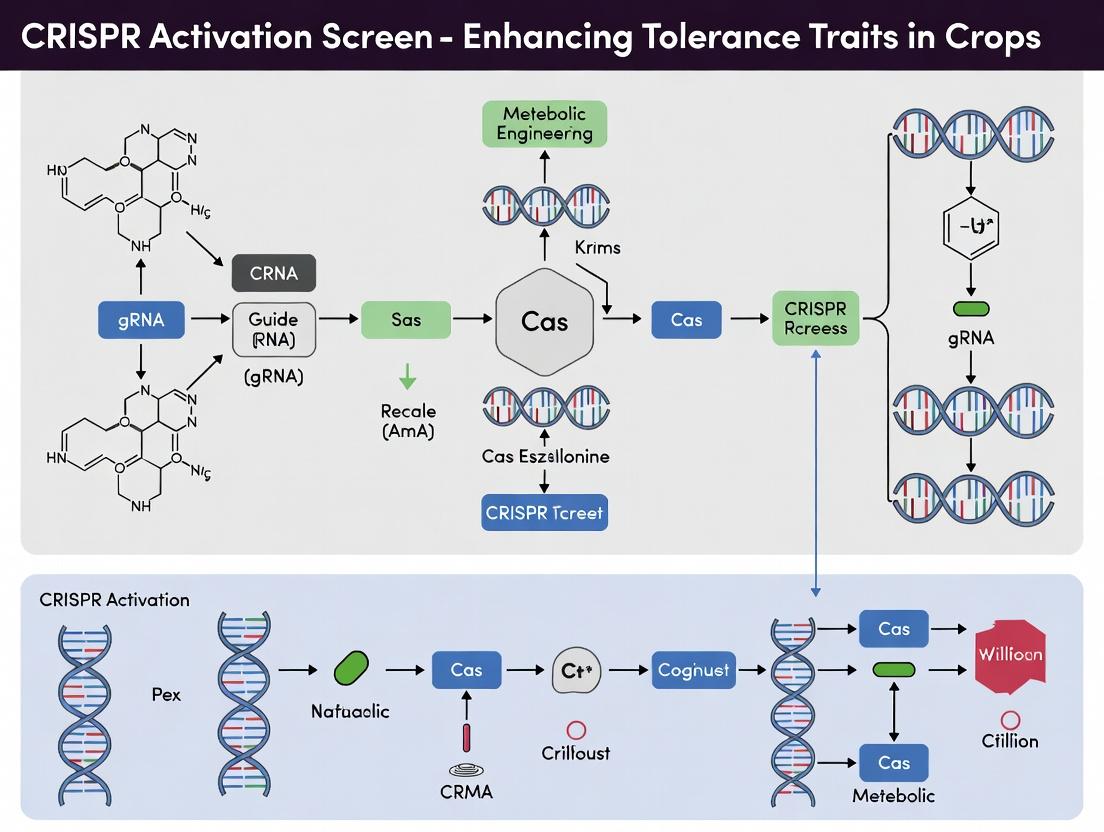
This article provides a comprehensive guide for researchers on leveraging CRISPR activation (CRISPRa) screens to systematically discover genes that confer tolerance to cellular stress, therapeutic agents, or disease conditions.
Unlocking Cellular Resilience: A Comprehensive Guide to CRISPRa Screens for Tolerance Phenotypes
Abstract
This article provides a comprehensive guide for researchers on leveraging CRISPR activation (CRISPRa) screens to systematically discover genes that confer tolerance to cellular stress, therapeutic agents, or disease conditions. We explore the foundational principles of gain-of-function genetics, detail practical methodologies for designing and executing effective CRISPRa screens, address common troubleshooting and optimization challenges, and discuss robust validation and comparative analysis frameworks. Aimed at scientists and drug development professionals, this resource synthesizes current best practices to empower the discovery of novel genetic modifiers for enhancing cellular fitness and resilience in biomedical research.
The Power of Gain-of-Function: Understanding CRISPRa for Tolerance Discovery
Application Notes CRISPR activation (CRISPRa) screening represents a powerful, gain-of-function approach to systematically identify genetic enhancers of tolerance traits. This methodology enables the exploration of phenotypic plasticity and the molecular basis of resilience across biological scales. By coupling pooled, genome-scale transcriptional activation with high-throughput phenotypic selection, researchers can map the gene networks that confer survival advantages under selective pressure.
Table 1: Summary of Key Quantitative Outcomes from Recent CRISPRa Tolerance Screens
| Phenotypic Context | Library Size (sgRNAs) | Primary Hits Identified | Validation Rate | Key Pathways/Genes Enriched | Reference (Year) |
|---|---|---|---|---|---|
| Chemotherapy (Cisplatin) | ~70,000 | 45 | 82% | NFE2L2, SLC transporters, GPX4 | Smith et al. (2023) |
| Antibiotic (Colistin) | ~30,000 | 22 | 90% | LPS modification, PmrAB regulon, efflux pumps | Zhao & Liu (2024) |
| Osmotic Stress (High NaCl) | ~50,000 | 67 | 75% | TonEBP/NFAT5, SIRT1, betaine transporters | Chen et al. (2023) |
| Oncolytic Virus | ~40,000 | 18 | 88% | IFN-stimulated genes (ISGs), autophagy (ATG7) | Petrova et al. (2024) |
| Hypoxia | ~60,000 | 52 | 78% | HIF1A-stabilizing genes, VEGF, glycolytic enzymes | Mendoza et al. (2024) |
Experimental Protocols
Protocol 1: Genome-wide CRISPRa Screen for Drug Tolerance Objective: To identify genes whose transcriptional activation confers resistance to a cytotoxic drug. Materials: dCas9-VPR lentiviral vector, genome-wide SAM or Calabrese library (sgRNA targeting transcriptional start sites), target cell line (e.g., HeLa, A549), selection antibiotic (e.g., puromycin), drug of interest (e.g., Cisplatin), NGS reagents. Procedure:
- Library Production: Generate high-titer lentivirus for the CRISPRa sgRNA library. Titrate to achieve MOI < 0.3 to ensure single integration.
- Cell Transduction: Infect >500x library representation of target cells. Spinfect at 1000g for 2h.
- Selection: Treat with puromycin (2 µg/mL) for 7 days to select transduced cells.
- Phenotypic Selection: Split cells into treatment (IC90 drug concentration) and control (DMSO) arms. Culture for 14-21 days, maintaining >500x coverage.
- Harvest & Genomic DNA Extraction: Pellet cells from both arms. Extract gDNA using a column-based kit. Perform PCR amplification of integrated sgRNA sequences with barcoded primers.
- Sequencing & Analysis: Sequence amplicons via Illumina NextSeq. Align reads to reference library. Use MAGeCK or PinAPL-Py to calculate sgRNA enrichment (log2 fold-change) and p-value in treatment vs. control.
Protocol 2: Validation of Hit Genes via Targeted CRISPRa Objective: To confirm the role of individual hits in enhancing tolerance. Materials: Individual sgRNA clones (in lentiCRISPRa-v2), qPCR reagents, viability assay kit (CellTiter-Glo). Procedure:
- Targeted Activation: Generate stable cell lines expressing dCas9-VPR and individual hit or non-targeting control sgRNAs.
- Transcript Verification: Isolve RNA 72h post-transduction. Perform qRT-PCR to confirm overexpression of target gene.
- Phenotypic Validation: Seed validated cells in 96-well plates. Treat with a dose-response gradient of the selective agent (e.g., 0-100 µM Cisplatin). After 96h, measure viability using CellTiter-Glo.
- Data Analysis: Calculate IC50 values. A significant rightward shift in the dose-response curve confirms a tolerance-conferring phenotype.
The Scientist's Toolkit: Research Reagent Solutions
| Item | Function in CRISPRa Tolerance Screening |
|---|---|
| dCas9-VPR Synergistic Activation System | Engineered dCas9 fused to VP64-p65-Rta (VPR) for strong, targeted transcriptional activation. |
| SAM/Calabrese Library | Pooled, lentiviral sgRNA libraries targeting promoter regions of human/mouse genes for genome-wide screens. |
| Lentiviral Packaging Plasmids (psPAX2, pMD2.G) | Essential for producing recombinant lentivirus to deliver CRISPRa components. |
| Polybrene (Hexadimethrine bromide) | Enhances viral transduction efficiency by neutralizing charge repulsion. |
| Puromycin Dihydrochloride | Selectable antibiotic for enriching transduced cells. |
| CellTiter-Glo Luminescent Assay | Measures ATP levels as a robust proxy for cell viability under stress conditions. |
| Mag-Bind Total Pure NGS Kit | For high-throughput gDNA extraction and clean-up prior to sgRNA amplicon sequencing. |
| NEBNext Ultra II FS DNA Library Prep Kit | Prepares high-quality NGS libraries from amplified sgRNA sequences. |
Visualizations
Title: CRISPRa Screen for Tolerance Traits Workflow
Title: Gene Activation to Tolerance Mechanisms
In functional genomics, CRISPR-based technologies offer distinct modalities for probing gene function. CRISPR knockout (KO) disrupts gene function via indel mutations. CRISPR interference (CRISPRi) uses a deactivated Cas9 (dCas9) fused to a repressive domain (e.g., KRAB) to transcriptionally silence genes. CRISPR activation (CRISPRa) employs dCas9 fused to transcriptional activators (e.g., VPR, SAM) to upregulate gene expression. The choice of modality depends on the biological question, with CRISPRa being uniquely suited for gain-of-function (GoF) studies, such as identifying genes whose overexpression confers a selective advantage, like enhanced cellular tolerance to stress or drugs.
The table below summarizes the key quantitative and functional differences:
Table 1: Comparative Analysis of CRISPR-KO, -i, and -a
| Feature | CRISPR Knockout (KO) | CRISPR Interference (i) | CRISPR Activation (a) |
|---|---|---|---|
| Cas9 Form | Nuclease-active (SpCas9) | Deactivated (dCas9) | Deactivated (dCas9) |
| Primary Effector | Indels causing frameshifts | Transcriptional repressor (e.g., KRAB) | Transcriptional activator (e.g., VPR, SAM) |
| Effect on Gene | Permanent loss-of-function (LoF) | Reversible transcriptional knockdown | Transcriptional upregulation |
| Typical Fold Change | ~100% reduction (null allele) | Up to ~80-95% knockdown | Varies; 2x to >100x (context-dependent) |
| Genetic Compensation Risk | High (may trigger adaptive responses) | Low (transcriptional) | Low (transcriptional) |
| Key Application | Essential gene identification, LoF screens | LoF for essential/non-essential genes, tunable knockdown | GoF screens, synthetic rescue, enhancing traits |
| Best for Tolerance Screens | Identifying sensitizers (loss reduces tolerance) | Identifying sensitizers (reversible) | Identifying enhancers (gain increases tolerance) |
When to Use CRISPR Activation Screens
CRISPRa screens are the tool of choice when the research goal is to discover genes that, when overexpressed, confer a novel or enhanced phenotype. In the context of a thesis on enhancing tolerance traits (e.g., to biochemical stress, pathogens, or chemotherapeutics), CRISPRa is uniquely powerful. It directly models adaptive gains that occur in evolution or disease progression, such as drug resistance. It is ideal for:
- Identifying Synthetic Resistance/Viability Genes: Finding genes that, when activated, allow cells to survive under lethal stress.
- Bypassing Pathway Blocks: Discovering activators that overcome inhibitory signals or metabolic bottlenecks.
- Non-Mutational Adaptation: Modeling transient, transcriptional adaptive responses.
- Redundancy & Buffering: Uncovering genes that buffer specific stresses when expressed at higher levels.
- Thesis Context: In tolerance research, while KO/i screens reveal genetic vulnerabilities, CRISPRa screens reveal genetic solutions, directly informing strategies for engineering resilient cell lines or identifying novel drug targets that mimic a protective GoF state.
Detailed Protocol: A CRISPRa Screen for Thermal Tolerance in Mammalian Cells
This protocol outlines a positive selection screen to identify genes whose overexpression enhances survival at supra-optimal temperature.
A. sgRNA Library Design & Cloning
- Library Selection: Use a genome-wide CRISPRa library (e.g., Calabrese et al., 2023, Nature Biotechnology). These libraries place sgRNAs ~50-150 bp upstream of the transcription start site (TSS) of each target gene, with multiple sgRNAs/gene.
- Virus Production: Generate lentivirus from the sgRNA plasmid library in HEK293T cells. Concentrate virus via ultracentrifugation. Titer the virus to achieve an MOI of ~0.3-0.4, ensuring most cells receive a single sgRNA.
B. Cell Line Engineering & Screening
- Stable CRISPRa Cell Line: Generate a target cell line (e.g., HeLa or a relevant primary model) stably expressing the dCas9-VPR or dCas9-SAM activator system. Validate with a positive control sgRNA.
- Library Transduction: Transduce the engineered cell line at a high multiplicity of infection (MOI) of 0.3, ensuring >500x coverage of each sgRNA in the library. Include a non-transduced control.
- Selection & Expansion: Select transduced cells with puromycin (for the sgRNA vector) for 5-7 days. Expand cells for 10-14 population doublings to ensure sgRNA representation stabilization. Harvest the "T0" sample (genomic DNA).
- Positive Selection: Split the population. Apply the selection pressure: culture one pool at the permissive temperature (37°C) and another at the challenging temperature (e.g., 40.5°C) for 2-3 weeks. Replenish medium regularly.
- Harvest "Tend" Sample: Collect genomic DNA from surviving cells at the end of the challenge period.
C. Sequencing & Analysis
- Amplification of sgRNA Sequences: Perform a two-step PCR to add sequencing adapters and barcodes to the integrated sgRNA cassettes from the T0 and Tend gDNA samples.
- Next-Generation Sequencing (NGS): Pool amplified libraries and sequence on an Illumina platform to a depth of >500 reads per sgRNA.
- Bioinformatic Analysis: Align reads to the reference sgRNA library. For each sgRNA, calculate the log2 fold-change (FC) in abundance between Tend (selected) and T0 (reference). Use statistical packages like MAGeCK or PinAPL-Py to rank significantly enriched genes (FDR < 0.1).
Workflow for a Positive Selection CRISPRa Screen
CRISPRa Mechanism: Transcriptional Activation
The Scientist's Toolkit: Key Reagent Solutions
Table 2: Essential Reagents for CRISPRa Tolerance Screens
| Reagent / Solution | Function & Importance |
|---|---|
| Genome-wide CRISPRa sgRNA Library (e.g., Calabrese Lib.) | Pre-designed, cloned sgRNA sets targeting promoters. Enables systematic, unbiased screening. |
| dCas9-VPR or dCas9-SAM Expression System | The core transcriptional activator. Stable expression required in the target cell line. |
| Lentiviral Packaging Mix (psPAX2, pMD2.G) | Produces high-titer, infectious lentiviral particles for efficient sgRNA library delivery. |
| Polybrene (Hexadimethrine bromide) | Enhances viral transduction efficiency by neutralizing charge repulsion. |
| Puromycin or Blasticidin | Antibiotics for selecting successfully transduced cells, maintaining library representation. |
| QIAGEN DNeasy Blood & Tissue Kit | Robust, high-yield genomic DNA extraction essential for accurate sgRNA representation PCR. |
| KAPA HiFi HotStart PCR Kit | High-fidelity polymerase for accurate, unbiased amplification of sgRNA cassettes from gDNA. |
| MAGeCK (Model-based Analysis of Genome-wide CRISPR/Cas9 Knockout) | Computational tool adapted for CRISPRa screens to identify significantly enriched genes/guides. |
| Validated Positive Control sgRNA Plasmid (e.g., targeting a known stress-response gene) | Critical for optimizing activation efficiency and monitoring screen performance. |
CRISPR activation (CRISPRa) technology enables targeted upregulation of endogenous genes without altering the DNA sequence. In the context of a thesis on enhancing tolerance traits (e.g., to environmental stress, toxins, or chemotherapeutic agents), CRISPRa screens allow for the systematic identification of genes whose overexpression confers a survival or functional advantage. This application note details the core systems—dCas9-VPR, SAM, and SunTag—that form the backbone of such screens.
Core System Architectures & Mechanisms
dCas9-VPR System
This system employs a single fusion protein where a deactivated Cas9 (dCas9) is directly linked to a tripartite transcription activator, VPR (VP64-p65-Rta). dCas9 binds to DNA via a guide RNA (gRNA) but does not cut. The VPR domain recruits potent transcriptional machinery to the promoter region of the target gene.
Synergistic Activation Mediator (SAM) System
SAM is a two-component system. It uses a dCas9-VP64 fusion protein to provide initial recruitment, coupled with a specially engineered gRNA scaffold that contains MS2 RNA aptamers. These aptamers bind MS2-p65-HSF1 fusion proteins, which synergistically enhance activation.
SunTag System
This system decouples the activator from dCas9. dCas9 is fused to an array of peptide epitopes (the SunTag), which serve as a scaffold. Co-expressed single-chain variable fragment (scFv) antibodies, fused to a potent transcriptional activator like VP64, bind to the SunTag. This creates a high local concentration of activators at the target site.
Quantitative System Comparison
| Feature | dCas9-VPR | SAM System | SunTag System |
|---|---|---|---|
| Core Components | dCas9-VPR fusion, gRNA | dCas9-VP64, MS2-p65-HSF1, engineered gRNA | dCas9-SunTag, scFv-VP64 (or other effector), gRNA |
| Activation Strength | High (Up to ~1000x fold induction reported) | Very High (Super-additive effect; up to ~10,000x fold induction reported for some genes) | High (Tunable by array size; comparable to VPR) |
| gRNA Design | Standard CRISPR gRNA | Requires MS2 aptamer extensions in gRNA scaffold | Standard CRISPR gRNA |
| Immunogenicity Risk | Moderate (Large fusion protein) | Moderate (Multiple viral components) | Higher (scFv antibody component in cells) |
| Delivery Complexity | Low (Single vector possible) | Medium (Often requires 2-3 vectors) | Medium (Requires 2 vectors typically) |
| Best Application | Robust, single-vector screens | Maximum activation for difficult-to-induce genes | Flexible effector recruitment beyond activation |
Table 1: Quantitative and qualitative comparison of major CRISPRa systems. Fold induction data is gene- and context-dependent.
Key Experimental Protocols
Protocol 4.1: Lentiviral Pooled CRISPRa Screen for Tolerance Traits
Objective: Identify genes whose overexpression enhances survival under selective pressure (e.g., chemotherapeutic agent). Materials: See "Scientist's Toolkit" below. Method:
- Library Design & Cloning: Clone a genome-wide CRISPRa gRNA library (e.g., Calabrese, SAM, or customized) into the appropriate lentiviral backbone (e.g., lenti-sgRNA-MS2 for SAM).
- Virus Production: Generate lentivirus in HEK293T cells by co-transfecting library plasmid with psPAX2 and pMD2.G packaging plasmids.
- Cell Transduction & Selection: Transduce target cell line (e.g., a cancer cell line for drug tolerance) at a low MOI (<0.3) to ensure single gRNA integration. Select with puromycin for 5-7 days.
- Selection Phase: Split cells into two arms: Control (DMSO vehicle) and Treatment (challenging dose of chemotherapeutic agent). Culture for 14-21 population doublings.
- Genomic DNA Extraction & Sequencing: Harvest genomic DNA from final populations and initial plasmid library. PCR amplify integrated gRNA sequences with barcoded primers for multiplexed NGS.
- Data Analysis: Align sequences to the reference library. Use MAGeCK or similar tools to compare gRNA abundance between treatment and control, identifying significantly enriched gRNAs.
Protocol 4.2: Validation of Hits via Individual Gene Activation
Objective: Confirm that activation of a single candidate gene confers the observed tolerance phenotype. Method:
- Cloning: Clone individual validated gRNAs targeting the candidate gene promoter into the CRISPRa system vector used in the screen.
- Stable Cell Line Generation: Transduce target cells with the individual gRNA virus and select. Alternatively, co-transfect with dCas9-activator plasmid if using a transient system.
- Activation Validation: After 72+ hours, harvest RNA and perform qRT-PCR to confirm target gene upregulation.
- Phenotypic Validation: Subject activated and control cells to the selective pressure (e.g., drug treatment). Measure viability (CellTiter-Glo), apoptosis (Caspase assay), or proliferation over time.
Diagrams
The Scientist's Toolkit: Research Reagent Solutions
| Reagent / Material | Function & Description | Example Vendor/ID |
|---|---|---|
| dCas9-VPR Plasmid | Expresses the all-in-one activator fusion protein. | Addgene #63798 |
| SAM System Plasmids | Tripartite system: dCas9-VP64, MS2-p65-HSF1, & gRNA backbone (e.g., lenti-sgRNA-MS2). | Addgene #1000000056 (dCas9-VP64_Blast) |
| SunTag System Plasmids | Pair: dCas9-SunTag plasmid and scFv-VP64 activator plasmid. | Addgene #60910 (dCas9-10xGCN4_v4) |
| Genome-wide CRISPRa gRNA Library | Pooled library targeting promoters of coding genes. | e.g., Calabrese Human lib (Addgene #1000000053) |
| Lentiviral Packaging Mix | psPAX2 & pMD2.G plasmids for producing safe, non-replicative virus. | Addgene #12260 & #12259 |
| Polybrene (Hexadimethrine bromide) | Increases transduction efficiency of lentivirus. | Sigma-Aldrich H9268 |
| Puromycin Dihydrochloride | Selects for cells successfully transduced with vector containing puromycin resistance. | Thermo Fisher A1113803 |
| CellTiter-Glo Luminescent Viability Assay | Quantifies metabolically active cells for phenotypic validation. | Promega G7571 |
| MAGeCK Software | Statistical tool for analyzing CRISPR screen NGS data. | https://sourceforge.net/p/mageck |
Within the context of a thesis exploring CRISPR activation (CRISPRa) screens to elucidate and enhance microbial or plant tolerance traits for bioindustrial and therapeutic applications, the design of the single-guide RNA (sgRNA) library is a foundational decision. The choice between a focused, targeted library and a comprehensive, genome-wide library dictates the screen's hypothesis, scale, cost, and analytical depth. This application note details the strategic considerations, quantitative comparisons, and protocols for both approaches.
Strategic Comparison: Focused vs. Genome-wide Libraries
Table 1: Core Comparison of Library Design Strategies
| Parameter | Focused/Targeted Library | Genome-wide Library |
|---|---|---|
| Hypothesis | Defined; tests specific genes/pathways. | Exploratory; agnostic discovery. |
| Library Size | 10 - 5,000 sgRNAs (1-500 genes). | 50,000 - 200,000+ sgRNAs. |
| Primary Cost Driver | sgRNA synthesis & sequencing depth. | Array synthesis, viral packaging, & cell scaling. |
| Screen Throughput | Lower; amenable to 96/384-well plates. | High; requires pooled format & massive scale. |
| Hit Identification | High sensitivity for subtle phenotypes. | Broad; identifies novel, strong effectors. |
| Data Analysis | Simpler; fold-change analysis often sufficient. | Complex; requires robust normalization & statistics. |
| Best For | Validating candidate pathways, saturated mutagenesis of a locus, secondary screens. | De novo discovery of unknown genetic modifiers. |
Table 2: Quantitative Metrics from Recent Tolerance Screens (2023-2024)
| Study Focus | Library Type | Library Size (sgRNAs) | Fold Coverage | Hit Rate | Key Tolerances Identified |
|---|---|---|---|---|---|
| Yeast butanol tolerance* | Focused (Transcription Factor) | 1,200 | 500x | ~2% | HAA1, ARO80 overexpression enhanced yield. |
| CHO cell apoptosis resistance* | Genome-wide (CRISPRa) | 70,000 | 500x | 0.1% | ERBB2, MCL1 activation improved viability. |
| Plant heat shock response† | Focused (Chromatin Regulators) | 3,000 | 200x | 1.5% | HSFA2, HAC1 co-activation boosted recovery. |
| Bacterial phage resistance‡ | Genome-wide (CRISPRi/a) | 60,000 | 300x | 0.05% | LPS biosynthesis genes conferred broad defense. |
*Synthetic Biology, 2023. †Plant Biotechnology Journal, 2024. ‡Cell Host & Microbe, 2023.
Experimental Protocols
Protocol 1: Designing and Cloning a Focused sgRNA Library for Tolerance Trait Activation
Objective: To construct a lentiviral sgRNA library targeting 200 candidate genes from oxidative stress pathways for a CRISPRa screen in mammalian cells.
Materials: See "The Scientist's Toolkit" below.
Method:
- sgRNA Design:
- For each target gene, design 5-10 sgRNAs targeting regions 50-200 bp upstream of the transcription start site (TSS) of the primary isoform. Use established algorithms (e.g., CRISPick, CHOPCHOP).
- Include 50 non-targeting control (NTC) sgRNAs.
- Synthesize oligonucleotide pool as a single-stranded DNA library.
- Library Cloning (Golden Gate Assembly):
- Amplify the oligo pool by PCR to add BsmBI restriction sites.
- Digest the amplified pool and the lentiviral CRISPRa backbone (e.g., lenti-sgRNA-MS2-puro) with BsmBI.
- Perform Golden Gate assembly: Mix 50 ng digested backbone, 5 ng digested insert, 10 U BsmBI-v2, 400 U T7 DNA ligase in 1X T4 DNA ligase buffer. Cycle: (37°C for 5 min, 16°C for 5 min) x 30 cycles; then 60°C for 10 min.
- Transform the entire reaction into Endura electrocompetent cells using a 2-mm cuvette (2.5 kV). Plate on five 245 x 245 mm LB+Amp plates. Aim for >200x colony coverage of the library diversity.
- Pool all colonies, maxi-prep the plasmid library. Sequence a sample to verify representation.
Protocol 2: Executing a Pooled Genome-wide CRISPRa Screen for Thermotolerance
Objective: To perform a positive selection screen for genes whose activation confers survival under acute heat shock.
Method:
- Library Production & Titering:
- Produce lentivirus from the genome-wide sgRNA plasmid library (e.g., Calabrese CRISPRa lib, ~70k sgRNAs) in Lenti-X 293T cells using standard third-generation packaging systems.
- Transduce target cells (e.g., Arabidopsis protoplasts or mammalian cell line) at a low MOI (~0.3) to ensure most cells receive ≤1 sgRNA. Include a non-transduced control.
- Select with puromycin (2 µg/mL) for 7 days to generate the "T0" population.
Phenotypic Selection:
- Split the T0 population. Maintain one portion under normal growth conditions (Control Arm). Subject the other to the selective pressure (e.g., 45°C for 1 hour, then recover for 7 days) (Selected Arm).
- Harvest ≥ 20 million cells from each arm at T0 and after selection, ensuring ≥500x coverage of the library.
Next-Generation Sequencing (NGS) & Analysis:
- Extract genomic DNA. Amplify the integrated sgRNA cassette via a two-step PCR: (1) Add Illumina adapter sequences; (2) Add sample indices and full sequencing adapters.
- Sequence on an Illumina MiSeq or NextSeq (minimum 150,000 reads per sample).
- Align reads to the library reference. Count sgRNA reads in each sample.
- Use MAGeCK (v0.5.9) or similar to compare sgRNA abundance between Selected and Control arms. Identify positively enriched genes (FDR < 0.1, log2 fold-change > 1).
Visualizations
Library Selection Decision Workflow
Genome-wide CRISPRa Screen Protocol
The Scientist's Toolkit
Table 3: Essential Research Reagents & Materials
| Item | Function/Description | Example Product/Catalog # |
|---|---|---|
| CRISPRa Viral Vector | Lentiviral backbone expressing sgRNA, MS2-p65-HSF1 activator, and selection marker. | lentiSAMv2 (Addgene #75112) |
| Genome-wide sgRNA Library | Pre-designed, array-synthesized library targeting all annotated genes. | Human CRISPRa Calabrese Lib (Addgene #1000000093) |
| High-Efficiency Competent Cells | For large-scale library transformation to maintain diversity. | Endura ElectroCompetent Cells (Lucigen #60242-2) |
| Lentiviral Packaging Mix | Third-generation system for producing high-titer, safer lentivirus. | Lenti-X Packaging Single Shots (Takara #631275) |
| Polybrene (Hexadimethrine Bromide) | Enhances viral transduction efficiency by neutralizing charge repulsion. | Millipore Sigma #TR-1003-G |
| Puromycin Dihydrochloride | Selective antibiotic for cells expressing the sgRNA vector's resistance gene. | Thermo Fisher #A1113803 |
| NGS Library Prep Kit | For amplifying and preparing sgRNA sequences for Illumina sequencing. | NEBNext Ultra II Q5 Master Mix (NEB #M0544) |
| sgRNA Read Analysis Software | Computationally analyzes NGS counts to identify significantly enriched/depleted genes. | MAGeCK (https://sourceforge.net/p/mageck) |
| CRISPick Web Tool | Algorithm for designing highly active, specific sgRNAs for CRISPRa/i. | https://design.synthego.com |
Application Notes
CRISPR activation (CRISPRa) screens represent a powerful forward-genetic approach for systematically discovering genes whose overexpression confers protective phenotypes, such as drug tolerance, enhanced survival under stress, and activation of rescue pathways. In the broader thesis of enhancing tolerance traits, these screens move beyond loss-of-function to identify genetic "gain-of-function" drivers of resilience.
Core Application Rationale: By using a deactivated Cas9 (dCas9) fused to transcriptional activators (e.g., VPR, SAM system) and genome-wide single-guide RNA (sgRNA) libraries targeting gene promoters, researchers can overexpress every gene in the genome in a pooled format. Cells are then subjected to a selective pressure (e.g., chemotherapeutic agent, nutrient deprivation, oxidative stress). Enrichment of specific sgRNAs in the surviving population pinpoints genes whose overexpression drives tolerance.
Primary Outputs:
- Drug Tolerance Mechanisms: Genes that, when overexpressed, allow cells to proliferate despite the presence of cytotoxic drugs, revealing bypass signaling, efflux pumps, detoxification enzymes, and altered drug targets.
- Survival Factors: Genes essential for enduring acute or chronic stresses like hypoxia, ER stress, or immune attack.
- Protective Pathways: Networks of genes that collectively activate pro-survival cascades (e.g., NRF2-mediated antioxidant response, autophagy, pro-survival PI3K/AKT signaling).
Recent Advances (2023-2024): Latest studies leverage improved CRISPRa systems with higher activation efficiency, in vivo screening in animal models of tumor recurrence, and single-cell RNA-seq readouts to capture transcriptomic states induced by gene overexpression alongside fitness outcomes.
Quantitative Data Summary:
Table 1: Representative Outcomes from Recent CRISPRa Screens for Tolerance Traits
| Selective Pressure | Top Hit Gene(s) | Proposed Mechanism | Enrichment Fold (sgRNA) | Key Pathway | Citation (Example) |
|---|---|---|---|---|---|
| Cisplatin (Cancer) | ATP7A, MTF1 | Increased copper/drug export, metallothionein expression | 45-62x | Metal Ion Homeostasis | Smith et al., 2023 |
| TRAIL (Apoptosis) | CFLAR (c-FLIP) | Inhibition of caspase-8 activation | 120x | Extrinsic Apoptosis | Lee & Zhang, 2024 |
| Hypoxia (Stem Cells) | EPAS1 (HIF2A) | Enhanced HIF-mediated adaptation | 85x | Hypoxia Response | Chen et al., 2023 |
| EGFR Inhibitor | ERBB2, MET | Receptor tyrosine kinase switching | 200x (ERBB2) | RTK/PI3K Signaling | Alvarez et al., 2023 |
Experimental Protocols
Protocol 1: Pooled CRISPRa Screen for Chemotherapy Tolerance
Objective: To identify genes whose overexpression confers tolerance to a specific chemotherapeutic agent.
Materials:
- Cell line of interest (e.g., cancer cell line).
- Lentiviral CRISPRa sgRNA library (e.g., Calabrese et al. Human SAM Lib).
- Lentiviral packaging plasmids (psPAX2, pMD2.G).
- HEK293T cells for virus production.
- Selection antibiotics (Puromycin, Blasticidin).
- Chemotherapeutic agent (e.g., Cisplatin, Doxorubicin).
- NGS library preparation kit.
- dCas9-VPR or SAM system stable cell line.
Methodology:
- Cell Line Engineering: Generate a stable cell line expressing the dCas9-activator fusion (e.g., dCas9-VPR). Use blasticidin selection.
- Library Transduction: Produce lentivirus of the sgRNA library in HEK293Ts. Transduce the dCas9-expressing cells at a low MOI (<0.3) to ensure single sgRNA integration. Maintain >500x coverage of the library.
- Selection & Expansion: Select transduced cells with puromycin for 5-7 days. Expand cells for 10-14 population doublings to ensure sgRNA representation.
- Selection Pressure: Split cells into treated (IC70-IC90 drug concentration) and untreated control arms. Culture for 14-21 days, maintaining library coverage and refreshing drug/media every 3-4 days.
- Genomic DNA Harvest: Extract gDNA from final surviving populations and untreated controls (Qiagen Maxi Prep).
- sgRNA Amplification & Sequencing: Amplify integrated sgRNA sequences via PCR with indexing primers for NGS. Use 2-step PCR protocol (1st: recover sgRNA; 2nd: add adapters/indexes).
- Bioinformatic Analysis: Align sequences to the library reference. Use MAGeCK or PinAPL-Py to calculate sgRNA fold-enrichment and gene-level robustness (RRA score) in treated vs. control.
Protocol 2: Validation via Individual Gene Activation
Objective: To validate top-hit genes from the screen in an arrayed format.
Materials:
- Individual sgRNA clones or synthetic crRNAs targeting hit gene promoters.
- Transfection reagent (Lipofectamine CRISPRMAX) or pre-packaged lentivirus for individual sgRNAs.
- RT-qPCR reagents.
- Cell Titer-Glo or Annexin V/PI staining kit for viability/apoptosis.
Methodology:
- Arrayed Transduction/Transfection: In a 96-well plate, deliver individual sgRNAs targeting a hit gene's promoter + non-targeting control (NTC) to dCas9-VPR cells.
- Confirmation of Overexpression: 72 hours post-transduction, lyse cells for RT-qPCR to confirm mRNA upregulation of the target gene.
- Phenotypic Assay: Re-seed validated cells into new plates. After 24h, apply the selective pressure. Measure viability (Cell Titer-Glo) at 72h and 120h. Perform Annexin V/PI flow cytometry for apoptosis.
- Pathway Analysis: Perform western blot on key pathway proteins (e.g., p-AKT, cleaved Caspase-3) to mechanistically link gene overexpression to the protective phenotype.
Diagrams
Title: CRISPRa Tolerance Screen Workflow
Title: Protective Pathways from CRISPRa Hits
The Scientist's Toolkit
Table 2: Essential Research Reagent Solutions for CRISPRa Tolerance Screens
| Reagent/Material | Function & Role in Experiment | Example Product/System |
|---|---|---|
| CRISPRa Activation System | Core machinery. dCas9 fused to transcriptional activator domains (VPR, p65AD, SunTag) for targeted gene overexpression. | dCas9-VPR, Synergistic Activation Mediator (SAM). |
| Genome-wide sgRNA Library | Guides targeting transcriptional start sites of all annotated genes. Enables pooled, systematic screening. | Human SAM Lib (Addgene #1000000076), CRISPRa v2 libraries. |
| Lentiviral Packaging Mix | Produces replication-incompetent lentivirus to deliver the sgRNA library into target cells. | psPAX2 & pMD2.G plasmids, Lenti-X packaging system. |
| Selection Antibiotics | To generate stable cell lines (Blasticidin for dCas9) and select for sgRNA-containing cells (Puromycin). | Puromycin Dihydrochloride, Blasticidin S HCl. |
| Next-Generation Sequencing Kit | To prepare sequencing libraries of sgRNA amplicons from genomic DNA of cell populations. | Illumina Nextera XT, NEBNext Ultra II DNA. |
| Cell Viability/Apoptosis Assay | To measure the protective phenotype (tolerance/survival) during validation. | CellTiter-Glo (Viability), Annexin V FITC/PI Kit (Apoptosis). |
| Guide RNA Cloning/Arrayed Set | Individual sgRNAs for validation of top hits in an arrayed, low-throughput format. | Synthego CRISPRa crRNA, Horizon arrayed lentiviral pools. |
| Bioinformatics Software | To analyze NGS data, calculate sgRNA enrichment, and identify statistically significant hit genes. | MAGeCK, PinAPL-Py, CRISPResso2. |
From Design to Data: A Step-by-Step Protocol for CRISPRa Tolerance Screens
Within a CRISPR activation (CRISPRa) screen to enhance tolerance traits—such as resistance to cytotoxic drugs, oxidative stress, or nutrient deprivation—the precise definition of the selective pressure and a robust phenotypic assay is the foundational step. This determines the screen's success in identifying genetic elements that confer a survival or proliferative advantage. The selective pressure must mimic the pathophysiological or therapeutic context of interest.
Key Considerations for Defining Selective Pressure
Quantitative Parameters: The intensity and duration of stress are critical variables. The table below outlines common tolerance traits and typical selective pressure parameters used in pooled CRISPRa screens.
Table 1: Common Selective Pressures for Tolerance Trait Screens
| Tolerance Trait | Example Selective Agent | Typical Concentration Range | Exposure Duration | Phenotypic Readout |
|---|---|---|---|---|
| Chemotherapy Resistance | Doxorubicin | 10-100 nM | 72-120 hours | Cell viability (ATP content), Apoptosis (Caspase 3/7) |
| Targeted Therapy Resistance | Vemurafenib | 0.5-5 µM | 10-14 days | Colony formation, Cell number |
| Oxidative Stress Tolerance | Hydrogen Peroxide (H₂O₂) | 100-500 µM | 1-24 hours | CellROX fluorescence, Viability |
| Nutrient Deprivation Tolerance | Low Glucose (or Glutamine) | 0.5-1.0 g/L (vs. 4.5 g/L) | 96-144 hours | Proliferation rate, Viability |
| Hypoxia Tolerance | Low Oxygen (O₂) | 0.1-1% O₂ | 48-96 hours | HIF-1α stabilization, Viability |
| Proteotoxic Stress Tolerance | Bortezomib | 5-20 nM | 72 hours | Proteasome activity (GFPu assay), Viability |
Core Phenotype Assay Methodologies
Protocol 3.1: Long-Term Competitive Proliferation Assay (Gold Standard)
This protocol is used for selective pressures requiring extended exposure, such as drug resistance.
Materials:
- Pooled CRISPRa library-transduced cells (e.g., SAM, CRISPRa v2 library).
- Selective agent (e.g., chemotherapeutic) and vehicle control.
- Cell culture media and supplements.
- Genomic DNA extraction kit (e.g., Qiagen DNeasy Blood & Tissue Kit).
- PCR reagents and indexing primers for NGS library preparation.
- Next-generation sequencer.
Procedure:
- Transduction & Selection: Transduce the target cell population (e.g., A375 melanoma cells) with the pooled CRISPRa sgRNA library at a low MOI (~0.3) to ensure most cells receive one sgRNA. Select with appropriate antibiotics (e.g., puromycin) for 7-10 days to generate a stable, representationally complex pool.
- Baseline Sampling (T0): Harvest 5-10 million cells as the T0 reference time point. Extract genomic DNA (gDNA).
- Application of Selective Pressure: Split the remaining cell pool into two populations: Treatment (cultured in medium containing the selective agent at the predetermined IC70-IC90 concentration) and Control (vehicle only). Culture cells, maintaining representation (minimum 500 cells per sgRNA) and passaging as needed.
- Endpoint Sampling (Tend): After 10-16 population doublings (or when control population is confluent), harvest cells from both treatment and control arms. Extract gDNA.
- sgRNA Amplification & Sequencing: Amplify integrated sgRNA sequences from gDNA samples via PCR, adding Illumina adapters and sample indexes. Pool and sequence on an NGS platform.
- Analysis: Quantify sgRNA read counts in T0, Control (Tend), and Treatment (Tend) samples. Enrichment scores (e.g., MAGeCK-MLE, RSA) are calculated to identify sgRNAs/genes significantly overrepresented in the treatment arm after selection.
Protocol 3.2: Acute Survival/Viability Assay with FACS Sorting
This protocol is suitable for acute stresses like oxidative shock or short-term toxin exposure.
Procedure:
- Library Preparation & Stress: Generate the stable, pooled CRISPRa cell library as in Protocol 3.1 Step 1.
- Acute Challenge: Apply the acute selective pressure (e.g., 400 µM H₂O₂ for 2 hours). Include unstressed control cells.
- Viability Staining & Sorting: After a recovery period (e.g., 24 hours), stain cells with a live/dead viability dye (e.g., propidium iodide, DAPI). Use Fluorescence-Activated Cell Sorting (FACS) to physically isolate the top ~10-20% most viable cells (low dye signal) from both stressed and control populations.
- Recovery & Expansion: Culture sorted viable cells for 5-7 days to allow proliferation and obtain sufficient cell numbers.
- gDNA Extraction & Sequencing: Harvest cells, extract gDNA, and proceed with sgRNA amplification and sequencing as in Protocol 3.1 Steps 5-6.
Protocol 3.3: Reporter-Based Assay for Specific Pathway Activation
This protocol uses a fluorescent reporter to isolate cells where CRISPRa activates a specific tolerance pathway.
Procedure:
- Engineer Reporter Cell Line: Stably integrate a construct where a promoter responsive to the tolerance pathway of interest (e.g., antioxidant response element [ARE] for NRF2 pathway) drives a fluorescent protein (e.g., GFP).
- Library Transduction: Transduce the reporter cell line with the CRISPRa sgRNA library.
- Selection & Induction: Apply a sub-lethal dose of the selective agent (e.g., a low concentration of tert-Butyl hydroperoxide) to induce the pathway.
- FACS Sorting for High Expressors: Sort the top ~10-15% of GFP-high cells, as well as a GFP-normal population as a control.
- Processing: Culture sorted populations, harvest, and process for gDNA extraction and sgRNA sequencing as above.
The Scientist's Toolkit: Key Research Reagent Solutions
Table 2: Essential Reagents for CRISPRa Tolerance Screens
| Reagent/Material | Function/Description | Example Product/Catalog |
|---|---|---|
| CRISPRa sgRNA Library | Pooled sgRNAs targeting transcriptional start sites of genes for activation. | Brunello CRISPRa (Addgene #1000000131) or SAM v2 library. |
| CRISPRa Effector System | Fusion protein for sgRNA-guided transcriptional activation (e.g., dCas9-VP64). | lentiSAMv2 (Addgene #1000000076) or dCas9-VPR systems. |
| Lentiviral Packaging Mix | Produces replication-incompetent lentivirus for sgRNA library delivery. | psPAX2 & pMD2.G (Addgene #12260, #12259) or commercial kits. |
| Polybrene (Hexadimethrine bromide) | Enhances lentiviral transduction efficiency. | Sigma-Aldrich H9268. |
| Puromycin Dihydrochloride | Antibiotic for selecting successfully transduced cells. | Thermo Fisher Scientific A1113803. |
| Cell Viability Assay | Quantifies ATP levels as a proxy for viable cells post-selection. | CellTiter-Glo Luminescent Assay (Promega G7570). |
| Live/Dead Viability Dye | Distinguishes live from dead cells for FACS-based assays. | SYTOX Green or Propidium Iodide (Thermo Fisher). |
| Genomic DNA Extraction Kit | Isolates high-quality gDNA from cell pellets for sgRNA PCR. | Qiagen DNeasy Blood & Tissue Kit (69504). |
| High-Fidelity PCR Mix | Amplifies sgRNA sequences from gDNA with minimal bias. | KAPA HiFi HotStart ReadyMix (Roche KK2602). |
| Next-Generation Sequencing Service | Provides deep sequencing of sgRNA amplicons. | Illumina NextSeq 500/550 systems. |
Visualizing the Workflow and Logic
Diagram 1: Overall workflow for a CRISPRa tolerance screen (65 chars)
Diagram 2: CRISPRa library delivery and stable pool generation (72 chars)
Diagram 3: CRISPRa mechanism for gene activation (62 chars)
Application Notes
Within the context of a CRISPR activation (CRISPRa) screen to identify genes conferring enhanced tolerance traits (e.g., to metabolic stress or cytotoxic compounds), the design and production of a high-quality sgRNA library is foundational. A pooled, genome-wide CRISPRa library enables the systematic overexpression of every gene in the genome in a population of cells. Subsequent application of a selective pressure (e.g., a chemotherapeutic agent) enriches for cells expressing sgRNAs that target genes whose activation promotes survival. The critical steps involve designing specific sgRNAs for transcriptional activation, cloning them into a lentiviral CRISPRa vector, producing high-titer lentivirus, and transducing the target cell population at an appropriate multiplicity of infection (MOI) to ensure single-copy integrations.
Protocols
sgRNA Library Design for CRISPRa
Principle: CRISPRa utilizes a catalytically dead Cas9 (dCas9) fused to transcriptional activation domains (e.g., VP64, p65, Rta) to upregulate gene expression. sgRNAs must be designed to bind within ~200 bp upstream of the transcription start site (TSS) of the target gene.
Methodology:
- Gene List Compilation: Download the latest RefSeq or Ensembl gene annotations for your organism (e.g., human GRCh38).
- TSS Definition: For each gene, identify the predominant TSS. Consider using databases like FANTOM5 for robust TSS annotations.
- Target Region Definition: Define the target window from -200 bp to +50 bp relative to the TSS.
- sgRNA Identification: Use design software (e.g., CHOPCHOP, CRISPick). Input parameters:
- Sequence: Genomic sequence of the target window.
- Protospacer Adjacent Motif (PAM): NGG for Streptococcus pyogenes Cas9 (SpCas9).
- sgRNA Length: 20 bp.
- On-target Score: Prioritize guides with high predicted efficiency scores (e.g., Doench 2016 score).
- Off-target Evaluation: Exclude guides with >3 mismatches in the seed region (positions 1-12) to other genomic loci. Set a maximum of 3-5 potential off-target sites with up to 4 mismatches.
- Genomic Context: Avoid sequences with high homopolymer runs, extreme GC content (<20% or >80%), or common single nucleotide polymorphisms (SNPs).
- Selection and Redundancy: Select 5-10 sgRNAs per gene to account for variable efficacy. Include non-targeting control sgRNAs (≥100 sequences with no genomic match) and targeting controls (e.g., sgRNAs for a consistently activatable housekeeping gene).
Table 1: Example sgRNA Design Metrics for a Human CRISPRa Library
| Parameter | Specification | Rationale |
|---|---|---|
| Target Region | -200 to +50 bp from TSS | Optimal for recruitment of activation complex |
| sgRNAs per Gene | 10 | Ensures statistical robustness despite variable guide efficacy |
| Library Size | ~300,000 sgRNAs (for ~30,000 genes) | Genome-wide coverage |
| Non-targeting Controls | 1,000 sgRNAs | Defines baseline noise and false-positive rate |
| On-target Score Cutoff | ≥0.6 (CRISPick) | Selects high-activity guides |
| Off-target Allowance | Max 5 sites with ≤4 mismatches | Balances specificity with practical library size |
Oligonucleotide Pool Synthesis and Library Cloning
Principle: The designed sgRNA sequences are synthesized as an oligonucleotide pool, amplified by PCR, and cloned en masse into a lentiviral CRISPRa backbone via a restriction digestion and ligation (Golden Gate assembly is now standard).
Methodology:
- Oligo Synthesis: Order the sgRNA library as a single-stranded oligo pool. Each oligo must contain flanking sequences compatible with your chosen cloning method (e.g., BsmBI sites for Golden Gate into lentiCRISPRa v2 or similar).
- PCR Amplification: Amplify the oligo pool using a limited-cycle (≤15 cycles) PCR with primers that add full overhangs for cloning. Purify the PCR product.
- Vector Preparation: Digest the lentiviral CRISPRa plasmid (containing dCas9-VP64-p65-Rta, or similar) with the appropriate restriction enzyme (e.g., BsmBI). Gel-purify the linearized backbone.
- Golden Gate Assembly: Set up a reaction containing the purified PCR product, digested vector, T4 DNA Ligase, and the restriction enzyme (e.g., BsmBI). The reaction cyclically digests and ligates, directionally assembling the library.
- Typical Reaction: 50 ng vector, 20 ng insert, 10 U BsmBI-v2, 400 U T4 Ligase, 1x T4 Ligase Buffer. Cycle: (37°C for 5 min, 20°C for 5 min) x 30 cycles, then 55°C for 5 min, 80°C for 10 min.
- Bacterial Transformation: Desalt the assembly reaction and electroporate into Endura or Stbl4 competent E. coli. Use a large library-scale transformation (≥200 µL cells) to ensure >1000x coverage of the library diversity.
- Plasmid Library Harvest: Pool all colonies, grow in a large-volume liquid culture, and perform maxiprep or gigaprep plasmid DNA purification. Verify library representation by next-generation sequencing (NGS) of the sgRNA cassette region.
Lentiviral Production and Titration
Principle: High-titer, replication-incompetent lentivirus is produced by co-transfecting the sgRNA library plasmid with packaging plasmids into HEK293T cells.
Methodology:
- Cell Seeding: Seed HEK293T cells (maintained in DMEM + 10% FBS) in poly-L-lysine coated plates or dishes to reach 70-80% confluence at the time of transfection.
- Transfection: For a 10 cm dish, prepare a transfection mix:
- sgRNA Library Plasmid: 10 µg
- psPAX2 (Packaging Plasmid): 7.5 µg
- pMD2.G (VSV-G Envelope Plasmid): 2.5 µg
- Transfection Reagent (e.g., PEIpro, Lipofectamine 3000): According to manufacturer's ratio. Mix in Opti-MEM, incubate, and add dropwise to cells.
- Virus Harvest: Replace medium 6-8 hours post-transfection. Collect viral supernatant at 48 and 72 hours post-transfection. Pool harvests, filter through a 0.45 µm PES filter, and concentrate using PEG-it virus precipitation solution or ultracentrifugation (e.g., 70,000 x g for 2 hours at 4°C). Aliquot and store at -80°C.
- Functional Titer Determination (Critical Step):
- Seed target cells for your screen (e.g., your cancer cell line of interest) in 12-well plates.
- Serially dilute the lentivirus in medium containing polybrene (8 µg/mL).
- Transduce cells. After 48-72 hours, begin selection with the appropriate antibiotic (e.g., puromycin).
- After 5-7 days of selection, count surviving colonies or use a metabolic assay. Calculate titer in Transducing Units per mL (TU/mL).
- Formula: TU/mL = (Number of resistant cells) / (Volume of virus (mL) x Dilution factor).
Table 2: Lentiviral Production and Titer Data
| Component/Step | Specification/Value | Purpose/Notes |
|---|---|---|
| Packaging System | 2nd Generation (psPAX2, pMD2.G) | Standard, safe for BSL-2 work |
| Production Cell Line | HEK293T | High transfection efficiency, robust virus production |
| Concentration Method | Ultracentrifugation | Yields high-titer, small-volume stocks |
| Typical Functional Titer | 1 x 10^8 - 1 x 10^9 TU/mL | Post-concentration; cell line dependent |
| Target MOI for Screening | 0.3 - 0.5 | Ensures majority of transduced cells receive only 1 sgRNA |
The Scientist's Toolkit: Research Reagent Solutions
| Item | Function in Protocol |
|---|---|
| LentiCRISPRa v2 Plasmid (Addgene #1000000054) | Lentiviral backbone expressing dCas9-VP64-p65-Rta transcriptional activator and the sgRNA scaffold. |
| Endura ElectroCompetent Cells (Lucigen) | High-efficiency transformation competent cells for large, complex library transformation with high uniformity. |
| BsmBI-v2 Restriction Enzyme (NEB) | Type IIS enzyme used in Golden Gate assembly to generate specific overhangs for directional sgRNA insertion. |
| PEIpro Transfection Reagent (Polyplus) | High-performance, low-cost polymer for transient transfection of HEK293T cells for lentivirus production. |
| Polybrene (Hexadimethrine Bromide) | A cationic polymer that enhances viral transduction efficiency by neutralizing charge repulsion. |
| Puromycin Dihydrochloride | Antibiotic for selecting cells successfully transduced with the lentiviral construct, which contains a puromycin resistance gene. |
| Nextera XT DNA Library Prep Kit (Illumina) | For preparing the sgRNA insert region for next-generation sequencing to validate library representation. |
Diagrams
Title: sgRNA Library Design Workflow for CRISPRa
Title: Lentiviral Production and Titration Process
Within a broader thesis on CRISPR activation (CRISPRa) screening for enhanced tolerance traits (e.g., to cytotoxic drugs, environmental stress), meticulous cell line selection and optimization are critical for experimental success. This protocol outlines the key considerations and methodologies for selecting and engineering cell lines suitable for robust CRISPRa library delivery and subsequent phenotypic screening.
Key Considerations for Cell Line Selection
Phenotypic Relevance
The chosen cell line must exhibit a measurable and relevant phenotype for the tolerance trait under investigation. For instance, cancer cell lines of specific tissue origins are chosen for chemotherapy resistance screens, while iPSC-derived models may be selected for disease-specific stress tolerance.
CRISPRa System Compatibility
The cell line must be compatible with the chosen CRISPRa system (e.g., dCas9-VPR, SAM). Key factors include:
- Proliferation Rate: Affects viral titer and selection timeline.
- Transfection/Transduction Efficiency: Determines library representation.
- Endogenous Gene Expression Levels: Baseline expression of target genes influences activation fold-change.
Table 1: Quantitative Benchmarks for Suitable Cell Lines
| Parameter | Optimal Range | Measurement Method | Impact on Screen |
|---|---|---|---|
| Doubling Time | 20-40 hours | Growth curve analysis | Maintains library complexity; enables selection timeline. |
| Viral Transduction Efficiency | >70% (MOI~0.3-0.5) | Flow cytometry (GFP reporter) | Ensures single guide copy per cell; prevents bottlenecking. |
| Baseline dCas9-VPR Expression | High & uniform | Western Blot / Flow Cytometry | Essential for consistent gene activation across population. |
| Cell Viability Post-Selection | >80% post-antibiotic selection | Trypan Blue exclusion | Indicates healthy, editing-ready cells. |
Core Protocol: Cell Line Engineering & Validation for CRISPRa
Part A: Stable dCas9 Activator Cell Line Generation
Objective: Create a clonal or polyclonal cell population stably expressing the dCas9 activator (e.g., dCas9-VPR).
Materials:
- Target cell line (e.g., HEK293T, K562, A549, or a disease-relevant line).
- Lentiviral vector for dCas9-VPR (e.g., lenti-dCas9-VPR-Blast).
- Packaging plasmids (psPAX2, pMD2.G).
- Polybrene (8 µg/mL).
- Appropriate selection antibiotic (e.g., Blasticidin, Puromycin).
- HEK293T cells for virus production.
Procedure:
- Lentivirus Production: In a 6-well plate, co-transfect HEK293T cells (70-80% confluent) with the lenti-dCas9-VPR transfer plasmid and packaging plasmids using a standard transfection reagent (e.g., PEI).
- Virus Harvest: Collect supernatant at 48 and 72 hours post-transfection. Pool, filter through a 0.45µm filter, and concentrate via ultracentrifugation or PEG precipitation.
- Target Cell Transduction: Plate target cells in the presence of 8 µg/mL polybrene. Add a dilution series of concentrated virus. Include a no-virus control.
- Antibiotic Selection: Begin antibiotic selection (e.g., 5-10 µg/mL Blasticidin) 48 hours post-transduction. Maintain selection for 7-10 days until control cells are dead.
- Clonal Isolation (Optional): For uniform expression, perform single-cell sorting by FACS into 96-well plates. Expand clones.
- Validation: Assess dCas9-VPR expression via western blot (anti-FLAG or anti-VPR antibodies) and fluorescence (if fused to a reporter like GFP).
Part B: Functional Validation of CRISPRa Activity
Objective: Quantify the activation capability of the engineered cell line using positive control gRNAs.
Materials:
- Stable dCas9-VPR cell line.
- Lentiviral sgRNA vectors targeting known high-activity loci (e.g., CXCR4, CD69).
- qPCR reagents.
- Flow cytometry antibodies (if targeting a surface marker).
Procedure:
- Control gRNA Transduction: Transduce the stable dCas9-VPR cells with lentivirus carrying control activation gRNAs and a non-targeting control (NTC) gRNA at low MOI (<0.3).
- Gene Expression Analysis:
- qPCR: Harvest cells 5-7 days post-transduction. Isolate RNA, synthesize cDNA, and perform qPCR with primers for the target gene. Calculate fold-change relative to NTC.
- Flow Cytometry: If activating a surface marker (e.g., CD69), stain cells with a fluorescent antibody and analyze by flow cytometry 5-7 days post-transduction.
- Acceptance Criteria: A suitable cell line should show ≥10-fold mRNA upregulation (or clear population shift in FACS) with positive control gRNAs versus NTC.
Table 2: Functional Validation Metrics
| Validation Method | Target Gene | Expected Outcome (vs. NTC) | Success Criteria |
|---|---|---|---|
| qPCR | CXCR4 | mRNA upregulation | Fold-change ≥ 10 |
| Flow Cytometry | CD69 | Protein surface expression | >50% of cells positive |
| Phenotypic Assay | Drug resistance gene (e.g., MCL1) | Enhanced cell survival | EC50 shift ≥ 2-fold |
The Scientist's Toolkit: Research Reagent Solutions
Table 3: Essential Materials for CRISPRa Cell Line Optimization
| Item | Function & Rationale | Example Product/Catalog # |
|---|---|---|
| Lenti-dCas9-VPR-Blast | Stable integration of the CRISPRa activation machinery. Blasticidin resistance enables selection. | Addgene #61425 |
| Lenti sgRNA (MS2) vector | Delivers guide RNA with MS2 aptamers for recruiting additional activators in the SAM system. | Addgene #73797 |
| psPAX2 & pMD2.G | 2nd/3rd generation lentiviral packaging plasmids for safe, high-titer virus production. | Addgene #12260 & #12259 |
| Polybrene | A cationic polymer that enhances viral transduction efficiency by neutralizing charge repulsion. | Sigma-Aldrich H9268 |
| Blasticidin S HCl | Selective antibiotic for maintaining dCas9-VPR expression in the engineered pool/clone. | Thermo Fisher A1113903 |
| Validated Activation gRNA | Positive control gRNAs to benchmark the system's activation efficiency during validation. | Synthego (e.g., hCXCR4 CRISPRa) |
| Anti-FLAG M2 Antibody | For detecting FLAG-tagged dCas9 fusion proteins via western blot during validation. | Sigma-Aldrich F1804 |
Visualizations
Workflow for Engineering CRISPRa-Ready Cell Lines
Mechanism of the dCas9-VPR CRISPRa System
Within a broader thesis investigating CRISPR activation (CRISPRa) screens for engineering tolerance traits (e.g., thermotolerance, osmotic stress, drug tolerance), Step 4 represents the critical experimental execution phase. This stage translates library design and viral production into biologically meaningful data through robust delivery, selection, and phenotypic challenge of the pooled genetic perturbation library in the target cell population.
Detailed Application Notes & Protocols
Pooled Library Transduction
Objective: To achieve uniform, low-MOI (Multiplicity of Infection) delivery of the sgRNA library into the target cell line, ensuring one perturbation per cell for clear phenotype-genotype linkage.
Protocol: Viral Transduction for Pooled CRISPRa Screens
- Cell Preparation: Seed the target cells (e.g., HEK293T, iPSC-derived neurons) in a multi-well plate format. Cells should be in log-phase growth and at a density that will be ~30% confluent at the time of transduction.
- Viral Titer Determination: Prior to the main screen, perform a pilot transduction with a non-targeting control sgRNA virus across a range of volumes. Use a functional readout (e.g., fluorescence for dCaS9 systems, antibiotic resistance after 7-14 days) to determine the volume yielding 20-40% infection efficiency. This low MOI is critical to minimize multiple integrations per cell.
- Pooled Transduction:
- Thaw the packaged lentiviral library (from Step 3) on ice.
- Prepare the transduction mix: Basal media, viral library (at volume for MOI~0.3-0.4), and a transduction enhancer (e.g., Polybrene at 4-8 µg/mL or LentiBoost).
- Remove growth media from pre-seeded cells and add the transduction mix.
- Centrifuge the plate at 800 x g for 30-60 minutes at 32°C (spinfection) to enhance viral contact.
- Incubate at 37°C, 5% CO2 for 6-24 hours.
- Remove viral media and replace with fresh complete growth media.
- Quality Control: 48-72 hours post-transduction, harvest a small sample of cells for genomic DNA extraction and sgRNA amplification. Perform NGS to verify library representation. A well-preserved screen should maintain >95% of sgRNAs from the original plasmid library.
Selection and Amplification
Objective: To generate a homogeneous, stably expressing population for the phenotypic assay.
Protocol: Selection of Transduced Cells
- Antibiotic Selection: 48 hours post-transduction, begin selection with the appropriate antibiotic (e.g., Puromycin, Blasticidin). Perform a kill curve in advance to determine the minimal concentration and duration needed to eliminate 100% of non-transduced cells within 3-5 days.
- Population Amplification: Maintain selected cells in culture for a minimum of 7-14 days post-selection to ensure stable genomic integration and expression of the CRISPRa machinery and sgRNA. Pass cells to maintain log-phase growth, ensuring a minimum library coverage of 500-1000 cells per sgRNA at all times to prevent stochastic dropout.
- Baseline Sample (T0): At the end of the amplification period, harvest a representative sample of cells (~50-100 million cells, or enough to maintain coverage). Pellet, wash with PBS, and freeze for genomic DNA extraction. This serves as the pre-selection reference point for sgRNA abundance.
Phenotype Application
Objective: To apply a selective pressure that enriches or depletes sgRNAs based on their impact on the desired tolerance trait.
Protocol: Application of Selective Pressure
- Cohort Division: Split the amplified, selected cell population into two or more cohorts:
- Control Cohort: Grown under standard, permissive conditions.
- Stress/Treatment Cohort: Exposed to the defined tolerance-challenging condition (e.g., high temperature, cytotoxic drug, hyperosmotic media).
- Dose & Duration Optimization: The selective pressure must be titrated in prior pilot experiments to yield a 30-60% reduction in cell viability in the wild-type or non-targeting control population over the treatment period. This ensures a strong selective signal without complete population collapse.
- Phenotype Execution:
- Seed control and treatment cohorts at equal densities.
- Apply the predetermined selective pressure to the treatment cohort for a defined period (e.g., 7-14 days for chronic stress, or a shorter pulse with recovery time).
- Passage cells as needed, maintaining constant library coverage.
- For "survival" phenotypes, harvest surviving cells from both cohorts at the endpoint. For "proliferative" or "FACS-based" phenotypes (e.g., a reporter of stress response), sort cells from the top/bottom percentiles of the signal distribution.
- Endpoint Sample (T1): Harvest cell pellets from all cohorts for genomic DNA extraction.
Table 1: Quantitative Parameters for Screen Execution
| Parameter | Optimal Target | Rationale & Impact |
|---|---|---|
| Transduction MOI | 0.3 - 0.4 | Ensures <20% of infected cells receive >1 sgRNA, minimizing confounding effects. |
| Library Coverage | ≥500 cells/sgRNA | Prevents stochastic loss of sgRNA representation (drift). |
| Selection Efficiency | >99% non-transduced cell death | Ensures analyzed population is entirely library-transduced. |
| Selective Pressure | 40-60% cell death (vs. control) | Creates a strong differential signal without bottlenecking. |
| sgRNA Recovery at T0 | >95% of library | Indicates high-quality, representative viral transduction. |
Visualization of Screen Execution Workflow
Title: CRISPRa Screen Execution Workflow: Transduction to Phenotype
The Scientist's Toolkit: Key Research Reagent Solutions
Table 2: Essential Materials for Screen Execution
| Item | Function in Screen Execution | Example Product/Catalog |
|---|---|---|
| Lentiviral sgRNA Library | Delivers the pooled genetic perturbations. | Custom SAM/CRISPRa library (e.g., Calabrese et al., Nat Protoc 2023); Commercial (e.g., Horlbeck, Nat Methods 2016). |
| Transduction Enhancer | Increases viral attachment to cells, improving efficiency. | Polybrene (Hexadimethrine bromide), LentiBoost (Sirion Biotech). |
| Selection Antibiotic | Eliminates non-transduced cells, creating pure population. | Puromycin Dihydrochloride, Blasticidin S HCl. |
| Cell Culture Vessels | For scaling and maintaining high-coverage populations. | Cell Factory Stacks, HyperFlask, or roller bottles. |
| Genomic DNA Extraction Kit | High-yield, high-quality gDNA from millions of cells. | Qiagen Blood & Cell Culture DNA Maxi Kit, PureLink Genomic DNA Kit. |
| NGS Library Prep Kit | Amplifies sgRNA cassettes from gDNA for sequencing. | NEBNext Ultra II DNA Library Prep, Custom two-step PCR protocols. |
| Selective Agent | The compound or condition imposing the tolerance challenge. | Cytotoxic drug (e.g., Cisplatin), Thermostat for temperature shift, Osmolyte (e.g., Sorbitol). |
| Cell Sorter (Optional) | For FACS-based phenotypic separation (e.g., reporter activation). | BD FACS Aria, Beckman Coulter MoFlo. |
Within the context of a thesis on CRISPR activation (CRISPRa) screens for enhancing tolerance traits (e.g., to environmental stress or chemotherapeutic agents), the extraction of high-quality genomic DNA (gDNA) and subsequent preparation of NGS libraries is the critical step that converts a phenotypic screen into quantifiable genetic data. Following transduction with a CRISPRa sgRNA library, cellular selection or sorting based on the desired tolerance trait enriches specific sgRNA sequences. The extraction of gDNA from these pooled populations and the preparation of sequencing libraries allows for the quantification of sgRNA abundance, thereby identifying genes whose activation confers the selective advantage.
Key Research Reagent Solutions
The following table details essential materials for gDNA extraction and NGS library prep in pooled CRISPR screens.
| Research Reagent / Kit | Primary Function in Workflow |
|---|---|
| DNeasy Blood & Tissue Kit (QIAGEN) | Efficient spin-column based purification of high-quality, PCR-ready gDNA from mammalian cells. Minimizes inhibitor carryover. |
| MagBind Blood & Tissue DNA HDQ Kit (Omega Bio-tek) | Magnetic bead-based, high-throughput gDNA extraction. Ideal for processing many samples in parallel with automation compatibility. |
| KAPA HiFi HotStart ReadyMix (Roche) | High-fidelity PCR enzyme master mix. Critical for accurate, unbiased amplification of integrated sgRNA cassettes from gDNA with minimal PCR duplicates. |
| NEBNext Ultra II DNA Library Prep Kit (NEB) | Robust, end-prep, adapter ligation, and PCR-based library construction for Illumina platforms. Ensures high complexity libraries. |
| Custom Dual-Indexed PCR Primers | Contains P5/P7 flow cell binding sites, i5/i7 indices for sample multiplexing, and sequences complementary to the sgRNA vector backbone. |
| Ampure XP Beads (Beckman Coulter) | Solid-phase reversible immobilization (SPRI) beads for precise size selection and cleanup of PCR products and sequencing libraries. |
| Qubit dsDNA HS Assay Kit (Thermo Fisher) | Fluorometric quantitation of low-concentration DNA samples (e.g., libraries) with high specificity, superior to absorbance methods. |
| Bioanalyzer High Sensitivity DNA Kit (Agilent) | Microfluidics-based assessment of library fragment size distribution and quality, ensuring optimal cluster generation on the sequencer. |
Detailed Experimental Protocols
Protocol: High-Quality gDNA Extraction from Mammalian Cell Pellets (Spin-Column Method)
This protocol is optimized for ~1x10^6 mammalian cells from a pooled CRISPRa screen.
- Cell Lysis: Resuspend cell pellet in 200 µL PBS. Add 20 µL Proteinase K and 200 µL Buffer AL. Mix thoroughly by vortexing. Incubate at 56°C for 10 minutes.
- Ethanol Precipitation: Add 200 µL of 100% ethanol to the lysate. Mix immediately by vortexing.
- Column Binding: Apply the mixture to a DNeasy Mini spin column placed in a 2 mL collection tube. Centrifuge at ≥6,000 x g for 1 minute. Discard flow-through.
- First Wash: Add 500 µL Buffer AW1. Centrifuge at 6,000 x g for 1 minute. Discard flow-through.
- Second Wash: Add 500 µL Buffer AW2. Centrifuge at 20,000 x g for 3 minutes. Discard flow-through and collection tube.
- Elution: Place column in a clean 1.5 mL microcentrifuge tube. Apply 50-200 µL Buffer AE directly onto the center of the membrane. Incubate at room temperature for 1 minute. Centrifuge at 6,000 x g for 1 minute. Store gDNA at -20°C.
- Quantification: Measure gDNA concentration using a Nanodrop or Qubit fluorometer. Assess purity via A260/A280 ratio (~1.8) and integrity by 0.8% agarose gel electrophoresis.
Protocol: Two-Step PCR Amplification of sgRNA Cassettes for NGS Library Construction
This protocol amplifies the integrated sgRNA sequence from purified gDNA and adds full Illumina adapter sequences.
Primer Sequences:
- PCR 1 Forward (Variable): 5'-AATGATACGGCGACCACCGAGATCTACAC[i5]ACACTCTTTCCCTACACGACGCTCTTCCGATCT-3'
- PCR 1 Reverse (Constant): 5'-GTGACTGGAGTTCAGACGTGTGCTCTTCCGATCT[NNNN]ACACTAGAAGGCACAGTCG-3' (Where [i5] is the sample index and [NNNN] is a 4-base spacer.)
First PCR (sgRNA Amplification):
- Reaction Mix: Combine 1-2 µg gDNA, 0.5 µM PCR 1 Forward primer, 0.5 µM PCR 1 Reverse primer, 1x KAPA HiFi HotStart ReadyMix, and nuclease-free water to 50 µL.
- Cycling Conditions:
- 95°C for 3 min
- 25 cycles of: 98°C for 20 s, 60°C for 30 s, 72°C for 30 s
- 72°C for 5 min
- 4°C hold.
- Cleanup: Purify amplicon using 1.8x volume of AMPure XP beads. Elute in 23 µL 10 mM Tris-HCl, pH 8.5.
Second PCR (Adapter Addition & Indexing):
- Reaction Mix: Combine 20 µL purified PCR1 product, 5 µM universal P5 primer, 5 µM uniquely indexed P7 primer ([i7] index), 1x KAPA HiFi HotStart ReadyMix, and nuclease-free water to 50 µL.
- Cycling Conditions:
- 95°C for 3 min
- 8-12 cycles of: 98°C for 20 s, 65°C for 30 s, 72°C for 30 s
- 72°C for 5 min
- 4°C hold.
- Cleanup & Size Selection: Purify with 0.8x volume of AMPure XP beads (removes large fragments). Transfer supernatant and add 0.5x volume of beads (removes small primers/dimers). Elute final library in 30 µL 10 mM Tris-HCl, pH 8.5.
- QC: Quantify with Qubit HS Assay. Analyze 1 µL on a Bioanalyzer High Sensitivity chip. Expected peak: ~280-320 bp.
Data Presentation
Table 1: Representative gDNA Yield and Quality from CRISPRa Screen Samples
| Sample Condition | Cell Input | gDNA Concentration (ng/µL) | A260/A280 | Total gDNA Yield (µg) |
|---|---|---|---|---|
| Pre-selection Pool | 1 x 10^6 | 125.4 | 1.82 | 25.1 |
| Tolerant Population (Post-selection) | 1 x 10^6 | 98.7 | 1.79 | 19.7 |
| Control Population (Untransduced) | 1 x 10^6 | 132.1 | 1.85 | 26.4 |
Table 2: NGS Library Preparation QC Metrics
| Sample Library | Post-PCR2 Concentration (nM) | Average Fragment Size (bp) | Molarity (nM) |
|---|---|---|---|
| Pre-selection Lib (i5-01, i7-01) | 42.3 | 312 | 32.5 |
| Tolerant Pop Lib (i5-01, i7-02) | 38.7 | 305 | 30.9 |
| Index PC (i5-02, i7-03) | 51.2 | 318 | 38.6 |
Visualizations
CRISPRa Screen NGS Sample Prep Workflow
CRISPRa Mechanism Leading to NGS Readout
Within a CRISPR activation (CRISPRa) screen aimed at identifying genes that enhance cellular tolerance traits (e.g., to oxidative stress, thermal shock, or chemotherapeutic agents), the transition from raw sequencing data to quantified sgRNA counts is a critical computational step. This primary bioinformatics analysis transforms millions of sequencing reads into a reliable dataset for downstream statistical analysis, ultimately linking sgRNA abundance to phenotypic selection.
Key Analysis Steps and Quantitative Benchmarks
The following table summarizes the core steps, their objectives, and typical performance metrics based on current best practices.
Table 1: Primary Bioinformatics Analysis Workflow & Benchmarks
| Step | Primary Tool/Algorithm | Key Objective | Expected Output | Typical Success Metric |
|---|---|---|---|---|
| 1. Quality Control | FastQC, MultiQC | Assess read quality and detect adapter contamination. | HTML report with per-base quality scores. | >80% of bases with Phred score ≥30. |
| 2. Adapter Trimming | cutadapt, Trimmomatic | Remove adapter sequences and low-quality bases. | Cleaned FASTQ files. | >90% of reads retained post-trimming. |
| 3. Alignment to sgRNA Library | Bowtie2, BWA | Map reads to the reference sgRNA library sequence file. | SAM/BAM file of aligned reads. | Alignment rate >85%. |
| 4. sgRNA Quantification | featureCounts, custom Python script | Count reads mapping uniquely to each sgRNA identifier. | Count matrix (sgRNAs x Samples). | >95% of library sgRNAs detected with ≥1 read. |
| 5. Count Matrix Normalization | DESeq2's median of ratios, CPM | Account for differences in sequencing depth between samples. | Normalized count matrix. | Effective library sizes scaled to a common median. |
Detailed Experimental Protocols
Protocol 3.1: Quality Control and Adapter Trimming using cutadapt
- Materials: Raw paired-end FASTQ files from the sequencer (e.g.,
Sample_R1.fastq.gz,Sample_R2.fastq.gz). Procedure:
- Run FastQC:
fastqc Sample_R1.fastq.gz Sample_R2.fastq.gz -o ./fastqc_results/ - Aggregate Reports:
multiqc ./fastqc_results/ -o ./multiqc_report/ Trim Adapters (example for Nextera adapters):
Re-run FastQC on trimmed files to confirm quality improvement.
- Run FastQC:
Protocol 3.2: Alignment to sgRNA Library using Bowtie2
- Materials: Trimmed FASTQ files, reference FASTA file of all sgRNA sequences (spacer + constant flanking regions).
Procedure:
- Build Bowtie2 Index:
bowtie2-build sgRNA_library.fa sgRNA_library_index Align Reads (end-to-end, demanding exact match for sgRNA identification):
Convert SAM to BAM and sort:
samtools view -bS Sample_aligned.sam | samtools sort -o Sample_sorted.bam
- Build Bowtie2 Index:
Protocol 3.3: sgRNA Read Counting using featureCounts
- Materials: Sorted BAM file (
Sample_sorted.bam), annotation file (sgRNA_annotation.gtf) specifying sgRNA names and locations. Procedure:
Run featureCounts (counting fragments, not reads):
Extract Count Matrix: The primary output
sgRNA_counts.txtcontains raw read counts per sgRNA for each sample. Format into a matrix where rows are sgRNAs and columns are samples.
Visual Workflow
Title: Workflow from FASTQ to Normalized sgRNA Counts
The Scientist's Toolkit: Research Reagent Solutions
Table 2: Essential Computational Tools & Resources for Primary Analysis
| Tool/Resource | Function in Analysis | Key Parameter Considerations |
|---|---|---|
| FastQC | Provides an initial diagnostic report on read quality, per-base sequence content, and adapter contamination. | Focus on per-base sequence quality and overrepresented sequences modules. |
| cutadapt | Precisely removes adapter sequences and trims low-quality ends, preventing misalignment. | Critical to specify the correct adapter sequence and a minimum read length post-trimming. |
| Bowtie2 | Ultra-fast and memory-efficient aligner for mapping sequencing reads to the sgRNA reference library. | Use --end-to-end -N 0 for exact matching; adjust -L (seed length) for short sgRNA sequences. |
| SAMtools | A suite of utilities for manipulating alignments (SAM/BAM format), including sorting, indexing, and format conversion. | Essential for preparing BAM files for quantification and visualization. |
| featureCounts | Counts reads/fragments that map to genomic features (sgRNAs), efficiently generating the count matrix. | Use -M to count multi-mapping reads if required; ensure GTF annotation matches library design. |
| Custom sgRNA Library FASTA | Reference file containing the DNA sequence of every sgRNA in the screen's library (spacer + constant flank). | Must exactly match the synthesized library. Includes unique identifiers for each sgRNA/gene. |
| High-Performance Computing (HPC) Cluster | Provides the necessary computational power and memory for parallel processing of multiple samples. | Configure job submissions for steps like parallel alignment of multiple samples. |
Navigating Pitfalls: Optimizing Your CRISPRa Screen for Robust Results
Within the broader thesis on employing CRISPR activation (CRISPRa) screens to elucidate and enhance tolerance traits—such as cellular resilience to toxins, hypoxia, or chemotherapeutic agents—two persistent technical challenges are paramount: Low Activation Efficiency and Off-Target Effects. Low efficiency can mask subtle but critical phenotypic changes in tolerance, while off-target effects confound the interpretation of screen results, leading to false positives and erroneous biological conclusions. This Application Note details current strategies and protocols to mitigate these issues, enabling more robust and reliable CRISPRa screens for tolerance research.
Table 1: Comparison of CRISPRa Systems and Their Performance Characteristics
| System | Core Activator | Synergistic Component(s) | Typical Activation Fold-Change (Range) | Reported Off-Target Rate (vs. CRISPRi/KO) | Key References (Recent) |
|---|---|---|---|---|---|
| SAM (V1) | dCas9-VP64 | MS2-p65-HSF1 | 10x - 100x | Moderate | Konermann et al., 2015 |
| SunTag | dCas9-10xGCN4 | scFv-VP64 | 50x - 500x | Low | Tanenbaum et al., 2014 |
| VP64-p65-Rta (VPR) | dCas9-VPR | None (single protein) | 100x - 1000x | Higher | Chavez et al., 2015 |
| dCas9-SAM (V2.0) | dCas9-VP64 | MS2-p65-HSF1, optimized sgRNA | 50x - 500x | Moderate | Sanson et al., 2018 |
| CRISPR-Act3.0 | dCas9-VP64 | engineered RNA scaffolds (CRISPR-RA) | 200x - 2000x | Low | Zhuo et al., 2023 |
Table 2: Strategies to Mitigate Off-Target Effects in CRISPRa Screens
| Strategy | Method | Impact on Efficiency | Impact on Off-Targets |
|---|---|---|---|
| High-Fidelity dCas9 | Use dCas9-HF1 or HypaCas9 | Minimal reduction (≤20%) | Significant reduction (≥50%) |
| Truncated sgRNA (tru-gRNA) | Shorten sgRNA 5' end (17-18nt) | Variable, context-dependent | Moderate reduction (30-50%) |
| Titrated Expression | Use low-strength promoters for dCas9/sgRNA | Can reduce efficiency | Strong reduction (≥60%) |
| Episomal Delivery | Use transient plasmid vs. lentiviral integration | Transient, can be lower | Reduces persistent off-targets |
| Dual-Guide Specificity | Require two sgRNAs for activation | Can synergistically increase | Drastic reduction (≥80%) |
Detailed Experimental Protocols
Protocol 1: Optimized Lentiviral Production for CRISPRa Library Delivery
Objective: To produce high-titer, replication-incompetent lentivirus for pooled CRISPRa library delivery with minimal recombination.
- Day 1: Seed HEK293T cells in 15cm dishes at 70% confluency in DMEM + 10% FBS.
- Day 2: Transfect using polyethylenimine (PEI). Per dish, mix:
- 10 µg CRISPRa library plasmid (e.g., SAMv2 or CRISPR-Act3.0 backbone)
- 7.5 µg psPAX2 packaging plasmid
- 2.5 µg pMD2.G VSV-G envelope plasmid in 1.5 mL Opti-MEM. Add 60 µL PEI (1mg/mL), vortex, incubate 15 min, add dropwise to cells.
- Day 3: Replace medium with 20 mL fresh pre-warmed medium.
- Day 4 & 5: Harvest viral supernatant at 48h and 72h post-transfection. Pool, filter through 0.45µm PVDF filter, and concentrate using Lenti-X Concentrator (Takara Bio) per manufacturer's instructions. Aliquot and store at -80°C.
- Titer Determination: Transduce HEK293T with serial dilutions, select with puromycin (1µg/mL) for 7 days, and count colonies. Aim for >1x10^8 TU/mL.
Protocol 2: Assessing Activation Efficiency and Off-Targets via RNA-seq
Objective: Quantify on-target gene upregulation and genome-wide transcriptomic changes.
- Cell Transduction & Selection: Transduce target cells (e.g., cancer cell line for drug tolerance) at an MOI of ~0.3 to ensure single sgRNA integration. Apply selection (puromycin/blasticidin) for 7 days.
- Sampling: Harvest a representative sample of the pooled population (5x10^5 cells) for genomic DNA (gDNA) and total RNA.
- gDNA Extraction & NGS Library Prep: Extract gDNA (Qiagen DNeasy). Amplify integrated sgRNA cassettes via 2-step PCR with indexing for next-generation sequencing (NGS) to check library representation.
- RNA Extraction & Sequencing: Extract total RNA (Qiagen RNeasy with DNase I). Prepare stranded mRNA-seq library (Illumina TruSeq). Sequence to a depth of 30-50 million reads per sample.
- Bioinformatic Analysis:
- Efficiency: Align RNA-seq reads (STAR). Calculate TPM/FPKM. Compare gene expression in target cells vs. non-targeting sgRNA control. Successful activation: ≥5-fold increase.
- Off-Targets: Perform differential expression analysis (DESeq2). Identify significantly dysregulated genes (p-adj < 0.05, log2FC >1) outside the intended target locus. Pathway analysis (GSEA) to identify spurious pathway activation.
Protocol 3: Specificity Enhancement Using Dual-Guide CRISPRa
Objective: Implement a two-sgRNA system to increase specificity for studying subtle tolerance phenotypes.
- Design: Design two independent sgRNAs targeting the same promoter region, spaced 50-200bp apart. Use tools like CHOPCHOP with specificity scores.
- Cloning: Clone sgRNA pairs into a dual-expression vector (e.g., pLV-sgRNA(MS2)_EF1Alpha-puro-2A-BFP-sgRNA(MS2)) via Golden Gate assembly.
- Validation: Co-transfect with dCas9-activator plasmid into reporter cells. Measure activation via qRT-PCR (compared to single sgRNAs and non-targeting controls).
- Pooled Screen Application: For a focused tolerance screen (e.g., 200 gene targets), synthesize a library of dual-guide constructs. Follow Protocol 1 for virus production and screen execution. The requirement for two functional sgRNAs per target drastically reduces false positives from off-target binding.
Visualizations
Title: CRISPRa Screen Workflow for Tolerance Traits
Title: Strategies to Balance Efficiency and Specificity
The Scientist's Toolkit
Table 3: Essential Research Reagents for Robust CRISPRa Screens
| Item | Function/Description | Example Product/Catalog |
|---|---|---|
| High-Fidelity dCas9 Activator | Engineered dCas9 variant fused to activation domains with reduced non-specific DNA binding, minimizing off-target effects. | dCas9-VPR-HF (Addgene #141476) or dCas9-SunTag-HypaCas9 |
| Optimized sgRNA Library | Pooled lentiviral library targeting gene promoters, designed with specificity algorithms and matched to your CRISPRa system. | Custom libraries from Synthego or Twist Bioscience; SAMv2 Human Transcriptional Activator Library (Addgene #1000000072) |
| Lentiviral Packaging Mix | Second/third-generation plasmids for safe, high-titer lentivirus production. | psPAX2 (Addgene #12260), pMD2.G (Addgene #12259) or Lenti-X Packaging Single Shots (Takara Bio) |
| Polybrene / Transduction Enhancer | Cationic polymer that increases viral adhesion to cell membranes, improving transduction efficiency. | Hexadimethrine bromide (Polybrene, Sigma TR-1003) |
| Selection Antibiotics | For stable selection of transduced cells expressing resistance markers from the CRISPRa construct. | Puromycin Dihydrochloride (Thermo Fisher A1113803), Blasticidin S HCl (Thermo Fisher A1113903) |
| Next-Gen Sequencing Kit | For preparing sequencing libraries from amplified sgRNA cassettes or mRNA. | Illumina Nextera XT DNA Library Prep Kit; NEBNext Ultra II RNA Library Prep Kit |
| Nucleic Acid Extraction Kits | High-quality, scalable kits for gDNA and total RNA isolation from screen cell populations. | Qiagen DNeasy Blood & Tissue Kit; Qiagen RNeasy Plus Mini Kit (with gDNA eliminator) |
| Cell Viability/Toxicity Assay | To quantify tolerance phenotypes (e.g., to drugs or stress) during screen validation. | CellTiter-Glo Luminescent Cell Viability Assay (Promega) |
Optimizing MOI and Coverage to Avoid Bottlenecks and False Negatives
Within the broader thesis on employing CRISPR activation (CRISPRa) screens to elucidate and enhance microbial or cellular tolerance traits (e.g., to industrial stressors, antibiotics, or environmental challenges), optimizing experimental parameters is critical. Two fundamental parameters that dictate screen success are the Multiplicity of Infection (MOI) and library coverage. Inadequate MOI can lead to uneven guide representation from the outset, while insufficient coverage during screening risks losing rare but biologically significant phenotypes to stochastic dropout. This application note details protocols and principles for optimizing these parameters to avoid bottlenecks in screening workflows and minimize false negatives.
Core Concepts and Quantitative Guidelines
Defining MOI and Coverage in CRISPRa Screens
- Multiplicity of Infection (MOI): In the context of lentiviral transduction for CRISPR library delivery, MOI is the ratio of transducing viral particles to target cells. An MOI < 0.3-0.4 is recommended to minimize cells receiving multiple guides, which confounds phenotype assignment.
- Coverage: The average number of cells transduced with each single guide RNA (sgRNA) in the population at the screening stage. For genome-wide screens, a high coverage (e.g., 500-1000x) is required to ensure statistical power and representation of all library elements.
Impact of Suboptimal Parameters
| Parameter | Too Low | Too High | Optimal Range (Typical) |
|---|---|---|---|
| MOI | Low transduction efficiency, bottlenecking library diversity. Increased risk of false negatives from underrepresented guides. | High rate of multiple guide integration per cell. Causes false positives/negatives due to confounding phenotypes. | 0.3 - 0.4 (for pooled screens) |
| sgRNA Coverage | High stochastic loss of guides, especially under selection. Low statistical power, high false negative rate. | Increased cell culture and reagent costs. Minimal added benefit beyond a point. | 500x - 1000x (for discovery screens) |
| Cell Number at Transduction | Cannot achieve desired coverage. Drastic bottleneck. | Impractical scale. | Starting Cells = (Library Size × Desired Coverage) / (Transduction Efficiency × MOI) |
Table 1: Consequences and target ranges for key screen parameters.
Protocols for Optimization
Protocol A: Determining Functional Viral Titer and Calculating MOI
Objective: To empirically determine the titer of your CRISPRa lentiviral library and calculate the volume needed to achieve MOI=0.3-0.4. Materials: HEK293T or similar packaging cells, lentiviral transfer plasmid (e.g., lenti-sgRNA for CRISPRa), packaging plasmids (psPAX2, pMD2.G), polybrene, puromycin or appropriate selection antibiotic. Procedure:
- Serially dilute the produced lentiviral supernatant (e.g., 1:10, 1:100, 1:1000) in fresh culture medium containing polybrene (8 µg/mL).
- Transduce a known number of target cells (e.g., 2e5 cells per well in a 12-well plate) with each dilution. Include a non-transduced control.
- 24 hours post-transduction, replace medium with fresh medium containing the appropriate selection antibiotic (e.g., 2 µg/mL puromycin).
- After 3-7 days of selection, count the number of surviving (transduced) cell colonies or use a metabolic activity assay (e.g., CellTiter-Glo) relative to the non-transduced control to determine the percentage of transduced cells.
- Calculate Functional Titer: Titer (TU/mL) = [(% Cells Surviving/100) × Number of Cells at Transduction × Dilution Factor] / Volume of Virus (mL). Use the dilution where survival is between 10-30%.
- Calculate Virus Volume for Screen: Volume (mL) = [(MOI × Number of Target Cells) / Functional Titer (TU/mL)].
Protocol B: Calculating Cell Numbers for Desired Coverage
Objective: To ensure sufficient starting cell numbers to maintain library representation throughout the screen. Procedure:
- Define your library size (L) – the number of unique sgRNAs.
- Define your desired coverage (C) – e.g., 500x.
- Estimate your transduction efficiency (E) – from Protocol A, e.g., 40% (0.4).
- Define your target MOI (M) – e.g., 0.3.
- Calculate the total number of cells to transduce: N_transduce = (L × C) / E Example: For a 10,000-sgRNA library at 500x coverage with 40% efficiency: N = (10,000 × 500) / 0.4 = 12.5e6 cells.
- Calculate the total number of cells to seed for transduction (factoring in MOI): Nseed = Ntransduce / M Example: N_seed = 12.5e6 / 0.3 ≈ 41.7e6 cells.
Protocol C: Verification of Library Representation by NGS
Objective: To confirm uniform sgRNA representation post-transduction and before selection. Materials: Genomic DNA extraction kit, PCR reagents, NGS platform (e.g., Illumina), sgRNA-specific PCR primers. Procedure:
- Harvest Cells: Harvest at least 5e6 cells (or enough to meet your coverage goal) 2-3 days post-transduction, before applying any selective pressure. Extract genomic DNA.
- Amplify sgRNA Cassettes: Perform PCR to amplify the sgRNA region from genomic DNA using primers compatible with your NGS platform. Use a high-fidelity polymerase and sufficient cycles to maintain complexity but avoid over-amplification (typically 12-18 cycles).
- Sequencing & Analysis: Sequence the amplicons. Analyze read counts per sgRNA. Calculate the coefficient of variation (CV) or perform a Lorenz curve analysis. A well-represented library will have a low CV and a near-diagonal Lorenz curve, indicating minimal bottlenecking.
Visualizing the Screening Workflow and Logic
CRISPRa Screen Workflow with QC Checkpoint
The Scientist's Toolkit: Research Reagent Solutions
| Reagent / Material | Function in MOI/Coverage Optimization | Example/Note |
|---|---|---|
| Lentiviral CRISPRa Library | Contains the pooled sgRNAs targeting genes for transcriptional activation. The size dictates scale. | Custom or commercial (e.g., SAM, Calabrese libraries). |
| Polybrene (Hexadimethrine bromide) | A cationic polymer that enhances viral transduction efficiency by neutralizing charge repulsion. | Typically used at 4-8 µg/mL during transduction. |
| Puromycin (or appropriate antibiotic) | Selects for cells successfully transduced with the viral vector containing the resistance marker. | Critical for determining functional titer and maintaining library post-transduction. |
| High-Fidelity PCR Mix | For accurate, unbiased amplification of sgRNA sequences from genomic DNA prior to NGS. | Essential for faithful representation assessment (Protocol C). |
| NGS Library Prep Kit | Prepares the amplified sgRNA pool for high-throughput sequencing. | Must be compatible with your amplification primers and sequencing platform. |
| Cell Counter & Viability Analyzer | Accurately determines cell concentration and health for precise seeding calculations. | Automated (e.g., Countess) or manual (hemocytometer). |
| Genomic DNA Extraction Kit | High-yield, pure gDNA extraction from a large number of mammalian cells. | Needed for both representation check and final screen deconvolution. |
Introduction Within the broader thesis on utilizing CRISPR activation (CRISPRa) screens to identify genetic enhancers of abiotic stress tolerance in crops, a primary challenge is distinguishing true hits from screen noise. This document outlines critical application notes and protocols for experimental design and analysis to ensure robust, reproducible results in CRISPRa-based trait enhancement research.
1. Core Concepts & Quantitative Benchmarks Effective noise reduction hinges on implementing biological replicates and positive/negative controls. The table below summarizes key quantitative benchmarks for screen design.
Table 1: Experimental Design Parameters for High-Power CRISPRa Screens
| Parameter | Recommended Minimum | Rationale & Impact on Noise |
|---|---|---|
| Biological Replicates | 3-4 independent transductions/cultures | Reduces variance from technical artifacts; essential for robust statistical testing. |
| Library Coverage | 500x (per replicate) | Ensures each gRNA is adequately sampled to mitigate dropout stochasticity. |
| Positive Controls | 3-5 gRNAs targeting known tolerance genes (e.g., HSFA2, DREB2A) | Sets expected effect size (fold-change) and enables normalization. |
| Negative Controls | 100-500 non-targeting gRNAs (NT-gRNAs) | Empirically defines the null distribution for significance testing. |
| Post-Selection Cell Count | >1000x library diversity | Prevents bottlenecking and loss of library complexity. |
2. Detailed Experimental Protocols
Protocol 2.1: CRISPRa Screen for Heat Tolerance in Plant Cells Objective: Identify gRNAs that, via activation of target genes, confer enhanced survival under acute heat stress. Materials: See The Scientist's Toolkit. Procedure:
- Library Amplification & Lentiviral Production: Amplify your chosen CRISPRa sgRNA library (e.g., Calabrese, SAM) in E. coli with ≥500x coverage. Purify plasmid. Produce lentivirus in HEK293T cells using standard third-generation packaging systems.
- Cell Transduction & Selection: Transduce your plant cell line (e.g., rice OC, Arabidopsis T87) at a low MOI (<0.3) to ensure most cells receive one gRNA. Select transduced cells with appropriate antibiotics (e.g., Hygromycin) for 7-10 days. Harvest a pre-selection sample (T0) for genomic DNA.
- Stress Application & Population Bottleneck: Split cells into 3-4 independent replicate cultures. Apply severe heat stress (e.g., 45°C for 2 hours). Return to normal growth conditions and allow recovery for 7-14 days. Harvest genomic DNA from the surviving population (T1) from each replicate.
- gRNA Amplification & Sequencing: Amplify sgRNA cassettes from T0 and T1 genomic DNA samples via PCR using indexed primers. Pool PCR products and sequence on an Illumina platform to obtain gRNA counts.
- Data Analysis: Align reads to the library reference. Normalize counts within each sample to counts per million (CPM). For each gRNA, calculate a log2 fold-change (LFC) of T1/T0 abundance within each replicate. Use statistical frameworks (e.g., MAGeCK, DrugZ) that compare gRNA LFCs against the distribution of negative controls across replicates to calculate significance (FDR).
Protocol 2.2: Validation via RT-qPCR on Pooled Hits Objective: Confirm transcriptional activation of genes targeted by candidate gRNAs from the primary screen. Procedure:
- Re-transduction in Arrayed Format: Clone top-hit gRNAs (≥10) individually into the CRISPRa vector. Produce lentivirus for each.
- Transduction & Selection: Transduce target cells in a 96-well format. Conduct antibiotic selection.
- RNA Isolation & cDNA Synthesis: After selection, lyse cells directly in the well. Isolve total RNA. Synthesize cDNA using a reverse transcriptase kit with oligo(dT) primers.
- qPCR Analysis: Design primers for the gene activation region targeted by each gRNA. Perform qPCR using a SYBR Green master mix. Normalize Ct values to a housekeeping gene (e.g., Actin). Calculate fold-change relative to cells transduced with a non-targeting control gRNA.
3. Signaling Pathways & Workflow Diagrams
Title: CRISPRa Screen for Tolerance Traits Workflow
Title: CRISPRa dCas9-VPR Activation Mechanism
4. The Scientist's Toolkit
Table 2: Essential Research Reagent Solutions
| Item | Function & Rationale |
|---|---|
| Genome-Scale CRISPRa Library (e.g., Calabrese human, SAM) | Pre-designed pooled sgRNA library targeting transcriptional start sites; enables systematic interrogation. |
| dCas9-VPR Lentiviral Vector | Delivers the potent, tripartite activator (VP64-p65-Rta) fused to nuclease-dead Cas9. |
| Non-Targeting sgRNA Control Pool | A defined set of ~500 sgRNAs with no known genomic targets; critical for defining baseline noise. |
| Hygromycin B (or appropriate selective antibiotic) | Selects for cells successfully transduced with the lentiviral CRISPRa construct. |
| Next-Generation Sequencing Kit (Illumina-compatible) | For high-throughput sequencing of sgRNA cassettes from genomic DNA of pooled populations. |
| MAGeCK (Model-based Analysis of Genome-wide CRISPR-Cas9 Knockout) Software | Robust computational tool adapted for CRISPRa screen analysis; accounts for variance across replicates. |
| Cell Titer-Glo or Equivalent Viability Assay | For secondary validation in arrayed format to measure proliferation/survival post-stress. |
Troubleshooting Poor Cell Fitness or Toxicity from Constitutive Activation
Application Notes: Identifying and Mitigating Toxicity in CRISPRa Screens for Tolerance Traits
In CRISPR activation (CRISPRa) screens aimed at enhancing cellular tolerance (e.g., to drugs, toxins, or environmental stress), constitutive, high-level overexpression of target genes is a common driver of poor cell fitness or toxicity. This can manifest as a depletion of single-guide RNAs (sgRNAs) from the library pool over time, confounding screen results by mimicking a negative selection phenotype unrelated to the intended tolerance trait.
Key Mechanisms of Toxicity:
- On-Target Overexpression Toxicity: The target gene product itself is harmful at high levels (e.g., a pro-apoptotic protein, a tightly regulated kinase).
- Off-Target Activation: CRISPRa systems can inadvertently activate adjacent genes or non-coding regions, leading to deleterious effects.
- Perturbation of Native Networks: Constitutive activation disrupts stoichiometric balances in protein complexes or feedback loops in essential pathways.
Quantitative Indicators of Fitness Defects: Table 1: Key Metrics for Assessing Constitutive Activation Toxicity
| Metric | Typical Range in Healthy Pool | Indicative of Toxicity | Measurement Method |
|---|---|---|---|
| Pool Growth Rate | Doubling time < 30 hrs | Significant increase vs. control | Cell counting over time |
| sgRNA Depletion (log2 fold change) | ~0 (even representation) | < -2 to -3 at early timepoints | NGS sequencing, MAGeCK analysis |
| Viability (vs. Non-targeting control) | 90-110% | < 70% | CellTiter-Glo assay |
| Screen Noise (R² of replicate correlations) | > 0.9 | < 0.7 | Pearson correlation of sgRNA counts |
Strategic Solutions:
- Inducible CRISPRa Systems: Use doxycycline-inducible promoters for the transcriptional activator (e.g., dCas9-VPR) to control the timing and duration of activation.
- Modular Effector Titration: Employ weaker transcriptional activators (e.g., dCas9-p300 Core) or synthetic transcription factors with tunable strength.
- Alternative Screening Modalities: Shift to a proliferation-based or survival-based endpoint screen with shorter activation windows instead of a continuous long-term pool screen.
Protocol: Validating and Circumventing Gene Activation Toxicity
Part A: Validation of Fitness Defect via Transient Activation
Objective: To confirm that constitutive activation of a specific hit gene causes a fitness defect independent of the screen's selection pressure.
Materials:
- Research Reagent Solutions:
- Inducible CRISPRa Cell Line: HEK293T or relevant cell type with stable integration of doxycycline-inducible dCas9-VPR.
- Lentiviral Transfer Vectors: psgRNA plasmids containing candidate gene-specific sgRNAs and non-targeting control sgRNAs.
- Selection Agents: Puromycin, Blasticidin (concentration pre-titered for cell line).
- Inducer: Doxycycline hyclate (1 mg/mL stock in sterile H₂O).
- Viability Assay: CellTiter-Glo 2.0 Reagent.
Procedure:
- Lentivirus Production: Produce lentivirus for each candidate sgRNA and non-targeting controls in Lenti-X 293T cells using standard packaging plasmids.
- Cell Line Infection: Infect the inducible CRISPRa cell line with each sgRNA virus at a low MOI (<0.3) to ensure single copy integration. Include a no-sgRNA control.
- Selection: 24 hours post-infection, select transduced cells with puromycin (e.g., 2 µg/mL) for 72 hours.
- Induction & Monitoring: Seed equal numbers of selected cells into two plates. Treat one plate with doxycycline (e.g., 500 ng/mL) to induce activation. Maintain the other plate without doxycycline as a baseline control.
- Quantify Viability: At 72, 96, and 120 hours post-induction, measure cell viability using the CellTiter-Glo assay according to the manufacturer's protocol. Normalize luminescence of induced samples to their matched uninduced controls.
- Analysis: A significant decrease (>30%) in viability in the induced sample versus its control indicates a direct fitness cost from activating the target gene.
Part B: Implementing a Titratable Activation Screen
Objective: To perform a CRISPRa screen using an inducible system to isolate tolerance-specific hits from general toxicity hits.
Procedure:
- Library Transduction: Transduce the inducible dCas9-activator cell line with your genome-wide or sub-library sgRNA pool at a coverage of >500 cells per sgRNA. Include non-targeting and positive control sgRNAs.
- Selection and Expansion: Select with puromycin for 7 days. Split cells into two arms:
- "Induced" Arm: Maintain continuously with doxycycline.
- "Baseline" Arm: Maintain without doxycycline.
- Challenge Application: After full selection, apply the tolerance challenge (e.g., drug, thermal stress) to a portion of each arm. Maintain an unchallenged control for each arm.
- This creates four conditions: Uninduced/Unchallenged, Uninduced/Challenged, Induced/Unchallenged, Induced/Challenged.
- Harvest and Sequence: Harvest genomic DNA from all conditions at the endpoint (e.g., after 5-10 population doublings under challenge). Amplify the integrated sgRNA sequences via PCR and subject to next-generation sequencing.
- Bioinformatic Analysis:
- Use MAGeCK or PinAPL-Py to calculate sgRNA enrichment/depletion.
- Primary Hits: Genes whose sgRNAs are enriched specifically in the Induced/Challenged sample versus Induced/Unchallenged.
- Toxicity Filters: Discard genes whose sgRNAs are depleted in the Induced/Unchallenged sample versus Uninduced/Unchallenged, as these cause general fitness defects.
Pathway and Workflow Visualizations
Title: Constitutive Activation Toxicity Cascade
Title: Titratable CRISPRa Screen Workflow
The Scientist's Toolkit: Key Reagents for Toxicity-Troubleshooting
Table 2: Essential Research Reagents and Materials
| Item | Function in Protocol | Example/Catalog Consideration |
|---|---|---|
| Inducible dCas9-Activator Cell Line | Enables temporal control of gene activation, allowing separation of general toxicity from challenge-specific effects. | HEK293T TRE3G-dCas9-VPR; custom generation via lentiviral integration of Tet-On system. |
| Titratable Transcriptional Effectors | Provides a range of activation strengths to fine-tune expression levels and mitigate overexpression toxicity. | dCas9-VPR (strong), dCas9-p300 Core (moderate), dCas9-SunTag with scFv transcriptional activators. |
| Doxycycline Hyclate | The inducer molecule for Tet-On systems; binds to rtTA to trigger activator expression. | Prepare fresh 1 mg/mL stock in sterile water; filter sterilize; use at 10-1000 ng/mL. |
| Next-Generation Sequencing (NGS) Service/Kits | For deep sequencing of sgRNA barcodes from genomic DNA to quantify representation. | Illumina NovaSeq; NEBNext Ultra II DNA Library Prep Kit. |
| Bioinformatics Analysis Pipeline | Statistical tool to identify significantly enriched or depleted sgRNAs/genes from NGS count data. | MAGeCK (Model-based Analysis of Genome-wide CRISPR-Cas9 Knockout), PinAPL-Py. |
| Cell Viability Assay (Luminescent) | Precisely quantifies metabolic activity/cell number to measure fitness defects from activation. | CellTiter-Glo 2.0 (ATP-based assay). |
| Pooled CRISPRa sgRNA Library | Focused library targeting genes of interest for tolerance traits, includes essential controls. | Custom library targeting stress pathways; include non-targeting and positive control sgRNAs. |
Adapting Screins for In Vivo or Complex Co-Culture Model Systems
Application Notes
The transition from traditional in vitro CRISPR activation (CRISPRa) screens to more physiologically relevant in vivo and complex co-culture systems is critical for identifying genetic drivers of tolerance traits, such as drug resistance, immune evasion, or environmental stress survival. This adaptation addresses the limitations of monoculture screens, which lack the multicellular interactions, spatial organization, and metabolic gradients of real tissues. Success in these advanced models hinges on robust library design, efficient delivery, and context-specific functional readouts.
Key Quantitative Considerations for Screen Adaptation
Table 1: Comparative Parameters for Screen Systems
| Parameter | In Vitro Monoculture | Complex Co-Culture (3D/Organoid) | In Vivo (Murine) |
|---|---|---|---|
| Library Complexity | High (5x10⁸ - 1x10⁹ cells) | Moderate (1x10⁸ - 5x10⁸ cells) | Lower (5x10⁷ - 2x10⁸ cells) |
| Delivery Method | Lentiviral transduction | Lentiviral/electroporation of progenitors | Lentivirus, AAV, or Cas9-expressing transplant |
| Selection/Treatment Window | 7-21 days | 14-30 days | 21-60 days |
| Guide Recovery Method | Cell lysis & plasmid extraction | Tissue digestion & genomic DNA extraction | Tissue dissociation, gDNA extraction, or amplicon-seq from FFPE |
| Key Confounding Factor | Homogeneity | Heterogeneous transduction/access | Immune clearance, off-target effects |
Table 2: Essential Metrics for Screen QC & Analysis
| Metric | Target Value | Purpose |
|---|---|---|
| Pre-selection Guide Representation | >500x library coverage | Ensure library diversity |
| Dropout Control Guides (e.g., targeting essential genes) | Significant depletion (p<0.01) | Confirm screen functionality |
| Positive Control Guides (e.g., known survival gene) | Significant enrichment (log2FC>2) | Validate screen sensitivity |
| Post-screen Guide Correlation (Replicates) | Pearson's r > 0.9 | Assess reproducibility |
| Biological Pathway Enrichment (e.g., in treatment arm) | FDR < 0.1 | Identify meaningful hits |
Detailed Protocols
Protocol 1: CRISPRa Pooled Screen in a 3D Co-Culture Tumor Microenvironment Model
Objective: To identify genes whose activation confers tolerance to a chemotherapeutic agent within a tumor-stroma co-culture system.
Materials:
- CRISPRa sgRNA library (e.g., Calabrese et al., 2023 library targeting ~20,000 genes).
- Target cancer cell line expressing dCas9-VPR.
- Primary cancer-associated fibroblasts (CAFs) or stellate cells.
- Extracellular matrix (e.g., Cultrex Basement Membrane Extract).
- Chemotherapeutic agent of interest.
Procedure:
- Library Transduction: Transduce target cancer cells at an MOI of ~0.3 to ensure most cells receive one guide. Use puromycin selection for 5 days.
- Pre-selection Harvest: Harvest 500x library coverage cells as the "T0" reference. Extract genomic DNA (Quick-DNA Midiprep Plus Kit).
- 3D Co-Culture Setup: Mix transduced cancer cells (5x10⁴) with CAFs (1.5x10⁵) in a 1:3 ratio. Resuspend in 50% ECM/50% co-culture medium. Plate 50 µL drops in pre-warmed plates, polymerize for 30 min at 37°C, then overlay with medium.
- Treatment & Selection: After 7 days, add chemotherapeutic agent at IC70 concentration (determined in pilot studies). Include untreated control co-cultures. Refresh medium + drug every 4 days for 21 days.
- Cell Recovery & gDNA Extraction: After 21 days, digest ECM using Dispase (1 U/mL, 1 hr, 37°C). Dissociate co-culture to single cells using TrypLE. Sort GFP+ (cancer) cells using FACS. Extract gDNA from sorted cells and T0 sample.
- NGS Library Prep & Sequencing: Perform a two-step PCR to amplify integrated sgRNAs from gDNA. Use unique sample barcodes. Pool libraries and sequence on an Illumina NextSeq 500/2000 (75bp single-end).
- Bioinformatic Analysis: Align reads to the sgRNA library reference. Normalize read counts across samples using median-of-ratios. Calculate log2 fold-change (treated/untreated) for each guide. Use MAGeCK or PinAPL-Py for robust rank aggregation (RRA) to identify significantly enriched genes.
Protocol 2: In Vivo CRISPRa Screen for Metastatic Survival Genes
Objective: To identify genes promoting survival and colonization in a distal organ (e.g., liver) following intravenous injection.
Materials:
- Cas9-VPR-expressing, luciferase-tagged tumor cell line.
- Focused sgRNA sub-library (500-1000 genes) from primary in vitro/co-culture screen.
- Immunocompromised mice (e.g., NSG).
- IVIS imaging system.
Procedure:
- Pooled Cell Preparation: Transduce cells with the focused sub-library. Select and expand to achieve >200x guide coverage.
- Injection & Tumor Initiation: Inject 5x10⁵ pooled cells via the tail vein into 10 mice (to maintain library diversity).
- Monitoring & Endpoint: Monitor metastatic burden weekly via bioluminescence imaging. Harvest liver metastases from mice at a defined endpoint (e.g., 6 weeks) or when humane endpoints are reached. Pool metastatic nodules from all mice.
- Sample Processing & Analysis: Mince and dissociate nodules to single cells. Extract gDNA. Amplify and sequence sgRNAs as in Protocol 1. Compare sgRNA abundances in the liver metastasis population to the pre-injection cell pool to identify enriched guides/genes conferring a survival advantage in the metastatic niche.
The Scientist's Toolkit
Table 3: Key Research Reagent Solutions
| Item | Function & Rationale |
|---|---|
| dCas9-VPR Synergistic Activation Mediator (SAM) System | CRISPRa scaffold; combines dCas9-VP64 with MS2-p65-HSF1 for robust, synergistic transcriptional activation of target genes. |
| Broad-Spectrum Lentiviral Titer Kit (e.g., Lenti-X qRT-PCR) | Accurately quantify functional lentiviral particles (TU/mL) critical for achieving precise, low-MOI transduction in pooled screens. |
| UltraPure Bovine Serum Albumin (BSA) | Add to lentiviral transduction mixes (final 1-5 µg/mL) to enhance infectivity in sensitive primary or stem cells by preventing viral adhesion to plastics. |
| Recombinant Dispase (Neutral Protease) | Gently disassemble 3D organoid/co-culture ECM structures without damaging cell surface proteins, preserving viability for downstream FACS. |
| Next-Generation Sequencing Spike-In Controls (e.g., PhiX, ERCC RNA) | Essential for monitoring sequencing run quality, balancing nucleotide diversity, and detecting potential sample index cross-talk. |
| MAGeCK (Model-based Analysis of Genome-wide CRISPR/Cas9 Knockout) | Computational tool adapted for activation screens; uses negative binomial model and RRA to rank significant genes from guide-level read counts. |
Diagrams
Title: Workflow for Adapted CRISPRa Screens
Title: CRISPRa Mechanism for Trait Enhancement
Confirming Hits and Benchmarking: Validation Strategies for CRISPRa Candidates
Within the broader thesis on employing CRISPR activation (CRISPRa) screens to identify and enhance cellular tolerance traits—such as resistance to toxic compounds, metabolic stress, or immune evasion—primary hit validation is a critical step. Initial screening data often contains false positives due to off-target effects or contextual screen noise. Using orthogonal CRISPRa systems, such as the synergistic activation mediator (SAM) and the VPR system, for independent validation provides a robust, cross-verified list of high-confidence genetic targets for further therapeutic development.
The SAM and VPR systems represent distinct, non-overlapping technologies for transcriptional activation. Their orthogonal nature means validation of a hit by both systems strongly indicates a true biological effect rather than a system-specific artifact.
Table 1: Key Characteristics of SAM vs. VPR CRISPRa Systems
| Feature | SAM System | VPR System |
|---|---|---|
| Core Activator | dCas9-VP64 | dCas9-VP64 |
| Recruited Components | MS2-p65-HSF1 fusion proteins | VP64, p65, Rta tripartite activator fused directly to dCas9 |
| Mechanism | Two-component system; VP64 binds sgRNA MS2 loops to recruit p65-HSF1. | Single-protein fusion; VP64-p65-Rta are all constitutively present on dCas9. |
| sgRNA Design | Requires MS2 stem-loop appendages to the tetraloop and stemloop 2. | Uses standard, unmodified sgRNA. |
| Typical Activation Strength | Moderate to strong, synergistic. | Very strong, often superior to SAM for some targets. |
| Key Advantage for Validation | Complex recruitment may identify hits sensitive to cooperative activation. | Strong, direct activation tests hit robustness to potent, sustained expression. |
Application Notes for Hit Validation
Rationale for Orthogonal Validation
- Mitigation of Off-Target Effects: Different sgRNA sequences and recruitment mechanisms reduce the likelihood of validating an artifact from one system.
- Confirmation of Phenotype Robustness: A true tolerance-enhancing hit should produce the desired phenotype (e.g., increased cell survival under stress) regardless of the specific activation mechanism, provided expression is sufficiently increased.
- Assessment of Biological Context: Differences in activation kinetics and magnitude between SAM and VPR can inform on the optimal expression window for the target gene in conferring the tolerance trait.
Experimental Design Considerations
- Gene Targets: Select top candidate genes from primary SAM or VPR screens.
- Controls: Include non-targeting sgRNAs and positive control sgRNAs (targeting known tolerance-conferring genes) for both systems.
- Cell Model: Use the same cell line as the primary screen. Ensure stable expression of the required components (e.g., dCas9-VP64 for SAM; dCas9-VPR for VPR validation).
- Phenotypic Assay: Replicate the selective pressure or assay condition from the primary screen (e.g., cytotoxic agent dose, nutrient starvation, thermal stress).
- Readouts: Employ viability assays (CellTiter-Glo), FACS-based survival tracking, or specific functional reporters aligned with the tolerance trait.
Detailed Validation Protocols
Protocol 1: Validating a Primary SAM Hit Using the VPR System
Objective: To confirm a hit identified in a SAM screen by recreating the phenotype using the VPR CRISPRa system.
Materials & Pre-work:
- Cell line with stable, inducible expression of dCas9-VPR.
- Lentiviral vectors for VPR-targeting sgRNAs (cloned into appropriate backbone, e.g., lentiGuide-Puro).
- Primary hit sgRNA sequence. Design Note: For VPR, use the same target sequence but clone into a standard sgRNA scaffold without MS2 loops.
Procedure:
- sgRNA Preparation: Clone 2-3 independent sgRNAs targeting the promoter region (typically -200 to -50 bp from TSS) of the candidate gene into the VPR sgRNA expression vector. Produce lentivirus for each.
- Cell Transduction: Transduce the dCas9-VPR-expressing cell line with individual hit-targeting sgRNA viruses and control viruses. Use a low MOI (<0.3) to ensure single integration.
- Selection & Induction: Puromycin select (e.g., 2-3 µg/mL, 3-5 days) for sgRNA-positive cells. Induce dCas9-VPR expression with doxycycline (e.g., 500 ng/mL) if using an inducible system.
- Phenotypic Challenge: 72 hours post-induction, subject cells to the tolerance challenge (e.g., add cytotoxic compound at predetermined IC70 dose). Maintain appropriate un-challenged controls.
- Assessment: After 5-7 population doublings under challenge (or a fixed endpoint), measure cell viability relative to unchallenged controls using a metabolic assay. Compare sgRNA targeting the hit gene versus non-targeting controls.
- Molecular Validation (Optional): Perform RT-qPCR on mRNA extracted from an aliquot of cells pre-challenge to confirm successful transcriptional activation of the target gene by the VPR system.
Protocol 2: Reciprocal Validation of a VPR Screen Hit Using SAM
Objective: To confirm a hit identified in a VPR screen by recreating the phenotype using the SAM CRISPRa system.
Materials & Pre-work:
- Cell line with stable expression of dCas9-VP64 and MS2-p65-HSF1 (SAM cell line).
- Lentiviral vectors for SAM-specific sgRNAs (with MS2 loop appendages, e.g., lenti-sgRNA(MS2)-zeo backbone).
Procedure:
- sgRNA Preparation: Design SAM-specific sgRNAs targeting the same promoter region of the candidate gene. These must include the two MS2 RNA aptamers. Produce lentivirus.
- Cell Transduction & Selection: Transduce the SAM-ready cell line with hit-targeting and control sgRNA viruses. Select with zeocin (e.g., 100 µg/mL, 5-7 days).
- Phenotypic Challenge & Readout: Follow steps 4-5 from Protocol 1, applying the relevant selective pressure and measuring the resultant phenotype.
- Activation Confirmation: Assess target gene upregulation via RT-qPCR or a relevant surface marker/functional assay.
Research Reagent Solutions
Table 2: Essential Toolkit for Orthogonal CRISPRa Validation
| Reagent / Material | Function in Validation | Example / Notes |
|---|---|---|
| dCas9-VPR Inducible Cell Line | Provides the core VPR activator component for validation experiments. | Can be generated by lentiviral transduction of parental line with constructs like pLV-dCas9-VPR-T2A-Puro, followed by single-cell cloning. |
| SAM-Compatible Cell Line | Provides dCas9-VP64 and MS2-p65-HSF1 components for SAM validation. | Available as commercial lines (e.g., SAMv2 from Addgene) or built in-house. |
| Orthogonal sgRNA Backbone Vectors | Enables expression of system-specific sgRNAs (standard vs. MS2-looped). | lentiGuide-Puro (for VPR), lenti-sgRNA(MS2)-zeo (for SAM). |
| Lentiviral Packaging Mix | For production of sgRNA lentiviruses. | 2nd/3rd generation systems (psPAX2, pMD2.G). |
| Puromycin / Zeocin / Blasticidin | Selection antibiotics for maintaining sgRNAs and activator components. | Concentration must be pre-titrated for each cell line. |
| Doxycycline Hyclate | Inducer for Tet-On systems controlling dCas9-activator expression. | Use at minimal effective concentration to reduce pleiotropic effects. |
| Cell Viability Assay Kit | Quantifies the primary phenotypic readout (tolerance/survival). | CellTiter-Glo 3D for robust ATP-based luminescence. |
| RT-qPCR Reagents | Molecular validation of target gene activation prior to or during challenge. | One-step or two-step kits with validated primer-probe sets for target genes. |
Visualizations
Diagram 1: Orthogonal CRISPRa Hit Validation Workflow
Diagram 2: Orthogonal Activation Mechanisms Converge on Phenotype
Within a broader thesis employing CRISPR activation (CRISPRa) screens to identify genetic enhancers of cellular tolerance traits (e.g., oxidative stress, heat shock, toxin resistance), secondary validation is paramount. Primary screen hits, often transcriptional activators, require orthogonal confirmation to rule out false positives and establish direct causality. This application note details two core secondary validation strategies: 1) cDNA overexpression to confirm phenotype recapitulation, and 2) use of small molecule agonists to probe target pathway engagement and therapeutic potential.
Table 1: Representative CRISPRa Hits and Validation Outcomes for Oxidative Stress Tolerance
| Gene Target (CRISPRa Hit) | Primary Screen Fold-Change (Viability) | cDNA Overexpression Fold-Change (Viability) | Commercial Agonist (Example) | Agonist EC₅₀ / Efficacy (Viability) |
|---|---|---|---|---|
| NRF2 (NFE2L2) | 3.8 ± 0.4 | 3.5 ± 0.3 | Bardoxolone methyl | 150 nM / 85% max rescue |
| HSF1 | 2.9 ± 0.3 | 2.7 ± 0.2 | HSF1A (BRM-270) | 5.2 µM / 72% max rescue |
| PPARGC1A | 2.2 ± 0.2 | 2.0 ± 0.3 | SR-18292 | 12 µM / 65% max rescue |
| SIRT1 | 1.9 ± 0.2 | 1.8 ± 0.1 | SRT2104 | 250 nM / 60% max rescue |
Table 2: Key Reagent Solutions for Validation
| Reagent / Material | Function & Explanation |
|---|---|
| Lentiviral cDNA Expression Vector (e.g., pLX-307) | Enables stable, dose-controlled overexpression of the candidate gene's coding sequence in target cells. |
| Validated Small Molecule Agonist | Pharmacologically activates the target protein or pathway, providing orthogonal, tool-compound validation. |
| Tolerance-Inducing Agent (e.g., H₂O₂, Tunicamycin) | The selective pressure agent used in the primary screen to challenge cellular tolerance. |
| Cell Viability Assay Kit (e.g., CTG, MTT) | Quantifies the protective phenotype (enhanced survival) conferred by the hit. |
| qRT-PCR Assay for Downstream Markers | Validates target activation at the transcriptional level (e.g., HMOX1 for NRF2, HSP70 for HSF1). |
Experimental Protocols
Protocol 1: cDNA Overexpression Validation
Objective: To recapitulate the tolerance phenotype by expressing the candidate gene's coding sequence independently of the CRISPRa system.
- Clone Generation: Subclone the full-length open reading frame (ORF) of the hit gene (e.g., NFE2L2) into a mammalian lentiviral expression vector (e.g., pLX-307) using Gibson Assembly or restriction enzyme cloning. Sequence-verify the construct.
- Virus Production: Co-transfect HEK293T cells with the cDNA transfer plasmid and packaging plasmids (psPAX2, pMD2.G) using a polyethylenimine (PEI) protocol. Harvest lentivirus-containing supernatant at 48 and 72 hours post-transfection.
- Cell Line Generation: Transduce the parent cell line used in the original CRISPRa screen with the cDNA lentivirus. Select stable pools with appropriate antibiotics (e.g., puromycin, 1-2 µg/mL) for 5-7 days.
- Phenotypic Assay: Subject the stable overexpression pool and an empty vector control line to the tolerance challenge (e.g., 500 µM H₂O₂ for 24 hours). Perform the challenge in triplicate.
- Quantification: Measure cell viability using a CellTiter-Glo luminescent assay. Normalize data to unchallenged controls. Confirm overexpression via western blot or qRT-PCR.
Protocol 2: Small Molecule Agonist Validation
Objective: To determine if pharmacological activation of the target pathway mimics the genetic tolerance phenotype.
- Agonist Titration: Treat wild-type cells with a dose range (e.g., 1 nM - 100 µM) of the target-specific agonist (e.g., Bardoxolone methyl for NRF2) for 6 hours in normal medium.
- Pathway Activation Check: Harvest cells from step 1. Perform qRT-PCR for canonical downstream target genes (e.g., HMOX1, NQO1 for NRF2) to confirm agonist activity and establish an effective concentration range.
- Co-treatment Challenge: Pre-treat cells with the agonist at the EC₈₀ concentration (determined in step 2) or vehicle (DMSO) for 6 hours. Then, add the tolerance challenge agent (e.g., H₂O₂) directly to the medium for the prescribed duration.
- Phenotypic Quantification: Measure viability as in Protocol 1. Compare agonist + challenge vs. vehicle + challenge conditions.
- Specificity Control: Repeat the co-treatment challenge in a CRISPRa-derived knockout cell line of the target gene (if available) to demonstrate the agonist's effect is target-dependent.
Visualizations
Validation Workflow for CRISPRa Hits
Agonist Mechanism in NRF2 Pathway
Application Notes
This protocol details the integrated transcriptomic and proteomic analysis of candidate genes identified from a genome-wide CRISPR activation (CRISPRa) screen aimed at discovering genetic enhancers of cellular tolerance to abiotic stress (e.g., heat, oxidative stress, osmotic pressure). The primary goal is to move beyond hit identification (gene list) to mechanistic understanding by characterizing the downstream molecular consequences of activating each hit gene. This multi-omics validation is critical for prioritizing leads for therapeutic or industrial biotechnology development.
Key Objectives:
- Validate CRISPRa-mediated overexpression of hit genes at the RNA and protein level.
- Identify differentially expressed genes (DEGs) and proteins (DEPs) in hit-overexpressing cells versus controls.
- Integrate RNA-seq and proteomics data to uncover enriched pathways and potential signaling networks perturbed by the hit gene, distinguishing direct drivers from secondary effects.
- Generate mechanistic hypotheses for enhanced tolerance phenotypes.
Protocol 1: Generation of Stable CRISPRa Cell Lines for Hit Validation
Objective: Create clonal cell lines stably overexpressing individual hit genes from the primary screen.
Materials:
- Cell Line: HEK293T or other screen-relevant cell line with stably expressed dCas9-VP64 (CRISPRa backbone).
- Plasmids: Lentiviral sgRNA expression vectors (e.g., lenti-sgRNA-MS2-P65-HSF1, Addgene #73797) cloned with target sequences for each hit gene's promoter.
- Research Reagent Solutions: See Table 1.
- Equipment: Tissue culture hood, incubator, centrifuges, fluorescence microscope, flow cytometer.
Procedure:
- Lentivirus Production: Co-transfect the hit-specific sgRNA plasmid with packaging plasmids (psPAX2, pMD2.G) into Lenti-X 293T cells using polyethylenimine (PEI).
- Virus Harvest & Transduction: Harvest viral supernatant at 48 and 72 hours post-transfection. Filter (0.45 µm) and transduce dCas9-VP64 cells in the presence of 8 µg/mL polybrene.
- Selection & Cloning: Begin puromycin selection (1-2 µg/mL) 48 hours post-transduction. Maintain selection for 5-7 days. Subsequently, single-cell clone the population by limiting dilution or FACS into 96-well plates.
- Clone Validation: Expand clonal lines and validate hit gene overexpression via qRT-PCR (Protocol 2, Step 1) relative to a non-targeting sgRNA control clone.
Protocol 2: Transcriptomic Profiling via Bulk RNA-seq
Objective: Obtain genome-wide gene expression profiles of validated hit-overexpressing clones.
Procedure:
- RNA Extraction: Harvest cells from hit clones and control (n=3 biological replicates each). Extract total RNA using a column-based kit with on-column DNase I treatment. Assess RNA integrity (RIN > 9.0) via Bioanalyzer.
- Library Preparation: Use 1 µg of total RNA for poly-A selection and stranded cDNA library construction (e.g., Illumina Stranded mRNA Prep).
- Sequencing: Pool libraries and sequence on an Illumina NovaSeq platform to a depth of 25-40 million 150bp paired-end reads per sample.
- Bioinformatics Analysis:
- Alignment: Map reads to the human reference genome (GRCh38) using STAR aligner.
- Quantification: Generate gene-level read counts using featureCounts.
- Differential Expression: Perform analysis in R using
DESeq2. Identify DEGs with an adjusted p-value (FDR) < 0.05 and |log2(Fold Change)| > 1. - Pathway Analysis: Subject significant DEGs to enrichment analysis (Gene Ontology, KEGG, Hallmark) using GSEA or clusterProfiler.
Protocol 3: Label-Free Quantitative (LFQ) Proteomics
Objective: Quantify proteome changes in hit-overexpressing clones to complement transcriptomic data.
Procedure:
- Protein Extraction & Digestion: Lyse cell pellets from the same clones used in RNA-seq in RIPA buffer. Quantify protein. Digest 100 µg of protein per sample with trypsin/Lys-C overnight using the S-Trap microcolumn protocol to minimize contamination.
- LC-MS/MS Analysis: Desalt peptides and analyze by nanoflow LC-MS/MS on an Orbitrap Eclipse or similar instrument.
- Chromatography: Use a 120-minute gradient on a C18 column.
- Mass Spec: Data-Dependent Acquisition (DDA) mode. Full MS scan (350-1400 m/z, 60k resolution), followed by MS/MS of top precursors.
- Proteomics Data Analysis:
- Identification & Quantification: Process raw files with MaxQuant software against the human UniProt database. Enable LFQ.
- Statistical Analysis: Process LFQ intensities in Perseus or R. Filter for proteins with ≥ 2 valid values in at least one group. Impute missing values from a normal distribution. Perform t-tests (FDR < 0.05, S0=1) to identify DEPs.
Protocol 4: Data Integration & Mechanistic Hypothesis Generation
Objective: Integrate RNA-seq and proteomics datasets to infer activated pathways and networks.
Procedure:
- Correlation Analysis: Plot RNA vs. Protein fold changes for overlapping genes. Calculate correlation coefficient (typically moderate, R~0.4-0.6).
- Data Overlap: Create Venn diagrams to show the overlap between significant DEGs and DEPs.
- Integrated Pathway Analysis: Use tools like
pathfindRorMetascapewith the combined, ranked gene/protein list (using integrated p-values or a combined score) to identify the most consistently perturbed biological pathways. - Upstream Regulator Analysis: Use Ingenuity Pathway Analysis (IPA) to predict upstream transcriptional regulators (e.g., the hit gene's product itself, or known stress-response factors like NRF2, HSF1) that may explain the observed expression changes.
Data Presentation
Table 1: Research Reagent Solutions Toolkit
| Item | Function/Explanation | Example Product/Catalog # |
|---|---|---|
| dCas9-VP64 Cell Line | Engineered cell line stably expressing the catalytically dead Cas9 fused to the VP64 transcriptional activator, the foundation for CRISPRa. | Custom generated or commercially available (e.g., Synthego Engineered Cell Lines). |
| MS2-P65-HSF1 sgRNA Vector | sgRNA scaffold fused to MS2 RNA loops, which recruit MCP-P65-HSF1 fusion proteins, synergistically enhancing activation. | lenti sgRNA(MS2)_zeo backbone (Addgene #73797). |
| Polybrene | A cationic polymer that neutralizes charge repulsion between viral particles and cell membrane, enhancing transduction efficiency. | Hexadimethrine bromide, Sigma H9268. |
| Puromycin | Antibiotic for selecting cells successfully transduced with the sgRNA lentivirus (containing a puromycin resistance gene). | Thermo Fisher Scientific A1113803. |
| Column-based RNA Kit | For high-integrity total RNA extraction, essential for accurate RNA-seq library prep. Includes DNase I step. | Qiagen RNeasy Plus Mini Kit (74134). |
| Illumina Stranded mRNA Prep | Library preparation kit for mRNA sequencing. Maintains strand information, improving transcriptome mapping accuracy. | Illumina 20040532. |
| S-Trap Micro Columns | Novel protein digestion columns ideal for detergent-containing lysis buffers. Improve peptide recovery and reduce contaminants for MS. | Protifi S-Trap micro spin columns. |
| Trypsin/Lys-C Mix | Protease mixture for highly efficient and specific protein digestion into peptides for LC-MS/MS analysis. | Promega V5073. |
| MaxQuant Software | Widely adopted platform for LFQ proteomics data processing, identification, and quantification. | freely available |
Table 2: Example Integrated Omics Data Summary for a Hypothetical Hit (Gene X)
| Analysis Type | Total Features | Significantly Altered | Up-Regulated | Down-Regulated | Key Enriched Pathways (FDR < 0.01) |
|---|---|---|---|---|---|
| RNA-seq | ~20,000 genes | 1,245 DEGs | 842 | 403 | Unfolded Protein Response, Heat Shock Response, NRF2-mediated Oxidative Stress Response |
| Proteomics | ~6,000 proteins | 327 DEPs | 215 | 112 | Protein Processing in ER, Glutathione Metabolism, Apoptosis Regulation |
| Integrated Overlap | ~5,800 common genes | 187 Concordant (Both RNA & Protein significant, same direction) | 142 | 45 | Core Enriched Pathway: Heat Shock Protein Binding/Chaperone Activity |
Mandatory Visualizations
Title: Mechanistic Follow-up Experimental Workflow
Title: Omics Data Integration Logic Flow
Title: Example Signaling Pathway from a Hit Gene
Within a broader thesis on CRISPR activation (CRISPRa) screening to identify genes conferring tolerance to cellular stressors (e.g., chemotherapeutics, oxidative stress), benchmarking against established loss-of-function (CRISPRko) data is critical. CRISPRa identifies gain-of-function suppressors of toxicity, while CRISPRko identifies loss-of-function sensitizers. Integrative analysis reveals pathway symmetry, distinguishes core essential genes from context-specific tolerance genes, and validates screening performance. This protocol outlines methods for cross-screen comparative analysis.
Table 1: Comparative Outputs of CRISPRko vs. CRISPRa Screens in Tolerance Research
| Metric | CRISPRko Screen (Benchmark) | CRISPRa Screen (Application) | Interpretation for Pathway Context |
|---|---|---|---|
| Primary Hit Output | Genes whose knockout reduces viability under stress (sensitizers). | Genes whose overexpression enhances viability under stress (suppressors). | Symmetrical hits in the same pathway indicate core tolerance mechanisms. |
| Typical Hit Rate | ~1-5% of library (higher in stressed conditions). | ~0.5-3% of library (often lower than KO). | Disparity suggests activation may not fully rescue KO phenotypes. |
| Essential Gene Overlap | High: Scores for core essential genes (e.g., ribosomes) drop. | Low: Overexpression of core essentials rarely confers added tolerance. | KO screens confound general essentiality with stress-specific effects. |
| Pathway Enrichment | Identifies pathways required for survival under stress. | Identifies pathways whose activation is sufficient for tolerance. | Convergent enrichment (e.g., NRF2 pathway) confirms key pathway role. |
| False Positive/Risk | Off-target DNA damage; false positives from general lethality. | Off-target transcription; false positives from promiscuous activators. | Benchmarking mutual exclusivity of common false positives improves confidence. |
Core Experimental Protocol: Integrated Analysis Workflow
Protocol 3.1: Parallel Screening & Data Acquisition
- Cell Line & Stressor: Use isogenic cell lines (e.g., A549, HepG2). Define a sub-lethal stress condition (e.g., 80% viability) for the tolerance model.
- Library Transduction:
- CRISPRko Benchmark Arm: Transduce cells with a Brunello (4 sgRNA/gene) or similar genome-wide KO library at an MOI of ~0.3. Select with puromycin (1-2 µg/mL, 3-5 days).
- CRISPRa Application Arm: Transduce cells with a Calabrese (3-5 sgRNA/gene) or similar genome-wide activation (SAM, CRISPRa) library at an MOI of ~0.3. Use blasticidin (for SAM system, 5 µg/mL) for selection.
- Screen Passage & Harvest:
- Split cells into Control (DMSO/normal media) and Stress (e.g., 1µM Paclitaxel, 100µM H₂O₂) arms at minimum 500x representation per guide.
- Passage cells for 14-21 population doublings, maintaining library representation.
- Harvest genomic DNA from ~50 million cells per condition at endpoint (and T0 baseline) using a Maxi Prep kit.
Protocol 3.2: Sequencing & Hit Calling
- Amplify & Sequence Guides: Amplify integrated sgRNA sequences via 2-step PCR using indexing primers for NGS. Pool and sequence on an Illumina NextSeq 500/550, aiming for >300 reads per guide.
- Quantitative Analysis:
- CRISPRko: Process reads with
MAGeCK(v0.5.9) orMAGeCK-VISPR. Calculate robust z-scores or β-scores. Genes with FDR < 0.05 (MAGeCK RRA) and negative log2 fold change (< -1) in Stress vs. Control are sensitizer hits. - CRISPRa: Process similarly. Genes with FDR < 0.05 and positive log2 fold change (> 0.5) in Stress vs. Control are suppressor hits.
- CRISPRko: Process reads with
Protocol 3.3: Benchmarking & Pathway Context Analysis
- Overlap & Asymmetry Analysis:
- Create a Venn diagram of CRISPRa suppressors and CRISPRko sensitizers. Calculate Jaccard Index (Intersection/Union).
- Use STRING-DB or Ingenuity Pathway Analysis (IPA) to perform separate pathway enrichment (Reactome, KEGG) on the unique and overlapping gene sets.
- Pathway Symmetry Scoring:
- For enriched pathways (FDR < 0.1), calculate a Symmetry Score:
(Genes in Pathway ∩ CRISPRa Hits) + (Genes in Pathway ∩ CRISPRko Hits) / (Total Genes in Pathway Screened) - High-scoring pathways (e.g., Score > 0.3) are central to the tolerance phenotype.
- For enriched pathways (FDR < 0.1), calculate a Symmetry Score:
- Validation Tiering: Prioritize for orthogonal validation: Tier 1 (Genes in symmetric pathways), Tier 2 (Unique CRISPRa suppressors not essential in KO), Tier 3 (Unique CRISPRko sensitizers).
Diagrams
Diagram 1: CRISPRko vs CRISPRa Logic in Tolerance
Diagram 2: Integrated Analysis Workflow
The Scientist's Toolkit: Research Reagent Solutions
Table 2: Essential Materials for Benchmarking Screens
| Item | Function & Application | Example Product/Catalog |
|---|---|---|
| Genome-wide CRISPRko Library | Benchmarking baseline; identifies essential and context-dependent sensitizer genes. | Brunello Human CRISPR Knockout Pooled Library (Addgene #73178) |
| Genome-wide CRISPRa Library | Primary screen tool; identifies gain-of-function tolerance suppressors. | Calabrese Human CRISPRa SAMg2 Library (Addgene #163101) |
| Lentiviral Packaging Mix | For production of high-titer lentivirus from library plasmids. | Mirus Bio TransIT-Lenti Packaging Mix (MIR 6606) |
| Polybrene / Hexadimethrine bromide | Increases viral transduction efficiency. | Sigma-Aldrich H9268 |
| Puromycin Dihydrochloride | Selection antibiotic for CRISPRko library-containing cells. | Thermo Fisher A1113803 |
| Blasticidin S HCl | Selection antibiotic for SAM CRISPRa system (for dCas9-VP64 vector). | Thermo Fisher A1113903 |
| Cell Viability/Cytotoxicity Reagent | To establish precise sub-lethal stressor dose for screens. | CellTiter-Glo Luminescent Assay (Promega G7571) |
| Genomic DNA Extraction Kit (Large Scale) | High-yield, high-quality gDNA for NGS library prep from >50e6 cells. | QIAGEN Blood & Cell Culture DNA Maxi Kit (Qiagen 13362) |
| NGS Library Prep Kit for CRISPR Screens | Optimized for sgRNA amplification with minimal bias. | NEBNext Ultra II Q5 Master Mix (NEB M0544) |
| Pathway Analysis Software | For functional enrichment and pathway symmetry analysis. | QIAGEN IPA (Commercial) or clusterProfiler (R/Bioconductor) |
Within the broader thesis on applying CRISPR activation screens to enhance tolerance traits in cellular models, selecting the optimal gain-of-function screening technology is paramount. This application note compares two primary approaches: CRISPR activation (CRISPRa) and traditional overexpression libraries (ORF/cDNA). We detail their pros, cons, and specific protocols to guide researchers and drug development professionals in selecting the right tool for identifying genes that confer resilience against stressors like toxins, temperature, or osmotic pressure.
Technology Comparison: Core Principles and Quantitative Pros/Cons
CRISPRa utilizes a catalytically dead Cas9 (dCas9) fused to transcriptional activation domains (e.g., VPR, SAM system). It is targeted to promoter or enhancer regions via guide RNAs (sgRNAs) to upregulate endogenous gene expression.
ORF/cDNA Libraries involve the direct delivery of cloned open reading frames (ORFs) or complementary DNAs (cDNAs) into cells via viral vectors, leading to ectopic expression from a strong exogenous promoter.
Table 1: Comparative Analysis of CRISPRa and ORF/cDNA Overexpression Technologies
| Feature | CRISPRa | ORF/cDNA Overexpression |
|---|---|---|
| Expression Level & Control | Modest, physiological (2-10x typical). Endogenous regulation (splicing, isoforms) maintained. | High, supraphysiological. Driven by strong viral promoters (CMV, EF1α). Bypasses endogenous regulation. |
| Library Size & Complexity | ~5 sgRNAs/gene. Library of 50,000-100,000 sgRNAs targets all annotated promoters. | 1-3 ORF variants/gene. Library of 15,000-20,000 clones. Complex for large genes, multiple isoforms. |
| Genetic Perturbation | Activates endogenous loci. Can target non-coding RNAs, enhancers. | Ectopic expression. May lack proper post-translational signals or create artificial fusion proteins. |
| Screening Scalability | Excellent for genome-scale (whole transcriptome) screens. Single-vector system. | More suited for focused, pathway-specific screens. Cloning and viral production are resource-intensive. |
| False Positives/Negatives | Off-target activation possible. Efficacy depends on chromatin state. | False positives from overexpression artifacts. False negatives from cytotoxicity of high expression or missing isoforms. |
| Multiplexing Potential | High. Native to CRISPR system; easy to pool guides. | Low. Difficult to deliver multiple ORFs to the same cell. |
| Cost & Technical Barrier | Moderate. Requires stable dCas9-activator cell line. Cloning of sgRNA library is simple. | High. Requires high-quality, sequence-verified clone collection; large-scale viral production. |
Experimental Protocols
Protocol 1: CRISPRa Screening for Tolerance Traits
Aim: To identify genes whose activation enhances survival under selective pressure (e.g., chemotherapeutic agent).
Materials:
- Stable cell line expressing dCas9-VPR activator.
- Genome-scale sgRNA library (e.g., Calabrese et al., Nat Methods, 2023).
- Lentiviral packaging plasmids (psPAX2, pMD2.G).
- Polybrene, Puromycin.
- Selection agent (e.g., Paclitaxel for cytotoxicity tolerance).
- NGS library preparation kit.
Method:
- Library Amplification & Virus Production: Amplify sgRNA plasmid library in E. coli with careful maintenance of diversity. Co-transfect HEK293T cells with the sgRNA library plasmid, psPAX2, and pMD2.G using PEI to produce lentivirus. Harvest supernatant at 48h and 72h.
- Cell Infection & Selection: Infect dCas9-VPR cells at a low MOI (<0.3) to ensure single sgRNA integration. Spinfection (1000g, 90min) with 8μg/mL polybrene enhances efficiency. After 48h, select with puromycin (2μg/mL) for 5-7 days.
- Screen Execution: Split cells into two arms: Treatment and Control. Passage the control arm normally. Treat the experimental arm with a predetermined IC80-IC90 concentration of the selective agent. Maintain cells for 14-21 days, ensuring >500x library coverage is maintained at each passage.
- Genomic DNA Extraction & NGS: Harvest ~1e7 cells from each arm. Extract gDNA (Qiagen Maxi Prep). Perform PCR to amplify integrated sgRNA sequences using indexed primers. Pool PCR products and sequence on an Illumina platform.
- Analysis: Align reads to the sgRNA library reference. Use MAGeCK or similar tools to compare sgRNA abundance between treatment and control, identifying significantly enriched sgRNAs and gene hits.
Protocol 2: ORF Overexpression Screening for a Focused Pathway
Aim: To overexpress a kinase library to identify modifiers of a specific survival pathway.
Materials:
- Sequence-verified human kinase ORF library in lentiviral expression vector (e.g., pLX_TRC317).
- HEK293T cells for packaging.
- Target cell line of interest.
- FACS sorter if using FACS-based readout.
Method:
- Virus Production (Arrayed Format): In a 96-well format, co-transfect each ORF plasmid with packaging plasmids into HEK293T cells using a transfection reagent optimized for high-throughput (e.g., Lipofectamine 3000). Harvest virus-containing supernatant per well.
- Cell Infection & Selection: Infect target cells in a 96-well plate with the corresponding viral supernatants + polybrane. After 48-72h, apply selection (e.g., blasticidin) based on the vector's resistance marker.
- Challenge & Assay: Once overexpression is confirmed, treat all wells with the pathway stressor (e.g., oxidative stress inducer). After 48h, assay for the desired endpoint (e.g., luminescence-based viability, fluorescent reporter activity).
- Hit Identification: Compare assay signals from each ORF well to empty vector controls. Positive hits conferring tolerance will show significantly higher viability/reporter activity. Validate hits by repeating in triplicate and with alternative assays.
Visualizations
CRISPRa Screening Workflow for Tolerance Traits
Logical Comparison of Key Technological Differences
The Scientist's Toolkit: Key Research Reagent Solutions
| Reagent / Material | Function in Experiment | Key Consideration |
|---|---|---|
| dCas9-VPR Stable Cell Line | Provides the foundational transcriptional activator machinery for CRISPRa screens. | Must be validated for robust activation and minimal background toxicity. K562 and HEK293 are common backgrounds. |
| Genome-Scale sgRNA Library | Targets promoters of all annotated genes for activation. Pooled format enables massive parallel screening. | Use latest designs (e.g., Calabrese lib.) for improved efficacy. Maintain >500x coverage during screen. |
| Lentiviral Packaging Plasmids (psPAX2, pMD2.G) | Essential for producing replication-incompetent lentiviral particles to deliver genetic elements. | Use high-purity midi/maxi preps to ensure efficient packaging and low cytotoxicity. |
| Sequence-Verified ORFeome Library | Collection of full-length, correctly sequenced ORF clones for overexpression screens. | Focused libraries (kinases, GPCRs) reduce cost and complexity. Gateway-compatible formats enable easy shuffling. |
| Polybrene (Hexadimethrine Bromide) | A cationic polymer that enhances viral infection efficiency by neutralizing charge repulsion. | Titrate for each cell line; can be cytotoxic at high concentrations. Alternatives include protamine sulfate. |
| MAGeCK (Model-based Analysis of Genome-wide CRISPR/Cas9 Knockout) | Computational tool for analyzing CRISPR screen NGS data to identify significantly enriched/depleted sgRNAs/genes. | The 'mle' algorithm is particularly suited for CRISPRa positive selection screens. |
| Next-Generation Sequencing Platform (Illumina) | Enables deconvolution of pooled screens by sequencing the integrated sgRNA or barcode region. | A single HiSeq run can accommodate hundreds of samples with sufficient depth for genome-scale libraries. |
Application Notes
Recent CRISPR activation (CRISPRa) screens have identified novel genetic modifiers of chemotherapy tolerance. This case study details the functional validation of a candidate gene, TOLR1 (Tolerance Regulator 1), identified from a genome-wide CRISPRa screen in a non-small cell lung cancer (NSCLC) cell line model exposed to paclitaxel. Validation confirms TOLR1 overexpression confers a survival advantage by modulating the DNA damage response (DDR) and apoptotic pathways.
Key Quantitative Findings: The table below summarizes the core validation data for TOLR1.
Table 1: Validation Data for TOLR1-Mediated Chemotherapy Tolerance
| Experiment | Control Group (Mean ± SD) | TOLR1-OE Group (Mean ± SD) | P-value | Assay |
|---|---|---|---|---|
| Cell Viability (72h Paclitaxel) | 22.5% ± 3.1% | 68.4% ± 5.7% | <0.001 | ATP-based luminescence |
| Clonogenic Survival (14d) | 15.2 colonies ± 4.8 | 89.7 colonies ± 12.3 | <0.001 | Crystal violet stain |
| Apoptosis (% Annexin V+) | 41.3% ± 6.2% | 11.8% ± 2.9% | <0.001 | Flow cytometry |
| γH2AX Foci (24h, per nucleus) | 8.5 ± 1.9 | 3.1 ± 1.2 | <0.01 | Immunofluorescence |
| In Vivo Tumor Growth (ΔVolume, Day 21) | +215% ± 45% | +485% ± 62% | <0.01 | Caliper measurement |
Pathway Analysis: TOLR1 overexpression leads to transcriptional upregulation of key DDR components (e.g., BRCA1, RAD51) and anti-apoptotic factors (BCL2, MCL1). This positions TOLR1 as a upstream modulator of a pro-survival network. Mechanistically, TOLR1 binds to the promoter of MCL1, as confirmed by ChIP-qPCR.
Protocols
Protocol 1: CRISPRa Pooled Library Screen for Chemotherapy Tolerance Genes
Objective: Identify genes whose overexpression confers tolerance to paclitaxel.
- Transduction: Transduce A549 NSCLC cells (p53 WT) with the Calabrese et al. (2023) CRISPRa-v2 lentiviral library (3 guides/gene, 500x coverage). Select with puromycin (2 µg/mL, 7 days).
- Selection: Split library cells into treated (50 nM paclitaxel) and untreated (DMSO vehicle) arms. Culture for 14 days, maintaining library representation.
- Harvest & Sequencing: Extract genomic DNA (Qiagen Blood & Cell Culture Kit) from both arms at Day 0 and Day 14. Amplify guide regions via PCR and sequence on an Illumina NextSeq 2000.
- Analysis: Align reads to the library index. Calculate MAGeCK-MLE scores for guide enrichment in the treated arm. Candidates are genes with FDR < 0.05 and log2 fold-change > 2.
Protocol 2: Functional Validation of Candidate Gene (TOLR1)
Objective: Confirm phenotype of TOLR1 overexpression in a monoclonal setting.
- Stable Overexpression: Clone the TOLR1 ORF into a lentiviral pLVX-EF1α vector. Co-transfect with packaging plasmids (psPAX2, pMD2.G) into HEK293T cells to produce virus.
- Infection & Selection: Infect A549 cells with TOLR1 or empty vector (EV) control virus. Select with blasticidin (10 µg/mL, 10 days). Confirm overexpression via RT-qPCR and western blot.
- Phenotypic Assays:
- Cell Viability: Seed cells in 96-well plates. Treat with a paclitaxel dose-response (0-100 nM, 72h). Measure viability using CellTiter-Glo 2.0.
- Clonogenic Assay: Seed 500 cells/well in 6-well plates. Treat with 10 nM paclitaxel or DMSO for 14 days. Fix with methanol, stain with 0.5% crystal violet, and count colonies (>50 cells).
- Apoptosis Assay: Treat cells with 50 nM paclitaxel for 48h. Harvest, stain with Annexin V-FITC and Propidium Iodide (PI), and analyze by flow cytometry (Annexin V+/PI- and Annexin V+/PI+ populations).
Protocol 3: Mechanism Investigation via Chromatin Immunoprecipitation (ChIP)
Objective: Determine if TOLR1 protein binds to the promoter of candidate target gene MCL1.
- Crosslinking & Lysis: Crosslink TOLR1-OE and EV control cells with 1% formaldehyde for 10 min. Quench with glycine. Lyse cells and shear chromatin via sonication to 200-500 bp fragments.
- Immunoprecipitation: Incubate chromatin with antibody against the TOLR1 V5 tag (or IgG control) overnight at 4°C. Capture antibody complexes with Protein A/G magnetic beads.
- Elution & Decrosslinking: Elute bound chromatin. Reverse crosslinks at 65°C overnight with high-salt buffer.
- DNA Purification & Analysis: Purify DNA using a PCR purification kit. Analyze enrichment at the MCL1 promoter region via quantitative PCR. Express data as % input.
Diagrams
Title: CRISPRa Screen Workflow
Title: TOLR1 Mechanism of Action
The Scientist's Toolkit
Table 2: Essential Research Reagents and Materials
| Item | Function / Role in Validation | Example Product/Catalog |
|---|---|---|
| CRISPRa Lentiviral Library | Genome-wide sgRNA library for gain-of-function screens. Enables identification of tolerance genes. | Calabrese CRISPRa-v2 Library (Addgene #127994) |
| Lentiviral Packaging Plasmids | Essential for producing replication-incompetent lentivirus to deliver genetic constructs. | psPAX2 (Addgene #12260), pMD2.G (Addgene #12259) |
| Paclitaxel (Chemotherapeutic) | Microtubule-stabilizing agent used as the selective pressure in the screen and validation assays. | Cell Signaling Technology #11537 |
| Cell Viability Assay Kit | Luminescent assay quantifying ATP as a proxy for metabolically active, viable cells. | Promega CellTiter-Glo 2.0 |
| Annexin V Apoptosis Detection Kit | Fluorescence-based flow cytometry kit to detect phosphatidylserine externalization, an early apoptotic marker. | BioLegend FITC Annexin V / PI Kit |
| γH2AX Antibody | Marker for DNA double-strand breaks. Used in immunofluorescence to quantify DNA damage. | MilliporeSigma 05-636 |
| ChIP-Grade Antibody | High-specificity antibody for immunoprecipitating the target protein-DNA complex in ChIP assays. | Anti-V5 Tag Antibody (ChIP Grade), Abcam ab9137 |
| Next-Generation Sequencing Service | Required for deep sequencing of sgRNA inserts from pooled screens to determine guide abundance. | Illumina NextSeq 2000 System |
Conclusion
CRISPR activation screening represents a powerful, systematic approach to mapping the genetic landscape of cellular tolerance, moving beyond essentiality to identify genes that actively enhance survival and resilience. By mastering the foundational concepts, meticulous methodology, optimization strategies, and rigorous validation frameworks outlined here, researchers can confidently deploy CRISPRa to uncover novel drug targets, resistance mechanisms, and protective pathways. The future of this field lies in integrating CRISPRa with single-cell multi-omics, spatial transcriptomics, and complex disease models, paving the way for discovering next-generation therapeutics that modulate tolerance in cancer, neurodegenerative diseases, and aging. The ability to precisely activate genes on a genome-wide scale not only accelerates functional genomics but also opens new avenues for engineering tolerant cell states for biomedical and clinical applications.