The Vegetable Detectives
Unlocking the Secret Chemistry of Broccoli and Cabbage
How a High-Tech Combo is Revolutionizing Our Understanding of Plant Health and Your Diet
Introduction
You've been told to "eat your greens" since you were a kid. But have you ever wondered what exactly makes vegetables like broccoli, kale, and cabbage so good for you? The answer lies in a hidden world of tiny molecules called metabolites. These compounds are responsible for everything from a plant's defense against pests to its unique flavor and its profound health benefits for us.
For scientists, mapping this complex molecular landscape—a field known as metabolomics—is like trying to solve a giant, ever-changing jigsaw puzzle. Now, imagine two superstar detectives joining forces: one with an incredible eye for detailed snapshots, and the other with the speed to process thousands of clues in minutes. This is exactly what's happening in labs today. By combining the established power of Nuclear Magnetic Resonance (NMR) with the rapid-fire sensitivity of Flow Injection Electrospray Ionization Mass Spectrometry (FI-ESI-MS), researchers are cracking the code of plant metabolism like never before, starting with the nutritious and complex Brassicaceae family.
Did you know? The Brassicaceae family, also known as cruciferous vegetables, includes broccoli, cauliflower, cabbage, kale, Brussels sprouts, and more. These vegetables are renowned for their health benefits, largely due to their unique metabolite profiles.
The Dynamic Duo of Molecular Analysis
To understand why this combination is so powerful, let's meet the two techniques separately.
NMR Spectroscopy
The Master Structural Artist
Think of an MRI scan for a molecule. NMR uses powerful magnets and radio waves to probe atomic nuclei. It provides a highly reproducible and quantitative "photograph" of a sample's molecular structure. Its greatest strength is its ability to identify unknown compounds and show how atoms are connected, without destroying the sample.
Mass Spectrometry
The Sensitive Weigher
MS is all about weight. It measures the mass-to-charge ratio of ions. You first need to turn the molecules into ions (electrically charged particles), which is where Electrospray Ionization (ESI) comes in—it gently ionizes molecules directly from a liquid solution, making it perfect for studying delicate biological compounds.
The Power of the Partnership
When combined, they cover each other's weaknesses perfectly. NMR provides definitive identification and quantification of major components, while FI-ESI-MS (where the sample is injected directly into the MS without prior separation, making it very fast) offers a rapid, sensitive overview of hundreds of metabolites, including rare ones. This one-two punch gives a more complete picture than either could alone.
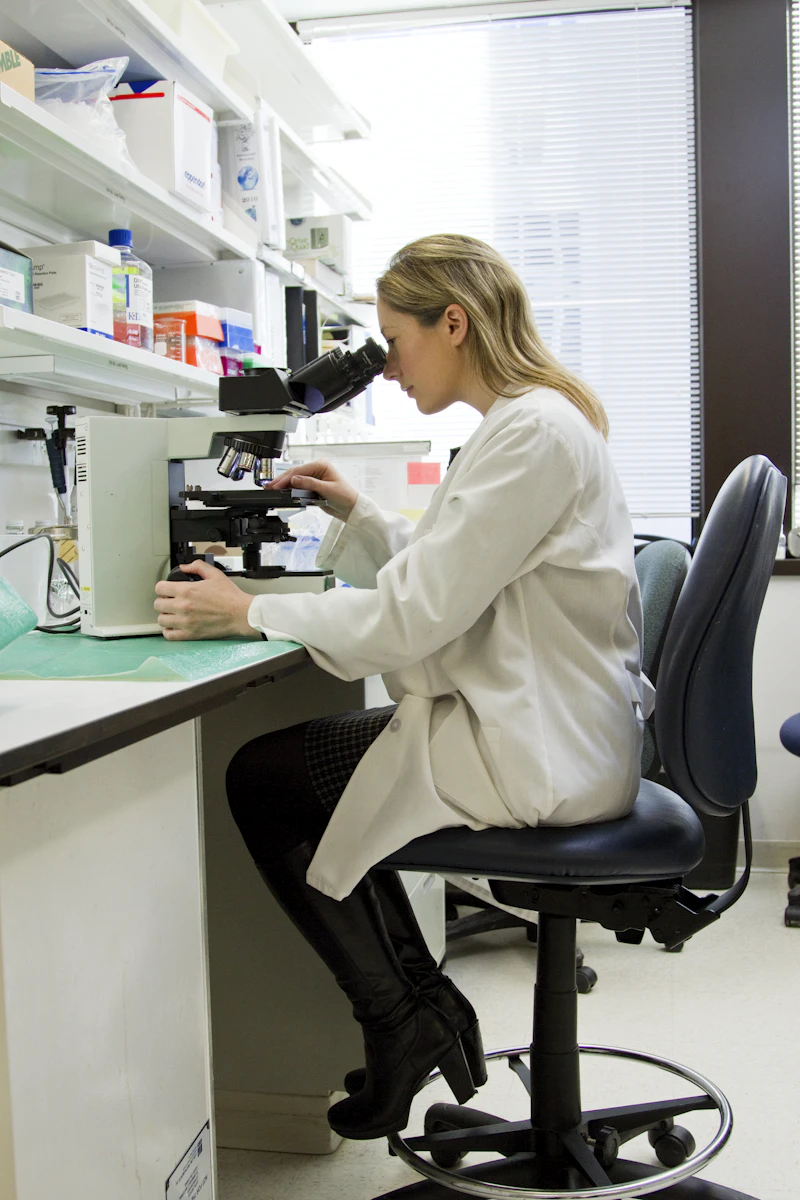
Modern analytical instruments like NMR and MS spectrometers working in tandem
A Deep Dive: The Stressful Life of a Broccoli Plant
Objective
To understand how a common Brassicaceae vegetable (like broccoli) changes its internal chemistry (metabolome) in response to drought stress.
Why it's important
Climate change is increasing the frequency of droughts. Understanding how food crops cope with stress helps scientists develop more resilient varieties, ensuring future food security. Furthermore, stress can alter the levels of health-promoting compounds, so this research also impacts nutritional science.

Broccoli, a member of the Brassicaceae family, responds to stress by altering its metabolic profile.
Methodology: Step-by-Step
The entire process, from plant to data, can be broken down into a clear workflow:
Plant Growth & Stress
Plants are grown under controlled conditions with applied drought stress
Sample Collection
Leaves harvested and flash-frozen to preserve metabolic state
Metabolite Extraction
Metabolites are extracted using appropriate solvents
Split Analysis
Extract divided for NMR and FI-ESI-MS analysis
NMR Analysis
Structural identification and quantification
FI-ESI-MS Analysis
Rapid detection and semi-quantification

The analytical workflow from sample preparation to data analysis
Results and Analysis
The combined data revealed a fascinating story of plant survival:
- NMR Results showed a significant increase in common "stress protectants" like proline and sucrose—these molecules help protect cellular structures from dehydration damage.
- FI-ESI-MS Results detected dramatic changes in a much wider range of compounds. Most notably, it showed a sharp increase in specific glucosinolates, the compounds that give broccoli its slightly bitter taste and are known for their anti-cancer properties.
Scientific Importance: This tells us that the broccoli plant doesn't just try to survive—it actively overproduces valuable defensive compounds when threatened. For agriculture, identifying which specific glucosinolates increase could lead to breeding crops that are both stress-resistant and more nutritious. For the food industry, it could help in optimizing growing conditions to maximize health benefits.
The Data Behind the Discovery
The following data visualizations and tables summarize the types of crucial data generated by this hypothetical experiment.
Metabolite Changes Under Drought Stress
Key Metabolite Changes Detected by NMR Spectroscopy
NMR provides robust data on the concentration changes of well-known metabolites.
| Metabolite | Function in Plant | Change under Drought (vs. Control) | Significance |
|---|---|---|---|
| Proline | Osmoprotectant, stabilizes proteins | +450% | Primary indicator of water stress; protects cell integrity |
| Sucrose | Energy source, osmolyte | +220% | Provides energy and helps maintain water balance within cells |
| Glutamate | Precursor for stress molecules | -15% | Slightly decreased as it is used to make more proline |
Select Glucosinolates Detected by FI-ESI-MS
MS excels at detecting and semi-quantifying a vast array of specific metabolites, even at low levels.
| Glucosinolate | Exact Mass (g/mol) | Relative Abundance (Control) | Relative Abundance (Drought) | Putative Role |
|---|---|---|---|---|
| Glucoraphanin | 435.045 | 100 | 385 | Precursor to potent anti-cancer compound (sulforaphane) |
| Sinigrin | 359.045 | 100 | 210 | Defense against herbivores and pathogens |
| Gluconasturtiin | 422.071 | 100 | 155 | Defense compound; contributes to peppery flavor |
Essential Research Reagents & Materials
This table lists the key tools needed to conduct such an experiment.
| Item | Function | Why It's Essential |
|---|---|---|
| Deuterated Solvent (e.g., D₂O) | The solvent for NMR samples | Atoms in the solvent (Deuterium) don't interfere with the NMR signals from the sample |
| Methanol / Water Solvent Mix | The extraction solvent | Effectively dissolves a wide range of metabolites with different chemical properties |
| Formic Acid | A mobile phase additive for MS | Helps protonate molecules during ESI, improving ionization efficiency |
| Liquid Nitrogen | Used to instantly freeze tissue | "Freezes" the metabolic state of the plant at the exact moment of harvest |
| Reference Compound (e.g., TSP) | Internal standard for NMR | Provides a known signal used to calibrate the chemical shift scale |
Conclusion
The fusion of NMR and FI-ESI-MS is more than just a technical marvel; it's a new lens through which we can view the intricate chemistry of life. For the Brassicaceae family, this means we can now precisely track how their valuable nutritional profile is shaped by genetics and environment.
This knowledge empowers farmers to grow better food, helps nutritionists understand what's on our plates, and gives plant biologists the tools to safeguard our crops against a changing climate. The next time you crunch into a piece of broccoli, remember—it's not just a vegetable. It's a complex, dynamic chemical universe, and we are now better equipped than ever to explore it.

The Brassicaceae family offers a diverse array of nutritious vegetables with complex metabolic profiles
How to cite this article: "The Vegetable Detectives: Unlocking the Secret Chemistry of Broccoli and Cabbage" (2023). Metabolomics Insights Journal.