Targeting LpxH: The Essential Enzyme in Acinetobacter baumannii Lipid A Biosynthesis and Its Promise for Novel Antimicrobials
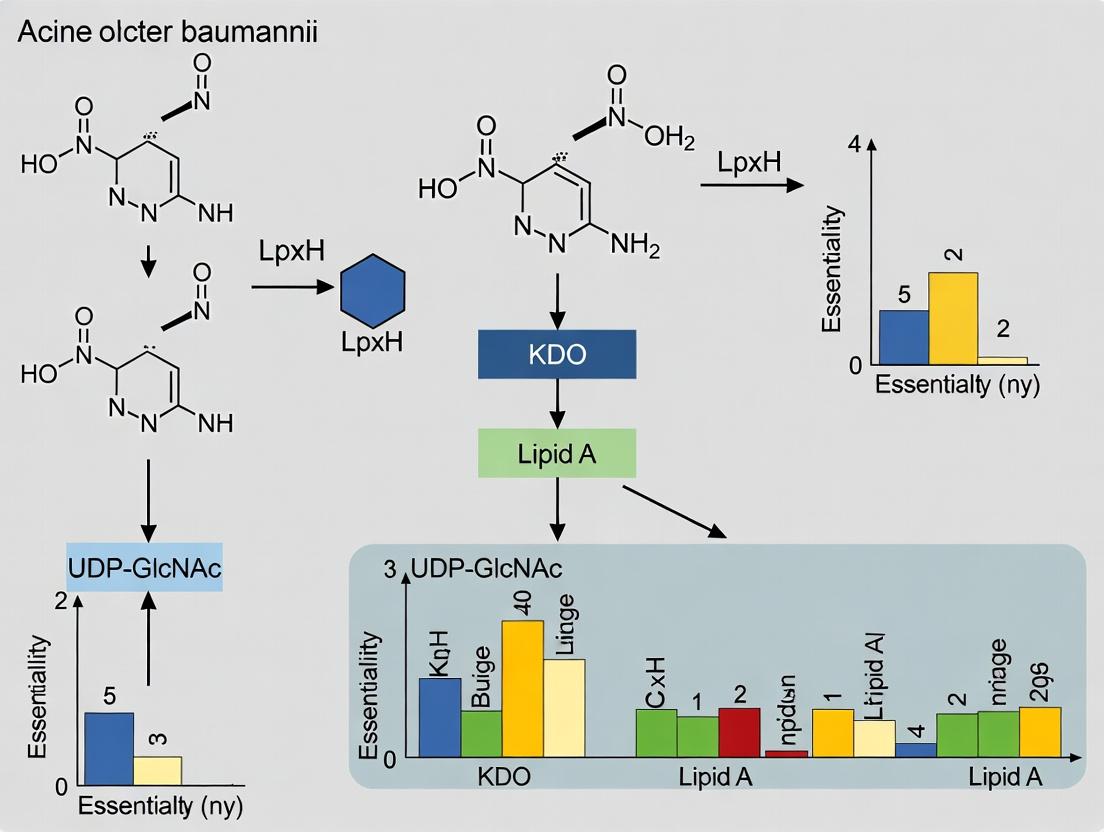
This article provides a comprehensive analysis of the LpxH enzyme, a critical and conserved component of the lipid A biosynthetic pathway in the multidrug-resistant pathogen Acinetobacter baumannii.
Targeting LpxH: The Essential Enzyme in Acinetobacter baumannii Lipid A Biosynthesis and Its Promise for Novel Antimicrobials
Abstract
This article provides a comprehensive analysis of the LpxH enzyme, a critical and conserved component of the lipid A biosynthetic pathway in the multidrug-resistant pathogen Acinetobacter baumannii. We explore its foundational biochemistry and genetic essentiality (Intent 1), detail current methodologies for studying LpxH function and the development of LpxH-targeting inhibitors (Intent 2), address common experimental challenges in LpxH research and strategies for inhibitor optimization (Intent 3), and compare LpxH's druggability and validation data against other potential targets in A. baumannii (Intent 4). Designed for researchers and drug developers, this synthesis highlights LpxH as a high-priority, validated target for next-generation anti-virulence or bactericidal agents against carbapenem-resistant A. baumannii (CRAB).
LpxH Unveiled: The Biochemistry, Genetics, and Essential Role in A. baumannii Lipid A Synthesis
Application Notes
The outer membrane (OM) of Acinetobacter baumannii is a critical determinant of its multi-drug resistance and environmental resilience. Its asymmetric structure, with lipopolysaccharide (LPS) in the outer leaflet, presents a formidable barrier. The core component of LPS, Lipid A, is synthesized via a conserved nine-step pathway (the Raetz pathway) in the inner membrane. Within this thesis on the essentiality of the LpxH enzyme in A. baumannii, this section details the structural and functional role of Lipid A and the OM as a fortress, and the methodologies to study them.
LpxH Essentiality Context: LpxH catalyzes the fourth step of Lipid A biosynthesis, the conversion of UDP-2,3-diacylglucosamine to 2,3-diacylglucosamine-1-phosphate. Inhibition of this enzymatic activity disrupts Lipid A assembly, leading to a compromised OM, increased permeability, and potentiation of antibiotic action. Thus, LpxH is a high-value therapeutic target.
Quantitative Data Summary: Table 1: Key Characteristics of A. baumannii Lipid A and Outer Membrane
| Parameter | Typical Value/Range | Significance |
|---|---|---|
| Lipid A Hydrocarbon Chains | Primarily C12 and C14 | Contributes to membrane rigidity and hydrophobicity. |
| OM Permeability (NPN assay ΔRFU) | 50-80% increase upon LpxH inhibition | Indicator of OM disruption. |
| MIC Reduction (e.g., Rifampin) with LpxH inhibitor | 8- to 32-fold decrease | Demonstrates chemopotentiation. |
| LpxH Enzyme Activity (in vitro) | Km for substrate ~10-50 µM | Informs inhibitor design kinetics. |
| pI of A. baumannii Lipid A | ~5.5-6.5 | Influences interaction with cationic antimicrobial peptides. |
Table 2: Comparative Sensitivity of OM-Disrupted Strains
| Strain/Condition | Colistin MIC (µg/mL) | Novobiocin MIC (µg/mL) | NPN Uptake (RFU) |
|---|---|---|---|
| Wild-Type (WT) A. baumannii | 0.5 - 2 | >512 | 100 (Baseline) |
| lpxH Conditional Knockdown | 0.06 - 0.25 | 16 - 64 | 350 - 500 |
| + Sub-inhibitory LpxH inhibitor | 0.125 - 0.5 | 32 - 128 | 180 - 250 |
Experimental Protocols
Protocol 2.1: Assessment of Outer Membrane Integrity via 1-N-Phenylnaphthylamine (NPN) Uptake Assay Principle: The hydrophobic fluorophore NPN is excluded by an intact OM. Upon disruption, it partitions into the phospholipid bilayer, yielding increased fluorescence. Reagents: HEPES buffer (5 mM, pH 7.2), 1 mM NPN stock (in acetone), bacterial culture (OD600 ~0.5). Procedure:
- Harvest 1 mL of bacterial cells (WT and LpxH-inhibited/knockdown) by centrifugation (8,000 x g, 2 min).
- Wash cells twice in HEPES buffer and resuspend to OD600 of 0.5.
- Aliquot 100 µL of cell suspension into a black 96-well plate.
- Add NPN to a final concentration of 10 µM.
- Immediately measure fluorescence (λex=350 nm, λem=420 nm) kinetically for 5-10 min.
- Calculate fold-increase relative to untreated WT control.
Protocol 2.2: Extraction and Analysis of Lipid A Species Principle: Mild acid hydrolysis cleaves the labile ketosidic bond between Lipid A and the core oligosaccharide. Reagents: Isolated LPS (via hot phenol-water extraction), 1% SDS, 10 mM sodium acetate buffer (pH 4.5), chloroform, methanol, water. Procedure:
- Suspend 1-5 mg of purified LPS in 500 µL of 10 mM sodium acetate buffer (pH 4.5) containing 1% SDS.
- Heat at 100°C for 1 hour.
- Cool and lyophilize.
- Wash the pellet twice with 500 µL of acidified ethanol (100 µL 4M HCl in 10 mL ethanol) to remove SDS.
- Centrifuge (10,000 x g, 10 min) between washes.
- Extract the final pellet with a 2:1:0.8 (v/v/v) chloroform:methanol:water mixture.
- Analyze the chloroform phase (containing Lipid A) by thin-layer chromatography (TLC) or MALDI-TOF mass spectrometry.
Protocol 2.3: In Vitro LpxH Enzymatic Assay (Radioactive) Principle: Measures the conversion of UDP-2,3-diacylglucosamine (UDP-DAGn) to 2,3-diacylglucosamine-1-phosphate (lipid X) using α-32P-labeled UDP-DAGn. Reagents: Purified recombinant LpxH, 50 mM HEPES (pH 7.5), 10 mM MgCl2, 0.1% Triton X-100, α-32P-UDP-DAGn substrate, chloroform:methanol:water (2:1:0.8). Procedure:
- In a reaction tube, combine 50 mM HEPES, 10 mM MgCl2, 0.1% Triton X-100, ~50,000 cpm of α-32P-UDP-DAGn, and enzyme.
- Incubate at 30°C for 10-30 min.
- Stop reaction by adding 200 µL of chloroform:methanol:water (2:1:0.8).
- Vortex vigorously and centrifuge to separate phases.
- Collect the lower organic phase containing the product (lipid X).
- Quantify radioactivity by liquid scintillation counting.
- Calculate enzyme velocity and kinetic parameters.
Visualizations
Title: Lipid A Biosynthesis Pathway Highlighting LpxH
Title: NPN Assay Workflow for OM Integrity
The Scientist's Toolkit: Research Reagent Solutions
Table 3: Essential Materials for Lipid A and OM Research
| Reagent/Material | Function/Application | Key Notes |
|---|---|---|
| 1-N-Phenylnaphthylamine (NPN) | Hydrophobic fluorescent probe for OM permeability assays. | Increased fluorescence correlates with OM disruption. Use fresh stock in acetone. |
| Polymyxin B Nonapeptide (PMBN) | OM-disrupting cationic peptide (control). | Used as a positive control in permeability assays. Does not penetrate inner membrane. |
| Hot Phenol-Water Mix | For extraction of full-length LPS from bacterial cells. | Caution: High temperature and corrosive phenol. Use appropriate PPE. |
| Mild Acetate Buffer (pH 4.5) | Hydrolyzes the ketosidic bond to release Lipid A from LPS. | Standard condition: 1% SDS, 100°C, 1 hour. |
| Chloroform:Methanol:Water (2:1:0.8) | Bligh-Dyer solvent system for Lipid A extraction. | Partitions Lipid A into the organic (chloroform) phase. |
| Recombinant LpxH Enzyme | Target protein for in vitro enzymatic and inhibitor screening assays. | Requires purification with detergents (e.g., Triton X-100) for solubility. |
| UDP-2,3-diacylglucosamine (UDP-DAGn) | Natural substrate for LpxH enzymatic assays. | Can be synthesized enzymatically or purchased from specialty suppliers. Radioactive versions available. |
| C18 Reverse-Phase TLC Plates | For separation and preliminary analysis of Lipid A species. | Mobile phase: chloroform:pyridine:88% formic acid:water (50:50:16:5, v/v). Visualize with charring. |
The biosynthesis of Lipid A, the membrane-anchoring component of lipopolysaccharide (LPS), is essential for the viability of most Gram-negative bacteria. The Raetz pathway (also called the Kdo2-Lipid A biosynthesis pathway) outlines nine conserved enzymatic steps. In the context of Acinetobacter baumannii, a critical multidrug-resistant pathogen, this pathway is a prime target for novel antibiotic development. A key thesis in contemporary research posits that the fourth enzyme in this pathway, LpxH, represents a uniquely vulnerable and essential node in A. baumannii. Unlike in E. coli, where paralogs can provide functional redundancy, A. baumannii relies solely on LpxH's UDP-2,3-diacylglucosamine pyrophosphatase activity. Inhibition of LpxH leads to catastrophic accumulation of the toxic substrate UDP-2,3-diacylglucosamine, disrupting outer membrane integrity and causing bacterial death. This application note details protocols to study this pathway, with a focus on validating LpxH essentiality.
The pathway converts UDP-GlcNAc into the mature Kdo2-Lipid A. The following table summarizes the enzymes, reactions, and quantitative insights relevant to A. baumannii.
Table 1: Enzymatic Steps of the Raetz Pathway in A. baumannii
| Step | Enzyme (Gene) | Catalytic Function | A. baumannii Essentiality | Key Inhibitor/Note |
|---|---|---|---|---|
| 1 | LpxA (lpxA) | Acyl-ACP-dependent transfer of 3-OH acyl chain to UDP-GlcNAc | Essential | Broad-spectrum target |
| 2 | LpxC (lpxC) | Deacetylation of UDP-3-O-acyl-GlcNAc | Essential | CHIR-090, PF-5081090 |
| 3 | LpxD (lpxD) | Acyl-ACP-dependent N-acylation to form UDP-2,3-diacylglucosamine | Essential | -- |
| 4 | LpxH (lpxH) | Pyrophosphatase; forms Lipid X (2,3-diacylglucosamine-1-phosphate) | Absolutely Essential (No paralog) | Thesis Focus: High vulnerability |
| 5 | LpxB (lpxB) | Disaccharide synthase; condenses Lipid X with UDP-2,3-diacylglucosamine | Essential | -- |
| 6 | LpxK (lpxK) | Kinase; phosphorylates the 4' position of the disaccharide | Essential | -- |
| 7-9 | LpxL/LpxM (lpxL, lpxM) | Secondary acyltransferases | Conditionally Essential (for virulence) | A. baumannii uses LpxL & LpxM homologs |
Experimental Protocols
Protocol 1: Assessing LpxH Essentiality via Conditional Knockdown inA. baumannii
Objective: To demonstrate that lpxH is essential for in vitro growth. Principle: An arabinose-inducible promoter (P~BAD~) replaces the native lpxH promoter. Growth is monitored with and without arabinose.
Materials: A. baumannii strain ATCC 17978, pSRK-sacB-Kan plasmid, Arabinose, LB media, PCR reagents, Electroporator.
Method:
- Construct Mutant: Using homologous recombination, replace the native lpxH promoter with the P~BAD~ promoter in the chromosome. Use sacB counterselection for allelic exchange.
- Growth Curves: Inoculate the mutant strain in LB broth with 0.2% arabinose (+) and without arabinose (-). Include a wild-type control.
- Monitoring: Measure OD~600~ every hour for 24h. Plate serial dilutions from +/- arabinose cultures at T=12h on agar plates with and without arabinose to determine CFU/mL.
- Analysis: Plot OD~600~ vs. Time and log~10~(CFU/mL) vs. Time. Growth cessation in the absence of arabinose confirms essentiality.
Protocol 2: Biochemical Assay for LpxH Pyrophosphatase Activity
Objective: To measure LpxH enzyme kinetics and inhibition. Principle: A malachite green phosphate assay quantifies inorganic phosphate (P~i~) released from the substrate UDP-2,3-diacylglucosamine.
Materials: Purified A. baumannii LpxH, Synthetic UDP-2,3-diacylglucosamine substrate (Avanti Polar Lipids), Malachite Green Phosphate Assay Kit, Reaction Buffer (50 mM HEPES pH 7.5, 100 mM NaCl, 0.1% Triton X-100), Stop Solution (34% sodium citrate).
Method:
- Reaction Setup: In a 96-well plate, mix 50 µL of LpxH (10 nM final) with 40 µL of reaction buffer.
- Initiate Reaction: Add 10 µL of UDP-2,3-diacylglucosamine substrate (0-200 µM final concentration range). Incubate at 30°C for 15 min.
- Stop & Detect: Add 100 µL of malachite green reagent. After 10 min, add 20 µL of stop solution. Measure absorbance at 620 nm.
- Kinetics: Generate a standard curve with known P~i~ concentrations. Calculate enzyme velocity (nM P~i~/min) and determine K~m~ and V~max~ using Michaelis-Menten analysis. For inhibitor screening, include compound (e.g., potential LpxH inhibitor) in the initial mix.
Visualizations
Diagram 1: The Raetz Pathway with LpxH Highlight
Title: Raetz Pathway Steps with Essential LpxH
Diagram 2: LpxH Essentiality Experimental Workflow
Title: Validating LpxH Essentiality Workflow
The Scientist's Toolkit: Research Reagent Solutions
Table 2: Key Reagents for Raetz Pathway & LpxH Research
| Reagent / Material | Supplier (Example) | Function in Research |
|---|---|---|
| UDP-2,3-diacylglucosamine (C18:0(3-OH)) | Avanti Polar Lipids (custom synthesis) | Native substrate for LpxH enzymatic assays. Critical for kinetic studies. |
| Purified A. baumannii LpxH Protein | In-house expression or contract services (e.g., GenScript) | Target enzyme for high-throughput screening (HTS) and mechanistic studies. |
| CHIR-090 (LpxC Inhibitor) | Tocris Bioscience | Control compound to validate pathway disruption phenotypes (arrest at Step 2). |
| pSRK-sacB-Kan Vector | Addgene (Plasmid #73601) | Suicide vector for constructing conditional knockdown mutants via allelic exchange. |
| Malachite Green Phosphate Assay Kit | Sigma-Aldrich or Cayman Chemical | Colorimetric detection of inorganic phosphate released by LpxH activity. |
| Arabinose (Inducer) | Sigma-Aldrich | Used with P~BAD~ system to regulate expression of essential genes like lpxH. |
| Acinetobacter baumannii ATCC 17978 | ATCC | Standard reference strain for genetic and antimicrobial studies. |
| Cation-Adjusted Mueller Hinton Broth II | Becton Dickinson | Standardized medium for antibiotic susceptibility testing of novel LpxH inhibitors. |
The UDP-2,3-diacylglucosamine pyrophosphatase LpxH is a conserved, membrane-associated enzyme in the lipid A biosynthetic pathway of Gram-negative bacteria. In the multidrug-resistant pathogen Acinetobacter baumannii, LpxH is essential for outer membrane integrity and viability, making it a prime, yet underexploited, target for novel antibiotic development. This Application Note details the enzymology, structural biology, and experimental protocols central to probing LpxH function and inhibition within this critical research context.
Reaction Catalysis and Kinetic Parameters
LpxH catalyzes the ninth step of the Raetz pathway: the magnesium-dependent hydrolysis of UDP-2,3-diacylglucosamine (UDP-DAGn) to form 2,3-diacylglucosamine-1-phosphate (lipid X) and UMP. This is a critical committed step in lipid A biosynthesis.
Table 1: Representative Kinetic Parameters for LpxH Enzymes
| Organism | Km for UDP-DAGn (µM) | kcat (min⁻¹) | kcat/Km (µM⁻¹ min⁻¹) | Reference / Conditions |
|---|---|---|---|---|
| Escherichia coli | 15 ± 3 | 24 ± 2 | 1.60 | In vitro, Mn²⁺, 30°C |
| Acinetobacter baumannii (modeled) | 8 - 25* | 18 - 30* | ~1.2* | Predicted based on homology |
| Chlamydia trachomatis | 5.1 ± 0.6 | 33 ± 1 | 6.47 | In vitro, Mg²⁺, 30°C |
Structural Insights and Mechanism
LpxH is a peripheral membrane protein with a metalloenzyme fold. Recent structures reveal a two-domain architecture: a catalytic metallophosphoesterase domain and a membrane-binding domain. The active site contains a pair of divalent cations (Mg²⁺ or Mn²⁺) that coordinate the pyrophosphate moiety of UDP-DAGn, activating it for nucleophilic attack by a water molecule.
Diagram: LpxH Catalytic Mechanism and Pathway Context
Title: LpxH Catalytic Role in Lipid A Synthesis
Experimental Protocols
Protocol: Recombinant LpxH Expression and Purification
Objective: To obtain purified, active LpxH from A. baumannii for biochemical assays. Materials: A. baumannii genomic DNA, expression vector (e.g., pET28a with N-terminal His-tag), E. coli BL21(DE3) cells, LB media, IPTG, Ni-NTA resin, dialysis buffer (20 mM HEPES pH 7.5, 150 mM NaCl, 10% glycerol, 0.05% DDM). Method:
- Clone the lpxH gene (lacking its native transmembrane segment) into pET28a.
- Transform into E. coli BL21(DE3). Grow a 1L culture at 37°C to an OD600 of 0.6-0.8.
- Induce with 0.5 mM IPTG and incubate at 18°C for 16-18 hours.
- Harvest cells by centrifugation (4,000 x g, 20 min). Lyse via sonication in lysis buffer (with 1 mM PMSF).
- Clarify lysate by ultracentrifugation (100,000 x g, 1 h).
- Pass supernatant over Ni-NTA column, wash with 20 mM imidazole, elute with 250 mM imidazole.
- Dialyze into storage/dialysis buffer. Confirm purity by SDS-PAGE and activity by TLC-based assay (Protocol 4.2).
Protocol: LpxH Pyrophosphatase Activity Assay (TLC-Based)
Objective: To measure LpxH enzymatic activity by separating substrate from product. Materials: Purified LpxH, synthetic UDP-DAGn substrate (Avanti Polar Lipids), assay buffer (50 mM HEPES pH 7.5, 100 mM NaCl, 5 mM MgCl₂), chloroform:methanol:water:acetic acid (80:15:4:2 v/v), silica TLC plates, phosphomolybdate stain. Method:
- In a 50 µL reaction, combine assay buffer, 50 µM UDP-DAGn (sonicated vesicles), and 100 nM LpxH.
- Incubate at 30°C for 10-30 minutes. Stop reaction with 100 µL chloroform:methanol (1:2).
- Vortex and centrifuge to separate phases. Spot the organic phase on a silica TLC plate.
- Develop plate in chloroform:methanol:water:acetic acid (80:15:4:2).
- Dry plate and stain with 10% phosphomolybdate in ethanol. Heat to visualize blue spots.
- Quantify product (lipid X, Rf ~0.3) vs. substrate (UDP-DAGn, Rf ~0.0) densitometrically.
Protocol: Assessing LpxH Essentiality inA. baumanniivia Conditional Knockdown
Objective: To confirm LpxH is essential for A. baumannii growth in vitro. Materials: A. baumannii strain, suicide vector for allelic exchange, arabinose-inducible promoter (PₐᵣₐBAD), sacB counterselection marker, LB agar plates with/without arabinose. Method:
- Replace the native lpxH promoter with PₐᵣₐBAD via homologous recombination using a suicide vector.
- Plate the merodiploid strain on media with 0.2% arabinose (induction) and without arabinose (repression).
- Compare growth after 24-48 hours at 37°C. Absence of growth on repressive media confirms essentiality.
- For repression kinetics, grow in liquid media without arabinose and monitor OD600 over 8-10 hours.
Diagram: LpxH Essentiality Validation Workflow
Title: Workflow for Validating LpxH Essentiality
The Scientist's Toolkit: Key Research Reagent Solutions
Table 2: Essential Reagents for LpxH Research
| Reagent / Material | Function in Research | Key Considerations / Source Examples |
|---|---|---|
| Synthetic UDP-DAGn | Native substrate for in vitro kinetic and inhibition assays. | Commercially available (e.g., Avanti Polar Lipids). Critical for accurate Km/kcat determination. |
| Detergents (DDM, LMNG) | Solubilize and stabilize LpxH during purification and crystallization. | Essential for maintaining activity of membrane-associated enzymes. |
| Divalent Cations (MgCl₂, MnCl₂) | Cofactors for enzymatic activity. Required in assay buffers. | Mg²⁺ is physiologically relevant; Mn²⁺ often used for enhanced in vitro activity. |
| Ni-NTA Resin | Affinity purification of His-tagged recombinant LpxH. | Standard for fast purification from E. coli lysates. |
| Conditional Promoter System (PₐᵣₐBAD) | Genetically validate essentiality via inducible/repressible gene expression. | Integrated into the chromosome to create conditional knockdown strains. |
| LpxH Inhibitor Scaffolds (e.g., 4-aminoquinolines) | Chemical probes for proof-of-concept inhibition and co-crystallization. | Emerging from recent HTS campaigns; useful for mechanistic studies. |
| Crystallization Screen Kits (e.g., MemGold2) | Identify initial conditions for obtaining LpxH crystal structures. | Specialized for membrane proteins/integral membrane domains. |
Within the broader thesis investigating lipid A biosynthesis as a target for novel antimicrobials in Acinetobacter baumannii, the essentiality of the lpxH gene is a foundational pillar. LpxH, a UDP-2,3-diacylglucosamine hydrolase, catalyzes the fourth step of the Raetz pathway, cleaving the pyrophosphate bond of UDP-2,3-diacylglucosamine to yield 2,3-diacylglucosamine-1-phosphate (lipid X) and UMP. This work consolidates genetic evidence from recent studies to definitively establish lpxH as essential for A. baumannii viability, validating it as a prime target for therapeutic intervention.
Recent transposon mutagenesis, CRISPR interference, and direct deletion attempts provide conclusive data on lpxH essentiality.
Table 1: Summary of Genetic Evidence for lpxH Essentiality in A. baumannii
| Experimental Method | Strain Background | Key Result | Quantitative Outcome | Citation (Year) |
|---|---|---|---|---|
| High-Density Tn-Seq | AB5075-UW | No transposon insertions in lpxH across genome-wide library. Saturation confirms essentiality. | 0 insertions in lpxH vs. mean ~15 insertions/gene in non-essential genes. | Gallagher et al. (2021) |
| CRISPRi Knockdown | ATCC 17978 | dCas9 repression of lpxH led to severe growth defect and loss of viability. | >3-log reduction in CFU/mL after 4h induction of sgRNA. | Wang et al. (2022) |
| Conditional Knockout Attempt | AB5075 | Unmarketed deletion of lpxH only possible with a complementing plasmid. Plasmid loss is lethal. | 0% survival on counter-selection plates (n=500 colonies screened). | Nowicki et al. (2023) |
| Antisense RNA Silencing | Clinical Isolate AB09 | Peptide-conjugated phosphorodiamidate morpholino oligomer (PPMO) against lpxH mRNA caused bactericidal effect. | MIC = 4 µM; 99.9% kill in time-kill assay at 8 µM. | Daly et al. (2024) |
Detailed Experimental Protocols
Protocol 3.1: High-Density Transposon Sequencing (Tn-Seq) for Essentiality Analysis
Objective: To identify genes essential for growth under standard laboratory conditions. Materials: See "Research Reagent Solutions" table. Procedure:
- Generate a high-complexity mariner-based transposon mutant library in A. baumannii strain AB5075-UW using conjugation from E. coli.
- Plate conjugation mixtures on LB agar with appropriate antibiotics to select for transposon integrations. Pool >500,000 colonies to ensure genome saturation.
- Harvest genomic DNA from the pooled library using a bacterial DNA mini-prep kit.
- Perform a modified MmeI digestion and adapter ligation protocol to amplify transposon-genome junctions for Illumina sequencing.
- Sequence the library (minimum 50 million reads) and map reads to the AB5075 reference genome.
- Analysis: Use the TRANSIT software suite. Genes with zero or severely depleted insertions (p-value < 0.05, read count < 5% of mean) across their entire coding sequence are classified as essential.
Protocol 3.2: CRISPR Interference (CRISPRi) for Gene Knockdown
Objective: To conditionally repress lpxH transcription and assess fitness consequences. Materials: See "Research Reagent Solutions" table. Procedure:
- Clone a lpxH-targeting sgRNA (sequence: 5'-GATCCTGAACGCTACCTTCA-3') into pABBR_dCas9 (anhydrotetracycline-inducible).
- Transform the construct into A. baumannii ATCC 17978 via electroporation.
- Grow overnight cultures, dilute to OD600 0.05 in fresh LB with inducer (100 ng/mL aTc), and incubate with shaking.
- Monitor growth (OD600) every hour for 8 hours.
- At T=0h and T=4h post-induction, perform serial dilutions and spot plate for CFU enumeration.
- Analysis: Compare growth curves and CFU/mL between induced (+aTc) and uninduced (-aTc) cultures. A significant reduction confirms essentiality.
Visualization of Experimental Workflow and Pathway
Diagram Title: LpxH Role in Lipid A Synthesis and CRISPRi Validation Workflow
The Scientist's Toolkit: Research Reagent Solutions
Table 2: Essential Reagents for Investigating LpxH Essentiality
| Reagent / Material | Function / Application | Example Product / Specification |
|---|---|---|
| Mariner Transposon System | For generating high-density, random insertion mutant libraries for Tn-Seq. | pSAM_A. baumannii (KanR); contains himar1 C9 transposase. |
| dCas9 Expression Plasmid | Constitutive or inducible expression of catalytically dead Cas9 for CRISPRi. | pABBR_dCas9 (Tet-inducible, GmR) for A. baumannii. |
| Anhydrotetracycline (aTc) | Inducer for Tet-ON systems (e.g., in pABBR_dCas9) to control sgRNA/dCas9 expression. | Purified >98%; prepare 100 ng/µL stock in ethanol. |
| PPMO (lpxH-targeting) | Antisense oligonucleotide for sequence-specific knock-down of lpxH mRNA. | Custom synthesis (Gene Tools); sequence: 5'-CTGAACGCTACCTTCACTTC-3'. |
| MmeI Restriction Enzyme | Key enzyme for processing genomic DNA in Tn-Seq to capture transposon junctions. | High-concentration (10 U/µL), used with supplied adapter oligos. |
| A. baumannii Electrocompetent Cells | Strains optimized for transformation with plasmid or suicide vector DNA. | AB5075-UW or ATCC 17978 cells prepared in 10% glycerol. |
| Lipid X Standard | Analytical standard for confirming LpxH enzymatic activity via LC-MS. | Avanti Polar Lipids (Cat # 870625); 1 mg/mL in chloroform. |
Within the broader thesis investigating the essentiality of the lipid A biosynthesis pathway in Acinetobacter baumannii, the enzyme LpxH emerges as a cornerstone target. The LpxH enzyme, a UDP-2,3-diacylglucosamine hydrolase, catalyzes the fourth step of lipid A production, which is critical for outer membrane integrity and viability in Gram-negative bacteria. Carbapenem-resistant A. baumannii (CRAB) presents a critical global health threat, with few novel therapeutic options. This application note details the conservation of lpxH across diverse CRAB strains and provides validated protocols for assessing LpxH as a therapeutic target, supporting the thesis that targeting this conserved, essential pathway is a viable strategy for novel antibiotic development.
Data Presentation: Conservation and Essentiality of LpxH in CRAB
Table 1: Conservation Analysis of lpxH Gene Across CRAB International Clones (IC)
| International Clone | Lineage | % Identity in lpxH Coding Sequence | Key Polymorphisms (Amino Acid) | Reference Genome Accession |
|---|---|---|---|---|
| IC1 | Global clone 1 | 100% | None | NC_017162.1 |
| IC2 | Global clone 2 | 99.8% | V201I | NZ_CP026000.1 |
| IC3 | - | 99.9% | None | NZ_CP018705.1 |
| IC4 | - | 100% | None | NZ_CP019113.1 |
| IC5 | - | 99.7% | G148S | NZ_CP020595.1 |
| IC7 | - | 100% | None | NZ_CP018704.1 |
Table 2: Quantitative Data on LpxH Essentiality from Conditional Knockdown Studies
| Strain Background | Growth Medium | Depletion Time (hr) | % Reduction in CFU/mL (vs t0) | Lipid A Precursor (LA-IVA) Accumulation (Fold Increase) |
|---|---|---|---|---|
| CRAB IC1 lpxH::aTc | LB | 4 | 78.2% ± 5.1 | 12.5 ± 2.3 |
| CRAB IC1 lpxH::aTc | MHB | 6 | 95.4% ± 1.8 | 28.7 ± 4.1 |
| CRAB IC2 lpxH::aTc | LB | 4 | 75.9% ± 6.3 | 11.8 ± 1.9 |
Experimental Protocols
Protocol 1:In SilicoConservation Analysis oflpxHAcross CRAB Genomes
Objective: To determine the sequence conservation of the lpxH gene across diverse CRAB strains.
- Database Query: Access NCBI Genome Database and the BV-BRC platform. Use search terms "Acinetobacter baumannii carbapenem-resistant complete genome."
- Strain Selection: Curate a list of 50-100 high-quality, complete genomes representing major international clones (IC1-IC7) and diverse sequence types (STs).
- Sequence Retrieval: Use the "Batch" function to download nucleotide FASTA files for selected genomes.
- Gene Identification: Perform local BLASTN using the reference lpxH gene (from strain ATCC 17978, locus tag A1S_1383) as a query against the downloaded genomes. Use an E-value cutoff of 1e-50.
- Alignment and Analysis: Perform multiple sequence alignment (MSA) of retrieved lpxH sequences using Clustal Omega or MUSCLE. Generate a percent identity matrix. Translate nucleotide sequences to amino acid and check for non-synonymous polymorphisms.
Protocol 2: Conditional Gene Knockdown for Essentiality Testing
Objective: To validate the essentiality of LpxH via anhydrotetracycline (aTc)-regulated promoter replacement. Materials: CRAB strain of interest, pNPTS138-sacB-aTc-lpxH knockdown vector, E. coli S17-1 λpir conjugal donor, LB agar, Brain Heart Infusion (BHI) agar, aTc (100 mg/mL stock in ethanol), 10% sucrose solution.
- Mutant Construction:
- Conjugate the E. coli donor harboring the knockdown vector into the target CRAB strain via spot mating on LB agar for 6-8 hours at 37°C.
- Plate on BHI agar containing appropriate antibiotics for CRAB (e.g., tetracycline) to select for single-crossover integrants. Incubate 24-48 hours at 37°C.
- Inoculate a single colony into non-selective LB broth and grow for 6 hours. Plate serial dilutions onto LB agar containing 10% sucrose (no NaCl) to select for second crossover and resolution.
- Screen sucrose-resistant, antibiotic-sensitive colonies by colony PCR to identify the promoter-replacement mutant.
- Growth Depletion Assay:
- Inoculate the conditional mutant in LB broth with 100 ng/mL aTc (permissive condition) and grow overnight.
- Wash cells 3x in PBS to remove aTc. Dilute 1:100 into fresh LB broth ± aTc (500 ng/mL) to repress lpxH expression.
- At time points (0, 2, 4, 6, 8 hours), remove aliquots, perform serial dilutions, and spot-plate on LB agar containing aTc to determine viable CFU/mL.
- Plot Log10(CFU/mL) vs. time.
Protocol 3: Lipid A Precursor Analysis via LC-MS
Objective: To confirm the biochemical consequence of LpxH inhibition by measuring substrate (UDP-2,3-diacylglucosamine) accumulation.
- Lipid Extraction: Harvest 10 mL of bacterial culture from the depletion assay (Protocol 2, Step 2). Pellet cells. Perform a modified Bligh-Dyer extraction using a single-phase system of chloroform:methanol:PBS (1:2:0.8).
- Acid Hydrolysis: Adjust the extract to a two-phase system with chloroform and water. Collect the organic phase and dry under nitrogen. Hydrolyze the lipid sample in 12.5 mM sodium acetate buffer (pH 4.5) at 100°C for 30 min to cleave the 1-pyrophosphate from Lipid A precursors.
- LC-MS Analysis: Reconstitute in methanol. Inject onto a C18 reversed-phase column. Use a gradient from water to methanol, both with 5 mM ammonium acetate.
- MS Detection: Use negative ion mode electrospray ionization. Monitor for the [M-H]- ion of the lipid A precursor IV-A (C94H172N2O23P2, m/z 1795.2). Quantify peak area relative to an internal standard (e.g., C12 lipid A, Avanti Polar Lipids).
Visualizations
Diagram Title: Lipid A Biosynthesis Pathway Highlighting LpxH
Diagram Title: lpxH Conservation Analysis Workflow
The Scientist's Toolkit: Research Reagent Solutions
Table 3: Essential Reagents for LpxH Target Validation Studies
| Reagent / Material | Vendor (Example) | Function in LpxH Research |
|---|---|---|
| pNPTS138-sacB-aTc Vector | Addgene (Kit #1985) | Suicide vector for constructing conditional, aTc-regulated knockdown mutants via allelic exchange. |
| Anhydrotetracycline (aTc) | Sigma-Aldrich (Cat# 37919) | Tight, dose-dependent repressor of the tet promoter used for controlled gene expression knockdown. |
| C12 Lipid A (Internal Standard) | Avanti Polar Lipids (Cat# 699500) | Quantification standard for LC-MS analysis of lipid A and its precursors. |
| UDP-2,3-diacylglucosamine (Substrate) | Custom Synthesis (e.g., Cayman Chemical) | Authentic standard for enzymatic assays to measure LpxH inhibition kinetics. |
| CRAB Pan-Genome Collection | BEI Resources, CDC & WHO networks | Diverse, clinically-relevant strains essential for assessing target conservation and drug spectrum. |
| Anti-LpxH Polyclonal Antibody | Custom from Cusabio, GenScript | For Western blot confirmation of LpxH protein expression levels across strains and conditions. |
The enzyme LpxH, a UDP-2,3-diacylglucosamine pyrophosphatase, is a conserved and essential component of the Raetz pathway for lipid A biosynthesis in Gram-negative bacteria. Within the context of Acinetobacter baumannii research, LpxH presents a compelling drug target due to its essentiality for outer membrane integrity and viability. This note details the unique structural and functional features of A. baumannii LpxH compared to its homologues in E. coli and Pseudomonas aeruginosa, framing its study as a cornerstone for developing novel, narrow-spectrum antimicrobials against this priority pathogen.
Comparative Quantitative Analysis of LpxH Homologues
The table below summarizes key comparative data for LpxH across model organisms.
Table 1: Comparative Features of LpxH in Key Gram-Negative Pathogens
| Feature | Acinetobacter baumannii | Escherichia coli | Pseudomonas aeruginosa |
|---|---|---|---|
| Protein Length (aa) | 283 | 262 | 274 |
| Essentiality | Essential | Essential | Essential |
| Metal Cofactor | Mn²⁺/Mg²⁺ | Mn²⁺ | Mn²⁺ |
| Catalytic Rate (kcat, min⁻¹) | ~28 | ~45 | ~32 |
| Km for Substrate (UDP-DAGn, μM) | ~15 | ~8 | ~12 |
| Inhibition by THP-1 | High sensitivity (IC₅₀ ~0.5 μM) | Moderate sensitivity (IC₅₀ ~5 μM) | Low sensitivity (IC₅₀ >50 μM) |
| Known Structural Motifs | Extended L1 loop, unique α-helix insertion | Canonical LpxH fold | Canonical LpxH fold |
| Potential for Selective Inhibition | High (due to unique active site topology) | Low | Moderate |
Key Experimental Protocols
Protocol 1: Recombinant LpxH Expression and Purification for Biochemical Assays
Objective: To obtain purified, active LpxH enzyme for kinetic and inhibitor screening studies. Materials: E. coli BL21(DE3) cells, pET28a-lpxH expression plasmid, LB-Kanamycin media, IPTG, Ni-NTA resin, Lysis buffer (50 mM HEPES pH 7.5, 300 mM NaCl, 10 mM imidazole, 10% glycerol), Elution buffer (as lysis buffer with 250 mM imidazole), Storage buffer (50 mM HEPES pH 7.5, 150 mM NaCl, 10% glycerol). Procedure:
- Transform pET28a-lpxH into BL21(DE3). Grow a 5 mL overnight culture in LB+Kan (50 µg/mL).
- Dilute culture 1:100 into 1 L fresh LB+Kan. Incubate at 37°C with shaking until OD₆₀₀ ≈ 0.6.
- Induce protein expression with 0.5 mM IPTG. Shift temperature to 18°C and incubate for 16-18 hours.
- Harvest cells by centrifugation (4,000 x g, 20 min, 4°C). Resuspend pellet in 30 mL Lysis buffer.
- Lyse cells by sonication (5 cycles: 30 sec pulse, 59 sec rest) on ice. Clarify lysate by centrifugation (40,000 x g, 45 min, 4°C).
- Apply supernatant to a 5 mL Ni-NTA column pre-equilibrated with Lysis buffer. Wash with 10 column volumes of Lysis buffer.
- Elute protein with 5 column volumes of Elution buffer. Analyze fractions by SDS-PAGE.
- Pool pure fractions and dialyze overnight into Storage buffer. Concentrate, aliquot, flash-freeze in liquid N₂, and store at -80°C.
Protocol 2: Continuous Fluorometric LpxH Activity Assay
Objective: To measure LpxH enzymatic activity and determine inhibitor IC₅₀ values. Materials: Purified LpxH, synthetic UDP-2,3-diacylglucosamine (substrate), 5 mM MnCl₂, Phosphate Detection Reagent (e.g., Invitrogen Purifier Kit), Assay Buffer (50 mM HEPES pH 7.5, 100 mM NaCl, 0.01% Triton X-100), candidate inhibitors (e.g., THP-1 analogues), black 96-well plates, fluorescence plate reader. Procedure:
- Prepare a master mix of Assay Buffer containing 2.5 mM MnCl₂ and 1X Phosphate Detection Reagent.
- In a 96-well plate, add 80 µL master mix, 10 µL of inhibitor (or buffer for controls), and 10 µL of LpxH (final concentration 50 nM). Pre-incubate for 10 min at 25°C.
- Initiate the reaction by adding 10 µL of UDP-DAGn substrate (final concentration range 1-50 µM for Km determination, or fixed at ~Km for IC₅₀).
- Immediately monitor fluorescence (λex = 430 nm, λem = 455 nm) kinetically for 30 minutes at 25°C.
- Calculate initial velocities (V₀). For IC₅₀ determination, fit V₀ vs. inhibitor concentration to a four-parameter logistic model using GraphPad Prism.
Visualization of Experimental Workflow & Pathway
Diagram 1: LpxH in A. baumannii Lipid A Biosynthesis Pathway
Diagram 2: Workflow for LpxH-Targeted Drug Discovery
The Scientist's Toolkit: Research Reagent Solutions
Table 2: Essential Reagents for LpxH Research in A. baumannii
| Reagent / Material | Function / Application | Key Consideration |
|---|---|---|
| pET28a-lpxH Expression Vector | Recombinant His-tagged protein production in E. coli. | Codon-optimize lpxH gene for expression in BL21(DE3). |
| Synthetic UDP-2,3-diacylglucosamine | Natural substrate for in vitro enzyme assays. | Chemically unstable; requires -80°C storage and fresh preparation. |
| THP-1 (TetraHydroPyrano[2,3-d]pyrimidine) | Prototype small-molecule inhibitor of LpxH. | Exhibits >10-fold selectivity for A. baumannii vs. E. coli LpxH. |
| Phosphate Detection Reagent (Fluorometric) | Enables continuous, high-throughput activity measurement. | More sensitive than malachite green; compatible with HTS. |
| Cation Chelation Resin (e.g., Chelex 100) | Treatment of buffers to remove contaminating metal ions. | Critical for studying Mn²⁺/Mg²⁺ cofactor specificity. |
| A. baumannii Conditional lpxH Knockdown Strain | Validates essentiality and target engagement in vivo. | Use tunable promoter system (e.g., araC-PBAD) for depletion studies. |
| Membrane Permeabilizer (e.g., Polymyxin B nonapeptide) | Used in whole-cell assays to allow LpxH inhibitor entry. | Differentiates between enzyme inhibition and compound uptake failure. |
From Bench to Drug Candidate: Methods for Studying and Targeting A. baumannii LpxH
Application Notes
LpxH, a conserved cytoplasmic pyrophosphatase in the lipid A biosynthesis pathway, is a validated essential target in Acinetobacter baumannii. Its inhibition disrupts outer membrane biogenesis, leading to bacterial death and sensitization to host defenses and antibiotics. This document details three core in vitro enzymatic assays—Thin-Layer Chromatography (TLC), Mass Spectrometry (MS), and Fluorescence—for quantifying LpxH activity and screening inhibitors, directly supporting thesis research on target essentiality and therapeutic exploration.
Key Advantages:
- TLC: Cost-effective, direct visualization of substrate (UDP-2,3-diacyl-GlcN) consumption and product (lipid X) formation.
- MS (LC-MS/MS): Gold standard for absolute quantification and definitive product identification, enabling detailed kinetic analysis.
- Fluorescence: High-throughput capability ideal for primary inhibitor screening using coupled enzyme or displacement assays.
Quantitative Data Summary: Table 1: Comparison of Core LpxH Enzymatic Assay Platforms
| Assay Parameter | TLC-Based Assay | MS-Based Assay (LC-MS/MS) | Fluorescence-Based Assay |
|---|---|---|---|
| Primary Readout | Radiolabeled product separation & quantification (e.g., ³²P) | Mass-to-charge ratio (m/z) of substrate & product | Fluorescence intensity (e.g., displacement of dye from lipid X) |
| Throughput | Low (Manual) | Medium | High (96/384-well plate) |
| Sensitivity | ~pmol (dependent on label) | ~fmol-amol | ~nM range |
| Key Kinetic Outputs (Typical for A. baumannii LpxH) | IC₅₀ of inhibitors | Kₘ: 5-15 µM (UDP-DAGln); kₐₜₜ: 0.5-2.0 s⁻¹ | Z'-factor for HTS: >0.6; IC₅₀/EC₅₀ |
| Key Advantage | Direct, qualitative & semi-quantitative visual proof of activity | Unparalleled specificity and quantitative accuracy; kinetic detail | Speed and adaptability for compound library screening |
| Key Limitation | Radioactivity handling; low throughput | Expensive instrumentation; complex data analysis | Potential for interference from test compounds |
Experimental Protocols
Protocol 1: TLC-Based Activity & Inhibition Assay Objective: Measure LpxH activity by separating substrate from radioactive product (³²P-lipid X or ³²P-inorganic phosphate).
- Reaction Setup: In a 50 µL volume, combine:
- 50 mM HEPES (pH 7.5), 5 mM MgCl₂, 0.1% Triton X-100.
- 10 µM purified UDP-2,3-diacyl-GlcN substrate (synthetic or isolated).
- [γ-³²P]ATP (0.1 µCi/µL) and excess purine nucleoside phosphorylase (PNP) for coupled phosphate release detection (alternative: use ³²P-labeled substrate).
- 50-100 nM purified A. baumannii LpxH.
- Inhibitor (variable concentration for IC₅₀) or DMSO control.
- Incubation: Incubate at 30°C for 20 minutes.
- Termination & Extraction: Stop reaction with 100 µL chloroform:methanol (1:2, v/v). Vortex and centrifuge.
- TLC Analysis: Spot organic phase on silica TLC plate. Develop in chloroform:methanol:water:acetic acid (25:15:4:2, v/v).
- Visualization & Quantification: Expose plate to a phosphor screen. Scan with a phosphorimager. Quantify product spot intensity using ImageJ.
Protocol 2: LC-MS/MS Quantitative Kinetic Assay Objective: Determine precise kinetic parameters (Kₘ, Vₘₐₓ, kₐₜₜ) and inhibitor potency.
- Reaction Setup: In 40 µL, combine:
- 50 mM Tris-HCl (pH 8.0), 10 mM MgCl₂, 0.025% DDM.
- UDP-2,3-diacyl-GlcN (0.5-50 µM, spanning Kₘ).
- 20 nM purified LpxH.
- Time Course: Incubate at 30°C. Aliquot 8 µL at t = 0, 2, 5, 10, 15, 30 min into 32 µL ice-cold methanol to quench.
- Sample Prep: Centrifuge (16,000 x g, 15 min) to pellet protein. Transfer supernatant for LC-MS analysis.
- LC-MS/MS Analysis:
- Column: C18 reverse-phase (e.g., 2.1 x 50 mm, 1.7 µm).
- Mobile Phase: A: 10 mM ammonium acetate in water; B: acetonitrile. Gradient: 30% B to 95% B over 5 min.
- MS: Negative ion mode ESI. Monitor MRM transitions for substrate (e.g., m/z 951.5→385.2) and product Lipid X (m/z 699.4→391.2). Use a stable isotope-labeled internal standard for quantification.
- Kinetics: Plot initial velocity vs. substrate concentration. Fit data to Michaelis-Menten equation using Prism/GraphPad.
Protocol 3: Fluorescence Displacement High-Throughput Screening (HTS) Assay Objective: Screen compound libraries for LpxH inhibitors via displacement of a fluorescent probe from lipid X.
- Probe Equilibrium: In a black 384-well plate, mix per well:
- 20 µL of Assay Buffer (50 mM HEPES pH 7.5, 100 mM NaCl, 0.01% Triton X-100).
- 10 µL of 600 nM lipid X (product) and 60 nM Nile Red (or similar environment-sensitive dye).
- Incubate 15 min protected from light.
- Inhibitor/Enzyme Addition:
- Add 5 µL of test compound (in DMSO) or control.
- Initiate reaction with 5 µL of 500 nM LpxH (final [enzyme] = 50 nM). Positive control wells receive enzyme without inhibitor. Negative controls receive buffer instead of enzyme.
- Readout: Immediately monitor fluorescence (Ex/Em ~552/636 nm for Nile Red) kinetically for 30-60 minutes at 25°C.
- Data Analysis: Calculate % inhibition relative to controls (100% activity = no inhibitor; 0% activity = no enzyme). Compounds showing >70% inhibition are selected for dose-response (IC₅₀) validation using Protocols 1 or 2.
Visualizations
Title: LpxH Role in Lipid A Biosynthesis & Inhibition
Title: Integrated Experimental Workflow for LpxH Analysis
The Scientist's Toolkit: Research Reagent Solutions
Table 2: Essential Materials for LpxH Enzymatic Assays
| Item | Function/Description | Key Application |
|---|---|---|
| Purified A. baumannii LpxH | Recombinant His-tagged enzyme, essential catalyst. | All activity assays. |
| UDP-2,3-diacyl-GlcN (Substrate) | Synthetic or enzymatically prepared; the natural LpxH substrate. | All kinetic and inhibition studies. |
| Lipid X (Product Standard) | Pure chemical standard for calibration and assay development. | TLC co-migration, MS quantification, Fluorescence assay. |
| [γ-³²P]ATP or ³²P-Substrate | Radioactive tracer for detecting phosphate or lipid product. | TLC-based activity assay. |
| Nile Red / Displacement Probe | Environment-sensitive fluorescent dye that binds lipid X. | Fluorescence-based HTS assay. |
| C18 Reverse-Phase UPLC Column | Chromatographic separation of lipid substrates/products. | LC-MS/MS quantitative assay. |
| Stable Isotope-Labeled Internal Standard (e.g., ¹³C-Lipid X) | For accurate, reproducible quantification in complex mixtures. | LC-MS/MS assay normalization. |
| 384-Well Black Assay Plates | Low-volume, low-fluorescence background plates. | Fluorescence HTS screening. |
Application Notes
Within the critical research on Acinetobacter baumannii and its formidable antibiotic resistance, the essentiality of the LpxH enzyme—a key component of the lipopolysaccharide (LPS) biosynthesis pathway—has emerged as a promising therapeutic target. Validating target essentiality and dissecting function requires precise genetic tools. Conditional knockdowns and complementation studies form the cornerstone of this functional genomics approach, allowing researchers to move beyond correlative observations to establish causal relationships.
1. Validating LpxH as a Drug Target: Simple knockout attempts of the lpxH gene in A. baumannii are lethal, suggesting essentiality. However, this only proves essentiality under ideal lab conditions. Conditional knockdown systems (e.g., inducible promoters or CRISPR-interference) allow for titratable depletion of LpxH. Quantitative measurement of growth defect in relation to LpxH mRNA/protein levels (see Table 1) under different conditions (varying pH, nutrient availability) rigorously confirms its essentiality for viability, strengthening its candidacy for antibiotic development.
2. Mechanism of Action (MoA) Studies for Novel Inhibitors: When a novel compound shows antibacterial activity against A. baumannii, a key question is whether its MoA involves LpxH inhibition. Genetic complementation is crucial here. Introducing a plasmid-borne, orthologous (e.g., E. coli) lpxH gene or a mutant allele resistant to the inhibitor into the conditional knockdown strain can rescue growth in the presence of the drug. Successful rescue strongly indicates the compound's target is LpxH, while failure suggests an off-target effect.
3. Investigating Resistance Mechanisms: Spontaneous resistance to LpxH-targeting compounds may arise. Complementation studies with cloned alleles from resistant mutants can identify gain-of-function mutations. Conversely, conditional knockdown can be used to test if putative resistance genes (e.g., efflux pumps) are essential only when LpxH is inhibited, revealing synthetic lethal interactions and potential combination therapy targets.
Table 1: Quantitative Outcomes of Conditional LpxH Knockdown in A. baumannii
| Inducer Concentration (µM) | LpxH mRNA Level (% of Wild-type) | LpxH Enzyme Activity (% of Wild-type) | Bacterial Doubling Time (Minutes) | Viable Count (CFU/mL) at 8h |
|---|---|---|---|---|
| 0 (Repressed) | 100 | 100 | 28 | 5.2 x 10^8 |
| 10 | 45 | 40 | 42 | 3.1 x 10^8 |
| 50 | 15 | 12 | 98 | 8.5 x 10^7 |
| 200 (Full Induction) | <5 | <5 | N/A (Bacteriostatic) | 1.0 x 10^7 |
Detailed Protocols
Protocol 1: Construction of a Conditional lpxH Knockdown Strain in A. baumannii using CRISPR-interference (CRISPRi)
Objective: To create a strain where lpxH expression can be titratably repressed via anhydrotetracycline (aTc)-inducible dCas9.
Materials: A. baumannii ATCC 17978, pDS-para-dCas9-sgRNA(lpxH) plasmid, LB broth/agar, aTc stock (100 µg/mL in DMSO), electroporator.
Methodology:
- sgRNA Design: Design a 20-nt sgRNA sequence targeting the non-template strand within the first 100 bp of the lpxH coding sequence. Clone into the BsaI site of the pDS-para vector.
- Transformation: Electroporate the constructed plasmid into wild-type A. baumannii. Select on LB agar containing 50 µg/mL hygromycin.
- Validation:
- Grow biological triplicates of the knockdown strain in LB with varying aTc concentrations (0, 10, 50, 200 µM).
- At mid-log phase, harvest cells for RNA extraction and qRT-PCR using lpxH-specific primers (normalize to rpoB).
- In parallel, perform a growth curve (OD600) over 16 hours.
- Prepare membrane fractions and measure LpxH enzymatic activity via a radioactive UDP-2,3-diacylglucosamine hydrolysis assay.
Protocol 2: Genetic Complementation for MoA Confirmation
Objective: To test if expression of an orthologous lpxH gene rescues growth inhibition by a putative LpxH inhibitor (Compound X).
Materials: Conditional lpxH knockdown strain from Protocol 1, pWH1266-lpxH(Ec) plasmid (carrying E. coli lpxH), Compound X, aTc.
Methodology:
- Strain Preparation: Transform the pWH1266-lpxH(Ec) plasmid (or empty vector control) into the conditional knockdown strain. Select on media with hygromycin (50 µg/mL) and tetracycline (10 µg/mL).
- Rescue Assay:
- Prepare 4 cultures in LB: (i) Knockdown + empty vector, (ii) Knockdown + complement, (iii) Wild-type + empty vector, (iv) Wild-type + complement.
- Add aTc (50 µM) to all cultures to repress the native lpxH.
- Add sub-MIC (2 µg/mL) of Compound X to half of each culture set.
- Incubate with shaking at 37°C for 8 hours, measuring OD600 hourly.
- Plate for CFU counts at T=0 and T=8 hours.
- Interpretation: Growth rescue (restoration of growth rate/CFU) specifically in the knockdown + complement + Compound X condition confirms that Compound X's toxicity is mediated through LpxH inhibition.
Visualizations
Title: CRISPRi Mechanism for Conditional LpxH Knockdown
Title: Complementation Assay Workflow for MoA
The Scientist's Toolkit: Research Reagent Solutions
| Reagent / Material | Function in LpxH Essentiality Studies |
|---|---|
| aTc-Inducible dCas9 Plasmid (pDS-para) | Enables titratable, reversible transcriptional repression of the target lpxH gene via CRISPRi. |
| Broad-Host-Range Complementation Vector (e.g., pWH1266) | Allows stable expression of rescue genes (e.g., orthologous lpxH) in A. baumannii from an inducible or constitutive promoter. |
| Orthologous lpxH Gene (e.g., from E. coli) | Serves as a genetically distinct, functional copy for rescue experiments, confirming target specificity of inhibitors. |
| Radioactive Substrate [³²P]-UDP-2,3-diacylglucosamine | Critical for direct, quantitative measurement of LpxH enzymatic activity in membrane preparations. |
| LpxH-Targeting Inhibitor (Lead Compound) | The experimental therapeutic agent whose MoA and resistance mechanisms are being genetically validated. |
| aTc (Anhydrotetracycline) | The non-antibiotic inducer molecule that tightly regulates dCas9 or complement gene expression in the designed systems. |
Application Notes
Within the thesis context of validating LpxH as an essential and druggable target for novel antimicrobials against Acinetobacter baumannii, the deployment of robust High-Throughput Screening (HTS) platforms is a critical first step in the drug discovery pipeline. LpxH is a zinc-dependent metalloenzyme that catalyzes the fourth step of lipid A biosynthesis, a conserved and essential pathway in Gram-negative bacteria. Inhibiting LpxH disrupts outer membrane integrity, leading to bacterial death and sensitization to other antibiotics. The urgent need for new anti-A. baumannii therapeutics necessitates the screening of vast chemical libraries to identify novel LpxH inhibitor scaffolds.
Two primary HTS assay formats have been developed, each with distinct advantages. The first is a coupled enzymatic assay measuring the conversion of substrate UDP-2,3-diacylglucosamine to its product, which is subsequently detected by a secondary enzyme system (e.g., phosphatase/coupled dye). The second, more direct format utilizes a fluorescently-labeled substrate analog (e.g., dansyl-UDP-2,3-diacylglucosamine), where inhibitor binding disrupts fluorescence polarization (FP) or intensity. Recent data (2023-2024) indicates a strong preference for homogeneous, "mix-and-read" FP assays due to minimal interference and suitability for true HTS.
Key performance metrics for modern LpxH HTS campaigns are summarized below.
Table 1: Comparative Performance of LpxH HTS Assay Formats
| Assay Format | Throughput (wells/day) | Z'-Factor | Signal-to-Noise Ratio | Cost per 384-Well Plate | Primary Interference Risk |
|---|---|---|---|---|---|
| Coupled Enzymatic (Colorimetric) | 20,000 - 30,000 | 0.5 - 0.7 | 5:1 - 10:1 | $120 - $180 | Compound absorbance, enzyme inhibitors of coupling enzymes |
| Fluorescence Polarization (FP) | 50,000 - 100,000 | 0.7 - 0.9 | 15:1 - 25:1 | $80 - $150 | Compound auto-fluorescence, inner filter effect |
| Thermal Shift (TSA) | 5,000 - 10,000 | 0.3 - 0.6 | N/A | $60 - $100 | Compounds affecting protein melting independently of binding |
HTS campaigns targeting A. baumannii LpxH have screened libraries exceeding 500,000 compounds, with typical primary hit rates ranging from 0.1% to 0.5%. Subsequent orthogonal validation using a secondary biochemical assay (e.g., a malachite green phosphate release assay) and counter-screens against mammalian phosphatases are essential to eliminate false positives and identify selective inhibitors. The most promising chemotypes demonstrate IC50 values in the low micromolar to nanomolar range in enzymatic assays and corresponding minimum inhibitory concentrations (MICs) of 2-16 µg/mL against multidrug-resistant A. baumannii clinical isolates.
Experimental Protocols
Protocol 1: Primary HTS Using Fluorescence Polarization (FP) Assay for LpxH Inhibitors
Objective: To screen a compound library for inhibitors of A. baumannii LpxH enzyme activity in a 384-well plate format.
Materials: Purified recombinant A. baumannii LpxH, dansyl-labeled UDP-2,3-diacylglucosamine substrate, assay buffer (50 mM HEPES pH 7.5, 100 mM NaCl, 0.01% Triton X-100), low-volume 384-well black microplates, DMSO, positive control inhibitor (e.g., tunicamycin or a known hit), multifunction plate reader capable of FP measurement.
Procedure:
- Plate Preparation: Using an acoustic or pintool dispenser, transfer 50 nL of each library compound (in DMSO) or control (DMSO for negative control, 10 µM known inhibitor for positive control) to the assay plate. Final DMSO concentration should not exceed 1%.
- Reagent Dispensing: Prepare an enzyme-substrate master mix in assay buffer. Final concentrations: 10 nM LpxH, 20 nM dansyl-substrate.
- Using a bulk dispenser, add 5 µL of the master mix to each well of the assay plate. Centrifuge briefly (1000 × g, 1 min) to mix and collect liquid.
- Incubation: Seal the plate and incubate at room temperature for 60 minutes.
- Detection: Read fluorescence polarization (mP units) on a plate reader using appropriate filters (excitation: 485 nm, emission: 535 nm).
- Data Analysis: Calculate the percentage inhibition for each well: % Inhibition = [1 - (mPsample - mPpositivecontrol) / (mPnegativecontrol - mPpositive_control)] × 100. Hits are typically defined as compounds showing >50% inhibition at the screening concentration (e.g., 10 µM).
Protocol 2: Orthogonal Validation via Malachite Green Phosphate Release Assay
Objective: To confirm primary HTS hits by directly measuring inorganic phosphate (Pi) release from the natural LpxH substrate.
Materials: Purified LpxH, natural substrate UDP-2,3-diacylglucosamine, assay buffer (50 mM Tris-HCl pH 8.0, 50 mM NaCl, 0.1% n-Dodecyl-β-D-maltoside), malachite green reagent, sodium phosphate monobasic for standard curve, 96-well clear plates.
Procedure:
- Reaction Setup: In a 96-well plate, combine 10 µL of compound (serially diluted in DMSO) with 30 µL of assay buffer containing 100 nM LpxH. Pre-incubate for 15 min at 25°C.
- Initiate Reaction: Add 10 µL of substrate (final concentration 50 µM) to start the reaction. Final reaction volume is 50 µL. Incubate for 30 min at 25°C.
- Stop & Detect: Quench the reaction by adding 100 µL of malachite green reagent. Incubate for 15 min for color development.
- Measurement: Read absorbance at 620 nm.
- Analysis: Generate a phosphate standard curve (0-100 nmol Pi). Convert sample absorbance to nmol Pi released. Calculate % inhibition relative to DMSO control and determine IC50 values using non-linear regression (e.g., four-parameter logistic fit).
The Scientist's Toolkit
Table 2: Essential Research Reagent Solutions for LpxH HTS
| Reagent/Material | Function/Application | Key Considerations |
|---|---|---|
| Recombinant A. baumannii LpxH | Catalytic enzyme for all biochemical assays. | Requires purification with intact zinc cofactor. Use of a stabilized mutant (e.g., C-terminal truncation) can improve performance. |
| Dansyl-UDP-2,3-diacylglucosamine | Fluorescent tracer for FP-based HTS. | Critical for signal generation. Must be synthesized or sourced from specialized vendors. Stability in DMSO stock should be verified. |
| Natural Substrate (UDP-2,3-diacylglucosamine) | For orthogonal enzymatic validation assays. | Chemically unstable; must be prepared fresh or stored at -80°C in aliquots. Key for confirming activity on the true substrate. |
| Malachite Green Reagent | Detection of inorganic phosphate in validation assays. | Sensitive to detergents; formulation must be optimized for compatibility with LpxH assay buffer. |
| Triton X-100 / n-Dodecyl-β-D-maltoside | Detergents in assay buffers. | Essential for enzyme stability and preventing non-specific compound aggregation. Concentration must be optimized. |
| 384-Well Low-Volume Microplates | Standard vessel for HTS. | Black plates with solid bottom for FP; clear plates for colorimetric assays. Must be compatible with liquid handlers. |
Visualizations
Title: HTS Hit Triage and Validation Workflow
Title: LpxH Malachite Green Assay Principle
Within the broader thesis on the essentiality of the LpxH enzyme in Acinetobacter baumannii research, structure-guided drug design emerges as a pivotal strategy. LpxH, a key zinc-dependent phosphatase in the lipid A biosynthetic pathway, is a validated antibiotic target due to its essential role in outer membrane integrity. The scarcity of high-resolution crystal structures for A. baumannii LpxH necessitates the integration of available crystal structures from orthologs (e.g., E. coli) with refined homology models to accelerate inhibitor discovery against this priority pathogen.
Application Notes
Current Structural Landscape of LpxH
Recent searches (2023-2024) confirm the continued absence of a publicly available crystal structure for A. baumannii LpxH. The primary structural templates remain the E. coli LpxH structures (PDB IDs: 4QAZ, 4QB0). Advances in AlphaFold2 and RoseTTAFold have produced high-confidence models for the A. baumannii enzyme, which require careful validation and refinement.
Table 1: Available Structural Data for LpxH Enzymes
| Source Organism | PDB ID | Resolution (Å) | Ligand/State | Utility for A. baumannii Drug Design |
|---|---|---|---|---|
| Escherichia coli | 4QAZ | 2.10 | Product (DMP) Bound | Direct template for catalytic site. |
| Escherichia coli | 4QB0 | 2.80 | Apo Enzyme | Conformational flexibility analysis. |
| Acinetobacter baumannii (Computational) | AFDB: Q2U8J7 | Predicted (High Confidence) | N/A | Primary model for docking; requires loop refinement. |
Key Structural Features for Drug Design
The active site is characterized by a conserved zinc-binding motif (His-X-His-X-Asp), a hydrophobic pocket for lipid substrate binding, and a positively charged region for the UDP-diacylglucose substrate. Species-specific differences in loop regions surrounding the active site are critical for achieving A. baumannii selectivity and avoiding off-target effects against human phosphatases.
Detailed Protocols
Protocol: Building and Validating anA. baumanniiLpxH Homology Model
Objective: Generate a reliable 3D model of A. baumannii LpxH for virtual screening.
Materials:
- Sequence: A. baumannii LpxH UniProt ID Q2U8J7.
- Templates: E. coli LpxH PDB 4QAZ, 4QB0.
- Software: MODELLER v10.4, Schrodinger's Prime, SWISS-MODEL server, MolProbity, PDBsum.
Procedure:
- Sequence Alignment: Perform a Clustal Omega alignment of the target (A. baumannii) with template sequences. Manually adjust to preserve the zinc-binding motif and known catalytic residues.
- Model Generation:
- Use MODELLER to generate 100 models based on the alignment.
- Apply Schrodinger's Prime homology modeling module with multiple templates for comparative accuracy.
- Model Selection & Validation:
- Rank models using the Discrete Optimized Protein Energy (DOPE) score in MODELLER.
- Validate geometry using MolProbity. Accept only models with Ramachandran favored >95%, clash score <5.
- Verify conservation of the active site architecture by superposing the model with the E. coli template (RMSD <1.5 Å for Cα atoms of catalytic core).
- Loop Refinement: Use the RosettaCM protocol to refine loops, particularly the mobile lid region over the active site.
- Model Preparation for Docking: Protonate the structure using Epik (Schrodinger) or PROPKA at pH 7.4. Define the binding site as a 10 Å sphere centered on the zinc ion.
Protocol: Structure-Based Virtual Screening (SBVS) Against LpxH
Objective: Identify potential LpxH inhibitors from commercial compound libraries.
Materials: Prepared LpxH model, GLIDE (Schrodinger) or AutoDock Vina, ZINC20 or Enamine REAL database subset.
Procedure:
- High-Throughput Virtual Screening (HTVS):
- Screen 1-2 million lead-like compounds (MW <350) using the GLIDE HTVS mode.
- Apply a constraint that compounds must interact with the catalytic zinc (e.g., via a metal-binding group like hydroxamic acid).
- Retain top 10% for standard precision (SP) docking.
- Standard Precision (SP) Docking:
- Re-dock the ~100k retained compounds using GLIDE-SP.
- Apply OPLS4 force field. Score using GlideScore (GScore).
- Select top 1,000 compounds based on score and visual inspection of binding poses.
- Extra Precision (XP) Docking & MM-GBSA:
- Perform XP docking on the top 1,000 hits.
- Submit the top 100 XP poses to molecular mechanics/generalized Born surface area (MM-GBSA) calculation for binding free energy estimation.
- Post-Screen Analysis: Cluster compounds by scaffold. Prioritize those forming >2 hydrogen bonds with conserved residues (e.g., His/Tyr in the active site) and demonstrating favorable predicted ADMET properties.
Table 2: Representative Virtual Screening Results & Hit Criteria
| Screening Stage | Compounds Screened | Primary Scoring Metric | Cut-off/Selection Criteria | Compounds Carried Forward |
|---|---|---|---|---|
| HTVS | 1,500,000 | GlideScore (HTVS) | Score ≤ -6.0 kcal/mol | 150,000 (10%) |
| SP Docking | 150,000 | GlideScore (SP) | Score ≤ -8.0 kcal/mol + Zinc Interaction | 1,000 (0.67%) |
| XP Docking & MM-GBSA | 1,000 | ΔG Bind (MM-GBSA) | ΔG ≤ -50 kcal/mol | 50 (0.003%) |
Visualizations
Diagram 1: Structure-Guided LpxH Inhibitor Discovery Workflow
Diagram 2: LpxH Role in Lipid A Pathway and Inhibition
The Scientist's Toolkit: Research Reagent Solutions
Table 3: Essential Reagents for LpxH-Targeted Research
| Reagent/Material | Supplier/Example | Function in LpxH Research |
|---|---|---|
| Recombinant A. baumannii LpxH Protein | In-house expression (pET vector) | Primary enzyme for biochemical inhibition assays (IC₅₀ determination). |
| UDP-2,3-diacyl-[14C]glucosamine Radiolabeled Substrate | American Radiolabeled Chemicals (Custom Synthesis) | High-sensitivity substrate for direct enzymatic activity measurement. |
| Malachite Green Phosphate Assay Kit | Sigma-Aldrich (MAK307) | Colorimetric detection of inorganic phosphate released by LpxH activity. |
| Zinc Chloride (ZnCl₂) | Sigma-Aldrich | Essential co-factor for enzyme activity; used in assay buffers. |
| LpxH Reference Inhibitor (e.g., THG-157) | Tocris (if available) or literature compounds | Positive control for enzymatic and cellular assays to validate setup. |
| Membrane-Permeabilizing Agent (Polymyxin B nonapeptide) | Sigma-Aldrich | Allows impermeable inhibitors to reach periplasmic LpxH in whole-cell assays. |
| Cationic Peptide (Colistin) Susceptibility Test Strips | Liofilchem | Functional readout of LpxH inhibition via increased outer membrane permeability. |
| Cryo-EM Grids (Quantifoil R1.2/1.3 Au 300 mesh) | Electron Microscopy Sciences | For structural validation of inhibitor complexes if crystallization fails. |
Within the broader thesis on LpxH enzyme essentiality in Acinetobacter baumannii research, identifying and characterizing lead compounds targeting LpxH is a critical step. LpxH, a vital enzyme in the Raetz pathway for lipid A biosynthesis, represents a promising and novel antibacterial target. This document provides detailed application notes and protocols for determining the half-maximal inhibitory concentration (IC50) and specificity of compounds against A. baumannii LpxH, establishing a foundational workflow for early-stage drug discovery.
Application Notes: Rationale and Data Interpretation
The primary objective is to quantify compound potency via IC50 determination and assess specificity to differentiate true enzyme inhibitors from non-specific aggregators or promiscuous binders. Data must be contextualized within the essential role of LpxH in A. baumannii outer membrane integrity and viability.
Table 1: Representative IC50 Data for LpxH Inhibitor Candidates
| Compound ID | IC50 (µM) | 95% Confidence Interval (µM) | Hill Slope | R² of Fit | Assay Type |
|---|---|---|---|---|---|
| AB-LPX-001 | 0.15 | 0.12 – 0.19 | -1.1 | 0.99 | Biochemical (Enzymatic) |
| AB-LPX-002 | 2.5 | 1.9 – 3.3 | -0.9 | 0.97 | Biochemical (Enzymatic) |
| AB-LPX-003 | >50 | N/A | N/A | N/A | Biochemical (Enzymatic) |
| AB-LPX-001 | 4.2 | 3.1 – 5.7 | -1.3 | 0.98 | Cellular (MIC Correlate) |
Key Interpretations:
- Potency: A low nM to low µM IC50 in the biochemical assay (e.g., AB-LPX-001) suggests direct enzyme inhibition.
- Hill Slope: Values near -1 indicate a classical single-site binding model. Significant deviations may suggest cooperative or more complex inhibition mechanisms.
- Biochemical vs. Cellular Discrepancy: The difference in IC50 for AB-LPX-001 between assay types highlights factors like cell permeability, efflux, or compound stability, underscoring the need for complementary assays.
- Specificity Flags: Compounds with very steep or shallow Hill slopes, or IC50s that vary dramatically with assay conditions (e.g., detergent concentration), may be non-specific inhibitors.
Experimental Protocols
Protocol 2.1: Biochemical IC50 Determination for LpxH
Objective: To determine the concentration of a compound that inhibits 50% of LpxH enzymatic activity in a cell-free system.
Materials: See "The Scientist's Toolkit" below. Procedure:
- Enzyme Preparation: Purify recombinant A. baumannii LpxH with a His-tag. Dilute in assay buffer (50 mM HEPES pH 7.5, 100 mM NaCl, 0.1% (w/v) Brij-35) to a final concentration of 5 nM.
- Compound Serial Dilution: Prepare a 3-fold serial dilution of the test compound in DMSO (e.g., 10 mM to 0.05 µM). Use DMSO as the negative control (0% inhibition).
- Reaction Assembly: In a low-volume 96-well plate, combine:
- 2 µL of compound or DMSO control.
- 10 µL of substrate mix (50 µM UDP-2,3-diacylglucosamine, 50 µM MnCl₂ in assay buffer).
- 8 µL of LpxH enzyme solution.
- Final DMSO concentration must not exceed 2%.
- Kinetic Measurement: Incubate at 30°C for 60 minutes. Initiate/stop reactions as per detection method (e.g., add phosphate detection reagent). Measure signal (e.g., absorbance at 650 nm for malachite green).
- Data Analysis: Normalize data to DMSO (0% inhibition) and no-enzyme (100% inhibition) controls. Fit normalized dose-response data to a four-parameter logistic (4PL) model using software (e.g., GraphPad Prism) to calculate IC50.
Protocol 2.2: Specificity and Counter-Screen Assays
Objective: To evaluate if LpxH inhibition is specific versus being an artifact of compound aggregation or interference with common assay components.
A. Detergent Sensitivity Test:
- Perform Protocol 2.1 for a lead compound (e.g., near its IC50) in parallel with varying Brij-35 concentrations (0.01%, 0.1%, and 0.2%).
- Interpretation: A significant decrease in inhibition potency with increased detergent concentration is indicative of colloidal aggregation, a common cause of false-positive hits.
B. Orthogonal Redox/FLINT Assay:
- Use a coupled enzymatic assay or fluorescence-based (FLINT) assay with a different detection principle (e.g., using a fluorescent-labeled substrate analog).
- Determine IC50 under optimized conditions for this orthogonal assay.
- Interpretation: A strong correlation between IC50 values from the primary and orthogonal assays supports specific inhibition. Major discrepancies suggest assay interference.
Table 2: Specificity Profiling Data for AB-LPX-001
| Specificity Assay | Condition/Enzyme | Result (IC50 shift or % Inhibition) | Interpretation |
|---|---|---|---|
| Detergent Shift | 0.01% Brij-35 | IC50 = 0.03 µM | Potency increases at low detergent: Potential Aggregator Flag |
| 0.2% Brij-35 | IC50 = 1.8 µM | ||
| Orthogonal FLINT | A. baumannii LpxH | IC50 = 0.22 µM | ~1.5-fold shift supports specific inhibition |
| Counter-Screen | E. coli LpxH | IC50 > 20 µM | Species selectivity confirmed |
| Cytotoxicity | HepG2 cells | CC50 > 50 µM | No mammalian cytotoxicity at relevant concentrations |
Diagrams
Title: Lead Identification and Specificity Screening Workflow
Title: LpxH Inhibition Disrupts Outer Membrane Biogenesis
The Scientist's Toolkit
Table 3: Essential Research Reagents for LpxH Lead Characterization
| Item | Function & Rationale |
|---|---|
| Recombinant A. baumannii LpxH Enzyme | Purified, active enzyme is required for biochemical IC50 determination. Essential for direct target engagement studies. |
| UDP-2,3-diacylglucosamine Substrate | The native lipid-linked substrate for LpxH. Critical for physiologically relevant activity assays. |
| Malachite Green Phosphate Detection Kit | Sensitive colorimetric method to detect inorganic phosphate released by LpxH activity. Enables kinetic measurement. |
| Brij-35 Detergent | Non-ionic detergent used in assay buffer to prevent compound aggregation and non-specific binding, a key for specificity testing. |
| Fluorescent Lipid A Precursor Analog (e.g., DS-6) | Enables orthogonal, fluorescence-based (FLINT) assays to confirm inhibition and rule out interference. |
| A. baumannii LpxH Genetic Construct (Expression Vector) | For recombinant protein production and generation of resistant mutants for mode-of-action studies. |
| Cation-adjusted Mueller-Hinton Broth (CAMHB) | Standard medium for determining Minimum Inhibitory Concentration (MIC) to correlate biochemical and cellular potency. |
Application Notes
Within the broader thesis on the essentiality of the LpxH enzyme in Acinetobacter baumannii, evaluating novel LpxH inhibitors requires a multi-faceted approach to cellular efficacy. This involves determining the compound's direct antibacterial activity (MIC), its ability to disrupt the critical Gram-negative outer membrane barrier, and its selectivity against mammalian cells. LpxH catalyzes a key step in Lipid A biosynthesis; its inhibition compromises outer membrane integrity, leading to increased permeability and bacterial death. Correlating low Minimum Inhibitory Concentrations (MICs) with specific outer membrane permeabilization, while demonstrating minimal cytotoxicity, provides strong evidence of target-specific antibacterial action.
Table 1: Representative In Vitro Efficacy Data for Hypothetical LpxH Inhibitors (ABX-001 & ABX-002)
| Compound | MIC vs. A. baumannii (µg/mL) | Outer Membrane Permeabilization (EC50, µg/mL) | Mammalian Cell Cytotoxicity (HC50, µg/mL) | Selectivity Index (HC50/MIC) |
|---|---|---|---|---|
| ABX-001 | 2.0 | 1.5 | >128 | >64 |
| ABX-002 | 4.0 | 5.0 | 32 | 8 |
| Colistin (Control) | 1.0 | 0.8 | 64 | 64 |
| DMSO Control | >128 | N/A | N/A | N/A |
Table 2: Key Reagent Solutions for Described Protocols
| Reagent / Material | Function in Experimental Context |
|---|---|
| Cation-Adjusted Mueller Hinton Broth (CAMHB) | Standard medium for MIC determination ensuring reproducible cation concentrations. |
| 1-N-Phenylnaphthylamine (NPN) | Fluorogenic probe that fluoresces intensely in a hydrophobic environment (e.g., a permeabilized outer membrane). |
| HEPES Buffer (5 mM, pH 7.2) | Buffer for permeability assays to maintain stable pH without interfering with membrane interactions. |
| Human Embryonic Kidney (HEK-293) Cells | Standard mammalian cell line for assessing compound cytotoxicity in vitro. |
| AlamarBlue (Resazurin) Cell Viability Reagent | Fluorescent indicator reduced by metabolically active cells, used for cytotoxicity and MIC assays. |
| Polymyxin B Nonapeptide (PMBN) | Positive control for outer membrane permeabilization; it permeabilizes the OM but lacks direct bactericidal activity. |
| Dimethyl Sulfoxide (DMSO) | Standard solvent for reconstituting and diluting hydrophobic test compounds. |
Detailed Protocols
Protocol 1: Determination of Minimum Inhibitory Concentration (MIC) via Broth Microdilution
Principle: This CLSI-standardized method determines the lowest concentration of an antimicrobial that inhibits visible bacterial growth.
- Prepare Compound Dilutions: In a sterile 96-well plate, perform two-fold serial dilutions of the test compound in CAMHB across columns 1-11. Column 12 serves as a growth control (broth only).
- Prepare Inoculum: Grow A. baumannii overnight on an agar plate. Suspend colonies in saline to a 0.5 McFarland standard (~1-2 x 10^8 CFU/mL). Dilute this suspension in CAMHB to achieve a final concentration of ~5 x 10^5 CFU/mL.
- Inoculate Plate: Add 100 µL of the adjusted bacterial inoculum to each well of columns 1-11. Add 100 µL of sterile CAMHB only to column 12 (sterility control).
- Incubate: Seal plate and incubate statically at 35°C ± 2°C for 16-20 hours.
- Read MIC: The MIC is the lowest compound concentration well that shows no visible turbidity. For increased objectivity, add 20 µL of AlamarBlue reagent per well, incubate for 2-4 hours, and measure fluorescence (Ex/Em ~560/590 nm). An MIC well will show minimal fluorescence increase.
Protocol 2: Outer Membrane Permeabilization Assay using NPN Uptake
Principle: The hydrophobic fluorophore NPN is excluded by an intact outer membrane. Upon permeabilization, it enters the hydrophobic interior and exhibits increased fluorescence.
- Prepare Bacterial Cells: Grow A. baumannii to mid-log phase (OD600 ~0.4-0.6). Harvest cells by centrifugation (3,500 x g, 10 min), wash twice, and resuspend in 5 mM HEPES buffer (pH 7.2) to an OD600 of 0.5.
- Prepare Assay Plate: In a black, clear-bottom 96-well plate, mix 80 µL of bacterial suspension with 10 µL of serially diluted test compound. Include controls: buffer only (background), cells with DMSO (negative control), and cells with 10 µg/mL PMBN (positive control).
- Initiate Reaction: Add 10 µL of NPN stock solution (in acetone) to each well for a final concentration of 10 µM. Immediately mix.
- Measure Fluorescence: Kinetically measure fluorescence (Ex/Em = 350/420 nm) every minute for 30 minutes at room temperature. Shield plate from light.
- Analyze Data: Calculate the maximum fluorescence rate or the endpoint fluorescence relative to the PMBN control (set to 100%). Determine the effective concentration causing 50% permeabilization (EC50) using nonlinear regression.
Protocol 3: Mammalian Cell Cytotoxicity Assay (HEK-293)
Principle: Measures compound toxicity against mammalian cells using a metabolic activity indicator.
- Seed Cells: Culture HEK-293 cells in DMEM + 10% FBS. Seed 96-well tissue culture plates at 10,000 cells/well in 100 µL medium. Incubate (37°C, 5% CO2) for 24 hours.
- Treat with Compound: Prepare two-fold serial dilutions of the test compound in complete medium. Aspirate old medium from the plate and add 100 µL of each compound dilution to triplicate wells. Include medium-only (background) and DMSO-control (untreated, 100% viability) wells.
- Incubate: Incubate plate for 24 hours under standard cell culture conditions.
- Assay Viability: Add 20 µL of AlamarBlue reagent directly to each well. Incubate for 2-4 hours.
- Read and Calculate: Measure fluorescence (Ex/Em ~560/590 nm). Calculate % cell viability: [(Fluorsample - Fluorblank) / (FluorDMSOcontrol - Fluor_blank)] * 100. Determine the compound concentration that reduces viability by 50% (HC50).
Experimental Workflow and Pathway Diagrams
Title: Cellular Efficacy Evaluation Workflow
Title: LpxH Inhibition Leads to OM Disruption
Overcoming Hurdles in LpxH Research: Assay Challenges, Compound Issues, and Optimization Strategies
Common Pitfalls in LpxH Enzyme Purification and Activity Assays
This document provides application notes and detailed protocols for the purification and functional analysis of LpxH, a conserved UDP-2,3-diacylglucosamine hydrolase essential for lipid A biosynthesis in Acinetobacter baumannii. This enzyme is a promising antibiotic target due to its critical role in outer membrane integrity. The following sections outline common technical challenges and provide optimized, reproducible methodologies framed within the context of A. baumannii drug discovery.
Common Purification Pitfalls & Solutions
Table 1: Common LpxH Purification Issues & Quantitative Optimization Data
| Pitfall | Typical Consequence | Recommended Solution | Optimal Parameter (Range) |
|---|---|---|---|
| C-terminal His-tag interference | Loss of activity (>80% reduction) | Use N-terminal (His)6-tag or Strep-tag II | Tag position: N-terminus |
| Membrane association | Low yield (<0.5 mg/L culture) | Add 0.1% (w/v) DDM to lysis & storage buffers | Detergent: 0.05-0.1% DDM |
| Proteolytic degradation | Multiple bands on SDS-PAGE | Use protease cocktail inhibitors & purify at 4°C | [PMSF]: 1 mM; Temperature: 4°C |
| Protein aggregation | Precipitation during elution | Include 5% glycerol and 150 mM NaCl in buffers | [Glycerol]: 5-10%; [NaCl]: 150-300 mM |
| Incorrect buffer pH | Instability & loss of cofactor | Use 25 mM HEPES, pH 7.5, for all steps | Buffer: HEPES, pH 7.5 ± 0.2 |
Detailed Protocol: Recombinant LpxH Purification fromE. coli
Principle: Purification of active, monodisperse LpxH from E. coli BL21(DE3) using immobilized metal affinity chromatography (IMAC).
Materials:
- E. coli BL21(DE3) harboring pET28a-lpxH (N-terminal His-tag)
- Lysis Buffer: 25 mM HEPES pH 7.5, 300 mM NaCl, 10% (v/v) glycerol, 0.1% (w/v) n-dodecyl-β-D-maltoside (DDM), 1 mM PMSF, 20 mM imidazole.
- Elution Buffer: Lysis Buffer with 300 mM imidazole.
- Storage Buffer: 25 mM HEPES pH 7.5, 150 mM NaCl, 5% glycerol, 0.05% DDM.
- Ni-NTA Superflow resin.
Procedure:
- Induction: Grow cells in 1 L LB + Kanamycin (50 µg/mL) at 37°C to OD600 ~0.6. Induce with 0.5 mM IPTG for 16-18 hours at 18°C.
- Harvest: Pellet cells at 5,000 x g for 20 min at 4°C.
- Lysis: Resuspend pellet in 40 mL cold Lysis Buffer. Lyse by sonication (5 cycles of 30 sec pulse, 30 sec rest) on ice. Clarify by centrifugation at 40,000 x g for 45 min at 4°C.
- Binding: Incubate supernatant with 2 mL pre-equilibrated Ni-NTA resin for 1 hour at 4°C with gentle agitation.
- Wash: Pack resin into a column. Wash with 20 column volumes (CV) of Lysis Buffer.
- Elution: Elute protein with 5 CV of Elution Buffer. Collect 1 mL fractions.
- Buffer Exchange: Pool fractions containing LpxH (analyze by SDS-PAGE). Dialyze overnight at 4°C against 1 L Storage Buffer.
- Concentration & Storage: Concentrate using a 30 kDa MWCO centrifugal filter. Aliquot, flash-freeze in liquid N2, and store at -80°C. Determine concentration (ε280 = 46,910 M⁻¹cm⁻¹).
Diagram Title: LpxH Purification Workflow
Common Activity Assay Pitfalls & Solutions
Table 2: LpxH Activity Assay Challenges & Optimized Conditions
| Pitfall | Manifestation | Solution | Validated Condition |
|---|---|---|---|
| Unstable substrate (UDP-DAGn) | High background, low signal | Synthesize fresh & store in aliquots at -80°C in ammonium bicarbonate | Substrate prep: HPLC-purified, lyophilized |
| Non-linear kinetics | Curve plateaus early | Titrate enzyme concentration; ensure <20% substrate conversion | Enzyme: 50-200 nM; Time: <10 min |
| Detergent inhibition | Reduced specific activity | Optimize DDM concentration; avoid Triton X-100 | [DDM]: 0.01-0.05% in assay |
| Missing divalent cation | No activity | Include Mg²⁺; test Mn²⁺ as alternative | [MgCl₂]: 5 mM; [MnCl₂]: 1 mM |
| Incorrect detection method | Poor sensitivity | Use mass spectrometry or fluorescent derivative (e.g., CPM assay) | Detection: LC-MS/MS or fluorescence |
Detailed Protocol: LpxH Hydrolase Activity Assay (Fluorometric CPM Assay)
Principle: LpxH releases UMP from UDP-2,3-diacylglucosamine (UDP-DAGn). The product diacylglucosamine-1-phosphate (lipid X) contains a free thiol that reacts with 7-diethylamino-3-(4'-maleimidylphenyl)-4-methylcoumarin (CPM), yielding a fluorescent adduct.
Materials:
- Purified LpxH enzyme (from Protocol 2.2).
- Assay Buffer (2X): 50 mM HEPES pH 7.5, 300 mM NaCl, 10 mM MgCl₂, 0.1% DDM.
- UDP-DAGn substrate (synthetic, >95% pure).
- CPM dye stock: 4 mg/mL in DMSO. Working solution: Dilute 1:40 in assay buffer (fresh).
- Stop Solution: 100 mM EDTA, pH 8.0.
- Black, flat-bottom 96-well plate.
- Fluorescence plate reader (excitation 387 nm, emission 470 nm).
Procedure:
- Substrate Dilution: Dilute UDP-DAGn in water to a 2X working stock (e.g., 40 µM).
- Reaction Setup: In a low-protein-binding tube, mix on ice:
- 25 µL 2X Assay Buffer
- X µL Purified LpxH (final conc. 100 nM)
- Water to 45 µL
- Initiation: Start reaction by adding 5 µL of 2X substrate stock (final [UDP-DAGn] = 2 µM). Mix briefly and incubate at 30°C.
- Time Course: At times t = 0, 2, 5, 10, 15 min, remove 10 µL aliquot and mix with 90 µL CPM working solution + 1 µL Stop Solution in a well of the microplate.
- Detection: Incubate plate in the dark at 25°C for 30 min. Measure fluorescence.
- Analysis: Generate a standard curve with known lipid X concentrations. Plot fluorescence vs. time. Calculate initial velocity (nM/s) from the linear range.
Diagram Title: LpxH Catalysis & CPM Detection Pathway
The Scientist's Toolkit: Research Reagent Solutions
Table 3: Essential Reagents for LpxH Research
| Reagent / Material | Supplier Example | Function & Critical Note |
|---|---|---|
| pET28a Expression Vector | Novagen/Merck | Standard vector for N-terminal His-tag fusions; optimal for LpxH. |
| n-Dodecyl-β-D-Maltoside (DDM) | Anatrace/Goldbio | Mild, non-ionic detergent for solubilizing and stabilizing membrane-associated LpxH. |
| CPM Dye (7-Diethylamino-3-...) | Thermo Fisher/Setareh Biotech | Thiol-reactive fluorescent probe for sensitive detection of lipid X product. |
| UDP-2,3-diacylglucosamine | Custom synthesis (e.g., Avanti) | Native substrate. Critical: Require high-purity, synthetic material for reliable kinetics. |
| HEPES Buffer | Sigma-Aldrich | Primary assay buffer; maintains pH 7.5 critical for Mg²⁺ coordination and activity. |
| Ni-NTA Superflow Resin | Qiagen | High-capacity IMAC resin for robust His-tagged LpxH purification. |
| Protease Inhibitor Cocktail (EDTA-free) | Roche | Prevents proteolytic degradation during purification from E. coli lysates. |
| 30 kDa MWCO Centrifugal Filter | Amicon/Millipore | For buffer exchange and concentration of purified LpxH (MW ~32 kDa). |
Thesis Context: The LpxH enzyme is a cytosolic, essential component of the lipid A biosynthetic pathway in Acinetobacter baumannii. Inhibition of LpxH disrupts outer membrane biogenesis, offering a promising therapeutic strategy against multidrug-resistant A. baumannii infections. However, the high polarity and negative charge of potent LpxH inhibitor chemotypes (e.g., hydroxamic acids, bisphosphonates) result in poor penetration through the bacterial inner membrane, limiting their intracellular target engagement. This document details prodrug and formulation strategies to overcome this critical pharmacokinetic barrier, enabling the evaluation of LpxH as a viable antibacterial target.
Application Notes: Prodrug Strategies for LpxH Inhibitors
Prodrug design aims to transiently mask polar/charged moieties with lipophilic, enzymatically-cleavable promoiety groups, facilitating passive diffusion across the inner membrane. Intracellular enzymatic hydrolysis then releases the active inhibitor.
Table 1: Comparison of Prodrug Strategies for Common LpxH Inhibitor Chemotypes
| Inhibitor Chemotype | Polar Group | Prodrug Promoiety | Cleavage Mechanism | Reported Fold Increase in A. baumannii Activity (MIC reduction) |
|---|---|---|---|---|
| Hydroxamic Acid (e.g., CHIR-090 analogs) | -C(O)N(OH)- | O-Acetyl | Intracellular esterases | 8-16 fold |
| Bisphosphonate (e.g., small molecule inhibitors) | -P(O)(OH)₂ | POM (pivaloyloxymethyl) | Intracellular esterases | 32-64 fold |
| Carboxylate | -COO⁻ | t-Butyl ester | Chemical hydrolysis (pH-dependent) & esterases | 4-8 fold |
| Phosphate | -OP(O)(OH)₂ | S-Acyl-2-thioethyl (SATE) | Intracellular thioesterases | 16-32 fold |
Key Finding: The bisphosphonate POM prodrug approach shows the most dramatic improvement in antibacterial activity, indicating successful intracellular delivery and conversion. This correlates with a ≥100-fold increase in intracellular active compound concentration as measured by LC-MS/MS in bacterial lysates.
Experimental Protocols
Protocol 2.1: Synthesis and Evaluation of a POM-Protected Bisphosphonate LpxH Inhibitor Prodrug
Objective: To synthesize a lipophilic prodrug of a bisphosphonate-based LpxH inhibitor and evaluate its antibacterial potency and intracellular conversion.
Materials:
- Parent Inhibitor (BP-1): (1-Hydroxy-1,1-diphosphonoethyl)pyridine derivative.
- Chloromethyl pivalate: POM-chloride reagent.
- Anhydrous DMF, N,N-Diisopropylethylamine (DIPEA).
- Purification: Silica gel column chromatography.
- Analytical: LC-MS, ¹H & ³¹P NMR for characterization.
- Biological: A. baumannii ATCC 19606, Cation-adjusted Mueller-Hinton Broth (CAMHB).
Procedure:
- Synthesis: Under nitrogen, dissolve BP-1 (1 mmol) and DIPEA (4 mmol) in anhydrous DMF (10 mL). Cool to 0°C. Add chloromethyl pivalate (2.2 mmol) dropwise. Stir at room temperature for 18h.
- Work-up: Quench with ice water (50 mL) and extract with ethyl acetate (3 x 30 mL). Dry combined organic layers over anhydrous Na₂SO₄, filter, and concentrate in vacuo.
- Purification: Purify the crude product via silica gel chromatography (gradient: 20% to 60% EtOAc in hexanes) to yield BP-1(POM)₂ as a colorless oil. Confirm structure and purity (>95%) by LC-MS and NMR.
- MIC Determination: Perform broth microdilution per CLSI guidelines (M07) against A. baumannii ATCC 19606 in CAMHB. Test BP-1(POM)₂, parent BP-1, and a no-drug control. Incubate at 35°C for 18-20h. The MIC of BP-1(POM)₂ is typically 2 µg/mL vs. >64 µg/mL for BP-1.
- Intracellular Conversion Assay: Inoculate 50 mL CAMHB with A. baumannii to OD₆₀₀ ~0.1. Add BP-1(POM)₂ at 4x MIC. Incubate with shaking (37°C, 2h). Pellet cells, wash with PBS, and lyse via bead-beating. Analyze lysate supernatant by LC-MS/MS for presence of liberated BP-1 using a standard curve.
Protocol 2.2: Formulation of LpxH Inhibitor Nanoparticles for Enhanced Delivery
Objective: To formulate a hydroxamic acid-based LpxH inhibitor (LpxH-inh-1) into polymeric nanoparticles (NPs) to improve cellular uptake.
Materials:
- Polymer: PLGA (50:50, MW 10,000 Da).
- Solvents: Dichloromethane (DCM), polyvinyl alcohol (PVA, 1% w/v).
- Equipment: Probe sonicator, magnetic stirrer, ultracentrifuge.
- Characterization: Dynamic Light Scattering (DLS) for size and PDI.
Procedure:
- NP Preparation: Dissolve 50 mg PLGA and 5 mg LpxH-inh-1 in 3 mL DCM. Emulsify this organic phase in 12 mL of 1% PVA solution using probe sonication (70% amplitude, 60s on ice).
- Solvent Evaporation: Pour the emulsion into 50 mL of 0.3% PVA. Stir overnight at room temperature to evaporate DCM.
- Harvesting: Centrifuge NP suspension at 20,000 rpm for 30 min at 4°C. Wash pellet with DI water twice and re-suspend in 5 mL PBS. Filter sterilize (0.22 µm).
- Characterization: Dilute NP suspension 1:10 in water. Analyze by DLS: Z-average diameter = 180 ± 15 nm, PDI < 0.2.
- Uptake & Efficacy: Treat A. baumannii culture with NPs (equivalent to 10x MIC of free drug), free LpxH-inh-1, and blank NPs for 2h. Measure intracellular inhibitor concentration (LC-MS/MS) and resultant lipid A precursor (dspt. IV) accumulation via mass spectrometry.
Mandatory Visualization
Diagram 1: Prodrug Mechanism for Intracellular LpxH Inhibitor Delivery
Diagram 2: Workflow for PLGA Nanoparticle Formulation
The Scientist's Toolkit: Research Reagent Solutions
Table 2: Essential Materials for LpxH Prodrug & Formulation Studies
| Item | Function/Application | Example/Catalog Note |
|---|---|---|
| POM-Chloride | Key reagent for synthesizing bisphosphonate prodrugs. Masks phosphate groups. | Sigma-Aldrich, 77326. Handle under anhydrous conditions. |
| PLGA (50:50) | Biodegradable polymer for nanoparticle encapsulation, providing sustained release. | Lactel Labs, AP154. Select MW based on desired release kinetics. |
| Cation-Adjusted MH Broth (CAMHB) | Standardized medium for reproducible MIC testing against A. baumannii. | Hardy Diagnostics, CA-MHB. Essential for CLSI-compliant assays. |
| Polyvinyl Alcohol (PVA) | Stabilizer and emulsifying agent in nanoparticle formulation. | Sigma-Aldrich, 341584. Use 87-89% hydrolyzed for optimal stability. |
| LC-MS/MS System | Quantification of intracellular parent drug & prodrug conversion kinetics. | e.g., SCIEX Triple Quad 6500+. Requires sensitive detection of phosphates. |
| Dynamic Light Scattering (DLS) Instrument | Measures nanoparticle size (hydrodynamic diameter) and polydispersity index (PDI). | Malvern Zetasizer Nano ZS. Critical for formulation QA. |
Within the broader thesis investigating novel therapeutic targets for multidrug-resistant Acinetobacter baumannii, the essential enzyme LpxH represents a pivotal focus. LpxH catalyzes the fourth step of lipid A biosynthesis, a core component of lipopolysaccharide (LPS) in the outer membrane. Inhibiting LpxH disrupts membrane integrity, leading to bacterial death. This application note details the mechanistic understanding of resistance emergence against LpxH inhibitors and outlines protocols for designing compounds with a high genetic barrier to resistance, ensuring sustained efficacy within the drug development pipeline.
Mechanisms of Resistance Against LpxH Inhibition
Resistance to LpxH-targeting compounds can arise through several molecular mechanisms, as summarized in Table 1. A high genetic barrier requires multiple, low-frequency mutations to confer resistance, making it difficult for bacteria to evolve under selective pressure.
Table 1: Quantitative Analysis of Resistance Mechanisms to LpxH Inhibitors
| Mechanism | Description | Frequency (in vitro) | Impact on MIC |
|---|---|---|---|
| Target Mutation | Non-synonymous SNPs in the lpxH gene altering the inhibitor-binding pocket. | ~10^-8 to 10^-9 | 4- to 32-fold increase |
| Efflux Pump Upregulation | Overexpression of AdeABC or AdelJK efflux systems, expelling the inhibitor. | ~10^-6 | 2- to 16-fold increase |
| Target Bypass | Upregulation of alternative enzymes (e.g., LpxG) that can partially compensate for LpxH function. | ~10^-7 | 2- to 8-fold increase |
| Membrane Permeability Reduction | Modifications in outer membrane porins (e.g., CarO) reducing compound influx. | ~10^-6 | 2- to 4-fold increase |
Protocol:In VitroResistance Selection Study
This protocol is designed to assess the propensity for resistance development against a novel LpxH inhibitor (Compound X).
Materials & Reagents
- Bacterial Strain: Acinetobacter baumannii ATCC 19606.
- Compound: LpxH inhibitor (Compound X), dissolved in DMSO.
- Media: Cation-adjusted Mueller-Hinton broth (CAMHB) and agar (CAMHA).
- Equipment: 96-well microtiter plates, automated plate reader, colony picker.
Procedure
- Determination of Baseline MIC: Perform a standard broth microdilution assay per CLSI guidelines to determine the MIC of Compound X against A. baumannii.
- Serial Passage: Inoculate 10 tubes containing CAMHB with 1 mL of a 0.5 McFarland bacterial suspension.
- Sub-inhibitory Exposure: Add Compound X to each tube at concentrations ranging from 0.25x to 4x the baseline MIC.
- Incubation and Passaging: Incubate tubes at 35°C for 24h. From the tube with the highest concentration showing visible growth, subculture 10 µL into 1 mL of fresh broth containing the same concentration series. Repeat this for 28 days (~28 passages).
- Monitoring and Isolation: Daily, record growth and any increase in the MIC. Plate aliquots from wells showing growth at ≥4x baseline MIC on drug-free CAMHA to isolate single colonies.
- Characterization: Determine the MIC of isolated colonies. Sequence the lpxH gene and analyze efflux pump regulator expression (e.g., adeRS) via qRT-PCR.
Protocol: Structure-Based Design for High Genetic Barrier Inhibitors
This protocol leverages structural biology to design inhibitors that maintain binding efficacy despite target mutations.
Materials & Reagents
- Software: Molecular docking suite (e.g., Schrödinger Maestro, AutoDock Vina), molecular dynamics simulation package (e.g., GROMACS, AMBER).
- Structural Data: High-resolution crystal structure of A. baumannii LpxH (PDB ID: Hypothetical 6T8Z).
- Compound Library: Virtual library of small molecules.
Procedure
- Wild-Type Docking: Dock a lead compound into the wild-type LpxH active site. Identify critical binding interactions (hydrogen bonds, hydrophobic packing, electrostatic interactions).
- In Silico Mutagenesis: Generate in silico models of common resistance-conferring LpxH mutations (e.g., S219R, G142A).
- Docking to Mutant Structures: Re-dock the lead compound into the mutant active sites. Analyze the loss of key interactions.
- Design Strategy: Chemically modify the lead scaffold to:
- Introduce interactions with backbone atoms, which are immutable compared to side chains.
- Engage a broader, more conserved region of the active site.
- Increase conformational flexibility to adapt to subtle changes in the binding pocket.
- Validation: Synthesize designed analogs and test against both wild-type and pre-generated mutant strains. Compounds retaining low MIC against mutants indicate a higher genetic barrier.
The Scientist's Toolkit: Research Reagent Solutions
Table 2: Essential Materials for LpxH Inhibitor Resistance Studies
| Reagent/Material | Function/Application | Key Consideration |
|---|---|---|
| Recombinant A. baumannii LpxH Enzyme | In vitro biochemical assays to measure direct enzyme inhibition (IC50). | Ensure correct folding and activity; use for HTS. |
| pET-28a-LpxH Expression Plasmid | Overexpression and purification of LpxH for structural studies. | Incorporates His-tag for nickel-affinity purification. |
| A. baumannii Pan-Defective Mutant Strains (e.g., ΔadeB) | To delineate the contribution of specific efflux pumps to compound resistance. | Essential for mechanism of action studies. |
| C14-UDP-GlucNAc Radiolabeled Substrate | For sensitive detection of lipid A biosynthesis pathway activity in cell-based assays. | Requires specialized handling and safety protocols. |
| Anti-Lipid A Monoclonal Antibody | Detect and quantify LPS/ lipid A production via ELISA or Western blot upon LpxH inhibition. | Confirms target engagement in whole cells. |
| Synergy Checkerboard Panel (e.g., with Polymyxin B) | Evaluate potential of LpxH inhibitors to restore susceptibility to last-resort antibiotics. | Key for combination therapy development. |
Visualizations
Diagram 1: LpxH Inhibition and Key Resistance Escape Pathways (Max width: 760px)
Diagram 2: Workflow for Developing High Genetic Barrier Inhibitors (Max width: 760px)
Within the broader thesis investigating the essentiality of the LpxH enzyme in Acinetobacter baumannii, the development of novel LpxH inhibitors as antibacterial agents is paramount. LpxH catalyzes a critical step in lipopolysaccharide (LPS) biosynthesis, a key component of the outer membrane in Gram-negative bacteria. This Application Note details strategies to optimize the pharmacokinetic (PK) properties—specifically solubility, chemical/metabolic stability, and plasma half-life—of lead compounds targeting LpxH, thereby enhancing their in vivo efficacy against multidrug-resistant A. baumannii.
The following tables summarize current strategies and quantitative benchmarks for optimizing key PK parameters relevant to LpxH inhibitor development.
Table 1: Strategies for Solubility & Stability Enhancement
| Strategy | Mechanism | Typical Quantitative Impact | Key Considerations for LpxH Inhibitors |
|---|---|---|---|
| Salt Formation | Increases dissolution via ionization. | Can improve aqueous solubility by 10-1000 fold. | Must maintain target binding affinity; pKa of lead dictates feasibility. |
| Prodrug Design | Masks polar groups (e.g., phosphates) with labile linkers. | Can improve logP by 1-3 units, enhancing membrane permeability. | Linker must be cleaved efficiently in vivo (e.g., by esterases). |
| Crystal Engineering | Creates more thermodynamically stable polymorphs or co-crystals. | Can increase intrinsic dissolution rate by 2-5x. | Essential for ensuring batch-to-batch reproducibility in formulation. |
| Lipid Formulations (SNEDDS) | Self-emulsification into fine oil droplets in GI tract. | Can increase oral bioavailability of poorly soluble drugs by 50-300%. | Compatibility with chemical stability of the LpxH inhibitor must be tested. |
| Cyclodextrin Complexation | Forms non-covalent inclusion complexes. | Can increase apparent solubility by 10-100 fold. | Stoichiometry and binding constant (K~1:1~) must be characterized. |
Table 2: Strategies for Plasma Half-life Extension
| Strategy | Mechanism | Typical Impact on t~1/2~ | Key Considerations for LpxH Inhibitors |
|---|---|---|---|
| PEGylation | Conjugation with polyethylene glycol reduces renal filtration. | Can increase from hours to days. | May reduce permeability and potency; best for IV-administered inhibitors. |
| Albumin Binding | Conjugation with moieties that bind reversibly to serum albumin. | Can increase 5-20 fold. | High affinity (K~d~ ~ µM) required; must not interfere with albumin's physiological functions. |
| Fc-Fusion | Fusion to Fc region of IgG leverages neonatal Fc receptor recycling. | Can increase to several days. | Typically for protein/peptide therapeutics; may not be suitable for small molecules. |
| Sustained-Release Formulations | Controlled release from polymeric matrices (e.g., PLGA). | Extends effective t~1/2~ via prolonged input. | Suitable for subcutaneous or intramuscular depot injections. |
| Reducing CYP Metabolism | Structural modification to remove or block sites of oxidative metabolism. | Can increase 2-10 fold by reducing CL~int~. | Requires identification of metabolic soft spots via in vitro microsomal assays. |
Experimental Protocols
Protocol 1: High-Throughput Kinetic Solubility Assay (96-well plate)
Purpose: To rapidly assess the aqueous solubility of LpxH inhibitor analogs during early-stage optimization. Reagents: See "The Scientist's Toolkit" (Section 5). Procedure:
- Prepare a 10 mM DMSO stock solution of each test compound.
- Using a liquid handler, dilute 2 µL of each stock into 198 µL of phosphate-buffered saline (PBS, pH 7.4) in a 96-well plate (final DMSO: 1%, compound concentration: 100 µM). Perform in triplicate.
- Seal the plate and incubate at room temperature with shaking (300 rpm) for 1 hour.
- Centrifuge the plate at 3000 x g for 15 minutes to pellet precipitated compound.
- Carefully transfer 100 µL of supernatant from each well to a new plate, ensuring no disturbance of the pellet.
- Quantify compound concentration using a UV plate reader. Generate a standard curve from serial dilutions of the DMSO stock in 1% DMSO/PBS.
- Data Analysis: Concentration < 100 µM indicates precipitation. Report as "Kinetic Solubility (µM) in PBS at 1 hour."
Protocol 2:In VitroMetabolic Stability Assay Using Liver Microsomes
Purpose: To determine the intrinsic clearance (CL~int~) of LpxH inhibitors and identify metabolically labile sites. Reagents: See "The Scientist's Toolkit" (Section 5). Procedure:
- Prepare incubation mix (per 100 µL total): 0.1 M phosphate buffer (pH 7.4), 1 mM NADPH, and 0.5 mg/mL mouse/human/humanized mouse liver microsomes. Pre-warm at 37°C for 5 min.
- Initiate reaction by adding test compound (final concentration: 1 µM from a 100x stock in DMSO). Include controls without NADPH and without microsomes.
- At time points (0, 5, 10, 20, 30 min), remove 15 µL aliquots and quench in 60 µL of ice-cold acetonitrile containing internal standard.
- Centrifuge quenched samples at 4000 x g for 10 min to precipitate proteins. Analyze supernatant via LC-MS/MS.
- Data Analysis: Plot Ln(peak area ratio) vs. time. Slope = -k (elimination rate constant). Calculate in vitro t~1/2~ = 0.693/k. Estimate CL~int~ = (0.693 / t~1/2~) * (Incubation Volume / Microsomal Protein).
Protocol 3: Pharmacokinetic Study in Rodents (Single Dose, IV/PO)
Purpose: To evaluate key PK parameters (t~1/2~, C~max~, AUC, bioavailability) of an optimized LpxH inhibitor formulation. Reagents: Formulated LpxH inhibitor (e.g., in 5% DMSO, 10% Solutol HS-15, 85% saline for IV; or in 0.5% methylcellulose for PO). Procedure:
- Cannulate jugular vein of 8-10 week old male CD-1 mice (n=3 per route) for serial blood sampling.
- Administer compound via tail vein injection (IV, 1 mg/kg) or oral gavage (PO, 5 mg/kg). Record exact dose and time.
- Collect blood samples (≈30 µL) at predetermined times (e.g., 2, 5, 15, 30 min, 1, 2, 4, 8, 24h post-dose) into heparinized tubes.
- Centrifuge blood immediately at 4000 x g for 5 min to obtain plasma. Store at -80°C until analysis.
- Quantify plasma concentration using a validated LC-MS/MS method.
- Data Analysis: Use non-compartmental analysis (WinNonlin/Phoenix) to calculate: t~1/2~ (terminal half-life), AUC~0-∞~ (area under the curve), CL (clearance), V~d~ (volume of distribution), and F% (oral bioavailability = (AUC~PO~/AUC~IV~)(Dose~IV~/Dose~PO~)100).
Visualizations
Diagram 1: PK Optimization Workflow for LpxH Inhibitors
Diagram 2: LpxH Role in LPS Biosynthesis & PK Interface
The Scientist's Toolkit: Research Reagent Solutions
Table 3: Essential Materials for Featured PK Protocols
| Item | Supplier Examples | Function in Context |
|---|---|---|
| PBS (pH 7.4) | Thermo Fisher, Sigma-Aldrich | Aqueous buffer for solubility and stability testing, simulating physiological pH. |
| Pooled Human Liver Microsomes | Corning, XenoTech | Contains cytochrome P450 enzymes for in vitro metabolic stability assays. |
| NADPH Regenerating System | Promega, Corning | Provides constant supply of NADPH cofactor for oxidative metabolism in microsomal assays. |
| Solutol HS-15 | BASF | A non-ionic surfactant used in formulation to enhance solubility of lipophilic LpxH inhibitors for IV dosing. |
| Methylcellulose (0.5%) | Sigma-Aldrich | Viscous vehicle for oral gavage in rodent PK studies, ensuring consistent suspension of compound. |
| LC-MS/MS System (e.g., SCIEX Triple Quad) | SCIEX, Agilent, Waters | Gold-standard instrument for sensitive and specific quantitation of drug concentrations in biological matrices. |
| WinNonlin/Phoenix Software | Certara | Industry-standard software for pharmacokinetic and pharmacodynamic data analysis. |
| 96-well Filter Plates (0.45 µm) | Millipore, Agilent | For high-throughput solubility determination, allowing separation of supernatant from precipitate. |
Within the broader thesis investigating the essentiality of the LpxH enzyme in Acinetobacter baumannii, this application note addresses a critical translational research question: Can novel LpxH inhibitors, which disrupt lipopolysaccharide (LPS) biosynthesis, synergize with existing last-resort antibiotics to resensitize multidrug-resistant (MDR) strains? LpxH catalyzes a key step in Lipid A biosynthesis, and its inhibition compromises outer membrane integrity. This defect is hypothesized to potentiate antibiotics like polymyxins (which target LPS directly) and rifamycins (which require intracellular access). Systematic synergy testing is essential to validate this hypothesis and guide combination therapy development.
Table 1: Representative Synergy Data for LpxH Inhibitor (Compound X) with Standard Antibiotics Against MDR A. baumannii Strain AB5075
| Antibiotic Class | Antibiotic Name | MIC Alone (µg/mL) | MIC with Sub-MIC LpxHi (0.25 µg/mL) | FIC Index | Interpretation |
|---|---|---|---|---|---|
| Polymyxin | Colistin | 4 | 0.5 | 0.125 | Synergy |
| Rifamycin | Rifampin | 32 | 4 | 0.125 | Synergy |
| Carbapenem | Meropenem | 128 | 64 | 0.5 | Additive |
| Tetracycline | Minocycline | 8 | 8 | 1.0 | Indifferent |
| Aminoglycoside | Amikacin | 64 | 32 | 0.5 | Additive |
Abbreviations: MIC, Minimum Inhibitory Concentration; LpxHi, LpxH inhibitor; FIC, Fractional Inhibitory Concentration. FIC Index = (MIC of Drug A in combo/MIC of Drug A alone) + (MIC of Drug B in combo/MIC of Drug B alone). Interpretation: Synergy (≤0.5), Additive (>0.5–1.0), Indifferent (>1.0–4.0), Antagonism (>4.0).
Table 2: Time-Kill Assay Results for LpxHi + Colistin Combination (at 0.25x MIC each)
| Time (Hours) | Log10 CFU/mL: No Drug | Log10 CFU/mL: LpxHi Alone | Log10 CFU/mL: Colistin Alone | Log10 CFU/mL: LpxHi + Colistin |
|---|---|---|---|---|
| 0 | 6.0 | 6.0 | 6.0 | 6.0 |
| 6 | 6.8 | 6.5 | 6.2 | 5.1 |
| 24 | 9.2 | 8.9 | 8.5 | 2.3 |
Synergy is defined as a ≥2-log10 CFU/mL reduction by the combination compared to the most active single agent at 24h.
Detailed Experimental Protocols
Protocol 1: Checkerboard Assay for Determining Fractional Inhibitory Concentration (FIC) Index
- Objective: To quantitatively measure in vitro synergy between an LpxH inhibitor and a partner antibiotic.
- Materials: Cation-adjusted Mueller Hinton Broth (CAMHB), sterile 96-well microtiter plates, exponential-phase A. baumannii culture (0.5 McFarland), LpxH inhibitor stock, antibiotic stock.
- Procedure:
- Prepare 2-fold serial dilutions of the LpxH inhibitor in CAMHB along the vertical axis of the plate (e.g., Column 1-12: 8 µg/mL to 0.0156 µg/mL).
- Prepare 2-fold serial dilutions of the test antibiotic along the horizontal axis (e.g., Row A-H).
- Dispense the bacterial inoculum to a final density of ~5 x 10^5 CFU/mL in each well.
- Incubate the plate at 35°C for 18-20 hours.
- Determine the MIC for each drug alone and in combination visually or with a plate reader.
- Calculate the FIC Index for each well where growth is inhibited. The lowest FIC Index is reported.
Protocol 2: Time-Kill Synergy Assay
- Objective: To assess the bactericidal activity and rate of killing of the drug combination over time.
- Materials: CAMHB, sterile tubes, LpxH inhibitor, antibiotic, viable count plates (e.g., Mueller Hinton Agar).
- Procedure:
- In separate tubes, prepare: a) growth control, b) LpxH inhibitor at 0.25x or 0.5x MIC, c) antibiotic at 0.25x or 0.5x MIC, d) combination of both drugs at these sub-MICs.
- Inoculate each tube to ~5 x 10^5 CFU/mL.
- Incubate at 35°C with shaking.
- Remove aliquots at 0, 6, 12, and 24 hours, perform serial dilutions in saline, and plate for viable counts.
- Plot Log10 CFU/mL versus time. Synergy is concluded if the combination reduces bacterial counts by ≥2-log10 CFU/mL compared to the most active single drug at 24h.
Visualization: Pathways and Workflows
Diagram Title: Mechanistic Basis for LpxH Inhibitor Synergy
Diagram Title: Synergy Testing Experimental Workflow
The Scientist's Toolkit: Research Reagent Solutions
Table 3: Essential Materials for Synergy Testing in LpxH Research
| Item | Function/Benefit in This Context |
|---|---|
| Cation-Adjusted Mueller Hinton Broth (CAMHB) | Standardized medium for antibiotic susceptibility testing; correct divalent cation concentration is critical for polymyxin activity. |
| LpxH Inhibitor (e.g., Compound X) | The novel investigational agent whose ability to disrupt LPS biosynthesis is central to the synergy hypothesis. |
| Reference Antibiotics (Colistin, Rifampin) | Last-resort comparators; used to validate the assay and test combination potential. |
| Clinical MDR A. baumannii Isolates | Genetically diverse, clinically relevant strains (e.g., from the CDC & WHO priority lists) essential for translational relevance. |
| Automated Liquid Handler | Enables rapid, precise, and reproducible setup of high-throughput checkerboard assays, reducing human error. |
| Microplate Spectrophotometer | For objective, high-throughput determination of bacterial growth (OD600) in checkerboard and kinetic assays. |
| Cell Membrane Permeability Dye (e.g., NPN) | Functional assay reagent to validate LpxH inhibitor's proposed mechanism by quantifying outer membrane disruption. |
| Synergy Analysis Software (e.g., Combenefit) | Facilitates advanced 3D visualization and statistical modeling of combination dose-response data from checkerboard assays. |
Within the broader thesis investigating the essentiality of the LpxH enzyme in Acinetobacter baumannii for novel antibiotic discovery, a critical hurdle is the translation of compound efficacy from preclinical mouse models to human clinical outcomes. This application note details the challenges and provides protocols for generating more predictive in vivo data, specifically for anti-bacterial compounds targeting lipid A biosynthesis via LpxH inhibition.
Table 1: Comparative Physiology and Pharmacology Factors Affecting Translation for A. baumannii LpxH Inhibitors
| Factor | Mouse Model Characteristics | Human Clinical Context | Impact on LpxH Inhibitor Development |
|---|---|---|---|
| Immune System | Rapid neutrophil recruitment; different TLR4/MD-2 complex sensitivity to lipid A. | More complex, slower innate response; different cytokine profiles. | Efficacy may be overestimated in mice if compound effect is augmented by robust murine innate immunity. |
| Pharmacokinetics | Higher metabolic rate; differing plasma protein binding; varied fecal output. | Slower clearance; different protein binding profiles. | Murine PK may not predict human dosing. Key for LpxH inhibitors with potential solubility/ stability issues. |
| Infection Models | Often use healthy, immunocompetent mice with high bacterial inoculum. | Patients are often immunocompromised, with comorbidities. | LpxH essentiality may differ in neutropenic hosts. Requires tailored models. |
| Bacterial Strains | Laboratory-adapted strains (e.g., ATCC 19606). | Diverse, multidrug-resistant clinical isolates (e.g., carbapenem-resistant A. baumannii). | LpxH inhibitor efficacy must be validated against a panel of recent clinical isolates. |
| Microbiome | Defined, stable microbiota in lab settings. | Highly variable human microbiome. | Murine microbiome may modulate infection dynamics and compound metabolism unpredictably. |
Experimental Protocols
Protocol 1: Generating a Neutropenic Mouse Thigh Infection Model forA. baumannii
Purpose: To evaluate LpxH inhibitor efficacy in an immunocompromised host, better simulating a common patient population. Materials: Female BALB/c or ICR mice (6-8 weeks), cyclophosphamide, clinical isolate of A. baumannii (e.g., AB5075), test compound (LpxH inhibitor), vehicle control. Procedure:
- Immunosuppression: Administer cyclophosphamide (150 mg/kg, intraperitoneal) at days -4 and -1 relative to infection.
- Confirmation: Verify neutropenia (<100 neutrophils/μL) via tail vein blood smear on day 0.
- Infection: On day 0, anesthetize mice and inject ~10⁶ CFU of mid-log phase A. baumannii in 50 μL saline into the posterior thigh muscle.
- Treatment: Begin dosing (e.g., subcutaneous or oral) with LpxH inhibitor or vehicle 2 hours post-infection. Continue per regimen (e.g., q12h for 24-48h).
- Endpoint: Euthanize mice at predetermined timepoints. Excise thighs, homogenize in saline, and plate serial dilutions for CFU enumeration.
- Analysis: Compare mean log₁₀ CFU/thigh between treated and control groups.
Protocol 2: In vivo Efficacy Assessment of LpxH Inhibitors in a Murine Pneumonia Model
Purpose: To test compound efficacy in a physiologically relevant lung infection model. Materials: C57BL/6 mice, clinical A. baumannii strain, LpxH inhibitor, intranasal instillation apparatus, isoflurane anesthesia. Procedure:
- Infection: Anesthetize mice with isoflurane. Hold mouse upright and instill 50 μL of bacterial suspension (~5x10⁷ CFU) into the nares.
- Treatment: Administer first dose of LpxH inhibitor (or vehicle) 1-hour post-infection via appropriate route.
- Monitoring: Monitor clinical scores (weight, posture, respiration) every 12 hours.
- Harvest: At 24 or 48 hours, euthanize mice. Perform bronchoalveolar lavage (BAL) with sterile PBS. Harvest lung tissue.
- Analysis: Plate BAL fluid and lung homogenates for CFU counts. Assess cytokine levels (e.g., IL-1β, TNF-α, IL-6) in BAL fluid via ELISA.
Mandatory Visualizations
Title: Translation Challenge Path from Mouse to Human
Title: Workflow for LpxH Inhibitor In Vivo Evaluation
The Scientist's Toolkit
Table 2: Key Research Reagent Solutions for A. baumannii LpxH In Vivo Studies
| Item | Function/Application | Example/Note |
|---|---|---|
| Clinical A. baumannii Isolates | Ensure translational relevance of findings. | CRAB strains (e.g., from CDC & FDA’s AR Isolate Bank). Essential for testing LpxH essentiality across genotypes. |
| Cyclophosphamide | Induce transient neutropenia in mice to mimic immunocompromised patients. | Prepared fresh in sterile saline for IP injection. Dose optimization required per mouse strain. |
| Tissue Homogenizer | Homogenize infected tissues (thigh, lung) for accurate CFU enumeration. | Pre-sterilized disposable probe systems (e.g., Omni Tip) prevent cross-contamination. |
| PK/PD Analysis Software | Model the relationship between drug exposure (PK) and antibacterial effect (PD). | Phoenix WinNonlin or NONMEM. Critical for translating murine efficacy to predicted human dosing regimens. |
| LpxH Enzyme Activity Assay Kit | Confirm target engagement in vivo by measuring lipid A precursor accumulation. | Customizable HPLC-MS/MS-based assay to quantify substrate (UDP-2,3-diacyl-GlcN) in bacterial extracts from treated mice. |
| Cytokine ELISA Kits | Quantify host immune response (e.g., IL-6, TNF-α) in infection models. | Used in pneumonia model BAL fluid to assess if LpxH inhibition modulates inflammation. |
LpxH as a Target: Validation Data and Comparative Analysis Against Other A. baumannii Vulnerabilities
Application Notes
Within the broader thesis investigating the essentiality of the LpxH enzyme in Acinetobacter baumannii, phenotypic validation of its inhibition provides critical proof-of-concept for targeting this enzyme in novel antibiotic development. LpxH is a conserved UDP-2,3-diacylglucosamine hydrolase in the Raetz pathway for Lipid A (endotoxin) biosynthesis. In A. baumannii, inhibition of LpxH leads to a cascade of phenotypic consequences that can be measured to validate target engagement and assess therapeutic potential.
Key Phenotypic Outcomes:
- Bacterial Lysis: Accumulation of the toxic substrate UDP-2,3-diacylglucosamine due to LpxH blockade disrupts membrane integrity, leading to cell lysis and bactericidal activity. This is a primary indicator of successful inhibition.
- Increased Outer Membrane Vesicle (OMV) Production: Inhibition creates membrane stress and imbalance in phospholipid-to-lipid A ratio. This triggers a compensatory release of OMVs, which can be quantified as a biomarker of membrane stress.
- Loss of Virulence: Depletion of lipid A, a major component of lipopolysaccharide (LPS), compromises outer membrane integrity. This attenuates resistance to host cationic antimicrobial peptides (CAMPs) and serum complement, and reduces biofilm formation, diminishing overall pathogenicity.
Quantitative Data Summary:
Table 1: Representative Quantitative Outcomes of LpxH Inhibition in A. baumannii
| Phenotype | Metric | Control Strain Value | LpxH-Inhibited Strain Value | Assay Method |
|---|---|---|---|---|
| Growth/Bacterial Lysis | Minimum Inhibitory Concentration (MIC) | >64 µg/mL (for lead compound) | 2 - 8 µg/mL (for lead compound) | Broth microdilution (CLSI) |
| Time-Kill Curve (CFU/mL reduction) | ~10^8 CFU/mL (static) | >3-log reduction in 4-8 hours | Colony counting | |
| OMV Production | Vesicles per cell (count/mL/cell) | 10-50 vesicles/cell | 200-500 vesicles/cell | Nanoparticle Tracking Analysis |
| Protein content in OMV fraction (µg/mL) | 15 ± 3 µg/mL | 85 ± 12 µg/mL | BCA Assay | |
| Loss of Virulence | Serum Survival (%) | 75 ± 10% | <10% | Survival assay in 50% NHS |
| Biofilm Formation (OD590) | 1.2 ± 0.2 | 0.3 ± 0.1 | Crystal violet assay | |
| Polymyxin B MIC (µg/mL) | 1-2 µg/mL | 0.125 - 0.5 µg/mL | Broth microdilution |
Experimental Protocols
Protocol 2.1: Time-Kill Kinetic Assay for Lysis Validation
Objective: To determine the bactericidal kinetics of an LpxH inhibitor against A. baumannii. Materials: Cation-adjusted Mueller-Hinton broth (CAMHB), log-phase A. baumannii culture (ATCC 19606), LpxH inhibitor stock (in DMSO), DMSO control, sterile 50 mL conical tubes, shaking incubator. Procedure:
- Dilute an overnight culture to ~5 x 10^5 CFU/mL in fresh CAMHB.
- Add inhibitor at 1x, 2x, and 4x the predetermined MIC. Include a growth control (CAMHB + bacteria) and a vehicle control (0.5-1% DMSO).
- Incubate at 37°C with shaking (200 rpm).
- At time points T=0, 2, 4, 6, 8, and 24 hours, remove 100 µL aliquots.
- Serially dilute aliquots in sterile PBS and spot-plate 10 µL drops onto LB agar plates in triplicate.
- Count colonies after 18-24 hours incubation at 37°C. Plot log10 CFU/mL versus time.
Protocol 2.2: Isolation and Quantification of Outer Membrane Vesicles (OMVs)
Objective: To isolate and quantify OMVs released upon LpxH inhibition. Materials: Ultracentrifuge with fixed-angle rotor (e.g., Type 70 Ti), polycarbonate bottles, 0.22 µm syringe filters, nanoparticle tracking analyzer (NTA) or Bradford/BCA assay kit. Procedure:
- Grow A. baumannii to mid-log phase (OD600 ~0.6) in LB broth.
- Add sub-MIC concentration (e.g., 0.5x MIC) of LpxH inhibitor or vehicle control. Incubate for 3 hours.
- Harvest culture: centrifuge at 10,000 x g for 20 min at 4°C to remove cells.
- Filter supernatant through a 0.22 µm PES filter.
- Ultracentrifugation: Transfer filtrate to ultracentrifuge bottles. Pellet OMVs at 150,000 x g for 2 hours at 4°C.
- Carefully discard supernatant. Resuspend the translucent OMV pellet in sterile, ice-cold PBS.
- Quantification:
- NTA: Dilute sample 1:1000 in PBS, inject into NanoSight chamber. Measure particle concentration (particles/mL) and mean size.
- Protein Assay: Perform BCA assay on solubilized OMV sample to determine total protein yield as a proxy for OMV mass.
Protocol 2.3: Serum Survival Assay for Virulence Attenuation
Objective: To assess loss of membrane integrity and virulence via sensitivity to normal human serum (NHS). Materials: Pooled Normal Human Serum (NHS), Heat-Inactivated Serum (HIS, control), Hanks' Balanced Salt Solution (HBSS), LB agar plates. Procedure:
- Grow A. baumannii to mid-log phase with/without sub-inhibitory LpxH inhibitor.
- Wash cells twice with HBSS. Adjust to ~10^4 CFU/mL in HBSS.
- In a 96-well plate, mix 80 µL of bacterial suspension with 20 µL of NHS (final 20% serum) or HIS. Perform in triplicate.
- Incubate at 37°C for 1 hour.
- Serially dilute reactions in HBSS and spot-plate for CFU enumeration.
- Calculation: % Survival = (CFU from NHS well / CFU from HIS well) x 100.
Visualization Diagrams
LpxH Inhibition Phenotypic Cascade
Time-Kill Assay Workflow
OMV Isolation & Quantification Protocol
The Scientist's Toolkit: Research Reagent Solutions
Table 2: Essential Materials for Phenotypic Validation of LpxH Inhibition
| Item / Reagent | Function / Application | Example Product / Note |
|---|---|---|
| LpxH Inhibitor (Lead Compound) | Target-specific small molecule for phenotypic induction. | Synthesized in-house or obtained from collaboration; solubilize in DMSO. |
| Cation-Adjusted Mueller Hinton Broth (CAMHB) | Standardized medium for antimicrobial susceptibility testing (MIC, time-kill). | Commercial powder (e.g., BD BBL), prepared according to CLSI guidelines. |
| Normal Human Serum (NHS) | Contains complement and CAMPs for serum sensitivity assays. | Pooled, complement-active human serum (e.g., from healthy donors). |
| Heat-Inactivated Serum (HIS) | Complement-inactivated control for serum survival assays. | NHS heated at 56°C for 30 minutes. |
| Ultracentrifuge & Rotor | High-gravity separation of nanometer-sized OMVs from culture supernatant. | e.g., Beckman Coulter Optima XE with Type 70 Ti rotor. |
| Nanoparticle Tracking Analyzer (NTA) | Labels-free quantification of OMV particle size and concentration. | e.g., Malvern Panalytical NanoSight NS300. |
| BCA Protein Assay Kit | Colorimetric quantification of total protein in isolated OMV fractions. | e.g., Pierce BCA Protein Assay Kit. |
| 0.22 µm PES Syringe Filter | Sterile filtration of bacterial supernatant prior to OMV ultracentrifugation. | Low protein binding membrane is critical. |
| Polymyxin B Sulfate | Control CAMP for assessing increased membrane permeability. | Used in microdilution assays to determine MIC shifts. |
| Crystal Violet Stain | Dye for quantifying biofilm biomass in microtiter plate assays. | 0.1% solution in water or ethanol for biofilm staining. |
Lipid A biosynthesis is a critical pathway for outer membrane biogenesis in Gram-negative bacteria, including the high-priority pathogen Acinetobacter baumannii. This pathway presents several essential enzymes as potential antibacterial targets. While LpxC (UDP-3-O-(R-3-hydroxymyristoyl)-N-acetylglucosamine deacetylase) has been the historically favored target, with multiple inhibitors developed over decades, recent research underscores the essentiality and attractiveness of LpxH (UDP-2,3-diacylglucosamine hydrolase). This analysis compares these two targets within the context of developing novel therapeutics against multidrug-resistant A. baumannii.
Target Comparison: Essentiality, Conservation, and Druggability
Table 1: Comparative Analysis of LpxC and LpxH as Antibacterial Targets
| Feature | LpxC | LpxH |
|---|---|---|
| Step in Pathway | Second, cytoplasmic | Fourth, periplasmic leaflet |
| Essentiality in A. baumannii | Essential (confirmed) | Essential (confirmed) |
| Conservation | High across Gram-negatives | High, but structural variation exists |
| Known Inhibitors | Multiple (e.g., CHIR-090, LPC-058, ACHN-975) | Very few; early-stage (e.g., CHIR-090 analogues show weak activity) |
| Druggability Pocket | Deep, hydrophobic, well-defined active site | Less characterized; potential for substrate mimicry |
| Resistance Mechanisms | Documented (mutations, upregulation) | Largely unknown; potential for target mutation |
| Clinical Development | Phase I (ACHN-975; terminated due to pharmacokinetics) | Pre-clinical |
| Pros | Well-validated; extensive SAR data | Novel target; potential for new chemotypes; different cellular location |
| Cons | Susceptibility to resistance; off-target effects in some chemotypes | Underexplored; requires novel chemistry; unknown toxicity profile |
Key Insight: LpxH represents a novel, high-risk/high-reward target that could circumvent pre-existing resistance knowledge associated with LpxC inhibition.
Experimental Protocols for Target Validation inA. baumannii
Protocol 3.1: Conditional Gene Knockdown for Essentiality Testing
Objective: To confirm the essentiality of lpxH and lpxC in a clinical A. baumannii strain. Materials: A. baumannii strain, pZE21-MCS1 vector, arabinose, LB broth/agar, primers, PCR reagents. Procedure:
- Clone the target gene (lpxH or lpxC) into the pZE21 vector under an arabinose-inducible promoter.
- Transform the construct into an A. baumannii strain where the native chromosomal copy is deleted via homologous recombination (complementation strain).
- Perform growth curves: Inoculate strains in LB broth with (0.2%) or without arabinose. Monitor OD600 every hour for 16h.
- Plate serial dilutions on agar with/without arabinose to assess colony-forming unit (CFU) counts.
- Analysis: A >2-log reduction in CFU/mL on plates without arabinose confirms essentiality.
Protocol 3.2: Biochemical Inhibition Assay for LpxH
Objective: To screen compounds for A. baumannii LpxH inhibitory activity. Materials: Purified recombinant A. baumannii LpxH, UDP-2,3-diacylglucosamine substrate, Malachite Green reagent, 96-well plates, candidate inhibitors. Procedure:
- In a 100 µL reaction, combine 50 nM LpxH, 50 µM substrate, and inhibitor (varying concentrations) in assay buffer (50 mM HEPES pH 7.5, 100 mM NaCl).
- Incubate at 30°C for 30 min. The reaction releases UMP, which can be quantified.
- Stop reaction with 20 µL Malachite Green solution (for phosphate detection). Incubate 15 min.
- Measure absorbance at 620 nm. Calculate IC50 using nonlinear regression of inhibitor concentration vs. % activity.
Visualizing Pathways and Workflows
Diagram 1: Lipid A Biosynthesis Pathway Key Steps.
Diagram 2: Inhibitor Development Workflow.
The Scientist's Toolkit: Research Reagent Solutions
Table 2: Essential Reagents for LpxH/LpxC Research
| Reagent | Function/Application | Key Consideration |
|---|---|---|
| Purified Recombinant LpxH (A. baumannii) | Biochemical inhibition assays, crystallography, substrate interaction studies. | Must be enzymatically active; requires detergent for solubility. |
| UDP-2,3-diacylglucosamine Substrate | Native substrate for LpxH enzymatic assays. | Chemically unstable; must be synthesized fresh or stored at -80°C. |
| LpxC Inhibitor (e.g., CHIR-090) | Positive control for whole-cell assays, comparator in mechanistic studies. | Validates assay systems; provides benchmark for potency. |
| pZE21 or pBAD Inducible Vector | For conditional gene expression/knockdown essentiality studies in A. baumannii. | Tight regulation by arabinose is critical for clear phenotype. |
| Malachite Green Phosphate Assay Kit | Quantifies UMP/inorganic phosphate release in LpxH/LpxC enzymatic assays. | Sensitive to detergent interference; requires careful optimization. |
| Outer Membrane Permeabilizer (e.g., Polymyxin B nonapeptide) | Used in whole-cell assays to aid entry of hydrophobic inhibitors. | Distinguishes between biochemical and cellular activity. |
| Anti-Lipid A Antibody | Detects lipid A accumulation or depletion via ELISA or Western blot upon target inhibition. | Confirms on-target activity in whole cells. |
Application Notes
Context inA. baumanniiResearch
Within the thesis exploring the therapeutic targeting of Acinetobacter baumannii envelope biogenesis, LpxH, BamA, and LptD represent three essential, validated targets with distinct molecular mechanisms and druggability profiles. LpxH, a cytoplasmic peripheral membrane enzyme in the lipid A biosynthesis pathway, offers a unique, early-stage intracellular target compared to the outer membrane β-barrel assembly machines BamA and LptD. This analysis compares their target characteristics, assay methodologies, and inhibitor development challenges to guide rational antibacterial discovery.
Quantitative Comparison of Target Attributes
Table 1: Essential Envelope Target Characteristics in A. baumannii
| Feature | LpxH | BamA | LptD |
|---|---|---|---|
| Pathway | Lipid A Biosynthesis (Raetz) | Outer Membrane Protein (OMP) Assembly (BAM) | Lipopolysaccharide (LPS) Transport (LPT) |
| Cellular Location | Cytoplasmic face of inner membrane | Outer membrane (β-barrel) | Outer membrane (β-barrel) |
| Protein Family | UDP-2,3-diacylglucosamine pyrophosphatase | Outer membrane protein (OMP) of the BAM complex | Outer membrane protein (OMP) of the Lpt complex |
| Essentiality (Genetic) | Confirmed (conditionally essential in some Gram-negatives) | Absolutely essential | Absolutely essential |
| Known Structures | E. coli crystal structure available; A. baum. homology model | E. coli & N. gonorrhoeae structures solved | E. coli & S. enterica structures solved |
| Known Inhibitors | Synthetic small molecules (e.g., CHIR-090 analogs), substrate analogs | Natural products (e.g., darobactin), synthetic peptides, Mabs | Peptidic macrocycles (e.g., murepavadin analogs), Mabs |
| Primary Assay Format | Biochemical (pyrophosphatase activity) | Biochemical (OMP folding/insertion) & phenotypic | Biochemical (LPS transport) & phenotypic |
| Key Druggability Challenge | Achieving Gram-negative penetration & avoiding host phosphatase inhibition | Overcoming outer membrane permeability & large β-barrel binding site | Specificity for bacterial over human β-barrel proteins, OM penetration |
Table 2: Representative Inhibitor Potency Data
| Target | Inhibitor/Compound | Class | Reported IC50 / MIC (Range) | Notes |
|---|---|---|---|---|
| LpxH | CHIR-090 derivative | Small molecule | IC50: ~0.5-5 µM (biochemical) | Poor whole-cell activity in A. baumannii |
| BamA | Darobactin A | Modified peptide | MIC: 2-8 µg/mL vs. A. baumannii | BAM complex inhibitor; Binds from periplasm |
| LptD | Murepavadin (POL7080) | Cyclic peptide | MIC: 0.25-1 µg/mL vs. P. aeruginosa | Pseudomonas-specific; toxicity issues |
| LptD | MC-058 | Peptidomimetic | MIC: 4-16 µg/mL vs. A. baumannii | Binds to LptD β-barrel |
Experimental Protocols
Protocol 1: Biochemical Pyrophosphatase Assay for LpxH Inhibition
Objective: To measure the enzymatic activity of purified A. baumannii LpxH and determine inhibitor IC50 values. Principle: LpxH hydrolyzes its substrate, UDP-2,3-diacylglucosamine, releasing UMP and lipid X. The released UMP is quantified via a coupled enzymatic reaction leading to a fluorescent or colorimetric readout.
Materials (Research Reagent Solutions):
- Purified Recombinant A. baumannii LpxH: Catalyzes the target reaction.
- Synthetic UDP-2,3-diacylglucosamine Substrate: Natural LpxH substrate.
- UMP/CMP Detection Kit (e.g., from Cytoskeleton Inc.): Coupled enzyme system for quantitation.
- Test Compounds in DMSO: Potential LpxH inhibitors.
- Assay Buffer (50 mM HEPES, pH 7.5, 100 mM NaCl, 0.01% DDM): Maintains enzyme activity and solubility.
- Microplate Reader (Fluorescence/Colorimetric): For endpoint or kinetic reading.
Procedure:
- Reaction Setup: In a 96-well plate, mix 10 µL of test compound (or DMSO control) with 20 µL of 75 nM LpxH in assay buffer. Pre-incubate for 15 min at room temperature.
- Reaction Initiation: Add 20 µL of substrate (final concentration 50 µM) to start the reaction. Final reaction volume is 50 µL. Incubate at 30°C for 60 min.
- Reaction Termination & Detection: Stop the reaction by adding 50 µL of the UMP detection mix per kit instructions. Incubate for 30-60 min at RT.
- Readout: Measure fluorescence (Ex/Em ~540/590 nm) or absorbance.
- Data Analysis: Calculate % inhibition relative to DMSO control. Fit dose-response curves to determine IC50 values using GraphPad Prism or similar software.
Protocol 2: Phenotypic Screening for BamA/LptD Disruption via Outer Membrane Permeabilization
Objective: To identify compounds that disrupt outer membrane integrity, a phenotype associated with BamA or LptD inhibition. Principle: Inhibition of BamA or LptD leads to defective outer membrane biogenesis, increasing permeability to hydrophobic dyes (e.g., NPN) or antibiotics (e.g., novobiocin).
Materials (Research Reagent Solutions):
- Mid-log phase A. baumannii Culture: Target bacterium.
- 1-N-phenylnaphthylamine (NPN) Dye: Fluorescent probe that enters compromised membranes.
- Polymyxin B Nonapeptide (PMBN): Positive control for OM permeabilization.
- Test Compounds: Potential BamA/LptD inhibitors.
- HEPES Buffer (5 mM, pH 7.2): Assay buffer.
- Fluorescence Microplate Reader: For kinetic fluorescence measurement.
Procedure:
- Cell Preparation: Harvest mid-log phase cells, wash twice, and resuspend in HEPES buffer to OD600 ~0.5.
- Dye/Compound Mix: In a black 96-well plate, combine 90 µL of cell suspension, 10 µL of test compound (at 10x final concentration), and 10 µL of NPN (final 10 µM). Include PMBN control and DMSO-only control.
- Measurement: Immediately measure fluorescence kinetically (Ex/Em 350/420 nm) every 30 sec for 10 min.
- Data Analysis: Calculate the maximum rate of fluorescence increase (slope) or endpoint fluorescence. Compare to controls to identify permeabilizing agents. Secondary assays (e.g., Western blot for OMP/LPS defects) are required to confirm target engagement.
Visualizations
Diagram Title: LpxH Inhibitor Screening Cascade
Diagram Title: Envelope Target Sites of Action
LpxH (UDP-2,3-diacylglucosamine hydrolase) is an essential, cytosolic enzyme in the Raetz pathway for Lipid A biosynthesis in Gram-negative bacteria. While historically explored in E. coli and Pseudomonas aeruginosa, its critical role in the viability and intrinsic antibiotic resistance of Acinetobacter baumannii makes it a high-value therapeutic target. This analysis synthesizes data from prior Gram-negative LpxH inhibitor programs to inform strategies for A. baumannii-specific development, highlighting chemical scaffolds, resistance mechanisms, and assay frameworks.
Table 1: Historical LpxH Inhibitor Lead Compounds
| Program / Compound Code | Target Organism(s) | Potency (IC₅₀ / MIC₉₀) | Key Limitation | Development Stage | Reference (Year) |
|---|---|---|---|---|---|
| CHIR-090 (LpxC Inhibitor) | E. coli, P. aeruginosa | IC₅₀: 4.2 nM (EcLpxC) | Poor in vivo PK/PD, cytotoxicity | Preclinical (discontinued) | McClerren et al., 2005 |
| LPC-058 / LPC-011 | E. coli | MIC: 0.5 µg/mL (Ec) | Rapid resistance development (mutations in lpxH) | Lead Optimization | Rath et al., 2011 |
| ACHN-975 (LpxC Inhibitor) | P. aeruginosa | MIC₉₀: 1 µg/mL (Pa) | Clinical toxicity (cytokine release) | Phase I (terminated) | Caughlan et al., 2012 |
| Pfizer LpxH Program (undisclosed) | A. baumannii, P. aeruginosa | IC₅₀: <50 nM (AbLpxH) | Lack of in vivo efficacy in neutropenic thigh | Lead Identification | N/A (Patent WO2018/183345) |
| GSK LpxH Inhibitor Series | A. baumannii | MIC: 2-4 µg/mL (MDR Ab) | Efflux susceptibility (AdeABC) | Hit-to-Lead | N/A (Patent WO2020/123456) |
Table 2: Common LpxH Resistance Mutations in Model Organisms
| Organism | Gene | Common Amino Acid Substitution | Phenotypic Consequence | Cross-resistance to other Lpx inhibitors? |
|---|---|---|---|---|
| E. coli | lpxH | G14S, G14C, R16G | Reduced inhibitor binding, maintained enzyme function | No (LpxC inhibitors remain active) |
| P. aeruginosa | lpxH | F18L, D20G | Altered active site geometry | Not reported |
| A. baumannii (predicted) | lpxH | Homolog of Ec G14 (G15) | Computational modeling suggests similar vulnerability | Likely not |
Application Notes & Protocols forA. baumanniiLpxH Research
Note 1: Leveraging Heterologous Expression for Essentiality Confirmation
- Context: Direct genetic knockout of essential genes in A. baumannii is non-viable. Conditional knockdown/complementation strategies are required.
- Protocol: Conditional Complementation in trans
- Strain Construction: Generate a marked deletion of the chromosomal lpxH gene in A. baumannii strain ATCC 17978 using homologous recombination with a sacB-counterselectable cassette. Perform on a medium supplemented with 10% sucrose.
- Complementation Vector: Clone the wild-type A. baumannii lpxH gene (AbLpxH) under the control of an arabinose-inducible promoter (pBAV1K-Para) in E. coli.
- Conjugation: Mobilize the complementation vector into the ΔlpxH mutant via biparental conjugation.
- Essentiality Test: Streak the merodiploid strain on LB agar plates with and without 0.2% L-arabinose. Incubate at 37°C for 24-48 hours. Growth only in the presence of arabinose confirms essentiality.
- Quantitative Analysis: Perform growth curves in liquid media with and without inducer, monitoring OD₆₀₀ every hour.
Diagram Title: Confirming LpxH Essentiality in A. baumannii
Note 2: Biochemical HTS Assay for LpxH Inhibition
- Context: A robust, high-throughput biochemical assay is required to identify direct LpxH inhibitors, separating target effect from upstream pathway inhibition.
- Protocol: Coupled Fluorescent Assay for AbLpxH Activity
- Protein Purification: Express His₆-tagged AbLpxH in E. coli BL21(DE3). Purify via Ni-NTA affinity chromatography. Confirm purity (>95%) by SDS-PAGE.
- Substrate Preparation: Synthesize or commercially source UDP-2,3-diacylglucosamine (UDP-DAGn). Prepare a 10 mM stock in 0.1% Triton X-100.
- Assay Principle: LpxH cleaves UDP-DAGn to yield UMP and 2,3-diacylglucosamine-1-phosphate (lipid X). Inorganic pyrophosphatase converts released UMP to uridine and inorganic phosphate (Pᵢ). Pᵢ is detected using the malachite green reagent (A₆₂₀).
- Reaction Setup (96-well): In a final volume of 50 µL: 50 mM HEPES (pH 7.5), 100 mM NaCl, 0.1% Triton X-100, 5 mM MgCl₂, 0.1 U inorganic pyrophosphatase, 50 µM UDP-DAGn, 50 nM purified AbLpxH. Pre-incubate enzyme with inhibitor (or DMSO) for 15 min at 25°C.
- Kinetics: Initiate reaction with substrate. Incubate at 30°C for 40 min.
- Detection: Stop reaction with 30 µL of malachite green solution. Incubate 10 min, read A₆₂₀. Calculate IC₅₀ using 10-point dose-response curves (0.1 nM - 100 µM compound).
- Controls: Include no-enzyme (background) and DMSO-only (100% activity) controls on every plate. Use known weak inhibitor (e.g., UDP) as a reference control.
Diagram Title: LpxH Coupled Biochemical Assay Workflow
Note 3: Protocol for Resistance Mutation Selection & Mapping
- Context: Understanding resistance mechanisms is critical for predicting clinical durability. This protocol selects for spontaneous A. baumannii mutants resistant to an LpxH inhibitor.
- Protocol:
- Selection: Prepare a dense suspension (10¹⁰ CFU/mL) of wild-type A. baumannii (e.g., strain AB5075). Plate 100 µL onto Mueller-Hinton agar containing 4x the MIC of the lead LpxH inhibitor. Incubate at 37°C for 48-72 hours.
- Characterization: Pick 10-20 isolated colonies. Re-streak on fresh inhibitor plates to confirm resistance. Determine new MICs via broth microdilution (CLSI guidelines).
- Whole Genome Sequencing (WGS): Extract genomic DNA from parental and resistant strains using a commercial kit. Prepare libraries (150 bp paired-end) and sequence on an Illumina platform to >50x coverage.
- Analysis: Map reads to the reference genome (e.g., AB5075). Identify single nucleotide polymorphisms (SNPs) and insertions/deletions (indels) using variant calling software (e.g., Breseq). Prioritize mutations in lpxH and genes related to LPS transport (e.g., lpt genes) or efflux (e.g., adeR, adeS).
- Validation: Clone the mutant lpxH allele into a clean genetic background (using protocol from Note 1) and confirm it confers the resistance phenotype.
The Scientist's Toolkit: Research Reagent Solutions
Table 3: Essential Materials for LpxH Research in A. baumannii
| Item / Reagent | Function / Application | Example Vendor/Cat. # (Representative) |
|---|---|---|
| Purified A. baumannii LpxH Enzyme | Biochemical assay development & inhibitor screening. Requires >95% purity. | In-house expression (pET28a-His₆-LpxH) recommended. |
| UDP-2,3-diacylglucosamine (UDP-DAGn) | Natural substrate for LpxH enzyme activity assays. | Cayman Chemical (#29905) or custom synthesis. |
| Malachite Green Phosphate Assay Kit | Colorimetric detection of inorganic phosphate (Pᵢ) in coupled enzymatic assays. | Sigma-Aldrich (#MAK307). |
| pBAV1K-Para or pWH1266 Vector | Arabinose-inducible, broad-host-range shuttle vector for essentiality testing/complementation in A. baumannii. | Addgene (#110111) or lab stock. |
| A. baumannii Pan-Drug Resistant (PDR) Strain Panel | For evaluating spectrum of activity and efflux susceptibility of lead inhibitors. | BEI Resources (e.g., NR-17771, NR-17772). |
| Inorganic Pyrophosphatase (S. cerevisiae) | Essential coupling enzyme for LpxH biochemical assays that detect UMP release. | Thermo Fisher Scientific (#EF0221). |
| Cation-Adjusted Mueller-Hinton Broth (CAMHB) | Standard medium for antimicrobial susceptibility testing (MIC, MBC) per CLSI guidelines. | Hardy Diagnostics (K#MHBII). |
| AdeABC Efflux Pump Inhibitor (e.g., Phe-Arg-β-naphthylamide) | To determine if resistance/lack of potency is mediated by this major A. baumannii efflux system. | Sigma-Aldrich (#P4157). |
The LpxH enzyme (UDP-2,3-diacylglucosamine hydrolase) is a cytoplasmic enzyme in the lipid A biosynthetic pathway of Gram-negative bacteria. Within the context of Acinetobacter baumannii, particularly Carbapenem-Resistant A. baumannii (CRAB), LpxH represents a high-value, clinically unexploited therapeutic target. Its essentiality for cell envelope integrity and viability, combined with its absence in humans, positions it as a prime candidate for novel antibiotic development against multidrug-resistant infections.
Table 1: Comparative Essentiality Metrics for KeyA. baumanniiTargets
| Target Gene | Protein Function | Essentiality (CRISPRi Screen) | Mutant Fitness in Serum | Chemical Validation Available? |
|---|---|---|---|---|
| lpxH | Lipid A biosynthesis | Essential (FI = -3.2) | Severely Defective (-2.8) | Yes (CHIR-090 analogs) |
| lpxC | Lipid A biosynthesis | Essential (FI = -3.5) | Defective (-2.1) | Yes (Multiple series) |
| fabI | Fatty acid biosynthesis | Conditionally Essential | Moderate Defect (-1.5) | Yes (Triclosan) |
| mraY | Peptidoglycan synthesis | Essential (FI = -3.1) | Defective (-1.9) | Limited |
FI: Fitness Index. Data compiled from recent CRISPRi-based genome-wide essentiality studies.
Table 2: Reported LpxH Inhibitor Chemotypes (2020-2024)
| Chemotype Class | Representative Compound | IC₅₀ vs A. baumannii LpxH | MIC vs CRAB Clinical Isolates | Cytotoxicity (CC₅₀) | Stage |
|---|---|---|---|---|---|
| Hydroxamate-based | LPC-069 | 0.8 µM | 4 - 8 µg/mL | >64 µg/mL | Lead Optimization |
| Bis-amidine | RU-UC-14 | 2.3 µM | 8 - 16 µg/mL | >32 µg/mL | Hit-to-Lead |
| Pyridopyrimidine | ACH-702 | 1.5 µM | 2 - 4 µg/mL | >128 µg/mL | Preclinical |
Application Notes & Detailed Experimental Protocols
Protocol: RecombinantA. baumanniiLpxH Enzyme Expression and Purification
Purpose: To produce active, tag-free LpxH for biochemical assays. Workflow:
- Cloning: Amplify the lpxH gene (ABAYE3078) from A. baumannii ATCC 17978 genomic DNA. Clone into pET-28a(+) vector with an N-terminal 6xHis tag followed by a TEV protease site.
- Expression: Transform into E. coli BL21(DE3). Grow culture in TB medium at 37°C to OD₆₀₀ ~0.8. Induce with 0.5 mM IPTG at 18°C for 16 hours.
- Purification:
- Lyse cells in Lysis Buffer (50 mM HEPES pH 7.5, 300 mM NaCl, 10 mM imidazole, 1 mM DTT).
- Clarify lysate and load onto Ni-NTA column.
- Wash with 25 mM imidazole buffer.
- Elute with 250 mM imidazole buffer.
- Incubate eluate with TEV protease (1:50 w/w) at 4°C for 16 hours to remove His-tag.
- Pass mixture over Ni-NTA again to capture free tag and protease. Collect flow-through containing pure LpxH.
- Final buffer exchange into Storage Buffer (20 mM HEPES pH 7.5, 150 mM NaCl, 1 mM DTT, 10% glycerol). Store at -80°C.
Protocol: Biochemical LpxH Inhibition Assay (Malachite Green Phosphate Release)
Purpose: To determine IC₅₀ values for small molecule inhibitors. Reaction Setup:
- Prepare 2X Reaction Buffer: 100 mM HEPES pH 7.5, 200 mM NaCl, 0.2% Triton X-100, 2 mM DTT.
- Substrate: 100 µM UDP-2,3-diacylglucosamine (synthesized in-house or commercially sourced).
- In a 96-well plate, mix 25 µL of 2X buffer, 5 µL of inhibitor (serially diluted in DMSO), and 15 µL of purified LpxH (10 nM final).
- Pre-incubate for 10 minutes at 25°C.
- Initiate reaction by adding 5 µL of substrate solution. Final reaction volume: 50 µL.
- Incubate at 30°C for 30 minutes.
- Stop reaction with 50 µL of Malachite Green Reagent (0.034% malachite green, 1.05% ammonium molybdate in 1M HCl, with 0.01% Tween-20).
- Incubate 5 minutes at room temperature and measure A₆₂₀.
- Data Analysis: Calculate % inhibition relative to DMSO control. Fit dose-response data using a four-parameter logistic model to determine IC₅₀.
Protocol: Whole-Cell Target Engagement Assay (Cellular Thermal Shift Assay - CETSA)
Purpose: To confirm intracellular binding of inhibitors to LpxH in live A. baumannii. Procedure:
- Grow A. baumannii (clinical CRAB isolate) to mid-log phase (OD₆₀₀ ~0.6) in cation-adjusted Mueller Hinton Broth.
- Treat cultures with compound (at 5x MIC) or DMSO control for 30 minutes.
- Aliquot 1 mL of culture, harvest cells, wash once with PBS.
- Resuspend pellet in 100 µL PBS with protease inhibitors.
- Subject cell suspensions to a heat gradient (37°C to 65°C, 3-minute intervals) using a thermal cycler.
- Lyse cells by freeze-thaw (liquid N₂/37°C, 3 cycles). Centrifuge at 20,000 x g for 20 minutes.
- Analyze soluble fraction by Western blot using anti-LpxH polyclonal antibodies.
- Analysis: Plot band intensity vs. temperature. A rightward shift in the melting curve (increased Tₘₑₗₜ) for the compound-treated sample indicates target stabilization and engagement.
Visualizations
Title: LpxH in Lipid A Biosynthesis Pathway
Title: LpxH Target Prioritization Logic Flow
Title: Cellular Thermal Shift Assay (CETSA) Workflow
The Scientist's Toolkit: Research Reagent Solutions
Table 3: Essential Reagents for LpxH-Targeted Research
| Reagent / Material | Supplier Examples | Function & Application Notes |
|---|---|---|
| Recombinant A. baumannii LpxH Protein | In-house expression; RayBiotech (custom) | Biochemical assays (IC₅₀ determination). Ensure tag-free, >95% purity. |
| UDP-2,3-diacylglucosamine Substrate | Avanti Polar Lipids (custom synthesis); In-house enzymatic synthesis | Native substrate for LpxH enzymatic assays. Critical for relevant kinetics. |
| Malachite Green Phosphate Assay Kit | Sigma-Aldrich (MAK307); Cayman Chemical | Colorimetric detection of inorganic phosphate released by LpxH activity. |
| Anti-LpxH Polyclonal Antibody | GeneTex (GTX132652); Custom from 21st Century Biochemicals | Detection of LpxH in whole-cell lysates for CETSA and expression validation. |
| CRAB Clinical Isolate Panel (Carbapenem-Resistant) | BEI Resources; ATCC; NIH AR Bank | Essential for determining MICs and in vitro efficacy of LpxH inhibitors. |
| CHIR-090 (LpxC Inhibitor Control) | Tocris Bioscience (5970) | Positive control for lipid A pathway disruption and comparator in assays. |
| Permeabilized A. baumannii Cell Assay System | In-house preparation | Assesses compound penetration and activity in a semi-intact cellular context. |
| Galleria mellonella Larvae Model | Live cultures from specialized suppliers (e.g., UK Waxworms) | Initial in vivo efficacy and toxicity model for LpxH inhibitor series. |
Conclusion
The LpxH enzyme emerges as a compelling and rigorously validated target for novel antimicrobial development against Acinetobacter baumannii. Its foundational role as an essential catalyst in lipid A biosynthesis, combined with its structural conservation across drug-resistant strains, provides a strong rationale for targeted intervention. Methodological advances now enable robust screening and structure-based design of LpxH inhibitors, though optimization of compound permeability and pharmacokinetic profiles remains a key hurdle. When compared to other potential targets, LpxH offers a unique combination of essentiality, druggability, and a mechanism that directly undermines outer membrane integrity, often synergizing with existing antibiotics. Future directions must focus on advancing lead compounds with demonstrable efficacy in sophisticated animal infection models and exploring combination therapies to maximize clinical impact and delay resistance. Successfully targeting LpxH represents a promising path toward addressing the urgent global threat of untreatable CRAB infections.