Strategic Optimization of Gene Expression in Heterologous Pathways: From Foundational Concepts to Advanced Applications in Drug Development
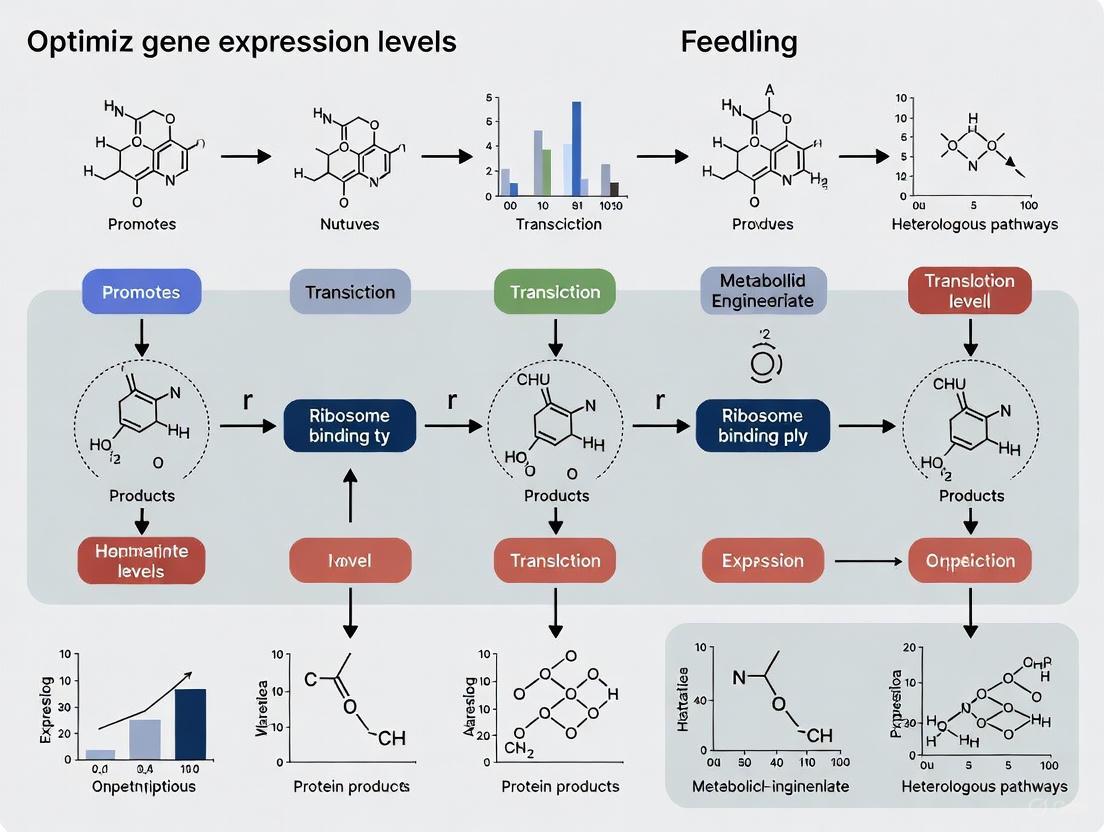
Optimizing gene expression levels is a critical determinant for the successful implementation of heterologous pathways in bioproduction and therapeutic development.
Strategic Optimization of Gene Expression in Heterologous Pathways: From Foundational Concepts to Advanced Applications in Drug Development
Abstract
Optimizing gene expression levels is a critical determinant for the successful implementation of heterologous pathways in bioproduction and therapeutic development. This article provides a comprehensive resource for researchers and scientists, synthesizing foundational principles with cutting-edge methodological advances. We explore the strategic selection of host organisms—from classic E. coli and yeast systems to emerging non-model bacteria—and detail modern techniques like condition-specific codon optimization and precise transcriptional control. A dedicated troubleshooting framework addresses common obstacles including low expression, protein aggregation, and host toxicity. Furthermore, we examine rigorous validation and comparative analysis techniques essential for evaluating the performance and evolutionary context of engineered pathways. This holistic guide aims to equip professionals with the knowledge to enhance yield, functionality, and scalability in the production of valuable secondary metabolites and biopharmaceuticals.
Core Principles and Host Selection for Heterologous Expression
Defining Heterologous Pathways and Their Role in Metabolic Engineering
Core Concepts: Heterologous Pathways and Metabolic Engineering
What is a heterologous pathway?
A heterologous pathway is a linked series of biochemical reactions introduced into a host organism through foreign genes, enabling the host to produce compounds it does not naturally synthesize [1] [2]. In metabolic engineering, these pathways are incorporated into microbial hosts to create microbial cell factories for producing valuable chemicals, fuels, pharmaceuticals, and materials from renewable resources [3] [4].
What is the fundamental goal of metabolic engineering?
Metabolic engineering aims to rewire cellular metabolism through genetic modifications to enhance production of desired substances [5]. It operates on three key metrics known as TYR: Titer, Yield, and Rate [4]. The field has evolved through three distinct waves, from initial rational pathway analysis to systems biology approaches, and now to modern synthetic biology applications that allow complete design and construction of synthetic pathways for both natural and non-natural chemicals [4].
Why are heterologous pathways crucial for metabolic engineering?
Heterologous pathways allow researchers to expand the biosynthetic capabilities of well-characterized host organisms. Instead of relying on native producers that may be difficult to cultivate or engineer, scientists can transfer metabolic pathways into hosts that are genetically tractable, robust, and optimized for industrial fermentation [1]. This approach has successfully produced antimalarial drug precursors like artemisinic acid, biofuels, and numerous commodity chemicals [3] [4].
Technical Troubleshooting Guide: FAQs on Heterologous Pathway Engineering
Host Selection and Engineering
FAQ: How do I select the most appropriate host organism for my heterologous pathway?
Choosing a suitable host is one of the most critical decisions in metabolic engineering [1]. Consider the factors in Table 1, which compares common eukaryotic hosts [1] [2].
Table 1: Eukaryotic Host Organisms for Heterologous Pathway Expression
| Host | Benefits | Handicaps | Common Species |
|---|---|---|---|
| Yeast | Low-maintenance, fast-growing, high protein expression, GRAS status, good protein folding and modification [1] [2] | Potential hyperglycosylation, tough cell wall, low diversity of native secondary metabolites [1] [2] | Saccharomyces cerevisiae, Pichia pastoris, Yarrowia lipolytica [3] [1] |
| Filamentous Fungi | Low-maintenance, fast-growing, high diversity of native secondary metabolites [1] [2] | Complex metabolism competition, hazardous spores, limited expression levels [1] [2] | Aspergillus spp., Neurospora crassa [1] |
| Plants | Suitable for plant pathway expression, large enzyme expression, chloroplast localization [1] [2] | High cost, complex transformation, low growth rates [1] [2] | Nicotiana benthamiana, Arabidopsis thaliana [1] |
| Animal Cell Cultures | Efficient for animal-derived enzymes, specific protein modifications [1] [2] | Very high cost, specific cultivation needs, low growth rate [1] [2] | Mammalian cells, Insect cells [1] |
Troubleshooting Guide: My pathway isn't functioning after introduction into the host. What should I check?
- Verify Gene Integration and Expression: Confirm successful integration of heterologous genes and transcription using PCR and RT-PCR.
- Check Codon Optimization: Ensure heterologous genes are codon-optimized for your host organism to improve translation efficiency [4].
- Assess Enzyme Function: Test for the presence and activity of the expressed enzymes, as heterologous expression can sometimes lead to misfolding or inclusion bodies.
- Evaluate Metabolic Burden: High expression of heterologous pathways can burden host metabolism; consider using inducible promoters to decouple growth and production phases [6].
Pathway Balancing and Optimization
FAQ: I've confirmed my pathway is expressed, but product titers are low. What are the common causes?
Low product titers often result from imbalanced pathway expression, leading to metabolic bottlenecks or accumulation of toxic intermediates [4] [7]. A recent study on astaxanthin production in yeast demonstrated that combinatorial optimization of gene expression alone can double production titers [7].
Table 2: Quantitative Impact of Pathway Balancing in Astaxanthin Production [7]
| Engineering Strategy | Expression Range for Pathway Genes | Resulting Improvement in Pathway Flux | Final Titer Improvement |
|---|---|---|---|
| GEMbLeR Method (Promoter/terminator shuffling) | 120-fold variation per gene | Significantly enhanced | >2-fold increase |
Troubleshooting Guide: How can I balance the expression of multiple genes in a pathway?
- Modular Pathway Engineering: Divide the pathway into modules (e.g., upstream precursor supply and downstream biosynthesis) and optimize them separately [4].
- Combinatorial Optimization: Use advanced tools like the GEMbLeR (Gene Expression Modification by LoxPsym-Cre Recombination) system [7]. This method uses Cre recombinase to shuffle promoter and terminator modules flanked by orthogonal LoxPsym sites, generating vast strain libraries with varying expression profiles for each gene in a single step.
- Computational Modeling: Employ genome-scale metabolic models (GEMs) and flux balance analysis to predict enzyme expression levels and identify flux constraints [8] [4] [5]. The QHEPath algorithm is one such tool that can suggest heterologous reactions to break theoretical yield limits [8].
Cofactor and Metabolic Burden Management
FAQ: My pathway functions initially but production stops or cells lose viability. Why?
This can indicate cofactor imbalance, toxicity of intermediates or products, or an unsustainable metabolic burden [4]. Cells may also evolve to inactivate the pathway if it imposes a fitness cost.
Troubleshooting Guide: Strategies to improve stability and viability
- Cofactor Engineering: Balance the supply and demand of crucial cofactors like NADH, NADPH, and ATP. This can involve overexpressing enzymes that regenerate required cofactors or engineering enzymes to use different, more abundant cofactors [4].
- Dynamic Regulation: Implement genetic circuits that sense metabolic states and dynamically regulate pathway expression. This can decouple growth and production phases, preventing toxicity and burden during critical growth periods [4].
- Tolerance Engineering: Evolve or engineer host strains to be more tolerant to the target product or toxic intermediates. This can be done through adaptive laboratory evolution or by engineering membrane transporters [4].
Experimental Protocols: Key Methodologies
Standard Workflow for Heterologous Pathway Expression
The typical workflow for establishing a heterologous pathway involves a cyclic process of design, build, test, and learn (DBTL) [3] [1], as visualized below.
Protocol Details:
- DNA Isolation and Gene Identification: Isolate genes or gene clusters responsible for biosynthesis of the target compound from the native producer. With advancing bioinformatics, these genes are often identified from genomic databases [1] [2].
- Vector Construction: Incorporate the biosynthetic pathway genes into stable expression vector(s). Use standardized assembly techniques (e.g., Golden Gate, Gibson Assembly) for efficiency. Ensure vectors are compatible with the chosen host [1] [2].
- Host Selection and Transformation: Select an appropriate host based on the criteria in Table 1. Transform the constructed vector into the host organism using suitable methods (e.g., electroporation, chemical transformation, conjugation) [1].
- Cultivation and Screening: Cultivate the engineered strain and screen for production of the target metabolite using analytical methods like HPLC or GC-MS [1].
- Pathway Optimization: This is an iterative step. Apply strategies like promoter engineering, codon re-optimization, and enzyme engineering to balance flux and improve yield [4] [7].
- Process Scale-up: Optimize fermentation conditions (media, feeding strategy, aeration) in bioreactors to maximize titer, yield, and productivity (TYR) at scale [6].
The GEMbLeR method is a powerful technique for rapidly optimizing expression of multiple pathway genes in Saccharomyces cerevisiae.
Principle: The system uses Cre recombinase to shuffle libraries of promoter and terminator modules flanked by orthogonal LoxPsym sites, generating extensive diversity in gene expression profiles.
Key Steps:
Strain Construction:
- Replace the native promoter and terminator of each target pathway gene with a custom 5' Gene Expression Modulator (GEM) and 3' GEM module.
- The 5' GEM is an array of different upstream promoter elements separated by LoxPsym sites.
- The 3' GEM is an array of different terminator sequences separated by orthogonal LoxPsym sites (to prevent recombination with the 5' array).
- The expression of each gene is initially driven by the first promoter and terminator in each array.
Library Generation:
- Induce the expression of Cre recombinase in the engineered strain.
- Cre catalyzes inversion, deletion, duplication, and translocation events between the LoxPsym sites within each GEM module.
- This creates a vast library of strains, where each strain has a unique combination of promoters and terminators driving the expression of the pathway genes.
Screening and Selection:
- Screen the resulting library for high producers of the target compound.
- In the astaxanthin case, a single round of GEMbLeR created a library where gene expression varied over 120-fold and successfully doubled production titers [7].
Pathway Visualization and Engineering Workflow
The following diagram illustrates the core engineering process of introducing and optimizing a heterologous pathway within a host's native metabolic network to achieve high-level production.
The Scientist's Toolkit: Essential Research Reagents and Solutions
Table 3: Key Research Reagents for Heterologous Pathway Engineering
| Reagent / Tool Category | Specific Examples | Function and Application |
|---|---|---|
| Expression Vectors & Platforms | P. pastoris vectors (pPICZ), E. coli plasmids (pET), S. cerevisiae integration vectors [1] | Stable maintenance and expression of heterologous genes in specific hosts. |
| Gene Editing Tools | CRISPR-Cas9, CRISPR-Cas12, Cre-LoxP systems [6] [7] | Precise genome editing, gene knockout, and advanced functions like GEMbLeR-based shuffling [7]. |
| Expression Modulators | Constitutive & inducible promoters (PAOX1, PTEF1), synthetic terminator libraries, RBS variants [1] [7] | Fine-tuning the strength and regulation of gene expression for pathway balancing. |
| Computational & Modeling Tools | Genome-Scale Metabolic Models (GEMs), Flux Balance Analysis (FBA), OptFlux, QHEPath algorithm [8] [5] | In silico prediction of metabolic fluxes, identification of bottlenecks, and design of engineering strategies. |
| Analytical Techniques | GC-MS, HPLC, Raman spectroscopy [6] [5] | Quantification of metabolites, tracking of isotopic labels (for flux analysis), and monitoring fermentation processes. |
For researchers and scientists in drug development and metabolic engineering, achieving efficient heterologous pathway expression is a fundamental objective. This process involves introducing foreign genetic material into a host organism to produce a target compound, such as a pharmaceutical ingredient or biofuel. However, this endeavor is frequently hampered by a set of interconnected biological challenges. This technical support center outlines the key challenges—toxicity, metabolic burden, and failed expression—and provides targeted troubleshooting guides and FAQs to help you navigate these complex issues within the context of optimizing gene expression levels.
FAQ: Understanding the Core Challenges
1. What are the primary causes of "strain degeneration" or loss of productivity in long-term fermentations? Strain degeneration is often driven by metabolic burden and the selection of non-productive subpopulations. Engineered strains experience metabolic stress due to the overexpression of synthetic pathways, which can lead to a decline in cellular fitness. Over time, this creates a selective pressure where non-productive mutant cells (revertants), which do not carry the metabolic load, outcompete the productive engineered cells [9].
2. Why do my heterologous pathways fail to express functional enzymes even after successful gene integration? Failed expression can stem from multiple factors, including:
- Transcriptional Inefficiency: The use of weak or unsuitable promoters that do not drive sufficient gene expression under your specific cultivation conditions [10].
- Post-Translational Limitations: Inefficient protein folding, lack of necessary post-translational modifications, or degradation by host proteases can prevent functional enzyme production. This is particularly relevant when expressing eukaryotic proteins in prokaryotic hosts or vice versa [1] [11].
3. How can I mitigate the toxicity of pathway intermediates or products? Toxic intermediates can halt production and kill cells. Strategies include:
- Dynamic Regulation: Implementing feedback genetic circuits that tie the production of the target compound to cell growth fitness. This "metabolic reward" system ensures that production only occurs when it benefits the cell, enhancing stability [9].
- Protein Engineering: Optimizing the secretory pathway in fungal hosts (e.g., Aspergillus niger) to rapidly export proteins, thereby reducing intracellular accumulation. This can involve engineering signal peptides, chaperones, and vesicle trafficking components [6] [11].
4. What practical steps can I take to reduce the metabolic burden on my host organism? Reducing metabolic burden is crucial for maintaining stability:
- Genomic Integration: Prefer stable genomic integration of pathway genes over plasmid-based systems, which require constant antibiotic selection and can be unstable [1] [11].
- Promoter and Pathway Optimization: Use strong, tailored promoters and balance the expression levels of all pathway enzymes to avoid bottlenecks and unnecessary energy expenditure [10] [12].
- Growth-Coupled Design: Design pathways where the production of the target compound is essential for the host's growth, creating a selective advantage for productive cells [9].
Troubleshooting Guides
Guide 1: Addressing Low or No Product Titer
Problem: Expected product is not detected, or titer is very low.
| Possible Cause | Diagnostic Steps | Proposed Solutions |
|---|---|---|
| Failed Gene Expression | Check transcript levels via RT-qPCR. Run SDS-PAGE to detect protein expression. | Codon-optimize genes. Test stronger or condition-specific promoters [10]. Verify plasmid stability or genomic integration. |
| Toxic Intermediate/Product | Monitor cell growth and morphology. Use analytics (e.g., LC-MS) to detect intermediate accumulation. | Implement a dynamic control circuit to decouple growth from production [9]. Engineer the host's tolerance via adaptive laboratory evolution (ALE). |
| Insufficient Precursor Supply | Analyze intracellular metabolite pools. Check growth and product yield with supplemented precursors. | Overexpress key precursor pathway genes (e.g., for tyrosine or malonyl-CoA) [12]. Knock out competing metabolic pathways. |
| Inefficient Secretion (for proteins) | Measure intracellular vs. extracellular protein concentration. | Engineer the secretory pathway (e.g., overexpress chaperones, optimize signal peptides) [6] [11]. Disrupt extracellular protease genes (e.g., PepA in A. niger) [11]. |
Guide 2: Managing Strain Instability and Loss of Productivity
Problem: Productivity declines significantly over multiple generations in batch or continuous culture.
| Possible Cause | Diagnostic Steps | Proposed Solutions |
|---|---|---|
| Metabolic Burden | Measure the growth rate difference between engineered and wild-type strains. Use flow cytometry to detect non-producing subpopulations. | Use growth-coupled selection circuits [9]. Reduce the copy number of high-burden genes to an optimal level. Switch from a batch to a continuous reactor with controlled dilution rates [9]. |
| Genetic Instability | Sequence evolved, non-producing strains to identify common mutations. | Use stable genomic loci for integration. Employ genetic redundancy to protect critical pathway genes. |
Experimental Data & Protocols
Case Study: Stepwise Optimization of a Heterologous Pathway
Research on the de novo production of naringenin in E. coli provides an excellent template for systematic troubleshooting. The study achieved a high titer of 765.9 mg/L by optimizing each step of the pathway [12].
Experimental Workflow: The following diagram outlines the logical process for the step-by-step validation and optimization of a heterologous pathway, as demonstrated in the naringenin case study.
Quantitative Data from Enzyme Screening: Table: Performance of different enzyme combinations for Naringenin production in E. coli [12]
| Pathway Step | Enzyme Source (Gene) | Host Strain | Key Performance Indicator | Result |
|---|---|---|---|---|
| TAL | Flavobacterium johnsoniae (FjTAL) | E. coli M-PAR-121 | p-Coumaric Acid Production | 2.54 g/L |
| 4CL & CHS | A. thaliana (At4CL) & C. maxima (CmCHS) | E. coli M-PAR-121 | Naringenin Chalcone Production | 560.2 mg/L |
| Full Pathway | FjTAL, At4CL, CmCHS, M. sativa (MsCHI) | E. coli M-PAR-121 | Final Naringenin Titer | 765.9 mg/L |
Protocol: Building a Low-Background Chassis inAspergillus niger
For high-yield protein expression, reducing background noise and enhancing secretion is critical. The following protocol is adapted from a study that created an efficient expression platform in the industrial strain A. niger AnN1 [11].
Methodology:
- Delete Background Genes: Use a CRISPR/Cas9-assisted marker recycling system to disrupt multiple copies of native high-expression genes (e.g., 13 out of 20 copies of the glucoamylase TeGlaA gene in strain AnN1).
- Knock Out Proteases: Disrupt major extracellular protease genes (e.g., PepA) to prevent degradation of the heterologous protein.
- Integrate Target Gene: Integrate your gene of interest into the newly vacated, transcriptionally active loci using a modular donor DNA plasmid with strong native promoters (e.g., AAmy promoter).
- Enhance Secretion (Optional): Further boost yield by overexpressing components of the vesicular trafficking system, such as the COPI component Cvc2, which was shown to increase production of a thermostable pectate lyase (MtPlyA) by 18% [11].
The Scientist's Toolkit: Key Research Reagent Solutions
Table: Essential reagents and strategies for troubleshooting pathway integration.
| Reagent / Strategy | Function / Purpose | Example Application |
|---|---|---|
| CRISPR-Cas Systems | Enables precise gene knock-outs, knock-ins, and multiplexed editing. | Deleting native protease genes or integrating pathways into specific genomic loci in A. niger [6] [11]. |
| Growth-Coupled Feedback Circuits | Links cell survival or fitness to product formation, stabilizing production phenotypes. | Preventing strain degeneration in long-term fermentation of mevalonic acid-producing E. coli [9]. |
| Strong/Inducible Promoters | Provides high-level or conditional control of gene expression. | Using the SED1 or TDH3 promoters in S. cerevisiae to enhance xylanase expression on non-native substrates [10]. |
| Chassis Strains with Enhanced Precursor Supply | Host strains engineered to overproduce key metabolic precursors. | Using the tyrosine-overproducing E. coli M-PAR-121 strain to boost flux into the naringenin pathway [12]. |
| Secretory Pathway Components | Proteins involved in protein folding, vesicle transport, and secretion. | Overexpressing the COPI component Cvc2 in A. niger to improve heterologous protein secretion [11]. |
Pathway Dynamics and Stability
Understanding the population dynamics between productive and non-productive cells is vital for designing stable bioprocesses. The following diagram illustrates the core concept of how metabolic stress and reward circuits influence this competition.
Mathematical modeling of these dynamics reveals that in continuous reactors, the interplay between metabolic coupling strength and dilution rate is critical in determining whether productive cells dominate [9].
The selection of an appropriate host organism is a critical first step in the successful optimization of gene expression levels in heterologous pathways. Biological expression systems serve as fundamental tools for the production of recombinant proteins across industrial and medical fields, including the development of recombinant vaccines, therapeutic drugs, and agricultural products [13]. Researchers commonly utilize both prokaryotic and eukaryotic cells to overcome challenges associated with recombinant protein production, with each system offering distinct advantages and limitations [13]. This technical support center provides a comprehensive comparative analysis of four principal host systems: Escherichia coli (prokaryotic), Saccharomyces cerevisiae and Pichia pastoris (eukaryotic yeasts), and filamentous fungi (eukaryotic). The guidance presented herein is specifically framed within the context of optimizing heterologous pathway research, with troubleshooting protocols designed to address common experimental challenges encountered by researchers and drug development professionals.
Organism-Specific Expression Characteristics
Comparative Analysis of Host System Attributes
The table below summarizes the key characteristics of the primary host organisms used in heterologous protein expression, providing researchers with essential data for initial system selection.
Table 1: Comparative Characteristics of Host Expression Systems
| Characteristic | Escherichia coli | Saccharomyces cerevisiae | Pichia pastoris | Filamentous Fungi |
|---|---|---|---|---|
| Doubling Time | 30 minutes [13] | 90-120 minutes | 60-120 minutes [13] | 120-180 minutes |
| Cost of Growth Medium | Low [13] | Low | Low [13] | Low to Moderate |
| Expression Level | High [13] | Low to Moderate | Low to High [13] | Moderate to High |
| Extracellular Expression | Secretion to periplasm [13] | Secretion to medium | Secretion to medium [13] | High secretion capability |
| Protein Folding | Refolding usually required [13] | Generally proper | Proper folding [13] | Generally proper |
| N-Linked Glycosylation | None [13] | High mannose, hyperglycosylation | High mannose [13] | Complex, heterogeneous |
| O-Linked Glycosylation | No [13] | Yes | Yes [13] | Yes |
| Phosphorylation & Acetylation | No [13] | Yes | Yes [13] | Yes |
| Primary Drawbacks | Endotoxin contamination, misfolding, no PTMs [13] | Hyperglycosylation, secretion limitations | Codon bias, methanol requirement [13] | Complex genetics, high protease activity |
Experimental Selection Workflow
The following diagram illustrates the systematic decision-making process for selecting an appropriate host organism based on protein characteristics and experimental goals.
Troubleshooting Guides & FAQs
General Gene Expression Troubleshooting
Table 2: General Gene Expression Troubleshooting Guide
| Problem | Potential Causes | Recommended Solutions | Prevention Tips |
|---|---|---|---|
| No amplification in qPCR | Inhibitors present, low expression levels, primer issues [14] | Dilute template, check RNA quality, redesign primers, use positive control | Verify RNA integrity, test primer efficiency, include controls |
| Amplification in NTC | Contamination, primer-dimer formation [14] | Use fresh reagents, UV-treat workspace, redesign primers | Separate pre- and post-PCR areas, use filter tips |
| Poor PCR efficiency (slope < -3.6) | Primer issues, inhibitor presence, suboptimal reaction conditions [14] | Redesign primers, purify template, optimize Mg²⁺ concentration | Validate primer specificity, use high-quality reagents |
| Non-sigmoidal amplification curves | Incorrect baseline setting, high background fluorescence [14] | Set manual baseline, check for fluorescent contaminants | Validate instrument calibration, use appropriate reporter dyes |
| High Ct values | Low template concentration, inefficient amplification [14] | Concentrate template, optimize reaction conditions | Verify template quantification, use high-efficiency master mix |
Q1: Why am I seeing amplification in my no-template control (NTC) reactions?
A: Amplification in NTC reactions typically indicates contamination of your reaction components with template DNA or amplicon carryover. This problem can also result from primer-dimer formation. We recommend using fresh aliquots of all reagents, implementing UV irradiation of workspaces and equipment, and redesigning primers if dimerization is suspected. For TaqMan Gene Expression assays, we guarantee that assays run in NTC reactions will not produce detectable amplification signal (Ct > 38) when contamination is not present [14].
Q2: How do I address poor PCR efficiency when validating expression levels?
A: PCR efficiency should ideally be between 90% and 100% (-3.6 ≥ slope ≥ -3.3). If the efficiency is 100%, the Ct values of a 10-fold dilution series will be 3.3 cycles apart. For poor efficiency, consider primer redesign to avoid secondary structures, template purification to remove inhibitors, and optimization of Mg²⁺ concentration and annealing temperature. Slope values below -3.6 indicate poor efficiency that requires troubleshooting [14].
Q3: What endogenous controls should I use for my heterologous expression system?
A: For proper normalization in gene expression studies, we recommend performing a literature search in PubMed for your specific host organism and target gene to identify what other researchers use as endogenous controls. You can also screen for potential endogenous controls by ordering organism-specific endogenous control array plates if available. These plates are pre-plated with multiple endogenous control genes in triplicates on a 96-well plate format for systematic validation [14].
Pichia pastoris Optimization
Q4: How do I optimize methanol induction conditions for Pichia pastoris?
A: Methanol concentration, temperature, and induction time must be empirically optimized for each recombinant protein and strain. Key parameters to optimize include: methanol concentration (typically 0.5-1.0%), induction temperature (often reduced to 20-30°C), and induction duration (1-5 days). The optimal conditions differ according to the target protein and host strain characteristics [13]. For MutS strains (like KM71), remember that growth on methanol is slower, requiring longer induction periods compared to Mut+ strains.
Q5: What are the key advantages of using Pichia pastoris for heterologous expression?
A: The Pichia pastoris expression system offers several significant advantages: (1) appropriate folding in the endoplasmic reticulum; (2) secretion of recombinant proteins to the external environment of the cell using Kex2 as signal peptidase; (3) limited production of endogenous secretory proteins, simplifying purification; (4) post-translational modifications including O- and N-linked glycosylation and disulfide bond formation; and (5) high similarity of glycosylation to mammalian cells [13]. These characteristics make it particularly suitable for production of subunit vaccines and therapeutic proteins.
E. coli-Specific Issues
Q6: How can I address protein misfolding and inclusion body formation in E. coli?
A: When encountering misfolding and inclusion body formation: (1) Reduce expression temperature (25-30°C) to slow protein synthesis and favor proper folding; (2) Use lower inducer concentrations (e.g., 0.1-0.5 mM IPTG); (3) Employ fusion tags (MBP, Trx, GST) that enhance solubility; (4) Co-express molecular chaperones (GroEL-GroES, DnaK-DnaJ-GrpE); (5) Switch to engineered strains specifically designed for disulfide bond formation (Origami) or enhanced folding (ArcticExpress). For proteins requiring refolding, systematic screening of refolding buffers is essential.
Eukaryotic Host Challenges
Q7: How do I address hyperglycosylation issues in S. cerevisiae?
A: S. cerevisiae often produces N- and O-hyperglycosylated proteins, which may affect immunogenicity and function. To address this: (1) Consider using glycoengineered yeast strains (e.g., Δoch1) that produce humanized glycosylation patterns; (2) Introduce specific glycosylation sites via mutagenesis to control attachment; (3) Utilize in vitro deglycosylation enzymes post-purification; (4) Switch to alternative yeast systems like P. pastoris that typically produce less extensive glycosylation [13].
Research Reagent Solutions
Table 3: Essential Research Reagents for Heterologous Expression Studies
| Reagent/Category | Function/Application | Host Compatibility | Technical Notes |
|---|---|---|---|
| TaqMan Gene Expression Assays | Quantitative RT-PCR for expression validation [14] | All systems | Verify no amplification in NTC (Ct > 38) [14] |
| Methanol (HPLC grade) | Inducer for AOX1 promoter in P. pastoris [13] | P. pastoris | Optimize concentration (0.5-1.0%) for each strain [13] |
| Sorbitol | Co-substrate for P. pastoris growth & induction | P. pastoris | Can improve viability during methanol induction |
| Protease Inhibitor Cocktails | Prevent recombinant protein degradation | All eukaryotic systems | Essential for secretion-deficient strains |
| Signal Peptides (e.g., α-factor) | Direct secretory expression | Yeast systems | Kex2 cleavage site required for processing [13] |
| Antibiotics for Selection | Maintain expression plasmids | All systems | Use organism-specific antibiotics (zeocin, G418) |
| Chromogenic Substrates | Detect enzyme expression & activity | All systems | Enables rapid screening of expression clones |
| Endogenous Control Panels | qPCR normalization genes [14] | All systems | Pre-validated controls for accurate normalization [14] |
Advanced Methodologies
CRISPR/Cas-Mediated Optimization
Recent advances in CRISPR/Cas technology have revolutionized genetic engineering in various host organisms. The CRISPR/Cas system provides precise, versatile, and efficient methods for targeted genome editing [15]. The system has evolved from its origins as a prokaryotic immune defense mechanism into a highly programmable nuclease platform [15]. For expression optimization, CRISPR/Cas enables targeted integration of expression cassettes into genomic hot spots, precise promoter engineering to modulate expression levels, and multiplexed gene disruptions to eliminate proteases or redirect metabolic flux.
The development of high-fidelity Cas9 variants (e.g., eSpCas9, HypaCas9) addresses off-target concerns, while Cas12 systems with different PAM requirements (recognizing T-rich regions) expand targeting flexibility [15]. Catalytically impaired derivatives (nCas9 and dCas9) enable more subtle modulation through base editing, prime editing, and transcriptional regulation without permanent DNA cleavage [15]. These advanced tools are particularly valuable for optimizing heterologous pathways by fine-tuning the expression of multiple genes simultaneously.
Experimental Pathway for Strain Engineering
The following diagram outlines a comprehensive workflow for CRISPR-mediated optimization of host organisms for enhanced heterologous expression.
Quantitative Expression Analysis Protocol
For accurate quantification of heterologous expression levels, follow this detailed qRT-PCR protocol:
- RNA Extraction: Use high-quality, RNase-free reagents for RNA isolation. Include DNase I treatment to eliminate genomic DNA contamination.
- Reverse Transcription: Perform cDNA synthesis using random hexamers and reverse transcriptase with RNase inhibitor. Include a no-RT control for each sample.
- qPCR Setup: Use validated gene-specific primers or TaqMan assays. Ensure PCR efficiency is between 90-100% (slope of -3.6 to -3.3) [14]. Include no-template controls (NTC) and positive controls in each run.
- Data Analysis: Calculate Ct values using appropriate baseline and threshold settings. For absolute quantification, use a standard curve with known template concentrations. For relative quantification, use the ΔΔCt method with validated endogenous controls [14].
- Normalization: Use geometric averaging of multiple endogenous controls when possible, as this approach provides more reliable normalization than single reference genes [14].
For data analysis software, tools like DataAssist or ExpressionSuite can generate p-values from ΔΔCt data once biological groups are assigned with at least 2 samples in each group [14]. These tools also support analysis using multiple endogenous controls or global normalization, which is particularly useful when studying large numbers of targets [14].
The Role of Computational Models and Retrosynthetic Algorithms in Pathway Design
The engineering of microbes to produce valuable chemicals, from pharmaceuticals to biofuels, hinges on the effective design and implementation of heterologous biosynthetic pathways. A central challenge in this field is optimizing gene expression levels to balance metabolic flux, maximize product yield, and maintain host cell fitness. Computational models and retrosynthetic algorithms have become indispensable for navigating the vast design space of potential pathways and expression parameters. This technical support center provides a foundational guide for researchers tackling the experimental hurdles that arise when moving from computational predictions to a functional, optimized pathway in the lab. The following sections offer troubleshooting guides, detailed protocols, and key resources to directly address specific issues encountered during these experiments.
The Scientist's Toolkit: Essential Databases and Reagents
A successful pathway engineering project relies on a foundation of high-quality data and molecular tools. The tables below summarize key resources for computational design and experimental optimization.
Table 1: Key Biological Databases for Pathway Design
| Data Category | Database Name | Primary Function | Website URL |
|---|---|---|---|
| Compounds | PubChem [16] | Repository of chemical structures, properties, and biological activities | https://pubchem.ncbi.nlm.nih.gov/ |
| ChEBI [16] | Focused database of small molecular entities | https://www.ebi.ac.uk/chebi/ | |
| Reactions/Pathways | KEGG [16] | Integrated database of pathways, diseases, drugs, and organisms | https://www.kegg.jp/ |
| MetaCyc [16] | Database of metabolic pathways and enzymes across species | https://metacyc.org/ | |
| Rhea [16] | Curated resource of biochemical reactions | https://www.rhea-db.org/ | |
| Enzymes | BRENDA [16] | Comprehensive enzyme information database | https://brenda-enzymes.org/ |
| UniProt [16] | Central hub for protein sequence and functional data | https://www.uniprot.org/ | |
| AlphaFold DB [16] | Database of highly accurate predicted protein structures | https://alphafold.ebi.ac.uk/ |
Table 2: Key Research Reagent Solutions for Expression Optimization
| Reagent / Tool | Function in Experiment | Example Application |
|---|---|---|
| LoxPsym Sites [7] | Enables Cre-mediated recombination for promoter/terminator shuffling. | Creating diverse expression libraries in the GEMbLeR system. |
| Cre Recombinase [7] | Executes site-specific recombination at LoxPsym sites. | Inducing genomic rearrangements in vivo to generate strain diversity. |
| Heterologous GEM Arrays [7] | Provides a library of promoter and terminator parts of varying strengths. | Systematically tuning the expression level of a pathway gene. |
| CRISPR/Cas9 System [17] | Enables precise genomic edits, deletions, and integrations. | Disrupting endogenous protease genes (e.g., PepA in A. niger) to reduce background protein secretion [17]. |
Computational Workflow and Experimental Pathway
The following diagram illustrates the integrated computational and experimental workflow for designing and optimizing a heterologous biosynthetic pathway, from initial target selection to a high-titer production strain.
Diagram 1: Integrated pathway design and optimization workflow.
Troubleshooting Guides and FAQs
FAQ 1: How do I balance expression of multiple genes in a heterologous pathway?
Issue: Unbalanced expression leads to low product yield, accumulation of toxic intermediates, and reduced host fitness.
Solution: Employ combinatorial, in vivo methods to generate and screen large libraries of expression variants.
- Recommended Tool: GEMbLeR (Gene Expression Modification by LoxPsym-Cre Recombination) in yeast [7].
- Detailed Protocol:
- Construct Design: For each gene in your pathway, replace its native promoter and terminator with a 5' GEM array (containing multiple upstream promoter elements) and a 3' GEM array (containing multiple terminators), respectively. Each part within an array is flanked by orthogonal LoxPsym sites to prevent cross-recombination between arrays [7].
- Strain Generation: Integrate these GEM-constructs for all pathway genes into your host chassis strain.
- Library Induction: Introduce and induce Cre recombinase expression. This will stochastically shuffle the promoter and terminator parts within their respective arrays for each gene, creating a vast library of strains with unique expression profiles for the entire pathway [7].
- Screening & Selection: Screen the library for high product titers, for example, using colorimetric assays for pigments like astaxanthin or high-throughput chromatography. A single round of GEMbLeR has been shown to double astaxanthin production titers [7].
FAQ 2: My computationally designed pathway is not stoichiometrically feasible in the host. What should I check?
Issue: Linear pathway designs often fail because they do not account for cofactor balancing, energy demands, or connections to the host's native metabolism.
Solution: Use advanced pathway finding algorithms that extract balanced, stoichiometrically feasible subnetworks.
- Recommended Tool: SubNetX algorithm [18].
- Troubleshooting Steps:
- Verify Cofactor Balancing: Ensure the proposed pathway does not rely on cofactors not natively produced by your host (e.g., tetrahydrobiopterin in E. coli). Use SubNetX in a search mode that avoids non-native cofactors to force the algorithm to find alternatives [18].
- Check Energy and Redox Balance: The algorithm should integrate the subnetwork into a genome-scale metabolic model (e.g., of E. coli) and use constraint-based optimization (like Flux Balance Analysis) to verify the pathway can produce the target while sustaining growth [18] [19].
- Expand Reaction Databases: If a pathway is incomplete, supplement known reaction databases (e.g., ARBRE) with larger databases of predicted reactions (e.g., ATLASx) to fill in missing gaps and connect the target to host metabolites [18].
FAQ 3: How can I find a viable enzymatic step for a non-natural or orphan reaction?
Issue: A key reaction in your planned pathway has no known or efficient natural enzyme.
Solution: Leverage AI-driven tools for enzyme discovery and de novo design.
- Recommended Tools: Retrosynthesis algorithms (DeepRetro) combined with structure prediction tools (AlphaFold) [16] [20] [21].
- Action Plan:
- Identify Candidate Reactions: Use a retrosynthesis framework like DeepRetro, which integrates large language models (LLMs) with traditional biochemical knowledge, to propose plausible novel reactions and disconnections for your target [21].
- Discover Enzyme Templates: Search enzyme databases (BRENDA, UniProt) using the reaction SMILES or molecular similarity of substrates/products. AI-based functional annotation tools can suggest known enzymes that might catalyze similar reactions [16] [20].
- Model and Engineer: Use the predicted protein structures from AlphaFold DB to model the binding of your non-natural substrate into a candidate enzyme's active site. This guides rational engineering or de novo design of an enzyme with the desired activity [16] [20].
FAQ 4: My model predicts high yield, but I observe low production and high metabolic burden.
Issue: The objective function in the computational model does not reflect the true physiological state of the engineered host.
Solution: Refine your metabolic model to better capture the host's adaptive responses.
- Recommended Tool: TIObjFind framework, which integrates Flux Balance Analysis (FBA) with Metabolic Pathway Analysis (MPA) [19].
- Procedure:
- Incorporate Experimental Data: Collect experimental flux data (e.g., from isotopologue profiling) or product secretion rates from your struggling strain.
- Re-calibrate the Objective: Use the TIObjFind framework to determine a context-specific objective function. It calculates "Coefficients of Importance" for reactions, identifying which metabolic goals the cell is actually prioritizing (e.g., stress response over production) [19].
- Re-run Simulation: Perform FBA with the newly identified objective function to generate flux predictions that are more aligned with your experimental data. This can reveal hidden bottlenecks, such as unexpected cofactor limitations or conflicts with native metabolic fluxes [19].
Considerations for Metabolic Network Balance and Cofactor Availability
Troubleshooting Guides
FAQ 1: Why is my heterologous pathway producing the target metabolite at very low yields, even though all genes express successfully?
Problem: Low productivity despite successful gene expression often stems from an imbalanced metabolic network where the heterologous pathway drains essential precursors or cofactors, disrupting the host's core metabolism.
Diagnosis & Solution:
- Diagnostic Method: Use Metabolic Flux Analysis (MFA) to quantify flux through central carbon pathways (e.g., glycolysis, TCA cycle). Compare flux distributions between your engineered strain and the wild-type host. A significant redirection of flux or accumulation of certain intermediates indicates a bottleneck or imbalance [22] [23].
- Solution: Implement dynamic regulatory circuits to decouple growth from production. Instead of constitutive expression, use promoters induced after the growth phase. This prevents the heterologous pathway from overwhelming central metabolism during rapid growth [23].
FAQ 2: How can I identify which specific cofactor or precursor is limiting production in my engineered pathway?
Problem: Unknown cofactor or precursor limitations create metabolic bottlenecks that are difficult to pinpoint.
Diagnosis & Solution:
- Diagnostic Method: Employ Metabolic Tracing with stable isotopes (e.g., 13C-glucose). Track the incorporation of labeled atoms into your target metabolite and key pathway intermediates. This reveals flux and identifies steps where metabolites pool or labels are lost, indicating a bottleneck [24] [25].
- Solution: If tracing shows a drain on energy cofactors, engineer a heterologous NADPH regeneration pathway. Replacing the native E. coli glyceraldehyde 3-phosphate dehydrogenase (GAPDH) with a NADP-dependent enzyme from Clostridium acetobutylicum has been shown to increase NADPH supply and enhance product synthesis [23].
FAQ 3: My pathway produces excessive byproducts (e.g., acetate or lactate). How do I reduce this carbon loss?
Problem: Overflow metabolism leads to byproduct formation, reducing carbon efficiency and yield.
Diagnosis & Solution:
- Diagnostic Method: Analyze extracellular metabolites (e.g., using HPLC or GC-MS) to quantify byproduct secretion. High byproduct levels often indicate an imbalance between glycolytic flux and the capacity of downstream pathways like the TCA cycle [23] [25].
- Solution: Knock out key byproduct-forming genes. Sequential deletion of poxB (pyruvate oxidase), pta-ackA (acetate kinase pathway), and ldhA (lactate dehydrogenase) in E. coli has been proven effective in reducing acetate and lactate formation, thereby redirecting carbon flux toward the desired product [23].
FAQ 4: How does the host organism's native metabolic network topology influence the success of my heterologous pathway?
Problem: The inherent structure of the host's metabolic network imposes constraints on heterologous pathway function.
Diagnosis & Solution:
- Diagnostic Principle: Recognize that enzymes in highly connected, central parts of the metabolic network (e.g., TCA cycle) evolve under greater constraints and carry high metabolic flux. Introducing a heterologous pathway that interacts with these central nodes is more likely to cause toxicity or require extensive optimization [22].
- Solution: When possible, design pathways that utilize precursors from less central, peripheral metabolic pathways to minimize interference with core metabolism. Computational models can help predict the availability of precursors and the thermodynamic feasibility of the integrated pathway [1] [22].
Experimental Protocols
Protocol 1: Metabolic Flux Analysis using 13C-Metabolic Tracing
Purpose: To quantitatively track the activity of metabolic pathways and identify bottlenecks in your engineered strain [24] [25].
Workflow:
Key Considerations:
- Tracer Selection: The labeled atom must be retained through the pathways of interest. For central carbon metabolism, U-13C glucose (uniformly labeled) is common [24].
- Time Points: Harvest at multiple time points (seconds to hours) to capture pathway kinetics. Fast metabolic pathways require rapid sampling [24].
- Data Analysis: Use specialized software (e.g., INCA, IsoCor) to interpret mass isotopomer distributions and calculate metabolic fluxes [25].
Protocol 2: Systematic Troubleshooting of Cofactor Imbalance
Purpose: To diagnose and resolve limitations in cofactor supply (NADPH, ATP) that restrict pathway performance [23].
Workflow:
Key Considerations:
- Measurement: Quantify intracellular cofactor ratios using enzymatic assays or targeted LC-MS/MS.
- Auxotrophic Test: If the heterologous pathway produces a cofactor precursor (e.g., D-pantothenic acid for CoA), test if it rescues the growth of a cofactor-auxotrophic mutant. This confirms functional integration [23].
- Engineering: Install heterologous, non-regulated enzymes for cofactor regeneration (e.g., NADP-dependent GAPDH for NADPH) to bypass native regulatory loops [23].
Research Reagent Solutions
Table 1: Essential Reagents for Metabolic Network Analysis and Engineering.
| Reagent / Tool | Function / Application | Example & Notes |
|---|---|---|
| Stable Isotope Tracers | Enables dynamic tracking of atom fate through metabolic pathways via Mass Spectrometry [24] [25]. | U-13C-Glucose; 2H- or 15N-labeled compounds. Critical for Metabolic Flux Analysis. |
| Flux Balance Analysis (FBA) Software | In silico prediction of metabolic flux distributions and identification of optimization targets [22]. | COBRA Toolbox (Matlab), Pathway Tools. Requires a genome-scale metabolic model. |
| Inducible Promoter Systems | Enables temporal control over gene expression, allowing separation of growth and production phases [1] [23]. | PAOX1 (methanol-induced in P. pastoris), L-rhamnose-inducible promoters in E. coli. |
| Heterologous Cofactor Enzymes | Replaces native enzymes to alter cofactor specificity and alleviate redox/energy limitations [23]. | NADP-dependent GAPDH from C. acetobutylicum; water-forming NADH oxidases. |
| Gene Knockout Tools | Eliminates competitive pathways that divert carbon and energy to unwanted byproducts [23]. | CRISPR-Cas9 for precise deletions; used to remove acetate, lactate, or ethanol formation genes. |
| Quorum Sensing Circuits | Enables dynamic, population-density-dependent regulation of pathway genes to maintain metabolic homeostasis [23]. | AHL-based systems (e.g., LuxI/LuxR) to activate expression only after high cell density is achieved. |
Advanced Strategies for Codon Optimization and Transcriptional Control
Frequently Asked Questions (FAQs)
FAQ 1: What is condition-specific codon optimization, and how does it fundamentally differ from traditional methods like the Codon Adaptation Index (CAI)?
Traditional codon optimization tools often rely on static, genome-wide metrics like the Codon Adaptation Index (CAI), which selects codons based on their overall frequency in the host organism's highly expressed genes [26]. In contrast, condition-specific codon optimization is a dynamic strategy that designs codon sequences based on the codon usage bias of genes that are highly expressed under a specific physiological or environmental condition relevant to your experiment [27]. This is critical because factors like tRNA abundance and availability can shift with changes in the environment, growth phase, or cell type [27]. While traditional CAI-based optimization can sometimes improve expression, it does not guarantee success and may even reduce expression in over 30% of cases [27]. Condition-specific optimization accounts for the actual translational machinery state in your specific experimental context, leading to more reliable and robust protein expression.
FAQ 2: My CAI-optimized gene is not expressing well in my fermentation process. What could be wrong?
This is a common issue that highlights the limitation of traditional optimization. Your fermentation conditions (e.g., specific carbon sources, dissolved oxygen, pH, or the stationary growth phase) create a unique cellular environment. The tRNA pool under these conditions likely differs from the "average" tRNA pool assumed by CAI [27]. A CAI-optimized gene might use codons that correspond to scarce tRNAs in your specific fermentation setup, causing ribosomal stalling and reduced yield. To troubleshoot:
- Analyze your condition: Identify the specific growth condition (e.g., high cell density, stationary phase) where expression is low.
- Re-optimize for the condition: Generate a new codon usage bias matrix using highly expressed genes from RNA-seq data of your host organism under the same or similar fermentation conditions. Use this matrix for a condition-specific re-design of your gene [27]. One study achieved a 2.9-fold improvement in enzyme activity by optimizing for stationary phase production in S. cerevisiae, significantly outperforming a commercial CAI-based tool [27].
FAQ 3: What are the key technical challenges in implementing a condition-specific optimization strategy?
The primary challenge is obtaining high-quality, condition-specific biological data to inform the optimization model.
- Data Dependency: The method requires genomic-scale expression data (e.g., RNA-seq) for your host organism under the precise condition of interest [27]. For novel conditions or non-model hosts, this data may not be publicly available and must be generated in-house.
- Computational Complexity: Building a custom codon bias matrix and designing sequences probabilistically is more complex than running a standard CAI-based algorithm [27].
- Multi-gene Pathway Balancing: When optimizing multiple genes in a pathway, using the same set of optimal codons can lead to competition for the same charged tRNAs, creating a new bottleneck. It is crucial to use a probabilistic design algorithm that generates a balance of synonymous codons rather than exclusively using the single "best" codon for each amino acid [27].
FAQ 4: How do AI and deep learning models advance condition-specific optimization?
Deep learning frameworks represent a significant leap forward. They move beyond simple codon frequency by directly learning the complex relationship between mRNA sequence features and translational efficiency from large-scale experimental data.
- Direct Learning from Translation Data: Models like RiboDecode are trained on ribosome profiling (Ribo-seq) data, which provides a genome-wide snapshot of actively translating ribosomes [28]. This allows the model to learn codon usage patterns that directly correlate with high translation efficiency, not just mRNA abundance.
- Integration of Cellular Context: Advanced models can integrate multiple inputs, including the mRNA codon sequence, mRNA abundance data from RNA-seq, and even gene expression profiles that represent the cellular state [28]. This creates a truly context-aware optimization system.
- Exploration of Vast Sequence Space: Using generative AI and gradient ascent, these models can explore a much larger space of synonymous codon sequences than rule-based methods, discovering novel, highly efficient sequences that were previously inaccessible [28].
Troubleshooting Guides
Problem: Low Heterologous Protein Yield in a Specific Host Strain or Culture Condition
| Symptom | Potential Cause | Solution | Verification Method |
|---|---|---|---|
| Low protein yield in stationary phase, but good yield in log phase. | tRNA pool has shifted in stationary phase, making the optimized sequence suboptimal. | Generate a condition-specific codon usage table using highly expressed genes from stationary phase RNA-seq data. Re-design the gene using this table. | Compare protein activity/yield of the new construct vs. the original in stationary phase. |
| High expression of a single gene, but poor expression when multiple optimized genes are co-expressed in a pathway. | tRNA pool depletion due to multiple genes competing for the same "optimal" tRNAs. | Use a probabilistic optimization algorithm that generates a balanced use of synonymous codons to avoid overloading specific tRNAs [27]. | Measure expression of all pathway genes simultaneously and assay final product titer. |
| Poor protein expression in a non-model fungal host. | Standard codon tables do not reflect the host's true codon bias under industrial conditions. | Use a deep learning tool like FUN-PROSE, trained on fungal promoters and expression data, to predict and optimize expression for your specific host and condition [29]. | Quantify mRNA levels and protein output of the optimized construct. |
Problem: Inefficient mRNA Translation Despite High mRNA Levels
| Symptom | Potential Cause | Solution | Verification Method |
|---|---|---|---|
| Strong mRNA signal from qPCR/RNA-seq, but low protein detection. | Suboptimal codon usage is causing slow translation elongation and ribosome stalling. | Employ a translation-centric optimization tool like RiboDecode that is trained on Ribo-seq data to maximize ribosome occupancy and translation efficiency [28]. | Perform ribosome profiling (Ribo-seq) to visualize ribosome occupancy on the mRNA. |
| mRNA is degraded rapidly. | Synonymous codon changes have inadvertently created unstable mRNA secondary structures or regulatory motifs. | Use an optimizer that jointly considers translation and mRNA stability (e.g., minimum free energy - MFE). Ensure the optimization algorithm includes mRNA structure prediction in its cost function [28]. | Measure mRNA half-life (e.g., using transcriptional inhibition assays). |
Experimental Protocols
Protocol 1: Condition-Specific Codon Optimization for a Heterologous Gene in Yeast
This protocol outlines a method to optimize a gene for expression in Saccharomyces cerevisiae under a specific condition (e.g., high xylose concentration) using a condition-specific codon bias matrix [27].
Key Research Reagent Solutions:
- Host Strain: Saccharomyces cerevisiae S288C or other relevant industrial strain.
- Condition-Specific Expression Data: RNA-seq dataset (e.g., from GEO under accession GSE208095) of the host strain growing under the target condition [26].
- Software Tools: Python scripts for generating codon bias matrices and probabilistic gene design (e.g.,
CodonUsageAnalysisandGeneDesign) [27]. - Synthesis & Cloning: Service for gene synthesis and cloning into an appropriate expression vector for yeast.
Methodology:
- Data Acquisition and Curation:
- Obtain RNA-seq data for S. cerevisiae cultivated under your target condition (e.g., high xylose) and a relevant control condition.
- Identify the set of genes that are significantly up-regulated or highly expressed under the target condition. This can be done using differential expression analysis tools (e.g., in R/Bioconductor).
Generate Condition-Specific Codon Bias Matrix:
- Using the
CodonUsageAnalysisscript, extract the coding sequences (CDS) of the highly expressed gene set. - Calculate codon frequencies and, critically, codon-pair (di-codon) frequencies from these CDS. The output is a 61x61 matrix representing the probability of each codon pair occurring in the expressed genes for that condition.
- Using the
Probabilistic Gene Design:
- Input the amino acid sequence of your target heterologous gene into the
GeneDesignscript. - The script will use the condition-specific codon bias matrix to probabilistically reconstruct the DNA sequence. For each amino acid pair in the sequence, it selects a codon pair based on the probabilities in the matrix.
- Run the script multiple times to generate several (e.g., 5-10) candidate DNA sequences that follow the same codon context rules.
- Input the amino acid sequence of your target heterologous gene into the
Synthesis, Transformation, and Validation:
- Synthesize the top candidate genes and clone them into your expression vector.
- Transform the constructs into your S. cerevisiae host strain and cultivate under the target condition.
- Validate using functional assays (e.g., enzyme activity, fluorescence) to identify the highest-performing variant.
The workflow for this protocol is summarized in the following diagram:
Protocol 2: Utilizing a Deep Learning Framework (RiboDecode) for mRNA Therapeutics Optimization
This protocol describes the use of the RiboDecode deep learning framework to optimize mRNA sequences for enhanced translation and therapeutic efficacy [28].
Key Research Reagent Solutions:
- Software Framework: RiboDecode deep learning model.
- Training Data: Paired Ribo-seq and RNA-seq datasets from relevant human tissues or cell lines (e.g., from 24 different human tissues/cell lines) [28].
- In vitro/In vivo Models: For validation (e.g., cell-based protein expression assays, mouse models for antibody response or therapeutic efficacy).
Methodology:
- Model Input and Goal Setting:
- Input the wild-type codon sequence of your target therapeutic protein (e.g., influenza hemagglutinin (HA) or nerve growth factor (NGF)).
- Define the optimization goal by setting the parameter
w(wherew=0optimizes for translation only,w=1for mRNA stability/Minimum Free Energy only, and0<w<1for a joint optimization) [28].
Generative Sequence Optimization:
- The RiboDecode optimizer begins with the original sequence and uses a gradient ascent approach (activation maximization) to iteratively adjust the codon distribution.
- A synonymous codon regularizer ensures all changes are synonymous, preserving the amino acid sequence.
- In each cycle, the sequence is fed into the prediction models, which output a fitness score. The optimizer adjusts codons to maximize this score over multiple iterations, exploring a vast sequence space.
Output and Experimental Validation:
- The output is one or more optimized mRNA codon sequences predicted to have high translation efficiency and/or stability.
- Validate the optimized mRNAs in vitro by transferring cells and measuring protein expression levels via Western blot or ELISA, comparing against the wild-type sequence and sequences from other methods (e.g., LinearDesign).
- Proceed to in vivo validation. For vaccines, immunize mice and measure neutralizing antibody responses. For therapeutic proteins like NGF, test efficacy in a disease model (e.g., optic nerve crush model) at different dose levels.
The structure of the RiboDecode framework is visualized below:
Performance Data Tables
Table 1: Comparative Performance of Condition-Specific vs. Traditional Optimization
| Optimized Gene / System | Optimization Method | Host / Condition | Key Performance Outcome | Reference |
|---|---|---|---|---|
| Catechol 1,2-dioxygenase (CatA) | Condition-specific (stationary phase) | S. cerevisiae / Stationary phase | ~2.9-fold higher enzyme activity vs. commercial algorithm | [27] |
| Influenza HA mRNA | RiboDecode (AI-based) | Mice / Vaccination | ~10x stronger neutralizing antibody response vs. unoptimized | [28] |
| Nerve Growth Factor (NGF) mRNA | RiboDecode (AI-based) | Mice / Neuroprotection | Equivalent neuroprotection at 1/5 the dose vs. unoptimized | [28] |
| Astaxanthin Pathway | GEMbLeR (Promoter/Terminator Shuffling) | S. cerevisiae | >2-fold increase in production titer | [7] |
Table 2: Key Metrics for Evaluating Codon Optimization Effectiveness
| Metric | Description | Application & Limitation |
|---|---|---|
| Codon Adaptation Index (CAI) | Measures the similarity of a gene's codon usage to the usage in highly expressed host genes. | Simple, widely used. Limited by its static, condition-agnostic nature [26]. |
| tRNA Adaptation Index (tAI) | Estimates translation efficiency based on the correspondence between codon usage and tRNA gene copy numbers. | More mechanistic than CAI, but still assumes a static tRNA pool [30]. |
| Minimum Free Energy (MFE) | Predicts the stability of mRNA secondary structure. Lower MFE often correlates with better translation. | Crucial for mRNA therapeutics. Can be jointly optimized with translation efficiency [28]. |
| Codon-Pair Bias (CPB) | Measures the frequency of adjacent codon pairs (di-codons) compared to random expectation. | Can influence translation elongation rate and accuracy. Condition-specific matrices are most effective [27]. |
Incorporating Codon Context and Di-codon Usage for Improved Translational Efficiency
Troubleshooting Guide: FAQs on Codon Usage and Heterologous Expression
This guide addresses common experimental challenges faced when optimizing heterologous pathways, providing targeted solutions based on the latest research.
FAQ 1: My heterologous protein expresses poorly in the new host despite a high Codon Adaptation Index (CAI). What could be wrong?
- Problem: A high CAI indicates good alignment with the host's overall codon preferences but does not account for codon context (di-codon usage) or other regulatory factors [26] [31]. Poor expression can result from non-optimal codon pairs, which can cause ribosome stalling and reduce efficiency, or from overlooked parameters like mRNA secondary structure [32] [28].
- Solution:
- Perform Multi-Parameter Analysis: Use analysis tools like GenRCA to evaluate a comprehensive set of over 30 Codon Usage Bias (CUB) indices, not just CAI [31]. No single index is universally best, and the most predictive metrics vary by species [31].
- Check Codon-Pair Bias (CPB): Analyze and optimize your sequence for host-preferred codon pairs. A negative CPB score indicates suboptimal pairing that can hinder translational efficiency and co-translational folding [32] [26].
- Evaluate mRNA Stability: Assess the minimum free energy (MFE) of mRNA secondary structures, particularly around the start codon, as stable structures can block translation initiation [28] [33].
FAQ 2: How can I diagnose if ribosome stalling due to rare codons or poor codon context is causing protein truncation or misfolding?
- Problem: Consecutive rare codons or negatively biased codon pairs can cause ribosome stalling. This leads to truncated proteins due to premature translation termination or misfolded proteins due to disrupted co-translational folding [32] [34].
- Solution:
- Rare Codon Analysis: Use tools like VectorBuilder's Rare Codon Analysis or GenRCA to identify clusters of rare codons in your sequence. A few dispersed rare codons may be tolerable, but clusters are particularly problematic [35] [34] [31].
- Experimental Validation with Ribosome Profiling: If available, ribosome profiling (Ribo-seq) can provide experimental evidence of ribosome stalling at specific positions in the coding sequence, directly linking sequence features to translation bottlenecks [32] [28].
- Host Strain Engineering: For bacterial expression, use engineered host strains that supply tRNAs for rare codons (e.g., Rosetta strains). This can alleviate stalling without the need for extensive sequence redesign [34].
FAQ 3: My codon-optimized gene expresses well in one cell line but poorly in another, despite the same species. Why?
- Problem: Traditional codon optimization often uses a single, genome-wide codon usage table. However, codon preference can be tissue-specific or cell line-specific due to variations in tRNA expression pools, a phenomenon known as "tRNA heterogeneity" [32] [28].
- Solution:
- Adopt Context-Aware Optimization: Use next-generation optimization tools like RiboDecode that can incorporate cell-specific data, such as transcriptome (RNA-seq) and translatome (Ribo-seq) data, to tailor the sequence to the specific translational machinery of your target cell line [28].
- Leverage Deep Learning Models: Frameworks like RiboDecode learn from large-scale datasets across multiple tissues and cell lines, enabling them to predict translation levels more accurately in specific cellular environments [28].
FAQ 4: After codon optimization, my protein is expressed at high levels but is inactive. What steps should I take?
- Problem: While optimizing for speed, the algorithm may have disrupted regions critical for co-translational folding. If the ribosome moves too quickly through a segment that requires pause for proper folding, the protein can misfold and lose function, even if the amino acid sequence is correct [32].
- Solution:
- Introduce Strategic Pauses: Re-introduce specific, non-optimal codon pairs at positions known to be critical for functional folding. These pauses give the nascent polypeptide chain time to form correct secondary and tertiary structures [32].
- Analyze Codon Context Fitness: Ensure the optimization tool considers codon context (CC). The fitness of codon pairs can be calculated and optimized to mimic the patterns found in highly expressed native proteins [26].
- Refold or Co-Express Chaperones: In vitro, attempt to denature and refold the protein. In vivo, co-express molecular chaperones to assist with the folding process [33].
Key Parameters for Effective Codon Optimization
The following table summarizes critical parameters to analyze and optimize for improved heterologous expression, moving beyond simple CAI.
Table 1: Key Design Parameters for Codon Optimization
| Parameter | Description | Role in Translational Efficiency | Optimal Range (Varies by Host) |
|---|---|---|---|
| Codon Adaptation Index (CAI) | Measures the similarity of a gene's codon usage to the preferred usage of highly expressed genes in the host organism [36]. | High CAI generally correlates with high expression potential, but is not sufficient alone [26] [31]. | >0.8 is considered good, closer to 1.0 is ideal [35]. |
| Codon Context (CC) / Codon-Pair Bias (CPB) | The non-random occurrence of pairs of adjacent codons; measured by CC fitness or CPB score [26]. | Optimal codon-pairs facilitate smoother ribosome movement and accurate translation, reducing stalling and errors [32] [26]. | Varies by host. Aim for a CC/CPB distribution that matches highly expressed host genes. |
| GC Content | The percentage of nitrogenous bases in a DNA/RNA sequence that are guanine or cytosine. | Affects mRNA stability and secondary structure; extremes can be detrimental to transcription and translation [35] [26]. | Typically 30-70%, with organism-specific ideals (e.g., ~60% for human cells, lower for E. coli) [35] [26]. |
| mRNA Secondary Structure (ΔG) | The stability of folded mRNA, measured by Gibbs Free Energy (ΔG); often predicted by Minimum Free Energy (MFE) [28] [26]. | Stable structures near the 5' end can inhibit ribosome binding and initiation; internal structures can slow elongation. | Weaker structures (less negative ΔG) around the start codon are generally preferred [28] [33]. |
| Effective Number of Codons (ENC) | Measures the deviation from random codon usage, indicating the bias strength [31]. | A low ENC indicates strong bias, typical of highly expressed genes. | Ranges from 20 (extreme bias) to 61 (no bias). Values below 35 often indicate strong bias. |
Experimental Protocol: A Workflow for Comprehensive Codon Optimization
This protocol provides a step-by-step methodology for analyzing and optimizing coding sequences for heterologous expression, incorporating codon context.
Step 1: Initial Sequence Analysis
- Input Sequence: Start with your protein's amino acid sequence or native DNA coding sequence.
- Baseline Assessment: Use a comprehensive analysis tool like GenRCA [31] with your target host organism selected.
- Generate Report: Calculate all major CUB indices, including CAI, ENC, and GC content. Pay special attention to the "rare codon heatmap" to identify clusters of problematic codons.
Step 2: Multi-Factor Optimization
- Select an Advanced Tool: Choose an optimization tool that incorporates multiple parameters. Examples from a recent comparative study include GeneOptimizer and ATGme, which showed strong performance by integrating several design criteria [26]. For therapeutic mRNA design, RiboDecode is a state-of-the-art deep learning framework [28].
- Set Parameters: Configure the optimizer to:
- Maximize CAI.
- Optimize GC content to the host's preferred range.
- Minimize stable mRNA secondary structures, especially near the start codon.
- Enable codon context or codon-pair bias optimization where available.
- Avoid specific sequence motifs (e.g., restriction sites, cryptic splice sites, internal polyA signals) [35] [26].
Step 3: In Silico Validation of the Optimized Sequence
- Re-analyze the Output: Run the newly generated optimized sequence through GenRCA again.
- Compare Metrics: Ensure that the CAI is high, GC content is appropriate, and the number of rare codons is minimized. Verify that the codon context fitness has improved compared to the original sequence.
- Predict mRNA Structure: Use tools like RNAfold to check that the 5' end of the optimized mRNA does not form stable secondary structures that could impede initiation [26].
Step 4: Cloning and Experimental Expression
- Gene Synthesis: The optimized sequence is typically synthesized de novo due to the extensive synonymous changes.
- Cloning: Clone the synthesized gene into your expression vector.
- Pilot Expression Test: Follow a standard protein expression troubleshooting guide [34]:
- Transform the plasmid into an appropriate expression host.
- Induce expression and run a time-course experiment.
- Analyze total protein and purified product via SDS-PAGE and Western blot to check for yield and full-length product.
- If Problems Persist: Revisit the troubleshooting FAQs above. Consider using a different host strain or further optimizing induction conditions (e.g., temperature, inducer concentration) [34].
Visualization of Workflows
The following diagram illustrates the logical workflow for diagnosing and resolving codon-related expression issues, as detailed in the troubleshooting guide.
The Scientist's Toolkit: Research Reagent Solutions
Table 2: Essential Materials and Tools for Codon Optimization Experiments
| Item | Function in Research | Example / Note |
|---|---|---|
| Codon Analysis Tools | Provides quantitative assessment of codon usage bias and other sequence parameters. | GenRCA [31] (comprehensive, 31+ indices), VectorBuilder's tool [35] (user-friendly, CAI/GC focus), CodonExplorer [36] (theoretical analysis). |
| Advanced Codon Optimizers | Generates improved coding sequences by integrating multiple design parameters, including codon context. | RiboDecode [28] (deep learning, context-aware), GeneOptimizer & ATGme [26] (strong multi-parameter performance). |
| tRNA-Supplemented E. coli Strains | Host strains that supply tRNAs for codons that are rare in E. coli, helping to prevent stalling and truncation. | Rosetta, BL21-CodonPlus strains. Essential for expressing genes with A/T-rich origins (e.g., Plasmodium) [34]. |
| Cell-Free Protein Synthesis Systems | Rapidly test the translation efficiency of optimized DNA templates without the complexity of live cells. | NEBExpress System [33]. Useful for screening multiple sequence variants and troubleshooting translation issues. |
| Ribosome Profiling (Ribo-seq) | An advanced NGS technique providing a genome-wide snapshot of ribosome positions, enabling empirical identification of stalling sites. | Not a reagent, but a service/specialized protocol. The gold standard for validating translation dynamics in vivo [32] [28]. |
Designing 'Typical Genes' to Resemble Host-Specific Expression Patterns
Frequently Asked Questions (FAQs)
Q1: What is the core difference between a "typical gene" and a "codon-optimized" gene? The core difference lies in their design goals. Codon optimization primarily aims to maximize protein expression by using a host's most frequent codons, often focusing on a reference set of highly expressed genes. In contrast, designing a typical gene aims to replicate the nuanced codon usage patterns of a specific subset of the host's genes (e.g., lowly expressed genes, metabolic genes, or transmembrane protein genes). This approach seeks to integrate the gene more naturally into the host's existing regulatory networks, which can be crucial for avoiding cellular stress, achieving proper protein folding, or mimicking native expression levels for functional studies [37].
Q2: Why would I want to design a typical gene instead of just optimizing for high expression? There are several critical scenarios where designing a typical gene is advantageous:
- Expressing Toxic Proteins: For proteins that are toxic to the host cell (e.g., human α-synuclein), using a high-expression codon optimization can be detrimental. Designing a typical gene that resembles the codon usage of the host's lowly expressed genes can result in tolerable, functional expression levels [37].
- Metabolic Pathway Balancing: In heterologous pathways, maximizing the expression of every enzyme can lead to metabolic imbalances, resource competition, and accumulation of intermediate metabolites. Using typical genes helps fine-tune expression stoichiometry to achieve optimal flux [38].
- Physiological Relevance: When the goal is to study protein function in a model organism, mimicking the expression level and regulation of analogous native genes can provide more biologically relevant results.
Q3: What is "inverted codon usage" and when is it used? Inverted codon usage is a specific design strategy within the typical gene framework. It involves systematically reversing the codon usage bias observed in a reference set of genes (e.g., highly expressed ones) relative to the genome-wide average [37]. This technique is particularly useful for designing genes that need to be expressed at low levels, as it deliberately avoids the codons favored by the host's robust translational machinery.
Q4: My heterologous protein is being degraded. How can designing a typical gene help? While typical gene design focuses on transcriptional and translational regulation, its outcome can indirectly affect protein stability. By avoiding unnatural, high-speed translation that can lead to misfolding, a typical gene may promote correct protein folding, reducing its susceptibility to proteolysis by cellular quality control systems [6]. For a direct solution, also consider engineering the host strain, for example, by disrupting major extracellular protease genes (e.g., PepA in Aspergillus niger) [11].
Q5: How do I choose the right reference gene set for designing my typical gene? The choice of reference set is the most critical step and depends entirely on your experimental goal. The software developed for this purpose allows you to select any subset of the host's genome [37]. The table below summarizes common scenarios:
Table 1: Selecting a Reference Gene Set for Typical Gene Design
| Experimental Goal | Recommended Reference Gene Set | Rationale |
|---|---|---|
| Expressing a toxic protein | The 2,000 least expressed genes in the host | Mimics low-level, non-stressful expression patterns [37]. |
| Integrating a metabolic enzyme into a native pathway | Genes involved in the host's central metabolism | Ensures expression levels are harmonious with the native metabolic network [38]. |
| Producing a membrane-localized protein | Host genes annotated as encoding transmembrane proteins | Uses codon contexts and expression levels compatible with membrane targeting and insertion. |
| General-purpose expression with natural resource allocation | A broad, random sample of the host genome (default) | Creates a gene that behaves like an "average" citizen of the host cell. |
Troubleshooting Guides
Problem: Low Protein Yield After Typical Gene Integration
Potential Causes and Solutions:
Incorrect Reference Set Selection:
- Cause: The chosen reference set may have codon usage patterns that are too inefficient for the required expression level.
- Solution: Re-design the gene using a different reference set. Try a set of moderately expressed genes instead of very lowly expressed ones. Use the pathway enrichment analysis to verify the gene is being expressed [39].
Inefficient Transcription:
- Cause: The gene design focuses on codons, but the promoter or integration locus is weak.
- Solution: Pair your typical gene with a well-characterized, strong promoter (e.g.,
ermEpfor Streptomyces [40] orPglaAfor Aspergillus niger [11]) and target genomic "hotspots" known for high transcription. Use CRISPR-Cas systems for precise integration [6] [11].
Host-Specific "Chassis Effect":
- Cause: The same genetic construct behaves differently in different host organisms due to variations in resource allocation, metabolic interactions, and regulatory crosstalk [38].
- Solution: Consider host selection as a primary design parameter. If expression is low in one host (e.g., E. coli), test a different, more compatible host (e.g., Streptomyces for GC-rich genes [40] or Aspergillus niger for secretory proteins [11]).
Problem: Cellular Stress or Growth Defects Upon Induction
Potential Causes and Solutions:
Resource Overload:
- Cause: Even a typical gene can place a burden on the host if the protein is highly functional or the pathway consumes key metabolites.
- Solution: Implement dynamic regulation. Use inducible promoters (e.g., tetracycline or cumate-responsive systems [40]) to decouple cell growth from product synthesis. This allows you to grow a large biomass before inducing expression [6].
Toxicity of the Heterologous Protein:
- Cause: The protein itself is toxic, and its expression level is still too high.
- Solution: Re-design the gene using the "inverted codon usage" method to further lower its expression potential [37]. Alternatively, employ a weaker, tunable promoter.
Secretion Stress (for secreted proteins):
- Cause: In fungal systems like Aspergillus niger, high protein flux can overwhelm the endoplasmic reticulum (ER), triggering the Unfolded Protein Response (UPR) [6].
- Solution: Engineer the secretory pathway. Overexpression of vesicle trafficking components (e.g., the COPI component
Cvc2) has been shown to enhance secretion and potentially alleviate stress [11].
The following workflow outlines a systematic approach to diagnosing and resolving issues with heterologous gene expression.
The Scientist's Toolkit: Research Reagent Solutions
This table lists essential reagents, tools, and software for designing and testing typical genes in heterologous expression experiments.
Table 2: Key Reagents and Tools for Heterologous Pathway Optimization
| Category | Item/Software | Function and Application |
|---|---|---|
| Design Software | Custom Web Application [37] | Designs "typical genes" using a Markov chain model based on Relative Synonymous Di-codon Usage (RSdCU) of a user-defined reference gene set. |
| STAGEs [39] | A web-based tool for gene expression data visualization and pathway enrichment analysis, useful for validating the physiological impact of your designed gene. | |
| Host Organisms | Streptomyces spp. [40] | A versatile high-GC Gram-positive bacterial host ideal for expressing complex natural product gene clusters from actinobacteria. |
| Aspergillus niger [6] [11] | A fungal host with exceptional protein secretion capacity, ideal for industrial enzyme production. Engineered chassis strains (e.g., AnN2) are available. | |
| Genetic Tools | CRISPR-Cas9/Cas12a Systems [40] [6] [11] | Enables precise genome editing, including gene knockouts, multi-copy integration, and targeted insertion into high-expression loci. |
| Modular Vector Systems (e.g., SEVA) [38] | Broad-host-range vectors with standardized parts that facilitate the transfer of genetic constructs between different bacterial hosts. | |
| Promoters | Strong Constitutive (e.g., ermEp, kasOp) [40] |
Drives high levels of transcription. Used when high expression of a non-toxic protein is desired. |
| Inducible (e.g., Tetracycline, Cumate) [40] | Allows temporal control over gene expression, enabling researchers to separate growth and production phases to mitigate burden. | |
| Analytical Resources | Pathway Databases (KEGG, Reactome, WikiPathways) [41] | Curated collections of biological pathways for functional annotation and enrichment analysis of transcriptomic or proteomic data. |
| Protein Abundance Data (PaxDB) [37] | Provides proteome-wide protein quantification data, which can be used to weight codon usage and generate reference sets for designing typical genes. |
Experimental Protocol: Designing and Validating a Typical Gene
This protocol outlines the key steps for designing a typical gene and testing its expression in a heterologous host, based on the methodology described in Scientific Reports (2022) [37].
Objective: To design a synthetic gene for a protein of interest that mimics the expression pattern of a defined set of host genes and to confirm its expression level and functionality in vivo.
Materials:
- Protein sequence of interest.
- Custom web application for typical gene design [37].
- Host organism genomic and proteomic data (e.g., from PaxDB [37]).
- Standard molecular biology reagents for cloning and transformation.
- Selected heterologous host (e.g., S. cerevisiae, S. coelicolor, A. niger).
- Analytics (qPCR, Western Blot, or activity assays).
Methodology:
Define the Reference Gene Set:
- Determine the desired expression pattern for your heterologous protein. Should it be highly expressed, lowly expressed, or resemble a specific functional category (e.g., metabolic enzymes)?
- Using a database like PaxDB, select a subset of the host's genes that match this profile. For example, to design a low-expression gene, select the 2000 least abundant proteins in the host.
Generate the Typical Gene Sequence:
- Input your protein sequence and the selected reference gene set into the typical gene design software.
- The software uses a Markov chain model based on the Relative Synonymous Di-codon Usage (RSdCU) of the reference set to generate a DNA sequence that statistically resembles the host's genes in that category.
- The algorithm outputs a set of possible gene sequences. Select one that avoids undesirable sequence features (e.g., internal restriction sites).
Synthesize and Clone:
- The designed gene sequence is synthesized de novo.
- Clone the synthesized gene into an appropriate expression vector containing necessary regulatory elements (promoter, terminator, selectable marker) compatible with your chosen host.
Host Transformation and Cultivation:
- Introduce the constructed plasmid into the heterologous host using a standard transformation protocol (e.g., PEG-mediated transformation for fungi, conjugation for Streptomyces).
- Grow the transformed host under conditions that induce or allow expression of the heterologous gene.
Validation and Analysis:
- Transcript Level: Use RT-qPCR to measure the mRNA levels of your typical gene. Compare its expression to both a control gene (e.g., a highly expressed native gene) and a version of the gene that was fully codon-optimized. The typical gene should show an expression level consistent with its reference set.
- Protein Level/Function: Use Western Blotting or a specific activity assay to detect and quantify the produced protein. For example, in the cited study, GFP fluorescence and α-synuclein effects were measured [37].
- Host Response: Use transcriptomic (RNA-Seq) and tools like STAGEs [39] to analyze global gene expression changes in the host. A well-designed typical gene should integrate with minimal disruption to the host's transcriptome, unlike an overly expressed codon-optimized gene which might trigger stress responses.
Expected Outcome: A successfully designed typical gene will be expressed at a level that aligns with the pre-selected reference set, resulting in predictable protein yield and minimal host cell burden, thereby facilitating more efficient and balanced heterologous pathway expression.
Precise Titration of Gene Expression Using Tunable Promoters and Genetic Systems
This technical support center provides troubleshooting and experimental guidance for researchers aiming to achieve precise titration of gene expression. In heterologous pathway optimization, fine control over gene dosage is critical, as non-linear effects of expression levels can direct diverging cell fates and confound the inference of regulatory relationships [42]. The resources below detail contemporary systems that enable this precise control, address common experimental challenges, and provide verified protocols to ensure reproducible results in your work.
Tunable Promoter Systems: Mechanisms and Applications
The following systems represent the current state of the art in titratable gene expression control, each offering distinct mechanisms and advantages for different experimental needs.
Comparison of Tunable Expression Systems
| System Name | Core Mechanism | Control Input | Key Features | Typical Dynamic Range | Best Applications |
|---|---|---|---|---|---|
| DIAL [42] | Recombinase-mediated spacer excision between TF binding sites and core promoter | Synthetic ZF Transcription Factor; Cre recombinase | Heritable, stable setpoints; Unimodal expression; Works in primary cells and iPSCs | Tunable range from a single promoter; Up to 28-fold shift in "off" state [43] | Long-term pathway optimization; Phenotypic mapping; Therapeutic cell engineering |
| TES (Tunable Expression System) [43] | Toehold switch (THS) regulating translation initiation via tuner sRNA | Two separate promoters (e.g., Ptet, Ptac) controlling transcription and translation | Dynamic tuning post-assembly; Responsive to small molecules (aTc, IPTG); Compatible with Cello software | Up to 100-fold change in translation initiation; 4.5- to 28-fold output shift [43] | Rapid condition adjustment; Logic gates; Context-dependent circuit correction |
| CRISPR-based Activation [6] | dCas9-VPR fusion targeted to synthetic promoter regions | gRNA expression; Small-molecule inducers | Highly modular; Multi-gene control; Can leverage endogenous signals | Varies with construct design | Multiplexed gene regulation; Metabolic engineering |
Troubleshooting Common Experimental Issues
FAQ: Addressing Key Challenges in Gene Titration
1. My tunable promoter system shows bimodal (two-peak) expression in the population instead of a single, uniform peak. How can I fix this?
Bimodality often arises from overly strong transcriptional activation. To achieve unimodal, uniform control:
- Solution A: Switch to a weaker synthetic transcription factor. For example, in the DIAL system, VPR-ZF37 generated bimodal expression, while other ZFas provided unimodal setpoints [42].
- Solution B: Ensure you are using a validated, minimal core promoter in your construct, as strong core promoters can exacerbate all-or-nothing responses.
- Solution C: Consider implementing a linearizer circuit, though this adds payload size and complexity [42].
2. The dynamic range of my system is lower than expected. What strategies can improve it?
Low fold-change between "on" and "off" states can be optimized by:
- For DIAL systems: Increase the length of the excisable spacer. Spacer lengths from 27 bp to 263 bp were tested, with longer spacers reducing the pre-excision baseline and thus increasing the fold-change upon Cre-mediated excision [42].
- For TES systems: Verify the design and concentration of your tuner sRNA. Selected toehold switch variants can offer up to 400-fold changes in translation initiation rates. Also, characterize the relative promoter units (RPUs) of your inputs to ensure they are operating within an effective range [43].
- General Check: Use genotyping PCR (for DIAL) or RNA measurements (for TES) to confirm the molecular state of your system is changing as intended [42].
3. How can I make expression setpoints stable and heritable for long-term experiments?
Transient induction methods are unsuitable for long-term phenotypes. For stable setpoints:
- Recommended System: Use the DIAL platform, which employs Cre recombinase to physically edit the promoter sequence. This excision event is genetically encoded and stably inherited by daughter cells, allowing you to record and maintain expression levels over extended timescales [42].
4. What is the best way to deliver tunable systems into hard-to-transfect primary cells or stem cells?
Lentiviral delivery has been successfully demonstrated for the DIAL system, enabling the generation of multiple, stable expression setpoints in human induced pluripotent stem cells (iPSCs) and primary cells [42]. Package your construct into lentiviral particles for efficient and stable integration.
5. My genetic circuit works in one host strain but fails in another. How can I design for robustness?
Host physiology significantly impacts circuit function [43].
- Solution: Incorporate a tunable system like TES, which allows you to dynamically re-tune the response function after construction to compensate for differences between host strains or growth environments [43].
- Characterization: Always characterize key device response functions (e.g., transfer curves) in your specific host background and under your intended experimental conditions, as promoter performance can be unpredictable and context-dependent [10].
Detailed Experimental Protocols
Protocol 1: Implementing the DIAL Promoter System for Heritable Setpoints
This protocol enables the generation of multiple stable, unimodal expression levels from a single promoter construct via recombinase-mediated editing [42].
Workflow Overview:
Key Research Reagents:
| Reagent | Function | Example/Notes |
|---|---|---|
| Synthetic ZF Transcription Factor (ZFa) | Binds to engineered sites on DIAL promoter to activate transcription. | Use well-defined ZFas (e.g., ZF43, ZF37 from COMET toolkit) [42]. |
| Cre Recombinase | Catalyzes the excision of the "floxed" spacer, altering promoter architecture. | Can be delivered via plasmid co-transfection or induced expression. |
| DIAL Promoter Construct | The core engineered promoter containing ZF binding sites and an excisable spacer. | Spacer length (e.g., 203 bp) determines the initial low setpoint and fold-change. |
| Lentiviral Packaging System | For stable delivery of the DIAL construct into challenging cell types. | Essential for use in primary cells and iPSCs [42]. |
Step-by-Step Methodology:
- Construct Design: Assemble the DIAL promoter upstream of your gene of interest. The promoter should contain:
- An array of tessellated binding sites for your chosen synthetic ZFa (e.g., ZF43, ZF37).
- A minimal TATA box or other weak core promoter.
- A spacer sequence of chosen length (e.g., 27-263 bp), flanked by loxP sites [42].
- Cell Delivery: Transfect the DIAL construct into your target cells (e.g., HEK293T). Always include the following controls:
- DIAL + ZFa (Low setpoint)
- DIAL + ZFa + Cre (High setpoint)
- DIAL only (Background/Off state) For primary cells or iPSCs, use lentiviral transduction [42].
- Validation of Editing: Harvest a portion of the cells 48-72 hours post-transfection/transduction. Perform genotyping PCR with primers spanning the loxP sites to confirm the successful excision of the spacer, which will appear as a shorter band on a gel [42].
- Output Measurement: Analyze the remaining cells using flow cytometry. Gate on transfected/transduced cells using a co-transfection marker or a reporter gene. The population should show a clear unimodal shift to a higher fluorescence setpoint in the +Cre condition [42].
- Phenotypic Mapping: Once setpoints are established and validated, you can culture the cells long-term to investigate the correlation between stable transgene levels and your phenotype of interest.
Protocol 2: Dynamic Tuning with the TES (Toehold Switch) System
This protocol describes how to tune gene expression dynamically by simultaneously controlling transcription and translation using a toehold switch and a tuner sRNA [43].
Workflow Overview:
Key Research Reagents:
| Reagent | Function | Example/Notes |
|---|---|---|
| Toehold Switch (THS) DNA | Regulatory RNA element placed between promoter and GOI; its structure inhibits translation. | A 92 bp sequence forming a hairpin that occludes the RBS. Selected variants (e.g., variant 20) offer ~100-fold range [43]. |
| Tuner sRNA | Complementary RNA that binds THS, unfolds its structure, and activates translation. | A 65 nt RNA expressed from a separate tuner promoter [43]. |
| Inducible Promoters | Regulate transcription of the THS (Main Input) and tuner sRNA (Tuner Input). | Commonly used: Ptet (induced by aTc) and Ptac (induced by IPTG) [43]. |
| Flow Cytometer | For single-cell resolution measurements of output fluorescence. | Critical for assessing population distributions and fractional overlap of states. |
Step-by-Step Methodology:
- Circuit Assembly: Clone your genetic construct such that the main inducible promoter (e.g., Ptet) drives the expression of the toehold switch (THS), which is fused to your gene of interest (e.g., YFP). On a separate plasmid or genomic location, clone the tuner inducible promoter (e.g., Ptac) driving the expression of the tuner sRNA that is complementary to your THS [43].
- Characterization Experiment: Transform the construct into your host cells (e.g., E. coli). Grow cells in a matrix of different concentrations for both inducers (e.g., aTc for the main input and IPTG for the tuner input). This will generate a range of activities for both promoters [43].
- Calibration and Measurement: Measure the activities of the main and tuner promoters in Relative Promoter Units (RPUs) for standardization. In parallel, measure the output (YFP fluorescence) using flow cytometry for each condition at steady state [43].
- Data Analysis: Plot the output (YFP) against the main input promoter activity (RPU) for each fixed level of the tuner input. You should observe a family of sigmoidal curves that shift upward as the tuner input increases, confirming the dynamic tuning capability. Analyze the flow cytometry distributions to calculate the fractional overlap between "on" and "off" states [43].
Troubleshooting Guide: Periplasmic Targeting inE. coli
FAQ: What are the common challenges in periplasmic protein expression and how can they be resolved?
Q: A significant portion of my recombinant protein is accumulating in the cytoplasm in an unprocessed form. What could be the cause? A: This is typically caused by inefficiencies in the Sec or Tat translocation systems. The issue can be addressed by:
- Signal Peptide Optimization: Test different signal peptides (e.g., PelB, DsbA, MalE, OmpA) to find the most efficient one for your specific protein [44].
- Transcriptional/Translational Tuning: Reduce the expression rate to match the capacity of the secretory apparatus. This can be done using weaker promoters or ribosome binding sites [44].
- Enhancing Secretory Capacity: Co-express components of the Sec translocon (SecY, SecE, SecA) or chaperones like SecB and DsbC that facilitate targeting and folding [44].
Q: My disulfide-bonded protein is forming incorrectly or aggregating in the periplasm. How can I improve folding? A: The periplasm has an oxidative environment and contains disulfide bond formation (Dsb) proteins, but folding can still be inefficient.
- Co-express Foldases: Co-expression of DsbA (catalyzes disulfide bond formation) and DsbC (isomerizes incorrect disulfides) can significantly improve the yield of correctly folded protein [44].
- Use Protease-Deficient Strains: Use strains deficient in periplasmic proteases (e.g., DegP, Prc) to prevent degradation of partially folded or misfolded proteins [45].
- Optimize Growth Conditions: Lowering the growth temperature can slow down protein synthesis, giving the translocation and folding machinery more time to function correctly [44].
Q: I am experiencing low overall yields despite successful translocation. What strategies can boost production? A: To enhance periplasmic protein production yields, consider:
- Host Strain Engineering: Use engineered strains (e.g., SHuffle) that provide an oxidative cytoplasm and/or overexpress periplasmic chaperones and foldases [44].
- Prevent Proteolysis: As above, using protease-deficient strains is critical. Additionally, adding specific protease inhibitors during cell lysis and purification can help [44] [45].
- Facilitate Release: Utilize methods like osmotic shock or optimize extracellular release for easier purification, which can improve functional yield even if total protein doesn't increase [44].
Experimental Protocol: Optimizing Periplasmic Localization
Methodology for Signal Peptide Screening and Periplasmic Extraction [44]
- Vector Construction: Clone your target gene into a set of expression vectors, each containing a different signal peptide (e.g., PelB, DsbA, OmpA) upstream of the gene.
- Transformation and Expression: Transform the constructs into an appropriate E. coli strain (e.g., BL21(DE3)). Grow cultures to mid-log phase and induce protein expression with a suitable inducer (e.g., IPTG). It is crucial to test different induction temperatures (e.g., 25°C, 30°C, 37°C).
- Cell Fractionation:
- Harvest cells by centrifugation.
- Periplasmic Extraction: Resuspend the cell pellet in an osmotic shock buffer (e.g., 20% sucrose, 30 mM Tris-HCl, 1 mM EDTA, pH 8.0). Incubate with gentle shaking for 10-20 minutes.
- Centrifuge to separate the spheroplasts (cell with periplasm removed) from the periplasmic extract.
- Analysis: Analyze the total cell lysate, periplasmic fraction, and spheroplast fraction by SDS-PAGE and Western blotting to determine the efficiency of translocation and processing for each signal peptide construct.
Quantitative Data: Strategies for Enhanced Periplasmic Production
Table 1: Summary of optimization strategies for periplasmic protein production in E. coli.
| Strategy Category | Specific Approach | Key Mechanism | Notable Example |
|---|---|---|---|
| Targeting & Translocation | Signal peptide engineering | Increases efficiency of Sec/Tat translocon recognition and engagement [44]. | Screening of PelB, DsbA, MalE signal peptides. |
| Transcriptional/Translational tuning | Harmonizes protein synthesis rate with secretion capacity [44]. | Use of weaker promoters/RBSs. | |
| Co-expression of Sec components | Increases the capacity of the protein translocation machinery [44]. | Overproduction of SecYEG and SecA. | |
| Folding & Stability | Co-expression of foldases (DsbA, DsbC) | Promotes correct disulfide bond formation and isomerization [44]. | Increased yield of active antibody fragments. |
| Use of protease-deficient strains | Prevents degradation of recombinant proteins [45]. | Knockout of degP and prc genes. | |
| Host Adaptation | Engineering chaperone overexpression | Enhances folding capacity and mitigates stress in the periplasm [44]. | Overexpression of Skp and FkpA. |
| Global host adaptation | Selects for mutants with improved fitness during periplasmic production [44]. | Adaptive laboratory evolution. |
Pathway Visualization: Protein Export to the Periplasm
Diagram 1: Recombinant protein export pathways in E. coli.
Troubleshooting Guide: Stationary-Phase Production inS. cerevisiae
FAQ: How can I leverage stationary phase for bioproduction?
Q: Why would I use stationary phase for production instead of the exponential growth phase? A: Decoupling production from active growth (biomass formation) minimizes the metabolic burden and competition for resources between biomass formation and product synthesis. This is highly desirable for producing non-growth-associated metabolites and can protect the host from the toxicity of the product or pathway intermediates [46].
Q: The pheromone-response system induces a cell-cycle arrest. How can this be used for production? A: The growth arrest phenotype in the S. cerevisiae pheromone-response is an attractive production phase. Research has shown that during this arrest, the cells maintain a highly active and distinct metabolism, with gene expression capacity and central metabolic fluxes remaining high. This creates a "production chassis" without population growth [46].
Q: My heterologous pathway expresses poorly in yeast, even during stationary phase. What optimization strategies can I use? A: Codon optimization is a key strategy.
- Condition-Specific Codon Optimization: Instead of traditional optimization based on the whole-genome codon usage table (CUTG), create a codon bias matrix based on highly expressed genes during your target production condition (e.g., stationary phase). This aligns the heterologous gene's codon usage with the tRNA pools available under that specific condition [27].
- Codon Context Optimization: Use algorithms that consider codon pairs (codon context), as adjacent codons can influence translational efficiency due to steric hindrance of tRNAs in the ribosome [27] [37].
- Generate Variants: Use probabilistic design to generate multiple gene variants for testing, as this can outperform a single "optimized" sequence [27].
Experimental Protocol: Establishing a Stationary-Phase Production System
Methodology for High-Density Cultivation and Stationary-Phase Induction [47]
- Strain and Medium:
- Use a suitable S. cerevisiae strain (e.g., BY4741).
- Use a defined synthetic medium (e.g., 10 g/L KH₂PO₄, 4 g/L (NH₄)₂SO₄, 0.8 g/L MgSO₄, 2 g/L yeast extract, 10 g/L glucose).
- Bioreactor Cultivation for High Density:
- Inoculate a bioreactor with a pre-culture.
- Set temperature to 30°C and agitation to 200 rpm.
- Control pH at 4.0 using HCl or NaOH. Control dissolved oxygen (DO) at 5% of air saturation using a gas mixer. These conditions have been shown to optimize yeast cell growth and size [47].
- Monitor cell density by measuring optical density at 600 nm (OD₆₀₀).
- Induction of Stationary Phase / Production System:
- Allow the culture to reach the stationary phase naturally (OD₆₀₀ plateaus) or induce a synthetic growth arrest.
- For the pheromone-response system, introduce α-factor pheromone to the culture to induce cell-cycle arrest [46].
- Monitoring and Analysis:
- Track the concentration of the target metabolite (e.g., para-hydroxybenzoic acid) in the culture supernatant over time using HPLC or GC-MS [46].
- Compare production titers during the growth phase versus the stationary/production phase.
Quantitative Data: Optimizing S. cerevisiae for Production
Table 2: Key parameters and strategies for optimizing S. cerevisiae as a heterologous production host.
| Parameter / Strategy | Optimal Condition / Approach | Impact / Rationale |
|---|---|---|
| Growth Parameters [47] | pH = 4.0 | Neutralizes inhibitory ethanol metabolites, supporting prolonged growth. |
| Dissolved Oxygen = 5% | Supports efficient aerobic metabolism without promoting excessive oxidation. | |
| Production Strategy [46] | Pheromone-induced cell arrest | Decouples production from growth; metabolism remains highly active and respiratory. |
| Genetic Optimization [27] [37] | Condition-specific codon optimization | Matches heterologous gene codon usage to the tRNA pool of the production phase. |
| Probabilistic gene design | Generates multiple gene variants, increasing the chance of obtaining a high-expression construct. |
The Scientist's Toolkit: Research Reagent Solutions
Table 3: Essential materials and reagents for experiments in periplasmic and stationary-phase expression.
| Item | Function & Application |
|---|---|
| E. coli Strains (Engineered) | Function: Production hosts with enhanced secretion (e.g., overexpressed Sec/Dsb proteins) or reduced protease activity (e.g., ΔdegP). Application: Improving yield and quality of periplasmic proteins [44] [45]. |
| Signal Peptide Library (PelB, DsbA, etc.) | Function: N-terminal tags that direct recombinant proteins to the Sec or Tat translocon. Application: Screening for optimal periplasmic translocation efficiency for a protein of interest [44]. |
| Osmotic Shock Buffers | Function: Selectively releases periplasmic contents without lysing the cell. Application: Gentle extraction of periplasmic recombinant proteins for analysis and purification [44]. |
| S. cerevisiae Bioreactor Systems | Function: Precisely control culture conditions (pH, DO, temperature). Application: Reproducibly achieving high cell densities and inducing stationary-phase production phenotypes [47]. |
| Condition-Specific Codon Optimization Software | Function: Designs heterologous gene sequences using codon usage tables from specific growth conditions. Application: Maximizing translational efficiency of pathway genes during stationary-phase production [27]. |
| α-Factor Pheromone | Function: Induces the mating pheromone response pathway in S. cerevisiae. Application: Triggering a synchronized cell-cycle arrest to establish a stationary production platform [46]. |
Pathway Visualization: Stationary-Phase Production Strategy
Diagram 2: S. cerevisiae stationary-phase production workflow.
Diagnosing and Solving Common Heterologous Expression Problems
Troubleshooting FAQs
FAQ 1: My heterologous protein is not expressing at all in the new host. What are the primary causes I should investigate? The most common causes are codon incompatibility, improper vector construction, and host cell toxicity. You should first analyze the codon usage bias of your gene compared to the host and check for rare codons that can stall translation [48]. Second, verify that all essential vector components—such as the origin of replication, promoter, and selection marker—are functional in your chosen host [49]. Finally, consider that the protein itself might be toxic to the host cell, which can be investigated by using an inducible promoter system to control the timing of expression [1] [50].
FAQ 2: I have optimized the codons, but my protein expression is still low. What else could be wrong? Codon optimization is more complex than simply replacing rare codons. Strategies that only replace rare codons can lead to tRNA pool depletion and translation termination [51]. Consider using algorithms that match the natural codon distribution of the host to preserve regions of slower translation that may be critical for proper protein folding [51]. Also, investigate other mRNA stability factors, such as cryptic splice sites (in eukaryotic hosts), premature polyadenylation signals, and overall GC content [48]. Furthermore, the issue may lie with your vector's promoter strength or copy number [49] [50].
FAQ 3: How can I determine if my low expression is caused by protein toxicity to the host? Signs of toxicity can include slow host cell growth, cell death, or plasmid instability upon induction of expression. To confirm, you can use toxicogenomic approaches. Techniques like RNA sequencing (RNA-Seq) or microarrays can profile global gene expression changes in your host in response to your target protein's expression [52] [53]. By analyzing the differentially expressed genes, you can identify activated stress pathways—such as those involved in oxidative stress or unfolded protein response—which provide mechanistic insight into the toxicity [52] [54].
Troubleshooting Guide: Key Issues and Solutions
Codon Usage and Optimization
The following table summarizes the key problems and validated solutions related to codon usage.
| Problem | Recommended Solution | Experimental Validation |
|---|---|---|
| Rare Codons: Presence of codons with low frequency in the host organism, leading to translation stalling, reduced protein yield, and potential misfolding [48]. | Codon Optimization: Redesign the gene sequence to use the host's preferred codons. Methods range from simple rare codon replacement to deep learning models that match the host's natural codon distribution pattern [51]. | Measure protein and mRNA expression levels via Western blot and qPCR, respectively, before and after optimization. Successful optimization should increase both [55]. |
| Ignoring Translation Kinetics: Over-optimization using only high-frequency codons can deplete specific tRNA pools and disrupt co-translational folding [51]. | Codon Harmonization: Use algorithms that adjust the codon sequence to match the natural distribution of the host, preserving slower translation regions important for folding [51]. | Compare protein activity and solubility between harmonized and fully-optimized sequences. Harmonization often yields more functional protein [51]. |
Vector Engineering and Design
The following table outlines common vector-related failures and how to address them.
| Problem | Recommended Solution | Experimental Validation |
|---|---|---|
| Non-Functional Vector: Missing or incompatible essential elements (e.g., origin of replication, promoter) for the host [49]. | Vector Selection/Engineering: Use shuttle vectors with multiple origins for different hosts, or construct a custom vector with a host-specific promoter and selection marker [49] [50]. | Perform diagnostic colony PCR and restriction digestion to confirm vector identity. Check for plasmid stability over multiple generations without selection. |
| Weak Promoter: Insufficient transcription rates lead to low mRNA levels [50]. | Promoter Replacement: Replace the native promoter with a pre-screened strong promoter from the host organism [50]. Use inducible systems (e.g., nisin-controlled) for tight regulation [50]. | Quantify reporter protein (e.g., GFP) fluorescence or activity under the control of the new promoter compared to the old one [50]. |
| Poor mRNA Stability: mRNA is degraded quickly before translation. | Sequence Engineering: Remove destabilizing elements and cryptic splice sites. Optimize the 5' and 3' UTRs for the host [48]. | Assess mRNA half-life using transcriptional inhibition assays followed by qPCR at time points. |
Host Cell Toxicity
The following table details problems and solutions when the expressed protein is toxic to the host.
| Problem | Recommended Solution | Experimental Validation |
|---|---|---|
| Protein-Induced Stress: The heterologous protein triggers stress responses (e.g., unfolded protein response) or disrupts essential host pathways [1]. | Inducible Expression: Use tightly regulated inducible promoters (e.g., NICE system) to express the protein only at high cell density for a short duration [50]. | Perform cell growth curves under induced vs. uninduced conditions. Use transcriptomics (RNA-Seq) to identify upregulated stress pathways [52] [53]. |
| Metabolic Burden: Resource diversion for recombinant protein production hampers host growth and metabolism [1]. | Host Engineering: Engineer host strains with enhanced chaperone systems or supplement tRNA genes for rare codons [1] [51]. | Monitor metrics like growth rate, biomass yield, and metabolic byproducts. Compare burden between different engineered hosts. |
Detailed Experimental Protocols
Protocol 1: Codon Optimization and Validation
This protocol describes how to optimize a gene's codon usage and experimentally verify the improvement in expression.
- Sequence Analysis: Input your native gene sequence into a codon optimization tool (e.g., from companies like ThermoFisher or Genewiz, or open-source software). Select your specific host organism (e.g., E. coli, S. cerevisiae) as the reference [51].
- Gene Synthesis: Order the synthetic, codon-optimized gene from a reputable supplier. The gene should be cloned into a standard cloning vector.
- Subcloning: Subclone the optimized gene into your final expression vector using appropriate restriction enzymes or a seamless cloning method. Transform the construct into your expression host [49].
- Expression Analysis:
- mRNA Quantification: Grow transformed cells and induce expression. Harvest cells at optimal time points post-induction. Extract total RNA and synthesize cDNA. Perform quantitative PCR (qPCR) using primers specific to your gene and a housekeeping gene for normalization. Compare the mRNA levels to those from the wild-type gene construct [55].
- Protein Detection: In parallel, lyse the cells and analyze the protein content by SDS-PAGE and Western blotting with a protein-specific antibody. A successful optimization should show a significant increase in both mRNA and protein levels [55].
Protocol 2: Assessing Toxicity via Gene Expression Profiling
This protocol uses RNA-Seq to determine if heterologous expression is causing a toxic response in the host.
- Experimental Design: Culture two sets of expression host: one containing the empty vector (control) and one containing the expression vector with your target gene. For the experimental group, include both induced and uninduced conditions.
- Sample Collection: Harvest cells at a key time point after induction (e.g., mid-log phase). Collect cell pellets in triplicate for biological replicates and immediately snap-freeze in liquid nitrogen.
- RNA Extraction and Sequencing: Extract high-quality total RNA, ensuring an RNA Integrity Number (RIN) > 8. Prepare RNA-Seq libraries and sequence on an Illumina platform to generate at least 20 million reads per sample [52].
- Bioinformatic Analysis:
- Data Preprocessing: Use a pipeline involving quality control (e.g., FastQC), alignment to the host genome (e.g., with STAR aligner), and quantification of gene counts (e.g., with Cufflinks) [56].
- Differential Expression: Identify differentially expressed genes (DEGs) between the induced experimental group and the control group using statistical packages like DESeq2. Common thresholds are a fold-change > 2 and an adjusted p-value < 0.05 [52] [56].
- Pathway Analysis: Input the list of DEGs into a pathway enrichment tool (e.g., GO, KEGG). Look for significant enrichment in stress-related pathways, such as "response to unfolded protein," "oxidative stress," or "DNA damage response" [52] [53] [54].
Experimental Workflow and Pathway Diagrams
Heterologous Expression Optimization Workflow
The diagram below outlines the logical, step-by-step process for diagnosing and addressing low or no expression in a heterologous system.
Codon Optimization Impact Pathway
This diagram illustrates the molecular mechanism of how codon usage influences both transcription and translation, ultimately affecting protein expression levels.
The Scientist's Toolkit: Research Reagent Solutions
| Reagent / Material | Function in Troubleshooting |
|---|---|
| Codon Optimization Software (e.g., from ThermoFisher, Genewiz) | Redesigns gene sequences to match host codon bias, addressing translation efficiency and mRNA stability [48] [51]. |
| Shuttle Vectors (e.g., pBR322 derivatives) | Contain multiple origins of replication and selection markers, allowing propagation and expression in diverse bacterial and eukaryotic hosts [49]. |
| Inducible Expression Systems (e.g., NICE system in pNZ8148) | Provide tight transcriptional control using an inducer molecule (e.g., nisin), essential for expressing potentially toxic proteins [50]. |
| Strong Constitutive Promoters (e.g., pre-screened host-specific promoters like P25 in S. thermophilus) | Maximize transcription initiation rates to increase mRNA levels [50]. |
| RNA-Seq Services/Kits | Enable genome-wide expression profiling to identify host stress responses and mechanisms of toxicity [52] [53]. |
| qPCR Reagents and Primers | Quantify absolute or relative changes in mRNA levels of the target gene to diagnose transcriptional vs. translational bottlenecks [55]. |
| Deep Learning Models (e.g., BiLSTM-CRF) | Advanced method for codon optimization that learns complex codon distribution patterns from genomic data, potentially outperforming index-based methods [51]. |
Preventing and Resolving Protein Aggregation and Inclusion Body Formation
Core Mechanisms: Why Does Protein Aggregation Occur?
Protein aggregation and inclusion body (IB) formation are frequent challenges in heterologous protein expression, primarily arising from an imbalance in cellular protein homeostasis.
What are the key drivers of aggregation?
- Imbalanced Expression Kinetics: A high rate of recombinant protein expression often exceeds the host cell's capacity for proper folding, post-translational modifications, and degradation, leading to misfolding and aggregation [57]. This is common when using strong promoters and high-copy-number plasmids.
- Limitations of Prokaryotic Hosts: Expressing eukaryotic proteins in E. coli can be problematic due to the lack of specific post-translational machinery, such as systems for glycosylation and proper disulfide bond formation [58] [57].
- Physicochemical Protein Properties: Proteins with specific characteristics are more prone to aggregation. These features include high molecular weight, multiple domains, the presence of contiguous hydrophobic residues, and intrinsically disordered or low-complexity regions [57].
- Environmental Stressors: Culture conditions significantly impact aggregation. Factors like elevated temperature (e.g., 37°C induction in E. coli) and non-optimal pH can promote protein misfolding and hydrophobic interactions that drive aggregation [58] [57].
The flowchart below illustrates the cellular equilibrium between the production of soluble, functional protein and the formation of inclusion bodies.
Troubleshooting Guide: Strategies to Prevent and Resolve Aggregation
FAQ 1: How can I optimize my experimental conditions to prevent aggregation?
Answer: Adjusting physical parameters and media components is a first-line strategy to favor soluble expression.
- Lower Induction Temperature: Shifting the culture to a lower temperature (e.g., 18-25°C) at the time of induction slows down protein synthesis, giving the cellular folding machinery more time to function correctly [58].
- Optimize Inducer Concentration: Use lower concentrations of inducer (e.g., IPTG). This reduces the expression rate, preventing the saturation of chaperones and other folding helpers [58].
- Use of Chemical Chaperones and Additives: Include additives in the culture medium that stabilize proteins.
FAQ 2: Which molecular biology tools can I use to enhance soluble yield?
Answer: Vector, tag, and host strain selection are critical for directing your protein toward a soluble state.
- Fusion Tags: Incorporating tags like GST, MBP, or SUMO at the N- or C-terminus can significantly improve solubility by acting as solubility-enhancing partners [58].
- Co-expression of Molecular Chaperones: Co-expressing chaperone systems (e.g., GroEL/GroES or DnaK/DnaJ/GrpE) can directly assist in the folding of the target protein [58].
- Use of Specialized E. coli Strains: Select strains engineered for superior protein production.
- Protease-Deficient Strains: BL21(DE3) derivatives lacking proteases Lon and OmpT reduce degradation of recombinant proteins [58].
- Rosetta Strains: Supply rare tRNAs for genes with codons that are uncommon in E. coli, preventing translational stalling and misfolding [58].
- Strains with Oxidizing Cytoplasm: Strains like SHuffle are engineered to promote disulfide bond formation in the cytoplasm [57].
- Secretion to the Periplasm: Targeting the protein to the periplasmic space using signal peptides (e.g., PelB, OmpA) leverages the periplasm's oxidative environment for disulfide bond formation and has a lower volume and different chaperone profile than the cytoplasm [57].
FAQ 3: My protein still forms inclusion bodies. What are my options?
Answer: All is not lost. Inclusion bodies can be a source of highly enriched protein. The strategy is to isolate and then refold the protein.
- Isolation and Washing: Harvest and lyse cells, then isolate IBs by centrifugation. Wash the pellet with buffers containing low concentrations of detergent (e.g., Triton X-100) or urea to remove membrane and other particulate contaminants [57].
- Solubilization: Denature the IB protein using high concentrations of chaotropic agents like 6-8 M urea or 4-6 M guanidine hydrochloride. For proteins with disulfide bonds, include a reducing agent like β-mercaptoethanol or DTT.
- Refolding: The critical step is to remove the denaturant slowly to allow the protein to adopt its native conformation. This can be achieved by:
- Dialysis
- Dilution into a refolding buffer
- Chromatographic methods (e.g., on-column refolding) The refolding buffer often contains arginine, glycerol, or redox shuffling systems (GSH/GSSG) to promote correct folding and disulfide bond formation [57].
Experimental Protocols & Data Presentation
Detailed Protocol: Standard Workflow for Soluble Protein Expression in E. coli
This protocol is adapted from high-yield methods used in structural genomics pipelines [58].
- Vector Construction: Clone your gene of interest into a pET-type vector with a T7/lac promoter system. Include an N-terminal hexahistidine (His₆) tag followed by a protease cleavage site (e.g., TEV protease site).
- Transformation: Transform the construct into an appropriate E. coli host strain (e.g., BL21(DE3)-RIL, which is protease-deficient and supplies rare tRNAs).
- Starter Culture: Inoculate 5-10 mL of LB medium with the appropriate antibiotic and grow overnight at 37°C with shaking.
- Large-Scale Culture: Dilute the starter culture 1:100 into fresh, pre-warmed LB medium in a baffled flask (to increase aeration). Grow at 37°C with vigorous shaking (200-250 rpm).
- Induction: When the culture reaches mid-log phase (OD₆₀₀ ≈ 0.6-0.9), reduce the temperature to 18°C. Once the culture has cooled, induce protein expression by adding a low concentration of IPTG (e.g., 0.1-0.5 mM).
- Post-Induction Expression: Continue incubation with shaking at 18°C for 16-20 hours (overnight).
- Harvesting: Centrifuge cells (e.g., 4,000 x g, 20 min, 4°C). The cell pellet can be processed immediately for protein purification or frozen at -80°C.
Quantitative Data: Optimization Parameters for Soluble Expression
The following table summarizes key parameters you can adjust to combat aggregation, along with their typical ranges and mechanistic rationale.
Table 1: Key Optimization Parameters for Preventing Protein Aggregation
| Parameter | Typical Optimization Range | Mechanistic Rationale | Key References |
|---|---|---|---|
| Induction Temperature | 18°C - 25°C | Slows protein synthesis rate, allowing more time for correct folding. | [58] |
| IPTG Concentration | 0.01 mM - 0.5 mM | Reduces transcription/translation burden, preventing chaperone saturation. | [58] |
| Culture Media Additives | 0.4 M Sorbitol, 1 mM Betaine, 0.01% Triton X-100 | Stabilizes native protein state; disrupts hydrophobic interactions in aggregates. | [58] [59] |
| Host Strain | BL21(DE3) pLysS, Rosetta, SHuffle | Reduces proteolysis; provides rare tRNAs; enables cytoplasmic disulfide bonding. | [58] [57] |
| Fusion Tags | MBP, GST, SUMO, NusA | Acts as a solubility partner, shielding hydrophobic patches of the target protein. | [58] |
The Scientist's Toolkit: Essential Research Reagents
This table lists critical reagents used in the field to prevent and resolve protein aggregation.
Table 2: Key Research Reagent Solutions for Protein Aggregation
| Reagent / Material | Function / Application | Example Usage |
|---|---|---|
| pET Expression Vectors | Provides strong, inducible T7/lac promoter for high-level expression. | Standard cloning vector for recombinant protein expression in E. coli [58]. |
| BL21(DE3) E. coli Strain | B-strain; deficient in Lon and OmpT proteases to minimize protein degradation. | Standard host for T7 promoter-based expression systems [58]. |
| Rosetta & Codon Plus Strains | Supplies tRNAs for codons rarely used in E. coli (e.g., AGG, AGA, AUA, CUA, GGA). | Expression of genes from eukaryotic organisms with different codon bias [58]. |
| Molecular Chaperone Plasmids | Co-expression of GroEL/GroES or DnaK/DnaJ/GrpE to assist in protein folding. | Co-transformed with the expression plasmid to improve folding efficiency [58]. |
| Triton X-100 | Non-ionic detergent used to disrupt protein aggregates and prevent nonspecific binding. | Added to culture media (0.01%) or IB wash buffers to reduce aggregation [59]. |
| Bovine Serum Albumin (BSA) | "Decoy" protein that can pre-saturate aggregates, protecting the target enzyme. | Added to assay buffers at ~0.1 mg/mL before the test compound to mitigate aggregation interference [59]. |
Advanced Applications and Considerations in Drug Development
For researchers in drug development, protein aggregation carries significant implications beyond protein yield.
- Immunogenicity: Protein aggregates in biotherapeutics have been strongly linked to increased immunogenicity. They can trigger unwanted immune responses, including the production of anti-drug antibodies (ADAs) that accelerate drug clearance and neutralize therapeutic function [60].
- Formulation Strategies: Preventing aggregation in final drug products is critical. Strategies include:
- Excipient Screening: Using stabilizers like sucrose, trehalose, and surfactants (e.g., polysorbates) [61].
- pH and Buffer Optimization: Formulating at the pH of maximum protein stability [61].
- Predictive Modeling: Employing computational and AI tools to identify aggregation-prone regions in protein sequences early in development [61].
The diagram below integrates strategies across the entire workflow, from gene to purified protein, to minimize aggregation.
Frequently Asked Questions (FAQs)
1. What does "saturation of the Sec-translocon capacity" mean in practical experimental terms? In practical terms, it means that the demand to process secretory or membrane proteins through the Sec translocon (the protein-conducting channel in the membrane) exceeds the available functional capacity of this cellular machinery. This typically occurs when heterologous genes are expressed at very high levels, overwhelming the channel and causing a backlog of unprocessed proteins [62].
2. What are the key experimental observations that indicate my system is experiencing translocon saturation? Key experimental indicators include [62]:
- Accumulation of precursor proteins: The appearance of unprocessed forms of endogenous secretory proteins (e.g., precursor OmpA in E. coli) because their translocation is hampered.
- Activation of cellular stress responses: Increased levels of protein misfolding markers in the cytoplasm (e.g., IbpB) and induction of ER stress responses in eukaryotic systems.
- Physiological changes: Reduced biomass formation, increased cell size, and granularity.
- Suboptimal yields: Lower-than-expected yields of the target heterologous protein in the periplasm or secretion medium.
3. How can I overcome Sec-translocon saturation without changing my expression vector? The most effective strategy is to precisely control and reduce the expression level of the heterologous gene. Using engineered strains like E. coli Lemo21(DE3), which allows fine-tuning of gene expression via a titratable promoter (e.g., rhamnose-promoter controlling T7 lysozyme expression), can alleviate saturation without vector modification [62]. Finding the "sweet spot" for expression where the Sec-translocon is not saturated optimizes periplasmic yields.
4. Are there chemical inhibitors that can help study Sec61/Sec-translocon saturation? Yes, several small molecule inhibitors that target the Sec61 complex (the eukaryotic Sec translocon) are valuable research tools. These include [63] [64] [65]:
- Broad-spectrum inhibitors: Mycolactone, Apratoxin, Decatransin, Ipomoeassin F
- Substrate-selective inhibitors: CADA (Cyclotriazadisulfonamide) and its analogs (e.g., CK147) These inhibitors stabilize the translocon in a closed state, preventing protein translocation, and can be used to study the consequences of blocked translocation.
5. Does the choice of signal sequence affect the likelihood of translocon saturation? Yes. Signal sequences with weaker hydrophobicity may require auxiliary factors like the TRAP complex for efficient translocation and are more susceptible to bottlenecks [66]. Furthermore, the strength of the signal sequence influences its affinity for the targeting machinery (e.g., SRP) and the translocon itself, which can impact the efficiency of the early stages of translocation and potentially contribute to saturation under high expression loads [67].
Troubleshooting Guides
Problem: Low Yield of Heterologous Secretory Protein
Potential Cause: Saturation of the Sec-translocon capacity due to excessively high expression levels of the target gene.
Diagnosis and Verification
- Monitor Endogenous Protein Processing: Check for the accumulation of precursor forms of endogenous secretory proteins (e.g., pre-OmpA in E. coli or pre-proteins in eukaryotes) via western blot. Accumulation is a key indicator of translocon congestion [62].
- Check for Cytoplasmic Stress: Perform western blot for cytoplasmic stress markers like inclusion body protein B (IbpB) in E. coli or markers of the unfolded protein response in eukaryotic cells. Elevated levels suggest misfolding/aggregation due to failed translocation [62].
- Analyze Cell Physiology: Use flow cytometry to monitor cell size (forward scatter) and granularity (side scatter). Increased size and granularity can indicate division defects and protein aggregation, respectively [62].
Solution: Titrate gene expression to match the host's translocation capacity.
Experimental Protocol: Optimizing Expression in E. coli Lemo21(DE3)
- Clone your target gene with a suitable signal sequence (e.g., DsbA-derived) into a T7 promoter-based vector.
- Transform the vector into the Lemo21(DE3) strain.
- Culture multiple small-scale expression cultures.
- Induce with a fixed concentration of IPTG.
- Titrate Expression by adding different concentrations of L-rhamnose (0 μM to 1000 μM) to the culture media. Rhamnose controls the level of T7 lysozyme, which inhibits T7 RNA polymerase, thereby allowing precise control of the target gene's expression level.
- Measure:
- Biomass formation (A600)
- Yield of your target protein in the periplasm
- Monitor saturation markers as described in the "Diagnosis" section above.
- Identify the rhamnose concentration that minimizes negative physiological effects and maximizes the yield of properly localized target protein.
Table 1: Key Reagents for Diagnosing Sec-Translocon Saturation
| Reagent/Method | Specific Example | Function in Diagnosis |
|---|---|---|
| Antibody for Western Blot | Anti-OmpA (for E. coli) [62] | Detects accumulation of precursor protein, indicating impaired translocation. |
| Antibody for Western Blot | Anti-IbpB (for E. coli) [62] | Detects cytoplasmic protein aggregation stress. |
| Cell Strain | E. coli Lemo21(DE3) [62] | Allows fine-tuning of gene expression to identify and overcome saturation. |
| Reporter System | RELITE assay [65] | A luciferase-based method to directly screen for Sec61 translocation inhibition. |
| Flow Cytometry | Forward Scatter (FSC) & Side Scatter (SSC) [62] | Monitors changes in cell size and granularity associated with expression stress. |
Problem: Excessive Cellular Stress or Toxicity During Protein Secretion
Potential Cause: Cytoplasmic accumulation of misfolded proteins and impaired translocation of essential endogenous proteins due to a saturated translocon [62].
Diagnosis and Verification
- Follow the diagnostic steps above for monitoring endogenous protein precursors and cytoplasmic stress markers.
Solution
- Implement the expression titration protocol described above.
- Consider using accessory complexes: For eukaryotic expression, ensure adequate levels of accessory complexes like TRAP, which assists in the translocation of clients with weakly hydrophobic signal sequences [66]. While not a direct solution for saturation from overexpression, it can improve the efficiency for difficult clients.
- Explore alternative targeting: For some proteins, consider if a post-translational pathway (utilizing Sec62/Sec63 in eukaryotes or SecA in bacteria) is an option, though this is highly dependent on the substrate and organism [68] [63].
Table 2: Sec61 Translocon Inhibitors as Research Tools
| Inhibitor | Origin | Reported Specificity | Primary Research Use |
|---|---|---|---|
| CADA (CK147) | Synthetic [64] [65] | Substrate-selective (e.g., huCD4, PD-L1) [65] | Studying selective inhibition of specific client proteins. |
| Cotransins | Fungal [64] | Broad-spectrum (can be substrate-selective) [63] [64] | General blockade of Sec61-dependent translocation. |
| Mycolactone | Bacterial [64] | Broad-spectrum [64] | General blockade of Sec61-dependent translocation. |
| Apratoxin F | Marine Cyanobacterium [64] | Broad-spectrum [64] | General blockade of Sec61-dependent translocation. |
| Decatransin | Fungal [64] | Broad-spectrum [64] | General blockade of Sec61-dependent translocation. |
The Scientist's Toolkit
Key Research Reagent Solutions
- Lemo21(DE3) Strain: An E. coli strain essential for titrating gene expression. It contains the pLemo plasmid, which expresses T7 lysozyme from a titratable rhamnose promoter to inhibit T7 RNA polymerase, allowing precise control of target gene expression from T7 promoters [62].
- Sec61 Translocon Inhibitors: A panel of natural and synthetic small molecules that bind the Sec61 complex and inhibit its function. They are crucial tools for probing translocon function and modeling saturation/translocation blockade in eukaryotic systems [63] [64].
- TRAP Complex Mutants: Mutants (e.g., in C. elegans) of the Translocon-Associated Protein (TRAP) complex, which help study its role in assisting the translocation of clients with suboptimal signal sequences. The complex is positioned near the Sec61 lateral gate and contacts the nascent chain [66].
- RELITE Assay: A "REsuming Luminescence upon Translocation Interference" assay. It uses a glycosylation-sensitive firefly luciferase reporter. When translocation is inhibited (e.g., by a Sec61 inhibitor), the reporter is diverted to the cytosol, is not glycosylated, and becomes enzymatically active, providing a sensitive readout for translocation inhibition [65].
Experimental Workflow & Pathway Diagrams
Sec Translocon Saturation Diagnosis and Optimization Workflow
The diagram below outlines the key steps for diagnosing Sec-translocon saturation and implementing an optimization strategy.
Mechanism of Sec61 Inhibition by Small Molecules
This diagram illustrates the common mechanism by which diverse small molecule inhibitors block the Sec61 translocon channel, as revealed by structural studies [64].
Strategies for Expressing Membrane Proteins and Proteins Requiring Disulfide Bonds
Optimizing gene expression levels is a fundamental challenge in heterologous pathway research, particularly when targeting complex proteins such as membrane proteins and those requiring disulfide bond formation. These proteins are essential for numerous biological functions and represent a significant proportion of therapeutic drug targets. However, their structural complexity often leads to low expression yields, misfolding, and aggregation in heterologous systems. This technical support center provides targeted troubleshooting guides and FAQs to help researchers overcome these specific experimental hurdles, directly addressing common issues encountered during the expression of these challenging protein classes.
FAQs and Troubleshooting Guides
Membrane Protein Expression
Q: My membrane protein is expressing but is entirely insoluble or forms inclusion bodies. What strategies can I try?
A: Insolubility is a common issue caused by the hydrophobic nature of transmembrane domains. Consider these approaches:
- Moderate Expression Levels: Overexpression can saturate the host's membrane insertion machinery. Use strains like Lemo21(DE3) or C41(DE3)/C43(DE3) that allow for tunable expression. These strains reduce transcription rates or toxicity, leading to more functional protein [69] [70].
- Use a Minimal Medium: Counterintuitively, using a minimal medium like M9 can improve yields by slowing the cell growth rate, which may reduce peptide folding errors in the membrane [69].
- Fuse a Solubility Tag: Add a solubility-enhancing tag such as Green Fluorescent Protein (GFP) or a water-soluble lysozyme unit. These tags can improve expression yield and stability, and GFP allows for fluorescence-based tracking during purification [69].
- Express a Homolog: Subtle differences in the primary sequence of a homologous gene from another species can significantly improve protein stability and expression [69].
Q: What is the best way to solubilize my membrane protein for purification?
A: The choice of solubilizing agent depends on your downstream application.
- Detergents: These are the most common choice and are suitable for techniques like X-ray crystallography as they form small, homogeneous micelles. Use detergents at a concentration approximately 100 times their Critical Micelle Concentration (CMC) for effective extraction [69].
- Nanodiscs or Lipid Polymers: These agents engulf entire sections of the cell membrane with your protein embedded within it. This preserves the native lipid environment and is excellent for functional assays, as it is more likely to maintain the correct oligomerization state. The larger size of the resulting complex may not be compatible with all experimental techniques [69].
- Extraction Tip: Allow 3 hours to overnight for the extraction process and perform it at a warmer temperature (e.g., 20-30°C) rather than at 4°C, as increased thermal motion can improve efficiency [69].
Q: My membrane protein won't bind to the affinity column. What can I do?
A: The solubilizing agent can crowd and hide the affinity tag.
- Use Loose Resin: Use loose affinity resin and mix it physically with your sample for several hours to encourage binding, rather than relying on a static column [69].
- Dilute Your Sample: Dilute your sample at least 2-fold to reduce the concentration of the solubilizing agent, giving the affinity tag better access to the resin [69].
- Adjust the Tag: If the tag is buried, move it to the opposite terminus of the protein or lengthen it (e.g., from 6xHis to 12xHis) to push it away from the protein surface [69].
- Change the Resin Metal: For improved purity, charge your nickel-affinity resin with cobalt, which has fewer oxidation states and can reduce non-specific binding, albeit sometimes at the cost of yield [69].
Disulfide-Bonded Protein Expression
Q: Why are my proteins requiring disulfide bonds not folding correctly in the cytoplasm of E. coli?
A: The bacterial cytoplasm is a reducing environment, which prevents the formation of stable disulfide bonds [71] [72]. Disulfide bond formation is naturally segregated to oxidizing compartments.
Q: How can I promote correct disulfide bond formation in a bacterial system?
A: The most intuitive strategy is to direct the protein to the periplasm, the oxidizing compartment of E. coli [71].
- Secretion via Leader Peptides: Fuse your protein to a leader peptide (e.g., from ompA, pelB, or phoA) for translocation into the periplasm via the Sec or SRP systems [71].
- Leverage the Dsb System: The periplasm contains enzymes that catalyze disulfide bond formation. DsbA is the primary oxidase that introduces disulfide bonds, while DsbC and DsbG act as isomerases to correct mis-paired cysteines [71] [72]. Co-expression of these Dsb proteins can enhance the yield of properly folded, active protein [71].
- Use Specialized Strains: Commercially available strains like SHuffle T7 Express are engineered to promote disulfide bond formation in the cytoplasm by having a more oxidizing cytoplasm and constitutively expressing DsbC, providing a "one-stop-shop" for folding [72].
Q: What can I do if my disulfide-bonded protein is expressed in the periplasm but is still misfolded?
A: Misfolding is often due to incorrect cysteine pairing.
- Boost Isomerase Activity: The problem may be a lack of isomerization. Overexpress DsbC to help scramble and correct non-native disulfide bonds [71].
- Modulate Expression Level: High expression rates can lead to overcrowding and misfolding. Tune the expression by using weaker promoters or modifying the translational initiation region (TIR) [71].
- Choose the Right Leader Peptide: The efficiency of secretion depends on the leader peptide. Highly hydrophobic leaders are better for SRP-mediated co-translational translocation, which can prevent premature (mis)folding in the cytoplasm [71].
Key Experimental Protocols
Protocol: Tunable Expression of Membrane Proteins in E. coli
This protocol uses the Lemo21(DE3) strain to find the optimal expression level for a membrane protein, balancing yield and functionality [70].
Materials:
- Lemo21(DE3) competent cells
- Plasmid containing membrane protein gene under T7 promoter
- LB or M9 minimal medium
- L-Rhamnose (0-1000 µM stocks)
- IPTG
- Detergent of choice (e.g., DDM)
Method:
- Transform the plasmid into Lemo21(DE3) cells and plate on selective media.
- Inoculate 5 mL cultures (with antibiotic) with individual colonies. Grow overnight at 37°C.
- Dilute overnight cultures 1:100 into fresh medium (with antibiotic) and grow at 37°C to an OD600 of ~0.6.
- Split the culture into several aliquots. Induce each with a different concentration of IPTG (e.g., 0.1, 0.5, 1.0 mM).
- Crucially, simultaneously add a range of L-rhamnose concentrations (e.g., 0, 100, 500, 1000 µM) to each induced aliquot. L-rhamnose controls the expression of LysY, an inhibitor of T7 RNA polymerase, allowing fine-tuning of transcription.
- Continue incubation for 3-16 hours (or optimal time for your protein) at an appropriate temperature (e.g., 18-30°C).
- Harvest cells and analyze expression and solubility via SDS-PAGE. Use functional assays to determine which L-rhamnose/IPTG combination gives the highest active yield.
Protocol: Periplasmic Expression of a Disulfide-Bonded Protein
This protocol outlines the expression and extraction of a disulfide-bonded protein from the E. coli periplasm [71].
Materials:
- Appropriate E. coli strain (e.g., SHuffle T7 Express for cytoplasmic expression, or a strain like BL21(DE3) for periplasmic expression with co-expressed Dsb proteins)
- Plasmid with gene fused to a periplasmic leader sequence (e.g., pelB, ompA)
- IPTG for induction
- Osmotic Shock Buffer: 20% (w/v) Sucrose, 30 mM Tris-HCl (pH 8.0), 1 mM EDTA
Method:
- Transform the constructed plasmid into the expression strain.
- Grow a culture to mid-log phase (OD600 ~0.6-0.8).
- Induce protein expression with an optimal concentration of IPTG.
- Incubate further for a determined time (often at lower temperatures like 25-30°C to aid folding).
- Harvest cells by centrifugation.
- Periplasmic Extraction via Osmotic Shock:
- Resuspend the cell pellet in Osmotic Shock Buffer and incubate with gentle mixing for 10-20 minutes.
- Centrifuge at high speed. The supernatant contains the periplasmic fraction, including your protein of interest.
- Proceed with purification from the periplasmic extract.
Data Presentation
Table 1: Comparison of Host Systems for Heterologous Expression of Challenging Proteins
| Host System | Key Benefits | Major Drawbacks | Ideal Use Cases |
|---|---|---|---|
| E. coli (Prokaryotic) | Fast growth, low cost, simple genetics, high yields of simple proteins [1] | Reducing cytoplasm, lacks complex PTMs, often misfolds eukaryotic proteins [1] [73] | Prokaryotic membrane proteins; disulfide-bonded proteins targeted to the periplasm [71] |
| Yeast (e.g., S. cerevisiae, P. pastoris) | Low maintenance, eukaryotic folding & PTMs, generally recognized as safe (GRAS) [1] | Potential hyperglycosylation, tough cell wall [1] | Eukaryotic membrane proteins like GPCRs; complex eukaryotic proteins requiring basic PTMs [1] |
| Mammalian Cells (e.g., HEK293) | Proper folding, human-like PTMs (glycosylation), ideal for human therapeutics [73] | High cost, slow growth, complex culture [1] [73] | Complex human multi-pass membrane proteins (e.g., ion channels, GPCRs) where correct PTMs are critical [73] |
Table 2: Troubleshooting Common Problems in Membrane Protein Purification
| Problem | Possible Cause | Suggested Solution |
|---|---|---|
| No binding to affinity resin | Affinity tag is buried by the detergent micelle or protein structure [69] | Dilute sample 2-fold pre-purification; use loose resin with extended mixing; re-clone tag to the opposite terminus [69] |
| Low purity after affinity chromatography | Non-specific binding of contaminants to the resin [69] | Charge nickel-resin with cobalt instead to increase purity; follow with further polishing steps [69] |
| Broad or poor peaks in Size Exclusion Chromatography (SEC) | Detergent interacting with column resin; sample heterogeneity [69] | Load sample in the smallest possible volume; switch to a detergent that forms smaller micelles or doesn't interact with the resin [69] |
Pathway and Workflow Visualizations
Diagram 1: Strategic Approach for Expressing Challenging Proteins
Strategic Workflow for Challenging Proteins
Diagram 2: Disulfide Bond Formation in the E. coli Periplasm
Disulfide Bond Formation Pathway in E. coli Periplasm
The Scientist's Toolkit: Key Research Reagent Solutions
Table 3: Essential Reagents for Expressing Difficult Proteins
| Reagent / Tool | Function | Example Use Case |
|---|---|---|
| Tunable E. coli Strains (e.g., Lemo21(DE3), C41/C43(DE3)) | Allows fine-control of protein expression levels to avoid toxicity and saturation of membrane insertion machinery [69] [70] | Finding the optimal expression level for a toxic ion channel membrane protein. |
| Oxidizing E. coli Strains (e.g., SHuffle) | Provides an oxidizing cytoplasm and constitutively expresses disulfide bond isomerases (DsbC) for cytoplasmic folding of disulfide-bonded proteins [72] | Cytoplasmic expression of an antibody fragment requiring multiple disulfide bonds. |
| Specialized Leader Peptides (e.g., ompA, pelB, phoA) | Directs recombinant protein to the oxidizing periplasm for disulfide bond formation via the Sec or SRP pathways [71] | Secreting a recombinant enzyme into the periplasm for correct folding. |
| Dsb Protein Co-expression | Boosts the host's native disulfide bond formation (DsbA) and isomerization (DsbC) capacity [71] | Improving the yield of active, correctly folded horseradish peroxidase. |
| Solubility Tags (e.g., GFP, MBP) | Enhances solubility of the target protein; GFP also allows for visual tracking [69] | Expressing a stable, soluble GPCR fragment for crystallization trials. |
| Advanced Detergents & Nanodiscs | Extracts membrane proteins from the lipid bilayer while maintaining solubility; detergents for homogeneity, nanodiscs for a native-like environment [69] | Solubilizing a multi-subunit transporter for functional analysis versus structural studies. |
Frequently Asked Questions (FAQs)
Q1: How does induction temperature affect recombinant protein yield in E. coli? Induction temperature significantly impacts both cell growth and protein solubility. Lower temperatures (e.g., 28-30°C) often enhance the correct folding of proteins and reduce the formation of inactive aggregates (inclusion bodies), especially for complex or aggregation-prone proteins [74] [75]. However, this can come at the cost of slower biomass growth and prolonged process times [74]. For some proteins, induction at 37°C is feasible, but this often requires a substantial reduction in inducer concentration to mitigate metabolic burden and stress [74].
Q2: Why should I use lower IPTG concentrations than commonly suggested? High IPTG concentrations (e.g., 1 mM) can overburden the host cell's metabolism, leading to reduced growth and lower volumetric productivity [74] [76]. Studies have shown that optimal IPTG concentrations can be 10-20 times lower (e.g., 0.05 - 0.1 mM) than conventional guidelines, which is sufficient for high-level protein expression while minimizing negative impacts on cell health and growth [74]. For E. coli Tuner(DE3) strains, which lack lactose permease, even lower concentrations are effective due to concentration-dependent inducer uptake [74].
Q3: What is the optimal time to induce protein expression? The optimal induction time is typically at the mid to late exponential growth phase. Research indicates that induction at a higher cell density (e.g., an absorbance at 600 nm, Abs600, of 2.0) can yield higher final product concentrations and productivities [76]. Furthermore, once the optimal inducer concentration is identified, the induction time point becomes less critical for achieving maximum product formation [74].
Q4: How does media composition influence protein expression? Media composition is critical for providing the necessary nutrients and energy for both growth and protein production. Key factors include:
- Carbon/Nitrogen Sources: Supplementing with specific carbon (e.g., sucrose) and nitrogen (e.g., yeast extract) sources can significantly boost protein expression. For example, in Lactococcus lactis, adding 4% w/v yeast extract and 6% w/v sucrose dramatically increased spike protein production [77].
- Chemical Chaperones: Adding osmolytes like glycerol or sorbitol to the growth media can act as chemical chaperones, creating a microenvironment that promotes proper protein folding and solubility [75].
Q5: What strategies can prevent protein aggregation in E. coli? Several strategies can stabilize aggregate-prone proteins:
- Use solubility-enhancing fusion tags like Maltose Binding Protein (MBP), Thioredoxin A (Trx A), or Small Ubiquitin-like Modifier (SUMO) [75].
- Employ specialized E. coli strains designed for soluble expression, such as Origami or Shuffle strains for disulfide bond formation, or C41(DE3) and C43(DE3) for membrane proteins [75].
- Optimize purification buffer conditions by including additives like non-denaturing detergents, reducing agents, and maintaining low protein concentrations to prevent aggregation during and after purification [75].
Troubleshooting Guides
Problem: Low Protein Solubility or Aggregation
| Possible Cause | Recommended Solution | Principle |
|---|---|---|
| High induction temperature | Reduce temperature to 25-30°C for induction [75]. | Slows translation rate, allowing proper folding [75]. |
| High inducer concentration | Titrate IPTG to lower concentrations (e.g., 0.05-0.1 mM) [74]. | Reduces metabolic burden and rate of protein synthesis [74] [75]. |
| Unfavorable buffer conditions | Optimize pH, salt concentration, and add stabilizers (e.g., glycerol, sorbitol) [75]. | Chemical chaperones stabilize folding; buffer conditions disrupt weak aggregates [75]. |
| Insufficient chaperone activity | Use engineered strains (e.g., Shuffle T7) that enhance disulfide bond formation [75]. | Provides cellular machinery for correct protein folding [75]. |
| Possible Cause | Recommended Solution | Principle |
|---|---|---|
| Metabolic burden / Cell death | Implement a two-stage fermentation; separate growth and production phases [78]. | Prevents competition between biomass formation and protein production [78]. |
| Suboptimal growth medium | Supplement media with key nutrients (e.g., yeast extract, specific carbon sources) [77]. | Provides essential building blocks and energy for protein synthesis [77]. |
| Inefficient induction timing | Induce culture during the late exponential phase (e.g., Abs600 = 2.0) [76]. | Maximizes cell density before diverting resources to recombinant production [76]. |
| Protein degradation | Use protease-deficient strains (e.g., E. coli BL21 pLysS) or add protease inhibitors [11]. | Minimizes proteolytic cleavage of the target protein [11]. |
Problem: Inconsistent Expression Between Experiments
| Possible Cause | Recommended Solution | Principle |
|---|---|---|
| "Leaky" expression before induction | Use tightly regulated promoters (e.g., T7/lac, araBAD) and low-copy-number vectors [75]. | Minimizes basal expression, preventing premature stress and mutation [78] [75]. |
| Variable inducer uptake | Use E. coli Tuner(DE3) strains for uniform, concentration-dependent IPTG uptake [74]. | Ensures consistent induction across the entire cell population [74]. |
| Oxygen limitation | Improve aeration by using baffled flasks or reducing culture volume [74]. | Ensures aerobic conditions for efficient energy generation and prevents metabolic shifts [74]. |
The following tables consolidate quantitative data from recent research to guide the optimization of key parameters.
Table 1: Optimal Induction Parameters forE. coli
| Parameter | Optimal Range | Host/System | Key Findings | Source |
|---|---|---|---|---|
| IPTG Concentration | 0.05 - 0.1 mM | E. coli Tuner(DE3) | 10-20 times lower than conventional levels; minimizes metabolic burden while maximizing yield. | [74] |
| Induction Temperature | 28°C - 37°C | E. coli BL21 (DE3) Star | Lower temperatures (28°C) recommended for soluble expression; higher temperatures require lower IPTG. | [74] [76] |
| Cell Density at Induction (Abs600) | 2.0 | E. coli BL21 (DE3) Star | Induction at the end of the exponential phase yielded higher cell concentrations and productivities. | [76] |
| Post-Induction Time | 4 hours | E. coli BL21 (DE3) Star | Sufficient for high-level expression of a leptospiral protein in shake flasks. | [76] |
Table 2: Optimized Conditions for Other Expression Systems
| Host Organism | Inducer | Optimal Inducer Concentration | Key Media Additives | Source |
|---|---|---|---|---|
| Lactococcus lactis (NICE system) | Nisin | 40 ng/mL (Max yield); 9.6 ng/mL (Half-maximal) | 4% w/v Yeast Extract, 6% w/v Sucrose | [77] |
| Aspergillus niger (Industrial chassis) | N/A (Constitutive) | N/A | High-expression genomic loci (e.g., former GlaA sites); Overexpression of secretory pathway components (e.g., Cvc2). | [11] |
Detailed Experimental Protocols
This protocol uses robotic platforms and online monitoring to efficiently optimize induction conditions.
Strain and Media:
- Use E. coli Tuner(DE3) or similar strain with a fluorescent reporter protein (e.g., EcFbFP).
- Employ a defined mineral medium (e.g., Wilms-MOPS) for reproducible results.
Cultivation and Monitoring:
- Inoculate cultures in 48-well Flowerplates or standard 96-well plates.
- Place plates in a BioLector or RoboLector system.
- Set cultivation temperature(s) for profiling (e.g., 28, 30, 34, 37°C).
- Monitor biomass via scattered light and product formation via fluorescence online.
Automated Induction:
- Program the liquid handling robot to add a range of IPTG concentrations (e.g., 0.01 to 1.0 mM) at different cell densities.
- This allows for a full factorial analysis of induction time and inducer concentration with minimal manual effort.
Data Analysis:
- Identify the combination of temperature, induction time, and IPTG concentration that yields the highest fluorescence (product titer) without severely compromising final biomass.
This statistical approach efficiently analyzes the effects and interactions of multiple variables.
Define Variables and Ranges:
- Select key factors, for example:
- Cell density at induction (Abs600): 0.75 - 2.0
- IPTG concentration: 0.1 - 1.0 mM
- Select key factors, for example:
Experimental Setup:
- Use software to generate a CCD experiment matrix, which typically includes factorial points, axial points, and center points.
- Perform the shake-flask cultivations as per the design matrix.
Analysis:
- Measure the response variables (e.g., final cell density and recombinant protein concentration).
- Fit the data to a quadratic model to determine how the variables and their interactions affect the responses.
- Use the model to pinpoint the optimal induction cell density and IPTG concentration for maximum productivity.
Signaling Pathways and Experimental Workflows
Diagram 1: Two-Stage Fermentation Workflow
Diagram 2: Key Factors for Optimizing Soluble Yield
The Scientist's Toolkit: Research Reagent Solutions
| Reagent / Material | Function / Application | Examples / Notes |
|---|---|---|
| Tuner(DE3) E. coli Strains | Ensures uniform, concentration-dependent IPTG uptake due to lacY deletion, enabling precise tuning of expression levels. | Ideal for high-throughput optimization of inducer concentration [74]. |
| Specialized Expression Strains | Enhance solubility of challenging proteins (e.g., disulfide-bonded or membrane proteins). | Origami / Shuffle: Promote disulfide bond formation [75]. C41(DE3)/C43(DE3): Better for membrane protein expression [75]. |
| Solubility-Enhancing Fusion Tags | Improve solubility and proper folding of recombinant proteins; often include affinity handles for purification. | Maltose Binding Protein (MBP), Thioredoxin A (Trx A), Small Ubiquitin-like Modifier (SUMO) [75]. |
| Chemical Chaperones | Stabilize protein folding in vivo and in vitro, reducing aggregation. | Glycerol (10-20%), Sorbitol. Added to growth media or purification/storage buffers [75]. |
| Autoinduction Media | Allows high-density growth before automatically inducing expression, minimizing hands-on time. | Contains lactose as an inducer; glucose represses expression until it is consumed [75]. |
| Nisin (NICE System) | Food-grade inducer for Gram-positive bacteria like Lactococcus lactis. | Used in vaccine development; concentration needs optimization (e.g., ~10-40 ng/mL) [77]. |
| CRISPR/Cas9 Systems | Enables precise genetic modification of industrial host strains to create optimized chassis. | Used in Aspergillus niger to delete native protease genes and integrate target genes into high-expression loci [11]. |
Assessing Pathway Performance and Evolutionary Context
Analytical Techniques for Quantifying Protein Yield and Activity
In heterologous pathway research, achieving optimal gene expression levels is only the first step. Accurately quantifying the resulting protein yield and functional activity is crucial for evaluating success and guiding further optimization. Protein yield refers to the total amount of target protein produced, while activity measurements assess its functional capacity, which depends on proper folding, post-translational modifications, and structural integrity. This technical support center provides comprehensive guidance on analytical techniques for these measurements, specifically framed within the context of optimizing heterologous pathways in microbial hosts like Aspergillus niger and E. coli.
Researchers employ diverse methodologies to quantify protein production and function. The table below summarizes the primary techniques, their applications, and relevance to heterologous expression studies.
Table 1: Core Protein Analytical Techniques for Heterologous Expression
| Technique | Primary Application | Key Output Metrics | Relevance to Heterologous Pathway Optimization |
|---|---|---|---|
| SDS-PAGE [79] | Separation by molecular weight | Protein purity, approximate size, and relative abundance | Quick verification of target protein expression and preliminary purity assessment. |
| Western Blotting [79] | Specific protein detection | Confirmation of target protein identity and semi-quantification | Validates the specific expression of a heterologous protein among host background proteins. |
| Chromatography (e.g., SEC, IEX) [79] | Separation based on size, charge, or affinity | Protein purity, aggregation status, and native molecular weight | Assesses the oligomeric state and purity of a recombinant protein during purification. |
| Mass Spectrometry [79] [80] | Protein identification and characterization | Precise molecular weight, amino acid sequence, and PTMs | Confirms the correct sequence of the heterologous protein and identifies any undesired modifications. |
| Enzyme Activity Assays | Functional analysis | Enzyme-specific activity (e.g., µmol/min/mg) | Directly measures the functional capacity of an expressed enzyme, critical for pathway flux. |
| Activity-Based Protein Profiling (ABPP) [81] | Profiling of active enzyme forms | Identification and quantification of enzymatically active proteins | Distinguishes between active and inactive forms of enzymes in a heterologous pathway. |
| Dynamic Light Scattering (DLS) [79] | Size distribution in solution | Hydrodynamic radius and aggregation state | Evaluates solution behavior and monodispersity of the purified recombinant protein. |
| Circular Dichroism (CD) [79] | Secondary structure analysis | Percentage of alpha-helices, beta-sheets, and random coils | Assesses the correct folding and structural integrity of the expressed protein. |
Experimental Protocols for Key Assays
Protocol: Quantifying Total Protein Yield via SDS-PAGE and Advanced Extraction
Efficient protein extraction is critical for accurate yield quantification, especially from robust microbial hosts like fungi and bacteria.
Sample Preparation (Optimized for Microbial Cells) [80]:
- Harvesting: Culture microbial cells and harvest by centrifugation (e.g., 9,000 × g for 10 min at 4°C). Wash the cell pellet with phosphate-buffered saline (PBS).
- Cell Lysis: Resuspend the cell pellet in SDT lysis buffer (4% SDS, 100 mM DTT, 100 mM Tris-HCl, pH 7.6).
- Efficient Disruption: For a robust lysis, incubate the suspension in a 98°C water bath for 10 minutes, followed by ultrasonication on ice (e.g., 5 sec pulse, 8 sec rest, for a total of 5 minutes at 70% amplitude). This combined thermal and mechanical method has been shown to enhance protein recovery and reproducibility [80].
- Clarification: Centrifuge the lysate at 10,000 × g for 10 min at 4°C to remove cellular debris. Collect the supernatant for analysis.
- SDS-PAGE Analysis: [79]
- Separate the proteins using a standard SDS-PAGE protocol (e.g., 12% polyacrylamide gel).
- Include a pre-stained protein ladder and a sample of known concentration (e.g., BSA) for comparison.
- Stain the gel with Coomassie Blue to visualize protein bands.
- The intensity of the band corresponding to the target protein, compared to the standard, provides an estimate of yield. For greater accuracy, follow up with a more quantitative method like the BCA assay.
Protocol: Measuring Functional Activity via Enzyme Assays
This general protocol must be adapted to the specific catalytic reaction of your target enzyme (e.g., glucose oxidase, pectate lyase) [11].
- Prepare Reaction Mix: In a spectrophotometric cuvette, combine the appropriate buffer, substrate at a defined concentration, and any necessary cofactors.
- Initiate Reaction: Add a diluted volume of your protein sample (cell lysate or purified protein) to the reaction mix. Mix quickly and thoroughly.
- Monitor Kinetics: Immediately place the cuvette in a spectrophotometer and measure the change in absorbance at a specific wavelength (e.g., 420 nm for glucose oxidase using a peroxidase-coupled assay, or 235 nm for pectate lyase on unsaturated oligogalacturonides) over a time course (e.g., 5-10 minutes).
- Calculate Activity:
- Unit Definition: One unit (U) of enzyme activity is typically defined as the amount that catalyzes the conversion of 1 micromole of substrate per minute under defined conditions (temperature, pH).
- Formula: Activity (U/mL) = (ΔA/min × Vtotal) / (ε × d × Vsample)
- Where: ΔA/min is the change in absorbance per minute, Vtotal is the total reaction volume (mL), ε is the extinction coefficient (M⁻¹cm⁻¹) for the product, d is the pathlength (cm) of the cuvette, and Vsample is the volume of enzyme sample (mL) used.
- Separate: Resolve proteins from your sample using SDS-PAGE as described above.
- Transfer: Electrophoretically transfer proteins from the gel onto a nitrocellulose or PVDF membrane.
- Block: Incubate the membrane in a blocking buffer (e.g., 5% non-fat milk in TBST) to prevent non-specific antibody binding.
- Probe with Primary Antibody: Incubate the membrane with a primary antibody specific to your target heterologous protein.
- Probe with Secondary Antibody: Incubate the membrane with a horseradish peroxidase (HRP)-conjugated secondary antibody that recognizes the primary antibody.
- Detect: Apply a chemiluminescent substrate to the membrane and visualize the signal using a digital imager. A single band at the expected molecular weight confirms identity and suggests purity.
Troubleshooting Common Issues in Protein Analysis
Table 2: Troubleshooting Guide for Protein Yield and Activity Analysis
| Problem | Potential Causes | Solutions & Troubleshooting Steps |
|---|---|---|
| Low or No Detectable Yield | • Inefficient cell lysis• Protein degradation by proteases• Poor expression or insolubility• Incorrect extraction buffer | • Optimize lysis method (e.g., combine boiling and ultrasonication) [80].• Add protease inhibitor cocktails to extraction buffer.• Check solubility by analyzing pellet vs. supernatant fractions.• Validate expression construct and host system. |
| Low Specific Activity | • Protein misfolding• Lack of essential post-translational modifications• Inhibitors in the sample• Incorrect assay conditions (pH, temperature, cofactors) | • Use CD spectroscopy to check secondary structure [79].• Consider a different host (e.g., eukaryotic for glycosylation).• Dilute sample or desalt to remove inhibitors.• Systematically optimize assay parameters. |
| Multiple Bands on Western Blot | • Protein degradation• Incomplete denaturation• Non-specific antibody binding• Alternative translation start sites | • Freshly add protease inhibitors.• Ensure presence of fresh DTT and SDS.• Increase stringency of washing; optimize antibody concentration.• Verify DNA sequence of expression construct. |
| High Background in Activity Assays | • Endogenous enzyme activity from host• Non-specific substrate conversion• Contaminated reagents | • Use a null-mutant host strain as a control.• Include a no-enzyme control in every experiment.• Prepare fresh substrate and reagent solutions. |
| Discrepancy Between High Yield and Low Activity | • Formation of inactive aggregates• Incorrect protein folding• Inactivation during purification | • Analyze oligomeric state with Size-Exclusion Chromatography (SEC) [79].• Employ ABPP to probe the active site directly [81].• Use gentle purification protocols and stabilize with glycerol. |
The Scientist's Toolkit: Essential Research Reagents
Table 3: Key Research Reagent Solutions for Protein Analysis
| Reagent / Kit | Function in Analysis | Specific Application Example |
|---|---|---|
| SDT Lysis Buffer [80] | Efficient extraction of total proteins from microbial cells. | Preparing samples from E. coli or S. aureus for SDS-PAGE and downstream proteomics. |
| Protease Inhibitor Cocktails | Prevent proteolytic degradation during extraction. | Maintaining integrity of heterologous proteins in Aspergillus niger lysates. |
| BCA Protein Assay Kit [80] | Colorimetric quantification of total protein concentration. | Measuring total protein yield in clarified lysates after heterologous expression. |
| Activity-Based Probes (ABPs) [81] | Chemically label and detect only the active forms of enzymes. | Profiling active serine hydrolases expressed in a heterologous pathway. |
| MALDI-TOF Mass Spectrometer [79] | High-sensitivity protein identification and PTM analysis. | Confirming the amino acid sequence and glycosylation status of a purified therapeutic protein. |
| CRISPR-Cas Systems [6] [11] | Precision genome editing for strain engineering. | Deleting native proteases (e.g., pepA) in A. niger to reduce background degradation [11]. |
Workflow and Pathway Diagrams
From Gene Expression to Functional Protein
This diagram visualizes the core workflow from genetic engineering to the analytical verification of a successfully expressed heterologous protein.
Integrating Analysis into Pathway Optimization
This diagram places protein analytical techniques within the iterative cycle of metabolic engineering for heterologous pathway optimization.
Frequently Asked Questions (FAQs)
Q1: My heterologous protein is expressed at a high level according to SDS-PAGE, but shows very low activity. What are the first things I should check? A1: This is a common problem in heterologous expression. First, verify that the protein is properly folded and soluble, not aggregated in inclusion bodies. Techniques like Circular Dichroism (CD) can assess secondary structure [79]. Second, confirm the presence of any necessary post-translational modifications (e.g., glycosylation, phosphorylation) that your host might not perform correctly, using Mass Spectrometry [79]. Third, use Activity-Based Protein Profiling (ABPP) to directly probe the functional, active fraction of your enzyme population, distinguishing it from the inactive total pool [81].
Q2: How can I reduce background protein secretion in fungal hosts like Aspergillus niger to simplify the analysis of my target protein? A2: Engineering the host strain is an effective strategy. You can use CRISPR-Cas systems to delete genes for major endogenous secreted proteases (e.g., pepA) and even reduce the copy number of highly expressed native enzymes (e.g., glucoamylase) [11]. This creates a "clean background" host, drastically improving the signal-to-noise ratio for detecting and purifying your heterologous protein.
Q3: What is the most reliable method for comparing protein yields across different expression systems (e.g., E. coli vs. yeast)? A3: For a fair comparison, you should use a combination of techniques. Start with a total protein quantification assay (like BCA) on your clarified lysates to understand the overall burden. Then, use a method specific to your target protein, such as Western Blotting for semi-quantification or an Activity Assay to measure functional output. The most definitive comparison is to use a purified protein standard of known concentration to generate a calibration curve for both SDS-PAGE densitometry and activity measurements.
Q4: When should I consider using Activity-Based Protein Profiling (ABPP) over a traditional enzyme activity assay? A4: ABPP is particularly powerful in complex mixtures, like cell lysates, where you want to profile the activity of an entire enzyme family simultaneously [81]. It is also indispensable when you need to distinguish active enzymes from their inactive zymogens or apoenzymes, or when screening for inhibitors that bind directly to the active site in competitive ABPP formats. For routine quantification of a single, purified enzyme's activity, a traditional substrate-based assay is usually sufficient.
In heterologous pathway research, achieving optimal product yields requires balanced expression of every gene in the biosynthetic pathway. Gene expression analysis provides the critical data needed to fine-tune this balance, with RNA-seq and qPCR emerging as the principal technologies for transcriptome quantification. RNA-seq offers an unbiased, genome-wide view of transcriptional activity and can detect novel transcripts, while qPCR provides exceptional sensitivity and precision for validating key gene targets. This technical support center addresses the specific experimental challenges researchers face when employing these technologies to optimize heterologous gene expression, providing troubleshooting guidance and methodological frameworks to ensure data accuracy and reliability in metabolic engineering projects.
Troubleshooting Common Experimental Issues
RNA Extraction and Quality Control
Problem: RNA degradation or contamination leading to unreliable expression data.
Solutions:
- Prevent RNase Contamination: Use RNase-free tubes, tips, and solutions. Wear clean gloves and work in a dedicated clean area [82].
- Ensure Proper Storage: Store RNA samples at -85°C to -65°C and avoid repeated freeze-thaw cycles by storing samples in separate aliquots [82].
- Address DNA Contamination: Use reverse transcription reagents with genome removal modules or design trans-intron primers to avoid genomic DNA amplification [82].
- Verify RNA Quality: Check RNA concentration and 260/280 ratio (ideal range: 1.9-2.0) using a spectrophotometer. Run RNA on an agarose gel to confirm integrity [83].
qPCR-Specific Issues
Problem: Inconsistent results among biological replicates.
Solutions:
- Check RNA Integrity: Prior to reverse transcription, verify RNA quality. Degraded RNA will produce inconsistent results. Repeat RNA isolation if necessary [83].
- Optimize Template Concentration: Dilute the template prior to generating a standard curve to find the ideal Ct range for your specific primer pair [83].
- Prevent PCR Inhibitors: Ensure reagents are pure and consider diluting the template to reduce inhibitor concentration [83].
Problem: Amplification in no template control (NTC) wells.
Solutions:
- Decontaminate Work Area: Clean pipettes and work surfaces with 70% ethanol or 10% bleach if contamination is suspected [83].
- Prepare Fresh Reagents: Use new primer dilutions and be extremely cautious when pipetting to prevent cross-contamination between wells [83].
- Check for Primer-Dimer: Include a dissociation curve (melt curve) at the end of qPCR cycling to detect primer-dimer formation [83].
RNA-Seq Specific Issues
Problem: Technical variability in RNA-seq data processing, particularly for complex gene families like HLA.
Solutions:
- Use HLA-Tailored Pipelines: Standard alignment methods may misalign reads due to extreme HLA polymorphism. Employ specialized bioinformatic methods (e.g., Boegel et al., Lee et al., Aguiar et al.) that account for HLA diversity for accurate expression estimation [84].
- Address Cross-Mapping: The high similarity between paralogous genes can cause reads to align to incorrect loci. Use pipelines that minimize this bias [84].
- Validate with Orthogonal Methods: Correlate RNA-seq results with qPCR or cell surface expression data, particularly for key pathway genes. Studies show moderate correlation between RNA-seq and qPCR for HLA genes (0.2 ≤ rho ≤ 0.53) [84].
Problem: Data formatting and compatibility issues in transcriptomics analysis.
Solutions:
- Standardize Nomenclature: Ensure consistent use of chromosome names (e.g., Chr1 vs. chr1 vs. 1), gene symbols, and transcript identifiers across all input files [85].
- Verify Genome Build Consistency: Use the exact same genome assembly/build source for all analysis steps [85].
- Check for Hidden Formatting Issues: Look for extra whitespace, empty values, or version discrepancies in gene identifiers that can disrupt analysis [85].
Frequently Asked Questions (FAQs)
Q1: When should I use qPCR versus RNA-seq for heterologous pathway analysis?
A: qPCR is ideal for validating expression of a small number of key pathway genes (<10 targets) when high sensitivity, low cost, and rapid turnaround are priorities [86]. RNA-seq is better suited for comprehensive pathway characterization, especially when analyzing unknown transcripts, detecting splice variants, or when working with non-model organisms without established probe sets [86].
Q2: What level of correlation should I expect between RNA-seq and qPCR results?
A: Benchmarking studies show high overall fold-change correlations between RNA-seq and qPCR (R² values of 0.93-0.93 for various workflows) [87]. However, method-specific inconsistencies can occur, particularly for genes with low expression levels, smaller size, and fewer exons [87]. For HLA genes specifically, moderate correlations (0.2 ≤ rho ≤ 0.53) have been observed [84].
Q3: How can I improve translation efficiency of heterologous genes in my host organism?
A: For optimal heterologous gene expression, multiple factors must be considered: match codon usage to the host species' pattern, optimize GC content, include appropriate Kozak sequences, ensure mRNA stability, and remove cryptic splice sites or destabilizing sequences [48]. In yeast, strategic placement of recombination sites away from the start codon is also critical [7].
Q4: What strategies exist for multiplexed optimization of heterologous pathway expression?
A: Technologies like GEMbLeR (Gene Expression Modification by LoxPsym-Cre Recombination) enable combinatorial shuffling of promoter and terminator modules, creating strain libraries where expression of each pathway gene ranges over 120-fold [7]. This allows systematic balancing of biosynthetic pathways without requiring extensive prior kinetic data.
Quantitative Data Comparison
Table 1: Performance Comparison of Gene Expression Methods
| Parameter | qPCR | RNA-seq | Microarrays |
|---|---|---|---|
| Dynamic Range | Broad | Broadest | Limited by background/saturation [86] |
| Sensitivity | High (detects rare transcripts) | High | Moderate [86] |
| Throughput | Low (best for <10 targets) | High (whole transcriptome) | High (known transcripts only) [86] |
| Target Requirement | Known sequences only | Known and novel features | Known transcripts only [86] |
| Cost per Sample | Low | Moderate to High | Moderate [86] |
| Technical Variability | Low | Moderate (depends on workflow) | Low [86] |
| Workflow Complexity | Simple | Complex bioinformatics required | Moderate [86] |
| RNA-seq Workflow | Expression Correlation (R²) | Fold-Change Correlation (R²) | Non-Concordant Genes |
|---|---|---|---|
| Salmon | 0.845 | 0.929 | 19.4% |
| Kallisto | 0.839 | 0.930 | 18.2% |
| Tophat-Cufflinks | 0.798 | 0.927 | 17.8% |
| Tophat-HTSeq | 0.827 | 0.934 | 15.1% |
| STAR-HTSeq | 0.821 | 0.933 | 15.3% |
Experimental Protocols
Protocol 1: Validating RNA-seq Results with qPCR
- Target Selection: Identify 5-10 key genes from RNA-seq analysis for validation, focusing on genes central to heterologous pathway function [86].
- Primer Design: Design primers that span exon-exon junctions to minimize genomic DNA amplification. Verify primer specificity using BLAST and check for single amplicon production with melt curve analysis [83].
- RNA Quality Control: Ensure RNA integrity (RIN > 8.0) and purity (A260/280 ratio of 1.9-2.0). Treat samples with DNase prior to reverse transcription [82].
- Reverse Transcription: Use consistent input RNA amounts (100-500ng) across all samples and include no-reverse transcriptase controls.
- qPCR Setup: Perform reactions in technical triplicates using a standardized master mix. Include no template controls and a standard curve for efficiency calculation [83].
- Data Analysis: Normalize to validated reference genes and calculate relative expression using the ΔΔCt method. Compare fold-change values with RNA-seq results.
Protocol 2: RNA-seq Library Preparation for Heterologous Pathway Analysis
- RNA Extraction: Isolate high-quality total RNA using silica spin columns with DNase treatment. Verify integrity using Bioanalyzer or similar system [82].
- rRNA Depletion: For bacterial hosts or specialized samples, use ribosomal RNA depletion rather than poly-A selection to capture non-polyadenylated transcripts.
- Library Preparation: Use strand-specific library preparation kits to maintain transcript orientation information. Incorporate unique molecular identifiers (UMIs) to correct for PCR duplicates.
- Sequencing: Aim for 25-50 million paired-end reads per sample (2x150bp) for adequate transcriptome coverage.
- Bioinformatic Processing:
- Differential Expression: Use count-based methods (DESeq2, edgeR) for gene-level analysis or transcript-level tools for isoform resolution.
Signaling Pathways and Workflows
Title: RNA-seq Analysis Workflow
Title: Heterologous Pathway Optimization Cycle
Research Reagent Solutions
Table 3: Essential Reagents for Gene Expression Analysis in Heterologous Systems
| Reagent/Category | Function | Examples/Specifications |
|---|---|---|
| RNA Stabilization | Preserves RNA integrity immediately post-collection | RNAlater, RNAstable, commercial RNA preservation tubes |
| Nucleic Acid Extraction | Isulates high-quality RNA from host organisms | Silica spin columns (e.g., RNeasy), TRIzol, magnetic bead systems |
| Reverse Transcription | Converts RNA to cDNA for downstream analysis | Reverse transcriptases (MMLV, AMV), kits with genomic DNA removal |
| qPCR Reagents | Enables real-time quantification of transcript abundance | SYBR Green master mixes, TaqMan probes, intercalating dyes |
| RNA-seq Library Prep | Prepares RNA samples for high-throughput sequencing | Strand-specific kits, rRNA depletion, UMI incorporation |
| Expression Modulators | Fine-tunes heterologous gene expression | Promoter/terminator libraries, RBS variants, codon-optimized genes [7] |
| Reference Genes | Provides stable normalization for qPCR | Housekeeping genes validated for specific host organism and conditions |
Linking Regulatory Changes to Functional Output and Phenotypic Diversity
Frequently Asked Questions (FAQs)
Q1: Why is fine-tuning gene expression levels so critical in heterologous pathways? Achieving optimal product yields in heterologous pathways requires precise fine-tuning of the expression levels of multiple pathway genes. Simple gene introduction often fails because unbalanced expression can lead to metabolic burden, intermediate toxicity, or insufficient flux toward the target product. Optimal balance is pathway-specific and often requires extensive optimization beyond initial pathway assembly [88] [1].
Q2: What are the main molecular tools for varying gene expression in a heterologous host?
A primary method is promoter engineering. This involves using libraries of promoters with varying strengths to control the transcription level of each pathway gene. Advanced tools, like the PULSE system in yeast, use Cre-mediated recombination of loxPsym-flanked promoter elements to generate a vast set of expression levels in a single, cloning-free step, enabling rapid in vivo pathway optimization [88].
Q3: How does the shape of a gene's regulatory input function influence phenotypic diversity? The cis-regulatory input function (the relationship between transcription factor concentration and gene production rate) plays a crucial role. When this function is nonlinear or sigmoidal, it can dramatically increase the phenotypic expression of distant (trans-acting) polymorphisms compared to local (cis-acting) ones. This means that genetic variation affecting the regulation of one gene can have amplified effects on other genes in the network, significantly reshaping the genotype-phenotype map [89].
Q4: What are the key considerations when selecting a host organism for a heterologous pathway? The choice of host is critical and depends on the pathway's complexity. The table below summarizes common hosts and their characteristics [1]:
Table: Key Considerations for Selecting a Heterologous Host Organism
| Host Organism | Benefits | Key Handicaps |
|---|---|---|
| Bacteria (e.g., E. coli) | Rapid growth, high protein yield, easy genetic manipulation [1] [12] | Limited capacity for complex eukaryotic protein modifications [1] |
| Yeast (e.g., S. cerevisiae) | Simple eukaryotic cell; GRAS status; supports protein folding and post-translational modifications [1] | Lower diversity of native secondary metabolites [1] |
| Filamentous Fungi (e.g., A. niger) | Strong protein secretion capacity; GRAS status [1] [11] | High background of native proteins and proteases [11] |
| Plants | Suitable for large, plant-derived enzymes; self-sufficient [1] | Slow growth; complex transformation protocols [1] |
Q5: What are common bottlenecks in heterologous protein expression in Aspergillus niger? Even with a strong host like A. niger, bottlenecks occur at multiple levels: transcriptional inefficiencies, codon bias, protein misfolding in the Endoplasmic Reticulum (ER), activation of the Unfolded Protein Response (UPR), inefficient vesicular transport through the secretory pathway, and extracellular proteolytic degradation. A multi-faceted optimization strategy is required to address these barriers [6] [11] [90].
Troubleshooting Guides
Troubleshooting Low Product Yield in Heterologous Pathways
Table: Common Issues and Solutions for Low Product Yield
| Problem | Potential Cause | Recommended Solution | Experimental Example |
|---|---|---|---|
| Low Pathway Flux | Rate-limiting enzyme(s); insufficient precursor or cofactor supply. | 1. Screen enzyme orthologs from different species.2. Modulate expression levels of key enzymes.3. Engineer host metabolism to precursor pools (e.g., tyrosine, malonyl-CoA) [12]. | In naringenin production, testing TAL from Flavobacterium johnsoniae and 4CL from Arabidopsis thaliana yielded the best combination. Using a tyrosine-overproducing E. coli strain (M-PAR-121) was crucial for high titers [12]. |
| Unbalanced Expression | One enzyme is over-expressed causing burden, while another is under-expressed, creating a bottleneck. | Use promoter engineering tools (e.g., PULSE system) to shuffle and recombine upstream activating sequences, generating diverse expression combinations without re-cloning [88]. | Application of the PULSE tool enabled an eight-fold increase in β-carotene production in yeast by optimizing the promoter combinations driving the heterologous pathway [88]. |
| Low Secretion Efficiency | Inefficient protein folding, ER stress, or bottlenecks in the vesicular secretion machinery. | 1. Engineer the secretion pathway (e.g., overexpress vesicle trafficking components like COPI protein Cvc2).2. Use optimized signal peptides [6] [11]. | Overexpression of the COPI component Cvc2 in a engineered A. niger strain enhanced production of a pectate lyase (MtPlyA) by 18% [11]. |
| High Background, Low Target | In fungal hosts, high secretion of native proteins (e.g., glucoamylase) can dominate the secretion capacity. | Genetically engineer chassis strains by deleting major native secreted protein genes and extracellular protease genes (e.g., PepA) to minimize background [11]. | An A. niger chassis (AnN2) was created by deleting 13 copies of the native TeGlaA gene and disrupting PepA, reducing extracellular protein by 61% and creating a "clean" background for heterologous expression [11]. |
Troubleshooting Cloning and Transformation Issues
Table: Common Cloning and Transformation Problems
| Problem | Potential Cause | Recommended Solution |
|---|---|---|
| Few or No Transformants | - Cells are not viable.- DNA fragment is toxic.- Construct is too large.- Restriction enzyme digestion incomplete. | - Transform an uncut plasmid to check cell viability and transformation efficiency.- Use a tightly controlled expression strain (e.g., with a repressible promoter).- Use specialized strains (e.g., NEB 10-beta) for large constructs.- Ensure complete digestion by cleaning up DNA and using recommended buffers [91]. |
| Too Many Background Colonies | - Vector re-ligation due to inefficient dephosphorylation.- Incomplete restriction digestion. | - Include controls: cut vector alone and vector-only ligation.- Heat-inactivate or remove restriction enzymes before dephosphorylation.- Verify the antibiotic concentration is correct [91]. |
| Colonies Contain Wrong Construct | - Recombination in the host.- Internal restriction site in the insert.- PCR-introduced mutations. | - Use recA– strains (e.g., NEB 5-alpha or NEB 10-beta).- Analyze the insert sequence for internal restriction sites.- Use a high-fidelity DNA polymerase (e.g., Q5) for amplification [91]. |
The following table compiles key quantitative results from case studies in the literature, demonstrating the performance achievable with optimized systems.
Table: Key Quantitative Outcomes from Heterologous Pathway Optimization Case Studies
| Target Product / Protein | Host Organism | Key Optimization Strategy | Reported Titer / Yield | Reference / Context |
|---|---|---|---|---|
| Naringenin | Escherichia coli | Step-wise enzyme ortholog screening + tyrosine-overproducing chassis strain. | 765.9 mg/L (de novo) | [12] |
| β-Carotene | Saccharomyces cerevisiae | Promoter fine-tuning using the PULSE (loxPsym-mediated) shuffling system. | 8-fold increase in production | [88] |
| Pectate Lyase (MtPlyA) | Aspergillus niger | Integration into high-expression locus + overexpression of COPI component Cvc2. | 1627 - 2106 U/mL; yield increased by 18% with Cvc2 | [11] |
| Glucoamylase Background | Aspergillus niger (AnN2 chassis) | Deletion of 13 native TeGlaA gene copies and protease PepA. | 61% reduction in extracellular protein | [11] |
| Various Proteins (e.g., LZ8, TPI) | Aspergillus niger (AnN2 chassis) | Site-specific integration into native high-expression loci. | 110.8 - 416.8 mg/L in shake-flasks | [11] |
Experimental Protocols
Protocol: Step-wise Optimization of a Heterologous Pathway in E. coli
This protocol is adapted from the high-yield naringenin production study [12].
Objective: To de novo produce naringenin in E. coli by systematically selecting the best-performing enzyme orthologs for each step of the pathway.
Step 1: Validate the First Pathway Step and Select a Chassis Strain
- Genes: Tyrosine ammonia-lyase (TAL) from different sources (e.g., Flavobacterium johnsoniae).
- Strains: Test TAL expression in different E. coli strains (e.g., BL21(DE3), MG1655(DE3), and a tyrosine-overproducing strain like M-PAR-121).
- Method: Transform each strain with a plasmid expressing the TAL gene. Cultivate and measure the production of the intermediate, p-coumaric acid, via HPLC.
- Outcome: Select the strain and TAL ortholog that give the highest p-coumaric acid titer. (In the reference study, M-PAR-121 with FjTAL produced 2.54 g/L).
Step 2: Optimize the Middle Pathway Steps
- Genes: Combine the best TAL with different 4-coumarate-CoA ligase (4CL) and chalcone synthase (CHS) orthologs.
- Strains: Use the selected chassis strain from Step 1.
- Method: Assemble plasmids expressing TAL, 4CL, and CHS in different combinations. Measure the production of naringenin chalcone.
- Outcome: Identify the optimal 4CL/CHS pair. (In the reference study, FjTAL + At4CL + CmCHS produced 560.2 mg/L naringenin chalcone).
Step 3: Finalize the Pathway and Optimize Cultivation
- Genes: Introduce different chalcone isomerase (CHI) orthologs (e.g., from Medicago sativa) into the best pathway from Step 2.
- Method: Test CHI orthologs and then optimize fermentation parameters like carbon source concentration and induction time to maximize the final naringenin titer.
- Outcome: Achieve high-yield production of the target compound. (In the reference study, this process yielded 765.9 mg/L naringenin).
Protocol: Building an Efficient Heterologous Protein Expression Platform in Aspergillus niger
This protocol is based on the development of the A. niger AnN2 chassis strain [11].
Objective: To create a genetically modified A. niger strain with low background secretion and high capacity for heterologous protein production.
Step 1: Engineer a Low-Background Chassis Strain
- Tool: Use a CRISPR/Cas9-assisted marker recycling system for multiple gene edits.
- Targets:
- Delete multiple copies of a highly expressed native gene (e.g., 13 out of 20 copies of the heterologous glucoamylase TeGlaA gene in strain AnN1).
- Disrupt a major extracellular protease gene (e.g., PepA) to reduce degradation of the target heterologous protein.
- Validation: Analyze the extracellular proteome of the resulting strain (AnN2). A successful edit shows a significant reduction in total extracellular protein and glucoamylase activity.
Step 2: Develop a Modular Integration System
- Vectors: Construct donor DNA plasmids containing your gene of interest flanked by:
- A strong, native promoter (e.g., AAmy promoter).
- A terminator (e.g., AnGlaA terminator).
- Homology arms matching the high-expression loci previously occupied by the deleted TeGlaA genes.
- Integration: Use CRISPR/Cas9 to integrate the target gene cassette into these vacated, transcriptionally active loci in the AnN2 chassis.
Step 3: (Optional) Enhance Secretory Pathway Capacity
- Target: Overexpress key components of the vesicular trafficking system, such as the COPI component Cvc2.
- Method: Introduce a Cvc2 overexpression construct into the engineered production strain.
- Validation: Compare the yield of the target heterologous protein before and after Cvc2 overexpression. An 18% enhancement was observed for MtPlyA [11].
Pathway and Workflow Visualizations
Logical Workflow for Heterologous Pathway Optimization
The diagram below outlines a systematic, iterative logic for troubleshooting and optimizing a heterologous pathway to achieve high functional output.
Heterologous Naringenin Biosynthesis Pathway in E. coli
This diagram details the enzymatic pathway for the de novo production of naringenin from the central metabolite tyrosine, as implemented in a microbial host [12].
The Scientist's Toolkit: Research Reagent Solutions
Table: Essential Research Reagents and Tools for Heterologous Pathway Optimization
| Reagent / Tool | Function / Description | Application Example |
|---|---|---|
| PULSE Platform | An in vivo promoter engineering tool that uses Cre-loxPsym recombination to shuffle upstream activating sequences, generating vast promoter diversity without re-cloning. | Rapid, one-step optimization of multi-gene expression levels in S. cerevisiae for pathways like β-carotene biosynthesis [88]. |
| CRISPR/Cas9/Cas12a Systems | Enables precise gene knock-outs, knock-ins, and multi-copy gene integration in a wide range of hosts, including prokaryotes and eukaryotes like A. niger. | Creating chassis strains by deleting native protein genes, integrating heterologous genes into specific genomic loci, and multi-plexed editing [6] [11]. |
| Specialized Chassis Strains | Engineered host organisms with pre-optimized metabolic pathways (e.g., for precursor supply) or deleted proteases. | E. coli M-PAR-121 (tyrosine-overproducer) for naringenin [12]; A. niger AnN2 (low-secretion background) for protein production [11]. |
| Strong/Inducible Promoters | Genetic parts to control the timing and strength of gene transcription. A library of promoters is essential for balancing expression. | PAOX1 in P. pastoris (methanol-inducible); use of constitutive and inducible promoters from the host organism for fine-tuning [1]. |
| Vesicular Trafficking Factors | Proteins involved in intracellular transport (e.g., COPI/COPII components) that can be overexpressed to enhance secretion. | Overexpression of the COPI component Cvc2 in A. niger to improve the secretion yield of heterologous proteins like MtPlyA [11]. |
Evaluating the Action of Natural Selection on Engineered Gene Regulation
When engineering genes into heterologous hosts, researchers aim to optimize expression levels for maximum yield of target metabolites, such as pharmaceuticals or biofuels. However, the evolutionary principles of natural selection act upon these introduced genetic constructs in ways that can either undermine or enhance long-term experimental and production success. A common misconception is that natural selection will perpetually optimize the function of a given gene. In reality, selection can drive functional change without improvement in biochemical activity, sometimes even leading to the complete loss of gene function [92]. This technical support center is designed to help scientists troubleshoot issues related to evolutionary pressures in their heterologous expression experiments, providing practical guidance framed within the context of metabolic pathway optimization.
FAQs: Natural Selection and Engineered Systems
Q1: Why has my heterologous pathway's productivity declined over multiple microbial generations?
This is a classic sign of natural selection acting upon your host population. The expression of your heterologous pathway, while beneficial to your experiment, consumes cellular resources such as ATP, NADH, and precursors from the host's native metabolic network [1]. This imposes a fitness cost on the host organism. Over time, selection will favor individual cells within your culture that have acquired mutations that reduce or eliminate this burden, even if it means a total loss of your product. This is an example of adaptation by loss of function, a widespread evolutionary phenomenon [92].
Q2: Could a beneficial mutation in an unrelated part of the genome affect my engineered gene?
Yes, absolutely. This process is known as genetic hitchhiking. When a strongly beneficial mutation occurs elsewhere in the genome, it can rapidly sweep through the population. The genomic region linked to this beneficial mutation—which can span many genes—is dragged along with it [92]. If your engineered construct is located within this "hitchhiking haplotype," function-altering mutations in your construct can rise to fixation not because they are themselves beneficial, but simply due to their physical linkage to the favored allele. This is especially prevalent in systems with low recombination rates, such as self-fertilizing organisms or genomic regions captured within DNA inversions [92].
Q3: What is conditional neutrality and how might it impact my experiment?
Conditional neutrality occurs when a genetic variant (e.g., a mutation in your engineered pathway) is selectively neutral under your standard laboratory culture conditions but has strong fitness effects in a different environment [92]. This is a common form of genotype-by-environment interaction. The concern for researchers is that seemingly stable lines, when scaled up to different bioreactor conditions or during long-term cultivation, may experience unexpected selective pressures that alter pathway performance. Mutations that were neutral can become beneficial or detrimental, leading to unpredictable evolutionary outcomes.
Q4: How can I design an engineered construct that is more evolutionarily robust?
Strategies include:
- Avoiding High Fitness Costs: Minimize the metabolic burden of your pathway where possible.
- Incorporating Essential Functions: Couple the production of your target metabolite to the expression of a gene essential for survival, so that cells cannot easily lose the pathway without a severe fitness penalty.
- Using Stable Chromosomal Integration: This reduces the likelihood of losing the construct compared to plasmid-based systems, which can be lost more easily.
- Regularly Re-inoculating Cultures: For long-term fermentations, avoid using continuously growing cultures for extended periods where evolution can act.
Troubleshooting Guides
Problem: Rapid Loss of Heterologous Gene Function
Symptoms: A sudden and dramatic decrease in the yield of a target metabolite. PCR or sequencing confirms the presence of frameshift mutations, premature stop codons, or full deletions in the heterologous genes.
Underlying Evolutionary Mechanism: This is likely adaptation by loss of function. The host cell is adapting to the metabolic burden of the heterologous pathway by inactivating it, which can be a strongly selected trait [92].
Recommended Experiments and Protocols:
- Measure Host Fitness: Compete your engineered strain against a wild-type strain in a co-culture experiment. A significant fitness deficit confirms the pathway is costly.
- Sequence Evolved Lines: Perform whole-genome sequencing on several non-producing clones that have emerged. Look for parallel mutations—identical mutations in the same gene across independent lines—which is a hallmark of positive selection [93].
- Modulate Expression: Test if using a weaker, less burdensome promoter for your pathway genes restores stability, even if it means a slightly lower initial yield.
Problem: Unstable Expression Levels in a Clonal Population
Symptoms: High cell-to-cell variability in fluorescence or enzyme activity, even in a supposedly pure clone. Over time, the population's average expression level drifts.
Underlying Evolutionary Mechanism: This can result from stabilizing selection on a complex trait. While the average expression level might be optimal for your product, cells with slightly lower expression may have a growth advantage. Selection is not pushing for higher expression but is instead stabilizing around a lower, less burdensome level, which can cause the underlying genetic components to diverge [92].
Recommended Experiments and Protocols:
- Single-Cell Tracking: Use flow cytometry to sort cells based on expression levels (e.g., high, medium, low GFP) and then measure their growth rates separately.
- Tune Expression System: Utilize a library of synthetic promoters that provide a wide range of expression strengths [94]. Screen for a promoter that gives the best trade-off between product yield and culture stability.
- Employ a Prediction Model: Use computational tools like the MP-TRANS or SRAB models, which can predict heterologous expression levels from protein sequences and help identify variants with a lower likelihood of causing metabolic burden [95].
Quantitative Data on Evolutionary and Expression Dynamics
The following table summarizes key parameters from research on evolutionary pressures and expression optimization, which can inform experimental design.
Table 1: Key Parameters in Evolutionary Dynamics and Expression Optimization
| Parameter | Description | Typical Range / Value | Experimental Implication |
|---|---|---|---|
| Time for Selective Sweep [92] | Generations for a beneficial allele to fix. | ~ ln(2N~e~s) / s generations | Evolutionary changes can occur in hundreds of generations in microbial cultures. |
| PCR Efficiency [14] | Efficiency of the qPCR reaction for expression checks. | 90–100% (Slope of -3.6 to -3.3) | Poor efficiency indicates technical problems; essential for accurate expression measurement. |
| Synthetic Promoter Range [94] | Expression range achievable with promoter libraries. | Up to 40-fold in mammalian cells | Enables fine-tuning of gene expression to find an optimal, stable level. |
| Hitchhiking Region Size [92] | Genomic span dragged in a selective sweep. | s / [r ln (N~e~s)] basepairs | Lower recombination (r) and stronger selection (s) create larger affected regions. |
Table 2: AI-Based Expression Prediction Model Performance Based on a novel model for predicting gene expression from sequence features [95]
| Model Component | Function | Performance Metric |
|---|---|---|
| AEI (Amino Acid Expression Index) | Measures correlation between protein sequence and soluble expression. | Higher AEI values correlate with enhanced soluble expression. |
| MPB-EXP (88 models) | Predicts heterologous expression levels across 88 different species. | Average prediction accuracy of 0.78. |
| MPB-MUT | Generates mutant sequences optimized for expression in a specific host. | Successfully enabled soluble expression of xylanase in E. coli. |
Essential Signaling and Workflow Pathways
Genetic Hitchhiking Impact on Engineered Constructs
Experimental Protocol for Evolutionary Stability
The Scientist's Toolkit: Key Research Reagents
Table 3: Essential Reagents for Evaluating and Optimizing Engineered Gene Regulation
| Reagent / Tool | Primary Function | Application in Evolutionary Context |
|---|---|---|
| Synthetic Promoter Libraries [94] | Provides a continuous range of gene expression levels. | To find an expression level that balances high product yield with low metabolic burden, increasing evolutionary stability. |
| qPCR / RT-qPCR Assays [14] | Precisely quantifies gene expression and checks for contamination. | To monitor changes in heterologous gene expression levels over time in an evolving population. |
| No-Template Control (NTC) [14] | A critical control to ensure amplification signal is specific. | Rules out background contamination when verifying the loss of a construct via PCR. |
| AI-Prediction Models (e.g., MPB-EXP) [95] | Predicts heterologous expression levels from protein sequences. | To select or design protein variants for your pathway that are predicted to have higher soluble expression and potentially lower aggregation-induced burden. |
| Retroviral Vectors (for SPLAT method) [94] | Enables efficient deployment of promoter libraries. | For rapidly generating populations with a wide distribution of expression levels to study dose-dependent effects and selection. |
| Validated Endogenous Controls [14] | Used for robust normalization of gene expression data. | Critical for obtaining accurate, reproducible measurements of expression changes during evolution experiments across different samples and time points. |
Benchmarking Against Native Producers and Non-Model Chassis Organisms
Frequently Asked Questions
Q1: Why should I consider using a non-model organism instead of a standard lab strain like E. coli for my heterologous pathway?
Non-model organisms often possess unique native traits that can be advantageous for specific bioprocesses. These include a diverse native metabolism that can provide better precursors, a natural tolerance to high substrate concentrations or inhibitory compounds, and robust growth under industrial fermentation conditions. Furthermore, using a non-model host can help you avoid the extensive intellectual property landscape associated with more common chassis [96]. The key is to select a host whose native metabolic network architecture and regulatory elements align with your target pathway to minimize metabolic conflict [96].
Q2: I've introduced a functional pathway, but my product titer is still very low. What are the first aspects I should investigate?
Low titer is a common challenge, and a systematic, step-by-step approach to pathway validation and optimization is crucial. You should:
- Verify Enzyme Functionality: Confirm that each heterologous enzyme is being expressed and is functional in your host. Use assays to check for the presence of pathway intermediates.
- Check for Metabolic Bottlenecks: Use omics-driven profiling (e.g., metabolomics, fluxomics) to map central carbon fluxes and identify where intermediates might be accumulating or diverted [96].
- Assess Precursor and Cofactor Availability: Ensure that key precursors (e.g., malonyl-CoA for polyketides) and cofactors (NADPH, ATP) are sufficiently available. You may need to engineer the host's central metabolism to enhance their supply [12].
- Evaluate Gene Expression Levels: The expression level of each pathway gene needs to be balanced. A weak promoter can limit flux, while an overly strong promoter can create a metabolic burden and cause toxicity. Use a toolkit of promoters with varying strengths to fine-tune expression [1] [97].
Q3: My chosen non-model host has high native protease activity, which is degrading my heterologous protein. How can I mitigate this?
High extracellular protease activity is a known issue in hosts like Bacillus subtilis and Aspergillus niger. An effective strategy is to genetically disrupt the genes encoding the major extracellular proteases [98] [11]. For example, in A. niger, disrupting the PepA gene significantly reduced background protein secretion and proteolytic degradation, creating a cleaner background for heterologous protein production [11].
Q4: What are the best practices for selecting controls when benchmarking my engineered non-model chassis against a native producer?
Using proper controls is essential for validating your results.
- Positive Controls: Use a plasmid expressing a reporter gene (e.g., GFP) to confirm that your transfection/transformation and gene expression machinery are working efficiently in the non-model host [99].
- Negative Controls: An empty plasmid is not sufficient, as it has a different size and imposes a different metabolic burden. A superior approach is to use a "mock" plasmid that is identical to your experimental plasmid but contains a sequence like the eZ-stop peptide. This peptide, placed right after the start codon, introduces multiple stop codons in all reading frames, effectively blocking the translation of the functional protein while maintaining a similar plasmid size and metabolic load [99].
Troubleshooting Guides
Issue: Poor or No Heterologous Protein Secretion
This problem is common in fungal and bacterial systems where the goal is to secrete the target protein into the culture broth.
| Possible Cause | Diagnostic Experiments | Proposed Solutions |
|---|---|---|
| Inefficient Secretory Pathway | Measure ER stress markers; visualize protein localization. | Overexpress key components of the vesicular trafficking system (e.g., overexpressing the COPI component Cvc2 in A. niger boosted pectate lyase secretion by 18%) [11]. |
| Suboptimal Signal Peptide | Fuse a reporter gene (e.g., GFP) to different signal peptides and measure secretion efficiency. | Screen a library of native and heterologous signal peptides to identify the most effective one for your target protein and host [98] [97]. |
| Protein Degradation by Extracellular Proteases | Analyze culture supernatant via SDS-PAGE for unexpected protein bands; use protease inhibitor cocktails. | Genetically disrupt major extracellular protease genes (e.g., pepA in A. niger) [11]. Adjust cultivation parameters like pH and temperature to minimize protease activity. |
Issue: Low Pathway Flux Despite High Enzyme Expression
The pathway genes are present, but the final product yield is low, often due to internal bottlenecks.
| Possible Cause | Diagnostic Experiments | Proposed Solutions |
|---|---|---|
| Imbalanced Gene Expression | Quantify mRNA levels for each pathway gene using qPCR; measure intermediate metabolites. | Use promoters of different strengths to re-balance the expression of each gene in the pathway. Modular cloning systems are ideal for this [1] [97]. |
| Thermodynamic or Kinetic Bottlenecks | Perform flux balance analysis (FBA) or calculate the minimum/maximum driving force (MDF) of the pathway in silico [96]. | Replace the limiting enzyme with a homolog from a different organism with more favorable kinetics or higher expression. Engineer the enzyme for improved properties. |
| Competition with Native Metabolism | Conduct 13C-flux analysis to track carbon allocation. | Knock out competing, non-essential native pathways that consume your key intermediates or precursors [96] [1]. |
Experimental Protocols & Data
This protocol outlines a successful strategy for de novo naringenin production, demonstrating how to systematically optimize a heterologous pathway.
1. Protocol: Sequential Pathway Assembly and Optimization
Step 1: Establish the First Pathway Module
- Objective: Maximize production of the intermediate p-coumaric acid.
- Method: Express a Tyrosine Ammonia-Lyase (TAL) from Flavobacterium johnsoniae (FjTAL) in three different E. coli strains (BL21, K-12 MG1655, and the tyrosine-overproducing strain M-PAR-121).
- Validation: Measure p-coumaric acid titer in shake-flask cultures. The M-PAR-121 strain gave the highest yield (2.54 g/L) and was selected as the platform chassis.
Step 2: Extend the Pathway to the Next Intermediate
- Objective: Convert p-coumaric acid to naringenin chalcone.
- Method: Introduce combinations of 4-coumarate-CoA ligase (4CL) and chalcone synthase (CHS) genes from various sources (e.g., Arabidopsis thaliana, Cucurbita maxima) into the best strain from Step 1.
- Validation: Measure naringenin chalcone production. The combination of FjTAL, At4CL, and CmCHS yielded 560.2 mg/L.
Step 3: Complete the Pathway to the Final Product
- Objective: Convert naringenin chalcone to naringenin.
- Method: Test different chalcone isomerase (CHI) genes (e.g., from Medicago sativa) in the best strain from Step 2.
- Validation: Measure final naringenin titer. The full pathway with MsCHI produced 765.9 mg/L of naringenin, the highest de novo titer reported in E. coli at the time of the study.
2. Quantitative Results Summary
The table below summarizes the key production data from the naringenin optimization case study [12].
| Pathway Step | Host Strain | Key Enzymes | Intermediate/Product | Titer Achieved |
|---|---|---|---|---|
| TAL Module | E. coli M-PAR-121 | FjTAL | p-Coumaric Acid | 2.54 g/L |
| 4CL/CHS Module | E. coli M-PAR-121 | FjTAL, At4CL, CmCHS | Naringenin Chalcone | 560.2 mg/L |
| Full Pathway | E. coli M-PAR-121 | FjTAL, At4CL, CmCHS, MsCHI | Naringenin | 765.9 mg/L |
Workflow: Host Selection and Engineering for C1 Assimilation
The following diagram illustrates a rational workflow for selecting and engineering a non-model chassis organism, as proposed for synthetic one-carbon (C1) assimilation [96].
The Scientist's Toolkit: Essential Research Reagents
This table lists key reagents and tools used in the experiments cited in this guide, along with their functions.
| Research Reagent | Function in Experiment | Example Use Case |
|---|---|---|
| CRISPR/Cas9 System | Enables precise gene knock-outs, knock-ins, and multiplexed genome editing. | Used in Aspergillus niger to delete 13 copies of the native glucoamylase gene and disrupt the pepA protease gene, creating a low-background chassis strain [11]. |
| eZ-stop Peptide | A synthetic sequence that, when inserted after the start codon, introduces stop codons in all reading frames to block translation. | Serves as a superior negative control in plasmid-based experiments, ensuring the metabolic burden is matched without producing the functional protein [99]. |
| Modular Donor DNA Plasmid | A vector system designed with standardized parts (promoters, terminators, homologous arms) for easy assembly of genetic constructs. | Facilitated the CRISPR/Cas9-mediated integration of four different proteins into high-expression loci in the engineered A. niger chassis AnN2 [11]. |
| TAL (Tyrosine Ammonia-Lyase) Genes | Catalyzes the direct conversion of the amino acid tyrosine to p-coumaric acid. | The FjTAL gene from Flavobacterium johnsoniae was identified as highly efficient for the first step in the naringenin biosynthetic pathway in E. coli [12]. |
Conclusion
Optimizing gene expression in heterologous pathways is a multifaceted endeavor that integrates foundational biology with sophisticated engineering. Success hinges on a holistic strategy that includes careful host selection, advanced codon optimization that considers context and growth condition, proactive troubleshooting of expression bottlenecks, and rigorous comparative validation. The field is moving beyond traditional model organisms, leveraging multi-omics data and synthetic biology tools to engineer non-model chassis with native advantages. Future directions point towards the dynamic regulation of pathways, the integration of evolutionary principles into design, and the application of these refined systems for the robust and scalable production of next-generation biopharmaceuticals and complex natural products, ultimately accelerating their translation from the lab to the clinic.
References
- 1. Heterologous Metabolic Pathways: Strategies for Optimal ... [https://pmc.ncbi.nlm.nih.gov/articles/PMC7385092/]
- 2. : Strategies for... - Acta Naturae Heterologous Metabolic Pathways [https://actanaturae.ru/2075-8251/article/view/11153]
- 3. Metabolic Engineering - an overview [https://www.sciencedirect.com/topics/biochemistry-genetics-and-molecular-biology/metabolic-engineering]
- 4. Hierarchical metabolic engineering for rewiring cellular ... [https://pmc.ncbi.nlm.nih.gov/articles/PMC12514951/]
- 5. Metabolic engineering [https://en.wikipedia.org/wiki/Metabolic_engineering]
- 6. Multidimensional strategies for efficient heterologous ... [https://www.sciencedirect.com/science/article/abs/pii/S0734975025001764]
- 7. Combinatorial optimization of gene expression through ... [https://www.nature.com/articles/s41467-024-44997-7]
- 8. Unveiling Metabolic Strategies by Quantitative... Engineering [https://pmc.ncbi.nlm.nih.gov/articles/PMC11615770/]
- 9. Population dynamics of engineered microbes under ... [https://www.sciencedirect.com/science/article/abs/pii/S1385894724095408]
- 10. Identifying promoters to enhance heterologous gene ... [https://pubmed.ncbi.nlm.nih.gov/40715790/]
- 11. Development of an efficient heterologous protein expression ... [https://microbialcellfactories.biomedcentral.com/articles/10.1186/s12934-025-02786-x]
- 12. Step-by-step optimization of a heterologous pathway for de ... [https://pmc.ncbi.nlm.nih.gov/articles/PMC11316701/]
- 13. Pichia pastoris: A highly successful expression system for ... [https://pmc.ncbi.nlm.nih.gov/articles/PMC7228273/]
- 14. Gene Expression Support—Troubleshooting [https://www.thermofisher.com/us/en/home/technical-resources/technical-reference-library/real-time-digital-PCR-applications-support-center/gene-expression-support/gene-expression-support-troubleshooting.html]
- 15. CRISPR/Cas-Mediated Optimization of Soybean Shoot ... [https://www.mdpi.com/1422-0067/26/16/7925]
- 16. computational methods for biosynthetic pathway design [https://pmc.ncbi.nlm.nih.gov/articles/PMC12159830/]
- 17. Development of an efficient heterologous protein ... [https://pubmed.ncbi.nlm.nih.gov/40629383/]
- 18. Designing pathways for bioproducing complex chemicals ... [https://www.nature.com/articles/s41467-025-59827-7]
- 19. Optimization-based framework with flux balance analysis (FBA ... [https://journals.plos.org/ploscompbiol/article?id=10.1371/journal.pcbi.1013635]
- 20. Discovery, design, and engineering of enzymes based on ... [https://pubmed.ncbi.nlm.nih.gov/40313979/]
- 21. DeepRetro: Retrosynthetic Pathway Discovery using ... [https://arxiv.org/html/2507.07060v2]
- 22. Influence of metabolic network structure and function on ... [https://pmc.ncbi.nlm.nih.gov/articles/PMC1779518/]
- 23. Heterologous integration-assisted metabolic engineering ... [https://www.sciencedirect.com/science/article/abs/pii/S1096717625001223]
- 24. A Beginner's Guide to Metabolic Tracing [https://bitesizebio.com/81841/metabolic-tracing-guide/]
- 25. Guide to Metabolomics Analysis: A Bioinformatics Workflow [https://pmc.ncbi.nlm.nih.gov/articles/PMC9032224/]
- 26. Comparative Analysis of Codon Optimization Tools [https://pmc.ncbi.nlm.nih.gov/articles/PMC12010093/]
- 27. A condition-specific codon optimization approach for improved ... [https://pmc.ncbi.nlm.nih.gov/articles/PMC4004289/]
- 28. Deep generative optimization of mRNA codon sequences ... [https://www.nature.com/articles/s41467-025-64894-x]
- 29. FUN-PROSE: A deep learning approach to predict condition ... [https://journals.plos.org/ploscompbiol/article?id=10.1371/journal.pcbi.1011563]
- 30. Codon-optimization in gene therapy: promises, prospects ... [https://www.frontiersin.org/journals/bioengineering-and-biotechnology/articles/10.3389/fbioe.2024.1371596/full]
- 31. GenRCA: a user-friendly rare codon analysis tool for ... [https://bmcbioinformatics.biomedcentral.com/articles/10.1186/s12859-024-05934-z]
- 32. Synonymous but not Silent: The Codon Usage Code for Gene ... [https://pmc.ncbi.nlm.nih.gov/articles/PMC8284178/]
- 33. Troubleshooting Guide for NEBExpress™ Cell-free E. coli ... [https://www.neb.com/en-us/tools-and-resources/troubleshooting-guides/troubleshooting-guide-for-nebexpress-cell-free-e-coli-protein-synthesis-system-neb-e5360?srsltid=AfmBOoq7mTm4w20n27YkjtfCksZ929EpAPzOJhlie4m5qoJaCwJO8GWs]
- 34. Troubleshooting: Protein Expression [https://www.goldbio.com/blogs/articles/troubleshooting-protein-expression?srsltid=AfmBOoqNh58teGPDJesUulgzTWxIRWJMykLtSDSGorym9dzifQN6WFLL]
- 35. Codon Optimization Tool [https://en.vectorbuilder.com/tool/codon-optimization.html]
- 36. CodonExplorer: an online tool for analyzing codon usage and ... [https://pmc.ncbi.nlm.nih.gov/articles/PMC2677738/]
- 37. Design of typical genes for heterologous gene expression [https://www.nature.com/articles/s41598-022-13089-1]
- 38. Broad-Host-Range Synthetic Biology: Rethinking Microbial ... [https://pmc.ncbi.nlm.nih.gov/articles/PMC12538584/]
- 39. A web-based tool that integrates data visualization and ... [https://www.nature.com/articles/s41598-023-34163-2]
- 40. Streptomyces as a versatile host platform for heterologous ... [https://pubs.rsc.org/en/content/articlehtml/2025/np/d5np00036j]
- 41. Tools for visualization and analysis of molecular networks ... [https://pmc.ncbi.nlm.nih.gov/articles/PMC4461095/]
- 42. Programmable promoter editing for precise control of ... [https://pmc.ncbi.nlm.nih.gov/articles/PMC11212971/]
- 43. Tunable genetic devices through simultaneous control of ... [https://www.nature.com/articles/s41467-020-15653-7]
- 44. Strategies to Enhance Periplasmic Recombinant Protein ... [https://pmc.ncbi.nlm.nih.gov/articles/PMC8712718/]
- 45. Periplasmic protein quality control at atomic level in live cells [https://www.nature.com/articles/s41467-025-62340-6]
- 46. The Saccharomyces cerevisiae pheromone-response is a ... [https://www.sciencedirect.com/science/article/pii/S2214030116300165]
- 47. Investigation of the Best Saccharomyces cerevisiae Growth ... [https://pmc.ncbi.nlm.nih.gov/articles/PMC5308499/]
- 48. Optimizing protein expression in heterologous system [https://www.sciencedirect.com/science/article/abs/pii/S2214540021000505]
- 49. The art of vector engineering: towards the construction of next ... [https://pmc.ncbi.nlm.nih.gov/articles/PMC6302727/]
- 50. Construction and optimization of a nisin-controlled ... [https://www.frontiersin.org/journals/microbiology/articles/10.3389/fmicb.2025.1586348/full]
- 51. Codon optimization with deep learning to enhance protein ... [https://www.nature.com/articles/s41598-020-74091-z]
- 52. understanding and predicting compound-induced toxicity from ... [https://pmc.ncbi.nlm.nih.gov/articles/PMC6080592/]
- 53. Using Gene Expression to Predict Toxicity Caused ... [https://www.epa.gov/research-fellowships/using-gene-expression-predict-toxicity-caused-environmental-chemicals]
- 54. 11.1 Genomics in toxicology [https://fiveable.me/toxicology/unit-11/genomics-toxicology/study-guide/6UOpWnRTeFiQDuHj]
- 55. Codon usage is an important determinant of gene ... [https://pmc.ncbi.nlm.nih.gov/articles/PMC5068308/]
- 56. Construction and optimization of gene expression signatures ... [https://bmcbioinformatics.biomedcentral.com/articles/10.1186/s12859-020-03655-7]
- 57. Challenges Associated With the Formation of Recombinant ... [https://www.frontiersin.org/journals/bioengineering-and-biotechnology/articles/10.3389/fbioe.2021.630551/full]
- 58. Strategies to Optimize Protein Expression in E. coli - PMC [https://pmc.ncbi.nlm.nih.gov/articles/PMC7162232/]
- 59. Assay Interference by Aggregation - NCBI - NIH [https://www.ncbi.nlm.nih.gov/books/NBK442297/]
- 60. of Aggregation therapeutics enhances their immunogenicity... protein [https://pmc.ncbi.nlm.nih.gov/articles/PMC8341748/]
- 61. Prevent Protein Aggregation in Formulations: A Guide [https://www.leukocare.com/blog/how-to-prevent-protein-aggregation-in-formulations]
- 62. Optimizing heterologous protein production in the periplasm of ... [https://microbialcellfactories.biomedcentral.com/articles/10.1186/1475-2859-12-24]
- 63. Inhibitors of the Sec61 Complex and Novel High Throughput ... [https://pmc.ncbi.nlm.nih.gov/articles/PMC8585047/]
- 64. A common mechanism of Sec61 translocon inhibition by ... [https://pmc.ncbi.nlm.nih.gov/articles/PMC11458068/]
- 65. A light-resuming strategy as a screening method for ... [https://www.nature.com/articles/s41467-025-62439-w]
- 66. Molecular basis of the TRAP complex function in ER ... [https://www.nature.com/articles/s41594-023-00990-0]
- 67. Signal Peptides: From Molecular Mechanisms to Applications ... [https://pmc.ncbi.nlm.nih.gov/articles/PMC12190922/]
- 68. Mechanism of Protein Translocation by the Sec61 Translocon ... [https://pmc.ncbi.nlm.nih.gov/articles/PMC9808579/]
- 69. Working with Membrane Proteins: 12 Simple Tips for Success [https://bitesizebio.com/52681/working-with-membrane-proteins/]
- 70. Membrane Protein Expression [https://www.neb.com/en-us/applications/protein-expression/expression-of-difficult-proteins/membrane-protein-expression?srsltid=AfmBOoqzbb_jat1kelwtg_W6YUJhtpH9iN6y059q3Q64__SkrCCTz748]
- 71. Strategies for successful recombinant expression of disulfide ... [https://pmc.ncbi.nlm.nih.gov/articles/PMC2689190/]
- 72. Disulfide-bonded Protein Expression [https://www.neb.com/en-us/applications/protein-expression/expression-of-difficult-proteins/disulfide-bonded-protein-expression?srsltid=AfmBOoqJ9ym65Q13SOg4cxjGJ4jKpOguQLqlhM1LDarKaHCc1-0YJt1_]
- 73. Tackling Insoluble and Difficult-to-Express Proteins [https://www.thermofisher.com/blog/behindthebench/tackling-insoluble-and-difficult-to-express-transmembrane-proteins/]
- 74. Optimizing recombinant protein expression via automated ... [https://pmc.ncbi.nlm.nih.gov/articles/PMC5706349/]
- 75. Strategies to stabilize aggregate-prone proteins in E.coli [https://info.gbiosciences.com/blog/strategies-to-stabilize-aggregate-prone-proteins-in-e.coli]
- 76. Evaluation of pre- induction , cell temperature at growth ... induction [https://bmcresnotes.biomedcentral.com/articles/10.1186/1756-0500-7-671]
- 77. Optimization of growth and the conditions for... inducer concentration [https://pmc.ncbi.nlm.nih.gov/articles/PMC12236166/]
- 78. Delaying production with prokaryotic inducible expression ... [https://microbialcellfactories.biomedcentral.com/articles/10.1186/s12934-024-02523-w]
- 79. Protein Analysis Techniques Explained [https://www.metwarebio.com/protein-analysis-techniques-explained/]
- 80. Evaluation of protein extraction methodologies on bacterial ... [https://www.frontiersin.org/journals/microbiology/articles/10.3389/fmicb.2025.1586662/full]
- 81. Activity-Based Protein Profiling: A Powerful Technique for ... [https://bitesizebio.com/26124/activity-based-protein-profiling-a-powerful-technique-for-the-modern-biologist/]
- 82. Troubleshooting Guide: RNA Extraction for Sequencing [https://rna.cd-genomics.com/resource/troubleshooting-rna-extraction.html]
- 83. qPCR Troubleshooting Guide [https://azurebiosystems.com/qpcr-resources/troubleshooting/]
- 84. Comparison between qPCR and RNA-seq reveals challenges ... [https://pmc.ncbi.nlm.nih.gov/articles/PMC9883133/]
- 85. Transcriptomics troubleshooting [https://help.galaxyproject.org/t/transcriptomics-troubleshooting/10395]
- 86. Gene expression analysis | Profiling methods & how-tos [https://www.illumina.com/techniques/multiomics/transcriptomics/gene-expression-analysis.html]
- 87. Benchmarking of RNA-sequencing analysis workflows ... [https://www.nature.com/articles/s41598-017-01617-3]
- 88. In vivo pathway optimization in yeast via loxpsym-mediated ... [https://pubmed.ncbi.nlm.nih.gov/40966513/]
- 89. Nonlinear regulation enhances the phenotypic expression of ... [https://pmc.ncbi.nlm.nih.gov/articles/PMC1994684/]
- 90. Multidimensional strategies for efficient heterologous ... [https://pubmed.ncbi.nlm.nih.gov/40845950/]
- 91. Troubleshooting Guide for Cloning [https://www.neb.com/en-us/tools-and-resources/troubleshooting-guides/troubleshooting-guide-for-cloning?srsltid=AfmBOop93XrtO44vLao-mX1Vw0Z-heXv1PpsDqQ-zWB1AAE6k7_ZYZ7D]
- 92. When natural selection gives gene function the cold shoulder [https://pmc.ncbi.nlm.nih.gov/articles/PMC4751052/]
- 93. Evaluating the role of natural selection in the evolution ... [https://www.nature.com/articles/6801000]
- 94. Analysis and optimization of gene expression using synthetic ... [https://techfinder.stanford.edu/technology/analysis-and-optimization-gene-expression-using-synthetic-promoters]
- 95. Effective Gene Expression Prediction and Optimization ... [https://pubmed.ncbi.nlm.nih.gov/39783932/]
- 96. A blueprint for designing the next-generation of synthetic C ... [https://www.nature.com/articles/s41467-025-64483-y]
- 97. Engineering Genetic Elements for Microbial Protein ... [https://www.sciencedirect.com/science/article/pii/S2405805X2500170X]
- 98. Engineering Bacillus for efficient production of heterologous protein... [https://pubmed.ncbi.nlm.nih.gov/30609144/]
- 99. Best Practices for Selecting Controls in Gene Expression ... [https://www.polyplus-sartorius.com/ezstop-gene-expression-experiments]