Strategic Bypass: Innovative Approaches to Overcome Metabolic Feedback Inhibition in Biomedical Research and Therapy
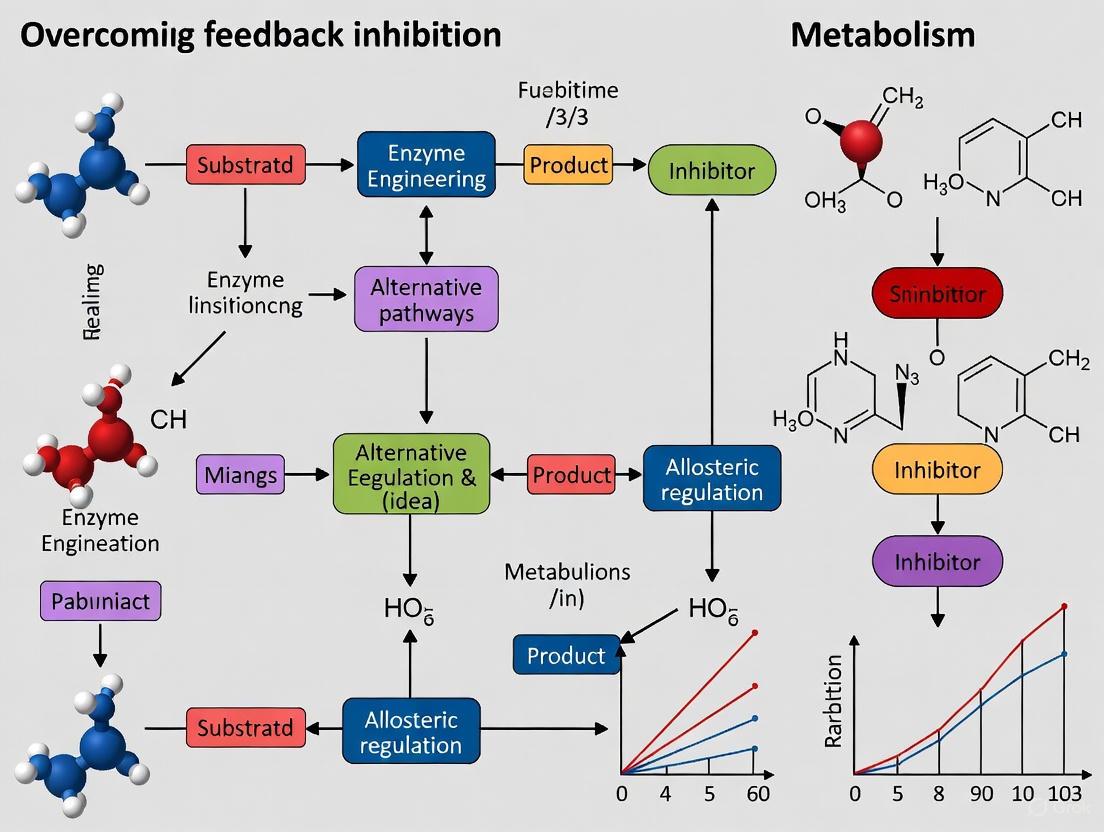
This article provides a comprehensive analysis of contemporary strategies to overcome feedback inhibition, a fundamental regulatory mechanism in metabolic pathways.
Strategic Bypass: Innovative Approaches to Overcome Metabolic Feedback Inhibition in Biomedical Research and Therapy
Abstract
This article provides a comprehensive analysis of contemporary strategies to overcome feedback inhibition, a fundamental regulatory mechanism in metabolic pathways. Tailored for researchers, scientists, and drug development professionals, we explore the structural basis of allosteric regulation, detail advanced methodologies like in silico and in vitro mutagenesis for creating feedback-resistant enzymes, and address challenges in pathway optimization. The scope extends to validating these strategies through computational modeling and comparative analysis of their applications in industrial biotechnology and the development of novel therapeutic interventions for cancer, metabolic, and neurological disorders.
The Core Principles and Critical Role of Metabolic Feedback Inhibition
Core Concepts and Definitions
What is feedback inhibition?
Feedback inhibition is a fundamental regulatory mechanism in cellular metabolism where the final end product of a biochemical pathway inhibits an enzyme that functions early in that same pathway, typically the first enzyme that is unique to that pathway [1]. This process allows the cell to respond to the abundance of a specific product by slowing down its production, thus preventing the wasteful over-accumulation of resources [1].
What is the basic mechanism of allosteric regulation?
Allosteric regulation is the process by which a small regulatory molecule inhibits or activates an enzyme by interacting at a site—known as the allosteric site—that is distinct from the enzyme's active site (where catalytic activity occurs) [2]. The binding of this regulatory molecule induces a change in the shape (conformation) of the enzyme. This shape change either enhances or impairs the enzyme's ability to form a complex with its substrate at the active site, thereby modulating its catalytic activity [2]. This is a key example of the induced-fit theory [2].
In the context of feedback inhibition, the molecule that acts as the allosteric inhibitor is often the end product of the metabolic pathway itself [2]. For instance, in a synthetic pathway, the final product can inhibit an enzyme early in the pathway, thus preventing the further formation of itself [2]. Conversely, some molecules can act as allosteric activators by enhancing the binding of the substrate to the enzyme and boosting catalytic activity [2].
Figure 1: Mechanism of Feedback Inhibition. The end product of a metabolic pathway allosterically inhibits an early-stage enzyme, regulating its own production.
FAQs and Troubleshooting for Researchers
Q1: Why might my assay not show expected feedback inhibition, and how can I troubleshoot this?
Unexpected results can stem from assay conditions or reagent issues. Focus your troubleshooting on the following areas:
- Enzyme Preparation: Verify that your enzyme preparation is pure and functional. Contaminating proteases or phosphatases can degrade the enzyme or regulatory molecules. Use fresh, properly stored aliquots.
- Allosteric Effector Integrity: Confirm the stability and concentration of your putative allosteric inhibitor. It may have degraded during storage. Prepare a fresh stock solution and check its purity.
- Assay Conditions: Ensure your reaction buffer (pH, ionic strength) and temperature are optimal for both enzyme activity and allosteric binding. Non-physiological conditions can disrupt the enzyme's quaternary structure and its ability to undergo allosteric conformational changes.
- Cofactor Requirements: Check if the allosteric regulation is dependent on specific cofactors (e.g., metal ions) that may be absent from your reaction mixture.
Q2: In drug discovery, what are the advantages of targeting allosteric sites over active sites?
Targeting allosteric sites offers several key pharmacological advantages, which are summarized in the table below.
Table 1: Advantages of Allosteric Drugs over Orthosteric Drugs
| Feature | Allosteric Drugs | Traditional Orthosteric Drugs |
|---|---|---|
| Specificity | Greater specificity by targeting evolutionarily less conserved allosteric sites [3]. | Lower specificity; often target highly conserved active sites, leading to off-target effects [3]. |
| Mechanism | Fine-tuned modulation; can enhance or inhibit protein function without completely blocking the natural ligand [3]. | Direct competition with natural substrates, often requiring higher affinity to be effective, which can lead to toxicity [3]. |
| Resistance | Can be used in combination with orthosteric drugs to minimize the development of drug resistance [3]. | Higher potential for single-point mutations to confer resistance. |
| "Undruggable" Targets | Can target proteins previously considered "undruggable" by orthosteric methods (e.g., KRAS G12C inhibitors) [3]. | Often ineffective against such targets. |
Q3: What are the key experimental considerations for identifying novel allosteric sites on an enzyme?
A significant bottleneck in allosteric drug development is the accurate identification of allosteric sites [3]. Researchers should consider an integrated approach:
- Computational Methods: Leverage advanced computational tools that use sequence-based coevolution analysis, molecular dynamics simulations, and deep learning to predict potential allosteric pockets [3]. These methods can analyze conformational changes and identify cryptic allosteric sites that are not apparent in static crystal structures [3].
- Experimental Validation: Computational predictions must be validated experimentally. Techniques such as cryo-electron microscopy [3] and deep mutational scanning [3] are powerful for mapping allosteric sites and understanding communication networks within the protein.
- Combined Workflow: The most effective strategy is a cycle of computational prediction followed by experimental validation and refinement.
Figure 2: Integrated Workflow for Identifying Allosteric Sites. A cyclical process combining computational and experimental methods.
Experimental Protocols and Reagent Solutions
Protocol: Demonstrating Feedback Inhibition in a Cell-Free System
This protocol outlines a method to observe feedback inhibition using a purified enzyme system.
1. Principle: The activity of a key enzyme from a biosynthetic pathway (e.g., for an amino acid or nucleotide) is measured in the presence and absence of its pathway's end product. A reduction in activity in the presence of the end product is indicative of feedback inhibition.
2. Reagents and Materials: Table 2: Key Research Reagent Solutions for Feedback Inhibition Assays
| Reagent/Material | Function | Example & Notes |
|---|---|---|
| Purified Enzyme | The catalytic target of study. | e.g., Aspartate transcarbamoylase (ATCase). Must be purified to homogeneity to avoid contaminating activities. |
| Enzyme Substrate | The molecule upon which the enzyme acts. | The specific substrate for the first committed step of the pathway. |
| Allosteric Inhibitor | The putative regulatory molecule. | The final end product of the pathway (e.g., an amino acid like isoleucine). |
| Reaction Buffer | Provides optimal pH and ionic environment. | Typically a physiological buffer like HEPES or Tris, may require specific cofactors (Mg²⁺). |
| Activity Assay Kit | Quantifies the rate of the enzymatic reaction. | Can measure substrate depletion or product formation (e.g., via spectrophotometry, fluorescence). |
3. Procedure: 1. Prepare Reaction Mixtures: * Control Tube: Reaction buffer + Enzyme + Substrate. * Test Tube: Reaction buffer + Enzyme + Allosteric Inhibitor (End Product) + Substrate. 2. Incubate: Start the reaction by adding the substrate to both tubes. Incubate at the optimal temperature (e.g., 37°C) for a set time. 3. Stop Reaction: Halt the reaction at defined time intervals using a stop solution (e.g., acid, denaturant) or by placing on ice. 4. Measure Activity: Use your chosen assay method to quantify the amount of product formed in each tube over time. 5. Analyze Data: Compare the reaction rates (e.g., µmol product/min) between the control and test tubes. A statistically significant decrease in the test tube's rate confirms feedback inhibition.
Quantitative Data from Clinical Allosteric Drugs
The therapeutic potential of targeting allosteric sites is demonstrated by several FDA-approved drugs. The table below summarizes key examples and their performance.
Table 3: Efficacy of Selected FDA-Approved Allosteric Drugs
| Allosteric Drug | Target / Condition | Key Efficacy Data | Comparison to Orthosteric Drug |
|---|---|---|---|
| Asciminib | STAMP inhibitor for Chronic Myeloid Leukemia (CML) | 25.5% of patients achieved a major molecular response [3]. | vs. 13.2% with orthosteric inhibitor bosutunib [3]. |
| Trametinib | MEK inhibitor for cancer | Achieved 7.2 times the pMEK/uMEK ratio [3]. | More potent than orthosteric selumetinib, using >14 times less nM concentration [3]. |
| KRAS G12C inhibitors | Mutant KRAS in cancer | 215-fold more potent against mutant KRAS than wild-type [3]. | Demonstrates exceptional selectivity for the mutant oncoprotein. |
FAQs and Troubleshooting Guide
Frequently Asked Questions
Q1: What is the fundamental mechanism of feedback inhibition in metabolism?
- A: Feedback inhibition is a regulatory scheme where the end product of a metabolic pathway inhibits the enzyme that catalyzes the first committed step of its own synthesis [4] [5]. This is a form of allosteric inhibition where the binding of the end product to the enzyme reduces its activity, preventing the over-accumulation of the product and enabling efficient resource use [5] [6].
Q2: If feedback inhibition is so simple and effective, why does real metabolic regulation involve complex multi-layer control (e.g., transcriptional regulation, covalent modification)?
- A: While simple product-feedback inhibition is sufficient for optimal flux control, it can lead to high levels of intermediate metabolite pools, which may be associated with toxicity or osmotic imbalance [4]. Multi-layer regulation, often resulting in ultrasensitive feedback inhibition, helps restrict these large pool sizes and provides more robust and tunable control over the pathway [4] [7].
Q3: My experiment involves a metabolic cycle, not a simple linear pathway. Can the principles of feedback inhibition still be applied?
- A: Yes. Mathematical analysis shows that with appropriate feedback connections, product-feedback inhibition can minimize futile cycling and optimize fluxes even in complex network structures like metabolic cycles (e.g., the TCA cycle) and pathways integrating multiple nutrient inputs [4]. The regulatory scheme for the glutamine-glutamate nitrogen assimilation cycle in E. coli is a documented example where feedback inhibition successfully explains dynamical behavior [4].
Q4: I am observing unexpected inhibition of my target enzyme in a cell lysate. What could be the cause?
- A: A common issue is metabolic cross-talk or inherent structural constraints. A genome-scale enzyme-inhibition network revealed that metabolite-driven enzyme inhibition is extremely frequent, affecting most biochemical processes [7]. Often, this inhibition is competitive and results from structural similarities between a metabolite and an enzyme's substrate, even if that metabolite is not part of the enzyme's direct pathway [7]. Review the list of common inhibitors in Table 1.
Q5: How do eukaryotic cells manage the widespread problem of metabolic self-inhibition?
- A: Compartmentalization is a key strategy. By localizing specific metabolic processes within different organelles, eukaryotic cells prevent the enrichment of inhibitors in the same compartment as their target enzymes, thereby alleviating the constraints that self-inhibition places on metabolism [7].
Troubleshooting Common Experimental Issues
Problem: Low product yield in a engineered biosynthetic pathway.
- Diagnosis: The native feedback inhibition mechanism is likely still active, limiting flux once the product accumulates.
- Solution: Implement strategies to overcome feedback inhibition. This can include:
- Enzyme Engineering: Use site-directed mutagenesis to alter allosteric binding sites in the key regulated enzyme, making it insensitive to the inhibitor while retaining catalytic activity [4] [7].
- Precursor Supplementation: Ensure that precursor metabolites are supplied in non-inhibiting amounts to drive the reaction forward.
- Pathway Bypass: Introduce a heterologous, non-regulated enzyme that catalyzes the same committed step.
Problem: Inconsistent enzyme activity assays in vitro.
- Diagnosis: The assay mixture or purified enzyme preparation may be contaminated with low-level metabolites that act as potent inhibitors.
- Solution:
- Purification: Re-purify the enzyme using a different method (e.g., size-exclusion chromatography) to remove bound small molecules.
- Buffer Analysis: Analyze your buffer components against a database of known inhibitors (e.g., BRENDA) for your specific enzyme. Common culprits include nucleotides like ATP and ADP [7].
- Add Cofactors: Ensure essential activating cofactors are present in sufficient concentration.
Quantitative Data on Metabolic Feedback Inhibition
Table 1: Prominent Inhibitors in Human Metabolism
This table summarizes key metabolites known to inhibit a large number of enzymes, based on a cross-species informed network of the human metabolome [7].
| Inhibitor Metabolite | Chemical Category | Number of Enzymes Inhibited | Notable Characteristics |
|---|---|---|---|
| ATP | Nucleosides, Nucleotides and Analogues | 167 | Most connected inhibitor; high-energy phosphate donor [7]. |
| ADP | Nucleosides, Nucleotides and Analogues | Data not specified | Common competitive inhibitor for ATP-binding sites [7]. |
| NADH | Nucleosides, Nucleotides and Analogues | Data not specified | Key electron carrier; inhibits many oxidoreductases [7]. |
| Acetyl-CoA | Organic Acids and Derivatives | Data not specified | Central metabolite; inhibits enzymes at the start of pathways [7]. |
Table 2: Experimental Approaches to Overcome Feedback Inhibition
This table outlines common methodologies used in metabolic engineering and drug development to alleviate feedback inhibition. [4] [7]
| Approach | Methodology | Key Application |
|---|---|---|
| Enzyme Engineering | Site-directed mutagenesis of allosteric binding sites to disrupt inhibitor binding while preserving catalytic function. | Maximizing flux in engineered biosynthetic pathways for amino acids or antibiotics [4]. |
| Compartmentalization | Relocalizing pathway enzymes to different cellular organelles to separate them from inhibitors [7]. | Optimizing metabolite flux in eukaryotic cell factories (e.g., yeast) [7]. |
| Ultrasensitive Feedback | Introducing multi-layer regulation (e.g., covalent modification plus allostery) to create a sharper, more switch-like inhibitory response [4]. | Fine-tuning metabolic dynamics to prevent toxic intermediate accumulation in synthetic biology constructs [4]. |
Detailed Experimental Protocols
Protocol 1: Identifying and Validating Allosteric Inhibitors for a Target Enzyme
Application: Drug discovery and basic enzyme mechanism studies.
Workflow:
- In Silico Screening: Perform molecular docking simulations of the enzyme's structural model against a library of essential metabolites, focusing on those present in the pathway.
- Enzyme Purification: Express and purify the recombinant target enzyme to homogeneity.
- High-Throughput Activity Screening: In a 96-well plate format, assay enzyme activity in the presence of a range of potential metabolite inhibitors (0.1-10 mM).
- Kinetic Analysis: For hit inhibitors, perform detailed kinetic assays (vary substrate concentration at fixed inhibitor concentrations) to determine the inhibition modality (competitive, non-competitive) and inhibition constant (Ki).
- Structural Validation: If possible, solve the crystal structure of the enzyme-inhibitor complex to confirm the binding site.
Diagram: Experimental Workflow for Inhibitor Identification
Protocol 2: Engineering Feedback-Resistant Enzymes via Site-Directed Mutagenesis
Application: Metabolic engineering for overproduction of biochemicals.
Workflow:
- Sequence and Structure Analysis: Identify the gene sequence and, if available, the 3D structure of the target enzyme. Locate the predicted allosteric site distinct from the active site.
- Mutagenesis Primer Design: Design primers for site-directed mutagenesis to introduce point mutations (e.g., alanine substitutions) into key residues in the allosteric pocket.
- Mutant Library Creation: Perform PCR-based mutagenesis and transform the plasmid library into a suitable expression host (e.g., E. coli).
- Functional Screening: Screen colonies for enzyme activity in the presence of a high concentration of the feedback inhibitor. Select clones that remain active.
- Characterization: Purify the wild-type and mutant enzymes. Compare their kinetic parameters (Vmax, Km) and sensitivity to inhibition in vitro.
- In Vivo Testing: Introduce the feedback-resistant mutant gene into a production strain and measure the final titer of the desired product.
Diagram: Workflow for Creating Feedback-Resistant Enzymes
The Scientist's Toolkit: Research Reagent Solutions
Table 3: Essential Reagents for Studying Feedback Inhibition
| Reagent / Material | Function / Application |
|---|---|
| Purified Recombinant Enzyme | Essential for in vitro kinetic studies to determine inhibition constants (Ki) and modality without cellular complexity. |
| Allosteric Inhibitor (e.g., pathway end product) | The purified metabolite used to characterize the feedback loop in enzymatic assays. |
| Site-Directed Mutagenesis Kit | For introducing specific point mutations into the gene encoding the target enzyme to disrupt allosteric binding sites. |
| Crystallography Reagents | Materials for solving the 3D structure of enzyme-inhibitor complexes to visualize the allosteric mechanism. |
| BRENDA Database | A comprehensive enzyme database to look up known inhibitors, kinetic parameters, and regulatory information for your target enzyme [7]. |
Frequently Asked Questions (FAQs)
Q1: What is the fundamental difference between an allosteric inhibitor and an orthosteric (active-site) inhibitor?
A1: The key difference lies in their binding sites and mechanisms of action.
- Allosteric Inhibitors bind to a site on the enzyme that is distinct from the active site, known as the allosteric site. This binding induces a conformational change in the enzyme's structure that alters the shape and/or dynamics of the active site, thereby reducing its catalytic activity. Their effect is not dependent on substrate concentration, making them non-competitive inhibitors [8].
- Orthosteric Inhibitors bind directly to the enzyme's active site, physically blocking the substrate from binding. They typically act as competitive inhibitors, meaning their effect can be overcome by high concentrations of the substrate [8] [9].
Q2: My enzyme inhibition data does not fit a simple model. What are the common models used to explain allosteric regulation?
A2: Allosteric regulation is complex and several models exist to describe it. The two primary classical models are:
- Concerted (MWC) Model: This model postulates that all subunits of an oligomeric enzyme exist in a equilibrium between a tense (T, low-affinity) state and a relaxed (R, high-affinity) state. The binding of an allosteric effector shifts this equilibrium, changing the activity of the entire enzyme simultaneously [8].
- Sequential (KNF) Model: This model suggests that substrate or effector binding to one subunit induces a conformational change in that subunit, which then influences the affinity of adjacent subunits. The change propagates sequentially through the enzyme complex, rather than in a concerted switch [8]. More modern ensemble models use statistical mechanics and energy landscapes to describe allostery, accounting for a multitude of possible conformations [8].
Q3: In a metabolic pathway, how can end-products regulate their own production without blocking the catalyst's active site?
A3: This is a classic example of feedback inhibition, a physiological process reliant on allosteric regulation. The end-product of a metabolic pathway acts as an allosteric inhibitor for an enzyme early in the pathway. By binding to an allosteric site on this enzyme, the end-product causes a conformational change that inhibits the enzyme's activity. This prevents the unnecessary accumulation of the end-product when it is already abundant [10]. A well-known example is ATP acting as an allosteric inhibitor of phosphofructokinase in glycolysis [8].
Q4: I have measured an IC₅₀ value for my inhibitor. How does this relate to the inhibitory constant (Kᵢ)?
A4: The IC₅₀ (half-maximal inhibitory concentration) is the concentration of inhibitor required to reduce enzyme activity by 50% under a specific set of experimental conditions. The Kᵢ (inhibition constant) is an absolute measure of the inhibitor's affinity for the enzyme, representing the dissociation constant of the enzyme-inhibitor complex. The relationship between IC₅₀ and Kᵢ depends on the mechanism of inhibition and the substrate concentration [11]. For a non-competitive allosteric inhibitor, the relationship is often straightforward: %inhibition = ([I]/Kᵢ) / (1 + [I]/Kᵢ). This means the IC₅₀ value can be a reasonable approximation of the Kᵢ. However, for competitive inhibitors, the IC₅₀ value is highly dependent on substrate concentration and cannot be equated to Kᵢ without appropriate correction [9] [11].
Q5: What are some advanced strategies to achieve potent and selective enzyme inhibition?
A5: Beyond designing single-site inhibitors, a powerful strategy is the development of bivalent inhibitors. These molecules consist of two functional motifs—one that binds the orthosteric (e.g., ATP) site and another that binds an allosteric site—connected by a chemical linker [12]. When optimally designed, these inhibitors can exhibit superadditivity, where the linked molecule binds with significantly higher affinity than the sum of its individual parts. This approach can yield extremely potent (e.g., picomolar) inhibitors and can be particularly effective against drug-resistant enzyme mutants [12].
Troubleshooting Guides
Problem: High Variability in Allosteric Inhibitor Potency (IC₅₀) Measurements
Potential Causes and Solutions:
- Cause 1: Unaccounted Kinetic Mechanism. The observed inhibition can vary with the substrate used and its concentration, especially for enzymes with complex mechanisms like monoamine oxidase B [11].
- Solution: Determine the mode of inhibition (competitive, non-competitive, uncompetitive) by measuring enzyme kinetics at several substrate and inhibitor concentrations. Use the appropriate equation to calculate the true Kᵢ from your IC₅₀ values [11].
- Cause 2: Instability of the Inhibitor or Enzyme.
- Solution: Prepare fresh inhibitor stock solutions and confirm enzyme activity in the absence of inhibitor at the beginning and end of the assay period.
- Cause 3: Inadequate Equilibrium Time. Allosteric inhibitors may induce slow conformational changes.
- Solution: Pre-incubate the enzyme with the inhibitor for varying lengths of time before initiating the reaction with substrate to ensure equilibrium has been reached.
Problem: Irreproducible Results in Molecular Dynamics (MD) Simulations of Allostery
Potential Causes and Solutions:
- Cause 1: Insufficient Sampling. Short simulation times may not capture the full range of functionally relevant conformational changes.
- Solution: As demonstrated in studies of USP7, perform multiple, independent replica simulations (e.g., 3 x 1 µs) to ensure conformational sampling has converged. Always discard the initial equilibration period (e.g., first 300 ns) from analysis [13].
- Cause 2: Inaccurate Force Field Parameters.
- Solution: For novel small-molecule allosteric inhibitors, carefully derive force field parameters using high-level quantum mechanics calculations and validate them against experimental data (e.g., crystal structures) where possible. The General Amber Force Field (GAFF) is commonly used for small molecules [13].
Quantitative Data on Allosteric Inhibition
Table 1: Potency of Bivalent vs. Monovalent EGFR Kinase Inhibitors This table illustrates the dramatic superadditivity achievable with bivalent inhibitors that simultaneously target orthosteric and allosteric sites, compared to their parent fragments [12].
| Inhibitor Type | Target (EGFR Mutant) | IC₅₀ Value | Notes |
|---|---|---|---|
| Bivalent (C-linked) | L858R/T790M/C797S (LRTMCS) | 51 - 64 pM | Superadditive effect; ~10⁶-fold more potent than parents [12]. |
| Bivalent (N-linked) | L858R/T790M/C797S (LRTMCS) | ≥ 1 µM | Ineffective linker design, highlighting its critical role [12]. |
| Orthosteric Parent | L858R/T790M/C797S (LRTMCS) | ≥ 6 µM | Trisubstituted imidazole motif [12]. |
| Allosteric Parent | L858R/T790M/C797S (LRTMCS) | ~39 - 59 nM | Dibenzodiazepinone motif [12]. |
Table 2: Dynamic Changes in USP7 Upon Allosteric Inhibitor Binding Data from molecular dynamics simulations showing how allosteric inhibitor binding alters enzyme dynamics, providing a mechanistic basis for inhibition [13].
| System State | Cα RMSD (Å) | Catalytic Triad Alignment | Domain Flexibility |
|---|---|---|---|
| Apo (Ligand-free) | Baseline Reference | Properly aligned | Normal dynamics |
| Ubiquitin-bound | 1.51 ± 0.23 | Properly aligned | Stabilized conformation |
| Allosteric Inhibitor-bound | Higher than Ub-bound | Disrupted | Increased flexibility in fingers and palm domains |
Experimental Protocols
Protocol 1: Molecular Dynamics (MD) Simulation to Analyze Allosteric Mechanisms
This protocol is adapted from studies on Ubiquitin-Specific Protease 7 (USP7) to investigate conformational dynamics [13].
1. System Preparation:
- Source PDB Structures: Obtain starting coordinates from the Protein Data Bank (e.g., apo enzyme: 1NB8; allosteric inhibitor-bound: 5N9T).
- Modeling: Use software like UCSF Chimera to reconstruct any missing side chains and prepare the small-molecule inhibitor (e.g., assign charges using the AM1-BCC method via the Antechamber module).
2. Simulation Setup:
- Force Fields: Apply a standard protein force field (e.g., Amber ff14SB) and a small-molecule force field (e.g., GAFF).
- Solvation and Ions: Solvate the system in a periodic box of TIP3P water molecules, ensuring a minimum 10 Å buffer around the protein. Add counterions to neutralize the system's charge.
- Energy Minimization: Perform a two-step minimization: first with restraints on protein atoms (20,000 cycles), then without restraints (50,000 cycles).
3. Equilibration and Production:
- Heating: Gradually heat the system from 0 K to 300 K over 100 ps under constant volume (NVT ensemble).
- Equilibration: Equilibrate the system for 200 ps under constant pressure (NPT ensemble).
- Production Run: Run multiple independent production simulations (e.g., 3 x 1000 ns) with random initial velocities in the NPT ensemble (300 K, 1 atm). Use a 2 fs time step and constrain bonds involving hydrogen.
4. Data Analysis:
- Convergence: Discard the initial equilibration phase (e.g., first 300 ns) and combine the remaining trajectories from replicates.
- Analyses:
- RMSD/RMSF: Calculate root-mean-square deviation and fluctuation to assess stability and flexibility.
- Dynamic Cross-Correlation Matrix (DCCM): Identify correlated and anti-correlated motions between residues.
- Community Network Analysis: Identify communities of residues that move together using software like NetworkView in VMD.
Protocol 2: Biochemical Assessment of Allosteric Inhibition Mode
1. Experimental Design:
- Prepare a constant amount of purified enzyme.
- Set up reactions with a fixed, saturating concentration of the allosteric inhibitor and vary the substrate concentration across a wide range (e.g., from 0.2 x Kₘ to 5 x Kₘ).
- In parallel, perform the same experiment in the absence of inhibitor as a control.
2. Data Analysis and Interpretation:
- Plot reaction velocity (v) versus substrate concentration ([S]) for both datasets.
- Fit the data to the Michaelis-Menten equation using non-linear regression.
- Interpretation:
- If the Vₘₐₓ decreases and the Kₘ remains unchanged, the inhibition is characteristic of non-competitive (often allosteric) inhibition.
- To calculate the Kᵢ for a non-competitive allosteric inhibitor, use the formula: %inhibition = ([I]/Kᵢ) / (1 + [I]/Kᵢ) [9].
Visualization of Concepts and Workflows
Allosteric Inhibition in a Metabolic Pathway
This diagram illustrates feedback inhibition, where the end-product of a metabolic pathway acts as an allosteric inhibitor of an enzyme early in the pathway.
Bivalent Inhibitor Mechanism
This diagram shows how a bivalent inhibitor uses two connected motifs to simultaneously bind to both the orthosteric and allosteric sites of an enzyme, leading to highly potent inhibition.
The Scientist's Toolkit: Research Reagent Solutions
Table 3: Essential Reagents for Studying Allosteric Inhibition
| Reagent / Material | Function in Research | Example Application |
|---|---|---|
| Recombinant Enzyme Kinase Domains | High-purity protein for biochemical assays and structural studies. | Determining IC₅₀ values against mutant forms of EGFR [12]. |
| Allosteric Inhibitor Compounds | Small molecules that bind to regulatory sites to induce conformational change. | Probe the dynamics and function of enzymes like USP7 [13]. |
| Crystallography Screens (e.g., for co-crystallization) | To obtain high-resolution structures of enzyme-inhibitor complexes. | Revealing the atomic details of binding modes, as with bivalent EGFR inhibitors [12]. |
| Molecular Dynamics Software (e.g., AMBER, GROMACS) | Simulate protein dynamics and ligand binding at an atomic level. | Investigating the conformational equilibrium shift in USP7 upon allosteric inhibitor binding [13]. |
| Fluorometric/Luminescent Assay Kits | High-throughput measurement of enzyme activity for inhibitor screening. | Assessing the potency (IC₅₀) of inhibitors against targets like monoamine oxidases [11]. |
Frequently Asked Questions (FAQs)
FAQ 1: What are the primary metabolic indicators of disrupted cellular energy homeostasis in aging models? A key indicator is a significant reduction in overall ATP production, driven by impaired mitochondrial function and a decline in the efficiency of glucose metabolism pathways, including glycolysis and the Tricarboxylic Acid (TCA) cycle [14]. This is often accompanied by a measurable accumulation of metabolic by-products like lactate and citrate, which can further inhibit energy production [14].
FAQ 2: How can we experimentally redirect carbon flux to overcome feedback inhibition in a target pathway like the mevalonate (MEV) pathway? Research shows that creating knockout strains of competing pathways is an effective strategy. For instance, in Escherichia coli engineered for limonene production, knocking out lactate dehydrogenase (LDH) and aldehyde dehydrogenase-alcohol dehydrogenase (ALDH-ADH) reduced carbon loss to mixed fermentation. This intervention resulted in an 18 to 20-fold increase in intracellular mevalonate accumulation and an 8 to 9-fold enhancement in target compound (limonene) yield [15].
FAQ 3: What dietary or pharmacological strategies can support mitochondrial quality control and delay energy-related decline? Compounds like CMS121 and J147 have been shown to increase acetyl-CoA levels by inhibiting acetyl-CoA carboxylase 1. This helps preserve mitochondrial homeostasis and can alleviate symptoms of brain aging in models [14]. Furthermore, Ginsenoside-Rb1 (Gs-Rb1) from Panax ginseng demonstrates anti-aging and cognitive enhancement capabilities, partly by increasing sirtuin 3 activity to benefit glycolysis and local energy supply [14].
Troubleshooting Guides
Problem: Inefficient Target Biochemical Production Due to Feedback Inhibition
- Symptoms: Low yield of a target compound (e.g., limonene) despite engineered pathway expression; accumulation of precursor metabolites.
- Investigation & Solution:
| Investigation Step | Methodology | Expected Outcome & Solution |
|---|---|---|
| 1. Map Carbon Flux | Collect time-series intracellular metabolomics data from the engineered production strain (e.g., E. coli) [15]. | Identify major pathways competing for the substrate (e.g., mixed fermentation pathways like LDH and ALDH-ADH pulling carbon away from the MEV pathway) [15]. |
| 2. Engineer Knockout Strains | Use genetic engineering tools (e.g., CRISPR-Cas9) to create knockout mutants of identified competing enzymes (e.g., ΔLDH, ΔALDH-ADH) [15]. |
Redirect carbon flux towards the target pathway. A successful knockout should show significantly higher intracellular concentration of pathway intermediates [15]. |
| 3. Validate Enhanced Yield | Quantify the final target product (e.g., using GC-MS, HPLC) and measure intracellular metabolite concentrations in knockout strains versus the parent strain [15]. | Confirmation of strategy success: an 8-9 fold increase in target product yield and an 18-20 fold increase in key intermediate (mevalonate) accumulation [15]. |
Problem: Age-Related Decline in TCA Cycle Function and Acetyl-CoA Levels
- Symptoms: Reduced ATP synthesis; impaired neuronal function and cognition; markers of mitochondrial dysfunction.
- Investigation & Solution:
| Investigation Step | Methodology | Expected Outcome & Solution |
|---|---|---|
| 1. Measure Acetyl-CoA & ATP | Use enzymatic assays or LC-MS/MS to quantify acetyl-CoA and ATP levels in aged cell or animal models (e.g., post-mortem brain tissues) [14]. | Confirm a significant reduction in acetyl-CoA and overall ATP production. |
| 2. Apply Metabolic Modulators | Treat the model with compounds like CMS121 or J147 (e.g., via dietary administration or cell culture media supplementation) [14]. | These compounds inhibit acetyl-CoA carboxylase 1, which should lead to increased mitochondrial acetyl-CoA levels. |
| 3. Assess Functional Recovery | Evaluate recovery of mitochondrial membrane potential, TCA cycle flux, and cognitive/behavioral endpoints (e.g., memory tests in mice) [14]. | Restoration of acetyl-CoA levels, improved mitochondrial homeostasis, and alleviation of age-related functional decline [14]. |
Experimental Protocol: Enhancing Limonene Yield via Competing Pathway Knockout
Objective: To increase the yield of limonene in an engineered E. coli strain by knocking out genes of competing fermentation pathways to redirect carbon flux into the mevalonate (MEV) pathway [15].
Materials:
- Wild-type E. coli strain engineered with the limonene biosynthetic pathway (e.g., EcoCTs3) [15].
- Gene knockout kits (e.g., CRISPR-Cas9 system for E. coli).
- Culture media (e.g., LB, M9 minimal media).
- Metabolomics sample preparation reagents (e.g., cold methanol for quenching).
- LC-MS/MS or GC-MS system for quantitative metabolomics.
Procedure:
- Culture the Parent Strain: Inoculate the EcoCTs3 strain in an appropriate medium and grow under standard conditions. Collect samples at multiple time points for intracellular metabolomics analysis [15].
- Analyze Metabolomics Data: Use the time-series data to identify significant competing pathways (e.g., lactate production via LDH, ethanol production via ALDH-ADH) that divert carbon from the MEV pathway [15].
- Generate Knockout Strains: Using genetic engineering tools, create
ΔLDHandΔALDH-ADHknockout mutants from the parent EcoCTs3 strain [15]. - Validate Knockouts and Measure Yield: Culture the knockout strains and the parent strain under identical conditions.
- Data Analysis: Compare the mevalonate levels and limonene yields of the knockout strains to the parent strain. A successful experiment should show a multi-fold increase in both parameters [15].
Table 1: Quantitative Outcomes of Metabolic Engineering to Enhance Limonene Production [15]
| Strain | Genetic Modification | Effect on Intracellular Mevalonate | Effect on Limonene Yield |
|---|---|---|---|
| EcoCTs3 (Parent) | Base strain engineered for limonene production | Baseline | Baseline |
| Knockout Strain 1 | ΔLDH (Lactate Dehydrogenase) |
18 to 20-fold increase | 8 to 9-fold increase |
| Knockout Strain 2 | ΔALDH-ADH (Aldehyde Dehydrogenase-Alcohol Dehydrogenase) |
18 to 20-fold increase | 8 to 9-fold increase |
The Scientist's Toolkit: Research Reagent Solutions
Table 2: Essential Reagents for Investigating Energy Metabolism and Feedback Inhibition
| Research Reagent / Material | Function & Application |
|---|---|
| CMS121 & J147 | Small molecule compounds that increase acetyl-CoA levels by inhibiting acetyl-CoA carboxylase 1; used to study TCA cycle enhancement and brain aging [14]. |
| Ginsenoside-Rb1 (Gs-Rb1) | A bioactive ginseng compound shown to have anti-aging and cognitive enhancement effects, partly by modulating sirtuin 3 activity and benefiting glycolysis [14]. |
| CRISPR-Cas9 System | A gene-editing tool used to create knockout strains (e.g., ΔLDH, ΔALDH-ADH) to eliminate competing metabolic pathways and redirect carbon flux [15]. |
| LC-MS / GC-MS Systems | Used for quantitative, time-series intracellular metabolomics to map carbon flux and identify bottlenecks in engineered pathways [15]. |
Signaling Pathway and Workflow Diagrams
Metabolic Engineering Strategy
Experimental Workflow for Yield Enhancement
FAQs: Core Concepts and Experimental Challenges
Q1: What is feedback inhibition and why is its regulation critical in living systems? A1: Feedback inhibition is a fundamental regulatory mechanism where the end product of a metabolic pathway inhibits an enzyme, typically the first committed-step enzyme, within that same pathway [1] [16]. This process is crucial for maintaining cellular homeostasis, preventing the overproduction of metabolites, and ensuring efficient resource allocation [16]. Dysregulation of this finely tuned system is a cornerstone of numerous disease states.
Q2: I am observing drug resistance in my BRAF-mutant cancer cell lines after initial treatment with a RAF inhibitor. Could feedback inhibition be involved? A2: Yes, this is a classic example of a feedback-driven resistance mechanism. In tumors driven by the BRAF V600E oncogene, high levels of ERK signaling establish potent negative feedback that suppresses upstream mitogenic signaling [17] [18]. When you apply a RAF inhibitor, you inhibit ERK signaling but simultaneously relieve this feedback. This relief reactivates upstream signaling, leading to increased Ras-GTP levels and the formation of RAF dimers that are resistant to the original inhibitor, resulting in a rebound of ERK signaling [18]. This is a major cause of adaptive resistance.
Q3: My research involves Alzheimer's disease models. Are there known feedback loops impacting pathology? A3: Recent research has uncovered a novel positive feedback inhibition loop connected to impaired brain glucose metabolism. In Alzheimer's models, a decrease in the levels of isocitrate dehydrogenase 3β (IDH3β), a key TCA cycle enzyme, leads to impaired energy metabolism and lactate accumulation [19]. This lactate promotes histone lactylation, which in turn enhances the expression of the transcription factor PAX6. PAX6 acts as an inhibitory transcription factor for IDH3β, further suppressing its expression and creating a vicious cycle that promotes tau hyperphosphorylation and synaptic damage [19].
Q4: What is a common consequence of inhibiting oncogenic signaling pathways that are under strong negative feedback? A4: A frequent consequence is feedback relief or feedback activation. Inhibiting a node in a signaling pathway (e.g., mTORC1 or STAT3) can disrupt the negative feedback loops that normally suppress upstream or parallel pathways [17] [20]. For instance, STAT3 inhibition in pancreatic cancer cells has been shown to promote TGF-α expression, leading to the feedback activation of the EGFR pathway, which can then drive resistance to the STAT3 inhibitor [20].
Troubleshooting Guides for Common Experimental Scenarios
Scenario 1: Unexpected Pathway Reactivation After Targeted Inhibitor Treatment
- Problem: Expected sustained inhibition of a target pathway (e.g., MAPK/ERK), but phospho-protein assays show a rebound in signaling after initial suppression.
- Investigation & Solution:
- Hypothesize: Relief of ERK-dependent negative feedback is causing reactivation of upstream receptors (e.g., EGFR) or alternative pathways [17] [18].
- Experimental Check:
- Resolution Strategy: Consider combination therapy. For example, combining RAF and MEK inhibitors has been shown to enhance ERK pathway inhibition and overcome this adaptive resistance in BRAF-mutant models [18]. Similarly, combining STAT3 and EGFR inhibitors can overcome resistance in pancreatic cancer [20].
Scenario 2: Modeling Aβ42 Toxicity in Alzheimer's Disease
- Problem: The molecular cascade linking Aβ42 accumulation to neuronal death is unclear, complicating drug discovery.
- Investigation & Solution:
- Hypothesize: Elevated Aβ42 establishes a product feedback inhibition on γ-secretase, impairing its processing of other substrates and disrupting downstream homeostatic signaling [21].
- Experimental Check:
- Resolution Strategy: Focus on the IDH3β-lactate-PAX6 loop. Investigate whether upregulating IDH3β or downregulating PAX6 in your model can reverse the metabolic deficits and improve neuronal function, breaking the toxic feedback cycle [19].
The table below summarizes key quantitative findings from cited research on feedback dysregulation.
Table 1: Experimental Data on Feedback Dysregulation in Disease
| Disease / Model | Intervention / Observation | Key Quantitative Findings | Citation |
|---|---|---|---|
| Alzheimer's Model (5xFAD mice) | IDH3β expression with age | IDH3β protein levels showed a significant age-dependent reduction, reaching statistical significance at 9 and 12 months vs. controls. Protein levels of IDH3α and IDH3γ were unchanged [19]. | |
| Cellular Alzheimer's Model (N2a cells) | IDH3β knockdown via siRNA | 75% decrease in IDH3β protein levels; 62% decline in IDH3β enzyme activity; decreased α-KG and ATP; increased NAD+/NADH ratio [19]. | |
| Pancreatic Cancer | Combined EGFR & STAT3 inhibition | Combined treatment persistently blocked EGFR and STAT3 signaling and exerted synergistic antitumor activity both in vitro and in vivo, regardless of KRAS mutation status [20]. | |
| BRAF-mutant Cancer | RAF inhibitor treatment | RAF inhibition caused relief of ERK-dependent feedback, increased Ras-GTP, and generated RAF-inhibitor-resistant dimers, leading to a rebound in ERK signaling [18]. |
Detailed Experimental Protocols
Protocol 1: Assessing γ-Secretase Feedback Inhibition in Cellular Models
- Objective: To test if Aβ42 exerts product feedback inhibition on γ-secretase.
- Materials: Neuronal cell line (e.g., N2a, primary neurons), synthetic human Aβ42 peptide, cell culture reagents, lysis buffer, antibodies for Western blot (against APP-CTFs, p75-CTFs, pan-cadherin-CTFs, Aβ).
- Methodology:
- Cell Treatment: Treat neuronal cultures with a range of human Aβ42 concentrations (e.g., 0.1-10 µM) for varying time periods (e.g., 6-48 hours). Include controls (vehicle and murine Aβ42 as a negative control) [21].
- Cell Lysis and Protein Quantification: Lyse cells using RIPA buffer. Quantify total protein concentration to ensure equal loading.
- Western Blot Analysis: Resolve proteins by SDS-PAGE and transfer to a membrane. Probe with antibodies against the C-terminal fragments (CTFs) of γ-secretase substrates. Accumulation of these CTFs indicates impaired γ-secretase processing [21].
- Cell Viability Assay: In parallel, perform a cell viability assay (e.g., MTT) to correlate γ-secretase inhibition with neuronal death, potentially mediated by accumulated p75-CTFs [21].
Protocol 2: Evaluating Feedback-Mediated Drug Resistance in BRAF-Mutant Cells
- Objective: To investigate the mechanism of adaptive resistance to RAF inhibitors and test combination therapies.
- Materials: BRAF V600E mutant cell line, RAF inhibitor (e.g., Vemurafenib), MEK inhibitor (e.g., Trametinib), Ras Activation Assay Kit, antibodies for Western blot (p-ERK, t-ERK, p-EGFR, etc.).
- Methodology:
- Time-Course Treatment: Treat cells with a RAF inhibitor and harvest lysates at multiple time points (e.g., 0, 30min, 2h, 6h, 24h, 48h).
- Monitor Signaling Dynamics: Analyze lysates by Western blot for p-ERK and t-ERK. Expect an initial drop followed by a rebound. Simultaneously, probe for p-EGFR and other upstream nodes to confirm feedback reactivation [18].
- Measure Ras Activation: Use a Ras-GTP pull-down assay at the same time points to confirm the increase in active Ras following RAF inhibition [18].
- Combination Therapy Test: Treat cells with RAF inhibitor alone, MEK inhibitor alone, or their combination. Assess synergy in inhibiting cell proliferation (e.g., by MTS assay) and in suppressing p-ERK levels via Western blot [18].
Pathway and Mechanism Visualizations
Diagram 1: Normal vs. Dysregulated Feedback
Diagram 2: Alzheimer's Feedback Loop
Diagram 3: Cancer Drug Resistance
The Scientist's Toolkit: Research Reagent Solutions
Table 2: Essential Reagents for Studying Feedback Inhibition
| Research Reagent | Function / Application in Feedback Studies |
|---|---|
| Small Molecule Inhibitors (e.g., RAF, MEK, STAT3, EGFR inhibitors) | Used to perturb specific nodes in signaling pathways to observe resultant feedback relief and adaptive resistance mechanisms [20] [18]. |
| siRNA/shRNA for Gene Knockdown (e.g., targeting IDH3β, PAX6, feedback regulators like DUSPs/Sproutys) | Essential for establishing causal relationships in feedback loops, such as demonstrating how loss of one component disrupts homeostasis [19]. |
| γ-Secretase Modulators/Inhibitors | Tools to directly manipulate γ-secretase activity and investigate its feedback regulation by Aβ42 and other substrates in Alzheimer's research [21]. |
| Ras Activation Assay Kits | Biochemical pull-down assays to quantify levels of active, GTP-bound Ras, a key readout for feedback relief in MAPK pathway studies [18]. |
| Antibodies for Phospho-Proteins (e.g., p-ERK, p-STAT3, p-EGFR) | Critical for monitoring dynamic changes in pathway activity and feedback states via Western blot or immunofluorescence [20] [18]. |
Methodologies for Disrupting Inhibition: From Mutagenesis to Pathway Engineering
In Silico and In Vitro Mutagenesis for Developing Feedback-Resistant Enzyme Variants
In metabolic engineering, a primary objective is to rewire cellular metabolism to enhance the production of valuable chemicals, biofuels, and pharmaceuticals from renewable resources [22]. A significant barrier to achieving high yields is feedback inhibition, a natural regulatory mechanism where the end-product of a biosynthetic pathway binds to and inhibits an allosteric enzyme, typically the first enzyme in that pathway [23]. This inhibition shuts down the pathway, maintaining cellular homeostasis but limiting industrial overproduction. To overcome this, researchers develop feedback-resistant enzyme variants that are no longer inhibited by the end-product, allowing for sustained and high-level metabolite production. The combined use of in silico (computational) and in vitro (laboratory) mutagenesis has become a powerful approach for efficiently discovering and optimizing these variants. This technical support guide, framed within the broader thesis of overcoming feedback inhibition, provides troubleshooting advice and detailed protocols for researchers engaged in this work.
Frequently Asked Questions (FAQs)
Q1: What is the fundamental difference between in silico and in vitro mutagenesis in this context?
- A1: In silico mutagenesis uses computational tools to model and predict the effects of amino acid substitutions on enzyme structure, stability, and ligand binding before any physical experiments are conducted [24]. It allows for the rapid, low-cost screening of thousands of virtual mutants. In contrast, in vitro mutagenesis involves the physical creation of mutant DNA sequences, expression of the mutant proteins in a host organism, and experimental testing of their properties and resistance to feedback inhibition [25].
Q2: Why is a combined in silico and in vitro approach more effective?
- A2: An integrated approach creates a powerful design-build-test cycle. In silico methods drastically reduce the number of candidates that need to be tested in vitro, saving significant time and resources [24] [26]. The in vitro results then provide crucial experimental validation and can be fed back into the computational models to improve their predictive accuracy for subsequent rounds of engineering.
Q3: Which specific residues should I target for mutagenesis to disrupt feedback inhibition?
- A3: The primary targets are the allosteric site residues, which are distinct from the active site. You should first identify the binding pocket for the inhibitory end-product (e.g., an amino acid). Computational tools can help predict these residues based on the 3D structure of the enzyme in complex with the inhibitor [24] [23]. Saturation mutagenesis of these residues is a common strategy to find substitutions that disrupt inhibitor binding while preserving catalytic activity [24].
Q4: A common problem I encounter is that my feedback-resistant mutant has severely compromised catalytic activity. How can I avoid this?
- A4: This occurs when mutations disrupt the enzyme's overall structure or active site geometry. To mitigate this:
- Prioritize Stability: Use tools like FoldX to evaluate the change in free energy (ΔΔG) upon mutation. Prefer mutants predicted to be structurally stable or to have minimal destabilization [24].
- Target Flexible Regions: Consider targeting rigid "sensitive residues" on short loops. Mutating these to hydrophobic residues with large side chains can fill cavities and improve stability without necessarily disrupting the catalytic core [27].
- Avoid Active Site Residues: Ensure your mutagenesis targets are confirmed to be in the allosteric site, not the active site, through structural analysis.
Q5: How can I validate that my engineered variant is truly feedback-resistant?
- A5: Validation requires both in vitro and in vivo assays:
- In vitro Kinetics: Purify the wild-type and mutant enzymes. Measure the reaction velocity (Vmax) and Michaelis constant (Km) in the presence and absence of a range of inhibitor (end-product) concentrations. A feedback-resistant variant will maintain a high Vmax even at elevated inhibitor concentrations, showing a significant reduction in inhibition potency [23].
- In vivo Production: Clone the mutant gene into a production host (e.g., E. coli, C. glutamicum, P. pastoris) and measure the final titer, yield, and productivity of the desired product in a fermentation process, comparing it to a strain expressing the wild-type enzyme [22] [28].
Troubleshooting Guides
Troubleshooting In Silico Saturation Mutagenesis and Screening
This guide addresses a standard workflow for computational mutant screening [24].
| Problem | Possible Cause | Solution |
|---|---|---|
| No high-affinity binding poses found in docking | The mutation causes steric clashes or unfavorable interactions with the ligand. | 1. Verify the flexibility settings in your docking software (e.g., allow side chains in the binding site to be flexible).2. Check the mutant model for structural integrity; the minimization/relaxation step may have failed.3. Consider a less drastic amino acid substitution. |
| Too many mutants to test experimentally after the initial filter | The filtering criteria (e.g., on Ki or binding energy) are too lenient. | 1. Apply a second filter based on structural stability (e.g., ΔΔG calculated by FoldX) [24].2. Prioritize mutants that show the largest change in binding energy for the inhibitor compared to the wild-type.3. Cluster results and select representatives from different clusters to explore diverse solutions. |
| The computational pipeline is too slow | Performing saturation mutagenesis on too many residues or using high-accuracy, slow docking parameters. | 1. Narrow the target residues to those with direct atom contacts with the inhibitor in the wild-type structure.2. Use a coarse-grained docking step first to screen all mutants, then re-dock the top candidates with more precise parameters.3. Utilize high-performance computing (HPC) clusters to run simulations in parallel [24]. |
Troubleshooting In Vitro Validation of Putative Resistant Mutants
| Problem | Possible Cause | Solution |
|---|---|---|
| Mutant protein does not express or is insoluble | The mutation causes protein misfolding or aggregation. | 1. Reduce the expression temperature.2. Use a chaperone co-expression system.3. Try different expression hosts (e.g., from E. coli to P. pastoris).4. Return to the in silico stability prediction and select a more stable mutant. |
| Enzyme is resistant but has very low specific activity | The mutation has negatively impacted the active site or key catalytic residues. | 1. Measure kinetic parameters (kcat, Km) without inhibitor to confirm activity loss.2. If activity is low, consider combination mutations or back-to-consensus mutations to restore stability and function.3. Use directed evolution on the resistant but low-activity mutant to improve catalysis. |
| Good in vitro resistance but poor in vivo production | Metabolic burden, poor expression, or degradation in the host. Other regulatory mechanisms may be present. | 1. Optimize the codon usage for your host.2. Use a stronger or tunable promoter [28].3. Check if the pathway has additional layers of regulation (e.g., transcriptional) that need to be addressed.4. Ensure that the substrate is available and that competing pathways are minimized. |
Experimental Protocols
Detailed Protocol: In Silico Saturation Mutagenesis and Docking Screening
This protocol is adapted from a high-performance computational procedure for large-scale mutant modelling [24].
Objective: To model all possible amino acid substitutions at selected binding site residues and screen them for altered affinity towards the inhibitory end-product.
Workflow Diagram: In Silico Mutagenesis Screening
Materials/Software:
- Input Structure: A high-resolution 3D structure of the wild-type enzyme, preferably in complex with the inhibitory ligand (from PDB or homology modeling).
- Mutagenesis & Modeling: MODELLER 9v3 software or similar (e.g., Rosetta) [24].
- Molecular Docking: AutoDock4.0, AutoDock Vina, or similar molecular docking suite [24].
- Stability Evaluation: FoldX algorithm or similar [24].
- Computing Resource: A Linux-based workstation or high-performance computing cluster is recommended [24].
Step-by-Step Method:
- Identify Target Residues: Use a tool like LIGPLOT to analyze the wild-type structure with the bound inhibitor and identify residues involved in ligand interactions [24].
- Generate Mutant Models: Use the
mutate_modelroutine in MODELLER (or equivalent) to perform saturation mutagenesis. A Perl or Python script can be used to iterate substitutions at each target residue with all 20 amino acids, generating a PDB file for each mutant [24]. - Prepare for Docking: Convert all mutant PDB files and the ligand file to the required format for docking (e.g., PDBQT for AutoDock). Define the grid box for docking around the binding site and set the flexible residues (the mutated side chains) [24].
- Run Docking Simulations: Submit docking jobs for each mutant model to the computing cluster. Use a sufficient number of runs (e.g., 100) per mutant to ensure statistical reliability [24].
- Analyze Docking Output: Parse the output files to extract the binding energy and calculated inhibition constant (Ki) for the best conformation of each mutant. Calculate the change in Ki (ΔKi) compared to the wild-type.
- Filter for Affinity: Apply the first filter to select mutants showing a significant increase in Ki (indicating reduced binding affinity for the inhibitor).
- Evaluate Stability: For the top candidates from the first filter, run the FoldX
Stabilitycommand to calculate the free energy change (ΔΔG) between the mutant and wild-type. Filter out mutants predicted to be highly destabilizing (high positive ΔΔG) [24]. - Final Selection: The remaining mutants, ranked by a combination of favorable binding affinity change and stability, form the candidate list for in vitro testing.
Detailed Protocol: In Vitro Kinetic Assay for Feedback Inhibition
Objective: To quantitatively measure the degree of feedback resistance of a purified enzyme variant by determining its IC50 value in the presence of the inhibitory end-product.
Workflow Diagram: Feedback Resistance Assay
Materials:
- Purified Enzymes: Wild-type and mutant enzymes, purified to homogeneity.
- Substrate: The natural substrate for the enzyme reaction.
- Inhibitor: The purified end-product amino acid (e.g., L-lysine, L-tryptophan).
- Assay Buffers: Appropriate pH buffer and co-factors if required.
- Equipment: Spectrophotometer or HPLC system to monitor the reaction product.
Step-by-Step Method:
- Enzyme Purification: Express and purify the wild-type and mutant enzymes using standard affinity chromatography techniques. Confirm purity via SDS-PAGE.
- Prepare Inhibition Series: For each enzyme, set up a series of reaction tubes. All tubes should contain the same amount of enzyme and substrate (at around Km concentration). Add the inhibitory amino acid to the tubes in a range of concentrations (e.g., from 0 μM to 10 mM). Include a control tube with no inhibitor.
- Measure Initial Velocity: Start the reaction simultaneously for all tubes and measure the initial velocity (v₀) for each, typically by monitoring the appearance of product or disappearance of substrate over time.
- Data Analysis: For each enzyme, plot the initial velocity (v₀) as a percentage of the uninhibited control velocity against the logarithm of the inhibitor concentration ([I]). Fit a sigmoidal dose-response curve to the data.
- Determine IC50: From the dose-response curve, calculate the IC50 value, which is the concentration of inhibitor required to reduce the enzyme's activity by 50%.
- Interpret Results: A successful feedback-resistant variant will have a significantly higher IC50 value than the wild-type enzyme, indicating that a much greater concentration of the inhibitor is needed to achieve the same level of inhibition.
Research Reagent Solutions
This table lists key reagents, software, and databases essential for research in feedback-resistant enzyme development.
| Item Name | Specification / Example | Function / Application |
|---|---|---|
| Molecular Docking Suite | AutoDock4.0, AutoDock Vina | Predicts the binding orientation and affinity of a ligand (inhibitor) to a protein target (your enzyme mutant) [24]. |
| Protein Modeling Software | MODELLER, Rosetta | Performs in silico mutagenesis by substituting amino acids and refining the 3D structure of the mutant protein [24]. |
| Protein Stability Calculator | FoldX | Analyzes the structural stability of mutant proteins by calculating the change in free energy (ΔΔG) upon mutation [24]. |
| Allosteric Site Prediction | AlloSteric, PARS | Computational tools to help identify potential allosteric sites on protein structures, guiding mutagenesis targets [23]. |
| Model Organism | Escherichia coli, Corynebacterium glutamicum | Well-characterized microbial hosts for the in vivo expression of mutant enzymes and production of target metabolites [22] [23]. |
| Site-Directed Mutagenesis Kit | Commercial kits (e.g., from NEB) | Facilitates the in vitro creation of specific point mutations in the plasmid DNA encoding the target enzyme. |
| Chromatography System | ÄKTA system, HPLC | For purifying his-tagged or other affinity-tagged wild-type and mutant enzymes for in vitro kinetic assays. |
Structural Analysis and Rational Design of Altered Allosteric Sites
### Frequently Asked Questions & Troubleshooting Guides
This technical support resource addresses common challenges in the structural analysis and rational design of altered allosteric sites, framed within a thesis on overcoming feedback inhibition in metabolic pathways. The guidance synthesizes current literature to help researchers troubleshoot specific experimental issues.
### FAQ 1: What experimental strategies can I use to design a modulator that biases signaling toward a specific pathway?
The Challenge: You want to achieve pathway-selective signaling but find that orthosteric site targeting leads to pleiotropic effects and a lack of subtype specificity.
The Solution: Focus on designing Biased Allosteric Modulators (BAMs). These ligands bind to spatially distinct, less-conserved allosteric sites, stabilizing discrete receptor conformations that fine-tune transducer engagement [29]. This is a proven strategy for G Protein-Coupled Receptors (GPCRs).
Recommended Experimental Protocol:
Identify Allosteric Pockets: Use computational methods to locate potential allosteric sites. Effective techniques include:
- Molecular Dynamics (MD) Simulations: Simulate protein dynamics to identify cryptic allosteric pockets that may not be visible in static crystal structures [30] [31]. For example, simulate your protein in its membrane-bound state if applicable to reveal protein-membrane interface pockets [31].
- Normal Mode Analysis (NMA): Identify low-frequency collective motions in the protein that can point to allosteric networks [30].
- Machine Learning (ML) Approaches: Utilize tools like PASSer and AlloReverse to predict allosteric sites and communication pathways from sequence and structure data [30].
Characterize the Allosteric Mechanism: Once a site is identified, perform MD simulations of the protein with and without a candidate allosteric modulator bound. Analyze the trajectories to understand how the modulator stabilizes a specific conformation that favors your desired signaling pathway (e.g., G protein vs. β-arrestin for GPCRs) [29] [32].
Functional Validation: Test the candidate modulator in cell-based signaling assays.
### FAQ 2: How can I efficiently estimate inhibition constants for a newly discovered allosteric inhibitor?
The Challenge: The canonical method for estimating enzyme inhibition constants (Kic and Kiu) is resource-intensive, requiring initial velocity measurements at multiple substrate and inhibitor concentrations.
The Solution: Implement the IC50-Based Optimal Approach (50-BOA), a recently developed method that reduces the number of required experiments by over 75% while improving precision [33].
Recommended Experimental Protocol:
Determine IC50: Perform an initial experiment to estimate the half-maximal inhibitory concentration (IC50) using a single substrate concentration, typically at the Michaelis-Menten constant (K_M) [33].
Measure Initial Velocity with a Single Inhibitor Concentration: Design your experiment using a substrate concentration at K_M and an inhibitor concentration greater than the estimated IC50 [33].
Precise Estimation: Fit the mixed inhibition model (Equation 1) to your data, incorporating the harmonic mean relationship between the IC50 and the inhibition constants. This relationship allows for accurate and precise estimation of Kic and Kiu from this minimal dataset [33].
Why this works: Traditional datasets often include data from low inhibitor concentrations, which provide little information for estimating the two inhibition constants and can even introduce bias. The 50-BOA uses a more informative, higher inhibitor concentration for precise estimation [33].
### FAQ 3: My therapeutic targeting a metabolic enzyme is failing due to feedback inhibition. What targeting strategies can overcome this?
The Challenge: Cancer cells rewire their metabolism to support rapid proliferation, but blocking a single metabolic pathway often proves ineffective as cells activate compensatory pathways, leading to therapeutic resistance [34].
The Solution: Move from single-target inhibition to combination therapy that simultaneously targets multiple enhanced metabolic pathways in cancer cells [34]. Furthermore, target allosteric sites to achieve greater specificity and overcome resistance mechanisms.
Recommended Experimental Protocol:
Metabolic Profiling: Use metabolomics and isotopic tracer analysis to map the altered metabolic fluxes in your cancer model. Identify key dependencies in glucose, amino acid, lipid, and nucleotide metabolism [34].
Identify Allosteric Targets: Focus on enzymes that are critical nodes in these reprogrammed pathways and investigate if they have known or predicted allosteric sites. For example, targeting the protein-membrane interface of PI3Kα has been identified as a promising allosteric strategy [31].
Rational Combination Screening: Screen combinations of allosteric inhibitors that target different metabolic dependencies. For instance, if ERRγ function is lost, driving tumor growth, a combination of drugs targeting the two overactive downstream genes can be highly effective [35]. Test these combinations in relevant preclinical models.
### Visualizing Allosteric Modulator Mechanisms
The following diagram illustrates how an intracellular allosteric modulator can alter G protein coupling preferences, a key strategy in biased signaling.
### Experimental Workflow for Allosteric Drug Discovery
This flowchart outlines a comprehensive workflow for the rational design of allosteric modulators, integrating computational and experimental methods.
### Research Reagent Solutions
The following table details key reagents and computational tools essential for research in allosteric site analysis and design.
| Reagent / Tool Name | Type | Primary Function in Research | Example Application |
|---|---|---|---|
| TRUPATH BRET Assay [32] | Biosensor Assay | Quantitatively measures ligand-induced activation of multiple individual Gα protein subtypes. | Profiling the G protein subtype selectivity of a Biased Allosteric Modulator (BAM) [32]. |
| SBI-553 Scaffold [32] | Chemical Probe | A prototypical intracellular allosteric modulator; its scaffold can be modified to tailor G protein selectivity. | Serves as a starting point for the rational design of GPCR BAMs with distinct signaling profiles [32]. |
| PASSer & AlloReverse [30] | Computational Tool (ML) | Predicts allosteric sites and communication pathways from protein sequence and structure data. | Accelerating the initial discovery of targetable allosteric pockets for rational drug design [30]. |
| 50-BOA (IC50-Based Optimal Approach) [33] | Computational/Math Model | Enables precise estimation of enzyme inhibition constants (Kic, Kiu) using a single inhibitor concentration. | Dramatically reducing (>75%) the number of experiments needed for enzyme inhibition analysis [33]. |
| STX-478 & RLY-2608 [31] | Clinical-stage Drug | Allosteric inhibitors of PI3Kα that target mutant variants, offering improved specificity over ATP-competitive drugs. | Representing the next generation of allosteric inhibitors in clinical trials for solid tumors [31]. |
Engineering Microbial Strains for Enhanced Industrial Production of Amino Acids
FAQs: Core Concepts and Troubleshooting
FAQ 1: What is the primary metabolic barrier to overproducing amino acids in industrial strains, and what is the fundamental strategy to overcome it?
The primary barrier is feedback inhibition, a natural regulatory mechanism where the end product of a metabolic pathway (e.g., an amino acid) inhibits an enzyme, often the first committed step, in its own biosynthetic pathway. This prevents the microorganism from over-synthesizing the product. The core strategy to overcome this is metabolic engineering to create feedback-resistant enzymes, typically by introducing point mutations in the allosteric binding site of the target enzyme. This allows the pathway to remain active even when the amino acid concentration is high, enabling overproduction [36] [37].
FAQ 2: A engineered strain with feedback-resistant enzymes shows high intracellular amino acid levels but low export and final titer. What could be the issue?
This is a common bottleneck. High intracellular accumulation can lead to cytotoxicity and re-imposition of metabolic burdens, ultimately limiting production. The solution often lies in transporter engineering. The efficient export of the amino acid out of the cell is crucial. You should enhance the expression of native export systems or engineer heterologous transporters. This mitigates toxicity, reduces intracellular feedback effects, and improves the overall fermentation efficiency and final titer [38].
FAQ 3: During scale-up from lab-scale bioreactors to industrial fermenters, the amino acid yield drops significantly. What are the likely causes?
This typically relates to inefficient mass transfer and process control at a larger scale. Key parameters to investigate include:
- Oxygen Transfer Rate (OTR): Lab-scale bioreactors have a high OTR (kLa: 200–500 h⁻¹). At commercial scale, the OTR is lower, risking oxygen starvation for aerobic processes. Solution: Use high-efficiency spargers to target a kLa of 100–200 h⁻¹.
- Mixing Efficiency: In large tanks, nutrient gradients can form, reducing yields. Computational Fluid Dynamics (CFD)-optimized impellers can ensure consistent substrate availability.
- Heat Transfer: Exothermic reactions in large vessels can cause temperature spikes. Robust cooling systems (jackets/coils) are needed to maintain temperature within ±1°C. Implementing advanced Process Control Systems (PLC/SCADA) is essential to manage these complex dynamics and ensure reproducibility [39].
FAQ 4: Beyond linear pathways, how is feedback inhibition managed in complex metabolic networks like cycles or integrated nutrient inputs?
For complex modules like metabolic cycles (e.g., the TCA or nitrogen assimilation cycle), simple feedback inhibition is still sufficient to minimize futile cycling and optimize fluxes toward biomass production. However, this can come at the cost of high intermediate metabolite levels, which may be toxic. In natural systems, this is often managed through multi-layer regulation, including ultrasensitive feedback mechanisms that combine allosteric control, enzyme covalent modification (e.g., phosphorylation), and transcriptional regulation. This layered control allows for tight, responsive regulation without dangerous metabolite accumulation [4].
Key Experimental Protocols
Protocol 1: Eliminating Feedback Inhibition in a Biosynthetic Pathway
Objective: To create a feedback-resistant version of a key enzyme (e.g., DAHP synthase for aromatic amino acids) in E. coli.
Methodology:
- Identify the Target Enzyme: Determine the first committed enzyme in the pathway that is subject to allosteric inhibition by the target amino acid (e.g., AroG, inhibited by L-phenylalanine) [37].
- Introduce Mutations: Use site-directed mutagenesis to introduce specific point mutations into the gene encoding the enzyme (aroG). These mutations should target the allosteric binding site, not the catalytic site, to disrupt inhibitor binding while preserving enzyme function.
- Express the Mutated Gene: Clone the mutated, feedback-resistant gene (aroGfbr) into a plasmid under a strong, constitutive promoter. Transform this plasmid into a production strain. Alternatively, integrate the mutated gene directly into the chromosome.
- Delete or Attenuate Regulatory Elements: To maximize flux, delete the genes for the native, feedback-sensitive isoenzymes (e.g., aroF, aroH) and/or their transcriptional regulators [37].
- Validate: Measure the activity of the engineered enzyme in cell extracts in the presence of high concentrations of the amino acid to confirm resistance. Monitor the accumulation of the pathway product.
Protocol 2: Engineering a Non-PTS Carbon Uptake System for Enhanced Precursor Supply
Objective: To increase the intracellular pool of phosphoenolpyruvate (PEP), a key precursor for aromatic amino acids, by bypassing the PEP-consuming Phosphotransferase System (PTS).
Methodology:
- Inactivate the Native System: Knock out the ptsG gene, which encodes the glucose-specific EII permease of the PTS [37].
- Introduce Alternative Transport and Phosphorylation: Express a heterologous system for glucose uptake that does not consume PEP.
- A common approach is to express the galP gene (encoding the galactose/H+ symporter from E. coli) and the glk gene (encoding glucokinase, which uses ATP instead of PEP for phosphorylation) [37].
- Another option is to use the glf (glucose facilitator) and glk (glucokinase) genes from Zymomonas mobilis [37].
- Amplify Biosynthetic Pathway Genes: Overexpress key genes in the target amino acid's pathway (e.g., tktA for transketolase to supply E4P) to pull the carbon flux from the enhanced precursor pool toward the desired product [37].
- Assess Performance: Ferment the engineered strain and compare the yield of the target amino acid and the intracellular PEP pool size to the parent strain.
Data Presentation
Table 1: Industrial Amino Acid Production Metrics by Microbial Fermentation
| Amino Acid | Primary Production Microorganism | Typical Industrial Titer (g/L) | Key Engineering Strategy for Overcoming Feedback Inhibition |
|---|---|---|---|
| L-Lysine | Corynebacterium glutamicum | >50 [39] | Expression of feedback-resistant aspartokinase enzyme [36]. |
| L-Glutamate | Corynebacterium glutamicum | N/A | Often triggered by process conditions; strain improvement focuses on central metabolism and export [40]. |
| L-Tryptophan | Escherichia coli | N/A | Expression of feedback-resistant versions of Anthranilate Synthase (TrpE) and other DAHP synthase isoenzymes (AroG, AroF) [37]. |
| L-Phenylalanine | Escherichia coli | N/A | Expression of a feedback-resistant DAHP synthase (AroG) and deletion of repressors/pathway branches [37]. |
N/A: Specific titers not available in the provided search results, though these are major produced amino acids.
Table 2: Scale-Up Considerations for Amino Acid Fermentation
| Process Parameter | Lab-Scale Characteristic | Industrial-Scale Challenge | Engineering Solution |
|---|---|---|---|
| Oxygen Transfer | High OTR (kLa: 200-500 h⁻¹) | Lower OTR risks oxygen starvation | High-efficiency spargers; target kLa: 100-200 h⁻¹ [39] |
| Mixing Efficiency | Uniform, mixing time: <10 s | Nutrient gradients reduce yields | CFD-optimized impellers; mixing time: 20-60 s [39] |
| Heat Transfer | Efficient (±0.5°C control) | Excess heat from exothermic reactions | Cooling jackets/coils (±1°C control) [39] |
| Process Control | Manual/Semi-automated | Complex dynamics require automation | PLC/SCADA systems for precise control [39] |
Pathway and Workflow Visualizations
Diagram 1: Mechanism of Feedback Inhibition vs. Engineering Solution
Diagram 2: DBTL Strain Engineering Workflow
The Scientist's Toolkit: Research Reagent Solutions
Table 3: Essential Reagents and Strains for Metabolic Engineering
| Item | Function/Application | Example Use Case |
|---|---|---|
| Microbial Chassis | Host organism for pathway engineering. | Corynebacterium glutamicum for L-Lysine; Escherichia coli for L-Tryptophan [36] [37] [40]. |
| Feedback-Resistant Alleles | Genetically encoded elements that overcome allosteric regulation. | aroGfbr (DAHP synthase resistant to Phe) in E. coli for aromatic amino acid production [37]. |
| Non-PTS Transport System | Alternative carbon uptake that conserves phosphoenolpyruvate (PEP). | galP (galactose permease) and glk (glucokinase) expressed in a ptsG mutant strain [37]. |
| Plasmid Vectors & CRISPR Tools | For introducing, deleting, or modifying genes in the host genome. | Knocking out competing pathways (e.g., thrB in L-Methionine production) or overexpressing biosynthetic genes [36] [41]. |
| Transporter Genes | To facilitate export of the final product from the cell. | Overexpression of brnFE in C. glutamicum for export of branched-chain amino acids and L-methionine [36] [38]. |
Conceptual Foundations: Allosteric Regulation
What is the fundamental difference between an orthosteric and an allosteric drug?
An orthosteric drug binds directly to the active site of an enzyme or the endogenous ligand-binding site of a receptor, competing with the natural substrate or ligand. In contrast, an allosteric drug binds to a topographically distinct site, known as an allosteric or regulatory site. This binding induces a conformational change in the protein that either enhances (positive allosteric modulator, or PAM) or inhibits (negative allosteric modulator, or NAM) its activity, without directly competing with the orthosteric ligand [8] [42].
What are the key pharmacological advantages of allosteric modulators?
Allosteric modulators offer several key advantages over orthosteric drugs:
- Enhanced Selectivity: Allosteric sites are less evolutionarily conserved than orthosteric sites, making it easier to develop drugs that target specific receptor subtypes [43] [42].
- Saturable Effect (Ceiling Effect): Their effect reaches a maximum when all allosteric sites are occupied, which can provide a built-in safety margin by preventing complete inhibition or over-activation of the target [42].
- Probe Dependence and Signaling Bias: They can selectively modulate specific signaling pathways downstream of a receptor (e.g., G protein vs. β-arrestin pathways), allowing for fine-tuning of physiological responses and potentially reducing side effects [44] [45].
- Preservation of Physiological Signaling: A pure allosteric modulator that lacks intrinsic agonist activity only affects the receptor when the endogenous ligand is present, maintaining the natural timing and spatial context of signaling [42].
Allosteric Modulation in Metabolic Pathways and Feedback Inhibition
How can allosteric modulators be used to overcome feedback inhibition in metabolic pathways?
Feedback inhibition is a fundamental regulatory mechanism where a downstream product of a metabolic pathway inhibits an upstream enzyme, typically allosterically, to prevent overproduction [5] [46]. Allosteric drugs can be designed to intervene in this process. For instance, a NAM could be developed to bind to the allosteric site on a feedback-inhibited enzyme, preventing the inhibitory metabolite from binding and thereby restoring the metabolic flux through the pathway. Conversely, a PAM could be used to enhance the activity of a rate-limiting enzyme that is insufficiently activated, helping to push a stalled pathway forward.
Can you provide a canonical example of allosteric regulation in metabolism?
A classic example is the regulation of phosphofructokinase (PFK), a key enzyme in glycolysis. High levels of ATP, a downstream product of the pathway, act as a negative allosteric modulator of PFK. ATP binds to an allosteric site on PFK, causing a conformational change that decreases the enzyme's affinity for its substrate, fructose-6-phosphate. This slows down glycolysis when cellular energy levels are high, conserving glucose. Conversely, ADP can act as a positive allosteric modulator, stimulating PFK activity when energy is needed [8] [46].
Current Therapeutic Applications and Research
What are some clinically approved allosteric drugs?
While the allosteric drug discovery field is maturing, several important drugs have reached the market, demonstrating the therapeutic viability of this approach.
Table 1: Examples of Clinically Approved Allosteric Drugs
| Drug Name | Target | Therapeutic Area | Mode of Action |
|---|---|---|---|
| Cinacalcet [43] [42] | Calcium-sensing receptor (CaSR) | Hyperparathyroidism | Positive Allosteric Modulator (PAM) |
| Maraviroc [42] | CCR5 receptor | HIV infection | Negative Allosteric Modulator (NAM) |
| Benzodiazepines (e.g., diazepam) [42] | GABAA receptor | Anxiety, insomnia | Positive Allosteric Modulator (PAM) |
What are some emerging research trends in allosteric drug discovery?
A promising frontier is the development of biased allosteric modulators. A recent landmark study highlighted a β-arrestin2-biased allosteric modulator of the neurotensin receptor 1 (NTSR1), known as SBI-810. This molecule promotes β-arrestin2 recruitment while avoiding canonical G protein signaling. In rodent models, it provided robust analgesia for both acute and chronic pain without the motor impairment, cognitive effects, or dependency associated with opioids, opening new avenues for non-opioid pain management [44].
Experimental Protocols for Allosteric Drug Characterization
What is a standard workflow for screening and characterizing allosteric GPCR modulators?
The following diagram outlines a generalized workflow for identifying and characterizing allosteric modulators, integrating functional assays and mechanistic studies.
Detailed Protocol: Identifying a Positive Allosteric Modulator (PAM) in a Cell-Based Calcium Flux Assay
This protocol is used to identify molecules that potentiate the response of a GPCR to its endogenous agonist.
Key Research Reagent Solutions:
- Cell Line: Recombinant cell line (e.g., HEK293, CHO) stably expressing the GPCR target and a G protein (e.g., Gq) to couple receptor activation to calcium release.
- Assay Kit: Fluorometric intracellular calcium-sensitive dye (e.g., Fluo-4, Fura-2).
- Ligands: Orthosteric agonist (e.g., endogenous ligand) and library of test compounds for screening.
- Equipment: Fluorescent microplate reader capable of kinetic measurements.
Methodology: a. Cell Plating: Seed cells into a 96-well or 384-well microplate at an optimized density and culture overnight. b. Dye Loading: Wash cells with a balanced salt solution (e.g., HBSS). Load cells with the calcium-sensitive dye according to the manufacturer's instructions and incubate for 30-60 minutes. c. Compound Addition: Using an integrated liquid handler, first add a range of concentrations of the test allosteric modulator (or vehicle control) to the cells. d. Agonist Challenge: After a short pre-incubation (e.g., 5-15 minutes), add a sub-maximal concentration (EC20) of the orthosteric agonist to all wells. e. Signal Detection: Immediately measure fluorescence intensity over time. A PAM will be identified by a significant increase in the peak fluorescence signal (calcium response) compared to the agonist alone control. f. Data Analysis: Calculate the potentiation of the agonist response for each test compound. Generate concentration-response curves to determine the compound's potency (EC50 as a PAM) and maximal level of potentiation [43] [42].
Troubleshooting Guide: Common Issues in Allosteric Modulator Research
Issue 1: Flat or Uninterpretable Structure-Activity Relationships (SAR)
- Potential Cause: Allosteric sites can be complex, and small chemical changes can lead to disproportionate effects on pharmacology, a phenomenon known as a "molecular switch" [42] [45].
- Solution: Broaden the scope of structural modifications. Use conformational analysis and molecular modeling to understand the bound conformation. Focus on functional assay data over simple binding affinity.
Issue 2: Allosteric Modulator Shows Agonist Activity (Ago-PAM)
- Potential Cause: The compound not only modulates the receptor's response to the endogenous ligand but also directly activates it.
- Solution: Characterize the compound in a system lacking the endogenous agonist. If direct agonist activity is undesirable, use medicinal chemistry to separate the PAM activity from the ago-PAM activity. This is a common optimization step [42].
Issue 3: Significant Species Difference in Modulator Efficacy
- Potential Cause: Allosteric sites are less conserved than orthosteric sites, leading to differences in modulator binding and effect between species (e.g., rodent vs. human) [42].
- Solution: Validate key findings using human primary cells or humanized animal models early in the development pipeline. This is critical for accurate safety assessment and translational potential.
Issue 4: Probe-Dependent or System-Biased Signaling
- Potential Cause: The effect of the allosteric modulator may vary depending on which orthosteric agonist is present or which signaling pathway is measured (e.g., G protein vs. β-arrestin) [44] [45].
- Solution: Do not rely on a single assay. Systematically profile the compound across multiple signaling endpoints (e.g., cAMP accumulation, β-arrestin recruitment, ERK phosphorylation) to fully understand its pharmacological signature and potential therapeutic implications.
The Scientist's Toolkit: Essential Reagents and Technologies
Table 2: Key Research Reagent Solutions for Allosteric Drug Discovery
| Reagent / Technology | Function / Application | Key Characteristics |
|---|---|---|
| Cell-Based Functional HTS Assays [43] [42] | Primary screening for allosteric modulators by measuring downstream signaling (e.g., calcium, cAMP). | Enables detection of modulators regardless of binding site; superior to binding assays for allosteric compound discovery. |
| β-Arrestin Recruitment Assays (e.g., BRET, TR-FRET) [44] | Specifically measure β-arrestin pathway engagement, crucial for identifying biased allosteric modulators. | Helps characterize signaling bias and can uncover unique therapeutic profiles (e.g., SBI-810). |
| Site-Directed Mutagenesis Kits | Mapping the allosteric binding site by mutating candidate residues and assessing modulator activity loss. | Essential for confirming the allosteric mechanism and understanding the structural basis of modulation. |
| Structural Biology Platforms (Cryo-EM, X-ray) [45] | Visualizing the modulator bound to its target at atomic resolution. | Provides a rational basis for drug optimization and understanding of conformational changes. |
| Allosteric Computational Models (e.g., SBSMMA) [45] | In silico prediction of allosteric sites and the energetic landscape of allosteric communication. | Guides experimental work by predicting key residues and the potential impact of mutations or ligands. |
Leveraging Compartmentalization to Alleviate Unwanted Metabolic Inhibition
Core Concepts: Metabolic Compartmentalization
What is metabolic compartmentalization and how does it relate to overcoming feedback inhibition?
Metabolic compartmentalization is an organizational principle where metabolic pathways are spatially separated within cells. This separation occurs through membrane-bound organelles, enzyme complexes, or molecular condensates, which subdivide the cytoplasm into chemically unique reaction compartments [47]. In the context of your research, this natural organization provides powerful levers for mitigating unwanted metabolic inhibition.
The connection to feedback inhibition is fundamental: compartmentalization allows a cell to isolate metabolic pathways that would otherwise interfere with each other. By physically separating a pathway from its end-product inhibitor, or by creating a unique chemical environment that modulates enzyme activity, you can bypass classic feedback loops that would otherwise shut down your desired metabolic flux [47] [48].
What are the primary mechanisms by which compartmentalization alleviates metabolic inhibition?
The process operates through three core pillars, as outlined in recent literature [47]:
- Creation of Unique Chemical Environments: Organelles maintain specific conditions (e.g., pH, redox potential) that are optimal for their resident enzymes but may inhibit enzymes from other pathways. This allows a reaction to proceed efficiently without being inhibited by the general cellular milieu [47].
- Protection from Reactive Intermediates: Many metabolic reactions produce reactive intermediates that can be inhibitory or damaging. By concentrating these intermediates within a dedicated compartment alongside their detoxifying enzymes, the cell protects the broader cellular environment and prevents the shutdown of other sensitive pathways [47] [48].
- Spatial Control of Metabolic Pathways: Separating anabolic and catabolic pathways, or competing pathways that share intermediates, into different compartments prevents futile cycles and allows for independent regulation. This spatial separation means the end-product of one pathway does not accumulate in the vicinity of a sensitive enzyme in another pathway, thus avoiding feedback inhibition [47].
Experimental Strategies & Protocols
This section provides actionable methodologies for leveraging compartmentalization in your experiments.
How can I experimentally induce the formation of metabolic compartments like purinosomes?
The purinosome is a classic example of a metabolon—a temporary enzyme complex that forms under specific conditions to enhance metabolic flux. You can induce its formation to study how compartmentalization relieves feedback inhibition in purine synthesis.
Detailed Protocol: Inducing and Visualizing Purinosomes
| Step | Procedure | Purpose |
|---|---|---|
| 1. Cell Culture & Induction | Culture mammalian cells (e.g., HeLa) in purine-rich medium to suppress purinosome formation. To induce, switch cells to purine-depleted medium for 4-6 hours [48]. | Depletes intracellular purine pools, triggering the cell's compensatory mechanism to boost de novo synthesis. |
| 2. Transfection | Transfect cells with plasmids expressing fluorescently tagged enzymes (e.g., GFP-FGAMS or GFP-PPAT) prior to induction. | Labels key components of the purine synthesis pathway for direct visualization. |
| 3. Fixation & Staining | Fix cells with 4% paraformaldehyde for 15 min at room temperature. Permeabilize with 0.1% Triton X-100 and stain for other purinosome components or organelle markers (e.g., mitochondria) using immunofluorescence. | Preserves cellular structures and allows for multi-color imaging to assess co-localization. |
| 4. Imaging & Analysis | Image using super-resolution microscopy (STORM or STED). Quantify purinosome formation by counting the number of distinct foci per cell and measuring their co-localization coefficients with other markers [48]. | Confirms the assembly of the enzyme complex and its potential association with other organelles. |
| 5. Functional Validation | Measure intracellular ATP/GTP levels and de novo purine synthesis rates (e.g., using stable isotope tracing with (^{13})C-glycine) in induced vs. non-induced cells. | Correlates compartment formation with functional output and relief from feedback inhibition. |
Are there synthetic biology approaches to engineer compartmentalization?
Yes, bottom-up synthetic biology allows for the construction of proto-organelles to segregate metabolic pathways, offering a highly controllable system to study and overcome inhibition.
Detailed Protocol: Assembling a Light-Controlled Proto-organelle
This protocol is adapted from studies on engineered bioreactors [49].
| Step | Procedure | Purpose |
|---|---|---|
| 1. Liposome Preparation | Formulate liposomes from a 9:1 molar ratio of DOPC and DOPE lipids using extrusion or dialysis to create unilamellar vesicles of ~200 nm diameter [49]. | Creates the physical boundary of the synthetic compartment. |
| 2. Protein Incorporation | Incorporate purified Bacteriorhodopsin (BR) and Lactose Permease (LacY) transporters into the liposome membrane during or after formation (e.g., using detergent-mediated reconstitution). | Provides the functional units for generating a proton gradient and transporting signal molecules. |
| 3. Cargo Loading | Load the interior of the liposomes with your molecule of interest (e.g., a metabolic intermediate that acts as an inhibitor) via passive equilibration or freeze-thaw cycles. | Encapsulates the inhibitory metabolite, isolating it from the external environment. |
| 4. System Activation | Illuminate the proto-organelle suspension with green light (~560 nm). Monitor internal acidification using a pH-sensitive dye like pyranine [49]. | Activates BR to pump protons inward, creating the proton-motive force required for LacY activity. |
| 5. Signal Transduction | The activated LacY will co-transport protons and the encapsulated inhibitor out of the proto-organelle. Quantify release using a suitable assay (e.g., HPLC or a coupled enzymatic assay). | Demonstrates controlled release of the inhibitor, allowing you to time its introduction to an external reaction. |
Diagram: Engineered Proto-organelle Workflow
Troubleshooting FAQs
Low yield despite compartmentalization often points to issues with transport and co-factor availability. Consider the following checklist:
- Problem: Inefficient Substrate Transport. The engineered compartment may not be efficiently importing the required primary substrates.
- Solution: Co-express specific transporters in the compartment membrane. For example, in mitochondria, ensure the Mitochondrial Pyruvate Carrier (MPC) is present and functional to import pyruvate for oxidation [47].
- Problem: Depletion of Cofactors. Isolated compartments can become depleted in essential cofactors like NAD+/NADH or ATP/ADP, halting reactions.
- Solution: Engineer shuffling systems for these cofactors or create synthetic analogs that are membrane-impermeable but can be regenerated within the compartment. Research into the mitochondrial NAD transporter is relevant here [47].
- Problem: Incorrect Internal Environment. The internal pH or ion concentration may not be optimal for your engineered enzymes.
- Solution: Characterize the internal environment of your compartment and select enzyme isoforms that are best suited for those conditions (e.g., lysosomal enzymes require an acidic pH) [47].
My metabolic tracing data is difficult to interpret. How can I better track flux in different compartments?
This is a common challenge, as standard metabolomics often lacks spatial resolution.
- Problem: Lack of Spatial Resolution in Metabolite Measurements.
- Solution: Employ advanced metabolite tracing techniques. Use stable isotope tracing (e.g., with (^{13})C-glutamine) coupled with rapid subcellular fractionation to isolate organelles like mitochondria and cytosol at different time points. Analyzing the isotope labeling patterns in each fraction provides a direct readout of compartment-specific metabolic flux [48]. This can reveal if your intervention has successfully redirected flux away from a point of inhibition.
The Scientist's Toolkit
Research Reagent Solutions
The following table details key reagents and tools essential for experimenting with metabolic compartmentalization.
| Reagent / Tool | Function / Application | Key Consideration |
|---|---|---|
| Stable Isotope Tracers (e.g., (^{13})C-Glucose, (^{15})N-Glutamine) | Tracing metabolic flux through different pathways and compartments [48]. | Use isotope labeling mass spectrometry (LC-MS) for detection and analysis. |
| Organelle-Specific Dyes (e.g., MitoTracker, LysoTracker) | Labeling specific organelles (mitochondria, lysosomes) for live-cell imaging and co-localization studies. | Choose dyes compatible with your cell type and fixation protocol. |
| Plasmids for Fluorescent Protein (FP) Tagging | Tagging metabolic enzymes (e.g., FP-FGAMS) to visualize compartment formation like purinosomes [48]. | Select a tag (GFP, RFP) that minimizes disruption to the enzyme's native function and localization. |
| Permeabilizing Agents (e.g., Digitonin, Saponin) | Selective permeabilization of the plasma membrane for in situ assays of organelle function. | Titrate carefully to avoid damaging internal organelles. |
| Proto-organelle Components (DOPC/DOPE lipids, Bacteriorhodopsin, LacY) | Building synthetic compartments for bottom-up engineering of metabolic pathways [49]. | Requires expertise in protein purification and liposome reconstitution. |
| Inhibitors of Metabolite Transporters (e.g., UK-5099 for MPC) | Chemically block metabolite shuttling between compartments to study the functional consequences [47]. | Can have off-target effects; use appropriate controls and dose-response curves. |
Key Quantitative Parameters for Inhibition Studies
When designing your experiments, monitor these critical parameters to quantitatively assess the success of your compartmentalization strategy.
| Parameter | Definition | How to Measure | Indicates Success When... |
|---|---|---|---|
| Metabolic Flux Rate | The rate at which material is processed through a metabolic pathway. | Stable Isotope Tracing & LC-MS. | Flux through the target pathway increases post-intervention. |
| End-Product Concentration | The intracellular level of the metabolite causing feedback inhibition. | Targeted Mass Spectrometry. | Level decreases in the active site of the pathway, or increases in a storage compartment. |
| Enzyme Complex Co-localization | The degree to which pathway enzymes physically associate. | Microscopy (e.g., FRET, STED). | Distinct foci form upon pathway induction [48]. |
| Compartment-Specific Metabolite Pool | The concentration of a metabolite within a specific organelle. | Subcellular Fractionation + Metabolomics. | The inhibitor accumulates in a storage compartment, not the cytosol. |
Advanced Concepts & Visualization
Conceptual Framework of Compartmentalization
The following diagram illustrates the core conceptual relationship between compartmentalization and its role in alleviating metabolic inhibition, integrating the three key pillars.
Diagram: Pillars of Metabolic Compartmentalization
Navigating Challenges and Optimizing Strategies for Effective Pathway Control
Addressing Specificity and Toxicity in Drug Development
Frequently Asked Questions
What are the major biological challenges in predicting human drug toxicity? A significant challenge is the poor translatability of preclinical findings to human outcomes due to biological differences between humans and model organisms. Conventional methods that rely solely on a drug's chemical properties often overlook these inter-species differences in genotype-phenotype relationships, leading to unexpected severe adverse events in clinical trials [50].
How can we better account for species differences in toxicity prediction? A modern approach involves using a machine learning framework that incorporates Genotype-Phenotype Differences (GPD). This method systematically compares differences in gene essentiality, tissue expression profiles, and biological network connectivity between preclinical models (e.g., cell lines, mice) and humans. Integrating these GPD features with traditional chemical descriptors has been shown to significantly enhance the prediction of human-specific toxicities, such as neurotoxicity and cardiotoxicity [50].
My engineered microbial strain shows low yield of a target compound; could feedback inhibition be the cause? Yes, feedback inhibition is a common bottleneck in metabolic engineering. Factors such as enzyme activity and feedback inhibition can cause loss of carbon flux away from your target pathway. A hypothesis-driven approach, using time-series intracellular metabolomics data to probe the metabolic network, can help identify these bottlenecks. For instance, in limonene production, knocking out competing pathways like lactate dehydrogenase (LDH) successfully redirected carbon flux and increased yield [15].
What public datasets are available for benchmarking toxicity prediction models? Several curated datasets are available for training and evaluating AI models. Key examples include Tox21 (qualitative toxicity for 8,249 compounds), ClinTox (labels for drugs that failed clinical trials due to toxicity), hERG Central (data on cardiotoxicity linked to hERG channel blockade), and DILIrank (data on drug-induced liver injury) [51].
How can AI models improve clinical trial success rates? AI-driven models can optimize clinical trial design by using real-world data to identify drug characteristics and patient profiles that are more likely to succeed. This allows trials to be designed as clear "go/no-go" experiments with meaningful endpoints, rather than exploratory missions, saving time and resources [52] [53].
Troubleshooting Common Experimental Issues
Problem: Low Product Yield in Engine Metabolic Pathway
Potential Cause: Feedback inhibition or competition from parallel metabolic pathways may be diverting carbon flux away from your target product.
Investigation Protocol:
- Hypothesis: Carbon flux is being lost to competing pathways, reducing the yield of your target biochemical.
- Experimental Design:
- Culture: Use your engineered production strain (e.g., E. coli overproducing limonene).
- Data Collection: Collect time-series samples for intracellular metabolomics analysis. This provides a dynamic view of metabolite concentrations [15].
- Network Analysis: Map the metabolomics data onto the organism's metabolic network topology to identify which competing pathways are active and consuming key precursors [15].
- Intervention:
- Genetic Knockout: Create knockout strains of key enzymes in the identified competing pathways (e.g., lactate dehydrogenase (LDH) and aldehyde dehydrogenase-alcohol dehydrogenase (ALDH-ADH) in the case of limonene production) [15].
- Validation:
Expected Outcome: In the referenced study, this approach led to an 8 to 9-fold increase in limonene yield, demonstrating that ensuring high intracellular concentration of key intermediates is a viable strategy to overcome pathway bottlenecks [15].
Problem: High Attrition in Late-Stage Drug Development Due to Toxicity
Potential Cause: Preclinical toxicity models are failing to predict human-specific adverse effects because they do not account for fundamental biological differences between species.
Investigation & Solution Protocol:
- Data Curation:
- Feature Engineering:
- Calculate Genotype-Phenotype Difference (GPD) features for each drug target across three biological contexts [50]:
- Gene Essentiality: Difference in how crucial the gene is for survival in model organisms vs. humans.
- Tissue Specificity: Difference in tissue expression profiles.
- Network Connectivity: Difference in the gene's position and connectivity within protein-protein interaction networks.
- Compute traditional chemical descriptors and fingerprints [50].
- Calculate Genotype-Phenotype Difference (GPD) features for each drug target across three biological contexts [50]:
- Model Building & Evaluation:
- Algorithm Selection: Train a machine learning model, such as Random Forest, using the combined GPD and chemical features [50].
- Validation: Use robust validation methods, including independent test sets and chronological validation, to assess the model's ability to generalize and predict future drug withdrawals [50].
Expected Outcome: A model that significantly outperforms chemical-structure-based models. For example, one GPD-based model achieved an AUROC of 0.75 compared to a baseline of 0.50, showing particular strength in predicting hard-to-detect toxicities like neurotoxicity and cardiotoxicity [50].
Performance of AI Models in Toxicity Prediction
Table 1: Summary of a GPD-based model's performance against a chemical-feature baseline. [50]
| Model Type | Key Features | AUROC | AUPRC | Key Strengths |
|---|---|---|---|---|
| GPD-Based Model | Genotype-Phenotype Differences (GPD) + Chemical Features | 0.75 | 0.63 | Superior prediction of neurotoxicity and cardiotoxicity; accounts for species differences. |
| Baseline Model | Chemical Features Only | 0.50 | 0.35 | Limited by its inability to capture human-specific biology. |
Table 2: Publicly available benchmark datasets for toxicity prediction model development. [51]
| Dataset Name | Compounds | Toxicity Endpoint / Focus |
|---|---|---|
| Tox21 | ~8,250 | 12 nuclear receptor and stress response pathways |
| ClinTox | ~1,500 | Compares approved drugs with those failed due to toxicity |
| hERG Central | >300,000 | Cardiotoxicity (hERG channel blockade) |
| DILIrank | ~475 | Drug-Induced Liver Injury (DILI) |
The Scientist's Toolkit
Table 3: Key research reagents and computational resources for addressing specificity and toxicity.
| Item / Resource | Function / Application | Example / Source |
|---|---|---|
| Time-Series Intracellular Metabolomics | Dynamic profiling of metabolites to identify flux bottlenecks and feedback inhibition. | Used to pinpoint competing pathways in limonene production [15]. |
| Knockout Strains | Genetic tool to eliminate competing pathways and test hypotheses on carbon flux redirection. | LDH and ALDH-ADH knockouts in E. coli [15]. |
| GPD Features | Computational features that quantify biological differences between preclinical models and humans. | Differences in gene essentiality, tissue expression, and network connectivity [50]. |
| Chemical Fingerprints | Numerical representation of a drug's chemical structure for QSAR modeling. | MACCS keys, ECFP4 [50]. |
| Public Toxicity Databases | Source of experimental data for training and benchmarking AI prediction models. | Tox21, ClinTox, hERG Central, DILIrank [51]. |
| Random Forest Algorithm | A robust machine learning algorithm suitable for integrating diverse feature types (e.g., GPD and chemical descriptors) for classification tasks like toxicity prediction. | Used to develop the GPD-based toxicity prediction model [50]. |
Experimental & Conceptual Workflows
Diagram: GPD-Based Toxicity Prediction Workflow
Diagram: Metabolic Engineering to Overcome Feedback Inhibition
Optimizing Regulatory Effort and Protein Cost in Engineered Pathways
A foundational challenge in metabolic engineering is overcoming intrinsic cellular regulation, primarily product feedback inhibition, to achieve high-yield production. This regulatory mechanism, where the end-product of a metabolic pathway inhibits an enzyme at an early step in its own biosynthetic pathway, is a cornerstone of cellular homeostasis [23]. While essential for the native organism, this feedback control severely limits the accumulation of target compounds like amino acids, proteins, and other valuable metabolites in industrial biotechnology. Optimizing the trade-off between the regulatory effort required to dismantle these controls and the protein cost of sustaining an engineered pathway is critical for economic viability. This technical support center provides targeted guidance for researchers and scientists designing and troubleshooting high-yielding microbial cell factories, framed within the strategic imperative to overcome feedback inhibition.
Troubleshooting Guides
Guide 1: Overcoming Low Product Yields in Amino Acid Production
Problem: Recombinant strain shows robust growth but low titers of the target amino acid (e.g., L-Lysine, L-Threonine), despite overexpression of biosynthetic genes.
Diagnosis & Solution: This is a classic symptom of persistent allosteric feedback inhibition. The native regulatory machinery is still active, shutting down the pathway even when key enzymes are overexpressed.
Step 1: Identify the Feedback-Sensitive Enzyme.
- Action: Locate the first committed enzyme in the biosynthetic pathway of your target amino acid. This is typically the enzyme catalyzing the first unique step after a branch point and is often allosterically regulated. Common examples include Aspartokinase for the aspartate family of amino acids (Lys, Met, Thr) [36] [23].
- Verification: Consult literature and metabolic databases (e.g., BRENDA, KEGG) to confirm the enzyme's known allosteric inhibitors.
Step 2: Deregulate the Allosteric Enzyme.
- Action: Replace the native, feedback-sensitive enzyme with a feedback-resistant variant.
- Protocol: Site-Saturation Mutagenesis of the Allosteric Site [23].
- Primer Design: Design degenerate primers to randomize amino acid codons at the known allosteric binding site of the target enzyme. Structural data is invaluable for this step.
- Library Construction: Perform PCR to create a mutant library and clone the variants into an appropriate expression vector.
- High-Throughput Screening: Transform the library into a host strain (e.g., Corynebacterium glutamicum or E. coli) and plate on selective medium. Use a colorimetric assay or growth-based selection (e.g., in a minimal medium where production of the target amino acid is required for growth) to identify resistant clones.
- Validation: Sequence positive clones and express the purified mutant enzyme in vitro to biochemically confirm the loss of inhibition by the end-product.
Step 3: Block Competitive and Degradation Pathways.
- Action: Eliminate metabolic bottlenecks and sinks. Use gene knockout (e.g., CRISPR-Cas) to delete genes encoding for:
- Byproduct formation: Genes that divert key precursors away from your target pathway.
- Product degradation: Genes that break down your target amino acid [36].
- Competitive pathways: Genes for enzymes that use the same substrate as a key enzyme in your pathway.
- Action: Eliminate metabolic bottlenecks and sinks. Use gene knockout (e.g., CRISPR-Cas) to delete genes encoding for:
Guide 2: Managing Metabolic Burden and Poor Protein Secretion
Problem: Engineered strain exhibits slow growth (metabolic burden), and the yield of a secreted recombinant protein (e.g., an enzyme) is low, with signs of cellular stress.
Diagnosis & Solution: High-level expression of heterologous pathways consumes resources (precursors, energy, ribosomes), creating a "protein cost" that burdens the host. This can overwhelm the secretory machinery, leading to protein misfolding and stress responses [54].
Step 1: Optimize the Protein Secretion Pathway.
- Action: Enhance the folding and transport capacity of the cell.
- Protocol: Engineering Secretion in Pichia pastoris [54].
- Signal Peptide Screening: Test different signal peptides (e.g., native α-factor, SUC2) to find the most efficient one for guiding your target protein into the endoplasmic reticulum (ER). Clone your target gene behind these different signal peptides and measure secretion efficiency.
- Co-express Molecular Chaperones: Co-express chaperones that assist with folding in different cellular compartments to reduce ER stress and the Unfolded Protein Response (UPR). Key targets include:
- Cytosolic chaperones (e.g., Hsp70).
- ER folding chaperones (e.g., Bip, PDI).
- Transport-related chaperones.
Step 2: Augment Cellular Energy Metabolism.
- Action: Recombinant protein production is energy-intensive. Boost the supply of key energy currencies like ATP and reducing equivalents (NADPH).
- Protocol: Enhancing Energy Supply [54].
- Analyze Energy Metabolism: Use metabolomics to profile carbon and energy flux during protein production, identifying potential energy deficits.
- Supplement with Energy Substrates: In fermentation, supplement with auxiliary carbon sources like citrate, which feeds directly into the TCA cycle to enhance energy generation and precursor supply.
- Engineer Energy Modules: Overexpress key genes in central metabolism (e.g., methanol utilization pathway in P. pastoris, TCA cycle enzymes) to increase ATP and NADPH yields.
Step 3: Fine-Tune Expression to Balance Burden and Yield.
- Action: Avoid maximal, constitutive expression. Use inducible or tunable promoters to express your pathway genes at a level that balances yield with host fitness.
Frequently Asked Questions (FAQs)
Q1: What is the fundamental difference between competitive and feedback inhibition? A1: Competitive inhibition occurs when an inhibitor molecule directly competes with the substrate for binding at the enzyme's active site. This can be overcome by increasing substrate concentration. In contrast, feedback (allosteric) inhibition occurs when the end-product of a pathway (the inhibitor) binds to a separate regulatory site (allosteric site) on the enzyme, inducing a conformational change that reduces the enzyme's activity at the active site. It is a regulatory mechanism to control metabolic flux [55] [23].
Q2: Beyond mutagenesis, what other systems-level strategies can deregulate metabolism? A2: Systems metabolic engineering integrates multiple approaches [36]:
- Carbon Source Engineering: Replacing the phosphotransferase system (PTS) with non-PTS sugar uptake can save phosphoenolpyruvate (PEP), a key precursor for some amino acids.
- Transporter Engineering: Overexpressing export pumps (e.g., BrnFE for branched-chain amino acids) can efficiently shuttle the product out of the cell, reducing internal feedback pressure.
- Biosensor-Driven Evolution: Using transcription factors that activate a reporter gene (e.g., for fluorescence) in response to the target metabolite allows high-throughput screening of hyperproducing strains from random mutant libraries.
Q3: Why is my engineered E. coli strain producing so much acetate, and how does this link to protein cost? A3: Acetate overflow is a sign of imbalanced energy metabolism and high metabolic burden. When the demand for ATP and precursors for recombinant protein synthesis outstrips the cell's capacity to process carbon through the TCA cycle, it diverts flux to acetate (a "byproduct") to regenerate cofactors quickly. This wastes carbon, reduces growth, and lowers yield. Strategies from Table 1, like eliminating acetate formation genes (Δacs) or engineering central carbon metabolism, are used to address this [36].
Q4: What are the key regulatory and economic considerations when scaling up an engineered pathway? A4: Scaling introduces new challenges [56] [57]:
- Regulatory Pathways: The regulatory pathway for biologics (e.g., engineered enzymes) is complex. In the U.S., new biologics receive ~12 years of market exclusivity, while the EU applies a 8+2+1 year framework. International harmonization initiatives (e.g., ICH guidelines Q5E, Q6B) are critical to navigate.
- Supply Chain & Cost: Tariffs and trade policies on reagents and scientific instruments can significantly impact operational costs and supply chain resilience, influencing decisions on manufacturing location and sourcing [57].
Data Presentation: Key Feedback-Resistant Enzymes in Amino Acid Production
Table 1: Engineered Feedback-Resistant Enzymes and Their Impact on Metabolic Pathways
| Enzyme (Organism) | Pathway / Product | Allosteric Inhibitor | Deregulation Strategy | Documented Effect |
|---|---|---|---|---|
| Aspartokinase (C. glutamicum) [36] | Aspartate family / L-Lysine, L-Methionine | L-Lysine, L-Threonine | Site-directed mutagenesis of allosteric site; Deletion of transcriptional repressor mcbR | Increased precursor supply; Enhanced production of L-Lysine and L-Methionine |
| Homoserine Dehydrogenase (C. glutamicum) [36] | Aspartate family / L-Threonine, L-Isoleucine | L-Threonine | Introduction of feedback-resistant mutation; Gene knockout of ddh, lysE | Redirected carbon flux; Enhanced L-Threonine and L-Isoleucine production |
| Dihydrodipicolinate Synthase (E. coli) [23] | Aspartate family / L-Lysine | L-Lysine | In vitro and in silico mutagenesis of allosteric binding pocket | Deregulation of L-Lysine biosynthesis; Increased pathway flux |
| Acetohydroxyacid Synthase (E. coli) [36] [23] | Pyruvate family / L-Valine, L-Leucine, L-Isoleucine | Branched-chain amino acids | Use of L-valine responsive biosensor (Lrp-based) for adaptive laboratory evolution | 25% increase in L-Valine titer; 3-4 fold reduction in by-products |
Experimental Protocols
Protocol: High-Throughput Screening for Feedback-Resistant Mutants Using a Biosensor
Principle: A genetically encoded biosensor produces a fluorescent signal in response to the intracellular concentration of a target metabolite (e.g., an amino acid). This allows for the sorting of high-producing cells from a random mutant library using Fluorescence-Activated Cell Sorting (FACS) [36].
Procedure:
- Strain Preparation:
- Start with a base production strain (e.g., C. glutamicum or E. coli) that has the target pathway but is still subject to feedback inhibition.
- Introduce a plasmid containing a biosensor construct: a transcription factor that binds the target metabolite, fused to a promoter that drives a reporter gene (e.g., GFP).
Mutagenesis and Library Creation:
- Subject the production strain to random mutagenesis using UV light or a chemical mutagen like EMS (ethyl methanesulfonate).
- Alternatively, create a targeted library of a specific allosteric enzyme using error-prone PCR.
Cultivation and Sorting:
- Grow the mutant library in 96-deep well plates or liquid culture under production conditions.
- Harvest cells during the production phase and resuspend in buffer for FACS analysis.
- Sort the top 0.1-1% of the most fluorescent cells.
Recovery and Validation:
- Plate the sorted cells on solid medium and grow into single colonies.
- Re-test these clones in small-scale fermentation to validate high product titer using HPLC or GC-MS.
- Sequence the genomes of the best performers to identify the causal mutations conferring feedback resistance.
Protocol: Optimizing Protein Secretion in Yeast
Principle: This protocol outlines a systematic approach to increase the yield and activity of a secreted recombinant protein in Pichia pastoris by optimizing the secretion pathway and energy metabolism [54].
Procedure:
- Signal Peptide Screening:
- Clone the gene of your target protein (e.g., Glucose Oxidase, GOX) downstream of a strong, inducible promoter (e.g., AOX1) and fuse it in-frame with different signal peptides (e.g., native α-factor, SUC2).
- Transform the constructs into P. pastoris and screen for protein activity in the supernatant.
Chaperone Co-expression:
- Identify chaperones involved in different stages of secretion (cytosolic, ER, Golgi).
- Co-express individual chaperones or combinations thereof (e.g., Hsp70, Bip, PDI) in your best-performing strain from Step 1.
- Measure the improvement in secreted protein activity and total yield.
Energy Metabolism Engineering:
- Fermentation with Co-substrates: In a controlled bioreactor, supplement the methanol feed with small amounts of energy substrates like citrate, pyruvate, or formate. Monitor protein production and signs of metabolic stress (e.g., ROS).
- Genetic Modification of Energy Modules: Overexpress key genes in methanol utilization or the pentose phosphate pathway (PPP) to enhance NADPH regeneration, a critical cofactor for both biosynthesis and stress management.
Pathway Visualization
Metabolic Regulation and Engineering
Systems Metabolic Engineering Workflow
The Scientist's Toolkit: Research Reagent Solutions
Table 2: Essential Reagents and Strains for Metabolic Engineering
| Reagent / Material | Category | Function / Application | Example Organisms |
|---|---|---|---|
| Induced Pluripotent Stem Cells (iPSCs) [58] | Cell Source | Unlimited self-renewal and differentiation into diverse cell types (myocytes, adipocytes) for complex product synthesis. | Bovine, Porcine |
| Corynebacterium glutamicum [36] | Production Host | Industrial workhorse for amino acid production; well-characterized metabolism and amenable to genetic engineering. | N/A |
| Pichia pastoris [54] | Production Host | Methylotrophic yeast; excellent for secretory recombinant protein production using methanol as a low-cost carbon source. | N/A |
| Molecular Chaperones (Hsp70, Bip) [54] | Protein Folding Aid | Co-expressed to assist correct folding of recombinant proteins, reduce ER stress, and improve secretion yields. | Various (E. coli, Yeast) |
| Biosensor Transcription Factors (e.g., Lrp) [36] | Screening Tool | Enables high-throughput screening of mutant libraries for feedback-resistant or high-producing strains via fluorescence. | E. coli, C. glutamicum |
| CRISPR-Cas9 Systems [58] | Gene Editing | Precise gene knockouts (e.g., of competitive pathways), knock-ins, and regulatory manipulations. | Various |
Overcoming Stability and Efficacy Issues in Feedback-Resistant Mutants
Feedback inhibition is a fundamental regulatory mechanism in cellular metabolism, where the end-product of a biosynthetic pathway acts as an allosteric inhibitor of an enzyme catalyzing a committed step in that pathway. This process maintains metabolic homeostasis and controls flux for optimal growth [23]. In metabolic engineering, overcoming this natural regulation is crucial for developing microbial strains capable of overproducing valuable compounds, including amino acids and therapeutic metabolites [23].
The development of feedback-resistant mutants involves deregulating allosteric control, often through targeted mutations that reduce the enzyme's affinity for its inhibitory metabolite while preserving catalytic function. However, researchers frequently encounter challenges related to the stability and efficacy of these engineered mutants, which this guide addresses through targeted troubleshooting and experimental solutions.
Frequently Asked Questions
FAQ 1: What are the primary reasons my feedback-resistant mutant exhibits poor catalytic efficiency or instability? Several factors can contribute to these issues:
- Structural Destabilization: Mutations introduced to disrupt allosteric inhibitor binding may inadvertently affect the enzyme's overall folding or structural integrity [23].
- Pleiotropic Effects: The mutation might alter other functional properties, such as substrate binding affinity or cofactor interaction, reducing catalytic efficiency.
- Cellular Context: The engineered enzyme may be susceptible to degradation by cellular proteases or may not function optimally under industrial fermentation conditions (e.g., pH, temperature).
FAQ 2: How can I confirm that my intended mutation specifically disrupts feedback inhibition without impairing the enzyme's native catalytic function? A combination of in vitro and in silico analyses is required:
- Enzyme Kinetics: Compare the kinetic parameters (Km, Vmax) of the wild-type and mutant enzymes in the presence and absence of the inhibitor.
- Structural Analysis: Use computational modeling to visualize how the mutation affects the allosteric site versus the active site [23].
- Metabolic Flux Analysis (MFA): Quantify the intracellular flux through the pathway in a host organism expressing the mutant enzyme to ensure the pathway is actively producing the desired metabolite [59].
FAQ 3: Why does my feedback-resistant pathway perform well in vitro but fail during scale-up in a bioreactor? This discrepancy often arises from unaccounted-for metabolic network interactions:
- Metabolic Burden: High-level expression of the mutant enzyme and overproduction of the target metabolite can place a significant burden on the host's central metabolism, limiting growth and productivity.
- Emergent Inhibitions: Other metabolites can accumulate during fermentation and inhibit enzymes in your pathway. A genome-scale study found that metabolic enzyme inhibition is extremely frequent, with over 80% of enzymatic reactions in the human metabolic network being inhibited by at least one metabolite [7].
- Unbalanced Flux: Deregulating a single step can cause intermediate accumulation or depletion, leading to kinetic imbalances and potential toxicity.
Troubleshooting Guides
Problem: Reduced Catalytic Activity in Feedback-Resistant Mutant
Potential Causes and Solutions:
Cause 1: Mutation impacts active site conformation.
- Solution: Perform structure-guided mutagenesis. Use crystal structures or homology models to ensure mutations are localized to the allosteric pocket. Techniques like Molecular Dynamics (MD) simulations can predict conformational changes.
- Protocol – In silico Saturation Mutagenesis:
- Obtain a 3D structure of your target enzyme (e.g., from PDB).
- Identify key residues in the allosteric site through literature review and structural analysis.
- Use computational tools (e.g., Rosetta, FoldX) to model all possible amino acid substitutions at these residues.
- Filter variants based on predicted binding energy with the inhibitor (should be higher) and structural stability (should be maintained).
Cause 2: Mutant enzyme exhibits suboptimal kinetics under process conditions.
- Solution: Characterize enzyme kinetics (Km, Vmax, kcat) for both the wild-type and mutant across a range of physiologically relevant conditions (pH, temperature, ionic strength).
- Protocol – Determination of Feedback Inhibition Strength:
- Purify the wild-type and mutant enzymes.
- Measure initial reaction rates at a fixed substrate concentration while varying the concentration of the inhibitory end-product.
- Plot reaction rate vs. inhibitor concentration and determine the IC50 value (concentration of inhibitor that reduces activity by 50%).
- A successful feedback-resistant mutant will have a significantly higher IC50 than the wild-type, indicating reduced sensitivity.
Problem: Low Metabolic Flux Despite Feedback Resistance
Potential Causes and Solutions:
Cause 1: Control is distributed across multiple pathway enzymes.
- Solution: Identify and target multiple key nodes in the pathway. Metabolic Control Analysis (MCA) has demonstrated that control of metabolic pathways is often distributed among several enzymes rather than residing in a single rate-limiting step [60].
- Protocol – Identifying Key Enzymes with Flux Balance Analysis (FBA):
- Construct or use a genome-scale metabolic model (GSMM) for your host organism.
- Set the objective function (e.g., biomass or product synthesis).
- Simulate gene knock-outs or reaction deletions in silico to identify which enzymes exert the highest control (flux control coefficients) on the product flux.
- Prioritize these high-control enzymes for engineering feedback resistance.
Cause 2: Accumulation of intermediates inhibits other enzymes (metabolic cross-inhibition).
- Solution: Analyze the pathway for potential inhibitory connections. A large-scale analysis of metabolic networks revealed that enzyme inhibition is often driven by structural similarities between substrates and inhibitors, and affects the majority of biochemical processes [7].
- Protocol – Metabolite-Inhibition Network Analysis:
- Consult databases like BRENDA to list known inhibitors for each enzyme in your pathway.
- Cross-reference this list with the metabolites that are intermediates in your production pathway.
- If an intermediate is a known inhibitor of another pathway enzyme, consider engineering that secondary enzyme for resistance or increasing its expression to drain the inhibitory intermediate.
Problem: Genetic or Operational Instability in Production Hosts
Potential Causes and Solutions:
- Cause 1: Metabolic burden or product toxicity leads to genetic revertants or population heterogeneity.
- Solution: Implement dynamic regulation or co-factor engineering. Instead of constitutive expression, use inducible promoters or metabolite biosensors that activate the pathway only when needed.
- Protocol – Laboratory Evolution for Stabilization:
- Subject your engineered strain to serial passaging in a bioreactor under selective pressure (e.g., limiting carbon source that forces reliance on the engineered pathway).
- Monitor for improved growth and stability over time.
- Isolate clones from the end-point population and sequence their genomes to identify mutations that confer stability, which may be unrelated to the original target but are beneficial in the production context.
Quantitative Data and Reagent Solutions
Table 1: Common Failure Modes in Feedback-Resistant Mutant Development
| Failure Mode | Primary Symptom | Underlying Cause | Diagnostic Method |
|---|---|---|---|
| Structural Instability | Protein aggregation, low soluble expression, heat sensitivity. | Mutations compromise protein folding or core stability. | Thermofluor assay (DSF), size-exclusion chromatography. |
| Impaired Catalysis | Low specific activity, increased Km for substrate. | Allosteric mutation propagates to active site or disrupts catalytic residues. | Steady-state enzyme kinetics. |
| Off-Target Inhibition | Low flux despite resistant target enzyme. | Other pathway metabolites inhibit non-engineered enzymes [7]. | Metabolite profiling, in vitro enzyme inhibition assays. |
| Energetic Imbalance | Reduced host growth rate, byproduct secretion. | ATP/NAD(P)H imbalances from deregulated pathway. | Metabolomic analysis, ATP/NADH quantification. |
Table 2: Research Reagent Solutions for Feedback Inhibition Studies
| Reagent / Material | Function in Experiment | Example Application |
|---|---|---|
| Site-Directed Mutagenesis Kit | Introduces specific point mutations into gene sequences. | Creating alanine substitutions at predicted allosteric site residues. |
| Heterologous Expression System | Produces and purifies wild-type and mutant enzymes. | Using E. coli to express feedback-sensitive amino acid biosynthetic enzymes for in vitro assays [23]. |
| Metabolite Standards | Serves as quantitative references in chromatography. | Measuring intracellular concentrations of pathway metabolites (e.g., amino acids) via LC-MS. |
| Stable Isotope Tracers | Enables tracking of metabolic flux. | Using 13C-glucose with MFA to quantify flux through a deregulated pathway [59]. |
| Genome-Scale Model | Provides in silico representation of metabolism. | Using Recon2 or a species-specific model with FBA to predict flux redistribution after enzyme deregulation [7] [59]. |
Experimental Workflows and Pathway Diagrams
Diagram: Overcoming Feedback Inhibition Workflow
Diagram: Feedback Inhibition Mechanism vs. Resistance
Dynamic Optimization Techniques for Pathway Control in Fluctuating Environments
Frequently Asked Questions (FAQs)
FAQ: What are the core principles of dynamic optimization for metabolic pathways? Dynamic optimization identifies optimal programs for regulating metabolic pathways by considering key cellular constraints. The primary goal is to find enzyme expression profiles over time that allow a cell to quickly adapt to environmental changes, such as nutrient shifts, while minimizing the costs associated with this adaptation. The optimization typically balances two competing objectives: the protein cost of producing and maintaining enzymes, and the regulatory effort required to adjust enzyme levels in response to changes in demand for pathway output. The solutions reveal that the optimal strategy for activating a pathway—whether enzymes are induced simultaneously, in groups, or sequentially—depends critically on the interplay between protein abundance and the cell's protein synthesis capacity [61] [62].
FAQ: How do limitations in protein synthesis influence the optimal regulation strategy? Constraints on the cellular capacity to synthesize proteins significantly influence the optimal strategy for pathway activation. When the individual enzyme synthesis rate is high relative to the total free protein synthesis capacity, a sequential activation of enzymes along the pathway (similar to "just-in-time" activation) is optimal. Conversely, if the required enzyme synthesis rates are low compared to the total capacity, a simultaneous activation of all pathway enzymes becomes feasible and optimal. In intermediate scenarios, groups of enzymes may be activated in a sequential manner [61].
FAQ: What role does feedback inhibition play in optimal pathway control? Feedback inhibition, a form of post-translational regulation where a pathway's end-product inhibits an early-step enzyme, strongly influences optimal transcriptional regulatory programs. Incorporating feedback inhibition into dynamic optimization models reveals that it can significantly reduce the regulatory effort required to control a metabolic pathway. In a linear pathway, for instance, the presence of strong feedback inhibition can make the sole transcriptional regulation of the terminal enzyme sufficient for precise flux control. This allows for a sparse transcriptional regulatory network, minimizing the number of regulatory interactions the cell must maintain [62].
FAQ: How do differences in enzyme abundance affect the activation sequence? Optimization results show that enzymes required in high abundance relative to other pathway enzymes tend to be activated earlier. Their production takes longer, so an early start minimizes the time to reach the required flux. Conversely, enzymes with low relative abundance are often activated later. This can lead to a rearrangement of the activation sequence from the canonical order of the pathway, resulting in more complex strategies where low-abundance enzymes are delayed and high-abundance enzymes are accelerated [61].
Troubleshooting Common Experimental & Computational Issues
Issue: Model Fails to Simulate Growth or Achieve Target Flux
Problem: Your metabolic model, particularly a draft model generated from genome annotations, fails to produce biomass or achieve the expected product flux, even on known growth media.
Solutions:
- Perform Gap-Filling: Use a computational gap-filling algorithm to identify a minimal set of reactions (e.g., for transport or missing metabolic steps) that, when added to your model, enable the target function like growth. This process compares your model to a biochemistry database and finds the most cost-effective solution [63].
- Check Media Conditions: Ensure you are using an appropriate media condition for gap-filling. Using "complete" media (an abstraction containing all transportable compounds in the database) for the initial gap-filling can be informative, but gapfilling on a minimal media that the organism is known to grow on often ensures the algorithm adds a more comprehensive set of biosynthetic pathways [63].
- Inspect Gapfilled Reactions: After gapfilling, review the added reactions. Sort the model's reactions to identify those added by the gapfilling process. Check the directionality; a reaction with a previously irreversible direction that becomes reversible may indicate a gapfilling solution. Manually curate solutions that seem biologically implausible for your organism [63].
Issue: Unstable or Inconsistent Pathway Analysis Results
Problem: Results from pathway analysis software (PAS) change dramatically between software updates or when using different gene identifier types as input.
Solutions:
- Document Software Versions: Always record the exact version of the PAS and any annotation databases (e.g., NetAffx for microarrays) used in your analysis. Annotation files are updated frequently, which can alter gene symbol assignments and subsequent pathway enrichment results [64].
- Use Stable Gene Identifiers: When possible, use more stable gene identifiers like Entrez Gene IDs or RefSeq IDs for input, as they are less prone to change than gene symbols. Be cautious of gene symbol conversion errors in programs like Microsoft Excel, which can automatically convert symbols like "MARCH1" to dates [64].
- Verify Annotations: For critical results, manually verify the annotation of key genes in your dataset using a current, authoritative database to ensure the correct gene symbol is being used by the PAS [64].
Issue: Optimization Solver Performance and Solution Interpretation
Problem: The dynamic optimization solver is slow, fails to find a solution, or the solution is biologically unrealistic.
Solutions:
- Choose the Appropriate Solver: Different solvers are optimized for different problem types. For pure-linear optimization problems, solvers like GLPK are efficient. For more complex problems involving integer variables (e.g., some gapfilling formulations), use a solver like SCIP [63].
- Review Parameter Sampling: When performing optimization over a range of kinetic parameters, ensure parameters are sampled from biologically plausible intervals. Results can be sensitive to the chosen parameter ranges, and uniform sampling from a predefined interval is a common practice for robustness analysis [61] [62].
- Check Constraints: A failed optimization often indicates that the problem constraints (e.g., on metabolite concentrations, enzyme synthesis rates, or product dilution) are too tight. Re-evaluate the constraints to ensure they are physiologically realistic for your system [62].
Quantitative Data and Experimental Parameters
Table 1: Key Parameters for Dynamic Optimization of a Prototypic Metabolic Pathway [61] [62]
| Parameter | Description | Value/Range Used in Studies | Influence on Optimal Strategy |
|---|---|---|---|
Individual Enzyme Synthesis Capacity (d_j,max) |
Max. rate at which a single enzyme can be produced. | Varied relative to free capacity. | High values favor sequential activation; low values favor simultaneous activation. |
Free Protein Synthesis Capacity (d_max) |
Total cellular capacity for protein synthesis available for the pathway. | Fixed constraint. | Determines if sum(d_j,max) exceeds capacity, forcing sequential production. |
Protein Cost Weighting Factor (σ) |
Parameter balancing protein abundance cost vs. regulatory effort. | Varied in objective function. | High σ (high protein cost) favors sparse regulation; low σ favors pervasive regulation. |
Feedback Inhibitory Constant (K_i) |
Constant for allosteric inhibition of initial enzyme by pathway product. | Varied to find optimum. | Strong inhibition (low K_i) reduces required transcriptional regulatory effort. |
Optimization Time Frame (t_f) |
Total simulated time for the dynamic optimization. | 1,000 arbitrary units [61]; 30 arbitrary units [62] | Must be sufficiently long to observe full pathway activation and steady-state. |
Table 2: Impact of Synthesis Capacity on Pathway Activation Strategy [61]
| Scenario | Relationship between Capacities | Predicted Optimal Activation Pattern |
|---|---|---|
| Simultaneous | Sum of individual enzyme synthesis rates ≤ Free protein synthesis capacity. | All enzymes are induced at the same time. |
| Partial Sequential | Sum of individual synthesis rates > Free capacity, but each individual rate < Free capacity. | Groups of enzymes are activated sequentially. |
| Full Sequential | Each individual enzyme synthesis rate ≈ Free protein synthesis capacity. | Individual enzymes are activated one after another along the pathway. |
Core Experimental & Computational Protocols
Protocol: Dynamic Optimization of a Linear Metabolic Pathway
This protocol outlines the methodology for identifying optimal regulatory programs using dynamic optimization, as derived from the cited research [62].
1. Problem Formulation:
- Objective Function: Define a multi-objective function to be minimized. A standard form is:
min Σ [ σ • e_i(0) • t_f + ∫(e_i(t) - e_i(0))² dt ]where the first term (J_cost) represents the total protein cost, and the second term (J_reg) represents the regulatory effort over time. The weighting factorσadjusts the importance of protein cost [62]. - System Dynamics: Model the metabolic pathway using ordinary differential equations (ODEs). For a linear pathway S → X1 → X2 → ... → P, the ODEs typically follow Michaelis-Menten kinetics:
d[X_i]/dt = V_max_i • [X_{i-1}] / (K_m_i + [X_{i-1}]) - V_max_{i+1} • [X_i] / (K_m_{i+1} + [X_i]) - μ • [X_i]whereμis the growth rate causing dilution [61] [62]. - Constraints: Impose constraints on the system, including:
- Bounds on enzyme concentrations (
e_i(t) ≥ 0). - Constraints on intermediate metabolite levels to prevent toxic accumulation.
- A constraint that the product
P(t)must meet a cellular demand (e.g., for growth). - Constraints on the rate of change of enzymes (
de_i(t)/dt ≤ m) to model limited protein synthesis capacity [61] [62].
- Bounds on enzyme concentrations (
2. Parameterization and Sampling:
- To draw general conclusions, perform multiple optimization runs with randomized kinetic parameters (e.g.,
V_maxandK_mvalues sampled uniformly from an interval like [0, 2]) and randomized demand profiles for the pathway product [62].
3. Numerical Solution:
- The dynamic optimization problem is solved numerically using appropriate optimal control solvers. The initial enzyme concentrations
e_i(0)and their time coursese_i(t)are the control variables adjusted by the solver to minimize the objective function while satisfying all constraints [62].
Protocol: Incorporating Feedback Inhibition into the Optimization
1. Modify Kinetic Equations:
- Introduce feedback inhibition by having the product
Pallosterically inhibit an enzyme, typically the first enzyme in the pathway (e1). The rate law fore1becomes:v1 = V_max1 • [S] / ( K_m1 • (1 + [P]/K_i) + [S] )whereK_iis the inhibitory constant [62].
2. Re-run Optimization:
- Perform the dynamic optimization (as in Protocol 4.1) with the modified equations for a range of
K_ivalues.
3. Analyze Regulatory Effort:
- Compare the resulting regulatory effort
J_regand the optimal targets of regulation (i.e., which enzymes are most transcriptionally controlled) against simulations without feedback inhibition. The results will show a reduction in required regulatory effort and a potential shift in optimal regulation toward the terminal enzyme [62].
Pathway and Workflow Visualizations
Dynamic Optimization Workflow
Linear Pathway with Feedback
Research Reagent Solutions
Table 3: Essential Resources for Metabolic Modeling and Optimization Research
| Resource / Reagent | Function / Description | Example Use Case |
|---|---|---|
| Pathway Tools / BioCyc | A bioinformatics software suite and database collection for visualizing, analyzing, and curating metabolic pathways and genomes [65]. | Exploring an organism's metabolic network to define the system for dynamic optimization. |
| ModelSEED | A framework for high-throughput generation, optimization, and analysis of genome-scale metabolic models (GEMs) [63]. | Reconstructing a draft GEM from a genome annotation, which serves as a starting point for more detailed pathway optimization. |
| Gapfilling Algorithm | An algorithm (often using Linear Programming) that identifies a minimal set of reactions to add to a model to enable growth or other functions [63]. | Fixing gaps in a draft metabolic model to ensure it is functional before performing dynamic optimization studies. |
| SCIP / GLPK Solvers | Numerical optimization solvers used to solve linear and mixed-integer programming problems arising in constraint-based modeling and gapfilling [63]. | Computing solutions for gapfilling and dynamic optimization problems. |
| Kinetic Parameter Database | A database of enzyme kinetic parameters (e.g., kcat, Km), such as those from literature or predicted by ML models [66]. | Parameterizing the kinetic models (ODEs) used in dynamic optimization simulations. |
Balancing Inhibition Strength and Metabolic Flux for Optimal Output
Fundamental Concepts FAQ
What is feedback inhibition and why is it a central concept in metabolic regulation? Feedback inhibition, also known as negative feedback, is a fundamental regulatory mechanism in biochemical reactions where the final product of a metabolic pathway inhibits an enzyme at an early step in its own synthesis pathway [67] [55]. This process prevents overproduction and wasteful accumulation of metabolites, allowing cells to maintain homeostasis and allocate resources efficiently [67] [68]. The inhibition typically occurs through the binding of the end product to an allosteric site on the enzyme, causing a conformational change that reduces the enzyme's activity without blocking the active site where the substrate binds [55].
How does Flux Balance Analysis (FBA) model metabolic networks and predict optimal flux distributions? Flux Balance Analysis is a constraint-based computational approach that analyzes the flow of metabolites through metabolic networks without requiring detailed kinetic parameters [69]. FBA relies on the stoichiometry of metabolic reactions, represented mathematically by a stoichiometric matrix (S), where each row represents a metabolite and each column represents a reaction [69] [70]. The method calculates flux distributions at steady state (where metabolite concentrations remain constant) by solving the equation Sv = 0, subject to capacity constraints on individual fluxes [69]. FBA identifies optimal flux distributions that maximize or minimize specific biological objectives, most commonly biomass production for cellular growth [69] [71].
What is the fundamental relationship between feedback inhibition strength and metabolic flux? The strength of feedback inhibition directly determines the flow of metabolites through metabolic pathways, creating a crucial balance for optimal output [68] [4]. Mathematical models demonstrate that simple product-feedback inhibition can achieve nearly optimal growth by controlling fluxes to maximize biomass production per unit of nutrient consumed [68] [4]. However, this effectiveness comes at a potential cost: weak inhibition may lead to metabolite pool overaccumulation associated with toxicity, while excessively strong inhibition may limit flux below optimal growth requirements [4]. Effective regulation often requires multiple layered mechanisms working in concert to produce ultrasensitive feedback that restricts metabolite pools while maintaining efficient fluxes [4].
Troubleshooting Common Experimental Issues
| Problem Scenario | Possible Causes | Diagnostic Approaches | Solution Strategies |
|---|---|---|---|
| Suboptimal product yield despite high substrate input | Overly strong feedback inhibition; Inefficient flux distribution; Futile cycles | Perform 13C-MFA to measure in vivo fluxes [70]; Analyze metabolite pool sizes [4] | Implement enzyme engineering to moderate allosteric control; Overexpress feedback-resistant enzyme variants |
| Metabolite toxicity from accumulation of intermediates | Insufficient feedback inhibition; Impaired downstream pathway activity | Measure metabolite concentrations over time; Assess membrane integrity | Introduce synthetic regulatory circuits with tuned inhibition parameters; Enhance efflux transporters |
| Discrepancy between FBA predictions and experimental flux measurements | Incorrect objective function; Missing regulatory constraints; Gaps in network reconstruction | Compare FBA predictions with 13C-MFA data [72] [70]; Check model completeness | Use TIObjFind framework to identify context-specific objective functions [72]; Incorporate regulatory constraints |
| Unstable oscillatory behavior in metabolite concentrations | Delayed feedback loops; Overly sensitive inhibition | Time-series monitoring of metabolites; Mathematical modeling of circuit dynamics | Implement feed-forward activation; Adjust enzyme expression levels to moderate response times |
Experimental Protocols & Methodologies
Protocol 1: 13C-Metabolic Flux Analysis (13C-MFA) for Flux Quantification
13C-MFA is considered the gold standard for accurate and precise quantification of intracellular metabolic fluxes in living cells [70]. The methodology involves several key steps:
Tracer Experiment Design: Select appropriate 13C-labeled substrates (e.g., [1,2-13C]glucose) that generate unique isotopic labeling patterns in intracellular metabolites [70]. The labeling strategy should be optimized to maximize information gain for the specific pathways of interest.
Cultivation and Sampling: Grow cells under controlled conditions with the 13C-labeled substrate until isotopic steady state is reached (typically 3-5 generations for microbial systems) [70]. Collect multiple samples during balanced growth for extracellular flux measurements and intracellular metabolite analysis.
Mass Spectrometry Analysis: Extract intracellular metabolites and measure mass isotopomer distributions using GC-MS or LC-MS techniques [70]. The mass isotopomer data provides information on the labeling patterns of key metabolic intermediates.
Flux Estimation: Use computational tools to estimate metabolic fluxes that best fit the measured mass isotopomer distributions, while satisfying stoichiometric constraints [70]. The EMU (Elementary Metabolite Units) framework is commonly employed to model isotopic labeling [70].
Statistical Validation: Determine confidence intervals for the estimated fluxes using statistical methods such as Monte Carlo sampling or goodness-of-fit testing [70].
Protocol 2: TIObjFind Framework for Identifying Metabolic Objectives
The TIObjFind framework integrates Metabolic Pathway Analysis (MPA) with Flux Balance Analysis (FBA) to infer context-specific metabolic objectives from experimental data [72]. The implementation involves:
Problem Formulation: Reformulate objective function selection as an optimization problem that minimizes the difference between predicted and experimental fluxes while maximizing an inferred metabolic goal [72].
Mass Flow Graph Construction: Map FBA solutions onto a directed, weighted graph (Mass Flow Graph) that represents metabolic flux distributions between reactions [72].
Pathway Analysis: Apply a minimum-cut algorithm (e.g., Boykov-Kolmogorov) to identify critical pathways and compute Coefficients of Importance (CoIs), which quantify each reaction's contribution to the objective function [72].
Validation: Compare the inferred objective functions with experimental data under different conditions to validate their biological relevance [72]. The framework has been successfully applied to both single-species and multi-species systems [72].
Pathway Diagrams & Visualization
Figure 1: Feedback Inhibition in a Linear Metabolic Pathway. The end product inhibits the first enzyme (E1) through allosteric binding, reducing metabolic flux (v1) when product concentration is high.
Figure 2: Flux Balance Analysis Computational Workflow. The process begins with network reconstruction and proceeds through mathematical formulation to flux prediction and experimental validation.
Research Reagent Solutions
| Reagent/Tool | Primary Function | Application Notes |
|---|---|---|
| 13C-labeled substrates (e.g., [1,2-13C]glucose) | Tracing metabolic flux through pathways | Enables 13C-MFA; Selection depends on pathways of interest [70] |
| COBRA Toolbox (MATLAB) | Constraint-based reconstruction and analysis | Open-source platform for FBA and related methods [69] |
| Stoichiometric matrix (S) | Mathematical representation of metabolic network | Core component of FBA; m × n matrix where m=metabolites, n=reactions [69] |
| GC-MS / LC-MS systems | Measurement of mass isotopomer distributions | Essential for 13C-MFA; Provides data for flux calculation [70] |
| ModelSEED Biochemistry Database | Reaction database for gap-filling | Identifies missing reactions in metabolic reconstructions [63] |
| Ultra-sensitive biosensors | Monitoring metabolite concentrations | Enables real-time tracking of metabolic responses to inhibition [4] |
Validation, Modeling, and Comparative Analysis of De-regulation Strategies
Troubleshooting Guides and FAQs
Frequently Asked Questions
Q1: My kinetic model fails to converge to a physiologically realistic steady state. What could be the issue? A common cause is thermodynamic inconsistency in the model's parameters. Ensure all kinetic constants and reaction directions are consistent with the calculated Gibbs free energy of reactions. Use computational techniques like the group contribution method to estimate unknown thermodynamic properties [73]. Furthermore, check that your sampled kinetic parameter sets are pruned based on physiologically relevant time scales, as implemented in frameworks like SKiMpy [73].
Q2: How can I prevent my model from producing large, potentially toxic metabolite pool sizes? Simple product-feedback inhibition can achieve optimal flux control but may lead to high metabolite levels. Implementing ultrasensitive feedback inhibition (e.g., with a high Hill coefficient) can restrict these pool sizes. This multi-layer regulation, combining allostery, covalent modification, and transcriptional control, mirrors natural systems like the glutamine synthetase regulation in E. coli [4].
Q3: What is the most critical step for success in a computational modeling project? The number one priority is proper dataset arrangement and pre-processing. This includes data cleaning, normalization, and random shuffling of data instances. The success of a project relies more on a well-understood and curated dataset than on the choice of a specific algorithm [74].
Q4: My genome-scale model is computationally intractable for dynamic simulations. What alternatives do I have? Consider using semantically automated workflows like SKiMpy, which use stoichiometric models as a scaffold and employ efficient parameter sampling to build large kinetic models. These frameworks are designed to be computationally efficient and parallelizable, making large-scale modeling feasible [73].
Q5: How can I validate that my model of a regulatory network is correct? Before building the model, define specific validation criteria based on well-established qualitative or quantitative input-output relationships. For example, a model of the lac operon should be able to reproduce the correct ON/OFF states of transcription for all combinations of glucose and lactose presence [75].
Troubleshooting Common Experimental Issues
Problem: Inability to Accurately Capture Transient Metabolic States
- Symptoms: Model predictions do not match time-course experimental data for metabolite concentrations.
- Possible Causes & Solutions:
- Cause 1: The model uses steady-state assumptions (like FBA or RAMs) which are inadequate for dynamic conditions.
- Solution: Transition to a kinetic model formulated with ODEs. Kinetic models explicitly link enzyme levels, metabolite concentrations, and fluxes, making them suited for transient states [73].
- Cause 2: Lack of regulatory mechanisms like feedback loops.
- Solution: Incorporate product-feedback inhibition rules into your model. For a linear pathway, this can be modeled with a rate equation where the input flux is inhibited by the product concentration [4].
Problem: Over-optimistic Performance in Machine Learning for Drug Synergy Prediction
- Symptoms: High performance scores during training, but poor performance on new, unseen data.
- Possible Causes & Solutions:
- Cause: Using the test set during the training or hyper-parameter optimization phase, leading to data leakage and inflated scores [74].
- Solution: Strictly split your input dataset into three independent subsets: a training set, a validation set (for model optimization), and a test set. Use the test set only once, at the very end of the process, to evaluate the final model's performance [74].
Quantitative Data and Methodologies
Comparison of Kinetic Modeling Frameworks
The table below summarizes key computational tools for constructing kinetic models, their requirements, and their advantages.
Table 1: Comparative Analysis of Classical Kinetic Modeling Frameworks [73]
| Method | Parameter Determination | Requirements | Key Advantages | Key Limitations |
|---|---|---|---|---|
| SKiMpy | Sampling | Steady-state fluxes, concentrations, thermodynamics | Efficient, parallelizable, ensures physiologically relevant time scales | No explicit time-resolved data fitting |
| Tellurium | Fitting | Time-resolved metabolomics data | Integrates many tools and standardized model structures | Limited parameter estimation capabilities |
| MASSpy | Sampling | Steady-state fluxes and concentrations | Well-integrated with constraint-based modeling tools (COBRApy) | Only mass-action rate law is implemented by default |
| KETCHUP | Fitting | Experimental data from wild-type and mutant strains | Efficient parametrization with good fitting; parallelizable | Requires extensive perturbation data |
Metrics for Evaluating Drug Combination Effects
When experimentally testing predicted drug combinations, use the following quantitative metrics to evaluate synergy or antagonism.
Table 2: Quantitative Metrics for Drug Combination Effects [76]
| Metric | Formula | Interpretation |
|---|---|---|
| Bliss Independence Score | S = E_A+B - (E_A + E_B)Where E_A+B is the combined effect, E_A and E_B are individual effects. |
S > 0: SynergyS < 0: Antagonism |
| Combination Index (CI) | CI = (C_A,x / IC_x,A) + (C_B,x / IC_x,B)Where C_A,x, C_B,x are combo concentrations for effect x, and IC_x,A, IC_x,B are individual concentrations for effect x. |
CI < 1: SynergyCI = 1: AdditivityCI > 1: Antagonism |
Experimental Protocol: Validating a Logic Model of the Lac Operon
This protocol provides a hands-on method for building and validating a mechanistic computational model of a well-understood regulatory system [75].
- Define the Model Scope: Determine the system's boundaries. For the lac operon, the inputs are extracellular glucose and lactose; the output is lactose metabolism (lac operon transcription) [75].
- Define Validation Criteria: Establish the expected behavior for all input combinations. A valid lac operon model must satisfy the criteria in Table 3.
- Select a Modeling Approach and Software: For lower mathematical barriers, use a logical modeling framework. Tools like Cell Collective (web-based) or GINsim (desktop application) are recommended [75].
- Construct the Model: In your chosen software, create the regulatory network based on established biology (see Diagram 1 for the regulatory logic).
- Simulate and Validate: Run simulations for all input conditions defined in Step 2. Compare the model's output against your validation criteria. If the model fails a criterion, iterate by fine-tuning the regulatory mechanisms.
Table 3: Validation Criteria for a Lac Operon Model [75]
| Validation Criterion | Glucose | Lactose | Expected lac operon transcription |
|---|---|---|---|
| 1 | Present | Absent | OFF |
| 2 | Present | Present | OFF |
| 3 | Absent | Absent | OFF |
| 4 | Absent | Present | ON |
Pathway and Workflow Visualizations
Diagram 1: Lac Operon Regulatory Logic
Diagram 2: Kinetic Model Construction & Validation Workflow
Diagram 3: Feedback Inhibition Enables Metabolic Efficiency
The Scientist's Toolkit: Research Reagent Solutions
Table 4: Essential Resources for Computational Metabolism Research
| Item | Function/Description | Example Use Case |
|---|---|---|
| Stoichiometric Model (GEM) | A genome-scale metabolic reconstruction defining the network of reactions. | Serves as a scaffold for building kinetic models [73]. |
| Kinetic Parameter Database | Curated collections of enzyme kinetic constants (e.g., Km, kcat). | Provides initial parameter estimates for model parametrization [73]. |
| Software: SKiMpy | A semiautomated Python workflow for constructing and parametrizing large kinetic models. | Rapid development of kinetic models consistent with thermodynamic constraints [73]. |
| Software: Tellurium | A versatile modeling platform for systems and synthetic biology supporting standardized model formats. | Simulating the dynamics of biochemical networks using ODEs [73]. |
| Software: Cell Collective | A web-based, graphical platform for building and simulating logical models. | Educational and research modeling of regulatory networks like the lac operon [75]. |
| Hill Equation | A mathematical formulation describing sigmoidal response, common in feedback loops. | Modeling ultrasensitive feedback inhibition where a high Hill coefficient (n > 1) restricts metabolite pools [4]. |
Technical FAQs: Working with Enzyme-Inhibition Networks
FAQ 1: What is the scale of the known metabolic enzyme-inhibition network, and what are its key characteristics?
Based on a global analysis of the Braunschweig Enzyme Database (BRENDA), the enzyme-inhibition network is extensive and highly structured. The following table summarizes its core quantitative characteristics:
| Network Characteristic | Value / Finding | Notes / Implications |
|---|---|---|
| Enzyme Coverage | 83% (621 of 747 enzymatic reactions in human metabolic reconstruction Recon2) | Inhibition is a widespread phenomenon affecting most metabolic enzymes [77]. |
| Inhibitor Count | 682 known metabolic inhibitors | This corresponds to 26% of known human metabolites [77]. |
| Total Interactions | 5,989 documented inhibitor-enzyme edges | The network is dense with regulatory interactions [77]. |
| Most Connected Inhibitor | ATP (inhibits 167 different enzymatic reactions) | Nucleotides and phosphorylated metabolites are dominant inhibitor classes [77]. |
| Most Inhibited Enzyme Class | Transferases (32.8% of all inhibitor interactions) | All enzyme classes are susceptible to inhibition [77]. |
| Primary Cause of Inhibition | Limited structural diversity of the metabolome; structural similarity between substrates and inhibitors | Explains prevalence of competitive inhibition and places a global constraint on metabolism [77]. |
FAQ 2: What are the common types of enzyme inhibition encountered in metabolic networks, and how do they differ?
The primary types of enzyme inhibition and their characteristics are detailed below. Recognizing the type of inhibition is crucial for diagnosing issues in experiments and for designing strategies to overcome it.
| Inhibition Type | Mechanism of Action | Common Characteristics in Metabolic Networks |
|---|---|---|
| Competitive | Inhibitor competes with the substrate for binding to the enzyme's active site [78]. | Most frequent type; often driven by structural similarity between substrate and inhibitor; commonly emerges from metabolites in the same or closely related pathways [77] [78]. |
| Allosteric | Inhibitor binds to a site other than the active site, altering the enzyme's shape and function [78]. | Can be non-competitive or uncompetitive; often involved in feedback loops; structural constraints explain about one-third of allosteric inhibitors [77] [78]. |
| Feedback Inhibition | The end-product of a metabolic pathway inhibits an enzyme at the beginning of the pathway [68]. | A cornerstone of metabolic regulation; simple feedback inhibition is theoretically sufficient to achieve optimal, futile-cycle-free growth in many pathway motifs [68]. |
FAQ 3: Our metabolic engineering project is hampered by feedback inhibition. What strategies can we use to overcome it?
Overcoming feedback inhibition is a common challenge. Several strategies, ranging from enzyme engineering to system-level modulation, have proven effective.
| Strategy | Methodology | Example / Application Notes |
|---|---|---|
| Enzyme Engineering | Use directed evolution or rational design to mutate the allosteric site of a feedback-inhibited enzyme. | This can desensitize the enzyme to the inhibitor while preserving its catalytic activity. A classic example is engineering feedback-insensitive aspartokinase in amino acid production strains. |
| Multi-Node Inhibition | Apply limited, sub-therapeutic doses of inhibitors targeting multiple nodes in a driver network [79]. | This strategy dissipates signaling capacity and prevents the activation of compensatory pathways, effectively mimicking natural metastasis suppressors like RKIP [79]. It is more effective than high-dose inhibition of single nodes. |
| Utilize Compartmentalization | Leverage or engineer subcellular localization to separate enzymes from their inhibitors. | In eukaryotes, compartmentalization is a natural mechanism to minimize inevitable enzyme inhibition and alleviate metabolic constraints [77]. |
| Structure-Guided Design | Design novel inhibitors that exploit unique architectural features of the enzyme's active site and access channels [80]. | This approach can increase inhibitor specificity and potency, minimizing cross-reactivity with other enzymes, as demonstrated with novel C6-substituted aromatase inhibitors [80]. |
Troubleshooting Common Experimental Issues
Issue: In a reconstituted metabolic pathway, yield is much lower than predicted, and intermediate metabolites are accumulating.
- Potential Cause: Strong feedback inhibition from a downstream pathway product on an upstream enzyme.
- Diagnostic Steps:
- Measure Metabolite Pools: Quantify the concentrations of the pathway end-product and early intermediates. A high concentration of the end-product is a key indicator.
- In Vitro Enzyme Assay: Test the activity of the suspected upstream enzyme in the presence of the pathway end-product. A significant drop in activity confirms feedback inhibition.
- Solutions:
- Introduce a feedback-insistant (allosteric site) mutant of the upstream enzyme.
- Implement a dynamic control system that delays the production of the inhibitory end-product until the pathway is fully induced.
- Consider a "limited inhibition" approach if the pathway is part of a larger network, by mildly down-regulating multiple enzymes in the pathway rather than completely inhibiting one [79].
Issue: An enzyme in a purified system is showing no activity, despite being confirmed to be present and properly folded.
- Potential Cause: The purification buffer or assay components may contain an unknown inhibitor.
- Diagnostic Steps:
- Database Check: Consult the BRENDA database to identify known inhibitors for your enzyme [77] [78].
- Component Titration: Systematically omit or replace individual components of your assay buffer (e.g., salts, cofactors, detergents) to identify the source of inhibition.
- Dilution Test: Dilute the enzyme reaction. If the specific activity increases with dilution, it suggests the presence of a reversible, low-affinity competitive inhibitor.
- Solutions:
- Modify the buffer system to exclude the identified inhibitor.
- Increase the substrate concentration to outcompete a competitive inhibitor.
- Use a dialysis or desalting column to remove small molecule inhibitors from the enzyme preparation.
Issue: A drug designed to inhibit a specific enzyme in a signaling network is failing in vivo, despite high potency in vitro.
- Potential Cause: Network heterogeneity and robust compensatory mechanisms are bypassing the single inhibited node [79].
- Diagnostic Steps:
- Network Profiling: Use techniques like MIB-MS (Multiplexed Inhibitor Beads followed by Mass Spectrometry) to analyze the functional capture of kinases in the network and identify which nodes remain active or have become hyperactive post-treatment [79].
- Monitor Downstream Outputs: Track multiple downstream effectors of the network to see if inhibition of one output leads to the surge of another.
- Solutions:
- Shift from a high-dose, single-node strategy to a low-dose, multi-node inhibition strategy. As demonstrated in metastatic signaling networks, limited inhibition of several core pathways (e.g., JNK, p38, ERK) can suppress overall network output more effectively and prevent compensatory activation [79].
Key Experimental Protocols
Protocol 1: Constructing a Genome-Scale Enzyme-Inhibition Network from BRENDA
- Objective: To create a comprehensive network of known metabolite-enzyme inhibition interactions for a target organism.
- Materials: Access to the BRENDA database (via web interface or SOAP API), a genome-scale metabolic model for your organism (e.g., Recon for humans, Yeast for S. cerevisiae), and curation software (e.g., Python/R scripts).
- Methodology:
- Data Acquisition: For each enzyme (EC number) in the metabolic model, query BRENDA for all listed "inhibitors."
- Curation and Mapping:
- Remove entries that cannot be mapped to a unique metabolite identifier (e.g., KEGG, HMDB).
- Restrict the network to inhibitors that are known metabolites of the target organism.
- To increase coverage, include cross-species data, as inhibition principles are often conserved. An interaction can be included if it is experimentally reported in the target species or in another species.
- Network Integration: Map the curated inhibitor-enzyme pairs onto the topology of the metabolic network. This creates a bipartite network where metabolites are connected to the enzymes they inhibit [77] [78].
- Workflow Visualization: The following diagram illustrates the steps for building an enzyme-inhibition network.
Protocol 2: Testing for Feedback Inhibition in a Metabolic Pathway
- Objective: To determine if the end-product of a pathway inhibits an enzyme at the beginning of that pathway.
- Materials: Purified enzyme, substrate, suspected inhibitory end-product, buffer, and equipment for measuring enzyme activity (e.g., spectrophotometer).
- Methodology:
- Prepare Reaction Mixtures: Set up a series of reactions with a fixed, saturating concentration of the enzyme and its substrate.
- Titrate Inhibitor: Add the pathway end-product to the reactions at a range of concentrations (e.g., 0, 0.1x, 1x, 10x the expected physiological concentration).
- Measure Initial Velocity: Measure the initial reaction rate (e.g., by monitoring substrate depletion or product formation over time) for each inhibitor concentration.
- Analyze Data: Plot the initial velocity (v) versus substrate concentration [S] for different inhibitor levels. A classic feedback inhibition pattern will show a decrease in Vmax without a change in Km, indicative of non-competitive inhibition. However, competitive inhibition (change in apparent Km) is also common. Fitting the data to standard enzyme inhibition models will confirm the type and strength (Ki) of inhibition.
- Workflow Visualization: The logical flow for diagnosing feedback inhibition is outlined below.
The Scientist's Toolkit: Research Reagent Solutions
| Research Reagent | Function / Application in Inhibition Studies |
|---|---|
| BRENDA Database | The central repository for enzymological data; used to identify known inhibitors, activators, kinetic parameters, and substrate specificity for enzymes from all species [77] [78]. |
| Multiplexed Inhibitor Beads (MIBs) | Kinase inhibitor covalently linked to Sepharose beads; used to capture active kinases from cell lysates for profiling by mass spectrometry (MIB-MS). Essential for identifying which kinases are functionally active/inhibited in a network [79]. |
| Genome-Scale Metabolic Models (e.g., Recon, Yeast) | Curated computational reconstructions of metabolism; serve as the scaffold for mapping inhibition networks and simulating the effects of inhibition on metabolic flux [77]. |
| Structure-Guided Inhibitors | Novel inhibitors designed based on X-ray crystallographic data of enzyme-inhibitor complexes. These exploit specific active site architectures and access channels to achieve high potency and specificity [80]. |
| Low-Dose Multi-Drug Mimics | A combination of sub-therapeutic doses of drugs that target multiple nodes in a signaling network. This strategy, inspired by natural suppressors like RKIP, is used to suppress network signaling capacity without triggering robust compensatory mechanisms [79]. |
Comparative Analysis of Sparse vs. Pervasive Transcriptional Regulation Strategies
Technical Support Center: Troubleshooting Guides & FAQs
Frequently Asked Questions
Q1: My metabolic engineering experiment is yielding much lower product titers than predicted by flux-balance analysis. Feedback inhibition is suspected. What is the first step I should take?
A1: Begin by verifying the levels of key end-products in your biosynthetic pathway. Simple product-feedback inhibition, where an end product inhibits the first dedicated step of its own synthesis, is a primary regulatory mechanism for achieving efficient fluxes. If this feedback is overly sensitive, it can prematurely throttle the entire pathway, leading to low yields [4]. Check for the accumulation of metabolic intermediates, which can indicate that feedback inhibition is causing a bottleneck at the pathway's entry point.
Q2: I am studying a specific transcription factor and want to know if its activity is regulated by alternative splicing. How can I investigate this systematically?
A2: An integrated network analysis approach is recommended. Compile a set of experimentally verified transcription factors (TFs) and splicing factors (SFs). You can then wire these into a network by:
- Identifying Splicing Regulation: For each TF gene, check for alternative splicing events in its pre-mRNA and scan the flanking regions for conserved splicing factor binding motifs (e.g., using tools like SFmap) [81] [82].
- Identifying Transcriptional Regulation: Scan the promoter regions of TF genes for conserved binding sites of other transcription factors [81] [82]. Systematic studies using this method have revealed that transcription factors are often extensively controlled by transcriptional regulation, while splicing factors are highly regulated by alternative splicing, indicating a pervasive cross-regulation paradigm [81] [82].
Q3: I am using a new genome-wide spatial transcriptomics technique and need a robust statistical method to identify genes with significant subcellular RNA localization patterns. What should I use?
A3: Employ a statistical framework like SPRAWL (Subcellular Patterning Ranked Analysis With Labels). This method uses non-parametric, single-cell resolved metrics to quantify RNA localization patterns (e.g., peripheral, central) relative to the cell boundary or centroid. Its rank-based approach is robust to confounding variables like cell size and RNA expression level, provides effect-size measures and p-values, and allows for false discovery rate (FDR) control, which is a significant improvement over heuristic threshold-based methods [83].
Troubleshooting Experimental Protocols
Protocol 1: Diagnosing and Overcoming Feedback Inhibition in a Linear Metabolic Pathway
Objective: To identify whether product-feedback inhibition is limiting the flux through a biosynthetic pathway and to implement a strategy to overcome it.
Background: Product-feedback inhibition is a cornerstone of metabolic regulation that enables efficiency but can limit overproduction in metabolic engineering. The key is to design the system so feedback remains minimal until the product pool is sufficiently large [4].
Materials:
- Strains expressing the biosynthetic pathway.
- Equipment for quantifying pathway end-product and intermediate metabolites (e.g., LC-MS, GC-MS).
- Methods for genetic modification (e.g., CRISPR, site-directed mutagenesis).
Methodology:
- Quantify Metabolite Pools: Measure the steady-state concentrations of the pathway end-product and key intermediates under your production conditions.
- Model the System: Use a kinetic model of the pathway incorporating feedback inhibition. A common formulation for the input flux (J) is ( J = J_{max} / (1 + (P/K)^h ) ), where P is the product pool size, K is the inhibition constant, and h is the Hill coefficient [4].
- Identify the Bottleneck: Compare your experimental data to the model. A large pool of the end-product with low flux through the pathway's first enzyme is a strong indicator of active feedback inhibition.
- Implement a Solution:
- Enzyme Engineering: Mutate the allosteric site of the first enzyme in the pathway to reduce its sensitivity to the end-product (i.e., increase K).
- Ultrasensitive Regulation: Introduce multi-layer regulation (e.g., transcriptional control) to create a more switch-like, ultrasensitive feedback response (h > 1). This can prevent metabolite accumulation and avoid associated toxicity while maintaining flux control [4].
- Validation: Re-measure the metabolic fluxes and product titers in the engineered strain to confirm the increase in pathway output.
Protocol 2: Statistical Detection of Subcellular RNA Localization with SPRAWL
Objective: To identify genes with statistically significant peripheral or central RNA localization patterns from single-cell resolved spatial transcriptomics data (e.g., MERFISH, SeqFISH+).
Background: Traditional methods rely on arbitrary thresholds or compartment discretization, which can overlook subtle patterns and lack FDR control. SPRAWL provides a formal statistical framework for this purpose [83].
Materials:
- Single-cell spatial transcriptomics dataset with cell boundary definitions and RNA spot locations.
- Installation of the SPRAWL Python package (
pip install subcellular-sprawl).
Methodology:
- Data Input: Load your data, ensuring each cell is represented by its boundary coordinates and a list of all RNA spots with their gene identities and spatial coordinates.
- Calculate Distance Metrics:
- For the peripheral score, calculate the minimum Euclidean distance from every RNA spot to the cell boundary.
- For the centrality score, calculate the distance from every RNA spot to the cell centroid.
- Compute Rank Statistics:
- Within each cell, rank all RNA spots (from 1 to n) based on their distance, where rank 1 is the closest to the boundary (for peripheral) or centroid (for central).
- For a gene with m RNA spots in that cell, calculate the median rank of its spots.
- Normalize to SPRAWL Score: Normalize the median rank to a score (X) between -1 and 1. A score near 1 indicates strong peripheral/central localization; a score near -1 indicates anti-localization; and a score of 0 indicates no patterning [83].
- Aggregate and Test Significance: Aggregate scores for a gene across a cell-type. Under the Central Limit Theorem, this aggregate score (Y) can be used to calculate a statistical significance value (p-value) for the gene's localization pattern in that cell-type [83].
Comparative Analysis: Sparse vs. Pervasive Regulation
Table 1: Key Characteristics of Transcriptional Regulation Strategies
| Feature | Sparse Regulation | Pervasive Regulation |
|---|---|---|
| Defining Principle | Discrete, dedicated regulators for specific genes or pathways. | Extensive interconnectivity and cross-regulation among regulators [81]. |
| Network Topology | More modular, tree-like structure. | Dense, scale-free network with high clustering coefficient [81]. |
| Representative Example | Feedback inhibition in a single linear metabolic pathway [4]. | Integrated transcription-splicing network where SFs regulate SFs and TFs regulate TFs [81] [82]. |
| Statistical Evidence | Analysis of individual regulatory interactions. | SPRAWL analysis indicates pervasive RNA subcellular localization regulation in mouse brain cell-types [83]. |
| Functional Implication | Precise, isolated control. Efficient for optimized, steady-state fluxes [4]. | Robustness, complex information processing, and coordinated cellular responses. |
Table 2: Experimental and Computational Tools for Analysis
| Tool / Method Name | Primary Function | Application Context |
|---|---|---|
| SPRAWL [83] | Statistical detection of RNA subcellular localization from imaging data. | Identifying pervasive localization patterns in spatial transcriptomics. |
| Flux-Balance Analysis (FBA) [4] | Constraint-based modeling of metabolic fluxes. | Predicting optimal growth rates and flux distributions. |
| Integrated Network Analysis [81] | Modeling interconnectivity between transcriptional and splicing regulation. | Discovering pervasive cross-regulation among master regulators. |
| Hierarchical Dirichlet Process (HDP) [84] | Probabilistic topic modeling to identify transcriptional programs. | Discovering higher-order structure (groups of cooperative TFs) from genomic sequence. |
Visualization of Regulatory Concepts
Diagram 1: Metabolic Feedback Inhibition Logic
Diagram 2: Pervasive Cross-Regulation Network
The Scientist's Toolkit: Research Reagent Solutions
Table 3: Essential Research Reagents and Materials
| Reagent / Material | Function / Application | Key characteristic |
|---|---|---|
| Spatial Transcriptomics Kit (e.g., MERFISH, SeqFISH+) | Genome-wide, subcellular RNA localization imaging. | Enables single-cell resolved detection of RNA spatial patterns for tools like SPRAWL [83]. |
| Position-Specific Scoring Matrices (PSSMs) (e.g., from JASPAR, TRANSFAC) | In silico prediction of transcription factor binding sites. | Core input for identifying potential regulatory regions and building transcriptional networks [84]. |
| Allosteric Enzyme Mutants | Overcoming feedback inhibition in metabolic pathways. | Genetically engineered enzymes with reduced sensitivity to end-product inhibition to increase flux [4]. |
| Conserved Motif Databases (e.g., UCSC TFBS, SFmap) | Identification of evolutionarily conserved regulatory elements. | Filters for functionally relevant transcription factor and splicing factor binding sites in network analysis [81] [82]. |
Troubleshooting Guide: Overcoming Feedback Inhibition
This guide addresses common experimental challenges in overcoming feedback inhibition, a major hurdle in metabolic engineering and therapeutic development.
FAQ 1: My microbial cell factory for a high-value compound is not achieving the expected yield, even with a fully engineered pathway. What could be wrong?
- Potential Issue: Unproductive carbon flux diversion due to a lack of feedback control. The metabolic network may be shunting key precursors away from your engineered pathway and into competing native pathways [85] [15].
- Underlying Mechanism: Native metabolic networks are optimized for cellular growth, not product yield. Without intervention, carbon flux is directed toward central metabolism and away from heterologous pathways, acting as a form of feedback where the native system "resists" redirection.
- Diagnosis & Solution:
- Diagnose with Metabolomics: Employ time-series intracellular metabolomics to track the levels of intermediates in your engineered pathway and central carbon metabolism. This helps identify where precursors are being lost [15] [86].
- Solution - Pathway Knockout: Identify and knock out genes in competing pathways that drain your key precursors. For example, in an E. coli strain engineered to produce limonene, knockout of lactate dehydrogenase (LDH) and aldehyde dehydrogenase-alcohol dehydrogenase (ALDH-ADH) redirected carbon flux toward the mevalonate pathway, resulting in an 8 to 9-fold increase in limonene yield [15].
Experimental Protocol: Identifying and Overcoming Carbon Flux Diversion
- Strain Cultivation: Grow your engineered production strain (e.g., E. coli) in a defined medium.
- Metabolite Sampling: Collect cell pellets at multiple time points during the fermentation process for intracellular metabolomic analysis [15].
- Metabolite Extraction & Analysis: Use liquid chromatography-mass spectrometry (LC-MS) to quantify metabolite abundances [86].
- Data Analysis: Analyze the time-series data to identify metabolites with accumulating intermediates (indicating a downstream bottleneck) or decreasing precursors (suggesting competitive diversion).
- Competitive Pathway Knockout: Based on the metabolic network topology, design knockout strains for major competing pathways (e.g., mixed acid fermentation pathways) [15].
- Validation: Repeat steps 1-4 with the knockout strains to confirm increased carbon flux toward the target pathway, indicated by increased accumulation of pathway intermediates like mevalonate [15].
FAQ 2: The targeted cancer therapy I am testing shows initial efficacy in vitro, but the cells rapidly develop resistance. How can I prevent this adaptive response?
- Potential Issue: Adaptive feedback reactivation of the targeted signaling pathway. Inhibiting a core oncogenic pathway often relieves negative feedback loops, leading to compensatory activation of upstream or parallel nodes, which restores pathway activity and confers resistance [87] [88].
- Underlying Mechanism: In the case of KRASG12C inhibitors, targeting mutant KRAS leads to rapid feedback activation of wild-type RAS isoforms (NRAS, HRAS) via multiple receptor tyrosine kinases (RTKs). Since the inhibitor is specific to the G12C mutant, it cannot block this wild-type RAS-driven reactivation [87]. A similar mechanism is observed in HER2-positive breast cancer, where resistance to Herceptin involves disruption of a FOXO3a-miRNA negative feedback loop, leading to aberrant activation of IGF2/IGF-1R/IRS1 signaling [88].
- Diagnosis & Solution:
- Diagnose with Signaling Analysis: Perform Western blotting or RAS-GTP pulldown assays at multiple time points (e.g., 4, 24, 48 hours) after inhibitor treatment to monitor the re-phosphorylation of pathway components like ERK and AKT, or the re-activation of RAS [87].
- Solution - Vertical Pathway Inhibition: Implement a combination therapy that vertically inhibits the pathway at multiple nodes. For KRASG12C cancers, co-inhibition of SHP2 (a phosphatase that mediates signaling from multiple RTKs to RAS) abrogates this feedback reactivation, leading to sustained pathway suppression and improved efficacy in vitro and in vivo [87].
Experimental Protocol: Assessing and Targeting Adaptive Feedback Reactivation
- Cell Line Treatment: Treat KRASG12C mutant cell lines with a KRASG12C inhibitor (e.g., ARS-1620 or AMG 510) [87].
- Time-Course Sampling: Harvest cell lysates at various time points post-treatment (e.g., 4h, 24h, 72h).
- Pathway Activity Analysis:
- Western Blot: Probe for phospho-ERK (T202/Y204), phospho-MEK (S217/221), and phospho-AKT (S473) to assess MAPK and PI3K pathway reactivation [87].
- RAS-GTP Pulldown: Use a GST-RAF-RBD assay to pull down active, GTP-bound RAS, followed by immunoblotting with pan-RAS or isoform-specific antibodies to quantify activation of wild-type RAS isoforms [87].
- Combination Therapy: Co-treat cells with the KRASG12C inhibitor and an SHP2 inhibitor (e.g., SHP099 or RMC-4550). Repeat step 3 to confirm suppression of feedback reactivation [87].
- Efficacy Assessment: Perform long-term viability assays (e.g., 10-14 day clonogenic assays) to demonstrate the superior and sustained effect of the combination therapy compared to monotherapy [87].
Data Presentation: Quantitative Outcomes from Case Studies
The following tables summarize key quantitative findings from the cited case studies on overcoming feedback inhibition.
Table 1: Enhancing Microbial Production of Limonene through Metabolic Engineering [15]
| Strain | Genetic Modification | Effect on Intracellular Mevalonate | Limonene Yield Increase |
|---|---|---|---|
| EcoCTs3 (Parent) | Base engineered limonene production strain | Reference level | Reference level |
| LDH Knockout | Deletion of lactate dehydrogenase | 18-fold accumulation | 8 to 9-fold |
| ALDH-ADH Knockout | Deletion of aldehyde dehydrogenase-alcohol dehydrogenase | 20-fold accumulation | 8 to 9-fold |
Table 2: Overcoming Adaptive Resistance to Targeted Cancer Therapies
| Therapy Context | Resistance Mechanism | Combination Strategy | Experimental Outcome |
|---|---|---|---|
| KRASG12C-mutant Cancers [87] | RTK-mediated feedback reactivation of wild-type RAS | KRASG12C inhibitor + SHP2 inhibitor | Sustained RAS pathway suppression and improved efficacy in vitro and in vivo |
| HER2-positive Breast Cancer (Herceptin-resistant) [88] | Disrupted FOXO3a-miRNA feedback, upregulating IGF2/IRS1 | Herceptin + IGF-1R/IRS1 pathway targeting | Knockdown or deletion of IRS1 re-sensitized resistant cells to Herceptin |
The Scientist's Toolkit: Research Reagent Solutions
Table 3: Essential Reagents for Feedback Inhibition Research
| Reagent / Tool | Function / Application | Example Use Case |
|---|---|---|
| Stable Isotope Tracers (e.g., 13C-Glucose) [89] | Track carbon fate through metabolic pathways; measure pathway flux. | Dynamic Metabolic Flux Analysis (MFA) in engineered microbes. |
| Time-Series Intracellular Metabolomics [15] [86] | Provides a dynamic view of metabolic network status and identifies bottlenecks. | Identifying carbon flux diversion in limonene-producing E. coli [15]. |
| Isoform-Specific RAS-GTP Pulldown Assay [87] | Measures activation levels of specific RAS isoforms (KRAS, NRAS, HRAS). | Detecting feedback reactivation of wild-type RAS after KRASG12C inhibition [87]. |
| SHP2 Inhibitors (e.g., SHP099, RMC-4550) [87] | Node inhibitor targeting multiple RTK signaling pathways upstream of RAS. | Overcoming adaptive resistance to KRASG12C inhibitors [87]. |
| Specific shRNAs / CRISPR-Cas9 [88] | Genetically validate targets by knocking down or knocking out candidate genes. | Confirming the essential role of IRS1 in Herceptin resistance [88]. |
Visualizing Key Concepts and Pathways
The following diagrams illustrate the core concepts and experimental strategies discussed in this guide.
Feedback in Cancer Signaling
Metabolic Flux Diversion
Tracing Experimental Workflow
Frequently Asked Questions (FAQs)
Q1: Why do my flux measurements sometimes show a weak correlation with the corresponding enzyme expression levels? It is a common observation that metabolic flux is not always directly proportional to the level of its catalyzing enzyme [90]. This is because flux is regulated by multiple mechanisms, not just enzyme concentration. Feedback inhibition, where an end product inhibits an upstream enzyme, is a key regulatory mechanism that can decouple enzyme levels from instantaneous flux [4]. For more accurate predictions, consider methods like enhanced Flux Potential Analysis (eFPA), which integrates enzyme expression data at the pathway level rather than for individual reactions, as this has been shown to outperform reaction-specific analyses [90].
Q2: How can I determine if feedback inhibition is actively regulating my pathway of interest? A hallmark of feedback inhibition is the accumulation of the final product of a pathway and a concurrent decrease in the flux of the pathway's early steps. You can test this by:
- Measuring Metabolite Pools: Track the concentrations of intermediates. A significant buildup of the end product suggests potential feedback.
- Pathway Perturbation: Experimentally reduce the concentration of the end product. If the flux through the pathway increases, it strongly indicates the presence of feedback inhibition. Mathematical models have shown that simple product-feedback inhibition is sufficient to explain optimal flux control in various metabolic modules [4].
Q3: My computational flux predictions (e.g., from FBA) do not match my experimental 13C-MFA results. What are common sources of this discrepancy? Discrepancies between constraint-based modeling like Flux Balance Analysis (FBA) and experimental flux measurements often arise from unaccounted-for regulatory constraints. Key factors to investigate include:
- Allosteric Regulation: FBA models often lack data on enzyme kinetics and allostery [90].
- Thermodynamic Constraints: Factors like metabolic heat dissipation can influence flux distributions. For instance, some cancer cells utilize aerobic glycolysis to manage thermal homeostasis, a constraint not typically included in standard FBA [91].
- Incorrect Objective Function: The assumption that the cell is maximizing biomass yield may not hold true under all conditions. Explore other objectives, such as maximizing ATP yield while minimizing heat production [91].
Q4: What are the primary techniques for experimentally determining metabolic fluxes? The following table summarizes the core techniques used in flux analysis [92]:
| Technique | Acronym | Use of Isotopic Tracers? | Metabolic Steady State? | Isotopic Steady State? | Primary Application |
|---|---|---|---|---|---|
| Flux Balance Analysis | FBA | No | Assumed | Not Applicable | Predictive, genome-scale modeling of flux distributions. |
| Metabolic Flux Analysis | MFA | No | Assumed | Not Applicable | Determines fluxes in central carbon metabolism without tracers. |
| 13C-Metabolic Flux Analysis | 13C-MFA | Yes (e.g., 13C-Glucose) | Required | Required | The most advanced and applicable method for quantifying absolute fluxes at a metabolic steady state. |
| Isotopic Non-Stationary MFA | 13C-INST-MFA | Yes | Required | Not Required | Determines fluxes when achieving isotopic steady state is slow or impractical. |
Troubleshooting Guides
Issue: Poor Resolution of Fluxes in 13C-MFA
Problem: The confidence intervals for your estimated fluxes are too large, making the results inconclusive.
Possible Causes and Solutions:
- Cause 1: Inadequate Tracer Design
- Solution: The choice of tracer molecule and its labelling pattern is critical. Use tracers that generate unique labelling patterns in the metabolites of interest. For central carbon metabolism, [1,2-13C] glucose or uniformly labelled [U-13C] glucose are common starting points, but exploring multiple tracers can improve flux resolution [92].
- Cause 2: Suboptimal Experimental Design
- Solution: Ensure the system has reached a true metabolic and isotopic steady state before sampling. For mammalian cells, which can take a long time to reach isotopic steady state, consider using 13C-INST-MFA, which analyzes transient labelling data and can provide faster, more robust results for such systems [92].
- Cause 3: Noisy or Insufficient Data
- Solution: Increase the number of biological replicates. Use highly sensitive analytical platforms like LC-MS or GC-MS to improve the accuracy and precision of the measured mass isotopomer distributions [92].
Issue: Reconciling Transcriptomic/Proteomic Data with Observed Flux Phenotypes
Problem: Gene (transcriptomic) or protein (proteomic) expression data suggests one metabolic phenotype, but flux measurements indicate another.
Possible Causes and Solutions:
- Cause 1: Post-Translational Regulation
- Solution: Enzyme activity is often regulated by mechanisms not visible in expression data, such as allosteric feedback inhibition or covalent modifications [90] [4]. Do not assume expression directly equates to activity. Integrate your expression data using algorithms like enhanced Flux Potential Analysis (eFPA), which is specifically designed to handle this disconnect by evaluating enzyme expression at the pathway level, leading to more robust flux predictions [90].
- Cause 2: Data Sparsity or Noisiness
- Solution: Techniques like eFPA are also optimized to handle sparse and noisy single-cell RNA-sequencing data. Applying such methods can improve the correlation between expression data and predicted functional fluxes [90].
Research Reagent Solutions
The following table details key materials and their applications in metabolic flux research [92]:
| Research Reagent | Function in Experiment |
|---|---|
| 13C-Labelled Substrates (e.g., [U-13C] Glucose, 13C-Glutamine) | Carbon tracers that are incorporated into the metabolic network, enabling tracking of flux distributions and quantification of reaction rates via MS or NMR. |
| Mass Spectrometry (MS) Systems (LC-MS, GC-MS) | Analytical instruments used to detect and quantify the incorporation of stable isotopes (e.g., 13C) into intracellular metabolites, providing the raw data for flux calculation. |
| Nuclear Magnetic Resonance (NMR) Spectroscopy | An alternative analytical technique to MS for determining isotopic labelling patterns in metabolites; useful for positional labelling information. |
| Flux Analysis Software (e.g., INCA, OpenFLUX) | Software platforms that integrate MS/NR data, perform computational modeling, and calculate the metabolic flux distribution that best fits the experimental labelling data. |
Experimental Workflow & Pathway Visualization
Diagram 1: 13C-MFA Experimental Workflow
The diagram below outlines the key steps in a typical 13C-Metabolic Flux Analysis experiment [92].
Diagram 2: Feedback Inhibition in a Linear Pathway
This diagram illustrates the core concept of feedback inhibition, a key regulatory mechanism in metabolic pathways [4] [5].
Conclusion
Overcoming feedback inhibition represents a frontier in metabolic engineering and therapeutic development. The synthesis of foundational knowledge, advanced methodological toolkits, optimized troubleshooting approaches, and robust validation models provides a powerful framework for progress. Key takeaways include the critical role of enzyme structure in designing resistance, the effectiveness of combinatorial approaches like mutagenesis and compartmentalization, and the importance of dynamic pathway control. Future directions point toward more sophisticated in silico predictions, the application of these strategies in complex human diseases, and their potential to revolutionize the production of high-value biochemicals, paving the way for next-generation biotherapeutics and industrial processes.
References
- 1. 8.4 Feedback Inhibition of Metabolic Pathways [https://slcc.pressbooks.pub/collegebiology1/chapter/8-4-feedback-inhibition-of-metabolic-pathways/]
- 2. Allosteric control | Regulation, Enzymes, Proteins [https://www.britannica.com/science/allosteric-control]
- 3. Rewiring enzyme regulation: Allosteric drugs and ... [https://www.sciencedirect.com/science/article/abs/pii/S0959440X25001770]
- 4. Achieving Optimal Growth through Product Feedback ... [https://pmc.ncbi.nlm.nih.gov/articles/PMC2880561/]
- 5. 8.7: Feedback Inhibition in Metabolic Pathways [https://bio.libretexts.org/Bookshelves/Introductory_and_General_Biology/Principles_of_Biology/01%3A_Chapter_1/08%3A_Enzyme-catalyzed_reactions/8.07%3A_Feedback_Inhibition_in_Metabolic_Pathways]
- 6. Metabolic pathway [https://en.wikipedia.org/wiki/Metabolic_pathway]
- 7. The self-inhibitory nature of metabolic networks and its ... [https://www.nature.com/articles/ncomms16018]
- 8. Allosteric regulation [https://en.wikipedia.org/wiki/Allosteric_regulation]
- 9. Metabolic Inhibition - an overview [https://www.sciencedirect.com/topics/medicine-and-dentistry/metabolic-inhibition]
- 10. Feedback Inhibition in Metabolic Pathways [https://www.opentextbooks.org.hk/ditatopic/34697]
- 11. Assessment of Enzyme Inhibition: A Review with Examples ... [https://pmc.ncbi.nlm.nih.gov/articles/PMC6152246/]
- 12. Linking ATP and allosteric sites to achieve superadditive ... [https://www.nature.com/articles/s42004-024-01108-3]
- 13. Mechanistic Insights into the Mechanism of Allosteric Inhibition ... [https://pmc.ncbi.nlm.nih.gov/articles/PMC12191434/]
- 14. Energy Metabolism and Brain Aging: Strategies to Delay ... [https://pmc.ncbi.nlm.nih.gov/articles/PMC12011708/]
- 15. Enhancing limonene production by probing the metabolic ... [https://pubmed.ncbi.nlm.nih.gov/40335836/]
- 16. Feedback Inhibition - (Anatomy and Physiology I) [https://fiveable.me/key-terms/anatomy-physiology/feedback-inhibition]
- 17. Negative feedback and adaptive resistance to the targeted ... [https://pmc.ncbi.nlm.nih.gov/articles/PMC3351275/]
- 18. Article Relief of Profound Feedback Inhibition of Mitogenic ... [https://www.sciencedirect.com/science/article/pii/S1535610812004400]
- 19. A positive feedback inhibition of isocitrate dehydrogenase ... [https://www.nature.com/articles/s41392-024-01812-5]
- 20. Feedback activation of EGFR is the main cause for STAT3 ... [https://www.nature.com/articles/s41388-020-1271-y]
- 21. Alzheimer's disease linked Aβ42 exerts product feedback ... [https://pubmed.ncbi.nlm.nih.gov/39027984/]
- 22. Hierarchical metabolic engineering for rewiring cellular ... [https://pmc.ncbi.nlm.nih.gov/articles/PMC12514951/]
- 23. Insight into de-regulation of amino acid feedback inhibition [https://microbialcellfactories.biomedcentral.com/articles/10.1186/s12934-023-02178-z]
- 24. In silico saturation mutagenesis and docking screening for the ... [https://pmc.ncbi.nlm.nih.gov/articles/PMC2762068/]
- 25. In vivo and in vitro random mutagenesis techniques in plants [https://pmc.ncbi.nlm.nih.gov/articles/PMC8585642/]
- 26. A Review of In Silico and In Vitro Approaches in the Fight ... [https://pmc.ncbi.nlm.nih.gov/articles/PMC12078764/]
- 27. Short-loop engineering strategy for enhancing enzyme ... [https://www.sciencedirect.com/science/article/pii/S2589004225004638]
- 28. Metabolic reprogramming and computation-aided protein ... [https://www.sciencedirect.com/science/article/pii/S2405805X25000675]
- 29. Biased Allosteric Modulation in GPCR Drug Discovery [https://pubmed.ncbi.nlm.nih.gov/41057732/]
- 30. computational methodologies for enzyme modulation and ... [https://pubs.rsc.org/en/content/articlelanding/2025/cb/d4cb00282b]
- 31. Structural and allosteric effects of the membrane-bound ... [https://www.nature.com/articles/s42004-025-01714-9]
- 32. Designing allosteric modulators to change GPCR G protein ... [https://www.nature.com/articles/s41586-025-09643-2]
- 33. Optimizing enzyme inhibition analysis: precise estimation ... [https://www.nature.com/articles/s41467-025-60468-z]
- 34. Metabolic Reprogramming of Cancer Cells and Therapeutics ... [https://pmc.ncbi.nlm.nih.gov/articles/PMC12439291/]
- 35. Study uncovers promising therapeutic strategies against ... [https://www.news-medical.net/news/20251120/Study-uncovers-promising-therapeutic-strategies-against-neuroendocrine-prostate-cancer.aspx]
- 36. Systems metabolic engineering strategies for the production of ... [https://pmc.ncbi.nlm.nih.gov/articles/PMC5637227/]
- 37. Engineering Escherichia coli to overproduce aromatic amino ... [https://microbialcellfactories.biomedcentral.com/articles/10.1186/s12934-014-0126-z]
- 38. Harnessing prokaryotic amino acid transporters for ... [https://www.sciencedirect.com/science/article/pii/S2405805X25001693]
- 39. Amino Acid Manufacturing Process: Industrial and Biotech ... [https://yasmintrading.com/amino-acid-manufacturing-process/]
- 40. Our microbes not only produce antibiotics, they also ... [https://www.nature.com/articles/ja2017142]
- 41. Optimizing the strain engineering process for industrial-scale ... [https://pmc.ncbi.nlm.nih.gov/articles/PMC10548853/]
- 42. Drugs for Allosteric Sites on Receptors - PMC - PubMed Central [https://pmc.ncbi.nlm.nih.gov/articles/PMC4063350/]
- 43. The Pros of Not Being Competitive - PMC [https://pmc.ncbi.nlm.nih.gov/articles/PMC2656814/]
- 44. a β-arrestin2-biased allosteric GPCR modulator opens new ... [https://www.nature.com/articles/s41392-025-02361-1]
- 45. Allosteric drugs: New principles and design approaches [https://www.sciencedirect.com/science/article/abs/pii/S0959440X23002324]
- 46. 61 Feedback Inhibition in Metabolic Pathways [https://openoregon.pressbooks.pub/mhccbiology112/chapter/feedback-inhibition-in-metabolic-pathways/1000/]
- 47. Principles and functions of metabolic compartmentalization [https://pmc.ncbi.nlm.nih.gov/articles/PMC10155461/]
- 48. Metabolic pathway compartmentalization [https://www.sciencedirect.com/science/article/abs/pii/S0958166914002109]
- 49. Protocell design through modular compartmentalization [https://pmc.ncbi.nlm.nih.gov/articles/PMC3758011/]
- 50. Drug toxicity prediction based on genotype-phenotype ... [https://pmc.ncbi.nlm.nih.gov/articles/PMC12597050/]
- 51. Recent advances in AI-based toxicity prediction for drug ... [https://www.frontiersin.org/journals/chemistry/articles/10.3389/fchem.2025.1632046/full]
- 52. Biopharma RD Faces Productivity And Attrition Challenges ... [https://www.clinicalleader.com/doc/biopharma-r-d-faces-productivity-and-attrition-challenges-in-2025-0001]
- 53. 5 expert predictions cover synthetic data, hybrid trials and more [https://www.drugdiscoverytrends.com/drug-development-in-2025-5-expert-predictions-cover-synthetic-data-hybrid-trials-and-more/]
- 54. Enhance Protein Secretion Pathway and Energy ... [https://www.sciencedirect.com/science/article/abs/pii/S1369703X25003092]
- 55. Video: Feedback Inhibition [https://www.jove.com/science-education/v/10735/feedback-inhibition-of-enzymes]
- 56. Protein engineering as a driver of innovation in ... [https://link.springer.com/article/10.1007/s44371-025-00313-w]
- 57. How Tariff Changes Protein Engineering Market Costs and ... [https://www.linkedin.com/pulse/how-tariff-changes-protein-engineering-market-costs-operations-z0rje/]
- 58. Innovations, Challenges, and Regulatory Pathways in ... [https://www.mdpi.com/2304-8158/14/18/3183]
- 59. Optimization-based framework with flux balance analysis (FBA ... [https://journals.plos.org/ploscompbiol/article?id=10.1371/journal.pcbi.1013635]
- 60. Control analysis in the identification of key enzymes driving ... [https://www.sciencedirect.com/science/article/pii/S0303264723001594]
- 61. Dynamic optimization identifies optimal programmes for ... [https://www.nature.com/articles/ncomms3243]
- 62. Optimal programs of pathway control: dissecting the influence ... [https://pmc.ncbi.nlm.nih.gov/articles/PMC4433072/]
- 63. FAQ: Metabolic Modeling [https://docs.kbase.us/workflows/metabolic-models/faq-metabolic-modeling]
- 64. Pathway Analysis Software: Annotation Errors and Solutions [https://pmc.ncbi.nlm.nih.gov/articles/PMC2950253/]
- 65. Web Site User's Guide for Pathway Tools-Based Web Sites [https://biocyc.org/PToolsWebsiteHowto.shtml]
- 66. Machine learning for metabolic pathway optimization: A review [https://pmc.ncbi.nlm.nih.gov/articles/PMC10781721/]
- 67. Negative Feedback: Videos & Practice Problems - Pearson [https://www.pearson.com/channels/biochemistry/learn/jason/enzyme-inhibition-and-regulation/negative-feedback]
- 68. Achieving Optimal Growth through Product Feedback ... [https://journals.plos.org/ploscompbiol/article?id=10.1371/journal.pcbi.1000802]
- 69. What is flux balance analysis? - PMC [https://pmc.ncbi.nlm.nih.gov/articles/PMC3108565/]
- 70. A guide to metabolic flux analysis in metabolic engineering [https://www.sciencedirect.com/science/article/abs/pii/S1096717620301683]
- 71. Metabolic Flux Balancing: Basic Concepts, Scientific and ... [https://www.nature.com/articles/nbt1094-994]
- 72. Optimization-based framework with flux balance analysis (FBA ... [https://pmc.ncbi.nlm.nih.gov/articles/PMC12578352/]
- 73. The Dawn of High-Throughput and Genome-Scale Kinetic ... [https://pmc.ncbi.nlm.nih.gov/articles/PMC12362760/]
- 74. Ten quick tips for machine learning in computational biology [https://biodatamining.biomedcentral.com/articles/10.1186/s13040-017-0155-3]
- 75. A practical guide to mechanistic systems modeling in ... [https://pmc.ncbi.nlm.nih.gov/articles/PMC8293813/]
- 76. Computational frameworks transform antagonism to ... [https://www.nature.com/articles/s41746-025-01435-2]
- 77. The self-inhibitory nature of metabolic networks and its ... [https://pmc.ncbi.nlm.nih.gov/articles/PMC5508129/]
- 78. An enzyme activation network reveals extensive regulatory ... [https://pmc.ncbi.nlm.nih.gov/articles/PMC12222706/]
- 79. Limited inhibition of multiple nodes in a driver network ... [https://elifesciences.org/articles/59696]
- 80. Novel Aromatase Inhibitors by Structure-Guided Design [https://pmc.ncbi.nlm.nih.gov/articles/PMC3469775/]
- 81. An Integrated Regulatory Network Reveals Pervasive ... [https://pmc.ncbi.nlm.nih.gov/articles/PMC3405991/]
- 82. An Integrated Regulatory Network Reveals Pervasive Cross ... [https://journals.plos.org/ploscompbiol/article?id=10.1371/journal.pcbi.1002603]
- 83. Statistical analysis supports pervasive RNA subcellular ... [https://pmc.ncbi.nlm.nih.gov/articles/PMC11658768/]
- 84. Transcriptional programs: Modelling higher order structure in ... [https://bmcbioinformatics.biomedcentral.com/articles/10.1186/1471-2105-10-218]
- 85. Dihydroquercetin biosynthesis: from plant metabolism to ... [https://www.sciencedirect.com/science/article/pii/S3050711125000143]
- 86. Industrial Applications of Metabolomics and Metabolic Flux ... [https://www.frontiersin.org/research-topics/15047/industrial-applications-of-metabolomics-and-metabolic-flux-analysis-methods/magazine]
- 87. Vertical pathway inhibition overcomes adaptive feedback ... [https://pmc.ncbi.nlm.nih.gov/articles/PMC7124991/]
- 88. Disruption of FOXO3a-miRNA feedback inhibition of IGF2/ ... [https://www.nature.com/articles/s41467-021-23052-9]
- 89. A Beginner's Guide to Metabolic Tracing [https://bitesizebio.com/81841/metabolic-tracing-guide/]
- 90. Enhanced flux potential analysis links changes in enzyme ... [https://pmc.ncbi.nlm.nih.gov/articles/PMC11965317/]
- 91. Metabolic flux and flux balance analyses indicate the ... [https://www.sciencedirect.com/science/article/pii/S1096717625001211]
- 92. Metabolic flux analysis: a comprehensive review on sample ... [https://pmc.ncbi.nlm.nih.gov/articles/PMC9449821/]