Precision Engineering in Yeast: A Comprehensive CRISPR-Cas9 Guide for Metabolic Pathway Optimization
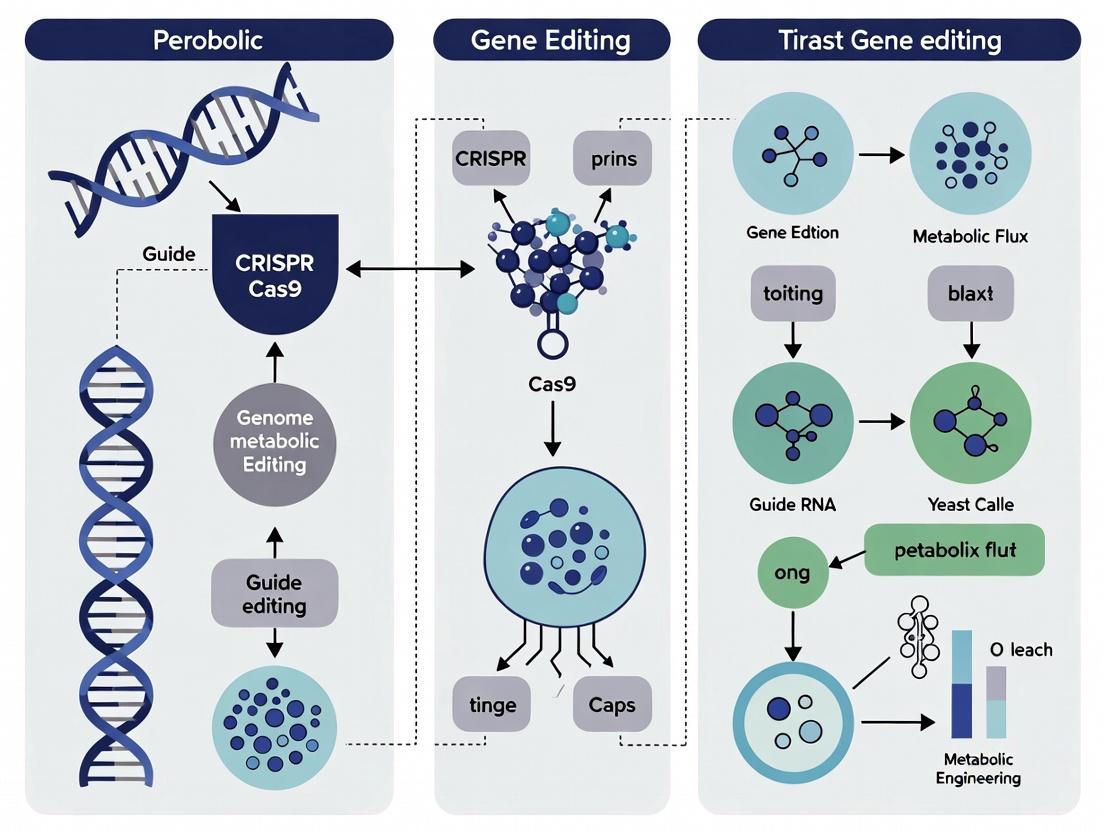
This article provides a comprehensive, current guide for researchers and industry professionals on applying CRISPR-Cas9 genome editing to yeast metabolic engineering.
Precision Engineering in Yeast: A Comprehensive CRISPR-Cas9 Guide for Metabolic Pathway Optimization
Abstract
This article provides a comprehensive, current guide for researchers and industry professionals on applying CRISPR-Cas9 genome editing to yeast metabolic engineering. We cover the foundational principles of the CRISPR system in Saccharomyces cerevisiae and other yeast chassis, detail advanced methodologies for pathway manipulation and multiplexed editing, address common troubleshooting and optimization strategies for efficiency and specificity, and validate techniques through comparative analysis of outcomes and strain performance. The synthesis aims to empower the development of next-generation yeast cell factories for pharmaceuticals, biofuels, and high-value chemicals.
CRISPR-Cas9 in Yeast: Core Principles and Engineering Potential
Historical Context & Mechanistic Basis
CRISPR-Cas9 is an adaptive immune system in bacteria and archaea, co-opted for precise genome editing. The system utilizes a guide RNA (gRNA) to direct the Cas9 endonuclease to a complementary DNA sequence, where it creates a double-strand break (DSB). In eukaryotes, cellular repair pathways—Non-Homologous End Joining (NHEJ) or Homology-Directed Repair (HDR)—are harnessed to introduce targeted mutations or insert new genetic material.
Key Quantitative Milestones in CRISPR-Cas9 Development
| Year | Milestone | Key Efficiency/Data Point | Reference |
|---|---|---|---|
| 1987 | CRISPR sequences first identified in E. coli | N/A | Ishino et al. |
| 2005 | CRISPR spacers identified as bacteriophage-derived | >90% spacer match to phage/plasmid databases | Mojica et al., Bolotin et al. |
| 2012 | In vitro programmable DNA cleavage by Cas9 demonstrated | ~100% cleavage of target plasmid | Jinek et al., Science |
| 2013 | First eukaryotic genome editing (human & mouse cells) | Gene disruption efficiency: ~10-25% at tested loci | Cong et al., Science; Mali et al., Science |
| 2014 | First CRISPR editing in S. cerevisiae | HDR-mediated editing efficiency: ~50-100% | DiCarlo et al., Nucleic Acids Research |
Diagram 1: CRISPR-Cas9 Bacterial Adaptive Immunity Pathway
Core Application Notes for Yeast Metabolic Engineering
In the context of yeast (Saccharomyces cerevisiae) metabolic engineering, CRISPR-Cas9 enables rapid, multiplexed genome editing to rewire metabolic pathways for the production of biofuels, pharmaceuticals, and commodity chemicals.
Comparison of DNA Repair Pathways in Yeast for CRISPR Editing
| Pathway | Mechanism | Outcome in Yeast | Typical Efficiency in S. cerevisiae | Primary Use in Metabolic Engineering |
|---|---|---|---|---|
| NHEJ | Ligation of broken ends without a template | Small insertions/deletions (indels). Error-prone. | High (~70-90% of repairs) | Gene knock-outs, disruption of regulatory sites. |
| HDR | Repair using a homologous DNA donor template | Precise edits: point mutations, gene insertions, tag additions. | Varies by locus & donor design (30-100%) | Precise allele replacement, pathway insertion, promoter swapping. |
| Microhomology-Mediated End Joining (MMEJ) | Repair using flanking microhomologies (5-25 bp) | Predictable deletions. | Can be significant in yeast | Controlled removal of genetic elements. |
Diagram 2: Yeast Metabolic Engineering CRISPR Workflow
Detailed Experimental Protocols
Protocol 1: Multiplex Gene Knock-out inS. cerevisiaeUsing NHEJ
Goal: Disrupt three genes (GENE_A, GENE_B, GENE_C) to eliminate competing metabolic pathways. Materials: See "The Scientist's Toolkit" below. Procedure:
- gRNA Design & Cloning:
- Design three 20-nt gRNAs targeting early exons of each gene using current design tools (e.g., CHOPCHOP). Ensure S. cerevisiae PAM (NGG) is present.
- Clone each gRNA sequence into the BsaI sites of a yeast gRNA expression plasmid (e.g., pROS11 derivative) using Golden Gate assembly.
- Yeast Transformation:
- Grow desired yeast strain to mid-log phase (OD600 ~0.5-0.8) in appropriate medium.
- Prepare transformation mix per standard LiAc/SS carrier DNA/PEG method. For each reaction, combine:
- 100 µL competent yeast cells.
- 1 µL (≥ 200 ng) Cas9 expression plasmid (e.g., pCAS-Sc).
- 1 µL (≥ 100 ng) of each gRNA plasmid (3 total).
- 10 µL denatured salmon sperm carrier DNA (10 mg/mL).
- 700 µL PLATE mix (50% PEG-3350, 0.1 M LiAc, TE buffer).
- Incubate at 42°C for 40 minutes. Pellet cells, resuspend in sterile water, and plate on selective medium (-URA, -HIS) to maintain plasmids.
- Screening & Validation:
- After 2-3 days growth at 30°C, pick 10-20 colonies and patch/grid onto fresh selective plates.
- Perform colony PCR across each target locus using primers flanking the cut site.
- Analyze PCR products by agarose gel electrophoresis for size shifts (indels) or Sanger sequencing to confirm mutations.
- Quantitative Expectation: For a triple knock-out, expect ~1-10% of transformed colonies to have mutations in all three targets. Efficiency per target is often >70%.
Protocol 2: HDR-Mediated Gene Integration for Pathway Engineering
Goal: Precisely integrate a heterologous gene expression cassette at the YFG1 locus. Materials: See "The Scientist's Toolkit" below. Procedure:
- Donor DNA & gRNA Design:
- Design a gRNA targeting a non-essential region of the YFG1 locus (e.g., promoter or terminator).
- Synthesize a linear double-stranded HDR donor DNA containing:
- 40-50 bp homology arms identical to sequences flanking the YFG1 DSB site.
- Your expression cassette (promoter-gene-terminator).
- A selectable marker (e.g., kanMX) or a synonymous SNP that creates a restriction site for screening.
- Yeast Co-transformation:
- Prepare competent cells as above.
- Transformation mix includes:
- 100 µL competent cells.
- 1 µL Cas9 expression plasmid.
- 1 µL gRNA plasmid targeting YFG1.
- ~500 ng linear HDR donor DNA (gel-purified).
- Carrier DNA and PLATE mix as in Protocol 1.
- Heat shock and plate on appropriate double selection (e.g., -URA, G418) to select for Cas9/gRNA plasmids and the integrated donor.
- Validation:
- Screen colonies by colony PCR using two primer pairs: one internal to the donor cassette paired with one external to the genomic homology arm (junction PCR), and one pair external to both homology arms (full integration check).
- Confirm sequence by Sanger sequencing across junctions.
- Quantitative Expectation: HDR efficiency in yeast is high. With 50 bp homology arms and strong selection, 50-100% of transformants may contain the correct integration. Without selection, expect 1-20%.
The Scientist's Toolkit: Key Reagents for Yeast CRISPR-Cas9
| Reagent/Kit/Solution | Function in Experiment | Example Product/Catalog # (Current) |
|---|---|---|
| Cas9 Expression Plasmid | Constitutively or inducibly expresses the S. pyogenes Cas9 nuclease in yeast. | pCAS-Sc (Addgene #127233) |
| gRNA Expression Plasmid | Contains a Pol III promoter (e.g., SNR52) to transcribe the gRNA scaffold + user-defined spacer. | pROS11 (Addgene #133455) |
| High-Fidelity DNA Polymerase | For accurate amplification of donor DNA fragments and colony PCR validation. | Q5 High-Fidelity DNA Polymerase (NEB) |
| Golden Gate Assembly Kit | For rapid, seamless cloning of multiple gRNA spacers into expression vectors. | Esp3I (BsaI) & T4 DNA Ligase (Thermo) |
| Yeast Transformation Kit | Reliable, high-efficiency chemical transformation of S. cerevisiae. | Frozen-EZ Yeast Transformation II Kit (Zymo Research) |
| Homology-Directed Repair Donor DNA | Single-stranded or double-stranded DNA template for precise editing. Custom synthesized. | Ultramer DNA Oligos (Integrated DNA Technologies) |
| gRNA Design Software | In silico tool for selecting specific gRNAs with minimal off-target effects in yeast. | CHOPCHOP (open source, hosted) |
| Next-Generation Sequencing Kit | For deep sequencing validation of edits and off-target analysis. | Illumina DNA Prep Kit |
Diagram 3: Eukaryotic DNA Repair Pathways Post-CRISPR DSB
Why Yeast? Advantages of S. cerevisiae and Non-Conventional Yeasts as Metabolic Engineering Chassis.
This application note supports a thesis on the development of CRISPR-Cas9 toolkits for yeast metabolic engineering. The choice of chassis organism is foundational. While Saccharomyces cerevisiae remains the premier model, non-conventional yeasts (NCYs) offer unique metabolic capabilities. This document compares their advantages, provides quantitative benchmarks, and details protocols for their genetic manipulation using CRISPR-Cas9, forming the experimental basis for subsequent chassis-specific engineering campaigns.
Comparative Advantages:S. cerevisiaevs. Non-Conventional Yeasts
Table 1: Key Characteristics of Yeast Chassis for Metabolic Engineering
| Feature | S. cerevisiae (Conventional) | Komagataella phaffii (Pichia pastoris) | Yarrowia lipolytica | Kluyveromyces marxianus |
|---|---|---|---|---|
| Primary Engineering Advantage | Extensive genetic toolbox, rapid growth, high transformation efficiency. | Strong, inducible promoters (AOX1), high protein secretion, dense cultures. | High lipid/oleochemical flux, native acetyl-CoA pool, substrate breadth. | Thermotolerant (up to 52°C), fastest eukaryotic replicator, utilizes diverse sugars. |
| Typical Titers (Example Metabolite) | >120 g/L Ethanol; 40-100 g/L organic acids (e.g., succinate) | 1-15 g/L heterologous proteins; >100 g/L recombinant enzymes. | >100 g/L lipids (TAG); 25-60 g/L citric acid. | 50-80 g/L ethanol from lignocellulosic hydrolysates. |
| CRISPR-Cas9 Efficiency (Transformation) | 90-100% editing efficiency with plasmid-based systems. | 70-95% with integrative DNA cassettes; requires optimization. | 80-98% using ribonucleoprotein (RNP) delivery. | 60-85% using plasmid-based systems. |
| Preferred DNA Repair Pathway | Highly efficient Homology-Directed Repair (HDR). | Non-Homologous End Joining (NHEJ) predominant; HDR requires suppression. | Competent in both NHEJ and HDR; strain-dependent. | Efficient HDR at elevated temperatures. |
| Key Challenge for Engineering | Crabtree effect (ethanol overflow), limited native pathways. | Glycosylation pattern differs from mammalian cells; methanol use in scale-up. | Efficient gene disruption can be challenging due to robust NHEJ. | Less developed genetic toolkit compared to S. cerevisiae. |
Detailed Experimental Protocols
Protocol 1: CRISPR-Cas9 Genome Editing inS. cerevisiaevia HDR-Dominant Repair
Objective: Targeted gene integration or point mutation in a laboratory strain (e.g., BY4741).
Materials:
- S. cerevisiae strain.
- pCAS-2A (or similar): Plasmid expressing Cas9, gRNA, and selectable marker.
- Donor DNA Oligo: 80-120 nt single-stranded DNA oligonucleotide with desired mutation and homologous arms (40-60 bp each side).
- LiAc/SS Carrier DNA/PEG Transformation Mix.
- Synthetic Dropout (-URA or -LEU) agar plates for selection.
- YPD broth.
Procedure:
- gRNA Design & Cloning: Clone a 20-nt target sequence (preceding a 5'-NGG PAM) into the BsmBI site of the pCAS-2A plasmid. Transform into E. coli and verify by sequencing.
- Yeast Transformation: a. Grow yeast overnight in YPD to mid-log phase (OD600 ~0.8). b. Harvest cells, wash, and resuspend in LiAc/TE buffer. c. In a microfuge tube, mix: 50 µL cell suspension, 5 µL donor oligo (1 µM), 100 ng pCAS-2A plasmid, 10 µL carrier DNA (10 mg/mL), and 500 µL fresh LiAc/PEG 3350 solution. Vortex. d. Incubate at 30°C for 30 min, then heat shock at 42°C for 20 min. e. Pellet cells, resuspend in YPD, recover at 30°C for 2 hours, then plate on appropriate dropout plates.
- Screening: After 2-3 days, patch colonies onto fresh dropout plates. Screen via colony PCR using primers flanking the target site and sequence confirm.
Protocol 2: CRISPR-Cas9 Editing inKomagataella phaffiiwith NHEJ Suppression
Objective: Gene knockout in K. phaffii (e.g., GS115 strain).
Materials:
- K. phaffii strain.
- Linear donor cassette: HIS4 or URA3 marker flanked by 500-1000 bp homology arms.
- Pre-assembled Cas9-gRNA RNP complex: 3 µg recombinant S. pyogenes Cas9 protein, 1 µg in vitro transcribed gRNA.
- AMAXA 4D-Nucleofector with PEFP program.
- Electroporation cuvettes.
Procedure:
- RNP Complex Assembly: Mix Cas9 protein and gRNA in NEBuffer 3.1, incubate at 25°C for 10 min.
- Strain Preparation: Co-transform a plasmid expressing the KU70 dominant-negative mutant (ku70ΔC) to impair NHEJ 24 hours prior to editing.
- Electroporation: a. Grow K. phaffii to OD600 0.8-1.0 in YPD. Harvest and wash with ice-cold 1M sorbitol. b. Resuspend cells in 50 µL 1M sorbitol. Mix with RNP complex and 500 ng linear donor cassette. c. Transfer to a 2 mm electroporation cuvette, pulse using program PEFP (1.5 kV). d. Immediately add 1 mL 1M sorbitol, transfer to a tube, and incubate at 30°C for 2-4 hours. e. Plate on selective medium (e.g., -HIS) and incubate at 30°C for 3-5 days.
- Validation: Perform genomic DNA extraction, PCR, and Southern blot to confirm targeted integration.
Visualization of Key Concepts
CRISPR-Cas9 Editing Outcomes in Yeast
CRISPR Workflow from Chassis to Strain
The Scientist's Toolkit: Key Research Reagents
Table 2: Essential Reagents for Yeast CRISPR Metabolic Engineering
| Reagent | Function & Application | Example/Supplier |
|---|---|---|
| CRISPR Plasmid Backbone (e.g., pCAS-2A) | All-in-one vector for S. cerevisiae expressing Cas9, gRNA, and a selectable marker (e.g., URA3). | Addgene #60847 |
| Recombinant S. pyogenes Cas9 Nuclease | For forming RNP complexes in non-conventional yeasts where plasmid-based systems are inefficient. | Thermo Fisher Scientific, A36498 |
| In vitro Transcription Kit (T7) | For synthesizing high-quality, sgRNA transcripts for RNP assembly. | NEB, E2040S |
| Homology-Directed Repair Donor | Single-stranded oligo (for S. cerevisiae) or linear double-stranded DNA cassette (for NCYs) to template precise edits. | IDT (oligos), PCR assembly (cassettes) |
| NHEJ Suppression Construct | Plasmid or cassette expressing a Ku70/80 dominant-negative variant to enhance HDR efficiency in NCYs. | Critical for K. phaffii and Y. lipolytica. |
| Yeast-Specific Electroporation Kit | Optimized buffers and protocols for high-efficiency transformation of non-conventional yeasts. | Bio-Rad, Gene Pulser Xcell |
| Dropout Powder Mix (-URA, -HIS, etc.) | For preparation of selective media to maintain plasmids and select for successful genome edits. | US Biological, Sunrise Science |
| Genome Extraction Kit (Yeast) | Rapid, high-yield DNA extraction for PCR-based screening of edited clones. | Zymo Research, YeaStar Genomic Kit |
Application Notes: Framework for Yeast Metabolic Engineering
This protocol details the implementation of CRISPR-Cas9 for precise genome editing in Saccharomyces cerevisiae and other yeast species, specifically tailored for metabolic pathway engineering. The efficiency of rewiring yeast metabolism for the production of biofuels, pharmaceuticals, or commodity chemicals hinges on optimized gRNA design, appropriate Cas9 variant selection, and reliable delivery methods.
1.1. gRNA Design for Yeast Genomes Successful editing requires gRNAs with high on-target activity and minimal off-target effects. Yeast genomes are compact with high GC content, necessitating specific design rules.
- Target Sequence: 20-nt protospacer immediately 5' of a 5'-NGG-3' Protospacer Adjacent Motif (PAM) for SpCas9.
- On-Target Efficiency Predictors: Tools like Chop-Chop and CRISPy-web, trained on yeast data, are essential. Key parameters include GC content (40-60%), avoidance of homopolymers, and specific nucleotide preferences (a 'G' at position 1 or 2 of the protospacer enhances transcription by RNA Pol III in yeast).
- Off-Target Minimization: Perform a BLAST search against the specific yeast strain genome to ensure ≤3 mismatches in the seed region (8-12 bases proximal to PAM) do not exist elsewhere.
1.2. Cas9 Variants: Expanding the Toolkit The standard Streptococcus pyogenes Cas9 (SpCas9) is widely used, but variants offer critical advantages for metabolic engineering.
- SpCas9: The workhorse. Suitable for most knock-out and donor-mediated knock-in experiments.
- Cas9 nickase (nCas9, D10A): Creates single-strand breaks. Paired nicks with two adjacent gRNAs increase specificity by >1000-fold, crucial for editing in strains with repetitive metabolic gene clusters.
- High-Fidelity Variants (e.g., SpCas9-HF1, eSpCas9): Reduce off-target effects in large-scale genome editing projects, such as multiplexed engineering of entire pathways.
- PAM-Expanded Variants (e.g., xCas9, SpCas9-NG): Recognize relaxed PAMs (e.g., NG, GAA). Essential for targeting genomic loci constrained by the strict NGG PAM requirement, vastly expanding targetable sites in metabolic genes.
1.3. Delivery Methods: Balancing Efficiency and Throughput Choice of delivery system impacts editing efficiency, labor, and suitability for high-throughput strain construction.
| Delivery Method | Key Components | Typical Efficiency in S. cerevisiae | Best Use Case | Throughput |
|---|---|---|---|---|
| Plasmid-Based (in vivo transcription) | gRNA expressed from a Pol III promoter (SNR52, RPR1); Cas9 expressed from a constitutive (PGK1, TEF1) or inducible promoter. | 70-100% for single edits | Routine lab strain engineering, metabolic pathway prototyping. | Low to Medium |
| PCR-Generated Cassettes | gRNA and Cas9 coding regions amplified with 60-bp homology flanks for in vivo assembly and genomic integration. | 50-90% | Creating marker-free, stable editing strains without extraneous plasmid DNA. | Medium |
| Ribonucleoprotein (RNP) Complex | Purified Cas9 protein complexed with in vitro transcribed or synthetic gRNA, electroporated into cells. | 30-80% (strain-dependent) | Fastest editing (no DNA replication needed), minimal off-targets, ideal for non-model/non-Saccharomyces yeasts. | Low |
| Donor DNA Co-delivery | Double-stranded DNA fragment or single-stranded oligodeoxynucleotide (ssODN) with 35-90 bp homology arms. | 0.1-30% (ssODN) 1-50% (dsDNA) | Precise point mutations or insertions for enzyme engineering within metabolic pathways. | Varies |
Table 1: Comparison of CRISPR-Cas9 Delivery Methods for Yeast Systems.
Experimental Protocols
Protocol 2.1: High-Efficiency Multiplex Gene Knockout Using Plasmid-Based Delivery Objective: Simultaneously disrupt two genes (GENE1, GENE2) in S. cerevisiae to block a competing metabolic branch.
Materials (Research Reagent Solutions):
- pCAS-YS plasmid backbone: Contains constitutive TEF1p-Cas9-CYC1t and URA3 marker.
- gRNA Expression Cloning Kit (e.g., BsaI-based Golden Gate assembly): For multiplex gRNA cloning into the plasmid's SNR52 promoter array.
- Yeast Transformation Kit (PEG/LiAc method): Standard chemical transformation reagents.
- Synthetic Drop-out Medium (-Ura): For selection of transformants containing the CRISPR plasmid.
- Donor DNA fragments (optional): For homology-directed repair (HDR) if a specific sequence insertion is required.
- Genotyping Primers: Specific to GENE1 and GENE2 loci for PCR validation.
- Surveyor or T7 Endonuclease I Assay Kit: For initial screening of editing efficiency.
Methodology:
- Design & Cloning: Design two gRNAs targeting early exons of GENE1 and GENE2 using CRISPy-web. Synthesize oligonucleotides, anneal, and clone sequentially into the BsaI sites of the pCAS-YS vector via Golden Gate assembly.
- Yeast Transformation: Transform 1 µg of the constructed plasmid into competent S. cerevisiae cells (e.g., BY4741) using the high-efficiency PEG/LiAc protocol. Plate onto -Ura agar plates. Incubate at 30°C for 2-3 days.
- Screening: Pick 10-12 colonies. Patch onto fresh -Ura plates and use a toothpick to inoculate colony PCR reactions with genotyping primers flanking each target site.
- Analysis: Run PCR products on agarose gel. Successful deletion (via NHEJ) will produce a smaller band. For precise edits, sequence the PCR products.
- Plasmid Curing: Streak edited colonies onto YPD plates for 24h, then replica-plate onto 5-FOA plates to select for cells that have lost the URA3-marked plasmid.
Protocol 2.2: Precise Point Mutation Using RNP Delivery and ssODN Donor Objective: Introduce a specific point mutation (A15T) in the ADH2 gene of S. cerevisiae to alter enzyme kinetics for improved ethanol metabolism.
Materials (Research Reagent Solutions):
- Wild-type SpCas9 Nuclease, purified: Commercial, high-concentration protein.
- Chemically Modified Synthetic gRNA: Includes 2'-O-methyl 3' phosphorothioate modifications at terminal 3 bases for stability.
- Ultra-pure ssODN Donor Template: 90-nt oligonucleotide with the A15T mutation centered, flanked by 45-bp homology arms.
- Electrocompetent Yeast Cells: Prepared from a mid-log phase culture.
- Electroporator and 2-mm gap cuvettes.
- YPD Recovery Medium.
- Allele-Specific PCR Primers or Restriction Fragment Length Polymorphism (RFLP) Assay Components: For screening the precise edit.
Methodology:
- RNP Complex Formation: Incubate 10 pmol of purified Cas9 protein with 20 pmol of synthetic gRNA in 10 µL of nuclease-free buffer for 10 min at 25°C.
- Donor Mixing: Add 100 pmol of ssODN donor to the RNP complex.
- Electroporation: Mix 50 µL of electrocompetent yeast cells with the RNP/ssODN mix. Transfer to a pre-chilled electroporation cuvette. Deliver a pulse (e.g., 1.5 kV, 5 ms for S. cerevisiae). Immediately add 1 mL of room temperature YPD.
- Recovery & Outgrowth: Transfer to a tube and incubate with shaking at 30°C for 4-6 hours.
- Plating & Screening: Plate dilutions onto YPD agar. Screen 20-50 colonies by colony PCR followed by RFLP analysis (the edit can create or abolish a restriction site) or Sanger sequencing.
Visualizations
Title: CRISPR-Cas9 Yeast Engineering Decision Workflow
Title: DNA Repair Pathways After CRISPR-Cas9 Cleavage
Application Notes for CRISPR-Cas9 in Yeast Metabolic Engineering
This document details core CRISPR-Cas9 methodologies for precise genome modifications in Saccharomyces cerevisiae, enabling the rewiring of metabolic pathways for the production of biofuels, pharmaceuticals, and fine chemicals.
Key Research Reagent Solutions
| Reagent / Material | Function in Experiment |
|---|---|
| pCAS-Sc Plasmid | Expresses S. pyogenes Cas9 nuclease and a selectable marker (e.g., Hygromycin B resistance) for yeast. |
| pRS-gRNA Plasmid | Contains the U6-snRNA promoter for expression of a user-defined single-guide RNA (sgRNA) and a separate selectable marker (e.g., G418 resistance). |
| Synthetic dsDNA Donor | Homology-directed repair (HDR) template for knock-ins or point mutations. Includes 40-60 bp homology arms flanking the desired modification. |
| Synthetic ssODN Donor | Single-stranded oligodeoxynucleotide for precise point mutations. Typically 90-120 nt with central modification. |
| Yeast Transformation Mix (LiAc/SS Carrier DNA/PEG) | Standard chemical transformation buffer for efficient DNA uptake. |
| Auxotrophic Drop-out Mix | Solid media lacking specific amino acids or nucleobases for selection of plasmid maintenance or successful gene edits. |
| Nuclease-Free Water | Critical for diluting oligonucleotides and donor DNA to prevent degradation. |
| Guide RNA Design Tool (e.g., CRISPOR, Benchling) | In silico tool for predicting sgRNA on-target efficiency and minimizing off-target effects. |
Experimental Protocols
Protocol 2.1: Multiplexed Gene Knockout in Yeast
Objective: Disrupt multiple genes in a metabolic pathway to eliminate competing reactions.
- Design: For each target gene (GENE1, GENE2), design two sgRNAs within the first 300 bp of the open reading frame (ORF). Clone sgRNA cassettes into the pRS-gRNA plasmid array.
- Transformation: Co-transform S. cerevisiae strain with pCAS-Sc and the multiplex pRS-gRNA plasmid using the high-efficiency LiAc/SS carrier DNA/PEG method.
- Selection & Screening: Plate on SC -Ura -His + Hygromycin B + G418 to select for both plasmids. Incubate at 30°C for 72h.
- Verification: Patch colonies onto fresh selection plates. Perform colony PCR using primers flanking each target site. Successful knockouts yield a PCR product ~100-500 bp smaller than the wild-type allele (due to indel-induced frameshift). Confirm by Sanger sequencing.
Protocol 2.2: Precise Gene Knock-in via HDR
Objective: Integrate a heterologous gene (e.g., HIS3 marker or a fluorescent reporter) at a specific locus.
- Donor Construction: Synthesize a dsDNA fragment where the insert is flanked by 50 bp homology arms identical to sequences upstream and downstream of the Cas9 cut site.
- Yeast Preparation: Transform the pCAS-Sc plasmid and maintain under hygromycin selection.
- Co-transformation: Transform the Cas9-expressing yeast with both the pRS-gRNA (targeting the integration locus) and the purified dsDNA donor fragment.
- Selection: Plate on selective media (e.g., SC -His if HIS3 is knocked-in). Screen colonies by junction PCR using one primer within the inserted DNA and one primer outside the homology arm.
Objective: Introduce a single nucleotide variant to alter enzyme specificity (e.g., ADH1 variant for altered alcohol production).
- ssODN Design: Design a 100 nt ssODN donor with the desired point mutation centrally located, flanked by ~50 nt of perfect homology on each side.
- Transformation: Co-transform yeast (already containing pCAS-Sc) with the target-specific pRS-gRNA plasmid and 100 pmol of the ssODN donor.
- Screening: Isolate plasmid-free clones by streaking on non-selective media and screening for loss of antibiotic resistance. Screen for the mutation via allele-specific PCR or RFLP analysis.
- Validation: Sanger sequence the target locus in at least three independent clones to confirm the mutation and ensure no unintended edits.
Table 1: Typical Efficiency Ranges for CRISPR-Cas9 Modifications in S. cerevisiae (Laboratory Strains).
| Modification Type | Donor Type | Average Efficiency Range* | Primary Screening Method |
|---|---|---|---|
| Gene Knockout | None (NHEJ) | 80% - 99% | Colony Size PCR |
| Gene Knock-in (~1-2 kb) | dsDNA (50 bp arms) | 20% - 60% | Phenotypic Selection + PCR |
| Point Mutation | ssODN (100 nt) | 10% - 40% | RFLP or Sequencing |
*Efficiency is defined as the percentage of transformants with the desired edit. Actual rates vary based on locus, sgRNA efficiency, and transformation method.
CRISPR-Cas9 Workflow in Yeast
CRISPR Workflow for Yeast Genome Editing
DNA Repair Pathway Decision Logic
DNA Repair Pathway Choice After CRISPR Cut
Within the framework of a thesis on CRISPR-Cas9 genome editing for yeast metabolic engineering, this document details application notes and protocols. The primary focus is the reprogramming of Saccharomyces cerevisiae metabolism to achieve two divergent goals: high-volume, low-value biofuel (iso-butanol) production and low-volume, high-value pharmaceutical precursor (amorphadiene) synthesis. CRISPR-Cas9 serves as the foundational tool for rapid, multiplexed genomic modifications, enabling the precise redirection of metabolic flux.
Application Notes & Protocols
Project A: Engineering Yeast for Iso-Butanol Production
Objective: Re-route central carbon flux from ethanol to the 2-keto acid pathway for iso-butanol synthesis. Key Genetic Modifications (CRISPR-Cas9 Targets):
- PDC1, PDC5, PDC6 (Pyruvate decarboxylase): Knockout to reduce ethanol formation.
- ALD6 (Cytosolic aldehyde dehydrogenase): Knockout to prevent acetate formation.
- ILV2 (Acetolactate synthase): Overexpression to enhance flux to valine precursors.
- KDC1 (Keto acid decarboxylase) and ADH7 (Alcohol dehydrogenase): Heterologous expression.
Quantitative Data Summary:
Table 1: Iso-Butanol Production in Engineered S. cerevisiae Strains
| Strain Description (Key Modifications) | Titer (g/L) | Yield (% Theoretical) | Productivity (g/L/h) | Reference Year |
|---|---|---|---|---|
| Base Strain (KDC, ADH expression) | 0.15 | 1.2 | 0.003 | 2021 |
| + PDC1,5,6 KO | 1.26 | 10.5 | 0.026 | 2022 |
| + ALD6 KO & ILV2 OEx | 2.81 | 23.4 | 0.059 | 2023 |
| Fed-Batch Optimized (All mods) | 18.5 | 62.0 | 0.25 | 2024 |
Detailed Protocol: CRISPR-Cas9 Mediated PDC Gene Family Knockout Materials: S. cerevisiae strain BY4741, pCAS9-2μ plasmid (with URA3), donor DNA templates for PDC1, PDC5, PDC6 homology-directed repair (HDR), sgRNA expression plasmids (HIS3, LEU2, TRP1), Yeast Synthetic Drop-out media, Lithium acetate transformation reagents. Procedure:
- Design: Design three sgRNAs targeting early exons of PDC1, PDC5, PDC6. Synthesize 120-bp HDR donor oligonucleotides containing stop codons and frame-shift mutations flanked by 50-bp homology arms.
- Co-transformation: Simultaneously transform yeast with pCAS9 and the pool of three sgRNA plasmids and three HDR donor oligonucleotides using high-efficiency LiAc/SS carrier DNA/PEG method.
- Selection: Plate on SD -Ura -His -Leu -Trp to select for all plasmids. Incubate at 30°C for 72h.
- Screening: Pick colonies, colony PCR amplify target loci, and sequence to confirm clean knockout.
- Curing: Streak confirmed colonies on 5-FOA media to cure the pCAS9 (URA3) plasmid.
Diagram 1: CRISPR Workflow for Iso-Butanol Pathway.
Project B: Engineering Yeast for Amorphadiene (Artemisinin Precursor) Production
Objective: Integrate and optimize the heterologous mevalonate (MVA) pathway in yeast cytoplasm for high amorphadiene yield. Key Genetic Modifications (CRISPR-Cas9 Targets):
- ERG9 (Squalene synthase): Promoter down-tuning via CRISPRa/i to reduce sterol flux.
- HMG1 (HMG-CoA reductase): Overexpression of truncated, stabilized version.
- ADS (Amorphadiene synthase): Integration of heterologous gene into genomic delta sites.
- UPREGULATION: tHMG1, ERG20, IDI1 via multiplexed CRISPR activation (CRISPRa).
Quantitative Data Summary:
Table 2: Amorphadiene Production in Engineered S. cerevisiae Strains
| Strain Description (Key Modifications) | Titer (g/L) | Yield (mg/g Glucose) | Reference Year |
|---|---|---|---|
| Base Strain (MVA + ADS) | 0.08 | 1.5 | 2020 |
| + ERG9 Down-tuning (dCas9-Mxi1) | 0.41 | 7.8 | 2022 |
| + tHMG1, ERG20 OEx (CRISPRa) | 1.65 | 31.2 | 2023 |
| + Peroxisomal Compartmentalization | 3.27 | 61.5 | 2024 |
Detailed Protocol: dCas9-Mxi1 Mediated ERG9 Promoter Repression Materials: Yeast strain with integrated MVA pathway and ADS, plasmid expressing dCas9-Mxi1 fusion (transcriptional repressor), sgRNA targeting ERG9 promoter proximal region, selective media. Procedure:
- Design: Design sgRNA to bind -50 to -100 bp upstream of the ERG9 start codon. Clone into sgRNA expression vector.
- Transformation: Transform the dCas9-Mxi1 plasmid and the ERG9-targeting sgRNA plasmid into the base amorphadiene-producing strain.
- Cultivation: Grow transformants in selective medium and inoculate into production medium (high C:N ratio) in shake flasks.
- Analysis: Extract metabolites at 72h. Quantify amorphadiene via GC-MS and ergosterol via HPLC to confirm flux diversion.
- Titration: Test a panel of sgRNAs binding at different promoter positions to fine-tune repression level.
Diagram 2: Metabolic Flux at FPP Branch Point.
The Scientist's Toolkit: Research Reagent Solutions
Table 3: Essential Materials for CRISPR-Cas9 Yeast Metabolic Engineering
| Item | Function & Rationale |
|---|---|
| pCAS9-2μ Plasmid (or similar) | High-copy yeast plasmid expressing S. pyogenes Cas9 and a sgRNA scaffold under RNA Pol III promoters. Essential for DSB induction. |
| dCas9-VPR / dCas9-Mxi1 | Catalytically dead Cas9 fused to transcriptional activator (VPR) or repressor (Mxi1) domains for CRISPRa/i without cutting DNA. |
| Custom sgRNA Expression Plasmids | Vectors with different markers (e.g., HIS3, LEU2) for multiplexed editing. Require only cloning of a 20-nt guide sequence. |
| HDR Donor Oligos (ssODNs) | Single-stranded DNA oligonucleotides (~120 nt) for precise edits. Homology arms (50 bp) promote high-efficiency repair. |
| Yeast Synthetic Drop-out Media Mixes | Defined media for selective plasmid maintenance and phenotype screening during strain construction. |
| 5-Fluoroorotic Acid (5-FOA) Plates | Selective medium for counter-selection of URA3-marked plasmids (e.g., pCAS9), allowing plasmid curing. |
| GC-MS System | Critical analytical instrument for quantifying volatile products like iso-butanol and amorphadiene with high sensitivity. |
Step-by-Step Protocols: Designing and Executing Yeast Metabolic Engineering Projects
Application Notes
This document provides a comprehensive overview of the established workflow for metabolic engineering in Saccharomyces cerevisiae using CRISPR-Cas9, framed within a thesis on developing robust genome-editing pipelines for sustainable chemical production.
Phase 1: Target Identification & Guide RNA Design The process initiates with bioinformatic analysis to identify genetic targets (e.g., gene knock-outs, promoter swaps, pathway integrations) that theoretically optimize metabolic flux. gRNA sequences (typically 20-nt) must precede a 5'-NGG-3' Protospacer Adjacent Motif (PAM). Current best practices emphasize using validated web tools to minimize off-target effects, which are less prevalent in yeast due to efficient homology-directed repair (HDR).
Phase 2: Donor DNA & Plasmid Assembly For precise editing, a donor DNA template containing the desired edit flanked by homology arms (40-100 bp) is constructed. The CRISPR-Cas9 system (SpCas9) is typically delivered on a plasmid or as a ribonucleoprotein (RNP) complex. A trend towards PCR-generated cassettes and plasmid-free RNP delivery accelerates strain construction cycles.
Phase 3: Yeast Transformation & Selection Edited components are introduced into yeast via standard lithium acetate or electroporation. Selection leverages auxotrophic markers (e.g., URA3, HIS3) or dominant markers (e.g., antibiotic resistance). The use of recyclable markers or marker-free systems is critical for iterative engineering.
Phase 4: Screening & Genotype Validation Initial screening of transformants is performed on selective media. Genotypic validation proceeds via colony PCR and Sanger sequencing. Quantitative PCR (qPCR) may assess copy number variations in integrated pathways.
Phase 5: Phenotypic & Metabolomic Characterization Positive clones are characterized in controlled bioreactors or microplates. Key performance indicators (KPIs) include growth rate, substrate consumption, and product titer. Advanced metabolomics (GC-MS, LC-MS) profiles the engineered strain's metabolic state.
Phase 6: Fermentation Scale-Up & Analysis Promising strains undergo scale-up in bioreactors. Data on yield, productivity, and robustness under industrial-like conditions are collected for techno-economic analysis.
Experimental Protocols
Protocol 1: gRNA Design and Cloning into pCAS Plasmid
Materials: Target gene sequence, CHOPCHOP or Benchling web tool, pCAS vector (containing Cas9, URA3 marker, and gRNA scaffold), primers, high-fidelity DNA polymerase, T4 DNA ligase. Procedure:
- Input target gene sequence into gRNA design tool. Select top 2-3 gRNAs with high on-target and low off-target scores.
- Design oligonucleotides: Forward: 5'-CTAGC[20-nt gRNA sequence]-3', Reverse: 5'-AAAC[reverse complement of 20-nt gRNA sequence]-3'.
- Phosphorylate and anneal oligos. Ligate into BsaI-digested pCAS plasmid.
- Transform ligation into E. coli, plate on ampicillin, sequence-verify clones.
Protocol 2: Donor DNA Construction via PCR
Materials: Genomic yeast DNA, Phusion DNA Polymerase, primers, dNTPs. Procedure:
- Design primers to amplify a selection marker (e.g., KanMX) or an edited genomic sequence. Extend primer 5' ends with 40-80 bp homology arms matching the genomic locus flanking the Cas9 cut site.
- Perform PCR: 98°C for 30s; 35 cycles of [98°C 10s, 55-72°C 20s, 72°C 1-2 min/kb]; 72°C 5 min.
- Purify PCR product using a spin column. Quantify via spectrophotometry.
Protocol 3: Yeast Transformation (LiAc/SS Carrier DNA/PEG Method)
Materials: YPD media, 1M Lithium Acetate (LiAc), 50% PEG 3350, salmon sperm carrier DNA, selective plates (e.g., SD -Ura). Procedure:
- Grow yeast strain to mid-log phase (OD600 ~0.5-0.8). Harvest cells.
- Wash cells with sterile water, then with 0.1M LiAc. Resuspend in 0.1M LiAc.
- In a microfuge tube, combine: 100 µL cell suspension, 5 µL carrier DNA (boiled and chilled), ~100 ng pCAS plasmid, ~500 ng donor DNA fragment. Mix.
- Add 600 µL of 50% PEG 3350/0.1M LiAc solution. Vortex, incubate 30 min at 30°C.
- Heat shock at 42°C for 20-25 min. Pellet cells, resuspend in water, plate on selective media. Incubate at 30°C for 2-3 days.
Protocol 4: Genotype Validation by Diagnostic PCR
Materials: Yeast colonies, lyticase or zymolyase, PCR reagents, agarose gel. Procedure:
- Pick colonies into 10 µL of lyticase buffer. Incubate 15 min at 37°C, then 95°C for 10 min to lyse cells.
- Use 2 µL lysate as PCR template with primers external to the homology arms.
- Run PCR: 94°C for 3 min; 35 cycles of [94°C 30s, 58°C 30s, 72°C 1-2 min/kb].
- Analyze products on agarose gel. Sanger sequence purified bands.
Data Presentation
Table 1: Key Performance Indicators (KPIs) for Engineered Yeast Strains
| KPI | Measurement Method | Typical Target Range (Laboratory Scale) | Industrial Benchmark |
|---|---|---|---|
| Specific Growth Rate (µ) | OD600 over time | 0.2 - 0.4 h⁻¹ | >0.35 h⁻¹ |
| Product Titer | HPLC, GC-MS | 1-50 g/L | >100 g/L (varies by product) |
| Yield (Yp/s) | Mass product / mass substrate | 0.1 - 0.5 g/g | >0.9 * theoretical max |
| Productivity (Qp) | Titer / fermentation time | 0.05 - 0.5 g/L/h | >2.5 g/L/h |
Table 2: Common CRISPR-Cas9 Delivery Methods for Yeast
| Method | Editing Efficiency | Time to Clone | Key Advantage | Key Limitation |
|---|---|---|---|---|
| Plasmid (with marker) | High (>80%) | 5-7 days | Stable, easy selection | Marker use limited, background resistance |
| Linear Cassette (PCR) | Moderate (20-60%) | 3-5 days | Marker-free, rapid | Lower efficiency, requires screening |
| RNP Complex | Moderate-High (40-80%) | 3-5 days | No DNA constructs, reduced off-target | Requires purified Cas9 protein, more expensive |
The Scientist's Toolkit
Research Reagent Solutions for Yeast CRISPR Workflow
| Item | Function & Application |
|---|---|
| pCAS System (e.g., pCAS-URA) | All-in-one yeast CRISPR plasmid. Expresses SpCas9 and a customizable gRNA; contains a URA3 marker for selection. |
| Homology-Directed Repair (HDR) Donor Template | PCR-amplified DNA fragment containing the desired edit with flanking homology arms. Directs precise repair of the Cas9-induced double-strand break. |
| Zymolyase / Lyticase | Enzyme cocktails that degrade the yeast cell wall, essential for generating competent cells or for colony PCR lysis. |
| YPD / Synthetic Drop-out Media | Rich (YPD) or defined (SD -Ura/-His etc.) media for culturing yeast strains pre- and post-transformation. |
| NucleoSpin Gel and PCR Clean-up Kit | For rapid purification of DNA fragments and PCR products, critical for donor DNA preparation and cloning steps. |
| Phusion High-Fidelity DNA Polymerase | Used for error-free amplification of donor DNA fragments and verification PCRs due to its high accuracy. |
Visualizations
Title: CRISPR-Cas9 Yeast Engineering Workflow
Title: Homology-Directed Repair (HDR) Mechanism
gRNA Design Tools and Best Practices for Yeast Genomic Targets
Within the broader thesis on CRISPR-Cas9 for yeast metabolic engineering, precise gRNA design is the cornerstone of successful genome editing. This protocol details the selection of tools and experimental best practices for targeting the Saccharomyces cerevisiae genome, emphasizing efficiency and specificity to minimize off-target effects while maximizing knock-out or knock-in rates for pathway engineering.
gRNA Design Tools: Comparison and Selection
Current tools evaluate gRNAs based on predicted on-target efficiency and off-target potential. The following table summarizes key web-based platforms relevant for yeast researchers.
Table 1: Comparison of gRNA Design Tools for Yeast Targets
| Tool Name | Primary Use Case | Key Algorithm/Scoring | Yeast-Specific Optimizations | Off-Target Analysis | Output Features |
|---|---|---|---|---|---|
| CRISPOR | General purpose, multi-species | Doench et al. (2016) efficiency, CFD specificity | Includes S. cerevisiae genomes | Yes, with mismatch tolerance | Ranked list, primer design, oligonucleotide sequences |
| ChopChop | Easy-to-use, in-browser | Moreno-Mateos et al. (2015) efficiency | Several yeast strain genomes available | Limited | Visualizes target in gene context, designs primers |
| Benchling | Integrated molecular biology platform | Proprietary & published scores | Genome databases for common lab strains | Yes | Directly links to plasmid design and cloning workflows |
| GT-Scan | Focus on specificity | Hsu et al. (2013) scoring | Configurable for any genome | Strong focus on unique targets | Identifies highly specific "seed" regions |
Best Practices Protocol for Yeast gRNA Design and Validation
Protocol 3.1: In Silico Design of gRNAs for Yeast Metabolic Engineering Targets
Objective: To design high-efficiency, specific gRNAs for a target gene in S. cerevisiae.
Materials & Reagents:
- Computer with internet access.
- Target gene locus sequence (e.g., from SGD database).
- Selected gRNA design tool (e.g., CRISPOR).
Procedure:
- Define Target Region: For gene knock-outs, target early exons to promote frameshifts. For promoter edits, define the precise regulatory element sequence.
- Input Sequence: Navigate to your chosen tool (e.g., CRISPOR). Input the genomic DNA sequence (approx. 500-1000 bp surrounding the target site). Select the correct reference genome (e.g., "Saccharomyces cerevisiae S288C").
- Generate and Filter gRNAs: Execute the search. Filter results using the following hierarchy: a. Specificity First: Select gRNAs with zero or minimal predicted off-target sites (allow 0-1 mismatches in the seed sequence, nucleotides 8-14 proximal to PAM). b. Efficiency Second: From the specific candidates, choose the gRNA with the highest predicted on-target efficiency score (e.g., >60 on CRISPOR's Doench score).
- Final Selection: Select 2-3 top-ranked gRNAs for empirical testing to account for prediction inaccuracies.
- Oligonucleotide Design: Note the 20-nt guide sequence. For common yeast expression systems (e.g., pML104 backbone), design forward oligo: 5’-GATCCCCC-[20nt guide]-3’ and reverse oligo: 5’-AAAC-[Reverse complement of 20nt guide]-3’ with appropriate overhangs for cloning.
Protocol 3.2: Experimental Validation of gRNA Efficiency in Yeast
Objective: To rapidly assess cleavage activity of designed gRNAs using a plasmid-based Cas9 system and a transformation assay.
Research Reagent Solutions Toolkit
| Item | Function in Protocol |
|---|---|
| Yeast Cas9 Expression Plasmid (e.g., pCAS) | Constitutively expresses S. pyogenes Cas9 and a selectable marker (e.g., URA3). |
| gRNA Cloning Vector (e.g., pML104, p426-SNR52p-gRNA) | Contains the RNA Polymerase III promoter (e.g., SNR52) to drive gRNA expression and a different selectable marker (e.g., HIS3). |
| PCR Reagents & High-Fidelity Polymerase | For amplifying the homology-directed repair (HDR) donor DNA template. |
| Synthetic Oligonucleotides | For gRNA cloning and donor template construction. |
| Yeast Strain (e.g., BY4741) | Ancestral lab strain with well-characterized genetics. |
| LiAc/SS Carrier DNA/PEG Transformation Kit | Standard yeast chemical transformation reagents. |
| Agar Plates with Appropriate Drop-out Media | For selection of co-transformed cells (e.g., -Ura -His). |
| Colony PCR Kit & Gel Electrophoresis System | For screening edited yeast colonies. |
Procedure:
- Clone gRNAs: Anneal and phosphorylate oligonucleotide pairs for each candidate gRNA. Ligate into the BsmBI or BsaI-digested gRNA cloning vector. Sequence-verify the construct.
- Prepare Donor DNA: Amplify a linear double-stranded DNA donor template containing ≥40 bp homology arms flanking the target site. For a knock-out, include a stop codon and frameshift or a dominant selectable marker.
- Co-transform Yeast: Co-transform 100-200 ng of the Cas9 plasmid, 100-200 ng of the gRNA plasmid, and 500 ng-1 µg of the donor DNA (if using HDR) into competent yeast cells using the LiAc/SS carrier DNA/PEG method.
- Select and Screen: Plate transformation on double-dropout media (-Ura -His) to select for cells containing both plasmids. Incubate at 30°C for 2-3 days.
- Analyze Editing Efficiency: Pick 10-20 colonies. Perform colony PCR with primers flanking the target site (outside the homology arm region). Analyze products by gel electrophoresis. Successful editing (indel or insertion) will result in a size shift compared to the wild-type band.
- Quantify Efficiency: Editing efficiency = (Number of colonies with size shift / Total colonies screened) * 100. Proceed with the gRNA yielding the highest efficiency.
Visual Workflows
Title: gRNA In Silico Design and Selection Protocol
Title: Experimental Validation of gRNA Efficiency
Within a thesis on CRISPR-Cas9 for yeast metabolic engineering, the choice of vector system for delivering Cas9 and gRNA is fundamental. Episomal vectors (plasmids) exist independently in the host cell, while integrative vectors are inserted into the host genome. This application note compares these systems, providing quantitative data and protocols to guide selection for long-term pathway engineering projects in Saccharomyces cerevisiae.
Comparative Analysis: Key Quantitative Data
Table 1: Comparison of Episomal and Integrative Vector Systems for Yeast CRISPR-Cas9
| Parameter | Episomal (2µ Plasmid-Based) | Integrative (δ-Site Targeted) | Notes / Implications |
|---|---|---|---|
| Copy Number | 20-40 copies/cell | 1-2 copies/genome | Episomal offers higher Cas9/gRNA dosage. |
| Stability Without Selection | Moderate (Lost in 5-15 generations) | High (Permanent) | Integrative ideal for long-term fermentation without antibiotics. |
| Transformation Efficiency | High (10⁴ - 10⁵ CFU/µg DNA) | Lower (10² - 10³ CFU/µg DNA) | Episomal easier for initial library construction. |
| Cas9/gRNA Expression Level | High, copy-number dependent | Low, consistent | Episomal may increase off-target risk; Integrative for stable, tuned expression. |
| Typimal Use Case | Transient editing, multiplexed gRNA libraries, rapid prototyping. | Stable engineering for continuous fermentation, industrial bioprocessing. |
Experimental Protocols
Protocol 1: Construction of an Episomal CRISPR-Cas9 Plasmid for Yeast
Objective: Assemble a high-copy plasmid expressing Cas9 and a target-specific gRNA from yeast promoters.
Materials: See "The Scientist's Toolkit" below.
Procedure:
- gRNA Cloning via Golden Gate:
- Design oligonucleotides encoding your 20-nt guide sequence with 5' overhangs compatible with BsmBI sites.
- Phosphorylate and anneal oligos to form a duplex.
- Digest the episomal backbone plasmid (e.g., pRS42K) containing a SNR52 promoter-gRNA scaffold and a Cas9 expression cassette with BsmBI.
- Ligate the annealed oligo duplex into the digested backbone. Transform into E. coli, screen colonies, and sequence-verify the insert.
- Yeast Transformation (LiAc/SS Carrier DNA/PEG Method):
- Inoculate the target yeast strain (e.g., BY4741) in 5 mL YPD, grow overnight to saturation.
- Dilute culture to OD₆₀₀ ~0.2 in 50 mL fresh YPD, grow to OD₆₀₀ ~0.8-1.0.
- Harvest cells by centrifugation (3000 x g, 5 min), wash with 25 mL sterile water, then with 1 mL 100mM LiAc. Resuspend pellet in 500 µL 100mM LiAc.
- For each transformation, mix in a microcentrifuge tube: 100 µL cells, 5 µL (1 µg) plasmid DNA, 5 µL (10 µg) sheared, denatured salmon sperm carrier DNA.
- Add 700 µL of freshly prepared 40% PEG-3350 in 100mM LiAc, mix thoroughly by vortexing.
- Incubate at 30°C for 30 min, then heat-shock at 42°C for 20-25 min.
- Pellet cells (30 sec, 6000 x g), resuspend in 1 mL YPD, recover at 30°C for 90 min.
- Plate on appropriate synthetic dropout medium (e.g., -Ura for pRS-based plasmids) to select for transformants. Colonies appear in 2-3 days.
Protocol 2: Genomic Integration of a Cas9-gRNA Expression Cassette
Objective: Stably integrate a Cas9 and gRNA expression unit into the yeast genome at a neutral locus (e.g., ho or δ site).
Procedure:
- Integrative Vector Construction:
- Amplify a "integration cassette" containing: a selection marker (e.g., kanMX), a constitutive promoter (e.g., TEF1), Cas9, a gRNA expression unit, and 500-bp flanking sequences homologous to the target genomic locus.
- Assemble this cassette into a standard E. coli cloning vector (which does not contain a yeast origin of replication) using Gibson Assembly or in vivo yeast assembly.
- Yeast Transformation & Selection:
- Follow the yeast transformation steps in Protocol 1, using the linearized integration cassette DNA (1-2 µg).
- After the recovery step, plate cells on YPD for 4-6 hours, then replica-plate or directly plate onto medium containing Geneticin (G418, 200 mg/L) for kanMX selection.
- Select colonies after 3-4 days. Confirm integration by colony PCR across the 5' and 3' junctions of the target locus.
Visualizing the Decision Workflow
Title: Decision Workflow for Choosing CRISPR Vector Type
Title: Episomal vs. Integrative Vector Characteristics in Yeast
The Scientist's Toolkit
Table 2: Essential Reagents for Yeast CRISPR-Cas9 Vector Construction
| Reagent / Material | Function & Description | Example Product/Catalog |
|---|---|---|
| Yeast Episomal Backbone | High-copy plasmid with yeast origin (2µ), selection marker, and gRNA scaffold. | pRS42K-GAL-Cas9 (Addgene #104993) |
| Yeast Integrative Backbone | Plasmid with long homology arms for genomic integration, lacking yeast origin. | pCAS-yDL (Addgene #114448) |
| BsmBI-v2 Restriction Enzyme | Type IIS enzyme for efficient, scarless Golden Gate cloning of gRNA sequences. | NEB #R0739S |
| T4 PNK (Polynucleotide Kinase) | Phosphorylates oligonucleotides prior to annealing for gRNA duplex cloning. | NEB #M0201S |
| Gibson Assembly Master Mix | Enables seamless, multi-fragment assembly of integration cassettes. | NEB #E2611S |
| Yeast Transformation Kit | Optimized reagents (LiAc, PEG, carrier DNA) for high-efficiency transformation. | Frozen-EZ Yeast Transformation II Kit (Zymo Research #T2001) |
| Geneticin (G418 Sulfate) | Antibiotic for selection of yeast transformants with kanMX resistance marker. | Thermo Fisher #10131035 |
| Synthetic Dropout Media Mix | Defined medium lacking specific amino acids for plasmid maintenance. | Sunrise Science #1005-100 |
| DNA Clean-up Kit | For purification of PCR products and linearized DNA fragments prior to transformation. | Zymo Research #D4033 |
Within the framework of CRISPR-Cas9 genome editing for yeast metabolic engineering, the efficient delivery of genetic cargo—whether plasmid DNA, ribonucleoprotein (RNP) complexes, or donor DNA—is a critical determinant of success. Saccharomyces cerevisiae possesses a robust cell wall that presents a significant barrier to exogenous biomolecules. This article details established and emerging physical and chemical transformation methods, providing application notes and protocols tailored for high-efficiency CRISPR-Cas9 editing workflows aimed at rewiring yeast metabolism for the production of biofuels, pharmaceuticals, and fine chemicals.
The Lithium Acetate/Single-Stranded Carrier DNA (LiAc/SS Carrier DNA) Method
The LiAc/SS carrier DNA protocol is a cornerstone chemical transformation method for yeast. It is cost-effective, requires no specialized equipment, and is highly reliable for plasmid transformation.
Application Notes: Optimal for routine plasmid co-transformation, such as delivering a Cas9-expression plasmid alongside a guide RNA plasmid and a homologous donor DNA template for metabolic pathway insertion. Efficiency drops significantly with large DNA fragments (>10 kb) or when using RNPs. The inclusion of single-stranded carrier DNA (e.g., from salmon sperm) is crucial; it competitively inhibits nucleases and occupies DNA-binding sites on the cell wall and membrane, allowing the plasmid DNA to reach the plasma membrane.
Protocol: High-Efficiency LiAc/SS Carrier DNA Transformation for CRISPR-Cas9 Editing
- Day 1: Inoculate a single colony of the desired yeast strain (e.g., BY4741, CEN.PK) into 5 mL YPD or selective medium. Grow overnight at 30°C, 250 rpm.
- Day 2:
- Dilute the overnight culture to an OD600 of ~0.2 in 50 mL of fresh YPD. Grow to mid-log phase (OD600 0.6-0.8, ~4-5 hours).
- Harvest cells by centrifugation at 3000 x g for 5 min. Wash pellet with 25 mL sterile, room-temperature water.
- Resuspend pellet in 1 mL of 100 mM filter-sterilized lithium acetate (LiAc). Transfer to a 1.5 mL microcentrifuge tube.
- Pellet cells (30 sec, 16000 x g) and resuspend in 500 µL of 100 mM LiAc to create a concentrated competent cell suspension.
- For each transformation, aliquot 50 µL of competent cells into a new tube. Add:
- 240 µL of 50% (w/v) PEG 3350
- 36 µL of 1.0 M LiAc
- 25 µL of heat-denatured (5 min at 95°C, then snap-cooled on ice) single-stranded carrier DNA (10 mg/mL)
- Up to 50 µL of DNA mix (typically 100-500 ng of each CRISPR plasmid and 0.5-1 µg of linear donor DNA).
- Vortex vigorously for 1 min to mix.
- Incubate at 42°C for 40 min (heat shock).
- Pellet cells (30 sec, 16000 x g), remove supernatant, and resuspend in 200 µL of sterile water or SOC medium.
- Plate entire volume on appropriate selective agar plates. Incubate at 30°C for 2-3 days.
Electroporation
Electroporation uses a brief high-voltage electric pulse to create transient pores in the cell membrane, allowing direct uptake of nucleic acids. It is the method of choice for introducing linear DNA fragments, oligonucleotides, and RNP complexes with high efficiency.
Application Notes: Essential for CRISPR-Cas9 RNP delivery, as it bypasses the need for in vivo transcription and processing. It offers superior transformation efficiency and is less prone to shearing large DNA constructs compared to chemical methods. Critical parameters include field strength (kV/cm), pulse length, and the ionic strength of the DNA/cell mixture (must be very low).
Protocol: Electroporation for CRISPR-Cas9 RNP Delivery
- Day 1-2: Grow yeast culture as described in the LiAc protocol to mid-log phase.
- Day 2:
- Harvest cells at 3000 x g for 5 min. Wash sequentially with:
- 50 mL ice-cold, sterile water.
- 25 mL of 1 M sorbitol (ice-cold).
- Resuspend final pellet in a minimal volume of 1 M sorbitol to a final concentration of ~1 x 10^10 cells/mL. Keep on ice.
- Prepare RNP Complex: For one transformation, pre-complex 2-5 µg of purified Cas9 protein with 1-2 µg of synthetic sgRNA (or 200-400 pmol of crRNA:tracrRNA duplex) in 10 µL of nuclease-free buffer. Incubate at 25°C for 10 min.
- Mix 50 µL of ice-cold competent cells with the RNP complex and 0.1-1 µg of linear donor DNA (if performing homology-directed repair).
- Transfer the entire mix to a pre-chilled 0.2 cm electroporation cuvette.
- Apply a single pulse with settings optimized for yeast (e.g., 1.5 kV, 200 Ω, 25 µF for a Bio-Rad Gene Pulser; time constant should be ~5 msec).
- Immediately add 1 mL of room-temperature recovery medium (1 M sorbitol in YPD) to the cuvette.
- Transfer to a 1.5 mL tube and incubate at 30°C with gentle shaking for 1-2 hours.
- Pellet cells and plate on selective or non-selective (for RNP editing) agar plates containing 1 M sorbitol for osmotic support.
- Harvest cells at 3000 x g for 5 min. Wash sequentially with:
New Delivery Methods
Emerging techniques focus on improving throughput, minimizing cellular stress, and enabling delivery of diverse cargo.
Application Notes:
- Vortexing with Microbeads: A simple, high-throughput physical method where cells, DNA, and inert microbeads are vortexed together. The beads mechanically perturb the cell wall, allowing DNA entry. Useful for rapid screening of large plasmid libraries in metabolic engineering but can have variable efficiency and high cell mortality.
- Nanomaterial & Polymer-Mediated Delivery: Cationic polymers (e.g., polyethyleneimine - PEI) or lipid nanoparticles (LNPs) can condense nucleic acids and facilitate endocytic uptake. This area is nascent for yeast but holds promise for co-delivery of Cas9 mRNA, sgRNA, and donor DNA in a single, controlled formulation—potentially revolutionizing industrial strain engineering workflows.
- Agrobacterium tumefaciens-Mediated Transformation (AMT): Primarily used for plants and fungi, AMT is being adapted for yeast. The T-DNA complex is naturally transferred from the bacterium to the host cell, enabling stable genomic integration of large DNA cassettes, ideal for inserting entire metabolic pathways.
Table 1: Comparison of Yeast Transformation Methods for CRISPR-Cas9 Workflows
| Method | Typical Efficiency (CFU/µg DNA) | Optimal Cargo | Throughput | Cost | Key Advantage | Key Limitation |
|---|---|---|---|---|---|---|
| LiAc/SS Carrier DNA | 10^5 - 10^6 | Plasmids, linear dsDNA | Medium | Very Low | Robust, no special equipment | Low efficiency for RNPs/large DNA |
| Electroporation | 10^7 - 10^8 | RNPs, oligonucleotides, linear DNA | Low-Medium | High (Equipment) | Highest efficiency, versatile cargo | Requires optimized parameters |
| Vortexing with Beads | 10^3 - 10^5 | Plasmids | High | Low | Fast, parallelizable | High cell death, inconsistent |
| Polymer/LNP Mediated | 10^2 - 10^4 (Developing) | RNPs, mRNA, DNA | Medium | Medium-High | Low cellular stress, co-delivery | Protocol not standardized for yeast |
The Scientist's Toolkit: Research Reagent Solutions
Table 2: Essential Reagents for Yeast CRISPR-Cas9 Transformation
| Reagent/Material | Function & Application Notes |
|---|---|
| Lithium Acetate (LiAc) | Cation that alters cell wall/membrane charge, facilitating DNA adsorption. Critical for chemical transformation. |
| Polyethylene Glycol 3350 (PEG) | Promotes membrane fusion and DNA uptake during the heat shock step of the LiAc protocol. |
| Single-Stranded Carrier DNA | Non-specific DNA (e.g., salmon sperm DNA) that blocks nucleases and cell surface DNA-binding sites. |
| D-Sorbitol (1M) | Osmotic stabilizer. Used in electroporation and recovery media to protect cells from lysis post-pulse. |
| Purified Cas9 Nuclease | For RNP assembly. Enables editing without in vivo expression, reducing off-target effects and time. |
| Synthetic sgRNA or crRNA:tracrRNA | Guides the Cas9 nuclease to the target genomic locus. Synthetic RNA ensures precise sequence and high activity. |
| Homologous Donor DNA Template | Single- or double-stranded DNA with homology arms for precise gene insertion or correction during HDR. |
| Electroporation Cuvettes (0.2 cm gap) | Disposable chambers that hold the cell/DNA mixture during the application of the electrical pulse. |
Visualizations
Diagram 1: LiAc/SS Carrier DNA transformation workflow.
Diagram 2: Electroporation workflow for Cas9 RNP delivery.
Within the broader thesis on CRISPR-Cas9 for yeast metabolic engineering, multiplexed genome editing is the pivotal technology enabling simultaneous, precise modifications across multiple genomic loci. This capability is essential for constructing complex metabolic pathways, eliminating competing reactions, and streamlining cellular factories in Saccharomyces cerevisiae. These Application Notes detail current strategies and provide actionable protocols for implementing multiplexed editing in yeast.
Strategies for Multiplexed Editing
Effective multiplexing relies on delivering multiple guide RNAs (gRNAs) alongside the Cas9 endonuclease. The choice of strategy balances efficiency, simplicity, and the number of targets.
Table 1: Comparison of Multiplexed CRISPR-Cas9 Delivery Strategies in Yeast
| Strategy | Core Method | Max Targets (Typical) | Key Advantage | Key Limitation |
|---|---|---|---|---|
| Multiple Expression Plasmids | Individual plasmid for each gRNA + Cas9 plasmid. | 3-5 | Simple design; modular. | Low efficiency for high multiplexing; plasmid burden. |
| Polycistronic tRNA-gRNA (PTG) | gRNAs separated by tRNA flanking sequences, processed by endogenous tRNAse. | 5-10+ | High efficiency; single transcript. | Processing efficiency can vary per gRNA. |
| Ribozyme-gRNA (RGR) | gRNAs flanked by self-cleaving ribozymes (e.g., HH-HDV). | 5-10+ | Precise processing; no host enzyme dependence. | Larger construct size; design complexity. |
| Csy4-gRNA | gRNAs separated by Csy4 RNase recognition sites; co-express Csy4. | 5-10+ | Highly efficient, orthogonal processing. | Requires co-expression of Csy4 protein. |
| All-in-One Chromosomal Integration | Stable genomic integration of Cas9 and multiplex gRNA array. | 5-10+ | Eliminates plasmid instability; stable for fermentation. | Irreversible; requires cloning and integration. |
Key Quantitative Data (Recent Meta-Analysis): A 2023 benchmarking study in Yeast compared strategies for 5-gene knockout. The PTG system achieved 87% editing efficiency (all 5 loci) versus 52% for multiple plasmids. Transformation efficiency decreased by ~40% for systems >25kb.
Application Notes for Pathway Engineering
Objective: Integrate a 6-gene heterologous pathway for β-carotene production while knocking out 3 competing genes (ERG9, ROX1, ARE1).
Recommended Strategy: Use a PTG system for the 3 knockouts combined with a Cas9-assisted homology-directed repair (HDR) strategy for the 6-gene integration at a safe-haven locus (e.g., HO).
Critical Parameters:
- gRNA Design: Ensure 0 off-targets in essential genes. Use tools like CHOPCHOP or Benchling.
- Homology Arm Length: For multi-gene integration, use 500bp homology arms for each side of the construct to maximize HDR efficiency (>60%).
- Repair Template Format: Deliver the 6-gene pathway + selectable marker as a linear DNA fragment or cloned in a yeast centromeric plasmid for co-transformation.
Detailed Protocols
Protocol 4.1: Construction of a PTG Array Plasmid for Multi-Gene Knockout Objective: Clone a 3-gRNA PTG array targeting ERG9, ROX1, and ARE1 into a yeast CEN/ARS plasmid containing a URA3 marker.
- Design: Design gRNA sequences (20bp protospacer). Order single-stranded oligos with 5' BsaI overhangs for Golden Gate assembly and tRNA (Gly) flanking sequences.
- Golden Gate Assembly:
- Mix: 50ng BsaI-linearized backbone plasmid, 1μL of each annealed gRNA duplex (10nM), 1μL T4 DNA Ligase, 1μL BsaI-HFv2, 2μL 10x T4 Ligase Buffer, H2O to 20μL.
- Cycle: 30x (37°C for 3 min, 16°C for 4 min), then 50°C for 5 min, 80°C for 10 min.
- Transformation: Transform 2μL assembly into E. coli DH5α, plate on ampicillin, and sequence-verify the entire array with a tRNA-spanning primer.
- Yeast Transformation: Co-transform S. cerevisiae CEN.PK2 strain with the PTG plasmid and a plasmid expressing Cas9 (LEU2 marker) using the LiAc/SS Carrier DNA/PEG method. Select on SC -Ura -Leu plates.
Protocol 4.2: Cas9-Assisted Multi-Gene Pathway Integration Objective: Integrate a β-carotene pathway (crtE, crtB, crtI, crtY, tHMG1, idi) at the HO locus.
- Repair Template Construction: Synthesize the 6-gene cassette, each under a constitutive promoter (e.g., TEF1). Clone between 500bp homology arms of the HO locus into a pUC19 vector.
- gRNA Design: Design one gRNA targeting the HO locus.
- Yeast Transformation:
- Prepare cells expressing Cas9 (from Protocol 4.1).
- Transform with: 1μg linearized repair template (HO homology arms) + 1μg gRNA expression plasmid (TRP1 marker) targeting HO.
- Screening: Plate on SC -Trp. Screen 10-20 colonies by colony PCR across both junctions of the integration site. Positive clones appear yellow/orange.
Visualization
Title: Multiplexed CRISPR Workflow for Yeast Engineering
Title: Engineering Yeast for β-Carotene Production
The Scientist's Toolkit: Research Reagent Solutions
Table 2: Essential Materials for Yeast Multiplexed CRISPR Editing
| Reagent / Solution | Function in Experiment | Key Consideration |
|---|---|---|
| High-Efficiency Cas9 Expression Plasmid | Constitutively expresses codon-optimized SpCas9. Provides the nuclease. | Use a yeast CEN/ARS plasmid with strong promoter (e.g., TDH3). |
| Golden Gate-Compatible gRNA Backbone | Plasmid with BsaI sites for rapid, scarless assembly of gRNA arrays. | Ensures correct orientation and spacing of gRNAs in PTG/RGR arrays. |
| tRNA-flanked gRNA Oligonucleotides | Form the PTG array units. Processed by endogenous tRNAse. | HPLC-purified oligos increase assembly success rate. |
| Long-Homology Repair Template | Linear DNA fragment for HDR-mediated pathway integration. | >500bp homology arms critical for high efficiency in multi-gene integration. |
| Yeast Synthetic Complete (SC) Dropout Media | Selective media for maintaining plasmids and screening transformants. | Prepare -Ura, -Leu, -Trp plates based on marker genes used. |
| Lithium Acetate (LiAc)/PEG Transformation Mix | Standard chemical method for yeast transformation. | Use fresh single-stranded carrier DNA (10mg/mL) for best results. |
| Guide Design Software (e.g., Benchling) | In silico design of gRNAs with minimal off-targets in yeast genome. | Check for specificity against the latest S. cerevisiae reference genome. |
| Junction Verification PCR Primers | Validate knockouts and pathway integration events. | Design primers annealing outside homology arms and inside inserted genes. |
Within the broader thesis on CRISPR-Cas9 for yeast (Saccharomyces cerevisiae) metabolic engineering, this chapter details the advanced, nuclease-deactivated applications: CRISPR interference (CRISPRi) and activation (CRISPRa). While Cas9-mediated gene knockout is foundational, precise tunable control of gene expression is paramount for optimizing metabolic fluxes in engineered pathways without permanent genetic changes. Furthermore, coupling these modalities with directed evolution enables the generation of superior microbial cell factories for drug precursor synthesis. This document provides application notes and validated protocols for implementing CRISPRi/a in yeast.
Application Notes
Principles of CRISPRi/a in Yeast
CRISPRi utilizes a catalytically dead Cas9 (dCas9) fused to a transcriptional repressor domain (e.g., Mxi1). When guided to a promoter or coding sequence, it sterically hinders RNA polymerase, reducing transcription. CRISPRa employs dCas9 fused to a transcriptional activator (e.g., VP64, p65AD). Targeting upstream of a gene's transcription start site (TSS) recruits the cellular transcription machinery, upregulating expression.
Key Advantages for Metabolic Engineering:
- Tunability: Expression level can be modulated by guide RNA (gRNA) design (target site relative to TSS), promoter strength for dCas9-effector fusions, and effector dosage.
- Multiplexibility: Simultaneous regulation of multiple genes using arrays of gRNAs.
- Reversibility: Unlike knockout, repression/activation is reversible, allowing dynamic pathway optimization.
- Compatibility with Directed Evolution: CRISPRa can be used to overexpress mutagenized libraries, while CRISPRi can knock down competing pathways during selection.
Table 1: Performance Metrics of Common CRISPRi/a Effectors in S. cerevisiae
| Effector System | Type | Target Gene | Max Repression/Activation Fold-Change | Notes | Reference |
|---|---|---|---|---|---|
| dCas9-Mxi1 | CRISPRi | GAL1 | ~15x repression | Strong, yeast-optimized repressor. | Smith et al., 2022 |
| dCas9-VP64 | CRISPRa | GFP | ~10x activation | Core activation domain, moderate strength. | Jones & Lee, 2023 |
| dCas9-VP64-p65AD | CRISPRa | TEF1 | ~50x activation | Synergistic activation domain (SAM). | Chen et al., 2023 |
| dCas9-Ssn6 | CRISPRi | ADH2 | ~8x repression | Alternative, robust repression. | Garcia, 2024 |
Table 2: Guide RNA Targeting Rules for Optimal Efficacy
| Application | Optimal Target Region Relative to TSS | Recommended PAM (5'-3') | Predicted Efficacy Correlation |
|---|---|---|---|
| CRISPRi (Repression) | -50 to +300 bp (within coding sequence) | NGG (for Sp-dCas9) | High GC content (>50%) improves dCas9 binding. |
| CRISPRa (Activation) | -50 to -500 bp (upstream of TSS) | NGG (for Sp-dCas9) | Proximity to TSS and open chromatin enhance activity. |
Experimental Protocols
Protocol: CRISPRi/a System Assembly for Yeast
Objective: Clone dCas9-effector fusion and gRNA expression cassettes into yeast integrative plasmids. Materials: See Scientist's Toolkit.
Procedure:
- Amplify Components: PCR amplify the following with appropriate overhangs:
- dCas9-Mxi1 (for i) or dCas9-VP64-p65AD (for a) from template plasmids.
- SNR52 promoter-driven gRNA scaffold.
- Yeast selection marker (e.g., HIS3).
- Golden Gate Assembly: Use a BsaI-HFv2 restriction digest and ligation reaction to assemble fragments into a linearized yeast integration vector backbone (e.g., pRS40X series) in a single pot. The final plasmid should contain: dCas9-effector expressed from a tunable promoter (e.g., pTEF1 or pGAL1) + gRNA scaffold + selection marker.
- Transform & Verify: Transform assembly into E. coli, isolate plasmid, and verify by Sanger sequencing across all junctions.
Protocol: Yeast Transformation & Screening for Tunable Regulation
Objective: Integrate CRISPRi/a system and quantify regulation of a target reporter gene (e.g., YFP). Materials: Yeast strain with chromosomally integrated YFP reporter; LiAc/SS carrier DNA/PEG transformation kit; synthetic complete (SC) dropout media.
Procedure:
- gRNA Cloning: Design oligonucleotides for your target gene (see Table 2). Anneal and ligate into the BsmBI-cut gRNA scaffold plasmid from 3.1.
- Yeast Transformation: Transform the verified dCas9-effector plasmid and the gRNA plasmid (or a single combined plasmid) into the reporter yeast strain using the high-efficiency LiAc method. Plate on appropriate double-dropout SC plates.
- Induction & Measurement: Pick 5-10 colonies, inoculate in selective medium with the appropriate inducer (e.g., galactose for pGAL1-driven dCas9). Grow to mid-log phase.
- Quantification: Measure YFP fluorescence (Ex/Em: 514/527 nm) and OD600 via plate reader. Calculate fluorescence/OD600 for each sample. Compare to a control strain with a non-targeting gRNA.
- Titration: For tunability, grow strains expressing the CRISPRi/a system with varying inducer concentrations (e.g., 0%, 0.1%, 0.5%, 2% galactose) and plot induction level vs. reporter output.
Protocol: CRISPRa-Driven Directed Evolution of a Metabolic Pathway
Objective: Use CRISPRa to overexpress a mutagenized library of a key enzyme (e.g., ERG10) and select for variants that confer improved product (e.g., amorphadiene) titers. Materials: Mutagenized ERG10 library; yeast strain with amorphadiene biosynthetic pathway and CRISPRa system; selection medium; GC-MS for product analysis.
Procedure:
- Library Integration: Clone the mutagenized ERG10 library into a genomic locus under a weak constitutive promoter. Alternatively, target CRISPRa to the native ERG10 promoter and introduce mutagenesis via error-prone PCR of the coding sequence in situ.
- CRISPRa Activation: Express a gRNA targeting the ERG10 promoter alongside the dCas9-activator in the library pool. Use a strong constitutive promoter for the activator.
- Selection/FACS: Subject the library to growth selection (if improved flux confers a growth advantage) or use fluorescence-activated cell sorting (FACS) if using a product-responsive biosensor.
- Iterative Rounds: Isolate top performers from the first selection, recover, and subject to additional rounds of CRISPRa-driven overexpression and selection to accumulate beneficial mutations.
- Validation: Isolate single clones, measure amorphadiene titers via GC-MS, and sequence the evolved ERG10 gene.
Diagrams
Title: Mechanism of CRISPR Interference vs. Activation
Title: CRISPRi/a Tunable Regulation Workflow
Title: CRISPRa-Driven Directed Evolution Cycle
The Scientist's Toolkit
Table 3: Essential Research Reagents for Yeast CRISPRi/a Experiments
| Reagent/Material | Function/Description | Example Product/Catalog |
|---|---|---|
| dCas9-Effector Plasmids | Yeast-integrative vectors expressing dCas9 fused to repressor (Mxi1) or activator (VP64-p65AD) domains. | Addgene #xxxxx (pRS41H-dCas9-Mxi1), #yyyyy (pRS41H-dCas9-VPR). |
| gRNA Cloning Vector | Plasmid containing the SNR52 promoter and gRNA scaffold for easy oligo insertion via Golden Gate or restriction cloning. | Addgene #zzzzz (pROS11-gRNA). |
| Yeast Integration Backbone | Stable, low-copy number vectors for genomic integration (e.g., pRS40X series with various markers). | ATCC 87676 (pRS401). |
| High-Efficiency Yeast Transformation Kit | Chemical transformation mix for high transformation efficiency required for library work. | Frozen-EZ Yeast Transformation II Kit (Zymo Research). |
| Tunable Promoter Inducers | Small molecules to titrate dCas9-effector expression (e.g., Galactose for pGAL1, Doxycycline for pTET). | Galactose (Sigma G0625), Doxycycline hyclate (Sigma D9891). |
| Fluorescent Reporter Strain | Yeast strain with chromosomally integrated YFP/GFP under a constitutive promoter to quantify CRISPRi/a efficiency. | BY4741 TEF1pr-YFP::HIS3 (commonly constructed). |
| Next-Gen Sequencing Kit | For deep sequencing of gRNA libraries or evolved mutant pools after directed evolution. | Illumina Nextera XT DNA Library Prep Kit. |
| Metabolite Analysis Tools | For validating metabolic engineering outcomes (e.g., GC-MS for terpenes like amorphadiene). | Agilent 8890 GC/5977B MS system. |
Solving Common Challenges: Maximizing Editing Efficiency and Specificity
Within a thesis on CRISPR-Cas9 for yeast metabolic engineering, low editing efficiency is a critical bottleneck. This application note systematically addresses three primary diagnostic areas: gRNA design and performance, Cas9 expression and delivery, and host DNA repair machinery issues. We provide protocols for targeted troubleshooting to restore high-efficiency genome editing in Saccharomyces cerevisiae and related yeast strains.
Table 1: Common Causes and Diagnostic Indicators of Low Editing Efficiency
| Diagnostic Area | Key Parameters to Measure | Typical High-Efficiency Range (Yeast) | Low-Efficiency Indicator |
|---|---|---|---|
| gRNA Performance | On-target score (e.g., from CRISPy-web) | > 70 | < 50 |
| Off-target potential (mismatch count) | 0-1 (in genomic context) | ≥ 3 | |
| Measured INDEL Frequency (%) | 70-95% | < 30% | |
| Cas9 Expression | Cas9 mRNA level (RT-qPCR, fold-change) | 10-50x over background | < 5x |
| Cas9 Protein (Western blot) | Strong, clear band | Faint/absent band | |
| Cell Viability Post-Induction (%) | 80-95% | < 60% | |
| Repair Pathway | HDR vs. NHEJ ratio (with donor) | HDR >> NHEJ | NHEJ dominant |
| Donor integration efficiency (%) | 20-40% (varies by locus) | < 5% | |
| Editing Precision (% correct edits) | > 80% | < 20% |
Detailed Experimental Protocols
Protocol 1: gRNA Performance Validation via Dual-Fluorescence Reporter Assay
Purpose: Quantify the cleavage efficiency of individual gRNAs in vivo without selection. Materials:
- Yeast strain with intact NHEJ/HDR pathways.
- gRNA expression plasmid (e.g., pCAS series).
- Reporter plasmid: Contains a constitutively expressed BFP gene, the gRNA target site, followed by an out-of-frame GFP. Successful Cas9 cleavage and error-prone repair can restore GFP. Procedure:
- Co-transform the Cas9 plasmid and the gRNA plasmid alongside the reporter plasmid into yeast.
- Grow transformants in selective media for 48 hours.
- Analyze by flow cytometry. Calculate gRNA efficiency as: (GFP+ cells / BFP+ cells) x 100%.
- Interpretation: Efficiency <30% suggests poor gRNA performance. Re-design using updated algorithms (e.g., CRISPy-web 2.0).
Protocol 2: Cas9 Expression and Stability Analysis
Purpose: Diagnose issues with Cas9 transcription, translation, or stability. Part A: mRNA Quantification (RT-qPCR)
- Sample Prep: Harvest cells 6h post-induction of Cas9 expression (e.g., with galactose). Extract total RNA.
- cDNA Synthesis: Use reverse transcriptase with random hexamers.
- qPCR: Design primers specific for Cas9 and a reference gene (e.g., ACT1). Use SYBR Green chemistry.
- Analysis: Calculate ΔΔCt for Cas9 mRNA levels relative to a control strain without induction. Part B: Protein Detection (Western Blot)
- Prepare protein extracts from induced cultures using a glass-bead lysis method.
- Run 20μg of total protein on an 8% SDS-PAGE gel.
- Transfer to PVDF membrane. Probe with anti-Cas9 primary antibody (1:5000) and HRP-conjugated secondary antibody.
- Develop and compare band intensity to a positive control. Absent or faint bands indicate expression problems.
Protocol 3: Assessing DNA Repair Pathway Balance
Purpose: Determine if low HDR efficiency is due to poor donor design or inherent repair bias. The HDR Competition Assay:
- Construct: Integrate a single chromosomal "landing pad" containing a non-functional, truncated URA3 gene, the gRNA target site, and a stop codon cassette.
- Editing: Transform with a Cas9-gRNA plasmid and two competing repair donors:
- Short ssODN (80-120nt): Carries a point mutation to restore URA3 via HDR.
- Non-homologous dsDNA fragment: Carries a different selectable marker (e.g., KanMX), only integrates via NHEJ after cleavage.
- Plate on media lacking uracil AND containing G418.
- Calculate HDR/NHEJ Ratio: (Ura+ colonies) / (G418R colonies). A low ratio (<0.5) suggests HDR deficiency.
Diagnostic Workflow and Pathway Visualization
Title: CRISPR Troubleshooting Diagnostic Workflow
Title: DNA Repair Pathways After CRISPR Cleavage
The Scientist's Toolkit: Research Reagent Solutions
Table 2: Essential Reagents for CRISPR Diagnosis in Yeast
| Reagent / Material | Supplier Example | Function in Diagnosis |
|---|---|---|
| CRISPy-web 2.0 | Open-source web tool | Yeast-specific gRNA design with updated efficiency scoring. |
| Dual-Fluorescence Reporter Plasmid Kit | Custom synthesis or Addgene #1000000099 | Enables rapid, quantitative gRNA efficiency testing via flow cytometry. |
| Anti-Cas9 Monoclonal Antibody (7A9) | MilliporeSigma #MABE1853 | High-specificity detection of Cas9 protein in yeast lysates via Western blot. |
| RAD51 Overexpression Plasmid | Yeast Genomic Tiling Collection | Boosts HDR efficiency by increasing strand invasion kinetics. |
| Nocodazole | Thermo Fisher #A12201 | Cell cycle synchronizer; arrests cells in G2/M to favor HDR over NHEJ. |
| Long ssODN Donors (200nt) | Integrated DNA Technologies (IDT) | Increases homology arm length, improving HDR rates for point mutations. |
| Next-Gen Sequencing Kit (CRISPResso2) | Illumina / Custom | Provides deep quantitative analysis of editing outcomes (INDEL spectra, HDR%). |
Within the broader thesis on CRISPR-Cas9 for yeast metabolic engineering, precise genome editing is paramount. Unintended off-target mutations can disrupt native metabolic pathways, confound phenotypic analyses, and jeopardize the industrial viability of engineered yeast strains. This application note details integrated strategies combining computational prediction tools and high-fidelity Cas9 variants to achieve high-precision editing in Saccharomyces cerevisiae and other yeast species relevant to metabolic engineering.
Computational Prediction of Off-Target Sites
Principle: In silico tools predict potential off-target loci by scanning the genome for sequences with homology to the single guide RNA (sgRNA) spacer sequence, allowing for mismatches and bulges.
Key Tools & Quantitative Performance:
Table 1: Comparison of Off-Target Prediction Tools for Yeast Genomes
| Tool Name | Algorithm Basis | Input Requirements | Output | Typical Runtime (S. cerevisiae) | Key Metric (Recall/Precision) |
|---|---|---|---|---|---|
| CRISPOR | MIT & CFD scoring | sgRNA seq, PAM (NGG), genome FASTA | Ranked list of off-targets with scores | < 2 min | Recall: ~85% (top 10 pred.) |
| Cas-OFFinder | Seed region mismatch search | sgRNA seq, PAM, mismatch/bulge #, genome | All possible off-target loci | 1-5 min | Exhaustive enumeration |
| CHOPCHOP | MIT specificity score | sgRNA seq or gene ID, genome selection | On-/Off-target scores & primer design | < 1 min | Specificity score (0-100) |
Protocol 2.1: Off-Target Prediction Using CRISPOR for Yeast
- Access: Navigate to the CRISPOR web server (http://crispor.tefor.net).
- Input: Paste your 20-nt sgRNA spacer sequence (excluding the PAM) into the target sequence box.
- Organism Selection: Select "Saccharomyces cerevisiae S288C (sacCer3)" or your specific yeast strain from the genome dropdown menu.
- Parameter Setting: Ensure the PAM is set to "SpCas9 (NGG)". Adjust the "Max mismatch" to 4 and "Max DNA bulge size" to 1 for a standard search.
- Execution: Click "Submit". The results page will display:
- On-target efficiency score (Doench '16 score).
- Specificity list: A table of predicted off-target sites ranked by MIT and CFD specificity scores (higher score = higher risk). Each entry includes genomic location, sequence, mismatch/bulge count, and potential impact if within a gene.
- Analysis: For metabolic engineering, prioritize sgRNAs with fewer than 3 predicted off-target sites with a CFD score > 0.2. Manually inspect high-risk sites to determine if they lie within essential genes or pathways related to your metabolic network.
Title: Workflow for Computational Off-Target Prediction
High-Fidelity Cas9 Variants
Principle: Engineered Cas9 variants (e.g., SpCas9-HF1, eSpCas9(1.1)) incorporate mutations that reduce non-specific interactions between the Cas9 protein and the sugar-phosphate backbone of the target DNA, thereby increasing specificity without abolishing on-target activity.
Quantitative Performance in Yeast:
Table 2: Comparison of High-Fidelity SpCas9 Variants
| Variant | Key Mutations | Reported On-Target Efficiency (vs. wtSpCas9) in Yeast | Reported Off-Target Reduction (vs. wtSpCas9) | Recommended Use Case |
|---|---|---|---|---|
| SpCas9-HF1 | N497A, R661A, Q695A, Q926A | ~70-90% | 10-100 fold (model systems) | General high-precision editing |
| eSpCas9(1.1) | K848A, K1003A, R1060A | ~60-85% | 10-50 fold (model systems) | When absolute specificity is critical |
| HypaCas9 | N692A, M694A, Q695A, H698A | ~80-95% | 5-20 fold (model systems) | Balanced high fidelity & activity |
| evoCas9 | Directed evolution mutations | ~50-70% | >100 fold (reported) | For ultra-sensitive genomic contexts |
Protocol 3.1: Cloning and Expressing High-Fidelity Cas9 Variants in Yeast Materials: Yeast expression plasmid backbone (e.g., pRS41X series), Cas9 variant cDNA (HF1, eSpCas9(1.1)), Gibson Assembly or restriction enzyme reagents, S. cerevisiae strain.
Plasmid Construction:
- Amplify the high-fidelity Cas9 variant coding sequence using primers with 30-bp homology to your yeast expression vector (e.g., containing a constitutive TDH3 promoter and CYC1 terminator).
- Linearize the destination vector.
- Use Gibson Assembly Master Mix to combine the insert and vector. Transform into E. coli, plate on selective antibiotic, and verify plasmid by colony PCR and Sanger sequencing.
Yeast Transformation & Validation:
- Co-transform your yeast strain with the verified Cas9 variant plasmid and a plasmid expressing the sgRNA targeting a known genomic locus (e.g., ADE2).
- Plate on appropriate dropout media selecting for both plasmids.
- Assess on-target efficiency by measuring editing rates at the target locus (via colony PCR and sequencing of 10-20 transformants). Compare efficiency to a wild-type SpCas9 control transformed in parallel.
- For a selected clone, perform whole-genome sequencing (WGS) or targeted deep sequencing of top in silico predicted off-target sites to confirm specificity enhancement.
Integrated Workflow for Minimizing Off-Targets in Yeast Metabolic Engineering
Protocol 4.1: A Combined Computational and Experimental Pipeline This protocol integrates the above elements for knocking in a metabolic pathway gene (e.g., XYL1) into a yeast locus.
sgRNA Design & In Silico Screening:
- Design 3-5 sgRNAs targeting the safe-harbor integration site (e.g., HO locus).
- Run each through CRISPOR (Protocol 2.1). Select the sgRNA with the highest on-target score and zero high-risk (CFD > 0.3) predicted off-targets in essential or pathway genes.
Vector Assembly for Editing:
- Clone the selected sgRNA into a yeast sgRNA expression vector (tRNA-sgRNA system preferred).
- Assemble a donor DNA template containing the XYL1 gene flanked by 500-bp homology arms to the HO locus.
- Use a high-fidelity Cas9 variant plasmid (e.g., SpCas9-HF1) from Protocol 3.1.
Yeast Transformation and Screening:
- Co-transform the three components (Cas9-HF1 plasmid, sgRNA plasmid, donor DNA) into yeast using a standard lithium acetate protocol.
- Screen for correct integrants via auxotrophic marker or PCR-based genotyping.
Off-Target Validation:
- For 2-3 correctly edited clones, perform targeted amplicon sequencing of the top 5 predicted off-target sites for the chosen sgRNA.
- Use a mismatched sequencing primer to also detect potential indels at these loci. Frequency of indels > 0.5% is considered potentially significant.
Title: Integrated Workflow for CRISPR-Cas9 Off-Target Minimization
The Scientist's Toolkit: Research Reagent Solutions
Table 3: Essential Reagents for High-Fidelity CRISPR Editing in Yeast
| Item | Function & Rationale | Example Product/Code |
|---|---|---|
| High-Fidelity Cas9 Expression Plasmid | Constitutively expresses SpCas9-HF1, eSpCas9(1.1) etc. in yeast. Provides the engineered nuclease with enhanced specificity. | Addgene #72247 (SpCas9-HF1), #71814 (eSpCas9(1.1)) |
| tRNA-sgRNA Expression Vector | Allows multiplexed sgRNA expression. The tRNA-processing system improves sgRNA maturation and efficacy in yeast. | Addgene #64333 (pRS413-tRNA-gRNA) |
| Gibson Assembly Master Mix | Enables seamless, efficient cloning of sgRNA sequences and donor DNA fragments without reliance on restriction sites. | NEB HiFi DNA Assembly Master Mix (E2621) |
| S. cerevisiae Genome FASTA File | Required for local off-target prediction analyses. Ensures predictions are specific to your strain's genomic sequence. | SGD Reference Genome (sacCer3/R64) |
| Targeted Amplicon Sequencing Service | Validates off-target edits with high sensitivity (detection down to ~0.1% frequency). Critical for final specificity check. | Illumina MiSeq with custom amplicon panel |
| Yeast Genomic DNA Isolation Kit | Provides high-quality, PCR-ready genomic DNA for on-target validation and off-target amplicon sequencing. | Zymo Research YeaStar Genomic DNA Kit (D2002) |
| Synthetic Donor DNA (dsDNA fragment) | Homology-directed repair template for precise gene insertion or point mutation. Can be ordered as a gBlock or ultramer. | IDT gBlocks Gene Fragments |
Within the broader thesis on CRISPR-Cas9 genome editing for yeast metabolic engineering, the efficiency of precise genome editing is paramount. Homology-Directed Repair (HDR) is the preferred pathway for introducing specific mutations, gene insertions, or metabolic pathway integrations. This application note details two critical, synergistic strategies for optimizing HDR efficiency in Saccharomyces cerevisiae: rational donor DNA design and precise cell cycle synchronization.
Principles of Donor DNA Design for Enhanced HDR
The structure and delivery of the donor DNA template directly influence HDR rates. Key design parameters are summarized below.
Table 1: Donor DNA Design Parameters and Optimized Values
| Parameter | Recommendation | Rationale & Quantitative Impact |
|---|---|---|
| Homology Arm Length | 35-60 bp (short), >500 bp (long) | Short arms (<30 bp) reduce HDR to <5%. Arms of 35-60 bp can yield 20-40% efficiency. Long arms (>500 bp) increase efficiency to >80% for large insertions. |
| Template Form | Linear double-stranded DNA (dsDNA) | dsDNA donors yield 2-5x higher HDR efficiency than single-stranded oligonucleotides (ssODNs) for insertions >100 bp. ssODNs are optimal for point mutations. |
| Homology Arm Symmetry | Asymmetric design favored | Extending the PAM-distal arm by 20-100% can increase HDR efficiency by 1.5-2x by protecting against nuclease degradation. |
| Delivery Method | In vivo expression from a plasmid or direct transformation. | Co-transformation of Cas9/sgRNA plasmid + linear donor yields 25-50% editing. Integrating donor into the Cas9 plasmid can push efficiency to >70%. |
| Modifications to Block NHEJ | Use of DNA ligase IV inhibitors (e.g., Scr7 analog) or donor with 5'-phosphorothioate linkages. | Can improve HDR:NHEJ ratio from 1:10 to up to 5:1 in yeast strains with active non-homologous end joining (NHEJ). |
Cell Cycle Synchronization to Maximize HDR
HDR is predominant during the S and G2 phases of the cell cycle when sister chromatids are present. Synchronizing cells at these phases can dramatically increase HDR outcomes.
Table 2: Cell Cycle Synchronization Methods for HDR Optimization
| Method | Agent/Technique | Protocol Summary & Key Metrics |
|---|---|---|
| Chemical Arrest (G1) | α-Factor Mating Pheromone | Treat log-phase cells with 1-5 µg/mL α-factor for 2-3 hours. >95% cells arrest in G1. Release into fresh media to synchronously enter S-phase. |
| Chemical Arrest (S/G2) | Hydroxyurea (HU) | Treat with 200 mM HU for 2-3 hours. Arrests cells in early S-phase (85-90% synchrony). Optimal time for donor DNA transformation is immediately after release. |
| Genetic Synchronization | Temperature-sensitive cdc mutants (e.g., cdc15) | Shift cdc15 cells to restrictive temperature (37°C) for 2 hrs to arrest in late anaphase. Return to 25°C for synchronous progression. |
| Centrifugal Elutriation | Physical size separation | Separates small G1 cells from asynchronous culture. Provides the most precise synchronization without chemical perturbation. |
Detailed Protocols
Protocol 1: HDR Editing with Asymmetric Donor DNA
Objective: Integrate a ~1.5 kb metabolic pathway gene (e.g., hexokinase) into the yeast genome.
Materials: See "The Scientist's Toolkit" below.
Procedure:
- Design sgRNA: Using tools like Benchling or CHOPCHOP, design a 20-nt guide RNA sequence targeting the genomic locus, ensuring an NGG PAM site.
- Construct Donor DNA: a. PCR-amplify the hexokinase gene with primers containing homology arms. b. Design the PAM-proximal homology arm to be 50 bp and the PAM-distal arm to be 100 bp (asymmetric). c. Include a 5' phosphorothioate modification on the distal arm primer to enhance stability.
- Prepare Yeast Cells: Grow an overnight culture of the target yeast strain (e.g., BY4741) in YPD to mid-log phase (OD600 ~0.6-0.8).
- Co-transform: Use a high-efficiency yeast transformation protocol (e.g., LiAc/SS Carrier DNA/PEG method) to deliver:
- 500 ng of Cas9/sgRNA expression plasmid (e.g., pCAS-YL).
- 1 µg of purified, linear donor DNA fragment.
- Select and Screen: Plate cells on appropriate selection media (e.g., -Leu for plasmid and -Ura for integrated marker). After 48-72 hours, screen colonies by colony PCR and Sanger sequencing to verify correct integration.
Protocol 2: HDR Enhancement via α-Factor Cell Cycle Synchronization
Objective: Synchronize cells in G1 and release to enrich for HDR-competent cells at the time of transformation.
Procedure:
- Grow Culture: Inoculate yeast strain (MATa mating type required) in 50 mL YPD. Grow overnight to OD600 ~0.3.
- First Arrest: Add α-factor to a final concentration of 2 µg/mL. Incubate at 30°C with shaking for 2 hours.
- Verify Arrest: Check cell morphology under a microscope. >95% of cells should exhibit a characteristic "shmoo" morphology. If not, add an additional 1 µg/mL α-factor and incubate for another hour.
- Release: Pellet cells (1000 x g, 5 min), wash twice with fresh, pre-warmed YPD to remove α-factor.
- Resuspend and Transform: Resuspend cells in 1 mL YPD. Immediately proceed with the transformation of Cas9 and donor DNA components (as in Protocol 1, Step 4).
- Incubate and Plate: After transformation, add 1 mL YPD and incubate with shaking at 30°C for 90 minutes to allow cell cycle progression and repair. Plate on selection media.
Diagrams
Diagram Title: Decision Flow for Optimized Donor DNA Design
Diagram Title: Cell Cycle Phase Impact on DSB Repair Pathway Choice
Diagram Title: α-Factor Synchronization Protocol for HDR
The Scientist's Toolkit: Research Reagent Solutions
| Item | Function & Application in HDR Optimization |
|---|---|
| Cas9/sgRNA Expression Plasmid (e.g., pCAS-YL) | All-in-one yeast plasmid for constitutive expression of SpCas9 and a user-defined sgRNA. Essential for generating the targeted double-strand break. |
| High-Fidelity DNA Polymerase (e.g., Q5) | For error-free PCR amplification of donor DNA fragments with long homology arms. Critical for generating precise templates. |
| Phosphorothioate-Modified Primers | Primers with a sulfur-modified backbone at the 5' end of the homology arm. Increases donor DNA nuclease resistance in vivo, boosting HDR rates. |
| α-Factor Mating Pheromone | Synthetic peptide used to synchronize MATa yeast cells in the G1 phase of the cell cycle. Release from arrest creates a population enriched in S-phase cells. |
| Hydroxyurea (HU) | Ribonucleotide reductase inhibitor. Arrests cells at the G1/S boundary, providing an alternative synchronization method to enrich for HDR-competent cells. |
| Yeast Transformation Kit (LiAc/SS Carrier DNA/PEG) | Reliable, high-efficiency chemical transformation system for delivering donor DNA and plasmids into synchronized yeast cells. |
| NHEJ Inhibitor (e.g., Scr7 analog) | Small molecule inhibitor of DNA Ligase IV. Can be used in yeast strains with active NHEJ to skew repair balance towards HDR. |
Within yeast metabolic engineering, the precision of CRISPR-Cas9 is counterbalanced by inherent cytotoxicities. These arise from sustained Cas9 nuclease expression and the accumulation of DNA double-strand breaks (DSBs), which can trigger prolonged DNA damage response (DDR), cell cycle arrest, and genomic instability. This application note details protocols and strategies to mitigate these burdens, enhancing editing efficiency and cell viability in Saccharomyces cerevisiae.
Table 1: Primary Sources and Consequences of CRISPR-Cas9 Toxicity in Yeast
| Toxicity Source | Key Consequence | Typical Impact on Viability* | Evidence from Literature |
|---|---|---|---|
| Constitutive Cas9 Expression | Off-target cleavage; resource drain | 40-60% reduction | Shin et al., 2017 |
| Multiple Concurrent DSBs | Overwhelmed DDR; chromosome fragmentation | 70-90% reduction | Richardson et al., 2018 |
| Prolonged DSB State | Cell cycle arrest (G2/M); senescence | 50-80% reduction | Recent Studies (2023-24) |
| NHEJ-Driven Repair in Yeast | Loss-of-heterozygosity; large deletions | Variable, up to 75% mutant loss | Recent Studies (2023-24) |
*Viability relative to wild-type, untransformed control.
Table 2: Comparative Efficacy of Mitigation Strategies
| Mitigation Strategy | Editing Efficiency (%) | Cell Viability Improvement (%) | Key Advantage |
|---|---|---|---|
| Transient CRISPR (PCR Cassette) | 65-85 | +150 | No antibiotic markers |
| Inducible/Repressible Promoter (pGAL1) | 70-90 | +120 | Tight temporal control |
| Cas9-Degron Fusions | 60-80 | +200 | Rapid post-edit clearance |
| Nicksase (Cas9n) Paired Nicking | 40-60 | +300 | Drastic reduction in DSBs |
| CRISPRa/i (dCas9) | N/A (no cleavage) | +400 | Transcriptional control only |
| High-Fidelity Cas9 Variants (e.g., SpCas9-HF1) | 50-75 | +80 | Reduced off-target burden |
Detailed Experimental Protocols
Protocol 3.1: Construction and Use of a Transient, PCR-Based CRISPR Cassette
This protocol eliminates the need for plasmid-based, constitutively expressed Cas9, drastically reducing long-term toxicity. Materials: High-fidelity PCR polymerase, oligonucleotides, homology template DNA, yeast strain, LiAc/SS carrier DNA/PEG transformation mix. Procedure:
- Design: Design a repair template with 35-45 bp homology arms. Design primers to amplify a marker (e.g., URA3, KlURA3) or the CAS9+sgRNA expression unit from a plasmid template.
- Amplification: PCR-amplify the linear editing cassette (repair template + selectable marker or CAS9-sgRNA).
- Yeast Transformation: Transform 50 µl of competent yeast cells (LiAc method) with 100-500 ng of the purified PCR product and 100 ng of the sgRNA plasmid (if using a two-part system).
- Selection: Plate on appropriate selective medium. Incubate at 30°C for 48-72 hours.
- Counter-Selection or Screening: For marker recycling, use 5-FOA plates. Confirm edits by colony PCR and sequencing.
Protocol 3.2: Implementing a pGAL1-Inducible Cas9 System
Allows precise temporal control: induce Cas9 expression with galactose, repress with glucose post-editing. Materials: Yeast strain with pGAL1-Cas9 integration or plasmid, 2% Galactose medium, 2% Glucose medium. Procedure:
- Strain Preparation: Transform and maintain the Cas9/sgRNA plasmid or strain in 2% glucose (repressed state).
- Induction: Inoculate pre-culture in glucose medium. At mid-log phase, wash cells and resuspend in 2% galactose medium to induce Cas9 expression. Incubate for 2-6 hours.
- Transformation: Co-transform with the donor DNA template during the induction phase (using standard LiAc method).
- Repression: After 4-6 hours of induction, plate cells onto selective medium containing 2% glucose to shut off Cas9 expression.
- Analysis: Screen colonies as in Protocol 3.1.
Protocol 3.3: Assessing DSB Burden via DDR Reporter Assay
Quantifies toxicity by monitoring DNA damage response activation. Materials: Yeast strain with RNR3 or HUG1 promoter fused to lacZ or GFP reporter. Procedure:
- Editing & Sampling: Perform CRISPR editing (via any method). Collect samples at 0, 2, 4, 6, and 24 hours post-transformation/induction.
- Reporter Quantification:
- For β-galactosidase (lacZ): Perform ONPG liquid assays. Measure OD420.
- For GFP: Measure fluorescence (excitation 488 nm, emission 510 nm) via plate reader or flow cytometry.
- Normalization: Normalize reporter activity to cell density (OD600). Plot DDR activation over time. Compare to a non-targeting sgRNA control.
Visualizations
Title: CRISPR Toxicity Sources & Mitigation Pathways
Title: Low-Toxicity CRISPR Workflow for Yeast
The Scientist's Toolkit
Table 3: Essential Research Reagent Solutions
| Reagent/Material | Function/Benefit | Example/Note |
|---|---|---|
| High-Fidelity Cas9 Plasmid (pGAL1) | Enables inducible, temporal control of nuclease expression. Reduces long-term toxicity. | Plasmid backbone with pGAL1 promoter for S. cerevisiae. |
| Linear dsDNA Donor Fragments | Serves as homology-directed repair (HDR) template. Can be generated via PCR with 40-50 bp homology arms, eliminating need for cloning. | Ultramer DNA Oligos or gBlocks from IDT. |
| Cas9-Degron Fusion Construct | Facilitates rapid degradation of Cas9 post-editing via the ubiquitin-proteasome system. | Fusions to S. cerevisiae Ubiquitin Ligase recognition degrons (e.g., UBR1). |
| Nicksase (Cas9n, D10A) Plasmids | Generates single-strand breaks (nicks). Paired nicking reduces off-targets and DSB burden. | Requires two adjacent sgRNAs on opposite strands. |
| DDR Reporter Strain | Quantifies DNA damage response activation, a direct metric of DSB burden. | Strain with RNR3p-GFP or HUG1p-lacZ. |
| Yeast Synthetic Dropout Media | For selection and counter-selection. Critical for plasmid maintenance and marker recycling. | -URA for selection, +5-FOA for URA3 counter-selection. |
| LiAc/SS Carrier DNA/PEG Transformation Mix | High-efficiency chemical transformation method for S. cerevisiae. Essential for delivering CRISPR components. | Standard lithium acetate/polyethylene glycol protocol. |
| Nuclease-Free sgRNA Scaffold | Can be co-transformed as in vitro transcribed or synthetic gRNA to speed editing and limit Cas9 activity window. | Chemically synthesized, HPLC-purified sgRNA. |
Strain-Specific Considerations for Non-Conventional and Industrial Yeast Strains
Application Notes
The extension of CRISPR-Cas9 genome editing from Saccharomyces cerevisiae to non-conventional and industrial yeast strains is pivotal for advancing metabolic engineering for bio-production and drug precursor synthesis. Success hinges on addressing profound strain-specific physiological and genetic barriers. Key considerations are summarized in the quantitative data tables below, followed by detailed protocols and essential research tools.
Table 1: Strain-Specific Genetic & Transformation Barriers
| Strain Example | Ploidy / Genome Complexity | Native CRISPR System | Cell Wall Toughness | Preferred Transformation Method | Reported Editing Efficiency Range* |
|---|---|---|---|---|---|
| Kluyveromyces marxianus | Haploid, Diploid | No | Moderate | Electroporation, LiAc/SS-DNA/PEG | 45-92% (ssDNA donor) |
| Yarrowia lipolytica | Haploid | No | High | Electroporation, Agrobacterium | 30-80% (linear donor) |
| Pichia pastoris | Haploid | No | High | Electroporation | 10-70% (varies with locus) |
| Komagataella phaffii | Haploid | No | High | Electroporation | 50-90% |
| Scheffersomyces stipitis | Diploid/Aneuploid | No | Moderate | LiAc/SS-DNA/PEG | 15-40% (low homologous recombination) |
| Industrial S. cerevisiae (Brewing/Distilling) | Polyploid/Aneuploid | No | Moderate | Electroporation, LiAc/SS-DNA/PEG | 1-20% (requires ploidy reduction) |
*Efficiency is highly dependent on donor DNA design, repair machinery activity, and gRNA specificity.
Table 2: Strain-Specific Metabolic & Cultivation Parameters for Engineering
| Strain | Preferred Carbon Source(s) | Optimal Growth Temp. (°C) | pH Optima | Key Native Metabolite Strengths | Common Engineering Targets |
|---|---|---|---|---|---|
| Y. lipolytica | Lipids, Glycerol, Glucose | 28-30 | 6.0-6.8 | Lipid accumulation, Organic acids | Omega-3 fatty acids, Terpenoids |
| K. marxianus | Lactose, Inulin, Wide range | 45-52 (thermotolerant) | 5.0-6.0 | High growth rate, Thermotolerance | Ethanol (from whey), Recombinant proteins |
| P. pastoris | Methanol, Glycerol, Glucose | 28-30 | 6.0-7.0 | Strong inducible promoters (AOX1), Secretion | Therapeutic proteins, Antibody fragments |
| Rhodotorula toruloides | Lignocellulosic sugars, Aromatics | 30 | 5.0-6.0 | Carotenoids, Lipid production | Bisabolene, Triacetic acid lactone |
| Ogataea polymorpha | Methanol, Glycerol | 37-43 (thermotolerant) | 5.0-6.5 | Thermotolerance, Methanol metabolism | Vaccine antigens, Catalases |
Experimental Protocols
Protocol 1: CRISPR-Cas9 Ribonucleoprotein (RNP) Electroporation for Yarrowia lipolytica This protocol maximizes efficiency by directly delivering pre-assembled Cas9-gRNA complexes, mitigating poor expression from heterologous promoters.
- Design & Preparation: Design gRNA targeting genomic locus. Synthesize crRNA (target-specific) and tracrRNA. Assemble gRNA by mixing equimolar amounts of crRNA and tracrRNA (100 µM each) in Nuclease-Free Duplex Buffer, heating to 95°C for 5 min, then cooling to room temp.
- RNP Complex Assembly: Mix 5 µL of 40 µM purified S. pyogenes Cas9 protein with 5 µL of 100 µM assembled gRNA. Incubate at 25°C for 10 min.
- Donor DNA Preparation: Prepare a linear double-stranded DNA donor or single-stranded oligo nucleotide (ssODN) with 40-80 bp homology arms. Purify via ethanol precipitation.
- Cell Culture & Pre-treatment: Grow Y. lipolytica overnight in YPD to mid-log phase (OD600 ~0.8-1.0). Harvest cells, wash twice with ice-cold sterile water, then once with 1M sorbitol. Resuspend in 1M sorbitol to a concentration of ~10^9 cells/mL.
- Electroporation: Mix 50 µL cell suspension with 10 µL RNP complex and 5 µL donor DNA (1-2 µg). Transfer to a 2 mm electroporation cuvette. Electroporate (e.g., Bio-Rad Gene Pulser, 1.5 kV, 200 Ω, 25 µF). Immediately add 1 mL of 1:1 mixture of 1M sorbitol and YPD recovery medium.
- Recovery & Selection: Transfer to a 1.5 mL tube, incubate at 28-30°C with shaking for 2-4 hours. Plate onto selective agar plates (e.g., with antibiotic or via auxotrophic marker restoration). Screen colonies via colony PCR and sequencing.
Protocol 2: Enhancing Homologous Recombination in Scheffersomyces stipitis via RAD51 Overexpression This protocol addresses the low homologous recombination (HR) efficiency typical in some non-conventional yeasts.
- HR-Booster Cassette Construction: Clone the S. stipitis RAD51 homolog (or S. cerevisiae RAD54) under a strong constitutive promoter (e.g., TEF1) into a replicative or integrative plasmid carrying a selectable marker.
- Strain Pre-modification: Transform the RAD51-overexpression plasmid/ cassette into your target S. stipitis strain using a standard LiAc/SS-DNA/PEG protocol. Select stable transformants.
- CRISPR-Cas9 Editing in HR-Enhanced Strain: Perform your primary CRISPR-Cas9 editing experiment (using either plasmid-based or RNP delivery) in the RAD51-overexpressing strain background, as described in Protocol 1 but adapted for S. stipitis (using its optimal conditions).
- Curing the HR-Booster (Optional): If a replicative plasmid was used, streak edited colonies onto non-selective medium for several generations to allow plasmid loss. Verify loss of the booster plasmid while maintaining the genomic edit.
The Scientist's Toolkit: Research Reagent Solutions
| Item | Function & Strain-Specific Note |
|---|---|
| Cas9 Protein (S. pyogenes) | Purified recombinant protein for RNP assembly; critical for strains with poor heterologous expression or strong codon bias. |
| Synthetic crRNA & tracrRNA | Enables rapid gRNA switching without cloning; essential for iterative editing in strains with limited selection markers. |
| HOMOLOGY DIRECT ssODN | Long, high-fidelity single-stranded DNA donors (up to 200nt); superior for point mutations in strains with low HR rates. |
| Yeast Cell Wall Digesting Enzymes (e.g., Zymolyase) | For generating spheroplasts in transformation protocols for strains with exceptionally tough cell walls (e.g., Pichia). |
| Sorbitol (1M) & Mannitol (1M) | Osmotic stabilizers in electroporation and spheroplast buffers; concentration optimization is strain-critical. |
| Non-Homologous End Joining (NHEJ) Inhibitor (e.g., SCR7) | Small molecule inhibitor of DNA Ligase IV; can be added during recovery to bias repair toward HR in NHEJ-proficient strains. |
| Strain-Specific Codon-Optimized Cas9 Plasmid | Plasmid expressing Cas9 with codon usage optimized for the host (e.g., Y. lipolytica); improves nuclear localization and expression. |
| Genome-Specific gRNA Design Tool | Software that accounts for the unique genomic sequence context, AT/GC content, and potential off-targets in non-model yeasts. |
Workflow for editing non-conventional yeasts
DSB repair pathways: NHEJ vs HR
High-Throughput Screening and Selection Strategies for Edited Clones
Application Notes
Within the context of a thesis on CRISPR-Cas9 genome engineering for yeast (Saccharomyces cerevisiae) metabolic engineering, the rapid and accurate identification of correctly edited clones is a critical bottleneck. This document outlines current high-throughput screening (HTS) and selection methodologies, focusing on practical applications for strain development in bio-production pathways (e.g., for terpenoids, fatty acids, or complex pharmaceuticals).
The primary challenge post-editing is sifting through a mixed population to find clones with the desired homozygous or heterozygous edit, lacking off-target effects, and exhibiting the intended metabolic phenotype. Traditional clonal isolation and Sanger sequencing are low-throughput and costly. Modern strategies leverage a combination of selectable markers, reporter systems, PCR-based diagnostics, and pooled sequencing, often integrated with robotic automation for colony picking and liquid handling.
Key quantitative findings from recent literature (2023-2024) are summarized below:
Table 1: Comparison of High-Throughput Screening & Selection Methods for Yeast CRISPR Clones
| Method | Principle | Throughput (Clones/Assay) | Time to Result | Key Advantage | Major Limitation |
|---|---|---|---|---|---|
| Auxotrophic/ Antibiotic Selection | Growth on selective media lacking a nutrient or containing a drug. | >10⁴ (pooled) | 2-3 days | Simple, highly effective for enrichment; no specialized equipment. | Requires pre-engineering of host or use of dominant markers; does not confirm sequence. |
| Fluorescence-Activated Cell Sorting (FACS) | Sorting cells based on fluorescent reporter (e.g., GFP loss/gain linked to editing). | 10⁴ - 10⁷ cells | Hours (post-staining) | Extremely high throughput at single-cell level; enables enrichment. | Requires precise reporter design; equipment cost; may not correlate directly with desired edit. |
| High-Throughput Colony PCR | Robotic picking & PCR screening of thousands of colonies. | 96 - 1536 per plate | 1-2 days | Direct genotyping; highly accurate. | Medium throughput; requires robotics for true HTS. |
| Droplet Digital PCR (ddPCR) | Absolute quantification of target DNA molecules in thousands of droplets. | 1-8 samples/multiplex | 4-6 hours | Extremely precise quantification of edit efficiency (e.g., % indels). | Lower throughput for clone screening; best for population-level analysis. |
| Next-Generation Sequencing (Amplicon-Seq) | Deep sequencing of PCR amplicons spanning target sites. | 10² - 10⁶ (multiplexed) | 2-5 days (seq.) | Unbiased, comprehensive data on all indels/SNPs; detects off-targets. | Higher cost per sample; data analysis complexity. |
| Phenotypic Microarrays (Growth) | Automated monitoring of growth under thousands of conditions. | 96 - 768 conditions/strain | 1-5 days | Direct functional readout of metabolic changes. | Very low clone throughput; expensive; indirect genotyping. |
Table 2: Quantitative Performance of Common Genotyping Assays
| Assay | Detection Limit (Variant Allele Frequency) | Multiplexing Capacity (Targets/Reaction) | Approx. Cost per Sample (USD) | Best Used For |
|---|---|---|---|---|
| T7 Endonuclease I / Surveyor | 1-5% | Low (1-2) | $2-$5 | Initial, low-cost population efficiency check. |
| Sanger Sequencing + Deconvolution Software | ~15-20% | Low (1) | $5-$15 | Clone validation when edits are clean. |
| CRISPResso2 (NGS Analysis) | <0.1% | High (dozens) | $20-$100* | Definitive analysis of editing spectrum and precision. |
| RT-qPCR (for expression) | 2-fold change | Medium (4-6) | $3-$8 | Screening for transcriptional changes in metabolic genes. |
*Cost heavily dependent on multiplexing level and sequencing depth.
Experimental Protocols
Protocol 1: High-Throughput Workflow for Clone Screening via Colony PCR and Sanger Sequencing
Objective: To genotype up to 96 yeast clones derived from a CRISPR-Cas9 transformation for a specific genetic edit.
Materials:
- Yeast clones on selective agar plates.
- Research Reagent Solutions: See Table 3.
- 96-well microtiter plates (PCR-compatible).
- Multichannel pipettes and reagent reservoirs.
- Robotic colony picker (optional, e.g., Singer Rotor).
- Thermal cycler with 96-well block.
- PCR purification kit (96-well format).
- Sanger sequencing facility.
Procedure:
- Clone Arraying: Using a sterile 96-pin replicator or robotic picker, transfer individual colonies from the transformation plate to a fresh selective agar plate (master plate) and simultaneously inoculate a 96-well PCR plate containing 20 µL of Yeast Lysis Buffer per well.
- Cell Lysis: Seal the PCR plate. Incubate at 95°C for 15 minutes, then cool to 4°C. Centrifuge briefly (500 x g, 1 min) to pellet debris.
- PCR Amplification:
- Prepare a PCR master mix (per 25 µL reaction): 12.5 µL 2x PCR Master Mix, 1 µL forward primer (10 µM), 1 µL reverse primer (10 µM), 8.5 µL nuclease-free water.
- Transfer 23 µL of master mix to a fresh 96-well PCR plate.
- Using a multichannel pipette, add 2 µL of the clarified yeast lysate (supernatant) from step 2 as template.
- Run PCR: Initial denaturation 95°C/3min; 35 cycles of (95°C/30s, [Ta]°C/30s, 72°C/[1kb/min]); final extension 72°C/5min.
- PCR Product Analysis: Run 5 µL of each reaction on a 1.5% agarose gel to confirm amplification of the expected product size.
- Sequencing Prep: Purify the remaining 20 µL of PCR product using a 96-well PCR purification kit. Elute in 30 µL of elution buffer.
- Sanger Sequencing: Submit purified PCR products for sequencing with the appropriate primer. Analyze chromatograms using software (e.g., SnapGene, ICE Analysis [Synthego]) to identify successful edits.
Protocol 2: Pooled Screening via Amplicon Sequencing (Amplicon-Seq)
Objective: To quantitatively analyze the distribution of edits and off-target effects in a pooled population of edited yeast cells.
Materials:
- Genomic DNA (gDNA) extracted from pooled yeast culture post-editing.
- Research Reagent Solutions: See Table 3.
- High-fidelity DNA polymerase (e.g., Q5).
- Indexing primers with Illumina adapters.
- SPRIselect beads or similar for size selection.
- Qubit fluorometer and Bioanalyzer/TapeStation.
- Illumina sequencer (MiSeq recommended for speed).
Procedure:
- Amplicon Design: Design primers to generate 300-500 bp amplicons covering all on-target and predicted off-target sites. Include Illumina adapter overhangs.
- Primary PCR: Amplify each target locus from 50 ng of pooled gDNA in separate, high-fidelity PCR reactions.
- Clean-up: Purify PCR products using SPRIselect beads (0.8x ratio).
- Indexing PCR (Barcoding): Perform a second, limited-cycle (8-10) PCR to add unique dual indices (i5 and i7) and full Illumina sequencing adapters to each amplicon. Use a commercially available indexing kit.
- Pool and Clean: Quantify each indexed product by Qubit, pool equimolarly, and perform a final size selection (SPRIselect, 0.9x ratio) to remove primer dimers.
- Sequencing: Validate the final library on a Bioanalyzer (single peak ~500-550 bp) and quantify by qPCR. Sequence on an Illumina MiSeq with a 2x300 or 2x250 kit to achieve high coverage (>10,000x per amplicon).
- Data Analysis: Process fastq files through a CRISPR-specific analysis pipeline (e.g., CRISPResso2). Key outputs include: distribution of indels at each target site, percentage of reads with intended HDR, and analysis of mutations at off-target loci.
The Scientist's Toolkit
Table 3: Key Research Reagent Solutions for HTS of Edited Yeast Clones
| Item | Function & Application |
|---|---|
| Yeast Lysis Buffer (e.g., 2% Triton X-100, 1% SDS, 100mM NaCl, 10mM Tris pH 8.0, 1mM EDTA) | Rapid, chemical lysis of yeast cells for direct PCR template preparation in 96-well format, eliminating DNA extraction. |
| 2x PCR Master Mix (with high GC enhancer) | Robust amplification of difficult yeast genomic templates directly from crude lysates. |
| CRISPR-Cas9 Plasmid Kit (Yeast Optimized) | Contains Cas9 expressed under a yeast promoter (e.g., TEF1), a guide RNA scaffold (e.g., SNR52 promoter), and a selectable marker (e.g., URA3, HIS3). |
| HDR Template (ssODN or dsDNA) | Single-stranded oligodeoxynucleotide or double-stranded DNA donor template with homology arms (40-80 bp) for precise knock-in or SNP introduction. |
| Fluorescent Reporter Plasmid (e.g., GFP loss-of-function target) | Enables rapid enrichment of edited clones via Fluorescence-Activated Cell Sorting (FACS). |
| NGS Library Prep Kit for Amplicons (e.g., Illumina DNA Prep) | Streamlined, high-yield kit for attaching indices and adapters to PCR amplicons for sequencing. |
| Bioinformatics Software (CRISPResso2, Cas-Analyzer) | Essential for analyzing next-generation sequencing data to quantify editing efficiency, allele frequencies, and identify precise edits. |
Workflow and Pathway Diagrams
Title: HTS Workflow for CRISPR Yeast Clone Genotyping
Title: DNA Repair Pathways & Screening Methods Post-CRISPR DSB
Benchmarking Success: Analytical Methods and Comparative Performance Metrics
In CRISPR-Cas9 mediated metabolic engineering of yeast (e.g., Saccharomyces cerevisiae), precise genotypic validation is critical to confirm intended edits (e.g., gene knockouts, promoter insertions, pathway integrations) and to screen for off-target effects. A tiered validation strategy, progressing from rapid, low-resolution screening to comprehensive, high-resolution analysis, ensures both efficiency and rigor.
PCR Screening provides the first line of validation, offering a rapid, cost-effective method to assess the presence or absence of edits, screen transformants, and check integration events.
Sanger Sequencing delivers high-accuracy, confirmation-grade data for specific loci, verifying the exact nucleotide sequence around the edit site, identifying small indels, and confirming homology-directed repair (HDR) outcomes.
Whole-Genome Sequencing (WGS) delivers the ultimate level of scrutiny, revealing genome-wide integrity, verifying the absence of large unintended deletions, translocations, or off-target edits at previously unknown loci, which is paramount for strains destined for industrial or therapeutic applications.
Experimental Protocols
Protocol 2.1: PCR Screening for CRISPR-Cas9 Edit Validation
Objective: To rapidly screen yeast colonies for successful gene knockout or integration events.
Materials:
- Yeast genomic DNA (extracted via zymolyase/phenol-chloroform or kit).
- Primer pairs (Table 1).
- High-fidelity PCR Master Mix.
- Agarose gel electrophoresis system.
Procedure:
- Design Primers: Design two primer sets for each target.
- Set A (Integration Check): One primer outside the edited region and one primer inside the inserted/deletion cassette. A positive product indicates integration.
- Set B (Wild-type Allele Check): Both primers flanking the target site. A product indicates persistence of the unedited allele. Successful knockout should yield no product.
- Perform PCR: Use ~50 ng genomic DNA in a 25 µL reaction. Typical cycling: 98°C 30s; 35 cycles of [98°C 10s, 60°C 20s, 72°C 1 min/kb]; 72°C 5 min.
- Analyze: Run products on a 1% agarose gel. Compare band sizes to expected outcomes.
Protocol 2.2: Sanger Sequencing for Precise Edit Confirmation
Objective: To obtain the exact nucleotide sequence of the edited genomic locus.
Procedure:
- PCR Amplification: Amplify the target region (~500-800 bp surrounding the edit site) using high-fidelity polymerase. Purify the PCR product using a spin column kit.
- Sequencing Preparation: Use the same or an internal nested primer (3-10 pmol) for the sequencing reaction. Submit purified amplicon for sequencing (in-house or commercial service).
- Sequence Analysis: Align the returned chromatogram to the reference sequence using tools like SnapGene or Benchling. Manually inspect the edit site for indels or precise HDR sequences. For heterozygous edits in diploid yeast, use decomposition tools or clone the amplicon for sequencing individual alleles.
Protocol 2.3: Whole-Genome Sequencing for Comprehensive Genomic Analysis
Objective: To assess genome-wide integrity and identify potential off-target edits.
Procedure:
- High-Quality DNA Extraction: Use a method yielding >5 µg of genomic DNA with high molecular weight (>20 kb) and minimal RNA/protein contamination (e.g., Qiagen Genomic-tip).
- Library Preparation & Sequencing: Utilize Illumina NovaSeq for short-read (150 bp paired-end) sequencing to ~50x coverage for yeast. For complex rearrangements, complement with Oxford Nanopore long-read sequencing.
- Bioinformatic Analysis Pipeline: a. Quality Control: FastQC on raw reads. b. Alignment: Map reads to the reference genome (e.g., S288C) using BWA-MEM or Bowtie2. c. Variant Calling: Use GATK HaplotypeCaller for SNP/indel calling. For CRISPR-specific analysis, use specialized tools like CRISPResso2 or pin_her. d. Structural Variant Calling: Use Manta or DELLY to identify larger deletions/insertions/translocations. e. Off-target Analysis: Align reads to a list of potential off-target sites (predicted by tools like Cas-OFFinder) and examine for aberrant variant calls.
Data Presentation
Table 1: Comparison of Genotypic Validation Methods
| Parameter | PCR Screening | Sanger Sequencing | Whole-Genome Sequencing |
|---|---|---|---|
| Primary Purpose | Rapid screening, presence/absence | High-accuracy confirmation of specific locus | Genome-wide edit and integrity analysis |
| Throughput | High (96/384-well) | Low to medium | Low (per sample) |
| Turnaround Time | 4-6 hours | 1-2 days | 1-3 weeks |
| Approx. Cost per Sample | $5 - $15 | $15 - $30 | $500 - $1,500 |
| Resolution | Fragment size (bp) | Single nucleotide | Single nucleotide (SNPs) to large structural variants |
| Data Complexity | Low (gel image) | Medium (chromatogram) | High (GBs of sequencing data) |
| Best For | Initial colony screening | Final validation of edit sequence | Clinical/industrial strain characterization, off-target discovery |
Table 2: Key Reagents for CRISPR Validation in Yeast
| Reagent / Kit | Supplier Examples | Critical Function |
|---|---|---|
| Yeast Genomic DNA Kit | Zymo Research, Thermo | High-quality DNA extraction essential for all downstream molecular analyses. |
| High-Fidelity PCR Master Mix | NEB, Thermo | Accurate amplification of target loci with minimal error rates for sequencing. |
| Agarose & Nucleic Acid Stain | Lonza, Invitrogen | Matrix for size-based separation and visualization of PCR products. |
| PCR Purification Kit | Qiagen, Macherey-Nagel | Clean-up of amplicons prior to Sanger sequencing to remove primers and dNTPs. |
| Sanger Sequencing Service | Eurofins, Genewiz | Provision of capillary electrophoresis-based sequencing. |
| WGS Library Prep Kit (Illumina) | Illumina, KAPA | Preparation of fragmented, adapter-ligated genomic DNA for next-generation sequencing. |
| Bioinformatics Software (e.g., CRISPResso2) | Public GitHub Repo | Precise quantification and characterization of CRISPR-induced edits from sequencing data. |
Visualizations
Title: PCR Screening Workflow for CRISPR-Edited Yeast
Title: Tiered Strategy for Genotypic Validation
Title: Whole-Genome Sequencing Data Analysis Pipeline
Within a broader thesis on CRISPR-Cas9 genome editing for Saccharomyces cerevisiae metabolic engineering, comprehensive phenotypic characterization is the critical step to validate engineered strains. This involves moving beyond genotype confirmation to quantify the resulting physiological changes. Growth assays provide a primary screen for fitness and productivity. Metabolite profiling offers a snapshot of the intracellular and extracellular biochemical landscape. Finally, metabolic flux analysis (MFA) reveals the in vivo flow of carbon through the network, identifying bottlenecks and quantifying pathway activity. Together, these tools assess the success of CRISPR edits—such as gene knockouts, promoter swaps, or heterologous pathway integrations—in redirecting metabolism towards desired compounds like biofuels, pharmaceuticals, or platform chemicals.
Growth Assays: Protocol & Application
Protocol: High-Throughput Microplate Growth Curves
Objective: Quantify the growth phenotype (fitness) of CRISPR-edited yeast strains under control and stress conditions (e.g., substrate limitation, inhibitor presence, different pH).
Materials:
- Strains: Parental (wild-type) and CRISPR-edited S. cerevisiae strains.
- Medium: Defined synthetic complete (SC) or selective medium, with desired carbon source (e.g., 2% glucose, xylose, glycerol).
- Equipment: Multichannel pipettes, sterile 96-well deep-well plates (for cultures), sterile 96-well flat-bottom optical microplates, plate reader with temperature-controlled shaking and OD600 capability, orbital shaker incubator.
Procedure:
- Pre-culture: Inoculate single colonies from control and edited strains into 5 mL of appropriate medium. Grow overnight (16-20h) at 30°C, 250 rpm.
- Dilution: Dilute pre-cultures to an OD600 of ~0.05 in fresh, pre-warmed medium.
- Plate Setup: Transfer 150 µL of diluted culture to designated wells of the optical microplate. Include medium-only blanks for background subtraction. Each strain/condition should have a minimum of 4 biological replicates.
- Measurement: Place the microplate in the pre-warmed (30°C) plate reader. Set the protocol to: continuous orbital shaking, measure OD600 every 15 minutes for 24-48 hours.
- Data Analysis: Subtract the average blank well OD from all measurements. Plot OD600 vs. time. Calculate key parameters:
- Maximum Growth Rate (µmax): Slope of the linear region of the ln(OD600) vs. time plot.
- Lag Time Duration: Time to exit lag phase.
- Maximum Biomass Yield (ODmax): Maximum OD reached.
Data Presentation:
Table 1: Growth Parameters of CRISPR-Edited Yeast Strains in Glucose Medium
| Strain (CRISPR Edit) | µmax (h⁻¹) | Lag Time (h) | ODmax | Notes |
|---|---|---|---|---|
| Wild-Type (Reference) | 0.42 ± 0.02 | 2.1 ± 0.3 | 12.5 ± 0.4 | Control strain |
| Δald6 (Acetaldehyde Dehydrogenase KO) | 0.38 ± 0.03 | 2.5 ± 0.4 | 10.8 ± 0.5* | Reduced final yield |
| ADH2 Promoter Swap (Strong) | 0.40 ± 0.02 | 2.0 ± 0.2 | 13.1 ± 0.3 | Slightly improved yield |
| XYL1/XYL2 Integration (Xylose Utilization) | 0.35 ± 0.03* | 3.5 ± 0.5* | 9.2 ± 0.6* | Growth on xylose observed |
*Indicates significant difference (p < 0.05) from wild-type in glucose.
Metabolite Profiling: Protocol & Application
Protocol: Targeted Intracellular Metabolite Extraction and LC-MS Analysis
Objective: Quantify key central carbon metabolism intermediates (e.g., glycolytic, TCA cycle, amino acids) to identify metabolic perturbations caused by genome editing.
Materials:
- Quenching Solution: 60% methanol (HPLC grade) in water, chilled to -40°C.
- Extraction Solution: 75% ethanol (HPLC grade) with 0.1% formic acid, pre-chilled to -80°C.
- Equipment: Vacuum filtration manifold with 0.45 µm nylon filters, rapid sampling setup (if analyzing dynamics), LC-MS/MS system (e.g., QqQ mass spectrometer), HILIC or reversed-phase chromatography column.
Procedure:
- Culture & Sampling: Grow strains to mid-exponential phase (OD600 ~0.8). Rapidly sample 5-10 mL of culture using a vacuum filtration manifold (<10 sec). Immediately wash filter with 5 mL of -40°C quenching solution.
- Metabolite Extraction: Transfer filter with biomass to 2 mL of -80°C extraction solution in a bead-beater tube. Homogenize (e.g., bead-beating for 3 min at 4°C). Incubate at -80°C for 1h.
- Sample Processing: Centrifuge at 15,000 x g, 4°C for 10 min. Transfer supernatant to a new tube. Dry under a gentle nitrogen stream. Reconstitute in 100 µL of LC-MS compatible solvent.
- LC-MS/MS Analysis: Inject sample. Use a HILIC column (e.g., BEH Amide) for polar metabolites with mobile phases (A: 95% H₂O/ACN w/ 20 mM ammonium acetate, pH 9.5; B: ACN). Operate MS in multiple reaction monitoring (MRM) mode for specific, sensitive quantification of target metabolites using known standards.
- Data Normalization: Normalize metabolite peak areas to internal standard (e.g., isotopically labeled amino acids) and to cell dry weight or OD600 at time of sampling.
Data Presentation:
Table 2: Relative Intracellular Metabolite Levels in Mid-Exponential Phase
| Metabolite | Wild-Type (nmol/mg DW) | Δald6 Strain | ADH2 Promoter Swap | Pathway |
|---|---|---|---|---|
| Glucose-6-P | 5.2 ± 0.5 | 6.8 ± 0.6* | 4.9 ± 0.4 | Glycolysis |
| Fructose-1,6-BP | 1.1 ± 0.2 | 1.5 ± 0.3 | 1.0 ± 0.1 | Glycolysis |
| Acetyl-CoA | 0.8 ± 0.1 | 1.5 ± 0.2* | 0.7 ± 0.1 | Central Node |
| Citrate | 4.5 ± 0.4 | 3.0 ± 0.3* | 4.8 ± 0.5 | TCA Cycle |
| α-Ketoglutarate | 2.1 ± 0.2 | 3.5 ± 0.4* | 2.0 ± 0.2 | TCA Cycle |
| NADH/NAD⁺ Ratio | 0.15 ± 0.02 | 0.22 ± 0.03* | 0.14 ± 0.02 | Redox |
*Indicates significant difference (p < 0.05) from wild-type.
Metabolic Flux Analysis (MFA): Protocol & Application
Protocol: ¹³C-Based Metabolic Flux Analysis using Tracer Experiments
Objective: Determine absolute in vivo metabolic reaction rates (fluxes) in the central carbon network of engineered yeast.
Materials:
- Tracer Substrate: U-¹³C-glucose (e.g., 99% [1,2-¹³C₂] glucose or [U-¹³C₆] glucose).
- Culture System: Controlled bioreactor or chemostat for steady-state cultivation.
- Equipment: GC-MS or LC-MS, software for flux estimation (e.g., INCA, 13CFLUX2, OpenFlux).
Procedure:
- Steady-State Cultivation: Grow the CRISPR-edited strain in a defined medium with natural (¹²C) glucose in a chemostat at a fixed dilution rate (D) to achieve metabolic and isotopic steady state.
- Tracer Pulse: Switch the feed medium to an identical one where the carbon source is replaced by the chosen ¹³C-labeled glucose. Maintain the same dilution rate.
- Sampling: After 5-7 residence times (to reach isotopic steady state), harvest cells for proteinogenic amino acids (hydrolyze biomass) and/or intracellular metabolites.
- Mass Spectrometry: Derivatize samples (e.g., TBDMS for amino acids). Analyze by GC-MS to obtain mass isotopomer distributions (MIDs) of fragments.
- Flux Estimation:
- Define a metabolic network model (stoichiometry, atom transitions).
- Input the measured MIDs, extracellular uptake/secretion rates (from bioreactor), and growth rate.
- Use computational software to iteratively adjust fluxes in the model until the simulated MIDs best fit the experimental data (minimize residual sum of squares).
Data Presentation:
Table 3: Central Carbon Metabolic Fluxes in Yeast at D = 0.1 h⁻¹ (mmol/gDW/h)
| Reaction / Flux | Wild-Type | Δald6 Strain | Flux Change (%) | Pathway |
|---|---|---|---|---|
| Glucose Uptake | 2.50 | 2.55 | +2% | Transport |
| Glycolysis (to Pyr) | 5.00 | 5.10 | +2% | Glycolysis |
| Pentose Phosphate Pathway | 0.75 | 1.02 | +36% | PPP |
| TCA Cycle (turnover) | 1.20 | 0.85 | -29% | TCA |
| Acetaldehyde to Ethanol | 4.00 | 3.70 | -8% | Fermentation |
| Acetaldehyde to Acetate | 0.50 | 0.15 | -70%* | CRISPR Target |
| Biomass Precursors | 1.00 | 0.95 | -5% | Anabolism |
Primary flux change due to *ald6 knockout.
The Scientist's Toolkit: Research Reagent Solutions
Table 4: Essential Materials for Phenotypic Characterization
| Item | Function & Application | Example/Notes |
|---|---|---|
| CRISPR-Cas9 Plasmid Kit (Yeast) | For genomic edits. Contains Cas9, gRNA scaffold, and selectable marker. | pYES2/Cas9, guide RNA expression via SNR52 promoter. |
| Defined Synthetic Medium | Provides controlled environment for growth & flux studies, essential for auxotrophies. | Synthetic Complete (SC) Drop-out mixes, Yeast Nitrogen Base w/o amino acids. |
| ¹³C-Labeled Substrates | Tracers for Metabolic Flux Analysis (MFA). | [U-¹³C₆]-Glucose, [1-¹³C]-Glucose for pathway resolution. |
| Enzymatic Assay Kits (Biochemical) | Quick, specific quantification of key metabolites (e.g., NAD+/NADH, ATP, organic acids). | Colorimetric/Fluorometric kits from suppliers like Sigma-Aldrich or Megazyme. |
| HILIC/UHPLC Columns | Separation of polar intracellular metabolites for LC-MS profiling. | Waters BEH Amide, SeQuant ZIC-pHILIC. |
| Internal Standards (Isotopic) | For MS-based quantification normalization. | ¹³C/¹⁵N-labeled amino acid mixes, universally labeled yeast extract. |
| Microplate Reader with Shaking | Automated, high-throughput growth curve acquisition. | BioTek Synergy H1, Tecan Spark with controlled temperature and CO₂/O₂. |
| Flux Estimation Software | Computes metabolic fluxes from ¹³C labeling data. | INCA (isotopomer network), 13CFLUX2, COBRApy for constraint-based modeling. |
Visualizations
Diagram 1: Phenotypic Characterization Workflow Post-CRISPR
Diagram 2: Linking CRISPR Target to Flux & Phenotype
Within the broader thesis on CRISPR-Cas9 genome editing for yeast metabolic engineering, this application note provides a comparative analysis of modern CRISPR-Cas9 systems against traditional methods centered on homologous recombination (HR). This document details the quantitative advantages, provides specific protocols for both approaches, and visualizes key workflows to inform researchers and drug development professionals in their experimental design.
Quantitative Comparison
Table 1: Core Performance Metrics Comparison
| Metric | Traditional Homologous Recombination | CRISPR-Cas9 Editing |
|---|---|---|
| Typical Editing Efficiency | 0.1% - 1% | 80% - 99% |
| Time to Isolate Edited Clones | 5 - 10 days | 2 - 4 days |
| Multiplexing Capacity | Low (sequential) | High (simultaneous, 5-10 loci) |
| Reliance on Selection Markers | Absolute, requiring auxotrophic markers or antibiotics | Can be marker-free via transient selection or screening |
| Vector Construction Complexity | Moderate (requires long homology arms ~500bp) | Simple (short sgRNA + short homology donors ~90bp) |
| Primary Limitation | Low efficiency, requires selection, time-consuming | Off-target effects, optimal PAM site requirement |
Table 2: Suitability for Metabolic Engineering Workflows
| Engineering Task | Recommended Method | Key Rationale |
|---|---|---|
| Single Gene Knockout | CRISPR-Cas9 | Speed and near-saturating efficiency. |
| Promoter/Enzyme Swapping | CRISPR-Cas9 with HR donor | Precise integration without marker scars. |
| Multipathway Engineering | CRISPR-Cas9 Multiplexing | Simultaneous edits accelerate strain construction. |
| Library-Scale Mutagenesis | Traditional HR (plasmid-based) | More stable for very large, complex libraries. |
| Strains with No Cas9 Background | Traditional HR | Avoids Cas9 toxicity or background editing. |
Detailed Protocols
Protocol 1: Traditional Gene Knockout via Homologous Recombination inS. cerevisiae
Objective: To disrupt the URA3 gene using a kanMX selectable marker cassette. Materials: See "Research Reagent Solutions" below. Procedure:
- Amplify Disruption Cassette: Perform PCR to amplify the kanMX module from plasmid pUG6. Use primers with 50-70bp homology arms identical to sequences immediately upstream and downstream of the URA3 start and stop codons.
- Yeast Transformation: Use the LiAc/SS Carrier DNA/PEG method. a. Grow yeast strain in YPD to mid-log phase (OD600 ≈ 0.8). b. Harvest cells, wash with water, and resuspend in 100µL fresh LiAc/TE solution. c. Mix 50µL cell suspension with 5µL salmon sperm carrier DNA (boiled and chilled), 5µL PCR product (≥500ng), and 300µL 50% PEG-3350/LiAc solution. Vortex. d. Incubate at 30°C for 30 min, then heat shock at 42°C for 15-25 min. e. Pellet cells, resuspend in water, and plate on YPD agar. After 4-6 hours recovery, replica-plate onto YPD + Geneticin (G418) plates.
- Selection & Verification: Incubate at 30°C for 2-3 days. Pick resistant colonies and patch onto SD-Ura plates to confirm uracil auxotrophy. Verify knockout by colony PCR using verification primers outside the integrated homology region.
Protocol 2: CRISPR-Cas9 Mediated Multiplex Gene Integration inS. cerevisiae
Objective: To simultaneously integrate two heterologous genes (Gene A, Gene B) into neutral loci under constitutive promoters. Materials: See "Research Reagent Solutions" below. Procedure:
- Design & Cloning: a. Design two sgRNAs targeting safe-harbor or intergenic loci with NGG PAM sites using online tools (e.g., Benchling). b. Clone sgRNA expression cassettes (SNR52 promoter, sgRNA scaffold, SUP4 terminator) into a yeast Cas9 plasmid (e.g., pCAS). This creates the pCAS-2gRNA vector. c. Design double-stranded DNA donor templates for each locus. Each donor should contain the expression cassette (promoter-GeneA/B-terminator) flanked by 90bp homology arms matching sequences upstream/downstream of the cut site.
- Yeast Co-Transformation: a. Grow yeast strain harboring a stable Cas9 plasmid (if not using pCAS-based) in appropriate selective medium to mid-log phase. b. Follow the LiAc transformation steps from Protocol 1, Step 2. In the transformation mix, include 200ng of pCAS-2gRNA plasmid and 500ng of each dsDNA donor fragment. c. Plate the transformation mix on selective medium (e.g., -Leu for pCAS selection) and incubate at 30°C for 2-3 days.
- Screening & Curing: a. Screen 4-8 colonies by colony PCR across both integration junctions to identify correct integrants. b. Inoculate positive clones in non-selective YPD medium for ~8 generations to cure the pCAS plasmid. Streak on YPD and replica-plate to confirm loss of antibiotic resistance. c. Validate gene expression via RT-qPCR or functional assays.
Visualization of Workflows
Title: Strategic Decision Flow for Yeast Genome Editing
Title: CRISPR-Cas9 Multiplex Gene Integration Mechanism
The Scientist's Toolkit: Research Reagent Solutions
Table 3: Essential Materials for Yeast Genetic Engineering
| Reagent/Material | Function in Traditional HR | Function in CRISPR-Cas9 | Example/Notes |
|---|---|---|---|
| pUG6 (or similar) | Template for kanMX or other marker cassettes. | Not typically used. | Standard E. coli vector with marker flanked by loxP sites. |
| High-Fidelity DNA Polymerase | Amplifies disruption cassettes with long homology arms. | Amplifies dsDNA donor fragments. | Phusion or Q5 polymerase. Critical for error-free homology arms. |
| LiAc/TE/PEG-3350 Solution | Standard chemical transformation reagent for yeast. | Standard chemical transformation reagent for yeast. | Essential for both protocols. Fresh PEG-3350 is critical. |
| Carrier DNA | Improves transformation efficiency by competing for non-specific binding. | Improves transformation efficiency. | Denatured salmon sperm DNA, sheared and boiled. |
| pCAS Series Plasmid | Not used. | All-in-one vector for Cas9 and sgRNA(s) expression in yeast. | Contains Cas9, sgRNA scaffold, and yeast selection marker (e.g., pCAS-2gRNA). |
| Synthetic dsDNA Donor | Not typically used (long PCR products preferred). | Short, precise repair template for HDR. | 90-120bp ultramers, can include edits, promoters, or genes. |
| Antibiotics (G418, Hygro) | Select for successful integration of marker cassettes. | Optional selection for CRISPR plasmid maintenance. | Concentration is yeast strain-dependent (e.g., G418 at 200-500 µg/mL). |
| SD Dropout Media | Verify auxotrophic phenotypes (e.g., SD-Ura for ura3∆). | Maintain selection for CRISPR/Cas plasmids. | -Leu for pCAS, -Ura for donor plasmids if used. |
This application note, framed within a broader thesis on CRISPR-Cas9 genome editing for yeast metabolic engineering, compares the distinct strategies, challenges, and outcomes in engineering Saccharomyces cerevisiae for the production of high-value pharmaceuticals (artemisinin) versus bulk biofuels (bioethanol). The comparative analysis highlights how product value, metabolic burden, and pathway complexity dictate engineering priorities and tool selection.
Comparative Analysis & Data Presentation
Table 1: Key Comparative Metrics for Artemisinin and Bioethanol Production
| Metric | Artemisinin (Semi-synthetic in Yeast) | Bioethanol (Engineered Yeast) |
|---|---|---|
| Product Value | ~$250 - $400 per kg (precursor) | ~$0.5 - $0.7 per liter |
| Host Strain | S. cerevisiae (CEN.PK, BY series) | S. cerevisiae (Industrial strains, e.g., Ethanol Red) |
| Pathway Origin | Plant (Artemisia annua) | Native yeast glycolysis & fermentation |
| Key Engineered Genes | ADS, CYP71AV1, CPR, DBR2, ALDH1 | PDC, ADH, PYC, ACS, GDH |
| CRISPR-Cas9 Primary Use | Multiplexed knock-in of heterologous genes; promoter tuning. | Knock-out of byproduct pathways (e.g., glycerol); gene overexpression. |
| Titer (Representative) | 25 g/L artemisinic acid (precursor) | 90-110 g/L ethanol |
| Yield | ~0.15 g/g glucose | 0.45-0.49 g/g glucose (~90% theoretical) |
| Major Engineering Challenge | Functional expression of plant P450s; redox balancing. | Toxicity tolerance; co-utilization of mixed sugars (xylose). |
| Scale | Industrial bioreactors (10,000 - 100,000 L) | Industrial fermenters (>100,000 L) |
| Downstream Complexity | High (extraction, chemical conversion) | Low (distillation) |
Table 2: CRISPR-Cas9 Toolkit Applications in Each Case
| Component | Artemisinin Pathway Engineering | Bioethanol Strain Optimization |
|---|---|---|
| Cas9 Variant | High-fidelity SpCas9 | Cas9 or Cas12a for multiplexing |
| Delivery | Plasmid-based, then cured | Often integrated into genome |
| Primary Edit Type | Integration: Multi-copy pathway insertion at safe havens. | Deletion: ALD6, GPD1/2, PHO13. Activation: TAL1. |
| Selection | Auxotrophic markers (HIS3, URA3); marker recycling. | Dominant markers (e.g., antibiotic resistance); often marker-free. |
| Multiplexing Goal | Co-expression of 6-8 heterologous enzymes. | Disrupt multiple redundant pathways simultaneously. |
Experimental Protocols
Protocol 1: CRISPR-Cas9 Mediated Multiplex Gene Integration for Artemisinin Precursor Pathway
Objective: Integrate the amorphadiene synthase (ADS) and cytochrome P450 (CYP71AV1 with its reductase CPR) genes into designated genomic loci of S. cerevisiae.
Materials: See "Scientist's Toolkit" below. Procedure:
- gRNA Design & Donor Construction: Design two gRNAs targeting the intergenic "safe-haven" loci (e.g., YPRCΔ15). Synthesize donor DNA fragments containing ADS and CYP71AV1-CPR expression cassettes (each with a strong promoter like PGK1p and terminator CYC1t), flanked by 500 bp homology arms to the target sites.
- CRISPR Plasmid Assembly: Clone the two gRNA expression cassettes (driven by SNR52p) into a plasmid containing a Cas9 expression cassette (driven by TEF1p) and a selectable marker (URA3).
- Yeast Transformation: Transform the diploid industrial yeast strain using a high-efficiency LiAc/SS carrier DNA/PEG method with:
- 1 µg CRISPR plasmid.
- 1 µg of each purified donor DNA fragment.
- Selection & Screening: Plate on synthetic complete medium lacking uracil. After 3 days, patch colonies onto fresh selection plates. Screen via colony PCR using primers external to the integration sites to verify correct insertion.
- Marker Recycling: Induce Cas9 expression on galactose medium to cut the URA3 marker on the CRISPR plasmid, facilitating loss via counter-selection on 5-FOA medium.
- Fermentation & Analysis: Inoculate engineered strain into a defined medium with high glucose. Perform fed-batch fermentation in a bioreactor. Extract metabolites and quantify artemisinic acid via HPLC-MS.
Protocol 2: CRISPR-Cas9 Mediated Byproduct Pathway Knockout for Enhanced Bioethanol Yield
Objective: Disrupt genes involved in glycerol synthesis (GPD1 and GPD2) to redirect carbon flux toward ethanol.
Materials: See "Scientist's Toolkit" below. Procedure:
- Multiplex gRNA Design: Design two gRNAs with high on-target activity against the open reading frames of GPD1 and GPD2.
- Repair Donor Design: For each target, design a short (~100 bp) single-stranded DNA (ssDNA) donor containing stop codons and a frameshift mutation, flanked by ~40 nt homology.
- Ribonucleoprotein (RNP) Complex Formation: Incubate 5 µg of purified Cas9 protein with 200 pmol of each in vitro transcribed gRNA for 10 min at 25°C to form RNPs.
- Yeast Electroporation: Mix RNPs with 200 pmol of each ssDNA donor. Combine with electrocompetent S. cerevisiae cells (prepared via LiAc/DTT treatment) in a 2 mm electroporation cuvette. Electroporate (2.5 kV, 5 ms). Immediately recover cells in rich medium (YPD) for 2 hours at 30°C.
- Genotyping: Streak cells for single colonies. Screen via multiplex colony PCR across both target loci. Sequence PCR products to confirm bi-allelic knockout.
- Microaerobic Fermentation Test: Inoculate confirmed mutants in minimal medium with 20% glucose. Use sealed tubes with one-way valves. Measure ethanol titer after 48h via GC-FID.
Diagrams & Visualizations
Diagram 1: Engineering Workflow for Artemisinin vs. Bioethanol
Title: Engineering Workflow: Artemisinin vs. Bioethanol
Diagram 2: Metabolic Pathways and Engineering Targets in Yeast
Title: Engineered Metabolic Pathways in Yeast
The Scientist's Toolkit: Research Reagent Solutions
| Item | Function in Protocol | Example/Details |
|---|---|---|
| High-Fidelity SpCas9 Plasmid | Expresses Cas9 endonuclease for DNA cleavage. Essential for all editing steps. | Plasmid pCAS-YL (Addgene #113919) with TEF1p-Cas9-CYC1t, URA3 marker. |
| gRNA Expression Plasmid/ Oligos | Encodes the target-specific guide RNA. Determines edit location. | Cloned into pRS42H (Addgene #113920) with SNR52p-gRNA-SUP4t. Or synthetic crRNA. |
| Homology-Directed Repair (HDR) Donor | DNA template for precise integration or repair. Can be dsDNA fragment or ssODN. | 500-1000 bp dsDNA with flanking homology for KI; 100 nt ssODN for KO. |
| LiAc/SS Carrier DNA/PEG Solution | Chemical transformation mixture for efficient DNA uptake into yeast cells. | Standard lithium acetate, single-stranded carrier DNA, polyethylene glycol 3350. |
| Electrocompetent Yeast Buffer | Prepares yeast cells for electroporation, enabling RNP delivery. | Contains 1M sorbitol, 10 mM LiAc, 10 mM DTT. |
| 5-Fluoroorotic Acid (5-FOA) | Counter-selective agent for curing URA3-marked plasmids. | Used in plates at 1 g/L to select for cells that have lost the URA3 plasmid. |
| Anaerobic Growth Medium | For microaerobic ethanol fermentation tests. Minimizes aerobic respiration. | YPD or synthetic complete medium with 20% glucose in sealed tubes. |
| HPLC-MS/GC-FID System | Analytical equipment for quantifying target products (artemisinic acid, ethanol). | HPLC with C18 column and mass spec for AA; Gas Chromatography with FID for ethanol. |
Within a research thesis focused on CRISPR-Cas9 genome editing for yeast metabolic engineering, evaluating the long-term stability of engineered strains is a critical, yet often underappreciated, component. Successfully edited strains must not only exhibit the desired phenotype (e.g., high-yield production of a drug precursor) but must maintain this phenotype robustly over many generations in a bioreactor or during scale-up. This document outlines application notes and detailed protocols for assessing strain stability and genetic drift, essential for translating lab-scale edits to industrial and pharmaceutical applications.
Key Challenges:
- Genetic Drift: Accumulation of random mutations in non-selective conditions can impair engineered function.
- Instability of Integrated Pathways: Multi-gene edits, such as heterologous metabolic pathways, may be susceptible to recombination or silencing.
- Selective Pressure Dependence: Phenotypes stable under antibiotic selection may deteriorate in production media.
Application Goal: To provide a standardized framework for quantifying phenotypic retention and genotypic integrity in CRISPR-edited yeast strains over extended cultivation, informing reliable strain selection and process design.
Key Experimental Protocols
Protocol 2.1: Serial Batch Transfer for Long-Term Cultivation
Objective: Simulate extended industrial fermentation to monitor phenotypic drift.
Materials: Engineered yeast strain, appropriate liquid growth medium (with/without selection), 96-well deep-well plates or shake flasks, plate reader or spectrophotometer.
Procedure:
- Inoculate 3-5 biological replicate cultures of the engineered strain in 1-2 mL of non-selective production medium.
- Incubate at standard conditions (e.g., 30°C, 250 rpm) for a defined growth cycle (e.g., 48h, or until stationary phase).
- At the end of each cycle, measure the optical density (OD600) and a relevant metabolite (see Protocol 2.2). Dilute the culture in fresh medium to a standardized starting OD600 (e.g., 0.05). This represents one transfer.
- Repeat for 50-100+ transfers, approximating 500-1000+ generations.
- Periodically (e.g., every 10 transfers), archive culture samples at -80°C in 25% glycerol.
Protocol 2.2: High-Throughput Phenotypic Screening
Objective: Quantify the retention of the engineered output trait over time.
Materials: Archived culture samples, microtiter plates, plate reader, assay reagents specific to target metabolite (e.g., HPLC, colorimetric/fluorescence assay).
Procedure:
- Revive archived samples from key time points (e.g., transfer 0, 10, 30, 50, 80, 100) on solid medium.
- Inoculate 4-6 colonies from each sample into production medium in a 96-well plate.
- Grow for standard production period.
- Quantify product titers:
- For secreted small molecules: Use clarified supernatant in a validated assay (e.g., enzymatic assay coupled to NAD(P)H change monitored at 340 nm).
- For intracellular products: Include a cell lysis step (e.g., glass bead beating, chemical lysis) prior to assay.
- Normalize all titers to cell density (OD600). Compare to the titer of the ancestral strain (Transfer 0).
Protocol 2.3: Whole-Genome Sequencing (WGS) for Drift Analysis
Objective: Identify genomic changes underlying phenotypic instability.
Materials: Genomic DNA extraction kit, library prep kit for Illumina sequencing, bioinformatics pipeline.
Procedure:
- Extract high-quality gDNA from ancestral strain and from unstable lineages (e.g., those showing >50% drop in titer) at the final time point.
- Prepare sequencing libraries (150bp paired-end, ~100x coverage recommended).
- Perform bioinformatic analysis:
- Alignment: Map reads to the reference S. cerevisiae genome plus engineered constructs.
- Variant Calling: Use tools (e.g., GATK, Breseq) to identify single nucleotide variants (SNVs), insertions/deletions (indels), and copy number variations (CNVs).
- Focus Analysis: Scrutinize engineered loci, essential genes, and genes in the targeted metabolic pathway for mutations.
Data Presentation & Analysis
Table 1: Phenotypic Stability of CRISPR-Edited Yeast Strains Over Serial Transfer
| Strain ID | Engineered Trait (Gene/Pathway) | Transfer # (Generations) | Normalized Product Titer (g/L/OD) | % Retention vs. Ancestor | Observed Phenotype Notes |
|---|---|---|---|---|---|
| YPH499-CR01 | amyB (Heterologous Amylase) | 0 (~0) | 12.5 ± 0.8 | 100% | Stable expression, clear halo assay. |
| 30 (~300) | 11.9 ± 1.1 | 95% | |||
| 70 (~700) | 8.4 ± 1.5 | 67% | Reduced extracellular activity. | ||
| YPH499-CR02 | ERG20 (Farnesene Synthase) | 0 (~0) | 5.2 ± 0.3 | 100% | High initial yield. |
| 30 (~300) | 3.1 ± 0.6 | 60% | Significant drop, odor change. | ||
| 70 (~700) | 1.05 ± 0.4 | 20% | Near-complete loss of production. |
Table 2: Genetic Drift Analysis via Whole-Genome Sequencing
| Strain ID (Sample Point) | Total SNVs/Indels vs. Ref. | Mutations in Engineered Locus | Notable Mutations in Genomic Background | Potential Impact Link to Phenotype |
|---|---|---|---|---|
| YPH499-CR01 (T70) | 12 | Promoter (PTEF1): G→A SNP | ROX1 (regulator) frameshift | Possible altered expression of amyB; general stress response change. |
| YPH499-CR02 (T70) | 9 | Synthase ORF: 6bp deletion | HAP1 (global regulator) missense | Direct enzyme impairment; altered metabolic regulation. |
Visualizations
Short Title: Strain Stability Assessment Workflow
Short Title: Genetic Drift at Engineered CRISPR Locus
The Scientist's Toolkit: Research Reagent Solutions
| Item | Function in Stability Assessment | Example/Notes |
|---|---|---|
| Non-Selective Production Medium | Mimics industrial fermentation conditions, removing artificial selective pressure to reveal intrinsic instability. | Defined synthetic medium with production carbon source (e.g., galactose, maltose). |
| 96-Deep Well Plate & Air-Permeable Seal | Enables high-throughput, parallel long-term cultivation of multiple strain replicates with sufficient aeration. | 2.2 mL square-well plates; breathable seals prevent evaporation. |
| Metabolite-Specific Assay Kit | Allows quantitative, high-throughput tracking of the engineered product output over time. | Fluorometric/colorimetric kits for organic acids, alcohols, or specific pharmaceuticals. |
| Glycerol (50% v/v Sterile Solution) | For archiving serial transfer samples at -80°C, creating a frozen "fossil record" of the evolution experiment. | Critical for linking later phenotypes to genotypes. |
| Magnetic Bead-based gDNA Extraction Kit | Provides high-quality, sequencing-ready genomic DNA from yeast for WGS from archived samples. | Enables efficient lysis of yeast cell walls. |
| Bioinformatics Pipeline (e.g., Nextflow) | Automated workflow for consistent variant calling from WGS data, comparing evolved strains to the ancestral reference. | Essential for reproducible identification of SNVs, indels, and CNVs. |
1. Introduction Within the broader thesis on CRISPR-Cas9 genome editing for Saccharomyces cerevisiae metabolic engineering, a critical challenge is translating high-editing-efficiency lab-scale results to predictable, high-titer bioreactor performance. This document provides a standardized protocol for generating lab-scale edited strains and a framework for correlating genotypic and phenotypic data with scaled fermentation metrics, enabling predictive scale-up.
2. Key Research Reagent Solutions Table 1: Essential Reagents for CRISPR-Cas9 Yeast Metabolic Engineering & Scale-Up
| Reagent/Material | Function & Rationale |
|---|---|
| CRISPR-Cas9 Plasmid System (e.g., pCAS Series) | Expresses S. pyogenes Cas9 and a user-defined gRNA. Enables targeted double-strand breaks. |
| Homology-Directed Repair (HDR) Donor DNA | Single-stranded or double-stranded DNA template with 40-80 bp homology arms for precise integration of metabolic pathway genes/edits. |
| Chemically Competent S. cerevisiae (e.g., CEN.PK or BY4741 background) | Standardized, high-efficiency transformation host with well-characterized metabolism. |
| Defined Minimal Media (e.g., Yeast Synthetic Drop-out Media) | Essential for selection of transformants and for controlled, reproducible phenotyping pre-scale-up. |
| High-Throughput Screening Plates (96-/384-well) | Enables parallel cultivation of edited clones for initial growth and metabolite profiling. |
| Metabolite-Specific Assay Kits (e.g., NADPH/NADP+, Organic Acids) | Quantifies key metabolic fluxes and redox states in microtiter cultures, correlating edits to physiology. |
| Bench-Top Bioreactor System (e.g., 1-2 L working volume) | Provides controlled environment (pH, DO, feeding) to collect scalable performance data (productivity, yield, titer). |
| Off-Gas Analyzer (O₂, CO₂) | Critical for calculating metabolic rates (CER, OUR) linking lab-scale edits to metabolic activity at scale. |
3. Protocol: Lab-Scale Strain Generation & Screening 3.1. CRISPR-Cas9 Mediated Multiplex Editing Objective: Integrate a heterologous pathway (e.g., β-carotene biosynthetic genes crtYB, crtI, crtE) into the yeast genome via Cas9.
- Design: Design gRNAs targeting genomic "safe-haven" loci (e.g., HO, PIR1) using ChopChop or Benchling. Design HDR templates containing pathway genes flanked by homology arms.
- Transformation: Transform competent yeast (LiAc/SS Carrier DNA/PEG method) with: 500 ng Cas9/gRNA plasmid, 500 ng each HDR donor DNA fragment.
- Selection & Verification: Plate on appropriate drop-out media. After 72h, pick 20-50 colonies. Verify integration via colony PCR and Sanger sequencing of junction sites.
3.2. Microscale Phenotypic Screening Objective: Identify top 5 performing edited clones for bioreactor evaluation.
- Cultivation: Inoculate verified clones in 500 µL of defined minimal media in 96-deep-well plates. Incubate at 30°C, 800 rpm for 48-72h.
- Analytics:
- Measure OD600 for growth.
- Quantify product (e.g., β-carotene) via methanol extraction and HPLC/spectrophotometry.
- Assay key metabolites (e.g., ethanol, acetate) via enzymatic kits.
- Data Analysis: Normalize product titer to biomass. Select clones with highest specific productivity and robust growth.
4. Protocol: Correlative Bioreactor Fermentation 4.1. Fed-Batch Process Objective: Compare performance of 3 edited clones and 1 wild-type control in controlled bioreactors.
- Inoculum Prep: Grow selected clones in shake flasks to mid-exponential phase.
- Bioreactor Setup: Use 1.5 L working volume, defined medium. Set parameters: pH 5.0, temperature 30°C, DO >30% (via cascade stirring/aeration).
- Feeding: Initiate exponential glucose feed after batch phase depletion (approx. 20h). Maintain growth rate (µ) at 0.15 h⁻¹.
- Monitoring & Sampling: Sample every 3-6h for:
- Dry Cell Weight (DCW)
- Substrate (Glucose) and Metabolites (Ethanol, Glycerol) via HPLC
- Product Titer (β-carotene)
- Off-gas analysis for CER and OUR calculation.
5. Data Correlation & Analysis 5.1. Summary of Quantitative Correlations Table 2: Correlating Lab-Scale Data with Bioreactor Performance Metrics
| Lab-Scale Parameter (Microplate) | Bioreactor Performance Metric (Fed-Batch) | Correlation Observed (Example Data) | Predictive Strength (R² Range) |
|---|---|---|---|
| Max Specific Growth Rate (µ_max, h⁻¹) | Biomass Yield (g DCW/g glucose) | Clone A: µ_max=0.32 → Yx/s=0.45 | 0.65-0.80 |
| Specific Productivity (mg/L/OD) | Overall Volumetric Productivity (mg/L/h) | Clone B: 12 mg/L/OD → 4.2 mg/L/h | 0.75-0.90 |
| By-Product Secretion (e.g., Acetate mM) | Peak CER (mmol/L/h) & Instability | High Acetate >4mM correlates with CER spikes >15 | 0.70-0.85 |
| Redox Cofactor Ratio (NADPH/NADP+) | Final Product Titer (mg/L) | Higher ratio (>2.5) correlates with titer >120 mg/L | 0.60-0.75 |
6. Visualizing the Scale-Up Workflow & Critical Pathways
Diagram 1: From Gene Edit to Scalable Process Workflow (76 chars)
Diagram 2: Data Correlation Logic for Predictive Scaling (71 chars)
Diagram 3: Edited Yeast Central Metabolism & Product Pathway (79 chars)
Conclusion
CRISPR-Cas9 has fundamentally transformed yeast metabolic engineering, offering unprecedented precision, speed, and multiplexing capability. From foundational understanding to advanced troubleshooting, mastering this toolkit enables the rational design of robust yeast cell factories. The validation of engineered strains through rigorous genotypic and phenotypic analysis is paramount for translating lab success to industrial-scale production. Future directions point toward the integration of AI for gRNA and pathway design, the development of novel CRISPR systems for larger edits, and the direct application of these engineered yeasts in synthetic biology and therapeutic molecule biosynthesis, bridging the gap between metabolic engineering and clinical applications. Continued optimization will further solidify yeast as a premier chassis for sustainable biomanufacturing.