Nature's Rosy Gold: Brewing the World's Most Powerful Antioxidant in Yeast
How metabolic engineering is transforming yeast into sustainable factories for astaxanthin production
Introduction
Imagine a substance so potent it allows salmon to battle raging river currents, gives flamingos their vibrant pink plumage, and protects microscopic algae from blistering UV radiation. This isn't a fantasy potion; it's a molecule called astaxanthin, one of the most powerful antioxidants ever discovered. For decades, we've sourced this "pink gold" from crustacean shells or farmed algae, but these methods are slow, expensive, and land-intensive. Now, scientists are turning to a surprising ally: the humble yeast. By rewiring yeast's internal circuitry, they are teaching these tiny fungi to brew astaxanthin as effortlessly as they brew beer, heralding a new era of sustainable, nature-identical super-ingredients.
The "Why": The Astaxanthin Craze and the Need for a New Source
Astaxanthin's benefits are staggering. As an antioxidant, it is 6,000 times stronger than Vitamin C and 550 times stronger than Vitamin E . This has sparked massive demand in three key areas:
Aquaculture
It's the reason farmed salmon is pink. Without astaxanthin in their feed, they would be a dull grey.
Nutraceuticals
Touted for its anti-inflammatory properties, it supports joint health, skin vitality, and athletic recovery.
Cosmetics
Its ability to protect against oxidative stress makes it a prized ingredient in anti-aging creams.
Traditionally, most commercial astaxanthin is chemically synthesized, but this form is considered inferior to natural astaxanthin . The natural alternative, extracted from the microalgae Haematococcus pluvialis, is incredibly expensive due to the algae's slow growth and the high energy costs of open-pond systems.
Why Yeast?
Yeasts, particularly Saccharomyces cerevisiae (baker's yeast) and Yarrowia lipolytica, are ideal cellular factories. They grow rapidly on cheap sugar, are well-understood, and are Generally Recognized As Safe (GRAS). They already produce precursors to astaxanthin, making them the perfect starting point for genetic renovation.
The "How": Rewriting Yeast's Genetic Blueprint
Creating an astaxanthin-producing yeast isn't a single-step process; it's a multi-stage engineering project. The goal is to construct a complete metabolic pathway inside the yeast cell.
Lay the Foundation
Yeast naturally produces a compound called GGPP (Geranylgeranyl pyrophosphate), which is a building block for many molecules. The first step is to enhance this natural flux.
Build the Core Structure
Scientists introduce a gene, often from bacteria or plants, that codes for an enzyme called Phytoene Synthase. This enzyme chains four GGPP molecules together to create Phytoene, the first colorless carotene precursor.
Add Color
The colorless Phytoene must be desaturated (have hydrogen atoms removed) to create double bonds, which absorb light and create color. This is done by introducing genes for Phytoene Desaturase and Carotenoid Isomerase, turning Phytoene into Lycopene (the red pigment in tomatoes).
Form the Ring
Lycopene is a straight-chain molecule. To make astaxanthin, a ring structure must be added to each end. A Lycopene Beta-Cyclase gene is introduced to form Beta-Carotene (the orange pigment in carrots).
The Final Touch
Finally, the key step is adding oxygen-containing groups (keto and hydroxyl) to the rings of beta-carotene. This is achieved by introducing a Beta-Carotene Hydroxylase and, most crucially, a Beta-Carotene Ketolase. The ketolase is the star of the show, as it is the primary enzyme responsible for creating the unique chemical structure that gives astaxanthin its superior antioxidant power .

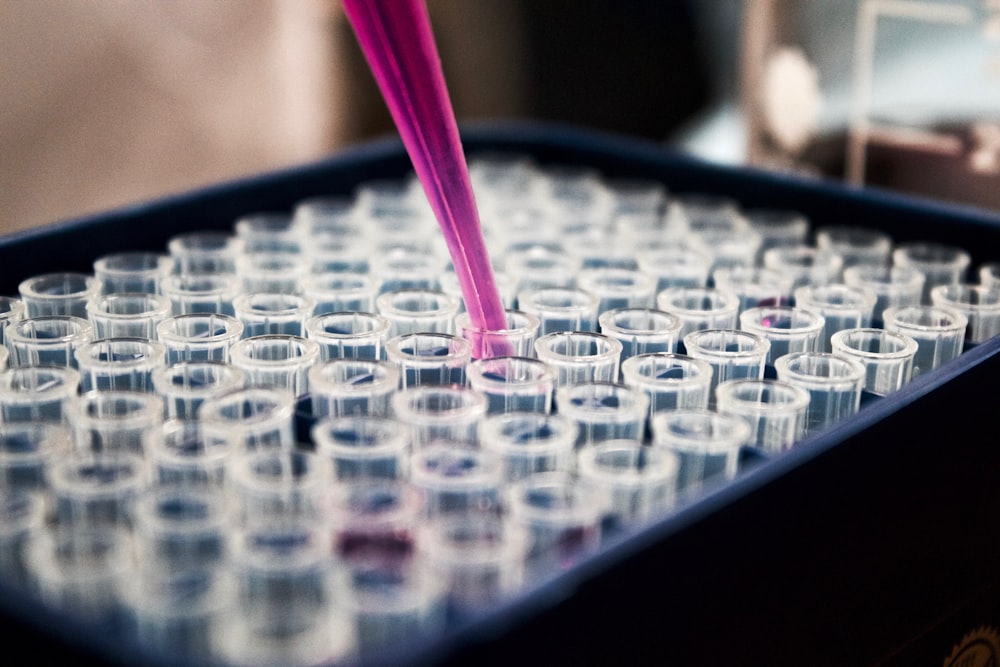
Laboratory equipment used in metabolic engineering research
A Closer Look: The "Astaxanthin Yeast" Breakthrough Experiment
To understand how this works in practice, let's examine a pivotal (and representative) experiment where researchers engineered the yeast Yarrowia lipolytica to become a high-yield astaxanthin producer.
Methodology: Building a Better Factory
The research team employed a systematic approach:
Experimental Steps
- Strain Selection: They started with a strain of Y. lipolytica that was already engineered to overproduce GGPP, providing a rich starting material.
- Gene Assembly: They identified the most efficient genes for the astaxanthin pathway:
- CrtI from Pantoea ananatis (a bacteria) for phytoene desaturation.
- CrtYB from Xanthophyllomyces dendrorhous (a yeast) to combine phytoene synthase and lycopene cyclase activities.
- CrtZ and CrtW from a marine bacterium for the critical beta-carotene hydroxylation and ketolation.
- Pathway Integration: These genes were stably inserted into the yeast's own genome using advanced DNA editing tools like CRISPR-Cas9, ensuring they would be passed on to future generations of yeast cells.
- Fermentation & Analysis: The engineered yeast was grown in large bioreactors containing a controlled feed of glucose and nutrients. Samples were taken regularly to measure cell growth and astaxanthin concentration using High-Performance Liquid Chromatography (HPLC).
Results and Analysis: A Resounding Success
The experiment was a triumph. The engineered yeast strain successfully produced astaxanthin as its primary carotenoid. The data told a compelling story of efficiency and scalability.
Carotenoid Profile of the Engineered Yeast
This table shows the strain's specificity, proving it was optimized to produce the target molecule, astaxanthin, rather than side-products.
| Carotenoid | Percentage of Total Carotenoids (%) |
|---|---|
| Astaxanthin | 88.5% |
| Beta-Carotene | 5.2% |
| Canthaxanthin (Intermediate) | 3.8% |
| Other Carotenoids | 2.5% |
Fermentation Performance Over Time
This data demonstrates that the yeast is a stable and productive factory over a standard production cycle.
| Time (Hours) | Dry Cell Weight (g/L) | Astaxanthin Concentration (mg/L) | Astaxanthin per Cell (mg/g DCW) |
|---|---|---|---|
| 0 | 0.5 | 0.0 | 0.0 |
| 48 | 45.2 | 150.5 | 3.3 |
| 96 | 98.7 | 1250.8 | 12.7 |
| 120 | 105.1 | 1450.2 | 13.8 |
Economic & Environmental Comparison of Astaxanthin Sources
This table contextualizes the breakthrough, showing why yeast fermentation is a game-changer.
| Source | Production Cost (USD per kg) | Land Use (Hectares per kg) | Production Time (Days) | Purity & Sustainability |
|---|---|---|---|---|
| Chemical Synthesis | ~$2,000 | Low | 1-2 | Low purity, petrochemical-based |
| Microalgae (H. pluvialis) | ~$7,000+ | High | 30-60 | High purity, high resource use |
| Engineered Yeast | ~$1,000 (Projected) | Very Low | 4-5 | High purity, sugar-based, sustainable |
Analysis
The results confirmed that metabolic engineering had successfully created a robust microbial cell factory. The high specificity for astaxanthin meant less waste and easier purification. The high yield and productivity in a bioreactor proved the process was scalable for industry. Most importantly, the projected economics positioned yeast-derived astaxanthin as a superior alternative, offering a sustainable, high-purity, and cost-effective product .
The Scientist's Toolkit: Essential Reagents for Metabolic Engineering
Creating an astaxanthin yeast requires a sophisticated set of biological tools.
CRISPR-Cas9 System
A revolutionary gene-editing "scissor and paste" tool that allows for precise insertion of new genes into the yeast's genome.
Plasmids
Circular pieces of DNA that act as "delivery trucks" to transport the new astaxanthin genes into the yeast cell.
Selection Markers
Genes that provide resistance to antibiotics. Scientists use them to identify yeast cells that have successfully incorporated the new DNA.
Synthetic Oligonucleotides
Short, custom-made DNA strands used as "primers" to copy the desired genes and as guides for the CRISPR system.
HPLC (Chromatography)
The essential analytical machine used to separate, identify, and precisely quantify the amount of astaxanthin produced.
Bioreactor
A high-tech fermentation tank that provides optimal conditions for yeast to grow and produce astaxanthin at industrial scale.
A Rosy, Sustainable Future
The journey from understanding a molecule's power in nature to brewing it in a vat of yeast is a testament to the power of synthetic biology. Metabolic engineering is not just about creating a cheaper product; it's about reimagining how we produce the building blocks of our health and nutrition. By turning yeast into tiny, efficient, and sustainable factories, we are unlocking a future where the most powerful antioxidants are not scarce treasures extracted from nature, but are brewed on demand, paving the way for a healthier planet and population. The age of pink gold, born from yeast, has just begun .
Industrial bioreactors used for large-scale production of bioengineered compounds