Modular Metabolic Engineering: A Strategic Framework for Optimizing Biobased Chemical Production
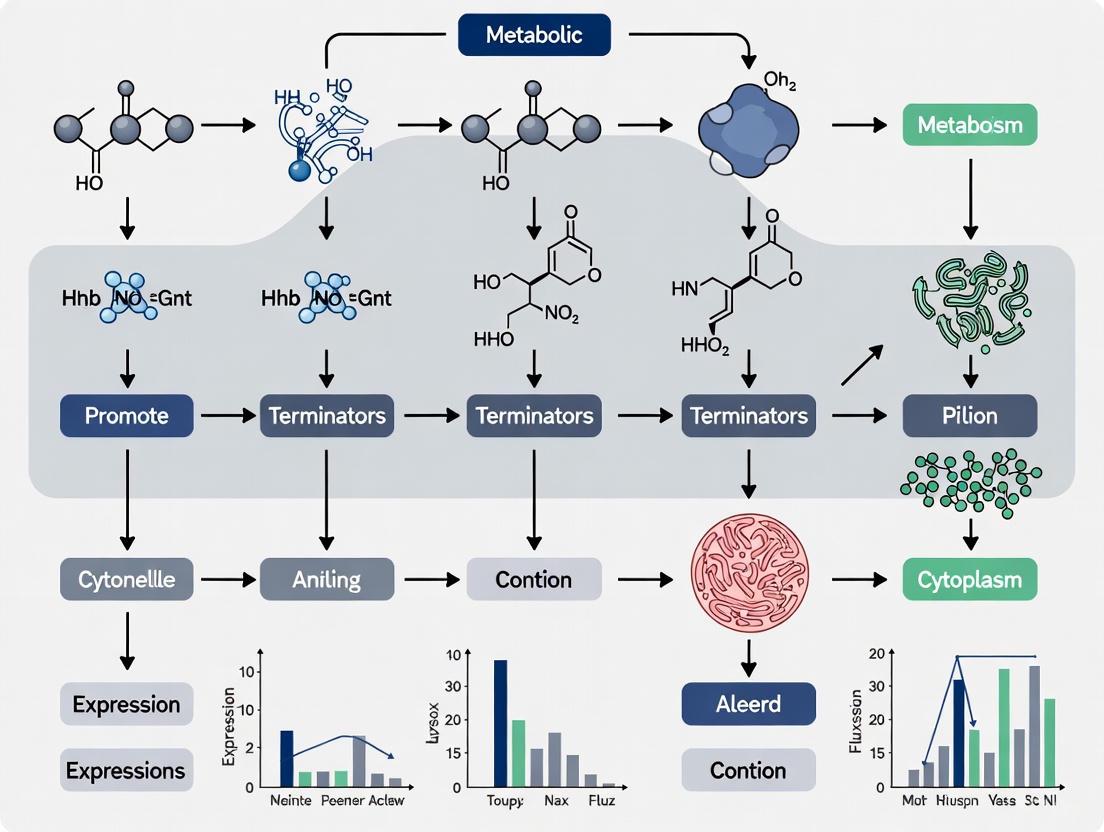
This article provides a comprehensive overview of modular metabolic engineering (MME), a transformative approach that addresses the challenges of metabolic imbalance in engineered microbial strains.
Modular Metabolic Engineering: A Strategic Framework for Optimizing Biobased Chemical Production
Abstract
This article provides a comprehensive overview of modular metabolic engineering (MME), a transformative approach that addresses the challenges of metabolic imbalance in engineered microbial strains. Tailored for researchers, scientists, and drug development professionals, we explore MME's foundational principles, which involve partitioning complex pathways into manageable, fine-tuned modules. The scope encompasses detailed methodological applications across diverse hosts like Escherichia coli and Saccharomyces cerevisiae for producing high-value chemicals, including pharmaceuticals, fragrances, and amino acids. We further delve into advanced troubleshooting and optimization strategies, such as multivariate modular metabolic engineering (MMME) and synthetic cocultures, and validate these approaches through comparative analysis of titers, yields, and productivity. The integration of MME with genome-scale models and advanced analytics is highlighted as a critical pathway for accelerating the development of robust microbial cell factories and revitalizing the pipeline for antibiotic discovery and biomanufacturing.
Deconstructing Modular Metabolic Engineering: Core Principles and System-Level Benefits
Modular metabolic engineering is a synthetic biology strategy that breaks down complex metabolic pathways into smaller, standardized, and manageable functional units, or modules [1]. This approach transforms the engineering of cellular factories from a trial-and-error process into a more predictable and systematic endeavor, facilitating the optimization of metabolic flux and the division of labor [2]. The core principle is to reduce complexity by designing, building, and testing discrete pathway modules that can be independently optimized and reassembled in different combinations. This is particularly vital for overcoming the challenge of metabolic burden and imbalanced flux in engineered strains, which often penalizes cell fitness and pathway productivity [1]. By applying principles of modularity, researchers can more efficiently develop microbial platforms for the sustainable production of biobased chemicals, moving from proof-of-concept to economically viable systems [1] [3].
Theoretical Foundations of Pathway Modularity
The concept of modularity in biological systems is supported by the inherent organization of metabolism. Fundamental research on metabolic networks has revealed that they are composed of conserved sequences of reactions, known as reaction modules, which function as reusable building blocks [4]. These modules are defined by conserved chemical structure transformation patterns and often correspond to functional units in genomic data, such as operon-like gene clusters [4].
In practical metabolic engineering, this foundational insight translates into several distinct strategic applications [2]:
- Modular Cloning: Utilizing standardized DNA parts to rapidly generate combinatorial libraries of expression cassettes for optimizing gene expression levels.
- Modular Pathway Engineering: Dividing a long biosynthetic pathway into shorter, coherent functional modules (e.g., a precursor synthesis module and a product formation module) that can be individually balanced.
- Modular Coculture (MCE): Distributing different metabolic modules across multiple microbial strains in a consortium, leveraging the unique strengths of each specialist strain.
Key Strategies and Experimental Protocols
Multivariate Modular Metabolic Engineering (MMME) in a Single Host
MMME is a combinatorial approach designed to balance metabolic flux by treating a biosynthetic pathway as two core modules: the Upstream Module and the Downstream Module [1]. The upstream module typically generates central precursors, while the downstream module converts these precursors into the final target compound. The key is to tune the expression of genes within each module independently to find the optimal flux distribution that maximizes yield without overburdening the host.
Protocol: Implementing MMME for Flux Balancing
- Pathway Division: Split the target biosynthetic pathway into two logical modules. The upstream module often involves core metabolism (e.g., acetyl-CoA synthesis), while the downstream module contains the specific heterologous enzymes for product synthesis.
- Module Characterization: Quantify the individual performance of each module. This may involve measuring precursor accumulation for the upstream module and conversion efficiency from supplemented precursor for the downstream module.
- Combinatorial Assembly: Assemble a library of strains containing different combinations of expression levels for the two modules. This is typically achieved by using libraries of promoters or ribosome binding sites (RBS) of varying strengths for the genes in each module.
- High-Throughput Screening: Screen the combinatorial library for target molecule production. Advanced methods, such as biosensors coupled to fluorescence-activated cell sorting (FACS), are ideal for high-throughput analysis [3].
- Systems-Level Analysis: For top-performing strains, conduct multi-omics analysis (transcriptomics, proteomics, metabolomics) to identify persistent bottlenecks or stress responses [3].
- Iterative Optimization: Use the insights gained from omics data to inform the next cycle of design, potentially refining module boundaries or expression parts.
The dot language script below illustrates the MMME concept.
Modular Coculture Engineering (MCE)
MCE, or synthetic coculture, extends modularity by distributing different metabolic modules across multiple engineered microbial strains [1]. This strategy alleviates the metabolic burden on a single host and allows each specialist strain to be optimized for its specific task. A classic division of labor involves one strain dedicated to producing a key intermediate and a second strain specialized in converting that intermediate into the final product.
Protocol: Designing and Optimizing a Synthetic Coculture
- Host Selection and Pathway Division: Choose two or more compatible microbial hosts (e.g., E. coli and S.. cerevisiae) and divide the target biosynthetic pathway accordingly. Consider the native strengths and weaknesses of each host (e.g., growth rate, precursor availability, tolerance to intermediates).
- Strain Construction: Genetically engineer each host to contain its designated metabolic module. Ensure that the module in the downstream strain is equipped to uptake and utilize the intermediate produced by the upstream strain.
- Establish Mutualism: Design the coculture system to be mutually beneficial. This can be achieved by cross-feeding essential nutrients or designing the product pathway such that it removes a growth-inhibiting intermediate [1].
- Optimize Cultivation Conditions: Systematically test different culture media to ensure they support the growth of all consortium members. Determine the optimal inoculation ratio (e.g., 1:1, 1:10) of the different strains to maximize product titer and yield [2].
- Monitor Community Dynamics: Use selective plating, flow cytometry, or strain-specific fluorescent markers to track the population composition of the coculture over time.
- Scale-Up Evaluation: Transition the optimized coculture from microplates or shake flasks to bioreactors, where parameters like dissolved oxygen and pH can be tightly controlled to maintain community stability.
The dot language script below illustrates a two-member coculture system.
Application Note: Raspberry Ketone Production inS. cerevisiae
A 2023 study effectively demonstrated all three modular strategies for the de novo production of raspberry ketone (RK) in S. cerevisiae, achieving the highest yield (2.1 mg/g glucose) reported in any organism without precursor supplementation [2]. The pathway was broken down into four distinct metabolic modules.
The dot language script below illustrates the modular pathway for raspberry ketone production.
Key Findings and Data Presentation
Table 1: Performance of Modular Metabolic Engineering Strategies for Raspberry Ketone Production in S. cerevisiae [2]
| Engineering Strategy | Strain / Community Description | RK Titer (mg/L) | RK Yield (mg/g glucose) | Key Precursor (HBA) Titer (mg/L) |
|---|---|---|---|---|
| Modular Pathway (Best Monoculture) | Engineered with Aro, p-CA, M-CoA, and RK modules | 63.5 | 2.1 | Not detected |
| Modular Coculture (CL_RK1) | Two-member community structure | 6.8 | 0.34 | 308.4 |
| Modular Coculture (CL_RK3) | Three-member community structure | 13.3 | 0.67 | 280.0 |
The data shows that while the optimized monoculture achieved the highest RK titer and yield, certain cocultures excelled at producing the direct precursor, 4-hydroxy benzalacetone (HBA), at very high levels (over 300 mg/L) [2]. This highlights how modular cocultures can be tuned for different production goals, such as generating intermediates for semi-synthesis.
The Scientist's Toolkit: Essential Reagents and Solutions
Table 2: Key Research Reagent Solutions for Modular Metabolic Engineering
| Item | Function / Application | Specific Examples / Notes |
|---|---|---|
| Modular Cloning Toolkits | Standardized DNA assembly for creating combinatorial gene expression libraries. | EcoFlex for E. coli; Golden Gate-based systems like MoClo for yeast and plants [2]. |
| Promoter & RBS Libraries | Fine-tuning gene expression strength within each module. | Constitutive and inducible promoters of varying strengths (e.g., PJ23100 series in E. coli; pCUP1 in yeast) [3]. |
| Biosensors | High-throughput screening of strain libraries for metabolite production. | Transcription factor-based or RNA aptamer-based systems linked to fluorescent reporters [3]. |
| Analytical Chromatography | Accurate identification and quantification of target molecules and pathway intermediates. | HPLC/UV, GC-MS, LC-MS for precise measurement of titer, yield, and productivity [3]. |
| Genome Editing Systems | Rapid genomic integration of metabolic modules. | CRISPR-Cas9 for precise, multiplexed genome editing in a wide range of hosts [1]. |
| Bioinformatics Software | Pathway prediction, analysis, and metabolic model simulation. | Pathway Tools for metabolic reconstruction and flux-balance analysis (FBA) [5]. KEGG for reaction module analysis [4]. |
Modularity provides a powerful framework for tackling the inherent complexity of metabolic engineering. By decomposing pathways into functional units, researchers can systematically manage metabolic flux in single hosts or distribute the biochemical workload across synthetic microbial consortia. The application of modular cloning, modular pathway engineering, and modular cocultures, as demonstrated in the production of compounds like raspberry ketone, significantly accelerates the DBTL cycle. This structured approach is pivotal for advancing the sustainable bioproduction of valuable chemicals, moving the field from artisanal efforts toward standardized, predictable engineering principles.
Metabolic engineering aims to reprogram microbial cellular metabolism to convert renewable resources into valuable chemicals, materials, and fuels [6]. However, this rewiring often creates metabolic imbalances that reduce both product yields and host fitness. These imbalances occur when heterologous pathway expression creates burdens—resource competition, thermodynamic bottlenecks, and toxicity—that limit industrial scalability [7] [8].
Modular metabolic engineering addresses these challenges through a structured design paradigm. This approach partitions complex metabolic networks into discrete, functional units called modules, each dedicated to specific functions: carbon core processing, energy generation, or target product synthesis [7] [8]. This separation allows for independent optimization of individual modules before reintegration, minimizing disruptive interactions and enabling more predictable system behavior.
The theoretical foundation of modularization aligns with the broader evolution of metabolic engineering. The field has progressed through distinct waves: first, rational pathway design; second, systems biology integration; and now, a third wave driven by synthetic biology that enables complete pathway design and construction using synthetic DNA elements [6]. Modular design represents a maturation within this third wave, applying engineering principles of functional separation and standardized interfaces to biological systems.
Theoretical Foundations and Key Concepts
Defining Metabolic Modules
In modular metabolic engineering, pathways are decomposed into functional units with distinct metabolic roles:
- Chassis Modules: Core metabolic networks in the host organism that maintain essential functions including central carbon metabolism, energy production, and growth capabilities. These modules provide precursor metabolites and cofactors for downstream production modules [7].
- Production Modules: Heterologous pathways introduced for biosynthesis of target compounds. These modules convert chassis-derived precursors into desired end products [7] [8].
- Energy Module: Specialized modules that optimize cofactor regeneration and energy management, often through synthetic pathways that enhance reducing equivalent supply [9].
This architectural separation enables independent optimization of growth and production functions, allowing engineers to balance resource allocation between cellular maintenance and product synthesis [7].
The Growth-Coupling Principle
A cornerstone of modern modular design is growth-coupled selection, where target product formation becomes intrinsically linked to host fitness [8]. This approach strategically introduces gene deletions that create auxotrophies or metabolic dependencies, then rescues growth through activity of introduced production modules. The resulting strain grows only when the production module is functionally active, creating a powerful selective pressure for pathway optimization during adaptive laboratory evolution [8].
The metabolic network below illustrates how this growth-coupling principle functions within a modular framework:
Diagram: Growth-coupling through modular design. Strategic gene deletions create metabolic dependencies rescued only by production module activity, linking product formation to host fitness.
Computational Frameworks for Modular Design
Model-Assisted Modular Optimization
Computational tools enable predictive design of modular cell factories through multi-objective optimization formulations. The ModCell2 framework designs modular chassis strains compatible with large libraries of exchangeable production modules [7]. This approach treats each target phenotype activated by a module as an independent objective within a Pareto optimization problem, identifying optimal gene knockout sets that maximize compatibility across diverse production pathways.
Advanced algorithms like ModCell-HPC utilize high-performance computing to solve modular design problems with hundreds of objectives, representing production modules for biochemically diverse compounds [7]. These computational methods have identified modular chassis designs with minimal gene sets that maintain compatibility with extensive product libraries, demonstrating the scalability of modular approaches.
Quantitative Pathway Design Algorithms
The QHEPath algorithm provides quantitative assessment of heterologous pathway designs, evaluating over 12,000 biosynthetic scenarios across 300 products and 4 substrates in 5 industrial organisms [9]. This systematic analysis revealed that over 70% of product pathway yields can be improved by introducing appropriate heterologous reactions, with 13 identified engineering strategies effective for breaking stoichiometric yield limitations.
Cross-species metabolic network models enable quantitative prediction of pathway performance across different chassis organisms. These models incorporate quality-controlled biochemical reactions from multiple species, eliminating errors that previously limited predictive accuracy [9].
Application Notes: Implementing Modular Designs
Growth-Coupled Selection Workflow
The experimental pipeline for implementing growth-coupled modular designs follows an adapted Design-Build-Test-Learn cycle where biomass formation serves as the primary screening metric [8]. This approach bypasses analytical bottlenecks in high-throughput strain engineering by using growth as a proxy for module performance.
Diagram: Growth selection-based DBTL cycle for modular engineering. Biomass measurement replaces analytical chemistry as primary test metric, accelerating optimization.
Quantitative Performance Data
Modular approaches have demonstrated significant improvements in metabolic efficiency across diverse host organisms and product classes. The table below summarizes representative achievements:
Table: Performance Metrics of Modular Metabolic Engineering in Model Organisms
| Host Organism | Target Product | Modular Strategy | Performance Metrics | Reference |
|---|---|---|---|---|
| Escherichia coli | Lycopene | Modular cofactor engineering + pathway balancing | 58 mg/g DCW | [9] |
| Escherichia coli | Poly(3-hydroxybutyrate) | Non-oxidative glycolysis module | Yield exceeded stoichiometric limit | [9] |
| Escherichia coli | N-hexanol | Growth-coupled upper pathway optimization | Enhanced precursor supply | [8] |
| Saccharomyces cerevisiae | β-carotene | Lipid engineering + pathway modularization | 217.5 mg/g DCW | [10] |
| Corynebacterium glutamicum | Lysine | Transporter + cofactor module engineering | 223.4 g/L, 0.68 g/g glucose | [6] |
| Yarrowia lipolytica | Malonic acid | Modular pathway + genome editing | 63.6 g/L, 0.41 g/L/h | [6] |
These implementations demonstrate how modularization enables deep metabolic rewiring that surpasses inherent stoichiometric limitations of native networks. For example, introducing the non-oxidative glycolysis pathway in E. coli enables generation of three acetyl-CoA molecules per glucose instead of the native two, fundamentally changing carbon efficiency [9].
Experimental Protocols
Protocol 1: Designing Growth-Coupled Selection Strains
This protocol creates selection strains where module functionality is coupled to host fitness through strategic gene deletions.
Materials and Reagents
- Bacterial chassis (e.g., E. coli MG1655)
- CRISPR-Cas9 system for precise genome editing
- Synthtic gene modules codon-optimized for host
- M9 minimal medium with defined carbon sources
- Antibiotics for selection pressure
- Analytical standards for target metabolites
Procedure
In Silico Design Phase
- Identify target gene deletions that create auxotrophy for module-derived metabolite
- Verify producibility using genome-scale metabolic models (e.g., CSMN model)
- Design rescue module with heterologous enzymes to overcome metabolic lesion
Strain Construction Phase
- Transform host with CRISPR-Cas9 plasmid targeting deletion loci
- Introduce heterologous module via plasmid or genomic integration
- Verify genotype through colony PCR and sequencing
Validation Phase
- Culture selection strain in minimal medium without metabolite supplementation
- Measure growth kinetics (OD600) as proxy for module functionality
- Compare with control strains (wild-type, deletion without rescue)
- Quantify metabolite production via LC-MS/HPLC to correlate with growth
Adaptive Evolution
- Serial passage selection strain under selective conditions
- Monitor growth improvement over 50-100 generations
- Isolate evolved clones and sequence to identify causal mutations
Protocol 2: Modular Pathway Optimization Using Computational Tools
This protocol employs computational design tools to identify optimal modular configurations before experimental implementation.
Materials and Reagents
- Genome-scale metabolic model of host organism (e.g., iML1515 for E. coli)
- ModCell-HPC software for modular design
- QHEPath web server for heterologous pathway evaluation
- LASER database of curated metabolic engineering designs
Procedure
Model Preparation
- Download and validate genome-scale model from BiGG Database
- Incorporate heterologous reactions using biochemical databases
- Apply thermodynamic constraints to eliminate infeasible cycles
Modular Design Implementation
- Define production module stoichiometry based on target compound
- Run ModCell-HPC to identify optimal gene knockout sets for modular chassis
- Evaluate compatibility across product library using Pareto front analysis
- Select chassis design with maximal product coverage and minimal gene set
Pathway Validation
- Input target product and substrate into QHEPath algorithm
- Evaluate yield improvement potential with heterologous reactions
- Compare multiple pathway variants for carbon efficiency
- Select optimal pathway based on predicted yield and host compatibility
Experimental Translation
- Implement computational designs using synthetic DNA assembly
- Validate model predictions through fermentation experiments
- Iterate using machine learning to improve model accuracy
The Scientist's Toolkit: Essential Research Reagents
Table: Key Research Reagents for Modular Metabolic Engineering
| Reagent / Tool | Function | Example Application | Implementation Notes |
|---|---|---|---|
| CRISPR-Cas9 System | Precision genome editing | Creating gene deletions for growth coupling | Enable multiplexed deletions for complex modular chassis |
| Genome-Scale Models | Metabolic flux prediction | Identifying yield-limiting steps | Constrain with experimental data for improved accuracy |
| Cross-Species Metabolic Network (CSMN) | Heterologous pathway design | Evaluating non-native reactions in host context | Quality-controlled to eliminate thermodynamic errors |
| ModCell-HPC Algorithm | Modular chassis design | Identifying gene knockouts for product compatibility | Scalable to hundreds of production objectives |
| QHEPath Web Server | Quantitative pathway evaluation | Predicting yield improvements | Covers 300+ products across multiple industrial hosts |
| LASER Database | Design rule extraction | Accessing curated metabolic engineering designs | Contains 417 designs with 2661 genetic modifications |
| Adaptive Laboratory Evolution | Strain optimization under selection | Improving module flux capacity | Requires 50-100 generations for significant improvement |
Modular metabolic engineering represents a paradigm shift in microbial strain development, replacing ad hoc optimization with systematic design principles. Through strategic functional separation and growth-coupling, this approach addresses fundamental challenges of metabolic imbalance that have limited industrial bioproduction.
Future advancements will likely focus on increasing modular predictability through improved computational models that incorporate enzyme kinetics and regulatory constraints [11]. The integration of machine learning with mechanistic models will enhance design accuracy, while emerging tools for multiplex genome engineering will accelerate implementation of complex modular designs [7] [11].
As the field matures, standardized modular parts and interfaces may enable plug-and-play metabolic engineering, where production pathways can be readily exchanged between optimized chassis strains. This interoperability would dramatically accelerate development timelines for microbial chemical production, ultimately expanding the range of sustainably manufactured products available to society [6] [8].
Modular metabolic engineering (MME) is a synthetic biology strategy that breaks down complex metabolic pathways into smaller, manageable, and standardized functional units, or modules. This approach simplifies the optimization of microbial cell factories by allowing for independent tuning of different pathway segments, thereby addressing challenges such as metabolic burden, intermediate toxicity, and cofactor imbalance. The three primary system architectures in MME—Univariate, Multivariate (MMME), and Coculture (MCE) Strategies—provide a structured framework for engineering efficient bio-production systems. By refactoring pathways into modules for precursor synthesis, cofactor regeneration, or product formation, MME enables a more rational and high-throughput exploration of the design space, leading to accelerated development of strains for the sustainable production of chemicals, pharmaceuticals, and fuels [2] [12].
Univariate Strategies
Core Principle and Application Notes
Univariate strategies focus on the optimization of a single variable or genetic part at a time while keeping all other parameters constant. This approach is foundational for establishing baseline performance and understanding the individual impact of specific components within a metabolic pathway, such as promoters, ribosome binding sites (RBS), or gene copy number. It is particularly effective for initial pathway debugging and for identifying rate-limiting steps in a biosynthetic process.
A prime application is modular cloning for promoter engineering. By constructing combinatorial libraries of promoters to drive the expression of individual genes in a pathway, researchers can identify the optimal expression level for each enzyme. For instance, in the production of raspberry ketone (RK) in Saccharomyces cerevisiae, a library of promoters with varying strengths can be assembled to control the expression of genes like 4CL (4-coumaroyl-CoA ligase) and BAS (benzalacetone synthase), allowing for the systematic identification of the best-performing strain variant [2].
Experimental Protocol: Promoter Library Construction and Screening
Objective: To optimize the production of a target compound by screening a library of promoter variants for a key pathway gene.
Materials:
- Strains: E. coli DH5α for plasmid propagation; a microbial chassis (e.g., S. cerevisiae) for production.
- Vectors: A modular cloning system (e.g., Golden Gate or EcoFlex).
- Media: Appropriate rich and selective media (e.g., LB for E. coli, YPD or synthetic complete for yeast).
- Reagents: Restriction enzymes, ligase, PCR reagents, and sequencing primers.
Procedure:
- Library Design: Select a set of native or synthetic promoters with a range of known strengths.
- Module Assembly: Use a standardized modular cloning toolkit to assemble each promoter variant upstream of the target gene's coding sequence into a destination vector containing the rest of the pathway.
- Transformation: Transform the assembled library of plasmid variants into the production chassis.
- Screening: Inoculate individual transformants in deep-well plates containing production medium.
- Fermentation: Incubate with shaking for a defined period (e.g., 72-96 hours for yeast).
- Product Quantification: Analyze the culture supernatant or cell extracts using High-Performance Liquid Chromatography (HPLC) or LC-MS to quantify target compound titers.
- Validation: Isolate plasmids from top-performing clones and sequence the promoter region to confirm identity.
Data Interpretation: Compare the titer, yield, and productivity across the different promoter strains. The variant yielding the highest metric indicates the optimal expression level for that particular gene under the tested conditions.
Pathway Visualization: Univariate Optimization
Diagram 1: Univariate Promoter Screening. A library of promoter variants drives the expression of a single target gene (Gene X), allowing for the systematic identification of the optimal expression level that maximizes flux towards the final product through a fixed downstream pathway.
Multivariate (MMME) Strategies
Core Principle and Application Notes
Multivariate strategies, or Multivariate Modular Metabolic Engineering (MMME), involve the simultaneous engineering of multiple variables or modules. This approach recognizes that metabolic pathways are interconnected networks and that optimal performance requires coordinated expression of multiple genes. MMME is highly effective for balancing flux across different segments of a pathway and managing metabolic burden.
The core application is modular pathway engineering, where a full biosynthetic pathway is divided into distinct functional modules. For de novo raspberry ketone production, the pathway was split into four modules: the Aromatic amino acid synthesis module (Mod. Aro), the p-Coumaric acid synthesis module (Mod. p-CA), the Malonyl-CoA synthesis module (Mod. M-CoA), and the RK synthesis module (Mod. RK). These modules were then combinatorially assembled and expressed in different combinations to identify the optimal pathway balance. This strategy led to a strain producing 63.5 mg/L RK from glucose, the highest reported titer in yeast without precursor feeding [2].
Experimental Protocol: Modular Pathway Assembly and Testing
Objective: To maximize the production of a target compound by combinatorially assembling and testing different expression levels of functional pathway modules.
Materials:
- Strains and Vectors: As in Protocol 2.2, with pre-assembled modules for each pathway segment.
- Media: As in Protocol 2.2.
Procedure:
- Module Definition: Deconstruct the target pathway into logical modules (e.g., precursor supply, cofactor regeneration, core product synthesis).
- Module Construction: Assemble each module as a separate, standardized genetic unit (e.g., on a single plasmid or integrated at a specific genomic locus).
- Combinatorial Assembly: Use combinatorial assembly techniques (e.g., transformation-associated recombination or serial integration) to generate a library of strains containing different combinations of module expression levels (e.g., low, medium, high for each module).
- High-Throughput Cultivation: Grow the strain library in microtiter plates or microbioreactors.
- Metabolite Analysis: Use HPLC, LC-MS, or in vivo biosensors to quantify product formation and potential toxic intermediates.
- Systems Analysis: Apply multivariate data analysis (e.g., Principal Component Analysis) to correlate module expression profiles with performance outcomes.
Data Interpretation: The best-performing strain combination reveals the optimal balance between the different pathway modules. The effect of module interactions on overall performance can be modeled to guide further engineering.
Quantitative Data for MMME: Raspberry Ketone Production
Table 1: Performance of different modular strategies for Raspberry Ketone production in S. cerevisiae [2].
| Strategy | Host | Genetic Modifications | Titer (mg/L) | Yield (mg/g glucose) | Medium/Precursor |
|---|---|---|---|---|---|
| Modular Pathway (Monoculture) | S. cerevisiae | Mod. Aro, Mod. p-CA, Mod. M-CoA, Mod. RK | 63.5 | 2.1 | Synthetic minimal |
| Coculture (CL_RK1) | S. cerevisiae | Division of labor between community members | 6.8 (RK) / 308.4 (HBA*) | 0.34 | Synthetic minimal |
| Coculture (CL_RK3) | S. cerevisiae | Division of labor between community members | 13.3 (RK) / 280 (HBA*) | 0.67 | Synthetic minimal |
| With Precursor Feeding | S. cerevisiae | RtPAL, AtC4H, At4CL1, Pc4CL2, RpBAS | 7.5 | 0.38 | YPD + p-CA |
*HBA: 4-hydroxy benzalacetone, the direct precursor of RK.
Pathway Visualization: Multivariate Modular Engineering
Diagram 2: Multivariate Modular Pathway. A biosynthetic pathway is divided into three independent modules (Precursor Supply, Cofactor Regeneration, Product Synthesis). Each module contains genes that can be tuned in concert (e.g., via promoter libraries), enabling the balanced optimization of the entire system through combinatorial testing.
Coculture (MCE) Strategies
Core Principle and Application Notes
Coculture strategies, or Microbial Coculture Engineering (MCE), involve the use of two or more engineered microbial strains growing together in a shared environment to achieve a common bioprocessing goal. This approach leverages "division of labor," where the metabolic burden of a complex pathway is distributed among specialist strains. MCE is particularly advantageous for isolating incompatible metabolic processes, minimizing intermediate toxicity, and optimizing the local environment for different enzymatic steps.
In the context of raspberry ketone production, synthetic cocultures were constructed where one strain was specialized in producing the precursor p-coumaric acid or HBA, while another strain expressed the enzymes for the final conversion to RK. The performance was highly dependent on the community structure, inoculation ratio, and culture media. In certain conditions, cocultures outperformed their monoculture counterparts, with one community (CL_RK3) showing a 7.5-fold increase in the production of the intermediate HBA (308.4 mg/L) compared to relevant monocultures [2].
Experimental Protocol: Establishing and Optimizing a Synthetic Coculture
Objective: To implement a biosynthesis pathway using a synthetic microbial community and optimize its population dynamics for maximum production.
Materials:
- Strains: At least two engineered strains, each containing a dedicated module of the pathway.
- Media: Standard media, potentially with selective markers to maintain plasmid retention.
Procedure:
- Pathway Partitioning: Split the target biosynthesis pathway into two or more modules that can be functionally separated (e.g., upstream precursors in one strain, downstream conversion in another).
- Strain Development: Engineer individual specialist strains for each module. Ensure compatibility (e.g., pH, temperature, oxygen requirements).
- Inoculation Optimization: Co-inoculate the strains at different ratios (e.g., 1:1, 1:9, 9:1) in shake flasks or bioreactors.
- Community Cultivation: Ferment the coculture system. Monitor optical density (OD) to track overall growth.
- Population Dynamics: Use flow cytometry, selective plating, or strain-specific fluorescent markers to track the population ratio of each strain over time.
- Metabolite Profiling: Quantify the target product and key intermediates in the culture broth over the fermentation period.
- Process Control: In a bioreactor, control environmental parameters (pH, dissolved oxygen) to stabilize the community.
Data Interpretation: The optimal inoculation ratio and process conditions are those that maintain a stable community and maximize the final product titer. A trade-off between individual strain growth and community productivity is often observed.
Pathway Visualization: Coculture Division of Labor
Diagram 3: Coculture Division of Labor. A biosynthetic pathway is divided between two specialist microbial strains. Strain A converts the carbon source into a key intermediate, which is then cross-fed to Strain B for final conversion into the target product. This separation can reduce metabolic burden and improve overall pathway efficiency.
The Scientist's Toolkit: Research Reagent Solutions
Table 2: Essential research reagents and tools for implementing modular metabolic engineering strategies.
| Item | Function/Description | Example Use Case |
|---|---|---|
| Modular Cloning Toolkits | Standardized DNA assembly systems using Golden Gate or similar methods for combinatorial part assembly. | EcoFlex for E. coli; Golden Gate toolkits for S. cerevisiae and other yeasts [2]. |
| Promoter/RBS Libraries | Collections of genetic parts with a range of transcriptional/translational strengths for tuning gene expression. | Univariate optimization of a rate-limiting enzyme in a pathway [2]. |
| CRISPR-Cas9 Systems | Tools for precise genome editing, enabling targeted gene knock-outs, knock-ins, and multiplexed engineering. | Integration of metabolic modules into genomic safe harbors to enhance genetic stability [12]. |
| Biosensors | Genetic circuits that link metabolite concentration to a measurable output (e.g., fluorescence). | High-throughput screening of strain libraries for improved production of a target compound. |
| Analytical Standards | Pure chemical compounds for quantifying metabolites, products, and intermediates via HPLC or LC-MS. | Accurate measurement of raspberry ketone titers in culture supernatants [2]. |
| Specialized Chassis Strains | Engineered host organisms with pre-optimized backgrounds (e.g., precursor enrichment, reduced byproduct formation). | S. cerevisiae chassis with enhanced malonyl-CoA supply for polyketide production [2] [12]. |
The strategic application of Univariate, Multivariate (MMME), and Coculture (MCE) architectures provides a powerful, multi-faceted toolkit for advancing modular metabolic engineering. The choice of architecture depends on the complexity of the pathway, the compatibility of enzymatic steps, and the desired scale of optimization. Univariate methods offer precision for foundational tuning, MMME enables system-level balancing of complex pathways, and MCE opens the door to implementing even more complex or incompatible biochemistries through spatial and functional separation.
Future developments will focus on the integration of machine learning and automation with these architectures. AI-powered platforms can predict optimal module designs and coculture configurations, dramatically accelerating the design-build-test-learn cycle [12]. Furthermore, overcoming scale-up challenges such as population stability in cocultures and metabolic burden in highly engineered monocultures will be critical for the industrial translation of these advanced strategies, paving the way for more efficient and sustainable biomanufacturing processes [12].
The Role of Genome-Scale Metabolic Modeling in Pathway Design and Module Definition
Genome-scale metabolic models (GEMs) represent structured knowledge-bases that systematically abstract biochemical transformations within target organisms. These computational reconstructions have become indispensable tools in systems biology, providing a biochemical, genetic, and genomic (BiGG) framework for analyzing cellular metabolism [13]. In the context of modular metabolic engineering for chemical production, GEMs serve as blueprints for identifying pathway bottlenecks, predicting metabolic fluxes, and designing optimized production chassis. By converting biological knowledge into mathematical formulations, GEMs enable researchers to simulate phenotypic characteristics under varying genetic and environmental conditions, facilitating rational strain design without extensive experimental trial and error [13] [14].
The reconstruction process transforms genomic annotations and biochemical data into stoichiometric matrices that represent the entire metabolic network of an organism. This network reconstruction forms the foundation for constraint-based reconstruction and analysis (COBRA), which uses flux balance analysis (FBA) to predict metabolic behavior at systems level [13]. For metabolic engineers, this approach provides unprecedented capability to model the complex interplay between native metabolism and engineered pathways, enabling identification of key regulatory nodes and potential metabolic bottlenecks that limit chemical production. The integration of GEMs into metabolic engineering workflows has dramatically accelerated the design-build-test-learn cycle for developing microbial cell factories.
Core Principles of GEM Development and Reconstruction
The Metabolic Reconstruction Process
The development of high-quality genome-scale metabolic reconstructions follows a meticulous, multi-stage process that transforms genomic information into predictive computational models. This protocol typically spans four major stages, requiring significant time investment from six months for well-studied bacteria to two years for complex eukaryotic organisms [13]. The initial stage involves creating a draft reconstruction from genomic data, identifying metabolic genes through homology searches, and mapping these genes to their corresponding enzymatic reactions using organism-specific databases and biochemical knowledge [13].
The reconstruction process progresses through several critical phases: (1) draft reconstruction generation from genome annotation; (2) manual network refinement and curation; (3) conversion to mathematical format for simulation; and (4) iterative validation and debugging against experimental data [13]. Throughout this process, quality control and quality assurance (QC/QA) procedures are essential to ensure model functionality and predictive accuracy. The manual curation phase is particularly crucial, as automated reconstructions often miss organism-specific features such as substrate preferences, cofactor specificity, and reaction directionality under physiological conditions [13]. This comprehensive approach ensures the resulting GEM accurately represents the biochemical capabilities of the target organism.
Protocol: Metabolic Network Reconstruction
Creating a Draft Reconstruction:
- Data Compilation: Collect genome sequence annotation, biochemical data from resources like KEGG and BRENDA, and organism-specific physiological information [13].
- Gene-Reaction Mapping: Associate metabolic genes with their corresponding enzymatic reactions using Gene-Protein-Reaction (GPR) rules that define protein complexes and isozymes [13].
- Compartmentalization: For eukaryotic organisms, assign intracellular localization to reactions based on prediction tools like PSORT or experimental data [15] [13].
- Biomass Composition: Define the biomass objective function quantifying cellular composition (amino acids, nucleotides, lipids, cofactors) based on experimental measurements [15] [13].
Network Refinement and Curation:
- Gap Analysis: Identify metabolic gaps (missing reactions) through network connectivity analysis and fill using biochemical literature and comparative genomics [13].
- Directionality Assignment: Assign thermodynamically feasible reaction directions using experimental data and group contribution methods [13].
- Transport Reactions: Include membrane transport processes based on genomic annotation and experimental evidence of metabolite uptake/secretion [13].
Model Validation and Testing:
- Growth Simulation: Test model predictions against experimental growth phenotypes under different nutrient conditions [13].
- Gene Essentiality: Compare predicted essential genes with experimental knockout studies [13].
- Metabolite Production: Validate against known metabolic secretion profiles and byproduct formation [13].
Table 1: Essential Databases for GEM Reconstruction
| Database Type | Database Name | Primary Function | URL |
|---|---|---|---|
| Genomic Databases | KEGG | Pathway information and gene annotation | www.genome.jp/kegg/ |
| Genomic Databases | SEED | Comparative genomics platform | theseed.uchicago.edu/FIG/index.cgi |
| Biochemical Databases | BRENDA | Comprehensive enzyme information | www.brenda-enzymes.info/ |
| Biochemical Databases | MetaCyc | Metabolic pathways and enzymes | metacyc.org |
| Organism-Specific Databases | EcoCyc | E. coli database | ecocyc.org |
| Transport Databases | Transport DB | Membrane transport systems | www.membranetransport.org/ |
| Simulation Tools | COBRA Toolbox | MATLAB-based simulation environment | systemsbiology.ucsd.edu/Downloads/Cobra_Toolbox |
GEM Applications in Pathway Design and Optimization
Metabolic Target Identification and Validation
Genome-scale metabolic models provide a powerful framework for identifying potential targets for metabolic engineering through systematic in silico analysis. By simulating gene knockout and knockdown scenarios, GEMs can predict which genetic modifications will enhance production of desired compounds while maintaining cellular viability [16] [14]. For instance, GEMs have been successfully applied to identify gene editing targets for overproduction of immune-modulating metabolites like butyrate through bi-level optimization algorithms that simultaneously maximize product formation and cellular growth [16]. This approach enables researchers to prioritize metabolic interventions with the highest predicted impact before committing to laborious experimental work.
The predictive power of GEMs extends to forecasting the outcomes of pathway manipulations in complex metabolic networks. Recent applications include the reconstruction of iSO1949_N.oceanica, a comprehensive model of the oleaginous microalga Nannochloropsis oceanica that enables simulation of metabolic fluxes under varying environmental conditions [15]. This model, specifically curated on core microalgal metabolism and lipid biosynthesis pathways, allows researchers to predict how genetic modifications will impact lipid production under different light regimes—a crucial capability for biofuel applications [15]. Similarly, GEMs have guided media optimization for fastidious microorganisms by predicting essential nutrients, as demonstrated with Bifidobacterium animalis and Bifidobacterium longum [16].
Protocol: Metabolic Target Identification Using FBA
Flux Balance Analysis for Pathway Design:
- Model Constraining: Apply constraints to reflect physiological conditions, including substrate uptake rates, oxygen availability, and byproduct secretion [13] [17].
- Objective Definition: Set the optimization objective, typically biomass production for growth simulation or metabolite secretion for product formation [13].
- Gene Deletion Analysis: Systematically simulate single and double gene knockouts to identify targets that increase product yield while maintaining viability [16] [14].
- Solution Space Analysis: Use flux variability analysis (FVA) to determine the range of possible fluxes through each reaction in the network [13].
Pathway Prediction and Validation:
- Shadow Price Analysis: Identify metabolites whose availability limits production through shadow price calculations in FBA solutions [13].
- Moisty-Constrained Modeling: Track conserved metabolic moieties (e.g., ATP, NADH) to identify energy bottlenecks [13].
- In Silico Gene Overexpression: Simulate increased enzyme activity by relaxing flux constraints on target reactions [14].
- Experimental Correlation: Compare predicted essential genes, substrate utilization, and secretion profiles with experimental data for validation [13].
Table 2: GEM Applications in Metabolic Engineering
| Application Area | Specific Methodology | Key Outcome | Representative Example |
|---|---|---|---|
| Target Identification | Gene deletion simulation | Identification of knockout targets for enhanced production | Butyrate overproduction in engineered strains [16] |
| Nutrient Optimization | Growth simulation in defined media | Prediction of essential nutrients and growth factors | Cultivation medium optimization for Bifidobacterium [16] |
| Strain Design | Constraint-based modeling | Rational design of production chassis | Lipid production in Nannochloropsis oceanica [15] |
| Condition Optimization | Environmental constraint application | Prediction of optimal growth and production conditions | Light acclimation modeling in microalgae [15] |
| Metabolic Interaction Analysis | Multi-strain community modeling | Prediction of synthetic consortium behavior | Live biotherapeutic product design [16] |
Advanced GEM Integration for Module Definition
Multi-Omics Integration and Machine Learning Approaches
The integration of multi-omics data with genome-scale metabolic models has significantly enhanced their predictive power and applications in modular metabolic engineering. Modern GEMs incorporate transcriptomic, proteomic, and metabolomic data to create context-specific models that reflect cellular states under different conditions [17] [14]. For instance, the integration method (iMAT) uses transcriptomic data to create tissue- or condition-specific models by categorizing reaction expression levels into lowly, moderately, and highly expressed groups, then constraining the model to reflect these expression patterns [17]. This approach was successfully applied in lung cancer metabolism studies, where gene expression data from 43 paired lung tissue samples were integrated with the Human1 metabolic model to identify cancer-specific metabolic signatures [17].
Machine learning algorithms further augment GEM capabilities by identifying complex patterns in large-scale metabolic datasets. In one application, a random forest classifier distinguished between healthy and cancerous lung tissues with high accuracy based on metabolic signatures derived from GEMs [17]. Similarly, ML approaches can predict enzyme kinetic parameters, estimate flux distributions, and identify regulatory patterns that are difficult to capture through traditional constraint-based modeling alone [14]. The synergy between GEMs and machine learning creates a powerful framework for identifying metabolic modules—discrete functional units within metabolic networks that can be engineered independently—and predicting how modifications to these modules will impact overall system performance [17] [14].
Protocol: Multi-Omics Integration for Module Definition
Data Integration Workflow:
- Transcriptomic Data Mapping: Map RNA-seq data to metabolic genes using GPR rules, calculate reaction expression levels, and categorize into expression bins (low, medium, high) [17].
- Proteomic Constraints: Incorporate absolute protein abundance measurements to constrain enzyme catalytic capacities using enzyme-constrained models [14].
- Metabolomic Integration: Use intracellular metabolite concentration data to inform reaction directionality and thermodynamic feasibility [14].
- Context-Specific Model Reconstruction: Apply algorithms like iMAT or INIT to generate condition-specific models based on omics data [17].
Machine Learning Enhancement:
- Feature Selection: Use random forest or similar algorithms to identify metabolic reactions most predictive of phenotypic states [17].
- Kinetic Parameter Prediction: Train neural networks on enzyme sequence and structure data to predict kinetic parameters for poorly characterized reactions [14].
- Flux Prediction: Develop supervised learning models to predict metabolic flux distributions from multi-omics input data [14].
- Module Identification: Apply clustering algorithms to flux variability analysis results to identify correlated reaction sets and metabolic modules [17].
Application Notes: Implementing GEMs in Metabolic Engineering Projects
Case Studies in Bioprocessing and Therapeutic Development
Microalgae for Biofuel Production: The implementation of iSO1949_N.oceanica for lipid production in the oleaginous microalga Nannochloropsis oceanica demonstrates the power of GEMs in guiding photosynthetic chassis optimization. This model, extensively curated on core metabolism, lipid biosynthesis, and pigment pathways, incorporates two distinct "light acclimation modes" based on long-term acclimation to low- and high-light conditions [15]. By accounting for acclimation-specific biomass compositions, oxygen exchange rates, and maintenance requirements derived from photosynthesis-irradiance curves, the model accurately predicts carbon assimilation under varying light regimes [15]. For metabolic engineers, this capability enables rational design of lipid-overproducing strains by identifying targets in lipid biosynthesis pathways that maximize triacylglycerol yield without compromising photosynthetic efficiency.
Live Biotherapeutic Products Development: GEMs provide a systematic framework for designing and optimizing live biotherapeutic products (LBPs), as demonstrated by the screening of 43 GEMs of therapeutic microbial strains [16]. This approach enables in silico assessment of candidate strains for quality, safety, and efficacy by simulating their metabolic interactions with resident gut microbiota and host cells [16]. Through AGORA2, a resource containing 7,302 curated strain-level GEMs of gut microbes, researchers can perform top-down screening of microbes from healthy donor microbiomes or bottom-up approaches driven by predefined therapeutic objectives [16]. The GEM-guided framework allows for prediction of therapeutic metabolite production (e.g., short-chain fatty acids for inflammatory bowel disease), assessment of strain compatibility in multi-species consortia, and identification of potential adverse interactions before experimental testing [16].
Table 3: Essential Research Reagents and Computational Tools for GEM Applications
| Category | Item/Resource | Specification/Function | Application Context |
|---|---|---|---|
| Model Reconstruction | COBRA Toolbox | MATLAB-based suite for constraint-based modeling | Network reconstruction, FBA, gene deletion analysis [13] |
| Model Reconstruction | ModelSEED | Web-based platform for automated model reconstruction | Draft model generation from genome annotation [15] |
| Data Integration | iMAT Algorithm | Integration of transcriptomic data into GEMs | Context-specific model reconstruction [17] |
| Data Integration | AGORA2 Resource | 7,302 curated GEMs of gut microbes | LBP development and microbiome studies [16] |
| Simulation & Analysis | Human1 Model | Comprehensive GEM of human metabolism | Cancer metabolism studies, host-microbe interactions [17] |
| Simulation & Analysis | Random Forest Classifier | Machine learning algorithm for pattern recognition | Identification of metabolic signatures distinguishing physiological states [17] |
| Experimental Validation | CIBERSORTx | Computational tool for cell type deconvolution | Estimation of cell type-specific gene expression from bulk data [17] |
| Experimental Validation | Biolog Plates | Phenotypic microarray systems | Experimental validation of substrate utilization predictions [13] |
Protocol: Multi-Strain Community Modeling for Consolidated Bioprocessing
Community Metabolic Modeling:
- Individual Model Preparation: Curate GEMs for each strain in the proposed consortium, ensuring consistent annotation and biomass composition [16].
- Metabolic Complementarity Analysis: Simulate pairwise growth to identify potential cross-feeding relationships and metabolic dependencies [16].
- Community Model Assembly: Create a compartmentalized community model with separate metabolic networks for each strain linked through shared extracellular space [16].
- Division of Labor Design: Identify metabolic pathways that can be distributed across different strains to optimize overall community productivity [16].
Consortium Performance Optimization:
- Steady-State Analysis: Use community FBA to predict flux distributions that maximize community biomass or target metabolite production [16].
- Stability Assessment: Analyze community composition stability through dynamic FBA simulations across multiple generations [16].
- Parameter Sensitivity: Identify critical parameters (e.g., metabolite exchange rates) that significantly impact community function [16].
- Experimental Implementation: Test predicted optimal strain ratios in controlled co-culture systems and measure target metabolite production [16].
Future Perspectives and Emerging Applications
The field of genome-scale metabolic modeling is rapidly evolving, with several emerging trends poised to expand its applications in pathway design and module definition. The integration of kinetic parameters and thermodynamic constraints represents a significant frontier, addressing limitations of traditional constraint-based models [14]. Recent innovations like Metabolic Thermodynamic Sensitivity Analysis (MTSA) enable researchers to assess metabolic vulnerabilities across different physiological conditions, such as temperature variations from 36-40°C in cancer cells [17]. This approach identified impaired biomass production in cancerous mast cells across physiological temperatures, revealing temperature-dependent metabolic vulnerabilities that could be exploited for therapeutic interventions [17].
Machine learning integration with GEMs is another advancing frontier, enhancing both the reconstruction process and predictive capabilities. ML algorithms can now predict enzyme kinetic parameters, suggest network gaps, and identify optimal gene manipulation strategies from large training sets of biological data [14]. As these approaches mature, they will enable more accurate predictions of metabolic behavior in complex, non-linear regimes beyond the capabilities of traditional FBA. Furthermore, the application of GEMs in emerging biotechnological fields like cultivated meat production demonstrates their expanding relevance [18]. By adapting approaches proven in biomanufacturing (e.g., Chinese hamster ovary cell optimization), GEMs can guide the development of serum-free media and enhanced cellular engineering strategies for cultivated meat production, addressing key challenges in cost reduction and scalability [18]. These advances position GEMs as increasingly central tools in the modular metabolic engineering toolkit, enabling more predictive and efficient design of biological systems for chemical production.
From Theory to Bioproduction: Implementing Modular Strategies for Diverse Chemicals
Modular metabolic engineering (MME) represents a foundational paradigm in synthetic biology for overcoming the inherent challenges of optimizing complex biosynthetic pathways. Traditional engineering of long, multi-gene pathways in a single host often creates significant metabolic imbalances, leading to suboptimal performance due to the accumulation of intermediate metabolites, resource competition for cellular machinery, and potential toxicity issues [19] [20]. The core principle of MME is to deconstruct these complex pathways into smaller, more manageable functional units or modules. This segmentation allows for independent optimization of each module, enabling a more rational and systematic approach to balancing metabolic flux and enhancing the overall production of target chemicals [19] [20].
Two primary strategies have emerged within this framework: Multivariate Modular Metabolic Engineering (MMME) and Modular Coculture Engineering (MCE). MMME involves compartmentalizing different segments of a pathway within a single microbial host, typically using different genetic elements (e.g., plasmids) to control and balance the expression of each module [20]. In contrast, MCE, also known as synthetic coculture, adopts a "division-of-labor" approach by distributing different pathway modules across multiple microbial strains [19] [2]. This spatial separation can alleviate the metabolic burden on a single strain and leverage the unique physiological strengths of different organisms [19]. Both strategies are supported by an expanding toolkit of synthetic biology tools, including modular cloning, advanced genome-editing techniques like CRISPR-Cas9, and computational models, which collectively facilitate the design, construction, and optimization of these systems for the efficient production of pharmaceuticals, biofuels, and other valuable chemicals [19] [2] [21].
Theoretical Framework and Key Concepts
Principles of Pathway Segmentation
The segmentation of a long biosynthetic pathway into discrete modules is not arbitrary; it follows key biological and engineering principles to maximize system performance. Effective segmentation strategically decouples competing metabolic processes, allowing independent fine-tuning of specific pathway sections. Common segmentation strategies include:
- Upstream/Downstream Module Separation: Dividing the pathway into precursor-supply modules and product-formation modules enables targeted enhancement of precursor availability without immediately creating downstream bottlenecks [19] [22].
- Core Pathway Segregation: Isolating the core product-synthesis steps allows for optimization focused specifically on the heterologous enzymes and their interactions [2].
- Cofactor Balancing Modules: Creating separate modules for managing cofactors like NADPH or ATP can resolve redox imbalances and energy issues that often constrain production [19] [22].
A critical consideration in this segmentation is the interface between modules, often referred to as the "choke point." This is the metabolic intermediate that connects two modules, and its concentration must be carefully managed. An imbalance can lead to the accumulation of a toxic intermediate or a bottleneck that starves downstream reactions [19]. In MMME, this is managed by tuning gene expression levels, while in MCE, the transport and uptake of this intermediate between different microbial populations become a key engineering parameter [19] [2].
Quantitative Metrics for Module Balancing
Successful module integration requires quantitative assessment of metabolic performance. The following table summarizes the key metrics used to evaluate and balance modular systems.
Table 1: Key Quantitative Metrics for Evaluating Modular Systems
| Metric | Description | Application in Module Balancing |
|---|---|---|
| Titer | Final concentration of the target product (e.g., in mg/L or g/L) [2]. | The primary indicator of overall process success and economic viability. |
| Yield | Amount of product formed per unit of substrate consumed (e.g., mg product/g glucose) [2]. | Measures pathway efficiency and carbon conservation; helps identify yield-limiting modules. |
| Productivity | Titer produced per unit of time (e.g., g/L/h) [23]. | Crucial for assessing the commercial potential of a bioprocess. |
| Metabolic Flux | The rate of metabolite conversion through a metabolic pathway [21] [22]. | Used with computational models (e.g., FBA) to identify flux bottlenecks within or between modules. |
| Energy Charge | Ratio of ATP and other adenylate phosphates [22]. | Indicates the cellular energy state; essential for balancing modules with high ATP demand. |
Beyond these standard metrics, 13C Metabolic Flux Analysis (13C-MFA) and LC/MS-based Systems Metabolic Profiling (SMP) are advanced techniques used to gain a deeper, systems-level understanding. For instance, SMP was instrumental in identifying a critical accumulation of inosine monophosphate (IMP) and a low ATP regeneration capacity in an L-histidine producing strain of Corynebacterium glutamicum, guiding targeted interventions to rebalance energy metabolism [22].
Performance Analysis of Modular Strategies
The application of MME strategies has led to significant improvements in the production of a diverse range of chemicals. The following table compiles quantitative data from key studies, illustrating the performance gains achieved through modular engineering.
Table 2: Performance of Modular Metabolic Engineering in Biobased Chemical Production
| Target Product | Host Organism | Modular Strategy | Key Modular Interventions | Performance Outcome | Citation |
|---|---|---|---|---|---|
| Raspberry Ketone | S. cerevisiae | MMME | Four modules: Aro, p-CA, M-CoA, RK synthesis. | 63.5 mg/L from glucose; highest yield (2.1 mg/g glucose) without precursor feeding. | [2] |
| L-Histidine | C. glutamicum | MMME | Promoter engineering of his operons; energy and C1 metabolism engineering. | Yield of 0.093 mol/mol glucose; resolved ATP and C1 supply limitations. | [22] |
| Raspberry Ketone | S. cerevisiae | MCE (Coculture) | Division of pathway across 2-3 specialist strains. | Up to 308.4 mg/L of the precursor HBA (7.5-fold increase over monoculture). | [2] |
| Terpenoids | E. coli & Plants | MMME & MCE | Module for precursor (MVA/MEP) and module for terpene synthases. | 25-fold paclitaxel increase; 38.9% artemisinin yield enhancement. | [24] |
| n-Butanol, Flavonoids | Various | MCE | Distributed pathway steps in synthetic microbial consortia. | Improved titer, rate, and yield by leveraging unique host strengths. | [19] |
The data demonstrates that both MMME and MCE are powerful and versatile strategies. The choice between them depends on the specific pathway and host constraints. MMME is often preferred for pathways with tight coupling or toxic intermediates, while MCE is advantageous when pathway steps require incompatible cellular environments or to distribute metabolic burden [19]. A prime example is the production of raspberry ketone, where a modular coculture approach achieved a dramatic 7.5-fold increase in the direct precursor, 4-hydroxy benzalacetone, highlighting the potential of division-of-labor for overcoming specific bottlenecks [2].
Experimental Protocols
Protocol 1: Implementing Multivariate Modular Metabolic Engineering (MMME)
This protocol outlines the process for designing, constructing, and optimizing a biosynthetic pathway using the MMME approach in a single microbial host, based on successful applications in E. coli and yeast [2] [20].
Design Phase
- Pathway Deconstruction: Divide the target biosynthetic pathway into logical modules (typically 2-4). Common divisions are:
- Upstream Module: Biosynthesis of central precursors (e.g., aromatic amino acids, malonyl-CoA).
- Midstream Module: Conversion of precursors to late-stage intermediates.
- Downstream Module: Final steps to the target product.
- Cofactor Regeneration Module: Dedicated to balancing ATP, NADPH, etc. [2] [22].
- Module Assembly: Clone the genes for each module onto separate, compatible plasmids with different copy numbers (e.g., high, medium, low) to pre-emptively vary gene dosage. Use a standardized modular cloning system (e.g., Golden Gate or EcoFlex) to facilitate the swapping of genetic parts [2] [20].
- Combinatorial Library Construction: For each gene within a module, assemble a library of expression cassettes using a range of promoters and ribosome binding sites (RBSs) of varying strengths. This creates a multivariate search space for optimal balance [2] [20].
Construction & Optimization Phase
- Strain Transformation: Co-transform the host organism with the combination of modular plasmids.
- Screening and Analysis: Screen the resulting library for product titer and yield. Use analytical methods like HPLC or LC-MS to quantify the product and key intermediates.
- Systems Analysis: For high-performing strains, employ Systems Metabolic Profiling (SMP) to quantify a wide range of intracellular metabolites. This helps identify unanticipated bottlenecks, such as the accumulation of IMP in L-histidine production [22].
- Iterative Re-balancing: Based on analytical data, refine the system. This may involve:
Diagram 1: MMME Design-Build-Test-Learn Cycle
Protocol 2: Establishing a Modular Synthetic Coculture (MCE)
This protocol details the creation of a synthetic microbial consortium for distributed bioproduction, based on methods used for raspberry ketone and other chemicals [19] [2].
Design and Strain Engineering Phase
- Host Selection and Pathway Division: Choose two or more microbial species (e.g., E. coli and S. cerevisiae, or different E. coli derivatives) that are physiologically compatible. Divide the target pathway such that each host specializes in a specific module, leveraging its native metabolic strengths [19].
- Engineering Individual Specialist Strains:
- Engineer each strain with its designated pathway module.
- Ensure the first strain in the pathway can export the intermediate product that the second strain will consume.
- Engineer the second strain for efficient uptake of that intermediate.
- To stabilize the consortium, consider introducing cross-feeding dependencies for essential nutrients (e.g., amino acids) to create mutualistic interactions [19].
Coculture Optimization Phase
- Inoculation and Cultivation: Inoculate the specialist strains into a shared bioreactor. Test different inoculation ratios (e.g., 1:1, 1:5, 5:1) to find the optimal starting population for balanced function [2].
- Medium Optimization: Adjust the culture medium to support the growth of all strains. This may involve balancing carbon sources or adding specific nutrients that one strain provides to the other [19] [2].
- Performance Monitoring: Monitor coculture density (e.g., by flow cytometry if strains are distinguishable), substrate consumption, and product formation over time.
- Stability Assessment: Sequence the genome of cells sampled from the coculture at different time points to check for genetic mutations that may cause instability. Use selective agents or dynamic regulation to suppress non-producing cheaters [19] [23].
Diagram 2: Synthetic Coculture with Division of Labor
Essential Research Reagent Solutions
The implementation of modular metabolic engineering relies on a specific set of molecular tools and reagents. The following table catalogues key solutions for constructing and optimizing engineered modules.
Table 3: Key Research Reagent Solutions for Modular Engineering
| Reagent / Tool Category | Specific Examples | Function in Module Design & Construction |
|---|---|---|
| Standardized Cloning Systems | Golden Gate Assembly, EcoFlex toolkit [2] [20]. | Enables rapid, modular, and combinatorial assembly of DNA parts (promoters, genes, terminators) into pathway modules. |
| Expression Plasmids | Plasmid vectors with different copy numbers (high, medium, low) and compatible replication origins [20]. | Allows simultaneous expression of multiple modules in one host and tuning of gene dosage. |
| Promoter & RBS Libraries | Synthetic promoter libraries of varying strength; RBS variant libraries [2] [21]. | Provides a genetic toolbox for fine-tuning the expression level of each gene within a module to balance flux. |
| Genome Editing Tools | CRISPR-Cas9, CRISPRi, MAGE [19] [20]. | Used for knocking out competing pathways, integrating modules into the genome, and dynamically regulating gene expression. |
| Biosensors | Transcription factor-based biosensors for metabolites [23]. | Enables high-throughput screening of strain libraries and implements dynamic feedback control of pathway expression. |
| Analytical Standards | Authentic standards for target product and key pathway intermediates (e.g., p-coumaric acid, HBA, IMP) [2] [22]. | Essential for accurate quantification of titer, yield, and intracellular metabolite levels during systems metabolic profiling. |
Modular metabolic engineering, through its MMME and MCE frameworks, provides a powerful and systematic methodology for overcoming the pervasive challenge of metabolic imbalance in engineered biological systems. By strategically segmenting complex pathways into functional units, researchers can more effectively manage metabolic flux, resource allocation, and inter-strain interactions. The continued development of supporting technologies—such as more robust genetic toolkits, advanced computational models, and machine learning algorithms—is poised to further enhance the precision and efficiency of module design and construction [19] [21]. As these tools mature, modular metabolic engineering will undoubtedly accelerate the development of microbial cell factories for the sustainable production of a wider array of high-value chemicals and pharmaceuticals.
Within the broader framework of a thesis on modular metabolic engineering for chemical production, this case study examines the application of these principles to overcome the historical challenges in microbial L-methionine biosynthesis. L-Methionine is an essential sulfur-containing amino acid with critical roles in the food, feed, and pharmaceutical industries. Although chemical synthesis dominates industrial production, it yields a racemic mixture (D,L-methionine) and employs hazardous substrates such as methyl mercaptan, acrolein, and hydrogen cyanide, raising significant environmental concerns [25] [26]. The development of fermentative L-methionine production has been hampered by the pathway's complex regulation, strong feedback inhibition, and intricate metabolic network within the host organism, typically Escherichia coli or Corynebacterium glutamicum [27] [26]. This study details how the systematic engineering of defined metabolic modules in E. coli—specifically the terminal L-methionine synthesis module and the precursor L-cysteine module—enabled the achievement of high-yield production, providing a replicable blueprint for the microbial manufacturing of complex chemicals.
Key Engineering Strategies and Performance Data
Advanced metabolic engineering strategies have significantly pushed the boundaries of L-methionine production in E. coli. The table below summarizes the key approaches and their resulting performance metrics from recent landmark studies.
Table 1: Key metabolic engineering strategies and outcomes for L-methionine production in E. coli
| Engineering Strategy / Strain Feature | Host Strain | L-Methionine Titer (Scale) | Key Genetic Modifications | Reference |
|---|---|---|---|---|
| Collaborative multi-module modification | E. coli W3110 | 36.06 g/L (5-L bioreactor) | Strengthened sulfate pathway, one-carbon unit supply, and cell membrane permeability in a non-auxotrophic chassis. | [25] |
| Multivariate modular engineering | E. coli W3110 | 21.28 g/L (5-L fermenter) | Strengthened terminal module (metAfbr, metC, yjeH) and L-cysteine module (cysEfbr, serAfbr, cysDN); deleted pykA/F. | [26] [28] [29] |
| Dynamic deregulation in non-auxotrophic strain | E. coli W3110 | 17.74 g/L (5-L bioreactor) | Repaired L-lysine pathway with dynamic promoter PfliA; modified central metabolism and L-cysteine catabolism. | [30] |
| One-carbon module engineering | E. coli W3110 M2 | 18.26 g/L (5-L fermenter) | Overexpression of metF and glyA; enhanced L-homocysteine and L-cysteine supply via MalY and FliY. | [31] |
| Pathway conversion (trans- to direct-sulfurylation) | E. coli MG1655 | ~0.7 g/L (Shake flask) | Deleted metA/B; complemented with metX/metY from D. geothermalis; deleted metJ; overexpressed yjeH. | [32] |
Quantitative Impact of Modular Engineering
The stepwise improvement of L-methionine titer through specific modifications is crucial for understanding the contribution of each module. The following table quantifies the effect of individual and combined interventions in a multivariate modular engineering approach.
Table 2: Quantitative impact of modular interventions on L-methionine and byproduct accumulation in shake flask fermentation
| Engineered Strain / Intervention | L-Methionine Titer (g/L) | L-Isoleucine Accumulation (g/L) | Key Modification |
|---|---|---|---|
| MET1 (Baseline) | 0.00 | - | ΔmetJ |
| MET2 | 0.58 | - | metAfbr (R27C, I296S, P298L) |
| MET4 | 0.86 | 0.61 | + Ptrc-metAfbr integration at rhtA |
| MET8 | 1.36 | 1.14 | + Ptrc-metC integration |
| MET10 | 1.93 | - | + ΔmetD, Ptrc-yjeH |
| MET13 | 2.51 | - | + ΔpykA, ΔpykF |
| MET17 (Final) | 2.95 | 0.81 | + Strengthened L-cysteine module (cysEfbr, serAfbr, cysDN) |
Experimental Protocols
Protocol 1: Strengthening the L-Methionine Terminal Synthetic Module
This protocol outlines the process to engineer the core pathway from L-homoserine to L-methionine.
- Principle: To deregulate the key, feedback-inhibited step and enhance carbon flux towards L-methionine while facilitating its export from the cell.
- Materials:
- Strain: E. coli W3110 ΔmetJ (MET1).
- Plasmids & Tools: CRISPR/Cas9 system for genome editing, pBR322 for mutant screening.
- Culture Media: LB medium for routine cultivation; defined minimal medium (e.g., MOPS) with glucose for fermentation.
- Procedure:
- Generate a feedback-resistant MetA variant: Introduce the mutations R27C, I296S, and P298L into the chromosomal metA gene to create strain MET2 (MET1 metAfbr). This alleviates feedback inhibition by L-methionine and SAM [26].
- Enhance expression of key genes: Integrate an additional copy of the feedback-resistant metAfbr and the gene metC (cystathionine β-lyase) under the control of a strong promoter (e.g., Ptrc) into the genome, for example, at the rhtA locus, to generate strains MET4 and MET8, respectively [26].
- Engineer transport systems: Delete the L-methionine importer system (metNIQ) to prevent re-uptake. Subsequently, overexpress the exporter gene yjeH to promote extracellular accumulation, creating strain MET10 [26] [32].
- Validation: Measure L-methionine and L-isoleucine titers in shake flask fermentation using HPLC. The success of steps 1-3 is indicated by a stepwise increase in L-methionine titer from 0 g/L (MET1) to 1.93 g/L (MET10), though with significant co-accumulation of L-isoleucine [26].
Protocol 2: Engineering the L-Cysteine Synthesis Module
This protocol addresses the byproduct L-isoleucine accumulation and enhances the supply of the sulfur-containing precursor L-cysteine.
- Principle: Insufficient L-cysteine supply leads to the promiscuous activity of cystathionine γ-synthetase (MetB), which catalyzes an elimination reaction on O-succinyl-L-homoserine to form α-ketobutyrate, a precursor of L-isoleucine. Strengthening L-cysteine synthesis redirects flux back to L-methionine [26].
- Materials:
- Strain: An L-methionine producing strain with a strengthened terminal module (e.g., MET13).
- Reagents: Ammonium thiosulfate, as an efficient sulfur source.
- Procedure:
- Overexpress feedback-resistant serine acetyltransferase: Introduce a feedback-resistant version of cysE (cysEfbr) to overcome inhibition by L-cysteine and enhance flux into the sulfur assimilation pathway [26].
- Boost L-serine supply: Overexpress a feedback-resistant serA (serAfbr), encoding D-3-phosphoglycerate dehydrogenase, to ensure sufficient L-serine, the carbon skeleton for L-cysteine [25] [26].
- Strengthen sulfate activation: Overexpress cysDN, which encodes the ATP sulfurylase complex, to enhance the conversion of sulfate to adenosine-5'-phosphosulfate (APS), a critical and potentially rate-limiting step in sulfate assimilation [25] [26].
- Optimize sulfur source: Supplement the fermentation medium with 1.5 g/L ammonium thiosulfate, which can be more efficiently assimilated than sulfate via the thiosulfate pathway [26].
- Validation: In shake flask fermentation, these modifications in strain MET17 should increase L-methionine titer by approximately 52.9% while simultaneously reducing L-isoleucine accumulation by 29.1% compared to the precursor strain [26].
Pathway and Workflow Visualizations
Metabolic Pathway Engineering Map for L-Methionine Production
Figure 1: Engineered metabolic pathway for high-yield L-methionine production. The map highlights the two key engineered modules: the L-Cysteine Synthesis Module (green), responsible for precursor supply, and the L-Methionine Terminal Module (blue), where the final product is assembled and exported. The red pathway shows the undesirable byproduct formation when the L-cysteine module is insufficient.
High-Yield Strain Construction Workflow
Figure 2: Logical workflow for constructing a high-yield L-methionine E. coli strain. The process begins with core pathway deregulation, followed by sequential optimization of the terminal synthesis module, redirection of carbon flux, enhancement of precursor supply, and final process optimization.
The Scientist's Toolkit: Research Reagent Solutions
Table 3: Essential research reagents and materials for L-methionine metabolic engineering
| Reagent / Material | Function / Application | Specific Examples / Notes |
|---|---|---|
| CRISPR/Cas9 System | Genome editing for gene knockout, promoter replacement, and gene integration. | Used for creating plasmid-free, non-auxotrophic production strains suitable for industrial scale-up [26]. |
| Feedback-Resistant Enzyme Variants | To alleviate feedback inhibition from pathway end-products (L-Met, SAM). | MetA (R27C, I296S, P298L), CysE (fbr), SerA (fbr) [26] [25]. |
| Heterologous Pathway Enzymes | Replacing or supplementing native pathways for higher efficiency or deregulation. | MetX/MetY from C. marinum or D. geothermalis to implement the direct-sulfurylation pathway [32]. |
| Strong / Dynamic Promoters | Fine-tuning and enhancing the expression of key pathway genes. | Ptrc (strong, constitutive), PfliA (dynamic) for regulating essential amino acid pathways like lysine [25] [30]. |
| Efficient Sulfur Sources | Enhancing sulfur assimilation for L-cysteine and L-methionine synthesis. | Ammonium Thiosulfate is more efficient than sulfate, reducing ATP and NADPH consumption [26]. |
| Efflux Transporters | Promoting the export of the final product, reducing intracellular feedback inhibition. | YjeH: An L-methionine efflux protein. Overexpression is a common strategy to boost extracellular titers [26] [32]. |
Gibberellic acid (GA3), a tetracyclic diterpenoid carboxylic acid, serves as a crucial plant growth regulator in modern agriculture, promoting seed germination, stem elongation, fruit development, and stress resistance [33]. The global gibberellin market has been estimated at USD 1.32 billion in 2024, with projections to reach USD 2.06 billion by 2030, reflecting a compound annual growth rate (CAGR) of 7.56% [33]. The fungus Fusarium fujikuroi remains the primary industrial producer of GA3, as it offers the highest reported yields among known organisms [34]. However, industrial production faces significant challenges, including low productivity, complex multi-layered regulation, and sensitivity to fermentation conditions, which currently limit the ability to meet market demand [33] [35].
Multimodular metabolic engineering presents a powerful strategy to overcome these limitations. This approach involves systematically partitioning complex biosynthetic pathways into discrete, manageable modules for targeted optimization [6] [36]. This case study details the application of a multimodular framework to rewire cellular metabolism in F. fujikuroi, leading to substantially enhanced GA3 production. The strategies and protocols outlined herein provide a blueprint for developing efficient fungal cell factories, contributing to the broader thesis that modular metabolic engineering is a transformative methodology for the sustainable production of valuable chemicals.
Background and Biological Basis
Fusarium fujikuroias a Production Chassis
F. fujikuroi is a filamentous fungus belonging to the Fusarium fujikuroi species complex (FFSC). It is a known phytopathogen that causes "bakanae" or "foolish seedling" disease in rice, characterized by excessive stem elongation due to the fungus secreting GA3 [33] [37]. This innate capacity for high-level GA3 biosynthesis has been harnessed for industrial production. The fungus possesses a dedicated gibberellin biosynthetic gene cluster on chromosome V, comprising seven adjacent genes (P450-1, P450-2, P450-3, P450-4, CPS/KS, GGS2, and DES) [37]. The biosynthesis is tightly regulated by multiple factors, including nitrogen availability, which is mediated by transcription factors like AreA [35] [37].
The Gibberellic Acid Biosynthetic Pathway
The GA3 biosynthesis pathway in F. fujikuroi originates from acetyl-CoA and proceeds through the mevalonic acid (MVA) pathway ( Figure 1 ). The pathway can be logically divided into three segments from a metabolic engineering perspective:
- The Precursor Module: This involves the universal MVA pathway leading to the synthesis of farnesyl diphosphate (FDP) and its subsequent conversion to geranylgeranyl diphosphate (GGDP) by the cluster-specific enzyme Ggs2 [37] [36].
- The Core Cyclization Module: GGDP is converted into the first committed GA intermediate, ent-kaurene, by the bifunctional ent-copalyl diphosphate/ent-kaurene synthase (Cps/Ks) [35] [37].
- The Oxidation/Tailoring Module: ent-kaurene undergoes a series of oxidative reactions catalyzed by four cytochrome P450 monooxygenases (P450-4, -1, -2, -3) and a desaturase (DES) to form the final product, GA3 [37] [36].
Figure 1. The GA3 biosynthetic pathway in F. fujikuroi. The pathway is segmented into three engineering modules: precursor supply (red), core cyclization (blue), and oxidation/tailoring (green). Key enzymes are indicated on the arrows.
Multimodular Metabolic Engineering Strategy
A systematic, multimodular approach was employed to enhance GA3 production in an industrial F. fujikuroi strain. The overall metabolic rewiring strategy and its effects are summarized in Figure 2.
Figure 2. Multimodular metabolic engineering workflow for GA3 overproduction. Strategies implemented across three key modules (precursor supply, core pathway, and oxidation/regulation) synergistically enhanced flux toward GA3, resulting in a high-producing engineered strain.
Module 1: Enhancing the Precursor Supply
The goal of this module was to increase the intracellular pool of GGDP, the central terpenoid precursor.
- Rate-Limiting Gene Identification: Screening revealed that overexpression of hmgr (3-hydroxy-3-methylglutaryl-CoA reductase), a key enzyme in the MVA pathway, significantly increased GA3 production [36]. Augmenting acetyl-CoA metabolic flux and reinforcing fatty acid biosynthesis were also effective strategies [38].
- Engineering Protocol:
- Gene Amplification: Amplify the hmgr gene (or other target genes like those involved in acetyl-CoA synthesis) from F. fujikuroi genomic DNA.
- Plasmid Construction: Clone the gene into a multi-copy integration plasmid (e.g., pUC57-based) under the control of a strong constitutive promoter.
- Fungal Transformation: Transform the plasmid into F. fujikuroi protoplasts using the non-homologous end joining (NHEJ) method for multicopy genomic integration [35] [36].
- Strain Validation: Select transformants on hygromycin B-containing plates and confirm integration via PCR.
Module 2: Directing Flux Through the Core Pathway
This module aimed to channel the enhanced precursor pool specifically into the GA3 pathway.
- Key Enzymes: The cluster-specific enzymes Ggs2 and Cps/Ks were identified as critical flux-control points. Overexpression of CPS/KS alone has been shown to push metabolic flux toward GA3 biosynthesis [35] [36].
- Engineering Protocol:
Module 3: Optimizing Oxidation and Global Regulation
The final module addressed bottlenecks in the oxidative steps and the complex regulatory network governing the GA cluster.
- Enhancing P450 Function: The oxidation of ent-kaurene involves multiple P450s, which require sufficient NADPH-cytochrome P450 reductase (CPR) and oxygen.
- Rewiring Regulatory Networks: Overexpression of global positive regulators can derepress the entire GA cluster.
- AreA (FFUJ06143): A GATA transcription factor that activates GA gene expression under nitrogen-limiting conditions [35] [37].
- Lae1 (FFUJ00592): A global regulator that modifies chromatin structure to activate secondary metabolite clusters [35] [38].
- Hat1 (FFUJ_03208): A histone acetyltransferase that opens chromatin and weakens nitrogen metabolite repression on the GA cluster [35].
- Engineering Protocol:
- Construct overexpression plasmids for cpr, VHB, areA, lae1, and hat1.
- Use strong, constitutive promoters for consistent expression.
- Introduce these constructs individually or in combination into the engineered base strain from Modules 1 and 2.
Quantitative Results of Modular Engineering
The cumulative effect of implementing this multimodular strategy is demonstrated by the progressive increase in GA3 titer, as detailed in Table 1.
Table 1: Quantitative outcomes of multimodular metabolic engineering in F. fujikuroi.
| Engineered Strain / Strategy | Key Genetic Modifications | GA3 Titer (g/L) | Increase vs. Parent | Fermentation Scale & Conditions | Citation |
|---|---|---|---|---|---|
| Parental Strain (FF00) | None (Wild-type) | 1.83 | Baseline | Shake-flask fermentation | [35] |
| Regulatory Optimization | Overexpression of areA, lae1, hat1 | ~2.73 | +49.2% | Shake-flask fermentation | [35] |
| Multimodular Strain (FF19-5) | Combined overexpression of areA, lae1, hat1, GGS2, CPS/KS | 2.73 | +49.2% | Shake-flask fermentation | [35] |
| Multimodular Strain (OE::Lae1-AGP3) | Reinforcement of fatty acid biosynthesis, acetyl-CoA flux, redox balance, and lae1 overexpression | 2.58 | Not specified | Shake-flask fermentation | [38] |
| Strain with Fermentation Optimization | Multimodular engineered strain + exogenous fatty acid supplementation | 2.86 | +10.9% vs. engineered strain | Shake-flask fermentation | [38] |
| MMME Strategy | Enhancement of precursor pool, cluster-specific channel, and P450-mediated oxidation (including VHB and cpr) | 2.89 | Not specified | Submerged culture using agro-residues | [36] |
Experimental Protocols
Protocol:F. fujikuroiProtoplast Preparation and Transformation
This is a foundational technique for genetic manipulation in this fungus [34].
- Culture Inoculation: Grow F. fujikuroi in 100 mL of complete medium (e.g., CM with 1% glucose) for 16-24 hours at 28°C, 180 rpm.
- Mycelia Harvesting: Harvest the mycelia by filtration through sterile Miracloth and wash with sterile 0.7 M NaCl.
- Cell Wall Digestion: Resuspend the mycelia in 20 mL of digestion buffer (0.7 M NaCl, 10 mM NaPO4, pH 5.8) containing lysing enzymes (e.g., 10 mg/mL Lysing Enzymes from Trichoderma harzianum, Sigma). Incubate for 3-4 hours at 28°C with gentle shaking (60-80 rpm).
- Protopast Isolation: Filter the digest through sterile Miracloth to remove debris. Pellet the protoplasts by centrifugation at 2,500 x g for 10 min. Gently resuspend the pellet in 10 mL of STC buffer (1.2 M sorbitol, 10 mM Tris-HCl, pH 7.5, 10 mM CaCl2).
- Transformation: Mix 200 μL of protoplast suspension with ~5 μg of plasmid DNA. Incubate on ice for 20 min. Add 1 mL of PEG solution (60% PEG 4000, 50 mM CaCl2, 50 mM Tris-HCl, pH 7.5) and incubate at room temperature for 20 min.
- Regeneration and Selection: Plate the transformation mixture onto regeneration agar (medium with 1.2 M sorbitol) containing the appropriate antibiotic (e.g., 100 μg/mL hygromycin B). Incubate at 28°C for 3-5 days until transformants appear.
Protocol: GA3 Fermentation and Analytics
A standard procedure for GA3 production and quantification [35] [36].
- Seed Culture: Inoculate engineered F. fujikuroi spores into seed medium (e.g., 30 g/L glucose, 5 g/L peptone, 5 g/L yeast extract, 1 g/L KH2PO4, 0.5 g/L MgSO4·7H2O). Incubate at 28°C, 220 rpm for 24-48 hours.
- Fermentation Culture: Transfer the seed culture (5-10% v/v inoculum) into a production medium, typically nitrogen-limited to induce GA3 biosynthesis (e.g., 100 g/L glucose, 2 g/L (NH4)2SO4, 1 g/L KH2PO4, 1 g/L MgSO4·7H2O, and trace elements).
- Process Control: Maintain fermentation at 28°C, with aeration and agitation (e.g., 0.8-1.0 vvm aeration, 300-500 rpm agitation) for 7-9 days. Monitor pH, which is often not controlled and allowed to drop.
- GA3 Quantification:
- Sample Preparation: Centrifuge fermentation broth to remove mycelia. Dilute the supernatant as needed.
- HPLC Analysis: Analyze the supernatant using Reverse-Phase HPLC.
- Column: C18 column (e.g., 250 x 4.6 mm, 5 μm).
- Mobile Phase: Isocratic or gradient elution with Acetonitrile/Water (e.g., 30:70, v/v) acidified with 0.1% phosphoric acid.
- Flow Rate: 1.0 mL/min.
- Detection: UV-Vis Detector at 210 nm.
- Quantification: Compare peak areas of samples to a standard curve of pure GA3.
The Scientist's Toolkit: Essential Research Reagents
Table 2: Key reagents and tools for F. fujikuroi metabolic engineering research.
| Reagent / Tool | Function / Purpose | Example & Notes |
|---|---|---|
| pUC57 Plasmid | Shuttle vector for gene expression in E. coli and F. fujikuroi. | Commonly used as a backbone for constructing overexpression vectors with fungal selection markers (e.g., hygromycin B resistance) [35]. |
| Lysing Enzymes | Digest the fungal cell wall to generate protoplasts for transformation. | A blend from Trichoderma harzianum (e.g., Sigma-Aldrich) is widely effective [34]. |
| Hygromycin B | Selection antibiotic for stable transformants. | Used in regeneration agar at concentrations of 50-150 μg/mL to select for transformants containing the resistance cassette [35] [34]. |
| Nitrogen-Limited Production Medium | To induce the expression of the GA biosynthetic gene cluster. | Essential for high-yield fermentation. Typically contains a high C/N ratio, e.g., 2 g/L (NH4)2SO4 with 100 g/L glucose [35] [37]. |
| GA3 Analytical Standard | For calibration and quantification of GA3 titer during fermentation. | High-purity GA3 (e.g., ≥90%, Sigma-Aldrich) is used to create a standard curve for HPLC analysis [36]. |
| Global Regulator Genes (areA, lae1, hat1) | To rewire cellular regulatory networks and de-repress secondary metabolism. | Overexpression plasmids for these genes are powerful tools for enhancing the production of GA3 and other metabolites [35]. |
This case study demonstrates that a systematic, multimodular metabolic engineering framework is highly effective for overcoming the complex regulatory and metabolic bottlenecks in GA3 production by F. fujikuroi. By sequentially enhancing the precursor supply, core pathway flux, and oxidative/regulatory capacity, researchers achieved a ~49-58% increase in GA3 titer, reaching levels up to 2.89 g/L in engineered strains [35] [36]. The integration of fermentation optimization, such as exogenous fatty acid supplementation, provided a final boost to productivity [38]. The protocols and tools detailed herein provide a replicable roadmap for research scientists to engineer robust microbial cell factories, not only for GA3 but also for other valuable secondary metabolites, solidifying the role of modular metabolic engineering as a cornerstone of modern bioprocess development.
Modular metabolic engineering has emerged as a powerful synthetic biology framework for reprogramming microbial metabolism to efficiently produce high-value chemicals. This approach decomposes complex metabolic pathways into discrete, standardized modules that can be independently optimized and reassembled, enabling more systematic engineering of microbial cell factories [6] [39]. Within this paradigm, this application note presents detailed protocols and experimental data for the biosynthesis of two valuable compounds—raspberry ketone (a fragrant phenolic compound) and cucurbitadienol (a key triterpene intermediate)—in the model yeast Saccharomyces cerevisiae. The strategies outlined herein demonstrate how modular cloning, pathway engineering, and synthetic coculture technologies can be implemented to achieve industrially relevant production metrics, providing researchers with actionable methodologies applicable to diverse metabolic engineering projects.
Background and Significance
Raspberry Ketone
Raspberry ketone (RK) is a high-value aromatic compound responsible for the characteristic aroma of raspberries, with extensive applications in the flavor, fragrance, and cosmetic industries. With market demand second only to vanillin and prices ranging from $3,000–$20,000 per kilogram for naturally sourced RK, bioproduction offers a sustainable alternative to inefficient plant extraction and non-natural chemical synthesis [40]. The natural RK biosynthesis pathway in plants begins with the phenylpropanoid pathway, proceeding through several enzymatic steps from the aromatic amino acid tyrosine [2].
Cucurbitadienol
Cucurbitadienol is a key oxidized triterpene serving as the central precursor to mogrosides, cucurbitacins, and other bioactive cucurbitane-type compounds with significant pharmaceutical and food importance. Traditional production methods face limitations in efficiency, creating bottlenecks for industrial applications of these valuable natural products [41].
Raspberry Ketone Biosynthesis
Pathway Design and Modularization
The de novo raspberry ketone biosynthetic pathway was reconstructed in S. cerevisiae through a modular engineering approach that partitions the complete metabolic route into four specialized functional units [42] [2]:
- Mod. Aro: Aromatic amino acid synthesis module for enhancing flux toward tyrosine
- Mod. p-CA: p-Coumaric acid synthesis module containing tyrosine ammonia-lyase (TAL)
- Mod. M-CoA: Malonyl-CoA synthesis module for enhancing this essential co-substrate
- Mod. RK: Raspberry ketone formation module containing 4-coumarate-CoA ligase (4CL), benzalacetone synthase (BAS), and raspberry ketone synthase (RKS)
The metabolic pathway from glucose to raspberry ketone proceeds through these modular stages, as illustrated below:
Key Genetic Components and Strain Engineering
Table 1: Key Genetic Modifications for Enhanced Raspberry Ketone Production
| Module | Gene | Source Organism | Function | Engineering Strategy |
|---|---|---|---|---|
| Mod. Aro | ARO3K222L | S. cerevisiae | Feedback-resistant DAHP synthase | Point mutation for feedback resistance |
| ARO4K229L | S. cerevisiae | Feedback-resistant DAHP synthase | Point mutation for feedback resistance | |
| ARO7G141S | S. cerevisiae | Feedback-resistant chorismate mutase | Point mutation for feedback resistance | |
| Mod. p-CA | TAL | Rhodotorula glutinis | Tyrosine ammonia-lyase | Converts tyrosine to p-coumaric acid |
| Mod. M-CoA | ALD6 | S. cerevisiae | Cytosolic aldehyde dehydrogenase | Enhanced acetyl-CoA supply |
| ACS1L641P | Salmonella enterica | Acetyl-CoA synthetase | Mutant for enhanced activity | |
| ACC1S659A,S1157A | S. cerevisiae | Acetyl-CoA carboxylase | Mutant for enhanced malonyl-CoA production | |
| Mod. RK | 4CL | Arabidopsis thaliana | 4-coumarate-CoA ligase | Activates p-coumaric acid |
| BAS | Rheum palmatum | Benzalacetone synthase | Condenses p-coumaroyl-CoA and malonyl-CoA | |
| RKS | Rubus idaeus | Raspberry ketone synthase | Reduces hydroxybenzalacetone to RK |
Experimental Protocol: Raspberry Ketone Production in Yeast
Day 1: Strain Construction
- Modular Plasmid Assembly: Assemble each module (Aro, p-CA, M-CoA, RK) using modular cloning systems (e.g., Golden Gate or MoClo) with combinatorial promoter libraries to optimize expression levels [42].
- Yeast Transformation: Transform S. cerevisiae strain YPH499 or equivalent with module combinations using lithium acetate method.
- Selection Plate: Plate transformed cells on appropriate synthetic dropout medium and incubate at 30°C for 2-3 days.
Day 3: Pre-culture Preparation
- Inoculum Development: Pick 3-5 colonies from transformation plates and inoculate 5 mL of synthetic complete (SC) medium with appropriate dropout.
- Overnight Culture: Incubate at 30°C with shaking at 250 rpm for 24 hours.
Day 4: Production Culture
- Main Culture Setup: Dilute overnight culture to OD600 = 0.1 in 25 mL fresh SC medium in 125 mL baffled flasks.
- Induction: Add 2% (w/v) galactose to induce gene expression when OD600 reaches 0.6-0.8.
- Incubation: Continue incubation at 30°C with shaking at 250 rpm for 72-96 hours.
Day 7-8: Analytics and Quantification
- Sample Collection: Withdraw 1 mL culture periodically for product quantification.
- Extraction: Centrifuge samples, resuspend cell pellet in methanol, and vortex for 30 minutes to extract intracellular metabolites.
- Analysis: Quantify RK and intermediates via HPLC or LC-MS using authentic standards [2].
Performance Metrics and Optimization
Table 2: Raspberry Ketone Production Performance in Engineered Yeast
| Engineering Strategy | Culture Format | Titer (mg/L) | Yield (mg/g glucose) | Key Findings | Reference |
|---|---|---|---|---|---|
| Initial Modular Engineering | 96-deep well plate | 17.3 | 0.87 | Significant HBA accumulation (158.8 mg/L) | [2] |
| Optimized Module Expression | 25 mL flask | 63.5 | 2.1 | Highest yield without p-CA supplementation | [2] |
| Synthetic Coculture (CL_RK1) | 96-deep well plate | 6.8 | 0.34 | Dramatic HBA increase (308.4 mg/L) | [2] |
| Synthetic Coculture (CL_RK3) | 96-deep well plate | 13.3 | 0.67 | Balanced RK/HBA production | [2] |
| E. coli Benchmark | 0.5 L fermenter | 62.0 | 0.71 | With p-CA feeding and cerulenin | [40] |
The experimental workflow for optimizing raspberry ketone production encompasses multiple parallel approaches as visualized below:
Cucurbitadienol Biosynthesis
Pathway Engineering Strategies
Cucurbitadienol synthesis was enhanced through a multi-modular strategy focusing on three key engineering interventions [41]:
- N-degron Tag System: Implemented to direct metabolic flux toward cucurbitadienol synthesis without compromising cell growth
- Enzyme Engineering: Optimized utilization efficiency of intermediate metabolites
- Precursor Enhancement: Introduced transcription factor UPC2-1 to upregulate ergosterol biosynthesis (ERG) genes in the pre-squalene pathway
Experimental Protocol: High-Titer Cucurbitadienol Production
Day 1: Strain Development
- N-degron Tag Integration: Fuse N-degron tags to key metabolic enzymes to redirect flux toward cucurbitadienol.
- UPC2-1 Expression: Introduce constitutively expressed UPC2-1 transcription factor to enhance ERG gene expression.
- Enzyme Engineering: Implement site-directed mutagenesis on cucurbitadienol synthase for improved activity.
Day 2-4: Fermentation Optimization
- Bioreactor Setup: Inoculate 5 L bioreactor with initial OD600 of 0.1 in defined medium.
- Nitrogen Optimization: Employ nitrogen-limited conditions to enhance product accumulation.
- Process Control: Maintain dissolved oxygen at 30%, pH at 5.5, temperature at 30°C.
- Fed-Batch Operation: Implement carbon-limited feeding strategy to maintain glucose at 5-10 g/L.
Day 5-7: Analytics
- Extraction: Harvest cells, extract with ethyl acetate, and evaporate under vacuum.
- Quantification: Analyze cucurbitadienol content by GC-MS or HPLC with evaporative light scattering detection.
- Scale-Up: Apply optimized conditions to larger scale bioreactors (50 L to 1,000 L).
Performance Outcomes
The implemented strategies resulted in 6.1 g/L cucurbitadienol in a 5 L bioreactor after fermentation optimization, representing the highest titer reported to date [41]. This achievement demonstrates the effectiveness of modular approaches for complex terpenoid biosynthesis.
The Scientist's Toolkit: Research Reagent Solutions
Table 3: Essential Research Reagents for Modular Metabolic Engineering in Yeast
| Reagent/Category | Specific Examples | Function/Application | Experimental Notes |
|---|---|---|---|
| Modular Cloning Systems | Golden Gate (MoClo) | Standardized assembly of genetic modules | Enables combinatorial promoter-gene fusions [42] |
| Promoter Libraries | Constitutive (TEF1, ADH1) Inducible (GAL1, GAL10) | Fine-tuning gene expression levels | Critical for metabolic balancing [42] |
| Key Enzymes | TAL (FevV from Streptomyces sp.) | Converts tyrosine to p-coumaric acid | Higher activity than PAL alternatives [40] |
| BAS (RpBASS331V) | Condenses p-coumaroyl-CoA + malonyl-CoA | Mutant with improved activity [2] | |
| Cucurbitadienol synthase | Oxidosqualene cyclase | Engineered for improved efficiency [41] | |
| Metabolic Regulators | UPC2-1 | Transcriptional activator of ERG genes | Enhances precursor supply [41] |
| N-degron tags | Targets protein degradation | Redirects metabolic flux [41] | |
| Selection Markers | Antibiotic (Hygromycin, G418) Auxotrophic (URA3, LEU2) | Stable strain maintenance | Consider marker recycling for multiple integrations |
| Analytical Standards | Raspberry ketone (Sigma-Aldrich) Cucurbitadienol (Extrasynthese) | HPLC/GC-MS quantification | Essential for accurate product measurement |
This application note demonstrates the power of modular metabolic engineering for transforming yeast into efficient cell factories for high-value chemical production. The documented protocols provide researchers with robust methodologies for implementing modular approaches in their metabolic engineering projects. Key success factors include the strategic partitioning of complex pathways into functional modules, combinatorial optimization of expression levels, and innovative approaches such as synthetic cocultures and protein degradation tags.
Future directions in the field will likely involve increased integration of machine learning for pathway prediction and optimization, expanded use of synthetic microbial consortia for division of labor, and development of more sophisticated dynamic regulation systems [43] [6]. The continued advancement of modular synthetic biology tools will further accelerate the design-build-test-learn cycle, enabling more efficient microbial production of an expanding range of valuable chemical compounds.
Researchers adopting these modular approaches should consider the specific requirements of their target compounds, available precursor pathways, and potential metabolic bottlenecks when designing their engineering strategies. The case studies presented here for raspberry ketone and cucurbitadienol provide actionable frameworks that can be adapted to diverse metabolic engineering applications.
Modular metabolic engineering has emerged as a powerful framework for rewiring cellular metabolism to efficiently produce valuable chemicals, biofuels, and pharmaceuticals from renewable resources [6]. This approach involves organizing metabolic pathways into discrete, manageable modules that can be independently optimized before reintegration into a unified production system. Central to the success of this strategy is the precise control of gene expression within each module to balance metabolic flux and prevent bottlenecks that compromise cell fitness or pathway productivity [19].
Promoter engineering represents a cornerstone technology for achieving this precise control, enabling researchers to fine-tune expression levels of pathway enzymes. However, the toolbox of available promoters, particularly in non-conventional microorganisms, has historically been limited, creating challenges for incompatible gene modulation [44]. Recent advances in synthetic biology have dramatically expanded these capabilities through the development of engineered promoter libraries, hybrid expression systems, and artificial intelligence-aided design tools.
This application note provides researchers with a comprehensive overview of current promoter engineering methodologies and protocols, focusing on practical implementation within modular metabolic engineering frameworks. We detail the construction of constitutive promoter libraries, the design of inducible hybrid systems, and the application of these tools for fine-tuning metabolic pathways to enhance production of target compounds.
Promoter Engineering Strategies
Constitutive Promoter Libraries
Constitutive promoters provide stable, continuous expression levels without requiring external inducers, making them valuable workhorses for metabolic pathway engineering. Development of promoter libraries with varying strengths enables researchers to precisely optimize flux through biosynthetic modules.
Protocol: Construction and Characterization of a Constitutive Promoter Library
- Promoter Identification: Identify candidate promoter sequences through analysis of transcriptional data or literature mining. Focus on genes with stable expression across growth phases.
- Sequence Validation: Verify promoter sequences through sequencing and align with known regulatory elements (e.g., -10 and -35 boxes in prokaryotes).
- Vector Assembly: Clone promoters upstream of a reporter gene (e.g., GFP, RFP) in an appropriate expression vector. The high-copy plasmid pSB1C3 is commonly used, with a copy number of 100-300 per cell, chloramphenicol resistance, and terminators bracketing the multiple cloning site to prevent transcriptional read-through [45].
- Transformation: Introduce constructs into target host strains. For E. coli, high-efficiency chemical transformation or electroporation can be used.
- Characterization: Measure reporter gene expression throughout growth phases using fluorescence assays, complemented by qRT-PCR for transcriptional validation.
- Normalization: Calculate promoter strengths as percentages relative to a standard strong promoter (e.g., PGAP) to establish a normalized library [44].
Table 1: Example Constitutive Promoter Library in Ogataea polymorpha
| Promoter ID | Strength (% of PGAP) | Application Context |
|---|---|---|
| P01 | 55% | High-flax precursor supply |
| P02 | 42% | Intermediate expression |
| P03 | 33% | Rate-limiting enzymes |
| P04 | 28% | Toxic intermediate handling |
| P05 | 19% | Balanced cofactor regeneration |
| P06 | 12% | Reduced metabolic burden |
| P07 | 5% | Fine-tuning at branch points |
Inducible and Hybrid Expression Systems
Inducible promoters enable temporal control of gene expression, allowing researchers to separate growth and production phases or dynamically regulate pathway flux in response to metabolic status. Hybrid systems combine multiple inducible platforms for independent control of several modules within a single strain.
Protocol: Implementation of a Modular Inducible Multigene Expression System
- System Selection: Choose orthogonal inducible systems with minimal crosstalk. Proven systems include:
- Xylose-inducible (PxylP)
- Tetracycline/doxycycline-dependent (Tet-On)
- Thiamine-repressible (PthiA) [46]
- Vector Construction: Clone target genes under control of selected inducible promoters in compatible vectors. For the pSB1C3 backbone, note that improvements such as built-in LacI coding sequence (BBaK2448038) can address regulation problems due to high copy number, while a BsmBI-free version (BBaK2448036) enables Golden Gate assembly [45].
- Host Transformation: Introduce expression constructs into host strain. For filamentous fungi, protoplast-mediated transformation or Agrobacterium-mediated transformation can be employed.
- Induction Optimization: Determine optimal inducer concentrations and timing through dose-response and time-course experiments.
- Validation: Assess system orthogonality by measuring expression of all modules under different induction conditions.
Table 2: Performance Metrics of Inducible Systems in Aspergillus fumigatus
| System | Inducer | Expression Dynamic Range | Induction Kinetics | Application |
|---|---|---|---|---|
| Xylose (PxylP) | Xylose | >500-fold | Fast (hours) | Primary pathway activation |
| Tet-On | Doxycycline | >1000-fold | Medium (hours) | Toxic gene expression |
| Thiamine (PthiA) | Thiamine depletion | >200-fold | Slow (days) | Sustained expression |
AI-Guided Promoter Design
Deep learning approaches have recently emerged as powerful tools for designing synthetic promoters with desired properties by capturing implicit patterns in natural promoter sequences that are difficult to summarize with explicit design rules.
Protocol: AI-Aided Flanking Sequence Engineering with DeepSEED
- Seed Definition: Based on expert knowledge, input essential sequence elements (e.g., transcription factor binding sites) at specified positions as a "seed."
- Model Selection: Employ DeepSEED's conditional Generative Adversarial Network (cGAN) to generate flanking sequences compatible with the seed elements.
- Sequence Generation: Generate candidate promoter sequences combining seed elements with AI-designed flanking regions.
- Property Prediction: Use DeepSEED's DenseNet-LSTM predictor model to evaluate candidate sequences for desired properties (e.g., expression strength, inducibility).
- Validation: Synthesize top candidates and experimentally validate properties in the target host [47].
Application in Metabolic Engineering
Pathway Optimization Through Promoter Engineering
Strategic implementation of promoter libraries enables precise metabolic flux control, particularly at critical pathway nodes where balanced expression is essential for maximizing product yield.
Case Study: β-Elemene Production in Ogataea polymorpha
- Pathway Analysis: Identify key nodes requiring fine-tuned expression. For β-elemene production, the glyceraldehyde-3-phosphate dehydrogenase (GAP) node was targeted for downregulation to redirect flux toward the pentose phosphate pathway.
- Promoter Selection: Replace the native GAP promoter with a series of weaker promoters from the constitutive library to modulate expression levels.
- Module Integration: Implement growth phase-dependent promoters to control expression timing of the synthase module (ERG20~LsLTC2 fusion).
- Strain Evaluation: Assess production metrics across engineered strains to identify optimal configurations [44].
This approach achieved a final β-elemene titer of 5.24 g/L with a yield of 0.037 g/(g glucose) under fed-batch fermentation in shake flasks, demonstrating the power of promoter engineering for metabolic optimization.
Temporal Control Through Hybrid Systems
Advanced metabolic engineering often requires not only static control of expression levels but also dynamic regulation that responds to cellular metabolic states or progresses through programmed temporal sequences.
Protocol: Double-Duration Inducible System for Two-Stage Processes
- System Design: Implement a dual-inducible system with distinct temporal profiles:
- Short-term module: Directly absorbed inducers for rapid, transient expression (e.g., coumermycin for anti-apoptotic Bcl-2 expression)
- Long-term module: Microsphere-encapsulated inducers for sustained expression (e.g., PLGA-encapsulated doxycycline for chondrogenic Sox9 expression) [48]
- Scaffold Preparation: For tissue engineering applications, conjugate both inducer types to appropriate biomaterial scaffolds.
- Cell Engineering: Construct stable cell lines containing both inducible expression cassettes.
- Performance Assessment: Monitor gene expression dynamics and metabolic outputs over time to validate the sequential activation profile.
Table 3: Metabolic Engineering Applications of Promoter Tools
| Engineering Challenge | Promoter Solution | Reported Outcome |
|---|---|---|
| Imbalanced precursor supply | Library of constitutive promoters | 150% increase in lysine productivity [6] |
| Toxic intermediate accumulation | Hybrid inducible system | 2-fold increase in target compound [44] |
| Temporal separation of growth and production | Dual-duration inducible system | Enhanced cell viability and functionality [48] |
| Resource competition between modules | Orthogonal inducible systems | Independent regulation of 3 antifungal targets [46] |
Research Reagent Solutions
Table 4: Essential Research Reagents for Promoter Engineering
| Reagent/Tool | Function | Example/Supplier |
|---|---|---|
| pSB1C3 Plasmid Backbone | High-copy BioBrick assembly vector with chloramphenicol resistance | iGEM Distribution Kit [45] |
| Constitutive Promoter Library | Varying strength promoters for metabolic flux tuning | Ogataea polymorpha library (0-55% of PGAP) [44] |
| Orthogonal Inducible Systems | Independent regulation of multiple genes | Xylose-, tetracycline-, thiamine-regulated systems [46] |
| DeepSEED Platform | AI-aided promoter design incorporating flanking sequences | Nature Communications 14, 6309 (2023) [47] |
| PLGA Microspheres | Sustained release of inducer molecules for long-term expression | Sigma-Aldrich, encapsulated doxycycline [48] |
The expanding toolbox of promoter engineering technologies has dramatically enhanced our ability to implement sophisticated metabolic control strategies in modular engineering frameworks. From comprehensive constitutive promoter libraries to orthogonal inducible systems and AI-guided design platforms, these approaches enable unprecedented precision in metabolic pathway optimization. The protocols and applications detailed in this document provide researchers with practical methodologies for implementing these advanced genetic control systems, facilitating the development of highly efficient microbial cell factories for sustainable chemical production. As these technologies continue to evolve, particularly with the integration of machine learning approaches, we anticipate further refinement in our ability to predictably engineer cellular metabolism for industrial applications.
Navigating Bottlenecks: Analytical and Computational Strategies for System Optimization
Identifying and Alleviating Pathway Bottlenecks with Omics and High-Throughput Analytics
In the development of microbial cell factories for chemical production, metabolic bottlenecks significantly limit titers, yields, and productivity. Modular metabolic engineering provides a powerful framework for addressing these limitations by systematically partitioning metabolic networks into dedicated functional units [49] [19]. Within this framework, the integration of multi-omics data with high-throughput analytics enables precise identification and removal of flux constraints. This protocol details methodologies for applying omics technologies and analytics to diagnose and alleviate pathway bottlenecks, with specific examples from aromatic compound and β-alanine production in engineered E. coli strains [49] [50]. The systematic approach outlined herein allows researchers to move beyond traditional trial-and-error methods toward more predictive and efficient strain optimization.
Key Methodologies and Workflows
Integrated Omics Analysis Pipeline for Bottleneck Identification
A streamlined workflow combining untargeted metabolomics with metabolic pathway enrichment analysis (MPEA) enables unbiased identification of potential engineering targets beyond obvious pathway limitations [51]. This approach is particularly valuable for discovering previously unrecognized pathway modulation points.
Experimental Protocol: Metabolic Pathway Enrichment Analysis
- Sample Collection and Quenching: Collect intracellular metabolite samples from fermentation processes at critical metabolic phases (e.g., growth phase, production phase, transition phase). Immediately quench metabolism using cold methanol baths (-40°C) or specialized quenching solutions to preserve metabolic snapshots.
- Metabolite Extraction: Implement dual-phase extraction methods using chloroform/methanol/water systems (1:3:1 ratio) for comprehensive polar and non-polar metabolite recovery. For targeted analysis of specific metabolite classes, employ selective extraction protocols.
- LC-HRAM-MS Analysis: Analyze extracts using Liquid Chromatography coupled to High-Resolution Accurate Mass Spectrometry (LC-HRAM-MS). Utilize reversed-phase chromatography for non-polar metabolites and hydrophilic interaction liquid chromatography (HILIC) for polar metabolites. Operate in both positive and negative ionization modes with mass accuracy <5 ppm.
- Data Processing and Annotation: Process raw data using software platforms (e.g., XCMS, MS-DIAL) for peak picking, alignment, and normalization. Annotate metabolites against HMDB, KEGG, and LipidMaps databases using accurate mass (±5 ppm) and MS/MS fragmentation patterns when available.
- Pathway Enrichment Analysis: Input significantly changing metabolites (p<0.05, fold-change>2) into MPEA tools (e.g., MetaboAnalyst, IMPaLA). Identify pathways with significant enrichment scores (p<0.05 after FDR correction) and pathway impact values >0.1.
Table 1: Successfully Identified Pathway Targets via MPEA
| Target Compound | Production Host | Enriched Pathways Identified | Proposed Engineering Strategy | Validation Outcome |
|---|---|---|---|---|
| Succinate [51] | Escherichia coli | Pentose phosphate pathway, Pantothenate/CoA biosynthesis, Ascorbate/aldarate metabolism | Modulation of PPP flux, enhancement of CoA precursor supply | Consistent with previous engineering efforts; new target identified |
| β-Alanine [50] | Escherichia coli MG1655 | Pyruvate pathway, L-aspartate synthesis | glk deletion, poxB deletion, regulatory gene overexpression | 62.45% improvement in specific production |
| 1-Butanol [51] | Escherichia coli | Acetyl-CoA metabolism, Glyoxylate shunt | atoB overexpression, aceA knockout | 39% increase in titers |
Figure 1: Untargeted metabolomics and MPEA workflow for identifying potential pathway bottlenecks.
High-Throughput Screening with Biosensor-Coupled Evolution
Biosensor-coupled continuous evolution platforms represent a powerful approach for alleviating pathway bottlenecks without requiring comprehensive prior knowledge of regulatory mechanisms [50]. This methodology enables real-time phenotype monitoring and high-throughput screening of mutant libraries.
Experimental Protocol: Biosensor-Assisted Continuous Evolution
Biosensor Design and Implementation:
- Identify or engineer transcription factors responsive to the target metabolite.
- Clone response elements upstream of selectable markers (e.g., fluorescence proteins, antibiotic resistance).
- Validate biosensor dynamic range, sensitivity, and specificity in production host.
- Integrate biosensor system into host chromosome or stable plasmid systems.
In vivo Mutagenesis System Assembly:
- Implement base-editing systems (e.g., T7 dualMuta system) for C-to-T and A-to-G mutations.
- Target mutagenesis to specific pathway genes or apply genome-wide.
- Optimize mutation rates to balance library diversity and viability.
Growth-Coupled Screening:
- Cultivate mutagenized libraries under production conditions.
- Apply fluorescence-activated cell sorting (FACS) to isolate high-performing variants.
- Implement iterative sorting rounds to enrich populations with improved production traits.
- Monitor population dynamics through sequencing to track mutation accumulation.
Hit Validation and Characterization:
- Isolate individual clones from enriched populations.
- Characterize production phenotypes in shake-flask and bioreactor systems.
- Sequence entire genomes or target genes to identify causal mutations.
- Perform biochemical characterization of improved enzyme variants.
Table 2: Key Research Reagents for Bottleneck Identification and Alleviation
| Reagent Category | Specific Examples | Function and Application | Key Characteristics |
|---|---|---|---|
| Metabolomics Standards | Succinic acid-¹³C₄, β-Alanine-d₄, pABA-¹³C₆ | Internal standards for LC-MS quantification | Isotope-labeled, high chemical purity >95% |
| Biosensor Components | PanDbsu transcription factor, Fluorescent protein genes (GFP, RFP) | Real-time metabolite monitoring and high-throughput screening | Specific response to target metabolite, broad dynamic range |
| Mutagenesis Systems | T7 dualMuta system (rApo1, TadA), CRISPR-Cas9 base editors | In vivo continuous evolution of enzymes and pathways | Targeted C-to-T and A-to-G mutations, controllable mutation rates |
| Pathway Analysis Tools | MetaboAnalyst, KEGG Mapper, IMPaLA | Metabolic pathway enrichment and visualization from omics data | Integration with major databases, statistical analysis capabilities |
| Separation Materials | HILIC columns, C18 reversed-phase columns, Solid-phase extraction cartridges | Metabolite separation prior to mass spectrometry analysis | High resolution for polar/non-polar metabolites, LC-MS compatibility |
Figure 2: Biosensor-coupled continuous evolution workflow for alleviating metabolic bottlenecks through high-throughput screening.
Modular Pathway Engineering with Co-substrate Strategies
Modular pathway engineering partitions metabolic networks into specialized functional units, often implemented through co-substrate utilization strategies that separate growth and production objectives [49] [19]. This approach optimizes resource allocation and reduces metabolic burden.
Experimental Protocol: Glucose/Xylose Co-utilization for Pathway Modularization
Strain Engineering for Substrate Specialization:
- Delete genes encoding for mixed acid fermentation pathways (ΔpheA, ΔtyrA, ΔpykF, ΔpykA).
- Eliminate carbon leakage pathways (Δeda, Δppc, Δpck, ΔppsA) to enhance precursor channeling.
- Implement orthogonal substrate utilization pathways (e.g., xylose catabolism for energy generation).
Modular Pathway Division:
- Designate glucose as "production module" substrate for target compound biosynthesis.
- Designate xylose as "energy module" substrate for cofactor regeneration and biomass formation.
- Optimize promoter strength and gene dosage for each module to balance metabolic flux.
Fermentation Optimization:
- Determine optimal initial glucose/xylose ratios through design of experiments (DoE).
- Implement fed-batch strategies with controlled substrate feeding to maintain modular separation.
- Monitor extracellular metabolites (HPLC) and intracellular metabolites (LC-MS) throughout fermentation.
Performance Validation:
- Quantify target compound titer, yield, and productivity.
- Analyze carbon allocation through isotopic labeling experiments.
- Validate modular flux partitioning via metabolic flux analysis.
Application Examples
Enhanced para-Aminobenzoic Acid Production
Application of the glucose/xylose co-utilization strategy for para-aminobenzoic acid (pABA) production in engineered E. coli demonstrated the efficacy of modular pathway engineering [49]. The production module utilized glucose for the carbon skeleton of pABA, while the energy module employed xylose to support L-glutamine synthesis and energy generation. This division allowed the pABA biosynthetic pathway to operate without pyruvate limitation, as the pathway naturally releases pyruvate during its reaction process. Optimization of initial glucose/xylose concentrations and elimination of carbon leakage pathways resulted in a final pABA titer of 8.22 g/L with a yield of 0.23 g/g glucose [49]. The strategy was further validated through application to 4-amino-phenylalanine production, achieving 4.90 g/L despite its different cofactor requirements.
β-Alanine Production via Continuous Evolution
The implementation of a biosensor-assisted growth-coupled evolution platform for β-alanine production in E. coli MG1655 addressed limitations in traditional metabolic engineering approaches [50]. Researchers established a de novo β-alanine synthesis pathway through modular engineering, enhancing upstream metabolic flux by deleting the glucokinase gene (glk) and acetic acid synthetase gene (poxB) to facilitate pyruvate accumulation. The key innovation involved coupling a β-alanine-responsive biosensor with a continuous evolution system featuring the T7 dualMuta system for simultaneous C-to-T and A-to-G mutagenesis. This platform enabled real-time monitoring of β-alanine production via fluorescence intensity and high-throughput screening through flow sorting. The identified PanDbsuT4E mutant exhibited improved catalytic properties and a 62.45% enhancement in specific β-alanine production compared to the wild type, achieving a titer of 16.48 g/L in laboratory-scale systems [50].
The integration of omics technologies and high-throughput analytics provides a powerful systematic approach for identifying and alleviating metabolic bottlenecks in engineered production strains. Metabolic pathway enrichment analysis of untargeted metabolomics data enables unbiased discovery of potential engineering targets beyond the obvious biosynthetic pathway [51]. When combined with biosensor-coupled continuous evolution platforms [50] and modular pathway engineering strategies [49] [19], researchers can effectively overcome the traditional limitations of metabolic engineering. These methodologies enable a more predictive and efficient approach to strain optimization, accelerating the development of microbial cell factories for sustainable chemical production. As these tools continue to evolve with improvements in analytics, biosensor design, and genome editing capabilities, their integration will further streamline the bioprocess optimization pipeline.
The Design-Build-Test-Learn (DBTL) cycle represents a cornerstone framework in synthetic biology and metabolic engineering, enabling the systematic and iterative development of microbial strains for efficient bio-production. This engineering paradigm provides a structured methodology for transforming sustainable feedstocks into valuable downstream products through microbial fermentation, facilitating a transition toward a circular, bio-based economy [52]. The cycle's power lies in its iterative nature—each completed revolution incorporates knowledge from previous experiments, progressively refining the biological system toward optimal performance. As a framework, it is particularly valuable for combinatorial pathway optimization, where testing all possible genetic variants is experimentally infeasible due to combinatorial explosion [53]. The DBTL approach allows researchers to navigate this complex design space efficiently by building and testing representative subsets of designs, learning from the results, and informing subsequent design iterations. This methodology has proven essential for developing economically viable bioprocesses, significantly reducing the time and resources required for strain development compared to traditional sequential approaches [53] [54].
The Four Phases of the DBTL Cycle
Design Phase
The Design phase initiates the DBTL cycle, transforming a target compound into a blueprint for biological production. This stage leverages computational tools and databases to design genetic constructs and select optimal pathway configurations.
Pathway Design: Researchers employ retrobiosynthesis algorithms like RetroPath to identify potential metabolic routes from available substrates to target compounds [54] [52]. These tools systematically explore the biochemical reaction space to propose viable pathways, often suggesting heterologous enzymes from diverse organisms.
Enzyme Selection: Specialized tools such as Selenzyme facilitate the selection of optimal enzymes for each biochemical transformation by evaluating sequence characteristics, phylogenetic data, and known biochemical properties [55] [54]. This selection process critically impacts pathway efficiency and product yield.
Genetic Part Design: The design process specifies genetic components including codon-optimized coding sequences, promoter systems, and ribosome binding sites (RBS) [55] [56]. Tools like PartsGenie automate the design of reusable DNA parts with simultaneous optimization of RBS and coding regions [54]. The combinatorial arrangement of these elements generates extensive design libraries that must be strategically sampled.
Design of Experiments (DoE): To manage combinatorial complexity, statistical DoE methods reduce thousands of potential configurations to tractable numbers of representative constructs. For example, one documented study reduced 2592 possible combinations to 16 representative constructs using orthogonal arrays combined with a Latin square design, achieving a compression ratio of 162:1 [54].
Build Phase
The Build phase translates in silico designs into physical biological constructs through DNA assembly and strain engineering. Automation is increasingly central to this phase, enhancing throughput, reproducibility, and efficiency.
DNA Assembly: DNA constructs are assembled using standardized methods such as ligase cycling reaction (LCR) or BioBrick assembly [54] [52]. Automated platforms execute assembly protocols based computationally generated worklists, minimizing manual intervention and reducing error rates.
Quality Control: Assembled constructs undergo rigorous quality assessment through high-throughput purification, restriction digest analysis, and sequence verification [54]. This critical step ensures genetic accuracy before functional testing.
Chassis Transformation: Verified constructs are introduced into microbial production hosts (e.g., Escherichia coli) through transformation. The choice of production chassis depends on pathway requirements and compatibility with genetic parts [55].
Table 1: Key Genetic Parts and Assembly Methods in the Build Phase
| Component | Function | Examples |
|---|---|---|
| Promoters | Regulate transcription initiation | Ptrc, PlacUV5 [54] |
| RBS | Control translation initiation rate | Varying SD sequences for tuning [56] |
| Origins of Replication | Determine plasmid copy number | ColE1 (high), p15a (medium), pSC101 (low) [54] |
| Assembly Methods | Standardized DNA construction | Ligase Cycling Reaction (LCR), BioBrick [54] [52] |
Test Phase
The Test phase functionally characterizes constructed strains to evaluate pathway performance and product formation. This phase employs analytical chemistry techniques to quantify key performance metrics including titer, yield, and productivity (TYR).
Cultivation: Strains are cultivated in standardized formats (e.g., 96-deepwell plates) under controlled conditions [54]. Automated systems manage media preparation, inoculation, and induction processes to ensure consistency across numerous parallel experiments.
Analytical Screening: Target products and pathway intermediates are quantified using techniques such as ultra-performance liquid chromatography coupled to tandem mass spectrometry (UPLC-MS/MS) [54]. These methods provide sensitive, specific detection and quantification of metabolic outputs.
Advanced Metabolomics: Innovative approaches like mass spectrometry imaging (MSI) enable single-cell metabolomics through methods such as RespectM, revealing metabolic heterogeneity within cell populations and generating rich datasets for learning [57]. This granular analysis can identify subpopulations with superior production characteristics.
Data Processing: Custom computational scripts (e.g., in R) automate data extraction and processing, transforming raw analytical signals into structured datasets suitable for statistical analysis and machine learning [54].
Learn Phase
The Learn phase transforms experimental results into actionable insights that guide subsequent DBTL cycles. This knowledge generation component represents the cycle's intellectual engine, where data acquires predictive power.
Statistical Analysis: Initial learning often employs analysis of variance (ANOVA) and regression techniques to identify design factors significantly impacting performance [54]. For example, one study identified vector copy number and chalcone isomerase promoter strength as having the strongest effects on pinocembrin production [54].
Machine Learning: Advanced learning utilizes machine learning algorithms (e.g., gradient boosting, random forest) to model complex relationships between genetic designs and metabolic outputs [53]. These approaches prove particularly valuable in low-data regimes and demonstrate robustness to experimental noise and training set biases.
Metabolic Modeling: Kinetic models of metabolism provide mechanistic insights by simulating pathway behavior under different enzyme expression scenarios [53]. These models capture non-intuitive system behaviors, such as cases where increasing enzyme concentrations decreases flux due to substrate depletion.
Recommendation Algorithms: Computational systems translate learned relationships into specific genetic designs for subsequent cycles, balancing exploration of novel designs with exploitation of known high-performing regions [53].
DBTL Cycle Implementation: Case Studies
Flavonoid Production in E. coli
The application of DBTL cycling to (2S)-pinocembrin production in E. coli demonstrates the framework's effectiveness for natural product synthesis. The initial cycle designed a combinatorial library exploring multiple factors: vector copy number (medium to low), promoter strength (strong Ptrc or weak PlacUV5), intergenic regions (strong, weak, or no promoter), and gene order (24 permutations) [54]. This approach generated 2592 possible configurations, which statistical DoE reduced to 16 representative constructs. Testing these constructs revealed pinocembrin titers ranging from 0.002 to 0.14 mg L⁻¹, with statistical analysis identifying vector copy number as the strongest positive influence on production [54].
The second DBTL cycle incorporated these insights, focusing design constraints on the most influential factors: high-copy-number origin (ColE1), strategic positioning of chalcone isomerase (CHI) at the pathway beginning, and modulated expression of other pathway genes [54]. This knowledge-driven redesign achieved remarkable improvement, with final titers reaching 88 mg L⁻¹—a 500-fold increase over the best initial designs [54]. This case exemplifies how systematic DBTL iteration rapidly converges on high-performing strains by focusing experimental effort on the most critical design parameters.
Dopamine Production Optimization
A knowledge-driven DBTL approach recently optimized dopamine production in E. coli, achieving titers of 69.03 ± 1.2 mg/L (34.34 ± 0.59 mg/g biomass)—a 2.6 to 6.6-fold improvement over previous reports [56]. This study incorporated upstream in vitro testing using cell-free protein synthesis (CFPS) systems to assess enzyme expression levels before DBTL cycling, accelerating strain development by identifying optimal expression configurations before committing to in vivo construction [56].
The optimized strain combined genomic modifications for enhanced L-tyrosine production with RBS engineering to fine-tune expression of heterologous enzymes HpaBC and Ddc [56]. This case highlights how integrating mechanistic knowledge with DBTL cycling efficiently addresses pathway bottlenecks, particularly when combining multiple engineering strategies including precursor supply and pathway enzyme regulation.
Table 2: Performance Improvements Achieved Through DBTL Cycling
| Target Compound | Host Organism | Initial Titer | Optimized Titer | Fold Improvement | Key Optimized Parameters |
|---|---|---|---|---|---|
| (2S)-Pinocembrin | E. coli | 0.14 mg L⁻¹ | 88 mg L⁻¹ | 500× | Copy number, CHI promoter, gene order [54] |
| Dopamine | E. coli | ~27 mg L⁻¹ | 69 mg L⁻¹ | 2.6× | RBS strength, precursor supply [56] |
Experimental Protocols for DBTL Implementation
Protocol: Automated Pathway Assembly Using Ligase Cycling Reaction
This protocol enables high-throughput assembly of combinatorial pathway libraries for the Build phase of the DBTL cycle [54].
Materials:
- Synthesized DNA parts (commercial synthesis)
- Ligation buffer and T4 DNA ligase
- Thermocycler
- Robotic liquid handling platform
- E. coli DH5α electrocompetent cells
- Electroporation cuvettes and electroporator
- Selective agar plates (appropriate antibiotic)
Procedure:
- Part Preparation: Amplify DNA parts via PCR using primers with overlapping homology regions. Purify PCR products using solid-phase reversible immobilization (SPRI) beads.
- Reaction Setup: Program robotic platform to assemble LCR reactions in 96-well format. Each 10 μL reaction should contain:
- 1 μL each DNA part (10-20 ng/μL)
- 1 μL 10× ligation buffer
- 0.5 μL T4 DNA ligase (400 U/μL)
- 6.5 μL nuclease-free water
- Ligase Cycling: Transfer plate to thermocycler and run the following program:
- 5 cycles of: 98°C for 30 seconds, 50°C for 2 minutes
- Hold at 4°C
- Transformation: Transfer 2 μL of each LCR product to 20 μL electrocompetent E. coli DH5α cells. Electroporate at 2.5 kV and immediately recover in 1 mL SOC medium.
- Outgrowth: Shake cultures at 37°C for 1 hour, then plate 100 μL on selective agar plates. Incubate overnight at 37°C.
- Quality Control: Pick 4-8 colonies per construct for analytical verification. Perform high-throughput plasmid purification, restriction digest analysis, and sequence verification.
Protocol: High-Throughput Metabolite Screening
This Test-phase protocol enables quantitative screening of target compounds and pathway intermediates from microbial cultures [54].
Materials:
- 96-deepwell plates with culture media
- Automated liquid handling system
- UPLC-MS/MS system with C18 reverse-phase column
- Extraction solvents (methanol, acetonitrile)
- Internal standards for quantification
- Centrifuge with plate rotor
Procedure:
- Culture Preparation: Inoculate production strains in 96-deepwell plates containing appropriate media. Grow cultures to mid-exponential phase (OD₆₀₀ ~0.6-0.8) with shaking at appropriate temperature.
- Induction: Add inducer (e.g., IPTG) to appropriate concentration. Continue incubation for production period (typically 24-48 hours).
- Sample Extraction:
- Transfer 100 μL culture to new 96-well plate.
- Add 300 μL cold methanol:acetonitrile (1:1 v/v) containing internal standards.
- Mix thoroughly by pipetting.
- Centrifuge at 4000 × g for 10 minutes at 4°C.
- Analysis Preparation:
- Transfer 150 μL supernatant to UPLC-compatible 96-well plate.
- Evaporate solvents under vacuum centrifugation.
- Reconstitute in 100 μL initial mobile phase for UPLC-MS/MS.
- Chromatographic Separation:
- Column: C18 reverse-phase (1.7 μm, 2.1 × 100 mm)
- Mobile phase A: 0.1% formic acid in water
- Mobile phase B: 0.1% formic acid in acetonitrile
- Gradient: 5-95% B over 8 minutes, flow rate 0.4 mL/min
- Column temperature: 40°C
- Injection volume: 5 μL
- Mass Spectrometric Detection:
- Ionization: Electrospray ionization (ESI) in positive/negative switching mode
- Mass resolution: High resolution (≥30,000 full width at half maximum)
- Mass range: 100-1500 m/z
- Data acquisition: Full scan with parallel reaction monitoring for target compounds
- Data Processing:
- Extract peak areas for target compounds and internal standards.
- Calculate concentrations using standard curves.
- Normalize values to cell density (OD₆₀₀) or biomass.
The Scientist's Toolkit: Essential Research Reagents and Solutions
Successful implementation of the DBTL cycle requires specialized reagents, tools, and platforms that enable high-throughput experimentation and analysis.
Table 3: Essential Research Reagents and Solutions for DBTL Implementation
| Category | Specific Items | Function | Application Notes |
|---|---|---|---|
| DNA Assembly | Ligase Cycling Reaction (LCR) reagents, T4 DNA ligase, thermocyclers | High-throughput assembly of genetic constructs | Automated platforms reduce hands-on time and improve reproducibility [54] |
| Analytical Chemistry | UPLC-MS/MS systems, C18 columns, extraction solvents (methanol, acetonitrile) | Quantification of target compounds and pathway intermediates | Enable sensitive detection of multiple metabolites in parallel [54] |
| Cell Culture | 96-deepwell plates, automated plate handlers, selective media | High-throughput cultivation of strain variants | Standardized formats essential for comparative analysis [54] |
| Software Tools | RetroPath, Selenzyme, PartsGenie, statistical packages | In silico pathway design, enzyme selection, and data analysis | Open-source tools facilitate reproducible workflow [54] [52] |
| Specialized Reagents | MALDI matrix compounds, internal standards, affinity tags | Enable specialized analyses like single-cell metabolomics | Critical for advanced characterization techniques [57] |
Advanced Applications and Future Directions
Machine Learning-Enhanced DBTL Cycles
Recent advances integrate machine learning (ML) throughout the DBTL cycle, creating predictive frameworks that accelerate design optimization. ML approaches address a fundamental challenge in metabolic engineering: the extreme asymmetry between sparse experimental data and the chaotic complexity of metabolic networks [57]. In the Design phase, ML models can predict enzyme performance and genetic part functionality, prioritizing designs with higher success probability [53]. During the Learn phase, algorithms like gradient boosting and random forest demonstrate robust performance even with limited training data, identifying non-intuitive relationships between genetic designs and metabolic outputs [53].
The development of heterogeneity-powered learning (HPL) represents a particularly innovative approach, leveraging single-cell metabolomics data from methods like RespectM to train deep neural networks [57]. This strategy harnesses natural metabolic heterogeneity within cell populations to generate rich training datasets, enabling more accurate prediction of metabolic behaviors and identification of optimal engineering strategies.
Knowledge-Driven DBTL Frameworks
Traditional DBTL cycles often begin with limited prior knowledge, requiring multiple iterations to converge on optimal designs. Knowledge-driven DBTL frameworks address this limitation by incorporating upstream investigations—such as cell-free transcription-translation systems—to characterize pathway components before in vivo implementation [56]. This approach provides mechanistic insights into pathway bottlenecks and informs initial design decisions, reducing the number of cycles required for optimization.
For dopamine production, this strategy combined in vitro characterization of enzyme expression with high-throughput RBS engineering in vivo, dramatically improving production efficiency [56]. The knowledge-driven approach proved particularly valuable for identifying the impact of GC content in the Shine-Dalgarno sequence on translation efficiency—a critical design parameter for pathway optimization.
Single-Cell Analytics and Metabolic Heterogeneity
Advanced analytical techniques now enable DBTL cycles to address metabolic heterogeneity at single-cell resolution. The RespectM method employs mass spectrometry imaging to detect metabolites at rates of 500 cells per hour with high efficiency, generating rich datasets that capture the true metabolic diversity within microbial populations [57]. This granular perspective reveals subpopulations with superior production characteristics that might be overlooked in bulk analyses.
In one application, RespectM acquired 4,321 single-cell metabolomics data points, identifying heterogeneity in neutral glycerolipids, protective lipids, signal transduction lipids, nucleotides, pigments, and central metabolic pathway intermediates [57]. This high-resolution data enables more sophisticated learning algorithms and provides insights into metabolic regulation that inform more effective engineering strategies.
The Design-Build-Test-Learn cycle provides a powerful, systematic framework for optimizing metabolic pathways in microbial systems. By implementing iterative cycles of computational design, automated construction, rigorous testing, and machine learning-enhanced analysis, researchers can efficiently navigate vast combinatorial design spaces to develop high-performing production strains. The integration of advanced technologies—including automated biofoundries, single-cell analytics, and predictive modeling—continues to enhance the efficiency and effectiveness of DBTL approaches. As these methodologies mature and become more accessible, they promise to accelerate the development of sustainable biomanufacturing processes for diverse chemical products, supporting the transition toward a circular bioeconomy.
Within the framework of modular metabolic engineering for chemical production, the optimal biosynthesis of target compounds is often constrained by the central metabolism of the host organism. Two of the most critical constraints are the supply of metabolic precursors, such as acetyl-CoA, and the availability of redox cofactors, particularly NADPH. Inefficient balancing of these resources leads to carbon loss through byproduct formation, reduced growth, and suboptimal product titers. This Application Note details proven metabolic engineering strategies for optimizing acetyl-CoA precursor supply and manipulating cellular redox metabolism. The protocols herein provide a systematic approach to overcome these fundamental bottlenecks, enabling the construction of robust microbial cell factories for enhanced production of acetyl-CoA and NADPH-derived chemicals, thereby supporting broader research in modular metabolic engineering.
Quantitative Analysis of Engineering Strategies
Performance of Acetyl-CoA Optimization Strategies
Table 1: Key performance indicators of different acetyl-CoA pathway engineering strategies in bacterial systems.
| Strategy | Theoretical Max Yield (C-mol/C-mol Glucose) | Key Genetic Modifications | Reported Outcome | Key Advantages |
|---|---|---|---|---|
| PDHc-Based Pathways [58] [59] | 0.67 (with CO2 loss) | Overexpression of native Pyruvate Dehydrogenase Complex (PDHc) | Varies by host and product; foundation for most native pathways | High flux potential; native to most hosts |
| PFL-Based Pathway [59] | 0.67 (with formate loss) | Expression of Pyruvate Formate Lyase (PFL) | Enables anaerobic acetyl-CoA production | Anaerobic operation; avoids CO2 emission |
| Phosphoketolase (PK)-A Pathway [58] [59] | 1.00 (no carbon loss) | Introduction of heterologous phosphoketolase (Xfpk) | Can maximize yield but often requires ATP input | Highest theoretical yield; avoids carbon loss |
| Glyoxylate Shunt Activation [60] | N/A | Deletion of transcriptional repressor iclR | >50% reduction in acetate; >2x increase in acetyl-CoA-derived products (e.g., phloroglucinol) | Overcomes "acetate overflow"; redirects carbon to product |
Performance of Redox Cofactor Engineering Strategies
Table 2: Summary of NADPH optimization strategies and their reported efficacy.
| Strategy | General Approach | Specific Example | Reported Outcome | Considerations |
|---|---|---|---|---|
| "Open Source" - Pathway Engineering [61] | Enhance NADPH generation pathways | Expression of NADP+-dependent GAPDH (GapN) | Increased NADPH supply for L-threonine production | Can create redox imbalance; requires careful tuning |
| "Reduce Expenditure" - Cofactor Conservation [61] | Eliminate competing NADPH consumption | Deletion of NADPH-consuming glutamate dehydrogenase (GDH1) | Improved product yield in sesquiterpene production [62] | May impair growth due to disruption of native metabolism |
| Cofactor Interconversion [61] [63] | Convert NADH to NADPH | Expression of soluble transhydrogenase (UdhA) or membrane-bound transhydrogenase (PntAB) | Alters NADPH/NADH balance to favor anabolism | Requires energy (PntAB); can disrupt energy metabolism |
| Ammonium Assimilation Rerouting [62] | Modify nitrogen assimilation to consume NADH | gdh1Δ + overexpression of NADH-dependent GDH2 | 4-fold improvement in α-santalene yield in S. cerevisiae | Effectively consumes excess NADH, indirectly boosting NADPH availability |
Experimental Protocols
Protocol 1: Optimizing Acetyl-CoA Supply via Glyoxylate Shunt Activation inE. coli
Background: This protocol uses genetic disruption of the iclR repressor to activate the aceBAK operon, enhancing the glyoxylate shunt. This redirects carbon from acetate excretion toward acetyl-CoA, increasing precursor supply for derived chemicals [60].
Materials:
- Strains: E. coli BL21(DE3) (or other relevant production chassis).
- Plasmids: pTargetF and pCas (from CRISPR-Cas9 plasmid system) [49].
- Reagents: Primers for iclR knockout and verification, LB medium, fermentation medium (e.g., 9.8 g/L K₂HPO₄·3H₂O, 2.1 g/L citric acid·H₂O, 0.3 g/L ferric ammonium citrate, 3.0 g/L (NH₄)₂SO₄, 0.2 g/L MgSO₄·7H₂O, 20 g/L glucose, and trace metals), IPTG, antibiotics as needed.
Procedure:
- Strain Construction: a. Design a donor DNA sequence containing homologous arms (upstream and downstream of the iclR gene) and a selection marker (e.g., kanamycin resistance), flanked by FRT sites. b. Transform the pTargetF plasmid containing the iclR-targeting sgRNA and the pCas plasmid into the parent E. coli strain. c. Induce the CRISPR-Cas9 system and promote homologous recombination to replace the iclR gene with the donor DNA, creating the mutant strain. d. Remove the antibiotic marker, if desired, using a FLP recombinase plasmid (e.g., pCP20) to generate an unmarked ΔiclR mutant [60].
- Cultivation and Validation: a. Inoculate the wild-type and ΔiclR mutant strains in fermentation medium. b. Grow cultures at 37°C with shaking until the OD₆₀₀ reaches approximately 0.6. c. Induce product biosynthesis if necessary (e.g., with 0.1 mM IPTG) and continue incubation at 30°C. d. Monitor cell density (OD₆₀₀) and glucose concentration throughout the fermentation.
- Analysis: a. Gene Expression: Validate aceBAK operon upregulation via RT-PCR using primers for aceB, aceA, and aceK, with 16S rRNA as an internal reference [60]. b. Metabolite Quantification: Measure acetate concentration in the culture supernatant via HPLC. c. Product Titer: Quantify the target acetyl-CoA-derived chemical (e.g., phloroglucinol or 3HP) using appropriate methods (HPLC or colorimetric assay).
Protocol 2: Implementing a Redox Imbalance Forces Drive (RIFD) Strategy
Background: The RIFD strategy deliberately creates an intracellular excess of NADPH, generating a driving force that directs metabolic flux toward NADPH-consuming product pathways, such as L-threonine biosynthesis [61].
Materials:
- Strains: E. coli production chassis (e.g., L-threonine producing strain TN).
- Plasmids: Vectors for expressing heterologous genes (e.g., gapN from C. acetobutylicum, udhA, pntAB).
- Reagents: MAGE oligonucleotides for gene knockouts, primers for verification, LB medium, defined production medium, L-threonine standards, NADP⁺/NADPH quantification kit, flow cytometer for biosensor-based screening.
Procedure:
- "Open Source" - Increase NADPH Pool: a. Express Cofactor-Converting Enzymes: Introduce plasmids expressing soluble transhydrogenase (udhA) or the membrane-bound transhydrogenase (pntAB) to convert NADH to NADPH [61]. b. Express Heterologous Cofactor-Dependent Enzymes: Replace native NAD⁺-dependent glyceraldehyde-3-phosphate dehydrogenase (GAPDH) with a heterologous NADP⁺-dependent version (GapN) to generate NADPH directly in glycolysis [61]. c. Amplify Native NADPH Synthesis Pathways: Overexpress genes in the pentose phosphate pathway (e.g., zwf encoding glucose-6-phosphate dehydrogenase).
- "Reduce Expenditure" - Minimize NADPH Consumption: a. Use MAGE (Multiplex Automated Genome Engineering) to knockout non-essential genes that consume NADPH, such as gdh1 (encoding NADPH-dependent glutamate dehydrogenase) [62] [61].
- Strain Screening and Validation: a. Employ a NADPH and L-threonine dual-sensing biosensor coupled with Fluorescence-Activated Cell Sorting (FACS) to isolate high-producing clones from the engineered library [61]. b. Validate the intracellular NADPH/NADP⁺ ratio in selected strains using a commercial quantification kit. c. Ferment the top-performing strain in a bioreactor to assess L-threonine titer, yield, and productivity.
Pathway and Workflow Visualization
Integrated Acetyl-CoA and Redox Optimization Strategy
Acetyl-CoA and Redox Engineering. The diagram illustrates the modular engineering approach for optimizing the supply of the key precursor acetyl-CoA and the redox cofactor NADPH. Strategies for acetyl-CoA include activating the glyoxylate shunt, introducing the phosphoketolase pathway, and reassimilating acetate. NADPH supply is enhanced via the pentose phosphate pathway, heterologous enzymes like GapN, transhydrogenases, and knockout of competing NADPH consumption.
Redox Imbalance Forces Drive (RIFD) Workflow
RIFD Implementation Workflow. The flowchart outlines the key steps in applying the Redox Imbalance Forces Drive strategy. The process begins with an initial production strain and involves sequential "Open Source" (increasing NADPH generation) and "Reduce Expenditure" (decreasing NADPH consumption) modifications to create a deliberate redox imbalance. This imbalance drives metabolic flux toward the desired product, and high-producing strains are subsequently isolated using biosensor-coupled FACS screening [61].
The Scientist's Toolkit: Research Reagent Solutions
Table 3: Essential reagents and genetic tools for implementing cofactor and precursor optimization strategies.
| Item Name | Function/Description | Example Application | Source/Reference |
|---|---|---|---|
| pTargetF/pCas System | CRISPR-Cas9 plasmid system for precise gene knockout in E. coli. | Deletion of regulatory genes like iclR or arcA [60]. | Available from Addgene. |
| MAGE Oligonucleotides | Single-stranded DNA for multiplex genomic edits without selection markers. | High-throughput knockout of multiple NADPH-consuming genes [61]. | Custom synthesized. |
| NADP⁺-dependent GapN | Glyceraldehyde-3-phosphate dehydrogenase from C. acetobutylicum. | Directly generates NADPH during glycolysis [61]. | Heterologous expression. |
| Soluble Transhydrogenase (UdhA) | Converts NADH and NADP⁺ to NAD⁺ and NADPH. | Balances cofactor pools; increases NADPH supply [61]. | E. coli gene; heterologous overexpression. |
| NadV (Rs) | Nicotinamide phosphoribosyltransferase from Ralstonia solanacearum. | Efficiently converts nicotinamide to NMN+, a non-canonical cofactor [64]. | Heterologous expression. |
| Dual-Sensing Biosensor | Genetic circuit that reports on both intracellular NADPH and product levels. | Enables high-throughput screening of high-producing strains via FACS [61]. | Engineered into host strain. |
| RT-PCR Primers (aceBAK) | Primers targeting aceB, aceA, aceK for quantitative RT-PCR. | Validates transcriptional activation of the glyoxylate shunt in ΔiclR strains [60]. | Custom designed. |
The efficient bioproduction of chemicals and pharmaceuticals increasingly relies on sophisticated microbial cell factories. A significant challenge in this field is synchronizing the cellular metabolic machinery with the physical fermentation environment to maximize productivity. Traditional approaches often optimize these domains separately, leading to suboptimal performance. This Application Note details integrated methodologies for the simultaneous tuning of engineered metabolic modules within the context of advanced fermentation process control. By treating the bioreactor and the engineered pathway as a single, interconnected system, it is possible to achieve significant gains in the production of high-value chemicals, such as aromatic compounds and natural products, thereby advancing the goals of modular metabolic engineering for a sustainable biobased economy [2] [19].
Key Concepts and Rationale
The Modular Metabolic Engineering Framework
Modular Metabolic Engineering (MME) is a synthetic biology strategy that decomposes complex metabolic pathways into discrete, manageable functional units. This modularization significantly expedites strain optimization and facilitates pathway refactoring.
- Pathway Modules: These are groups of genes responsible for specific metabolic functions, such as the synthesis of a key precursor or the formation of a final product. For instance, in the microbial production of the fragrance raspberry ketone, the pathway can be divided into distinct modules: an aromatic amino acid synthesis module (Mod. Aro), a p-coumaric acid synthesis module (Mod. p-CA), a malonyl-CoA synthesis module (Mod. M-CoA), and the final RK synthesis module (Mod. RK) [2].
- Division of Labor via Cocultures: Modularity can be extended beyond single strains to synthetic microbial consortia. This "division of labor" approach distributes different metabolic modules across specialized microbial strains, relieving the metabolic burden on a single host and potentially overcoming pathway bottlenecks [2] [19].
Fermentation Process Control
Fermentation is a complex, nonlinear, and dynamic biological process. Effective process control is essential to maintain the optimal physiological state of the microorganisms and maximize product yield. Key aspects include:
- Real-time Monitoring: Tracking key process variables like biomass concentration, substrate consumption, and product formation [65].
- Advanced Control Techniques: Using algorithms to dynamically adjust process parameters (e.g., temperature, pH, feed rate) to maintain optimal conditions despite disturbances [65] [66].
- Process Modeling: Employing kinetic, metabolic, or hybrid models to understand, simulate, and predict process behavior, forming a foundation for effective control strategies [65] [66].
The Case for Integration
The core premise of this protocol is that metabolic modules and the fermentation environment are co-dependent. The performance of a metabolic module is directly influenced by bioreactor conditions, such as dissolved oxygen and substrate availability. Conversely, the activity of the metabolic module alters the fermentation broth's composition and the organism's physiology. Integrating control of both aspects allows for dynamic rebalancing of metabolic fluxes in response to the process state, leading to unprecedented gains in titre, yield, and productivity [65] [19].
The following tables summarize key performance metrics achieved through modular metabolic engineering and advanced fermentation control strategies.
Table 1: Performance of Raspberry Ketone Production via Modular Pathway Engineering in S. cerevisiae
| Engineering Strategy | Modular Approach | Titer (mg/L) | Yield (mg/g glucose) | Key Genetic Modifications |
|---|---|---|---|---|
| Monoculture [2] | Modular Pathway Engineering | 63.5 | 2.1 | RtTAL, At4CL, RpBAS, RiRKS, ScARO3/4/7 mutations, ScALD6, SeACS1, ScACC1 |
| Coculture CL_RK3 [2] | Modular Coculture | 13.3 | 0.67 | Division of labor across a three-member community |
| Previous Study [2] | N/A | 2.8 | 0.14 | RtPAL, AtC4H, At4CL1, Pc4CL2, RpBAS |
Table 2: AI-Driven Enhancements in Precision Fermentation Processes
| Optimization Target | AI/Machine Learning Tool | Microbial Host | Improvement | Reference |
|---|---|---|---|---|
| Alt-Protein Yield | Deep Learning (Transcriptomic Data) | Saccharomyces cerevisiae | Yield increase of 300% | [67] |
| Bioreactor Failure Rate | Reinforcement Learning (RL) | Various | Reduction of 60% | [67] |
| Vitamin B12 Production | Reinforcement Learning (RL) | Pseudomonas denitrificans | Yield increase of 220% | [67] |
| Omega-3 Fatty Acids | Generative Adversarial Networks (GANs) | Yarrowia lipolytica | Yield increase of 180% | [67] |
| Process Control Latency | Edge-AI Hardware | Saccharomyces cerevisiae | Latency <5 ms for pH control | [67] |
Application Notes & Experimental Protocols
Protocol 1: Designing and Balancing Metabolic Modules for Raspberry Ketone Production
This protocol outlines the process for constructing and optimizing a Raspberry Ketone (RK) pathway in S. cerevisiae using a modular framework, achieving high-level de novo production from glucose [2].
I. Materials and Reagents
- Strains: S. cerevisiae base strain (e.g., YPH499).
- Vectors: Modular cloning system (e.g., Golden Gate or Gibson Assembly-compatible plasmids).
- Enzymes: Restriction enzymes, ligase, DNA polymerase.
- Media: Synthetic Minimal (SM) medium with 2% glucose, YPD medium.
- Promoter Library: A combinatorial library of constitutive and inducible promoters of varying strengths.
II. Methodology
Step 1: Pathway Deconstruction and Module Design Deconstruct the RK biosynthetic pathway into the following four modules:
- Mod. Aro: Aromatic amino acid synthesis module (shikimate pathway genes).
- Mod. p-CA: p-Coumaric acid synthesis module (e.g., expression of TAL).
- Mod. M-CoA: Malonyl-CoA synthesis module (e.g., ScALD6, SeACS1, ScACC1).
- Mod. RK: RK synthesis module (e.g., At4CL, RpBAS, RiRKS).
Step 2: Modular Vector Construction
- Use a modular cloning toolkit to assemble expression cassettes for each gene within a module.
- For each module, generate a library of constructs with different promoter combinations to vary the expression level of each gene.
- Assemble the final constructs, each containing one of the four modules, into an integration vector or a multi-copy plasmid.
Step 3: Strain Construction and Screening
- Co-transform the module plasmids into the S. cerevisiae host strain in different combinations.
- Screen the resulting library of strains in 96-well deep plates with 500 µL of SM medium.
- Quantify RK and intermediate (HBA) production after 72-96 hours using HPLC-MS.
- Identify the best-performing strain for flask-scale validation in 25 mL of 1.5x SM medium.
III. Data Analysis
- The optimal engineered strain from this protocol produced 63.5 mg/L RK with a yield of 2.1 mg/g glucose, the highest yield reported in any organism without precursor supplementation [2].
Protocol 2: Implementing AI-Driven Reinforcement Learning for Bioreactor Control
This protocol describes the integration of a Reinforcement Learning (RL) controller to dynamically optimize a fermentation process, minimizing batch failures and maximizing metabolite yield [67].
I. Materials and Reagents
- Bioreactor System: Fed-batch bioreactor equipped with:
- Process Analytical Technology (PAT): pH, dissolved oxygen (DO), and temperature sensors.
- Actuators: Pumps for acid/base, substrate feed, and antifoam; heating/cooling jacket; airflow and agitation rate control.
- Computing Hardware: Edge computing device (e.g., NVIDIA Jetson AGX Orin) for real-time execution of the RL model.
- Software: Environment for developing and deploying RL algorithms (e.g., Python with TensorFlow/PyTorch).
II. Methodology
Step 1: Data Collection and Model Training
- Collect high-frequency time-series data from historical fermentation runs, including sensor readings (pH, DO, temperature) and actuator states.
- Define the RL framework:
- State (s): Vector of current process parameters (e.g., pH, DO, temperature, biomass, substrate concentration).
- Action (a): Adjustments to control parameters (e.g., ±0.2 pH units, ±5% agitation rate).
- Reward (R): A function that increases with high product titer/yield and decreases for deviations from optimal ranges or high resource consumption.
- Train an RL agent (e.g., a Deep Q-Network) on the historical data to learn the optimal policy (which action to take in a given state).
Step 2: System Integration and Deployment
- Deploy the trained RL model on the edge computing device connected to the bioreactor's control system.
- Establish a closed-loop control architecture:
- Sensors stream data to the edge device.
- The RL model processes the current state and recommends an action.
- The control system executes the action via the actuators.
- Ensure the entire control loop operates with low latency (<5 ms is achievable [67]) to respond to rapid physiological changes.
Step 3: Process Validation
- Run a new fermentation batch with the RL controller active.
- Compare key performance indicators (KPIs) such as final product titer, batch-to-batch consistency, and occurrence of process failures against batches run with traditional PID or fixed-parameter control.
III. Data Analysis
- Implementation of this protocol can lead to a 60% reduction in batch failures and significant improvements in yield consistency, as demonstrated in industrial applications [67].
Visualization of Workflows and Pathways
Integrated Metabolic and Process Control Optimization
Diagram 1: Integrated optimization feedback loop. The Process Control Layer dynamically adjusts the bioreactor environment based on real-time sensor data, which indirectly influences the flux through the metabolic modules engineered in the host. The metabolic activity, in turn, alters the bioreactor's chemical state, closing the loop.
Modular Coculture Engineering Workflow
Diagram 2: Coculture development workflow. This illustrates the process of dividing a metabolic pathway for a target molecule, like raspberry ketone, between specialist microbial strains to create a synthetic coculture, followed by co-cultivation and process scaling.
The Scientist's Toolkit: Research Reagent Solutions
Table 3: Essential Research Reagents and Tools for Integrated Metabolic and Process Engineering
| Item Name | Function/Description | Example Application |
|---|---|---|
| Modular Cloning Toolkit | Standardized DNA assembly system for combinatorial construction of genetic modules. | Rapid assembly of promoter-gene libraries for pathway optimization [2]. |
| Combinatorial Promoter Library | A collection of promoters with varying strengths for fine-tuning gene expression. | Optimizing the expression level of each gene within a metabolic module to balance flux [2]. |
| Process Analytical Technology (PAT) | Probes and sensors for real-time monitoring of process variables (pH, DO, biomass). | Providing the data stream for RL-based control algorithms [65] [66]. |
| Reinforcement Learning (RL) Software Stack | Frameworks for developing and deploying RL models (e.g., TensorFlow, PyTorch). | Creating intelligent controllers that dynamically adjust bioreactor parameters [67]. |
| Edge Computing Hardware | Compact, powerful computers for on-site data processing (e.g., NVIDIA Jetson). | Executing complex RL models with low latency for real-time control [67]. |
| Genome-Scale Metabolic Models (GSMs) | In silico models of an organism's metabolism for simulating phenotypes. | Predicting metabolic fluxes and identifying engineering targets in silico [19]. |
Within the framework of modular metabolic engineering, the efficient biosynthesis of target chemicals is often hampered by the competitive diversion of metabolic flux toward undesired byproducts. This challenge is particularly acute in the microbial production of L-methionine (L-Met), a high-value amino acid whose complex and highly regulated biosynthesis presents significant hurdles for industrial-scale fermentation. The accumulation of metabolic intermediates, such as O-succinyl-L-homoserine (OSH) and L-homoserine, can limit final titers, yields, and productivity by sequestering carbon and energy resources essential for L-Met formation. This Application Note details specific, experimentally validated strategies for mitigating byproduct accumulation in engineered L-Met pathways, providing a protocol-centric guide for researchers and scientists engaged in metabolic engineering and bioprocess development. The principles outlined herein, centered on pathway optimization and precursor channeling, offer a template for addressing similar challenges in the broader field of microbial chemical production.
Key Byproducts in L-Methionine Biosynthesis and Quantitative Impact
In engineered Escherichia coli strains, the metabolic flux toward L-Methionine is often compromised by bottlenecks and competing pathways, leading to significant accumulation of intermediates. The table below summarizes the key byproducts, their metabolic origins, and the quantitative impact of their accumulation as reported in recent literature.
Table 1: Key Byproducts in Engineered L-Methionine Pathways and Their Impact
| Byproduct | Metabolic Origin / Relationship to L-Met | Impact on L-Met Production | Reported Titer in High-Production Strains |
|---|---|---|---|
| O-Succinyl-L-Homoserine (OSH) | Immediate precursor in the L-Met biosynthesis pathway; accumulates when the conversion from OSH to L-Met is blocked or inefficient. | Directly sequesters carbon flux, preventing it from proceeding to L-Met. | 131.99 g/L [68] |
| L-Homoserine | Branch-point precursor for L-Met and L-Threonine/L-Isoleucine biosynthesis. | Accumulation indicates inefficient channeling of the homoserine pool into the L-Met-specific branch. | 102.50 g/L (OSH from L-Homoserine precursor) [68] |
| L-Lysine | A competing amino acid derived from the same aspartate precursor. | Diverts the essential precursor L-Aspartate and metabolic energy (ATP) away from the L-Met pathway. | Identified as a key byproduct requiring pathway blockage [69] |
Protocol: Targeted Reduction of O-Succinyl-L-Homoserine (OSH) Accumulation
Principle and Rationale
OSH accumulation primarily results from a metabolic bottleneck at the step where OSH is converted to L-Met, a reaction catalyzed by O-succinyl-L-homoserine mercaptotransferase (encoded by metB). Furthermore, the conversion of the precursor L-homoserine to O-phosphohomoserine (encoded by thrB) provides a competitive pathway that drains the homoserine pool. This protocol details the construction of an E. coli strain in which these competitive pathways are eliminated, forcing metabolic flux toward L-Met and minimizing OSH accumulation [68].
Experimental Workflow
The following diagram illustrates the logical sequence of genetic modifications and analyses involved in this protocol.
Materials and Reagents
Table 2: Key Research Reagent Solutions for Genetic Modifications
| Reagent / Tool | Function / Description | Application in Protocol |
|---|---|---|
| CRISPR/Cas9 System (pTarget-X and pCas plasmids) | Enables precise, markerless gene deletions and replacements in the bacterial chromosome. | Used for the inactivation of metB and thrB genes. |
| Editing Templates | DNA fragments with ~500-bp homology arms designed for specific gene knockouts. | Directs the CRISPR/Cas9 system to facilitate homologous recombination for gene deletion. |
| Strong Constitutive Promoter (e.g., trc) | A high-activity promoter used to drive robust gene expression. | Used to overexpress key pathway genes like metL and metAfbr. |
| Luria-Bertani (LB) Medium | Standard microbial growth medium. | Used for routine cultivation and plasmid construction steps. |
| Defined Fermentation Medium | Contains controlled carbon source (e.g., glucose), salts, and necessary supplements. | Used for evaluating strain performance and metabolite production in bioreactors. |
Step-by-Step Procedure
Strain Construction
- Gene Deletions: Using the CRISPR/Cas9 system, sequentially inactivate the metB and thrB genes in the E. coli W3110 genome. The editing templates should be designed with 500-bp homology arms flanking the target gene sequence to be deleted.
- Genetic Overexpression: Overexpress the metL gene (encoding a bifunctional aspartokinase/homoserine dehydrogenase) and a feedback-insensitive metAfbr allele (encoding homoserine O-succinyltransferase) by integrating them into the genome under the control of a strong promoter (e.g., trc).
- Validation: Verify all genetic modifications by colony PCR and DNA sequencing.
Fermentation Process
- Inoculum Preparation: Grow the engineered strain in LB medium overnight.
- Bioreactor Cultivation: Inoculate the strain into a 5 L bioreactor containing a defined fermentation medium with glucose as the primary carbon source.
- Process Control: Implement a stepwise dissolved oxygen feedback control strategy to maintain optimal aerobic conditions throughout the fermentation. Monitor cell density (OD600) and glucose concentration periodically.
Analytical Methods
- Sample Collection: Take periodic samples from the fermentation broth. Centrifuge to separate cells from the supernatant.
- Metabolite Quantification: Analyze the supernatant using High-Performance Liquid Chromatography (HPLC) to quantify concentrations of L-Methionine, OSH, L-homoserine, and glucose.
Expected Outcomes
Following this protocol, the engineered strain (e.g., OSH23) is expected to achieve a high titer of the target product with minimal byproduct accumulation. The referenced study reported an OSH production of 131.99 g/L in a 5 L fermenter, which demonstrates the channeling of flux through this precursor when the downstream step is blocked. In a strain engineered for L-Met production, the same principles of eliminating competitive pathways (thrB) and enhancing precursor supply (overexpressing metL) are applied to push flux toward L-Met instead of OSH [68].
Protocol: Enhancing L-Met Biosynthesis via Cofactor and Energy Management
Principle and Rationale
L-Methionine biosynthesis is an energetically expensive process, requiring 18 mol of ATP per mol of L-Met produced. Limitations in ATP supply or cofactor availability can create indirect bottlenecks, causing the accumulation of upstream intermediates. Supplementing the fermentation medium with calcium carbonate (CaCO₃) has been shown to enhance L-Met yield by strengthening the tricarboxylic acid (TCA) cycle and increasing intracellular ATP concentration [69].
Step-by-Step Procedure
Strain and Medium:
- Utilize an L-Met producing strain (e.g., E. coli W3110-BL with deletions in metJ and lysA, and overexpression of metH, metF, metBL, and metAfbr).
- Prepare a defined fermentation medium with glucose, (NH₄)₂SO₄, yeast extract, KH₂PO₄, and essential salts.
Calcium Carbonate Supplementation:
- Add 30 g/L of CaCO₃ to the fermentation medium prior to sterilization. A control fermentation without CaCO₃ should be run in parallel.
Fermentation and Analysis:
- Conduct batch fermentations in a 5 L bioreactor under controlled conditions (pH, temperature, dissolved oxygen).
- Measure L-Met titer, glucose consumption, and cell growth.
- Perform flux balance analysis (FBA) on metabolomics data to observe the redistribution of carbon and energy flux.
Expected Outcomes
The addition of CaCO₃ is expected to increase the final L-Met titer and yield. One study reported a 57.45% increase in L-Met titer (reaching 1.48 g/L) and a 39.28% increase in intracellular ATP concentration compared to the control. The FBA reveals that this improvement is linked to a strengthened TCA cycle and more efficient energy metabolism [69].
The Scientist's Toolkit: Essential Research Reagents
Table 3: Key Reagents for Engineering Byproduct-Reduced L-Methionine Pathways
| Category | Reagent / Tool | Specific Example / Function | Application Context |
|---|---|---|---|
| Genetic Tools | CRISPR/Cas9 System | pTarget-X, pCas plasmids; for precise gene knockout (e.g., metB, thrB). | Essential for removing competitive pathways and regulatory genes [68]. |
| Strong Promoters | trc promoter; drives high-level expression of pathway genes (e.g., metL, metAfbr). | Used to enhance flux through the key biosynthetic modules [68] [69]. | |
| Strain Modules | Precursor Supply Module | Overexpression of metL; optimizes the PEP-PYR-OAA node for L-aspartate accumulation. | Increases carbon flux into the L-aspartate family amino acids pathway [68]. |
| Transport Engineering | Overexpression of yjeH (L-Met efflux transporter); alleviates feedback inhibition and cytotoxicity [69]. | ||
| Fermentation Aids | Calcium Carbonate (CaCO₃) | Buffering agent that enhances TCA cycle activity and intracellular ATP supply. | Added to fermentation medium to boost energy metabolism and L-Met yield [69]. |
| Dissolved Oxygen Control | Stepwise feedback control strategy. | Maintains optimal aerobic conditions for respiro-fermentative growth in scaled-up bioreactors [68]. |
Integrated Metabolic Pathway and Engineering Strategies
The diagram below synthesizes the core L-Methionine biosynthesis pathway in E. coli, highlighting the key metabolic nodes where byproducts accumulate and the corresponding engineering strategies to mitigate them.
Benchmarking Success: Performance Analysis and Comparative Evaluation of Modular Approaches
Modular metabolic engineering represents a paradigm shift in the development of microbial cell factories, moving beyond traditional ad hoc engineering toward systematic, rational design. This approach divides complex metabolic pathways into distinct, manageable units or modules, enabling targeted optimization of specific metabolic functions and flux control [6]. The third wave of metabolic engineering, heavily influenced by synthetic biology, leverages these modular strategies for the de novo synthesis of both natural and non-natural chemicals, from biofuels to pharmaceuticals [6]. For researchers and drug development professionals, quantifying the superiority of these modular strains over conventional engineered strains requires rigorous comparative analysis of key performance indicators: titer (g/L), yield (g/g substrate), and productivity (g/L/h). This application note provides a structured protocol for this comparative analysis, framed within a broader thesis on modular metabolic engineering, and illustrates the profound impact of modular design principles through compiled experimental data and detailed methodologies.
Comparative Quantitative Analysis of Performance Metrics
The transition from conventional to modular metabolic engineering strategies has demonstrated measurable improvements in production efficiency. The table below summarizes a comparative analysis of titers, yields, and productivity for various chemicals produced in microbial hosts, highlighting the performance gains achievable through modular approaches.
Table 1: Performance Comparison of Conventional vs. Modular Metabolic Engineering
| Chemical | Host Organism | Engineering Strategy | Titer (g/L) | Yield (g/g) | Productivity (g/L/h) |
|---|---|---|---|---|---|
| L-Threonine | E. coli | Conventional Static Regulation | 56.6 [6] | 1.66 [6] | Information Missing |
| L-Threonine | E. coli | Multi-Module Engineering | 120.1 [70] | Information Missing | Information Missing |
| L-Lysine | C. glutamicum | Conventional (Pre-2003) | Information Missing | Information Missing | Information Missing |
| L-Lysine | C. glutamicum | Conventional + Flux Analysis | 150% Increase [6] | Information Missing | Information Missing |
| 3-Hydroxypropionic Acid | C. glutamicum | Modular & Substrate Engineering | 62.6 [6] | 0.51 [6] | Information Missing |
| Succinic Acid | E. coli | Modular & High-Throughput Engineering | 153.36 [6] | Information Missing | 2.13 [6] |
| Muconic Acid | C. glutamicum | Modular & Chassis Engineering | 54 [6] | 0.197 [6] | 0.34 [6] |
Table 2: Key Performance Indicators in Metabolic Engineering
| Metric | Definition | Significance for Industrial Application |
|---|---|---|
| Titer | The concentration of the target product in the fermentation broth (g/L). | Determines the final product mass per unit volume, directly impacting the size and cost of bioreactors and downstream processing. |
| Yield | The amount of product formed per unit of substrate consumed (g product / g substrate). | Reflects metabolic efficiency and carbon conservation, crucial for raw material costs and process economics. |
| Productivity | The rate of product formation per unit volume per unit time (g/L/h). | Dictates the production capacity over time, influencing the number of production batches and overall capital efficiency. |
Experimental Protocols for Modular Strain Development and Evaluation
Protocol 1: Multi-Module Engineering for L-Threonine Hyperproduction
This protocol details the methodology for reprogramming a model strain (E. coli MG1655) into an L-threonine hyperproducer through multi-module engineering, enhanced CO2 fixation, and dynamic regulation [70].
Module Identification and Assembly
- Step 1: Pathway Segmentation: Divide the L-threonine synthesis pathway from glucose into five distinct functional modules:
- Core Product Synthesis Module: Genes for L-threonine biosynthesis (e.g., thrA, thrB, thrC).
- Precursor Supply Module: Genes enhancing precursor availability (e.g., ppc for phosphoenolpyruvate carboxylase).
- Product Transport Module: Genes governing L-threonine export.
- Cofactor Supply Module: Genes for cofactor regeneration (e.g., NADPH).
- Substrate Uptake Module: Genes for glucose uptake and utilization.
- Step 2: Genomic Integration: Iteratively integrate genes from each module into the host genome.
- Step 3: Copy Number Optimization: Systematically vary the copy number of genes within each module to determine the optimal expression level that maximizes L-threonine production while minimizing metabolic burden.
Enhancing CO2 Fixation and Reducing Emissions
- Step 4: Carbonic Anhydrase (CA) Overexpression: Introduce and overexpress carbonic anhydrase to accelerate the hydration of CO2 to bicarbonate in the fermentation broth, thereby enhancing the availability of fixed carbon.
- Step 5: Non-Oxidative Glycolysis (NOG) Pathway Implementation: Assemble and integrate the NOG pathway to provide an alternative route for acetyl-CoA synthesis from glucose. This pathway avoids the decarboxylation step present in conventional glycolysis, reducing CO2 emissions.
Dynamic Metabolic Flux Regulation
- Step 6: Esa Quorum-Sensing (QS) System Implementation:
- Genetic Constructs: Integrate the Esa QS system, comprising the esaI gene (produces AHL signal), the esaR I70V gene (AHL-responsive transcription factor), and the pesaS promoter (activated by EsaR I70V).
- Dynamic Control Logic: At low cell density, minimal AHL is present. EsaR I70V activates the pesaS promoter, which can be used to repress a key metabolic enzyme (e.g., isocitrate dehydrogenase, ICD). This redirects carbon flux through the glyoxylate cycle, favoring L-threonine precursor synthesis and reducing CO2. As cell density increases, AHL accumulates, binds to EsaR I70V, and de-represses ICD expression, allowing normal metabolic function to support growth.
Fermentation and Analysis
- Step 7: Fed-Batch Fermentation: Evaluate the performance of the engineered strain (e.g., THR36-L19) in a 5 L bioreactor using a defined medium.
- Step 8: Analytics: Quantify L-threonine concentration via High-Performance Liquid Chromatography (HPLC). Monitor glucose and byproducts to calculate yield and productivity.
Diagram 1: Multi-Module Engineering Workflow
Protocol 2: High-Throughput Neutralization Assay for Viral Strain Fitness
While not for chemical production, this protocol exemplifies a high-throughput, sequencing-based method for evaluating population-level immune responses, a critical concept for validating therapeutic strains (e.g., viral vectors or vaccine candidates) [71].
Barcoded Viral Library Preparation
- Step 1: Strain Selection and Barcoding: Select a diverse panel of viral HA sequences (e.g., 78 H3N2 strains). Generate barcoded viruses for each strain, where each virus carries a unique nucleotide barcode.
- Step 2: Library Pooling and Normalization: Pool all barcoded viruses at approximately equal multiplicities of infection (MOI). Precisely normalize the pool based on relative viral titers to ensure equal representation.
Serum Neutralization Assay
- Step 3: Serum Incubation: Incimate the normalized viral library pool with human serum samples (e.g., from different age cohorts) in a 96-well plate format.
- Step 4: Infection and Sequencing: Use the serum-virus mixture to infect cell monolayers. After a suitable period, harvest the progeny virus and extract RNA.
- Step 5: Barcode Quantification by Sequencing: Amplify and sequence the viral barcodes via Illumina sequencing. The relative depletion of a specific barcode in the presence of serum, compared to a no-serum control, quantifies the neutralization titer for that specific viral strain.
Metabolic Pathway Engineering and Visualization
The core of modular metabolic engineering lies in the rational rewiring of central metabolism. The following diagram visualizes the key pathway manipulations described in the L-threonine production protocol, highlighting the integration of modular and dynamic control strategies.
Diagram 2: Engineered L-Threonine Synthesis Pathway
The Scientist's Toolkit: Essential Research Reagents and Solutions
Successful implementation of the aforementioned protocols requires a suite of specialized reagents and tools. The following table details key items essential for modular metabolic engineering and comparative analysis.
Table 3: Essential Research Reagents for Modular Metabolic Engineering
| Reagent / Tool Category | Specific Example | Function and Application in Research |
|---|---|---|
| Assembly Kits | Multif Seamless Assembly Mix [70] | Enables rapid and efficient modular assembly of multiple DNA fragments for pathway construction. |
| DNA Polymerases | p525 DNA Polymerase [70] | High-fidelity amplification of genetic modules for cloning and verification. |
| Specialized E. coli Strains | ClearColi BL21(DE3) [72] | Endotoxin-free expression host for recombinant protein production, crucial for clean in vivo studies. |
| Glycoengineered Hosts | E. coli W3110 (W3110ΔwaaLΔwbbH-L) [72] | Engineered chassis for protein glycan coupling technology (PGCT), enabling bioconjugate vaccine/nanoparticle development. |
| Synthetic Genetic Parts | Esa Quorum-Sensing System (EsaI, EsaR I70V, PesaS) [70] | Provides a dynamic genetic circuit for metabolite-responsive control of gene expression and metabolic flux. |
| Analytical Standards & Chemicals | L-Threonine Standard [70]; Corn Steep Liquor [70] | Provides reference for HPLC quantification and serves as a complex nitrogen source in fermentation media. |
| Nanocarrier Platforms | Hepatitis B Core Antigen (HBc) [72] | Self-assembling protein nanoparticle used as a carrier to display antigens, enhancing immunogenicity. |
| Coupling Systems | SpyTag/SpyCatcher [72] | Orthogonal protein ligation system for modular, covalent assembly of antigens onto nanocarrier platforms. |
The quantitative data and detailed protocols presented herein unequivocally demonstrate the transformative impact of modular metabolic engineering on the development of high-performance microbial cell factories. The shift from conventional, static engineering to a modular, system-level approach enables unprecedented control over metabolic flux, leading to substantial gains in titer, yield, and productivity. The case study of L-threonine production, achieving a remarkable titer of 120.1 g/L through multi-module engineering coupled with CO2 fixation and dynamic regulation, serves as a powerful testament to this paradigm [70]. For researchers and drug development professionals, adopting these structured protocols and analytical frameworks is crucial for advancing the frontier of bioproduction, paving the way for more efficient, sustainable, and economically viable manufacturing processes for chemicals and biologics.
Modular metabolic engineering represents a paradigm shift in the development of microbial cell factories, employing standardized, interchangeable parts to construct and optimize biosynthetic pathways. This systematic approach enables researchers to rapidly prototype and scale the production of valuable chemicals, pharmaceuticals, and materials. The selection of an appropriate host organism is paramount to success, as each presents distinct advantages and limitations concerning genetic tractability, metabolic capabilities, and industrial suitability. Within this framework, Escherichia coli, Saccharomyces cerevisiae, and actinomycetes (particularly Streptomyces species) have emerged as the three most prominent platforms. This application note provides a comprehensive comparative analysis of these hosts, detailing their respective modular engineering strategies, supported by structured data, experimental protocols, and visual workflows to guide researchers and drug development professionals in selecting and implementing the optimal chassis for their specific applications.
Organism Comparison and Strategic Applications
The strategic deployment of each host organism depends on aligning their innate strengths with target product profiles. The table below summarizes the core characteristics, strengths, and ideal applications for each chassis.
Table 1: Host Organism Overview and Strategic Fit
| Feature | Escherichia coli | Saccharomyces cerevisiae | Actinomycetes (e.g., Streptomyces) |
|---|---|---|---|
| Primary Strengths | Rapid growth, unparalleled genetic tools, high transformation efficiency, well-defined genetics [43] [73] | Robustness in fermentation, GRAS status, eukaryotic protein processing, native tolerance to organic acids and alcohols [74] | Innate capacity to produce complex natural products (e.g., polyketides, non-ribosomal peptides) [75] [76] [77] |
| Optimal Application Scope | "Best-in-class" TRY for organic acids, short-chain alcohols, and recombinant proteins; "First-in-class" pathways via retrobiosynthesis [43] [73] | Production of fuels, food additives, platform chemicals, and isoprenoids; Utilization of diverse, low-cost feedstocks [74] | Discovery and optimized production of complex antibiotics, anticancer agents, and other bioactive secondary metabolites [75] [76] [77] |
| Inherent Metabolic Advantages | Simple metabolism, ability to utilize a wide range of carbon sources, suitability for high-density fermentation [43] | Efficient glycolysis, natural resilience to low pH and inhibitory compounds in lignocellulosic hydrolysates [74] | Possession of numerous native Biosynthetic Gene Clusters (BGCs) for secondary metabolism [75] [78] |
| Key Engineering Challenge | Lack of post-translational modifications for eukaryotic enzymes; potential toxicity of target products [43] | Trade-offs between high productivity and cellular viability/ biomass formation [74] | Genetic manipulation is challenging due to GC-rich genomes, filamentous growth, and slow growth kinetics [75] [78] |
Quantitative Performance Metrics
Achieving industrially viable Titers, Rates, and Yields (TRY) is a central goal of metabolic engineering. The following table collates representative performance data for various chemical targets across the three host organisms, illustrating their production capabilities.
Table 2: Representative Production Metrics for Selected Chemicals
| Target Product | Host Organism | Titer (g/L) | Rate (g/L/h) | Yield (g/g) | Key Engineering Strategy |
|---|---|---|---|---|---|
| Vanillin | E. coli | Not Specified | Not Specified | Not Specified | Metabolic pathway optimization from CO₂ or glycerol [43] |
| 2,3-Butanediol | S. cerevisiae | Not Specified | Not Specified | Not Specified | Engineering from glycerol; Control of fermentation conditions [74] |
| Erythromycin | S. erythraea (Actinomycete) | Not Specified | Not Specified | Not Specified | Refactoring of native PKS assembly lines [75] [79] |
| Aromatic Polyester | E. coli | Not Specified | Not Specified | Not Specified | De novo pathway construction from glucose [73] |
| Muic Acid | S. cerevisiae | Not Specified | Not Specified | Not Specified | Bioconversion from citrus waste (lignocellulosic hydrolysate) [74] |
Note: Specific quantitative TRY metrics were not extensively detailed in the provided search results. The listed products and strategies highlight the diverse production focuses and the nature of engineering interventions for each host.
Detailed Experimental Protocols
Protocol 1: CRISPR-Cas9 Mediated Multiplex Engineering inE. coli
This protocol enables targeted, simultaneous knockout of multiple genes to eliminate metabolic detours and optimize flux.
- gRNA Array Design and Construction: Design four to six gRNA sequences targeting competitor pathway genes (e.g., pflB, ldhA, frdA). Clone these as a tandem array into a CRISPR plasmid under the control of a constitutive promoter [43].
- Donor DNA Fabrication: Synthesize linear dsDNA fragments (approximately 500-1000 bp) containing the desired genetic modifications (e.g., premature stop codons, deletion mutations) for each target gene. These fragments should be flanked by homology arms (approximately 50 bp) specific to the target locus.
- Co-transformation and Selection: Co-transform the constructed CRISPR plasmid and the pool of donor DNA fragments into an electrocompetent E. coli production strain. Recover cells in SOC medium for 2 hours and then plate on selective agar containing the appropriate antibiotic.
- Screening and Validation: Screen individual colonies by colony PCR and subsequent Sanger sequencing across all modified genomic loci to confirm the incorporation of the desired mutations and the absence of off-target edits.
- Plasmid Curing: To enable further genetic rounds, eliminate the CRISPR plasmid by serial passage in non-selective liquid medium and screening for antibiotic-sensitive clones.
Protocol 2: Central Carbon Metabolism Rewiring inS. cerevisiae
This protocol enhances the supply of cytosolic acetyl-CoA, a critical precursor for isoprenoids and lipids, by engineering the central carbon metabolism [74].
- Promoter Replacement for Acetaldehyde Dehydrogenase (ALD6): Replace the native promoter of the ALD6 gene with a strong, constitutive promoter (e.g., pTEF1) to enhance its expression, directing carbon flux from acetaldehyde to acetate.
- Heterologous ATP-citrate Lyase (ACL) Expression: Integrate a synthetic gene expression cassette for a heterologous ATP-citrate lyase (e.g., from Aspergillus nidulans) into a genomic safe-haven locus. This enzyme converts citrate directly to cytosolic acetyl-CoA and oxaloacetate.
- Engineering Acetate Replenishment Pathways: Overexpress a bacterial citrate synthase (e.g., gltA from E. coli) with a modified localization signal to enhance its activity in the cytosol, facilitating the generation of citrate from acetyl-CoA and oxaloacetate.
- Deletion of Competing Pathways: Knock out the genes encoding the major ADP-consuming glycerol-3-phosphate dehydrogenase (GPD2) to reduce glycerol formation, thereby redirecting reducing equivalents and carbon flux toward the target product.
- Fermentation and Metabolite Analysis: Cultivate the engineered strain in a controlled bioreactor. Quantify extracellular metabolites (e.g., glycerol, acetate) via HPLC and intracellular acetyl-CoA levels using LC-MS to validate the metabolic rewiring.
Protocol 3: BGC Refactoring and Heterologous Expression inStreptomyces
This protocol involves the cloning and refactoring of a silent Biosynthetic Gene Cluster (BGC) from a genetically intractable actinomycete into a well-characterized Streptomyces host [75] [78].
- BGC Capture using TAR or iCatch: Isolate high molecular weight genomic DNA from the native producer. Use Transformation-Associated Recombination (TAR) in yeast or the iCatch method in E. coli to specifically capture the entire ~80 kb BGC into an E. coli-Streptomyces shuttle Bacterial Artificial Chromosome (BAC) vector [78].
- Cluster Refactoring: Replace all native promoters within the captured BGC with a set of synthetic, constitutive promoters of varying strengths (e.g., PermE, kasOp) using Gibson Assembly or Golden Gate cloning in E. coli. This aims to deregulate and optimize the expression of the biosynthetic pathway [75].
- Intergenic Region Optimization: Remove putative native regulatory elements and simplify intergenic regions to minimize potential transcriptional repression.
- Conjugal Transfer to Heterologous Host: Introduce the refactored BAC vector into an E. coli ET12567/pUZ8002 donor strain. Perform intergeneric conjugation between this E. coli donor and spores of the heterologous Streptomyces host (e.g., S. coelicolor or S. lividans). Select for exconjugants on apramycin-containing media.
- Metabolite Analysis and Compound Identification: Cultivate positive exconjugants in suitable production media. Analyze culture extracts using Liquid Chromatography-Mass Spectrometry (LC-MS) and compare the chromatograms to those from the wild-type and empty vector control strains to identify newly produced compounds.
Visual Workflows
The following diagrams, generated using Graphviz, illustrate the core logical workflows and strategic approaches for engineering each host organism.
E. coliTRY Optimization Workflow
Diagram 1: E. coli TRY Optimization Workflow
Yeast Modular Pathway Assembly
Diagram 2: Yeast Modular Pathway Assembly
Actinomycetes BGC Activation
Diagram 3: Actinomycetes BGC Activation
The Scientist's Toolkit: Key Research Reagent Solutions
Successful implementation of the described protocols relies on a suite of specialized genetic tools and molecular biology reagents. The following table catalogues essential solutions for engineering each host organism.
Table 3: Essential Research Reagents for Modular Metabolic Engineering
| Reagent / Tool Name | Host | Function and Application | Key Characteristics |
|---|---|---|---|
| CRISPRi/sRNA Libraries | E. coli | Enables genome-scale, high-throughput identification of gene knockdown targets that enhance product TRY [43] [73]. | Permits tunable repression without DNA cleavage; allows for systematic interrogation of gene function. |
| RetroPath2.0 / AiZynthFinder | E. coli | AI-driven in silico platforms for designing novel (de novo) biosynthetic pathways to "first-in-class" chemicals [43]. | Uses reaction rules and retrosynthetic analysis to predict feasible enzymatic routes. |
| Constitutive Promoter Set (e.g., PermE, kasOp) | Actinomycetes | Used to replace native promoters in BGCs during refactoring to ensure strong, constitutive expression of all biosynthetic genes [75] [78]. | Well-characterized strength, orthogonal function, and broad compatibility in Streptomyces. |
| pUZ8002 / ET12567 Donor Strain | Actinomycetes | A non-methylating E. coli strain containing the conjugation helper plasmid pUZ8002, essential for intergeneric conjugation with Streptomyces [78]. | Facilitates efficient transfer of non-methylated DNA from E. coli to actinomycetes. |
| Golden Gate MoClo Toolkits | S. cerevisiae | Standardized modular cloning systems for the rapid, one-pot assembly of multiple genetic parts (promoters, ORFs, terminators) into yeast expression vectors [74] [80]. | Relies on Type IIs restriction enzymes that cut outside their recognition site, enabling seamless assembly. |
| Synthetic Coiled-Coils / SpyTag/SpyCatcher | All (PKS/NRPS focus) | Engineered protein-protein interaction pairs used to create synthetic interfaces between non-native PKS/NRPS modules, overcoming module incompatibility [79]. | Provides orthogonal, post-translational control over megasynthase assembly; enhances modularity. |
Within the broader thesis on modular metabolic engineering for biobased chemical production, this document addresses a critical translational step: transitioning from laboratory-scale success to industrially viable processes. Modular metabolic engineering—which optimizes production by dividing complex biochemical pathways into manageable, interchangeable subunits—presents a powerful framework for strain development [81] [82]. However, the economic and industrial viability of these engineered systems hinges on their performance during scale-up. This application note provides a structured assessment of scalability and cost-effectiveness, featuring consolidated data and detailed protocols to guide researchers and development professionals in evaluating their processes for large-scale production.
Quantitative Assessment of Scale-Up Parameters and Economic Factors
A successful scale-up requires balancing biological performance with engineering and economic constraints. The following tables summarize key parameters and factors that must be monitored and optimized.
Table 1: Key Bioreactor Parameters and Scale-Up Challenges
| Parameter | Laboratory Scale (e.g., 1 L) | Pilot Scale (e.g., 100 L) | Industrial Scale (e.g., 10,000 L) | Primary Scale-Up Challenge |
|---|---|---|---|---|
| Oxygen Transfer (kLa) | High, easily controlled | Moderate, requires optimization | Low, risk of gradients & anoxic zones | Maintaining sufficient oxygen supply without damaging cells [83] |
| Power Input per Volume (P/V) | High | Variable | Lower | Balancing mixing efficiency with shear stress on organisms [83] |
| Heat Transfer | Efficient | Manageable | Challenging | Removing metabolic heat to prevent cell damage [83] |
| Sterility Assurance | High | High | Critical & complex | Increased contamination risk with larger equipment and longer runs [83] |
| Process Control | Real-time, precise | Real-time, good | Limited by sensor availability | Maintaining optimal conditions with heterogeneous mixing [83] |
Table 2: Summary of Economic Factors Influencing Viability
| Factor | Impact on Cost-Effectiveness | Considerations for Modular Metabolic Engineering |
|---|---|---|
| Feedstock Cost | High impact on overall production cost | Substrate engineering can expand use of low-cost, non-food biomass [6]. |
| Product Titer (g/L) | Directly influences downstream processing costs | Modular pathway engineering aims to push metabolic flux toward the product, significantly increasing titer [6]. |
| Productivity (g/L/h) | Determines bioreactor throughput and capital cost | Strategies like co-culture engineering can divide metabolic labor, potentially increasing overall productivity [81]. |
| Downstream Processing | Major cost component, especially for intracellular products | Engineered secretion pathways (transporter engineering) can simplify purification [6]. |
| Utilities & Energy | Significant operational expenditure | Smart bioreactors with advanced control can optimize energy use for aeration and mixing [83]. |
Experimental Protocols for Scalability Assessment
Protocol: Scale-Down Approach for Assessing Oxygen Limitation
This protocol uses a laboratory-scale system to simulate the potential oxygen gradients encountered in large-scale bioreactors.
I. Principle Large-scale bioreactors often develop oxygen concentration gradients due to inadequate mixing. This experiment mimics these conditions in a small, controlled bioreactor by dynamically varying agitation and aeration, allowing for the identification of metabolic bottlenecks and the selection of more robust production strains early in development [83].
II. Research Reagent Solutions & Essential Materials
| Item | Function/Description |
|---|---|
| Stirred-Tank Bioreactor (1-5 L) | A lab-scale bioreactor with precise control over agitation speed, aeration rate, temperature, and pH. |
| Dissolved Oxygen (DO) Probe | For real-time monitoring and control of dissolved oxygen levels. |
| Modularly Engineered Strain | The microbial strain (e.g., E. coli, S. cerevisiae, C. glutamicum) with a pathway for the target chemical split into optimized modules [81] [82]. |
| Defined Production Medium | A chemically defined medium suitable for high-density fermentation and induction of the engineered pathway. |
| Off-Gas Analyzer | Measures oxygen and carbon dioxide in the exhaust gas to calculate the oxygen uptake rate (OUR) and kLa. |
III. Procedure
- Inoculation and Batch Growth: Inoculate the production medium in the bioreactor and allow the culture to grow under optimal conditions (e.g., 37°C, pH 6.8, 30% DO) until the late exponential phase.
- Induction and Steady-State Production: Induce the expression of the target metabolic pathway. Maintain constant, optimal environmental conditions until a steady-state production rate is established. Record the baseline productivity, titer, and OUR.
- Oscillation Cycle Implementation: Initiate a cyclical oscillation protocol to simulate mixing variations in a large tank:
- Cycle A (Simulating "Well-Mixed Zone"): 5 minutes at high agitation (e.g., 800 rpm) and aeration to maintain DO >30%.
- Cycle B (Simulating "Poorly-Mixed Zone"): 10 minutes at low agitation (e.g., 200 rpm) and reduced aeration, allowing DO to drop below 5%.
- Monitoring and Sampling: Continue the oscillation cycles for 4-8 hours. Sample the culture every 30-60 minutes to measure:
- Cell density (OD600)
- Substrate (e.g., glucose) concentration
- Target product titer
- By-product profile (e.g., acetate)
- Data Analysis: Compare the overall productivity, yield, and by-product formation during the oscillation phase with the baseline steady-state data. A significant drop in performance indicates high sensitivity to oxygen limitation.
IV. Data Interpretation Strains that maintain high productivity and yield under oscillating conditions are better candidates for scale-up. An increase in by-product formation (e.g., acetate) suggests metabolic imbalance under stress, indicating targets for further engineering, such as the TCA cycle or cofactor regeneration modules [6].
Protocol: Evaluating Modular Co-Culture Stability and Productivity
This protocol assesses the performance of a engineered microbial consortium, where the metabolic burden for producing a complex chemical is divided between two or more specialist strains [81] [82].
I. Principle In a modular co-culture system, different microbial strains are engineered to perform separate modules of a longer biosynthetic pathway. This protocol determines the optimal inoculation ratio and tracks population dynamics and metabolic output over an extended fermentation to assess the co-culture's stability and industrial potential.
II. Research Reagent Solutions & Essential Materials
| Item | Function/Description |
|---|---|
| Engineered Co-Culture Strains | At least two strains, each containing a compatible, non-competing antibiotic resistance marker and a dedicated module of the overall pathway. |
| Selective Agar Plates | Contain specific antibiotics to selectively count the population of each strain in the co-culture. |
| Flow Cytometer or PCR Setup | Alternative methods for rapid quantification of strain ratios in the culture. |
| Fermentation Broth | A medium that supports the growth of all consortium members, potentially lacking a essential nutrient to force mutualism. |
III. Procedure
- Strain Preparation: Grow pure cultures of each engineered strain overnight.
- Inoculation: Co-inoculate a bioreactor or shake flask with the strains at different initial ratios (e.g., 1:9, 1:1, 9:1). The total starting cell density should be consistent across all trials.
- Extended Fermentation: Cultivate the co-culture for 72-120 hours, maintaining optimal physical conditions (temperature, pH, DO).
- Time-Point Sampling: Sample the culture every 12-24 hours.
- Population Dynamics: Serially dilute samples and plate on selective agar to determine the colony-forming units (CFU/mL) for each strain.
- Metabolite Analysis: Use HPLC or GC-MS to quantify the final product, pathway intermediates, and common by-products.
- Data Analysis: Plot the population ratio over time and correlate it with the production metrics (titer, yield, productivity).
IV. Data Interpretation A stable or predictably shifting population ratio that correlates with high product titer and yield indicates a robust co-culture system. A collapse of one population suggests competition or inadequate metabolic cross-feeding, signaling a need to re-engineer the modules to reduce competition for resources [82].
Visualizations of Workflows and Strategies
The following diagrams, generated using the specified color palette, illustrate the core logical relationships and experimental workflows discussed.
Modular Metabolic Engineering Strategy
Bioreactor Scale-Up Workflow
The path to economically viable production of chemicals via modular metabolic engineering is iterative, requiring close feedback between strain design and process engineering. The quantitative frameworks, experimental protocols, and visualization tools provided here are designed to systematically de-risk the scale-up process. By rigorously assessing scalability and cost-effectiveness early in development, researchers can prioritize the most robust engineered systems and strategies, thereby accelerating the transition of sustainable, bio-based production from the laboratory to the market.
Within the framework of a broader thesis on modular metabolic engineering for chemical production, this document details practical validation strategies for optimizing complex biosynthetic pathways. The inherent complexity of pathways for valuable compounds like antibiotics and terpenoids—characterized by extensive branching, sophisticated regulation, and enzyme promiscuity—presents significant challenges for industrial-scale production. Modular metabolic engineering has emerged as a powerful paradigm, enabling researchers to decouple pathway segments into manageable, optimizable units [49]. This approach facilitates independent tuning of specific metabolic modules, balancing precursor supply, energy generation, and final product synthesis to maximize titers, rates, and yields (TRY). This Application Note provides a curated collection of validated success stories and detailed protocols for engineering these complex systems, specifically targeting researchers, scientists, and drug development professionals.
Quantitative Success Metrics in Terpenoid Production
Terpenoid biosynthesis has been successfully engineered across multiple microbial and plant platforms. The table below summarizes achieved production metrics for high-value terpenoids, highlighting the effectiveness of different engineering strategies.
Table 1: Production Metrics for Engineered Terpenoids in Various Chassis Systems
| Product | Host Organism | Key Engineering Strategy | Maximum Titer | Pathway Utilized |
|---|---|---|---|---|
| Artemisinic Acid [84] | Saccharomyces cerevisiae (Yeast) | Introduction of plant dehydrogenase and additional cytochrome P450 [85] | >25 g/L [84] | MVA |
| β-Farnesene [85] | Yarrowia lipolytica (Yeast) | Boosting acetyl-CoA pool; large-scale fermentation optimization [85] | 35.2 g/L [85] | MVA |
| Sclareol [85] | Yarrowia lipolytica (Yeast) | Enzyme engineering; increasing supply of GGPP precursor [85] | 12.9 g/L [85] | MVA |
| Paclitaxel (Precursors) [84] | Native Taxus Plant | CRISPR-Cas9-mediated knockout of competing pathways [84] | ~25-fold increase over baseline [84] | MEP |
| Artemisinin [84] | Native Artemisia annua Plant | Targeted overexpression of the rate-limiting enzyme HMGR [84] | 38% yield enhancement [84] | MEP & MVA |
| β-Carotene [86] | Yarrowia lipolytica (Yeast) | Random genomic base editing to redirect central carbon flux [86] | 6.15 g/L (in fed-batch) [86] | MVA |
| Amorpha-4,11-diene [85] | Escherichia coli (Bacteria) | Semi-continuous biomanufacturing [85] | 8.32 g/L [85] | MEP |
Detailed Experimental Protocols
Protocol 1: Modular Cofactor Balancing for Aromatic Compound Production inE. coli
This protocol describes a modular engineering approach to decouple growth from production by co-utilizing mixed carbon sources, as validated for the production of p-aminobenzoic acid (pABA) and 4-amino-phenylalanine (4APhe) [49].
Background and Principle
Inefficiencies in microbial production often arise from the metabolic burden imposed by heterologous pathways, leading to suboptimal yields. This method partitions metabolism into dedicated modules: a Production Module that consumes glucose for synthesizing the target chemical's carbon skeleton, and an Energy Module that utilizes xylose to support cell growth, cofactor regeneration, and the supply of specific donors like amino groups [49].
Materials and Strains
- Host Strain: E. coli ATCC31882 or derived engineered strains (e.g., GX1, CFT037) [49].
- Plasmids: pZE12-based vectors for expression of biosynthetic genes (e.g., pZE12-pabABC).
- Media: M9Y medium supplemented with varying concentrations of glucose and xylose as carbon sources.
- Key Reagents: Antibiotics for selection, IPTG for induction, and chemicals for analytic standards (e.g., pABA, 4APhe).
Procedure
Strain Construction:
- Genetically engineer the production host by deleting genes involved in phosphoenolpyruvate (PEP)-consuming pathways (pykF, pykA, pck, ppsA) and competing aromatic amino acid pathways (pheA, tyrA) to channel flux [49].
- Introduce a plasmid expressing the key heterologous genes for the target pathway (e.g., pabABC for pABA).
Optimization of Carbon Source Ratio:
- Inoculate the engineered strain in M9Y medium with a defined initial ratio of glucose to xylose (e.g., 20 g/L glucose and 5 g/L xylose).
- Cultivate at 37°C with shaking. Monitor cell growth (OD600) and product formation over time via HPLC or LC-MS.
- Systematically vary the initial glucose/xylose ratio to identify the optimum that maximizes product titer while maintaining sufficient cell density.
Elimination of Carbon Leakage:
- Identify and knockout genes involved in side pathways that consume the co-substrate. For pABA production, this involved deleting genes in L-glutamine-consuming pathways (glsA, glsB, carAB) to improve nitrogen donor availability [49].
- Validate the engineered strain by comparing production yields before and after gene deletion under the optimized carbon ratio.
Fed-Batch Fermentation:
- Scale up the process in a bioreactor. Employ a fed-batch strategy with controlled feeding of glucose and xylose to maintain their concentrations at optimal levels, preventing catabolite repression and achieving high cell density and product titer.
Validation and Analysis
- Product Quantification: Use HPLC with a UV detector or LC-MS to quantify pABA and 4APhe, comparing against authentic standards.
- Data Analysis: Calculate the titer (g/L), yield (g product/g glucose), and productivity (g/L/h). The published success achieved a pABA titer of 8.22 g/L with a yield of 0.23 g/g glucose using this modular approach [49].
Protocol 2: Genome-Wide Mutagenesis for Terpenoid Overproduction inYarrowia lipolytica
This protocol uses a random genomic base editing tool, the Helicase-CDA system, to identify novel genetic targets for improving terpenoid biosynthesis without prior knowledge of the regulatory network [86].
Background and Principle
Rational metabolic engineering is often constrained by incomplete knowledge of cellular regulation. The Helicase-CDA system integrates the helicase domain of Yarrowia MCM5 with a cytidine deaminase (CDA), enabling continuous, random C-to-T mutations throughout the genome during serial subculturing [86]. This allows for the rapid generation of diverse mutant libraries and the selection of strains with enhanced phenotypes, such as increased β-carotene production.
Materials and Strains
- Host Strain: A pre-engineered, β-carotene-producing Y. lipolytica strain (e.g., YL065) overexpressing MVA pathway genes (ERG12, ERG20, IDI, HMG1) and carotenogenic genes (CarB, CarRP) [86].
- Plasmid: pURA-MCM5-CDA for expressing the Helicase-CDA fusion protein.
- Media: YPD or YPDE medium for routine cultivation; SD-URA− medium for plasmid maintenance.
- Equipment: Flow cytometer (e.g., BD FACS Aria Fusion) for high-throughput screening.
Procedure
System Implementation:
- Transform the pre-engineered industrial strain (YL065) with the pURA-MCM5-CDA plasmid to create the base editor strain.
- Inoculate a single colony in SD-URA− medium and grow at 30°C overnight.
Continuous Mutagenesis:
- Subculture the growing culture into fresh SD-URA− medium every 24 hours at a 1% inoculation ratio. Continue this serial passaging for at least 5-7 transfers to accumulate genomic mutations.
High-Throughput Screening:
- After 5-7 transfers, harvest cells from the mutagenized library.
- Wash and resuspend cells in potassium phosphate buffer (10 mM, pH 7.4) and filter through a 40-μm nylon mesh.
- Use a flow cytometer with a 488-nm laser for excitation. Sort the top 0.05% of cells exhibiting the highest fluorescence intensity in the 510-560 nm emission range, which correlates with high β-carotene content [86].
- Plate the sorted cells to obtain single colonies.
Validation and Target Identification:
- Ferment the isolated mutant strains in shake flasks or bioreactors and quantify β-carotene production using HPLC to confirm enhanced yield.
- Perform whole-genome sequencing of the best-performing mutant (e.g., CDA-14) and the parent strain (YL065) to identify causal mutations (e.g., a G1637A mutation in the MGA2 homolog) [86].
- Validate the target by reverse genetics, using CRISPR-Cas9 to introduce the specific mutation into the parent strain and confirming the phenotype.
Validation and Analysis
- Product Quantification: Extract β-carotene from cells using solvent extraction and quantify via HPLC against a standard curve.
- Phenotypic Confirmation: The published study isolated mutant CDA-14, which showed a 25% enhancement in β-carotene titer (448.1 mg/L) in flasks and reached 6.15 g/L in fed-batch fermentation [86].
Pathway and Workflow Visualizations
Modular Metabolic Engineering Workflow
The diagram below illustrates the logical workflow for designing and validating a modular metabolic engineering strategy.
Core Terpenoid Biosynthesis Pathways
This diagram outlines the two primary pathways for terpenoid precursor synthesis and their key intermediates, a fundamental concept for engineering in this area [84] [87] [88].
The Scientist's Toolkit: Research Reagent Solutions
Table 2: Essential Research Reagents for Metabolic Engineering of Complex Pathways
| Reagent / Tool | Function / Application | Example Use Case |
|---|---|---|
| CRISPR-Cas9 System [84] | Targeted gene knockout, activation, or repression in microbial and plant hosts. | Knocking out competing pathways in native medicinal plants to enhance paclitaxel yield [84]. |
| Helicase-CDA Base Editor [86] | Genome-wide random mutagenesis (C-to-T) for novel target identification without double-strand breaks. | Identifying mutations in regulatory genes (e.g., MGA2) to enhance β-carotene production in Y. lipolytica [86]. |
| Heterologous Pathways (MVA/MEP) [84] [85] | Reconstituting or enhancing precursor supply for terpenoid biosynthesis in non-native hosts. | Introducing the full MVA pathway into E. coli to boost flux toward amorphadiene [85]. |
| Aldo-Keto Reductases (AKRs) [89] | Catalyzing redox reactions in specialized metabolism, often in complex biosynthetic pathways. | Functioning synergistically with dirigent proteins in the extracellular hydroxylation of terpenoid phytoalexins in cotton [89]. |
| Dirigent Proteins (DPs) [89] | Steering the stereochemical outcome of radical coupling or other reactions without catalytic activity. | Redirecting terpenoid flux toward defense compounds like hemigossypolone in cotton glands [89]. |
| Flow Cytometry [86] | High-throughput screening of cell libraries based on fluorescence or light scattering. | Sorting high-β-carotene-producing Y. lipolytica mutants based on native fluorescence [86]. |
Modular metabolic engineering has emerged as a foundational paradigm in synthetic biology, enabling the rational redesign of microbial metabolism for efficient bio-based production of chemicals. By deconstructing complex biological systems into discrete, standardized units, this approach simplifies the optimization process and expands the explorable design space for constructing robust microbial cell factories [6]. Within this framework, three core strategies have been developed: modular cloning for combinatorial assembly of genetic parts; modular pathway engineering for partitioning metabolic pathways into functional units; and synthetic coculture engineering for distributing metabolic tasks across specialized microbial strains.
This application note provides a comprehensive cross-evaluation of these three strategies, examining their respective strengths, limitations, and ideal implementation contexts. We frame this analysis within the broader thesis that strategic selection and integration of modular approaches can accelerate the development of efficient bioprocesses for chemical production. Through structured comparison tables, detailed protocols, and visual workflows, we equip researchers with the practical knowledge needed to deploy these strategies effectively in laboratory and industrial settings.
Comparative Analysis of Modular Strategies
The table below provides a systematic comparison of the three primary modular metabolic engineering strategies, highlighting their core applications, performance characteristics, and implementation requirements.
Table 1: Cross-Strategy Comparison of Modular Metabolic Engineering Approaches
| Evaluation Metric | Modular Cloning | Modular Pathway Engineering | Synthetic Cocultures |
|---|---|---|---|
| Core Principle | Combinatorial assembly of standardized genetic parts (promoters, RBS, genes) [2] | Partitioning long pathways into functional metabolic modules [2] | Spatial division of labor between specialized microbial strains [2] [90] |
| Primary Application | Optimizing expression levels of multiple pathway genes simultaneously [2] | Balancing flux in complex multi-step pathways; reducing metabolic burden [2] | Producing toxic intermediates; utilizing mixed substrates; stabilizing complex communities [90] [91] |
| Typical Performance Gain | 2-5 fold increase in target metabolite titer [2] | Up to 10-fold improvement in product yield [2] | 1.9 to 12.8-fold increase in titer compared to monoculture [90] [91] |
| Key Strength | High standardization; enables extensive combinatorial exploration | Simplified debugging and optimization; mimics natural pathway organization | Reduces metabolic burden; enables incompatible process optimization |
| Main Limitation | Limited to single-strain engineering; can create significant metabolic burden | Requires deep understanding of pathway regulation and flux control | Population stability challenges; complex process monitoring and control |
| Implementation Complexity | Low to Moderate | Moderate | High |
| Pathway Length Suitability | Short to medium pathways | Medium to long pathways | Very long or complex pathways |
| Scale-Up Considerations | Straightforward fermentation scale-up | Standard bioreactor operations | Requires strategies to maintain population ratios |
Quantitative performance data highlights the context-dependent effectiveness of each strategy. In raspberry ketone production, modular pathway engineering achieved 63.5 mg/L from glucose, the highest reported yield in yeast at 2.1 mg/g glucose [2]. Conversely, for resveratrol production, synthetic cocultures demonstrated a 12.8-fold improvement over monoculture, reaching 204.80 mg/L [90], while a coculture system for pinene production showed a 1.9-fold increase [91].
Implementation Protocols
Protocol: Modular Cloning for Promoter Optimization
This protocol outlines the combinatorial assembly of promoter-gene cassettes to optimize expression levels for metabolic pathway genes, as applied in raspberry ketone production [2].
Key Reagents & Strains:
- Saccharomyces cerevisiae BY4741 or similar laboratory strain
- Modular cloning toolkit (e.g., MoClo, Golden Gate-compatible system)
- Library of promoter parts with varying strengths (e.g., pTEF1, pPGK1, pTDH3)
- Genes of interest (e.g., TAL, 4CL, C4H for aromatic compounds)
- Destination vector with selection marker for yeast
Procedure:
- Design: Select a set of promoters with known relative strengths for the host organism. Define the genetic architecture of the pathway, assigning a promoter to each gene.
- Assembly: Perform a one-pot Golden Gate assembly reaction to combine promoter-gene cartridges into a destination vector. Set up multiple reactions to generate a combinatorial library of construct variants.
- Transformation: Transform the assembled library into competent E. coli for propagation and plasmid isolation.
- Screening: Isolate individual clones and transform them into the yeast production host. Screen transformants in microtiter plates with selective media.
- Validation: Cultivate top producers in shake flasks for metabolite quantification via HPLC or GC-MS to identify the optimal promoter combination.
Troubleshooting Tip: If library diversity is low, ensure a high molar ratio of parts to backbone vector during assembly and use high-efficiency competent cells.
Protocol: Modular Pathway Engineering for Multi-Module Pathways
This protocol details the partitioning of a long biosynthetic pathway into core functional modules, as demonstrated for de novo raspberry ketone biosynthesis [2].
Key Reagents & Strains:
- Saccharomyces cerevisiae strain with auxotrophic markers
- Centromeric (low-copy) and episomal (high-copy) yeast expression vectors
- Module-specific genes:
- Aromatic amino acid module (Mod.Aro): ARO3, ARO4, ARO7 mutants
- p-Coumaric acid module (Mod.p-CA): TAL, C4H, CPR
- Malonyl-CoA module (Mod.M-CoA): ACC1, ALD6, ACS1
- Raspberry ketone module (Mod.RK): 4CL, BAS, RKS
Procedure:
- Pathway Deconstruction: Divide the target pathway into logical modules based on precursor-product relationships and pathway bottlenecks (e.g., precursor formation, core synthesis, cofactor regeneration).
- Vector Construction: Clone the genes for each module onto separate expression plasmids with compatible selection markers. Use different promoter strengths for each module to pre-balance flux.
- Strain Engineering: Co-transform modules into the host yeast strain. A common combination is Mod.Aro + Mod.M-CoA + Mod.p-CA + Mod.RK.
- Screening and Balancing: Screen transformants and analyze intermediate and product titers. Fine-tune module expression by swapping promoters or plasmid copy numbers.
- Fed-Batch Fermentation: Scale up the best-performing strain in a bioreactor with controlled feeding of carbon source (e.g., glucose) to maintain optimal metabolic activity.
Troubleshooting Tip: If a metabolic intermediate accumulates, it indicates a bottleneck in the downstream module. Strengthen the promoter for the limiting gene(s) in that module or investigate enzyme solubility and activity.
Protocol: Establishing a Synthetic Coculture for Division of Labor
This protocol describes the creation of a two-strain coculture system for resveratrol production, incorporating a metabolic addiction circuit for population stability [90].
Key Reagents & Strains:
- Upstream Strain (Specialist): E. coli LJM2 ΔaraA (arabinose-deficient) expressing TAL for converting tyrosine to p-coumaric acid.
- Downstream Strain (Specialist): E. coli LJM5 engineered with enhanced malonyl-CoA supply (via CRISPRi) and expressing 4CL and STS for converting p-coumaric acid to resveratrol.
- Addiction Circuit Plasmid: Plasmid carrying a resveratrol-responsive regulator that expresses an essential gene (e.g., for arabinose utilization) only in the presence of resveratrol.
Procedure:
- Strain Specialization: Engineer the upstream strain to overproduce the pathway intermediate (e.g., p-coumaric acid). Engineer the downstream strain for high conversion efficiency of the intermediate to the final product, including enhancing precursor supply (e.g., malonyl-CoA).
- Circuit Integration: Introduce the metabolic addiction circuit into the upstream strain. This circuit makes the survival/growth of the upstream strain dependent on the product synthesized by the downstream strain.
- Inoculation Optimization: Co-inoculate the two strains in shake flasks at different ratios (e.g., downstream:upstream ratios from 10:1 to 1:10) to identify the optimal ratio for production.
- Carbon Source Management: Use a mixture of carbon sources (e.g., glucose and arabinose) to control the population dynamics, giving a growth advantage to the downstream strain.
- Process Monitoring: Monitor cell density of individual strains via selective plating or flow cytometry (using differential markers) and product titer via HPLC over time.
Troubleshooting Tip: If the population ratio shifts unfavorably, adjust the initial inoculation ratio or modify the type and ratio of carbon sources in the media to rebalance the system.
Visualizing Strategic Workflows
The following diagrams illustrate the core logical workflows for implementing the three modular metabolic engineering strategies.
Diagram 1: Modular Cloning Workflow for Pathway Optimization.
Diagram 2: Modular Pathway Engineering for Strain Development.
Diagram 3: Synthetic Coculture System Establishment.
The Scientist's Toolkit: Essential Research Reagents
Table 2: Key Research Reagent Solutions for Modular Metabolic Engineering
| Reagent Category | Specific Example | Function & Application | Reference/Origin |
|---|---|---|---|
| Modular Cloning Toolkits | MoClo (Golden Gate) | Standardized assembly of multiple DNA parts in a single reaction; enables library generation. | [2] |
| Host Chassis | Saccharomyces cerevisiae | Model eukaryotic host; well-suited for plant natural product pathways. | [2] [92] |
| Host Chassis | Escherichia coli | Model prokaryotic host; fast growth, extensive genetic tools. | [90] [92] |
| Synthetic Interfaces | SpyTag/SpyCatcher | Post-translational protein ligation system for engineering protein complexes and synthetic enzyme scaffolds. | [79] |
| Synthetic Interfaces | Cognate Docking Domains (DDs) | Mediate specific interactions between non-ribosomal peptide synthetase (NRPS) or polyketide synthase (PKS) modules. | [79] |
| Metabolic Biosensors | RppA-based biosensor | Fluorescence-based sensor for detecting intracellular malonyl-CoA levels, used in FACS screening. | [90] |
| Gene Regulation | CRISPRi System (dCas9) | Tunable knockdown of gene expression for balancing metabolic flux without knockout. | [90] |
The cross-evaluation presented herein demonstrates that modular cloning, pathway engineering, and synthetic cocultures are complementary rather than competing strategies. The optimal choice is dictated by the specific challenges of the biosynthetic pathway. Modular cloning excels in fine-tuning expression within a single strain. Modular pathway engineering is powerful for managing metabolic burden and flux in complex pathways housed in a single chassis. Synthetic cocultures offer a superior solution for mitigating toxicity, leveraging specialized metabolism, and stabilizing long pathways.
Future developments will focus on the intelligent integration of these strategies, guided by advanced computational tools. The application of genome-scale metabolic models (GEMs) to predict host suitability and flux bottlenecks is becoming standard practice [92]. Furthermore, the Design-Build-Test-Learn (DBTL) cycle, powered by machine learning, will enable the predictive design of chimeric enzyme interfaces [79] and optimal coculture configurations. This synergistic approach, combining robust modular strategies with powerful computational prediction, represents the future of rational metabolic engineering for the efficient and sustainable production of valuable chemicals.
Conclusion
Modular metabolic engineering represents a paradigm shift in microbial biotechnology, moving beyond trial-and-error approaches to a systematic, engineering-based methodology. By deconstructing complex pathways into fine-tuned modules, researchers can achieve remarkable improvements in the production of a broad spectrum of biobased chemicals, as evidenced by record-breaking titers of L-methionine, gibberellic acid, and cucurbitadienol. The integration of multivariate modular approaches with synthetic cocultures and advanced computational models creates a powerful, synergistic framework for global pathway optimization. Future directions point toward the increasing integration of sophisticated analytical tools, machine learning, and automated screening within the DBTL cycle to further accelerate strain development. For biomedical and clinical research, these advances are particularly promising for revitalizing the antibiotic discovery pipeline, enabling the efficient biosynthesis of novel analogs and complex natural products to combat multidrug-resistant pathogens. Ultimately, modular metabolic engineering provides a robust and versatile platform for establishing a vibrant, sustainable biobased economy.
References
- 1. Modular Metabolic Engineering for Biobased Chemical ... [https://www.sciencedirect.com/science/article/pii/S016777991830194X]
- 2. Modular Metabolic Engineering and Synthetic Coculture ... [https://pmc.ncbi.nlm.nih.gov/articles/PMC10278174/]
- 3. Analytics for Metabolic Engineering - PMC - PubMed Central [https://pmc.ncbi.nlm.nih.gov/articles/PMC4561385/]
- 4. Modular Architecture of Metabolic Pathways Revealed by ... [https://pmc.ncbi.nlm.nih.gov/articles/PMC3632090/]
- 5. Pathway Tools Bioinformatics Software [http://bioinformatics.ai.sri.com/ptools/]
- 6. Hierarchical metabolic engineering for rewiring cellular ... [https://pmc.ncbi.nlm.nih.gov/articles/PMC12514951/]
- 7. Computational design and analysis of modular cells for ... [https://www.sciencedirect.com/science/article/abs/pii/S1096717621001191]
- 8. Growth-coupled selection of synthetic modules to ... [https://www.nature.com/articles/s41467-021-25665-6]
- 9. Unveiling Metabolic Engineering Strategies by Quantitative ... [https://pmc.ncbi.nlm.nih.gov/articles/PMC11615770/]
- 10. Production of natural colorants by metabolically ... [https://www.sciencedirect.com/science/article/abs/pii/S258959742200106X]
- 11. Recent advances in model-assisted metabolic engineering [https://www.sciencedirect.com/science/article/abs/pii/S2452310021000871]
- 12. Challenges to Ensure a Better Translation of Metabolic ... Engineering [https://link.springer.com/protocol/10.1007/978-1-0716-2617-7_1]
- 13. A protocol for generating a high-quality genome-scale ... [https://pmc.ncbi.nlm.nih.gov/articles/PMC3125167/]
- 14. Precise metabolic in post-omics era: accomplishments and... modeling [https://pubmed.ncbi.nlm.nih.gov/39198033/]
- 15. vanOossanen 2025 - Genome - scale ... metabolic model [https://www.ebi.ac.uk/biomodels/MODEL2503190001]
- 16. Genome-scale metabolic model-guided systematic ... [https://www.nature.com/articles/s41540-025-00555-5]
- 17. - Genome and machine learning unravel... scale metabolic modeling [https://tlcr.amegroups.org/article/view/106036/html]
- 18. Genome-scale metabolic models in cultivated meat [https://pubmed.ncbi.nlm.nih.gov/40378523/]
- 19. Modular Metabolic Engineering for Biobased Chemical ... [https://www.sciencedirect.com/science/article/abs/pii/S016777991830194X]
- 20. Multivariate modular metabolic engineering for pathway ... [https://www.sciencedirect.com/science/article/abs/pii/S0958166914001001]
- 21. Recent advances in systems metabolic engineering [https://www.sciencedirect.com/science/article/abs/pii/S0958166923001143]
- 22. Modular systems metabolic engineering enables balancing of ... [https://biotechnologyforbiofuels.biomedcentral.com/articles/10.1186/s13068-019-1410-2]
- 23. Dynamic control in metabolic engineering: Theories, tools ... [https://pmc.ncbi.nlm.nih.gov/articles/PMC8015268/]
- 24. Metabolic Engineering of Terpenoid Biosynthesis in ... [https://www.mdpi.com/1467-3045/47/9/723]
- 25. High-level production of L-methionine through ... [https://www.sciencedirect.com/science/article/abs/pii/S2212429225018413]
- 26. Multivariate modular metabolic engineering for enhanced l ... [https://biotechnologyforbiofuels.biomedcentral.com/articles/10.1186/s13068-023-02347-7]
- 27. Part 1. Application, Methods of L-Methionine Production, ... [https://link.springer.com/article/10.1134/S0003683824700042]
- 28. Multivariate modular metabolic engineering for enhanced l ... [https://pmc.ncbi.nlm.nih.gov/articles/PMC10265765/]
- 29. Multivariate modular metabolic engineering for enhanced L ... [https://pubmed.ncbi.nlm.nih.gov/37312226/]
- 30. High-Level Production of l-Methionine by Dynamic ... [https://pubmed.ncbi.nlm.nih.gov/36701126/]
- 31. [Efficient synthesis of L-methionine by engineering the one ... [https://pubmed.ncbi.nlm.nih.gov/37622362/]
- 32. to direct-sulfurylation enhances extracellular methionine levels [https://microbialcellfactories.biomedcentral.com/articles/10.1186/s12934-023-02150-x]
- 33. Bioprocess of Gibberellic Acid by Fusarium fujikuroi [https://pmc.ncbi.nlm.nih.gov/articles/PMC11205084/]
- 34. The Gibberellin Producer Fusarium fujikuroi: Methods and ... [https://www.frontiersin.org/journals/bioengineering-and-biotechnology/articles/10.3389/fbioe.2020.00232/full]
- 35. Enhancing gibberellic acid production in Fusarium fujikuroi ... [https://www.sciencedirect.com/science/article/abs/pii/S1369703X2500378X]
- 36. Multivariate modular metabolic engineering for enhanced ... [https://www.sciencedirect.com/science/article/abs/pii/S0960852422013669]
- 37. Genetic Background of Variable Gibberellin Production in ... [https://www.jstage.jst.go.jp/article/ras/9/0/9_32/_html/-char/en]
- 38. Combinatorial Strategy of Modular Metabolic Engineering ... [https://pubmed.ncbi.nlm.nih.gov/40726052/]
- 39. Modular Metabolic Engineering for Biobased Chemical ... [https://scholars.cityu.edu.hk/en/publications/modular-metabolic-engineering-for-biobased-chemical-production]
- 40. Glucose-Derived Raspberry Ketone Produced via ... [https://www.frontiersin.org/journals/bioengineering-and-biotechnology/articles/10.3389/fbioe.2022.843843/full]
- 41. Yin X, et al. (2025) [https://yeastgenome.org/reference/S000378346]
- 42. Modular Metabolic Engineering and Synthetic Coculture ... [https://pubmed.ncbi.nlm.nih.gov/37218844/]
- 43. Production of chemicals by metabolically engineered ... [https://www.sciencedirect.com/science/article/abs/pii/S0958166925001119]
- 44. Promoter engineering enables precise metabolic ... [https://www.sciencedirect.com/science/article/pii/S2405805X24000164]
- 45. Part:pSB1C3 - parts.igem.org [https://parts.igem.org/Part:pSB1C3]
- 46. Modular Inducible Multigene Expression System for ... [https://pubmed.ncbi.nlm.nih.gov/36350143/]
- 47. Deep flanking sequence engineering for efficient promoter ... [https://www.nature.com/articles/s41467-023-41899-y]
- 48. A controlled double-duration inducible gene expression ... [https://www.nature.com/articles/srep26617]
- 49. Modular pathway engineering for enhanced production of ... [https://pmc.ncbi.nlm.nih.gov/articles/PMC12093962/]
- 50. In vivo continuous evolution via phenotypic sorting to ... [https://www.sciencedirect.com/science/article/abs/pii/S0167779925003440]
- 51. Streamlined identification of strain engineering targets for ... [https://www.nature.com/articles/s41598-023-39661-x]
- 52. Automated engineering of synthetic metabolic pathways for ... [https://www.sciencedirect.com/science/article/abs/pii/S1096717620301828]
- 53. Simulated Design–Build–Test–Learn Cycles for Consistent ... [https://pmc.ncbi.nlm.nih.gov/articles/PMC10510747/]
- 54. An automated Design-Build-Test-Learn pipeline for ... [https://www.nature.com/articles/s42003-018-0076-9]
- 55. Team:Manchester/Experimental Design - 2020.igem.org [https://2020.igem.org/Team:Manchester/Experimental_Design]
- 56. The knowledge driven DBTL provides mechanistic insights while... cycle [https://microbialcellfactories.biomedcentral.com/articles/10.1186/s12934-025-02729-6]
- 57. RespectM revealed metabolic heterogeneity powers deep learning for... [https://pmc.ncbi.nlm.nih.gov/articles/PMC10329182/]
- 58. Strategies for optimizing acetyl-CoA formation from glucose ... [https://pubmed.ncbi.nlm.nih.gov/33965247/]
- 59. Strategies for optimizing acetyl-CoA formation from glucose ... [https://www.sciencedirect.com/science/article/abs/pii/S0167779921000895]
- 60. Improving the production of acetyl-CoA-derived chemicals in ... [https://bmcmicrobiol.biomedcentral.com/articles/10.1186/s12866-016-0913-2]
- 61. Developing a Redox Imbalance Forces Drive (RIFD) ... [https://www.sciencedirect.com/science/article/abs/pii/S1096717625001181]
- 62. Combined metabolic engineering of precursor and co-factor ... [https://pmc.ncbi.nlm.nih.gov/articles/PMC3527295/]
- 63. Optimal energy and redox metabolism in the ... [https://www.nature.com/articles/s41540-023-00307-3]
- 64. Metabolic engineering of Escherichia coli for optimized ... [https://microbialcellfactories.biomedcentral.com/articles/10.1186/s12934-020-01415-z]
- 65. Fermentation Processes: Modeling, Optimization and Control [https://www.mdpi.com/2311-5637/11/7/408]
- 66. Scientific program – Recent Advances in Fermentation ... [https://www.simbhq.org/raft/program/]
- 67. Precision to plate: AI-driven innovations in fermentation ... [https://pmc.ncbi.nlm.nih.gov/articles/PMC12443733/]
- 68. Metabolic Engineering-Driven Precursor Accumulation for ... [https://www.sciencedirect.com/science/article/abs/pii/S1369703X25002384]
- 69. Calcium Carbonate Addition Improves L-Methionine ... [https://www.frontiersin.org/journals/bioengineering-and-biotechnology/articles/10.3389/fbioe.2020.00300/full]
- 70. Multi-module engineering to guide the development of an ... [https://www.sciencedirect.com/science/article/abs/pii/S0960852424015062]
- 71. High-throughput neutralization measurements correlate ... [https://elifesciences.org/reviewed-preprints/106811]
- 72. Modular assembly and immunological evaluation of a ... [https://pmc.ncbi.nlm.nih.gov/articles/PMC12216429/]
- 73. Production of chemicals by metabolically engineered ... [https://pubmed.ncbi.nlm.nih.gov/41056806/]
- 74. Engineering metabolism of Saccharomyces cerevisiae for ... [https://www.sciencedirect.com/science/article/abs/pii/S0958166925001314]
- 75. Synthetic biology and metabolic engineering of ... [https://www.sciencedirect.com/science/article/abs/pii/S0734975019300412]
- 76. Metabolic engineering approaches for the biosynthesis of ... [https://pmc.ncbi.nlm.nih.gov/articles/PMC11786382/]
- 77. Biological activity of secondary metabolites ... [https://www.frontiersin.org/journals/microbiology/articles/10.3389/fmicb.2025.1550516/full]
- 78. An Update on Molecular Tools for Genetic Engineering of ... [https://pmc.ncbi.nlm.nih.gov/articles/PMC7460540/]
- 79. Engineering modular enzyme assembly: synthetic interface ... [https://pubs.rsc.org/en/content/articlehtml/2025/np/d5np00027k]
- 80. Recent advances in genetic engineering and chemical ... [https://pubmed.ncbi.nlm.nih.gov/40082732/]
- 81. Modular Metabolic Engineering for Biobased Chemical Production - PubMed [https://pubmed.ncbi.nlm.nih.gov/30064888/]
- 82. Modular optimization in metabolic engineering - PubMed [https://pubmed.ncbi.nlm.nih.gov/34180323/]
- 83. Bioreactor Design and Scale-Up Strategies in Modern Fermentation Technology: Challenges and Opportunities [https://www.walshmedicalmedia.com/open-access/bioreactor-design-and-scaleup-strategies-in-modern-fermentation-technology-challenges-and-opportunities-134268.html]
- 84. Metabolic Engineering of Terpenoid Biosynthesis in Medicinal ... [https://pmc.ncbi.nlm.nih.gov/articles/PMC12468511/]
- 85. Expanding the Terpene Universe: Synthetic Biology and ... [https://www.mdpi.com/1420-3049/30/20/4065]
- 86. Identifying new targets for improving terpenoid in... biosynthesis [https://microbialcellfactories.biomedcentral.com/articles/10.1186/s12934-025-02819-5]
- 87. Frontiers | Biotechnological production of terpenoids using cell factories [https://www.frontiersin.org/journals/pharmacology/articles/10.3389/fphar.2025.1621406/full]
- 88. Advances in Terpenoid Biosynthesis: Chemical Diversity ... [https://etflin.com/article/310]
- 89. A dirigent protein redirects extracellular terpenoid ... [https://www.nature.com/articles/s41467-025-64323-z]
- 90. Modular engineering of E. coli coculture for efficient ... [https://pmc.ncbi.nlm.nih.gov/articles/PMC8927788/]
- 91. Enhancing Production of Pinene in Escherichia coli by ... [https://www.frontiersin.org/journals/microbiology/articles/10.3389/fmicb.2018.01623/full]
- 92. Comprehensive evaluation of the capacities of microbial ... [https://www.nature.com/articles/s41467-025-58227-1]