Mastering CRISPRi Screening: A Guide to Partial Gene Knockdown in Sensitive Cell Lines
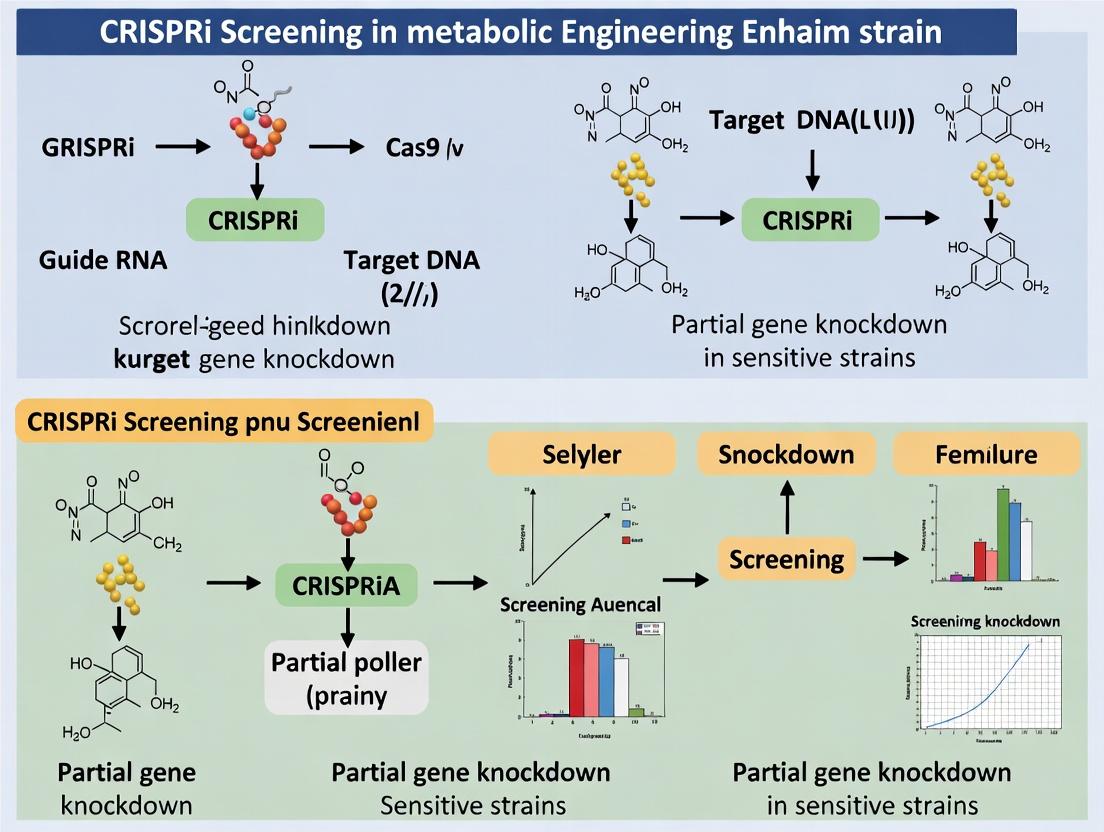
This article provides a comprehensive guide for researchers performing CRISPR interference (CRISPRi) screens for partial gene knockdown, specifically in sensitive or difficult-to-handle cell strains.
Mastering CRISPRi Screening: A Guide to Partial Gene Knockdown in Sensitive Cell Lines
Abstract
This article provides a comprehensive guide for researchers performing CRISPR interference (CRISPRi) screens for partial gene knockdown, specifically in sensitive or difficult-to-handle cell strains. We cover the foundational principles of tunable transcriptional repression, detail optimized protocols for library design and screening in fragile cell types, address common troubleshooting scenarios, and validate CRISPRi against alternative methods like RNAi and CRISPR knockout. Aimed at scientists in functional genomics and drug discovery, this resource consolidates current best practices to ensure robust, interpretable results in essential gene and pathway analysis.
CRISPRi Fundamentals: Why Partial Knockdown is Essential for Sensitive Strain Research
Within the context of a thesis focused on CRISPR interference (CRISPRi) screening for partial gene knockdown in genetically sensitive strains, a precise understanding of the technology's mechanism is paramount. This Application Note delineates the fundamental operational and mechanistic differences between CRISPRi for transcriptional repression and CRISPR-Cas9 for complete gene knockout. This distinction is critical for designing screens where partial loss-of-function is required to bypass lethality and reveal subtle phenotypic vulnerabilities in sensitive backgrounds, such as haploinsufficient cancer cell lines or antibiotic-hypersensitive bacterial strains.
Core Mechanism: Repression vs. Disruption
CRISPR-Cas9 Knockout utilizes the Cas9 endonuclease to create a double-strand break (DSB) at a genomic locus specified by a guide RNA (gRNA). Repair via error-prone non-homologous end joining (NHEJ) often results in small insertions or deletions (indels) that can disrupt the reading frame, leading to a permanent, complete loss of functional protein.
CRISPRi Transcriptional Repression employs a catalytically "dead" Cas9 (dCas9) that lacks endonuclease activity. Fused to a transcriptional repressor domain (e.g., KRAB), dCas9 is guided to a target site, typically within 50-100 bp downstream of the transcription start site (TSS). The dCas9-repressor complex sterically blocks RNA polymerase binding or elongation, leading to a potent but reversible knockdown of transcription without altering the underlying DNA sequence.
The following table summarizes the key characteristics:
Table 1: Comparative Analysis of CRISPR-Cas9 vs. CRISPRi
| Feature | CRISPR-Cas9 Knockout | CRISPRi (dCas9-KRAB) |
|---|---|---|
| Cas9 Form | Wild-type, catalytically active | Catalytically "dead" (dCas9) |
| Primary Action | Creates double-strand DNA breaks | Binds DNA without cleavage |
| Genetic Outcome | Permanent indels, frameshift mutations | Epigenetic, reversible repression |
| Effect on Gene | Complete protein knockout | Transcriptional knockdown (70-95%) |
| Key Fusion Partner | N/A | Transcriptional repressor (e.g., KRAB) |
| Optimal Targeting | Early exons | Promoter or TSS-proximal regions |
| Applications in Sensitive Strains | Often lethal for essential genes | Enables study of essential genes via hypomorphic phenotypes |
| Off-Target Effects Concern | DNA sequence alterations | Transcriptional squelching, binding site occlusion |
Protocol: CRISPRi Knockdown in Human Cell Lines
This protocol details the setup for a CRISPRi knockdown experiment in a sensitive mammalian cell line (e.g., a haploinsufficient cancer line).
A. Materials and Reagent Preparation
- dCas9-KRAB Expression System: Lentiviral vector (e.g., pLV hU6-sgRNA hUbC-dCas9-KRAB-T2a-Puro) or stable cell line.
- gRNA Design & Cloning: Design gRNAs targeting -50 to +300 bp relative to the TSS of your gene of interest. Clone into the appropriate sgRNA expression vector (e.g., pLV-sgRNA).
- Cell Line: Your target sensitive strain (e.g., A549, HAP1).
- Lentiviral Packaging Plasmids: psPAX2 and pMD2.G.
- Cell Culture Reagents: Appropriate medium, polybrene (8 µg/mL), puromycin (for selection), and transfection reagent (e.g., PEI).
B. Experimental Workflow
- gRNA Design & Validation: Use established algorithms (e.g., CRISPRi design from Weissman Lab or Brunello library designs) to pick 3-4 gRNAs per gene. Validate genomic target site accessibility if possible.
- Virus Production: Co-transfect HEK293T cells with the packaging plasmids (psPAX2, pMD2.G) and your dCas9-KRAB or sgRNA lentiviral transfer vectors. Harvest supernatant at 48 and 72 hours.
- Cell Line Engineering:
- Step 1: If not using a stable line, transduce target cells with dCas9-KRAB lentivirus and select with puromycin (e.g., 2 µg/mL for 5-7 days) to create a stable dCas9-expressing pool.
- Step 2: Transduce the dCas9-expressing pool with sgRNA lentivirus. Include a non-targeting control (NTC) sgRNA. Select with appropriate antibiotic (e.g., blasticidin).
- Phenotypic Analysis: After 5-7 days post-selection, assay for phenotypic changes (e.g., proliferation, drug sensitivity, morphology).
- Knockdown Validation: Harvest cells in parallel for RNA extraction and perform qRT-PCR to quantify mRNA knockdown levels.
The Scientist's Toolkit: Essential Reagents
Table 2: Key Research Reagent Solutions for CRISPRi Screening
| Reagent | Function & Rationale |
|---|---|
| dCas9-KRAB Expression Vector | Stable, inducible, or lentiviral vectors provide the foundational repressor machinery. |
| Validated CRISPRi sgRNA Library | Pre-designed libraries (e.g., human CRISPRi v2) targeting promoters ensure high on-target activity. |
| Lentiviral Packaging Mix | Essential for efficient delivery of CRISPRi components into difficult-to-transfect sensitive cell lines. |
| Polybrene | A cationic polymer that enhances viral transduction efficiency by neutralizing charge repulsion. |
| Puromycin/Selection Antibiotics | Critical for selecting and maintaining populations of cells successfully transduced with CRISPRi constructs. |
| qRT-PCR Assay Kits | Gold standard for validating transcript-level knockdown prior to phenotypic screening. |
| Cell Viability/Proliferation Assay Kits | (e.g., CellTiter-Glo) Enable quantitative measurement of growth phenotypes in sensitive strains upon gene knockdown. |
Diagrams: Mechanism and Workflow
Within the framework of CRISPR interference (CRISPRi) screening for partial gene knockdown, the ability to precisely modulate gene expression levels—tunable knockdown—is paramount. This approach is critical for studying essential genes, where complete knockout is lethal, and dosage-sensitive phenotypes, where phenotypic outcomes are directly correlated with transcript or protein abundance. This application note details protocols and solutions for implementing tunable CRISPRi in sensitive genetic backgrounds to unravel complex biological mechanisms and identify therapeutic targets.
The Tunable CRISPRi System: Core Components
Research Reagent Solutions Toolkit
| Reagent / Material | Function in Tunable Knockdown |
|---|---|
| dCas9-KRAB (or dCas9-SID4X) | Catalytically dead Cas9 fused to a transcriptional repressor domain; the primary effector for CRISPRi. |
| Tunable Promoter Systems (e.g., Tet-On/Off, ANVIL, cumate) | Drives expression of the sgRNA or dCas9 effector; allows precise control of component dosage via inducers (doxycycline, cumate). |
| sgRNA Library with Variable Targeting Regions | Libraries designed with sgRNAs targeting different regions (e.g., proximal vs. distal to TSS) to achieve varying knockdown efficiencies. |
| Sensitive Isogenic Cell Strains | Engineered cell lines (e.g., cancer models with specific driver mutations) where gene dosage changes produce measurable, relevant phenotypes. |
| Inducer Molecules (Doxycycline, Cumate, aTc) | Small molecules used to titrate the activity of inducible promoters, enabling fine-tuning of sgRNA or dCas9 expression levels. |
| Flow Cytometry Cell Sorting & NGS Tools | For isolating cell populations based on phenotypic reporters (e.g., GFP) and deep sequencing of sgRNA barcodes for screen deconvolution. |
| Viability & Phenotypic Assay Kits (ATP-based, Apoptosis) | To quantitatively measure consequences of partial knockdown on cell fitness and specific pathways. |
Table 1: Comparison of Tunable Knockdown Methodologies
| Method | Mechanism of Tunability | Typical Knockdown Range | Key Advantage | Primary Limitation |
|---|---|---|---|---|
| Inducible dCas9 Effector | Varying dCas9-repressor protein levels via promoter induction. | 20-95% | Uniform tuning across all targeted genes. | Potential dCas9 toxicity at high levels. |
| Inducible sgRNA | Varying sgRNA transcript levels to alter targeting complex formation. | 30-90% | Enables dynamic, gene-specific tuning during time-course. | sgRNA half-life and stability can vary. |
| sgRNA Target Site Design | Exploiting variable efficiency based on distance to Transcriptional Start Site (TSS). | 50-90% (per design) | Stable, set-and-forget gradients without inducers. | Requires pre-validation of individual sgRNA efficacy. |
| Dual sgRNA Combinatorial | Using two sgRNAs per gene with independent inducible promoters. | 10-99% | Very fine-grained control and potentially wider dynamic range. | Increased library complexity and design challenge. |
Table 2: Phenotypic Outcomes in Sensitive Strains at Different Knockdown Levels (Hypothetical data based on current literature)
| Gene Class (Example) | 20-40% Knockdown Phenotype | 50-70% Knockdown Phenotype | 80-95% Knockdown Phenotype | Assay Used |
|---|---|---|---|---|
| Essential Metabolic Enzyme (DHFR) | Reduced proliferation rate | Cell cycle arrest | Massive cell death >96h | Long-term viability |
| Oncogene (MYC) | Altered metabolic profile | Senescence induction | Acute apoptosis | Caspase-3/7 activation |
| Tumor Suppressor (p53) | Increased genomic instability | Loss of DNA damage response | Synthetic lethality with PARPi | γH2AX foci count |
| Dosage-Sensitive Kinase (MAPK1) | Subtle signaling output change | Altered differentiation | Compensatory pathway activation | Phospho-ERK flow cytometry |
Detailed Experimental Protocols
Protocol 1: Establishing a Tetracycline-Inducible Tunable CRISPRi System in Sensitive Cancer Cell Lines
Objective: To generate a stable cell line for doxycycline-dose-dependent gene knockdown and screen for synthetic sick/lethal interactions.
Materials:
- Sensitive parental cell line (e.g., isogenic BRCA1-/-)
- Lentiviral vectors: pLV-Tet-On-Advanced, pLV-TRE3G-dCas9-KRAB-P2A-BlastR, pLV-U6-sgRNA-EF1a-PuroR
- Packaging plasmids (psPAX2, pMD2.G)
- Polybrene (8 µg/mL), Puromycin (1-5 µg/mL), Blasticidin (5-10 µg/mL)
- Doxycycline hyclate (stock: 1 mg/mL in sterile H₂O)
- 293T cells for virus production
Procedure:
Part A: Stable Cell Line Engineering
- Generate Inducible dCas9 Cell Line: a. Co-transfect 293T cells with pLV-Tet-On-Advanced, psPAX2, and pMD2.G using standard calcium phosphate or PEI protocols. b. Harvest lentivirus at 48h and 72h post-transfection, concentrate via PEG-it. c. Transduce target sensitive cells with virus + 8 µg/mL polybrene. Spinfect at 1000 x g for 1h at 32°C. d. Select with appropriate antibiotic (e.g., G418) for 7 days. e. Repeat process to transduce selected cells with pLV-TRE3G-dCas9-KRAB-BlastR virus. f. Select with blasticidin for 5-7 days. Test induction by treating cells with 1 µg/mL doxycycline for 48h and performing Western blot for dCas9.
- Validate Tunable Knockdown: a. Transduce the dCas9-expressing line with a constitutive sgRNA targeting a known essential gene (e.g., PLK1) and a fluorescent reporter (GFP). b. Seed cells in a 12-well plate. Treat with a doxycycline gradient (0, 0.1, 0.5, 1.0, 2.0 µg/mL) for 5 days. c. Harvest cells daily for: i) RT-qPCR of target gene, ii) Flow cytometry for GFP (if linked to viability), iii) CellTiter-Glo viability assay. d. Plot doxycycline concentration vs. mRNA level and viability to establish tuning curve.
Part B: Pooled Screening with Tunable Knockdown
- Library Transduction: a. Use a validated sgRNA library (e.g., containing 5 sgRNAs/gene targeting essential and non-essential genes). b. Transduce the inducible dCas9 cell line at a low MOI (0.3) to ensure single integration, with 8 µg/mL polybrene. c. Select transduced cells with puromycin for 5-7 days. Ensure >500x representation per sgRNA.
Induction and Phenotypic Selection: a. Split cells into two treatment arms: i) Mild Knockdown: 0.1 µg/mL doxycycline, ii) Strong Knockdown: 1.0 µg/mL doxycycline. Maintain an uninduced (0 µg/mL) control. b. Passage cells for 14-21 population doublings, maintaining representation and doxycycline concentration. c. Harvest genomic DNA from initial (T0) and final (T14/21) timepoints using a Qiagen Maxi Prep kit.
Next-Generation Sequencing and Analysis: a. Amplify integrated sgRNA sequences via PCR with indexing primers for multiplexing. b. Sequence on an Illumina NextSeq (75bp single-end). c. Align reads to the sgRNA library reference. Count reads per sgRNA per sample. d. Using MAGeCK or similar, calculate beta scores and p-values to identify sgRNAs depleted/enriched under mild vs. strong knockdown conditions. Genes where sgRNAs show differential depletion between conditions are strong candidates for dosage-sensitive interactions.
Protocol 2: Validating Dosage-Sensitive Hits via Single sgRNA and Phenotypic Deep Dive
Objective: To confirm hits from the pooled screen and characterize the precise phenotype-knockdown relationship.
Procedure:
- Clone Individual sgRNAs: Clone top 5 candidate sgRNAs for 2-3 hit genes into the inducible sgRNA vector backbone.
- Generate Monoclonal Cell Lines: Transduce the inducible dCas9 cell line with each individual sgRNA virus, select with puromycin, and single-cell sort into 96-well plates.
- Dose-Response Phenotyping:
a. For each monoclonal line, seed cells into a 384-well plate.
b. Treat with an 8-point, 2-fold serial dilution of doxycycline (0 - 2 µg/mL) in triplicate.
c. After 5-7 days, assay with:
- Viability: CellTiter-Glo 2.0.
- Apoptosis: Caspase-Glo 3/7.
- Cell Cycle: EdU incorporation assay via flow cytometry.
- Pathway-Specific Readout: e.g., Phospho-kinase array or immunofluorescence for DNA damage (53BP1 foci).
- Data Analysis: Fit dose-response curves (mRNA vs. doxycycline, phenotype vs. mRNA) to calculate IC50 and establish the phenotypic threshold for knockdown.
Visualizations
Diagram Title: Tunable CRISPRi Screening Workflow
Diagram Title: Phenotypic Outcomes vs. Knockdown Level
A primary challenge in functional genomics and drug development is identifying cellular contexts where gene function is critically balanced—termed 'sensitive strains.' These are systems where a partial loss of gene function (e.g., via CRISPR interference/CRISPRi for knockdown) produces a pronounced phenotypic outcome, revealing essential genetic buffers or therapeutic vulnerabilities. This Application Note details protocols for utilizing CRISPRi screening in three sensitive model systems: primary cells, terminally differentiated cells, and engineered cell lines with finely-tuned pathway activity. The focus is on identifying genes whose partial knockdown leads to significant phenotypic shifts, offering insights for target discovery in complex diseases.
Key Sensitive Model Systems & Quantitative Comparisons
Table 1: Characteristics of Sensitive Model Systems for CRISPRi Screening
| Model System | Key Sensitive Features | Optimal CRISPRi System | Typical Knockdown Efficiency (Range) | Common Phenotypic Readouts | Key Advantages | Major Challenges |
|---|---|---|---|---|---|---|
| Primary Cells | Native physiology, genetic diversity, limited compensatory mechanisms. | dCas9-KRAB (lentiviral, low MOI); Inducible systems. | 60-80% (varies by cell type & guide) | Cell viability, cytokine secretion, migration, morphological changes. | High clinical relevance, patient-specific responses. | Finite lifespan, difficult transduction, donor variability. |
| Differentiated Cells | Stable post-mitotic state, specialized function, high metabolic demand. | dCas9-KRAB delivered pre-differentiation; AAV for post-differentiation. | 70-85% in progenitor state. | Functional output (e.g., contraction, neurotransmission), survival, marker expression. | Models mature tissue function. | Complexity of differentiation protocol, potential screening timeline elongation. |
| Finely-Balanced Engineered Lines | Engineered pathway activation/suppression (e.g., oncogene addiction, synthetic lethality). | Stable dCas9-KRAB expression under tight regulation. | 75-90% (highly consistent) | Pathway reporter activity (e.g., luminescence), proliferation arrest, synthetic lethal interactions. | High signal-to-noise, defined genetic context. | May oversimplify biology, requires careful engineering. |
Table 2: Example Screening Outcomes from Recent Studies (2023-2024)
| Study Focus | Model System | Sensitive Strain Identified | Gene(s) Targeted | Partial Knockdown Impact (vs. Control) | Key Reagent Used |
|---|---|---|---|---|---|
| Neuronal Resilience | iPSC-derived Neurons | Neurons under oxidative stress | PARKIN | 70% knockdown increased cell death by 40% | CRISPRi v2 lentiviral library |
| Immune Activation | Primary Human T-cells | Activated CD8+ T-cells | TOX | 60% knockdown reduced cytokine production by 55% | dCas9-KRAB-MeCP2 (enhanced repression) |
| Oncogene Addiction | Engineered RAS-pathway line | Line with mutant KRASG12C | BCL-xL | 50% knockdown induced apoptosis in 80% of cells | Dox-inducible dCas9-KRAB system |
Core Experimental Protocols
Protocol 3.1: CRISPRi Knockdown Screening in Primary Human T-Cells
Objective: To identify genes essential for T-cell activation using a partial knockdown screen. Materials: See "Scientist's Toolkit" below.
Procedure:
- dCas9-KRAB Expression: Isolate primary CD8+ T-cells from healthy donor PBMCs using a negative selection kit. Activate cells with CD3/CD28 beads for 48 hours.
- Lentiviral Transduction: Transduce activated T-cells with lentivirus expressing a constitutive dCas9-KRAB-MeCP2 fusion protein at a low MOI (<5) to ensure single-copy integration. Include puromycin selection (1 µg/mL) for 7 days post-transduction.
- sgRNA Library Delivery: Transduce the dCas9-expressing polyclonal population with a pooled, cloned CRISPRi sgRNA library (e.g., Horlbeck et al. design) targeting immune-related genes and non-targeting controls. Use a high MOI (>3) to ensure >500x coverage of the library. Spinfect at 1000g for 90 minutes at 32°C with 8 µg/mL polybrene.
- Selection & Expansion: After 48 hours, select transduced cells with blasticidin (10 µg/mL) for 5 days. Expand cells in IL-2 (50 U/mL) containing media.
- Phenotypic Challenge: Split cells into two arms: "Resting" (IL-2 only) and "Activated" (re-stimulated with CD3/CD28 beads + IL-2). Maintain cultures for 7-10 days.
- Genomic DNA Extraction & Sequencing: Harvest a minimum of 500 cells per sgRNA at Day 0 (baseline) and from each condition at endpoint. Extract gDNA (Qiagen Maxi Prep). Amplify integrated sgRNA sequences via PCR using indexed primers for NGS. Sequence on an Illumina NextSeq 500/550 platform.
- Data Analysis: Align reads to the sgRNA library reference. Use MAGeCK or PinAPL-Py to compare sgRNA abundance between endpoint and baseline, and between activated vs. resting conditions. Genes with significantly depleted sgRNAs (FDR < 0.1) in the activated condition are candidate 'sensitive strains'.
Protocol 3.2: Differentiation-Coupled Screening in iPSC-Derived Cardiomyocytes
Objective: To find genes critical for mature cardiomyocyte function through knockdown initiated in progenitor states. Materials: See "Scientist's Toolkit."
Procedure:
- Engineered iPSC Line Generation: Using an iPSC line with a constitutively expressed, but Dox-inducible, dCas9-KRAB, select a clonal line with robust and uniform dCas9 expression upon Dox addition (verified by immunoblot).
- Library Transduction & Progenitor State: Dissociate iPSCs and transduce with the sgRNA library as in Protocol 3.1, Step 3. Select with blasticidin. Maintain cells without Dox to keep dCas9 inactive.
- Directed Differentiation: Initiate differentiation of the pooled, transduced iPSCs into cardiomyocytes using a small molecule-based protocol modulating Wnt signaling. Culture for 15 days until >80% of cells are cTnT+.
- Induction of Knockdown & Phenotyping: At day 15 of differentiation, add Doxycycline (1 µg/mL) to induce dCas9-KRAB and initiate gene knockdown. Maintain for 14 days.
- Functional & Molecular Readout: Measure beating kinetics (video analysis) and ATP production at days 0, 7, and 14 post-induction. In parallel, harvest cells for NGS (as in Protocol 3.1, Step 6) and single-cell RNA-seq to correlate knockdown with transcriptional state.
- Analysis: Correlate sgRNA depletion with functional decline. Genes whose partial knockdown disproportionately reduces beating rate or ATP output are designated as sensitive in the differentiated state.
Visualizations
Title: CRISPRi Screening Workflow for Sensitive Strains
Title: Genetic Buffer Collapse in a Sensitive Strain
The Scientist's Toolkit: Research Reagent Solutions
Table 3: Essential Materials for CRISPRi Sensitive Strain Screening
| Reagent / Solution | Function & Role in Protocol | Example Product / Catalog Number (2024) |
|---|---|---|
| Inducible dCas9-KRAB iPSC Line | Provides a uniform, controllable repression system; foundational for differentiation-coupled screens. | Thermo Fisher Scientific A41139 (WT AAVS1 Safe Harbor hiPSC line with TRE3G-dCas9-KRAB). |
| Enhanced KRAB Repression Domain | Increases knockdown efficiency, crucial for partial knockdown phenotypes in tough-to-transfect cells. | dCas9-KRAB-MeCP2 (Plasmid #110821, Addgene). |
| Pooled CRISPRi sgRNA Library | Targets thousands of genes with multiple guides per gene for robust statistical identification of hits. | Human CRISPRi v2 library (3 sgRNAs/gene, ~17k genes, Addgene #83979). |
| Lentiviral Packaging Mix (3rd Gen) | Produces high-titer, replication-incompetent lentivirus for sgRNA library delivery. | MISSION Lentiviral Packaging Mix (Sigma, SLP3). |
| Magnetic Cell Separation Beads | Isolates primary cell populations (e.g., CD8+ T-cells) with high purity and viability for screening. | Miltenyi Biotec CD8+ T Cell Isolation Kit, human (130-096-495). |
| T-cell Activation Beads | Provides consistent, strong activation signal for primary T-cell screening challenges. | Gibco Dynabeads Human T-Activator CD3/CD28 (11452D). |
| Next-Gen Sequencing Kit for sgRNAs | Amplifies and indexes sgRNA sequences from genomic DNA for deep sequencing. | NEBNext Ultra II Q5 Master Mix & Unique Dual Indexing Primers. |
| Pathway-Specific Reporter Cell Line | Engineered line with luciferase readout for a finely-balanced pathway (e.g., HIF, Wnt, RAS). | Cignal Reporter Assay Kits (Qiagen, e.g., Lenti HIF Reporter). |
| Bioinformatics Analysis Suite | Statistical tool for identifying enriched/depleted sgRNAs and gene-level hits from NGS data. | MAGeCK (Model-based Analysis of Genome-wide CRISPR/Cas9 Knockout) or PinAPL-Py. |
Application Notes
Within the context of a thesis focused on CRISPRi screening for partial gene knockdown in sensitive microbial or mammalian cell strains, the advantages of CRISPR interference (CRISPRi) over RNA interference (RNAi) are critical. Sensitive strains, such as those with compromised DNA repair pathways or specific vulnerabilities, require perturbation tools with maximal precision to avoid confounding phenotypic readouts.
Specificity: CRISPRi utilizes a catalytically dead Cas9 (dCas9) fused to a transcriptional repressor domain (e.g., KRAB) to bind specific DNA sequences via a programmable guide RNA (sgRNA), blocking transcription initiation or elongation. Its specificity is derived from the 20-base pair DNA-RNA hybridization and the requirement for a protospacer adjacent motif (PAM). In contrast, RNAi acts post-transcriptionally via short interfering RNAs (siRNAs) or short hairpin RNAs (shRNAs) that can have partial complementarity to multiple mRNAs, leading to unintended miRNA-like off-target silencing.
Minimal Off-Target Effects: Recent comparative studies in mammalian cells show CRISPRi exhibits significantly fewer off-target transcriptional changes. Quantitative analyses from RNA-seq data indicate that while RNAi controls often produce hundreds of differentially expressed genes unrelated to the target, CRISPRi perturbations result in a cleaner profile.
Reproducibility: CRISPRi offers more consistent knockdown levels across biological replicates due to stable genomic integration of the dCas9 and sgRNA components. RNAi is prone to variability from transient transfection efficiencies and competitive saturation of the endogenous RNAi machinery.
Table 1: Quantitative Comparison of CRISPRi vs. RNAi in Sensitive Cell Lines
| Parameter | CRISPRi (dCas9-KRAB) | RNAi (shRNA) | Measurement Method |
|---|---|---|---|
| Median On-Target Knockdown Efficiency | 80-95% | 70-90% | RT-qPCR |
| Typical Number of Off-Target Genes (>2-fold change) | 5-15 | 50-500 | RNA-seq |
| Inter-Replicate Correlation (Pearson's r) | 0.95-0.99 | 0.7-0.85 | Phenotypic Screen Readout |
| Duration of Knockdown (in proliferating cells) | Stable (weeks) | Transient (days) | Fluorescence Reporter Assay |
Key Protocols
Protocol 1: CRISPRi Knockdown in Sensitive Mammalian Cell Lines
Objective: To achieve specific, partial knockdown of a target gene in a sensitive strain (e.g., p53-/- or DNA repair-deficient cells) for a fitness-based screen.
- Cell Line Preparation: Stably integrate a doxycycline-inducible dCas9-KRAB expression construct into your sensitive cell line using lentiviral transduction and antibiotic selection.
- sgRNA Library Design & Cloning: Design sgRNAs targeting the promoter region (-50 to +300 bp relative to TSS). Use a publicly available algorithm (e.g., CRISPick) and filter for minimal predicted off-targets. Clone pooled sgRNAs into a lentiviral vector with a Puromycin resistance marker.
- Viral Production & Transduction: Produce lentivirus in HEK293T cells. Transduce the dCas9-KRAB cell line at a low MOI (<0.3) to ensure single sgRNA integration. Select with Puromycin (1-2 µg/mL) for 72 hours.
- Gene Knockdown Induction: Add doxycycline (e.g., 1 µg/mL) to induce dCas9-KRAB and sgRNA expression. Incubate for 5-7 days.
- Phenotypic Analysis & Validation: Harvest cells for viability assays (e.g., CellTiter-Glo) or other relevant screens. Validate knockdown efficiency for hits via RT-qPCR and assess off-targets via RNA-seq on pooled samples.
Protocol 2: Off-Target Effect Assessment via RNA-seq
Objective: To empirically quantify off-target transcriptional changes induced by CRISPRi vs. RNAi.
- Sample Preparation: Generate triplicate samples for: a) Non-targeting control sgRNA, b) On-target sgRNA, c) Non-targeting shRNA control, d) On-target shRNA.
- RNA Extraction & Sequencing: After 7 days of induction/transfection, extract total RNA. Prepare stranded mRNA libraries and sequence on an Illumina platform to a depth of ~30 million reads per sample.
- Bioinformatic Analysis: Map reads to the reference genome. Perform differential gene expression analysis (e.g., DESeq2) comparing each on-target sample to its respective control.
- Quantification: Count genes with significant differential expression (p-adj < 0.05, |log2FC| > 1) that are not the intended target. Compile into a table as in Table 1.
The Scientist's Toolkit: Key Research Reagent Solutions
| Item | Function in CRISPRi Screening |
|---|---|
| Inducible dCas9-KRAB Lentiviral Vector | Enables tightly controlled expression of the repressor machinery to minimize fitness costs in sensitive cells. |
| Pooled sgRNA Library | Allows for high-throughput, parallel screening of hundreds to thousands of gene targets in a single experiment. |
| Next-Generation Sequencing (NGS) Reagents | Essential for quantifying sgRNA abundance pre- and post-screen (deep sequencing) and for off-target profiling (RNA-seq). |
| Cell Viability Assay (e.g., CellTiter-Glo) | A luminescent ATP quantitation assay used as a primary readout for fitness/proliferation screens in sensitive strains. |
| CRISPRi-Optimized sgRNA Design Tool | Software (e.g., CRISPick) that selects sgRNAs with high on-target efficiency and minimal predicted off-targets in the genome. |
Visualizations
Title: CRISPRi Screening Workflow for Sensitive Strains
Title: Specificity Comparison: CRISPRi vs RNAi Mechanism
Application Notes
CRISPR interference (CRISPRi) screening enables precise, tunable partial gene knockdown, making it an indispensable tool for functional genomics in sensitive strain research. Within a thesis focused on CRISPRi for partial knockdown, three key applications emerge as pivotal for therapeutic discovery and systems biology.
1. Synthetic Lethality Screens: In sensitive genetic backgrounds (e.g., cancer cell lines with specific oncogenic mutations), CRISPRi screens identify non-essential genes whose partial inhibition becomes lethal only in that context. This enables the discovery of precision drug targets that spare healthy tissue. Partial knockdown via CRISPRi more closely mimics pharmacological inhibition than complete knockout, yielding more therapeutically relevant hits.
2. Pathway Modulation: Tunable dCas9 repression allows for the systematic titration of gene expression levels within signaling pathways. This facilitates the study of dose-dependent effects, pathway resilience, and compensatory mechanisms in sensitive strains, such as those with pre-existing metabolic or signaling vulnerabilities.
3. Target Identification & Validation: CRISPRi screens in disease-relevant sensitive models (e.g., drug-resistant lines, patient-derived cells) can pinpoint genes whose modulation reverses the disease phenotype. The reversible nature of CRISPRi allows for concurrent validation studies in the same cell population.
Recent Data Insights (2023-2024): A summary of key quantitative findings from recent studies is presented below.
Table 1: Quantitative Outcomes from Recent CRISPRi Screening Studies
| Study Focus | Sensitive Strain/Context | Genes Screened | Primary Hit Rate | Validation Rate | Key Metric |
|---|---|---|---|---|---|
| PARP Inhibitor SL | BRCA1-/- Ovarian Cancer | ~18,000 | 0.4% (72 genes) | 85% (12/14 tested) | Fold Change >2, p<0.001 |
| EGFRi Resistance | NSCLC, TKI-Resistant | ~20,000 | 0.25% (50 genes) | 80% | Essentiality Score < -0.5 |
| Metabolic Pathway | AMPKα1-/- Hepatocytes | ~5,000 | 1.1% (55 genes) | 90% | Sensitizer Score > 3.0 |
Experimental Protocols
Protocol 1: CRISPRi Pooled Library Screen for Synthetic Lethality
Objective: Identify genes whose partial knockdown is synthetically lethal with a specific driver mutation.
Materials: CRISPRi sgRNA library (e.g., Calabrese et al., Nat Methods, 2023), polybrene (8 µg/mL), puromycin (1-2 µg/mL), genomic DNA extraction kit, PCR reagents, NGS sequencing platform.
Workflow:
- Cell Line Engineering: Generate isogenic pairs of sensitive (e.g., with mutation) and control cell lines by stably expressing dCas9-KRAB (using lentivirus).
- Library Transduction: Transduce cells with the pooled sgRNA library at a low MOI (~0.3) to ensure single integration. Include a representation of >500 cells per sgRNA.
- Selection: Treat with puromycin for 5-7 days to select transduced cells.
- Screen Passage: Culture cells for 14-21 population doublings. Maintain sufficient cell numbers (>1000x library coverage) at each passage to prevent sgRNA dropouts due to bottlenecking.
- Harvest & Sequencing: Collect genomic DNA from initial (T0) and final (Tend) cell pellets. Amplify integrated sgRNA cassettes via PCR and prepare for NGS.
- Analysis: Map sequencing reads to the library. Calculate sgRNA depletion/enrichment using MAGeCK or PinAPL-Py. Genes with significantly depleted sgRNAs (FDR < 5%) are candidate synthetic lethal hits.
Protocol 2: Pathway Modulation via Titrated CRISPRi
Objective: Assess dose-dependent phenotypic effects of modulating a pathway component.
Materials: Inducible dCas9-KRAB cell line, doxycycline, flow cytometry reagents.
Workflow:
- sgRNA Cloning: Clone 3-5 sgRNAs targeting your gene of interest into a single-guide vector.
- Stable Line Generation: Transduce sgRNAs into the inducible dCas9-KRAB cell line and select.
- Titration: Treat cells with a doxycycline gradient (e.g., 0, 10, 50, 200, 1000 ng/mL) for 7 days to titrate dCas9 expression and knockdown level.
- Phenotypic Analysis: At each point, harvest cells for:
- qRT-PCR/Western Blot: Quantify mRNA/protein knockdown.
- Phenotypic Assay: e.g., CellTiter-Glo for viability, Incucyte for proliferation, phospho-flow cytometry for pathway activity.
- Data Modeling: Plot phenotype against knockdown level (e.g., % mRNA remaining) to model the dose-response relationship.
Visualizations
Title: CRISPRi Synthetic Lethality Screen Workflow
Title: Pathway Modulation via Titrated CRISPRi Knockdown
The Scientist's Toolkit
Table 2: Key Research Reagent Solutions for CRISPRi Screening
| Item | Function & Rationale |
|---|---|
| dCas9-KRAB Expression Vector | Catalytically dead Cas9 fused to the KRAB transcriptional repression domain. Enables programmable gene knockdown without DNA cleavage. |
| Genome-Wide CRISPRi sgRNA Library | Pooled library of sgRNAs designed for transcriptional repression, typically targeting transcriptional start sites. Essential for large-scale screens. |
| Lipofectamine CRISPRMAX | A lipid-based transfection reagent optimized for high-efficiency delivery of CRISPR ribonucleoprotein (RNP) complexes into sensitive cell lines. |
| Polybrene (Hexadimethrine Bromide) | A cationic polymer used to enhance viral transduction efficiency by neutralizing charge repulsion between virions and the cell membrane. |
| Puromycin Dihydrochloride | An aminonucleoside antibiotic that inhibits protein synthesis. Used for stable selection of cells expressing a puromycin resistance gene from the lentiviral construct. |
| CellTiter-Glo 3D | A luminescent ATP assay optimized for 3D cultures (e.g., spheroids). Critical for measuring viability in more physiologically relevant models post-screen. |
| Nextera XT DNA Library Prep Kit | Enables rapid, PCR-based preparation of multiplexed sequencing libraries from amplified sgRNA templates for Illumina NGS. |
| MAGeCK (Model-based Analysis of Genome-wide CRISPR-Cas9 Knockout) | A computational tool adapted for CRISPRi to robustly identify positively and negatively selected sgRNAs/genes from screen data. |
Step-by-Step Protocol: Designing and Executing a CRISPRi Screen in Fragile Cell Models
Application Notes
Within CRISPRi screening for partial gene knockdown in sensitive strains, the choice of repressor domain fused to catalytically dead Cas9 (dCas9) is critical. Sensitive strains, such as those with compromised DNA repair or essential gene vulnerabilities, require finely-tuned repression to avoid synthetic lethality or confounding cellular stress, enabling the study of dose-dependent phenotypes. This document compares two prominent systems: the canonical dCas9-KRAB and the engineered dCas9-SID4x.
Quantitative Comparison of dCas9 Repressor Systems
| Feature | dCas9-KRAB (Krüppel-Associated Box) | dCas9-SID4x (Engineered SID4 Domain) | Implication for Sensitive Strain Screening |
|---|---|---|---|
| Repression Mechanism | Recruits endogenous heterochromatin-forming complexes (e.g., KAP1, SETDB1, HP1) via KAP1 interaction. | Recruits exogenous, engineered chromatin remodelers (mSin3 interaction domain) with higher avidity. | SID4x may bypass strain-specific epigenetic regulator deficiencies. |
| Typical Repression Efficiency | 50-85% knockdown (highly gene/locus dependent). | 70-95% knockdown; often more potent. | SID4x's higher potency risks synthetic lethality; KRAB may be better for partial knockdown. |
| Transcriptional Noise/Off-target | Low to moderate; native interaction. | Potentially higher due to strong, artificial recruitment. | Increased noise can obscure subtle phenotypes in sensitive backgrounds. |
| Size (Domain Only) | ~45 amino acids. | ~110 amino acids (4x SID). | Minor impact on viral packaging and delivery. |
| Established Protocols | Extensive, many validated sgRNA libraries available. | Growing, but fewer standardized resources. | KRAB offers lower barrier to entry and more comparable literature. |
| Best Use Case | Robust, standard partial knockdown; large-scale screens where consistency is key. | Maximal repression for hard-to-silence genes; when KRAB is insufficient. | KRAB is generally preferred for partial knockdown in sensitive strains to avoid excessive lethality. |
Key Signaling Pathways in CRISPRi Repression
Protocol: Side-by-Side Validation for Sensitive Strain Screening
Objective: To empirically compare dCas9-KRAB and dCas9-SID4x repression efficiency and fitness impact in a target sensitive cell line.
I. Materials and Reagent Setup
- Cell Line: Your sensitive strain (e.g., isogenic DNA repair-deficient line).
- Vectors:
- pLV-dCas9-KRAB-P2A-BlastR
- pLV-dCas9-SID4x-P2A-BlastR
- pLV-U6-sgRNA(EF1a-PuroR) - containing sgRNAs targeting a validated essential gene and a non-targeting control.
- Reagents: Polybrene (8 µg/mL), Puromycin (dose-titered), Blasticidin (dose-titered), qPCR reagents, viability assay (e.g., CellTiter-Glo).
II. Stable Cell Line Generation
- Transduce sensitive cells separately with dCas9-KRAB or dCas9-SID4x lentivirus.
- Select with appropriate blasticidin concentration for 7-10 days to generate polyclonal dCas9-expressing pools.
- Validate dCas9 expression by western blot (anti-FLAG or anti-Cas9 antibody).
III. Knockdown Validation & Fitness Assessment
- Infect each dCas9 pool with sgRNA viruses (essential gene target vs. non-targeting control) in biological triplicate.
- Select with puromycin for 5 days.
- Harvest Cells at Day 5 Post-Selection:
- Aliquot 1 (RNA): Extract total RNA, synthesize cDNA, perform qPCR to measure target gene mRNA knockdown. Calculate % repression relative to non-targeting control.
- Aliquot 2 (Phenotype): Seed equal cell numbers. Measure viability at 24, 48, and 72 hours using a CellTiter-Glo assay. Normalize to non-targeting control.
IV. Data Analysis
- Plot % mRNA remaining vs. normalized viability.
- The ideal system for partial knockdown shows intermediate repression (e.g., 60-80%) with a measurable but non-lethal fitness defect in the sensitive strain.
Experimental Workflow for System Validation
The Scientist's Toolkit: Key Research Reagent Solutions
| Reagent / Material | Function & Rationale |
|---|---|
| pLV dCas9-KRAB-P2A-BlastR | All-in-one lentiviral vector for stable expression of the standard CRISPRi repressor. Blasticidin resistance enables selection in sensitive strains where puromycin may be harsh. |
| pLV dCas9-SID4x-P2A-BlastR | Vector for the potent, engineered repressor. Direct comparison with KRAB is essential to avoid excessive knockdown. |
| Validated sgRNA Lentiviral Library | Pre-designed, sequence-verified sgRNAs targeting essential and control genes. Critical for reproducible knockdown levels. |
| Titer-Matched Lentivirus Preps | Using viruses with matched MOI ensures comparison is based on repressor domain, not transduction efficiency. |
| CellTiter-Glo 3D/2.0 Assay | Luminescent ATP-based viability readout. Highly sensitive for detecting subtle fitness defects in low-proliferation sensitive strains. |
| Polybrene (Hexadimethrine Bromide) | Enhances lentiviral transduction efficiency, crucial for achieving high knockdown penetrance in hard-to-transduce primary or sensitive cells. |
| Dose-Titered Selective Antibiotics | Must be pre-titered on the sensitive strain to find the minimum effective dose, minimizing background stress for cleaner screens. |
| dCas9 Validation Antibody (Anti-FLAG) | Confirm equal expression levels of different dCas9 fusion proteins across cell pools before screening. |
Within the broader thesis on CRISPR interference (CRISPRi) screening for partial gene knockdown in sensitive cell strains, a critical technical challenge is achieving predictable, graded transcriptional repression rather than complete knockout. This is essential for modeling haploinsufficiency, studying dosage-sensitive genes in disease, and identifying vulnerabilities in drug development. A key variable is the choice of genomic target: proximal promoters versus distal enhancers. This application note details the design principles, protocols, and reagent solutions for constructing and deploying sgRNA libraries optimized for graded repression by systematically comparing these targeting strategies.
Key Design Principles and Quantitative Comparison
Effective graded repression requires sgRNAs targeting specific functional regions within promoters and enhancers. Data from recent studies (2023-2024) indicate significant differences in outcomes based on target location.
Table 1: Performance Characteristics of sgRNA Libraries Targeting Promoters vs. Enhancers for Graded Repression
| Feature | Targeting Promoters (TSS-proximal) | Targeting Enhancers (Distal CREs) |
|---|---|---|
| Optimal sgRNA Position | -50 to +300 bp relative to TSS; strongest repression at -50 to 0 bp. | Within central region of enhancer, as predicted by chromatin accessibility (ATAC-seq) and H3K27ac marks. |
| Typical Repression Range | 60-95% knockdown; steep dose-response near TSS. | 20-70% knockdown; more tunable, gradual dose-response. |
| Predictability of Efficacy | High correlation with proximity to TSS. | Moderate; depends on accurate enhancer-gene linkage (e.g., via Hi-C). |
| Specificity Risk | Higher risk of off-target gene perturbation if in bidirectional promoter. | Risk of perturbing multiple genes linked to the same enhancer. |
| Library Design Complexity | Lower; defined, short target regions. | Higher; requires prior functional genomic mapping. |
| Best Application | Strong, reliable repression of specific gene. | Fine-tuning expression; studying genes with ultra-sensitive promoters. |
Table 2: Comparative Screening Outcomes in Sensitive Strains (Hypothetical Data Model)
| Metric | Promoter-Targeting Library | Enhancer-Targeting Library |
|---|---|---|
| Hit Rate (FDR < 0.1) | 2.5% (enriched for essential genes) | 1.8% (enriched for regulatory vulnerabilities) |
| Range of Phenotypic Severity | Bimodal (severe vs. neutral) | Continuous, graded distribution |
| Identification of Dosage-Sensitive Loci | Excellent for strong haploinsufficiency. | Superior for partial dosage sensitivity and buffering pathways. |
| False Negative Rate for Mild Effects | Higher (~15-20%) | Lower (~5-10%) |
Experimental Protocols
Protocol 1: Design of a Dual-Target sgRNA Library
Objective: To construct a pooled library containing sgRNAs targeting both promoter regions and enhancer regions for comparative screening.
Materials: See "Scientist's Toolkit" below. Procedure:
- Gene List Curation: Define your gene set of interest (e.g., all kinases, disease-associated genes).
- Target Region Definition:
- Promoters: For each gene, extract genomic coordinates from -300 bp to +50 bp relative to the annotated transcription start site (TSS).
- Enhancers: Use existing cell-type-specific datasets (e.g., H3K27ac ChIP-seq, ATAC-seq, Hi-C). For each gene, assign predicted enhancers within a 1 Mb window of the TSS. Prioritize enhancers with high chromatin accessibility and high contact frequency.
- sgRNA Design & Filtering:
- Use design software (e.g., CRISPRi-v3 ruleset). For promoters, design 5-10 sgRNAs per gene within the defined window.
- For enhancers, design 3-5 sgRNAs per enhancer region.
- Filter all sgRNAs for off-target potential (max. 3 mismatches) using a reference genome.
- Include non-targeting control sgRNAs (≥ 500 sequences) and positive control sgRNAs targeting essential gene promoters.
- Library Synthesis: Order the pooled oligonucleotide library as a 190-nt oligo pool (includes sgRNA scaffold and priming sites). Clone into a lentiviral CRISPRi vector (e.g., pLV hU6-sgRNA hEF1a-Puro-dCas9-KRAB) via BsmBI Golden Gate assembly. Verify library complexity by NGS.
Protocol 2: Screening for Graded Phenotypes in Sensitive Strains
Objective: To perform a pooled CRISPRi screen in a dosage-sensitive cell line (e.g., aneuploid cancer line, haploinsufficient model) and analyze differential outcomes.
Procedure:
- Cell Line Engineering: Stably transduce your sensitive cell line with dCas9-KRAB (or dCas9-KRAB-MeCP2 for enhanced repression). Select with blasticidin and validate repression via a control sgRNA.
- Library Transduction & Selection: Transduce the engineered cell line with the sgRNA lentiviral library at a low MOI (0.3-0.4) to ensure single integration. Maintain ≥500 cells per sgRNA representation. Select with puromycin for 5-7 days.
- Phenotype Propagation: Passage cells for 14-21 population doublings. For a dropout screen, maintain representation by collecting ≥500 cells per sgRNA at each passage.
- Genomic DNA Extraction & NGS: Harvest cells at baseline (Day 3 post-selection) and endpoint. Extract gDNA. Amplify integrated sgRNA sequences via a two-step PCR using barcoded primers for multiplexing. Sequence on an Illumina platform.
- Analysis for Graded Effects:
- Align sequences to the reference library. Count sgRNA reads.
- Normalize counts using median-of-ratios. Calculate fold-changes (endpoint/baseline).
- Use robust statistical models (e.g., MAGeCK-RRA, or bespoke beta-binomial regression) that account for continuous, rather than binary, phenotype scores to identify significantly depleted or enriched sgRNAs.
- Compare the distribution of phenotype strengths (log2 fold-change) between promoter-targeting and enhancer-targeting sgRNAs for the same gene set.
Visualizations
Title: sgRNA Library Design and Construction Workflow
Title: Pooled Screening Protocol for Graded Repression
Title: Target Location Dictates Repression Degree & Phenotype
The Scientist's Toolkit
Table 3: Essential Research Reagent Solutions
| Reagent/Material | Function & Rationale |
|---|---|
| dCas9-KRAB-MeCP2 Fusion Plasmid | Enhanced, consistent transcriptional repressor for stronger and more predictable silencing, especially at enhancers. |
| Lentiviral sgRNA Backbone (e.g., pLV-sgRNA) | Contains a high-expression U6 promoter and puromycin resistance for stable selection. Must have BsmBI cloning sites. |
| Pooled sgRNA Oligo Library | Custom-synthesized oligonucleotide pool containing all designed sgRNA sequences, ready for cloning. |
| Cell-Type-Specific Epigenomic Data | H3K27ac ChIP-seq, ATAC-seq, and Hi-C data are critical for accurate enhancer prediction and linkage. |
| Sensitive Cell Line Model | Aneuploid, haploinsufficient, or oncogene-addicted cell line where partial knockdown yields a measurable phenotype. |
| Next-Generation Sequencing Kit | For high-throughput sequencing of sgRNA barcodes from genomic DNA of screen samples. |
| Analysis Software (MAGeCK, PinAPL-Py) | Specialized tools for statistically analyzing dropout screens, with some capable of handling continuous scores. |
Within a CRISPRi (CRISPR interference) screening pipeline for partial gene knockdown in sensitive cell strains (e.g., primary cells, stem cells, or differentiated neurons), the delivery of CRISPR machinery is a critical bottleneck. Lentiviral vectors are a preferred delivery method due to their ability to transduce dividing and non-dividing cells and provide stable integration. However, excessive viral load can induce cellular stress, apoptosis, and offtarget effects, which is particularly detrimental in sensitive systems where maintaining viability and native physiology is paramount for meaningful screening data. This application note details protocols for accurately determining lentiviral titer, measuring transduction efficiency, and calculating the optimal Multiplicity of Infection (MOI) to achieve effective gene knockdown while preserving cell health in sensitive strain research.
Lentiviral Titer Determination (Functional TU/mL)
Accurate functional titer (Transducing Units per mL, TU/mL) is foundational for MOI calculation.
Protocol: qPCR-Based Titer (Integration Capacity)
- Day 0: Seed 1 x 10^5 HEK293T (or a robust, permissive cell line) cells per well in a 12-well plate in complete growth medium.
- Day 1: Prepare serial dilutions (e.g., 10^-3, 10^-4, 10^-5) of the lentiviral stock in complete medium containing 8 µg/mL polybrene. Replace medium on cells with 1 mL of each virus dilution. Include a no-virus control.
- Day 2: Replace transduction medium with fresh complete medium.
- Day 3-4 (48-72h post-transduction): Harvest cells and extract genomic DNA using a commercial kit. Ensure high purity (A260/A280 ~1.8).
- qPCR Analysis:
- Target: Amplify a sequence specific to the lentiviral vector (e.g., WPRE region or a unique barcode).
- Reference: Amplify a single-copy endogenous gene (e.g., RNase P, Albumin).
- Use a serially diluted standard of known copy number (e.g., plasmid used for packaging) to generate a standard curve for absolute quantification.
- Calculation:
TU/mL = (Copy number of viral genome in sample) x (Cell count at transduction) x (Dilution Factor) / (Volume of inoculum (mL))Average the results from the dilution yielding ~10-30% transduction (as determined in parallel by flow cytometry if using a fluorescent reporter) for highest accuracy.
Protocol: Flow Cytometry-Based Titer (For Fluorescent Reporters)
- Follow transduction steps as above using a reporter virus (e.g., encoding GFP).
- Day 3-4: Analyze cells by flow cytometry. Determine the percentage of GFP-positive cells.
- Calculation (for dilutions where %GFP+ is <30%):
TU/mL = [(%GFP+ / 100) x (Number of cells at transduction) x (Dilution Factor)] / (Volume of inoculum (mL))
Table 1: Comparative Titer Methods for Sensitive Cell Preparations
| Method | Principle | Time | Key Advantage | Consideration for Sensitive Cells |
|---|---|---|---|---|
| qPCR (Genomic) | Quantifies integrated viral genomes | 4-5 days | Most accurate functional titer; no reporter needed. | Indirect; performed on producer/HEK293T cells, not on sensitive strain. |
| Flow Cytometry | Measures reporter protein expression | 4-5 days | Direct visual confirmation; can assess vitality via scatter. | Requires reporter, which may not be in final CRISPRi construct. |
| p24 ELISA | Measures viral capsid protein | 1-2 days | Fast; indicates total physical particles. | Overestimates functional titer; poor predictor of MOI for sensitive cells. |
Transduction Efficiency & MOI Optimization
The goal is to find the MOI that delivers a high percentage of transduced cells with minimal viral toxicity.
Protocol: Transduction Efficiency Curve in Sensitive Target Cells
- Seed Cells: Plate sensitive target cells at optimal density for your assay (e.g., 5 x 10^4 cells/well in a 24-well plate) in their specific culture medium.
- Prepare Virus Dilutions: Using the functional titer (TU/mL), prepare inocula targeting a range of MOIs (e.g., MOI 0.5, 1, 2, 5, 10). Include polybrene (4-8 µg/mL) or other enhancers (e.g., protamine sulfate, LentiBlast) if tolerated by the cells.
- Transduce: At time of transduction, replace medium with virus-containing medium.
- Post-Transduction: After 16-24 hours, replace with fresh, complete medium.
- Analysis (72-96 hours):
- Efficiency: For reporter viruses, analyze by flow cytometry for % positive cells.
- Viability: Perform a viability assay (e.g., trypan blue exclusion, ATP-based luminescence) on parallel wells.
- Knockdown Validation: For CRISPRi, assess target mRNA reduction by RT-qPCR at this point.
Table 2: Example MOI Optimization Data for iPSC-Derived Neurons
| Target MOI | Calculated Virus Vol. (µL) | % GFP+ Cells | Cell Viability (% of Ctrl) | Estimated % Infected at MOI=1* | Recommended for Screening |
|---|---|---|---|---|---|
| 0.5 | 12.5 | 32% | 98% | 64% | Yes - Primary Choice |
| 1 | 25 | 55% | 95% | 55% | Yes - Balanced |
| 2 | 50 | 78% | 85% | 39% | Caution - Viability impact |
| 5 | 125 | 92% | 65% | 18% | No - Excessive toxicity |
| Untreated Ctrl | 0 | <0.1% | 100% | N/A | N/A |
*Estimated % infected at MOI=1 is derived from the Poisson distribution: % = (1 - e^(-MOI)) * 100. The actual MOI required to achieve the observed %GFP+ is back-calculated, indicating viral particle requirement per cell.
Optimal MOI Calculation: For sensitive cells, aim for the lowest MOI that achieves ≥70-80% transduction efficiency (for pooled screening) while maintaining viability >90% of control. The back-calculated MOI from the Poisson distribution is your effective MOI for that cell type.
Critical Protocol for CRISPRi Screening in Sensitive Strains
Title: Low-MOI Lentiviral Transduction for CRISPRi Knockdown Objective: To deliver a CRISPRi lentiviral library (e.g., sgRNA pool) to a sensitive cell strain at an MOI ~0.3-0.5 to ensure most cells receive a single integration, minimizing multiple integrations and cellular stress.
- Pre-Screen Titer Validation: Determine the functional titer of your CRISPRi lentiviral library batch on the actual sensitive cell line using a pilot transduction with a small aliquot, following the qPCR protocol.
- Library Transduction at Low MOI:
- Seed cells at 20-30% confluence. Calculate virus volume needed for MOI=0.5.
- Transduce in the presence of a viability-preserving enhancer (e.g., 5 µg/mL protamine sulfate).
- After 24h, replace with fresh medium.
- Selection & Expansion: Begin antibiotic selection (e.g., puromycin) 48-72h post-transduction. Determine the minimal kill curve for your cells beforehand. Select for 5-7 days.
- Efficiency Check: Harvest a representative sample. Isolate genomic DNA and perform qPCR on the sgRNA region. Compare sgRNA abundance pre- and post-selection to estimate transduction efficiency. Aim for >200x coverage of the library.
- Screening: Proceed with your phenotypic assay (e.g., survival, differentiation, drug treatment).
The Scientist's Toolkit: Key Research Reagent Solutions
| Reagent/Category | Function & Importance for Sensitive Cells |
|---|---|
| Lenti-X Concentrator (Takara Bio) | Chemical-free PEG-based concentration; yields high-titer, low-toxicity virus prep suitable for sensitive cells. |
| Polybrene (Hexadimethrine Bromide) | Cationic polymer that enhances transduction by neutralizing charge repulsion. Can be toxic; test dose (2-8 µg/mL). |
| Protamine Sulfate | Lower-toxicity alternative to polybrene for enhancing transduction, especially in hematopoietic and stem cells. |
| LentiBlast (OZ Biosciences) | A nanoparticle-based transduction booster designed to increase efficiency while reducing viral load and cytotoxicity. |
| ViaStain AOPI Staining Solution (Nexcelom) | Automated viability counting with Acridine Orange (live) & Propidium Iodide (dead); precise post-transduction health assessment. |
| CellTiter-Glo 2.0 (Promega) | Luminescent ATP assay for high-throughput viability measurement post-transduction and during screening. |
| Quick-RNA Viral Kit (Zymo Research) | For rapid, high-quality RNA isolation from virally transduced cells to validate CRISPRi knockdown via RT-qPCR. |
| NucleoSpin Plasmid Transfection-grade (Macherey-Nagel) | High-purity plasmid prep for transfection-grade packaging plasmids, crucial for producing high-titer, endotoxin-low virus. |
Visualizations
Diagram 1: CRISPRi Screening Workflow with Lentiviral Optimization
Diagram 2: Transduction Efficiency vs. Cell Viability at Different MOI
Introduction Within CRISPR interference (CRISPRi) screening for partial gene knockdown in sensitive bacterial or mammalian cell strains, maintaining optimal cell health is non-negotiable. Perturbations in growth, viability, or metabolic state can introduce confounding variables that obscure screening results. This application note details three critical, interdependent pillars for ensuring robust data generation: precise timing of induction and sampling, judicious antibiotic selection for plasmid maintenance, and standardized sample collection for downstream omics analyses.
1. Timing: The Foundation of Phenotypic Consistency In a CRISPRi knockdown screen, the timing of dCas9/sgRNA induction and endpoint sampling is paramount to achieving a consistent partial knockdown phenotype without triggering compensatory adaptive responses or cell death.
Key Considerations:
- Induction Point: Induction during mid-log phase ensures uniform uptake and expression across the population. For bacterial cultures (OD600 ~0.3-0.5) or mammalian cells (~70-80% confluence).
- Knockdown Duration: Limited induction time (e.g., 4-24 hours) is critical for partial, rather than complete, knockdown to study sensitizing phenotypes.
- Sampling Point: Harvest samples at a consistent point post-induction, precisely measured by cell doubling time or hours post-induction.
Quantitative Data on Timing Effects: Table 1: Impact of Induction Duration on Phenotypic Readouts in a Model Sensitive Strain (e.g., *Bacillus subtilis)*
| Induction Duration (hours) | Relative Target mRNA Level (% of Control) | Growth Rate Reduction (%) | Observed Phenotype Severity | Suitability for Sensitization Screen |
|---|---|---|---|---|
| 2 | 75 ± 5 | 5 ± 2 | Mild | Low (Minimal impact) |
| 6 | 45 ± 8 | 25 ± 5 | Moderate (Partial) | High |
| 12 | 20 ± 6 | 60 ± 10 | Severe | Medium (May induce secondary stress) |
| 24 | 10 ± 4 | 85 ± 8 | Lethal/Near-Lethal | Low (Off-target effects dominate) |
2. Antibiotic Selection: Balancing Plasmid Maintenance and Cellular Fitness Continuous antibiotic pressure is required to maintain CRISPRi plasmids but can impose a metabolic burden that skews screening results, especially in sensitive strains.
Protocol: Determining Optimal Antibiotic Concentration Aim: To identify the minimum antibiotic concentration that ensures >99% plasmid retention without significantly impairing the growth rate of the sensitized host strain.
Materials:
- Host strain with and without CRISPRi plasmid.
- Liquid culture medium.
- Antibiotic stock solution (e.g., Kanamycin, Chloramphenicol).
- 96-well deepwell plates and plate reader.
Method:
- Inoculate cultures of the plasmid-bearing strain in medium containing a gradient of antibiotic concentrations (e.g., 0%, 25%, 50%, 75%, 100% of standard working concentration).
- Incubate with shaking at appropriate temperature. Monitor OD600 every 30-60 minutes for 12-16 hours.
- In parallel, plate diluted cultures from each condition on antibiotic-free solid medium. Replica-plate onto antibiotic-containing medium to calculate the percentage of plasmid-bearing cells.
- Calculate growth rate (μ) for each condition.
- Optimal Concentration: Select the lowest concentration that maintains >99% plasmid retention and results in a growth rate reduction of <10% compared to the plasmid-free strain in antibiotic-free medium.
3. Standardized Sample Collection for Functional Genomics For RNA-seq or proteomic validation of knockdown effects, rapid and reproducible sample stabilization is crucial.
Protocol: Rapid Sampling and Quenching for Transcriptomics Aim: To instantly stabilize the transcriptome of CRISPRi-induced cells at the moment of harvest.
Workflow Diagram:
Title: Workflow for Rapid Microbial Sample Quenching
The Scientist's Toolkit: Essential Reagent Solutions Table 2: Key Reagents for CRISPRi Screening in Sensitive Strains
| Reagent/Material | Function & Importance in Sensitive Strains |
|---|---|
| Tunable dCas9 Variants (e.g., dCas9-Spn) | Enables fine-tuned partial knockdown; crucial for avoiding lethal phenotypes in essential gene studies. |
| Anhydrotetracycline (aTc) or IPTG | Small-molecule inducers for CRISPRi system. Low, titratable concentrations minimize off-target metabolic stress. |
| Optimized Growth Media | Media formulated to reduce inherent stress (e.g., low salt, rich nutrients) supports baseline health of sensitive strains. |
| RNAprotect or RNAlater Stabilization Reagent | Instantaneously stabilizes RNA in situ, preserving the transcriptome snapshot at harvest time for accurate omics. |
| Mild Elution Buffers for Plasmid Isolation | For plasmid library recovery post-screen; gentle elution (e.g., 10mM Tris pH 8.5) maintains sgRNA representation integrity. |
Pathway Diagram: CRISPRi Modulation of Target Gene Expression
Title: CRISPRi Mechanism for Partial Transcriptional Knockdown
Conclusion Integrating optimized timing, antibiotic selection, and sampling protocols creates a rigorous framework for maintaining cell health in sensitive-strain CRISPRi screens. This standardization minimizes technical noise, allowing for the clear attribution of phenotypic changes to specific gene knockdowns, thereby enhancing the reliability and biological relevance of screening data in therapeutic target discovery.
NGS Library Prep and Sequencing Considerations for Pooled Screening Data
Within the broader thesis investigating CRISPR interference (CRISPRi) for partial gene knockdown in sensitive bacterial or fungal strains, the generation of robust and quantitative next-generation sequencing (NGS) data from pooled screens is paramount. This application note details the critical considerations and protocols for preparing sequencing libraries from pooled CRISPRi screens, where subtle phenotype differences due to partial knockdown must be accurately captured and distinguished from noise.
Core Principles for Pooled Screen Sequencing
Key Quantitative Parameters: The success of a pooled CRISPRi screen hinges on maintaining library complexity and achieving sufficient sequencing depth. Inadequate coverage can lead to the loss of low-abundance gRNA sequences, skewing phenotype measurements.
Table 1: Key Quantitative Parameters for Pooled CRISPRi Screen Sequencing
| Parameter | Recommended Value/Range | Rationale & Impact |
|---|---|---|
| Minimum Library Coverage (Reads per gRNA) | 200-500 reads | Ensures statistical power to detect subtle fitness defects from partial knockdown. |
| Total Sequencing Depth | 50-100x Library Complexity | Library Complexity = (# of unique gRNAs) x (# of replicates) x (Min. Coverage). Accounts for variance. |
| Post-Screen gRNA Dropout | < 20% of initial library | High dropout indicates bottlenecking or strong selection, complicating analysis of sensitive strains. |
| PCR Amplification Cycles | ≤ 18 cycles | Minimizes amplification bias and duplication rates, critical for quantitative accuracy. |
| Diversity in Initial Pool | > 1,000x overrepresentation | Ensures each gRNA is represented in sufficient copies to survive bottlenecks during transformation. |
Detailed Protocol: NGS Library Preparation from Pooled CRISPRi Screens
This protocol begins with harvested genomic DNA (gDNA) from a pooled screen population post-selection.
Materials: DNeasy Blood & Tissue Kit (Qiagen), Qubit dsDNA HS Assay Kit, Herculase II Fusion DNA Polymerase (Agilent), SPRISelect beads (Beckman Coulter), MiSeq or NextSeq System (Illumina).
Part A: gDNA Isolation and Quantification
- Isolate gDNA from pelleted cells using the DNeasy kit. Elute in 50-100 µL of nuclease-free water.
- Quantify precisely using the Qubit HS assay. Accurate quantification is critical for equal representation in PCR.
Part B: Primary PCR – Amplification of gRNA Cassettes Objective: Amplify the integrated gRNA sequence from the genomic locus with primers adding partial adapter sequences.
- Set up Reaction:
- gDNA template: 2 µg (to ensure representation of all gRNAs)
- Herculase II PCR Mix: 1x
- Forward Primer (P5partial + target sequence): 0.5 µM
- Reverse Primer (P7partial + target sequence): 0.5 µM
- Nuclease-free water to 50 µL.
- Thermocycling: 98°C for 2 min; [98°C for 20s, 60°C for 20s, 72°C for 30s] x 16 cycles; 72°C for 3 min.
- Purify using SPRISelect beads (0.8x ratio). Elute in 30 µL.
Part C: Secondary PCR – Addition of Full Adapters and Sample Indexes Objective: Add full Illumina adapters and unique dual indices (UDIs) to allow sample multiplexing.
- Set up Reaction:
- Purified Primary PCR product: 5 µL
- Herculase II PCR Mix: 1x
- Forward Primer (Full P5 adapter + UDI): 0.5 µM
- Reverse Primer (Full P7 adapter + UDI): 0.5 µM
- Water to 50 µL.
- Thermocycling: 98°C for 2 min; [98°C for 20s, 65°C for 20s, 72°C for 30s] x 8 cycles; 72°C for 3 min.
- Purify using SPRISelect beads (0.8x ratio). Elute in 20 µL.
Part D: Library QC and Sequencing
- Quantity with Qubit HS assay.
- Assess size distribution (expected ~200-300 bp) using a Bioanalyzer or TapeStation.
- Pool multiplexed libraries equimolarly.
- Sequence on an Illumina platform. Use a custom read 1 primer that initiates sequencing directly at the start of the gRNA scaffold to maximize usable read length for gRNA identification.
Critical Considerations:
- Minimize PCR Bias: Use high-fidelity polymerase and strict cycle limits. Perform technical replicates of the PCR step.
- Index Choice: Use UDIs to minimize index hopping errors in quantitative screens.
- Sequencing Run Type: For screen deconvolution only, a 75 bp single-end read is sufficient. For integration site analysis, paired-end reads are required.
Visualization of Workflows
Title: NGS Library Prep Workflow for Pooled Screens
Title: From Screen to Sequencing Data Analysis
The Scientist's Toolkit: Essential Research Reagents & Materials
Table 2: Key Research Reagent Solutions for Pooled Screen NGS Prep
| Item | Function & Relevance |
|---|---|
| High-Fidelity DNA Polymerase (e.g., Herculase II, KAPA HiFi) | Amplifies gRNA cassettes from gDNA with minimal bias, essential for quantitative fidelity. |
| SPRIselect Magnetic Beads | Performs size-selective cleanups and PCR purifications; ratio adjustments can exclude primer dimers. |
| Unique Dual Index (UDI) Kits (Illumina) | Allows robust multiplexing of many samples without index-cross-talk errors. |
| Qubit dsDNA HS Assay Kit | Provides accurate concentration measurement of gDNA and libraries, superior to absorbance methods for low-concentration samples. |
| Agilent Bioanalyzer/TapeStation HS DNA Kit | Assesses library fragment size distribution and detects adapter dimer contamination. |
| Custom Read 1 Sequencing Primer | Positions sequencing start at the gRNA constant region, maximizing read length for variable guide identification. |
| DNeasy 96-well Blood & Tissue Kit | Enables high-throughput, reliable gDNA isolation from many screen samples or replicates. |
Solving Common CRISPRi Challenges: From Low Knockdown Efficiency to Cellular Toxicity
Within the broader context of CRISPR interference (CRISPRi) screening for partial gene knockdown in sensitive bacterial or eukaryotic strains, achieving consistent and potent repression is paramount. Inadequate repression can lead to false negatives or misinterpreted phenotypes in functional genomics and drug target discovery. This application note details systematic troubleshooting protocols, focusing on two primary culprits: suboptimal sgRNA design and insufficient dCas9 expression.
Key Research Reagent Solutions
The following table lists essential materials and their functions for effective CRISPRi implementation.
| Reagent/Material | Function & Rationale |
|---|---|
| Catalytically Dead Cas9 (dCas9) | Binds DNA without cleavage, sterically blocking transcription. Fused repressors (e.g., KRAB, Mxi1) enhance silencing. |
| High-Efficiency sgRNA Scaffold | Optimized RNA structure (e.g., MS2, modified stem-loops) for stable dCas9 binding and increased repression efficiency. |
| RNA Polymerase III Promoter (U6, H1) | Drives constitutive, high-level sgRNA expression in mammalian cells. Critical for sgRNA abundance. |
| Inducible or Strong Constitutive Promoter for dCas9 | Enables control over dCas9 expression levels (e.g., Tet-On, CMV, EF1α). Avoids toxicity and allows titration. |
| Quantitative dCas9 Immunoblot Standards | Recombinant dCas9 protein or cell lysates with known concentration for calibrating Western blot quantification. |
| Next-Generation Sequencing (NGS) Library Prep Kit | For assessing sgRNA representation in pooled screens to identify dropped guides. |
| Fluorescent Protein Reporter (e.g., GFP) under Target Promoter | Provides a rapid, flow cytometry-based readout of repression efficacy for sgRNA validation. |
| qPCR Primers for Target Gene & Control Loci | Measures changes in mRNA transcript levels to directly quantify knockdown efficiency. |
Quantitative Data on sgRNA Efficacy Factors
Table 1 summarizes critical parameters influencing sgRNA-mediated repression.
Table 1: Factors Influencing CRISPRi Repression Efficiency
| Factor | Optimal Design/Range | Impact on Repression (Typical Fold-Change) | Notes |
|---|---|---|---|
| sgRNA Target Position | -50 to +10 bp relative to TSS | 5- to 100-fold knockdown | Guides targeting the non-template strand near the TSS are most effective. |
| sgRNA GC Content | 40-60% | Up to 3x difference in efficacy | Impacts stability and specificity. |
| dCas9 Expression Level | >1×10⁴ molecules/cell (estimated) | Plateau effect beyond threshold | Must be quantified; low expression is a common failure point. |
| Repressor Domain Fusion | KRAB, Mxi1, SID4x | 2- to 10-fold enhancement over dCas9 alone | Critical in eukaryotic cells. |
| sgRNA Scaffold Version | Enhanced scaffolds (e.g., MS2-looped) | Up to 5-fold improvement | Increases dCas9 residence time. |
Experimental Protocols
Protocol 3.1: Validation of dCas9 Expression via Quantitative Western Blot
Purpose: To diagnose inadequate repression stemming from low dCas9 protein levels. Materials: Cell lysates, anti-Cas9 antibody, fluorescent secondary antibody, recombinant dCas9 protein standard, imaging system capable of quantitative fluorescence.
Steps:
- Prepare a Standard Curve: Serially dilute recombinant dCas9 protein (e.g., 0, 10, 50, 100, 200 ng) in lysis buffer compatible with your cell type.
- Harvest Cells: Lysate cells stably expressing dCas9 (and appropriate control cells) in RIPA buffer with protease inhibitors. Determine total protein concentration via BCA assay.
- Gel Electrophoresis & Transfer: Load equal total protein (e.g., 20 µg) from samples and the standard curve on an SDS-PAGE gel. Transfer to a PVDF membrane.
- Immunoblotting: Block membrane, then incubate with validated anti-Cas9 primary antibody (1:1000) overnight at 4°C. Use a fluorescently conjugated secondary antibody (1:10,000) for 1 hour at RT.
- Quantification: Image the membrane. Plot the standard curve fluorescence intensity vs. ng of dCas9. Interpolate the dCas9 concentration in your cell lysates, normalizing to total protein loaded. Compare to recommended thresholds (>1×10⁴ molecules/cell may be required for saturation).
Protocol 3.2: Functional Testing of sgRNA Efficacy Using a Fluorescent Reporter
Purpose: To rapidly assess and rank the repression efficiency of individual sgRNAs. Materials: Reporter cell line with fluorescent protein (e.g., GFP) under control of the target gene's promoter, sgRNA expression plasmids, dCas9 expression plasmid, flow cytometer.
Steps:
- Clone sgRNAs: Clone candidate sgRNAs (targeting -100 to +50 bp region of the TSS) into your sgRNA expression vector.
- Co-transfect: Co-transfect reporter cells with a fixed amount of dCas9-repressor plasmid and individual sgRNA plasmids. Include a non-targeting sgRNA control.
- Analyze by Flow Cytometry: 48-72 hours post-transfection, harvest cells and analyze GFP fluorescence intensity for each sample (minimum n=10,000 cells).
- Calculate Repression: Calculate the geometric mean fluorescence intensity (gMFI) for each sample. Repression efficiency = 1 - (gMFItargeting / gMFInon-targeting). Guides showing <70% repression in this assay should be redesigned.
Protocol 3.3: Assessing On-target mRNA Knockdown via RT-qPCR
Purpose: To definitively measure the transcriptional repression achieved by the CRISPRi system. Materials: RNA extraction kit, cDNA synthesis kit, qPCR master mix, validated primers for target and housekeeping genes (e.g., GAPDH, ACTB).
Steps:
- Harvest RNA: Extract total RNA from cells expressing dCas9 and either a targeting or non-targeting sgRNA (biological triplicates recommended).
- Synthesize cDNA: Perform reverse transcription with random hexamers or oligo(dT) primers.
- Quantitative PCR: Run qPCR reactions in technical duplicates for your target gene and at least two reference genes.
- Data Analysis: Use the ΔΔCt method. Normalize target gene Ct values to the geometric mean of reference gene Ct values for each sample. Compare the normalized expression in targeting vs. non-targeting sgRNA samples. Effective partial knockdown typically aims for 50-80% reduction (0.5- to 0.2-fold relative expression).
Diagnostic and Troubleshooting Workflow Diagrams
Title: CRISPRi Repression Failure Troubleshooting Path
Title: sgRNA Validation Workflow
CRISPR interference (CRISPRi) screening enables partial gene knockdown, a critical tool for probing essential genes and genetic networks in sensitive cell lines (e.g., non-transformed, primary, or disease-model strains). Within the broader thesis on CRISPRi screening in sensitive strains, a central challenge is distinguishing true genetic hits from screen noise introduced by confounding variables. The two most significant sources of noise are proliferation bias (differential growth rates unrelated to the screen's phenotype) and survival bias (enrichment of clones that simply avoid cell death). This document details application notes and protocols to control for these biases, ensuring the identification of biologically relevant modifiers.
Quantifying and Controlling for Proliferation Bias
Proliferation bias arises because slow-growing or fast-growing cells can be misidentified as hits. Control requires longitudinal measurement and normalization.
Table 1: Key Metrics for Proliferation Bias Assessment
| Metric | Formula/Description | Target Threshold | Measurement Tool | ||
|---|---|---|---|---|---|
| Population Doubling Time (DT) | ( DT = \frac{T \times \ln(2)}{\ln(Nf/Ni)} ) | ≤1.5x variation across control groups | Incucyte/live imaging | ||
| Fold-Change Proliferation Rate | ( \frac{DT{negctrl}}{DT{sgRNA}} ) | 0.67 - 1.5 (non-hit range) | Cell counting/CFSE dye | ||
| Proliferation Correlation (r) | Pearson's r between sgRNA abundance and growth rate in control guides. | r | < 0.2 | NGS read counts over time |
Protocol 2.1: Longitudinal Growth Tracking for Normalization
- Objective: Quantify proliferation rates for each sgRNA-containing population.
- Materials:
- Sensitive strain cells with stably integrated dCas9-KRAB.
- CRISPRi sgRNA library (e.g., Dolcetto or custom).
- Incucyte S3 Live-Cell Analysis System or equivalent.
- Seeding medium without selection agents.
- Procedure:
- Seed & Infect: Seed cells in 96-well plates at low density (e.g., 2,000 cells/well). Transduce with the sgRNA library at a low MOI (<0.3) to ensure single-guide integration. Include non-targeting control (NTC) and essential gene (e.g., POLR2D) control guides.
- Time-Course Imaging: Place plates in the Incucyte. Acquire phase-contrast images from at least 4 fields per well every 4-6 hours for the entire screen duration (e.g., 14 days).
- Confluence Analysis: Use integrated software (e.g., Incucyte Basic Analyzer) to calculate percent confluence per well over time.
- Data Normalization: For each sgRNA, model growth curves. Use the calculated doubling times to generate a proliferation correction factor. Apply this factor to NGS read count data during hit calling (e.g., divide final read counts by relative proliferation rate).
Mitigating Survival Bias in Endpoint Assays
Survival bias favors cells that simply remain alive, overwhelming signal for subtle phenotypic changes. Solutions involve early time-point analysis and viability markers.
Protocol 3.1: Early Time-Point FACS Sorting for Viable Cells
- Objective: Isolate viable cells before cumulative cell death alters population dynamics.
- Materials:
- Fluorescent viability dye (e.g., Ghost Dye Red 780).
- FACS sorter (e.g., Sony SH800, BD FACSAria).
- PBS + 2% FBS (FACS buffer).
- DNA extraction kit for low cell numbers.
- Procedure:
- Sample & Stain: At a pre-determined early time point (e.g., 72-96h post-selection), harvest cells. Resuspend 1x10⁶ cells in 100µL FACS buffer containing a 1:1000 dilution of viability dye. Incubate 20 min on ice in the dark.
- Sort & Recover: Wash cells, resuspend in cold buffer. Sort the viable (dye-negative) population. Collect a minimum of 500,000 viable cells per replicate.
- Genomic DNA Extraction: Proceed immediately with gDNA extraction from the sorted population. This gDNA, representative of viable cells at the early time point, is used for NGS library prep alongside the endpoint sample.
- Bias Correction in Analysis: Use early time-point sgRNA abundances as an additional covariate in statistical models (e.g., in MAGeCK or PinAPL-Py) to de-emphasize guides whose abundance is solely tied to baseline survival.
Integrated Screening Workflow & Data Analysis
The recommended workflow integrates these controls sequentially.
Diagram 1: Integrated Screening Workflow with Bias Controls (99 chars)
The Scientist's Toolkit: Key Research Reagent Solutions
Table 2: Essential Materials for Controlled CRISPRi Screens
| Item | Function & Rationale | Example Product/Catalog # |
|---|---|---|
| dCas9-KRAB Stable Cell Line | Provides consistent, inducible transcriptional repression. Essential for sensitive strains to avoid toxicity of transient transfection. | Lentiviral psPAX2, pMD2.G, and pLV-dCas9-KRAB vectors. |
| Focused CRISPRi sgRNA Library | Library targeting specific gene sets (e.g., kinases, epigenetic regulators). Reduces screening scale and noise vs. genome-wide. | Dolcetto CRISPRi Human Library (Addgene # 110578). |
| Live-Cell Analysis System | Enables non-invasive, longitudinal quantification of proliferation and confluence for normalization. | Sartorius Incucyte S3. |
| Near-IR Viability Dye | For FACS-based live/dead discrimination. Minimal spectral overlap with common fluorophores. | Cytek Ghost Dye Red 780. |
| Low-Input DNA Extraction Kit | Efficient gDNA extraction from FACS-sorted cell populations (low cell numbers). | Zymo Research Quick-DNA Microprep Kit (D3021). |
| Dual-Indexed PCR Primers for NGS | For amplification of sgRNA sequences from gDNA with sample-specific barcodes for multiplexing. | NEBNext Unique Dual Index Primers. |
| Bias-Aware Analysis Software | Statistical package designed to incorporate covariate correction (proliferation, early time-point). | MAGeCK-VISPR or PinAPL-Py. |
Data Analysis & Hit Calling Protocol
Protocol 6.1: Integrated Statistical Analysis with MAGeCK-VISPR
- Objective: Identify significantly enriched/depleted sgRNAs while controlling for biases.
- Input Files:
count.txt: Raw read counts for all sgRNAs at early (T0) and final (T1) timepoints.proliferation_matrix.txt: A matrix of relative proliferation rates (from Protocol 2.1) for each sgRNA/sample.
- Procedure:
- Normalize Counts: Use
mageck countto normalize read counts to total reads per sample. - Incorporate Covariates: In the
mageck testcommand, specify the early time-point (T0) counts and the proliferation matrix as covariates using the--control-sgrnaand--norm-methodoptions to adjust the mean-variance model. - Run Test: Execute the test comparing conditions (e.g., drug-treated vs. DMSO). The algorithm will down-weight guides whose variance is explained by the control covariates.
- Quality Control: Inspect the
betascore (phenotype score) distribution. Successful bias mitigation should reduce the spread of negative scores for non-targeting controls and sharpen the separation of known essential genes.
- Normalize Counts: Use
Diagram 2: Bias-Corrected Statistical Analysis Pipeline (90 chars)
CRISPR interference (CRISPRi) screening has emerged as a powerful tool for probing gene function in sensitive strains, where complete gene knockout is often lethal or induces severe fitness defects. This is particularly relevant in drug development for identifying synthetic lethal interactions or resistance mechanisms. The core challenge in quantitative CRISPRi screens is the inconsistent performance of individual single-guide RNAs (sgRNAs), stemming from variable on-target binding efficiency and epigenetic context. This application note details the implementation of multi-sgRNA designs and redundant library strategies to mitigate this variability, ensuring robust, reproducible partial gene knockdown essential for sensitive phenotypic readouts.
Table 1: Performance Comparison of sgRNA Design Strategies in a Model CRISPRi Screen
| Metric | Single, Top-Ranked sgRNA | Multi-sgRNA (3 guides/gene) | Redundant Library (5 sgRNAs/gene) | Notes |
|---|---|---|---|---|
| Gene Knockdown Consistency | 65% ± 22% | 92% ± 8% | 89% ± 10% | Measured by mRNA qRT-PCR across 50 essential genes. |
| Screen Noise (Z'-factor) | 0.3 ± 0.15 | 0.65 ± 0.1 | 0.7 ± 0.08 | Calculated from negative control sgRNA distributions. |
| False Negative Rate | ~35% | ~8% | ~10% | Rate of missing known essential hits in validation. |
| Library Size (for 1000 genes) | 1,000 sgRNAs | 3,000 sgRNAs | 5,000 sgRNAs | Includes necessary negative/positive controls. |
| Reagent Cost (Synthesis) | Baseline (1x) | ~2.8x | ~4.8x | Cost scaling is sub-linear due to array synthesis. |
| Data Concordance (Pearson R) | 0.72 | 0.95 | 0.93 | Correlation between biological replicates. |
Key Research Reagent Solutions
Table 2: Essential Toolkit for Multi-sgRNA CRISPRi Screening
| Item | Function & Rationale |
|---|---|
| dCas9 (KRAB) Expression Vector | Catalytically dead Cas9 fused to transcriptional repression domain (e.g., KRAB). Foundation of CRISPRi system. |
| Array-Synthesized Oligo Pool | Cost-effective generation of thousands of unique sgRNA sequences for library cloning. Essential for redundant designs. |
| Lentiviral Packaging System (psPAX2, pMD2.G) | For efficient, stable delivery of the sgRNA library and dCas9 into target cell lines. |
| Next-Generation Sequencing (NGS) Platform | Mandatory for library quantification pre- and post-screen to determine sgRNA abundance and calculate enrichment scores. |
| Barcoded dCas9 Cell Line | Sensitive strain stably expressing dCas9-repressor, often with a selectable marker (e.g., blasticidin resistance). |
| PCR Amplification Primers with Illumina Adapters | To amplify the integrated sgRNA cassette from genomic DNA for NGS sample preparation. |
| MAGNETIC BEADS FOR NGS LIBRARY PREP | For size selection and clean-up of PCR-amplified sgRNA libraries, improving sequencing quality. |
| Cell Viability/Phenotypic Assay Reagents | e.g., ATP-lite for viability, or specific dyes for FACS-based sorting, depending on screen readout. |
Detailed Experimental Protocols
Protocol 4.1: Design and Cloning of a Redundant Multi-sgRNA Library
Objective: Generate a lentiviral sgRNA library where each target gene is targeted by 3-5 independent sgRNAs.
Materials:
- Array-synthesized oligo pool (designed per Section 4.2)
- Lentiviral sgRNA backbone plasmid (e.g., lentiGuide-Puro, Addgene #52963)
- BsmBI-v2 restriction enzyme
- T4 DNA Ligase
- Electrocompetent E. coli (e.g., Endura ElectroCompetent Cells)
Procedure:
- Digestion: Digest 5 µg of the lentiviral backbone plasmid with BsmBI-v2 at 37°C for 2 hours. Purify the linearized vector via gel extraction.
- Annealing & Phosphorylation: For the oligo pool, resuspend and perform a phosphorylation/annealing reaction: 1 µL oligo pool (100 ng), 1 µL T4 Ligase Buffer, 0.5 µL T4 PNK, 7.5 µL nuclease-free water. Cycle: 37°C 30 min; 95°C 5 min; ramp down to 25°C at 5°C/min.
- Golden Gate Assembly: Assemble using: 50 ng digested backbone, 1 µL annealed oligo pool, 1.5 µL T4 Ligase Buffer, 0.5 µL BsmBI-v2, 1 µL T4 DNA Ligase, water to 15 µL. Cycle: (37°C 5 min, 20°C 10 min) x 30 cycles; then 80°C 5 min.
- Transformation & Library Amplification: Transform 2 µL of assembly reaction into 50 µL Endura cells via electroporation. Immediately add 1 mL recovery media, recover for 1 hour, then plate the entire culture on large 245 x 245 mm bioassay plates with selective antibiotic (e.g., ampicillin). Grow overnight at 32°C (to prevent recombination).
- Harvest Library: Scrape all colonies, maxi-prep plasmid DNA. Determine library representation by NGS of the sgRNA cassette region (minimum 200x coverage per sgRNA).
Protocol 4.2: sgRNA Design and Selection Rules
Objective: Select optimal sgRNAs for multi-targeting designs.
Procedure:
- Target Region: For CRISPRi in bacteria, design sgRNAs targeting the template strand within -50 to +300 bp relative to the transcription start site (TSS). For eukaryotes, target -50 to +100 bp from TSS.
- Initial Candidate Generation: Use algorithms (e.g., CHOPCHOP, CRISPick) to generate all possible sgRNAs for the target region.
- Filtering: Remove sgRNAs with:
- Off-target sites with ≤2 mismatches.
- Homopolymer runs (>4 bases).
- Low complexity sequences.
- Overlap with common SNP sites.
- Ranking & Redundancy: Rank remaining sgRNAs by predicted efficiency score. Select the top 5 per gene. For a "multi-sgRNA" construct (tandem guides), select the top 3, ensuring they are spaced >100 bp apart if possible.
Protocol 4.3: Performing the CRISPRi Screen in a Sensitive Strain
Objective: Execute a pooled screen to identify genes whose partial knockdown confers a fitness defect.
Materials:
- dCas9-expressing sensitive cell line
- Lentiviral sgRNA library (titer ≥ 1e8 IU/mL)
- Polybrene (8 µg/mL final)
- Puromycin
- Cell culture media and reagents
Procedure:
- Viral Transduction for Library Coverage: Seed 2e7 cells in a 15 cm dish. The next day, transduce with the sgRNA library at an MOI of ~0.3 in the presence of polybrene. Aim for a representation of 500-1000 cells per sgRNA post-selection. Incubate for 24h.
- Selection: 48 hours post-transduction, begin puromycin selection (dose determined by kill curve) for 5-7 days to eliminate untransduced cells.
- Passaging & Harvest: This is Day 0. Passage cells, maintaining minimum representation (500x). Harvest 2e7 cells (or equivalent genomic DNA) at Day 0 and at the final timepoint (e.g., Day 14, or when control phenotypes emerge). Pellet and store at -80°C.
- Genomic DNA Extraction & NGS Prep: Isolate gDNA from cell pellets using a large-scale kit. Perform a two-step PCR: (1) Amplify the sgRNA region from gDNA (20-25 cycles). (2) Add Illumina adapters and sample barcodes (10-12 cycles). Pool and purify PCR products.
- Sequencing & Analysis: Sequence on an Illumina platform. Align reads to the library reference. For each sgRNA, calculate a log2 fold-change (Day 14 / Day 0). Use a robust statistical model (e.g., MAGeCK-RRA) to rank genes based on the collective depletion of their associated sgRNAs.
Visualization of Workflows and Concepts
Title: Redundant CRISPRi Library Screen Workflow
Title: Comparison of sgRNA Design Strategies
Title: Mechanism of CRISPRi for Partial Knockdown
Application Notes
Effective CRISPR interference (CRISPRi) screening for partial gene knockdown in sensitive microbial or mammalian strains requires precise, tunable repression. A common failure mode is overexpression of the dCas9-transcriptional repressor fusion protein, leading to excessive, non-specific silencing, cellular toxicity, and high false-positive rates in screens. These Application Notes detail a systematic framework for titrating dCas9-repressor expression to achieve optimized, graded gene knockdown.
Quantitative data from key optimization parameters are summarized below:
Table 1: Titration Methods and Their Operational Characteristics
| Method | Core Mechanism | Typical Dynamic Range (Knockdown) | Key Advantage | Primary Limitation |
|---|---|---|---|---|
| Inducible Promoter | Varying inducer concentration (e.g., aTc, ATc) | 20%-95% | Reversible, high tunability in situ | Potential for heterogenous cell response |
| Promoter Engineering | Using constitutive promoters of differing strengths | 40%-90% | Stable, no inducer required | Requires construction of multiple strains/lines |
| Plasmid Copy Number | Utilizing vectors with different replication origins | 30%-85% | Simple genetic setup | Can be unstable; context-dependent |
| dCas9 Protein Degradation Tag | Modulating repressor stability (e.g., with ssrA tag) | 25%-80% | Rapid adjustment of existing dCas9 pool | Requires specific cellular degradation machinery |
Table 2: Performance Metrics in a Model Sensitive Strain (E. coli)
| Titration Strategy | Optimal Expression Level (RFU*) | Non-Specific Toxicity (Growth Rate % of WT) | Target Gene Knockdown Range Achieved | Recommended for Genome-Scale Screening? |
|---|---|---|---|---|
| Weak Constitutive Promoter (J23104) | 150 ± 20 | 98% | 45%-70% | Yes |
| Tightly Regulated Promoter (PLtetO-1 + 10 ng/mL aTc) | 200 ± 50 | 95% | 20%-90% | Yes, with calibration |
| Medium Copy Plasmid (p15A origin) | 400 ± 75 | 88% | 60%-85% | Caution advised |
| High Copy Plasmid (ColE1 origin) | 1200 ± 200 | 72% | 80%-95% | No |
*RFU: Relative Fluorescence Units of a dCas9-GFP reporter.
Experimental Protocols
Protocol 1: Calibrating dCas9-Repressor Expression Using an Inducible System Objective: Establish a dose-response curve between inducer concentration, dCas9 protein levels, and target gene knockdown.
- Strain Construction: Clone your dCas9-repressor (e.g., dCas9-SoxSR4) under a tightly regulated, anhydrotetracycline (aTc)-inducible promoter (e.g., PLtetO-1) in your target strain. Include a constitutive GFP reporter in a neutral genomic locus or on a compatible plasmid.
- Induction Curve: In a 96-well plate, inoculate growth medium with the strain. Add aTc across a logarithmic series (e.g., 0, 0.1, 0.5, 1, 5, 10, 50, 100 ng/mL). Incubate under standard conditions with shaking.
- Dual Measurement: After 4-6 hours (mid-log phase), measure both:
- dCas9 Expression: Fluorescence (ex/em ~488/510 nm) to report promoter activity.
- Growth Phenotype: Optical density at 600 nm (OD600) to monitor toxicity.
- Knockdown Validation: For each aTc condition, transform cells with a plasmid expressing a sgRNA targeting a non-essential, measurable reporter gene (e.g., yfp). Quantify target fluorescence or mRNA via qRT-PCR relative to a non-targeting sgRNA control.
- Data Analysis: Plot aTc concentration vs. dCas9-GFP (RFU), growth rate, and target knockdown (%). The optimal range is the aTc concentration yielding maximal knockdown range with minimal growth defect.
Protocol 2: Systematic Promoter Swap for Stable Titration Objective: Generate a panel of strains with fixed, graded dCas9 expression levels for stable, long-term screening.
- Promoter Library: Select 4-6 well-characterized constitutive promoters spanning a wide strength range (e.g., for E. coli: J23104, J23106, J23114, J23117).
- Golden Gate Assembly: Assemble each promoter upstream of the dCas9-repressor coding sequence in your chosen delivery vector (e.g., a single-copy integrating plasmid). Include a constant, non-translated leader sequence.
- Strain Generation: Integrate or transform each construct into your sensitive host strain to create an isogenic panel.
- Characterization: For each strain in the panel:
- Measure dCas9 mRNA levels via qRT-PCR (using primers for dCas9).
- Measure growth rate in sensitive conditions over 24 hours.
- Test knockdown efficiency on 2-3 target genes with validated sgRNAs.
- Selection: Choose the promoter strain that provides the desired median knockdown (e.g., 50-70%) without a basal growth defect for your primary screening library.
Visualizations
Title: Decision Workflow for dCas9 Titration Strategy Selection
Title: Inducible System Calibration Protocol Workflow
The Scientist's Toolkit
Table 3: Essential Research Reagent Solutions for CRISPRi Titration
| Item | Function & Rationale |
|---|---|
| Tunable Induction System | Inducer (aTc/IPTG): Allows real-time, dose-dependent control of dCas9 transcription from promoters like PLtetO-1 or Ptrc. |
| Promoter Library Kit | Characterized Constitutive Promoters: A set of DNA parts (e.g., Anderson collection for E. coli) providing a range of fixed transcriptional strengths for stable expression tuning. |
| Degradation System | Degradation Tag (ssrA/DAS+): A peptide tag fused to dCas9, targeting it for degradation by native proteases; co-expression of a tailored adaptor protein allows tunable stabilization. |
| Dual-Reporter Plasmid | dCas9-GFP + sgRNA Target-mCherry: Enables simultaneous measurement of repressor expression (GFP) and knockdown efficiency (mCherry reduction) in a single cell. |
| Copy Number Variant Vectors | Plasmids with Different Origins: A set of otherwise identical vectors with high, medium, and low copy origins of replication to vary dCas9 gene dosage. |
| Rapid titer Kit | dCas9-Specific Antibody & ELISA/qWestern: For direct, absolute quantification of dCas9 protein levels across titration conditions, bypassing transcriptional reporters. |
| Sensitive Growth Assay | Phenotypic Microplate Reader: Capable of high-resolution, kinetic growth monitoring (OD600) to detect subtle fitness defects from dCas9 burden or off-target effects. |
Within the framework of CRISPR interference (CRISPRi) screening for partial gene knockdown in sensitive bacterial or mammalian strains, cell viability post-transduction is paramount. Poor recovery directly compromises screen quality, leading to false positives/negatives and reduced library representation. This protocol details systematic adjustments to culture media, supplement regimes, and handling techniques to maximize recovery of delicate strains following lentiviral or bacteriophage transduction.
Key Factors & Data-Driven Adjustments
Critical variables impacting post-transduction recovery are summarized below.
Table 1: Media & Supplement Adjustments for Enhanced Recovery
| Component | Standard Formulation | Optimized Adjustment | Rationale & Empirical Support |
|---|---|---|---|
| Serum | 10% FBS | Reduce to 2-5% FBS for 24h post-transduction | High serum can increase stress and proliferation, disadvantaging recovering cells. Studies show a 20-30% increase in recovered cell number with transient low-serum conditions. |
| Antibiotics | Puromycin (1-5 µg/mL) at 24h | Delay selection to 48-72h; use lower dose (e.g., 0.5-1 µg/mL) | Immediate antibiotic application post-transduction kills slow-to-express resistance cells. Titration data indicates a 40% boost in colony formation with a 48h delay. |
| Growth Factors | Base media only | Add 1x Non-Essential Amino Acids, 1mM Sodium Pyruvate | Supports metabolic stress recovery. Screening data shows a 15% increase in cell confluency at 96h post-transduction. |
| Detoxification | None | Add 10µM Chloroquine or Polybrene (8µg/mL) during transduction only | Reduces endotoxin-mediated cytotoxicity. Viral titer efficiency can improve by 25-50% in sensitive lines. |
| Antioxidants | None | Add 0.1mM β-mercaptoethanol or 1mM N-Acetyl Cysteine (NAC) | Mitigates reactive oxygen species (ROS) burst from viral entry. Flow cytometry shows a 2-fold decrease in ROS+ cells at 24h post-transduction with NAC. |
| Cell Density | 50-60% confluence | Transduce at 30-40% confluence, maintain post-transduction at <70% | Prevents contact inhibition and nutrient depletion. Optimal seeding density yields a 1.5x higher viability (by Trypan Blue). |
Table 2: Handling Protocol Modifications
| Step | Standard Practice | Optimized Protocol | Impact on Recovery |
|---|---|---|---|
| Transduction Media | Virus in full growth media for 24h | Virus in low-serum, high-supplement media for 8-12h | Reduces cytotoxicity; infection efficiency maintained while viability increases. |
| Post-Transduction Wash | Single PBS wash | Two gentle washes with pre-warmed, supplemented media | Removes residual viral particles and debris, reducing background stress. |
| Feeding Schedule | Feed every 3-4 days | First feed at 24h, then every 48h with conditioned media (50% v/v) | Provides continuous nutrient and factor support without harsh media changes. |
| Incubation Check | First check at 72h | Microscopic monitoring at 24h and 48h for early distress signs | Enables early intervention (e.g., adding more antioxidants or reducing serum). |
Detailed Experimental Protocols
Protocol 1: Delayed Antibiotic Selection with Titration Objective: To determine the optimal time and concentration for antibiotic selection post-transduction to maximize recovery of CRISPRi-knockdown strains.
- Day -1: Seed sensitive cells at 30% confluence in 12-well plates.
- Day 0: Transduce with CRISPRi lentivirus (MOI~0.3-0.5) in optimized transduction media (2% FBS, 1x NEAA, 1mM Pyruvate, 8µg/mL Polybrene). Incubate for 12h.
- Aspirate virus-containing media and gently wash cells twice with 1mL pre-warmed PBS.
- Add recovery media (5% FBS, supplements) to all wells.
- Antibiotic Addition: Add puromycin to triplicate wells at final concentrations of 0, 0.5, 1.0, and 2.0 µg/mL at timepoints: 24h, 48h, and 72h post-transduction.
- Monitor & Quantify: Monitor daily. At 120h post-transduction, trypsinize and count viable cells via Trypan Blue exclusion for each condition. Plot cell recovery vs. puromycin concentration/time.
Protocol 2: Assessing Metabolic Stress via ROS Detection Objective: To quantify oxidative stress post-transduction and validate antioxidant supplementation.
- Perform transduction as in Protocol 1, with and without 1mM NAC in the recovery media.
- At 18h post-transduction, load cells with 5µM CellROX Green Reagent (or equivalent) and incubate for 30 min at 37°C.
- Wash cells twice with PBS, trypsinize gently, and resuspend in PBS containing 1% FBS.
- Analyze immediately by flow cytometry. Use non-transduced cells as a baseline control. Compare the median fluorescence intensity (MFI) of CellROX between NAC-treated and untreated transduced cells.
Visualizing the Workflow and Pathways
Diagram Title: Post-Transduction Recovery Workflow
Diagram Title: Stress Pathways and Recovery Interventions
The Scientist's Toolkit: Research Reagent Solutions
Table 3: Essential Reagents for Post-Transduction Recovery
| Reagent / Material | Function & Role in Recovery | Example Product/Catalog |
|---|---|---|
| Polybrene (Hexadimethrine Bromide) | A cationic polymer that neutralizes charge repulsion between viral particles and cell membrane, increasing transduction efficiency. | Sigma-Aldrich, H9268 |
| N-Acetyl Cysteine (NAC) | A potent antioxidant precursor to glutathione, scavenges ROS induced by viral entry, reducing oxidative stress and apoptosis. | Thermo Fisher, A7250 |
| Sodium Pyruvate | A direct energy source and antioxidant that helps maintain redox balance and supports mitochondrial function in stressed cells. | Gibco, 11360070 |
| Non-Essential Amino Acids (NEAA) | Provides amino acids the cell cannot synthesize, reducing metabolic burden and supporting protein synthesis during recovery. | Gibco, 11140050 |
| Chloroquine Diphosphate | Inhibits lysosomal acidification and endosomal maturation, potentially reducing viral degradation and endotoxin effects. | Sigma-Aldrich, C6628 |
| Conditioned Media | Media harvested from healthy, proliferating cultures of the same cell line. Contains secreted growth factors and metabolites that support fragile cells. | Lab-prepared from own culture. |
| Recombinant Fibronectin or RetroNectin | Coating substrate that enhances viral vector attachment and co-localization with cells, improving efficiency at lower MOIs. | Takara Bio, T100B |
| Viability Stain (e.g., Trypan Blue, DAPI) | Critical for accurate quantification of live vs. dead cells during recovery monitoring to adjust protocols in real-time. | Bio-Rad, 1450013 |
Validating Your Screen: How CRISPRi Stacks Up Against RNAi and CRISPR-KO
Within a thesis focused on CRISPR interference (CRISPRi) screening for partial gene knockdown in sensitive microbial or cellular strains, orthogonal validation of screening hits is paramount. Following a primary screen identifying genes whose partial knockdown confers sensitivity to a compound or condition, secondary validation confirms the specificity of the phenotype and the efficacy of the knockdown. This article details the application notes and protocols for three core validation techniques: RT-qPCR for mRNA-level assessment, Western blot for protein-level verification, and phenotypic rescue assays for functional confirmation.
Application Notes & Protocols
RT-qPCR for Transcript Level Validation
Application Note: RT-qPCR is the first-line validation to confirm that the CRISPRi single-guide RNA (sgRNA) effectively reduces target mRNA expression. Partial knockdown (e.g., 50-80% reduction) is often the goal in sensitive strain research to model hypomorphic alleles. Absolute quantification is recommended to determine transcript copy number per cell, providing a clear metric of knockdown efficiency.
Detailed Protocol:
- Sample Preparation: Three days post-transduction with CRISPRi sgRNA, harvest 1x10^6 cells from both target and non-targeting control (NTC) sgRNA conditions. Perform biological triplicates.
- RNA Isolation: Use a column-based kit with on-column DNase I digestion. Elute in 30 µL RNase-free water.
- Reverse Transcription: Using 1 µg total RNA, perform cDNA synthesis with a high-capacity reverse transcription kit and random hexamers.
- qPCR Setup: Design primers spanning an exon-exon junction. Use a TaqMan probe-based chemistry for higher specificity.
- Reaction Mix: 5 µL cDNA (diluted 1:10), 10 µL 2X Master Mix, 1 µL 20X TaqMan Assay, 4 µL nuclease-free water.
- Cycling: 95°C for 10 min; 40 cycles of 95°C for 15 sec, 60°C for 1 min.
- Data Analysis: Use a standard curve from serially diluted genomic DNA (for absolute quantification) or a reference gene (e.g., GAPDH, ACTB) for relative quantification (ΔΔCt).
Key Data Table: RT-qPCR Validation of CRISPRi Knockdown
| Target Gene | NTC Ct Mean (SD) | Target sgRNA Ct Mean (SD) | Copy Number (NTC) | Copy Number (Target) | Knockdown Efficiency (%) |
|---|---|---|---|---|---|
| GeneA | 22.1 (0.3) | 24.8 (0.4) | 850 | 210 | 75.3 |
| GeneB | 23.5 (0.2) | 25.1 (0.5) | 520 | 185 | 64.4 |
| GeneC | 21.8 (0.4) | 23.0 (0.3) | 1100 | 550 | 50.0 |
Western Blot for Protein Level Validation
Application Note: mRNA reduction does not always correlate linearly with protein abundance. Western blotting confirms the knockdown at the functional unit level. This is critical when the screening phenotype is linked to protein function or complex stability. Optimize for the linear range of detection to accurately quantify partial reductions.
Detailed Protocol:
- Protein Lysate Preparation: Lyse 5x10^6 cells in 100 µL RIPA buffer supplemented with protease inhibitors. Incubate on ice for 30 min, centrifuge at 16,000 x g for 15 min at 4°C.
- Quantification & Loading: Determine protein concentration via BCA assay. Dilute samples in Laemmli buffer, denature at 95°C for 5 min. Load 20-30 µg protein per lane alongside a pre-stained protein ladder.
- Electrophoresis & Transfer: Run on a 4-12% Bis-Tris gradient gel at 120V for 90 min. Transfer to PVDF membrane using a semi-dry system at 25V for 45 min.
- Blocking & Incubation: Block with 5% non-fat dry milk in TBST for 1 hour. Incubate with primary antibody (1:1000 dilution in blocking buffer) overnight at 4°C.
- Detection: Wash membrane 3x with TBST. Incubate with HRP-conjugated secondary antibody (1:5000) for 1 hour at RT. Develop using enhanced chemiluminescence (ECL) substrate and image on a chemiluminescence imager.
- Analysis: Use a loading control (e.g., β-Actin, GAPDH). Quantify band intensity using image analysis software (e.g., ImageJ).
Phenotypic Rescue Assay
Application Note: The most stringent validation is a rescue-of-function experiment. This involves expressing an RNAi-resistant, wild-type cDNA copy of the target gene in the CRISPRi knockdown background. Restoration of the wild-type phenotype (e.g., resistance to a drug) confirms the specificity of the observed phenotype to the target gene knockdown, not off-target effects.
Detailed Protocol:
- Rescue Construct Design: Synthesize the target gene's ORF with silent mutations in the sgRNA-binding region (PAM site can be mutated) to prevent CRISPRi binding. Clone into a mammalian expression vector with a constitutive promoter and a puromycin resistance marker.
- Cell Line Generation: Co-transduce the sensitive strain first with the CRISPRi sgRNA (with blasticidin resistance) and select. Subsequently, transduce with the rescue construct or an empty vector control. Select with puromycin to create stable polyclonal populations.
- Phenotype Re-assessment: Subject the rescued cell line and controls to the original screening condition (e.g., a 5-day viability assay with the sensitizing compound).
- Validation: Confirm rescue protein expression via Western blot from parallel samples.
Key Data Table: Phenotypic Rescue Assay Results
| Cell Line (Condition) | Viability IC50 (µM) [Compound X] | Fold Change vs. NTC | Rescue Achieved? |
|---|---|---|---|
| NTC sgRNA | 15.2 | 1.0 | N/A |
| GeneA sgRNA | 2.1 | 0.14 | No |
| GeneA sgRNA + EV | 1.8 | 0.12 | No |
| GeneA sgRNA + Rescue | 12.5 | 0.82 | Yes |
The Scientist's Toolkit: Research Reagent Solutions
| Item | Function in CRISPRi Validation |
|---|---|
| dCas9-KRAB Mammalian Expression Vector | Core CRISPRi machinery; provides the catalytically dead Cas9 fused to the KRAB transcriptional repressor domain. |
| Lentiviral sgRNA Cloning & Packaging System | Enables stable, long-term knockdown and transduction of hard-to-transfect cells. |
| DNase I, RNase-free | Critical for removing genomic DNA contamination during RNA isolation for RT-qPCR. |
| TaqMan Gene Expression Assays | Provides high-specificity primer/probe sets for accurate mRNA quantification by qPCR. |
| Phosphatase & Protease Inhibitor Cocktails | Essential for preserving protein phosphorylation states and preventing degradation during lysis for Western blot. |
| HRP-conjugated Secondary Antibodies | Enables sensitive chemiluminescent detection of target proteins in Western blotting. |
| RNAi-resistant cDNA Cloning Service | Custom synthesis of rescue constructs with silent mutations to evade sgRNA targeting. |
| MTS/PrestoBlue Cell Viability Assay Kits | Standardized reagent for quantifying phenotypic rescue in viability-based screens. |
Diagrams
This application note is framed within a broader thesis exploring the utility of CRISPR interference (CRISPRi) screening for achieving partial, titratable gene knockdown in sensitive or delicate cell strains (e.g., primary cells, differentiated iPSCs, or cells with compromised viability). A critical technical decision is the choice between CRISPRi and traditional RNA interference (siRNA/shRNA). This analysis compares the penetrance (% of population with knockdown) and efficacy (magnitude of knockdown) of these technologies, providing protocols for their implementation in screening contexts.
Quantitative Comparison: Penetrance and Efficacy
Table 1: Comparative Performance Metrics of Knockdown Technologies
| Metric | CRISPRi (dCas9-KRAB) | Transient siRNA | Lentiviral shRNA |
|---|---|---|---|
| Typical Max Knockdown Efficacy | 80-95% (transcriptional) | 70-90% (post-transcriptional) | 70-90% (post-transcriptional) |
| Population Penetrance | High (>90% with selection) | Variable (60-95%, delivery dependent) | High (>90% with selection) |
| On-Target Specificity | Very High (DNA-binding) | Moderate (seed-region off-targets) | Moderate (seed-region off-targets) |
| Kinetics of Knockdown | Slower (24-72 hrs, transcriptional) | Fast (24-48 hrs) | Slow to Fast (depends on vector) |
| Duration of Effect | Stable with selection | Transient (4-7 days) | Stable with selection |
| Titratability | High (via sgRNA/dCas9 expression) | Moderate (via siRNA concentration) | Low (fixed expression) |
| Screening Modality | Ideal for pooled/genomic-scale | Best for arrayed/targeted | Suitable for pooled |
Table 2: Key Considerations for Sensitive Strain Research
| Consideration | CRISPRi Recommendation | siRNA/shRNA Recommendation |
|---|---|---|
| Long-term Studies | Preferred (stable, titratable) | Avoid (transient or viral stress) |
| Primary/Delicate Cells | Use with low MOI, inducible systems | Use lipid-free/electroporation delivery |
| Partial Knockdown Need | Strongly Preferred (tunable via sgRNA design/expression) | Difficult to control consistently |
| Cost & Throughput | Higher initial cost, superb for genome-scale | Lower cost, optimal for <1000 targets |
Detailed Experimental Protocols
Protocol 1: CRISPRi Knockdown for Screening in Sensitive Cells
Objective: Establish a stable, inducible CRISPRi system in a sensitive cell strain for partial knockdown screening.
- Cell Line Engineering: Generate a stable cell line expressing dCas9-KRAB (fused to a nuclear localization signal) under a mild, constitutive or inducible promoter (e.g., EF1α, Tet-On). Use lentiviral transduction at low MOI (<5) followed by 2-5 µg/mL blasticidin selection for 7-10 days.
- sgRNA Library Design & Cloning: Design 3-5 sgRNAs per gene targeting the transcriptional start site (TSS; -50 to +300 bp). Clone into a lentiviral vector containing the U6 promoter and a puromycin resistance marker.
- Pooled Library Transduction: Transduce the dCas9-KRAB-expressing cells with the sgRNA library at a low MOI (~0.3) to ensure single integration. Maintain >500x coverage per sgRNA. 24h post-transduction, add 1-2 µg/mL puromycin for 5-7 days.
- Induction & Phenotypic Selection: If using an inducible dCas9, add doxycycline (e.g., 100 ng/mL) to initiate knockdown. For constitutive systems, knockdown begins immediately. Allow 5-7 days for transcript/protein turnover before applying selective pressure (e.g., drug treatment, nutrient stress).
- Genomic DNA Extraction & Sequencing: Harvest cells from experimental and control arms. Extract genomic DNA. Amplify integrated sgRNA sequences via PCR using indexing primers for NGS. Quantify sgRNA abundance by deep sequencing.
- Data Analysis: Use MAGeCK or similar tools to identify sgRNAs/gene enrichments or depletions relative to the control.
Protocol 2: Arrayed siRNA Transfection for Validation
Objective: Validate hits from a CRISPRi screen using arrayed, titrated siRNA in the same sensitive cell line.
- siRNA Design & Plating: Obtain a pool of 3-4 distinct siRNAs per target gene and a non-targeting control. Using a reverse transfection protocol, pre-dispense 5-20 nM siRNA (and titrations down to 1 nM for partial knockdown) into 96-well plates complexed with a lipid-free transfection reagent (e.g., RNAiMAX, Opti-MEM).
- Cell Seeding: Harvest the sensitive cell strain, count, and seed directly into the siRNA-transfection complex mixture at an optimized density (e.g., 5,000 cells/well).
- Knockdown Incubation: Incubate cells for 48-72 hours. Refresh medium if needed.
- Efficacy & Penetrance Assessment:
- qRT-PCR: Lyse cells directly in plate for RNA extraction, cDNA synthesis, and qPCR to quantify transcript knockdown efficacy.
- Immunofluorescence (IF): Fix cells and stain for target protein (if antibody available). Use high-content imaging to measure protein reduction efficacy and the penetrance (% of cells showing knockdown above a threshold).
Visualizations
Title: CRISPRi Screening Workflow for Sensitive Cells
Title: CRISPRi vs. RNAi Mechanism of Action
The Scientist's Toolkit: Key Reagent Solutions
Table 3: Essential Research Reagents and Materials
| Reagent/Material | Function & Rationale | Example Product/Catalog |
|---|---|---|
| Inducible dCas9-KRAB Lentivector | Allows titratable, timed gene silencing; critical for studying essential genes in sensitive cells. | pLV hU6-sgRNA hUbC-dCas9-KRAB-T2A-Puro (Addgene) |
| Lipid-Free Transfection Reagent | Essential for delivering siRNA into sensitive, hard-to-transfect cells with minimal cytotoxicity. | Lipofectamine RNAiMAX (Thermo Fisher) |
| Next-Generation Sequencing Kit | For quantifying sgRNA abundance from genomic DNA of pooled screens. | Illumina Nextera XT DNA Library Prep Kit |
| Sensitive Cell Culture Medium | Optimized, low-stress medium to maintain viability of primary or differentiated cells during screening. | StemFlex Medium (for iPSCs) or specialized primary cell media |
| Doxycycline-Inducible System | Provides precise temporal control over dCas9-KRAB or sgRNA expression for tunable knockdown. | Tet-One Inducible Expression System (Takara Bio) |
| High-Content Imaging System | Enables single-cell analysis of knockdown penetrance and efficacy via immunofluorescence. | ImageXpress Micro Confocal (Molecular Devices) |
| Pooled sgRNA Library | Pre-designed, arrayed libraries targeting genomes or specific pathways for loss-of-function screening. | Dolcetto CRISPRi Human Library (Horizon Discovery) |
| Viability/Proliferation Assay | Cell health metric for screening delicate strains; often more reliable than luminescence in partial KD. | RealTime-Glo MT Cell Viability Assay (Promega) |
Within the context of a thesis focused on CRISPR interference (CRISPRi) screening for partial gene knockdown in sensitive bacterial or eukaryotic strains, the choice between CRISPRi and CRISPR-knockout (CRISPR-KO) is fundamental. CRISPRi, utilizing a catalytically dead Cas9 (dCas9) fused to transcriptional repressors, enables tunable, reversible gene knockdown, ideal for studying hypomorphic (partial loss-of-function) phenotypes. In contrast, CRISPR-KO, via Cas9-induced double-strand breaks and error-prone non-homologous end joining (NHEJ), creates frameshift mutations and complete gene knockouts, aiming for null phenotypes. This application note details the strategic selection, protocols, and key considerations for each approach in functional genomics screens.
Comparative Analysis: CRISPRi vs. CRISPR-KO
Table 1: Core Characteristics and Applications
| Feature | CRISPRi (for Hypomorphs) | CRISPR-KO (for Nulls) |
|---|---|---|
| Cas9 Form | dCas9 fused to repressor domain (e.g., KRAB, SID4x) | Wild-type, nickase, or high-fidelity Cas9 |
| Mechanism | Steric hindrance & transcriptional repression at promoter | DNA cleavage → indel mutations via NHEJ |
| Reversibility | Typically reversible | Permanent |
| Efficacy (Knockdown/KO) | 70-95% transcript reduction (tunable) | Near 100% protein disruption (biallelic) |
| Phenotype | Hypomorphic (partial loss-of-function) | Null (complete loss-of-function) |
| Primary Use | Essential genes, dosage-sensitive genes, genetic interactions, sensitive strain studies | Non-essential genes, complete functional ablation |
| Off-Target Effects | Primarily off-target binding; minimal mutagenesis | Off-target cleavage & mutagenesis |
| Key Screening Context | Titratable phenotypes, synthetic lethality, bacteriostatic effects | Lethal phenotypes, resistance mechanisms, tumor suppressor studies |
Table 2: Quantitative Performance in a Model Genome-Wide Screen
| Parameter | CRISPRi Library (e.g., Dolcetto) | CRISPR-KO Library (e.g., Brunello) |
|---|---|---|
| Library Size (human) | ~10 guides/gene (targeting TSS) | ~4-6 guides/gene (targeting early exons) |
| Typical Dropout Efficiency | 50-80% (strain/condition dependent) | >80% in essential gene sets |
| Optimal MOI | < 0.3 (to avoid multiple perturbations/cell) | < 0.3 |
| Screen Duration | Shorter (avoids cumulative lethality) | Longer (allows full phenotypic penetrance) |
| Hit Concordance with KO | High for strong essentials; reveals partial phenotypes | Definitively identifies essential genes |
The Scientist's Toolkit: Research Reagent Solutions
Table 3: Essential Materials for CRISPRi and CRISPR-KO Screening
| Reagent | Function | Example Product/Catalog # |
|---|---|---|
| dCas9-KRAB Expression Vector | Constitutively expresses the repressor fusion for CRISPRi | pHR-SFFV-dCas9-BFP-KRAB (Addgene #46911) |
| Wild-type Cas9 Expression Vector | Expresses nuclease for CRISPR-KO | lentiCas9-Blast (Addgene #52962) |
| CRISPRi sgRNA Library | Genome-targeting guide RNAs for transcriptional repression | Human CRISPRi v2 (Addgene #83969) |
| CRISPR-KO sgRNA Library | Genome-targeting guide RNAs for DNA cleavage | Human Brunello (Addgene #73178) |
| Lentiviral Packaging Mix | Produces lentiviral particles for library delivery | psPAX2 & pMD2.G (Addgene #12260 & #12259) |
| Polybrene (Hexadimethrine Bromide) | Enhances viral transduction efficiency | Sigma-Aldrich H9268 |
| Puromycin/Drug Selection | Selects for successfully transduced cells | Thermo Fisher Scientific A1113803 |
| Genomic DNA Isolation Kit | Extracts gDNA for sequencing library prep | Qiagen Blood & Cell Culture DNA Kit |
| PCR Amplification Primers | Amplifies integrated sgRNA sequences for NGS | TruSeq-based indexing primers |
Detailed Experimental Protocols
Protocol 1: CRISPRi Screening for Hypomorphic Phenotypes in Sensitive Strains
A. Stable Cell Line Generation (dCas9-Repressor)
- Cell Line: Choose your sensitive strain (e.g., haploid cell line, bacterial strain with engineered dCas9).
- Transduction: Lentivirally transduce cells with dCas9-KRAB (or bacterial dCas9-SoxS) at low MOI (<0.5).
- Selection: Apply appropriate antibiotic (e.g., blasticidin) for 5-7 days.
- Validation: Validate dCas9 expression via fluorescence (if tagged) or Western blot. Test knockdown efficiency at a control locus (e.g., 70-90% reduction via qPCR).
B. CRISPRi Library Transduction & Screening
- Virus Production: Package the CRISPRi sgRNA library (e.g., 10 guides/gene) into lentivirus in 293T cells. Determine viral titer.
- Library Transduction: Transduce the dCas9-expressing cells at an MOI of ~0.3 to ensure most cells receive one guide. Include 500 µg/mL polybrene.
- Selection: 24h post-transduction, add puromycin (or relevant selector) for 3-5 days to eliminate untransduced cells.
- Phenotype Application: Split cells into experimental (e.g., sub-lethal drug) and control (DMSO) arms. Maintain library representation at >500 cells/sgRNA.
- Harvesting: Harvest cells at the endpoint (e.g., after 5-10 population doublings). Pellet and store for gDNA extraction.
C. Sequencing Library Preparation & Analysis
- gDNA Extraction: Isolate gDNA from all pellets (Qiagen kit). Pool equal masses from each condition.
- PCR Amplification: Amplify integrated sgRNA cassettes using 2-step PCR.
- PCR1 (25 cycles): Use primers flanking the sgRNA.
- PCR2 (8 cycles): Add Illumina adapters and sample barcodes.
- Sequencing: Pool purified PCR products and sequence on an Illumina NextSeq (75bp single-end).
- Analysis: Align reads to the reference library. Use MAGeCK or similar to calculate guide depletion/enrichment (log2 fold-change, p-value) between conditions.
Protocol 2: CRISPR-Knockout Screening for Null Phenotypes
A. Stable Cas9 Cell Line Generation
- Follow Protocol 1.A, but transduce with a wild-type Cas9 expression construct.
- Validate Cas9 activity via a surrogate cleavage assay (e.g., Surveyor/T7E1 on a targeted control locus).
B. CRISPR-KO Library Transduction & Screening
- Library Transduction: Using the CRISPR-KO library (e.g., Brunello), transduce the Cas9-expressing cells at MOI ~0.3. Select with puromycin.
- Recovery & Editing: After selection, allow cells to recover and undergo editing for 5-7 days. This ensures biallelic knockout before phenotype application.
- Screen Execution: Apply the selective pressure (e.g., toxin, nutrient stress). For essential gene identification, a simple proliferation screen without added pressure suffices.
- Harvest: Collect cells at the beginning (T0) and end (Tfinal) of the screen. Maintain high representation.
C. Sequencing & Analysis
- Follow Protocol 1.C identically.
- Analysis Focus: In a viability screen, essential genes are identified by significant depletion of their targeting sgRNAs in the Tfinal vs. T0 sample.
Visualization of Workflows and Mechanisms
Title: CRISPRi Screening Experimental Workflow
Title: Mechanism of CRISPRi Repression vs. CRISPR-KO Disruption
Title: Decision Logic for CRISPRi vs. CRISPR-KO Selection
1. Introduction Within the broader thesis of applying CRISPR interference (CRISPRi) for partial gene knockdown in sensitive bacterial or fungal strains, a critical challenge is the benchmarking of screening performance. Sensitive strains, such as conditional essential or attenuated mutants in pathogenic bacteria, often exhibit heightened phenotypic variability. This note details a standardized framework for evaluating data reproducibility and hit confirmation rates in such screens, providing protocols and benchmarks to ensure robust target identification for downstream drug development.
2. Key Performance Metrics & Data Summary Performance is benchmarked using two primary metrics: Data Reproducibility (correlation between technical or biological replicates) and Hit Confirmation Rate (percentage of primary screening hits validated in a secondary, orthogonal assay). Representative data from recent studies in Mycobacterium tuberculosis and Candida albicans sensitive strain models is summarized below.
Table 1: Benchmarking Data from Recent CRISPRi Screens in Sensitive Strains
| Organism & Strain Type | Screen Goal | Replicate Pearson (r) | Hit Confirmation Rate | Secondary Assay | Reference Year |
|---|---|---|---|---|---|
| M. tuberculosis (Hypomorph) | Essential Gene Tuning | 0.91 - 0.96 | 85-92% | CRISPRi Titration + RT-qPCR | 2023 |
| C. albicans (Azole-Sensitive) | Resensitizer Discovery | 0.87 - 0.93 | 78-85% | Checkerboard MIC | 2024 |
| Pseudomonas aeruginosa (Biofilm-Defective) | Biofilm Regulators | 0.84 - 0.89 | 70-82% | Microfluidic Biofilm Assay | 2023 |
| E. coli (Membrane-Stress Sensitive) | LPS Biogenesis | 0.92 - 0.95 | 88-90% | Targeted Metabolomics | 2024 |
3. Detailed Experimental Protocols
3.1. Protocol: Primary CRISPRi Screen in Sensitive Strains
Objective: To identify genes whose partial knockdown modulates growth/fitness in a sensitive strain under sub-inhibitory stress. Materials: See Scientist's Toolkit. Procedure:
- Library Transformation: Electroporate the dCas9-expressing sensitive strain with a pooled, genome-targeting sgRNA library (80-100 ng/µg DNA). Include non-targeting control sgRNAs (≥ 500).
- Selection & Outgrowth: Plate transformants on selective agar. Scrape, resuspend in rich medium, and grow to mid-log phase to establish the T0 population.
- Phenotypic Challenge: Split culture. Grow one aliquot under permissive conditions (control) and the other under a sub-inhibitory concentration of a stressor (e.g., 0.25x MIC of an antibiotic) for 8-12 generations.
- Harvest & Sequencing: Pellet 1e8 cells from T0, control, and stressed populations. Extract genomic DNA. Amplify sgRNA barcodes via a two-step PCR adding Illumina adapters and sample indices.
- Sequencing & Analysis: Sequence on an Illumina MiSeq (≥ 150 bp single-end). Align reads to the sgRNA library index. Calculate log2(fold-change) and p-value for each sgRNA using a robust statistical pipeline (e.g., MAGeCK).
3.2. Protocol: Hit Confirmation via Orthogonal Knockdown & Phenotyping
Objective: To validate primary screen hits using individual, sequence-verified constructs. Procedure:
- sgRNA Cloning: Clone 3 distinct sgRNAs per hit gene and 5 non-targeting controls into an inducible, single-copy vector.
- Arrayed Strain Construction: Transform individual constructs into the dCas9-sensitive strain. Generate 3 biological replicates per construct.
- Controlled Knockdown: In a 96-well plate, induce sgRNA expression with a titrated inducer (e.g., 0, 10, 50 ng/mL anhydrotetracycline). Grow for 6 hours.
- Orthogonal Phenotyping:
- For Growth Phenotypes: Dilute cultures, inoculate into fresh medium ± stress, and monitor OD600 every 30 minutes for 24h. Calculate area under the curve (AUC).
- For Molecular Confirmation: For a subset, perform RT-qPCR on target gene mRNA, normalized to two housekeeping genes.
- Analysis: A hit is confirmed if ≥ 2/3 sgRNAs show a dose-dependent phenotypic shift correlating with mRNA reduction (≥ 50% knockdown target), and the effect is significant (p < 0.01, ANOVA) versus non-targeting controls.
4. Visualizing Workflows and Pathways
Title: Primary CRISPRi Screening Workflow
Title: CRISPRi Knockdown Mechanism & Phenotype
5. The Scientist's Toolkit: Research Reagent Solutions
Table 2: Essential Materials for CRISPRi Screening in Sensitive Strains
| Reagent/Material | Function & Critical Feature | Example (Supplier) |
|---|---|---|
| Tunable dCas9 Vector | Enables titratable knockdown; crucial for sensitive strains to avoid synthetic lethality. | pUV15tetO-dCas9 (Addgene #167163) |
| Genome-Scale sgRNA Library | Pooled, designed with minimal off-targets for the specific strain. | Mycobacterium CRISPRIi-v2 Library (Bosch et al., 2021) |
| Sensitive Strain Background | Genetically defined mutant with heightened susceptibility to a pathway perturbation. | C. albicans erg11Δ/Δ + tetO-dCas9 |
| Next-Gen Sequencing Kit | For accurate sgRNA barcode amplification and counting. | NEBNext Ultra II Q5 Master Mix (NEB) |
| Orthogonal QC Assay Reagents | Validates knockdown (RT-qPCR kits) and phenotype (MIC strips, biofilm dyes). | SensiFAST SYBR Lo-ROX Kit (Bioline); PrestoBlue Viability Reagent |
| Automated Liquid Handler | Essential for high reproducibility in arrayed confirmation assays. | Beckman Coulter Biomek i5 |
Integrating CRISPRi Data with Other Omics Datasets for Pathway Confidence.
Application Notes
This protocol outlines a systematic approach for integrating data from CRISPR-interference (CRISPRi) screens with complementary omics datasets to generate high-confidence pathway models. This integration is critical within the broader thesis context of utilizing partial gene knockdowns in sensitive bacterial or eukaryotic strains to dissect essential pathways and identify potential drug targets with minimal off-target effects. Standalone CRISPRi hits can be context-specific or indirect; multi-omics triangulation significantly increases confidence in the identified genetic networks.
Key Integration Strategy: The core strategy involves a tiered, sequential validation of CRISPRi screening hits using orthogonal data. Primary hits from a CRISPRi screen (e.g., genes whose knockdown confers resistance/sensitivity) are cross-referenced with baseline omics states (Transcriptomics, Proteomics) and/or perturbation omics (e.g., RNA-seq post-treatment). Concordance across datasets strengthens the evidence for a gene's role in a pathway.
Quantitative Data Integration Table: Table 1: Data Types for Multi-Omatic Triangulation of CRISPRi Hits
| Data Type | Example Measurement | Relevance to CRISPRi Validation | Expected Concordance for High Confidence |
|---|---|---|---|
| Primary CRISPRi Screen | Gene essentiality score (e.g., log2 fold change, p-value) | Identifies candidate genes influencing the phenotype of interest. | Primary hit list. |
| Baseline Transcriptomics | RNA expression level (FPKM/TPM) in the sensitive strain. | Identifies if target gene is expressed under assay conditions. | High expression supports a functional role. |
| Proteomics (Baseline) | Protein abundance (e.g., by mass spectrometry). | Confirms expression at the protein level. | Protein detection validates gene product presence. |
| Post-Perturbation Transcriptomics | Differential expression (e.g., after drug treatment or gene knockdown). | Reveals transcriptional changes upon pathway disruption. | CRISPRi target gene or its direct effectors show significant expression changes. |
| Metabolomics | Metabolite abundance changes post-knockdown. | Provides a functional readout of pathway activity. | Metabolite flux changes align with predicted pathway function of the hit gene. |
| Prior Knowledge Databases | Pathway associations (KEGG, Reactome, GO terms). | Contextualizes hits within established biological networks. | Hit gene maps to a coherent biological pathway with other integrated signals. |
Experimental Protocols
Protocol 1: Primary CRISPRi Screening for Partial Knockdown in Sensitive Strains
Objective: To identify genes whose partial knockdown modulates a phenotype (e.g., drug sensitivity) in a genomically sensitized background strain.
Materials & Reagents:
- Sensitive host strain (e.g., hypomorphic mutant, antibiotic-sensitive isolate).
- CRISPRi plasmid library (dCas9-expressing, with sgRNAs targeting essential/non-essential genes).
- Selective growth media.
- Modulator (e.g., sub-lethal antibiotic concentration).
- PCR purification kit and next-generation sequencing (NGS) library prep reagents.
Procedure:
- Library Transformation: Transform the pooled CRISPRi sgRNA library into the sensitive host strain expressing dCas9.
- Selection & Passaging: Plate transformed cells on selective media. Harvest a portion as the "T0" reference. Passage the remaining population in liquid culture with or without the phenotype modulator (e.g., sub-lethal drug) for 5-10 generations.
- Harvest & Genomic DNA Extraction: Harvest cells from T0 and final (Tend) populations. Extract genomic DNA.
- sgRNA Amplification & Sequencing: Amplify the integrated sgRNA sequences via PCR using barcoded primers. Purify amplicons and sequence on an NGS platform.
- Analysis: Align sequences to the sgRNA library reference. Calculate the fold-change (Tend/T0) for each sgRNA under modulating vs. control conditions. Genes targeted by significantly enriched or depleted sgRNAs are primary hits.
Protocol 2: Orthogonal Validation via RT-qPCR and RNA-seq
Objective: To validate knockdown efficiency and measure transcriptomic changes resulting from specific CRISPRi knockdowns.
Materials & Reagents:
- Individual sgRNA clones targeting top hits.
- TRIzol or equivalent RNA stabilizer.
- cDNA synthesis kit.
- SYBR Green qPCR master mix.
- RNA-seq library prep kit.
Procedure:
- Strain Generation: Generate isogenic strains containing dCas9 and a single sgRNA for each top hit gene and a non-targeting control.
- Knockdown Validation (RT-qPCR): Grow strains to mid-log phase, harvest cells, and extract total RNA. Synthesize cDNA. Perform qPCR for the target gene and housekeeping controls. Calculate % knockdown relative to the non-targeting control.
- Transcriptomic Profiling (RNA-seq): For validated knockdown strains, perform RNA extraction in biological triplicate. Prepare and sequence stranded RNA-seq libraries.
- Analysis: Map reads to the reference genome, quantify gene expression, and perform differential expression analysis (knockdown vs. control). Identify significantly up- and down-regulated pathways (e.g., using GSEA).
Protocol 3: Proteomic Sample Preparation for LC-MS/MS
Objective: To assess changes in protein abundance resulting from gene knockdown.
Materials & Reagents:
- Lysis buffer (e.g., 8M Urea, 50mM Tris-HCl pH 8.0).
- Protease inhibitors.
- Protein quantification assay (e.g., BCA).
- Reduction/Alkylation agents (DTT, Iodoacetamide).
- Trypsin/Lys-C protease mix.
- C18 desalting columns.
- LC-MS/MS system.
Procedure:
- Cell Lysis: Harvest knockdown and control cells. Lyse in urea buffer with sonication. Clarify by centrifugation.
- Digestion: Quantify protein. Reduce with DTT, alkylate with iodoacetamide, and digest with trypsin/Lys-C overnight.
- Peptide Cleanup: Desalt peptides using C18 columns. Dry down and reconstitute in LC-MS loading buffer.
- LC-MS/MS Analysis: Analyze peptides by liquid chromatography coupled to tandem mass spectrometry.
- Analysis: Identify and quantify proteins using search engines (e.g., MaxQuant) and statistical packages (e.g., Limma). Integrate with transcriptomic data.
Visualizations
Title: Workflow for CRISPRi-Omics Integration
Title: Pathway Confidence from Multi-Omics Concordance
The Scientist's Toolkit
Table 2: Key Research Reagent Solutions for CRISPRi-Omics Integration
| Reagent / Material | Function / Application |
|---|---|
| dCas9 Repressor (e.g., dCas9-KRAB/Sox) | CRISPRi effector protein; silences transcription via chromatin modification when guided by sgRNA. |
| Genome-Wide CRISPRi sgRNA Library | Pooled guide RNAs targeting all non-essential and essential genes, designed for minimal off-target effects. |
| Next-Generation Sequencing (NGS) Kit | For deep sequencing of sgRNA barcodes from pooled screens to quantify guide abundance. |
| RNA Stabilization Reagent (e.g., TRIzol) | Preserves RNA integrity during cell harvest for downstream transcriptomics (RNA-seq, qPCR). |
| Stranded RNA-seq Library Prep Kit | Converts mRNA into sequencing libraries while preserving strand-of-origin information for accurate mapping. |
| Mass Spectrometry-Grade Trypsin/Lys-C | Protease for digesting proteins into peptides for bottom-up proteomics via LC-MS/MS. |
| C18 Solid-Phase Extraction Tips/Columns | Desalts and purifies peptides prior to LC-MS/MS analysis to improve data quality. |
| Pathway Analysis Software (e.g., GSEA, IPA) | Computationally links gene/protein lists to known biological pathways and functions. |
Conclusion
CRISPRi screening for partial gene knockdown represents a powerful and nuanced approach for functional genomics in sensitive cellular models where complete gene knockout is lethal or confounding. By understanding its foundational mechanism, implementing a meticulously optimized protocol, preemptively troubleshooting common pitfalls, and rigorously validating results against established methods, researchers can unlock the study of essential genes, dosage-sensitive pathways, and complex genetic interactions. As CRISPRi technology evolves with improved repressors and inducible systems, its integration with single-cell sequencing and high-content imaging will further refine its application, accelerating target discovery and mechanistic biology in preclinical drug development.