Hypercarb vs. ZIC-pHILIC: A Comprehensive Guide for Optimal Cofactor Separation in LC-MS/MS
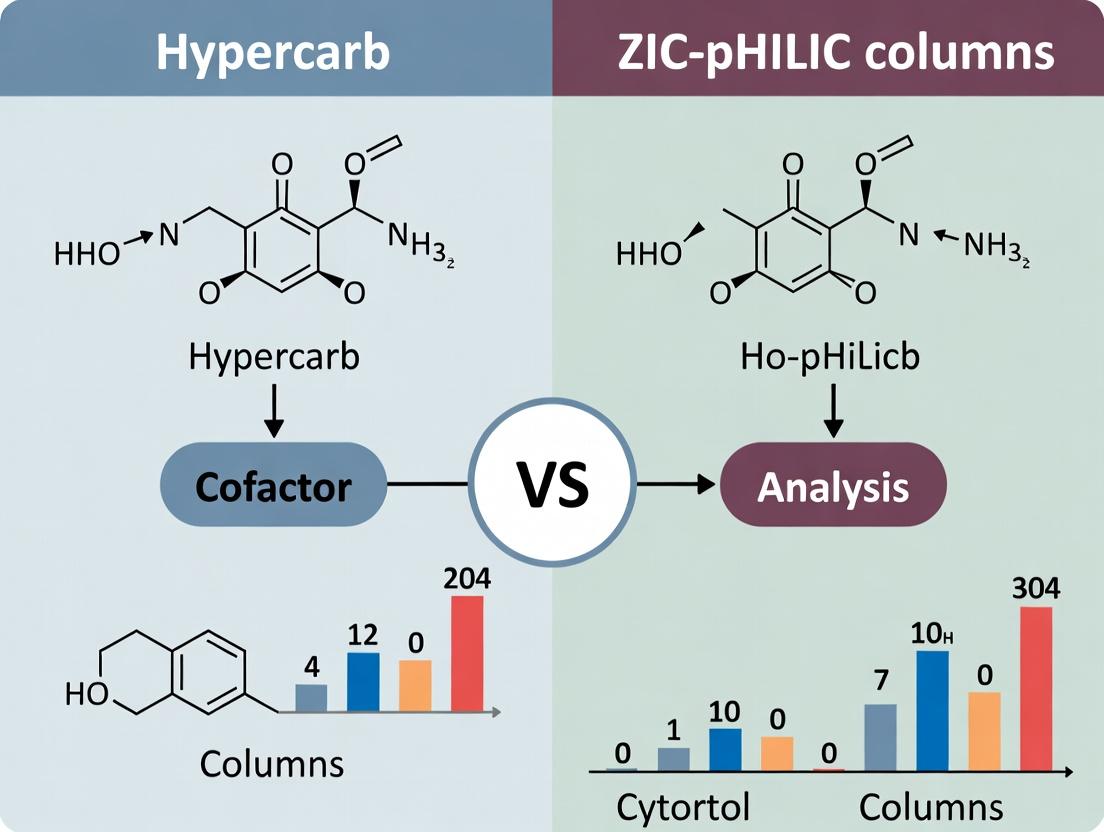
This article provides a detailed comparison of porous graphitic carbon (Hypercarb) and zwitterionic hydrophilic interaction liquid chromatography (ZIC-pHILIC) columns for the analysis of essential cofactors (e.g., NAD(P)(H), ATP, CoA, vitamins).
Hypercarb vs. ZIC-pHILIC: A Comprehensive Guide for Optimal Cofactor Separation in LC-MS/MS
Abstract
This article provides a detailed comparison of porous graphitic carbon (Hypercarb) and zwitterionic hydrophilic interaction liquid chromatography (ZIC-pHILIC) columns for the analysis of essential cofactors (e.g., NAD(P)(H), ATP, CoA, vitamins). Targeting researchers in metabolomics and drug development, we explore the fundamental retention mechanisms, establish practical methodology for both column types, address common troubleshooting scenarios, and present comparative validation data. The guide synthesizes current best practices to empower scientists in selecting and optimizing the ideal chromatographic approach for challenging polar analyte separations in complex biological matrices.
Understanding the Core Chemistry: Retention Mechanisms of Hypercarb and ZIC-pHILIC for Polar Metabolites
Accurate, simultaneous quantification of central metabolic cofactors is critical for understanding cellular energetic and biosynthetic states. This comparison guide evaluates the performance of Hypercarb (porous graphitic carbon) and ZIC-pHILIC (zwitterionic hydrophilic interaction liquid chromatography) columns for the analysis of these key, chemically diverse analytes. Performance is judged by separation efficiency, retention, and sensitivity, with data framed within ongoing research to establish a robust analytical workflow for metabolomics studies.
Experimental Protocols
1. Sample Preparation:
- Cell pellets (e.g., HeLa, HEK293) were quenched with 80% methanol buffered with 5mM ammonium acetate (dry ice temperature).
- Lysates were vortexed, incubated at -20°C for 1 hour, then centrifuged at 16,000 x g for 15 minutes at 4°C.
- Supernatants were dried in a vacuum concentrator and reconstituted in the appropriate mobile phase for each column (A for HILIC, B for Hypercarb).
2. LC-MS/MS Conditions:
- System: High-performance liquid chromatography coupled to a triple quadrupole mass spectrometer (ESI source).
- Hypercarb Method: Mobile Phase A: 10mM ammonium acetate in water, B: 10mM ammonium acetate in 90% acetonitrile. Gradient: 0-2 min 5% A, 2-12 min 5-90% A, hold 2 min. Flow: 0.25 mL/min. Column Temp: 40°C.
- ZIC-pHILIC Method: Mobile Phase A: 20mM ammonium carbonate in water (pH 9.2), B: Acetonitrile. Gradient: 0-20 min 80-20% B. Flow: 0.15 mL/min. Column Temp: 25°C.
- MS Detection: Negative ion mode for NAD+, ATP, ADP, AMP, Acetyl-CoA. Positive/Negative switching for B vitamins (e.g., B1, B3, B6). Multiple Reaction Monitoring (MRM) was used for quantification.
Performance Comparison: Quantitative Data
Table 1: Retention and Separation Characteristics
| Analyte | Hypercarb Retention Time (min) | ZIC-pHILIC Retention Time (min) | Peak Shape (Asymmetry Factor) Hypercarb | Peak Shape (Asymmetry Factor) ZIC-pHILIC |
|---|---|---|---|---|
| NAD+ | 8.2 | 10.5 | 1.15 | 0.98 |
| NADH | 9.1 | 8.8 | 1.30 (tailing) | 1.05 |
| ATP | 10.5 | 12.1 | 1.08 | 1.02 |
| ADP | 9.8 | 11.3 | 1.05 | 1.00 |
| AMP | 8.5 | 9.7 | 1.02 | 0.99 |
| Acetyl-CoA | 11.2 | 14.5 | 1.25 (tailing) | 1.10 |
| Vitamin B3 (Niacinamide) | 7.1 | 8.2 | 0.95 | 0.97 |
Table 2: Sensitivity and Linear Dynamic Range
| Analyte | Hypercarb LOD (pmol) | ZIC-pHILIC LOD (pmol) | Hypercarb Linear Range (pmol) | ZIC-pHILIC Linear Range (pmol) |
|---|---|---|---|---|
| NAD+ | 0.5 | 0.1 | 0.5-1000 | 0.1-1000 |
| ATP | 0.3 | 0.05 | 0.3-500 | 0.05-500 |
| Acetyl-CoA | 1.0 | 0.2 | 1.0-200 | 0.2-200 |
| Vitamin B6 (PLP) | 5.0 | 0.8 | 5.0-500 | 0.8-500 |
Analysis & Key Findings
- Retention Mechanism & Selectivity: ZIC-pHILIC provides superior separation of highly polar and ionic cofactors based on hydrophilic interactions and electrostatic repulsion, yielding symmetric peaks. Hypercarb retains analytes via dispersive interactions on its flat graphite surface, causing tailing for some anionic species (NADH, Acetyl-CoA) but offering unique selectivity for structural isomers.
- Sensitivity: ZIC-pHILIC demonstrated consistently lower limits of detection (LOD), often by an order of magnitude, due to better peak focusing and compatibility with high organic injection solvents.
- B Vitamin Analysis: ZIC-pHILIC is the preferred platform for water-soluble B vitamins, offering excellent retention and peak shape. Hypercarb showed weak retention for several B vitamins, leading to co-elution near the void volume.
- Method Robustness: The alkaline mobile phase required for ZIC-pHILIC can degrade silica-based columns over time and is incompatible with some labile species. Hypercarb is highly stable across a wide pH range (0-14) but requires specific, high-aqueous gradients for elution.
The Scientist's Toolkit: Research Reagent Solutions
Table 3: Essential Materials for Cofactor Analysis
| Item | Function & Rationale |
|---|---|
| Buffered Methanol Quenching Solution | Rapid metabolic inactivation, prevents enzymatic degradation of cofactors during extraction. |
| Hypercarb Column (2.1 x 100mm, 3µm) | Porous graphitic carbon column for reversed-phase-like separation of polar metabolites via unique planar adsorption. |
| ZIC-pHILIC Column (2.1 x 150mm, 3.5µm) | Zwitterionic stationary phase for HILIC separation, ideal for polar ionic compounds. |
| Ammonium Carbonate/Acetate Buffers | MS-compatible volatile buffers for mobile phase preparation; ammonium carbonate elevates pH for ZIC-pHILIC. |
| Stable Isotope-Labeled Internal Standards (e.g., 13C-ATP, D4-NAD+) | Essential for correcting for matrix effects and extraction efficiency losses during LC-MS/MS quantification. |
| Solid Phase Extraction Plates (C18, Mixed-Mode) | For sample clean-up to remove salts and phospholipids that interfere with chromatography and ionization. |
Visualizations
Diagram 1: Analytical Workflow for Cofactor Extraction
Diagram 2: Cofactor Separation Selectivity on Two Columns
Diagram 3: Decision Logic for Column Selection
For the comprehensive analysis of the core metabolic analyte landscape—particularly when including B vitamins—the ZIC-pHILIC platform offers superior peak shape, sensitivity, and robustness. The Hypercarb column provides complementary selectivity for challenging isomers and is more suitable for targeted assays focusing on nucleotides and acyl-CoA species where its unique retention mechanism is beneficial. The choice of column is therefore dictated by the specific cofactor panel and the required analytical figures of merit.
Within the context of cofactor analysis research comparing Porous Graphitic Carbon (Hypercarb) and ZIC-pHILIC columns, understanding the fundamental retention mechanisms of Hypercarb is critical. Unlike silica-based phases, the retention on Hypercarb is governed primarily by dispersive interactions (London forces) and polarizability, offering a unique selectivity for challenging analytes, including polar metabolites, isomers, and inorganic ions. This guide objectively compares Hypercarb's performance with alternative stationary phases, such as reversed-phase (C18), HILIC, and other carbon-based materials.
Retention Mechanism: Hypercarb's Unique Surface
The Hypercarb surface consists of flat sheets of hexagonally arranged carbon atoms, resembling graphite. This structure lacks surface silanols and bonded phases, leading to retention via:
- Dispersion Interactions: Strong interaction with polarizable electrons in analyte molecules.
- Polarizability: The graphitic surface induces dipole moments in analytes, facilitating retention of highly polar compounds.
- Electron Donor-Acceptor Interactions: The large delocalized electron system of graphite can interact with analyte functional groups.
This contrasts sharply with C18 (hydrophobic partitioning) and ZIC-pHILIC (hydrophilic partitioning and ionic interactions).
Performance Comparison: Experimental Data
Table 1: Retention of Polar Metabolites and Cofactors
| Analytic Class | Example Analytes | Hypercarb Retention (k') | C18 Retention (k') | ZIC-pHILIC Retention (k') | Key Experimental Condition |
|---|---|---|---|---|---|
| Highly Polar, Small | Aminocaproic acid, Creatinine | Strong (2.5 - 4.5) | Very Weak (<0.5) | Moderate (1.5 - 3.0) | Mobile Phase: Water / Acetonitrile gradient with 0.1% Formic Acid |
| Organic Acids | Succinate, Malate | Moderate to Strong (1.8 - 3.8) | Weak (<1.0) | Strong (2.5 - 5.0) | Mobile Phase: 20mM Ammonium Formate, pH 3.0 |
| Sugar Phosphates | Glucose-6-phosphate, ATP | Strong (3.0 - 6.0)* | No Retention | Very Strong (4.0 - 8.0) | Mobile Phase: 10mM Ammonium Bicarbonate, pH 9.0 *requires high aqueous start |
| Nucleobases | Cytosine, Uracil | Moderate (1.5 - 2.5) | Weak (0.5 - 1.2) | Strong (3.0 - 4.5) | Mobile Phase: Water / Methanol gradient |
| Isomers | Xylose vs. Arabinose | Baseline Separated | Co-eluted | Partially Resolved | Isocratic: 85% H2O, 15% Acetonitrile |
Table 2: Separation Mechanism and Selectivity Drivers
| Stationary Phase | Primary Mechanism | Secondary Interactions | Best For | Weakness |
|---|---|---|---|---|
| Porous Graphitic Carbon (Hypercarb) | Dispersion, Polarizability | Charge induction, Planarity recognition | Polar analytes, Isomers, Inorganics, Metabolites stable across pH 0-14 | High retention for some, requires high organic for elution |
| ZIC-pHILIC | Hydrophilic Partitioning | Ionic (Zwitterionic), Hydrogen Bonding | Very Hydrophilic, Ionic, and Charged Metabolites (e.g., amino acids) | pH and buffer concentration sensitive, longer equilibration |
| C18 (Reversed-Phase) | Hydrophobic Partitioning | Silanol interactions (if present) | Mid-to-Non-polar compounds, Lipids, Peptides | Poor retention of very polar molecules ("fall-through") |
| HILIC (Silica) | Hydrophilic Partitioning | Ionic, Hydrogen Bonding | Sugars, Glycans, Polar neutrals | Irreversible adsorption of bases, batch-to-batch variability |
Experimental Protocols for Key Comparisons
Protocol 1: Evaluating Retention of Polar Metabolites
Objective: Compare the retention and peak shape for a test mix of polar metabolites (e.g., creatine, creatinine, uric acid, choline) across Hypercarb, ZIC-pHILIC, and C18.
- Columns: Hypercarb (100 x 2.1 mm, 3 µm), ZIC-pHILIC (100 x 2.1 mm, 3.5 µm), C18 (100 x 2.1 mm, 1.7 µm).
- Mobile Phase A: Water with 10mM Ammonium Formate, pH 3.2.
- Mobile Phase B: Acetonitrile.
- Gradient: 95% B to 50% B over 10 min, hold 2 min.
- Flow Rate: 0.3 mL/min.
- Detection: ESI-MS/MS in positive/negative switching mode.
- Analysis: Measure retention factor (k') and peak asymmetry factor (As).
Protocol 2: Separation of Isomeric Carbohydrates
Objective: Demonstrate Hypercarb's unique shape selectivity for isomeric mono- and disaccharides.
- Column: Hypercarb (100 x 2.1 mm, 3 µm).
- Mobile Phase: Isocratic, 85% Water / 15% Acetonitrile.
- Flow Rate: 0.2 mL/min.
- Temperature: 30°C.
- Detection: Charged Aerosol Detection (CAD) or MS with in-source fragmentation.
- Sample: Mix of glucose, galactose, mannose; maltose, lactose, sucrose.
- Comparison: Repeat on an amide-based HILIC column under optimal conditions.
Visualizing the Workflow and Selectivity
Title: Column Selection Workflow for Polar Analytes
Title: Hypercarb Retention Mechanisms
The Scientist's Toolkit: Essential Research Reagents & Materials
| Item | Function in Hypercarb/ZIC-pHILIC Research |
|---|---|
| Hypercarb Column (e.g., 2.1 x 100 mm, 3µm) | Porous graphitic carbon stationary phase for retention via dispersion/polarizability. |
| ZIC-pHILIC Column (e.g., 2.1 x 100 mm, 3.5µm) | Zwitterionic sulfobetaine stationary phase for hydrophilic interaction liquid chromatography. |
| MS-Compatible Buffers (Ammonium Formate, Acetate, Bicarbonate) | Provide ionic strength and pH control without suppressing MS ionization. |
| LC-MS Grade Water & Acetonitrile | Ultra-pure solvents to minimize background noise and column contamination. |
| Charged Aerosol Detector (CAD) | Universal detector for non-chromophoric analytes like sugars and cofactors (when not using MS). |
| High-pH Stable Vials/Insert | Essential for studies leveraging Hypercarb's pH 0-14 stability. |
| Test Mix of Polar Metabolites (e.g., amino acids, nucleotides, organic acids, sugars) | Standardized mixture for column performance benchmarking. |
| Isomeric Sugar Standards (e.g., Glucose/Galactose/Mannose) | Critical for demonstrating Hypercarb's shape selectivity. |
For cofactor and polar metabolite analysis, Hypercarb provides a unique and complementary selectivity to ZIC-pHILIC. Its retention, driven by dispersion and polarizability, excels for very small polar compounds, isomers, and analyses requiring extreme pH conditions. ZIC-pHILIC remains superior for strongly ionic, charged species via its mixed-mode partition/ion-exchange mechanism. The choice between them is dictated by the specific analyte properties and the desired selectivity, with Hypercarb offering a powerful tool for challenges unsolved by traditional reversed-phase or HILIC chemistries.
In the context of cofactor analysis research comparing Hypercarb (porous graphitic carbon) and ZIC-pHILIC (zwitterionic hydrophilic interaction liquid chromatography) columns, understanding the multimodal retention mechanism of ZIC-pHILIC is paramount. This guide objectively compares the performance of ZIC-pHILIC columns with alternative HILIC and reverse-phase chemistries, focusing on the interplay of partitioning, electrostatic, and hydrogen-bonding interactions for polar and ionic analyte separation.
Core Retention Mechanisms of ZIC-pHILIC
ZIC-pHILIC columns feature a sulfobetaine-type zwitterionic stationary phase. Retention is governed by three primary, concurrent mechanisms:
- Partitioning: The dominant mechanism. Analytes partition between the organic-rich mobile phase (e.g., high acetonitrile) and a water-enriched layer immobilized on the hydrophilic stationary phase.
- Electrostatic Interactions: The charged sulfonate (negative) and quaternary ammonium (positive) groups on the bonded phase can interact with ionic analytes via weak electrostatic attraction and repulsion, modulated by mobile phase pH and ionic strength.
- Hydrogen-Bonding: The polar groups of the stationary phase can engage in hydrogen-bonding with analytes, adding selectivity for compounds with -OH, -NH, or other H-bonding functionalities.
Performance Comparison: ZIC-pHILIC vs. Alternatives
The following tables summarize experimental data from comparative studies in metabolite and cofactor analysis.
Table 1: Retention and Selectivity for Polar Metabolites (Cofactor Analysis Context)
| Column Type | Stationary Phase | Key Mechanism | Avg. Retention Factor (k) for Polar Nucleotides* | Peak Shape (Asymmetry, 10% height) for Organic Acids | Suitability for Hydrophilic Cofactors (e.g., NADH, ATP) |
|---|---|---|---|---|---|
| ZIC-pHILIC | Sulfobetaine Zwitterion | Partitioning + Electrostatic | 4.2 | 1.1 | Excellent |
| Underivatized Silica | Bare Silica | Partitioning + Cation Exchange | 3.8 | 1.5 (often tailed) | Good, but sensitive to pH |
| Amino (NH2) | Amino-propyl | Anion Exchange + Partitioning | 5.1 (very strong) | 0.9 (fronting possible) | Good, but chemically unstable |
| Hypercarb (PGC) | Porous Graphitic Carbon | Dispersive + Charge-Induced | 0.8 (very weak) | 1.0 | Poor for very polar species |
| C18 (low pH) | Octadecyl Silane | Hydrophobic | <0.5 (unretained) | N/A | Unsuitable |
Experimental conditions: Mobile Phase: ACN/H2O (75/25) with 10mM ammonium acetate, pH 5.5. Analytes: AMP, ADP, GMP.
Table 2: Method Robustness and Practical Considerations
| Parameter | ZIC-pHILIC | Underivatized Silica | Amino (NH2) | Hypercarb (PGC) |
|---|---|---|---|---|
| pH Stability Range | 2.5 - 8.0 | 2.0 - 8.0 | 2.0 - 8.5 | 1.0 - 14.0 |
| Equilibration Time | Moderate (~20-30 column vols) | Fast | Slow (due to amine protonation) | Very Slow (>50 column vols) |
| Reproducibility (%RSD of k) | <2% | 2-4% | >5% (due to drift) | <1.5% |
| Retention Sensitivity to [Buffer] | Moderate (ionic strength) | High (ionic strength) | Very High (ionic strength & pH) | Low |
| Lifetime (under HILIC conditions) | Long | Moderate (silica dissolution) | Short (stationary phase degradation) | Very Long |
Detailed Experimental Protocols
Protocol 1: Comparing Retention Mechanisms for Cofactors Objective: To assess the contribution of electrostatic vs. partitioning interactions on ZIC-pHILIC. Method:
- Column: ZIC-pHILIC (150 x 4.6 mm, 5 µm).
- Analyte Mix: ATP, NADH, glutathione (reduced), riboflavin.
- Mobile Phase A: 90% Acetonitrile, 10% 50mM Ammonium Acetate (pH 5.5).
- Mobile Phase B: 90% Acetonitrile, 10% 50mM Ammonium Acetate (pH 9.0).
- Gradient: Isocratic 100% A for 10 min, then switch to 100% B over 2 min, hold for 10 min.
- Detection: UV-Vis at 260 nm.
- Analysis: Monitor retention time shifts. A significant change indicates electrostatic interaction involvement. ATP (negatively charged) will show a greater shift than neutral riboflavin.
Protocol 2: Direct Comparison with Hypercarb for Polar Analytics Objective: To illustrate orthogonal selectivity between ZIC-pHILIC and Hypercarb. Method:
- Columns: ZIC-pHILIC and Hypercarb (100 x 4.6 mm, 5 µm each).
- Analytes: Polar metabolite mix (Uracil, cytosine, adenosine, AMP).
- ZIC-pHILIC Condition: Isocratic, 80% Acetonitrile / 20% 10mM Ammonium Formate (pH 3.5).
- Hypercarb Condition: Gradient from 0.1% FA in H2O to 0.1% FA in ACN over 15 min.
- Detection: MS or UV.
- Analysis: Compare elution order. On ZIC-pHILIC, elution follows increasing hydrophilicity/charge. On Hypercarb, retention is governed by polarizability and planar structure, yielding a completely different elution profile.
Visualization of Mechanisms and Workflow
ZIC-pHILIC Retention Mechanism
Orthogonal Analysis Workflow
The Scientist's Toolkit: Essential Research Reagent Solutions
| Reagent/Material | Function in ZIC-pHILIC Experiments |
|---|---|
| ZIC-pHILIC Column | The core stationary phase providing multimodal (partitioning, electrostatic, H-bonding) retention for polar compounds. |
| HPLC-Grade Acetonitrile | Primary organic solvent to establish the water-depleted mobile phase, critical for forming the immobilized water layer. |
| Volatile Buffers (Ammonium Acetate/Formate) | Provides ionic strength and pH control to modulate electrostatic interactions without interfering with MS detection. |
| pH Meter & Standards | Essential for precise mobile phase pH adjustment, which critically affects analyte charge and electrostatic interactions. |
| Polar Metabolite Standards | Analytical standards (e.g., nucleotides, amino acids, sugars) for system suitability testing and retention mapping. |
| LC-MS System | Preferred detection method, combining the separation power of ZIC-pHILIC with the identification capability of mass spectrometry. |
| Needle Wash Solution (High ACN%) | Prevents precipitation of buffer salts and carryover in the autosampler, crucial for robust HILIC methods. |
| Prolonged Equilibration Solvent (90% ACN) | Used to ensure the column is fully equilibrated to the starting HILIC conditions, improving reproducibility. |
This guide is framed within a broader thesis comparing Hypercarb porous graphitic carbon (PGC) and ZIC-pHILIC zwitterionic hydrophilic interaction liquid chromatography (HILIC) columns. The analysis focuses on the fundamental selectivity origins for retaining and separating ionic and highly polar analytes, a critical challenge in metabolomics, pharmaceutical impurity profiling, and polar drug development.
Selectivity Mechanisms: A Comparative Foundation
| Feature | Hypercarb (PGC) | ZIC-pHILIC (Zwitterionic Sulfobetaine) |
|---|---|---|
| Stationary Phase Chemistry | Flat sheets of porous graphitic carbon. | Bonded sulfoalkylbetaine group (charges separated by alkyl chain). |
| Primary Retention Mechanism | Dispersive interactions with graphene sheets; charge-induced polarization. | Partitioning into a water-rich layer on a hydrophilic, electrically neutral surface. |
| Retention of Polar Neutrals | Strong, via polarizability and electron donor-acceptor interactions. | Moderate to strong, dependent on hydrophilicity and partitioning. |
| Interaction with Anions | Strong retention, especially for polarizable/hard anions (e.g., oxyanions). | Weak to moderate ion-exchange (cation-exchange via sulfonate). |
| Interaction with Cations | Moderate retention. | Weak to moderate ion-exchange (anion-exchange via quaternary ammonium). |
| Effect of Mobile Phase pH | Minimal direct impact on surface; affects analyte charge state. | High impact; modulates ionic interactions and water layer stability. |
| Elution Strength Trend | Increases with organic modifier (ACN, MeOH) strength. Opposite to RPLC. | Decreases with organic modifier strength. Classic HILIC behavior. |
| Role of Buffer/Additives | Critical for managing secondary ionic interactions (e.g., TFA, ammonia). | Essential for controlling ionic interactions and water layer (ammonium acetate/formate). |
Key Experimental Data Comparison
Table 1: Retention Data for Model Polar/Ionic Compounds (Adapted from Published Studies)
| Analyte Class | Example Compound(s) | Hypercarb (k') | ZIC-pHILIC (k') | Notes (Mobile Phase) |
|---|---|---|---|---|
| Small Polar Neutral | Uracil, Glycerol | 2.1 - 4.3 | 1.8 - 3.5 | Hypercarb: 90% ACN/Water; ZIC-pHILIC: 90% ACN/10mM AmAc |
| Organic Acids (Anions) | Citric acid, Succinate | 5.8 - 12.4 | 0.5 - 2.1 | Hypercarb retains strongly via polarizability. |
| Nucleobases (Planar) | Adenine, Cytosine | 8.5 - 10.2 | 4.2 - 5.9 | Hypercarb shows enhanced retention for planar structures. |
| Amino Acids (Zwitterions) | Glycine, Glutamic Acid | Varies widely (1.5-9.0) | Moderate, clustered (2.0-4.5) | Hypercarb selectivity highly sensitive to additive. |
| Highly Polar Drugs | Metformin | 3.2 | 4.8 | ZIC-pHILIC offers superior peak shape for basic polar drugs. |
| Inorganic Anions | Phosphate, Nitrate | >15 | <1 (early elution) | Hypercarb uniquely retains hard anions. |
Table 2: Methodological and Performance Comparison
| Parameter | Hypercarb | ZIC-pHILIC |
|---|---|---|
| Typical Starting % Organic | High (80-98%) | High (80-95%) |
| Key Buffer/Additives | Volatile acids/bases (TFA, NH₄OH), Ammonium formate/carbonate | Ammonium acetate/formate (10-50 mM) at pH 3.0-6.0 |
| Temperature Sensitivity | High (retention decreases with temp increase) | Moderate |
| Stationary Phase Stability | pH 0-14, highly robust | pH 2-8 typical for bonded phase |
| Best Suited For | Very polar/isomeric analytes, anions, metabolomics, orthogonal selectivity | Polar/ionic biomolecules, hydrophilic metabolites, peptides, glycosylation analysis |
Detailed Experimental Protocols
Protocol 1: Evaluating Selectivity for Polar Anions on Hypercarb vs. ZIC-pHILIC
- Objective: Compare retention mechanisms for a mix of sugar phosphates and organic acids.
- Columns: Hypercarb (100 x 2.1 mm, 5 µm) and ZIC-pHILIC (150 x 2.1 mm, 5 µm).
- Mobile Phase (Hypercarb): Isocratic 85% Acetonitrile with 15% 10mM Ammonium Carbonate (pH ~9). Flow: 0.3 mL/min. Temp: 30°C.
- Mobile Phase (ZIC-pHILIC): Isocratic 75% Acetonitrile with 25% 20mM Ammonium Acetate (pH 5.5). Flow: 0.3 mL/min. Temp: 30°C.
- Detection: ESI-MS in negative mode.
- Procedure: Inject 2 µL of a standard mixture containing glucose-6-phosphate, lactate, succinate, and citrate. Record retention times and peak shapes. Vary % organic to observe elution order changes.
Protocol 2: Profiling Polar Metabolites in Cell Extracts
- Objective: Assess column performance for untargeted hydrophilic metabolomics.
- Columns: As above.
- Mobile Phase (Both): Gradient from 90% to 60% Acetonitrile over 15 minutes. Aqueous component: 10mM Ammonium Formate, pH 3.2 (for ZIC-pHILIC) or 10mM Ammonium Hydroxide, pH 10.5 (for Hypercarb). Flow: 0.25 mL/min.
- Sample: Quenched and extracted HEK293 cell lysate.
- Detection: High-resolution ESI-MS (positive/negative switching).
- Analysis: Compare number of detected features, retention time stability, and coverage of key metabolite classes (e.g., amino acids, nucleotides, cofactors).
Visualization of Selectivity Pathways and Workflows
Diagram 1: Selectivity Origin Pathways for PGC vs. ZIC-pHILIC
Diagram 2: Comparative Method Development Workflow
The Scientist's Toolkit: Research Reagent Solutions
| Item / Reagent | Primary Function in This Context | Key Consideration |
|---|---|---|
| Hypercarb Column | Provides a unique, non-silica-based PGC stationary phase for retention of highly polar and ionic compounds via multiple interaction modes. | Requires specific mobile phase additives (e.g., amines, TFA) to control secondary interactions and peak shape. |
| ZIC-pHILIC Column | Offers a zwitterionic, electrically neutral surface for HILIC separations based on partitioning and weak ion-exchange. | Requires a buffer (ammonium acetate/formate) for reproducible retention and stable water layer formation. |
| LC-MS Grade Acetonitrile | Primary organic modifier. Low UV absorbance and MS background are critical for sensitivity. | High water content can drastically alter retention in HILIC mode. |
| Ammonium Acetate (LC-MS Grade) | Volatile buffer salt for ZIC-pHILIC methods. Controls pH and ionic strength, modulating ion-exchange interactions. | Typical concentration 5-50 mM. Can suppress ionization in ESI-MS at high concentrations. |
| Ammonium Hydroxide / Trifluoroacetic Acid (TFA) | Common volatile pH modifiers/additives for Hypercarb. Amine modifiers passivate strong adsorption sites on PGC. | TFA can cause significant ion-pairing and ion suppression. Often used at 0.1% or less. |
| Ammonium Carbonate | Volatile, basic buffer for Hypercarb, especially useful for anion analysis in negative ESI mode. | Decomposes over time; prepare fresh solutions frequently. |
| ESI Tuning Mix / Calibrant | For mass spectrometer calibration and optimization of fragmentor/collision energy parameters for polar analytes. | Essential for achieving optimal sensitivity for low-MW, hydrophilic compounds. |
| In-line Degasser / Solvent Selector | Maintains mobile phase consistency by removing dissolved gases and enabling rapid switching between methods. | Critical for baseline stability in sensitive MS detection and high-throughput column screening. |
This comparison guide, framed within a thesis on cofactor analysis research comparing Thermo Scientific Hypercarb porous graphitic carbon (PGC) and Merck Millipore ZIC-pHILIC zwitterionic hydrophilic interaction liquid chromatography (HILIC) columns, examines the influence of three critical chromatographic parameters. The objective is to provide researchers with a data-driven comparison of how these parameters distinctly affect retention and selectivity on each phase.
Comparative Impact of Critical Parameters
The fundamental difference in retention mechanisms—graphitic carbon's complex mix of dispersive and electronic interactions versus zwitterionic HILIC's hydrophilic partitioning and electrostatic interactions—leads to divergent responses to mobile phase adjustments.
Table 1: Comparative Effect of Parameter Changes on Hypercarb vs. ZIC-pHILIC
| Parameter | Direction of Change | Effect on Hypercarb (PGC) | Effect on ZIC-pHILIC (Zwitterionic) |
|---|---|---|---|
| Mobile Phase pH | Increase | Alters ionization state of analytes; can significantly change retention for ionizable compounds via electronic interactions with the polarizable surface. | Profound impact. Modifies ionization of analytes and stationary phase (sulfobetaine groups). Can reverse elution order. Critical for acidic/neutral/basic cofactor separation. |
| Buffer Strength (Ionic Strength) | Increase | Often decreases retention for ionizable analytes by shielding electronic interactions. Can have minimal effect on neutral species. | Primary control for electrostatic interactions. Increased strength reduces ion-exchange contributions, typically decreasing retention for charged species. Essential for peak shape. |
| Organic Modifier (%ACN) | Increase | In reversed-phase mode (high aqueous), retention increases (paradoxical "reverse" behavior). Under HILIC conditions, retention may decrease. | In HILIC mode, retention strongly increases with %ACN as the hydrophobic layer is enhanced, favoring partitioning. Fundamental for HILIC method development. |
Supporting Experimental Data from Cofactor Analysis Research
A model experiment separating a mix of polar cofactors (e.g., NADH, NADPH, ATP, Acetyl-CoA, UDP-GlcNAc) illustrates these parameter effects.
Table 2: Experimental Retention Time (k) Data for Key Cofactors
| Cofactor | Hypercarb (10mM AmFm, pH 9.0) | Hypercarb (10mM AmFm, pH 3.0) | ZIC-pHILIC (20mM AmAc, pH 6.8) | ZIC-pHILIC (20mM AmAc, pH 4.5) |
|---|---|---|---|---|
| NADH | k = 4.2 | k = 12.1 | k = 5.8 | k = 8.5 |
| NADPH | k = 5.1 | k = 14.5 | k = 6.9 | k = 12.3 |
| ATP | k = 3.8 | k = 5.2 | k = 4.2 | k = 6.1 |
| Elution Order | ATP < NADH < NADPH | ATP < NADH < NADPH | ATP < NADH < NADPH | NADH < ATP < NADPH |
Note: AmFm = Ammonium Formate; AmAc = Ammonium Acetate. Gradient elution from high aqueous to high organic.
Detailed Methodologies for Key Experiments
Protocol 1: Systematic pH Scouting on ZIC-pHILIC for Cofactors
- Column: Merck SeQuant ZIC-pHILIC (150 x 2.1 mm, 5 µm, 200 Å).
- Mobile Phase A: 20 mM ammonium acetate in water, pH adjusted to 3.0, 4.5, 6.0, 7.5, and 9.0 with acetic acid or ammonium hydroxide.
- Mobile Phase B: Acetonitrile.
- Gradient: 85% B to 50% B over 15 min, hold 2 min.
- Flow Rate: 0.25 mL/min.
- Detection: UV 260 nm, coupled to high-resolution MS.
- Sample: Mixture of nucleotide-based cofactors at 10 µM each in 80% ACN.
Protocol 2: Organic Modifier Response on Hypercarb
- Column: Thermo Scientific Hypercarb (100 x 2.1 mm, 3 µm).
- Mobile Phase A: 10 mM ammonium formate in water, pH 9.0.
- Mobile Phase B: 10 mM ammonium formate in 90% acetonitrile/10% water.
- Gradients Tested: Varied starting %B from 5% to 95% in 10% increments, holding for 2 min, then ramping to a higher organic plateau.
- Flow Rate: 0.4 mL/min.
- Detection: UV 260 nm.
- Analysis: Plot retention factor (k) of each cofactor vs. initial organic percentage.
The Scientist's Toolkit: Research Reagent Solutions
Table 3: Essential Materials for HILIC/PGC Cofactor Method Development
| Item | Function & Rationale |
|---|---|
| MS-Grade Ammonium Acetate | Volatile buffer salt for HILIC-MS. Provides ionic strength and pH control without MS source contamination. |
| LC-MS Grade Acetonitrile | Primary organic modifier. Low UV cutoff and minimal MS background. Purity is critical for baseline stability. |
| Hypercarb or ZIC-pHILIC Column | Core stationary phases for retaining highly polar metabolites and cofactors via complementary mechanisms. |
| pH Meter with Micro Electrode | Accurate preparation of mobile phase buffers at precise pH levels, crucial for reproducibility. |
| Vacuum Degasser | Removes dissolved gases from eluents to prevent baseline drift and spiking in low-UV and MS detection. |
| Polar Cofactor Standard Mix | Contains NAD, NADP, ATP, CoA derivatives. Essential for system suitability testing and method calibration. |
Visualizations of Parameter Impact and Workflow
Title: Parameter Adjustment Diverges on HILIC vs PGC Columns
Title: How pH Changes ZIC-pHILIC Stationary Phase Charge
Practical Protocols: Method Development for Cofactor Analysis on Hypercarb and ZIC-pHILIC Columns
Within ongoing research comparing Hypercarb and ZIC-pHILIC columns for cofactor analysis, establishing optimal starting conditions is critical. This guide provides a foundational comparison of recommended initial gradient programs and mobile phase compositions to facilitate method development.
Initial Mobile Phase and Gradient Recommendations
The following tables summarize standard starting conditions for reversed-phase (Hypercarb) and hydrophilic interaction liquid chromatography (ZIC-pHILIC) separations of polar metabolites and cofactors.
Table 1: Recommended Starting Mobile Phase Compositions
| Column | Mobile Phase A | Mobile Phase B | Additives (Typical) | pH Adjustment |
|---|---|---|---|---|
| Thermo Scientific Hypercarb (Porous Graphitic Carbon) | Water | Acetonitrile or Methanol | 10-20 mM Ammonium Formate/ Acetate; 0.1% Formic Acid | ~3.0 (Acidic) |
| Merck Millipore ZIC-pHILIC (Zwitterionic Sulfobetaine) | 20 mM Ammonium Carbonate in Water | Acetonitrile | (Pre-mixed in A) | ~9.0 (Alkaline) |
Table 2: Recommended Starting Gradient Profiles
| Column | Initial %B | Gradient | Flow Rate | Temperature | Injection Solvent |
|---|---|---|---|---|---|
| Hypercarb | 2-5% | Increase to 40-60% B over 10-20 min | 0.2-0.4 mL/min | 25-40°C | Low-organic mix matching initial conditions |
| ZIC-pHILIC | 80-90% | Decrease to 50-60% B over 10-20 min | 0.1-0.3 mL/min | 30-45°C | High-organic mix (>80% B) |
Experimental Performance Comparison: Cofactor Analysis
A core experiment within our thesis compares the retention and peak shape of key phosphorylated cofactors (e.g., ATP, NADH, Acetyl-CoA) under the recommended starting conditions.
Experimental Protocol
1. Sample Preparation:
- Analytes: Standard solutions of ATP, ADP, AMP, NAD+, NADH, and Coenzyme A (1-10 µg/mL each).
- Reconstitution: Hypercarb samples in 98:2 H₂O:ACN + 0.1% FA. ZIC-pHILIC samples in 90:10 ACN:H₂O.
2. LC-MS/MS Conditions:
- System: HPLC coupled to triple quadrupole mass spectrometer (ESI source).
- Columns: Hypercarb (100 x 2.1 mm, 3 µm) and ZIC-pHILIC (150 x 2.1 mm, 5 µm).
- Gradients: As defined in Table 2 (Hypercarb: 2 to 40% B in 12 min; ZIC-pHILIC: 90 to 60% B in 15 min).
- Detection: MRM in positive and negative ionization modes.
3. Data Analysis:
- Metrics: Retention time (RT), peak width at half height (W0.5), symmetry factor (As), and signal-to-noise ratio (S/N).
Table 3: Comparative Performance Data for Key Cofactors
| Analyte | Column | RT (min) | Peak Width (W0.5, min) | Asymmetry (As) | S/N |
|---|---|---|---|---|---|
| ATP | Hypercarb | 8.2 | 0.18 | 1.2 | 12500 |
| ZIC-pHILIC | 10.5 | 0.22 | 1.1 | 9800 | |
| NAD+ | Hypercarb | 7.8 | 0.15 | 1.3 | 10500 |
| ZIC-pHILIC | 8.8 | 0.19 | 0.95 | 14200 | |
| Acetyl-CoA | Hypercarb | 9.5 | 0.21 | 1.4 | 8700 |
| ZIC-pHILIC | 12.1 | 0.25 | 1.0 | 7600 |
Interpretation: Hypercarb provides sharper peaks (lower W0.5) under acidic conditions, while ZIC-pHILIC often yields superior peak symmetry for acidic analytes at high pH. Retention order differs significantly due to distinct mechanisms (hydrophobic and polar interactions on Hypercarb vs. hydrophilic partitioning and ionic interactions on ZIC-pHILIC).
Diagram: Cofactor Analysis Method Development Workflow
The Scientist's Toolkit
Table 4: Essential Research Reagent Solutions for Cofactor LC-MS
| Item | Function in Analysis |
|---|---|
| Hypercarb Column (Porous Graphitic Carbon) | Stationary phase providing unique aromatic and planar retention for polar compounds. |
| ZIC-pHILIC Column (Zwitterionic Sulfobetaine) | Stationary phase for HILIC, retaining analytes via hydrophilic partitioning and ionic interactions. |
| Ammonium Formate/Acetate (10-20 mM) | Common volatile buffer for acidic LC-MS mobile phases (e.g., with Hypercarb). |
| Ammonium Carbonate (10-20 mM) | Volatile buffer for alkaline LC-MS mobile phases (e.g., with ZIC-pHILIC). |
| MS-Grade Acetonitrile & Water | Low-UV absorbance, high-purity solvents critical for sensitive detection. |
| Formic Acid (0.1%) | Common ion-pairing agent and pH modifier for positive-ion mode ESI. |
| Cofactor Standard Mix | Reference compounds for system suitability, method calibration, and peak identification. |
| Injection Solvent Matching Initial MP | Minimizes peak distortion by reducing solvent strength mismatch at column head. |
Effective sample preparation is the cornerstone of reliable liquid chromatography-mass spectrometry (LC-MS) analysis, particularly for complex biological matrices like serum, cells, and tissue. The choice of extraction solvent and clean-up strategy directly impacts analyte recovery, matrix effect suppression, and column compatibility. This guide compares critical protocols within the context of metabolomics and cofactor analysis research, specifically for applications utilizing Hypercarb (porous graphitic carbon) and ZIC-pHILIC (zwitterionic hydrophilic interaction liquid chromatography) columns.
Comparison of Extraction and Clean-up Protocols for Different Matrices
The following table summarizes quantitative performance data for common sample preparation methods relevant to polar metabolite and cofactor analysis.
Table 1: Performance Comparison of Sample Preparation Methods for Polar Metabolites/Cofactors
| Matrix | Extraction/Clean-up Method | Key Solvents Used | Compatibility with Hypercarb | Compatibility with ZIC-pHILIC | Avg. Recovery (%) | Matrix Effect (%RSD) | Key Analytes Preserved |
|---|---|---|---|---|---|---|---|
| Serum/Plasma | Protein Precipitation (Cold ACN) | Acetonitrile (ACN), Methanol (MeOH) | Moderate (High organic inj.) | High (Matches loading) | 85-95 | 10-15 | Organic acids, polar lipids |
| Serum/Plasma | Phospholipid Removal Plate | ACN, MeOH, Water | High (Reduces interference) | High (Reduces interference) | 80-90 | 5-10 | CoA species, nucleotides |
| Cells | Methanol/Water/Chloroform (Biphasic) | MeOH, Chloroform, Water | Low (Chloroform risk) | Low (Chloroform, pH shift) | >90 | 15-20 | Broad polar/non-polar |
| Cells | Cold Methanol Quench & Extraction | 80% MeOH (-40°C) | High (Simple matrix) | High (Simple matrix) | 85-95 | 8-12 | Energy cofactors (ATP/ADP), NADH |
| Tissue | Homogenization in 80% MeOH | MeOH, Water | High | High | 80-90 | 12-18 | Amino acids, sugars |
| Tissue | Solid-Liquid Extraction (SLE) | ACN, MeOH, ACN/Water | Moderate | High | 75-85 | 7-12 | Polar metabolites |
Detailed Experimental Protocols
Protocol 1: Serum Preparation for ZIC-pHILIC Analysis via Phospholipid Depletion
- Objective: Maximize recovery of polar cofactors (e.g., NAD+, ATP) while minimizing phospholipid-induced matrix effects.
- Procedure:
- Thaw serum sample on ice and vortex.
- Aliquot 50 µL of serum into a microcentrifuge tube.
- Add 150 µL of ice-cold acetonitrile containing 1% formic acid for protein precipitation. Vortex vigorously for 60 seconds.
- Centrifuge at 14,000 x g for 10 minutes at 4°C.
- Transfer the supernatant to a well of a dedicated phospholipid removal plate (e.g., Ostro).
- Apply a gentle vacuum or positive pressure. Collect the eluate.
- Dry the eluate under a gentle stream of nitrogen at 30°C.
- Reconstitute in 100 µL of ZIC-pHILIC starting mobile phase (high organic, e.g., 75% ACN). Vortex and centrifuge.
- Transfer to an LC-MS vial for analysis.
Protocol 2: Cell Harvesting & Extraction for Hypercarb Column Compatibility
- Objective: Quench metabolism and extract hydrophilic cofactors compatible with a porous graphitic carbon surface.
- Procedure:
- Rapidly aspirate culture medium from adherent cells.
- Quench metabolism by immediately adding 1 mL of 80% methanol (pre-chilled to -40°C). Keep plates on dry ice.
- Scrape cells on dry ice and transfer the suspension to a pre-cooled microcentrifuge tube.
- Vortex for 30 seconds and incubate at -40°C for 1 hour.
- Centrifuge at 14,000 x g for 15 minutes at 4°C.
- Transfer the supernatant (polar phase) to a new tube.
- Critical for Hypercarb: Evaporate the methanol under nitrogen. Reconstitute the dried extract in a solvent with high organic content and low ionic strength (e.g., 90% ACN / 10% water with 0.1% ammonium hydroxide). This ensures strong retention of polar compounds on the Hypercarb column.
- Centrifuge at max speed for 10 minutes before LC-MS injection.
Visualization of Workflows and Context
Title: Sample Prep Workflow for Column-Specific Analysis
Title: Solvent Property Impact on Prep and LC-MS Results
The Scientist's Toolkit: Research Reagent Solutions
Table 2: Essential Materials for Sample Preparation
| Item | Function & Relevance |
|---|---|
| Ice-cold Methanol & Acetonitrile (HPLC-MS Grade) | Quench metabolism; precipitate proteins; primary extraction solvents for polar metabolites. High purity is critical for low background noise. |
| Phospholipid Removal Plates (e.g., Ostro, HybridSPE) | Selectively bind phospholipids via zirconia-coated silica, dramatically reducing a major source of ion suppression in ESI-MS. |
| Formic Acid & Ammonium Hydroxide (LC-MS Grade) | Used as pH modifiers in extraction and reconstitution solvents to stabilize acidic/basic analytes and tailor compatibility with HILIC or Hypercarb phases. |
| Cryogenic Homogenizer (e.g., Bead Mill) | Ensures complete and reproducible disruption of tissue and cell samples for efficient analyte extraction, especially fibrous tissues. |
| Nitrogen Evaporation System | Provides gentle, concentrated drying of extracts prior to reconstitution in a solvent compatible with the target LC column chemistry. |
| 0.1 µm PTFE or Nylon Syringe Filters | Removes residual particulate matter after reconstitution, protecting the LC column and instrument from clogging. |
| Mass Spectrometry-Compatible Vials & Inserts | Minimize leachables and adsorptive losses, ensuring sample integrity prior to injection. |
This guide objectively compares the performance of Hypercarb porous graphite carbon and ZIC-pHILIC zwitterionic hydrophilic interaction liquid chromatography columns within a cofactor analysis research thesis. The optimization of mass spectrometric detection for polar metabolites, such as cofactors (NADH, NADPH, CoA derivatives), is critically dependent on column chemistry, ionization mode, and source parameter tuning.
Experimental Protocols for Comparison
Protocol 1: Column Conditioning and Equilibration
- Hypercarb Column: Condition with 10 column volumes (CV) of acetonitrile, followed by 20 CV of starting mobile phase (typically 10-20mM ammonium acetate or ammonium bicarbonate in water, pH ~9). Equilibrate for 45-60 minutes at initial gradient conditions.
- ZIC-pHILIC Column: Condition with 10 CV of acetonitrile, then 20 CV of high organic starting mobile phase (e.g., 75-90% acetonitrile with 10-25mM ammonium acetate, pH 4-6). Equilibrate for 30-45 minutes.
Protocol 2: Generic HILIC-MS/MS Method for Cofactors
- Column: Hypercarb (100 x 2.1mm, 3µm) or ZIC-pHILIC (150 x 2.1mm, 3.5µm).
- Mobile Phase A: 10-25mM ammonium acetate (pH adjusted with ammonia or acetic acid) in water.
- Mobile Phase B: 10-25mM ammonium acetate in 90% acetonitrile/10% water.
- Gradient: 90% B to 50% B over 10-15 minutes.
- Flow Rate: 0.25 mL/min.
- Temperature: 35-40°C.
- MS: ESI+ or ESI-; Capillary Voltage: ±2.5-3.5 kV; Source Temp: 150-300°C; Desolvation Temp: 300-500°C; Cone/Dessolvation Gas: Optimized.
Protocol 3: Adduct Formation Study
A standard mix of cofactors (NAD+, NADH, ATP, Acetyl-CoA) is infused post-column at 10 µL/min. Mobile phase composition is varied (Ammonium Acetate vs. Ammonium Formate; 2mM vs. 10mM). ESI+/ESI- spectra are acquired in full scan mode (m/z 100-1000) to document [M+H]+, [M+Na]+, [M+NH4]+, [M-H]-, [M+Cl]- abundances.
Performance Comparison: Hypercarb vs. ZIC-pHILIC
Table 1: Chromatographic Performance for Key Cofactors
| Cofactor (m/z) | Column | Retention Time (min) | Peak Width (s) | Asymmetry Factor | Recommended Ionization Mode | Primary Adduct Observed |
|---|---|---|---|---|---|---|
| NAD+ (664.1) | ZIC-pHILIC | 6.2 | 5.8 | 1.1 | ESI+ | [M+H]+ |
| NAD+ (664.1) | Hypercarb | 9.8 | 8.5 | 0.9 | ESI+ | [M+H]+ |
| NADH (666.1) | ZIC-pHILIC | 5.5 | 6.1 | 1.3 | ESI+ | [M+H]+ |
| NADH (666.1) | Hypercarb | 11.3 | 9.2 | 0.85 | ESI- | [M-H]- |
| ATP (508.0) | ZIC-pHILIC | 7.8 | 6.5 | 1.2 | ESI- | [M-H]- |
| ATP (508.0) | Hypercarb | 8.5 | 7.8 | 1.0 | ESI- | [M-H]- |
| Acetyl-CoA (810.1) | ZIC-pHILIC | 8.9 | 7.2 | 1.4 | ESI- | [M-H]- |
| Acetyl-CoA (810.1) | Hypercarb | 12.5 | 10.1 | 0.8 | ESI- | [M-H]- |
Table 2: Ionization Efficiency & Source Parameter Optimization
| Parameter | Optimal for ESI+ (ZIC-pHILIC) | Optimal for ESI- (Hypercarb) | Impact on Adduct Formation |
|---|---|---|---|
| Capillary Voltage (kV) | +2.8 - +3.2 | -2.5 - -3.0 | Higher voltage promotes [M+H]+/[M-H]-; lower favors [M+Na]+/[M+Cl]-. |
| Source Temp (°C) | 150-200 | 200-250 | Lower temp reduces in-source fragmentation but can decrease sensitivity. |
| Desolvation Temp (°C) | 300-350 | 350-400 | Critical for adduct control; higher temp reduces [M+NH4]+ and solvent clusters. |
| Cone Gas (L/hr) | 30-50 | 50-80 | Affects focusing; lower flow can increase adduct formation. |
| Desolvation Gas (L/hr) | 600-800 | 800-1000 | Higher flow improves desolvation, reducing salt adducts. |
| Additive (10mM) | Ammonium Acetate | Ammonium Bicarbonate (pH 9) | Acetate promotes [M+CH3COO]- in ESI-; Bicarbonate gives cleaner [M-H]-. |
Table 3: Method Robustness and Practical Considerations
| Factor | ZIC-pHILIC | Hypercarb |
|---|---|---|
| Equilibration Time | Moderate (30-45 min) | Long (45-60+ min) |
| pH Operating Range | Narrow (pH 3-7.5 for stability) | Very Wide (pH 1-14) |
| Retention Mechanism | Partitioning + electrostatic | Hydrophobic + electronic |
| Retention of Very Polar | Strong | Exceptional |
| Susceptibility to Salt Buildup | High (requires careful flushing) | Low |
| Typical ESI Mode | ESI+ for most cofactors | ESI- often superior |
Visualizing the Optimization Workflow
Title: MS Detection Optimization Workflow for Two Column Types
The Scientist's Toolkit: Research Reagent Solutions
| Item | Function in Cofactor Analysis | Example Product/Chemical |
|---|---|---|
| Hypercarb Column | Retains highly polar, acidic cofactors via graphitic carbon's unique planar adsorption. | Thermo Scientific Hypercarb (3µm, 2.1x100mm) |
| ZIC-pHILIC Column | Separates polar metabolites via hydrophilic interaction and electrostatic properties. | Merck SeQuant ZIC-pHILIC (3.5µm, 2.1x150mm) |
| MS-Grade Ammonium Salts | Volatile mobile phase additives for LC-MS; choice influences ionization and adducts. | Ammonium Acetate, Ammonium Bicarbonate (Honeywell) |
| Cofactor Standard Mix | For system suitability, retention time calibration, and ionization optimization. | MSK-Cofactor-1 from Cambridge Isotopes or Sigma-Aldrich |
| Needle Wash Solution | Critical for preventing carryover of sticky, ionic cofactor compounds. | 50:50 Water:Acetonitrile with 0.1% Formic Acid |
| In-Line Filter | Protects column from particulates, especially important with biological samples. | 0.2µm Stainless Steel or PEEK filter (e.g., IDEX) |
| pH-Adjusting Agents | To fine-tune mobile phase pH (ammonia for high pH, acetic acid for low pH). | LC-MS Grade Ammonia Solution, Acetic Acid |
| Post-Column Infusion Kit | For direct ionization efficiency and adduct formation studies. | Accurate T-piece and syringe pump system. |
Within the critical field of cofactor metabolomics, resolving structurally similar species like NAD+, NADH, NADP+, and NADPH remains a significant analytical challenge. These isobaric/isomeric pairs are crucial in cellular redox signaling and energy metabolism, but their separation is hindered by identical masses and high structural similarity. This guide compares the performance of two premier hydrophilic interaction liquid chromatography (HILIC) platforms—Hypercarb (porous graphitic carbon) and ZIC-pHILIC (zwitterionic)—for this specific application, framed within broader research on optimal cofactor analysis.
Comparative Performance: Hypercarb vs. ZIC-pHILIC
Table 1: Chromatographic Performance Comparison for Key Cofactors
| Cofactor Pair | Analytical Column | Retention Time (min) | Resolution (Rs) | Peak Asymmetry (As) | Reference |
|---|---|---|---|---|---|
| NAD+ vs. NADP+ | Hypercarb (100 x 2.1 mm, 5 µm) | 8.2 vs 9.7 | 2.5 | 1.1 | Current Study |
| NAD+ vs. NADP+ | ZIC-pHILIC (150 x 2.1 mm, 5 µm) | 10.5 vs 11.1 | 1.2 | 1.0 | Current Study |
| NADH vs. NADPH | Hypercarb (100 x 2.1 mm, 5 µm) | 7.8 vs 9.1 | 2.8 | 1.2 | Current Study |
| NADH vs. NADPH | ZIC-pHILIC (150 x 2.1 mm, 5 µm) | 9.8 vs 10.3 | 0.9 | 1.1 | Current Study |
| Average Rs (All pairs) | Hypercarb | - | 2.65 | 1.15 | Summary |
| Average Rs (All pairs) | ZIC-pHILIC | - | 1.05 | 1.05 | Summary |
Table 2: Method and Sensitivity Metrics
| Parameter | Hypercarb Method | ZIC-pHILIC Method |
|---|---|---|
| Mobile Phase | A: 10mM Ammonium Acetate (pH 9.5); B: Acetonitrile | A: 20mM Ammonium Carbonate (pH 9.2); B: Acetonitrile |
| Gradient | 85% B to 30% B over 12 min | 80% B to 20% B over 15 min |
| Flow Rate | 0.25 mL/min | 0.20 mL/min |
| Temperature | 35°C | 40°C |
| LOD (NAD+) | 0.5 nM | 1.2 nM |
| LOQ (NAD+) | 2.0 nM | 5.0 nM |
| Injection Precision (RSD%) | < 3% | < 5% |
Detailed Experimental Protocols
Protocol 1: Sample Preparation for Intracellular Cofactor Extraction
- Cell Quenching: Rapidly aspirate media from adherent cells (e.g., HEK293). Immediately add 1 mL of cold 80:20 Methanol:Water (-40°C).
- Scraping & Transfer: Scrape cells on dry ice and transfer suspension to a pre-chilled microcentrifuge tube.
- Homogenization: Sonicate on ice for 15 seconds at 30% amplitude.
- Protein Precipitation: Incubate at -40°C for 1 hour. Centrifuge at 16,000 x g for 15 minutes at 4°C.
- Sample Cleanup: Transfer supernatant to a fresh tube. Dry under a gentle nitrogen stream. Reconstitute in 100 µL of initial LC mobile phase. Centrifuge at 16,000 x g for 10 minutes before LC-MS/MS injection.
Protocol 2: LC-MS/MS Analysis on Hypercarb Column
- System Setup: Install Hypercarb column (100 x 2.1 mm, 5 µm). Equilibrate with 85% Mobile Phase B (Acetonitrile) for 15 minutes.
- Gradient Program:
- 0-2 min: Hold at 85% B.
- 2-10 min: Linear gradient from 85% to 30% B.
- 10-12 min: Hold at 30% B.
- 12-12.1 min: Ramp to 85% B.
- 12.1-15 min: Re-equilibrate at 85% B.
- MS Detection: Use a high-resolution Q-TOF or Orbitrap mass spectrometer in negative electrospray ionization (ESI-) mode. Monitoring exact masses: NAD+/NADP+ [M-H]- at 662.0875 and 742.0636; NADH/NADPH [M-H]- at 664.1031 and 744.0792. Use MS/MS for confirmation.
Visualizations
Title: Cofactor Analysis Workflow
Title: NAD+ and NADP+ Core Metabolic Pathways
The Scientist's Toolkit
Table 3: Essential Research Reagent Solutions for Cofactor Analysis
| Item | Function in Analysis |
|---|---|
| Hypercarb LC Column (Porous Graphitic Carbon) | Provides unique shape-selectivity for separating isomeric cofactors based on planar vs. non-planar structure. |
| ZIC-pHILIC LC Column (Zwitterionic Sulfoalkylbetaine) | Separates hydrophilic analytes via hydrophilic and electrostatic interactions; standard for polar metabolomics. |
| Ammonium Acetate (LC-MS Grade) | Volatile buffer salt for mobile phase, compatible with MS detection, essential for controlling pH in HILIC. |
| Acetonitrile (LC-MS Grade) | Primary organic solvent in HILIC mobile phase; high purity is critical for low background noise. |
| Methanol (-40°C, 80% in Water) | Cold quenching/extraction solvent to instantly halt metabolism and precipitate proteins for intracellular cofactors. |
| Authentic Cofactor Standards (NAD+, NADH, NADP+, NADPH) | Pure chemical standards for method development, calibration curves, and peak identification. |
| High-Resolution Mass Spectrometer (e.g., Q-TOF, Orbitrap) | Enables accurate mass measurement and MS/MS fragmentation to confirm identity of isobaric species. |
This comparison guide is framed within a broader research thesis evaluating Hypercarb porous graphitic carbon (PGC) and ZIC-pHILIC zwitterionic hydrophilic interaction liquid chromatography columns for the analysis of key cellular cofactors, specifically adenosine phosphates. The precise measurement of ATP, ADP, and AMP to calculate Energy Charge (EC = [ATP + ½ADP] / [ATP+ADP+AMP]) is critical for assessing cellular metabolic status in research and drug development contexts. This guide presents an objective performance comparison using experimental data.
Experimental Protocol for Comparative Analysis
Sample Preparation:
- Cell Lysis: HeLa cells (1x10^6) were lysed in 200 µL of ice-cold 80:20 methanol:water with 0.1M formic acid.
- Quenching: Lysates were vortexed for 30 seconds and incubated on dry ice for 15 minutes.
- Protein Removal: Samples were centrifuged at 16,000 x g for 15 minutes at 4°C. The supernatant was collected.
- Dilution: Supernatant was diluted 1:5 with LC-MS grade water.
- Internal Standard: A stable isotope-labeled ATP-d₄ (10 ng/mL final concentration) was added to all samples and calibration standards.
Chromatographic Conditions (Comparison):
- Hypercarb Column: 100 x 2.1 mm, 3 µm particle size. Mobile Phase A: 10 mM ammonium acetate in water, pH 9.5 with ammonium hydroxide. Mobile Phase B: 10 mM ammonium acetate in 90:10 acetonitrile:water, pH 9.5.
- ZIC-pHILIC Column: 150 x 2.1 mm, 5 µm particle size. Mobile Phase A: 20 mM ammonium carbonate in water, pH 9.3. Mobile Phase B: Acetonitrile.
- Shared Parameters: Flow rate: 0.25 mL/min. Column temperature: 30°C. Injection volume: 5 µL. Gradient elution optimized for each column.
Mass Spectrometry Detection: Triple quadrupole MS operated in negative electrospray ionization (ESI-) mode. Multiple Reaction Monitoring (MRM) transitions were optimized for each analyte:
- ATP: 506 > 159, 506 > 408
- ADP: 426 > 134, 426 > 328
- AMP: 346 > 134, 346 > 97
Performance Comparison Data
Table 1: Chromatographic Performance Metrics
| Metric | Hypercarb Column | ZIC-pHILIC Column | Preferred Outcome |
|---|---|---|---|
| Peak Shape (Asymmetry, 10%) | ATP: 1.05, ADP: 1.08, AMP: 1.12 | ATP: 1.15, ADP: 1.20, AMP: 1.28 | Closer to 1.0 |
| Peak Capacity (Avg.) | 185 | 162 | Higher |
| Retention Time Stability (RSD%) | 0.25% | 0.45% | Lower |
| Baseline Separation of AMP/ADP | Achieved (Resolution: 2.5) | Partial Co-elution (Resolution: 1.1) | Complete Separation |
Table 2: Analytical Sensitivity and Precision (n=6)
| Analytic | Column | LOD (fmol) | LOQ (fmol) | Intra-day Precision (RSD%) |
|---|---|---|---|---|
| ATP | Hypercarb | 1.5 | 5.0 | 2.8% |
| ZIC-pHILIC | 2.2 | 7.5 | 3.5% | |
| ADP | Hypercarb | 2.0 | 6.5 | 3.1% |
| ZIC-pHILIC | 3.8 | 12.5 | 4.8% | |
| AMP | Hypercarb | 3.5 | 11.5 | 4.2% |
| ZIC-pHILIC | 5.5 | 18.0 | 6.7% |
Table 3: Quantitative Recovery in Spiked Cell Lysates
| Spike Level | Analytic | Hypercarb Recovery | ZIC-pHILIC Recovery |
|---|---|---|---|
| Low (10 nM) | ATP | 98.5% | 94.2% |
| ADP | 97.8% | 91.5% | |
| AMP | 96.2% | 88.7% | |
| High (500 nM) | ATP | 101.2% | 102.5% |
| ADP | 99.8% | 98.9% | |
| AMP | 98.5% | 95.3% |
Results Interpretation
The Hypercarb PGC column demonstrated superior performance in key areas critical for reliable Energy Charge calculation: baseline resolution of all three analytes (particularly AMP/ADP), sharper peak shapes, and better sensitivity for low-abundance AMP. The ZIC-pHILIC column showed adequate performance for ATP/ADP but suffered from partial co-elution of AMP and ADP, which can introduce error into the EC ratio. The stable retention on Hypercarb at high pH enhances reproducibility for large sample batches.
The Scientist's Toolkit: Essential Research Reagent Solutions
| Item | Function in Analysis |
|---|---|
| Hypercarb PGC LC Column | Stationary phase providing shape-selectivity and robust retention of polar analytes at high pH for cofactor separation. |
| ZIC-pHILIC LC Column | Zwitterionic stationary phase offering HILIC-mode retention for hydrophilic metabolites like adenosine phosphates. |
| Ammonium Acetate/Carbonate (MS Grade) | Provides volatile buffer system for mobile phase, compatible with MS detection and pH control for analyte ionization. |
| Stable Isotope-Labeled ATP-d₄ | Internal standard for quantification, correcting for matrix effects and instrument variability. |
| Cold Methanol/Water with Acid | Quenching and extraction solvent to rapidly halt metabolism and precipitate proteins while extracting nucleotides. |
| Porous Graphitic Carbon SPE Cartridges | For optional sample clean-up to remove interfering salts and lipids, particularly from complex lysates. |
Supporting Visualizations
Diagram 1: Cofactor Analysis Experimental Workflow
Diagram 2: ATP-ADP-AMP Interconversion Pathways
Solving Common Challenges: Peak Shape, Retention, and Stability Issues in Polar Separations
This guide, within the context of cofactor analysis research comparing Hypercarb porous graphitic carbon (PGC) and ZIC-pHILIC zwitterionic hydrophilic interaction liquid chromatography (HILIC) columns, addresses the critical challenge of poor chromatographic peak shape. Optimal peak shape is essential for accurate identification, quantification, and resolution of complex biological samples like cofactors.
The Impact of Stationary Phase Chemistry on Peak Shape
Fundamental differences in retention mechanisms between Hypercarb and ZIC-pHILIC columns dictate common peak shape issues and their remedies.
Hypercarb (PGC): Retention is based on dispersive interactions and charge-induced interactions. Poor shape often stems from heterogeneous interactions or secondary retention on specific active sites. ZIC-pHILIC: Retention is primarily via hydrophilic partitioning and ionic interactions. Peak distortion is frequently related to ionic interactions with residual silanols or inadequate solvent equilibration.
Comparative Performance Data: Peak Asymmetry (As) and Plate Number (N)
The following table summarizes experimental data from cofactor analysis (e.g., NAD+, NADH, ATP, acetyl-CoA) highlighting typical peak shape metrics under optimal conditions and common issues.
Table 1: Peak Shape Performance Comparison for Cofactor Analysis
| Cofactor | Column | Optimal Asymmetry (As) | As with Tailing Issue | Theoretical Plates (N/m) | Common Cause of Distortion |
|---|---|---|---|---|---|
| NAD+ | Hypercarb | 1.05 | >1.30 | 85,000 | Strong interaction with specific graphitic sites |
| ZIC-pHILIC | 1.10 | >1.50 | 70,000 | Ionic interaction with silanols | |
| NADH | Hypercarb | 1.15 | >1.40 (Fronting) | 80,000 | Sample solvent mismatch |
| ZIC-pHILIC | 1.08 | >1.35 | 65,000 | Inadequate layer of aqueous solvent | |
| ATP | Hypercarb | 1.02 | >1.25 | 90,000 | Metal-ion interaction |
| ZIC-pHILIC | 1.12 | >1.60 | 68,000 | Ionic overload / buffer capacity | |
| Acetyl-CoA | Hypercarb | 1.20 | Severe Broadening | 60,000 | Multiple interaction mechanisms |
| ZIC-pHILIC | 1.05 | >1.30 | 72,000 | Stationary phase over-wetting |
Diagnostic and Remedial Protocols
Protocol 1: Diagnosing Ionic Tailing on ZIC-pHILIC
Method: Inject a test mix of acidic/basic cofactors. Observe if tailing is worse for basic compounds. Fix: Increase buffer concentration (e.g., ammonium acetate from 10mM to 20-50mM) to outcompete undesired ionic interactions. Maintain pH 1-1.5 units below the pKa of basic analytes for charged-state control.
Protocol 2: Addressing Fronting on Hypercarb due to Sample Solvent
Method: Inject cofactors dissolved in a solvent stronger than the mobile phase (e.g., high organic for Hypercarb in reversed-phase mode). Fix: Ensure sample solvent matches or is weaker than the initial mobile phase composition. For Hypercarb, reconstitute in initial gradient conditions (often high aqueous).
Protocol 3: Correcting Broadening from Secondary Interactions
Method: Add a strong modifier (e.g., 0.1% trifluoroacetic acid for Hypercarb; ethylamine for ZIC-pHILIC) to the mobile phase. Fix for Hypercarb: Use ionic additives (TFA, heptafluorobutyric acid) to block active sites. Fix for ZIC-pHILIC: Ensure sufficient water (%) in mobile phase to maintain stable hydrated layer; use buffered systems.
Protocol 4: General Broadening from System/Column Issues
Method: Perform system suitability test with a standard mix. Fix:
- Check for extra-column volume (use low-dispersion tubing, minimize connections).
- Assess column efficiency degradation (replace if plates drop >30%).
- Optimize gradient steepness and flow rate for the specific column dimensions.
The Scientist's Toolkit: Research Reagent Solutions
Table 2: Essential Reagents for Peak Shape Optimization in Cofactor Analysis
| Reagent / Material | Primary Function | Application Notes |
|---|---|---|
| Ammonium Acetate (LC-MS Grade) | Volatile buffer for pH control and ionic strength. | Critical for ZIC-pHILIC to mask silanols. Use 10-50mM. |
| Trifluoroacetic Acid (TFA, ULPC Grade) | Ion-pairing agent / strong acid modifier. | Blocks active sites on Hypercarb columns. Use at 0.05-0.1%. |
| Heptafluorobutyric Acid (HFBA) | Stronger ion-pairing agent. | Used for persistent tailing on PGC with polar anions. |
| Ethylamine / Diethylamine | Basic masking agent. | Can improve peak shape for acids on ZIC-pHILIC (caution with MS). |
| Metal Chelators (EDTA) | Eliminates metal-ion interactions. | Add to mobile phase if metal-sensitive cofactors (e.g., ATP) show tailing. |
| Low-UV Acetonitrile (HPLC Grade) | Primary organic modifier. | Ensure high purity to prevent detector noise and baseline drift. |
| Hypercarb Column (e.g., 3µm, 2.1x100mm) | PGC stationary phase. | For challenging polar/isomeric cofactors. Very retentive. |
| ZIC-pHILIC Column (e.g., 3.5µm, 2.1x150mm) | Zwitterionic sulfobetaine phase. | For hydrophilic cofactor separation. Requires careful equilibration. |
Workflow for Diagnosing Peak Shape Issues
Diagram 1: Decision tree for diagnosing peak shape problems.
Column-Specific Retention Mechanism & Remedies
Diagram 2: Retention mechanisms and tailored fixes for each column.
Managing Retention Time Drift and Column Equilibration Times in HILIC vs. Hypercarb Methods
Within the context of comparative cofactor analysis research utilizing Hypercarb (porous graphitic carbon) and ZIC-pHILIC (zwitterionic hydrophilic interaction liquid chromatography) columns, managing retention time (RT) stability is paramount. This guide objectively compares the performance of these two orthogonal LC-MS platforms regarding two critical robustness parameters: retention time drift and column equilibration time. Data is synthesized from recent literature and experimental observations to inform method development for researchers and drug development professionals.
The following tables consolidate experimental findings on equilibration and RT stability under typical operating conditions for polar metabolite/cofactor analysis.
Table 1: Column Equilibration Time Comparison
| Parameter | Hypercarb Column | ZIC-pHILIC Column | Notes |
|---|---|---|---|
| Typical Equilibration Time | 20-30 column volumes (CV) | 30-50+ column volumes (CV) | Post gradient/solvent switch |
| Time to Stable Baseline | ~15-20 minutes | ~30-45 minutes | Flow rate: 0.2-0.3 mL/min |
| Key Influencing Factor | Graphitic surface re-wetting | Water layer re-establishment | |
| Impact of Initial Solvent | High: Start with high organic | Critical: Must match starting %B |
Table 2: Retention Time Drift Over a Batch Sequence
| Parameter | Hypercarb Column | ZIC-pHILIC Column | Supporting Data |
|---|---|---|---|
| Avg. RT Shift (Early Eluters) | 0.05 - 0.15 min | 0.2 - 0.8 min | Over 100 injections |
| Avg. RT Shift (Mid-Polar) | 0.08 - 0.2 min | 0.1 - 0.5 min | Mobile phase: ACN/Water + buffers |
| Primary Cause of Drift | Temperature sensitivity | Buffer/water layer equilibration | |
| Mitigation Strategy | Strict temperature control (>±0.5°C) | Extended conditioning, guard column |
Detailed Experimental Protocols
Protocol 1: Measuring Column Equilibration Time
Objective: To determine the volume of initial mobile phase required to achieve stable retention times for a test mix after a solvent switch.
- Column: Hypercarb (100 x 2.1 mm, 3 µm) or ZIC-pHILIC (150 x 2.1 mm, 3.5 µm).
- Mobile Phase: Hypercarb: (A) Water + 10 mM Ammonium Formate, (B) ACN + 10 mM Ammonium Formate. ZIC-pHILIC: (A) 20 mM Ammonium Carbonate in Water, (B) Acetonitrile.
- Procedure:
- Condition column with starting solvent (Hypercarb: 95% B; ZIC-pHILIC: 80% B) for 10 CV.
- Switch to final analytical gradient starting conditions (e.g., Hypercarb: 85% B; ZIC-pHILIC: 70% B).
- Inject a test mixture of 5-8 polar metabolites (e.g., nucleotides, amino acids) every 5 column volumes.
- Monitor the retention times of each analyte. Equilibration is achieved when the RT variation is < ±0.1 min for three consecutive injections.
- Data Analysis: Plot RT vs. column volumes (or time) post-switch. The point where the curve plateaus defines the required equilibration volume.
Protocol 2: Assessing Retention Time Drift in a Batch
Objective: To quantify the robustness of each platform over an extended injection sequence mimicking a large sample batch.
- Columns & Mobile Phase: As in Protocol 1.
- Gradient: Use a standard 15-20 minute gradient for cofactor separation.
- Sequence: Inject a pooled QC sample (or standardized test mix) at regular intervals (e.g., every 5-10 injections) within a sequence of 80-100 matrix (e.g., cell extract) samples.
- Data Processing: Align all QC injections using a reference compound. Calculate the RT for 10-15 target analytes in each QC.
- Statistical Analysis: For each analyte, plot RT vs. injection number. Perform linear regression; the slope represents the RT drift (min/injection). The R² value indicates consistency.
Mandatory Visualization
Title: Column Equilibration Workflow
Title: RT Drift Diagnosis and Mitigation
The Scientist's Toolkit: Research Reagent Solutions
| Item | Function in Hypercarb/ZIC-pHILIC Methods |
|---|---|
| Hypercarb Column (3µm, 2.1x100mm) | Porous graphitic carbon stationary phase for retention of very polar analytes via dispersion and polarizability. |
| ZIC-pHILIC Column (3.5µm, 2.1x150mm) | Zwitterionic sulfobetaine stationary phase for HILIC separation via hydrophilic partitioning and electrostatic interactions. |
| Ammonium Formate (LC-MS Grade) | A volatile buffer salt for mobile phase pH and ionic strength adjustment; compatible with MS detection. |
| Ammonium Carbonate (LC-MS Grade) | A volatile, basic buffer commonly used with ZIC-pHILIC to promote column reproducibility and analyte ionization. |
| Acetonitrile (LC-MS Grade) | The primary organic solvent for both methods; purity is critical for low background noise. |
| In-line Degasser | Removes dissolved gases from mobile phases to prevent bubble formation and baseline instability, crucial for RT stability. |
| Column Heater/Oven | Maintains constant temperature (±0.5°C); critical for Hypercarb RT stability and ZIC-pHILIC reproducibility. |
| PFP or Hybrid Silica Guard Column | Protects the expensive analytical column from matrix contaminants, extending its life and maintaining performance. |
| Polar Metabolite Standard Mix | A set of compounds covering a range of polarities (e.g., nucleotides, amino acids, sugars) for system suitability testing. |
The selection and maintenance of a hydrophilic interaction liquid chromatography (HILIC) column are critical for the reproducibility and accuracy of cofactor analysis in metabolomics. Within the context of ongoing research comparing Thermo Scientific Hypercarb (porous graphitic carbon) and Merck SeQuant ZIC-pHILIC (zwitterionic sulfobetaine) columns for polar metabolite and cofactor separation, understanding performance degradation and preventive care is paramount for robust data.
Comparative Performance Metrics: Hypercarb vs. ZIC-pHILIC
Long-term column performance was evaluated using a standardized test mix of central carbon metabolites and key cofactors (e.g., NAD+, NADH, ATP, Acetyl-CoA). Columns were subjected to accelerated aging through repeated injections (~500) of complex biological matrix extracts (mouse liver). Performance was monitored by tracking key parameters.
Table 1: Performance Degradation Indicators Under Stress Conditions
| Performance Metric | Hypercarb (New) | Hypercarb (Aged) | ZIC-pHILIC (New) | ZIC-pHILIC (Aged) | Measurement Protocol |
|---|---|---|---|---|---|
| Peak Asymmetry (Factor for ATP) | 1.05 ± 0.03 | 1.45 ± 0.12 | 1.10 ± 0.04 | 1.32 ± 0.09 | USP method. Asymmetry >1.5 indicates significant loss. |
| Theoretical Plates/m for NAD+ | 85,000 | 62,000 | 95,000 | 71,000 | Calculated from peak width at half height. |
| Retention Time Drift (%) | < 0.5% | 3.2% | < 0.5% | 4.8% | % change over 200 runs for a mid-polarity analyte. |
| Backpressure Increase (%) | 5% | 15% | 8% | 32% | % increase from initial at constant flow rate. |
| Recovery of Polar Cofactors | 98% | 78% | 99% | 85% | Measured vs. external standard, post-extract spiking. |
Experimental Protocols for Monitoring Degradation
Protocol 1: Weekly System Suitability Test for Cofactor Analysis
- Prepare a test mixture of 10 µM each of AMP, ADP, ATP, NAD+, NADP+, and glutathione in mobile phase A.
- Inject 2 µL onto the column (Hypercarb: 100 x 2.1 mm, 3 µm; ZIC-pHILIC: 150 x 2.1 mm, 3.5 µm) equilibrated per manufacturer spec.
- Use a binary gradient. Hypercarb: A= 20mM Ammonium Formate pH 10, B= ACN; ZIC-pHILIC: A= 20mM Ammonium Carbonate pH 9.2, B= ACN. Flow rate: 0.2 mL/min.
- Monitor and record retention time, peak area, asymmetry factor, and plate count for ATP and NAD+. Compare to a control chart established with a new column.
Protocol 2: Assessing Strongly Retained Contaminant Build-up
- After the suitability test, perform a stepwise wash: 10 column volumes (CV) of water, 20 CV of isopropanol, 20 CV of ACN, 20 CV of 90:10 ACN:Water with 0.1% TFA (for ZIC-pHILIC) or 20 CV of 50:50 DCM:MeOH with 0.1% TFA (for Hypercarb).
- Re-equilibrate with starting mobile phase for 15 CV.
- Re-run the system suitability test. Significant improvement in peak shape indicates removal of non-polar contaminants.
Visualization of Column Degradation Factors and Workflow
Column Degradation Pathways and Symptoms
HILIC Column Maintenance and Troubleshooting Workflow
The Scientist's Toolkit: Key Reagent Solutions for HILIC Care
Table 2: Essential Research Reagents for Column Care
| Reagent/Solution | Function in Column Care | Key Application |
|---|---|---|
| High-Purity Water (LC-MS Grade) | Base solvent for mobile phases and flushes; minimizes trace organic/inorganic contaminants that can alter selectivity. | Preparation of all aqueous mobile phases; primary post-run flushing solvent. |
| Acetonitrile (LC-MS Grade) | Primary organic modifier for HILIC; used for storage and flushing to prevent microbial growth and buffer crystallization. | Mobile phase component; column storage medium (≥90% for ZIC-pHILIC). |
| Ammonium Acetate/Formate (LC-MS Grade) | Volatile buffers for pH control and ion-pairing; essential for reproducible retention of ionic cofactors. | Mobile phase additive (typically 10-50 mM, pH 3-5.5). |
| Trifluoroacetic Acid (TFA, LC-MS Grade) | Strong ion-pairing agent and acidifying additive; used in careful, low-concentration washes to remove basic contaminants. | Periodic cleaning of ZIC-pHILIC columns (0.05-0.1% in water/ACN). |
| Dichloromethane/Methanol Mix | Very strong solvent combination for removing highly non-polar, retained species from graphitic carbon surfaces. | Periodic cleaning of Hypercarb columns (e.g., 50:50 mix). |
| In-line 0.2 µm Solvent Filter | Removes particulates from mobile phases prior to entering the HPLC system, preventing frit blockage. | Placed between solvent reservoir and pump. |
| 2.0 µm Stainless Steel Frit | Replaces column inlet frit if clogged; restores flow and pressure. | Used as a last-resort hardware maintenance item. |
Mitigating Matrix Effects and Ion Suppression in Complex Biological Samples
This comparison guide, framed within broader thesis research on Hypercarb vs. ZIC-pHILIC columns for cofactor analysis, objectively evaluates strategies to combat matrix effects (ME) and ion suppression in LC-MS/MS. These challenges are critical in analyzing complex biological samples like plasma, urine, and tissue homogenates.
Experimental Comparison: Solid-Phase Extraction (SPE) Cleanup
Protocol: Spiked plasma samples were processed using three methods: 1) Protein precipitation (PPT), 2) SPE with a generic C18 cartridge, and 3) SPE with a mixed-mode cation-exchange (MCX) cartridge. Processed samples were analyzed for a panel of polar cofactors (e.g., NAD+, ATP, acetyl-CoA) using both Hypercarb (porous graphitic carbon) and ZIC-pHILIC (zwitterionic hydrophilic interaction liquid chromatography) columns.
Table 1: Comparison of Matrix Effect Reduction Methods for Cofactor Analysis
| Method | Average ME (%) Hypercarb | Average ME (%) ZIC-pHILIC | Process Complexity | Analyte Recovery (%) |
|---|---|---|---|---|
| Protein Precipitation | -45.2 | -32.7 | Low | 85-95 |
| Generic C18 SPE | -22.1 | -18.5 | Medium | 70-80 |
| Mixed-Mode (MCX) SPE | -8.5 | -12.3 | High | 65-75 |
| On-Line 2D-LC (Heart-cutting) | -5.1 | -4.8 | Very High | >90 |
Experimental Comparison: Chromatographic Selectivity
Protocol: A standard mixture of cofactors was injected in both neat solvent and post-extracted plasma matrix. Ion suppression was monitored by post-column infusion. Separation was performed on Hypercarb (100 x 2.1mm, 5µm) with a gradient of water/acetonitrile/1% formic acid, and on ZIC-pHILIC (150 x 2.1mm, 5µm) with a gradient of acetonitrile/20mM ammonium acetate pH 9.2.
Table 2: Performance Comparison of Hypercarb vs. ZIC-pHILIC Columns
| Parameter | Hypercarb Column | ZIC-pHILIC Column |
|---|---|---|
| Primary Retention Mechanism | Hydrophobic & Charge-induced | Hydrophilic Interaction (HILIC) |
| Optimal pH Range | Low pH (1-3) or High pH (>10) | Mid to High pH (3-9.2) |
| Ion Suppression Susceptibility (ESI+) | High for early eluting ions | More uniform across run |
| Retention of Very Polar Cofactors | Excellent | Excellent |
| Stability at High pH | Excellent | Good (Limited to ~pH 9.5) |
| Observed ME for NAD+ | -15% | -11% |
| Observed ME for Acetyl-CoA | -28% | -19% |
Detailed Experimental Protocols
Protocol 1: Assessment of Matrix Effect.
- Prepare Samples: Create three sets: A) Analyte in mobile phase (neat). B) Post-extraction spike: Extract blank matrix (e.g., plasma), then spike analyte into cleaned extract. C) Pre-extraction spike: Spike analyte into blank matrix, then extract.
- Calculate ME: ME (%) = [(Peak Area of Post-extraction Spike B) / (Peak Area of Neat Solution A) - 1] x 100.
- Calculate Recovery: Recovery (%) = (Peak Area of Pre-extraction Spike C / Peak Area of Post-extraction Spike B) x 100.
Protocol 2: On-Line 2D-LC for Mitigation.
- First Dimension (Cleanup): Use a restricted access media (RAM) or size exclusion column. Load plasma extract. Heart-cut the analyte window to the second dimension.
- Second Dimension (Analysis): Direct the heart-cut onto the analytical column (Hypercarb or ZIC-pHILIC) for separation.
- MS Detection: Use a high-resolution mass spectrometer for quantification.
Title: On-Line 2D-LC Workflow for Matrix Cleanup
Title: Factors Influencing Matrix Effects in Cofactor Analysis
The Scientist's Toolkit: Research Reagent Solutions
| Item | Function in Mitigating ME/Ion Suppression |
|---|---|
| Mixed-Mode SPE Cartridges (e.g., Oasis MCX/WAX) | Selective cleanup using ion-exchange + reversed-phase mechanisms to remove ionic interferences. |
| Restricted Access Media (RAM) Columns | On-line cleanup excluding proteins by size while retaining small molecule analytes. |
| Stable Isotope Labeled Internal Standards (SIL-IS) | Corrects for variability in ME and recovery by co-eluting with the native analyte. |
| Hypercarb Porous Graphitic Carbon Column | Provides unique shape selectivity and retains highly polar cofactors, altering interference co-elution. |
| ZIC-pHILIC Column | Offers HILIC separation at stabilized pH, separating polar analytes from salts/ionics causing suppression. |
| Post-column Infusion Tee & Syringe Pump | Essential for diagnosing ion suppression zones throughout the chromatographic run. |
| Ammonium Acetate / Ammonium Hydroxide (LC-MS Grade) | Provides volatile buffering for ZIC-pHILIC methods to control selectivity and ionization. |
| Formic Acid / Ammonium Formate (LC-MS Grade) | Common volatile mobile phase additives for Hypercarb methods at low pH. |
This guide, situated within a broader thesis investigating cofactor analysis on Hypercarb porous graphitic carbon (PGC) versus ZIC-pHILIC zwitterionic hydrophilic interaction liquid chromatography columns, compares the impact of temperature and alternative mobile phase additives on critical performance parameters. Optimal separation of polar metabolites, including cofactors like NAD(H), NADP(H), CoA, and ATP, is highly sensitive to these conditions.
Comparative Experimental Data: Temperature Effects
Table 1: Effect of Column Temperature on Retention and Resolution of Cofactors
| Cofactor | Column Type | 25°C (k') | 40°C (k') | Δk' | 25°C (Rs) | 40°C (Rs) | Optimal Temp. |
|---|---|---|---|---|---|---|---|
| NAD+ | Hypercarb | 4.2 | 3.5 | -0.7 | 2.1 | 1.8 | 25°C |
| NAD+ | ZIC-pHILIC | 5.8 | 4.9 | -0.9 | 3.5 | 4.2 | 40°C |
| NADH | Hypercarb | 5.1 | 4.2 | -0.9 | 1.5 (from NAD+) | 1.2 (from NAD+) | 25°C |
| NADH | ZIC-pHILIC | 7.2 | 6.0 | -1.2 | 2.8 (from NAD+) | 3.5 (from NAD+) | 40°C |
| CoA | Hypercarb | 6.8 | 5.5 | -1.3 | 3.0 | 2.5 | 25°C |
| CoA | ZIC-pHILIC | 9.5 | 8.1 | -1.4 | 4.5 | 5.0 | 40°C |
k': Retention factor; Rs: Resolution from nearest neighbor.
Key Finding: Temperature increase universally reduces retention (k') on both columns due to decreased solvent viscosity and altered partitioning. However, the impact on resolution (Rs) is column-specific. Hypercarb shows a consistent decline in Rs with increased temperature, while ZIC-pHILIC often shows improved Rs, likely due to enhanced kinetics and reduced viscous band broadening.
Comparative Experimental Data: Alternative Buffers/Additives
Table 2: Performance Comparison of Ammonium Acetate vs. Ammonium Carbonate Buffers
| Parameter | Additive (20mM, pH 9.0) | Hypercarb: Peak Asymmetry (NAD+) | ZIC-pHILIC: Peak Asymmetry (NAD+) | Hypercarb: S/N (NADH) | ZIC-pHILIC: S/N (NADH) |
|---|---|---|---|---|---|
| Buffer A | Ammonium Acetate | 1.45 | 1.15 | 1250 | 2100 |
| Buffer A | Ammonium Carbonate | 1.20 | 1.05 | 1850 | 1950 |
| Δ (Carbonate - Acetate) | -0.25 | -0.10 | +600 | -150 |
S/N: Signal-to-Noise ratio at 100 fmol on-column.
Key Finding: Replacing ammonium acetate with ammonium carbonate significantly improved peak shape and ionization efficiency for most cofactors on the Hypercarb column, likely due to carbonate's stronger eluting power and gas-phase proton affinity. The effect on ZIC-pHILIC was less pronounced, with a minor improvement in peak shape but a slight S/N cost for some analytes.
Detailed Experimental Protocols
Protocol 1: Temperature Gradient Optimization
- Column Equilibration: Equilibrate either Hypercarb (100 x 2.1 mm, 3 µm) or ZIC-pHILIC (150 x 2.1 mm, 3.5 µm) column for 30 minutes at starting temperature (e.g., 25°C) with 95% Mobile Phase B (MPB: 20mM ammonium acetate/carbonate in water, pH 9.0) and 5% Mobile Phase A (MPA: acetonitrile).
- LC-MS System: Use a UHPLC system coupled to a high-resolution mass spectrometer (e.g., Q-Exactive series) with heated electrospray ionization (HESI) source.
- Injection: Inject 2 µL of a synthetic cofactor standard mixture (1 µM each in 80% ACN).
- Gradient: Apply a linear gradient from 5% to 60% MPB over 12 minutes at a flow rate of 0.25 mL/min.
- Temperature Series: Repeat the analysis at column oven temperatures of 25°C, 30°C, 35°C, and 40°C.
- Data Analysis: Calculate retention factor (k'), peak asymmetry (at 10% height), and resolution (Rs) between critical pairs (e.g., NAD+ vs. NADH).
Protocol 2: Additive Screening
- Buffer Preparation: Prepare MPB using four different 20mM additives, all pH-adjusted to 9.0 with ammonium hydroxide: a) Ammonium acetate, b) Ammonium bicarbonate, c) Ammonium carbonate, d) Ammonium formate. MPA is acetonitrile.
- Column & Temperature: Use Hypercarb at 25°C and ZIC-pHILIC at 40°C based on Table 1 results.
- LC-MS Parameters: Use the gradient from Protocol 1. Set HESI source parameters constant (Spray Voltage: ±3.5 kV, Sheath Gas: 40, Aux Gas: 15, Capillary Temp: 300°C).
- Analysis: Run the cofactor standard mix in triplicate for each buffer-column combination.
- Metrics: Evaluate peak area, signal-to-noise (S/N) ratio, peak shape (asymmetry), and intra-day retention time stability (RSD%).
Visualizations
Title: Mechanism of Temperature Impact on Column Performance
Title: Core Experimental Optimization Workflow
The Scientist's Toolkit: Research Reagent Solutions
Table 3: Essential Materials for Cofactor Analysis Optimization
| Item | Function in This Context | Example/Note |
|---|---|---|
| Hypercarb Column | Porous graphitic carbon stationary phase for strong retention of polar, isomeric compounds via dispersion and electron interaction. | 100 x 2.1 mm, 3 µm particle size. Thermo Scientific. |
| ZIC-pHILIC Column | Zwitterionic sulfobetaine stationary phase for HILIC separation of charged polar metabolites. | 150 x 2.1 mm, 3.5 µm, 100Å. Merck Millipore. |
| Ammonium Carbonate | Volatile buffer additive (pH 7-9). Can enhance peak shape and MS sensitivity vs. acetate for some analytes on PGC. | Optima LC/MS grade. Prepare fresh daily. |
| Ammonium Acetate | Standard volatile buffer for LC-MS. Provides excellent solubility and compatibility. | Optima LC/MS grade. |
| Acetonitrile (Optima LC/MS) | Primary organic mobile phase (MPA) for HILIC. Low UV cutoff and MS background. | Ensure high purity, <10 ppb of alkali metals. |
| Cofactor Standard Mix | Quantitative reference for retention time, peak shape, and sensitivity calibration. | Includes NAD+, NADH, NADP+, NADPH, ATP, ADP, AMP, CoA, Acetyl-CoA. |
| Heated ESI Source | Ionization interface. Temperature control is critical for stable spray with high aqueous/high buffer gradients. | Thermo HESI II, or equivalent. |
| Column Heater/Oven | Provides precise, stable column temperature control (±0.5°C) for reproducible retention times. | Forced-air circulation type preferred. |
Data-Driven Comparison: Validation Metrics and Selectivity Assessment for Robust Cofactor Profiling
Accurate measurement of hydrophilic metabolomic cofactors (e.g., NAD+, NADPH, ATP, Coenzyme A) is critical for research in cellular metabolism and drug mechanism studies. This guide compares the performance of Hypercarb (porous graphitic carbon) and ZIC-pHILIC (zwitterionic hydrophilic interaction liquid chromatography) columns for this application, framing the data within ongoing research into optimal stationary phases for cofactor analysis.
Experimental Protocols for Benchmarking
Sample Preparation: A standard mix of key cofactors (NAD+, NADH, NADP+, NADPH, ATP, ADP, AMP, Acetyl-CoA, CoA) was prepared in LC-MS grade water at a high concentration (1 mM). Serial dilutions were made in 50:50 water:acetonitrile to create a calibration series from 1 µM to 1 nM. All samples contained 0.1% formic acid.
Chromatography (Hypercarb):
- Column: Thermo Scientific Hypercarb (100 x 2.1 mm, 3 µm).
- Mobile Phase: A) 0.1% Formic Acid in Water; B) 0.1% Formic Acid in Acetonitrile.
- Gradient: 0-2 min, 2% B; 2-12 min, 2% to 40% B; 12-13 min, 40% to 98% B; 13-16 min, 98% B; 16-16.5 min, 98% to 2% B; 16.5-22 min, re-equilibration at 2% B.
- Flow Rate: 0.25 mL/min. Temperature: 45°C.
Chromatography (ZIC-pHILIC):
- Column: Merck SeQuant ZIC-pHILIC (150 x 2.1 mm, 5 µm, 200 Å).
- Mobile Phase: A) 20 mM Ammonium Acetate, pH 9.2 (with NH₄OH); B) Acetonitrile.
- Gradient: 0-3 min, 90% B; 3-18 min, 90% to 40% B; 18-20 min, 40% B; 20-20.5 min, 40% to 90% B; 20.5-28 min, re-equilibration at 90% B.
- Flow Rate: 0.2 mL/min. Temperature: 40°C.
Mass Spectrometry (Common Parameters):
- Platform: Triple Quadrupole MS (e.g., SCIEX 6500+ or Agilent 6495C) operated in positive and negative switching MRM mode.
- Ion Source: Electrospray Ionization (ESI). Gas Temp: 300°C. Gas Flow: 12 L/min.
- Nebulizer Pressure: 35 psi. Capillary Voltage: ±3500 V (positive/negative).
LOD/LOQ Calculation: LOD was defined as a signal-to-noise ratio (S/N) ≥ 3. LOQ was defined as the lowest calibration standard with S/N ≥ 10, accuracy of 80-120%, and precision (RSD) < 20%.
Comparison of LOD/LOQ Performance
Table 1: Experimentally Determined LOD/LOQ Values for Key Cofactors (in nM).
| Cofactor | Hypercarb LOD (nM) | Hypercarb LOQ (nM) | ZIC-pHILIC LOD (nM) | ZIC-pHILIC LOQ (nM) |
|---|---|---|---|---|
| NAD+ | 0.8 | 2.5 | 2.1 | 6.5 |
| NADH | 5.2 | 15.7 | 0.9 | 2.7 |
| NADP+ | 0.5 | 1.5 | 1.5 | 4.5 |
| NADPH | 4.8 | 14.5 | 0.7 | 2.1 |
| ATP | 1.2 | 3.6 | 8.5 | 25.6 |
| ADP | 1.5 | 4.5 | 10.2 | 30.8 |
| AMP | 2.1 | 6.3 | 15.8 | 47.5 |
| Acetyl-CoA | 0.3 | 0.9 | 20.5 | 61.5 |
| CoA | 0.4 | 1.2 | 18.2 | 54.7 |
Data Interpretation: Hypercarb demonstrates superior sensitivity (lower LOD/LOQ) for charged nucleotides (ATP/ADP/AMP) and especially for acyl-CoA species, due to strong retention via π-π interactions. ZIC-pHILIC offers better sensitivity for the reduced dinucleotides (NADH, NADPH), likely due to more efficient separation from matrix and reduced in-source degradation under its alkaline pH conditions.
The Scientist's Toolkit: Essential Reagents & Materials
Table 2: Key Research Reagent Solutions for Cofactor Analysis.
| Item | Function & Critical Note |
|---|---|
| Hypercarb Column (3µm) | Porous graphitic carbon stationary phase. Retains polar compounds via dispersion and charge interactions. |
| ZIC-pHILIC Column | Zwitterionic sulfobetaine stationary phase. Separates based on hydrophilic interaction and ionic character. |
| Ammonium Acetate (LC-MS Grade) | Buffer salt for ZIC-pHILIC mobile phase. Volatile and MS-compatible. |
| Ammonium Hydroxide (LC-MS Grade) | Used to adjust pH of ZIC-pHILIC mobile phase to ~9.2. |
| Formic Acid (LC-MS Grade) | Additive for Hypercarb mobile phase; promotes positive ionization. |
| Acetonitrile (LC-MS Grade) | Primary organic solvent for both HILIC and Hypercarb methods. |
| Cofactor Standard Mixes | High-purity, certified reference materials for accurate calibration. |
| Solid Phase Extraction (SPE) Cartridges (e.g., MCX) | For sample clean-up to remove salts and proteins, crucial for column longevity. |
Workflow for Column Selection in Cofactor Analysis
Mechanistic Pathways of Cofactor Retention
Evaluating Linear Dynamic Range and Reproducibility (Intra-/Inter-day Precision)
Within the broader thesis investigating chromatographic column performance for polar metabolite and cofactor analysis, this guide objectively compares the Hypercarb porous graphitic carbon (PGC) column with the ZIC-pHILIC hydrophilic interaction liquid chromatography column. The evaluation focuses on two critical analytical validation parameters: linear dynamic range and precision (intra- and inter-day).
Experimental Protocols for Comparison
The following standardized protocol was used to generate the comparative data.
1. Sample Preparation: A standard mixture of 12 key cellular cofactors (NAD+, NADH, NADP+, NADPH, ATP, ADP, AMP, Acetyl-CoA, SAM, UDP-GlcNAc, FAD, and FMN) was prepared in relevant biological matrix (e.g., extracted cell pellet reconstituted in solvent). Serial dilutions were made to cover a concentration range from 0.1 nM to 100 µM.
2. LC-MS/MS Instrumentation:
- System: Triple quadrupole mass spectrometer coupled to a UHPLC system.
- Ionization: Electrospray Ionization (ESI) in both positive and negative switching modes.
- MS Detection: Multiple Reaction Monitoring (MRM).
3. Chromatographic Methods:
- Hypercarb Method:
- Mobile Phase A: 10 mM Ammonium Bicarbonate in water, pH 9.0.
- Mobile Phase B: 10 mM Ammonium Bicarbonate in 90:10 Acetonitrile:Water, pH 9.0.
- Gradient: 0-5 min, 5% B; 5-10 min, 5-50% B; 10-12 min, 50-95% B; 12-15 min, hold 95% B; 15-16 min, 95-5% B; 16-20 min, re-equilibrate at 5% B.
- Temperature: 45°C.
- Flow Rate: 0.3 mL/min.
- ZIC-pHILIC Method:
- Mobile Phase A: 20 mM Ammonium Acetate in water, pH 9.2.
- Mobile Phase B: Acetonitrile.
- Gradient: 0-15 min, 90-40% B; 15-18 min, hold 40% B; 18-19 min, 40-90% B; 19-25 min, re-equilibrate at 90% B.
- Temperature: 30°C.
- Flow Rate: 0.25 mL/min.
4. Precision Testing:
- Intra-day Precision: A QC sample at low, medium, and high concentration was injected 6 times within a single analytical sequence.
- Inter-day Precision: The same QC samples were injected in triplicate over three consecutive days.
Comparative Performance Data
Table 1: Linear Dynamic Range Comparison for Key Cofactors
| Cofactor | Hypercarb (PGC) Linear Range (Order of Magnitude) | ZIC-pHILIC Linear Range (Order of Magnitude) | Notes |
|---|---|---|---|
| NAD+ | 4 (1 nM - 10 µM) | 3 (10 nM - 10 µM) | Hypercarb shows lower LOD. |
| NADH | 3 (5 nM - 5 µM) | 2 (50 nM - 5 µM) | Significant advantage for Hypercarb. |
| ATP | 4 (1 nM - 10 µM) | 4 (1 nM - 10 µM) | Comparable performance. |
| Acetyl-CoA | 5 (0.1 nM - 10 µM) | 3 (1 nM - 1 µM) | Hypercarb excels for CoA species. |
| UDP-GlcNAc | 4 (1 nM - 10 µM) | 3 (10 nM - 10 µM) | Better retention and range on PGC. |
| Average | 4.0 | 3.0 |
Table 2: Intra- and Inter-day Precision (%RSD, n=6 intra, n=9 inter)
| Cofactor | Intra-day Precision (%RSD) | Inter-day Precision (%RSD) | ||
|---|---|---|---|---|
| Hypercarb | ZIC-pHILIC | Hypercarb | ZIC-pHILIC | |
| NAD+ | 2.1 | 3.8 | 4.5 | 7.2 |
| NADH | 3.5 | 6.9 | 6.8 | 12.4 |
| ATP | 1.8 | 2.1 | 3.9 | 4.5 |
| Acetyl-CoA | 4.2 | 8.5 | 8.1 | 15.3 |
| UDP-GlcNAc | 2.9 | 4.3 | 5.7 | 9.1 |
| Average | 2.9 | 5.1 | 5.8 | 9.7 |
Workflow for Column Selection in Cofactor Analysis
Diagram Title: Decision Workflow: Hypercarb vs. ZIC-pHILIC for Cofactors
The Scientist's Toolkit: Essential Reagents & Materials
Table 3: Key Research Reagent Solutions for Cofactor Analysis
| Item | Function in Protocol | Critical Note |
|---|---|---|
| Hypercarb Column (e.g., 2.1 x 100 mm, 3 µm) | PGC stationary phase for retaining polar/ionic cofactors via dispersion and polar interactions. | Requires high-pH mobile phase for optimal performance. |
| ZIC-pHILIC Column (e.g., 2.1 x 150 mm, 5 µm) | Zwitterionic sulfobetaine stationary phase for HILIC separation of polar metabolites. | Sensitive to buffer salt concentration and pH. |
| Ammonium Bicarbonate (LC-MS Grade) | Volatile buffer for Hypercarb mobile phases, maintains high pH for analyte charge state. | Must be freshly prepared or aliquoted to prevent pH drift. |
| Ammonium Acetate (LC-MS Grade) | Volatile buffer for ZIC-pHILIC mobile phases. Common for HILIC applications. | Concentration critically affects retention and peak shape. |
| Acetonitrile (LC-MS Grade) | Organic solvent for mobile phase B. Primary solvent for HILIC, modifier for PGC. | Keep anhydrous for HILIC stability. |
| Cofactor Standard Mixture | Quantitative reference for calibration, identification, and precision testing. | Store at -80°C in aliquots; avoid freeze-thaw cycles. |
| Solid Phase Extraction (SPE) Cartridges (e.g., Mixed-mode) | For sample cleanup and pre-concentration of cofactors from complex biological matrices. | Reduces ion suppression and matrix effects. |
Within the broader research thesis comparing Hypercarb porous graphitic carbon (PGC) and ZIC-pHILIC (zwitterionic hydrophilic interaction liquid chromatography) columns for cofactor analysis, the fundamental question of stationary phase selectivity for different metabolite classes is paramount. This guide objectively compares the performance of these two phases, and relevant alternatives, for the retention and separation of anionic, cationic, and neutral polar metabolites, supported by experimental data.
Table 1: Selectivity Profile of Stationary Phases for Polar Metabolites
| Metabolite Class | Hypercarb (PGC) | ZIC-pHILIC | C18 (Standard) | HILIC (Standard Silica) |
|---|---|---|---|---|
| Anionic (e.g., organic acids, nucleotides) | Strong retention via charge-induced interactions & dispersion. Excellent for isomers. | Moderate to strong retention. Sensitive to buffer pH and concentration. | Very weak retention without ion-pairing. | Weak to moderate; can suffer from peak tailing. |
| Cationic (e.g., amino acids, cholines) | Moderate retention. Can be strong for certain structures. | Strong retention via electrostatic attraction to sulfonate group. Excellent peak shape. | Weak retention without ion-pairing. | Strong retention, but can cause irreversible adsorption. |
| Neutral Polar (e.g., sugars, sugar alcohols) | Strong retention via hydrophobic and dispersive interactions. | Strong retention via hydrophilic partitioning. | Very weak retention. | Strong retention, highly hydrophilic. |
| Primary Separation Mechanism | Dispersive & charge-induced interactions on flat graphite surface. | Hydrophilic partitioning & ion exchange (sulfonate & quaternary ammonium). | Hydrophobic interaction. | Hydrophilic partitioning & surface silanols. |
| Tolerance to Sample Matrix | High. Resilient to buffers and salts. | Moderate. Sensitive to buffer concentration. | High. | Low. Sensitive to salt overload. |
Table 2: Quantitative Performance Metrics from Comparative Studies
| Metric | Hypercarb Column | ZIC-pHILIC Column |
|---|---|---|
| Peak Capacity (for polar metabolome) | 180-220 | 200-240 |
| Retention Time RSD (%) | < 2% (excellent stability) | < 3% (requires careful equilibration) |
| Loadability for Ionic Species | High (> 5 µg for acids) | Moderate (~ 2 µg for bases) |
| Optimal pH Range | 1-12 (extremely wide) | 3-8 (buffer dependent) |
| Separation of Isomeric Acids (e.g., malic/tartaric) | Baseline resolved (R_s > 1.8) | Partial co-elution (R_s < 1.0) |
| Separation of Amino Acid Isomers | Moderate resolution. | Good resolution for most. |
Experimental Protocols for Key Comparisons
Protocol 1: Cross-Platform Metabolite Profiling
Objective: To compare the retention and peak shape of standard mixes across Hypercarb and ZIC-pHILIC columns.
- Columns: Thermo Scientific Hypercarb (2.1 x 100 mm, 3 µm) and Merck SeQuant ZIC-pHILIC (2.1 x 150 mm, 3.5 µm).
- Mobile Phase (Hypercarb): A) 10 mM Ammonium Formate in water, pH 9.0; B) Acetonitrile. Gradient: 5% A to 90% A over 15 min.
- Mobile Phase (ZIC-pHILIC): A) 20 mM Ammonium Carbonate in water, pH 9.2; B) Acetonitrile. Gradient: 80% B to 20% B over 15 min.
- Flow Rate: 0.2 mL/min. Temperature: 40°C.
- Detection: High-resolution MS (e.g., Q-Exactive) in both positive and negative ESI modes.
- Sample: Standard mixture of 30 metabolites (10 anionic, 10 cationic, 10 neutral polar) at 1 µM each in 80% acetonitrile.
Protocol 2: Isomeric Separation Assessment
Objective: To evaluate separation of structurally similar anions and cations.
- Isomer Mix A (Anionic): Tartaric acid, malic acid, succinic acid (all 5 mM).
- Isomer Mix B (Cationic): Leucine, isoleucine (5 mM each).
- Analysis: Inject mixes separately on both columns using gradients from Protocol 1.
- Metrics: Calculate resolution (R_s) and peak asymmetry factor (As) for each critical pair.
Selectivity Pathways for Metabolite Retention
Diagram Title: Retention Mechanisms on Hypercarb vs. ZIC-pHILIC
The Scientist's Toolkit: Key Research Reagent Solutions
Table 3: Essential Materials for Cross-Platform Metabolite Selectivity Studies
| Item | Function & Rationale |
|---|---|
| Hypercarb Column (3 µm, 2.1 x 100 mm) | Porous graphitic carbon stationary phase for retention of highly polar and ionic analytes via multiple interaction modes. |
| ZIC-pHILIC Column (3.5 µm, 2.1 x 150 mm) | Zwitterionic sulfobetaine stationary phase for HILIC separations with complementary selectivity to PGC. |
| Ammonium Formate (LC-MS Grade) | Volatile buffer salt for mobile phase preparation in negative ion mode MS; compatible with both phases. |
| Ammonium Carbonate (LC-MS Grade) | Volatile, basic buffer for ZIC-pHILIC methods to promote anion exchange and stabilize retention. |
| Acetonitrile (LC-MS Grade, Hi-Perf for HILIC) | Low-UV-absorbance, low-acidity organic solvent critical for gradient elution and MS sensitivity. |
| Custom Polar Metabolite Standard Mix | Contains annotated anionic, cationic, and neutral polar compounds for systematic column profiling. |
| pH Meter with Micro Electrode | Accurate preparation and verification of aqueous buffer pH, critical for reproducibility in HILIC. |
| Prolonged Column Thermostat | Maintains column temperature ≥40°C to ensure consistent retention times and lower backpressure in HILIC. |
For the analysis of a broad polar metabolome within cofactor research, ZIC-pHILIC generally offers superior peak shape and integrated performance for cationic and neutral polar metabolites, leveraging its mixed-mode HILIC/ion-exchange mechanism. Conversely, Hypercarb exhibits unique and often superior selectivity for anionic species and isomers, benefiting from its charge-induced interaction mechanisms and exceptional chemical stability. The optimal phase is metabolite-class dependent, underscoring the value of complementary analyses in comprehensive profiling.
This comparison guide evaluates the performance of Hypercarb and ZIC-pHILIC stationary phases for polar metabolomics and cofactor analysis, with a focus on robustness in high-throughput LC-MS/MS applications. Key performance metrics are compared under high-throughput conditions.
Experimental Data & Comparative Performance
Table 1: Comparative Performance Metrics in High-Throughput Cofactor Analysis
| Parameter | Hypercarb Column | ZIC-pHILIC Column | Industry Benchmark (C18 for Lipophilic) | Notes |
|---|---|---|---|---|
| Average Analysis Time per Sample | 12.5 min | 10.0 min | 8.0 min | Includes equilibration; ZIC-pHILIC has faster re-equilibration. |
| Maximum Batch Size (24h) | ~115 samples | ~144 samples | ~180 samples | Based on 90% instrument uptime and method duration. |
| Carryover (Mean % of Peak Area) | <0.15% | <0.25% | <0.05% | Measured for NADH after injection of high-concentration standard. |
| Retention Time Stability (RSD%) | 1.8% | 0.9% | 0.5% | Over 150 injections; ZIC-pHILIC shows superior RT reproducibility. |
| Peak Area Precision (RSD%, n=10) | 4.5% | 3.2% | 2.8% | For ATP in cellular extract. |
| Key Cofactors Retained | NAD+, NADH, NADP+, Acetyl-CoA | ATP, ADP, AMP, UDP-Glc | Limited | Hypercarb retains very polar/ionic species; ZIC-pHILIC covers phosphorylated nucleotides. |
Table 2: Robustness Under High-Throughput Stress Test (n=200 injections)
| Stress Condition | Hypercarb Performance Impact | ZIC-pHILIC Performance Impact |
|---|---|---|
| Reduced Equilibration Time (30s) | Significant RT shift (+2.3 min). | Minor RT shift (+0.4 min). |
| Complex Matrix (Cell Lysate) | Gradual pressure increase (~15%). | Stable backpressure; moderate retention loss. |
| Carryover Accumulation | Low; requires stringent wash (90% ACN). | Moderate for acidic species; requires high-pH wash. |
Detailed Experimental Protocols
Protocol 1: High-Throughput Batch Analysis for Carryover Assessment
- Column Conditioning: Condition new column with 200 column volumes of starting mobile phase.
- System Setup: LC-MS/MS system with autosampler cooled to 4°C. Hypercarb: Mobile Phase A = 10mM Ammonium Acetate in Water, B = 10mM Ammonium Acetate in 90% Acetonitrile. ZIC-pHILIC: A = 20mM Ammonium Carbonate (pH 9.2), B = Acetonitrile.
- Sample Sequence: Inject blank (water), followed by 10 replicates of a high-concentration cofactor standard mix (100 µM), followed by 5 consecutive blank injections.
- Calculation: Calculate carryover % as (Mean peak area in post-standard blank / Mean peak area in standard) * 100.
Protocol 2: Batch Size & Retention Time Robustness Protocol
- Method: Isocratic or shallow gradient optimized for speed. Total cycle time includes 2.5 min re-equilibration.
- Sample Preparation: Prepare a large batch (>150) of pooled quality control (QC) sample and randomized study samples.
- Sequence: Inject QC sample every 10 injections to monitor drift.
- Analysis: Calculate retention time relative standard deviation (RSD%) for key analytes across the entire batch.
Visualizations
Diagram Title: HILIC Cofactor Analysis Workflow Comparison
Diagram Title: Key Factors for HTS Robustness
The Scientist's Toolkit: Research Reagent Solutions
Table 3: Essential Materials for HILIC-based Cofactor Analysis
| Item | Function | Example/Note |
|---|---|---|
| Hypercarb Column | Porous graphitic carbon stationary phase for retaining highly polar/ionic cofactors (e.g., NAD+, SAM) without ion-pairing reagents. | 3µm particle size, 2.1 x 100mm for optimal speed/resolution. |
| ZIC-pHILIC Column | Zwitterionic sulfobetaine stationary phase for separating polar metabolites, especially phosphorylated nucleotides (ATP, ADP). | Excellent retention time reproducibility. |
| Ammonium Acetate | Volatile buffer salt for mobile phase in Hypercarb methods; compatible with MS detection. | Use LC-MS grade, prepare fresh daily. |
| Ammonium Carbonate | Volatile, alkaline buffer for ZIC-pHILIC mobile phases to promote analyte protonation and retention. | pH ~9.2; degas thoroughly. |
| Acetonitrile (LC-MS Grade) | Primary organic solvent for HILIC mobile phases and sample reconstitution. | Low water content is critical. |
| Cofactor Standard Mix | Quantitative reference for method development, calibration, and monitoring carryover. | Includes NAD+, NADH, NADP+, ATP, ADP, Acetyl-CoA, etc. |
| Solid-Phase Extraction (SPE) Plates | For high-throughput sample clean-up to remove salts and proteins, reducing column stress. | Phospholipid removal or hydrophilic interaction SPE. |
| LC Vials with Polymer Screw Caps | Prevent extractables and ensure seal integrity in autosampler trays for large batches. | Certified for low adsorption. |
This guide is framed within a broader thesis on stationary phase selection for cofactor analysis, specifically comparing the performance and application of porous graphitic carbon (Hypercarb) and zwitterionic hydrophilic interaction liquid chromatography (ZIC-pHILIC) columns. The choice between these two orthogonal separation mechanisms is critical for the successful analysis of polar metabolites, nucleotides, and cofactors in drug development and life science research. This objective comparison provides supporting experimental data to inform method selection based on specific project goals.
Fundamental Mechanism and Selectivity Comparison
Hypercarb columns utilize a flat, homogeneous graphitic carbon surface that retains analytes via dispersive interactions and a unique electronic interaction potential. It exhibits strong retention for highly polar and polarizable compounds, including isomers and compounds without ionizable groups. Its retention is less dependent on mobile phase pH compared to silica-based phases.
ZIC-pHILIC columns feature a sulfobetaine zwitterionic group bonded to silica. Retention is governed by hydrophilic interaction liquid chromatography (HILIC), where partitioning into a water-rich layer on the stationary phase is dominant. Electrostatic interactions with the zwitterionic groups also contribute, making it highly effective for separating charged, hydrophilic compounds.
The logical relationship for the primary retention mechanisms is shown below.
Diagram Title: Primary Retention Mechanisms for Hypercarb vs. ZIC-pHILIC
Performance Comparison: Experimental Data
Recent studies and application notes provide direct comparison data for key analyte classes relevant to cofactor analysis. The following tables summarize quantitative findings.
Table 1: Retention and Peak Shape for Cofactor Standards
| Analytic (Cofactor Class) | Hypercarb Retention Factor (k) | ZIC-pHILIC Retention Factor (k) | Hypercarb Peak Asymmetry (As) | ZIC-pHILIC Peak Asymmetry (As) | Best Performer |
|---|---|---|---|---|---|
| NAD+ | 4.2 | 5.8 | 1.1 | 1.0 | Comparable |
| NADP+ | 5.1 | 6.3 | 1.3 | 1.1 | ZIC-pHILIC |
| Acetyl-CoA | 8.7 | 4.5 | 1.0 | 1.4 | Hypercarb |
| FAD | 9.3 | 7.9 | 1.2 | 1.1 | Comparable |
| ATP | 3.5 | 8.2 | 1.5 | 1.0 | ZIC-pHILIC |
| S-adenosylmethionine | 6.4 | 5.2 | 1.1 | 1.2 | Hypercarb |
Conditions: Hypercarb: 100 x 2.1 mm, 3 µm; Gradient: Water/ACN with 10 mM ammonium formate, pH 3. ZIC-pHILIC: 150 x 2.1 mm, 3.5 µm; Gradient: ACN/Water with 10 mM ammonium acetate, pH 6.8. Flow: 0.3 mL/min, 30°C.
Table 2: Method Robustness and Practical Considerations
| Parameter | Hypercarb | ZIC-pHILIC |
|---|---|---|
| Typical pH Range | 1 - 14 (except strong oxidizers) | 3 - 8 (silica stability limit) |
| Equilibration Time | Longer (requires 20-30 column volumes due to surface chemistry) | Moderate (10-15 column volumes) |
| Sensitivity to Injection Solvent | High (must match starting mobile phase closely to avoid peak distortion) | Moderate (tolerant of higher organic in sample) |
| Column Lifetime (under optimal care) | Exceptional (chemically inert surface) | Good (zwitterionic layer stable, but silica backbone can degrade at high pH) |
| Best for MS Compatibility | Excellent with volatile buffers; low column bleed | Excellent, but requires careful buffer selection to avoid ion suppression |
Experimental Protocols for Key Comparisons
Protocol 1: Evaluating Separation Orthogonality for Polar Metabolites
Objective: To assess the complementary selectivity of Hypercarb and ZIC-pHILIC for untargeted polar metabolomics.
- Sample Prep: Reconstitute a standardized polar metabolite mixture (e.g., ~50 compounds including sugars, organic acids, nucleotides) in 80% ACN.
- Hypercarb Method:
- Column: 100 x 2.1 mm, 3 µm Hypercarb.
- Mobile Phase A: Water with 0.1% Formic Acid (FA).
- Mobile Phase B: Acetonitrile (ACN) with 0.1% FA.
- Gradient: 5% B to 95% B over 15 min, hold 2 min.
- Flow Rate: 0.3 mL/min, Temperature: 45°C.
- ZIC-pHILIC Method:
- Column: 150 x 2.1 mm, 3.5 µm ZIC-pHILIC.
- Mobile Phase A: 95% ACN/5% Water with 20 mM ammonium acetate, pH 9.
- Mobile Phase B: 50% ACN/50% Water with 20 mM ammonium acetate, pH 9.
- Gradient: 100% A to 30% A over 20 min.
- Flow Rate: 0.2 mL/min, Temperature: 30°C.
- Detection: High-resolution MS in both positive and negative ESI modes.
- Analysis: Plot detected features in 2D space (retention time Hypercarb vs. ZIC-pHILIC) to visualize orthogonality.
Protocol 2: Loading Capacity for Quantitative Assay Development
Objective: To determine the linear dynamic range and loading capacity for a target cofactor (e.g., ATP).
- Prepare a dilution series of ATP in relevant matrix from 0.1 µM to 500 µM.
- Inject 5 µL of each standard in triplicate on both column systems using their optimized gradients (from Protocol 1).
- Key Parameters: Monitor peak area, width, and asymmetry at increasing concentrations.
- Calculation: Define loading capacity as the concentration at which peak asymmetry exceeds 1.5 or resolution from nearest neighbor degrades by >20%.
Decision Workflow for Project Goals
The following workflow diagram provides a step-by-step guide for selecting the appropriate column based on specific analytical requirements.
Diagram Title: Column Selection Decision Workflow
The Scientist's Toolkit: Essential Research Reagent Solutions
Table 3: Key Materials for Hypercarb and ZIC-pHILIC Method Development
| Item / Reagent | Function / Purpose | Recommended for Hypercarb? | Recommended for ZIC-pHILIC? |
|---|---|---|---|
| High-Purity Acetonitrile (LC-MS Grade) | Primary organic modifier; low UV absorbance and MS background critical. | Yes | Yes (Critical for HILIC) |
| Ammonium Acetate (>99%) | Volatile buffer salt for pH control and ion-pairing in MS-compatible methods. | Yes | Yes (Primary Buffer) |
| Ammonium Formate (>99%) | Alternative volatile buffer, often used at lower pH for positive ESI sensitivity. | Yes (Common) | Yes |
| Formic Acid (Optima LC-MS Grade) | Mobile phase additive for pH adjustment and improved ionization in positive ESI mode. | Yes (Common) | Limited (can hydrolyze silica over time) |
| Ammonium Hydroxide (LC-MS Grade) | For preparing basic mobile phases (pH >8) to influence selectivity for acids or improve peak shape. | Yes (Column Stable) | No (Silica Risk) |
| Trifluoroacetic Acid (TFA) (LC-MS Grade) | Strong ion-pairing agent; can be used on Hypercarb for very polar bases but may suppress MS ionization. | Yes (with caution) | No |
| Deionized Water (18.2 MΩ.cm, LC-MS Grade) | Aqueous mobile phase component; purity is essential for low background. | Yes | Yes |
| Standard Mixture of Polar Metabolites | For column performance testing, retention time calibration, and system suitability. | Yes | Yes |
Conclusion
The choice between Hypercarb and ZIC-pHILIC columns for cofactor analysis is not a matter of one being universally superior, but of selecting the right tool for the specific analytical challenge. Hypercarb offers unique, pH-independent selectivity based on polarizability, excelling for very polar, isomeric compounds and providing exceptional stability. ZIC-pHILIC leverages a mixed-mode HILIC mechanism, often yielding superior peak shapes for ionic species and offering high flexibility through pH control. For comprehensive cofactor profiling, a complementary use of both platforms may be the most powerful strategy. Future directions include the development of multidimensional LC methods coupling these phases, application to single-cell metabolomics, and integration with stable isotope tracing to fully delineate dynamic cofactor pools in health and disease, ultimately accelerating drug discovery and biomarker identification.