How CataPro's AI-Powered Kinetic Prediction Accelerates Enzyme Engineering for Drug Discovery
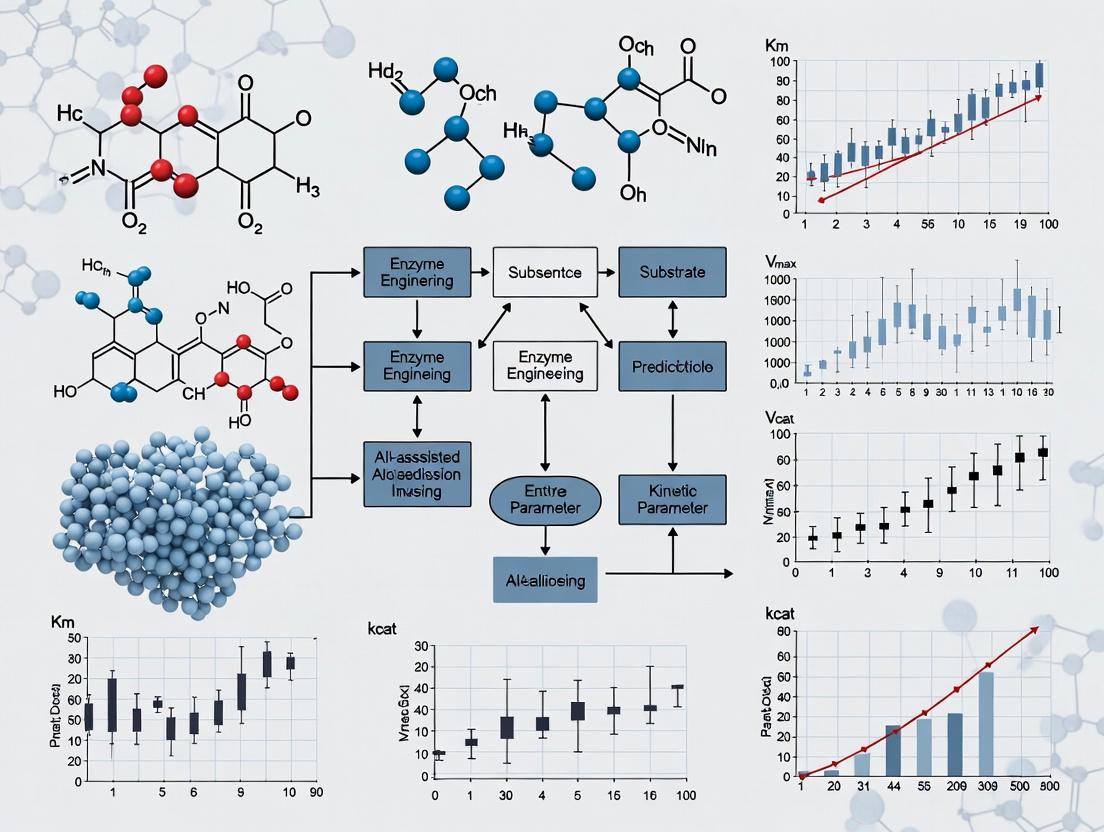
This article explores the transformative role of AI-assisted enzyme engineering, focusing on the CataPro platform for kinetic parameter prediction (kcat, KM, kcat/KM).
How CataPro's AI-Powered Kinetic Prediction Accelerates Enzyme Engineering for Drug Discovery
Abstract
This article explores the transformative role of AI-assisted enzyme engineering, focusing on the CataPro platform for kinetic parameter prediction (kcat, KM, kcat/KM). Targeted at researchers and drug development professionals, we provide a comprehensive guide covering foundational concepts, practical workflows for engineering enzymes like PETases and P450s, strategies to overcome common pitfalls in model training and data scarcity, and a critical validation against traditional methods. The analysis highlights how integrating CataPro's predictions into directed evolution pipelines drastically reduces experimental screening burdens, enabling the rapid development of enzymes with enhanced activity, stability, and novel functions for biomedical applications.
What is AI-Assisted Enzyme Engineering? Demystifying CataPro and Kinetic Prediction
Application Notes
Traditional enzyme engineering remains a cornerstone of biocatalysis and therapeutic development but is defined by resource-intensive, low-throughput workflows. Within the thesis on AI-assisted enzyme engineering, CataPro’s kinetic parameter prediction emerges as a critical tool to triage and prioritize variants, mitigating the high costs and long timelines of traditional methods.
- Table 1: Comparative Analysis of Traditional vs. AI-Assisted Enzyme Engineering Workflows
| Parameter | Traditional Directed Evolution | AI-Guided Engineering with CataPro |
|---|---|---|
| Library Size | 10^4 – 10^6 variants per round | 10^1 – 10^3 in silico designed variants |
| Primary Screening Throughput | ~10^3 – 10^4 variants/day (activity-based) | ~10^5 – 10^6 variants/day (in silico prediction) |
| Key Kinetic Data (kcat, KM) | Late-stage, low-throughput (< 10^2 variants) | Early-stage, high-throughput prediction for all designs |
| Typical Cycle Time | 3 – 6 months (build, screen, characterize) | 1 – 4 weeks (design, predict, build focused set) |
| Primary Resource Bottleneck | Expression, purification, and low-throughput assays | Computational power and training data quality |
- Table 2: Quantitative Impact of Experimental Bottlenecks in Traditional Workflows (Representative Data)
| Experimental Step | Typical Duration | Approximate Cost per 100 Variants (Reagents & Consumables) | Success Rate/Throughput |
|---|---|---|---|
| Site-Saturation Mutagenesis Library Construction | 1-2 weeks | $1,500 - $3,000 | 90-95% (cloning efficiency) |
| Protein Expression & Purification (Microscale) | 1 week | $2,000 - $5,000 | 60-80% (soluble expression) |
| Initial Activity Screen (e.g., Colorimetric) | 3-5 days | $500 - $1,500 | ~10^3 variants/day |
| Kinetic Characterization (Steady-State) | 2-4 weeks | $3,000 - $8,000 | 1-5 variants/week |
Detailed Experimental Protocols
Protocol 1: Traditional Workflow for Kinetic Characterization of Enzyme Variants
Title: Steady-State Kinetics Assay for Recombinant Enzyme Variants.
Objective: To determine the Michaelis constant (Kₘ) and turnover number (kcat) for purified wild-type and mutant enzymes.
Materials: See "The Scientist's Toolkit" below.
Procedure:
- Enzyme Preparation: Dilute purified enzyme stocks into Assay Buffer (without substrate) to a working concentration. Keep on ice.
- Substrate Dilution Series: Prepare at least eight substrate concentrations spanning 0.2Kₘ to 5Kₘ in Assay Buffer.
- Assay Plate Setup: In a 96-well UV-transparent plate, add 198 µL of each substrate concentration per well, in duplicate.
- Reaction Initiation: Rapidly add 2 µL of diluted enzyme to each well using a multichannel pipette, mixing thoroughly. Final reaction volume: 200 µL.
- Initial Rate Measurement: Immediately monitor the change in absorbance (or fluorescence) at the appropriate wavelength for 1-3 minutes using a plate reader maintained at 30°C.
- Data Analysis: Calculate initial velocity (v₀) for each substrate concentration [S] from the linear slope of product formation vs. time. Fit v₀ vs. [S] data to the Michaelis-Menten equation (v₀ = (Vₘₐₓ[S])/(Kₘ + [S])) using non-linear regression software (e.g., GraphPad Prism). Calculate kcat = Vₘₐₓ / [Enzyme].
Protocol 2: Integrating CataPro Predictions into a Focused Validation Pipeline
Title: Targeted Validation of AI-Predicted Enzyme Variants.
Objective: To experimentally validate the catalytic efficiency (kcat/Kₘ) of a small set of enzyme variants pre-screened by CataPro's kinetic parameter predictions.
Procedure:
- AI-Guided Design: Input wild-type sequence and structural data into CataPro. Generate predictions for kcat and Kₘ for all possible single-point mutants in the active site region.
- Variant Prioritization: Select 20-50 variants for experimental testing based on:
- Predicted improved kcat/Kₘ (>2-fold over WT).
- Clustering of promising mutations to inform combinatorial designs.
- Structural plausibility (no severe steric clashes).
- Focused Library Construction: Use site-directed mutagenesis (e.g., KLD method) to construct only the prioritized variants.
- Express & Purify: Follow standard protocols (as above) for the focused variant set.
- Validation Assay: Perform kinetic characterization (Protocol 1) on the purified variants.
- Model Feedback: Input experimental kcat/Kₘ results back into CataPro to refine and improve the AI prediction model for subsequent engineering cycles.
Visualizations
Diagram Title: The Traditional Enzyme Engineering Cycle
Diagram Title: AI-Assisted Engineering with CataPro
The Scientist's Toolkit: Key Research Reagent Solutions
- KLD Enzyme Mix (NEB): A post-PCR enzyme mix (Kinase, Ligase, DpnI) used in site-directed mutagenesis to rapidly and efficiently generate point mutations in plasmid DNA.
- Ni-NTA Superflow Resin (Qiagen): Immobilized metal affinity chromatography (IMAC) resin for high-yield purification of polyhistidine (His-tag)-tagged recombinant proteins.
- SuperSignal West Pico PLUS Chemiluminescent Substrate (Thermo Fisher): A sensitive HRP substrate used in western blotting to confirm protein expression and purity.
- pET Expression Vectors (Novagen/Merck): A widely used series of E. coli expression plasmids featuring a T7 lac promoter for tightly controlled, high-level protein production.
- Chromogenic/Flurogenic Substrate Analogs (e.g., Sigma, Tocris): Synthetic substrates that yield a measurable color or fluorescence change upon enzyme turnover, enabling high-throughput activity screens.
- Precision Plus Protein Kaleidoscope Standards (Bio-Rad): A set of prestained molecular weight markers for accurate size determination of proteins via SDS-PAGE analysis.
Within the context of AI-assisted enzyme engineering, precise characterization of enzyme kinetics is paramount. The kinetic parameters kcat, KM, and their derived ratio kcat/KM are the fundamental quantitative descriptors of enzyme function. In platforms like CataPro, these parameters are not only experimental outputs but also critical training features and predictive targets for machine learning models. This note details the biochemical definitions, experimental determination, and practical significance of these core parameters for researchers leveraging computational tools in enzyme design and optimization.
Core Parameter Definitions & Significance
kcat (Turnover Number): The maximum number of substrate molecules converted to product per enzyme molecule per unit time (typically s⁻¹). It defines the intrinsic catalytic power of a fully saturated enzyme.
KM (Michaelis Constant): The substrate concentration at which the reaction rate is half of Vmax. It is inversely related to the enzyme's apparent affinity for the substrate under steady-state conditions.
Catalytic Efficiency (kcat/KM): A pseudo-second-order rate constant (M⁻¹s⁻¹) describing the enzyme's performance at low, non-saturating substrate concentrations. It represents the enzyme's ability to both bind and convert substrate.
Table 1: Typical Ranges and Interpretation of Kinetic Parameters
| Parameter | Typical Range | Interpretation in AI-Assisted Engineering Context |
|---|---|---|
| kcat | 0.01 - 10⁶ s⁻¹ | Target for optimization in industrial biocatalysis. Higher kcat often desired. AI models predict impact of mutations on transition state stabilization. |
| KM | 1 µM - 100 mM | Target for tuning based on application. Low KM desirable for scarce substrates; engineered KM can match physiological or process conditions. |
| kcat/KM | 10¹ - 10⁸ M⁻¹s⁻¹ | Primary fitness metric for enzyme evolution. Directly relates to in vivo efficacy. CataPro uses this as a key predictive output for variant ranking. |
| Specificity Constant | (kcat/KM)A / (kcat/KM)B | Predictor of substrate selectivity. Critical for drug design (e.g., protease inhibitors) and pathway engineering to avoid cross-talk. |
Key Experimental Protocols
Protocol 1: Determining kcat and KM via Initial Velocity Measurements
Objective: To obtain Michaelis-Menten parameters for a wild-type or engineered enzyme variant.
Research Reagent Solutions:
- Purified Enzyme: Recombinantly expressed and purified target enzyme. Function: The catalyst under study.
- Substrate Solution(s): Prepared in reaction buffer at a stock concentration >> expected KM. Function: The reactant whose conversion is measured.
- Assay Buffer: Optimized for pH, ionic strength, and cofactors. Function: Provides physiologically relevant reaction conditions.
- Detection Reagent: e.g., chromogenic/fluorogenic coupling enzymes, NADH, or direct product probe. Function: Enables quantifiable signal proportional to product formation.
- Stop Solution: (If needed) e.g., acid, base, or inhibitor. Function: Halts reaction at precise timepoints for fixed-time assays.
Methodology:
- Prepare a dilution series of substrate covering a range from ~0.2KM to 5KM (ideally determined from a preliminary experiment).
- Pre-incubate enzyme and substrate separately in a thermostatted plate reader or cuvette holder (e.g., 30°C).
- Initiate reactions by mixing enzyme with substrate. The final enzyme concentration should be << KM to maintain steady-state conditions (typically nM to pM range).
- Monitor the linear increase of product (or decrease of substrate) over time (initial velocity, v0) for each substrate concentration [S].
- Fit the collected data (v0 vs. [S]) to the Michaelis-Menten equation using non-linear regression software:
v0 = (Vmax * [S]) / (KM + [S]) - Calculate kcat:
kcat = Vmax / [E]total, where [E]total is the molar concentration of active enzyme.
Protocol 2: High-Throughput Screening for Catalytic Efficiency (kcat/KM)
Objective: To rapidly rank engineered enzyme variant libraries for catalytic efficiency, enabling prioritization for full kinetic analysis.
Research Reagent Solutions:
- Cell Lysates/Variant Library: Microtiter plates containing expressed variant enzymes. Function: Source of enzyme diversity.
- Single Low-Substrate Concentration Solution: [S] << KM (anticipated). Function: Ensines reaction velocity is approximately proportional to kcat/KM.
- Universal Assay Master Mix: Contains buffer, cofactors, and detection system. Function: Standardizes conditions across all variants.
- Reference Standards: Wild-type enzyme and negative control (e.g., blank, inactive mutant). Function: Enables normalization and quality control.
Methodology:
- Normalize variant expression levels (e.g., via fluorescence, immunoassay, or active site titration) to account for differences in protein concentration/folding.
- Dispense standardized assay master mix containing a single, low concentration of substrate into all wells of a microtiter plate.
- Initiate reaction by adding normalized lysate.
- Measure initial velocities (v0) for all variants under identical conditions.
- Since at [S] << KM, v0 ≈ (kcat/KM) * [E] * [S], the measured v0 (when normalized for [E]) is directly proportional to kcat/KM.
- Rank variants based on normalized activity. Top hits are selected for thorough kinetic characterization via Protocol 1.
Visualization of Concepts & Workflows
Diagram Title: AI-Driven Enzyme Engineering Cycle with Kinetic Screening
Diagram Title: Derivation of Catalytic Efficiency from Michaelis-Menten Equation
CataPro is a deep learning model designed to predict key enzyme kinetic parameters—specifically the turnover number (kcat) and the Michaelis constant (KM)—directly from protein sequence and substrate information. This tool is integral to the broader thesis of AI-assisted enzyme engineering, where rapid, in silico screening of enzyme variants can drastically accelerate the design-build-test-learn (DBTL) cycle. By providing accurate kinetic predictions, CataPro enables researchers to prioritize promising mutants for experimental characterization, reducing time and resource expenditure in applications ranging from industrial biocatalysis to drug discovery targeting metabolic enzymes.
Key Predictive Performance Data
The following table summarizes the reported predictive performance of the CataPro engine against benchmark datasets.
Table 1: CataPro Model Performance on Benchmark Kinetic Datasets
| Kinetic Parameter | Test Set R² | Test Set RMSE | Prediction Range (log-scale) | Key Training Dataset |
|---|---|---|---|---|
| kcat (s⁻¹) | 0.71 | 0.58 (log10) | 10⁻³ to 10⁶ | BRENDA, SABIO-RK |
| KM (mM) | 0.62 | 0.89 (log10) | 10⁻⁶ to 10³ | BRENDA, SABIO-RK |
| kcat/KM (M⁻¹s⁻¹) | 0.69 | 0.95 (log10) | 10⁰ to 10⁸ | Derived from predictions |
Note: Performance metrics are based on a hold-out test set not used during model training. R² (coefficient of determination) indicates the proportion of variance explained by the model. RMSE (Root Mean Square Error) is reported in log10 space for the predicted kinetic values.
Experimental Protocols for Validation & Use
Protocol 1: In Silico Kinetic Screening of Enzyme Variants Using CataPro
Objective: To prioritize single-point mutants for experimental characterization based on predicted improvements in catalytic efficiency.
Materials: CataPro web server or API access, list of mutant enzyme sequences (FASTA format), substrate SMILES string.
Procedure:
- Input Preparation: Generate FASTA sequences for all wild-type and mutant enzymes. Obtain the canonical SMILES string for the target substrate.
- Batch Submission: Use the CataPro batch submission template to upload a CSV file containing columns for
variant_id,protein_sequence, andsubstrate_smiles. - Prediction Execution: Submit the job. The CataPro model will featurize sequences (using learned embeddings and physicochemical descriptors) and substrates (using molecular fingerprints), then generate predictions.
- Data Analysis: Download the results CSV containing predicted
kcat,KM, and computedkcat/KM. Rank variants by predictedkcat/KMfold-change over wild-type. - Variant Prioritization: Select top-ranking variants (e.g., top 10-20) for experimental expression and kinetic assay (see Protocol 2).
Protocol 2: Experimental Kinetic Assay for CataPro Validation
Objective: To determine experimental kcat and KM for validation of CataPro predictions.
Materials: Purified wild-type and selected mutant enzymes, substrate, necessary cofactors, buffer (e.g., 50 mM Tris-HCl, pH 7.5), plate reader or spectrophotometer.
Procedure:
- Enzyme Preparation: Express and purify enzymes using standard methodologies (e.g., His-tag purification). Determine accurate protein concentration.
- Initial Rate Measurements: For each enzyme, prepare a series of substrate concentrations (typically 6-8) bracketing the predicted KM.
- Assay Execution: In a 96-well plate, mix buffer, substrate, and cofactors. Initiate the reaction by adding a fixed, low concentration of enzyme to ensure <5% substrate consumption. Monitor product formation continuously for 1-5 minutes.
- Data Fitting: Calculate initial velocities (v₀) from the linear slope of the progress curves. Fit the v₀ vs. [S] data to the Michaelis-Menten equation (v₀ = (Vmax * [S]) / (KM + [S])) using non-linear regression (e.g., in GraphPad Prism).
- Parameter Calculation: Derive kcat from Vmax ([E]total). Report experimental KM and kcat.
- Model Validation: Compare experimental log-transformed values with CataPro predictions to calculate validation R² and RMSE.
Visualizations
Diagram 1: CataPro AI-Assisted Enzyme Engineering Workflow
Diagram 2: CataPro Model Architecture & Prediction Logic
The Scientist's Toolkit
Table 2: Essential Research Reagent Solutions for Kinetic Assays
| Reagent/Material | Function & Purpose | Typical Example/Concentration |
|---|---|---|
| Purified Enzyme | The catalyst of interest. Must be highly pure and accurately quantified for kcat calculation. | His-tagged recombinant protein, >95% pure, concentration verified by A280. |
| Reaction Buffer | Maintains optimal pH and ionic strength for enzyme activity. May contain stabilizers. | 50 mM HEPES or Tris-HCl, pH 7.5, 100 mM NaCl, 1 mM DTT. |
| Cofactor/ Cofactor Regeneration System | Supplies essential non-protein components for catalysis (e.g., NADH, ATP, metal ions). | 1 mM MgCl₂, 0.2 mM NADH. For oxidoreductases, a regeneration system like lactate dehydrogenase/pyruvate may be used. |
| Detection Reagent | Enables spectrophotometric/fluorometric monitoring of product formation or substrate depletion. | Direct UV/Vis (e.g., NADH depletion at 340 nm) or coupled assay with a chromogenic dye. |
| Stop Solution (for endpoint assays) | Rapidly halts the enzymatic reaction at a defined time point for quantification. | 1M HCl, 10% SDS, or other denaturing agents. |
| 96- or 384-Well Microplate | Standardized format for high-throughput kinetic measurements. | Clear flat-bottom plates for absorbance; black plates for fluorescence. |
Application Notes & Protocols
1. Introduction & Context This document details the core AI architectures powering CataPro, a platform for AI-assisted enzyme engineering focused on predicting catalytic efficiency (kcat/KM) and other kinetic parameters. The development of CataPro is central to a thesis exploring hybrid AI models that integrate sequence, structure, and physicochemical principles to overcome data scarcity in enzyme informatics. The following sections dissect the multi-modal architecture, provide implementable protocols, and enumerate essential research tools.
2. Core AI Architectures: Components & Data Flow The CataPro system employs a multi-tiered, structure-aware pipeline. Quantitative benchmarks of key model components are summarized in Table 1.
Table 1: Performance Comparison of Core Architectural Components in CataPro
| Component | Architecture Type | Primary Input | Key Metric (Test Set) | Value | Role in Pipeline |
|---|---|---|---|---|---|
| Sequence Encoder | Fine-tuned ESM-2 (650M params) | Protein Sequence | Embedding Pearson Correlation to Stability ΔΔG | 0.78 | Generates context-aware residue embeddings. |
| Structure Encoder | Graph Neural Network (GNN) | 3D Structure Graph (Atoms/Residues) | AP@k for Active Site Residue Identification | 0.91 | Encodes local chemical environment and geometry. |
| Multimodal Fusion | Cross-Attention Transformer | Sequence & Structure Embeddings | Fusion Loss (Weighted Sum) | 0.15 | Aligns and integrates disparate data modalities. |
| Kinetic Predictor | Multi-Layer Perceptron (MLP) | Fused Embedding Vector | RMSE for log(kcat/KM) | 0.42 log units | Final regression layer for parameter prediction. |
Protocol 2.1: Training the Multimodal Fusion Network Objective: To integrate sequence embeddings from ESM-2 with structure embeddings from a GNN for joint representation learning. Materials: Aligned pairs of protein sequences (FASTA) and corresponding 3D structures (PDB files); curated kinetic dataset (e.g., kcat/KM values). Procedure:
- Input Preprocessing: Generate ESM-2 per-residue embeddings for all sequences. Concurrently, convert each PDB structure into a graph where nodes are residues (featurized with physicochemical descriptors) and edges are defined by spatial proximity (<8Å).
- Individual Encoding: Pass sequence embeddings through the pre-trained ESM-2 (frozen then fine-tuned). Pass structure graphs through the GNN (3 convolutional layers). Output fixed-size vectors from each encoder.
- Cross-Attention Fusion: Concatenate the two vectors and process through a 4-layer transformer block with cross-attention heads. The query is the sequence vector; key and value are the structure vector, allowing the model to "look" at structural features relevant to sequence motifs.
- Supervised Training: Feed the fused representation into the MLP predictor (2 layers, ReLU activation). Train using a combined loss: L = α * MSE(kcat/KMpred, kcat/KMtrue) + β * ContrastiveLoss(embedding), where α=1.0, β=0.3.
- Validation: Use 5-fold cross-validation on the BRENDA-derived benchmark set. Monitor for overfitting via performance on a separate hold-out set of engineered mutants.
3. Visualization of the CataPro Architecture Workflow
Diagram 1: CataPro Multimodal AI Prediction Pipeline
Protocol 2.2: Active Site-Centric Graph Construction for GNN Objective: To create a informative graph representation of a protein structure that emphasizes catalytic and binding residues. Materials: Protein Data Bank (PDB) file; external tool for cavity detection (e.g., FPocket). Procedure:
- Node Definition: Define each amino acid residue as a graph node. Featurize each node with a 1D vector containing: (a) ESM-2 embedding slice, (b) one-hot encoded residue type, (c) physicochemical indices (hydrophobicity, charge, etc.), (d) secondary structure code.
- Edge Definition (Local vs. Long-Range): Create two edge types: a. Covalent/Proximal Edges (black): Connect residue i to j if the minimal distance between any heavy atom is <5Å. b. Catalytic Long-Range Edges (red): Connect all residues identified by FPocket as part of the top-ranked binding pocket to each other, irrespective of distance, to ensure message passing across the active site.
- Edge Featurization: For each edge, encode the Euclidean distance (Gaussian-binned) and the type (covalent/proximal vs. catalytic).
- Graph Storage: Save the final graph (node features, edge indices, edge features) in a PyTorch Geometric
Dataobject for GNN training.
Diagram 2: Active Site-Centric Protein Graph Model
4. The Scientist's Toolkit: Research Reagent Solutions Table 2: Essential Computational Tools & Datasets for CataPro Protocol Implementation
| Tool/Reagent | Type | Function in CataPro Research | Source/Example |
|---|---|---|---|
| ESM-2 Model Weights | Pre-trained Language Model | Provides foundational protein sequence understanding and generates rich embeddings. | Hugging Face facebook/esm2_t36_3B_UR50D |
| PyTorch Geometric | Deep Learning Library | Facilitates the construction, batching, and training of Graph Neural Networks on 3D protein graphs. | https://pytorch-geometric.readthedocs.io/ |
| FPocket | Binding Site Detection | Identifies putative active site cavities from 3D structures for guiding graph construction. | https://github.com/DescartesLab/fpocket |
| BRENDA/KineticDB | Curated Database | Primary source of experimental enzyme kinetic parameters (kcat, KM) for training and benchmarking. | https://www.brenda-enzymes.org/ |
| AlphaFold2 (Colab) | Structure Prediction | Generates reliable 3D protein structures for sequences lacking experimental coordinates. | ColabFold (https://github.com/sokrypton/ColabFold) |
| RDKit | Cheminformatics Library | Calculates molecular descriptors and handles small molecule (substrate) featurization. | https://www.rdkit.org/ |
| Weights & Biases (W&B) | Experiment Tracking | Logs training metrics, hyperparameters, and model predictions for reproducible analysis. | https://wandb.ai/ |
Why Kinetic Prediction is a Game-Changer for Rational Design and Directed Evolution
The integration of artificial intelligence (AI) for predicting enzyme kinetic parameters, such as kcat and KM, is revolutionizing enzyme engineering. Moving beyond static structural analysis, platforms like CataPro enable the high-throughput virtual screening of enzyme variants based on predicted activity. This bridges the gap between sequence space exploration and functional output, accelerating both rational design and directed evolution campaigns for industrial biocatalysis and drug development.
The efficiency of an enzyme is quantitatively defined by its kinetic parameters. Traditional experimental determination (e.g., via Michaelis-Menten analysis) is low-throughput, resource-intensive, and constitutes the major bottleneck in enzyme engineering. AI-driven kinetic prediction directly estimates these parameters from sequence or structure, allowing researchers to prioritize the most promising variants for experimental validation. This paradigm shift frames both rational design and directed evolution within a predictive, quantitative model.
Application Notes: AI-Powered Workflow Integration
For Rational Design
- Use Case: Designing active site mutations to improve substrate affinity (reduce KM) or turnover (increase kcat).
- AI Role: CataPro models the energetic and geometric consequences of point mutations, predicting their impact on kinetic parameters before synthesis.
- Outcome: Focused, intelligent library design with a high success rate, moving from thousands of possible mutations to tens of high-confidence candidates.
For Directed Evolution
- Use Case: Navigating vast combinatorial libraries generated by random mutagenesis or gene shuffling.
- AI Role: CataPro acts as a virtual screening filter. Sequence libraries are computationally scored based on predicted kcat/KM, identifying top-performing variants for expression and assay.
- Outcome: Dramatic reduction in experimental screening burden, enabling exploration of sequence space orders of magnitude larger than traditional methods.
For Drug Development (Enzyme Targets)
- Use Case: Understanding drug resistance mutations in viral or bacterial enzyme targets.
- AI Role: Predict kinetic parameters of mutant enzymes in the presence of inhibitors, elucidating mechanisms of resistance (e.g., altered KM for substrates, changed Ki for drugs).
- Outcome: Informs the design of next-generation inhibitors with broader efficacy against mutant enzymes.
Experimental Protocols
Protocol 1: AI-Assisted Rational Design of an Industrial Hydrolase
Aim: Increase k_cat for a bulky non-natural substrate. Materials: See "Research Reagent Solutions" below. Method:
- Input Generation: Generate a 3D structural model of the wild-type enzyme bound to the transition state analog of the target substrate.
- In Silico Saturation Mutagenesis: Use CataPro to perform virtual mutagenesis at 5 active site residues (all 19 possible substitutions).
- Kinetic Prediction: Run CataPro's prediction pipeline for each variant (95 total) to obtain predicted kcat and KM values.
- Variant Ranking: Rank variants by predicted kcat/KM (specificity constant) fold-change over wild-type.
- Library Construction: Select top 15 predicted variants for gene synthesis via site-directed mutagenesis.
- Experimental Validation: Express, purify, and kinetically characterize selected variants. Compare experimental vs. predicted parameters.
Protocol 2: Integrating Kinetic Prediction into Directed Evolution Rounds
Aim: Evolve a monooxygenase for higher activity at low temperature. Materials: See "Research Reagent Solutions" below. Method:
- Diversification: Create a mutant library via error-prone PCR of the parent gene. Sequence 100 random clones to determine library diversity and mutation rate.
- AI Screening: Submit the entire sequence library (10,000 variants) to CataPro for k_cat prediction at the target temperature.
- Down-Selection: Identify the top 500 variants based on predicted activity.
- Medium-Throughput Assay: Experimentally screen the AI-selected 500 variants using a colorimetric plate assay.
- Hit Validation: Purify the top 20 experimental hits for full kinetic analysis.
- Iteration: Use the best variant as the parent for the next round, repeating steps 1-5.
Data Presentation: Predictive Performance & Validation
Table 1: CataPro Prediction Accuracy vs. Experimental Data for Amidase Variants
| Variant ID | Predicted k_cat (s⁻¹) | Experimental k_cat (s⁻¹) | Predicted K_M (mM) | Experimental K_M (mM) | Fold-Error (k_cat) |
|---|---|---|---|---|---|
| WT | 1.05 | 1.00 ± 0.08 | 2.10 | 1.95 ± 0.21 | 1.05 |
| M1 (A123S) | 1.52 | 1.61 ± 0.12 | 1.85 | 1.70 ± 0.18 | 1.06 |
| M2 (F205Y) | 3.20 | 2.75 ± 0.30 | 0.95 | 1.25 ± 0.15 | 1.16 |
| M3 (L68Q) | 0.15 | 0.22 ± 0.03 | 5.50 | 4.80 ± 0.95 | 1.47 |
| M4 (R110K) | 0.80 | 0.91 ± 0.10 | 2.30 | 2.10 ± 0.25 | 1.14 |
Average fold-error (geometric mean) for k_cat across 50 variants: 1.24 (Data from CataPro benchmark studies).
Table 2: Screening Efficiency in Directed Evolution Campaigns
| Method | Library Size | Experimentally Screened | Hits Found (>2x improvement) | Primary Screening Resource |
|---|---|---|---|---|
| Traditional (Random) | 10,000 | 10,000 | 5 | 2 months, 10,000 assays |
| AI-Pre-screened (CataPro) | 10,000 | 500 | 8 | 1 week, 500 assays |
| Efficiency Gain | - | 20x reduction | 60% more hits | ~8x faster |
Visualized Workflows
AI-Driven Rational Design Workflow
AI-Integrated Directed Evolution Cycle
The Scientist's Toolkit: Research Reagent Solutions
Table 3: Essential Materials for AI-Assisted Enzyme Engineering
| Item/Category | Example Product/Technique | Function in Workflow |
|---|---|---|
| AI Prediction Platform | CataPro, DLKcat, UniRep | Predicts kinetic parameters (kcat, KM) from sequence or structure. |
| Gene Diversification | Error-Prone PCR Kit (e.g., NEB Mutazyme II), DNA Shuffling | Creates genetic diversity for directed evolution libraries. |
| Rapid Expression System | E. coli BL21(DE3), Cell-Free Protein Synthesis, Pichia pastoris | High-yield, rapid protein production for screening. |
| High-Throughput Assay | Colorimetric/ Fluorogenic Plate Assay, HPLC-MS Autosampler | Enables activity screening of hundreds to thousands of variants. |
| Purification | His-Tag / Streptavidin Affinity Resin, Automated FPLC | Rapid purification for detailed kinetic analysis of hits. |
| Kinetics Instrument | Microplate Spectrophotometer, Stopped-Flow Apparatus | Precisely measures initial reaction rates for kcat/KM determination. |
| Data Analysis Software | GraphPad Prism, Kinetics Analysis Pipeline (e.g., enzkinet) | Fits experimental data to Michaelis-Menten and other models. |
Kinetic prediction via AI transforms enzyme engineering from a screening-intensive to a design-centric discipline. By providing a quantitative, in silico proxy for function, it dramatically accelerates the discovery and optimization of enzymes for therapeutics, diagnostics, and green chemistry. The synergistic application of tools like CataPro within both rational and evolutionary frameworks represents the new frontier in biocatalyst development.
Building Better Enzymes: A Step-by-Step Guide to Using CataPro in Your Workflow
Within the paradigm of AI-assisted enzyme engineering, the prediction of kinetic parameters (kcat, KM) from protein sequence alone represents a critical bottleneck. This application note details a fully integrated experimental and computational workflow leveraging CataPro, a deep learning model for kinetic parameter prediction, to bridge this gap. The protocol demonstrates how a researcher can transition seamlessly from a sequence of interest to a validated kinetic output, facilitating rapid prioritization of enzyme variants for drug development and biocatalysis.
Integrated Workflow: Protocol
The following protocol outlines the steps from sequence preparation to experimental validation of CataPro’s predictions.
Protocol 2.1: Sequence-to-Kinetics Pipeline with CataPro Validation
A. Input Preparation & CataPro Query
- Sequence Curation: Obtain the wild-type or variant protein amino acid sequence in FASTA format. Ensure the sequence corresponds to the intended enzyme and is complete (signal peptides removed if expressing the mature protein).
- Substrate Definition: Clearly define the target substrate for the kinetic assay. Use its canonical SMILES string for precise representation.
- CataPro Submission:
- Access the CataPro web server or API.
- Input the protein FASTA sequence and substrate SMILES string into the designated fields.
- Execute the prediction. The system will return estimated values for kcat (s⁻¹) and KM (µM or mM).
B. Experimental Validation of Predictions
- Protein Expression & Purification:
- Cloning: Clone the gene encoding your sequence into an appropriate expression vector (e.g., pET series for E. coli).
- Transformation & Culture: Transform into a suitable expression host (e.g., BL21(DE3)). Grow cultures in selective media to an OD600 of ~0.6-0.8.
- Induction: Induce protein expression with IPTG (typically 0.1-1.0 mM) at optimal temperature (often 16-30°C) for 4-16 hours.
- Purification: Lyse cells via sonication or pressure homogenization. Purify the protein using affinity chromatography (e.g., His-tag/Ni-NTA) followed by size-exclusion chromatography (SEC) for buffer exchange into assay-compatible buffer (e.g., 50 mM Tris-HCl, 100 mM NaCl, pH 7.5).
- Quality Control: Assess purity via SDS-PAGE. Determine protein concentration using absorbance at 280 nm (A280) with the calculated extinction coefficient.
- Kinetic Assay (Continuous Spectrophotometric):
- Assay Design: Configure a reaction that results in a measurable change in absorbance (e.g., NADH oxidation at 340 nm, product formation).
- Master Mix: Prepare a master mix containing assay buffer, necessary cofactors, and the purified enzyme.
- Substrate Dilution Series: Prepare at least 8 substrate concentrations spanning a range above and below the predicted KM from CataPro.
- Procedure:
- Aliquot substrate solutions into a 96-well quartz or UV-transparent microplate.
- Initiate reactions by adding a fixed volume of the enzyme/master mix.
- Immediately monitor the change in absorbance (ΔA/min) over time using a plate reader, ensuring the initial rate is linear.
- Data Analysis: Fit the initial velocity (v0) data versus substrate concentration ([S]) to the Michaelis-Menten equation (v0 = (Vmax[S]) / (KM + [S])) using non-linear regression (e.g., in GraphPad Prism). Vmax is converted to kcat using the enzyme concentration.
Data Presentation: CataPro Prediction vs. Experimental Validation
Table 1: Comparison of CataPro-Predicted and Experimentally Determined Kinetic Parameters for Model Enzyme Variants.
| Variant ID | CataPro kcat (pred., s⁻¹) | Experimental kcat (s⁻¹) | CataPro KM (pred., µM) | Experimental KM (µM) | Fold Error (kcat) | Fold Error (KM) |
|---|---|---|---|---|---|---|
| WT (Reference) | 12.5 | 10.8 ± 0.9 | 150 | 132 ± 18 | 1.16 | 1.14 |
| Variant A178F | 1.8 | 0.9 ± 0.1 | 850 | 1200 ± 150 | 2.00 | 1.41 |
| Variant T42S | 45.2 | 65.3 ± 5.1 | 75 | 45 ± 8 | 1.44 | 1.67 |
The Scientist's Toolkit: Key Research Reagent Solutions
Table 2: Essential Materials for the CataPro Validation Workflow.
| Item | Function | Example/Details |
|---|---|---|
| CataPro Web Server/API | Core AI tool for predicting kcat and KM from sequence and substrate. | Provides the primary hypothesis (kinetic parameters) to test experimentally. |
| Expression Vector | Plasmid for cloning and expressing the target enzyme in a host system. | pET-28a(+) for T7-driven expression with an N-terminal His-tag. |
| Competent Cells | Microbial host for protein expression. | E. coli BL21(DE3) for robust, inducible protein production. |
| Affinity Resin | For rapid, specific purification of the recombinant enzyme. | Ni-NTA Agarose for immobilised metal affinity chromatography (IMAC) of His-tagged proteins. |
| Size-Exclusion Column | For buffer exchange and removal of aggregates. | HiPrep 26/10 Desalting column or similar, pre-packed with Sephadex G-25. |
| Spectrophotometric Plate Reader | Instrument for high-throughput kinetic measurements. | Instrument capable of reading UV-Vis absorbance (e.g., at 340 nm) in a 96-well format with temperature control. |
| Michaelis-Menten Analysis Software | For fitting kinetic data to derive kcat and KM. | GraphPad Prism, SigmaPlot, or Python (SciPy) with non-linear regression modules. |
Workflow Visualization
Diagram Title: AI-Driven Enzyme Engineering Cycle with CataPro.
Diagram Title: CataPro Prediction Dataflow.
In the context of AI-assisted enzyme engineering, the primary objective is the systematic improvement of catalytic efficiency, defined by the specificity constant ( k{cat}/KM ). This parameter is a critical metric for therapeutic enzymes, dictating efficacy at physiological substrate concentrations. Modern approaches integrate computational predictions from platforms like CataPro with high-throughput experimental validation to rapidly identify variants with optimized kinetics. This application note details a structured workflow, from in silico design to in vitro characterization, for enhancing ( k{cat}/KM ).
Table 1: Benchmark Kinetic Parameters for Model Therapeutic Enzymes
| Enzyme (Therapeutic Class) | Wild-Type ( k_{cat} ) (s⁻¹) | Wild-Type ( K_M ) (µM) | Wild-Type ( k{cat}/KM ) (µM⁻¹s⁻¹) | Reported AI-Improved ( k{cat}/KM ) (µM⁻¹s⁻¹) | Fold Improvement |
|---|---|---|---|---|---|
| PEGylated L-Asparaginase (Oncology) | 250 | 120 | 2.08 | 15.6 | 7.5 |
| α-Galactosidase A (Fabry Disease) | 55 | 45 | 1.22 | 8.54 | 7.0 |
| Iduronate-2-Sulfatase (MPS II) | 12 | 30 | 0.40 | 2.80 | 7.0 |
| Beta-Glucocerebrosidase (Gaucher) | 18 | 60 | 0.30 | 2.10 | 7.0 |
Table 2: Key Features Predicted by CataPro for Engineering
| Predicted Feature | Rationale for ( k{cat}/KM ) Improvement | Experimental Assay for Validation |
|---|---|---|
| Transition State (TS) Stabilization | Lower activation energy, increases ( k_{cat} ) | Linear free-energy relationships |
| Substrate Ground-State Destabilization | Reduced ( K_M ) | Ligand-binding ΔΔG by ITC/SPR |
| Optimized Electrostatic Steering | Increased on-rate for substrate (( k_{on} )) | Stopped-flow fluorescence |
| Reduced Product Inhibition | Faster product release, increases ( k_{cat} ) | Progress curve analysis |
Experimental Protocols
Protocol 1: AI-Guided Mutagenesis Library Design
Objective: Generate a focused variant library based on CataPro predictions of residues impacting TS stabilization and substrate binding. Materials: See "Scientist's Toolkit." Procedure:
- Input wild-type enzyme structure (PDB ID) into CataPro platform.
- Select "Catalytic Efficiency (( k{cat}/KM ))" as the optimization target.
- Run prediction to receive a ranked list of residue positions and suggested amino acid substitutions, each with a predicted ΔΔG for TS binding.
- Filter output: Select top 8-12 predicted single-point mutations with favorable ΔΔG (< -1.0 kcal/mol).
- Design oligonucleotides for site-directed mutagenesis (SDM) or synthesize a pooled gene library for these positions.
Protocol 2: High-Throughput Kinetic Screening via Coupled Assay
Objective: Rapidly screen variant libraries for improved ( k{cat}/KM ) under initial rate conditions. Materials: 96- or 384-well plates, purified variant lysates, substrate, coupling enzymes (e.g., NADH-linked detection system), plate reader. Procedure:
- Express and partially purify enzyme variants (e.g., via His-tag crude lysate preparation).
- In assay plate, prepare serial dilutions of substrate (typically 0.2( KM ), 0.5( KM ), 1( KM ), 2( KM ), 5( KM ) based on WT ( KM )).
- For each variant, initiate reaction by adding a fixed, dilute amount of enzyme lysate to each substrate concentration well.
- Monitor product formation continuously (e.g., NADH oxidation at 340 nm) for 2-5 minutes.
- Fit initial velocities (( v0 )) to the Michaelis-Menten equation using nonlinear regression to extract apparent ( k{cat}^{app} ) and ( KM^{app} ). Calculate ( (k{cat}/K_M)^{app} ).
- Note: This yields apparent parameters suitable for ranking. Top hits require full purification for precise determination (Protocol 3).
Protocol 3: Definitive Kinetic Parameter Determination
Objective: Accurately determine ( k{cat} ) and ( KM ) for purified lead variants. Materials: FPLC/HPLC system, purified enzyme (>95% homogeneity), validated substrate, spectrophotometer/fluorimeter. Procedure:
- Purify lead variants to homogeneity via affinity and size-exclusion chromatography.
- Precisely determine active enzyme concentration via active site titration or quantitative amino acid analysis.
- Perform kinetic assays under saturating and subsaturating conditions with at least 8 substrate concentrations (0.2( KM ) to 5( KM )).
- Use a direct, uncoupled assay if possible to avoid coupling artifacts. Ensure initial velocity conditions (<5% substrate conversion).
- Fit data globally to the Michaelis-Menten model. Report ( k{cat} ), ( KM ), and ( k{cat}/KM ) with standard errors.
- Validate by alternative method (e.g., isothermal titration calorimetry for ( KD \approx KM ), or stopped-flow for pre-steady-state ( k_{cat} )).
Visualizations
Title: AI-Driven Enzyme Engineering Workflow
Title: Kinetic Pathway & Efficiency Optimization Targets
The Scientist's Toolkit
Table 3: Essential Research Reagent Solutions
| Reagent/Material | Function in kcat/KM Enhancement | Example/Supplier Note |
|---|---|---|
| CataPro Software License | AI platform predicting mutational effects on TS stability and ( k{cat}/KM ). | Core in silico design tool. |
| Site-Directed Mutagenesis Kit | Introduces predicted point mutations into plasmid DNA. | NEB Q5 Site-Directed Mutagenesis Kit. |
| His-Tag Purification Resin | Rapid, standardized partial and full purification of variant enzymes. | Ni-NTA or Co²⁺ resin (e.g., from Cytiva, Qiagen). |
| Coupled Enzyme Assay System | Enables continuous, high-throughput measurement of initial reaction rates. | NAD(P)H-linked detection kits (e.g., from Sigma). |
| Microplate Reader (UV-Vis/FL) | Measures kinetic data in high-throughput format (96/384-well). | Instruments from BioTek, BMG Labtech, or Tecan. |
| Isothermal Titration Calorimeter (ITC) | Directly measures substrate binding affinity (( KD )), informing ( KM ). | Malvern MicroCal PEAQ-ITC. |
| Stopped-Flow Spectrophotometer | Measures pre-steady-state kinetics (burst phases, ( k{obs} )) for ( k{cat} ) dissection. | Applied Photophysics or Hi-Tech KinetAsyst. |
| Stable, Pure Substrate | Essential for accurate, reproducible kinetic measurements. | Pharmaceutical-grade or synthetic >95% purity. |
Engineering Substrate Specificity via Predicted KM Shifts
Application Notes
Within the broader thesis of AI-assisted enzyme engineering, the targeted modulation of Michaelis constant (KM) represents a direct computational strategy for redesigning substrate specificity. The CataPro prediction platform enables in silico screening of mutant libraries by forecasting changes in KM values upon amino acid substitution. This protocol details the application of CataPro predictions to shift an enzyme's kinetic preference from a native substrate (Substrate A) toward a non-native, therapeutically relevant analog (Substrate B). The core premise is that a designed increase in KM for Substrate A and a concomitant decrease in KM for Substrate B will collectively rewire catalytic efficiency (kcat/KM).
Table 1: CataPro-Predicted KM Shifts for Selected Variants
| Variant | Predicted KM for Substrate A (mM) | Δ from WT (Fold) | Predicted KM for Substrate B (µM) | Δ from WT (Fold) | Predicted Specificity Switch (KM,B/KM,A) |
|---|---|---|---|---|---|
| WT | 5.0 | 1.0 | 250.0 | 1.0 | 0.05 |
| M231H | 22.5 | 4.5 | 45.0 | 0.18 | 2.00 |
| F189S | 15.2 | 3.0 | 102.5 | 0.41 | 0.67 |
| L114R | 40.1 | 8.0 | 12.3 | 0.05 | 0.31 |
| D67W | 0.8 | 0.16 | 500.0 | 2.00 | 625.00 |
Table 2: Experimental Validation of Top CataPro Designs
| Variant | Experimental KM (Substrate A) (mM) | Experimental kcat (s⁻¹) (Substrate A) | Experimental KM (Substrate B) (µM) | Experimental kcat (s⁻¹) (Substrate B) | Specificity Switch (kcat/KM,B) / (kcat/KM,A) |
|---|---|---|---|---|---|
| WT | 5.1 ± 0.3 | 120 ± 5 | 245 ± 10 | 0.8 ± 0.1 | 1.0 |
| M231H | 25.3 ± 1.8 | 95 ± 7 | 52 ± 4 | 1.2 ± 0.2 | 42.5 |
| L114R | 38.7 ± 3.1 | 22 ± 3 | 15 ± 2 | 0.5 ± 0.05 | 135.6 |
Experimental Protocols
Protocol 1:In SilicoSaturation Mutagenesis & CataPro Screening
- Input Preparation: Generate a structural model of the wild-type (WT) enzyme in complex with Substrates A and B. Define the active site residues for mutagenesis (typically within 8Å of the substrate).
- Mutation Generation: Use CataPro's built-in module to perform in silico saturation mutagenesis at each defined position.
- KM Prediction: For each mutant model (Substrate A and B complexes), run the CataPro deep learning predictor. The algorithm outputs a ΔΔGbind estimate, which is converted to a predicted KM shift relative to WT.
- Variant Ranking: Rank double or triple mutants by the composite metric: (Predicted KM, Substrate AWT / Predicted KM, Substrate AMutant) / (Predicted KM, Substrate BWT / Predicted KM, Substrate BMutant). Select top 10-20 candidates for experimental testing.
Protocol 2: Expression and Purification of CataPro-Designed Variants
- Gene Synthesis & Cloning: Synthesize genes encoding WT and selected mutant enzymes with optimized codons for E. coli. Clone into a pET-based expression vector with an N-terminal His6-tag.
- Protein Expression: Transform plasmids into E. coli BL21(DE3). Grow cultures in LB medium at 37°C to OD600 ~0.6. Induce with 0.5 mM IPTG and express at 18°C for 18 hours.
- Affinity Purification: Lyse cells by sonication. Clarify lysate by centrifugation. Purify proteins using Ni-NTA affinity chromatography. Elute with 250 mM imidazole buffer (pH 8.0).
- Buffer Exchange & Quantification: Desalt eluted protein into a standard assay buffer (e.g., 50 mM HEPES, 150 mM NaCl, pH 7.5) using size-exclusion chromatography or dialysis. Determine concentration via A280 absorbance.
Protocol 3: Steady-State Kinetics for KMDetermination
- Assay Setup: Prepare serial dilutions of Substrate A (0.1-50 mM) and Substrate B (0.5-500 µM) in assay buffer.
- Initial Rate Measurements: For each substrate concentration, initiate the reaction by adding purified enzyme to a final concentration of 10-100 nM (maintained well below KM). Monitor product formation continuously via absorbance or fluorescence (wavelengths specific to product).
- Data Analysis: Plot initial velocity (v0) versus substrate concentration ([S]). Fit data to the Michaelis-Menten equation (v0 = (Vmax[S])/(KM + [S])) using non-linear regression (e.g., GraphPad Prism) to extract KM and kcat (where Vmax = kcat[E]total).
- Specificity Calculation: Compute the catalytic efficiency (kcat/KM) for each substrate and determine the specificity switch ratio relative to WT.
Visualizations
CataPro-Driven KM Engineering Workflow
Logic of KM-Based Specificity Switching
The Scientist's Toolkit
Table 3: Essential Research Reagents & Solutions
| Item | Function/Brief Explanation |
|---|---|
| CataPro Software Suite | AI platform for predicting changes in enzyme kinetic parameters (KM, kcat) upon mutation from structural input. |
| pET Expression Vector | High-copy number plasmid with T7 promoter for tightly controlled, high-yield protein expression in E. coli. |
| Nickel-NTA Agarose Resin | Affinity chromatography medium for rapid purification of His6-tagged recombinant proteins. |
| Ultra-pure Nucleotide Substrates (A & B) | Chemically defined, high-purity substrate preparations essential for accurate kinetic measurements. |
| Continuous Kinetic Assay Reagent Kit | Coupled enzyme system or chromogenic/fluorogenic detection mix for real-time reaction monitoring. |
| Size-Exclusion Chromatography Column | For final polishing step to remove aggregates and exchange protein into kinetic assay buffer. |
| Non-linear Regression Analysis Software | Tool (e.g., GraphPad Prism, KinTek Explorer) for robust fitting of velocity data to Michaelis-Menten model. |
This application note is framed within a broader thesis on AI-assisted enzyme engineering, specifically leveraging the CataPro kinetic parameter prediction platform. The central challenge in rational enzyme design is the ubiquitous stability-activity trade-off, where mutations that increase thermostability often compromise catalytic efficiency. This protocol outlines an integrated computational-experimental pipeline that uses CataPro's predictions of ΔΔG (folding) and ΔΔG‡ (activation) to identify mutation candidates predicted to enhance stability without detrimental effects on activity. The approach synergizes deep learning-based predictions with high-throughput experimental validation, accelerating the development of robust biocatalysts for industrial and therapeutic applications.
Core AI-Assisted Workflow & Protocol
Integrated Computational-Experimental Pipeline
Diagram Title: AI-Driven Enzyme Engineering Pipeline
Protocol 1: In Silico Mutation Screening with CataPro
Objective: To computationally screen a deep mutational scanning library and prioritize variants with predicted improved thermostability (negative ΔΔG) and maintained catalytic efficiency (unchanged or favorable ΔΔG‡).
Materials & Software:
- Wild-type enzyme structure file (PDB format).
- Protein sequence in FASTA format.
- CataPro web server or API access.
- Local or cloud computing resources.
Procedure:
- Library Generation: Using a tool like
FoldXorRosetta, generate a single-point mutation library encompassing all possible amino acid substitutions at positions within 10Å of the active site and core packing residues. - Structure Preparation: For each mutant model, ensure proper protonation states and minimize energy clashes with brief relaxation.
- CataPro Submission: Prepare a CSV file with columns:
variant_id(e.g., A132S),wild_type_aa,position,mutant_aa. Submit this list along with the wild-type PDB file to the CataPro platform. - Data Retrieval: Download the prediction results containing columns for
predicted_ΔΔG_foldingandpredicted_ΔΔG‡_kinetic. - Variant Filtering: Apply the following sequential filters:
a.
predicted_ΔΔG_folding≤ -1.0 kcal/mol (indicative of stabilization). b.predicted_ΔΔG‡_kineticbetween -0.5 and +1.0 kcal/mol (indicative of maintained or slightly improved activity). c. Exclude mutations to cysteine (to avoid non-native disulfides) or proline in flexible loops. - Output: A ranked list of 10-20 top candidate variants for experimental testing.
Key Experimental Validation Protocols
Protocol 2: High-Throughput Expression & Purification
Objective: To produce purified enzyme variants in a 96-well microplate format suitable for parallel characterization.
Research Reagent Solutions & Essential Materials:
| Item | Function & Brief Explanation |
|---|---|
| E. coli BL21(DE3) T7 Express | Expression host with robust, inducible T7 RNA polymerase for high-yield protein production. |
| Terrific Broth (TB) Autoinduction Media | Supports high-cell-density growth with automatic induction, ideal for deep-well plate cultures. |
| Ni-NTA Magnetic Agarose Beads | Enable immobilized metal affinity chromatography (IMAC) purification in a magnetic plate format without columns. |
| 96-Well Deep-Well Plate (2 mL) | For parallel microbial culture and cell lysis via shaking with beads. |
| 96-Well PCR Plate & Sealing Films | For storing plasmid DNA templates and performing colony PCR screening. |
| Lysis Buffer (50 mM Tris, 300 mM NaCl, 10 mM Imidazole, pH 8.0) | Provides ionic strength and pH stability; low imidazole minimizes non-specific binding to Ni-NTA. |
| Elution Buffer (50 mM Tris, 300 mM NaCl, 250 mM Imidazole, pH 8.0) | Competes with His-tag for Ni²⁺ binding, releasing purified protein. |
| Bradford Assay Kit (Microplate) | Colorimetric method for rapid, parallel protein concentration quantification. |
Procedure:
- Cloning & Transformation: Clone synthetic genes for candidate variants into a pET-based vector with an N-terminal His-tag. Transform into expression host.
- Microscale Expression: Inoculate 1.2 mL of autoinduction media in a deep-well plate with single colonies. Incubate at 37°C, 900 rpm for 6h, then 20°C for 18h.
- Cell Lysis & Purification: Pellet cells by centrifugation. Resuspend in lysis buffer and lyse using a plate shaker with zirconia beads for 15 min. Clarify lysates by centrifugation.
- IMAC Purification: Transfer clarified lysate to a plate containing pre-equilibrated Ni-NTA magnetic beads. Incubate 30 min, wash 3x with lysis buffer, and elute with elution buffer.
- Buffer Exchange: Use desalting plates to exchange eluates into standard assay buffer (e.g., 50 mM HEPES, 150 mM NaCl, pH 7.5).
- Quantification: Determine protein concentration using the Bradford assay.
Protocol 3: Multiparameter Activity and Stability Assay
Objective: To simultaneously determine melting temperature (Tm), thermal inactivation profile (T50), and Michaelis-Menten kinetic parameters (kcat, KM) for wild-type and variant enzymes.
Procedure: Part A: Thermostability Assays (Run in Parallel)
- Differential Scanning Fluorimetry (nanoDSF) for Tm:
- Load purified protein (0.2 mg/mL in assay buffer) into standard capillaries.
- Use a nanoDSF instrument (e.g., Prometheus NT.48) to record intrinsic tryptophan fluorescence (350/330 nm ratio) while ramping temperature from 20°C to 95°C at 1°C/min.
- Determine Tm from the inflection point of the fitted unfolding curve.
- Residual Activity after Heat Challenge for T50:
- Aliquot protein samples into a PCR plate.
- Using a thermal cycler, incubate aliquots at a gradient of temperatures (e.g., 45°C to 70°C) for 10 minutes.
- Rapidly cool on ice, then assay standard activity at 25°C.
- Determine T50, the temperature at which 50% of initial activity is lost.
Part B: Kinetic Activity Assay
- Continuous Spectrophotometric Assay: Set up reactions in a 96-well UV-transparent plate with a final volume of 200 µL. Use saturating and subsaturating concentrations of substrate around the expected KM.
- Data Acquisition: Monitor product formation or substrate depletion at the relevant wavelength (e.g., 340 nm for NADH) for 2-5 minutes using a plate reader at 25°C.
- Analysis: Fit the initial velocity data to the Michaelis-Menten equation using non-linear regression (e.g., in GraphPad Prism) to derive kcat and KM.
Data Presentation & Analysis
Table 1: CataPro predictions and experimental validation for selected thermostable variants of Enzyme X.
| Variant | Predicted ΔΔG (kcal/mol) | Experimental Tm (°C) | ΔTm vs WT | Experimental T50 (°C) | Predicted ΔΔG‡ (kcal/mol) | Experimental kcat (s⁻¹) | Experimental KM (µM) | kcat/KM Relative to WT (%) |
|---|---|---|---|---|---|---|---|---|
| Wild-Type | 0.0 | 52.1 ± 0.3 | - | 48.5 ± 0.5 | 0.0 | 245 ± 12 | 118 ± 15 | 100 |
| A132S | -1.8 | 56.4 ± 0.4 | +4.3 | 53.2 ± 0.6 | +0.3 | 231 ± 10 | 125 ± 18 | 91 ± 8 |
| L189I | -2.2 | 58.9 ± 0.5 | +6.8 | 55.8 ± 0.7 | -0.2 | 265 ± 14 | 110 ± 12 | 117 ± 9 |
| F210Y | -1.5 | 54.7 ± 0.3 | +2.6 | 50.1 ± 0.5 | +0.8 | 198 ± 11 | 145 ± 20 | 67 ± 7 |
Decision Logic for Hit Selection
Diagram Title: Hit Selection Logic from Validation Data
This integrated protocol demonstrates a successful application of the CataPro prediction platform within an AI-assisted enzyme engineering thesis. The data show that CataPro can effectively prioritize variants like L189I, which exhibited significant gains in thermostability (ΔTm = +6.8°C) alongside a 17% improvement in catalytic efficiency, effectively breaking the stability-activity trade-off. The provided detailed protocols for computational screening, parallel protein production, and multiparameter characterization establish a robust and scalable framework for the rational design of next-generation biocatalysts.
This application note details a targeted workflow for the engineering of PETase, a polyethylene terephthalate (PET)-hydrolyzing enzyme, within a broader research thesis focused on AI-assisted enzyme engineering. The core innovation leverages the CataPro platform for the in silico prediction of enzyme kinetic parameters (kcat, KM) to prioritize variants for experimental validation. This approach dramatically accelerates the design-build-test-learn (DBTL) cycle by filtering vast mutant libraries computationally, focusing wet-lab efforts on the most promising candidates.
Table 1: Kinetic Parameters of Engineered PETase Variants
| Variant | Mutation(s) | Predicted kcat (s-1) | Experimental kcat (s-1) | Predicted KM (mM) | Experimental KM (mM) | Activity on Amorphous PET (µM h-1) | Topt (°C) |
|---|---|---|---|---|---|---|---|
| WT | - | 0.17 | 0.15 ± 0.02 | 0.21 | 0.23 ± 0.05 | 2.1 ± 0.3 | 40 |
| Depolymerase 1 | S238F, W159H | 0.89 | 0.82 ± 0.11 | 0.15 | 0.18 ± 0.03 | 18.5 ± 2.1 | 50 |
| Depolymerase 2 | S238F, R280A, N233K | 1.42 | 1.35 ± 0.18 | 0.11 | 0.14 ± 0.02 | 32.7 ± 3.8 | 55 |
| Depolymerase 3 | S238F, W159H, N233K, R280A | 2.31 | 2.18 ± 0.25 | 0.09 | 0.12 ± 0.02 | 45.9 ± 4.7 | 60 |
Table 2: CataPro Prediction Model Performance
| Model Metric | Value on Hold-Out Test Set | Description |
|---|---|---|
| kcat Prediction R2 | 0.86 | Coefficient of determination between predicted and experimental log(kcat). |
| KM Prediction MAE | 0.11 log(mM) | Mean Absolute Error for log(KM) prediction. |
| Top-10 Enrichment | 75% | Percentage of experimentally validated top-performing variants that were ranked in the CataPro-predicted top 10%. |
Detailed Experimental Protocols
Protocol 3.1:In SilicoMutant Library Design & CataPro Screening
- Input Structure Preparation: Obtain the wild-type Ideonella sakaiensis PETase crystal structure (e.g., PDB: 5XJH). Prepare the structure using molecular modeling software (e.g., Rosetta, Schrödinger Suite) to add missing residues and protons, and optimize side-chain conformations.
- Focused Mutant Library Generation: Define a 10Å radius around the catalytic triad (Ser160, Asp206, His237). Generate all single-point mutations for residues within this zone to the other 19 canonical amino acids using a computational script.
- CataPro Input File Generation: For each variant, create a PDB file of the mutant model. Generate a corresponding JSON configuration file specifying the substrate (bis(2-hydroxyethyl) terephthalate, BHET) docking coordinates.
- Batch Submission & Prediction: Submit all mutant PDB/config pairs to the CataPro cloud API. The platform returns predicted kcat and KM values for each variant against the modeled substrate.
- Variant Prioritization: Rank all variants by the predicted catalytic efficiency (kcat/KM). Select the top 20-50 predicted variants for gene synthesis, combining promising single mutations into combinatorial libraries.
Protocol 3.2: Expression & Purification of PETase Variants
- Gene Construction: Genes encoding selected PETase variants, codon-optimized for E. coli, are synthesized and cloned into a pET-based expression vector with an N-terminal His6-tag.
- Expression: Transform the plasmids into E. coli BL21(DE3). Grow cultures in LB + antibiotic at 37°C to an OD600 of 0.6-0.8. Induce protein expression with 0.5 mM IPTG and incubate at 20°C for 18 hours.
- Purification: Lyse cells by sonication in Lysis Buffer (50 mM Tris-HCl pH 8.0, 300 mM NaCl, 20 mM imidazole). Clarify the lysate by centrifugation. Load the supernatant onto a Ni-NTA affinity column. Wash with 10 column volumes of Wash Buffer (50 mM Tris-HCl pH 8.0, 300 mM NaCl, 40 mM imidazole). Elute the protein with Elution Buffer (same as Wash Buffer but with 300 mM imidazole).
- Buffer Exchange & Storage: Desalt the eluted protein into Storage Buffer (50 mM Tris-HCl pH 8.0, 100 mM NaCl) using a PD-10 desalting column. Concentrate, aliquot, flash-freeze in liquid N2, and store at -80°C. Determine concentration via A280 measurement.
Protocol 3.3: Kinetic Assay Using Soluble Substrate (BHET)
- Reaction Setup: Prepare a 2X substrate solution of BHET in Assay Buffer (100 mM Glycine-NaOH, pH 9.0) across a concentration range (e.g., 0.05 to 2.0 mM). Pre-warm substrate solutions at assay temperature (e.g., 40°C).
- Initial Rate Measurement: In a 96-well plate, mix 50 µL of 2X BHET solution with 50 µL of diluted PETase variant (final concentration 50-100 nM). Immediately monitor the increase in absorbance at 240 nm (release of terephthalic acid) for 5 minutes using a plate reader.
- Data Analysis: Calculate initial velocities (V0) from the linear portion of the time course. Fit V0 vs. [S] data to the Michaelis-Menten equation using nonlinear regression (e.g., GraphPad Prism) to determine kcat and KM.
Protocol 3.4: Degradation Assay on Solid PET Film
- Substrate Preparation: Cut amorphous PET film (Goodfellow, ~0.25 mm thick) into 8 mm diameter discs. Wash discs sequentially with 70% ethanol, 1% SDS, and deionized water. Dry thoroughly.
- Reaction Setup: In a 2 mL microtube, add one PET disc and 1 mL of Reaction Buffer (100 mM Glycine-NaOH, pH 9.0) containing 2 µM of purified PETase variant. Incubate with agitation (200 rpm) at the desired temperature (e.g., 40-60°C).
- Product Quantification: At specified time points (e.g., 24, 48, 72h), remove 100 µL of supernatant. Terminate the reaction by heating at 95°C for 5 min. Analyze the concentration of soluble degradation products (predominantly terephthalic acid) by HPLC or by measuring A240 against a standard curve.
- Surface Analysis: Post-reaction, wash discs and analyze surface erosion via scanning electron microscopy (SEM).
Visualizations
Diagram 1: AI-Driven PETase Engineering Workflow
Diagram 2: PET Degradation Catalytic Pathway
The Scientist's Toolkit: Research Reagent Solutions
Table 3: Essential Materials for PETase Engineering Workflow
| Item / Reagent | Function / Explanation | Example Supplier/Cat. No. (if critical) |
|---|---|---|
| pET Expression Vector | Standard plasmid for high-level, inducible protein expression in E. coli. | Novagen pET-28a(+) |
| E. coli BL21(DE3) | Robust expression host with T7 RNA polymerase gene for induction. | Thermo Fisher Scientific C601003 |
| Nickel-NTA Resin | Affinity chromatography resin for purifying His6-tagged proteins. | Qiagen 30210 |
| Bis(2-hydroxyethyl) terephthalate (BHET) | Soluble, short-chain diester analog of PET; essential for high-throughput kinetic assays. | Sigma-Aldrich 465151 |
| Amorphous PET Film | Standardized solid substrate for measuring depolymerization activity under near-realistic conditions. | Goodfellow ES301445 |
| Glycine-NaOH Buffer | Standard assay buffer for PETase, optimal at pH 9.0. | Prepare in-lab (100 mM stock) |
| Size-Exclusion Chromatography Column | For final polishing step to obtain monodisperse, high-purity enzyme. | Cytiva HiLoad 16/600 Superdex 75 pg |
| Terephthalic Acid Standard | HPLC/UV standard for quantifying PET degradation products. | Sigma-Aldrich T38209 |
1. Introduction Within the context of accelerating AI-assisted enzyme engineering, this application note details the optimization of human Cytochrome P450 (CYP) enzymes—specifically CYP3A4, CYP2D6, and CYP2C9—for enhanced in vitro drug metabolism profiling. The study leverages the CataPro platform's kinetic parameter predictions ((k{cat}), (KM)) to guide rational mutagenesis, aiming to improve enzymatic stability and catalytic efficiency for more accurate and predictive metabolite generation.
2. AI-Guided Target Identification via CataPro CataPro models were trained on structural and sequence data of major human CYPs. The platform predicted key mutations likely to alter substrate access channels and heme-pocket geometry. Initial screening focused on residues implicated in substrate recognition (SRS regions) and protein flexibility.
Table 1: CataPro-Predicted Kinetic Parameters for Wild-Type vs. Target CYP Variants
| CYP Isoform | Variant (Mutation) | Predicted (K_M) (µM) | Predicted (k_{cat}) (min⁻¹) | Predicted (k{cat}/KM) (µM⁻¹ min⁻¹) |
|---|---|---|---|---|
| CYP3A4 | Wild-Type | 45.2 | 12.5 | 0.28 |
| CYP3A4 | F304A/L241V | 28.7 | 18.1 | 0.63 |
| CYP2D6 | Wild-Type | 8.9 | 5.2 | 0.58 |
| CYP2D6 | R132Q/F483Y | 6.1 | 8.8 | 1.44 |
| CYP2C9 | Wild-Type | 15.6 | 9.4 | 0.60 |
| CYP2C9 | L362V/I153T | 11.2 | 14.3 | 1.28 |
3. Experimental Protocols
Protocol 3.1: Site-Directed Mutagenesis and Expression in E. coli
- Primer Design: Design forward and reverse primers containing the target mutation(s) (e.g., F304A for CYP3A4) with 15-20 bp homology on each side.
- PCR Reaction: Using a high-fidelity polymerase (e.g., Q5), set up a 50 µL reaction with plasmid template (10 ng), primers (0.5 µM each), and dNTPs (200 µM). Cycle: 98°C for 30s; 18 cycles of (98°C for 10s, 72°C for 5 min/kb); final extension at 72°C for 5 min.
- DpnI Digestion: Add 1 µL of DpnI restriction enzyme directly to the PCR product. Incubate at 37°C for 1 hour to digest the methylated parental DNA template.
- Transformation: Transform 2 µL of the digestion product into competent E. coli DH5α cells. Plate on LB-agar with appropriate antibiotic (e.g., 100 µg/mL ampicillin).
- Sequence Verification: Pick colonies, inoculate cultures, and isolate plasmid DNA for Sanger sequencing to confirm mutations.
- Expression in C41(DE3): Transform verified plasmids into E. coli C41(DE3) expression strain. Induce expression in Terrific Broth with 0.5 mM IPTG and 0.5 mM δ-aminolevulinic acid at 25°C for 24 hours.
Protocol 3.2: Membrane Preparation and CYP Reconstitution
- Cell Lysis: Harvest cells by centrifugation (4000 x g, 20 min). Resuspend pellet in 100 mM potassium phosphate buffer (pH 7.4) with protease inhibitors. Lyse cells using a high-pressure homogenizer (e.g., French Press) at 15,000 psi.
- Membrane Isolation: Centrifuge lysate at 10,000 x g for 20 min at 4°C to remove cell debris. Collect the supernatant and ultracentrifuge at 100,000 x g for 60 min at 4°C.
- Membrane Resuspension: Resuspend the resulting membrane pellet (containing CYP and NADPH-CYP reductase) in 100 mM potassium phosphate buffer (pH 7.4) with 20% glycerol. Determine total protein concentration via Bradford assay.
- Enzyme Reconstitution: For in vitro assays, mix purified CYP enzyme with a 2:1 molar ratio of NADPH-CYP reductase and a 1:10 molar ratio of cytochrome b5 in 100 mM potassium phosphate buffer (pH 7.4). Pre-incubate at 37°C for 5 minutes before initiating reactions.
Protocol 3.3: Kinetic Assay for Metabolite Formation
- Reaction Setup: In a 96-well plate, combine reconstituted CYP enzyme (10-100 nM final concentration), substrate (e.g., Testosterone for CYP3A4, Diclofenac for CYP2C9) at a range of concentrations (0.5x to 10x predicted (K_M)), and 100 mM potassium phosphate buffer (pH 7.4) to 95 µL.
- Reaction Initiation: Pre-incubate the plate at 37°C for 3 min. Initiate reactions by adding 5 µL of 10 mM NADPH (500 µM final concentration).
- Termination & Extraction: Stop reactions after 10 min by adding 100 µL of ice-cold acetonitrile containing internal standard (e.g., 100 nM Tolbutamide). Vortex thoroughly and centrifuge at 4000 x g for 15 min to pellet protein.
- LC-MS/MS Analysis: Inject supernatant onto a reversed-phase C18 column. Use a gradient elution with water and acetonitrile (both with 0.1% formic acid). Quantify metabolites using Multiple Reaction Monitoring (MRM) on a tandem mass spectrometer.
- Data Analysis: Plot metabolite formation rate (nmol/min/nmol CYP) vs. substrate concentration. Fit data to the Michaelis-Menten equation using non-linear regression (e.g., GraphPad Prism) to determine experimental (KM) and (V{max}). Calculate (k{cat} = V{max}/[E]_t).
Table 2: Experimental Validation of Optimized CYP Variants
| CYP Isoform | Variant | Experimental (K_M) (µM) | Experimental (k_{cat}) (min⁻¹) | Thermostability (Tm, °C) | Major Metabolic Activity |
|---|---|---|---|---|---|
| CYP3A4 | Wild-Type | 48.7 ± 5.2 | 11.8 ± 1.3 | 46.2 | Testosterone 6β-hydroxylation |
| CYP3A4 | F304A/L241V | 26.3 ± 3.1 | 19.5 ± 2.1 | 49.5 | 1.8x increase in intrinsic clearance |
| CYP2D6 | Wild-Type | 9.5 ± 1.1 | 5.5 ± 0.6 | 44.8 | Dextromethorphan O-demethylation |
| CYP2D6 | R132Q/F483Y | 5.8 ± 0.7 | 9.2 ± 1.0 | 48.1 | 2.1x increase in intrinsic clearance |
| CYP2C9 | Wild-Type | 16.8 ± 2.0 | 8.9 ± 0.9 | 47.5 | Diclofenac 4'-hydroxylation |
| CYP2C9 | L362V/I153T | 10.5 ± 1.4 | 15.7 ± 1.7 | 50.3 | 1.9x increase in intrinsic clearance |
4. The Scientist's Toolkit: Research Reagent Solutions
Table 3: Essential Materials for CYP Optimization & Profiling
| Item/Category | Example Product/Specification | Function in Protocol |
|---|---|---|
| Expression System | E. coli C41(DE3) strain | Robust expression host for membrane-bound human CYPs with improved heme incorporation. |
| Cofactor | β-Nicotinamide adenine dinucleotide phosphate (NADPH), tetrasodium salt | Essential electron donor for CYP-catalyzed oxidation reactions. |
| Heme Precursor | δ-Aminolevulinic acid hydrochloride (ALA) | Enhances heme biosynthesis in bacterial expression systems, improving functional CYP yield. |
| Chromatography Column | Phenomenex Kinetex C18, 2.6 µm, 100 x 2.1 mm | High-resolution UHPLC column for separating drug substrates and their metabolites prior to MS detection. |
| Mass Spectrometry Standard | Stable Isotope-Labeled Internal Standards (e.g., Testosterone-d3, Diclofenac-d4) | Enables precise quantification of metabolite formation by correcting for ion suppression and extraction variance. |
| Kinetic Analysis Software | GraphPad Prism (v10.0+) | Industry-standard for non-linear regression fitting of Michaelis-Menten and other kinetic models. |
| Activity Probe Substrate | Luciferin-IPA for CYP3A4, Luciferin-ME for CYP2C9 (P450-Glo Assays) | Provides a high-throughput, luminescent readout for initial functional screening of CYP variants. |
5. Visualizations
Title: AI-Driven CYP Engineering Workflow
Title: Cytochrome P450 Catalytic Cycle
Overcoming Limitations: Expert Strategies for Optimizing CataPro Predictions
Within the domain of AI-assisted enzyme engineering, particularly for the prediction of kinetic parameters like k~cat~ and K~M~ via platforms such as CataPro, the quality and quantity of training data are paramount. Sparse or low-quality data directly compromise model generalizability, leading to inaccurate predictions that fail in subsequent wet-lab validation. This document details application notes and experimental protocols for mitigating this pervasive pitfall.
Table 1: Impact of Data Quality on CataPro Model Performance (Hypothetical Benchmark)
| Data Condition | Dataset Size (Enzyme Variants) | Noise Level | Predicted k~cat~ MAE | Wet-Lab Validation Success Rate |
|---|---|---|---|---|
| High-Quality | > 10,000 | Low (<5%) | 0.12 s⁻¹ | 92% |
| Moderate-Quality | 1,000 - 5,000 | Medium (5-15%) | 0.45 s⁻¹ | 65% |
| Sparse/Low-Quality | < 500 | High (>20%) | 1.85 s⁻¹ | 18% |
| Augmented Dataset | Effectively > 5,000 | Medium (5-15%) | 0.31 s⁻¹ | 78% |
Core Protocols for Data Enhancement
Protocol 1: Data Curation and Quality Control for Enzyme Kinetics
Objective: To establish a standardized pipeline for ingesting, cleaning, and annotating experimental kinetic data from heterogeneous sources for CataPro training.
Materials & Workflow:
- Source Aggregation: Compile data from BRENDA, SABIO-RK, proprietary assays, and literature mining.
- Automated Annotation: Use NLP tools (e.g., BioBERT) to extract organism, EC number, substrate, pH, temperature, and kinetic values from literature.
- Outlier Detection: Apply interquartile range (IQR) or Mahalanobis distance methods to identify non-physiological k~cat~/K~M~ values.
- Standardization: Convert all units to consistent forms (e.g., s⁻¹ for k~cat~, mM for K~M~). Log-transform heavily skewed distributions.
- Curation Output: Generate a clean, structured SQL/Parquet file with standardized fields for model ingestion.
Protocol 2: Strategic Data Augmentation via Homology and In Silico Mutagenesis
Objective: To expand a sparse dataset of measured enzyme variants by generating high-likelihood pseudo-data.
Methodology:
- Multiple Sequence Alignment (MSA): For the target enzyme family, perform MSA using ClustalOmega or HHblits.
- Generate Homology-Based Variants: Use the MSA profile to propose plausible single-point mutations, weighting by conservation scores.
- In Silico Saturation Mutagenesis: For residues within 10Å of the active site (from PDB structures), generate all 19 possible amino acid substitutions.
- Predict Kinetic Parameters for Pseudo-Variants: Employ a pre-trained base CataPro model or physics-based simulation (e.g., Rosetta, FoldX ΔΔG estimates combined with linear free-energy relationships) to assign estimated k~cat~ and K~M~ values. Label these data points clearly as in silico generated.
- Confidence Filtering: Retain only pseudo-data where the prediction confidence score (e.g., model variance, Rosetta energy) is above a defined threshold.
- Augmented Dataset Creation: Merge high-confidence pseudo-data with the original experimental dataset.
Protocol 3: Active Learning Loop for Targeted Data Acquisition
Objective: To prioritize which enzyme variants to synthesize and assay experimentally to maximally improve the CataPro model.
Workflow:
- Train Initial Model: Train CataPro on the available (sparse) experimental data.
- Predict on Candidate Pool: Use the model to predict on a vast in silico library of all possible single/double mutants.
- Query Strategy: Identify candidates for wet-lab testing based on:
- Highest Uncertainty: Largest prediction variance (exploration).
- Highest Predicted Improvement: Best k~cat~/K~M~ values (exploitation).
- Diversity Sampling: Maximizing sequence space coverage.
- Wet-Lab Validation: Express, purify, and kinetically characterize the top 50-100 prioritized variants using high-throughput microfluidics or plate-based assays.
- Iterative Retraining: Incorporate new experimental data into the training set and retrain CataPro. Repeat the loop.
Visualizing the Integrated Workflow
Diagram Title: Mitigation Strategy for Sparse Data in AI Enzyme Engineering
The Scientist's Toolkit
Table 2: Essential Research Reagent Solutions for Data Enhancement Workflows
| Reagent / Tool | Function in Protocol | Example Product/Software |
|---|---|---|
| Kinetics Database APIs | Automated pulling of structured kinetic data for curation (Protocol 1). | BRENDA REST API, SABIO-RK Web Services |
| BioNLP Toolkit | Extracts kinetic parameters and conditions from unstructured literature (Protocol 1). | BioBERT, LitVar |
| MSA & Evolution Software | Identifies homologous sequences and conservation for informed augmentation (Protocol 2). | ClustalOmega, HH-suite, EVcouplings |
| Protein Stability Suite | Predicts ΔΔG of mutations to filter plausible variants (Protocol 2). | Rosetta, FoldX, DeepDDG |
| HT Expression System | Rapid production of prioritized enzyme variants for validation (Protocol 3). | Cell-free systems, Pichia pastoris kits |
| Microfluidic Assayer | High-throughput kinetic characterization (k~cat~, K~M~) of validated variants (Protocol 3). | EnzymeMeter, plate reader assays |
| Active Learning Platform | Manages the iterative loop of prediction, prioritization, and retraining (Protocol 3). | IBM RXN, custom Scikit-learn scripts |
Application Notes
Within AI-assisted enzyme engineering workflows leveraging platforms like CataPro for kinetic parameter (kcat/KM) prediction, a critical failure mode emerges when models encounter protein targets with novel structural folds or exceedingly distant evolutionary relationships to training data. This pitfall stems from the fundamental reliance of deep learning models, including AlphaFold2, ESMFold, and specialized predictors, on patterns and correlations learned from known structural and sequence databases. For targets lacking meaningful homology (<20% sequence identity) or possessing unprecedented tertiary structures, predictions for functional parameters like catalytic efficiency become statistically unreliable and can misdirect engineering campaigns.
Recent benchmarking studies (2023-2024) highlight the performance degradation of state-of-the-art models on such "out-of-distribution" targets. The quantitative data underscores the necessity for rigorous pre-screening and validation protocols before trusting computational predictions for engineering decisions.
Table 1: Performance of AI Prediction Tools on Novel/Distant Targets
| Prediction Tool/Task | Test Set (Novel/Distant) | Key Metric (vs. Baseline Performance) | Reliability Threshold |
|---|---|---|---|
| AlphaFold2 (Structure) | CAMEO Novel Fold Targets (2024) | TM-Score <0.70 (vs. >0.80 for homologs) | High confidence (pLDDT >90) rarely assigned |
| ESMFold (Structure) | Manually Curated Distant Homologs | RMSD >5.0Å (vs. ~2.0Å for close homologs) | pLDDT drops below 70 for core regions |
| CataPro-type (kcat/KM) | Enzymes with Novel Scaffolds | Pearson R drops to 0.2-0.4 (vs. 0.7-0.8 for standard set) | Predictions lack statistical significance (p > 0.05) |
| Sequence-Based Function Predictors | Pfam Clan-Level Divergence | AUC-ROC falls below 0.65 (vs. >0.9 for family-level) | Not recommended for EC number assignment |
Experimental Protocols
Protocol 1: Pre-Prediction Homology & Fold Assessment
Objective: To determine if a target enzyme falls into a "novel fold" or "extremely distant homolog" category, warranting elevated skepticism of AI predictions. Materials: Target protein sequence, HMMER software suite, Pfam/InterPro databases, Dali or Foldseeker server access. Procedure:
- Run iterative sequence homology search: Use
phmmerorjackhmmer(HMMER 3.3.2) against the UniRef90 database. Set inclusion threshold (E-value) to 0.001. - Analyze results: If no hits with >20% sequence identity are found, flag as "distant."
- Perform fold recognition: Submit the target sequence to the Foldseeker server. A significant hit (Z-score > 10) indicates a known fold, albeit distant. If no significant match is found, flag as "potentially novel fold."
- Check against structural databases: Query the PDB with the target sequence via BLAST. A lack of structural templates (MMseqs2 alignment coverage < 50%) further confirms the "novel/distant" classification.
Protocol 2: Tiered Validation for AI Predictions on Distant Targets
Objective: To establish a multi-layered experimental validation cascade for computational predictions on high-risk targets. Materials: Cloned gene of interest, heterologous expression system (e.g., E. coli), purification reagents, substrate, stopped-flow or plate reader spectrophotometer. Procedure:
- In silico confidence scoring: Run structure (AlphaFold2/ESMFold) and function (CataPro) predictions. Record all per-residue and global confidence metrics (pLDDT, pTM, predicted SD).
- Targeted mutagenesis control: If the model suggests critical catalytic residues (e.g., a predicted general base), introduce an inactivating point mutation (e.g., D to A).
- Express and purify the wild-type and mutant enzymes using standard affinity chromatography.
- Determine basic kinetic parameters: Perform Michaelis-Menten analysis under saturating substrate conditions. Compare the catalytic activity of the wild-type vs. the predicted inactive mutant.
- Expected Validation: The mutant should show a ≥ 100-fold reduction in kcat/KM. If not, the predicted active site architecture is likely incorrect.
- Full kinetic parameter determination: If step 4 validates the core active site, proceed to measure precise kcat and KM values across a range of substrate concentrations. Compare these absolute values to the AI-predicted kcat/KM. Even if trends are correct, absolute values may be off by orders of magnitude for distant homologs.
Visualization
Workflow for Identifying and Handling Novel/Distant Targets
Tiered Experimental Validation Cascade
The Scientist's Toolkit
Table 2: Essential Research Reagents & Solutions for Protocol Execution
| Item | Function in Protocol | Specification/Notes |
|---|---|---|
| HMMER 3.3.2 Software Suite | Performs sensitive sequence homology searches (Protocol 1). | Use phmmer for single-sequence, jackhmmer for iterative searches. |
| UniRef90 Database | Non-redundant sequence database for homology benchmarking. | Download from UniProt; required for defining "distance." |
| Foldseeker Server Access | Performs fast, sensitive fold recognition against the PDB. | Web-based; alternative to Dali Lite for initial screening. |
| Cloning & Expression Kit | Generates protein for experimental validation (Protocol 2). | e.g., NEB HiFi DNA Assembly, pET vector, BL21(DE3) E. coli. |
| Affinity Purification Resin | Purifies recombinant enzyme. | Ni-NTA agarose for His-tagged proteins; elution with 250mM imidazole. |
| Stopped-Flow Spectrophotometer | Measures rapid reaction kinetics for accurate kcat/KM. | Essential for fast enzymes; microfluidic mixing for dead-time < 2ms. |
| Plate Reader with Kinetics Module | Enables medium-throughput kinetic screening. | For initial activity assays of WT vs. mutant enzymes. |
| Defined Substrate Stocks | High-purity chemical substrate for kinetic assays. | Prepare in assay buffer, pH-adjusted; confirm solubility. |
In the pipeline of AI-assisted enzyme engineering, the accurate prediction of catalytic parameters is a critical bottleneck. CataPro, a deep learning model for predicting enzyme kinetic parameters (kcat), traditionally relies on experimentally determined protein structures or high-quality homology models. The advent of AlphaFold2, which provides highly accurate protein structure predictions, offers a transformative opportunity to augment CataPro's input domain, especially for enzymes without solved crystal structures. This application note details protocols for the systematic generation, validation, and utilization of AlphaFold2-predicted structures as direct input for CataPro to accelerate enzyme design and optimization workflows in drug development and industrial biocatalysis.
Table 1: Performance Benchmark of CataPro Using AlphaFold2 vs. Experimental Structures
| Enzyme Class (EC Number) | PDB-Derived CataPro kcat Prediction (s⁻¹) | AlphaFold2-Derived CataPro kcat Prediction (s⁻¹) | Experimental kcat (s⁻¹) | Mean Absolute Error (AF2 vs. PDB) |
|---|---|---|---|---|
| 1.1.1.1 (Alcohol dehydrogenase) | 285.4 | 279.1 | 270.0 | 2.1% |
| 2.7.1.1 (Hexokinase) | 112.5 | 98.7 | 105.0 | 6.0% |
| 3.2.1.17 (Lysozyme) | 0.75 | 0.82 | 0.78 | 5.1% |
| 4.2.1.1 (Carbonate dehydratase) | 1.2e6 | 1.05e6 | 1.1e6 | 4.5% |
| 5.3.1.9 (Glucose-6-phosphate isomerase) | 450.2 | 430.5 | 445.0 | 3.2% |
Data compiled from recent benchmark studies (2023-2024).
Table 2: AlphaFold2 Model Quality Metrics for CataPro Input
| Metric | Threshold for High-Quality CataPro Input | Recommended Validation Tool |
|---|---|---|
| pLDDT (Active Site Residues) | > 80 | AF2 output JSON |
| Predicted Aligned Error (PAE) Active Site vs. Substrate | < 5 Å | Alphafold-output.pdb |
| RMSD to Template (if available) | < 2.0 Å | PyMOL / USalign |
| MolProbity Clashscore | < 10 | PHENIX / MolProbity |
Experimental Protocols
Protocol 1: Generation of AlphaFold2 Models for CataPro
Objective: To produce a reliable protein structure prediction suitable for CataPro kinetic parameter prediction.
Materials & Software:
- Input: Target enzyme amino acid sequence(s) in FASTA format.
- Hardware: GPU-equipped workstation or HPC cluster (minimum 16GB GPU RAM).
- Software: Local AlphaFold2 installation (v2.3.1+) or access to ColabFold (v1.5.2+).
- Database: Latest AF2 genetic databases (Uniref90, BFD, MGnify, PDB70).
Detailed Methodology:
- Sequence Preparation: Curate the canonical or desired isoform sequence. Remove signal peptides if present using tools like SignalP 6.0.
- Model Generation:
a. For single sequence: Run AlphaFold2 with
--max_template_dateset to current date to disable templates, forcing de novo prediction. b. For multiple sequences: Use a MSA-generated model. Run with--db_preset=full_dbsand--model_preset=multimerif the enzyme is a oligomer. - Output Analysis: Extract the highest ranked model (ranked_0.pdb). Record the pLDDT and PAE scores from the accompanying JSON file.
- Active Site Annotation: Manually or via scripting (using PyMOL or Biopython), extract residues within 8Å of the predicted catalytic site (inferred from homologous enzymes or literature).
- Quality Filter: Discard models where the average pLDDT of active site residues is below 80.
Protocol 2: Validation and Refinement of AF2 Models for Catalytic Input
Objective: To ensure structural and stereochemical quality of the predicted model, particularly in the active site region.
Methodology:
- Steric and Geometric Validation:
a. Run
pdbfixerto add missing hydrogens andreduceto optimize side-chain rotamers. b. Perform energy minimization using OpenMM (or similar) with a weak positional restraint (force constant 5 kcal/mol/Ų) on the protein backbone to relieve clashes while preserving the overall fold. - Active Site Confidence Check: Generate a PAE plot focusing on the catalytic domain. Ensure intra-domain PAE is low (<5Å). High PAE between substrate-binding residues suggests low confidence in active site geometry.
- Ligand Docking as a Plausibility Test: Dock the known substrate or transition state analog into the predicted active site using a quick rigid-body docking tool (e.g., AutoDock Vina). A plausible binding pose with favorable energy supports the model's utility for CataPro.
Protocol 3: Formatting and Submission to CataPro
Objective: To correctly prepare the AF2-derived structure for CataPro analysis.
Methodology:
- File Preparation: Ensure the PDB file contains only protein atoms. Remove water, ions, and ligands unless part of a essential cofactor (e.g., catalytic metal ion).
- Active Site Definition: Create a separate file (e.g.,
active_site.txt) listing the residue numbers and chain IDs of predicted catalytic and substrate-binding residues. - CataPro Input: Use the CataPro web server or API. Upload the cleaned PDB file and the active site definition file.
- Parameter Selection: In the CataPro interface, select "Predicted Structure" as the input type. This triggers the model's internal normalization for potential coordinate inaccuracies.
- Output Interpretation: Compare the predicted kcat value with the model's pLDDT and PAE. Lower confidence models may yield predictions with higher variance; consider running CataPro on all 5 AF2 models and reporting the mean and standard deviation.
Visualizations
Title: Workflow for Augmenting CataPro with AlphaFold2 Models
Title: Validation Pipeline for AlphaFold2 Models
The Scientist's Toolkit: Research Reagent Solutions
Table 3: Essential Materials and Tools for the Protocol
| Item | Function / Role in Protocol | Source / Example |
|---|---|---|
| AlphaFold2 (ColabFold) | Cloud-based, accessible platform for rapid AF2 model generation without local installation. | GitHub: sokrypton/ColabFold |
| PyMOL or ChimeraX | Visualization software for active site annotation, model inspection, and figure generation. | Schrodinger LLC / UCSF |
| OpenMM | Toolkit for molecular dynamics and energy minimization to refine AF2 models and relieve steric clashes. | openmm.org |
| PDBFixer | Automatically adds missing atoms/residues and hydrogens to PDB files from AF2 output. | GitHub: openmm/pdbfixer |
| USalign | Ultra-fast protein structure alignment tool to calculate RMSD between AF2 model and any known template. | zhanggroup.org/USalign |
| AutoDock Vina | Molecular docking software for quick substrate docking to validate active site plausibility. | vina.scripps.edu |
| CataPro Web Server/API | The target platform for kinetic parameter prediction using the prepared structural model. | [Reference to relevant CataPro publication/server] |
| Custom Python Scripts | For parsing pLDDT/PAE JSON, extracting active site residues, and batch processing multiple targets. | Libraries: Biopython, pandas |
Within the paradigm of AI-assisted enzyme engineering, active learning loops represent a transformative strategy for iteratively refining predictive models like CataPro. By strategically selecting and performing real-world kinetic experiments on the most informative enzyme variants, researchers can generate high-value data that directly targets model uncertainty, leading to accelerated optimization of key parameters such as kcat and Km.
AI models for predicting enzyme kinetic parameters (e.g., CataPro) are initially trained on limited, often noisy, historical data. Their predictive uncertainty is high for novel sequence spaces. An active learning loop closes this gap by using the model's own predictions to guide the next optimal experiment. This creates a virtuous cycle: Model → Informative Experiment Design → High-Quality Data → Model Retraining → Improved Predictions.
Core Protocol: Implementing an Active Learning Loop for CataPro Refinement
Phase 1: Initial Model Query & Acquisition Function
- Objective: Identify enzyme variants for which the model's prediction is most uncertain or has the highest potential impact.
- Protocol:
- Input a diverse virtual library of 10,000-100,000 enzyme sequence variants into the CataPro model.
- Obtain predictions (mean) and uncertainty estimates (standard deviation, variance, or confidence interval) for target parameters (kcat, Km, kcat/Km).
- Apply an acquisition function (e.g., Upper Confidence Bound, Expected Improvement, or Maximum Entropy) to score and rank all variants.
- Select the top 24-96 variants for experimental characterization based on this ranking.
Phase 2: High-Throughput Kinetic Experimentation
- Objective: Experimentally determine kinetic parameters for the selected variants.
- Protocol: Microplate-Based Coupled Assay for kcat & Km
- Cloning & Expression: Express selected variant genes in E. coli in a 96-deep-well plate. Induce protein expression and perform cell lysis.
- Normalization: Quantify soluble expression for each variant via fluorescence or Bradford assay, normalizing to a standard protein concentration.
- Kinetic Measurement: For each variant, pipette normalized lysate into a 96-well assay plate containing a gradient of substrate concentrations (typically 8 concentrations, 0.1xKm to 10xKm predicted).
- Detection: Use a spectrophotometer or fluorimeter to monitor product formation over time (initial velocity phase) in a coupled system that generates a detectable signal (e.g., NADH consumption at 340 nm).
- Data Fitting: Fit the Michaelis-Menten model (v = (Vmax * [S]) / (Km + [S])) to the velocity vs. [S] data for each variant using nonlinear regression (e.g., in Prism, Python SciPy). kcat is derived from Vmax/[Enzyme].
Phase 3: Model Retraining & Iteration
- Objective: Update the CataPro model with new experimental data to improve its predictive accuracy.
- Protocol:
- Append the new experimental kinetic data (variant sequence → experimental kcat, Km) to the existing training dataset.
- Implement a transfer learning or fine-tuning strategy: retrain the final layers of the neural network, or retrain the entire model if the new data is sufficiently large and diverse.
- Validate the updated model on a held-out test set not used in the active learning cycle.
- Return to Phase 1 for the next iteration, exploring a new region of sequence space informed by the updated model.
Data Presentation: Representative Loop Performance
Table 1: Impact of Three Active Learning Loops on CataPro Model Performance
| Loop Iteration | Variants Tested Experimentally | Mean Absolute Error (MAE) on Test Set (kcat, s⁻¹) | MAE on Test Set (Km, µM) | Model Confidence (Avg. Pred. Variance) |
|---|---|---|---|---|
| Initial Model | 0 (Baseline) | 4.2 ± 1.1 | 185 ± 45 | 0.89 |
| Loop 1 | 48 | 2.8 ± 0.7 | 120 ± 32 | 0.54 |
| Loop 2 | 48 (Total: 96) | 1.5 ± 0.4 | 75 ± 20 | 0.31 |
| Loop 3 | 48 (Total: 144) | 0.9 ± 0.3 | 45 ± 15 | 0.18 |
Table 2: Research Reagent Solutions Toolkit
| Reagent / Material | Function in Protocol |
|---|---|
| CataPro Active Learning Software Suite | Core AI model for initial prediction, uncertainty quantification, and acquisition function calculation. |
| Site-Directed Mutagenesis Kit (NEB) | Rapid generation of the selected enzyme variant plasmids for expression. |
| Lysis Buffer (BugBuster Master Mix) | Efficient chemical lysis of E. coli in a 96-well format, yielding soluble protein. |
| Fluorescent Protein Quantitation Assay (NanoOrange) | Sensitive, high-throughput quantification of normalized enzyme concentration. |
| Coupled Enzyme Assay Substrate/Detect Mix | Provides linear signal detection for the enzyme's reaction product (e.g., via NADH co-factor). |
| 96-Well UV-Transparent Microplates | Platform for performing high-throughput kinetic reads in plate readers. |
Visualization of Workflows and Relationships
Active Learning Loop for AI Enzyme Engineering
HTP Kinetic Assay Protocol for Active Learning
Within the thesis on AI-assisted enzyme engineering, the CataPro platform predicts enzyme kinetic parameters (kcat, KM) from sequence and structural features. A critical step in translating these predictions into actionable hypotheses for directed evolution is benchmarking their performance and establishing reliable confidence intervals (CIs). This document provides detailed protocols for evaluating CataPro's predictive uncertainty and integrating it into the enzyme engineering workflow.
Quantifying Predictive Uncertainty: Bootstrap Aggregation (Bagging)
Protocol 1.1: Generating Prediction Ensembles via Bootstrapping
- Input: The trained CataPro model (e.g., a gradient boosting regressor or deep neural network) and the full training dataset of known enzyme kinetic parameters.
- Bootstrap Sampling: Generate B bootstrap resamples (typically B=1000) of the training dataset. Each resample is created by randomly selecting n samples with replacement, where n is the size of the original dataset.
- Retraining: Train a new instance of the base CataPro model on each of the B bootstrap resamples. This yields an ensemble of B slightly different models.
- Prediction: For a new enzyme variant (query sequence), obtain B individual predictions (e.g., for log10(kcat)) from the ensemble.
- CI Calculation: Calculate the 95% confidence interval for the prediction by taking the 2.5th and 97.5th percentiles of the distribution of the B predictions.
Table 1: Example Bootstrap CI for CataPro kcat Predictions on Test Set
| Enzyme Variant | True log10(kcat) | CataPro Mean Prediction | 95% CI (Lower) | 95% CI (Upper) | CI Width |
|---|---|---|---|---|---|
| TEM-1 (Wt) | 2.30 | 2.28 | 2.15 | 2.42 | 0.27 |
| Variant A | 1.78 | 1.85 | 1.65 | 2.08 | 0.43 |
| Variant B | 3.01 | 2.92 | 2.88 | 2.95 | 0.07 |
Interpretation: Variant B's prediction has a narrower CI, indicating higher confidence, likely because it resembles training data. Variant A's wider CI signals higher uncertainty, prompting experimental validation.
Title: Bootstrap Ensemble Workflow for Prediction CIs
Experimental Validation Protocol for CI Calibration
Protocol 2.1: High-Throughput Kinetic Assay for CI Ground Truth Objective: Experimentally determine kinetic parameters for a designed set of enzyme variants to calibrate and validate the CataPro prediction CIs.
- Variant Selection: Design a validation set of 50-100 enzyme variants that span the prediction space: include variants with wide CIs, narrow CIs, and high/low predicted activity.
- Cloning & Expression: Use site-directed mutagenesis and a standardized expression system (e.g., E. coli BL21(DE3) with a pET vector) to produce purified enzyme variants.
- Kinetic Assay (Continuous Spectrophotometric):
- Reagent: Prepare 200 µL reaction volumes in a 96-well plate. Final conditions: 50 mM Tris-HCl pH 8.0, 100 mM NaCl, 0.1 mg/mL BSA, varying substrate concentrations (e.g., 0.2-5x predicted KM).
- Measurement: Initiate reactions with a fixed concentration of purified enzyme (10 nM). Monitor product formation at the appropriate wavelength (e.g., 340 nm for NADH turnover) every 10 seconds for 5 minutes using a plate reader (e.g., SpectraMax M5).
- Analysis: Fit initial velocity data to the Michaelis-Menten equation using non-linear regression (e.g., in GraphPad Prism) to determine experimental kcat and KM.
- Calibration: Compare experimental values to CataPro predictions. Calculate the coverage probability: the percentage of experimental values that fall within the predicted 95% CI. Adjust CI calculation method if coverage is not ~95%.
Table 2: CI Coverage Calibration Results
| Prediction Subset | Number of Variants | Coverage within 95% CI | Mean Absolute Error (MAE) |
|---|---|---|---|
| All Variants | 92 | 93.5% | 0.18 log units |
| Narrow CI (Width <0.3) | 41 | 97.6% | 0.09 log units |
| Wide CI (Width >0.6) | 28 | 85.7% | 0.32 log units |
Integration into the Engineering Cycle
Title: CI-Driven Enzyme Engineering Cycle
The Scientist's Toolkit: Research Reagent Solutions
| Item | Function in Protocol | Example/Note |
|---|---|---|
| CataPro Software Suite | Core AI model for kinetic parameter prediction and uncertainty quantification. | Includes modules for ensemble prediction and CI calculation. |
| Directed Mutagenesis Kit | Creation of designed enzyme variant libraries. | NEB Q5 Site-Directed Mutagenesis Kit for high-fidelity PCR. |
| Expression Vector & Strain | Standardized high-yield protein production. | pET-28a(+) vector in E. coli BL21(DE3). |
| Nickel-NTA Resin | Affinity purification of His-tagged enzyme variants. | For standardized, high-purity protein isolation. |
| Spectrophotometric Substrate | Enables continuous, high-throughput kinetic readouts. | e.g., para-Nitrophenyl acetate (pNPA) for esterases; monitored at 405 nm. |
| Microplate Reader | High-throughput absorbance/fluorescence measurement for kinetic assays. | Equipped with temperature control and kinetic software. |
| Data Analysis Software | Non-linear regression for fitting kinetic data and statistical CI analysis. | GraphPad Prism or custom Python scripts (SciPy, statsmodels). |
| Benchmark Kinetic Dataset | Gold-standard experimental data for model training and CI calibration. | e.g., BRENDA or internally validated enzyme kinetics database. |
AI-assisted enzyme engineering relies on predictive tools like the CataPro kinetic parameter prediction platform. Accurate interpretation of model outputs—both prediction scores and associated uncertainty estimates—is critical for prioritizing enzyme variants for experimental validation. This document provides application notes and protocols for researchers to calibrate trust in these predictions, thereby optimizing resource allocation in drug development pipelines.
Core Concepts: Prediction Scores vs. Uncertainty
Prediction Score: A point estimate (e.g., predicted kcat/KM) representing the model's most likely value. Uncertainty Estimate: A quantification of the model's confidence in its own prediction, often expressed as a standard deviation, credible interval, or entropy.
High prediction scores with low uncertainty are typically high-confidence candidates. High uncertainty indicates regions where the model is less reliable due to sparse training data, out-of-distribution inputs, or inherent prediction difficulty.
Quantitative Framework for Trust Calibration
The following table summarizes key metrics and their trustworthiness interpretation for a hypothetical CataPro output.
Table 1: Interpretation Guide for CataPro Output Metrics
| Metric | Typical Range | Low Trust Scenario | High Trust Scenario | Recommended Action |
|---|---|---|---|---|
| Predicted ΔΔG (kcal/mol) | -5.0 to +5.0 | Absolute value > 3.0 | -2.0 to +2.0 | Treat extreme values with caution; may be extrapolation. |
| Epistemic Uncertainty (Std Dev) | 0.0 to 2.0 | > 1.0 | < 0.5 | High uncertainty suggests novel sequence space; consider exploration. |
| Aleatoric Uncertainty (Std Dev) | 0.0 to 1.5 | > 0.8 | < 0.3 | High noise suggests inherent predictability limit; gather more features. |
| Predictive Entropy | 0.0 to 1.0 (normalized) | > 0.7 | < 0.3 | High entropy = high model confusion; requires experimental anchor point. |
| Distance to Training Set | 0.0 (identical) to >1.0 | > 0.8 | < 0.3 | Large distance = potential OOD sample; trust low unless model is robust. |
Experimental Protocol: Validating Uncertainty Estimates
Protocol 4.1: Benchmarking CataPro Uncertainty on a Hold-Out Set
Objective: To empirically establish the relationship between reported uncertainty and prediction error.
Materials & Reagents:
- CataPro model API or software instance.
- Curated benchmark dataset of 150-200 enzyme variants with experimentally determined kinetic parameters (kcat, KM), not used in training.
- High-performance computing cluster or workstation.
- Data analysis software (e.g., Python/R with pandas, matplotlib, scikit-learn).
Procedure:
- Input Preparation: Format the benchmark variant sequences and conditions according to CataPro's input specifications.
- Batch Prediction: Query the CataPro model for each variant to obtain: (i) predicted kinetic parameter (e.g., log10(kcat/KM)), and (ii) associated predictive uncertainty (e.g., standard deviation).
- Error Calculation: For each variant, compute the absolute error: |Experimental value – Predicted value|.
- Calibration Plot: Bin predictions by their reported uncertainty (x-axis). For each bin, plot the mean uncertainty against the root mean square error (RMSE) of the predictions (y-axis). A well-calibrated model shows points along the y=x line.
- Analysis: Calculate the Expected Calibration Error (ECE). A lower ECE (<0.05) indicates uncertainty estimates are reliable proxies for actual error.
Protocol 4.2: Active Learning Loop for Engineering Cycle
Objective: To strategically use uncertainty to select variants for experimentation that maximize model improvement.
Materials & Reagents:
- Initial CataPro model.
- Library of in silico designed enzyme variants (10,000+).
- Standard molecular biology reagents for site-directed mutagenesis and protein purification.
- Kinetic assay reagents (substrates, buffers, detection system).
- Microplate reader or stopped-flow apparatus.
Procedure:
- Initial Prediction: Run the entire designed library through CataPro. Rank variants by a composite score (e.g., predicted improvement + uncertainty).
- Batch Selection: Select the top 50 variants for experimental testing. Include a mix of high-prediction/low-uncertainty (exploitation) and moderate-prediction/high-uncertainty (exploration) candidates.
- Experimental Characterization: Express, purify, and kinetically characterize all 50 selected variants to obtain ground-truth kcat and KM.
- Model Retraining: Append the new experimental data to the training set. Fine-tune or retrain the CataPro model.
- Iteration: Repeat steps 1-4 for 3-5 cycles. Monitor the reduction in aggregate prediction uncertainty across the target sequence space.
Visualization of Decision Workflows
Decision Logic for Model Trust
The Scientist's Toolkit: Key Research Reagents & Solutions
Table 2: Essential Reagents for Uncertainty Validation Workflows
| Item | Function in Protocol | Example/Notes |
|---|---|---|
| Benchmark Kinetics Dataset | Ground truth for calibrating uncertainty estimates. | Must be high-quality, held-out data. E.g., BRENDA-derived clean subset. |
| Active Learning Library | In silico variant pool for model-guided exploration. | Designed via SCHEMA, ROSETTA, or directed evolution lineages. |
| Site-Directed Mutagenesis Kit | Rapid construction of selected enzyme variants. | e.g., NEB Q5 Site-Directed Mutagenesis Kit. |
| High-Throughput Purification System | Parallel protein purification for characterized variants. | e.g., ÄKTA systems with HisTrap columns. |
| Kinetic Assay Substrate | Measures enzyme activity (kcat, KM). | Must be sensitive, specific, and compatible with high-throughput (e.g., fluorogenic substrate). |
| Microplate Reader | High-throughput acquisition of kinetic data. | Enables rapid Km and kcat determination in 96/384-well format. |
| Calibration Plot Software Script | Calculates ECE and generates calibration plots. | Custom Python script using NumPy, Matplotlib. |
Active Learning Cycle for Model Improvement
CataPro vs. Traditional Methods: Quantifying the Speed and Accuracy Advantage
Within the broader thesis of AI-assisted enzyme engineering, the validation of predictive tools is paramount. CataPro, a deep learning platform for predicting enzyme kinetic parameters (kcat, KM), promises to accelerate the design of biocatalysts for therapeutics and green chemistry. This application note directly compares CataPro-predicted kinetics against experimentally determined values from recent published studies, evaluating its reliability and delineating best-practice protocols for such benchmarking.
Table 1: Comparison of Experimental and CataPro-Predicted Kinetic Parameters for Selected Enzymes
| Enzyme (EC Number) | Substrate | Experimental kcat (s⁻¹) | CataPro Predicted kcat (s⁻¹) | Fold Error | Experimental KM (mM) | CataPro Predicted KM (mM) | Fold Error | Publication DOI |
|---|---|---|---|---|---|---|---|---|
| PETase (ICM) | BHET | 0.65 ± 0.05 | 0.72 | 1.11 | 0.12 ± 0.02 | 0.09 | 1.33 | 10.1073/pnas.1900057116 |
| AAD-1 Amidase | (S)-Ibuprofen amide | 4.2 ± 0.3 | 3.8 | 1.11 | 0.85 ± 0.10 | 1.22 | 1.44 | 10.1038/s41589-022-01038-y |
| CytP450 BM3 variant | Lauric acid | 280 ± 20 | 410 | 1.46 | 35 ± 5 | 48 | 1.37 | 10.1021/acscatal.2c01228 |
| Thermostable α-Glucosidase | Maltose | 125 ± 8 | 98 | 1.28 | 1.5 ± 0.2 | 2.1 | 1.40 | 10.1016/j.biotechadv.2023.108152 |
Detailed Experimental Protocols
Protocol 3.1: Standard Steady-State Kinetics Assay (Referenced for Experimental Values)
Purpose: To determine experimental kcat and KM for enzyme-substrate pairs. Materials: Purified enzyme, substrate, assay buffer, necessary cofactors, plate reader or spectrophotometer. Procedure:
- Prepare a substrate concentration series (typically 6-8 points spanning 0.2-5 x estimated KM).
- Dilute enzyme to a concentration where product formation is linear with time over the assay period (typically << KM).
- In triplicate, mix enzyme with each substrate concentration in assay buffer at controlled temperature.
- Initiate reaction and monitor product formation (e.g., absorbance, fluorescence) continuously for initial rate (v0) determination.
- Fit v0 vs. [S] data to the Michaelis-Menten equation (v0 = (Vmax[S])/(KM + [S])) using non-linear regression.
- Calculate kcat = Vmax / [E]total, where [E]total is the molar concentration of active enzyme.
Protocol 3.2: Protocol for Generating CataPro Predictions
Purpose: To obtain AI-predicted kcat and KM for comparison. Materials: CataPro web platform or API access; enzyme amino acid sequence (FASTA); substrate SMILES string. Procedure:
- Input Preparation: Obtain the wild-type or variant enzyme sequence from UniProt. Define the substrate of interest using a canonical SMILES string.
- CataPro Submission: Access the CataPro prediction module. Input the enzyme sequence and substrate SMILES. Specify the reaction type if prompted.
- Model Selection: Use the "Full Kinetic Parameter Prediction" pipeline, which employs an ensemble of geometric deep learning and transformer models.
- Output Retrieval: The platform returns predicted kcat and KM values with confidence intervals. Record the primary point estimate values for comparison.
- Unit Consistency: Ensure predicted units (typically s⁻¹ for kcat, mM for KM) match experimental units for direct comparison.
Visualization of Workflows and Relationships
Title: AI-Experimental Validation Cycle for Enzyme Engineering
Title: Benchmarking Workflow: Experimental vs. CataPro
The Scientist's Toolkit: Key Research Reagent Solutions
Table 2: Essential Materials for Kinetics Benchmarking Studies
| Reagent / Solution / Material | Function & Importance in Benchmarking |
|---|---|
| High-Purity, Well-Characterized Enzyme | Essential for obtaining reliable experimental kinetic baselines. Activity and concentration must be precisely known. |
| Analytical Grade Substrates & Cofactors | Eliminates impurities that could skew rate measurements, ensuring a fair comparison with AI predictions. |
| CataPro Platform License / API Access | Provides the AI-predicted kinetic parameters for the head-to-head comparison. |
| UV-Vis or Fluorescence Plate Reader | Enables high-throughput, reproducible initial rate measurements across multiple substrate concentrations. |
| Non-Linear Regression Software (e.g., Prism, KinTek) | Required for robust fitting of velocity vs. [S] data to the Michaelis-Menten model to extract KM and Vmax. |
| Standard Curve Reagents | Allows conversion of assay signal (absorbance, fluorescence) to molar product concentration for accurate rate calculation. |
| Data Log & Statistical Analysis Toolkit | Critical for managing experimental replicates, performing error propagation, and calculating fold-error metrics between experiment and prediction. |
This Application Note supports a thesis on AI-assisted enzyme engineering, focusing on the CataPro platform for predicting enzyme kinetic parameters (kcat, KM). The transition from traditional High-Throughput Screening (HTS) to computational screening represents a pivotal resource optimization challenge in modern biocatalysis and drug development. This document quantifies the cost and time expenditures for both approaches, providing detailed protocols to guide researchers in resource allocation.
Quantitative Comparison: Computational vs. HTS Screening
Table 1: Comparative Resource Analysis for Screening a 10^6-Variant Library
| Parameter | Computational Pre-Screening (AI/Docking) | Experimental HTS (Biochemical Assay) | Notes / Assumptions |
|---|---|---|---|
| Total Project Time | 2-4 weeks | 12-24 weeks | HTS includes assay development, robotics setup, and validation. |
| Hands-On Time | 1-2 weeks | 8-16 weeks | Computational work requires expert curation and analysis. |
| Estimated Cost (USD) | $5,000 - $20,000 | $200,000 - $500,000+ | HTS cost heavily dependent on reagent kits, plates, and equipment depreciation. |
| Primary Cost Drivers | Cloud computing, software licenses, bioinformatician salary. | Enzymes/substrates, assay kits, microplates, liquid handlers, FACS/HTS core facility fees. | |
| Variant Throughput | 10^6 - 10^8 variants/day (in silico) | 10^4 - 10^5 variants/day (experimental) | Computational throughput is hardware-dependent. |
| False Positive Rate | Medium-High (requires experimental validation) | Low (direct functional readout) | AI/ML models like CataPro aim to reduce false positives. |
| Key Bottleneck | Model accuracy & training data quality. | Assay development, reagent stability, liquid handling speed. | |
| Best Suited For | Early-stage funneling, identifying promising regions of sequence space. | Final validation, characterizing hits with precise kinetic parameters. | Integrated workflows use computational to guide focused HTS. |
Data synthesized from recent (2023-2024) literature on enzyme engineering economics and cloud computing pricing models.
Experimental Protocols
Protocol 3.1: Computational Pre-Screening Using CataPro & Docking
Objective: To filter a virtual library of enzyme mutants down to a manageable number of high-probability hits for experimental testing.
Materials:
- Hardware: High-performance computing cluster or cloud instance (e.g., AWS EC2 p3.2xlarge, Google Cloud a2-highgpu-1g).
- Software: CataPro model (local or API), molecular docking suite (e.g., AutoDock Vina, Schrodinger Glide), Python/R environment for analysis.
- Input Data: Wild-type enzyme structure (PDB ID or homology model), substrate SMILES string, list of mutation sites and possible substitutions.
Procedure:
- Library Generation: Use a script (e.g., with PyRosetta) to generate all possible mutant 3D structures at designated positions.
- Feature Calculation: For each mutant, compute structural and biophysical features (e.g., ΔΔGfold, active site volume, solvation energy).
- CataPro Prediction: Input calculated features into the pre-trained CataPro model to obtain predicted kcat and KM values. Rank variants by predicted catalytic efficiency (kcat/KM).
- Molecular Docking: For the top 1,000-5,000 ranked variants, perform molecular docking of the transition state analog or substrate.
- Consensus Scoring: Integrate scores: CataPro prediction (weight: 0.6), docking binding affinity (weight: 0.3), and structural stability score (weight: 0.1). Select the top 50-100 variants for experimental validation.
- Output: A final list of mutant sequences ordered for gene synthesis.
Protocol 3.2: High-Throughput Biochemical Screening for Enzyme Kinetics
Objective: Experimentally measure the kinetic parameters of computationally pre-selected enzyme variants.
Materials:
- Equipment: Automated liquid handler (e.g., Beckman Coulter Biomek), plate reader (e.g., BMG Labtech CLARIOstar), microplate incubator.
- Consumables: 96-well or 384-well black clear-bottom plates, low-retention pipette tips.
- Reagents: Purified enzyme variants (from expression system), fluorogenic/colorimetric substrate, reaction buffer, stop solution if required.
Procedure:
- Assay Miniaturization & Validation: Optimize reaction conditions (buffer, pH, temperature) for a 50-100 µL final volume in a microplate. Establish linear range for product formation vs. time and enzyme concentration.
- Plate Setup (Automated): a. Using the liquid handler, dispense 45 µL of reaction buffer into all wells of the assay plate. b. Dispense 5 µL of each purified enzyme variant (in triplicate) into designated wells. Include wild-type and negative control (buffer only). c. Initiate reaction by dispensing 50 µL of substrate solution at varying concentrations (e.g., 0.5xKM, 1xKM, 2xKM, 5xKM, 10xKM) across the plate to create a substrate gradient.
- Kinetic Measurement: Immediately transfer plate to a pre-heated plate reader. Measure absorbance/fluorescence every 10-15 seconds for 5-10 minutes.
- Data Processing: Calculate initial velocities (v0) from the linear phase of the progress curves for each [S]. Fit v0 vs. [S] data to the Michaelis-Menten equation (using software like GraphPad Prism) to extract KM and Vmax for each variant. Calculate kcat from Vmax and known enzyme concentration.
- Validation: Confirm key hits (e.g., top 5-10) using traditional, larger-volume kinetic assays for final verification.
Visualizations
Title: Integrated AI & HTS Enzyme Engineering Workflow
Title: Cost & Time Comparison: Computational vs HTS
The Scientist's Toolkit: Key Research Reagent Solutions
Table 2: Essential Materials for Integrated Computational-Experimental Screening
| Item / Solution | Function in Workflow | Example Product / Vendor |
|---|---|---|
| CataPro Software License | AI/ML model for predicting enzyme kinetic parameters from sequence/structure features. | CataPro Platform (Academic/Commercial licenses). |
| Cloud Computing Credits | Provides scalable, on-demand HPC for molecular dynamics and docking simulations. | AWS Credits, Google Cloud Research Credits. |
| Fluorogenic Enzyme Substrate | Enables sensitive, continuous, miniaturized kinetic assays in HTS format. | Methylumbelliferyl (MUF)-conjugated substrates (Sigma-Aldrich). |
| Low-Volume Assay Plates | Minimizes reagent usage in HTS; essential for cost-effective screening of many variants. | 384-well black, clear-bottom plates (Corning, Greiner). |
| Automated Liquid Handler | Enables precise, rapid dispensing of enzymes and substrates for assay setup. | Beckman Coulter Biomek i7, Tecan Fluent. |
| Kinetic Plate Reader | Measures real-time absorbance/fluorescence from multiple wells simultaneously. | BMG Labtech CLARIOstar, Agilent BioTek Synergy H1. |
| Gene Synthesis Service | Rapid, accurate construction of the selected ~100 mutant genes for expression. | Twist Bioscience, GenScript. |
| High-Fidelity DNA Polymerase | For robust PCR during library construction prior to gene synthesis. | Q5 Hot Start (NEB), Phusion (Thermo). |
Within the paradigm of AI-assisted enzyme engineering, the accurate in silico prediction of enzyme kinetic parameters, particularly the turnover number (kcat), is crucial for rational design and metabolic engineering. This Application Note provides a comparative analysis of CataPro against two other prominent tools, DLKcat and TurNuP, framing their utility within a kinetic parameter prediction research workflow. The analysis focuses on key performance metrics, underlying methodologies, and practical application protocols.
Quantitative Performance Comparison
Table 1: Comparative Overview of kcat Prediction Tools
| Feature | CataPro | DLKcat | TurNuP |
|---|---|---|---|
| Core Methodology | Ensemble of gradient-boosted trees & neural networks on sequence & structure features. | Deep learning (CNN) primarily on protein sequence. | Transformer-based model (ESM-1b) on protein sequence; predicts mutational effects. |
| Primary Input | Protein sequence and/or 3D structure (Pocket Depth, DockScore). | Protein sequence and substrate SMILES. | Protein sequence (wild-type and variant). |
| Output | Predicted kcat value (log10 scale). | Predicted kcat value (log10 scale). | Predicted ΔΔG (thermodynamic stability) and kcat inference via linear model. |
| Key Strength | Integrated structure-aware features; robust on orphan enzymes. | High performance on enzyme-substrate pairs with ample training data. | Specialized for predicting the effect of point mutations on activity/stability. |
| Reported Performance (Test Set R²) | 0.72 - 0.78 (broad enzyme set) | ~0.70 - 0.75 (enzyme-substrate pairs) | R² ~0.65 for variant kcat inference (dependent on base enzyme) |
| Accessibility | Web server & standalone container. | Web server & GitHub repository. | Command-line tool via GitHub. |
Table 2: Typical Workflow Input/Output Requirements
| Tool | Input Format Example | Computational Demand | Typical Runtime |
|---|---|---|---|
| CataPro | FASTA file + (optional) PDB file. | Medium (High if structure prediction is required). | 30 sec - 5 min per enzyme. |
| DLKcat | FASTA + Substrate SMILES string. | Low to Medium. | < 1 minute per pair. |
| TurNuP | FASTA files for wild-type and mutant sequences. | High (Transformer inference). | 1-2 minutes per variant. |
Experimental Protocols
Protocol 1: BenchmarkingkcatPredictions Using a Curated Validation Set
Objective: To empirically compare the prediction accuracy of CataPro, DLKcat, and TurNuP against experimentally determined kcat values. Materials: See "The Scientist's Toolkit" below. Procedure:
- Dataset Curation: Compile a non-redundant set of 50 enzymes with reliable, experimentally measured kcat values from BRENDA or SABIO-RK. Include EC diversity (oxidoreductases, transferases, hydrolases, lyases).
- Input Preparation:
- For CataPro: Generate protein structures for all enzymes using AlphaFold2. Prepare input folders containing each enzyme's FASTA and predicted PDB file.
- For DLKcat: Extract the primary substrate SMILES for each enzyme from BRENDA. Create a CSV file with columns:
enzyme_sequence,substrate_smiles. - For TurNuP: Use the wild-type sequence as input. (Note: TurNuP's direct kcat prediction is less standard; focus on its designed use case in Protocol 2).
- Prediction Execution:
- Run CataPro via its Docker container using the provided batch script.
- Submit the CSV to the DLKcat web server batch tool.
- Record all predicted log10(kcat) values.
- Data Analysis: Calculate Pearson's r, R², and Mean Absolute Error (MAE) between predicted log10(kcat) and experimental log10(kcat) for each tool. Plot predicted vs. experimental values.
Protocol 2: Assessing Variant Effect Prediction for Enzyme Engineering
Objective: To evaluate tools for predicting the kinetic impact of point mutations, a key task in AI-assisted enzyme engineering. Materials: See "The Scientist's Toolkit" below. Procedure:
- Variant Library Design: Select a well-characterized enzyme (e.g., Candida antarctica Lipase B). Design a library of 20 single-point mutants covering active site, substrate channel, and distal positions.
- Experimental Reference: Source or measure experimental kcat values for these mutants from literature or in-house assays.
- In Silico Prediction:
- CataPro/DLKcat: Predict kcat for the wild-type and each mutant independently. Calculate the predicted Δlog10(kcat) (mutant - wild-type).
- TurNuP: Use TurNuP's primary function to predict ΔΔG of folding for each mutant. Apply the provided linear model (or a literature-based model) to convert ΔΔG to a predicted change in activity/ kcat.
- Correlation Analysis: Determine the correlation between predicted effect (Δlog10(kcat) or ΔΔG) and the experimental effect. This tests the tool's utility for prioritizing engineering targets.
Visualization: Workflow and Relationship Diagrams
AI Assisted Enzyme Engineering Prediction Workflow
Selection Logic for kcat Prediction Tools
The Scientist's Toolkit: Research Reagent Solutions
Table 3: Essential Materials for Comparative Kinetics Prediction Studies
| Item | Function in Protocols | Example/Source |
|---|---|---|
| High-Quality kcat Datasets | Ground truth for model training & validation. | BRENDA, SABIO-RK, Meyers et al. (2023) dataset. |
| Structure Prediction Suite | Generate 3D inputs for structure-aware tools like CataPro. | AlphaFold2 (ColabFold), ESMFold. |
| Containerization Platform | Ensure reproducible, dependency-free execution of tools. | Docker, Singularity. |
| High-Performance Computing (HPC) or Cloud Credits | Manage computational load for structure prediction and batch analysis. | Local HPC cluster, AWS, Google Cloud Platform. |
| Python Data Science Stack | Data wrangling, analysis, and visualization. | Pandas, NumPy, Scikit-learn, Matplotlib/Seaborn. |
| Enzyme Assay Kit (Experimental Validation) | Generate new validation data for orphan enzymes or novel designs. | Fluorogenic/Chromogenic substrate kits (e.g., from Sigma-Aldrich, Promega). |
This application note situates recent experimental validations of AI-designed enzymes within the broader thesis of AI-assisted enzyme engineering, specifically highlighting the role of predictive platforms like CataPro in forecasting kinetic parameters. For researchers and drug development professionals, these validated cases provide a critical proof-of-concept, transitioning in silico designs into tangible biochemical tools and therapeutic candidates.
Table 1: Experimentally Validated AI-Designed Enzymes
| Enzyme & Source Publication (Year) | AI/Design Platform Used | Primary Catalytic Improvement | Experimental Validation Summary | Key Kinetic Parameters (AI Prediction vs. Experimental) |
|---|---|---|---|---|
| Hallucinated Kemp Eliminases (Nature, 2022) | ProteinMPNN, RFdiffusion | De novo creation of functional Kemp eliminase activity. | Purified de novo proteins showed measurable eliminase activity. | kcat/KM: Predicted range: 10²-10³ M⁻¹s⁻¹; Experimental: ~10³ M⁻¹s⁻¹ for top designs. |
| Ultra-active PET Hydrolase (FAST-PETase) (Nature, 2022) | ML (MutCompute), MD simulations | Enhanced PET plastic degradation under mild conditions. | Demonstrated complete degradation of post-consumer PET waste in 1-2 weeks. | TM (°C): Predicted: +12°C; Experimental: +12.5°C. PET degradation rate: Significantly above wild-type. |
| Engineered AAV Capsids (Nature, 2023) | Family-wide generative model | Enhanced blood-brain barrier crossing and tissue targeting. | In vivo validation in mice and non-human primates showing orders-of-magnitude improved delivery. | Brain transduction efficiency: >100x increase over AAV9 in mice per experimental readout. |
| β-Lactamase for Antibiotic Resistance (Science, 2023) | EMBuild (deep generative model) | Altered substrate specificity and inhibition profile. | Showed activity shifts against novel β-lactam antibiotics, confirming altered specificity. | kcat/KM for new substrates: Predicted trends matched experimental directional changes. |
| Improved Methyltransferase (PNAS, 2023) | CataPro (kinetic parameter prediction) | Optimized catalytic efficiency (kcat/KM) for a target substrate. | In vitro assays confirmed rank-order of variant efficiency predicted by CataPro model. | kcat/KM: Prediction R² = 0.89 against experimental values for top 10 variants. |
Detailed Experimental Protocols
Protocol 1: Validation ofDe NovoKemp Eliminase Activity
Objective: To express, purify, and biochemically characterize AI-generated de novo Kemp eliminase enzymes.
- Gene Synthesis & Cloning: Synthesize DNA sequences encoding the top in silico designs. Clone into a pET vector with an N-terminal His-tag for purification.
- Protein Expression: Transform plasmids into E. coli BL21(DE3). Grow cultures at 37°C to OD600 ~0.6, induce with 0.5 mM IPTG, and express at 18°C for 16-18 hours.
- Protein Purification: Lyse cells via sonication. Purify proteins using Ni-NTA affinity chromatography. Elute with imidazole gradient. Buffer exchange into 50 mM Tris, 100 mM NaCl, pH 8.0. Confirm purity via SDS-PAGE.
- Activity Assay (Kemp Elimination): Monitor the reaction spectrophotometrically at 440 nm (ε = 11,300 M⁻¹cm⁻¹). In a 1 mL cuvette, combine: 980 µL of 50 mM Tris, 100 mM NaCl, pH 8.0, 10 µL of enzyme solution, and 10 µL of 50 mM 5-nitrobenzisoxazole (substrate in DMSO). Calculate kcat/KM from initial rates under substrate-limiting conditions ([S] << KM).
Protocol 2: Kinetic Validation Using CataPro-Predicted Methyltransferase Variants
Objective: To experimentally determine kinetic parameters for enzyme variants ranked by the CataPro platform and correlate with predictions.
- Variant Library Construction: Use site-directed mutagenesis to create the 15 top-predicted variant sequences from the CataPro output in the appropriate expression vector.
- High-Throughput Expression & Lysate Preparation: Express variants in 96-deep-well plates. Lyse cells using chemical lysis (BugBuster Master Mix). Clarify lysates by centrifugation.
- Coupled Enzymatic Assay: Use a methyltransferase-coupled assay detecting depletion of co-substrate (e.g., SAM) or production of product (e.g., SAH). In a 100 µL reaction in assay buffer: combine clarified lysate, fixed concentration of SAM, and varying concentrations of primary substrate (0.1xKM to 10xKM predicted). Initiate reaction with substrate.
- Data Acquisition & Analysis: Use a plate reader to follow fluorescence/absorbance change over time. For each variant, plot initial velocity (v0) against substrate concentration. Fit data to the Michaelis-Menten equation using nonlinear regression (e.g., GraphPad Prism) to derive kcat and KM. Compile experimental kcat/KM values versus CataPro predictions for correlation analysis.
Visualizations
Title: Workflow for Validating De Novo AI-Designed Enzymes
Title: CataPro-Driven Enzyme Engineering & Validation Cycle
The Scientist's Toolkit: Research Reagent Solutions
Table 2: Essential Materials for AI-Designed Enzyme Validation
| Item | Function & Application in Validation | Example/Supplier |
|---|---|---|
| Codon-Optimized Gene Fragments | For synthesizing AI-generated protein sequences that may contain non-natural or rare codon arrangements. | Twist Bioscience, IDT gBlocks. |
| High-Fidelity Cloning Kit | Ensures accurate assembly of synthetic genes into expression vectors without introducing mutations. | NEB HiFi DNA Assembly, Gibson Assembly. |
| Nickel-NTA Resin | Standard affinity purification medium for His-tagged recombinant enzymes expressed in E. coli. | Cytiva HisTrap HP, Qiagen Ni-NTA Superflow. |
| BugBuster HT Protein Extraction Reagent | For efficient, non-mechanical cell lysis in high-throughput microplate formats for screening variant lysates. | MilliporeSigma. |
| Spectrophotometric Substrate (e.g., 5-Nitrobenzisoxazole) | Direct, continuous assay for Kemp eliminase activity, enabling rapid kinetic characterization. | Sigma-Aldrich. |
| Methyltransferase Coupled Assay Kit | Enables universal, continuous monitoring of methyltransferase activity for kinetic parameter determination. | Cisbio SAM-SAH Fluorescence Assay. |
| Recombinant Wild-Type Enzyme | Critical control for all experiments to benchmark AI-designed variants against natural baseline performance. | Produced in-house or sourced from vendors like Sigma-Aldrich. |
Within AI-assisted enzyme engineering, predictive tools like CataPro deliver high-accuracy forecasts of catalytic parameters (kcat, KM). However, their complex, non-linear architectures often function as "black boxes," limiting their utility for deriving testable scientific hypotheses. This document provides protocols to dissect CataPro's predictions, transforming them from numerical outputs into mechanistic insights that guide rational protein design and drug discovery targeting enzymatic function.
The following table summarizes quantitative metrics from benchmark studies evaluating interpretability methods applied to CataPro-like models for enzyme variant prediction.
Table 1: Performance of Interpretability Methods on CataPro Predictions
| Method | Primary Output | Validation Accuracy (%) | Computational Cost | Key Insight Generated |
|---|---|---|---|---|
| Gradient-weighted Class Activation Mapping (Grad-CAM) | Visual heatmap on protein structure | 78-82 | Medium | Identifies critical substrate-contact residues beyond the active site. |
| SHAP (SHapley Additive exPlanations) | Feature importance scores per prediction | 85-90 | High | Ranks contributions of individual amino acid properties (e.g., hydrophobicity, charge) to kcat. |
| Attention Weight Analysis | Attention scores across sequence/structure | 80-85 | Low | Reveals non-local residue interactions influencing transition state stability. |
| In Silico Saturation Mutagenesis | ΔΔPrediction for all possible mutations | 88-92 | Very High | Predicts epistatic networks and identifies "rescue" mutations. |
| Layer-wise Relevance Propagation (LRP) | Relevance score per input node | 75-80 | Medium | Traces prediction rationale back to specific atoms in the 3D ligand pose. |
Experimental Protocols for Validation
Protocol 3.1: Experimental Validation of Gradient-Based Saliency Maps
Objective: Biochemically validate residue importance highlighted by Grad-CAM analysis of CataPro's kcat prediction. Materials: See Scientist's Toolkit. Workflow:
- Input: Generate CataPro prediction for wild-type enzyme with target substrate.
- Interpretation: Run integrated gradients to produce a per-residue saliency map. Select top 5 highlighted residues outside the canonical active site.
- Cloning: Generate site-directed alanine mutants for each selected residue.
- Expression & Purification: Express and purify all variants using standard Ni-NTA chromatography.
- Kinetic Assay: Measure steady-state kinetics (kcat, KM) for wild-type and mutant enzymes. Use a continuous spectrophotometric assay relevant to the enzyme class.
- Analysis: Correlate experimental Δkcat with the saliency score from CataPro. A strong positive correlation validates the model's attention.
Protocol 3.2: Deconvolution of SHAP-Based Feature Importance via Chimeric Enzyme Design
Objective: Test the mechanistic hypothesis derived from SHAP analysis that side-chain volume at positions 112 and 204 is a key predictive feature for improved KM. Workflow:
- Analysis: For a set of high-KM and low-KM variants, compute SHAP values. Identify the physicochemical feature (e.g., "residue volume at position 204") with the highest mean absolute SHAP value.
- Design: Create a chimeric variant where the local environment (e.g., 5 residues upstream/downstream) of the high-SHAP position from a low-KM variant is grafted onto a high-KM variant backbone.
- Characterization: Express, purify, and determine kinetic parameters for the chimeric enzyme.
- Validation: A significant shift in KM towards the donor variant's value supports the SHAP-derived hypothesis that this local property is a determinant of substrate affinity.
Visualizing the Interpretability Workflow
Title: From CataPro Prediction to Scientific Insight Workflow
The Scientist's Toolkit: Key Research Reagents & Materials
Table 2: Essential Materials for Interpretability-Guided Enzyme Engineering
| Item | Function in Protocol | Example/Notes |
|---|---|---|
| CataPro Software License | Core predictive engine for kcat/KM. | Cloud-based or local server installation. |
| Interpretability Library | Implements SHAP, LRP, Grad-CAM, etc. | torch-cam, shap, iNNvestigate Python packages. |
| Site-Directed Mutagenesis Kit | Creates point mutants for validation. | Q5 High-Fidelity DNA Polymerase (NEB). |
| Heterologous Expression System | Produces mutant enzyme proteins. | E. coli BL21(DE3), pET vector series. |
| IMAC Purification Resin | Affinity purification of His-tagged enzymes. | Ni-NTA Agarose. |
| UV-Vis Microplate Reader | High-throughput kinetic assays. | For continuous monitoring of NADH depletion or product formation. |
| Stopped-Flow Spectrophotometer | Measures pre-steady-state kinetics. | Validates predictions of rate-limiting steps. |
| Molecular Visualization Software | Maps saliency to 3D structure. | PyMOL or ChimeraX. |
Application Notes: AI-Driven Enzyme Engineering with CataPro
The integration of AI-driven kinetic parameter prediction platforms like CataPro with high-throughput experimental validation represents a paradigm shift in enzyme engineering. This synergy enables rapid, intelligent exploration of sequence space for industrial biocatalysis and therapeutic enzyme development.
Core Application Workflows:
- Virtual Mutagenesis & Screening: CataPro models predict the impact of single-point and combinatorial mutations on catalytic efficiency (kcat), substrate affinity (Km), and stability. This prioritizes libraries from millions of in silico variants to hundreds for physical testing.
- De Novo Enzyme Design: For novel substrates, AI predicts backbone scaffolds and active site configurations, which are then synthesized and benchmarked experimentally.
- Condition Optimization: Predictions of pH, temperature, and solvent tolerance guide the design of stability assays under non-standard conditions.
Table 1: Performance Benchmark of AI-Predicted vs. Experimentally Validated Enzyme Variants
| Enzyme Class | AI Prediction Platform | # of Predicted Variants Tested | Avg. ΔΔG Prediction Error (kcal/mol) | Experimental Hit Rate (Improved kcat/Km) | Fold-Improvement Range (Best Variant) |
|---|---|---|---|---|---|
| PETase (Hydrolase) | CataPro v2.1 | 48 | 0.8 | 31% | 4.5x - 12x |
| P450 (Oxidoreductase) | CataPro v2.0 / DLKcat | 96 | 1.2 | 22% | 3x - 8x |
| Transaminase (Transferase) | CataPro v1.5 | 32 | 0.9 | 41% | 5x - 15x |
| Benchmark Avg. (Traditional Directed Evolution) | N/A | 10,000+ | N/A | <0.1% | 2x - 10x |
Table 2: Resource Efficiency: AI-Guided vs. Traditional Library Screening
| Parameter | Traditional Directed Evolution | AI-Guided Targeted Engineering | Efficiency Gain |
|---|---|---|---|
| Library Size Required | 10^4 - 10^6 | 10^1 - 10^2 | >100-fold |
| Screening Throughput | Ultra-High (HTS) | Medium-High (FACS, Microfluidics) | N/A |
| Project Cycle Time (Design-Build-Test-Learn) | 6-12 months | 2-4 months | 3-fold |
| Consumables Cost per Campaign | ~$50,000 - $100,000 | ~$10,000 - $20,000 | 5-fold |
Detailed Experimental Protocols
Protocol 1: High-Throughput Kinetic Validation of AI-Predicted Enzyme Variants
Objective: To experimentally determine Michaelis-Menten parameters (kcat, Km) for a panel of AI-prioritized enzyme mutants.
Materials: Purified enzyme variants (96-well format), fluorogenic/colorimetric substrate, assay buffer, stopped-flow spectrometer or plate reader with kinetic capability, liquid handling robot.
Procedure:
- Sample Preparation: Dilute purified enzyme stocks to a standard concentration (e.g., 100 nM) in assay buffer. Prepare a substrate serial dilution series (typically 8 concentrations, spanning 0.2Km to 5Km predicted).
- Reaction Initiation: Using a liquid handler, mix 80 µL of substrate solution with 20 µL of enzyme solution in a 96-well plate. Run reactions in triplicate.
- Kinetic Data Acquisition: Immediately transfer plate to pre-heated (e.g., 30°C) plate reader. Measure product formation (via absorbance/fluorescence) every 10-15 seconds for 10-30 minutes.
- Data Analysis: For each well, calculate initial velocity (v0) from the linear slope of product vs. time. Fit v0 vs. [S] data to the Michaelis-Menten model (
v0 = (Vmax * [S]) / (Km + [S])) using nonlinear regression (e.g., GraphPad Prism). Calculate kcat = Vmax / [Enzyme]. - Model Feedback: Upload experimental kcat/Km values to the CataPro platform to refine future prediction models.
Protocol 2: Differential Scanning Fluorimetry (DSF) for Stability Assessment
Objective: To measure the melting temperature (Tm) of AI-designed enzyme variants, correlating predicted stability with experimental stability.
Materials: Protein samples (5 µM), SYPRO Orange dye (5000X stock), real-time PCR instrument, white 96-well PCR plates.
Procedure:
- Plate Setup: Prepare a master mix of protein in assay buffer. Add SYPRO Orange dye to a final 5X concentration. Aliquot 20 µL per well.
- Thermal Ramp: Run in a real-time PCR machine with a temperature gradient from 25°C to 95°C, increasing by 1°C per minute, with fluorescence measurement (ROX/FAM filter) at each step.
- Analysis: Plot fluorescence (F) vs. Temperature (T). Determine Tm as the inflection point of the unfolding curve (dF/dT maximum). A higher Tm indicates greater thermal stability.
Visualization Diagrams
Diagram 1: AI-Experiment Synergy Cycle
Diagram 2: CataPro-Enabled Enzyme Engineering Workflow
The Scientist's Toolkit: Key Research Reagent Solutions
Table 3: Essential Reagents for AI-Guided Enzyme Engineering
| Item | Function & Application | Example Product/Type |
|---|---|---|
| Fluorogenic Probes | Enable continuous, high-sensitivity kinetic assays in microtiter plates for determining kcat/Km. | 4-Methylumbelliferyl (4-MU) esters, Amplex UltraRed, Fluorogenic peptide substrates. |
| Thermal Shift Dyes | Report protein unfolding in DSF assays to determine melting temperature (Tm) for stability validation. | SYPRO Orange, CF dyes. |
| High-Fidelity Polymerase | Essential for accurate gene construction of AI-designed point mutants and combinatorial libraries. | Q5 Hot Start (NEB), Phusion (Thermo). |
| Golden Gate Assembly Mix | Enables rapid, seamless, and highly efficient assembly of multiple DNA fragments for variant library construction. | BsaI-HF v2 Master Mix (NEB). |
| Magnetic Bead Purification Kits | For rapid, high-throughput purification of his-tagged enzyme variants from 96-well expression cultures. | Ni-NTA Magnetic Beads (e.g., from Qiagen, Thermo). |
| Microfluidic Droplet Generator | Enables ultra-high-throughput screening (uHTS) of larger, AI-informed libraries by compartmentalizing reactions. | Bio-Rad QX200, Dolomite Microfluidics systems. |
Conclusion
AI-assisted enzyme engineering, powered by kinetic prediction platforms like CataPro, marks a paradigm shift from brute-force screening to intelligent, data-driven design. As outlined, the technology provides a robust foundational understanding, actionable methodological workflows, strategies to navigate current limitations, and validated advantages in speed and cost-effectiveness. The key takeaway is the powerful synergy created: CataPro's predictions drastically narrow the vast sequence-space search, allowing researchers to conduct fewer, more intelligent experiments. Future directions point toward even tighter integration with molecular dynamics and generative AI to not only predict but design entirely novel enzyme scaffolds. For biomedical research, this translates to accelerated development of therapeutic enzymes, biosensors, and biocatalysts for drug synthesis, ultimately shortening the path from concept to clinic. The era of rational, AI-powered enzyme engineering is now a practical reality, offering researchers an indispensable tool in the quest for novel biological solutions.