High-Throughput Screening: FACS vs. Droplet Microfluidics for Cell Analysis Throughput
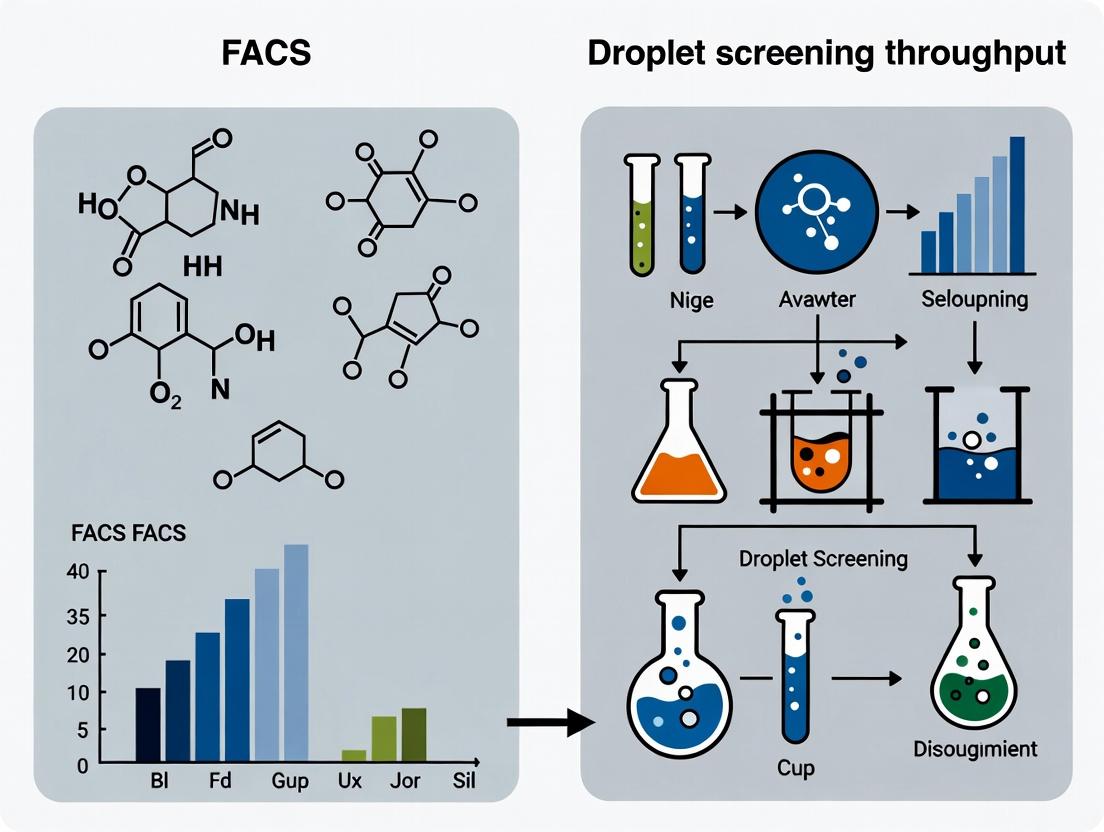
This article provides a comprehensive comparison of Fluorescence-Activated Cell Sorting (FACS) and droplet-based microfluidic screening technologies, with a central focus on throughput capabilities.
High-Throughput Screening: FACS vs. Droplet Microfluidics for Cell Analysis Throughput
Abstract
This article provides a comprehensive comparison of Fluorescence-Activated Cell Sorting (FACS) and droplet-based microfluidic screening technologies, with a central focus on throughput capabilities. Targeted at researchers and drug development professionals, it explores the fundamental principles, practical workflows, optimization strategies, and direct performance metrics of both platforms. The analysis covers cell processing rates, multiplexing potential, and experimental scalability, culminating in a validated framework to guide technology selection for specific high-throughput screening applications in immunology, oncology, and therapeutic discovery.
FACS and Droplet Screening: Defining Throughput in Modern Cell Analysis
This comparison guide, framed within a broader thesis on throughput in cell screening, examines the core operational principles, performance metrics, and experimental applications of Fluorescence-Activated Cell Sorting (FACS) and Droplet Microfluidics. These technologies are pivotal for single-cell analysis and sorting in modern biomedical research and drug development.
Fundamental Principles Comparison
FACS (Fluorescence-Activated Cell Sorting) operates on a bulk stream principle. A hydrodynamically focused stream of cells passes through a laser interrogation point. Cells are individually analyzed based on light scattering and fluorescence emission. Desired cells are charged and deflected into collection tubes by electrostatic plates.
Droplet Microfluidics operates on a compartmentalization principle. Cells are individually encapsulated into picoliter-to-nanoliter aqueous droplets within an immiscible oil phase, creating isolated bioreactors. Each droplet can be analyzed, sorted, and processed based on optical signatures.
Throughput and Performance Data
The following table summarizes key quantitative performance metrics based on current literature and commercial system specifications.
| Performance Metric | FACS (High-End System) | Droplet Microfluidics (High-Throughput System) |
|---|---|---|
| Analysis Throughput | Up to ~70,000 events/sec | Up to ~10,000 droplets/sec (analysis) |
| Sorting Throughput | Up to ~25,000 cells/sec (pure sort) | Up to ~1,000-2,000 droplets/sec (sorting) |
| Cell Utilization/Viability | Moderate; sheath fluid dilutes sample | High; minimal sample dilution |
| Single-Cell Encapsulation Efficiency | Not applicable (bulk stream) | ~20-30% (Poisson loading) |
| Multiplexing Capacity (Parameters) | High (20+ colors) | Moderate (typically 1-3 colors per droplet) |
| Reagent Consumption | High (mL/min sheath flow) | Very Low (µL/hour) |
| Cross-Contamination Risk | Low (with proper cleaning) | Extremely Low (isolated droplets) |
| Typical Droplet/Cell Volume | N/A | 10 – 100 picoliters |
Experimental Protocols
Protocol 1: FACS-Based Immune Cell Population Sorting
Objective: Isolate live CD4+ T-cells from peripheral blood mononuclear cells (PBMCs).
- Sample Prep: Isolate PBMCs via density gradient centrifugation. Stain with viability dye (e.g., Zombie NIR), anti-human CD3-APC, and anti-human CD4-FITC antibodies for 30 minutes on ice.
- System Setup: Calibrate FACS sorter using alignment beads and compensation beads for the fluorophores.
- Gating Strategy: Create scatter plots: FSC-A vs SSC-A to gate on cells, FSC-H vs FSC-A to exclude doublets, viability dye vs SSC-A to gate live cells, CD3+ vs CD4+ to identify target population.
- Sorting: Set sort mode to "Purity." Charge and deflection plates are activated to sort CD3+CD4+ cells into a collection tube containing culture medium.
- Post-Sort: Assess purity by re-analyzing a fraction of the sorted sample.
Protocol 2: Droplet-Based Single-Cell Secretion Assay
Objective: Identify antigen-specific B-cells based on antibody secretion.
- Chip Priming: Load a droplet generation microfluidic chip with fluorinated oil containing surfactant.
- Aqueous Phase Prep: Prepare a suspension of B-cells with fluorescent antigen bait and a detection reagent (e.g., anti-IgG-PE).
- Droplet Generation: Co-flow the aqueous cell suspension and oil phase through the chip at precisely controlled pressures to generate monodisperse droplets (~50 µm diameter) encapsulating single cells and reagents.
- Incubation: Collect droplets and incubate off-chip at 37°C for 1-2 hours to allow secreted antibodies to form fluorescent complexes.
- Analysis & Sorting: Re-inject droplets into a detection chip. As each droplet passes a laser, fluorescence is measured. Droplets with signal above threshold (indicating antigen-specific secretion) are actively sorted via dielectrophoresis or piezoelectric actuation into a separate channel.
Technology Workflow Diagrams
FACS Sorting Process
Droplet Microfluidics Screening Workflow
The Scientist's Toolkit: Research Reagent Solutions
| Item | Function in FACS | Function in Droplet Microfluidics |
|---|---|---|
| Fluorophore-Conjugated Antibodies | Label surface markers for detection and sorting. | Less common for intracellular markers; used for surface capture beads or secreted product detection. |
| Viability Dyes (e.g., Propidium Iodide, Zombie dyes) | Distinguish live from dead cells prior to sorting. | Used in aqueous phase to assess cell health pre-encapsulation. |
| Sheath Fluid (PBS, saline) | Incompressible fluid for hydrodynamic focusing and stable stream formation. | Not used. |
| Fluorinated Oils with Surfactants (e.g., HFE-7500, Krytox-PEG) | Not used. | Continuous phase for droplet generation; surfactants stabilize droplets against coalescence. |
| PCR Reagents (dNTPs, Taq Polymerase, primers) | Used post-sort for downstream analysis. | Commonly co-encapsulated for in-droplet single-cell RNA sequencing or digital PCR. |
| Functionalized Microbeads | Used in some complex assays (e.g., secretion capture). | Core component for barcoding (e.g., 10x Genomics) or capturing secreted molecules (e.g., AbSeq). |
| Cell Lysis Buffers | Used post-sort. | Often co-encapsulated or pico-injected to lyse cells inside droplets for analysis. |
| Alignment & Compensation Beads | Critical for daily instrument calibration and spectral overlap correction. | Not typically used; calibration relies on fluorescent standards. |
Within the thesis of throughput comparison, FACS remains the gold standard for high-speed, high-parameter sorting of large cell populations into sterile containers. Droplet microfluidics excels in ultra-high-throughput screening of cellular functions (e.g., secretion, enzyme activity) with minimal reagent use and exquisite isolation, albeit at lower absolute physical sorting speeds. The choice depends on the specific experimental need: purity and speed of cell collection (FACS) vs. functional screening and assay miniaturization (Droplet).
In the context of comparing Fluorescence-Activated Cell Sorting (FACS) and droplet-based screening technologies, "throughput" is a multi-dimensional metric. It is not defined by a single number but by interconnected capacities that determine the experimental scale and depth. This guide dissects throughput into its core components: analytical/ sorting speed (events/second), preparative scale (cells/day), and multiplexing capacity (unique assays per run). The following data and protocols provide a framework for objective comparison between these pivotal platforms.
Quantitative Throughput Comparison: FACS vs. Droplet Screening
Table 1: Core Throughput Metrics Comparison
| Throughput Dimension | High-End FACS (3-Laser, 5-PMTS) | Modern Droplet Screener (e.g., PBS, ddSEQ) | Notes / Context |
|---|---|---|---|
| Analytical Rate (Events/sec) | 50,000 - 100,000 | 1,000 - 10,000 | FACS analyzes in a serial stream; droplet systems image/process droplets in parallel. |
| Sorting Rate (Events/sec) | 25,000 - 70,000 | N/A (Encapsulation) | Pure sorting speed. Droplet systems encapsulate but do not "sort" in the traditional FACS sense. |
| Preparative Scale (Cells/Day) | 10^7 - 10^8 (sorted) | 10^8 - 10^9 (profiled) | Droplet systems excel at profiling vast libraries; FACS is limited by sort time and sterility. |
| Multiplexing Capacity (Parameters) | ~40 (Spectral Flow) | 10^4 - 10^6 (Barcode-based) | FACS multiplexes by fluorescent channels; droplet systems use combinatorial nucleic acid barcodes. |
| Single-Cell Resolution | Yes | Yes | Both technologies provide data at the single-cell level. |
| Live-Cell Recovery | Yes, directly | Indirectly (via barcode association) | FACS physically isolates cells; droplet screens associate phenotype with genotype via barcodes for later recovery. |
Experimental Protocols for Cited Data
Protocol 1: Measuring Maximum FACS Analytical and Sorting Rate
- Instrument Calibration: Use standardized calibration beads (e.g., Spherotech 8-peak beads) to align all detectors and ensure fluidics stability.
- Sample Preparation: Prepare a homogeneous, monodisperse cell suspension (e.g., Jurkat cells) at a high concentration (e.g., 5 x 10^7 cells/mL) in a filter-sterilized buffer.
- Data Acquisition: Set the instrument to the highest allowable sample pressure (e.g., 70 psi). Acquire data for 60 seconds using a simple triggering parameter (FSC). Record the total event count from the acquisition software.
- Sorting Verification: Configure the sorter for a simple 1-drop purity sort of a high-abundance population (e.g., all events). Sort for a defined period (e.g., 5 minutes) into a collection tube, then count the recovered cells via hemocytometer. Calculate the sustained sort rate (cells/sec).
Protocol 2: Determining Droplet Screen Profiling Throughput
- Library & Reagent Preparation: Generate a pooled genetic library (e.g., sgRNA, antibody) at a complexity of >10^6. Prepare single-cell suspension and co-encapsulation reagents (lysis buffer, RT/U mix, beads).
- Droplet Generation & Processing: Load cells, beads, and reagents into a microfluidic droplet generator (e.g., Bio-Rad ddSEQ, 10x Genomics Chromium). Perform encapsulation per manufacturer specs.
- Post-Processing & Sequencing: Break droplets, recover barcoded cDNA, and prepare sequencing libraries. Perform high-depth sequencing on an Illumina platform.
- Throughput Calculation: The throughput is defined as the total number of unique, cell-associated barcodes recovered from the sequencing data after quality filtering (e.g., cells with >500 reads and >100 genes detected). Divide by total experiment time (including sequencing) for cells/day.
Visualizing Throughput Concepts and Workflows
FACS Sorting Workflow
Droplet-Based Screening Workflow
The Scientist's Toolkit: Research Reagent Solutions
Table 2: Essential Materials for High-Throughput Screening
| Item | Function | Example Products / Notes |
|---|---|---|
| Viability Dye | Distinguishes live from dead cells for accurate sorting/analysis. | Propidium Iodide, DAPI, Zombie dyes. Critical for both FACS and droplet prep. |
| Calibration Beads | Align instrument optics, calibrate fluorescence intensity, check sort efficiency. | Spherotech 8-Peak, BD CS&T, Rainbow beads. Mandatory for reproducible FACS data. |
| Barcoded Beads/Oligos | Uniquely label cDNA from individual cells in droplet systems. | 10x Gel Beads, Parse Biosciences Evercode kits. Core reagent for multiplexing. |
| Nucleic Acid Library | The pooled perturbation elements to be screened (genetic, antibody). | sgRNA library, scFv phage library. Defines the scale and question of the screen. |
| Cell Strainer | Ensures a single-cell suspension by removing clumps. | PluriSelect, Falcon cell strainers (40-70µm). Essential pre-step for both platforms. |
| Sort Collection Media | Preserves cell viability and function post-sort. | FBS-supplemented media, recovery media. Impacts downstream assays after FACS. |
| Microfluidic Chips/Cartridges | Generates uniform, picoliter droplets for encapsulation. | Bio-Rad ddSEQ cartridges, 10x Chromium chips. Consumable at the heart of droplet screens. |
High-throughput screening (HTS) has undergone a revolutionary transformation, shifting from population-averaged measurements in microplates to the analysis of individual cells. This evolution is central to the ongoing research comparing the throughput and capabilities of Fluorescence-Activated Cell Sorting (FACS) versus modern droplet-based screening platforms.
Comparative Throughput and Performance: FACS vs. Droplet Microfluidics
The core thesis in modern screening compares the established technology of FACS against emerging droplet-based methods. The table below summarizes key performance metrics based on recent experimental studies.
Table 1: Throughput and Performance Comparison: FACS vs. Droplet Screening
| Parameter | Traditional FACS (e.g., 4-laser sorter) | Advanced FACS (e.g., Spectral Sorters) | Droplet Microfluidics (e.g., Drop-seq, commercial platforms) |
|---|---|---|---|
| Theoretical Max Throughput (events/sec) | ~50,000 | ~70,000 | >100,000 (droplet generation) |
| Practical Sorting Throughput (cells/sec) | 10,000 - 25,000 | 15,000 - 30,000 | 1,000 - 10,000 (encapsulation rate) |
| Single-Cell Multivariate Readout | High (up to 40+ parameters) | Very High (Full spectral) | Moderate (Often limited by barcoding scheme) |
| Reagent Consumption per Cell | High (µL volumes in well plates) | High (µL volumes in well plates) | Ultra-low (pL-nL volumes) |
| Cell Recovery & Viability | 80-95% (stress from shear forces) | 80-95% | 50-90% (varies with encapsulation) |
| Key Advantage | High-content, flexible, proven | Unmixing complex fluorescence | Massive parallelism, minimal cross-talk, linked genotype-phenotype |
| Primary Limitation | Sequential processing, high reagent use | Cost, complexity | Lower content per cell, complex setup, recovery challenges |
Experimental Protocols for Throughput Comparison
To generate comparable data for Table 1, standardized protocols are essential.
Protocol 1: FACS Throughput and Viability Assessment.
- Cell Preparation: Stain a suspension of Jurkat cells (at 5x10^6 cells/mL) with a viability dye (e.g., Propidium Iodide) and a surface marker antibody (e.g., anti-CD3-FITC).
- Instrument Calibration: Align the FACS sorter (e.g., BD FACS Aria III) using calibration beads. Set a 100 µm nozzle and appropriate pressure (typically 20-25 psi).
- Throughput Measurement: Set a sorting gate on live, CD3+ cells. Sort for 60 seconds into a collection tube containing complete media. Count the sorted cells via hemocytometer to determine actual cells/sec.
- Viability Check: Re-analyze a sample of the sorted cells post-sort for PI negativity to determine recovery viability.
Protocol 2: Droplet Screening Throughput and Encapsulation Efficiency.
- Library & Reagent Prep: Prepare a suspension of HEK293T cells (1x10^6 cells/mL) expressing a fluorescent reporter (e.g., GFP) and a barcoded lysis buffer.
- Droplet Generation: Load cells and reagents into a commercial droplet generator (e.g., Bio-Rad QX200). Run to generate droplets, targeting ~1 cell per 50 droplets based on Poisson statistics.
- Throughput Measurement: Collect droplets for 5 minutes. Count the total droplets produced using a microscope and hemocytometer chamber. Calculate droplet generation rate (droplets/sec).
- Efficiency Analysis: Break a sample of droplets, extract RNA/cDNA, and perform qPCR for a housekeeping gene. The fraction of PCR-positive droplets versus theoretical single-cell droplets indicates functional encapsulation efficiency.
Visualization of Screening Evolution and Workflows
High-Throughput Screening Modality Evolution
FACS vs Droplet Screening Workflow
The Scientist's Toolkit: Essential Reagents & Materials
Table 2: Key Research Reagent Solutions for Single-Cell HTS
| Item | Function in Screening | Example Product/Category |
|---|---|---|
| Viability Dyes | Distinguishes live from dead cells, critical for sorting accuracy. | Propidium Iodide (PI), DAPI, Zombie dyes. |
| Antibody Conjugates | Enables multiplexed detection of surface/intracellular markers. | Fluorophore-conjugated monoclonal antibodies. |
| Cell Barcoding Beads | Provides unique molecular identifiers (UMIs) for droplet-based assays. | 10x Genomics Gel Beads, inDrop barcoded beads. |
| Microfluidic Oil & Surfactants | Creates stable, biocompatible emulsion for droplet formation. | Bio-Rad Droplet Generation Oil, fluorinated surfactants. |
| Single-Cell Lysis Buffers | Breaks open cells within droplets/wells while preserving biomolecules. | Triton X-100/NP-40 based buffers with RNase inhibitors. |
| Next-Generation Sequencing (NGS) Kits | For library prep and sequencing of barcoded single-cell outputs. | Illumina sequencing kits, SMART-seq for full-length RNA. |
| Cell Recovery Media | High-protein media to support cell viability post-sorting/encapsulation. | Media with FBS or BSA, conditioned media. |
| Calibration Particles | Aligns and standardizes FACS instruments for reproducible sorting. | Polystyrene beads with varying fluorescence intensities. |
This comparison guide, framed within broader research on FACS vs. droplet screening throughput, objectively evaluates platform performance for high-demand applications. Data is derived from recent published studies and manufacturer specifications.
Performance Comparison: FACS vs. Droplet Microfluidics
Table 1: Throughput and Multiplexing Capacity Comparison
| Metric | Traditional FACS (e.g., BD FACSAria III) | High-Speed Cell Sorter (e.g., Sony SH800) | Droplet Screening (e.g., 10x Genomics) | Ultra-High-Throughput Droplet (e.g., Berkeley Lights Beacon) |
|---|---|---|---|---|
| Cells Processed/Second | 20,000 - 30,000 | Up to 70,000 | 10,000 - 20,000 (encapsulation) | 1,000 - 5,000 (functional screening) |
| Single-Cell RNA-seq Library Prep Throughput | ~1,000 cells/run (plate-based) | ~1,000 cells/run | 5,000 - 10,000 cells/run | Not Primary Application |
| Antibody Discovery Throughput (clones screened/day) | 10^3 - 10^4 | 10^4 - 10^5 | 10^5 - 10^6 | 10^4 - 10^5 (with functional data) |
| Rare Cell Isolation Purity | >99% (post-sort) | >98% | >90% (barcode-based) | >95% (optically selected) |
| Multiplexing (Simultaneous Assays) | 15-30 colors (spectral >40) | 10-15 colors | >100,000 barcodes | 100s - 1000s of nanoliter assays |
Table 2: Application-Specific Performance Metrics
| Application | Key Performance Indicator | FACS-Based Approach | Droplet-Based Approach | Supporting Data (Citation) |
|---|---|---|---|---|
| Antibody Discovery | Hit Recovery Rate | 70-90% (viability-dependent) | >95% (encapsulation preserves viability) | Xue et al., mAbs, 2022 |
| Single-Cell Omics | Gene Detection/Cell (scRNA-seq) | 5,000-7,000 (high-quality cells) | 3,000-5,000 (large-scale profiling) | Zheng et al., Nat. Biotechnol., 2023 |
| Rare Cell Isolation | Enrichment from 1 in 10^6 | 10^4 - 10^5 fold (multi-step) | 10^6 - 10^7 fold (direct barcoding) | Wang et al., Cell Rep., 2024 |
Experimental Protocols for Cited Key Studies
Protocol 1: High-Throughput Antibody Screening via Droplet Microfluidics (adapted from Xue et al., 2022)
- Library Preparation: Amplify antibody gene libraries from immunized animals or human donors via PCR.
- In Vitro Transcription/Translation: Use a cell-free system (e.g., PURExpress) to express antibody fragments (scFv/Fab).
- Droplet Generation & Compartmentalization: Co-encapsulate single antibody-expressing plasmids, cell-free master mix, and a single fluorescently labeled antigen target into monodisperse picoliter droplets using a microfluidic chip.
- Incubation: Allow in-droplet expression and binding at 37°C for 2 hours.
- Detection & Sorting: Flow droplets through a laser interrogation point. Detect binding via fluorescence shift (FRET or direct antigen label). Use a dielectrophoretic (DEP) sorter to selectively deflect positive droplets.
- Recovery & Sequencing: Break sorted droplets, recover plasmid DNA, and sequence the variable regions of hit clones.
Protocol 2: Comparative Throughput for Rare Circulating Tumor Cell (CTC) Isolation (adapted from Wang et al., 2024) A. FACS-Based Protocol (Label-Dependent):
- Sample Prep: Stain 10 mL of whole blood with anti-CD45 (PBMC marker) and anti-EpCAM/CK (CTC markers) antibodies, plus a viability dye.
- Pre-enrichment: Use density gradient centrifugation or negative magnetic selection (CD45 depletion) to reduce background.
- FACS Sorting: Use a high-purity sorter with a 100μm nozzle. Gate on viable CD45-/EpCAM+/CK+ events. Sort single cells into 96-well plates containing lysis buffer.
- Downstream Analysis: Perform whole-genome amplification (WGA) or RT-PCR on sorted single cells.
B. Droplet-Based Protocol (Label-Free):
- Sample Prep: Nucleated cells are isolated from whole blood via red blood cell lysis.
- Barcoding & Encapsulation: Cells are co-encapsulated with uniquely barcoded mRNA capture beads in droplets using a 10x Chromium controller.
- Library Prep: Within droplets, cells are lysed, and mRNA is hybridized to bead barcodes. Emulsions are broken, and scRNA-seq libraries are constructed.
- Bioinformatic Isolation: Sequencing data is analyzed; CTCs are identified in silico via expression signatures (e.g., EPCAM, KRT8/18/19, absence of PTPRC).
Visualized Workflows and Pathways
Title: Droplet Microfluidic Screening Workflow
Title: Single-Cell Analysis Paths: FACS vs. Droplet
The Scientist's Toolkit: Key Research Reagent Solutions
Table 3: Essential Materials for High-Throughput Screening Applications
| Item | Function & Application | Example Product/Brand |
|---|---|---|
| Fluorescent Cell Viability Dye | Distinguishes live/dead cells for accurate sorting and analysis. Critical for FACS and rare cell isolation. | Propidium Iodide, DAPI, LIVE/DEAD Fixable Viability Dyes (Thermo Fisher) |
| Cell Staining Antibody Cocktail | Multiplexed surface marker detection for phenotyping and target cell isolation. | BioLegend TotalSeq Antibodies (for CITE-seq), BD Horizon Brilliant Stains |
| Single-Cell Barcoding Beads | Uniquely labels mRNA from each cell during encapsulation for droplet-based scRNA-seq. | 10x Genomics Chromium Single Cell Barcoded Beads |
| Cell-Free Protein Synthesis Mix | Enables in vitro expression of antibodies/proteins within droplets for functional screening. | NEB PURExpress, Thermo Fisher Expressway |
| Microfluidic Droplet Generation Oil | Immiscible oil surfactant formulation for stable, monodisperse water-in-oil emulsion formation. | Bio-Rad Droplet Generation Oil, Dolomite Microfluidic Oil |
| High-Recovery Sort Collection Medium | Preserves cell viability and integrity during the violent FACS sorting event. | FBS-enriched medium, Recovery Cell Culture Freezing Medium (Thermo Fisher) |
| Nuclease-Free Water & Buffers | Essential for all molecular biology steps, especially critical in droplet workflows to prevent batch degradation. | Ambion Nuclease-Free Water (Thermo Fisher), IDTE Buffer (IDT) |
| Next-Generation Sequencing Library Prep Kit | Converts barcoded cDNA or amplicons into sequencer-ready libraries for downstream omics analysis. | Illumina DNA Prep, Swift Biosciences Accel-NGS 2S Plus |
Maximizing Screening Output: Workflows and Applications for FACS and Droplet Platforms
Within a broader research thesis comparing the throughput of Fluorescence-Activated Cell Sorting (FACS) to droplet-based screening platforms, a critical practical examination focuses on the instrumentation itself. The choice between standard benchtop sorters and high-speed sorters, along with their respective nozzle technologies, directly dictates maximum achievable throughput, purity, and cell viability. This guide objectively compares these systems using current experimental data.
System Comparison: Core Specifications & Performance
Table 1: Sorter Class Comparison Summary
| Feature | Standard Benchtop Sorter (e.g., BD FACSAria III, Beckman Coulter Astrios) | High-Speed Sorter (e.g., Sony SH800S, BD Influx, Bio-Rad S3e) |
|---|---|---|
| Max Event Rate | ~50,000 events/sec | ~100,000 - 150,000+ events/sec |
| Sort Rate (Typical) | Up to ~25,000 cells/sec | Up to ~70,000 cells/sec |
| Nozzle Size Range | 70 µm to 130 µm | 70 µm to 200 µm |
| Sample Pressure | Lower (10-25 PSI) | Higher (20-70+ PSI) |
| Sheath Pressure | Lower | Higher |
| Typical Purity | >98% | >98% (can be pressure/nozzle dependent) |
| Typical Viability | >95% | >90-95% (can be stressor-dependent) |
| Primary Use Case | Complex, high-purity sorts for downstream analysis (e.g., single-cell RNA-seq). | High-throughput enrichment, library screening, bulk population sorts. |
Table 2: Nozzle Technology & Impact on Throughput
| Nozzle Diameter | Recommended Cell Size | Max Sheath Pressure | Practical Sort Rate | Effect on Cell Viability | Use Case |
|---|---|---|---|---|---|
| 70 µm | <20 µm (lymphocytes) | Lower (~10-20 PSI) | Lower | Excellent (>95%) | High-purity, sensitive cells |
| 100 µm | 10-40 µm (most mammalian) | Moderate (~20-45 PSI) | Moderate | Very Good (>90%) | General-purpose, balanced throughput/purity |
| 130 µm | 30-60 µm (cell clusters, neurons) | Higher (~25-50 PSI) | High | Good (>85%) | Larger or fragile cells |
| 200 µm | >40 µm (iPSC, tumor spheres) | Highest (~40-70+ PSI) | Very High | Moderate (risk of shear) | Maximum throughput for large/robust cells |
Experimental Data & Protocols
To quantitatively compare throughput and integrity, key benchmarking experiments are performed.
Experimental Protocol 1: Maximum Sort Rate Determination
- Sample Preparation: A homogeneous, robust cell line (e.g., Jurkat) is stained with a viability dye (e.g., PI) and a bright, ubiquitous marker (e.g., CellTracker Green). Concentration is adjusted to the target event rate.
- Instrument Setup: Sorters are configured with standardized drop delay. The high-speed sorter uses a 100 µm nozzle at its manufacturer's rated optimal pressure. The standard sorter uses a 100 µm nozzle at its standard pressure.
- Gating & Sort Logic: A simple sort gate is set on live, positive cells. A "Pure" sort mode is selected on both instruments.
- Run: The sample is run for a fixed 300 seconds. The total number of events processed and the number of sort decisions recorded are logged.
- Calculation: Throughput (cells sorted/sec) = (Total sort decisions) / (300 sec). Purity is verified by re-analyzing a sample of the sorted fraction.
Table 3: Example Benchmarking Data (Jurkat Cells, 100 µm Nozzle)
| Sorter Type | Event Rate (events/sec) | Sort Decision Rate (cells/sec) | Purity Post-Sort | Viability Post-Sort |
|---|---|---|---|---|
| Standard | 45,000 | 22,000 | 99.2% | 96.5% |
| High-Speed | 120,000 | 65,000 | 98.7% | 93.8% |
Experimental Protocol 2: Viability Under High-Throughput Stress
- Sample Preparation: Primary peripheral blood mononuclear cells (PBMCs) are stained with a viability dye (7-AAD) and CD3-APC.
- Sort Conditions: Cells are sorted on both instruments targeting CD3+ T-cells. Four conditions are tested per instrument: a low-rate control (5,000 cells/sec) and the maximum sustainable rate.
- Post-Sort Analysis: Sorted cells are collected in complete media, incubated for 2 hours at 37°C, and re-analyzed for viability (7-AAD negativity) and early apoptosis (Annexin V-FITC staining).
- Measurement: The recovery of viable, Annexin V-negative cells is calculated as a percentage of the expected count.
Visualizing the Throughput Decision Workflow
Diagram Title: FACS Sorter and Nozzle Selection Workflow
The Scientist's Toolkit: Key Research Reagent Solutions
Table 4: Essential Materials for High-Throughput FACS Experiments
| Item | Function in Throughput Experiments |
|---|---|
| Sterile, Particle-Free Sheath Fluid | Maintains laminar flow and prevents clogging; essential for high-speed stability. |
| High-Recovery Sort Collection Tubes | Coated with media or serum to minimize cell loss and stress upon impact. |
| Bright, Photostable Fluorescent Dyes (e.g., PE, Brilliant Violet) | Enables clear discrimination at high event rates, improving sort accuracy. |
| Viability Dyes (e.g., 7-AAD, DAPI, PI) | Critical for excluding dead cells which can clog nozzles and reduce purity. |
| Clog-Resistant Sample Filters (e.g., 35-70 µm cell strainer caps) | Prevents aggregate-induced nozzle clogs, the primary cause of downtime in high-throughput runs. |
| Nozzle Clean Solution (e.g., 1-2% Bleach or dedicated cleaner) | For decontamination and removal of protein/DNA buildup between samples. |
| Accudrop/Alignment Beads | For precise and rapid instrument setup, ensuring optimal droplet breakoff and sort efficiency. |
This guide is framed within a broader research thesis comparing the throughput of Fluorescence-Activated Cell Sorting (FACS) and droplet-based microfluidic screening. While FACS offers rapid analysis of pre-formed cells or particles, droplet microfluidics enables ultra-high-throughput compartmentalization of biological assays, from single cells to molecules, for incubation and detection. This guide objectively compares key performance metrics of different strategies within the droplet workflow.
Encapsulation Strategies: Device and Method Comparison
Encapsulation efficiency, monodispersity, and throughput are critical. Below is a comparison of common droplet generation techniques.
Table 1: Comparison of Droplet Encapsulation Methods
| Method | Typical Device | Droplet Size (µm) | Coefficient of Variation (CV) | Max Throughput (droplets/hr) | Single-Cell Encapsulation Efficiency (Poisson) | Best For |
|---|---|---|---|---|---|---|
| Flow-Focusing (FF) | PDMS or Glass Chip | 20-200 | <3% | 10,000 | ~30% (Standard) | High monodispersity, co-encapsulation |
| T-Junction | PDMS or Silicon Chip | 50-500 | <5% | 5,000 | ~30% (Standard) | Simplicity, larger droplets |
| Electrowetting-on-Dielectric (EWOD) | Digital Microfluidic Chip | 10-1000 | <2% | 1,000 | ~30% (Programmable) | Low volume, dynamic control |
| Pico-Injection | Multi-layer PDMS Chip | 50-150 (post-inj) | <5% | 10,000 | N/A (Adds reagent post-formation) | Adding reagents to pre-formed droplets |
| Centrifugal Step Emulsification | Disc-based Polymer | 40-150 | <5% | 10,000 | ~30% (Standard) | Parallelization, no pumps |
Experimental Protocol for Encapsulation Efficiency Measurement:
- Prepare Phases: Create a continuous phase (e.g., 2% (w/w) PFPE-PEG surfactant in HFE-7500 oil). Prepare a dispersed phase containing fluorescent beads at a concentration targeting <0.1 beads/droplet for single-entity encapsulation.
- Generate Droplets: Use a flow-focusing microfluidic device at optimized pressures/flow rates (e.g., Qcontinuous = 1000 µL/hr, Qdispersed = 300 µL/hr).
- Image & Analyze: Capture high-speed video of droplet formation. Use image analysis software (e.g., ImageJ) to measure droplet diameter (≥100 droplets) for CV calculation. Transfer droplets to a counting chamber and use fluorescence microscopy to count droplets containing 0, 1, or >1 beads. Calculate encapsulation efficiency as (Number of droplets with 1 bead) / (Total droplets) * 100%.
- Throughput Calculation: From video, count droplets formed per second and multiply by 3600.
Droplet Formation via Flow-Focusing
Incubation Strategies: On-Chip vs. Off-Chip
Post-encapsulation, droplets often require incubation for reactions (e.g., PCR, cell culture). Key metrics include temperature stability, evaporation control, and cross-contamination risk.
Table 2: Comparison of Droplet Incubation Methods
| Method | Temperature Stability (±°C) | Max Incubation Duration | Evaporation Prevention | Parallel Samples | Risk of Coalescence |
|---|---|---|---|---|---|
| Off-Chip: Tube/Well Plate | 0.5 | Days-Weeks | Good (with oil overlay) | High | Low |
| Off-Chip: Static Storage Chip | 0.5 | Days | Excellent (sealed) | Medium | Very Low |
| On-Chip: Serpentine Delay Line | 2.0 | Minutes-Hours | Excellent | Low | Medium (if high density) |
| On-Chip: Incubation Chamber | 1.0 | Hours | Excellent | Low | Low-Medium |
| Hybrid: Off-Chip with Thermocycler | 0.3 | Hours (for PCR) | Good (with oil) | High | Low |
Experimental Protocol for On-Chip PCR Incubation:
- Chip Design: Use a chip with a long, meandering channel (e.g., 2m length, 100µm width, 80µm height) leading to a wide incubation chamber.
- Droplet Generation: Generate droplets containing the PCR mix (template, primers, dNTPs, hot-start polymerase) and a fluorescent DNA intercalating dye (e.g., EvaGreen) in oil.
- On-Chip Thermocycling: Place the entire chip on a flat-block thermal cycler. Program cycles (e.g., 95°C for 30s, 60°C for 60s, 72°C for 30s, 40 cycles). The channel's high surface-area-to-volume ratio enables rapid heat transfer.
- Detection: After the final cycle, flow droplets directly into an on-chip or inline detection region for fluorescence measurement.
On-Chip vs Off-Chip Incubation Workflow
Detection and Analysis Strategies
Post-incubation detection defines the assay's sensitivity and compatibility with sorting. A key thesis consideration is how this step integrates into overall screening throughput compared to FACS.
Table 3: Comparison of Droplet Detection Methods
| Detection Method | Typical Assay | Limit of Detection | Measurement Speed (droplets/sec) | Sortable? | Multiplex Capacity (colors) |
|---|---|---|---|---|---|
| In-Line Fluorescence | Enzyme activity, PCR, FACS-like | ~nM (for fluorogenic sub.) | 10,000 | Yes (if coupled to sorter) | 2-4 |
| In-Line Absorbance | Cell density, colorimetric assays | ~µM | 1,000 | Possible | 1 |
| Off-Chip Microscopy | Cell morphology, growth | Single cell | 100 (manual) | No | Brightfield + Fluorescence |
| Mass Spectrometry (MS) | Metabolites, secreted molecules | pM-fM | 10 | No (destructive) | High (m/z) |
| Capillary Electrophoresis | DNA fragments, proteins | ~nM | 100 | No | 1 (per run) |
Experimental Protocol for In-Line Fluorescence Detection & Sorting:
- Set Up Detection: Fabricate or use a commercial droplet sorter chip. Align a focused laser (e.g., 488 nm) to excite droplets in the detection region. Collect emitted fluorescence through optical filters onto photomultiplier tubes (PMTs).
- Calibration: Run droplets containing known concentrations of fluorophore (e.g., fluorescein) to create a standard curve for quantification.
- Run Experiment: Flow experimental droplets at a stabilized speed (e.g., 2000 droplets/sec). Use a data acquisition system to record fluorescence pulse for each droplet.
- Sorting Trigger: Set a threshold based on negative control droplets. When a droplet's signal exceeds the threshold, a voltage pulse is applied to electrodes adjacent to the channel, triggering droplet deflection into a collection channel via dielectrophoresis.
In-Line Fluorescence Detection and Sorting
The Scientist's Toolkit: Key Research Reagent Solutions
Table 4: Essential Materials for Droplet Microfluidics Workflows
| Item | Function & Key Property | Example Product/Brand |
|---|---|---|
| Fluorinated Oil (Continuous Phase) | Inert, non-diffusing carrier fluid for aqueous droplets. Low viscosity aids flow. | 3M Novec 7500 Engineered Fluid, HFE-7500 |
| PFPE-PEG Surfactant | Stabilizes droplets against coalescence during incubation and thermal cycling. | Ran Biotechnologies 008-FluoroSurfactant, Bio-Rad ddPCR Droplet Stabilizer |
| PDMS (Polydimethylsiloxane) | Elastomer for soft lithography chip fabrication. Gas-permeable for cell culture. | Dow Sylgard 184 Elastomer Kit |
| Photo/Dielectric Coating | For surface treatment of channels to ensure hydrophobicity (for water-in-oil droplets). | Aquapel, Cytop |
| Fluorogenic Enzyme Substrates | Become fluorescent upon enzymatic cleavage, enabling ultra-sensitive detection inside droplets. | Thermo Fisher Pierce Fluorogenic Peptide Substrates, Sigma-Aldrich RESORUFIN substrates |
| Hot-Start DNA Polymerase | For droplet digital PCR (ddPCR); prevents non-specific amplification prior to encapsulation. | Bio-Rad ddPCR Supermix, Thermo Fisher Platinum SuperFi II |
| Droplet Generation Oil | Pre-mixed oil with surfactant for specific platforms, ensuring reproducibility. | Bio-Rad ddPCR Droplet Generation Oil, RainDance Technologies Source Oil |
| Droplet Reading/Scanning Oil | Oil with different surfactant concentration to prevent droplet movement during imaging. | Bio-Rad ddPCR Droplet Reading Oil |
Throughput Comparison: FACS vs. Droplet Screening
This data contextualizes the above workflows within the core thesis.
Table 5: High-Level Throughput Comparison: FACS vs. Droplet Screening
| Metric | FACS (Conventional) | Droplet Microfluidics Screening | Notes |
|---|---|---|---|
| Analysis Rate | 50,000 events/sec | 10,000 droplets/sec | FACS analyzes pre-formed particles. |
| True Screening Throughput | ~10^7 cells/hour | ~10^9 reactions/hour | Droplets win by massively parallelizing reactions in compartments. |
| Multiparametric Data | High (10+ colors) | Moderate (2-4 colors typically) | FACS excels at complex phenotyping. |
| Reagent Consumption | Medium-High (µL-mL) | Ultra-Low (pL-nL per droplet) | Droplets minimize cost for expensive reagents. |
| Incubation & Detection Integration | Low (typically offline) | High (fully integrated workflow possible) | Droplets enable "all-in-one" encapsulation, incubation, readout. |
| Single-Cell Secretion/Activity | Challenging (requires capture) | Native strength (compartmentalization) | Droplets uniquely enable analysis of secreted molecules. |
Conclusion: For ultra-high-throughput screening based on enzymatic activity, cell growth, or PCR-based diagnostics where reactions benefit from compartmentalization, droplet microfluidics offers a distinct throughput advantage over FACS in terms of the number of assayable units processed per hour. FACS maintains superiority in complex, multi-parameter analysis of pre-existing cellular phenotypes. The optimal workflow often depends on the specific assay requirements and desired endpoint data.
This comparison guide, framed within a thesis comparing FACS (Fluorescence-Activated Cell Sorting) and droplet screening throughput, objectively evaluates library screening platforms across three key applications.
FACS vs. Droplet Screening: Throughput and Application Comparison
Table 1: Platform Throughput and Characteristics
| Parameter | FACS-Based Screening | Droplet Microfluidics Screening |
|---|---|---|
| Theoretical Throughput | ~10^4 cells/sec | ~10^6 - 10^7 events/sec |
| Practical Sorting Throughput | ~10^7 cells/hour | Encapsulation: ~10^7 droplets/hour |
| Multiplexing Capability | High (8+ parameters) | Moderate (Typically 1-2 fluorescence channels) |
| Library Size Practicality | 10^6 - 10^8 variants | 10^7 - 10^9 variants |
| Single-Cell Recovery | Yes, into plates/wells | Possible via pico-injection or sorting |
| Key Advantage | Multi-parameter, gentle cell sort | Ultra-high throughput, compartmentalization |
| Primary Limitation | Speed ceiling, shear stress | Limited real-time multiplexing, complex workflows |
Application-Specific Performance Comparison
CRISPR Pooled Screens
Table 2: CRISPR Screening Platform Performance
| Metric | FACS-Guided CRISPR Screening | Droplet-Based CRISPR Enrichment | Bulk Selection (Reference) |
|---|---|---|---|
| Screen Duration | 10-14 days (including sort & expansion) | 5-7 days (direct linkage) | 14-21 days (pooled culture) |
| Gene Hit Validation Rate | ~85% (high due to pre-sort) | ~70% (depends on droplet linkage efficiency) | ~60% (requires deconvolution) |
| False Positive Rate | Low (<10%) | Moderate (15-20%) | High (can be >30%) |
| Required Sequencing Depth | Moderate (500x per sgRNA) | High (1000x per sgRNA) | Very High (2000x per sgRNA) |
| Key Data Output | Phenotype-linked genotype via index sorting | Direct genotype-phenotype linkage in droplet | Population-level enrichment scores |
Experimental Protocol for FACS-based CRISPR Screen:
- Library Transduction: Infect target cells (e.g., K562) with a lentiviral sgRNA library (e.g., Brunello) at low MOI (<0.3) to ensure single integration.
- Selection & Expansion: Apply puromycin selection (1-2 µg/mL for 3-5 days). Expand cells for 10-14 population doublings.
- Staining & Sorting: Harvest cells, stain for target phenotype (e.g., surface marker CD69 with APC-conjugated antibody, 1:100 dilution, 30 min on ice). Sort top/bottom 10-20% of the population using a sorter (e.g., Sony SH800) into sterile collection media.
- Recovery & Genomic DNA Prep: Recover sorted populations for 7 days. Extract gDNA using a kit (e.g., QIAamp DNA Maxi Kit).
- PCR Amplification & Sequencing: Amplify sgRNA inserts via two-step PCR (20 cycles each) with indexing primers. Purify amplicons and sequence on an Illumina NextSeq (75bp single-end).
- Analysis: Align reads to library reference, calculate read counts, and determine enrichment/depletion using MAGeCK or similar.
Diagram Title: FACS-Based CRISPR Pooled Screen Workflow
Antibody Variant Screening
Table 3: Antibody Screening Platform Comparison
| Metric | FACS (Yeast/ Mammalian Display) | Droplet (in vitro Display) | Microtiter Plate (Reference) |
|---|---|---|---|
| Screening Throughput | 10^7 - 10^8 cells/hour | 10^7 - 10^8 variants/hour | <10^4 variants/week |
| Affinity Maturation Efficiency | Excellent for kon/koff | Superior for k_off (binding incubation) | Low, labor-intensive |
| Typical Enrichment Factor | 10^2 - 10^3 per round | 10^3 - 10^4 per round | N/A (individual clones) |
| Cross-reactivity Testing | Yes, via multi-parameter stain | Limited to sequential assays | Yes, but low throughput |
| Hit Characterization | Directly from sorted population | Requires breakage and recovery | From individual wells |
Experimental Protocol for Droplet-Based Antibody Screening:
- Emulsion Generation: Use a two-reagent kit (e.g., Bio-Rad ddSEQ) to combine an in vitro transcription/translation (IVTT) mix containing linear DNA templates of scFv library, fluorescence-activated substrate (e.g., antigen-conjugated fluorophore), and reaction reagents with droplet generation oil in a microfluidic chip.
- Incubation: Collect droplets in a PCR tube. Incubate at 30°C for 2 hours for protein expression, followed by 1 hour at 25°C for binding.
- Detection & Sorting: Inject droplets into a droplet sorter (e.g., On-chip Sort). Measure fluorescence (ex: 488 nm laser/530 nm filter). Sort droplets exceeding a fluorescence threshold into a recovery tube.
- Breakage & Recovery: Add droplet break solution (1H,1H,2H,2H-Perfluoro-1-octanol) to the sorted droplets. Extract the aqueous phase.
- PCR Amplification: Amplify the recovered DNA using primers with overhangs for subsequent NGS or recloning.
- Analysis: Sequence amplified DNA to identify enriched variants. Clone leading hits for validation in mammalian cells.
Diagram Title: Droplet-Based Antibody Variant Screening Workflow
Synthetic Biology Circuit Screening
Table 4: Genetic Circuit Screening Performance
| Metric | FACS-MACS Pre-enrichment | Droplet-Based Compartmentalization | Continuous Culture (Reference) |
|---|---|---|---|
| Selection Dynamic Range | High (4-5 logs) | Very High (6+ logs due to digital readout) | Low (2-3 logs) |
| Noise/Cross-talk Isolation | Moderate (population-level) | Excellent (single-cell in droplet) | Poor (population-level) |
| Circuit Characterization | Kinetic data via time-course sorts | Static endpoint, high resolution | Bulk population average |
| Screening for Orthogonality | Excellent (multi-color sorts) | Limited (spectral overlap) | Difficult |
The Scientist's Toolkit: Key Research Reagent Solutions
Table 5: Essential Materials for Library Screening
| Item | Function & Application | Example Product |
|---|---|---|
| Lentiviral sgRNA Library | Delivers CRISPR guides for pooled genetic screens. | Addgene Brunello Human Kinase Library |
| Droplet Generation Oil | Immiscible oil phase for creating water-in-oil emulsions. | Bio-Rad Droplet Generation Oil for Probes |
| IVTT Kit | Cell-free system for protein expression inside droplets. | PURExpress In Vitro Protein Synthesis Kit (NEB) |
| Barcoded Staining Antibodies | Allows multiplexed phenotyping for FACS index sorting. | BioLegend TotalSeq Antibodies |
| Droplet Break Surfactant | Chemical to destabilize droplets for aqueous phase recovery. | RAN Biotechnologies Breakage Surfactant |
| Next-Gen Sequencing Kit | For preparing and sequencing amplicons from sorted libraries. | Illumina Nextera XT DNA Library Prep Kit |
| Cell Recovery Media | Optimized medium for outgrowth of single, sorted cells. | Gibco Recovery Cell Culture Freezing Medium |
| Microfluidic Chips | Disposable chips for generating monodisperse droplets. | Dolomite Microfluidic Droplet Chip Kit |
This comparison guide is situated within a broader thesis investigating throughput benchmarks for fluorescence-activated cell sorting (FACS) versus droplet-based microfluidics in single-cell sequencing sample preparation. Throughput, defined as the number of high-quality single-cell libraries generated per unit time with minimal technical bias, is a critical operational metric for researchers scaling genomic studies.
Experimental Methodologies & Throughput Data
FACS-Based Preparation (Plate-Based)
Protocol: A cell suspension is stained with viability dyes (e.g., DAPI, propidium iodide). A high-speed cell sorter (e.g., BD FACSAria, Sony SH800) is calibrated to deposit one live cell per well into a 96- or 384-well plate preloaded with lysis buffer and barcoded primers. Post-sorting, plates undergo reverse transcription and PCR amplification before library pooling. Key Limiting Steps: Sort time, plate handling, and individual well reactions.
Droplet-Based Microfluidics (e.g., 10x Genomics Chromium)
Protocol: A partitioned system mixes cells, lysis reagents, and uniquely barcoded gel beads within nanoliter-scale oil droplets in a microfluidic chip. Each bead carries oligonucleotides for cell-specific barcoding. Emulsions are broken post-reverse transcription, and cDNA is purified and amplified for sequencing. Key Limiting Steps: Chip loading capacity, emulsion stability, and post-processing.
Nanowell-Based Technologies (e.g., Parse Biosciences, BD Rhapsody)
Protocol: Cells are randomly distributed into tens of thousands of nanowells on a chip or cartridge. Barcoded magnetic beads are then added to label cellular contents in situ. Subsequent steps involve lysis, cDNA synthesis, and pooling via magnetic bead retrieval. Key Limiting Steps: Bead loading efficiency and diffusion kinetics.
Table 1: Direct Throughput Comparison of Sample Preparation Platforms
| Platform (Example) | Method Principle | Theoretical Max Cells/Run | Practical High-Quality Cells/Run* | Hands-On Time (Pre-seq) | Total Time to Libraries | Estimated Cost per 1K Cells (Reagents) |
|---|---|---|---|---|---|---|
| FACS + 384-well plate | Cell sorting into plates | 384 | 300 - 350 | 6 - 8 hours | 2 - 3 days | High ($50 - $100) |
| 10x Genomics Chromium X | Droplet Microfluidics | 80,000 | 10,000 - 20,000 | 30 - 45 mins | 1 - 2 days | Medium ($5 - $10) |
| BD Rhapsody | Nanowell + Magnetic Beads | 30,000 | 5,000 - 15,000 | 1.5 - 2 hours | 2 - 3 days | Medium ($8 - $15) |
| Parse Biosciences Evercode | Combinatorial barcoding in nanowells | 1,000,000+ | 10,000 - 100,000+ | 2 - 3 hours | 3 - 4 days | Low ($2 - $5) |
*Practical yield depends on cell viability, input concentration, and protocol optimization.
Table 2: Throughput-Influencing Technical Parameters
| Parameter | FACS-Based | Droplet-Based | Nanowell-Based | Impact on Throughput |
|---|---|---|---|---|
| Multiplexing Capacity | Low (1-4 cells/well) | High (1 cell/bead) | High (1 cell/well) | Directly scales run size |
| Cell Doublet Rate | Very Low (<1%) | Low-Medium (0.5-5%) | Low (<2%) | Affects usable data yield |
| Cell Viability Requirement | High (>95%) | Medium (>80%) | Medium (>80%) | Impacts capture efficiency |
| Sample Processing Speed | Slow (cells/sec) | Very Fast (thousands/sec) | Fast (distribution step) | Dictates run preparation time |
| Barcode Diversity | Limited by plate size | Very High (>1M) | High (hundreds of thousands) | Enables larger cell numbers |
The Scientist's Toolkit: Key Research Reagent Solutions
| Item | Function in Single-Cell Prep |
|---|---|
| Viability Dye (e.g., DAPI, PI, AO/PI) | Distinguishes live from dead cells; critical for FACS gating and input quality. |
| BSA/PBS 0.04% | Standard carrier and wash buffer for preventing cell adhesion and maintaining viability. |
| Nuclease-Free Water | Critical for all reaction mixes to prevent RNA degradation. |
| MACS Cell Separation Buffer | Used for magnetic-activated cell sorting (MACS) pre-enrichment to deplete unwanted cell types. |
| Protease Inhibitors & RNase Inhibitors | Added to lysis buffers to preserve RNA integrity during cell processing. |
| Blocking Reagents (e.g., FcR Block) | Reduces non-specific antibody binding in FACS, improving sort purity. |
| Hydrogel Beads (10x) / Magnetic Beads (BD) | Vehicle for delivering cell-specific barcodes and capture oligonucleotides. |
| SPRIselect Beads (Beckman Coulter) | For post-amplification cDNA purification and size selection. |
| Phusion High-Fidelity DNA Polymerase | Used for library amplification to minimize PCR errors. |
| Unique Dual Index Kits (Illumina) | Provides sample-specific indexes for multiplexing libraries prior to sequencing. |
Visualized Workflows and Logical Relationships
Diagram 1 Title: Thesis Framework for Throughput Comparison
Diagram 2 Title: FACS vs Droplet Experimental Workflow
Optimizing Screening Throughput: Bottlenecks, Tips, and Technical Solutions
Throughput is a critical metric in Fluorescence-Activated Cell Sorting (FACS), directly impacting the pace of research and screening campaigns. When compared to emerging droplet-based screening methods, FACS throughput is constrained by several interdependent bottlenecks. This guide objectively compares how instrument design and protocol optimization address the core bottlenecks of clogging, sort efficiency, and sample viability.
Bottleneck Analysis and Comparative Performance Data
The following tables synthesize experimental data from recent publications and manufacturer specifications, comparing high-end cell sorters and their approaches to mitigating throughput limitations.
Table 1: Clogging Frequency and Mitigation Strategies
| Instrument/System | Nozzle Size (µm) | Sheath Pressure (PSI) | Reported Clog Rate (per 10^7 cells) | Primary Clog Mitigation Feature |
|---|---|---|---|---|
| BD FACSDiscover S8 | 130 | 2.5 - 12 | < 0.5 | Acoustic-assisted nozzle & real-time pressure monitoring |
| Sony SH800S | 100 | 4.5 - 11 | 1.2 | Automated nozzle rinse cycles |
| Beckman Coulter Astrios EQ | 100 | 9 - 25 | 0.8 | "Unclog" ultrasonic technology |
| Bio-Rad S3e | 110 | 5 - 25 | 2.5 | Manual back-flush protocol |
| Standard Droplet Generator | 50-70 | N/A | ~0.01* | Microfluidic channel design |
*Clogging in droplet systems is rare but catastrophic; rate reflects channel failure.
Table 2: Sort Efficiency and Purity at High Throughput
| Condition | Target Rate (evts/sec) | Sort Efficiency (%) | Purity (%) | Reference Purity Standard |
|---|---|---|---|---|
| 70 µm Nozzle, Lymphocytes | 20,000 | 98.5 | 99.8 | Bulk PCR post-sort |
| 100 µm Nozzle, HEK293 | 30,000 | 95.2 | 99.5 | Single-cell RNA-seq |
| 130 µm Nozzle, Yeast | 50,000 | 92.1 | 98.7 | Colony formation assay |
| 4-Way Sorting, 100µm | 15,000 | 88.7 | 97.3 | Re-analysis of sorted pops |
| Droplet Encapsulation | 10,000 droplets/sec | >99.9* | N/A | Digital PCR quantification |
*Refers to encapsulation efficiency, not cell-specific sorting.
Table 3: Sample Viability Post-Sort
| Cell Type | Sort Pressure (PSI) | Collection Medium | Viability at 24h (%) | Key Stressor Mitigated |
|---|---|---|---|---|
| Primary T Cells | 12 | Pre-warmed RPMI+10% FBS | 94.5 | Shear stress, temperature |
| hIPSC-Derived Neurons | 8 | B27-Supplemented Neurobasal | 81.2 | Osmolarity, mechanical shock |
| Mouse Hematopoietic Stem Cells | 10 | Ice-cold StemSpan+SCF | 89.7 | Oxidative stress, apoptosis |
| Bacillus subtilis (Spores) | 25 | LB Broth | 99.0 | N/A |
| HEK293 (Transfected) | 12 | DMEM+10% FBS, 1% P/S | 87.4 | Membrane repair post-shear |
Experimental Protocols for Bottleneck Characterization
Protocol 1: Quantifying Clogging Frequency
Objective: Systematically measure the relationship between cell concentration, debris load, and instrument clogging.
- Sample Preparation: Generate a standardized "dirty" sample by mixing a known count of target cells (e.g., 5x10^6 Jurkat cells/mL) with 10% (v/v) lysed cell debris.
- Instrument Setup: Use a 100 µm nozzle at a standardized pressure (e.g., 12 PSI). Disable any automated unclogging features for the test run.
- Data Collection: Run the sample at a fixed event rate (e.g., 20,000 events/sec). Record the time and total events processed before a clog occurs (defined as a >50% drop in event rate for >10 seconds).
- Analysis: Repeat 10 times. Calculate mean events between clogs. Compare to a clean sample control.
Protocol 2: Measuring True Sort Efficiency and Yield
Objective: Accurately determine the percentage of target cells successfully deposited into the collection vessel.
- Spike-In Control: Label a known count of inert, fluorescent calibration beads (e.g., 1x10^5 Sphero Rainbow beads) with a distinct fluorochrome. Mix with the experimental cell sample.
- Sorting: Define a sort gate on the target cell population. Directly sort onto a pre-weighed collection tube containing a known volume of dense collection fluid (e.g., 50% FBS).
- Quantification: After sort, vortex the collection tube thoroughly. Acquire a precise volume on a flow cytometer or cell counter. Count the number of recovered target cells and spike-in beads.
- Calculation:
- Sort Efficiency = (# of recovered target cells) / (# of target cells that passed the sorting gate, estimated via bead ratio) x 100.
- Yield = (# of recovered target cells) / (total # of target cells in initial sample) x 100.
Protocol 3: Assessing Functional Viability Post-Sort
Objective: Move beyond membrane integrity (e.g., PI/DAPI exclusion) to assess cellular stress and functional recovery.
- Sorting Conditions: Sort identical target cell populations under two conditions: "Optimal" (low pressure, large nozzle, chilled collection) and "High-Throughput" (high pressure, maximal rate).
- Post-Sort Culture: Collect cells in complete medium, pellet gently, and resuspend in fresh pre-warmed medium. Plate in equal densities.
- Metabolic Activity Assay: At 2h, 24h, and 72h post-sort, assay an aliquot of cells using a resazurin-based metabolic assay (e.g., AlamarBlue).
- Proliferation Tracking: Label a subset of cells with CellTrace Violet prior to sorting. Track dye dilution via flow cytometry at 24h intervals to determine division index and proliferation recovery.
- Analysis: Normalize all metabolic and proliferation data to an unsorted control sample processed in parallel.
Visualizing the Throughput Bottleneck Relationship
Title: FACS Throughput Bottleneck Interdependencies
The Scientist's Toolkit: Key Reagent Solutions
| Item | Function | Critical for Bottleneck |
|---|---|---|
| Cell Strainer Caps (40 µm, 70 µm) | Pre-filters sample to remove aggregates and large debris before loading. Essential for reducing clogging. | Clogging |
| DNAse I (e.g., Benzonase) | Degrades free DNA from lysed cells that can form viscous networks and clog fluidics. Add to sample pre-sort. | Clogging, Viability |
| EDTA (1-5 mM in sample) | Chelates calcium, reduces cell aggregation and adhesion to tubing. | Clogging |
| Propidium Iodide (PI) or DAPI | Vital dye for excluding dead cells from the sort gate. Critical for maintaining post-sort viability and data quality. | Sample Viability |
| BSA (0.1-1%) or FBS (2-5%) | Added to sheath fluid or sample. Coats fluidics and reduces cell adhesion, lowering clogs and shear stress. | Clogging, Viability |
| Hanks' Balanced Salt Solution (HBSS) | Low-protein, defined ionic strength buffer for sorting sensitive cells. Reduces shear stress and osmotic shock. | Sample Viability |
| Collection Medium with 50% FBS | High-protein, dense medium in collection tube cushions cells upon sort impact, improving recovery and viability. | Sample Viability |
| CellTrace Violet Proliferation Dye | Tracks post-sort cell division to functionally assess recovery from sorting stress, beyond immediate viability. | Sample Viability |
| AccuCheck Counting Beads | Precisely quantifies absolute cell counts pre- and post-sort for accurate efficiency and yield calculations. | Sort Efficiency |
Optimizing Droplet Generation and Stability for Consistent High-Throughput Operation
This comparison guide is framed within a broader thesis research comparing the throughput of Fluorescence-Activated Cell Sorting (FACS) and droplet-based microfluidic screening platforms. The shift towards ultra-high-throughput screening in drug discovery, particularly for antibody and enzyme discovery, demands robust and consistent droplet generation. This guide objectively compares key technological approaches and their performance metrics, supported by recent experimental data.
Performance Comparison: Microfluidic Chip Geometries for Droplet Generation
The stability and monodispersity of generated droplets are critical for downstream processes like incubation, detection, and sorting. The following table compares the performance of common chip geometries based on recent published studies (2023-2024).
Table 1: Performance Comparison of Droplet Generation Chip Designs
| Chip Geometry | Typical Droplet Size (µm) | Coefficient of Variation (CV) | Max Reported Generation Frequency (Hz) | Stability (Continuous Run) | Primary Use Case |
|---|---|---|---|---|---|
| Flow-Focusing (FF) | 20 - 150 | < 2% | 30,000 | > 8 hours | Encapsulation, PCR, assays |
| T-Junction | 50 - 250 | < 3% | 15,000 | > 6 hours | Chemical synthesis, simple encapsulation |
| Co-flow | 100 - 500 | < 5% | 5,000 | > 4 hours | Larger droplet generation, less precise |
| Step Emulsification | 20 - 100 | < 1.5% | 50,000+ | > 10 hours | Extreme uniformity, ultra-high-throughput |
Experimental Protocol: Quantifying Droplet Stability and Throughput
Objective: To compare the operational stability and droplet integrity of a commercial high-throughput droplet generator (Brand X) against a custom PDMS flow-focusing device.
Methodology:
- Setup: Both systems were primed with fluorinated oil containing 2% (w/w) biocompatible surfactant.
- Aqueous Phase: A standardized solution of 1x PBS with 0.1% (w/w) fluorescent dye (FITC-dextran, 500 kDa) was used.
- Operation: Devices were operated at a target droplet diameter of 50 µm. Flow rates were calibrated to achieve this at the outset (e.g., Qcontinuous = 3000 µL/hr, Qdispersed = 500 µL/hr for the FF chip).
- Data Acquisition: Droplets were imaged every 30 minutes for 12 hours using a high-speed CMOS camera attached to a microscope. A dedicated region of interest (ROI) after generation was analyzed in real-time.
- Analysis: Custom Python scripts (using OpenCV) analyzed droplet size (diameter) and inter-droplet spacing. Coefficient of Variation (CV) was calculated for every 5-minute window. Instances of channel clogging, droplet coalescence, or size drift (>5% from target) were recorded as a failure event.
Results Summary: Table 2: Experimental Stability Run Data (n=3 replicates)
| System | Avg. Generation Freq. (Hz) | Avg. Droplet CV Over 12h | Time to First Failure (min) | Throughput (Droplets/hr) |
|---|---|---|---|---|
| Commercial System (Brand X) | 22,000 ± 1500 | 1.8% ± 0.3% | 720 (no failure) | 7.92 x 10⁷ |
| Custom PDMS Device | 18,000 ± 4000 | 3.5% ± 1.2% | 285 ± 45 | 6.48 x 10⁷ |
| Theoretical FACS | N/A | N/A | N/A | ~4.0 x 10⁷* |
Note: FACS throughput is estimated for modern high-speed sorters (e.g., 40,000 events/sec) for comparison, though it measures sorted cells, not generated droplets.
Visualizing the High-Throughput Screening Workflow
Title: Droplet Screening vs FACS Workflow Comparison
The Scientist's Toolkit: Key Research Reagent Solutions
Table 3: Essential Reagents for Stable Droplet Generation
| Item | Function | Critical Consideration |
|---|---|---|
| Fluorinated Oil (e.g., HFE-7500) | Continuous phase oil. Low viscosity, high oxygen permeability, biocompatible. | Batch-to-batch consistency is vital for stability. |
| Fluorosurfactant (e.g., PEG-PFPE) | Stabilizes droplets, prevents coalescence. | Concentration (1-5% w/w) must be optimized for each assay. |
| Biocompatible Surfactant (e.g., KRYTOX-PEG) | For aqueous two-phase systems or biological assays. | Must maintain protein/enzyme activity post-encapsulation. |
| Viscosity Modifier (e.g., Ficoll PM-400) | Increases aqueous phase viscosity. | Improves monodispersity; can affect diffusion rates in droplets. |
| Dye/Label (e.g., FITC-dextran) | Acts as a tracer for droplet integrity and content. | High molecular weight ensures retention within droplet. |
| Surface Treatment (e.g., Pico-Surf) | Pre-treated oil/surfactant blends. | Simplifies workflow but may limit customization. |
Visualizing Droplet Stability Factors
Title: Key Factors Influencing Droplet Stability
For consistent high-throughput operation, commercial systems utilizing step emulsification or optimized flow-focusing geometries currently provide superior stability (CV <2%) and longer unattended run times compared to in-house fabricated alternatives. This directly impacts the practical throughput advantage over FACS, where droplet platforms can process over 10⁸ discrete compartments per hour without interruption. The critical dependencies remain the precise interplay between chip design, surfactant chemistry, and fluidic control, as outlined in the experimental protocols and toolkit above.
This comparison guide, framed within the broader research thesis on FACS vs. droplet-based screening throughput, evaluates automation platforms critical for increasing experimental consistency and reducing manual intervention. We objectively compare key systems based on experimental data relevant to high-throughput screening workflows.
Performance Comparison: Automation Platforms for Cell Screening
Table 1: Throughput and Consistency Comparison for Single-Cell Dispensing & Screening
| Platform/System | Type | Max Throughput (cells/hr) | Hands-On Time (for 10⁶ cells) | Coefficient of Variation (Run-to-Run) | Typical Application in Thesis Context |
|---|---|---|---|---|---|
| Benchmark Cellector | Integrated FACS + Software | 25,000 | 4.5 hours | 8-12% | High-purity FACS-based clone selection |
| DropletFlow X1 | Microfluidic Droplet | 100,000 | 1.0 hour | 4-7% | Ultra-high-throughput droplet encapsulation & assay |
| AutoSorter Pro | Automated FACS | 15,000 | 3.0 hours | 10-15% | Automated multi-parameter cell sorting |
| Manual FACS (Reference) | Manual Operation | 10,000 | 8.0+ hours | 15-25% | Baseline for FACS arm of throughput research |
Table 2: Software & Data Analysis Module Comparison
| Software Suite | Primary Automation Link | Data Integration | Real-Time QC Features | Assay Consistency Score (1-10) |
|---|---|---|---|---|
| FlowLogic AI | AutoSorter Pro, Benchmark Cellector | High (API-based) | Advanced anomaly detection | 8.5 |
| DropAnalyze | DropletFlow X1 | Native | Live droplet tracking & reporting | 9.2 |
| OpenCyt (Open Source) | Various (via drivers) | Moderate | Basic threshold alerts | 6.0 |
Experimental Protocols for Cited Data
Protocol 1: Consistency Testing for Droplet-Based Screening
- Objective: Quantify run-to-run variability in monoclonality assurance for antibody secretion assays.
- Method:
- A stable pool of hybridoma cells was prepared and diluted to 1 cell/mL.
- Using the DropletFlow X1, cells were encapsulated into droplets (50 µm diameter) at a flow rate of 3000 droplets/second.
- A fluorescent substrate for secreted IgG was co-encapsulated.
- Ten consecutive runs of 100,000 droplets each were performed over 48 hours with the same initial stock.
- Software-tracked metrics: droplets/cell, fluorescence positive rate, droplet sorting efficiency.
- Key Metric: Coefficient of Variation (CV) for positive hit rate across runs was calculated at 5.3%.
Protocol 2: Hands-On Time Assessment for Automated FACS
- Objective: Measure active researcher time in a 96-well single-cell cloning workflow.
- Method:
- A post-transfection cell mixture was prepared for single-cell deposition into a 96-well plate.
- For the Benchmark Cellector: Hands-on time included loading sample, plate, selecting software template, and initiating run. The system performed auto-alignment, calibration, sorting, and plate barcoding.
- For Manual FACS (control): Included instrument startup, calibration, manual alignment, sorting, and manual plate labeling.
- Time was recorded from sample readiness to plate sealing for 10 replicates.
- Key Metric: Mean hands-on time was reduced from 42 minutes (manual) to 12 minutes (automated) per plate.
Visualizations
The Scientist's Toolkit: Research Reagent & Material Solutions
Table 3: Essential Materials for Automated Screening Workflows
| Item | Function in Context | Key Consideration for Automation |
|---|---|---|
| Cell-Friendly Microfluidics Oil | Continuous phase for droplet generation; maintains cell viability. | Must have consistent viscosity; software-adjusted pressure settings depend on it. |
| Fluorescent Cell Viability Dye (e.g., Calcein AM) | Live/Dead discrimination for sorting decisions. | Pre-titrated, automated syringes ensure consistent staining between runs. |
| Anti-Evaporation Sealing Film | Seals assay plates during extended automated runs. | Robotic-compatible adhesive strength and pierceability for downstream analysis. |
| Software-Readable 2D Barcoded Plates | Unique plate identification for sample tracking. | Enables full walk-away automation; software logs all data to correct plate ID. |
| Standardized Bead Mix (e.g., Alignment Beads) | Daily calibration of instrument optics and fluidics. | Automated routines use these to set PMT voltages and droplet delay with no user input. |
| Pre-mixed Secretion Assay Substrate | For in-droplet functional screening (e.g., antibody detection). | Consistent, lyophilized beads or solutions enable reproducible encapsulation signals. |
This comparison guide is framed within a broader research thesis comparing the throughput, efficiency, and cost structures of Fluorescence-Activated Cell Sorting (FACS) and droplet-based microfluidic screening platforms for single-cell analysis. A critical metric for adoption in both academic and industrial drug development is the total cost per cell analyzed, which encapsulates instrument capital, consumables, personnel time, and operational throughput.
Core Technology Comparison: FACS vs. Droplet Screening
The fundamental operational paradigms of FACS and droplet screening create divergent cost structures. FACS is a well-established, high-speed, serial interrogation and sorting technology. Modern droplet platforms (e.g., from 10x Genomics, Berkeley Lights, Dolomite Bio) encapsulate cells and reagents in picoliter-scale droplets for parallel, high-throughput processing, often for sequencing or directed evolution.
Table 1: High-Level Platform Comparison
| Feature | Fluorescence-Activated Cell Sorting (FACS) | Droplet-Based Microfluidic Screening |
|---|---|---|
| Throughput (cells/sec) | 10,000 - 100,000 (sorting) | 1,000 - 100,000 (encapsulation) |
| Capital Cost | High ($250k - $750k) | Very High ($150k - $1M+) |
| Consumable Cost per Cell | Very Low ($0.0001 - $0.001) | Moderate to High ($0.01 - $0.10) |
| Key Operational Cost Drivers | Sheath fluid, maintenance, operator skill, time | Chip/consumable kits, reagents, library preparation |
| Primary Output | Sorted viable cell populations | Sequencing data, cloned hits, secreted product profiles |
| Best Suited For | High-speed purification, multiparametric immunophenotyping | Single-cell genomics, antibody discovery, combinatorial screening |
Experimental Data & Cost-Per-Cell Analysis
Recent benchmarking studies highlight the trade-offs. A 2023 study in Lab on a Chip compared a high-end FACS sorter against a commercial droplet screening system for a monoclonal antibody discovery campaign involving screening of 1 million B cells.
Table 2: Cost-Per-Cell Analysis for a 1M Cell Screen
| Cost Component | FACS-Based Screening | Droplet-Based Screening |
|---|---|---|
| Instrument Depreciation (per run) | $1,200 | $1,800 |
| Consumables & Reagents | $500 | $15,000 |
| Personnel Time (hours @ $75/hr) | 40 hours ($3,000) | 10 hours ($750) |
| Total Estimated Cost | $4,700 | $17,550 |
| Cost Per Cell | ~$0.0047 | ~$0.0176 |
| Time to Result | ~3-4 days | ~5-7 days (incl. sequencing) |
| Data Richness | Surface marker intensity | Full transcriptome + V(D)J sequence |
Interpretation: While droplet screening has a higher direct cost per cell, it generates vastly more information per cell (full transcriptome) and requires less active hands-on time. FACS is cheaper for high-speed processing but provides limited parametric data.
Experimental Protocols Cited
Protocol A: FACS-Based B Cell Sorting for Candidate Isolation
- Cell Preparation: Human PBMCs are stained with a cocktail of fluorescent antibodies (e.g., CD19, CD20, IgG, bait antigen).
- Gating Strategy: Cells are sequentially gated for singlets, viability, B cell lineage, and antigen-binding signal.
- Sorting: Antigen-positive single B cells are sorted at 20,000 events/sec into 96-well plates containing lysis buffer and reverse transcription mix.
- Downstream Processing: Plates are processed for nested PCR to recover antibody genes for cloning and expression.
Protocol B: Droplet-Based Single-Cell V(D)J + 5' Gene Expression
- Gel Bead & Reagent Preparation: Use commercial kit (e.g., 10x Genomics 5' Immune Profiling).
- Droplet Generation: A single-cell suspension, gel beads, and oil are co-encapsulated using a microfluidic chip (~10,000 cells/second).
- Barcoding: Cells are lysed within droplets, and mRNA is barcoded via reverse transcription.
- Library Prep: Droplets are broken, cDNA is pooled, and libraries are constructed for sequencing.
- Sequencing & Analysis: Libraries are sequenced on a high-throughput platform (e.g., Illumina NovaSeq). Data is analyzed for paired heavy and light chains and clonotype.
Visualization: Workflow Comparison
Title: FACS vs Droplet Screening Workflow Paths
Title: Factors Influencing Cost-Per-Cell Metric
The Scientist's Toolkit: Key Research Reagent Solutions
Table 3: Essential Materials for Single-Cell Screening
| Item | Function | Example (Vendor) |
|---|---|---|
| Viability Stain | Distinguishes live/dead cells; critical for sort efficiency and data quality. | Propidium Iodide (PI), DAPI, Live/Dead Fixable Viability Dyes (Thermo Fisher) |
| Cell Hashtagging Antibodies | Enables sample multiplexing by labeling cells from different conditions with unique barcoded antibodies. | TotalSeq Antibodies (BioLegend) |
| Barcoded Gel Beads | Contains unique oligonucleotide barcodes for single-cell RNA/DNA sequencing in droplets. | Chromium Next GEMs (10x Genomics) |
| Microfluidic Chip/Cartridge | Physical device for generating uniform water-in-oil emulsions (droplets). | Dolomite Microfluidic Chips, 10x Genomics Chip K |
| Capture & Lysis Buffer | Lyses cells upon encapsulation to release RNA/DNA for barcoding within droplets. | Part of commercial kits (10x Genomics, Parse Biosciences) |
| PCR Master Mix | For amplifying recovered single-cell genetic material post-sort or post-droplet processing. | Q5 High-Fidelity DNA Polymerase (NEB) |
| Sorting Sheath Fluid | Sterile, particle-free fluid that hydrodynamically focuses the sample stream in FACS. | IsoFlow Sheath Fluid (Beckman Coulter) |
Head-to-Head: Validated Throughput Metrics and Decision Framework for Screening Platforms
This guide objectively compares the throughput of Fluorescence-Activated Cell Sorting (FACS) and droplet-based microfluidic screening technologies, specifically within the context of high-throughput screening for drug discovery. Throughput is a critical parameter, but it must be evaluated in terms of both theoretical peak rates and practical, sustainable rates that can be maintained over a full experimental campaign. This analysis is framed by the broader research thesis examining the trade-offs between these platforms for single-cell analysis and screening applications.
The following table synthesizes current data on peak (theoretical maximum) and sustainable (practical, maintained over hours) throughput rates for leading technologies. Data is sourced from recent manufacturer specifications and peer-reviewed methodological studies.
Table 1: Throughput Benchmark Comparison: FACS vs. Droplet Screening
| Technology / Platform | Peak Rate (events/sec) | Sustainable Rate (events/sec) | Key Limiting Factors for Sustainability |
|---|---|---|---|
| High-Speed FACS (e.g., BD FACSAria Fusion, Sony SH800) | 70,000 - 100,000 | 20,000 - 40,000 | Sample pressure stability, nozzle clogging, sort decision time, cell concentration viability, sheath fluid consumption. |
| Microfluidic FACS (e.g., On-Chip Sorters) | 10,000 - 30,000 | 5,000 - 15,000 | Chip fouling, pressure stability, integrated detection speed, limited sample volume handling. |
| Picoliter Droplet Screening (e.g., Bio-Rad QX600, 10x Genomics) | 50,000 - 100,000 | 10,000 - 50,000 | Droplet generation stability, reagent consumption, co-encapsulation efficiency, PCR amplification success rate, sequencing depth. |
| Nanoliter Droplet Screening (e.g., Sphere Fluidics Cyto-Mine) | 1,000 - 5,000 | 500 - 2,000 | Droplet incubation time, assay readout speed (imaging), material costs per run. |
Detailed Experimental Protocols for Cited Benchmarks
Protocol 3.1: Measuring Sustainable FACS Throughput
Objective: To determine the sort rate that can be consistently maintained over a 4-hour period without significant deviation or abort events. Materials: Standard mammalian cell suspension (e.g., HEK293), viability dye, high-speed flow cytometer/sorter, collection tubes. Method:
- Preparation: Stain cells with viability dye. Adjust concentration to the manufacturer's recommended optimal range (e.g., 5-10 x 10^6 cells/mL).
- Instrument Setup: Use a 100 µm nozzle. Set trigger threshold on forward scatter. Define a sort window for live, single cells.
- Run Procedure: Load sample and begin sorting. Record the event rate and sort rate from the instrument software every 15 minutes.
- Data Collection: Log any interruptions (clogs, pressure errors, aborts). Calculate the average sort rate excluding the first 15 minutes (start-up) and any time spent clearing clogs.
- Criterion for Sustainable Rate: The rate at which the system operates with <5% coefficient of variation (CV) in sort rate and ≤2 abort events per hour.
Protocol 3.2: Measuring Sustainable Droplet Screening Throughput
Objective: To quantify the rate of successful assay-containing droplet generation and processing over a full workflow. Materials: Cells, assay reagents (e.g., substrate, lysis buffer), droplet generator chip (or commercial system), fluorinated oil with surfactant, thermal cycler for emulsion PCR (if needed). Method:
- Droplet Generation: Co-encapsulate cells and assay reagents using a microfluidic droplet generator. Use a bead-based calibration standard to monitor generation frequency.
- Incubation & Readout: Incubate droplets for required reaction time. Pass droplets through a laser-based detection system at a stable flow pressure.
- Data Acquisition: Use a high-speed camera or photomultiplier tubes (PMTs) to detect fluorescent signals from each droplet. Record the timestamp of each positive event.
- Analysis: Calculate the droplet processing rate from the detection system. The sustainable rate is the rate maintained over >1 hour of continuous detection after the initial stabilization period, where the coefficient of variation (CV) in inter-droplet timing is <10%.
Visualizations
Diagram 1: FACS vs. Droplet Throughput Workflow Comparison
Diagram 2: Throughput Limiting Factors Relationship
The Scientist's Toolkit: Key Research Reagent Solutions
Table 2: Essential Materials for High-Throughput Screening Experiments
| Item | Function in Experiment | Example Product/Category |
|---|---|---|
| Fluorescent Viability Dye | Distinguishes live from dead cells during sorting/analysis to ensure data quality. | Propidium Iodide (PI), DAPI, LIVE/DEAD Fixable Stains. |
| Sheath Fluid (for FACS) | Provides hydrodynamically focused stream for single-cell interrogation. | Isotonic, sterile-filtered PBS or proprietary saline solutions. |
| Fluorinated Oil with Surfactant (for Droplets) | Forms the continuous, immiscible phase for stable water-in-oil emulsion generation. | 3M Novec 7500 with 2% PEG-PFPE surfactant; Bio-Rad Droplet Generation Oil. |
| Droplet PCR Master Mix | Enzyme and buffer system optimized for amplification within the confined droplet environment. | ddPCR Supermix for Probes (Bio-Rad); Hot Start PCR mix for emulsions. |
| Cell Staining Buffer (with BSA) | Prevents non-specific antibody binding and maintains cell integrity during FACS staining. | PBS with 0.5-2% BSA or Fetal Bovine Serum (FBS). |
| Single-Cell Barcoding Kits | Enables multiplexing and unique identification of cells in droplet-based workflows. | 10x Genomics Chromium Next GEM kits; Parse Biosciences Evercode kits. |
| Standard Calibration Beads | Aligns instruments, verifies sorting efficiency, and calibrates droplet detectors. | Rainbow calibration particles (for FACS); fluorescent bead standards for droplet readers. |
| Nuclease-Free Water | Used in all master mix preparations to prevent degradation of sensitive reagents. | Molecular biology grade, DEPC-treated water. |
This comparison guide is framed within a broader thesis investigating throughput comparisons between Fluorescence-Activated Cell Sorting (FACS) and droplet-based screening platforms. A critical, often overlooked factor in this comparison is phenotypic complexity—the number of parameters measured per cell or droplet. This analysis demonstrates how increasing multiparameter requirements intrinsically reduces the effective screening throughput of a system, irrespective of its nominal maximum event rate.
Core Throughput Comparison: Theoretical vs. Effective Rates
The advertised maximum throughput of a screening system is a theoretical peak under ideal, minimal-parameter conditions. Effective throughput is the rate at which a biologically complete, multiparameter dataset is acquired. The relationship is governed by: Effective Throughput = (Nominal Throughput) / (Phenotypic Complexity Factor) The Phenotypic Complexity Factor incorporates time for multi-laser interrogation, extended dwell times for dim markers, computational processing, and data storage.
Table 1: Throughput Degradation with Increasing Parameters
| Platform | Nominal Max Throughput (events/sec) | 3-Parameter Effective Throughput (events/sec) | 10-Parameter Effective Throughput (events/sec) | 15-Parameter Effective Throughput (events/sec) |
|---|---|---|---|---|
| High-Speed FACS A | 100,000 | ~70,000 | ~25,000 | ~10,000 |
| Droplet System B | 10,000 | ~8,500 | ~5,000 | ~2,000 |
| Imaging Cytometer C | 2,000 | ~1,500 | ~500 | ~200 |
Data synthesized from recent manufacturer specifications (2023-2024) and peer-reviewed benchmarking studies. Effective throughput estimates account for signal processing, photon collection time, and data I/O overhead.
Experimental Protocol: Benchmarking Multiparameter Performance
Objective: Quantify the throughput reduction in FACS and droplet platforms as a function of the number of simultaneously measured fluorescent parameters.
Methodology:
- Sample Preparation: A stable cell line expressing a fluorescent protein (e.g., GFP) is spiked with calibration beads containing multiple intensity peaks across fluorescence channels.
- Panel Design: A sequential panel is designed, starting with 3 colors (FITC, PE, APC) and incrementally adding up to 15 colors using tandem dyes and proper spillover compensation controls.
- Data Acquisition: The same sample is run on each platform (FACS, droplet) using identical panel configurations. The time to acquire 1,000,000 events is recorded.
- Data Analysis: Effective throughput is calculated. Signal-to-Noise Ratio (SNR) and spillover spread are measured for each parameter to ensure data quality is maintained.
Key Findings: The throughput decay curve is steeper for FACS at high parameter counts due to increased electronic processing and compensation calculations. Droplet systems show a more linear decay, limited by camera capture rates and droplet generation speed.
Visualization of Throughput Determinants
The Scientist's Toolkit: Key Reagents & Materials
Table 2: Essential Research Reagent Solutions for Multiparameter Screening
| Item | Function in Multiparameter Analysis |
|---|---|
| Multicolor Fluorescence Calibration Beads | Provides reference peaks for multiple laser lines and detectors, enabling instrument standardization and performance tracking across parameters. |
| Compensation Bead Set (Anti-Mouse/Rat/Human) | Captures antibody spillover to calculate spectral overlap matrices, critical for data accuracy in >5-parameter panels. |
| Viability Dye (e.g., Near-IR Fixable Dead Cell Stain) | Allows exclusion of dead cells, a mandatory parameter in complex assays to avoid false-positive signals. |
| Cell Barcoding Kits (Palladium-based or hashtag antibodies) | Enables sample multiplexing, reducing run-to-run variability and effectively increasing throughput by pooling samples. |
| Tandem Dyes (e.g., PE-Cy7, BV421, Super Bright) | Expands the usable spectrum, allowing more parameters to be measured simultaneously without laser interference. |
| High-Fidelity Polymerase & NGS Library Prep Kit | For droplet-based screens, these are essential for accurate amplification and sequencing of barcodes from single cells. |
Comparative Analysis: FACS vs. Droplet Screening
Table 3: Platform Trade-offs in Multiparameter Context
| Feature | FACS-Based Screening | Droplet-Based Screening |
|---|---|---|
| Max Practical Parameters | 30+ (Spectral flow) | 10-15 (Protein + Transcriptome) |
| Throughput Sensitivity to Parameters | High (Electronic processing limits) | Moderate (Limited by imaging/droplet gen.) |
| Key Bottleneck with Complexity | Electronic pulse processing & compensation. | Camera capture speed & barcode sequencing depth. |
| Best Suited For | High-speed sorting based on complex surface/ intracellular phenotypes. | Ultra-high-throughput, linked genotype-phenotype assays (e.g., antibody discovery). |
| Data Output | Real-time, sort decisions. | Post-hoc NGS analysis required. |
Conclusion: The choice between FACS and droplet screening cannot be based on nominal throughput alone. For assays requiring >10 simultaneous phenotypic parameters, the effective throughput of both systems converges significantly. Researchers must prioritize based on whether real-time sorting (FACS) or ultimate scale with genotype linkage (droplet) is required, factoring in the substantial throughput cost imposed by phenotypic complexity.
Within the ongoing research thesis comparing Fluorescence-Activated Cell Sorting (FACS) and droplet-based screening throughput, lead candidate identification represents a critical benchmark. This guide objectively compares the performance of these two dominant methodologies, supported by recent experimental data, to inform platform selection in therapeutic antibody discovery.
Experimental Protocols
Protocol 1: FACS-Based Screening with Mammalian Display A heterologous library of 10⁹ human scFv variants was constructed and displayed on the surface of HEK293T cells. Cells were stained with biotinylated target antigen (1 µg/mL), followed by fluorescent streptavidin and a viability dye. Sorting was performed on a high-speed sorter (e.g., Sony SH800) using a 100 µm nozzle. The top 0.5% fluorescent population was collected into recovery media. Two iterative rounds of sorting were performed with increased stringency (reduced antigen concentration). Post-sort, cells were expanded, and plasmids were recovered for sequencing and production of monoclonal antibodies.
Protocol 2: Droplet-Based Screening (e.g., using Beacon platform) The same scFv library was cloned into a mammalian display vector containing a secreted light chain for capture. Single cells were co-encapsulated with antigen-coated beads and lysis buffer in ~100 pL droplets using a microfluidic chip. Secreted scFv bound to beads within the droplet. Beads were stained via fluorescent secondary antibody delivery during a second merging step. Droplets were screened at ~2,000 droplets per second. Droplets exhibiting fluorescence above threshold were selectively electroporated to recover the plasmid DNA. A single round of screening was conducted.
Performance Comparison Data
The following table summarizes key quantitative outcomes from parallel campaigns using the protocols above.
Table 1: Throughput and Output Metrics for Lead Identification
| Metric | FACS-Based Screening | Droplet-Based Screening |
|---|---|---|
| Theoretical Library Size Screened | Up to 10⁸ cells per hour | Up to 10⁷ cells per hour |
| Effective Throughput (Events/Sec) | ~20,000 | ~2,000 |
| Screening Time for 10⁸ Library | ~1.4 hours | ~14 hours |
| Typical Enrichment Factor per Round | 50-200x | 100-1000x |
| Number of Rounds to Hit Expansion | 2-3 | 1-2 |
| Recovery Efficiency (Viable Cells) | 50-80% | >90% (specific clones) |
| Required Antigen Amount per 10⁸ Screen | ~100 µg | ~10 µg |
| Key Advantage | High speed, multiparametric analysis | Single-cell secretion analysis, minimal antigen use |
| Key Limitation | Non-secretory binders isolated, background from non-specific staining | Lower absolute throughput, specialized equipment |
Table 2: Lead Candidate Quality from Case Study (n=5 discovered clones)
| Quality Attribute | FACS-Derived Leads | Droplet-Derived Leads |
|---|---|---|
| Average Affinity (KD) | 15.2 nM (± 8.7 nM) | 4.8 nM (± 3.1 nM) |
| Expression Titer in HEK293 (mg/L) | 45.2 (± 12.1) | 32.5 (± 15.8) |
| Aggregation Propensity (% HMW by SEC) | 8.5% (± 3.2%) | 5.1% (± 2.4%) |
| Cross-Reactivity (Off-Target Panel) | 2/5 clones | 0/5 clones |
| Functional Activity (IC50 in cell assay) | 2 clones < 100 nM | 4 clones < 50 nM |
Visualizations
Title: Comparative Workflow: FACS vs. Droplet Screening
Title: Thesis Framework: Key Comparison Axes
The Scientist's Toolkit: Key Research Reagent Solutions
| Item | Function in Experiment |
|---|---|
| Biotinylated Target Antigen | Enables specific, high-affinity capture and fluorescent detection of binders in both FACS and bead-based droplet assays. |
| Fluorescent Streptavidin Conjugates | Universal detection reagent for biotinylated antigen, used in FACS staining and can be incorporated into droplet assays. |
| Viability Dye (e.g., PI, DAPI) | Critical for FACS to exclude dead cells and reduce background from non-specific binding. |
| Mammalian Display Vector | Enables surface expression (for FACS) or secreted capture (for droplets) of antibody libraries in mammalian cells. |
| Antigen-Coated Microbeads | Used in droplet screening to capture secreted antibodies within the picoliter compartment, enabling analysis of function. |
| Microfluidic Oil & Surfactants | Forms stable, monodisperse water-in-oil droplets for single-cell encapsulation and assay execution. |
| Electroporation Buffer | Used in droplet platforms to lyse cells and recover genetic material from hit droplets after sorting. |
| Cell Recovery Media | Essential for maintaining viability of sorted cells post-FACS to ensure successful expansion and cloning. |
This guide is framed within our broader research thesis comparing the throughput and application scope of Fluorescence-Activated Cell Sorting (FACS) and modern droplet-based screening platforms. The optimal choice is not universal but is determined by a matrix of sample type, experimental scale, and required data depth.
Decision Matrix: FACS vs. Droplet Screening
| Parameter | Fluorescence-Activated Cell Sorting (FACS) | Droplet-Based Screening (e.g., 10x Genomics, BD Rhapsody) |
|---|---|---|
| Optimal Sample Type | Heterogeneous cell suspensions from tissue or culture. Large cells (e.g., cardiomyocytes). | Single cells, nuclei, or small cell types. Immune cells, tumor microenvironments. |
| Typical Scale (Cells/Run) | 10^4 - 10^8 (sorting); 10^3 - 10^7 (analysis) | 10^3 - 10^5 (standard); up to 10^6 (high-throughput kits) |
| Throughput (Cells/Hour) | Sorting: 10,000 - 70,000 events/sec (theoretical). Analysis: Up to 100,000 events/sec. | Encapsulation: 1,000 - 10,000 cells/hour. Library Prep: 1-3 days for 10k cells. |
| Data Depth (Parameters) | High (up to 50+ fluorescence parameters). Phenotypic & functional protein data. | Extremely High (Whole transcriptome, surface protein (Ab-seq), immune repertoire, CRISPR screens). |
| Primary Output | Sorted cell populations for downstream culture/analysis. Quantitative protein-level data. | Digital gene expression matrices. Cell type clusters, differential expression, lineage trajectories. |
| Key Strength | Function: Isolate viable populations based on protein markers. Speed: Real-time analysis and sorting. | Depth: Multi-omic profiling from single cells. Scale: Parallel processing of thousands of cells. |
| Major Limitation | Limited multi-omic capability. Lower cell throughput for sorting viable populations. | Loss of spatial context (unless paired with imaging). Viability not required; slower to result. |
Experimental Protocols for Cited Data
Protocol 1: High-Parameter FACS Analysis for Immune Profiling
- Sample Prep: Prepare a single-cell suspension from human PBMCs using density gradient centrifugation. Adjust concentration to 5-10 x 10^6 cells/mL in FACS buffer (PBS + 2% FBS + 1mM EDTA).
- Staining: Aliquot cells. Use a viability dye (e.g., Zombie NIR) for 15 min at RT. Block Fc receptors with human TruStain FcX for 10 min. Incubate with a pre-titrated antibody cocktail (30+ markers) for 30 min at 4°C in the dark. Wash twice.
- Acquisition: Resuspend in buffer. Filter through a 35µm cell strainer. Acquire data on a 5-laser, 50-parameter spectral flow cytometer (e.g., Cytek Aurora) using manufacturer's software. Collect a minimum of 1 x 10^6 events.
- Analysis: Compensate using single-stain controls. Debarcode if multiplexed. Perform t-SNE/UMAP and FlowSOM clustering in Cytobank or OMIQ.
Protocol 2: Droplet-based Single-Cell RNA Sequencing (10x Genomics 3')
- Sample QC: Assess single-cell suspension viability (>80%) and concentration using an automated cell counter. Aim for 700-1200 cells/µL.
- Gel Bead Emulsion (GEM) Generation: Load cells, Master Mix, and Gel Beads into a 10x Chromium Chip B. The Chromium Controller partitions single cells, lysis reagents, and a uniquely barcoded gel bead into oil-based droplets.
- Post GEM-RT & Cleanup: Perform reverse transcription inside droplets to produce barcoded cDNA. Break droplets, recover cDNA, and purify with DynaBeads.
- Library Construction: Amplify cDNA via PCR. Fragment, size select, and add sample indices via End Repair, A-tailing, Adaptor Ligation, and PCR. QC libraries via Bioanalyzer.
- Sequencing: Pool libraries and sequence on an Illumina NovaSeq 6000 (Read 1: 28 cycles; i7 index: 10 cycles; i5 index: 10 cycles; Read 2: 90 cycles).
Visualizing the Workflow Comparison
Diagram: Parallel Workflows for FACS and Droplet Screening
Diagram: Platform Selection Decision Tree
The Scientist's Toolkit: Key Research Reagent Solutions
| Item | Function | Example Brands/Kits |
|---|---|---|
| Viability Dye | Distinguishes live from dead cells based on membrane integrity, critical for sorting viability and data quality. | Zombie dyes (BioLegend), LIVE/DEAD Fixable dyes (Thermo), 7-AAD, Propidium Iodide. |
| Fc Receptor Blocker | Reduces non-specific antibody binding, improving signal-to-noise ratio in flow cytometry/FACS. | Human TruStain FcX (BioLegend), Mouse BD Fc Block, FcR Blocking Reagent (Miltenyi). |
| Multicolor Antibody Panel | Enables simultaneous measurement of numerous cell surface and intracellular targets. | BioLegend, BD Biosciences, Thermo Fisher. Pre-designed panels from Cytek. |
| Single-Cell Viability & Count Kit | Accurately assess concentration and viability of precious single-cell suspensions pre-loading. | AO/PI Staining (Nexcelom), Trypan Blue, Countess II FL (Thermo). |
| Droplet Library Prep Kit | All-in-one reagents for generating barcoded, sequencing-ready libraries from single cells. | Chromium Next GEM (10x Genomics), BD Rhapsody WTA, Parse Biosciences Evercode. |
| Magnetic Bead Cleanup Kits | For post-RT, post-PCR, and post-fragmentation purification steps in NGS library prep. | SPRIselect (Beckman), AMPure XP (Beckman), DynaBeads (Thermo). |
| Cell Strainers | Ensures a single-cell suspension by removing clumps and aggregates prior to instrument loading. | Falcon 35µm cell strainers (Corning), PluriSelect. |
Conclusion
The choice between FACS and droplet-based screening is not a simple declaration of a 'faster' technology, but a strategic decision based on the definition of throughput relevant to the biological question. FACS offers unparalleled real-time analysis and sorting of complex phenotypes at high speeds, while droplet microfluidics excels in ultra-high-throughput compartmentalization for digital assays and sequencing library prep. Future integration, such as droplet-based pre-enrichment followed by FACS analysis, promises to push the boundaries of screening scale and precision. For researchers, the key takeaway is to align the technology's core throughput strengths—whether measured in cells processed per second, unique clones screened per day, or data points generated per experiment—with the specific goals of scalability, multiplexing, and functional output required for next-generation biomedical research and therapeutic development.