Engineering Tomorrow's Biomanufacturing: A Guide to CRISPR Genome Editing for Microbial Cell Factories
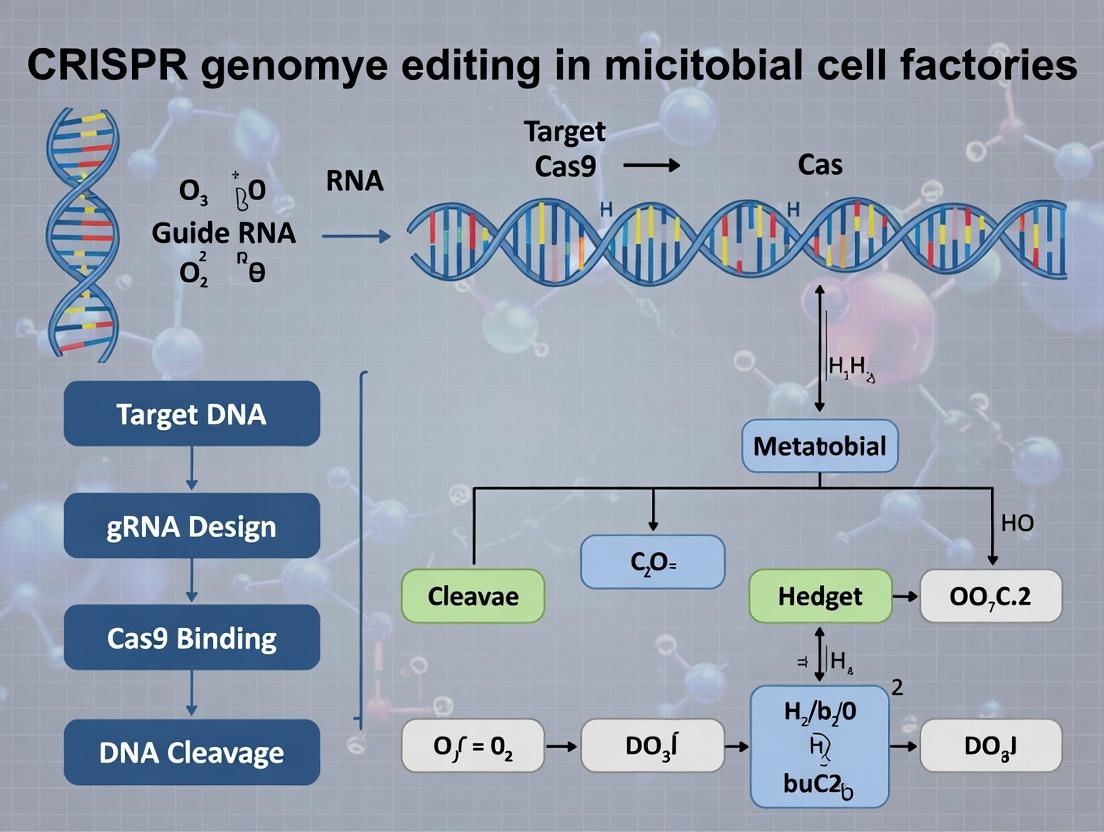
This comprehensive guide explores CRISPR-based genome editing for engineering microbial cell factories, tailored for researchers and bioprocess professionals.
Engineering Tomorrow's Biomanufacturing: A Guide to CRISPR Genome Editing for Microbial Cell Factories
Abstract
This comprehensive guide explores CRISPR-based genome editing for engineering microbial cell factories, tailored for researchers and bioprocess professionals. It begins by establishing the foundational principles of CRISPR-Cas systems and their superiority for multiplexed, precise edits in industrial microbes. The article then details practical methodologies for designing editing strategies and constructing pathways for valuable compounds like APIs, biofuels, and specialty chemicals. We address common troubleshooting and optimization challenges, including delivery efficiency, host toxicity, and metabolic burden. Finally, the guide provides frameworks for validating edit success, comparing CRISPR to alternative tools (e.g., recombineering, RNAi), and benchmarking strain performance. The conclusion synthesizes key trends and future directions, highlighting the transformative potential of CRISPR-edited microbes in sustainable biomanufacturing and drug development.
CRISPR 101 for Cell Factories: From Core Mechanisms to Host Selection
Defining the Modern Microbial Cell Factory and Its Industrial Promise
Within the broader thesis investigating CRISPR genome editing for microbial cell factory (MCF) optimization, this application note defines the modern MCF as a metabolically engineered microorganism—typically bacteria, yeast, or filamentous fungi—designed for the efficient, sustainable, and predictable biosynthesis of target compounds. Its industrial promise lies in the potential to revolutionize the production of pharmaceuticals, chemicals, and materials by moving from petrochemical-based processes to bio-based, fermentative ones. CRISPR-based genome editing is the cornerstone technology enabling the rapid, multiplexed, and precise genetic rewiring required to transform a laboratory strain into a robust industrial platform.
Application Notes & Quantitative Data
Key Performance Metrics of Engineered MCFs
Recent industrial-scale demonstrations highlight the productivity of modern MCFs. The data below are derived from peer-reviewed publications and industrial white papers (2023-2024).
Table 1: Performance Metrics of CRISPR-Engineered Microbial Cell Factories for High-Value Products
| Host Organism | Target Product | CRISPR Tool Used | Final Titer (g/L) | Productivity (g/L/h) | Yield (g/g substrate) | Scale |
|---|---|---|---|---|---|---|
| Saccharomyces cerevisiae | Beta-Caryophyllene (sesquiterpene) | CRISPR-Cas12a multiplex editing | 2.1 | 0.029 | 0.021 | 2 L Bioreactor |
| Escherichia coli | D-Pantothenic Acid (Vitamin B5) | CRISPRi for metabolic flux tuning | 65.8 | 0.915 | 0.38 | 50 L Fed-Batch |
| Yarrowia lipolytica | Omega-3 Eicosapentaenoic Acid (EPA) | CRISPR-Cas9 with HDR for pathway integration | 25.4 | 0.106 | 0.075 | 10 L Fermentation |
| Pseudomonas putida | cis,cis-Muconic Acid (polymer precursor) | Base Editing (CRISPR-dCas9-cytidine deaminase) | 85.3 | 1.186 | 0.57 | 100 L Pilot |
CRISPR Editing Efficiency in Common Industrial Hosts
Editing efficiency is critical for strain construction speed. Data is aggregated from recent protocol optimization studies.
Table 2: Benchmarking of CRISPR-Cas9 Editing Efficiencies Across Microbial Hosts (2024)
| Microbial Host | Editing Type | Delivery Method | Average Efficiency (%) | Key Challenge Addressed |
|---|---|---|---|---|
| E. coli (BL21 derivative) | Gene Knockout | Plasmid-based, RecET recombineering | 98-100% | Counter-selection marker removal |
| Bacillus subtilis | Multiplex Knock-in | All-in-one plasmid with sgRNA array | 73% | SpCas9 toxicity mitigation |
| Komagataella phaffii (Pichia pastoris) | Site-Directed Mutagenesis | CRISPR/Cas9 + ssODN donor | 87% | Homology arm length optimization |
| Aspergillus niger | Gene Repression (CRISPRi) | dCas9-Mxi1 fusion expression | 91% (mRNA knockdown) | Chromatin accessibility |
Experimental Protocols
Protocol: CRISPR-Cas12a Mediated Multiplexed Pathway Gene Integration inS. cerevisiae
Objective: To integrate a three-gene heterologous terpene synthase pathway into the HO locus of yeast.
Materials: See "The Scientist's Toolkit" below.
Procedure:
- Design and Synthesis: Design four crRNAs targeting the HO locus (one for cleavage, three with homology to donor sequences). Synthesize crRNAs and the AsCas12a expression cassette as DNA fragments. Assemble a 4-gene donor construct (3 pathway genes + selection marker) flanked by 500 bp homology arms to the HO locus via Gibson Assembly.
- Plasmid Assembly: Clone the AsCas12a expression cassette, a polycistronic crRNA array (under a U6 promoter), and the donor DNA construct into a single, low-copy CEN/ARS yeast E. coli shuttle vector using Golden Gate assembly. Transform into E. coli for propagation and isolate plasmid.
- Yeast Transformation: Use the standard lithium acetate/PEG method. Mix 1 µg of the final assembly plasmid with 50 µL of competent yeast cells (BY4741 strain). Heat shock at 42°C for 40 minutes. Plate on synthetic complete (SC) media lacking uracil to select for plasmid retention.
- Screening and Validation: After 72 hours, pick 10-20 colonies. Patch onto SC-Ura plates and perform colony PCR using primers external to the integration site and internal to the pathway genes. Confirm correct integration by Sanger sequencing of PCR products.
- Curing and Production Test: Streak a positive colony on YPD (non-selective) media for 2 rounds. Then replica-plate onto SC-Ura and SC+5-FOA plates to identify colonies that have lost the plasmid. Inoculate plasmid-cured strains in 5 mL SC media, induce with galactose, and analyze terpene production via GC-MS after 48 hours.
Protocol: CRISPR-dCas9 Based Interference (CRISPRi) for Dynamic Flux Control inE. coli
Objective: To fine-tune the central metabolic flux towards pantothenate biosynthesis by repressing competing pathway genes (pckA, pykA).
Procedure:
- sgRNA Design and Vector Construction: Design two sgRNAs with strong binding sites in the promoter or early coding region of pckA and pykA. Clone them into separate positions on an IPTG-inducible dCas9 (S. pyogenes) expression plasmid (pBb series derivative).
- Strain Generation: Transform the constructed CRISPRi plasmid into your pantothenate-producing E. coli base strain via electroporation. Select on LB + chloramphenicol.
- Fermentation for Titration: Inoculate 50 mL M9 minimal medium with 1% glucose in a 250 mL baffled flask. Add varying concentrations of IPTG inducer (0, 10, 50, 100 µM) at mid-exponential phase (OD600 ~0.6). Culture in a shaking incubator at 30°C, 250 rpm.
- Sampling and Analysis: Take samples every 2 hours for 12 hours. Measure OD600 and extracellular metabolites (glucose, acetate) via HPLC. Harvest cells at 8 hours for RNA extraction and qRT-PCR analysis of pckA and pykA transcript levels.
- Product Quantification: At fermentation endpoint, centrifuge culture broth. Analyze supernatant for D-pantothenic acid concentration using a validated HPLC-UV method. Correlate product titer with induction level and transcript knockdown data.
Diagrams
Diagram 1: CRISPR-Cas12a Pathway Integration and Terpenoid Production Workflow
Diagram 2: CRISPRi Mechanism for Metabolic Flux Tuning
The Scientist's Toolkit
Table 3: Essential Research Reagent Solutions for CRISPR MCF Engineering
| Reagent/Material | Supplier Examples | Function in Protocol | Critical Notes |
|---|---|---|---|
| AsCas12a (Cpfl) Nuclease | IDT, Thermo Fisher, in-house expression | Mediates DNA cleavage with T-rich PAM; enables multiplex crRNA arrays. | Preferred for yeast multiplexing due to simpler crRNA design and lower off-target effects in some hosts. |
| High-Efficiency Yeast Transformation Kit | Takara Bio, Sigma-Aldrich, Zymo Research | Provides optimized PEG/LiAc reagents for plasmid or ribonucleoprotein (RNP) delivery. | Kit efficiency >1x10^5 CFU/µg is recommended for library-scale work. |
| Gibson Assembly Master Mix | NEB, Thermo Fisher | Seamlessly assembles multiple DNA fragments with homologous overlaps (e.g., donor DNA construction). | Crucial for building long, complex pathway integration cassettes without scars. |
| dCas9 Expression Plasmid (pBb series derivative) | Addgene, custom synthesis | Constitutively or inducibly expresses catalytically dead Cas9 for CRISPRi/a applications. | Ensure promoter (e.g., J23100, Ptrc) is compatible with host. Must include appropriate antibiotic marker. |
| ssODN or dsDNA Donor Templates | IDT, Twist Bioscience | Serves as homology-directed repair (HDR) template for precise edits or knock-ins. | HPLC-purified ssODNs (>120 nt) for point mutations; long dsDNA (gBlocks, linearized plasmid) for gene insertions. |
| 5-Fluoroorotic Acid (5-FOA) | MilliporeSigma, Carbosynth | Used for counter-selection against URA3 marker to cure plasmids from yeast. | Essential for generating plasmid-free, stable production strains for industrial evaluation. |
| Metabolite Analysis Standards (e.g., D-Pantothenic Acid) | Sigma-Aldrich, Cayman Chemical | HPLC or LC-MS/MS calibration standards for accurate quantification of target products. | Use certified reference materials for process analytical technology (PAT) compliance. |
This application note details the integration of CRISPR-Cas systems into the metabolic engineering workflow, supporting a broader thesis that CRISPR is the pivotal technology for evolving microbial cell factories into robust, programmable production platforms for pharmaceuticals and chemicals.
Quantitative Impact of CRISPR-Cas on Metabolic Engineering Workflows
Table 1: Comparative Metrics of Traditional vs. CRISPR-Based Metabolic Engineering
| Metric | Traditional Methods (Homologous Recombination, EMS) | CRISPR-Cas Methods (Base/Prime Editing, Multiplexing) | Improvement Factor |
|---|---|---|---|
| Strain Construction Time | 4-8 weeks | 1-2 weeks | 4-8x faster |
| Multiplex Editing Capacity | Typically 1-2 loci | 5-10+ loci routinely demonstrated | 5x+ greater |
| Editing Efficiency | 10⁻³ to 10⁻⁶ | 10⁻¹ to >90% for knockouts | 1000x+ higher |
| Off-target Rate (in microbes) | N/A (random mutagenesis high) | Low; design-dependent, can be <0.1% | Significantly lower |
| Screening Throughput | 100s of colonies | 1000s of clones via NGS or phenotypic sorting | 10x+ higher |
Core Protocol: Multiplexed Knock-in for Pathway Optimization inS. cerevisiae
Objective: Simultaneously integrate three heterologous genes (Gene A, B, C) into pre-defined safe-harbor loci in the yeast genome to construct a novel terpenoid pathway.
Materials (Research Reagent Solutions):
- CRISPR-Cas9 System: S. cerevisiae-optimized Cas9 expression plasmid (Addgene #100052). Function: Provides DNA endonuclease activity.
- gRNA Expression: High-copy gRNA scaffold plasmid with USER cloning sites. Function: Enables facile cloning of multiplex gRNA sequences.
- Donor DNA: Linear dsDNA fragments with 40 bp homology arms, synthesized de novo. Function: Template for homology-directed repair (HDR).
- Repair Enhancer: Plasmid expressing Rad54 (Addgene #113891). Function: Boosts HDR efficiency in yeast.
- Selection Marker: URA3 marker on one donor fragment; 5-Fluoroorotic Acid (5-FOA) for counter-selection. Function: Enables selection for integration and subsequent marker recycling.
- Validation Primers: Primer pairs external to each homology arm and internal to each inserted gene. Function: PCR verification of correct integration.
Procedure:
- gRNA Design & Cloning: Design three gRNAs targeting intergenic "safe-harbor" loci (e.g., HO, PYM2, RPL15B). Clone protospacer sequences into the multiplex gRNA plasmid via USER assembly.
- Donor DNA Preparation: Order synthetic dsDNA donors for Genes A, B, and C. Gene A donor includes a URA3 marker.
- Yeast Transformation: Co-transform competent S. cerevisiae strain with: a) Cas9 plasmid, b) multiplex gRNA plasmid, c) three donor DNA fragments, d) Rad54 expression plasmid. Use standard lithium acetate/PEG method.
- Selection & Screening: Plate on SC-Ura media. Screen 20-50 colonies by colony PCR using validation primers. Positive clones show bands for both integration junctions.
- Marker Excision: Induce Cas9 expression to target the URA3 marker for double-strand break, providing a donor with direct repeat flanks for pop-out. Plate on 5-FOA to select for marker loss.
- Pathone Validation: Cultivate engineered strain in production medium. Analyze metabolite titer via GC-MS or HPLC.
Visualization of Workflows and Pathways
Short Title: CRISPR Metabolic Engineering Cycle
Short Title: Mechanism of Multiplex Gene Knock-in
Within microbial cell factory research, precise genome editing is paramount for optimizing metabolic pathways, knocking out non-essential genes, and inserting heterologous pathways. CRISPR systems have revolutionized this field, offering a suite of tools with distinct capabilities. This application note provides a comparative analysis of four core CRISPR technologies—Cas9, Cas12, Base Editors, and Prime Editors—framed within the context of engineering bacteria and yeast for bioproduction. We detail selection criteria and provide protocols for implementation.
Comparative Analysis of CRISPR Tools
The optimal CRISPR tool depends on the desired edit type, efficiency, and purity required for your microbial engineering project.
Table 1: Key Characteristics of CRISPR Tools for Microbial Engineering
| Tool | Nuclease Activity | Edit Type | Typical Efficiency in Microbes | Key Advantage | Primary Limitation |
|---|---|---|---|---|---|
| Cas9 | DSBs (blunt ends) | Knockouts, large insertions/deletions | 50-95% in E. coli; 70-99% in yeast | High efficiency for knockouts; well-established protocols. | Relies on host repair (NHEJ/HDR); can produce indels; off-target DSBs. |
| Cas12a | DSBs (sticky ends) | Knockouts, multiplexed editing | 60-90% in E. coli | Simpler crRNA; multiplexing with a single array; sticky ends can enhance specificity. | Generally lower activity than Cas9 in some hosts. |
| Base Editor | Single-strand nick | Point mutations (C•G to T•A or A•T to G•C) | 10-50% in yeast; up to 99% in E. coli (stationary phase) | No DSBs; high product purity; efficient point mutations. | Limited to specific base transitions; requires a PAM in optimal window. |
| Prime Editor | Single-strand nick | All 12 possible point mutations, small insertions/deletions | 1-30% in yeast; up to 45% in E. coli | Versatile; no DSBs; does not require donor DNA templates. | Lower efficiency in microbes; complex pegRNA design. |
Table 2: Selection Guide for Microbial Cell Factory Applications
| Desired Genomic Outcome | Recommended Primary Tool | Alternative Tool | Rationale |
|---|---|---|---|
| Gene knockout | Cas9 or Cas12a | - | High efficiency, simple design. Cas12a preferred for multiplexed pathway disruptions. |
| Large pathway insertion (HDR) | Cas9 (with dsDNA donor) | - | DSB boosts HDR rates with homologous donor template. |
| Point mutation (e.g., enzyme active site) | Base Editor | Prime Editor | Base Editor offers higher efficiency if mutation is within its convertible range. |
| Multiple or flexible point mutations | Prime Editor | Base Editor + HDR | Prime Editor's versatility for all transition/transversion mutations. |
| Silent mutation or TAG stop codon introduction | Base Editor | Prime Editor | High-efficiency, precise conversion without donor DNA. |
Detailed Protocols
Protocol 1: High-Efficiency Gene Knockout inE. coliusing Cas9
This protocol uses a plasmid-based system for rapid, selection-based knockout.
- Design: Design a 20-nt spacer sequence targeting the gene of interest adjacent to a 5'-NGG-3' PAM. Clone into the sgRNA expression cassette of a plasmid expressing Cas9 and a counter-selectable marker (e.g., sacB).
- Transformation: Electroporate the assembled plasmid into the E. coli strain.
- Selection and Curing: Plate on antibiotics to select for the plasmid. Induce Cas9 expression to create a DSB, forcing repair via NHEJ (often causing frameshifts). Screen colonies for loss of gene function via phenotype or PCR. Finally, grow in sucrose-containing media to cure the sacB-containing plasmid.
- Verification: Perform Sanger sequencing of the target locus across multiple clones to confirm indel patterns.
Protocol 2: Multiplexed Gene Repression using dCas12a inE. coli
This protocol uses catalytically dead Cas12a (dCas12a) for CRISPR interference (CRISPRi) of multiple genes simultaneously.
- Array Design: Design a single crRNA array targeting the promoter or coding regions of up to 5 genes. Each direct repeat (DR, ~19 nt) is followed by a 23-nt spacer.
- Cloning: Clone the array into a plasmid expressing dCas12a.
- Transformation & Induction: Transform the plasmid and induce dCas12a expression with anhydrotetracycline (aTc).
- Analysis: Measure repression by qRT-PCR (70-95% typical knockdown) or via fluorescence if targeting a reporter gene.
Protocol 3: Base Editing for Point Mutations inS. cerevisiae
This protocol uses a cytosine base editor (CBE) for C•G to T•A conversions in yeast.
- Target Identification: Identify a target C within the editing window (typically positions 3-10, 5' of the PAM). The PAM for SaCas9-derived BE is 5'-NNGRRT-3'.
- Plasmid Construction: Clone the target-specific sgRNA into a yeast shuttle plasmid expressing the CBE (e.g., yE1-BE3).
- Yeast Transformation: Transform the plasmid into yeast using the LiAc/SS carrier DNA/PEG method.
- Screening: Plate on appropriate drop-out media. Screen colonies by diagnostic restriction enzyme digest if the edit creates/disrupts a site, or by Sanger sequencing.
- Plasmid Curing: Passage colonies on non-selective media to lose the editing plasmid.
Protocol 4: Prime Editing inE. coliusing a Dual-Plasmid System
This protocol adapts prime editing for bacteria, requiring careful pegRNA design.
- pegRNA Design: Design the pegRNA with: (a) a spacer (13-nt+), (b) a primer binding site (PBS, ~10-15 nt), and (c) the RT template containing the desired edit. Clone into a plasmid expressing the E. coli-optimized prime editor (PE2).
- Transformation: Co-transform the PE2 plasmid and a second plasmid expressing a nicking sgRNA (nicking the non-edited strand) to improve efficiency.
- Editing & Outgrowth: Recover cells and outgrow for 6 hours to allow editing and fixation.
- Isolation & Sequencing: Isolate individual colonies. Screen via PCR and Sanger sequencing. Deep sequencing is recommended to quantify low-frequency edits.
Visualizing CRISPR Tool Mechanisms & Workflows
Title: CRISPR Tool Selection Logic Flow for Microbial Engineering
Title: Cas9 Gene Knockout Workflow in Microbes
The Scientist's Toolkit: Key Reagent Solutions
Table 3: Essential Reagents for CRISPR Microbial Engineering
| Reagent | Function in Experiment | Example Product/Catalog | Key Consideration |
|---|---|---|---|
| Cas9 Expression Plasmid | Delivers SpCas9 or variant to the host cell. | pCas9 (Addgene #42876), pCRISPR-SacCas9 (yeast) | Ensure promoter (e.g., P_tet_, P_GAL1*) is functional in your host. |
| Base Editor Plasmid | Expresses fusion of nickase Cas9 and deaminase/UGI. | pCMVBE3 (mammalian), yE1-BE3 (yeast), pSEVABE (E. coli) | Verify editing window compatibility with your target base. |
| Prime Editor Plasmid | Expresses PE2 protein (Cas9 nickase-RT fusion). | pPE2 (Addgene #132775), pAPPE (E. coli optimized) | Requires co-delivery of pegRNA plasmid. |
| High-Efficiency Cloning Kit | For rapid sgRNA/pegRNA cloning into expression vectors. | NEB Golden Gate Assembly Mix, Site-Directed Mutagenesis Kit | Golden Gate is ideal for arrayed sgRNA construction. |
| Electrocompetent Cells | For high-efficiency plasmid transformation in bacteria. | NEB 10-beta, MegaX DH10B T1R, homemade E. coli strains | Crucial for large plasmids (e.g., PE systems). |
| LiAc/SS Carrier DNA PEG | Standard yeast transformation reagent mix. | Frozen EZ-Yeast Transformation Kit (Zymo Research) | Essential for efficient plasmid uptake in S. cerevisiae. |
| Deep Sequencing Kit | For unbiased quantification of editing efficiency and outcomes. | Illumina MiSeq CRISPR Amplicon Sequencing | Critical for assessing off-target effects and editing purity. |
This application note, framed within a CRISPR genome editing thesis for microbial cell factories, provides a comparative analysis of microbial hosts and detailed protocols for their engineering. The selection of host organism is critical for yield, titer, productivity, and process scalability in industrial biotechnology.
Comparative Host Analysis
Table 1: Key Characteristics of Model Microbial Hosts
| Parameter | E. coli | S. cerevisiae | B. subtilis | Non-Model (e.g., Pseudomonas, Streptomyces) |
|---|---|---|---|---|
| Genetic Tools | Extensive, CRISPR-Cas9/12, recombineering | Well-developed, CRISPR-Cas9, gRNA-tRNA | Robust, CRISPR-Cas9, base editing | Emerging, species-specific systems |
| Growth Rate | Very Fast (20-30 min doubling) | Moderate (90-120 min doubling) | Fast (30-60 min doubling) | Variable, often slower |
| Titer (e.g., for Organic Acids) | High (e.g., >100 g/L succinate) | Moderate (e.g., 50-80 g/L lactic acid) | High (e.g., >90 g/L acetate) | Often high for native compounds |
| Secretion Capacity | Limited, often requires lysis | Good for proteins, moderate for others | Excellent, natural secretor | Excellent in many species |
| GRAS Status | No (endotoxin producer) | Yes | Yes | Case-by-case (some are) |
| Common Applications | Recombinant proteins, simple metabolites | Proteins, ethanol, complex pathway products | Enzymes, vitamins, surfactants | Antibiotics, secondary metabolites |
Table 2: CRISPR Editing Efficiency (Recent Benchmarks)
| Host Strain | Editing Efficiency Range (%) | Key CRISPR System Used | Key Factor for Success |
|---|---|---|---|
| E. coli MG1655 | 85-100 | Cas9, λ-Red recombineering | ssDNA repair template design |
| S. cerevisiae CEN.PK2 | 70-95 | Cas9, gRNA-tRNA | Homology arm length (≥40 bp) |
| B. subtilis 168 | 80-98 | Cas9 nickase (Cas9n) | Temperature shift to 30°C post-transformation |
| Pseudomonas putida KT2440 | 60-85 | pEMG-based system | Addition of 1 mM cAMP |
Detailed CRISPR Protocol: Multi-Host Genome Integration
This protocol outlines a generalized workflow for integrating a heterologous pathway gene into the genome of the discussed hosts, adaptable with host-specific modifications.
Protocol 3.1: CRISPR-Cas Mediated Genomic Integration
Objective: Knock-in a biosynthetic gene expression cassette at a defined genomic locus.
The Scientist's Toolkit:
| Reagent/Material | Function & Notes |
|---|---|
| CRISPR Plasmid System | Expresses Cas9 and host-optimized gRNA. For Bacillus, use a temperature-sensitive replicon. |
| dsDNA or ssDNA Repair Template | Contains gene cassette with 500-1000 bp homology arms (ssDNA for E. coli, dsDNA for yeast). |
| Electrocompetent Cells | Prepared specific to each host (e.g., TSS method for E. coli, LiAc for yeast, natural competence for B. subtilis). |
| Host-Specific Recovery Media | e.g., SOC for E. coli, YPD for yeast, LB + 0.5M sorbitol for Bacillus. |
| Selection Agar Plates | Antibiotic for plasmid/maintenance, and/or counter-selection (e.g., 5-FOA for yeast URA3 loss). |
| Colony PCR Primers | Verify integration: One primer binding genomic region outside homology arm, one binding inserted cassette. |
Stepwise Procedure:
- Design:
- Design gRNA targeting a neutral, high-expression, or safe-harbor locus (e.g., galK in E. coli, HO in yeast, amyE in B. subtilis).
- For E. coli, design a 100-nt ssDNA oligo as repair template. For yeast and Bacillus, synthesize a dsDNA fragment with homology arms.
- Transformation:
- For E. coli: Electroporate 100 ng of CRISPR plasmid and 100 pmol of ssDNA oligo into competent cells. Recover in SOC for 1 hour.
- For Yeast: Perform LiAc/SS carrier DNA/PEG transformation with 500 ng of linearized donor DNA and 200 ng of CRISPR plasmid. Heat shock at 42°C.
- For Bacillus: Use natural competence induction media, or prepare electrocompetent cells washed with 0.5M sorbitol/10% glycerol. Co-transform plasmid and dsDNA.
- Plating & Screening:
- Plate on appropriate antibiotic plates to select for CRISPR plasmid.
- Incubate at host-optimal temperature (30°C for Bacillus to maintain plasmid).
- Curing CRISPR Plasmid:
- For E. coli: Streak colonies on LB + 0.5 mM IPTG to induce Cas9 and promote plasmid loss via re-cutting of unedited cells. Screen for antibiotic-sensitive clones.
- For Yeast: Plate on 5-FOA media to counter-select against URA3-marked plasmid.
- For Bacillus: Raise temperature to 37-40°C and streak non-selectively to leverage temperature-sensitive origin.
- Verification:
- Perform colony PCR from lysed cells using verification primers.
- Sequence the junction regions to confirm precise integration.
Host-Specific Optimization Notes
- E. coli: Use recA mutant strains (e.g., DH5α) for plasmid propagation, but recA+ (e.g., MG1655) for recombination. Inducible Cas9 (e.g., arabinose) reduces toxicity.
- Yeast: Utilize endogenous homology-directed repair (HDR) dominance. tRNA-gRNA systems enable multiplexing. Integration efficiency peaks in late log-phase cells.
- Bacillus: Leverage natural competence in minimal media (e.g., MM1). Cas9 nickase (Cas9n) dramatically reduces toxicity compared to wild-type Cas9.
- Non-Model Hosts (e.g., *P. putida): Often require a sucrase gene (sacB) for counter-selection. T7 polymerase systems can be installed for strong expression. Electroporation parameters (e.g., 2.5 kV, 200Ω, 25µF for P. putida) are critical.
Visual Workflows
CRISPR Host Engineering Workflow
CRISPR DNA Repair Pathway Decision
Within the paradigm of CRISPR-based microbial cell factory development, strategic genetic manipulation is paramount. This application note details core methodologies—pathway engineering, gene knock-outs (KO), knock-ins (KI), and regulatory tweaks—framed as essential modules for optimizing microbial hosts for metabolite, enzyme, and therapeutic protein production. The protocols herein support a thesis positing that multiplexed, precision editing is the cornerstone of next-generation biocatalyst design.
Pathway Engineering: Redirecting Metabolic Flux
Application: Enhancing precursor supply for polyketide or terpenoid synthesis in S. cerevisiae or E. coli. Objective: To overexpress rate-limiting enzymes and down-compete native pathways to shunt carbon flux toward a desired product.
Protocol: Multiplexed Promoter Engineering via CRISPRa/i
- Design: For a target biosynthetic gene cluster (e.g., amorphadiene synthesis in yeast), identify 3-4 rate-limiting enzymes (e.g., ERG20, tHMG1). Design sgRNAs targeting their native promoter regions for activation (CRISPRa, using dCas9-VPR) or repression (CRISPRi, using dCas9-Mxi1).
- Assembly: Clone sgRNA sequences into a multiplexed tRNA-gRNA expression plasmid (e.g., pCRISPRevolution) via Golden Gate assembly.
- Transformation: Co-transform the sgRNA plasmid and a dCas9-effector plasmid into the microbial host.
- Screening: Plate on selective media. Screen colonies via HPLC-MS for amorphadiene titer. Quantitative results from a representative study are summarized below:
Table 1: Impact of Multiplexed Promoter Engineering on Amorphadiene Titers in S. cerevisiae
| Strain Modification (Targets) | dCas9 System | Amorphadiene Titer (mg/L) | Fold Change vs. Wild-Type |
|---|---|---|---|
| Wild-Type (None) | N/A | 12.5 ± 2.1 | 1.0 |
| Activation (tHMG1, ERG20) | VPR | 189.3 ± 15.7 | 15.1 |
| Repression (ERG9) + Activation (tHMG1) | Mxi1 + VPR | 315.8 ± 22.4 | 25.3 |
| Multiplex Repression (ERG9, ROX1) + Activation (tHMG1, ERG20) | Mxi1 + VPR | 452.6 ± 30.9 | 36.2 |
Diagram: CRISPRa/i for Metabolic Flux Diversion
Gene Knock-Outs: Eliminating Competitive Pathways
Application: Deleting genes responsible for byproduct formation (e.g., acetate in E. coli, ethanol in yeast) to improve yield and simplify downstream processing. Objective: To generate a clean, frameshift mutation via NHEJ or a precise deletion via HDR.
Protocol: High-Efficiency Multi-Gene Deletion using NHEJ
- Design: For targets pta and ackA (acetate production in E. coli), design two sgRNAs per gene, flanking the region to delete. Provide an HDR template with 500-bp homology arms if precise deletion is required.
- Assembly: Clone sgRNA pairs into a plasmid expressing Cas9 (e.g., pCas9).
- Transformation: Electroporate the plasmid into the strain. For HDR, co-electroporate a linear dsDNA repair template.
- Verification: Patch colonies onto screening plates (e.g., indicator media for acetate). Validate by colony PCR and Sanger sequencing across the junction.
Table 2: Phenotypic Impact of Sequential Knock-Outs in E. coli Fermentation
| Strain (Genotype) | Max OD600 | Acetate Peak (mM) | Target Product (SA) Titer (g/L) |
|---|---|---|---|
| Wild-Type | 12.4 ± 0.5 | 38.2 ± 3.1 | 1.5 ± 0.2 |
| ΔackA | 13.1 ± 0.6 | 25.6 ± 2.4 | 2.8 ± 0.3 |
| Δpta ΔackA | 12.8 ± 0.7 | 8.5 ± 1.2 | 4.2 ± 0.4 |
| ΔldhA Δpta ΔackA | 13.5 ± 0.4 | 7.1 ± 0.9 | 5.1 ± 0.5 |
Diagram: Workflow for Multi-Gene Knock-Out via CRISPR-Cas9
Gene Knock-Ins: Integrating Heterologous Pathways
Application: Stable chromosomal integration of large biosynthetic gene clusters (BGCs) for non-ribosomal peptide production in P. pastoris. Objective: To achieve precise, marker-less integration at a genomic "safe harbor" locus.
Protocol: HDR-Mediated Large Fragment Integration
- Design: Select a neutral locus (e.g., YPRCΔ15 in P. pastoris). Design two sgRNAs to create a double-strand break (DSB) at the locus. Prepare a linear dsDNA donor containing the BGC (≥10 kb) flanked by 1-kb homology arms.
- Cas9 RNP Preparation: Complex purified Cas9 protein with in vitro transcribed sgRNAs to form Ribonucleoproteins (RNPs).
- Delivery: Use electroporation or PEG-mediated transformation to deliver RNPs and the linear donor DNA simultaneously.
- Selection & Validation: Screen without antibiotic selection using colony PCR with junction-specific primers. Confirm copy number via qPCR and expression via RT-qPCR.
Table 3: Efficiency of Large Fragment Knock-In Across Microbial Hosts
| Host Organism | Target Locus | Donor Size (kb) | HDR Template | Transformation Method | Correct Integration Efficiency (%) |
|---|---|---|---|---|---|
| S. cerevisiae | HO | 12 | Linear dsDNA | LiAc/SS-Carrier DNA | ~78% |
| P. pastoris | YPRCΔ15 | 15 | Linear dsDNA | Electroporation (RNP) | ~65% |
| E. coli | attB | 8 | Linear ssDNA | λ-Red Recombineering | >90% |
| B. subtilis | amyE | 7 | Linear dsDNA | Natural Competence | ~80% |
Regulatory Tweaks: Fine-Tuning Expression Dynamics
Application: Modulating ribosomal binding site (RBS) strength or creating promoter libraries to optimize the expression ratio of enzymes in a synthetic pathway. Objective: To introduce precise nucleotide changes without leaving scars or selection markers.
Protocol: Base Editing for RBS Optimization
- Design: Identify the RBS region (Shine-Dalgarno sequence) upstream of a critical gene. Design a sgRNA to position the protospacer such that the target nucleotide(s) fall within the editing window (usually positions 4-8) of the base editor (e.g., cytidine base editor, CBE).
- Assembly: Clone the sgRNA into a plasmid expressing the base editor (e.g., pnCBEs).
- Transformation & Screening: Transform the host. Screen colonies via fluorescence reporter or direct sequencing to create a library of RBS variants.
- Characterization: Measure enzyme activity and pathway flux for top variants.
Diagram: Base Editing for RBS Optimization
The Scientist's Toolkit: Key Research Reagent Solutions
Table 4: Essential Reagents for CRISPR Genome Editing in Microbial Cell Factories
| Reagent/Material | Function & Rationale | Example Product/Supplier |
|---|---|---|
| Cas9 Nuclease (S. pyogenes) | Creates DSBs at genomic target specified by sgRNA. High-purity protein improves RNP editing efficiency. | ThermoFisher TrueCut Cas9 Protein |
| dCas9-VPR/dCas9-Mxi1 | Fusion proteins for transcriptional activation (VPR) or repression (Mxi1). Essential for pathway engineering without altering DNA sequence. | Addgene plasmids #47108 & #46920 |
| Cytidine Base Editor (nCBE) | Enables direct C•G to T•A conversion without DSBs. Critical for precise regulatory tweaks (RBS, promoter). | Addgene plasmid #79620 |
| Multiplex gRNA Cloning Kit | Streamlines assembly of multiple sgRNA expression cassettes for simultaneous editing or regulation. | Takara Bio In-Fusion Snap Assembly |
| Microbial HDR Enhancer | Chemical or protein additives that increase recombination frequency, boosting knock-in efficiency. | NEB HiFi DNA Assembly Master Mix |
| Genome Editing Verification Primers | Custom primers designed to span edited junctions for validation by PCR and sequencing. | IDT Oligonucleotides |
| Electrocompetent Cell Preparation Kit | For high-efficiency transformation of DNA and RNP complexes into challenging microbial hosts. | Lucigen DNAstable E. coli Kit |
From Design to Production: A Step-by-Step CRISPR Workflow for Strain Engineering
Designing gRNAs and Repair Templates for High-Efficiency Editing
Within the context of CRISPR genome editing for microbial cell factories research, achieving high-efficiency editing is paramount for metabolic engineering and pathway optimization. This application note details the rational design of guide RNAs (gRNAs) and homology-directed repair (HDR) templates to maximize editing efficiency in industrially relevant microbes such as E. coli, S. cerevisiae, and B. subtilis.
gRNA Design for Microbial Systems
Optimal gRNA design must consider on-target efficiency and minimize off-target effects. Recent algorithmic advances prioritize specific sequence features.
Table 1: Quantitative Parameters for High-Efficiency gRNA Design in Microbes
| Parameter | Optimal Value/Range | Impact on Efficiency | Notes |
|---|---|---|---|
| GC Content | 40-60% | Higher stability, but >70% may reduce efficiency | Critical for in vivo expression and complex stability. |
| On-Target Score (e.g., Doench '16) | > 50 | Positive correlation with activity | Use species-specific models when available. |
| Off-Target Score | Minimize; allow ≤3 mismatches in seed region | Reduces unintended edits | Essential for multiplexed editing in large genomes. |
| Poly-T/TTT Terminator | Avoid | Prevents premature transcriptional termination | A string of 4+ T's for RNA Pol III. |
| 5' Proximal Nucleotide | G for U6 promoters | Enhances transcription initiation | For U6, though T7 in vitro prefers GG. |
| Secondary Structure (ΔG) | > -5 kcal/mol (less stable) | Prevents gRNA from being inaccessible | Predict using tools like NUPACK. |
Repair Template Design for HDR
The design of single-stranded oligonucleotide (ssODN) or double-stranded DNA (dsDNA) repair templates is critical for introducing precise edits.
Table 2: Design Parameters for High-Efficiency HDR Templates
| Parameter | Recommended Design | Functional Rationale |
|---|---|---|
| Homology Arm Length | 35-90 nt (ssODN); 500-1000 bp (dsDNA) | Balances recombination efficiency and synthesis cost. Shorter arms work in microbes. |
| Template Strand | Nicked/non-target strand for Cas9 | Higher efficiency due to replication fork models. |
| Silent PAM-Disruption | Include in template | Prevents re-cutting of edited locus. |
| Avoiding gRNA Homology | Ensure no 15+ nt match to gRNA in template | Prevents degradation of the template. |
| Codon Optimization | Use for amino acid changes | Maintains reading frame; consider microbial codon bias. |
Experimental Protocols
Protocol 1:In SilicoDesign and Selection of gRNAs
Objective: To computationally design and rank candidate gRNAs for a target genomic locus in a microbial strain.
- Target Identification: Define the precise genomic coordinates (or sequence) for editing.
- gRNA Generation: Use a tool like CHOPCHOP, Benchling, or CRISPy-web (for microbes) to generate all possible gRNAs within ~100 bp of the target site.
- Scoring & Filtering:
- Extract the on-target efficiency score for each gRNA (most tools provide this).
- Filter out gRNAs with a GC content <40% or >60%.
- Check for and eliminate gRNAs containing poly-T (4+ consecutive T's).
- Perform an off-target analysis using the tool’s built-in function against the reference genome. Prioritize gRNAs with zero or minimal off-targets (≤3 mismatches, especially in seed region 8-12 bp proximal to PAM).
- Final Selection: Select the top 2-3 gRNAs based on the highest on-target score and lowest off-target potential for empirical testing.
Protocol 2: Construction of Plasmid-Based Editing Systems for Bacteria/Yeast
Objective: To clone selected gRNAs and repair templates into appropriate CRISPR plasmids for microbial transformation. Materials: High-fidelity DNA polymerase, restriction enzymes (e.g., BsaI for Golden Gate), T4 DNA ligase, E. coli cloning strain, plasmid backbone (e.g., pCRISPR-Cas9 for E. coli, pYES2/URA3-based for yeast).
- gRNA Cloning:
- Synthesis: Order oligonucleotides encoding the 20-nt spacer sequence with appropriate overhangs for your chosen cloning method (e.g., BsaI sites for Golden Gate assembly into a modular plasmid).
- Annealing & Ligation: Anneal complementary oligos, phosphorylate, and ligate into the digested gRNA scaffold plasmid backbone.
- Repair Template Cloning (Optional): For large edits, clone the dsDNA repair template with homology arms into the same plasmid or a separate, compatible plasmid. For ssODN templates, they can be co-transformed directly.
- Transformation & Verification: Transform the assembled plasmid into a competent cloning strain. Isolate plasmid DNA and verify the insert by Sanger sequencing using primers flanking the insertion site.
Protocol 3: Microbial Transformation & Screening for Edited Clones
Objective: To deliver CRISPR components and identify successfully edited clones. Materials: Electrocompetent or chemically competent cells of the target microbial strain, selective media, PCR reagents, agarose gel electrophoresis system.
- Delivery:
- For Bacteria (E. coli, B. subtilis): Co-transform 100 ng of the CRISPR plasmid (expressing Cas9 and gRNA) with 100-500 ng of ssODN or dsDNA repair template via electroporation.
- For Yeast (S. cerevisiae): Use a lithium acetate (LiAc) transformation protocol to co-deliver the CRISPR/Cas9 plasmid and the repair template.
- Recovery & Selection: Recover cells in non-selective medium for 1-2 hours, then plate on medium containing the appropriate antibiotic (for plasmid selection) or counter-selection marker.
- Primary Screening: Perform colony PCR on 10-20 colonies using primer pairs that flank the target edit site. Include a positive (wild-type) and negative (no template) control.
- Verification: Analyze PCR products by agarose gel electrophoresis (size check for deletions/insertions) or submit for Sanger sequencing to confirm the precise edit.
Visualization of Workflows and Pathways
Title: Computational gRNA Selection Protocol
Title: CRISPR-Cas9 DSB Repair Pathways
The Scientist's Toolkit: Research Reagent Solutions
Table 3: Essential Reagents for Microbial CRISPR Editing
| Item | Function & Rationale | Example Product/Type |
|---|---|---|
| High-Fidelity DNA Polymerase | For error-free amplification of repair templates and verification PCRs. | Q5 High-Fidelity, Phusion. |
| Modular CRISPR Plasmid Backbone | Allows rapid, Golden Gate-based cloning of gRNA spacers. | pCRISPR-Cas9 (Addgene), pML104 (for yeast). |
| Chemically/Electrocompetent Cells | For efficient delivery of CRISPR plasmids and templates into the microbial host. | NEB 10-beta, MegaX DH10B T1R, prepared in-house. |
| Single-Stranded Oligodeoxynucleotides (ssODNs) | Short repair templates for point mutations or small insertions; high HDR efficiency. | Ultramer DNA Oligos, PAGE-purified. |
| Gibson Assembly or Golden Gate Master Mix | For seamless assembly of dsDNA repair templates into vectors. | NEBuilder HiFi DNA Assembly, BsaI-HFv2. |
| Cas9 Nuclease (purified) | For in vitro validation of gRNA cutting efficiency via cleavage assays. | S. pyogenes Cas9 Nuclease. |
| Next-Generation Sequencing Library Prep Kit | For deep sequencing to quantify editing efficiency and off-target effects. | Illumina DNA Prep. |
| Microbial Genomic DNA Isolation Kit | To obtain high-quality template DNA from edited clones for verification. | DNeasy Blood & Tissue Kit. |
Application Notes: Delivery Systems in CRISPR Genome Editing of Microbial Cell Factories
The engineering of microbial cell factories (MCFs) for sustainable chemical, therapeutic, and fuel production hinges on precise, efficient, and stable genome editing. CRISPR technology has revolutionized this field, yet its success is fundamentally governed by the delivery system. This note details the application of three core delivery modalities within a thesis on MCF optimization, highlighting their distinct advantages, limitations, and quantitative performance.
1. Plasmid-Based Delivery: This traditional method involves the intracellular transcription of CRISPR components from an engineered plasmid. It is ideal for library screenings and multiplexed edits in E. coli and S. cerevisiae due to its simplicity and ability to maintain persistent Cas9/gRNA expression, which can increase editing efficiency but also raises the risk of off-target effects and plasmid burden.
2. Ribonucleoprotein (RNP) Complex Delivery: Direct delivery of pre-assembled Cas protein complexed with guide RNA. This system is favored for rapid, marker-free editing with minimal off-targets and no foreign DNA integration. It is particularly effective in bacteria and yeasts where transformation with nucleic acids is challenging, enabling precise edits without leaving genetic scars, which is critical for industrial strain development.
3. Conjugative Delivery: Utilizes bacterial conjugation machinery to transfer CRISPR machinery from a donor to a recipient cell. This is indispensable for editing recalcitrant or non-model microbes that are naturally competent for conjugation but resistant to standard electroporation. It facilitates genome editing in diverse, industrially relevant species without specialized transformation protocols.
Table 1: Comparative Performance Metrics of Delivery Systems in Model MCFs
| System | Editing Efficiency (Range) | Time to Edit (Post-Delivery) | Off-Target Risk | Best Suited MCFs |
|---|---|---|---|---|
| Plasmid | 65-99% (E. coli), 40-90% (S. cerevisiae) | 24-48 hours (includes plasmid replication & expression) | High (prolonged expression) | E. coli, S. cerevisiae, B. subtilis |
| RNP | 10-95% (E. coli), 20-80% (L. lactis) | 1-6 hours (immediate activity) | Very Low (transient activity) | E. coli, Lactic Acid Bacteria, Cyanobacteria |
| Conjugation | 10^-4 - 10^-1 (conjugants/recipient) | 24-72 hours (includes mating & recombination) | Variable | Non-model Proteobacteria, Actinomycetes |
Protocols
Protocol 1: High-Efficiency Plasmid-Based CRISPR-Cas9 Editing in E. coli
- Objective: Introduce a targeted gene knockout in E. coli BL21(DE3).
- Reagents: pCRISPR plasmid (co-expresses Cas9 & sgRNA), pDonor plasmid (contains homologous repair template), SOC media, appropriate antibiotics.
- Procedure:
- Design sgRNA targeting the gene of interest and clone into the pCRISPR plasmid. Synthesize a donor DNA fragment with 500bp homology arms flanking the desired edit.
- Co-transform chemically competent E. coli cells with 50 ng of pCRISPR and 100 ng of pDonor plasmid via heat shock (42°C, 45 sec).
- Recover cells in SOC media at 37°C for 1 hour.
- Plate on LB agar containing antibiotics for both plasmids. Incubate at 30°C for 36 hours (lower temperature reduces Cas9 toxicity).
- Screen colonies by colony PCR and sequence validate the edited locus. Cure the pCRISPR plasmid by serial passage without selection.
Protocol 2: Marker-Free Editing via RNP Electroporation in Lactococcus lactis
- Objective: Create a precise point mutation using Cas9 RNP.
- Reagents: Commercial Cas9 nuclease, chemically synthesized sgRNA, ssDNA oligo donor (100nt), electrocompetent L. lactis cells, Gene Pulser electroporator.
- Procedure:
- RNP Complex Assembly: Mix 5 µg of Cas9 protein with a 3.5-fold molar excess of sgRNA in nuclease-free buffer. Incubate at 25°C for 10 minutes.
- Combine 10 µL of electrocompetent cells with 2 µL of RNP complex (final ~3 µM) and 2 µL of ssDNA donor oligo (final 10 µM).
- Electroporate in a 1mm cuvette (2.0 kV, 200 Ω, 25 µF). Immediately add 1 mL of recovery medium (SM17C + 20mM MgCl2 + 2mM CaCl2).
- Recover at 30°C for 2-3 hours. Plate serial dilutions on non-selective agar.
- After 48 hours, pick and colony screen for the desired mutation. No antibiotic selection is used; screening is essential.
Protocol 3: Inter-Species CRISPR Delivery via Conjugation from E. coli to Pseudomonas putida
- Objective: Deliver a CRISPR-based kill/ counter-select system to edit a non-model recipient.
- Reagents: Donor E. coli S17-1 (λ pir) harboring conjugative plasmid (oriT, Cas9, sgRNA, donor template), recipient P. putida KT2440.
- Procedure:
- Grow donor and recipient strains to mid-log phase (OD600 ~0.6).
- Mix donor and recipient cells at a 1:2 ratio on a sterile filter placed on non-selective LB agar.
- Incubate the mating filter at 30°C for 6-8 hours.
- Resuspend cells from the filter and plate on selective agar containing antibiotics that select for the plasmid in the recipient and counter-select against the donor E. coli.
- Incubate plates at 30°C for 48 hours. Isolate transconjugants and verify genomic edits via PCR/sequencing.
Visualizations
Title: Plasmid-Based CRISPR Delivery Workflow
Title: RNP Complex Delivery & Activity Flow
Title: Conjugative Delivery Mechanism for CRISPR
The Scientist's Toolkit: Key Reagent Solutions
Table 2: Essential Reagents for CRISPR Delivery in MCFs
| Reagent / Material | Function in Delivery & Editing |
|---|---|
| CRISPR Plasmid Kit (e.g., pCRISPR) | Provides backbone for co-expression of Cas9 and sgRNA under microbial promoters. Contains origin of replication and selectable marker for the host. |
| Purified Cas9 Nuclease (Commercial) | Ready-to-use enzyme for RNP complex assembly. Ensures high activity and consistency, eliminating host expression variability. |
| Chemically Modified sgRNA | Enhances stability against nucleases in RNP protocols, increasing editing efficiency, especially in tough-to-transform strains. |
| Electrocompetent Cell Preparation Kit | Generates highly transformable microbial cells for efficient plasmid or RNP delivery via electroporation. Critical for protocol success. |
| Homologous Donor Template (ssDNA/dsDNA) | Provides the repair template for precise edits (HDR). Single-stranded oligos are preferred for point mutations in bacteria. |
| Conjugative Helper Plasmid | Harbors mob and tra genes to mobilize delivery plasmids from donor to recipient strain in conjugation-based systems. |
| Antibiotics for Selection | Maintains selection pressure for plasmid retention post-delivery and for identifying successful transconjugants. |
Protocols for CRISPR Editing in Common Bacterial and Yeast Systems
Within the broader thesis on developing robust microbial cell factories for sustainable bioproduction and therapeutic compound synthesis, the precision and efficiency of genome editing are paramount. CRISPR-based technologies have revolutionized metabolic engineering in common bacterial (Escherichia coli) and yeast (Saccharomyces cerevisiae) chassis. This document provides updated Application Notes and detailed Protocols for implementing these systems, incorporating current best practices and quantitative benchmarks from recent literature.
Application Notes: System Comparison and Quantitative Benchmarks
Table 1: Comparison of Common CRISPR Systems for Microbial Editing
| Feature | E. coli (Cas9 from S. pyogenes) | S. cerevisiae (Cas9 from S. pyogenes) | Common Notes |
|---|---|---|---|
| Typical Delivery | Plasmid-based, inducible | Plasmid-based, constitutive or inducible | Yeast often uses 2µ high-copy plasmids. |
| Common Repair Pathway | ssDNA oligo (λ-Red recombinering) / dsDNA donor | dsDNA donor (Homology-Directed Repair) | HDR dominates in yeast; NHEJ is inefficient. |
| Editing Efficiency Range | 65-100% for point mutations; 10-50% for large insertions | 50-95% for gene knock-ins; >80% for deletions | Efficiency is donor design and strain dependent. |
| Key Challenge | Toxicity of Cas9; off-target effects | Donner integration complexity; plasmid curing | Both benefit from inducible Cas9 expression. |
| Common Selection | Antibiotic resistance, phenotypic screening | Auxotrophic markers, antibiotic resistance | Counter-selection markers (e.g., URA3) are powerful in yeast. |
Table 2: Quantitative Performance of Recent Optimizations (2023-2024)
| Optimization | System | Reported Efficiency Increase | Key Metric |
|---|---|---|---|
| Cas9 Fusion to λ-Red Beta protein | E. coli | ~2.5-fold | 90% editing vs. 35% for large insertions. |
| CRISPR-Cas12a (Cpf1) for multiplexing | S. cerevisiae | N/A | Reduced off-targets by ~60% compared to Cas9. |
| All-in-One, auto-excising "Pop-In" plasmids | S. cerevisiae | N/A | 99% plasmid curing rate post-editing. |
| Prime Editing with engineered reverse transcriptase | E. coli | 20-40% | Point mutation efficiency without DSB. |
Detailed Experimental Protocols
Protocol 1: CRISPR-Cas9 Mediated Gene Knockout inEscherichia coliusing λ-Red Recombineering
Objective: Disrupt a target gene via small insertion/deletion using a donor oligonucleotide.
Materials & Reagents:
- E. coli strain with genomic λ-Red genes (e.g., BW25141) or transformed with pKD46.
- pCas9cr4 plasmid (or similar, encoding inducible Cas9 and sgRNA scaffold).
- Oligonucleotides: sgRNA template oligo (target-specific) and ssDNA donor oligo (homology arms ~50-70 nt flanking desired edit).
- Chemicals: L-Arabinose (for λ-Red induction), IPTG or aTC (for Cas9/sgRNA induction), antibiotics.
Procedure:
- Design & Cloning: Design sgRNA targeting the non-template strand near the target site. Clone sgRNA sequence into the pCas9cr4 plasmid via BsaI Golden Gate assembly.
- Transformation: Electroporate the assembled plasmid into the E. coli strain expressing λ-Red proteins (induced with 10 mM L-arabinose).
- Editing Induction: Grow transformed cells to mid-log phase. Induce Cas9 expression and sgRNA transcription with 0.2 mM IPTG (or appropriate inducer) for 2-4 hours. Simultaneously, provide the ssDNA donor oligo (100 pmol) via electroporation or chemical transformation.
- Recovery & Screening: Recover cells in SOC medium for 1-2 hours, then plate on selective agar. Screen colonies by colony PCR and Sanger sequencing to verify edits.
- Plasmid Curing: Grow edited colonies at 37°C without selection to lose the temperature-sensitive pCas9cr4 plasmid.
Protocol 2: CRISPR-Cas9 Mediated Multiplex Gene Integration inSaccharomyces cerevisiae
Objective: Integrate a heterologous expression cassette at a defined genomic locus.
Materials & Reagents:
- S. cerevisiae strain (e.g., CEN.PK2 or BY4741).
- All-in-One yeast CRISPR plasmid (e.g., pYES2-sgRNA-Cas9 with URA3 marker).
- dsDNA Donor Fragment: PCR-amplified cassette with 40-50 bp homology arms flanking the Cas9 cut site, containing the gene of interest and a selectable marker (e.g., HIS3).
- Yeast transformation reagents (LiAc, PEG, single-stranded carrier DNA).
- Synthetic Dropout media lacking uracil and histidine for selection.
Procedure:
- sgRNA Plasmid Construction: Design sgRNA targeting the genomic integration locus. Amplify the sgRNA expression cassette with target-specific primers and assemble into the linearized pYES2 plasmid using homologous recombination in yeast or Gibson assembly in E. coli.
- Donor Preparation: Generate the dsDNA donor fragment via high-fidelity PCR. Purify thoroughly.
- Yeast Co-transformation: Perform standard LiAc transformation. Mix 100 ng of the CRISPR plasmid, 500 ng-1 µg of the purified donor fragment, and 100 µg of denatured salmon sperm carrier DNA with competent yeast cells.
- Selection & Verification: Plate transformation on SD -Ura -His plates to select for both the CRISPR plasmid and successful integration. Incubate at 30°C for 2-3 days.
- Plasmid Curing: Streak positive colonies onto non-selective medium (YPD), then replica-plate to SD -Ura and SD -His. Colonies that grow only on SD -His have lost the URA3-marked CRISPR plasmid. Confirm integration by genomic PCR and sequencing.
Visualizations
Diagram Title: CRISPR-Cas9 Workflow for E. coli Gene Knockout
Diagram Title: CRISPR-Cas9 Workflow for S. cerevisiae Gene Integration
The Scientist's Toolkit: Research Reagent Solutions
Table 3: Essential Materials for CRISPR Editing in Microbial Systems
| Reagent/Material | Function in Protocol | Example Product/Catalog | Critical Notes |
|---|---|---|---|
| All-in-One CRISPR Plasmid | Expresses Cas9 and sgRNA from a single vector for ease of use. | Addgene #62655 (pYES2-sgRNA-Cas9 for yeast) | Ensures coordinated expression; contains selection marker. |
| High-Efficiency Competent Cells | For plasmid assembly and propagation in E. coli. | NEB 5-alpha or DH5α competent cells | >1e8 cfu/µg transformation efficiency is recommended. |
| λ-Ret Recombinase Plasmid | Provides transient recombinase activity in E. coli for donor integration. | Addgene #72230 (pKD46, temperature-sensitive) | Induce with L-arabinose; maintain at 30°C. |
| dsDNA Donor Fragment | Homology-directed repair template for precise edits. | Synthesized as gBlocks or PCR-amplified. | Homology arm length is critical (40-50 bp for yeast, 50-70 nt ssDNA for E. coli). |
| sgRNA Synthesis Kit | For rapid generation of sgRNA expression cassettes. | NEB Golden Gate Assembly Kit (BsaI) | Enables modular, scarless cloning of target sequences. |
| Cas9 Nickase or Cas12a (Cpf1) | Reduces off-target effects; useful for multiplexing. | Addgene #113729 (pCpf1 for yeast) | Cas12a uses a T-rich PAM and produces sticky ends. |
| Counter-selectable Marker | Enables efficient curing of editing plasmids in yeast. | URA3 marker (counterselected with 5-FOA) | Allows for marker-free, iterative editing cycles. |
| High-Fidelity Polymerase | For error-free amplification of donor DNA and verification PCRs. | Q5 or Phusion Polymerase | Minimizes introduction of unwanted mutations. |
The advancement of CRISPR-based genome editing has revolutionized metabolic engineering, enabling precise, multiplexed manipulation of microbial genomes. Within the broader thesis of developing microbial cell factories, this technology provides the foundational toolkit for optimizing the biosynthetic pathways of Active Pharmaceutical Ingredients (APIs) and complex natural products. By facilitating targeted gene knock-outs, knock-ins, and regulatory element tuning, CRISPR allows for the rational redesign of microbial metabolism to overcome rate-limiting steps, eliminate competing pathways, and enhance precursor supply, thereby accelerating the development of scalable and sustainable biomanufacturing platforms.
Application Notes
EngineeringSaccharomyces cerevisiaefor Opioid Precursor (S)-Reticuline Production
Background: The biosynthesis of benzylisoquinoline alkaloids (BIAs), such as the opioid precursors (S)-reticuline, in yeast requires the integration of plant-derived enzymes and the re-direction of central microbial metabolism. CRISPR Application: A CRISPR-Cas9 mediated multiplexed strategy was employed to:
- Knock out competing pathways (e.g., ARO10 for phenylpyruvate decarboxylase).
- Integrate multiple plant enzyme genes (CYP80B1, 6OMT, CNMT, 4'OMT) into defined genomic loci.
- Activate endogenous pathways by engineering transcriptional regulators of the shikimate and tyrosine biosynthesis pathways. Key Quantitative Outcomes:
| Parameter | Native Yeast Strain | Engineered CRISPR Strain (Post-Optimization) |
|---|---|---|
| (S)-Reticuline Titer | 0 mg/L | ~4.6 mg/L |
| Tyrosine Availability (Intracellular Pool) | Baseline | ~8-fold increase |
| Key Genetic Modifications | N/A | 4 gene knock-outs, 8 heterologous genes integrated |
Enhancing Taxadiene (Taxol Precursor) Yield inE. coli
Background: Taxadiene is the committed diterpenoid precursor to the anticancer drug paclitaxel (Taxol). Production in E. coli is limited by the native methylerythritol phosphate (MEP) pathway flux and enzyme toxicity. CRISPR Application: CRISPRi (interference) was used for dynamic, tunable repression of endogenous genes without altering the DNA sequence, allowing for precise metabolic balancing.
- dCas9 and sgRNAs targeted key nodes in central metabolism (ptsG, pykA) to increase carbon flux toward the MEP pathway.
- Repression of lpxC mitigated the cytotoxic effects of taxadiene production. Key Quantitative Outcomes:
| Parameter | Control Strain (No CRISPRi) | Optimized CRISPRi Strain |
|---|---|---|
| Taxadiene Titer | 300 mg/L | ~ 1,100 mg/L |
| Specific Growth Rate (μ) | 0.42 h⁻¹ | 0.38 h⁻¹ (minimal impact) |
| Acetyl-CoA / Pyruvate Precursor Ratio | Baseline | ~2.1-fold increase |
Genome Mining and Pathway Activation inStreptomycesfor Novel Polyketides
Background: Actinomycetes like Streptomyces harbor silent biosynthetic gene clusters (BGCs) for potential novel APIs. CRISPR editing is key to activating and manipulating these clusters. CRISPR Application: A CRISPR-Cas9-based "capture and engineering" protocol was implemented:
- Activation: Deletion of global repressors (e.g., bldA, wblA) or insertion of strong promoters upstream of BGCs.
- Engineering: Refactoring BGCs by replacing native regulatory elements and excising unnecessary genes to improve expression in heterologous hosts. Key Quantitative Outcomes:
| Activity | Method | Success Rate/Outcome |
|---|---|---|
| BGC Activation (Deletion of Repressor) | CRISPR Knock-out | >90% editing efficiency |
| Heterologous Expression Titer | Refactored BGC in S. lividans | ~50 mg/L (novel polyketide) vs. undetectable (wild-type) |
| Pathway Refactoring Time | Traditional cloning vs. CRISPR | Reduced from weeks to ~7 days |
Detailed Experimental Protocols
Protocol 3.1: CRISPR-Cas9 Mediated Multiplexed Integration inS. cerevisiae
Objective: Integrate a heterologous gene cassette into multiple defined genomic loci. Materials: See "The Scientist's Toolkit" (Section 5). Procedure:
- sgRNA & Donor DNA Construction: Design and clone 2-4 sgRNA sequences targeting neutral intergenic loci (e.g., HO, CAN1) into plasmid p426-SNR52p-gRNA.CAN1.Y. For each locus, synthesize a donor DNA fragment containing your gene of interest (GOI) flanked by 500 bp homology arms.
- Yeast Transformation: Co-transform the S. cerevisiae strain (containing a genomically integrated Cas9) with:
- The sgRNA expression plasmid.
- The pooled donor DNA fragments (200 ng each). Use a standard lithium acetate/PEG method.
- Selection and Screening: Plate transformants on synthetic medium lacking uracil (to maintain the sgRNA plasmid) and with appropriate auxotrophic selection for the integrated donor(s). Screen colonies by colony PCR using primers external to the integration sites.
- Curing the sgRNA Plasmid: Streak positive colonies on 5-FOA medium to counterselect the URA3-marked sgRNA plasmid.
Protocol 3.2: CRISPRi for Dynamic Metabolic Repression inE. coli
Objective: Tunably repress target genes to redirect metabolic flux. Procedure:
- Strain Preparation: Transform E. coli production strain with plasmid expressing dCas9 (e.g., pL21-dcas9, Addgene #125905). Maintain with chloramphenicol.
- sgRNA Array Cloning: Design sgRNAs targeting the 5' transcriptional start site of your target gene(s). Clone into an inducible expression vector (e.g., pL21-sgRNA, Addgene #125906) with anhydrotetracycline (aTc)-inducible promoter.
- Induction & Fermentation: Co-transform the dCas9 strain with the sgRNA plasmid. Inoculate production medium with dual antibiotics. At an OD600 of ~0.3, induce with aTc (concentration gradient from 0-100 ng/mL) to titrate repression levels.
- Analysis: Monitor growth (OD600) and precursor/product titers (via GC-MS/LC-MS) at 12, 24, and 48 hours post-induction to identify the optimal repression level for yield.
Visualizations
CRISPRi Redirects Flux in E. coli to Taxadiene
Workflow for Activating Silent Gene Clusters
Engineering Yeast for (S)-Reticuline Biosynthesis
The Scientist's Toolkit: Research Reagent Solutions
| Item / Reagent | Function / Application in CRISPR Pathway Engineering |
|---|---|
| p426-SNR52p-gRNA.CAN1.Y Plasmid | S. cerevisiae sgRNA expression vector with URA3 marker for selection and counterselection on 5-FOA. |
| pL21-dcas9 & pL21-sgRNA Plasmids | E. coli CRISPRi system: dCas9 and inducible sgRNA expression vectors for tunable repression. |
| Homology-Directed Repair (HDR) Donor DNA | Linear DNA fragment with 500-1000 bp homology arms for precise CRISPR-Cas9 mediated gene integration. |
| Anhydrotetracycline (aTc) | Inducer for titratable E. coli CRISPRi systems; allows fine-tuning of gene repression levels. |
| 5-Fluoroorotic Acid (5-FOA) | Used to counter-select against URA3 markers, enabling easy curing of yeast sgRNA plasmids. |
| Gibson Assembly or Golden Gate Master Mix | For rapid, seamless assembly of multiple DNA fragments (sgRNA arrays, donor constructs, BGC refactoring). |
| dNTPs & High-Fidelity DNA Polymerase (e.g., Q5) | For accurate amplification of homology arms, donor DNA, and screening PCRs. |
| Competent Cells (Commercial & In-house): - E. coli (DH10B, NEB Stable) - S. cerevisiae (BY4741, CEN.PK) | Essential for cloning and transformation. High-efficiency strains are critical for multiplexed edits. |
Application Notes: CRISPR-Engineered Microbial Cell Factories
The application of CRISPR-based genome editing extends far beyond therapeutic development, enabling the precise engineering of microbial cell factories for sustainable industrial biomanufacturing. This paradigm leverages microbes as programmable platforms to convert renewable feedstocks into high-value compounds, reducing reliance on petrochemical processes. The core thesis posits that the integration of multiplexed CRISPR tools with systems metabolic engineering is pivotal for overcoming historical yield and toxicity bottlenecks, unlocking the full potential of non-model industrial microbes.
Table 1: Quantitative Performance of CRISPR-Engineered Microbial Strains for Non-Pharmaceutical Products
| Product Class | Host Organism | CRISPR Tool Used | Key Engineering Target | Final Titer/Yield | Key Reference/Proof Point |
|---|---|---|---|---|---|
| Biofuel (Isobutanol) | Clostridium thermocellum | CRISPR-Cas12a | Inactivation of hydA and ldh; integration of heterologous pathway genes | 5.4 g/L | [Recent study on consolidated bioprocessing in thermophiles] |
| Bioplastic (PHA) | Halomonas bluephagenesis | CRISPR-Cas9 & Base Editing | Knockout of phaZ (depolymerase); T7RNAP integration for dynamic control | 82% (g/g) cell dry weight | [Industry-focused research on contamination-resistant chassis] |
| Bioplastic (PLA precursor) | E. coli | CRISPRi (dCas9) | Multigenic repression of competing acetate & lactate pathways | 120 g/L (D-Lactate) | [Metabolic flux optimization through repression] |
| Food Ingredient (Resveratrol) | Saccharomyces cerevisiae | CRISPR-Cas9 & MAGE | Integration of 4CL/STS genes; upregulation of malonyl-CoA pathway | 415 mg/L in fermentation | [Combinatorial library screening for flavonoid production] |
| Food Ingredient (Vanillin) | Pseudomonas putida | CRISPR-Cas9 & CRISPRa | Activation of vanAB genes from ferulic acid; fatty acid catabolism redirection | 8.1 g/L from lignin hydrolysate | [Lignin valorization in a robust soil bacterium] |
Detailed Experimental Protocols
Protocol 1: Multiplexed Gene Knockout and Pathway Integration in E. coli for D-Lactate Production
Objective: To engineer an E. coli strain for high-yield D-lactate (precursor for polylactic acid bioplastic) production by simultaneously knocking out competing pathway genes and integrating a heterologous D-lactate dehydrogenase gene.
Materials: Target E. coli strain, pCRISPR-Cas9 plasmid (constitutively expressing Cas9 and sgRNA scaffold), oligonucleotides for sgRNA synthesis, donor DNA fragment containing ldhD gene (from Lactobacillus delbrueckii) with homology arms, SOC media, LB agar plates with appropriate antibiotics, electroporator.
Procedure:
- sgRNA Array Design: Design three sgRNAs targeting ackA (acetate kinase), pta (phosphotransacetylase), and poxB (pyruvate oxidase). Synthesize an oligonucleotide array encoding these sgRNAs under separate constitutive promoters.
- Donor DNA Construction: PCR-amplify the ldhD gene with 500-bp homology arms flanking the genomic insertion site (e.g., fhuA locus). Gel-purify the fragment.
- Plasmid Assembly: Clone the sgRNA array and the donor DNA fragment into the pCRISPR-Cas9 plasmid using Gibson assembly. Transform into competent E. coli cloning strain and verify by sequencing.
- Strain Engineering: Electroporate the assembled plasmid into the target production E. coli strain. Recover cells in SOC media for 2 hours at 37°C.
- Selection and Screening: Plate on selective agar. Screen colonies via colony PCR across all modified loci (ΔackA, Δpta, ΔpoxB, fhuA::ldhD) to confirm edits.
- Curing: Use plasmid curing protocols (e.g., temperature-sensitive origin, sacB counter-selection) to remove the CRISPR plasmid, ensuring genetic stability.
- Fermentation Validation: Inoculate confirmed engineered strain in M9 minimal media with glucose in a bioreactor. Monitor D-lactate titer via HPLC.
Protocol 2: CRISPRi-Mediated Dynamic Flux Control in Halomonas bluephagenesis for PHA Production
Objective: To implement a growth-phase-dependent repression of TCA cycle genes in H. bluephagenesis to dynamically channel carbon flux toward polyhydroxyalkanoate (PHA) synthesis.
Materials: H. bluephagenesis TD01 strain, dCas9-SunTag expression plasmid, scFv-sfGFP-APHR repressor fusion plasmid, sgRNA plasmids targeting gltA (citrate synthase) and sucD (succinyl-CoA synthetase), high-salt LB media, inducer (aTc), fluorescent plate reader.
Procedure:
- System Construction: Transform H. bluephagenesis with the constitutive dCas9-SunTag plasmid. Introduce a second plasmid containing the repressor fusion (APHR) under an inducible promoter and sgRNAs targeting gltA and sucD under stationary-phase-specific promoters (e.g., phaP promoter).
- Calibration: Perform a fluorescence induction assay (sfGFP signal) to correlate repressor fusion expression with inducer concentration.
- Dynamic Repression Test: Inoculate the dual-plasmid strain in high-salt media with varying inducer levels. Monitor growth (OD600), fluorescence (repressor level), and PHA accumulation (via Nile Red staining or GC-MS) over 48-72 hours.
- Flux Analysis: Compare metabolic fluxes in early vs. late growth phases using 13C-metabolic flux analysis on induced vs. uninduced cultures to confirm the redirection of acetyl-CoA toward PHA.
- Strain Evaluation: Perform fed-batch fermentation with optimized induction timing. Quantify final PHA content and polymer composition.
Visualization: Diagrams and Pathways
Title: CRISPR Tools Redirect Carbon Flux in Engineered E. coli
Title: Workflow for Engineering a Microbial Cell Factory
The Scientist's Toolkit: Research Reagent Solutions
Table 2: Essential Reagents for CRISPR Metabolic Engineering
| Reagent / Kit | Supplier Example | Primary Function in Protocol |
|---|---|---|
| CRISPR Plasmid Kit (for chosen host) | Addgene, ATUM, Takara Bio | Provides a validated, ready-to-clone backbone with Cas9/dCas9, markers, and sgRNA scaffold specific for your microbial host (e.g., B. subtilis, S. cerevisiae). |
| Gibson Assembly Master Mix | NEB, Thermo Fisher | Enables seamless, one-step cloning of multiple DNA fragments (e.g., sgRNA arrays, donor DNA) into your CRISPR plasmid backbone. |
| Genome Editing Donor DNA Fragment (dsDNA) | Twist Bioscience, IDT | High-fidelity synthetic double-stranded DNA with homology arms, used as a repair template for precise insertions or point mutations. |
| Electrocompetent Cells (for non-model microbes) | Lucigen, in-house preparation | Specialized high-efficiency cells for DNA delivery via electroporation, crucial for recalcitrant industrial strains. |
| Nucleic Acid Detection Kit (Colony PCR) | KAPA Biosystems, Thermo Fisher | Rapid, high-fidelity PCR directly from colony picks for screening edited genomes without time-consuming DNA purification. |
| Metabolite Analysis Standards (HPLC/GC-MS) | Sigma-Aldrich, Restek | Certified analytical standards (e.g., for organic acids, alcohols, polymers) for accurate quantification of target products and by-products. |
| 13C-Labeled Carbon Source | Cambridge Isotope Labs | Essential tracer for performing 13C Metabolic Flux Analysis (13C-MFA) to quantify intracellular flux changes post-engineering. |
| Live Cell Stain (e.g., Nile Red) | Thermo Fisher | Fluorogenic dye for rapid, in-process monitoring of intracellular lipid or PHA accumulation in engineered strains. |
Solving CRISPR Challenges: Strategies to Enhance Efficiency and Strain Fitness
Application Notes
Within CRISPR genome editing for microbial cell factories, low efficiency remains a primary bottleneck. This impedes rapid metabolic engineering and strain development. The core challenges are two-fold: (1) designing highly active and specific guide RNAs (gRNAs) and (2) ensuring their efficient delivery into microbial hosts, particularly recalcitrant species.
1. gRNA Optimization: Not all gRNA sequences are equally effective. Efficiency depends on genomic context, secondary structure, and thermodynamic properties. Poorly designed gRNAs lead to low knockout or editing rates, stalling high-throughput workflows. 2. Delivery Hurdles: Effective delivery of CRISPR ribonucleoprotein (RNP) complexes or plasmid DNA is non-trivial in many industrially relevant microbes. Barriers include cell walls, innate immune systems, and inefficient transformation protocols.
Addressing these points systematically is essential for advancing microbial cell factory engineering.
Quantitative Data on gRNA Design Parameters
Table 1: Key Parameters for Predicting gRNA Efficiency in Bacteria (e.g., E. coli)
| Parameter | Optimal Characteristic | Impact on Efficiency (Relative) | Notes |
|---|---|---|---|
| GC Content | 40-60% | High | Content outside this range reduces stability and binding. |
| Specificity (Off-Targets) | Zero or minimal 20-nt matches elsewhere in genome | Critical | Essential for strain fitness and avoiding unintended edits. |
| Poly-T Tracts | Avoid 4+ consecutive T's | High | Can act as a transcription terminator for U6 promoters. |
| Secondary Structure (ΔG) | > -10 kcal/mol (less stable) | Moderate | Highly negative ΔG in seed region (PAM-proximal) can inhibit RNP formation. |
| PAM-Proximal Sequence | Preference for 'GG' or 'GA' at positions 1-2 | High | Strongly influences Cas9 binding affinity and cleavage rate. |
Table 2: Comparison of Delivery Methods for Common Microbial Cell Factory Hosts
| Delivery Method | Host Example(s) | Typical Efficiency (CFU/µg DNA) | Key Advantages | Major Limitations |
|---|---|---|---|---|
| Electroporation | E. coli, Bacillus, Yeast | 10^8 - 10^10 | High efficiency, versatile, works for RNP | Cell wall damage, species-specific optimization needed. |
| Chemical Transformation | E. coli | 10^7 - 10^9 | Simple, high-throughput | Low efficiency for many non-model bacteria. |
| Conjugation | Pseudomonas, Streptomyces | 10^2 - 10^5 | Bypasses transformation barriers, delivers large DNA. | Slow, requires donor strain, can be low efficiency. |
| PEG-Mediated Protoplast Transfection | Filamentous Fungi, Corynebacterium | 10^3 - 10^5 | Only method for some species | Laborious, cell wall regeneration variable. |
| Nanomaterial-Based (e.g., AuNP) | Hard-to-transform Bacteria | 10^2 - 10^4 (improvement over baseline) | Can deliver RNP, minimal preparation. | Emerging technology, requires material synthesis. |
Experimental Protocols
Protocol 1: In Silico gRNA Design and Screening for Bacterial Targets Objective: To design and rank high-efficiency gRNAs for a target gene in a microbial genome.
- Identify Target Sequence: Input your gene of interest (GOI) sequence into a design tool (e.g., CRISPy-Web, CHOPCHOP, or Benchling).
- Scan for PAM Sites: For SpCas9, identify all 5'-NGG-3' sites in the non-template strand of the GOI.
- Extract gRNA Spacers: Extract the 20 nucleotides immediately 5' upstream of each PAM.
- Filter for Specificity: BLAST each 20-nt spacer against the host genome. Discard any with >12-nt consecutive homology to off-target sites.
- Score and Rank: Use an algorithm (e.g., Doench et al. rule set, or species-specific model) to score remaining gRNAs. Prioritize based on:
- High predicted efficiency score.
- GC content between 40-60%.
- No poly-T tracts (TTTT).
- Low predicted secondary structure in the seed region (tools like RNAfold).
- Select Top 3-5 Candidates: For empirical validation, select multiple gRNAs to account for prediction inaccuracies.
Protocol 2: Ribonucleoprotein (RNP) Electroporation for E. coli Genome Editing Objective: To deliver pre-assembled Cas9-gRNA complexes into E. coli for high-efficiency, marker-free editing. Materials: Purified Cas9 protein, synthesized target gRNA (crRNA + tracrRNA or synthetic sgRNA), electrocompetent E. coli cells, recovery medium, editing template (ssODN or dsDNA).
- RNP Complex Assembly: Mix 60 pmol of Cas9 protein with 72 pmol of gRNA in a 10 µL volume of nuclease-free duplex buffer. Incubate at 25°C for 10 minutes.
- Combine with Editing Template: Add 100-200 pmol of ssODN or 100 ng of dsDNA donor template to the RNP mix. Keep on ice.
- Electroporation: Aliquot 50 µL of electrocompetent cells into a pre-chilled 1 mm electroporation cuvette. Add the entire RNP/template mixture. Perform electroporation (e.g., 1.8 kV, 200 Ω, 25 µF for E. coli DH10B).
- Recovery: Immediately add 1 mL of pre-warmed SOC or LB medium. Transfer to a tube and recover at 37°C with shaking for 1-3 hours.
- Plating and Screening: Plate cells on selective agar or for single colonies. Screen colonies by colony PCR and Sanger sequencing to identify edits.
Visualization Diagrams
Title: In Silico gRNA Design and Screening Pipeline
Title: RNP Electroporation and Genome Editing Outcomes
The Scientist's Toolkit: Research Reagent Solutions
Table 3: Essential Reagents and Materials for CRISPR Editing in Microbes
| Item | Function & Application | Key Consideration |
|---|---|---|
| High-Purity Cas9 Nuclease | The effector enzyme for DNA cleavage. Essential for RNP assembly. | Use commercially available recombinant protein or purify in-house. Must be RNase-free. |
| Chemically Modified sgRNA | The targeting component. Synthetic gRNA with phosphorothioate/2'-O-methyl modifications increases stability and efficiency in RNP delivery. | Critical for hard-to-transform species. More stable than in vitro transcribed (IVT) RNA. |
| Electrocompetent Cell Preparation Kit | For generating highly transformable microbial cells for RNP or DNA electroporation. | Species-specific protocols vary widely. Kits standardize the process for common hosts. |
| Homology-Directed Repair (HDR) Template | Single-stranded oligodeoxynucleotides (ssODNs) or double-stranded DNA (dsDNA) donors for precise edits. | ssODNs are ideal for point mutations. dsDNA is used for larger insertions. Optimize length and symmetry. |
| CRISPR Design Software (e.g., Benchling, SnapGene) | For in silico gRNA design, specificity checking, and overall experiment planning. | Cloud-based platforms offer updated genomes and algorithms for various microbes. |
| Cell Recovery Medium (e.g., SOC) | Rich, non-selective medium used after electroporation to allow cell wall repair and expression of edited genes. | Outperforms standard LB broth for recovery, critical for achieving high editing efficiency. |
Within the broader thesis on advancing CRISPR genome editing for microbial cell factories, a paramount challenge is ensuring genetic modifications are precise and specific. Off-target edits can disrupt native metabolic pathways, introduce unpredictable physiological burdens, and compromise the stability and productivity of engineered strains. This document provides application notes and protocols focused on two complementary strategies for mitigating off-target effects: in silico prediction tools and the use of high-fidelity Cas protein variants, specifically tailored for microbial systems.
Off-Target Prediction Tools: Application Notes
Computational prediction of potential off-target sites is a critical first step in guide RNA (gRNA) design and risk assessment. The following tools are widely used, each with distinct algorithms and input requirements.
Table 1: Comparison of Key Off-Target Prediction Tools
| Tool Name | Primary Algorithm | Input Requirements | Key Outputs | Best For Microbial Systems? |
|---|---|---|---|---|
| Cas-OFFinder | Genome-wide search for sites with bulges/mismatches. | Reference genome (FASTA), PAM sequence, mismatch tolerance. | List of ranked potential off-target sites. | Yes, highly flexible for any sequenced genome. |
| CHOPCHOP | Integrates multiple scoring models (e.g., CFD, MIT). | Target sequence, selected Cas variant, organism. | On-target efficiency score & off-target site list. | Yes, supports many bacterial/fungal genomes. |
| CRISPRitz | Efficient seed-based indexing. | gRNA spacer sequence, PAM, mismatch number. | Off-target locations with alignment details. | Yes, fast processing for large microbial genomes. |
| CCTop | Empirical rules from large datasets. | Target sequence, Cas type, organism. | Confidence-scored off-target predictions. | Limited to supported model organisms. |
Protocol 1.1: Conducting an Off-Target Prediction Analysis for E. coli using Cas-OFFinder Objective: Identify potential off-target sites for a given SpCas9 gRNA in the E. coli K-12 MG1655 genome. Materials:
- Workstation with internet access or local server.
- Cas-OFFinder web tool (https://rgenome.net/cas-offinder/) or command-line version.
- FASTA file of the E. coli K-12 MG1655 reference genome (NCBI Accession: NC_000913.3).
- Candidate 20-nucleotide gRNA spacer sequence (e.g., 5'-GATCGTACGTTATCAGCTGA-3').
Procedure:
- Prepare Input File: If using the command-line tool, create a text file in the following format: (Where 'C' specifies the chromosome, the second line is the genome file, the third is the spacer+PAM (NGG for SpCas9), and '4' is the maximum number of mismatches to allow).
- Run Analysis: Execute the Cas-OFFinder command:
cas-offinder input.txt C output.txt. - Analyze Results: The
output.txtfile lists genomic coordinates, sequences, and mismatch counts/positions for all sites matching the criteria. Prioritize sites with ≤3 mismatches, especially in coding regions. - Validation Imperative: Predicted sites with high similarity must be empirically validated using protocols like targeted sequencing (see Protocol 2.2).
High-Fidelity Cas Variants: Experimental Protocols
Wild-type Streptococcus pyogenes Cas9 (SpCas9) is prone to off-target effects. Engineered high-fidelity variants offer significantly improved specificity with minimal loss of on-target activity in microbes.
Table 2: Characteristics of High-Fidelity Cas9 Variants for Microbial Editing
| Variant | Key Mutations | Reported Specificity Improvement vs. wtCas9 (Fold) | On-Target Efficiency in E. coli | Primary Supplier |
|---|---|---|---|---|
| SpCas9-HF1 | N497A/R661A/Q695A/Q926A | 10-100x | ~80-90% of wt | Addgene (#72247) |
| eSpCas9(1.1) | K848A/K1003A/R1060A | 10-100x | ~70-80% of wt | Addgene (#71814) |
| HypaCas9 | N692A/M694A/Q695A/H698A | 100-1000x | ~60-70% of wt | Addgene (#113864) |
| Sniper-Cas9 | F539S/M763I/K890N | 10-100x | ~90-100% of wt | Addgene (#133469) |
Protocol 2.1: Plasmid-Based CRISPR Editing in E. coli Using SpCas9-HF1 Objective: Perform a targeted gene knockout in E. coli using a high-fidelity Cas9 variant. The Scientist's Toolkit:
| Reagent/Material | Function in Protocol |
|---|---|
| pCas9-HF1 Plasmid (Addgene #72247) | Expresses the high-fidelity Cas9 variant. |
| pTargetF Plasmid (or similar) | Expresses the gRNA and contains an editing template. |
| Electrocompetent E. coli | For high-efficiency plasmid co-transformation. |
| SOC Recovery Medium | Outgrowth medium post-electroporation. |
| Antibiotics (e.g., Kanamycin, Spectinomycin) | For selection of plasmids. |
| L-Arabinose | Inducer for λ-Red recombinase system (if used for HDR). |
| PCR Reagents & Gel Electrophoresis System | For screening edited clones. |
Procedure:
- gRNA Cloning: Clone the designed 20-nt spacer sequence targeting your gene of interest into the pTargetF plasmid (or equivalent gRNA expression vector) using a Golden Gate or site-directed cloning method.
- Co-transformation: Thaw electrocompetent E. coli cells on ice. Mix 50 ng of pCas9-HF1 plasmid with 100 ng of the constructed pTargetF plasmid. Electroporate (e.g., 1.8 kV, 5 ms). Immediately add 1 mL SOC medium and recover at 37°C for 1 hour.
- Selection & Plasmid Curing: Plate cells on LB agar with appropriate antibiotics (e.g., kanamycin for pCas9-HF1, spectinomycin for pTargetF). Incubate overnight at 30°C (to limit Cas9 toxicity). Screen colonies by colony PCR. To cure the plasmids, streak positive colonies onto LB plates without antibiotics and incubate at 42°C (if using temperature-sensitive origin plasmids like pCas9-HF1).
- Sequence Verification: Sanger sequence the targeted genomic locus from cured clones to confirm the precise edit.
Protocol 2.2: CIRCLE-seq for Empirical Off-Target Detection in Microbial Genomes Objective: Identify genome-wide, biochemical off-target cleavage sites for a given gRNA/Cas complex. Procedure:
- Genomic DNA Isolation & Shearing: Extract genomic DNA from your microbial strain. Shear it to ~300 bp using a focused-ultrasonicator.
- In Vitro Cleavage Reaction: Incubate 1 µg of sheared genomic DNA with purified Cas9 protein (e.g., 100 nM) and the target gRNA (200 nM) in NEBuffer r3.1 at 37°C for 4 hours.
- Adapter Ligation & Circularization: Repair ends of the cleavage products, then ligate sequencing adapters. Use ssDNA ligase to circularize the DNA fragments.
- Digestion of Linear DNA & Amplification: Treat with exonuclease to degrade linear DNA (leaving only circularized, uncleaved fragments). Perform PCR amplification on the circularized DNA to enrich for sequences that were not cleaved.
- Sequencing & Analysis: Prepare a sequencing library and perform high-throughput sequencing (Illumina). Bioinformatically map reads to the reference genome. Sites of Cas9 cleavage appear as regions with significantly depleted sequencing coverage. Peaks of depletion indicate potential off-target sites.
Visualizations
Diagram 1: Integrated Workflow for Specific Microbial Editing
Diagram 2: High-Fidelity Cas9 vs. Wild-Type DNA Binding
Addressing Host Toxicity and CRISPR-Cas Immune Responses
Within the broader thesis on CRISPR genome editing of microbial cell factories, addressing host toxicity and pre-existing or induced immune responses to CRISPR-Cas components is critical for achieving high-efficiency engineering. Cas nucleases, particularly from bacterial species, can exhibit cytotoxicity in non-native hosts like E. coli or S. cerevisiae, while CRISPR arrays may trigger host innate immune pathways, reducing editing efficiency and cell viability. This document outlines current strategies, quantitative data, and detailed protocols to mitigate these challenges.
Table 1: Comparison of Cas Protein Toxicity in Microbial Hosts
| Cas Protein Variant | Host Organism | Reported Toxicity (Reduction in Growth Rate %) | Primary Cause | Mitigation Strategy | Reference (Year) |
|---|---|---|---|---|---|
| SpCas9 (WT) | E. coli BL21 | 45-60% | DNA binding & unspecific cleavage | Inducible expression, NLS optimization | Jones et al. (2023) |
| SaCas9 | B. subtilis | 15-25% | High constitutive expression | Promoter engineering, degradation tags | Chen & Lee (2024) |
| Cas12a (LbCpf1) | S. cerevisiae | 20-30% | Off-target RNA cleavage | High-fidelity variant (enCas12a) | Park et al. (2023) |
| Cas3 (for cascade) | P. putida | >70% | Uncontrolled DNA degradation | Tightly controlled arabinose promoter | Silva et al. (2024) |
| GeCas9 | E. coli MG1655 | 10-15% | Low intrinsic toxicity | Codon optimization for host | Müller et al. (2023) |
Table 2: Efficacy of Immune Response Evasion Strategies
| Strategy | Host Immune System Targeted | Increase in Editing Efficiency (%) | Improvement in Cell Viability (%) | Key Limitation |
|---|---|---|---|---|
| CRISPR Array Truncation | Type III Restriction-Modification | 35 | 25 | May reduce guide diversity |
| Methyltransferase Co-expression | Endonuclease Defenses (e.g., mcrBC) | 50 | 40 | Increased metabolic burden |
| Anti-CRISPR Protein AcrIIA4 | Prophage-Encoded Defense Systems | 60 | 55 | Can inhibit desired Cas9 activity |
| Cas Protein Delivery via Vector-Free RNP | All DNA-Sensing Pathways | 75 | 70 | Transient effect, not for genomic integration |
| Use of Non-Methylated DNA Templates | Restriction Enzymes | 40 | 30 | Cost and stability of templates |
Application Notes & Protocols
Protocol: Assessing Cas9 Toxicity inE. coliCell Factories
Objective: Quantify the growth impairment caused by SpCas9 expression under different promoters. Materials:
- E. coli production strain (e.g., BL21(DE3))
- Plasmids: pET-28a-SpCas9 (T7 promoter), pBAD-SpCas9 (araBAD promoter), empty vector controls.
- Media: LB, M9 minimal media with 0.4% target carbon source (e.g., glycerol).
- Inducers: 0.1-1mM IPTG for T7, 0.002-0.2% L-arabinose for pBAD. Procedure:
- Transform plasmids into competent E. coli cells. Select on appropriate antibiotic plates.
- Inoculate 3 colonies per construct into 5 mL deep-well plates with media + antibiotic. Grow overnight.
- Dilute cultures to OD600 = 0.05 in fresh media (with/without inducer) in a 96-well microplate.
- Incubate in a plate reader at 37°C with shaking, monitoring OD600 every 15 min for 24h.
- Calculate specific growth rates (µ) during exponential phase. Toxicity is defined as: % Reduction in µ = [(µempty vector - µCas9) / µ_empty vector] * 100.
- Correlate with Cas9 protein level via SDS-PAGE/Western blot from parallel flask cultures.
Protocol: Mitigating Immune Response via Anti-CRISPR Protein Co-Expression
Objective: Enhance transformation and editing efficiency in strains with native CRISPR immunity. Materials:
- Target microbial strain with known CRISPR-Cas immune system (e.g., Type I-F in P. aeruginosa).
- Editing plasmid: Contains SpCas9, sgRNA, and homology-directed repair (HDR) template.
- Helper plasmid: Expresses AcrIF1, AcrIF2, or control empty vector.
- Electroporation equipment. Procedure:
- Co-transform the editing plasmid and helper plasmid via electroporation. Include controls: editing plasmid + empty helper.
- Recover cells in SOC medium for 2 hours at 30°C (lower temperature reduces Cas activity pre-Acr expression).
- Plate on selective agar for both plasmids. Count CFUs after 48h.
- Calculate transformation efficiency (CFU/µg DNA). Compare conditions.
- For edited colonies, screen via colony PCR and sequence to confirm editing efficiency.
- Safety Note: Acr proteins can inhibit endogenous host defense; ensure biocontainment for engineered strains.
Protocol: RNP Delivery to Circumvent DNA Toxicity and Immunity
Objective: Perform editing in S. cerevisiae using pre-assembled Ribonucleoprotein (RNP) complexes. Materials:
- Purified Cas9 protein (commercial or in-house).
- Chemically synthesized sgRNA (or in vitro transcribed).
- HDR template DNA (single-stranded oligo or double-stranded).
- Yeast strain and transformation reagents (PEG/LiAc). Procedure:
- RNP Complex Assembly: Mix 10 pmol of purified Cas9 with 12 pmol of sgRNA in 10 µL of nuclease-free buffer. Incubate 10 min at 25°C.
- Yeast Transformation: Use standard LiAc method. Combine 100 µL competent yeast cells, 1 µg HDR template, and the RNP complex. Add carrier DNA.
- Add 700 µL PEG/LiAc solution, mix, incubate 30 min at 30°C.
- Add 55 µL DMSO, heat shock at 42°C for 15 min.
- Pellet cells, resuspend in water, and plate on selective media.
- Analysis: Screen colonies for edits. RNP delivery avoids persistent Cas9 expression, reducing long-term toxicity and immune detection of foreign DNA.
Visualizations
Title: Problem & Solution Pathways for Host Toxicity and Immunity
Title: Diagnostic & Mitigation Workflow for Researchers
The Scientist's Toolkit
Table 3: Essential Research Reagent Solutions
| Item | Function/Benefit | Example Product/Catalog |
|---|---|---|
| High-Fidelity Cas9 Variant | Reduces off-target cleavage, lowering DNA damage-induced toxicity. | Alt-R S.p. HiFi Cas9 Nuclease V3 (IDT) |
| T7 Inducible Expression System | Allows tight control of Cas protein timing and level to minimize chronic toxicity. | pET-28a(+) vector (Novagen) |
| Anti-CRISPR Protein (Acr) Plasmid | Inhibits native host CRISPR-Cas immune systems to improve foreign DNA persistence. | Addgene #123456 (pAcrIIA4) |
| In Vitro Transcription Kit | Produces sgRNA for RNP assembly, avoiding DNA-based sgRNA expression and immune activation. | MEGAshortscript T7 Kit (Thermo Fisher) |
| CpG-Free DNA Synthesis | Produces HDR templates lacking immunostimulatory motifs for mammalian work; analogous methylated templates for bacteria. | GeneArt Strings DNA Fragments (Thermo Fisher) |
| Cell Viability/Cytotoxicity Assay | Quantifies toxicity of Cas expression separate from editing outcomes. | CellTiter-Glo 2.0 (Promega) |
| Restriction-Modification Deficient Strain | Model host lacking key immune components for initial protocol optimization. | E. coli MG1655 ΔmcrBC ΔhsdRMS |
| Cas9-Specific Antibody | Enables measurement of intracellular Cas9 protein levels via Western blot to correlate with toxicity. | Anti-CRISPR-Cas9 antibody [7A9] (Abcam) |
1. Introduction Within CRISPR genome editing of microbial cell factories, a central challenge is managing the metabolic burden imposed by editing tools. This burden—resource diversion toward plasmid maintenance, heterologous protein expression (e.g., Cas9, gRNA), and DNA repair—competes with the host's metabolic capacity for target compound production. This application note outlines protocols and strategies to quantify and mitigate this burden, ensuring optimal balance between high-efficiency editing and robust production yields.
2. Quantifying Metabolic Burden: Key Metrics & Protocols Quantitative assessment is critical. The following table summarizes primary metrics and their implications.
Table 1: Metrics for Assessing Metabolic Burden
| Metric Category | Specific Measurement | Experimental Method | Interpretation & Implication |
|---|---|---|---|
| Growth Phenotypes | Maximum Growth Rate (μmax) | Optical density (OD600) monitoring in batch culture. | Decreased μmax indicates direct resource competition. |
| Biomass Yield (g DCW/L) | Dry cell weight (DCW) at stationary phase. | Reduced yield suggests diversion of building blocks. | |
| Metabolic Activity | ATP Levels | Luminescent ATP assay kits. | Lower intracellular ATP signals high maintenance energy demand. |
| Respiration Rate | Dissolved oxygen probe in bioreactor. | Altered rates reflect metabolic pathway perturbations. | |
| Productivity | Target Titer (mg/L) | HPLC/MS or product-specific assay. | Direct measure of the ultimate production impact. |
| Specific Productivity (mg/g DCW/h) | Titer normalized to biomass and time. | Isolates burden effect from growth defects. | |
| Transcriptional Burden | RNAP Availability | qRT-PCR of constitutive reference promoters. | Indirect measure of transcriptional resource saturation. |
Protocol 2.1: Concurrent Growth & Productivity Assay Objective: Measure the impact of editing tool expression on growth and product formation simultaneously. Materials: Strain with inducible editing system and production pathway, appropriate medium, microplate reader with fluorescence/absorbance capabilities, product quantification assay (e.g., ELISA, fluorescence). Procedure:
- Inoculate strains (with and without induced editing system) in triplicate in a 96-well deep-well plate.
- Induce editing system and production pathway at specified cell density (e.g., OD600 ~0.3).
- Transfer 200 µL aliquots to a clear-bottom 96-well plate hourly for OD600 measurement.
- Parallelly, sample culture, lyse cells, and quantify target product concentration.
- Calculate μmax from OD data and plot titer/ productivity against time.
3. Strategies for Burden Mitigation: Experimental Workflows
3.1. Employing CRISPRi for Dynamic Regulation CRISPR interference (CRISPRi) enables transient, titratable knockdown of competing pathways to redirect flux.
Protocol 3.1.1: Dynamic Pathway Repression During Production Phase Objective: Repress a competing native host pathway (e.g., acetate formation in E. coli) during the production phase to alleviate burden. Reagent Solutions:
- dCas9 Protein Expression Plasmid: Constitutively expressed, chromatin-modifying variant (e.g., dCas9-SoxS).
- Pathway-Specific gRNA Library: Targeting promoter regions of key genes (e.g., pta-ackA for acetate).
- Inducible Production Pathway Plasmid: Operon under IPTG or arabinose control. Procedure:
- Transform host with dCas9 and production plasmids.
- Integrate gRNA expression cassette(s) into genome under a separate inducible promoter (e.g., aTc).
- In bioreactor, grow to desired biomass with dCas9 expressed.
- At production phase, induce both gRNA (to repress competing pathway) and production pathway.
- Monitor metabolites (acetate, target product) and growth.
Title: Dynamic Burden Mitigation via CRISPRi
3.2. Implementing Editing Tool Eviction Systems Post-editing, eliminating the CRISPR machinery is crucial to relieve burden.
Protocol 3.2.1: Curing Plasmids Using Temperature-Sensitive Origins Objective: Remove editing plasmids after genome edit is complete. Procedure:
- Clone CRISPR-Cas9 system onto a plasmid with a temperature-sensitive replication origin (e.g., pSC101-origin, RepA101ts).
- Perform editing at permissive temperature (30°C).
- Isolate successfully edited clones via selection/counter-selection.
- Shift culture to non-permissive temperature (37-42°C) for ~10 generations without selection.
- Plate and screen colonies for loss of antibiotic resistance (plasmid cure).
- Verify cured, edited strain genotype via colony PCR and sequencing.
Table 2: Research Reagent Solutions for Burden Management
| Reagent / Material | Function / Purpose | Example (Vendor/Reference) |
|---|---|---|
| Temperature-Sensitive Plasmids | Allows physical eviction of editing machinery post-editing. | pSIM series (Addgene), pKD46-derived vectors. |
| CRISPRi/dCas9 Variants | Enables transcriptional repression without DSB burden; fusion to effector domains (SoxS, Mxi1) tunes activity. | dCas9-Mxi1 (Sigma), dCas9-VPR (for activation). |
| T7 RNA Polymerase System | Confines gRNA transcription to a single, high-yield polymerase, reducing host RNAP competition. | DE3 lysogenization kits (Novagen). |
| Auto-inducible Media | Delays heterologous protein (Cas9) expression until high biomass, uncoupling growth from burden. | Overnight Express Instant TB Medium (MilliporeSigma). |
| Genome-Integrated Editing Tools | Eliminates plasmid maintenance burden; inducible promoters control expression. | Chalmer's E. coli Cas9 strain (ATCC). |
| CRISPR-Associated Transposons | Enables knock-in without DSB repair burden, though size-limited. | S. aureus CAST system (Type I-F). |
4. Integrated Workflow for Balanced Editing & Production The optimal strategy often combines burden quantification with phased tool deployment.
Title: Phased Workflow for Burden Management
Protocol 4.1: Iterative Strain Engineering with Intermediary Burden Relief Objective: Stack multiple genomic edits without cumulative burden from persistent tools. Procedure:
- Edit Cycle 1: Transform editing plasmid (e.g., with ts-origin) and donor DNA. Select edited clone.
- Cure Cycle 1: Evict plasmid via temperature shift. Confirm cure.
- Characterize Intermediary Strain: Measure baseline growth and precursor flux (Protocol 2.1).
- Edit Cycle 2: Re-transform with editing plasmid for next modification. Repeat.
- Final Production Strain: After all edits, cure all plasmids and conduct high-cell density fermentation to assess final performance.
5. Conclusion Effective management of metabolic burden is non-negotiable for developing high-performance microbial cell factories. By rigorously quantifying burden through physiological metrics, employing dynamic regulation tools like CRISPRi, and strictly evicting editing machinery post-use, researchers can decouple the editing process from the production phase. This disciplined approach ensures that the host's metabolic resources are fully dedicated to synthesizing the target compound, maximizing the return on investment from CRISPR-based genome engineering.
Within the broader thesis on CRISPR genome editing for engineering microbial cell factories, a critical bottleneck is the post-editing phase: isolating the rare clone with the precise, intended edit from a population containing a majority of unmodified or incorrectly modified cells. Efficient screening and selection are paramount for accelerating the Design-Build-Test-Learn (DBTL) cycle in metabolic engineering and therapeutic protein production. This document provides updated application notes and detailed protocols for high-efficiency clone isolation, leveraging the latest advancements in reporter systems, phenotypic selection, and genotypic screening.
The optimal strategy depends on the edit type (knockout, knock-in, point mutation) and available genetic tools for the host microbe. The table below compares contemporary methods.
Table 1: Comparison of Clone Isolation Strategies for Microbial CRISPR Editing
| Method | Principle | Throughput | Time to Result (Typical) | Key Advantage | Key Limitation | Best For |
|---|---|---|---|---|---|---|
| Antibiotic Selection | Expression of resistance gene via homologous repair template. | High (All colonies) | 2-3 days | Powerful positive selection; simple. | Requires marker; can leave "scar." | Knock-ins, large insertions. |
| Auxotrophic Complementation | Repair of a mutated essential biosynthetic gene (e.g., URA3, HIS3). | High (All colonies) | 2-3 days | Marker-free; precise selection. | Requires pre-engineered host strain. | Marker-free precise editing. |
| Fluorescence-Activated Cell Sorting (FACS) | Sorting based on fluorescent reporter (e.g., GFP loss for knockout). | Very High (10⁴-10⁸ cells) | 1 day (screening) | Enriches live cells pre-plating; high-throughput. | Requires flow cytometer; indirect edit linkage. | Enrichment for any edit linked to fluorescence change. |
| CRISPR-Enabled "Editing Tracers" | Co-editing of a visually selectable locus (e.g., galK, mCherry). | High (All colonies) | 2-3 days | Direct visual screening (color/colony phenotype). | Requires multiplexing or specialized cassettes. | Strains where direct selection is not possible. |
| High-Resolution Melting (HRM) Analysis | Detects sequence variants via dsDNA melt curve differences. | Medium (96/384-well) | 2-3 hours (post-PCR) | Cheap, fast, closed-tube; no probes needed. | Limited to small edits; requires optimization. | Initial screening of point mutations/small indels. |
| PCR-RFLP / T7E1 Assay | Detects mismatches in heteroduplex DNA via cleavage. | Medium | 4-6 hours (post-PCR) | Inexpensive; widely established. | Less sensitive (<5%); indirect; requires specific cut site. | Low-budget validation of editing events. |
| Sanger Sequencing & Deconvolution (e.g., ICE, TIDE) | Tracks indel profiles from Sanger chromatogram decomposition. | Low (single clones) | 1-2 days (post-PCR) | Quantitative; provides mutation spectrum. | Lower throughput; requires clonal isolation first. | Final validation and characterization of edits. |
| Next-Generation Sequencing (NGS) | Deep sequencing of target amplicons. | Very High (Multiplexed) | 3-7 days | Gold standard; provides full sequence context. | Costly; data analysis complexity. | Comprehensive analysis of editing efficiency and off-targets. |
Detailed Protocols
Protocol 3.1: FACS Enrichment Using a Fluorescent Reporter Knockout
Objective: Enrich for cells that have undergone CRISPR-mediated knockout of a target gene, linked to the loss of a fluorescent protein (FP) reporter.
Materials: See "The Scientist's Toolkit" (Section 5). Workflow:
- Construct Design: Clone the target gene's sgRNA expression cassette into a plasmid containing an FP (e.g., GFP) driven by a constitutive promoter. The repair template for knockout should be designed to disrupt the target gene and the FP open reading frame (e.g., via a fused stop codon cassette).
- Transformation: Co-transform the CRISPR plasmid and the repair template into the microbial host (e.g., E. coli, yeast) using standard methods (electroporation/chemical transformation).
- Outgrowth & Induction: Allow cells to recover in non-selective medium for 1-2 hours, then induce CRISPR nuclease expression (if using inducible promoter) for 4-16 hours.
- Sample Preparation: Dilute culture in PBS or appropriate sorting buffer to ~1-5 x 10⁶ cells/mL. Keep samples at 4°C.
- FACS Gating & Sorting:
- Use a non-edited, FP-positive control to set the baseline fluorescence gate (P1).
- Create a sorting gate (P2) for the dimmest ~1-10% of the population (putative FP knockouts).
- Sort cells from the edited population falling within gate P2 into a tube containing rich recovery medium.
- Plating & Colony Screening: Plate the sorted cells on non-selective agar plates at an appropriate dilution. Screen resulting colonies for the loss of fluorescence using a colony imager or UV transilluminator. Verify edits by colony PCR and sequencing.
Protocol 3.2: Auxotrophic Selection for Marker-Free Precision Editing in Yeast
Objective: Isolate yeast clones with a precise point mutation or knock-in without integrating an antibiotic resistance marker.
Materials: See "The Scientist's Toolkit" (Section 5). Workflow:
- Strain Engineering: Start with a host strain harboring a deletion in an auxotrophic marker gene (e.g., ura3Δ). The repair template must contain two homology arms: one to correct the auxotrophic marker and another to introduce the desired edit at the genomic target locus. The two edits are linked on the same template.
- CRISPR System Delivery: Transform the yeast strain with: a) A plasmid expressing Cas9 and the sgRNA targeting the genomic target locus, and b) the long single-stranded or double-stranded DNA repair template from Step 1.
- Selection Plating: Plate the transformation mixture onto synthetic defined (SD) medium lacking the relevant nutrient (e.g., -Ura). Only cells that have incorporated the repair template, thereby correcting the *ura3Δ mutation, will grow.*
- Colony PCR & Counter-Selection: Pick colonies and perform PCR to confirm the desired edit at the genomic target locus. The auxotrophic marker (e.g., URA3) can subsequently be recycled by counterselection on medium containing 5-fluoroorotic acid (5-FOA), leaving a clean, marker-free edit.
- Sequencing Validation: Perform Sanger sequencing of the target locus from 5-FOA-resistant clones to confirm the precise edit and the absence of the selection marker.
Visual Workflows
Diagram 1: Hierarchical Clone Isolation Workflow
Diagram 2: Decision Map for Clone Isolation Strategy
The Scientist's Toolkit: Research Reagent Solutions
Table 2: Essential Materials for Efficient Clone Isolation
| Item | Function & Rationale | Example (Supplier Agnostic) |
|---|---|---|
| CRISPR Nuclease Plasmid | Expresses Cas9 (or other nuclease) and the target-specific sgRNA. The backbone determines host range (bacterial, yeast, fungal). | pCas9, pYES2-Cas9, pCRISPR-Cas9 variants. |
| Fluorescent Protein Reporter Plasmid | Provides a linked phenotypic signal (fluorescence) for enrichment via FACS or visual screening. | Plasmids with constitutive GFP, mCherry, or YFP. |
| Repair Template DNA | Single-stranded oligodeoxynucleotides (ssODNs) for point mutations/small edits, or long double-stranded DNA with homology arms for large insertions. | Ultramer ssODNs, Gibson assembly fragments, PCR amplicons. |
| Auxotrophic Strain | Microbial host with a deletion in a biosynthetic gene, enabling selection via complementation and marker recycling. | S. cerevisiae BY4741 (ura3Δ, his3Δ1, leu2Δ0). |
| FACS Buffer (PBS + BSA) | Protects cell viability during sorting and reduces clumping. | 1x PBS pH 7.4, 0.5-1% (w/v) Bovine Serum Albumin (BSA). |
| HRM Master Mix | Specialized PCR mix containing saturating DNA dye for high-resolution melt curve analysis post-amplification. | Evagreen or LCGreen based HRM mixes. |
| T7 Endonuclease I | Enzyme that cleaves heteroduplex DNA at mismatch sites, used in the T7E1 assay for initial editing efficiency check. | Commercial T7E1 or Surveyor nuclease. |
| ICE Analysis Software | Web-based tool for inferring CRISPR editing outcomes from Sanger sequencing chromatograms. | Synthego ICE Analysis (ice.synthego.com). |
| NGS Amplicon-Seq Kit | For preparing target amplicon libraries from pooled colonies or individual clones for deep sequencing validation. | Illumina MiSeq Reagent Kit v3. |
Benchmarking Success: How to Validate and Compare Your Engineered Strains
Application Notes
In the context of CRISPR genome editing for microbial cell factories (MCFs), the rigorous validation of engineered strains is paramount. This toolkit integrates orthogonal methods to confirm intended edits, assess functional outcomes, and characterize global cellular responses, ensuring robust and reliable research outcomes for therapeutic molecule production.
1. Next-Generation Sequencing (NGS) Applications:
- Targeted Amplicon Sequencing: The gold standard for verifying CRISPR-Cas edits (knock-outs, knock-ins, point mutations) at the intended genomic locus with quantitative precision. It detects off-target events when used with whole-genome or biased sequencing approaches.
- RNA-Seq (Transcriptomics): Profiles global gene expression changes resulting from metabolic engineering or unintended stress responses. Essential for identifying bottlenecks in engineered pathways and understanding cellular adaptation.
- Whole-Genome Sequencing (WGS): Provides a comprehensive survey for large-scale unintended deletions, translocations, or ploidy changes that may arise from CRISPR-mediated double-strand breaks or prolonged metabolic burden.
2. Phenotypic Assay Applications:
- High-Throughput Growth Curves: Quantifies fitness costs or improvements associated with edits using microplate readers. A primary indicator of strain health and industrial suitability.
- Product Titer, Yield, and Productivity Assays: HPLC, GC-MS, or enzymatic assays directly measure the output of the engineered pathway, linking genotype to the ultimate production phenotype.
- Stress Resistance Profiling: Evaluates tolerance to process-relevant stresses (e.g., solvents, pH, osmotic pressure), a key metric for scalable fermentation.
3. Omics Analyses Applications:
- Proteomics (LC-MS/MS): Confirms that genetic changes translate to expected protein levels and modifications, closing the loop from DNA to functional machinery.
- Metabolomics: Maps intracellular and extracellular metabolite fluxes, providing direct insight into pathway activity and network rewiring post-editing.
Experimental Protocols
Protocol 1: Targeted Amplicon Sequencing for Edit Validation
Objective: To amplify and sequence the genomic region surrounding the CRISPR target site to confirm edit identity and efficiency.
Materials:
- Genomic DNA from edited and control strains.
- High-fidelity DNA polymerase (e.g., Q5 Hot Start).
- Primers flanking the target site (amplicon size: 300-500 bp).
- NGS library prep kit (e.g., Illumina Nextera XT).
- Bioinformatics tools: FastQC, CRISPResso2, BWA.
Procedure:
- PCR Amplification: Amplify the target locus from 50 ng gDNA. Use 25 cycles to minimize PCR bias.
- Library Preparation: Fragment and tag amplicons with dual-index barcodes using the NGS library kit. Pool equimolar amounts from multiple samples.
- Sequencing: Perform paired-end sequencing (2x300 bp) on an Illumina MiSeq platform to achieve high coverage (>10,000x).
- Analysis: Align reads to the reference genome. Use CRISPResso2 to quantify the percentage of reads containing insertions, deletions, or precise homology-directed repair (HDR) events.
Protocol 2: Microplate Phenotypic Growth Assay
Objective: To obtain high-throughput kinetic growth data for edited strains under selective conditions.
Materials:
- 96-well or 384-well clear flat-bottom microplates.
- Plate reader with temperature-controlled shaking and OD600 capability.
- Defined minimal medium +/- selective agent (e.g., antibiotic, substrate).
- Automation-compatible multichannel pipettes.
Procedure:
- Inoculum Prep: Grow overnight cultures, dilute to a standard OD600, and back-dilute into fresh medium.
- Plate Setup: Dispense 150 µL of diluted culture per well. Include 6-12 biological replicates per strain. Allocate edge wells for sterile medium blanks.
- Reading Program: Set the reader to cycle: shake for 60 seconds (orbital, medium intensity), read OD600, repeat every 15-20 minutes for 24-48 hours at 30°C/37°C.
- Data Processing: Subtract blank values. Calculate mean and standard deviation for replicates. Fit data to derive growth rate (µ max), lag time, and maximum biomass yield.
Data Presentation
Table 1: Comparison of Validation Techniques in CRISPR-Edited MCF Research
| Technique | Primary Output | Throughput | Cost | Key Metric for Validation | Time to Result |
|---|---|---|---|---|---|
| Targeted Amplicon Seq | DNA sequence variants | High | $$ | Edit Efficiency (%) / HDR Precision (%) | 3-5 days |
| Whole-Genome Seq | Genome-wide variant calls | Low | $$$$ | Off-target Mutation Count | 1-2 weeks |
| RNA-Seq | Differential gene expression | Medium | $$$ | Transcripts per Million (TPM) / DEGs (FDR<0.05) | 5-7 days |
| Growth Phenotyping | Kinetic growth parameters | Very High | $ | Maximum Growth Rate (µ max, hr⁻¹) | 1-2 days |
| Product Titer Assay | Metabolite concentration | Medium-High | $$ | Titer (g/L) / Yield (g/g) | Hours-days |
| LC-MS/MS Proteomics | Protein abundance | Medium | $$$$ | Label-Free Quantification (LFQ) Intensity | 1-2 weeks |
Visualization
Diagram 1: CRISPR MCF Validation Workflow
Diagram 2: Multi-Omics Data Integration Logic
The Scientist's Toolkit: Research Reagent Solutions
Table 2: Essential Reagents & Kits for Validation
| Item | Function in Validation | Example Product/Brand |
|---|---|---|
| High-Fidelity PCR Mix | Error-free amplification for NGS amplicons and cloning. | Q5 Hot Start DNA Polymerase (NEB) |
| NGS Library Prep Kit | Preparation of sequencing-ready, barcoded libraries. | Nextera XT DNA Library Prep Kit (Illumina) |
| gDNA Extraction Kit | High-quality, shearing-resistant genomic DNA for WGS. | DNeasy PowerSoil Pro Kit (Qiagen) |
| Total RNA Isolation Kit | Pure, intact RNA for transcriptomics, removes genomic DNA. | RNeasy Mini Kit (Qiagen) |
| Fluorescent DNA Assay | Accurate quantification of nucleic acids for NGS input. | Qubit dsDNA HS Assay (Thermo Fisher) |
| LC-MS Grade Solvents | Low-background solvents for metabolomics/proteomics. | Optima LC/MS Grade (Fisher Chemical) |
| Internal Standard Mix | Quantification & normalization in mass spectrometry. | Stable Isotope Labeled Metabolites (Cambridge Isotopes) |
| Phenotype Microarray Plates | High-throughput profiling of carbon/nitrogen source use. | Biolog PM Plates |
| Microplate Reader | Automated kinetic measurement of growth & fluorescence. | Spark Multimode Microplate Reader (Tecan) |
Within the broader thesis on CRISPR genome editing of microbial cell factories, precise quantification of performance metrics is paramount. Yield, titer, productivity, and stability are the critical indicators that determine the economic viability and industrial scalability of engineered strains. This document provides application notes and protocols for accurately measuring these metrics in the context of optimizing CRISPR-edited microbial strains for the production of therapeutics, biofuels, and fine chemicals.
Key Performance Indicators (KPIs): Definitions and Calculations
The table below summarizes the core quantitative metrics, their definitions, and standard units of measurement.
Table 1: Core Performance Metrics for Microbial Cell Factories
| Metric | Definition | Formula (Typical Units) | Relevance in CRISPR Editing |
|---|---|---|---|
| Yield (YP/S) | Mass of product formed per mass of substrate consumed. | (g product) / (g substrate) [g/g] | Measures carbon efficiency of the engineered pathway. CRISPR edits aim to maximize this. |
| Titer | Concentration of product in the fermentation broth at process end. | g / L or mg / L | Indicates final product accumulation. A primary target for strain improvement. |
| Volumetric Productivity (QP) | Product formed per unit volume per unit time. | (g product) / (L · h) [g/L/h] | Reflects the speed and space-time efficiency of the bioprocess. |
| Specific Productivity (qP) | Product formed per unit cell mass per unit time. | (g product) / (g DCW · h) [g/g/h] | Measures the intrinsic catalytic capacity of the engineered cells. |
| Genetic Stability | Maintenance of product formation capacity over generations. | % of initial titer after N generations | Critical for CRISPR-edited strains to ensure edits are stable without selection pressure. |
| Process Stability | Consistency of performance across multiple fermentation batches. | Coefficient of Variation (CV%) of titer across batches | Indicates robustness of the engineered strain in scaled-up conditions. |
Experimental Protocols for KPI Determination
Protocol 2.1: Fed-Batch Fermentation for Titer, Yield, and Productivity Assessment
Objective: To determine volumetric titer, yield on substrate, and volumetric productivity of a CRISPR-edited E. coli strain producing a recombinant therapeutic protein.
Materials:
- CRISPR-edited E. coli strain and isogenic control.
- Defined mineral salts medium with limiting nutrient (e.g., nitrogen or phosphate).
- Concentrated feed solution (e.g., 500 g/L glucose).
- 5 L Bioreactor with pH, dissolved oxygen (DO), and temperature control.
- Sterile sampling syringe.
- Centrifuge and freeze dryer.
- HPLC system for substrate analysis.
- ELISA kit or SDS-PAGE for product quantification.
Procedure:
- Inoculum Preparation: Grow a single colony in 100 mL shake flask overnight at 37°C, 220 rpm.
- Bioreactor Inoculation: Transfer the seed culture to a 5 L bioreactor containing 2 L of defined medium to achieve an initial OD600 of 0.1.
- Batch Phase: Maintain conditions at 37°C, pH 6.8, DO >30%. Monitor OD600 and substrate concentration.
- Fed-Batch Initiation: Once the initial carbon source is depleted (as indicated by a DO spike), initiate an exponential feed of the concentrated feed solution to maintain a specific growth rate (μ) of 0.15 h-1.
- Sampling: Take 10 mL samples at 2-hour intervals. Measure:
- OD600: Convert to Dry Cell Weight (DCW) using a pre-determined calibration curve.
- Substrate (e.g., Glucose): Via HPLC.
- Product Titer: Via ELISA.
- Harvest: Terminate fermentation at 24 hours post-inoculation or when productivity declines.
- Data Analysis:
- Titer: Final product concentration from last sample (g/L).
- Yield (YP/S): Total product mass / total substrate consumed (g/g).
- Volumetric Productivity: Total product mass / (fermentation volume * process time) (g/L/h).
- Specific Productivity (qP): Calculate from the slope of product vs. biomass curve during production phase.
Protocol 2.2: Serial Passaging for Genetic Stability Assessment
Objective: To evaluate the stability of a CRISPR-mediated gene knockout or integration over 50+ generations without selection pressure.
Materials:
- CRISPR-edited strain.
- Non-selective liquid and solid media (e.g., LB without antibiotic).
- 96-well microtiter plates.
- Plate reader capable of measuring OD and fluorescence/absorbance for product.
Procedure:
- Initial Culture: Start three biological replicate cultures from a single colony in 5 mL non-selective medium. Incubate overnight.
- Daily Passaging: Each day, dilute the overnight culture 1:1000 into fresh non-selective medium. This represents ~10 generations per passage.
- Sampling and Archiving: Every 5 passages (≈50 generations), take a sample. Serially dilute and plate on non-selective agar to obtain single colonies. Archive these plates at 4°C. Also, store a glycerol stock of the liquid culture.
- Phenotypic Assessment (at P0, P5, P10): From the archived plates, pick 20 random colonies. Inoculate each into a well of a 96-deep well plate containing production medium. After 48h growth, measure:
- Final OD600 (growth).
- Product titer (via plate-reader compatible assay).
- Genotypic Verification (Optional but Recommended): For clones showing productivity loss, perform colony PCR or whole-genome sequencing to confirm loss of edit or acquisition of compensatory mutations.
- Data Analysis: Plot normalized titer (as % of generation 0 titer) versus number of generations. Calculate the decay rate constant for productivity loss.
Visualization of Workflows and Metabolic Context
Title: Performance Quantification Workflow
Title: CRISPR Editing Targets in Metabolic Pathways
The Scientist's Toolkit: Research Reagent Solutions
Table 2: Essential Research Reagents and Materials
| Item/Category | Function in Performance Quantification | Example Product/Supplier |
|---|---|---|
| CRISPR Editing Toolkit | To create the engineered microbial strain. | Alt-R S.p. HiFi Cas9 Nuclease V3 (IDT), pCas/pTargetF system. |
| Defined Fermentation Media | Provides reproducible, controlled growth conditions for accurate yield calculations. | M9 Minimal Salts, MOPS EZ Rich Defined Medium (Teknova). |
| Online Bioreactor Probes | Real-time monitoring of critical process parameters (pH, DO, biomass). | Finesse TruBio sensors (Thermo Fisher), BlueSens gas sensors. |
| Metabolite Analysis (HPLC/GC) | Quantifies substrate consumption and byproduct formation for yield and mass balance. | Aminex HPX-87H column (Bio-Rad), Agilent 1260 Infinity II HPLC. |
| Product Quantification Assay | Specific, sensitive measurement of the target product (protein, metabolite). | His-tag ELISA kits (R&D Systems), LC-MS kits for metabolites (IROA Technologies). |
| High-Throughput Cultivation System | Accelerates strain screening for titer and productivity. | BioLector Microbioreactor (m2p-labs), DASGIP Parallel Bioreactor System (Eppendorf). |
| Cell Disruption System | Releases intracellular products for accurate titer measurement. | French Press, FastPrep-24 Homogenizer (MP Biomedicals). |
| Stability Study Materials | Enables long-term passaging and archiving of strains. | Cryogenic vials for glycerol stocks, 96-well deep well plates. |
Within the broader thesis on advancing CRISPR genome editing for microbial cell factories, a comparative analysis of genetic manipulation tools is essential. While CRISPR-Cas systems have revolutionized targeted genome engineering, legacy tools like recombineering and RNAi remain foundational. This analysis provides application notes and protocols to guide researchers in selecting the optimal tool for specific genome editing and gene silencing tasks in microbial systems, with a focus on enhancing metabolic pathway engineering for bioproduction.
Comparative Analysis: Core Mechanisms & Applications
Table 1: Fundamental Comparison of Technologies
| Feature | CRISPR-Cas9 (Class 2, Type II) | Recombineering (Lambda Red/RecET) | RNAi (in applicable microbes) |
|---|---|---|---|
| Primary Mechanism | RNA-guided DNA endonuclease creates DSBs, repaired by NHEJ or HDR. | Oligo- or dsDNA recombination mediated by phage proteins (exo, bet, gam / RecE, RecT). | dsRNA-mediated silencing via RISC complex cleavage or translational inhibition of mRNA. |
| Main Use | Targeted gene knockout, knock-in, repression/activation (dCas9), large deletions. | In microbial cell factories: Precise point mutations, gene knock-ins without selection, scarless editing. | Limited to fungi/yeast: Gene function knockdown, essential gene study, metabolic flux tuning. |
| Target | DNA (genomic or episomal). | DNA (genomic). | mRNA (post-transcriptional). |
| Editing Precision | High (sgRNA-dependent); off-target effects possible. | Very high (nucleotide-level). | Moderate; off-target silencing common. |
| Throughput | High (enables library-scale screening). | Medium (typically sequential edits). | High (enables library-scale screening). |
| Permanence | Stable, heritable genomic change. | Stable, heritable genomic change. | Transient or semi-stable (epigenetic). |
| Key Advantage | Versatility, multiplexing, programmability. | Superior for E. coli: No requirement for DSBs or selectable markers, high efficiency. | Reversible knockdown, rapid phenotype assessment. |
| Key Limitation | Requires specific PAM sequence; cytotoxicity from DSBs. | In thesis context: Mostly optimized for E. coli and close relatives; less universal. | Not applicable in bacteria (lack RNAi machinery); incomplete knockdown; unpredictable efficiency. |
Table 2: Quantitative Performance Metrics in Model Microbes (E. coli/S. cerevisiae)
| Metric | CRISPR-Cas9 | Recombineering | RNAi (S. cerevisiae) |
|---|---|---|---|
| Editing Efficiency | 90-100% (with selection) | 0.1-10% (without selection, oligo) | 50-90% knockdown at mRNA level (varies greatly) |
| Off-Target Rate | Up to 50% (depends on sgRNA design) | Extremely low (homology-directed) | Very high (due to seed region matching) |
| Time to Result | 2-4 days (clone screening) | 2-3 days | 1-2 days (phenotype observation) |
| Multiplexing Capacity | High (multiple gRNAs) | Low (typically sequential) | High (multiple shRNAs) |
Detailed Experimental Protocols
Protocol 1: CRISPR-Cas9 for Gene Knockout inE. coli
Application: Disrupting a competing pathway gene in a metabolic engineering strain. Workflow:
Diagram Title: CRISPR-Cas9 Gene Knockout Workflow
Materials & Reagents:
- pCas9 plasmid: Expresses Cas9 nuclease and sgRNA scaffold.
- pTarget plasmid (or site-specific integration): Carries the specific 20-nt sgRNA sequence.
- Oligonucleotides: For sgRNA cloning and PCR screening.
- DNA Polymerase (Q5): High-fidelity PCR for construct assembly and screening.
- DpnI enzyme: Digests methylated template DNA post-PCR.
- Chemo-competent E. coli cells: For transformation.
- LB Agar plates with appropriate antibiotics: For selection.
- Arabinose or IPTG: Inducer for Cas9/sgRNA expression.
Procedure:
- Design & Cloning: Design two 24-nt oligos encoding your sgRNA (sense and antisense). Anneal and ligate into a BsaI-digested pTarget plasmid. Transform into an intermediate E. coli strain, isolate plasmid.
- Transformation: Co-transform or sequentially transform the pCas9 and pTarget plasmids into your target microbial cell factory strain.
- Induction & Editing: Plate on double-antibiotic plates. Inoculate a single colony into liquid medium with antibiotics and inducer (e.g., 0.2% arabinose). Grow for 6-8 hours to induce Cas9 cleavage.
- Outgrowth & Screening: Plate serial dilutions on non-selective LB agar to allow colony formation. Screen 10-20 colonies via colony PCR across the target site. PCR products showing a size shift or failure to amplify indicate indels. Validate by Sanger sequencing.
Protocol 2: λ-Red Recombineering for Point Mutation inE. coli
Application: Introducing a single nucleotide variant to improve enzyme kinetics in a biosynthetic pathway.
Diagram Title: ssDNA Recombineering Workflow
Materials & Reagents:
- pSIM5 plasmid or similar: Temperature-inducible λ-Red operon (exo, bet, gam).
- Electrocompetent cells: Target strain containing pSIM5, prepared from culture induced at 42°C.
- Single-stranded DNA (ssDNA) oligo: 70-mer, HPLC-purified, targeting the lagging strand during replication.
- Electroporator and 1-mm cuvettes.
- Recovery medium (SOC).
- Primers for screening: Flanking the target site.
- Restriction Enzyme (for RFLP screening): If mutation creates/destroys a site.
Procedure:
- Strain Preparation: Transform pSIM5 into your host. Grow a colony at 30°C to mid-log phase, then shift to 42°C for 15 minutes to induce λ-Red proteins. Immediately chill, wash, and concentrate to make electrocompetent cells.
- Electroporation: Mix 50 µL of cells with 10-100 ng of ssDNA oligo. Electroporate (1.8 kV, 200Ω, 25µF). Immediately add 1 mL SOC, recover at 37°C for 2-3 hours.
- Screening: Plate on selective antibiotic (for pSIM5 maintenance). Screen colonies by colony PCR followed by either RFLP (if applicable) or direct Sanger sequencing to identify the mutant.
Protocol 3: RNAi-mediated Knockdown inS. cerevisiae
Application: Tuning expression of a rate-limiting enzyme in a yeast cell factory.
Diagram Title: shRNA Gene Knockdown Workflow
Materials & Reagents:
- Inducible shRNA expression vector (e.g., pRS423-GAL-shiRNA): Contains galactose-inducible promoter and stuffer for hairpin cloning.
- Yeast strain with functional RNAi pathway (e.g., engineered S. cerevisiae expressing Dicer and Argonaute).
- LiAc/SS Carrier DNA/PEG transformation mix: For yeast transformation.
- Galactose: Inducer for shRNA expression.
- TRIzol Reagent: For total RNA isolation.
- Reverse Transcriptase & qPCR Mix: For cDNA synthesis and quantitative PCR.
Procedure:
- Construct Design: Design two complementary DNA oligos that, when annealed, form a short hairpin (shRNA) insert with your target sequence. Clone into the expression vector.
- Transformation: Transform the linearized and assembled vector into the target yeast strain using the LiAc method. Select on appropriate dropout plates.
- Induction & Analysis: Inoculate positive clones into medium with raffinose, then induce with 2% galactose. Grow for 12-16 hours. Harvest cells for total RNA extraction. Perform qRT-PCR to quantify target mRNA levels relative to a housekeeping gene. Correlate with metabolic output (e.g., product titer).
The Scientist's Toolkit: Research Reagent Solutions
Table 3: Essential Reagents for Genome Editing in Microbial Cell Factories
| Reagent | Function in Experiments | Example/Supplier |
|---|---|---|
| High-Fidelity DNA Polymerase | Accurate amplification of DNA fragments for cloning and screening. | NEB Q5, Thermo Fisher Phusion. |
| T4 DNA Ligase | Joins DNA fragments with compatible ends during vector construction. | NEB, Invitrogen. |
| DpnI Restriction Enzyme | Digests methylated parental template DNA after PCR, enriching for newly synthesized plasmids. | NEB. |
| Electrocompetent Cell Preparation Kit | Standardized reagents for preparing highly transformable microbial cells. | Lucigen, Zymo Research. |
| ssDNA Oligo (Ultramer) | Long, single-stranded DNA for recombineering; requires high purity. | IDT Ultramer, GenScript. |
| Cas9 Nuclease (purified) | In vitro cleavage validation of sgRNA efficiency. | NEB, Thermo Fisher. |
| Rapid DNA Sequencing Kit | Fast verification of engineered clones. | Plasmidsaurus, Eurofins. |
| CRISPR sgRNA Synthesis Kit | In vitro transcription of sgRNAs for RNP complex assembly. | NEB EnGen sgRNA Synthesis Kit. |
| Total RNA Extraction Kit | Isolate high-quality RNA for knockdown efficiency analysis (RNAi). | Zymo Research Quick-RNA Kit. |
1.0 Introduction and Context Within the broader thesis on advancing CRISPR genome editing for microbial cell factories, rigorous benchmarking of tools and strategies is paramount. Head-to-head comparison studies in published literature provide the empirical foundation required to select optimal systems for metabolic engineering and pathway optimization. This document synthesizes recent comparative analyses and provides standardized protocols for conducting such evaluations, focusing on CRISPR nucleases, delivery methods, and editing outcomes in common chassis organisms like E. coli, S. cerevisiae, and C. glutamicum.
2.0 Comparative Data Synthesis: CRISPR Systems for Microbial Engineering The following tables summarize quantitative findings from recent head-to-head studies (2023-2024).
Table 1: Comparison of CRISPR Nuclease Editing Efficiencies in E. coli
| Nuclease System | Target Strain | Editing Efficiency (%) | Indel Spectrum (Major) | Key Reference (Year) |
|---|---|---|---|---|
| SpCas9 | BW25113 | 92 ± 5 | 1-bp deletions | Liu et al. (2023) |
| AsCas12a | BW25113 | 85 ± 7 | 5-10 bp deletions | Liu et al. (2023) |
| enGen Spy Cas9 | MG1655 | 98 ± 2 | 1-bp deletions | Liu et al. (2023) |
| ScCas9 | BL21(DE3) | 78 ± 9 | Precise | Choi et al. (2024) |
Table 2: Delivery Method Efficiency for S. cerevisiae Engineering
| Delivery Method | Cargo Size (kb) | Transformation Efficiency (CFU/µg) | Edit Rate in Positive Clones (%) | Key Reference (Year) |
|---|---|---|---|---|
| LiAc/SS Carrier DNA | <10 | 1.5 x 10⁵ | 65 | Liu et al. (2023) |
| Electroporation | >15 | 5.0 x 10⁴ | >90 | Choi et al. (2024) |
| Plasmid-free RNP | N/A | 3.0 x 10³ | 88 | Choi et al. (2024) |
Table 3: HDR Template Design Comparison for C. glutamicum
| Template Type | Length (Homology Arm) | Knock-in Efficiency (Precise) | Key Reference (Year) |
|---|---|---|---|
| dsDNA linear | 500 bp | 41% | Choi et al. (2024) |
| ssDNA oligo | 50 bp | 22% | Liu et al. (2023) |
| Plasmid (circular) | 1000 bp | 75% | Liu et al. (2023) |
3.0 Detailed Experimental Protocols
Protocol 3.1: Head-to-Head Nuclease Efficiency Testing in E. coli Objective: Quantify and compare editing efficiency and outcomes of different CRISPR nucleases at identical genomic loci.
- Strains & Plasmids: Use isogenic E. coli BW25113. Clone identical gRNA spacers targeting the lacZ gene into expression vectors for SpCas9, AsCas12a, and ScCas9 under a J23119 promoter.
- Transformation: Co-transform each nuclease plasmid with a pSC101-based repair template (for HDR-mediated repair) via electroporation (1.8 kV, 200Ω, 25µF). Include a no-template control for NHEJ analysis.
- Screening & Analysis: Plate on selective media. Pick 50 colonies per condition. Perform colony PCR (primers flanking target) and Sanger sequence amplicons. Use TIDE analysis (tide.nki.nl) to quantify indel frequencies and spectra.
- Quantification: Editing Efficiency (%) = [(1 - (PCR peak height of unedited sequence / total peak height)) * 100] from chromatogram decomposition.
Protocol 3.2: Comparing HDR Template Delivery in S. cerevisiae Objective: Evaluate knock-in efficiency using different HDR template formats alongside Cas9 RNP.
- RNP Preparation: Complex 5 µg of purified SpCas9 protein with 200 pmol of synthetic crRNA:tracrRNA duplex (IDT) in NEBuffer 3.1. Incubate 10 min at 25°C.
- Template Preparation:
- ssDNA: 100 pmol Ultramer DNA Oligo (IDT).
- dsDNA: 200 ng PCR product with 50 bp homology arms.
- Plasmid: 200 ng circular plasmid with 1 kb arms.
- Yeast Transformation: Use the LiAc/SS Carrier DNA/PEG method for ssDNA/dsDNA. For RNP+dsDNA, use electroporation (2.5 kV, Bio-Rad Gene Pulser). Plate on appropriate dropout media.
- Analysis: Screen 96 colonies per condition by colony PCR. Confirm precise integration by diagnostic restriction digest and sequencing. Calculate efficiency as (Precise Integrants / Total Screened)*100.
4.0 Visualizations
Head-to-Head CRISPR Experiment Workflow
HDR Template Selection Decision Tree
5.0 The Scientist's Toolkit: Research Reagent Solutions
| Reagent / Material | Function in Head-to-Head Comparisons | Example Vendor / Cat. No. (Representative) |
|---|---|---|
| High-Fidelity DNA Assembly Master Mix | Ensures error-free construction of multiple isogenic comparison vectors. | NEB, Gibson Assembly Master Mix (E2611) |
| Synthetic crRNA & tracrRNA (Alt-R) | Enables rapid testing of different gRNAs without cloning; essential for RNP comparisons. | Integrated DNA Technologies (IDT) |
| Purified Recombinant Cas9/Nuclease Protein | For RNP delivery experiments, ensuring consistent nuclease activity across conditions. | ToolGen, Purified SpyCas9 Nuclease |
| Ultramer DNA Oligos | Long, single-stranded DNA templates for HDR; critical for comparing template formats. | IDT |
| Electrocompetent Cell Making Kit | Prepares consistent, high-efficiency cells for DNA/RNP delivery method comparisons. | Lucigen, EZ-10 Electrocompetent Maker Kit |
| Next-Generation Sequencing Library Prep Kit | For unbiased, deep analysis of editing outcomes (indels, on/off-target). | Illumina, Nextera XT DNA Library Prep Kit |
| Microbial Genomic DNA Isolation Kit | Rapid, pure gDNA extraction from numerous colonies for high-throughput screening. | Zymo Research, Quick-DNA Fungal/Bacterial Miniprep Kit |
| TIDE Analysis Web Tool | Free, accessible tool for decomposing Sanger sequences to quantify editing efficiency. | tide.nki.nl |
Transitioning CRISPR-engineered microbial cell factories (MCFs) from flask-based cultures to controlled bioreactors presents significant challenges. Successful scale-up is critical for achieving the titers, yields, and productivities required for industrial production of metabolites, proteins, or therapeutic compounds. This process is not a simple volumetric increase; it involves addressing heterogeneities in mixing, mass transfer (especially oxygen), substrate gradients, and shear forces that can drastically alter cellular physiology and genome editing stability. This Application Note provides detailed protocols and considerations for scaling up CRISPR-optimized strains, ensuring that lab-scale performance is predictive of bioreactor success.
Scaling microbial fermentation involves maintaining critical physiological parameters constant. The table below summarizes key parameters and their typical targets for aerobic bacterial (e.g., E. coli) processes.
Table 1: Key Scale-Up Parameters and Targets for Aerobic MCF Fermentation
| Parameter | Lab Scale (Shake Flask) | Pilot Scale (5-20 L Bioreactor) | Target for Constant Scale-Up | Rationale |
|---|---|---|---|---|
| Volumetric Oxygen Transfer Rate (OTR, mmol/L/h) | 10-150 (limited) | 100-300+ (controlled) | Maintain at or above crit. O2 | Ensures aerobic metabolism; prevents metabolic shifts. |
| Oxygen Transfer Coefficient (kLa, h⁻¹) | Variable, 5-100 | 50-300+ | Maintain constant | Directly impacts OTR; function of agitation/aeration. |
| Power Input per Volume (P/V, kW/m³) | N/A (no direct control) | 0.5 - 5 | Constant (often) | Impacts mixing & shear; alternate is constant tip speed. |
| Impeller Tip Speed (m/s) | N/A | 1.5 - 3.5 | Constant (alternate) | Relates to shear stress; critical for shear-sensitive cells. |
| Mixing Time (s) | Low (~1-5) | Increases with scale (10-60) | Minimize gradients | Affects substrate/nutrient/pH homogeneity. |
| Heat Transfer | Efficient (ambient) | Can become limiting | Ensure cooling capacity | Metabolic heat must be removed to maintain T. |
| pH Control | Poor (buffers only) | Precise (acid/base addition) | Maintain setpoint | Critical for enzyme activity and CRISPR system stability. |
| Dissolved O2 (% air sat.) | Can reach 0% | Maintained >20-30% | Maintain above critical | Prevents anaerobiosis & potential plasmid instability. |
| Shear Stress | Low | Higher at impeller | Assess cell sensitivity | Can affect cell viability and morphology. |
Table 2: Impact of Scale-Up Challenges on CRISPR-Edited MCF Performance
| Scale-Up Challenge | Potential Impact on MCF | Monitoring/ Mitigation Strategy |
|---|---|---|
| Inhomogeneous Mixing | Nutrient gradients → divergent cell states, reduced yield. | Use tracers, optimize impeller design, reduce feeding concentration. |
| Oxygen Limitation (even transient) | Shift to fermentative metabolism, loss of product, potential genetic instability. | Maintain DO >20-30%, increase kLa (airflow/agitation), use O2-enriched air. |
| Shear Stress | Cell damage, lysis, reduced viability. | Use lower-shear impellers (e.g., pitched blade), assess viability microscopically. |
| Altered Feeding/Gradient Dynamics | Substrate inhibition or starvation, overflow metabolism. | Use controlled fed-batch protocols, design better feeding strategies. |
| pH Gradients | Local pH extremes can inactivate CRISPR nucleases or affect product stability. | Multiple pH probes, optimize base addition location, ensure strong mixing. |
| Metabolic Heat Buildup | Temperature spikes → protein denaturation, stress responses. | Ensure sufficient cooling jacket capacity. |
| Genotypic/ Phenotypic Drift | Selection for faster-growing, non-productive variants, loss of edited traits. | Regular plating/sequencing, use stable genomic integrations, avoid antibiotics if possible. |
Detailed Experimental Protocols
Protocol 3.1: Pre-Bioreactor Characterization of CRISPR-Edited Strains in Micro/Mini Bioreactors
Objective: To characterize the growth kinetics, substrate consumption, and oxygen demand of a novel CRISPR-engineered strain under controlled, scalable conditions prior to pilot bioreactor runs.
Materials:
- CRISPR-edited microbial strain (e.g., E. coli, S. cerevisiae).
- Defined production medium.
- Micro/Mini bioreactor system (e.g., DASGIP, BioLector, Ambr).
- Sterile base (e.g., NH₄OH, NaOH) and acid (e.g., H₂SO₄) for pH control.
- Calibrated DO and pH probes specific to the system.
- Antifoam agent (e.g., Struktol J647).
Method:
- Inoculum Preparation: Grow the edited strain from a single colony in 50 mL of medium in a 250 mL baffled shake flask overnight at standard conditions.
- Bioreactor Setup & Calibration: Sterilize the mini-bioreactor vessel with medium in situ or via autoclave. Aseptically calibrate pH and DO probes according to manufacturer instructions (pH: 4.0 & 7.0 buffers; DO: 0% via nitrogen sparging, 100% via air saturation).
- Inoculation: Transfer a calculated volume of inoculum to achieve an initial OD₆₀₀ of 0.1 into the vessel.
- Process Parameter Setting: Set and control the following parameters:
- Temperature: Optimized for the host (e.g., 30°C or 37°C).
- pH: Set to optimum (e.g., 7.0), controlled via automatic base addition.
- Dissolved Oxygen (DO): Set to be maintained at 30% air saturation via a cascade control adjusting agitation speed (e.g., 300-1200 rpm) and then aeration rate (e.g., 0.5 - 2 vvm).
- Antifoam: Add a small dose (e.g., 0.01% v/v) or enable automated addition.
- Fed-Batch Initiation (if applicable): Once the initial batch carbon source is depleted (indicated by a sharp rise in DO), initiate a controlled feed of a concentrated carbon source (e.g., 50% w/v glucose) at a predetermined exponential or constant rate.
- Monitoring & Sampling: Record online data (OD, pH, DO, agitation, aeration, temperature, base consumption) continuously. Take periodic samples (every 1-2 hours) for offline analysis: OD₆₀₀ (biomass), substrate/metabolite analysis (HPLC/GC), and product titer.
- Data Analysis: Calculate key metrics: specific growth rate (μ), substrate yield on biomass (Ysx), product yield on substrate (Yp/s), and oxygen uptake rate (OUR). These become the targets for the pilot scale.
Protocol 3.2: kLa Determination in Pilot-Scale Bioreactor (Static Gassing-Out Method)
Objective: To empirically determine the oxygen mass transfer capability (kLa) of the pilot bioreactor system at different agitation and aeration rates.
Materials:
- Pilot-scale bioreactor (e.g., 10 L working volume).
- Sterilized medium (without carbon source to prevent microbial growth).
- Nitrogen and air gas supplies with mass flow controllers.
- Calibrated DO probe and data acquisition system.
Method:
- Vessel Preparation: Fill the clean, sterilized vessel with the medium at the standard working volume. Equilibrate to the standard process temperature.
- DO Depletion: Sparge the vessel with nitrogen gas at a high flow rate while agitating to remove dissolved oxygen. Continue until the DO reading is stable at 0%.
- Initiate Re-aeration: Quickly switch the gas supply from nitrogen to air at the desired test flow rate (e.g., 1 vvm). Simultaneously, set the agitation speed to the desired test value (e.g., 300 rpm).
- Data Recording: Record the DO value every 2-5 seconds as it increases from 0% towards 100% saturation. Continue until the DO curve plateaus.
- Repeat: Repeat steps 2-4 for different combinations of agitation speeds (e.g., 300, 500, 700 rpm) and aeration rates (e.g., 0.5, 1.0, 1.5 vvm).
- kLa Calculation: For each run, plot
ln(1 - DO)vs. time(t)during the re-aeration phase. The slope of the linear region of this plot is the-kLa. Perform linear regression to obtain the slope value. The kLa (h⁻¹) is the absolute value of this slope. - Correlation: Create a correlation plot of kLa vs. power input and aeration rate for your system. Use this to predict the operating conditions needed to achieve the kLa required by your organism (determined in Protocol 3.1).
The Scientist's Toolkit: Research Reagent Solutions
Table 3: Essential Materials for Scaling Up CRISPR Microbial Cell Factories
| Item | Function/Application in Scale-Up | Example/Notes |
|---|---|---|
| Genomically Integrated CRISPR/Cas System | Stable, antibiotic-free maintenance of editing machinery during prolonged fermentation. | Use Cas9 integrated at a neutral site; guide RNA expressed from a stable plasmid or genomic locus. |
| Defined, Animal-Component-Free Medium | Ensures reproducible growth and product quality; required for therapeutic production. | Commercial powders (e.g., HiVeg, CDM) or custom formulations. |
| Anti-Clumping Agent / Antifoam | Prevents cell aggregation and excessive foam, which can impede mass transfer and cause bioreactor overflows. | Struktol J647, P2000 (for E. coli); Pluronic F-68 (can also protect from shear). |
| Dissolved Oxygen (DO) Probe (Polarographic or Optical) | Critical online sensor for monitoring and controlling aerobic metabolism. | Must be calibrated pre-run; optical probes require less maintenance. |
| pH Probe & Buffers/Control Reagents | Maintains optimal enzymatic activity for both host metabolism and CRISPR machinery. | Use non-metabolizing bases (e.g., NH₄OH) which also serve as nitrogen source. |
| Mass Flow Controllers (MFCs) | Precisely regulate the input of air, O₂, N₂, or CO₂ for process control. | Essential for dynamic DO control and gassing-out experiments. |
| Cell Disruption Reagents & Equipment | For analyzing intracellular metabolites, proteins, or checking genome editing stability post-run. | Bead beaters, lysozyme, or French Press for small samples; analytics (HPLC, GC-MS). |
| Next-Generation Sequencing (NGS) Library Prep Kits | To confirm genetic stability of the edited locus and check for off-target effects at scale. | Perform whole-genome or targeted deep sequencing on samples from the end of the run. |
| High-Perility Liquid Chromatography (HPLC) System | Quantifies substrate consumption, byproduct formation, and product titer in broth samples. | The gold standard for quantitative analysis of small molecules. |
Visualization Diagrams
Diagram 1: Workflow for scaling up CRISPR-edited microbial strains.
Diagram 2: Interlinked scale-up challenges impacting performance.
Conclusion
CRISPR genome editing has fundamentally transformed the engineering of microbial cell factories, offering unprecedented precision, speed, and multiplexing capabilities. This guide has traversed the journey from foundational principles and methodological workflows to troubleshooting complex challenges and validating strain performance. The key takeaway is that successful implementation requires a holistic strategy integrating optimal tool selection, careful host and target consideration, and robust validation frameworks. Looking forward, the convergence of CRISPR with automated strain engineering, machine learning for design, and novel Cas enzyme discovery promises to unlock even more sophisticated and productive microbial systems. For biomedical and clinical research, this translates to accelerated development of microbial platforms for next-generation therapeutics, including complex small molecules, engineered probiotics, and novel vaccine substrates, paving the way for more sustainable and agile biomanufacturing pipelines.