Engineering Secondary Metabolites in Plants and Microbes: Pathways, CRISPR, and Microbial Synthesis for Drug Discovery
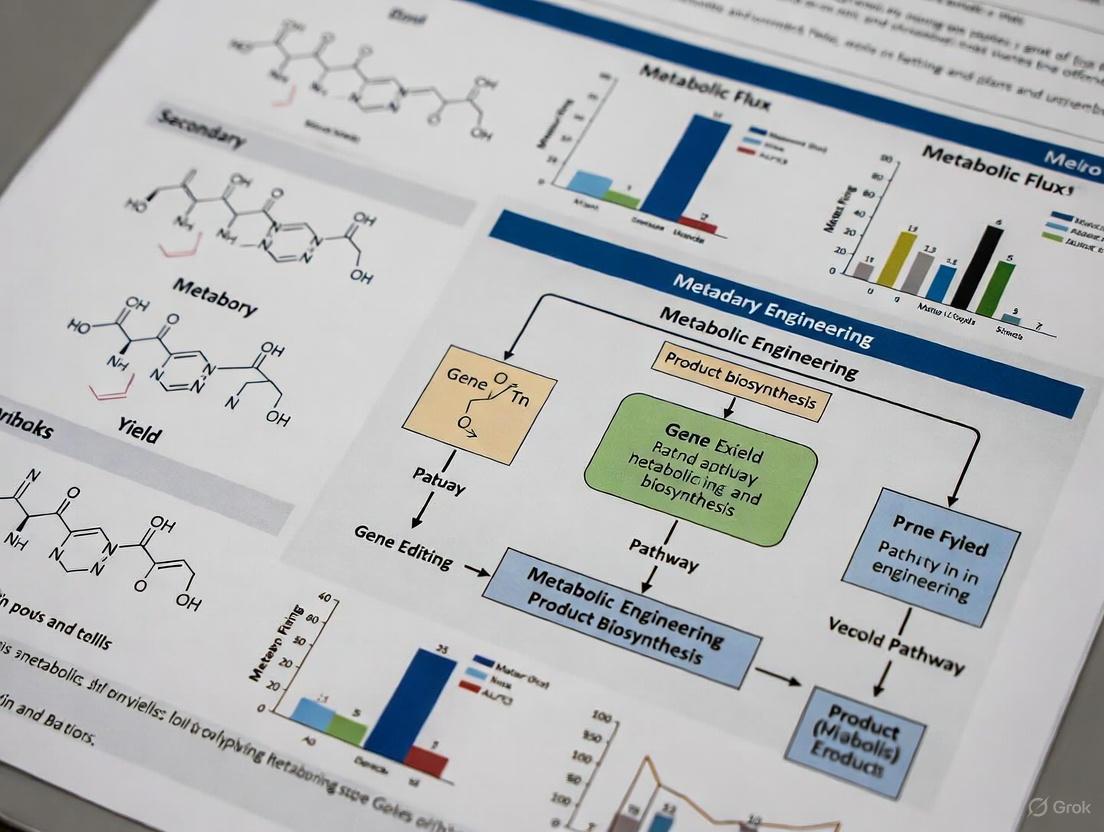
This article provides a comprehensive overview of modern strategies for engineering the production of valuable secondary metabolites in plants and microbes.
Engineering Secondary Metabolites in Plants and Microbes: Pathways, CRISPR, and Microbial Synthesis for Drug Discovery
Abstract
This article provides a comprehensive overview of modern strategies for engineering the production of valuable secondary metabolites in plants and microbes. It covers foundational knowledge of major metabolic pathways, explores advanced methodological tools like CRISPR-Cas9 and microbial co-culture, addresses key troubleshooting and optimization challenges, and discusses validation and comparative analysis techniques. Aimed at researchers, scientists, and drug development professionals, this review synthesizes current research to guide the efficient production of plant-derived pharmaceuticals and other high-value compounds.
The Foundation of Chemical Diversity: Understanding Plant and Microbial Secondary Metabolites
Defining Secondary Metabolites and Their Crucial Roles in Defense and Medicine
Secondary metabolites (SMs) are specialized organic compounds produced by plants, microbes, and other organisms that are not directly essential for basic growth, development, or reproduction but are crucial for survival, ecological interactions, and environmental adaptation [1] [2]. Unlike primary metabolites, which are ubiquitous and involved in fundamental life processes, the production of SMs is often restricted to specific species, genera, or families, and their synthesis can be induced by various environmental stresses [3] [2]. These molecules serve as a primary interface between the producing organism and its environment, fulfilling a multitude of roles from chemical defense to communication. In the context of modern biotechnology, understanding the structure, function, and biosynthesis of these compounds is fundamental to engineering plants and microbes for enhanced agricultural output and novel pharmaceutical applications. This whitepaper provides an in-depth technical overview of secondary metabolites, delineating their classifications, biosynthetic origins, and pivotal functions in defense and medicine, thereby framing the critical knowledge base for ongoing metabolic engineering research.
Classification and Biosynthesis of Secondary Metabolites
Secondary metabolites are categorized based on their chemical structures and biosynthetic pathways. The three major classes are terpenoids, phenolics, and nitrogen-containing compounds (including alkaloids). Their biosynthesis diverges from primary metabolic pathways, utilizing key precursors to generate a vast array of complex structures.
Table 1: Major Classes of Plant Secondary Metabolites
| Class | Basic Structure/Building Block | Key Examples | Biosynthetic Pathway(s) |
|---|---|---|---|
| Terpenoids | Isoprene units (C₅H₈) | Artemisinin (antimalarial), Taxol (anticancer), Limonene [4] [5] [2] | Mevalonate (MVA) pathway; Methylerythritol Phosphate (MEP) pathway [2] |
| Phenolics | C6 aromatic ring with hydroxyl group(s) | Flavonoids (e.g., Quercetin), Lignins, Tannins, Resveratrol [5] [3] [2] | Shikimate pathway; Phenylpropanoid pathway [5] [2] |
| Alkaloids | Nitrogen-containing heterocycles | Morphine (analgesic), Quinine (antimalarial), Caffeine [5] [6] [2] | Derived from amino acids (e.g., tyrosine, tryptophan) [2] |
| Sulfur-containing Compounds | Molecules containing sulfur | Glucosinolates, Allicin (from garlic) [5] [7] | Derived from amino acids like cysteine and methionine [7] |
The diagram below illustrates the major biosynthetic pathways for terpenoids and phenolics, highlighting the key intermediates and their subcellular compartmentalization.
The Defense Arsenal: Ecological Roles of Secondary Metabolites
As sessile organisms, plants rely heavily on chemical warfare, mediated by SMs, to defend against biotic and abiotic stresses [1] [7]. These defenses can be constitutive (always present) or inducible (synthesized or activated upon attack) [7]. The roles of SMs in defense are multifaceted and highly effective.
Defense Against Pathogens: SMs act as phytoalexins and phytoanticipins, providing direct antimicrobial activity against a broad spectrum of bacteria and fungi [7]. For instance, the phenolic compound resveratrol from grapevines exhibits antifungal properties by disrupting the cellular ultrastructure of Botrytis cinerea [7]. Similarly, glucosinolates in Brassicales and their hydrolysis products (e.g., sulforaphane) can inhibit virulence factors in pathogens like Pseudomonas syringae by suppressing the expression and assembly of its type III secretion system (T3SS) [7].
Deterrence of Herbivores: Many SMs serve as potent feeding deterrents or toxins against insects and larger herbivores. Alkaloids like morphine and caffeine can be toxic or repellent [5] [2]. The diterpenoid kauralexin A3 not only has antifungal activity but also displays significant feeding deterrent activity against the European corn borer (Ostrinia nubilalis) [7].
Indirect Defense and Signaling: Plants release Volatile Organic Compounds (VOCs), which can directly inhibit pathogens or attract natural enemies of herbivores [7]. Furthermore, some SMs are crucial for regulating the plant's own immune responses. They can act as signaling molecules to prime systemic defenses, such as Systemic Acquired Resistance (SAR) and Induced Systemic Resistance (ISR), enhancing the plant's ability to resist subsequent infections [7] [8]. For example, Trichoderma-derived SMs can activate ISR in plants, providing broad-spectrum resistance [8].
Table 2: Defense Functions of Key Secondary Metabolite Classes
| Metabolite Class | Direct Antibiotic/Antifungal Action | Antioxidant Activity | Herbivore Deterrence | Indirect Defense (VOCs, Signaling) |
|---|---|---|---|---|
| Terpenoids | Terpinen-4-ol (antifungal) [7] | Carotenoids (quench ROS) [5] | Kauralexins [7] | Carvacrol, Thymol (VOCs) [7] |
| Phenolics | Resveratrol, Flavonoids [7] | Flavonoids, Tannins (radical scavenging) [5] [3] | Tannins (reduce palatability) [5] | Salicylic Acid (SAR signal) [7] |
| Alkaloids | Berberine (antibacterial) [5] | – | Morphine, Caffeine (toxic/deterrent) [5] [2] | – |
| S-containing | Allicin (antibacterial) [7] | Glucosinolates [5] | Glucosinolates [5] | – |
Therapeutic Potential: Secondary Metabolites in Medicine
The biological activities of SMs that evolved for ecological interactions have made them an invaluable source of pharmaceuticals, nutraceuticals, and lead compounds for drug development [4] [3] [6]. Their structural diversity provides unique scaffolds that often interact with biologically relevant molecular targets.
Anticancer Agents: Numerous plant SMs are used directly as chemotherapeutic drugs or as precursors for synthetic analogs. Paclitaxel (Taxol), a diterpenoid from the Pacific yew tree (Taxus brevifolia), stabilizes microtubules and is a frontline treatment for ovarian, breast, and lung cancers [3] [6]. Pristimerin and tingenone, quinonemethide triterpenoids from Celastraceae species, exhibit potent cytotoxicity and are under investigation for their antitumor properties [4].
Antimicrobials and Antiparasitics: The sesquiterpene lactone artemisinin, from Artemisia annua, is a cornerstone of modern malaria treatment, especially against drug-resistant strains of Plasmodium falciparum [4] [6]. Similarly, secondary metabolites from microbial sources, such as those produced by Trichoderma fungi (e.g., peptaibols, pyrones), display strong antifungal and antibacterial effects, highlighting their potential as novel antibiotics [9] [8].
Treatment of Chronic Diseases: Beyond infectious diseases and cancer, SMs show promise in managing chronic conditions. Silymarin, a flavonoid complex from milk thistle (Silybum marianum), is used for its hepatoprotective and antidiabetic effects [3]. Lignans from flaxseed and sesame are associated with a reduced risk of cardiovascular disease and certain hormone-related cancers due to their antioxidant and phytoestrogenic activities [3]. The anti-inflammatory properties of flavonoids and saponins are also being harnessed to develop treatments for conditions like inflammatory bowel disease [4] [3].
Table 3: Clinically Relevant Secondary Metabolites and Their Applications
| Secondary Metabolite | Class | Natural Source | Clinical/Therapeutic Application |
|---|---|---|---|
| Artemisinin | Sesquiterpene lactone | Artemisia annua (plant) [4] | First-line treatment for malaria [4] [6] |
| Paclitaxel (Taxol) | Diterpenoid | Taxus brevifolia (Pacific Yew) [6] | Treatment of ovarian, breast, and lung cancers [3] [6] |
| Morphine | Alkaloid | Papaver somniferum (Opium Poppy) [5] [6] | Potent analgesic for severe pain [5] [6] |
| Silymarin | Flavonoid complex | Silybum marianum (Milk Thistle) [3] | Hepatoprotective; treatment of liver disorders [3] |
| Digoxin/Digitoxin | Cardenolide | Digitalis purpurea (Foxglove) [6] | Treatment of congestive heart failure and arrhythmia [6] |
| (-)-Rabdosiin | Lignan | Ocimum tenuiflorum (Holy Basil) [4] | Selective proapoptotic activity against cancer cell lines (MCF-7, SKBR3, HCT-116) [4] |
| Cordycepin | Nucleoside analogue | Cordyceps militaris (fungus) [4] | Xanthine oxidase inhibitor; potential for hyperuricemia treatment [4] |
Experimental and Computational Toolkit for Research
Advancing the field of secondary metabolite engineering requires a sophisticated suite of experimental and computational tools. The following section details key methodologies and resources for the discovery, analysis, and production of SMs.
Detailed Experimental Protocol: Genome Mining for Novel Metabolites
Genome mining is a powerful, hypothesis-driven approach to discover novel SMs from culturable and unculturable microorganisms without the need for traditional activity-guided fractionation [10].
Genome Sequencing and Assembly: Isolate high-quality genomic DNA from the target microbe or environmental sample. Perform whole-genome sequencing using a long-read platform (e.g., PacBio, Oxford Nanopore) to facilitate accurate assembly of repetitive biosynthetic gene cluster (BGC) regions. Assemble reads into contiguous sequences (contigs).
Biosynthetic Gene Cluster (BGC) Identification: Annotate the assembled genome using specialized software tools. The most current and comprehensive platform is PRISM 4 (PRediction Informatics for Secondary Metabolomes), which uses 1,772 hidden Markov models (HMMs) to identify BGCs for 16 different classes of secondary metabolites, including nonribosomal peptides, polyketides, terpenes, and β-lactams [10]. Input the genome sequence into the PRISM 4 web application or standalone software.
In Silico Chemical Structure Prediction: PRISM 4 analyzes the identified BGCs and employs 618 in silico tailoring reactions to predict the complete chemical structure of the encoded metabolite. The algorithm considers all possible enzymatic reactions and their combinations, generating a set of plausible chemical structures [10]. The accuracy of predictions is validated by calculating the Tanimoto coefficient (Tc) between predicted and known structures for reference BGCs.
Biological Activity Prediction: To prioritize BGCs for experimental characterization, employ machine-learning models trained on the predicted chemical structures. These models can predict the likely biological activity (e.g., antibacterial, anticancer) of the encoded molecule based on its structural features and similarity to known bioactive compounds [10].
Heterologous Expression and Validation: Clone the entire predicted BGC into a suitable bacterial or fungal expression host (e.g., Streptomyces coelicolor, Aspergillus nidulans, Saccharomyces cerevisiae) using transformation-associated recombination (TAR) or other large-fragment cloning techniques. Ferment the engineered host and analyze the culture extract using Liquid Chromatography-Mass Spectrometry (LC-MS) to detect the production of the novel metabolite. Compare the observed mass and fragmentation pattern with the in silico prediction. Isolate the compound using preparative chromatography for full structural elucidation by NMR and subsequent biological activity assays.
Research Reagent Solutions
Table 4: Essential Reagents and Kits for Secondary Metabolite Research
| Research Tool / Reagent | Function / Application | Example Use Case |
|---|---|---|
| PRISM 4 Software | Comprehensive prediction of secondary metabolite structures from genomic DNA sequences [10]. | In silico identification and structural prediction of novel antibiotics from bacterial genomes. |
| antiSMASH Software | Detection and annotation of biosynthetic gene clusters in genomic data [10]. | Comparative genomics and initial BGC screening to complement PRISM 4 analysis. |
| Heterologous Expression Hosts | Production of secondary metabolites from cloned BGCs in a controllable genetic background. | Cloning of a cryptic BGC from an unculturable bacterium into Streptomyces coelicolor for compound production [10]. |
| LC-HRMS (Liquid Chromatography-High Resolution Mass Spectrometry) | Separation, detection, and accurate mass determination of metabolites in complex mixtures. | Metabolite profiling of plant extracts or microbial fermentation broths; dereplication of known compounds. |
| HPLC-PDA (with Photodiode Array Detection) | Analytical and preparative separation of compounds with UV-Vis spectral analysis. | Quantification of specific metabolites like pristimerin and tingenone in plant root extracts [4]. |
Visualizing the Genome Mining Workflow
The following diagram outlines the integrated computational and experimental workflow for the discovery of novel secondary metabolites via genome mining, as described in the protocol above.
Secondary metabolites represent a critical interface between an organism and its environment, serving as sophisticated weapons in defense and a treasure trove for medicine. Their intricate chemical structures, born from evolutionarily refined biosynthetic pathways, confer a vast range of biological activities that can be harnessed to protect crops and combat human disease. For researchers in the field of metabolite engineering, a deep understanding of these compounds—from their fundamental classifications and ecological roles to the advanced computational and experimental tools used for their discovery—is indispensable. The integration of modern genomics, predictive bioinformatics, and synthetic biology is poised to unlock the full potential of secondary metabolites, enabling the rational engineering of plants and microbes for the sustainable production of novel bioprotectants and pharmaceuticals. This knowledge base is the foundation upon which the next generation of biocontrol strategies and life-saving drugs will be built.
Secondary metabolites are organic compounds that are not directly involved in the normal growth, development, or reproduction of plants but play crucial roles in defense, environmental interaction, and adaptation. These specialized compounds have garnered significant attention from researchers, scientists, and drug development professionals due to their vast pharmacological potential and ecological importance. Within the context of secondary metabolite engineering in plants and microbes, three major classes stand out for their structural diversity and biological significance: terpenoids, alkaloids, and phenylpropanoids. These compounds represent nature's chemical arsenal, with complex biosynthetic pathways that have evolved over millions of years. The engineering of these pathways in heterologous systems presents a promising strategy for sustainable production of high-value compounds, reducing reliance on traditional plant extraction methods that are often limited by low yields and environmental concerns. This technical guide provides an in-depth examination of the core biosynthetic pathways for these three metabolite classes, recent advances in their elucidation, and emerging strategies for their engineering in microbial and plant systems.
Terpenoid Biosynthesis
Terpenoids, also known as isoprenoids, represent the largest and most chemically diverse class of natural products, with over 80,000 identified structures [11]. These compounds are essential for plant functions including growth regulation, defense, and ecological interactions, and have significant industrial applications in pharmaceuticals, nutraceuticals, flavors, fragrances, and increasingly as biofuels [12] [13]. All terpenoids are derived from two universal five-carbon precursors: isopentenyl diphosphate (IPP) and dimethylallyl diphosphate (DMAPP) [12]. Plants employ two distinct pathways for the production of these precursors, localized in different subcellular compartments, providing a fundamental carbon skeleton for the synthesis of a wide variety of terpenoid compounds [12].
The mevalonate (MVA) pathway operates primarily in the cytoplasm and endoplasmic reticulum, with potential peroxisomal contributions, and utilizes acetyl-CoA as the starting substrate [12] [13]. This pathway consumes three acetyl-CoA molecules, three ATP equivalents, and two NADPH molecules to yield a single IPP molecule through a six-enzyme cascade [12]. A pivotal rate-limiting step is the conversion of HMG-CoA to mevalonate, catalyzed by HMG-CoA reductase (HMGR) within the ER membrane [12].
In contrast, the methylerythritol phosphate (MEP) pathway occurs exclusively within plastids and utilizes pyruvate and glyceraldehyde-3-phosphate (GAP) as starting materials [12] [13]. This pathway involves seven enzymatic reactions that convert these precursors into IPP and DMAPP, consuming three ATP and three NADPH molecules in the process [12]. The first committed step, catalyzed by 1-deoxy-D-xylulose-5-phosphate synthase (DXS), represents another crucial regulatory point in terpenoid biosynthesis [12].
Table 1: Comparative Analysis of Terpenoid Precursor Pathways
| Feature | MVA Pathway | MEP Pathway |
|---|---|---|
| Subcellular Localization | Cytoplasm, endoplasmic reticulum, peroxisomes | Plastids |
| Initial Substrates | Acetyl-CoA | Pyruvate + glyceraldehyde-3-phosphate (GAP) |
| Energy Cofactors Consumed | 3 ATP, 2 NADPH | 3 ATP, 3 NADPH |
| Key Regulatory Enzymes | HMG-CoA reductase (HMGR) | 1-deoxy-D-xylulose-5-phosphate synthase (DXS) |
| Primary End Products | Sesquiterpenes (C15), triterpenes (C30) | Monoterpenes (C10), diterpenes (C20), tetraterpenes (C40) |
| Environmental Response | Increased activity in darkness | Increased activity in light |
Formation of Terpenoid Backbones
The structural diversity of terpenoids begins with the action of isoprenyl diphosphate synthases (IDSs), which catalyze the sequential condensation of isoprenoid units to form prenyl diphosphate metabolites of varying chain lengths [12]. The initial condensation of one DMAPP and one IPP, catalyzed by geranyl pyrophosphate synthase (GPPS), yields geranyl pyrophosphate (GPP), the precursor of monoterpenes (C10) [12]. Further elongation via farnesyl pyrophosphate synthase (FPPS) incorporates an additional IPP with GPP to form farnesyl pyrophosphate (FPP), serving as the backbone of sesquiterpenes (C15) [12]. Geranylgeranyl pyrophosphate synthase (GGPPS) catalyzes the addition of three IPPs to one DMAPP, generating geranylgeranyl pyrophosphate (GGPP), a precursor for diterpenes (C20) [12]. FPP and GGPP can then undergo further polymerization to form triterpenes (C30) and tetraterpenes (C40), respectively [12].
Terpene synthases (TPS) then process these linear intermediates, generating a structurally diverse array of terpenes through stereospecific cyclization and rearrangement reactions [12]. Further structural elaboration occurs via oxidative modifications mediated by cytochrome P450 oxygenases (CYP450s), which significantly modulate the functional diversity of terpenoids [12]. The remarkable structural diversity of terpenoids is further enhanced by variations in enzyme architecture and alternative catalytic mechanisms that generate unconventional terpene scaffolds, including cis-configured intermediates produced by specialized cis-isoprenoid diphosphate synthases [12].
Figure 1: Terpenoid Biosynthesis Network Showing MVA and MEP Pathways
Engineering Approaches and Experimental Protocols
Recent advances in metabolic engineering and synthetic biology have enabled the reconstruction and optimization of terpenoid pathways in microbial and plant systems, significantly increasing production yields [13] [11]. Several key strategies have emerged:
Host System Selection: Prokaryotic hosts like Escherichia coli have become preferred platforms for terpenoid biosynthesis due to rapid proliferation, clear metabolic background, and mature genetic manipulation systems [13]. Eukaryotic hosts such as Saccharomyces cerevisiae offer unique advantages with their natural MVA pathway and endoplasmic reticulum machinery that efficiently facilitates proper folding of plant-derived cytochrome P450 enzymes [13]. Plant chassis like Nicotiana benthamiana provide natural metabolic environments and compartmentalized cells conducive to complex biosynthesis [14] [13].
Critical Enzyme Optimization: Enhanced expression of rate-limiting enzymes through analyses of subcellular compartmentalization, gene expression network modeling, and epigenetic regulatory mechanisms helps remove metabolic bottlenecks [13]. Tissue-specific promoter elements enable spatially precise enrichment of target metabolites, while heterologous co-expression systems of key enzyme genes in MEP and MVA pathways dynamically optimize precursor metabolic flux [13].
Pathway Elucidation Methods: Traditional approaches include iterative identification of gene candidates via correlation of product titers with expressed sequence tags, followed by functional characterization in heterologous production chassis like N. benthamiana [15]. Emerging technologies such as automation, machine learning, artificial intelligence, and combinatorial screening are accelerating the exploration of microbial terpenoid chemical space and strain preparation [15].
Table 2: Terpenoid Engineering in Microbial and Plant Systems
| Engineering Strategy | Experimental Approach | Key Outcomes |
|---|---|---|
| Host System Engineering | Transformation with terpene synthase genes + precursor pathway optimization | E. coli produced β-farnesene (1.3 g/L) [13] |
| Enzyme Engineering | Directed evolution, rational design, machine-learning guided optimization | Enhanced catalytic efficiency, substrate specificity, and stability [15] |
| Pathway Balancing | Modular pathway optimization, promoter engineering, gene copy number adjustment | Improved flux to target terpenoids, reduced accumulation of intermediates [13] |
| Compartmentalization | Targeting enzymes to specific organelles using signal peptides | Enhanced precursor availability, reduced metabolic cross-talk [12] [13] |
| Plant Metabolic Engineering | Stable transformation or transient expression in N. benthamiana | Production of complex terpenoids requiring plant-specific modifications [14] |
Alkaloid Biosynthesis
Structural Diversity and Neuroactive Alkaloids
Alkaloids are nitrogen-containing secondary metabolites with remarkable structural diversity and potent biological activities, particularly notable for their effects on the nervous system [14]. These compounds are classified based on their chemical structures and biosynthetic origins, with significant categories including isoquinoline, indole, tropane, and quinolizidine alkaloids. Among the numerous plant-derived alkaloids with neuroactive properties, huperzine A and galantamine stand out as the only plant-derived alkaloids currently approved and marketed as specific treatments for Alzheimer's disease and other neurodegenerative conditions [14].
Huperzine A, derived from Huperzia serrata (Lycopodiaceae), is a well-known acetylcholinesterase inhibitor (AChEI) that has been widely used in traditional Chinese medicine [14]. Galantamine, an alkaloid derived from plants in the Amaryllidaceae family, particularly daffodils (Narcissus spp.), is another crucial AChEI used in Alzheimer's disease treatment [14]. While numerous other plant alkaloids exhibit varying degrees of neuroactive properties, these two represent the most clinically significant examples.
Biosynthetic Pathways of Key Alkaloids
Huperzine A Biosynthesis: The elucidation of the huperzine A biosynthetic pathway has provided crucial insights into the formation of Lycopodium alkaloids and uncovered numerous enzymes with novel functions [14]. Recent studies have identified three novel neofunctionalized α-carbonic anhydrase-like (CAL) enzymes responsible for key Mannich-like condensations that form core carbon-carbon bonds in Lycopodium alkaloids, representing key steps in the construction of their polycyclic skeletons [14]. Through transcriptome analysis and enzyme characterization, researchers have identified key enzymes such as CAL-1 and CAL-2, which promote crucial annulation reactions [14]. The pathway proceeds through stereospecific modifications and scaffold tailoring, involving additional enzymes like Fe(II)-dependent dioxygenases that introduce oxidation steps crucial for the final bioactive form of huperzine A [14].
Galantamine Biosynthesis: The galantamine biosynthetic pathway begins with the key precursor 4′-O-methylnorbelladine (4OMN), followed by oxidative coupling catalyzed by cytochrome P450 enzymes such as NtCYP96T6 [14]. This enzyme facilitates the para-ortho (p-o') oxidative coupling necessary to produce the galantamine skeleton. Subsequent methylation and reduction steps, catalyzed by NtNMT1 and NtAKR1 respectively, complete the biosynthesis [14]. The discovery of this pathway has profound implications for synthetic biology and metabolic engineering, particularly since galantamine is currently sourced primarily from natural populations of daffodils [14].
Figure 2: Biosynthetic Pathways of Neuroactive Alkaloids Huperzine A and Galantamine
Engineering Challenges and Future Directions
The elucidation of huperzine A and galantamine biosynthetic pathways underscores the complexity and elegance of plant specialized metabolism [14]. However, several significant challenges remain in the engineering of these compounds:
Functional Understanding: The in vivo functional roles of these alkaloids in plants are not fully understood, though it is speculated that they serve as defense metabolites against herbivores [14]. The regulatory mechanisms governing their production remain elusive, and further research into their ecological roles could provide important insights into the evolution of medicinal plants and their biosynthetic pathways [14].
Scalability Issues: While transient expression in N. benthamiana has demonstrated proof-of-concept for alkaloid biosynthesis, translating these findings into industrial-scale production requires optimization of gene expression, precursor supply, and enzymatic activity in microbial or plant-based platforms [14]. Optimizing precursor supply, enhancing enzyme activity, and achieving high-yield production in heterologous systems represent critical bottlenecks.
Technical Solutions: Microbial synthetic biology platforms, such as Saccharomyces cerevisiae and Pichia pastoris, offer promising avenues for large-scale production due to their scalability and ease of genetic manipulation [14]. Advances in CRISPR-based genome editing, multi-gene pathway assembly, and metabolic flux optimization are pivotal for overcoming current limitations [14].
Phenylpropanoid Biosynthesis
Pathway Architecture and Metabolic Branches
The phenylpropanoid pathway serves as a key target for climate-resilient crop development, being the precursor to over 8,000 metabolites, including flavonoids, lignin compounds, and their derivatives [16]. These metabolites play essential roles in biotic and abiotic stress tolerance, making them crucial for plant survival and adaptation [16]. The pathway begins with aromatic amino acids derived from the shikimate pathway, which itself originates from intermediates of glycolysis and the pentose phosphate pathway [16].
Phenylalanine ammonia-lyase (PAL) serves as the gateway enzyme to phenylpropanoid metabolism, catalyzing the deamination of phenylalanine to form cinnamic acid [16]. This reaction opens the route to several glycosylation, acylation, hydroxylation, and methylation reactions that ultimately form the vast array of phenylpropanoid metabolites [16]. In some grasses, tyrosine also serves as a starting point, diverging from phenylalanine at the arogenate step but reconverging to yield p-coumarate, a central precursor to coumaroyl CoA [16].
The pathway branches into two major routes producing numerous lignin- and flavonoid-related metabolites [16]. Lignin, a heterogeneous phenolic polymer, is the second most abundant polymer after cellulose, forming 30% of the earth's organic carbon in the biosphere [16]. The heterogeneity of lignin results from its polymerization from various hydroxycinnamoyl alcohol derivatives, and it is deposited in cell walls of vascular plants, conferring many stress tolerance traits [16]. Flavonoid metabolism represents the second major branch, producing over 6,000 polyphenolic metabolites characterized by a C6-C3-C6 diphenylpropane skeleton where three carbon chains link two aromatic rings [16].
Biological Functions and Stress Responses
Phenylpropanoid-derived metabolites play indispensable roles in plant-environment interactions, particularly in response to various stressors:
Biotic Stress Resistance: Phenylpropanoids contribute significantly to plant defense against pathogens and herbivores. Lignin forms physical barriers against pathogen invasion, while various flavonoids and phenolic compounds exhibit direct antimicrobial and antifeedant activities [16]. Specific phenylpropanoids also function as signaling molecules in plant-microbe interactions, regulating relationships between plants and beneficial microorganisms [1].
Abiotic Stress Tolerance: These metabolites provide crucial protection against environmental challenges including drought, temperature extremes, UV radiation, and heavy metal toxicity [16]. Their antioxidant properties enable them to neutralize reactive oxygen species (ROS) that accumulate under stressful conditions, preventing oxidative damage to proteins, lipids, and DNA [16]. Flavonoids particularly contribute to UV protection through their light-absorbing properties.
Structural Support: Lignin provides mechanical support for plant growth and promotes water and mineral uptake and partitioning in plants [16]. This structural function is essential for normal development and becomes particularly important under stress conditions where mechanical integrity is challenged.
Table 3: Major Phenylpropanoid Classes and Their Functions
| Class | Representative Compounds | Primary Functions | Stress Response Role |
|---|---|---|---|
| Simple Phenylpropanoids | Cinnamic, p-coumaric, ferulic, caffeic acids | Pathway intermediates, antimicrobial compounds | Immediate defense response, signaling molecules |
| Flavonoids | Flavones, flavonols, anthocyanins, isoflavonoids | Pigmentation, UV protection, antioxidant activity | ROS scavenging, UV screening, microbial signaling |
| Lignin | Heterogeneous polymer from hydroxycinnamyl alcohols | Structural support, mechanical strength | Physical barrier against pathogens, drought adaptation |
| Coumarins | Scopoletin, umbelliferone | Antimicrobial, allelopathic compounds | Iron mobilization, pathogen inhibition |
| Stilbenoids | Resveratrol, piceid | Phytoalexins, antioxidant compounds | Defense against fungal pathogens, oxidative stress protection |
Regulation and Engineering Strategies
The phenylpropanoid pathway is regulated at multiple levels, including transcriptional, post-transcriptional, post-translational, and epigenetic modifications [16]. Understanding these regulatory mechanisms provides opportunities for metabolic engineering aimed at enhancing the production of valuable phenylpropanoids or improving plant stress resilience.
Recent research has comprehensively elucidated the molecular regulation of phenylpropanoids, their diversity, and plasticity [16]. The role of phenylpropanoid metabolites in biotic and abiotic stress interactions is continuously changing the face of climate-resilient germplasm development [16]. Engineering approaches include:
Transcription Factor Modulation: Manipulation of key transcription factors that regulate multiple genes in the phenylpropanoid pathway can simultaneously enhance flux through multiple branches.
Enzyme Engineering: Optimization of key enzymes, particularly those at branch points, can redirect flux toward desired compounds while reducing competition between pathways.
Synthetic Biology Approaches: Reconstruction of specific phenylpropanoid pathways in microbial hosts like E. coli and S. cerevisiae enables sustainable production of high-value compounds without the need for plant extraction [17] [15].
Figure 3: Phenylpropanoid Biosynthetic Pathway and Branching to Lignin and Flavonoids
The Scientist's Toolkit: Research Reagent Solutions
Table 4: Essential Research Reagents and Materials for Secondary Metabolite Engineering
| Reagent/Material | Function/Application | Specific Examples |
|---|---|---|
| Heterologous Host Systems | Platform for pathway reconstruction and optimization | Escherichia coli [13], Saccharomyces cerevisiae [15] [14], Nicotiana benthamiana [15] [14] |
| Enzyme Engineering Tools | Optimization of catalytic efficiency and specificity | Machine-learning guided directed evolution [15], rational design, site-saturation mutagenesis |
| Analytical Platforms | Metabolite profiling and quantification | LC-MS/MS, GC-MS, NMR spectroscopy [17] |
| Pathway Elucidation Methods | Identification of biosynthetic genes and enzymes | Co-expression analysis [17], GWAS [17], protein complex identification [17] |
| Gene Editing Systems | Precise genetic modifications in host organisms | CRISPR-Cas9 [14], TALENs, zinc finger nucleases |
| Bioinformatics Tools | Pathway prediction and enzyme discovery | Genome mining, phylogenetic analysis, molecular docking |
| Synthetic Biology Tools | Multi-gene pathway assembly | Golden Gate assembly, Gibson assembly, yeast assembly |
| Specialized Enzymes | Key catalysts for specific reactions | Cytochrome P450s [12] [14], terpene synthases [12], carbonic anhydrase-like enzymes [14] |
The comprehensive understanding of terpenoid, alkaloid, and phenylpropanoid biosynthetic pathways has advanced significantly in recent years, driven by interdisciplinary approaches combining biochemistry, molecular biology, and synthetic biology. The elucidation of these complex metabolic networks not only deepens our fundamental knowledge of plant chemistry but also opens unprecedented opportunities for sustainable production of high-value compounds through metabolic engineering.
Future research directions will likely focus on several key areas: First, the continued discovery and characterization of novel enzymes with unique catalytic properties will expand the toolbox available for pathway engineering. Second, the integration of artificial intelligence and machine learning approaches will accelerate enzyme optimization, pathway design, and strain development. Third, the development of more sophisticated regulatory systems for fine-tuning metabolic flux will enhance production yields while maintaining host viability. Finally, the exploration of non-model plant species and their specialized metabolisms will likely reveal new biochemical pathways and compounds with potential pharmaceutical and industrial applications.
As synthetic biology tools become more advanced and accessible, the engineering of plant secondary metabolic pathways in microbial and plant systems will play an increasingly important role in the sustainable production of medicinal compounds, specialty chemicals, and agricultural products. This transition from traditional extraction to biotechnology-based production represents a paradigm shift in how we harness plant chemical diversity, with significant implications for drug development, agriculture, and industrial biotechnology.
Microbial secondary metabolites represent a rich source of bioactive compounds with critical applications in medicine and industry. This technical guide provides a comprehensive analysis of the major biosynthetic pathways for three key metabolite classes: antibiotics, pigments, and immunomodulators. Within the broader context of secondary metabolite engineering in plants and microbes, we examine the enzymatic machinery, regulatory networks, and precursor systems that govern the production of these valuable compounds. Recent advances in genetic engineering, pathway optimization, and synthetic biology are discussed alongside detailed experimental methodologies to support research and development efforts. The integration of multi-omics data and computational modeling is creating new paradigms for the discovery and optimization of microbial metabolites with enhanced bioactivities and production efficiencies.
Microbial secondary metabolites are organic compounds produced through specialized metabolic pathways that are not essential for basic growth but provide significant ecological advantages and possess valuable bioactivities. The engineering of these pathways in both plants and microbes has emerged as a critical strategy for enhancing the production of pharmaceuticals, colorants, and therapeutic agents [1]. Actinomycetes, particularly Streptomyces species, are prolific producers of secondary metabolites, accounting for over 76% of known bioactive compounds including many clinically used antibiotics and immunosuppressants [18] [19].
The biosynthesis of secondary metabolites typically utilizes precursors derived from primary metabolism and occurs through dedicated pathways that are often clustered in the microbial genome. Key precursor pathways include the acetate-malonate pathway for polyketides, the mevalonate pathway for terpenoids, the shikimate pathway for aromatic compounds, and various amino acid incorporation pathways [19]. Understanding these fundamental biosynthetic routes, their regulatory mechanisms, and the experimental approaches for their manipulation forms the foundation of metabolic engineering for enhanced compound production.
Antibiotic Biosynthetic Pathways and Engineering
Major Antibiotic Classes and Biosynthetic Origins
Antibiotics from actinomycetes encompass diverse structural classes including aminoglycosides, macrolides, phenazines, indoles, and carbazoles [19]. These compounds are synthesized through complex enzymatic pathways that are genetically clustered, facilitating both study and manipulation. Polyketide antibiotics such as actinorhodin are assembled by polyketide synthases (PKSs) using acetyl-CoA and malonyl-CoA as precursors, while non-ribosomal peptide antibiotics are synthesized by non-ribosomal peptide synthetases (NRPSs) that incorporate amino acid building blocks.
Table 1: Major Antibiotic Classes from Actinomycetes and Their Biosynthetic Pathways
| Antibiotic Class | Example Compounds | Biosynthetic Pathway | Key Precursors |
|---|---|---|---|
| Aminoglycosides | Streptomycin, Neomycin | Sugar biosynthesis & modification | Glucose, amino acids |
| Macrolides | Erythromycin, Rapamycin | Polyketide | Acetyl-CoA, Malonyl-CoA, Methylmalonyl-CoA |
| Enediyne Macrolides | Calicheamicin | Polyketide with enediyne core | Acetyl-CoA, Malonyl-CoA |
| Phenazines | Phenazine-1-carboxylic acid | Shikimate | Chorismic acid |
| Indoles and Carbazoles | Staurosporine | Tryptophan-derived | Tryptophan |
| β-Lactams | Penicillins, Cephalosporins | Amino acid | L-α-aminoadipic acid, L-cysteine, L-valine |
Regulatory Mechanisms and Engineering Strategies
Antibiotic biosynthesis is tightly regulated by both pathway-specific and global regulatory networks. Pathway-specific regulators such as TetR-family proteins, LAL (Large ATP-binding regulators of the LuxR family), and SARP (Streptomyces Antibiotic Regulatory Proteins) family transcription factors directly control the expression of biosynthetic gene clusters [19]. For example, in Streptomyces virginiae, the pathway-specific regulatory gene vmsR positively regulates virginiamycin production, while in Streptomyces rapamycinicus, knockout of the regulatory gene rapY enhanced rapamycin yield by 3.7-fold [19].
Global regulators influence multiple metabolic pathways and morphological differentiation. Recent research has highlighted the value of regulatory genes as beacons for discovering and prioritizing biosynthetic gene clusters (BGCs) in Streptomyces [20]. Protein domain architecture analysis of 128,993 potential regulators from 440 complete Streptomyces genomes revealed that subsets of SARP and LuxR families are strongly associated with biosynthetic pathways encoding bioactive compounds [20].
Table 2: Experimental Approaches for Activating Silent Biosynthetic Gene Clusters
| Method | Mechanism | Application Example | Efficiency/Outcome |
|---|---|---|---|
| Regulatory Gene Modification | Overexpression or deletion of pathway-specific regulators | Overexpression of sanmR0484 in S. dichotomus; deletion of gbnR in S. venezuelae | Activation of silent type I polyketide cluster; identification of gaburedins A-F [19] |
| Strong Promoter Introduction | Heterologous expression under constitutive strong promoters | Expression of phenazine cluster under ermE* promoter in S. coelicolor M512a | Production of phenazine-1-carboxylic acid and novel glutamine conjugate [19] |
| Small Molecule Elicitors | Addition of epigenetic modifiers or antibiotics at subinhibitory concentrations | Use of β-lactams, histone deacetylase inhibitors, heavy metal ions | Activation of various silent gene clusters; diversified secondary metabolite production [19] |
| Precursor Enhancement | Engineering precursor supply pathways | Modulation of acetyl-CoA, malonyl-CoA, or amino acid biosynthesis | Increased flux through target pathways; enhanced antibiotic yields [19] |
Experimental Protocol: Optimization of Antibiotic Production via Precursor Engineering
Objective: Enhance antibiotic yield by engineering precursor supply pathways in actinomycetes.
Methodology:
- Identification of Key Precursors: Analyze antibiotic structure to determine primary building blocks (e.g., acetyl-CoA for polyketides, specific amino acids for NRPS-derived compounds).
- Genetic Modification:
- Amplify genes encoding rate-limiting enzymes in precursor biosynthesis (e.g., acetyl-CoA carboxylase for malonyl-CoA supply).
- Clone genes into integrative or replicative expression vectors under control of strong, constitutive promoters (e.g., ermE*).
- Introduce constructs into production host via PEG-mediated protoplast transformation or conjugation.
- Fermentation Optimization:
- Inoculate modified strains in optimal production media (e.g., R5, SFM, or YEME for streptomycetes).
- Cultivate at appropriate temperature (28-30°C) with agitation (200-250 rpm) for 5-14 days.
- Analytical Quantification:
- Extract metabolites using appropriate solvents (ethyl acetate, butanol).
- Analyze antibiotic titers via HPLC-MS with authentic standards.
- Quantify precursor pools using LC-MS/MS with stable isotope-labeled internal standards.
Expected Outcomes: Engineered strains typically show 1.5 to 4-fold increases in antibiotic production compared to wild-type strains when precursor supply is successfully enhanced [19].
Pigment Biosynthesis Pathways and Applications
Structural Diversity and Biosynthetic Classification
Microbial pigments encompass diverse chemical classes including carotenoids, quinones, azaphilones, melanins, and flavonoids [21] [22]. These compounds are classified based on their chemical structures, colors, and biosynthetic origins. Carotenoids such as β-carotene and astaxanthin are terpenoids synthesized via the mevalonate (MVA) or methylerythritol phosphate (MEP) pathways, while quinones like actinorhodin and juglomycin are polyketides derived from the acetate-malonate pathway [21].
Table 3: Major Microbial Pigment Classes and Their Properties
| Pigment Class | Representative Pigments | Color | Microbial Sources | Biosynthetic Pathway |
|---|---|---|---|---|
| Carotenoids | β-Carotene, Astaxanthin, Lycopene | Yellow, Orange, Red | Blakeslea trispora, Rhodotorula spp. | MEP/MVA pathways |
| Quinones | Actinorhodin, Juglomycin, Naphthoquinone | Blue, Yellow | Streptomyces spp. | Polyketide |
| Azaphilones | Monascin, Rubropunctatin | Yellow, Orange, Red | Monascus spp. | Polyketide-amino acid hybrid |
| Melanins | Eumelanin, Allomelanin | Brown, Black | Various fungi and bacteria | Tyrosine-derived |
| Pyrroles | Prodigiosin, Tambjamine | Red, Pink, Yellow | Serratia spp., Pseudoalteromonas | Bipyrrole/tripyrrole assembly |
| Flavins | Riboflavin | Yellow | Ashbya gossypii | Purine precursor |
Optimization of Pigment Production: A Case Study
Recent research with Streptomyces parvulus strain S145 demonstrates a systematic approach to optimizing pigment production [18]. A Plackett-Burman design was first used to identify significant factors influencing pigment yield, followed by optimization using a Box-Behnken design. The key findings were:
- Significant Factors: Temperature, incubation time, and agitation speed were identified as the most influential parameters.
- Optimal Conditions: 30°C, 50 rpm agitation, and 7-day incubation yielded a pigment concentration of 465.3 μg/mL.
- Nutrient Optimization: Soluble starch as carbon source and yeast extract-malt extract as nitrogen source supported maximal pigment production.
- Chemical Characterization: LC-MS analysis revealed three 1,4-naphthoquinone-containing compounds—juglomycin Z, WS-5995B, and naphthopyranomycin—as the main constituents.
This optimized fermentation model enhances pigment yield while reducing resource consumption, demonstrating the value of systematic optimization approaches [18].
Experimental Protocol: Fermentation Optimization for Microbial Pigments
Objective: Maximize pigment production through systematic optimization of fermentation parameters.
Methodology:
- Initial Screening:
- Employ Plackett-Burman design to evaluate multiple factors (temperature, pH, carbon/nitrogen sources, agitation, incubation time).
- Use 12-20 run designs to identify statistically significant factors (p < 0.05).
- Response Surface Methodology:
- Implement Box-Behnken or Central Composite Design with 3-5 critical factors identified from screening.
- Include 15-30 experimental runs with center points for error estimation.
- Analytical Methods:
- Extract pigments from biomass or supernatant using ethyl acetate.
- Quantify pigment concentration via spectrophotometry at characteristic wavelengths.
- Characterize chemical composition using HPLC-DAD and LC-MS.
- Validation:
- Conduct verification experiments at predicted optimal conditions.
- Compare experimental yields with model predictions.
Expected Outcomes: Typically 2-5 fold increases in pigment yield compared to unoptimized conditions, with comprehensive understanding of critical parameter interactions [18].
Immunomodulatory Metabolites and Their Mechanisms
Major Classes and Biosynthetic Pathways
Immunomodulatory metabolites from microbes include short-chain fatty acids (SCFAs), bile acid derivatives, tryptophan metabolites, polyamines, and specialized lipids [23] [24]. These compounds are primarily generated through microbial transformation of dietary components and host-derived precursors, creating a complex network of immunologically active molecules.
Table 4: Immunomodulatory Microbial Metabolites and Their Activities
| Metabolite Class | Key Examples | Producing Microbes | Biosynthetic Pathway | Immunomodulatory Activities |
|---|---|---|---|---|
| Short-chain fatty acids (SCFAs) | Acetate, Propionate, Butyrate | Clostridium, Bacteroides | Dietary fiber fermentation | Promote Treg differentiation, enhance barrier function, inhibit HDAC [23] |
| Bile acid derivatives | Deoxycholic acid, Lithocholic acid | Clostridium, Bacteroides | 7α-dehydroxylation of primary bile acids | Activate FXR, TGR5; modulate Treg/Th17 balance [24] |
| Tryptophan metabolites | Indole-3-propionic acid, Kynurenine | Lactobacillus, Bifidobacterium | Tryptophan degradation via indole/kynurenine pathways | Activate AhR; promote IL-22 secretion; Treg induction [23] |
| Polyamines | Putrescine, Spermidine, Spermine | Bacteroides fragilis | Arginine/ornithine decarboxylation | Regulate macrophage polarization; control T-cell fate [23] |
| Lipid mediators | Conjugated linoleic acids | Lactobacillus, Bifidobacterium | Linoleic acid biotransformation | Suppress NF-κB signaling via PPARγ [23] |
Molecular Mechanisms of Immune Regulation
Immunomodulatory metabolites exert their effects through multiple receptor systems and signaling pathways:
- SCFAs activate G protein-coupled receptors (GPR41, GPR43, GPR109A) and inhibit histone deacetylases (HDACs), leading to altered gene expression in immune cells [23]. Butyrate promotes regulatory T cell (Treg) differentiation through enhanced acetylation of the Foxp3 promoter region.
- Bile acid derivatives engage nuclear receptors (FXR) and membrane receptors (TGR5), influencing cytokine expression and barrier function [24]. Specific secondary bile acids such as 3-oxoLCA inhibit Th17 cell differentiation, while isoalloLCA promotes Treg generation [23].
- Tryptophan metabolites activate the aryl hydrocarbon receptor (AhR), leading to IL-22 production and enhanced mucosal defense [23]. The balance between the indole pathway (microbial) and kynurenine pathway (host) significantly influences immune polarization.
Experimental Protocol: Assessing Immunomodulatory Activity
Objective: Evaluate the immunomodulatory potential of microbial metabolites in macrophage models.
Methodology:
- Metabolite Preparation:
- Purify metabolites from microbial culture supernatants using preparative HPLC.
- Verify purity and structure by NMR and MS.
- Prepare stock solutions in DMSO or PBS.
- Cell Culture and Treatment:
- Maintain murine macrophage cell line (e.g., RAW 264.7) or primary bone marrow-derived macrophages.
- Pre-treat cells with metabolites (1-100 μM) for 2-6 hours.
- Stimulate with LPS (100 ng/mL) for 18-24 hours.
- Immunological Assays:
- Quantify cytokine production (TNF-α, IL-6, IL-10, IL-12) via ELISA.
- Analyze surface marker expression (CD80, CD86, MHC-II) by flow cytometry.
- Assess phagocytic activity using fluorescent beads or opsonized particles.
- Mechanistic Studies:
- Evaluate receptor binding via competitive assays.
- Analyze signaling pathway activation (NF-κB, MAPK, STAT) by western blot.
- Assess epigenetic modifications (histone acetylation) through ChIP assays.
Expected Outcomes: Identification of metabolite-mediated cytokine modulation (e.g., TNF-α inhibition up to 36.9% and IL-10 stimulation up to 38.4% as reported for Streptomyces parvulus pigment fraction [18]).
Pathway Engineering and Synthetic Biology Approaches
Regulatory Gene Manipulation for Pathway Activation
A key strategy for enhancing secondary metabolite production involves the manipulation of regulatory genes that control biosynthetic gene clusters (BGCs). Research has demonstrated that regulatory genes serve as effective beacons for the discovery and prioritization of BGCs in Streptomyces [20]. Protein domain architecture analysis of regulators has revealed strong associations between specific regulator families (particularly SARP and LuxR families) and biosynthetic pathways encoding bioactive compounds. This approach enabled the discovery of 82 putative SARP-associated BGCs that escaped detection by state-of-the-art bioinformatics software [20].
Experimental Protocol: Regulatory Gene Overexpression for Metabolite Enhancement
Objective: Activate silent biosynthetic gene clusters or enhance metabolite production through regulatory gene overexpression.
Methodology:
- Regulator Identification:
- Analyze target BGC for pathway-specific regulatory genes.
- Alternatively, identify global regulators through comparative genomics.
- Vector Construction:
- Amplify regulatory gene with native RBS.
- Clone into integrative (e.g., pSET152 derivatives) or replicative (e.g., pIJ86) vectors under strong constitutive promoters (ermE, kasOp).
- Strain Engineering:
- Introduce construct into wild-type or production host via intergeneric conjugation or protoplast transformation.
- Verify integration and gene expression via PCR and RT-qPCR.
- Metabolite Analysis:
- Culture engineered and control strains in appropriate media.
- Extract metabolites and analyze via HPLC-MS.
- Compare metabolite profiles and quantify target compound production.
Expected Outcomes: Successful activation of silent BGCs with production of novel metabolites, or 2-10 fold enhancement of known metabolites through regulatory overexpression [20] [19].
The Scientist's Toolkit: Essential Research Reagents and Solutions
Table 5: Key Research Reagents for Microbial Secondary Metabolite Studies
| Reagent/Category | Specific Examples | Function/Application |
|---|---|---|
| Expression Vectors | pSET152, pIJ86, pKC1139 | Integrative and replicative vectors for genetic manipulation in actinomycetes |
| Promoter Systems | ermE, kasOp, TipA | Strong constitutive and inducible promoters for gene expression control |
| Fermentation Media | R5, SFM, YEME, ISP2 | Specialized media for actinomycete growth and secondary metabolite production |
| Chromatography Standards | Actinorhodin, Nystatin, Rapamycin | Authentic standards for HPLC calibration and metabolite identification |
| DNA Methyltransferase Inhibitors | 5-Azacytidine | Epigenetic modifier for silent gene cluster activation |
| Histone Deacetylase Inhibitors | Suberoylanilide hydroxamic acid | Epigenetic modifier for altering secondary metabolite profiles |
| Analytical Columns | C18 reverse-phase, HILIC | HPLC and LC-MS separation of diverse metabolite classes |
| Detection Reagents | DPPH, ABTS, MTT | Assay reagents for antioxidant and cytotoxicity testing |
Pathway Visualization and Regulatory Networks
The following diagrams illustrate key biosynthetic pathways and regulatory relationships described in this technical guide.
Diagram 1: Microbial secondary metabolite biosynthesis network showing primary metabolic precursors, major biosynthetic pathways, regulatory systems, and final bioactive products. Regulatory influences are shown with dashed lines.
Diagram 2: Integrated workflow for microbial secondary metabolite optimization combining fermentation strategies and genetic engineering approaches.
The systematic engineering of major biosynthetic pathways in microbes for antibiotics, pigments, and immunomodulators represents a frontier in biotechnology and drug development. The integration of traditional fermentation optimization with modern genetic tools and computational approaches has dramatically accelerated the discovery and production of valuable secondary metabolites. As our understanding of regulatory networks, precursor supply systems, and pathway architecture continues to deepen, the potential for creating novel compounds with enhanced bioactivities through synthetic biology approaches expands considerably. Future advances will likely focus on the development of more sophisticated heterologous expression platforms, the application of machine learning for pathway prediction and optimization, and the integration of multi-omics data for comprehensive metabolic engineering. These approaches will continue to bridge the fundamental research on secondary metabolite pathways in both plants and microbes with applied biotechnology for human health and industrial applications.
Light as a Key Environmental Regulator of Plant Secondary Metabolism
Secondary metabolites (SMs) are low-molecular-weight organic compounds produced by plants under specific conditions. While not directly involved in fundamental growth and developmental processes, they play crucial roles in plant defense, protection, and regulation, serving as the material basis for the clinically curative effects of medicinal plants [25] [26]. These specialized compounds primarily include phenolics, terpenoids, alkaloids, and flavonoids, with over 200,000 chemically diverse structures identified to date [27]. Light environment, with its unique spatial distribution, spectral properties, irradiation intensity, and photoperiod, represents a key environmental factor that profoundly influences the biosynthesis and accumulation of plant secondary metabolites through multidimensional regulatory mechanisms [25] [28].
Understanding the molecular regulatory mechanisms of light signals on plant secondary metabolism holds significant scientific importance and practical value for researchers and drug development professionals. It reveals the molecular networks through which plants adapt to their environment while providing theoretical support for developing light-based technologies to improve crop quality and enhance bioactive compound production in medicinal plants [25] [28]. For the broader context of secondary metabolite engineering in plants and microbes, light regulation offers critical targets for the directed regulation of medicinal components and functional nutrients [25]. This technical guide comprehensively examines the mechanisms of light-regulated SM biosynthesis and provides detailed experimental approaches for manipulating these pathways in research settings.
Molecular Mechanisms of Light-Mediated Regulation
Photoreceptor Systems and Light Signaling Networks
Plants utilize specialized photoreceptor systems to perceive different light wavelengths and initiate signal transduction cascades that regulate secondary metabolic pathways [27]. The major photoreceptors include:
- Phytochromes (PHYA-PHYE): perceive red (620-670 nm) and far-red (690-750 nm) light [27]
- Cryptochromes (CRY1 and CRY2): sense blue/UV-A light (315-400 nm) [27]
- UV Resistance Locus 8 (UVR8): detects UV-B light (280-315 nm) [25] [27]
Upon light perception, these photoreceptors become activated and transmit signals to downstream components, including transcriptional activators and repressors that regulate light-responsive biological processes [27]. Key signaling components include Phytochrome Interacting Factors (PIFs), Elongated Hypocotyl 5 (HY5), B-box proteins (BBX), Constitutive Photomorphogenic 1 (COP1), Suppressor of PHYA-105 (SPA), and De-Etiolated 1 (DET1) [27].
The following diagram illustrates the core light signaling network that integrates with secondary metabolite biosynthesis:
Diagram Title: Core Light Signaling Network Regulating Secondary Metabolism
In darkness, active COP1/SPA and DET1 promote the ubiquitination and degradation of HY5 while stabilizing PIFs, repressing light-mediated responses [27]. Under light conditions, activated photoreceptors suppress COP1/SPA and DET1 activity, resulting in HY5 stabilization and PIF degradation, thereby activating light-responsive genes including those involved in secondary metabolite biosynthesis [27].
Spectral Specificity in Regulating Metabolic Pathways
UV Light Regulation
UV radiation activates distinct defense mechanisms in plants, primarily enhancing biosynthesis of flavonoids, phenolics, and terpenoids [25]. The molecular mechanism of UV-mediated regulation involves:
- UV-B (280-315 nm) specifically activates the UVR8 photoreceptor, promoting its combination with COP1 and activating the HY5 transcription factor [25]
- Activated HY5 induces expression of key enzymes in the phenylpropanoid pathway, including Phenylalanine Ammonia-Lyase (PAL) and Chalcone Synthase (CHS) [25]
- This signaling cascade enhances synthesis and accumulation of anthocyanins and flavonoids, significantly improving plant resistance to oxidative stress [25]
- UV-B also modulates the terpenoid biosynthetic gene network through both the MEP and MVA pathways, dynamically regulating terpenoid diversity and yield [25]
The following experimental data illustrate specific gene expression changes under UV light exposure:
Table 1: UV Light-Mediated Regulation of Secondary Metabolite Biosynthetic Genes
| Species | UV Type | Exposure Duration | Regulated Genes | Metabolite Changes | Reference |
|---|---|---|---|---|---|
| Brassica napus | UV-B (280-315 nm) | 3 days | ↑PAL, C4H, 4CL, CHS, CHI, F3H, FLS | Phenylpropanoid, flavonoid, anthocyanin ↑ | [28] |
| Artemisia argyi | UV-B (280-315 nm) | 6 days | ↑HY5, bHLH25, bHLH18, MYB114, MYB12 | Terpenoids, phenolic compounds ↑ | [25] [28] |
| Taxus wallichiana | UV-B (280-320 nm) | 48 hours | ↑Bapt, Dbtnbt; ↓CoA, Ts, Dbat | Cephalomannine, paclitaxel ↑ | [25] [28] |
| Ocimum basilicum | UV-A (365-399 nm) | 14 days (16 h/d) | ↑PAL activity | Total phenolic concentration ↑ | [25] [28] |
| Morus alba | UV-B (280-320 nm) | 15 minutes | ↑PAL, CHI, LAR | Proanthocyanins, moracin N, chalcomaricin ↑ | [25] [28] |
Blue Light Regulation
Blue light (400-495 nm) mediates its effects primarily through cryptochrome and phototropin protein complexes, influencing phenylpropanoid metabolism by acting on transcriptional regulatory networks including HY5 and MYB transcription factors [25] [28]. Experimental evidence demonstrates:
- Blue light treatment of Oryza sativa for 9-14 days upregulates PAL, 4CL, CHS, CHI, F3H, and FLS gene expression, enhancing flavonoid accumulation [28]
- The regulatory mechanism involves cryptochrome-mediated suppression of COP1, leading to HY5 stabilization and subsequent activation of flavonoid biosynthetic genes [27]
- Blue light also influences alkaloid biosynthesis through modulation of hormonal signaling pathways [25]
Red Light Regulation
Red light (620-670 nm) perceived by phytochromes modulates terpenoid production through phytochrome-mediated hormonal signaling pathways that alter endogenous hormone levels [25]. Key mechanisms include:
- Red light treatment (660-665 nm) of wheat sprouts for 4 days upregulates PAL, C4H, and 4CL expression, increasing total phenolic content [28]
- In Atropa belladonna, red LED exposure (620-660 nm) for 35 days upregulates GDHA, At2g42690, PAO5 genes, enhancing hyoscyamine and scopolamine accumulation [28]
- Scots pine under red/far-red LED (660/720 nm) for 40 days shows upregulation of CHS and JAZa, increasing proanthocyanidins and catechins [28]
Experimental Approaches for Light Manipulation
Light Treatment Methodologies
UV Light Treatment Protocols
UV-B Treatment for Enhanced Flavonoid Production:
- Light Source: UV-B fluorescent lamps (280-320 nm) or supplemental UV-B tubes (311 nm) [28]
- Intensity: Varies by species, typically 0.5-3 W/m² biologically effective UV-B
- Exposure Duration: Ranges from 15 minutes for Morus alba to 4 days for Ocimum basilicum [25] [28]
- Treatment Conditions: For Brassica napus, apply 3 days of continuous UV-B exposure [28]
- Post-Treatment Handling: For Morus alba, include 36 hours of dark incubation after 15-minute UV-B irradiation to enhance secondary metabolite biosynthesis [25] [28]
UV-A Treatment Protocol:
- Light Source: UV-A LED (365-399 nm) [28]
- Exposure Regimen: 16 hours per day for 14 days for Ocimum basilicum [28]
- Outcome Assessment: Measure PAL enzyme activity and total phenolic concentration [25]
Monochromatic LED Treatments
Blue Light Treatment for Flavonoid Enhancement:
- Light Source: Blue lamps or LEDs (400-495 nm) [28]
- Photoperiod: 10-14 hours per day for 9-14 days [28]
- Application: Particularly effective in Oryza sativa for enhancing flavonoid biosynthesis genes [28]
Red Light Treatment for Terpenoids and Alkaloids:
- Light Source: Red LED (620-660 nm) [28]
- Photoperiod: 16-18 hours per day for 35-42 days [28]
- Species-Specific Applications: Effective for enhancing tropane alkaloids in Atropa belladonna and proanthocyanidins in Scots Pine [28]
Mixed LED Lighting Systems
Combined Red/Blue Treatments:
- Ratio: 70% red (650 nm) / 30% blue (460 nm) for Melissa officinalis [28]
- Photoperiod: 16 hours per day for 49 days [28]
- Outcome: Upregulation of DAHPS, TAT, RAS genes, increasing total phenolics and rosmarinic acid [28]
Analytical Methods for Metabolite Profiling
Comprehensive analysis of light-induced secondary metabolites requires advanced analytical techniques:
- Liquid Chromatography-Mass Spectrometry (LC-MS): For targeted and non-targeted analysis of phenolic compounds, alkaloids, and terpenoids [29]
- Gas Chromatography-Mass Spectrometry (GC-MS): Particularly suitable for volatile terpenoids and certain phenolic compounds [29]
- High-Resolution Mass Spectrometry: Provides accurate mass measurements for structural elucidation of novel metabolites [29]
- Nuclear Magnetic Resonance (NMR) Spectroscopy: For definitive structural characterization of isolated compounds [29]
Quantitative Effects of Light on Secondary Metabolites
The effects of light quality on secondary metabolite accumulation have been quantitatively documented across numerous plant species. The following table summarizes key experimental findings:
Table 2: Quantitative Effects of Light Quality on Plant Secondary Metabolites
| Plant Species | Light Treatment | Key Metabolites Enhanced | Magnitude of Increase | Key Regulated Genes |
|---|---|---|---|---|
| Mangifera indica | UV-B/White LED (312 nm), 14 days | Anthocyanins, flavonoids, phenolics | Significant increase | MYB, C2H2, HSF, bHLH [28] |
| Stevia rebaudiana | UV-B exposure | Total flavonoid, phenolic content | Marked enhancement | Not specified [25] |
| Oryza sativa | Blue lamp, 14 days | Flavonoids, JA | Significant accumulation | PAL, 4CL, CCR, CHS, CHI [28] |
| Atropa belladonna | Red LED (620-660 nm), 35 days | Hyoscyamine, scopolamine | Notable enhancement | GDHA, At2g42690, PAO5 [28] |
| Scots Pine | Red/Far-red LED (660/720 nm), 40 days | Proanthocyanidins, catechins | Significant increase | CHS, JAZa [28] |
| Taxus wallichiana | UV-B (280-320 nm), 48 h | Paclitaxel, cephalomannine | Enhanced production | Bapt, Dbtnbt [25] [28] |
| Melissa officinalis | 70%R/30%B LED, 49 days | Total phenolics, rosmarinic acid | Marked accumulation | DAHPS, TAT, RAS [28] |
| Brassica napus | Supplemental UV-B, 3 days | Phenylpropanoid, flavonoid, anthocyanin | Significant increase | PAL, C4H, 4CL, CHS, CHI [28] |
Integration with Metabolic Engineering Approaches
The understanding of light-mediated regulation of secondary metabolism provides critical tools for metabolic engineering approaches aimed at enhancing valuable compounds. Several strategies have emerged:
CRISPR/Cas-Mediated Metabolic Engineering
The CRISPR/Cas system has been widely applied in genome editing with high accuracy, efficiency, and multiplex targeting ability for enhancing secondary metabolite production [30]. Key applications include:
- Carotenoid Enhancement: CRISPR/Cas9-mediated editing of OsOr gene increased β-carotene accumulation in rice endosperm [30]
- Lycopene Enhancement: Multiplex CRISPR/Cas9 editing of SGR1, LCY-E, Blc, LCY-B1, and LCY-B2 genes increased lycopene content by 5.1-fold in tomato fruit [30]
- Alkaloid Modulation: Precise knockout of alkaloid biosynthetic genes to redirect metabolic flux toward desired compounds [30]
Combined Light and Genetic Engineering Strategies
Integrated approaches combining light treatment with genetic engineering show promise for synergistic enhancement of secondary metabolites:
- Light-Controlled Gene Expression: Using light-responsive promoters to temporally control transgene expression in metabolic pathways
- Photoreceptor Engineering: Modifying photoreceptor genes to enhance plant sensitivity to specific light wavelengths
- Transcription Factor Optimization: Engineering HY5, MYB, or bHLH transcription factors for enhanced responsiveness to light signals
Research Reagent Solutions Toolkit
The following table provides essential research reagents and materials for investigating light-regulated secondary metabolism:
Table 3: Essential Research Reagents for Light-Mediated Secondary Metabolism Studies
| Reagent/Material | Function/Application | Examples/Specifications |
|---|---|---|
| Monochromatic LED Systems | Provide specific light wavelengths for quality experiments | Red LED (620-660 nm), Blue LED (450-495 nm), UV-A LED (365-399 nm) [28] [26] |
| UV-B Light Sources | UV-B treatment for eliciting defense responses | UV-B fluorescent lamps (280-320 nm), supplemental UV-B tubes (311 nm) [25] [28] |
| Light Measurement Equipment | Quantify light intensity and spectral quality | Spectroradiometers, quantum sensors, photometers |
| CRISPR/Cas9 System | Genome editing for metabolic engineering | Cas9 nucleases, guide RNAs, transformation vectors [30] |
| qRT-PCR Reagents | Analyze gene expression of biosynthetic genes | Primers for HY5, MYB, PAL, CHS, DFR, etc. [25] [28] |
| LC-MS/MS Systems | Metabolite profiling and quantification | High-resolution systems for targeted/untargeted analysis [29] |
| ELISA Kits | Phytohormone analysis in light signaling | JA, SA, ABA quantification kits [25] |
| Protein Extraction Kits | Study photoreceptor protein interactions | Native extraction buffers, co-immunoprecipitation reagents [27] |
Light regulation of plant secondary metabolism represents a sophisticated adaptive mechanism that integrates environmental sensing with chemical defense strategies. The multidimensional regulatory mechanisms—spanning light quality, intensity, and photoperiod—offer researchers and drug development professionals precise tools for directing the biosynthesis of valuable medicinal compounds. The continued integration of photobiological knowledge with emerging metabolic engineering technologies, particularly CRISPR/Cas systems, promises to enhance our ability to produce plant-derived pharmaceuticals and functional nutrients in a controlled and sustainable manner. Future research directions should focus on elucidating species-specific light responses, developing more precise light delivery systems, and integrating multi-omics approaches to fully unravel the complex networks connecting light perception to secondary metabolic output.
Historical Impact of Natural Products in Drug Discovery and Development
Natural products (NPs) and their secondary metabolites have served as a cornerstone in the development of therapeutics for millennia, with their historical application in traditional medicines forming the basis of modern pharmacotherapy. This whitepaper delineates the historical trajectory of NP-derived drug discovery, from ancient empirical uses to contemporary, precision-driven engineering of secondary metabolites in plants and microbes. It underscores the critical role of NPs in treating cancers, infectious diseases, and other complex conditions, and details the advanced methodologies—including metabolic engineering, synthetic biology, and AI-driven discovery—that are revitalizing NP research today. Framed within the context of engineering secondary metabolite pathways, this review provides a technical guide for researchers and drug development professionals, offering structured data, experimental protocols, and pathway visualizations to support ongoing innovation in this field.
The historical significance of natural products in drug discovery is irrefutable. Natural products (secondary metabolites) are low molecular weight compounds produced by plants, microbes, and marine organisms that are not essential for primary growth and development but play crucial roles in the organism's adaptation and defense [31] [32]. These compounds have been the most successful source of potential drug leads historically, providing unique structural diversity unmatched by standard combinatorial chemistry [31] [33]. Despite a decline in interest from the pharmaceutical industry in the late 20th century due to technical barriers, recent technological and scientific developments are revitalizing NP-based drug discovery, particularly for tackling antimicrobial resistance and complex diseases like cancer [33] [34].
The structural complexity and bioactivity profiles of NPs stem from their evolutionary optimization for specific biological interactions. Secondary metabolites are hypothesized to be produced through modifications in biosynthetic pathways, potentially due to natural causes like viruses or environmental changes, as organisms adapt for longevity [31]. This evolutionary refinement makes them privileged structures for interacting with biological targets, with an estimated 25% of modern pharmaceuticals in western countries being derived from plants alone [35]. The global market for plant-derived secondary metabolites is valued at approximately US$30 billion annually, highlighting their immense economic and therapeutic significance [36].
Table 1: Historical Timeline of Natural Product Discovery and Development
| Era/Period | Key Developments | Representative Natural Products |
|---|---|---|
| Ancient (2600 BC - 1000 AD) | Early documentation in Mesopotamian cuneiform, Egyptian Ebers Papyrus, Chinese Materia Medica [31] | Oils from Cupressus sempervirens (Cypress), Commiphora species (myrrh) [31] |
| 18th-19th Century | Isolation of pure bioactive compounds from medicinal plants [31] [32] | Morphine from Papaver somniferum (opium poppy), salicin from Salix alba (willow bark) [31] |
| Early-Mid 20th Century | Development of semi-synthetic derivatives; birth of chemical ecology and chemotaxonomy [31] [32] | Acetylsalicylic acid (Aspirin), heroin (from morphine) [31] |
| Late 20th Century | Decline in NP pursuit by big pharma; rise of plant cell and tissue culture for NP production [33] [35] | Taxol (paclitaxel) from Taxus species [35] |
| 21st Century - Present | Re-emergence fueled by omics, metabolic engineering, synthetic biology, and AI [33] [37] [34] | Artemisinin, NP-derived Antibody-Drug Conjugates (ADCs) [34] |
Historical Foundations and Key Discoveries
Ancient and Traditional Medicine Origins
The earliest records of natural product medicine are depicted on clay tablets in cuneiform from Mesopotamia (2600 B.C.), which documented oils from Cupressus sempervirens (Cypress) and Commiphora species (myrrh) that are still used today to treat coughs, colds, and inflammation [31]. Subsequent ancient documents, including the Ebers Papyrus (2900 B.C.), an Egyptian pharmaceutical record documenting over 700 plant-based drugs, and the Chinese Materia Medica (1100 B.C.), established foundational knowledge that was preserved and expanded through Greek, Arab, and European traditions [31]. The dominant source of knowledge of natural product uses from medicinal plants resulted from humans experimenting by trial and error for hundreds of centuries through palatability trials, searching for available foods and treatments for diseases [31].
Landmark Natural Product-Derived Pharmaceuticals
Probably the most famous example of a natural product-derived drug is the anti-inflammatory agent acetylsalicyclic acid (aspirin), derived from the natural product salicin isolated from the bark of the willow tree Salix alba L. [31]. Investigation of Papaver somniferum L. (opium poppy) resulted in the isolation of several alkaloids including morphine, a commercially important painkiller first reported in 1803 [31]. In the 1870s, crude morphine was boiled in acetic anhydride to yield diacetylmorphine (heroin), and was found to be readily converted to codeine, another vital painkiller [31]. These early discoveries established a template for the isolation, structural elucidation, and synthetic modification of natural products that continues to drive drug discovery.
Table 2: Historically Significant Natural Products and Their Derivative Drugs
| Natural Product Source | Bioactive Compound | Derivative Drug/Therapeutic Use | Discovery Timeline |
|---|---|---|---|
| Salix alba L. (Willow Bark) | Salicin | Acetylsalicylic Acid (Aspirin) / Anti-inflammatory, analgesic [31] | ~400 BC (Willow use); 1897 (Synthesis) |
| Papaver somniferum L. (Opium Poppy) | Morphine, Codeine | Pain Management / Strong analgesic [31] | 1803 (Isolation) |
| Catharanthus roseus (Madagascar Periwinkle) | Vinblastine, Vincristine | Cancer Chemotherapy / Anticancer [32] | 1950s |
| Taxus brevifolia (Pacific Yew) | Paclitaxel (Taxol) | Cancer Chemotherapy / Ovarian, breast cancer [35] | 1971 (Isolation) |
| Artemisia annua (Sweet Wormwood) | Artemisinin | Artemisinin-based Combination Therapies / Antimalarial [34] | 1972 (Isolation) |
| Digitalis purpurea (Foxglove) | Digitoxin | Digoxin / Heart failure, arrhythmia [32] | 1785 (First described) |
The Shift to Engineering and Production of Secondary Metabolites
From Wild Harvest to In Vitro Production
The increasing demand for plant-derived therapeutics, coupled with challenges in sustainable sourcing, led scientists to develop in vitro production systems as an alternative. Initial assumptions that undifferentiated cells could not produce secondary metabolites were disproven by Zenk and colleagues, who demonstrated that dedifferentiated cell cultures of Morinda citrifolia could produce anthraquinones, providing proof of concept for plant cell culture-based secondary metabolite production [35]. This breakthrough opened the field for the development of cell suspension cultures, hairy root cultures, and shoot cultures designed to produce specific valuable compounds in controlled bioreactor environments [35].
Elicitor-Mediated Enhancement of Secondary Metabolites
A significant advancement in enhancing the yield of secondary metabolites is the use of elicitors—molecules that activate the synthesis of metabolites, such as phytoalexins, by simulating stress conditions [36]. Elicitors function by triggering specific transcription factors, which in turn stimulate key genes, thereby activating the metabolic pathways responsible for the synthesis of these valuable compounds [36]. This approach offers substantial potential for significantly increasing yield and has become a powerful technique in plant biotechnology.
Table 3: Common Elicitors Used to Enhance Secondary Metabolite Production
| Elicitor Type | Specific Examples | Target Secondary Metabolites/Pathways | Proposed Mechanism of Action |
|---|---|---|---|
| Chemical Abiotic Elicitors | Salicylic Acid (SA), Methyl Jasmonate (MeJA) | Alkaloids (e.g., Harringtonine), Terpenoids (via MEP/MVA pathway) [36] | Upregulates pathways like MEP/MVA; activates defense-related transcription factors [36] |
| Chemical Abiotic Elicitors | Nitric Oxide donors, Heavy Metals | Flavonoids, Phenolics [36] | Induces oxidative stress responses; modulates signaling cascades (e.g., MAPK) [36] |
| Physical Abiotic Elicitors | Ultraviolet (UV) Radiation, Salinity | Furanocoumarins, Anthocyanins [35] | Causes DNA damage/cellular stress; activates photomorphogenic and stress-responsive genes [35] |
| Biotic Elicitors | Microbial Extracts (e.g., Yeast Extract), Polysaccharides (e.g., Chitin) | Phytoalexins, Lignins [36] | Mimics pathogen attack; activates Pattern-Triggered Immunity (PTI) and downstream defense genes [36] |
Experimental Protocol: Elicitor Treatment in Cell Suspension Cultures
Objective: To enhance the production of target secondary metabolites (e.g., alkaloids, terpenes) in plant cell suspension cultures using chemical elicitors.
Materials & Reagents:
- Plant Cell Suspension Culture: Established from the target medicinal plant (e.g., Cephalotaxus spp. for harringtonine) [35].
- Elicitor Stock Solutions: 100 mM Salicylic Acid (SA) in ethanol; 100 µM Methyl Jasmonate (MeJA) in ethanol [36].
- Culture Medium: Standard plant cell culture medium (e.g., MS or B5 medium) with appropriate growth regulators [35].
- Sterile Bioreactor or Shake Flasks: For maintaining cultures.
- Analytical Equipment: HPLC-MS system for metabolite quantification.
Methodology:
- Culture Initiation: Maintain plant cell suspensions in an appropriate medium on a rotary shaker (100-120 rpm) at 25°C in the dark. Subculture every 7-14 days during the exponential growth phase [35].
- Elicitor Treatment: On day 7 (mid-exponential phase), add filter-sterilized elicitor solutions to the culture medium. Test a range of concentrations (e.g., SA: 50-200 µM; MeJA: 5-20 µM) and synergistic combinations (e.g., 100 µM SA + 10 µM MeJA). Include a control treatment with an equivalent volume of sterile solvent [36].
- Incubation and Sampling: Return cultures to the shaker. Collect samples (e.g., 10 mL) at defined time points post-elicitation (e.g., 0, 6, 12, 24, 48, 72, 96 hours). Separate biomass from the culture medium by vacuum filtration [35].
- Metabolite Extraction:
- Analysis and Quantification:
- Analyze all extracts using HPLC-PDA-HRMS (High-Performance Liquid Chromatography with Photodiode Array and High-Resolution Mass Spectrometry detection) [33].
- Identify and quantify the target secondary metabolites (e.g., harringtonine) by comparing their retention times, UV spectra, and mass signatures with those of authentic standards.
- Calculate the yield per liter of culture and the specific yield per gram dry weight of biomass [35].
Modern Approaches in Engineering Secondary Metabolites
Metabolic Engineering and Synthetic Biology
The last 15 years have seen the rise of metabolic engineering, defined as "the improvement of cellular activities by manipulation of enzymatic, transport, and regulatory functions of the cell with the use of recombinant DNA technology" [35]. This approach relies on a deep understanding of biosynthetic pathways and the genes that encode them. More recently, synthetic biology has integrated with plant systems biology, improving the precision of genetic engineering to boost secondary metabolite synthesis [37]. CRISPR-Cas and gene-editing platforms now enable the design of synthetic promoters, regulatory elements, and gene circuits for targeted pathway manipulation [37].
Diagram 1: Synthetic Biology Workflow for Secondary Metabolite Engineering. This diagram outlines the integrated workflow from data-driven discovery to the production of target compounds in optimized systems.
The Scientist's Toolkit: Key Research Reagent Solutions
Table 4: Essential Reagents and Materials for Secondary Metabolite Engineering Research
| Research Reagent / Material | Function/Application | Key Characteristics |
|---|---|---|
| Salicylic Acid (SA) | Chemical elicitor to enhance biosynthesis of alkaloids and terpenes via the MEP/MVA pathway [36] | Plant phenolic; hormone-like signaling molecule; modulates defense responses |
| Methyl Jasmonate (MeJA) | Potent chemical elicitor for activating plant defense signaling and secondary metabolism [36] | Volatile plant hormone; key regulator of jasmonate signaling pathway |
| CRISPR-Cas9 System | Precise genome editing tool for knocking out, knocking in, or regulating genes in biosynthetic pathways [37] | RNA-guided DNA endonuclease; enables targeted mutagenesis and gene regulation |
| Hairy Root Culture System | Agrobacterium rhizogenes-transformed root cultures for stable, high-yield production of root-derived metabolites [35] | Genetically stable; fast-growing; often show production levels comparable to native plants |
| HPLC-PDA-HRMS | Analytical platform for metabolite separation, detection, and identification in complex plant extracts [33] | High-resolution separation; UV-Vis spectral data (PDA); accurate mass measurement (HRMS) |
| Synthetic Promoters | Engineered DNA sequences to precisely control the timing and level of expression of pathway genes [37] | Can be designed to be inducible or tissue-specific; reduces metabolic burden |
Current Trends and Future Perspectives
The field of NP discovery is experiencing a renaissance, driven by several converging technological trends. Artificial intelligence (AI) and machine learning are now routinely used for target prediction, compound prioritization, and virtual screening, with recent models integrating pharmacophoric features with protein-ligand interaction data to boost hit enrichment rates by more than 50-fold [38]. In silico screening has become a frontline tool, with platforms like AutoDock and SwissADME used to filter for binding potential and drug-likeness before synthesis [38]. Furthermore, the role of NP-derived payloads in antibody-drug conjugates (ADCs) for targeted cancer therapy represents a modern application of these ancient compounds, highlighting their continued relevance [34].
Future efforts will focus on integrating advanced methodologies, including AI, high-throughput screening, chemical biology, and non-labeling chemical proteomics to explore novel NP targets [34]. For plant secondary metabolites, future research will aim to improve nutrient uptake and stress resilience by modulating metabolite-based communication between plants and microbes, potentially leading to enhanced plant health and productivity while also facilitating the sustainable production of these valuable compounds [39].
Diagram 2: Converging Technologies Shaping Modern NP Discovery. This diagram shows how modern technologies interact to support key stages of the drug discovery and development pipeline.
From ancient herbal remedies to cutting-edge engineered microbial factories, natural products and their secondary metabolites have maintained a pivotal role in medicine for millennia. Their unique structural complexity, evolved through millennia of biological optimization, provides an irreplaceable resource for interacting with therapeutic targets. While traditional methods of discovery and extraction from wild sources have sustained the field historically, the future lies in the sophisticated engineering of biosynthetic pathways. The convergence of elicitation science, metabolic engineering, synthetic biology, and computational power is creating a new paradigm. This paradigm shift enables researchers to move beyond simply discovering nature's offerings to actively designing and optimizing production systems for a sustainable and abundant supply of these life-saving compounds. For today's researchers and drug development professionals, mastering these advanced tools and strategies is essential for unlocking the next generation of natural product-derived therapeutics to address unmet medical needs.
Advanced Engineering Tools: From CRISPR in Plants to Synthetic Biology in Microbes
CRISPR-Cas9 Mediated Genome Editing for Pathway Engineering in Plants
Genetic engineering has become an essential element in developing climate-resilient crops and environmentally sustainable solutions to respond to the increasing need for global food security [40]. Genome editing using CRISPR/Cas (Clustered Regulatory Interspaced Short Palindromic Repeat-associated protein) technology is being applied to a variety of organisms, including plants, and has become popular because of its high specificity, effectiveness, and low production cost [40]. This technique has the potential to revolutionize agriculture and contribute to global food security by enabling precise manipulation of metabolic pathways for enhanced production of valuable secondary metabolites in plants.
Over the past few years, increasing efforts have been seen in the application of CRISPR/Cas9 in developing higher-yielding, nutrition-rich, disease-resistant, and stress-tolerant crops, fruits, and vegetables [40]. The technology is particularly valuable for engineering the biosynthesis of specialized metabolites in medicinal plants—compounds with significant pharmaceutical importance such as alkaloids, terpenes, and phenolics that offer various therapeutic benefits including antitumor, antimicrobial, anticancer, and antibiotic properties [41]. The precision of CRISPR/Cas9 enables researchers to manipulate complex metabolic networks by targeting multiple genes simultaneously, creating novel plant varieties with enhanced medicinal and nutritional value that would be difficult or impossible to achieve through conventional breeding methods.
Fundamental Mechanisms of CRISPR-Cas Systems
Historical Development and Classification
The CRISPR story began in 1987 when Japanese researchers Ishino and his colleagues discovered unique repetitive DNA sequences interspersed with spacer sequences while working on the iap gene in Escherichia coli [40] [42]. These sequences were later identified as part of an adaptive immune system in bacteria and archaea that defends against viral infections by storing viral DNA fragments and using them to detect and counter future invasions [43]. The function of CRISPR remained mysterious for some time until the early 2000s when it was discovered that bacteria possessing spacer sequences homologous to bacteriophages and viruses were immune to attack, suggesting their role in adaptive immunity in prokaryotes [40].
The CRISPR-Cas system is primarily classified into two main classes based on effector protein complexity. Class 1 systems utilize multiple effector proteins for RNA-guided target cleavage and include types I, III, and IV. Class 2 systems employ a single RNA-guided endonuclease for DNA sequence cleavage and include types II, V, and VI [40]. The most widely used CRISPR system for genome engineering is the type II CRISPR/Cas9 system from Streptococcus pyogenes, which consists of two components: the Cas9 nuclease and a single-guide RNA (sgRNA) [44].
Molecular Mechanism of CRISPR-Cas9
The CRISPR-Cas system operates through three distinct stages: adaptation, expression, and interference [40]. In the adaptation phase, following infection by viruses, the bacterial host genome integrates sequences from invading DNA between CRISPR repeat sequences. During expression, these CRISPR arrays are transcribed to form crRNA, each containing a unique "protospacer" sequence from the invading DNA. Finally, in the interference stage, the trans-activating crRNA (tracrRNA) hybridizes with each crRNA, forming a complex with the Cas9 nuclease that directs it to cleave complementary target DNA sequences when protospacer adjacent motifs (PAMs) are located adjacent to the target [40].
The core editing machinery consists of the Cas9 endonuclease and a single-guide RNA (sgRNA) created by fusing crRNA and tracrRNA [45]. The sgRNA's 20-nucleotide guide sequence directs Cas9 to specific genomic loci through Watson-Crick base pairing, while the Cas9 protein cleaves both DNA strands upon recognizing a 5'-NGG-3' PAM sequence adjacent to the target site [45]. The HNH nuclease domain cleaves the complementary DNA strand, and the RuvC domain cleaves the non-complementary strand, creating a double-strand break (DSB) [44].
Figure 1: CRISPR-Cas9 Molecular Mechanism. The sgRNA and Cas9 form a ribonucleoprotein (RNP) complex that guides to target DNA using PAM recognition, leading to double-strand breaks repaired via NHEJ or HDR pathways.
Cellular repair mechanisms then address these DSBs through two primary pathways:
- Non-Homologous End Joining (NHEJ): An error-prone repair pathway that often results in small insertions or deletions (indels) at the target site, frequently leading to gene knockouts through frameshift mutations [41] [45].
- Homology-Directed Repair (HDR): A precise repair pathway that uses a donor DNA template to introduce specific genetic modifications, enabling precise gene insertions or replacements [41].
Experimental Workflows for Plant Pathway Engineering
Vector Design and Construction
The first critical step in CRISPR-Cas9 mediated pathway engineering is the design and construction of appropriate vectors. Plant CRISPR/Cas9 systems typically utilize binary vectors for Agrobacterium-mediated transformation or direct gene transfer methods [45]. These vectors contain several essential components:
- Codon-optimized Cas9: The Cas9 coding sequence is optimized for expression in either monocot or dicot plants, driven by constitutive promoters such as CaMV 35S [45].
- Guide RNA expression cassettes: Single or multiple sgRNAs are expressed under plant U6 promoters, with the specific U6 promoter (monocot or dicot) matched to the target plant species [45] [46].
- Plant selection markers: Genes conferring resistance to antibiotics like hygromycin, kanamycin, or herbicides like phosphinothricin (bar gene) enable selection of transformed plants [45].
For multiplex genome editing, multiple sgRNA expression cassettes can be assembled in a single vector using various strategies such as Golden Gate cloning or tRNA-processing systems [46]. The pYLCRISPR/Cas9 system has demonstrated particular efficiency in plants, with editing rates exceeding 61% in tomato PDS gene targeting experiments [46].
Plant Transformation and Regeneration
Delivery of CRISPR components into plant cells employs several established methods, each with specific advantages:
- Agrobacterium-mediated transformation: The most common method for dicot plants, utilizing Agrobacterium tumefaciens to transfer T-DNA containing CRISPR cassettes into the plant genome [41] [45]. This approach has been successfully applied for stable transformation and generation of transgenic plants.
- Biolistic particle delivery: Using gene guns to bombard plant cells with gold or tungsten particles coated with CRISPR DNA constructs, particularly useful for monocot plants that are recalcitrant to Agrobacterium transformation [45].
- Protoplast transformation: Direct delivery of CRISPR plasmids or ribonucleoprotein (RNP) complexes into plant protoplasts, followed by regeneration of whole plants [41]. This method can achieve high editing efficiency but requires optimized regeneration protocols.
Following transformation, explants or protoplasts are transferred to selection media containing appropriate antibiotics or herbicides to identify successfully transformed cells. Regeneration of whole plants typically proceeds through callus induction and subsequent organogenesis or embryogenesis, with the specific protocol varying by plant species [41].
Figure 2: Experimental workflow for CRISPR-mediated pathway engineering in plants, from target identification to phenotypic validation.
Molecular Analysis and Validation
Comprehensive molecular analysis is essential to confirm successful genome editing and characterize the resulting modifications:
- Genotype analysis: PCR amplification of target loci followed by restriction enzyme digestion (e.g., Surveyor assay) or sequencing to detect induced mutations [45]. High-throughput sequencing enables comprehensive characterization of editing efficiency and specificity.
- Off-target assessment: Evaluation of potential off-target editing at sites with sequence similarity to the sgRNA, using in silico prediction tools followed by empirical validation [46] [43].
- Metabolic profiling: Analysis of target metabolite levels using techniques such as HPLC, LC-MS, or GC-MS to quantify changes in pathway flux and product accumulation [41] [46].
Advanced CRISPR systems like high-fidelity Cas9 variants (e.g., Cas9-HF1, eSpCas9) and alternative nucleases such as Cas12a (Cpf1) with distinct PAM requirements can significantly reduce off-target effects while maintaining high on-target efficiency [43].
Applications in Secondary Metabolite Pathway Engineering
Engineering Medicinal Plant Pathways
CRISPR-Cas9 has been successfully deployed to enhance the production of valuable secondary metabolites in medicinal plants by targeting key biosynthetic genes. Notable examples include:
- Opium poppy (Papaver somniferum): Manipulation of benzylisoquinoline alkaloid pathway genes using CRISPR/Cas9 has enabled enhanced production of therapeutic compounds [46].
- Salvia miltiorrhiza: Genes in the tanshinone biosynthetic pathway have been targeted to increase the production of these bioactive diterpenoids [41].
- Withania somnifera: Key genes in the withanolide pathway have been edited to enhance the production of these medicinal compounds [41].
- Artemisia annua: CRISPR editing of artemisinin biosynthetic genes has shown potential for increasing production of this antimalarial compound [41].
These applications demonstrate the power of precise genome editing for optimizing complex metabolic networks in medicinal plants, potentially overcoming limitations of traditional approaches like random mutagenesis or RNA interference.
Multiplex Editing for Metabolic Engineering
A significant advantage of CRISPR-Cas9 technology is the ability to perform multiplex genome editing—simultaneously targeting multiple genes in a metabolic pathway. This approach was elegantly demonstrated in tomato engineering of the γ-aminobutyric acid (GABA) shunt, where five key genes (GABA-TP1, GABA-TP2, GABA-TP3, CAT9, and SSADH) were targeted using a multiplex pYLCRISPR/Cas9 system containing six sgRNA cassettes [46].
This study generated 53 genome-edited plants representing single to quadruple mutants, with the GABA content in leaves of quadruple mutants reaching levels 19-fold higher than in wild-type plants [46]. The successful implementation of multiplex editing for metabolic pathway engineering highlights the potential for reprogramming complex metabolic networks to enhance the production of valuable compounds.
Table 1: Quantitative Enhancements in Metabolite Production via CRISPR-Mediated Pathway Engineering
| Plant Species | Target Metabolite | Target Genes | Editing Efficiency | Metabolite Enhancement | Citation |
|---|---|---|---|---|---|
| Tomato (S. lycopersicum) | γ-aminobutyric acid (GABA) | GABA-TP1, GABA-TP2, GABA-TP3, CAT9, SSADH | 61.8-68.4% | Up to 19-fold in leaves | [46] |
| Opium poppy (P. somniferum) | Benzylisoquinoline alkaloids | Specific genes in BIA pathway | Reported successful editing | Significant increase reported | [46] |
| Tomato (S. lycopersicum) | Lycopene, carotenoids | PDS | 61.8% (AC), 68.4% (MT) | Albino phenotype confirmed | [46] |
Metabolic Engineering in Bacterial Systems
While this review focuses on plant engineering, it is noteworthy that CRISPR-Cas systems have been extensively applied to engineer bacterial metabolic pathways for the production of plant-derived terpenoids and other valuable compounds [44] [42] [47]. Engineered bacterial strains, particularly Escherichia coli and Corynebacterium glutamicum, have been developed as microbial factories for producing terpenoids, flavonoids, and alkaloids typically sourced from plants [44] [47].
Advanced CRISPR tools like CRISPR interference (CRISPRi) and CRISPR activation (CRISPRa) using catalytically dead Cas9 (dCas9) fused to repressor or activator domains enable fine-tuning of gene expression without altering DNA sequences [44] [47]. These approaches have been successfully implemented for:
- Terpenoid production: Engineering of mevalonate (MVA) or methylerythritol phosphate (MEP) pathways in E. coli for enhanced production of amorphadiene, taxadiene, and other terpenoid precursors [47].
- Aromatic compound synthesis: Regulation of shikimate and phenylpropanoid pathways for production of plant-specific phenolic compounds [44].
- Polyketide production: Manipulation of complex polyketide synthase pathways in Streptomyces species for enhanced antibiotic production [44].
Table 2: CRISPR Systems and Their Applications in Metabolic Engineering
| CRISPR System | Target Molecule | Key Features | Applications in Metabolic Engineering | Citation |
|---|---|---|---|---|
| Cas9 | dsDNA | Requires NGG PAM, creates blunt ends | Gene knockouts, large deletions, multiplex editing | [40] [45] |
| Cas12 (Cpf1) | dsDNA/ssDNA | Requires T-rich PAM, creates staggered ends | Transcriptional regulation, multiplex editing | [40] [41] |
| Cas13 | ssRNA | RNA targeting capability | RNA tracking, degradation, transcript manipulation | [40] |
| dCas9 | DNA binding only | No cleavage, programmable binding | CRISPRi/CRISPRa for fine-tuning gene expression | [44] [47] |
The Scientist's Toolkit: Essential Research Reagents
Successful implementation of CRISPR-Cas9 mediated pathway engineering requires carefully selected research reagents and materials. The following table summarizes key components and their functions:
Table 3: Essential Research Reagents for CRISPR-Mediated Plant Pathway Engineering
| Reagent Category | Specific Examples | Function and Application Notes |
|---|---|---|
| CRISPR Nucleases | Cas9, Cas12a (Cpf1), high-fidelity variants (Cas9-HF1, eSpCas9) | Core editing enzymes; selection depends on PAM requirements and specificity needs |
| Guide RNA Scaffolds | sgRNA, crRNA:tracrRNA duplex | Targeting components; sgRNA most common for plant applications |
| Expression Vectors | pYLCRISPR/Cas9, pHEE401, pRGEB series | Plant binary vectors with codon-optimized Cas9 and sgRNA expression cassettes |
| Plant Promoters | U6 (monocot/dicot-specific), CaMV 35S, Ubiquitin | Drive expression of CRISPR components; species-specific optimization critical |
| Selection Markers | HPT (hygromycin), NPTII (kanamycin), BAR (phosphinothricin) | Enable selection of transformed plant tissues; choice depends on species sensitivity |
| Transformation Tools | Agrobacterium strains (GV3101, EHA105), biolistic particles, PEG (protoplast) | Delivery methods; Agrobacterium most common for stable transformation |
| Regeneration Media | Callus induction, shoot induction, root induction media | Species-specific formulations critical for recovery of edited plants |
| Analysis Reagents | Surveyor/CEL I, T7E1, restriction enzymes, sequencing primers | Validation of editing efficiency and specificity |
Advanced Applications and Integration with Multi-Omics Technologies
The integration of CRISPR/Cas9 with multi-omics technologies represents the cutting edge of metabolic pathway engineering in plants [48]. This synergistic approach combines genome editing with comprehensive genomic, transcriptomic, proteomic, and metabolomic analyses to systematically identify rate-limiting steps in biosynthetic pathways and prioritize engineering targets.
Advanced applications include:
- CRISPR-based transcriptional regulation: Using dCas9 fused to transcriptional activators (CRISPRa) or repressors (CRISPRi) to fine-tune gene expression without altering DNA sequences, enabling precise control of metabolic flux [44] [47].
- Base editing and prime editing: Employing modified CRISPR systems that enable precise nucleotide changes without creating double-strand breaks, allowing more subtle modifications to enzyme active sites or regulatory elements [40].
- Multiplexed genome-scale engineering: Implementing genome-wide CRISPR screening approaches to identify novel genes that influence secondary metabolite production, enabling comprehensive optimization of metabolic networks [46].
The combination of multi-omics data with CRISPR screening enables researchers to move beyond single-gene editing toward comprehensive pathway reprogramming, potentially unlocking the production of novel compounds or significantly increasing yields of valuable metabolites.
Figure 3: Integration of multi-omics approaches with CRISPR-mediated metabolic engineering for enhanced secondary metabolite production.
Challenges and Future Perspectives
Despite significant advances, several challenges remain in the application of CRISPR-Cas9 for plant pathway engineering. These include:
- Delivery efficiency: Transforming many medicinal plant species remains challenging, necessitating development of improved transformation protocols [41] [42].
- Off-target effects: While significantly reduced in newer high-fidelity Cas variants, off-target editing remains a concern, particularly for regulatory approval [43].
- Regulatory hurdles: The legal status of CRISPR-edited plants varies globally, creating uncertainty for commercial applications [40] [43].
- Complex metabolic regulation: Many valuable secondary metabolites are produced through complex, branched pathways with sophisticated regulation that may require simultaneous manipulation of multiple genes [48] [46].
Future developments will likely focus on improving editing precision through base editors and prime editors, enhancing delivery methods including nanoparticle-based RNP delivery, and developing more sophisticated metabolic modeling approaches to predict optimal engineering strategies [40] [48]. The integration of machine learning and artificial intelligence with CRISPR screening and multi-omics data holds particular promise for identifying non-obvious engineering targets and designing optimal editing strategies for complex metabolic pathways.
As these technologies mature, CRISPR-mediated pathway engineering will play an increasingly important role in developing sustainable production platforms for high-value plant secondary metabolites with pharmaceutical, nutritional, and industrial applications.
The heterologous production of plant natural products (PNPs) in microbial hosts represents a paradigm shift in how society can sustainably obtain complex bioactive compounds. This approach leverages synthetic biology and metabolic engineering to transfer biosynthetic pathways from plants into controllable microbial systems, such as bacteria and yeast, enabling reliable production of valuable compounds without agricultural cultivation. For researchers and drug development professionals, this technical guide details the core principles, methodologies, and tools required to design and optimize microbial cell factories for PNP biosynthesis. By providing a comprehensive framework spanning host selection, pathway reconstruction, and strain optimization, this review serves as a foundational resource for advancing the engineering of secondary metabolite production.
Plant natural products (PNPs) are specialized metabolites with immense value as pharmaceuticals, flavors, and fragrances. Their structural complexity often makes chemical synthesis challenging and economically nonviable, while traditional extraction from plant biomass is constrained by low yields, seasonal variability, and significant land and resource requirements [49]. Heterologous production—the reconstruction of plant biosynthetic pathways in microbial hosts—offers a compelling alternative. This strategy utilizes engineered bacteria or yeast as cellular factories to convert simple, renewable carbon sources into high-value PNPs through controlled fermentation processes [49] [50].
The core advantage of this approach lies in creating a secure, scalable, and environmentally friendly supply chain. Microbial production operates independently of climatic conditions and agricultural land, provides consistent product quality and yield, and facilitates the discovery and production of novel derivatives that may not be accessible from native plant sources [49]. The process follows an iterative Design-Build-Test (DBT) cycle, encompassing host selection and engineering, pathway design and assembly, and rigorous performance analysis to achieve industrially relevant titers [49].
Host Selection and Engineering Strategies
Choosing an Appropriate Microbial Host
The choice of host organism is a critical first step, with the decision primarily revolving around the specific requirements of the target pathway.
Table 1: Comparison of Common Microbial Hosts for Heterologous Production
| Host Organism | Key Advantages | Key Limitations | Ideal Use Cases |
|---|---|---|---|
| Escherichia coli | Fast growth; high enzyme expression; well-developed genetic tools [49] | Lacks eukaryotic organelles; can struggle with plant P450 enzymes [49] | Terpenoid production (e.g., taxadiene); pathways with soluble, cytosolic enzymes [49] |
| Saccharomyces cerevisiae | Eukaryotic subcellular compartments (ER, peroxisomes); high homologous recombination rate [49] | Slower growth than E. coli; different native metabolite profile [49] | Pathways involving cytochrome P450s (e.g., artemisinic acid); complex eukaryotic enzyme processing [49] |
| Actinomycetes (e.g., Streptomyces) | Naturally proficient in secondary metabolism; native production of antibiotic precursors [51] | Lower transformation efficiencies; complex restriction-modification systems [51] | Production of complex antibiotics and bioactive bacterial natural products [51] |
| Zymomonas mobilis | High flux through glycolytic pathway; high ethanol tolerance [52] | Limited substrate range; genetic toolset still under development [52] | Platform for compounds derived from pyruvate [52] |
For pathways involving cytochrome P450 enzymes—which are common in plant pathways and often require anchoring to the endoplasmic reticulum (ER) membrane for proper function—S. cerevisiae is frequently the superior choice. The inability to properly functionalize P450s was a key reason for selecting yeast over E. coli in the seminal semi-synthetic artemisinin project [49].
Platform Strains and Host Engineering
To enhance flux toward the target PNP, hosts can be pre-engineered to overproduce key central metabolites. These "platform strains" provide a enriched starting point for pathway construction.
Table 2: Examples of Platform Strains and Precursor Overproduction
| Precursor / Intermediate | Host | Engineering Strategy | Application |
|---|---|---|---|
| Geranyl pyrophosphate | E. coli | Overexpression of mevalonate or non-mevalonate pathways [49] | Precursor for diverse terpenoids |
| (S)-reticuline | S. cerevisiae | Expression of >10 plant enzymes to create BIA branchpoint [49] | Production of noscapine, morphine, and other benzylisoquinoline alkaloids [49] |
| Strictosidine | S. cerevisiae | Reconstruction of plant monoterpene indole alkaloid pathway [49] | Branchpoint for vincristine, ibogaine, and yohimbine [49] |
| Aromatic amino acids | E. coli | Removal of feedback inhibition on DAHP synthase [50] | Precursor for phenylpropanoids like caffeic acid [50] |
Pathway Reconstruction and Optimization
Pathway Design and Gene Selection
Reconstructing a plant pathway in a microbe requires identifying all necessary genes and selecting the most suitable homologs. This often involves mining plant genome or transcriptome data. Key considerations include:
- Enzyme specificity and kinetics: Choosing isoforms with high activity in the microbial host.
- Subcellular localization: Ensuring proper targeting, especially for membrane-bound enzymes.
- Cofactor requirements: Balancing cofactor pools (e.g., NADPH, SAM) to avoid bottlenecks.
Gene Design and Expression Tuning
The genetic code's degeneracy allows for optimization of gene sequences without altering protein sequences. Heterologous genes, especially those from plants, should be redesigned to reflect the codon usage bias of the microbial host. This can be achieved by designing "typical genes" that resemble the host's synonymous di-codon usage patterns, which can significantly enhance translation efficiency and protein yield [53]. Conversely, for toxic proteins, codon usage can be adapted to lowly expressed host genes to limit expression [53].
Fine-tuning expression is critical and relies on well-characterized genetic parts:
- Promoters: A wide dynamic range is needed. In actinomycetes, strong constitutive promoters like
kasO*pand synthetic promoters have been developed [51]. For temporal control, inducible systems like the thiostrepton-inducibletipApromoter are available [51]. - Riboswitches: Post-transcriptional regulators, such as the theophylline riboswitch E*, offer tunable induction with low basal expression [51].
The following diagram illustrates the core workflow for the heterologous reconstruction of a plant natural product pathway in a microbial host, from design to production.
Case Study: Heterologous Production of Caffeic Acid
Caffeic acid, a phenolic compound with antioxidant and anti-inflammatory activities, exemplifies the successful application of these principles. Its biosynthesis from glucose requires channeling carbon through the shikimate pathway to produce aromatic amino acids, which are then converted by the phenylpropanoid pathway [50].
Biosynthetic Pathway and Host Engineering
The biosynthetic route to caffeic acid in a microbial host like E. coli or yeast involves:
- Enhancing precursor supply: Engineering the host to overproduce L-tyrosine by alleviating feedback inhibition in the shikimate pathway, particularly on enzymes like AroG (DAHP synthase) [50].
- Introducing plant enzymes: Expressing key heterologous enzymes:
- TAL (Tyrosine ammonia-lyase): Converts L-tyrosine directly to p-coumaric acid.
- C3H (Coumarate-3-hydroxylase): A plant cytochrome P450 that hydroxylates p-coumaric acid to caffeic acid. Its activity requires co-expression of a CPR (Cytochrome P450 Reductase) for electron transfer [50].
- Solving P450 challenges: As C3H is a membrane-associated P450, using S. cerevisiae can provide a more compatible environment than E. coli. Alternatively, finding non-P450 hydroxlyases (e.g., bacterial 4HPA3H) can circumvent this bottleneck [50].
Achieved Titers and Optimization Strategies
Through systematic engineering, caffeic acid titers have reached 6.17 g/L in engineered microbes [50]. This was achieved by:
- Balancing gene expression using promoters of varying strengths.
- Cofactor regeneration to support P450 activity.
- Process optimization in bioreactors.
The Scientist's Toolkit: Essential Research Reagents
Successful reconstruction of plant pathways relies on a suite of specialized genetic tools and reagents.
Table 3: Key Research Reagent Solutions for Heterologous Production
| Reagent / Tool | Function | Application Example |
|---|---|---|
| Shuttle Vectors (e.g., pZMO7, pBBR1) | Plasmids that replicate in both cloning host (e.g., E. coli) and target host (e.g., Z. mobilis, Streptomyces); vary in copy number and stability [52] | Enables heterologous gene expression and maintenance of pathway genes in non-model hosts [52]. |
| Golden Gate Assembly (Zymo-Parts) | A standardized, modular cloning system using Type IIS restriction enzymes (e.g., BsaI) for efficient assembly of multiple DNA parts [52] | Allows rapid and reusable assembly of genetic circuits and biosynthetic pathways [52]. |
| Constitutive Promoters (e.g., kasOp, ermEp) | Genetic elements that drive constant, high-level gene expression [51] | Used to ensure strong and consistent expression of pathway enzymes in actinomycetes [51]. |
| Inducible Systems (e.g., tipA, riboswitches) | Genetic switches that allow temporal control of gene expression via an external chemical inducer [51] | Used to express toxic proteins or to decouple microbial growth from product formation [51]. |
| Codon Optimization Software | Algorithms to design gene sequences matching the host's codon usage bias, improving translation efficiency [53] | Critical step in adapting plant genes for high expression in microbial hosts like yeast [53]. |
The heterologous production of plant pathways in microbes has evolved from a proof-of-concept to a viable manufacturing platform. The field is moving towards tackling increasingly complex pathways, as demonstrated by the successful reconstruction of a 25-enzyme pathway for noscapine [49]. Future progress will be driven by the integration of artificial intelligence for enzyme and pathway design, advanced genome-scale engineering to create superior chassis cells, and the application of biosensor-based high-throughput screening to accelerate the DBT cycle. As these tools mature, microbial production will play an increasingly central role in the sustainable and secure supply of plant-derived medicines and chemicals.
Harnessing Microbial Co-culture to Activate Silent Gene Clusters and Boost Yields
The traditional paradigm of natural product discovery, centered on single-strain (axenic) laboratory cultivation, severely limits the observable chemical diversity of microorganisms [54]. In nature, microbial metabolic pathways are often regulated by complex signaling cascades and influenced by a myriad of external factors [54]. However, the absence of biotic and abiotic incentives in monocultures results in chemically poorer profiles and the frequent re-isolation of known secondary metabolites [54]. Genome sequencing has starkly revealed this limitation, showing that the biosynthetic potential of bacteria and fungi is much larger than what is observed under laboratory conditions [55]. For instance, model organisms like Streptomyces coelicolor and Aspergillus nidulans harbor dozens of biosynthetic gene clusters (BGCs), the vast majority of which remain "silent" or "cryptic" under standard fermentation conditions [56] [57].
This discrepancy between genetic potential and expressed chemistry represents both a challenge and an opportunity for drug discovery. Microbial co-culture, defined as the cultivation of two or more microorganisms in a shared environment, has emerged as a powerful, genetic-independent methodology to mimic the competitive natural habitats of microbes [54]. This approach can induce silenced pathways through inter-microbial communication, leading to the de novo production of specialized metabolites or a significant increase in their yields [58] [59]. This whitepaper provides a technical guide to harnessing co-culture strategies to activate silent BGCs, detailing the underlying mechanisms, proven experimental protocols, and tools for the modern scientist.
The Scientific Basis for Co-culture Induction
Ecological and Mechanistic Rationale
In natural environments, microbes exist within complex consortia where they engage in constant interactions—including competition, cooperation, antagonism, and commensalism—to ensure survival [54]. These interactions are frequently mediated by secondary metabolites, which act as chemical weapons, signaling molecules, or defense mechanisms [59]. Co-culture strategies in the laboratory aim to replicate these ecological pressures, providing the physiological triggers required to awaken cryptic BGCs [59]. The induction of these pathways can occur through several non-mutually exclusive mechanisms:
- Direct Cell-Cell Contact and Physical Interaction: In some systems, direct physical contact between the producer and inducer strain is essential. For example, the co-culture of Streptomyces lividans with the mycolic acid-containing bacterium (MACB) Tsukamurella pulmonis induces the production of the red pigment undecylprodigiosin. This activation was not observed when cultures were separated by a dialysis membrane, and scanning electron microscopy confirmed close structural interactions between the cells [59].
- Chemical Signaling and Exchange of Soluble Molecules: Many interactions are mediated by diffusible small molecules. The production of the antibiotic keyicin by Micromonospora sp. WMMB235, when co-cultured with Rhodococcus sp. WMMA185, occurs even when the strains are physically separated by a membrane, indicating the involvement of a soluble chemical inducer [59].
- Nutrient Competition and Alteration of the Microenvironment: Co-culture can lead to nutrient limitation or shifts in environmental parameters like pH, which can serve as a stress signal. For instance, nutrient limitation, particularly of nitrogen or phosphate, is a well-known global regulator that can shift metabolic fluxes away from biomass formation and toward secondary metabolism [60] [57].
Diagram: Co-culture Induction Workflow
The following diagram illustrates the logical workflow and key mechanisms involved in a typical co-culture experiment for activating silent biosynthetic gene clusters.
Established Co-culture Protocols and Systems
A Model System: Actinomycetes and Mycolic Acid-Containing Bacteria (MACB)
One of the most well-studied and productive co-culture systems involves pairing actinomycetes with MACBs.
- Inducer Strain: Tsukamurella pulmonis TP-B0596 has been established as a highly effective inducer strain [59].
- Protocol Overview:
- Strain Preparation: Grow the actinomycete producer strain (e.g., Streptomyces lividans) and the MACB inducer strain (T. pulmonis) in suitable liquid media to mid-exponential phase.
- Co-culture Inoculation: Inoculate fresh solid (e.g., agar-based) or liquid medium with both cultures simultaneously. The cell density ratio may require optimization (e.g., a 1:1 ratio is a common starting point) [59].
- Incubation and Monitoring: Incubate the co-culture under standard conditions for the producer strain. Visually monitor for phenotypic changes (e.g., pigment production) and chemically analyze the metabolome over time.
- Metabolite Extraction and Analysis: After an appropriate incubation period (e.g., 3-7 days), extract the culture using organic solvents (e.g., ethyl acetate). Analyze the extracts using high-performance liquid chromatography coupled with mass spectrometry (HPLC-MS) and compare the profile to those of the corresponding monocultures [59].
- Outcomes: This specific interaction has led to the discovery of 42 new natural products from 16 different actinobacterial strains, including rare genera like Actinosynnema, Micromonospora, and Amycolatopsis [59].
General Workflow for Systematic Co-culture Screening
For researchers aiming to develop new co-culture pairs, a systematic screening approach is recommended.
- Protocol Overview:
- Strain Selection: Assemble a diverse library of potential inducer microorganisms, including other actinomycetes, fungi, and pathogenic bacteria.
- Cultivation Setup: Co-culture the target "silent" producer strain with each member of the inducer library. This can be performed in multi-well plates for high-throughput screening. Both solid and liquid media should be evaluated.
- Metabolomic Analysis: Use UPLC-MS/MS to generate metabolomic profiles of all co-cultures and monocultures.
- Data Analysis: Process the metabolomic data using molecular networking (e.g., with GNPS) to rapidly visualize and identify metabolites unique to or enhanced in co-culture conditions [54].
- Bioactivity Testing: Screen extracts from promising co-cultures for desired biological activities (e.g., antibacterial, antifungal) to prioritize them for further investigation.
Table 1: Quantitative Examples of Metabolite Induction in Co-culture
| Producer Strain | Inducer Strain | Induced Metabolite | Induction Factor/Outcome | Key Reference |
|---|---|---|---|---|
| Streptomyces lividans | Tsukamurella pulmonis | Undecylprodigiosin | Visual confirmation of production | [59] |
| Micromonospora sp. | Rhodococcus sp. | Keyicin | New compound induced via diffusible signal | [59] |
| Various Actinomycetes | T. pulmonis | 42 New Compounds | Successful discovery from 16 strains | [59] |
The Scientist's Toolkit: Essential Reagents and Methods
Successful implementation of co-culture strategies relies on a suite of bioinformatic, microbiological, and analytical tools.
Table 2: Key Research Reagent Solutions for Co-culture Studies
| Tool/Reagent | Function/Description | Application in Co-culture |
|---|---|---|
| antiSMASH | Bioinformatics platform for automated identification of BGCs in genomic data. | Prioritize "silent" producer strains by revealing their hidden biosynthetic potential. [56] [55] |
| Mycolic Acid-Containing Bacteria (MACB) | A group of bacteria (e.g., Tsukamurella, Rhodococcus) with a specific cell wall composition. | Use as a broad-spectrum inducer strain to activate secondary metabolism in actinomycetes. [59] |
| Molecular Networking (GNPS) | A computational metabolomics workflow that organizes MS/MS data based on spectral similarity. | Rapidly compare co-culture and monoculture metabolomes to pinpoint induced metabolites. [54] [55] |
| Heterologous Expression Hosts | Genetically tractable strains (e.g., S. albus, A. oryzae) with simplified metabolic backgrounds. | Clone and express silent BGCs identified via co-culture in a more controllable system for production. [61] |
| OSMAC Approach | "One Strain Many Compounds": systematic variation of cultivation parameters. | A complementary strategy to co-culture; varying media, salinity, or aeration can also induce silent clusters. [57] |
Diagram: Analytical and Bioinformatics Pipeline
The following diagram visualizes the integrated pipeline from strain selection to compound identification, highlighting the crucial role of bioinformatics and metabolomics.
Integration with Broader Metabolic Engineering Strategies
While co-culture is a powerful standalone method, its potential is magnified when integrated into a broader metabolic engineering framework. The activation of a silent BGC via co-culture is often just the first step. Once a novel bioactive metabolite is discovered, subsequent strategies can be employed to optimize its production and facilitate development.
- Heterologous Expression: Silent BGCs awakened in co-culture can be cloned and expressed in genetically tractable heterologous hosts like Streptomyces albus or Aspergillus oryzae [61]. This strategy decouples production from the complex native regulatory network and can enable high-yield, scalable fermentation. A typical workflow involves BGC capture using various cloning methods (e.g., transformation-associated recombination - TAR - or direct pathway cloning - DiPaC), introduction into the heterologous host, and subsequent compound identification [61].
- Combination with OSMAC: Co-culture can be viewed as a specific, biotic application of the OSMAC principle. Systematically combining co-culture with variations in culture media, pH, or salinity can lead to synergistic effects, further expanding the accessible chemical diversity [60] [57].
- Targeted Genome Mining: The novel BGCs discovered through co-culture can be added to genomic databases. This enriches the available data for future target-based genome mining approaches, such as resistance gene-based mining or phylogeny-guided searches, creating a virtuous cycle of discovery [55].
Microbial co-culture has firmly established itself as an indispensable strategy in the modern natural product discovery pipeline. By moving beyond axenic cultivation and embracing the ecological reality of microbial interactions, scientists can effectively tap into the vast reservoir of silent biosynthetic potential encoded in microbial genomes. The protocols and systems detailed in this guide, particularly the use of MACBs like Tsukamurella pulmonis, provide a proven and actionable roadmap for researchers. When combined with powerful bioinformatic and metabolomic tools, as well as downstream metabolic engineering techniques, co-culture offers a robust pathway to uncover novel chemical scaffolds with applications in drug development and beyond, directly addressing the urgent need for new therapeutic agents in the face of rising antimicrobial resistance.
Systems Biology and Omics Technologies for Pathway Elucidation and Modeling
The engineering of secondary metabolites in plants and microbes represents a frontier in developing new therapeutics, agrochemicals, and industrial compounds. Secondary metabolites—non-essential specialized molecules produced by organisms—constitute valuable resources for drug development and agricultural innovation [62]. These compounds, which include terpenes, phenolics, alkaloids, and polyketides, serve critical functions in defense, communication, and environmental adaptation [62] [63] [1]. However, their heterogeneous production and complex biosynthetic pathways have historically challenged systematic investigation and exploitation.
Systems biology, complemented by multi-omics technologies, provides a powerful paradigm shift for elucidating these complex pathways. By integrating genomics, transcriptomics, proteomics, and metabolomics datasets with computational modeling, researchers can now reconstruct entire metabolic networks, identify key regulatory nodes, and predict the outcomes of pathway manipulations [64] [65]. This approach moves beyond traditional reductionist methods to view metabolic pathways as interconnected systems, enabling more strategic engineering of plants and microbes for enhanced secondary metabolite production [64] [65]. This technical guide examines core methodologies, computational frameworks, and experimental protocols that underpin systems biology approaches to secondary metabolite pathway elucidation and modeling, providing researchers with practical tools for advancing this rapidly evolving field.
Data Types and Quantitative Analysis in Pathway Elucidation
Systems biology approaches to secondary metabolite pathway elucidation rely on the integration of diverse, high-dimensional datasets. The table below summarizes the primary quantitative data types utilized in these investigations, their specific applications in pathway analysis, and common analytical platforms.
Table 1: Quantitative Data Types in Secondary Metabolite Pathway Research
| Data Type | Application in Pathway Elucidation | Representative Technologies/Platforms |
|---|---|---|
| Genomics | Identifying biosynthetic gene clusters (BGCs); mapping genetic variants associated with metabolite production [65]. | Whole-genome sequencing; pan-genomics; gene cluster prediction tools. |
| Transcriptomics | Revealing gene co-expression networks; identifying regulatory relationships in biosynthetic pathways [65]. | RNA-Seq; single-cell RNA-Seq; microarrays. |
| Proteomics | Quantifying enzyme abundance and post-translational modifications; validating pathway activity [64]. | Mass spectrometry; protein arrays. |
| Metabolomics | Profiling metabolite abundances; discovering novel compounds; confirming pathway outputs [65]. | LC-MS; GC-MS; NMR. |
The careful presentation of this quantitative data is crucial for effective communication. Research indicates that high-quality tables and figures significantly enhance manuscript readability and interpretation [66]. Effective data tables should be self-explanatory, with clear row/column ordering, consistent formatting, and appropriate footnotes explaining abbreviations or statistical annotations [66]. For graphical presentations, the choice of visualization should match the data type: line graphs for trends over continuous variables, bar graphs for comparisons between discrete categories, and scatter plots for assessing relationships between two continuous variables [67].
Experimental Protocols for Multi-Omic Pathway Investigation
Multi-Omics Integration for Gene-Metabolite Correlation
Purpose: To identify candidate genes involved in the biosynthesis of a target secondary metabolite by correlating genomic and transcriptomic data with metabolite abundance across different samples or conditions.
Materials:
- Plant or microbial specimens under varying conditions (e.g., stress treatments, different developmental stages)
- DNA/RNA extraction kits (e.g., Qiagen DNeasy/RNeasy)
- Next-generation sequencing platform (e.g., Illumina for RNA/DNA sequencing)
- Liquid Chromatography-Mass Spectrometry (LC-MS) system for metabolomics
- Computational resources (high-performance computing cluster recommended)
Procedure:
- Sample Preparation: Treat specimens with appropriate elicitors (e.g., methyl jasmonate, nitric oxide, hydrogen sulfide) known to induce secondary metabolite production [63]. Collect tissue at multiple time points.
- DNA/RNA Sequencing: Extract and sequence genomic DNA and RNA from all samples. Assemble genomes/transcriptomes using appropriate bioinformatic tools (e.g., SOAPdenovo, Trinity).
- Metabolite Profiling: Extract metabolites from the same samples using appropriate solvents (e.g., methanol, acetonitrile). Analyze using LC-MS to quantify abundance of the target secondary metabolite.
- Biosynthetic Gene Cluster (BGC) Identification: Use genome mining tools (e.g., antiSMASH) to identify potential BGCs in the assembled genomes [65].
- Co-expression Analysis: Calculate correlation coefficients between expression levels of all genes and abundance of the target metabolite across samples. Identify genes whose expression patterns strongly correlate with metabolite accumulation.
- Triangulation: Select candidate genes that reside within identified BGCs and show strong correlation with metabolite abundance for functional validation.
Single-Cell RNA Sequencing for Resolving Cellular Heterogeneity
Purpose: To elucidate cell-type-specific expression of secondary metabolite pathways, overcoming the limitations of bulk tissue analysis.
Materials:
- Fresh tissue samples from metabolite-producing organism
- Single-cell dissociation protocol or kit (e.g., protoplasting enzymes for plant tissues)
- Single-cell RNA sequencing platform (e.g., 10x Genomics Chromium Controller)
- Cell type markers (e.g., fluorescent antibodies or reporter lines if available)
Procedure:
- Single-Cell Suspension: Dissociate fresh tissue into single cells while maintaining high viability (>90%). Filter through appropriate mesh to remove clumps.
- Library Preparation and Sequencing: Prepare single-cell RNA-seq libraries per manufacturer's protocol. Sequence to sufficient depth (typically >50,000 reads/cell).
- Cell Clustering and Annotation: Process raw data using Seurat or Scanpy pipelines. Perform dimensionality reduction (UMAP/t-SNE) and cluster cells. Annotate cell types using known marker genes.
- Pathway Activity Mapping: Project expression data of biosynthetic pathway genes onto cell clusters. Identify cell types with coordinated expression of entire pathways.
- Regulatory Network Inference: Use SCENIC or similar tools to infer regulons (transcription factors and their target genes) active in metabolite-producing cell types.
Table 2: Key Research Reagent Solutions for Systems Biology of Secondary Metabolites
| Research Reagent | Function/Application |
|---|---|
| Methyl Jasmonate (MeJA) | Signaling molecule elicitor used to induce secondary metabolite production in plant and cell culture systems [63]. |
| Single-cell RNA-seq Kits | Enable resolution of cellular heterogeneity in secondary metabolite biosynthesis by profiling gene expression at single-cell level [64]. |
| antiSMASH Software | Computational platform for genome mining to identify biosynthetic gene clusters encoding secondary metabolic pathways [65]. |
| LC-MS/MS Systems | High-sensitivity analytical platforms for profiling and quantifying diverse secondary metabolites in complex biological extracts [65]. |
| CRISPR-Cas9 Systems | Genome editing tool for functional validation of candidate genes in secondary metabolite pathways via targeted knockout/complementation. |
Computational Modeling and Visualization of Metabolic Pathways
Computational modeling forms the core of systems biology approaches to secondary metabolism, enabling the integration of multi-omics data into testable predictive frameworks. These models range from correlation-based networks to mechanistic models that simulate pathway dynamics.
Diagram 1: Multi-Omics Data Integration Workflow
Artificial intelligence, particularly machine learning (ML) and deep learning (DL), has become increasingly integral to analyzing complex datasets in systems immunology and metabolism [64]. ML algorithms can identify patterns in multi-omics data that elude conventional statistical approaches, enabling the prediction of novel pathway components, regulatory relationships, and metabolic outcomes. Applications include the discovery of novel biological pathways, prediction of biomarkers, and optimization of metabolic engineering strategies [64]. The development of robust AI models requires high-quality datasets with careful annotations, representative biological variation, and curated metadata to ensure predictive accuracy and generalizability [64].
Mechanistic models represent another powerful approach, providing quantitative representations of biological systems that describe how components interact [64]. Unlike purely data-driven models, mechanistic models are built upon existing knowledge of the system, with their validity determined by their ability to predict both known and novel system behaviors. While construction of these models is resource-intensive, they enable hundreds of virtual experiments to be conducted rapidly once implemented, generating hypotheses that might not emerge from empirical data alone [64].
Diagram 2: Secondary Metabolite Signaling Network
The integration of systems biology and omics technologies has fundamentally transformed the approach to secondary metabolite pathway elucidation and modeling. By moving beyond single-gene or single-enzyme analysis to a holistic, network-based perspective, researchers can now navigate the complexity of plant and microbial metabolic systems with unprecedented precision. The continued development of single-cell technologies, machine learning algorithms, and mechanistic modeling platforms promises to further accelerate the discovery and engineering of valuable secondary metabolites for therapeutic and agricultural applications. As these methodologies mature, they will increasingly enable the predictive manipulation of metabolic pathways, bridging the gap between pathway elucidation and optimized production in engineered systems.
Artemisinin, a potent sesquiterpene lactone endoperoxide, serves as the cornerstone for artemisinin-based combination therapies (ACTs), the World Health Organization-recommended first-line treatment for malaria. Traditional extraction from the plant Artemisia annua yields low quantities (0.1-1.0% dry weight), failing to meet global demand. This case study examines the paradigm shift from plant extraction to microbial synthesis of artemisinin precursors, focusing on the application of synthetic biology and metabolic engineering in microbial chassis. The successful development of yeast-based production of artemisinic acid, a key precursor, represents a landmark achievement in the heterologous production of plant secondary metabolites. This technical guide details the biosynthetic pathway reconstitution, host engineering strategies, quantitative outcomes, and detailed experimental protocols, providing a framework for researchers and drug development professionals engaged in secondary metabolite engineering.
Malaria remains a life-threatening disease, causing an estimated 597,000 deaths annually [68]. Artemisinin-based combination therapies (ACTs) have saved millions of lives since their introduction, creating a massive global demand for the compound. However, the traditional source—extraction from Artemisia annua—is insufficient, with artemisinin content typically ranging from 0.1% to 1.0% of leaf dry weight [69] [70]. This low yield, combined with agricultural variability and extraction costs, has driven the search for alternative production methods.
Chemical synthesis of artemisinin, while achieved in 1983, presents formidable challenges including multiple steps, high cost, and low overall yield, making it commercially unviable [69]. These limitations have positioned microbial synthesis as the most promising alternative, leveraging advances in synthetic biology and metabolic engineering to reconstitute the artemisinin biosynthetic pathway in industrially relevant microorganisms.
Artemisinin Biosynthesis Pathway
The biosynthesis of artemisinin in A. annua occurs in the glandular secretory trichomes (GSTs) and involves a complex interplay between cytosolic and plastidial pathways [71]. The pathway integrates precursors from both the mevalonate (MVA) and methylerythritol phosphate (MEP) pathways, highlighting the metabolic complexity required for its production.
Table 1: Key Enzymes in the Artemisinin Biosynthetic Pathway
| Enzyme | Abbreviation | Function | Localization |
|---|---|---|---|
| Amorpha-4,11-diene synthase | ADS | Cyclizes FPP to amorpha-4,11-diene | Cytosol |
| Cytochrome P450 monooxygenase | CYP71AV1 | Oxidizes amorpha-4,11-diene to artemisinic alcohol, aldehyde, and acid | Cytosol |
| Cytochrome P450 reductase | CPR | Provides electrons for CYP71AV1 activity | Cytosol |
| Artemisinic alcohol dehydrogenase | ADH1 | Converts artemisinic alcohol to artemisinic aldehyde | Cytosol |
| Aldehyde dehydrogenase 1 | ALDH1 | Converts artemisinic aldehyde to artemisinic acid | Cytosol |
| Dihydroartemisinic aldehyde Δ11(13) reductase | DBR2 | Reduces artemisinic aldehyde to dihydroartemisinic aldehyde | Cytosol |
| Farnesyl diphosphate synthase | FPS | Condenses IPP and DMAPP to form FPP | Cytosol |
The biosynthetic pathway begins with the universal terpenoid precursors isopentenyl diphosphate (IPP) and dimethylallyl diphosphate (DMAPP). In the cytosol, farnesyl diphosphate synthase (FPS) catalyzes the head-to-tail condensation of two IPP molecules with one DMAPP molecule to form farnesyl diphosphate (FPP), the direct precursor to amorpha-4,11-diene [72]. Amorpha-4,11-diene synthase (ADS) cyclizes FPP to form amorpha-4,11-diene, which undergoes a three-step oxidation catalyzed by the cytochrome P450 monooxygenase CYP71AV1 with its redox partner CPR to yield artemisinic alcohol, artemisinic aldehyde, and finally artemisinic acid [69].
A branch point occurs at artemisinic aldehyde, where the enzyme DBR2 can reduce the double bond to form dihydroartemisinic aldehyde, which is then oxidized by ALDH1 to dihydroartemisinic acid (DHAA) [69]. The final conversion from DHAA to artemisinin is believed to occur through non-enzymatic photooxidation in the subcuticular space of glandular trichomes, though recent evidence suggests potential enzymatic involvement [69] [71].
Figure 1: Artemisinin Biosynthesis Pathway. The pathway shows integration of precursors from both mevalonate (MVA) and methylerythritol phosphate (MEP) pathways, culminating in artemisinin formation through enzymatic and non-enzymatic steps.
Microbial Host Engineering Strategies
Escherichia coli as a Chassis
Initial efforts to produce artemisinin precursors in E. coli focused on reconstructing the early pathway stages. In 2003, Martin et al. achieved a breakthrough by expressing a codon-optimized ADS gene together with the SOE4 operon (encoding dxs, ippH, and ispA) and the heterologous mevalonate pathway from S. cerevisiae, producing 24 mg/L of amorpha-4,11-diene [69]. This pioneering work demonstrated the feasibility of microbial production but highlighted challenges with expressing functional cytochrome P450 enzymes in bacterial systems.
Saccharomyces cerevisiae as a Chassis
Yeast has emerged as the preferred chassis for artemisinin precursor production due to its inherent ability to express functional plant cytochrome P450 enzymes and its robust terpenoid background metabolism. Keasling's laboratory spent a decade developing a yeast platform capable of high-level artemisinic acid production, culminating in strains producing 25 g/L of artemisinic acid through optimized fermentation processes [69].
Table 2: Comparative Production Yields in Different Microbial Chassis
| Host Organism | Precursor/Product | Yield | Key Genetic Modifications |
|---|---|---|---|
| E. coli | Amorpha-4,11-diene | 24 mg/L | Codon-optimized ADS + SOE4 operon + heterologous MVA pathway |
| S. cerevisiae | Amorpha-4,11-diene | ~300 mg/L | Overexpression of tHMGR, UPC2-1; ERG9 down-regulation |
| S. cerevisiae | Artemisinic acid | 25 g/L | Multi-step engineering including CYP71AV1/CPR expression, galactose-regulated fermentation |
Key engineering strategies in yeast included:
- Overexpression of rate-limiting enzymes in the mevalonate pathway, particularly tHMGR (truncated HMG-CoA reductase)
- Modulation of ergosterol pathway to redirect flux toward FPP accumulation
- Expression of the entire artemisinin biosynthetic pathway, including the challenging CYP71AV1-CPR redox system
- Engineered protein fusions to enhance electron transfer between CYP71AV1 and CPR
- Down-regulation of competing pathways through promoter engineering and gene deletion
Figure 2: Yeast Engineering Workflow. The sequential metabolic engineering strategy employed to develop high-yielding artemisinic acid production strains in S. cerevisiae.
Experimental Protocols for Microbial Synthesis
Protocol: Amorpha-4,11-diene Production in E. coli
This protocol describes the production of amorpha-4,11-diene in engineered E. coli based on the work of Martin et al. [69].
Materials:
- E. coli BL21(DE3) or similar expression strain
- Plasmid system containing:
- pMevT: MVA pathway genes (atoB, HMGS, tHMGR)
- pMBIS: MVA pathway genes (MK, PMK, MPD, IDI) + FPPS
- pADS: Codon-optimized ADS gene under inducible promoter
- LB medium with appropriate antibiotics
- Induction agent (IPTG or similar)
- Dodecane overlay for terpene capture
- GC-MS system for analysis
Method:
- Transform E. coli host with the three plasmid system and select on appropriate antibiotic media
- Inoculate single colonies into 5 mL LB with antibiotics and grow overnight at 37°C
- Dilute culture 1:100 into fresh medium and grow at 30°C until OD600 reaches 0.4-0.6
- Add dodecane overlay (10-20% of culture volume) to capture volatile terpenes
- Induce culture with 0.1-0.5 mM IPTG and continue incubation for 24-48 hours at 25-30°C
- Extract amorpha-4,11-diene from dodecane layer and analyze by GC-MS
- Quantify using authentic amorpha-4,11-diene standards
Key Parameters:
- Lower induction temperature (25°C) improves functional expression of pathway enzymes
- Dodecane overlay prevents product loss through volatilization and reduces potential toxicity
- Extended incubation time (48 hours) allows for higher titers
Protocol: Artemisinic Acid Production in S. cerevisiae
This protocol describes high-titer production of artemisinic acid in engineered yeast, adapted from the semi-synthetic production process [69].
Materials:
- Engineered S. cerevisiae strain expressing ADS, CYP71AV1, CPR, and ALDH1
- Optimized fermentation medium with carbon source (e.g., galactose)
- Bioreactor with controlled aeration and pH monitoring
- Extraction solvents (ethyl acetate or similar)
- HPLC system with UV/Vis detector for quantification
Method:
- Inoculate engineered yeast strain from glycerol stock into seed culture medium
- Grow seed culture for 24-48 hours until high cell density achieved
- Transfer to production bioreactor with controlled conditions (pH 6.5-7.0, 30°C)
- Implement fed-batch strategy with carbon source feed to maintain growth
- Indect pathway expression through carbon source regulation (e.g., galactose induction)
- Monitor artemisinic acid production through regular sampling and HPLC analysis
- Harvest culture after 5-7 days when titer plateaus
- Extract artemisinic acid from culture broth using organic solvents
- Purify through crystallization or chromatography for chemical conversion to artemisinin
Key Parameters:
- Galactose-regulated expression allows separation of growth and production phases
- Oxygen transfer is critical for CYP71AV1 function—maintain high dissolved oxygen
- Two-phase extraction improves recovery from culture broth
The Scientist's Toolkit: Research Reagent Solutions
Table 3: Essential Research Reagents for Artemisinin Pathway Engineering
| Reagent/Category | Specific Examples | Function/Application |
|---|---|---|
| Vector Systems | pMevT, pMBIS, pADS | Modular expression of pathway genes in microbial hosts |
| Chassis Strains | E. coli BL21(DE3), S. cerevisiae CEN.PK2 | Robust microbial hosts for heterologous expression |
| Analytical Standards | Amorpha-4,11-diene, artemisinic acid, dihydroartemisinic acid | Quantification of pathway intermediates and products |
| Analytical Tools | GC-MS, HPLC-UV/Vis, LC-MS | Detection and quantification of terpenoids and artemisinin precursors |
| Fermentation Systems | Bench-scale bioreactors with DO/pH control | Optimized production under controlled conditions |
| Pathway Enzymes | ADS, CYP71AV1, CPR, DBR2, ALDH1 | Reconstitution of artemisinin biosynthetic pathway |
| Culture Additives | Dodecane overlay, galactose inducer, IPTG | Product capture and regulated gene expression |
Microbial synthesis of artemisinin precursors represents a landmark achievement in synthetic biology and metabolic engineering. The successful development of yeast strains producing 25 g/L of artemisinic acid has demonstrated the commercial viability of this approach, providing an alternative to plant extraction that is independent of agricultural constraints [69]. This case study illustrates the power of integrating pathway elucidation, host engineering, and bioprocess optimization to address critical supply challenges for plant-derived therapeutics.
Future directions in this field include the complete microbial synthesis of artemisinin itself, which currently requires semi-synthetic conversion from precursors. Recent advances in understanding the final steps of artemisinin biosynthesis, particularly the potential enzymatic conversion of dihydroartemisinic acid to artemisinin, may enable full microbial production [69] [71]. Additionally, the application of emerging technologies such as CRISPR-Cas9 for precision genome editing, systems biology approaches for comprehensive metabolic understanding, and enzyme engineering for improved catalytic efficiency will further enhance production capabilities.
The microbial production of artemisinin precursors stands as a paradigm for the bio-based production of complex plant secondary metabolites, offering valuable lessons for researchers engineering pathways for other high-value compounds in microbial hosts. As drug resistance continues to evolve—including emerging artemisinin resistance in malaria parasites—the development of robust, scalable production platforms for antimalarial compounds remains critically important for global health.
Overcoming Production Bottlenecks: Strategies for Titer, Rate, and Yield
Addressing Rate-Limiting Enzymes and Metabolic Flux Imbalances
The efficient bioproduction of valuable secondary metabolites—compounds with significant applications in pharmaceuticals, cosmetics, and food industries—is consistently hampered by two interconnected physiological constraints: the presence of rate-limiting enzymes and inherent metabolic flux imbalances. Rate-limiting enzymes catalyze the slowest steps in a biosynthetic pathway, creating bottlenecks that restrict carbon flow toward the desired end product. These bottlenecks inevitably lead to flux imbalances, where upstream metabolic intermediates accumulate while downstream products remain under-produced. In the context of a broader thesis on engineering secondary metabolism in plants and microbes, addressing these challenges is paramount for developing economically viable bioproduction platforms. This guide synthesizes current strategies and methodologies for identifying, analyzing, and overcoming these barriers, enabling enhanced and predictable yields of target metabolites [73] [74] [75].
Foundational Concepts: Identification and Analysis
Characterizing Rate-Limiting Enzymes
Rate-limiting enzymes typically possess distinct characteristics: they catalyze the first committed step in a pathway branch, operate at a significantly slower catalytic rate than subsequent enzymes, or are subject to complex allosteric regulation or transcriptional control. In plant terpenoid biosynthesis, for instance, 3-hydroxy-3-methylglutaryl-CoA reductase (HMGR) in the mevalonate (MVA) pathway and 1-deoxy-D-xylulose-5-phosphate synthase (DXS) in the methylerythritol phosphate (MEP) pathway are well-documented flux-controlling enzymes. Their manipulation has led to substantial yield improvements; overexpression of a heterologous HMGR in Artemisia annua increased artemisinin yield by 22.5% to 38.9% [75]. Similarly, in the phenylpropanoid pathway, PHENYLALANINE AMMONIA LYASE (PAL) serves as the critical gateway enzyme bridging primary and specialized metabolism [73].
Quantifying Metabolic Flux
Metabolic flux refers to the rate at which carbon traverses a biochemical pathway. Flux Balance Analysis (FBA), a constraint-based modeling approach, is a cornerstone technique for quantifying these fluxes in genome-scale metabolic models (GSMMs). FBA uses linear programming to predict flux distributions that optimize a cellular objective, typically growth, under steady-state assumptions [74]. For secondary metabolism, which is often non-essential for growth, standard FBA requires extensions. Advanced algorithms, such as the GAFBA (Genetic Algorithm integrated with FBA) method, have been developed to identify missing or incorrect reactions in metabolic networks, thereby facilitating model curation and improving flux predictions for target metabolites [76]. The table below summarizes key quantitative improvements achieved through flux engineering.
Table 1: Representative Yield Improvements from Addressing Flux Imbalances
| Target Metabolite | Host System | Engineering Strategy | Yield Improvement | Key Enzymes Targeted |
|---|---|---|---|---|
| Artemisinin | Artemisia annua (Plant) | Overexpression of rate-limiting CrHMGR | 38.9% increase | HMGR [75] |
| Fredericamycin | Streptomyces griseus (Bacterium) | Overexpression of pathway-specific activator fdmR1 | 5.6-fold to 1.36 g/L | FdmR1 (Transcriptional Regulator) [77] |
| Paclitaxel (Taxol) | Plant Cell Culture | Strategic co-expression and optimization | 25-fold increase | Multiple Taxadiene Synthase [75] |
| C-1027 | Streptomyces globisporus (Bacterium) | Overexpression of regulator sgcR1 | 2- to 3-fold increase | SgcR1 (Transcriptional Regulator) [77] |
Engineering Strategies for Pathway Optimization
Manipulating Enzyme Expression and Kinetics
The most direct approach to overcoming a enzymatic bottleneck is enhancing the expression and/or activity of the rate-limiting enzyme.
- Gene Overexpression: Constitutive or inducible overexpression of genes encoding rate-limiting enzymes is a primary strategy. This can be achieved using strong, ubiquitous promoters or tissue-specific promoters to channel resources to particular organs.
- Enzyme Engineering: When native enzymes exhibit poor kinetics or stability, protein engineering techniques can be employed. Directed evolution or rational design based on crystal structures can create mutant enzymes with higher catalytic efficiency ((k{cat}/Km)), altered substrate specificity, or reduced feedback inhibition [75].
- Transcription Factor Engineering: As many secondary metabolite gene clusters include pathway-specific transcriptional activators, engineering these regulators provides a powerful lever to simultaneously boost the expression of multiple biosynthetic genes. For example, overexpression of the SARP-family regulator fdmR1 in Streptomyces led to a 5.6-fold increase in fredericamycin production [77].
Dynamic Regulation and Subcellular Targeting
- Dynamic Flux Control: Simply overexpressing every pathway enzyme can lead to new imbalances and metabolic burden. Dynamic regulation systems, which trigger expression only when certain metabolite pools reach a threshold, can automatically balance flux and prevent intermediate accumulation [74].
- Compartmentalization: In plants, metabolic pathways are often compartmentalized. Engineering the targeting of enzymes to specific subcellular locations (e.g., chloroplasts, endoplasmic reticulum) or creating synthetic metabolic clusters can concentrate intermediates and enzymes, thereby enhancing flux and shielding toxic intermediates from the general metabolism [73] [75].
Balancing Cofactors and Energy Status
Oxidation reactions catalyzed by cytochrome P450 enzymes (CYPs) are frequent bottlenecks, often requiring stoichiometric amounts of expensive cofactors. Engineering efficient redox partner systems or integrating microbial P450s with host redox metabolism is critical. Furthermore, the energy (ATP) and redox (NADPH) status of the cell must be considered, as imbalances can limit overall flux [75].
Experimental Protocols for Identification and Validation
Protocol: Identification of Rate-Limiting Enzymes via Multi-Omics
Objective: To systematically identify potential flux-controlling enzymes in a target secondary metabolic pathway.
Materials:
- Plant or microbial tissue from different developmental stages or under elicitation.
- RNA extraction kit, cDNA synthesis kit.
- LC-MS/MS system for metabolomics.
- qPCR equipment or RNA-Seq platform.
Procedure:
- Stimulate Pathway Activation: Apply a known elicitor (e.g., Methyl Jasmonate, Salicylic Acid) or subject the organism to a relevant stress (e.g., UV light) to induce secondary metabolism [36] [25].
- Time-Series Sampling: Collect samples at multiple time points (e.g., 0, 6, 12, 24, 48 hours) post-elicitation.
- Transcriptomic Analysis: Perform RNA-Seq or qPCR on the samples to quantify the expression levels of all known genes in the target pathway.
- Metabolomic Analysis: Using LC-MS/MS, quantify the abundance of the final target metabolite and key pathway intermediates from the same samples.
- Data Integration and Correlation: Identify genes whose transcriptional upregulation precedes the accumulation of the final product. Enzymes encoded by genes that show early and strong induction, yet whose corresponding catalytic products accumulate slowly, are strong candidates for being rate-limiting. A low correlation between transcript abundance and end-product accumulation can also point to post-transcriptional regulatory bottlenecks [75] [78].
Protocol: In Silico Analysis of Flux Using Genome-Scale Models
Objective: To construct and curate a genome-scale metabolic model (GSMM) for predicting flux distributions and identifying imbalanced reactions.
Materials:
- Annotated genome sequence of the target organism.
- Metabolic reconstruction software (e.g., ModelSEED, RAVEN, CarveMe).
- FBA simulation software (e.g., COBRA Toolbox).
- Literature data on biomass composition and growth requirements.
Procedure:
- Draft Model Reconstruction: Use an automated reconstruction tool to generate a draft GSMM from the annotated genome, incorporating reactions from primary and secondary metabolism [74].
- Manual Curation: Manually curate the model based on literature, especially for secondary metabolic pathways that are often poorly annotated in databases. Add missing reactions or correct erroneous ones.
- Gap-Filling and Validation: Use algorithms like GAFBA to identify gaps that prevent the synthesis of essential biomass components or the target metabolite. The algorithm identifies metabolites involved in unbalanced reactions, guiding manual curation efforts. Validate the curated model by comparing its predictions of growth rates or nutrient utilization with experimental data [76].
- Flux Prediction: Set the production of the target secondary metabolite as the objective function for FBA. Simulate under different genetic (e.g., gene knockouts) or environmental (e.g, nutrient availability) conditions to predict optimal flux states and identify potential overexpression or knockout targets [74].
Table 2: Essential Research Reagent Solutions for Metabolic Flux Studies
| Reagent / Tool Category | Specific Examples | Function / Application |
|---|---|---|
| Elicitors | Methyl Jasmonate (MeJA), Salicylic Acid (SA), Yeast Extract, Chitosan | To induce secondary metabolite pathways and stimulate flux for analytical purposes [36]. |
| Pathway Reconstruction Tools | antiSMASH, BiGMeC, PRISM | To identify biosynthetic gene clusters (BGCs) and reconstruct secondary metabolic pathways [74]. |
| Metabolic Modeling Platforms | COBRA Toolbox, ModelSEED, RAVEN, CarveMe | To build, simulate, and analyze genome-scale metabolic models using FBA [74] [76]. |
| Genetic Manipulation Tools | CRISPR-Cas9, Constitutive (e.g., 35S, ErmE) and Inducible Promoters, *Agrobacterium strains for plant transformation | To engineer host genomes for gene knockout, repression, or overexpression of target enzymes and regulators [75] [77]. |
Visualization of Engineering Workflows and Pathways
The following diagrams illustrate a generalized workflow for addressing flux imbalances and a specific example of a core biosynthetic pathway.
Flowchart for Addressing Metabolic Flux Imbalances
Core Phenylpropanoid Pathway with Bottlenecks
Addressing rate-limiting enzymes and metabolic flux imbalances is a non-negotiable, iterative process in the metabolic engineering of secondary metabolites. The integration of multi-omics data with sophisticated in silico models like FBA provides an unprecedented, systems-level view of pathway dynamics, moving engineering beyond trial-and-error. Future advancements will be driven by the integration of machine learning for predictive pathway design, the development of more sophisticated dynamic control systems, and the creation of specialized photoautotrophic chassis for plant-derived compounds. By systematically applying the strategies and protocols outlined in this guide, researchers can effectively rewire the metabolic networks of plants and microbes, transforming them into efficient, scalable biofactories for the sustainable production of high-value natural products [74] [75].
The pursuit of secondary metabolites (SMs)—structurally complex molecules with immense therapeutic value—is a cornerstone of modern pharmaceutical and biotechnology research. These compounds, which include antibiotics, anticancer agents, and immunosuppressants, are evolutionarily selected for potent bioactivity and target specificity [51]. A critical challenge in realizing their commercial potential lies in achieving efficient and scalable production. Central to this challenge is the strategic decision of selecting an appropriate production host: the native organism that naturally produces the SM or an engineered heterologous host into which the biosynthetic pathway is introduced [51] [79]. This choice dictates the genetic tools available, the complexity of the engineering process, and the ultimate production titer. Within the broader context of secondary metabolite engineering, this guide provides a technical deep dive into the comparative advantages, limitations, and experimental protocols associated with native and heterologous host systems, equipping researchers with the knowledge to navigate this critical decision point.
Native Hosts: Exploiting Innate Biosynthetic Capability
Advantages and Strategic Rationale
Engineering the native host—the original producer of the secondary metabolite—leverages a system already equipped with the complete biosynthetic machinery. This includes not only the core biosynthetic enzymes but also the necessary precursor supply, pathway-specific regulation, self-resistance mechanisms, and transport systems [51]. A significant advantage is that relatively minimal genetic manipulation can yield substantial improvements in titer. For instance, simply overexpressing a pathway-specific positive regulator can lead to a several-fold increase in production, as demonstrated in Streptomyces species [77]. This approach bypasses the need for the extensive refactoring and debugging often required in heterologous systems, making it a powerful and time-saving strategy for strain improvement [51] [77].
Key Challenges and Hurdles
A primary obstacle in working with native hosts, particularly non-model actinomycetes, is the introduction of exogenous DNA. Transformation efficiencies are often orders of magnitude lower than in model organisms like E. coli. Furthermore, native restriction-modification (RM) systems can severely hamper genetic engineering by degrading foreign DNA [51]. Solutions include mimicking host DNA methylation patterns, avoiding RM recognition sites, or disrupting the native RM systems altogether [51]. Another challenge is the frequent lack of well-characterized genetic parts (e.g., promoters, ribosomal binding sites) for these genetically unique organisms, necessitating prior characterization of regulatory elements before rational engineering can commence [51].
Key Engineering Strategies for Native Hosts
Table 1: Key Strain Improvement Strategies in Native Actinomycete Hosts
| Strategy | Description | Key Tools & Examples | Outcome |
|---|---|---|---|
| Regulatory Manipulation | Overexpression of pathway-specific activators (e.g., SARP family) or deletion of repressors to enhance biosynthetic gene cluster (BGC) expression. | Examples: Overexpression of fdmR1 (SARP) in S. griseus [77]; Overexpression of sgcR1 (StrR-like) in S. globisporus [77]. | 2- to 5.6-fold titer improvement of target metabolites (fredericamycin, C-1027) [77]. |
| Ribosome Engineering | Introduction of specific mutations in ribosomal proteins (e.g., rpsL) or RNA polymerase (e.g., rpoB) to confer antibiotic resistance and globally activate silent BGCs. | Protocol: Isolate spontaneous mutants on plates containing sub-inhibitory concentrations of antibiotics like streptomycin or rifampicin [80]. | Activation of cryptic BGCs; dramatic activation of antibiotic production in S. coelicolor [80]. |
| Precursor Pathway Engineering | Amplifying the flux of central metabolic pathways to increase the supply of building blocks (e.g., acetyl-CoA, malonyl-CoA) for polyketide and non-ribosomal peptide synthesis. | Rational overexpression of genes in precursor biosynthesis pathways. | Enhanced precursor supply for secondary metabolite biosynthesis [51]. |
| Elicitation & Co-cultivation | Exposing cultures to biological or chemical signals that mimic natural competition and trigger defense responses, including SM production. | Elicitors: Microbial extracts, small signaling molecules, or co-culture with competing strains [80] [36]. | Activation of silent gene clusters and enhanced production of specific SMs [80]. |
Heterologous Hosts: Chassis Engineering and Pathway Refactoring
Rationale for Host Selection
The use of heterologous hosts becomes necessary when the native producer is uncultivable, genetically intractable, or grows too slowly for industrial feasibility. Heterologous expression also provides a clean background for studying specific BGCs and can simplify product purification [79]. The ideal heterologous host should be genetically tractable, grow rapidly on inexpensive media, and possess a favorable physiological and metabolic background for the target pathway.
Table 2: Common Heterologous Host Systems for Secondary Metabolite Production
| Host Organism | Benefits | Handicaps / Challenges | Common Species / Types |
|---|---|---|---|
| Bacteria | Fast growth, low-cost media, high recombinant protein levels, extensive genetic tools [79]. | Limited capacity for post-translational modifications; often unsuitable for complex eukaryotic pathways [79]. | Escherichia coli [81] [82], Streptomyces lividans (as a model actinomycete) [51]. |
| Yeast | Single-cell, fast-growing, GRAS status. Possess eukaryotic protein folding and modification systems; can express membrane enzymes like cytochrome P450s [79]. | Potential for hyperglycosylation; lower diversity of native secondary metabolites [79]. | Saccharomyces cerevisiae, Pichia pastoris [79]. |
| Filamentous Fungi | High SM diversity; suited for expression of fungal gene clusters [79]. | Complex native metabolism; competition with host pathways; spores can be hazardous [79]. | Aspergillus niger, Neurospora crassa [79]. |
| Plant Cell Cultures | Ideal for plant-derived natural products; correct compartmentalization, PTMs, and cofactors; self-sufficient [79] [83] [84]. | Slow growth; complex transformation; low product yields without extensive engineering [79] [83]. | Nicotiana tabacum, Arabidopsis thaliana cell cultures [84]. |
Technical Hurdles and Optimization Strategies
Heterologous expression is rarely a simple "plug-and-play" process. Successful reconstruction requires overcoming several hurdles:
- Pathway Refactoring: Native BGCs often have complex regulatory architectures that may not function in a new host. Refactoring involves replacing native promoters and regulatory elements with well-characterized, orthogonal parts to ensure robust expression [81] [79].
- Precursor and Cofactor Availability: The heterologous host must supply sufficient precursors and energy (NADPH, ATP) and possess the necessary cofactors. This often requires additional engineering of the host's central metabolism [79] [82].
- Product Toxicity: The produced SM or its intermediates may be toxic to the heterologous host. Strategies include engineering efflux pumps, modifying the host's membrane composition, or using inducible systems to separate growth and production phases [79].
- Enzyme Compatibility: Heterologous enzymes might fold incorrectly, lack necessary post-translational modifications, or operate suboptimally in the new host's physicochemical environment [79] [83].
Experimental Protocols for Key Analyses
Protocol: Activation of Cryptic Gene Clusters in Native Hosts via Ribosome Engineering
Principle: Introduction of specific mutations in ribosomal protein S12 (rpsL) or the RNA polymerase beta subunit (rpoB) can pleiotropically alter cellular physiology and activate silent BGCs [80].
Procedure:
- Strain Preparation: Grow the actinomycete strain in a suitable liquid medium to mid-exponential phase.
- Mutant Selection: Plate serial dilutions of the culture onto solid agar plates containing a sub-inhibitory concentration of an antibiotic (e.g., streptomycin for rpsL mutations at 1-5 µg/mL, or rifampicin for rpoB mutations at 5-20 µg/mL). The concentration should be determined empirically to allow for the growth of spontaneous resistant mutants.
- Incubation: Incubate plates at the optimal temperature for the strain until resistant colonies appear (typically 3-7 days).
- Screening: Pick individual resistant colonies and inoculate them into 24-deep well plates containing a production medium. After fermentation, analyze extracts using HPLC-MS or conduct bioactivity screenings against indicator strains.
- Validation: Compare metabolic profiles of mutants to the wild-type strain to identify newly produced compounds. Sequence the rpsL or rpoB genes of productive mutants to confirm the mutation [80].
Protocol: Heterologous Pathway Assembly and Expression inS. cerevisiae
Principle: Yeast homologous recombination is leveraged to assemble large biosynthetic gene clusters in a single step and express them in a eukaryotic host capable of complex modifications [79].
Procedure:
- Vector Design & PCR Amplification:
- Clone the target BGC into a yeast-E. coli shuttle vector (e.g., pRS series) or use a transformation-associated recombination (TAR) cloning-ready vector.
- If the cluster is large, split it into smaller fragments with 40-60 bp overlapping ends for subsequent assembly.
- Amplify each fragment and the linearized vector backbone via high-fidelity PCR.
- Yeast Transformation and In Vivo Assembly:
- Co-transform S. cerevisiae (e.g., strain BY4741) with the PCR-amplified fragments and the linearized vector using the lithium acetate/single-stranded carrier DNA/PEG method.
- The yeast's highly efficient homologous recombination system will assemble the fragments into the vector inside the cell.
- Selection and Validation:
- Plate transformed cells on appropriate synthetic drop-out media to select for positive clones.
- Isolate plasmid DNA from yeast and shuttle it into E. coli for amplification.
- Verify the assembled construct by restriction digest and full-length sequencing.
- Heterologous Expression and Analysis:
- Introduce the verified plasmid into a suitable S. cerevisiae production strain.
- Inoculate positive clones into selection medium and grow to saturation.
- Induce pathway expression if using an inducible promoter, or allow production during stationary phase.
- Extract metabolites from the culture broth and mycelia and analyze via LC-MS for the target compound [79].
Visualization of Strategic Pathways and Workflows
Decision Framework for Host Selection
The following diagram outlines the logical decision-making process for choosing between a native and a heterologous host system, based on project goals and resource constraints.
Experimental Workflow for Heterologous Expression
This workflow details the key stages and decision points in the process of expressing a biosynthetic gene cluster in a heterologous host.
The Scientist's Toolkit: Essential Research Reagents
Table 3: Key Research Reagents and Their Applications in Host Engineering
| Reagent / Tool Category | Specific Examples | Function & Application |
|---|---|---|
| Genetic Parts & Vectors | ermEp, kasOp (strong constitutive promoters); tipA*p (thiostrepton-inducible promoter); pSET152, pWHM3 (integrative & replicative vectors for actinomycetes); Yeast-E. coli shuttle vectors (pRS series) [51] [79]. | Controlling gene expression; stable maintenance of heterologous DNA in the host; essential for pathway refactoring and regulator overexpression [51] [79]. |
| Ribosome Engineering Agents | Streptomycin, Rifampicin [80]. | Selective agents for isolating spontaneous mutants in rpsL or rpoB genes to globally activate silent biosynthetic gene clusters in native hosts [80]. |
| Elicitors | Salicylic Acid, Methyl Jasmonate, heavy metals, microbial extracts, co-cultured strains [36]. | Chemical or biological signals applied to plant cell cultures or microbial fermentations to mimic stress and induce defense responses, leading to enhanced SM production [36]. |
| Systems Biology Tools | Genome-scale metabolic models (GEMs), RNA-sequencing, CRISPR-Cas9 [81] [82]. | In silico prediction of metabolic fluxes; identification of engineering targets; transcriptome analysis to understand regulation; high-precision genome editing for gene knockout and activation [81] [82]. |
| Reporter Systems | Fluorescent proteins (GFP, RFP), Riboswitches (e.g., theophylline riboswitch E*) [51] [81]. | Quantitative measurement of promoter strength and gene expression in non-model hosts; enabling high-throughput screening of genetic parts or mutant libraries [51] [81]. |
The strategic selection and engineering of a production host is a pivotal step in the journey of a secondary metabolite from discovery to application. The choice between a native and a heterologous host is not a simple binary but a nuanced decision informed by the genetic tractability of the native producer, the complexity of the biosynthetic pathway, and the ultimate production goals. Native hosts offer a plug-and-play environment but can be genetically stubborn, while heterologous hosts provide a clean, customizable chassis but require extensive pathway debugging. As synthetic biology and systems biology tools continue to mature, the boundaries of what is possible in both systems are rapidly expanding. The integration of multi-omics data, machine learning, and high-throughput genome editing will further empower researchers to rationally design and optimize microbial cell factories, paving the way for the sustainable and economically viable production of the next generation of high-value natural products.
Preventing Pathway Silencing and Ensuring Genetic Stability in Fermentations
The economic viability of industrial-scale fermentation, particularly for high-value plant secondary metabolites and bio-based chemicals, is critically dependent on the long-term genetic and metabolic stability of the microbial production strains. Pathway silencing and the emergence of non-producing subpopulations present a major barrier to successful bioprocess scale-up, often leading to significant losses in product titers, rates, and yields (TRY) over extended cultivation periods [85]. Unfavorable cell heterogeneity, characterized by rising frequencies of low-producing cells, is a frequent risk during bioprocess scale-up [85]. This instability arises from both genetic factors (e.g., mutations, homologous recombination, plasmid loss) and non-genetic factors (e.g., stochastic gene expression, metabolic burden) [85] [86]. Within the context of engineering plant secondary metabolism—encompassing terpenoids, alkaloids, phenylpropanoids, and polyketides—ensuring stable pathway expression is paramount for achieving consistent production of these complex, often toxic, compounds in microbial hosts [87] [30]. This guide outlines the causes of instability and provides actionable, experimentally-validated strategies to counteract them.
Understanding the Causes of Instability
Genetic and Non-Genic Drivers of Heterogeneity
Instability in fermentation processes manifests through two primary, interconnected mechanisms:
- Genetic Instability: This involves changes in the DNA sequence of the production pathway. In Saccharomyces cerevisiae, homologous recombination (HR) is a key mechanism leading to the excision of heterologous genes, especially when they are integrated in multiple copies with identical regulatory sequences [86]. In plasmid-based systems, segregational instability (plasmid loss) and structural instability (mutations within the plasmid) are major concerns, particularly in continuous fermentation without antibiotic selection [88]. The frequency of these events is often proportional to the production load [86].
- Non-Genetic Heterogeneity: Even in a genetically uniform population, phenotypic heterogeneity can occur due to stochastic gene expression ("molecular noise"), leading to cell-to-cell variation in metabolite levels and metabolic fluxes [85] [86]. This can cause a gradual decline in the average production performance of the population without any underlying genetic change.
The Central Role of Production Load
Production load, defined as the percent-wise reduction in specific growth rate associated with production, is the fundamental selective pressure that enriches for low-producing variants [85]. This load stems from:
- Metabolic Burden: Resource depletion in co-factors (e.g., ATP, NADPH), redox imbalance, and competition for the host's transcriptional and translational machinery [85].
- Product/Intermediate Toxicity: The accumulation of pathway intermediates or final products can inhibit growth and select for cells that have silenced the toxic pathway [85] [86].
This load creates a selective advantage for non- or low-producing cells, which can outgrow the high-performing producers over the extended number of cell divisions in large-scale fermentations [85].
Table 1: Primary Causes of Instability in Engineered Fermentations
| Cause Category | Specific Mechanism | Impact on Fermentation |
|---|---|---|
| Genetic Instability | Homologous Recombination | Excision of multi-copy, identically designed pathway genes [86]. |
| Segregational Instability (Plasmid Loss) | Proliferation of plasmid-free cells, especially in continuous culture without selection [88]. | |
| Mobile Genetic Elements | Insertion of transposons into heterologous genes, disrupting function [86]. | |
| Non-Genetic Heterogeneity | Stochastic Gene Expression | Cell-to-cell variation in pathway enzyme levels, leading to fluctuating production [86]. |
| Metabolic Burden | Global resource depletion (e.g., ATP, tRNA) slowing growth of high producers [85]. | |
| Selective Pressure | Production Load & Toxicity | Higher specific growth rate of non-producers leads to their enrichment over time [85]. |
Quantifying and Predicting Fermentation Stability
To prioritize scalable strain designs, it is crucial to evaluate stability early in the development cycle using standardized metrics [85].
Key Stability Metrics and Measurement Protocols
- Production Half-life: This metric is determined through serial-passage stability screens that mimic long-term industrial cultivations. The production half-life is defined as the number of generations at which the culture's production level drops to half of its initial value [85].
- Experimental Protocol:
- Inoculation: Start a batch culture in a production medium.
- Passaging: Repeatedly transfer a small inoculum (e.g., 0.2–2% volume) from a growing (exponential phase) culture into fresh medium. Avoid passaging from stationary phase to prevent unrealistic stress responses and lag phases [85].
- Monitoring: Track product titer and cell density over multiple passages/generations.
- Analysis: Plot production level against generations and determine the generation number at which it falls to 50% of the starting value [85].
- Experimental Protocol:
- Production Load: This is a predictive metric that quantifies the fitness cost of production.
- Experimental Protocol:
- Cultivation: Measure the specific growth rate (μ) of the production strain in a relevant production medium.
- Control: Measure the specific growth rate (μ₀) of an isogenic non-producing strain (e.g., with an empty vector or pathway deleted).
- Calculation: Determine the production load as:
Production Load (%) = [(μ₀ - μ) / μ₀] * 100[85]. A lower production load generally predicts greater long-term stability.
- Experimental Protocol:
Table 2: Experimental Metrics for Assessing Fermentation Stability
| Metric | Experimental Method | Key Interpretation | Industrial Relevance |
|---|---|---|---|
| Production Half-life | Serial-passage in simulated production conditions [85]. | Time-based measure of functional stability. | Predicts productive lifetime at scale. |
| Production Load | Comparison of specific growth rates between producing and non-producing strains [85]. | Quantifies the inherent fitness cost of production. | Predicts selective pressure for non-producers. |
| Segregational Stability | Plate counts with/without selection, PCR-based detection of plasmid loss [88]. | Percentage of cells retaining the plasmid. | Critical for continuous, antibiotic-free processes. |
| Structural Stability | Plasmid resequencing, restriction analysis [88]. | Integrity of the genetic construct over generations. | Ensures consistent pathway function. |
Stability Assessment Workflow
Strategies for Enhanced Genetic Stability
Genotype-Directed Stabilization Strategies
These strategies focus on modifying the DNA sequence and its genomic context to minimize mutation rates.
- Stabilized Genomic Integration: Instead of multi-copy plasmids, integrate pathway genes into the host chromosome. To prevent HR-mediated excision, use diverse regulatory elements (promoters/terminators) for different genes and avoid long repeated sequences [86]. CRISPR/Cas9 systems can be used for precise, marker-free integration of large biosynthetic cassettes [30].
- Plasmid Addiction Systems (Essential Gene Complementation): For plasmid-based expression, stabilize by deleting an essential gene from the chromosome and placing it on the plasmid. Cells that lose the plasmid cannot proliferate [88]. Recent work in E. coli continuous fermentation has shown robust segregational stability with systems based on
infA,ssb, anddapDcomplementation [88]. - Genome Hardening: Identify and delete mobile genetic elements (e.g., transposons) and their associated transposases from the host genome to reduce the rate of insertional mutations in heterologous pathways [86].
Phenotype-Directed Stabilization Strategies
These strategies link the desired production phenotype directly to host fitness, creating a selective advantage for high producers.
- Synthetic Product Biosensing: Couple production to essential gene expression using a product-responsive biosensor.
- A biosensor (e.g., a transcription factor) detects the target product or a key intermediate.
- The activated biosensor drives the expression of an essential gene (e.g., for amino acid or nucleotide biosynthesis) [85].
- Only high-producing cells can express the essential gene and thus proliferate, effectively enriching the population for producers.
- Growth-Coupled Metabolite Auxotrophy: Rewire central metabolism so that flux through the production pathway is essential for synthesizing a vital biomass component. This creates a direct metabolic link between pathway activity and growth [85].
Process Optimization for Metabolic Stability
Fermentation parameters significantly influence both genetic and phenotypic stability.
- Temperature Control: Lowering fermentation temperature often increases plasmid segregational and structural stability. For example, reducing temperature from 37°C to 30°C in E. coli continuous fermentation slowed the rate of structural instability [88]. This is attributed to a reduced growth rate advantage of plasmid-free cells and slower metabolism.
- Dilution Rate in Continuous Fermentation: Higher dilution rates have been shown to improve plasmid segregational stability in various organisms [88]. However, lower dilution rates can increase yield. A balance must be struck, and this parameter should be optimized alongside temperature.
- Nutrient Limitation: The choice of limiting nutrient (e.g., carbon, phosphate, nitrogen) can impact stability. Some plasmid addiction systems, like
infA, demonstrate stability specifically under phosphate-limited conditions [88]. - Managing Microbial Interactions: In complex, mixed-culture fermentations (e.g., for indigenous liquors), metabolic stability requires stable microbial benefit allocation between key species (e.g., yeasts and Lactobacilli) and proper functional redundancy in the metabolic network. Rationally setting the initial microbial inoculation ratio is a practical way to steer the community towards stable function [89].
Table 3: Process Parameters and Their Impact on Fermentation Stability
| Process Parameter | Stability Impact | Recommended Action |
|---|---|---|
| Temperature | Lower temperatures (e.g., 30°C vs 37°C) can enhance segregational and structural stability of plasmids [88]. | Test for an optimal window that balances stability with productivity. |
| Dilution Rate (D) | Higher D can improve plasmid stability but may reduce yield; lower D increases yield but can challenge stability [88]. | Use robust plasmid addiction systems at lower D for high-yield processes. |
| Nutrient Limitation | Type of limitation (C, P, N) can be plasmid-specific. Phosphate limitation stabilizes certain systems [88]. | Screen different limitation strategies during process development. |
| Inoculum Density & Ratio | In mixed cultures, the initial ratio of consortium members dictates benefit allocation and long-term metabolic stability [89]. | Empirically determine and control starting ratios for reproducible outcomes. |
Stabilization Strategy Overview
The Scientist's Toolkit: Essential Reagents and Materials
Table 4: Key Research Reagent Solutions for Stability Engineering
| Reagent / Tool | Function | Example Application |
|---|---|---|
| CRISPR/Cas9 Systems | Precise genome editing for gene knock-in, knock-out, and replacement [30]. | Marker-free integration of biosynthetic pathways; deleting non-essential genes to reduce metabolic burden [30]. |
| Plasmid Addiction Systems | Antibiotic-free plasmid maintenance by complementing a chromosomal essential gene deletion [88]. | Stabilizing expression plasmids in continuous fermentations using systems like ΔinfA/pinfA or ΔdapD/pdapD [88]. |
| Product Biosensors | Link product concentration to a measurable output (e.g., fluorescence) or essential gene expression [85]. | Fluorescence-activated cell sorting (FACS) of high-producing cells; dynamic regulation of essential genes to enrich for producers [85]. |
| Fluorescent Proteins (e.g., GFP) | Report on gene expression, promoter activity, and burden via constitutive expression [85]. | Monitoring cell-to-cell heterogeneity; quantifying metabolic burden as a drop in constitutive GFP expression [85]. |
| Scale-Down Bioreactor Systems | Mimic the heterogeneous conditions (substrate, pH, O2 gradients) of large-scale bioreactors in the lab [85]. | Early identification of strains prone to instability under industrial-scale conditions before costly pilot runs. |
Achieving stable, industrial-scale fermentation for plant secondary metabolites and other complex molecules requires a proactive and multi-faceted approach. Relying solely on high initial titer is insufficient; long-term robustness must be a design criterion from the outset. By systematically quantifying production load and half-life, employing genotype- and phenotype-directed stabilization strategies, and optimizing process parameters, researchers can significantly mitigate the risks of pathway silencing and genetic instability. Integrating these principles into the design-build-test-learn cycle is essential for developing fermentation processes that are not only productive but also predictably scalable and economically viable.
The strategic optimization of bioprocess conditions is a cornerstone in the engineering of plant and microbial systems for the enhanced production of valuable secondary metabolites. These metabolites, which include compounds with therapeutic, nutritional, and industrial applications, are not essential for growth but are synthesized as specialized products for defense, competition, and adaptation [87]. In both plant and microbial contexts, environmental factors such as nutrient availability, pH, and light quality act as powerful triggers that modulate metabolic pathways and regulate the synthesis of these high-value compounds [90] [91] [30]. This technical guide provides an in-depth analysis of these critical parameters, offering researchers and drug development professionals a structured framework for designing and optimizing bioprocesses aimed at maximizing the yield of target metabolites, framed within the broader scope of secondary metabolite engineering.
Secondary Metabolites and Their Engineering Context
Major Classes of Secondary Metabolites
Secondary metabolites represent a vast reservoir of chemical diversity, with over 200,000 distinct compounds identified in the plant kingdom alone [87]. These molecules are the primary targets of bioprocess optimization due to their significant applications as medicines, fragrances, flavors, and colorants.
- Terpenoids (Isoprenoids): This is the largest class, comprising more than 50,000 natural products. They are built from five-carbon isoprene units and derived from precursor molecules such as geranyl pyrophosphate (GPP, C10), farnesyl pyrophosphate (FPP, C15), and geranylgeranyl pyrophosphate (GGPP, C20). Notable examples include the antimalarial drug precursor artemisinic acid, the chemotherapeutic taxane precursor taxadiene, and carotenoids like lycopene and β-carotene [87].
- Alkaloids: Defined as low-molecular-weight metabolites containing nitrogen atoms, approximately 20,000 alkaloids are known. They are often derived from amino acids like phenylalanine, tyrosine, and tryptophan. This class includes medicinally vital compounds such as morphine (analgesic), vinblastine (anticancer), and quinine (antimalarial) [87].
- Phenylpropanoids: With over 8,000 known compounds, this class is derived from aromatic amino acids and possesses a distinctive C6-C3 structure. It includes flavonoids, stilbenoids, coumarins, and lignans. Many are elongated by type III plant polyketide synthases (PKSs), highlighting the mixed biosynthetic nature of these specialized metabolites [87].
The Engineering Paradigm
Advancements in synthetic biology have enabled the reconstruction of plant secondary metabolic pathways in tractable microbial hosts like Escherichia coli and Saccharomyces cerevisiae, providing an alternative to chemical synthesis or extraction from native plants, which is often hindered by low yields and technical complexity [87]. Furthermore, the precise manipulation of endogenous pathways in plants and native microbes using advanced tools like the CRISPR/Cas9 system allows for the targeted enhancement of specific metabolite branches [30]. The optimization of physical and chemical cultivation parameters, as detailed in this guide, works synergistically with these genetic strategies to push the boundaries of production efficiency and economic viability for pharmaceutically relevant compounds.
Key Bioprocess Parameters for Optimization
The controlled application of abiotic stresses is a powerful strategy for steering metabolism toward the desired end products. The following parameters are among the most critical to optimize.
Nutrient Stress
Nutrient availability, particularly the strategic limitation or supplementation of key elements, is a potent lever for inducing secondary metabolite production.
- Nitrogen Stress: Nitrogen source and concentration profoundly impact metabolic flux. For instance, sodium nitrate (NaNO₃) concentration is a key determinant for the production of the blue pigment phycocyanin in the cyanobacterium Spirulina. Supplementing Spirulina cultures with 2.50 g/L of NaNO₃ resulted in a significant increase in C-phycocyanin and allophycocyanin concentrations, from 34.37 mg/g to 68.35 mg/g and 27.08 mg/g to 33.23 mg/g, respectively [91]. This represents a near-doubling of C-phycocyanin yield, underscoring the importance of precise nitrogen control.
- Carbon and Micronutrient Supplementation: The use of waste streams as nutrient sources aligns with circular economy principles. Spirulina cultivated in hydroponic effluent showed enhanced performance when supplemented with a defined nutrient medium like BG-11. This approach not only provides a sustainable growth medium but also facilitates the production of high-value biochemicals, effectively coupling wastewater treatment with bioprocessing [90].
Light Regulation
For photosynthetic organisms, light is not only an energy source but also a key regulatory signal.
- Light Intensity and Photoperiod: Higher light intensities have been shown to enhance both biomass yield and the accumulation of polyunsaturated fatty acids (PUFAs) in Spirulina [90].
- Light Wavelength (Color): Specific wavelengths can selectively upregulate distinct metabolic pathways. For example, red and blue light wavelengths promote the synthesis of phycocyanin in Spirulina, whereas green and yellow wavelengths are more conducive to the production of chlorophylls and carotenoids [90] [92]. This allows for the tailored production of specific pigments through precise light regulation.
pH
The pH of the cultivation medium influences enzyme activities, nutrient availability, and overall cellular metabolism. Maintaining an optimal pH is therefore crucial for maximizing productivity. For example, in the production of bacterial cellulose (BC) by Komagataeibacter saccharivorans, a pH of 7.0 was identified as optimal [93].
Table 1: Summary of Optimized Bioprocess Parameters for Selected Metabolites
| Organism | Target Metabolite | Key Optimized Parameter | Optimal Condition | Resulting Yield/Effect |
|---|---|---|---|---|
| Spirulina platensis | C-Phycocyanin | NaNO₃ Concentration [91] | 2.50 g/L | Increased from 34.37 to 68.35 mg/g [91] |
| Spirulina BSF | Biomass & PUFAs | Light Intensity [90] | High Intensity | Enhanced biomass yield & PUFA accumulation [90] |
| Spirulina BSF | Phycobiliproteins | Light Wavelength [90] | Red/Blue Light | Promoted synthesis of phycocyanin [90] |
| Komagataeibacter saccharivorans | Bacterial Cellulose | pH [93] | 7.0 | Maximized BC production [93] |
| Staphylococcus aureus A2 | Staphyloxanthin (Pigment) | Multi-factor Media Optimization [92] | Statistical Model (R²=0.8748) | ~1.5-fold increase (OD₄₅₆ = 0.328) [92] |
Experimental Protocols for Optimization
A systematic, iterative approach is required to navigate the complex interactions between bioprocess parameters.
One-Factor-at-a-Time (OFAT) Initial Screening
This classical method involves varying a single parameter while keeping all others constant. It is useful for identifying the preliminary range and approximate optimal level of individual factors.
- Procedure: Begin with a baseline medium (e.g., Zarrouk's for Spirulina [91] or Tang Jia for Komagataeibacter [93]). Sequentially test different values for one factor (e.g., pH: 5.0, 6.0, 7.0; Temperature: 25°C, 30°C, 35°C). The parameter set that yields the highest production of the target metabolite is used as the new baseline for testing the next factor [92] [93].
- Limitations: OFAT is inefficient for detecting interactions between factors and may not lead to the true global optimum [93].
Statistical Optimization with Response Surface Methodology (RSM)
For a more sophisticated and efficient optimization, statistical designs are employed.
- Plackett-Burman Design (PBD): This is a screening design used to identify the most significant factors from a large set of variables with a minimal number of experiments. For example, eight factors affecting bacterial cellulose production (temperature, pH, glucose, yeast, peptone, acetic acid, incubation time, inoculum %) were screened using PBD to identify the most influential ones [93].
- Central Composite Design (CCD): Once key factors are identified, CCD is used to model the response surface and find the true optimum. This design explores the non-linear effects of and interactions between variables.
- Protocol for Staphyloxanthin Optimization [92]:
- Experimental Design: A Box-Wilson central composite design was employed to evaluate the intricate interactions among six variables affecting pigment yield.
- Model Fitting and Validation: The experimental data was fitted to a second-order polynomial model. The model's quality was assessed by the coefficient of determination (R²), which was 0.8748, indicating a good fit.
- Analysis and Prediction: The model was used to identify the optimal concentrations of the media components that would maximize Staphyloxanthin yield, resulting in a 1.5-fold increase compared to OFAT optimization.
The following diagram illustrates the typical workflow integrating these optimization methods.
Protocol for Harvesting Strategy in Continuous Cultivation
Beyond the culture medium, operational strategies like harvesting can be optimized.
- Objective: To determine the optimal harvesting ratio in a continuous Spirulina cultivation system to maximize sustainable biomass and phycocyanin production [91].
- Procedure:
- Cultivate Spirulina in a bioreactor until a stable, high-density culture is achieved.
- Initiate a gradual harvesting approach, starting by removing 10% of the culture volume and replacing it with fresh medium (or a critical nutrient like NaNO₃).
- Monitor daily biomass production. If consistent for three consecutive days, increase the harvesting ratio to 20% and repeat. Continue this process (e.g., to 30%) until the culture can no longer maintain consistent daily biomass production.
- The highest ratio that maintains stability is the optimal harvesting rate. A 10% harvesting ratio was shown to provide a consistent range of harvested dry biomass (0.20–0.22 g) for Spirulina [91].
Signaling Pathways and Metabolic Logic
Understanding the underlying metabolic pathways is essential for rational bioprocess design. Secondary metabolite biosynthesis is often triggered by environmental stresses through specific signaling cascades.
Stress-Induced Metabolic Shifts
Nutrient limitation or light stress often leads to the generation of reactive oxygen species (ROS) within the cell. ROS, in turn, act as signaling molecules that trigger a shift in metabolic investment from primary growth-related pathways (like the production of proteins and nucleic acids) toward the synthesis of defensive secondary metabolites [92] [30]. For instance, ROS can trigger the biosynthesis of apocarotenoids [30]. This explains why controlled stress applied at the right bioprocess stage can dramatically increase the yield of compounds like carotenoids, alkaloids, and pigments.
The Terpenoid Biosynthesis Pathway
The terpenoid pathway is a prime example of a highly branched metabolic network where precursor molecules are channeled into thousands of different end products. The diagram below illustrates the key branch points and the influence of external factors like light regulation.
The Scientist's Toolkit: Research Reagent Solutions
The following table details key reagents, materials, and their critical functions in setting up optimization experiments for secondary metabolite production.
Table 2: Essential Research Reagents and Materials for Bioprocess Optimization
| Reagent/Material | Function in Bioprocessing | Example Application |
|---|---|---|
| Sodium Nitrate (NaNO₃) | Primary nitrogen source; concentration used to induce nutrient stress. | Phycocyanin enhancement in Spirulina [91]. |
| BG-11 Medium | Defined nutrient medium for cyanobacteria; used for supplementation studies. | Enhancing biomass & high-value molecules in Spirulina with hydroponic effluent [90]. |
| Zarrouk Medium | Standard culture medium for the growth and maintenance of Spirulina. | Baseline cultivation and stress induction experiments [91]. |
| Acetic Acid | Component of culture medium; significant parameter affecting bacterial cellulose yield. | Optimization of BC production in Komagataeibacter saccharivorans [93]. |
| Methanol | Solvent for the extraction of pigments and other lipophilic metabolites. | Quantitative extraction of Staphyloxanthin from S. aureus [92]. |
| Response Surface Methodology (RSM) | Statistical design for modeling and optimizing multi-factor experiments. | Optimizing media for Staphyloxanthin [92] and Bacterial Cellulose [93]. |
| CRISPR/Cas9 System | Precision genome editing tool for pathway engineering in plants and microbes. | Enhancing carotenoid accumulation in tomato and rice [30]. |
| LED Light Systems | Precise control over light intensity, photoperiod, and wavelength. | Regulating phycobiliprotein vs. chlorophyll synthesis in Spirulina [90]. |
CRISPR-Cas9 Challenges and Delivery Methods in Plant Systems
The CRISPR-Cas9 system has emerged as a revolutionary genome-editing tool, offering unprecedented precision in DNA modification for both basic research and applied biotechnology [94]. In the specific context of plant systems, this technology holds transformative potential for the engineering of secondary metabolites—complex chemical compounds that plants produce not for primary growth, but for defense, signaling, and interaction with their environment [95]. Many of these metabolites, such as alkaloids, terpenes, and phenolics, possess significant therapeutic value and are widely used in pharmaceutical and nutraceutical industries [36]. However, the natural low abundance and complex biosynthetic pathways of these compounds present substantial production challenges [95].
A major bottleneck in harnessing CRISPR-Cas9 for secondary metabolite engineering lies in the efficient delivery of its components into plant cells, which are protected by rigid cell walls and often possess polyploid genomes [96]. This technical guide provides an in-depth analysis of the current delivery methodologies, their associated challenges, and detailed experimental protocols, framed specifically for researchers and scientists aiming to manipulate secondary metabolic pathways in plants for drug development and other industrial applications.
Core Challenges in Plant CRISPR-Cas9 Delivery
Physical and Biological Barriers
The journey to successful genome editing in plants begins with overcoming innate cellular barriers. The plant cell wall is a formidable physical obstacle that restricts the direct entry of CRISPR components [96]. Furthermore, the presence of multiple genome copies (polyploidy) in many crop species complicates the editing process, as all copies of a target gene must be modified to observe a phenotypic change [96]. Another significant hurdle is the large size of the commonly used Cas9 cDNA from Streptococcus pyogenes (approximately 4.2 kb), which, when combined with promoter sequences and other necessary genetic elements, often exceeds the packaging capacity of efficient viral vectors like adeno-associated viruses (AAVs), which have a maximum capacity of about 4.7 kb [94].
Precision and Safety Concerns
Beyond delivery, achieving precise genetic modifications is paramount. A primary concern is the occurrence of off-target effects, where the CRISPR-Cas9 system cleaves DNA at unintended, partially complementary sites in the genome, leading to potentially detrimental mutations [94] [97]. The system's activity is also constrained by the requirement for a specific Protospacer Adjacent Motif (PAM) sequence adjacent to the target site, which can limit the number of editable genomic loci [97]. Finally, a major regulatory and scientific challenge is the generation of transgene-free plants. Many delivery methods, particularly those relying on Agrobacterium or viral vectors, can result in the integration of the bacterial Cas9 gene into the plant's genome. Creating edited plants without these integrated transgenes is crucial for public acceptance and navigating regulatory frameworks [98].
Delivery Methods: Mechanisms, Protocols, and Applications
A variety of methods have been developed to deliver CRISPR-Cas9 components into plant cells, each with distinct advantages, limitations, and ideal use cases, particularly for engineering secondary metabolite pathways.
1Agrobacterium-Mediated Transformation
This biological method utilizes the natural gene-transfer capability of the soil bacterium Agrobacterium tumefaciens.
- Experimental Protocol: The genes encoding Cas9 and the single-guide RNA (sgRNA) are cloned into a Transfer DNA (T-DNA) plasmid within disarmed Agrobacterium strains. Plant explants (e.g., leaf discs, cotyledons, or hypocotyls) are co-cultivated with the transformed Agrobacterium for 4-6 days. The T-DNA is then transferred into the plant cell nucleus and integrated into the plant genome. Following this, the explants are moved to a selection medium containing antibiotics to eliminate residual Agrobacterium and to select for plant cells that have integrated the T-DNA. Finally, regenerated shoots are rooted and acclimatized to greenhouse conditions [96] [99].
- Applications in Secondary Metabolite Engineering: This method is highly effective for generating stable transgenic plant lines. It is suitable for foundational research, such as knocking out negative regulators of alkaloid biosynthesis [36] or introducing transcription factors that activate entire phenolic biosynthetic pathways [95].
Biolistic (Particle Bombardment)
A physical method that propels DNA-coated microparticles directly into plant cells.
- Experimental Protocol: Tungsten or gold microparticles (0.5-1.0 µm in diameter) are coated with plasmid DNA or pre-assembled Ribonucleoprotein (RNP) complexes. These coated particles are loaded onto a macrocarrier and accelerated into the target plant cells (e.g., embryonic calli, meristematic tissues) using high-pressure helium gas in a gene gun. After bombardment, the plant tissues are allowed to recover and are subsequently transferred to a regeneration medium to develop into whole plants [94] [96].
- Applications: Biolistics is invaluable for transforming plant species that are recalcitrant to Agrobacterium infection. It is particularly useful for the transient expression of CRISPR-Cas9, which can lead to transgene-free edited plants, a desirable outcome for commercial crop development, including the engineering of terpene pathways in non-model medicinal plants [98].
Protoplast Transformation via PEG or Electroporation
This method involves the isolation of plant protoplasts (cells without cell walls) and subsequent delivery of CRISPR components.
- Experimental Protocol: Plant tissues are enzymatically digested using a mixture of cellulases and pectinases to remove the cell wall, resulting in protoplasts. For Polyethylene Glycol (PEG)-Mediated Transformation, pre-assembled RNP complexes or plasmid DNA are mixed with the protoplast suspension, followed by the addition of a PEG solution to facilitate membrane fusion and uptake. Alternatively, for Electroporation, the protoplasts are mixed with the CRISPR reagents and subjected to a short electrical pulse, which temporarily creates pores in the cell membrane. In both cases, the treated protoplasts are then cultured in an osmoticum-stabilized medium to regenerate their cell walls and eventually develop into calli, which can be further induced to regenerate whole plants [96] [100].
- Applications: This approach allows for highly efficient delivery and is excellent for rapid screening of gRNA efficacy in a controlled environment. It is well-suited for optimizing edits in genes responsible for the biosynthesis of valuable flavonoids or saponins in hairy root cultures or cell suspension systems used as plant biofactories [95] [36].
Viral Vectors and Nanoparticles
Emerging delivery systems offer new possibilities for efficient and transgene-free editing.
- Viral Vectors (e.g., Tobacco Rattle Virus): Engineered RNA viruses can be used to deliver sgRNA sequences into plant cells that already express Cas9, leading to systemic editing throughout the plant [96].
- Nanoparticles: Lipid-based or gold nanoparticles can be used to encapsulate and deliver RNP complexes. These nanoparticles protect the RNPs and can facilitate their release into the cytoplasm upon fusion with the plant cell membrane [94] [100].
Table 1: Comparative Analysis of CRISPR-Cas9 Delivery Methods in Plants
| Delivery Method | Mechanism | Editing Outcome | Efficiency | Key Advantage | Primary Limitation |
|---|---|---|---|---|---|
| Agrobacterium-Mediated | T-DNA transfer from bacterium to plant nucleus | Stable, Transgenic | High for dicots | Wide application, stable inheritance | Random T-DNA integration, lengthy process |
| Biolistic | Physical DNA/RNP delivery via microparticles | Transient or Stable | Variable, species-dependent | Works on recalcitrant species, can be transgene-free | High equipment cost, tissue damage |
| PEG-Transfection of Protoplasts | Chemical-induced membrane fusion | Primarily Transient | Very High (in protoplasts) | High efficiency for screening, transgene-free | Protoplast regeneration is difficult in many species |
| Nanoparticle-Based | Encapsulation and membrane fusion | Transient | Under optimization | Targeted delivery, high biocompatibility, transgene-free | Emerging technology, protocols not standardized |
Advanced Workflow for Engineering Secondary Metabolites
The following diagram visualizes the integrated workflow for using CRISPR-Cas9 to enhance secondary metabolite production in plants, incorporating both gene editing and elicitor strategies.
Integrated Workflow for Metabolite Engineering
Successful implementation of CRISPR-Cas9 protocols requires a suite of specialized reagents and tools.
Table 2: Research Reagent Solutions for Plant CRISPR-Cas9 Experiments
| Reagent / Tool | Function | Example & Notes |
|---|---|---|
| Cas9 Nuclease | Creates double-strand breaks at target DNA | SpCas9 (Streptococcus pyogenes): Most common, requires NGG PAM. SaCas9: Smaller size, easier delivery [94]. |
| gRNA Design Tools | In silico design of specific guide RNAs | CRISPR-PLANT, CRISPOR: Online platforms to design specific gRNAs for plant genomes and minimize off-target effects [96]. |
| RNP Complex | Pre-complexed Cas9 protein and gRNA | Direct delivery of RNP complexes is preferred over plasmid DNA to reduce off-target effects and avoid transgene integration [100]. |
| HDR Donor Template | Provides template for precise edits | ssODN (single-stranded oligodeoxynucleotide): For introducing specific point mutations or small inserts into genes encoding key biosynthetic enzymes [101]. |
| Elicitors | Enhance secondary metabolite flux post-editing | Salicylic Acid (SA), Methyl Jasmonate (MeJA): Chemical elicitors applied to edited cultures to trigger defense responses and boost production of alkaloids/phenolics [36]. |
The precision of CRISPR-Cas9 technology offers a powerful avenue for overcoming the inherent challenges in plant secondary metabolite engineering. While significant hurdles in delivery efficiency and specificity remain, the continuous refinement of both physical and biological delivery methods is paving the way for more predictable and successful outcomes. The convergence of advanced genome editing with traditional elicitation strategies and emerging omics technologies promises to unlock unprecedented control over plant metabolic pathways. This synergy will be crucial for developing sustainable plant biofactories capable of meeting the growing pharmaceutical demand for high-value plant-derived compounds, thereby bridging the gap between traditional medicinal plants and modern drug development pipelines.
Evaluating Success: Analytical Methods and Comparative Host Performance
Metabolomics and LC-MS/MS for Compound Identification and Titer Validation
Metabolomics, the comprehensive study of small molecules within a biological system, has emerged as a powerful tool in the era of systems biology. It provides a direct readout of cellular physiological status by characterizing the metabolite pool, which is influenced by genetics, transcriptomics, proteomics, and environmental factors [102]. Within this field, Liquid Chromatography-Tandem Mass Spectrometry (LC-MS/MS) has become an indispensable analytical technique due to its high sensitivity, resolution, and ability to characterize a vast range of metabolites [103] [102]. Its application is particularly crucial in secondary metabolite engineering, where understanding and optimizing the production of specialized compounds in plants and microbes is key for developing pharmaceuticals, agrochemicals, and other high-value products [103] [30]. This technical guide details the role of LC-MS/MS-based metabolomics in the precise identification of novel or target compounds and the accurate validation of titer in engineered organisms, providing a foundational methodology for research and development scientists.
Analytical Platforms and Strategies in Metabolomics
The choice of metabolomics strategy is dictated by the research objective, whether it is the unbiased discovery of novel compounds or the precise quantification of predefined targets. Untargeted metabolomics aims to profile as many metabolites as possible in a sample without prior bias, making it ideal for hypothesis generation and compound discovery [104]. In contrast, targeted metabolomics focuses on the detection and quantitation of a predefined set of metabolites, often those involved in a specific biochemical pathway [105]. While the term was originally reserved for absolute quantification using authentic standards, it is now also used more broadly for the measurement of annotatable metabolites using structural information from MS/MS, reference extracts, and database searches [105].
The selection of the appropriate mass spectrometry platform is critical for achieving the desired analytical outcomes. The following table summarizes the common analytical platforms used in metabolomic studies of secondary metabolites.
Table 1: Common Analytical Platforms in Metabolomics
| Platform | Principle | Key Applications | Advantages | Limitations |
|---|---|---|---|---|
| LC-MS/MS | Liquid chromatography separation coupled to tandem mass spectrometry [105] [106] | Targeted and untargeted analysis of secondary metabolites [105] | Broad coverage of metabolites; does not require derivatization; excellent sensitivity [104] | Can be complex data analysis; matrix effects possible |
| GC-MS | Gas chromatography separation coupled to mass spectrometry; requires derivatization [104] | Analysis of volatile compounds or derivatized primary metabolites [104] | High chromatographic resolution; robust and reproducible; extensive spectral libraries [104] | Limited to volatile or derivatizable compounds |
| MALDI-TOF-IMS | Matrix-Assisted Laser Desorption/Ionization Time-of-Flight Imaging Mass Spectrometry [103] | Spatial visualization of metabolite distribution in tissues or microbial colonies [103] | Enables spatial mapping of metabolites; minimal sample preparation required [103] | Semi-quantitative; lower spatial resolution than other imaging techniques |
Advanced techniques like imaging mass spectrometry, including MALDI-TOF-IMS and nanoDESI (nanospray desorption electrospray ionization), allow for the determination and visualization of the spatial distribution of metabolites across a sample, such as a microbial colony or plant tissue [103]. This is particularly powerful for studying metabolic interactions in co-cultures, where the production of cryptic secondary metabolites can be induced [103].
Experimental Workflows for Compound Identification and Titer Validation
A rigorous and systematic workflow is paramount to generating reliable and reproducible metabolomics data. This process spans from initial sample collection to final data interpretation, with each step requiring careful optimization.
Sample Preparation and Metabolite Extraction
Sample preparation is a critical step that directly impacts data quality. The goal is to rapidly quench metabolic activity and extract a broad range of metabolites with minimal degradation.
- Sample Collection and Quenching: Samples (cells, tissues, etc.) should be collected consistently and processed immediately. Metabolic activity is rapidly halted (quenching) using methods like flash-freezing in liquid nitrogen or immersion in cold methanol (-20°C to -80°C) [102]. This step is vital for capturing an accurate metabolic snapshot [102].
- Metabolite Extraction: Efficient extraction aims to separate metabolites from proteins and other macromolecules. A common approach is biphasic liquid-liquid extraction using solvents like methanol, chloroform, and water [102]. For example, a methanol/chloroform/water mixture can separate polar metabolites (into the methanol/water phase) from non-polar lipids (into the chloroform phase) [102]. The solvent ratio must be optimized for the target metabolites and sample type.
Table 2: Common Metabolite Extraction Solvents and Their Applications
| Extraction Solvent | Target Metabolite Classes | Characteristics |
|---|---|---|
| Methanol/Chloroform/Water (e.g., 2:1:1) | Broad-range (polar & non-polar) [102] | Biphasic; polar metabolites in MeOH/H₂O; lipids in CHCl₃ [102] |
| 100% Methanol or 9:1 MeOH:CHCl3 | Highly polar metabolites [102] | Efficient for sugars, amino acids, organic acids [102] |
| Methyl tert-butyl ether (MTBE) | Lipids and non-polar metabolites [102] | Non-polar solvent with high affinity for lipids [102] |
- Quality Control (QC): Incorporating internal standards (e.g., stable isotope-labeled compounds) at the beginning of extraction is essential. These standards correct for variability during sample preparation and analysis, enabling accurate quantification [102]. Additionally, pooled QC samples (a mixture of all samples) are analyzed throughout the sequence to monitor instrument performance and stability [102].
The following diagram illustrates the core workflow for a metabolomics study, from sample to data.
LC-MS/MS Analysis and Data Acquisition
The analysis involves separating metabolites chromatographically before ionization and mass analysis.
- Liquid Chromatography (LC): LC separates metabolites based on their chemical properties (e.g., reverse-phase for non-polar, HILIC for polar compounds), reducing ion suppression and simplifying the mass spectrum [105] [107].
- Mass Spectrometry (MS): Electrospray Ionization (ESI) is a common soft ionization technique that produces ions for mass analysis [104]. A common setup for secondary metabolite analysis is Ultra Performance Liquid Chromatography coupled with Electrospray Ionisation Quadrupole Time-of-Flight Mass Spectrometry (UPLC-ESI-Qq-TOF-MS), which provides high resolution and accurate mass measurement [108].
- Data Acquisition Modes:
- Full-Scan MS: Used in untargeted profiling to detect all ions within a mass range [105].
- Tandem MS (MS/MS): A critical mode where precursor ions are isolated and fragmented. The resulting MS/MS spectra provide structural fingerprints for compound identification [105] [103]. Data-Dependent Acquisition (DDA) and Data-Independent Acquisition (DIA) are common strategies for acquiring MS/MS data.
Data Processing, Compound Identification, and Titer Validation
Data Processing: Raw LC-MS data are processed using software (e.g., XCMS, MZmine, MS-DIAL) for feature detection, peak alignment, and normalization, resulting in a data matrix of features (m/z and retention time) with corresponding intensities [107] [104] [108].
Compound Identification is a major challenge and follows a confidence hierarchy:
- Level 1 - Confirmed Structure: Matching retention time and MS/MS spectrum with an authentic standard analyzed under identical conditions [107].
- Level 2 - Putative Annotation: High confidence based on MS/MS spectral similarity to public or commercial libraries (e.g., NIST, GNPS) [103] [104].
- Level 3 - Putative Characterization: Based on diagnostic evidence from MS/MS spectra or characteristic fragmentation, often by matching to in-silico predicted spectra [103].
- Level 4 - Unknown Feature: Distinguished only by m/z and retention time [107].
Titer Validation in metabolic engineering requires precise and accurate quantification. This is achieved through targeted LC-MS/MS methods, often in Multiple Reaction Monitoring (MRM) mode on a triple quadrupole instrument, which offers high sensitivity and selectivity. Absolute quantification involves creating a calibration curve using authentic standards spiked into a control matrix, with isotopically labeled internal standards correcting for matrix effects and instrument variability [105] [102].
The Scientist's Toolkit: Essential Reagents and Materials
Successful metabolomics studies rely on a suite of specialized reagents and materials to ensure accuracy and reproducibility.
Table 3: Research Reagent Solutions for LC-MS/MS Metabolomics
| Item/Category | Function/Description | Example Use-Case |
|---|---|---|
| Internal Standards (IS) | Stable isotope-labeled (e.g., ¹³C, ¹⁵N) analogs of target metabolites; correct for analyte loss and matrix effects for precise quantification [102]. | Added at the start of extraction to all samples and calibration standards for absolute quantitation. |
| Authentic Chemical Standards | Pure, unlabeled compounds; used for confirmation of identity (via RT & MS/MS matching) and for generating calibration curves [107]. | Used to confirm the identity of a putative flavonoid and to quantify its titer in engineered plant tissue. |
| QC Reference Material | A pooled sample from all study samples or a certified reference material; analyzed repeatedly throughout the batch to monitor instrument stability [102]. | Injected every 4-6 samples during a long sequence to track signal drift and reproducibility. |
| LC-MS Grade Solvents | High-purity solvents (water, methanol, acetonitrile, etc.) with minimal contaminants; prevent background noise and ion suppression. | Used for mobile phase preparation, sample reconstitution, and metabolite extraction. |
| Biphasic Extraction Solvents | Solvent systems like Methanol/Chloroform/Water; enable simultaneous extraction of a wide range of polar and non-polar metabolites [102]. | Extracting both sugars (polar) and terpenoids (non-polar) from microbial cell pellets. |
Applications in Secondary Metabolite Engineering
LC-MS/MS-based metabolomics is integral to the cycle of secondary metabolite engineering in both plants and microbes. It facilitates the discovery of novel compounds and guides the optimization of production in engineered systems.
- Discovery of Novel Bioactive Compounds: Metabolomics enables high-throughput screening of microbial strains or plant extracts to identify chemical novelty. By clustering strains based on their metabolic profiles, researchers can prioritize those with unique metabolite signatures for further investigation [103]. For example, differential metabolomics comparing wild-type and mutant strains allowed for the rapid identification of lomaiviticin C as the molecule responsible for DNA-interfering activity in Salinispora tropica [103].
- Debugging and Optimizing Engineered Pathways: In Synthetic Biology, metabolomics serves as a generic debugging tool for engineered microbial production systems [103]. By profiling metabolite changes in response to genetic manipulations (e.g., gene knockouts, pathway overexpression), researchers can identify metabolic bottlenecks, off-target effects, and the accumulation of undesirable intermediates, guiding subsequent rounds of engineering [103] [30].
- Metabolic Engineering with CRISPR/Cas9: Genome editing tools like CRISPR/Cas9 are widely used to enhance the production of valuable secondary metabolites. For instance, CRISPR/Cas9 has been used to knockout the lycopene epsilon-cyclase (LCYϵ) gene in banana, leading to a 6-fold increase in β-carotene accumulation [30]. Similarly, multiplexed editing of genes in the carotenoid pathway in tomato increased lycopene content by 5.1-fold [30]. In these applications, LC-MS/MS is the essential analytical method for phenotyping the engineered organisms and validating the titer of the target compound.
The diagram below illustrates how LC-MS/MS integrates into the metabolic engineering workflow.
LC-MS/MS-based metabolomics provides an unparalleled toolkit for the identification and quantification of secondary metabolites. Its power lies in its sensitivity, specificity, and versatility, supporting applications from novel compound discovery in uncharacterized species to the precise titer validation required in industrial metabolic engineering. As the technology continues to advance, with improvements in instrumentation speed, sensitivity, and bioinformatic tools for data integration, its role as a cornerstone analytical technique in the biosynthesis of valuable plant and microbial compounds is assured. The rigorous workflows and methodologies outlined in this guide provide a framework for researchers to reliably generate and interpret metabolomic data, thereby accelerating the development of engineered biological systems for the production of vital pharmaceuticals and other bioactive molecules.
1. Introduction
The sustainable production of biofuels, pharmaceuticals, and fine chemicals increasingly relies on engineered microbial cell factories. Selecting an appropriate host organism is a foundational decision that dictates the success and efficiency of the entire bioproduction pipeline. This whitepaper provides a comparative analysis of three of the most prominent microbial hosts: Escherichia coli, a Gram-negative bacterium; Saccharomyces cerevisiae, a eukaryotic yeast; and Streptomyces, a genus of Gram-positive, filamentous actinomycetes. Framed within the context of secondary metabolite engineering for drug development, this guide synthesizes current research to aid researchers and scientists in selecting and optimizing the most suitable chassis for their specific applications, from antibiotic discovery to flavonoid production.
2. Systematic Comparison of Host Organisms
A comprehensive evaluation of the innate capacities of these hosts is crucial for rational selection. The following analysis covers their core physiological traits, metabolic strengths, and genetic tractability.
Table 1: Core Physiological and Metabolic Characteristics
| Feature | Escherichia coli | Saccharomyces cerevisiae | Streptomyces |
|---|---|---|---|
| Organism Type | Gram-negative bacterium | Eukaryotic yeast | Gram-positive, filamentous actinobacterium |
| Growth Rate | Very fast (doubling ~20 min) | Fast (doubling ~90 min) | Slow (complex life cycle) |
| Genetic Tools | Extensive, highly advanced | Extensive, highly advanced | Advanced, but more challenging due to high GC content and complex morphology [109] [110] |
| Secretion Capacity | Limited (outer membrane) | Good (eukaryotic secretory pathway) | Excellent (natural secretion of metabolites) [110] |
| Typical Products | Organic acids, recombinant proteins, biofuels, naringenin [111] | Ethanol, recombinant proteins, flavonoids, organic acids | Antibiotics, antifungals, immunosuppressants, other secondary metabolites [112] [110] |
| Key Advantage | Rapid growth, high-density cultivation, well-understood genetics | GRAS status, eukaryotic protein processing, stress tolerance | Vast innate capacity for secondary metabolite production [110] |
| Key Disadvantage | Lack of post-translational modifications, endotoxin production | Lower yields for some complex natural products, smaller genome size | Slow growth, complex genetic manipulation [110] |
Table 2: Metabolic Capacity for Chemical Production (Theoretical Yields) [113]* *Data derived from genome-scale metabolic modeling under aerobic conditions with glucose. YT: Maximum Theoretical Yield; YA: Maximum Achievable Yield (accounts for cell growth and maintenance).
| Target Chemical | E. coli | S. cerevisiae | B. subtilis | C. glutamicum | P. putida |
|---|---|---|---|---|---|
| L-Lysine (mol/mol gluc.) | YT: 0.799 | YT: 0.857 | YT: 0.821 | YT: 0.810 | YT: 0.768 |
| L-Glutamate (mol/mol gluc.) | YT: 0.818 | YT: 0.750 | YT: 0.667 | YT: 0.667 | YT: 0.667 |
| Sebacic Acid (mol/mol gluc.) | YT: 0.457 | YT: 0.333 | YT: 0.417 | YT: 0.417 | YT: 0.417 |
| Propan-1-ol (mol/mol gluc.) | YT: 0.667 | YT: 0.500 | YT: 0.333 | YT: 0.333 | YT: 0.333 |
*Note: While this table includes Bacillus subtilis, Corynebacterium glutamicum, and Pseudomonas putida for a broader context, it highlights that S. cerevisiae shows the highest innate theoretical yield for L-Lysine among the hosts compared [113].
3. Genetic Toolkits and Engineering Strategies
Advanced genome editing tools, particularly CRISPR-Cas systems, have been tailored for each host to overcome species-specific challenges.
E. coli and S. cerevisiae: Both benefit from highly refined CRISPR-Cas9 systems for precise gene knockouts, integrations, and regulatory control (CRISPRi/a). These tools are routinely used for multiplexed engineering to optimize metabolic pathways [114].
Streptomyces: The high GC-content genomes of Streptomyces species present a challenge for CRISPR-Cas9, leading to significant off-target cytotoxicity. A recent breakthrough involves engineering the Cas9 protein by adding polyaspartate tags (Cas9-BD) to its N- and C-termini. This modification reduces non-specific charge interactions with DNA, dramatically lowering off-target cleavage while maintaining high on-target efficiency, thereby enabling efficient multiplexed genome editing, biosynthetic gene cluster (BGC) refactoring, and deletion in Streptomyces [109].
4. Experimental Protocols for Host Evaluation and Engineering
This section outlines foundational methodologies for engineering and evaluating production in these hosts, adaptable to various target compounds.
4.1. Protocol: Yeast Surface Display (YSD) in Natural S. cerevisiae Strains [115]
- Objective: To functionalize the yeast cell wall with heterologous proteins for applications in bioremediation (e.g., heavy metal binding) or biocatalysis.
- Methodology:
- Plasmid Construction: Engineer a multicopy plasmid (e.g., derived from pYES2) containing:
- A strong, constitutive (e.g., TDH3p) or inducible (e.g., GAL1p) promoter.
- A secretion signal sequence (e.g., the α-pheromone from MFα1).
- The gene of interest (e.g., metal-binding protein yCup1, GFP, or a 6xHis tag).
- A cell wall anchor domain (e.g., the GPI-anchor from SAG1 or FLO1).
- Strain Transformation: Introduce the constructed plasmid into a chosen natural S. cerevisiae strain using standard transformation protocols (e.g., lithium acetate method).
- Culture and Induction: Grow transformed yeast in appropriate selective medium (e.g., SD). For inducible systems, add inducer (e.g., galactose for GAL1p).
- Functional Validation:
- For metal adsorption: Harvest cells and incubate with a solution containing the target heavy metal (e.g., CuSO₄, NiSO₄). Measure metal concentration in the supernatant before and after incubation using inductively coupled plasma mass spectrometry (ICP-MS) or atomic absorption spectroscopy to quantify adsorption [115].
- For protein display: Use immunofluorescence or flow cytometry with tags (e.g., FLAG) to confirm surface localization.
- Plasmid Construction: Engineer a multicopy plasmid (e.g., derived from pYES2) containing:
4.2. Protocol: De Novo Naringenin Production in E. coli [111]
- Objective: To establish and optimize a heterologous pathway in E. coli for high-titer production of the flavonoid naringenin.
- Methodology:
- Host Strain Selection: Use a tyrosine-overproducing E. coli strain (e.g., M-PAR-121) to ensure ample precursor supply.
- Pathway Assembly and Optimization: Assemble the naringenin pathway on plasmids and test enzyme orthologs:
- TAL: Tyrosine ammonia-lyase from Flavobacterium johnsoniae (FjTAL).
- 4CL: 4-coumarate-CoA ligase from Arabidopsis thaliana (At4CL).
- CHS: Chalcone synthase from Cucurbita maxima (CmCHS).
- CHI: Chalcone isomerase from Medicago sativa (MsCHI).
- Cultivation and Production:
- Inoculate engineered strain in a defined medium.
- Induce pathway expression at optimal cell density (e.g., with IPTG).
- Supplement with carbon source (e.g., glycerol) and potentially precursors.
- Cultivate for 48-72 hours with monitoring.
- Analytical Quantification: Extract metabolites from culture broth and analyze via High-Performance Liquid Chromatography (HPLC) or LC-MS against naringenin standards.
5. Case Studies in Secondary Metabolite Production
5.1. Streptomyces for Antibiotic Discovery and Production [112] [110]
Streptomyces species are prolific producers of antibiotics. Modern workflows combine genomics and metabolic engineering.
- Genome Mining: Sequence the genome of a candidate Streptomyces isolate (e.g., Streptomyces sp. VITGV156) to identify cryptic Biosynthetic Gene Clusters (BGCs) for antibiotics using tools like antiSMASH [112].
- Heterologous Expression: Refactor and clone identified BGCs into optimized chassis strains like S. albus J1074, which has a small genome and is engineered for high production yields [110].
- Strain Engineering: Use tools like Cas9-BD [109] to delete competing BGCs or to activate silent clusters, thereby enhancing the production of the target antibiotic.
5.2. S. cerevisiae and E. coli for Flavonoid Synthesis
Both hosts are used for producing plant-derived flavonoids like naringenin and apigenin.
- In E. coli: The highest reported de novo naringenin titer in E. coli (765.9 mg/L) was achieved by combining a tyrosine-overproducing chassis with a stepwise-optimized pathway using the most efficient enzyme orthologs [111].
- In Streptomyces albus: A recombinant S. albus strain was engineered to express the entire plant apigenin pathway. Fermentation process optimization—including the use of mycelial inoculum, controlled bioreactor parameters (aeration, stirring), and precursor (L-tyrosine) supplementation—increased apigenin production from 80.0 µg·L⁻¹ to 343.3 µg·L⁻¹, boosting productivity 10.7-fold [116].
6. Pathway and Workflow Visualization
Diagram 1: Integrated metabolic engineering workflow, from host selection to product analysis, featuring a core flavonoid biosynthetic pathway common to many secondary metabolite projects.
7. The Scientist's Toolkit: Essential Research Reagents
Table 3: Key Reagents for Microbial Metabolic Engineering
| Reagent / Tool | Function | Example Use Case |
|---|---|---|
| pYES2 / pGAP-based YSD Vectors [115] | Multicopy plasmids for surface display in yeast. | Displaying metal-binding proteins in natural S. cerevisiae strains for bioremediation. |
| pCRISPomyces-2BD Plasmid [109] | CRISPR-Cas9 system with modified Cas9-BD for reduced off-target effects. | High-efficiency, multiplexed genome editing in high-GC content Streptomyces. |
| S. albus J1074 Chassis [110] | A genetically minimized and well-characterized Streptomyces host. | Heterologous expression of biosynthetic gene clusters (BGCs) for antibiotic production. |
| E. coli M-PAR-121 Strain [111] | An engineered E. coli strain that overproduces L-tyrosine. | Serving as a platform host for the high-yield production of tyrosine-derived compounds like naringenin. |
| L-Tyrosine Precursor | Aromatic amino acid and biosynthetic precursor. | Supplementing fermentation media to enhance flux toward target compounds like apigenin in engineered S. albus [116]. |
8. Conclusion
The choice between E. coli, S. cerevisiae, and Streptomyces is not a matter of identifying a single superior host, but rather of matching the host's inherent strengths and engineerable capabilities to the specific demands of the target molecule and production process. E. coli excels in speed and ease of engineering for a wide range of chemicals; S. cerevisiae offers the safety and secretory apparatus of a eukaryote; and Streptomyces possesses an unparalleled natural capacity for complex secondary metabolite synthesis. The continued development of specialized genetic tools, such as low-cytotoxicity Cas9-BD for Streptomyces, is progressively breaking down the historical barriers to engineering non-model hosts. This expanding toolkit empowers researchers to not only optimize existing pathways but also to unlock the vast potential of silent metabolic pathways for the discovery and production of novel therapeutics, driving innovation in microbial metabolic engineering.
Assessing Bioactivity and Therapeutic Potential of Novel Engineered Metabolites
The engineering of secondary metabolites in plants and microbes represents a frontier in developing new therapeutic agents. These bioactive molecules, which include compounds like polyketides, terpenoids, and peptides, exhibit intrinsic therapeutic potential against various diseases including cancer, microbial infections, and neurodegenerative conditions [117] [62]. Unlike synthetic drugs, they often demonstrate superior biocompatibility, target delivery, and efficacy with reduced toxicity [117]. However, their structural complexity and low natural abundance present significant obstacles to their discovery and development.
Modern research leverages advanced computational models, high-throughput screening, and synthetic biology to overcome these challenges [17]. This technical guide provides researchers and drug development professionals with a comprehensive framework for assessing the bioactivity and therapeutic potential of novel engineered metabolites, integrating cutting-edge computational and experimental methodologies.
Computational Approaches for Bioactivity Prediction
Computational methods enable the rapid and cost-effective prediction of metabolite bioactivity, guiding subsequent experimental validation.
Structure-Free Compound-Protein Interaction (CPI) Prediction
Conventional structure-based approaches are limited by the scarcity of protein-ligand crystal structures. Structure-free CPI methods have emerged as competitive alternatives by leveraging extensive bioactivity data. The GGAP-CPI (protein Graph and ligand Graph network with Attention Pooling for Compound-Protein Interaction prediction) model exemplifies this advance [118].
- Model Architecture: GGAP-CPI employs a pretrained ligand encoder (KANO) and a protein embedding generator (ESM-2) for advanced representation learning. A multihead cross-attention pooling simulates and aggregates interactions between ligand atoms and protein residues [118].
- Training Data: The model is trained on the CPI2M benchmark dataset, containing approximately 2 million bioactivity data points across four activity types (K i, K d, EC50, and IC50) with activity cliff annotations [118].
- Performance: GGAP-CPI outperforms 12 target-specific and 7 general CPI baselines across scenarios including general CPI prediction, rare protein prediction, transfer learning, and virtual screening [118].
Quantitative Structure-Activity Relationship (QSAR) Modeling
QSAR models predict compound activity toward protein targets relevant to Molecular Initiating Events (MIEs) in toxicological pathways [119].
Protocol: Developing QSAR Models for Bioactivity Prediction
- Data Curation: Extract bioactivity data (e.g., IC50, Ki, Kd) from public databases like ChEMBL. Prioritize data for Homo sapiens and convert standardized values (e.g., pChEMBL) into binary active/inactive labels using a defined threshold (e.g., 10,000 nM) [119].
- Model Training: Utilize various machine learning algorithms (e.g., Random Forest, Support Vector Machines). Perform comprehensive hyperparameter optimization and benchmark modeling techniques [119].
- Validation: Conduct external validation and stability checks across multiple training-test splits to assess predictive performance and consistency. Models for MIEs often achieve balanced accuracy exceeding 0.80 [119].
- Application: Use validated models to screen chemical libraries, prioritizing compounds for experimental evaluation based on predicted activity against therapeutic targets [119].
Addressing Activity Cliffs
Activity cliffs (ACs)—pairs of structurally similar compounds with significant bioactivity differences—pose a major challenge for prediction models. GGAP-CPI mitigates AC impact through integrated bioactivity learning and advanced protein representation, demonstrating that incorporating protein information yields more accurate predictions for AC samples than ligand-only approaches [118].
Experimental Validation of Bioactivity
Computational predictions require rigorous experimental validation to confirm therapeutic potential.
In Vitro Bioactivity Assays
Standardized assays quantify metabolite effects on specific molecular targets or cellular phenotypes.
Table 1: Core In Vitro Assays for Bioactivity Assessment
| Assay Type | Measured Parameter | Application & Interpretation | Common Formats |
|---|---|---|---|
| Binding Affinity | Kd, Ki | Quantifies direct molecular interaction strength; lower Kd/Ki indicates higher affinity. | Surface Plasmon Resonance (SPR), Isothermal Titration Calorimetry (ITC) |
| Functional Activity | IC50, EC50 | Measures potency for inhibitors (IC50) or agonists/antagonists (EC50). | Enzyme activity assays, cell-based reporter assays |
| Cellular Phenotypic | Viability, Apoptosis, etc. | Determinates effect on complex cellular processes; reveals functional outcomes. | MTT/XTT assay, flow cytometry, high-content imaging |
Considerations for Data Heterogeneity: Bioassay types vary in reliability. Thermodynamic affinity measurements (Ki, Kd) offer high consistency, while functional measures like IC50 and EC50 are influenced by experimental conditions (e.g., enzyme/substrate concentrations) [118]. Direct conversion between types is impractical, but their correlations can be leveraged by robust machine learning models [118].
Advanced Screening Technologies
- High-Throughput/High-Content Screening (HTS/HCS): These automated platforms generate large-scale bioactivity data from cellular assays, providing abundant data for computational model training [119].
- Omics-Based Studies: Integration of transcriptomics, proteomics, and metabolomics helps elucidate the molecular mechanisms and metabolic pathways underlying observed therapeutic effects [117].
Engineering Metabolite Biosynthesis
Engineering organisms to overproduce valuable metabolites is a central goal of synthetic biology.
Strategies for Unraveling and Engineering Pathways
Table 2: Strategies for Engineering Biosynthetic Pathways
| Strategy | Description | Application Example |
|---|---|---|
| Co-expression Analysis | Identifies genes with correlated expression patterns, suggesting involvement in shared pathways. | Pinpointing unknown genes in a biosynthetic gene cluster. |
| Gene Cluster Identification | Locates physically grouped genes in the genome that encode a complete biosynthetic pathway. | Engineering the entire pathway into a heterologous host for production. |
| Metabolite Profiling | Comprehensively analyzes the metabolite composition of engineered vs. wild-type organisms. | Verifying production of the target metabolite and detecting unexpected side products. |
| Deep Learning Approaches | Predicts bioactivity, optimizes enzymes, or designs novel metabolic pathways. | Predicting compound-protein interactions or enzyme engineering candidates [118] [17]. |
| Genome-Wide Association Studies (GWAS) | Links genomic variants to metabolic traits, identifying genetic loci controlling metabolite production. | Discovering natural genetic variants for higher metabolite yield. |
| Protein Complex Identification | Identifies multi-enzyme complexes (metabolons) that channel intermediates efficiently. | Engineering synthetic metabolons to enhance pathway flux [17]. |
Workflow for Pathway Engineering
The following diagram visualizes the multi-stage workflow for engineering and assessing bioactive metabolites.
Data Analysis and Interpretation
Benchmarking Predictive Models
Rigorous benchmarking on diverse datasets is crucial for evaluating model performance.
Table 3: Benchmarking Performance of GGAP-CPI on Different Tasks
| Validation Scenario | Key Benchmark Dataset(s) | Performance Outcome |
|---|---|---|
| General CPI Prediction | CPI2M, MoleculeACE | Outperformed 19 target-specific and general CPI baselines [118]. |
| Rare Protein Prediction | CPI2M (low-data targets) | Demonstrated robust prediction for proteins with limited bioactivity data. |
| Virtual Screening | DUD-E, DEKOIS-v2, LIT-PCBA | Comparable or superior to structure-based scoring functions in enrichment [118]. |
| Binding Affinity Prediction | CASF-2016, MerckFEP | Showcased strong scoring and ranking power for protein-ligand complexes [118]. |
Uncertainty Quantification and Explainability
Advanced models like GGAP-CPI provide functionalities beyond point predictions:
- Uncertainty Estimation: Measures prediction confidence, aiding in the prioritization of experimental efforts [118].
- Pocket and Interaction Enrichment: Identifies binding pocket residues and critical interactions, offering mechanistic insights and supporting structure-based design [118].
The Scientist's Toolkit: Essential Research Reagents and Materials
Table 4: Key Research Reagent Solutions for Metabolite Engineering and Assessment
| Reagent / Material | Function and Application |
|---|---|
| ChEMBL Database | A manually curated database of bioactive molecules with drug-like properties. Provides bioactivity data (e.g., IC50, Ki) for model training and validation [119]. |
| CPI2M Dataset | A specialized benchmark dataset containing ~2 million bioactivity data points with activity cliff annotations. Used for training and evaluating general CPI prediction models [118]. |
| AOP-Wiki Knowledgebase | A repository of Adverse Outcome Pathways (AOPs). Identifies protein targets linked to Molecular Initiating Events (MIEs) for organ-specific toxicity, guiding safety assessment [119]. |
| ESM-2 (Protein Language Model) | A state-of-the-art protein language model. Generates advanced protein sequence representations for structure-free CPI models like GGAP-CPI [118]. |
| KANO (Ligand Encoder) | A pretrained deep learning model for molecular representation. Encodes ligand structural information for CPI prediction [118]. |
| Viz Palette Tool | An online accessibility tool. Tests color palettes for data visualizations to ensure interpretability for audiences with color vision deficiencies [120]. |
| ColorBrewer Palettes | Sets of established, color-blind-safe palettes. Ensures clarity and accessibility in scientific figures and data visualizations [121]. |
The assessment of novel engineered metabolites is a multidisciplinary endeavor that integrates computational prediction, experimental validation, and sophisticated biosynthesis engineering. Frameworks like GGAP-CPI for CPI prediction and robust QSAR modeling for toxicity screening enable efficient prioritization of promising candidates. Concurrently, advances in systems and synthetic biology—including metabolon engineering and deep learning—are overcoming historical bottlenecks in pathway elucidation and heterologous production. By adopting this comprehensive and integrated approach, researchers can systematically unlock the therapeutic potential of engineered metabolites, paving the way for new treatments for human disease.
Evaluating the Environmental Impact and Scalability of Different Production Platforms
The increasing global demand for high-value secondary metabolites for pharmaceutical, agricultural, and industrial applications necessitates a critical evaluation of production platforms. These compounds, which include antibiotics, anticancer agents, flavonoids, and terpenoids, are traditionally sourced from field-grown plants, but this approach faces challenges including low yields, seasonal variability, and significant environmental impacts from land and water use [122]. Sustainable and scalable production alternatives are urgently needed. This whitepaper provides a technical evaluation of the environmental impact and scalability of major production platforms—microbial fermentation and plant-based systems—within the context of modern secondary metabolite engineering. We synthesize current research data, present detailed experimental methodologies for platform assessment, and analyze pathway engineering strategies to guide researchers and drug development professionals in selecting and optimizing production systems for both economic viability and environmental sustainability.
Comparative Analysis of Production Platforms
Quantitative Platform Comparison
Table 1: Comparative analysis of secondary metabolite production platforms
| Platform Characteristic | Microbial Fermentation | Plant Cell/Tissue Culture | Whole Plant Cultivation |
|---|---|---|---|
| Carbon Source | Glycerol (crude/refined), glucose [123] | Sucrose in culture media [124] | Atmospheric CO₂ |
| Land Use Footprint | Low (contained bioreactors) [122] | Low (bioreactors) [122] | High (agricultural land) [122] |
| Water Consumption | Moderate (process water) | Moderate (culture media) [124] | High (irrigation) |
| Production Consistency | High (controlled environment) [123] | High (controlled environment) [124] | Variable (climate-dependent) [122] |
| Scalability | High (well-established scale-up to m³) [123] [125] | Moderate (challenges in bioreactor scale-up) [124] | Limited by season and geography [122] |
| Typical Volumetric Productivity | High (e.g., enhanced titers in optimized glycerol media) [123] | Low to Moderate (often requires elicitation) [124] [36] | Very Low (mg/kg plant material) [122] |
| Upstream Environmental Impact | Utilization of biodiesel industry waste (crude glycerol) [123] | Synthetic media components | Pesticides, fertilizers, agricultural runoff |
| Downstream Processing Complexity | Moderate [123] | High (phenolic compounds, host cell proteins) [126] [124] | Very High (complex plant matrix) [122] |
Platform-Specific Environmental and Scalability Profiles
Microbial Fermentation Platforms
Microbial fermentation, using engineered bacteria or yeasts, represents a highly scalable and controlled production platform. A significant environmental advantage is the ability to use crude glycerol, a major byproduct of biodiesel production, as a low-cost and sustainable carbon source [123]. This approach valorizes an industrial waste stream, contributing to a circular bioeconomy. Glycerol's higher degree of reduction compared to glucose makes it particularly suitable for producing reduced compounds like polyols and lipids [123].
Platforms like the SMARTS (Streptomyces multiplexed artificial control system) demonstrate advanced scalability, enabling precise, cross-species control of secondary metabolite pathways and efficient biosynthesis of compounds like Baiweimectin in industrial-scale fermenters up to 120 m³ [125]. Non-conventional yeasts such as Komagataella phaffii and Yarrowia lipolytica show robust glycerol metabolism and can achieve high cell densities, further supporting industrial application [123].
Plant-Based Production Platforms
Whole Plant Cultivation is the traditional source of plant secondary metabolites but poses significant environmental and scalability challenges. It requires substantial agricultural land and water, is vulnerable to climatic variations and pests, and typically yields low concentrations of the target metabolite (often mg per kg of biomass) [122]. This can lead to habitat destruction for endangered medicinal species and creates an unreliable supply chain for the pharmaceutical industry [124] [122].
In Vitro Plant Systems, including plant cell, tissue, and organ cultures, offer a sustainable and controlled alternative. Hairy root cultures (induced by Agrobacterium rhizogenes) and cell suspension cultures provide a sterile, programmable environment independent of seasonal and geographical constraints [124] [122]. These systems eliminate the need for pesticides and can be scaled up in bioreactors, though they face challenges such as metabolic complexity, culture stability, and the cost of complex growth media [124].
Experimental Protocols for Platform Evaluation and Optimization
Protocol 1: Optimizing Microbial Fermentation with Crude Glycerol
Objective: To maximize secondary metabolite yield from a microbial strain using crude glycerol as a carbon source by determining critical growth and production parameters.
Materials:
- Microbial Strain: e.g., Streptomyces sp. or engineered Komagataella phaffii [123] [127].
- Carbon Source: Crude glycerol (characterized for impurities like methanol and salts) [123].
- Basal Media: Such as ISP2 medium for actinomycetes [127].
- Bioreactor: Fermenter with control for temperature, pH, and dissolved oxygen.
- Analytical Equipment: HPLC-MS for metabolite quantification; spectrophotometer for biomass (optical density).
Methodology:
- Inoculum Preparation: Grow seed culture in a suitable medium for 24-48 hours.
- One-Factor-at-a-Time (OFAT) Screening: Initially screen the effects of media composition, inoculum size (e.g., 1-10% v/v), and incubation time (e.g., 3-10 days) on growth and metabolite production [127].
- Bioreactor Cultivation: Conduct experiments in a bioreactor with the following setup:
- Baseline Conditions: Use temperature = 30°C, pH = 7.0, agitation = 150 rpm.
- Dynamic Monitoring: Record biomass (OD600), glycerol consumption, and metabolite titer daily.
- Statistical Optimization: Employ a Box-Behnken Design (BBD) to optimize interacting factors. For example, design experiments with 3 factors (temperature: 28-32°C, pH: 6.5-7.5, agitation: 100-150 rpm) and 3 center points [127].
- Model Validation: Use the statistical model to predict optimal conditions (e.g., 31°C, pH 7.5, 112 rpm) and run validation experiments in triplicate [127].
Data Analysis:
- Calculate maximum biomass yield (g/L) and metabolite titer (mg/L).
- Fit data to a quadratic model to identify significant factors and interaction effects.
- The optimal conditions for growth and metabolite production may differ, requiring a balanced solution [127].
Protocol 2: Enhancing Metabolite Yield in Plant Hairy Root Cultures
Objective: To significantly increase the production of a target secondary metabolite in hairy root cultures using elicitor supplementation.
Materials:
- Biological Material: Established hairy root culture line [124] [122].
- Elicitors: Abiotic (e.g., Methyl Jasmonate (MeJa), Salicylic Acid (SA), Sodium Fluoride) and Biotic (e.g., chitosan, fungal extracts) [36].
- Basal Medium: e.g., Murashige and Skoog (MS) or Gamborg's B5 medium.
- Bioreactor: Suitable for shear-sensitive cultures (e.g., airlift, bubble column) [124].
Methodology:
- Culture Establishment: Maintain hairy roots in liquid medium on an orbital shaker. Subculture every 2-3 weeks.
- Elicitor Stock Preparation: Prepare stock solutions of MeJa in ethanol and SA in water; filter sterilize.
- Experimental Design:
- Time-Course Assay: Add a predetermined concentration of elicitor (e.g., 100 µM MeJa) at the mid-exponential growth phase (e.g., day 14). Harvest samples at 0, 12, 24, 48, 72, and 96 hours post-elicitation [36].
- Dose-Response Assay: Test a range of elicitor concentrations (e.g., 50, 100, 200 µM MeJa) and harvest at the optimal time identified from the time-course.
- Synergistic Elicitation: Test combinations of elicitors (e.g., Sodium Fluoride + MeJa) [36].
- Sample Analysis: Separate roots from medium. Extract metabolites from roots and analyze the medium directly. Quantify the target metabolite using HPLC with a validated method.
Data Analysis:
- Express metabolite yield as mg/g Dry Weight (DW) of roots and total content in the medium.
- Use ANOVA to identify significant differences between treatment groups and controls.
- Synergistic effects can be identified when combined elicitors yield significantly more than the sum of their individual effects [36].
Pathway Engineering and Advanced Workflows
Metabolic Pathway Engineering Strategies
Engineering secondary metabolite pathways is crucial for enhancing yield and scalability across all platforms.
Table 2: Key metabolic engineering strategies for secondary metabolite production
| Engineering Strategy | Technical Approach | Example Application |
|---|---|---|
| Precursor Pool Enhancement | Overexpression of rate-limiting enzymes in precursor supply pathways (e.g., DXS in MEP pathway) [128]. | Increased terpenoid production in E. coli [128]. |
| Heterologous Pathway Expression | Transfer of entire biosynthetic gene clusters from native to surrogate host (e.g., from plant to microbe) [128]. | Production of plant-specific alkaloids in yeast. |
| Transcription Factor Engineering | Overexpression of pathway-specific regulatory genes or global regulators [125]. | Activation of silent gene clusters in Streptomyces [125]. |
| Dynamic Regulation | Use of quorum-sensing or metabolite-sensing promoters to decouple growth and production phases [125]. | SMARTS system in Streptomyces for scalable production [125]. |
| Compartmentalization | Targeting pathways to specific subcellular locations (e.g., chloroplasts, peroxisomes) to avoid feedback inhibition or toxic intermediates [126] [128]. | Improved accumulation of terpenoids in plant chloroplasts. |
| Codon Optimization | Synonymous codon replacement to match the host organism's tRNA pool, enhancing translation efficiency [126]. | 25-30 fold increase in stem cell factor (SCF) expression in tobacco BY-2 cells [126]. |
Integrated Workflow for Platform Development
The following diagram illustrates a generalized, integrated workflow for developing and optimizing a secondary metabolite production platform, incorporating elements from microbial and plant-based systems.
Key Signaling Pathways for Elicitor-Induced Production
In plant-based systems, elicitors trigger defense signaling networks that activate the biosynthesis of secondary metabolites. Understanding these pathways is key to optimizing elicitation strategies.
The Scientist's Toolkit: Essential Research Reagents and Materials
Table 3: Key research reagents and materials for secondary metabolite production research
| Reagent/Material | Function/Application | Specific Examples & Notes |
|---|---|---|
| Crude Glycerol | Low-cost, sustainable carbon source for microbial fermentation [123]. | Sourced from biodiesel production; may require pretreatment to remove methanol and salts [123]. |
| Elicitors | Chemical agents that stimulate defense responses and enhance secondary metabolite synthesis in plant cultures [36]. | Abiotic: Methyl Jasmonate (MeJa), Salicylic Acid (SA). Biotic: Chitosan, yeast extract. Use in synergistic combinations [36]. |
| Specialized Culture Media | Supports growth and production in specific platforms. | ISP2: For Streptomyces cultivation [127]. Gamborg's B5 / MS Media: For plant cell and organ cultures [124]. |
| Polyketide Synthases (PKS) | Key enzymatic systems for engineering complex polyketide metabolites [128]. | Type I, II, and III PKS used in combinatorial biosynthesis to generate novel compounds [128]. |
| RNA Silencing Suppressors | Enhance recombinant protein/metabolite yield in transient plant expression systems by suppressing host gene silencing [126]. | Tombusvirus P19 protein; co-expression can increase yields by up to 40% [126]. |
| Metabolomics Standards | For accurate identification and quantification of metabolites in complex samples. | Use authentic chemical standards for HPLC/GC-MS calibration; internal standards for quantification [124]. |
| Affinity Tags | Facilitate purification of recombinant proteins from microbial or plant cell lysates [126]. | Poly-histidine (His-tag), Maltose-Binding Protein (MBP), Glutathione S-transferase (GST) [126]. |
The choice between microbial and plant-based platforms for secondary metabolite production involves careful trade-offs among environmental impact, scalability, and technical feasibility. Microbial fermentation, particularly using engineered strains and waste-derived feedstocks like crude glycerol, offers high scalability, excellent process control, and a lower environmental footprint, making it suitable for a wide range of compounds. Plant-based systems, especially advanced in vitro cultures, are indispensable for producing complex metabolites that are difficult to synthesize heterologously and provide a sustainable alternative to field cultivation. Future advancements will be driven by the integration of multi-omics data, AI-guided bioprocess optimization, and sophisticated metabolic engineering strategies like the SMARTS system, paving the way for more efficient, scalable, and environmentally conscious production of valuable secondary metabolites.
The production of valuable secondary metabolites for pharmaceuticals, nutraceuticals, and food ingredients traditionally relied on plant cultivation. However, microbial fermentation has emerged as a powerful alternative production platform. This whitepaper provides an in-depth technical and economic analysis of both approaches within the context of secondary metabolite engineering, examining critical factors including scalability, production timelines, cost structures, and metabolic engineering strategies for researchers and drug development professionals.
The global market dynamics underscore the growing economic significance of these technologies. The precision fermentation ingredients market is projected to grow from $6.68 billion in 2025 to $151.67 billion by 2034, reflecting a staggering CAGR of 41.48% [129]. Concurrently, the broader microbial fermentation technology market is expected to reach $62.01 billion by 2034 from $34.17 billion in 2024 [130]. The agricultural microbial market, which supports plant cultivation, is poised to grow from $8,204.1 million to $17,467.3 million by 2032 [131]. These growth trajectories highlight the strategic importance of understanding the economic and technical trade-offs between these production systems.
Technical Foundations and Methodologies
Plant Cultivation for Secondary Metabolite Production
Plant cultivation for secondary metabolites relies on complex biosynthetic pathways influenced by genetics, environmental conditions, and microbiome interactions. The experimental workflow for optimizing plant-derived metabolites involves integrated analysis of metabolic profiles, soil conditions, and rhizosphere communities.
Detailed Experimental Protocol for Plant Metabolic Studies:
- Field Design and Sample Collection: Establish cultivation trials across multiple geographic regions with varying soil properties. Collect three-year-old plants (e.g., Rheum officinale) showing no visible disease, along with tightly bound rhizosphere soil using sterilized brushes [132].
- Soil Physicochemical Analysis: Air-dry soil samples, remove impurities, and sieve through a 20-mesh sieve. Analyze parameters including pH, soil moisture content (SWC), and micronutrient composition (e.g., Zn/Cu content) using standardized agrochemical methods [132] [133].
- Metabolite Quantification:
- Prepare dried plant material by scraping coarse outer skin, slicing into 3.0 cm pieces, air-drying for seven days, and oven-drying at 50°C for seven additional days [132].
- Pulverize dried material and sieve through a No. 4 sieve (250 µm inner diameter) [132].
- Weigh 100 mg of powdered sample into a 50 mL stoppered flask and add 4.5 mL methanol [132].
- Perform ultrasonication for 30 minutes (500W), followed by HPLC analysis using established methods for simultaneous quantification of multiple bioactive components (e.g., catechin, sennoside B, rhein, emodin) [132] [133].
- Rhizosphere Microbiome Sequencing: Conduct Illumina sequencing of rhizosphere microbiomes using the NovaSeq platform for PE250 amplicon sequencing. Target the 16S rRNA gene for bacterial communities and the ITS region for fungal communities [132] [133].
- Data Integration and Statistical Analysis: Perform multivariate statistical analysis to correlate soil properties, microbial community structure, and secondary metabolite accumulation. Identify key microbial taxa (e.g., Rokubacteriales) significantly associated with enhanced metabolite production [132] [133].
Plant Metabolite Analysis Workflow
Microbial Fermentation Platforms
Microbial fermentation employs engineered microorganisms as cellular factories for producing target compounds. The Good Food Institute categorizes fermentation in alternative protein production into three primary approaches, each with distinct technical and economic characteristics [134]:
Traditional Fermentation: Uses intact live microorganisms to modulate and process plant-derived ingredients, enhancing flavor, nutrition, and texture (e.g., tempeh production using Rhizopus fungi) [134].
Biomass Fermentation: Leverages the rapid growth and high protein content of microorganisms to produce large quantities of protein biomass, serving as the main ingredient (e.g., Quorn's use of filamentous fungi) [134].
Precision Fermentation: Utilizes engineered microbial hosts as "cell factories" for producing specific functional ingredients, requiring high purity and incorporated at lower levels (e.g., Perfect Day's dairy proteins, Impossible Foods' heme) [134].
Detailed Experimental Protocol for Precision Fermentation:
- Target Selection and Design: Identify molecule of interest (protein, lipid, flavor compound). For non-native compounds, identify biosynthetic pathways and required enzymatic transformations [134].
- Strain Development:
- For engineered approaches: Clone genes encoding target proteins or biosynthetic pathways into suitable microbial hosts (e.g., Saccharomyces cerevisiae, Pichia pastoris, Escherichia coli) using appropriate expression vectors [134].
- For non-engineered approaches: Screen native microbial strains for natural production of target compounds [134].
- Bioreactor Inoculation and Upstream Processing:
- Prepare seed culture in sterile growth medium.
- Inoculate production bioreactor with optimal inoculum density.
- Monitor and control critical process parameters (temperature, pH, dissolved oxygen, agitation).
- Feed nutrients to maintain growth and productivity in fed-batch systems.
- Harvest and Downstream Processing:
- Separate microbial biomass from fermentation broth via centrifugation or filtration.
- For intracellular products: disrupt cells using homogenization or enzymatic lysis.
- Purify target molecules using chromatography, membrane filtration, or precipitation.
- Formulate final product as dry powder/concentrate (52.3% market share) or encapsulated formats [129].
- Analytical Quality Control: Verify product identity, purity, and functionality using HPLC, MS, GC-MS, and functional assays.
Precision Fermentation Workflow
Comprehensive Economic Analysis
Quantitative Economic Comparison
Table 1: Economic Comparison of Microbial Fermentation vs. Plant Cultivation
| Parameter | Microbial Fermentation | Plant Cultivation |
|---|---|---|
| Market Size (2024/2025) | $36.29B (2025) [130] | $8,204.1M (2025) [131] |
| Projected Market (2034) | $62.01B [130] | $17,467.3M (2032) [131] |
| CAGR | 6.14% (general microbial) [130] | 11.4% (agricultural microbials) [131] |
| Precision Fermentation Market | $151.67B by 2034 [129] | N/A |
| Production Timeline | Days to weeks | Months to years (3 years for Rheum officinale) [132] |
| Land Use Efficiency | High (vertical bioreactors) | Significant land requirements |
| Scalability | Highly scalable in controlled bioreactors | Limited by season, climate, and land availability |
| Capital Investment | High upfront bioreactor costs [135] | Lower initial infrastructure costs |
| Production Consistency | Highly consistent with process control | Variable (climate, soil, season-dependent) [132] |
| Key Cost Drivers | Feedstock, energy, purification [135] | Land, labor, pesticides, fertilizers |
Key Economic Challenges and Innovations
Microbial Fermentation Challenges: High production costs remain a significant barrier, particularly for commoditized ingredients. Even at large scales (500 m³) with improved yields (50g/L), production costs for a 90% purity product can remain around $50/kg, creating competition with standardized commodities like palm oil and coffee [129]. High operational and manufacturing costs present the "giant obstacle" in precision fermentation scale-up [129].
Plant Cultivation Challenges: Production variability based on geo-origin significantly impacts metabolite yield and quality. Studies of Rheum officinale demonstrate substantial regional disparities in bioactive compound accumulation, with Shaanxi region showing highest rhein and catechin levels, while Chongqing accumulated more physcion [132]. This variability creates supply chain uncertainties and quality control challenges.
Innovation Addressing Economic Challenges: Artificial intelligence is transforming precision fermentation economics. AI platforms automate screening processes to identify high-yielding microbial strains and optimize fermentation parameters [129]. The development of "agentic AI" enables autonomous systems that can analyze experimental data, define hypotheses, test solutions, and make optimal decisions to accelerate process optimization [129].
Metabolic Engineering Strategies
Engineering Microbial Hosts for Secondary Metabolite Production
Microbial engineering for secondary metabolite production involves multiple strategic approaches to overcome economic barriers:
Heterologous Pathway Engineering: Reconstitute complete plant biosynthetic pathways in microbial hosts. This requires identifying all genes in the biosynthetic pathway, codon optimization for the host organism, balancing gene expression levels, and subcellular targeting of enzymes to prevent metabolic bottlenecks [134].
Strain Optimization for Economic Viability: Apply directed evolution and rational design to enhance microbial performance. Key targets include increasing product titer (amount of expressed target relative to fermentation volume), yield (mass of final purified product relative to starting mass), and productivity (production rate per unit time) [134]. Strain engineering focuses on both improving production efficiency and enhancing microbial growth characteristics [134].
Novel Target Discovery: Expand beyond naturally occurring molecules to engineered variants with superior properties. Companies like Geltor demonstrate this approach by manufacturing collagen proteins from unconventional sources (including extinct species) and designing bespoke versions with precisely tuned functional characteristics [134].
Engineering Plant-Microbe Interactions for Enhanced Production
Engineering the plant rhizosphere microbiome represents a promising strategy for enhancing secondary metabolite production in cultivated plants:
Microbial Consortia Design: Develop synthetic microbial communities that promote plant growth and metabolite accumulation. For example, specific probiotics in Coptis chinensis promote plant growth, activate immune responses, and inhibit root rot pathogens [132]. In Salvia miltiorrhiza, synthetic fungal communities significantly promote plant growth and improve medicinal material quality and yield [132].
Nutrient Mobilization Engineering: Utilize phosphate-solubilizing bacteria (Bacillus, Pseudomonas, Enterobacter) and nitrogen-fixing bacteria (Klebsiella, Rhodococcus) to enhance nutrient availability and uptake [132]. These microorganisms directly influence secondary metabolism by improving nutrient cycling (e.g., nitrogen/phosphorus metabolism) [132].
Pathway Activation via Microbiome Modulation: Leverage specific microbial taxa that activate plant secondary metabolic pathways. Studies identify Rokubacteriales as significantly positively associated with anthraquinones accumulation in Rheum officinale, suggesting targeted microbiome engineering could enhance production of valuable compounds [132] [133].
Production System Selection Framework
The Scientist's Toolkit: Essential Research Reagents and Materials
Table 2: Key Research Reagents and Materials for Secondary Metabolite Production Studies
| Reagent/Material | Application | Function | Examples/Specifications |
|---|---|---|---|
| HPLC System | Metabolite quantification | Separation and quantification of secondary metabolites | Simultaneous analysis of 10+ bioactive components [132] |
| Illumina Sequencing Platforms | Rhizosphere microbiome analysis | Characterization of bacterial and fungal communities | NovaSeq platform for PE250 amplicon sequencing [132] |
| Expression Vectors | Microbial strain engineering | Heterologous gene expression in microbial hosts | Species-specific vectors for yeast, bacteria, or fungi [134] |
| Bioreactor Systems | Microbial fermentation | Controlled environment for microbial cultivation | Monitoring and control of temperature, pH, dissolved oxygen [134] |
| Soil Analysis Kits | Plant cultivation optimization | Quantification of soil physicochemical parameters | pH, moisture content, Zn/Cu micronutrients [132] |
| Chromatography Media | Downstream processing | Purification of target molecules from fermentation broth | Various resins for protein, lipid, or small molecule purification [134] |
| Microbial Growth Media | Strain cultivation and fermentation | Nutrient supply for microbial growth | Defined and complex media optimized for specific hosts [134] |
| PCR and Cloning Reagents | Genetic engineering | Construction of expression vectors and pathway engineering | Enzymes for DNA amplification, modification, and assembly [134] |
The economic viability of microbial fermentation versus plant cultivation for secondary metabolite production depends on multiple factors including molecule complexity, production scale, value, and required purity. Microbial fermentation offers advantages in scalability, production consistency, and land use efficiency, particularly for high-value compounds where precision fermentation can achieve premium pricing. Plant cultivation remains relevant for complex metabolites where pathway reconstitution in microbes remains challenging, especially when enhanced through microbiome engineering.
Future innovation will focus on bridging the economic gap for mid-range commodities through synergistic approaches. Hybrid production systems that combine plant-derived precursors with microbial biotransformation may offer optimal economics for specific compound classes. Continued advances in synthetic biology and AI-driven optimization will further improve microbial production economics, while rhizosphere microbiome engineering will enhance the productivity and consistency of plant-based production. These technological advances, coupled with growing market demand for sustainable production systems, will drive further adoption of both approaches across pharmaceutical, nutraceutical, and food industries.
Conclusion
The integration of advanced genetic tools like CRISPR-Cas9 with systems biology and innovative bioprocessing is revolutionizing the engineering of secondary metabolites. Success hinges on a synergistic approach that combines deep pathway understanding in both plants and microbes with sophisticated optimization strategies. Future directions will focus on refactoring complete biosynthetic gene clusters, discovering novel metabolites from non-cultivable and extreme-environment microbes, and developing AI-driven models to predict and optimize pathway performance. These advances promise to unlock a new wave of plant-inspired medicines and sustainable bioproducts, fundamentally impacting biomedical research and therapeutic development.
References
- 1. Secondary metabolites in plant-microbe interactions [https://pubmed.ncbi.nlm.nih.gov/40408276/]
- 2. Exploring Plant Secondary Metabolites [https://www.intechopen.com/online-first/1208952]
- 3. Plant Secondary Metabolites: Therapeutic Potential and ... [https://www.intechopen.com/chapters/81728]
- 4. Biological Potential and Medical Use of Secondary Metabolites [https://pmc.ncbi.nlm.nih.gov/articles/PMC6632032/]
- 5. Plant Secondary Metabolites: Structure–Activity ... [https://www.sciencedirect.com/science/article/abs/pii/B9780444632814000094]
- 6. Plant-Derived Natural Products: A Source for Drug ... [https://www.mdpi.com/2813-2998/3/1/11]
- 7. Plant secondary metabolites-mediated plant defense ... [https://www.sciencedirect.com/science/article/abs/pii/S0981942824008921]
- 8. Global trends in Trichoderma secondary metabolites ... [https://www.frontiersin.org/journals/microbiology/articles/10.3389/fmicb.2025.1595946/full]
- 9. Structures and Biological Activities of Secondary ... [https://pubmed.ncbi.nlm.nih.gov/37684097/]
- 10. Comprehensive prediction of secondary metabolite ... [https://www.nature.com/articles/s41467-020-19986-1]
- 11. Advances in Terpenoid Biosynthesis: Chemical Diversity ... [https://etflin.com/article/310]
- 12. Advances in the Biosynthesis of Plant Terpenoids [https://pmc.ncbi.nlm.nih.gov/articles/PMC12114759/]
- 13. Biotechnological production of terpenoids using cell factories [https://www.frontiersin.org/journals/pharmacology/articles/10.3389/fphar.2025.1621406/full]
- 14. Biosynthesis of plant neuroactive alkaloids treating ... [https://www.frontiersin.org/journals/pharmacology/articles/10.3389/fphar.2025.1500955/full]
- 15. Advances in the microbial biosynthesis of therapeutic ... [https://www.sciencedirect.com/science/article/abs/pii/S0958166925001181]
- 16. Phenylpropanoids metabolism: recent insight into stress ... [https://www.frontiersin.org/journals/plant-science/articles/10.3389/fpls.2025.1571825/full]
- 17. Systems and synthetic biology for plant natural product ... [https://www.sciencedirect.com/science/article/pii/S2211124725004863]
- 18. Bioproduction Optimization, Characterization, and Bioactivity ... [https://pmc.ncbi.nlm.nih.gov/articles/PMC12609878/]
- 19. Effect of Precursors and Their Regulators on the ... [https://www.mdpi.com/1420-3049/29/5/1132]
- 20. Regulatory Genes as Beacons for Discovery and ... [https://pubmed.ncbi.nlm.nih.gov/40133269/]
- 21. Natural pigments derived from plants and microorganisms [https://pmc.ncbi.nlm.nih.gov/articles/PMC11772333/]
- 22. Pigments from Microorganisms: A Sustainable Alternative ... [https://www.mdpi.com/2311-5637/11/7/395]
- 23. Immunomodulatory role of gut microbial metabolites [https://pmc.ncbi.nlm.nih.gov/articles/PMC12484209/]
- 24. Microbiota Metabolism and Immune Regulation [https://www.sciencedirect.com/science/article/abs/pii/S1044579X25001609]
- 25. Light regulates the synthesis and accumulation of plant ... [https://www.frontiersin.org/journals/plant-science/articles/10.3389/fpls.2025.1644472/full]
- 26. Effects of Light on Secondary Metabolite Biosynthesis in ... [https://pmc.ncbi.nlm.nih.gov/articles/PMC8702564/]
- 27. Light regulation of the biosynthesis of phenolics ... [https://www.nature.com/articles/s42003-023-05435-4]
- 28. Light regulates the synthesis and accumulation of plant ... [https://pmc.ncbi.nlm.nih.gov/articles/PMC12358498/]
- 29. Plant Metabolomics Analysis 2025 and Forecasts 2033 [https://www.archivemarketresearch.com/reports/plant-metabolomics-136908]
- 30. Metabolic engineering of plant secondary metabolites [https://www.frontiersin.org/journals/plant-science/articles/10.3389/fpls.2023.1171154/full]
- 31. A Historical Overview of Natural Products in Drug Discovery [https://pmc.ncbi.nlm.nih.gov/articles/PMC3901206/]
- 32. A century of studying plant secondary metabolism—From ... [https://pmc.ncbi.nlm.nih.gov/articles/PMC11060662/]
- 33. Natural products in drug discovery: advances and ... [https://www.nature.com/articles/s41573-020-00114-z]
- 34. The latest advances with natural products in drug discovery ... [https://pubmed.ncbi.nlm.nih.gov/40391763/]
- 35. Production of plant secondary metabolites: a historical ... [https://www.sciencedirect.com/science/article/abs/pii/S0168945201004903]
- 36. Elicitor-mediated enhancement of secondary metabolites ... [https://www.frontiersin.org/journals/plant-science/articles/10.3389/fpls.2025.1706600/full]
- 37. Synthetic and systems biology strategies for enhanced ... [https://ui.adsabs.harvard.edu/abs/2025ESust...8..203R/abstract]
- 38. Top 5 Drug Discovery Trends 2025 Driving Breakthroughs [https://www.pelagobio.com/cetsa-drug-discovery-resources/blog/drug-discovery-trends-2025/]
- 39. The evolution of plant secondary metabolite research and ... [https://sprpn.org/science-corner/the-evolution-of-plant-secondary-metabolite-research-and-its-relevance-for-plant-nutrition/]
- 40. CRISPR/Cas-Mediated Genome Engineering in Plants [https://pmc.ncbi.nlm.nih.gov/articles/PMC11279650/]
- 41. Enhancement of specialized metabolites using CRISPR ... [https://www.frontiersin.org/journals/plant-science/articles/10.3389/fpls.2024.1279738/full]
- 42. Metabolic engineering of bacterial strains using CRISPR ... [https://www.sciencedirect.com/science/article/abs/pii/S2212429218307508]
- 43. CRISPR/Cas9 gene editing systems for enhancing ... [https://link.springer.com/article/10.1007/s44372-025-00334-w]
- 44. Applications of CRISPR/Cas System to Bacterial Metabolic ... [https://pmc.ncbi.nlm.nih.gov/articles/PMC5979482/]
- 45. Genome Editing in Plants with CRISPR/Cas9 [https://www.sigmaaldrich.com/US/en/technical-documents/protocol/genomics/advanced-gene-editing/genome-editing-in-plants-with-crispr-cas9?srsltid=AfmBOopBXzULxoNZPSbMUn_hgdBkhfyLUDiJas4pfRFx_ZlF6jJb0-32]
- 46. Multiplexed CRISPR/Cas9‐mediated metabolic ... [https://pmc.ncbi.nlm.nih.gov/articles/PMC5787826/]
- 47. CRISPR-Cas9-based genome-editing technologies in ... [https://www.sciencedirect.com/science/article/pii/S2667370324000171]
- 48. Integration of CRISPR/Cas9 with multi-omics technologies ... [https://pubmed.ncbi.nlm.nih.gov/39496976/]
- 49. Synthetic biology strategies for microbial biosynthesis of ... [https://www.nature.com/articles/s41467-019-09848-w]
- 50. Heterologous production of caffeic acid in microbial hosts [https://www.frontiersin.org/journals/microbiology/articles/10.3389/fmicb.2025.1570406/full]
- 51. Engineering microbial hosts for production of bacterial ... [https://pmc.ncbi.nlm.nih.gov/articles/PMC4963277/]
- 52. Construction and comparison of different vehicles for ... [https://pmc.ncbi.nlm.nih.gov/articles/PMC10832546/]
- 53. Design of typical genes for heterologous gene expression [https://www.nature.com/articles/s41598-022-13089-1]
- 54. Enhancing chemical and biological diversity by co-cultivation [https://www.frontiersin.org/journals/microbiology/articles/10.3389/fmicb.2023.1117559/full]
- 55. Mining and unearthing hidden biosynthetic potential [https://www.nature.com/articles/s41467-021-24133-5]
- 56. Activation of microbial secondary metabolic pathways [https://pmc.ncbi.nlm.nih.gov/articles/PMC6190515/]
- 57. The Sound of Silence: Activating Silent Biosynthetic Gene ... [https://pmc.ncbi.nlm.nih.gov/articles/PMC4557003/]
- 58. Harnessing microbial co-culture to increase the production ... [https://pubmed.ncbi.nlm.nih.gov/39967461/]
- 59. unlocking silent secondary metabolism with mycolic acid ... [https://link.springer.com/article/10.1007/s11274-025-04406-7]
- 60. Tailored culture strategies to promote antimicrobial secondary ... [https://microbialcellfactories.biomedcentral.com/articles/10.1186/s12934-024-02567-y]
- 61. BGC heteroexpression strategy for production of novel ... [https://www.sciencedirect.com/science/article/abs/pii/S1096717625000540]
- 62. Microbial Secondary Metabolites and Their Use in ... [https://www.mdpi.com/2073-4395/15/6/1350]
- 63. Production of secondary metabolites under challenging ... [https://www.frontiersin.org/journals/plant-science/articles/10.3389/fpls.2025.1569014/full]
- 64. Systems immunology: When systems biology meets immunology [https://pmc.ncbi.nlm.nih.gov/articles/PMC12447193/]
- 65. Omics strategies for plant natural product biosynthesis [https://www.maxapress.com/article/id/68477d20fa6c5854b3e1f387]
- 66. Utilizing tables, figures, charts and graphs to enhance the ... [https://pmc.ncbi.nlm.nih.gov/articles/PMC10394528/]
- 67. Presenting Data – Graphs and Tables – Principles of Biology [https://openoregon.pressbooks.pub/mhccmajorsbio/chapter/presenting-data/]
- 68. Novartis Phase III trial for next-generation malaria ... [https://www.novartis.com/news/media-releases/novartis-phase-iii-trial-next-generation-malaria-treatment-klu156-ganlum-meets-primary-endpoint-potential-combat-antimalarial-resistance]
- 69. From Plant to Yeast—Advances in Biosynthesis of ... [https://pmc.ncbi.nlm.nih.gov/articles/PMC9609949/]
- 70. Artemisinin production strategies for industrial scale [https://www.sciencedirect.com/science/article/abs/pii/S0926669024009142]
- 71. Single-nucleus transcriptomics reveal the morphogenesis ... [https://www.nature.com/articles/s41467-025-63770-y]
- 72. Artemisinin biosynthesis and its regulatory enzymes [https://pmc.ncbi.nlm.nih.gov/articles/PMC3263054/]
- 73. Nature's laboratory: plant metabolic engineering methods ... [https://pmc.ncbi.nlm.nih.gov/articles/PMC12288276/]
- 74. Flux balance analysis-based metabolic modeling of microbial ... [https://pmc.ncbi.nlm.nih.gov/articles/PMC10449171/]
- 75. Metabolic Engineering of Terpenoid Biosynthesis in ... [https://www.mdpi.com/1467-3045/47/9/723]
- 76. Semi-automated Curation of Metabolic Models via Flux ... [https://journals.plos.org/ploscompbiol/article?id=10.1371/journal.pcbi.1003208]
- 77. Improvement of secondary in Streptomyces... metabolite production [https://pmc.ncbi.nlm.nih.gov/articles/PMC3472513/]
- 78. Secondary Metabolites in Plants [https://www.mdpi.com/2223-7747/14/14/2146]
- 79. Heterologous Metabolic Pathways: Strategies for Optimal ... [https://pmc.ncbi.nlm.nih.gov/articles/PMC7385092/]
- 80. Insights into microbial cryptic gene activation and strain ... [https://www.nature.com/articles/ja201682]
- 81. Boosting Secondary Metabolite Production and Discovery ... [https://pmc.ncbi.nlm.nih.gov/articles/PMC6069586/]
- 82. Metabolic engineering with systems biology tools to optimize ... [https://pubs.rsc.org/en/content/articlehtml/2016/np/c6np00019c]
- 83. Native and non-native host assessment towards metabolic ... [https://www.sciencedirect.com/science/article/pii/S2215017X21000357]
- 84. Plant cell cultures as heterologous bio-factories for ... [https://www.sciencedirect.com/science/article/pii/S2590346221001371]
- 85. The future of self-selecting and stable fermentations - PMC [https://pmc.ncbi.nlm.nih.gov/articles/PMC7695646/]
- 86. Genomic and metabolic instability during long-term ... [https://www.frontiersin.org/journals/bioengineering-and-biotechnology/articles/10.3389/fbioe.2024.1357671/full]
- 87. Engineering Plant Secondary Metabolism in Microbial Systems [https://pmc.ncbi.nlm.nih.gov/articles/PMC6393802/]
- 88. Enhancing the stability of continuous fermentations for ... [https://pmc.ncbi.nlm.nih.gov/articles/PMC11875142/]
- 89. Controlling metabolic stability of food microbiome for stable ... [https://www.nature.com/articles/s41522-025-00729-3]
- 90. A sustainable circular economy approach [https://www.sciencedirect.com/science/article/abs/pii/S0961953425000492]
- 91. Impact of nutrient deficiency and harvesting strategy on ... [https://www.frontiersin.org/journals/bioengineering-and-biotechnology/articles/10.3389/fbioe.2025.1546801/full]
- 92. promising anticancer scaffold targeting EGFR inhibition - PMC [https://pmc.ncbi.nlm.nih.gov/articles/PMC12054202/]
- 93. Statistical optimization of bioprocess parameters for enhanced ... [https://pmc.ncbi.nlm.nih.gov/articles/PMC11405357/]
- 94. Challenges and Opportunities in the Application of CRISPR ... [https://pmc.ncbi.nlm.nih.gov/articles/PMC12503735/]
- 95. Secondary Metabolites in Plants - PMC [https://pmc.ncbi.nlm.nih.gov/articles/PMC12300753/]
- 96. CRISPR-based gene editing in plants: Focus on reagents ... [https://pmc.ncbi.nlm.nih.gov/articles/PMC11830140/]
- 97. CRISPR/Cas System and Factors Affecting Its Precision ... [https://pmc.ncbi.nlm.nih.gov/articles/PMC8652214/]
- 98. The present and potential future methods for delivering ... [https://www.sciencedirect.com/science/article/pii/S1687157X23005747]
- 99. CRISPR/Cas9 in plant biotechnology: applications and ... [https://pmc.ncbi.nlm.nih.gov/articles/PMC9642946/]
- 100. CRISPR Delivery Methods | IDT [https://www.idtdna.com/pages/technology/crispr/crispr-delivery]
- 101. A high efficiency precision genome editing method with ... [https://www.nature.com/articles/s41598-024-60766-4]
- 102. Mass-spectrometry based metabolomics: an overview of ... [https://proteomesci.biomedcentral.com/articles/10.1186/s12953-025-00241-8]
- 103. Metabolomics for Secondary Metabolite Research - PMC [https://pmc.ncbi.nlm.nih.gov/articles/PMC3937839/]
- 104. Plant Metabolomics: Current Initiatives and Future Prospects [https://pmc.ncbi.nlm.nih.gov/articles/PMC10670879/]
- 105. Targeted LC-MS Analysis for Plant Secondary Metabolites [https://pubmed.ncbi.nlm.nih.gov/29761438/]
- 106. LC-MS/MS Analysis for Plant Secondary Metabolites, 2nd ... [https://www.mdpi.com/journal/metabolites/special_issues/68F375UX4J]
- 107. Protocol for Targeted LC-MS Analysis for Plant Secondary ... [https://www.creative-proteomics.com/resource/protocol-for-targeted-lc-ms-analysis-for-plant-secondary-metabolites.htm]
- 108. LC-MS based plant metabolic profiles of thirteen grassland ... [https://www.nature.com/articles/s41597-021-00836-8]
- 109. Engineered CRISPR-Cas9 for Streptomyces sp. genome ... [https://pmc.ncbi.nlm.nih.gov/articles/PMC11747077/]
- 110. Metabolic engineering approaches for the biosynthesis of ... [https://microbialcellfactories.biomedcentral.com/articles/10.1186/s12934-024-02628-2]
- 111. Step-by-step optimization of a heterologous pathway for de ... [https://pmc.ncbi.nlm.nih.gov/articles/PMC11316701/]
- 112. Streptomyces sp. VITGV156 secondary metabolite binds ... [https://www.frontiersin.org/journals/bioinformatics/articles/10.3389/fbinf.2025.1544800/full]
- 113. Comprehensive evaluation of the capacities of microbial ... [https://www.nature.com/articles/s41467-025-58227-1]
- 114. Enhancing Biofuel Production Through Escherichia coli ... [https://www.mdpi.com/2227-9717/13/7/2115]
- 115. Functional improvement of natural Saccharomyces ... [https://pmc.ncbi.nlm.nih.gov/articles/PMC11829369/]
- 116. Optimization of Pre-Inoculum, Fermentation Process ... [https://www.mdpi.com/2311-5637/7/3/161]
- 117. Investigating the Impact of Bioactive Metabolites and Extracts in... [https://www.frontiersin.org/research-topics/46441/investigating-the-impact-of-bioactive-metabolites-and-extracts-in-human-health-and-disease/magazine]
- 118. Bioactivity Deep Learning for Complex Structure-Free ... [https://pmc.ncbi.nlm.nih.gov/articles/PMC12529763/]
- 119. Quantitative structure–activity relationships of chemical ... [https://jcheminf.biomedcentral.com/articles/10.1186/s13321-024-00917-x]
- 120. Best Color Palettes for Scientific Figures and Data ... [https://www.simplifiedsciencepublishing.com/resources/best-color-palettes-for-scientific-figures-and-data-visualizations]
- 121. How to Choose Color Palettes for Graph and Data ... [https://mindthegraph.com/blog/how-to-choose-color-palettes-for-graph-and-data-visualization/]
- 122. Current approaches toward production of secondary plant ... [https://pmc.ncbi.nlm.nih.gov/articles/PMC3283951/]
- 123. Harnessing glycerol for secondary metabolite biosynthesis in ... [https://pmc.ncbi.nlm.nih.gov/articles/PMC12436559/]
- 124. Plant Cell, Tissue and Organ Culture (PCTOC) [https://link.springer.com/article/10.1007/s11240-025-03180-6]
- 125. Scalable Production of Secondary Metabolites from ... [https://www.sciencedirect.com/science/article/pii/S2773237125000760]
- 126. Plant-based expression platforms to produce high-value ... [https://pmc.ncbi.nlm.nih.gov/articles/PMC9679013/]
- 127. Optimization of culture conditions for growth and secondary ... [https://www.sciencedirect.com/science/article/pii/S2950194625001918]
- 128. Engineering of secondary metabolite pathways [https://www.sciencedirect.com/science/article/abs/pii/S0958166903001502]
- 129. Precision Fermentation Ingredients Market to Surge USD [https://www.globenewswire.com/news-release/2025/11/20/3191636/0/en/Precision-Fermentation-Ingredients-Market-to-Surge-USD-151-67-Billion-by-2034-Fuelled-by-a-Dominant-41-48-CAGR.html]
- 130. Microbial Fermentation Technology Market Size to Hit USD ... [https://www.precedenceresearch.com/microbial-fermentation-technology-market]
- 131. Agricultural Microbial Market to Reach US$ 17.47 Bn by ... [https://www.openpr.com/news/4255422/agricultural-microbial-market-to-reach-us-17-47-bn-by-2032]
- 132. Comparative analysis of rhizosphere microbial ... [https://www.frontiersin.org/journals/plant-science/articles/10.3389/fpls.2025.1650792/full]
- 133. Comparative analysis of rhizosphere microbial ... [https://pubmed.ncbi.nlm.nih.gov/41098909/?utm_source=FeedFetcher&utm_medium=rss&utm_campaign=None&utm_content=1n9QFWGRy9iTcWip2dW1GbdzFjAa7dJLYnwHSf4uSgwOSYXk-&fc=None&ff=20251025184139&v=2.18.0.post22+67771e2]
- 134. The science of fermentation (2025) | GFI [https://gfi.org/science/the-science-of-fermentation/]
- 135. Microbial Fermentation Technology for Food [https://www.datainsightsmarket.com/reports/microbial-fermentation-technology-for-food-1239842]