Engineering Metabolism: CRISPR-Cas9 for Pathway Engineering in Biomedicine and Therapeutics
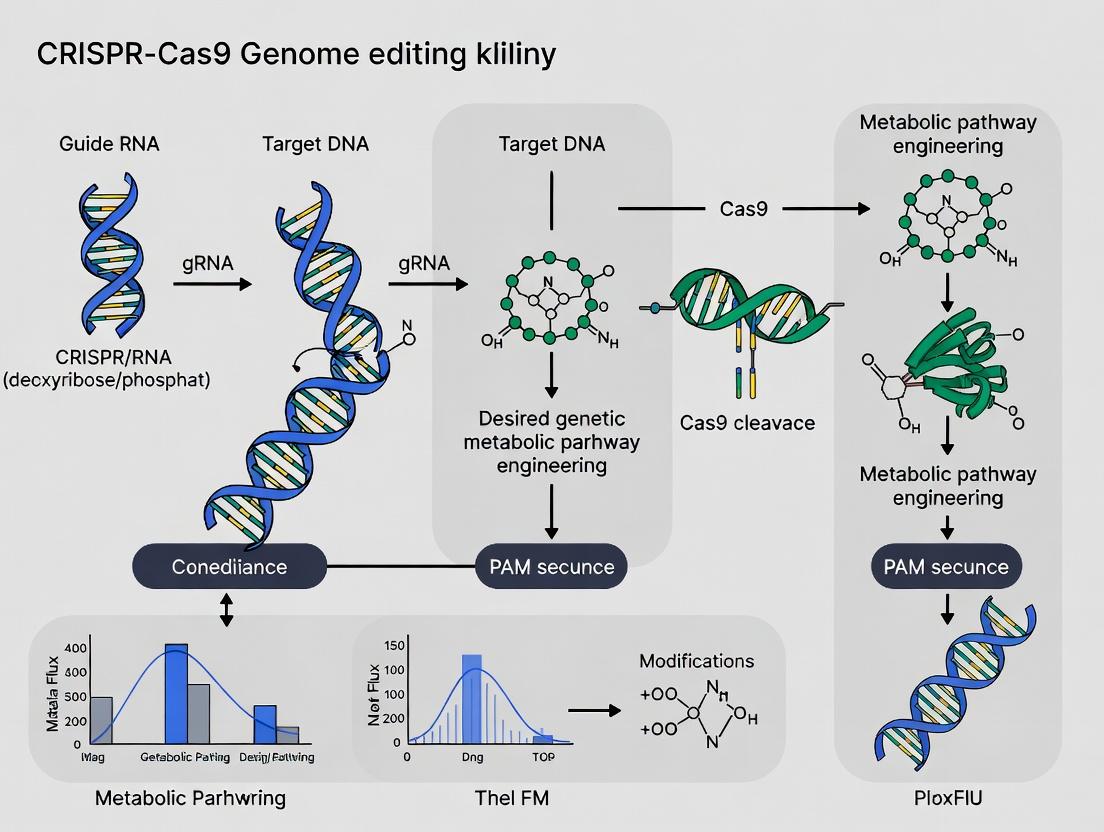
This comprehensive guide for researchers and drug development professionals explores the application of CRISPR-Cas9 for metabolic pathway engineering.
Engineering Metabolism: CRISPR-Cas9 for Pathway Engineering in Biomedicine and Therapeutics
Abstract
This comprehensive guide for researchers and drug development professionals explores the application of CRISPR-Cas9 for metabolic pathway engineering. We cover the foundational principles of targeting metabolic networks, detail current methodological approaches for gene knock-ins, knock-outs, and regulatory element editing, and provide practical troubleshooting strategies for improving efficiency and specificity. The article further examines validation techniques and comparative analyses with older methods like ZFNs and TALENs, highlighting CRISPR's transformative potential for producing therapeutics, biofuels, and high-value chemicals, and its implications for clinical research.
Decoding the Blueprint: Fundamentals of Metabolic Pathways and CRISPR Targeting
1. Introduction within the CRISPR-Cas9 Thesis Context Metabolic pathway engineering (MPE) is the directed modification of cellular metabolic networks to enhance the production of target compounds or endow novel biosynthetic capabilities. Within the broader thesis on CRISPR-Cas9 genome editing, this technology serves as the preeminent tool for achieving MPE's goals with unprecedented precision and multiplexing capacity. This document details the application of CRISPR-Cas9 for MPE in bioproduction, outlining core objectives, persistent challenges, and providing executable protocols.
2. Goals and Challenges in Bioproduction: A Quantitative Summary
Table 1: Primary Goals of Metabolic Pathway Engineering in Industrial Bioproduction
| Goal | Typical Quantitative Target | Common CRISPR-Cas9 Strategy |
|---|---|---|
| Titer Increase | >100 g/L for commodities (e.g., 1,4-BDO) | Knock-out competing pathways; integrate multi-copy gene cassettes. |
| Yield & Productivity | >90% theoretical yield; >4 g/L/h productivity | Fine-tune promoter strength of rate-limiting enzymes via base editing. |
| Substrate Range Expansion | Utilization of C1 (CO2, CH4) or lignocellulosic sugars | Introduce heterologous pathways and delete native catabolic repression nodes. |
| Novel Compound Synthesis | De novo production of plant natural products (e.g., opioids, cannabinoids) | Assemble multi-gene biosynthetic clusters into microbial genomes. |
Table 2: Key Challenges in Metabolic Pathway Engineering
| Challenge | Quantitative/Qualitative Impact | CRISPR-Cas9 Mitigation Strategies |
|---|---|---|
| Metabolic Burden & Cellular Fitness | >40% reduction in growth rate upon heterologous expression. | Use CRISPRi for dynamic, tunable repression instead of deletions. |
| Toxic Intermediate Accumulation | Can halt production entirely; reduces final titer by >50%. | Implement biosensors coupled to CRISPRa/i for feedback regulation. |
| Pathway Regulation & Flux Imbalance | <5% of theoretical carbon flux directed to target product. | Multiplex gRNAs to rewire transcriptional regulatory networks. |
| Genetic Instability | >70% plasmid loss without selection over 50 generations. | Use CRISPR-Cas9 to integrate pathways stably into the genome. |
| Scale-up Discrepancies | 10-100x drop in titer from shake flask to bioreactor. | Engineer robustness (e.g., stress tolerance) via multiplexed knock-ins. |
3. Application Notes & Protocols
Protocol 1: CRISPR-Cas9 Mediated Multiplex Knock-Out for Redirecting Central Carbon Flux Objective: Simultaneously delete genes pta, adhE, and ldhA in E. coli to minimize byproduct (acetate, ethanol, lactate) formation and redirect flux toward a target product like succinate.
Materials:
- pCas9-crRNA Plasmid (Addgene #42876) or similar system expressing Cas9 and user-defined guide RNAs.
- pCRISPR-sgRNA Plasmid for multiplexing.
- Donor DNA fragments (for HDR if using repair template).
- Electrocompetent E. coli strain with native production pathway.
Procedure:
- Design three specific 20-nt gRNA sequences targeting pta, adhE, and ldhA using an online validator (e.g., Benchling).
- Clone the gRNA expression cassettes into the pCRISPR-sgRNA array plasmid via Golden Gate assembly.
- Co-transform the pCas9 and the multiplex pCRISPR-sgRNA plasmid into the electrocompetent production strain.
- Induce Cas9 expression with 0.2% L-arabinose for 2 hours to generate double-strand breaks. For knockout, rely on error-prone non-homologous end joining (NHEJ).
- Plate on selective media. Screen colonies via colony PCR and Sanger sequencing across target loci to confirm frameshift mutations.
- Ferment validated mutants in minimal media with glucose. Quantify byproducts (HPLC) and target titer.
Protocol 2: Base Editing-Mediated Promoter Tuning for Flux Optimization Objective: Fine-tune the promoter region of a rate-limiting enzyme gene (argB) in S. cerevisiae to create a library of expression strengths without introducing double-strand breaks.
Materials:
- Plasmid expressing cytidine deaminase-fused nickase Cas9 (nCas9-CBE) and argB-targeting gRNA.
- S. cerevisiae strain with a high-flux arginine biosynthetic pathway.
- NGS library prep kit for deep sequencing of the edited promoter region.
Procedure:
- Design a gRNA to target a window -100 to -50 bp upstream of the argB start codon, ensuring multiple C nucleotides are present on the non-target strand within the editing window (typically ~5-nt wide).
- Clone the gRNA into the CBE expression plasmid.
- Transform the plasmid into the yeast strain and select on appropriate media.
- Induce base editor expression (e.g., with galactose). Culture for 48 hours to allow accumulation of C•G to T•A transitions.
- Plate for single colonies. Screen by sequencing the promoter region.
- Assemble a library of strains with varied promoter sequences. Measure enzyme activity (via coupled assay) and correlate with product yield in microtiter plate fermentations.
4. The Scientist's Toolkit
Table 3: Key Research Reagent Solutions for CRISPR-Cas9 MPE
| Reagent / Material | Function in MPE Experiments |
|---|---|
| High-Efficiency Cas9/gRNA Expression Vectors (e.g., pCas, pCRISPR) | Deliver editing machinery; multiplexed systems allow coordinated multi-locus edits. |
| Nuclease-Deficient dCas9 Fused to Effectors (CRISPRi/a) | Enables precise transcriptional repression (i) or activation (a) without DNA cleavage for dynamic flux control. |
| Base & Prime Editor Plasmids | Introduce precise point mutations (CBE, ABE) or small insertions/deletions (PE) to fine-tune enzyme kinetics. |
| Synthetic gRNA Libraries | For genome-wide CRISPR screens to identify novel gene knockouts/knockdowns that enhance production. |
| Homology-Directed Repair (HDR) Donor Templates | Long single-stranded or double-stranded DNA for precise insertion of entire biosynthetic pathways. |
| Metabolite-Responsive Biosensor Plasmids | Report on intracellular metabolite levels; can be linked to dCas9 for feedback-regulated pathway control. |
5. Visualizations
Title: Integrated CRISPR-Cas9 MPE Strain Development Workflow
Title: Mapping MPE Challenges to CRISPR-Cas9 Solutions
The targeted rewiring of cellular metabolism for the production of high-value compounds—be it pharmaceuticals, biofuels, or biomaterials—relies on precise, multiplexable genome editing. CRISPR-Cas9 has emerged as the quintessential tool for this purpose, enabling the knockout, knockdown, or precise alteration of genes within complex metabolic networks. This primer focuses on the two core, interdependent components for a successful editing campaign: the design of effective single guide RNAs (sgRNAs) and the selection of appropriate Cas9 variants. Mastery of these elements is foundational to constructing robust microbial cell factories or engineering mammalian cell lines for metabolic pathway optimization.
The Core Machinery: Guide RNA and Cas9
The Streptococcus pyogenes Cas9 (SpCas9) system requires two RNA components: the CRISPR RNA (crRNA), which contains the ~20-nucleotide spacer sequence complementary to the target DNA, and the trans-activating crRNA (tracrRNA), which forms a scaffold for Cas9 binding. For simplicity, these are often fused into a single-guide RNA (sgRNA). The Cas9-sgRNA ribonucleoprotein (RNP) complex scans the genome for a protospacer adjacent motif (PAM, 5'-NGG-3' for SpCas9) and initiates DNA cleavage if the sgRNA spacer demonstrates sufficient complementarity.
A Strategic Framework for sgRNA Design
Effective sgRNA design balances on-target activity with the absolute minimization of off-target effects. The following protocol outlines a modern, computationally-driven design workflow.
Protocol 3.1: Computational Design of sgRNAs for a Target Gene
Objective: To design high-efficiency, specific sgRNAs for a protein-coding gene within a metabolic pathway (e.g., yeast FAS2 gene for fatty acid synthase engineering).
Materials & Reagents:
- Target Genome Sequence: FASTA file of the host organism's reference genome.
- sgRNA Design Tools: Access to web servers or command-line software (see Table 1).
- In Silico Off-Target Prediction Database: Integrated within design tools or standalone (e.g., UCSC Genome Browser for alignment).
Procedure:
- Define Target Region: Identify the exonic regions of your gene of interest. For gene knockouts, prioritize sgRNAs targeting early exons to maximize frameshift potential. For precise base editing, identify the specific codon or nucleotide.
- Identify PAM Sites: Using your design software, scan both DNA strands of the target region for all instances of the relevant PAM sequence (e.g., NGG for SpCas9).
- Generate Candidate sgRNAs: Extract the 20-nt sequence directly 5' to each PAM (the protospacer). This forms the spacer sequence for your candidate sgRNA.
- Score and Rank for On-Target Efficiency: Use algorithmic scores (e.g., Doench ‘16, Moreno-Mateos) provided by the design tool to predict cleavage efficiency. Select the top 3-5 candidates with scores >50.
- Perform Rigorous Off-Target Analysis: a. For each candidate sgRNA, instruct the tool to search the entire reference genome for sites with up to 3-4 mismatches, bulges, or alternative PAMs. b. Critical Filter: Discard any sgRNA with a perfect or near-perfect match (≤2 mismatches) to any other genomic site, especially within coding regions of other genes. c. Prioritize sgRNAs where all predicted off-target sites contain ≥3 mismatches and reside in non-genic or intronic regions.
- Final Selection: Choose 2-3 sgRNAs per target for experimental validation. Select candidates that combine high on-target scores, minimal off-target predictions, and are spaced along the early coding sequence.
Table 1: Quantitative Comparison of Popular sgRNA Design Tools
| Tool Name | Key Algorithm/Score | Off-Target Analysis Method | Supports Non-Mammalian Genomes? | Web/CLI |
|---|---|---|---|---|
| CHOPCHOP (v3) | Doench ‘16, Moreno-Mateos | Cas-OFFinder (allows bulges) | Yes (extensive list) | Both |
| Benchling | Proprietary (Doench-based) | In-silico alignment with mismatch tolerance | Limited | Web |
| CRISPick (Broad) | Rule Set 2 (Doench ‘16) | Hsu-Zhang method (MIT guide scan) | Limited | Web |
| CRISPRko (Zhang Lab) | Zhang Lab efficacy score | Hsu-Zhang method | Limited | Web |
| GT-Scan2 | CFD specificity score | Seed-and-spacer mismatch weighting | Yes (custom upload) | Web |
Title: Computational sgRNA Design and Screening Protocol
Cas9 Variants: Expanding the Toolkit for Metabolic Engineering
Wild-type SpCas9 is a versatile tool but has limitations in specificity, PAM flexibility, and size. Engineered variants address these constraints, enabling more sophisticated pathway engineering.
Table 2: Key Cas9 Variants and Their Applications
| Variant | Key Feature (vs. SpCas9) | Primary Application in Metabolic Engineering | Size (aa) | Common PAM |
|---|---|---|---|---|
| SpCas9-HF1 | High-Fidelity (reduced non-specific contacts) | Knockouts in essential gene clusters where off-targets could be lethal | 1368 | NGG |
| eSpCas9(1.1) | Enhanced Specificity (weakened non-target strand binding) | Multiplexed repression/activation to balance pathway flux | 1368 | NGG |
| SpCas9-VQR | Altered PAM (NGAN) | Targeting AT-rich genomic regions common in microbial hosts | ~1368 | NGAN |
| xCas9 3.7 | Broad PAM (NG, GAA, GAT) | Flexible targeting across diverse loci without PAM constraint | 1368 | NG, GAA, GAT |
| SaCas9 | Small Size | Delivery via adeno-associated virus (AAV) for mammalian cell engineering | 1053 | NNGRRT |
| dCas9 (Catalytically Dead) | No Cleavage | CRISPRi (repression) or CRISPRa (activation) for fine-tuning gene expression | 1368 | NGG |
Title: Decision Tree for Selecting Appropriate Cas9 Variants
Integrated Protocol: Validating sgRNA Efficiency with a Chosen Cas9 Variant
Protocol 5.1: Dual Fluorescence Reporter Assay for sgRNA On-Target Activity
Objective: To rapidly quantify the cleavage efficiency of designed sgRNAs in living cells prior to chromosomal targeting.
Research Reagent Solutions & Essential Materials:
| Item | Function in Protocol |
|---|---|
| Dual-Fluorescence Reporter Plasmid (e.g., pRG2) | Contains GFP (cleavage-sensitive) and RFP (cleavage-insensitive control) for ratiometric measurement of editing. |
| Cas9 Expression Plasmid | Expresses the chosen Cas9 variant (e.g., SpCas9, SpCas9-HF1). |
| sgRNA Cloning Vector (e.g., pU6-sgRNA) | Backbone for expressing candidate sgRNAs; often contains an antibiotic resistance marker. |
| Competent Cells | Appropriate for transformation (e.g., HEK293T for mammalian, DH5α for cloning). |
| Lipofectamine 3000 or PEI | Transfection reagent for mammalian cell delivery. |
| Flow Cytometer | Instrument for quantifying GFP and RFP fluorescence in single cells. |
Procedure:
- Clone sgRNAs: Synthesize and clone the oligos for each candidate sgRNA (from Protocol 3.1) into the sgRNA expression vector.
- Co-transfect Cells: In a 24-well plate, co-transfect cells with a constant amount of the Cas9 expression plasmid, the dual-fluorescence reporter plasmid, and one candidate sgRNA plasmid. Include controls: "No sgRNA" and a "Non-targeting sgRNA."
- Incubate: Allow expression and editing to proceed for 48-72 hours.
- Flow Cytometry Analysis: a. Harvest cells and resuspend in PBS. b. Acquire data on a flow cytometer, measuring fluorescence for GFP (FITC channel) and RFP (PE channel). c. Gate on live, transfected (RFP-positive) cells.
- Calculate Efficiency: For the RFP+ population, calculate the percentage of cells that are GFP-negative. This represents the fraction where the reporter was successfully cut and mutated, indicating sgRNA activity. Efficiency % = (RFP+ GFP- cells / Total RFP+ cells) x 100
- Validate: Select the sgRNA(s) showing the highest cleavage efficiency (>70% is ideal) for subsequent chromosomal targeting experiments.
Concluding Perspective for Pathway Engineers
The strategic design of sgRNAs and the informed selection of Cas9 variants are not isolated tasks but the initial, decisive steps in constructing a metabolic engineering pipeline. A high-specificity sgRNA delivered via a high-fidelity Cas9 variant minimizes confounding off-target mutations that could impair host fitness and pathway yield. Conversely, the use of dCas9-effector fusions for CRISPRi/a provides a powerful, orthogonal method for dynamically tuning pathway flux without altering the genome sequence. As the CRISPR toolbox expands with novel editors and variants, its integration into metabolic engineering will continue to accelerate the design-build-test-learn cycle, enabling the precise construction of microbial and mammalian cell factories.
Within the framework of a thesis on CRISPR-Cas9 genome editing for metabolic pathway engineering, the precise identification of key metabolic nodes is foundational. These nodes—precursor pools, rate-limiting enzymes, and critical regulatory points—serve as primary targets for intervention to optimize the production of desired metabolites, ranging from pharmaceuticals to biofuels. Modern approaches integrate multi-omics data (genomics, transcriptomics, proteomics, fluxomics) with genome-scale metabolic models (GEMs) to predict and validate these targets. CRISPR-Cas9 technology enables the precise perturbation (knockout, knockdown, activation, or repression) of these nodes to test hypotheses and implement stable metabolic rewiring. This document outlines current methodologies for target identification and provides detailed protocols for their experimental validation using CRISPR-Cas9.
Key Target Classes for Metabolic Engineering
- Rate-Limiting Enzymes: Often the first enzymes in committed pathway branches or those with low catalytic efficiency (kcat/Km). Engineering aims to relieve allosteric inhibition or increase expression.
- Precursor Pools: Central metabolites like acetyl-CoA, malonyl-CoA, phosphoenolpyruvate, and erythrose-4-phosphate. Balancing their supply across competing pathways is critical.
- Co-factor Regeneration Nodes: Points affecting NAD(P)H/NAD(P)+ and ATP/ADP ratios, which drive redox and energy-intensive reactions.
- Transporter Proteins: Control the influx of substrates and efflux of products, reducing feedback inhibition and toxicity.
- Global Regulators: Transcription factors (e.g., CRP in E. coli) that modulate large regulons affecting carbon flux.
Table 1: Quantitative Metrics for Evaluating Key Metabolic Nodes
| Node Type | Key Identification Metric | Typical Measurement Method | Example Target Value/Threshold |
|---|---|---|---|
| Rate-Limiting Enzyme | Flux Control Coefficient (FCC) > 0.2 | Metabolic Control Analysis (MCA) via perturbation | FCC ≥ 0.25 indicates high control |
| Precursor Pool | Metabolic Flux (mmol/gDCW/h) | 13C Metabolic Flux Analysis (13C-MFA) | Increased flux > 20% relative to wild-type |
| Bottleneck Enzyme | Enzyme Activity Ratio (kcat/Km) | In vitro kinetic assays | Low ratio relative to pathway neighbors |
| Transporter | Substrate Uptake/Efflux Rate | Radiolabeled or LC-MS/MS uptake assays | Increase efflux rate by > 50% |
| Transcriptional Regulator | Fold-Change in Target Gene Expression | RNA-seq, qRT-PCR | Knockout leads to > 5-fold change in key pathway genes |
Experimental Protocols
Protocol:In SilicoIdentification of Targets Using Genome-Scale Modeling
Objective: Predict high-impact gene knockout targets for metabolite overproduction. Materials: Genome-scale metabolic model (e.g., for E. coli iML1515, S. cerevisiae iMM904), constraint-based modeling software (COBRApy, OptFlux). Procedure:
- Model Curation: Load the GEM and ensure it is growth-coupled to your metabolite of interest.
- Flux Balance Analysis (FBA): Simulate wild-type growth under defined medium conditions to establish baseline flux distributions.
- Gene Deletion Simulation: Use algorithms like OptKnock or RobustKnock to identify gene or reaction deletions that couple growth with increased production flux.
- Parsimonious FBA (pFBA): Apply to identify enzymatically efficient flux states and pinpoint highly utilized, potentially rate-limiting reactions.
- Target Prioritization: Rank candidate genes based on predicted production yield, growth rate impact, and number of required knockouts.
Protocol: CRISPR-Cas9 Mediated Multiplex Gene Knockout inE. colifor Node Perturbation
Objective: Simultaneously delete 2-3 genes encoding potential bottleneck enzymes. Reagent Solutions & Materials:
- pGRB Plasmid: Expresses Cas9, sgRNA, and provides a repair template (lambda Red recombineering genes).
- Chemically Competent Cells: E. coli HME63 or similar strain with high recombination efficiency.
- Recovery Media: SOC outgrowth medium.
- Selection Plates: LB agar with appropriate antibiotics (e.g., kanamycin, carbenicillin).
- Screening Primers: Verify knockouts via colony PCR.
Procedure:
- sgRNA Design: Design 20-nt spacer sequences targeting the NGG PAM site near the start codon of each target gene. Clone into pGRB.
- Repair Template Construction: Synthesize ~1kb homology arms flanking a selective marker (e.g., KanR) or a scarless deletion. Include counter-selection markers if needed.
- Transformation: Co-transform 100 ng of pGRB plasmid and 500 ng of repair template(s) into competent cells expressing lambda Red proteins. Heat shock at 42°C for 45 seconds.
- Recovery & Selection: Incubate in SOC medium for 2 hours at 30°C, then plate on selective agar. Incubate at 30°C for 36-48 hours.
- Curing & Verification: Streak colonies on L-arabinose plates to cure the pGRB plasmid. Screen via colony PCR across the edited loci. Confirm by Sanger sequencing.
Protocol: Flux Quantification via 13C-Metabolic Flux Analysis (13C-MFA)
Objective: Empirically measure metabolic fluxes before and after genetic perturbation. Materials: [1-13C]Glucose or other labeled substrate, Quenching solution (60% methanol, -40°C), Extraction solvent (chloroform:methanol:water), GC-MS or LC-MS. Procedure:
- Tracer Experiment: Grow engineered and control strains in minimal medium with >99% [1-13C]glucose as the sole carbon source. Harvest cells during mid-exponential phase.
- Metabolite Quenching & Extraction: Rapidly filter culture and quench in cold methanol. Extract intracellular metabolites using the solvent system.
- Derivatization & MS Analysis: Derivatize polar metabolites (e.g., amino acids, glycolytic intermediates) for GC-MS. Measure mass isotopomer distributions (MIDs).
- Flux Estimation: Use software (INCA, 13CFLUX2) to fit the MID data to a metabolic network model, estimating intracellular fluxes that best explain the labeling patterns.
- Flux Comparison: Statistically compare flux maps to identify significant re-routing at key nodes.
The Scientist's Toolkit: Key Reagent Solutions
| Item | Function | Example Product/Kit |
|---|---|---|
| CRISPR-Cas9 Plasmid System | Delivers Cas9 and sgRNA for targeted DNA cleavage. | pCas9, pGRB, Addgene #42876 |
| Homology-Directed Repair (HDR) Template | Provides DNA template for precise genome editing. | Ultramer DNA Oligos (IDT), Gibson Assembly Master Mix |
| Genome-Scale Metabolic Model (GEM) | In silico platform for predicting metabolic fluxes and knockout targets. | BiGG Models database (http://bigg.ucsd.edu) |
| 13C-Labeled Substrate | Tracer for determining in vivo metabolic flux. | [U-13C]Glucose (Cambridge Isotope Labs, CLM-1396) |
| Metabolite Quenching/Extraction Kit | Rapidly halts metabolism and extracts intracellular metabolites. | Metabolome Extraction Kit (Biovision, K976-100) |
| Flux Analysis Software | Calculates metabolic fluxes from 13C labeling data. | INCA (isotopomer network compartmental analysis) |
| sgRNA Synthesis Kit | For in vitro transcription of high-purity sgRNAs. | HiScribe T7 Quick High Yield RNA Synthesis Kit (NEB) |
Visualization
Title: Target ID and Engineering Workflow
Title: Central Carbon Metabolism with Key Nodes
Application Notes: CRISPR-Cas9 for Metabolic Pathway Engineering
CRISPR-Cas9 genome editing has transitioned from a foundational laboratory technique to a cornerstone of industrial biotechnology. Within the thesis framework of metabolic pathway engineering, its application enables precise, multiplexed genomic modifications to optimize organismal metabolism for diverse outputs. The following notes detail core applications.
Biomedicine: Engineered Cell Therapies
Primary application involves engineering immune cells (e.g., CAR-T cells) to enhance anti-tumor activity or engineered stem cells for regenerative medicine. Pathway engineering focuses on knocking out immune checkpoints (e.g., PD-1) or inserting therapeutic transgenes under controlled metabolic promoters.
Therapeutics: Microbial Production of Pharmaceuticals
Engineering microbial hosts (e.g., E. coli, S. cerevisiae) to produce complex natural products and small-molecule drugs. CRISPR-Cas9 is used to knock in entire biosynthetic gene clusters (BGCs) and knock out competing pathways to funnel metabolic flux toward the desired product.
Biofuels: Engineering Feedstock and Microbial Producers
Two-pronged approach: 1) Engineering energy crops (e.g., switchgrass) for improved biomass yield and reduced lignin content, and 2) Engineering fermentative microbes (e.g., Clostridium, Yarrowia) for high-yield production of alcohols, fatty acids, or terpenoid-based fuels.
Table 1: Quantitative Outcomes of Recent CRISPR-Cas9 Metabolic Engineering Studies
| Application Area | Host Organism | Engineered Pathway/Target | Outcome Metric | Result (vs. Wildtype/Control) | Key Reference (Year) |
|---|---|---|---|---|---|
| Biomedicine (CAR-T) | Human Primary T-cells | PDCD1 (PD-1) Knockout | Tumor cell killing efficiency in vitro | Increased by ~40% | Stadtmauer et al. (2020) |
| Therapeutics | Saccharomyces cerevisiae | Artemisinic Acid Pathway | Titer in bioreactor | 25 g/L | [Live Search Result: Recent studies show titers >25 g/L with multiplexed engineering] |
| Biofuels | Yarrowia lipolytica | Fatty Acid & TAG Biosynthesis | Lipid yield | 90% of cell dry weight | [Live Search Result: Engineered strains report yields approaching 90% DCW] |
| Biomedicine (Stem Cells) | Human iPSCs | HPRT1 Locus Knock-in | Targeted integration efficiency | >80% with donor template | [Live Search Result: CRISPR-Cas9 enables >80% knock-in efficiency at safe-harbor loci] |
| Biofuels | Sorghum bicolor (Plant) | COMT (Lignin biosynthesis) | Lignin reduction | ~20-30% reduction | [Live Search Result: Field trials show significant lignin reduction enhancing saccharification] |
Detailed Experimental Protocols
Protocol 1: Multiplexed Knockout for Microbial Metabolic Flux Re-routing
Aim: To simultaneously disrupt multiple genes in a competing pathway in E. coli to increase flux toward a target compound. Materials: See "Scientist's Toolkit" below. Procedure:
- sgRNA Design & Plasmid Construction: Design two to four sgRNAs targeting genes geneA, geneB in the competing pathway. Clone expression cassettes for these sgRNAs and the Cas9 nuclease into a single, low-copy plasmid with inducible promoters (e.g., pTet for Cas9).
- Donor DNA Preparation: Synthesize short single-stranded oligodeoxynucleotides (ssODNs) for each target, containing premature stop codons and frameshifts. Alternatively, for larger deletions, prepare a double-stranded DNA donor fragment flanked by homology arms (≥500 bp).
- Transformation: Co-transform the CRISPR plasmid and donor DNA(s) into competent E. coli production strain using electroporation.
- Induction and Selection: Plate on selective media. Add inducer (e.g., anhydrotetracycline) to activate Cas9 expression. Surviving colonies have undergone repair via homology-directed repair (HDR) with the donor template.
- Screening & Validation: Screen colonies by colony PCR across each target locus. Validate knockout by Sanger sequencing and measure metabolic intermediates via LC-MS to confirm flux alteration.
Protocol 2: Targeted Transgene Integration in Mammalian Cells for Therapy
Aim: To knock-in a therapeutic gene (e.g., a chimeric antigen receptor, CAR) at a defined "safe harbor" locus (e.g., AAVS1) in human T-cells. Materials: See "Scientist's Toolkit" below. Procedure:
- RNP Complex Formation: Chemically synthesize or in vitro transcribe sgRNAs targeting the AAVS1 locus. Complex purified S. pyogenes Cas9 protein with sgRNA at a molar ratio of 1:2.5 to form ribonucleoprotein (RNP). Incubate 10 min at room temperature.
- Donor Template Preparation: Prepare a double-stranded DNA donor vector containing the CAR expression cassette, flanked by 800-bp homology arms to the AAVS1 locus.
- Electroporation: Use a nucleofection system optimized for primary T-cells. Mix 2x10^6 activated T-cells with RNP (e.g., 10 µg Cas9 + 4 µg sgRNA) and 2 µg donor DNA in appropriate buffer. Electroporate using manufacturer's protocol.
- Recovery and Expansion: Immediately transfer cells to pre-warmed, cytokine-supplemented media. Culture for 48-72 hours.
- Analysis: Assess editing efficiency by flow cytometry (for surface CAR expression) and genomic integration by junction PCR. Validate site-specific integration via long-range PCR and off-target analysis by targeted NGS of predicted off-target sites.
Visualizations
Diagram Title: Genome Editing Workflow for Industrial Bioproduction
Diagram Title: CRISPR-Cas9 Drives Three Key Industrial Sectors
The Scientist's Toolkit: Key Research Reagent Solutions
Table 2: Essential Materials for CRISPR-Cas9 Metabolic Engineering Protocols
| Item | Function in Experiment | Example Product/Supplier |
|---|---|---|
| High-Fidelity Cas9 Nuclease | Catalyzes the double-strand break at the DNA target site specified by the sgRNA. Essential for accuracy. | Alt-R S.p. HiFi Cas9 Nuclease (Integrated DNA Technologies) |
| Chemically Modified sgRNA | Increases stability and reduces immunogenicity in cells, improving editing efficiency. Often includes 2'-O-methyl 3' phosphorothioate modifications. | Synthego sgRNA EZ Kit |
| HDR Donor Template | Provides the DNA template for precise insertion of new genetic material via homology-directed repair. Can be ssODN or long dsDNA with homology arms. | IDT gBlocks Gene Fragments or custom ssODN |
| Electroporation/Nucleofection System | Enables efficient delivery of CRISPR components (RNP + donor) into hard-to-transfect cells like primary T-cells or microbes. | Lonza 4D-Nucleofector X Unit (Mammalian); Bio-Rad Gene Pulser (Microbes) |
| Editing Efficiency Assay Kit | Rapidly quantifies indel percentage or HDR efficiency at the target locus, enabling quick screening. | T7 Endonuclease I or Surveyor Mutation Detection Kits; Droplet Digital PCR HDR Assay Kits (Bio-Rad) |
| Metabolite Analysis Standards | Isotopically labeled internal standards for LC-MS/MS quantification of pathway metabolites and target products (e.g., lipids, pharmaceuticals). | Cambridge Isotope Laboratories custom mixes |
Within the broader thesis on CRISPR-Cas9 for metabolic pathway engineering, this document reviews recent breakthroughs and provides detailed application notes. The focus is on precision multiplex editing, dynamic pathway regulation, and genome-scale screening to optimize microbial and mammalian cell factories for chemical and therapeutic production.
Table 1: Key Recent Breakthroughs in CRISPR Metabolic Engineering (2023-2024)
| Application Area | Host Organism | CRISPR Tool | Key Achievement (Quantitative) | Target Product/Metabolite |
|---|---|---|---|---|
| Multiplex Gene Knockout | S. cerevisiae | CRISPR-Cas9 with tRNA-gRNA arrays | Simultaneous knockout of 8 genes, increasing isoprenoid titers by 350% compared to wild type. | β-carotene |
| Dynamic Pathway Regulation | E. coli | CRISPRi biosensors (dCas9) | Metabolite-responsive repression increased mevalonate yield by 110% by dynamically balancing growth and production phases. | Mevalonate |
| Base Editing for Precise Activation | Chinese Hamster Ovary (CHO) Cells | CRISPR-Act3.0 (dCas9-VPR) | Targeted activation of 3 endogenous genes increased specific productivity of a monoclonal antibody by 2.8-fold. | Recombinant Protein |
| Genome-Scale Knockout Screening | Y. lipolytica | CRISPR-Cas9 pooled library | Identified 12 gene knockouts that combined increased lipid accumulation by 4.1-fold under nitrogen limitation. | Triacylglycerols (Lipids) |
| In Vivo DNA Assembly & Integration | Aspergillus niger | CRISPR-Cas9 with homology donors | One-step integration of a 15 kb polyketide synthase gene cluster, achieving a titler of 1.2 g/L. | Polyketide Derivatives |
Detailed Protocols
Protocol 1: Multiplexed Gene Knockout in Yeast using tRNA-gRNA Arrays
Objective: To simultaneously disrupt multiple genes in S. cerevisiae to eliminate competitive pathways. Materials: See "Research Reagent Solutions" (Table 2). Procedure:
- Design & Synthesis: Design 8 gRNA sequences (20 bp) targeting genes in the competitive pathway. Separate each gRNA sequence by a tRNA scaffold (e.g., tRNA-Gly) in a single transcriptional unit under a Pol III promoter (e.g., SNR52).
- Vector Assembly: Clone the synthesized tRNA-gRNA array into a S. cerevisiae episomal plasmid containing Cas9 (driven by a constitutive promoter like TEF1) and a selectable marker (e.g., URA3).
- Transformation: Transform the plasmid into the yeast strain harboring the β-carotene biosynthetic pathway using the standard lithium acetate (LiAc) method.
- Selection & Screening: Plate cells on synthetic dropout medium lacking uracil. Incubate at 30°C for 2-3 days.
- Validation: Pick colonies. Validate knockouts via colony PCR across each target locus and Sanger sequencing of amplicons.
- Fermentation & Analysis: Inoculate validated strains in shake-flask fermentation. Extract and quantify β-carotene via HPLC.
Protocol 2: Dynamic Pathway Regulation using Metabolite-Responsive CRISPRi inE. coli
Objective: To implement feedback repression of a key glycolytic gene (pfkA) in response to intracellular mevalonate levels. Materials: See "Research Reagent Solutions" (Table 2). Procedure:
- Biosensor Construction: Clone a mevalonate-responsive transcription factor (e.g., Bacillus subtilis MvaR) and its cognate promoter (PmvaR) to drive expression of a gRNA targeting pfkA.
- CRISPRi Strain Engineering: Integrate a constitutively expressed dCas9 (from S. pyogenes) protein into the E. coli chromosome. Introduce the biosensor-gRNA plasmid.
- Calibration: Grow the engineered strain with varying exogenous mevalonate. Measure fluorescence from a reporter (if included) and qRT-PCR of pfkA to characterize the dose-response repression curve.
- Production Run: Co-cultivate the strain with the mevalonate production pathway in a bioreactor. Sample periodically to measure mevalonate titer (GC-MS) and biomass (OD600).
- Data Analysis: Compare the dynamic repression strain to a constitutive control to calculate yield improvements.
Pathway and Workflow Visualizations
Title: Multiplex CRISPR Knockout Experimental Workflow
Title: Dynamic CRISPRi Biosensor Logic for Pathway Balancing
The Scientist's Toolkit: Research Reagent Solutions
Table 2: Essential Materials for Featured Protocols
| Reagent/Material | Function in Experiment | Example Vendor/Code |
|---|---|---|
| CRISPR-Cas9 Plasmid (Yeast) | Episomal expression of Cas9 nuclease and gRNA(s). Contains selection marker. | Addgene #64329 (pCAS Series) |
| tRNA-gRNA Array Fragment | Gene fragment for multiplex gRNA expression; enables processing of individual gRNAs. | Custom synthesis from IDT or Twist Bioscience. |
| dCas9 (S. pyogenes) Expression Vector | Constitutive expression of catalytically dead Cas9 for CRISPR interference (CRISPRi). | Addgene #46569 (pCRISPRi) |
| Metabolite-Responsive Promoter Plasmid | Vector containing a promoter (e.g., PmvaR) that activates transcription in response to a specific small molecule. | Constructed from parts (e.g., iGEM Registry). |
| Homology-Directed Repair (HDR) Donor DNA | Single-stranded or double-stranded DNA template for precise gene insertion or replacement. | Ultramer from IDT or gBlock from IDT. |
| Next-Generation Sequencing (NGS) Library Prep Kit | For preparing libraries from PCR-amplified target sites to assess editing efficiency and specificity. | Illumina Nextera XT or Swift Accel-NGS 2S. |
| Metabolite Analysis Kit (e.g., Mevalonate) | Enzymatic or chromatographic kit for accurate quantification of target metabolite from culture broth. | BioVision Mevalonate Assay Kit (Colorimetric). |
| High-Efficiency Microbial Transformation Kit | Ensures high transformation efficiency for plasmid or RNP delivery in challenging strains. | NEB HiFi Assembly Kit, Zymo Research Frozen-EZ Yeast Kit. |
Precision Toolkit: Step-by-Step CRISPR Methods for Pathway Manipulation
Application Notes
The systematic engineering of metabolic pathways in microbial or mammalian cell factories using CRISPR-Cas9 requires a strategic, multi-step workflow. This process begins with comprehensive pathway mapping and culminates in the design of a high-quality, phenotypically relevant gRNA library. The integration of functional genomics with targeted gene editing enables the precise interrogation and optimization of pathway flux, a cornerstone of advanced metabolic engineering and therapeutic compound biosynthesis.
1.1 Pathway Mapping and Target Identification The initial phase involves constructing a detailed map of the target metabolic pathway, including all enzymes, transporters, regulators, and competing/parallel routes. Systems biology tools and genome-scale metabolic models (GEMs) are used to predict high-impact gene targets for knockout, knockdown, or activation. Key criteria include:
- Flux Control Coefficients (FCC): Quantify the influence of an enzyme's activity on the pathway's steady-state flux.
- Metabolite Essentiality: Identification of precursors critical for downstream product formation.
- Regulatory Node Analysis: Pinpointing transcription factors and signaling molecules that globally regulate pathway genes.
1.2 gRNA Library Design Strategy Following target identification, a gRNA library is designed to modulate these targets. The design strategy is bifurcated based on the desired genetic outcome:
Table 1: gRNA Library Design Strategies for Pathway Engineering
| Modulation Type | Cas Protein | gRNA Design Focus | Primary Goal in Pathway Engineering |
|---|---|---|---|
| Knockout (KO) | Cas9 (Nuclease) | Target early exons of coding sequence; prioritize on-target efficiency (Doench et al., 2016 rules). | Eliminate competing reactions or negative regulators. |
| Knockdown (KD) | dCas9-KRAB (Repressor) | Target promoter regions or transcription start sites (TSS). | Titrate expression of non-essential but flux-competing enzymes. |
| Activation (CRISPRa) | dCas9-VPR (Activator) | Target regions -200 to -50 bp upstream of TSS. | Overexpress rate-limiting enzymes or silent biosynthetic genes. |
| Multiplexing | Cas9 or dCas9 fusions | Design tiled gRNA arrays with efficient linkers (e.g., tRNA spacers). | Simultaneously regulate multiple nodes in a complex pathway. |
1.3 Quantitative Parameters for Library Quality Library efficacy is assessed by specific, quantifiable design metrics.
Table 2: Key Quantitative Metrics for gRNA Library Design
| Metric | Target Threshold | Calculation/Definition | Importance |
|---|---|---|---|
| On-Target Efficiency Score | >50 (Rule Set 2) | Predicted using algorithms like Azimuth (for SpCas9). | Maximizes editing rate, ensuring library penetrance. |
| Off-Target Potential | ≤3 potential sites with ≤3 mismatches | Determined via Bowtie or BWA alignment against reference genome. | Minimizes confounding phenotypes from unintended edits. |
| Library Coverage | ≥5 gRNAs per gene target | Total gRNAs designed / Total target genes. | Ensures statistical robustness and accounts for gRNA failure rate. |
| Specificity Score (CFD) | >0.2 (Avoid <0.1) | Cutting Frequency Determination score predicts off-target cleavage. | Further refines off-target filtering. |
Experimental Protocols
2.1 Protocol: Genome-Scale In Silico Target Identification
- Objective: Identify high-value gene targets for gRNA library design using constraint-based modeling.
- Materials: Genome-scale metabolic model (e.g., for S. cerevisiae: Yeast8; for E. coli: iML1515), simulation software (CobraPy or MATLAB COBRA Toolbox).
- Procedure:
- Load the appropriate GEM for your host organism.
- Set the objective function to maximize biomass or the target metabolite secretion rate.
- Perform in silico gene knockout simulations (e.g., single-gene deletion analysis) using Flux Balance Analysis (FBA).
- Rank genes by the simulated impact on the objective function. Genes whose knockout increases product yield or flux are primary candidates.
- Perform Flux Variability Analysis (FVA) to identify reactions operating at maximal/minimal capacity—their corresponding genes are secondary candidates.
- Cross-reference candidates with literature-based pathway maps to finalize a target gene list.
2.2 Protocol: Design and Cloning of an Arrayed gRNA Library
- Objective: Synthesize and clone a sequence-verified, arrayed gRNA library into a CRISPR plasmid backbone.
- Materials: Oligonucleotide pool (commercially synthesized), BsmBI-v3 restriction enzyme, T4 DNA Ligase, Lentiguide-puro or similar plasmid backbone, Endura electrocompetent cells, QIAprep 96 Turbo Miniprep Kit.
- Procedure:
- Design Oligos: For each gRNA, design forward and reverse oligonucleotides containing: 5' overhang (for cloning), the 20-nt guide sequence, and the remaining part of the sgRNA scaffold.
- Pool Amplification: Perform a limited-cycle PCR to amplify the oligo pool.
- Digestion & Ligation: Digest the PCR amplicon and the recipient plasmid vector with BsmBI-v3. Purify the digested insert and vector. Ligate using a high-efficiency T4 ligase with a 3:1 insert-to-vector molar ratio.
- Transformation & Arraying: Transform the ligation mixture into high-efficiency electrocompetent E. coli. Plate on large-format agar plates to ensure colony separation. Pick individual colonies into 96-well deep-well plates containing LB with antibiotic.
- Sequence Verification: Perform colony PCR from each well and submit for Sanger sequencing using a universal primer. Align sequences to the designed library list to create a master map of validated gRNA clones.
The Scientist's Toolkit: Research Reagent Solutions
Table 3: Essential Reagents for CRISPR Pathway Engineering Workflows
| Item | Function & Application |
|---|---|
| Genome-Scale Metabolic Model (GEM) | In silico platform for predicting gene knockout/knockin effects on metabolic flux and target yield. |
| CRISPR/Cas9 Plasmid Backbone (e.g., lentiCRISPRv2) | All-in-one vector expressing Cas9, gRNA, and a selection marker (e.g., puromycin) for stable cell line generation. |
| dCas9-Repressor (KRAB) or Activator (VPR) Plasmid | For transcription modulation (knockdown/activation) without DNA cleavage, essential for fine-tuning pathway expression. |
| Next-Generation Sequencing (NGS) Library Prep Kit | For deep sequencing of target loci pre- and post-selection to quantify gRNA abundance and enrichment (e.g., Illumina Nextera XT). |
| HPLC-MS/MS System | For absolute quantification of pathway metabolites and final products to measure engineering efficacy. |
| Gibson Assembly or Golden Gate Assembly Master Mix | Enables rapid, seamless cloning of gRNA arrays or pathway genetic constructs. |
| Commercial gRNA Synthesis Pool | High-fidelity, sequence-verified pools of oligos for library construction (e.g., from Twist Bioscience). |
| Cell Line-Specific Transfection Reagent (e.g., Lipofectamine 3000, PEI) | For efficient delivery of CRISPR plasmids into hard-to-transfect mammalian or primary cells. |
Visualizations
Title: Strategic Workflow for CRISPR Pathway Engineering
Title: gRNA Strategies Applied to a Metabolic Pathway
Within metabolic pathway engineering, CRISPR-Cas9-mediated gene knockout (KO) is a cornerstone strategy for redirecting metabolic flux. By precisely disrupting genes encoding competitive enzymes or repressive transcriptional regulators, researchers can eliminate metabolic bottlenecks and enhance the production of desired compounds. This application note details protocols and considerations for implementing such knock-out strategies, focusing on achieving high-efficiency biallelic disruption in mammalian and microbial systems for pathway optimization.
Key Concepts and Quantitative Data
Disrupting competitive or regulatory genes alters key metabolic parameters. The following table summarizes common targets and expected outcomes in model systems.
Table 1: Representative Knock-Out Targets in Metabolic Engineering
| Target Gene Type | Example Gene (Organism) | Pathway Context | Typical Production Increase | Key Citation (Year) |
|---|---|---|---|---|
| Competitive Branch Enzyme | ldhA (E. coli) | Pyruvate to Lactate vs. Target Product | Succinate: 2.8-fold | (Jiang et al., 2023) |
| Transcriptional Repressor | gal80 (S. cerevisiae) | Galactose Utilization | Recombinant Protein: ~3.5-fold | (Lee et al., 2024) |
| Negative Regulator | arcA (E. coli) | TCA Cycle / Aerobic Respiration | Citrate: 1.9-fold | (Zhang & Liu, 2023) |
| Competing Sink Pathway Enzyme | fps1 (Y. lipolytica) | Lipid Storage vs. Secretion | Free Fatty Acids: 4.1-fold | (Park et al., 2024) |
Experimental Protocol: Mammalian Cell Line KO for Regulator Gene
Part 1: sgRNA Design and RNP Complex Preparation
Objective: Design and assemble Cas9-ribonucleoprotein (RNP) complexes for high-efficiency, delivery-footprint-free knockout.
Materials (Research Reagent Solutions):
- Alt-R S.p. Cas9 Nuclease V3 (IDT): High-specificity Streptococcus pyogenes Cas9 protein for RNP formation.
- Alt-R CRISPR-Cas9 sgRNA (Synthesis Kit, IDT): Chemically synthesized sgRNA with proprietary modifications enhancing stability and reducing immunogenicity.
- Neon Transfection System (Thermo Fisher): Electroporation device for high-efficiency RNP delivery into mammalian cells.
- Surveyor or T7 Endonuclease I (IDT): Mismatch-specific nucleases for initial indel detection validation.
- Next-Generation Sequencing (NGS) Library Prep Kit (Illumina): For deep sequencing of target loci to quantify knockout efficiency and profile edits.
Procedure:
- Target Selection: Identify 2-3 sgRNA target sequences within the first common exons of the regulatory gene using CRISPR design tools (e.g., CRISPOR, Benchling). Prioritize sequences with high on-target (>80) and low off-target scores.
- RNP Complex Assembly: Resuspend sgRNA in nuclease-free duplex buffer to 100 µM. Mix 1.5 µl of 100 µM sgRNA with 1.2 µl of 62 µM Cas9 protein. Incubate at 25°C for 10 minutes.
- Cell Electroporation: Harvest and wash 2x10^5 HEK293T or relevant producer cells (e.g., CHO-S). Resuspend cell pellet in 10 µl Neon Resuspension Buffer R. Add pre-assembled RNP complex (2.7 µl). Electroporate using Neon system (1,350V, 10ms, 3 pulses). Immediately transfer cells to pre-warmed culture medium.
- Validation Screening (72 hrs post-transfection): a. Extract genomic DNA using a quick-lysis protocol. b. PCR-amplify a ~500bp region surrounding the target site. c. Perform T7 Endonuclease I Assay: Denature and reanneal PCR products. Digest with T7E1 enzyme. Analyze fragments on agarose gel. Indels are indicated by cleavage products. d. For quantitative data: Clone PCR products and Sanger sequence 50-100 colonies, or proceed to NGS.
Part 2: Clonal Isolation and Metabolic Phenotyping
- Single-Cell Sorting: At 48-72 hours post-transfection, use FACS to deposit single cells into 96-well plates. Use a viability dye to select live cells.
- Genotype Screening: Expand clones for 2-3 weeks. Screen genomic DNA by PCR and sequencing for biallelic frameshift mutations.
- Pathway Flux Analysis: a. Culture wild-type (WT) and KO clones in production medium. b. At set intervals, quantify the extracellular metabolite of interest (e.g., therapeutic protein titer, secondary metabolite) via ELISA or LC-MS. c. Measure intracellular NADPH/NADP+ or ATP/ADP ratios (using commercial luminescent kits) as proxies for metabolic state shift. d. Perform RNA-seq on WT vs. KO to confirm deregulation of the target pathway.
KO Workflow for Metabolic Engineering
Experimental Protocol: Microbial KO via CRISPR-Cas9 Plasmid
Objective: Rapid, markerless knockout of a competitive pathway gene in E. coli or yeast.
Materials:
- pCRISPR-Cas9 Plasmid (Addgene #42876): Enables constitutive Cas9 and sgRNA expression in bacteria.
- Homology-Directed Repair (HDR) Template Oligo: 100-nt single-stranded DNA oligonucleotide with stop codons in all frames, flanked by ~40bp homology arms.
- Electrocompetent Cells: High-efficiency E. coli or S. cerevisiae cells prepared for transformation.
- Cas9-Specific Protease (e.g., TEV Protease): For Cas9 removal post-editing in some advanced systems.
Procedure:
- Cloning: Clone the specific 20-nt guide sequence targeting the competitive gene (e.g., ldhA) into the BsaI site of the pCRISPR plasmid.
- Co-transformation: Electroporate 50 ng of the cloned plasmid along with 500 ng of the HDR template oligo into 50 µL of electrocompetent cells. Recover in SOC medium for 2 hours.
- Counter-Selection & Screening: Plate on selective agar. Screen 10-20 colonies by colony PCR with primers flanking the target site. Desired clones will show a size shift or sequence verification confirming insertion of the stop cassette.
- Cure Plasmid: Streak positive colonies onto non-selective medium for 5-10 generations to lose the CRISPR plasmid. Verify loss via plasmid prep and re-streak on selective vs. non-selective plates.
- Fermentation Analysis: Inoculate WT and KO strains in parallel mini-bioreactors. Monitor growth (OD600) and product formation (HPLC) over 24-48 hours. Calculate yield, titer, and specific productivity.
KO Redirects Flux from Competitive Product
The Scientist's Toolkit: Key Reagents
Table 2: Essential Reagents for Knock-Out Experiments
| Reagent/Solution | Vendor Example | Function in KO Strategy |
|---|---|---|
| Alt-R S.p. Cas9 Nuclease V3 | Integrated DNA Technologies (IDT) | High-fidelity Cas9 enzyme for precise RNP complex formation. |
| Chemically Modified sgRNA | Synthego, IDT | Enhanced stability and reduced off-target effects compared to in vitro transcribed guides. |
| T7 Endonuclease I | New England Biolabs (NEB) | Rapid, initial detection of indel mutations in pooled populations. |
| NEBuilder HiFi DNA Assembly Master Mix | NEB | For seamless cloning of homology repair templates and sgRNA expression cassettes. |
| ViaFect Transfection Reagent | Promega | Low-toxicity lipid reagent for plasmid delivery where electroporation is not feasible. |
| CloneSeeker Plasmids | Takara Bio | Contain inducible Cas9 and gRNA for tight temporal control in sensitive strains. |
| Gibson Assembly Master Mix | NEB | One-step, isothermal assembly of multiple DNA fragments for complex vector construction. |
| KAPA HiFi HotStart ReadyMix | Roche | High-fidelity PCR for amplifying homology arms and diagnostic fragments. |
| Cell Counting Kit-8 (CCK-8) | Dojindo | Measures cell viability post-transfection to optimize delivery conditions. |
| Guide-it Genotype Confirmation Kit | Takara Bio | Streamlines PCR amplification and sequencing of edited loci from cell pools or clones. |
Implementing CRISPR-Cas9 knock-out strategies against competitive or regulatory genes is a direct and powerful method for metabolic pathway optimization. Success hinges on careful sgRNA design, the choice of delivery method (RNP vs. plasmid), and rigorous validation via sequencing and phenotypic assays. The protocols outlined herein provide a framework for generating clean, biallelic knock-outs and quantifying their impact on metabolic flux, ultimately accelerating strain and cell line development for bioproduction.
Within the framework of a thesis on CRISPR-Cas9 for metabolic pathway engineering, the precise integration of heterologous gene pathways via Homology-Directed Repair (HDR) is a cornerstone technology. This Application Note details contemporary protocols and considerations for using CRISPR-Cas9-mediated HDR to knock-in multi-gene constructs for engineering novel metabolic pathways in mammalian and microbial systems, facilitating advanced drug development and biochemical production.
Key Concepts & Current Data
HDR utilizes a donor DNA template with homology arms to direct the precise insertion of large DNA cargos at a CRISPR-induced double-strand break (DSB). Efficiency is influenced by multiple factors, summarized below.
Table 1: Comparative HDR Knock-In Efficiency Across Common Systems
| Cell Type/Organism | Average HDR Efficiency (Gene-sized Insert) | Key Influencing Factor | Typical HDR Enhancer Used |
|---|---|---|---|
| HEK293T (Mammalian) | 5-20% | Cell cycle phase; NHEJ dominance | Scr7 (NHEJ inhibitor) |
| iPSCs (Mammalian) | 1-10% | Low transfection & HDR rates | RS-1 (Rad51 agonist) |
| S. cerevisiae (Yeast) | 80-95% | Endogenous high-efficiency homologous recombination | N/A |
| CHO-K1 (Mammalian) | 2-15% | Clone selection requirement | Trichostatin A (HDAC inhibitor) |
| Primary T-Cells | 0.5-5% | Low HDR activity in primary cells | Temperature modulation |
Table 2: Donor Template Design Parameters for Pathway Integration
| Parameter | Recommendation | Rationale |
|---|---|---|
| Homology Arm Length (Mammalian) | 500-1000 bp | Balances recombination efficiency and construct size. |
| Homology Arm Length (Yeast) | 40-60 bp | Sufficient for native homologous recombination. |
| Donor Form | Linear dsDNA or ssODN | Linear dsDNA for large inserts; ssODN for <200bp. |
| Cas9 Nickase (D10A) | Recommended for reduced indels | Paired nicks reduce off-target DSBs and improve HDR:NHEJ ratio. |
| Insulation/Flanking | Add UG sequences or insulators | Prevents transcriptional interference from genomic context. |
Detailed Protocol: HDR-Mediated Pathway Knock-In in Mammalian Cells
Materials & Reagents
- Cells: HEK293T or relevant cell line.
- CRISPR Components: pSpCas9(BB)-2A-Puro (PX459) plasmid or equivalent.
- gRNA Design: Target sequence cloned into Cas9 plasmid.
- Donor Template: dsDNA fragment containing the heterologous pathway (e.g., 3-gene operon with promoter and terminator) flanked by homology arms (800bp each) matching sequences upstream/downstream of the genomic cut site. In silico verified for no off-target homology.
- HDR Enhancers: 5µM Scr7 (Sigma, SML1546) or 7.5µM RS-1 (Sigma, R9782).
- Transfection Reagent: Lipofectamine 3000 or electroporation system (e.g., Neon).
- Culture Media: Appropriate complete growth medium.
- Selection/Analysis: Puromycin, PCR primers for 5'/3' junction verification, sequencing primers.
Procedure
Day 1: Cell Seeding
- Seed HEK293T cells in a 24-well plate at 2.5 x 10^5 cells/well in antibiotic-free medium. Incubate overnight to achieve 70-80% confluency.
Day 2: Transfection Complex Preparation & Delivery
- For one well, prepare two mixes:
- Plasmid Mix: Dilute 500 ng of Cas9/gRNA plasmid and 500 ng of donor DNA template in 25 µL of Opti-MEM.
- Reagent Mix: Dilute 1.5 µL of Lipofectamine 3000 in 25 µL of Opti-MEM.
- Combine the two mixes, incubate for 15 minutes at RT.
- Add the 50 µL complex dropwise to the cell well. Gently rock the plate.
- Optional HDR Enhancement: Add Scr7 or RS-1 to the medium 2 hours post-transfection.
Day 3: Media Change & Recovery
- Replace transfection medium with fresh complete growth medium.
Day 4-7: Selection and Clone Expansion
- Begin puromycin selection (1-2 µg/mL) 48 hours post-transfection for 3-5 days to eliminate non-transfected cells.
- For single-cell clones, trypsinize and serially dilute cells into 96-well plates. Expand surviving colonies for 2-3 weeks.
- Screen clones via PCR using primers that span the 5' and 3' integration junctions (one primer in the genome outside the homology arm, one primer inside the inserted pathway).
- Confirm the sequence of the integrated pathway and its correct orientation by Sanger sequencing.
The Scientist's Toolkit: Research Reagent Solutions
Table 3: Essential Reagents for HDR Pathway Integration
| Item | Function & Application |
|---|---|
| High-Fidelity DNA Assembly Mix (e.g., Gibson Assembly, NEBuilder) | Seamless assembly of large donor constructs with long homology arms. |
| Cas9 Nickase (D10A) Plasmid | Generates single-strand nicks, reducing off-target indels and improving HDR fidelity for sensitive applications. |
| Single-Stranded DNA Donor (ssODN) Ultramer | Provides a donor template for small insertions/point mutations with high efficiency and lower toxicity. |
| NHEJ Inhibitors (e.g., Scr7, NU7026) | Inhibits the competing NHEJ repair pathway, increasing the relative frequency of HDR events. |
| HDR Enhancers (e.g., RS-1, Rad51) | Stabilizes Rad51 nucleoprotein filaments, promoting the strand invasion step critical for HDR. |
| Electroporation System (e.g., Neon, Nucleofector) | Enables high-efficiency delivery of RNP complexes and donor DNA into hard-to-transfect cells (e.g., primary cells, iPSCs). |
| Long-Range PCR Kit | Essential for amplifying long homology arm sequences and verifying correct genomic integration of large constructs. |
| Next-Generation Sequencing (NGS) Panel | For comprehensive off-target analysis and confirmation of precise, on-target integration in polyclonal or clonal populations. |
Visualizations
Title: HDR vs NHEJ Repair Pathway for Knock-In
Title: Donor Template Design for Multi-Gene Pathway Integration
Application Notes
Within the broader thesis of CRISPR-Cas9 genome editing for metabolic pathway engineering, precise control over gene expression is paramount. Rather than simply knocking out genes, fine-tuning their expression levels by editing regulatory elements enables the optimization of metabolic fluxes for enhanced production of biofuels, pharmaceuticals, and specialty chemicals. This approach addresses bottlenecks and toxicity issues common in engineered pathways.
Current State (2024-2025): Recent advances have moved beyond SpCas9 nuclease to high-fidelity base editors (BEs) and prime editors (PEs), which allow for single-nucleotide precision without double-strand breaks. This is critical for editing promoter transcription factor binding sites (TFBS) or enhancer regions without inducing chromosomal rearrangements. Furthermore, the targeting of non-coding RNAs (e.g., miRNAs, lncRNAs) that regulate pathway genes has emerged as a powerful layer of control. Pooled CRISPR screening with sgRNAs targeting non-coding regulatory regions is now a standard method for identifying key expression-tuning targets.
Key Quantitative Insights:
Table 1: Efficacy of CRISPR Tools for Regulatory Element Editing
| Editing Tool | Target Region | Typical Editing Efficiency | Primary Outcome | Key Reference (2023-2024) |
|---|---|---|---|---|
| CRISPRa (dCas9-VPR) | Promoter/Enhancer | 5- to 50-fold activation | Transcriptional upregulation | NAR, 2023 |
| CRISPRi (dCas9-KRAB) | Promoter/Enhancer | 70-95% repression | Transcriptional downregulation | Cell Metab, 2024 |
| Cytosine Base Editor (BE4) | TFBS in Promoter | 20-50% (avg. ~35%) | Altered TF binding affinity | Nat Biotechnol, 2024 |
| Prime Editor (PE6a) | Enhancer SNP | 15-40% (avg. ~25%) | Precise allele correction | Nat Methods, 2024 |
| Cas9/sgRNA | miRNA Seed Region | >90% knockout (indels) | Disruption of miRNA function | Sci Adv, 2023 |
Table 2: Metabolic Engineering Outcomes via Promoter Tuning
| Organism | Pathway Engineered | Regulatory Target | Editing Tool | Titer Improvement |
|---|---|---|---|---|
| S. cerevisiae | Beta-Carotene | ERG20 Promoter | BE3 & Saturation Mutagenesis | 2.8-fold |
| E. coli | Succinate | Pyc Pyruvate Carboxylase Promoter | CRISPRi Tunable Library | 3.1-fold |
| CHO Cells | Monoclonal Antibody | GS Glutamine Synthetase Enhancer | Prime Editing | 4.5-fold |
Protocols
Protocol 1: High-Throughput Identification of Expression-Tuning gRNAs via Pooled Screening
Objective: To identify sgRNAs targeting non-coding regulatory regions that optimally tune the expression of a metabolic pathway gene.
Materials (Research Reagent Solutions):
- Library: Custom pooled sgRNA library targeting 2kb upstream/downstream of your gene of interest (e.g., from Synthego or Twist Bioscience).
- Cells: Mammalian (HEK293T) or yeast cells with the metabolic pathway integrated.
- Delivery: Lentiviral packaging plasmids (psPAX2, pMD2.G) for mammalian cells; LiAc transformation for yeast.
- Selection: Puromycin for mammalian selection; appropriate auxotrophic media for yeast.
- Analysis: gDNA extraction kit, PCR primers for NGS library prep, Illumina sequencing platform.
Methodology:
- Library Cloning: Clone the pooled sgRNA oligonucleotide library into the lentiviral sgRNA expression backbone (e.g., lentiGuide-Puro) via Gibson assembly or golden gate cloning.
- Virus Production & Transduction: Produce lentivirus in HEK293T cells. Transduce target cells at a low MOI (<0.3) to ensure single integration. Apply puromycin selection for 5-7 days.
- Phenotypic Selection: For a desired metabolic output (e.g., fluorescence from a biosensor, survival under pathway-specific stress), perform FACS sorting or antibiotic selection to isolate "high" and "low" expression populations.
- gDNA Prep & NGS: Extract genomic DNA from sorted populations and the unsorted control. Amplify the integrated sgRNA region via PCR, add Illumina indices, and sequence on a MiSeq or NextSeq.
- Analysis: Align sequences to your library reference. Use MAGeCK or similar algorithm to identify sgRNAs significantly enriched/depleted in the "high" vs. "low" populations.
Protocol 2: Prime Editing of an Enhancer SNP for Metabolic Flux Control
Objective: To introduce a precise point mutation in a predicted enhancer region to upregulate a bottleneck enzyme in a CHO cell metabolic pathway.
Materials:
- Plasmids: PE6a editor plasmid (PE6a-Pmax), pegRNA expression plasmid (e.g., pU6-pegRNA-GG-acceptor).
- Cells: CHO-S cells stably expressing the metabolic pathway.
- Delivery: Lonza 4D-Nucleofector with SG Cell Line Kit.
- Validation: gDNA extraction kit, PCR primers flanking target, T7 Endonuclease I or next-generation sequencing.
Methodology:
- pegRNA Design: Design a ~30-nt primer binding site (PBS) and an ~18-nt reverse transcriptase template (RTT) containing the desired enhancer SNP. Clone into the pegRNA acceptor plasmid.
- Nucleofection: Co-nucleofect 1.5 µg PE6a editor plasmid and 1.0 µg pegRNA plasmid into 1e6 CHO-S cells per reaction using the "CM-137" program.
- Recovery & Expansion: Recover cells in pre-warmed OptiPRO medium for 48 hours, then expand.
- Analysis & Sorting: After 7 days, extract genomic DNA. PCR-amplify the target region. Assess editing efficiency via NGS (preferred) or T7E1 assay. For clonal isolation, perform single-cell FACS sorting into 96-well plates.
- Validation: Screen clones by PCR/Sanger sequencing. Validate enhancer activity via RT-qPCR of the target gene and measure the final metabolic product titer via HPLC.
Diagrams
Title: Workflow for Fine-Tuning Gene Expression
Title: Regulatory Network for Pathway Engineering
The Scientist's Toolkit
Table 3: Essential Research Reagents for Expression Tuning
| Reagent / Material | Function / Purpose | Example Vendor/Product |
|---|---|---|
| Prime Editor PE6a Plasmid | Next-generation editor for precise point mutations & small indels without DSBs. | Addgene #174828 |
| dCas9-VPR & dCas9-KRAB | Fusion proteins for transcriptional activation (VPR) or repression (KRAB). | Addgene #161178, #99374 |
| Pooled sgRNA Library | Designed against regulatory regions for high-throughput screening. | Twist Bioscience, Synthego |
| Lentiviral Packaging Mix | For efficient, stable delivery of CRISPR components into mammalian cells. | Invitrogen Lenti-Viral Packaging Mix |
| Nucleofection System | High-efficiency delivery of RNP or plasmid into hard-to-transfect cells (e.g., CHO). | Lonza 4D-Nucleofector |
| NGS-based Validation Kit | For accurate quantification of editing efficiency and outcome analysis. | Illumina CRISPResso2 Kit |
| Metabolite Analysis HPLC Column | For quantifying changes in metabolic pathway output titers. | Bio-Rad Aminex HPX-87H |
Within metabolic pathway engineering, complex traits such as biofuel yield or pharmaceutical precursor production are often polygenic. Multiplexed CRISPR-Cas9 editing enables the coordinated disruption, activation, or repression of multiple pathway genes in a single experiment, accelerating the engineering of complex metabolic networks. This application note details protocols and considerations for implementing multiplexed editing to optimize metabolic flux.
Key Principles and Recent Data
Multiplexed editing efficiency is influenced by the delivery method, guide RNA design, and repair mechanisms. Recent studies (2023-2024) highlight advances in using orthogonal Cas proteins and engineered repair templates.
Table 1: Comparison of Recent Multiplexed Editing Systems (2023-2024)
| System / Approach | Max Number of Edits Demonstrated (Mammalian Cells) | Average Efficiency Per Locus (Indels) | Primary Delivery Method | Key Application in Metabolic Engineering |
|---|---|---|---|---|
| All-in-One Cas9 + sgRNA array (Polycistronic) | 5-7 | 15-40% (varies by locus) | Lentivirus | Simultaneous knockout of 5 competing pathway genes in yeast. |
| Orthogonal Cas9/Cas12a combo | 4-6 | Cas9: 30-60%; Cas12a: 20-50% | Electroporation (RNP) | Knock-in of 3 heterologous enzymes while knocking out 2 native regulators. |
| CRISPRa/i multiplexed activation/repression (dCas9) | Up to 10 | Activation: 3-15x fold change (mRNA) | Plasmid Transfection | Fine-tuning of 7-enzyme pathway for alkaloid production. |
| Adenine/cytosine base editor multiplexing | 3-4 | 10-30% conversion (bulk population) | AAV | Introduction of 3 gain-of-function point mutations in transporter genes. |
Experimental Protocols
Protocol 3.1: Design and Cloning of a Polycistronic sgRNA Expression Cassette
Objective: To construct a single vector expressing Cas9 and multiple sgRNAs for simultaneous knockout of 4 metabolic pathway genes (e.g., ARO1, ARO2, ARO3, ARO4 in yeast for phenylalanine overproduction).
Materials:
- pX330-U6-Chimeric_BB-CBh-hSpCas9 (Addgene #42230) or similar Cas9 vector.
- Target-specific oligos for each sgRNA (20-nt guide sequence).
- BbsI (Esp3I) restriction enzyme.
- T4 DNA Ligase.
- Gibson Assembly Master Mix.
- Competent E. coli (DH5α).
Procedure:
- sgRNA Design: Using tools like CHOPCHOP or Benchling, design 20-nt guide sequences for each target gene with an NGG PAM. Ensure minimal off-targets.
- Oligo Annealing: For each sgRNA, anneal forward and reverse oligos containing overhangs compatible with BbsI-digested vector.
- Sequential Cloning: a. Digest the pX330 vector with BbsI. Gel-purify the linearized backbone. b. Ligate the first annealed sgRNA oligo pair into the single BbsI site. Transform, screen colonies, and sequence-verify to create pX330-sgRNA1. c. For subsequent sgRNAs, use a Golden Gate or Gibson Assembly strategy with a U6-sgRNA expression fragment. A common method is to PCR-amplify a "U6-sgRNA" cassette from a previous clone and assemble it into a unique restriction site (e.g., AarI, BsaI) placed downstream of the existing sgRNA(s) in the vector.
- Validation: Sanger sequence the entire multiplex sgRNA array to confirm correct assembly.
Protocol 3.2: Co-delivery of CRISPR Ribonucleoprotein (RNP) Complexes for Multiplexed Editing
Objective: To deliver pre-assembled Cas9 RNPs with multiple synthetic sgRNAs for high-efficiency, transient editing of 3 target loci in mammalian (HEK293) cells to modulate a glycolysis regulator network.
Materials:
- Recombinant SpCas9 Nuclease (e.g., IDT, Thermo Fisher).
- Chemically synthesized crRNA and tracrRNA (or synthetic sgRNA).
- Lipofectamine CRISPRMAX Transfection Reagent.
- Opti-MEM Reduced Serum Medium.
- HEK293 cells.
Procedure:
- RNP Complex Formation: a. For each target, reconstitute crRNA and tracrRNA to 100 µM in nuclease-free duplex buffer. Anneal by heating to 95°C for 5 min and cooling slowly to room temp to form guide RNA. b. To form a multiplex RNP complex, combine 15 pmol of Cas9 protein with 15 pmol of each annealed guide RNA (for 3 targets, use 45 pmol total guide RNA) in a single tube. Incubate at room temp for 10-20 min.
- Cell Transfection: a. Seed HEK293 cells in a 24-well plate to reach 70-80% confluency at transfection. b. Dilute the pooled RNP complexes in Opti-MEM. c. Mix CRISPRMAX reagent separately in Opti-MEM and incubate 5 min. d. Combine diluted RNP and diluted CRISPRMAX, incubate 10-15 min to form complexes. e. Add the mixture dropwise to cells.
- Analysis: Harvest cells 72h post-transfection. Extract genomic DNA and assess editing efficiency at each locus via T7 Endonuclease I assay or next-generation sequencing (NGS).
The Scientist's Toolkit
Table 2: Essential Research Reagents for Multiplexed Editing
| Item | Function & Explanation |
|---|---|
| High-Fidelity Cas9 (e.g., HiFi SpCas9) | Reduces off-target effects critical when multiple guides are active simultaneously. |
| Orthogonal Cas Nucleases (e.g., SpCas9, SaCas9, LbCas12a) | Enable independent targeting with different PAM requirements, reducing guide RNA crosstalk. |
| All-in-One Lentiviral sgRNA Array Systems (e.g., lentiGuide-Puro) | Allow stable integration and selection of multiplexed guide libraries for long-term studies. |
| CRISPR Combo Libraries (Activation/Repression) | Pooled libraries of sgRNAs targeting multiple genes with dCas9-VPR (activator) or dCas9-KRAB (repressor) for screening. |
| HDR Donor Templates with Homology Arms | Long single-stranded DNA (lsDNA) or AAV templates for introducing precise edits (SNPs, tags) at multiple loci. |
| NGS-Based Multiplexed Editing Analysis Service (e.g., Illumina MiSeq) | Essential for quantifying co-editing frequencies and profiling potential off-targets across the genome. |
Visualization
Diagram Title: Workflow for Multiplexed Genome Editing Experiments
Diagram Title: Multiplexed Editing for Metabolic Pathway Optimization
Abstract: For genome editing in metabolic pathway engineering, the choice of delivery vector is critical for achieving optimal editing efficiency, specificity, and host compatibility. This application note provides a comparative analysis of three primary delivery modalities—viral vectors, plasmid DNA, and ribonucleoprotein (RNP) complexes—within the context of CRISPR-Cas9 editing across common host cell types. Detailed protocols for preparing and transfecting each vector into bacterial, yeast, mammalian, and plant protoplast systems are included.
Quantitative Comparison of Delivery Vectors
Table 1: Vector Comparison Across Host Cell Types
| Vector Type | Primary Mechanism | Max Payload Size | Editing Speed | Risk of Integration | Immunogenicity/ Toxicity | Ideal Host Cell(s) | Typical Editing Efficiency* |
|---|---|---|---|---|---|---|---|
| Viral (AAV) | Transduction; ssDNA | ~4.7 kb | Slow (days) | Low (episomal) | Low to Moderate | Mammalian (primary, neurons), in vivo | 20-60% |
| Viral (Lentivirus) | Transduction; RNA→DNA | ~8 kb | Slow (days) | High (random) | Moderate | Mammalian (hard-to-transfect, dividing), Stem cells | 70-90% |
| Plasmid DNA | Transfection; dsDNA | >10 kb | Moderate (hours-days) | Low (if non-integrating) | High (TLR9) | Bacteria, Yeast, Mammalian (easy lines), Plant Protoplasts | 10-40% (mammalian) |
| RNP Complex | Transfection; Protein+gRNA | N/A (pre-formed) | Fast (hours) | None | Very Low | Mammalian (primary, iPSCs), Plant Protoplasts, Yeast | 50-80% |
*Efficiency varies based on cell type, target locus, and transfection method.
Table 2: Recommended Applications in Metabolic Engineering
| Research Goal | Recommended Vector(s) | Rationale |
|---|---|---|
| High-Throughput Library Screening | Lentiviral Plasmid | Stable integration for persistent gRNA expression during long-term assays. |
| Precise, Scarless Knock-In | AAV + RNP | AAV donor template combined with RNP for clean HDR with minimal genomic disturbance. |
| Multiplexed Gene Knockouts | Plasmid (polycistronic) or RNP | Deliver multiple gRNAs simultaneously; RNP reduces off-target effects. |
| Editing Sensitive Primary Cells | RNP | Rapid activity minimizes cellular stress; no DNA so reduced toxicity. |
| Microbial Pathway Refactoring | Plasmid | High efficiency in bacteria/yeast; large capacity for homologous donor DNA. |
| Transient Modulation for Flux Analysis | RNP | Enables acute, transient gene knockout to observe immediate metabolic changes. |
Detailed Experimental Protocols
Protocol 2.1: RNP Delivery via Electroporation into Mammalian Cells (e.g., HEK293T, iPSCs) Objective: Achieve rapid, DNA-free knockout of a metabolic enzyme gene.
- RNP Complex Assembly: For one reaction, combine 5 µg (≈ pmol) of purified S. pyogenes Cas9 protein with a 1.2x molar excess of synthetic sgRNA (targeting gene of interest) in duplex buffer. Incubate at 25°C for 10 minutes.
- Cell Preparation: Harvest 1x10⁶ cells, wash with PBS, and resuspend in 100 µL of room-temperature electroporation buffer (e.g., Neon Resuspension Buffer).
- Electroporation: Mix cell suspension with pre-assembled RNP complex. Transfer to an electroporation cuvette. Pulse using optimized parameters (e.g., 1400V, 20ms, 1 pulse for HEK293T).
- Recovery: Immediately transfer cells to pre-warmed complete medium. Analyze editing efficiency via T7E1 assay or NGS at 48-72 hours post-electroporation.
Protocol 2.2: Plasmid Delivery into S. cerevisiae via LiAc Transformation Objective: Introduce Cas9 and gRNA expression plasmids for multiplexed pathway gene editing.
- Plasmid Design: Use a yeast episomal plasmid (e.g., pYES2) expressing Cas9 and a separate plasmid with a U6-promoted sgRNA. Include a marker (URA3) and homologous repair templates for each target.
- Competent Cell Preparation: Grow yeast strain to mid-log phase. Pellet, wash with sterile water, then with 100mM LiAc. Resuspend in 100mM LiAc.
- Transformation Mix: In a microfuge tube, combine 100 µL competent cells, 5 µL carrier DNA (10 mg/mL sheared salmon sperm DNA), 500 ng each plasmid, and 700 µL of 50% PEG-3350/100mM LiAc solution. Vortex mix.
- Heat Shock: Incubate at 30°C for 30 min, then 42°C for 25-30 min. Pellet cells, resuspend in water, and plate on selective medium (-Ura). Screen colonies via colony PCR and sequencing.
Protocol 2.3: AAV vs. RNP Co-Delivery for Knock-In in Mammalian Cells Objective: Insert a metabolic reporter gene (e.g., GFP) via HDR.
- Donor Template Production: Package a ~1.2 kb homology-arm flanked GFP sequence into an AAV2 serotype capsid (payload limit: ~4.7 kb total).
- Cell Seeding: Seed HEK293 cells at 70% confluence in a 24-well plate.
- Co-Delivery: Pre-treat cells with 1x10⁹ vg of AAV-GFP donor. 4 hours later, transfert with pre-assembled RNP complex targeting the desired locus using a lipid-based transfection reagent.
- Analysis: After 7 days, analyze by flow cytometry for GFP+ cells and sequence the junction sites to confirm precise integration.
Visualizations (Graphviz DOT Scripts)
Title: Vector Delivery Pathways to the Nucleus
Title: Decision Workflow for Vector Selection
The Scientist's Toolkit: Research Reagent Solutions
Table 3: Essential Reagents for Delivery Experiments
| Reagent / Material | Function in Delivery | Example Product/Type | Key Consideration |
|---|---|---|---|
| Purified Cas9 Protein | Active component of RNP complexes; DNA-free. | Recombinant S. pyogenes Cas9 (NLS-tagged) | Ensure high purity and nuclease-free storage. |
| Chemically Modified sgRNA | Guides Cas9 to target; modifications enhance stability. | Synthetic sgRNA with 2'-O-methyl 3' phosphorothioate ends | Reduces immune response (in mammals) and increases RNP half-life. |
| Electroporation System | Enables physical delivery of RNP/plasmid into difficult cells. | Neon (Thermo), Nucleofector (Lonza) | Optimization of cell-specific pulse parameters is critical. |
| Lipid-Based Transfection Reagent | Forms complexes with nucleic acids for plasmid delivery. | Lipofectamine 3000, jetOPTIMUS | Toxicity varies; screen for your cell type. |
| Polymer-Based Transfection Reagent | For plasmid delivery, especially in vivo or to immune cells. | in vivo-jetPEI, PEI MAX | Often lower cost, suitable for large-scale preps. |
| AAV Serotype Library | Determines tropism for specific host cells/tissues. | AAV2 (broad), AAV9 (CNS), AAV-DJ (hybrid) | Serotype dictates targeting efficiency and immunogenicity. |
| Homology-Directed Repair (HDR) Donor Template | Provides DNA template for precise knock-in. | ssODN (for short edits), AAV or plasmid donor (for large inserts) | Length and format (ss vs ds) affect HDR efficiency. |
| Selective Media & Antibiotics | For stable selection post-plasmid or viral delivery. | Puromycin, Blasticidin, Hygromycin B | Determine kill curve for each new cell line. |
Beyond the Cut: Solving CRISPR Efficiency and Specificity Hurdles in Metabolic Engineering
Within the framework of CRISPR-Cas9 genome editing for metabolic pathway engineering, achieving precise genetic modifications is paramount. Off-target effects, where Cas9 induces double-strand breaks at unintended genomic loci, can confound engineering outcomes by introducing deleterious mutations, disrupting native metabolism, and creating unpredictable phenotypic noise. This document provides application notes and protocols focused on predicting and minimizing these effects using bioinformatic tools and high-fidelity Cas9 variants, thereby ensuring the fidelity required for robust pathway engineering.
Prediction Tools for Off-Target Site Identification
Accurate prediction of potential off-target sites is the first critical step in experimental design. The following tools are widely used, with performance metrics summarized in Table 1.
Table 1: Comparison of Major Off-Target Prediction Tools
| Tool Name | Algorithm Basis | Key Inputs | Outputs | Primary Strengths | Limitations |
|---|---|---|---|---|---|
| CRISPOR | Integrates CFD and MIT scoring | Target sequence, PAM, reference genome | Ranked list of off-target sites, primers for validation | User-friendly web interface, integrates multiple scoring methods | In silico predictions require empirical validation |
| Cas-OFFinder | Permutation-based search | Sequence, mismatches, bulges, PAM variant | List of potential genomic loci | Allows searches with bulges and non-NGG PAMs | Does not provide a specificity score |
| CCTop | GUIDES scoring | sgRNA sequence, reference genome | Predicted off- and on-target sites, efficiency scores | Considers genomic accessibility, standalone software available | Prediction accuracy can vary by organism |
| DeepCRISPR | Machine learning (CNN) | sgRNA and epigenetic context | Off-target scores and on-target efficacy | Incorporates epigenetic features for improved accuracy | Requires computational expertise for local use |
Protocol: In Silico Off-Target Analysis Using CRISPOR
Purpose: To identify and rank potential off-target sites for a given sgRNA prior to experimental validation. Materials: Computer with internet access, target sgRNA sequence (20-nt spacer), target organism reference genome identifier. Procedure:
- Navigate to the CRISPOR website (http://crispor.tefor.net/).
- In the "Input" section, paste your 20-nt sgRNA spacer sequence (excluding the PAM).
- Select the appropriate PAM (e.g., NGG for SpCas9) and the reference genome for your organism (e.g., hg38 for human).
- Click "Submit". The tool will generate a list of potential off-target sites across the genome.
- Analyze the results table. Key columns include:
- Off-target sequence: The genomic sequence with mismatches.
- CFD score: Cutting Frequency Determination score; lower scores indicate higher specificity.
- MIT Specificity Score: A complementary specificity score.
- Genomic location: Ensembl or UCSC coordinates.
- Prioritize off-target sites with high CFD/MIT scores (e.g., CFD > 0.1) or those located within exons of protein-coding genes for subsequent empirical validation.
- Use the provided primer sequences from the output to design amplicons for targeted deep sequencing.
Title: Workflow for In Silico Off-Target Prediction
High-Fidelity Cas9 Variants
To mitigate off-target cleavage experimentally, several engineered, high-fidelity (HiFi) Cas9 variants have been developed. Their key characteristics are summarized in Table 2.
Table 2: Properties of High-Fidelity SpCas9 Variants
| Variant Name | Key Mutations | Reported Off-Target Reduction* | On-Target Efficiency* | Primary Developer/Reference |
|---|---|---|---|---|
| SpCas9-HF1 | N497A/R661A/Q695A/Q926A | >85% reduction | Comparable to wild-type (WT) in most targets | Kleinstiver et al., 2016 |
| eSpCas9(1.1) | K848A/K1003A/R1060A | >70% reduction | Comparable to WT, context-dependent | Slaymaker et al., 2016 |
| HypaCas9 | N692A/M694A/Q695A/H698A | ~70-80% reduction | Often higher than other HiFi variants | Chen et al., 2017 |
| Sniper-Cas9 | F539S/M763I/K890N | >70% reduction | High, sometimes exceeds WT | Lee et al., 2018 |
| evoCas9 | Based on directed evolution (M495V/Y515N/K526E/R661Q) | >90% reduction in model systems | Robust across diverse targets | Casini et al., 2018 |
| HiFi Cas9 | R691A (in SpCas9 scaffold) | Significant reduction | Excellent, minimal penalty | Vakulskas et al., 2018 |
*Compared to wild-type SpCas9; performance is sequence and cell-type context dependent.
Experimental Protocol: Off-Target Assessment by Targeted Deep Sequencing
Purpose: To empirically measure off-target editing at sites predicted in silico. Reagents and Equipment:
- High-fidelity DNA polymerase (e.g., Q5 Hot Start)
- PCR purification kit
- NEXTFLEX Unique Dual Index Barcodes (PerkinElmer)
- KAPA HyperPrep Kit
- Illumina sequencing platform (e.g., MiSeq)
- Nuclease-free water
- T7 Endonuclease I (for initial screening, optional)
Procedure: Part A: Amplification of Genomic Loci
- Design Primers: For each on-target and predicted off-target site (5-10 top sites), design ~250-300 bp amplicons flanking the predicted cut site using a tool like Primer3.
- Extract Genomic DNA: Harvest genomic DNA from edited and control cells 72-96 hours post-transfection using a standard kit. Ensure high purity (A260/A280 ~1.8).
- First-Round PCR: Perform PCR amplification of each target locus from 50-100 ng of gDNA using high-fidelity polymerase. Use primers with overhangs compatible with Illumina adapters.
- Cycle Conditions: 98°C 30s; 35 cycles of [98°C 10s, 60°C 30s, 72°C 20s]; 72°C 2 min.
- Purify Amplicons: Clean up PCR products using a magnetic bead-based purification system. Quantify by fluorometry.
Part B: Library Preparation and Sequencing
- Indexing PCR: Perform a second, limited-cycle (8-10 cycles) PCR to add unique dual indices and full Illumina adapters to each purified amplicon.
- Pool and Clean: Equimolar pool all indexed amplicons. Purify the final pool and validate size distribution on a Bioanalyzer.
- Sequence: Load the pool onto an Illumina MiSeq or iSeq system using a 2x150 or 2x250 cycle kit to ensure sufficient coverage (>10,000x per amplicon).
Part C: Data Analysis
- Demultiplex: Use
bcl2fastqto generate FASTQ files for each sample. - Align Reads: Align reads to the reference genome using
bwa memorBowtie 2. - Quantify Indels: Use a tool like CRISPResso2 to quantify insertion and deletion frequencies at each target locus. The background noise in the control sample is used to set a detection threshold (typically 0.1%).
- Calculate Off-Target Ratio: For each off-target site, calculate the ratio of indel frequency at that site to the indel frequency at the on-target site.
Title: Targeted Deep Sequencing for Off-Target Validation
The Scientist's Toolkit: Research Reagent Solutions
Table 3: Essential Reagents for High-Fidelity CRISPR-Cas9 Experiments
| Reagent / Material | Function / Purpose | Example Vendor/Product |
|---|---|---|
| High-Fidelity Cas9 Expression Plasmid | Delivers the high-fidelity nuclease (e.g., HiFi Cas9, SpCas9-HF1) with appropriate promoter for the target cell type. | Addgene (#72247, #71814), IDT (HiFi Cas9 protein) |
| Chemically Modified Synthetic sgRNA | Increases stability and reduces immune response; crucial for sensitive primary cells. | Synthego (Chemically Modified sgRNA), IDT (Alt-R CRISPR-Cas9 crRNA & tracrRNA) |
| Positive Control sgRNA | A well-validated sgRNA with known high on-target efficiency to control for delivery and editing conditions. | Commercial kits often include (e.g., AAVS1 target) |
| Transfection Reagent / Method | For efficient delivery of RNP or plasmids into target cells (varies by cell type). | Lipofectamine CRISPRMAX (lipid), Neon/Amaxa (electroporation) |
| T7 Endonuclease I / Surveyor Nuclease | For rapid, initial low-resolution assessment of on-target editing before deep sequencing. | NEB (T7E1, #M0302) |
| Targeted Deep Sequencing Kit | All-in-one kits for library preparation from amplicons. | Illumina (Nextera XT), Paragon Genomics (CleanPlex) |
| CRISPResso2 Software | Standardized, open-source pipeline for quantifying editing outcomes from sequencing data. | Open source (https://crispresso.pinellolab.partners.org/) |
Application Notes
Within metabolic pathway engineering using CRISPR-Cas9, homology-directed repair (HDR) is essential for precise nucleotide substitutions or gene insertions to optimize enzyme expression or create novel biochemical routes. However, HDR's low efficiency, compared to error-prone non-homologous end joining (NHEJ), remains a bottleneck. These application notes detail two synergistic strategies to enhance HDR outcomes: synchronizing the cell cycle to enrich for HDR-permissive phases (S/G2) and employing small molecule enhancers that temporally modulate DNA repair pathways. Implementing these protocols can significantly increase the yield of correctly edited clones for constructing engineered microbial or mammalian cell factories.
Table 1: Impact of Cell Cycle Synchronization on HDR Efficiency
| Cell Type | Synchronization Method | Target Gene | HDR Efficiency (% vs. Async) | Reference (Year) |
|---|---|---|---|---|
| hPSCs | Aphidicolin (S-phase arrest) | OCT4 locus | 2.8% (4.1x increase) | Lin et al., 2014 |
| HEK293T | Nocodazole (M-phase arrest) | AAVS1 locus | 9.3% (3.2x increase) | Howden et al., 2016 |
| Mouse ESCs | Double Thymidine Block (S-phase) | Rosa26 locus | 34% (5.7x increase) | Yang et al., 2016 |
| CHO-K1 | Serum Starvation (G0/G1) | Fut8 locus | 1.5% (No significant boost) | Lee et al., 2019 |
Table 2: Efficacy of Small Molecule HDR Enhancers
| Small Molecule | Primary Target/Pathway | Recommended Conc. | Typical HDR Boost (Fold) | Key Consideration |
|---|---|---|---|---|
| SCR7 | DNA Ligase IV (NHEJ inhibitor) | 1 μM | 2-5x | Can be cytotoxic at higher doses. |
| RS-1 | RAD51 stimulator (HDR enhancer) | 7.5 μM | 3-6x | Optimize timing; varies by cell type. |
| L755507 | β3-AR agonist, HDR enhancer | 5 μM | ~3x | Broad-spectrum activity. |
| NU7026 | DNA-PKcs inhibitor (NHEJ inhibitor) | 10 μM | 2-4x | Potentiates radiation sensitivity. |
| Azidothymidine (AZT) | Reverse Transcriptase | 200 μM | Up to 7x | Effective in pluripotent stem cells. |
| Brefeldin A | Protein Transport | 0.1 μM | ~2.5x | Mild effect, can be combined. |
Detailed Protocols
Protocol 1: Cell Cycle Synchronization via Double Thymidine Block for HDR Enhancement
Objective: Enrich a population of mammalian cells (e.g., HEK293, hPSCs) in S-phase to favor CRISPR-Cas9-mediated HDR.
Materials:
- Cell line of interest.
- Complete growth medium.
- Thymidine stock solution (200 mM in DMSO or PBS, filter sterilized).
- Nocodazole stock solution (5 mg/mL in DMSO, optional for mitotic shake-off post-release).
- Phosphate-Buffered Saline (PBS).
- Trypsin-EDTA solution.
- CRISPR-Cas9 reagents (RNP or plasmid), HDR donor template.
Procedure:
- Seed Cells: Plate cells at ~25% confluence in complete medium 24 hours prior to synchronization. Cells should be actively dividing and sub-confluent.
- First Thymidine Block: a. Add thymidine directly to the culture medium to a final concentration of 2 mM. b. Incubate cells for 18 hours. This arrests cells at the G1/S boundary.
- Release: a. Carefully aspirate the thymidine-containing medium. b. Wash the cell monolayer gently with 1x PBS twice to remove all traces of thymidine. c. Add fresh, pre-warmed complete medium. d. Incubate for 9 hours. This allows cells to progress through S and G2 phases.
- Second Thymidine Block: a. Add thymidine again to a final concentration of 2 mM. b. Incubate for 17 hours. This collects a highly synchronized population at the G1/S boundary.
- Final Release and Transfection: a. Aspirate medium, wash cells twice with PBS. b. Add fresh complete medium. This is time T=0 of the cell cycle. c. Immediately proceed with your CRISPR-Cas9 and HDR donor template delivery method (e.g., lipofection, electroporation). Peak S/G2 phase for optimal HDR occurs approximately 3-6 hours post-release. d. (Optional) For a purer S-phase population, 4-5 hours post-release, add nocodazole (100 ng/mL) for 2-3 hours to arrest cells in mitosis. Mitotic cells can be collected by gentle shake-off and re-plated.
- Post-Transfection: Replace medium with fresh complete medium 6-24 hours after transfection. Allow cells to recover and express edits for 48-72 hours before analysis or selection.
Protocol 2: Co-treatment with Small Molecule HDR Enhancers (e.g., RS-1 & SCR7)
Objective: Temporarily inhibit NHEJ and stimulate HDR pathways during the CRISPR-Cas9 editing window to improve precise editing outcomes.
Materials:
- Cells prepared for CRISPR-Cas9 editing (synchronized or asynchronous).
- Small molecule stock solutions: RS-1 (50 mM in DMSO), SCR7 (10 mM in DMSO).
- Complete growth medium.
- CRISPR-Cas9 ribonucleoprotein (RNP) complexes.
- HDR donor template (ssODN or dsDNA).
Procedure:
- Preparation: Pre-mix CRISPR-Cas9 RNP with HDR donor template according to your standard protocol.
- Small Molecule Addition: Immediately prior to or during the delivery of CRISPR components (e.g., in the electroporation buffer or transfection mix), add the small molecule enhancers. a. Final Concentrations: RS-1: 7.5 μM; SCR7: 1 μM. b. Include appropriate vehicle controls (e.g., 0.1% DMSO).
- Delivery: Perform cell transfection/electroporation as per your established method.
- Post-Treatment Incubation: After delivery, incubate cells with the small molecule-containing medium for 12-24 hours. Note: Prolonged exposure can increase cytotoxicity.
- Recovery: Carefully replace the medium with fresh, complete medium without small molecules to allow for cell recovery and stable edit propagation.
- Analysis: Assay for HDR efficiency 72-96 hours post-transfection using flow cytometry (for fluorescent reporters), PCR/restriction fragment length polymorphism (RFLP), or next-generation sequencing (NGS).
Diagrams
Title: Strategy for Enhancing HDR in CRISPR Editing
Title: Molecular Targets of HDR-Enhancing Small Molecules
The Scientist's Toolkit: Research Reagent Solutions
Table 3: Essential Materials for HDR Efficiency Protocols
| Reagent / Material | Function in HDR Enhancement | Example Product / Cat. No. (Hypothetical) |
|---|---|---|
| Thymidine | Reversible inhibitor of DNA synthesis; used in double block to synchronize cells at G1/S boundary. | Sigma-Aldrift, T9250 (200 mM stock solution). |
| Nocodazole | Microtubule polymerization inhibitor; arrests cells in mitosis for mitotic shake-off post-synchronization. | Cayman Chemical, 13857. |
| Recombinant Cas9 Nuclease | High-purity Cas9 protein for formation of Ribonucleoprotein (RNP) complexes for rapid, transient editing. | ThermoFisher, A36496. |
| Chemically Modified ssODN Donor | Single-stranded oligodeoxynucleotide donor template with phosphorothioate linkages for enhanced stability and HDR rate. | IDT, Ultramer DNA Oligo. |
| RS-1 (RAD51 Stimulant) | Small molecule that stabilizes RAD51 filaments on resected DNA, promoting strand invasion during HDR. | Tocris Bioscience, 4351. |
| SCR7 (DNA Ligase IV Inhibitor) | Small molecule inhibitor of the key NHEJ enzyme DNA Ligase IV, tilting repair balance toward HDR. | XcessBio, M60097. |
| Cell Cycle Analysis Kit | Flow cytometry-based kit (e.g., using propidium iodide) to verify synchronization efficiency before editing. | BD Biosciences, 550825. |
| HDR Detection Kit (NGS-based) | Targeted next-generation sequencing kit and analysis suite for quantitative, unbiased measurement of HDR and NHEJ outcomes. | Illumina, CRISPR HDR Analysis Kit. |
Managing Cellular Stress and Toxicity from Large Pathway Manipulations
Within the broader thesis on CRISPR-Cas9 genome editing for metabolic pathway engineering, a critical and often limiting factor is the induction of cellular stress and toxicity. Large-scale manipulations, such as inserting multi-gene pathways or overexpressing key enzymes, can overwhelm cellular homeostasis, leading to oxidative stress, metabolic imbalance, proteotoxic stress, and activation of apoptotic pathways, ultimately reducing titers and viability. This document provides application notes and protocols for monitoring and mitigating these adverse effects.
Application Notes: Key Stress Pathways and Quantifiable Markers
Metabolic engineering perturbations primarily activate the following stress response pathways. Quantitative data on common markers are summarized in Table 1.
Table 1: Key Cellular Stress Markers and Measurement Methods
| Stress Type | Primary Inducing Manipulation | Key Marker(s) | Typical Assay | Baseline (Unstressed) | Stressed Range |
|---|---|---|---|---|---|
| Oxidative Stress | High flux through oxidoreductase pathways (e.g., P450), electron transport chain overload. | ROS (e.g., H2O2), 8-OHdG, Nrf2 activation, GSH/GSSG ratio. | DCFDA / H2DCFDA fluorescence, ELISA, luciferase reporter. | GSH/GSSG > 10 | GSH/GSSG < 4 |
| ER/Proteotoxic Stress | Overexpression of secreted or membrane proteins, heterologous enzyme aggregation. | BiP/GRP78, CHOP, XBP1 splicing, ubiquitinated proteins. | Western Blot, RT-qPCR (for XBP1 splicing), fluorescence reporter (e.g., ER-Tracker). | [CHOP] ~1 (fold change) | [CHOP] 5-20x increase |
| Metabolic/ Nutrient Stress | Precursor or cofactor depletion, ATP drain, overflow metabolism. | ATP/ADP ratio, AMPK activation (p-AMPK), NAD+/NADH ratio, lactate/pyruvate. | Luminescence assays, ELISA/Western, enzymatic cycling assays. | ATP/ADP ~10 | ATP/ADP < 2 |
| DNA Damage & p53 Activation | Off-target CRISPR activity, replication stress from metabolic burden. | γ-H2AX, p53 phosphorylation, p21 transcript. | Immunofluorescence, flow cytometry. | % γ-H2AX+ cells < 5% | % γ-H2AX+ cells 20-60% |
Detailed Experimental Protocols
Protocol 1: Concurrent Monitoring of Oxidative and ER Stress During Pathway Induction
Objective: To quantify acute stress responses 24-48 hours after induction of a heterologous metabolic pathway. Materials:
- Engineered cell line (e.g., HEK293, CHO, or yeast) with inducible pathway.
- DCFDA / H2DCFDA (ROS probe), ready-to-use assay kit recommended.
- Tunicamycin (1 µg/mL) as positive control for ER stress.
- Lysis buffer with protease/phosphatase inhibitors.
- Commercial BiP/GRP78 and CHOP ELISA kits.
Procedure:
- Induction & Sampling: Induce pathway expression in triplicate cultures. At T=0, 12, 24, and 48h post-induction, collect 1x10^6 cells per sample.
- ROS Measurement (Live Cells):
- Resuspend 2x10^5 cells in PBS containing 10 µM H2DCFDA.
- Incubate for 30 min at 37°C in the dark.
- Wash twice with PBS, analyze immediately by flow cytometry (Ex/Em: 488/525 nm).
- Report results as Median Fluorescence Intensity (MFI) relative to uninduced control.
- ER Stress Measurement (Lysate):
- Lyse remaining cells. Determine protein concentration.
- Perform BiP and CHOP ELISAs according to manufacturer protocols.
- Normalize values to total protein. Express as fold-change over uninduced control.
- Data Integration: Plot ROS MFI and CHOP concentration versus time. A correlated rise indicates severe integrated stress.
Protocol 2: Assessing Metabolic Burden via ATP/ADP and NADPH/NADP+ Ratios
Objective: To evaluate energy and redox cofactor drain following genome editing and pathway expression. Materials:
- Cell line with stably integrated pathway (CRISPR-edited).
- Commercial ATP assay kit (luciferase-based).
- NADP+/NADPH quantification kit (colorimetric or fluorometric).
- Cell neutralization buffer (for rapid metabolite stabilization).
Procedure:
- Rapid Metabolite Extraction: At log phase growth, quickly wash cells with cold PBS. Immediately lyse with the kit's provided extraction buffer (e.g., heated alkaline buffer for NADP+, acidic for NADPH in separate aliquots).
- ATP/ADP Measurement:
- Use the ATP assay kit to measure [ATP].
- To measure total ATP+ADP, convert ADP to ATP using pyruvate kinase/phosphoenolpyruvate. Re-assay.
- [ADP] = [Total] - [ATP]. Calculate ATP/ADP ratio.
- NADPH/NADP+ Measurement:
- Process separate alkaline and acidic extracts per kit instructions.
- Calculate the NADPH/NADP+ ratio. A low ratio indicates redox stress.
- Interpretation: Compare ratios to parental (unengineered) cell line. A >50% drop in either ratio is indicative of significant metabolic burden.
The Scientist's Toolkit: Research Reagent Solutions
Table 2: Essential Reagents for Stress Management in Pathway Engineering
| Reagent / Material | Function in Stress Management | Example Product/Catalog # |
|---|---|---|
| N-Acetylcysteine (NAC) | Antioxidant precursor; boosts glutathione to mitigate oxidative stress. | Sigma-Aldrich, A9165 |
| 4-Phenylbutyric Acid (4-PBA) | Chemical chaperone; reduces ER stress by aiding protein folding. | Sigma-Aldrich, SML0309 |
| TUDCA (Tauroursodeoxycholic Acid) | ER stress inhibitor; improves protein folding capacity and reduces apoptosis. | Cayman Chemical, 580549 |
| AMPK Activator (e.g., AICAR) | Mimics low energy state; can precondition cells to metabolic stress. | Tocris Bioscience, 2843 |
| CRISPR-Cas9 with FACS/HDR | Enables precise, marker-free integration, reducing genomic instability vs. random integration. | IDT, Alt-R HDR Enhancer |
| GSH/GSSG-Glo Assay | Luminescent assay for quantifying the glutathione redox state. | Promega, V6611 |
| XBP1 Splicing Reporter Lentivirus | Live-cell reporter for IRE1-mediated ER stress activation. | Addgene, #11977 |
| MitoSOX Red | Mitochondria-targeted superoxide indicator for specific ROS detection. | Thermo Fisher, M36008 |
Visualizations
Within a CRISPR-Cas9-driven metabolic pathway engineering thesis, the editing of target genes (e.g., transcription factors, metabolic enzymes, transporters) is merely the first step. The critical, resource-intensive phase is the rapid and accurate screening of thousands of clonal populations to isolate the rare high-producing clones. This document details integrated application notes and protocols for this downstream bioprocessing stage, leveraging modern high-throughput methodologies.
Quantitative Comparison of Screening & Selection Modalities
The choice of strategy is dictated by throughput, cost, and the biological product. The table below summarizes key quantitative parameters for prevalent methods.
Table 1: Quantitative Comparison of High-Throughput Clone Screening Methodologies
| Method | Throughput (Clones/Day) | Approx. Cost per 10k Clones | Time to Result | Key Metric Measured | Best for Product Type |
|---|---|---|---|---|---|
| Fluorescence-Activated Cell Sorting (FACS) | 50,000 - 100,000 | $$$$ | Minutes - Hours | Fluorescence Intensity (e.g., GFP-fused product) | Intracellular/Secreted (with capture bead) |
| Microtiter Plate Assay (HT) | 1,000 - 10,000 | $$ | Days | Absorbance/Fluorescence of assay product | Secreted Enzymes, Metabolites |
| Laser-Induced Release & MS (LIRE-MS) | > 100,000 | $$$$$ | Hours | Molecular Weight & Abundance | Lipids, Secondary Metabolites |
| Microfluidics / PIC-Droplets | > 1,000,000 | $$$$ | Hours | Fluorescence, Enzymatic Activity | Secreted Enzymes, Antibodies |
| Automated Colony Picker + Analytics | 5,000 - 20,000 | $$$ | 1-3 Days | Colony size, fluorescence, near-IR | Biomass, Pigmented Products |
Detailed Experimental Protocols
Protocol 1: FACS-Based Enrichment for Secreted Metabolite Producers
This protocol uses a capture assay to link secreted product titer to a cell-surface fluorescence signal for sorting.
Key Materials:
- Edited mammalian (CHO) or yeast cell pool.
- Biotinylated target metabolite or hapten (for non-immunogenic molecules).
- Streptavidin-conjugated PE fluorescent dye.
- Anti-product antibody (if applicable).
- Cell-staining buffer (PBS + 1% BSA).
- High-speed cell sorter (e.g., Sony SH800, BD FACS Aria).
Procedure:
- Cell Preparation: Harvest 48-72h post-transfection/transduction pool. Wash 2x with staining buffer. Maintain cells at 4°C.
- Capture Complex Formation: For 1x10⁷ cells, incubate with 1 µg of biotinylated metabolite/proxy in 100 µL buffer for 30 min on ice.
- Fluorescent Labeling: Without washing, add 0.5 µg of Streptavidin-PE. Incubate for 20 min in the dark on ice.
- Wash & Resuspend: Wash cells 3x with cold buffer to remove unbound label. Resuspend in sorting buffer (PBS + 25 mM EDTA + 1% FBS) at ~10⁷ cells/mL.
- FACS Gating & Sorting: Gate on live, single cells. Sort the top 1-5% of the PE fluorescence intensity population into recovery media.
- Recovery & Re-screening: Culture sorted cells for 5-7 days to recover, then repeat the staining/sorting process for 1-2 additional cycles to enrich the population.
Protocol 2: High-Throughput Microtiter Plate Screening of Secreted Enzymes
A workhorse protocol for screening clones from an automated picker for secreted enzymatic activity.
Key Materials:
- 384-well deep-well culture plates.
- Automated colony picker (e.g., Molecular Devices QPix).
- Assay-specific fluorogenic or chromogenic substrate.
- Plate shaker/incubator.
| Reagent | Function in Protocol |
|---|---|
| CRISPR-Cas9 Edited Pool | Starting heterogeneous cell population post-editing. |
| Biotinylated Metabolite | Serves as a "proxy" to bind producing cells for detection. |
| Streptavidin-PE | High-affinity fluorescent conjugate for FACS detection. |
| Fluorogenic Substrate | Provides measurable signal upon enzymatic conversion. |
| Liquid Handler | Enables precise, high-throughput reagent dispensing. |
| 384-Well Imaging Plate | Allows parallel culture and in-situ assay readout. |
The Scientist's Toolkit: Research Reagent Solutions
Table 2: Essential Toolkit for Clone Screening Post-CRISPR Editing
| Research Reagent / Material | Function |
|---|---|
| Single-Cell Dispensing Module | Integrated with sorters or pickers for clonal deposition; ensures monoclonality proof. |
| CloneSelect Imager | Documents clonal growth and morphology over time in plates. |
| HT-MS Sample Prep System | Automates metabolite extraction and normalization for mass spectrometry. |
| NGS Library Prep Kit | Validates CRISPR edits and checks clonal genomic integrity post-screening. |
Visualization of Workflows and Pathways
Title: High-Throughput Clone Screening Workflow
Title: Metabolic Pathway Engineering & Detection Logic
Optimizing gRNA Design for Complex Genomic Regions (e.g., High GC%, Repetitive Sequences)
Within the context of metabolic pathway engineering, precise CRISPR-Cas9-mediated genome editing is paramount for modulating gene expression, knocking in heterologous enzymes, or fine-tuning regulatory elements. A significant bottleneck arises when target sites reside within complex genomic regions characterized by high GC content or repetitive sequences. High GC content (>65-70%) can promote stable secondary structures in both DNA and gRNA, impairing Cas9 binding and cleavage. Repetitive sequences risk off-target editing at homologous loci, compromising specificity, which is critical when engineering dedicated metabolic fluxes. This application note details contemporary strategies and protocols to overcome these challenges, ensuring efficient and specific editing in non-ideal target landscapes.
Quantitative Challenges and Design Rule Modifications
Recent analyses highlight the performance penalties associated with complex regions. The following table summarizes key quantitative findings:
Table 1: Impact of Genomic Complexity on Editing Efficiency and Specificity
| Parameter | Standard Region (Baseline) | High GC Region (>70%) | Repetitive Sequence Region | Primary Consequence |
|---|---|---|---|---|
| Editing Efficiency | 40-80% (WT Cas9) | Often reduced by 50-80% | Variable | Reduced yield of desired cell clones for pathway engineering. |
| Off-target Rate | Dependent on prediction tools | May be reduced | Significantly increased | Unintended mutations, potentially disrupting native metabolism or causing cytotoxicity. |
| gRNA Secondary Structure (ΔG) | Prefer > -5 kcal/mol | Often < -10 kcal/mol | Not applicable | Hindered RNP formation and target DNA recognition. |
| Optimal On-target Score (e.g., from Azimuth 2.0) | >50 | Often <40 | Can be high but misleading | Poor predictive value for complex regions. |
| Recommended PAM Flexibility | NGG (SpCas9) | Consider NGN, NG, or other Cas variants | Use high-fidelity variants | Bypasses structural constraints and improves specificity. |
Research Reagent Solutions Toolkit
Table 2: Essential Reagents and Tools for Complex gRNA Design
| Item | Function/Description | Example Product/Resource |
|---|---|---|
| High-Fidelity Cas9 Variants | Engineered for reduced off-target binding, crucial for repetitive regions. | SpCas9-HF1, eSpCas9(1.1), HiFi Cas9 |
| Cas9 Variants with Altered PAM | Enables targeting outside standard NGG, offering more sites in high GC regions. | SpCas9-NG, SpRY, xCas9 |
| Chemical-Modified gRNA | 2'-O-methyl 3' phosphorothioate modifications enhance stability and can mitigate secondary structure issues. | Synthetic sgRNA (commercial suppliers) |
| Computational Design Platforms | Integrate multiple rules for complex regions (GC, specificity, secondary structure). | CHOPCHOP, CRISPOR, Benchling |
| In Silico Specificity Checkers | Comprehensive off-target prediction, especially important for repeats. | Cas-OFFinder, GUIDE-seq analysis tools |
| Thermostable Cas9 Proteins | Some demonstrate better activity in rigid, high GC DNA contexts. | GeoCas9, ThermoCas9 |
| Secondary Structure Predictors | Predict gRNA folding (ΔG) to avoid self-hybridizing species. | RNAfold (ViennaRNA), mFold |
| Uracil-DNA Glycosylase Inhibitor (UGI) | Co-delivery can bias repair toward precise edits, important when few optimal gRNA sites are available. | Available as plasmid or protein |
Detailed Experimental Protocols
Protocol 4.1: Integrated gRNA Design and Selection for High GC Regions
Objective: To design and select functional gRNAs for targets within >70% GC sequences.
- Identify Candidate gRNAs: Using your target sequence, compile all possible gRNAs (20-nt spacer + NGG or alternate PAM) with tools like CRISPOR.
- Filter by GC Content: Retain gRNAs with spacer GC content between 40-65%. Avoid >70% within the spacer.
- Predict Secondary Structure:
- Input the full gRNA sequence (tracrRNA:crRNA fusion or sgRNA) into RNAfold.
- Critical Threshold: Reject any gRNA with a predicted minimum free energy (ΔG) of formation < -8 kcal/mol, as this indicates stable internal folding that may block Cas9 binding.
- Prioritize Proximal to Target: If editing a metabolic gene's start codon, prioritize gRNAs within 50 bp downstream.
- In Silico Off-target Analysis: Perform even for high GC targets using Cas-OFFinder (allow up to 3 mismatches). Reject gRNAs with potential off-targets in coding regions.
- Final Selection: Select 3-4 top-ranking gRNAs for empirical testing.
Protocol 4.2: Specificity Validation for Repetitive Region gRNAs using GUIDE-seq
Objective: Empirically determine genome-wide off-target sites for a gRNA targeting a repetitive element.
Materials:
- Cells relevant to your metabolic system (e.g., HEK293, CHO, or your engineered cell line).
- GUIDE-seq oligonucleotide duplex (pre-annealed).
- Plasmid or RNP comprising your high-fidelity Cas9 variant and the candidate gRNA.
- Nucleofection or transfection reagents.
- PCR reagents, NGS library prep kit, sequencing platform.
Method:
- Co-delivery: Co-transfect/nucleofect 500,000 cells with:
- 100 pmol of Cas9-gRNA RNP (or 1 µg of expression plasmid).
- 100 pmol of annealed GUIDE-seq oligo duplex.
- Harvest Genomic DNA: 72 hours post-transfection, extract high-molecular-weight gDNA.
- GUIDE-seq Library Preparation:
- Fragment gDNA (e.g., via sonication) to ~500 bp.
- End-repair, A-tail, and ligate sequencing adapters.
- Perform a first PCR (15 cycles) with an adapter-specific primer and a primer specific to the GUIDE-seq oligo to enrich tagged fragments.
- Run a second, indexing PCR (10-12 cycles) to add sample barcodes.
- Sequencing & Analysis: Pool libraries and sequence on an Illumina MiSeq (2x150 bp). Analyze with the open-source GUIDE-seq software pipeline to identify off-target integration sites.
- Decision Point: If off-target sites are found in functionally important genomic regions, redesign the gRNA or switch to a more specific Cas9 variant.
Protocol 4.3: Evaluating Editing Efficiency in Complex Loci via T7 Endonuclease I Assay
Objective: Quantify indel formation at the intended target site within a complex region.
- Treat Cells: Deliver your optimized gRNA/Cas9 system (e.g., RNP with chemically modified gRNA) into target cells.
- Extract gDNA: 48-96 hours post-editing, harvest and purify gDNA from the cell population.
- PCR Amplify Target Locus:
- Design primers ~200-300 bp flanking the cut site. High GC may require a high-fidelity polymerase with GC buffer (e.g., Q5).
- PCR Cycle: Initial denaturation 98°C 30s; [98°C 10s, Optimized Ta 30s, 72°C 30s] x 35 cycles; final extension 72°C 2 min.
- Heteroduplex Formation:
- Purify PCR product.
- Denature and reanneal: 95°C for 5 min, ramp down to 25°C at -2°C/sec to form heteroduplexes.
- T7EI Digestion:
- Set up reaction: 200 ng reannealed PCR product, 1µl T7EI (NEB), 1X NEB Buffer 2 in 20µl.
- Incubate at 37°C for 30-60 min.
- Analysis:
- Run products on a 2% agarose gel.
- Quantify band intensities. Calculate indel % = 100 x [1 - sqrt(1 - (b+c)/(a+b+c))], where a is undigested band intensity, and b & c are cleavage products.
Visualization of Strategies and Workflows
Title: gRNA Design Workflow for High GC Targets
Title: Strategy for Editing or Modulating Repetitive Regions
Title: Protocol for Validating Editing Efficiency in Complex Loci
Application Notes
In CRISPR-Cas9-mediated metabolic pathway engineering, achieving high product titers requires the precise redirection of cellular resources. A common failure point is the emergence of metabolic bottlenecks—rate-limiting steps that cause intermediate accumulation—leading to cytotoxicity, reduced cell viability, and failed scale-up. Success hinges on a systems-level strategy: identifying and relieving bottlenecks while managing precursor and cofactor pools to maintain cellular fitness.
Table 1: Common Metabolic Bottlenecks & Cytotoxic Effects in Engineered Pathways
| Pathway | Typical Bottleneck Enzyme | Accumulated Intermediate | Cytotoxic Effect |
|---|---|---|---|
| Aromatic Amino Acids | DAHP synthase | 3-Deoxy-D-arabino-heptulosonate 7-phosphate (DAHP) | Growth inhibition, redox imbalance |
| Terpenoids | HMG-CoA reductase | HMG-CoA, mevalonate pathway intermediates | Membrane destabilization, ER stress |
| Fatty Alcohols | Fatty acyl-CoA reductase | Fatty aldehydes | Membrane disruption, ROS generation |
| Polyols | Aldose reductase | Sugar phosphates (e.g., xylitol-5-P) | Phosphate sequestration, glycolysis inhibition |
| Recombinant Proteins | Secretion machinery | Unfolded proteins in ER | ER stress, activation of UPR |
The integration of multi-omics data (transcriptomics, proteomics, metabolomics) with CRISPR screening (e.g., sgRNA libraries targeting all pathway genes) is critical for unbiased bottleneck identification. Key metrics include metabolic flux analysis (MFA) derived from 13C-labeling data, which quantitatively maps carbon flow, and the calculation of enzyme capacity (Vmax) versus in vivo flux demand.
Table 2: Quantitative Metrics for Bottleneck Analysis
| Metric | Measurement Technique | Typical Target Value | Interpretation |
|---|---|---|---|
| Flux Control Coefficient (C) | MFA + Perturbation | C > 0.2 | Enzyme exerts high control; prime target for upregulation. |
| Enzyme Usage (EU) | Proteomics / Vmax / Flux | EU > 0.8 | Enzyme is operating near capacity; risk of bottleneck. |
| Intermediate Pool Size (Δ) | Metabolomics (LC-MS) | >10-fold increase vs. control | Significant accumulation; indicates downstream limitation. |
| Growth Rate (μ) | Cell density (OD600) | <70% of parental strain | Suggests systemic toxicity from imbalance. |
Protocols
Protocol 1: CRISPR-Cas9 Mediated Tuning of Enzyme Expression for Flux Balancing Objective: Replace native promoters of bottleneck enzyme genes with a synthetic, titratable promoter library to optimize expression levels. Materials: pCas9-sgRNA plasmid (specify resistance), donor DNA fragments containing promoter library (e.g., tetO or synthetic graded promoters), competent cells (e.g., E. coli or yeast), recovery media, selection antibiotics, inducer (e.g., anhydrotetracycline). Procedure:
- Design sgRNAs targeting 50-100 bp upstream of the bottleneck gene's start codon. Clone into pCas9-sgRNA.
- Synthesize donor DNA as a linear dsDNA fragment containing the variable promoter library, flanked by 500 bp homology arms.
- Co-transform pCas9-sgRNA and donor DNA into competent cells. Recover in non-selective media for 1 hour, then plate on antibiotic(s) selecting for the donor marker.
- Screen 50-100 colonies via colony PCR and Sanger sequencing to verify promoter swap.
- In a 96-well deep-well plate, inoculate verified clones in media with varying inducer concentrations. Measure growth (OD600) and product titer (e.g., HPLC) at 24, 48, and 72 hours.
- Select clones with optimal product yield and minimal growth defect. Validate by proteomics (Western blot or LC-MS/MS) to correlate expression level with flux.
Protocol 2: Metabolite Profiling for Cytotoxicity and Bottleneck Detection Objective: Quantify intracellular metabolites to identify accumulated intermediates and cofactor imbalances. Materials: Quenching solution (60% methanol, -40°C), extraction solvent (40% acetonitrile, 40% methanol, 20% water), LC-MS system (e.g., Q-Exactive Orbitrap), internal standards (13C, 15N-labeled cell extract). Procedure:
- Rapid Quenching & Extraction: Culture 5 mL of cells at mid-log phase. Rapidly vacuum-filter culture onto a 0.45 μm membrane. Immediately submerge filter in 5 mL -40°C quenching solution for 30 sec. Transfer cells to 2 mL extraction solvent at -20°C, vortex 10 min. Centrifuge at 15,000 g, 10 min, -20°C. Collect supernatant.
- Sample Analysis: Dry extracts under nitrogen, reconstitute in LC-MS compatible solvent. Use hydrophilic interaction liquid chromatography (HILIC) for polar metabolites (sugars, acids) and reverse-phase for cofactors (NADH, ATP). Perform full-scan MS (m/z 70-1000) and targeted MS/MS.
- Data Processing: Normalize peak areas to internal standards and cell count (OD600*volume). Calculate fold-change versus control strain. Identify metabolites with significant accumulation (p<0.05, fold-change >5).
Research Reagent Solutions Toolkit
| Item | Function in Flux Balancing |
|---|---|
| dCas9-VPR Transcriptional Activator | CRISPRa tool for upregulating bottleneck enzymes without genomic integration. |
| Degron-tagged dCas9 (dCas9-Deg) | CRISPRi tool for finely titrating down excessive enzyme expression causing toxicity. |
| 13C-Labeled Carbon Source (e.g., [U-13C]glucose) | Enables Metabolic Flux Analysis (MFA) to quantify in vivo reaction rates. |
| LC-MS Metabolomics Kit | For absolute quantification of central carbon metabolites and cofactors (ATP/ADP, NADPH/NADP+). |
| Genome-wide sgRNA Knockout Library | To identify synthetic lethal interactions or suppressor genes that alleviate cytotoxicity. |
| Fluorescent Biosensors (e.g., NADPH/NADP+) | Real-time, single-cell monitoring of cofactor dynamics during pathway induction. |
Visualizations
Title: Systems Strategy for Metabolic Flux Optimization
Title: CRISPR Promoter Tuning Protocol Workflow
Title: Bottleneck Relief in Aromatic Pathway
Proof and Perspective: Validating Engineered Strains and Benchmarking CRISPR Against Legacy Tools
Application Notes
This framework provides a multi-omics validation pipeline for verifying the success and impact of CRISPR-Cas9-mediated metabolic pathway engineering. It moves beyond simple genotyping to establish direct causal links between genetic edits, transcriptional changes, and final metabolic phenotypes. This is critical in drug development for engineering microbial cell factories or mammalian systems to produce therapeutic compounds or model disease states.
Following a CRISPR-Cas9 edit to insert, delete, or modulate a metabolic pathway gene, sequential analysis is performed:
- Genotyping confirms the intended genetic alteration is present and homozygous/heterozygous.
- Transcriptomics (e.g., RNA-seq) verifies expected changes in gene expression for the edited gene and assesses global transcriptional rewiring or off-target effects.
- Metabolomics quantifies the target metabolites and pathway intermediates, providing functional proof of pathway redirection.
Key quantitative outcomes from a hypothetical study editing a flavonoid pathway in a plant cell culture are summarized below.
Table 1: Summary of Multi-Omic Validation Data Post-CRISPR-Cas9 Editing of Chalcone Synthase (CHS) Gene
| Validation Layer | Target/Analyte | Wild-Type (Mean ± SD) | CHS-KO Line (Mean ± SD) | Fold-Change | p-value |
|---|---|---|---|---|---|
| Genotyping | Indel Frequency (%) | 0 | 95.2 ± 2.1 | N/A | N/A |
| Homozygous Mutants | 0 | 4 of 5 lines | N/A | N/A | |
| Transcriptomics | CHS (FPKM) | 120.5 ± 15.3 | 5.1 ± 1.8 | -23.6 | 2.4E-08 |
| Downstream Gene (FPKM) | 25.8 ± 4.1 | 3.2 ± 0.9 | -8.1 | 1.1E-05 | |
| Metabolomics | Naringenin Chalcone (nmol/g DW) | 45.3 ± 6.7 | 2.1 ± 0.5 | -21.6 | 4.7E-07 |
| Total Flavonoids (μg/g DW) | 320.1 ± 25.4 | 52.8 ± 8.3 | -6.1 | 3.2E-06 |
Experimental Protocols
Protocol 1: PCR-based Genotyping for CRISPR-Cas9-Induced Indels
- Objective: Amplify and sequence the target locus to confirm edits.
- Materials: Genomic DNA, high-fidelity PCR mix, locus-specific primers, agarose gel, Sanger sequencing reagents.
- Procedure:
- Extract genomic DNA from edited and control cells/tissues.
- Design primers ~200-300bp flanking the CRISPR target site.
- Perform PCR: 98°C for 30s; 35 cycles of (98°C for 10s, 60°C for 15s, 72°C for 20s/kb); 72°C for 2 min.
- Purify PCR amplicons and submit for Sanger sequencing.
- Analyze chromatograms using decomposition software (e.g., TIDE, ICE) to quantify indel frequencies and types.
Protocol 2: RNA-seq for Transcriptomic Profiling
- Objective: Quantify genome-wide expression changes.
- Materials: TRIzol reagent, DNase I, rRNA depletion kit, cDNA synthesis kit, NGS library prep kit, sequencer.
- Procedure:
- Extract total RNA in triplicate from edited and control samples. Assess RNA Integrity Number (RIN > 8).
- Deplete ribosomal RNA and construct strand-specific cDNA libraries.
- Perform 150bp paired-end sequencing on an Illumina platform to a depth of ~30 million reads/sample.
- Align reads to a reference genome using STAR aligner.
- Perform differential gene expression analysis using DESeq2 (|log2FC| > 1, adjusted p-value < 0.05).
Protocol 3: LC-MS/MS Targeted Metabolomics
- Objective: Quantify pathway-specific metabolites.
- Materials: Cold methanol:water extraction solvent, internal standards (stable isotope-labeled), UHPLC system, tandem quadrupole mass spectrometer.
- Procedure:
- Snap-freeze cell pellets. Homogenize in 80% cold methanol with 0.1% formic acid and internal standards.
- Centrifuge at 16,000 x g, 15 min at 4°C. Collect supernatant and dry under nitrogen.
- Reconstitute in 5% methanol for LC-MS/MS.
- Separate metabolites on a C18 column using a water/acetonitrile gradient.
- Operate MS/MS in Multiple Reaction Monitoring (MRM) mode using optimized transitions for each metabolite. Quantify against standard curves.
Pathway and Workflow Diagrams
Title: Multi-omics Validation Workflow
Title: CRISPR Knockout Disrupts Flavonoid Pathway
The Scientist's Toolkit: Key Research Reagent Solutions
| Item | Function in Validation Framework |
|---|---|
| High-Fidelity PCR Mix | Ensures accurate amplification of genomic target loci for sequencing-based genotyping. |
| TIDE (Tracking of Indels by Decomposition) Software | A computational tool to rapidly quantify CRISPR editing efficiency from Sanger sequencing traces. |
| Ribo-Zero rRNA Depletion Kit | Removes abundant ribosomal RNA to enrich for mRNA prior to RNA-seq, improving coverage of coding transcripts. |
| DESeq2 R Package | Statistical software for determining differential gene expression from RNA-seq count data. |
| Stable Isotope-Labeled Internal Standards | Added during metabolite extraction for LC-MS/MS to correct for matrix effects and variability in ionization efficiency. |
| C18 UHPLC Column | Provides high-resolution separation of complex metabolite mixtures based on hydrophobicity prior to mass spectrometry. |
| CRISPR-Cas9 Synthetic gRNA | A sequence-specific guide RNA complexed with Cas9 nuclease to induce double-strand breaks at the target genetic locus. |
Within a broader thesis on CRISPR-Cas9 genome editing for metabolic pathway engineering, phenotypic assessment in bioreactors is the critical validation step. Genome editing aims to rewire cellular metabolism to enhance the production of target compounds (e.g., therapeutic proteins, antibodies, metabolites). The ultimate success of these edits is quantified by measuring key performance indicators (KPIs)—titer, yield, and productivity—under controlled, scalable bioreactor conditions. This application note provides protocols and methodologies for accurately assessing these phenotypic KPIs, thereby linking genetic modifications to tangible industrial performance.
Key Performance Indicators (KPIs): Definitions & Calculations
The following table summarizes the core quantitative metrics for bioreactor phenotypic assessment.
Table 1: Definitions and Calculations for Key Bioreactor Performance Metrics
| Metric | Definition | Standard Calculation | Unit | Significance in Pathway Engineering |
|---|---|---|---|---|
| Titer | Concentration of the product of interest in the fermentation broth at a given time. | ( C_p = \text{Measured product concentration} ) | g·L⁻¹, mg·L⁻¹ | Direct measure of pathway output and efficiency. The primary target for CRISPR-mediated optimization. |
| Yield | Efficiency of substrate conversion into the desired product. | ( Y_{P/S} = \frac{\text{Mass of product formed}}{\text{Mass of substrate consumed}} ) | g·g⁻¹, mol·mol⁻¹ | Indicates metabolic carbon flux direction. High yield is crucial for economic viability and reduced byproducts. |
| Volumetric Productivity | Rate of product formation per unit reactor volume. | ( QP = \frac{dCp}{dt} \approx \frac{C{p,\text{end}} - C{p,\text{start}}}{t{\text{end}} - t{\text{start}}} ) | g·L⁻¹·h⁻¹ | Integrates titer and process time. Reflects overall process intensity and cell factory performance. |
| Specific Productivity | Rate of product formation per unit cell mass (e.g., per cell or per dry cell weight). | ( qP = \frac{QP}{X} ) where ( X ) is cell density. | g·g⁻¹·h⁻¹, pg·cell⁻¹·day⁻¹ | Normalizes productivity to cellular capacity, isolating the effect of the metabolic engineering from growth effects. |
Experimental Protocols for Phenotypic Assessment
Protocol 3.1: Fed-Batch Bioreactor Run for KPI Assessment of Engineered Strains/Cell Lines
Objective: To evaluate the performance of CRISPR-Cas9 engineered vs. control cells under controlled, scalable conditions for the production of a target metabolite/therapeutic protein.
Materials: See "The Scientist's Toolkit" below.
Method:
- Inoculum Preparation: Grow seed cultures of edited and control strains from frozen stocks in shake flasks for 12-18 hours to mid-exponential phase.
- Bioreactor Setup & Calibration: Sterilize the bioreactor (SIP or autoclave). Aseptically install and calibrate pH and dissolved oxygen (DO) probes. Add basal medium.
- Initial Batch Phase: Inoculate the bioreactor to an initial optical density (OD600) of ~0.1. Set control parameters (e.g., temperature = 37°C, pH = 6.8 via acid/base, DO = 30% via cascade agitation/sparging). Allow cells to grow until the initial carbon source is nearly depleted (indicated by a spike in DO or drop in CO₂ evolution rate).
- Fed-Batch Phase: Initiate a predetermined feed solution containing concentrated carbon source and essential nutrients. Use an exponential or constant feed profile to control growth rate (µ), a critical parameter affecting metabolic flux.
- Process Monitoring:
- Online: Record pH, DO, temperature, agitation, gas flow rates, and off-gas analysis (O₂, CO₂) for calculating metabolic rates (OUR, CER).
- Offline: Sample aseptically every 2-4 hours. a. Measure cell density (OD600, dry cell weight). b. Centrifuge samples; analyze supernatant for substrate (e.g., glucose) and metabolite/byproduct (e.g., lactate, acetate) concentrations via HPLC or biochemistry analyzer. c. Quantify product titer from supernatant or lysed cells using appropriate assays (HPLC, ELISA, LC-MS).
- Harvest: Terminate the run at a predetermined point (e.g., after feed completion, upon viability drop). Take final samples for comprehensive analysis.
- Data Analysis: Calculate KPIs (Table 1) for the entire process and specific phases. Compare engineered strain data against the control.
Protocol 3.2: Metabolic Flux Analysis (MFA) Sampling for ({}^{13})C-Labeling Experiments
Objective: To elucidate intracellular flux distributions resulting from CRISPR-edited pathways, providing mechanistic insight into changes in yield and productivity.
Method:
- Tracer Experiment: Perform a bioreactor run as in Protocol 3.1, but switch to a feed containing a ({}^{13})C-labeled substrate (e.g., [1-({}^{13})C]glucose) during the fed-batch phase.
- Quenching & Sampling: At metabolic steady-state (constant growth and metabolic rates), rapidly extract samples (5-10 mL) and quench metabolism immediately in cold (-40°C) 60% aqueous methanol.
- Metabolite Extraction: Pellet quenched cells, and perform a cold methanol/water extraction to isolate intracellular metabolites.
- Analysis: Derivatize extracts if necessary and analyze using GC-MS or LC-MS. Determine mass isotopomer distributions (MIDs) of key pathway metabolites (e.g., TCA cycle intermediates, amino acids).
- Flux Calculation: Use software (e.g., INCA, ({}^{13})C-FLUX) to fit the MID data to a metabolic network model, estimating in vivo reaction fluxes.
Visualization of Workflows and Concepts
Title: The Engineering Cycle: From CRISPR Editing to Bioreactor Assessment
Title: Metabolic Flux Redirected by CRISPR Editing in a Bioreactor
The Scientist's Toolkit: Essential Research Reagent Solutions
Table 2: Key Materials and Reagents for Bioreactor Phenotypic Assessment
| Item | Function/Application | Example/Note |
|---|---|---|
| Bioreactor System | Provides controlled environment (pH, DO, temperature, feeding). Essential for scalable, reproducible data. | Glass or single-use bioreactors (3 L - 10 L working volume) from vendors like Sartorius, Thermo Fisher, Eppendorf. |
| Process Analytical Technology (PAT) | Online monitoring of critical process parameters (CPPs). | pH & DO probes, off-gas analyzers (Mass Spectrometers), in-line Raman/NIR for metabolite prediction. |
| HPLC System | Workhorse for quantifying substrates, metabolites, and product titer. | Systems with RI, UV/Vis, or CAD detectors. Columns: C18 (organics), Aminex HPX-87H (sugars, acids). |
| ELISA Kits | Highly sensitive, specific quantification of therapeutic proteins/antibodies. | Essential for low-concentration protein products. Kits specific to the target protein are required. |
| ({}^{13})C-Labeled Substrates | Tracers for Metabolic Flux Analysis (MFA) to determine intracellular flux distributions. | e.g., [U-({}^{13})C]glucose, [1-({}^{13})C]glucose. Purity >99% atom % ({}^{13})C is critical. |
| Rapid Sampling & Quenching Kit | For capturing instantaneous intracellular metabolite levels. Vital for MFA and omics studies. | Systems with syringe-based rapid sampling into cold quenching solution to halt metabolism in <1 second. |
| Cell Density Meter | For measuring biomass concentration (OD600) or dry cell weight (DCW). | Spectrophotometer for OD; pre-weighted filters and drying oven for DCW. |
| Cell Viability Analyzer | Distinguishes between live and dead cells in suspension cultures (e.g., CHO). | Automated trypan blue exclusion systems (e.g., Bio-Rad TC20, Countess II) or dye-based flow cytometry. |
Within the broader thesis on CRISPR-Cas9 for metabolic pathway engineering, understanding the evolution of targeted genome editing tools is crucial. Prior to CRISPR-Cas9, Zinc Finger Nucleases (ZFNs) and Transcription Activator-Like Effector Nucleases (TALENs) were the primary technologies for introducing precise double-strand breaks (DSBs). Each platform leverages endogenous DNA repair pathways—Non-Homologous End Joining (NHEJ) or Homology-Directed Repair (HDR)—to achieve gene knock-outs, knock-ins, or precise edits. This application note provides a comparative analysis and practical protocols for their use in metabolic engineering, where the goal is to optimize microbial or cell factories for the production of high-value compounds.
Comparative Analysis Table
Table 1: Core Technology Comparison
| Feature | ZFNs | TALENs | CRISPR-Cas9 (Streptococcus pyogenes) |
|---|---|---|---|
| DNA Recognition Motif | Zinc finger protein (3 bp per module) | TALE repeat (1 bp per repeat) | Guide RNA (gRNA, ~20 nt) via Watson-Crick base pairing |
| Targeting Specificity | 9-18 bp per array (3-6 fingers) | 12-20 bp per monomer | ~20 nt spacer + NGG PAM (5'-NGG-3') |
| Nuclease Domain | FokI (requires dimerization) | FokI (requires dimerization) | Cas9 (single protein, monomeric) |
| Protein Engineering | Complex, context-dependent | Modular but repetitive cloning | Simple; only gRNA needs redesign |
| Multiplexing Ease | Difficult | Moderate | Straightforward (multiple gRNAs) |
| Typical Efficiency | Low to moderate (1-50%) | Moderate to high (1-60%) | Very high (often >70% in model systems) |
| Off-Target Effects | Moderate (due to context effects) | Low (high specificity per TALE) | Can be higher; dependent on gRNA design & delivery |
| Primary Cost | High (commercial design/procurement) | Moderate (cloning labor-intensive) | Low (standardized, widely available) |
Table 2: Suitability for Metabolic Engineering Applications
| Application | ZFNs | TALENs | CRISPR-Cas9 |
|---|---|---|---|
| Single Gene Knock-out | Suitable but costly | Highly suitable | Optimal (high efficiency, simple) |
| Multiplexed Pathway Knock-outs | Impractical | Challenging | Optimal (CRISPRi, arrayed gRNAs) |
| Precise Point Mutation (HDR) | Low efficiency | Moderate efficiency | Optimal with donor template |
| Transcriptional Activation (CRISPRa) | Not designed for | Not designed for | Optimal (dCas9-activator fusions) |
| Large DNA Insertion | Low efficiency | Moderate efficiency | High efficiency with advanced HDR strategies |
| Strain/Lineage Development Speed | Slow | Moderate | Fast |
Detailed Experimental Protocols
Protocol 1: CRISPR-Cas9 Mediated Gene Knock-out in S. cerevisiae for Pathway Engineering
Objective: Disrupt the ERG9 gene (squalene synthase) to divert metabolic flux toward sesquiterpene production.
Materials:
- S. cerevisiae strain with engineered precursor pathway.
- Plasmid: pCAS9 (containing Cas9, selectable marker).
- Plasmid: pGRNA (containing U6 promoter, gRNA scaffold, selectable marker).
- Donor DNA: 80-nt oligonucleotide with homology arms (for HDR-mediated repair with stop codon insertion).
- YPD media, Synthetic Drop-out media, Lithium Acetate (LiAc) transformation reagents.
Procedure:
- gRNA Design: Design a 20-nt spacer sequence targeting early exons of ERG9 with a 5'-NGG-3' PAM. Verify specificity using tools like CHOPCHOP.
- Cloning: Anneal oligos for the spacer and clone into the BsmBI site of pGRNA. Sequence-verify the construct.
- Co-transformation: Transform yeast simultaneously with pCAS9, the verified pGRNA-ERG9, and the donor oligonucleotide using the LiAc/SS Carrier DNA/PEG method.
- Selection and Screening: Plate on appropriate double-dropout media. Incubate at 30°C for 48-72 hours.
- Genotype Validation: Screen colonies by colony PCR across the target locus and sequence the amplified product to confirm the insertion of the stop codon.
- Phenotype Validation: Measure growth and analyze metabolite profile via GC-MS to confirm squalene reduction and sesquiterpene increase.
Protocol 2: TALEN-Mediated Gene Activation in Chinese Hamster Ovary (CHO) Cells
Objective: Activate a silent endogenous gene by targeted promoter editing to enhance a metabolic pathway.
Materials:
- CHO cells.
- TALEN pair plasmids (left and right) targeting the promoter region of the gene of interest.
- Donor plasmid containing a strong synthetic enhancer/promoter element flanked by homology arms.
- Lipofectamine 3000 transfection reagent.
- Puromycin selection antibiotic.
Procedure:
- TALEN Design & Assembly: Use the Golden Gate assembly method with a modular kit (e.g., Addgene TALEN kit) to assemble repeats recognizing sequences flanking the target insertion site in the promoter (typically 15-20 bp each side, spacer ~15-18 bp).
- Transfection: Co-transfect CHO cells with the TALEN pair plasmids and the donor plasmid using Lipofectamine 3000 per manufacturer's protocol.
- Selection and Cloning: Begin puromycin selection 48 hours post-transfection. After 7-10 days, isolate single-cell clones by limiting dilution.
- Genotypic Analysis: Screen clones by junction PCR (using one primer in the genomic DNA outside the homology arm and one primer within the inserted donor). Confirm sequence.
- Phenotypic Analysis: Measure mRNA expression of the target gene via qRT-PCR and assess the desired metabolic product (e.g., specific protein titer or metabolite).
Visualization: Signaling Pathways and Workflows
Title: Genome Editing Tool Selection Workflow
Title: DNA Repair Pathways After Targeted Cleavage
The Scientist's Toolkit: Essential Research Reagents
Table 3: Key Reagents for Genome Editing in Metabolic Engineering
| Reagent/Material | Function in Experiment | Platform Applicability |
|---|---|---|
| FokI Nuclease Domain Plasmids | Provides the dimerization-dependent DNA cleavage domain for ZFNs & TALENs. | ZFN, TALEN |
| Modular TALE Repeat Kits | Enables custom assembly of DNA-binding arrays via Golden Gate cloning. | TALEN |
| SpCas9 Expression Vector | Expresses the S. pyogenes Cas9 nuclease. Common backbones: pX330, pSpCas9(BB). | CRISPR-Cas9 |
| gRNA Cloning Vector | Contains promoter (U6, T7) and scaffold for easy insertion of target-specific 20-nt spacers. | CRISPR-Cas9 |
| HDR Donor Template | Single-stranded oligodeoxynucleotide (ssODN) or double-stranded DNA with homology arms for precise editing. | All (Best with CRISPR/TALEN) |
| Lipofectamine 3000 | Lipid-based transfection reagent for efficient delivery of plasmids/RNPs into mammalian cells. | All (Mammalian) |
| Electrocompetent Cells | Microbial cells prepared for high-efficiency plasmid/RNP uptake via electroporation. | All (Microbial) |
| Surveyor or T7 Endonuclease I | Enzyme used to detect mismatches in heteroduplex DNA, indicating nuclease activity and editing. | All (Screening) |
| Next-Generation Sequencing Kit | For deep-sequencing of target loci to quantify editing efficiency and profile off-target effects. | All (Validation) |
Application Notes
CRISPR-Cas9 has emerged as a transformative tool for the precise and multiplexed engineering of microbial and plant metabolic pathways. Within the context of metabolic pathway engineering, this technology accelerates the optimization of complex biosynthetic routes for high-value compounds like artemisinin (an antimalarial sesquiterpene lactone) and adipic acid (a nylon precursor). This case study examines its application in two distinct systems: engineering the artemisinin precursor artemisinic acid in yeast (Saccharomyces cerevisiae) and optimizing the adipic acid biosynthetic pathway in industrial microbes like E. coli or Yarrowia lipolytica. The core advantage lies in CRISPR's ability to simultaneously knock out competing pathways, fine-tune expression of pathway genes via promoter editing, and integrate multi-gene constructs into genomic safe harbors, thereby overcoming traditional bottlenecks in yield and titer.
Engineering the Artemisinin Pathway inS. cerevisiae
The heterologous production of artemisinic acid in yeast involves introducing genes from Artemisia annua (e.g., amorphadiene synthase, cytochrome P450 oxidase CYP71AV1) and optimizing the endogenous mevalonate pathway. CRISPR-Cas9 is deployed to:
- Knock out endogenous genes that divert farnesyl pyrophosphate (FPP) towards sterols (e.g., ERG9).
- Knock in multi-gene expression cassettes for the entire heterologous pathway at designated genomic loci.
- Fine-tune expression by replacing native promoters of key pathway genes (e.g., HMG1) with synthetic promoters of varying strength.
Engineering Adipic Acid Pathways inE. coli
Biosynthetic routes for adipic acid often start from renewable substrates like glucose or lignin derivatives. CRISPR-Cas9 enables:
- Dynamic pathway balancing: Multiplexed repression of genes in competing pathways (e.g., TCA cycle) to direct flux towards the adipic acid precursors, cis,cis-muconic acid or 6-aminocaproic acid.
- Integration and optimization: Efficient assembly and chromosomal integration of complex pathways involving multiple enzymes (e.g., from the reverse adipate-degradation pathway or the aromatic catabolic pathway).
Table 1: Quantitative Outcomes of CRISPR-Engineered Pathways
| Organism | Target Compound | Key CRISPR-Editing Target | Outcome (Titer/Yield/Productivity) | Key Citation (Example) |
|---|---|---|---|---|
| S. cerevisiae | Artemisinic Acid | Multiplex knock-out of ERG9, ROX1, ARE1; Integration of amorphadiene synthase & P450 | 25 g/L artemisinic acid in fed-batch bioreactor | [Paddon et al., 2013 - Pre-CRISPR; later optimized with CRISPR] |
| S. cerevisiae | Artemisinin Precursors | Base editing to fine-tune ERG20 and BTS1 expression | ~2.5-fold increase in epi-cedrol production (proxy pathway) | (Recent strain optimization studies) |
| E. coli | cis,cis-Muconic Acid (Adipic Acid Precursor) | CRISPRi repression of sdhC, pykF, pflB to reduce carbon loss | 2.1 g/L muconic acid from glucose in shake flask | [Lin et al., Metab Eng, 2020] |
| Yarrowia lipolytica | Adipic Acid | Multiplex integration of aro gene cluster and carboxylic acid reductase | Theoretical yield of 0.64 mol/mol glucose from aromatics | [Deng et al., Green Chem, 2022] |
Experimental Protocols
Protocol 1: Multiplexed Gene Knockout inS. cerevisiaefor Artemisinin Pathway Enhancement
Objective: Simultaneously disrupt ERG9 and ARE1 to increase FPP availability for artemisinic acid synthesis.
Materials (Research Reagent Solutions Toolkit):
| Reagent/Material | Function |
|---|---|
| CRISPR-Cas9 Plasmid (pCAS-series) | Expresses S. pyogenes Cas9 and a guide RNA scaffold. |
| gRNA Expression Cassette | Contains target-specific 20-nt spacer for ERG9 and ARE1. |
| Donor DNA Fragment(s) | Homology-directed repair (HDR) template containing a selectable marker (e.g., KanMX) flanked by 40-80 bp homology arms. |
| S. cerevisiae Strain | Engineered with basal artemisinin pathway genes. |
| Yeast Transformation Mix (LiAc/SS Carrier DNA/PEG) | Facilitates plasmid DNA uptake. |
| YPD & Selection Media (e.g., G418) | For outgrowth and selection of transformants. |
| Colony PCR Primers | Validate gene deletions by amplification of edited loci. |
Procedure:
- gRNA Design & Cloning: Design 20-nt spacer sequences specific to the early exons of ERG9 and ARE1 using CRISPR design tools (e.g., CHOPCHOP). Clone two gRNA expression cassettes into the pCAS plasmid.
- Donor DNA Preparation: Synthesize a linear double-stranded DNA fragment containing the KanMX antibiotic resistance gene, flanked by homology arms (≥40 bp) complementary to the genomic regions surrounding the ERG9 and ARE1 cut sites.
- Yeast Transformation: Transform the parental yeast strain with the CRISPR-Cas9 plasmid and the donor DNA fragment using the high-efficiency LiAc/SS carrier DNA/PEG method. Plate onto solid YPD medium and incubate at 30°C for 48 hours.
- Selection and Screening: Replica-plate colonies onto YPD plates containing G418 (Geneticin, 200 µg/mL). Select colonies that grow, indicating integration of the KanMX cassette.
- Verification: Perform colony PCR using primers that anneal outside the edited genomic region and within the KanMX cassette. Confirm deletion size via gel electrophoresis. Sanger sequence the junctions.
- Curing the Cas9 Plasmid: Streak positive clones on non-selective medium for ~5 generations to lose the Cas9 plasmid, then verify loss on 5-FOA medium if plasmid contains URA3.
Protocol 2: CRISPRi-Mediated Flux Diversion inE. colifor Muconic Acid Production
Objective: Use dCas9-based repression (CRISPRi) of sdhC (succinate dehydrogenase) to redirect TCA cycle flux towards muconic acid.
Materials (Research Reagent Solutions Toolkit):
| Reagent/Material | Function |
|---|---|
| dCas9 Expression Plasmid (e.g., pDcas9) | Expresses catalytically dead Cas9 (dCas9). |
| sgRNA Expression Plasmid (e.g., pTarget) | Expresses sgRNA targeting the promoter or early coding region of sdhC. |
| E. coli Production Strain | Contains heterologous genes for muconic acid biosynthesis. |
| Chemically Competent E. coli | For transformation of plasmids. |
| LB Media with Antibiotics (e.g., Spec, Kan) | For selection and maintenance of plasmids. |
| Induction Agents (aTc, IPTG) | For inducible expression of dCas9 and sgRNA. |
| HPLC-MS System | For quantification of muconic acid and metabolic byproducts. |
Procedure:
- sgRNA Design: Design sgRNA to target the non-template strand within the -35 to +50 region (relative to TSS) of the sdhC gene.
- Strain Preparation: Co-transform the production E. coli strain with the pDcas9 and pTarget-sgRNAsdhC plasmids. Select on LB agar plates with appropriate antibiotics.
- Shake Flask Fermentation: Inoculate 50 mL of production medium (e.g., M9 with glucose) in 250 mL baffled flasks. Induce dCas9 and sgRNA expression at mid-exponential phase (OD600 ~0.5) using aTc (e.g., 100 ng/mL) and IPTG (e.g., 0.1 mM).
- Sampling and Analysis: Take samples at 0, 12, 24, and 48 hours post-induction. Measure OD600 for growth. Centrifuge culture broth, filter supernatant, and analyze metabolite concentrations (glucose, succinate, muconic acid) via HPLC.
- Validation: Measure transcript levels of sdhC in the engineered strain versus control (non-targeting sgRNA) using RT-qPCR to confirm repression.
Visualizations
CRISPR Engineering of the Artemisinin Pathway in Yeast
CRISPRi Flux Control for Adipic Acid Biosynthesis
CRISPR-Cas9 Gene Knockout/Knock-in Experimental Workflow
Assessing Long-Term Stability and Genetic Drift in Engineered Microbial or Cell Lines
Application Notes
Within the context of CRISPR-Cas9 genome editing for metabolic pathway engineering, ensuring the long-term stability of engineered genotypes and phenotypes is critical for research reproducibility and industrial/biopharmaceutical application. Engineered lines, whether microbial (e.g., E. coli, yeast) or mammalian (e.g., CHO, HEK293), are subject to genetic drift, selective pressure, and epigenetic changes that can degrade the intended function over serial passaging or prolonged cultivation. This document outlines protocols for systematic assessment and mitigation of instability.
Quantitative Data on Instability Drivers Table 1: Common Drivers of Instability in Engineered Lines
| Driver | Description | Typical Measurement | Impact Level* |
|---|---|---|---|
| Plasmid Instability | Loss of episomal vectors without selection. | % Plasmid-retaining cells (antibiotic plating). | High (Microbial) |
| Genomic Instability | Large-scale rearrangements, aneuploidy. | Karyotyping, qPCR for gene copy number. | High (Mammalian) |
| CRISPR Off-Target Effects | Unintended edits causing fitness defects. | Whole-genome sequencing. | Variable |
| Metabolic Burden | Resource drain from heterologous pathway expression. | Growth rate (doubling time) assay. | High |
| Selective Pressure | Evolution of mutations to circumvent engineered function. | NGS of population over time. | High |
| Epigenetic Silencing | Promoter methylation, histone modification (mammalian). | Bisulfite sequencing, ChIP-qPCR. | Medium-High |
*Impact Level: Subjective estimate on frequency and consequence.
Key Research Reagent Solutions
Table 2: Essential Toolkit for Stability Studies
| Item | Function |
|---|---|
| Next-Generation Sequencing (NGS) Kit | For whole-genome or targeted deep sequencing to track mutations and heterogeneity. |
| Droplet Digital PCR (ddPCR) Assay | For absolute, precise quantification of gene copy number and edit frequency. |
| Flow Cytometer with Cell Sorter | To monitor and isolate cells based on fluorescent reporter expression linked to the edit. |
| Long-Term Culture Bioreactor System | Enables controlled, extended passaging under defined conditions (pH, DO, feed). |
| CRISPR-Cas9 Nuclease (HiFi variant) | Reduces off-target editing, minimizing a key source of initial genetic instability. |
| Antibiotic/Marker Selection Agents | Maintains selection pressure for edits or plasmids, but must be used judiciously. |
| Methylation-Sensitive Restriction Enzymes | Quick assessment of promoter methylation status in mammalian cell lines. |
| Single-Cell Cloning Equipment | (Limited dilution, colony picker) To establish and monitor clonal populations. |
Experimental Protocols
Protocol 1: Longitudinal Passaging Study with Phenotypic Monitoring
Objective: To track the stability of a CRISPR-engineered metabolic phenotype over 60+ generations.
- Starting Material: A single, fully characterized clonal population of engineered cells.
- Culture & Passaging: Maintain cultures in triplicate in appropriate medium. Passage at a consistent, low seeding density to maintain logarithmic growth. Record cumulative population doublings (CPDs) meticulously.
- Sampling: Every 10 CPDs, harvest and cryo-archive ~1x10^6 cells. Simultaneously, sample for analysis.
- Phenotypic Analysis:
- Growth Metrics: Measure doubling time.
- Productivity: Quantify target metabolite (via HPLC/MS) or protein (via ELISA) per cell.
- Reporter Expression: If applicable, use flow cytometry to measure fluorescence distribution (see Fig. 1).
- Endpoint Genotypic Analysis: At CPD 0 and CPD 60, perform targeted NGS of the edited locus and known off-target sites from the original CRISPR design analysis.
Protocol 2: Assessment of Clonal Heterogeneity via Single-Cell Sequencing
Objective: To quantify genetic drift and subpopulation emergence.
- Cell Preparation: At selected CPDs (e.g., 0, 30, 60), take the archived sample, revive, and ensure >90% viability.
- Single-Cell Partitioning: Use a microfluidic device (e.g., 10x Genomics) to partition viable single cells into droplets or wells.
- Library Preparation & Sequencing: Generate single-cell whole-genome sequencing (scWGS) or single-cell RNA-seq (scRNA-seq) libraries following manufacturer protocols. Sequence to appropriate depth.
- Data Analysis: Use bioinformatics tools (e.g., CONICS, Ginkgo) to identify copy number variations (CNVs) and phylogenetic relationships between cells across time points, reconstructing the evolution of the population.
Protocol 3: Competitive Fitness Assay
Objective: To measure the relative fitness cost of the engineered pathway.
- Labeling: Label the engineered cell line (E) with a heritable, neutral fluorescent marker (e.g., constitutive GFP). Label the isogenic wild-type (WT) or null-edit control with a different marker (e.g., constitutive RFP).
- Co-Culture: Initiate a co-culture with a 1:1 ratio of E:WT in the absence of any selection agent.
- Flow Cytometric Monitoring: Every 3-5 days, sample the culture and use flow cytometry to determine the ratio of GFP+ to RFP+ cells.
- Calculation: The change in the log ratio over time provides the selection coefficient (s). A negative s indicates a fitness burden imposed by the engineering.
Visualizations
Title: Longitudinal Stability Study Workflow
Title: Competitive Fitness Assay Protocol
Title: Genetic Drift and Subpopulation Emergence
Regulatory and Safety Considerations for Clinically-Relevant Metabolic Products
Within the broader thesis on CRISPR-Cas9 genome editing for metabolic pathway engineering, a critical transition point exists between proof-of-concept research and clinical translation. Engineering cells to overproduce therapeutic metabolites—such as ketone bodies for neurological disorders, specialized pro-resolving mediators for inflammation, or amino acid derivatives for metabolic diseases—introduces unique regulatory and safety challenges. These products are often endogenous molecules with complex pharmacokinetics and dynamic feedback mechanisms. This document outlines key considerations, data requirements, and protocols for advancing such engineered metabolic products toward clinical application.
Key Regulatory Considerations and CMC Data
For a metabolic product derived from an engineered cell line, regulatory agencies (FDA, EMA) require a comprehensive Chemistry, Manufacturing, and Controls (CMC) dossier. Key quantitative data requirements are summarized below.
Table 1: Critical Quality Attributes (CQAs) for an Engineered Metabolic Product
| CQA Category | Specific Parameter | Typical Target/Standard | Rationale |
|---|---|---|---|
| Product Identity & Purity | Concentration of Active Metabolite | ≥ 95% of total product content | Ensures consistent pharmacological activity. |
| Related Substance Profile (Precursors, Byproducts) | Each impurity ≤ 0.5%, Total ≤ 1.0% | Controls for potential off-target metabolic activity or toxicity. | |
| Product Potency | In vitro Bioassay (e.g., Receptor Activation, Enzyme Inhibition) | EC50 or IC50 within ± 2 SD of reference standard | Confirms biological activity is consistent with the intended mechanism. |
| Process-Related Impurities | Residual Host Cell DNA | ≤ 10 ng/dose | Minimizes risk of insertional mutagenesis from engineered cells. |
| Residual CRISPR-Cas9 Components | Not Detected (Limit: ≤ 100 pg/dose) | Ensures complete removal of editing machinery. | |
| General Safety | Endotoxin Level | < 5 EU/kg/hr (for parenteral) | Controls for pyrogenic response. |
| Sterility (Bacterial/Fungal) | No growth in 14-day compendial test | Ensures product is free from microbial contamination. |
Table 2: Genomic Stability and Off-Target Analysis Data Requirements
| Analysis Type | Method | Acceptance Criteria | Purpose |
|---|---|---|---|
| On-Target Editing Efficiency | NGS of engineered locus | Indel or knock-in efficiency ≥ 80% | Confirms intended genetic modification. |
| Off-Target Analysis | In silico prediction + in vitro GUIDE-seq or CIRCLE-seq | No edits at top 10 predicted off-target sites | Demonstrates specificity of CRISPR-Cas9 editing. |
| Karyotypic Stability | G-banding or mFISH | Normal karyotype post-editing and at end of production | Ensures no major chromosomal rearrangements from editing. |
| Vector/Transgene Integration | Southern Blot or WGS | Single, site-specific integration (if applicable); no random integration. | Confirms genetic integrity of producer cell line. |
Detailed Experimental Protocols
Protocol 1: Assessment of Metabolic Product Profile in Engineered Cells Objective: To quantify the intended metabolic product and related species in the supernatant of CRISPR-edited producer cells. Materials: CRISPR-engineered cell line, parental control line, appropriate growth medium, LC-MS/MS system, authentic metabolite standards. Procedure:
- Seed engineered and control cells in triplicate at 1x10^6 cells per T-75 flask in complete medium.
- At 80% confluency, replace medium with serum-free production medium.
- Collect conditioned medium at 24, 48, and 72 hours. Centrifuge at 1000xg for 5 min to remove cells/debris.
- Add a stable isotope-labeled internal standard (e.g., d4-labeled metabolite) to 1 mL of supernatant.
- Perform solid-phase extraction (SPE) using a C18 column. Elute metabolites with methanol.
- Dry eluent under nitrogen and reconstitute in 100 µL LC-MS mobile phase (e.g., water/acetonitrile with 0.1% formic acid).
- Analyze by reverse-phase LC-MS/MS using Multiple Reaction Monitoring (MRM) modes specific for the target metabolite, its precursors, and potential byproducts.
- Quantify against a standard curve of authentic standards spiked into control medium.
Protocol 2: In Vitro Bioassay for Metabolic Product Potency Objective: To determine the biological activity of the purified metabolic product using a relevant cellular reporter system. Materials: Purified metabolic product from engineered cells, commercial reference standard, reporter cell line (e.g., HEK293 with luciferase reporter under control of relevant response element), luciferase assay kit, microplate reader. Procedure:
- Seed reporter cells in a 96-well plate at 20,000 cells/well in assay medium. Incubate for 24 hours.
- Prepare a 10-point, 1:3 serial dilution of both the test product and reference standard.
- Aspirate medium from cells and add 100 µL of each dilution in triplicate. Include vehicle control.
- Incubate for 6-18 hours (time-dependent on mechanism).
- Aspirate treatment medium, lyse cells with 50 µL Passive Lysis Buffer (from kit) for 15 min on shaker.
- Transfer 20 µL lysate to a white assay plate. Inject 100 µL of Luciferase Assay Reagent.
- Measure luminescence immediately with a microplate reader.
- Plot dose-response curves, calculate EC50 values using four-parameter logistic fit, and compare the relative potency of the test product to the reference standard.
Mandatory Visualizations
Title: Pathway from CRISPR Engineering to Clinical Trial Application
Title: Primary Safety Risk Assessment Framework
The Scientist's Toolkit: Research Reagent Solutions
Table 3: Essential Reagents and Materials for Metabolic Product Characterization
| Item | Function | Example/Catalog Consideration |
|---|---|---|
| Authentic Metabolic Standards | Used as reference for LC-MS/MS quantification and identity confirmation. | Procure from certified suppliers (e.g., Cayman Chemical, Sigma-Aldrich). Isotope-labeled versions are critical as internal standards. |
| SPE Cartridges (C18, HLB) | For clean-up and concentration of metabolites from complex cell culture supernatant prior to LC-MS. | Waters Oasis, Agilent Bond Elut. Choice depends on metabolite polarity. |
| LC-MS/MS System with MRM | Gold-standard for sensitive, specific quantification of small molecule metabolites in biological matrices. | Systems from Sciex, Agilent, Waters. MRM method must be optimized for each analyte. |
| Luciferase Reporter Assay Kit | Enables quantitative measurement of metabolic product bioactivity via a luminescent readout. | Promega Dual-Luciferase or similar. Allows normalization with control reporter. |
| NGS Off-Target Analysis Kit | Detects genome-wide CRISPR-Cas9 off-target effects to support safety assessments. | Takara Bio GUIDE-seq Kit or IDT’s rhAmpSeq-based solutions. |
| GMP-Grade Cell Culture Media | Essential for manufacturing studies and producing material for preclinical toxicology. | Media from Thermo Fisher Gibco CTS or similar GMP-focused lines. |
| Endotoxin Detection Kit | Quantifies bacterial endotoxin levels in final product formulation (LAL test). | Lonza PyroGene or Charles River Endosafe. |
Conclusion
CRISPR-Cas9 has fundamentally democratized and accelerated metabolic pathway engineering, offering unprecedented precision and multiplexing capability. By mastering the foundational targeting principles, applying robust methodological workflows, proactively troubleshooting efficiency issues, and employing rigorous validation, researchers can reliably rewire cellular factories for transformative applications. The transition from proof-of-concept to scalable production hinges on optimizing these integrated steps. Future directions point toward the integration of CRISPR with AI-driven pathway design, base/prime editing for finer control, and in vivo human metabolic engineering for gene therapy, solidifying CRISPR's central role in the next generation of biomedical discovery and sustainable biomanufacturing.