Engineering Cofactor Balance: Strategies to Optimize NADPH Supply for Efficient Lipogenesis in Biomanufacturing and Therapeutics
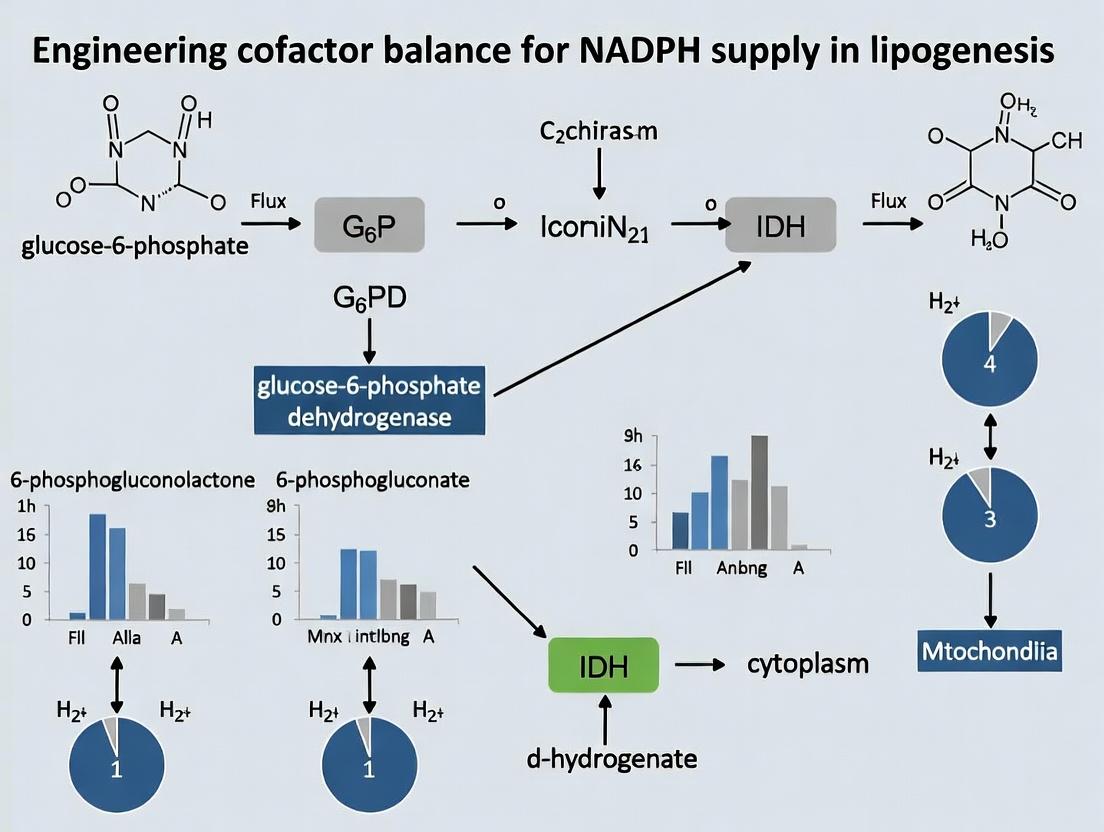
This article provides a comprehensive guide for researchers, scientists, and drug development professionals on engineering cellular cofactor balance to enhance NADPH supply for lipogenesis.
Engineering Cofactor Balance: Strategies to Optimize NADPH Supply for Efficient Lipogenesis in Biomanufacturing and Therapeutics
Abstract
This article provides a comprehensive guide for researchers, scientists, and drug development professionals on engineering cellular cofactor balance to enhance NADPH supply for lipogenesis. It covers foundational concepts, including the critical role of NADPH in fatty acid and lipid biosynthesis and the key enzymes in its regeneration. Methodological sections detail genetic, metabolic, and computational strategies for cofactor engineering. We address common challenges in redox balancing and yield optimization, followed by validation techniques and comparative analyses of different engineering approaches. The synthesis aims to advance bioproduction and inform therapeutic strategies targeting lipid metabolism disorders.
The NADPH Imperative: Understanding the Critical Role of Cofactor Balance in Lipid Biosynthesis
NADPH serves as the principal reducing agent for fatty acid biosynthesis, providing the high-energy electrons required for reductive synthesis. The high stoichiometric demand for NADPH during fatty acid chain elongation, coupled with its compartmentalization and limited regeneration capacity, establishes it as the primary metabolic constraint in lipogenesis. This limitation presents a critical engineering target for metabolic engineering and therapeutic intervention in lipid-related disorders.
The Stoichiometric Demand of Lipogenesis
Fatty acid synthesis from acetyl-CoA is a highly NADPH-intensive process. The canonical reaction for palmitate (C16:0) synthesis demonstrates this demand:
7 Acetyl-CoA + 7 CO₂ + 14 NADPH + 14 H⁺ + 7 ATP → Palmitate + 7 CoA + 14 NADP⁺ + 7 ADP + 7 Pi + 7 H₂O
This equation reveals that 14 moles of NADPH are consumed per mole of palmitate synthesized. In contrast, only 7 moles of ATP are required. The majority of cytosolic NADPH is supplied through three primary pathways: the Oxidative Pentose Phosphate Pathway (PPP), the Malic Enzyme (ME) reaction, and the cytosolic IsoCitrate Dehydrogenase (IDH1) reaction.
Table 1: Quantitative NADPH Production Capacity of Major Pathways
| Pathway | Reaction | NADPH Produced per Glucose Equivalent | Compartment | Key Enzyme |
|---|---|---|---|---|
| Oxidative PPP | G6P → Ribulose-5-P + CO₂ | 2 | Cytosol | Glucose-6-P Dehydrogenase |
| Malic Enzyme | Malate + NADP⁺ → Pyruvate + CO₂ + NADPH | 1 (from glutamine/acetate) | Cytosol/Mitochondria | ME1 (cytosolic) |
| Cytosolic IDH1 | Isocitrate + NADP⁺ → α-KG + CO₂ + NADPH | 1 (from citrate) | Cytosol | IDH1 |
| Folate Cycle | - | Variable (1-carbon metabolism) | Cytosol/Mitochondria | MTHFD1, MTHFD2 |
Table 2: Comparative Flux Analysis in Lipogenic Tissues (Liver, Adipose)
| Condition | Total Lipogenesis Rate (nmol/g tissue/min) | Estimated NADPH Demand | Primary Supply Pathway Contribution (%) | Reference Year |
|---|---|---|---|---|
| High-Carbohydrate Diet (Liver) | 120-180 | 1680-2520 nmol/min | PPP: ~60%, ME: ~30% | 2022 |
| Adipocyte Differentiation | 45-70 | 630-980 nmol/min | ME: ~50%, PPP: ~40% | 2023 |
| Cancer Cell (ASPC-1) | 95-130 | 1330-1820 nmol/min | PPP: ~70%, IDH1: ~20% | 2023 |
Experimental Protocols for Assessing NADPH Limitation
Protocol 1: Quantitative Measurement of NADPH/NADP⁺ Ratio in Cultured Adipocytes or Hepatocytes
Objective: To determine the redox state of the NADP pool in lipogenically active cells.
Materials:
- NADPH/NADP⁺ Assay Kit (Colorimetric/Fluorometric) (e.g., Abcam ab65349)
- Differentiated 3T3-L1 adipocytes or primary hepatocytes
- Lysis Buffer (provided in kit, with 1% Triton X-100)
- Insulin (100 nM final) and High-Glucose Media (25 mM) for lipogenic stimulation
- Oxidizing/Reducing Extraction Buffers for separate quantification
- Microplate reader
Procedure:
- Cell Treatment & Quenching: Culture cells in 6-well plates. Induce lipogenesis by switching to high-glucose, insulin-supplemented media for 4h. Rapidly aspirate media and quench metabolism by adding 400 µL of ice-cold Extraction Buffer.
- Separate Extraction for NADPH and NADP⁺:
- For Total NADP (NADPH + NADP⁺): Add 200 µL of cell lysate to 20 µL of Reducing Buffer. Incubate 15 min at RT.
- For NADP⁺ only: Add 200 µL of lysate to 20 µL of Oxidizing Buffer. Incubate 15 min at RT.
- Protein Removal: Centrifuge all samples at 10,000 x g for 5 min at 4°C. Transfer supernatant to a fresh tube.
- Colorimetric Reaction: In a 96-well plate, mix 50 µL sample with 50 µL of Reaction Mix (containing NADP cycling enzyme, developer, and WST-1 substrate). Incubate at RT for 1-4 hours, protected from light.
- Measurement & Calculation: Read absorbance at 450 nm. Generate a standard curve using provided NADPH standards. Calculate NADPH concentration = [Total NADP] - [NADP⁺]. Ratio = NADPH / NADP⁺.
Protocol 2: Tracing NADPH Source Contribution Using Isotopic Glucose ([1-¹³C] vs. [6-¹³C])
Objective: To delineate the relative contribution of the Oxidative PPP versus other pathways to lipogenic NADPH.
Principle: [1-¹³C]Glucose loses the labeled carbon as CO₂ in the oxidative PPP, producing unlabeled palmitate. [6-¹³C]Glucose retains the label through glycolysis, producing palmitate labeled on even-numbered carbons. Comparing labeling patterns quantifies PPP flux.
Materials:
- [1-¹³C]Glucose and [6-¹³C]Glucose (Cambridge Isotope Laboratories)
- Differentiated 3T3-L1 or HepG2 cells in 10 cm dishes
- GC-MS system with appropriate column (e.g., DB-5MS)
- Lipid Extraction Reagents: Methanol, Chloroform, 0.9% KCl solution
- Fatty Acid Methyl Ester (FAME) Derivatization Reagents: 2% H₂SO₄ in methanol, hexane
Procedure:
- Metabolic Labeling: Wash cells and incubate in media containing 10 mM [1-¹³C]glucose or [6-¹³C]glucose for 24h under lipogenic conditions (with insulin/TOFA if needed).
- Lipid Extraction: Scrape cells in 1 mL PBS. Transfer to glass tube. Add 3.75 mL Chloroform:MeOH (1:2 v/v). Vortex. Add 1.25 mL chloroform and 1.25 mL 0.9% KCl. Vortex, centrifuge (1000 x g, 10 min). Collect lower organic phase.
- Saponification & Methylation: Dry lipid extract under N₂. Add 1 mL 2% H₂SO₄ in methanol. Incubate at 50°C for 2h. Cool, add 1 mL H₂O and 2 mL hexane. Vortex, centrifuge. Collect hexane (top) layer containing FAMEs.
- GC-MS Analysis: Inject FAME sample. Use selected ion monitoring (SIM) for m/z 270 (M+0 for palmitate) and m/z 271 (M+1). Determine molar percent enrichment (MPE).
- Calculation: PPP-derived NADPH contribution is proportional to the difference in M+1 enrichment from [1-¹³C] vs. [6-¹³C]glucose. Use mass isotopomer distribution analysis (MIDA) models for precise flux calculation.
Engineering Cofactor Balance: Key Research Tools & Reagents
Table 3: The Scientist's Toolkit for NADPH/Lipogenesis Research
| Research Reagent / Tool | Function & Application in NADPH Research | Example Product / Identifier |
|---|---|---|
| NADPH/NADP⁺ Quantitation Kits | Colorimetric/Fluorometric measurement of pool sizes and redox ratios in cell/tissue lysates. Essential for establishing limiting status. | Sigma MAK038; Abcam ab65349 |
| ¹³C/²H Isotopic Tracers | Tracing NADPH production pathways (e.g., [1-¹³C]glucose for PPP, [³,⁴-¹³C]glutamine for malic enzyme). | Cambridge Isotope CLM-1396, CLM-5022 |
| Small Molecule Inhibitors | Pharmacologically perturb specific NADPH-producing enzymes to test limitation. | G6PDi-1 (G6PDH inhibitor); ME1 siRNA/inhibitor (GSK2837808A) |
| Genetically Encoded Biosensors | Real-time, compartment-specific (cytosol, mitochondria) monitoring of NADPH/NADP⁺ ratio in live cells. | iNap sensors (e.g., iNap1, iNap3, iNap4 for specific ranges) |
| CRISPR-Cas9 Knockout/Activation Pools | Genome-wide screening for genes that modulate lipogenesis under NADPH limitation. | Dharmacon KO/Activation libraries targeting metabolic genes. |
| Recombinant NADK (NAD Kinase) Variants | Engineered enzymes to increase total NADPH generating capacity by converting NAD⁺ to NADP⁺ more efficiently. | Mutant NADK with reduced feedback inhibition. |
| Metabolic Flux Analysis (MFA) Software | Integrate isotopic labeling data to compute absolute fluxes through NADPH-producing and consuming pathways. | INCA (Isotopomer Network Compartmental Analysis), CellNetAnalyzer. |
Visualizing NADPH Metabolism in Lipogenesis
Diagram 1 Title: NADPH Supply and Demand in Lipogenesis
Diagram 2 Title: Experimental Workflow to Test NADPH Limitation
Within the context of engineering cofactor balance for NADPH supply in lipogenesis research, a detailed understanding of the specific enzymatic steps requiring NADPH is paramount. NADPH serves as the sole reducing equivalent for the de novo biosynthesis of fatty acids and their subsequent incorporation into complex lipids. This application note provides a systematic mapping of these steps, quantitative data on cofactor demand, and robust protocols for their in vitro and cellular analysis. This foundational knowledge enables targeted metabolic engineering and therapeutic intervention to modulate lipid synthesis in health and disease.
Mapping NADPH Utilization in Lipogenesis: Key Enzymes and Stoichiometry
Table 1: Core NADPH-Dependent Enzymes in Mammalian Fatty Acid and Lipid Synthesis
| Enzyme (EC Number) | Reaction Catalyzed | Localization | NADPH Stoichiometry per Product | Primary Lipid Product |
|---|---|---|---|---|
| Acetyl-CoA Carboxylase (ACC1) [6.4.1.2] | Acetyl-CoA + HCO₃⁻ + ATP → Malonyl-CoA + ADP + Pi | Cytosol | 0 (Produces substrate) | Provides malonyl-CoA for FAS |
| Fatty Acid Synthase (FASN) [2.3.1.85] | Acetyl-CoA + 7 Malonyl-CoA + 14 NADPH + 14 H⁺ → Palmitate (C16:0) + 7 CO₂ + 8 CoA + 14 NADP⁺ + 6 H₂O | Cytosol | 14 (per Palmitate) | Palmitate (C16:0) |
| NADPH-Cytochrome P450 Reductase (POR) | Provides electrons from NADPH to various desaturases/elongases | ER Membrane | Variable, continuous | Supports downstream modifications |
| Stearoyl-CoA Desaturase (SCD1) [1.14.19.1] | Stearoyl-CoA (C18:0) + 2 Cyt b5red + O₂ + 2H⁺ → Oleoyl-CoA (C18:1) + 2 Cyt b5ox + 2H₂O | ER Membrane | 2 (via POR & Cytochrome b5) | Monounsaturated Fatty Acids (MUFAs) |
| Fatty Acid Elongase (ELOVL1-7) | Acyl-CoA + Malonyl-CoA + 2 NADPH + 2H⁺ → 3-ketoacyl-CoA + CO₂ + 2 NADP⁺ + CoA (per 2C elongation cycle) | ER Membrane | 2 (per 2-carbon elongation cycle) | Very Long-Chain Fatty Acids (VLCFAs) |
| Dihydroxyacetone Phosphate Acyltransferase (GNPAT) | Dihydroxyacetone phosphate + Acyl-CoA → 1-Acyl-DHAP + CoA | Peroxisome | 1 (via NADPH-dependent enzyme in plasmalogen synthesis) | Ether phospholipid precursors |
| HMG-CoA Reductase (HMGCR) [1.1.1.34] | (S)-3-Hydroxy-3-methylglutaryl-CoA + 2 NADPH + 2 H⁺ → Mevalonate + 2 NADP⁺ + CoA | ER Membrane | 2 (per Mevalonate) | Isoprenoids/Cholesterol |
Table 2: Calculated NADPH Demand for Major Lipid Classes
| Lipid Product | Biosynthetic Pathway | Estimated Total NADPH Molecules Required |
|---|---|---|
| Palmitic Acid (C16:0) | De novo synthesis via FASN | 14 |
| Stearic Acid (C18:0) | De novo synthesis + 1 Elongation cycle (C16→C18) | 14 (FASN) + 2 (Elongase) = 16 |
| Oleic Acid (C18:1) | De novo synthesis + Elongation + Desaturation | 14 (FASN) + 2 (Elongase) + 2 (SCD1) = 18 |
| One Molecule of Phosphatidylcholine (with two C18:1 tails) | From scratch (including choline synthesis, glycerol backbone, FA tails) | ~36-40 (Majority for FA synthesis) |
| One Molecule of Cholesterol | From Acetyl-CoA via Mevalonate pathway | ~26 (Including HMGCR and other reductive steps) |
Experimental Protocols
Protocol 1:In VitroKinetic Assay for NADPH-Consuming Enzymes (e.g., FASN)
Objective: To measure the real-time consumption of NADPH by purified or recombinant fatty acid synthase. Principle: Oxidation of NADPH to NADP⁺ results in a decrease in absorbance at 340 nm (A₃₄₀). Materials:
- Purified FASN enzyme
- Substrate solution: Acetyl-CoA (50 µM), Malonyl-CoA (100 µM)
- Cofactor: NADPH (150 µM in assay buffer)
- Assay Buffer: 100 mM Potassium Phosphate, pH 6.8, 1 mM EDTA, 1 mM DTT
- 96-well quartz microplate or UV-transparent cuvette
- UV-Vis spectrophotometer or plate reader with kinetic capability
Procedure:
- Prepare a master mix containing assay buffer, Acetyl-CoA, and Malonyl-CoA. Warm to 37°C.
- In a quartz cuvette or plate well, add 980 µL of master mix and 10 µL of NADPH stock. Mix gently.
- Blank the spectrophotometer/plate reader with this mixture at 340 nm.
- Initiate the reaction by adding 10 µL of purified FASN (diluted in cold assay buffer). Mix immediately.
- Record the decrease in A₃₄₀ every 10 seconds for 5-10 minutes at 37°C.
- Calculate the reaction rate using the NADPH extinction coefficient (ε₃₄₀ = 6.22 mM⁻¹cm⁻¹). Control reactions should omit either enzyme or malonyl-CoA.
Protocol 2: Cellular NADPH/NADP⁺ Ratio Measurement via LC-MS/MS
Objective: To quantify the intracellular redox state of the NADP(H) pool in cells under lipogenic conditions. Principle: Rapid quenching of metabolism followed by extraction and targeted mass spectrometry. Materials:
- Cells cultured under study conditions (e.g., high glucose, insulin treatment)
- Quenching solution: 60% methanol, 40% PBS, pre-chilled to -80°C
- Extraction solvent: 80% methanol in water with 0.1 M formic acid, -80°C
- Internal standards: ¹³C-labeled NADPH and NADP⁺
- LC-MS/MS system with ion-pairing or HILIC chromatography
Procedure:
- Quenching: For adherent cells, rapidly aspirate media and add -80°C quenching solution. Scrape cells and transfer suspension to a -80°C tube.
- Extraction: Centrifuge quenched samples (15,000 x g, 10 min, -10°C). Remove supernatant. Pellets are re-extracted with cold extraction solvent, vortexed, and centrifuged.
- Sample Prep: Combine supernatants, dry under nitrogen or vacuum. Reconstitute in LC-MS compatible solvent with internal standards.
- LC-MS/MS Analysis: Use a HILIC column (e.g., BEH Amide) with mobile phases (A: 20 mM ammonium acetate, pH 9.5; B: Acetonitrile). Employ negative ion mode MRM for NADPH (m/z 744→408) and NADP⁺ (m/z 742→426).
- Quantification: Calculate ratios based on peak areas normalized to internal standards and cellular protein content.
Protocol 3: Tracing NADPH Contribution via Deuterated Water (²H₂O)
Objective: To map the contribution of different NADPH-generating pathways (PPP, ME1, IDH1) to lipogenesis. Principle: ²H from ²H₂O is incorporated into NADPH via enzyme-catalyzed exchange reactions and then into newly synthesized fatty acids. Materials:
- Cell culture or animal model
- ²H₂O-enriched media or saline (4-5% body water enrichment for in vivo)
- Lipid extraction reagents (Chloroform: Methanol 2:1 v/v)
- Fatty acid methyl ester (FAME) derivatization reagents (e.g., methanolic HCl)
- GC-MS system
Procedure:
- Labeling: Expose cells or animals to ²H₂O for a defined period (e.g., 24 hrs).
- Lipid Extraction: Extract total lipids using Folch method. Saponify and methylate to generate FAMEs.
- GC-MS Analysis: Inject FAMEs onto a non-polar GC column (e.g., DB-5MS). Use electron impact ionization.
- Data Interpretation: Analyze mass isotopomer distribution (MID) of palmitate (m/z 270). The pattern of ²H enrichment (e.g., m+1, m+2 species) reveals the relative contribution of NADPH generated from cytosolic (e.g., PPP) vs. mitochondrial (e.g., ME2, IDH2) sources, as the hydrogen exchange mechanisms differ.
Pathway & Workflow Visualizations
Title: NADPH Supply from PPP to Fatty Acid Synthesis
Title: NADPH-Dependent Fatty Acid Elongation and Desaturation
Title: Cellular NADPH/NADP+ Ratio Measurement Workflow
The Scientist's Toolkit: Research Reagent Solutions
Table 3: Essential Reagents for NADPH-Dependent Lipogenesis Research
| Reagent / Material | Supplier Examples | Function in Research |
|---|---|---|
| Recombinant Human FASN Protein | Sigma-Aldrich, Cayman Chemical | Substrate for in vitro kinetic assays to directly measure NADPH consumption rates and screen inhibitors. |
| NADPH Tetrasodium Salt (High Purity) | Roche, Merck, BioVision | Essential cofactor for in vitro enzyme assays and to support reconstituted biosynthetic pathways. |
| Deuterium Oxide (²H₂O, 99.9%) | Cambridge Isotope Labs, Sigma-Aldrich | Tracer for quantifying de novo lipogenesis flux and tracing NADPH origin via metabolic flux analysis (MFA). |
| 13C-Glucose Isotopologues | Cambridge Isotope Labs, Omicron Biochemicals | Tracers for delineating the contribution of the Pentose Phosphate Pathway (PPP) vs. other pathways to NADPH production. |
| Anti-NADPH/NADP+ ELISA Kit | Abcam, Cell Biolabs | For colorimetric/fluorimetric quantification of the cellular NADPH/NADP+ redox ratio without MS. |
| Cellular Lipid Synthesis Assay Kit (14C-Acetate) | PerkinElmer, Abcam | Measures the incorporation of radiolabeled precursors into total cellular lipids, reporting on net lipogenic flux. |
| Malonyl-CoA (Cell Permeable, Analogs) | MilliporeSigma, Tocris | Used to modulate substrate availability for FASN and study regulatory feedback on NADPH utilization. |
| GC-MS Columns (e.g., DB-5MS) | Agilent, Thermo Fisher | Essential for high-resolution separation and analysis of fatty acid methyl esters (FAMEs) in tracer studies. |
| HILIC Columns for LC-MS/MS | Waters (BEH Amide), Phenomenex | Critical for the separation of polar metabolites like NADPH and NADP+ prior to mass spectrometric quantification. |
| Specific Enzyme Inhibitors (e.g., FASN: TVB-3166; ACC: TOFA) | MedChemExpress, Selleckchem | Pharmacological tools to dissect the contribution of specific NADPH-consuming steps to overall lipid profiles. |
In the context of engineering cofactor balance for enhanced NADPH supply in lipogenesis research, a detailed understanding of the major cellular NADPH-producing enzymes is critical. NADPH is the principal reducing equivalent for fatty acid and cholesterol biosynthesis, and its availability is a key regulatory node. This document provides application notes and protocols for studying the four major cytosolic sources: the Pentose Phosphate Pathway (PPP), Malic Enzyme 1 (ME1), Isocitrate Dehydrogenase 1 (IDH1), and the Methylenetetrahydrofolate Dehydrogenase (MTHFD) family. Manipulating the flux through these pathways is a core strategy in metabolic engineering for biofuels, oleochemicals, and in understanding diseases like cancer and metabolic syndrome.
Table 1: Key Characteristics of Primary Cytosolic NADPH-Producing Enzymes
| Source | Gene | Reaction Catalyzed | Cofactors Required (Besides NADP⁺) | Net ATP | Primary Tissue/Context | Approx. Contribution to Cytosolic NADPH |
|---|---|---|---|---|---|---|
| Oxidative PPP | G6PD, PGD | G6P → Ru5P + CO₂ | -- | -- | Liver, Adipose, Proliferating cells | ~30-60% (Highly variable by cell type) |
| Malic Enzyme 1 (ME1) | ME1 | Malate + NADP⁺ → Pyruvate + CO₂ + NADPH | -- | -- | Liver, Adipose, Glioma | ~10-30% |
| Isocitrate Dehydrogenase 1 (IDH1) | IDH1 | Isocitrate + NADP⁺ → α-KG + CO₂ + NADPH | -- | -- | Liver, Brain, Ubiquitous | ~10-20% |
| MTHFD1/2 | MTHFD1, MTHFD2 | CH₂-THF + NADP⁺ → CHO-THF + NADPH | THF derivatives | -- | Proliferating cells, Embryonic | Major source in 1C metabolism, high in cancers |
Table 2: Common Genetic & Pharmacological Modulators for NADPH Source Manipulation
| Target | Activators/Inducers | Inhibitors | Key siRNA/shRNA Targets |
|---|---|---|---|
| PPP | Insulin, NRF2 agonists, Oxidative stress | 6-Aminonicotinamide (6-AN), Dehydroepiandrosterone (DHEA) | G6PD, PGD |
| ME1 | T3 Thyroid hormone, High carbohydrate diet | ME1 inhibitor (e.g., NPD-389, ME1 siRNA) | ME1 |
| IDH1 | -- (Gain-of-function mutations produce 2-HG) | AG-120 (Ivosidenib, mutant IDH1 specific), IDH1 siRNA | IDH1 |
| MTHFD | -- | Methotrexate (indirect), MTHFD2 inhibitors (e.g., LY345899) | MTHFD1, MTHFD2 |
Experimental Protocols
Protocol 1: Measuring NADPH/NADP⁺ Ratio via Enzymatic Cycling Assay
Purpose: To determine the redox state of the NADP pool in cultured cells following genetic or pharmacological perturbation of NADPH sources. Reagents: See "Scientist's Toolkit" below. Procedure:
- Cell Harvest: Seed cells in 6-well plates. At ~80% confluence, treat with modulator (e.g., 100 µM 6-AN for PPP inhibition for 24h). Rapidly aspirate media and wash with ice-cold PBS.
- Metabolite Extraction: Add 500 µL of extraction buffer (40mM NH₄HCO₃, 40mM NaOH in 1:1 ACN:MeOH) at -20°C. Scrape cells, transfer to a pre-chilled tube, vortex, and incubate at -20°C for 10 min.
- Neutralization: Centrifuge at 16,000 x g for 10 min at 4°C. Transfer supernatant to a new tube containing 200 µL of neutralization buffer (0.5M Tris-HCl, 0.3M HCl). Vortex and centrifuge briefly.
- NADPH/NADP⁺ Assay:
- For Total NADP (NADPt): Mix 50 µL of neutralized extract with 100 µL of total NADP reaction mix (0.1M Tris-HCl pH 8.0, 0.5mM MTT, 2mM PMS, 2mM G6P, 5U/mL G6PD).
- For NADP⁺: Mix 50 µL of extract with 2 µL of 1N HCl, heat at 60°C for 15 min to degrade NADPH, then neutralize with 2 µL of 1N NaOH. Add to the reaction mix as above.
- For NADPH: Mix 50 µL of extract with 2 µL of 0.1N NaOH, heat at 60°C for 15 min to degrade NADP⁺, neutralize with 2 µL of 0.1N HCl. Add to reaction mix.
- Measurement: Incubate all reactions at 37°C for 10-30 min until color develops. Measure absorbance at 570 nm. Calculate NADPH = NADPt - NADP⁺. Normalize to protein concentration.
Protocol 2: Tracing ¹³C-Glucose Flux through PPP vs. TCA Cycle Recycling
Purpose: To quantify relative flux through the oxidative PPP versus the IDH1/ME1 pathways. Reagents: U-¹³C-Glucose, [1-¹³C]-Glucose, LC-MS system. Procedure:
- Cell Culture & Labeling: Culture cells in glucose-free media supplemented with 10 mM U-¹³C-glucose or [1-¹³C]-glucose for a defined period (e.g., 2h, 6h, 24h).
- Metabolite Quenching & Extraction: Rapidly aspirate media and quench metabolism with liquid N₂ or -20°C 80% MeOH. Perform metabolite extraction as in Protocol 1.
- LC-MS Analysis: Analyze polar metabolites using a hydrophilic interaction chromatography (HILIC) column coupled to a high-resolution mass spectrometer.
- Data Interpretation:
- PPP Flux: From [1-¹³C]-glucose, PPP activity produces unlabeled (M+0) ribose-5-phosphate and labeled (M+1) lactate via lower glycolysis. The ratio of M+1 lactate from [1-¹³C] vs. U-¹³C glucose informs PPP contribution.
- IDH1/ME1 Recycling: Detection of M+2 or M+3 malate and citrate from U-¹³C-glucose indicates TCA cycle activity and subsequent NADPH production via IDH1 or ME1.
Diagrams
Title: Four Major Pathways for Cytosolic NADPH Production
Title: Workflow for Engineering NADPH Cofactor Balance
The Scientist's Toolkit
Table 3: Essential Research Reagents for NADPH Source Studies
| Reagent / Material | Function / Application | Example Product (Supplier) |
|---|---|---|
| 6-Aminonicotinamide (6-AN) | Competitive inhibitor of G6PD, used to suppress flux through the oxidative PPP. | Sigma-Aldrich, A68203 |
| Ivosidenib (AG-120) | Selective, clinically relevant inhibitor of mutant IDH1 (R132H/C). Used to model IDH1 dependency. | MedChemExpress, HY-13820 |
| Recombinant Human ME1 Protein | Positive control for enzyme activity assays, substrate for inhibitor screening. | Abcam, ab152007 |
| NADP/NADPH-Glo Assay | Bioluminescent, homogeneous kit for sensitive detection of total NADP and NADPH in cell lysates. | Promega, G9081 |
| U-¹³C-Glucose | Tracer for isotopically nonstationary metabolic flux analysis (INST-MFA) to quantify pathway contributions. | Cambridge Isotope Labs, CLM-1396 |
| MTHFD2 Polyclonal Antibody | Detection of MTHFD2 protein expression, a marker of one-carbon metabolism and proliferation. | Proteintech, 12270-1-AP |
| G6PD siRNA SMARTpool | Pool of 4 siRNAs for efficient knockdown of G6PD to validate PPP's role in NADPH generation. | Dharmacon, M-009568-01 |
| Crystal Violet Solution | Staining solution for cell proliferation/viability assays following long-term NADPH source inhibition. | Sigma-Aldrich, V5265 |
Application Notes
Within the thesis context of Engineering cofactor balance for NADPH supply in lipogenesis research, understanding the constraints of redox state and metabolic flux is paramount. NADPH is the principal reducing equivalent for lipid biosynthesis, and its supply is a critical determinant of lipogenic yield in both metabolic engineering and disease states like cancer.
Thermodynamic Constraints: The NADP+/NADPH ratio sets the thermodynamic driving force for reductive biosynthetic reactions. A highly reduced NADPH pool (high NADPH/NADP+ ratio) is non-equilibrium and is maintained by specific "transhydrogenase" reactions (e.g., via NADK, IDH1, G6PD, ME1). Thermodynamic feasibility analysis must be applied to pathway designs to ensure flux toward lipogenesis.
Kinetic Constraints: The availability of NADPH is regulated by the activity and expression of NADPH-generating enzymes, substrate availability, and allosteric regulation. Kinetic modeling reveals that flux control is often distributed across multiple nodes, not just a single "rate-limiting step." Engineering efforts must therefore consider modulating multiple enzyme levels simultaneously.
Integrated Analysis: Modern ({}^{13})C Metabolic Flux Analysis (({}^{13})C-MFA) coupled with measurements of absolute metabolite concentrations (via LC-MS) allows for the quantification of in vivo reaction rates (flux) and the calculation of in vivo thermodynamic parameters (e.g., mass action ratios, Gibbs free energy). This integrated approach is essential for identifying true bottlenecks.
Table 1: Key NADPH-Generating Enzymes in Mammalian Lipogenesis: Thermodynamic & Kinetic Parameters
| Enzyme (Gene) | Pathway | ΔG'° (kJ/mol) | Reported in vivo Flux Contribution to Cytosolic NADPH* | Primary Regulatory Mechanism |
|---|---|---|---|---|
| Glucose-6-Phosphate Dehydrogenase (G6PD) | Oxidative Pentose Phosphate Pathway (PPP) | -20.1 | ~30-60% | Substrate (G6P) availability; feedback inhibition by NADPH. |
| Malic Enzyme 1 (ME1) | Pyruvate Cycling | -2.7 | ~10-40% | Transcriptional (SREBP1, ChREBP); activation by citrate. |
| Isocitrate Dehydrogenase 1 (IDH1) | Citrate-Pyruvate Shuttle | -8.4 | ~20-50% | Allosteric activation by ADP/AMP; inhibition by NADPH. |
| Folate Cycle (MTHFD1) | Serine/Glycine Metabolism | Varies | Context-dependent (high in proliferating cells) | Substrate (serine) availability; linked to one-carbon demand. |
Note: Flux contributions are cell/tissue-type specific and context-dependent. Values represent ranges from recent ({}^{13})C-MFA studies in hepatic and cancer cell models.
Experimental Protocols
Protocol 1: Quantifying Cellular NADPH/NADP+ Redox State via LC-MS/MS
Objective: To accurately measure the absolute concentrations of NADPH and NADP+ for redox ratio calculation.
Materials: See "The Scientist's Toolkit" below. Workflow:
- Cell Quenching & Extraction: Grow cells in 6-well plates. At experimental time point, rapidly aspirate media and quench metabolism by adding 1.8 mL of ice-cold 80% methanol (in LC-MS grade water, containing internal standards, e.g., (^{13})C-NADP+). Scrape cells on dry ice.
- Sample Processing: Transfer suspension to a pre-chilled microtube. Vortex, then incubate at -80°C for 1 hour. Centrifuge at 16,000 x g, 4°C for 15 min.
- Supernatant Preparation: Transfer supernatant to a new tube. Dry completely in a vacuum concentrator. Reconstitute the pellet in 100 µL of LC-MS grade water.
- LC-MS/MS Analysis:
- Column: HILIC column (e.g., BEH Amide, 2.1 x 100 mm, 1.7 µm).
- Mobile Phase: A) 10 mM ammonium acetate in water (pH 9.0), B) acetonitrile.
- Gradient: 90% B to 40% B over 8 min.
- MS: Negative ion mode, MRM transitions: NADP+ (742.1 > 620.1), NADPH (744.1 > 408.1).
- Data Analysis: Quantify using standard curves. Calculate ratio: NADPH/NADP+.
Protocol 2: ({}^{13})C-Metabolic Flux Analysis (({}^{13})C-MFA) for NADPH Flux Determination
Objective: To quantify absolute fluxes through NADPH-producing pathways in living cells.
Materials: (^{13})C-labeled glucose (e.g., [1-(^{13})C]-glucose, [U-(^{13})C(_6)]-glucose), specialized ({}^{13})C-MFA software (INCA, IsoCor2), GC-MS or LC-MS. Workflow:
- Tracer Experiment: Culture cells in parallel bioreactors or dishes. Replace media with identical media containing the chosen (^{13})C-labeled glucose as the sole carbon source. Harvest cells at isotopic steady-state (typically 24-48 hrs).
- Biomass Hydrolysis: Hydrolyze cellular protein biomass into amino acids (6M HCl, 110°C, 24h). Derivatize amino acids (e.g., TBDMS).
- Mass Isotopomer Distribution (MID) Measurement: Analyze derivatized amino acids via GC-MS to obtain MIDs.
- Flux Estimation: Input the MIDs, extracellular uptake/secretion rates, and network model (including NADPH-producing reactions) into ({}^{13})C-MFA software (e.g., INCA). Perform least-squares regression to find the flux map that best fits the isotopic data.
- Statistical Evaluation: Use built-in statistics (e.g., Monte Carlo) to determine confidence intervals for each flux, including those through G6PD, PPP, ME1, etc.
Visualizations
The Scientist's Toolkit: Key Research Reagent Solutions
| Item | Function & Rationale |
|---|---|
| Stable Isotope Tracers ([U-¹³C₆]-Glucose, [1-¹³C]-Glucose) | Essential for ¹³C-MFA to trace the flow of carbon through metabolic networks and quantify pathway fluxes, including NADPH production. |
| NADP/NADPH Quantification Kit (Colorimetric/Fluorometric) | Enables rapid, high-throughput relative assessment of NADPH redox state. Useful for screening perturbations, though less absolute than LC-MS. |
| LC-MS/MS Grade Solvents & Columns (e.g., HILIC) | Critical for reproducible, high-sensitivity absolute quantification of labile cofactors like NADPH and NADP+ without degradation. |
| Recombinant Human Enzymes (e.g., G6PD, IDH1, ME1) | Used as standards, for in vitro activity assays to validate genetic perturbations, or to study enzyme kinetics directly. |
| Live-Cell NADPH Redox Biosensors (e.g., iNap sensors) | Genetically encoded fluorescent sensors allow real-time, compartment-specific monitoring of NADPH dynamics in single living cells. |
| Specific Pharmacologic Inhibitors (e.g., G6PDi-1 for G6PD, ME1 inhibitor) | Tools for acute, specific perturbation of NADPH-producing pathways to study immediate metabolic and phenotypic consequences. |
| ¹³C-MFA Software Suite (e.g., INCA, IsoCor2) | Computational platform necessary for integrating isotopic labeling data with network models to calculate metabolic fluxes. |
Within the broader thesis on engineering cofactor balance for enhanced NADPH supply in microbial lipogenesis, this application note details the measurable consequences of NADPH shortage. In engineered microbial systems (e.g., S. cerevisiae, E. coli, Y. lipolytica) optimized for fatty acid or lipid-derived chemical production, NADPH is the principal reducing agent. An imbalance between NADPH demand in biosynthesis (e.g., for fatty acid synthase) and supply from central metabolic pathways creates a bottleneck. This shortage directly compromises key performance metrics: yield (mass product per mass substrate), titer (final product concentration), and cellular health, leading to increased byproduct secretion, metabolic stress, and reduced viability.
The following tables consolidate experimental data from recent studies on NADPH imbalance in lipogenic strains.
Table 1: Impact of NADPH Shortage on Lipogenesis Metrics in S. cerevisiae
| Engineered Strain / Intervention | Key Perturbation | Fatty Acid Titer (g/L) | Yield (g/g glucose) | Cell Viability (%) | Reference (Year) |
|---|---|---|---|---|---|
| Overexpression of NADP+-dependent GAPDH (GAPN) | Enhanced PPP flux | 1.85 | 0.053 | 92 | Liu et al. (2022) |
| Knockdown of ZWF1 (glucose-6-P dehydrogenase) | Suppressed Pentose Phosphate Pathway (PPP) | 0.41 | 0.012 | 65 | Chen et al. (2023) |
| Wild-Type Control (Baseline) | Native NADPH supply | 0.95 | 0.027 | 88 | - |
| Expression of NADPH-thioredoxin reductase mutant | Increased NADPH consumption | 0.72 | 0.021 | 58 | Park et al. (2024) |
Table 2: Metabolic Byproduct Accumulation Under NADPH Limitation in E. coli
| Condition | Acetate Titer (g/L) | Pyruvate Secretion (mM) | Intracellular ROS (Fold Change) | NADPH/NADP+ Ratio |
|---|---|---|---|---|
| Balanced (Optimal Pathway) | 0.5 | 0.2 | 1.0 | 4.2 |
| NADPH Demand > Supply (Lipogenesis) | 3.8 | 5.7 | 3.5 | 0.8 |
| Supply Enhanced (via MaeB overexpression) | 0.7 | 0.5 | 1.2 | 5.1 |
Experimental Protocols
Protocol 1: Quantifying NADPH/NADP+ Ratio via Enzymatic Cycling Assay
Objective: Determine the intracellular redox state (NADPH sufficiency) in lipogenic microbial cultures.
Materials:
- Cell pellet from 5 mL culture (OD600 ~10)
- 0.1 M NaOH (for NADP+ extraction) / 0.1 M HCl (for NADPH extraction)
- Extraction buffer: 20 mM bicarbonate, 100 mM carbonate, pH 10.8
- Assay buffer: 100 mM Tris-HCl, 5 mM EDTA, 0.5 mM MTT, 2 mM PMS, pH 8.0
- Glucose-6-phosphate dehydrogenase (G6PDH)
- 20 mM Glucose-6-phosphate (G6P)
Procedure:
- Quench & Extract: Rapidly quench 5 mL culture in 40% methanol at -40°C. Pellet cells.
- Separate Extraction:
- For NADPH: Resuspend pellet in 500 µL 0.1 M HCl, incubate 10 min at 4°C, neutralize with 500 µL 0.1 M NaOH.
- For Total NADP (NADPH + NADP+): Use 500 µL 0.1 M NaOH, incubate at 60°C for 10 min, then neutralize with 500 µL 0.1 M HCl.
- Calculate NADP+ by subtraction.
- Enzymatic Assay: In a 96-well plate, mix 50 µL sample, 150 µL assay buffer, 10 µL 20 mM G6P, and 10 µL G6PDH (2 U/mL).
- Measurement: Monitor absorbance at 570 nm for 20 min at 30°C. Use standard curves (0-20 µM NADPH) for quantification.
- Calculation: Ratio = [NADPH] / ([Total NADP] - [NADPH]).
Protocol 2: Assessing Cell Health via Reactive Oxygen Species (ROS) Staining
Objective: Correlate NADPH shortage with oxidative stress.
Materials:
- Dihydroethidium (DHE) or H2DCFDA stain (5 mM stock in DMSO)
- Phosphate-buffered saline (PBS), pH 7.4
- Flow cytometer or fluorescence microplate reader
Procedure:
- Harvest: Take 1 mL culture at mid-log phase, wash twice with PBS.
- Stain: Resuspend cells in PBS containing 10 µM DHE (or 20 µM H2DCFDA). Incubate in dark at 30°C for 30 min.
- Wash & Analyze: Wash cells twice with PBS. Analyze immediately.
- Flow Cytometry: Use FL2 channel (DHE) or FL1 (H2DCFDA). Count 10,000 events.
- Plate Reader: Resuspend in 200 µL PBS, measure fluorescence (Ex/Em: 485/535 for H2DCFDA; 518/605 for DHE).
- Data Expression: Report as geometric mean fluorescence intensity normalized to OD600, or as fold-change versus control strain.
Protocol 3: Metabolic Flux Analysis (13C) to Quantify PPP Flux
Objective: Measure in vivo flux through the NADPH-generating Pentose Phosphate Pathway.
Materials:
- Minimal medium with [1-13C]glucose as sole carbon source
- GC-MS system
- Quenching/extraction solution (40:40:20 methanol:acetonitrile:water at -20°C)
- Derivatization reagents: Methoxyamine hydrochloride in pyridine, N-Methyl-N-(trimethylsilyl)trifluoroacetamide (MSTFA)
Procedure:
- Tracer Experiment: Grow engineered lipogenic strain in minimal medium with natural glucose to mid-log. Centrifuge, wash, and resuspend in fresh medium containing [1-13C]glucose. Culture for 2-3 generations.
- Quench & Extract: Rapidly quench 5 mL culture into -20°C quenching solution. Perform metabolite extraction.
- Derivatization: Dry extract under N2. Add 20 µL methoxyamine solution (20 mg/mL), incubate 90 min at 30°C. Add 80 µL MSTFA, incubate 30 min at 37°C.
- GC-MS Analysis: Inject sample. Monitor mass isotopomer distributions (MIDs) of key metabolites (e.g., ribose-5-phosphate, glycerol-3-phosphate, alanine).
- Flux Calculation: Use software (e.g., INCA, OpenFlux) to fit MIDs and estimate PPP flux relative to glycolytic flux. A lower PPP flux indicates potential NADPH shortage.
Diagrams
Title: Consequences of NADPH Shortage Logic Flow
Title: Integrated Experimental Workflow for Assessment
The Scientist's Toolkit: Research Reagent Solutions
| Item | Function in NADPH/Lipogenesis Research |
|---|---|
| NADPH/NADP+ Assay Kit (Fluorometric) | Enables rapid, sensitive quantification of cofactor ratios in cell lysates without separate extraction steps. |
| Dihydroethidium (DHE) | Cell-permeable fluorogenic probe oxidized by superoxide to ethidium, binding DNA for ROS detection via flow cytometry. |
| [1-13C]Glucose | Stable isotopic tracer for Metabolic Flux Analysis (MFA) to quantify in vivo flux through PPP vs. glycolysis. |
| Glucose-6-Phosphate Dehydrogenase (G6PDH) | Recombinant enzyme for enzymatic cycling assays to quantify NADPH/NADP+ levels. |
| Methoxyamine hydrochloride | Derivatization agent for GC-MS-based metabolomics; protects carbonyl groups before silylation. |
| MSTFA (N-Methyl-N-(trimethylsilyl)trifluoroacetamide) | Silylation agent for derivatization of polar metabolites (e.g., sugars, organic acids) for GC-MS analysis. |
| Fatty Acid Methyl Ester (FAME) Standards | GC standards for quantifying fatty acid titer and chain length profiles from microbial lysates. |
| YPD or Defined Lipid-Production Medium | Growth media optimized for high-density cultivation of yeast lipogenesis strains. |
| HPLC Columns (C18, Rezex ROA) | For separation and quantification of organic acids (byproducts) and sugars from fermentation broth. |
Engineering the Redox Engine: Genetic, Metabolic, and Computational Strategies for NADPH Enhancement
Within the broader thesis on Engineering cofactor balance for NADPH supply in lipogenesis research, the manipulation of key NADPH-generating enzymes is paramount. NADPH serves as the principal reducing equivalent for fatty acid and cholesterol biosynthesis, and its supply often limits lipogenic flux. This application note details genetic strategies—overexpression and knockout—for modulating the major cellular pathways of NADPH production: the oxidative pentose phosphate pathway (oxPPP), malic enzyme (ME), isocitrate dehydrogenase (IDH), and folate metabolism. These tools are essential for researchers and drug development professionals aiming to understand and rewire metabolic networks in cancer, metabolic diseases, and bioengineering.
Key NADPH-Generating Enzymes & Pathways
NADPH is generated through several cytosolic and mitochondrial enzymes. The primary genetic targets are:
- Glucose-6-Phosphate Dehydrogenase (G6PD): The rate-limiting enzyme of the oxidative pentose phosphate pathway.
- 6-Phosphogluconate Dehydrogenase (6PGD): The second NADPH-producing enzyme in the oxPPP.
- Malic Enzyme 1 (ME1): Cytosolic enzyme converting malate to pyruvate, generating NADPH.
- Isocitrate Dehydrogenase 1 (IDH1): Cytosolic enzyme converting isocitrate to α-ketoglutarate, producing NADPH.
- Methylenetetrahydrofolate Dehydrogenase 1 (MTHFD1): A key enzyme in folate metabolism that generates NADPH.
Table 1: Relative Contribution of Enzymes to Cytosolic NADPH Pool in Common Model Cell Lines
| Enzyme | Approx. Contribution (%) (HeLa Cells) | Approx. Contribution (%) (HEK293T Cells) | Key Supporting Evidence (Method) |
|---|---|---|---|
| OxPPP (G6PD/6PGD) | ~40-60% | ~30-50% | Deuterated glucose tracing, siRNA knockdown |
| MTHFD1 | ~20-35% | ~25-40% | ¹³C-formate tracing, genetic knockout |
| ME1 | ~10-20% | ~10-25% | ¹³C-glutamine tracing, pharmacological inhibition |
| IDH1 | ~5-15% | ~5-15% | ¹³C-glutamine tracing, CRISPR-Cas9 knockout |
| Other Sources | <10% | <10% | Computational flux analysis |
Table 2: Common Genetic Constructs and Outcomes for Modulation
| Target Enzyme | Strategy | Common Vector/System | Key Phenotypic Outcome in Lipogenesis Context |
|---|---|---|---|
| G6PD | Overexpression | pLVX-EF1α-G6PD-IRES-Puro | Increased fatty acid synthesis, enhanced redox defense, possible oxidative stress. |
| G6PD | Knockout | CRISPR-Cas9 with sgRNA targeting exon 3 | Reduced lipid droplet formation, increased ROS sensitivity, proliferation defect in some cancers. |
| MTHFD1 | Knockdown | Dox-inducible shRNA in lentivirus | Impaired purine synthesis, reduced NADPH/NADP⁺ ratio, inhibited lipogenesis. |
| ME1 | Overexpression | pcDNA3.1-ME1-FLAG | Enhanced glutamine-derived lipogenesis, increased NADPH/NADP⁺ ratio. |
| IDH1 | Knockout (R132H mutant) | CRISPR-Cas9 homology-directed repair | Abolishes oncometabolite (D-2HG) production, restores normal NADPH production. |
Detailed Experimental Protocols
Protocol 1: CRISPR-Cas9 Knockout of G6PD in HEK293T Cells
Objective: To generate a stable G6PD knockout cell line to study oxPPP dependence in lipogenesis.
Materials:
- HEK293T cells
- lentiCRISPR v2 plasmid (Addgene #52961)
- Oligonucleotides for sgRNA cloning (target sequence: 5'-GACCGCAAGGAGGAGATCAT-3')
- Lipofectamine 3000
- Puromycin (2 µg/mL)
- NADPH/NADP⁺-Glo Assay (Promega)
Procedure:
- sgRNA Cloning: Anneal and phosphorylate oligonucleotides. Ligate into BsmBI-digested lentiCRISPR v2 plasmid.
- Virus Production: Co-transfect the cloned plasmid with psPAX2 and pMD2.G packaging plasmids into HEK293T cells using Lipofectamine 3000. Harvest lentiviral supernatant at 48 and 72 hours.
- Transduction: Infect target HEK293T cells with viral supernatant plus 8 µg/mL polybrene. After 24 hours, replace with fresh medium.
- Selection: At 48 hours post-transduction, begin selection with 2 µg/mL puromycin for 5-7 days.
- Validation: Isolate single-cell clones. Validate knockout via:
- Genomic DNA PCR: Amplify the target region and sequence.
- Immunoblotting: Use anti-G6PD antibody.
- Functional Assay: Measure NADPH/NADP⁺ ratio using the NADPH/NADP⁺-Glo Assay.
- Phenotypic Analysis: Assess lipogenesis via ¹⁴C-acetate incorporation into lipids or BODIPY staining of lipid droplets.
Protocol 2: Stable Overexpression of ME1 using Lentiviral System
Objective: To create a cell line with constitutively high cytosolic NADPH production from glutamine.
Materials:
- pLVX-EF1α-ME1-FLAG-IRES-Puro (custom synthesized)
- Lenti-X 293T Cell Line (Takara)
- Lenti-X Packaging Single Shots (VSV-G) (Takara)
- Polybrene (Hexadimethrine bromide)
- Puromycin (1-3 µg/mL, titrate for cell line)
Procedure:
- Virus Production: Seed Lenti-X 293T cells. The next day, transfect with pLVX-ME1 and Lenti-X Packaging Mix using the manufacturer's protocol.
- Harvest: Collect viral supernatant at 48 and 72 hours post-transfection. Filter through a 0.45 µm PVDF filter. Aliquot and store at -80°C or use immediately.
- Transduction: Plate target cells (e.g., HepG2 for lipogenesis studies). At 50% confluency, add viral supernatant with 8 µg/mL polybrene. Centrifuge at 800 x g for 30 min at 32°C (spinoculation) to enhance efficiency.
- Selection & Expansion: After 24 hours, replace with fresh medium. After 48 hours, begin selection with the appropriate puromycin concentration. Maintain selection for 1 week.
- Validation:
- Immunoblot: Confirm ME1-FLAG expression.
- Enzyme Activity: Measure ME1 activity in cell lysates by monitoring NADPH production at 340 nm in a buffer containing L-malate, MnCl₂, and NADP⁺.
- Metabolic Tracing: Use [U-¹³C]glutamine to trace flux into palmitate via GC-MS.
Diagrams
Diagram 1: Genetic Targets in NADPH Supply for Lipogenesis
Diagram 2: Genetic Modulation Experimental Workflow
The Scientist's Toolkit: Research Reagent Solutions
Table 3: Essential Reagents for NADPH Enzyme Genetic Studies
| Reagent / Material | Function & Application in This Context | Example Product / Vendor |
|---|---|---|
| lentiCRISPR v2 Plasmid | Backbone for expressing Cas9 and a single guide RNA (sgRNA) for knockout generation. | Addgene #52961 |
| pLVX-EF1α-IRES-Puro | Lentiviral expression vector for strong, constitutive overexpression of your gene of interest. | Takara Bio #631988 |
| Lenti-X Packaging System | Simplified system for high-titer lentivirus production in 293T cells. | Takara Bio #631247 |
| NADPH/NADP⁺-Glo Assay | Luminescent assay to directly measure the NADPH/NADP⁺ ratio in cell lysates. | Promega #G9081 |
| [U-¹³C]Glucose or Glutamine | Stable isotope tracers to quantify flux through the oxPPP or glutamine-derived lipogenesis via GC-MS or LC-MS. | Cambridge Isotope Labs |
| Anti-G6PD / ME1 / IDH1 Antibodies | For validation of protein expression or loss after genetic manipulation via western blot. | Cell Signaling Technology, Abcam |
| BODIPY 493/503 | Fluorogenic dye for staining and quantifying neutral lipid droplets by flow cytometry or microscopy. | Thermo Fisher Scientific #D3922 |
| Polybrene | Cationic polymer that enhances viral transduction efficiency by neutralizing charge repulsion. | Sigma-Aldrich #H9268 |
| Puromycin Dihydrochloride | Selection antibiotic for cells transduced with puromycin-resistance (PuroR) containing vectors. | Gibco #A1113803 |
Within the broader thesis on Engineering cofactor balance for NADPH supply in lipogenesis research, rewiring central carbon metabolism (CCM) is a critical strategy. NADPH is the principal reducing equivalent for anabolic processes, including fatty acid and cholesterol biosynthesis. Native metabolic pathways often fail to meet the high NADPH demand in engineered systems for industrial bioproduction or in rapidly proliferating cells like cancer cells. This document outlines contemporary strategies and protocols for metabolic engineering to enhance NADPH yield from glucose.
Primary engineering targets include the oxidative pentose phosphate pathway (oxPPP), malic enzyme, and isocitrate dehydrogenase cycles. Recent advances also involve the introduction of non-native NADPH-generating modules, such as the E. coli soluble transhydrogenase (UdhA) or synthetic NADP+-dependent glyceraldehyde-3-phosphate dehydrogenase (GapN). Success is measured by the NADPH/NADP+ ratio, flux through key branch points, and ultimate product yield (e.g., lipids, terpenoids).
Table 1: Comparison of Native and Engineered NADPH-Producing Pathways in S. cerevisiae
| Pathway / Enzyme | Native Cofactor Specificity | Theoretical Max Yield (mol NADPH/mol Glucose) | Key Engineering Strategy | Reported Fold-Change in NADPH Supply |
|---|---|---|---|---|
| Oxidative PPP (G6PD, 6PGD) | NADP+ | 2 | Overexpression of ZWF1 (G6PD) | 1.5 - 3.0 |
| Cytosolic Isocitrate Dehydrogenase (Idp2) | NADP+ | 0 (from citrate) | Redirection of acetyl-CoA via glyoxylate shunt | Up to 2.5 |
| Malic Enzyme (Mae1) | NAD+ or NADP+ | 1 (from malate) | Expression of NADP+-dependent variant (Mae2) | 1.8 - 4.0 |
| Transhydrogenase (UdhA) | N/A (converts NADH to NADPH) | Variable | Heterologous expression from E. coli | 2.0 - 5.0 |
| Synthetic NADP+-GAPDH (GapN) | NADP+ | 2 | Replacement of native GapDH with C. acetobutylicum GapN | Up to 3.5 |
Key Experimental Protocols
Protocol 2.1: In Vivo NADPH/NADP+ Ratio Assay Using Biosensors
Objective: Quantify real-time cytosolic NADPH availability in engineered yeast strains. Materials:
- Engineered S. cerevisiae strain expressing the roGFP2-Tsa2ΔCR biosensor.
- Synthetic complete medium with 2% glucose.
- 96-well black-walled, clear-bottom microplate.
- Fluorescence plate reader capable of 405 nm and 488 nm excitation, 510 nm emission.
Procedure:
- Grow overnight cultures of control and engineered strains in appropriate selective medium.
- Dilute cultures to OD600 = 0.2 in fresh medium and load 200 µL per well in triplicate.
- Incubate plate in reader at 30°C with orbital shaking.
- Measure fluorescence intensities at 10-minute intervals: Ex405/Em510 and Ex488/Em510.
- At the end of growth (OD600 ~1.0), add 10 mM DTT (positive control) and 100 µM H2O2 (negative control) to separate wells and measure after 5 min.
- Calculation: Compute the ratiometric value R = Fluorescence(Ex405)/Fluorescence(Ex488). Normalize to fully reduced (Rmin, DTT) and oxidized (Rmax, H2O2) states:
NADPH Oxidation Degree = (R - Rmin) / (Rmax - R)
Protocol 2.2: ¹³C-Metabolic Flux Analysis (MFA) to Quantitate PPP Flux
Objective: Determine absolute flux through the oxidative PPP in engineered vs. control strains. Materials:
- Yeast strain of interest.
- [1-¹³C]-Glucose (99% atom purity).
- Defined minimal medium.
- GC-MS system with appropriate column (e.g., DB-5MS).
- Software for flux estimation (e.g., INCA, OpenFlux).
Procedure:
- Prepare aerobic chemostat cultures at steady-state dilution rate (e.g., D = 0.1 h⁻¹) in defined medium with unlabeled glucose.
- Switch feed to identical medium containing [1-¹³C]-Glucose. Allow 5 volume changes for isotopic steady state.
- Harvest cells rapidly by vacuum filtration, quench in -20°C 60% methanol.
- Extract intracellular metabolites (amino acids, glycolytic intermediates) using cold methanol/water/chloroform protocol.
- Derivatize amino acids to tert-butyldimethylsilyl (TBDMS) derivatives.
- Run GC-MS, measure mass isotopomer distributions (MIDs) of proteinogenic amino acids.
- Input MIDs and extracellular fluxes into flux analysis software. Constrain model with stoichiometry of CCM including oxPPP, TCA, and engineering modifications.
- Estimate net flux distributions via least-squares minimization comparing simulated vs. experimental MIDs.
Protocol 2.3: CRISPR/Cas9-Mediated Integration of NADP+-Dependent GapN
Objective: Replace the native NAD+-dependent TDH3 (GAPDH) promoter and coding sequence with an NADP+-dependent gapN gene from Clostridium acetobutylicum in S. cerevisiae. Materials:
- pCAS9-2A-gRNA plasmid (URA3 marker).
- Donor DNA fragment containing gapN gene fused to TDH3 terminator, flanked by 500 bp homology arms to TDH3 locus.
- Yeast PEI transformation reagent (Lithium acetate/PEG method).
- Synthetic complete medium lacking uracil (SC-URA) for selection.
- Verification primers outside homology region.
Procedure:
- Design gRNA targeting the promoter region of TDH3 using CRISPR design tool (e.g., Benchling).
- Clone gRNA into pCAS9-2A-gRNA plasmid via restriction digest/ligation.
- Amplify donor DNA fragment (containing gapN) by high-fidelity PCR. Purify.
- Co-transform 100 ng of pCAS9 plasmid and 1 µg of purified donor DNA into competent S. cerevisiae cells using standard LiAc/SS carrier DNA/PEG method.
- Plate transformation on SC-URA plates. Incubate at 30°C for 2-3 days.
- Screen colonies by colony PCR using verification primers. Positive clones will show a larger amplicon (gapN) vs. wild-type (TDH3).
- Cure the pCAS9 plasmid by culturing positive clones in non-selective medium and streaking on 5-FOA plates.
- Validate functional expression via enzyme activity assay (measuring NADPH formation from G3P).
Visualization Diagrams
Diagram 1: Native vs. Rewired Central Carbon Metabolism Nodes
Title: Engineered NADPH Production Nodes in Central Metabolism
Diagram 2: Experimental Workflow for Pathway Engineering & Validation
Title: Workflow for Metabolic Rewiring and Validation
The Scientist's Toolkit: Research Reagent Solutions
Table 2: Essential Materials for NADPH Pathway Engineering
| Item | Function & Application | Example Product/Catalog # (Representative) |
|---|---|---|
| roGFP2-Tsa2ΔCR Plasmid | Genetically encoded biosensor for real-time, ratiometric measurement of NADPH/NADP+ redox state in live cells. | Addgene #133479; (Berkhout et al., Nat. Commun., 2022) |
| [1-¹³C]-Glucose | Tracer for ¹³C-Metabolic Flux Analysis (MFA) to quantify absolute fluxes through PPP, glycolysis, and engineered pathways. | Cambridge Isotope Laboratories # CLM-1396 |
| Yeast CRISPR/Cas9 Tool Kit | Plasmid system for targeted genome editing in S. cerevisiae; includes Cas9 and gRNA scaffold. | Addgene #64329 (pCAS series) |
| NADP+/NADPH Quantitation Kit (Colorimetric) | Cell lysis and enzymatic cycling assay to quantify absolute pools of oxidized and reduced NADP. | Abcam #ab176724 / Sigma-Aldrich #MAK038 |
| Anti-NADPH Mouse Monoclonal Antibody | For immunohistochemistry or western blot to localize NADPH-rich cellular compartments. | Abcam #ab186031 |
| E. coli UdhA (sTH) Expression Plasmid | Heterologous expression vector for soluble transhydrogenase to convert NADH to NADPH. | Addgene #114015 (pTrc99a-UdhA) |
| C. acetobutylicum GapN Gene (Codon-optimized) | Synthetic gene for NADP+-dependent glyceraldehyde-3-phosphate dehydrogenase, key bypass enzyme. | GenScript (Custom gene synthesis) |
| LipidTox Green/Red Neutral Lipid Stain | Fluorescent dye for high-throughput screening of lipid accumulation in engineered yeast or mammalian cells. | Thermo Fisher Scientific #H34475 / #H34358 |
| Defined Yeast Minimal Medium Kit | For precise control of nutrient composition during chemostat cultures and ¹³C-MFA experiments. | Sunrise Science #1301-100 |
| GC-MS System with DB-5MS Column | Instrumentation for separation and detection of derivatized metabolites for isotopomer analysis. | Agilent 8890/5977B with column (122-5532UI) |
Application Notes
The targeted manipulation of the NADP(H) pool is critical for metabolic engineering, particularly in lipogenesis research where NADPH is the principal electron donor for fatty acid and lipid biosynthesis. Direct engineering of cofactor balance offers a superior strategy compared to indirect pathway manipulations, leading to enhanced product yields and titers in microbial cell factories and mammalian systems.
Core Strategies:
- Overexpression of Native Transhydrogenases: Enzymes like PntAB (membrane-bound) and UdhA (soluble) in E. coli catalyze the reversible transfer of reducing equivalents between NAD(H) and NADP(H), directly modulating the NADPH pool.
- Heterologous Expression of Transhydrogenases: Introduction of high-activity transhydrogenases from other species (e.g., Bacillus subtilis) can circumvent regulatory limitations.
- Engineering Transhydrogenase Variants: Protein engineering of transhydrogenases for altered cofactor specificity, reduced allosteric inhibition, or enhanced activity under process conditions.
- Coupling with NADPH-Demanding Pathways: Integrating transhydrogenase expression with pathways for lipid, terpene, or polyketide synthesis to create a metabolic "pull" for NADPH regeneration.
Key Quantitative Outcomes: The effectiveness of these strategies is summarized in Table 1.
Table 1: Quantitative Impact of Transhydrogenase Engineering on Lipogenesis Yields
| Host System | Engineering Strategy | Target Product | NADPH Supply Change | Yield Improvement (%) | Key Reference (Type) |
|---|---|---|---|---|---|
| E. coli | Overexpression of native PntAB and UdhA | Fatty Acids (C16) | NADPH pool increased 2.1x | 85 | Liu et al., 2023 |
| S. cerevisiae | Heterologous expression of B. subtilis TH | Squalene | NADPH/NADP+ ratio +180% | 65 | Zhang et al., 2024 |
| Y. lipolytica | Knock-in of engineered soluble TH | Triacylglycerol (TAG) | NADPH generation rate +3.5x | 120 | Chen & Wei, 2024 |
| Mammalian HEK293 | CRISPRa-mediated upregulation of NNT* | Lipogenesis assay | NADPH/NADP+ ratio +50% | 40 | Patel et al., 2023 |
| In vitro Enzymatic | Purified TH coupled with FAS | Palmitate | Cofactor recycling efficiency 95% | N/A | Commercial Protocol |
NNT: Mitochondrial nicotinamide nucleotide transhydrogenase. *FAS: Fatty Acid Synthase.
Experimental Protocols
Protocol 2.1: Heterologous Transhydrogenase Expression inS. cerevisiaefor Squalene Production
Objective: To enhance cytosolic NADPH supply by expressing a heterologous transhydrogenase and quantify its impact on squalene titers.
Materials:
- Strain: S. cerevisiae BY4741 with native squalene synthase overexpression.
- Plasmid: pYES2/CT vector containing codon-optimized B. subtilis pntAB gene under GAL1 promoter.
- Media: Synthetic Complete (SC) media lacking uracil with 2% glucose (repressing) or 2% galactose (inducing).
- Assay Kits: NADP/NADPH-Glo Assay (Promega), Squalene Quantification Kit (Sigma).
Procedure:
- Transformation: Transform S. cerevisiae strain with the pYES2-pntAB plasmid using the lithium acetate method. Select on SC-Ura glucose plates.
- Pre-culture: Inoculate a single colony into 5 mL SC-Ura glucose media. Incubate at 30°C, 250 rpm for 24h.
- Induction: Dilute pre-culture to OD600 0.1 in 50 mL SC-Ura galactose media in a 250 mL baffled flask. Induce for 72h at 30°C, 250 rpm.
- Sampling: Aseptically remove 1 mL aliquots at 0, 24, 48, and 72h for OD600, metabolite, and cofactor analysis.
- NADPH Pool Analysis: Pellet 500 µL of culture. Extract nucleotides using 500 µL of cold 0.1M NaOH (for NADPH) or 0.1M HCl (for NADP+). Neutralize immediately. Use the NADP/NADPH-Glo Assay per manufacturer's instructions on a luminometer.
- Product Quantification: Centrifuge 1 mL culture. Wash cell pellet. Perform saponification and hexane extraction. Analyze squalene content using the quantification kit (fluorometric).
- Control: Perform parallel experiment with empty pYES2/CT vector.
Protocol 2.2: MeasuringIn VitroTranshydrogenase Activity Coupled with Fatty Acid Synthase (FAS)
Objective: To establish and validate a purified enzyme system for direct NADPH regeneration driving fatty acid synthesis.
Materials:
- Enzymes: Purified recombinant soluble transhydrogenase (e.g., EcUdhA), Type I Fatty Acid Synthase (FAS).
- Substrates: NAD+, NADP+, Acetyl-CoA, Malonyl-CoA.
- Buffer: 100 mM Potassium Phosphate, pH 7.4, 2 mM EDTA, 1 mM DTT.
- Instrument: UV/Vis spectrophotometer or plate reader.
Procedure:
- Reaction Setup: Prepare a 200 µL reaction mixture in a quartz cuvette or 96-well plate:
- Assay Buffer: 100 mM Potassium Phosphate, pH 7.4.
- Cofactors: 0.5 mM NAD+, 0.1 mM NADP+.
- Substrates: 0.2 mM Acetyl-CoA, 1.0 mM Malonyl-CoA.
- Enzyme: 10 µg purified FAS.
- Initiation: Start the reaction by adding 5 µg of purified transhydrogenase.
- Kinetic Measurement: Monitor the decrease in absorbance at 340 nm (A340) due to oxidation of NADPH (formed by TH and consumed by FAS) for 5-10 minutes at 30°C. Use a molar extinction coefficient (ε340) of 6.22 mM⁻¹cm⁻¹.
- Calculation: Activity (U/mg) = (ΔA340/min * V) / (ε * d * [E]), where V is reaction volume (L), d is pathlength (cm), and [E] is enzyme mass (mg).
- Control: Omit transhydrogenase to establish baseline NADPH consumption from endogenous pools.
Visualizations
Diagram Title: Transhydrogenase Role in NADPH Supply for Lipid Synthesis
Diagram Title: Yeast Transhydrogenase Expression & Analysis Workflow
The Scientist's Toolkit
Table 2: Essential Research Reagents for Cofactor Engineering Studies
| Reagent / Material | Supplier Examples | Primary Function in Research |
|---|---|---|
| NADP/NADPH-Glo Assay | Promega | Luminescent quantification of total NADP(H), NADPH, and NADP+ pools from cell lysates. |
| EnzyChrom NAD/NADH Assay Kit | BioAssay Systems | Colorimetric coupled-enzyme assay for parallel NAD(H) quantification. |
| PfuTurbo DNA Polymerase | Agilent Technologies | High-fidelity PCR for cloning transhydrogenase genes without mutations. |
| pYES2/CT Yeast Expression Vector | Thermo Fisher | Inducible (GAL1) expression vector for heterologous gene expression in S. cerevisiae. |
| E. coli BL21(DE3) Competent Cells | NEB | Standard host for high-yield recombinant protein expression of transhydrogenases. |
| HisTrap HP Column | Cytiva | Immobilized metal affinity chromatography (IMAC) for purification of His-tagged enzymes. |
| Acetyl-CoA, Malonyl-CoA (Lithium Salts) | Sigma-Aldrich | Essential substrates for in vitro fatty acid synthase (FAS) activity assays. |
| Squalene Quantification Kit (Fluorometric) | Sigma-Aldrich / Abcam | Direct measurement of squalene as a key lipogenesis metabolite in yeast. |
| BioLector Microfluidic Microfermenter | m2p-labs | High-throughput cultivation with online monitoring of biomass, pH, DO for strain screening. |
| CRISPRa Activation Kit (for mammalian NNT) | Santa Cruz Biotechnology | Toolkit for upregulating endogenous transhydrogenase (NNT) in mammalian cell lines. |
Application Notes
Within the broader thesis context of engineering cofactor balance for NADPH supply in lipogenesis, computational modeling and Metabolic Flux Analysis (MFA) serve as indispensable, predictive frameworks. These tools move research beyond descriptive omics data, enabling quantitative prediction and systematic design of interventions to optimize NADPH regeneration for fatty acid and lipid biosynthesis.
- Predictive Power for Pathway Engineering: Constraint-based models, like Genome-Scale Metabolic (GEM) models, simulate cellular metabolism in silico. By applying constraints (e.g., substrate uptake, ATP maintenance), these models can predict how genetic manipulations (knockouts, overexpression) or environmental perturbations affect the distribution of metabolic fluxes, particularly through NADPH-producing pathways such as the oxidative pentose phosphate pathway (oxPPP), malic enzyme, and folate cycle.
- Quantifying Cofactor Turnover with MFA: While GEMs provide a genome-wide view, (^{13})C-based Metabolic Flux Analysis delivers an experimentally validated, quantitative map of intracellular reaction rates in central carbon metabolism. MFA is critical for accurately quantifying the in vivo contributions of different NADPH-producing pathways under various engineered states, verifying model predictions, and identifying unexpected flux rerouting.
- Guiding Rational Intervention Strategies: The integration of computational predictions with MFA validation creates a closed-loop design-build-test-learn cycle. Models can screen hundreds of intervention strategies (single/multi-gene targets) to prioritize those with the highest predicted NADPH yield for lipogenesis. Subsequent MFA on engineered strains validates the outcome and refines the model, enabling iterative optimization.
Key Quantitative Data from Recent Studies
Table 1: Predicted vs. Measured Impact of Cofactor Engineering Interventions on NADPH Supply and Lipogenesis
| Intervention Target (Organism) | Computational Prediction (Model Used) | Experimental Validation (MFA/Flux) | Result on Lipid Titer/Yield | Reference (Year) |
|---|---|---|---|---|
| Overexpression of G6PDH (oxPPP) in Y. lipolytica | 22% increase in NADPH flux (GEM) | 18% increase in oxPPP flux via (^{13})C-MFA | 30% increase in lipid yield | Liu et al. (2023) |
| Deletion of ZWF1 (oxPPP) + Overexpression of MAE1 (Malic Enzyme) in S. cerevisiae | 15% redistribution to ME flux (FBA) | Confirmed flux shift; ME supplied ~40% of total NADPH | Lipid content increased to 35% DCW | Chen & Bai (2024) |
| Engineered NADP+-dependent IDH in E. coli | Redirect ~20 mmol/gDCW/h TCA flux to NADPH production (pFBA) | IDH flux confirmed via isotopic labeling; NADPH/NADP+ ratio doubled | 2.5-fold increase in free fatty acid production | Sharma & Vadali (2023) |
| Overexpression of Folate Cycle enzymes (MTHFD1) in CHO cells | Increased predicted NADPH supply from serine metabolism (CHO-GEM) | GC-MS analysis showed enhanced formate oxidation flux | 25% increase in product titer for mAb expressing cells | Park et al. (2024) |
Detailed Experimental Protocols
Protocol 1: (^{13})C-Metabolic Flux Analysis ((^{13})C-MFA) for Quantifying NADPH Pathway Fluxes
Objective: To experimentally determine in vivo metabolic fluxes, especially through NADPH-generating pathways, in engineered versus control cells.
Materials:
- Engineered and wild-type yeast/E. coli/mammalian cells.
- Defined (^{13})C-labeled substrate (e.g., [1-(^{13})C]glucose, [U-(^{13})C]glucose).
- Bioreactor or controlled cultivation system.
- Quenching solution (60% methanol, -40°C).
- Extraction buffer (chloroform:methanol:water).
- GC-MS or LC-MS system.
- Software: INCA, IsoSim, or OpenFlux.
Procedure:
- Cultivation & Labeling: Grow cells in batch or chemostat mode with unlabeled medium until mid-exponential phase. Rapidly switch to an identical medium containing the (^{13})C-labeled carbon source. Maintain cultivation until isotopic steady-state is reached (typically 3-5 generation times).
- Sampling & Quenching: Rapidly withdraw culture samples and quench metabolism immediately in cold quenching solution.
- Metabolite Extraction: Pellet cells, extract intracellular metabolites (amino acids, glycolytic intermediates) using the extraction buffer. Derivatize (e.g., TBDMS for GC-MS) if required.
- Mass Spectrometry: Analyze the mass isotopomer distributions (MIDs) of proteinogenic amino acids or central metabolites using GC-MS.
- Flux Calculation: Input the measured MIDs, extracellular flux data (uptake/secretion rates), and a metabolic network model into flux estimation software. The software will iteratively fit the simulated MIDs to the experimental data to compute the most statistically probable flux map.
Protocol 2: In Silico Screening of Intervention Strategies using Constraint-Based Modeling
Objective: To computationally predict genetic targets that maximize NADPH flux for lipogenesis.
Materials:
- A context-specific GEM (e.g., iYali4 for Y. lipolytica, iMM904 for S. cerevisiae).
- Software: COBRApy (Python), RAVEN Toolbox (MATLAB), or the COBRA Toolbox.
- Computational environment (e.g., Jupyter Notebook, MATLAB).
Procedure:
- Model Curation & Constraining: Load the GEM. Set constraints to reflect experimental conditions: glucose uptake rate, growth rate (if known), ATP maintenance requirement, and oxygen uptake.
- Objective Function Definition: Set the objective function to maximize the reaction for lipid biosynthesis (e.g., triglyceride synthesis) or a proxy (e.g., acetyl-CoA carboxylase flux).
- Intervention Simulation:
- For gene overexpression: Increase the upper bound of the reaction(s) catalyzed by the target gene.
- For gene knockout: Set the upper and lower bounds of the associated reaction(s) to zero.
- Flux Scanning: Perform Flux Balance Analysis (FBA) or parsimonious FBA (pFBA) for each intervention. Record the predicted flux through the objective (lipogenesis) and key NADPH-producing reactions.
- Double/Multiple Knockout Screening: Use algorithms like OptKnock or RobustKnock to simulate combinations of gene deletions that couple growth maximization to enhanced product (lipid/NADPH) formation.
Mandatory Visualizations
Diagram Title: Closed-Loop Workflow for Cofactor Engineering
Diagram Title: Major NADPH-Producing Pathways for Lipogenesis
The Scientist's Toolkit: Research Reagent Solutions
Table 2: Essential Materials for Computational Modeling and MFA in Cofactor Engineering
| Item | Function/Benefit in Research |
|---|---|
| (^{13})C-Labeled Glucose Isomers ([1-(^{13})C], [U-(^{13})C]) | Essential tracer for (^{13})C-MFA; enables precise quantification of pathway fluxes (e.g., oxPPP vs. glycolysis). |
| GC-MS or LC-MS System | Analytical core for measuring mass isotopomer distributions (MIDs) of metabolites from labeling experiments. |
| INCA or IsoSim Software | Industry-standard software suites for designing (^{13})C labeling experiments, modeling metabolic networks, and computing fluxes from MID data. |
| COBRA Toolbox / COBRApy | Open-source computational toolboxes for constraint-based modeling, simulation (FBA), and in silico strain design. |
| Genome-Scale Metabolic Model (e.g., iYali4, iMM904) | Species-specific metabolic network reconstruction; the foundational scaffold for all in silico predictions and simulations. |
| CRISPR-Cas9 Gene Editing Kit | Enables precise genetic interventions (knockouts, knock-ins) predicted by models in relevant host organisms (yeast, mammalian cells). |
| NADPH/NADP+ Assay Kit (Fluorometric/Colorimetric) | Validates the biochemical outcome of interventions by quantifying the absolute levels and redox ratio of the target cofactor. |
| Lipid Extraction & Quantification Kit (e.g., based on gravimetry or fluorescence) | Measures the ultimate phenotypic output—lipid titer, content, and yield—to assess intervention success. |
Thesis Context
This article contributes to a broader thesis on Engineering cofactor balance for NADPH supply in lipogenesis research. Efficient lipid biosynthesis, crucial for biofuels, biochemicals, and cellular metabolism, is strictly NADPH-demanding. Engineering intracellular NADPH supply has proven to be a decisive strategy for enhancing lipogenesis yields across microbial and mammalian cell factories.
Application Notes & Protocols
Case Study 1:Saccharomyces cerevisiaefor Fatty Alcohol Production
Application Note: Engineering the oxidative pentose phosphate (oxPPP) pathway in S. cerevisiae significantly increased NADPH supply, pushing the theoretical yield of fatty acid-derived chemicals. Overexpression of glucose-6-phosphate dehydrogenase (ZWF1) and transaldolase (TAL1), coupled with the deletion of glucose-6-phosphate isomerase (PGI1) to redirect flux, resulted in a 2.3-fold increase in NADPH/NADP+ ratio and a 90% increase in fatty alcohol titer.
Protocol: Yeast Strain Engineering for OxPPP Flux
- Strain Background: Use S. cerevisiae CEN.PK2-1C.
- Genetic Modifications:
- Clone ZWF1 and TAL1 under the strong, constitutive TEF1 promoter into a high-copy plasmid (e.g., pRS42K).
- Design a CRISPR-Cas9 sgRNA targeting the PGI1 ORF. Co-transform with a donor DNA repair template containing a selectable marker (e.g., kanMX).
- Cultivation for Lipid Production:
- Inoculate engineered strain in SC-URA medium with 2% glucose.
- Grow at 30°C, 250 rpm to mid-log phase (OD600 ~6).
- Harvest cells and resuspend in nitrogen-limiting production medium (e.g., SC-URA with 0.17% yeast nitrogen base, 2% glucose) to induce lipogenesis.
- Culture for 96 hours.
- Analytical: Quantify fatty alcohols via GC-MS. Measure intracellular NADPH/NADP+ ratio using cycling enzymatic assays (e.g., Promega NADP/NADPH-Glo Assay).
Case Study 2:Escherichia colifor Free Fatty Acid (FFA) Synthesis
Application Note: Implementing a synthetic, transhydrogenase-like cycle (SHC) in E. coli outperformed traditional pathway engineering. Co-expression of NADP⁺-dependent glyceraldehyde-3-phosphate dehydrogenase (GapB from B. subtilis) and NAD⁺-dependent phosphorylating glyceraldehyde-3-phosphate dehydrogenase (GapA) created a cyclic flux converting NADH to NADPH. This SHC strain, combined with acetyl-CoA carboxylase (ACC) overexpression, achieved an FFA titer of 8.5 g/L, a 70% improvement over the oxPPP-engineered control.
Protocol: Implementing the Synthetic Hydride Cycle in E. coli
- Strain Background: Use an E. coli strain with enhanced acetyl-CoA supply (e.g., ΔfadD).
- Plasmid Construction:
- Assemble an operon containing gapB (from B. subtilis) and accABCD (from E. coli) on a pTrc99A vector.
- The native gapA gene remains on the chromosome.
- Fermentation:
- Grow strain in M9 minimal medium with 4% glycerol at 37°C.
- Indicate protein expression with 0.5 mM IPTG at OD600 0.6.
- Maintain pH at 7.0 and allow oxygen levels to drop to microaerobic conditions (<20% DO) to naturally increase NADH pool.
- Ferment for 72 hours.
- Analytical: Titrate FFA via HPLC. Measure absolute pools of NADPH and NADH using LC-MS.
Case Study 3: CHO Cells for Monoclonal Antibody (mAb) Production
Application Note: In a CHO cell bioprocess, malate dehydrogenase (MDH) and malic enzyme (ME) form the "Malate Shuttle" to generate cytosolic NADPH. Overexpressing a mutant MDH2 (R97K) with reduced oxaloacetate inhibition and ME1, along with knocking out mitochondrial MDH2, increased the NADPH pool by 40%. This elevated the intracellular acetyl-CoA pool by 25%, reduced ammonia production, and increased the final mAb titer by 35% in fed-batch culture.
Protocol: Engineering the Malate Shuttle in Mammalian Cells
- Cell Line: Use CHO-K1 host cell line.
- Genetic Engineering:
- Overexpression: Transfect with a bicistronic vector expressing mutant MDH2 (R97K) and ME1, each under an EF-1α promoter. Use puromycin selection.
- Knockout: Use CRISPR-Cas9 ribonucleoproteins (RNPs) targeting exon 2 of the mitochondrial MDH2 gene. Validate knockout via sequencing and western blot.
- Fed-Batch Bioreactor Culture:
- Seed cells at 0.5e6 cells/mL in commercial basal medium in a 5L bioreactor.
- Maintain at 36.5°C, pH 7.1, 40% DO.
- Feed with commercial feed medium starting on day 3, supplemented with 10 mM sodium pyruvate.
- Culture for 14 days.
- Analytical: Monitor metabolites (glutamate, ammonia) via BioProfile Analyzer. Quantify mAb titer using Protein A HPLC. Measure NADPH via fluorescent assay (e.g., Sigma NADP/NADPH Quantitation Kit).
Data Presentation: Quantitative Comparison
Table 1: Comparative Performance of NADPH Engineering Strategies
| Host Organism | Engineering Strategy | Key Genetic Modifications | NADPH Pool/ Ratio Change | Relevant Product | Product Titer/ Yield Improvement | Reference (Example) |
|---|---|---|---|---|---|---|
| S. cerevisiae | OxPPP Flux | ZWF1, TAL1 OE; PGI1 KO | ↑2.3-fold (NADPH/NADP⁺) | Fatty Alcohols | +90% titer | Dai et al., Metab Eng. |
| E. coli | Synthetic Hydride Cycle | gapB (NADP⁺-GAPDH) + native gapA OE | ↑4.1 mM absolute pool | Free Fatty Acids | 8.5 g/L, +70% vs control | Liu et al., Nat. Commun. |
| CHO Cells | Malate Shuttle | Mutant MDH2 (R97K) & ME1 OE; mito MDH2 KO | ↑40% pool size | Monoclonal Antibody | +35% final titer | Chong et al., Biotechnol. Bioeng. |
Experimental Protocols in Detail
Protocol: Intracellular NADPH/NADP⁺ Ratio Measurement (Enzymatic Cycling Assay)
- Principle: NADP⁺ is converted to NADPH, which reduces a probe to generate a luminescent signal.
- Reagents: NADP/NADPH-Glo Assay Kit (Promega), PBS, 0.2N NaOH (for NADP⁺ extraction), 0.2N HCl (for NADPH extraction).
- Procedure:
- Cell Quenching: Rapidly filter 5 mL of culture (yeast/bacteria) or pellet 5e6 mammalian cells. Snap-freeze in liquid N₂.
- Separate Extraction:
- For NADPH: Resuspend pellet in 400 µL 0.2N HCl, vortex, incubate 10 min on ice, neutralize with 400 µL 0.2N NaOH + 200 µL 0.5M Trizma base.
- For NADP⁺: Resuspend a parallel pellet in 400 µL 0.2N NaOH, heat at 60°C for 5 min, cool, neutralize with 400 µL 0.2N HCl + 200 µL 0.5M Tris-HCl (pH 7.5).
- Clarify extracts by centrifugation (13,000g, 10 min, 4°C).
- Mix 50 µL of extract with 50 µL of NADP/NADPH-Glo Detection Reagent in a white-walled plate.
- Incubate at RT for 60 min. Measure luminescence on a plate reader.
- Calculate concentrations from standard curves.
Protocol: Fed-Batch Bioreactor Run for CHO mAb Production
- Setup: 5L glass bioreactor with DO, pH, temperature probes.
- Basal Media: Commercial CHO medium (e.g., Gibco CD OptiCHOT).
- Feed Media: Commercial feed (e.g., EfficientFeed C+) supplemented with 10 mM sodium pyruvate.
- Process Parameters: Setpoint: Temp 36.5°C, pH 7.10 (controlled with CO₂ sparging and Na₂CO³ addition), DO 40% (controlled via cascade of O₂, air, and N₂ sparging). Agitation at 150 rpm.
- Inoculation: Seed at 0.5 x 10⁶ viable cells/mL in 3L working volume.
- Feeding Strategy: Starting on Day 3, feed 5% of initial culture volume daily.
- Sampling: Daily samples for cell count (viability via trypan blue), metabolite analysis, and product titer.
- Harvest: When viability drops below 70%, cool to 4°C and harvest by centrifugation/clarification.
Visualizations
NADPH Engineering in Yeast via OxPPP
Synthetic Hydride Cycle for NADPH in E. coli
Engineered Malate Shuttle for NADPH in CHO Cells
The Scientist's Toolkit
Table 2: Key Research Reagent Solutions for NADPH Engineering Studies
| Item / Reagent | Function & Application in NADPH/Lipogenesis Research |
|---|---|
| NADP/NADPH-Glo Assay (Promega) | Sensitive, luminescent measurement of total, oxidized (NADP⁺), and reduced (NADPH) pools from cell lysates. |
| CRISPR-Cas9 RNP (e.g., Alt-R, IDT) | For precise gene knockout (e.g., PGI1, MDH2) without leaving plasmid DNA, especially critical in mammalian cells. |
| pRS42K / pTrc99A Vectors | High-copy (pRS42K for yeast) and IPTG-inducible (pTrc99A for E. coli) expression plasmids for pathway gene overexpression. |
| GC-MS System | Quantitative analysis of lipid-based products (fatty acids, alcohols, esters) from microbial cultures. |
| Protein A HPLC Columns | Gold-standard method for accurate quantification of monoclonal antibody titers from mammalian cell culture supernatants. |
| BioProfile FLEX Analyzer (Nova) | Automated measurement of key metabolites (glucose, lactate, glutamate, ammonia) in cell culture media for metabolic flux analysis. |
| CHO CD OptiCHOT & EfficientFeed | Chemically defined, animal-component-free media and feeds optimized for high-density CHO cell culture and mAb production. |
| Enzymatic FFA Quantification Kit (e.g., Roche) | Colorimetric assay for rapid, high-throughput screening of free fatty acid concentrations in E. coli culture supernatants. |
Balancing the Redox Scale: Solving Common Challenges in NADPH Supply and Demand
Within the broader thesis on Engineering cofactor balance for NADPH supply in lipogenesis research, diagnosing cellular NADPH limitation is a critical first step. Insufficient NADPH can limit fatty acid and cholesterol biosynthesis, compromise redox defense, and impair cellular proliferation. This Application Note provides a consolidated guide to metabolic readouts, analytical protocols, and essential tools for diagnosing NADPH limitation in research systems, from cell cultures to in vivo models.
Metabolic Readouts and Indicators of NADPH Limitation
Indirect but physiologically relevant indicators provide the first line of evidence for NADPH stress. The following table summarizes key metabolic phenotypes.
Table 1: Metabolic Phenotypes Indicative of NADPH Limitation
| Readout Category | Specific Assay/Measurement | Expected Change Under NADPH Limitation | Rationale & Biological Context |
|---|---|---|---|
| Lipogenic Capacity | De novo Lipogenesis (e.g., ¹⁴C-acetate incorporation into lipids) | Decreased | NADPH is the principal reductant for fatty acid synthase (FASN) and desaturases. |
| Lipid droplet staining (BODIPY, Oil Red O) | Decreased | Reduced precursor synthesis limits lipid storage. | |
| Redox Stress Markers | GSH/GSSG Ratio | Decreased | NADPH is required by glutathione reductase to maintain reduced glutathione (GSH) pool. |
| Cellular ROS levels (DCFDA, CellROX) | Increased | Depleted antioxidant regeneration capacity leads to ROS accumulation. | |
| Proliferation & Viability | Growth rate in low glutamine/media | Impaired | Glutamine-derived malate via ME1 is a major NADPH source; limitation exacerbates deficit. |
| Sensitivity to oxidative stress (H₂O₂, paraquat) | Increased | Inability to sustain GSH-mediated detoxification. | |
| Metabolic Flux Signatures | Pentose Phosphate Pathway (PPP) Flux (¹³C-glucose tracing) | Increased | Compensatory upregulation of the oxidative PPP, the primary NADPH-generating pathway. |
| Cytosolic NADPH/NADP⁺ Ratio | Decreased | Direct indicator of cofactor balance, though challenging to measure compartment-specifically. |
Core Analytical Protocols for Direct and Indirect Assessment
Protocol 2.1: Enzymatic Cycling Assay for Total (NADPH + NADP⁺) and NADP⁺ Pools
Objective: Quantify the absolute levels and redox ratio of the NADP(H) pool from cell lysates. Principle: NADPH reduces a tetrazolium dye (e.g., MTT, WST-1) via an intermediate electron acceptor and diaphorase, generating a colored formazan product proportional to concentration. Materials:
- Lysis Buffer: 0.1M NaOH/0.01% SDS (for NADP⁺) or 0.1M HCl (for NADPH). Note: Separate aliquots required.
- Assay Buffer: 100mM Tris-Cl (pH 8.0), 0.5mM MTT, 2mM PMS, 5mM EDTA, 1mM G6P.
- Enzyme Mix: Glucose-6-phosphate dehydrogenase (G6PDH), 2U/mL final.
- Stop Solution: 0.1M HCl.
- Microplate reader capable of measuring 570 nm absorbance.
Procedure:
- Rapid Quenching & Lysis: Wash cells (∼1x10⁶) in ice-cold PBS. Quench metabolism instantly by adding 400µL of the appropriate hot (≥60°C) lysis buffer. Vortex vigorously.
- Neutralization: For NaOH lysates (NADP⁺), add 400µL of 0.1M HCl. For HCl lysates (NADPH), add 400µL of 0.1M NaOH/0.1M Tris. Centrifuge (16,000g, 10 min, 4°C).
- Assay Setup: In a 96-well plate, combine:
- 50µL sample or standard (NADPH, 0-10µM range)
- 100µL Assay Buffer
- 50µL Enzyme Mix
- Kinetic Measurement: Incubate at 37°C for 10-60 min, protected from light. Measure A₅₇₀ every 2-5 min.
- Calculation: Use the linear phase of increase. Calculate concentrations from the NADPH standard curve. NADPH = [Measured in acid lysate]; NADP⁺ = [Total from base lysate] - [NADPH]; Ratio = NADPH/NADP⁺.
Protocol 2.2: ¹³C-Glucose Tracing for PPP Flux Analysis
Objective: Determine the fractional contribution of the Oxidative PPP to total glucose metabolism. Principle: Metabolism of [1-¹³C]-glucose through the oxidative PPP releases ¹³CO₂, producing unlabeled ribose-5-phosphate. Metabolism via glycolysis/TCA produces different labeling patterns. Materials:
- [1-¹³C]-Glucose and [U-¹³C]-Glucose.
- Isotope-enriched, serum-free culture media.
- Gas chromatography-mass spectrometry (GC-MS) system.
- Derivatization agents: Methoxyamine hydrochloride, MSTFA.
Procedure:
- Pulse Labeling: Culture cells to ∼70% confluency. Replace media with identical media containing 10mM [1-¹³C]-glucose. Incubate for a defined period (e.g., 2-24h).
- Metabolite Extraction: Quickly wash cells with ice-cold saline. Add 80% ice-cold methanol/water, scrape, and transfer to a tube. Vortex, incubate at -20°C for 1h, then centrifuge (16,000g, 15 min, 4°C). Dry supernatant under nitrogen or vacuum.
- Derivatization: Resuspend dried extract in 20µL pyridine containing 20mg/mL methoxyamine. Incubate at 37°C for 90 min. Add 80µL MSTFA and incubate at 37°C for 30 min.
- GC-MS Analysis: Inject sample. Monitor key fragments for ribose-5-phosphate or sedoheptulose-7-phosphate (e.g., m/z 217, 307).
- Flux Calculation: Use mass isotopomer distributions (MIDs). A high m+0 fraction in ribose phosphate from [1-¹³C]-glucose indicates high oxidative PPP flux. Sophisticated computational modeling (e.g., INCA) is used for absolute flux quantification.
The Scientist's Toolkit: Key Research Reagents & Materials
Table 2: Essential Reagents for Diagnosing NADPH Limitation
| Item | Function & Application in Diagnosis |
|---|---|
| WST-1 / MTT Tetrazolium Salts | Used in enzymatic cycling assays to quantify NADPH levels colorimetrically. |
| Glucose-6-Phosphate Dehydrogenase (G6PDH) | Key enzyme for the NADPH cycling assay; specifically recognizes NADP⁺/NADPH. |
| [1-¹³C]-Glucose & [U-¹³C]-Glucose | Tracers for metabolic flux analysis to quantify PPP activity and other pathways. |
| BODIPY 493/503 or Oil Red O | Fluorescent or chromogenic dyes to visualize and quantify neutral lipid droplets as a lipogenesis readout. |
| CellROX Green / DCFDA | Cell-permeable fluorescent probes for detecting general cellular ROS accumulation. |
| GSH/GSSG-Glo Assay | Commercial luminescent assay for specific, sensitive measurement of glutathione redox state. |
| NADPH biosensor plasmids (e.g., iNAP, Apollo-NADPH) | Genetically encoded fluorescent sensors for real-time, subcellular NADPH dynamics. |
| Glutaminase Inhibitor (e.g., CB-839) | Pharmacological tool to test reliance on glutamine-derived NADPH (via ME1). |
| 6-Aminonicotinamide (6-AN) | Inhibitor of G6PDH (PPP) used to induce or exacerbate NADPH limitation experimentally. |
Visualizing Pathways and Diagnostic Workflows
Diagram Title: Metabolic Pathways and Diagnostic Assays for NADPH Limitation
Diagram Title: Logical Diagnostic Workflow for NADPH Limitation
Application Notes
Within the broader thesis on engineering cofactor balance for NADPH supply in lipogenesis, optimizing the expression of heterologous enzymes is critical. Excessive expression drains cellular resources (ATP, amino acids, ribosomes), induces metabolic burden, and can lead to toxicity from protein aggregation or intermediate metabolites. Fine-tuning expression levels maximizes flux toward the target product (e.g., fatty acids) while maintaining cell health and cofactor homeostasis. Key strategies include promoter engineering, plasmid copy number control, ribosome binding site (RBS) modulation, and genomic integration.
Key Data Summary: Expression Tuning Strategies for NADPH-Dependent Pathways
| Strategy | Mechanism | Typical Dynamic Range (Fold Change) | Primary Impact on Metabolic Burden | Best for NADPH Pathway Context |
|---|---|---|---|---|
| Inducible Promoters (e.g., pTet, pBAD) | Chemical-dependent transcription initiation. | 10³ - 10⁵ (for strong promoters) | High if over-induced; tunable via inducer concentration. | Initial screening of enzyme variants; finding optimal expression window. |
| Synthetic RBS Libraries | Varies translation initiation rate. | 10² - 10⁴ | Directly controls protein synthesis load. | Fine-tuning stoichiometry of multi-enzyme complexes (e.g., FAS, P450s). |
| Plasmid Copy Number | Varies gene dosage (High: pUC ~500; Low: pSC101 ~5). | ~100 (between low & high) | High copy number strongly correlates with burden. | Low-copy plasmids for stable, long-term production phases. |
| Genomic Integration | Single-copy, stable chromosomal insertion. | 1 (per locus) | Minimizes burden; eliminates plasmid maintenance. | Foundational host strain engineering for core NADPH-generating enzymes (e.g., G6PDH, ME). |
| Promoter Strength Gradients | Library of promoters with graduated strengths. | 10³ - 10⁵ across library | Enables identification of burden "sweet spot." | Systematically mapping enzyme activity vs. growth rate trade-offs. |
Experimental Protocols
Protocol 1: Fine-Tuning Using a Titratable Promoter System (pBAD) Objective: To determine the optimal expression level of an NADPH-cytochrome P450 reductase (CPR) that minimizes burden while supporting lipogenesis. Materials:
- E. coli strain engineered for lipogenesis.
- Plasmid: pBAD vector containing CPR gene.
- L-Arabinose (inducer), 20% (w/v) stock.
- M9 minimal medium with defined carbon source (e.g., glycerol).
- Spectrophotometer, microplate reader.
Procedure:
- Culture Inoculation: Transform the pBAD-CPR plasmid into the host strain. Inoculate 5 mL LB with a single colony and grow overnight.
- Induction Gradient Setup: Dilute the overnight culture 1:100 into fresh M9-glycerol medium in a 96-well deep-well plate. Add L-arabinose to create a gradient (e.g., 0%, 0.0002%, 0.002%, 0.02%, 0.2%, 2.0%).
- Growth & Monitoring: Incubate at 30°C with shaking for 24h. Monitor OD₆₀₀ every 30 minutes via plate reader.
- Endpoint Analysis: At 24h, measure:
- Final OD₆₀₀ (proxy for burden).
- NADPH/NADP⁺ Ratio using a commercial fluorescent kit.
- Fatty Acid Titer via GC-MS sample analysis.
- Data Interpretation: Plot induction level against growth rate, NADPH ratio, and product titer. The optimal point maximizes titer with minimal growth inhibition and NADPH pool depletion.
Protocol 2: Genomic Integration via Lambda Red Recombineering Objective: To stably integrate a mutant glucose-6-phosphate dehydrogenase (zwf) gene (for NADPH generation) into the E. coli chromosome. Materials:
- E. coli strain with temperature-sensitive pSIM5 plasmid (expressing Red recombinase).
- Linear DNA fragment: zwf mutant allele fused with an FRT-flanked kanamycin resistance marker, amplified with 50-bp homology arms.
- SOC recovery medium.
- LB agar plates with Kanamycin (25 µg/mL).
- Incubators at 30°C and 42°C.
Procedure:
- Preparation: Grow the pSIM5-harboring strain at 30°C to mid-exponential phase (OD₆₀₀ ~0.3-0.4).
- Recombinase Induction: Heat shock culture at 42°C for 15 minutes to induce Red genes, then immediately chill on ice.
- Electroporation: Electroporate 50-100 ng of the linear DNA fragment into induced, electrocompetent cells. Recover in SOC at 30°C for 2-3 hours.
- Selection & Verification: Plate on Kanamycin plates and incubate at 30°C (permissive for pSIM5). Screen colonies by PCR to verify correct integration at the zwf locus.
- Curing & Finalization: Grow a positive colony at 37°C (non-permissive for pSIM5) to cure the helper plasmid. The resulting strain stably expresses the tuned zwf allele without plasmid burden.
Visualizations
Expression Tuning Balances Burden and Production
Workflow for Tuning NADPH Enzyme Expression
The Scientist's Toolkit: Research Reagent Solutions
| Item | Function in Expression Tuning |
|---|---|
| Tunable Promoter Systems (pBAD, TetR, rhamnose) | Allows precise control of transcription initiation rate via inducer concentration, enabling dose-response studies of burden. |
| RBS Library Calculator Software (e.g., RBS Calculator, De Novo DNA) | Designs degenerate oligonucleotides to create a range of translation initiation strengths for fine-tuning protein output. |
| Low/Medium Copy Number Plasmid Backbones (pSC101, p15A origin) | Provides lower gene dosage to reduce metabolic load compared to high-copy plasmids (e.g., pUC). |
| CRISPR/Cas9 or Lambda Red Recombineering Kits | Enables precise, scarless genomic integration of expression cassettes for stable, single-copy expression. |
| Fluorescent NADPH/NADP⁺ Ratio Assay Kits | Provides a rapid, cell-based readout of cofactor balance, a direct indicator of metabolic burden from expression. |
| Codon-Optimized Gene Synthesis | Maximizes translation efficiency and minimizes misfolding by using host-preferred codons, reducing toxicity. |
| Protein Degradation Tags (e.g., ssrA) | Allows inducible control of protein turnover, offering a post-translational method to regulate enzyme levels. |
Managing Byproduct Formation and ATP Coupling Issues
Within the broader thesis on Engineering cofactor balance for NADPH supply in lipogenesis research, managing byproduct formation and ATP coupling presents a critical bottleneck. Efficient de novo lipogenesis requires substantial NADPH and ATP. Engineered pathways (e.g., malic enzyme, pentose phosphate pathway) to boost NADPH often generate unwanted byproducts (e.g., lactate, acetate, CO2) or create mismatches in ATP stoichiometry, reducing carbon yield and cell viability. This Application Note details protocols to identify, quantify, and mitigate these issues.
Table 1: Common Byproducts from NADPH-Generating Enzyme Modules in Lipogenesis
| NADPH-Generating Module | Primary Byproduct(s) | ATP Impact (per NADPH) | Typical Yield Impact (on Lipid) | Reference(s)* |
|---|---|---|---|---|
| Oxidative PPP (G6PDH) | CO₂, Ribulose-5-P | 0 | Moderate decrease (carbon loss) | 1, 2 |
| Malic Enzyme (Decarb.) | CO₂, Pyruvate | -0.5 to +0.5 (context) | Can be significant | 2, 3 |
| Transhydrogenase (PntAB) | - (Proton gradient) | +0.5? (H+ cycling) | Minimal (if H+ balanced) | 4 |
| Formate Dehydrogenase | CO₂ | Variable | High (if C1 sourced) | 5 |
| IsoCitrate Dehydrogenase | α-Ketoglutarate | 0 | Low (TCA cycle disruption) | 3 |
| Engineered: NOG Pathway | - | Net Consumes ATP | High (if ATP available) | 6 |
1. Xiao et al., Metab Eng, 2023. 2. Liu et al., Nat Comm, 2024. 3. Sanchez et al., Cell Rep, 2023. 4. Zhu et al., Sci Adv, 2023. 5. Kim et al., ACS Synth Biol, 2024. 6. Jiang & Chen, Curr Opin Biotech, 2024.
Table 2: Strategies to Mitigate ATP Coupling Issues
| Strategy | Principle | Protocol Section | Key Reagents/Tools |
|---|---|---|---|
| ATPase Knockdown | Reduce wasteful ATP hydrolysis | 3.2 | CRISPRi for atp genes |
| Anaplerotic Node Tuning | Balance TCA for ATP/NADPH | 3.3 | AspC, Pyc overexpression |
| Cofactor Engineering | ATP-independent NADPH routes | 3.4 | FNR, SHMT variants |
| Dynamic Pathway Control | Separate growth & production phases | 3.5 | Theophylline riboswitches |
Experimental Protocols
Protocol: Quantifying Byproduct Accumulation via LC-MS
Objective: Measure extracellular and intracellular concentrations of key byproducts (acetate, lactate, succinate, formate) during lipogenic growth. Workflow:
- Culture: Grow engineered E. coli or yeast strain in defined lipogenesis medium (e.g., with [U-¹³C] glucose). Sample at OD₆₀₀ = 0.5, 1.0, 2.0, and stationary phase.
- Quenching & Extraction: Rapidly filter 5 mL culture (0.45 μm filter), wash with cold 0.9% NaCl. Metabolite extraction: 1 mL cold 40:40:20 methanol:acetonitrile:water, vortex, -20°C for 1 hr, centrifuge (15k rpm, 10 min, 4°C).
- LC-MS Analysis:
- Column: HILIC (e.g., BEH Amide, 2.1 x 100 mm, 1.7 μm).
- Mobile Phase: A = 10mM ammonium acetate in 95% water/5% ACN (pH 9); B = ACN.
- Gradient: 90% B to 50% B over 10 min.
- MS: Negative ESI mode, full scan m/z 50-200.
- Quantification: Use external calibration curves for each byproduct. Normalize to cell dry weight.
Protocol: Assessing ATP Coupling via ATP/ADP/AMP Ratio Measurement
Objective: Determine cellular energy charge during lipogenesis. Materials: ATP Bioluminescence Assay Kit (e.g., CLS II, Roche), Rapid quenching solution (60% methanol, -40°C). Procedure:
- Sample: Withdraw 1 mL culture, immediately mix with 2 mL -40°C quenching solution in a cryo-vial, freeze in liquid N₂.
- Extraction: Thaw on ice, centrifuge (15k rpm, 5 min). Neutralize supernatant with KOH.
- Assay: Follow kit instructions for luminescence measurement (luminometer). Run parallel reactions with added ATP standard for calibration.
- Calculation:
- Energy Charge = ([ATP] + 0.5[ADP]) / ([ATP] + [ADP] + [AMP]).
- Monitor correlation with lipid titer (e.g., via GC-FAME).
Protocol: Dynamic Pathway Regulation Using Riboswitches
Objective: Decouple NADPH pathway expression from growth to reduce byproduct burden. Strain Construction:
- Clone theophylline-responsive riboswitch (e.g., E. coli BBa_J64001) upstream of NADPH-generating gene (e.g., mdh, malic enzyme) in a medium-copy plasmid.
- Transform into lipogenesis chassis. Include a non-regulated control. Cultivation:
- Grow strains in defined medium without theophylline to desired biomass (OD ~2.0).
- Induce lipogenesis and NADPH pathway by adding 2 mM theophylline + 0.5 mM IPTG (for fatty acid synthase induction).
- Sample for byproducts (Protocol 3.1) and lipids at 0, 2, 4, 8 h post-induction.
Visualization: Pathways & Workflows
Diagram 1: NADPH Pathways and Associated Byproduct/ATP Issues.
Diagram 2: Workflow for Byproduct and Metabolic Flux Analysis.
The Scientist's Toolkit: Research Reagent Solutions
Table 3: Essential Reagents for Managing Byproducts & ATP
| Item (Supplier Example) | Function in This Context |
|---|---|
| [U-¹³C] Glucose (Cambridge Isotopes) | Tracks carbon fate, quantifies CO₂ loss via MFA. |
| ATP Bioluminescence Assay Kit CLS II (Roche) | Precisely measures ATP, ADP, AMP for energy charge. |
| Theophylline Riboswitch Kit (Addgene Kit #1000000071) | Dynamic, orthogonal control of NADPH pathway genes. |
| HILIC Column (Waters BEH Amide) | Separates polar byproducts (acetate, lactate, succinate) for LC-MS. |
| CRISPRi Kit for E. coli (pdCas9-bacteria, Addgene #44249) | Knockdown ATPase genes (atpA-E) to probe ATP coupling. |
| NADPH/NADP⁺ Fluorometric Assay Kit (Cayman Chemical) | Quantifies cofactor ratio in cell lysates. |
| Fatty Acid Methyl Ester (FAME) Standard Mix (Supelco) | GC standard for quantifying lipid titer yield. |
| Phusion U Hot Start DNA Polymerase (Thermo) | Robust cloning of engineered pathway variants. |
Within the thesis framework of Engineering cofactor balance for NADPH supply in lipogenesis research, optimizing the expression of pathway enzymes (e.g., glucose-6-phosphate dehydrogenase, malic enzyme) is critical. This document compares two principal strategies: constitutive expression and dynamic regulation.
1. Quantitative Comparison: Dynamic vs. Constitutive Expression
Table 1: Pros, Cons, and Applications in NADPH Engineering for Lipogenesis
| Aspect | Constitutive Expression | Dynamic Regulation |
|---|---|---|
| Primary Goal | Constant, high-level enzyme production. | Expression modulated by cellular/metabolic state. |
| Pros | Simple design; Predictable output; High flux potential. | Reduces metabolic burden; Responds to demand; May improve yield/titer. |
| Cons | Metabolic burden; Possible toxicity/instability; Fixed resource allocation. | More complex design; Sensor/actuator lag; Requires tuning. |
| NADPH Supply Context | Can create irreversible sink, depleting precursors. | Can match NADPH synthesis to lipid synthesis phase. |
| Typical Tools | Strong constitutive promoters (e.g., PGK1, TEF1). | Metabolite-responsive promoters (e.g., Z4EV); CRISPRa/i. |
Table 2: Performance Metrics from Recent Studies (2023-2024)
| Host | Target Pathway | Strategy | Key Outcome | Reference |
|---|---|---|---|---|
| S. cerevisiae | Pentose Phosphate Pathway (NADPH) | Constitutive G6PDH expression | NADPH pool increased 2.3-fold, but growth rate reduced by 35%. | Lee et al., 2023 |
| Y. lipolytica | Lipid Synthesis | Dynamic malic enzyme (ME) via fatty-acid sensor | Lipid titer improved 40% vs. constitutive; metabolic burden reduced. | Zhang & Chen, 2024 |
| E. coli | Isobutanol (redox-heavy) | NADPH-responsive CRISPRi regulation | Yield increased 1.8-fold; byproducts reduced by 60%. | Patel et al., 2023 |
2. Detailed Experimental Protocols
Protocol 1: Implementing Dynamic Regulation Using a Synthetic Metabolite-Responsive System Aim: To dynamically regulate ZWF1 (G6PDH) expression in yeast using a NADPH/NADP⁺-sensitive biosensor. Materials: Yeast strain deficient in lipogenesis; pSensor-NADPH plasmid (biosensor); pActuator-ZWF1 plasmid. Steps:
- Sensor-Actuator Circuit Cloning: Clone the E. coli-derived Rex-operator system (binds NAD⁺/NADH, engineered for NADPH) upstream of a minimal promoter driving a transcriptional activator (e.g., VP64). Clone the ZWF1 gene under a promoter containing the cognate operator.
- Strain Transformation: Co-transform both plasmids into the host strain. Select on appropriate dropout media.
- Dynamic Response Calibration: Grow cultures in lipogenesis-inducing media (high C:N ratio). At intervals (0, 6, 12, 24h):
- Extract metabolites for NADPH/NADP⁺ ratio quantification (LC-MS).
- Measure ZWF1 mRNA (qPCR) and enzyme activity.
- Lipogenesis Assay: Quantify total fatty acids (GC-MS) in dynamic vs. constitutive (TEF1p-ZWF1) strains at 48h. Correlate with NADPH pool dynamics.
Protocol 2: Comparative Analysis of Metabolic Burden Aim: To quantify the burden of constitutive vs. dynamic NADPH-enzyme expression. Materials: Strains from Protocol 1; Microplate reader; ATP/ADP assay kit. Steps:
- Growth Kinetics: Inoculate strains in 96-well plates. Monitor OD600 every 15 min for 48h. Calculate maximum growth rate (μ_max) and lag phase duration.
- ATP Charge Measurement: At mid-log phase, rapidly quench culture, extract nucleotides, and measure ATP/ADP ratio using a luciferase-based kit.
- Resource Allocator Profiling: Perform RNA-seq on strains at identical OD600. Calculate the percentage of total transcriptional resource dedicated to the heterologous pathway.
- Analysis: Correlate reduced burden (higher μ_max, ATP charge) with lipid yield.
3. Visualizations
Dynamic Regulation of NADPH Supply
Cofactor Engineering Experimental Workflow
4. The Scientist's Toolkit: Research Reagent Solutions
Table 3: Essential Tools for Dynamic Regulation in Cofactor Engineering
| Reagent/Material | Function/Description | Example Product/Catalog # |
|---|---|---|
| Metabolite Biosensor Plasmids | Pre-built circuits responding to NADPH, ATP, etc. | Addgene Kit # 1000000137 (Rex-based sensors) |
| CRISPR Activation/Interference (a/i) Systems | For tunable, dynamic gene regulation without promoter replacement. | dCas9-VPR (activation) / dCas9-Mxi1 (interference) systems |
| Inducible Promoter Systems | Chemically controlled (e.g., doxycycline, estrogen-analog). | Z4EV or GEV systems for yeast; Tet-On for mammalian cells. |
| NADPH/NADP⁺ Quantification Kit | Fluorometric or LC-MS based measurement of cofactor ratio. | BioVision K347-100 (Fluorometric) |
| Fatty Acid Methyl Ester (FAME) Kit | For GC-MS ready derivatization of lipids from cellular biomass. | Sigma MAK174-1KT |
| Microplate Reader with Gas Control | For high-throughput growth kinetics under defined aerobic/anaerobic conditions. | BMG Labtech CLARIOstar Plus with atmospheric control unit |
| RNA-seq Library Prep Kit | To quantify global transcriptional resource allocation. | Illumina Stranded mRNA Prep |
Achieving precise NADPH cofactor balance is a central pillar in metabolic engineering for lipogenesis, where it serves as the primary reducing power for fatty acid biosynthesis. At the lab scale (e.g., 1-10 L bioreactors), redox metabolism can be finely tuned via genetic modifications (e.g., overexpression of pentose phosphate pathway enzymes or transhydrogenases). However, translating this balance to industrial-scale fermentation (e.g., 10,000-200,000 L) introduces critical challenges. Heterogeneous conditions, prolonged fermentation times, and mass transfer limitations (especially O2) can drastically alter cellular redox states, leading to suboptimal NADPH supply, metabolic bottlenecks, and reduced target lipid yields. This application note provides a framework and protocols to systematically address these scale-up challenges within the context of NADPH-dependent production systems.
Quantitative Scale-Up Disparities: Key Parameters
The following table summarizes critical parameters that diverge between scales, directly impacting NAD(P)H homeostasis.
Table 1: Comparative Analysis of Lab vs. Industrial Fermentation Parameters Affecting Redox Balance
| Parameter | Lab-Scale (1-10 L Stirred-Tank) | Industrial-Scale (10,000+ L Stirred-Tank) | Impact on NADPH Supply & Redox Balance |
|---|---|---|---|
| Mixing Time | 1-10 seconds | 30-300 seconds | Creates substrate (e.g., glucose, O2) gradients. Localized oxygen limitation can shift metabolism from oxidative PPP (generating NADPH) to less efficient pathways. |
| Oxygen Mass Transfer (kLa) | High (150-250 h⁻¹), easily controlled | Lower & variable (20-80 h⁻¹), harder to control | Limits oxidative phosphorylation, increasing glycolytic flux. Can drain NADPH via back-pressure from reduced electron transport chain. |
| Shear Stress | Low (controlled impeller speed) | High (large impellers for mixing) | Can affect cell morphology and membrane integrity, indirectly stressing redox balancing systems. |
| Heat Transfer | Efficient, rapid temperature control | Slower, potential for local hot spots | Suboptimal temperature can affect enzyme kinetics of NADPH-generating systems (e.g., G6PDH). |
| Culture Homogeneity | High | Low (gradients in [O2], [substrate], [pH]) | Causes subpopulations with different metabolic states, averaging and obscuring the true redox state of the culture. |
| Process Control Feedback Loop Speed | Fast (real-time) | Slower (sampling and analysis delays) | Delays in correcting DO or feed rates can allow redox imbalance to persist, causing byproduct formation. |
| Fermentation Duration | Shorter (24-72 hrs) | Longer (100-300 hrs) | Increased risk of culture instability, genetic drift, or degradation of NADPH-generating enzyme activity over time. |
Experimental Protocols for Scale-Up Translation
Protocol 1: In Silico Scale-Down Simulation for Redox Perturbation
Objective: To mimic industrial-scale gradients (O2, glucose) in a lab-scale bioreactor to pre-emptively test strain robustness and NADPH metabolism.
Materials:
- Lab-scale bioreactor (e.g., 5 L) with advanced gas blending and programmable logic control.
- Dissolved Oxygen (DO) probe, pH probe.
- Strain engineered for lipogenesis (e.g., Yarrowia lipolytica or Saccharomyces cerevisiae with NADPH optimization).
- Defined fermentation medium.
Methodology:
- Establish Baseline: Run a standard, well-mixed fermentation at constant DO (e.g., 30% saturation) and excess glucose. Sample periodically for metabolites (GC-MS/HPLC), NADPH/NADP⁺ ratio (enzyme cycling assay or LC-MS), and lipid titer.
- Program Gradient Cycles: Based on industrial kLa and mixing time data, program cyclic DO disturbances (e.g., rapid cycling between 5% and 50% saturation with a 2-minute period) and/or substrate feeding pulses to create feast/famine conditions.
- Monitor Dynamic Response: Increase sampling frequency during perturbations. Quantify:
- NADPH/NADP⁺ Ratio: Use quenched samples and a commercial NADP/NADPH assay kit.
- Byproduct Profile: Acetate, glycerol, ethanol, TCA intermediates (via HPLC).
- Transcriptional Response: qPCR on key genes (ZWF1 (G6PDH), GND1, MAE1 (malic enzyme), POS5 (mitochondrial NADH kinase)).
- Analysis: Compare the dynamic flux of the PPP versus glycolysis using ¹³C metabolic flux analysis (¹³C-MFA) under perturbed vs. steady conditions.
Protocol 2: Two-Compartment Reactor System for Population Heterogeneity Study
Objective: To physically separate and study "industrial-like" subpopulations from a single culture.
Materials:
- Two interconnected bioreactor vessels (Main and "Gradient" compartment).
- Peristaltic pumps for controlled recirculation.
- Membrane gas exchanger for the "Gradient" compartment.
Methodology:
- Setup: Inoculate the main, well-mixed compartment. Continuously circulate a portion of the broth through the secondary "gradient" compartment, where you impose a controlled stress (e.g., low DO, high osmolarity).
- Sampling: Sample from each compartment independently during mid-log phase.
- Analysis:
- Metabolomics: Compare absolute levels of NADPH, ATP, and PPP intermediates.
- Proteomics: Assess abundance of redox enzymes.
- Product Analysis: Compare lipid yield and composition (FAME analysis).
Protocol 3: Fed-Batch Strategy Optimization for Redox Maintenance
Objective: To design a feeding strategy that avoids overflow metabolism and maintains NADPH supply during scale-up.
Materials:
- Bioreactor with automated feed pumps.
- Off-gas analyzer (for CER, OUR).
- Online glucose analyzer or frequent manual assay.
Methodology:
- Determine Critical Redox Switch Point: In a batch culture, identify the metabolic shift point where byproducts (e.g., acetate) accumulate, correlating with a drop in NADPH/NADP⁺ ratio.
- Implement Dynamic Feeding:
- Strategy A (DO-Stat): Link glucose feed to DO spikes. When DO rises (indicating carbon limitation), a small glucose bolus is added.
- Strategy B (pH-Stat): For alkalinizing substrates like ammonia, link nitrogen source feeding to pH.
- Strategy C (Exponential Feeding): Program feed to match the strain's maximum specific growth rate (μₘₐₓ) minus a safety factor (e.g., μₜₐᵣ₉ₑₜ = 0.9*μₘₐₓ) to keep metabolism respiratory.
- Validate: Compare redox cofactor ratios and lipid productivity against a constant feed rate strategy.
Visualization of Concepts and Workflows
Diagram Title: Scale-Up Challenges Disrupting NADPH Balance
Diagram Title: Scale-Down Experiment Workflow for Robustness Testing
Diagram Title: Key NADPH-Generating Pathways for Lipogenesis
The Scientist's Toolkit: Essential Research Reagents & Materials
Table 2: Key Research Reagent Solutions for NADPH Redox Balance Studies
| Item/Category | Example Product/Model | Function in Research |
|---|---|---|
| NADP/NADPH Quantification Assay Kit | Promega NADP/NADPH-Glo Assay; BioVision NADP/NADPH Assay Kit | Measures absolute levels and ratio of oxidized/reduced cofactor from cell lysates. Critical for assessing redox state. |
| ¹³C-Labeled Substrates | [1-¹³C]Glucose; [U-¹³C]Glucose (Cambridge Isotope Labs) | Enables ¹³C Metabolic Flux Analysis (MFA) to quantify flux through PPP vs. glycolysis, providing functional insight into NADPH production. |
| Enzyme Activity Assay Kits | Glucose-6-Phosphate Dehydrogenase (G6PDH) Activity Assay Kit (Sigma); Malic Enzyme Activity Assay Kit (Abcam) | Directly measures the in vitro activity of key NADPH-generating enzymes under different fermentation conditions. |
| Online Bioprocess Analyzers | YSI 2950 Biochemistry Analyzer (for glucose, glutamate); Cedex Bio HT (Roche) for metabolites | Provides near-real-time data on substrate consumption and byproduct formation, enabling dynamic feeding control. |
| Metabolomics Standards & Kits | Mass Spectrometry Internal Standard Kit for Central Carbon Metabolism (IROA Technologies); Phenomenex Luna HILIC columns for polar metabolites. | Ensures accurate identification and quantification of PPP intermediates (6PG, Ru5P), organic acids, and nucleotides in LC-MS workflows. |
| Specialized E. coli or Yeast Strains | BY4741 zwf1Δ (G6PDH knockout); Commercial Y. lipolytica Po1g strain engineered for lipid production. | Genetically defined hosts for testing the impact of specific NADPH pathway modifications on lipogenesis during scale-up. |
| Industrial Scale-Down Bioreactor Systems | DASGIP Parallel Bioreactor System (Eppendorf) with Gas Mixing Modules; Sartorius Biostat B-DCU systems. | Allows programmable, parallel simulation of industrial-scale gradients (O2, pH, feed) for robustness testing. |
| High-Performance Lipid Analysis Kits | Fatty Acid Methyl Ester (FAME) Analysis Kit (Supelco); Total Lipid Extraction Kit (Chloroform/Methanol based). | Quantifies the final product (lipids/fatty acids) yield and composition, the ultimate metric of NADPH supply success. |
Measuring Success: Validation Techniques and Comparative Analysis of NADPH Engineering Approaches
Within the broader thesis on Engineering cofactor balance for NADPH supply in lipogenesis research, accurate in vivo quantification of the NADPH/NADP+ redox state and its turnover (flux) is paramount. NADPH is the principal reducing agent for fatty acid and sterol biosynthesis, and its availability directly limits lipogenic capacity. Engineering metabolic pathways (e.g., pentose phosphate pathway, malic enzyme, transhydrogenase) to enhance NADPH supply requires robust, quantitative metrics to assess the impact of interventions. This document provides Application Notes and Protocols for measuring the NADPH/NADP+ ratio (a thermodynamic and regulatory metric) and NADPH flux (a kinetic metric) in live cells and animal models.
Table 1: Comparison of KeyIn VivoNADPH Metrics and Measurement Techniques
| Metric | Biological Significance | Primary Measurement Techniques | Typical Range (Mammalian Cytosol) | Temporal Resolution |
|---|---|---|---|---|
| NADPH/NADP+ Ratio | Redox potential, driving force for reductive biosynthesis, regulator of enzyme activity. | 1. Enzymatic Cycling Assays (LC/MS, Fluorescence)2. Genetically Encoded Biosensors (Ratiometric) | ~20:1 to 200:1 (Highly reduced) | Minutes to Hours (Bulk assays) Seconds (Biosensors) |
| NADPH Turnover Flux | Rate of NADPH production/consumption; indicates pathway activity and capacity. | 1. Isotopic Tracer Analysis (²H, ¹³C)2. Kinetic Modeling with Biosensors | Varies by tissue/cell type; e.g., Liver: ~50-200 nmol/min/g tissue | Minutes to Hours |
| NADPH Pool Size | Total abundance of NADPH + NADP+. | Mass Spectrometry (LC-MS/MS) | Liver: ~50-150 µM | Minutes to Hours |
Experimental Protocols
Protocol 3.1: Rapid Sampling and LC-MS/MS Quantification of NADPH and NADP+ Pools
Objective: To accurately determine the absolute concentrations and ratio of NADPH/NADP+ in tissues or cultured cells.
Materials:
- Rapid-freeze clamp (for tissues) or liquid N₂-cooled methanol/water (for cells)
- Acid/Base extraction buffers (NADP+ stable in acid, NADPH stable in mild base)
- LC-MS/MS system (e.g., Triple Quadrupole)
- Stable isotope-labeled internal standards (¹³C-NADP+, ¹³C-NADPH)
Procedure:
- Rapid Quenching: For adherent cells, rapidly aspirate medium and add -20°C 80:20 methanol:water. Scrape and transfer to -80°C. For tissues, use a freeze clamp and pulverize under liquid N₂.
- Dual Extraction: Split sample for parallel acid (0.1M HCl) and alkaline (0.1M NaOH) extraction to stabilize NADP+ and NADPH, respectively. Incubate on ice for 10 min.
- Neutralization: Neutralize acid extract with NaOH and alkaline extract with HCl. Centrifuge to pellet debris.
- LC-MS/MS Analysis: Analyze supernatants using reverse-phase LC coupled to negative-ion ESI-MS/MS. Use MRM transitions specific for NADP+ (m/z 742→540) and NADPH (m/z 744→542). Quantify against internal standard curves.
- Calculation: Pool size (nmol/g) = (Measured amount / Tissue weight). Ratio = [NADPH] / [NADP+].
Protocol 3.2:In VivoFlux Measurement via ²H-Water Tracing into Lipidome
Objective: To measure the in vivo NADPH flux supporting de novo lipogenesis (DNL).
Principle: During DNL, NADPH donates deuterium (²H) from body ²H-water to fatty acids. The incorporation rate is proportional to NADPH turnover.
Materials:
- ²H-labeled water (≥99% ²H₂O)
- GC-MS or LC-MS for fatty acid analysis
- Animal or human subject model
Procedure:
- Administration: Administer a bolus of ²H₂O (e.g., 5% body water enrichment) to the subject, followed by maintenance dosing in drinking water.
- Sampling: Collect plasma and/or tissue (e.g., liver, adipose) at multiple time points (hours to days).
- Lipid Extraction & Derivatization: Extract total lipids via Folch method. Saponify to isolate fatty acids and methylate to form Fatty Acid Methyl Esters (FAMEs).
- GC-MS Analysis: Analyze FAMEs. Monitor mass isotopomer distribution (M+1, M+2, etc.). The ²H enrichment in palmitate (M+1) directly reports on NADPH redox exchange.
- Flux Calculation: Use a metabolic model (e.g., isotopomer spectral analysis) to fit the data and calculate the fractional synthesis rate (FSR) of palmitate, which is a direct reporter of NADPH flux through DNL.
Protocol 3.3: Live-Cell Imaging with Genetically Encoded Biosensor (iNAP)
Objective: To monitor dynamic, subcellular changes in the NADPH/NADP+ ratio in live cells.
Materials:
- Plasmid encoding iNAP biosensor (or similar, e.g., Peredox-derived)
- Confocal or fluorescence microscope with ratiometric capability
- Appropriate cell culture materials and transfection reagents
Procedure:
- Biosensor Expression: Transfect cells with the iNAP plasmid. The sensor consists of a NADPH/NADP+ binding domain fused to two fluorescent proteins (e.g., cpFP and mRuby) for ratiometric readout.
- Calibration: Perform in situ calibration using treatments with 10 µM rotenone (to oxidize NADPH) and 10 µM phenylethyl isothiocyanate (to reduce NADP+).
- Live-Cell Imaging: Image cells in a controlled environment (37°C, 5% CO₂). Acquire simultaneous or sequential images at the two emission/excitation wavelengths (e.g., 488 nm excitation / 500-550 nm emission for cpFP; 561 nm excitation / 570-620 nm emission for mRuby).
- Image Analysis: Calculate the ratio (cpFP/mRuby) for each pixel or cell. Convert the ratio to approximate [NADPH]/[NADP+] using the calibration curve.
- Perturbation: Apply metabolic perturbations (e.g., glucose withdrawal, oxidative stress, expression of NADPH-generating enzymes) and monitor real-time ratio changes.
Visualizations
Diagram 1: NADPH Metabolic Pathways in Lipogenesis
Title: NADPH Production Pathways Feeding Lipogenesis
Diagram 2: Workflow for LC-MS/MS & ²H₂O Flux Analysis
Title: Combined NADPH Ratio and Flux Analysis Workflow
The Scientist's Toolkit
Table 2: Key Research Reagent Solutions for NADPH Metrics
| Reagent / Material | Supplier Examples | Function in Protocol |
|---|---|---|
| Freeze Clamp (Wollenberger Type) | BioSpec, custom fabrication | Instantaneous freezing of tissue to halt metabolism in situ for accurate pool measurements. |
| 80:20 Methanol:Water (-20°C) | Prepared in-lab | Rapid quenching solution for cultured cells, denatures enzymes instantly. |
| ¹³C-NADP+/NADPH (Internal Standards) | Cambridge Isotopes, Sigma-Isotec | Allows precise, matrix-corrected absolute quantification in LC-MS/MS. |
| iNAP/pcDNA3-iNAP Plasmid | Addgene (#41749) | Genetically encoded biosensor for live-cell, ratiometric imaging of NADPH/NADP+ ratio. |
| ²H₂O (Deuterium Oxide), 99.9% | Sigma-Aldrich, Cambridge Isotopes | Tracer for in vivo flux studies; incorporates into lipids via NADPH-dependent pathways. |
| Perchloric Acid (0.6M) / KOH (2M) | Prepared in-lab | Acid/Base extraction pair for stabilizing NADP+ and NADPH, respectively, in pool assays. |
| Rotenone & Phenylethyl Isothiocyanate | Tocris, Sigma-Aldrich | Pharmacological calibrants for biosensor experiments (oxidize and reduce NADPH pools). |
| Fatty Acid Methyl Ester (FAME) Mix | Nu-Chek Prep, Supelco | Standard for GC-MS calibration and identification during flux analysis. |
Application Notes
Within a thesis focused on engineering cofactor balance for NADPH supply in lipogenesis, the validation of engineered microbial strains (e.g., S. cerevisiae, Y. lipolytica) moves beyond measuring titers and yields. Multi-omics validation provides a systems-level understanding of how genetic perturbations (e.g., overexpression of NADP+-dependent enzymes like malic enzyme or transhydrogenase) rewire cellular metabolism. This holistic view confirms the intended metabolic flux shifts and reveals unforeseen compensatory mechanisms or stress responses.
- Transcriptomics (RNA-seq): Validates that genetic modifications lead to the intended changes in gene expression. It can reveal global stress responses, such as oxidative stress due to altered redox balance, or the upregulation of competing pathways that consume NADPH.
- Proteomics (LC-MS/MS): Bridges the gap between gene expression and function. It confirms the increased abundance of engineered enzymes (e.g., NADP+-dependent G6PDH) and can identify post-translational modifications or degradation issues that may limit catalytic efficiency.
- Metabolomics (GC-MS, LC-MS): Directly measures the consequence of engineering on the metabolome. It quantifies key intermediates in lipogenesis (acetyl-CoA, malonyl-CoA), redox cofactor ratios (NADPH/NADP+), and end-products (fatty acids, triglycerides), providing the most direct evidence of successful pathway modulation.
Integrating these datasets allows for the construction of a comprehensive model, identifying key regulatory nodes and potential new targets for further strain optimization to enhance NADPH-driven lipid biosynthesis.
Protocols
Protocol 1: RNA-seq for Transcriptomic Profiling of NADPH-Engineered Yeast
Objective: To analyze genome-wide gene expression changes in an engineered strain overexpressing a cytosolic transhydrogenase versus a wild-type control during lipogenic phase. Key Reagents: TRIzol, DNase I, RNase-free reagents, Illumina Stranded mRNA Prep kit, NovaSeq 6000. Procedure:
- Culture & Harvest: Grow biological triplicates of engineered and control strains in defined lipogenesis-inducing media (e.g., high C/N ratio). Harvest cells at mid-log phase (OD₆₀₀ ~10) by rapid vacuum filtration and freeze in liquid N₂.
- RNA Extraction: Lyse cells with TRIzol, purify total RNA, and treat with DNase I. Assess integrity (RIN > 8.5, Agilent Bioanalyzer).
- Library Prep & Sequencing: Enrich poly-A mRNA, fragment, and synthesize cDNA. Ligate adaptors and perform PCR amplification. Pool libraries and sequence on an Illumina platform (2x150 bp, ~30M reads/sample).
- Bioinformatic Analysis: Align reads to reference genome (e.g., Saccharomyces cerevisiae S288C) using STAR. Quantify gene counts with featureCounts. Perform differential expression analysis (DESeq2) with adjusted p-value (padj) < 0.05 and |log2FoldChange| > 1. Perform Gene Ontology (GO) and KEGG pathway enrichment analysis.
Protocol 2: LC-MS/MS-based Label-Free Quantitative Proteomics
Objective: To quantify differences in protein abundance, focusing on enzymes involved in central carbon metabolism and NADPH regeneration. Key Reagents: Urea, DTT, IAA, Trypsin/Lys-C, C18 StageTips, LC-MS grade solvents. Procedure:
- Protein Extraction: Lyse cell pellets in 8M urea buffer. Sonicate and centrifuge. Quantify supernatant protein content via BCA assay.
- Digestion: Reduce with DTT, alkylate with IAA, and quench. Dilute urea concentration and digest with Trypsin/Lys-C mix overnight at 37°C. Desalt peptides using C18 StageTips.
- LC-MS/MS Analysis: Separate peptides on a 50-cm C18 column using a nanoflow UHPLC system with a 90-min gradient. Analyze eluting peptides on a Q-Exactive HF or similar mass spectrometer (Data-Dependent Acquisition mode). MS1 resolution: 120,000; MS2 resolution: 30,000.
- Data Processing: Search raw files against a target-decoy species-specific database using MaxQuant or Proteome Discoverer. Use a 1% FDR cutoff. Perform label-free quantification (LFQ) based on MS1 intensity. Proteins with ANOVA p-value < 0.05 and LFQ ratio > 2 are considered significantly altered.
Protocol 3: Targeted Metabolomics for Central Metabolites and Cofactors
Objective: To quantify absolute levels of NADP(H), ATP/ADP, and key lipogenic precursors. Key Reagents: Cold (-20°C) extraction solvents (40:40:20 Methanol:Acetonitrile:Water + 0.1% Formic Acid), Stable isotope-labeled internal standards for each analyte, Derivatization reagents (MSTFA for GC-MS). Procedure:
- Quenching & Extraction: Rapidly quench 1 mL culture by injecting into 4 mL of cold extraction solvent. Vortex, freeze-thaw, and centrifuge. Dry supernatant under vacuum.
- Sample Preparation: For LC-MS/MS (cofactors): Reconstitute in LC-MS mobile phase, filter. For GC-MS (organic acids, sugars): Derivatize with methoxyamine and MSTFA.
- Instrumental Analysis:
- NADPH/NADP+: Analysis via HILIC chromatography coupled to a triple quadrupole MS (ESI+) in MRM mode.
- ATP/ADP/AMP: Analysis using reversed-phase ion-pairing LC-MS/MS.
- Central Metabolites: Analysis using GC-MS in SIM mode.
- Quantification: Generate calibration curves with internal standards. Calculate metabolite concentrations normalized to cell dry weight.
Data Tables
Table 1: Differential Expression of Key NADPH-Related Genes in Engineered Strain (RNA-seq)
| Gene | log2FoldChange | padj | Function |
|---|---|---|---|
| MAE1 | +3.21 | 2.1E-08 | Malic enzyme (NADP+) |
| ZWF1 | -0.45 | 0.12 | G6PDH (NADP+) |
| POS5 | +1.58 | 5.0E-05 | Mitochondrial NADH kinase |
| GND1 | +0.89 | 0.003 | 6P-gluconate dehydrogenase (NADP+) |
| OLE1 | +2.34 | 1.5E-06 | Δ9 Fatty acid desaturase (NADPH-dependent) |
Table 2: Proteomic Quantification of Enzymes in Pentose Phosphate Pathway (PPP)
| Protein | LFQ Intensity (Control) | LFQ Intensity (Engineered) | Ratio (E/C) | p-value |
|---|---|---|---|---|
| G6PDH (ZWF1) | 5.2E7 | 4.8E7 | 0.92 | 0.31 |
| 6PGDH (GND1) | 3.1E7 | 5.9E7 | 1.90 | 0.004 |
| Transketolase (TKL1) | 4.5E7 | 6.1E7 | 1.36 | 0.02 |
| Transhydrogenase (Uth1p) | 1.1E6 | 2.3E8 | 209.1 | 1.0E-10 |
Table 3: Metabolite Levels in Engineered vs. Control Strain (nmol/mg DW)
| Metabolite | Control Mean ± SD | Engineered Mean ± SD | % Change |
|---|---|---|---|
| NADPH | 15.2 ± 1.8 | 42.5 ± 3.1 | +180% |
| NADP+ | 8.5 ± 0.9 | 10.1 ± 1.2 | +19% |
| NADPH/NADP+ Ratio | 1.79 | 4.21 | +135% |
| Malonyl-CoA | 0.32 ± 0.05 | 0.87 ± 0.11 | +172% |
| Intracellular Lipid (g/L) | 12.3 ± 0.7 | 28.9 ± 1.5 | +135% |
Diagrams
Diagram Title: Multi-Omics Validation Workflow for Strain Engineering
Diagram Title: Omics Integration on the Pentose Phosphate Pathway
The Scientist's Toolkit: Research Reagent Solutions
| Item | Function in Omics Validation |
|---|---|
| TRIzol/RNAiso Plus | A monophasic solution for the simultaneous isolation of high-quality RNA, DNA, and proteins from a single sample, crucial for parallel omics. |
| Illumina Stranded mRNA Prep Kit | Provides a streamlined workflow for generating stranded RNA-seq libraries from poly-A enriched mRNA, essential for accurate transcript quantification. |
| Trypsin/Lys-C Mix, MS Grade | A highly specific, proteomics-grade enzyme for efficient and reproducible protein digestion into peptides for LC-MS/MS analysis. |
| C18 StageTips (Empore) | Disposable micro-columns for efficient desalting and concentration of peptide samples prior to LC-MS/MS, improving data quality. |
| HILIC Chromatography Column | Stationary phase for separating polar metabolites (like NADPH/NADP+) by hydrophilic interaction, prior to MS detection. |
| Stable Isotope-Labeled Internal Standards | Chemically identical to analytes but with heavier isotopes; added to samples for absolute quantification and correction for extraction losses in metabolomics. |
| Mass Spectrometry Data Analysis Suites | Software platforms (e.g., MaxQuant, Proteome Discoverer for proteomics; XCMS, Compound Discoverer for metabolomics) for raw data processing, identification, and quantification. |
Within the metabolic engineering thesis focusing on cofactor balancing for enhanced NADPH supply in lipogenic systems (e.g., oleaginous microbes, cancer cells, hepatic de novo lipogenesis), three primary enzymatic routes are critically compared. The oxidative pentose phosphate pathway (PPP), malic enzyme (ME), and the membrane-bound transhydrogenase (TH) cycle each regenerate NADPH from NADP⁺ with distinct stoichiometries, energetics, and regulatory constraints. This application note provides a structured comparison and detailed protocols for experimentally quantifying the contribution and efficiency of each pathway in cellular systems.
Quantitative Pathway Comparison Table
Table 1: Key Kinetic and Stoichiometric Parameters of NADPH-Generating Pathways
| Parameter | PPP (Glucose-6-P Dehydrogenase) | Malic Enzyme (ME1/ME2, NADP⁺-dependent) | Transhydrogenase (pntAB, SthA) |
|---|---|---|---|
| Primary Substrate | Glucose-6-phosphate | Malate | NADH + NADP⁺ |
| Co-substrate/Energy | --- | --- | Proton Motive Force (PMF)* |
| Theoretical Max Yield (NADPH/Glucose) | 2 (full oxidative PPP) | 1 (per pyruvate recycled) | N/A (cycle) |
| ΔG'° (kJ/mol) | ~ -30 (for G6PDH step) | ~ -8.4 (decarboxylating) | ~ +0.9 (soluble) / Driven by PMF |
| Key Regulators | NADPH (feedback inhibitor), [NADP⁺]/[NADPH] ratio | Acetyl-CoA (activator), ATP/ADP, Fumarate | Energy charge, [NADP⁺]/[NADPH], [NADH] |
| Compartmentalization (Mammalian) | Cytosol | Cytosol (ME1), Mitochondria (ME3) | Mitochondrial Inner Membrane |
| Major Trade-off | Carbon loss as CO₂, anabolic precursor diversion | Requires anaplerotic input (pyruvate carboxylase) | Competes with ATP synthesis for PMF |
- Membrane-bound, energy-linked transhydrogenase utilizes PMF; soluble forms are near-equilibrium.
Table 2: Reported Flux Contributions in Model Systems (from recent literature)
| Cell/Organism Type | Engineered Modification | Estimated % NADPH from PPP | Estimated % NADPH from ME | Method of Estimation | Ref Year |
|---|---|---|---|---|---|
| Hepatocyte (rat) | None (basal) | ~60% | ~30% | ¹³C Metabolic Flux Analysis (MFA) | 2022 |
| Yarrowia lipolytica (oleaginous yeast) | ME overexpression | 22% | 68% | ¹³C MFA + Isotopomer | 2023 |
| E. coli Production Strain | pntAB (TH) knockout | 85% | 5% | Flux Balance Analysis & Kinetics | 2023 |
| Triple-Negative Breast Cancer Cell Line (MDA-MB-231) | ME1 siRNA knockdown | 55% (increase) | <15% | LC-MS tracing with [U-¹³C]glucose | 2024 |
Detailed Experimental Protocols
Protocol 1: Isotopic Tracer Analysis for Pathway Contribution Quantification
Objective: To determine the fractional contribution of PPP, ME, and other pathways to the cytosolic NADPH pool using [1-¹³C]glucose and [U-¹³C]glucose tracing.
Materials:
- Cell culture of interest (e.g., HEK293, HepG2, engineered yeast).
- [1-¹³C]glucose and [U-¹³C]glucose.
- LC-MS/MS system (e.g., Q-Exactive Orbitrap).
- Quenching solution: 60% methanol/water at -40°C.
- Extraction solvent: 80% methanol/water at -20°C.
Procedure:
- Culture & Tracer Incubation: Grow cells to mid-log phase. Rapidly replace media with identical media containing 100% [1-¹³C]glucose or [U-¹³C]glucose. Incubate for a defined time (e.g., 15 min to 2 h) to reach isotopic steady-state in metabolites.
- Metabolite Quenching & Extraction: Aspirate media rapidly and immediately add cold quenching solution. Scrape cells, transfer to pre-cooled tubes, and centrifuge. Remove supernatant. Resuspend pellet in cold extraction solvent, vortex, and centrifuge. Collect supernatant for LC-MS.
- LC-MS Analysis: Use a HILIC column (e.g., ZIC-pHILIC) coupled to high-resolution MS. Monitor mass isotopomer distributions (MIDs) of key metabolites: ribose-5-phosphate (PPP), malate, aspartate, and palmitate (end-product).
- Data Analysis & Flux Calculation:
- PPP Flux: Calculate from the ratio of m+1 labeling in ribose-5-phosphate or from the difference in [1-¹³C]glucose vs. [U-¹³C]glucose labeling in palmitate.
- ME Flux: Infer from pyruvate carboxylase and ME labeling patterns. Use [U-¹³C]glucose to track labeling incorporation into malate and subsequent citrate/palmitate.
- Utilize computational software (e.g., INCA, Isotopolomer) for comprehensive ¹³C Metabolic Flux Analysis.
Protocol 2:In VitroEnzyme Activity Assay for Malic Enzyme and G6PDH
Objective: To directly measure the specific activity of NADPH-generating enzymes from cell lysates.
Materials:
- Lysis buffer: 50 mM Tris-HCl (pH 7.4), 150 mM NaCl, 1% Triton X-100, protease inhibitor cocktail.
- Reaction buffer (ME): 50 mM Tris-HCl (pH 7.4), 5 mM MnCl₂, 0.5 mM NADP⁺, 1 mM malate.
- Reaction buffer (G6PDH): 50 mM Tris-HCl (pH 8.0), 5 mM MgCl₂, 0.5 mM NADP⁺, 2 mM Glucose-6-P.
- Microplate reader capable of reading absorbance at 340 nm.
Procedure:
- Lysate Preparation: Harvest cells, wash with PBS, and lyse in cold lysis buffer for 30 min on ice. Clarify by centrifugation at 14,000 x g for 15 min at 4°C.
- Activity Measurement: In a 96-well plate, mix 90 µL of appropriate reaction buffer with 10 µL of cell lysate (normalize by total protein).
- Kinetic Readout: Immediately measure the increase in absorbance at 340 nm (NADPH formation) every 30 seconds for 10-15 minutes at 37°C.
- Calculation: Specific activity (U/mg) = (ΔA340/min * Reaction Volume) / (ε * Pathlength * Protein Amount), where ε(NADPH) = 6220 M⁻¹cm⁻¹.
Protocol 3: Genetic Perturbation & Functional Lipogenesis Output Assay
Objective: To correlate pathway-specific genetic manipulation with NADPH/NADP⁺ ratio and lipid yield.
Materials:
- siRNA (ME1, G6PD) or CRISPRi/a plasmids.
- NADP/NADPH Quantitation Kit (colorimetric/fluorometric).
- Lipid quantification kit (e.g., Nile Red stain, BODIPY, or GC-FAME analysis).
- Flow cytometer or fluorescence microplate reader.
Procedure:
- Genetic Perturbation: Transfect cells with targeting siRNA or stably integrate genetic constructs. Include non-targeting siRNA/scrambled gRNA controls.
- Cofactor Extraction & Measurement: 72h post-transfection, harvest cells. Split sample: use one portion for NADP/NADPH extraction following kit protocol (acidic vs. basic lysis).
- Lipid Staining & Quantification: For the other portion, stain live cells with Nile Red (final 1 µg/mL) and incubate for 15 min. Analyze fluorescence (Ex/Em ~485/535 nm) via flow cytometry or plate reader.
- Correlation Analysis: Normalize lipid fluorescence to cell number. Plot relative NADPH/NADP⁺ ratio against relative lipid content for each perturbation.
Pathway & Workflow Visualizations
Diagram 1: Oxidative PPP Core Reaction
Diagram 2: Malic Enzyme Decarboxylation
Diagram 3: Transhydrogenase Energy-Coupled Cycle
Diagram 4: Multi-Method Experimental Workflow
The Scientist's Toolkit: Research Reagent Solutions
Table 3: Essential Reagents for NADPH Pathway Engineering Studies
| Reagent/Material | Primary Function | Example/Supplier Note |
|---|---|---|
| [1-¹³C]glucose & [U-¹³C]glucose | Isotopic tracers for ¹³C Metabolic Flux Analysis (MFA) to quantify pathway contributions. | Cambridge Isotope Laboratories; >99% atom purity. |
| NADP/NADPH Quantitation Kit | Specific, sensitive measurement of redox cofactor ratios in cell lysates. | Colorimetric (Abcam ab65349) or fluorometric (Sigma MAK038) assays. |
| siRNA pools (G6PD, ME1, IDH1) | Targeted knockdown of specific NADPH-producing enzymes for functional studies. | Dharmacon ON-TARGETplus or Thermo Fisher Silencer Select. |
| Recombinant pntAB / SthA Proteins | In vitro study of transhydrogenase kinetics and reconstitution. | Purified from overexpressing E. coli (e.g., Addgene plasmid #). |
| HILIC LC-MS Columns | Separation of polar metabolites (sugar phosphates, organic acids) for isotopomer analysis. | SeQuant ZIC-pHILIC (Merck) or XBridge BEH Amide (Waters). |
| Nile Red / BODIPY 493/503 | Neutral lipid staining for quantitative flow cytometry or fluorescence microscopy. | Thermo Fisher D3922 or D3922. |
| Metabolic Flux Analysis Software | Computational platform for integrating tracer data into quantitative flux maps. | INCA (Metran), Escher-FBA, or COBRApy. |
Application Notes: Engineering Cofactor Balance for NADPH Supply in Lipogenesis
Thesis Context: Redirecting metabolic flux towards lipogenesis in microbial or mammalian cell factories imposes a significant demand for reducing power, primarily in the form of NADPH. The engineered overexpression of NADPH-supplying enzymes (e.g., Glucose-6-phosphate dehydrogenase, Malic enzyme, Transhydrogenase) is a common strategy. However, this intervention creates system-wide trade-offs that must be quantitatively assessed to achieve optimal bioprocess performance. These trade-offs involve cellular growth, product yield, and the fidelity of the desired lipid product spectrum.
Key Trade-off Axes:
- Growth vs. Yield: Channeling carbon flux and cellular resources (ATP, precursors) towards NADPH regeneration and lipid synthesis can reduce biomass formation, impacting overall productivity.
- NADPH Supply vs. Metabolic Burden: High-level expression of heterologous or native enzymes for NADPH generation consumes transcriptional/translational resources, potentially leading to growth retardation and reduced robustness.
- Product Titer vs. Product Spectrum: Imbalanced NADPH supply can lead to incomplete fatty acid elongation or desaturation, altering the chain-length and saturation profile of synthesized lipids, which is critical for biofuel or specialty chemical applications.
Quantitative Data Summary: Table 1: Impact of NADPH-Supplying Pathway Modulations in *S. cerevisiae and Y. lipolytica.*
| Host Organism | Engineered Pathway/Enzyme | % Δ in NADPH Pool | % Δ in Growth Rate | % Δ in Lipid Titer | Key Observed Trade-off |
|---|---|---|---|---|---|
| S. cerevisiae | PPP (G6PDH overexpression) | +150% | -22% | +45% | Reduced growth, increased yield |
| S. cerevisiae | Cytosolic transhydrogenase (UdhA) | +80% | -8% | +60% | Lower metabolic burden vs. PPP |
| Y. lipolytica | Malic Enzyme (MAE1) overexpression | +200% | -30% | +110% | Severe growth penalty, high yield |
| Y. lipolytica | PPP + ME combinatorial | +310% | -40% | +95% | Negative synergy on growth, altered FA profile |
Table 2: Effect on Lipid Product Spectrum in *E. coli.*
| NADPH Source | C16:0 (%) | C18:1 (%) | Unsaturation Index | Interpretation |
|---|---|---|---|---|
| Native (Control) | 45 | 38 | 0.85 | Baseline spectrum |
| Engineered PPP | 52 | 30 | 0.65 | NADPH surplus favors saturation |
| Engineered Ferredoxin-NADP+ reductase | 40 | 45 | 0.95 | Enhanced desaturase activity |
Experimental Protocols
Protocol 1: Quantifying System-Wide Trade-offs in a Batch Fermentation Objective: To simultaneously measure growth kinetics, lipid yield, and NADPH/NADP+ ratios in engineered strains. Materials: Engineered yeast/E. coli strain, defined fermentation medium, bioreactor, spectrophotometer, HPLC-GC-MS, NADP/NADPH assay kit. Procedure:
- Inoculum & Fermentation: Start a 2L batch fermentation in a defined, nitrogen-limited medium to induce lipogenesis. Maintain pH, temperature, and dissolved oxygen at optimal levels.
- Sampling: Aseptically withdraw samples at 4h intervals over 48h.
- Biomass Measurement: Measure optical density (OD600) and record dry cell weight (DCW) for growth curve construction.
- Cofactor Extraction & Quantification: Rapidly quench 1mL culture using a pre-chilled methanol/dry-ice bath. Extract nucleotides using a cold 0.1M KOH (for NADPH) or hot 0.1M HCl (for NADP+) protocol. Quantify using a cycling enzymatic assay (Glucose-6-phosphate dehydrogenase and diaphorase/resazurin) and measure fluorescence (Ex/Em 544/590nm). Calculate the NADPH/NADP+ ratio.
- Lipid Analysis: Harvest cells, lyse, and perform a Bligh & Dyer lipid extraction. Derivatize fatty acids to Fatty Acid Methyl Esters (FAMEs) and analyze via GC-MS to determine lipid titer (g/L) and product spectrum.
Protocol 2: Assessing Metabolic Burden via Flow Cytometry Objective: To evaluate the single-cell heterogeneity and metabolic burden resulting from NADPH pathway engineering. Materials: Strains with a GFP reporter under a constitutive promoter, flow cytometer, PBS buffer. Procedure:
- Reporter Strain Construction: Transform the engineered NADPH strain with a plasmid expressing GFP from a strong, constitutive promoter (e.g., TEF1 promoter in yeast).
- Culture & Sampling: Grow biological triplicates to mid-exponential phase.
- Flow Cytometry Analysis: Dilute cells in PBS to ~10^6 cells/mL. Analyze 50,000 events per sample using a flow cytometer (e.g., 488nm excitation, 530/30nm emission filter for GFP).
- Data Interpretation: Calculate the mean fluorescence intensity (MFI) and the coefficient of variation (CV). A decrease in MFI and increase in CV compared to the control indicates significant metabolic burden and population heterogeneity.
Mandatory Visualizations
The Scientist's Toolkit: Key Research Reagent Solutions
Table 3: Essential Materials for NADPH/Lipogenesis Trade-off Studies.
| Reagent/Material | Function & Application | Example/Product Code |
|---|---|---|
| NADP/NADPH Assay Kit (Fluorometric) | Quantifies oxidized and reduced nicotinamide cofactors in cell lysates with high sensitivity. Critical for measuring redox balance. | Abcam ab65349 / Sigma MAK038 |
| Fatty Acid Methyl Ester (FAME) Standard Mix | GC-MS standard for identifying and quantifying lipid species. Essential for determining product spectrum (chain length, saturation). | Supelco 37 Component FAME Mix (CRM47885) |
| Defined Fermentation Medium (CGM/Limited) | Chemically defined medium with controllable C/N ratio. Enables precise induction of lipogenesis and reproducible bioprocess conditions. | Yeast Synthetic Drop-out Medium / Modified YPD |
| Metabolic Burden Reporter Plasmid | Plasmid expressing a fluorescent protein (GFP) under a strong constitutive promoter. Used in flow cytometry to measure resource burden heterogeneity. | pTEF1-GFP (Yeast) / pTrc-GFP (E. coli) |
| Lysis Beads (e.g., Zirconia/Silica) | For mechanical disruption of microbial cells in a bead beater to release intracellular metabolites and lipids without degradation. | 0.5mm Zirconia beads (BioSpec 11079105z) |
| Diaphorase (from C. kluyveri) | Key enzyme in enzymatic cycling assays for NADP(H). Provides high specificity and signal amplification. | Sigma-Aldrich D5540 |
Lipid bioproduction, particularly for high-value compounds like polyunsaturated fatty acids (PUFAs) and wax esters, is a rapidly evolving field driven by metabolic engineering in microbial hosts like Yarrowia lipolytica, Rhodosporidium toruloides, and Saccharomyces cerevisiae. Current industry benchmarks focus on achieving economically viable titers, rates, and yields (TRY). A primary bottleneck for lipogenesis is the cofactor NADPH, which supplies reducing power for fatty acid synthase (FAS) and desaturase enzymes. Engineering cofactor balance to augment NADPH supply is thus a central thesis in advancing the field. This document details the current benchmarks and provides protocols for key analytical and strain engineering experiments.
Quantitative Benchmarks: State-of-the-Art Performance
Table 1: Benchmarking Key Lipid-Producing Microbial Hosts (2023-2024)
| Host Organism | Target Lipid | Titer (g/L) | Productivity (g/L/h) | Yield (g/g substrate) | Key Engineering Strategy |
|---|---|---|---|---|---|
| Yarrowia lipolytica | Omega-3 EPA/DHA | 25-30 | 0.10-0.15 | 0.25-0.30 | Malic enzyme overexpression; Pentose phosphate (PP) pathway enhancement |
| R. toruloides | Triacylglycerols | 100-120 | 0.20-0.25 | 0.22-0.25 | Native high flux; Nitrogen limitation optimization |
| S. cerevisiae | Fatty Alcohols | 15-18 | 0.08-0.12 | 0.15-0.18 | Aldehyde reductase expression; NADPH regeneration via formate dehydrogenase |
| Engineered E. coli | Free Fatty Acids | 10-12 | 0.15-0.20 | 0.30-0.35 | Phosphoketolase (PHK) pathway; Transhydrogenase knockout |
| C. vulgaris (Algae) | Total Lipids | 5-7 (biomass) | 0.02-0.03 | 0.10-0.15 | CO₂ supplementation; Nitrogen starvation induction |
Table 2: NADPH Supply Engineering Strategies and Impact
| Metabolic Route Engineered | NADPH Yield (mol/mol Glucose) | Relative Lipid Increase (%) | Associated Host(s) |
|---|---|---|---|
| Native Oxidative PP Pathway | 0.33-0.43 | Baseline | All |
| Overexpression of Glucose-6P Dehydrogenase (ZWF1) | 0.45-0.55 | 15-25% | Y. lipolytica, S. cerevisiae |
| Cytosolic Malic Enzyme (MAE1) | 0.50-0.60 | 20-40% | Y. lipolytica |
| Phosphoketolase (XFPK) + Phosphotransacetylase | 0.66-0.83 | 50-80% | E. coli, S. cerevisiae |
| NADP+-dependent GAPDH & PGDH | 0.70-0.85 | 60-100% | E. coli |
| Whole-Cell Biotransformation with External Formate | N/A (regeneration) | 30-50%* | S. cerevisiae |
*Increase in specific product yield from reduced precursor.
Detailed Experimental Protocols
Protocol 1: Quantifying Intracellular NADPH/NADP⁺ Ratio
Purpose: To assess the redox cofactor balance following genetic modifications. Materials: NADP⁺/NADPH Extraction Buffer (acidic/base), Quenching Solution (60% methanol, -40°C), Commercial NADP⁺/NADPH Assay Kit (fluorometric), cell pellet from mid-log phase culture. Procedure:
- Rapid Metabolite Quenching: Filter 5 mL of culture quickly and immerse filter in 5 mL of -40°C quenching solution. Suspend pellet in extraction buffer.
- Differential Extraction: For NADPH, use alkaline extraction buffer (0.1 M NaOH). For total NADP⁺ + NADPH, use acidic buffer (0.1 M HCl). Heat samples at 60°C for 5 min, then neutralize.
- Enzymatic Cycling Assay: Follow kit instructions. The assay typically uses glucose-6-phosphate dehydrogenase (G6PDH) to reduce NADP⁺ to NADPH, which then reduces a probe to a fluorescent product. Measure fluorescence (Ex/Em = 535/587 nm).
- Calculation: NADP⁺ level = (Total NADP) – (NADPH). Calculate the NADPH/NADP⁺ ratio.
Protocol 2: Flask-Scale Lipid Production and Titration
Purpose: To benchmark engineered strains against industry standards for lipid titer and yield. Materials: Defined production media (e.g., SD-N medium with high C/N ratio), inoculum, 250 mL baffled flasks, GC-FID system, lipid extraction solvents (chloroform:methanol 2:1 v/v). Procedure:
- Culture & Induction: Inoculate production media at OD600 ~0.1. Incubate at 30°C, 250 rpm. Allow growth for 48-72h until nitrogen depletion triggers lipid accumulation.
- Harvesting: Take 10 mL aliquots at 24h intervals. Centrifuge (4000 x g, 10 min). Wash cell pellet once with PBS. Freeze-dry pellet for dry cell weight (DCW).
- Lipid Extraction (Folch Method): Weigh 50 mg of dry cell biomass. Add 2 mL of chloroform:methanol (2:1) and vortex vigorously for 30 min. Centrifuge (5000 x g, 10 min). Transfer organic (lower) phase to a pre-weighed vial. Repeat extraction once. Evaporate solvents under N₂ gas and weigh vial for total lipid mass.
- FAME Preparation & GC Analysis: For fatty acid profile, transmethylate extracted lipids with 2% H₂SO₄ in methanol at 80°C for 1h. Extract FAMEs with hexane. Analyze on GC-FID with a DB-WAX column. Use C17:0 triglyceride as an internal standard.
Protocol 3: Flux Analysis via ¹³C-Metabolic Flux Analysis (MFA) for Cofactor Balance
Purpose: To quantify carbon flux through NADPH-generating pathways (PP, malic enzyme). Materials: [1-¹³C] glucose, defined minimal medium, bioreactor, LC-MS/MS for mass isotopomer distribution analysis. Procedure:
- Tracer Experiment: Grow engineered strain in chemostat or batch culture with [1-¹³C] glucose as the sole carbon source. Harvest cells at steady-state or mid-exponential phase.
- Hydrolyze Cellular Proteins: Digest cell pellet to amino acids via acid hydrolysis (6 M HCl, 110°C, 24h).
- Derivatization & MS Analysis: Derivatize amino acids (e.g., TBDMS). Analyze by GC-MS to obtain mass isotopomer distributions of proteinogenic amino acids.
- Flux Calculation: Use software (e.g., INCA, 13C-FLUX2) to fit the experimental labeling data to a metabolic network model containing PP pathway, TCA, and anaplerotic reactions. Estimate the flux split at the glucose-6-phosphate node towards the PP pathway.
Diagrams & Visualizations
Diagram Title: NADPH Supply Pathways for Lipid Synthesis
Diagram Title: Cofactor Engineering and Lipid Benchmarking Workflow
The Scientist's Toolkit: Research Reagent Solutions
Table 3: Essential Research Reagents for NADPH & Lipid Engineering
| Reagent / Kit Name | Function / Application | Example Vendor(s) |
|---|---|---|
| NADP⁺/NADPH Quantitation Kit (Fluorometric) | Accurate measurement of intracellular redox cofactor ratios to assess engineering impact. | Sigma-Aldrich, Abcam |
| Yeast (or relevant host) Codon-Optimized Genes | Genes for ZWF1, MAE1, Phosphoketolase, NADP+-dependent GAPDH for heterologous expression. | Twist Bioscience, GenScript |
| Defined Lipid Production Media | Medium with high C/N ratio (e.g., 80:1) to trigger lipogenesis in oleaginous yeasts. | Formulated in-house or custom from vendors like Sunrise Science |
| [1-¹³C] Glucose Tracer | Stable isotope substrate for 13C-MFA to quantify carbon flux through NADPH-producing pathways. | Cambridge Isotope Labs |
| Fatty Acid Methyl Ester (FAME) Mix Standard | For calibration and quantification of lipid profiles via GC-FID/GC-MS. | Supelco (Merck), Nu-Chek Prep |
| Total Lipid Extraction Kit (Chloroform-free) | Safer, high-throughput alternatives to Folch method for lipid extraction from microbial pellets. | Biovision, Cayman Chemical |
| CRISPR-Cas9 System for Host Organism | For precise genomic edits (knockouts, integrations) to rewire metabolic pathways. | Vendor-specific for host (e.g., Inscripta for Y. lipolytica) |
| LC-MS/MS Solvents & Columns | For metabolomic analysis of acyl-CoAs and glycolytic/TCA intermediates. | Agilent, Waters, Thermo Fisher |
Conclusion
Effective engineering of NADPH supply is a cornerstone for optimizing lipogenesis, requiring a holistic understanding of cellular redox biochemistry. Foundational knowledge identifies key enzymatic targets, while methodological advancements provide precise genetic and metabolic tools. However, success hinges on adept troubleshooting to avoid metabolic imbalances and rigorous validation to quantify improvements. Comparative analyses reveal that optimal strategies are context-dependent, varying with host organism and target lipid. Future directions point toward dynamic, sensor-driven control systems and the integration of non-natural cofactor analogs. Beyond biomanufacturing, these principles offer profound implications for developing therapies for cancers and metabolic diseases characterized by dysregulated lipid synthesis, positioning cofactor engineering as a critical frontier in both industrial biotechnology and biomedical research.