Engineered Pathways: Heterologous Gene Expression for Advanced Fatty Acid-Derived Biofuels
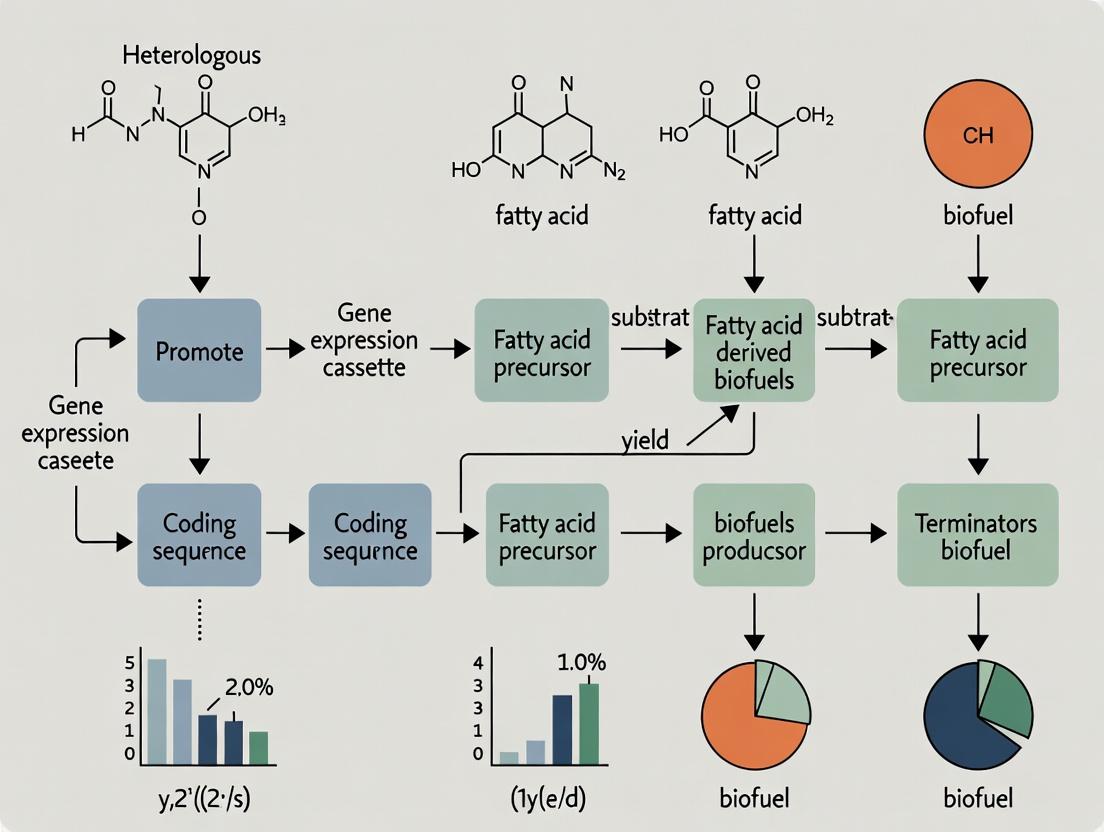
This article provides a comprehensive overview of heterologous gene expression strategies for the microbial production of fatty acid-derived biofuels, targeting researchers and scientists in metabolic engineering and synthetic biology.
Engineered Pathways: Heterologous Gene Expression for Advanced Fatty Acid-Derived Biofuels
Abstract
This article provides a comprehensive overview of heterologous gene expression strategies for the microbial production of fatty acid-derived biofuels, targeting researchers and scientists in metabolic engineering and synthetic biology. We explore the foundational biology of fatty acid biosynthesis, detail current methodological approaches for pathway reconstruction in industrial hosts like E. coli and yeast, and address common troubleshooting and optimization challenges. The content further validates these strategies by comparing performance metrics, yields, and host suitability, culminating in a discussion on the translational potential for sustainable fuel production and biomedical applications.
Decoding the Blueprint: Foundational Biology of Fatty Acid Biosynthesis for Biofuel Production
This document serves as Application Notes and Protocols for research framed within a broader thesis on "Heterologous gene expression for fatty acid-derived biofuels research." The primary objective is to engineer non-native (heterologous) metabolic pathways in production hosts (e.g., E. coli, S. cerevisiae, cyanobacteria) to enhance the synthesis, secretion, and yield of fatty acid-derived biofuels. This approach bypasses native regulatory limitations and leverages the high energy density of fatty acid derivatives.
Fatty acid-derived biofuels are classified based on their chemical structure and production pathway. The table below summarizes key types, their energy content, and advantages in the context of heterologous production.
Table 1: Types of Fatty Acid-Derived Biofuels and Key Properties
| Biofuel Type | Chemical Class | Approx. Energy Density (MJ/kg)* | Key Advantages for Heterologous Production | Common Target Hosts |
|---|---|---|---|---|
| Fatty Acid Ethyl Esters (FAEEs) | Esters | ~38 (Diesel: ~45) | Direct secretion; can use ethanol precursor. | S. cerevisiae, E. coli |
| Fatty Alcohols | Long-chain alcohols | ~40 | High energy density; useful as blendstocks. | E. coli, Y. lipolytica |
| Alkanes/Alkenes | Hydrocarbons | ~44 (Gasoline: ~46) | Fully compatible with existing infrastructure. | E. coli, Synechocystis sp. |
| Fatty Acid Methyl Esters (FAMEs) | Esters | ~37 | Simple transesterification pathway. | E. coli, Oleaginous yeast |
| Hydroprocessed Esters and Fatty Acids (HEFA) | Alkanes (C12-C18) | ~44 | Catalytic conversion of varied feedstocks. | N/A (In vitro processing) |
*Data compiled from recent literature (2022-2024). Values are indicative and depend on chain length and saturation.
Experimental Protocols
Protocol 3.1: Heterologous Expression of a Fatty Acid Decarboxylase for Alkane Production inE. coli
Objective: To produce alkanes/alkenes in E. coli by expressing the Arabidopsis thaliana fatty acid photodecarboxylase (FAP) along with a tailored fatty acid biosynthesis system.
Materials: See "The Scientist's Toolkit" (Section 5).
Methodology:
- Vector Construction:
- Clone the A. thaliana FAP gene (codon-optimized for E. coli) under a T7/lac promoter in pET-28a(+) vector.
- Co-transform with a companion plasmid expressing E. coli 'TesA (thioesterase I without signal sequence) to boost free fatty acid (FFA) pool.
- Strain Cultivation & Induction:
- Inoculate 5 mL LB + appropriate antibiotics with transformed E. coli BL21(DE3). Grow overnight (37°C, 220 rpm).
- Dilute 1:100 into 50 mL M9 minimal media + 2% glucose + antibiotics. Grow to OD600 ~0.6 (37°C).
- Induce gene expression with 0.5 mM IPTG. Add 0.1 mM FeSO4 (FAP co-factor). Reduce temperature to 25°C.
- Illuminate cultures with blue LED light (450 nm, 100 μmol m⁻² s⁻¹) for photodecarboxylase activity. Incubate for 48-72 hours.
- Product Extraction & Analysis:
- Acidify culture to pH 2.0 with HCl. Extract twice with equal volume of n-hexane.
- Dry organic phase over anhydrous Na2SO4, concentrate under N₂ gas.
- Analyze via GC-MS (HP-5MS column) for alkane (C15-C17) identification and quantification using tetradecane as internal standard.
Protocol 3.2: Metabolic Engineering ofS. cerevisiaefor FAEE Production
Objective: Engineer yeast to produce and secrete Fatty Acid Ethyl Esters (FAEEs) by integrating heterologous wax ester synthase.
Methodology:
- Pathway Integration:
- Integrate codon-optimized Acinetobacter baylyi wax ester synthase/acyl-CoA:diacylglycerol acyltransferase (WS/DGAT) gene into the S. cerevisiae genome under control of a strong constitutive promoter (e.g., pTDH3).
- Overexpress native EHT1 (ethanol O-acyltransferase) and delete FAA1 (acyl-CoA synthetase) to channel FFAs toward esterification.
- Fermentation:
- Grow engineered yeast in synthetic complete (SC) medium lacking uracil with 2% glucose, 30°C.
- At late-log phase, supplement with 2% ethanol (substrate for esterification) and shift to nitrogen-limited media to trigger lipid accumulation.
- Culture for 96 hours with continuous mild agitation.
- Analysis:
- Collect supernatant and cells separately.
- Extract intracellular and extracellular lipids with chloroform:methanol (2:1 v/v).
- Analyze FAEE content by LC-MS/MS or GC-FID, comparing to FAEE (C16:0, C18:0) standards.
Visualization: Pathways and Workflows
Title: Heterologous FAEE Biosynthesis Pathway in Yeast
Title: General Workflow for Biofuel Production Experiments
The Scientist's Toolkit: Research Reagent Solutions
Table 2: Essential Materials for Heterologous Biofuel Production Experiments
| Item | Function/Benefit | Example/Supplier (Research Grade) |
|---|---|---|
| Codon-Optimized Gene Fragments | Maximizes translation efficiency in heterologous hosts; reduces metabolic burden. | Twist Bioscience, IDT gBlocks. |
| Inducible Expression Vectors | Enables tight control over timing and level of heterologous gene expression. | pET series (E. coli), pESC series (Yeast). |
| Engineered Production Hosts | Strains with enhanced precursor supply or reduced product degradation. | E. coli K12 MG1655 ΔfadD, S. cerevisiae BY4741 Δfaa1. |
| Defined Minimal Media | Eliminates background carbon sources; essential for flux balance and yield calculations. | M9 (E. coli), Synthetic Complete (Yeast). |
| Internal Standards for GC/MS | Allows precise quantification of target biofuel molecules in complex extracts. | Deuterated alkanes (e.g., Dodecane-d26), C13-labeled FAMEs. |
| Photobioreactor/LED Setup | Provides controlled light for photoenzyme activity (e.g., FAP). | Custom blue LED panels (450 nm). |
| Anaerobic Chamber/Tubes | For cultivating pathways requiring or producing oxygen-sensitive intermediates. | Coy Lab Products, BD BBL GasPak. |
| Lipid Extraction Solvents | Efficiently partitions hydrophobic biofuels from aqueous culture broth. | Chloroform:MeOH (2:1), n-Hexane, MTBE. |
Within the broader thesis on Heterologous gene expression for fatty acid-derived biofuels research, understanding the core native pathways from acetyl-CoA to acyl-ACP/CoA is fundamental. These pathways represent the metabolic chassis upon which heterologous engineering is performed. In model organisms like Escherichia coli and Saccharomyces cerevisiae, these routes supply the acyl chains essential for membrane lipids and, when diverted, for biofuel precursor synthesis (e.g., fatty acids, fatty alcohols, alkanes). Manipulating flux through these native pathways via gene overexpression, knockdown, or rewiring is a primary strategy in metabolic engineering for biofuels.
Native Pathways in Key Model Organisms
The conversion of acetyl-CoA to acyl-ACP (in bacteria/plants) or acyl-CoA (in yeast/animals) is the core of de novo fatty acid synthesis (FAS). The pathway architecture differs significantly between type II FAS (dissociated, found in E. coli and plants) and type I FAS (multifunctional enzyme complex, found in S. cerevisiae and mammals).
1Escherichia coli(Type II FAS)
In E. coli, the pathway is a cyclic process of two-carbon elongation using malonyl-ACP.
- Initiation: Acetyl-CoA is carboxylated to malonyl-CoA by acetyl-CoA carboxylase (ACC), a four-subunit complex (AccA, AccB, AccC, AccD). Malonyl-CoA is then transferred to the acyl carrier protein (ACP) by malonyl-CoA:ACP transacylase (FabD), forming malonyl-ACP.
- Elongation Cycle: Initiated by β-ketoacyl-ACP synthase III (FabH), which condenses acetyl-CoA with malonyl-ACP to form acetoacetyl-ACP (C4). For subsequent cycles, the elongation is performed by FabF/FabB.
- Reduction Cycle: Acetoacetyl-ACP is reduced to β-hydroxyacyl-ACP (by FabG), dehydrated to trans-2-enoyl-ACP (by FabZ/FabA), and reduced again to a saturated acyl-ACP (by FabI). This yields a saturated acyl-ACP (C4), which re-enters the elongation cycle with another malonyl-ACP.
- Termination: Cycles continue (usually to C16:0 or C18:0). Acyl-ACPs can be used directly for phospholipid synthesis or hydrolyzed by thioesterases (e.g., 'TesA) to release free fatty acids—a common engineering target for biofuel production.
2Saccharomyces cerevisiae(Type I FAS)
In yeast, FAS is a cytosolic 2.6 MDa α~6~β~6~ multifunctional enzyme complex.
- Initiation: Acetyl-CoA carboxylase (ACC1) converts acetyl-CoA to malonyl-CoA.
- Loading: The FAS complex loads the starter unit (acetyl) onto the acyl carrier domain (ACP) of the β-subunit and the extender unit (malonyl) onto the 4'-phosphopantetheine arm of the ACP domain within the α-subunit.
- Elongation Cycle: The ketoacyl synthase (KS) domain condenses the two units. The resulting β-ketoacyl intermediate is reduced (by KR), dehydrated (by DH), and reduced again (by ER) by successive domains within the complex. All reactions occur within the mega-complex.
- Termination: The final product (typically C16:0 or C18:0 acyl-ACP) is transferred from the FAS complex to CoA by an acyl-CoA synthase, yielding acyl-CoA for membrane lipid synthesis. For biofuel pathways, acyl-CoAs are the primary substrates for heterologous enzymes like fatty acyl-CoA reductases (for fatty alcohols) or decarboxylases (for alkanes).
Table 1: Comparison of Core Pathway Components in Model Organisms
| Feature | Escherichia coli (Type II FAS) | Saccharomyces cerevisiae (Type I FAS) |
|---|---|---|
| Organization | Dissociated, monofunctional enzymes | Multifunctional α~6~β~6~ complex (FAS1 & FAS2 genes) |
| Initial Substrate | Acetyl-CoA | Acetyl-CoA |
| Key Initial Enzyme | Acetyl-CoA carboxylase (ACC: AccABCD) | Acetyl-CoA carboxylase (Acc1p) |
| Carrier Protein | Acyl Carrier Protein (ACP, acpP) | ACP domain within FAS complex |
| Primary Elongation Product | Malonyl-ACP | Malonyl-ACP (bound) |
| Condensing Enzymes | FabH (initiation), FabB/F (elongation) | β-Ketoacyl Synthase (KS) domain |
| Typical End Product(s) | C16:0-ACP, C18:1-ACP | C16:0-CoA, C18:0-CoA (after transfer) |
| Pathway Localization | Cytoplasm | Cytoplasm |
| Major Engineering Targets | ACC, FabH/B/F, 'TesA thioesterase | ACC1, FAS complex, acyl-CoA synthases |
Table 2: Representative Enzyme Kinetic Parameters Relevant to Engineering
| Enzyme (Organism) | EC Number | Substrate | k~cat~ (s⁻¹) | K~m~ (μM) | Reference / Notes |
|---|---|---|---|---|---|
| Acetyl-CoA Carboxylase (E. coli) | 6.4.1.2 | Acetyl-CoA | 20-50 | 50-150 | Biotin-dependent, rate-limiting step. |
| FabI [Enoyl-ACP Reductase] (E. coli) | 1.3.1.9 | Crotonyl-ACP | ~300 | 2-5 (for ACP) | Target for triclosan; critical for reduction. |
| FAS Complex (S. cerevisiae) | 2.3.1.86 | Acetyl-CoA/Malonyl-CoA | N/A (complex) | N/A | Overall activity ~10 nmol/min/mg protein. |
| Acyl-CoA Synthase (S. cerevisiae, Faa1p) | 6.2.1.3 | Palmitic Acid | 25 | 4 (for palmitate) | Converts free FA to acyl-CoA for lipid synthesis. |
Experimental Protocols
Protocol: MeasuringIn VitroFatty Acid Synthase (FAS) Activity inS. cerevisiaeLysates
Purpose: To quantify the flux through the native type I FAS pathway in engineered yeast strains. Reagents: YPD media, Lysis Buffer (100 mM KPO₄ pH 7.0, 1 mM EDTA, 10% glycerol, 1 mM DTT, protease inhibitors), Assay Buffer (100 mM KPO₄ pH 7.0, 1 mM EDTA, 1 mg/mL BSA), 5 mM NADPH, 2 mM Acetyl-CoA, 10 mM Malonyl-CoA. Procedure:
- Cell Culture & Lysis: Grow yeast to mid-log phase (OD~600~ ~0.8). Harvest cells, wash, and resuspend in Lysis Buffer. Lyse using glass bead vortexing (6 x 30s pulses, on ice). Clarify by centrifugation (15,000 x g, 20 min, 4°C). Keep supernatant on ice.
- Enzyme Assay Setup: Prepare a 1 mL cuvette with 880 μL Assay Buffer, 50 μL NADPH, 20 μL Acetyl-CoA, and 20 μL Malonyl-CoA. Pre-warm to 30°C.
- Kinetic Measurement: Add 30 μL of clarified lysate (or appropriate dilution) to the cuvette and mix quickly. Immediately place in a spectrophotometer thermostatted at 30°C.
- Data Acquisition: Monitor the decrease in absorbance at 340 nm (A~340~) due to NADPH oxidation for 5-10 minutes. Use a molar extinction coefficient for NADPH of 6.22 mM⁻¹cm⁻¹.
- Calculation: Activity (nmol/min/mg protein) = (ΔA~340~/min) / (6.22 * path length (1 cm) * protein concentration (mg/mL in assay)).
Protocol: Analyzing Acyl-ACP Pool inE. colivia Native PAGE
Purpose: To profile the chain-length distribution of acyl-ACP intermediates, useful for assessing the impact of heterologous thioesterases or pathway modifications. Reagents: LB media, 10% Trichloroacetic Acid (TCA, ice-cold), Acetone (ice-cold), 2x Laemmli Sample Buffer (without reducing agents like β-mercaptoethanol or DTT), 15% Native-PAGE gel, Running Buffer (25 mM Tris, 192 mM glycine), Western Transfer Reagents, Anti-ACP antibody. Procedure:
- Rapid Metabolite Fixation: Harvest 5 mL of bacterial culture (OD~600~ ~0.5-1.0) directly into 5 mL of ice-cold 10% TCA. Incubate on ice for 30 min.
- ACP Precipitation: Pellet proteins (10,000 x g, 10 min, 4°C). Wash pellet twice with 1 mL ice-cold acetone. Air-dry pellet briefly.
- Sample Preparation: Resuspend dried pellet in 50 μL of 2x non-reducing Laemmli buffer. Do not boil.
- Native Electrophoresis: Load samples on a pre-cast 15% native PAGE gel. Run at 100V for ~2 hours at 4°C using Tris-glycine buffer (no SDS).
- Western Blot Analysis: Transfer proteins to PVDF membrane. Probe with primary anti-ACP antibody (1:5000), then HRP-conjugated secondary antibody. Develop with ECL.
- Interpretation: Different acyl-ACP species (C4, C8, C12, C16, etc.) separate by charge/size. Overexpression of a thioesterase typically depletes long-chain acyl-ACPs.
Diagrams (Generated with Graphviz DOT)
Diagram 1 Title: E. coli Type II FAS Pathway to Acyl-ACP
Diagram 2 Title: Yeast Type I FAS to Acyl-CoA for Biofuels
The Scientist's Toolkit: Research Reagent Solutions
Table 3: Essential Research Reagents and Materials
| Item / Reagent | Function / Application | Example Vendor / Catalog (for informational purposes) |
|---|---|---|
| Anti-ACP Antibody (E. coli) | Detection of acyl-ACP species via Western blot after native PAGE. Critical for monitoring pathway intermediates. | Thermo Fisher Scientific (MAS-13541) |
| Acetyl-CoA, Sodium Salt | Essential substrate for initiating FAS in both in vivo and in vitro assays. | Sigma-Aldrich (A2181) |
| Malonyl-CoA, Lithium Salt | Essential two-carbon extender unit for all FAS elongation cycles. | Sigma-Aldrich (M4263) |
| β-NADPH, Tetrasodium Salt | Cofactor for reduction steps (FabG, FabI in E. coli; KR, ER domains in yeast). Used in activity assays. | Sigma-Aldrich (N1630) |
| NativePAGE 4-16% Bis-Tris Gels | Precast gels optimized for separating native protein complexes and charged species like acyl-ACPs. | Invitrogen (BN1002BOX) |
| Fatty Acid Synthase (S. cerevisiae) | Purified enzyme for in vitro reconstitution assays or as a standard. | Sigma-Aldrich (F8262) |
| Trichloroacetic Acid (TCA) | For rapid precipitation and fixation of metabolites, preserving labile acyl-ACP pools. | Sigma-Aldrich (T6399) |
| Protease Inhibitor Cocktail (EDTA-free) | Added to lysis buffers to prevent degradation of native enzyme complexes during extraction. | Roche (04693132001) |
| Dithiothreitol (DTT) | Reducing agent to maintain active sulfhydryl groups in FAS enzymes (use after lysis for assays, omit for native PAGE sample prep). | GoldBio (DTT100) |
This application note details essential protocols and considerations for the engineering of the fatty acid biosynthesis and modification pathway for the heterologous production of biofuels, specifically alkanes and fatty acid ethyl esters (FAEEs), in microbial hosts such as E. coli and S. cerevisiae. The work is framed within a thesis focused on optimizing flux through these pathways via combinatorial gene expression and metabolic balancing.
Table 1: Key Enzymatic Players in Fatty Acid-Derived Biofuel Synthesis
| Enzyme (Abbrev.) | Full Name | Native Source (Example) | Primary Function in Pathway | Typical Biofuel Product | Notes on Heterologous Expression |
|---|---|---|---|---|---|
| ACC | Acetyl-CoA Carboxylase | E. coli, plants | Carboxylates acetyl-CoA to malonyl-CoA. Commits carbon to FA synthesis. | Precursor for all FA-derived fuels | Multi-subunit complex. Rate-limiting step. Requires biotin. Expression balancing critical. |
| FAS | Fatty Acid Synthase | Type I: Yeast; Type II: E. coli | Iteratively condenses and reduces malonyl-CoA to yield acyl-ACPs (C8-C18). | Acyl-ACP/CoA intermediates | Host FAS type dictates engineering strategy. Displacing native TE is key. |
| Thioesterase (TE) | Acyl-ACP Thioesterase | Plant (e.g., Umbellularia californica), cyanobacteria | Hydrolyzes acyl-ACP to free fatty acid (FFA), terminating chain elongation. | Free Fatty Acids (FFAs) | Substrate specificity determines chain length (e.g., 'TesA, C12; 'TesA, C14). Relieves feedback inhibition. |
| Decarboxylase | Fatty Acid Decarboxylase | Alga (Botryococcus braunii), cyanobacteria | Decarboxylates fatty acyl-ACP/CoA/FA to n-alk(a/e)ne. | Alkanes/Alkenes (e.g., pentadecane) | B. braunii FAP (FA photodecarboxylase) requires light. CAR (carboxylic acid reductase) requires ATP and cofactors. |
Experimental Protocols
Protocol 1: Heterologous Co-expression of ACC, TE, and Decarboxylase for Alkane Production in E. coli
Objective: To produce intracellular alkanes by reconstituting a truncated pathway from acetyl-CoA.
Materials:
- E. coli BL21(DE3) competent cells.
- Expression vectors: pETDuet-1 (for accABCD from Corynebacterium glutamicum) and pCDFDuet-1 (for tesA from E. coli and fap from Botryococcus braunii).
- Antibiotics: Ampicillin (100 µg/mL), Spectinomycin (50 µg/mL).
- Induction: 0.5 mM IPTG.
- Cultivation: Terrific Broth (TB) medium.
- Light Source: White LED panels (100 µmol photons m⁻² s⁻¹) for FAP activation.
- Extraction: n-hexane, internal standard (e.g., tetradecane).
Methodology:
- Strain Construction: Co-transform E. coli with both plasmids. Select on LB agar plates with both antibiotics.
- Cultivation: Inoculate 5 mL TB (+ antibiotics) with a single colony. Grow overnight (37°C, 220 rpm).
- Main Culture: Dilute overnight culture 1:100 into 50 mL fresh TB (+ antibiotics) in a baffled flask. Grow at 37°C to OD600 ~0.6.
- Induction & Illumination: Reduce temperature to 28°C. Add IPTG to 0.5 mM. Immediately place cultures under continuous white LED illumination. Incubate for 48 hours with shaking.
- Alkane Extraction: Harvest cells by centrifugation (4,000 x g, 10 min). Resuspend pellet in 5 mL of n-hexane containing internal standard. Vortex vigorously for 10 min. Centrifuge (3,000 x g, 5 min) to separate phases.
- Analysis: Analyze the hexane phase by GC-MS or GC-FID for alkane quantification using the internal standard calibration.
Protocol 2: In Vitro Assay for Thioesterase Chain-Length Specificity
Objective: To characterize the hydrolysis activity of a heterologous thioesterase against various acyl-ACP substrates.
Materials:
- Purified recombinant thioesterase (e.g., 'TesA).
- Acyl-ACP substrates (C8:0-ACP, C12:0-ACP, C14:0-ACP, C16:0-ACP, C18:0-ACP).
- Assay Buffer: 100 mM Tris-HCl, pH 8.0, 0.1% Triton X-100.
- DTNB (5,5'-Dithio-bis-(2-nitrobenzoic acid)), 1 mM in assay buffer.
- Microplate reader (capable of measuring 412 nm absorbance).
Methodology:
- Reaction Setup: In a 96-well plate, mix 80 µL of assay buffer, 10 µL of 1 mM DTNB, and 5 µL of individual acyl-ACP substrate (final conc. 50 µM).
- Initiation: Start the reaction by adding 5 µL of purified TE enzyme. Final reaction volume: 100 µL.
- Measurement: Immediately measure the increase in absorbance at 412 nm every 30 seconds for 10 minutes at 30°C. The released free thiol (from ACP) reacts with DTNB to produce 2-nitro-5-thiobenzoate (TNB²⁻).
- Analysis: Calculate initial reaction velocities (∆A412/min). Plot velocity vs. substrate chain length to determine specificity profile.
Pathway and Workflow Visualizations
Diagram Title: Fatty Acid Biofuel Synthesis Pathway in Engineered Microbes
Diagram Title: Biofuel Production & Analysis Workflow
The Scientist's Toolkit: Research Reagent Solutions
Table 2: Essential Materials for Heterologous Biofuel Pathway Engineering
| Item | Function/Application in Research | Example/Notes |
|---|---|---|
| Biotin | Essential cofactor for ACC activity. Must be supplemented in defined media for functional heterologous ACC expression. | Use at 1-10 µM in M9 minimal medium. |
| Acyl-ACP Substrates | Defined substrates for in vitro characterization of Thioesterase (TE) and Decarboxylase specificity and kinetics. | Commercially synthesized or enzymatically generated. Critical for determining chain-length preference. |
| DTNB (Ellman's Reagent) | Colorimetric detection of free thiols released during TE activity assays. Allows quantification of hydrolysis rates. | 1 mM stock in assay buffer. Monitor A412. |
| n-Hexane | Organic solvent for efficient extraction of hydrophobic products (alkanes, FAEEs, FFAs) from culture broth. | Compatible with GC analysis. Better for alkanes than ethyl acetate. |
| Internal Standards (IS) | For accurate quantification of biofuel products via GC. Corrects for extraction and injection variability. | Tetradecane (for alkanes), methyl heptadecanoate (for FAEEs). |
| IsoPropyl β-D-1-thiogalactopyranoside (IPTG) | Inducer for T7/lac-based expression systems in E. coli for controlled gene expression. | Typical conc. 0.1-1.0 mM. Lower concentrations often reduce metabolic burden. |
| White LED Panels | Required to activate the fatty acid photodecarboxylase (FAP) from B. braunii. Must provide specific light intensity. | ~100 µmol photons m⁻² s⁻¹. Temperature control during illumination is crucial. |
Application Notes
Heterologous gene expression is a cornerstone of metabolic engineering for fatty acid-derived biofuels. The choice of host organism critically determines the yield, functionality, and scalability of biofuel production. This guide compares three prominent hosts—E. coli, Yeast (Saccharomyces cerevisiae), and Cyanobacteria (Synechocystis sp.)—within a research thesis focused on engineering pathways for fatty acid-derived compounds like alkanes, fatty alcohols, and fatty acid ethyl esters (FAEEs).
1. Escherichia coli E. coli remains the workhorse for rapid pathway prototyping due to its fast growth, well-understood genetics, and high achievable titers of simple fatty acids. However, it lacks native esterification machinery and complex membrane structures, often requiring extensive engineering for advanced biofuel molecules and exhibiting toxicity from accumulated free fatty acids.
2. Saccharomyces cerevisiae Yeast offers a eukaryotic environment with natural lipid metabolism, including esterification and intracellular organelles. It is superior for expressing complex eukaryotic enzymes (e.g., cytochrome P450s) and is generally regarded as safe (GRAS). Its slower growth and more complex genetic manipulation are trade-offs, but it excels in producing ester-based biofuels like FAEEs.
3. Cyanobacteria (e.g., Synechocystis sp. PCC 6803) Cyanobacteria are photoautotrophic prokaryotes that use CO₂ and sunlight directly, offering a potentially carbon-neutral production platform. They naturally produce fatty acids as precursors for thylakoid membranes. Challenges include slower growth than heterotrophs, lower biomass density, and the complexity of photosynthetic machinery engineering, but they represent a route to direct solar-to-fuel conversion.
Table 1: Key Host Characteristics for Fatty Acid Biofuel Production
| Parameter | E. coli (Prokaryotic) | S. cerevisiae (Eukaryotic) | Cyanobacteria (Prokaryotic, Phototrophic) |
|---|---|---|---|
| Typical Doubling Time | ~20-30 min | ~90-120 min | ~5-12 hours |
| Maximum Reported Titer (Fatty Acid Derivatives) | ~1.5 g/L (FAEE) | ~1.1 g/L (FAEE) | ~150 mg/L (Fatty Alcohols) |
| Carbon Source | Simple sugars (e.g., glucose) | Simple sugars (e.g., glucose) | CO₂, Light (Bicarbonate supplementation common) |
| Key Engineering Advantage | Rapid genetics, high transformation efficiency, extensive toolkit. | Organelles, GRAS status, native lipid droplets & ER. | Direct CO₂ fixation, minimal feedstock cost. |
| Major Limitation for Biofuels | Lack of organelles, toxicity from free fatty acids, no native esterification. | Slower growth, more complex genetics, lower transformation efficiency. | Low productivity, photoinhibition, challenging genetics. |
| Ideal Biofuel Target | Short-chain hydrocarbons, free fatty acids. | Fatty acid ethyl esters (FAEEs), long-chain alcohols. | Alkanes, fatty aldehydes (via photosynthesis). |
| Transformation Method | Chemical/electrocompetent heat shock. | Lithium acetate/PEG method. | Natural competence, conjugation. |
Table 2: Pathway Enzyme Compatibility
| Enzyme Class | E. coli Performance | S. cerevisiae Performance | Cyanobacteria Performance |
|---|---|---|---|
| Prokaryotic ACP Pathways | Excellent, native ACP system. | Poor, requires refactoring to CoA-based. | Excellent, native phototrophic ACP system. |
| Eukaryotic Cytochrome P450s | Often insoluble, requires cofactor engineering. | Excellent, native ER and redox partners. | Challenging, requires compatible redox in chloroplast. |
| Fatty Acid Synthase (FAS) | Type II FAS (discrete enzymes), easy to manipulate. | Type I FAS (large multifunctional complex), hard to engineer. | Type II FAS, similar to E. coli. |
| Thioesterases (TesA, 'UcFatB) | High activity, targets to cytosol or periplasm. | Active, targets to cytosol or lipid droplets. | Active, but must compete with native phototrophic metabolism. |
Experimental Protocols
Protocol 1: Rapid Pathway Assembly & Screening inE. colifor Free Fatty Acid (FFA) Production
Objective: Assemble and test a heterologous thioesterase pathway for FFA overproduction.
Materials (Research Reagent Solutions):
- Strain: E. coli BL21(DE3) or MG1655.
- Vector: pETDuet-1 or pTrc99A expression vector.
- Enzymes: 'UcFatB thioesterase gene (from Umbelopsis ramanniana), codon-optimized for E. coli.
- Reagents: Q5 High-Fidelity DNA Polymerase (for error-free PCR), Gibson Assembly Master Mix (for seamless cloning), LB Medium & Agar, Ampicillin (selection antibiotic), IPTG (inducer), Chloroform-Methanol Extraction Solvent (2:1 v/v, for lipid extraction), FFA Standard Mix (for GC-MS calibration).
Methodology:
- Gene Cloning: Amplify the 'UcFatB gene using Q5 polymerase with primers containing 20-30 bp overlaps with the linearized pETDuet vector. Perform Gibson Assembly at 50°C for 60 minutes.
- Transformation: Transform 50 µL of chemically competent E. coli BL21(DE3) with 10 ng of assembled plasmid via heat shock (42°C, 45 sec). Plate on LB-Ampicillin agar.
- Culture & Induction: Inoculate 5 mL LB-Amp medium with a single colony. Grow at 37°C, 250 rpm to OD₆₀₀ ~0.6. Induce expression with 0.5 mM IPTG. Shift temperature to 30°C and incubate for 16-20 hours.
- FFA Extraction: Harvest 1 mL culture by centrifugation. Resuspend cell pellet in 1 mL of 2:1 chloroform:methanol. Vortex vigorously for 10 min. Centrifuge at 16,000 x g for 5 min. Collect organic (bottom) phase.
- Analysis: Derivatize extracted FFAs to Fatty Acid Methyl Esters (FAMEs) using BF₃-methanol. Analyze via GC-MS or GC-FID against the FFA Standard Mix. Normalize titers to cell optical density (OD₆₀₀).
Protocol 2: Expression of a Biosynthetic Pathway inS. cerevisiaefor FAEE Production
Objective: Engineer yeast to produce Fatty Acid Ethyl Esters (FAEEs) by expressing a bacterial wax ester synthase.
Materials (Research Reagent Solutions):
- Strain: S. cerevisiae BY4741.
- Vector: Yeast episomal plasmid (e.g., pESC series) with galactose-inducible promoters.
- Enzymes: Acinetobacter baylyi wax ester synthase/acyl-CoA:diacylglycerol acyltransferase (atfA) gene.
- Reagents: Yeast Nitrogen Base (YNB) without amino acids, Dropout Mix (-His, -Ura), D-Glucose & D-Galactose (carbon sources), PEG/LiAc Transformation Mix (for yeast transformation), Zymolyase (for cell wall lysis), n-Hexane (for FAEE extraction).
Methodology:
- Plasmids & Transformation: Clone atfA into pESC-URA under the GAL1 promoter using standard yeast cloning techniques. Transform yeast using the LiAc/SS Carrier DNA/PEG method. Plate on appropriate synthetic dropout (SD) agar lacking uracil and containing 2% glucose.
- Culture & Induction: Inoculate 5 mL of SD-URA medium (2% glucose) and grow at 30°C, 250 rpm for 48 hours. Wash cells and inoculate into induction medium (SD-URA with 2% galactose) to an OD₆₀₀ of 0.5. Grow for 72-96 hours.
- FAEE Extraction: Harvest 10 mL culture. Add 5 mL of n-hexane and vortex for 20 min. Centrifuge to separate phases. Collect the upper organic (hexane) layer containing FAEEs.
- Analysis: Analyze the hexane extract directly via GC-MS or GC-FID. Use ethyl palmitate and ethyl oleate as external standards. Report titer in mg/L of culture.
Protocol 3: Metabolic Engineering ofSynechocystissp. PCC 6803 for Fatty Alcohol Production
Objective: Introduce a cyanobacterial fatty acyl-ACP reductase (FAAR) pathway to divert carbon flux to fatty alcohols.
Materials (Research Reagent Solutions):
- Strain: Synechocystis sp. PCC 6803 wild-type.
- Vector: Neutral site targeting vector (e.g., pUC-based with slr0168 site), Spectinomycin resistance cassette (aadA).
- Enzymes: Synechococcus elongatus PCC 7942 aas gene (encoding FAAR) and luxC (NADPH-dependent reductase).
- Reagents: BG-11 Medium & Agar, Spectinomycin, Sucrose (for counterselection on double-crossover events), Glass Beads (for cell disruption), BSTFA + TMCS (derivatization reagent for GC-MS).
Methodology:
- Construct Assembly: Clone the aas-luxC operon, driven by a strong constitutive promoter (e.g., PpsbA2), into the neutral site targeting vector. The construct is flanked by ~1 kb homology regions from the slr0168 locus.
- Natural Transformation: Grow Synechocystis to mid-exponential phase (OD₇₃₀ ~0.8-1.0). Concentrate cells 10-fold in fresh BG-11. Add 1-5 µg of linearized plasmid DNA. Incubate under low light for 6 hours, then plate on BG-11 agar without antibiotic. After 24 hours, transfer to BG-11 agar containing spectinomycin (50 µg/mL).
- Segregation & Verification: Streak for single colonies on increasing spectinomycin concentrations. Periodically patch colonies onto BG-11 + 5% sucrose plates to counter-select for clones that have lost the wild-type allele via double-crossover. Verify segregation by PCR across the integration sites.
- Production & Analysis: Grow engineered strain in BG-11 under continuous light (50 µE m⁻² s⁻¹) with CO₂ bubbling. Harvest cells by centrifugation. Disrupt cells with glass beads. Extract metabolites with ethyl acetate. Derivatize extracts with BSTFA. Analyze for fatty alcohols via GC-MS.
Visualizations
Host Selection Decision Flow
Host-Specific Experimental Workflows
The Scientist's Toolkit
Table 3: Essential Research Reagents & Materials
| Item | Function in Biofuel Pathway Engineering |
|---|---|
| Q5 High-Fidelity DNA Polymerase | Ensures error-free PCR amplification of gene inserts for reliable pathway assembly. |
| Gibson Assembly Master Mix | Enables seamless, one-pot cloning of multiple DNA fragments into a vector, critical for pathway construction. |
| IPTG (Isopropyl β-D-1-thiogalactopyranoside) | Induces protein expression in E. coli via the lac operon system. |
| LiAc/PEG Transformation Mix | Facilitates plasmid DNA uptake into yeast cells for genetic engineering. |
| Dropout Mix (e.g., -Ura, -His) | Provides selective pressure in defined yeast media to maintain engineered plasmids. |
| BG-11 Medium | Defined mineral medium optimized for the growth of freshwater cyanobacteria. |
| Chloroform:Methanol (2:1) | Organic solvent mixture for efficient extraction of lipids and free fatty acids from bacterial cells. |
| n-Hexane | Non-polar solvent ideal for extracting non-polar products like FAEEs and alkanes from culture. |
| BSTFA + TMCS | Derivatizing agent that silylates hydroxyl groups (e.g., in fatty alcohols) for volatility in GC-MS. |
| Fatty Acid Methyl Ester (FAME) Mix | Standard reference for calibrating GC instruments to quantify fatty acid species. |
Within a thesis on heterologous gene expression for fatty acid-derived biofuels, a critical step is the discovery and characterization of novel biosynthetic genes from natural producers (e.g., bacteria, fungi, plants). This Application Note details bioinformatics protocols for systematic gene mining, focusing on pathways relevant to fatty acid and hydrocarbon biosynthesis.
Application Notes & Protocols
Protocol 1: Targeted Genome Mining for Fatty Acid Biosynthesis Genes
Objective: To identify homologs of key fatty acid synthase (FAS) and modifying enzyme genes from publicly available microbial genomes.
Materials & Workflow:
- Query Sequence Selection: Use known E. coli fab genes or Streptomyces type-I PKS genes as queries.
- Database Search: Utilize the NCBI’s Genome Data Resource (search date: 2026-01-23).
- Analysis Tools: Local BLAST+ suite, HMMER, and antiSMASH.
Detailed Methodology:
- Step 1: Download nucleotide/protein sequences of target genes (e.g., FabH, FabF, OleA) from a model organism.
- Step 2: Perform a tBLASTn search against the "Whole-genome shotgun contigs (wgs)" database with an E-value threshold of 1e-10.
- Step 3: Retrieve positive hit sequences and subject them to domain analysis using Pfam.
- Step 4: Cluster homologs using CD-HIT at 90% identity to reduce redundancy.
- Step 5: Screen for genomic context using the antiSMASH bacterial version to identify co-localized genes (e.g., for olefin biosynthesis).
Diagram Title: Genome Mining for Biofuel Gene Discovery
Protocol 2: Transcriptomics-Guided Gene Prioritization
Objective: To prioritize mined genes based on expression levels under lipid-accumulating conditions.
Methodology:
- Data Source: Download relevant RNA-Seq datasets (e.g., SRA accession SRPXXXXXX) from oleaginous yeast Yarrowia lipolytica under nitrogen limitation.
- Analysis Pipeline:
- Quality control (FastQC).
- Map reads to reference genome (HISAT2).
- Quantify gene expression (StringTie).
- Identify differentially expressed genes (DESeq2 R package). Focus on upregulated FAS, acyl-CoA reductase, and aldehyde decarbonylase genes.
Quantitative Data Summary: Table 1: Top Upregulated Lipid Pathway Genes in Y. lipolytica (48h N-Limitation)
| Gene Locus | Log2 Fold Change | p-adj | Putative Function |
|---|---|---|---|
| YALI0B10106g | 5.2 | 3.2e-10 | Fatty acid synthase, beta subunit |
| YALI0D17864g | 4.8 | 1.1e-08 | Acyl-CoA reductase |
| YALI0E06578g | 4.5 | 5.7e-07 | Malic enzyme (NADPH source) |
| YALI0F10857g | 3.9 | 2.4e-05 | Acyl carrier protein |
Protocol 3: Functional Validation Workflow for Mined Genes
Objective: To clone and test the function of candidate genes in a heterologous host (E. coli or S. cerevisiae).
Detailed Methodology:
- Gene Synthesis & Cloning: Codon-optimize gene sequence for the chosen host. Clone into an inducible expression vector (e.g., pET28a for E. coli).
- Heterologous Expression: Transform expression construct into host. Induce expression with IPTG (for E. coli) at OD600 ~0.6. Incubate for 16h at 18°C.
- Metabolite Analysis: Extract fatty acids/hydrocarbons via hexane partition. Analyze by GC-MS/FAME.
- Enzyme Assay: Prepare cell-free lysate. Perform in vitro assay with radiolabeled (14C) malonyl-CoA or fatty acyl-ACP substrates. Separate products via TLC and visualize by phosphorimager.
Diagram Title: Functional Validation Workflow for Biofuel Genes
The Scientist's Toolkit: Research Reagent Solutions
Table 2: Essential Materials for Gene Mining & Validation
| Item | Function & Application |
|---|---|
| antiSMASH 7.0 | Identifies Biosynthetic Gene Clusters (BGCs) in genomic data; critical for pathway discovery. |
| HMMER Suite | Profile hidden Markov model searches for distant protein homologs. |
| pET-28a(+) Vector | E. coli expression vector with T7 promoter and His-tag for recombinant protein purification. |
| Codon Optimization Tool (e.g., IDT Codon Optimization) | Optimizes gene sequence for expression in a heterologous host to improve yield. |
| 14C-Malonyl-CoA | Radiolabeled substrate for in vitro enzyme activity assays of FAS/PKS components. |
| Silica Gel TLC Plates | Used to separate lipid/extract components in functional assays. |
| GC-MS System | Gold-standard for identifying and quantifying fatty acid methyl esters (FAMEs) and hydrocarbons. |
This document provides protocols and application notes for investigating native host regulatory networks controlling lipid metabolism, framed within a thesis on heterologous gene expression for fatty acid-derived biofuels. A primary obstacle in metabolic engineering is host resistance—native regulatory circuits (transcriptional, post-translational, allosteric) that maintain metabolic homeostasis and oppose the diversion of resources toward heterologous pathways. Understanding and engineering these networks is critical for achieving high-yield production of advanced biofuels.
Core Application: These methods enable the systematic deconstruction of host lipid regulatory networks in model organisms like Saccharomyces cerevisiae, Escherichia coli, and oleaginous microbes. The goal is to identify key nodes (transcription factors, kinases, metabolites) for intervention, allowing the rewiring of metabolism toward fatty acid and fatty acid-derived product (e.g., alkanes, fatty alcohols) synthesis without compromising host viability.
Key Investigative Areas:
- Transcription Factor (TF) Profiling: Identifying TFs that respond to altered lipid precursor pools (e.g., acetyl-CoA, malonyl-CoA) or end-products (e.g., free fatty acids, triacylglycerols).
- Metabolite-Protein Interaction Mapping: Defining allosteric regulators of central metabolic enzymes (e.g., Acc1, Fas1, ATP-citrate lyase).
- Signal Transduction Analysis: Characterizing kinase/phosphatase cascades that modulate enzyme activity and localization in response to nutrient status.
- Epistatic Interaction Mapping: Determining genetic interactions between native regulatory genes and heterologous biosynthetic pathways.
Table 1: Key Native Transcriptional Regulators of Lipid Metabolism in Model Hosts
| Organism | Regulator Name | Type | Target Process | Effect on Lipid Yield* (Knockout/Mutant) | Citation (Example) |
|---|---|---|---|---|---|
| S. cerevisiae | Ino2/Ino4 | bHLH TF Complex | Phospholipid biosynthesis | ↑ 40-60% (FFA) | Chen et al., 2022 |
| S. cerevisiae | Opi1 | Repressor | Inositol/phospholipid synthesis | ↑ 35% (TAG) | Teo et al., 2021 |
| E. coli | FadR | TF | Fatty acid degradation & synthesis | ↑ 2.5-fold (FFA) | Xu et al., 2023 |
| E. coli | FabR | TF | Unsaturated fatty acid synthesis | ↓ 30% (if deleted) | Lee et al., 2022 |
| Yarrowia lipolytica | Mga2 | TF | Hypoxia & FA desaturation | ↑ 70% (TAG) | Park et al., 2023 |
| Rhodococcus opacus | FadR Homolog | TF | Triacylglycerol accumulation | Under investigation | Blazquez et al., 2024 |
*FFA: Free Fatty Acids; TAG: Triacylglycerol. Effects are host- and condition-dependent.
Table 2: Common Allosteric Modulators of Lipid Biosynthetic Enzymes
| Enzyme (Host) | Metabolite Modulator | Effect | Putative Role in Host Resistance |
|---|---|---|---|
| Acetyl-CoA Carboxylase (ACC) | Palmitoyl-CoA (Eukaryotes) | Inhibits | Prevents overcommitment to FA synthesis |
| Acetyl-CoA Carboxylase (ACC) | Citrate (Eukaryotes) | Activates | Links FA synthesis to TCA cycle flux |
| Fatty Acid Synthase (FAS) | Malonyl-CoA | Substrate & Regulator | Positive feedback reported in some hosts |
| ATP-Citrate Lyase (ACL) (Oleaginous) | ATP/ADP ratio | Regulates activity | Couples lipid synthesis to energy status |
| FabI (Enoyl-ACP reductase) (E. coli) | NADH/NAD+ ratio | Regulates activity | Links FA elongation to redox state |
Detailed Experimental Protocols
Protocol 3.1: ChIP-seq for Mapping Transcription Factor Binding in Lipid Metabolism
Objective: To identify genome-wide binding sites of a lipid metabolism transcription factor (e.g., E. coli FadR) under conditions of high fatty acid flux.
Materials: Crosslinking buffer (1% formaldehyde), Glycine (2.5 M), Cell lysis buffers, Sonication device (e.g., Bioruptor), Protein A/G magnetic beads, TF-specific antibody, DNA purification kit, NGS library prep kit.
Procedure:
- Crosslinking & Quenching: Grow two cultures (control + induced heterologous pathway). At mid-log phase, add formaldehyde (1% final) to crosslink for 15 min. Quench with 125 mM glycine for 5 min. Harvest cells.
- Cell Lysis & Sonication: Resuspend pellet in lysis buffer with protease inhibitors. Lyse cells mechanically or enzymatically. Sonicate lysate to shear chromatin to 200-500 bp fragments. Confirm fragment size by agarose gel.
- Immunoprecipitation: Clear lysate by centrifugation. Incubate supernatant with antibody against target TF overnight at 4°C. Add pre-blocked magnetic beads for 2 hours. Wash beads stringently.
- Elution & De-crosslinking: Elute protein-DNA complexes. Reverse crosslinks by heating at 65°C overnight with high salt.
- DNA Purification & Sequencing: Purify DNA (PCR cleanup kit). Prepare sequencing library and perform Illumina sequencing.
- Data Analysis: Align reads to reference genome. Call peaks (using MACS2) to identify significant binding sites. Perform motif analysis and correlate with transcriptomic data.
Protocol 3.2: LC-MS/MS-Based Phosphoproteomics to Identify Signaling Nodes
Objective: To profile changes in protein phosphorylation in response to altered lipid metabolism, identifying key regulatory kinases/phosphatases.
Materials: Lysis buffer (8 M urea, phosphatase/protease inhibitors), Reduction/Alkylation reagents (DTT, IAA), Trypsin/Lys-C, TiO2 or IMAC phosphopeptide enrichment beads, C18 StageTips, LC-MS/MS system.
Procedure:
- Sample Preparation: Harvest cells from perturbed (high lipid) and control conditions. Lyse cells in urea buffer. Determine protein concentration.
- Digestion: Reduce (5 mM DTT) and alkylate (15 mM IAA) proteins. Dilute urea to <2M and digest with trypsin/Lys-C overnight.
- Phosphopeptide Enrichment: Acidify peptides. Enrich phosphopeptides using TiO2 or Fe-IMAC beads according to manufacturer's protocol. Elute and desalt using C18 StageTips.
- LC-MS/MS Analysis: Separate peptides on a C18 nano-column with a 2-hour gradient. Analyze with a tandem mass spectrometer in data-dependent acquisition mode, prioritizing precursor ions for MS/MS.
- Data Processing: Search data against host proteome database using software (MaxQuant, Proteome Discoverer) with phosphorylation (S,T,Y) as a variable modification. Quantify fold-changes. Use kinase prediction tools (NetworkIN) to infer regulatory kinases.
Protocol 3.3: CRISPRi Screening for Regulatory Gene Discovery
Objective: To perform a genome-wide CRISPR interference (CRISPRi) screen to identify native regulators that, when repressed, enhance production of a fatty acid-derived biofuel (e.g., fatty alcohol).
Materials: Genome-wide CRISPRi library (dCas9 + sgRNA), Selective medium, Antibiotics, DNA purification kit, PCR reagents, NGS platform.
Procedure:
- Library Transformation: Transform the pooled CRISPRi sgRNA library into your engineered production host strain expressing dCas9.
- Screen Execution: Plate transformed cells at high coverage (≥500x per sgRNA) onto selective solid medium or grow in liquid culture under production conditions (e.g., with inducer). Passage cells for ~10-15 generations.
- Sample Collection & Sequencing: Harvest genomic DNA from the initial pool (T0) and the final population (Tfinal). Amplify the integrated sgRNA cassette by PCR and prepare for NGS.
- Data Analysis: Count sgRNA reads in T0 and Tfinal samples. Use MAGeCK or similar algorithms to identify sgRNAs enriched/depleted in the final population. Genes whose repression (targeted sgRNAs) are significantly enriched represent candidate negative regulators of production.
Visualizations
Diagram 1: Host Resistance in Lipid Metabolic Networks
Diagram 2: CRISPRi Screen for Host Regulators
The Scientist's Toolkit: Research Reagent Solutions
Table 3: Essential Reagents for Regulatory Network Analysis
| Reagent / Solution | Function & Application in Lipid Network Studies | Example Vendor/Cat. # (Illustrative) |
|---|---|---|
| Formaldehyde (37%) | Crosslinking agent for ChIP-seq; fixes protein-DNA interactions in vivo. | Thermo Fisher, 28906 |
| Protease & Phosphatase Inhibitor Cocktails | Preserve protein integrity and phosphorylation states during lysis for phosphoproteomics. | Roche, cOmplete & PhosSTOP |
| TiO2 Magnetic Beads | Selective enrichment of phosphopeptides from complex digests prior to LC-MS/MS. | GL Sciences, 5010-21315 |
| dCas9 Expression Vector & sgRNA Library | Enables CRISPRi screening. Genome-wide libraries target all known transcriptional start sites. | Addgene (various), Custom (Twist Bioscience) |
| Anti-Acetyl Lysine Antibody | Detect protein acetylation, a key PTM regulating metabolic enzyme activity (e.g., Acc1). | Cell Signaling Technology, 9441 |
| Inositol-depleted Growth Media | Manipulate the inositol/phospholipid regulatory circuit in yeast to study Ino2/4/Opi1. | Formulated in-house per Teo et al. |
| Cerulenin | Natural inhibitor of Fatty Acid Synthase (FAS). Used to perturb flux and study network response. | Sigma-Aldrich, C2389 |
| Nile Red Dye | Fluorescent stain for intracellular neutral lipids (TAG). Used in high-throughput screening assays. | Invitrogen, N1142 |
| Palmitoyl-CoA (Sodium Salt) | Key allosteric inhibitor of ACC. Used in in vitro enzyme assays to characterize regulation. | Avanti Polar Lipids, 870717P |
From Genes to Fuels: Methodologies for Constructing and Expressing Biofuel Pathways
Application Notes
Within the research framework of heterologous gene expression for fatty acid-derived biofuels, the precise engineering of expression vectors is paramount. Achieving high titers of enzymes involved in fatty acid biosynthesis and subsequent conversion to alkanes/alkenes requires strong yet tunable expression systems to balance metabolic flux and avoid host toxicity. This note details the core genetic parts—promoters, ribosome binding sites (RBS), and terminators—and their quantitative characterization for optimal biofuel pathway assembly.
Promoters for Tunable Control
Promoters regulate transcription initiation strength and inducibility. For E. coli, the workhorse for biofuel production, both constitutive and inducible systems are used.
Table 1: Commonly Used Promoters for Biofuel Pathways in E. coli
| Promoter | Type | Induction/Control Mechanism | Relative Strength (a.u.)* | Key Feature for Biofuels Research |
|---|---|---|---|---|
| T7 | Strong, Inducible | IPTG (via T7 RNAP) | 1000-5000 | Extremely strong; risk of resource depletion. |
| PLlacO1 | Hybrid, Inducible | IPTG (LacI repression) | 100-500 (leaky) | Tight, tunable with IPTG concentration. |
| J23100 (Constitutive) | Constitutive | N/A | ~100 | Strong, consistent expression. |
| araBAD (PBAD) | Inducible | L-arabinose (AraC) | 5-800 | Highly tunable, tight, low basal. |
| TetR-PLtetO-1 | Inducible | Anhydrotetracycline (aTc) | 10-1000 | Tight, chemically inducible. |
| rhaBAD (Prha) | Inducible | L-rhamnose (RhaS/RhaR) | 10-600 | Tight, alternative sugar inducer. |
Note: Relative strength values are approximate and normalized, based on GFP reporter assays in common lab *E. coli strains under optimal conditions. Actual strength varies with context.*
For fatty acid pathways, inducible promoters like PBAD and rhaBAD are advantageous as they allow separation of growth and production phases, mitigating metabolic burden during initial biomass accumulation.
Ribosome Binding Site (RBS) Optimization
The RBS controls translation initiation rate. Its sequence and strength must be matched to the promoter and gene of interest to optimize protein yield without forming inclusion bodies.
Table 2: Characterized RBS Sequences and Strengths
| RBS Name/Sequence | Calculated Strength (a.u.)* | Key Characteristic |
|---|---|---|
| B0034 (AAAGGAGGAAAAA) | ~10,000 | Strong, commonly used in BioBrick vectors. |
| RBS1 (from pET vectors) | ~15,000 | Very strong, for maximal translation. |
| B0030 (AAGGAGGTGATCC) | ~5,000 | Medium strength, balanced. |
| Synthetic RBS Library | 1 - 100,000 | Enables fine-tuning via NNNN spacer region. |
Note: Calculated strength using the RBS Calculator v2.0 (Salis Lab).
For multi-gene pathways (e.g., fabHDG, tesA, AAR, ADO), varying RBS strengths across genes can balance enzyme stoichiometry and direct flux toward target products.
Terminators for Transcriptional Insulation
Efficient terminators prevent transcriptional read-through, which can cause antisense interference and metabolic burden, crucial in multi-cistronic operons for biofuel synthesis.
Table 3: Efficiency of Common Terminators
| Terminator | Sequence Origin | Efficiency (%)* | Length (bp) |
|---|---|---|---|
| T7 | Bacteriophage T7 | >99.9 | ~50 |
| rmB T1 | E. coli rRNA operon | >99.9 | ~130 |
| BBa_B1006 | Synthetic | >99 | ~90 |
| BTI (Bacterial Terminator Library) | Various bacteria | 95-99.9+ | 50-150 |
Note: Efficiency measured via transcriptional GFP fusions upstream/downstream.
Experimental Protocols
Protocol 1: Measuring Promoter Strength with Fluorescent Reporters
Objective: Quantify the relative transcriptional strength of promoters (e.g., PBAD, J23100) using GFP in E. coli. Materials: E. coli DH10B or MG1655, promoter-GFP transcriptional fusion plasmids, LB media, inducters (IPTG, L-arabinose), microplate reader, flow cytometer.
- Cloning: Clone target promoter upstream of a promoterless GFP gene (e.g., sfGFP) in a medium-copy-number plasmid (ColE1 origin). Use a standard RBS (B0034) and strong terminator (rmB T1).
- Transformation: Transform constructs into chemically competent E. coli. Plate on selective agar.
- Cultivation: Inoculate 3 mL selective LB with single colonies. Grow overnight (37°C, 220 rpm).
- Assay Setup: Dilute overnight culture 1:100 into fresh LB (200 µL per well in a 96-well plate). Include appropriate inducer concentrations (e.g., 0%, 0.0002%, 0.002%, 0.02%, 0.2% L-arabinose for PBAD). Use a promoterless GFP construct as negative control.
- Growth & Measurement: Incubate in a plate reader (37°C with shaking). Measure OD600 and GFP fluorescence (Ex: 485 nm, Em: 520 nm) every 15-30 min for 12-16h.
- Analysis: Calculate promoter activity as Fluorescence/OD600 at mid-exponential phase. Plot normalized activity vs. inducer concentration.
Protocol 2: Combinatorial Assembly of Biofuel Pathway with Tunable RBS
Objective: Assemble a 4-gene pathway (e.g., tesA, fabD, fabG, ado) with varying RBS strengths to optimize fatty alkane production. Materials: Golden Gate or Gibson Assembly master mix, PCR-purified gene fragments, promoter and terminator parts, destination vector, E. coli assembly strain, selection antibiotics.
- Part Design: Design inserts for each gene. Use a single inducible promoter (e.g., Prha) driving an operon. Precede each gene with a unique RBS from a characterized library (e.g., B0034, B0030, and weaker variants).
- Fragment Preparation: Amplify each gene (without native regulatory regions) and flank with appropriate overhangs for your assembly method (e.g., BsaI sites for Golden Gate).
- One-Pot Assembly: Set up a 20 µL Golden Gate reaction: 50 ng destination vector, equimolar parts (total ~100 ng), 10 U T4 DNA Ligase, 5 U BsaI-HFv2, 1x T4 Ligase Buffer. Cycle: (37°C for 2 min, 16°C for 5 min) x 30 cycles, then 50°C for 5 min, 80°C for 10 min.
- Transformation & Screening: Transform 5 µL reaction into competent cells. Plate on selective media. Screen colonies by colony PCR or diagnostic digest to confirm assembly order.
- Validation & Testing: Isolate plasmid from correct clones. Transform into production strain (e.g., E. coli C41(DE3)). Test alkane production in small-scale cultures with induction.
Protocol 3: Terminator Efficiency Assay via RT-qPCR
Objective: Determine the termination efficiency of selected terminators (T7, rmB T1) in vivo. Materials: E. coli strains harboring test constructs, TRIzol reagent, DNase I, Reverse Transcription kit, SYBR Green qPCR master mix, specific primers.
- Construct Design: Clone a strong promoter (J23100) driving a gene (e.g., lacZ), followed immediately by the terminator to test, and then a downstream reporter gene (e.g., cat). A control construct has no terminator.
- RNA Isolation: Grow strains to mid-log phase. Harvest 1 mL culture, resuspend pellet in TRIzol, and extract total RNA per manufacturer's protocol. Treat with DNase I.
- cDNA Synthesis: Use 1 µg RNA for reverse transcription with random hexamers.
- qPCR: Design three primer sets:
- Set A: Amplifies region within the upstream gene (lacZ) – transcription control.
- Set B: Amplifies region within the downstream gene (cat) – measures read-through.
- Set C: Amplifies a chromosomal control gene (e.g., rpoD). Perform qPCR in triplicate for each sample.
- Calculation: Use the ∆∆Ct method. Normalize lacZ (Set A) and cat (Set B) Ct values to rpoD (Set C). Termination Efficiency (%) = [1 - (2^(-∆Ctcat (with terminator) - ∆Ctcat (no terminator)))] * 100.
Mandatory Visualization
Title: Transcriptional Control Mechanisms for Inducible Promoters
Title: Modular Assembly of a Biofuel Pathway Operon with Tunable RBS
The Scientist's Toolkit: Research Reagent Solutions
Table 4: Essential Materials for Vector Design & Assembly in Biofuel Research
| Item | Function & Application | Example Product/Kit |
|---|---|---|
| Modular Cloning Kit | For standardized, hierarchical assembly of multiple genetic parts (promoter, RBS, gene, terminator). | MoClo Toolkit, Golden Gate Assembly Kit (NEB). |
| Gibson Assembly Master Mix | One-step, isothermal assembly of overlapping DNA fragments; ideal for pathway construction. | NEBuilder HiFi DNA Assembly Master Mix (NEB). |
| RBS Calculator Software | Predicts translation initiation rates for designing synthetic RBS sequences with desired strengths. | RBS Calculator v2.0 (Salislab.org). |
| Fluorescent Protein Plasmids | Reporters for quantifying promoter activity and terminator efficiency in vivo. | pUA66 (GFP transcriptional fusion vector). |
| Inducer Molecules | Chemically regulate inducible promoter systems (e.g., LacI, TetR, AraC-based). | IPTG, Anhydrotetracycline (aTc), L-Arabinose. |
| Broad-Host-Range Vectors | For transferring optimized pathways from lab strains (E. coli) to potential production hosts. | pBBR1, RSF1010 origin vectors. |
| Site-Directed Mutagenesis Kit | For fine-tuning promoter sequences or creating RBS variants. | Q5 Site-Directed Mutagenesis Kit (NEB). |
| Total RNA Extraction Kit | For isolating high-quality RNA to assess transcriptional read-through and terminator efficiency. | RNeasy Mini Kit (Qiagen). |
Within the context of heterologous gene expression for fatty acid-derived biofuels research, the choice of expression system is paramount. Plasmid-based and chromosomal integration systems offer distinct advantages and trade-offs in terms of genetic stability, expression level control, metabolic burden, and suitability for large-scale fermentation. This document provides application notes and detailed protocols for evaluating and implementing these systems in model production hosts like Escherichia coli and Saccharomyces cerevisiae.
Comparative Analysis
Table 1: Quantitative Comparison of Expression Systems
| Parameter | Plasmid-Based (High-Copy, Inducible) | Chromosomal Integration (Single-Copy, Constitutive) | Chromosomal Integration (Multi-Site, Promoter-Controlled) |
|---|---|---|---|
| Copy Number | 20-500+ | 1 (per locus) | 1-10 (depending on sites) |
| Typical Expression Level | Very High (µg-mg/L scale) | Low to Moderate | Moderate to High |
| Genetic Stability (without selection) | Low (<80% retention after 20 gen.) | Very High (~100%) | Very High (~100%) |
| Metabolic Burden | High (due to replication/antibiotic resistance) | Low | Low to Moderate |
| Inducibility | High (tight control common, e.g., T7/lac, pBAD) | Limited (often constitutive or genomically regulated) | Possible with engineered promoters |
| Cloning & Construction Time | Fast (weeks) | Slow (months for precise engineering) | Slow (months) |
| Suitability for Long-Term Fermentation | Poor (requires antibiotic maintenance) | Excellent | Excellent |
Table 2: Key Reagents & Research Solutions
| Item | Function | Example/Catalog Consideration |
|---|---|---|
| pET Series Vectors (Novagen) | High-copy, T7 promoter-based plasmids for strong, inducible expression in E. coli. | pET-28a(+) for N-/C-terminal His-tag fusions. |
| pRS Series Vectors (Yeast) | S. cerevisiae shuttle vectors with auxotrophic markers for plasmid maintenance. | pRS413 for CEN/ARS (low-copy) selection with HIS3. |
| Lambda Red Recombinase Kit | Enables efficient PCR-based homologous recombination for chromosomal integration in E. coli. | Gene Bridges Quick & Easy E. coli Gene Deletion Kit. |
| CRISPR-Cas9 System | For precise, markerless genomic integration in yeast and other hosts. | Alt-R CRISPR-Cas9 System (IDT) with custom gRNAs. |
| Gibson Assembly Master Mix | One-step, isothermal assembly of multiple DNA fragments for plasmid or donor construct building. | NEB Gibson Assembly HiFi Master Mix. |
| Antibiotics for Selection | Maintains plasmid presence in culture. | Kanamycin (50 µg/mL), Ampicillin (100 µg/mL). |
| Inducers | Triggers gene expression from inducible promoters. | IPTG (for lac/T7 systems), Arabinose (for pBAD). |
| Chromosomal Integration Cassette | Donor DNA containing target gene, promoter, and homology arms. | Synthesized fragment or PCR-assembled construct. |
Protocols
Protocol 1: Plasmid-Based Expression of a Fatty Acid Decarboxylase inE. coli
Objective: Express a heterologous carboxylic acid reductase (CAR) gene from Mycobacterium marinum for fatty acid to aldehyde conversion.
Materials:
- Expression plasmid: pET-28a containing CAR gene.
- E. coli strain BL21(DE3).
- LB broth and agar plates with 50 µg/mL kanamycin.
- 1 M IPTG stock solution.
- Lysis buffer (50 mM NaH2PO4, 300 mM NaCl, 10 mM imidazole, pH 8.0).
- Sonicator, centrifugation equipment.
Method:
- Transformation: Transform chemically competent BL21(DE3) cells with 10 ng of pET-28a-CAR plasmid via heat shock (42°C, 45 sec). Plate on LB-Kanamycin agar. Incubate overnight at 37°C.
- Starter Culture: Inoculate a single colony into 5 mL LB-Kanamycin. Grow overnight at 37°C, 220 rpm.
- Expression Culture: Dilute starter 1:100 into 50 mL fresh LB-Kanamycin in a 250 mL flask. Grow at 37°C until OD600 ~0.6.
- Induction: Add IPTG to a final concentration of 0.5 mM. Reduce temperature to 28°C. Continue incubation for 16-20 hours.
- Harvesting: Pellet cells at 4,000 x g for 20 min at 4°C. Discard supernatant.
- Lysis: Resuspend pellet in 5 mL cold lysis buffer. Lyse cells by sonication on ice (10 cycles of 30 sec on, 59 sec off). Clarify lysate by centrifugation at 15,000 x g for 30 min at 4°C. Retain supernatant for enzyme activity assay (e.g., via aldehyde detection by HPLC).
Protocol 2: Markerless Chromosomal Integration of a Thioesterase Gene inS. cerevisiaevia CRISPR-Cas9
Objective: Integrate the FatB1 thioesterase gene from Umbellularia californica into the HO locus of S. cerevisiae for constitutive expression.
Materials:
- S. cerevisiae strain (e.g., CEN.PK2-1C).
- Donor DNA fragment: pTEF1-FatB1-tCYC1 cassette flanked by 50-bp homology arms to the HO locus.
- CRISPR plasmid: pYES2 expressing Cas9 and a gRNA targeting the HO locus.
- Yeast Synthetic Dropout medium without uracil (SD -Ura).
- Lithium acetate/PEG transformation reagents.
- PCR primers for integration verification.
Method:
- Donor Construction: Assemble the pTEF1-FatB1-tCYC1 expression cassette via PCR overlap extension or synthesis. Include 50-bp homology arms at both ends.
- Co-Transformation: Prepare competent yeast cells using the lithium acetate method. Co-transform ~100 ng of CRISPR plasmid (pYES2-gRNA_HO) and 1 µg of purified donor DNA fragment.
- Selection & Curing: Plate transformation mix on SD -Ura agar. Incubate at 30°C for 48-72 hours. Screen colonies by colony PCR across the 5' and 3' junctions of the HO locus.
- Plasmid Curing: Inoculate a positive colony into non-selective YPD broth and passage 3-4 times. Streak on YPD to obtain single colonies. Replica plate to SD -Ura to identify colonies that have lost the CRISPR plasmid.
- Validation: Confirm clean, markerless integration via sequencing of the PCR-amplified HO locus in the cured strain. Assess thioesterase activity via fatty acid titer analysis (GC-MS).
Plasmid-Based Expression Workflow
Chromosomal Integration Workflow
Expression System Selection Guide
Within the broader thesis on Heterologous gene expression for fatty acid-derived biofuels research, this case study examines the strategic expression of plant acyl-ACP thioesterases (TEs) in Escherichia coli. This approach hijacks the bacterial type II fatty acid synthesis (FAS) pathway to prematurely terminate chain elongation, leading to the release of medium- to long-chain free fatty acids (FFAs). FFAs serve as pivotal precursors for the enzymatic or chemical catalysis to advanced biofuels (e.g., alkanes, fatty acid ethyl esters) and oleochemicals. The core principle leverages E. coli as a microbial chassis for the sustainable production of energy-dense molecules, addressing the need for renewable alternatives to petroleum-based fuels.
Key Experimental Data & Findings
Table 1: Performance of Selected Plant Thioesterases Expressed in E. coli for FFA Production
| Plant Source (Thioesterase) | E. coli Strain | Primary FFA Product(s) | Titer (mg/L) | Yield (% theoretical) | Key Cultivation Condition | Reference Year |
|---|---|---|---|---|---|---|
| Umbellularia californica (FatB, UcFatB1) | BL21(DE3) | C12:0 (Lauric Acid) | 1,420 ± 110 | ~28% | TB medium, 0.2% glycerol, 30°C | 2023 |
| Cinnamomum camphora (FatB, CcFatB1) | MG1655 fadD | C14:0 (Myristic Acid) | 2,750 | 32% | M9 minimal + 2% glucose, 25°C | 2022 |
| Cuphea hookeriana (FatB, ChFatB2) | BW25113 fadE | C8:0, C10:0 | 1,850 ± 90 | N/R | LB, 0.5% glucose, 30°C | 2023 |
| Arabidopsis thaliana (FatA, AtFatA) | BL21(DE3) | C18:1 (Oleic Acid) | 650 | <10% | Terrific Broth, 0.4% oleic acid, 25°C | 2021 |
Note: N/R = Not Reported; Strains with deletions in *fadD (acyl-CoA synthetase) or fadE (acyl-CoA dehydrogenase) are commonly used to block β-oxidation and enhance FFA accumulation.*
Detailed Protocols
Protocol 1: Heterologous Expression of UcFatB1 in E. coli for Lauric Acid Production Objective: To express Umbellularia californica FatB1 in E. coli BL21(DE3) and quantify lauric acid (C12:0) production.
Materials:
- E. coli BL21(DE3) competent cells.
- Plasmid: pET28a(+) vector harboring UcFatB1 gene (codon-optimized for E. coli).
- Media: Terrific Broth (TB), Kanamycin (50 µg/mL stock).
- Inducer: Isopropyl β-D-1-thiogalactopyranoside (IPTG), 1M stock.
- Carbon Source: Glycerol.
- Extraction Solvent: Chloroform: Methanol (2:1 v/v).
- Analysis: GC-MS system with FAME standards (e.g., C12:0 methyl ester).
Methodology:
- Transformation & Culture: Transform pET28a-UcFatB1 into chemically competent BL21(DE3). Plate on LB agar with 50 µg/mL kanamycin. Incubate overnight at 37°C.
- Inoculum Prep: Pick a single colony to inoculate 5 mL TB + Kanamycin. Grow overnight at 37°C, 220 rpm.
- Main Culture: Dilute overnight culture 1:100 into 50 mL fresh TB + Kanamycin + 0.2% (v/v) glycerol in a 250 mL baffled flask.
- Induction: Grow at 30°C until OD600 reaches 0.6-0.8. Induce TE expression with 0.1 mM IPTG (final concentration).
- Post-Induction: Continue incubation for 24 hours at 30°C, 220 rpm.
- Harvest & Extraction: Centrifuge culture (4,000 x g, 15 min). Resuspend cell pellet in 5 mL of 10% NaCl solution. Add 10 mL of chloroform:methanol (2:1). Vortex vigorously for 10 min. Centrifuge (3,000 x g, 10 min) to separate phases.
- Derivatization: Collect the lower organic layer. Evaporate under nitrogen. Methylate fatty acids with 2% H2SO4 in methanol at 80°C for 1 hr.
- GC-MS Analysis: Extract FAMEs with hexane, inject onto a polar column (e.g., DB-WAX). Quantify using a C12:0 methyl ester calibration curve. Normalize FFA titer to culture volume and optical density.
Protocol 2: Engineering E. coli β-Oxidation Knockout Strain for Enhanced FFA Accumulation Objective: Generate an E. coli fadD knockout in strain MG1655 via P1 phage transduction to prevent FFA re-import and degradation.
Materials:
- Donor strain: Keio collection strain JWKANE (MG1655 fadD::kan).
- Recipient strain: E. coli MG1655 wild-type.
- Media: LB, LB + 25 µg/mL Kanamycin, LB + 5 mM Sodium Citrate.
- Solutions: 1M Calcium Chloride (CaCl2), P1 phage lysate (from donor), Sodium Citrate (1M, pH 5.5), Chloroform.
- Procedure: Follow standard P1 vir phage transduction protocol. Select transductants on Kanamycin plates containing citrate to chelate metal ions and inhibit phage adsorption post-transduction. Verify knockout via colony PCR.
Visualizations
Diagram 1 (max 100 chars): Plant TE Diverts Bacterial FAS to FFAs
Diagram 2: FFA Production Protocol Workflow
The Scientist's Toolkit: Research Reagent Solutions
Table 2: Essential Materials for Plant TE Expression in E. coli
| Item | Function/Description | Example Product/Catalog |
|---|---|---|
| Codon-Optimized TE Gene | Synthetic gene designed for high expression in E. coli, avoiding rare tRNAs. | Custom synthesis from vendors (e.g., Twist Bioscience, GenScript). |
| T7 Expression Vector | Plasmid with strong, inducible T7 promoter (e.g., pET series) for controlled TE expression. | pET-28a(+) (Novagen, 69864-3). |
| β-Oxidation Deficient E. coli | Engineered host (e.g., fadD or fadE knockout) to prevent FFA degradation. | Keio Collection strains (CGSC). |
| Inducer (IPTG) | Non-hydrolyzable lactose analog that induces T7 RNA polymerase, driving TE gene expression. | Isopropyl β-D-1-thiogalactopyranoside (GoldBio, I2481C). |
| FFA Extraction Solvent | Chloroform:Methanol mixture (2:1) effectively lyses cells and partitions FFAs into organic phase. | Chloroform (Sigma, 288306), Methanol (Sigma, 34860). |
| FAME Derivatization Reagent | Acidified methanol methylates FFAs to volatile Fatty Acid Methyl Esters (FAMEs) for GC analysis. | 2% H2SO4 in Methanol (prepared fresh). |
| GC-MS System with Polar Column | Analytical instrument for separating and quantifying FAMEs by chain length/saturation. | Agilent 8890/5977B GC-MS with DB-WAX column. |
| FFA/FAME Standards | Pure chemical standards for identifying retention times and generating calibration curves. | Larodan FAME Mix (Larodan, 10-0070). |
This application note details a case study on the heterologous reconstruction of advanced biofuel pathways in Saccharomyces cerevisiae (baker's yeast). Within the broader thesis of Heterologous gene expression for fatty acid-derived biofuels research, this work exemplifies the modular engineering of eukaryotic hosts to produce drop-in fuel replacements—specifically medium-chain fatty alcohols and alkanes. S. cerevisiae offers a robust, genetically tractable platform with innate high flux through acetyl-CoA and malonyl-CoA, precursors for fatty acid biosynthesis. Redirecting this native metabolism requires the introduction of heterologous enzymes from various prokaryotic and eukaryotic sources to create novel, efficient pathways for fuel molecule synthesis.
Key Metabolic Pathways & Engineering Targets
The reconstruction focuses on two primary, related pathways diverging from the activated fatty acyl intermediate (acyl-CoA or acyl-ACP).
Diagram 1: Fatty Acid-Derived Biofuel Pathways in Engineered Yeast
Pathway 1: Fatty Alcohol Synthesis Fatty alcohols are produced via the reduction of acyl-CoAs. This requires the heterologous expression of a Fatty Acyl-CoA Reductase (FAR), often from eukaryotic sources like Arabidopsis thaliana or Marinobacter aquaeolei.
Pathway 2: Alkane Synthesis Alkanes are synthesized via a two-step pathway: the reduction of acyl-ACP to a fatty aldehyde by a Fatty Acyl-ACP Reductase (AAR), followed by decarbonylation by an Aldehyde Deformylating Oxygenase (ADO), both typically sourced from cyanobacteria (e.g., Synechococcus elongatus PCC 7942). An alternative route uses a Carboxylic Acid Reductase (CAR) and ADO from acyl-CoA.
Table 1: Representative Titers from Recent Studies on Biofuel Production in Engineered S. cerevisiae
| Biofuel Product | Key Heterologous Enzymes Expressed | Engineered Host Modifications (Beyond Pathway) | Max Titer (mg/L) | Cultivation Scale & Mode | Reference (Year) |
|---|---|---|---|---|---|
| Dodecanol (C12) | MmFAR1 (Mus musculus) | Acetyl-CoA overexpression; ∆faa1,∆faa4 (fatty acid import); Enhanced NADPH supply. | 1,485 | Shake flask, SC medium | Zhou et al. (2016) |
| Tetradecanol (C14) | MaFAR (M. aquaeolei) | ∆pox1-6 (β-oxidation knockout); Tuning ERG9 (squalene synthase) expression. | 550 | 1L Bioreactor, Fed-batch | Feng et al. (2020) |
| Heptadecane (C17) | SeAAR, SeADO (S. elongatus) | Cytosolic ACP engineering; Ferredoxin/FdR system for ADO; ∆adh1-5. | 25.6 | Shake flask, SC medium | Buijs et al. (2015) |
| Pentadecane (C15) | NtCAR (Nocardia), SeADO | ATP & NADPH cofactor optimization; Peroxisomal targeting of pathway. | 10.8 | Microtiter plate | Schirmer et al. (2010)* in E. coli |
| Mixed C12-C18 Alcohols | AtFAR5 (A. thaliana) | "Push" (ACC1*), "Pull" (FAR), "Block" (∆faa1,∆dga1*). | 1,100 | Shake flask, YP medium | Runguphan & Keasling (2014) |
Note: Representative study shown, often initial titers in yeast are lower. *ACC1: Acetyl-CoA carboxylase, a key rate-limiting enzyme.*
Table 2: Key Performance Metrics and Challenges
| Metric | Fatty Alcohol Pathway | Alkane (AAR/ADO) Pathway | Notes |
|---|---|---|---|
| Theoretical Yield | Higher | Lower | ADO reaction consumes 1 carbon as CO. |
| Redox Cofactor Demand | High NADPH demand for FAR | Very high NADPH demand for AAR; ADO requires reducing equivalents (ferredoxin). | Major engineering target. |
| Enzyme Solubility/Activity | Generally good in yeast cytosol/ER. | Poor; ADO is often insoluble and has low activity in yeast. | Major bottleneck for alkanes. |
| Toxicity to Host | Moderate (membrane disruption). | Lower for alkanes (secreted or volatilized). | Affects cultivation strategy. |
| Pathway Localization | Cytosolic or ER-associated. | Requires functional interaction with ACP (plasticid-like) or cytosolic. | Compartmentalization is a key strategy. |
Detailed Experimental Protocols
Protocol 4.1: Strain Construction for Fatty Alcohol Production
Objective: Integrate a heterologous Fatty Acyl-CoA Reductase (FAR) gene into the S. cerevisiae genome and knockout competing pathways.
Materials: S. cerevisiae strain (e.g., CEN.PK2-1C), FAR gene codon-optimized for yeast (e.g., MaFAR from M. aquaeolei), yeast episomal plasmid (e.g., pRS42X series) or integration cassette, primers, LiAc/SS carrier DNA/PEG transformation reagents, SC dropout media, verification primers.
Procedure:
- Vector Assembly: Clone the codon-optimized FAR gene under the control of a strong, constitutive yeast promoter (e.g., TEF1p) and terminator (e.g., CYC1t) into a yeast expression vector. For genomic integration, assemble a cassette containing the FAR expression module flanked by homology arms (≥ 40 bp) to a target locus (e.g., ho, ura3, or a delta site).
- Host Preparation: Inoculate the parent yeast strain in 5 mL YPD and grow overnight at 30°C, 250 rpm.
- Transformation: Use the high-efficiency LiAc/SS carrier DNA/PEG method. a. Harvest 1 mL of OD600 ~1.0 culture, wash with sterile water, then with 100 µL 1x TE/LiAc buffer. b. Resuspend pellet in 50 µL 1x TE/LiAc buffer. c. Add 5 µL of the linearized integration cassette or circular plasmid (100-500 ng) and 50 µg of denatured salmon sperm carrier DNA. Mix. d. Add 300 µL of PEG/LiAc solution (40% PEG-3350, 1x TE, 1x LiAc), vortex, incubate 30 min at 30°C. e. Add 43 µL DMSO, heat shock at 42°C for 15 min. f. Pellet cells, resuspend in 100 µL TE, plate on appropriate selective SC dropout agar.
- Screening & Verification: Incubate plates at 30°C for 2-3 days. Pick colonies, perform colony PCR with verification primers to confirm correct integration. Inoculate positive clones for seed stock preparation and subsequent screening.
Protocol 4.2: Small-Scale Screening & Product Analysis via GC-MS
Objective: Cultivate engineered strains and quantify fatty alcohol/alkane production.
Materials: 24-deep well plates, SC selection media, n-dodecane or ethyl acetate for extraction, internal standard (e.g., tetradecane for alkane analysis, 1-dodecanol for alcohol analysis), Gas Chromatograph-Mass Spectrometer (GC-MS), DB-5MS column.
Procedure:
- Cultivation: Inoculate single colonies into 1 mL of selective SC medium in 24-deep well plates. Seal with breathable seals. Incubate at 30°C, 900 rpm for 48-72 hours.
- Extraction: Add 200 µL of n-dodecane (for alkane capture/analysis) or ethyl acetate (for alcohol extraction) directly to the culture. Include a known concentration of internal standard. Seal plate and vortex vigorously for 10 min. Allow phases to separate.
- Sample Preparation: For organic (n-dodecane or ethyl acetate) phase, transfer 100 µL to a GC vial. For aqueous phase products (may require acidification), extract further.
- GC-MS Analysis: a. Injector: Splitless mode, 280°C. b. Column: DB-5MS (30 m x 0.25 mm x 0.25 µm). Carrier gas: He, constant flow. c. Oven Program: Hold at 50°C for 2 min, ramp at 20°C/min to 320°C, hold for 5 min. d. MS: Electron impact (EI) at 70 eV, scan mode m/z 50-550.
- Quantification: Identify compounds by comparing retention times and mass spectra to authentic standards. Use the internal standard method to calculate concentration based on integrated peak areas relative to the standard.
Protocol 4.3: Enhancing Pathway Flux via Cofactor Engineering
Objective: Overexpress genes to increase NADPH supply for the NADPH-intensive FAR and AAR reactions.
Procedure:
- Identify Targets: Clone genes for the oxidative Pentose Phosphate Pathway (PPP) enzymes: ZWF1 (glucose-6-phosphate dehydrogenase) and GND1 (6-phosphogluconate dehydrogenase). Alternatively, express a cytosolic transhydrogenase (UdhA from E. coli) or use NADH kinase (POS5).
- Construct Engineering Cassettes: Assemble expression cassettes for one or two target genes under moderate promoters (e.g., PGK1p).
- Strain Transformation: Transform these cassettes into your base biofuel-producing strain (from Protocol 4.1) using selection markers different from the pathway genes.
- Evaluation: Screen transformants in small-scale as per Protocol 4.2. Measure both product titer and the intracellular NADPH/NADP+ ratio (using commercial enzymatic assay kits) to correlate flux improvement with cofactor balance.
The Scientist's Toolkit: Research Reagent Solutions
Table 3: Essential Materials for Biofuel Pathway Reconstruction in Yeast
| Item / Reagent | Function / Application | Example (Supplier/Vendor) |
|---|---|---|
| CEN.PK Yeast Strains | Well-characterized, genetically stable background for metabolic engineering. | CEN.PK2-1C (EUROSCARF) |
| pRS Series Plasmid Kit | Modular, auxotrophic-marked vectors for gene expression and knockout. | pRS41X, pRS42X (Addgene) |
| Codon-Optimized Gene Fragments | Synthetic genes with yeast-preferred codons for high heterologous expression. | Integrated DNA Technologies (IDT), Twist Bioscience |
| Yeast Transformation Kit | High-efficiency reagent mix for plasmid/genomic integration. | Frozen-EZ Yeast Transformation II Kit (Zymo Research) |
| SC Dropout Powder Mix | Defined synthetic complete media for selection of transformants. | Sunrise Science Products |
| Deep Well Culture Plates | High-throughput screening of engineered strains. | 24-well or 96-well plates (Axygen) |
| n-Dodecane (Overlay) | In situ extraction and capture of volatile/fatty products; reduces toxicity. | Sigma-Aldrich (D221104) |
| Fatty Alcohol/Alkane Standards | Quantitative calibration for GC-MS analysis. | Supelco (Various) |
| NADP/NADPH Assay Kit | Colorimetric/fluorometric measurement of cofactor ratios. | Abcam (ab65349) or Sigma (MAK038) |
| Anti-His Tag Antibody | Detection and validation of soluble His-tagged heterologous enzyme expression. | Thermo Fisher Scientific (MA1-21315) |
Critical Workflow & Decision Logic
Diagram 2: Biofuel Strain Engineering & Optimization Workflow
Application Notes
Within a thesis on heterologous gene expression for fatty acid-derived biofuels, co-factor balancing is a critical bottleneck. Microbial production of fatty acids and their reduction to alcohols (e.g., fatty alcohols, biodiesels) imposes significant redox demands, primarily in the form of NADPH for fatty acid biosynthesis and NADH for reductive steps. Imbalances drain precursor metabolites (e.g., acetyl-CoA), limit titers, and reduce yield.
Key Application: Engineered E. coli strains for fatty alcohol production. The native NADPH-preferring fatty acid synthase (FAS) system conflicts with downstream enzymes like fatty acyl-CoA reductases (FAR) that often use NADH. This creates a co-factor mismatch, reducing pathway efficiency.
Quantitative Data Summary: Table 1: Impact of Redox Engineering Strategies on Fatty Acid-Derived Biofuel Production in E. coli
| Engineering Strategy | Target Pathway/Enzyme | NADPH/NADH Change | Reported Titer Increase | Key Reference Strain |
|---|---|---|---|---|
| Transhydrogenase Overexpression | pntAB (membrane-bound) | ↑ NADPH from NADH | Fatty acids: 28% ↑ | BL21(DE3) |
| Deletion of Competitive NADH Sinks | Lactate dehydrogenase (ldhA) | ↑ NADH availability | Fatty alcohols: 2.1-fold ↑ | JW0885 |
| Cofactor-Specific Enzyme Swapping | Replacement of FabI (NADH) with Bacillus FabL (NADPH) in FAS | ↑ NADPH consumption integration | Free Fatty Acids: 70% ↑ | MG1655 |
| Pentose Phosphate Pathway (PPP) Upregulation | Glucose-6-phosphate dehydrogenase (zwf) overexpression | ↑ NADPH generation | Fatty acids: 100% ↑ | BW25113 |
| NAD kinase Overexpression | yfjB (NADK) | ↑ NADP⁺ pool for NADPH synthesis | Fatty alcohols: 1.8-fold ↑ | C41(DE3) |
Table 2: Common Promoters and Vectors for Redox Gene Expression in E. coli
| Part Name | Type | Induction/Condition | Strength | Use Case |
|---|---|---|---|---|
| PT7 | Promoter | IPTG | Very High | Controlled overexpression of redox enzymes (e.g., PntAB, Zwf). |
| PBAD | Promoter | L-Arabinose | Tunable | Fine-tuning expression to avoid metabolic burden. |
| pETDuet-1 | Vector | T7 lacO, IPTG | High | Co-expression of two redox genes (e.g., pntAB and yfjB). |
| pCDFDuet-1 | Vector | T7 lacO, IPTG | High | Compatible with pET vectors for multi-plasmid systems. |
Protocols
Protocol 1: Constructing a Redox-Balanced Fatty Alcohol Producer in E. coli
Objective: Integrate pntAB (transhydrogenase) and a heterologous FAR into an E. coli host with enhanced PPP flux for fatty alcohol production.
Materials:
- E. coli JW0885 (ΔfadD, ΔldhA) as base strain.
- Plasmids: pETDuet-1-PT7-pntAB, pCDFDuet-1-PT7-FAR (from Marinobacter).
- Oligos for zwf promoter replacement via CRISPR.
- LB, M9 minimal media with 2% glucose, IPTG, antibiotics (ampicillin, spectinomycin).
Method:
- Chromosomal PPP Upregulation: a. Design a donor DNA fragment containing a strong constitutive promoter (e.g., J23100) upstream of the zwf gene. b. Use a CRISPR-Cas9 protocol to replace the native zwf promoter with the constitutive promoter in strain JW0885. Verify via colony PCR and sequencing. New strain: JW0885-Pcon-zwf.
Plasmid Transformation: a. Chemically transform the competent JW0885-Pcon-zwf cells first with pETDuet-1-PT7-pntAB. b. Select on LB-agar + ampicillin (100 µg/mL). Isolate single colonies. c. Transform the resulting strain with pCDFDuet-1-PT7-FAR. Select on LB-agar + ampicillin + spectinomycin (50 µg/mL). Final strain: FAO-1.
Fermentation and Induction: a. Inoculate 5 mL LB + antibiotics with FAO-1. Grow overnight (37°C, 220 rpm). b. Sub-culture 1:100 into 50 mL M9 + 2% glucose + antibiotics in a 250 mL baffled flask. c. Grow at 37°C until OD600 ~0.6. d. Reduce temperature to 30°C. Add IPTG to 0.5 mM to induce pntAB and FAR expression. e. Continue fermentation for 48-72 hours.
Analysis: a. Fatty Alcohol Titer: Extract culture broth with ethyl acetate, analyze via GC-MS or GC-FID. b. Cofactor Assay: Harvest cells at mid-log and stationary phase. Use enzymatic cycling assays (e.g., Sigma NADP/NADPH Assay Kit) on cell lysates to determine NADPH/NADH ratios.
Protocol 2: In Vitro Cofactor Utilization Assay for Pathway Enzymes
Objective: Characterize the cofactor preference (NADH vs. NADPH) of key enzymes (e.g., FabI, FAR) to inform engineering choices.
Materials:
- Purified enzyme (target, e.g., FAR).
- Reaction buffer (100 mM potassium phosphate, pH 7.4).
- Substrates: Fatty acyl-CoA (e.g., C14:0-CoA), NADH, NADPH.
- Spectrophotometer (UV-Vis).
Method:
- Prepare 1 mL reaction mixtures in cuvettes:
- Buffer: 980 µL reaction buffer.
- Cofactor: Add 10 µL of 10 mM NADH or NADPH (final 0.1 mM).
- Substrate: Add 5 µL of 5 mM Fatty acyl-CoA (final 25 µM).
- Blank the spectrophotometer at 340 nm with the mixture.
- Initiate the reaction by adding 5 µL of purified enzyme (0.1-0.5 mg/mL).
- Immediately monitor the decrease in absorbance at 340 nm (ε340 = 6220 M⁻¹cm⁻¹) for 3-5 minutes.
- Calculation: Enzyme activity = (ΔA340/min) / (6.22 * path length (cm)) * dilution factor. Compare initial velocities with NADH vs. NADPH to determine preference.
Visualizations
Title: Redox Cofactor Flow in Biofuel Synthesis
Title: Protocol Workflow for Redox Engineering
The Scientist's Toolkit
Table 3: Research Reagent Solutions for Redox Engineering
| Reagent/Material | Supplier Examples | Function in Context |
|---|---|---|
| NAD/NADP Assay Kits (Colorimetric/Fluorometric) | Sigma-Aldrich, Abcam, Promega | Quantify intracellular NADPH/NADH ratios from cell lysates. Critical for diagnosing redox state. |
| pET and pCDF Duet Vectors | Novagen (Merck) | Co-expression vectors with T7 promoters for simultaneous expression of multiple redox pathway genes. |
| Phusion High-Fidelity DNA Polymerase | Thermo Fisher, NEB | High-fidelity PCR for amplifying redox genes (pntAB, zwf, yfjB) and constructing expression vectors. |
| Gibson Assembly Master Mix | NEB | Seamless cloning of multiple DNA fragments (e.g., promoter + gene + terminator) for pathway assembly. |
| CRISPR-Cas9 Gene Editing Kit for E. coli | Toolkit from Addgene (e.g., pTarget/pCas) | Enables precise chromosomal edits (promoter swaps, gene knockouts) for metabolic engineering. |
| Fatty Acid & Alcohol Standards (C8-C18) | Sigma-Aldrich, Larodan | Essential standards for GC-MS/FID quantification of pathway products (fatty acids, alcohols). |
| Enzyme Purification Kits (His-tag) | Qiagen, Thermo Fisher | Rapid purification of heterologously expressed enzymes (e.g., FAR) for in vitro cofactor preference assays. |
High-Throughput Screening Methods for Identifying High-Yielding Strains
Application Notes
Within the thesis context of heterologous gene expression for fatty acid-derived biofuels, high-throughput screening (HTS) is indispensable for navigating combinatorial metabolic space. The goal is to rapidly identify engineered microbial strains (e.g., Saccharomyces cerevisiae, Escherichia coli, Yarrowia lipolytica) that maximize titer, rate, and yield (TRY) of target molecules like fatty alcohols, alkanes, or esters. Modern HTS integrates biosensor-driven, microfluidics-enabled, and spectroscopic methods to phenotype vast libraries generated from pathway engineering, enzyme evolution, or genomic edits.
Key Quantitative Metrics from Recent Studies (2023-2024):
Table 1: Performance of Recent HTS Platforms for Biofuel Precursor Strains
| Screening Method | Host Organism | Target Molecule | Library Size Screened | Throughput (strains/day) | Key Performance Indicator Gain vs. Baseline | Reference / Tool |
|---|---|---|---|---|---|---|
| Biosensor-coupled FACS | E. coli | Medium-Chain Fatty Acids | ~10⁸ cells | 10⁷ | 12-fold increase in titer | ACS Synth. Biol. 2023 |
| Raman-activated Cell Sorting (RACS) | Y. lipolytica | Lipids, Carotenoids | 10⁵ cells | 5x10⁴ | Lipid content increase: 45% | Nat. Commun. 2024 |
| Microdroplet Microfluidics | S. cerevisiae | Fatty Acid Ethyl Esters | 10⁷ droplets | 10⁶ | 20-fold higher production rate | Lab Chip 2024 |
| Nanostructure-Initiator MS (NIMS) | E. coli | Diverse Fatty Alcohols | 10⁴ colonies | 10³ | Identified variant with 8.5 g/L | Metab. Eng. 2023 |
| Colorimetric/Flour. Microtiter Plate | Corynebacterium | Fatty Aldehydes | 10³ colonies | 10² | 15-fold improved yield | Biotechnol. J. 2023 |
Critical Insight: The choice of method is dictated by the need for in vivo vs. end-point measurement, intracellular vs. secreted product, and the necessity of sorting for recovery. For fatty acid-derived compounds, which are often intracellular and hydrophobic, methods like RACS and droplet screening with permeable dyes are particularly powerful.
Experimental Protocols
Protocol 1: Fluorescence-Activated Cell Sorting (FACS) Using a Fatty Acid Biosensor
Objective: To sort a genomic or plasmid library of engineered yeast for high intracellular fatty acid production.
Research Reagent Solutions: Table 2: Essential Reagents for Protocol 1
| Reagent/Material | Function |
|---|---|
| pFA-Biosensor Plasmid | Encodes a transcription factor (e.g., FadR) and GFP reporter under a fatty acid-responsive promoter. |
| Library Transformation competent cells | Host strain (e.g., S. cerevisiae BY4741) with basal fatty acid synthesis pathway. |
| SC -Ura/-Leu Medium | Selective medium to maintain plasmid(s). |
| 96-well Deep Well Plates | For outgrowth and validation of sorted clones. |
| GC-FID System | For quantitative validation of fatty acid titer in hits. |
Methodology:
- Library Preparation: Co-transform the host strain with the biosensor plasmid and your heterologous pathway/library plasmid. Select on appropriate double-dropout agar plates.
- Culture & Induction: Pick colonies into 96-deep well plates with 1 mL selective medium. Grow to mid-log phase, induce pathway expression if necessary (e.g., with galactose).
- Sample Preparation: Harvest cells by gentle centrifugation. Wash and resuspend in 1x PBS + 1% glucose to an OD600 of ~0.5.
- FACS Analysis & Sorting: Use a FACS sorter (e.g., BD FACSAria). Gate on healthy cells based on forward/side scatter. Set the sorting gate on the top 0.5-1% of GFP fluorescence intensity. Sort cells directly into the wells of a 96-well plate containing 200 µL of recovery medium.
- Outgrowth & Validation: Grow sorted cells for 48 hours. Re-screen fluorescence in a plate reader. Inoculate top candidates from this secondary screen for small-scale production in shake flasks.
- Analytical Validation: Extract fatty acids from culture and quantify via GC-FID or LC-MS using standard curves.
Protocol 2: High-Throughput Raman Screening in Microtiter Plates
Objective: To non-invasively screen a library of Yarrowia lipolytica strains for high lipid content.
Research Reagent Solutions: Table 3: Essential Reagents for Protocol 2
| Reagent/Material | Function |
|---|---|
| 384-well Black-walled Plate | Low fluorescence, suitable for in situ Raman measurements. |
| Nitrogen-Defined Minimal Medium | To force lipid accumulation under nitrogen limitation. |
| Raman Microscope | Equipped with a 785nm laser, motorized stage, and software for spectral analysis. |
| Internal Standard (Deuterated Oleic Acid) | Added to culture to normalize Raman signals. |
| SYTO 9 Stain | For quantifying cell density in parallel. |
Methodology:
- Strain Library Cultivation: Spot library strains onto agar plates. Using a liquid handler, inoculate single colonies into 384-well plates containing 50 µL of growth medium. Incubate with shaking for 48 hours.
- Nitrogen Starvation: Using a pintool, transfer 5 µL of culture to a new 384-well assay plate containing 45 µL of nitrogen-limited medium. Incubate for 72 hours to induce lipid accumulation.
- Raman Spectral Acquisition: Place the assay plate on the motorized stage. Focus on the bottom of the well. Acquire Raman spectra for each well (e.g., 785nm laser, 2-5 sec integration). The characteristic C-H stretching band (~2850-2950 cm⁻¹) is integrated as the lipid signal.
- Data Analysis: Normalize the integrated lipid signal to the Raman signal of the internal standard or to cell density (from a parallel SYTO 9 fluorescence read). Rank strains by normalized lipid content.
- Hit Validation: Select the top 50 strains for scale-up in 24-well deep plates, followed by gravimetric lipid analysis.
Visualizations
HTS for Biofuels Strain Discovery Workflow
Engineered Pathway and HTS Measurement Points
Optimizing Yield and Titer: Troubleshooting Common Challenges in Heterologous Expression
Addressing Metabolic Burden and Host Toxicity of Intermediates
Heterologous expression of microbial or plant-derived pathways in industrial hosts like Escherichia coli and Saccharomyces cerevisiae is a cornerstone of metabolic engineering for fatty acid-derived biofuel production. A primary challenge in this field is the metabolic burden imposed by the expression of non-native enzymes and the toxicity of pathway intermediates, such as free fatty acids (FFAs), acyl-CoAs, and fatty alcohols. These factors can inhibit cell growth, reduce titers, and limit overall process scalability. This application note details strategies and protocols to diagnose, mitigate, and overcome these critical bottlenecks.
Table 1: Common Toxic Intermediates in Fatty Acid-Derived Biofuel Pathways
| Biofuel Target | Key Toxic Intermediate(s) | Primary Toxic Effect | Reported Growth Inhibition (Reference Strain) |
|---|---|---|---|
| Free Fatty Acids (FFA) | Long-chain FFAs (C12-C18) | Membrane disruption, proton uncoupling | >80% at 0.5 g/L in E. coli BW25113 |
| Fatty Alcohols | Dodecanol (C12), Hexadecanol (C16) | Membrane intercalation, impaired respiration | ~60% at 0.3 g/L in E. coli MG1655 |
| Fatty Aldehydes | Dodecanal (C12) | High reactivity, protein/DNA damage | >90% at 0.1 g/L in E. coli |
| Acyl-ACP/CoA | Octanoyl-CoA (C8), Lauroyl-CoA (C12) | Feedback inhibition, sequestration of CoA | 40-50% burden on cellular ATP/CoA pool |
| Alkanes/Alkenes (Microbial) | Long-chain alkenes (e.g., 1-nonadecene) | Membrane fluidity perturbation | Variable, dependent on chain length |
Table 2: Strategies to Alleviate Metabolic Burden & Toxicity
| Strategy Category | Specific Approach | Reported Efficacy (Typical Titer Increase) | Key Mechanism |
|---|---|---|---|
| Pathway Balancing | Promoter & RBS engineering | 2-5 fold | Optimizes enzyme expression to minimize intermediate accumulation |
| Intermediate Sequestration | in situ extraction (two-phase fermentation) | 3-8 fold | Physical removal of toxic product from aqueous phase |
| Host Engineering | Efflux pump overexpression (e.g., acrAB) | 1.5-3 fold | Active export of hydrophobic intermediates |
| Host Engineering | Membrane reinforcement (e.g., fabA overexpression) | 2 fold | Increases saturation of membrane lipids |
| Dynamic Regulation | Quorum-sensing or metabolite-responsive circuits | 4-10 fold | Delays toxic pathway expression until high cell density |
| Compartmentalization | Use of proteinaceous or lipid organelles | 2-4 fold | Spatial separation of synthesis from cytosol |
| Alternative Hosts | Use of Pseudomonas putida or Yarrowia lipolytica | Context-dependent | Innate solvent tolerance or lipid metabolism |
Experimental Protocols
Protocol 3.1: Quantifying Metabolic Burden via Growth Kinetics and ATP Assay
Objective: To measure the growth burden imposed by heterologous pathway expression. Materials: Engineered and control strains, LB or defined medium, microplate reader, BacTiter-Glo Microbial Cell Viability Assay Kit (Promega). Procedure:
- Inoculate 5 mL cultures of control (empty vector) and engineered strains in triplicate.
- Grow overnight at optimal conditions (e.g., 37°C, 250 rpm for E. coli).
- Dilute overnight cultures to OD600 = 0.05 in fresh medium (+ inducer if needed) in a 96-well deep-well plate.
- Incubate in a plate reader with continuous shaking, measuring OD600 every 15-30 min for 12-24 hrs.
- At mid-log phase (OD600 ~0.6), harvest 1 mL of culture from parallel flasks.
- Process samples with the BacTiter-Glo Assay per manufacturer's instructions to measure cellular ATP levels.
- Analysis: Compare maximum growth rate (μmax), lag phase duration, final biomass yield, and relative ATP levels.
Protocol 3.2: Assessing Intermediate Toxicity via Spot Assay
Objective: To rapidly screen for host sensitivity to specific pathway intermediates. Materials: Solid agar plates, stock solutions of intermediates (e.g., sodium dodecanoate, dodecanol) in appropriate solvent (e.g., ethanol, DMSO), host strain. Procedure:
- Prepare a series of agar plates containing increasing concentrations of the target intermediate (e.g., 0, 0.1, 0.2, 0.5, 1.0 g/L). Include solvent-only control plates.
- Grow host strain to mid-log phase (OD600 ~0.8) in liquid medium.
- Serially dilute the culture in sterile saline (10-1 to 10-6).
- Spot 5 μL of each dilution onto the prepared agar plates.
- Incubate plates at optimal temperature for 24-48 hrs.
- Analysis: Compare growth at each dilution to determine the Minimum Inhibitory Concentration (MIC) for the intermediate.
Protocol 3.3: Implementing a Two-Phasein situExtraction Fermentation
Objective: To mitigate toxicity by continuously removing hydrophobic products/intermediates. Materials: Engineered strain, fermentation medium, non-metabolizable organic solvent (e.g., dodecane, oleyl alcohol) or polymer beads (e.g., HP20), bioreactor or baffled flasks. Procedure:
- Inoculate and grow a seed culture of the engineered strain.
- Prepare fermentation medium in the bioreactor or flask. For shake flasks, add the organic phase at 10-20% (v/v) of the total liquid volume.
- Inoculate the fermenter to an initial OD600 of 0.1.
- Maintain optimal growth conditions (pH, temperature, dissolved oxygen).
- Induce heterologous expression at mid-log phase.
- Monitor growth (OD600) and periodically sample both the aqueous and organic phases.
- Analysis: Quantify product/intermediate concentration in each phase via GC-MS or HPLC. Compare growth and titer to single-phase fermentations.
Visualization of Strategies and Pathways
Title: Strategies to Address Metabolic Burden and Toxicity
Title: Diagnostic and Mitigation Workflow for Toxicity Issues
The Scientist's Toolkit: Research Reagent Solutions
Table 3: Essential Materials for Addressing Burden and Toxicity
| Reagent/Material | Supplier Examples | Function in Experiment |
|---|---|---|
| BacTiter-Glo Microbial Cell Viability Assay | Promega | Quantifies cellular ATP levels as a direct measure of metabolic burden and viability. |
| Resazurin Sodium Salt (AlamarBlue) | Thermo Fisher, Sigma-Aldrich | Cell viability dye for real-time, non-destructive monitoring of toxicity in microplates. |
| Dodecane (≥99% purity) | Sigma-Aldrich, Alfa Aesar | Common biocompatible, water-immiscible organic phase for in situ product extraction. |
| Hydrophobic Polymer Beads (HP20, XAD-16) | Nippon Rensui, Sigma-Aldrich | Solid-phase adsorbents for in situ removal of hydrophobic intermediates/products. |
| Fatty Acid & Acyl-CoA Standard Kits | Avanti Polar Lipids, Sigma-Aldrich | Quantitative standards for LC-MS/MS analysis of toxic intermediate accumulation. |
| Quorum-Sensing Inducer Kit (AHL analogs) | Cayman Chemical | For testing dynamic genetic circuits that delay pathway expression until high cell density. |
| CRISPRa/dCas9 Toolkits for E. coli or S. cerevisiae | Addgene | Enables fine-tuning of native host genes (e.g., efflux pumps, membrane proteins) without knockouts. |
| Mini-transposon Mutagenesis Kits (e.g., EZ-Tn5) | Epicentre | For random mutagenesis to select for evolved, toxicity-resistant host strains. |
Overcoming Enzyme Misfolding, Incompatibility, and Low Activity
Within the research framework of heterologous gene expression for fatty acid-derived biofuels, a central bottleneck is the suboptimal performance of recombinant enzymes in microbial hosts (e.g., E. coli, S. cerevisiae). These challenges—misfolding, host incompatibility, and low catalytic activity—severely limit flux through engineered metabolic pathways. This application note details contemporary strategies and protocols to overcome these hurdles, focusing on key enzymes like acyl-ACP thioesterases (e.g., 'CvFatB1), ketoacyl-ACP synthases, and dehydrogenases.
Table 1: Common Challenges in Heterologous Expression of Biofuel Pathway Enzymes
| Challenge | Primary Cause | Typical Impact on Activity | Commonly Affected Enzyme Types |
|---|---|---|---|
| Misfolding | Absence of native chaperones, incorrect disulfide bond formation, rapid aggregation. | >80% loss of soluble, active protein. | Eukaryotic, multi-domain, disulfide-rich enzymes (e.g., P450s, dehydrogenases). |
| Incompatibility | Codon bias, toxic intermediates, host-specific post-translational modifications (PTMs). | Up to 95% reduction in functional titer. | Plant-derived thioesterases, algal ketoacyl synthases. |
| Low Activity | Suboptimal kinetic parameters (kcat, Km), inhibition by host metabolites, incorrect cofactor binding. | kcat reductions of 10-1000 fold vs. native context. | All, especially enzymes adapted to plant chloroplast milieu. |
Table 2: Efficacy of Mitigation Strategies
| Strategy | Target Challenge | Reported Fold-Improvement in Product Titer | Key Considerations |
|---|---|---|---|
| Fusion Tags (MBP, Trx) | Solubility/Misfolding | 5-50x increase in soluble yield. | May require tag cleavage; can alter activity. |
| Codon Optimization | Incompatibility | 2-10x increase in expression. | Host-specific; can affect mRNA stability. |
| Directed Evolution | Low Activity/Misfolding | 3-100x increase in specific activity. | High-throughput screening required. |
| Chaperone Co-expression | Misfolding | 2-20x increase in active enzyme. | Adds metabolic burden; tuning required. |
| Subcellular Targeting | Incompatibility/Toxicity | 3-15x increase in pathway flux. | (e.g., targeting to mitochondrial matrix in yeast). |
Detailed Protocols
Protocol 1: Combinatorial Fusion Tag Screening for Enhanced Solubility
Objective: Identify the optimal N-terminal fusion partner to solubilize a misfolding-prone plant thioesterase in E. coli. Materials:
- pET-based expression vectors with MBP, GST, TrxA, NusA, and SUMO tags.
- E. coli BL21(DE3) and Origami 2(DE3) (for disulfide bonds) strains.
- Lysis Buffer: 50 mM Tris-HCl pH 8.0, 300 mM NaCl, 1 mg/mL lysozyme, protease inhibitor cocktail.
- Ni-NTA resin for His-tag purification. Method:
- Clone your target gene (e.g., *CvFatB1) into the multiple cloning site of each fusion tag vector.
- Transform each construct into both expression strains. Plate on LB-agar with appropriate antibiotic.
- Inoculate 5 mL cultures and grow at 37°C to OD600 ~0.6. Induce with 0.5 mM IPTG. Shift temperature to 18°C and incubate for 16-18 hours.
- Harvest cells by centrifugation (4,000 x g, 10 min). Resuspend pellet in 500 µL Lysis Buffer. Incubate on ice for 30 min.
- Lyse by sonication (3 x 10 sec pulses, 30% amplitude). Clarify by centrifugation (16,000 x g, 20 min, 4°C).
- Separate supernatant (soluble) and pellet (insoluble) fractions. Resuspend pellet in 500 µL Lysis Buffer + 1% SDS.
- Analyze equal volumes of both fractions by SDS-PAGE (12%). The tag yielding the highest soluble:insoluble ratio is optimal.
Protocol 2: Microscale In-vivo Activity Assay for Directed Evolution
Objective: Screen mutant libraries of a fatty acid elongase for improved activity in S. cerevisiae. Materials:
- Yeast strain with deleted endogenous fatty acid synthase (FAS) and harboring a plant-derived elongase expression library.
- SC -Ura dropout media.
- d9-C16:0 alkyne fatty acid substrate.
- Click chemistry reagents: CuSO4, TBTA ligand, Alexa Fluor 488 azide.
- 96-well black-walled plates and fluorescent plate reader. Method:
- Grow yeast library in deep 96-well plates in SC -Ura media to saturation.
- Subculture into fresh media containing 100 µM d9-C16:0 alkyne substrate. Incubate at 30°C for 48 hrs with shaking.
- Harvest cells, wash with PBS, and lyse using a bead-beater.
- Perform click reaction on clarified lysate: Add 100 µM Alexa Fluor 488 azide, 1 mM CuSO4, 100 µM TBTA. Incubate at RT for 1 hr in the dark.
- Separate products via hexane extraction. Evaporate hexane layer and resuspend in methanol.
- Transfer to a 96-well plate and measure fluorescence (Ex/Em: 495/519 nm). High-fluorescence wells contain mutants with superior elongation/processing activity.
Pathway and Workflow Diagrams
Title: Strategy Mapping for Enzyme Optimization
Title: Biofuel Pathway with Enzyme Intervention Points
The Scientist's Toolkit: Research Reagent Solutions
Table 3: Essential Reagents for Enzyme Optimization in Biofuel Pathways
| Reagent/Material | Supplier Examples | Function in Optimization |
|---|---|---|
| pMAL or pET- MBP Vectors | NEB, Addgene | Enhances solubility of fused target proteins for expression in E. coli. |
| Chaperone Plasmid Sets (GroEL/ES, DnaK/J-GrpE) | Takara Bio, Addgene | Co-expression to assist proper folding of complex eukaryotic enzymes. |
| Codon-Optimized Gene Synthesis | Twist Bioscience, GenScript | De novo gene design for optimal tRNA availability and mRNA stability in the host. |
| Yeast Mitochondrial Targeting Vector (pYES2-MT) | Thermo Fisher, Invitrogen | Targets enzymes to yeast mitochondria to leverage local cofactors (NADH) and reduce toxicity. |
| Alkyne-tagged Fatty Acid Probes (d9-Alkynes) | Cayman Chemical | Enables click-chemistry based high-throughput activity screening of mutant libraries. |
| Ni-NTA Magnetic Beads | Qiagen, Thermo Fisher | Rapid immobilization and purification of His-tagged enzymes for activity assays. |
| Thermostable Site-Directed Mutagenesis Kit | Agilent, NEB | Enables rational design of point mutations based on structural models. |
| Microplate Fluorescent Assay Kit (NADP/NADPH) | Sigma-Aldrich, Abcam | Quantifies cofactor turnover as a proxy for dehydrogenase/reductase activity. |
Strategies for Overcoming Feedback Inhibition and Competing Pathways
Within heterologous expression systems for fatty acid-derived biofuels, endogenous cellular regulation severely limits titers. Feedback inhibition from intermediates or end-products and carbon diversion into competing pathways (e.g., β-oxidation, phospholipid synthesis) are primary bottlenecks. This document details application notes and protocols for targeted strategies to overcome these barriers.
Table 1: Strategies to Overcome Feedback Inhibition
| Strategy | Target Pathway/Enzyme | Reported Titer Increase | Host Organism | Key Mechanism |
|---|---|---|---|---|
| Enzyme Engineering (Site-directed Mutagenesis) | Acetyl-CoA Carboxylase (ACC) | 45% (FAEEs) | S. cerevisiae | Mutations (e.g., S1157A) to disrupt phospho-inhibition |
| Dynamic Sensor-Regulator System (DSRS) | Malonyl-CoA responsive TF | 5.5-fold (3-HP) | E. coli | Bypass native feedback via synthetic malonyl-CoA sensor |
| Small RNA (sRNA) Knockdown | fadD (Acyl-CoA synthetase) | 2.1-fold (Free Fatty Acids) | E. coli | Silences β-oxidation initiation, reduces competition |
| Promoter Replacement/Attenuation | fabR (Transcriptional repressor) | 70% (Fatty Alcohols) | E. coli | Weakened promoter reduces repressor expression, derepresses FAS |
| Sequestration & Compartmentalization | Cytosolic Acetyl-CoA | 3-fold (n-Butanol) | S. cerevisiae | Expressing ATP-citrate lyase redirects flux from TCA cycle |
Table 2: Strategies to Minimize Competing Pathways
| Strategy | Competing Pathway Targeted | Carbon Flux Redirected (%) | Host Organism | Implementation Method |
|---|---|---|---|---|
| CRISPRi Repression | β-oxidation (fadE, fadB) | ~40% more to FAS | E. coli | dCas9-sgRNA repression library |
| Gene Deletion | ΔfadD, ΔfadL, ΔtesA | 2.8-fold FFA increase | E. coli | λ-Red recombinase knockout |
| Product Sequestration (Two-Phase) | Fatty acid degradation | 90% Recovery Rate | Y. lipolytica | Dodecane overlay for in situ extraction |
| Metabolic Valve (Inducible) | TCA Cycle (ΔsucA) | Dynamic control | E. coli | IPTG-inducible succinate bypass |
Experimental Protocols
Protocol 3.1: CRISPRi-Mediated Repression of β-Oxidation Genes in E. coli Objective: To reduce carbon loss via β-oxidation and enhance malonyl-CoA pool for fatty acid synthesis. Materials: E. coli strain harboring pKD46 (λ-Red), dCas9 expression plasmid (pZA-dCas9), sgRNA plasmid targeting fadE/fadB (constructed via pTargetF), LB media, antibiotics, 1 mM IPTG. Procedure: 1. Knockout Competitor: Use λ-Red recombination to delete fadD (acyl-CoA synthetase) from the chromosome. 2. CRISPRi System Integration: Transform the ΔfadD strain with pZA-dCas9 and the pTargetF-sgRNA(fadE) plasmid. 3. Induction & Cultivation: Inoculate 50 mL TB media with antibiotics and 0.5 mM IPTG to induce dCas9. Grow at 37°C, 250 rpm for 48h. 4. Analysis: Harvest cells, quantify fatty acid ethyl ester (FAEE) titers via GC-MS and β-oxidation intermediates via LC-MS. Compare to non-repressed control.
Protocol 3.2: Engineering Feedback-Resistant Acetyl-CoA Carboxylase (ACC) in Yeast Objective: To express a mutated, feedback-insensitive ACC enzyme to boost malonyl-CoA production. Materials: S. cerevisiae BY4741, ACC1 gene plasmid (pRS425-ACC1), site-directed mutagenesis kit (e.g., Q5), SC-Leu media, fatty acid extraction solvents. Procedure: 1. Mutagenesis: Design primers to introduce S1157A mutation in the ACC1 gene (removing inhibitory phosphorylation site). Perform PCR-based mutagenesis. 2. Transformation: Co-transform yeast with mutated pRS425-ACC1 and a fatty acid overproduction pathway plasmid (e.g., pESC-TES/ATF1). 3. Cultivation: Grow in SC-Leu/-Ura with 2% galactose induction for 72h at 30°C. 4. Metabolite Analysis: Quench culture, perform rapid metabolomics for acetyl-CoA/malonyl-CoA levels. Quantify total fatty acids via gas chromatography.
Visualizations
Title: Feedback Inhibition of ACC in Fatty Acid Synthesis
Title: Carbon Diversion to Competing Pathways
The Scientist's Toolkit
Table 3: Essential Research Reagent Solutions
| Reagent/Material | Function/Application | Example Vendor/Product |
|---|---|---|
| Q5 Site-Directed Mutagenesis Kit | Rapidly introduces point mutations (e.g., in ACC1) for feedback resistance. | New England Biolabs |
| dCas9 & sgRNA Plasmids (CRISPRi) | For tunable repression of competing pathway genes (e.g., fad operon). | Addgene (pZA-dCas9, pTargetF) |
| λ-Red Recombinase System | Enables precise chromosomal gene deletions (e.g., ΔfadD) in E. coli. | Dr. Barry Wanner's Kit |
| Two-Phase Bioreactor System | Dodecane or oleyl alcohol overlay for in situ product extraction, reduces toxicity. | Sigma-Aldrich (Dodecane, >99%) |
| Malonyl-CoA Biosensor (DSRS) | Plasmid-based reporter to dynamically monitor and regulate malonyl-CoA pools. | Custom construct (Malonyl-CoA-responsive TF) |
| GC-MS with FAME Kit | Quantification of fatty acid methyl/ethyl esters for biofuel titer analysis. | Agilent Technologies, SUPELCO 37 FAME Mix |
Application Notes
Within the broader thesis on Heterologous gene expression for fatty acid-derived biofuels research, engineering the supply of acetyl-CoA and malonyl-CoA is the critical first step for achieving high-yield production of target compounds. These precursors sit at a central metabolic crossroads, and their endogenous pools in typical production hosts (e.g., E. coli, S. cerevisiae) are tightly regulated and insufficient for biofuel synthesis. Carbon flux must be systematically diverted from central carbon metabolism (glycolysis, TCA cycle) toward these fatty acid building blocks.
Key strategies involve:
- Enhancing Precursor Synthesis: Overexpressing genes encoding enzymes for acetyl-CoA synthesis (e.g., pyruvate dehydrogenase complex, ATP-citrate lyase, pyruvate formate-lyase) and malonyl-CoA synthesis (acetyl-CoA carboxylase, ACC).
- Removing Competitive Sinks: Knocking out genes that divert acetyl-CoA away from malonyl-CoA, such as those in the TCA cycle (gltA), acetate formation (poxB, ackA-pta), or ethanol synthesis (in yeast).
- Implementing Synthetic Bypasses: Introducing heterologous pathways that bypass native regulation, such as the E. coli glycolytic bypass to acetyl-CoA via pyruvate oxidase (PoxB) and acetate kinase (AckA), or the malonyl-CoA-independent pathway using β-ketoacyl-ACP synthase III (FabH) with alternative primers.
- Dynamic Regulation: Using biosensors and optogenetic tools to dynamically regulate precursor pathway expression in response to metabolic demand, preventing toxic accumulation or depletion.
The quantitative impact of these interventions on intracellular precursor pools and final biofuel titers is summarized below.
Table 1: Impact of Precursor Engineering Strategies on Biofuel Production
| Host Organism | Engineering Target(s) | Strategy | Acetyl-CoA Pool Change | Malonyl-CoA Pool Change | Final Product (Titer) | Key Citation (Example) |
|---|---|---|---|---|---|---|
| E. coli | Acetyl-CoA Supply | Overexpress pdc (pyruvate decarboxylase), adhB (alcohol dehydrogenase); Delete ackA-pta, ldhA | + ~250% | N/R | n-Butanol (15 g/L) | Shen et al., 2011 |
| E. coli | Malonyl-CoA Supply | Express Photorhabdus luminescens ACC from a plasmid; Knockout fabI (enoyl-ACP reductase) | + ~20% | + ~30-fold | Pinene (29 mg/L) | Sarria et al., 2014 |
| S. cerevisiae | Acetyl-CoA Supply | Express cytosolic ATP-citrate lyase (ACL) from Aspergillus nidulans; Overexpress a Salmonella pantothenate kinase (coaA) | + 400% | N/R | Triacetic Acid Lactone (4.2 g/L) | Cardenas & Da Silva, 2016 |
| S. cerevisiae | Compartmentalization | Localize ACC1 (FAS complex) & Biofuel Synthase to peroxisomes; Express peroxisomal malate dehydrogenase (Mdh3) | N/R | + ~5-fold (in organelle) | Fatty Alcohols (1.1 g/L) | Zhou et al., 2016 |
Experimental Protocols
Protocol 1: Quantifying Intracellular Acetyl-CoA and Malonyl-CoA Pools via LC-MS/MS
Principle: Rapid quenching of metabolism, extraction of CoA-thioesters, and quantification using liquid chromatography coupled with tandem mass spectrometry (LC-MS/MS) with stable isotope-labeled internal standards.
Materials:
- Quenching Solution: 60% (v/v) aqueous methanol, chilled to -40°C.
- Extraction Solvent: 40:40:20 (v/v/v) Acetonitrile:Methanol:Water with 0.1M Formic Acid.
- Internal Standards: ( ^{13}C2 )-Acetyl-CoA, ( ^{13}C3 )-Malonyl-CoA.
- LC-MS/MS System: Equipped with a reversed-phase column (e.g., ZIC-pHILIC).
Procedure:
- Culture & Quenching: Harvest 1-5 mL of culture (OD~10-20) directly into 4 volumes of cold quenching solution. Vortex immediately for 10s. Incubate at -40°C for 10 min.
- Centrifugation: Pellet cells at 4,000 x g, -20°C for 5 min. Discard supernatant.
- Metabolite Extraction: Resuspend cell pellet in 1 mL of cold extraction solvent containing internal standards (e.g., 1 µM final). Vortex vigorously for 30s.
- Incubation: Place sample at -20°C for 1 hour, vortexing every 15 min.
- Clarification: Centrifuge at 16,000 x g, 4°C for 10 min. Transfer supernatant to a fresh tube.
- Concentration: Dry supernatant under a gentle stream of nitrogen gas at 30°C.
- Reconstitution: Reconstitute dried extract in 100 µL of LC-MS grade water. Vortex and centrifuge.
- LC-MS/MS Analysis: Inject 5-10 µL. Use a ZIC-pHILIC column with mobile phase A (20 mM ammonium carbonate, pH 9.2) and B (acetonitrile). Gradient elution: 80% B to 20% B over 15 min. Use negative ionization MRM mode. Quantify by comparing analyte/internal standard peak area ratios to a standard curve.
Protocol 2: Modular Engineering of the Acetyl-CoA Node in E. coli for Biofuel Production
Principle: Construct a production strain by sequentially 1) eliminating major acetate pathways, 2) overexpressing a heterologous acetyl-CoA generating module, and 3) integrating a biofuel synthesis pathway.
Materials:
- Strains: E. coli BW25113 (Wild-type) and Keio collection knockout mutants (ΔackA-pta, ΔpoxB, ΔldhA).
- Plasmids: pTrc99a vector for expression; pZE12-luc for high-copy expression.
- Genes: Clostridium acetobutylicum adhE2 (butanol pathway), Enterococcus faecalis pdc (pyruvate decarboxylase), Salmonella enterica pta (phosphotransacetylase) codon-optimized for E. coli.
- Media: M9 minimal media with 2% glucose.
Procedure:
- Generate Deletion Strain: Use P1 phage transduction to move the ΔackA-pta::Kan^R deletion from the Keio collection into your base strain (e.g., BW25113). Verify by PCR.
- Assemble Acetyl-CoA Module: Clone the pdc and pta genes into a single operon on a medium-copy plasmid (pTrc99a) under an IPTG-inducible promoter. This converts pyruvate to acetyl-CoA with minimal carbon loss.
- Assemble Product Module: Clone the heterologous biofuel pathway genes (e.g., adhE2 for butanol) onto a compatible plasmid with a different antibiotic marker and promoter (e.g., pZE12-luc with aTc induction).
- Strain Transformation: Co-transform the deletion strain with both engineered plasmids.
- Fed-Batch Fermentation: Inoculate a 1 L bioreactor with M9/glucose medium. Maintain pH at 6.8, temperature at 37°C, and dissolved oxygen >30%. Induce gene expression at mid-log phase (OD600 ~0.6) with 0.1 mM IPTG and 100 ng/mL aTc. Feed glucose to maintain concentration between 5-10 g/L.
- Analysis: Monitor OD600, glucose consumption, and acetate/byproduct formation via HPLC. Quantify biofuel titer via GC-MS.
The Scientist's Toolkit: Research Reagent Solutions
| Reagent / Material | Function in Precursor Engineering |
|---|---|
| Keio Collection (E. coli) | A library of single-gene knockouts used to eliminate competitive metabolic sinks (e.g., ackA, poxB) and study gene function. |
| pTrc99a / pET Duet Vectors | Versatile, IPTG-inducible E. coli expression plasmids for cloning and expressing multiple genes or operons for pathway engineering. |
| Codons | A codon optimization tool used to design heterologous genes for optimal expression in the host organism, improving enzyme translation efficiency. |
| ZIC-pHILIC LC Column | A hydrophilic interaction liquid chromatography column ideal for separating polar metabolites like CoA-thioesters prior to MS analysis. |
| (^{13})C-labeled Internal Standards (e.g., (^{13})C2-Acetyl-CoA) | Essential for accurate absolute quantification of intracellular metabolite pools using LC-MS/MS via the standard addition method. |
| CRISPRi/dCas9 System | Enables targeted, tunable repression (knockdown) of native genes (e.g., gltA) without complete knockout, allowing fine control of metabolic flux. |
| NADPH/NADH Fluorescent Biosensors (e.g., iNap) | Genetically encoded sensors that allow real-time monitoring of redox cofactor dynamics in response to precursor pathway engineering. |
Diagram 1: Central Carbon Flux to Acetyl-CoA & Malonyl-CoA
Diagram 2: Experimental Workflow for Precursor Engineering
Dynamic Pathway Regulation and Two-Stage Fermentation Strategies
Within the broader thesis on heterologous gene expression for fatty acid-derived biofuels, optimizing yield and titer is paramount. Dynamic pathway regulation and two-stage fermentation represent sophisticated metabolic engineering strategies that decouple growth from production. These approaches address the inherent metabolic burden and toxicity of biofuel intermediates, enabling precise control over complex biosynthetic pathways in microbial chassis like Escherichia coli and Saccharomyces cerevisiae. This document provides detailed application notes and protocols for implementing these strategies.
Key Concepts & Application Notes
2.1 Dynamic Pathway Regulation: This involves using genetic circuits to autonomously control gene expression in response to cellular or environmental signals (e.g., cell density, metabolite levels, or specific inducters). In biofuels production, it is used to delay expression of toxic pathways (e.g., fatty acid biosynthesis, acyl-ACP/CoA conversion) until a sufficient biomass is achieved.
2.2 Two-Stage Fermentation: This physical and temporal separation of growth and production phases. Stage 1 focuses on achieving high-density cell growth under optimal conditions. Stage 2 shifts the culture to production conditions, often triggered by a change in medium, temperature, or the addition of an inducer, where the engineered pathway is activated.
2.3 Synergistic Integration: Combining both strategies—using a dynamically regulated circuit to trigger the production phase within a two-stage bioreactor setup—maximizes productivity by minimizing negative selection pressures during growth.
Key Research Reagent Solutions
| Reagent/Material | Function in Biofuel Research |
|---|---|
| Inducers (e.g., IPTG, Arabinose, Anhydrotetracycline) | Chemically trigger gene expression from engineered promoters (e.g., PLac, PBAD, PTet). |
| Quorum Sensing Molecules (e.g., AHL, AIP) | Enable cell-density-responsive dynamic regulation via promoters like PLux or PAgr. |
| Fatty Acid Precursors (e.g., Sodium Acetate, Oleic Acid) | Feedstock supplementation to boost acetyl-CoA or fatty acid pools for enhanced biofuel synthesis. |
| Cerulenin | An inhibitor of fatty acid biosynthesis (FabB/F). Used in studies to probe pathway flux and toxicity. |
| Specialized Media (e.g., M9 Minimal, DOB Drop-out) | Defined media for selective pressure and precise control of nutrients during two-stage fermentation. |
| Metabolite Sensors (e.g., Acyl-CoA/Acyl-ACP Binding Proteins) | Key components for building feedback-regulated circuits responsive to pathway intermediates. |
| Antifoaming Agents (e.g., Antifoam 204) | Essential for high-cell-density fermentations to prevent foam overflow in bioreactors. |
Table 1: Comparison of Biofuel Production Strategies in E. coli
| Strategy | Host Strain | Key Regulatory Element | Max Titer (Fatty Acid Ethyl Ester) | Productivity (mg/L/h) | Reference Year |
|---|---|---|---|---|---|
| Constitutive Expression | BW25113 | PJ23119 | 1.1 g/L | 15.3 | 2019 |
| Two-Stage (Temp Shift) | BL21(DE3) | PT7 (λ cIts) | 4.2 g/L | 58.3 | 2021 |
| Dynamic (AHL Quorum Sensing) | MG1655 | PLux | 3.5 g/L | 36.5 | 2022 |
| Integrated Two-Stage + Dynamic | K12 Derivative | PLux-PT7 Hybrid | 6.8 g/L | 94.4 | 2023 |
Table 2: Critical Parameters for Two-Stage Fermentation
| Parameter | Growth Phase Target | Production Phase Target | Rationale |
|---|---|---|---|
| Temperature | 37°C | 30°C or lower | Reduces metabolic burden, improves enzyme stability. |
| Dissolved O2 | >30% saturation | Variable, often microaerobic | Can shift flux from TCA cycle toward biosynthesis. |
| Carbon Source | Glucose/Glycerol | Often switch to cheaper carbon (e.g., acetate) or continuous feed | Decouples growth substrate from production carbon flux. |
| pH | 7.0 | 6.5-7.0 | Maintains enzyme activity and cell membrane integrity. |
| Induction Timing (OD600) | N/A | 15-20 (High Density) | Maximizes biomass prior to burden-inducing production. |
Detailed Experimental Protocols
Protocol 5.1: Two-Stage Fermentation for Fatty Acid-Derived Biofuels inE. coli
Objective: To produce fatty acid ethyl esters (FAEEs) using a growth-decoupled production process.
Materials:
- Engineered E. coli strain harboring FAEE biosynthetic pathway (e.g., 'tesA, fadD, atfA).
- Bioreactor with temperature, pH, and DO control.
- Media: Stage 1: LB or Defined Mineral Medium (e.g., M9 + 2% glucose). Stage 2: Production Medium (e.g., M9 + 0.5% glycerol + 0.5% yeast extract + 2% ethanol).
- Inducer (e.g., 0.5 mM IPTG) if using inducible promoter.
Procedure:
Stage 1 – High-Density Growth:
- Inoculate a single colony into 50 mL seed medium. Grow overnight at 37°C, 250 rpm.
- Transfer the seed culture to the bioreactor containing pre-sterilized Stage 1 medium to an initial OD600 of 0.1.
- Set bioreactor conditions: 37°C, pH 7.0 (maintained with NH4OH and H3PO4), dissolved oxygen (DO) at 30% via cascading agitation and aeration.
- Monitor growth until the late exponential phase (OD600 ~18-22).
Stage 2 – Production Phase:
- Trigger production phase: a) Lower temperature to 30°C. b) Stop glucose feed. c) Initiate feed of Production Medium.
- If using an inducible system, add the chemical inducer (e.g., IPTG to 0.5 mM final concentration).
- Adjust DO control to 20% saturation to create a mild microaerobic environment, favoring reductant availability for biosynthesis.
- Maintain production phase for 48-72 hours, sampling periodically for OD600, substrate depletion, and product quantification (via GC-MS).
Protocol 5.2: Implementing a Quorum-Sensing Based Dynamic Switch
Objective: To construct and test a LuxI/LuxR-based circuit for autonomous induction of a biofuel pathway at high cell density.
Genetic Circuit Design: PLux (activated by AHL-bound LuxR) → fadR (repressor of fatty acid degradation) + 'tesA-atfA (FAEE pathway).
Materials:
- Plasmid backbone with PLux promoter.
- fadR, 'tesA, atfA genes.
- E. coli ΔfadR strain.
- AHL (N-3-oxohexanoyl-L-homoserine lactone).
Cloning Protocol:
- Assemble the expression cassette via Gibson Assembly or Golden Gate cloning:
P<sub>Lux</sub> - RBS - fadR - terminator - P<sub>Lux</sub> - RBS - 'tesA - atfA. - Transform the assembled plasmid into the E. coli ΔfadR production strain.
- Plate on selective medium and incubate overnight.
Validation Experiment:
- Inoculate colonies into 5 mL medium +/- 200 nM AHL. Grow for 24h at 30°C.
- Measure OD600 and FAEE titer (Protocol 5.3) at 0, 8, 16, and 24 hours.
- Compare production profiles with and without exogenous AHL to confirm dynamic, density-dependent activation.
Protocol 5.3: Analytical Method for FAEE Quantification via GC-MS
Sample Preparation:
- Harvest 1 mL of culture. Centrifuge at 13,000 x g for 2 min.
- Resuspend cell pellet in 500 µL of methanol. Add 10 µL of internal standard (e.g., methyl heptadecanoate, 1 mg/mL).
- Add 500 µL of chloroform and vortex vigorously for 10 min.
- Add 200 µL of H2O, vortex, and centrifuge for phase separation.
- Collect the lower organic (chloroform) layer into a GC-MS vial.
GC-MS Parameters:
- Column: HP-5ms (30 m x 0.25 mm x 0.25 µm).
- Inlet: 250°C, splitless mode.
- Oven Program: 50°C hold 2 min, ramp 10°C/min to 200°C, then 5°C/min to 300°C, hold 5 min.
- Carrier Gas: He, constant flow 1.2 mL/min.
- MS Detector: Electron Impact (EI) at 70 eV, scan mode m/z 50-550.
- Quantify FAEEs by comparing integrated peak areas to the internal standard calibration curve.
Visualization Diagrams
Diagram 1: Integrated Dynamic & Two-Stage Logic Flow
Diagram 2: Engineered FAEE Biosynthesis Pathway
Application Notes
Within the context of a thesis on heterologous gene expression for fatty acid-derived biofuels, optimizing the bioprocess is critical for achieving high titers, yields, and productivity. The choice of media, feeding strategy, and scale-up approach directly impacts metabolic burden, precursor availability (e.g., acetyl-CoA), and final biofuel output.
1. Media Design for Fatty Acid Production: Standard defined media (e.g., Minimal Media) must be supplemented to support the high metabolic demand of heterologous fatty acid synthase (FAS) pathways. Key considerations include providing a balanced carbon-to-nitrogen ratio, essential cofactors (Mg²⁺, NADPH), and inhibitors to block competing pathways like β-oxidation.
2. Feeding Strategies to Modulate Metabolic Flux: Fed-batch cultivation is the industry standard for high-density fermentation. The goal is to maintain the carbon source (e.g., glucose, glycerol) at a low, non-repressing concentration to prevent the accumulation of inhibitory by-products (e.g., acetate) while ensuring continuous precursor supply for fatty acid synthesis.
3. Scale-Up Considerations: The primary challenge is maintaining optimal process parameters (pH, dissolved oxygen (DO), nutrient gradient) as vessel size increases. Oxygen transfer rate (OTR) becomes limiting for the highly aerobic metabolism required for biofuel precursor production. Scale-up is typically guided by constant volumetric power input (P/V) or constant oxygen transfer coefficient (kLa).
Protocols
Protocol 1: Development of a Defined Production Medium forE. coliBiofuel Strains
Objective: To formulate a chemically defined medium that maximizes acetyl-CoA flux towards the heterologous fatty acid pathway.
Materials:
- M9 Minimal Salts (5X)
- Glucose solution (40% w/v)
- Micronutrient stock solution (see Table 1)
- MgSO₄ (1M)
- Thiamine hydrochloride (vitamin B1)
- Antibiotics as required for plasmid maintenance
- Sodium oleate (β-oxidation inhibitor), 100 mM stock
- 1M HEPES buffer, pH 7.2
Procedure:
- Prepare 1 L of base medium by diluting 200 mL of 5X M9 salts in 750 mL of sterile deionized water.
- Add 10 mL of 40% glucose (final 0.4% w/v for initial batch phase).
- Aseptically add 1 mL of MgSO₄, 1 mL of micronutrient stock, 1 mL of thiamine (1 mg/mL stock), and appropriate antibiotics.
- Add 10 mL of 1M HEPES buffer for pH stabilization.
- For fatty acid production, add sodium oleate to a final concentration of 0.5 mM to inhibit β-oxidation.
- Adjust final volume to 1L with dH₂O. Sterilize by filtration (0.22 μm).
Protocol 2: Exponential Glucose Feeding for Fed-Batch Fermentation
Objective: To implement a feeding strategy that controls growth rate and minimizes acetate formation in a 1L benchtop bioreactor.
Materials:
- Bioreactor with pH and DO probes and control units
- Production medium (from Protocol 1)
- Feeding solution: 500 g/L glucose, 10 g/L MgSO₄·7H₂O
- 28% (v/v) Ammonium hydroxide solution (for pH control and nitrogen source)
- 2M HCl (for pH control)
- Antifoam agent
Procedure:
- Inoculate the 1L bioreactor (containing 0.5L production medium) to an initial OD600 of 0.1 from a seed culture.
- Set process parameters: Temperature = 37°C, pH = 7.0 (controlled with NH₄OH and HCl), DO = 30% (controlled via agitation cascade).
- Allow batch growth until the initial glucose is depleted (marked by a sharp rise in DO).
- Initiate the exponential feed. The feed rate F(t) is calculated to maintain a desired specific growth rate (μ): F(t) = (μ * X₀ * V₀ / (Yˣˢ * Sᵥ)) * e^(μ*t), where X₀ is initial biomass, V₀ initial volume, Yˣˢ yield coefficient, and Sᵥ substrate concentration in feed.
- For a μ of 0.15 h⁻¹, a typical starting feed rate is ~0.01 mL/min, increasing exponentially.
- Monitor OD600, glucose (via analyzer), and fatty acid titer (via GC-MS) periodically.
Protocol 3: Scale-Up Based on Constant Oxygen Transfer Capacity (kLa)
Objective: To scale a process from a 5L to a 50L bioreactor while maintaining equivalent aeration conditions.
Materials:
- Pilot-scale (50L) bioreactor with matching geometry to 5L vessel.
- Gassed power input (Pᵍ) and kLa correlation data for both scales.
Procedure:
- At the 5L scale, determine the kLa required during the production phase (typically when DO is most demanding) using the dynamic gassing-out method.
- Record the corresponding agitation speed (N) and aeration rate (VVM) that achieves this kLa.
- Using bioreactor engineering correlations (kLa ∝ (Pᵍ/V)ᵅ * (Vˢ)β), calculate the required Pᵍ/V and aeration rate for the 50L vessel to achieve the same kLa.
- Set the 50L bioreactor's agitation and aeration to these calculated values.
- Keep all other parameters (pH, temperature, feed strategy based on biomass) constant between scales.
- Validate performance by comparing specific productivity (mg biofuel / g DCW / h) at both scales.
Data Presentation
Table 1: Micronutrient Stock Solution Formulation
| Component | Concentration (g/L) | Function in Fatty Acid Synthesis |
|---|---|---|
| FeSO₄·7H₂O | 5.0 | Electron transport, [Fe-S] cluster proteins |
| CaCl₂·2H₂O | 1.0 | Enzyme cofactor, membrane stability |
| ZnSO₄·7H₂O | 1.4 | Enzyme component of alcohol dehydrogenases |
| CuSO₄·5H₂O | 0.25 | Redox enzyme cofactor |
| CoCl₂·6H₂O | 0.5 | Precursor for vitamin B12, involved in rearrangement reactions |
Table 2: Comparison of Feeding Strategies for Biofuel Titer
| Strategy | Max OD600 | Acetate Peak (g/L) | Fatty Acid Titer (mg/L) | Key Finding |
|---|---|---|---|---|
| Batch (2% Glucose) | 8.2 | 3.5 | 120 | High acetate inhibits growth & production. |
| Constant Feed | 45.1 | 0.8 | 850 | Low acetate, but suboptimal growth rate. |
| Exponential Feed (μ=0.15 h⁻¹) | 65.5 | <0.5 | 1450 | Optimal balance of growth and production. |
| DO-Stat Feed | 58.2 | 0.6 | 1100 | Good control, but lower final titer. |
Table 3: Scale-Up Parameters from 5L to 50L Bioreactor
| Parameter | 5L Scale | 50L Scale (Constant kLa) | Scale-Up Basis |
|---|---|---|---|
| Working Volume (L) | 3.5 | 35 | 10x |
| Agitation Speed (rpm) | 600 | 350 | Calculated from P/V |
| Aeration Rate (VVM) | 1.0 | 0.5 | Maintains similar shear |
| kLa (h⁻¹) | 120 | 115 | Target Constant |
| Final Titer (mg/L) | 1450 | 1380 | ~95% Success |
Diagrams
The Scientist's Toolkit: Research Reagent Solutions
| Item | Function in Biofuel Bioprocess Optimization |
|---|---|
| Chemically Defined Media Kit (e.g., M9, MOPS) | Provides a reproducible, animal-component-free base for precise metabolic studies and pathway control. |
| Glucose Analyzer / HPLC | Essential for monitoring carbon source concentration in real-time to inform and control feeding strategies. |
| kLa Measurement System (e.g., dissolved oxygen probes, data acquisition software) | Critical for quantifying oxygen transfer efficiency, the cornerstone of aerobic scale-up. |
| Antifoam Agents (Silicone-based) | Controls foam formation in protein-rich fermentations at high agitation/airflow, preventing probe fouling and vessel over-pressure. |
| Cofactor Supplements (MgSO₄, NADPH boosters like pentose pathway substrates) | Supports the high energy and reductant demand of heterologous fatty acid synthase complexes. |
| β-Oxidation Inhibitor (e.g., sodium oleate, acrylate) | Channels metabolic flux towards synthesis and accumulation of target fatty acids by blocking the degradation pathway. |
| Online Biomass Sensor (e.g., capacitance probe) | Allows real-time estimation of viable cell density, enabling dynamic feed control based on actual growth. |
| Gas Chromatography-Mass Spectrometry (GC-MS) | The gold-standard analytical tool for identifying and quantifying fatty acid-derived biofuel molecules in complex broth samples. |
Benchmarking Success: Validation Metrics and Comparative Analysis of Biofuel Platforms
In the context of heterologous gene expression for fatty acid-derived biofuel research, optimizing microbial cell factories requires precise measurement of bioprocess performance. The primary KPIs—Titer, Yield, Productivity, and Specificity—serve as the cornerstone for evaluating both the host organism's engineering and the fermentation process's efficiency. These metrics directly inform the economic viability and scalability of biofuel production. Titer determines final product concentration, Yield reflects substrate conversion efficiency, Productivity assesses the speed of production, and Specificity ensures the desired biofuel molecule is synthesized over competing byproducts. This document provides standardized protocols for their determination, tailored for oleaginous yeast (Yarrowia lipolytica) and bacterial (Escherichia coli) systems engineered for fatty acid ethyl ester (FAEE) synthesis.
Table 1: Benchmark KPIs for FAEE Production in Common Host Systems (Representative Data)
| Host Organism | Engineering Target | Titer (g/L) | Yield (g/g glucose) | Productivity (g/L/h) | Specificity (% FAEE of total FAs) | Reference Year |
|---|---|---|---|---|---|---|
| E. coli | AAR/ATF pathway | 1.5 | 0.022 | 0.031 | 82% | 2023 |
| Y. lipolytica | DGAT deletion, WS/DGAT | 6.8 | 0.065 | 0.057 | 91% | 2024 |
| S. cerevisiae | Modified FAA1, ATF | 0.9 | 0.015 | 0.019 | 78% | 2023 |
| R. toruloides | Native overexpression | 4.2 | 0.048 | 0.044 | 86% | 2024 |
Detailed Experimental Protocols
Protocol 1: Determination of FAEE Titer via GC-FID Objective: Quantify the concentration of FAEEs in cultured broth. Materials: Cultured broth, internal standard (methyl heptadecanoate, C17:0), n-heptane, anhydrous sodium sulfate, GC vial. Procedure:
- Sample Preparation: Transfer 1 mL of whole broth to a glass tube. Add 50 µL of internal standard solution (1 g/L in heptane). Add 1 mL of n-heptane, vortex for 10 min.
- Phase Separation: Centrifuge at 5,000 x g for 5 min. Recover the upper organic layer.
- Drying: Pass organic layer through a bed of anhydrous sodium sulfate. Collect eluent.
- GC-FID Analysis: Inject 1 µL into GC equipped with a DB-WAX column (30 m x 0.25 mm x 0.25 µm). Use temperature gradient: 50°C for 1 min, ramp 20°C/min to 200°C, then 5°C/min to 240°C, hold 5 min.
- Calculation: Use internal standard calibration curve prepared with pure FAEE standards. Titer (g/L) = (Peak Area FAEE / Peak Area IS) x (Concentration IS added (g/L) / Response Factor).
Protocol 2: Calculation of Yield and Productivity Objective: Compute yield on substrate and volumetric productivity. Materials: Data from Protocol 1 (Titer), initial and final substrate concentration data (e.g., from HPLC), fermentation time data. Procedure:
- Yield (Yp/s): Measure consumed substrate (S0 - Sf) via HPLC (e.g., glucose assay). Yield = P / (S0 - Sf), where P is the FAEE titer at harvest (g/L). Unit: g FAEE / g substrate.
- Volumetric Productivity (Qp): Record fermentation time (t, in hours) from inoculation to harvest. Productivity = P / t. Unit: g/L/h.
Protocol 3: Assessment of Specificity via LC-MS/MS Objective: Determine the fraction of total fatty acid products that are the desired FAEEs. Materials: Extracted sample (from Protocol 1, Step 3), LC-MS/MS system. Procedure:
- LC Separation: Use a C18 reversed-phase column. Mobile phase A: Water with 0.1% formic acid. B: Acetonitrile with 0.1% formic acid. Gradient: 70% B to 100% B over 15 min.
- MS/MS Analysis: Operate in positive ion mode with Multiple Reaction Monitoring (MRM). Monitor transitions for FAEE species (e.g., ethyl oleate: 335.3 > 287.3) and free fatty acids (FFAs) (e.g., oleic acid: 281.3 > 281.3).
- Quantification: Use external standard curves for major FAEE and FFA species.
- Calculation: Specificity = (Moles of Target FAEEs / Total Moles of All Fatty Acid Species (FAEEs + FFAs + Alcohols)) x 100%.
Visualizations
Title: Integrated KPI Assessment Workflow for Biofuel Research
Title: Metabolic Pathways Impacting FAEE Specificity
The Scientist's Toolkit: Research Reagent Solutions
Table 2: Essential Materials for FAEE KPI Analysis
| Item | Function & Rationale |
|---|---|
| Methyl Heptadecanoate (C17:0) | Internal standard for GC quantification. Chemically similar to FAEEs, elutes separately from common C16-C18 products. |
| DB-WAX or equivalent GC Column | Polar stationary phase optimally separates fatty acid methyl/ethyl esters based on chain length and saturation. |
| FAEE & FFA Certified Reference Standards | For generating quantitative calibration curves in GC and LC-MS; essential for accurate titer and specificity. |
| n-Heptane (HPLC Grade) | Non-polar solvent for liquid-liquid extraction of lipophilic FAEEs from aqueous broth. |
| Anhydrous Sodium Sulfate | Removes trace water from organic extracts, preventing GC column damage and ensuring reproducible injection volumes. |
| MRM Transition Libraries for FAEEs | Pre-defined MS/MS parameters for targeted, high-sensitivity detection of specific FAEE molecules in complex extracts. |
| Engineered Host Strain (e.g., Y. lipolytica Po1g ΔDGAT) | Specialized host with knocked-out diacylglycerol acyltransferase to reduce TAG byproduct, improving FAEE specificity. |
| Custom qPCR Assays for Pathway Genes | Monitor transcriptional stability of heterologous genes (e.g., atfA, tesA) during fermentation, linking productivity to expression. |
In the context of a thesis on heterologous gene expression for fatty acid-derived biofuels, precise quantification and characterization of metabolic intermediates and final products are paramount. This requires a suite of complementary analytical techniques. Gas Chromatography-Mass Spectrometry (GC-MS) excels in quantifying volatile fatty acids and biofuel precursors. High-Performance Liquid Chromatography (HPLC) is ideal for separating and quantifying non-volatile intermediates like acyl-CoAs. Nuclear Magnetic Resonance (NMR) spectroscopy provides unambiguous structural elucidation and can be used for quantitative metabolic flux analysis. This document details application notes and standardized protocols for these techniques within a metabolic engineering workflow.
Application Notes & Protocols
GC-MS for Fatty Acid Methyl Ester (FAME) Analysis
Application: Quantification of free fatty acids and fatty acid-derived biofuel molecules (e.g., alkanes, alkenes) in microbial culture supernatants and lysates after derivatization to volatile methyl esters.
Protocol: Sample Preparation and Analysis
- Cell Harvest & Extraction: Centrifuge 5 mL of E. coli culture (OD600 ~20) at 4,000 x g for 10 min. Resuspend pellet in 1 mL of phosphate-buffered saline (PBS). Add 2 mL of a 2:1 (v/v) chloroform:methanol mixture. Vortex vigorously for 2 min.
- Phase Separation: Centrifuge at 3,000 x g for 5 min. Collect the lower organic phase using a glass Pasteur pipette.
- Derivatization: Transfer organic extract to a glass vial and dry under a gentle stream of nitrogen. Add 500 µL of 2% (v/v) sulfuric acid in methanol. Seal vial and incubate at 80°C for 1 hour.
- Extraction of FAMEs: Cool vial to room temperature. Add 500 µL of hexane and 500 µL of saturated NaCl solution. Vortex for 1 min. Allow phases to separate.
- GC-MS Analysis: Inject 1 µL of the hexane (upper) layer.
- Column: DB-5ms UI (30 m x 0.25 mm x 0.25 µm)
- Inlet: 250°C, split mode (10:1)
- Oven Program: 50°C hold 2 min, ramp 10°C/min to 200°C, ramp 5°C/min to 280°C, hold 5 min.
- Carrier Gas: Helium, constant flow 1.2 mL/min.
- MS Interface: 280°C
- Ion Source: 230°C
- Scan Range: m/z 50-550.
Data Analysis: Identify FAMEs by comparison to the NIST mass spectral library and retention times of authentic standards (e.g., C8-C22 FAME mix). Quantify using extracted ion chromatograms for key fragment ions and a calibration curve.
HPLC for Acyl-CoA Ester Analysis
Application: Separation and quantification of intracellular acyl-CoA intermediates (e.g., malonyl-CoA, hexadecanoyl-CoA) critical for monitoring fatty acid biosynthetic flux.
Protocol: Extraction and Reversed-Phase Analysis
- Quenching & Extraction: Rapidly quench 2 mL of culture by mixing with 4 mL of -40°C methanol:acetonitrile (1:1 v/v). Centrifuge at 8,000 x g for 5 min at -10°C. Resuspend cell pellet in 1 mL of 10% (w/v) trichloroacetic acid. Incubate on ice for 15 min.
- Neutralization: Centrifuge at 15,000 x g for 10 min at 4°C. Transfer supernatant. Neutralize with 200 µL of 2 M KHCO₃. Centrifuge to remove precipitate.
- HPLC Analysis (UV Detection): Filter supernatant through a 0.22 µm PVDF syringe filter.
- Column: C18 column (150 x 4.6 mm, 3.5 µm particle size)
- Mobile Phase A: 50 mM ammonium phosphate, pH 5.0.
- Mobile Phase B: Acetonitrile.
- Gradient: 0-10 min, 5-40% B; 10-15 min, 40-95% B; 15-20 min, 95% B; 20-25 min, 95-5% B.
- Flow Rate: 1.0 mL/min.
- Detection: UV at 254 nm.
- HPLC-MS/MS (For Higher Specificity): Use same LC conditions coupled to a triple quadrupole MS in multiple reaction monitoring (MRM) mode for specific CoA species.
NMR for Structural Elucidation and Flux Analysis
Application: 1D/2D NMR for de novo structural confirmation of novel biofuel molecules (e.g., branched fatty acids, esters) and ¹³C-based Metabolic Flux Analysis (MFA) of central carbon metabolism feeding into fatty acid synthesis.
Protocol: ¹H NMR for Product Characterization
- Purification & Preparation: Purify compound of interest via preparatory HPLC or silica gel chromatography. Dissolve ~5-10 mg in 0.6 mL of deuterated solvent (e.g., CDCl₃, DMSO-d6). Transfer to a 5 mm NMR tube.
- Data Acquisition:
- Instrument: 500 MHz NMR spectrometer.
- Experiment: Standard ¹H pulse sequence.
- Parameters: Spectral width 20 ppm, relaxation delay 2 s, 64 scans. Add a drop of TMS (tetramethylsilane) as internal chemical shift reference (δ 0.00 ppm).
- Protocol for ¹³C MFA: Grow engineered E. coli strain in minimal medium with [1-¹³C]glucose as sole carbon source. Harvest cells at mid-log phase. Quench metabolism, extract metabolites, and analyze ¹³C labeling patterns in proteinogenic amino acids via GC-MS (hydrolyzed protein) or directly in intracellular pools via 2D [¹H, ¹³C]-HSQC NMR.
Data Presentation
Table 1: Comparative Overview of Analytical Techniques for Biofuel Research
| Parameter | GC-MS | HPLC-UV/FLD | HPLC-MS/MS | NMR (¹H) |
|---|---|---|---|---|
| Primary Use | Volatile/derivatized compound quantification & ID | Separation & quantification of non-volatile compounds | Sensitive, specific quantification of targeted analytes | Structural elucidation & quantitative flux analysis |
| Typical LOD | Low pg (for SIM mode) | Low ng (UV) / pg (FLD) | Low fg-pg (MRM mode) | ~10 µM (for ¹H on 500 MHz) |
| Sample Prep | Often requires derivatization | Protein precipitation, filtration | Complex cleanup for matrices | Requires purification for structure ID |
| Throughput | High | High | Medium | Low |
| Key Strength | Excellent for FAMEs, hydrocarbons | Robust, quantitative for CoA esters | High specificity & sensitivity in complex mixes | Definitive structural information |
| Cost | Moderate | Low-Moderate | High | Very High |
Table 2: Key Fatty Acid/Biofuel Analytes and Recommended Analytical Methods
| Analyte Class | Example Compounds | Recommended Primary Method | Complementary Method |
|---|---|---|---|
| Short-Chain Fatty Acids | Butyrate, Hexanoate | GC-MS (after deriv.) | NMR |
| Long-Chain FAMEs | Methyl palmitate (C16:0) | GC-MS | NMR |
| Acyl-CoA Esters | Malonyl-CoA, Stearoyl-CoA | HPLC-MS/MS | HPLC-UV |
| Hydrocarbon Biofuels | Farnesene, Pinene | GC-MS | NMR |
| Oxygenated Fuels | Fatty Alcohols, Fatty Esters | GC-MS | NMR, HPLC-MS |
Visualizations
Diagram Title: Integrated Analytical Workflow for Biofuel Research
Diagram Title: Metabolic Pathway & Analytical Tool Mapping
The Scientist's Toolkit
Table 3: Key Research Reagent Solutions & Materials
| Item | Function / Application |
|---|---|
| DB-5ms GC Column | Standard low-polarity stationary phase for separating a wide range of FAMEs and hydrocarbon biofuels. |
| C18 HPLC Column | Reversed-phase column for separating polar to moderately non-polar metabolites like acyl-CoAs. |
| Deuterated Solvents (CDCl₃, DMSO-d6) | Required for NMR spectroscopy to provide a locking signal and avoid overwhelming solvent protons. |
| NIST Mass Spectral Library | Reference database for identifying unknown compounds from their electron ionization mass spectra. |
| FAME Mix Standard (C8-C22) | Calibration standard for quantifying fatty acid methyl esters by GC-MS. |
| Acyl-CoA Standard Set | Authentic chemical standards for identifying and quantifying CoA esters via HPLC retention time and MS/MS. |
| [1-¹³C] Glucose | Isotopically labeled carbon source for ¹³C Metabolic Flux Analysis (MFA) to map carbon flow. |
| Methyl-tert-butyl ether (MTBE) | Alternative lipid extraction solvent, often providing higher recovery than Folch (chloroform:methanol). |
| SPE Cartridges (C18, NH₂) | For solid-phase extraction to clean up complex biological samples prior to HPLC or GC-MS analysis. |
| Internal Standards (e.g., C17:0 FAME, D27-Myristic Acid) | Added at beginning of extraction to correct for losses during sample preparation and analysis. |
This application note serves as a methodological resource for a thesis investigating heterologous gene expression for fatty acid-derived biofuels. The choice of microbial chassis—Escherichia coli (E. coli) or Saccharomyces cerevisiae (yeast)—is critical, as each organism presents distinct advantages and limitations for the production of various biofuel classes, including fatty alcohols, alkanes/alkenes, and fatty acid ethyl esters (FAEEs). This document provides a comparative analysis, structured protocols, and reagent toolkits to guide experimental design.
Quantitative Performance Comparison
Table 1: Comparative Performance Metrics for Biofuel Production
| Biofuel Class | Chassis | Typical Titer (g/L) | Yield (g/g substrate) | Max Productivity (g/L/h) | Key Heterologous Pathways Expressed |
|---|---|---|---|---|---|
| Fatty Alcohols | E. coli | 1.5 - 2.2 | 0.05 - 0.08 | 0.08 | Acetyl-CoA carboxylase (ACC), Fatty acid synthase (FAS), Fatty acyl-ACP/CoA reductase (e.g., Marinobacter aquaeolei FAR) |
| Yeast | 1.0 - 1.8 | 0.03 - 0.06 | 0.05 | Heterologous FAS/ACC, E. coli TesA (thioesterase), Acinetobacter sp. FAR | |
| Alkanes/Alkenes | E. coli | 0.8 - 1.5 | 0.02 - 0.04 | 0.04 | Cyanobacterial aldehyde-deformylating oxygenase (ADO) & fatty aldehyde decarboxylase, P450 fatty acid decarboxylase (OleTJE) |
| Yeast | 0.3 - 0.7 | 0.01 - 0.02 | 0.02 | Cyanobacterial ADO pathway with optimized NADPH supply, Jeotgalicoccus spp. OleTJE expressed in peroxisomes | |
| FAEEs (Biodiesel) | E. coli | 1.8 - 3.5 | 0.06 - 0.11 | 0.12 | Acinetobacter baylyi wax ester synthase (WS2 or atfA), Ethanol production pathway (pdc, adhB) |
| Yeast | 2.5 - 4.2 | 0.08 - 0.15 | 0.15 | Saccharomyces cytosolic acyl-CoA:ethanol O-acyltransferase (Eeb1), Engineered Yarrowia lipolytica lipase, Overexpression of endogenous ethanol pathway & fatty acyl-CoA supply |
Table 2: Chassis-Specific Characteristics
| Parameter | E. coli (Prokaryote) | S. cerevisiae (Eukaryote) |
|---|---|---|
| Growth Rate | Fast (doubling ~20 min), rapid batch cycles | Slower (doubling ~90 min) |
| Genetic Tools | Extensive, high-efficiency transformation, numerous expression vectors, CRISPR/Cas9 | Well-developed, inducible promoters (GAL, CUP1), efficient homologous recombination, CRISPR/Cas9 |
| Metabolic Precursor | Cytosolic Acetyl-CoA (direct), but requires ATP-dependent carboxylation for malonyl-CoA | Compartmentalized: cytosolic Acetyl-CoA (for sterols), peroxisomal (for β-oxidation), requires citrate shuttle |
| Lipid Metabolism | Fatty acid synthesis linked to ACP; no natural lipid droplets | Native fatty acid & sterol metabolism; stores lipids in lipid droplets; has endoplasmic reticulum for esterification |
| Toxicity Tolerance | Generally lower tolerance to hydrophobic biofuels; membrane disruption issues | Higher innate tolerance due to eukaryotic membrane composition and compartmentalization |
| Scale-up Potential | Excellent for fermenters, but prone to phage contamination | Robust in industrial fermentation, Generally Recognized As Safe (GRAS) status |
Experimental Protocols
Protocol 3.1: Heterologous Pathway Assembly & Expression inE. coli(Fatty Alcohol Production)
Objective: Engineer E. coli BL21(DE3) to produce fatty alcohols via a heterologous FAR pathway.
Materials:
- Strain: E. coli BL21(DE3) ΔfadE (to prevent β-oxidation).
- Vector: pETDuet-1 containing M. aquaeolei far gene under T7/lac promoter and E. coli accABCD operon under a second T7 promoter.
- Media: M9 minimal media + 2% glucose + 34 µg/mL chloramphenicol.
- Inducer: Isopropyl β-d-1-thiogalactopyranoside (IPTG).
Method:
- Transformation: Transform the constructed pETDuet vector into chemically competent E. coli BL21(DE3) ΔfadE via heat shock. Plate on LB agar with chloramphenicol.
- Seed Culture: Inoculate a single colony into 5 mL LB+antibiotic, incubate at 37°C, 220 rpm for 12-16 hrs.
- Production Culture: Dilute seed 1:100 into 50 mL M9+glucose+antibiotic in a 250 mL baffled flask. Incubate at 37°C until OD600 ~0.6.
- Induction & Temperature Shift: Add IPTG to 0.5 mM. Reduce temperature to 30°C. Incubate for 48 hours.
- Product Extraction: Centrifuge 10 mL culture. Resuspend cell pellet in 2 mL of ethyl acetate:hexane (1:1). Vortex vigorously for 10 min. Centrifuge. Collect organic phase. Analyze via GC-MS.
Protocol 3.2: Heterologous Pathway Expression in Yeast (FAEE Production)
Objective: Engineer S. cerevisiae BY4741 to produce FAEEs using a wax ester synthase.
Materials:
- Strain: S. cerevisiae BY4741 Δfaa1 Δfaa4 (deficient in fatty acyl-CoA synthetases to reduce native lipid turnover).
- Vector: pESC-LEU vector containing A. baylyi atfA gene under GAL10 promoter.
- Media: Synthetic Complete (SC) -Leu media with 2% raffinose. Induction media: SC-Leu with 2% galactose.
- Supplement: 1 mM exogenous fatty acid (e.g., oleic acid) in BSA complex.
Method:
- Transformation: Transform yeast using the lithium acetate/PEG method. Plate on SC-Leu agar.
- Seed Culture: Inoculate colony into 5 mL SC-Leu + raffinose. Incubate at 30°C, 250 rpm for 36 hrs.
- Induction & Production: Harvest cells, wash, and inoculate into induction media + oleic acid/BSA to OD600 ~1.0. Incubate at 30°C, 250 rpm for 72 hours.
- Lipid Extraction: Use a modified Bligh & Dyer method. Resuspend pellet in chloroform:methanol (2:1). Vortex with glass beads for 15 min. Add water, vortex, centrifuge. Collect lower organic layer. Analyze via TLC/GC-FID.
Visualizations
Title: E. coli Fatty Alcohol Production Workflow
Title: Yeast FAEE (Biodiesel) Production Workflow
Title: Heterologous Biofuel Pathways in E. coli vs Yeast
The Scientist's Toolkit: Key Research Reagent Solutions
Table 3: Essential Reagents for Heterologous Biofuel Production
| Reagent/Solution | Function in Experiment | Chassis Specificity |
|---|---|---|
| pETDuet-1 Vector | Allows co-expression of two gene clusters (e.g., accABCD and far) under strong T7 promoters. | Primarily E. coli (BL21(DE3) strains). |
| pESC Yeast Vectors (e.g., pESC-LEU) | Episomal vectors with galactose-inducible (GAL1, GAL10) promoters and multiple cloning sites. | S. cerevisiae. |
| M9 Minimal Media | Chemically defined medium for controlled metabolic studies, prevents background from complex nutrients. | E. coli (standard). Can be adapted for yeast. |
| Synthetic Complete (SC) Drop-out Media | Defined medium for selective maintenance of plasmids in yeast based on auxotrophic markers. | Yeast. |
| Isopropyl β-d-1-thiogactopyranoside (IPTG) | Inducer for T7/lac hybrid promoters, derepressing expression of heterologous genes in E. coli. | E. coli expression systems. |
| 2% Galactose Solution | Inducer for GAL promoters in yeast, triggering high-level expression of pathway genes. | Yeast GAL system. |
| Oleic Acid-Albumin (BSA) Complex | Water-soluble delivery system for exogenous fatty acids to boost acyl-CoA precursor pools. | Used in both, but critical for yeast FAEE protocols. |
| Chloramphenicol (34 µg/mL) | Antibiotic for selective maintenance of pET-based plasmids in E. coli. | E. coli. |
| Ethyl Acetate:Hexane (1:1) | Organic solvent mixture for efficient extraction of hydrophobic biofuels (alkanes, alcohols) from aqueous culture. | Universal extraction. |
| Chloroform:Methanol (2:1) | Standard solvent for total lipid extraction from yeast cells (Bligh & Dyer method). | Universal, but key for yeast lipids. |
| Restriction Enzymes & Gibson Assembly Master Mix | For modular cloning and assembly of multi-gene heterologous pathways into expression vectors. | Universal molecular biology. |
| CRISPR/Cas9 Kit (chassis-specific) | For targeted genomic knockouts (e.g., ΔfadE, Δfaa1) to eliminate competing metabolic pathways. | Available for both E. coli and yeast. |
1.0 Context & Overview Within a research thesis focused on heterologous gene expression for fatty acid-derived biofuels, the ultimate translation to industrial production hinges on economic viability. This document provides detailed application notes and protocols for evaluating the three core pillars of this viability: substrate cost, product yield, and downstream processing efficiency. The target organism exemplified here is Saccharomyces cerevisiae engineered for free fatty acid (FFA) overproduction.
2.0 Quantitative Data Summary: Comparative Substrate & Yield Analysis
Table 1: Common Carbon Substrates for Microbial Biofuel Production (Representative Data)
| Substrate | Approx. Cost (USD/kg) | Theoretical Max Yield (g FFA/g Substrate) | Typical Achieved Yield (g FFA/g Substrate) | Key Considerations |
|---|---|---|---|---|
| Glucose (Pure) | 0.50 - 1.00 | ~0.33 | 0.10 - 0.15 | Standard lab substrate; high cost at scale. |
| Industrial Glucose Syrup | 0.30 - 0.50 | ~0.33 | 0.08 - 0.14 | Contains impurities; cost-effective. |
| Glycerol (Crude) | 0.20 - 0.40 | ~0.30 | 0.06 - 0.12 | By-product of biodiesel industry; requires specific metabolic engineering. |
| Lignocellulosic Hydrolysate | 0.15 - 0.30 | Varies | 0.04 - 0.09 | Very low cost; contains inhibitors (e.g., furfurals, phenolics). |
| Acetate | 0.50 - 0.80 | ~0.40 | 0.05 - 0.10 | Can be derived from C1 gases; toxic at high concentrations. |
Table 2: Downstream Processing (DSP) Unit Operations for FFA Recovery
| Process Step | Typical Efficiency (%) | Estimated Cost Contribution (%) | Protocol Reference |
|---|---|---|---|
| Cell Harvest (Centrifugation) | >99 | 15-25 | Protocol 3.1 |
| Cell Disruption (Bead Milling) | 85-95 | 10-20 | Protocol 3.2 |
| Liquid-Liquid Extraction (LLE) | 70-85 | 30-45 | Protocol 3.3 |
| Acidification & Precipitation | 80-95 | 5-15 | Protocol 3.4 |
| Final Purification (Distillation) | 90-98 | 20-30 | - |
3.0 Experimental Protocols
Protocol 3.1: High-Throughput Microscale Cultivation for Yield Determination Objective: To determine FFA yield (g/g substrate) from engineered S. cerevisiae strains across different carbon substrates. Materials: See Research Reagent Solutions table. Method:
- Inoculate 5 mL of defined minimal medium (e.g., Yeast Synthetic Drop-out) with a single colony. Use glucose (20 g/L) as primary carbon source. Grow for 48h at 30°C, 250 rpm.
- Back-dilute the pre-culture to OD600 = 0.05 in 5 mL of experimental media containing the test substrate (e.g., glucose, glycerol, hydrolysate) at a standardized carbon molarity (e.g., 20 g/L glucose equivalent). Perform in biological triplicate in 24-deep well plates.
- Incubate at 30°C, 250 rpm for 72h. Monitor OD600 every 24h using a plate reader.
- At harvest, centrifuge 1 mL culture at 13,000 x g for 5 min. Separate supernatant and cell pellet.
- Substrate Consumption: Analyze supernatant via HPLC (e.g., Aminex HPX-87H column) to quantify residual substrate.
- FFA Quantification: Process cell pellet per Protocol 3.2 for FFA extraction. Derivatize FFA to FAMEs and quantify via GC-FID using heptadecanoic acid (C17:0) as an internal standard.
- Calculate: Yield (Yp/s) = (Total FFA produced (g)) / (Substrate consumed (g)).
Protocol 3.2: Small-Scale Bead Beating for Intracellular FFA Extraction Objective: To disrupt yeast cells and extract intracellular FFAs for quantification. Materials: 0.5mm zirconia/silica beads, bead beater, extraction solvent (Chloroform:Methanol, 2:1 v/v), 0.9% NaCl solution. Method:
- Resuspend cell pellet from 1 mL culture (from Protocol 3.1, Step 4) in 500 µL of deionized water. Transfer to a 2 mL screw-cap tube containing 300 mg of beads.
- Add 750 µL of chloroform:methanol (2:1) mix. Secure caps tightly.
- Process in a bead beater for 6 cycles of 1 min beating, 1 min on ice.
- Centrifuge at 13,000 x g for 10 min at 4°C. The lower organic phase contains lipids/FFAs.
- Carefully transfer the organic phase to a new glass tube using a glass syringe.
- Wash the organic phase with 200 µL of 0.9% NaCl solution, vortex, centrifuge, and recover the clean organic layer.
- Evaporate solvent under nitrogen gas. Resuspend dried lipids in 100 µL of toluene for derivatization to FAMEs.
Protocol 3.3: Bench-Scale Liquid-Liquid Extraction (LLE) for FFA Recovery Objective: To separate and concentrate FFAs from a lysed culture broth. Materials: 1L culture broth (post-cell disruption, pH adjusted to <2 with 6M HCl), separating funnel, hexane:ethyl acetate (9:1 v/v) as organic solvent. Method:
- Transfer acidified lysed broth (aqueous phase) to a 2L separating funnel.
- Add an equal volume of hexane:ethyl acetate solvent. Seal and shake vigorously for 2 minutes, venting frequently.
- Let phases separate completely (10-15 min). The organic (top) phase contains FFAs.
- Drain and collect the lower aqueous phase. Transfer the organic phase to a collection flask.
- Repeat the extraction twice more with fresh solvent on the aqueous phase.
- Pool all organic phases. Dry over anhydrous sodium sulfate (Na2SO4) for 30 min.
- Filter and evaporate the solvent using a rotary evaporator to obtain a crude FFA extract.
4.0 Visualizations
Diagram 1: The three-pillar economic viability assessment framework.
Diagram 2: Core downstream processing workflow for intracellular FFA recovery.
5.0 The Scientist's Toolkit
Table 3: Key Research Reagent Solutions
| Item | Function / Relevance | Example Product/Catalog |
|---|---|---|
| Yeast Synthetic Drop-out Medium | Defined medium for selection and controlled cultivation of engineered S. cerevisiae strains. | Sunrise Science Products #1300-030. |
| Fatty Acid Methyl Ester (FAME) Mix | GC calibration standard for identifying and quantifying specific fatty acid chains. | Supelco 37 Component FAME Mix. |
| Chloroform: Methanol (2:1) | Classical Folch lipid extraction solvent for efficient recovery of FFAs and lipids from biomass. | Prepare fresh, HPLC grade solvents. |
| Heptadecanoic Acid (C17:0) | Internal standard for GC quantification of FFAs; not typically produced by yeast, ensuring accurate measurement. | Sigma-Aldrich H3500. |
| Zirconia/Silica Beads (0.5mm) | Robust, inert beads for high-efficiency mechanical cell disruption in bead beaters. | BioSpec Products 11079105z. |
| Aminex HPX-87H HPLC Column | Industry standard column for separation and quantification of organic acids and sugars in fermentation broth. | Bio-Rad 125-0140. |
| Anhydrous Sodium Sulfate (Na2SO4) | Drying agent to remove residual water from organic solvent extracts post-liquid-liquid extraction. | Sigma-Aldrich 239313. |
Lifecycle and Sustainability Assessment of Microbial Biofuel Production
This application note is framed within a doctoral thesis investigating "Heterologous Gene Expression for Optimized Fatty Acid-Derived Biofuel Production in E. coli." The primary research aims to engineer microbial hosts to overproduce and excrete fatty acids and their derived fuel molecules (e.g., alkanes, fatty acid ethyl esters). A rigorous lifecycle and sustainability assessment (LCSA) is integral to evaluating the environmental and economic viability of the developed bioprocesses from lab-scale protocols to theoretical commercial scale.
Lifecycle Assessment (LCA) Framework: Data and Assumptions
A cradle-to-gate LCA is conducted, encompassing raw material extraction, media preparation, fermentation, product separation, and waste handling. Data from recent lab-scale experiments (1L bioreactor) are scaled using theoretical process modeling for a conceptual 10,000 L production facility. Key inventory data are summarized below.
Table 1: Lifecycle Inventory Data for Biofuel Production (Per 1 kg Fatty Acid Ethyl Ester)
| Category | Sub-Category | Quantity | Source/Notes |
|---|---|---|---|
| Inputs | Glucose | 4.2 kg | Primary carbon source. |
| Yeast Extract | 0.8 kg | Complex nitrogen source. | |
| Process Water | 250 L | For media and cooling. | |
| Electricity | 85 MJ | Bioreactor agitation, sterilization, downstream. | |
| Outputs | Target Biofuel (FAEE) | 1.0 kg | Functional Unit. |
| Cell Biomass | 0.6 kg (dry weight) | Potential co-product. | |
| CO2 (Biogenic) | 3.1 kg | From microbial respiration. | |
| Wastewater | 220 L | High COD from spent media. |
Table 2: Impact Assessment Highlights (Per 1 kg Biofuel)
| Impact Category | Contribution | Key Driver |
|---|---|---|
| Global Warming Potential (GWP100) | 2.8 kg CO2-eq | Electricity grid mix for sterilization. |
| Fossil Resource Scarcity | 1.2 kg oil-eq | Yeast extract production, plastics. |
| Water Consumption | 290 L | Process water and feedstock agriculture. |
| Land Use | 0.8 m2a crop-eq | Agricultural land for glucose (corn). |
Detailed Protocols for Key Experiments
Protocol 3.1: Lab-Scale Fermentation for LCA Data Generation Objective: Produce fatty acid-derived biofuel (FAEE) in engineered E. coli for yield and resource consumption analysis. Strain: E. coli BL21(DE3) expressing heterologous acyl-ACP thioesterase (TE) and wax-ester synthase (WS).
- Inoculum Prep: Inoculate 50 mL LB + antibiotic with single colony. Grow overnight (37°C, 250 rpm).
- Bioreactor Setup: Use a 1.5 L bench-top bioreactor with 1 L working volume of defined M9 media supplemented with 20 g/L glucose, 2 g/L yeast extract, and antibiotics.
- Fermentation Parameters: Set temperature to 30°C, pH to 7.0 (controlled with NH4OH), dissolved oxygen (DO) to 30% saturation (via cascaded agitation). Induce gene expression with 0.5 mM IPTG at OD600 ~0.6.
- Monitoring: Sample periodically (0, 2, 4, 8, 12, 24 h) to measure OD600, glucose consumption (HPLC), and FAEE titer (GC-MS).
- Harvest: At 24 h post-induction, centrifuge culture (8000 x g, 10 min). Separate aqueous phase from organic product layer for analysis.
Protocol 3.2: Product Extraction and Analysis for Yield Quantification Objective: Quantify biofuel titer and purity for LCA output inventory.
- Liquid-Liquid Extraction: Add 100 mL of cell broth to a separatory funnel with 20 mL hexane. Shake vigorously for 2 min. Allow phases to separate.
- Concentration: Collect organic (top) layer. Dry over anhydrous Na2SO4. Rotovap the hexane at 40°C.
- GC-MS Analysis: Reconstitute residue in 1 mL dichloromethane. Inject 1 µL into GC-MS (Column: HP-5ms). Method: Oven ramp 50°C (2 min) to 300°C at 10°C/min. Compare retention times and mass spectra to FAEE standards.
- Yield Calculation: Calculate titer (g/L) and total yield (g product / g glucose consumed).
The Scientist's Toolkit: Research Reagent Solutions
Table 3: Key Reagents for Heterologous Biofuel Production & Analysis
| Reagent/Material | Function | Example Vendor/Code |
|---|---|---|
| pET Expression Vectors | High-copy plasmids for IPTG-inducible expression of heterologous genes (TE, WS). | Novagen, Merck (pET-28a+) |
| E. coli BL21(DE3) | Expression host; deficient in proteases, carries T7 RNA polymerase gene. | Thermo Fisher Scientific (C600003) |
| Phusion High-Fidelity DNA Polymerase | PCR amplification of gene inserts with high accuracy for cloning. | Thermo Scientific (F530S) |
| FastDigest Restriction Enzymes | For rapid, single-buffer cloning of inserts into expression vectors. | Thermo Scientific (e.g., BamHI FD0054) |
| HisTrap HP Column | Ni2+ affinity chromatography for purification of His-tagged enzymes. | Cytiva (17524701) |
| Fatty Acid Methyl/Ethyl Ester Mix | GC-MS standards for product identification and quantification. | Supelco (CRM47885) |
| Amberlite XAD-7 Resin | Hydrophobic adsorbent for in situ product recovery, reducing toxicity. | Sigma-Aldrich (10354) |
Visualization of Key Pathways and Workflows
Figure 1: Engineered FAEE Biosynthesis Pathway
Figure 2: Integrated Experimental and LCA Workflow
This document provides detailed application notes and protocols for evaluating leading engineered microbial strains for Fatty Acid Ethyl Ester (FAEE) production. FAEEs, which can serve as advanced biodiesel fuels, are synthesized via heterologous expression of pathways combining endogenous fatty acid biosynthesis with introduced ethanol-forming and esterification enzymes. This analysis is framed within a broader thesis investigating heterologous gene expression strategies for optimizing the yield and titer of fatty acid-derived biofuels.
Strain Comparison & Performance Data
The following table summarizes quantitative performance data for key engineered strains from recent literature. Titers are reported from bench-scale fermentations under optimized conditions.
Diagram 1: Key Factors Influencing FAEE Strain Performance
Table 1: Comparative Performance of Leading FAEE-Producing Strains
| Strain (Host) | Key Heterologous Genes Expressed | Major Engineering Modifications | Max Titer (g/L) | Yield (g/g glucose) | Productivity (mg/L/h) | Primary Carbon Source | Reference (Year) |
|---|---|---|---|---|---|---|---|
| E. coli ML211 (pMEV) | Mus musculus wax ester synthase (mWS), Zymomonas mobilis pdc, adhB | Deletion of fadE; Overexpression of 'tesA (thioesterase) | 1.5 | 0.022 | 62.5 | Glucose/Glycerol | Steen et al. (2010) |
| E. coli LS1298 (pPL-fadK) | Acinetobacter baylyi wax ester synthase (atfA) | Deletion of fadE, fadR; Expression of fadK (acyl-CoA synthetase) | 0.922 | 0.015 | 38.4 | Glucose | Elbahloul & Steinbüchel (2010) |
| S. cerevisiae FAEE 1.0 | Acinetobacter sp. wax ester synthase (atfA), Z. mobilis pdc, adhII | Expression of Cinnamonum camphorum acyl-CoA oxidase (Mfe2) | 6.3 | 0.012 | 131 | Glucose | Shi et al. (2012) |
| Y. lipolytica Po1g AF+ | Marinobacter hydrocarbonoclasticus wax ester synthase (WS2) | Deletion of MFE1 (peroxisomal MF enzyme); Overexpression of DGA1, DGA2 | 36.0 | 0.042 | 150 | Glucose | Xu et al. (2016) |
| E. coli LCN07 | Saccharomyces cerevisiae atf1, Z. mobilis pdc, adhB | Deletion of fadD, fadE; "Pull-push-block": Overexpression of 'tesA, fadR, acc | 1.1 | 0.019 | 45.8 | Glucose | Liu et al. (2019) |
| E. coli K27 (pK27m) | M. hydrocarbonoclasticus wax ester synthase (WS1) | Deletion of fadD; Overexpression of fadR, 'tesA; Promoter engineering | 2.1 | 0.028 | 87.5 | Glycerol | Kim et al. (2020) |
Detailed Experimental Protocols
Protocol: Cultivation and FAEE Production in EngineeredE. coli
Objective: To produce and quantify FAEEs in engineered E. coli strains (e.g., strains from Table 1).
Materials:
- Engineered E. coli glycerol stock.
- LB broth and agar plates with appropriate antibiotics.
- M9 minimal media: 6.78 g/L Na2HPO4, 3 g/L KH2PO4, 0.5 g/L NaCl, 1 g/L NH4Cl, 2 mM MgSO4, 0.1 mM CaCl2, supplemented with trace metals and vitamin B1.
- Carbon source (e.g., 20 g/L glucose or glycerol).
- Inducer (e.g., IPTG, anhydrotetracycline) if required by expression system.
- Dodecane or oleyl alcohol overlay (for in situ extraction).
- Shaking incubator.
- Centrifuge.
- Gas Chromatography (GC) system with Flame Ionization Detector (FID) and appropriate column (e.g., DB-5ms).
Procedure:
- Strain Revival: Streak the frozen glycerol stock onto an LB-agar plate with the appropriate antibiotic. Incubate at 37°C for 16-20 hours.
- Seed Culture: Inoculate a single colony into 5 mL of LB medium with antibiotic in a test tube. Incubate at 37°C, 250 rpm, for ~8 hours.
- Production Culture: Inoculate 50 mL of M9 minimal medium (with antibiotic and carbon source) in a 250 mL baffled flask with seed culture to an initial OD600 of 0.05-0.1.
- Induction & Overlay: When the culture reaches mid-exponential phase (OD600 ~0.6-0.8), add the required inducer. Simultaneously, add a 10% (v/v) dodecane or oleyl alcohol overlay to capture produced FAEEs.
- Fermentation: Continue incubation at the optimal temperature (often 30°C post-induction to reduce metabolic burden) for 48-72 hours.
- Harvesting: Transfer the entire culture to a centrifuge tube. Centrifuge at 4,000 x g for 15 min. Carefully separate the organic (dodecane) overlay layer from the aqueous medium and cell pellet.
- Extraction: If no overlay was used, extract FAEEs from the cell pellet using a 1:1 mixture of chloroform and methanol, vortexing vigorously for 10 minutes, followed by phase separation via centrifugation.
- Analysis: Analyze the organic phase or extract by GC-FID. Use methyl heptadecanoate (C17:0) as an internal standard. Quantify FAEEs by comparing peak areas to a calibration curve of ethyl palmitate (C16:0) and ethyl oleate (C18:1) standards.
Diagram 2: FAEE Production and Analysis Experimental Workflow
Protocol: Analytical Quantification of FAEEs via GC-FID
Objective: To accurately quantify FAEE species (C12-C18) in organic samples.
Materials:
- GC system with FID and autosampler.
- Capillary column: DB-5ms (30 m length, 0.25 mm ID, 0.25 μm film).
- Helium carrier gas.
- FAEE standards (ethyl laurate, myristate, palmitate, stearate, oleate).
- Internal standard: Methyl heptadecanoate (C17:0 ME) solution in hexane.
- Anhydrous sodium sulfate.
- Glass vials, inserts, and caps.
Procedure:
- Sample Preparation: Mix 100 μL of organic sample with 900 μL of hexane containing 0.1 g/L methyl heptadecanoate (internal standard). Add a pinch of anhydrous Na2SO4 to remove residual water. Vortex and centrifuge briefly.
- GC Method:
- Injector: Split mode (split ratio 10:1), 250°C.
- Oven Program: Start at 80°C, hold for 2 min; ramp to 180°C at 10°C/min; ramp to 280°C at 5°C/min; hold for 5 min.
- Carrier Gas: Helium, constant flow of 1.2 mL/min.
- FID: 300°C, H2 flow 30 mL/min, air flow 300 mL/min.
- Injection Volume: 1 μL.
- Calibration: Prepare a series of calibration standards (e.g., 0.01, 0.05, 0.1, 0.5, 1.0 g/L) for each pure FAEE in hexane with the same concentration of internal standard. Run each standard to create individual calibration curves (peak area ratio vs. concentration ratio).
- Quantification: Identify FAEE peaks in the sample chromatogram by comparing retention times to standards. Calculate the concentration of each FAEE using its respective calibration curve and the known concentration of the internal standard. Total FAEE titer is the sum of all identified species.
The Scientist's Toolkit: Key Research Reagent Solutions
Table 2: Essential Materials for FAEE Pathway Engineering and Analysis
| Item | Function/Application | Example/Catalog Consideration |
|---|---|---|
| Heterologous Gene Constructs | Source of wax ester synthase (WS/atf), pyruvate decarboxylase (pdc), and alcohol dehydrogenase (adh) genes for pathway assembly. | Codon-optimized synthetic genes (e.g., from GenScript, IDT) in plasmid vectors (pET, pTrc, pRS for yeast). |
| Engineered Microbial Strains | Production chassis with tailored metabolism (e.g., blocked β-oxidation, enhanced fatty acid synthesis). | E. coli K12 BW25113 ΔfadE, S. cerevisiae CEN.PK2, Y. lipolytica Po1g. Available from academic labs or culture collections. |
| Specialized Growth Media | Defined minimal media for controlled fermentation and yield calculation. | M9 for E. coli, Yeast Synthetic Drop-out Media for S. cerevisiae. Custom formulations from suppliers like Sigma-Aldrich. |
| Solvent Overlay | In situ product removal to alleviate FAEE toxicity and simplify harvest. | Dodecane (biocompatible, high boiling point). Oleyl alcohol can also be used. |
| FAEE Analytical Standards | Critical for accurate identification and quantification via GC. | Ethyl ester mix (C14-C18, saturated & unsaturated) from companies like Nu-Chek Prep or Larodan. |
| Internal Standard for GC | Accounts for sample loss during preparation and injection variability. | Methyl heptadecanoate (C17:0 ME), not naturally abundant in most systems. |
| GC-FID System with DB-5 Column | Industry-standard method for separating and quantifying FAEE mixtures. | Agilent, Thermo Fisher, or Shimadzu GC systems equipped with an Agilent DB-5ms column. |
| DNA Assembly Master Mix | For rapid and efficient construction of multi-gene expression plasmids. | NEBuilder HiFi DNA Assembly (NEB), Gibson Assembly Master Mix. |
| Inducers for Gene Expression | Tight control over the timing and level of heterologous pathway expression. | Isopropyl β-d-1-thiogalactopyranoside (IPTG) for lac-based systems, anhydrotetracycline for Tet systems. |
Diagram 3: Heterologous FAEE Biosynthesis Pathway in E. coli
Conclusion
Heterologous gene expression represents a powerful and evolving frontier for the sustainable production of fatty acid-derived biofuels. Success hinges on a holistic approach, integrating foundational knowledge of lipid metabolism with precise genetic toolkits for pathway construction, followed by systematic troubleshooting to optimize flux and yield. Validation through rigorous comparative analysis is crucial for translating laboratory successes into industrially viable processes. Future directions point toward the integration of systems and synthetic biology—employing multi-omics, machine learning for enzyme design, and dynamic control systems—to create next-generation cell factories. Beyond biofuels, the principles and chassis organisms developed here have direct implications for biomedical research, including the production of lipid-based drug carriers, biosurfactants, and high-value oleochemicals for pharmaceutical applications, bridging sustainable energy with advanced biomedicine.