CRISPRi Screening for Metabolic Pathway Optimization: A Comprehensive Guide from Foundational Concepts to Advanced Applications
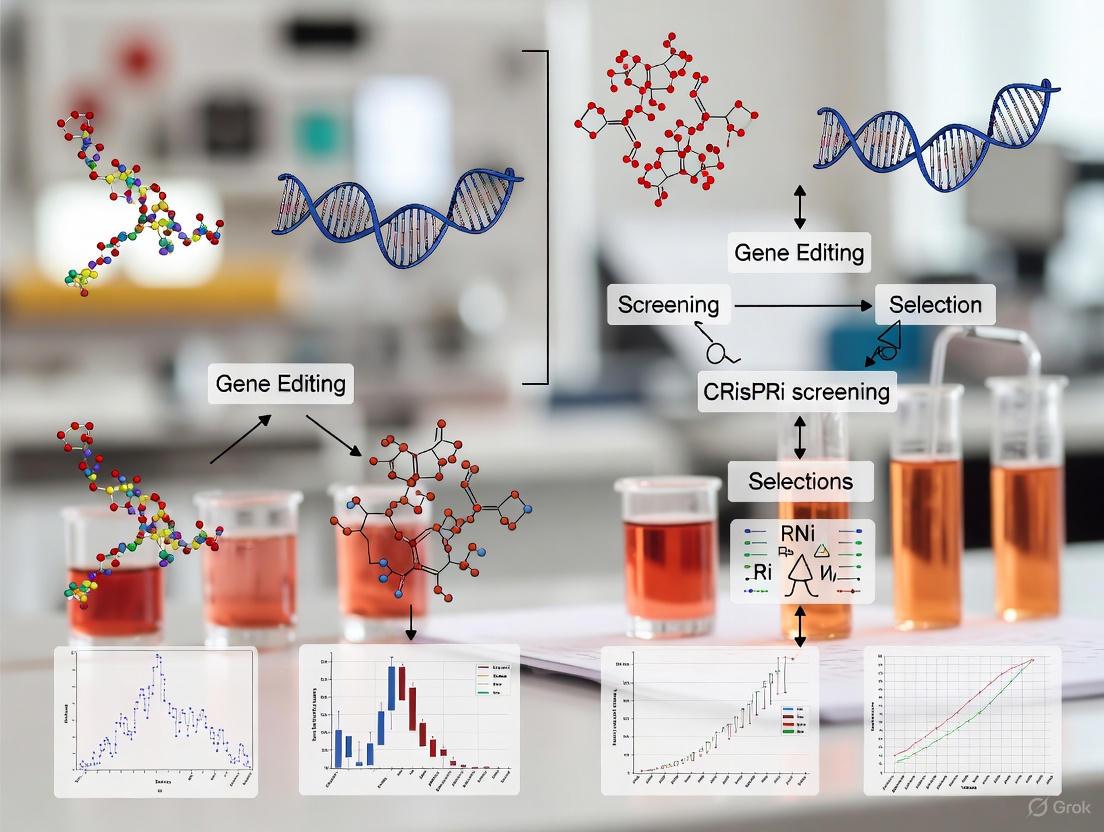
This article provides a comprehensive overview of CRISPR interference (CRISPRi) screening for optimizing metabolic pathways in microbial hosts.
CRISPRi Screening for Metabolic Pathway Optimization: A Comprehensive Guide from Foundational Concepts to Advanced Applications
Abstract
This article provides a comprehensive overview of CRISPR interference (CRISPRi) screening for optimizing metabolic pathways in microbial hosts. It covers foundational principles, including the mechanism of dCas9-mediated transcriptional repression and its advantages over nuclease-active CRISPR systems for metabolic engineering. The content explores advanced methodological applications such as titratable repression, combinatorial multi-gene regulation, and high-throughput screening strategies using biosensors. It addresses critical troubleshooting aspects like off-target effects, sgRNA design optimization, and screening data interpretation. Finally, it examines validation techniques and comparative analysis with other gene regulation tools, offering researchers and drug development professionals a practical framework for implementing CRISPRi to enhance bioproduction and accelerate therapeutic development.
Understanding CRISPRi: Foundational Principles for Metabolic Pathway Engineering
The CRISPR-Cas9 system has revolutionized genetic engineering, primarily through two distinct mechanistic paradigms: nuclease-active editing and dCas9-mediated transcriptional repression. Nuclease-active CRISPR-Cas9 utilizes the catalytically competent Cas9 enzyme to create double-stranded breaks (DSBs) in genomic DNA, activating endogenous DNA repair mechanisms that can result in gene knockout through insertions or deletions (indels) [1]. In contrast, CRISPR interference (CRISPRi) employs a catalytically dead Cas9 (dCas9) that retains DNA-binding capability but lacks cleavage activity [1]. This system functions as a programmable transcriptional regulator that can precisely modulate gene expression without altering the underlying DNA sequence [2]. For metabolic pathway optimization research, understanding the fundamental distinctions between these approaches is crucial for selecting the appropriate tool for specific experimental goals, whether complete gene ablation or fine-tuned transcriptional control is required.
Core Mechanism and Molecular Consequences
Fundamental Mechanism of Action
The primary distinction between these technologies lies in their fundamental mode of action and consequent cellular effects, as summarized in Table 1.
Table 1: Fundamental comparison of dCas9-mediated transcriptional repression and nuclease-active editing
| Parameter | dCas9-Mediated Transcriptional Repression (CRISPRi) | Nuclease-Active Editing |
|---|---|---|
| Cas9 Status | Catalytically dead (dCas9) | Catalytically active |
| DNA Cleavage | None | Double-stranded breaks (DSBs) |
| Mechanism | Blocks RNA polymerase binding or elongation; recruits repressive chromatin modifiers [1] [2] | Activates non-homologous end joining (NHEJ) or homology-directed repair (HDR) [1] |
| Genetic Outcome | Reversible transcription inhibition | Permanent indels or specific sequence changes |
| Expression Effect | Tunable knockdown | Complete knockout (via frameshift) |
| DNA Damage Response | Not triggered | Activated [2] [3] |
| Off-Target Concerns | Primarily on-target binding specificity | DNA cleavage at off-target sites |
| Theoretical Applications | Functional genomics, essential gene studies, metabolic fine-tuning [4] [2] | Gene knockout, gene correction, therapeutic mutation repair |
CRISPRi Repression Mechanisms and Enhancements
The core CRISPRi system consists of two primary components: the dCas9 protein and a customizable single-guide RNA (sgRNA) complementary to the target gene's promoter region [1]. The binding of the dCas9/sgRNA complex to DNA causes transcriptional interference by physically blocking RNA polymerase binding or transcription elongation [1]. This mechanism functions analogously to RNA interference (RNAi) in achieving gene silencing but operates at the transcriptional (DNA) level rather than post-transcriptional (mRNA) level [1].
Advanced CRISPRi platforms significantly enhance repression efficiency by fusing dCas9 to transcriptional repressor domains. The most common fusion partners include:
- KRAB (Krüppel-associated box) domain: Recruits endogenous repressive complexes that promote heterochromatin formation [2] [5]
- Novel repressor combinations: Recent engineering efforts have identified superior repressors such as dCas9-ZIM3(KRAB)-MeCP2(t), which shows significantly enhanced target gene silencing and reduced variability across gene targets and cell lines [2]
Table 2: Experimentally determined performance metrics of CRISPR technologies
| Performance Metric | CRISPRi | Nuclease-Active Editing |
|---|---|---|
| Knockdown/Knockout Efficiency | Up to 20-30% improvement with novel repressors like dCas9-ZIM3(KRAB)-MeCP2(t) compared to earlier versions [2] | Highly variable; depends on repair pathway utilization |
| Detection of Essential Genes | >90% detection rate with compact 5 sgRNA/gene library [6] | Comparable but with more false positives due to DNA damage toxicity |
| Non-Specific Toxicity | No detectable non-specific toxicity [6] | Observable DNA damage toxicity [6] |
| On-Target Errors | Minimal (near zero) [3] | Can reach 10-16% incorrectly edited cells [3] |
| Editing Accuracy | 90-99.6% [3] | 10-38% [3] |
Diagram 1: CRISPRi mechanism showing dCas9/sgRNA binding and transcriptional repression. The core dCas9/sgRNA complex binds target DNA, physically blocking transcription. When fused to repressor domains like KRAB, additional chromatin modifications enhance silencing.
Experimental Protocols for Metabolic Pathway Optimization
CRISPRi Implementation for Metabolic Engineering
Protocol: Establishing a CRISPRi System for Bacterial Metabolic Pathway Optimization Application: Dynamic regulation of TCA cycle for d-pantothenic acid production in Bacillus subtilis [4]
Materials and Reagents:
- dCas9 Expression Vector: Contains dCas9 gene fused to repressor domains (e.g., KRAB)
- sgRNA Expression Vector: With customizable spacer sequence for target gene
- Host Strain: Bacillus subtilis MU8 or appropriate production chassis
- Culture Media: M9 medium (14 g/L K₂HPO₄·3H₂O, 5.2 g/L KH₂PO₄, 2 g/L (NH₄)₂SO₄, 0.3 g/L MgSO₄, 1g/L tryptone with 10 g/L glucose) [4]
- Antibiotics for Selection: Bleomycin (20 μg/ml), chloramphenicol (5 μg/ml), erythromycin (5 μg/ml), spectinomycin (100 μg/ml), or kanamycin (15 μg/ml) [4]
Methodology:
- sgRNA Design: Design sgRNA complementary to the promoter region of target metabolic gene (e.g., citZ encoding citrate synthase for TCA cycle regulation). Optimal targeting occurs -50 to +300 bp relative to transcription start site [6].
- Vector Construction: Clone sgRNA expression cassette into appropriate vector backbone containing terminator sequences.
- Strain Transformation: Introduce dCas9 and sgRNA vectors into production host via electroporation or chemical transformation.
- Screening and Validation: Select transformants on appropriate antibiotic plates. Validate repression efficiency via:
- qRT-PCR to measure transcript levels
- Western blotting to assess protein reduction
- Functional assays for metabolic flux changes
- Fermentation Optimization: Cultivate engineered strains in 5L fed-batch fermentations with appropriate feeding strategy [4].
- Product Quantification: Analyze DPA titers via HPLC or LC-MS at 24-hour intervals.
Troubleshooting Notes:
- Incomplete repression may require sgRNA redesign or testing multiple target sites
- Growth defects may indicate excessive repression of essential pathways
- For dynamic control, consider integrating quorum-sensing systems for autonomous regulation [4]
Advanced CRISPRi Screening Protocol
Protocol: Genome-wide CRISPRi Screening for Metabolic Gene Identification Application: Identification of genes affecting cisplatin response in human gastric organoids [5]
Materials and Reagents:
- Inducible dCas9-KRAB Cell Line: TP53/APC double knockout gastric organoid line with doxycycline-inducible dCas9-KRAB system [5]
- sgRNA Library: Genome-scale human CRISPRi-v2 library with 5-10 sgRNAs per gene [6]
- Lentiviral Packaging System: For sgRNA library delivery
- Culture Reagents: Appropriate organoid culture media with growth factors
- Doxycycline: For induction of dCas9-KRAB expression
- Selection Antibiotics: Puromycin for selection of transduced cells
- Cisplatin: For drug treatment screens
Methodology:
- Cell Line Preparation: Culture iCRISPRi organoids and confirm dCas9-KRAB expression via Western blot after doxycycline induction (1 μg/mL) [5].
- Virus Production and Transduction: Package sgRNA library into lentiviral particles. Transduce organoids at low MOI (0.3-0.5) to ensure single sgRNA integration.
- Selection and Expansion: Treat with puromycin (dose optimized for organoids) 48 hours post-transduction. Maintain >1000 cells per sgRNA throughout screening to preserve library representation [5].
- Drug Treatment Screen: Split organoids into control and treatment groups after puromycin selection. Treat with IC₅₀ concentration of cisplatin for 7-14 days.
- Genomic DNA Extraction and Sequencing: Harvest organoids at multiple timepoints. Extract gDNA and amplify integrated sgRNAs with barcoded primers for next-generation sequencing.
- Hit Identification: Calculate sgRNA abundance changes between treatment and control using MAGeCK or similar algorithms. Identify significantly depleted or enriched sgRNAs (FDR < 0.05).
Validation:
- Confirm hits using individual sgRNAs rather than pooled library
- Measure growth inhibition via cell viability assays
- Assess transcriptomic changes via single-cell RNA sequencing if applicable [5]
The Scientist's Toolkit: Essential Research Reagents
Table 3: Key research reagents for dCas9-mediated transcriptional repression studies
| Reagent/Solution | Function | Examples/Specifications |
|---|---|---|
| dCas9 Expression Vector | Encodes catalytically dead Cas9 protein | pLV-dCas9-KRAB; with repressor domain fusions (KRAB, MeCP2, ZIM3) [2] [5] |
| sgRNA Library | Targets dCas9 to specific genomic loci | hCRISPRi-v2 library; 5-10 sgRNAs/gene; designed with chromatin accessibility algorithms [6] |
| Repressor Domains | Enhances transcriptional repression efficiency | KRAB, ZIM3(KRAB), MeCP2(t); novel combinations show 20-30% improvement [2] |
| Induction System | Controls dCas9 expression temporally | Doxycycline-inducible systems (rtTA); enables timed repression [5] |
| Delivery Vehicles | Introduces CRISPR components into cells | Lentiviral vectors (for stable integration); AAV vectors (for in vivo applications) [3] |
| Validation Tools | Confirms repression efficiency | qRT-PCR reagents; Western blot equipment; flow cytometry antibodies [5] |
Diagram 2: CRISPRi screening workflow for metabolic pathway research. The process begins with research question formulation, proceeds through sgRNA design and system delivery, includes induction and treatment phases, and concludes with analysis and target identification.
Application in Metabolic Pathway Optimization
The application of dCas9-mediated transcriptional repression in metabolic pathway optimization represents a paradigm shift in metabolic engineering, enabling precise control of flux through competing pathways without permanent genetic alterations. In one compelling example, researchers developed a quorum sensing-controlled type I CRISPRi system (QICi) in Bacillus subtilis that dynamically regulated the TCA cycle by repressing citrate synthase (citZ), resulting in dramatic increases in d-pantothenic acid (DPA) production—achieving titers of 14.97 g/L in 5L fed-batch fermentations without precursor supplementation [4]. Similarly, QICi-mediated repression of glycolysis genes redirected metabolic flux into the pentose phosphate pathway, boosting riboflavin production by 2.49-fold [4].
For pharmaceutical applications, CRISPRi has been instrumental in optimizing secondary metabolic pathways in medicinal plants. By precisely regulating key enzymes and transcription factors in biosynthetic pathways for valuable compounds like tanshinone, artemisinin, and ginsenosides, researchers have enhanced both the yield and quality of active ingredients in medicinal plants [7]. This approach demonstrates the particular advantage of CRISPRi for fine-tuning complex metabolic networks where complete gene knockout would be detrimental to cell viability or pathway function.
The reversibility of CRISPRi-mediated repression makes it uniquely suited for optimizing essential gene expression in metabolic engineering, allowing researchers to balance cell growth with product synthesis by titrating repression levels rather than eliminating gene function entirely [4]. This precise control enables sophisticated metabolic engineering strategies that were previously challenging with all-or-nothing nuclease approaches.
CRISPR interference (CRISPRi) has emerged as a powerful and versatile tool for metabolic engineering, enabling precise reprogramming of cellular metabolism without altering the underlying DNA sequence. This technology utilizes a deactivated Cas9 (dCas9) protein, which binds to target DNA sequences under the guidance of a single-guide RNA (sgRNA) but does not cleave the DNA, thereby serving as a programmable transcriptional repressor [8]. The binding of the dCas9-sgRNA complex to promoter regions or coding sequences physically blocks RNA polymerase, leading to suppressed transcription initiation or elongation [8] [2]. This mechanism allows researchers to dynamically fine-tune metabolic fluxes, address pathway bottlenecks, and redirect cellular resources toward the production of valuable compounds. Within the broader context of CRISPR screening for metabolic pathway optimization, CRISPRi offers distinct advantages for probing gene function and engineering industrial microbes, particularly through its precise tunability, capacity for multiplexed repression, and ability to target essential genes without causing cell death. This application note details these advantages and provides practical protocols for their implementation in metabolic engineering projects.
Key Advantages and Applications
Precise Tunability of Gene Expression
A defining feature of CRISPRi is the ability to finely dial in the level of gene repression, which is crucial for balancing metabolic pathways where complete gene knockout could be detrimental or suboptimal.
- Inducible Systems: Repression levels can be controlled by regulating the expression of dCas9 or the sgRNA. For instance, a L-rhamnose-inducible promoter can control dCas9 expression, allowing researchers to titrate the level of repression by varying the inducer concentration [9]. This enables dynamic control, where repression can be initiated at a specific time in the fermentation process to maximize both cell growth and product formation.
- sgRNA Design: The repression efficiency can also be modulated by designing sgRNAs that target different regions of a gene (e.g., the promoter for strong repression or the coding sequence for moderate repression) and by adjusting the expression level of the sgRNA itself [8] [9].
Table 1: Examples of Tunable CRISPRi for Metabolic Engineering
| Host Organism | Target Gene(s) | Tuning Method | Outcome | Reference |
|---|---|---|---|---|
| E. coli | Mevalonate (MVA) pathway genes | Varying inducer concentration for dCas9 | Enhanced production of isoprene, (-)-α-bisabolol, and lycopene | [9] |
| E. coli | pta, frdA, ldhA, adhE | Inducible dCas9 system | Redirected carbon flux, increasing n-butanol yield 5.4-fold | [9] |
| Corynebacterium glutamicum | Flux-control genes | Promoter libraries to control sgRNA/dCas9 | Optimized L-proline biosynthesis flux | [10] |
Multiplexed Repression of Gene Networks
Metabolic engineering often requires simultaneous regulation of multiple genes to effectively rewire complex cellular networks. CRISPRi is exceptionally well-suited for this task.
- sgRNA Arrays: Multiple sgRNAs can be expressed from a single transcript using a single promoter, reducing the genetic footprint and metabolic burden on the host [11] [9]. Some systems, particularly those based on Cas12a, can autoprocess a single transcript into multiple functional gRNAs, simplifying multiplexed system construction [8].
- Combinatorial Optimization: This capability allows for the exploration of synergistic effects between different genetic perturbations. By repressing combinations of genes involved in competing pathways, researchers can rapidly identify optimal genetic configurations for maximizing product titers.
Table 2: Applications of Multiplexed CRISPRi in Metabolic Engineering
| Application | Host Organism | Multiplexed Targets | Effect | Reference |
|---|---|---|---|---|
| Redirect carbon flux | E. coli | pta, frdA, ldhA, adhE (quadruple repression) | Simultaneous reduction of acetate, succinate, lactate, and ethanol; enhanced n-butanol production | [9] |
| Combinatorial metabolic engineering | S. cerevisiae | Orthogonal CRISPRa, CRISPRi, and CRISPRd | 3-fold increase in β-carotene production; 2.5-fold improvement in endoglucanase display | [11] |
| Genome-wide screening | E. coli, B. subtilis | Library of gRNAs targeting all transporters | Discovery of novel L-proline exporter (Cgl2622) in C. glutamicum | [10] |
Targeting Essential Genes and Minimizing Cellular Toxicity
Unlike nuclease-active CRISPR-Cas systems that cause irreversible double-strand breaks (DSBs), CRISPRi is a reversible and non-mutagenic tool, making it ideal for manipulating essential genes.
- Reversible Knockdown: CRISPRi results in transcriptional repression rather than permanent gene deletion. This allows for the functional study and modulation of essential genes required for cell viability or central metabolism without causing cell death [9] [2].
- Reduced Toxicity and Unwanted DNA Damage: The use of dCas9 eliminates the cytotoxic effects associated with DSBs, such as the activation of DNA damage response pathways and potential chromosomal rearrangements. This leads to more robust and interpretable results in functional genomics screens and industrial bioprocessing [12] [2].
Experimental Protocols
Protocol: CRISPRi-Mediated Multiplex Repression in E. coli
This protocol outlines the steps for repressing multiple genes in E. coli to redirect metabolic flux, based on the work for n-butanol production [9].
Research Reagent Solutions
| Reagent | Function | Example/Description |
|---|---|---|
| dCas9 Expression Plasmid | Encodes the nuclease-deficient Cas9 protein. | Use a plasmid with a tightly regulated, inducible promoter (e.g., L-rhamnose-inducible) to control dCas9 expression and minimize toxicity [10] [9]. |
| sgRNA Expression Plasmid | Encodes the guide RNA(s) targeting specific genes. | For multiplexing, use a plasmid with a constitutive promoter (e.g., J23119) expressing an array of sgRNAs targeting genes like pta, frdA, ldhA, and adhE [9]. |
| Host Strain | The microbial chassis for metabolic engineering. | An E. coli strain engineered with a heterologous n-butanol production pathway (e.g., pAB-HCTA plasmid) [9]. |
| Inducer | A molecule to precisely control dCas9 expression. | L-rhamnose for induction of the dCas9 gene in the system described [9]. |
Procedure:
- sgRNA Design and Cloning: Design sgRNAs with 20-nt protospacer sequences complementary to the non-template strand of the target gene's promoter or transcription start site. For multiplex repression, synthesize an sgRNA array where individual sgRNA sequences are separated by direct repeats (for Cas12a systems) or expressed as a polycistronic transcript [8] [9]. Clone this array into an sgRNA expression plasmid.
- Strain Transformation: Co-transform the dCas9 expression plasmid and the sgRNA array plasmid into your production E. coli strain. Include controls (e.g., strain with dCas9 but non-targeting sgRNA).
- Cultivation and Induction: Inoculate transformants into a suitable medium with appropriate antibiotics. Grow cultures to mid-exponential phase and then induce dCas9 expression by adding a predetermined optimal concentration of L-rhamnose.
- Validation and Analysis:
- Repression Efficiency: After several hours of post-induction growth, harvest cells. Analyze transcript levels of target genes using RT-qPCR to quantify repression.
- Phenotypic Analysis: Measure the concentration of pathway byproducts (acetate, succinate, lactate, ethanol) and the desired product (n-butanol) in the culture supernatant using HPLC or GC-MS.
- Fermentation: Perform fed-batch fermentations with the best-performing strain to assess production metrics (titer, yield, productivity) under scaled-up conditions.
Protocol: Arrayed CRISPRi Screening for Transporter Discovery
This protocol describes the use of an arrayed CRISPRi library to identify novel transporters, as demonstrated for L-proline export in C. glutamicum [10].
Procedure:
- Library Design: Design a genome-wide arrayed CRISPRi library where each well in a multi-well plate contains a single strain with a unique sgRNA targeting a specific gene. For focused screens, target a specific gene family (e.g., all 397 predicted transporters in C. glutamicum).
- Strain Array Construction: Introduce each sgRNA plasmid into a Cas9-expressing production host. This can be done via high-throughput transformation or conjugation, maintaining the arrayed format.
- Screening:
- Grow the arrayed strains in a defined medium under selective pressure for the desired phenotype (e.g., L-proline overproduction).
- After a suitable incubation period, measure the growth (OD600) and L-proline accumulation in the medium for each well. Strains with repressed proline exporters may show higher intracellular but lower extracellular proline, while successful exporter discovery will correlate with higher extracellular titers.
- Hit Validation: Isolate candidate strains showing improved product export or tolerance. Re-test these hits in shake-flask fermentations and validate the repression of the target transporter gene via RT-qPCR. The final validation involves constructing a plasmid-, antibiotic-, and inducer-free production strain with the identified exporter overexpressed for fed-batch fermentation [10].
Concluding Remarks
CRISPRi has firmly established itself as an indispensable component of the metabolic engineer's toolkit. Its core strengths—tunable repression, facile multiplexing, and the ability to target essential genes—provide a level of control that is perfectly suited for the nuanced task of optimizing complex metabolic networks. As the technology continues to evolve with the development of more effective repressor domains [2] and broader host range systems [8], its impact on developing robust microbial cell factories for the sustainable production of biofuels, chemicals, and pharmaceuticals will only grow. Integrating CRISPRi with other CRISPR-derived tools and multi-omics analyses promises to further accelerate the design-build-test-learn cycle, bringing us closer to the goal of predictive and rational metabolic design.
CRISPR interference (CRISPRi) has emerged as a powerful tool for programmable gene repression, enabling precise metabolic pathway optimization without introducing DNA double-strand breaks. This system primarily utilizes a catalytically inactive Cas9 (dCas9) that acts as a DNA-binding platform, single-guide RNAs (sgRNAs) for target specificity, and regulatory elements that control system expression and performance. For metabolic engineering, CRISPRi allows fine-tuning of pathway fluxes by selectively repressing competing or bottleneck enzymes, offering significant advantages over complete gene knockout strategies. This application note details the key components, their properties, and practical implementation for effective CRISPRi screening in metabolic pathway optimization.
dCas9 Variants and Selection Criteria
The dCas9 protein serves as the foundational component of CRISPRi systems, with variants offering distinct properties suited to different experimental needs. Selection depends on multiple factors including origin, size, specificity, and compatibility with host organisms.
Table: Comparison of Key dCas9 Variants for Metabolic Engineering
| dCas9 Variant | Origin | Size (aa) | PAM Sequence | Key Features | Optimal Applications |
|---|---|---|---|---|---|
| dCas9 (Spy) | Streptococcus pyogenes | 1368 | NGG | High efficiency, extensive validation | General purpose screening |
| dCas9 (St1) | Streptococcus thermophilus | 1121 | NNAGAAW (W = A/T) | Efficient in bifidobacteria and lactic acid bacteria | Dairy and gut microbiome engineering |
| OpenCRISPR-1 | AI-designed | ~1368 | NGG | Improved specificity, 400 mutations from SpCas9 | High-fidelity applications |
| dCas9-KRAB | Fusion protein | ~1600 | NGG | Enhanced repression via KRAB domain | Strong transcriptional repression |
Beyond these well-characterized variants, artificial intelligence is now generating novel editors with optimized properties. OpenCRISPR-1, an AI-designed gene editor, exhibits comparable or improved activity and specificity relative to SpCas9 while being 400 mutations away in sequence, demonstrating the potential for tailor-made editors [13]. For metabolic pathway engineering in non-model organisms, sourcing dCas9 from compatible species can significantly improve performance, as demonstrated by the effective use of Streptococcus thermophilus dCas9 in bifidobacteria [14].
For enhanced repression efficiency, dCas9 is typically fused to repressive domains. The most common configuration is dCas9-KRAB (Krüppel-associated box), which recruits chromatin-modifying complexes to establish repressive heterochromatin states [15]. The inducible dCas9-KRAB system enables temporal control of repression, allowing investigation of essential genes whose constitutive repression might affect cell viability [16].
sgRNA Design and Engineering
The single-guide RNA (sgRNA) is a chimeric molecule that combines the functions of crRNA (target recognition) and tracrRNA (scaffold for Cas9 binding) into a single transcript [17]. Proper sgRNA design is critical for maximizing on-target efficiency and minimizing off-target effects in metabolic engineering applications.
Key Considerations for sgRNA Design
Target Selection: The sgRNA should be complementary to the template strand within the promoter region or early coding sequence for transcriptional repression [18]. For metabolic pathway optimization, target the 5' region of genes encoding metabolic enzymes to block transcription initiation or elongation.
PAM Requirement: Each dCas9 variant requires a specific protospacer adjacent motif (PAM) adjacent to the target site. Verify PAM compatibility between your sgRNA and dCas9 variant [13].
Specificity and Off-Target Potential: Evaluate potential off-target sites across the genome using specialized algorithms. Synthetic sgRNAs with chemical modifications can achieve consistently high editing efficiencies with lower risk of off-target effects [17].
Advanced sgRNA Engineering
For multiplexed metabolic pathway engineering, where multiple genes are targeted simultaneously, competition for dCas9 can significantly alter repression dynamics. To address this, implement a dCas9 regulator that maintains constant apo-dCas9 levels through negative feedback, ensuring consistent repression across all targeted genes regardless of sgRNA load [18].
Table: sgRNA Design Parameters for Metabolic Pathway Optimization
| Parameter | Optimal Configuration | Rationale | Validation Method |
|---|---|---|---|
| Target Region | -35 to +50 relative to TSS | Blocks RNA polymerase binding or progression | RNA-seq, RT-qPCR |
| sgRNA Length | 20 nt | Balance of specificity and efficiency | Dose-response curves |
| GC Content | 40-60% | Stability and binding affinity | Melting temperature analysis |
| Off-Target Score | <0.2 (algorithm-specific) | Minimize non-specific binding | Whole-genome sequencing |
| Chemical Modifications | 2'-O-methyl 3' phosphorothioate | Enhanced stability, reduced immune response | Editing efficiency assays |
Regulatory Elements and Circuit Design
Effective CRISPRi systems require precisely engineered regulatory elements to control the expression of dCas9 and sgRNAs. These elements determine system dynamics, leakiness, and compatibility with host organisms.
Expression Systems for dCas9
Constitutive Expression: Strong, constitutive promoters provide consistent dCas9 levels but may cause cellular burden. For metabolic engineering, moderate-strength promoters often provide optimal balance between repression efficiency and growth impact [18].
Inducible Systems: Doxycycline-inducible (Tet-On) systems enable temporal control of dCas9 expression, allowing repression to be initiated at specific growth phases or environmental conditions [15].
Auto-regulatory Circuits: Implement negative feedback control using sgRNA g0 to maintain constant apo-dCas9 levels, neutralizing competition effects in multiplexed repression [18].
sgRNA Expression Platforms
Polycistronic tRNA-gRNA Arrays: Enable simultaneous expression of multiple sgRNAs from a single transcript for multiplexed metabolic engineering.
Inducible Promoters: Chemical or environmental inducers allow dynamic control of sgRNA expression, enabling sequential rather than simultaneous gene repression.
Library Formats: For CRISPRi screening, sgRNA libraries are typically cloned into lentiviral vectors with U6 promoters for high-expression in mammalian systems [16].
Experimental Protocol: CRISPRi Screening for Metabolic Pathway Optimization
This protocol outlines the complete workflow for implementing CRISPRi to optimize exopolysaccharide biosynthesis in Streptococcus thermophilus, adaptable to other metabolic engineering applications.
System Design and Vector Construction (Days 1-5)
Materials:
- dCas9 expression vector (e.g., pCRISPRi-St1 containing S. thermophilus dCas9)
- sgRNA cloning vector with appropriate promoter
- E. coli DH5α competent cells
- Restriction enzymes (BsaI, BsmBI) or Golden Gate assembly reagents
Procedure:
- Select dCas9 variant appropriate for host organism. For S. thermophilus and related bacteria, use dCas9 from S. thermophilus [19].
- Design sgRNAs targeting metabolic pathway genes (e.g., galK for UDP-glucose metabolism, epsA and epsE for EPS synthesis) following guidelines in Section 3.
- Clone sgRNA expression cassettes into appropriate vectors using Golden Gate assembly or traditional restriction-ligation.
- Sequence confirm constructs and transform into host organism using optimized methods.
Library Delivery and Screening (Days 6-15)
Materials:
- Electroporator or conjugation equipment
- Selection antibiotics
- Metabolite quantification assays (e.g., EPS quantification)
Procedure:
- Deliver CRISPRi constructs to host organism via electroporation or conjugation.
- Plate on selective media and incubate until colonies form.
- Screen for successful transformants via colony PCR and sequencing.
- For pooled screening, harvest cells and quantify target metabolite (e.g., EPS) versus control strains.
Validation and Optimization (Days 16-25)
Materials:
- RNA extraction kit
- RT-qPCR reagents
- Metabolite analysis equipment (HPLC, GC-MS)
Procedure:
- Validate gene repression via RT-qPCR comparing to control strains.
- Quantify metabolic output (e.g., EPS titer) using appropriate analytical methods.
- For multiplexed repression, implement dCas9 regulator circuit if competition effects are observed [18].
- Iterate sgRNA design and targeting strategy based on initial results.
Visualization of CRISPRi Workflows
CRISPRi System Components and Interactions
CRISPRi Component Interactions
Metabolic Pathway Engineering Workflow
Metabolic Engineering Workflow
Research Reagent Solutions
Table: Essential Reagents for CRISPRi Metabolic Engineering
| Reagent Category | Specific Examples | Function | Commercial Sources |
|---|---|---|---|
| dCas9 Expression Systems | dCas9-KRAB, dCas9-St1, OpenCRISPR-1 | Transcriptional repression scaffold | Addgene, commercial providers |
| sgRNA Synthesis | RUO sgRNA, INDe sgRNA, GMP sgRNA | Target-specific guide RNA | Synthego, Integrated DNA Technologies |
| Delivery Vectors | Lentiviral, plasmid, integrative vectors | Nucleic acid delivery | Addgene, Thermo Fisher |
| Screening Libraries | Custom sgRNA libraries, genome-wide libraries | High-throughput screening | Custom synthesis providers |
| Validation Reagents | RT-qPCR kits, antibodies, metabolite assays | Experimental confirmation | Various molecular biology suppliers |
Effective CRISPRi screening for metabolic pathway optimization requires careful consideration of three core components: dCas9 variants matched to the host organism, precisely designed sgRNAs with appropriate chemical modifications, and regulatory elements that maintain system functionality under multiplexed conditions. The demonstrated success in optimizing exopolysaccharide biosynthesis in Streptococcus thermophilus - achieving approximately 2-fold increase in EPS titer through targeted repression of galK and overexpression of epsA and epsE - highlights the power of this approach [19]. By following the protocols and design principles outlined here, researchers can implement robust CRISPRi systems for metabolic engineering across diverse microbial hosts and pathway configurations.
In the field of metabolic engineering and therapeutic development, achieving precise control over cellular metabolic pathways remains a fundamental challenge. The advent of CRISPR interference (CRISPRi) technology has revolutionized our approach to modulating gene expression without permanent genetic alterations. This application note details optimized protocols and experimental frameworks for implementing CRISPRi screening to investigate and optimize metabolic flux, enabling researchers to establish critical connections between genetic regulation and pathway performance. By leveraging recent advances in CRISPRi repressor engineering and screening methodologies, scientists can now systematically identify genetic bottlenecks, characterize nutrient transporters, and dynamically balance metabolic pathways for both industrial biomanufacturing and basic research applications. The following sections provide detailed protocols, data analysis frameworks, and practical implementation strategies to accelerate research in this rapidly evolving field.
CRISPRi Platform Selection and Optimization
Next-Generation CRISPRi Repressors
Traditional CRISPRi systems utilizing dCas9 fused to single repressor domains often exhibit variable performance across cell lines and gene targets. Recent protein engineering efforts have developed enhanced CRISPRi platforms through systematic optimization of repressor domains and their configurations:
Novel Repressor Domain Combinations: Screening of bipartite and tripartite repressor fusions has identified several high-performance configurations. The most potent repressor, dCas9-ZIM3(KRAB)-MeCP2(t), demonstrates significantly improved gene repression at both transcript and protein levels across multiple cell lines. This fusion reduced variability dependent on guide RNA sequences and showed enhanced performance in genome-wide screens compared to gold-standard repressors [20].
Domain Truncation and Optimization: Truncated versions of established repressor domains maintain functionality while potentially reducing cellular burden. A truncated MeCP2 domain (MeCP2(t)) of only 80 amino acids achieved similar knockdown efficiency as the full-length 283-amino acid version, enabling more compact genetic constructs [20]. Further engineering identified an ultra-compact NCoR/SMRT interaction domain (NID) that enhanced CRISPRi performance by approximately 40% compared to canonical MeCP2 subdomains [21].
Nuclear Localization Signal (NLS) Optimization: Strategic placement of NLS sequences significantly impacts CRISPRi efficiency. Incorporating a single carboxy-terminal NLS enhanced gene knockdown efficiency by an average of 50% across tested repressor architectures [21].
Table 1: Performance Comparison of Optimized CRISPRi Repressors
| Repressor Configuration | Relative Efficiency | Key Advantages | Validation Context |
|---|---|---|---|
| dCas9-ZIM3(KRAB)-MeCP2(t) | ~20-30% improvement vs. dCas9-ZIM3(KRAB) | Reduced guide-dependent variability | Multiple cell lines, endogenous targets, genome-wide screens |
| dCas9-ZIM3-NID-MXD1-NLS | Superior silencing capability | Enhanced NLS configuration | Genome-wide dropout screens, multiple sgRNA targets |
| dCas9-KOX1(KRAB)-MeCP2(t) | Significant improvement vs. standards | Compact design | Reporter assays, proliferation assays |
| dCas9-KRBOX1(KRAB)-MAX | ~20-30% improvement vs. gold standards | Novel domain combination | GFP reporter assays in HEK293T cells |
Implementation Considerations
When selecting a CRISPRi platform, consider the following factors:
- Cell Line Compatibility: Performance varies across cellular contexts; validate repressor efficiency in your specific model system [20]
- Expression System: Utilize inducible systems where prolonged repressor expression may cause cellular toxicity [22]
- Guide RNA Design: While novel repressors show reduced sequence-dependence, follow established sgRNA design principles for optimal performance [22]
Experimental Protocols for CRISPRi Screening in Metabolic Studies
Protocol 1: Genome-Scale CRISPRi Screening for Metabolic Transporters
This protocol adapts methods from a comprehensive nutrient transporter study to identify metabolic dependencies across microenvironmental conditions [23].
Materials and Reagents:
- K562 cells expressing dCas9-KRAB (CRISPRi) or dCas9-SunTag (CRISPRa)
- Custom sgRNA library targeting SLC and ABC transporters (10 sgRNAs/gene + 730 non-targeting controls)
- Lentiviral packaging plasmids (psPAX2, pMD2.G)
- Selection antibiotics appropriate for your expression system
- Base medium for screening (e.g., RPMI-1640 without specific nutrients)
- Nutrient stocks for medium supplementation
Procedure:
Library Design and Cloning:
- Design sgRNAs targeting all solute carrier (SLC) and ATP-binding cassette (ABC) transporters in your species of interest
- Include 10 sgRNAs per gene and a minimum of 730 non-targeting control sgRNAs
- Clone library into appropriate lentiviral transfer plasmid under U6 promoter
Lentiviral Production:
- Transfect HEK293T cells with transfer plasmid and packaging plasmids using Lipofectamine 2000
- Collect viral supernatant at 48 and 72 hours post-transfection
- Concentrate virus using ultracentrifugation or PEG precipitation
- Titrate virus using target cells to achieve MOI of 0.3-0.4
Cell Line Engineering and Screening:
- Transduce target cells at low MOI to ensure single integration events
- Select transduced cells with appropriate antibiotics for 7 days
- Split cells into experimental conditions (e.g., nutrient-limited media) and control conditions
- Maintain library representation of at least 500 cells per sgRNA throughout screening
- Passage cells every 2-3 days, collecting samples for genomic DNA extraction at multiple timepoints
Sample Processing and Sequencing:
- Extract genomic DNA using salt precipitation method or commercial kits
- Amplify sgRNA regions using nested PCR with barcoded primers for multiplexing
- Purify PCR products and quantify using Qubit dsDNA HS assay
- Sequence on Illumina platform to obtain minimum of 50-100 reads per sgRNA
Data Analysis:
- Process sequencing data using MAGeCK algorithm to calculate enrichment/depletion scores
- Identify significantly enriched/depleted sgRNAs under experimental conditions
- Validate hits using secondary assays before proceeding to functional characterization
Protocol 2: Arrayed CRISPRi Screening for Metabolic Engineering
This protocol describes an arrayed screening approach for identifying optimal metabolic flux modifications, adapted from successful application in Corynebacterium glutamicum for L-proline production [10].
Materials and Reagents:
- Arrayed CRISPRi library targeting genes of interest (individual constructs in multi-well format)
- Appropriate microbial or mammalian host strain
- Culture vessels compatible with high-throughput screening (96-well or 384-well plates)
- Metabolite detection system (HPLC, LC-MS, or enzymatic assays)
- Selective media for specific nutrient limitations
Procedure:
Library Design and Validation:
- Select target genes based on prior knowledge of metabolic pathways
- Design 3-5 sgRNAs per target with validated efficiency
- Clone individual sgRNAs into appropriate CRISPRi vectors with different selection markers
- Sequence-verify all constructs before screening
Strain Transformation/Transduction:
- Introduce arrayed CRISPRi constructs into target host using optimized method
- Include non-targeting sgRNA controls and empty vector controls
- For microbial systems, perform transformation in 96-well format
- Select successfully engineered clones with appropriate antibiotics
Phenotypic Screening:
- Inoculate engineered strains into defined media with appropriate carbon sources
- Culture under controlled conditions with monitoring of growth and metabolite production
- For nutrient limitation studies, use media formulations that reduce proliferation by ~50%
- Collect samples at multiple timepoints for endpoint analysis
Metabolite Analysis:
- Quantify target metabolites using appropriate analytical methods
- For amino acids, use HPLC with fluorescence detection or LC-MS
- Measure pathway intermediates to identify flux bottlenecks
- Correlate metabolite levels with growth characteristics
Hit Validation:
- Select top-performing strains for secondary validation in larger culture volumes
- Measure additional parameters: substrate consumption, byproduct formation, growth rate
- Confirm target gene knockdown using qRT-PCR or Western blotting
- Iterate on top hits through combinatorial targeting or promoter engineering
Application Case Studies
Case Study 1: L-Proline Hyperproduction in C. glutamicum
A comprehensive metabolic engineering approach combining CRISPRi screening with pathway optimization achieved remarkable L-proline production [10]:
Implementation Framework:
- Enzyme Engineering: Used CRISPR-assisted ssDNA recombineering to screen feedback-deregulated variants of γ-glutamyl kinase (ProB), the key rate-limiting enzyme in L-proline biosynthesis
- Flux Control: Employed in silico analysis to predict flux-control genes, then fine-tuned their expression using tailored promoter libraries
- Transporter Discovery: Constructed an arrayed CRISPRi library targeting all 397 transporters in C. glutamicum to identify the L-proline exporter Cgl2622
Results:
- Final engineered strain produced L-proline at 142.4 g/L titer
- Achieved productivity of 2.90 g/L/h and yield of 0.31 g/g glucose
- Created plasmid-, antibiotic-, and inducer-free production strain suitable for industrial application
Table 2: Metabolic Engineering Outcomes for L-Proline Production
| Engineering Step | Specific Target | Improvement Achieved |
|---|---|---|
| Enzyme deregulation | ProB (γ-glutamyl kinase) | Released feedback inhibition by L-proline |
| Flux fine-tuning | Central metabolic genes | Increased carbon flux toward L-proline biosynthesis |
| Transporter discovery | Cgl2622 | Identified and optimized L-proline export |
| Combined optimization | Multiple targets | 142.4 g/L titer, 0.31 g/g yield |
Case Study 2: Dynamic Metabolic Regulation Using Quorum Sensing-CRISPRi
Integration of quorum sensing (QS) circuits with type I CRISPRi systems enabled autonomous dynamic control of metabolic pathways in Bacillus subtilis [4]:
System Design:
- Developed QS-controlled type I CRISPRi (QICi) using PhrQ-RapQ-ComA QS system
- Optimized component expression levels to enhance regulation dynamic range
- Implemented streamlined crRNA vector construction for simplified targeting
Metabolic Applications:
- D-Pantothenic Acid Production: Dynamically regulated citrate synthase (citZ) to balance TCA cycle flux with precursor supply
- Riboflavin Biosynthesis: Suppressed EMP pathway flux to redirect carbon through pentose phosphate pathway
Performance Outcomes:
- Achieved D-pantothenic acid titer of 14.97 g/L in fed-batch fermentation without precursor supplementation
- Increased riboflavin production by 2.49-fold through optimized flux redistribution
- Demonstrated inducer-free autonomous regulation based on cell density signals
Pathway Visualization and Workflow Diagrams
Figure 1: CRISPRi Screening Workflow for Metabolic Optimization
Figure 2: Integration of Genetic Regulation with Metabolic Flux
The Scientist's Toolkit: Essential Research Reagents
Table 3: Key Research Reagents for CRISPRi Metabolic Screening
| Reagent/Category | Specific Examples | Function/Application |
|---|---|---|
| CRISPRi Repressors | dCas9-ZIM3(KRAB)-MeCP2(t), dCas9-ZIM3-NID-MXD1-NLS | Transcriptional repression; Enhanced knockdown efficiency [20] [21] |
| Delivery Systems | Lentiviral vectors, Lipofectamine 2000, Electroporation | Introduction of CRISPRi components into target cells |
| Screening Libraries | Custom SLC/ABC transporter libraries, Arrayed metabolic gene libraries | Targeted interrogation of specific gene families [23] |
| Analytical Tools | LC-MS, HPLC, Seahorse Analyzer, Flow cytometry | Metabolite quantification, metabolic flux analysis, phenotype detection |
| Bioinformatics Tools | MAGeCK, ICE, Benchling sgRNA designer | Screen analysis, editing efficiency quantification, sgRNA design [24] [22] |
| Cell Lines/Strains | K562 CRISPRi/a cells, C. glutamicum, B. subtilis, hPSCs-iCas9 | Optimized host systems for screening [23] [10] [4] |
The integration of advanced CRISPRi platforms with metabolic flux analysis represents a powerful framework for optimizing biological systems across research and industrial applications. The protocols and case studies presented here demonstrate how systematic genetic perturbation screening can identify critical regulatory nodes, characterize nutrient transporters, and dynamically balance metabolic pathways. As CRISPRi technology continues to evolve with enhanced repressor domains, improved delivery systems, and more sophisticated screening methodologies, researchers will gain unprecedented capability to connect genetic regulation with metabolic outcomes. The experimental approaches outlined provide a foundation for advancing both basic understanding of metabolic networks and developing optimized systems for bioproduction and therapeutic intervention.
Implementing CRISPRi Screens: From Library Design to High-Throughput Applications
The precise regulation of multiple genes is fundamental to metabolic engineering and synthetic biology, enabling the redirection of metabolic flux toward desired compounds in engineered microorganisms [25]. Before the advent of modern CRISPR tools, researchers relied on sequential gene knockouts or RNA interference (RNAi), which were often time-consuming and labor-intensive for targeting multiple genes [26]. The development of CRISPR interference (CRISPRi) has revolutionized this field by providing a programmable and efficient platform for simultaneous multi-gene repression [25] [27].
Two primary strategies have emerged for implementing multi-gene CRISPRi: sgRNA arrays and orthogonal inducible promoters. sgRNA arrays enable the simultaneous expression of multiple guide RNAs from a single construct, allowing coordinated repression of several targets [27] [28]. Alternatively, orthogonal inducible promoter systems permit independent control of individual sgRNAs through different small-molecule inducers, facilitating tunable and combinatorial regulation [25]. Both approaches have demonstrated significant success in optimizing metabolic pathways for biofuel production [29] [30], pharmaceutical precursors [25], and other valuable compounds.
This article explores the technical implementation, applications, and protocol development for both strategies within the context of CRISPRi screening for metabolic pathway optimization. We provide detailed methodologies and resource guides to assist researchers in selecting and implementing the most appropriate multi-gene regulation strategy for their specific metabolic engineering objectives.
Fundamental Principles and Design Considerations
sgRNA arrays consist of multiple guide RNA sequences transcribed as a single unit from a common promoter, typically separated by cleavable spacer sequences [27]. This approach enables simultaneous repression of several genes through expression of a polycistronic sgRNA transcript that is processed into individual functional guides. The compact nature of sgRNA arrays makes them particularly valuable when coordinated repression of multiple pathway genes is desired.
A significant advantage of sgRNA arrays is their compatibility with high-throughput screening applications. Arrayed CRISPR libraries containing thousands of sgRNA expression plasmids enable genome-wide perturbation studies [28]. For instance, Reis et al. developed a system employing extra-long sgRNA arrays containing three independently targetable sgRNA moieties within a single nonrepetitive structure [27]. When designing sgRNA arrays, careful attention must be paid to avoiding sequence repetitiveness that could trigger homologous recombination, potentially solved by using different tracrRNA variants for each sgRNA [28].
Implementation Workflow
The following diagram illustrates the key decision points and experimental workflow for implementing multi-gene regulation using either sgRNA arrays or orthogonal inducible promoters:
Key Applications in Metabolic Engineering
sgRNA arrays have demonstrated remarkable success in various metabolic engineering applications. In Pseudomonas putida, predictive CRISPR-mediated gene downregulation identified optimal gene targets for enhanced production of sustainable aviation fuel precursors [29]. Similarly, in Escherichia coli, simultaneous inhibition of adhE, ldhA, and fabH using sgRNA arrays significantly enhanced isopentyl glycol production, achieving 12.4 ± 1.3 g/L titers during fed-batch cultivation [25].
In brewing yeast, separate inhibition of four candidate genes identified three highly efficient targets (TYR1, AAT2, and ALD3). Construction of an sgRNA array for simultaneous inhibition of these targets increased 2-phenylethanol production by 1.89-fold [25]. These examples highlight how sgRNA arrays enable systematic identification of optimal gene repression combinations for metabolic pathway optimization.
System Architecture and Components
Orthogonal inducible promoter systems utilize distinct regulatory elements that respond to different small-molecule inducers to control individual sgRNA expression [25]. This approach enables combinatorial control over multiple genes without constructing numerous individual sgRNA plasmids. A well-designed orthogonal system features promoters with low background leakage, high dynamic range, and minimal cross-talk between inducers [25].
A recent study developed a combinatorial repression system for E. coli using three optimized inducible promoters: PlacO1, PLtetO−1, and ParaBAD [25]. Each promoter drives expression of a different sgRNA targeting specific metabolic genes. By adding different inducer combinations (IPTG, aTc, and arabinose), researchers can rapidly test various repression combinations, significantly reducing construction time compared to traditional sgRNA array approaches.
Quantitative Performance of Promoter Systems
Table 1: Characteristics of Orthogonal Inducible Promoters for Multi-Gene Regulation
| Promoter | Inducer | Inducer Concentration | Leakage Level | Dynamic Range | Orthogonality |
|---|---|---|---|---|---|
| PlacO1 | IPTG | 0.1-1 mM | Low | ~200-fold | High |
| PLtetO−1 | aTc | 10-100 ng/mL | Very Low | ~500-fold | High |
| ParaBAD | Arabinose | 0.01-0.2% | Moderate | ~100-fold | Moderate |
| PLlac0-1 | IPTG | 0.01-1 mM | Low | ~150-fold | High |
Implementation Advantages for Metabolic Engineering
The principal advantage of orthogonal inducible promoters lies in their ability to facilitate combinatorial testing without constructing numerous plasmids. In one application, researchers optimized N-acetylneuraminic acid (NeuAc) biosynthesis in E. coli by testing various inhibition combinations of pta, ptsI, and pykA genes [25]. This approach identified an optimal repression pattern that resulted in a 2.4-fold increase in NeuAc yield compared to the control strain [25].
This system enables fine-tuning of metabolic flux by adjusting inducer concentrations to modulate repression levels of different pathway genes. This tunability is particularly valuable for balancing metabolic pathways where either insufficient or excessive repression of specific enzymes could limit overall flux [25]. The ability to independently control multiple genes through simple inducer additions makes this approach highly adaptable for rapid optimization cycles in metabolic engineering.
Comparative Analysis of Strategies
Technical Performance Metrics
Table 2: Performance Comparison of Multi-Gene Regulation Strategies
| Parameter | sgRNA Arrays | Orthogonal Inducible Promoters |
|---|---|---|
| Construction Time | Weeks for multiple combinations | Days once base system established |
| Tunability | Limited (fixed ratios) | High (independent tuning via inducers) |
| Repression Kinetics | Coordinated | Independent temporal control |
| Pathway Balancing Capability | Moderate | High |
| Library Scale Compatibility | Excellent for large screens | Moderate (limited by orthogonal promoters) |
| Metabolic Application Examples | Isopentyl glycol, 2-phenylethanol production | N-acetylneuraminic acid optimization |
| Maximum Reported Yield Improvement | 5.76-fold (dicinnamoylmethane) | 2.4-fold (NeuAc) |
Selection Guidelines for Metabolic Pathway Optimization
The choice between sgRNA arrays and orthogonal inducible promoters depends on specific metabolic engineering goals and experimental constraints. sgRNA arrays are preferable for large-scale screening applications targeting many genes, such as genome-wide identification of essential genes or pathway bottlenecks [28] [16]. Their compact nature enables efficient packaging of multiple guides, making them ideal for pooled screening formats [26].
Orthogonal inducible promoters excel in applications requiring fine-tuning of metabolic flux through precise, adjustable control of individual pathway genes [25]. This approach is particularly valuable when optimizing complex pathways where the optimal repression level for each gene must be determined empirically. The ability to test different repression combinations through simple inducer additions significantly accelerates the optimization cycle time compared to constructing individual plasmids for each combination [25].
Experimental Protocols
Protocol 1: Construction of Multi-sgRNA Arrays Using Modified Golden Gate Assembly
This protocol describes a rapid method for constructing sgRNA expression plasmids, specifically the p3gRNA-LTA vector containing three distinct sgRNA insertion sites [25].
Reagents and Equipment
- Vector backbone (p3gRNA-LTA with spectinomycin resistance)
- Type IIS restriction endonucleases (BbsI, BsaI, SapI)
- T4 DNA ligase, T4 Polynucleotide Kinase (PNK)
- Complementary single-stranded oligonucleotides for sgRNA sequences
- Chemically competent E. coli cells
- LB agar plates with spectinomycin (25 µg/mL)
- PCR reagents and sequencing primers
Step-by-Step Procedure
sgRNA Fragment Preparation:
- Design complementary single-stranded oligonucleotides for each sgRNA target sequence with appropriate overhangs (see Table S3 in reference [25]).
- Anneal oligonucleotides by mixing equimolar amounts in 1× T4 DNA ligase buffer, heating to 95°C for 5 minutes, and slowly cooling to room temperature.
Sequential Golden Gate Assembly:
First sgRNA insertion:
- Set up 20 µL reaction containing: 0.5 µL first sgRNA fragment, 1 µg p3gRNA-LTA vector, 1 µL appropriate Type IIS restriction enzyme, 0.5 µL T4 DNA ligase, 0.5 µL T4 PNK, 2 µL T4 DNA ligase buffer.
- Cycle between 37°C (5 minutes) and 25°C (15 minutes) for 10 cycles.
Second sgRNA insertion:
- Add to the reaction: 1 µL second sgRNA fragment, 1 µL second Type IIS restriction enzyme, 0.5 µL T4 DNA ligase, 0.5 µL T4 PNK, 2 µL T4 DNA ligase buffer, 16 µL ddH2O.
- Repeat cycling as in previous step.
Third sgRNA insertion:
- Add to the reaction: 1 µL third sgRNA fragment, 1 µL third Type IIS restriction enzyme, 0.5 µL T4 DNA ligase, 0.5 µL T4 PNK, 2 µL T4 DNA ligase buffer, 16 µL ddH2O.
- Repeat cycling as in previous step.
Transformation and Verification:
- Transform entire ligation product into competent E. coli cells.
- Plate on LB agar containing spectinomycin (25 µg/mL).
- Incubate overnight at 37°C.
- Screen colonies by sequencing to confirm correct sgRNA insertions.
Critical Notes
- Use distinct Type IIS restriction enzymes for each insertion site to maintain directionality.
- Verify sgRNA sequences completely after each construction step.
- The modified one-step ligation method reduces handling time compared to traditional cloning.
Protocol 2: Combinatorial Repression Using Orthogonal Inducible Promoters
This protocol enables rapid testing of different gene repression combinations using a single plasmid with three sgRNAs under control of different inducible promoters [25].
Reagents and Equipment
- Engineered E. coli strain carrying p3gRNA-LTA with sgRNAs targeting genes of interest
- dCas9 expression plasmid (compatible antibiotic resistance)
- Inducers: IPTG, aTc, arabinose
- MTB medium (12 g/L tryptone, 24 g/L yeast extract, 5 g/L NaCl)
- Appropriate antibiotics
- Microplate reader for fluorescence/OD600 measurement
Step-by-Step Procedure
Strain Preparation:
- Transform the p3gRNA-LTA plasmid (containing sgRNAs under PlacO1, PLtetO−1, and ParaBAD promoters) and dCas9 expression plasmid into production host.
- Select on appropriate antibiotic plates.
Combinatorial Induction Testing:
- Inoculate 2 mL MTB medium in 24-well plates with 2% overnight culture.
- Add inducers according to desired repression pattern (see Table S4 in reference [25]):
- IPTG (0.1-1 mM) for PlacO1-driven sgRNA
- aTc (10-100 ng/mL) for PLtetO−1-driven sgRNA
- Arabinose (0.01-0.2%) for ParaBAD-driven sgRNA
- Include control wells without inducers.
Fermentation and Analysis:
- Incubate plates at 37°C with high-speed shaking for 18-24 hours.
- Monitor OD600 and product formation (e.g., fluorescence for reporter genes, HPLC for metabolites).
- For NeuAc production, specific analytical methods would include:
- HPLC analysis of culture supernatants
- Cell harvesting at mid-log and stationary phases for yield quantification
Optimal Combination Identification:
- Compare product yields across different inducer combinations.
- Select combination showing highest yield improvement.
- Validate optimal combination in larger-scale bioreactors.
Critical Notes
- Optimize inducer concentrations for each specific host strain and target gene.
- Include controls with single, double, and no inducer conditions to assess individual and synergistic effects.
- Monitor cell growth to ensure repression does not cause significant growth defects.
The Scientist's Toolkit: Essential Research Reagents
Table 3: Key Research Reagent Solutions for Multi-Gene Regulation Studies
| Reagent Category | Specific Examples | Function/Application | Key Features |
|---|---|---|---|
| CRISPR Plasmids | p3gRNA-LTA, pJMP1189, Mobile-CRISPRi vectors [25] [27] | sgRNA expression and dCas9 delivery | Multiple sgRNA sites, inducible systems, modular design |
| Type IIS Restriction Enzymes | BbsI, BsaI, SapI [25] | Golden Gate Assembly | Recognition site outside target sequence, directional cloning |
| Inducers | IPTG, aTc, Arabinose [25] | Control of orthogonal promoters | Low cross-reactivity, tunable response, high dynamic range |
| Competent Cells | E. coli DH5α, BW25113, MG1655 [25] | Plasmid propagation and engineering | High transformation efficiency, recA-deficient for stability |
| Selection Antibiotics | Spectinomycin, Ampicillin, Kanamycin [25] | Strain and plasmid selection | Different modes of action for combinatorial selection |
| Library Design Tools | CRISPOR, CHOPCHOP, CRISPR Library Designer [31] | sgRNA design and off-target prediction | Genome-wide scanning, efficiency scoring, specificity analysis |
Application Notes for Metabolic Pathway Optimization
Pathway Balancing for N-Acetylneuraminic Acid Production
The orthogonal inducible promoter system was successfully applied to optimize NeuAc biosynthesis in E. coli [25]. The experimental workflow for this application is detailed below:
Implementation of this approach identified optimal combinatorial inhibition of pta, ptsI, and pykA genes, resulting in a 2.4-fold increase in NeuAc yield compared to control strains [25]. The orthogonal promoter system enabled testing of multiple repression combinations without constructing numerous individual plasmids, significantly accelerating the optimization process.
Advanced sgRNA Array Designs for Enhanced Efficiency
Recent advances in sgRNA array technology include the development of quadruple-guide RNA (qgRNA) systems, where four distinct sgRNAs target the same gene, each driven by different RNA polymerase III promoters (human U6, mouse U6, human H1, and human 7SK) [28]. This approach demonstrates that multiple sgRNAs targeting a single gene can achieve more potent repression than individual guides.
The ALPA (Automated Liquid-Phase Assembly) cloning method enables high-throughput construction of these qgRNA plasmids without traditional colony picking [28]. This system achieved 75-99% deletion efficiency and 76-92% silencing efficacy in validation experiments, demonstrating the potential for highly efficient multi-gene regulation using advanced array designs [28].
Both sgRNA arrays and orthogonal inducible promoters offer powerful, complementary approaches for multi-gene regulation in metabolic engineering. sgRNA arrays provide an efficient solution for coordinated repression of multiple genes, particularly valuable in large-scale screening applications [28] [16]. Orthogonal inducible promoters enable combinatorial testing and fine-tuning of metabolic pathways without constructing numerous individual plasmids [25].
Future developments in multi-gene regulation will likely focus on expanding the toolbox of orthogonal systems, improving the efficiency and specificity of sgRNA designs, and integrating machine learning approaches to predict optimal repression patterns [30]. The continued refinement of these technologies will further enhance our ability to engineer microbial cell factories for sustainable production of biofuels, pharmaceuticals, and other valuable chemicals.
CRISPR interference (CRISPRi) has revolutionized functional genomics by enabling programmable gene repression. However, traditional CRISPRi approaches that completely silence gene expression are insufficient for optimizing metabolic pathways, where precise control over flux redistribution is required. Binary on/off repression often fails because maximal product synthesis typically requires intermediate enzyme levels that balance growth and production, avoiding the accumulation of toxic intermediates [32] [33].
The emergence of mismatch sgRNA technology addresses this limitation by enabling titratable gene repression. By introducing specific base mismatches between the sgRNA and its DNA target, researchers can predictably tune knockdown efficiency across a wide continuum. This approach allows for systematic exploration of expression-fitness relationships and optimal pathway balancing without requiring labor-intensive cloning of multiple genetic constructs [34] [32]. This Application Note details the implementation of mismatch sgRNA libraries for fine-tuning gene expression in metabolic pathway optimization.
Core Mechanism: How Mismatch sgRNAs Enable Titratable Repression
Fundamental Principles
Mismatch sgRNA technology leverages the predictable reduction in CRISPRi efficacy when base-pairing imperfections exist between the sgRNA spacer sequence and the target DNA protospacer. Unlike CRISPR nuclease applications where off-target effects are undesirable, this system intentionally designs mismatches to generate a spectrum of repression efficiencies from a single target sequence [34].
The binding efficiency of the dCas9-sgRNA complex to DNA is primarily determined by the energy of RNA-DNA hybridization. Mismatches, particularly in the seed region proximal to the PAM sequence, destabilize this interaction, reducing the dwell time of dCas9 at the target site and consequently lowering repression efficiency. This relationship between mismatch characteristics and repression efficacy forms the basis for predictable titratable control [35].
Key Determinants of Mismatch Efficacy
The impact of a mismatch on repression efficiency depends on three primary factors:
- Mismatch Position: PAM-proximal positions (particularly in the seed region 1-8) have dramatically greater effects on efficacy than PAM-distal mismatches [34] [35].
- Base Substitution Type: Mismatches that cause greater thermodynamic destabilization (e.g., G-A, C-T) typically result in more significant reductions in repression efficacy [34].
- Mismatch Combination: Multiple mismatches can compound to further reduce repression or create a more gradual titration profile [32].
Table 1: Impact of Single Mismatch Parameters on CRISPRi Efficacy
| Parameter | Effect on Efficacy | Experimental Range | Key Findings |
|---|---|---|---|
| PAM-proximal (Seed) Mismatch | Severe reduction | 5-95% of full activity | Mismatches at positions 3-8 most impactful [34] |
| PAM-distal Mismatch | Mild to moderate reduction | 30-100% of full activity | Positions 18-20 show minimal efficacy reduction [34] |
| Mismatch Type | Varies by base change | 10-90% of full activity | Correlates with ΔΔG of RNA-DNA hybridization [34] |
| Double Mismatches | Compounded reduction | 0-80% of full activity | Enables nearly full range of repression [32] |
System Comparison: Bacterial vs. Mammalian CRISPRi
The performance of mismatch sgRNAs differs significantly between bacterial and mammalian CRISPRi systems, primarily due to their distinct repression mechanisms. In bacteria, dCas9 functions mainly by sterically blocking RNA polymerase elongation during transcription, while in mammalian systems, dCas9 is typically fused to repressive domains like KRAB that recruit chromatin-modifying complexes to promoters [34].
These mechanistic differences result in important practical considerations. Bacterial CRISPRi tolerates mismatches better, particularly in the seed region, where mammalian systems experience nearly complete loss of activity. Additionally, mammalian systems generally show steeper efficacy drop-offs with increasing mismatches and greater position-dependent effects [34].
Table 2: Comparison of Mismatch sgRNA Performance Across Systems
| Characteristic | Bacterial CRISPRi | Mammalian CRISPRi (dCas9-KRAB) |
|---|---|---|
| Primary Mechanism | Transcriptional elongation blocking [34] | Chromatin modification & promoter occlusion [34] |
| Seed Region Mismatch Tolerance | Moderate (retains some activity) [34] | Low (near-complete activity loss) [34] |
| Efficacy Range with Mismatches | Full continuum (0-100%) [34] [32] | Limited without seed matches [34] |
| Optimal Mismatch Strategy | Single/double in seed region [32] | Multiple in distal region or truncated guides [34] |
| Correlation Between Systems | R² = 0.61 for mismatch effects [34] | N/A |
Experimental Design and Implementation
Library Design Considerations
Effective mismatch sgRNA library design requires strategic planning to ensure coverage of the desired repression range while maintaining library compactness. For comprehensive titration, researchers have successfully employed different approaches:
- Full Mismatch Coverage: Designing all possible single mismatch variants for each target sgRNA generates 60 sgRNAs per target, suitable for detailed fitness landscape mapping [34].
- Focused Dual Mismatch Libraries: Incorporating two consecutive random mismatches in the sgRNA seed region creates a compact 16-variant library per target that still covers a wide repression range [32].
- Empirically Informed Design: Using predictive models based on mismatch position, type, and local GC content to select a minimal set of mismatched sgRNAs that provide evenly spaced repression levels [34].
The choice between these approaches depends on the screening scale, desired resolution, and available resources. For most metabolic engineering applications, the focused dual mismatch approach provides an excellent balance between comprehensiveness and practical implementation [32].
Protocol: Implementation of a Titratable CRISPRi Screen for Metabolic Optimization
Phase 1: Library Design and Construction
Target Selection and Validation:
Mismatch Library Synthesis:
- For each validated target, design a set of sgRNA variants with predefined mismatches
- For bacterial systems: Focus on positions 3-8 with 1-2 mismatches [32]
- For mammalian systems: Focus on positions 12-18 with 1-3 mismatches [34]
- Include perfectly matched and non-targeting controls
- Synthesize oligo pool containing all sgRNA variants
Library Cloning and Validation:
Phase 2: Screening Implementation
Cell Transformation and Culturing:
- Transform library into your working strain expressing dCas9
- For bacterial systems: Use conjugative transfer if electroporation efficiency is low [37]
- Ensure ≥500x library coverage to maintain representation
- Culture under selective conditions for stable maintenance
Phenotypic Screening:
Sequencing and Hit Identification:
- Harvest cells at appropriate screening endpoint
- Extract genomic DNA and amplify sgRNA regions for sequencing
- Map sequencing reads to library design to calculate enrichment/depletion [36]
Protocol: BATCH Screening for Metabolic Production Enhancement
The Biosensor-Assisted Titratable CRISPRi High-Throughput (BATCH) screening system combines mismatch CRISPRi with biosensor detection for efficient production strain development [32]:
Biosensor Implementation:
- Select or engineer a transcription factor-based biosensor responsive to your target metabolite
- Clone biosensor controlling a fluorescent reporter gene (e.g., eGFP)
- Validate biosensor dynamic range and specificity
Mismatch Library Design:
- Design doubly mismatched sgRNA pools targeting 15-25 pathway genes
- Include 2-3 independent targets per gene with 16 mismatch variants each
- Clone library into appropriate expression vector
High-Throughput Screening:
- Transform library into production strain containing biosensor and dCas9
- Sort populations based on fluorescence intensity using FACS
- Collect multiple bins representing different production levels
- Sequence sgRNAs from each bin to identify optimal knockdown combinations [32]
Validation:
- Reconstruct top hits as individual strains
- Ferment and measure product titers to confirm improvements
Applications in Metabolic Pathway Optimization
Case Study: p-Coumaric Acid Production in E. coli
Implementation of mismatch CRISPRi screening for p-coumaric acid optimization demonstrates the power of this approach:
- Target Selection: Library targeted 20 genes in central carbon metabolism and aromatic amino acid pathways
- Mismatch Design: Employed doubly mismatched sgRNAs with two consecutive random mismatches in the seed region
- Screening: Used a PadR-based p-coumaric acid biosensor with eGFP reporter for FACS sorting
- Results: Identified optimal knockdown levels for pfkA and ptsI, increasing titer by 40.6% to 1308.6 mg/L from glycerol in shake flasks [32]
Case Study: Butyrate Production Enhancement
Similar approaches successfully improved butyrate production:
- Library: Targeted sucA and ldhA with mismatch sgRNA variants
- Screening: Utilized HpdR-based butyrate biosensor for high-throughput screening
- Results: Achieved 19.0% and 25.2% titer increases with sucA and ldhA targeting, respectively [32]
Expression-Fitness Landscape Mapping
Beyond direct production enhancement, mismatch CRISPRi enables fundamental studies of expression-fitness relationships:
- Comprehensive Profiling: Used 90 mismatched sgRNAs per essential gene in E. coli and B. subtilis
- Relationship Diversity: Revealed diverse expression-fitness relationships ranging from linear to bimodal
- Evolutionary Conservation: Found remarkable conservation of expression-fitness relationships between homologs despite ~2 billion years of evolutionary separation [34]
The Scientist's Toolkit: Essential Research Reagents
Table 3: Key Reagents for Mismatch CRISPRi Implementation
| Reagent/Resource | Function | Examples/Specifications |
|---|---|---|
| dCas9 Effectors | CRISPRi repression machinery | Zim3-dCas9 (optimal balance of efficacy/specificity) [38]; dCas9-KRAB [34] |
| sgRNA Scaffold | dCas9 binding and localization | Standard S. pyogenes scaffold with modified stem loops for enhanced stability [33] |
| Library Vectors | sgRNA expression and delivery | Lentiviral (mammalian); Mobilizable plasmids (bacterial) [36] [37] |
| Biosensor Systems | High-throughput production detection | PadR-based (p-coumaric acid); HpdR-based (butyrate) [32] |
| Prediction Models | Mismatch efficacy forecasting | Linear models incorporating position, substitution type, GC% [34] |
| Analysis Tools | sgRNA sequencing data processing | Custom pipelines for enrichment calculation; MAGeCK [36] |
Troubleshooting and Optimization Guidelines
Low Repression Dynamic Range:
- Verify dCas9 expression levels and functionality with control sgRNAs
- Test alternative target sites within the gene of interest
- For mammalian systems, ensure targeting to promoter regions rather than coding sequences [38] [33]
Poor Library Representation:
- Maintain ≥500x coverage throughout screening
- Use high-efficiency transformation methods (electroporation/conjugation)
- Minimize bottleneck steps during cell passaging [37]
Inconsistent Mismatch Effects:
- Validate model predictions with small-scale tests
- Consider local chromatin environment or DNA accessibility issues
- Test multiple target sites per gene to account for position effects [34] [33]
Mismatch sgRNA libraries represent a powerful methodology for achieving precise, titratable control of gene expression in metabolic pathway optimization. By enabling systematic exploration of expression-fitness landscapes and optimal flux redistribution, this technology moves beyond traditional binary perturbation approaches. The combination of mismatch CRISPRi with biosensor-enabled high-throughput screening creates an exceptionally powerful platform for strain development, as demonstrated by successful applications in diverse bacterial systems for biochemical production [34] [32].
The continued refinement of mismatch efficacy prediction models and the development of more compact, highly active library designs will further enhance the accessibility and implementation of this technology across diverse host organisms and application areas [38] [34].
Biosensor-Assisted High-Throughput Screening (BATCH) for Rapid Phenotype Identification
Biosensor-Assisted Titratable CRISPRi High-Throughput (BATCH) screening represents an advanced methodology that integrates programmable gene repression with biosensor-mediated phenotypic detection to accelerate strain engineering for metabolic pathway optimization. This approach addresses a fundamental challenge in microbial bioproduction: how to efficiently rewire metabolic fluxes and identify optimal genetic perturbations that enhance target compound production without compromising cell viability [32] [39]. By combining titratable CRISPR interference with product-specific biosensors, BATCH screening enables researchers to rapidly scan thousands of genetic perturbations and identify high-producing variants through fluorescence-activated cell sorting [40] [32]. This technical note details the implementation and applications of BATCH screening for metabolic engineering, providing comprehensive protocols for researchers pursuing pathway optimization.
Core Principles and System Components
The BATCH screening platform functions through the coordinated operation of two main technological components: a titratable CRISPRi system for fine-tuning gene expression and a biosensor-reporter system that links product concentration to fluorescence signal. The CRISPRi system employs engineered mismatch sgRNAs that create varying repression efficiencies by incorporating consecutive random mismatches in the seed region of sgRNA spacers [32]. This design enables a broad spectrum of gene knockdown levels from a single sgRNA pool, allowing researchers to probe optimal expression levels for each gene in a pathway without the need for labor-intensive synthesis of large sgRNA libraries [39].
The biosensor component typically consists of a transcription factor that specifically responds to the target metabolite and regulates the expression of a fluorescent reporter protein [41] [32]. When the intracellular concentration of the target compound increases, the biosensor activates reporter gene expression, creating a measurable fluorescence signal that correlates with production levels. This coupling enables high-throughput screening via fluorescence-activated cell sorting (FACS), where cells with the highest fluorescence (indicating high production) can be selectively isolated from complex mutant libraries [40] [41].
Figure 1: BATCH Screening Workflow. A library of mismatch sgRNAs creates varying gene repression levels, affecting metabolite production. Biosensors detect the metabolite and produce fluorescence, enabling isolation of high-producing mutants via FACS.
Key Research Applications and Performance Data
BATCH screening has been successfully implemented across various microbial hosts and for diverse target compounds. The table below summarizes key demonstrated applications and their performance outcomes:
Table 1: Performance Metrics of BATCH Screening Applications
| Target Compound | Host Organism | Genetic Targets Identified | Production Improvement | Reference |
|---|---|---|---|---|
| d-Lactate | Zymomonas mobilis | ZMO1323, ZMO1530 | 15-21% increase | [40] |
| p-Coumaric acid | Escherichia coli | pfkA, ptsI | 40.6% increase (to 1308.6 mg/L) | [32] [39] |
| Butyrate | Escherichia coli | sucA, ldhA | 19.0-25.2% increase | [32] [39] |
| Caffeic acid | Escherichia coli | Multiple targets via biosensor evolution | 9.61 g/L (highest reported titer) | [41] |
The application for d-lactate production in Zymomonas mobilis utilized an LldR-based biosensor in combination with a genome-wide CRISPRi library. This approach identified ZMO1323 and ZMO1530 as promising targets, whose knockout enhanced production by 15% and 21% respectively [40]. Similarly, for p-coumaric acid production in E. coli, researchers employed a PadR-based p-coumaric acid biosensor to identify beneficial knockdowns in pfkA and ptsI, resulting in a 40.6% titer increase to 1308.6 mg/L from glycerol in shake flasks [32].
The versatility of the platform was further demonstrated through butyrate production, where a HpdR-based butyrate biosensor facilitated the identification of sucA and ldhA as effective knockdown targets, increasing titers by 19.0% and 25.2% respectively [39]. Beyond these proof-of-concept applications, the biosensor-assisted approach has been extended to caffeic acid production, where it enabled not only target identification but also enzyme evolution, ultimately achieving the highest reported titer of 9.61 g/L in a 5-L bioreactor [41].
Experimental Protocol: Implementation Framework
Biosensor Engineering and Optimization
Transcription Factor Selection: Identify and characterize native or heterologous transcription factors that respond to your target metabolite. For example, the CarR transcription factor from Acetobacterium woodii was engineered into a p-coumaric acid biosensor for caffeic acid production [41].
Biosensor Assembly: Clone the transcription factor gene and its corresponding promoter elements upstream of a fluorescent reporter gene (e.g., eGFP). The output promoter should be responsive to the transcription factor-metabolite complex.
Dynamic Range Optimization: Systematically optimize biosensor components to achieve a broad dynamic range with reduced background signal. This may include:
- Promoter engineering to enhance sensitivity
- Transcription factor mutagenesis to improve response characteristics
- Ribosome binding site modification to tune expression levels [41]
Characterization: Measure fluorescence intensity across a range of metabolite concentrations to establish the correlation between product titer and signal output.
Titratable CRISPRi Library Construction
sgRNA Library Design: For each target gene, design a pool of sgRNA variants (typically 16 variants per gene) with two consecutive random mismatches in the seed region (positions 5-8 of the spacer sequence) [32].
Library Synthesis: Generate the sgRNA library using oligo pool synthesis followed by cloning into an appropriate CRISPRi vector containing the dCas9 gene.
Transformation: Introduce the library into your production host strain containing the biosensor system. Ensure adequate library coverage (typically >10x library diversity) to maintain representation.
Validation: Sequence the library to confirm diversity and distribution of sgRNA variants.
High-Throughput Screening Protocol
Library Cultivation: Grow the mutant library under production conditions in appropriate medium. For p-coumaric acid production, M9Y medium with glycerol was used [32].
FACS Sorting: After sufficient cultivation time (typically 24-48 hours), harvest cells and sort using FACS with gates set to isolate the top 1-5% of fluorescent cells [40] [32].
Enrichment and Validation: Collect sorted cells, expand in fresh medium, and repeat sorting for 2-3 cycles to enrich high producers. Plate sorted cells to obtain single colonies for individual validation.
Hit Characterization: Screen individual clones for production titer using analytical methods (HPLC, GC-MS) to confirm enhanced performance compared to the control strain.
The Scientist's Toolkit: Essential Research Reagents
Table 2: Key Reagents for BATCH Screening Implementation
| Reagent/Component | Function | Examples/Specifications |
|---|---|---|
| dCas9 | CRISPR interference effector | Catalytically dead Cas9 under regulated promoter |
| Mismatch sgRNA library | Gene repression with titratable strength | sgRNAs with 2 consecutive mismatches in seed region |
| Metabolite-responsive biosensor | Links product concentration to fluorescence | LldR-based (lactate), PadR-based (p-coumaric acid), HpdR-based (butyrate) |
| Fluorescent reporter | Screenable output for sorting | eGFP, sfGFP, or other stable fluorescent proteins |
| FACS instrumentation | High-throughput mutant isolation | Capable of sorting based on fluorescence intensity |
| Production host strain | Metabolic engineering chassis | E. coli, Z. mobilis, or other industrial microbes |
| Selection markers | Library maintenance and selection | Antibiotic resistance genes (ampicillin, kanamycin) |
Pathway Engineering and Optimization Workflow
The application of BATCH screening for metabolic pathway optimization follows a systematic workflow that integrates computational design with experimental validation. The process begins with pathway identification and design, where target metabolites are selected and biosynthetic routes are mapped [42]. This includes mining genomic and metagenomic data to identify potential enzyme candidates, followed by computational modeling to predict flux distributions and identify potential bottlenecks or competing reactions [42].
Once potential pathway designs are established, the biosensor engineering phase commences, wherein transcription factors responsive to the target metabolite are identified and characterized. Recent advances in biosensor design have enabled the development of systems with broad dynamic ranges and reduced background, essential for discriminating between high and low producers during screening [41]. The optimized biosensor is then integrated into the production host, creating the foundation for high-throughput screening.
Figure 2: BATCH Screening Implementation Pathway. The workflow begins with pathway design and biosensor engineering, followed by library construction, high-throughput screening, and validation.
Concurrently, the CRISPRi library design phase involves selecting target genes for perturbation. These typically include genes in competing pathways, regulatory nodes, or potential bottlenecks in central metabolism. The library is then constructed with sgRNAs designed to target these genes with varying repression strengths, creating a comprehensive interrogation of the metabolic network [32] [39]. The integration of this library with the biosensor-equipped host creates the complete screening system.
The screening and validation phase involves cultivating the library under production conditions, followed by multiple rounds of FACS to enrich high-performing variants. Importantly, hits from the screening process must be rigorously validated using analytical methods to quantify production improvements, as fluorescence signals may occasionally diverge from actual titers due to biosensor limitations or host-specific effects [40] [32]. Successful hits can then be subjected to further engineering or scale-up studies.
Technical Considerations and Optimization Guidelines
Successful implementation of BATCH screening requires careful attention to several technical aspects. For the CRISPRi component, the positioning of sgRNA targets along the gene significantly affects repression efficiency. Targeting sites near the transcription start site or within the first 50 base pairs of the coding sequence typically yields the strongest repression [32]. Additionally, the specific nucleotides chosen for mismatches in the seed region influence the degree of repression reduction, with some mismatch combinations producing more graded effects than others.
For biosensor performance, minimizing background signal is crucial for achieving high screening resolution. This can be addressed through promoter engineering, translation optimization, or employing degradation tags on the fluorescent protein [41]. Furthermore, biosensor dynamics including response time and linear range should be characterized under actual production conditions, as cellular context significantly influences performance.
When applying BATCH screening to new hosts or pathways, pilot studies with known targets are recommended to validate system performance before proceeding to genome-wide applications. For non-model organisms, establishing efficient genetic tools and transformation protocols is a prerequisite. The continuous evolution of CRISPR tools, including the recent development of miniature Cas proteins and advanced base editors, may further expand the applicability of BATCH screening to challenging industrial hosts [43] [42].
The integration of BATCH screening with emerging technologies such as machine learning and automated strain engineering presents promising future directions. AI-driven platforms can potentially predict optimal sgRNA designs and biosensor configurations, further accelerating the design-build-test-learn cycle in metabolic engineering [43] [42]. As these technologies mature, BATCH screening is poised to become an increasingly powerful approach for rapid optimization of microbial cell factories.
Application Notes: CRISPRi Screening for Metabolic Pathway Optimization
This document presents a series of application notes and detailed protocols demonstrating how CRISPR interference (CRISPRi) screening is employed to optimize microbial cell factories for producing high-value chemicals. These case studies illustrate the integration of this powerful functional genomics tool with biosensors, machine learning, and traditional fermentation to overcome metabolic bottlenecks in the synthesis of xylitol, p-coumaric acid (p-CA), and butyrate.
Case Study 1: Optimizing Xylitol Bioproduction from Lignocellulosic Biomass
1.1.1 Background and Objectives Xylitol is a valuable sugar alcohol with applications in food, pharmaceuticals, and oral health, boasting an annual market value projected to reach $1.37 billion [44]. Traditional chemical production is energy-intensive, making microbial conversion a sustainable alternative. This case study focuses on optimizing xylitol production from lignocellulosic hydrolysates, using the robust yeast Meyerozyma caribbica CP02, which shows high tolerance to inhibitors found in raw biomass streams like rice straw [44].
1.1.2 Key Quantitative Findings Table: Optimized Fermentation Parameters and Outcomes for Xylitol Production with M. caribbica CP02
| Parameter | Shake Flask (Synthetic Media) | Shake Flask (Rice Straw Hydrolysate) | 3L Bioreactor (Rice Straw Hydrolysate) |
|---|---|---|---|
| Xylitol Yield (g/g) | 0.77 | 0.64 | 0.63 |
| Initial Xylose (g/L) | 80 | 80 | 59.48 |
| Total Inhibitors (g/L) | Not Applicable | Present | Present (Acids: 1.55, Furans: 0.048, Phenols: 0.64) |
| Process Conditions | Temperature: 32°C, pH: 3.5, Agitation: 200 rpm | Two-stage agitation | Batch, 72 h |
| Significance | High yield under idealized conditions | Robust performance in inhibitory environment | Successful scalability with minimal hydrolysate processing |
1.1.3 Integration with CRISPRi Screening Strategy While this specific study used classic strain isolation and process optimization, the identified robustness traits make M. caribbica CP02 a prime candidate for future CRISPRi library screening. The knowledge of critical process parameters (e.g., microaerobic conditions for xylitol accumulation vs. high aeration for growth) directly informs the design of phenotypic screens for genes that, when repressed, can decouple growth from production and enhance yield under industrial-relevant conditions [44].
Case Study 2: Biosensor-Assisted CRISPRi Screening for p-Coumaric Acid
1.2.1 Background and Objectives p-Coumaric acid (p-CA) is a phenolic acid with nutraceutical and pharmaceutical applications, serving as a precursor for many high-value compounds [45]. Production in native hosts like Saccharomyces cerevisiae is hindered by complex, highly regulated aromatic amino acid pathways and precursor availability [46]. This case study demonstrates a Biosensor-Assisted Titratable CRISPRi High-throughput (BATCH) screening approach in E. coli to systematically rewire central carbon metabolism toward p-CA [32].
1.2.2 Key Quantitative Findings Table: Summary of p-Coumaric Acid Production Enhancements via Metabolic Engineering
| Engineering Strategy | Host Organism | Key Genetic Modifications / Targets | Outcome | Citation |
|---|---|---|---|---|
| BATCH CRISPRi Screening | E. coli | Combinatorial knockdown of pfkA (glycolysis) and ptsI (sugar uptake) | 40.6% increase in titer to 1308.6 mg/L from glycerol | [32] |
| Machine Learning-Guided DBTL | S. cerevisiae | Combinatorial optimization of 6 pathway genes (e.g., ARO4, ARO7) with regulatory elements | 68% increased production; final titer of 0.52 g/L (Yield: 0.03 g/g glucose) | [46] |
1.2.3 Protocol: BATCH Screening for p-CA Overproduction Principle: A mismatch CRISPRi library generates a range of gene repression levels for multiple targets. A p-CA-responsive biosensor (PadR-based) linked to a fluorescent reporter (eGFP) enables high-throughput sorting of high-producing clones [32].
Procedure:
- Library Design and Construction:
- Select target genes involved in central carbon metabolism and competing pathways (e.g., pfkA, pykA, ptsI).
- For each target gene, design a one-pot sgRNA pool (16 variants) with two consecutive random mismatches in the seed region to create a titratable repression library [32].
- Clone the sgRNA library into the appropriate expression vector and transform into an E. coli production host (e.g., E. coli::dCas9 ΔpheA ΔtyrR) already equipped with the p-CA biosensor plasmid [32].
- Screening and Validation:
- Culture the library in M9Y medium with glycerol. Use fluorescence-activated cell sorting (FACS) to isolate the top 1-5% most fluorescent cells (high p-CA producers).
- Recover sorted cells and isolate sgRNA sequences via PCR and sequencing to identify hits.
- Validate hits by re-testing individual clones in shake flasks. Quantify p-CA titer using HPLC [32].
The following diagram illustrates the core workflow of the BATCH screening system:
Case Study 3: Divergent Butyrate Production in Gut Commensals vs. Pathogens
1.3.1 Background and Objectives Butyrate, a short-chain fatty acid, has a paradoxical role in human health: it is beneficial for gut health but cytotoxic in the oral cavity [47]. This case study leverages in silico genomics and intervention studies to elucidate the evolutionary divergence in butyrate production pathways between gut commensals and pathogens, providing a knowledge base for targeting specific pathways with CRISPRi [47] [48].
1.3.2 Key Quantitative Findings Table: Comparative Analysis of Butyrate Production Pathways in Gut Bacteria
| Feature | Gut Commensals(e.g., Faecalibacterium, Roseburia) | Gut Pathogens(e.g., Fusobacterium) | Oral Pathogens(e.g., Porphyromonas) |
|---|---|---|---|
| Primary Pathway | Pyruvate fermentation | Glutamate (4-aminobutyrate/Glutarate) and Lysine fermentation | Pyruvate and/or Amino acid fermentation |
| By-products | -- | Ammonia (harmful to gut epithelium) | Varies |
| Ecological Impact | Promotes gut homeostasis, anti-inflammatory | Contributes to dysbiosis and disease | Cytotoxic, contributes to periodontitis |
| Response to Dietary Fiber | Increased with ITF and RS via but gene-containing taxa (e.g., Faecalibacterium, Anaerostipes) [48] | Not Stimulated | Not Applicable |
1.3.3 Protocol: Targeting Butyrate Pathways with CRISPRi Principle: Based on genomic insights, CRISPRi can be designed to selectively repress pathogenic butyrate synthesis routes (from amino acids) in Fusobacterium while sparing or enhancing the commensal route (from pyruvate) in organisms like Faecalibacterium [47] [32].
Procedure:
- Target Identification:
- Identify key genes unique to the amino acid-initiated pathways in pathogens (e.g., lysine decarboxylase in the lysine pathway) using genome annotation and pathway databases.
- CRISPRi Strain Construction:
- Design sgRNAs with perfect complementarity to the identified target genes in the pathogen.
- Introduce a dCas9 and pathogen-specific sgRNA expression system into the target pathogenic strain.
- Co-culture Intervention:
- Co-culture the engineered pathogen with a beneficial butyrate producer (e.g., Faecalibacterium prausnitzii).
- Monitor butyrate production (via GC-MS) and ammonia levels over time.
- Assess the relative abundance of each species (via qPCR or 16S sequencing) to confirm a shift toward the commensal population.
The diagram below summarizes the key butyrate production pathways and their ecological impacts:
The Scientist's Toolkit: Research Reagent Solutions
Table: Essential Reagents and Tools for CRISPRi-led Bioproduction Optimization
| Reagent / Tool | Function / Description | Example Application |
|---|---|---|
| dCas9 (Nuclease-deficient) | Binds DNA without cleavage, enabling programmable transcriptional repression. | Core effector for CRISPRi in E. coli and yeast [49] [32]. |
| Titratable Mismatch sgRNA Library | sgRNA pools with designed mismatches enable fine-tuning of gene repression levels. | Essential for the BATCH system to avoid fitness defects and find optimal flux [32]. |
| Metabolite Biosensors | Genetic circuits that translate intracellular metabolite concentration into measurable signal (e.g., fluorescence). | PadR-based p-CA and HpdR-based butyrate biosensors for high-throughput screening [32]. |
| Microfluidics Screening | Platform for ultra-high-throughput screening of cell libraries based on fluorescent signals. | Used in conjunction with CRISPRi/a libraries for sorting yeast with improved protein secretion [50]. |
| Genome-Scale Metabolic Models (GEMs) | In silico models predicting metabolic fluxes and gene knockout/knockdown consequences. | pcSecYeast model predicted gene targets for enhancing recombinant protein production [50]. |
| Machine Learning (ML) Algorithms | Identifies complex, non-linear relationships between genotype and phenotype from screening data. | Guided the optimization of promoter/ORF combinations in the p-CA pathway in yeast [46]. |
These case studies demonstrate that CRISPRi screening is a transformative technology for unravelling and optimizing complex metabolic networks. Its power is magnified when integrated with other tools: biosensors enable phenotype detection, machine learning extracts actionable insights from large datasets, and traditional fermentation science provides critical process context. Future work will focus on dynamic CRISPRi control to autonomously manage metabolic burden and the development of more sophisticated biosensors for a wider range of products, pushing the boundaries of what can be efficiently manufactured by microbial cell factories.
Troubleshooting CRISPRi Screens: Overcoming Specificity, Efficiency, and Data Challenges
In the context of CRISPR interference (CRISPRi) screening for metabolic pathway optimization, controlling off-target effects is not merely a technical consideration but a fundamental prerequisite for generating reliable data. Off-target effects refer to the unintended binding or cleavage activity of the Cas protein at genomic sites with sequence similarity to the intended target guide RNA (gRNA) [51] [52]. These events can confound experimental results by producing aberrant phenotypes unrelated to the targeted gene perturbation, a critical concern when mapping precise gene functions in complex metabolic networks [52]. For researchers employing CRISPRi to unravel metabolic dependencies or optimize production strains, implementing robust strategies for guide RNA selection and protein engineering ensures that observed phenotypic changes—such as altered metabolite flux or enhanced product yield—can be confidently attributed to the intended genetic perturbation [23] [29] [53].
Guide RNA Selection Strategies
Careful gRNA design is the most effective and accessible first line of defense against off-target effects. The principle is to select guide sequences that maximize on-target binding energy while minimizing potential interactions at partially complementary off-target sites.
Computational Design and Selection Criteria
Table 1: Key Criteria for Off-Target Minimization during gRNA Design
| Design Criterion | Optimal Parameter | Rationale & Mechanism |
|---|---|---|
| gRNA Length | 18-20 nucleotides | Shorter gRNAs demonstrate reduced tolerance for mismatches, decreasing off-target binding potential [52]. |
| Specificity Score | Utilize algorithm-provided scores (e.g., from CRISPOR) | Rankings predict the on-target to off-target activity ratio based on genome-wide homology scanning [54] [52]. |
| GC Content | 40-60% | Stabilizes the DNA:RNA duplex at the on-target site but very high GC content may increase non-specific interactions [52]. |
| Off-Target Mismatches | Avoid gRNAs with off-target sites bearing ≤3 mismatches, especially in the "seed" region | Mismatch tolerance is high for SpCas9; distal seed region mismatches are particularly permissive of off-target cleavage [51]. |
| Chemical Modifications | 2'-O-methyl analogs (2'-O-Me) & 3' phosphorothioate bonds (PS) | Synthetic modifications increase gRNA stability and can reduce off-target editing while maintaining on-target efficiency [52]. |
Practical gRNA Design Workflow
The following protocol outlines a standardized procedure for selecting high-specificity gRNAs for CRISPRi metabolic screens.
Protocol 1: Design of High-Fidelity gRNAs for Metabolic Screening
- Input Target Sequence: Compile the genomic DNA sequence of the promoter region you intend to target for CRISPRi-mediated repression [5].
- Generate Candidate gRNAs: Use a design tool (e.g., CRISPOR, CHOPCHOP) to generate all possible gRNAs targeting the desired promoter region.
- Filter by Specificity: Cross-reference all candidates against the host reference genome using the tool's built-in algorithm (e.g., MIT, CFD scoring) to predict and rank potential off-target sites [54] [52].
- Select Multiple Candidates: Choose 3-5 top-ranked gRNAs per target with the highest specificity scores and no predicted off-target sites in coding regions of unrelated metabolic genes.
- Experimental Validation: Clonally isolate cells after gRNA delivery and use the ICE tool or Sanger sequencing to verify high on-target editing efficiency and absence of predicted off-target indels [52].
Protein Engineering Strategies
Beyond guide design, engineering the Cas protein itself has yielded powerful high-fidelity variants that dramatically reduce off-target effects by altering the enzyme's interaction with DNA.
High-Fidelity Cas9 Variants
These engineered nucleases contain point mutations that tighten the enzyme's confirmation, requiring more perfect complementarity between the gRNA and DNA target for activation.
Table 2: Engineered High-Fidelity Cas9 Variants
| Variant Name | Key Mutations | Mechanism of Action | Reported Off-Target Reduction |
|---|---|---|---|
| eSpCas9(1.1) | K848A, K1003A, R1060A | Alters positively charged residues to weaken non-specific DNA binding, increasing dependency on guide-target complementarity [51]. | ~10- to 50-fold reduction with minimal on-target impact [51]. |
| SpCas9-HF1 | N497A, R661A, Q695A, Q926A | Neutralizes key residues involved in hydrogen bonding with the DNA phosphate backbone, reducing affinity for off-target sites [51]. | >85% reduction in off-target activity at tested sites [51]. |
| evoCas9 | M495V, Y515N, K526E, R661Q | mutations identified through directed evolution that collectively enforce stricter base pairing recognition, particularly in the seed region [51]. | Undetectable off-target editing in human cells at known problematic sites [51]. |
| dxCas9 (Cas9-NG) | R1335V/L, L1111R, D1135V, etc. | Engineered for relaxed PAM recognition (prefers NG) while maintaining high specificity; useful for targeting metabolite transporter gene promoters [53]. | Maintains high specificity comparable to wild-type despite broader targeting range [53]. |
Alternative CRISPR Systems and Nuclease Platforms
For metabolic engineering applications where knockout is desired, alternative systems that avoid double-strand breaks can inherently reduce genotoxic off-target risks.
Protocol 2: Implementing High-Fidelity Nucleases for CRISPRi Metabolic Screens
- Select a Cas9 Variant: Choose a high-fidelity variant (e.g., eSpCas9) for your CRISPRi vector backbone. For dCas9-KRAB fusions used in CRISPRi, select the corresponding high-fidelity dCas9 version.
- Clone and Package: Subclone the high-fidelity dCas9-KRAB into your lentiviral transfer plasmid. Generate lentivirus using a system such as psPAX2 and pMD2.G in HEK-293T cells [24] [5].
- Titer and Transduce: Determine viral titer and transduce your target cells (e.g., bacterial production strains, human organoids) at a low MOI to ensure single-copy integration [5] [53].
- Validate Expression: Confirm dCas9 expression via Western blotting (anti-Cas9 antibody) or fluorescence if using a tagged version [5].
- Assess Function and Specificity: Perform RNA-seq or a targeted PCR panel on known off-target genes after CRISPRi perturbation to confirm transcriptomic specificity [5].
Experimental Validation of Off-Target Effects
Rigorous validation is mandatory to confirm the specificity of a CRISPRi screen, especially when identifying critical nodes in metabolic pathways.
Detection and Analysis Methods
Table 3: Methods for Detecting CRISPR Off-Target Activity
| Method | Principle | Throughput | Key Advantage | Recommended Use |
|---|---|---|---|---|
| Candidate Site Sequencing | PCR amplification and sequencing of in silico predicted off-target loci [52]. | Low to Medium | Low cost and simple implementation for validating top predicted sites. | Routine validation for small-scale studies. |
| GUIDE-seq | Captures double-stranded breaks (DSBs) genome-wide by integrating oligonucleotide tags [54] [51]. | High | Unbiased, genome-wide profiling of off-target sites in living cells. | Comprehensive off-target profiling for critical nuclease designs. |
| CIRCLE-seq | In vitro screening of Cas9 nuclease activity on a circularized genomic DNA library [54] [51]. | Very High | Highly sensitive and performed in vitro without cellular constraints. | Preclinical safety assessment for therapeutic developers. |
| Whole Genome Sequencing (WGS) | Sequencing of the entire genome to identify all mutations, including large structural variations [52]. | Ultimate | The only method capable of detecting all types of genomic alterations, including translocations. | Gold standard for final safety profiling of clonal cell lines. |
Integrated Validation Workflow
The following protocol describes a tiered approach for off-target assessment in a metabolic CRISPRi screen.
Protocol 3: A Tiered Workflow for Off-Target Validation in Metabolic Screens
- Post-Screen Analysis: After completing the primary CRISPRi screen and identifying hits (e.g., genes whose repression alters metabolite production), select candidate genes for validation [23] [29].
- Candidate Site Verification: For 2-3 critical hits, design new, independent gRNAs. For these new gRNAs, sequence the top 5-10 in silico predicted off-target sites in clonal cell lines to confirm no unintended edits [52].
- Transcriptomic Specificity Check: Perform RNA sequencing on cells expressing the CRISPRi construct for a key metabolic hit (e.g., a nutrient transporter) versus non-targeting control. Verify that only the intended target gene and its direct downstream nodes in the metabolic network are significantly differentially expressed, with minimal off-target transcriptional changes [5].
- Orthogonal Functional Validation: Use an orthogonal method (e.g., siRNA or small molecule inhibitor) to knock down the expression of the hit metabolic gene and confirm that it recapitulates the phenotype (e.g., enhanced isoprenol production) observed in the CRISPRi screen [29].
The Scientist's Toolkit: Research Reagent Solutions
Table 4: Essential Reagents for High-Specificity CRISPRi Screening
| Reagent / Tool | Function / Description | Example Sources / Identifiers |
|---|---|---|
| CRISPOR | Web-based tool for gRNA design, specificity scoring, and off-target prediction [54] [52]. | crispor.tefor.net |
| MAGeCK | Computational tool for analyzing CRISPR screen data to identify enriched/depleted gRNAs [24]. | Available via Conda: conda install -c bioconda mageck |
| Inference of CRISPR Edits (ICE) | Online tool for analyzing Sanger sequencing data to determine on-target editing efficiency from bulk populations [52]. | Synthego ICE Tool |
| dCas9-KRAB Plasmid | Backbone vector for CRISPRi; consider high-fidelity dCas9 variants (e.g., HF-dCas9) for reduced off-target binding. | Addgene: #112196 (pLV hU6-sgRNA hUbC-dCas9-KRAB-T2a-GFP) |
| Lentiviral Packaging Mix | Plasmids (psPAX2, pMD2.G) for producing lentiviral particles to deliver CRISPRi components [24] [5]. | Addgene: #12260 & #12259 |
| Endura Electrocompetent Cells | High-efficiency bacterial cells for library transformation and amplification of pooled sgRNA libraries [24]. | Lucigen (#60242-2) |
| QIAquick PCR Purification Kit | For purification of DNA fragments during sgRNA library construction and preparation for next-generation sequencing [24]. | QIAGEN (#28104) |
CRISPR interference (CRISPRi) has emerged as a powerful tool for precise metabolic pathway optimization, allowing researchers to repress specific genes without altering the DNA sequence. This application note details established and emerging strategies to overcome two significant challenges in CRISPRi experiments: the variable performance of single-guide RNAs (sgRNAs) and the leaky expression of sgRNAs, which can lead to undesired background repression. Framed within the context of metabolic engineering, this document provides actionable protocols and data to help researchers reliably generate robust and interpretable genetic screening data.
Understanding the Core CRISPRi System and Key Challenges
CRISPRi functions through a complex of a catalytically inactive Cas9 (dCas9) protein and a customizable sgRNA. This complex binds to DNA targets complementary to the sgRNA, creating a steric block that halts transcription elongation by RNA polymerase or prevents transcription initiation by blocking essential promoter elements [55]. The system's efficacy is paramount in metabolic engineering for fine-tuning flux through complex biosynthetic networks.
A primary obstacle is the variable performance of different sgRNAs targeting the same gene; some guides yield potent repression while others are ineffective. For instance, in human pluripotent stem cells (hPSCs), an sgRNA targeting exon 2 of ACE2 produced a high INDEL rate (80%) but failed to eliminate ACE2 protein expression, highlighting a critical discrepancy between genetic and functional outcomes [22]. This variability necessitates rigorous sgRNA selection and validation.
Furthermore, leaky expression of sgRNAs from constitutive promoters can cause unintended gene repression before induction, confounding experimental results and potentially impacting cell fitness. A recent study in E. coli identified sgRNA handle sequence and promoter choice as key factors contributing to this background activity, which can be mitigated through systematic optimization [25].
Optimizing sgRNA Design and Selection
Fundamental Design Principles
Effective sgRNA design is the first step toward ensuring high repression efficiency. The foundational principles for target site selection are as follows:
- PAM Requirement: The dCas9 from S. pyogenes requires a 5'-NGG-3' Protospacer Adjacent Motif (PAM) immediately downstream of the target site in the genomic DNA [55].
- Seed Region: The 10-12 nucleotide "seed" sequence at the 3' end of the sgRNA's target-specific region is critical for binding specificity and efficacy [55].
- Genomic Uniqueness: The combined sequence of the sgRNA's seed region and the PAM should be unique in the genome to minimize off-target effects. Any sgRNA with more than one genomic binding site should be discarded [55].
- Transcriptional Blockade:
- To block transcription elongation, the sgRNA should target the non-template strand within the protein-coding region or untranslated region (UTR).
- To inhibit transcription initiation, the sgRNA should target the template or non-template strand of RNA polymerase-binding sites (e.g., the -35 or -10 boxes in bacterial promoters) or transcription factor binding sites [55].
Algorithmic Selection and Experimental Validation
Table 1: Evaluation of sgRNA Scoring Algorithms
| Algorithm Name | Key Features | Reported Predictive Accuracy | Considerations |
|---|---|---|---|
| Benchling | Integrates multiple design factors; user-friendly platform. | Most accurate predictions in an optimized hPSC-iCas9 system [22]. | Performance may vary by cell type and nuclease delivery method. |
| CRISPRi v2.1 | Uses machine learning on FANTOM/Ensembl TSS data; ranks guides per TSS [56]. | Designed for CRISPRi; predicts highly effective sgRNA designs [56]. | Particularly focused on regions 0-300 bp downstream of the Transcription Start Site (TSS). |
| CCTop | Provides predictions for sgRNA efficiency and off-target sites [22]. | Widely used; accuracy may be surpassed by newer algorithms [22]. | Useful for initial screening and off-target nomination. |
No algorithm is infallible. Therefore, experimental validation of sgRNA efficacy is crucial. A recommended workflow involves:
- Designing Multiple Guides: Select 3-5 sgRNAs per gene using a high-performing algorithm like Benchling.
- Cloning and Delivery: Clone sgRNAs into an appropriate expression vector and deliver them alongside dCas9 into the target cells.
- Functional Assessment: Measure repression efficiency 72 hours post-transfection using RT-qPCR to assess mRNA knockdown. For critical applications, confirm at the protein level via Western blotting [56] [22]. A guide that reduces mRNA but not protein may be considered ineffective.
Strategies to Mitigate Leaky Expression and Enhance Repression
Controlling sgRNA Expression
A robust strategy to combat leaky expression involves using inducible promoters with low background activity. A recent study successfully developed a triple-sgRNA expression plasmid (p3gRNA-LTA) in E. coli utilizing three orthogonal inducible promoters (PlacO1, PLtetO-1, and ParaBAD) to independently control the expression of different sgRNAs. This system allows for the combinatorial repression of three genes by simply adding different inducers, eliminating the need to construct numerous individual sgRNA plasmids [25].
Key optimizations included:
- Promoter and Handle Optimization: By optimizing both the inducible promoter and the sgRNA handle sequence, the researchers substantially mitigated undesired repression caused by sgRNA leakiness [25].
- Rapid Assembly: A modified Golden Gate Assembly method was developed for the quick construction and replacement of sgRNA target sequences on the multi-sgRNA plasmid [25].
Enhancing Repression Potency
- Pooling sgRNAs: Transfecting a pool of sgRNAs targeting the same gene can produce knockdown equivalent to or greater than the most effective individual guide. This strategy decreases experimental scale and drives maximal repression [56].
- Advanced Repressor Domains: While many CRISPRi systems use dCas9-KRAB, novel repressor constructs can offer improved performance. For example, a proprietary dCas9 fused to the SALL1-SDS3 repressor domains demonstrated more potent target gene repression than dCas9-KRAB in comparative tests, without increasing off-target effects [56].
A Practical Workflow for Reliable CRISPRi Screening
The following diagram and protocol outline a consolidated workflow for conducting a CRISPRi screen, from design to validation, incorporating the optimization strategies discussed.
Diagram: A consolidated workflow for a CRISPRi screening campaign, highlighting key experimental and analytical steps.
Protocol: CRISPRi Screen from Library to Validation
Key Resources:
- dCas9 Cell Line: Use a cell line expressing dCas9-KRAB, dCas9-SALL1-SDS3, or an inducible variant (e.g., iCas9) [16] [23].
- sgRNA Library: A pooled lentiviral sgRNA library targeting your genes of interest (e.g., a custom library for metabolic genes) [23].
- Software: Conda environment with MAGeCK installed for screen analysis [24].
Procedure:
Library Design and Cloning:
- Design your sgRNA library using an algorithm like Benchling, focusing on guides targeting regions within 300 bp downstream of the transcription start site (TSS) [56].
- For multi-gene targeting, consider a multi-sgRNA vector system (e.g., p3gRNA-LTA) assembled via Golden Gate Assembly to enable combinatorial repression with inducible promoters [25].
Lentiviral Production and Transduction:
- Produce lentivirus containing the sgRNA library in HEK293T cells using standard packaging plasmids.
- Transduce your dCas9-expressing target cells at a low Multiplicity of Infection (MOI ~0.3) to ensure most cells receive only one sgRNA. Include a non-targeting control sgRNA population as a reference.
Selection and Induction:
- After transduction, select transduced cells with the appropriate antibiotic (e.g., Puromycin) for 5-7 days.
- Induce sgRNA and/or dCas9 expression if using an inducible system (e.g., with Doxycycline). For metabolic screens, you may shift cells to your specific screening condition (e.g., different nutrient media) at this stage [23].
Harvesting and Sequencing:
- Harvest cells after an appropriate number of population doublings (e.g., 10 doublings) to allow for phenotypic enrichment or depletion. Also, harvest the plasmid library and the initial transduced cell pool (T0) as references.
- Extract genomic DNA and amplify the integrated sgRNA cassettes by PCR for next-generation sequencing (NGS) [24].
Bioinformatic Analysis:
- Use the MAGeCK algorithm to compare sgRNA abundance between the final harvested population and the T0/reference controls. This identifies sgRNAs that are significantly enriched or depleted, pointing to genes that confer a growth advantage or disadvantage under your screening condition [24].
Hit Validation:
- Select top candidate genes from the bioinformatic analysis.
- Design and clone 2-3 independent sgRNAs for each candidate gene.
- Individually transduce these into fresh dCas9 cells and validate the repression phenotype.
- Confirm gene knockdown using RT-qPCR (measuring relative mRNA levels) and, critically, confirm functional knockdown with Western blotting if antibodies are available, to avoid false positives from ineffective sgRNAs that cut DNA but do not abolish protein expression [22].
The Scientist's Toolkit: Essential Research Reagents
Table 2: Key Reagents for CRISPRi Screening
| Reagent / Tool | Function | Example & Notes |
|---|---|---|
| Inducible dCas9 Cell Line | Allows controlled expression of the dCas9 repressor, reducing potential toxicity and enabling induction timing. | hPSCs-iCas9 [22] [16]; K562 dCas9-KRAB/dCas9-SunTag [23]. |
| Optimized sgRNA Expression Vector | Expresses the sgRNA; should be chosen for low leakiness and compatibility with inducible systems. | p3gRNA-LTA plasmid for multi-gene repression [25]. |
| Lentiviral Packaging System | Produces viral particles for efficient, stable delivery of sgRNA libraries into target cells. | psPAX2, pMD2.G are common packaging plasmids. |
| NGS Library Prep Kit | Prepares the amplified sgRNA sequences for high-throughput sequencing. | Kits from QIAGEN or NEB are widely used [24]. |
| Analysis Pipeline (MAGeCK) | A computational tool specifically designed for the robust analysis of CRISPR screen NGS data. | Available via Conda/Bioconda [24]. |
| Synthetic sgRNA | Chemically modified sgRNAs offer faster delivery and results (24-96 hours) for rapid validation. | 2’-O-methyl-3'-thiophosphonoacetate modifications enhance stability [56] [22]. |
Successful CRISPRi screening for metabolic pathway optimization hinges on addressing the core challenges of sgRNA variable performance and leaky expression. By adopting a rigorous workflow that incorporates algorithmic sgRNA design, experimental validation of knockdown, inducible systems to control expression, and sgRNA pooling to enhance repression, researchers can significantly improve the reliability and interpretability of their screens. The protocols and data summarized here provide a actionable framework for conducting more effective genetic screens, ultimately accelerating the discovery and optimization of metabolic pathways for therapeutic and bioproduction applications.
In the realm of metabolic pathway optimization, CRISPR interference (CRISPRi) screening has emerged as a powerful, reversible, and titratable method for elucidating gene function in complex biological networks [38]. Unlike CRISPR knockout approaches that permanently disrupt gene function through DNA cleavage, CRISPRi employs a catalytically dead Cas9 (dCas9) fused to transcriptional repressor domains to achieve programmable gene knockdown without introducing DNA double-strand breaks [38] [57]. This feature is particularly valuable for studying metabolic pathways, where fine-tuning gene expression levels rather than complete knockout is often necessary to understand regulatory dynamics and avoid lethal phenotypes.
However, two pervasive technical challenges frequently compromise screening outcomes: significant sgRNA loss and insufficient selection pressure. sgRNA loss occurs when the diversity of the sgRNA library diminishes during experimental workflows, potentially due to bottlenecks in cell transduction, insufficient library coverage, or stochastic effects during in vivo engraftment [58] [59]. This loss can lead to false negatives and reduced statistical power. Conversely, insufficient selection pressure fails to create adequate distinction between experimental conditions, resulting in weak phenotypic signals and difficulty identifying true genetic hits [58]. For researchers investigating metabolic pathways, where phenotypic changes may be subtle yet biologically significant, mastering these technical aspects is paramount for generating reliable, actionable data.
Understanding the Pitfalls: Causes and Consequences
Diagnosing sgRNA Loss
sgRNA loss manifests as a substantial reduction in the number of unique sgRNAs recovered after screening compared to the initial library. This depletion threatens screen validity by reducing coverage and introducing stochastic noise. Primary causes include:
- Insufficient Library Coverage: During pooled screening, each sgRNA must be represented in a sufficient number of cells to ensure its detection after selection. Inadequate initial transduction efficiency or cell numbers can lead to stochastic loss of sgRNAs [58] [59].
- Bottleneck Effects in Complex Models: During in vivo screening, engraftment limitations create significant bottlenecks. One study found that only 4,800-20,500 single-cell barcodes were recovered from approximately 1 million injected tumor cells, representing a 5-30-fold reduction compared to typical genome-wide libraries [59].
- Skewed Clonal Expansion: In vivo, clonal expansion dynamics are highly heterogeneous, with 50% of tumor mass comprising only 22-536 barcodes in one study. This skewed distribution means most sgRNAs are underrepresented, creating noise that can obscure true biological signals [59].
Recognizing Insufficient Selection Pressure
Insufficient selection pressure occurs when the experimental conditions do not create a strong enough phenotypic difference between control and test populations. Key indicators include:
- Absence of Significant Gene Enrichment/Depletion: When selection pressure is too low, the experimental group fails to exhibit the intended phenotype, weakening the signal-to-noise ratio [58].
- Inadequate Cellular Response: Minimal cell death in negative selection screens or insufficient survival in positive selection screens suggests inadequate pressure [58].
- Poor Separation Between Essential and Non-essential Genes: In optimization experiments for death-based screens, a sub-lethal drug concentration causing only ~5% cell death in 24-48 hours may be insufficient for resistance screens, while a concentration causing ~50% cell death may be appropriate for sensitivity screens [60].
Table 1: Troubleshooting Common Screening Pitfalls
| Problem | Primary Causes | Impact on Results | Diagnostic Indicators |
|---|---|---|---|
| sgRNA Loss | Insufficient library coverage (<200x); Bottleneck effects during in vivo engraftment; Skewed clonal expansion | False negatives; Reduced statistical power; Decreased screen resolution | Large number of sgRNAs lost from library; Low mapping rate; Poor correlation between replicates |
| Insufficient Selection Pressure | Suboptimal drug concentration; Short treatment duration; Weak phenotypic readout | Weak signal-to-noise ratio; No significant gene enrichment/depletion; High false discovery rate | Minimal cell death in negative screens; Poor survival in positive screens; Essential genes not identified |
Quantitative Framework: Establishing Benchmarks and Metrics
Library Coverage and Sequencing Depth Requirements
Robust screening requires careful calculation of library representation and sequencing depth. Key quantitative benchmarks include:
- Sequencing Depth: Each sample should achieve a minimum sequencing depth of 200× coverage. The required data volume can be estimated using the formula: Required Data Volume = Sequencing Depth × Library Coverage × Number of sgRNAs / Mapping Rate [58].
- Library Representation: For a human whole-genome knockout library, the typical sequencing requirement per sample is approximately 10 Gb [58].
- sgRNA Design: Employing at least 3-4 sgRNAs per gene helps mitigate the impact of individual sgRNA performance variability and ensures more consistent results [58].
Assessing Screening Quality
Incorporating well-validated positive-control genes with corresponding sgRNAs provides the most reliable assessment of screen success. When well-characterized targets are unavailable, screening performance can be evaluated by:
- Cellular Response Metrics: The degree of cell killing or survival under selection pressure [58].
- Bioinformatic Outputs: The distribution and log-fold change (LFC) of sgRNA abundance across conditions [58].
- Reproducibility Measures: Pearson correlation coefficients between replicates should exceed 0.8 for combined analysis [58].
Table 2: Key Computational Tools for CRISPR Screen Analysis
| Tool Name | Primary Function | Algorithm Options | Application Context |
|---|---|---|---|
| MAGeCK | Genome-wide CRISPR-Cas9 knockout analysis | RRA (single-condition), MLE (multi-condition) | Identifies enriched/depleted sgRNAs from screening data [60] [58] [24] |
| MAGeCK-Flute | Downstream analysis and visualization | Integrated statistical and visualization pipelines | Processes MAGeCK output; enables functional interpretation [24] |
| casTLE | Statistical framework for screen analysis | Maximum likelihood estimation | Estimates gene knockout effects; accounts for variable sgRNA efficacy [60] |
| BreakTag | Off-target characterization & nuclease activity assessment | Custom enrichment & analysis | Nominates off-target sites; characterizes cleavage profiles [43] |
Experimental Solutions: Protocols for Overcoming Screening Challenges
Optimized Protocol for Pooled CRISPRi Screening
This protocol incorporates strategies to minimize sgRNA loss and optimize selection pressure, specifically tailored for metabolic pathway studies:
Part 1: Library Design and Cell Preparation (Timing: 4 weeks)
- Select CRISPRi Effector System: For strong, consistent knockdown with minimal non-specific effects, utilize Zim3-dCas9, which provides an excellent balance between on-target efficacy and minimal cellular toxicity [38].
- Design Dual-sgRNA Library: Employ an ultra-compact, highly active CRISPRi library where each gene is targeted by a single library element encoding a dual-sgRNA cassette. This design significantly improves knockdown efficacy compared to single-sgRNA approaches while maintaining library compactness [38].
- Generate Cas9-Expressing Cells:
- Plate 300,000 HEK293T cells in one well of a 6-well plate in 1 mL DMEM + 10% FBS to reach ~50% confluence after 24 hours [60].
- Transfect with lentiviral packaging vectors (pMDLg/pRRE, pRSV-Rev, pMV2.g) and pLenti-Cas9-blast using Mirus LT1 at 3:1 reagent:DNA ratio [60].
- After 72 hours, collect viral supernatant through a 0.45 μm filter [60].
- Transduce target cells (e.g., HuH7) with viral supernatant plus 8 μg/mL polybrene [60].
- Begin antibiotic selection 24 hours post-transduction (4 μg/mL blasticidin for Cas9 selection) until all control cells die [60].
- Validate Cas9 activity by Western blot and functional assays [60].
Part 2: Determination of Optimal Selection Pressure (Timing: 3-4 days)
- For Drug-Resistance Screens: Determine a sub-lethal concentration that causes minimal cell death (~5%) in 24-48 hours. Depletion of resistance factors will substantially increase drug sensitivity, leading to sgRNA depletion over time [60].
- For Drug-Sensitivity Screens: Identify an initial concentration causing ~50% cell death. Note that surviving cells may develop resistance, potentially requiring slightly higher concentrations for subsequent treatment cycles [60].
- For Metabolic Selection: When screening for metabolic phenotypes, establish selection conditions that create a clear growth advantage or disadvantage (e.g., substrate utilization efficiency, metabolic intermediate toxicity) [60] [38].
Part 3: Library Transduction and Screening (Timing: 3-4 weeks)
- Transduce at Appropriate Scale: Transduce the dual-sgRNA library into Cas9-expressing cells at a multiplicity of infection (MOI) of 0.3-0.4 to ensure most cells receive only one sgRNA construct [38].
- Maintain Library Representation: Use at least 500-1000 cells per sgRNA to minimize stochastic effects [59]. For a library of 10,000 sgRNAs, maintain at least 5-10 million cells throughout the screening process.
- Apply Selection Pressure: Implement optimized selection conditions determined in Part 2. For metabolic studies, this may involve nutrient stress, metabolite toxicity, or pathway-specific inhibitors.
- Harvest Samples for Sequencing: Collect cells at multiple time points (e.g., pre-selection and post-selection) for genomic DNA extraction and sgRNA amplification.
Part 4: Sequencing and Data Analysis (Timing: 1-2 weeks)
- Amplify sgRNA Cassettes: PCR-amplify integrated sgRNAs from genomic DNA using barcoded primers compatible with your sequencing platform [38].
- Sequence with Sufficient Depth: Sequence amplified libraries to achieve at least 200× coverage per sample [58].
- Bioinformatic Analysis: Process sequencing data through established pipelines such as MAGeCK to identify significantly enriched or depleted sgRNAs [58] [24].
CRISPRi Screening Workflow for Metabolic Pathway Optimization
Advanced Solution: CRISPR-StAR for Complex Models
For in vivo screening or complex model systems where bottleneck effects are unavoidable, CRISPR-StAR (Stochastic Activation by Recombination) introduces an internal control mechanism that overcomes limitations of conventional screening [59]:
- Engineer Inducible sgRNA Construct: Implement a Cre-inducible sgRNA system where Cre recombination generates either active sgRNAs or inactive controls within the same clonal population [59].
- Incorporate Single-Cell Barcoding: Tag cells with unique molecular identifiers (UMIs) to track clonal lineages throughout the experiment [59].
- Establish Clonal Populations: After cells survive engraftment bottlenecks, re-expand single-cell-derived clones to establish sufficient biomass [59].
- Induce Stochastic Activation: Administer tamoxifen to activate Cre::ERT2, resulting in mixed populations where approximately 55% contain active sgRNAs and 45% maintain inactive controls within each UMI clone [59].
- Apply Selection Pressure: Expose to metabolic selection conditions relevant to your pathway of interest.
- Leverage Internal Controls: Compare active sgRNA populations to their internal inactive controls within the same clonal population, effectively controlling for microenvironmental heterogeneity [59].
This approach maintains high reproducibility (Pearson correlation >0.68) even at low sgRNA coverage where conventional analysis fails (correlation of 0.07 for one cell per sgRNA) [59].
Table 3: Research Reagent Solutions for Optimized CRISPRi Screening
| Reagent/Resource | Function | Application Notes |
|---|---|---|
| Zim3-dCas9 | CRISPRi effector protein | Provides optimal balance of strong knockdown with minimal non-specific effects on cell growth/transcriptome [38] |
| Dual-sgRNA Library | Ultra-compact, highly active knockdown | Targets each gene with two sgRNAs in single cassette; improves efficacy over single guides [38] |
| CRISPR-StAR System | Internally controlled screening platform | Enables high-resolution screening in complex in vivo models; uses Cre-inducible sgRNAs with UMIs [59] |
| MAGeCK Software | Computational analysis of screen data | Identifies enriched/depleted sgRNAs; supports both RRA (single-condition) and MLE (multi-condition) analyses [58] [24] |
| Endura Electrocompetent Cells | Library amplification | High-efficiency bacterial cells for faithful library propagation [24] |
| Lenti-X GoStix Plus | Viral titer quantification | Rapid assessment of lentiviral concentration before transduction [24] |
Successful CRISPRi screening for metabolic pathway optimization requires meticulous attention to technical parameters that govern sgRNA integrity and selection efficacy. By implementing the protocols and solutions outlined here—including proper library design with dual-sgRNA cassettes, maintaining sufficient coverage throughout the screen, carefully titrating selection pressure, and employing advanced methods like CRISPR-StAR for complex models—researchers can overcome common pitfalls and generate high-quality, reproducible data. These strategies enable more accurate identification of genetic modifiers within metabolic networks, ultimately accelerating both basic research and therapeutic development in metabolic diseases and bioengineering applications.
CRISPR interference (CRISPRi) screening has emerged as a powerful methodology for metabolic pathway optimization, enabling systematic identification of gene knockdown effects on biochemical flux and product yield. However, researchers frequently encounter two persistent analytical challenges that compromise data interpretation: suboptimal sequencing mapping rates and unexpected log-fold change (LFC) values in screening outputs. This application note delineates the underlying mechanisms of these challenges and provides standardized protocols for their resolution within metabolic engineering contexts, specifically focusing on Pseudomonas putida models for sustainable aviation fuel precursor production [29]. Implementation of these troubleshooting workflows ensures enhanced reliability in identifying genuine genetic targets for metabolic optimization.
Decoding Low Mapping Rates in CRISPRi Sequencing Data
Understanding Mapping Rate Fundamentals
In CRISPRi screen analysis, the mapping rate represents the percentage of sequencing reads that successfully align to the reference single-guide RNA (sgRNA) library. While concerning at first glance, suboptimal mapping rates do not necessarily compromise result validity provided sufficient absolute read counts are maintained for statistical power [58].
Key Mechanism: Low mapping rates typically originate from non-sgRNA sequences persisting in sequencing reads despite adapter trimming, rather than from fundamental flaws in the screening experiment itself. The critical metric is whether the number of successfully mapped reads maintains the recommended minimum sequencing depth of 200× coverage per sgRNA [58].
Troubleshooting Protocol for Low Mapping Rates
Step 1: Sequence Trimming Optimization
- Hard-trimming Approach: Extract only the sgRNA-containing region from R1 sequencing files rather than attempting complete adapter removal. Position the sgRNA sequence at the 5' start of reads to maximize mapping efficiency [61].
- Command Line Implementation:
Step 2: Alignment Parameter Adjustment
- Bowtie2 Configuration: Implement end-to-end alignment with high mismatch penalties to ensure only perfect sgRNA matches contribute to counts [61]:
- MAGeCK Count Modification: When persistent low mapping occurs with
mageck count, generate count matrices manually via Bowtie2 and supply to MAGeCK's downstream analysis modules.
Step 3: Acceptance Threshold Application
Proceed with analysis if mapping rates exceed 70% while maintaining minimum 200× sgRNA coverage, as this range typically yields reliable results despite suboptimal mapping percentages [61].
Table 1: Mapping Rate Interpretation Guidelines
| Mapping Rate | Recommended Action | Impact on Data Reliability |
|---|---|---|
| >80% | Proceed with standard analysis | Minimal concerns |
| 70-80% | Proceed with verification of sgRNA coverage | Negligible if coverage ≥200× |
| <70% | Implement hard-trimming and alignment optimization | Potentially compromised if low absolute counts |
Interpreting Unexpected Fold Change Values
Biological and Technical Origins of Unexpected LFCs
Unexpected LFC values manifest as positive values in negative selection screens (where depletion is expected) or negative values in positive selection screens (where enrichment is anticipated). These anomalies originate from multiple sources:
Statistical Artifacts: The Robust Rank Aggregation (RRA) algorithm calculates gene-level LFC as the median of its constituent sgRNA-level LFCs. Outlier sgRNAs with extreme values can skew the aggregate metric, generating LFCs with unexpected directional signs [58].
Biological Reality: In metabolic engineering contexts, unexpected LFCs may reveal authentic biological phenomena such as:
- CRISPRi Off-target Effects: Pervasive off-target binding, primarily mediated through seed sequence complementarity in the PAM-proximal region, can induce indirect transcriptomic changes [62].
- Polar Effects in Operons: In bacterial systems like Pseudomonas putida, knockdown of upstream genes in operons can impact expression of downstream essential genes, generating complex depletion patterns [63].
- Variable sgRNA Efficiency: Different sgRNAs targeting the same gene exhibit substantial variability in silencing efficiency, with some demonstrating little to no activity [58].
Diagnostic and Resolution Protocol for Anomalous LFCs
Step 1: sgRNA-Level Pattern Analysis
- Examine Constituent sgRNAs: Investigate whether unexpected gene-level LFCs derive from a minority of sgRNAs with extreme values:
Step 2: Selection Pressure Validation
- Positive Control Performance: Verify that positive control sgRNAs (targeting essential genes) show expected enrichment/depletion patterns. Absence of such patterns indicates insufficient selection pressure [58].
- Pressure Optimization: Increase selection stringency or extend screening duration to enhance phenotypic separation between populations. For metabolic screens, this may involve modifying substrate concentrations or product accumulation thresholds.
Step 3: Off-target Effect Evaluation
- Seed Sequence Analysis: Identify potential off-target interactions by examining PAM-proximal seed region complementarity (positions 3-12 of sgRNA spacer) [62].
- Experimental Validation: Implement orthogonal assays (RT-qPCR, Western blot) for candidate genes showing unexpected LFCs to confirm whether observed phenotypes reflect on-target or off-target effects.
Table 2: Interpretation Framework for Unexpected LFC Patterns
| LFC Pattern | Primary Cause | Resolution Strategy |
|---|---|---|
| Positive LFC in negative screen | Ineffective sgRNAs or insufficient selection pressure | Increase selection pressure; exclude inefficient sgRNAs from analysis |
| Negative LFC in positive screen | Off-target effects or outlier sgRNA skew | Seed sequence analysis; sgRNA-level pattern inspection |
| Inconsistent LFCs across replicates | Technical variability or low coverage | Assess replicate correlation; increase cell numbers per sgRNA |
Integrated Analysis Workflow for Metabolic Pathway Optimization
Comprehensive CRISPRi Data Analysis Protocol
This standardized protocol employs MAGeCK (Model-based Analysis of Genome-wide CRISPR/Cas9 Knockout), the field-standard tool for CRISPR screen analysis [64] [65].
Computational Environment Setup
Essential Bioinformatics Workflow
Step 1: Read Counting and Quality Control
Step 2: Differential Analysis Implementation
Step 3: Result Visualization and Interpretation
Advanced Consideration: In Vivo Screening Complexities
Metabolic pathway optimization increasingly employs in vivo CRISPRi screening to identify gene targets under physiologically relevant conditions. These complex models introduce additional analytical challenges:
Bottleneck Effects: Engraftment limitations typically restrict representation to only 4,800-20,500 barcodes from initial injections of 1 million cells, dramatically increasing stochastic noise [59].
Clonal Heterogeneity: Skewed clonal expansion dynamics, where 50% of tumor mass may derive from only 22-536 barcodes, can obscure genuine genetic dependencies [59].
Resolution Strategies:
- CRISPR-StAR Methodology: Implements internal controls via Cre-inducible sgRNA activation, generating paired active/inactive sgRNA populations within each clonal lineage to control for heterogeneity [59].
- Enhanced Coverage: Target ≥500 cells per sgRNA when possible, though this proves challenging in in vivo contexts.
The Scientist's Toolkit: Essential Research Reagents
Table 3: Key Research Reagents for CRISPRi Metabolic Screening
| Reagent / Tool | Function | Application Notes |
|---|---|---|
| MAGeCK | Primary analysis pipeline | Implements RRA and MLE algorithms; includes quality control metrics [64] |
| CRISPR-StAR vector | In vivo screening with internal controls | Enables balanced active:inactive sgRNA ratios (55:45) post-induction [59] |
| dCas9-KRAB fusion | Transcriptional repression | CRISPRi core effector; preferential targeting near transcriptional start site enhances efficiency [63] |
| Non-targeting sgRNAs | Negative controls | Essential for normalization and background estimation [58] |
| Endura electrocompetent cells | Library amplification | High-efficiency transformation for maintaining library diversity [24] |
| Bowtie2 | Sequence alignment | Optimal with end-to-end parameters for exact sgRNA matching [61] |
| MAGeCKFlute | Downstream analysis | Functional enrichment, visualization, and hit prioritization [65] |
Concluding Remarks
Effective interpretation of CRISPRi screening data for metabolic pathway optimization demands systematic approaches to common analytical challenges. Low mapping rates (70-80%) prove acceptable with verification of sufficient absolute read counts, while unexpected LFC values necessitate investigation of both technical artifacts and biological complexities. Implementation of the standardized protocols and quality control metrics outlined herein will enhance reliability in identifying genuine genetic targets for metabolic engineering applications, particularly in industrial microbial hosts like Pseudomonas putida for biofuel production [29]. The integrated workflow combining MAGeCK analysis with careful experimental design provides a robust framework for advancing metabolic engineering through functional genomics.
Validation and Comparison: Assessing CRISPRi Performance Against Alternative Technologies
In the context of CRISPRi screening for metabolic pathway optimization, the accurate identification of gene hits—those genetic perturbations that significantly impact a desired phenotype—is paramount. The Model-based Analysis of Genome-wide CRISPR/Cas9 Knockout (MAGeCK) computational pipeline is specifically designed to address this need by providing a robust statistical framework for analyzing CRISPR screen data [66] [67]. MAGeCK enables researchers to distinguish true biological signals from experimental noise, thereby confirming hits with greater confidence.
MAGeCK serves as a comprehensive workflow that begins with raw sequencing reads and progresses through quality control, normalization, and ultimately, the statistical identification of significantly enriched or depleted genes [66]. Its development was motivated by the need for a method that could handle the over-dispersed nature of sgRNA count data, similar to other high-throughput sequencing experiments like RNA-Seq [67]. The algorithm employs a negative binomial model to account for this over-dispersion when testing for significant differences between conditions (e.g., treated vs. control populations) [67] [64]. Within the MAGeCK framework, two distinct algorithms for gene hit identification are provided: the Robust Rank Aggregation (RRA) and the Maximum Likelihood Estimation (MLE) [66]. Understanding the applications, advantages, and protocols for both RRA and MLE is crucial for researchers employing CRISPRi to optimize metabolic pathways.
Algorithm Fundamentals: RRA vs. MLE
MAGeCK Robust Rank Aggregation (RRA)
The MAGeCK RRA algorithm is designed for identifying positively or negatively selected genes from a single CRISPR screen comparing two conditions (e.g., initial time point vs. final time point, or drug-treated vs. control) [66] [68]. Its core principle involves analyzing the rank distribution of sgRNAs targeting the same gene.
- Statistical Principle: RRA operates on the premise that if a gene is essential (a true hit), then the sgRNAs targeting that gene should be non-randomly distributed towards the extremes (top or bottom) of a ranked list of all sgRNAs, based on their statistical significance derived from the negative binomial model [67] [64]. The algorithm uses a modified robust rank aggregation method to test whether the sgRNAs for a given gene are enriched at the ends of the distribution more than would be expected by chance, assuming a null hypothesis of uniform distribution [67].
- Ideal Use Cases: RRA is particularly effective for standard dropout screens (identifying essential genes) or resistance/sensitivity screens involving a simple comparison between two sample groups [66] [68]. It is less suited for complex experimental designs with multiple conditions or covariates.
MAGeCK Maximum Likelihood Estimation (MLE)
The MAGeCK MLE algorithm extends the functionality to handle more complex screening scenarios, which are common in metabolic pathway optimization where multiple conditions or drug concentrations may be tested [66] [69].
- Statistical Principle: MLE utilizes a maximum likelihood estimation approach within a generalized linear model framework [66]. It directly models the sgRNA read counts across multiple samples simultaneously, allowing for the incorporation of experimental design factors [66] [69]. This method estimates a β score for each gene, which represents the log-fold change in sgRNA abundance attributable to the gene's effect on fitness [66].
- Ideal Use Cases: MLE is the preferred choice for: 1) Multi-condition experiments (e.g., multiple drug treatments, time series); 2) CRISPRi screens with tunable knockdown efficiency, where the effect of sgRNA efficiency can be explicitly modeled [69]; and 3) Chemical-genetic interaction (CGI) studies where the goal is to identify genes that sensitize or protect cells to a compound [69].
Table 1: Comparative Overview of MAGeCK RRA and MLE Algorithms
| Feature | MAGeCK RRA | MAGeCK MLE |
|---|---|---|
| Core Statistical Method | Robust Rank Aggregation | Maximum Likelihood Estimation |
| Experimental Design | Compares two conditions (e.g., T0 vs. Tfinal) | Handles multiple conditions and complex designs |
| Primary Output | Ranked list of genes with p-values & FDR | β scores (effect size), p-values & FDR |
| Handles sgRNA Efficiency | No (implicitly via ranking) | Yes (explicitly in the model) |
| Key Strength | Robustness to outliers; simplicity for 2-condition screens | Flexibility for complex designs; incorporation of covariates |
| Best for Metabolic Pathway Optimization... | ...for initial, simple viability screens under one condition. | ...for multi-factorial screens (e.g., different nutrient sources or drug doses). |
Integrated Analysis Protocol with MAGeCKFlute
The MAGeCKFlute pipeline integrates the MAGeCK tool with downstream functional analysis, providing a seamless workflow from raw data to biological insight, which is critical for interpreting hits from a CRISPRi metabolic engineering screen [66].
Step-by-Step Computational Protocol
- Input Data Preparation: Prepare a sample metadata file specifying the experimental conditions and a library file containing the sgRNA sequences and their target genes [66] [70].
- Read Mapping and Count Normalization: Use
mageck countto process FASTQ files. This step maps sequencing reads to the sgRNA library, extracts counts for each sgRNA, and normalizes counts to adjust for differences in sequencing depth across samples [66]. - Gene Hit Identification:
- For RRA: Execute
mageck testcommand, specifying the treatment and control samples. This performs the rank aggregation and outputs a gene summary file with p-values and false discovery rates (FDR) [66] [70]. - For MLE: Execute
mageck mlecommand. Specify the sample groups and the experimental design matrix in the command to model the data and estimate β scores and their significance [66].
- For RRA: Execute
- Batch Effect Removal and Copy Number Bias Correction: MAGeCKFlute provides functionalities to correct for technical batch effects and the known bias in CRISPR screens where essential genes in amplified genomic regions can be falsely identified as hits [66].
- Downstream Functional Analysis: Use the
FluteRRAorFluteMLEfunctions in MAGeCKFlute to perform biological interpretation. This includes Gene Ontology (GO) enrichment analysis, Kyoto Encyclopedia of Genes and Genomes (KEGG) pathway analysis, and Gene Set Enrichment Analysis (GSEA) on the identified gene hits to place them in the context of metabolic pathways [66].
Workflow Visualization
The following diagram illustrates the integrated computational workflow for analyzing CRISPRi screens using the MAGeCK ecosystem, from raw data to biological insight.
The Scientist's Toolkit: Research Reagent Solutions
Table 2: Essential Reagents and Resources for a CRISPRi Screen Analysis
| Reagent / Resource | Function / Description | Example / Note |
|---|---|---|
| sgRNA Library | A pooled collection of plasmids encoding sgRNAs for targeted gene repression. | For genome-wide human screens, the Brunello library is a common choice [70]. |
| Reference Genome | The genomic sequence of the organism used for read alignment. | Ensembl GRCh38 (human) [70]. |
| sgRNA Library File | A file mapping each sgRNA sequence to its target gene. Critical for the mageck count step. |
Must match the physically used library (e.g., Brunello library file) [70]. |
| High-Performance Computing (HPC) Environment | A Linux or Mac OS environment with sufficient memory and processing power. | Required for running MAGeCK and R analysis [66]. |
| R and Bioconductor | The statistical computing environment in which MAGeCKFlute is implemented. | MAGeCKFlute is available via Bioconductor [66]. |
| Adapter Sequences | Short nucleotide sequences flanking the sgRNA insert in the plasmid, which must be trimmed during pre-processing. | Specific to the lentiviral vector used (e.g., lentiGuide-Puro has unique adapters) [70]. |
Algorithm Performance and Considerations
When applying these tools for hit confirmation, understanding their relative performance is crucial. Benchmarking studies have shown that MAGeCK demonstrates better control of false discovery rates (FDR) and higher sensitivity compared to earlier methods like RIGER and RSA [67] [68]. It robustly identifies both positively and negatively selected genes simultaneously [67].
A key consideration for CRISPRi screens in metabolic engineering is the variable efficiency of different sgRNAs. The MLE algorithm is particularly advantageous here, as it can incorporate sgRNA efficiency estimates into its model, leading to more accurate identification of genetic interactions [69]. Furthermore, for chemical-genetic interactions, methods like CRISPRi-DR that model dose-response relationships across multiple drug concentrations can offer enhanced precision by explicitly modeling the interaction between sgRNA efficiency and drug sensitivity [69].
Table 3: Troubleshooting Common Scenarios in Hit Confirmation
| Scenario | Challenge | Recommended Action |
|---|---|---|
| Too many hits with weak effects | High false positive rate; may include noise. | Apply stricter FDR cutoffs (e.g., 1% instead of 5%). Use the β score from MLE to filter based on effect size. |
| Known essential genes not identified | High false negative rate; screen may be underpowered. | Check sequencing depth and check the distribution of negative control sgRNAs. Consider using BAGEL, which uses a reference set of core essential genes [68]. |
| Screen involves multiple drug doses | Analyzing each dose independently lacks power and integration. | Use MAGeCK MLE to model all doses simultaneously or a specialized dose-response model like CRISPRi-DR [69]. |
| Confirmation of a specific hit's role in a pathway | Statistical hit lists lack functional context. | Use the downstream pathway enrichment in MAGeCKFlute (FluteMLE) to see if the hit gene is part of an enriched metabolic pathway [66]. |
The strategic application of the MAGeCK pipeline, with its complementary RRA and MLE algorithms, provides a powerful and statistically principled framework for confirming gene hits in CRISPRi metabolic pathway optimization research. The choice between RRA for simple two-condition screens and MLE for complex, multi-factorial experimental designs allows for tailored analysis that increases the reliability and biological relevance of the results. By following the integrated protocol of MAGeCKFlute—encompassing quality control, bias correction, hit identification, and functional enrichment—researchers can confidently translate raw sequencing data into validated genetic targets, thereby accelerating the engineering of optimized microbial cell factories for sustainable bioproduction.
In metabolic pathway optimization research, the rigorous use of positive controls and phenotypic enrichment metrics is fundamental to distinguishing true biological effects from technical artifacts in CRISPR interference (CRISPRi) screens. CRISPR controls are not merely "nice to have"—they are indispensable for optimizing editing protocols, troubleshooting workflows, and ensuring consistency across experiments [71]. The integration of induced pluripotent stem cell (iPSC) technology with CRISPR screening provides a particularly powerful platform for identifying causative genes in metabolic phenotypes, as iPSCs can be expanded virtually indefinitely and differentiated into any relevant cell type [72]. However, the complexity of metabolic networks demands exceptional precision in screen design and interpretation. This application note provides a comprehensive framework for implementing control strategies that benchmark success and accurately quantify phenotypic enrichment in CRISPRi screens focused on metabolic pathway engineering.
The Critical Role of Positive Controls
Defining Control Types and Their Applications
Positive controls are pre-validated sgRNAs with demonstrated high editing efficiency across multiple cell types. They establish essential editing baselines, assess efficiency across varied experimental workflows, and validate experimental conditions before investing resources in gene-specific reagents [71]. Different control types serve distinct purposes in experimental design and validation.
Table 1: Types of CRISPR Controls and Their Applications in Metabolic Screening
| Control Type | Target Example | Primary Function | Interpretation | Applications in Metabolic Research |
|---|---|---|---|---|
| Positive Control | Essential genes (e.g., PLK1) | Establish editing baseline | Cell death confirms system functionality | Optimizing transfection in hard-to-transfect metabolic cell types |
| Negative Control | Non-targeting sgRNA | Identify background noise | No phenotypic change expected | Distinguishing true metabolic shifts from off-target effects |
| Safe Harbor Control | AAVS1 locus | Reference for phenotypic neutrality | Editing without functional disruption | Baseline for comparing metabolic flux changes |
| Lethal Control | PLK1 | Confirm editing efficiency | Apoptosis within 48-72 hours | Visual confirmation of editing success in metabolic screens |
Implementation of Lethal Controls
Lethal controls targeting essential genes like PLK1 (Polo-like kinase 1) provide unmistakable phenotypic readouts—successful knockout induces rapid apoptosis typically within 48-72 hours, accompanied by a sharp drop in cell viability that can be quantified microscopically or with viability assays [71]. This dramatic phenotype makes lethal controls particularly valuable when establishing CRISPRi protocols in new metabolic cell models, such as hepatocytes or adipocytes derived from iPSCs, where transfection efficiency and editing protocols may require extensive optimization. The clear viability endpoint provides unambiguous confirmation that the CRISPRi system is functioning optimally before proceeding to more subtle metabolic phenotypes.
Experimental Protocol: CRISPRi Screening with Integrated Controls
Library Design and Control Implementation
Materials:
- CRISPRi-v2 library (Addgene #83969) or custom metabolic-focused sgRNA library
- CRISPRi iPSC line stably expressing dCas9-KRAB
- Appropriate metabolic differentiation media
- Puromycin selection antibiotic
- Polybrene solution (10 mg/mL in sterile water)
- ViralBoost enhancer [72]
Procedure:
- Design and Cloning: Design your sgRNA library to include both metabolic targets and essential controls. Incorporate non-targeting control sgRNAs at a ratio of at least 5% of total library size [71] [73]. For metabolic screens, include positive controls targeting genes with known essential functions in central carbon metabolism.
Lentivirus Production:
- Package sgRNA library using psPAX2 and pMD2.G plasmids in HEK 293T cells
- Transfect using PEI MAX with ViralBoost enhancement
- Harvest virus supernatant at 48 and 72 hours post-transfection
- Concentrate lentivirus using precipitation or ultrafiltration
- Titrate virus to determine multiplicity of infection (MOI) [72]
Cell Line Preparation:
- Maintain CRISPRi iPSC line in Essential 8 Medium on Matrigel-coated plates
- For passaging, detach with 0.5 mM EDTA and culture in E8 medium supplemented with 10 μM Y-27632 ROCK inhibitor for 24 hours
- Determine optimal puromycin concentration (typically 0.1-5 μM) using kill curve analysis [72]
Screening Workflow for Metabolic Phenotypes
Figure 1: CRISPRi screening workflow with integrated control strategies for metabolic pathway optimization.
Metabolic Differentiation and Screening:
- Differentiation: Differentiate iPSCs into metabolically relevant cell types (e.g., hepatocytes, cardiomyocytes, neurons) using established protocols. For cardiomyocyte differentiation, use 8 μM CHIR-99021 in RPMI with B27 minus insulin supplement for 48 hours, followed by 5 μM IWR-1 treatment [72].
Transduction and Selection:
- Transduce cells at low MOI (∼0.3) to ensure most cells receive single sgRNAs
- Add polybrene (final concentration 8 μg/mL) to enhance transduction
- Begin puromycin selection 48 hours post-transduction
- Maintain selection for 5-7 days to eliminate non-transduced cells [72]
Phenotypic Enrichment:
- For dropout screens, passage cells for multiple generations to allow phenotypic manifestation
- For sorting-based screens, perform FACS based on metabolic markers (e.g., fluorescent glucose analogs, mitochondrial membrane potential dyes)
- For single-cell screens, prepare cells for single-cell RNA sequencing to capture transcriptomic changes [64]
Genomic DNA Extraction and Sequencing
Genomic DNA Extraction:
- Harvest minimum of 100 million cells for genome-wide libraries (maintaining 1000x coverage over sgRNA library diversity)
- Lyse cells using NK lysis buffer (50 mM Tris, 50 mM EDTA, 1% SDS, pH 8)
- Digest with Proteinase K and RNaseA
- Precipitate DNA with ammonium acetate and isopropanol
- Wash with ethanol and resuspend in TE buffer [72]
NGS Library Preparation:
- Amplify sgRNA inserts using KAPA HiFi HotStart DNA Polymerase
- Purify PCR products using QIAquick PCR Purification Kit or AMPure XP beads
- Quantify library quality using Bioanalyzer
- Sequence on Illumina platforms (NextSeq or HiSeq) to achieve minimum 500x coverage [72]
Quantitative Metrics and Data Analysis
Phenotypic Enrichment Scoring Methods
Multiple bioinformatics approaches have been developed specifically for quantifying sgRNA enrichment in CRISPR screens. The choice of algorithm depends on screen design, phenotype, and desired stringency.
Table 2: Bioinformatics Tools for CRISPR Screen Analysis
| Tool | Statistical Foundation | Key Features | Best For | Benchmarking Performance |
|---|---|---|---|---|
| MAGeCK | Negative binomial distribution + Robust Rank Aggregation (RRA) | First dedicated CRISPR analysis tool; identifies both positive and negative selection | General purpose knockout screens | Widely cited (794 citations); high sensitivity [64] |
| BAGEL | Reference gene set distribution + Bayes factor | Uses essential/non-essential reference sets for comparison | Essentiality screens; binary classification | High precision for essential gene identification [64] |
| CASA | Conservative statistical framework | Minimizes false positives; robust to low-specificity sgRNAs | Noncoding screens; high-specificity needs | Most conservative CRE calls in ENCODE benchmarking [73] |
| Gemini-Sensitive | Bayesian hierarchical modeling | Captures "modest synergy" in genetic interactions | Combinatorial screens; synthetic lethality | Top performer across multiple CDKO datasets [74] |
Validation of Screening Performance
The ENCODE Consortium's analysis of 108 noncoding CRISPRi screens established that high-quality screens typically achieve precise detection of cis-regulatory elements (CREs) that exhibit variable, often low, transcriptional effects [73]. Benchmarking against established epigenetic markers provides validation:
- Epigenetic Alignment: 97.6% of functional CREs identified in K562 cells overlapped with ENCODE SCREEN candidate cis-regulatory elements (cCREs)
- Chromatin Feature Enrichment: Functional hits show significant enrichment for H3K27ac (OR=22.1), RNA Polymerase II (OR=14.5), and H3K4me3 (OR=10.8) compared to non-functional regions [73]
- Specificity Metrics: High-quality screens typically identify 2-5% of perturbed regions as functional, with lower percentages suggesting potential false discovery
Advanced Applications in Metabolic Research
Metabolic Pathway Optimization
CRISPRi screening has demonstrated particular utility in identifying metabolic engineering targets. In a recent application for sustainable aviation fuel production in Pseudomonas putida, predictive CRISPR-mediated gene downregulation identified optimal pathway manipulations, resulting in significantly enhanced production of isoprenol precursors [29]. Similarly, CRISPR activation (CRISPRa) screening in Synechocystis cyanobacteria enabled identification of pyruvate kinase (pyk1) as a key constraint in isobutanol and 3-methyl-1-butanol production, with individual target upregulation achieving up to 4-fold increase in biofuel formation [75].
The CiBER-seq (CRISPRi with Barcoded Expression Reporter sequencing) platform dramatically improves sensitivity for metabolic phenotypes by normalizing expression reporters against closely-matched control promoters. This approach essentially eliminates background and enables accurate dissection of genetic networks controlling diverse molecular phenotypes, including post-transcriptional regulation of metabolic enzymes [76].
Genetic Interaction Mapping
For complex metabolic engineering challenges, combinatorial screening approaches reveal genetic interactions that single-gene perturbations miss. CRISPRi-TnSeq maps genome-wide interactions between essential and non-essential genes, identifying both synthetic lethal relationships and suppressor interactions [77]. In Streptococcus pneumoniae, this approach identified 1,334 significant genetic interactions (754 negative, 580 positive) from screening approximately 24,000 gene pairs, revealing hidden redundancies that compensate for essential gene loss and relationships between cell wall synthesis, integrity, and division [77].
Figure 2: Combinatorial screening workflow for mapping genetic interactions in metabolic networks.
The Scientist's Toolkit: Essential Research Reagents
Table 3: Key Reagent Solutions for CRISPRi Metabolic Screening
| Reagent Category | Specific Examples | Function | Source |
|---|---|---|---|
| CRISPRi Plasmids | Lentiviral CRISPRi plasmid (UCOE-SFFV-dCas9-BFP-KRAB, Addgene #85969) | Stable dCas9-KRAB expression for transcriptional repression | [72] |
| sgRNA Backbone | pU6-sgRNA EF1Alpha-puro-T2A-BFP (Addgene #60955) | sgRNA expression with puromycin resistance and fluorescent reporter | [72] |
| Library Plasmids | Human Genome-wide CRISPRi-v2 Library (Addgene #83969) | Pre-designed genome-wide sgRNA collection | [72] |
| Control sgRNAs | PLK1-targeting (lethal), AAVS1-targeting (safe harbor), non-targeting controls | Benchmarking editing efficiency and establishing baselines | [71] |
| Lentiviral Packaging | psPAX2 (Addgene #12260), pMD2.G (Addgene #12259) | Production of high-titer lentiviral particles | [72] |
| iPSC Culture | Essential 8 Medium, Matrigel Matrix, Y-27632 ROCK inhibitor | Maintenance and expansion of pluripotent stem cells | [72] |
| Metabolic Assays | B-27 Supplements (with/without insulin), RPMI 1640 no glucose | Differentiation and phenotypic screening | [72] |
Robust benchmarking through strategic implementation of positive controls and phenotypic enrichment metrics transforms CRISPRi screening from a fishing expedition to a precision tool for metabolic pathway optimization. The integration of lethal controls for system validation, safe harbor controls for phenotypic benchmarking, and non-targeting controls for background subtraction creates a framework that distinguishes technical artifacts from biologically relevant hits. As metabolic engineering increasingly targets complex polygenic traits, the advanced methods outlined here—including combinatorial screening, genetic interaction mapping, and sensitive enrichment scoring—will be essential for deciphering the complex regulatory networks that govern metabolic flux and identifying optimal engineering targets for sustainable bioproduction.
Conclusion
CRISPRi screening has emerged as a transformative platform for metabolic pathway optimization, enabling precise, multiplexed transcriptional control that is superior to traditional knockout strategies for fine-tuning metabolic fluxes. The integration of titratable repression systems, biosensor-assisted high-throughput screening, and sophisticated computational analysis has created a powerful toolkit for identifying optimal genetic configurations for bioproduction. Future directions will focus on improving specificity through novel Cas orthologs, expanding in vivo application capabilities, and integrating machine learning for predictive sgRNA design. As these technologies mature, CRISPRi screening is poised to significantly accelerate the development of high-yield microbial strains for therapeutic compound synthesis and advance personalized medicine approaches through more precise cellular modeling. The continued evolution of this technology promises to bridge the gap between genetic manipulation and industrial-scale bioproduction, offering new paradigms for drug development and metabolic engineering.
References
- 1. CRISPR/dCas9-Based Systems: Mechanisms and ... [https://pmc.ncbi.nlm.nih.gov/articles/PMC8540305/]
- 2. Engineering novel CRISPRi repressors for highly efficient ... [https://genomebiology.biomedcentral.com/articles/10.1186/s13059-025-03640-4]
- 3. dCas9-based gene editing for cleavage-free genomic ... [https://www.nature.com/articles/s41556-021-00836-1]
- 4. A quorum sensing-controlled type I CRISPRi toolkit for ... [https://pmc.ncbi.nlm.nih.gov/articles/PMC12276013/]
- 5. Large-scale CRISPR screening in primary human 3D ... [https://www.nature.com/articles/s41467-025-62818-3]
- 6. Compact and highly active next-generation libraries for ... [https://elifesciences.org/articles/19760]
- 7. Application and development of CRISPR technology in the ... [https://www.frontiersin.org/journals/plant-science/articles/10.3389/fpls.2024.1477894/full]
- 8. CRISPR-Based Approaches for Gene Regulation in Non- ... [https://pmc.ncbi.nlm.nih.gov/articles/PMC9260158/]
- 9. CRISPR interference-guided multiplex repression of ... [https://microbialcellfactories.biomedcentral.com/articles/10.1186/s12934-017-0802-x]
- 10. CRISPR-assisted rational flux-tuning and arrayed CRISPRi ... [https://www.nature.com/articles/s41467-022-28501-7]
- 11. Combinatorial metabolic engineering using an orthogonal ... [https://www.nature.com/articles/s41467-017-01695-x]
- 12. Perturbomics: CRISPR–Cas screening-based functional ... [https://www.nature.com/articles/s12276-025-01487-0]
- 13. Design of highly functional genome editors by modelling ... [https://www.nature.com/articles/s41586-025-09298-z]
- 14. A CRISPRi Gene Regulation System for Bifidobacteria - PMC [https://pmc.ncbi.nlm.nih.gov/articles/PMC12592239/]
- 15. Large-scale CRISPR screening in primary human 3D ... [https://pmc.ncbi.nlm.nih.gov/articles/PMC12354852/]
- 16. Comparative CRISPRi screens reveal a human stem cell ... [https://www.nature.com/articles/s41594-025-01616-3]
- 17. CRISPR sgRNA for Successful Gene Editing: Discovery to ... [https://www.synthego.com/blog/crispr-gmp-sgrna/]
- 18. regulator to neutralize competition in dCas circuits 9 CRISPRi [https://www.nature.com/articles/s41467-021-21772-6?error=cookies_not_supported&code=992c30c4-15f8-4057-a353-b6c5c4c6735b]
- 19. CRISPR/ dCas -based 9 engineering for the... metabolic pathway [https://pubmed.ncbi.nlm.nih.gov/35691751/]
- 20. Engineering novel CRISPRi repressors for highly efficient ... [https://pmc.ncbi.nlm.nih.gov/articles/PMC12164210/]
- 21. A Next-Generation Platform for Highly Optimized CRISPR- ... [https://www.sciencedirect.com/science/article/abs/pii/S0168165625002391]
- 22. Optimization of gene knockout approaches and sgRNA ... [https://www.nature.com/articles/s41598-025-24184-4]
- 23. A CRISPRi/a screening platform to study cellular nutrient ... [https://www.nature.com/articles/s41556-024-01402-1]
- 24. In vivo CRISPR screening protocol to identify metastasis ... [https://pmc.ncbi.nlm.nih.gov/articles/PMC12478239/]
- 25. A rapid and efficient strategy for combinatorial repression of ... [https://microbialcellfactories.biomedcentral.com/articles/10.1186/s12934-025-02697-x]
- 26. CRISPR Screens: Approaches, Strategies, and Workflow [https://www.synthego.com/guide/crispr-methods/crispr-screen/]
- 27. Generation and validation of a versatile inducible multiplex ... [https://pmc.ncbi.nlm.nih.gov/articles/PMC12085384/]
- 28. Arrayed CRISPR libraries for the genome-wide activation ... [https://www.nature.com/articles/s41551-024-01278-4]
- 29. Predictive CRISPR-mediated gene downregulation for ... [https://www.sciencedirect.com/science/article/pii/S1096717625001740]
- 30. Synthetic biology and metabolic engineering paving the way ... [https://pubs.rsc.org/en/content/articlehtml/2025/ya/d5ya00118h]
- 31. CRISPR Screening Protocol: A Step-by-Step Guide [https://www.cd-genomics.com/biomedical-ngs/resource/crispr-screening-protocol-genetyping.html]
- 32. Biosensor-assisted titratable CRISPRi high-throughput ... [https://pmc.ncbi.nlm.nih.gov/articles/PMC9845192/]
- 33. CRISPRi-mediated tunable control of gene expression level ... [https://pmc.ncbi.nlm.nih.gov/articles/PMC10201414/]
- 34. Mismatch-CRISPRi reveals the co-varying expression-fitness ... [https://pmc.ncbi.nlm.nih.gov/articles/PMC7704046/]
- 35. Off-target interactions in the CRISPR-Cas9 Machinery [https://pmc.ncbi.nlm.nih.gov/articles/PMC12272595/]
- 36. Fine-tuning of a CRISPRi screen in the seventh pandemic ... [https://bmcgenomics.biomedcentral.com/articles/10.1186/s12864-024-10891-1]
- 37. Genome-scale CRISPRi and base-editing libraries for ... [https://www.sciencedirect.com/science/article/abs/pii/S0167779925004123]
- 38. Maximizing CRISPRi efficacy and accessibility with dual- ... [https://elifesciences.org/articles/81856]
- 39. Biosensor-assisted titratable CRISPRi high-throughput ... [https://pubmed.ncbi.nlm.nih.gov/36375746/]
- 40. Biosensor-assisted CRISPRi high-throughput screening to ... [https://www.sciencedirect.com/science/article/pii/S2405805X24000176]
- 41. Engineering a biosensor based high-throughput screening ... [https://pubmed.ncbi.nlm.nih.gov/41033575/]
- 42. Accelerating enzyme discovery and engineering with high ... [https://pubs.rsc.org/en/content/articlehtml/2025/np/d4np00031e]
- 43. CMN Weekly (21 November 2025) [https://crisprmedicinenews.com/news/cmn-weekly-21-november-2025-your-weekly-crispr-medicine-news/]
- 44. Bioprocess optimization for enhanced xylitol synthesis by new ... [https://pmc.ncbi.nlm.nih.gov/articles/PMC10894501/]
- 45. Current progress of p-coumaric acid production using ... [https://www.sciencedirect.com/science/article/abs/pii/S2212429225012866]
- 46. Machine Learning-Guided Optimization of p-Coumaric Acid ... [https://pmc.ncbi.nlm.nih.gov/articles/PMC11036487/]
- 47. Comparative In silico Analysis of Butyrate Production ... [https://pmc.ncbi.nlm.nih.gov/articles/PMC5133246/]
- 48. Investigating the response of the butyrate production ... [https://www.nature.com/articles/s41522-024-00533-5]
- 49. Genome-scale CRISPRi screening: A powerful tool in ... [https://pmc.ncbi.nlm.nih.gov/articles/PMC11611010/]
- 50. Model-assisted CRISPRi/a library screening reveals ... [https://pubmed.ncbi.nlm.nih.gov/39615667/]
- 51. Off-target interactions in the CRISPR-Cas9 Machinery [https://pubmed.ncbi.nlm.nih.gov/40688512/]
- 52. CRISPR Off-Target Editing: Prediction, Analysis, and More [https://www.synthego.com/blog/crispr-off-target-editing/]
- 53. Dual-mode CRISPRa/i for genome-scale metabolic ... [https://pmc.ncbi.nlm.nih.gov/articles/PMC12370623/]
- 54. Measurement and clinical interpretation of CRISPR off- ... [https://www.nature.com/articles/s41588-025-02428-3]
- 55. CRISPR interference (CRISPRi) for sequence-specific ... [https://pmc.ncbi.nlm.nih.gov/articles/PMC3922765/]
- 56. CRISPR interference [https://horizondiscovery.com/en/applications/crisprmod/crispri]
- 57. CRISPR Guide [https://www.addgene.org/guides/crispr/]
- 58. CRISPR Screen Analysis: Expert Troubleshooting Q&A [https://www.ubigene.us/application/crispr-screening-data-analytics-faq.html]
- 59. CRISPR-StAR enables high-resolution genetic screening ... [https://www.nature.com/articles/s41587-024-02512-9]
- 60. Protocol for performing pooled CRISPR-Cas9 loss-of- ... [https://pmc.ncbi.nlm.nih.gov/articles/PMC10068611/]
- 61. Problem with mapping rate while using Mageck to process ... [https://www.biostars.org/p/9604057/]
- 62. Seed sequences mediate off-target activity in the CRISPR- ... [https://www.sciencedirect.com/science/article/pii/S2666979X24003227]
- 63. Improved prediction of bacterial CRISPRi guide efficiency from ... [https://genomebiology.biomedcentral.com/articles/10.1186/s13059-023-03153-y]
- 64. Bioinformatics approaches to analyzing CRISPR screen data [https://pmc.ncbi.nlm.nih.gov/articles/PMC10019185/]
- 65. How To Analyze CRISPR Screen Data For Complete Beginners [https://ngs101.com/how-to-analyze-crispr-screen-data-for-complete-beginners-from-fastq-files-to-biological-insights/]
- 66. Integrative analysis of pooled CRISPR genetic screens ... [https://pmc.ncbi.nlm.nih.gov/articles/PMC6862721/]
- 67. MAGeCK enables robust identification of essential genes from ... [https://genomebiology.biomedcentral.com/articles/10.1186/s13059-014-0554-4]
- 68. A benchmark of algorithms for the analysis of pooled CRISPR ... [https://pmc.ncbi.nlm.nih.gov/articles/PMC7063732/]
- 69. A dose-response model for statistical analysis of chemical ... [https://journals.plos.org/ploscompbiol/article?id=10.1371/journal.pcbi.1011408]
- 70. Genome Annotation / CRISPR screen analysis / Hands-on [https://training.galaxyproject.org/training-material/topics/genome-annotation/tutorials/crispr-screen/tutorial.html]
- 71. CRISPR Confidence: The Power of Controls in Genome ... [https://www.editco.bio/blog/crispr-confidence-the-power-of-controls-in-genome-editing]
- 72. CRISPRi/a Screening with Human iPSCs - PMC [https://pmc.ncbi.nlm.nih.gov/articles/PMC11047756/]
- 73. Multicenter integrated analysis of noncoding CRISPRi ... [https://www.nature.com/articles/s41592-024-02216-7]
- 74. Benchmarking genetic interaction scoring methods for ... [https://pmc.ncbi.nlm.nih.gov/articles/PMC12464814/]
- 75. Development of a CRISPR activation system for targeted ... [https://pubmed.ncbi.nlm.nih.gov/40399557/]
- 76. Precise measurement of molecular phenotypes with barcode ... [https://pmc.ncbi.nlm.nih.gov/articles/PMC11213135/]
- 77. CRISPRi–TnSeq maps genome-wide interactions between ... [https://www.nature.com/articles/s41564-024-01759-x]