CRISPRi Screening for Biochemical Production: A Step-by-Step Protocol to Optimize Yield and Titer
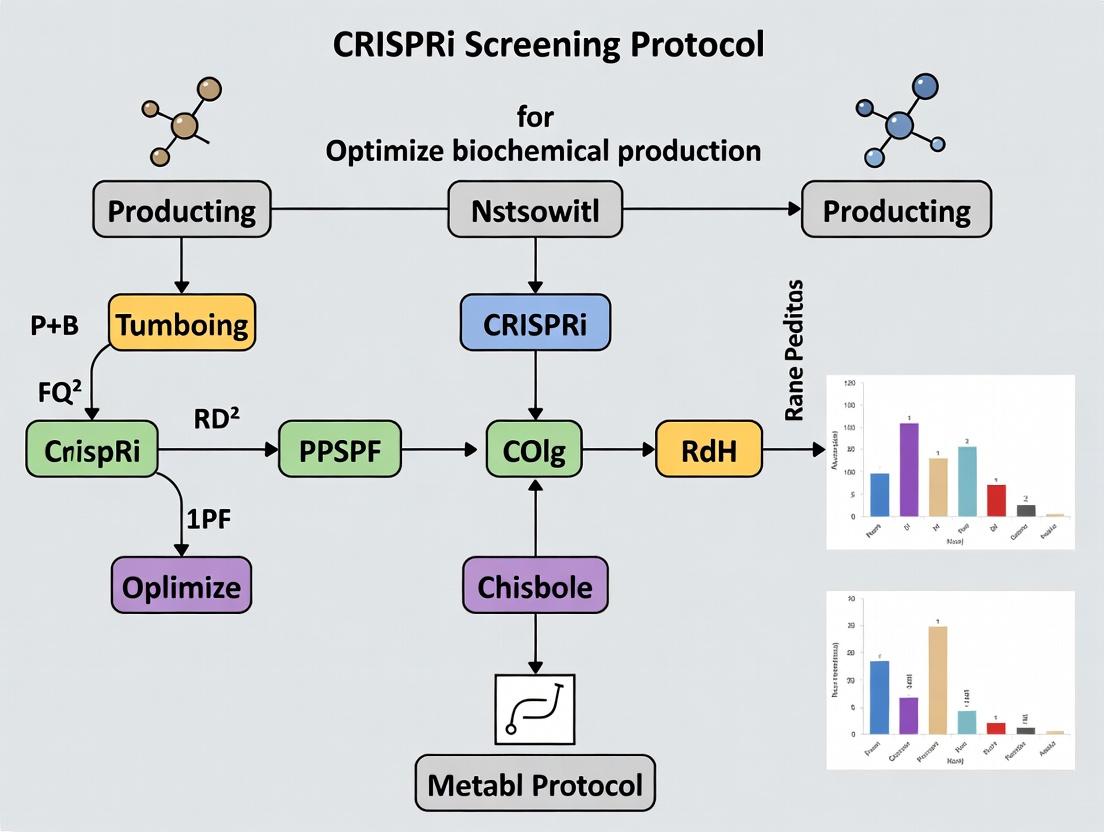
This comprehensive guide details the application of CRISPR interference (CRISPRi) screening for optimizing microbial biochemical production.
CRISPRi Screening for Biochemical Production: A Step-by-Step Protocol to Optimize Yield and Titer
Abstract
This comprehensive guide details the application of CRISPR interference (CRISPRi) screening for optimizing microbial biochemical production. We provide a foundational understanding of CRISPRi principles for metabolic engineering, a detailed step-by-step methodological protocol for library design and screening in relevant host organisms (e.g., E. coli, yeast), common troubleshooting and optimization strategies to enhance screen performance, and a framework for validating hits and comparing CRISPRi to alternative knockdown technologies. Tailored for researchers and scientists in metabolic engineering and industrial biotechnology, this article serves as a practical resource for implementing functional genomics to discover novel genetic targets for strain improvement.
Understanding CRISPRi Screening: The Foundational Engine for Metabolic Engineering
Within the broader framework of CRISPR screening for biochemical production optimization, selecting the appropriate gene perturbation method is critical. While CRISPR knockout (CRISPR-KO) via Cas9 nuclease permanently disrupts target genes, CRISPR interference (CRISPRi) uses a catalytically dead Cas9 (dCas9) fused to transcriptional repressors to achieve reversible, tunable knockdown. For metabolic engineering and production strain development, CRISPRi's reversibility offers distinct advantages by enabling dynamic control, fine-tuning of pathway fluxes, and avoidance of compensatory mutations that can arise from permanent deletions, ultimately leading to more robust and optimized production systems.
Comparative Analysis: CRISPRi vs. CRISPR-KO
The table below summarizes key operational and outcome differences between the two technologies in a production context.
Table 1: Functional Comparison of CRISPR-KO and CRISPRi for Production Optimization
| Feature | CRISPR-KO (Cas9) | CRISPRi (dCas9 Repressor) |
|---|---|---|
| Mechanism | Creates double-strand breaks, leading to insertions/deletions (indels) and frameshift mutations. | Binds DNA without cutting, blocks RNA polymerase, and recruits chromatin modifiers. |
| Genetic Outcome | Permanent gene knockout. | Reversible gene knockdown (typically 70-99% repression). |
| Tunability | Binary (on/off). Limited to heterozygous vs homozygous effects. | Tunable via guide RNA placement, expression level, and inducer concentration. |
| Multiplexing | Challenging due to DNA damage toxicity and complex repair outcomes. | Highly amenable for multiplexed repression of multiple genes simultaneously. |
| Off-Target Effects | Permanent genomic alterations with potential detrimental effects. | Transcriptional repression; effects are reversible, reducing long-term risk. |
| Ideal Use Case | Essential gene validation, creating stable null backgrounds. | Fine-tuning pathway fluxes, modulating competitive pathways, dynamic process optimization. |
| Impact on Fitness | Can induce cellular stress from DNA damage; essential gene KO is lethal. | Reduced cellular stress; enables knockdown of essential genes for growth-coupled production. |
| Screening Readiness | Excellent for negative selection (dropout) screens. | Superior for positive selection screens (e.g., for overproduction phenotypes). |
Table 2: Quantitative Performance Metrics in Model Production Hosts
| Metric | CRISPR-KO in E. coli | CRISPRi in E. coli | CRISPRi in S. cerevisiae |
|---|---|---|---|
| Typical Repression Efficiency | >99% (functional null) | 85-99% (transcript level) | 75-95% (transcript level) |
| Multiplexing Capacity | 2-3 genes reliably | 5+ genes demonstrated | 4+ genes demonstrated |
| Transcriptional Noise | Not applicable (gene absent). | Low, with minimal off-target transcriptomic changes. | Low with optimized repressor domains. |
| Time to Phenotype | Days (requires fixation of mutations). | Hours (immediate upon dCas9/guide expression). | Hours to a day. |
| Reversion Rate | Near zero (stable mutation). | Fully reversible upon repression system inactivation. | Fully reversible. |
Key Protocols for CRISPRi Screening in Production Optimization
Protocol 1: Designing and Cloning a CRISPRi Library for a Metabolic Pathway
Objective: Construct a pooled guide RNA (gRNA) library targeting all genes in a target biosynthetic pathway and its known regulatory/competing pathways.
Materials (Research Reagent Solutions):
- dCas9 Repressor Plasmid: Expresses dCas9 fused to a repressor domain (e.g., KRAB for eukaryotes, Mxi1 for bacteria). Function: Engineered protein for DNA binding and transcriptional repression.
- gRNA Cloning Backbone: Plasmid containing the scaffold sequence for your system (e.g., sgRNA for S. cerevisiae). Function: Accepts oligos to create the final gRNA expression construct.
- Oligo Library Pool: Designed single-stranded DNA oligos containing target-specific 20nt sequences. Function: Defines the genomic target for dCas9 binding.
- Golden Gate Assembly Mix: BsaI-HFv2 or Esp3I enzyme, T4 DNA Ligase, buffer. Function: Enables efficient, one-pot cloning of the oligo pool into the backbone.
- Electrocompetent E. coli (e.g., Endura Duo): High-efficiency transformation cells for library amplification. Function: To generate a high-diversity plasmid library.
Methodology:
- gRNA Design: Using software (CHOPCHOP, CRISPick), design two gRNAs per gene targeting the region from -50 to +300 relative to the transcription start site (TSS). Avoid seed region polymorphisms.
- Oligo Pool Synthesis: Order a pool of oligos containing the forward and reverse complement of each 20nt guide sequence, flanked by the appropriate overhangs for your cloning backbone.
- Golden Gate Assembly: Set up a reaction combining the digested gRNA backbone, the oligo pool, BsaI/Esp3I enzyme, and T4 DNA Ligase. Cycle between digestion (37°C) and ligation (16°C) 25-50 times.
- Library Transformation & Plasmid Harvest: Transform the entire assembly reaction into electrocompetent E. coli. Plate on large-format bioassay dishes to ensure >200x coverage of library diversity. Incubate overnight. Harvest all colonies for plasmid maxiprep to create the final library plasmid pool.
- Validation: Deep sequence the plasmid pool to confirm guide representation and evenness.
Protocol 2: Performing a Positive Selection CRISPRi Screen for Metabolite Overproduction
Objective: Identify gene knockdowns that confer a growth advantage under production selection pressure (e.g., an auxotrophic complementation or toxin resistance linked to product titers).
Materials (Research Reagent Solutions):
- CRISPRi Library Pool: Plasmid library from Protocol 1.
- Production Host Strain: Engineered with genomic integration of the dCas9-repressor at a safe-harbor locus. Function: The chassis for the screen, constitutively expressing the dCas9 protein.
- Selection Media: Defined production media containing a coupling mechanism (e.g., limiting cofactor, product-based antibiotic resistance). Function: Applies selective pressure to enrich beneficial knockdowns.
- PCR Purification Kits & Indexed Primers: For preparing sequencing samples. Function: To amplify and barcode gRNA sequences from genomic DNA for NGS.
Methodology:
- Library Transformation: Transform the gRNA plasmid library into the dCas9-expressing production host. Ensure transformation efficiency yields >500x coverage of the library diversity. This is the T0 population.
- Selection Passaging: Inoculate the transformed pool into Selection Media. Passage the culture repeatedly (e.g., 10-15 generations) by diluting into fresh selective media once stationary phase is reached. Maintain a large population size (>10^7 cells) to prevent bottlenecking.
- Genomic DNA (gDNA) Harvest: At T0 (pre-selection) and at the endpoint (T_end), harvest cells from 1e8-1e9 cells for gDNA extraction.
- gRNA Amplification & Sequencing: Perform a two-step PCR on the gDNA. PCR1: Amplify the integrated gRNA cassette with flanking primers. PCR2: Add Illumina adapter sequences and sample indexes. Purify the final product and quantify by qPCR before pooling for Next-Generation Sequencing (NGS).
- Data Analysis: Align NGS reads to the reference guide library. Calculate the enrichment/depletion score for each guide by comparing its normalized read count (T_end vs T0) using methods like MAGeCK or PinAPL-Py.
Essential Diagrams
Title: Mechanism and Outcome of CRISPR KO vs CRISPRi
Title: CRISPRi Positive Selection Screening Workflow
Title: Using CRISPRi to Balance Metabolic Pathway Flux
The Scientist's Toolkit: Key Research Reagent Solutions
| Item | Function in CRISPRi Production Screening |
|---|---|
| dCas9-Repressor Fusion Construct | Core effector protein. Bacterial systems: dCas9-Mxi1. Yeast/Mammalian: dCas9-KRAB. Enables targeted transcriptional repression. |
| Validated gRNA Expression Backbone | Plasmid or genomic locus for consistent, high-expression gRNA transcription. Often uses RNA Polymerase III promoters (U6, SNR52). |
| Golden Gate Assembly Kit | Modular cloning system (e.g., NEBridge) for efficient, scarless, and high-throughput assembly of gRNA libraries. |
| Electrocompetent Cells (Endura, Stbl4) | Specialized E. coli strains for stable maintenance and high-efficiency transformation of repetitive or complex plasmid libraries. |
| Next-Generation Sequencing Kit | (e.g., Illumina Nextera XT) For preparing multiplexed amplicon sequencing libraries from gDNA to quantify gRNA abundance pre- and post-selection. |
| MAGeCK Software | Computational tool specifically designed for robust statistical analysis of CRISPR screen NGS data to identify significantly enriched/depleted guides. |
| Defined Selection Media | Custom fermentation or minimal media that couples host cell growth or survival to the production titer of the target biochemical. |
| Chromatin-Modifying Domain Variants | Alternative repressor domains (e.g., SID4x, MQ3) for tuning repression strength, allowing fine-control of knockdown levels for metabolic balancing. |
Application Notes
CRISPR interference (CRISPRi) has emerged as a cornerstone technology for programmable gene repression in biochemical production optimization. Utilizing a catalytically dead Cas9 (dCas9), the system enables targeted transcriptional silencing without double-strand breaks, making it ideal for large-scale genetic screening in microbial production hosts. The efficacy of a CRISPRi screen hinges on three interdependent pillars: the choice and delivery of the dCas9 variant, the precision of single guide RNA (sgRNA) design, and the implementation of inducible systems for dynamic, tunable control of repression timing and strength.
dCas9 Selection: The S. pyogenes dCas9 is the most widely adopted variant. For enhanced repression, dCas9 is often fused to transcriptional repressor domains such as the Krüppel-associated box (KRAB) or the Mxi1 repression domain (SRDX). Recent advances highlight the utility of dCas12a for its simpler crRNA array design and potentially reduced off-target effects in certain genomic contexts.
sgRNA Design Principles: Effective sgRNAs for repression target the non-template strand within -50 to +300 nucleotides relative to the transcription start site (TSS), with the -35 to -10 promoter region being most potent. High on-target activity and minimal off-target potential are paramount. Current design tools (e.g., CHOPCHOP, CRISPick) use algorithms that score guides based on GC content (40-60%), absence of self-complementarity, and genomic uniqueness.
Inducible Systems for Tunability: Fine-tuning repression is critical for probing essential genes in metabolic pathways without causing catastrophic cell death. Common systems include:
- Chemically Inducible: Tetracycline/doxycycline-responsive (Tet-On/Off) promoters controlling dCas9 expression.
- Chemically Tunable: Anhydrotetracycline (aTc)-regulated dCas9 variants (e.g., dCas9-DD) that control protein stability.
- Light-Inducible: Systems like EL222 allow for rapid, reversible control with spatial precision in bioreactors.
Protocols
Protocol 1: Design and Validation of sgRNA Libraries for Metabolic Pathway Screening
Objective: To design a high-confidence sgRNA library targeting genes in a chosen biochemical production pathway (e.g., carotenoid biosynthesis) and validate repression efficiency.
Materials:
- Genomic DNA of production host (e.g., E. coli, S. cerevisiae).
- CHOPCHOP or CRISPick web tool.
- Oligonucleotide pool synthesis service.
- High-fidelity PCR reagents.
- Cloning reagents (Golden Gate or Gibson Assembly).
- Plasmid backbone with sgRNA scaffold.
- qRT-PCR reagents.
Methodology:
- Target Identification: Compile a list of all genes in the target pathway and essential control genes.
- sgRNA Design: For each gene, input the genomic sequence from -500 to +500 of the TSS into CHOPCHOP. Select 5-10 sgRNAs per gene with the highest efficiency scores, prioritizing those in the promoter-proximal region.
- Library Synthesis: Order the selected guide sequences as an oligo pool. Amplify the pool via PCR and clone into the sgRNA expression plasmid backbone using a high-throughput assembly method.
- Validation: Transform individual sgRNA plasmids alongside dCas9 into the host. Measure target gene mRNA levels via qRT-PCR relative to a non-targeting control sgRNA. Select guides showing >70% repression for the screening library.
Protocol 2: Implementing an aTc-Inducible dCas9 System for Tunable Repression
Objective: To establish a dose-dependent repression system for fine-tuning gene expression during fed-batch fermentation.
Materials:
- Plasmid expressing dCas9 (or dCas9-repressor fusion) under a Ptet promoter.
- Production host strain with integrated TetR repressor gene.
- Anhydrotetracycline (aTc).
- Fermentation or shake-flask culture equipment.
- Flow cytometer or spectrophotometer for reporter assays.
Methodology:
- Strain Construction: Transform the dCas9 expression plasmid and a constitutive sgRNA plasmid targeting a reporter gene (e.g., YFP) into the TetR-expressing host.
- Dose-Response Calibration: Inoculate cultures and add aTc across a logarithmic range (e.g., 0, 1, 10, 100, 1000 ng/mL). Grow for 6-8 hours.
- Analysis: Measure reporter output (fluorescence/absorbance) and cell density (OD600). Fit the dose-response data to a sigmoidal curve to determine the EC50 for repression.
- Application: Apply the calibrated aTc concentration at specific fermentation timepoints to dynamically repress a target pathway gene, sampling periodically to measure product titers and cell viability.
Data Presentation
Table 1: Comparison of Common dCas9 Repression Systems
| System | Repressor Domain | Induction Method | Dynamic Range (Fold-Repression)* | Key Application |
|---|---|---|---|---|
| dCas9 | None | Constitutive | 5-10x | Strong, constant repression |
| dCas9-KRAB | KRAB (from Kox1) | Constitutive/Chemical | 50-100x | Maximum silencing in eukaryotes |
| dCas9-SRDX | SRDX (Mxi1) | Constitutive/Chemical | 20-50x | Effective in plants & yeast |
| dCas9-DD | Degron (DD) | aTc (Stabilization) | Tunable (10-1000x) | Precise, dose-dependent tuning |
| EL222-dCas9 | Light-Oxygen-Voltage | Blue Light (450-490nm) | ~10x | Rapid, reversible temporal control |
*Representative ranges vary by organism and target gene.
Table 2: Key Parameters for High-Efficiency sgRNA Design (for S. pyogenes dCas9)
| Parameter | Optimal Value/Rule | Rationale |
|---|---|---|
| Target Region | -50 to +300 (TSS=+1) | Accessible region for dCas9 binding |
| Ideal Distance | -35 to -10 (Promoter) | Blocks RNA polymerase binding directly |
| GC Content | 40% - 60% | Influences stability and activity |
| Guide Length | 20 nt | Standard length for specificity |
| Off-Target | ≤3 mismatches in seed (PAM-proximal 12 nt) | Minimize off-target binding |
| Self-Complementarity | Avoid hairpins in spacer | Prevents sgRNA misfolding |
The Scientist's Toolkit
Essential Research Reagent Solutions:
| Item | Function in CRISPRi Screening |
|---|---|
| dCas9 Expression Plasmid | Constitutively or inducibly expresses the catalytically dead Cas9 protein; backbone for repressor domain fusions (e.g., KRAB). |
| sgRNA Library Cloning Kit | Streamlines the high-throughput cloning of oligonucleotide pools into the sgRNA expression vector (e.g., using Golden Gate assembly). |
| Anhydrotetracycline (aTc) | Small-molecule inducer for Tet-On systems; used for fine-tuning dCas9 or dCas9-DD expression levels. |
| Next-Generation Sequencing (NGS) Reagents | For deep sequencing of sgRNA barcodes pre- and post-screen to quantify guide enrichment/depletion. |
| CRISPRi-Compatible Production Host | Genetically engineered strain (e.g., E. coli MG1655 ΔendA) optimized for high transformation efficiency and dCas9/sgRNA expression. |
| Viability & Titer Assay Kits | Essential for screen readouts; includes ATP-based viability assays and HPLC/MS kits for quantifying target biochemical product. |
Visualizations
Title: CRISPRi Screening Workflow for Production Optimization
Title: Mechanism of aTc-Inducible CRISPRi System
Within the broader thesis on developing a robust CRISPR interference (CRISPRi) screening platform for microbial strain engineering, the precise definition of screening objectives is the critical first step. This protocol focuses on establishing systematic objectives to interrogate three foundational cellular networks: precursor metabolite supply, redox cofactor balance, and cellular energy (ATP) management. Targeting these pathways via pooled CRISPRi libraries enables the identification of genetic perturbations that optimally rewire metabolism for enhanced biochemical production, moving beyond traditional single-gene knockouts to titratable down-regulation.
Application Notes: Rationale and Target Pathways
2.1 Precursor Pathways The objective is to identify gene knockdowns that increase the flux of central carbon metabolism intermediates (e.g., acetyl-CoA, malonyl-CoA, PEP, E4P) toward the desired product without causing growth arrest. Key targets include nodes at major metabolic branch points.
2.2 Redox Cofactor Pathways The objective is to balance the NAD(P)H/NAD(P)+ ratios to meet the demands of biosynthetic reactions. Screens target genes involved in NADH dehydrogenases, transhydrogenases, and NADPH-generating or -consuming pathways to shift the redox state toward anabolism.
2.3 Energy (ATP) Pathways The objective is to modulate ATP supply and demand to support energy-intensive biosynthesis. Screens target ATP synthase, glycolysis, TCA cycle, and futile cycles to increase ATP availability or reduce non-essential consumption.
Table 1: Quantitative Screening Objectives for Key Metabolic Pathways
| Target Network | Primary Screening Objective | Example Target Genes/Pathways | Expected Phenotypic Readout |
|---|---|---|---|
| Precursor Supply | Increase intracellular pool & flux of specific building blocks. | pckA (PEP carboxykinase), pykF (pyruvate kinase), PDH complex, anaplerotic reactions. | Increased product titer/yield, possible growth rate change. |
| Redox Balance | Optimize NADPH/NADH supply for reductive biosynthesis. | pntAB (transhydrogenase), zwf (G6P dehydrogenase), TCA cycle dehydrogenases. | Altered product profile, changes in by-product secretion (e.g., acetate). |
| Energy (ATP) Management | Reallocate ATP from maintenance to production. | atp operon (ATP synthase), pfkA (phosphofructokinase), futile cycles (e.g., glk / ptsG). | Improved yield under low-energy conditions, altered growth rate. |
| Global Regulation | Dysregulate feedback inhibition of biosynthetic pathways. | iclR (glyoxylate shunt), prpR (propionate metabolism), transcriptional repressors of target pathways. | Derepression of pathway flux, increased precursor availability. |
Experimental Protocols
Protocol 3.1: Defining and Cloning sgRNA Libraries for Pathway Targeting Objective: Design and construct a pooled sgRNA library targeting genes in precursor, redox, and energy pathways.
- Target Selection: Using genome-scale models (e.g., iJO1366 for E. coli), identify all genes in the target pathways (e.g., glycolysis, TCA, pentose phosphate). Include 5-10 non-targeting control sgRNAs.
- sgRNA Design: Use established algorithms (e.g., CRISPick). For CRISPRi, design sgRNAs to bind the template strand within ~50-300 bp downstream of the transcription start site.
- Library Synthesis: Order a pooled oligonucleotide library containing all sgRNA sequences flanked by cloning adapters.
- Cloning: Clone the pooled sgRNA library into the CRISPRi plasmid backbone (e.g., pCRISPRi) via Golden Gate assembly. Transform the reaction into a high-efficiency electrocompetent E. coli strain (e.g., NEB 10-beta) for amplification.
- Plasmid Harvest: Isporate plasmid DNA from the amplified library using a maxiprep kit. Verify library complexity and representation by next-generation sequencing (Illumina MiSeq).
Protocol 3.2: Performing the Batch Fermentation Screen Objective: Conduct the primary screen under production conditions to identify hits affecting growth and production.
- Strain Preparation: Transform the production host strain (e.g., E. coli MG1655 derivative) with the CRISPRi plasmid library and the dCas9 expression plasmid (if not combined).
- Inoculation and Induction: Dilute transformed cells to an OD600 of 0.05 in production medium containing appropriate inducers (e.g., aTc for dCas9 expression, IPTG for product pathway induction). Use at least 1000x library coverage.
- Growth and Harvest: Grow cultures in batch mode for 12-24 hours (or ~5 generations). Harvest 1e8 cells at both mid-exponential (T1) and stationary phase (T2) for genomic DNA extraction.
- Sequencing Sample Prep: Amplify the sgRNA region from genomic DNA using barcoded primers. Pool PCR products and purify for next-generation sequencing.
Protocol 3.3: Hit Validation via Shake Flask Assays Objective: Validate individual hits from the screen in a controlled, low-throughput format.
- Strain Reconstruction: Clone individual sgRNA hits into the CRISPRi vector and transform into the production host.
- Cultivation: Inoculate triplicate shake flasks containing production medium. Induce CRISPRi and product pathway at defined cell densities.
- Phenotypic Measurement: Monitor OD600 over 24-48 hours. Harvest cells at stationary phase for HPLC analysis of product, by-products, and substrate consumption.
- Data Analysis: Calculate product titer, yield, and productivity. Compare to a strain containing a non-targeting control sgRNA.
Visualizations
Title: Workflow from Screening Objectives to Validated Hits
Title: Key Metabolic Nodes Targeted in CRISPRi Screens
The Scientist's Toolkit: Research Reagent Solutions
Table 2: Essential Materials for CRISPRi Metabolic Screening
| Item | Function/Description | Example Product/Catalog |
|---|---|---|
| CRISPRi Plasmid Backbone | Vector containing sgRNA scaffold and selective marker for library cloning. | Addgene #84241 (pCRISPRi) |
| dCas9 Expression Plasmid | Constitutively or inducibly expresses the catalytically dead Cas9 protein. | Addgene #44249 (pdCas9) |
| Pooled sgRNA Library Oligos | Synthesized oligonucleotide pool representing the designed sgRNA library. | Custom order from Twist Bioscience or Agilent. |
| Electrocompetent Cells | High-efficiency cells for library transformation and amplification. | NEB 10-beta Electrocompetent E. coli (C3020K) |
| Next-Gen Sequencing Kit | For preparing and sequencing the sgRNA amplicon library. | Illumina MiSeq Reagent Kit v3 (150-cycle) |
| Genomic DNA Extraction Kit | For high-yield, pure gDNA from bacterial pellets for sgRNA amplification. | QIAGEN DNeasy Blood & Tissue Kit |
| HPLC System with Columns | For quantifying biochemical products, substrates, and by-products (e.g., organic acids). | Agilent 1260 Infinity II with Hi-Plex H column |
| Inducers | To precisely control dCas9 and pathway gene expression timing. | Anhydrotetracycline (aTc), Isopropyl β-d-1-thiogalactopyranoside (IPTG) |
| Metabolite Standards | Analytical standards for absolute quantification of target molecules. | Sigma-Aldrich (e.g., Succinic acid, NADH, Acetyl-CoA) |
Optimizing microbial strains for biochemical production requires systematic perturbation of gene expression. CRISPR interference (CRISPRi) screening is a powerful tool for this purpose, enabling high-throughput identification of gene knockdown targets that enhance yield, titer, and productivity. The success of such a screening campaign is fundamentally dependent on the choice of host organism or "chassis." This application note provides a comparative analysis of common industrial hosts, with specific considerations for implementing CRISPRi screening to optimize biochemical pathways.
Host Organism Comparison: Key Characteristics
The selection criteria encompass growth characteristics, genetic toolbox compatibility, product suitability, and feasibility for high-throughput screening.
Table 1: Quantitative Comparison of Industrial Host Organisms
| Feature | Escherichia coli | Saccharomyces cerevisiae | Bacillus subtilis | Pseudomonas putida | Yarrowia lipolytica |
|---|---|---|---|---|---|
| Doubling Time (min) | 20-30 | 90-120 | 30-40 | 60-80 | 90-180 |
| Max. Growth Temp (°C) | 45-50 | 30-35 | 50-55 | 30-37 | 30-34 |
| GC Content (%) | ~50.8 | ~38 | ~43.5 | ~61.6 | ~49 |
| Secretion Capacity | Low (mostly periplasmic) | Medium (glycosylated) | High (efficient Sec pathway) | Medium (diverse pathways) | Very High (native lipases/proteins) |
| CRISPRi System Maturity | Very High | High | Medium | Medium | Low-Medium |
| Primary Product Types | Organic acids, recombinant proteins, biofuels | Ethanol, pharmaceuticals, recombinant proteins, flavors | Enzymes, vitamins, nucleotides | Aromatics, bioplastics, fine chemicals | Lipids, organic acids, heterologous proteins |
| Tolerance to Toxins | Low-Medium | High (esp. to organic solvents) | Medium | Very High (robust metabolism) | High (to hydrophobic compounds) |
| Cost of Media | Low | Low | Low | Low-Medium | Low-Medium |
Detailed Considerations for CRISPRi Implementation
Escherichia coli
- Advantages: Rapid growth, highest transformation efficiency, extensive genetic tools, well-characterized CRISPRi systems (e.g., dCas9 from S. pyogenes).
- Challenges for Screening: Lack of native repression machinery like MIG1 can make some CRISPRi effects less predictable; accumulation of acetyl-CoA derivatives can be toxic.
- Protocol: High-Efficiency CRISPRi Library Transformation in E. coli (Electroporation)
- Strain Preparation: Use a production E. coli strain (e.g., BL21(DE3), MG1655) with genomically integrated dCas9 under a titratable promoter (e.g., pTet).
- Library Construction: Clone a sgRNA library targeting genes in the central metabolism, competing pathways, and regulatory elements into a compatible plasmid (e.g., pTarget).
- Electrocompetent Cells: Grow dCas9-expressing strain to mid-log phase (OD600 ~0.5-0.6). Wash cells 3x with ice-cold 10% glycerol. Resuspend in a small volume of 10% glycerol. Aliquot and flash-freeze.
- Electroporation: Thaw competent cells on ice. Mix 50 µL cells with 1-10 ng of pooled library DNA. Transfer to a pre-chilled 1-mm electroporation cuvette. Pulse (e.g., 1.8 kV, 200Ω, 25µF). Immediately add 1 mL SOC medium.
- Recovery & Selection: Recover cells at 37°C for 1 hour with shaking. Plate the entire volume onto large, selective agar plates (e.g., LB + Kanamycin) to ensure >1000x library coverage. Incubate at 37°C overnight.
- Harvesting Library: Scrape all colonies, mix thoroughly, and prepare a glycerol stock for the screening inoculum.
Saccharomyces cerevisiae
- Advantages: GRAS status, eukaryotic protein processing, strong tolerance to low pH and inhibitors, excellent homologous recombination.
- Challenges for Screening: Slower growth, more complex genetics (diploidy), requirement for longer screening durations.
- Protocol: CRISPRi Library Delivery in S. cerevisiae via LiAc/SS-Carrier DNA/PEG Transformation
- Strain & Plasmid: Use an industrial yeast strain with integrated dCas9 (e.g., under a PGK1 promoter). Use a sgRNA expression plasmid with a SNR52 promoter and a selectable marker.
- Competent Cells: Grow strain to mid-log phase (OD600 ~0.5-1.0). Harvest, wash with water, then with 100 mM LiAc. Resuspend in 100 mM LiAc.
- Transformation Mix: For each reaction, combine: 50 µL cell suspension, 10 µL carrier DNA (denatured salmon sperm DNA, 10 mg/mL), 1 µL sgRNA plasmid library DNA (~100-200 ng), and 300 µL of 40% PEG-3350 in 100 mM LiAc. Vortex thoroughly.
- Heat Shock: Incubate at 30°C for 30 min, then at 42°C for 20-25 min.
- Plating & Screening: Pellet cells, resuspend in water, and plate onto selective agar plates (e.g., SD -Ura). Incubate at 30°C for 2-3 days. Pool colonies for screening in a production bioreactor or deep-well plates.
Workflow for Host-Specific CRISPRi Screening
CRISPRi Screening Workflow for Host Optimization
The Scientist's Toolkit: Key Research Reagent Solutions
Table 2: Essential Materials for Host-Specific CRISPRi Screening
| Item | Function in Experiment | Example/Supplier Note |
|---|---|---|
| dCas9 Expression Plasmid | Constitutive or inducible expression of catalytically dead Cas9 for transcriptional repression. | For E. coli: pDcas9; For yeast: pRS41x-dCas9-Mxi1. |
| sgRNA Library Cloning Vector | Backbone for high-efficiency cloning of pooled oligonucleotides encoding sgRNAs. | Contains U6 or SNR52 promoter, terminator, and barcode site. Addgene provides many backbones. |
| Electrocompetent E. coli | Highly efficient cells for plasmid library transformation to ensure full representation. | Commercial strains like NEB 10-beta Electrocompetent. |
| Lithium Acetate (LiAc) | Critical reagent for yeast chemical transformation, facilitating DNA uptake. | Molecular biology grade. Part of the standard LiAc/SS-DNA/PEG protocol. |
| Deep-Well Plate (96/384) | Enables high-throughput cultivation under controlled conditions for phenotype screening. | Must be compatible with your shaking incubator and liquid handling robots. |
| NGS Library Prep Kit | For preparing amplicon libraries of sgRNA regions from genomic DNA pre- and post-screen. | Kits from Illumina or NEB designed for short amplicons are ideal. |
| Defined Production Media | Chemically defined medium essential for reproducible yield and titer measurements during screening. | Must be optimized for the specific host and product (e.g., M9, SM, or CD media). |
This Application Note provides detailed protocols for implementing reporter systems and selection strategies within high-throughput CRISPRi screening workflows. The content is framed within a broader thesis aimed at optimizing microbial strains for biochemical production. Specifically, these methods enable the linkage of genetic perturbations (genotype) to quantifiable changes in metabolite output or fitness (phenotype), facilitating the identification of gene targets that enhance yield, titer, or productivity in engineered production hosts like E. coli or S. cerevisiae.
Key Reporter System Modalities
Reporter systems convert a desired phenotypic trait (e.g., product concentration, pathway flux) into a measurable signal (fluorescence, luminescence, absorbance). The following table summarizes quantitative performance metrics for common systems used in metabolic engineering screens.
Table 1: Quantitative Comparison of Reporter Systems for Metabolic Screening
| Reporter System | Dynamic Range | Sensitivity | Time to Signal (approx.) | Compatibility with Living Cells | Primary Use Case |
|---|---|---|---|---|---|
| Fluorescent (e.g., GFP) | 10^2–10^3 fold | ~nM protein | Hours (maturation time) | Excellent (non-invasive) | Promoter activity, protein abundance |
| Luminescent (e.g., Luciferase) | 10^3–10^6 fold | ~fM to pM enzyme | Minutes to Hours | Excellent (low background) | Real-time metabolic activity, low-abundance targets |
| Colorimetric/Absorbance | 10^1–10^2 fold | µM-M product | Minutes to Hours | Moderate (can be invasive) | Enzyme activity, metabolite detection |
| Fluorescent Biosensor | 10^1–10^2 fold | µM metabolite | Seconds to Minutes | Excellent | Real-time intracellular metabolite levels (e.g., malonyl-CoA, NADPH) |
| Growth-Coupled Selection | Binary (Live/Die) | N/A | Generations (Days) | Inherent | Enrichment for fitness-altering variants |
Core Protocols
Protocol 3.1: Implementation of a Metabolite-Responsive Transcriptional Reporter for CRISPRi Screening
Objective: To construct a strain where fluorescence output is proportional to the intracellular concentration of a target biochemical, enabling FACS-based enrichment of high-producing CRISPRi variants.
- Clone reporter construct: Fuse a promoter responsive to the target metabolite (e.g., FapR promoter for malonyl-CoA) to a fast-folding, bright fluorescent protein gene (e.g., sfGFP). Integrate into a neutral chromosomal locus of your production host.
- Validate reporter response: Treat the reporter strain with known inducers/inhibitors of the pathway and measure fluorescence via plate reader (Ex/Em: 488/510 nm). Generate a standard curve correlating fluorescence to metabolite concentration (measured via LC-MS).
- Integrate with CRISPRi library: Transform the validated reporter strain with your dCas9-expressing plasmid and the sgRNA library targeting candidate repression genes.
- Induction and screening: Induce CRISPRi and production pathway. After 24-48 hours, analyze cells by Flow Cytometry. Gate the top 1-10% of fluorescent cells for sorting.
- Recovery and analysis: Culture sorted cells, isolate genomic DNA, amplify sgRNA barcodes via PCR, and sequence to identify enriched gene targets.
Protocol 3.2: Growth-Coupled Selection Using Synthetic Auxotrophy
Objective: To link the production of a target biochemical to the synthesis of an essential metabolite, creating a growth-based selection for high-producing variants.
- Design selection strain: Delete the native gene responsible for synthesis of an essential nutrient (e.g., ura3 for uracil biosynthesis in yeast).
- Engineer complementation pathway: Introduce a heterologous enzyme that converts your target biochemical into the essential nutrient precursor. For example, express pyr4 (encoding orotidine-5'-monophosphate decarboxylase) which can use orotate, a potential target biochemical, to complement uracil auxotrophy.
- Validate coupling: Plate the engineered strain on media lacking the essential nutrient but supplied with varying concentrations of your target biochemical. Growth should correlate with biochemical concentration.
- Perform screening: Transform the selection strain with your CRISPRi sgRNA library and plate onto selective media (lacking the essential nutrient). Only strains where the CRISPRi perturbation enhances flux through the linked production pathway will form colonies.
- Hit identification: Harvest pooled colonies, extract gDNA, and perform NGS on the sgRNA region to determine enrichment relative to the initial library.
Protocol 3.3: High-Throughput FACS Sorting and Analysis
Objective: To isolate rare, high-performing variants from a large, pooled CRISPRi library using fluorescence-activated cell sorting (FACS).
- Sample Preparation: Induce CRISPRi and production in library pool for 24-48 hours. Dilute cells to ~1-5 x 10^6 cells/mL in sterile PBS or minimal media. Keep samples at 4°C during handling.
- FACS Instrument Setup: Use a sorter capable of high purity (e.g., 85-99% purity mode). Use a control strain (no fluorescence) to set negative gate. Use a known high-signal strain (if available) to define the positive gate.
- Gating Strategy: (1) FSC-A/SSC-A to gate on single cells. (2) FSC-H/FSC-A to exclude doublets. (3) Apply fluorescence gate to collect the top 0.5-2% of the population.
- Sorting Parameters: Sort at least 1-5 million events into the positive gate to ensure library coverage. Collect cells into recovery media (rich media + 0.1% Pluronic F-68).
- Post-Sort Processing: Immediately centrifuge sorted cells, resuspend in fresh media, and allow recovery for 4-6 hours before plating for single colonies or inoculating culture for genomic DNA extraction and sequencing.
Visualization of Workflows and Pathways
Title: CRISPRi Screening with Fluorescent Reporter
Title: Growth-Coupled Selection Logic
The Scientist's Toolkit
Table 2: Essential Research Reagent Solutions
| Item | Function/Description | Example Product/Catalog |
|---|---|---|
| dCas9 Expression Plasmid | Constitutively or inducibly expresses a catalytically dead Cas9 protein for transcriptional repression (CRISPRi). | Addgene #47108 (pCSf1A-dCas9) |
| sgRNA Library Cloning Kit | For efficient construction and amplification of pooled sgRNA libraries. | Custom Array Synthesized Oligo Pool, NEBuilder HiFi DNA Assembly Master Mix |
| Fluorescent Reporter Plasmid | Contains a metabolite-responsive promoter driving a bright fluorescent protein (e.g., sfGFP, mScarlet). | Custom-built or available biosensor plasmids (e.g., pSenSpec for malonyl-CoA). |
| FACS Buffer | Sterile, protein-supplemented buffer to maintain cell viability during sorting. | 1x PBS, 1% BSA or FBS, 0.1% Pluronic F-68. Filter sterilize (0.22 µm). |
| Next-Gen Sequencing Kit | For preparing sequencing libraries from amplified sgRNA barcodes. | Illumina Nextera XT DNA Library Prep Kit. |
| Selection Media | Defined minimal media lacking the essential nutrient for growth-coupled selection. | Custom formulated CSM (-Ura) for yeast, M9 (-Leu) for E. coli. |
| Cell Recovery Media | Nutrient-rich media to maximize viability of stressed cells post-FACS or transformation. | SOC Outgrowth Medium, YPD + 0.1% Pluronic F-68. |
| Metabolite Standard | Pure analytical standard of the target biochemical for reporter calibration. | Sigma-Aldrich (e.g., Succinic Acid, #S3674). |
A Step-by-Step CRISPRi Screening Protocol for Biochemical Overproduction
This document constitutes Phase 1 of a comprehensive CRISPRi screening protocol for optimizing biochemical production in microbial hosts. The goal of this phase is to design a high-quality, targeted single guide RNA (sgRNA) library that selectively represses genes within defined metabolic pathways of interest. A well-designed library is critical for achieving high signal-to-noise ratios in subsequent pooled screens aimed at identifying genetic perturbations that enhance titers, rates, and yields (TRY) of target compounds.
Key Design Principles & Parameters
Target Gene Selection
Library design begins with the careful curation of a target gene list. For metabolic engineering, this includes:
- Core Pathway Enzymes: All genes encoding enzymes in the biosynthetic pathway of the desired product.
- Competing Pathway Enzymes: Genes in pathways that divert carbon, energy, or precursors away from the target product.
- Global Regulators: Transcription factors and kinases known to regulate primary and secondary metabolism.
- Transporters: Involved in substrate uptake and product export.
- Housekeeping Genes: Essential genes used as negative controls for screening lethality.
sgRNA Design Rules
Based on current literature and tool outputs, effective sgRNA design for CRISPRi (using dCas9) follows these quantitative guidelines:
Table 1: Key sgRNA Design Parameters for CRISPRi
| Parameter | Optimal Value/Range | Rationale |
|---|---|---|
| Target Region | -50 to +300 bp relative to Transcription Start Site (TSS) | Highest repression efficiency within this window, peaking near the TSS. |
| sgRNA Length | 20-nt spacer sequence | Standard length for Streptococcus pyogenes Cas9. |
| GC Content | 40%-70% | Influences stability and binding efficiency. |
| Off-Target Tolerance | ≤ 3 mismatches in seed region (PAM-proximal 8-12 nt) | Minimizes off-target binding. Requires rigorous in silico validation. |
| On-Target Score | > 50 (using tools like CRISPick or CHOPCHOP) | Predictor of high activity. |
Library Composition & Controls
A balanced library is vital for screen interpretability.
Table 2: Recommended sgRNA Library Composition
| Component | Number per Gene | Total Number (for 200-gene set) | Purpose |
|---|---|---|---|
| Targeting sgRNAs | 4-6 | 800 - 1,200 | Enables statistical confidence and mitigates sgRNA-specific outliers. |
| Negative Controls | N/A | 50-100 | Target safe-harbor or non-essential genomic loci; define baseline phenotype. |
| Positive Controls | N/A | 20-50 | Target essential genes (e.g., ribosomal RNA genes) to confirm repression lethality. |
| Non-Targeting Controls | N/A | 100-200 | sgRNAs with no perfect genomic match; model non-specific effects. |
Detailed Protocol: In Silico sgRNA Library Design
Materials & Reagent Solutions
Research Reagent Solutions & Essential Materials:
Table 3: The Scientist's Toolkit for sgRNA Library Design
| Item | Function/Description |
|---|---|
| Genome Annotation File (.gff/.gtf) | Provides precise coordinates of genes, exons, and transcription start sites for the host organism. |
| Reference Genome FASTA | The complete genomic sequence against which sgRNAs are designed and checked for specificity. |
| sgRNA Design Algorithm (CRISPick, CHOPCHOP) | Web-based or local tools that rank potential sgRNAs based on efficiency and specificity scores. |
| Off-Target Prediction Tool (Bowtie, BWA) | Aligns candidate sgRNA sequences to the genome to identify potential off-target binding sites. |
| Oligo Pool Synthesis Design File | The final text file specifying the DNA sequences for library synthesis, typically in an array-based format. |
Step-by-Step Methodology
Step 1: Define the Target Gene List.
- Compile a list of target gene identifiers (e.g., locus tags) from pathway databases (e.g., KEGG, MetaCyc) and primary literature.
- Include the control genes as defined in Table 2.
Step 2: Retrieve Genomic Context.
- Using the genome annotation file, extract the precise TSS for each gene. If TSS data is unavailable, use the start codon (ATG) as a proxy, but note repression may be less efficient.
- Extract the genomic sequence from -500 bp to +500 bp relative to the TSS for each gene.
Step 3: Generate Candidate sgRNAs.
- For each target region, use a design tool (e.g., CRISPick) to generate all possible 20-nt sequences adjacent to an NGG Protospacer Adjacent Motif (PAM).
- Filter candidates to those located between -50 and +300 bp relative to the TSS.
- Apply filters for GC content (40-70%) and exclude sequences with homopolymers (>4 repeats).
Step 4: Rank and Select sgRNAs.
- Use the tool’s on-target efficiency score (e.g., Doench ‘16 score) to rank sgRNAs for each gene.
- Select the top 8-10 candidates per gene for further validation.
Step 5: Perform Off-Target Analysis.
- Input the spacer sequence (20-nt) of each candidate sgRNA into a short-read aligner (e.g.,
bowtie -v 3). - Allow for up to 3 mismatches across the entire spacer. Manually inspect any hit where mismatches are clustered in the PAM-proximal seed region (positions 8-12). Discard sgRNAs with such high-risk off-targets.
- For a 200-gene library, this step typically eliminates 20-30% of candidates.
Step 6: Finalize Library and Design Oligos.
- From the remaining, validated candidates, select the final 4-6 sgRNAs per target gene, aiming for a distribution across the effective targeting window.
- Design oligonucleotide sequences for synthesis. The standard format includes:
- Forward Primer Overhang (e.g., for cloning into a lentiviral backbone)
- sgRNA Spacer Sequence (20-nt)
- sgRNA Scaffold Constant Region (partial, to be completed by PCR)
- Reverse Primer Overhang
- Ensure the final oligo pool is balanced and ordered from a reputable vendor specializing in pooled array synthesis.
Visual Workflow & Pathway Diagrams
Diagram Title: sgRNA Library Design Workflow
Diagram Title: Metabolic Pathway Targeting Strategy
This protocol details Phase 2 of a comprehensive CRISPRi screening workflow for optimizing biochemical production in microbial hosts. Following the design and synthesis of sgRNA libraries (Phase 1), this phase involves the assembly of the functional CRISPRi library plasmid and its subsequent high-efficiency transformation into the target production strain. Success here is critical for generating a high-quality, representative mutant pool for phenotypic screening.
Key Materials & Research Reagent Solutions
| Reagent/Material | Function/Explanation |
|---|---|
| Pooled sgRNA Oligo Library | Synthesized, amplified pool of DNA sequences encoding the designed sgRNAs. The input for library construction. |
| CRISPRi Backbone Plasmid | Contains dCas9 (or dCas9-derived) gene, origin of replication, and selection marker for the intermediate host (e.g., E. coli). |
| Golden Gate Assembly Mix | Enzyme mixture (e.g., Esp3I/BsmBI, T4 DNA Ligase) for seamless, directional, and high-efficiency multi-fragment assembly. Preferred over traditional cloning. |
| Electrocompetent E. coli (Library Scale) | High-efficiency cells (e.g., Endura, Stbl4) for transforming the assembled library to amplify plasmid DNA while maintaining diversity and minimizing recombination. |
| Plasmid MegaPrep Kit | For high-purity, large-scale plasmid DNA isolation from the amplified E. coli library. |
| Electrocompetent Production Host Cells | Specifically prepared cells of the target biochemical production strain (e.g., E. coli BL21, B. subtilis, S. cerevisiae) with high transformation efficiency. |
| Library-Scale Electroporation System | High-throughput electroporator (e.g., Gene Pulser MXcell) capable of processing multiple samples/cuvettes for consistent transformation. |
| SOC Outgrowth Medium | Rich recovery medium post-electroporation to allow expression of antibiotic resistance before plating or induction. |
| Selection Agar Plates | Solid medium with appropriate antibiotic to select for production host cells that have taken up the CRISPRi library plasmid. |
Protocol: Library Construction via Golden Gate Assembly
Principle
Golden Gate assembly uses a Type IIS restriction enzyme (e.g., BsmBI-v2) to create unique, user-defined overhangs on both the insert (sgRNA library) and the linearized backbone. A single-pot reaction simultaneously digests and ligates the fragments, enabling efficient, scarless assembly of the sgRNA expression cassette into the CRISPRi plasmid.
Detailed Methodology
Prepare Fragments:
- Insert: Amplify the pooled sgRNA library via PCR using primers that add the BsmBI-v2 recognition sites and the correct overhangs complementary to the backbone. Purify using a silica-column-based PCR cleanup kit. Quantify via fluorometry (e.g., Qubit).
- Backbone: Linearize the destination CRISPRi plasmid by PCR or digest with a conventional restriction enzyme outside the assembly region. Gel-purify the linear backbone fragment.
Set Up Golden Gate Reaction:
- In a thin-walled PCR tube, assemble the following on ice:
- 50 ng Linearized Backbone
- 20 ng Purified sgRNA Insert (maintain a 3:1 insert:backbone molar ratio)
- 1 µL T4 DNA Ligase (400 U/µL)
- 1 µL BsmBI-v2 restriction enzyme (10 U/µL)
- 2 µL 10x T4 DNA Ligase Buffer
- Nuclease-free water to 20 µL.
- Mix gently and centrifuge briefly.
- In a thin-walled PCR tube, assemble the following on ice:
Run Thermocycler Program:
- Cycle 25-30 times: 37°C for 5 minutes (digestion) → 16°C for 5 minutes (ligation).
- Final steps: 55°C for 5 minutes (to inactivate BsmBI-v2), 80°C for 10 minutes (to inactivate T4 DNA Ligase).
- Hold at 4°C.
Dialyze and Transform into E. coli:
- Desalt the reaction using a membrane filter (0.025 µm) floating on Milli-Q water for 1 hour.
- Electroporate 2 µL of dialyzed product into 50 µL of library-scale electrocompetent E. coli (2.5 kV, 1 mm gap cuvette).
- Recover in 1 mL SOC medium at 37°C for 1 hour.
- Plate the entire recovery culture onto large (245 x 245 mm) LB agar plates with appropriate antibiotic. Incubate overnight at 32°C (to reduce recombination risk).
Quality Control Metrics
| QC Step | Target Metric | Method |
|---|---|---|
| Assembly Efficiency | > 1 x 10⁶ CFU total colonies | Colony count from plating a dilution series. |
| Library Coverage | > 200x coverage of sgRNA diversity | (Total Colonies) / (Number of sgRNAs in library). |
| Sequence Validation | Even representation of sgRNAs | PCR from pooled colonies followed by NGS on a MiSeq system. Analyze skew. |
Protocol: Transformation into Production Host
Principle
The amplified, sequence-verified plasmid library must be delivered into the target production strain at high efficiency and with minimal bias to ensure the screening pool accurately represents the designed genetic perturbations.
Detailed Methodology
Prepare Electrocompetent Production Host Cells:
- Grow the production strain (e.g., E. coli BL21(DE3)) in 500 mL of appropriate medium to mid-exponential phase (OD₆₀₀ ~0.5-0.7).
- Chill culture on ice for 30 min. Pellet cells at 4°C.
- Wash pellet gently three times with 100 mL of ice-cold, sterile 10% glycerol (or other suitable electroporation buffer).
- Resuspend final pellet in a minimal volume (~1 mL) of ice-cold 10% glycerol. Aliquot (50-100 µL) and flash-freeze in liquid nitrogen. Store at -80°C.
Large-Scale Electroporation:
- Thaw an aliquot of competent cells on ice.
- Add 100-500 ng of purified library plasmid DNA to cells. Mix gently. Do not pipette vigorously.
- Transfer mixture to a cold 1 mm electroporation cuvette. Avoid bubbles.
- Apply a single pulse with optimized parameters (e.g., for E. coli: 1.8 kV, 200 Ω, 25 µF).
- Immediately add 1 mL of pre-warmed, rich recovery medium (SOC or equivalent) and transfer to a culture tube.
- Repeat for multiple aliquots to achieve desired transformation scale.
Outgrowth and Pooling:
- Recover transformed cells at optimal growth temperature (e.g., 30°C for E. coli) with shaking for 2-3 hours.
- Pool all recovery cultures. Take a small sample for titering.
- Plate appropriate dilutions on selective agar to determine total transformant count.
- Centrifuge the remaining pooled culture. Resuspend pellet in medium containing 15% glycerol for cryopreservation. Aliquot and store at -80°C as the Library Stock.
Transformation QC and Yield Data
| Parameter | Typical Target for E. coli | Measurement Outcome Example |
|---|---|---|
| Transformation Efficiency | > 10⁹ CFU/µg DNA | 3.5 x 10⁹ CFU/µg |
| Total Library Transformants | > 500x library coverage | 2.1 x 10⁷ CFU for a 10k sgRNA library |
| Post-Recovery Viability | > 90% | 95% (determined by live/dead plating) |
Diagrams
CRISPRi Library Construction Workflow
Library Transformation into Production Host
Application Notes
The execution phase of a CRISPR interference (CRISPRi) screen for biochemical production transforms a pooled genetic perturbation library into high-dimensional phenotypic data. The core objective is to cultivate the library under conditions that link repression of target genes to measurable changes in titer, yield, or productivity of the compound of interest. This requires tightly controlled fermentation, precise timing of dCas9 expression induction, and a harvest protocol that preserves the genetic identity of each variant for subsequent sequencing. Success in this phase is critical for generating robust, noise-minimized data that accurately reflects genotype-phenotype relationships. The following protocols detail the steps from pre-culture to cell harvest and nucleic acid stabilization.
Protocol 1: Cultivation & Induction in a Microbioreactor System
Objective: To grow the pooled CRISPRi library under controlled, production-conducive conditions and induce dCas9 expression synchronously.
Materials:
- Pooled CRISPRi library glycerol stock (>1000x library coverage).
- Appropriate sterile growth medium (e.g., M9 minimal medium with defined carbon source for production, or rich medium for pre-culture).
- Selective antibiotics for plasmid maintenance.
- Induction agent (e.g., anhydrous tetracycline (aTc) for Ptet systems, Isopropyl β-d-1-thiogalactopyranoside (IPTG) for Plac systems).
- 96-well deep-well plates or microbioreactor arrays (e.g., BioLector plates).
- Multichannel pipettes and sterile reservoirs.
- Microplate spectrophotometer and/or microbioreactor monitoring system (e.g., BioLector, Growth Profiler).
- Sterile sealing films.
- Temperature-controlled plate shaker/incubator.
Method:
- Pre-culture & Inoculation: Thaw the library stock on ice. Using a multichannel pipette, inoculate 200 μL of selective pre-culture medium in Column 1 of a 96-well plate from the stock. Perform a serial dilution across the plate to ensure some wells yield single colonies. Incubate overnight at appropriate temperature with shaking.
- Main Culture Inoculation: The next day, use wells with mid-log phase growth to inoculate the main production culture. For a 96-deep well plate, add 1.5 mL of production medium per well. Inoculate at a low starting OD600 (e.g., 0.02-0.05). Seal plate with a breathable membrane.
- Cultivation: Place the plate in a monitored shaker/incubator. Key parameters to control and record:
- Temperature: Optimal for host strain and pathway (e.g., 30°C or 37°C).
- Shaking Speed: ≥800 rpm for adequate oxygenation in deep-well plates.
- Humidity: Controlled to prevent evaporation.
- Induction of dCas9: Monitor growth until the culture reaches mid-exponential phase (OD600 ~0.3-0.5). Add the predetermined optimal concentration of induction agent (see Table 1) to all wells. For a negative control plate, add an equivalent volume of sterile solvent (e.g., water, ethanol).
- Production Phase: Continue cultivation for a defined period post-induction (typically 24-72 hours), allowing phenotype (e.g., metabolite accumulation) to develop. Monitor growth (OD600) and, if available, online fluorescence or pH signals.
Table 1: Typical Induction & Cultivation Parameters for Common Hosts
| Host Organism | Common Induction System | Typical Inducer Concentration | Induction Point (OD600) | Post-Induction Temp. | Production Phase Duration |
|---|---|---|---|---|---|
| E. coli BL21(DE3) | Ptet / aTc | 100 - 200 ng/mL | 0.4 - 0.6 | 30°C | 24 - 48 h |
| E. coli K-12 MG1655 | Plac / IPTG | 10 - 100 μM | 0.3 - 0.5 | 37°C | 24 h |
| Corynebacterium glutamicum | Ptac / IPTG | 0.5 - 1 mM | 0.8 - 1.0 | 30°C | 48 - 72 h |
| Pseudomonas putida | Ptac / IPTG | 500 μM - 1 mM | 0.5 - 0.7 | 30°C | 36 - 48 h |
Protocol 2: Harvest and Sample Preparation for Sequencing
Objective: To harvest cells at the endpoint of production, stabilize nucleic acids, and generate sequencing-ready amplicons of the sgRNA region.
Materials:
- Cell culture from Protocol 1.
- RNAlater or DNA/RNA Shield stabilization solution.
- Lysis buffer (e.g., with lysozyme and proteinase K).
- PCR purification kit or beads.
- High-fidelity PCR master mix.
- Custom primers for amplifying the sgRNA constant region with partial Illumina adapter sequences (Forward: 5' [Illumina P5] + sgRNA-F, Reverse: 5' [Illumina P7] + sgRNA-R).
- Qubit fluorometer and dsDNA HS assay kit.
- TapeStation or Bioanalyzer.
- Centrifuge with plate rotor.
- -80°C freezer.
Method:
- Endpoint Harvest: At the defined timepoint, transfer 1 mL of culture from each well to a 1.5 mL microcentrifuge tube or a 96-well collection plate. Centrifuge at 4,500 x g for 10 min at 4°C. Discard supernatant.
- Cell Stabilization: For DNA-based sgRNA recovery, resuspend pellet in 500 μL of DNA stabilization buffer and store at -80°C. For RNA-based assessment of knockdown (optional), resuspend in RNAlater.
- Genomic DNA Extraction: Thaw samples. Add 200 μL of lysis buffer. Incubate at appropriate temperature (e.g., 37°C for 1h, then 95°C for 10 min). Centrifuge to pellet debris. Transfer supernatant containing gDNA to a new plate.
- sgRNA Library Amplification (1st Stage PCR): Use 2 μL of extracted gDNA as template in a 50 μL PCR reaction with the custom primers. Use minimal cycles (typically 12-18) to prevent skewing representation. Critical: Amplify all samples (test and control) in the same PCR run with the same master mix.
- PCR Program: 98°C 30s; [98°C 10s, 60°C 20s, 72°C 20s] x N cycles; 72°C 2 min.
- PCR Cleanup: Pool all PCR reactions from the same condition. Purify the pooled amplicon using a PCR cleanup kit. Elute in 30 μL nuclease-free water.
- Quality Control & Indexing (2nd Stage PCR): Quantify the purified PCR product with Qubit. Perform a second, short (4-8 cycle) PCR to add full Illumina adapters and unique dual indices (UDIs) to each sample pool. Purify the final library.
- Final QC: Quantify the final library and assess its size distribution (should be a single sharp peak ~250-300 bp) via TapeStation. Normalize pools and submit for high-throughput sequencing (NovaSeq, NextSeq).
Visualizations
Title: Workflow for Cultivation, Induction, and Harvest
Title: CRISPRi Induction & Pathway Repression Logic
The Scientist's Toolkit: Key Research Reagent Solutions
| Item | Function in Phase 3 | Critical Specification |
|---|---|---|
| Anhydrous Tetracycline (aTc) | Inducer for Ptet-driven dCas9 expression. Offers tight, dose-dependent control with minimal side-effects in bacterial systems. | High purity (>99%), light-sensitive. Prepare fresh stock in ethanol. |
| DNA/RNA Shield | Stabilization reagent added at harvest. Rapidly inactivates nucleases, preserving the integrity of genomic DNA (for sgRNA recovery) and RNA (for transcriptomics). | Compatible with downstream enzymatic reactions. |
| High-Fidelity PCR Master Mix | For amplification of the sgRNA region from genomic DNA. Essential to minimize PCR errors that could misrepresent guide identity. | Ultra-low error rate, optimized for GC-rich regions. |
| Dual-Indexed UDI Primers | Oligonucleotides for the 2nd stage PCR. Add unique combinatorial indices to each sample pool, enabling demultiplexing after pooled sequencing and preventing index hopping errors. | Purified by HPLC, resuspended in nuclease-free TE buffer. |
| Microbioreactor Monitoring Plates | 96-well plates with integrated optical sensors for non-invasive monitoring of biomass (scatter), fluorescence, or pH during cultivation. | Gas-permeable membrane, black walled to minimize cross-talk. |
| PCR Cleanup Magnetic Beads | SPRI-based beads for size-selective purification of PCR amplicons. Remove primers, primer dimers, and gDNA contamination. | Consistent bead size for precise size selection (~150-200 bp cutoff). |
This protocol details the steps for sequencing and analyzing sgRNA libraries from pooled CRISPRi screens, as applied in metabolic engineering for biochemical production optimization. This phase is critical for identifying host genes whose repression alters titers, yields, or productivity.
I. Sequencing Library Preparation
A. PCR Amplification of Integrated sgRNAs
Objective: To amplify the integrated sgRNA cassette from genomic DNA for Illumina sequencing.
Protocol:
- Input: 1-2 µg of purified genomic DNA from the pooled screen population (Post-Selection) and the original plasmid library (Pre-Selection).
- Primary PCR (Add Illumina Handles):
- Set up 100 µL reactions per sample using a high-fidelity polymerase.
- Cycling Conditions:
- 98°C for 30s
- 20 cycles of: 98°C for 10s, 60°C for 15s, 72°C for 20s
- 72°C for 2 min.
- Clean-up: Purify PCR products using a spin-column kit.
- Indexing PCR (Add Dual Indices and P5/P7 Flow Cell Adapters):
- Use the purified primary PCR product as template.
- Perform an 8-cycle PCR with primers containing unique dual indices (i5 and i7).
- Final Clean-up and Quantification: Purify the final library. Quantify using a fluorometric method and assess size distribution (~270-300 bp) via capillary electrophoresis.
B. Quality Control and Pooling
Protocol:
- Quantify all libraries (Pre- and Post-Selection replicates) accurately.
- Pool libraries in equimolar ratios.
- Sequence on an Illumina NextSeq or HiSeq platform using a 75 bp single-end run. A minimum of 50-100 reads per sgRNA is recommended for robust quantification.
II. Bioinformatic Analysis Pipeline
A. Read Demultiplexing and sgRNA Counting
Objective: Assign reads to samples and count each sgRNA.
Protocol:
- Use
bcl2fastq(Illumina) ormkfastq(Cell Ranger) for base calling and demultiplexing using the i5 and i7 indices. - sgRNA Extraction: Align reads to the reference sgRNA library using a lightweight aligner like
Bowtie 2(in end-to-end mode) or perform direct exact matching to the known sgRNA sequences. - Generate a raw count table where rows are sgRNAs and columns are samples (Pre- and Post-Selection).
Table 1: Example Raw Read Count Summary
| Sample | Total Reads | Aligned Reads (%) | sgRNAs Detected (>10 reads) |
|---|---|---|---|
| Plasmid Library (Pre) | 15,000,000 | 14,250,000 (95%) | 19,850 |
| Screen Rep 1 (Post) | 12,500,000 | 11,875,000 (95%) | 19,200 |
| Screen Rep 2 (Post) | 13,200,000 | 12,540,000 (95%) | 19,150 |
B. Normalization and Enrichment Scoring
Objective: Normalize counts and calculate sgRNA enrichment/depletion.
Protocol:
- Normalize to counts per million (CPM): For each sample, divide sgRNA counts by the total aligned reads, then multiply by 1,000,000.
- Calculate log2-fold change (LFC): For each sgRNA: LFC = log2( (CPMpost + pseudocount) / (CPMpre + pseudocount) ). A typical pseudocount is 1.
- Gene-level scoring: Aggregate sgRNA LFCs targeting the same gene using a robust method like the median or the MAGeCK or CRISPRcleanR algorithm.
C. Statistical Analysis and Hit Calling
Objective: Identify statistically significantly enriched/depleted genes.
Protocol:
- Use specialized tools (
MAGeCK,CRISPRcleanR,PinAPL-Py) to perform statistical testing, accounting for sgRNA efficiency and variance across replicates. - These tools typically employ a Robust Rank Aggregation (RRA) or negative binomial test to generate p-values and false discovery rates (FDR) for each gene.
- Hit Calling Thresholds: Common thresholds for a metabolic engineering screen are FDR < 0.1 and LFC < -1 (depleted) or LFC > 1 (enriched).
Table 2: Example Top Hits from a Biochemical Production Screen
| Gene Target | Function | LFC (Gene) | FDR | Interpretation |
|---|---|---|---|---|
| ackA | Acetate kinase | -2.75 | 2.5E-06 | Depleted Hit: Repression increases product yield. |
| sdhA | Succinate dehydrogenase | 1.98 | 1.1E-04 | Enriched Hit: Repression reduces fitness/yield. |
| gltA | Citrate synthase | -0.45 | 0.32 | Not significant. |
Workflow Diagram
Sequencing & Analysis Pipeline for CRISPRi Screens
Pathway & Analysis Logic Diagram
Bioinformatic Logic for Hit Identification
The Scientist's Toolkit: Essential Research Reagents & Software
Table 3: Key Reagents and Software for Sequencing & Analysis
| Item | Name/Example | Function in Protocol |
|---|---|---|
| High-Fidelity Polymerase | KAPA HiFi, Q5 | Ensures accurate PCR amplification of sgRNA libraries. |
| SPRI Beads | AMPure XP | For size-selective purification and clean-up of PCR products. |
| Fluorometric Quant Kit | Qubit dsDNA HS Assay | Accurately quantifies low-concentration DNA libraries. |
| Capillary Electrophoresis | Bioanalyzer, TapeStation | Assesses library fragment size distribution and quality. |
| Sequencing Platform | Illumina NextSeq 500/550 | High-output, mid-throughput ideal for sgRNA library sequencing. |
| Demultiplexing Software | Illumina bcl2fastq | Converts base calls to FASTQ files and splits by index. |
| Alignment Software | Bowtie 2 | Fast, memory-efficient alignment of reads to sgRNA library. |
| Analysis Pipeline | MAGeCK (Model-based Analysis of Genome-wide CRISPR-Cas9 Knockout) | The standard tool for robust statistical analysis of screen data. |
| Analysis Pipeline | CRISPRcleanR | Identifies and corrects for gene-independent screen responses. |
| Visualization Software | R (ggplot2, ComplexHeatmap) | For generating publication-quality plots and heatmaps of hits. |
Within the broader thesis on CRISPR interference (CRISPRi) screening protocols for optimizing biochemical production in microbial chassis (e.g., E. coli, S. cerevisiae), this case study demonstrates its application for screening genetic perturbations that enhance the synthesis of high-value compounds like fatty acids and terpenoids. CRISPRi, utilizing a catalytically dead Cas9 (dCas9) repressor, enables targeted, tunable downregulation of genes without knockout, allowing for the fine-tuning of complex metabolic networks to relieve flux bottlenecks, reduce competitive pathway diversion, and optimize precursor availability.
Key Targets for CRISPRi Screening
Genes are targeted to redirect metabolic flux toward acetyl-CoA and malonyl-CoA (fatty acid precursors) or glyceraldehyde-3-phosphate and pyruvate (terpenoid precursors via MEP/DXP pathways).
Table 1: Primary Screening Targets for Enhanced Production
| Target Pathway | Gene Target | Organism | Rationale for Repression | Expected Outcome |
|---|---|---|---|---|
| Fatty Acid Synthesis | fabI (enoyl-ACP reductase) | E. coli | Reduces feedback inhibition, may shift flux to free fatty acids. | Increased titer of free fatty acids (FFAs). |
| poxB (pyruvate dehydrogenase) | E. coli | Reduces acetate formation, conserves acetyl-CoA. | Higher acetyl-CoA pool for FA biosynthesis. | |
| pta (phosphate acetyltransferase) | E. coli | Reduces acetate formation, conserves acetyl-CoA. | Higher acetyl-CoA pool for FA biosynthesis. | |
| Terpenoid Synthesis | pfkA (phosphofructokinase) | E. coli | Reduces glycolytic flux, increases G3P for DXP pathway. | Enhanced precursor for isoprenoids. |
| dxs (1-deoxy-D-xylulose-5-phosphate synthase) | E. coli | Moderate repression to avoid bottleneck, tune expression. | Balanced flux through MEP pathway. | |
| ERG9 (squalene synthase) | S. cerevisiae | Reduces flux to sterols, increases farnesyl pyrophosphate (FPP) for target terpenoids. | Increased precursor FPP for sesquiterpenes. | |
| Competitive Pathways | ldhA (lactate dehydrogenase) | E. coli | Reduces lactate fermentation byproduct. | Improved carbon flux to target pathways. |
| adhE (alcohol dehydrogenase) | E. coli | Reduces ethanol fermentation byproduct. | Improved carbon flux to target pathways. |
Experimental Protocol: CRISPRi Pooled Screening for Production Enhancement
Protocol 3.1: Library Construction & Transformation
- sgRNA Library Design: Design 5 sgRNAs per target gene (from Table 1) plus 100 non-targeting controls. Clone library into a CRISPRi plasmid backbone (e.g., pCRISPRi-dCas9) containing an inducible dCas9 and a sgRNA scaffold.
- Library Amplification: Transform library plasmid pool into competent E. coli DH5α for amplification. Harvest plasmid pool using a maxi-prep kit.
- Transformation into Production Host: Electroporate the plasmid library into the engineered production strain (e.g., E. coli with basal FFA or terpenoid pathway). Ensure >200x library coverage.
- Selection & Outgrowth: Plate on selective agar. Scrape all colonies, inoculate into liquid medium with inducer (e.g., aTc for dCas9), and grow to mid-log phase. This is the T0 Population.
Protocol 3.2: Production Enrichment & Screening
- Selection Pressure Application:
- For Fatty Acids: Add a sub-lethal concentration of cerulenin (a fatty acid synthase inhibitor) to the culture. Resistant mutants with enhanced flux may outgrow.
- For Terpenoids: Employ a biosensor-based screening. Use a strain harboring a terpenoid-responsive transcription factor driving an antibiotic resistance gene (e.g., argP-MevR driving cat for chloramphenicol resistance). Add chloramphenicol to enrich high-producers.
- Growth & Harvest: Culture under selection for 12-16 generations. Harvest cells as the T1 Population.
- Sample Preparation for NGS: Isolate genomic DNA from T0 and T1 populations. Amplify the sgRNA region via PCR using barcoded primers. Purify amplicons and sequence using Illumina MiSeq.
Protocol 3.3: NGS Data Analysis & Hit Identification
- Read Alignment & Counting: Align sequencing reads to the reference sgRNA library. Count the abundance of each sgRNA in T0 and T1 samples.
- Statistical Enrichment Analysis: Use Model-based Analysis of Genome-wide CRISPR/Cas9 Knockout (MAGeCK) or CRISPRi (MAGeCK-i) algorithm. Calculate log2 fold-change and p-value for each sgRNA.
- Hit Definition: Primary hits are sgRNAs significantly enriched (p < 0.01, log2FC > 2) in the T1 population. Secondary validation involves testing individual hits in shake-flask fermentations with product quantification via GC-MS (for fatty acids) or HPLC (for terpenoids).
Visualizations
The Scientist's Toolkit: Key Research Reagent Solutions
Table 2: Essential Materials and Reagents
| Item | Supplier Examples | Function in Protocol |
|---|---|---|
| dCas9 Repressor Plasmid | Addgene (pDG159, pCRISPRi), ATCC | Constitutive or inducible expression of dCas9 protein for transcriptional repression. |
| sgRNA Library Cloning Kit | Custom Array Synthesis (Twist Bioscience, IDT), Golden Gate Assembly kits (NEB) | High-throughput construction of pooled sgRNA expression vectors. |
| Electrocompetent E. coli | Lucigen, Made in-house (e.g., MG1655 derivative) | High-efficiency transformation of plasmid library into the production host. |
| Chemical Inducers | Sigma-Aldrich (aTc, IPTG) | Precise temporal control of dCas9/sgRNA expression to avoid growth defects. |
| Selection Agents | Sigma-Aldrich (Cerulenin, Chloramphenicol), Carbosynth | Enriches for mutants with desired phenotype (overproduction or biosensor activation). |
| NGS Library Prep Kit | Illumina (Nextera XT), NEB (NEBNext Ultra II) | Prepares sgRNA amplicons for high-throughput sequencing. |
| MAGeCK Software | Sourceforge (Open Source) | Statistical algorithm for identifying enriched/depleted sgRNAs from NGS count data. |
| Product Quantification Standards | Sigma-Aldrich (Fatty Acid Methyl Esters, Terpenoid standards) | Essential calibrants for GC-MS or HPLC analysis during hit validation. |
Troubleshooting Your CRISPRi Screen: Solving Common Problems and Boosting Signal
Application Notes
Within the context of optimizing a CRISPR interference (CRISPRi) screening protocol for metabolic engineering and biochemical production research, low repression efficiency of target genes is a critical bottleneck. Insufficient knockdown can lead to ambiguous screening results and failure to identify optimal genetic perturbations for enhancing product titers. Two primary levers for optimization are the expression level of the catalytically dead Cas9 (dCas9) repressor and the transcriptional strength of the single-guide RNA (sgRNA) promoter. This document outlines a systematic approach to troubleshoot and enhance CRISPRi repression efficiency.
Key Quantitative Findings from Recent Literature:
Table 1: Comparison of Common dCas9 Expression Systems in E. coli
| dCas9 Variant | Promoter for dCas9 | Induction Level | Relative Repression Efficiency* | Best Suited For |
|---|---|---|---|---|
| dCas9 (S. pyogenes) | Ptac | 0-100 μM IPTG | 50-70% | Standard tuning experiments |
| dCas9 (S. pyogenes) | J23119 (Constitutive) | N/A | 60-80% | High-throughput screening |
| dCas9-SoxS (fusion) | PJ23100 | N/A | 85-95% | Maximal repression, essential genes |
| dCas9 (S. pyogenes) | Ptrc | 0.5 mM IPTG | 65-75% | Balanced growth & repression |
*Efficiency measured as % reduction in GFP fluorescence from a reporter construct.
Table 2: sgRNA Promoter Strength Impact on Repression
| Promoter (E. coli) | Relative Strength | Repression Efficiency Range* | Notes |
|---|---|---|---|
| J23119 (Constitutive) | 1.0 (Reference) | 50-70% | Standard, moderate activity |
| J23100 | ~0.5 | 30-50% | Weaker, for essential gene tuning |
| J23101 | ~2.0 | 70-85% | Stronger, but potential toxicity |
| PLtetO-1 | Inducible (aTc) | 20-90% | Dynamically tunable, high max output |
*Dependent on matching dCas9 expression level.
Experimental Protocols
Protocol 1: Titrating dCas9 Expression for Optimal Repression
Objective: To determine the optimal induction level of dCas9 that maximizes target gene repression while minimizing cellular toxicity.
Materials: See "The Scientist's Toolkit" below. Procedure:
- Strain Construction: Transform your production host (e.g., E. coli MG1655) with a plasmid carrying dCas9 under the control of an inducible promoter (e.g., Ptac/lacI). Include a second plasmid with a sgRNA targeting a reporter gene (e.g., gfp) under a constitutive promoter (J23119) and the biochemical production pathway of interest.
- Induction Gradient: Inoculate 5 mL cultures at varying inducer (IPTG) concentrations (e.g., 0, 10, 25, 50, 100, 500 μM). Grow to mid-log phase (OD600 ~0.5-0.6).
- Repression Assay: Measure reporter output (GFP fluorescence via plate reader, excitation 488 nm/emission 510 nm). Normalize fluorescence to OD600.
- Growth & Viability: Monitor OD600 over 24 hours to identify induction levels causing significant growth retardation.
- Target Validation: For the optimal IPTG level, quantify mRNA of the endogenous target gene via RT-qPCR to confirm repression.
- Analysis: Plot normalized repression and growth rate vs. inducer concentration. The optimum is typically at the point just before growth inhibition becomes severe.
Protocol 2: Screening sgRNA Promoter Strength
Objective: To identify the sgRNA promoter that provides the most effective repression for a specific genomic target.
Materials: See "The Scientist's Toolkit" below. Procedure:
- sgRNA Plasmid Library: Construct a series of sgRNA plasmids targeting the same gene locus but driven by different promoters (e.g., J23100, J23119, J23101, PLtetO-1). Use Golden Gate or Gibson assembly.
- Parallel Cultures: Co-transform each sgRNA plasmid with the optimized dCas9 expression plasmid (from Protocol 1) into your host strain.
- Cultivation & Induction: Grow triplicate cultures for each construct. Induce dCas9 expression at the predetermined optimal level. For inducible sgRNA promoters (e.g., PLtetO-1), apply the appropriate inducer (aTc).
- Efficiency Quantification: After 6-8 hours post-induction, harvest cells.
- Method A (Reporter): Measure fluorescence/activity of a transcriptional fusion reporter.
- Method B (Direct): Extract RNA and perform RT-qPCR for the target gene. Calculate % repression relative to a non-targeting sgRNA control.
- Selection: Choose the promoter yielding >70% repression with minimal impact on growth. Stronger targets may require weaker sgRNA promoters to avoid excessive metabolic burden.
Visualizations
Title: CRISPRi Repression Optimization Workflow
Title: Factors Determining CRISPRi Repression Efficiency
The Scientist's Toolkit
Table 3: Essential Research Reagents and Materials
| Item | Function & Rationale |
|---|---|
| dCas9 Expression Plasmids (e.g., pNDC, pDCR) | Source of dCas9 protein. Vectors with different copy numbers and inducible/ constitutive promoters are crucial for titration. |
| sgRNA Scaffold Plasmids (e.g., pPDC, pSR) | Backbone for cloning sgRNA sequences. Should contain different upstream promoter positions for testing strength. |
| Tunable Promoter Parts (J23100, J23119, J23101, PLtetO-1) | DNA fragments or plasmids containing well-characterized promoters of varying strengths to drive dCas9 or sgRNA. |
| Inducers (IPTG, aTc, Arabinose) | For fine-control of inducible promoter systems driving dCas9 or sgRNA expression. |
| RT-qPCR Kit (with DNase I) | Gold-standard for quantifying target gene mRNA knockdown and validating repression efficiency directly. |
| Fluorescent Reporter Plasmid (e.g., GFP under target promoter) | Enables rapid, high-throughput indirect assessment of repression efficiency via fluorescence measurement. |
| Western Blot Kit (anti-Cas9 antibodies) | Directly confirms dCas9 protein expression levels across different induction conditions. |
| Next-Gen Sequencing Library Prep Kit | For deep sequencing of sgRNA libraries pre- and post-screen to assess dropout and enrichment, informing on efficiency. |
1. Introduction and Thesis Context Within the broader thesis of developing a robust CRISPRi screening protocol for optimizing microbial biochemical production, a critical technical bottleneck is the generation of a high-quality, representative knockdown library. "High library bias"—where the distribution of guide RNAs (gRNAs) in the transformed host population deviates significantly from the original plasmid pool—compromises screening accuracy. This bias primarily stems from variations in transformation efficiency among library plasmids. These Application Notes detail protocols to minimize bias by improving electroporation efficiency and ensuring comprehensive library coverage.
2. Key Concepts and Quantitative Data
Table 1: Factors Influencing Transformation Efficiency and Library Bias
| Factor | Optimal Range/Type | Impact on Efficiency | Impact on Bias |
|---|---|---|---|
| Electrocompetent Cell Preparation | OD₆₀₀: 0.5-0.8; Wash Buffer: 10% glycerol, pure H₂O | High: Cell vitality and membrane integrity are paramount. | Medium: Consistent prep reduces batch variation. |
| DNA Purity & Form | Supercoiled, A₂₆₀/A₂₈₀ >1.8, A₂₆₀/A₂₃₀ >2.0 | Critical: Contaminants (salt, ethanol, RNA) cause arcing. | High: Impurities differentially affect plasmid electroporation. |
| DNA Amount | 10-100 ng for large library (>10⁵ variants) | Medium: Too high leads to excess multiple transformations. | High: Low amounts exacerbate stochastic loss of rare gRNAs. |
| Electroporation Parameters (E. coli) | Voltage: 1.8 kV; Capacitance: 25 µF; Resistance: 200 Ω | Critical: Field strength must be optimized for cell type. | Low: Uniform across a given experiment. |
| Outgrowth Media & Time | Rich media (e.g., SOC), 1-2 hours recovery | High: Essential for antibiotic resistance expression. | Medium: Insufficient recovery under-represents slow growers. |
| Library Coverage | >200-1000x (Colonies / Library Size) | N/A | Critical: Determines probability of missing gRNAs. |
Table 2: Comparison of Competent Cell Preparation Methods
| Method | Key Reagent | Typical Efficiency (CFU/µg) | Suitability for Large Libraries |
|---|---|---|---|
| Traditional Glycerol Wash | 10% Glycerol | 1 x 10⁸ – 1 x 10⁹ | Moderate: Sufficient for libraries <10⁵ variants. |
| Ultra-Pure Water Wash | Nuclease-free Water | 1 x 10⁹ – 5 x 10⁹ | High: Lower ionic strength reduces arcing, allows higher voltage. |
| Commercial Electrocompetent Cells | Proprietary buffers | 1 x 10¹⁰ – 3 x 10¹⁰ | Very High: Recommended for genome-scale libraries (e.g., >90k gRNAs). |
3. Detailed Protocols
Protocol 1: Preparation of Ultra-Pure Water Electrocompetent E. coli (High-Efficiency) Objective: Generate chemically competent cells with >1x10⁹ CFU/µg transformation efficiency for library cloning. Materials: See "The Scientist's Toolkit" below. Procedure:
- Inoculate 5 mL LB with a single colony of the desired strain (e.g., DH5α or MG1655 derivative). Grow overnight at 37°C, 250 rpm.
- Dilute the overnight culture 1:100 into 200 mL fresh, pre-warmed LB in a 1L flask. Grow at 37°C, 250 rpm to an OD₆₀₀ of 0.5-0.55.
- Critical: Chill culture on ice-water slurry for 30 minutes. All subsequent steps must be performed at 0-4°C using pre-chilled equipment and buffers.
- Pellet cells at 4,000 x g for 15 minutes at 4°C. Decant supernatant completely.
- Gently resuspend pellet in 200 mL of ice-cold, sterile, nuclease-free H₂O (not glycerol buffer). Re-pellet as in step 4.
- Repeat the H₂O wash step once more (total of two water washes).
- Resuspend the final pellet in 2 mL of ice-cold H₂O. Aliquot 50-100 µL into pre-chilled microcentrifuge tubes.
- Flash-freeze aliquots in liquid nitrogen and store at -80°C. Use within 6 months for best results.
Protocol 2: High-Coverage Library Transformation via Electroporation Objective: Transform the pooled CRISPRi gRNA plasmid library with minimal bias and >500x coverage. Materials: Pooled library DNA (maxiprep, eluted in H₂O), prepared electrocompetent cells, SOC media, selective agar plates. Procedure:
- Thaw Cells & DNA: Thaw a single aliquot of electrocompetent cells on ice. Thaw library DNA on ice. Keep DNA dilute (<10 ng/µL in H₂O) to prevent arcing.
- Electroporation Setup: Pre-chill electroporation cuvettes (1 mm gap) on ice. Pre-warm SOC media to 37°C.
- Transformation Mix: For each cuvette, gently mix 50 µL of cells with 1 µL (approx. 10 ng) of pooled library DNA. Do not mix by pipetting; tap tube gently.
- Pulse: Transfer mixture to cuvette, ensuring no bubbles. Pulse with optimized parameters (e.g., 1.8 kV, 25 µF, 200 Ω for E. coli).
- Immediate Recovery: Immediately add 1 mL of pre-warmed SOC to the cuvette. Transfer the entire volume to a sterile 15 mL culture tube.
- Outgrowth: Incubate horizontally at 37°C, 250 rpm for 90 minutes.
- Pool and Plate: Pool all transformation reactions. Perform serial dilutions (1:10, 1:100, 1:1000) in SOC and plate on selective agar to calculate transformation efficiency.
- Harvest Library: Pellet the remaining pooled culture. Resuspend in freezing media (e.g., LB + 25% glycerol) and aliquot for storage at -80°C. This is your transformed library stock.
- Coverage Calculation: Calculate total transformants from dilution plates. Ensure: Total CFU ≥ (Number of gRNAs in library x 500).
4. Visualizations
Title: CRISPRi Library Transformation Workflow
Title: Sources and Consequences of Library Bias
5. The Scientist's Toolkit: Research Reagent Solutions
| Item | Function in Protocol | Key Consideration |
|---|---|---|
| Nuclease-Free Water | Resuspension buffer for final electrocompetent cell wash and DNA elution. | Low ionic strength is critical for high-voltage electroporation without arcing. |
| SOC Outgrowth Media | Rich recovery medium post-electroporation. | Contains nutrients to rapidly restore cell wall and express antibiotic resistance. Superior to LB for this step. |
| Electroporation Cuvettes (1mm gap) | Disposable chambers for applying electrical pulse. | Must be ice-cold and free of condensation. 1mm gap is standard for E. coli. |
| Glycerol (Molecular Biology Grade) | Component of cell freezing media for library stock preservation. | Prevents ice crystal formation, maintaining cell viability at -80°C. |
| Commercial Ultra-High Efficiency Competent Cells | Alternative to in-house prep for genome-scale libraries. | Ensure strain is appropriate for your vector (e.g., endA- recA- for high plasmid yield). |
| Qubit dsDNA HS Assay Kit | Accurate quantification of low-concentration pooled library DNA. | More accurate than spectrophotometry for quantifying heterogenous plasmid pools. |
Application Notes and Protocols Framed within a thesis on CRISPRi screening for optimizing biochemical production
In CRISPR interference (CRISPRi) screens for biochemical production, target phenotypes (e.g., increased titers, yield, or productivity) often exhibit weak separation from the background population. This weak phenotypic separation challenges the identification of high-performing genetic targets. This document provides application notes and protocols for modulating selection pressure and screen duration to enhance resolution in such screens, specifically within continuous culture or end-point fermentation formats common in metabolic engineering.
Table 1: Modulators of Phenotypic Separation in Production Screens
| Parameter | Typical Range | Effect on Weak Phenotype | Key Trade-off | Recommended Use Case |
|---|---|---|---|---|
| Antibiotic Concentration (Selection) | 0.5x - 5x MIC* | Increases genetic bottleneck; enriches for robust resistance. | Risk of losing subtle beneficial variants. | When the production gene is linked to a selectable marker. |
| Substrate Limitation | 10% - 50% of standard feed | Directly links growth to production efficiency. | Extended doubling times prolong screen. | For essential nutrient whose utilization correlates with product synthesis. |
| Inhibitor/Toxin Concentration | IC˅10 - IC˅50 | Applies direct production-relevant stress (e.g., pathway intermediate). | High background cell death. | Screens for tolerance to toxic metabolites or feedstocks. |
| Screen Duration (in doublings) | 5 - 20 population doublings | Allows time for subtle fitness differences to compound. | Contamination risk; potential for secondary mutations. | Continuous chemostat or serial-batch fermentation screens. |
| Product-Based Selection (e.g., FACS) | N/A (enrichment) | Directly sorts top percentile producers. | Requires a fluorescent or adsorbent product proxy. | When a product-specific sensor or surface display is available. |
*MIC: Minimum Inhibitory Concentration.
Table 2: Protocol Outcomes from Published Studies
| Study Context (Product) | Selection Pressure | Screen Duration | Phenotype Enrichment Achieved | Key Finding |
|---|---|---|---|---|
| Isobutanol Tolerance (E. coli) | Gradual increase to 8 g/L | 12 serial batches (~60 gens) | 150-fold enrichment of top variants | Prolonged, incremental pressure was critical. |
| Triacylglycerol Production (Yeast) | Nitrogen limitation (C/N=100) | 7 days in chemostat | 4.5-fold titer increase in pools | Weak growth-production coupling required extended duration. |
| Aromatic Compound (S. cerevisiae) | 5-Fluoroorotic acid (FOA) at 0.75 g/L | 5 population doublings | Clear separation of top 5% sgRNAs | Sharp, lethal selection effective for pronounced hits. |
Core Experimental Protocols
Protocol 3.1: Titrated Antibiotic Selection for Weak Production Phenotypes
Objective: Enrich for clones where CRISPRi knockdown confers both a production benefit and antibiotic resistance (via a linked marker).
Materials: CRISPRi library transformed cells, production medium, antibiotic stock. Procedure:
- Library Recovery: Outgrow transformation in non-selective medium for 2 hours. Spread on solid medium with standard antibiotic (1x MIC) for 24h.
- Inoculum Preparation: Harvest all colonies, pooling to make the initial library pool. Determine the exact Minimum Inhibitory Concentration (MIC) for the antibiotic in your production medium.
- Passaging Under Pressure: Inoculate the library into liquid production medium containing 0.5x MIC of antibiotic. Grow to mid-log phase.
- Pressure Escalation: Use the culture from step 3 to inoculate fresh medium at 0.75x MIC. Repeat, increasing concentration by 0.25x MIC increments every 2-3 population doublings. Pause escalation if growth ceases.
- Harvest and Sequence: Harvest cell pellets at the initial pool and at each escalation plateau. Extract gDNA and prepare sgRNA amplicons for NGS.
- Analysis: Calculate fold-depletion/enrichment of sgRNAs relative to the initial pool. Hits are sgRNAs progressively enriched at higher antibiotic concentrations.
Protocol 3.2: Extended Chemostat Screen for Subtle Fitness Advantages
Objective: Allow weak growth-coupled production phenotypes to manifest over time in a controlled continuous culture.
Materials: Chemostat system, production medium feedstocks, CRISPRi library pool, waste collection. Procedure:
- Chemostat Setup: Establish a chemostat with production medium at a dilution rate (D) set to 50-70% of μ_max of the wild-type.
- Library Inoculation: Introduce the pooled CRISPRi library at high diversity (>500x coverage). Operate in batch mode for 12-18 hours.
- Initiate Continuous Culture: Start medium feed and waste removal. Maintain constant volume, pH, and dissolved oxygen. The limiting nutrient should ideally be linked to the production pathway (e.g., carbon for a carbon-efficient product).
- Long-Term Operation: Run the chemostat for a minimum of 10 volume changes, and ideally for 50-100 generations. Collect effluent samples at defined generation intervals (e.g., 10, 30, 50, 70 gens).
- Population Monitoring: Plate samples to check for contamination. Measure OD, substrate, and product titers periodically.
- Sample Processing: Filter or centrifuge cells from collected samples for gDNA extraction and sgRNA abundance quantification via NGS.
- Analysis: Fit sgRNA abundance trajectories over time. sgRNAs with a consistent, positive slope indicate knockdowns conferring a fitness advantage under the production conditions.
Visualization of Concepts and Workflows
Diagram 1: Decision logic for adjusting screening parameters.
Diagram 2: Workflow for extended chemostat screening protocol.
The Scientist's Toolkit: Research Reagent Solutions
Table 3: Essential Materials for Optimizing Weak Phenotype Screens
| Item | Function in Protocol | Example Product/Catalog # (Representative) | Critical Parameters |
|---|---|---|---|
| Tunable CRISPRi sgRNA Library | Targets essential genes, pathway regulators, and non-essential genes. | Custom library design (e.g., Arrayed oligo pool from Twist Bioscience). | Coverage (>500x), sgRNA design rules, cloning vector compatibility. |
| Chemostat Bioreactor System | Maintains constant environmental conditions for extended-duration screens. | DASGIP Parallel Bioreactor System (Eppendorf), BioFlo 310 (Eppendorf). | Precise dilution rate control, working volume, gas mixing. |
| Growth-Coupled Selection Medium | Medium formulation that links target biochemical production to fitness. | Custom defined medium with a single limiting nutrient (e.g., Carbon source). | Limiting nutrient identity, concentration, and purity. |
| Next-Generation Sequencing Kit | Quantifies sgRNA abundance from genomic DNA of population samples. | Illumina Nextera XT DNA Library Prep Kit. | High multiplexing capacity, minimal bias, compatibility with amplicon size. |
| Product-Specific Sensor or Probe | Enables FACS-based enrichment if available (for strong phenotype separation). | Fluorescent biosensor (e.g., transcription factor-based), product-specific antibody. | Dynamic range, specificity, brightness (for FACS). |
| Antibiotic/Metabolite for Counter-Selection | Applies direct selection pressure to enrich or deplete specific genotypes. | 5-Fluoroorotic acid (FOA) for URA3 counter-selection; specific pathway toxins. | Purity, solubility in medium, determined IC50/MIC. |
| gDNA Extraction Kit (Microbial) | High-yield, high-quality genomic DNA from dense culture samples. | DNeasy UltraClean Microbial Kit (Qiagen). | Yield from >10^9 cells, removal of inhibitors, compatibility with PCR. |
1. Introduction and Application Notes
Within a CRISPR interference (CRISPRi) screening protocol for optimizing biochemical production, specificity is paramount. Off-target effects, where dCas9-sgRNA complexes bind to genomic sites with imperfect complementarity, can misguide repression and confound phenotype-genotype linkages. This leads to false positives in identifying genes that enhance product titers, yield, or rate. Validating sgRNA specificity and implementing rigorous controls are therefore critical steps to ensure the reliability of screening data and downstream metabolic engineering decisions.
Key strategies involve:
- In silico Prediction & Design: Utilizing algorithms to minimize cross-reactive sgRNAs during library design.
- Empirical Validation: Employing targeted sequencing methods post-screening to confirm on-target engagement and detect major off-target sites.
- Control sgRNAs: Including non-targeting and targeting-negative controls to normalize for sequence-independent effects and experimental noise.
2. Core Protocols for Specificity Validation
Protocol 2.1: CIRCLE-Seq for In Vitro Off-Target Profiling
- Objective: Comprehensively identify potential off-target cleavage sites for a given sgRNA in vitro.
- Materials: Genomic DNA, Cas9 nuclease, in vitro-transcribed sgRNA, CIRCLE-Seq kit (or components for circularization, digestion, and sequencing library prep), NGS platform.
- Methodology:
- Genomic DNA Shearing & Circularization: Shear genomic DNA (~300 bp) and enzymatically circularize fragments. This eliminates free ends.
- In Vitro Cleavage: Incubate circularized DNA with Cas9-sgRNA ribonucleoprotein (RNP) complexes. Only linearized fragments result from RNP cleavage.
- Exonuclease Digestion: Treat with exonuclease to degrade all uncircularized and uncleaved DNA, enriching for off-target cleavage products.
- Library Preparation & Sequencing: Add sequencing adapters to the linearized DNA, amplify, and perform high-throughput sequencing.
- Bioinformatic Analysis: Map reads to the reference genome. Sites of enrichment (peaks) indicate potential off-target sites. Validate top candidates in vivo.
Protocol 2.2: Targeted Amplicon Sequencing for Off-Target Validation
- Objective: Quantify mutation frequencies at predicted off-target loci in pooled screening populations or isolated clones.
- Materials: Genomic DNA from screen pools, PCR primers for on-target and predicted off-target loci, high-fidelity DNA polymerase, barcoded sequencing adapters, NGS platform.
- Methodology:
- Primer Design: Design PCR primers flanking (within ~200bp) the on-target and top in silico-predicted off-target sites.
- Amplification: Perform first-round PCR to generate target amplicons from sample genomic DNA.
- Indexing: Perform a second, limited-cycle PCR to add sample-specific barcodes and sequencing adapters.
- Pooling & Sequencing: Pool all amplicon libraries and sequence on a MiSeq or similar platform with sufficient depth (>100,000x per amplicon).
- Analysis: Use tools like CRISPResso2 to align reads and quantify insertion/deletion (indel) frequencies at each target site. Compare off-target indel rates in experimental vs. non-targeting control sgRNA samples.
3. Data Presentation
Table 1: Comparison of Major Off-Target Detection Methods
| Method | Principle | Throughput | Detection Stage | Key Advantage | Key Limitation |
|---|---|---|---|---|---|
| CIRCLE-Seq | In vitro cleavage of circularized genomic DNA | High (Genome-wide) | Pre-screen design/ validation | Unbiased, comprehensive profile | In vitro conditions may not reflect cellular context |
| Guide-seq | Integration of double-stranded oligodeoxynucleotides (dsODNs) at cleavage sites in vivo | High (Genome-wide) | Post-screening validation | Captures cellular context, double-strand break dependent | Requires dsODN delivery, may miss low-efficiency sites |
| Targeted Amplicon Seq | Deep sequencing of PCR amplicons from specific loci | Medium (10s-100s of loci) | Pre/Post-screening validation | Highly sensitive quantification, cost-effective for validation | Requires prior locus knowledge (biased) |
Table 2: Essential Control sgRNAs for a CRISPRi Production Screen
| Control Type | Target | Purpose in Biochemical Production Screen | Expected Outcome | Data Normalization Use |
|---|---|---|---|---|
| Non-Targeting (NTC) | None (e.g., targeting scrambled or non-genomic sequence) | Control for non-specific cellular responses to dCas9-sgRNA complex | Baseline growth & production phenotype | Normalize sample reads for sequencing depth & fitness effects |
| Intergenic Negative | Safe-harbor or non-functional genomic region | Control for DNA binding/transcription effects at a generic genomic locus | Similar to NTC | Confirm specific repression is due to target binding |
| Essential Gene Positive | Core essential gene (e.g., RPL gene) | Control for strong repression efficacy; confirms screening system works | Severe growth defect | Benchmark for maximum possible fitness score |
| Production Pathway Positive | Known essential enzyme in the target biochemical pathway | Control for specific, expected phenotype (e.g., reduced product yield) | Decreased product titer | Benchmark for phenotype-associated repression |
4. Visualization
Diagram Title: Workflow for CRISPRi Screen Hit Validation
Diagram Title: Causes and Consequences of Off-Target Effects
5. The Scientist's Toolkit: Research Reagent Solutions
| Reagent / Material | Function in Specificity Validation & Control |
|---|---|
| High-Fidelity DNA Polymerase (e.g., Q5, KAPA HiFi) | Accurate amplification of on/off-target loci for sequencing without introducing errors. |
| Next-Generation Sequencing Kit (Illumina-compatible) | For preparing CIRCLE-Seq or amplicon sequencing libraries to profile or validate off-target sites. |
| Validated Non-Targeting Control sgRNA Pool | A curated set of sgRNAs with no known targets in the host genome, essential for baseline normalization. |
| dCas9 Repressor (KRAB, SID4x) Expression Vector | Stable, inducible expression system for the CRISPRi machinery; consistent expression minimizes variability. |
| Genomic DNA Clean/Concentrator Kit | Rapid, high-quality genomic DNA isolation from screen pools for downstream PCR and sequencing. |
| CRISPResso2 Software | Bioinformatic pipeline for precise quantification of indels from amplicon sequencing data of target sites. |
| Commercial Off-Target Prediction Service (e.g., IDT, Synthego) | Cloud-based algorithm using cutting-edge models to predict and rank potential off-target sites during design. |
| Purified Cas9 Nuclease (for in vitro assays) | Essential reagent for performing in vitro cleavage assays like CIRCLE-Seq. |
Within the broader thesis on CRISPRi screening for optimizing biochemical production, a critical bottleneck lies in transitioning successful hits from high-throughput microplate formats to scalable bioreactor processes. This application note details the technical challenges and provides protocols to bridge this gap, ensuring that genetic perturbations identified via CRISPRi screening translate to industrially relevant production scales.
Key Scale-Up Challenges & Quantitative Data
The transition from microplate (e.g., 96-well, 384-well) to bioreactor cultivation introduces multidimensional shifts in culture parameters. The following table summarizes the primary differential factors and their typical quantitative ranges.
Table 1: Comparative Parameters: Microplate vs. Bioreactor Cultivation
| Parameter | Microplate (96-well) | Stirred-Tank Bioreactor (1 L) | Scale-Up Impact |
|---|---|---|---|
| Working Volume | 100-200 µL | 500-800 mL | ~4000x increase |
| Oxygen Transfer Rate (OTR) | 1-10 mmol/L/h (static) | 50-200 mmol/L/h (sparged) | Critical for aerobic processes |
| pH Control | Uncontrolled (buffered media) | Automated (acid/base addition) | Metabolic shift risk |
| Mixing Mechanism | Orbital shaking | Impeller agitation | Shear stress differences |
| Evaporation Rate | High (up to 20%/day) | Negligible (humidified headspace) | Osmotic stress in plates |
| Sampling Volume | <10% total volume | <10% total volume | Higher absolute cell loss |
| Relevant to CRISPRi Screens | Uniform perturbation library distribution | Potential population heterogeneity | Screening hit robustness |
Experimental Protocols
Protocol 1: Pre-Scale-Up Viability Assessment in Deep-Well Plates
This protocol bridges the gap between microplate assays and bioreactors by testing CRISPRi library clones in a controlled, high-throughput fed-batch simulation.
Materials:
- CRISPRi library clones in production host (e.g., E. coli, yeast).
- 96-deep-well plates (2 mL working volume).
- Automated liquid handling system.
- Plate reader with OD600 and fluorescence capabilities.
- Controlled fed-batch media with inducible CRISPRi expression.
Method:
- Inoculation: Using an automated system, transfer 10 µL of overnight pre-cultures (grown in selective media) to 96-deep-well plates containing 990 µL of defined production media.
- Induction & Fed-Batch Simulation: At mid-exponential phase (OD600 ~0.5), induce CRISPRi expression (e.g., with anhydrotetracycline). At the same time, initiate a simulated feed by programmatically adding a concentrated carbon source solution (e.g., 50% glycerol) in pulses (e.g., 5 µL every 30 minutes) using the liquid handler.
- Monitoring: Measure OD600 and product-specific fluorescence (if applicable) every hour for 24-48 hours. Use lid seals to minimize evaporation.
- Analysis: Calculate maximum specific growth rate (µmax), final product titer, and yield. Compare to non-targeting sgRNA control. Hits showing >20% improvement in titer without severe growth penalty (<30% reduction in µmax) proceed to Protocol 2.
Protocol 2: Parallel Micro-Bioreactor Cultivation of CRISPRi Hits
This protocol validates top performers from Protocol 1 in a controlled, bioreactor-compatible environment.
Materials:
- Parallel micro-bioreactor system (e.g., 100-250 mL working volume) with DO, pH, and temperature control.
- Selected CRISPRi clone inocula.
- Defined production media matching large-scale target.
- Calibrated base (e.g., NH4OH) and acid (e.g., H3PO4) for pH control.
Method:
- Bioreactor Setup: Calibrate pH and dissolved oxygen (DO) probes. Fill vessels with defined media to the target working volume (e.g., 150 mL). Set temperature, agitation cascade (e.g., 300-1000 RPM), and pH setpoint. Equilibrate with air or gas mix.
- Inoculation and Induction: Inoculate from a seed culture to an initial OD600 of 0.1. Allow growth to proceed until the late exponential phase. Induce CRISPRi expression via a feed pump or direct addition of inducer.
- Fed-Batch Operation: Initiate a defined feed of limiting nutrient (e.g., carbon source) upon depletion, signaled by a DO spike. Maintain DO >30% via agitation and gas flow.
- Sampling and Analysis: Take periodic samples (1-2 mL) for OD600, metabolite analysis (HPLC), and sgRNA population tracking (via sequencing). Run for a minimum of 5 generations post-induction.
- Scale-Down Qualification: A clone is considered scalable if it maintains its production phenotype, shows stable sgRNA enrichment over time, and exhibits no new detrimental metabolic byproducts compared to the control.
Visualization of Workflow and Pathway
Diagram 1: CRISPRi Scale-Up Funnel for Bioproduction
Diagram 2: CRISPRi Redirects Flux in a Production Pathway
The Scientist's Toolkit
Table 2: Essential Research Reagent Solutions for CRISPRi Bioproduction Scale-Up
| Item | Function/Application in Scale-Up |
|---|---|
| dCas9 Repressor Protein Expression System | Constitutive or tunable expression of the CRISPRi machinery (e.g., S. pyogenes dCas9) in the production host. |
| sgRNA Library Cloning Kit | For cloning genome-wide or targeted sgRNA libraries into the appropriate expression vector for the host. |
| Defined, Chemically Complex Media | Mimics large-scale production media, allowing for phenotypic assessment under relevant nutrient conditions. |
| High-Throughput Fed-Batch Simulation Additive | Concentrated nutrient feeds (e.g., carbon, nitrogen) for simulating fed-batch conditions in deep-well plates. |
| Parallel Micro-Bioreactor System | Enables multiplexed, controlled cultivation (pH, DO, temperature) of multiple CRISPRi clones with real-time data. |
| Inducer for dCas9/sgRNA | Small molecule (e.g., aTc, IPTG) for precise temporal control of CRISPRi repression during the production phase. |
| Metabolite Analysis Kit (HPLC/GC) | Quantifies target biochemical product and key metabolites to calculate yields and mass balances. |
| NGS sgRNA Library Amplification Primers | For tracking sgRNA population dynamics over scale-up to identify robust, genetically stable clones. |
Validating CRISPRi Hits and Comparing Knockdown Tools for Strain Development
Within the broader thesis of employing CRISPR interference (CRISPRi) screening for optimizing microbial biochemical production, this document details the critical subsequent phase: hit validation. Pooled CRISPRi screens identify genetic targets (hits) that, when repressed, enhance product titers, rates, or yields. This application note provides a standardized protocol to transition from a pooled, population-level screen to the generation and thorough characterization of clonal production strains, ensuring robust, reproducible, and scalable improvements.
Diagram Title: Hit Validation and Strain Characterization Workflow
Application Notes & Detailed Protocols
Protocol: Arrayed Hit Validation in 96-Well Format
Objective: To confirm the phenotype of individual guide RNAs (gRNAs) from the pooled screen in a controlled, arrayed format. Materials: See "Scientist's Toolkit" (Section 5). Procedure:
- gRNA Arrayed Library Construction: Synthesize and clone individual validated gRNA sequences (top 3 per hit gene plus controls) into the CRISPRi vector backbone. Transform into your production host (e.g., E. coli or S. cerevisiae) and plate on selective agar. Pick 2-3 colonies per gRNA construct into 96-well deep-well plates (DWPs) containing 500 µL of selective medium. Grow for 24-48 hours at appropriate conditions.
- Inoculation & Induction: Use a liquid handler to inoculate 5 µL from each seed culture into fresh 96-well DWPs containing 495 µL of production medium with appropriate inducer (e.g., aTC for dCas9 expression). Include control strains (non-targeting gRNA, essential gene gRNA).
- Fermentation & Sampling: Seal plates with breathable seals. Incubate with shaking (900-1000 rpm) at optimal temperature. Sample at 0, 24, 48, and 72 hours (or relevant timepoints).
- Analytics:
- Growth: Measure OD600.
- Substrate Consumption: Analyze supernatant for glucose/glycerol via HPLC or enzymatic assay.
- Product Titer: Quantify target biochemical (e.g., fatty acid, terpene) via GC-MS, HPLC, or colorimetric assay.
- Data Analysis: Normalize product titer to OD600 and compare to non-targeting gRNA control. Hits are confirmed if they show a statistically significant (p<0.05, Student's t-test) improvement in titer or yield in this arrayed format.
Table 1: Example Arrayed Validation Data for Isoprenol Production in E. coli
| Target Gene (CRISPRi) | gRNA ID | OD600 (72h) | Isoprenol Titer (mg/L) | Yield (mg/g glucose) | p-value vs NT control |
|---|---|---|---|---|---|
| Non-Targeting (NT) | NT_1 | 8.2 ± 0.3 | 450 ± 25 | 12.5 ± 0.8 | - |
| idi | idi_2 | 7.5 ± 0.4 | 680 ± 40 | 20.1 ± 1.2 | 0.003 |
| dxs | dxs_1 | 6.8 ± 0.5 | 510 ± 35 | 16.8 ± 1.1 | 0.023 |
| pfkA | pfkA_3 | 7.9 ± 0.2 | 720 ± 30 | 20.5 ± 0.9 | 0.001 |
| lpd (Essential) | lpd_1 | 2.1 ± 0.2 | 50 ± 10 | 5.0 ± 1.1 | 0.0001 |
Protocol: Generation and Shake-Flash Characterization of Clonal Strains
Objective: To generate genetically stable, clonal production strains from validated hits and characterize them in a scalable, controlled environment. Procedure:
- Strain Construction: For each confirmed hit, integrate the CRISPRi cassette (dCas9 + specific gRNA) into a neutral genomic locus (e.g., attB site) of a wild-type production host using lambda Red recombineering or similar. Ensure removal of antibiotic markers if possible. Isolate at least 3 independent clones.
- Clone Screening: Inoculate clones in 5 mL tubes. Assess growth and preliminary titer. Select the best-performing clone per hit for deep characterization.
- Bioreactor Mimic Fermentation: Use a deep 96-well system or 250 mL mini-bioreactors with controlled pH and DO monitoring.
- Inoculate 50 mL of production medium in a 250 mL baffled flask to an initial OD600 of 0.1 from a fresh seed culture.
- Induce CRISPRi system at mid-log phase (OD600 ~0.5).
- Sample regularly (every 6-12h) for OD600, substrate, by-products (acetate, lactate), and product titer.
- Ferment for a minimum of 48 hours post-induction.
- Key Performance Indicators (KPIs): Calculate the following from time-course data:
- Maximum Specific Productivity (qP,max): (∆Product/∆Time)/Biomass.
- Product Yield on Substrate (Yp/s): g product / g substrate consumed.
- Final Titer (mg/L).
Table 2: Clonal Strain Performance in Bioreactor Mimic
| Strain (CRISPRi target) | Max OD600 | Max Titer (mg/L) | Yp/s (g/g) | qP,max (mg/g DCW/h) | Peak Productivity (mg/L/h) |
|---|---|---|---|---|---|
| Wild-Type (No CRISPRi) | 25.5 | 1050 | 0.08 | 1.2 | 25 |
| NT gRNA Control | 24.8 | 1105 | 0.082 | 1.3 | 26 |
| Clone: pfkA_i3 | 23.2 | 1850 | 0.132 | 2.8 | 48 |
| Clone: idi_i2 | 22.5 | 1620 | 0.121 | 2.4 | 41 |
Protocol: Multi-Omic Analysis for Mechanistic Insight
Objective: To understand the systemic physiological changes in validated clonal strains. Workflow:
- Sampling: Harvest cells from bioreactor mimic at peak productivity (≈12h post-induction) and stationary phase (≈36h). Quench metabolism rapidly, extract metabolites/RNA/proteins.
- Transcriptomics (RNA-seq): Library prep using poly-A selection (eukaryotes) or rRNA depletion (prokaryotes). Sequence to a depth of 20-30 million reads/sample. Map reads to reference genome. Differential expression analysis (DESeq2) comparing hit strain vs. NT control.
- Metabolomics: Perform LC-MS on intracellular extracts. Identify and quantify central carbon and target pathway metabolites. Use pathway enrichment analysis.
- Data Integration: Overlay transcriptomic and metabolomic data onto genome-scale metabolic models (GEMs) to identify flux rerouting.
Diagram Title: Multi-Omic Analysis for Mechanism Elucidation
The Scientist's Toolkit: Key Research Reagent Solutions
| Item / Reagent | Function in Protocol | Example Product / Specification |
|---|---|---|
| CRISPRi Vector Backbone | Inducible expression of dCas9 and gRNA scaffold. Essential for all strain construction. | pAN5792 (Addgene), with anhydrotetracycline (aTC)-inducible promoter. |
| Arrayed gRNA Library | Validated, sequence-confirmed gRNAs in cloning vector for arrayed validation. | Custom synthesized oligo pool, cloned into pCRISPRi backbone. |
| Genomic Integration Kit | For stable, marker-less integration of CRISPRi cassette into host genome. | λ-Red Recombinase kit for E. coli; Yeast Integration Kit (e.g., for S. cerevisiae). |
| High-Throughput Fermentation System | Scalable, controlled parallel cultivation for clone characterization. | BioLector (Beckman) or DASbox Mini-Bioreactor System (Eppendorf). |
| Advanced Analytics Kit | For precise quantification of target biochemical. Critical for KPI calculation. | GC-MS system with dedicated column (e.g., DB-5ms) and validated method for terpenes/fatty acids. |
| RNA-seq Library Prep Kit | For transcriptomic profiling of engineered strains. | Illumina Stranded Total RNA Prep with Ribo-Zero Plus. |
| Quenching & Metabolite Extraction Solution | For accurate capture of intracellular metabolome. | Cold (-40°C) 60:40 Methanol:Water with 0.1% Formic Acid. |
| Master Cell Bank Vials | For long-term, stable storage of validated clonal production strains. | Cryogenic vials with 20% glycerol or DMSO as cryoprotectant. |
Application Notes
Integrating CRISPRi screening with transcriptomic and metabolomic profiling is a powerful strategy for elucidating the genetic determinants of biochemical production. This approach moves beyond identifying single hits to mapping the functional gene-regulatory-metabolic networks that underpin high-yield phenotypes. In the context of optimizing microbial cell factories for compound synthesis, this multi-omic integration allows researchers to:
- Decipher Mechanism: Distinguish between primary genetic perturbations and secondary adaptive responses by correlating gene knockdown (CRISPRi) with transcriptomic changes (RNA-seq) and resulting metabolite pool fluctuations (LC-MS/GC-MS).
- Identify Bottlenecks & Targets: Pinpoint pathway-specific transcriptional regulators, competing metabolic branches, and co-factor limitations that are not apparent from growth or endpoint titer screening alone.
- Validate Screening Hits: Triangulate data from genomics (CRISPRi library), transcriptomics, and metabolomics to generate high-confidence shortlists of genetic targets for iterative strain engineering.
Key Quantitative Insights from Integrated Studies: Recent applications demonstrate that strains engineered based on multi-omic integration routinely achieve yield improvements of 150-400% for target metabolites (e.g., flavonoids, terpenoids) compared to baseline industrial strains. Correlation analysis between transcript fold-change and metabolite abundance often reveals Pearson correlation coefficients (r) in the range of |0.65 - 0.90| for genes within the target pathway, confirming direct functional coupling.
Table 1: Representative Data from an Integrated Study on S. cerevisiae for Naringenin Production
| CRISPRi Target Gene | Transcript Fold-Change (Log₂) | Naringenin Titer (mg/L) | Key Correlated Metabolite | Pathway Correlation (r) |
|---|---|---|---|---|
| Negative Control | 0.0 | 125 ± 12 | (4-Coumaroyl-CoA) | N/A |
| ROX1 (Repressor) | -3.2 (Knockdown) | 410 ± 32 | Malonyl-CoA ↑ 220% | 0.89 |
| ZWF1 (Competing) | -2.1 (Knockdown) | 285 ± 25 | G6P ↑, NADPH ↑ 150% | -0.72 |
| TSC13 (Target) | +1.8 (Activation) | 380 ± 28 | Acetyl-CoA ↑ 180% | 0.81 |
Experimental Protocols
Protocol 1: CRISPRi-FACS Screening Coupled to Sample Preparation for Multi-Omic Analysis
Objective: To enrich a pooled CRISPRi library for high-producing clones and prepare cell pellets for subsequent transcriptomic and metabolomic extraction.
Materials:
- CRISPRi Library: A pooled, guide RNA (gRNA) library targeting transcriptional repressors, activators, and pathway genes.
- Host Strain: E. coli or S. cerevisiae with genomically integrated dCas9 protein.
- Culture Medium: Production medium with necessary inducers.
- FACS Machine: Equipped with a suitable laser/excitation for the product (e.g., 488 nm for GFP-linked or autofluorescent products).
- Quenching Solution: 60% Methanol, 0.9% NaCl, buffered at -40°C.
- PBS, Wash Buffer: Phosphate-buffered saline, pre-chilled.
Procedure:
- Transformation & Outgrowth: Transform the pooled CRISPRi library into the production host. Outgrow for 6-8 hours under selective conditions.
- Production Cultivation: Induce dCas9 and pathway expression. Transfer cells to production medium in deep-well plates or flasks. Cultivate for 48-72 hours under optimal conditions.
- FACS Enrichment: Harvest cells. For fluorescent products, sort the top 5-10% of the fluorescent population. For non-fluorescent products, use a product-specific antibody or biosensor stained population. Collect ~10⁷ cells into a pre-chilled tube.
- Rapid Quenching & Washing: Immediately mix sorted cells with 5x volume of pre-cold Quenching Solution (-40°C). Centrifuge at 4,000 x g for 5 min at -20°C. Wash pellet twice with cold Wash Buffer.
- Pellet Partitioning: Split the washed cell pellet into three aliquots:
- Aliquot 1 (Genomics): Resuspend in DNA lysis buffer. Store at -80°C for gRNA sequencing.
- Aliquot 2 (Transcriptomics): Flash-freeze in liquid N₂. Store at -80°C for RNA extraction.
- Aliquot 3 (Metabolomics): Flash-freeze in liquid N₂. Store at -80°C for metabolite extraction.
Protocol 2: Parallel RNA and Metabolite Extraction from a Single Cell Pellet (Sequential Method)
Objective: To co-extract high-quality RNA and polar metabolites from the same biological sample, ensuring matched omic profiles.
Materials:
- Extraction Solvent: 40:40:20 Methanol:Acetonitrile:Water with 0.5% Formic Acid, pre-chilled to -20°C.
- RNA Lysis Buffer: TRIzol or equivalent.
- Phase Separation Additives: Chloroform, BCP (1-bromo-3-chloropropane).
- RNA Wash Buffer: 75% Ethanol (in RNase-free water).
- SpeedVac Concentrator.
Procedure:
- Homogenization: To the frozen cell pellet (~10⁷ cells), add 1 mL of chilled Extraction Solvent. Vortex vigorously for 1 minute. Sonicate on ice for 5 min (10s on/10s off cycles).
- Incubation & Centrifugation: Incubate at -20°C for 1 hour. Centrifuge at 16,000 x g for 15 min at 4°C.
- Metabolite Supernatant Collection: Carefully transfer 800 µL of the supernatant (metabolite fraction) to a new tube. Dry in a SpeedVac concentrator without heat. Store dried metabolite extract at -80°C for LC-MS.
- RNA Extraction from Pellet: To the remaining pellet, add 1 mL of RNA Lysis Buffer. Vortex thoroughly until the pellet is completely dissolved.
- Phase Separation: Add 200 µL of chloroform or BCP. Shake vigorously for 15s. Incubate at RT for 3 min. Centrifuge at 12,000 x g for 15 min at 4°C.
- RNA Precipitation & Wash: Transfer the clear upper aqueous phase to a new tube. Precipitate RNA with isopropanol. Wash pellet with 75% Ethanol. Air-dry and resuspend in RNase-free water. Assess integrity (RIN > 8.0).
Visualizations
Diagram Title: Integrated CRISPRi Multi-Omic Workflow for Strain Engineering
Diagram Title: Metabolic Node Regulation Identified by Multi-Omic Correlation
The Scientist's Toolkit
Table 2: Key Research Reagent Solutions for Integrated Multi-Omic Screening
| Item | Function in Protocol | Key Consideration |
|---|---|---|
| Pooled CRISPRi Library | Targets multiple gene promoters/regulators simultaneously for phenotypic screening. | Ensure high coverage (≥50x) and design sgRNAs to avoid off-target transcriptional effects. |
| dCas9 Expression Strain | Provides the programmable transcriptional repressor/activator protein. | Use a well-characterized, stable genomic integration variant (e.g., dCas9-Mxi1 for repression). |
| Rapid Quenching Solution (Cold Methanol/Saline) | Instantly halts metabolic activity to preserve in vivo metabolite levels. | Temperature must be ≤ -40°C for effective quenching; speed is critical. |
| Dual RNA/Metabolite Extraction Solvent (MeOH:ACN:H₂O) | Co-extracts polar metabolites and, in sequential protocol, preserves RNA integrity in pellet. | Acidification (0.5% FA) improves metabolite stability but requires neutralization for some MS modes. |
| Phase Separation Agent (BCP/Chloroform) | Separates RNA-containing aqueous phase from organic phase during TRIzol-based extraction. | BCP is less toxic and more effective at removing lipids/phenols than chloroform. |
| Next-Gen Sequencing Kit | For amplifying and sequencing the gRNA region from genomic DNA and preparing RNA-seq libraries. | Use unique molecular identifiers (UMIs) for gRNA sequencing to account for PCR bias. |
| LC-MS Metabolomics Column (HILIC or Reversed-Phase) | Separates a wide range of polar/ionic metabolites for high-resolution mass spectrometry. | HILIC (e.g., BEH Amide) is often preferred for central carbon and co-factor metabolism. |
| Stable Isotope Internal Standards (¹³C, ¹⁵N) | Spiked into extraction solvent for absolute or relative quantification of metabolites. | Essential for correcting for matrix effects and ion suppression in MS. |
This application note provides a comparative analysis of three primary gene knockdown/knockout technologies—CRISPR interference (CRISPRi), RNA interference (RNAi), and Antisense Oligonucleotides (ASOs)—within microbial systems, with a specific focus on their application in CRISPRi screening for optimizing biochemical production pathways. The choice of tool is critical for functional genomics and metabolic engineering in bacteria and yeast.
Technology Comparison
Mechanism of Action
- CRISPRi: Utilizes a catalytically dead Cas9 (dCas9) protein fused to a transcriptional repressor domain (e.g., KRAB). The dCas9 is guided by a single-guide RNA (sgRNA) to a specific DNA sequence, typically near the promoter or early coding region, to sterically block RNA polymerase and repress transcription.
- RNAi: Employs exogenous double-stranded RNA (dsRNA) that is processed by Dicer into small interfering RNAs (siRNAs). These siRNAs are loaded into the RNA-induced silencing complex (RISC), which guides the complex to complementary mRNA transcripts, leading to their cleavage and degradation.
- ASO: Single-stranded DNA or RNA oligonucleotides (typically 15-25 nucleotides) that are chemically modified for stability. They bind to complementary mRNA sequences via Watson-Crick base pairing, leading to gene silencing through RNase H-mediated cleavage of the RNA-DNA heteroduplex, steric blockade of translation, or modulation of splicing.
Quantitative Comparison Table
Table 1: Comparative Characteristics of CRISPRi, RNAi, and ASO in Microbial Systems
| Feature | CRISPRi | RNAi | ASO |
|---|---|---|---|
| Target Molecule | DNA (Transcriptional) | mRNA (Post-transcriptional) | mRNA (Post-transcriptional) |
| Primary Mechanism | Transcriptional repression | mRNA degradation/translational inhibition | RNase H cleavage/steric blockade |
| Typical Knockdown Efficiency | 80-99% (highly consistent) | 70-90% (variable) | 70-95% (highly sequence-dependent) |
| Off-Target Effects | Low (defined by 20-nt sgRNA seed region) | Moderate-High (seed-driven miRNA-like off-targets) | Low-Moderate (dependent on specificity) |
| Multiplexing Capacity | High (multiple sgRNAs) | Moderate (multiple shRNAs) | Low (single or few targets) |
| Delivery in Microbes | Plasmid-based expression of dCas9 & sgRNA | Plasmid-based expression of shRNA or direct siRNA transfection (limited in bacteria) | Direct electroporation or chemical transformation |
| Reversibility | Reversible (inducible systems) | Reversible | Often reversible |
| Development Time | Moderate (sgRNA design/cloning) | Fast (shRNA design) | Fast (oligo design/synthesis) |
| Best Application | Genome-wide screening, tunable repression, essential gene study | Rapid, single-gene validation; eukaryotes (e.g., yeast) | Rapid validation, targeting specific mRNA regions (e.g., start codon) |
Protocols for Key Experiments
Protocol: CRISPRi Knockdown for Metabolic Flux Analysis inE. coli
Objective: To repress a target gene in a biosynthetic pathway and measure the impact on metabolite production. Materials:
- E. coli strain with integrated dCas9 repressor (e.g., from plasmid pKD-dCas9).
- sgRNA expression plasmid (e.g., pTargetF-derived) targeting the gene of interest (GOI).
- LB broth with appropriate antibiotics.
- Inducer (e.g., anhydrous tetracycline (aTc) for dCas9 expression).
- Metabolite quantification equipment (e.g., HPLC, GC-MS).
Procedure:
- Clone sgRNA: Design and clone a 20-nt spacer sequence specific to the promoter or N-terminal region of the GOI into the sgRNA expression plasmid.
- Transform: Co-transform the dCas9-expressing E. coli strain with the sgRNA plasmid. Include a non-targeting sgRNA control.
- Culture & Induction: Inoculate 5 mL of LB medium with antibiotics. Grow overnight. Dilute culture 1:100 in fresh medium. At OD600 ~0.3, add inducer (e.g., 100 ng/mL aTc) to activate dCas9 expression.
- Harvest & Analyze: Grow cells to the desired phase (e.g., stationary phase for product titers). Harvest cells by centrifugation.
- Metabolite Extraction: Perform metabolite extraction from the pellet (e.g., using methanol/chloroform) or analyze the supernatant directly.
- Quantification: Analyze sample using HPLC or GC-MS to quantify precursor, intermediate, and final product titers. Compare to the non-targeting control to determine the effect of gene repression on pathway flux.
Protocol: RNAi Knockdown inS. cerevisiae(Baker's Yeast)
Objective: To knockdown gene expression using plasmid-based short hairpin RNA (shRNA). Materials:
- S. cerevisiae strain.
- shRNA expression plasmid (e.g., pRS-based with RNA Pol III promoter).
- Yeast synthetic drop-out media with appropriate selection.
- TRIzol reagent for RNA extraction.
- qRT-PCR setup.
Procedure:
- Design shRNA: Design a 19-22 bp inverted repeat sequence targeting the GOI mRNA, separated by a short loop. Clone into the shRNA plasmid.
- Transform Yeast: Transform the plasmid into yeast using the lithium acetate method.
- Culture: Select transformants on appropriate drop-out plates. Inoculate liquid cultures.
- Validate Knockdown: At mid-log phase (OD600 ~0.8), harvest cells.
- RNA Isolation: Extract total RNA using TRIzol or a yeast-specific kit. Treat with DNase.
- qRT-PCR: Synthesize cDNA and perform qRT-PCR using primers for the GOI and a housekeeping gene (e.g., ACT1). Calculate knockdown efficiency via the ΔΔCt method relative to a strain expressing a scrambled shRNA control.
Protocol: ASO-Mediated Gene Silencing inB. subtilis
Objective: To rapidly inhibit gene expression using electroporated antisense oligonucleotides. Materials:
- B. subtilis strain.
- Chemically modified ASO (e.g., Phosphorodiamidate Morpholino Oligomer (PMO)) targeting the translation start site of GOI.
- Electrocompetent B. subtilis cells.
- Electroporator and cuvettes.
- Rich growth medium (LB).
Procedure:
- Design & Obtain ASO: Order a 15-25 mer PMO complementary to the ribosome binding site or early coding sequence of the GOI.
- Prepare Electrocompetent Cells: Grow cells to early log phase, wash multiple times with ice-cold electroporation buffer (e.g., 0.5 M sucrose, 10% glycerol).
- Electroporation: Mix 50-100 µL competent cells with 1-5 µM ASO. Electroporate at appropriate settings (e.g., 1.8 kV, 200Ω, 25µF for B. subtilis). Immediately add 1 mL recovery medium.
- Recover & Assay: Transfer to a tube and incubate with shaking for 1-2 hours. Measure phenotype (e.g., growth inhibition, enzyme activity) directly or plate for viability counts. A scrambled-sequence PMO serves as the negative control.
Visualizations
CRISPRi Experimental Workflow
Mechanistic Comparison of Gene Silencing
CRISPRi Screening in Biochemical Production Thesis
The Scientist's Toolkit: Research Reagent Solutions
Table 2: Essential Materials for CRISPRi-based Screening in Microbial Systems
| Item | Function & Explanation |
|---|---|
| dCas9 Repressor Plasmid | Expresses a catalytically dead Cas9 fused to a transcriptional repressor (e.g., dCas9-KRAB, dCas9-SoxS). Required for CRISPRi activity. |
| sgRNA Expression Vector | Plasmid or genomic locus for expressing the single-guide RNA. Contains a scaffold sequence and a cloning site for the 20-nt target spacer. |
| Genome-wide sgRNA Library | A pooled collection of plasmids, each expressing a unique sgRNA targeting every non-essential gene (and essential gene controls) in the genome. |
| Inducible Promoter System | Allows controlled expression of dCas9 (e.g., with aTc, IPTG). Critical to avoid fitness costs from constitutive dCas9 expression. |
| Next-Generation Sequencing (NGS) Platform | For sequencing the sgRNA barcodes from pooled screen samples before and after selection to determine enrichment/depletion. |
| Chemically-Competent or Electrocompetent Cells | High-efficiency microbial cells for library transformation. Essential for achieving full library representation. |
| Selection Medium | Defined growth medium mimicking production conditions (e.g., limiting carbon, high product stress) to apply selective pressure during the screen. |
| Metabolite Analysis Tools | HPLC, GC-MS, or spectrophotometric assays to quantify biochemical product titers and pathway intermediates in validated hits. |
| sgRNA Design Software | Tools like CHOPCHOP or Benchling to design sgRNAs with high on-target efficiency and minimal predicted off-targets. |
| Library Amplification & Purification Kits | High-fidelity PCR and clean-up kits for amplifying and preparing the sgRNA library for sequencing. |
CRISPRi vs. CRISPR Activation (CRISPRa) for Balancing Pathway Flux
Within a thesis focused on CRISPRi screening for optimizing biochemical production, comparing CRISPR interference (CRISPRi) and CRISPR activation (CRISPRa) is critical for precise metabolic engineering. Pathway flux—the rate of metabolite flow through a biochemical pathway—determines titer, yield, and productivity. Traditional gene knockouts can be too drastic, leading to imbalances or toxicity. CRISPRi (transcriptional repression) and CRISPRa (transcriptional enhancement) offer tunable, reversible tools to fine-tune gene expression, thereby balancing flux across competing or bottleneck reactions without permanent genetic changes. This application note details their comparative use.
Quantitative Comparison: CRISPRi vs. CRISPRa
The table below summarizes key performance metrics for each technology in metabolic engineering contexts.
Table 1: Functional Comparison of CRISPRi and CRISPRa for Flux Control
| Parameter | CRISPRi (Repression) | CRISPRa (Activation) |
|---|---|---|
| Core Mechanism | dCas9 fused to transcriptional repressor (e.g., KRAB). Binds near/at transcription start site (TSS) to block RNA Pol II. | dCas9 fused to transcriptional activators (e.g., VP64, p65AD, SunTag). Recruits Pol II machinery downstream of TSS. |
| Typical Effect on Expression | Knock-down (70% to 95% reduction). | Overexpression (2-fold to 100-fold+ increase). |
| Tunability | High. Can be adjusted via guide RNA positioning, promoter strength, or repressor variant. | Moderate to High. Depends on activator complex strength and genomic context. |
| Best for Targeting | Genes encoding enzymes creating competing pathways or overflow metabolism. | Genes encoding rate-limiting or bottleneck enzymes in the desired pathway. |
| Key Advantage | Reduces carbon diversion; minimizes toxic intermediate accumulation. | Amplifies flux through a sluggish step; can upregulate entire operons. |
| Primary Limitation | Residual activity may remain; off-target repression possible. | Can cause cellular burden; overexpression may not linearly increase flux due to post-transcriptional limits. |
| Optimal Guide RNA Position | Targets within -50 to +300 bp relative to TSS. | Targets within -200 to -50 bp upstream of TSS. |
Detailed Experimental Protocols
Protocol 3.1: Designing a Pooled CRISPRi/a Screen for Pathway Flux Optimization
Objective: Identify gene targets whose repression (CRISPRi) or activation (CRISPRa) enhances production of a desired metabolite.
Materials:
- Library of guide RNAs (sgRNAs) targeting all pathway-related and global regulatory genes.
- dCas9-KRAB (for i) or dCas9-VP64-p65AD (for a) expression plasmid.
- Production host strain (e.g., E. coli, S. cerevisiae, CHO).
- Selection antibiotics.
- Metabolite quantification assay (e.g., HPLC, LC-MS).
Procedure:
- Library Cloning & Delivery: Clone the pooled sgRNA library into the appropriate dCas9 effector plasmid backbone. Transform/transfect into your production host at high coverage (≥500x per sgRNA).
- Selection & Cultivation: Apply antibiotic selection to maintain plasmids. Split culture into two arms: a control arm (standard production conditions) and a selection arm (conditions where high product yield confers a growth advantage or is linked to a reporter).
- Growth & Harvest: Grow cultures for multiple generations (typically 5-10 cell doublings). Harvest genomic DNA from both arms at endpoint and from the initial inoculum.
- Deep Sequencing: Amplify the sgRNA cassette from genomic DNA via PCR and subject to next-generation sequencing (NGS).
- Data Analysis: Use a tool (e.g., MAGeCK) to compare sgRNA abundance between selection and control arms. Enriched sgRNAs in the selection arm indicate beneficial CRISPRa targets (genes to activate) or detrimental CRISPRi targets (genes whose repression is harmful). Depleted sgRNAs indicate beneficial CRISPRi targets (genes to repress) or detrimental CRISPRa targets.
Protocol 3.2: Validating Hits with Tunable CRISPRi/a in Bioreactors
Objective: Quantitatively measure the impact of single-gene modulation on pathway flux and product yield in controlled fermentation.
Materials:
- Validated sgRNA plasmid for hit gene.
- Inducible dCas9-effector strain.
- Bench-top bioreactor with DO/pH control.
- Feedstock and induction chemicals.
- Off-gas analyzer (for CER, OUR).
Procedure:
- Strain Preparation: Create two strains: (1) Experimental (dCas9-effector + target sgRNA), (2) Control (dCas9-effector + non-targeting sgRNA).
- Bioreactor Setup: Inoculate parallel bioreactors with each strain. Maintain defined environmental conditions (pH, temperature, dissolved oxygen).
- Induction & Sampling: At mid-exponential phase, induce dCas9-effector and sgRNA expression. Take periodic samples (every 3-6 hours).
- Analytics:
- Growth: Measure OD600.
- Metabolites: Quantify substrate, product, and key intermediates via HPLC.
- Flux: Calculate specific uptake/production rates (qₛ, qₚ). For advanced flux analysis, perform ¹³C-labeling experiments.
- Interpretation: Compare the time-course profiles and maximum qₚ. Successful CRISPRi will reduce flux through competing pathways (lower byproduct formation). Successful CRISPRa will increase flux through the targeted bottleneck (higher qₚ and yield).
Diagrams for Signaling Pathways and Workflows
Title: CRISPRi/a Applications for Rebalancing a Metabolic Pathway
Title: Pooled CRISPRi/a Screening Workflow for Flux Optimization
The Scientist's Toolkit: Essential Research Reagents
Table 2: Key Reagent Solutions for CRISPRi/a Flux Experiments
| Reagent / Material | Function / Purpose | Example Vendor/Kit |
|---|---|---|
| dCas9-Effector Plasmids | Constitutively or inducibly expresses the repressor (KRAB) or activator (VP64) fusion protein. | Addgene (Plasmids #71237, #104174) |
| sgRNA Library Pool | Targets all genes of interest; includes non-targeting controls. Essential for screening. | Custom synthesized (Twist Bioscience) |
| Next-Generation Sequencing Kit | For quantifying sgRNA abundance pre- and post-selection from genomic DNA. | Illumina Nextera XT |
| Metabolite Analysis Standards | Certified reference compounds for calibrating HPLC or LC-MS to quantify substrate, product, and byproducts. | Sigma-Aldrich |
| 13C-Labeled Substrate | Enables precise determination of intracellular metabolic flux via 13C Metabolic Flux Analysis (MFA). | Cambridge Isotope Laboratories |
| Chromatin Immunoprecipitation (ChIP) Kit | Validates dCas9 binding and effector activity (e.g., H3K9me3 for CRISPRi, H3K27ac for CRISPRa) at target loci. | Cell Signaling Technology |
| RT-qPCR Kit | Validates changes in mRNA expression levels of targeted genes following CRISPRi/a perturbation. | Bio-Rad iTaq Universal SYBR Green |
Within the context of a CRISPRi screening protocol for optimizing biochemical production, defining and measuring success is paramount. This application note details the critical metrics—titer, yield, and productivity—used to benchmark improvements in microbial cell factories or mammalian cell bioreactors. Accurate evaluation of these parameters enables researchers to identify high-performing genetic targets from CRISPRi libraries and validate their impact on production pathways.
Key Performance Indicators (KPIs): Definitions and Calculations
Titer
Definition: The concentration of the target biochemical (product) in the fermentation broth or culture medium at the end of a batch process, typically measured in g/L.
Calculation: Final Titer (g/L) = Mass of Product (g) / Volume of Culture (L)
Significance: Indicates the final accumulation of product, crucial for assessing the endpoint performance of a strain under specific conditions.
Yield
Definition: The efficiency of converting substrate (e.g., carbon source) into product. It can be expressed as yield from substrate (Yp/s) or yield from biomass (Yp/x). Calculations:
Yield from Substrate (Yp/s, g/g) = Mass of Product formed (g) / Mass of Substrate consumed (g)Yield from Biomass (Yp/x, g/g) = Mass of Product formed (g) / Dry Cell Weight (DCW) produced (g)Significance: Measures metabolic efficiency and resource utilization, key for economic viability.
Productivity
Definition: The rate of product formation, typically reported as volumetric (g/L/h) or specific (g/gDCW/h) productivity. Calculations:
Volumetric Productivity (Qp, g/L/h) = Titer (g/L) / Process Time (h)Specific Productivity (qp, g/gDCW/h) = Volumetric Productivity (g/L/h) / Cell Density (gDCW/L)Significance: Reflects the speed of production, impacting reactor throughput and capital costs.
Data Presentation: Comparative Analysis Table
Table 1: Benchmarking Metrics for a Hypothetical CRISPRi Screen to Improve Isobutanol Production in E. coli.
| Strain / Condition | Final Titer (g/L) | Yield (Yp/s, g/g) | Volumetric Productivity (g/L/h) | Specific Productivity (g/gDCW/h) | Key Genetic Target (CRISPRi) |
|---|---|---|---|---|---|
| Wild-Type | 8.5 | 0.28 | 0.18 | 0.09 | N/A |
| CRISPRi-1 (Downreg. Competing Pathway) | 12.1 | 0.35 | 0.25 | 0.12 | ldhA |
| CRISPRi-2 (Downreg. Global Regulator) | 15.7 | 0.41 | 0.33 | 0.15 | cra |
| CRISPRi-3 (Downreg. Byproduct Synthesis) | 10.3 | 0.31 | 0.21 | 0.10 | pta |
Experimental Protocols
Protocol 1: Measuring Titer, Yield, and Productivity in a Batch Fermentation
This protocol outlines the steps for generating the data required to calculate the KPIs in Table 1.
I. Materials and Pre-culture
- Inoculate a single colony of the CRISPRi-engineered strain into 5 mL of seed medium with appropriate antibiotics and CRISPRi inducer (e.g., aTc).
- Incubate overnight (12-16 h) at the appropriate temperature with shaking.
- Use this culture to inoculate a secondary seed flask to an OD600 of ~0.1. Grow to mid-exponential phase (OD600 ~0.6-0.8).
II. Main Bioreactor Cultivation
- Inoculate the main batch bioreactor (e.g., 1L working volume) with the secondary seed culture to an initial OD600 of 0.1.
- Maintain optimal environmental conditions (pH, temperature, dissolved oxygen). Induce CRISPRi repression at the desired cell density.
- Record the initial substrate concentration (S₀, g/L) and take the initial sample (T₀) for OD600 and dry cell weight (DCW).
III. Sampling and Analytical Procedures
- Sampling: Aseptically withdraw samples at defined intervals (e.g., every 2-4 hours).
- Cell Density: Measure OD600. Correlate to DCW using a pre-established calibration curve.
- Substrate Concentration: Analyze supernatant (via HPLC-RI, GC, or enzymatic assay) to determine residual substrate (S, g/L) at each time point.
- Product Concentration: Analyze supernatant (via HPLC, GC-MS) to determine product titer (P, g/L) at each time point.
IV. Data Calculation
- Titer: Use the final product concentration (P_final).
- Yield (Yp/s):
(P_final - P_initial) / (S_initial - S_final). - Volumetric Productivity:
P_final / total process time (h). - Specific Productivity:
Volumetric Productivity / average cell density (gDCW/L).
Protocol 2: High-Throughput Titer Analysis for CRISPRi Hit Validation
For validating hits from 96-well plate screens, use a microplate assay compatible with your product.
I. Materials
- 96-well deep-well plates for cultivation.
- Microplate reader or spectrophotometer.
- Product-specific enzymatic assay kit or colorimetric reagent.
II. Procedure
- Grow CRISPRi variant strains in 96-well plates under inducing conditions for 24-48 hours.
- Centrifuge plates at 4000 x g for 10 min to pellet cells.
- Transfer supernatant to a new clear-bottom 96-well assay plate.
- Add assay reagents according to the manufacturer's protocol (e.g., NAD/NADH coupled assay for alcohols/acids).
- Measure absorbance/fluorescence in the plate reader.
- Calculate relative titer compared to a control strain using a standard curve run in parallel.
Visualizations
Workflow for Screening & Benchmarking CRISPRi Libraries
CRISPRi Redirects Metabolic Flux to Boost Yield
The Scientist's Toolkit: Research Reagent Solutions
Table 2: Essential Materials for CRISPRi Screening & Bioprocess Benchmarking
| Item | Function & Application |
|---|---|
| dCas9 Protein & sgRNA Expression System | Core CRISPRi machinery. Tightly regulated expression (e.g., via aTc-inducible promoter) is critical for tunable repression. |
| Custom sgRNA Library | Targets genes in competing pathways, global regulators, or byproduct synthesis for genome-wide silencing screens. |
| HPLC System with RI/UV/PDA Detector | Quantifies substrate consumption and product formation (organic acids, alcohols, sugars) from culture supernatants. |
| GC-MS System | Essential for volatile product (e.g., isobutanol, terpenes) identification and quantification. |
| Enzymatic Assay Kits (e.g., NAD/NADH-coupled) | Enable high-throughput, product-specific titer measurement in microplate format for initial screening. |
| Dry Cell Weight (DCW) Protocol Materials | Pre-weighed filters, drying oven, desiccator. Required for accurate biomass measurement for yield and specific productivity. |
| Bioreactor / Fermenter System | Provides controlled environment (pH, DO, temperature) for reliable, scalable KPI determination. |
| Microplate Reader (Absorbance/Fluorescence) | For high-throughput growth (OD600) and enzymatic assay analysis during primary screening stages. |
Conclusion
CRISPRi screening has emerged as a powerful and systematic tool for unraveling genetic constraints and discovering novel targets to optimize biochemical production. By moving from foundational principles through a detailed protocol, and addressing critical troubleshooting and validation steps, researchers can reliably engineer superior microbial cell factories. The future lies in integrating CRISPRi with machine learning for predictive design, applying it to non-model organisms, and combining it with dynamic regulation strategies for next-generation bioprocessing. This approach accelerates the design-build-test-learn cycle, offering a direct path to more sustainable and economically viable biomanufacturing.