CRISPR/Cas9 in Microbial Chassis: A Comprehensive Guide to Advanced Genomic Engineering for Bioproduction & Therapeutics
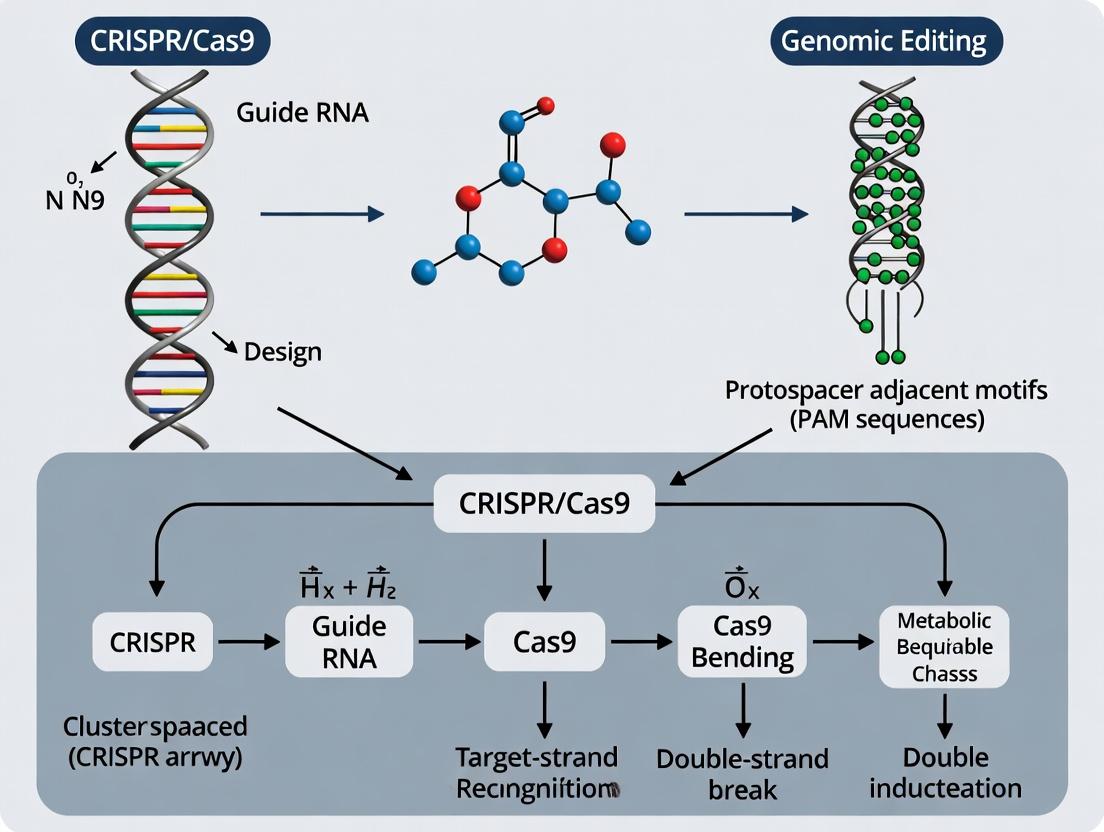
This article provides a detailed examination of CRISPR/Cas9-mediated genome editing within engineered microbial chassis.
CRISPR/Cas9 in Microbial Chassis: A Comprehensive Guide to Advanced Genomic Engineering for Bioproduction & Therapeutics
Abstract
This article provides a detailed examination of CRISPR/Cas9-mediated genome editing within engineered microbial chassis. Targeting researchers and industry professionals, it explores foundational principles, from the evolution of CRISPR technology to its adaptation in key microbial hosts like E. coli, yeast, and Bacillus species. We present current methodologies for designing efficient sgRNAs, delivering editing components, and achieving precise knock-ins, knock-outs, and multiplexed edits. The guide addresses common troubleshooting challenges, including off-target effects and repair pathway limitations, and offers optimization strategies for enhanced efficiency. Finally, it evaluates validation techniques and compares CRISPR/Cas9 to alternative editing tools (e.g., base editors, prime editors, recombinases), concluding with an outlook on its transformative impact on synthetic biology, metabolic engineering, and next-generation therapeutic development.
CRISPR/Cas9 Essentials: From Bacterial Immunity to Precision Microbial Engineering
Within the broader thesis of advancing microbial chassis research for bioproduction and synthetic biology, CRISPR/Cas9 has emerged as the quintessential genetic scalpel. This whiteprames the evolution of CRISPR from a curious bacterial immune system to a precision genome-editing tool indispensable for engineering microbial hosts—such as E. coli, S. cerevisiae, and P. putida—to optimize pathways for metabolite, enzyme, and therapeutic compound production.
Historical Evolution: From Natural Function to Tool Development
CRISPR (Clustered Regularly Interspaced Short Palindromic Repeats) was first observed in E. coli in 1987. Its function as an adaptive immune system in prokaryotes, archiving viral DNA sequences to guide future cleavage, was elucidated in the 2000s. The pivotal reconstitution of the Streptococcus pyogenes Cas9 protein as a programmable, single-guide RNA (sgRNA)-dependent endonuclease in 2012 catalyzed the genome-editing revolution.
Table 1: Key Milestones in CRISPR Tool Development for Microbiology
| Year | Milestone | Key Organism/System | Significance for Microbial Chassis |
|---|---|---|---|
| 1987 | CRISPR repeats discovered | E. coli | Initial observation |
| 2005 | Spacers identified as viral DNA | Various prokaryotes | Proposed immune function |
| 2012 | Cas9 reprogramming demonstrated | S. pyogenes Cas9 | Programmable editing tool born |
| 2013 | Multiplexed editing in E. coli | E. coli | Enabled complex pathway engineering |
| 2015 | CRISPRi/a for modulation developed | dCas9 variants | Fine-tuned gene expression control |
| 2017-2023 | Base/Prime editing, high-fidelity variants | Engineered Cas9 | Reduced off-targets, precise single-base changes |
| 2024 | Ultra-high-throughput microbial editing platforms | Phage-assisted systems | Accelerated design-build-test cycles |
Core Mechanism & Molecular Toolkit
The Type II CRISPR/Cas9 system requires two core components: the Cas9 endonuclease and a single-guide RNA (sgRNA). The sgRNA, a fusion of CRISPR RNA (crRNA) and trans-activating crRNA (tracrRNA), directs Cas9 to a complementary DNA sequence adjacent to a Protospacer Adjacent Motif (PAM, e.g., 5'-NGG-3' for SpCas9). Binding induces a conformational shift, activating Cas9's RuvC and HNH nuclease domains to create a blunt double-strand break (DSB).
Table 2: Essential Research Reagent Solutions for Microbial CRISPR Editing
| Reagent/Material | Function in Experiment | Example Product/Supplier (Representative) |
|---|---|---|
| High-Efficiency Cas9 Expression Vector | Deliver Cas9 nuclease to microbial chassis. | pCas9 (Addgene #42876), inducible T7 or constitutive promoters. |
| sgRNA Cloning Backbone | Template for custom guide RNA design and expression. | pTargetF (Addgene #62226) for multiplex editing. |
| DNA Repair Template (dsDNA/ssODN) | Homology-directed repair (HDR) template for precise edits. | Ultramer DNA Oligos (Integrated DNA Technologies). |
| Electrocompetent Cells (High-Efficiency) | For transformation of editing constructs. | NEB 10-beta, GeneHogs (E. coli); prepared in-house for other chassis. |
| Cas9 Nuclease (Purified Protein) | For in vitro assembly of RNP for direct delivery. | Alt-R S.p. Cas9 Nuclease V3 (Integrated DNA Technologies). |
| CRISPRi/a dCas9 Variants | For gene knockdown (i) or activation (a) without cleavage. | dCas9-PPID (for repression) or dCas9-VPR (for activation) fusions. |
| Next-Generation Sequencing Kit | Validate edits and assess off-target effects. | Illumina MiSeq, Oxford Nanopore MinION for long-read validation. |
| Microbial Genome Isolation Kit | High-quality genomic DNA for post-editing analysis. | DNeasy Blood & Tissue Kit (Qiagen). |
Experimental Protocols for Microbial Genome Engineering
Protocol: Multiplex Gene Knockout inE. coliUsing CRISPR/Cas9 (One-Plasmid System)
Objective: Disrupt multiple genes in the E. coli genome to redirect metabolic flux.
Materials: pCas9 plasmid (contains Cas9, λ Red recombinase genes), pTargetF plasmid (contains sgRNA expression scaffold), oligonucleotides for sgRNA cloning and repair templates, LB media with antibiotics (spectinomycin, kanamycin), 1 mM IPTG, 10% L-arabinose.
Method:
- Design: Design 20-nt guide sequences for each target gene using validated tools (e.g., CHOPCHOP). Ensure target proximity to NGG PAM. Design ~100-nt single-stranded oligodeoxynucleotide (ssODN) repair templates with desired mutations/flanking homology.
- Clone sgRNAs: Anneal and phosphorylate oligos for each sgRNA. Ligate into BsaI-digested pTargetF vector. Transform into cloning strain, sequence-verify.
- Transform Editing System: Co-transform pCas9 and the verified pTargetF plasmid into electrocompetent E. coli target strain. Plate on LB + Spect + Kan. Incubate at 30°C (permissive for λ Red).
- Induce Recombination & Editing: Inoculate single colony into liquid media + antibiotics + 10 mM L-arabinose (induces λ Red). Grow to mid-log. Add 1 mM IPTG to induce sgRNA expression from pTargetF.
- Screen & Verify: Plate serial dilutions. Screen colonies by colony PCR and Sanger sequencing across target loci. Cure plasmids by successive growth at 37°C without antibiotics/inducers.
Protocol: CRISPRi for Tunable Gene Repression inS. cerevisiae
Objective: Dynamically repress a pathway gene to titrate metabolite production.
Materials: dCas9-Mxi1 fusion expression plasmid, sgRNA expression plasmid (with RNA Pol III promoter), synthetic complete dropout media, doxycycline for induction.
Method:
- Strain Construction: Transform yeast strain with integrated dCas9 repressor (fused to Mxi1 repression domain) and a genomically integrated sgRNA targeting the gene of interest.
- Culture & Induction: Grow in appropriate dropout media. Add varying concentrations of doxycycline (0-100 ng/mL) to titrate dCas9-Mxi1 expression.
- Phenotypic Analysis: Measure growth (OD600) and target metabolite (via HPLC/MS) at 24h intervals. Quantify mRNA knockdown via RT-qPCR.
- Data Fitting: Model repression efficiency vs. inducer concentration to establish predictive tuning parameters.
Quantitative Data & Current Performance Metrics
Table 3: Performance Metrics of CRISPR Systems in Common Microbial Chassis (2023-2024 Data)
| Chassis Organism | Editing Efficiency (Knockout) | HDR Precision Efficiency | Multiplexing Capacity (# of loci) | Primary Repair Pathway Exploited | Key Advance (Last 2 Years) |
|---|---|---|---|---|---|
| Escherichia coli | 95-100% | 60-90% (using ssODN) | >10 | Lambda Red-mediated Recombineering | Phage-assisted continuous evolution (PACE) for editing. |
| Saccharomyces cerevisiae | 80-95% | 50-80% | 5-8 | Homology-Directed Repair (HDR) | CRISPR/RNA Pol II systems for long RNA guides. |
| Bacillus subtilis | 70-90% | 30-60% | 3-5 | NHEJ/HDR | Engineered Cas9-N with expanded PAM. |
| Pseudomonas putida | 60-85% | 20-50% | 3-5 | RecA-mediated HDR | Optimized sgRNA promoters for robust expression. |
| Corynebacterium glutamicum | 75-95% | 40-70% | 4-6 | NHEJ-deficient strains for HDR | All-in-one, self-curing plasmid systems. |
The CRISPR revolution has provided microbial chassis researchers with an unparalleled genetic scalpel, enabling precise, multiplexed, and tunable genome engineering. Current frontiers include the deployment of base editors for single-nucleotide conversions without DSBs in non-dividing cells, and the integration of CRISPR-based regulation into dynamic metabolic control circuits. As the toolset expands with novel Cas variants (e.g., Cas12a, Casɸ) and delivery methods, the engineering of microbial factories for sustainable chemical and therapeutic production will achieve unprecedented sophistication and throughput.
Within the broader thesis on deploying CRISPR/Cas9 for precision genomic editing in microbial chassis research, a rigorous understanding of the core molecular machinery is non-negotiable. The synergy between the Cas9 endonuclease, the single guide RNA (sgRNA), and the protospacer adjacent motif (PAM) sequence dictates the efficiency, specificity, and ultimate success of genomic interventions. This technical guide deconstructs these components, providing researchers and drug development professionals with the foundational knowledge required to design and execute advanced microbial engineering protocols.
The Cas9 Endonuclease: A Programmable Molecular Scissors
Cas9 is a dual-lobed, RNA-guided endonuclease responsible for creating targeted double-strand breaks (DSBs) in DNA. Its function is contingent upon recognition of a PAM sequence and complementary base pairing between the sgRNA and the target DNA.
- Domains and Function: The nuclease lobe contains the HNH and RuvC-like nuclease domains. The HNH domain cleaves the DNA strand complementary to the sgRNA (target strand), while the RuvC domain cleaves the non-complementary strand (non-target strand).
- Conformational Activation: Cas9 remains in an inactive conformation until it forms a complex with the sgRNA. Upon PAM recognition and DNA strand separation (R-loop formation), the enzyme undergoes a conformational change that positions the nuclease domains for cleavage.
- Key Variants: Engineering of Cas9 has yielded variants with altered properties critical for microbial chassis work.
Table 1: Common Cas9 Variants and Properties
| Variant | PAM Sequence | Size (aa) | Key Characteristics | Primary Microbial Research Application |
|---|---|---|---|---|
| SpCas9 (S. pyogenes) | 5'-NGG-3' | 1368 | High efficiency, broad use. | General gene knockouts, large-scale edits. |
| SaCas9 (S. aureus) | 5'-NNGRRT-3' | 1053 | ~1kb shorter than SpCas9. | Delivery via size-limited vectors (e.g., some phages). |
| SpCas9-VQR | 5'-NGAN-3' | 1368 | Engineered PAM specificity. | Targeting genomes with low NGG density. |
| SpCas9-NG | 5'-NG-3' | ~1368 | Relaxed PAM requirement. | Expanding targetable sites in AT-rich genomes. |
| dCas9 (dead Cas9) | PAM-dependent | 1368 | Catalytically inactive (D10A, H840A). | Transcriptional repression/activation (CRISPRi/a). |
The Single Guide RNA (sgRNA): The Guidance System
The sgRNA is a chimeric RNA molecule that combines the functions of the ancestral CRISPR RNA (crRNA) and trans-activating crRNA (tracrRNA). It is the determinant of target specificity.
- Structural Components:
- Spacer Sequence (20 nt): The 5' end, user-defined 20-nucleotide sequence that dictates DNA target specificity via Watson-Crick base pairing.
- scaffold Structure: The invariant 3' end that forms a complex tertiary structure essential for binding and stabilizing Cas9.
- Design Rules: Spacer sequence selection must be adjacent to a PAM. Off-target effects are minimized by choosing unique genomic sequences with high on-target activity scores (predicted by algorithms like Chop-Chop or Benchling). GC content between 40-60% is generally optimal.
The Protospacer Adjacent Motif (PAM): The Licensing Signal
The PAM is a short, invariant DNA sequence (typically 2-6 bp) immediately downstream of the target sequence in the genomic DNA. It is not present in the host's CRISPR array.
- Function: PAM recognition by Cas9 is the critical first step for target interrogation. It licenses the enzyme to unwind the DNA duplex, allowing the sgRNA spacer to probe for complementarity. Without a correct PAM, Cas9 will not bind or cleave, even with perfect spacer complementarity.
- Implications for Design: The PAM requirement constrains targetable sites within a microbial genome. The choice of Cas9 ortholog or variant is often driven by the native PAM sequences of the microbial chassis.
Table 2: PAM Sequences for Select Cas9 Orthologs
| Cas9 Ortholog | Species Origin | Canonical PAM Sequence (5'→3')* | PAM Location |
|---|---|---|---|
| SpCas9 | Streptococcus pyogenes | NGG | Downstream of target (3') |
| SaCas9 | Staphylococcus aureus | NNGRRT (or NNGRR) | Downstream of target (3') |
| NmCas9 | Neisseria meningitidis | NNNNGATT | Downstream of target (3') |
| St1Cas9 | Streptococcus thermophilus | NNAGAAW | Downstream of target (3') |
| Cas12a (Cpf1) | Francisella novicida | TTTV | Upstream of target (5') |
*N = A, T, C, G; R = A, G; W = A, T; V = A, C, G.
Experimental Protocol: sgRNA Validation & Knockout inE. coli
Objective: To disrupt a target gene in a microbial chassis (E. coli K-12) via CRISPR/Cas9-mediated NHEJ or HDR with a repair template.
Materials (The Scientist's Toolkit):
| Reagent/Material | Function & Notes |
|---|---|
| Plasmid pCas9 | Expresses SpCas9 and λ Red recombinase proteins for HDR in E. coli. |
| Plasmid pTargetF | sgRNA expression vector, contains origin for antibiotic selection and the sgRNA scaffold. |
| Oligonucleotides | For sgRNA spacer cloning (forward/reverse) and as repair template (ssODN/dsDNA) for HDR. |
| Phusion High-Fidelity DNA Polymerase | PCR amplification of repair templates and verification fragments. |
| DpnI Restriction Enzyme | Digests methylated parental plasmid DNA post-PCR. |
| T4 DNA Ligase | Ligates annealed oligos into BsaI-digested pTargetF. |
| Electrocompetent E. coli | Prepared from strain lacking restriction systems for high transformation efficiency. |
| SOC Outgrowth Medium | Rich medium for recovery post-electroporation. |
| LB Agar Plates | Containing appropriate antibiotics (e.g., Spectinomycin for pTargetF, Kanamycin for pCas9). |
| Colony PCR Primers | Flanking the target site to screen for deletions/insertions. |
| Sanger Sequencing Primers | To confirm precise sequence edits. |
Methodology:
sgRNA Design & Cloning into pTargetF:
- Identify a 20-nt target sequence immediately 5' of an NGG PAM in the gene of interest. Verify specificity via BLAST against the host genome.
- Synthesize complementary oligos with 5' overhangs compatible with BsaI-digested pTargetF (Forward: 5'-CACC-[20nt spacer]-3', Reverse: 5'-AAAC-[20nt spacer reverse complement]-3').
- Anneal, phosphorylate, and ligate the oligo duplex into BsaI-digested, dephosphorylated pTargetF. Transform into cloning strain, select on spectinomycin, and sequence-verify the construct.
Co-transformation & Selection:
- Transform the verified pTargetF plasmid into the microbial chassis harboring the pCas9 plasmid. Alternatively, co-transform both plasmids into electrocompetent cells.
- Plate cells on LB agar containing both kanamycin and spectinomycin. Incubate at 30°C (to maintain pCas9, which has a temperature-sensitive origin).
Induction of Editing & Curing Plasmids:
- Inoculate a single colony into liquid LB with antibiotics and 0.2% L-arabinose to induce λ Red and sgRNA expression.
- Incubate at 30°C for 6-8 hours. Streak onto plates with antibiotics but no arabinose. This allows for screening of clones that may have undergone editing.
- To cure the pTargetF plasmid, streak colonies onto plates with kanamycin only. To cure both plasmids, streak onto antibiotic-free plates and incubate at 37°C (pCas9 is lost at 37°C). Screen via replica plating or patching.
Genotype Validation:
- Perform colony PCR using primers flanking the target locus (500-1000 bp amplicon). Analyze amplicon size by gel electrophoresis for deletions/insertions.
- Purify PCR products from putative mutants and subject to Sanger sequencing to confirm the precise edit.
- Verify loss of plasmids via antibiotic sensitivity and PCR.
Visualizing the Core Machinery Workflow
Diagram Title: CRISPR-Cas9 DNA Targeting and Repair Pathway
The precision of CRISPR/Cas9-mediated genomic editing in microbial chassis is wholly dependent on the intricate interplay between the Cas9 protein, the sgRNA, and the PAM sequence. Mastery of their individual characteristics—from Cas9 variant selection and sgRNA design rules to PAM constraints—enables researchers to move from theoretical design to successful experimental implementation. This foundational knowledge is critical for advancing microbial metabolic engineering, pathway optimization, and functional genomics, which are central pillars of modern biotechnology and therapeutic development.
Why Microbial Chassis? Advantages of E. coli, Yeast, Bacillus, and Non-Model Hosts
The advent of CRISPR/Cas9 genomic editing has catalyzed a renaissance in microbial biotechnology. This precise, programmable tool allows for rapid and multiplexed modifications of microbial genomes, transforming how we design and deploy microbial chassis. A microbial chassis is a standardized platform organism whose metabolism and genetics are engineered for the production of biomolecules, bioremediation, or as a model for fundamental research. The selection of an appropriate chassis is critical, as it dictates the feasibility, yield, and scalability of the bioprocess. This whitepaper examines the core advantages of leading model chassis—Escherichia coli, Saccharomyces cerevisiae, and Bacillus subtilis—and explores the emerging potential of non-model hosts, all within the context of CRISPR/Cas9-enabled genome engineering.
Comparative Advantages of Primary Microbial Chassis
The following table summarizes the key attributes, advantages, and primary applications of the major model chassis, highlighting how CRISPR/Cas9 tools have been adapted for each.
Table 1: Comparative Analysis of Major Microbial Chassis
| Feature | Escherichia coli | Saccharomyces cerevisiae | Bacillus subtilis | Non-Model Hosts (e.g., Pseudomonas, Streptomyces) |
|---|---|---|---|---|
| Genetic Tools | Most extensive; high-efficiency CRISPR/Cas9, recombineering. | Well-developed; CRISPR/Cas9, homologous recombination. | Efficient natural competence; CRISPR/Cas9 & CRISPRi. | Often limited; species-specific tools under development. |
| Growth Rate | Very fast (20-30 min doubling). | Moderate (90-120 min doubling). | Fast (30-60 min doubling). | Variable. |
| Expression Systems | Strong, tunable promoters (T7, lac). | Secretory pathways, eukaryotic PTMs. | Strong secretory capability (gram-positive). | Often native pathways for specialized metabolites. |
| Primary Advantages | Rapid high-density cultivation, well-known physiology. | Eukaryotic PTMs, GRAS status, robust fermentation. | High protein secretion, GRAS status, sporulation. | Novel metabolic pathways, environmental resilience, unique products. |
| Key Limitations | Lack of PTMs, endotoxin production. | Lower yields, complex genome. | Fewer post-translational modifications. | Genetic intractability, slower development cycle. |
| CRISPR/Cas9 Efficiency | >90% editing efficiency common. | High efficiency with donor templates. | Highly efficient via natural competence. | Protocol development is a major research focus. |
| Typical Applications | Recombinant proteins, metabolic engineering, basic science. | Protein therapeutics, biofuels, complex metabolites. | Industrial enzymes, surface display, biocatalysts. | Antibiotics, secondary metabolites, bioremediation. |
Detailed Methodologies: CRISPR/Cas9 Workflows for Key Chassis
Protocol: Multiplexed Gene Knockout inE. colivia CRISPR/Cas9 and λ-Red Recombineering
This protocol enables the simultaneous disruption of multiple genes.
- Plasmid Design: Clone a constitutively expressed Cas9 gene and a guide RNA (gRNA) array targeting multiple genomic loci into a temperature-sensitive origin plasmid. Include an sgRNA scaffold under a strong promoter (e.g., J23119).
- Donor DNA Preparation: For each target gene, synthesize ~100bp single-stranded DNA (ssDNA) oligonucleotides homologous to the region flanking the target site, designed to introduce a frameshift mutation or a stop codon upon repair.
- Transformation: Electroporate the CRISPR plasmid into an E. coli strain expressing the λ-Red recombinase proteins (Gam, Exo, Beta).
- Induction & Editing: Induce λ-Red with L-arabinose. Subsequently induce gRNA expression. The λ-Red system promotes homologous recombination with the ssDNA donors to repair the Cas9-induced double-strand breaks.
- Curing & Verification: Grow cells at 37°C (non-permissive temperature for plasmid replication) to cure the plasmid. Verify edits via colony PCR and Sanger sequencing of the targeted loci.
Protocol: CRISPR/Cas9-Mediated Gene Integration inS. cerevisiae
This protocol describes precise, marker-free gene integration.
- CRISPR Cassette Assembly: Assemble a plasmid expressing Cas9 codon-optimized for yeast and a specific gRNA under RNA Pol III promoters (SNR52 or SUP4t).
- Donor DNA Construction: Prepare a linear dsDNA donor fragment containing the gene of interest flanked by 40-60 bp homology arms identical to sequences upstream and downstream of the genomic cut site.
- Co-transformation: Co-transform the linear donor DNA and the CRISPR plasmid (or a gRNA-expressing plasmid if Cas9 is genomically integrated) into yeast competent cells using the lithium acetate method.
- Selection & Screening: Plate on selective media (e.g., lacking uracil for plasmid maintenance). Screen colonies for the correct integration via diagnostic PCR across the junction sites.
- Plasmid Eviction: Streak positive colonies on rich media to allow for loss of the auxotrophic plasmid. Confirm plasmid loss and stable genomic integration.
Protocol: CRISPRi for Tunable Gene Knockdown inB. subtilis
This protocol uses catalytically dead Cas9 (dCas9) for transcriptional repression.
- Strain Engineering: Integrate a gene for dCas9, fused to a repression domain (e.g., Mxi1), into the B. subtilis genome under an inducible promoter (e.g., Pxyl).
- gRNA Library Cloning: Design gRNAs targeting the non-template strand of the promoter or early coding sequence (5' region) of the target gene(s). Clone arrays of gRNAs into a replicative plasmid.
- Transformation: Transform the gRNA plasmid into the dCas9-expressing B. subtilis strain via natural competence.
- Induction & Analysis: Induce dCas9 expression with xylose. Measure knockdown efficiency by quantifying mRNA levels via RT-qPCR or by assaying relevant phenotypic changes (e.g., enzyme activity, metabolite production).
Visualization: CRISPR/Cas9 Workflow in Microbial Chassis
CRISPR/Cas9 Engineering Workflow for Microbial Chassis
Microbial Chassis Selection Logic
The Scientist's Toolkit: Key Research Reagent Solutions
Table 2: Essential Reagents for CRISPR/Cas9 Microbial Engineering
| Reagent / Solution | Function in Experiment | Key Considerations for Chassis |
|---|---|---|
| Cas9 Expression Vector | Provides the Cas9 nuclease. Must be codon-optimized for the host (e.g., E. coli, yeast, Bacillus). | For B. subtilis, integrative versions are preferred. For yeast, can be genomically integrated. |
| gRNA Cloning Backbone | Plasmid for expressing single or multiplexed gRNAs under a host-specific promoter (e.g., J23119 for E. coli, SNR52 for yeast). | Arrayed tRNA-gRNA systems enable efficient multiplexing in bacteria. |
| Homology-Directed Repair (HDR) Donor | DNA template for precise editing. Can be dsDNA (for yeast) or ssDNA (for E. coli recombineering). | Homology arm length is critical: 40-60 bp for yeast, ~100 nt for E. coli ssDNA. |
| Competent Cell Preparation Kit | For efficient DNA uptake. Protocols differ (chemical for yeast, electrocompetent for E. coli and Bacillus). | B. subtilis natural competence can bypass transformation steps. |
| CRISPRi/dCas9 Repressor Fusion | For tunable gene knockdown. dCas9 fused to repression domains (e.g., Mxi1, KRAB). | Used in Bacillus and E. coli for essential gene analysis and metabolic tuning. |
| NHEJ Inhibitor (e.g., SCR7) | Suppresses non-homologous end joining to favor HDR in hosts with active NHEJ pathways (e.g., some fungi). | Can improve precise editing efficiency in non-model hosts. |
| Species-Specific Selective Media | For plasmid maintenance and selection of edited clones (antibiotics, auxotrophic markers). | Marker-free editing is increasingly preferred for industrial strain development. |
| High-Fidelity Polymerase & Cloning Master Mix | For accurate amplification of donor fragments and verification of edits via colony PCR. | Essential for all workflows to ensure construct and edit fidelity. |
Within the paradigm of next-generation industrial biotechnology, the precision of CRISPR/Cas9 genomic editing has become the cornerstone for advancing microbial chassis research. This guide details its pivotal applications in metabolic engineering, pathway optimization, and synthetic biology, enabling the programmable redesign of microbial physiology for the production of high-value therapeutics, biofuels, and chemicals.
Foundational CRISPR/Cas9 Mechanisms for Microbial Editing
The Streptococcus pyogenes CRISPR/Cas9 system has been adapted for precise genome editing in model microbial chassis (e.g., E. coli, S. cerevisiae, B. subtilis). The core machinery comprises:
- sgRNA: A chimeric RNA guiding Cas9 to a specific 20-nucleotide genomic locus preceding a 5'-NGG-3' PAM.
- Cas9 Nuclease: Introduces a double-strand break (DSB) ~3 bp upstream of the PAM.
- Repair Pathways: Microbial editing leverages two primary repair mechanisms:
- Non-Homologous End Joining (NHEJ): Error-prone, leading to indels and gene knockouts. Often inefficient in many bacteria without specific genetic modifications to enhance NHEJ machinery.
- Homology-Directed Repair (HDR): High-fidelity repair using a donor DNA template for precise insertions, deletions, or replacements. This is the primary route for pathway engineering.
Core Application I: Metabolic Engineering
CRISPR/Cas9 enables multiplexed, markerless genomic modifications to rewire central metabolism.
Key Strategy: Gene Knock-Ins/Knock-Outs for Precursor Flux
Objective: Amplify metabolic flux toward a target compound by deleting competing pathways and inserting heterologous genes.
Protocol: CRISPR/Cas9-Mediated Multiplex Gene Deletion in E. coli
- Design: Design sgRNAs targeting genes for deletion (e.g., pflB, ldhA to reduce acetate/lactate). Design donor DNA templates with ~500 bp homology arms flanking a selective marker or a scarless excision sequence.
- Assembly: Clone sgRNA(s) into a CRISPR plasmid (e.g., pTarget series) expressing Cas9.
- Transformation: Co-transform the CRISPR plasmid and donor DNA template into the microbial chassis.
- Selection & Screening: Select for transformants on appropriate antibiotics. Screen colonies via colony PCR and Sanger sequencing to confirm edits.
- Curing: Eliminate the CRISPR plasmid via temperature shift or chemical induction to enable subsequent editing rounds.
Quantitative Impact of Common Metabolic Engineering Modifications Table 1: Representative Flux Improvements from CRISPR/Cas9-Mediated Edits
| Chassis | Target Product | Genetic Modification(s) | Reported Yield Increase | Key Reference |
|---|---|---|---|---|
| E. coli | Succinic Acid | ΔldhA, ΔpflB, Δpta | 2.8-fold vs. wild-type | J. Ind. Microbiol. Biotechnol., 2023 |
| S. cerevisiae | β-Carotene | tHMG1 overexpression, Δerg9 (regulated) | 4.5-fold vs. base strain | Metab. Eng., 2024 |
| B. subtilis | N-Acetylglucosamine | ΔgamP, ΔnagAB, gna1 insertion | 3.1-fold vs. parent strain | ACS Synth. Biol., 2023 |
Core Application II: Pathway Optimization
CRISPR/Cas9 facilitates dynamic control and balancing of heterologous pathways.
Key Strategy: Combinatorial Gene Integration and Promoter Tuning
Objective: Assemble multi-gene biosynthetic pathways from diverse organisms and optimize expression levels to prevent metabolic burden and intermediate toxicity.
Protocol: CRISPR/Cas9-Assisted in vivo Pathway Assembly in Yeast
- Design Modular Parts: Design donor constructs containing each pathway gene under a distinct, tunable promoter (e.g., pTEF1, pADH1 variants). Homology arms target safe-haven genomic loci (e.g., HO, URA3).
- Iterative Integration: Perform sequential CRISPR/Cas9-mediated HDR to integrate each gene construct into the chassis genome.
- Promoter Library Screening: For a rate-limiting enzyme, create a promoter library (via sgRNA-targeting of the promoter region and donor library) and screen for optimal strain performance using fluorescence-activated cell sorting (FACS) or microtiter plate assays.
- Balancing: Analyze proteomic/metabolomic data to identify new bottlenecks and iterate.
Diagram: CRISPR/Cas9-Mediated Pathway Assembly & Optimization Workflow
Title: Workflow for CRISPR-Based Pathway Assembly & Tuning
Core Application III: Synthetic Biology
CRISPR/Cas9 is used to install complex genetic circuits and create synthetic regulation.
Key Strategy: Implementing CRISPRi/a for Dynamic Metabolic Control
Objective: Use nuclease-deficient Cas9 (dCas9) fused to repressor/activator domains to finely tune native gene expression without altering the genomic sequence.
Diagram: CRISPRi/a for Metabolic Flux Control
Title: CRISPRi/a Mechanisms for Gene Regulation
The Scientist's Toolkit: Essential Research Reagent Solutions
Table 2: Key Reagents for CRISPR/Cas9 Microbial Metabolic Engineering
| Reagent/Material | Provider Examples | Critical Function in Experimentation |
|---|---|---|
| CRISPR/Cas9 Plasmid Systems (e.g., pCas, pTarget) | Addgene, ATCC | Provides inducible or constitutive expression of Cas9 and sgRNA scaffold for editing. |
| High-Efficiency Competent Cells (for chassis) | NEB, Thermo Fisher, Zymo Research | Ensures high transformation efficiency for plasmid and donor DNA delivery. |
| Synthetic sgRNA & Donor DNA Fragments | IDT, Twist Bioscience | Precision-designed, ultrapure DNA for targeting and HDR templates. |
| HDR Enhancer Reagents (e.g., RecET, λ-Red proteins) | Lucigen, Kerafast | Boosts homologous recombination rates in bacterial chassis. |
| Antibiotics & Selection Media | Sigma-Aldrich, Corning | For selective pressure post-transformation and plasmid maintenance. |
| Genomic DNA Isolation Kit (Microbial) | Qiagen, Macherey-Nagel | For rapid purification of high-quality gDNA for verification PCR. |
| PCR Mix for Colony Screening | KAPA Biosystems, Takara Bio | High-fidelity polymerases for accurate amplification of edited loci. |
| Next-Gen Sequencing Service (Amplicon-Seq) | Illumina, Eurofins | For deep mutational analysis and off-target profiling in engineered strains. |
Advanced Protocol: Genome-Scale CRISPRi Screening for Bottleneck Identification
Objective: Identify genomic targets whose repression enhances product yield.
Detailed Methodology:
- Library Construction: Clone a genome-scale sgRNA library targeting all non-essential genes into a dCas9-repressor (CRISPRi) plasmid.
- Transformation & Library Coverage: Transform the library into the engineered production chassis at high coverage (>500x per sgRNA). Use electroporation for high efficiency.
- Selection under Production Conditions: Culture the library in production medium (e.g., minimal medium with feedstock) in a bioreactor or deep-well plates over multiple generations.
- Sample & Sequence: Harvest genomic DNA from populations at early and late time points. Amplify the sgRNA region via PCR and subject to NGS.
- Data Analysis: Use MAGeCK or similar algorithms to identify sgRNAs significantly enriched/depleted. Enriched sgRNAs reveal knockouts that confer a fitness/production advantage.
- Validation: Synthesize individual hits and validate in fresh strain backgrounds using flask fermentation and HPLC/MS analytics.
Quantitative Outcomes & Future Perspectives
The integration of CRISPR/Cas9 tools has led to step-change improvements in microbial production metrics.
Table 3: Performance Benchmarks of CRISPR-Engineered Microbial Chassis
| Product Class | Microbial Chassis | Editing Technology | Titer (g/L) | Productivity (g/L/h) | Yield (g/g substrate) |
|---|---|---|---|---|---|
| Fatty Alcohols | E. coli | Multiplex CRISPR/Cas9 HDR | 28.5 | 0.59 | 0.21 |
| Artemisinic Acid | S. cerevisiae | CRISPRi + Promoter Library | 32.1 | 0.13 | 0.15 |
| Polyhydroxyalkanoate | P. putida | Base Editor (CRISPR-derived) | 45.2 | 0.63 | 0.31 |
Future trajectories involve the integration of CRISPR with AI/ML for sgRNA and pathway design, the use of base editors for silent multiplex tuning, and the application of CRISPR-based biosensors for autonomous fermentation control. This synergy solidifies CRISPR/Cas9 as the foundational tool for constructing the next generation of living microbial therapeutics and cell factories.
1. Introduction and Thesis Context
This whitepaper details the latest CRISPR variants and systems developed between 2023-2024, analyzed within the broader thesis that the evolution of CRISPR technologies is moving beyond simple gene knockouts to achieve precise, multiplexed, and context-aware editing in microbial chassis, thereby unlocking new frontiers in metabolic engineering, synthetic biology, and therapeutic development.
2. Core Systems and Quantitative Comparison
Table 1: Key CRISPR Systems for Microbial Editing (2023-2024)
| System/Variant Name | Core Editor/Enzyme | Primary Innovation | Typical Editing Outcome | Reported Efficiency in Model Bacteria | Key Advantage for Microbial Chassis |
|---|---|---|---|---|---|
| Cas-CLOVER | S. pyogenes Cas9 nickase (D10A) fused to Clover nuclease | Paired nickase system with high-fidelity Clover dimerization. | Clean double-strand breaks (DSBs) or large deletions. | >90% editing efficiency in E. coli; near-elimination of off-target effects. | Ultra-high specificity for stable genomic integrations in long pathways. |
| CRISPR-Assisted Transposase (CAST) v3.0 | Cas12k (or evolved variants) + Tn7-like transposon | All-in-one, marker-free integration of large DNA cargo without DSBs. | Programmable, unidirectional insertion of 10+ kb cargo. | ~100% cargo insertion efficiency in Pseudomonas putida. | Ideal for inserting entire metabolic pathways without selection markers. |
| Cascade-IS1111 (Type I-F3) | Cascade complex + IS1111 transposase | Type I system for RNA-guided, RecA-independent transposition. | Single-step, programmable genomic insertions. | 80-100% efficiency across diverse Proteobacteria. | Broad-host-range tool for non-model industrial microbes. |
| Cas9-NGv2 | Engineered SpCas9-NG PAM variant | Recognizes relaxed NG PAM (N= A/T/G/C). | Point mutations, knock-ins, knock-outs. | 1.5-3x higher activity than NG v1 in B. subtilis at NGN PAMs. | Expands targetable genomic sites in GC-rich or AT-rich microbes. |
| Craspase (gRAMP/Cas12a-based) | Caspase-like protease fused to guide-targeted Cas12a | Allosteric protease activated by RNA target binding, not cleavage. | Post-translational modulation of protein function (knock-downs). | Rapid, reversible knockdown of fluorescent protein signal in E. coli (t1/2 ~20 min). | Dynamic, non-genotoxic regulation of metabolic flux. |
| Retron-based RNA-templated Recombineering (RTRI) | Retron ncRNA + RT + Cas9 (or Cas12a) | Uses bacterial retron ncRNA to produce editing templates in vivo. | Precise single-nucleotide variants (SNVs) without exogenous DNA. | 25-90% SNV efficiency in E. coli, depending on locus. | Enables massive parallelized genome editing and directed evolution. |
3. Detailed Experimental Protocols
Protocol 1: Cas-CLOVER Mediated Large Deletion in E. coli
- Plasmid Construction: Clone two sgRNA expression cassettes (targeting upstream and downstream of region to delete) and the Cas9-D10A-Clover fusion protein expression cassette onto a single temperature-sensitive plasmid.
- Transformation: Electroporate the plasmid into the target E. coli strain. Recover at 30°C.
- Induction and Editing: Grow culture to mid-log phase at 30°C. Induce sgRNA and Cas9-Clover expression with 0.2% L-arabinose. Shift culture to 37°C for 1 hour to initiate replication of the temperature-sensitive plasmid.
- Curing and Screening: Plate dilutions on non-selective media at 37°C. Screen individual colonies by colony PCR across the target locus to identify deletions. Sequence validate.
Protocol 2: CAST v3.0 for Marker-Free Pathway Integration in P. putida
- Vector Assembly: Assemble the donor plasmid containing the cargo (e.g., 12 kb biosynthetic pathway) flanked by attL and attR transposon ends. A second plasmid expresses the evolved Cas12k and TnsA,B,C proteins.
- Conjugation: Mobilize both plasmids into P. putida via tri-parental mating.
- Selection and Curing: Select for transconjugants on appropriate antibiotics. Passage positive colonies in non-selective media to cure the helper plasmid.
- Validation: Perform whole-genome sequencing or long-range PCR to confirm single-copy, directional insertion at the attTn7 site.
4. Visualization of Systems and Workflows
Diagrams: 1. CAST v3.0 Pathway Integration, 2. Retron RTRI Editing Mechanism
5. The Scientist's Toolkit: Research Reagent Solutions
Table 2: Essential Reagents for Advanced Microbial CRISPR Editing
| Reagent / Material | Supplier Examples | Function in Experiment |
|---|---|---|
| High-Efficiency Electrocompetent Cells | Lucigen, NEB, homemade prep | Essential for transforming large, complex plasmid systems (e.g., CAST plasmids) into diverse microbial hosts. |
| T7 RNA Polymerase Expressing Strains | NEB, Agilent | Required for in vivo sgRNA transcription from T7 promoters, a common architecture in new systems. |
| Phusion Ultra High-Fidelity DNA Polymerase | Thermo Fisher, NEB | Critical for error-free amplification of large gene cargoes (10+ kb) for donor plasmid construction. |
| Gibson Assembly or Golden Gate Assembly Master Mix | NEB, Thermo Fisher | Enables rapid, seamless assembly of multiple DNA fragments for constructing complex CRISPR vectors. |
| All-in-One CRISPR Plasmid Kits (Customizable) | Addgene, Twist Bioscience | Pre-built backbones for expressing novel Cas variants (e.g., Cas9-NGv2) and sgRNAs, speeding up vector design. |
| Next-Generation Sequencing Library Prep Kit | Illumina, PacBio | For comprehensive off-target analysis and validation of large insertions/deletions via whole-genome sequencing. |
| Chemical Inducers (aTc, IPTG, L-Arabinose) | Sigma-Aldrich, GoldBio | Provide temporal control over Cas protein and sgRNA expression, minimizing toxicity. |
| CRISPR-Cas9 Off-Target Effect Prediction Software | Benchling, IDT | In silico guide design tools incorporating latest PAM rules (e.g., for Cas9-NG) to predict and minimize off-targets. |
Protocols in Action: Step-by-Step CRISPR Editing for Bacteria, Yeast, and Beyond
The development of engineered microbial chassis—bacteria, yeasts, and microalgae—for bioproduction and therapeutic applications is a cornerstone of synthetic biology. Within the broader thesis on CRISPR/Cas9 for genomic editing in microbial chassis, the design of single guide RNAs (sgRNAs) emerges as the most critical determinant of editing success. This guide details the modern computational tools and empirical rule sets specifically optimized for designing high-efficiency sgRNAs in microbial genomes, which often possess distinct compositional and structural features compared to mammalian systems.
Core Principles for Microbial sgRNA Design
Efficiency hinges on two factors: on-target activity and minimized off-target effects. Key principles include:
- Sequence Composition: The 20-nt spacer sequence must be unique within the genome. Optimal GC content (typically 40-60%) is crucial for stability.
- Seed Region (PAM-proximal): Bases 1-12 upstream of the PAM are critical for Cas9 binding; mismatches here often abolish cleavage.
- PAM Sequence: For Streptococcus pyogenes Cas9 (SpCas9), the canonical NGG is standard, but software now accounts for non-canonical PAMs for next-generation Cas variants.
- Genomic Context: Target site accessibility (lack of secondary structure) and nucleosome occupancy in eukaryotes (e.g., yeasts) influence efficiency.
Software Tools: A Comparative Analysis
The following table summarizes leading tools, their algorithms, and suitability for microbial genomes.
Table 1: Software Tools for Microbial sgRNA Design
| Tool Name | Primary Algorithm / Score | Key Features for Microbial Genomes | Input Format | Output | Best For |
|---|---|---|---|---|---|
| CHOPCHOP | Efficiency score based on sequence, GC, Tm, secondary structure. | Excellent for bacteria/yeast; supports many PAMs; batch processing. | Gene ID, FASTA, GenBank. | Ranked sgRNAs, primers, off-targets. | Broad microbial applications. |
| CRISPOR | Incorporates Doench ‘16 (Rule Set 2), Moreno-Mateos scores. | Comprehensive off-target analysis; supports >150 genomes including microbes. | Target sequence, FASTA. | Multiple efficiency scores, specific off-target lists. | Rigorous validation studies. |
| Benchling | Proprietary on-target & off-target scores. | Integrated molecular biology platform; user-friendly for common lab strains. | Genomic coordinates, sequence. | Visual genome browser, oligo designs. | Daily design workflow. |
| sgRNA Designer (Broad) | Rule Set 2 (for human/mouse), adaptable. | High-throughput; can be applied to any provided genome. | FASTA file of target loci. | Ranked list with scores. | High-throughput screens in non-model microbes. |
| CRISPRitz | Customizable scoring parameters. | Flexible, allows user-defined PAM and genome; ideal for novel Cas variants. | Genome FASTA, target region. | Efficiency-ranked sgRNAs. | Non-standard PAMs & chassis. |
Empirical Rule Sets and Quantitative Metrics
Rule Sets translate predictive features into quantifiable scores.
Table 2: Key Predictive Features and Quantitative Impact on sgRNA Efficiency
| Feature | Optimal Range / Characteristic | Impact on Efficiency (Quantitative Estimate) | Notes |
|---|---|---|---|
| GC Content | 40% - 60% | sgRNAs with GC 40-60% show ~2-5x higher efficiency than those with <20% or >80% GC. | Critical for binding stability. |
| Positional Nucleotide Preference | Guanine at position 20 (adjacent to PAM), C/T at position 19. | Presence of G20 increases efficiency by ~1.5-2x. Avoid A/T at position 19. | Based on large-scale screens. |
| Thermodynamic Stability (ΔG) | Higher stability (more negative ΔG) in seed region. | Seed region ΔG > -7.5 kcal/mol can reduce efficiency by >50%. | Predicts R-loop formation. |
| Off-Target Mismatches | ≤3 mismatches, especially if not in seed region. | 1-2 mismatches in distal region can still cause cleavage at ~10-50% of on-target rate. | Requires stringent genome-wide search. |
| Secondary Structure (sgRNA) | Low free energy of sgRNA scaffold & spacer. | Highly structured sgRNAs can show >10-fold reduction in activity. | Predict using RNAfold. |
Detailed Experimental Protocol for sgRNA Validation
This protocol outlines a standard E. coli knockout experiment to empirically validate computationally designed sgRNAs.
Protocol: sgRNA Efficiency Validation via Transformation and Sequencing in E. coli
I. Materials (Research Reagent Solutions Toolkit) Table 3: Essential Reagents and Materials
| Item | Function |
|---|---|
| pCas9/pTargetF System Plasmids (or similar) | Two-plasmid system for inducible Cas9 expression and sgRNA delivery with editing template. |
| Chemically Competent E. coli | Strain for transformation; must lack native CRISPR systems. |
| Arabinose & aTc (Anhydrotetracycline) | Inducers for Cas9 and sgRNA expression, respectively. |
| Luria-Bertani (LB) Broth/Agar | Standard microbial growth media. |
| Appropriate Antibiotics | For plasmid maintenance (e.g., Spectinomycin, Kanamycin). |
| PCR Reagents & Primers | To amplify target locus for sequencing analysis. |
| Sanger Sequencing Service/Kit | To confirm indels at target site. |
| T7 Endonuclease I or Surveyor Nuclease | Alternative for detecting indels via mismatch cleavage assay. |
II. Method
- sgRNA Cloning: Design oligonucleotides for your sgRNA spacer. Anneal and ligate into the BsaI-digested pTargetF vector.
- Co-transformation: Transform the pCas9 (or similar) plasmid and the newly constructed pTargetF-sgRNA plasmid into competent E. coli cells via heat shock. Plate on LB agar with both antibiotics.
- Induction of Editing: Inoculate a single colony into liquid media with antibiotics and inducers (e.g., 0.2% arabinose, 100 ng/mL aTc). Grow for 8-16 hours.
- Outgrowth and Curing: Dilute culture, grow without inducers/antibiotics to allow loss of pTargetF plasmid.
- Screening: Plate on agar to obtain single colonies. Screen 10-20 colonies by colony PCR across the target locus.
- Efficiency Analysis: Sanger sequence PCR products. Analyze chromatograms for indels using tools like TIDE or ICE. Calculate editing efficiency as (edited colonies / total screened) * 100%.
Visualizing the sgRNA Design and Validation Workflow
Title: Computational and Experimental sgRNA Design Workflow
Integrating sophisticated software tools with empirically validated microbial rule sets is non-negotiable for robust genome editing. This iterative process—from in silico prediction to empirical validation—forms the feedback loop essential for refining designs and building organism-specific knowledge bases, ultimately accelerating the engineering of next-generation microbial chassis.
In the pursuit of engineering robust microbial chassis for bioproduction and therapeutic applications, CRISPR/Cas9 has emerged as the preeminent tool for precise genomic editing. The efficacy of this system is fundamentally governed by the delivery method, which directly impacts editing efficiency, specificity, and biosafety. This technical guide provides an in-depth analysis of three principal delivery modalities—Plasmid Systems, Ribonucleoprotein (RNP) Complexes, and Conjugation—contextualized within microbial chassis research. Each method presents a unique combination of temporal control, genetic load, and regulatory consideration, necessitating informed selection based on experimental and application goals.
Plasmid-Based Delivery
Plasmid systems involve the delivery of DNA encoding the Cas9 nuclease and guide RNA (gRNA) into the microbial host. Expression is driven by host transcriptional machinery.
Key Characteristics
Plasmid delivery offers sustained expression, which can be advantageous for multiplex editing or in hard-to-transform strains. However, it risks increased off-target effects, plasmid instability, and unwanted immunogenic responses in therapeutic contexts. The use of inducible promoters (e.g., arabinose- or tetracycline-regulated) can mitigate toxicity.
Experimental Protocol: Plasmid Transformation inE. coli
Objective: Introduce a CRISPR/Cas9 plasmid for targeted gene knockout. Materials: Chemically competent or electrocompetent E. coli strain, plasmid DNA (e.g., pCas9-gRNA), recovery media (SOC), selective agar plates. Method:
- Thaw competent cells on ice for 10 minutes.
- Add ~50-100 ng plasmid to 50 µL cells, mix gently. Incubate on ice for 30 minutes.
- Heat-shock at 42°C for exactly 30-45 seconds. Immediately return to ice for 2 minutes.
- Add 950 µL pre-warmed SOC medium. Incubate at 37°C with shaking (225 rpm) for 60 minutes.
- Plate 100-200 µL onto selective agar (e.g., containing ampicillin). Incubate overnight at 37°C.
- Screen colonies via colony PCR and sequencing for editing events.
Table 1: Performance Metrics of Plasmid Systems in Common Microbial Chassis
| Microbial Chassis | Average Editing Efficiency (%) | Transformation Efficiency (CFU/µg DNA) | Time to Editing (hrs) | Key Plasmid System |
|---|---|---|---|---|
| E. coli DH10B | 85-99 | 1 x 10^8 - 1 x 10^9 | 24-48 | pCRISPR, pCas9 |
| B. subtilis 168 | 60-80 | 1 x 10^5 - 1 x 10^6 | 48-72 | pDR244 |
| S. cerevisiae | 70-90 | 1 x 10^4 - 1 x 10^5 | 48-72 | pYES2, pRS-based |
| P. putida KT2440 | 40-70 | 1 x 10^6 - 1 x 10^7 | 48 | pSEVA series |
Ribonucleoprotein (RNP) Complex Delivery
RNP delivery involves the direct introduction of pre-assembled, purified Cas9 protein complexed with in vitro-transcribed gRNA. This method offers rapid, transient activity.
Key Characteristics
RNPs minimize off-target effects due to short activity window, eliminate the need for codon optimization, and avoid genomic integration of foreign DNA. This is critical for clinical applications and working with non-model organisms. Primary challenges include delivery efficiency, especially in microbes with robust cell walls.
Experimental Protocol: Electroporation of Cas9 RNP inB. subtilis
Objective: Achieve gene deletion via direct delivery of RNP complexes. Materials: Purified Cas9 protein, synthetic gRNA, electrocompetent B. subtilis, electroporator, recovery media, homologous repair template (if needed). Method:
- Prepare RNP complex: Mix 5 µL of 20 µM purified Cas9 with 5 µL of 40 µM gRNA. Incubate at 25°C for 10 minutes.
- Mix 10 µL RNP complex with 100 µL electrocompetent B. subtilis cells. Add 100 ng ssDNA repair template for HDR.
- Transfer to a 2 mm electroporation cuvette. Electroporate (e.g., 2.5 kV, 200Ω, 25 µF).
- Immediately add 1 mL recovery media (e.g., LB with 0.5 M sucrose). Transfer to a tube.
- Recover at 37°C with shaking for 2-3 hours.
- Plate onto selective/non-selective agar. Screen colonies after 24-48 hours.
Table 2: Performance Metrics of RNP Delivery Across Methods
| Delivery Method | Chassis Organism | Editing Efficiency (%) | Cell Viability Post-Delivery (%) | Key Advantage |
|---|---|---|---|---|
| Electroporation | B. subtilis | 50-85 | 20-40 | High efficiency for tough cell walls |
| PEG-Mediated | S. cerevisiae | 30-60 | 50-70 | Simplicity, no specialized equipment |
| Nanomaterial | E. coli | 40-75 | 60-80 | Potentially scalable, mild on cells |
| Microfluidics | C. glutamicum | 70-95 | 70-90 | Extreme precision, high throughput screening |
Conjugation-Based Delivery
Bacterial conjugation involves the direct cell-to-cell transfer of genetic material via a conjugative plasmid from a donor to a recipient microbial chassis.
Key Characteristics
Conjugation is highly efficient for strains recalcitrant to chemical or electro-transformation. It enables the transfer of large DNA payloads and is instrumental in editing non-model, industrially relevant bacteria. It requires a donor strain (typically E. coli) carrying a mobilization system (e.g., RP4 oriT) and a suitable recipient.
Experimental Protocol: Triparental Mating for Plasmid Delivery
Objective: Deliver a CRISPR/Cas9 plasmid from E. coli to a recalcitrant Pseudomonas species. Materials: Donor E. coli (with helper plasmid, e.g., pRK2013), Donor E. coli (with CRISPR plasmid, e.g., pK18mobsacB-gRNA), Recipient Pseudomonas strain, LB agar, selective agar with appropriate antibiotics. Method:
- Grow cultures of all three strains overnight to mid-log phase (OD600 ~0.6).
- Mix cells at a ratio of 1:1:2 (Helper:CRISPR Donor:Recipient). Pellet 1 mL of mixed culture.
- Resuspend pellet in 100 µL LB. Spot onto a pre-warmed, non-selective LB agar plate.
- Incubate at 37°C for 4-8 hours to allow mating.
- Resuspend the mating spot in 1 mL saline. Serially dilute and plate onto selective agar containing antibiotics that select only for the recipient carrying the CRISPR plasmid (and counter-select against the E. coli donors).
- Incubate plates for 24-48 hours. Screen transconjugant colonies for editing.
Table 3: Conjugation Efficiency in Diverse Bacterial Recipients
| Recipient Chassis | Donor System | Conjugation Frequency (Transconjugants/Recipient) | Typical Payload Size (kb) | Common Selectable Marker |
|---|---|---|---|---|
| Pseudomonas putida | RP4-based | 10^-3 - 10^-1 | Up to 50 | Gm^R, Km^R |
| Lactobacillus spp. | pAMβ1-based | 10^-5 - 10^-3 | Up to 15 | Em^R |
| Streptomyces spp. | pIJ101-based | 10^-4 - 10^-2 | > 100 | Tsr^R, Apra^R |
| Vibrio cholerae | IncC-based | 10^-2 - 10^0 | Up to 30 | Cm^R |
The Scientist's Toolkit: Research Reagent Solutions
Table 4: Essential Reagents and Materials for CRISPR/Cas9 Delivery Experiments
| Item Name | Function & Application | Example Product/Catalog |
|---|---|---|
| pCas9 Plasmid (Addgene) | Encodes Cas9 and gRNA scaffold; backbone for microbial expression. | Addgene #42876 |
| High-Purity Cas9 Nuclease | Purified protein for in vitro RNP complex assembly. | ThermoFisher A36498 |
| T7 gRNA Synthesis Kit | In vitro transcription of high-yield, sgRNA for RNP complexes. | NEB E2040S |
| Electrocompetent Cell Prep Kit | For generating high-efficiency electrocompetent cells of your chassis organism. | Lucigen 60202-2 |
| Homologous Repair Template | ssDNA or dsDNA fragment for precise editing via HDR; can be synthesized or PCR-amplified. | IDT Ultramer |
| Conjugation Helper Plasmid | Provides mobilization functions in trans for plasmid transfer. | pRK2013 (Addgene #1233) |
| Selective Agar Antibiotics | For selection of transformants/transconjugants; choice depends on plasmid markers. | Gold Biotechnology |
| Microporation System | Electroporation device optimized for microbial cells. | Bio-Rad Gene Pulser Xcell |
Visualizations
Title: Plasmid-Based CRISPR Delivery Workflow
Title: RNP Complex Assembly and Action Mechanism
Title: Bacterial Conjugation for CRISPR Delivery
The selection of a delivery method—Plasmid, RNP, or Conjugation—is a critical determinant in CRISPR/Cas9 editing of microbial chassis. Plasmids offer simplicity and sustained expression for multiplexing, RNPs provide precision and transient activity for reduced off-targets, and conjugation enables access to genetically intractable organisms. The optimal strategy integrates consideration of editing efficiency, chassis physiology, desired genetic outcome, and downstream application requirements, as quantified in the provided tables. Future advances will likely focus on hybrid systems and engineered delivery vehicles to further enhance precision and host range in microbial engineering.
Within the broader thesis on deploying CRISPR/Cas9 for advanced genomic editing in microbial chassis research, the choice between Homology-Directed Repair (HDR) and Non-Homologous End Joining (NHEJ) is foundational. This guide provides an in-depth technical comparison of these two DNA repair pathways for achieving precise knock-ins and markerless deletions in bacteria and yeast, detailing current methodologies, efficiencies, and practical applications.
Core Mechanisms: HDR and NHEJ in Microbial Systems
Microbial cells employ distinct pathways to repair CRISPR/Cas9-induced double-strand breaks (DSBs). The pathway leveraged dictates the outcome: precise edits via HDR or error-prone, often disruptive, insertions/deletions (indels) via NHEJ.
Homology-Directed Repair (HDR): Requires a donor DNA template with homology arms flanking the DSB site. This template is used as a blueprint for precise repair, enabling the introduction of specific nucleotide changes, gene insertions (knock-ins), or precise deletions. Non-Homologous End Joining (N-H-E-J): Rapidly ligates broken DNA ends with little regard for homology, often resulting in small indels. In microbes, this can be exploited for generating gene knockouts via frameshift mutations or, with paired DSBs, for creating markerless deletions.
Diagram Title: HDR and NHEJ Pathway Decision Logic
Quantitative Comparison of HDR and NHEJ Outcomes
The efficiency and fidelity of HDR and NHEJ vary significantly based on the microbial host, experimental design, and growth conditions. Recent data (2023-2024) highlights these differences.
Table 1: Efficiency and Fidelity of HDR vs. NHEJ in Common Microbial Chassis
| Microbial Chassis | HDR Knock-in Efficiency* | HDR Fidelity (Perfect Edit %) | NHEJ-Mediated Indel Efficiency* | Optimal for Markerless Deletion? (Primary Pathway) | Key Limiting Factor |
|---|---|---|---|---|---|
| E. coli (RecET/s) | 50-90% | >95% | <5% (Low NHEJ activity) | Yes (HDR via Lambda Red) | Competent cell prep |
| S. cerevisiae | 20-70% | >90% | 1-10% | Yes (HDR-dominated) | Donor concentration |
| B. subtilis | 10-40% | 80-95% | 20-60% | Conditional (NHEJ or HDR) | NHEJ competency |
| P. putida | 5-30% | 70-90% | 10-40% | Yes (HDR via RecA) | Low transformation efficiency |
| C. glutamicum | 15-50% | >85% | <20% | Yes (HDR) | Homology arm length |
| S. aureus | 1-10% | Variable | 80-99% | No (Use NHEJ for knockouts) | Dominant NHEJ pathway |
Efficiency = percentage of transformants with desired edit. Data compiled from recent literature on optimized protocols.
Table 2: Strategic Application Guide: When to Use HDR vs. NHEJ
| Desired Genomic Edit | Recommended Pathway | Key Experimental Design Considerations | Expected Challenges |
|---|---|---|---|
| Precise point mutation | HDR | >50 nt homology arms, ssDNA donor for yeast/bacteria | Low efficiency, requires selection/counter-selection |
| Gene knock-in (e.g., reporter) | HDR | Plasmid or long dsDNA donor, >500 bp arms | Random genomic integration of donor plasmid |
| Small gene knockout | NHEJ | Single gRNA targeting early coding sequence | Incomplete penetrance, in-frame mutations survive |
| Markerless large deletion | Dual Strategies: 1. HDR: with "scarless" donor 2. NHEJ: two concurrent DSBs | HDR: Donor with fused homology arms. NHEJ: Two gRNAs, relies on error-prone repair. | HDR: Efficiency drops with size. NHEJ: Undesired rearrangements possible. |
| Gene tagging (epitope, fluorophore) | HDR | dsDNA donor with tag flanked by homology arms | May disrupt native gene expression/function |
Detailed Experimental Protocols
Protocol 4.1: HDR-Mediated Precise Knock-in inE. coliusing Lambda Red Recombineering
This protocol enables high-efficiency, markerless integration of sequences up to 3 kb.
Materials: See "The Scientist's Toolkit" below. Procedure:
- Strain Preparation: Transform the E. coli target strain with a plasmid expressing Cas9 and a specific gRNA. Alternatively, use a strain with a genomically encoded Cas9.
- Induction of Lambda Red: Grow the strain to mid-log phase (OD600 ~0.4-0.6) and induce the Lambda Red proteins (Exo, Beta, Gam) from a temperature-sensitive or inducible plasmid (e.g., pSIM5) at 42°C for 15 minutes.
- Donor Template Preparation: Generate a linear dsDNA donor via PCR. Include 40-50 nucleotide homology arms perfectly matching sequences upstream and downstream of the DSB. Ensure the donor lacks the gRNA target sequence (to prevent re-cleavage).
- Electroporation: Make cells electrocompetent via washing in ice-cold 10% glycerol. Electroporate 50-100 ng of the purified donor DNA. Recovery is in SOC medium at 32°C for 2 hours.
- Screening & Validation: Plate on selective media if applicable. Screen colonies via colony PCR using one primer outside the homology arm and one inside the inserted sequence. Confirm by Sanger sequencing.
Protocol 4.2: NHEJ-Mediated Markerless Deletion inBacillus subtilisusing Two Concurrent DSBs
This protocol exploits the functional NHEJ pathway in B. subtilis to delete genomic regions without leaving a selectable marker.
Materials: See "The Scientist's Toolkit" below. Procedure:
- Dual gRNA Design: Design two gRNAs targeting sequences at the 5' and 3' boundaries of the region to be deleted.
- CRISPR Plasmid Construction: Clone both gRNA expression cassettes into a single plasmid expressing Cas9 under a constitutive promoter. Include a temperature-sensitive origin for easy curing.
- Transformation: Transform the plasmid into B. subtilis via natural competence or protoplast transformation. Select at the permissive temperature.
- Selection of Deletants: The plasmid induces two concurrent DSBs. The cellular NHEJ machinery will often ligate the two distal ends, resulting in a deletion of the intervening sequence. Plate transformations non-selectively.
- Screening: Screen colonies by multiplex PCR: one primer upstream of the 5' cut site, one downstream of the 3' cut site (to detect deletion), and a control primer pair elsewhere on the chromosome. A positive deletion yields a single, shorter PCR product.
- Plasmid Curing: Grow positive colonies at the non-permissive temperature to lose the CRISPR plasmid, yielding a markerless deletion strain.
Diagram Title: CRISPR Editing Workflow in Microbes
The Scientist's Toolkit: Research Reagent Solutions
Table 3: Essential Reagents for Microbial CRISPR/HDR/NHEJ Experiments
| Reagent / Material | Function & Role in Experiment | Example Product/System (for illustration) |
|---|---|---|
| Cas9 Expression Vector | Expresses the Cas9 endonuclease. May be inducible or constitutive. | pCas9 (Addgene), pCRISPR-Cas9 (temperature-sensitive origin). |
| gRNA Cloning Vector | Allows easy cloning of target-specific 20-nt spacer sequences. | pTargetF (for E. coli), pDR111 (for B. subtilis). |
| HDR Donor Template | DNA template for precise repair. Can be ssDNA (oligos) or dsDNA (PCR product, plasmid). | Ultramer DNA Oligos (IDT), Gibson Assembly fragments. |
| Recombineering Proteins | Enhance HDR efficiency in bacteria (e.g., Lambda Red, RecET). | pSIM5 plasmid (Lambda Red), pAST-RecET plasmid. |
| NHEJ-Proficient Strain | Microbial strain with active, unmutated NHEJ machinery (Ku, LigD). | Commercial B. subtilis 168 NHEJ+, S. aureus RN4220. |
| Electrocompetent Cells | Chemically or physically treated cells for high-efficiency DNA uptake via electroporation. | Home-made 10% glycerol washed cells, commercial aliquots. |
| CRISPR Plasmids with Conditional Origin | Vectors with temperature-sensitive or counter-selectable origins for easy curing post-editing. | pKVM3 (temp-sensitive, Bacillus), pKD46 (temp-sensitive, E. coli). |
| High-Fidelity PCR Mix | For error-free amplification of donor DNA templates and screening primers. | Q5 High-Fidelity DNA Polymerase (NEB), Phusion DNA Polymerase. |
| Fragment Analyzer / Bioanalyzer | Capillary electrophoresis system for precise sizing of PCR products to confirm deletions/insertions. | Agilent 4200 TapeStation, Advanced Analytical Fragment Analyzer. |
The strategic interplay between HDR and NHEJ forms the core of precision genome engineering in microbial chassis. HDR remains the gold standard for predictable, precise edits and knock-ins, particularly in model organisms like E. coli and S. cerevisiae. In contrast, the efficient, albeit less predictable, NHEJ pathway in microbes like Bacillus and Staphylococcus offers a rapid route to knockouts and markerless deletions. The choice is dictated by the host's intrinsic repair machinery and the desired edit. Future advances in modulating the cellular repair bias—such as temporarily inhibiting NHEJ or enhancing recombination—promise to further elevate the precision and throughput of microbial genome editing, solidifying CRISPR's role as the cornerstone of synthetic biology and therapeutic development.
The integration of CRISPR/Cas9 systems into microbial chassis research has catalyzed a paradigm shift from single-gene manipulation to complex, system-level metabolic engineering. This evolution is critical for constructing robust microbial cell factories for therapeutic compound synthesis, where coordinated modifications across multiple genomic loci are often required to deregulate pathways, eliminate feedback inhibition, and insert heterologous gene cassettes. Multiplexed genome editing represents the logical progression within this thesis, enabling the concurrent, precise, and efficient rewriting of microbial genomes to optimize chassis performance for drug development pipelines.
Core Technologies and Mechanisms
Current multiplexed editing strategies leverage engineered variations of the CRISPR/Cas9 system and alternative nucleases to facilitate simultaneous double-strand breaks (DSBs) or nickases at multiple target sites.
CRISPR/Cas9-Based Systems
- Polycistronic tRNA-gRNA (PTG) Arrays: Multiple gRNA sequences are separated by tRNA spacers, which are processed by endogenous tRNAse enzymes to yield individual functional gRNAs.
- CRISPR Array Utilizing Csy4: gRNAs are separated by the Pseudomonas aeruginosa Csy4 ribonuclease recognition sequence. Co-expression of Csy4 results in precise cleavage and maturation of gRNAs.
- Ribozyme-flanked gRNAs: Self-cleaving hammerhead (HH) and hepatitis delta virus (HDV) ribozymes flank each gRNA unit, facilitating precise in vivo processing.
- Multiplexed Base and Prime Editing: Uses catalytically impaired Cas9 fused to deaminases (for base editors) or reverse transcriptase (for prime editors) with multiple gRNAs to install point mutations at several loci without requiring DSBs.
CRISPR-Cas Independent Systems
- Multiplexed Automated Genome Engineering (MAGE): Utilizes synthetic single-stranded DNA (ssDNA) oligonucleotides (90 bases) homologous to multiple lagging-strand replication targets, co-administered with recombinase proteins (e.g., λ-Red Beta) in cyclical formats for E. coli.
- Orthogonal Recombineering Systems: Employs separate, non-cross-reacting serine and tyrosine integrase/recombinase systems (e.g., Bxb1, PhiC31, TP901-1) to simultaneously integrate distinct DNA cargo at specific attB/attP sites across the genome.
Quantitative Comparison of Multiplexed Editing Platforms
The following table summarizes key performance metrics for leading multiplexed editing tools in common microbial chassis.
Table 1: Performance Metrics of Multiplexed Genome Editing Platforms
| Platform | Primary Mechanism | Max Reported Loci (Microbes) | Typical Efficiency (All Loci) | Key Microbial Chassis | Key Limitation |
|---|---|---|---|---|---|
| PTG/tRNA Array | Endogenous tRNA processing | 7 | 20-65% in E. coli | E. coli, S. cerevisiae, B. subtilis | Efficiency drops with array length |
| Csy4-Processed Array | Csy4 ribonuclease cleavage | 5 | >80% for 3 loci in yeast | S. cerevisiae, Y. lipolytica | Requires Csy4 co-expression |
| Ribozyme-Processed Array | HH/HDV self-cleavage | 10 | 30-90% (varies by locus) | E. coli, C. glutamicum | Larger construct size |
| CRISPR Base Editing | Cas9 nickase-deaminase fusion | 5 | 10-95% (locus-dependent) | E. coli, B. subtilis, P. putida | Restricted to specific base transitions |
| MAGE | Oligo-recombineering | 10+ | 1-30% per locus per cycle | Primarily E. coli | Requires extensive optimization & cycling |
| Orthogonal Recombinases | Site-specific recombination | 3-4 | >90% per locus | E. coli, Streptomyces spp. | Requires pre-installed att sites |
Detailed Experimental Protocols
Protocol: Multiplexed Knockout inE. coliUsing a PTG Array
This protocol details the simultaneous knockout of three genes (geneA, geneB, geneC) in E. coli.
Materials:
- pTarget-PTG Plasmid: Contains a PTG array with gRNAs targeting geneA, geneB, geneC, and a rpsL counter-selectable marker. gRNA sequences are separated by E. coli tRNAGly.
- pCas9 Plasmid: Expresses S. pyogenes Cas9 under an inducible promoter.
- Donor DNA: Three dsDNA fragments (≥500 bp each) containing homologous arms (500 bp) flanking a stop cassette or a selection marker.
- Electrocompetent E. coli MG1655 harboring pCas9.
- SOC medium, LB agar plates with appropriate antibiotics (Spectinomycin, Kanamycin).
Procedure:
- Preparation: Induce Cas9 expression in the E. coli strain harboring pCas9 with 0.2 mM IPTG at mid-log phase.
- Electroporation: Co-electroporate 100 ng of pTarget-PTG plasmid and 500 ng of each donor DNA fragment into induced electrocompetent cells.
- Recovery: Recover cells in SOC medium at 30°C for 2 hours (to limit Cas9 toxicity).
- Selection: Plate on LB agar containing Spectinomycin (for pTarget selection) and Kanamycin (for donor cassette selection). Incubate at 30°C for 36 hours.
- Screening: Screen colonies by multiplex PCR using primers external to each homologous integration site. Amplicon size shifts confirm correct integration.
- Curing: Streak positive colonies on LB plates with 0.2% arabinose (induces rpsL counter-selection) to cure the pTarget-PTG plasmid. Verify loss via antibiotic sensitivity.
Protocol: Multiplexed Integration via Orthogonal Recombinases inStreptomyces
This protocol integrates two heterologous gene clusters at two distinct genomic attB sites.
Materials:
- Chassis Strain: Streptomyces coelicolor with genomically integrated attB sites for Bxb1 (attBBxb1) and PhiC31 (*attB*PhiC31).
- Integration Vectors: pSET152Bxb1 (contains *attP*Bxb1, Gene Cluster 1, apramycin resistance) and pKC1139PhiC31 (contains *attP*PhiC31, Gene Cluster 2, hygromycin resistance).
- Conjugation Helper Plasmid: pUZ8002 (non-mobilizable, provides transfer functions).
- E. coli ET12567/pUZ8002 as donor strain.
- MS Agar with MgCl2, Apramycin, Hygromycin, Nalidixic Acid.
Procedure:
- Donor Preparation: Transform E. coli ET12567/pUZ8002 with both integration vectors. Grow tri-parental conjugations.
- Conjugation: Mix spores of the Streptomyces chassis with the donor E. coli. Plate onto MS agar containing 10 mM MgCl2. Incubate at 30°C for 16-20 hours.
- Selection: Overlay plates with sterile water containing apramycin and hygromycin (to select for Streptomyces exconjugants) and nalidixic acid (to counter-select E. coli). Incubate for 3-5 days.
- Double Recombinant Screening: Isolate exconjugant colonies. Screen via PCR using one primer specific to the genomic region outside the attB site and one primer specific to the integrated gene cluster. Perform for both loci.
- Verification: Confirm correct integration and absence of plasmid backbone by Southern blot or long-read sequencing.
Visualizations
Multiplexed Knockout Experimental Workflow
Orthogonal Site-Specific Recombination for Dual Integration
The Scientist's Toolkit: Research Reagent Solutions
Table 2: Essential Materials for Multiplexed Genome Editing Experiments
| Item | Function & Rationale | Example (Supplier) |
|---|---|---|
| Modular gRNA Cloning Kit | Facilitates rapid assembly of multiple gRNA sequences into a delivery vector via Golden Gate or Gibson Assembly. | ToolGen CRISPR/Bacterial gRNA Cloning Kit |
| Cas9 Expression Plasmid | Constitutively or inductibly expresses Cas9 nuclease, nickase, or base editor variants compatible with microbial systems. | pCas9 (Addgene #42876), pnCas9-BE (Addgene #100179) |
| All-in-One PTG Vector | Backbone containing tRNA array structure and selection markers for direct gRNA insertion. | pTargetF (Addgene #110820) for bacteria |
| Orthogonal Recombinase Plasmids | Vectors expressing distinct, high-fidelity serine integrases (Bxb1, PhiC31) and their corresponding attP sites. | pUZ8002-derived pSET152 & pKC1139 vectors |
| Synthetic dsDNA Donor Fragments | High-fidelity, long dsDNA fragments (500-2000 bp) with homology arms for HDR-mediated integration or repair. | IDT gBlocks Gene Fragments, Twist Bioscience Genes |
| Electrocompetent Cell Prep Kit | Optimized reagents for preparing highly transformable microbial cells for high-efficiency co-transformation. | Lucigen Endura ElectroCompetent Cells prep protocol kits |
| High-Throughput Colony PCR Mix | Pre-mixed, robust polymerase master mix for screening dozens to hundreds of colonies directly from plates. | NEB OneTaq Quick-Load 2X Master Mix |
| NGS-based Editing Analysis Service | Deep sequencing service (amplicon-seq) for quantifying editing efficiencies and off-target effects across multiple loci. | Illumina CRISPResso2 analysis pipeline services |
The advent of CRISPR/Cas9 genomic editing has revolutionized microbial metabolic engineering, enabling precise, multiplexed modifications to convert microbial chassis into efficient factories. This whitepaper examines three pivotal case studies—antibiotics, biofuels, and therapeutic proteins—framed within the broader thesis that CRISPR/Cas9 is the cornerstone technology for advanced genome-scale engineering. It facilitates rapid pathway optimization, regulatory network reprogramming, and chassis genome minimization, moving beyond traditional, labor-intensive methods.
Case Study 1: EngineeringStreptomycesfor Polyketide Antibiotics
CRISPR/Cas9 Application: Targeted knock-in of heterologous type II polyketide synthase (PKS) gene clusters and knockout of competing metabolic pathways in Streptomyces coelicolor.
Experimental Protocol:
- Design: Design sgRNAs targeting the chromosomal phiC31 attachment site for integration and genes for endogenous actinorhodin biosynthesis (actII-ORF4) for knockout.
- Construction: Clone sgRNAs and homology-directed repair (HDR) templates containing the heterologous gene cluster (e.g., for undiscolide) into a Streptomyces-CRISPR/Cas9 plasmid.
- Transformation: Introduce plasmid into S. coelicolor via protoplast transformation.
- Editing & Selection: Allow CRISPR-mediated double-strand break and HDR at the phiC31 site. Simultaneously, knockout the act cluster via non-homologous end joining (NHEJ). Select with apramycin.
- Screening: Screen for loss of blue pigment (actinorhodin) and verify integration by PCR. Ferment and analyze new polyketide production via LC-MS.
Key Data:
Table 1: Production Titers of Engineered Polyketides
| Engineered Strain | Target Compound | Parent Strain Titer (mg/L) | CRISPR-Edited Strain Titer (mg/L) | Fold Increase |
|---|---|---|---|---|
| S. coelicolor M1152 | Undiscolide | 0 | 15.2 ± 1.8 | N/A |
| S. coelicolor | Actinorhodin | 120.5 ± 10.3 | 0 (knockout) | N/A |
| S. albus J1074 | Tetarimycin A | 5.1 ± 0.7 | 22.4 ± 3.1 | 4.4 |
CRISPR Workflow for Streptomyces Engineering
Case Study 2: EngineeringE. coliandYarrowiafor Biofuel (Isobutanol) Production
CRISPR/Cas9 Application: Multiplexed knockdown of competing pathways (ldhA, adhE, pflB) and integration of the heterologous isobutanol pathway (kivD, adhA) into the E. coli genome.
Experimental Protocol:
- Pathway Assembly: Assemble a synthetic operon containing alsS (B. subtilis), ilvC, ilvD (E. coli), kivD (L. lactis), and adhA (L. lactis) on an HDR template.
- Multiplex sgRNA Design: Design three sgRNAs targeting ldhA, adhE, and pflB loci.
- Editing: Co-transform E. coli with a CRISPR/Cas9 plasmid expressing the three sgRNAs and a donor DNA template.
- Counter-Selection: Use Cas9-mediated killing of unedited cells (without successful HDR) to enrich for correct integrants.
- Fermentation: Perform microaerobic fermentation in defined media. Monitor glucose consumption and isobutanol production via GC-MS.
Key Data:
Table 2: Isobutanol Production in Engineered Microbial Chassis
| Chassis Organism | Edited Genes/Pathways | Max Titer (g/L) | Yield (g/g glucose) | Productivity (g/L/h) |
|---|---|---|---|---|
| E. coli BL21(DE3) | Integration: alsS-ilvCD-kivD-adhA; KO: ldhA, adhE, pflB | 22.5 ± 1.2 | 0.31 ± 0.02 | 0.47 ± 0.03 |
| Yarrowia lipolytica | Integration: kivD, adhA; KO: PEX10 (peroxisomal) | 18.7 ± 0.9 | 0.28 ± 0.01 | 0.19 ± 0.01 |
| Corynebacterium glutamicum | KO: ldh, aceE; Upregulation: ilvBNCD | 13.1 ± 0.7 | 0.25 ± 0.02 | 0.27 ± 0.02 |
Isobutanol Pathway with CRISPR Knockouts
Case Study 3: EngineeringPichia pastorisfor Therapeutic Protein (mAb) Production
CRISPR/Cas9 Application: Targeted integration of heavy and light chain genes into defined genomic loci (e.g., AOX1 promoter region) and knockout of vacuolar protease PEP4 to reduce degradation.
Experimental Protocol:
- Vector Construction: Create donor vectors with heavy chain (HC) and light chain (LC) genes, each flanked by ~1kb homology arms targeting the AOX1 locus. Design a sgRNA targeting the PEP4 gene.
- Co-transformation: Linearize donor vectors and co-electroporate with a CRISPR/Cas9 plasmid expressing the PEP4 sgRNA into P. pastoris.
- Screening: Screen for PEP4 knockout on specialized plates (e.g., containing G418). Screen for methanol utilization slow (MutS) phenotype due to AOX1 promoter disruption.
- Clone Analysis: Validate site-specific integration by junction PCR and Southern blot. Screen for high producers in deep-well plates.
- Fed-Batch Fermentation: Perform high-cell-density fermentation with methanol induction. Monitor antibody titer via ELISA and quality via SDS-PAGE/CE-SDS.
Key Data:
Table 3: Monoclonal Antibody Production in Engineered Pichia pastoris
| Engineered Strain | Integration Locus | Protease KO | Max Titer (mg/L) | Specific Productivity (pg/cell/day) | Aggregation (%) |
|---|---|---|---|---|---|
| Wild-type (Control) | Random (non-homologous) | None | 245 ± 35 | 5.2 ± 0.8 | 12.5 ± 2.1 |
| CRISPR Edited 1 | AOX1 | PEP4 | 1,850 ± 120 | 28.7 ± 2.1 | 3.8 ± 0.9 |
| CRISPR Edited 2 | AOX1 & GAP | PEP4, VPS10 | 2,450 ± 180 | 35.4 ± 2.8 | 2.1 ± 0.5 |
mAb Production Pipeline in Pichia
The Scientist's Toolkit: Research Reagent Solutions
Table 4: Essential Reagents for CRISPR-based Microbial Metabolic Engineering
| Reagent/Material | Function in Experiments | Example Vendor/Product |
|---|---|---|
| High-Efficiency Cas9 Plasmid | Delivers Cas9 nuclease and sgRNA expression cassette tailored for the microbial host (e.g., with species-specific promoters). | Addgene: pCRISPomyces-2 (for Streptomyces); pCas9 (for E. coli). |
| sgRNA Synthesis Kit | For in vitro transcription or cloning of target-specific sgRNAs. | NEB HiScribe Quick T7 High Yield sgRNA Synthesis Kit. |
| HDR Donor DNA Template | Double-stranded or single-stranded DNA with homology arms for precise integration of pathways. | Integrated DNA Technologies (IDT) gBlocks Gene Fragments. |
| Electrocompetent Cells | Microbial chassis cells prepared for high-efficiency DNA uptake via electroporation. | Home-made preparations per species protocol; commercial E. coli strains. |
| Selection Antibiotics/Markers | For plasmid maintenance and enrichment of correctly edited clones. | Apramycin (Streptomyces), Zeocin (Yeast), Kanamycin (E. coli). |
| Analytical Standards | For quantifying target products (antibiotics, biofuels, proteins) via LC-MS, GC-MS, or HPLC. | Sigma-Aldrich Certified Reference Materials. |
| Chromosomal DNA Extraction Kit | For purifying high-quality genomic DNA to verify edits by PCR and sequencing. | Qiagen DNeasy Blood & Tissue Kit. |
| Microplate Reader (OD600, Fluorescence) | For high-throughput screening of microbial growth and reporter gene expression (e.g., GFP). | BioTek Synergy H1. |
Solving CRISPR Challenges: Optimizing Efficiency and Specificity in Microbial Hosts
CRISPR/Cas9 has revolutionized genomic editing in microbial chassis, enabling precise modifications for metabolic engineering, synthetic biology, and drug discovery. However, its application is often hampered by three persistent challenges: low editing efficiency, CRISPR-associated toxicity, and poor transformation rates. This technical guide dissects these pitfalls within the context of microbial chassis research, providing current data, optimized protocols, and strategic solutions to enhance experimental outcomes.
Recent studies (2023-2024) highlight key performance metrics across common microbial chassis.
Table 1: Benchmarking CRISPR/Cas9 Performance in Microbial Chassis
| Microbial Chassis | Avg. Editing Efficiency (%) | Observed Toxicity (Growth Reduction %) | Typical Transformation Efficiency (CFU/µg DNA) | Primary Cited Cause of Failure |
|---|---|---|---|---|
| E. coli (DH10β) | 85-98 | 10-15 | 1 x 10⁸ - 1 x 10⁹ | DSB toxicity, SOS response |
| S. cerevisiae (CEN.PK) | 70-90 | 20-30 | 1 x 10⁵ - 1 x 10⁶ | NHEJ dominance, plasmid loss |
| B. subtilis (168) | 60-80 | 15-25 | 1 x 10⁶ - 1 x 10⁷ | High RecA activity, nuclease degradation |
| P. putida (KT2440) | 40-70 | 30-50 | 1 x 10⁴ - 1 x 10⁵ | Endogenous defense systems, poor repair |
| C. glutamicum (ATCC 13032) | 50-75 | 10-20 | 1 x 10⁵ - 1 x 10⁶ | Low HR proficiency, cell wall barrier |
Table 2: Impact of Intervention Strategies on Pitfall Mitigation (2024 Meta-Analysis)
| Intervention Strategy | Avg. Δ in Editing Efficiency (%) | Avg. Δ in Toxicity (Growth Improvement %) | Avg. Δ in Transformation Efficiency (Fold-Change) |
|---|---|---|---|
| Cas9 Recoding (e.g., eSpCas9) | +5 to +10 | +20 to +30 | 1.5 |
| Inducible Cas9 Expression | +0 to +5 | +40 to +60 | 2.0 |
| SSB (Single-Strand Binding) Protein Co-expression | +15 to +25 | +25 to +35 | 1.2 |
| Peptidoglycan Layer Modification | +0 to +2 | +5 to +10 | 10 - 100 |
| NHEJ Inhibition (Ku70/80 knockdown) | +20 to +40 (in fungi) | +10 to +20 | 1.0 |
Experimental Protocols
Protocol 3.1: Assessing and Mitigating Cas9-Induced Toxicity inE. coli
Objective: Quantify growth inhibition and implement an inducible system to mitigate toxicity.
- Strain & Plasmid: Clone cas9 from pCas9 (Addgene) under a pBad/araC inducible promoter into your target vector. Use a constitutive gRNA targeting a neutral genomic site.
- Toxicity Assay: Inoculate 3 cultures (no inducer, 0.1% arabinose, 0.2% arabinose) in LB. Measure OD₆₀₀ every 30 minutes for 12 hours.
- Calculation: Determine specific growth rate (µ). Toxicity = [(µno inducer - µinduced) / µ_no inducer] * 100%.
- Mitigation: Perform editing experiments using the optimal, sub-lethal inducer concentration (e.g., 0.05% arabinose) determined from the growth curve.
Protocol 3.2: High-Efficiency Editing via SSB Co-expression inB. subtilis
Objective: Boost HDR-mediated editing efficiency by stabilizing recombination intermediates.
- Vector Construction: Assemble a single plasmid system expressing: a) Inducible Cas9, b) Target-specific gRNA, c) B. subtilis SSB gene under a separate constitutive promoter, and d) a >500 bp homology-flanked repair template.
- Electroporation: Prepare electrocompetent cells using 0.5M sucrose, 10% glycerol wash buffer. Electroporate 100 ng plasmid at 2.1 kV, 200Ω, 25µF in a 2 mm gap cuvette.
- Recovery & Selection: Recover cells in 1 mL SMMP medium (0.5M sucrose, 20mM maleate, 20mM MgCl₂, 4% peptone) for 3 hours at 30°C before plating on selective media.
- Efficiency Quantification: Count colonies and sequence edit sites. Efficiency = (CFU on selective media / total viable CFU on non-selective media) * 100%.
Protocol 3.3: Enhancing Transformation in RecalcitrantP. putida
Objective: Overcome the lipopolysaccharide barrier and restriction systems.
- Cell Preparation: Grow P. putida to mid-log phase (OD₆₀₀ ~0.6) in LB. Chill on ice.
- Wash & Competent Cell Preparation: Pellet cells and wash sequentially with 300mM sucrose, 10% glycerol (ice-cold). Final resuspension in 100 µL of the same buffer.
- Plasmid Modification: Use in vitro methylation of editing plasmids with P. putida crude cell extract (or commercial CpG methyltransferase) for 1 hour at 37°C to evade restriction.
- Electroporation: Mix 50 µL cells with 1-10 ng methylated plasmid. Electroporate at 2.5 kV, 200Ω, 25µF. Immediately add 1 mL LB + 300mM sucrose.
- Outcome: Recovery at 30°C for 2 hours before plating. Expect 10-50 fold improvement over standard methods.
Visualizations
Diagram Title: CRISPR/Cas9 Toxicity and Repair Pathway Outcomes
Diagram Title: CRISPR Workflow with Pitfall-Solution Mapping
The Scientist's Toolkit: Research Reagent Solutions
Table 3: Essential Reagents for Overcoming CRISPR Pitfalls in Microbes
| Reagent/Material | Supplier Examples | Function & Application |
|---|---|---|
| High-Efficiency Cas9 Variants (eSpCas9, Cas9-HF1) | Addgene, IDT | Reduced off-target binding and non-specific DNA cleavage, lowering toxicity. |
| T7 Endonuclease I or Surveyor Nuclease | NEB, IDT | Detect indel mutations from error-prone NHEJ to quantify editing efficiency. |
| Commercial Methyltransferase Kits (M.SssI) | NEB, ThermoFisher | In vitro plasmid methylation to evade host restriction systems in Gram-negative bacteria. |
| SSB Protein Expression Vectors | Addgene, custom synthesis | Pre-made plasmids for co-expressing host-specific SSB proteins to stabilize ssDNA and boost HDR. |
| Cell Wall Lytic Enzymes (Lysozyme, Lyticase) | Sigma-Aldrich | Generate protoplasts/spheroplasts in yeast or Gram-positive bacteria to improve transformation. |
| SOS Response Inhibitors (e.g., RecA inhibitors) | Tocris, Merck | Chemical mitigation of DNA damage response to reduce toxicity during editing. |
| Ready-Made Competent Cells (for specific chassis) | Lucigen, NEB | Guaranteed high transformation efficiency for standard strains, useful as a positive control. |
| Long-Fragment Homology Arm DNA Synthesis | Twist Bioscience, IDT | Supply of >1kb homology-arm repair templates for efficient HDR in eukaryotes and prokaryotes. |
Within the framework of CRISPR/Cas9 for advanced genomic editing in microbial chassis research, precision is paramount. Microbial engineering for metabolic pathway construction or cellular function elucidation demands maximal on-target activity with minimal off-target cleavage. This whitepaper provides a technical guide on two synergistic strategies: computational prediction of off-target sites and the deployment of engineered high-fidelity Cas9 variants.
Predictive Algorithms for Off-Target Site Identification
Off-target prediction algorithms utilize in silico methods to identify genomic loci with sequence similarity to the intended sgRNA target.
Core Algorithmic Principles:
- Seed Sequence Matching: Prioritizes perfect complementarity in the 8-12 base pair "seed" region proximal to the PAM.
- Mismatch Tolerance Modeling: Scores potential off-targets based on the number, position, and type of mismatches, with bulges (insertions/deletions) considered.
- Genome-Wide Screening: Efficiently scans the entire reference genome (e.g., of E. coli, S. cerevisiae, or other chassis organisms) for candidate loci.
Key Tools and Quantitative Performance:
| Algorithm/Tool | Key Features | Typical Inputs | Output & Utility |
|---|---|---|---|
| CFD Score (Cutting Frequency Determination) | Weighted mismatch scoring based on empirical data. Position-specific penalties. | sgRNA sequence (20nt), PAM (NGG). | CFD Score (0-1). Higher score indicates higher predicted off-target cleavage likelihood. |
| MIT CRISPR Design Tool | Earlier model considering position-specific mismatch penalties. | sgRNA sequence, reference genome. | Off-target score. Lists ranked potential off-target sites. |
| CCTop (CRISPR/Cas9 target online predictor) | Considers bulges and uses genome indexing for speed. | Target sequence, organism genome. | List of potential off-target sites with mismatch/bulge details and primer suggestions for validation. |
| Cas-OFFinder | Searches for off-targets with user-defined mismatch/ bulge limits across any genome. | sgRNA sequence, PAM, mismatch number. | Comprehensive list of genomic coordinates for experimental validation. |
Experimental Protocol for In Vitro Off-Target Validation (GUIDE-seq):
- Design & Transfection: Design sgRNA. Co-transfect cultured microbial or mammalian cells (for nuclease characterization) with Cas9-sgRNA RNP and a double-stranded oligonucleotide ("GUIDE-seq tag").
- Tag Integration: Upon dsDNA break, the tag integrates via NHEJ.
- Genomic DNA Extraction & Processing: Harvest cells 48-72h post-transfection. Extract genomic DNA and shear by sonication.
- Library Preparation & Sequencing: Enrich tag-containing fragments via PCR, using a tag-specific primer. Prepare sequencing library (e.g., Illumina) and perform high-throughput sequencing.
- Bioinformatic Analysis: Map sequencing reads to the reference genome, identify GUIDE-seq tag integration sites, and call significant off-target sites using dedicated software (e.g., GUIDE-seq analysis software).
High-Fidelity Cas9 Variants
Engineered Cas9 variants reduce off-target effects by destabilizing non-cognate DNA interactions while maintaining robust on-target activity.
Mechanistic Rationale and Comparative Data:
| Variant (Original Organism) | Key Mutations/Design | Proposed Mechanism | Reported Fidelity Improvement (vs. Wild-Type SpCas9)* |
|---|---|---|---|
| SpCas9-HF1 (S. pyogenes) | N497A/R661A/Q695A/Q926A | Reduces non-specific polar contacts with DNA phosphate backbone. | >85% reduction in detectable off-targets in human cells. |
| eSpCas9(1.1) (S. pyogenes) | K848A/K1003A/R1060A (Supercharged) | Alters positive charge to reduce non-specific electrostatic interactions with DNA. | >70% reduction in detectable off-targets. |
| HypaCas9 (S. pyogenes) | N692A/M694A/Q695A/H698A | Stabilizes the REC3 domain in a non-DNA binding conformation, increasing proofreading. | >70% reduction with high on-target retention. |
| evoCas9 (S. pyogenes) | M495V/Y515N/K526E/R661Q | Directed evolution in yeast. Broadly destabilizes mismatched complexes. | ~150-fold increase in specificity. |
| ScCas9 (S. canis) | Naturally occurring, shorter variant. | Alternative PAM (NNG) and inherently higher fidelity. | Lower off-targets due to distinct sequence recognition. |
*Note: Improvement metrics are study-dependent and can vary based on sgRNA and target locus.
Experimental Protocol for On-/Off-Target Assessment (NGS-Based):
- Target Selection: Define one on-target and top ~10-20 predicted off-target loci.
- PCR Amplification: Design primers flanking each target site (~300-400bp amplicons). Perform PCR on genomic DNA from treated and control cells.
- Amplicon Library Prep: Barcode PCR amplicons, pool equimolarly, and prepare for Illumina MiSeq sequencing.
- Sequencing & Analysis: Sequence to high depth (>100,000x). Analyze reads with tools like CRISPResso2 or TIDE to quantify indel frequencies at each locus.
- Fidelity Calculation: Calculate the ratio of on-target indel % to off-target indel % for each variant.
The Scientist's Toolkit: Research Reagent Solutions
| Item | Function & Application |
|---|---|
| High-Fidelity Cas9 Nuclease (e.g., SpCas9-HF1) | Engineered protein for precise cleavage with minimal off-target effects in microbial editing. |
| Chemically Modified sgRNA | Incorporation of 2'-O-methyl 3' phosphorothioate analogs increases stability and can reduce immune responses (in mammalian systems) and improve editing efficiency. |
| IDT Alt-R CRISPR-Cas9 System | A commercial suite of optimized synthetic sgRNAs and Cas9 enzymes, including HiFi Cas9, for robust and specific editing. |
| GUIDE-seq Kit | A complete reagent set for unbiased, genome-wide off-target profiling. |
| Illumina DNA Prep with Enrichment | Library preparation kit for targeted sequencing of on- and off-target amplicons. |
| CRISPResso2 Analysis Software | A standardized, open-source tool for quantifying genome editing outcomes from NGS data. |
Visualized Workflows and Mechanisms
Off-Target Prediction & Validation Workflow
Mechanism of High-Fidelity Cas9 Variants
Integrating sophisticated predictive algorithms with the latest high-fidelity Cas9 variants creates a robust framework for achieving exceptional editing specificity in microbial chassis. This dual approach—in silico prediction followed by experimental validation using engineered nucleases—is critical for constructing reliable genetic circuits, optimizing metabolic pathways, and advancing fundamental microbial genomics research with minimal confounding off-target effects.
Within the framework of CRISPR/Cas9-mediated genomic editing in microbial chassis research, precise control over DNA repair outcomes is paramount. The Cas9 nuclease creates targeted double-strand breaks (DSBs), whose resolution is governed by endogenous cellular repair pathways—primarily Non-Homologous End Joining (NHEJ) and Homology-Directed Repair (HDR). NHEJ is error-prone, often resulting in small insertions or deletions (indels) that can disrupt gene function. In contrast, HDR utilizes a donor DNA template for precise, programmable edits. The efficiency and fidelity of genome editing are thus directly dependent on the balance between these pathways. This whitepaper provides an in-depth technical guide to strategies for modulating the NHEJ/HDR equilibrium across diverse microbial systems, including Escherichia coli, Saccharomyces cerevisiae, Bacillus subtilis, and non-model industrially relevant strains, to achieve desired genomic engineering outcomes.
Core DNA Repair Pathways in Microbial Systems
The fundamental pathways and their key components are summarized below. NHEJ is often the dominant pathway in prokaryotes and during non-replicative phases in yeast, while HDR is more active during the S/G2 phases when a sister chromatid is available.
Table 1: Core Components of NHEJ and HDR Pathways in Model Microbes
| Organism | Key NHEJ Components | Key HDR Components | Dominant Pathway |
|---|---|---|---|
| E. coli | Ku, LigD (in mycobacteria), LigA | RecA, RecBCD, RecFOR, RuvABC, SSB | HDR (RecA-dependent) |
| S. cerevisiae | Yku70/Yku80, Dnl4, Lif1, Nej1 | Rad51, Rad52, Rad54, RPA, Mre11-Rad50-Xrs2 | HDR (in cycling cells) |
| B. subtilis | Ku, LigD | RecA, AddAB, RecS, RecO, RuvAB | HDR primarily, NHEJ induced in stationary phase |
| Cyanobacteria | Ku, LigD | RecA, Ssb, RecF, RecO, RecR | Context-dependent, often HDR-prone |
Figure 1: Competitive NHEJ and HDR Pathways Post-CRISPR DSB
Strategic Modulation of Repair Pathways
Modulation strategies can be categorized as suppressing NHEJ, enhancing HDR, or temporally controlling pathway activity. The optimal approach is chassis-dependent.
Table 2: Efficacy of NHEJ Inhibition Strategies Across Microbial Chassis
| Strategy | Target/Agent | E. coli | S. cerevisiae | B. subtilis | Notes |
|---|---|---|---|---|---|
| Genetic Knockout | Δku70/Δyku80, ΔligD/Δlig4 | Ineffective (HDR-dominant) | HDR increase: 2-5 fold | HDR increase: 3-8 fold | Standard in yeast; effective in many bacteria. |
| Chemical Inhibition | SCR7 (Ligase IV inhibitor) | N/A | HDR increase: ~1.5-2.5 fold | Limited data | Specificity varies; toxicity possible. |
| Cold Shock | Temperature shift to 4-15°C | Moderate NHEJ suppression | Not typically used | Effective in some strains | Transient, simple, but chassis-specific. |
| RNAi/siRNA | Ku70/Ku80 knockdown | Not applicable | HDR increase: ~2 fold | Not applicable | Eukaryotic microbes only. |
Table 3: Efficacy of HDR Enhancement Strategies Across Microbial Chassis
| Strategy | Method | E. coli | S. cerevisiae | B. subtilis | Optimal Donor Type |
|---|---|---|---|---|---|
| Donor Design | ssODN vs dsDNA | ssODN superior (80-95% efficiency) | dsDNA with long homologies (>100 bp) | dsDNA or ssDNA (varies) | ssODN for point edits, dsDNA for large inserts. |
| Donor Delivery | Conjugation, Electroporation | High efficiency via electroporation | LiAc transformation | Natural competence or electroporation | Match to chassis competency. |
| Cell Cycle Sync | α-factor, hydroxyurea | N/A | HDR increase: 3-10 fold | N/A (prokaryote) | Critical for yeasts; arrest in S/G2 phase. |
| Overexpress HDR Factors | Inducible RecA/Rad51 | RecA OE boosts HDR 2-4x | Rad51/Rad52 OE boosts HDR 2-3x | RecA OE can be beneficial | Can cause fitness costs & genome instability. |
Detailed Experimental Protocols
Protocol 4.1: Creating a NHEJ-DeficientS. cerevisiaeChassis
Objective: Generate a Δyku70 strain to favor HDR during CRISPR/Cas9 editing.
- Design a CRISPR guide RNA targeting the YKU70 ORF.
- Clone guide into a Cas9-expression plasmid (e.g., pCAS series).
- Co-transform yeast with the Cas9 plasmid and a donor DNA fragment containing a selectable marker (e.g., KanMX) flanked by 50-70 bp homology arms to sequences upstream and downstream of the YKU70 start/stop codons.
- Select transformants on appropriate antibiotic plates (e.g., G418).
- Verify knockout via colony PCR across the edited locus and phenotypic assay (e.g., increased sensitivity to DNA damaging agents like methyl methanesulfonate).
Protocol 4.2: HDR-Mediated Precise Knock-In inE. coliUsing ssODN Donors
Objective: Introduce a specific point mutation (e.g., amino acid substitution) via CRISPR/HDR.
- Express Cas9 and guide RNA from a plasmid or genome-integrated system.
- Design ssODN: Synthesize a 90-nt single-stranded oligodeoxynucleotide. The sequence should be homologous to the non-target strand, centered on the Cas9 cut site (3-5 bp upstream of PAM), and contain the desired mutation(s) flanked by ~40 nt of perfect homology on each side.
- Electroporation: Make electrocompetent cells expressing Cas9/sgRNA. Mix 50-100 pmol of ssODN with 50 µL competent cells, electroporate (e.g., 1.8 kV, 200 Ω, 25 µF for E. coli). Recover in SOC medium for 1-2 hours.
- Screening: Plate on selective media if a linked marker is used, or screen colonies via PCR/RFLP or Sanger sequencing for precise incorporation. Efficiency can range from 10% to >80% without selection.
Protocol 4.3: SynchronizingS. cerevisiaeCell Cycle to Boost HDR
Objective: Arrest yeast in S/G2 phase to maximize HDR frequency for a subsequent CRISPR editing experiment.
- Inoculate a fresh culture of the editing strain (e.g., Δyku70) in YPD and grow to mid-log phase (OD600 ~0.4-0.6).
- Add α-factor mating pheromone to a final concentration of 5-10 µg/mL.
- Incubate at 30°C for 2-3 hours, monitoring morphology under a microscope until >90% of cells exhibit "shmoo" morphology indicative of G1 arrest.
- Wash cells twice with fresh, pre-warmed YPD to remove α-factor.
- Resuspend in YPD and release for 30-60 minutes to allow progression into S/G2 phase.
- Immediately perform transformation with CRISPR/Cas9 editing components (ribonucleoprotein complex + donor DNA).
Figure 2: Decision Workflow for NHEJ/HDR Modulation Based on Editing Goal
The Scientist's Toolkit: Research Reagent Solutions
Table 4: Essential Reagents for Modulating DNA Repair in Microbial CRISPR Editing
| Reagent/Material | Function & Application | Example Product/Catalog # |
|---|---|---|
| NHEJ-Deficient Strain | Chassis with knocked-out Ku or Ligase genes to bias repair toward HDR. | S. cerevisiae BY4741 Δyku70 (e.g., YSC6273 from Horizon); B. subtilis Δku ΔligD strains. |
| CRISPR/Cas9 Expression Vector | Plasmid or system for delivering Cas9 and guide RNA to the microbial chassis. | pCAS (yeast), pCRISPR (E. coli), pDR244 (B. subtilis), or integrative systems. |
| Chemically Synthesized ssODN | Single-stranded oligo donor template for precise HDR-mediated point mutations or small insertions. | Custom 60-120 nt Ultramer from IDT or equivalent. |
| dsDNA Donor Fragment | Double-stranded DNA template with long homology arms for large insertions or replacements. | PCR-amplified or gBlock synthesized fragments. |
| Cell Cycle Synchronizing Agents | Chemical to arrest eukaryotic microbes in HDR-favorable cell cycle phases. | α-Factor (Yeast, e.g., Sigma Y1501), Hydroxyurea. |
| NHEJ Chemical Inhibitors | Small molecules to transiently inhibit Ligase IV activity (primarily in eukaryotic microbes). | SCR7 (pyrazine derivative, e.g., Sigma SML1546). |
| Electrocompetent Cell Making Kit | For preparing high-efficiency bacterial cells for donor DNA/RNP electroporation. | Z-Competent E. coli Preparation Kit (Zymo Research) or custom protocols. |
| High-Fidelity DNA Polymerase | For error-free amplification of donor DNA fragments and screening PCRs. | Q5 (NEB), Phusion (Thermo), or KAPA HiFi. |
| Genomic DNA Isolation Kit | Rapid purification of microbial gDNA for post-editing screening. | DNeasy Blood & Tissue Kit (Qiagen) or Yeast/Bacterial specific kits. |
| Mismatch Detection Enzyme | For initial screening of NHEJ-induced indel mutations (e.g., in wild-type chassis). | T7 Endonuclease I (NEB M0302) or Surveyor Nuclease (IDT). |
This guide is framed within the ongoing thesis that the optimization of CRISPR/Cas9 systems for microbial chassis—such as E. coli, S. cerevisiae, and B. subtilis—is fundamentally limited by two interdependent bottlenecks: sgRNA efficacy and recombinant plasmid stability. Successful genomic engineering in these hosts requires a systematic diagnostic approach to deconvolute failures in the editing pipeline. This whitepaper provides a structured troubleshooting methodology, grounded in current research, to identify and resolve issues from initial design to final clone validation.
Core Diagnostic Flowcharts
Primary Troubleshooting Pathway
Diagram Title: Primary Diagnostic Path for CRISPR-Cas9 Failure in Microbes
Plasmid Instability Diagnostic Sub-Flowchart
Diagram Title: Diagnosing Root Causes of Plasmid Instability
Table 1: Common sgRNA Failure Metrics and Thresholds
| Parameter | Optimal Range | Risk Threshold | Diagnostic Assay | Key Reference (2023-2024) |
|---|---|---|---|---|
| sgRNA GC Content | 40-60% | <30% or >70% | In silico analysis | Liu et al., Nucleic Acids Res., 2023 |
| Predicted On-Target Score | >60 | <50 | CFD or MIT specificity scoring | Doench et al., Nat Biotechnol., 2024 Update |
| Poly(T) Stretch Length | 0 | ≥4 | Sequence check | CRISPRdirect, 2024 |
| In Vitro Cleavage Efficiency | >80% | <20% | Fluorescent reporter assay | IDT Alt-R CRISPR-Cas9 guide |
| Secondary Structure (ΔG) | >-5 kcal/mol | <-10 kcal/mol | RNA folding prediction (NUPACK) | NUPACK.org, 2024 |
Table 2: Plasmid Stability Indicators in Common Microbial Chassis
| Chassis | Stable Origin | Copy Number | Common Instability Cause | Typical Loss Rate Without Selection | Mitigation Strategy |
|---|---|---|---|---|---|
| E. coli DH10B | pSC101* | Low (5-10) | Toxic Cas9/sgRNA expression | 15-30% per generation | Use tightly regulated promoter (e.g., pLtetO-1) |
| E. coli BL21(DE3) | p15A | Medium (10-15) | Metabolic burden from high copy | 25-40% per generation | Lower copy origin, optimize induction |
| S. cerevisiae | 2μ | High (50-100) | Recombination at repeats | 1-5% per generation | Use ura3 selection with counter-selection |
| B. subtilis | pBS72 | Low (5-8) | Restriction system activity | 10-20% per generation | Use methylation-enabled E. coli for propagation |
| P. putida KT2440 | pRO1600 | Broad (15-20) | Unknown host factors | 20-35% per generation | Include par locus, increase antibiotic conc. |
Detailed Experimental Protocols
Protocol: In Vitro sgRNA Cleavage Efficiency Assay
Purpose: To functionally validate sgRNA design prior to microbial transformation. Reagents: Purified Cas9 nuclease (e.g., NEB #M0386), synthetic sgRNA, target DNA PCR amplicon (≥300bp), NEBuffer 3.1, GelRed nucleic acid stain.
- Reaction Setup: In a 20µL volume, combine 100 ng target DNA, 20 pmol sgRNA, 10 pmol Cas9 nuclease, 1X NEBuffer 3.1.
- Incubation: 37°C for 1 hour.
- Reaction Stop: Add 2µL Proteinase K (NEB #P8107), incubate at 56°C for 10 min.
- Analysis: Run on a 2% agarose gel at 120V for 45 min. Image with gel doc system.
- Quantification: Calculate efficiency as (Intensity of Cleaved Bands) / (Total Intensity) x 100%. Efficiency <70% suggests suboptimal guide.
Protocol: Plasmid Stability/Curing Assay
Purpose: To measure the rate of plasmid loss in a microbial population under non-selective growth.
- Inoculation: Start a 5 mL culture from a single colony in LB + antibiotic. Grow overnight (O/N).
- Washing: Pellet 1 mL of O/N culture, wash 2X with sterile LB to remove antibiotic.
- Dilution & Outgrowth: Dilute washed cells 1:1000 into fresh LB without antibiotic. Grow for ~20 generations (typically 1:10^6 final dilution over serial passages).
- Plating: At each passage, plate dilutions on LB with and without antibiotic.
- Calculation: Colony Forming Units (CFU) on selective and non-selective plates are counted. Plasmid retention (%) = (CFU on +Ab plate / CFU on -Ab plate) x 100. A drop of >50% over 20 generations indicates significant instability.
The Scientist's Toolkit: Key Research Reagent Solutions
| Reagent/Material | Supplier Examples | Function in Troubleshooting | Critical Note |
|---|---|---|---|
| Alt-R CRISPR-Cas9 crRNA | Integrated DNA Technologies (IDT) | Synthetic, chemically modified sgRNA for enhanced stability and reduced immune response in bacteria. | Use with tracrRNA and Cas9 protein for in vitro validation. |
| NEB Stable Competent E. coli | New England Biolabs (NEB) | Engineered for high-efficiency transformation and stable maintenance of "difficult" plasmids (e.g., repetitive, toxic). | Essential for propagating CRISPR plasmids with toxic gRNA templates. |
| pCas9/pTargetF System | Addgene (#62225, #62226) | Two-plasmid system for E. coli with temperature-sensitive pCas9. Allows curing of Cas9 plasmid after editing. | Reduces plasmid burden and toxicity. Key for sequential edits. |
| CopyNumber Calculator (qPCR) | Thermo Fisher (SYBR Green) | Quantifies plasmid copy number per chromosome. Diagnoses replication origin failures. | Requires specific primers for plasmid and single-copy genomic locus. |
| T7 Endonuclease I | NEB (#M0302) | Detects indel mutations at target site by cleaving heteroduplex DNA. Confirms editing activity. | Can yield false negatives for precise edits or small indels. |
| Gateway-compatible CRISPR Vectors | Invitrogen (pDONR221) | Modular system for rapid sgRNA shuttle into different expression backbones (promoters, terminators). | Allows rapid testing of sgRNA in different transcriptional contexts. |
| Antibiotic Gradient Plates | Self-prepared | Tests a range of antibiotic concentrations to determine minimal level for stable plasmid maintenance. | Identifies if instability is due to weak selective pressure. |
| RNA Folding Buffer (NUPACK) | NUPACK web server | In silico analysis of sgRNA secondary structure. Predicts folding that may block Cas9 binding. | Free resource. ΔG of scaffold region is most critical. |
The precision of CRISPR/Cas9-mediated genomic editing in microbial chassis is profoundly influenced by the cellular and environmental context. While sgRNA design and Cas9 activity are primary focuses, the efficiency of homology-directed repair (HDR), the fitness of edited clones, and the final titer of engineered metabolites are contingent upon advanced optimization of three core physiological parameters: promoter strength for expression tuning, cultivation temperature for controlling enzyme kinetics and stress responses, and growth media composition for maximizing metabolic flux and cellular resources. This guide details protocols and data for systematically optimizing these parameters to enhance CRISPR editing outcomes and product yields in microbial systems like E. coli and S. cerevisiae.
Promoter Engineering for Tunable Expression
Precise control over the expression of Cas9, repair templates, and pathway enzymes is critical to avoid toxicity, minimize off-target effects, and balance metabolic burden.
Experimental Protocol: Promoter Library Assembly & Screening
- Library Construction: Amplify a panel of promoters (e.g., J23100 series, PLtetO-1, Trc) via PCR. Clone them upstream of a reporter gene (e.g., sfGFP) in a standardized plasmid backbone using Golden Gate or Gibson Assembly.
- Transformation: Transform the library into the target microbial chassis.
- Cultivation: Grow transformed colonies in 96-deep well plates containing 500 µL of defined medium with appropriate antibiotics. Incubate at optimal growth temperature with shaking for 24 hours.
- Measurement: Use a microplate reader to measure OD600 (biomass) and fluorescence (expression strength). Calculate promoter strength as Fluorescence/OD600.
- Validation in CRISPR Context: Integrate selected promoters driving cas9 and sgRNA expression. Measure editing efficiency via next-generation sequencing (NGS) of target loci and cell growth rates.
Quantitative Data: Promoter Strength & Editing Efficiency
Table 1: Performance of Common E. coli Promoters in a CRISPR Context
| Promoter | Relative Strength (a.u.) | Cas9 Expression Level | Measured Editing Efficiency (%) | Final OD600 (24h) |
|---|---|---|---|---|
| J23100 (Strong) | 1.00 | High | 95 ± 3 | 4.2 ± 0.3 |
| J23106 (Medium) | 0.45 | Moderate | 88 ± 5 | 5.1 ± 0.2 |
| J23114 (Weak) | 0.12 | Low | 65 ± 8 | 5.8 ± 0.1 |
| PLtetO-1 | 0.85 (Inducible) | Tunable | 90 ± 4 (Induced) | 5.0 ± 0.3 |
Diagram: Promoter Engineering Workflow
Title: Promoter Library Screening and Validation Workflow
Temperature Control for Cellular Processes
Temperature influences enzyme activity, plasmid replication, membrane fluidity, and the induction of heat-shock proteins that can aid in folding of heterologous proteins like Cas9.
Experimental Protocol: Temperature Gradient CRISPR Editing
- Strain Preparation: Prepare electrocompetent cells containing a CRISPR plasmid with a defined sgRNA and repair template.
- Electroporation & Recovery: Perform electroporation and immediately add 1 mL of pre-warmed SOC medium. Aliquot recovery culture into 5x 200 µL volumes.
- Temperature Incubation: Incubate recovery aliquots in thermal cyclers or shaking incubators at a gradient of temperatures (e.g., 25°C, 30°C, 37°C, 42°C) for 2 hours.
- Plating & Analysis: Plate on selective agar and incubate at respective temperatures. Count colonies and calculate transformation efficiency (CFU/µg DNA). Screen 10-20 colonies per condition by colony PCR and sequencing to determine precise editing efficiency.
Quantitative Data: Effect of Temperature on Editing
Table 2: Impact of Cultivation Temperature on E. coli CRISPR Editing
| Temperature (°C) | Transformation Efficiency (CFU/µg DNA) | Editing Efficiency (%) | Cell Doubling Time (min) |
|---|---|---|---|
| 25 | 1.5 x 10⁵ ± 0.2 | 72 ± 6 | 120 ± 10 |
| 30 | 4.8 x 10⁵ ± 0.3 | 85 ± 4 | 60 ± 5 |
| 37 | 5.2 x 10⁵ ± 0.4 | 92 ± 3 | 30 ± 3 |
| 42 | 1.1 x 10⁵ ± 0.3 | 45 ± 10 | 25 ± 2* |
*Indicates potential heat-shock stress.
Diagram: Temperature-Dependent Cellular Responses
Title: Cellular and CRISPR Process Responses to Temperature Shift
Growth Media Adjustments for Metabolic Optimization
Media composition determines precursor availability, energy (ATP/NADPH) levels, and redox balance, all of which are crucial for successful HDR and post-editing viability.
Experimental Protocol: Media Formulation Screening for HDR Enhancement
- Base Media Preparation: Prepare M9 minimal medium supplemented with 0.4% (w/v) of different carbon sources: Glucose, Glycerol, Pyruvate, or a mixed feed (e.g., Glucose + Acetate).
- Additive Screening: To each base medium, add potential HDR-enhancing supplements:
- Nicotinamide Riboside (NR): 1 mM (to boost NAD+ pools).
- Magnesium Chloride: 10 mM (cofactor for DNA polymerases).
- Betaine: 5 mM (osmoprotectant and methyl donor).
- Editing Experiment: Induce CRISPR editing in cells grown in each test medium. After editing, plate for single colonies.
- Analysis: Quantify colony-forming units (CFUs) to assess recovery. Perform flow cytometry or PCR-genotyping on pooled colonies to determine the ratio of precise HDR to non-homologous end joining (NHEJ) outcomes.
Quantitative Data: Media Impact on HDR Outcomes
Table 3: Influence of Media Composition on HDR vs. NHEJ in S. cerevisiae
| Medium Formulation | Carbon Source | Key Additive | Total CFU (x10⁶) | % HDR Events | % NHEJ/Indel Events |
|---|---|---|---|---|---|
| YPD (Rich Control) | Glucose, Peptides | - | 5.2 ± 0.5 | 31 ± 4 | 69 ± 4 |
| SC Minimal | Glucose | - | 3.8 ± 0.3 | 25 ± 5 | 75 ± 5 |
| SC Enhanced | Glycerol | 1 mM NR, 10 mM MgCl₂ | 4.5 ± 0.4 | 58 ± 6 | 42 ± 6 |
| SC High-Osmolarity | Glucose | 5 mM Betaine | 4.1 ± 0.3 | 35 ± 4 | 65 ± 4 |
The Scientist's Toolkit: Key Research Reagent Solutions
Table 4: Essential Materials for Advanced CRISPR Optimization
| Item | Function in Optimization | Example Product/Catalog |
|---|---|---|
| Modular Promoter Library | Provides a range of expression strengths for tuning Cas9/sgRNA. | NEBridge Synthetic Promoter Array (J23100 series). |
| Electrocompetent Cells | High-efficiency transformation chassis for CRISPR plasmid delivery. | E. coli HST08 Premium Electrocompetent Cells (Takara). |
| Nicotinamide Riboside (NR) | NAD+ precursor; boosts cellular energy for DNA repair (HDR). | Sigma-Aldrich, N3505. |
| Defined Media Kit | Enables precise control over nutrient and precursor availability. | M9 Minimal Media Salts (MilliporeSigma) or Yeast Synthetic Drop-out Media. |
| Next-Generation Sequencing (NGS) Kit | For unbiased, quantitative measurement of on- and off-target editing efficiency. | Illumina CRISPR Library Prep Kit. |
| Microplate Reader with Fluorescence | High-throughput quantification of promoter strength and cell growth. | BioTek Synergy H1 or equivalent. |
Diagram: Media Optimization Logic for Enhanced HDR
Title: Logic Flow for Media Optimization to Favor HDR
The systematic optimization of promoter strength, cultivation temperature, and growth media represents a critical triad for advancing CRISPR/Cas9 applications in microbial chassis. Data-driven selection of medium-strength promoters, cultivation at 30-37°C, and media supplemented with energy and cofactor precursors (like NR and Mg²⁺) can synergistically elevate precise editing efficiencies, clonal recovery, and the overall success of complex metabolic engineering projects. These parameters must be optimized in an integrated manner, as they are intrinsically linked in determining cellular physiology and the outcome of genomic edits.
Benchmarking CRISPR Success: Validation Techniques and Comparative Tool Analysis
Within the framework of CRISPR/Cas9-mediated genomic editing in microbial chassis, rigorous post-editing validation is paramount. This guide details the core technical workflows for confirming edit specificity, fidelity, and functional consequence. Validation is a multi-tiered process, progressing from nucleic acid-based screening to definitive phenotypic analysis.
PCR-Based Screening Methods
Initial screening relies on PCR to detect the presence or absence of edits.
Protocol: Junction PCR & Amplification Fragment Length Analysis
Purpose: To confirm precise integration or deletion events.
- Primer Design: Design one primer binding within the edited/cassette sequence and one primer binding in the native genomic flanking region. For deletions, design primers outside the deleted region.
- PCR Reaction: Use a high-fidelity polymerase.
- Template: 50-100 ng of purified genomic DNA from candidate clones.
- Cycling Conditions: Standard conditions with an extension time suitable for the expected product size.
- Analysis: Run products on an agarose gel. Successful editing is indicated by an amplicon of the expected size, absent in the wild-type control.
Protocol: Mismatch Cleavage Assays (e.g., T7E1, Surveyor)
Purpose: To detect small indels or point mutations around the cut site without sequencing.
- PCR Amplification: Amplify the target region from test and wild-type samples.
- Heteroduplex Formation: Denature and reanneal PCR products to allow formation of heteroduplexes between wild-type and edited strands (mismatches present).
- Nuclease Digestion: Treat with mismatch-specific nuclease (e.g., T7 Endonuclease I).
- Gel Electrophoresis: Cleaved fragments indicate the presence of mutations. Efficiency is estimated by band intensity.
Table 1: Comparison of Primary PCR Screening Methods
| Method | Key Principle | Best For | Time | Approximate Cost per Sample |
|---|---|---|---|---|
| Junction PCR | Amplification across edit-genome junction | Large insertions/deletions, cassette integration | ~3 hours | Low ($1-$5) |
| Mismatch Cleavage (T7E1) | Cleavage of heteroduplex DNA at mismatches | Detecting mixed populations of indels | ~4 hours | Medium ($5-$15) |
| Fragment Length Analysis | PCR followed by capillary electrophoresis | Precise size analysis of deletions/insertions | ~5 hours | Medium ($10-$20) |
Sequencing-Based Validation
Sequencing provides nucleotide-level resolution of edits.
Protocol: Sanger Sequencing & Trace Analysis
Purpose: Definitive confirmation of edits in clonal isolates.
- PCR Amplicon Cleanup: Purify the target amplicon.
- Sequencing Reaction: Perform cycle sequencing with a primer ~100-150 bp upstream of the target site.
- Data Analysis: Align sequencing traces to the reference sequence using software (e.g., SnapGene, CRISPResso2). Examine the chromatogram at the target site for clean peaks (homozygous edit) or overlapping peaks after the cut site (heterozygous edit/mixed clone).
Protocol: Next-Generation Sequencing (NGS) Analysis
Purpose: Comprehensive analysis of editing efficiency, specificity (off-targets), and population heterogeneity.
- Library Preparation: Amplify the on-target region and predicted off-target sites via multiplex PCR, or prepare a whole-genome sequencing library.
- Sequencing: Run on an NGS platform (e.g., MiSeq).
- Bioinformatic Analysis: Use pipelines like CRISPResso2, CRISPR-GA, or custom alignments to quantify indel spectra, editing efficiency (%), and potential off-target events.
Table 2: Sequencing Validation Modalities
| Method | Readout | Throughput | Key Metric | Typical Depth Required |
|---|---|---|---|---|
| Sanger Sequencing | Chromatogram | Low (clonal) | Sequence confirmation | N/A |
| Amplicon NGS | Indel spectra & frequency | High (100s-1000s loci) | Editing Efficiency (% indels) | >5,000x per amplicon |
| Whole Genome NGS | Genome-wide variant calls | Very High (entire genome) | Off-target mutation rate | >50x genome coverage |
Title: Post-Editing Validation Workflow for Microbial Chassis
Phenotypic Assays
Functional validation confirms the edit produces the expected biological effect.
Protocol: Growth-Based Selection/Counterscreening
Purpose: Validate edits conferring antibiotic resistance/sensitivity or auxotrophy.
- Plate Assay: Streak clonal isolates on solid media containing the relevant selective agent (e.g., antibiotic, lacking an essential nutrient).
- Growth Monitoring: Incubate and compare growth to wild-type controls over 24-72 hours.
- Quantification: Measure growth curves in liquid selective media using OD600.
Protocol: Reporter Assays (Fluorescent, Chromogenic)
Purpose: Quantify changes in gene expression or metabolic output.
- Strain Preparation: Introduce a transcriptional reporter (e.g., GFP, lacZ) fused to a promoter of interest into edited and control chassis.
- Cultivation & Induction: Grow cultures under permissive and inducing conditions.
- Measurement: Use flow cytometry (fluorescence) or microplate reader (absorbance for LacZ) to quantify signal. Normalize to cell density.
Protocol: Targeted Metabolite Analysis (e.g., HPLC, MS)
Purpose: Validate engineered metabolic pathways.
- Culture & Extraction: Grow edited and control strains, quench metabolism, and extract intracellular metabolites.
- Separation & Detection: Analyze samples via High-Performance Liquid Chromatography (HPLC) or Mass Spectrometry (MS).
- Data Analysis: Identify and quantify target metabolite peaks. Compare titers, yields, and productivities.
Title: Linking Genotype to Phenotype via Validation Assays
The Scientist's Toolkit: Research Reagent Solutions
Table 3: Essential Reagents for Post-Editing Validation
| Item | Function & Application | Example/Note |
|---|---|---|
| High-Fidelity DNA Polymerase | Error-free amplification of target loci for sequencing and cloning. | Q5 (NEB), KAPA HiFi |
| Mismatch Detection Enzyme | Cleaves heteroduplex DNA to screen for indels. | T7 Endonuclease I, Surveyor Nuclease |
| Gel Extraction & PCR Cleanup Kit | Purifies DNA fragments for sequencing or downstream steps. | Qiagen, Zymo Research kits |
| Sanger Sequencing Service | Provides capillary electrophoresis for definitive sequence confirmation. | Eurofins, Genewiz |
| NGS Library Prep Kit | Prepares amplicons for deep sequencing on Illumina platforms. | Illumina TruSeq, Swift Biosciences |
| CRISPR Analysis Software | Quantifies editing efficiency and indel spectra from NGS data. | CRISPResso2 (open source) |
| Selective Media Components | For phenotypic screening (antibiotics, specific carbon sources). | Teknova, Formedium |
| Reporter Plasmids | Contains fluorescent (GFP) or chromogenic (LacZ) genes for assays. | Addgene repositories |
| Metabolite Standards | Authentic chemical standards for HPLC/MS calibration. | Sigma-Aldrich |
| Microplate Reader | Measures absorbance/fluorescence in high-throughput phenotypic assays. | BioTek, Tecan instruments |
Within the rigorous domain of CRISPR/Cas9-mediated genomic editing in microbial chassis, the precise quantification of editing efficiency is the cornerstone of experimental validation and comparative analysis. This guide establishes a standardized framework for data reporting and experimental reproducibility, crucial for advancing metabolic engineering, pathway optimization, and therapeutic molecule production in organisms like E. coli, S. cerevisiae, and Bacillus subtilis.
Essential Metrics and Quantitative Reporting
Effective quantification extends beyond a single percentage. The following core metrics must be calculated and reported to provide a complete picture of editing outcomes. All data should be summarized in structured tables.
Table 1: Core Quantitative Metrics for Editing Efficiency
| Metric | Formula / Description | Reporting Standard |
|---|---|---|
| Editing Efficiency (%) | (Number of clones with desired edit / Total number of clones analyzed) × 100 | Mean ± SD from ≥3 biological replicates. |
| Allelic Fraction | Proportion of sequencing reads containing the edit at the target locus. | Required for pooled populations; report via NGS data. |
| Cell Viability Post-Editing | (CFU of transformed cells / CFU of non-transformed control) × 100 | Indicates CRISPR/Cas9 cytotoxicity. |
| Off-Target Index | Number of predicted (via in silico tools) and validated off-target sites. | List potential sites and report validation results. |
| Homology-Directed Repair (HDR) vs. Non-Homologous End Joining (NHEJ) Ratio | (HDR events / NHEJ events) × 100 | Critical for precise edits; requires sequencing. |
Table 2: Recommended Sequencing-Based Validation Methods
| Method | Depth Required | Best For | Key Output Data |
|---|---|---|---|
| Sanger Sequencing + Deconvolution | N/A (clonal) | Clonal isolates. | Chromatogram, efficiency estimated via TIDE or ICE analysis. |
| Amplicon Next-Generation Sequencing | >5,000x per amplicon | Pooled populations, rare edits. | Allelic frequency, indel spectrum, HDR precision. |
| Whole Genome Sequencing | >30x (for microbial chassis) | Comprehensive off-target screening. | Confirmed off-target edits, large rearrangements. |
Standardized Experimental Protocol for Efficiency Quantification
This protocol outlines a benchmark experiment for quantifying CRISPR/Cas9 editing efficiency in a microbial chassis (e.g., S. cerevisiae).
Protocol: CRISPR/Cas9 Editing and Efficiency Calculation in Yeast
Objective: To introduce a specific point mutation via HDR and quantify the efficiency.
Materials: See "The Scientist's Toolkit" below.
Method:
- gRNA Design & Cassette Construction:
- Design a 20-nucleotide spacer sequence targeting the genomic locus of interest using a tool like CHOPCHOP. Clone into a yeast CRISPR/Cas9 expression plasmid (e.g., pML104) containing a Cas9 gene and a gRNA scaffold under RNA polymerase III promoters.
- Donor DNA Template Design:
- Synthesize a single-stranded or double-stranded DNA donor template containing the desired edit, flanked by 80-100 bp homology arms on each side.
- Transformation:
- Co-transform 100 ng of the CRISPR/Cas9 plasmid and 500 ng of donor DNA into competent yeast cells using the lithium acetate/PEG method.
- Plate onto appropriate selective media and incubate for 48-72 hours.
- Screening and Analysis:
- Primary Screen: Pick 20-50 individual transformant colonies. Perform colony PCR on the target region.
- Sequencing Validation: Sanger sequence the PCR products from all colonies. For pooled analysis, perform amplicon NGS on the pooled colony PCR products.
- Data Calculation: Calculate Editing Efficiency (Table 1) by dividing the number of colonies with the correctly sequenced edit by the total number of sequenced colonies.
- Viability Assay (Control):
- Transform cells with an empty vector or a non-targeting gRNA plasmid. Compare the colony-forming unit (CFU) count to the experimental plate to calculate Cell Viability Post-Editing.
Visualizing Workflows and Pathways
Title: CRISPR/Cas9 Editing and Quantification Workflow
Title: DNA Repair Pathways Following CRISPR/Cas9 Cleavage
The Scientist's Toolkit
Table 3: Essential Research Reagent Solutions for Microbial CRISPR Editing
| Item | Function & Rationale | Example (Non-prescriptive) |
|---|---|---|
| Cas9 Expression Vector | Drives constitutive or inducible expression of the Cas9 nuclease in the microbial host. | pML104 (yeast), pCRISPOMYC (B. subtilis). |
| sgRNA Cloning Scaffold | Plasmid backbone with a promoter (e.g., SNR52, J23119) for sgRNA expression. | Addgene #100000. |
| Synthetic Donor DNA | Single-stranded oligonucleotide or double-stranded DNA fragment for HDR. | Ultramer oligos (IDT), gBlocks (IDT). |
| Competent Cells | High-efficiency microbial cells prepared for transformation. | NEB 10-beta E. coli, S. cerevisiae YPH499. |
| Selection Antibiotics/Markers | Allows for selective growth of cells containing the editing machinery or edit. | Geneticin (G418), Hygromycin B, URA3 auxotrophic marker. |
| PCR Reagents for Screening | High-fidelity polymerase for accurate amplification of the target locus from colonies. | Q5 Hot-Start Polymerase (NEB). |
| NGS Library Prep Kit | For preparing amplicon libraries from pooled colonies for deep sequencing. | Illumina DNA Prep Kit. |
| Off-Target Prediction Software | In silico identification of potential off-target sites for sgRNAs. | CHOPCHOP, Cas-OFFinder. |
| Indel Analysis Tool | Deconvolution of Sanger sequencing traces to quantify editing outcomes. | TIDE, ICE Synthego. |
Within the thesis on CRISPR/Cas9 for genomic editing in microbial chassis research, it is critical to evaluate the core technology against emerging and established alternatives. CRISPR/Cas9, derived from a bacterial adaptive immune system, revolutionized genetic engineering by enabling targeted double-strand breaks (DSBs). However, its reliance on endogenous repair pathways (NHEJ and HDR) can lead to heterogeneous outcomes. This guide provides an in-depth technical comparison with three prominent alternatives: Base Editors (BEs), Prime Editors (PEs), and the bacteriophage-derived λ-Red Recombineering system, focusing on their application in microbial systems.
Table 1: Core Characteristics and Performance Metrics
| Feature | CRISPR/Cas9 (e.g., SpCas9) | Base Editors (e.g., BE4) | Prime Editors (e.g., PE2) | λ-Red Recombineering (Gam, Beta, Exo) |
|---|---|---|---|---|
| Primary Action | Creates DSB | Direct chemical conversion of C•G to T•A or A•T to G•C | Reverse transcription of edited sequence from pegRNA | Promotes homologous recombination of ss/dsDNA |
| DNA Break Type | Double-stranded | Single-stranded (nick) or none | Single-stranded (nick) | None (bypasses endogenous systems) |
| Edit Precision | Low (indels) | High (point mutations) | High (point mutations, insertions, deletions) | High (designed sequences) |
| Maximum Edit Size | N/A (repair-dependent) | Single base pair | ~10-80 bp | >10 kbp (with dsDNA) |
| Typical Efficiency in E. coli | 90-100% (for cleavage) | 50-90% (point mutation) | 10-50% (varies with edit) | 10^4 - 10^6 recombinants/μg DNA |
| PAM Requirement | Yes (e.g., NGG) | Yes (for Cas9 domain) | Yes (for Cas9 nickase domain) | No |
| Key Components | Cas9 nuclease, sgRNA | Cas9 nickase-deaminase fusion, sgRNA | Cas9 nickase-reverse transcriptase fusion, pegRNA | Gam, Beta, Exo proteins, linear donor DNA |
| Primary Delivery (Microbes) | Plasmid or in vitro RNP | Plasmid | Plasmid | Plasmid or chromosomal integration |
| Off-Target Risk | Moderate (DSB-dependent) | Lower (no DSB, but possible sgRNA-independent) | Low (no DSB, requires primer binding) | Very Low (sequence homology-dependent) |
Table 2: Common Applications in Microbial Chassis Research
| Application | CRISPR/Cas9 | Base Editors | Prime Editors | λ-Red Recombineering |
|---|---|---|---|---|
| Gene Knockout | Excellent | No | Possible (via small deletion) | Excellent (with selection cassette) |
| Point Mutation | Inefficient (requires HDR) | Excellent (for specific transitions) | Excellent (all 12 possible) | Excellent |
| Gene Insertion | Moderate (HDR-dependent) | No | Moderate (small insertions) | Excellent (large insertions) |
| Gene Regulation | Yes (via dead Cas9 fusions) | No | No | No |
| Multiplexed Editing | Yes (with multiple sgRNAs) | Possible | Challenging | Difficult |
Detailed Methodologies & Experimental Protocols
CRISPR/Cas9 for Gene Knockout inE. coli
- Objective: Disrupt a target gene via NHEJ-mediated indel formation after DSB.
- Reagents: pCas9 plasmid (constitutively expresses Cas9), pTarget plasmid (expresses sgRNA under inducible promoter), recipient E. coli strain.
- Protocol:
- Design a 20-nt spacer targeting the early coding region of the gene. Clone into pTarget.
- Co-transform pCas9 and pTarget plasmids into competent E. coli cells.
- Plate on selective media containing antibiotics for both plasmids and induce sgRNA expression.
- Screen colonies via colony PCR and Sanger sequencing. The repair by NHEJ will generate a pool of indels at the target site.
- Objective: Introduce a C•G to T•A mutation to create a synonymous mutation without altering the amino acid sequence.
- Reagents: Plasmid encoding a cytidine base editor (e.g., BE4max) and sgRNA.
- Protocol:
- Design sgRNA to position the target C within the editing window (typically positions 4-8, protospacer counting from PAM-distal end).
- Assemble the sgRNA expression cassette and clone with the BE4max expression construct.
- Transform the plasmid into the microbial chassis.
- Plate on selective media. No DSB induction is required.
- Isolate genomic DNA and sequence the target region to identify successful conversions.
Prime Editing for a Precise 12-bp Deletion
- Objective: Precisely delete 12 base pairs from a gene's promoter region.
- Reagents: Plasmid expressing the Prime Editor (PE2) and a pegRNA.
- Protocol:
- Design the pegRNA: The spacer sequence (~20 nt) binds the target. The extension contains the RT template (complementary to the target but excluding the 12 bp to delete) and a primer binding site (PBS, ~13 nt).
- Clone the pegRNA sequence into the PE2 expression plasmid.
- Transform into the microbial host and plate on selective media.
- Due to lower efficiency, screen more colonies by colony PCR. The edited allele will be shorter. Confirm by sequencing.
λ-Red Recombineering for Large Pathway Insertion
- Objective: Insert a 5 kb biosynthetic pathway cassette into a specific chromosomal locus.
- Reagents: E. coli strain with a temperature-sensitive λ-Red prophage (e.g., BW25141/pKD46) or a plasmid expressing Gam, Beta, Exo; linear dsDNA donor with 50-bp homology arms.
- Protocol:
- Induce λ-Red genes (e.g., by raising temperature or adding inducer).
- Prepare the linear dsDNA donor via PCR or synthesis, with 50-bp homology arms matching sequences flanking the target locus.
- Electroporate the linear DNA into the induced, electrocompetent cells.
- Recover cells and plate on media selecting for the donor's antibiotic marker.
- Verify insertion by PCR across both junctions and remove the selection marker if using a flippase (FLP) system (e.g., pCP20).
Visualizations
CRISPR/Cas9 Gene Editing Workflow
Decision Logic: DSB Requirement
The Scientist's Toolkit: Research Reagent Solutions
Table 3: Essential Materials for Microbial Genome Editing
| Reagent | Function in Experiment | Example/Supplier Notes |
|---|---|---|
| Cas9 Expression Plasmid | Provides the nuclease protein for target cleavage. | pCas9 (Addgene #42876) for E. coli; often contains inducible promoters. |
| sgRNA Expression Vector | Expresses the guide RNA targeting the genomic locus. | pTargetF (Addgene #62226); small, high-copy plasmid with a cloning site. |
| Base Editor Plasmid | Expresses the Cas9 nickase-deaminase fusion protein. | pCMV_BE4max (Addgene #112093); adapted for microbes with a microbial promoter. |
| Prime Editor Plasmid | Expresses the Cas9 nickase-reverse transcriptase fusion. | pPE2 (Addgene #132775); requires co-delivery of pegRNA plasmid. |
| pegRNA Cloning Backbone | Vector for expressing the complex pegRNA structure. | pU6-pegRNA-GG-acceptor (Addgene #132777). |
| λ-Red Expression Plasmid | Inducibly expresses Gam, Beta, Exo proteins. | pKD46 (Addgene #60752), temperature-sensitive origin. |
| Electrocompetent Cells | Microbial cells prepared for efficient DNA uptake via electroporation. | Made in-lab from target strain or purchased from specialized vendors. |
| Homology Donor DNA | Single or double-stranded DNA template with homology arms for HDR or recombineering. | Synthesized oligonucleotides (ssDNA for short edits) or PCR products (dsDNA for large edits). |
| FLP Recombinase Plasmid | Removes antibiotic resistance markers flanked by FRT sites after selection. | pCP20 (Addgene #116353), temperature-sensitive for curing. |
| Genotyping Primers | PCR primers flanking the target site to amplify and verify edits. | Designed to have a melting temperature (Tm) of ~60°C and generate a unique amplicon size for wild-type vs. edited allele. |
Within the strategic framework of employing CRISPR/Cas9 for genomic editing in microbial chassis research, the selection of ancillary tools for genetic manipulation is paramount. While CRISPR/Cas9 excels at creating targeted double-strand breaks, the subsequent engineering goals—from single-base corrections to large pathway integrations—rely on choosing the correct mechanism for DNA repair or delivery. This guide provides a technical comparison of the primary tools available, detailing their operational contexts, strengths, and limitations to inform experimental design.
Core Tool Comparison: HDR vs. NHEJ vs. Recombineering
The outcome of a CRISPR/Cas9-induced break is dictated by the host's repair pathways. Researchers must steer this process using specific tools and reagents.
Table 1: Quantitative Comparison of Key Genome Editing Tools
| Tool/Pathway | Primary Mechanism | Typical Efficiency in E. coli (Range) | Typical Efficiency in S. cerevisiae (Range) | Insert Size Limit | Key Requirement | Best For |
|---|---|---|---|---|---|---|
| CRISPR-HDR | Homology-Directed Repair | 0.1% - 10% | 10% - 90%+ | >10 kb | Donor DNA with long homology arms (≥50 bp); active recombination. | Precise insertions, point mutations, scarless edits. |
| CRISPR-NHEJ | Non-Homologous End Joining | 80% - 99% (in engineered strains) | 50% - 80% | Small indels | Functional NHEJ machinery (Ku70/80, LigD). | Gene knockouts, disruption, small indel libraries. |
| SSDNA Recombineering | Lambda Red/Beta-protein | 0.01% - 1% (for point mutations) | N/A (bacterial) | ~200 nt | Single-stranded oligonucleotide donor; induced recombinase expression. | Point mutations, small tags, no DSB required. |
| dsDNA Recombineering | Lambda Red/Gam protein | Up to 25% | N/A (bacterial) | >5 kb | Linear dsDNA donor with short homology (35-50 bp). | Large insertions/deletions without CRISPR. |
Detailed Methodologies for Key Experiments
Protocol 2.1: CRISPR-HDR for Precise Integration in Yeast
- Objective: Integrate a gene expression cassette at a defined genomic locus in Saccharomyces cerevisiae.
- Materials: See "Research Reagent Solutions" below.
- Procedure:
- Donor DNA Construction: Amplify the linear donor cassette with 50-80 bp homology arms identical to sequences flanking the target Cas9 cut site.
- CRISPR Plasmid Transformation: Co-transform yeast competent cells with: a) the Cas9/gRNA expression plasmid, and b) the linear donor DNA (~500 ng).
- Selection and Screening: Plate cells on synthetic dropout media lacking uracil (or corresponding marker selection). Isolate colonies after 72 hours at 30°C.
- Verification: Screen colonies by colony PCR using one primer outside the homology arm and one inside the inserted cassette. Confirm via sequencing.
Protocol 2.2: CRISPR-Cas9 Assisted Multiplex Genome Integration inE. coli
- Objective: Simultaneously integrate multiple genes into the bacterial genome.
- Procedure:
- Array Construction: Assemble a plasmid expressing Cas9 and up to 4-6 unique gRNAs targeting genomic "safe-haven" sites.
- Donor Preparation: Generate individual linear donor fragments for each target, each with 500 bp homology arms.
- Electroporation: Introduce the CRISPR plasmid and the pool of donor fragments into an E. coli strain expressing Lambda Red recombinase proteins.
- Counter-Selection: After recovery, induce Cas9 expression. Cells that successfully integrated all donors (removing target sites) survive; others undergo lethal cleavage.
- Validation: Perform multiplex PCR and whole-genome sequencing to confirm integrations.
Visualization of Decision Workflows
Decision Workflow for Microbial Genetic Tool Selection
CRISPR-HDR Pathway for Precise Genome Editing
Research Reagent Solutions
| Reagent/Material | Function in Experiment | Example Product/Catalog # |
|---|---|---|
| High-Efficiency Competent Cells | Essential for high transformation rates of CRISPR plasmids and donor DNA. | NEB 10-beta E. coli, S. cerevisiae strain FY834. |
| Cas9 Expression Vector | Provides stable, inducible, or constitutive expression of the Cas9 nuclease. | pCas9 (Addgene #42876), pYES2-Cas9 (yeast). |
| gRNA Cloning Kit | Modular system for rapid insertion of target-specific guide sequences. | CRISPRa gRNA cloning kit (Synthego). |
| Homology Donor DNA Fragment | Serves as the repair template for HDR. Synthesized as dsDNA fragment or ssDNA oligo. | IDT gBlocks Gene Fragments, Ultramer DNA Oligos. |
| Lambda Red Plasmid | Inducible expression of Gam, Exo, Beta proteins for E. coli recombineering. | pSIM5 (Addgene #201647). |
| NHEJ-Enhancing Strain | Engineered bacterial strain expressing key NHEJ proteins (Ku, LigD). | E. coli BW25141 ΔpolA::pir-pKM101-NHEJ. |
| Antibiotic/Marker Selection Plates | Selects for cells that have taken up CRISPR plasmid or successful edit. | LB + Kanamycin (50 µg/mL), SC -Ura plates. |
This whitepaper expands upon the foundational thesis of CRISPR/Cas9 for genomic editing in microbial chassis research. While Cas9-mediated DNA cleavage revolutionized genome engineering, the precise temporal and dynamic control of gene expression is paramount for advanced metabolic engineering, synthetic biology circuits, and functional genomics. CRISPR interference and activation (CRISPRi/a), along with emerging RNA-targeting platforms, represent the next frontier for sophisticated microbial regulation without permanent genetic alteration. These tools enable programmable, multiplexed, and tunable control, offering powerful alternatives and complements to traditional knockout strategies within microbial systems.
CRISPR Interference and Activation (CRISPRi/a)
CRISPRi/a repurposes a catalytically "dead" Cas9 (dCas9) protein, which binds DNA without causing double-strand breaks. By fusing dCas9 to transcriptional effector domains, it can silence (CRISPRi) or activate (CRISPRa) target genes.
- CRISPRi: dCas9 is typically fused to a transcriptional repressor domain (e.g., KRAB, ω) or a chromatin-modifying enzyme. When guided to a promoter or the coding strand of a gene, it sterically blocks RNA polymerase or recruits repressive chromatin marks.
- CRISPRa: dCas9 is fused to transcriptional activator domains (e.g., VP64, p65, Rta). Guided to promoter regions upstream of the transcription start site (TSS), it recruits the cellular transcription machinery to initiate gene expression.
Table 1: Comparison of CRISPRi/a Systems in E. coli and S. cerevisiae
| System | Core Component | Key Effector Domain(s) | Typical Target | Dynamic Range (Fold-Change) | Primary Microbial Hosts |
|---|---|---|---|---|---|
| CRISPRi | dCas9 | Mxi1 (bacteria), KRAB (yeast) | Promoter or Coding Sequence | Repression: 10x - 1000x | E. coli, B. subtilis, S. cerevisiae |
| CRISPRa | dCas9 | VP64, SoxS (bacteria) | Promoter (-35 to -70 bp from TSS) | Activation: 5x - 100x | E. coli, S. cerevisiae, C. glutamicum |
| CRISPRi (Multiplex) | dCas9 array | ω subunit of RNAP | Multiple genes simultaneously | Repression per gene: ~10x - 50x | E. coli |
RNA Editing and Emerging Platforms
Beyond DNA, new platforms target the transcriptome for reversible, high-speed regulation.
- RNA-Targeting Cas Proteins: Cas13 (e.g., Cas13a, Cas13d) binds and cleaves single-stranded RNA. The catalytically dead variant (dCas13) can be fused to effectors (e.g., ADAR2 deaminase domains) for programmable RNA editing (e.g., A->I conversion).
- CRISPR-Cas System Comparison: Table 2: Key Features of CRISPR Systems for Microbial Regulation
| System | Target Molecule | Catalytic Activity | Primary Use | PAM/PFS Requirement | Key Advantage for Microbial Chassis |
|---|---|---|---|---|---|
| Cas9 (Native) | DNA | Double-strand break | Knock-out, Knock-in | Yes (PAM) | Permanent genetic change |
| dCas9 (CRISPRi/a) | DNA | None (binding only) | Transcriptional regulation | Yes (PAM) | Reversible, tunable, multiplexable |
| Cas13 (Native) | ssRNA | Cleavage | RNA knockdown, diagnostics | Yes (PFS) | No genomic alteration; fast response |
| dCas13-Fused Editors | ssRNA | None or Deaminase | Base editing (A->I, C->U) | Yes (PFS) | Transient, precise protein sequence alteration |
Experimental Protocols
Protocol: Establishing a CRISPRi System for Tunable Repression inE. coli
Objective: To construct and characterize a plasmid-based CRISPRi system for repressing a target gene (e.g., lacZ) with inducible control.
Materials: See "The Scientist's Toolkit" below. Procedure:
- Vector Construction: Clone a IPTG-inducible dCas9 gene (e.g., dCas9 from S. pyogenes with Mxi1 repressor) into a medium-copy plasmid with a selective marker (e.g., p15A origin, Chloramphenicol^R). This creates the "effector plasmid."
- sgRNA Cloning: Design a sgRNA to target the promoter or early coding sequence of lacZ. Clone the sgRNA expression cassette (driven by a constitutive J23119 promoter) into a compatible plasmid (e.g., ColE1 origin, Kanamycin^R). This creates the "targeting plasmid."
- Transformation: Co-transform both plasmids into the E. coli host strain containing a chromosomal lacZ reporter.
- Induction & Assay: a. Grow overnight cultures in media with appropriate antibiotics. b. Dilute cultures and grow to mid-log phase (OD600 ~0.5). c. Add varying concentrations of IPTG (0 μM, 10 μM, 100 μM, 1 mM) to induce dCas9 expression. d. Incubate for 2-4 hours post-induction. e. Measure repression via β-galactosidase assay (Miller assay). Normalize activity to cell density (OD600).
- Analysis: Calculate fold-repression relative to a control strain containing a non-targeting sgRNA.
Visualization of Workflow:
Workflow: CRISPRi Experiment for lacZ Repression
Protocol: RNA Knockdown Using Cas13 inS. cerevisiae
Objective: To transiently knock down the expression of a target mRNA using catalytically active Cas13a.
Procedure:
- Cas13a Expression Cassette: Clone a yeast codon-optimized Lsh Cas13a gene under a galactose-inducible promoter (GAL1) into a yeast episomal plasmid (e.g., 2μ origin, URA3 marker).
- crRNA Array Design: Design a direct repeat spacer sequence targeting the desired mRNA region. Clone this crRNA expression unit into a separate plasmid (CEN/ARS origin, LEU2 marker) under a RNA polymerase III promoter (e.g., SNR52).
- Yeast Transformation: Sequentially or co-transform both plasmids into the desired S. cerevisiae strain.
- Induction & Validation: a. Grow overnight culture in selective media with raffinose as carbon source. b. Dilute and induce Cas13a expression by adding galactose (final 2%). c. Harvest cells at 0, 2, 4, and 8 hours post-induction. d. Extract total RNA and perform RT-qPCR to quantify target mRNA levels relative to a housekeeping gene and a non-targeting crRNA control.
- Phenotypic Analysis: If applicable, assay for phenotypic consequences (e.g., growth defect, metabolite production) post-induction.
Visualization of Cas13a Mechanism:
Mechanism: Cas13a-Mediated RNA Knockdown
The Scientist's Toolkit: Research Reagent Solutions
Table 3: Essential Reagents for CRISPRi/a and RNA Editing in Microbes
| Item | Function in Experiment | Example Product/Catalog | Critical Specification |
|---|---|---|---|
| dCas9 Expression Plasmid | Expresses the dead Cas9 protein fused to effector domains. | Addgene #110821 (pAN6-dCas9-Mxi1 for E. coli) | Promoter inducibility, effector domain identity, plasmid copy number. |
| sgRNA/crRNA Cloning Vector | Backbone for expressing single-guide RNA or CRISPR RNA. | Addgene #101028 (pCRISPRi for yeast sgRNA) | RNA polymerase III promoter type, cloning method (Golden Gate, BsaI sites). |
| RNA-Targeting Cas Plasmid | Expresses Cas13 or other RNA-targeting effector. | Addgene #109049 (pC013 for LshCas13a in yeast) | Codon optimization for host, inducible promoter, subcellular localization tag. |
| ADAR2 Deaminase Domain Plasmid | Source domain for creating RNA base editors (fused to dCas13). | Addgene #138139 (pADARdd) | Catalytic activity (wild-type vs. mutant), linker sequence. |
| Chemically Competent Cells | For plasmid transformation and library generation. | NEB 5-alpha, Turbo Competent E. coli | High transformation efficiency (>10^8 cfu/μg), appropriate strain genotype. |
| Inducer Molecules | To precisely control the timing and level of dCas or editor expression. | IPTG (for lac promoters), Anhydrotetracycline (for tet promoters), Galactose (for GAL promoters) | Purity, solubility, and optimal concentration determined via titration. |
| Reporter Assay Kits | To quantify changes in gene expression (knockdown or activation). | β-Galactosidase Assay Kit (Miller units), Luciferase Reporter Assay Kit, Fluorescent Protein (GFP) Flow Cytometry | Sensitivity, dynamic range, compatibility with microbial lysis methods. |
| RT-qPCR Master Mix | To validate mRNA level changes post-CRISPRi/a or Cas13 treatment. | Luna Universal One-Step RT-qPCR Kit | Reverse transcriptase efficiency, inhibitor resistance, accuracy for low-abundance targets. |
Conclusion
CRISPR/Cas9 has matured from a revolutionary discovery into a robust, indispensable toolkit for the precise genomic editing of microbial chassis. By mastering its foundational principles, applying tailored methodologies, proactively troubleshooting common issues, and rigorously validating outcomes, researchers can reliably engineer bacteria and yeast for groundbreaking applications. The comparative landscape reveals that while CRISPR/Cas9 excels in versatility and precision for knock-outs and targeted insertions, newer technologies like base editors offer complementary advantages for single-nucleotide conversions. The future of microbial engineering lies in the integration of these tools to create next-generation smart cell factories. This will accelerate the development of sustainable bioproduction platforms, novel antimicrobial agents, and live biotherapeutic products, fundamentally advancing biomedical research and industrial biotechnology. Continued optimization for non-model organisms and the development of standardized, automated workflows will be key to unlocking the full potential of CRISPR-driven microbial design.