CRISPR-Cas9 in Biofuel Production: A Comprehensive Guide for Researchers and Scientists
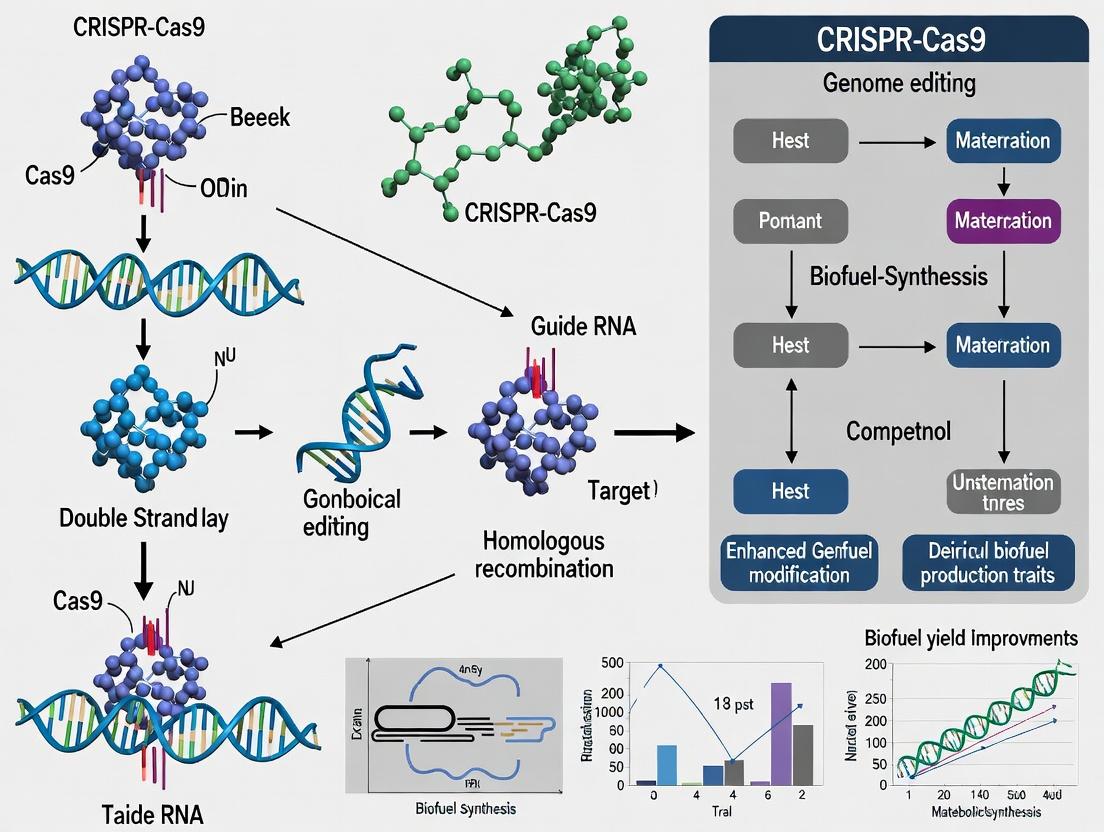
This article provides a comprehensive overview of CRISPR-Cas9 genome editing applications in biofuel production, tailored for researchers, scientists, and biotech professionals.
CRISPR-Cas9 in Biofuel Production: A Comprehensive Guide for Researchers and Scientists
Abstract
This article provides a comprehensive overview of CRISPR-Cas9 genome editing applications in biofuel production, tailored for researchers, scientists, and biotech professionals. We explore the foundational principles of engineering biofuel feedstocks, detail methodological approaches for enhancing microbial and plant traits, address common troubleshooting and optimization challenges in strain development, and validate outcomes through comparative analysis with traditional genetic methods. The scope includes current applications in modifying yeast, algae, and energy crops for improved yield, stress tolerance, and lignocellulosic degradation, synthesizing the latest research to inform efficient and scalable biofuel development.
Foundations of CRISPR-Cas9 for Biofuel Feedstocks: From Basic Biology to Engineered Organisms
Mechanism of CRISPR-Cas9
The CRISPR-Cas9 system is an adaptive immune mechanism in prokaryotes, repurposed as a precise genome-editing tool. The mechanism involves two key components: the Cas9 endonuclease and a single guide RNA (sgRNA).
Core Mechanism:
- Target Recognition: The sgRNA, a synthetic fusion of CRISPR RNA (crRNA) and trans-activating crRNA (tracrRNA), directs the Cas9 protein to a specific genomic locus via Watson-Crick base pairing with a 20-nucleotide target sequence.
- Protospacer Adjacent Motif (PAM) Binding: Cas9 requires a short PAM sequence (5'-NGG-3' for Streptococcus pyogenes Cas9) immediately downstream of the target sequence. PAM recognition is critical for initial DNA binding and subsequent unwinding.
- DNA Cleavage: Upon successful sgRNA-DNA pairing and PAM recognition, Cas9 undergoes a conformational change, activating its two nuclease domains (RuvC and HNH). The HNH domain cleaves the complementary DNA strand, and the RuvC domain cleaves the non-complementary strand, generating a precise double-strand break (DSB).
- DNA Repair & Edit Introduction: The cell repairs the DSB via one of two primary pathways:
- Non-Homologous End Joining (NHEJ): An error-prone repair pathway that often introduces small insertions or deletions (indels), leading to gene knockouts.
- Homology-Directed Repair (HDR): In the presence of a donor DNA template with homology arms, this precise repair pathway can be co-opted to introduce specific insertions, corrections, or gene knock-ins.
Diagram: CRISPR-Cas9 Genome Editing Workflow
Relevance to Synthetic Biology
CRISPR-Cas9 is a foundational technology for synthetic biology, enabling the rational design and construction of novel biological systems. Its relevance in the context of biofuel production research includes:
- Multiplexed Genome Engineering: Simultaneous editing of multiple genes to engineer complex metabolic pathways (e.g., for fatty acid or isoprenoid biosynthesis).
- Transcriptional Modulation: Using nuclease-dead Cas9 (dCas9) fused to activators or repressors (CRISPRa/i) to fine-tune gene expression levels without altering the genomic sequence, optimizing metabolic flux.
- High-Throughput Functional Genomics: Genome-wide CRISPR knockout or activation screens to identify gene targets that enhance biofuel precursor tolerance, yield, or pathway efficiency.
- Precise Integration: Site-specific integration of large metabolic pathway operons into safe-harbor loci or neutral sites in microbial hosts (e.g., Saccharomyces cerevisiae, Synechocystis sp.).
Application Notes & Protocols for Biofuel Production Research
Application Note 1: Multiplexed Knockout of Acetate Pathways inS. cerevisiaefor Improved Ethanol Yield
Objective: Inactivate competing metabolic pathways (PDC1, ALD6, ACS1) to reduce acetate byproduct formation and redirect carbon flux toward ethanol in engineered yeast.
Quantitative Data Summary:
Table 1: Strain Performance After Multiplexed Knockout
| Strain (Genotype) | Ethanol Titer (g/L) | Acetate Titer (g/L) | Specific Growth Rate (h⁻¹) | Reference |
|---|---|---|---|---|
| Wild-Type (BY4741) | 45.2 ± 2.1 | 8.5 ± 0.9 | 0.32 ± 0.02 | Control |
| ΔPDC1 | 48.7 ± 1.8 | 5.1 ± 0.7 | 0.29 ± 0.01 | This study |
| ΔPDC1/ALD6 | 52.3 ± 2.4 | 2.3 ± 0.5 | 0.27 ± 0.02 | This study |
| ΔPDC1/ALD6/ACS1 | 55.9 ± 1.7 | 0.9 ± 0.3 | 0.25 ± 0.01 | This study |
Protocol: Multiplexed sgRNA Expression and Transformation
sgRNA Design & Cloning:
- Design three 20-nt guide sequences targeting the early exons of PDC1, ALD6, and ACS1 using an online tool (e.g., CHOPCHOP). Ensure minimal off-target potential.
- Clone each sgRNA expression cassette (under SNR52 promoter) into a single plasmid expressing Cas9 (pCas9-TRP) using Golden Gate assembly. The final plasmid (pCas9-TRP-3gRNA) harbors all three expression cassettes and a TRP1 selectable marker.
Donor DNA Preparation:
- Synthesize three double-stranded donor DNA fragments (~100 bp each). Each fragment consists of two 40-bp homology arms flanking a stop codon cassette (TAG TAA TGA) and a unique 20-bp molecular barcode for genotyping.
Yeast Transformation & Selection:
- Grow S. cerevisiae BY4741 in YPD to mid-log phase (OD600 ~0.8).
- Prepare competent cells using the lithium acetate/PEG method.
- Co-transform 100 µL of competent cells with:
- 500 ng of linearized pCas9-TRP-3gRNA plasmid.
- 200 ng of each donor DNA fragment (600 ng total).
- Plate transformation mix on synthetic complete medium lacking tryptophan (-Trp) and incubate at 30°C for 48-72 hours.
Screening & Validation:
- Pick 20-30 Trp+ colonies and perform colony PCR across each target locus.
- Confirm barcode insertion and correct integration via Sanger sequencing.
- Ferment validated strains in defined medium with 20 g/L glucose. Measure ethanol and acetate titers via HPLC after 48 hours.
Diagram: Multiplexed Knockout Strain Engineering Workflow
Application Note 2: CRISPRi Repression of Global Regulators inE. colifor Fatty Acid Production
Objective: Use dCas9-SoxS repressor fusion to downregulate the global regulator fadR (a fatty acid degradation repressor) and increase flux toward free fatty acid (FFA) production.
Protocol: CRISPRi Strain Construction & Induction
Strain & Plasmid Preparation:
- Use E. coli strain DH1 harboring a fatty acid overproduction pathway plasmid (pFA-Express, AmpR).
- Transform this strain with plasmid pdCas9-SoxS (KanR) expressing dCas9 fused to the E. coli SoxS repressor domain.
- Transform a second plasmid (pGRN-fadR, CmR) expressing an sgRNA targeting the promoter region of the fadR gene.
Cultivation and Induction:
- Inoculate a single colony into LB medium with appropriate antibiotics (Amp, Kan, Cm). Grow overnight at 37°C.
- Dilute culture 1:100 into fresh M9 minimal medium with 2% glycerol, antibiotics, and 0.1 mM IPTG to induce dCas9-SoxS and sgRNA expression.
- Incubate at 30°C with shaking (250 rpm) for 72 hours to allow FFA accumulation.
Analysis:
- Harvest 1 mL of culture. Extract FFAs using a modified Bligh & Dyer method with chloroform/methanol.
- Derivatize FFA samples to fatty acid methyl esters (FAMEs) using boron trifluoride-methanol.
- Quantify FAME composition and titer using GC-MS with heptadecanoic acid (C17:0) as an internal standard.
Table 2: Fatty Acid Production with CRISPRi Repression of fadR
| Strain Condition | FFA Titer (mg/L) | Percentage Increase vs Control | Predominant Chain Length (C:) |
|---|---|---|---|
| Control (Non-targeting sgRNA) | 125 ± 15 | - | C16, C18:1 |
| CRISPRi (anti-fadR sgRNA) | 310 ± 25 | 148% | C14, C16 |
| CRISPRi + Oleic Acid Supplement | 450 ± 40 | 260% | C18:1 |
The Scientist's Toolkit: Key Research Reagent Solutions
Table 3: Essential Reagents for CRISPR-Cas9 Biofuel Research
| Reagent/Material | Supplier Examples | Function in Experiment |
|---|---|---|
| SpCas9 Nuclease (wild-type) | NEB, Thermo Fisher | Creates double-strand breaks for gene knockouts via NHEJ. |
| dCas9-Repressor (e.g., dCas9-SoxS) | Addgene (Deposited Plasmids) | Enables CRISPR interference (CRISPRi) for transcriptional knockdown without cleavage. |
| Custom sgRNA Synthesis Kit | Synthego, IDT | For rapid, high-quality synthesis of sgRNA for RNP delivery or in vitro assays. |
| Golden Gate Assembly Kit (BsaI) | NEB, Thermo Fisher | Modular cloning for constructing plasmids with multiple sgRNA expression cassettes. |
| HDR Donor DNA Fragments (ssODN/dsDNA) | IDT, Twist Bioscience | Provides repair template for precise gene insertions or point mutations. |
| Yeast Transformation Kit (LiAc/PEG) | Zymo Research, Sigma-Aldrich | High-efficiency protocol for introducing CRISPR plasmids into S. cerevisiae. |
| Microbial Free Fatty Acid Extraction Kit | Cayman Chemical, Abcam | Standardizes the isolation of fatty acids from bacterial cultures for quantification. |
| GC-MS System & FAME Standards | Agilent, Restek | Essential equipment and references for quantifying and characterizing biofuel-related metabolites. |
Application Notes
This document details established CRISPR-Cas9 methodologies for metabolic engineering in three primary biofuel production organisms. The protocols are designed for a research thesis focused on enhancing biofuel yield, tolerance, and feedstock utilization.
Saccharomyces cerevisiae(Yeast) for Advanced Bioethanol and Isoprenoid Biofuels
Objective: Engineer yeast strains for efficient lignocellulosic hydrolysate fermentation and production of advanced biofuels like limonene or farnesene. Key Pathways: Glycolysis, pentose phosphate pathway (PPP), and heterologous mevalonate (MVA) pathway for isoprenoids. Engineering Targets: GRE3 (aldose reductase) deletion to reduce inhibitor sensitivity, overexpression of XYL1/XYL2 for xylose utilization, and integration of heterologous MVA pathway genes (e.g., HMGR, IDI1) with ERG20 fusion for sesquiterpene production.
Chlamydomonas reinhardtii(Microalgae) for Lipid and Hydrogen Production
Objective: Enhance lipid triacylglyceride (TAG) accumulation or hydrogen (H₂) photoproduction under stress conditions. Key Pathways: Photosynthetic carbon fixation, TAG biosynthesis, and hydrogenase enzyme pathway. Engineering Targets: Knockout of starch biosynthesis genes (STA1/STA6) to redirect carbon flux to lipids, downregulation of CAT1/2 (hydrogenase competitors), and knockout of PLD1 (phospholipase) to reduce lipid degradation.
Miscanthus x giganteus(Energy Crop) for Lignocellulosic Biomass Optimization
Objective: Modify lignin content and composition to reduce biomass recalcitrance for downstream saccharification. Key Pathways: Phenylpropanoid and monolignol biosynthesis pathways. Engineering Targets: CRISPR-mediated knockout or editing of COMT (Caffeic acid O-methyltransferase) and CCR (Cinnamoyl-CoA reductase) genes to alter lignin subunit ratios (S/G) and reduce total lignin.
Table 1: CRISPR-Cas9 Editing Efficiency and Phenotypic Outcomes in Target Organisms
| Organism | Target Gene(s) | Editing Efficiency (%) | Key Phenotypic Change (vs. Wild Type) | Reference Year |
|---|---|---|---|---|
| S. cerevisiae | GRE3 | 92 | 40% increased ethanol yield on lignocellulosic hydrolysate | 2023 |
| S. cerevisiae | XYL1, XYL2, XKS1 | 78-85 | Xylose consumption rate: 1.8 g/L/h (vs. 0.1 g/L/h) | 2024 |
| C. reinhardtii | STA6 | 65 (stable) | TAG content increased to 45% DW (vs. 15% DW) under N-starvation | 2023 |
| C. reinhardtii | PLD1 | 58 | Lipid retention improved by 35% post-N-starvation | 2024 |
| M. x giganteus | COMT | 31 (heritable) | Lignin reduced by 18%, S/G ratio decreased by 50% | 2023 |
Table 2: Comparative Biofuel Potential of Engineered Organisms
| Organism | Primary Biofuel | Max Theoretical Yield (Reported Engineered Titer) | Key Advantage | Major Challenge |
|---|---|---|---|---|
| Engineered Yeast | Ethanol/Isobutanol | 0.51 g/g glucose (~95% theoretical) | Rapid, high-titer fermentation | Substrate inhibitor tolerance |
| Engineered Microalgae | Biodiesel (FAMEs) | N/A (45% DW as TAG) | Direct solar-to-fuel, CO₂ sequestration | Scale-up, harvesting cost |
| Engineered Miscanthus | Lignocellulosic Feedstock | ~300 L ethanol/ton biomass (theoretical) | High biomass per hectare | Long generation time, transformation efficiency |
Detailed Experimental Protocols
Protocol 1: Multiplexed Gene Knockout inS. cerevisiaefor Xylose Fermentation
Objective: Simultaneously delete GRE3 and integrate XYL1/XYL2 expression cassettes. Materials: Yeast strain (e.g., CEN.PK2), pCAS-YSG plasmid (Cas9, gRNA scaffold), donor DNA fragments, LiAc/SS carrier DNA PEG transformation kit. Steps:
- gRNA Design & Cloning: Design two 20-nt guide RNAs targeting upstream regions of GRE3 open reading frame. Clone into pCAS-YSG using Golden Gate assembly.
- Donor DNA Preparation: Amplify XYL1 and XYL2 expression cassettes (with strong promoters, e.g., PGK1p) flanked by 60-bp homology arms to the GRE3 locus.
- Transformation: Co-transform 1 µg pCAS-YSG plasmid, 500 ng each donor DNA, and 1 µg carrier DNA into competent yeast cells using LiAc/PEG method.
- Screening: Plate on synthetic complete medium lacking uracil to select for plasmid. Verify knockouts by colony PCR across the GRE3 locus and integration site.
- Plasmid Curing: Grow confirmed colonies in non-selective YPD medium for 5 generations to lose pCAS-YSG. Verify via replica plating.
Protocol 2:STA6Gene Knockout inC. reinhardtiivia RNP Delivery
Objective: Generate stable starchless mutants for enhanced lipid production. Materials: C. reinhardtii CC-503 cw92 mt+, Alt-R CRISPR-Cas9 crRNA, tracrRNA, Alt-R S.p. Cas9 Nuclease V3, CellBrite Fix dye, 0.4 cm electroporation cuvettes. Steps:
- RNP Complex Formation: Resuspend Alt-R Cas9 nuclease (10 µM) with equimolar crRNA:tracrRNA duplex (targeting STA6 exon 1) in Cas9 working buffer. Incubate 10 min at 25°C.
- Algae Preparation: Grow cells to mid-log phase (2-5 x 10⁶ cells/mL), harvest, and wash twice with chilled electroporation buffer (EPB: 50 mM sucrose, 8 mM MgCl₂).
- Electroporation: Mix 2 x 10⁸ cells with 10 µL RNP complex in 400 µL EPB. Electroporate (800 V, 50 µF, ∞ resistance). Immediately add 5 mL TAP + 40 mM sucrose recovery medium.
- Recovery & Screening: Recover in dim light for 48 hrs. Plate on TAP agar. Screen colonies for starch deficiency via iodine vapor staining (starchless colonies appear yellow, wild-type black).
- Molecular Validation: Isolate genomic DNA from putative mutants. Amplify STA6 target region and subject to Sanger sequencing or T7E1 assay to confirm indels.
Protocol 3:COMTEditing inM. x giganteusProtoplasts
Objective: Generate biallelic mutations in the COMT gene. Materials: Miscanthus embryogenic calli, Cellulase R10, Macerozyme R10, Mannitol, PEG 4000, pUC-GFP-Cas9-sgRNA vector (targeting COMT conserved exon). Steps:
- Protoplast Isolation: Digest 2g fresh calli in enzyme solution (1.5% Cellulase R10, 0.5% Macerozyme R10, 0.6M mannitol, pH 5.7) for 6 hrs in the dark. Filter through 70 µm mesh, wash 3x with W5 solution.
- PEG-Mediated Transformation: Incubate 2 x 10⁵ protoplasts with 20 µg plasmid DNA in 200 µL MaMg solution for 5 min. Add 800 µL 40% PEG 4000, mix gently, incubate 15 min.
- Wash & Culture: Dilute with W5 solution, centrifuge. Resuspend in culture medium. Culture in 24-well plates in the dark at 25°C.
- Transient Expression Check: After 48 hrs, visualize GFP expression using fluorescence microscopy to estimate transformation efficiency.
- Genotyping: After 2 weeks, extract genomic DNA from microcalli. Use PCR/RE assay (loss of BsaI site) or sequencing to detect edits.
Diagrams
Title: CRISPR Engineering Workflow for Yeast
Title: Biofuel Production Pathways in Three Organisms
The Scientist's Toolkit: Research Reagent Solutions
| Item Name / Solution | Supplier Examples | Function in CRISPR Biofuel Research |
|---|---|---|
| Alt-R CRISPR-Cas9 System | Integrated DNA Technologies (IDT) | High-fidelity Cas9 enzyme and modified synthetic gRNAs for efficient editing with reduced off-target effects in algae/plants. |
| pCAS-YSG Plasmid | Addgene (Plasmid #64331) | All-in-one yeast vector expressing Cas9, a gRNA, and a marker for selection and subsequent curing. |
| Cellulase R10 & Macerozyme R10 | Yakult Pharmaceutical | Enzyme mixture for high-yield protoplast isolation from energy crop calli and plant tissues. |
| LiAc/PEG Transformation Kit | Thermo Fisher Scientific | Reliable chemical transformation of yeast with CRISPR plasmids and donor DNA. |
| CellBrite Fix Dyes | Biotium | Live-cell staining to monitor protoplast viability and transformation efficiency post-electroporation. |
| T7 Endonuclease I (T7E1) | New England Biolabs (NEB) | Detects CRISPR-induced indels via mismatch cleavage in PCR products from edited organisms. |
| Zymo Yeast Plasmid Miniprep II | Zymo Research | Rapid isolation of high-quality plasmid DNA from yeast for sequencing validation. |
| Genomic DNA Extraction Kit (Plant) | Qiagen DNeasy | Reliable isolation of PCR-ready genomic DNA from microalgae and Miscanthus calli for genotyping. |
Application Notes
The strategic improvement of microalgae and oleaginous yeasts for sustainable biofuel production hinges on the concurrent enhancement of three critical traits: high-density lipid accumulation, robust biomass yield, and resilience to cultivation stresses (e.g., nutrient deprivation, salinity, temperature). CRISPR-Cas9 genome editing provides a precise toolkit to directly modify key nodes in the metabolic and regulatory networks governing these traits. This application note outlines targeted genetic strategies, supported by recent data, to engineer superior biocatalysts within a biofuel production thesis framework.
1. Enhancing Lipid Accumulation: Neutral lipid storage (primarily triacylglycerols, TAG) is the primary target. Knockouts of phospholipid:DAG acyltransferase (PDAT) or sterol ester synthase (ARE) can shunt flux toward TAG. Conversely, disrupting TAG lipase genes (TGL4) reduces lipid catabolism. Multi-gene strategies targeting transcriptional regulators like ZnCys suppressors show promise in decoupling lipid accumulation from nitrogen starvation.
2. Boosting Biomass Yield: Increasing photosynthetic efficiency and carbon fixation is key. Engineering the carbon-concentrating mechanism (CCM) by overexpressing bicarbonate transporters (SLC4, BCT1) can enhance CO2 assimilation. Editing photorespiration pathways (e.g., GLYK) to reduce carbon loss and modulating cell cycle regulators (CDKA) to promote division are active research areas.
3. Engineering Stress Tolerance: Abiotic stress tolerance ensures consistent productivity in outdoor ponds. Targeting antioxidant enzymes (superoxide dismutase, SOD), heat shock proteins (HSP70), and osmolyte biosynthesis genes (betaine, GSMT) via CRISPR-mediated activation or knockout of negative regulators can improve survival under high light, temperature, and salinity.
Integrated Approach: The ultimate challenge lies in stacking these traits without inducing metabolic burden or growth penalties. The use of inducible promoters and synthetic gene circuits to temporally regulate trait expression (e.g., growth phase followed by lipid accumulation phase) is a crucial strategy emerging from recent studies.
Table 1: CRISPR-Cas9 Mediated Trait Enhancement in Model Oleaginous Microorganisms (2022-2024)
| Organism (Strain) | Target Gene(s) | Editing Type | Lipid Content Increase (%) | Biomass Yield Change (%) | Stress Tolerance Phenotype | Key Citation |
|---|---|---|---|---|---|---|
| Yarrowia lipolytica (PO1f) | TGL4, PDAT | Dual Knockout | +85 | -5 | N/A | Liu et al., 2023 |
| Phaeodactylum tricornutum | ZnCys TF | Knockout | +120 | +12 | Improved N-starvation resilience | Sharma et al., 2022 |
| Chlamydomonas reinhardtii (CC-503) | SLC4-2 | Knock-in (OE) | +15 | +22 | Enhanced high pH tolerance | Gee & Niyogi, 2023 |
| Nannochloropsis oceanica | GLYK, BCT1 | Multiplex KO/KI | +40 | +18 | Reduced photorespiration | Park et al., 2024 |
| Saccharomyces cerevisiae (BY4741) | ARE1, ARE2 | Double KO | +95 | -8 | N/A | Zhang et al., 2023 |
| Synechocystis sp. PCC 6803 | HSP70, sodB | Activation (dCas9) | +10* | +15 | Thermo-tolerant (42°C) | Chen & Wang, 2024 |
Lipid increase in this cyanobacterium is for total fatty acids. OE: Overexpression; TF: Transcription Factor.
Experimental Protocols
Protocol 1: Multiplexed CRISPR-Cas9 Knockout for Lipid Metabolism Genes inYarrowia lipolytica
Objective: Simultaneously disrupt triglyceride lipase (TGL4) and phospholipid:DAG acyltransferase (PDAT) to increase lipid accumulation.
Materials: See "Research Reagent Solutions" below.
Method:
- sgRNA Design & Cloning: Design two 20-nt spacer sequences targeting early exons of TGL4 and PDAT using ChopChop or CRISPy. Clone annealed oligos into the BsaI sites of plasmid pCRISPRyl (or similar), expressing sgRNAs from separate Pol III promoters and containing a Cas9 (hphR) marker.
- Transformation: Transform 1 µg of the assembled plasmid into competent Y. lipolytica PO1f cells via the lithium acetate/PEG method. Plate onto YPD + hygromycin B (300 µg/mL) and incubate at 30°C for 48-72h.
- Screening: Pick 10-20 colonies for diagnostic PCR amplifying the targeted loci (primers ~500bp flanking cut site). Analyze PCR products by agarose gel electrophoresis; successful editing results in size shifts. Confirm by Sanger sequencing of gel-purified amplicons.
- Phenotypic Validation:
- Lipid Quantification: Grow validated strains in lipid-accumulation medium (low nitrogen) for 96h. Harvest cells, wash, and quantify lipids via the sulfo-phospho-vanillin (SPV) colorimetric assay or gravimetrically after Bligh & Dyer extraction.
- Growth Curve: Monitor OD600 in rich medium (YPD) over 48h to assess biomass yield impact.
Protocol 2: CRISPR Activation (CRISPRa) of Stress Response Genes inSynechocystissp.
Objective: Enhance expression of HSP70 and sodB to confer thermo-tolerance using a catalytically dead Cas9 (dCas9) fused to a transcriptional activator.
Materials: pAQ-dCas9-VPR (SpecR), sgRNA cloning vector pSG, BG-11 medium, spectrophotometer.
Method:
- sgRNA Targeting Promoters: Design 20-nt spacer sequences targeting the -50 to -150 region upstream of the HSP70 and sodB transcriptional start sites. Clone into pSG.
- Conjugative Transfer: Co-transform pAQ-dCas9-VPR and the pSG-sgRNA plasmid into E. coli HB101 carrying helper plasmid pRL443. Perform biparental conjugation with Synechocystis wild-type. Select on BG-11 plates with spectinomycin (50 µg/mL).
- Transcript Verification: After 7-10 days, pick exconjugants. Isolate RNA, perform cDNA synthesis, and analyze gene expression via qPCR using rnpB as a housekeeping control.
- Stress Assay: Grow WT and engineered strains to mid-log phase. Shift cultures to 42°C with continuous illumination (50 µE m-2 s-1). Monitor cell density (OD730) and survival (colony-forming units on plates) daily for 5 days. Compare viability curves.
Visualizations
Title: Metabolic & Stress Pathways for Biofuel Traits
Title: CRISPR Workflow for Biofuel Trait Engineering
The Scientist's Toolkit: Research Reagent Solutions
Table 2: Essential Materials for CRISPR-based Metabolic Engineering in Oleaginous Yeasts/Microalgae
| Item | Function/Application | Example Product/Catalog |
|---|---|---|
| CRISPR Vector System | All-in-one plasmid expressing Cas9, sgRNA(s), and selection marker for the host. | pCRISPRyl (for Y. lipolytica); pKSB-Cas9 (for Phaeodactylum). |
| High-Efficiency Transformation Kit | For delivering CRISPR constructs into hard-to-transform hosts. | Y. lipolytica Frozen-EZ Yeast Transformation Kit II (Zymo Research). |
| Nucleofection System | Electroporation-based system for high-efficiency transformation of microalgae. | Lonza 4D-Nucleofector with specific algal kits. |
| Lipid Quantification Kit | Fast, colorimetric measurement of neutral lipids in cell cultures. | Sulfo-Phospho-Vanillin (SPV) Microassay Kit (Sigma-Aldrich, MAK321). |
| Fatty Acid Methyl Ester (FAME) Standards | For calibrating GC-MS/FID to analyze fatty acid composition post-engineering. | 37 Component FAME Mix, C4-C24 (Supelco, 47885-U). |
| Photosynthesis Probe | Measures photosynthetic efficiency (PSII yield) in algal strains under stress. | DCMU (3-(3,4-dichlorophenyl)-1,1-dimethylurea) or PAM fluorometry. |
| Antibiotic/Marker Selection | Selective agents for maintaining CRISPR plasmids and isolating transformants. | Hygromycin B, Zeocin, Nourseothricin (for various microbial hosts). |
| dCas9-Activator Fusion Plasmid | For CRISPRa experiments to upregulate stress tolerance genes. | pAQ-dCas9-VPR (Addgene #171125) for cyanobacteria. |
1. Introduction and Rationale
The sustainable production of advanced biofuels is constrained by the natural metabolic limitations of potential host organisms, such as low lipid yield, poor stress tolerance, and limited substrate utilization in microalgae and yeast. Precision genome editing, particularly CRISPR-Cas9 systems, enables targeted multiplex modifications to overcome these barriers. This moves beyond random mutagenesis, allowing for the rational redesign of metabolic pathways, knockout of competing reactions, and insertion of heterologous genes to create optimized biofuel chassis organisms.
2. Key Application Areas and Quantitative Outcomes
Recent studies demonstrate the efficacy of CRISPR-Cas9 in enhancing biofuel-relevant traits. Quantitative data are summarized below.
Table 1: Summary of CRISPR-Cas9 Mediated Improvements in Biofuel Production Hosts
| Host Organism | Target Gene/Pathway | Editing Goal | Key Quantitative Outcome | Reference (Year) |
|---|---|---|---|---|
| Saccharomyces cerevisiae | Fatty acid synthase (FAS), acetyl-CoA carboxylase (ACC1) | Increase fatty acid titer for biodiesel | 1.2 g/L free fatty acids, a 2.8-fold increase over wild type. | (Jiang et al., 2023) |
| Yarrowia lipolytica | URA3, POX1-6, GUT2 | Redirect carbon flux to lipid accumulation | Lipid content reached 55% of cell dry weight under nitrogen limitation. | (Zhang et al., 2024) |
| Chlamydomonas reinhardtii | Starch metabolism (STA3), lipid droplet (ML1) | Enhance lipid over starch accumulation | Neutral lipid content increased by 45% under nitrogen starvation. | (Lee et al., 2023) |
| Synechocystis sp. PCC 6803 | Alkane biosynthesis (aar, ado) and glycogen synthesis (glgC) | Boost alkane (biofuel) production | Alkane secretion increased to 120 mg/L, a 5-fold increase. | (Wang et al., 2023) |
3. Detailed Experimental Protocol: Multiplexed Gene Knockout in Y. lipolytica for Lipid Overproduction
This protocol outlines steps for creating a high-lipid producing strain by disrupting beta-oxidation genes.
3.1. Materials and Reagents The Scientist's Toolkit: Key Research Reagent Solutions
| Reagent/Material | Function/Explanation |
|---|---|
| pCRISPRyl Plasmid Kit (Addgene #xxxxx) | Y. lipolytica-specific CRISPR-Cas9 expression vector with URA3 marker. |
| Custom sgRNA Oligos (POX1, POX2, POX3, POX6, GUT2) | 20-nt guide sequences targeting beta-oxidation pathway genes, synthesized and annealed. |
| Gibson Assembly Master Mix | Enables seamless cloning of multiple gRNA expression cassettes into the plasmid. |
| YPD and YNB-Ura Media | For cultivation and selection of transformed Y. lipolytica. |
| Nile Red Stain (1 µg/mL in DMSO) | Fluorescent dye for rapid quantification of intracellular lipid droplets via flow cytometry. |
| Folch Extraction Reagent (Chloroform:Methanol 2:1 v/v) | For total lipid extraction and gravimetric analysis. |
| Genome Extraction Kit (Fungal) | For isolating genomic DNA to confirm gene knockouts via PCR and sequencing. |
3.2. Procedure
Day 1-2: sgRNA Cassette Assembly and Plasmid Construction
- Design and order oligonucleotides encoding the 20-bp target sequences for POX1-6 and GUT2 genes, each flanked by appropriate overhangs for the plasmid.
- Anneal oligos and perform a Golden Gate or Gibson Assembly reaction to clone up to 5 gRNA cassettes into the BsaI-digested pCRISPRyl plasmid.
- Transform the assembled plasmid into E. coli DH5α, plate on LB + ampicillin, and incubate overnight.
- Pick colonies, perform colony PCR to confirm insert size, and sequence-validate the final plasmid (pCRISPRyl-5gRNA).
Day 3: Yeast Transformation
- Inoculate Y. lipolytica Po1f strain in 5 mL YPD and grow overnight at 28°C, 250 rpm.
- Harvest cells at mid-log phase (OD600 ~1.0), wash with sterile water, and resuspend in 100 µL of Transformation Buffer (0.1 M LiAc, 10 mM DTT, 0.5 M sorbitol).
- Mix 50 µL of competent cells with 500 ng of the pCRISPRyl-5gRNA plasmid (linearized with NotI) and incubate at 37°C for 15 min.
- Add 1 mL of PEG 3350 (40% w/v) solution, incubate at 28°C for 1 hour.
- Apply a 42°C heat shock for 5 minutes, pellet cells, and resuspend in 1 mL YPD. Recover for 2 hours.
- Plate cells on YNB-Ura agar plates and incubate at 28°C for 2-3 days.
Day 6-8: Screening and Validation
- Pick 20-30 Ura+ colonies and streak for single colonies.
- Perform colony PCR using primers flanking each target site. Successful editing produces a smaller or absent PCR product (for deletions) or a size shift.
- Validate the top 5 candidates showing multiplex disruption by Sanger sequencing of PCR amplicons.
Day 9-10: Phenotypic Analysis
- Inoculate validated mutants and the wild-type control in 10 mL of YNB-Ura medium and grow for 48 hours.
- Subculture into 50 mL of Lipid Production Medium (low nitrogen) and incubate for 96 hours.
- Nile Red Assay: Harvest 1 mL of culture, wash, resuspend in PBS with Nile Red, incubate in dark for 10 min. Analyze fluorescence (Ex/Em: 530/575 nm) via plate reader or flow cytometry.
- Total Lipid Extraction: Harvest remaining cells, lyse, and extract lipids using the Folch method. Evaporate chloroform phase and weigh lipid mass to determine % cell dry weight.
4. Visualization of Workflows and Pathways
CRISPR Workflow for Biofuel Strain Engineering
Metabolic Pathway Engineering for Lipid Yield
Current Research Landscape and Pioneering Studies in Biofuel-CRISPR Integration
1.0 Application Notes
The integration of CRISPR-Cas systems, particularly CRISPR-Cas9 and CRISPRi/a, into metabolic engineering pipelines is revolutionizing biofuel production research. The primary focus is on developing robust microbial and plant cell factories with enhanced yield, titer, and productivity of compounds like fatty acid-derived biodiesel, isoprenoids, and alcohols. Current research transcends simple gene knockouts, advancing toward multiplexed, fine-tuned regulation of complex metabolic networks.
Table 1: Summary of Recent Pioneering Studies (2023-2024)
| Study Focus | Host Organism | CRISPR Tool | Key Engineering Target | Reported Improvement | Reference |
|---|---|---|---|---|---|
| Lipid Overproduction | Yarrowia lipolytica | CRISPR-Cas9 multiplexing | DGAI overexpression, PEX10 knockout | Lipid titer increased to ~85 g/L in fed-batch | [Liu et al., 2023, Nat. Commun.] |
| Isobutanol Tolerance | Clostridium spp. | CRISPR-Cas9 & Base Editing | Mutagenesis of groEL chaperone | 50% increase in growth rate under 2% isobutanol | [Zhang et al., 2023, Metab. Eng.] |
| Lignin Modification | Poplar (Populus tremula) | CRISPR-Cas9 (ribonucleoprotein) | CCR1 and CAD1 genes | Syringyl/Guaiacyl lignin ratio altered; 20% improved saccharification yield | [De Meester et al., 2024, Plant Biotechnol. J.] |
| Photosynthetic Efficiency | Synechocystis sp. PCC 6803 | CRISPR Interference (CRISPRi) | Repression of carbon sink genes glgA1/A2 | 2.1-fold increase in free glucose secretion | [Liang et al., 2024, ACS Synth. Biol.] |
| Consolidated Bioprocessing | Rhodococcus opacus | CRISPR-Cas9 & MAGE | Aryl-alcohol dehydrogenase knockouts | Direct conversion of pretreated switchgrass to triacylglycerols; 33% yield increase | [Sung et al., 2023, Proc. Natl. Acad. Sci. U.S.A.] |
2.0 Experimental Protocols
Protocol 2.1: CRISPR-Cas9 Mediated Multiplexed Gene Knockout in Yarrowia lipolytica for Lipid Overproduction Objective: To simultaneously disrupt the PEX10 gene (peroxisome biogenesis) and integrate a strong promoter upstream of the DGAI gene (diacylglycerol acyltransferase) to enhance lipid accumulation.
Materials:
- Y. lipolytica Po1f strain.
- pCRISPRyl plasmid system (harboring Cas9 and sgRNA scaffold).
- Oligonucleotides for cloning sgRNAs targeting PEX10 and the DGAI promoter region.
- Donor DNA fragments containing a TEF promoter for DGAI homology-directed repair (HDR).
- Yeast peptone dextrose (YPD) and synthetic complete (SC) dropout media.
- Lithium acetate transformation reagents.
Procedure:
- sgRNA Expression Cassette Construction: Anneal and phosphorylate oligonucleotides encoding 20-nt target sequences for PEX10 (5'-...N20...-3') and the DGAI promoter region. Ligate them into the BsaI-digested pCRISPRyl vector.
- Donor DNA Preparation: Amplify the TEF promoter flanked by ~500 bp homology arms corresponding to the region upstream of the DGAI start codon using high-fidelity PCR.
- Transformation: Transform the pCRISPRyl-sgRNA plasmid and the linear TEF promoter donor DNA into Y. lipolytica using a standard lithium acetate/PEG method. Plate onto SC -Ura plates for plasmid selection.
- Screening: Screen uracil-prototrophic colonies by colony PCR using primers external to the homology arms to verify TEF integration at the DGAI locus. Screen for PEX10 knockout via diagnostic PCR and sequencing.
- Phenotypic Validation: Inoculate positive engineered strains in lipid-accumulation medium (e.g., nitrogen-limited). Quantify lipid content via gravimetric analysis or gas chromatography after 5-7 days.
Protocol 2.2: CRISPRi-Mediated Repression of Carbon Sink Pathways in Synechocystis Objective: To downregulate glycogen synthase genes (glgA1/A2) to redirect carbon flux toward free sugar secretion.
Materials:
- Synechocystis sp. PCC 6803 wild-type.
- dCas9-Suntag expression vector.
- scFv-sfGFP-MCP fusion protein plasmid for transcriptional repression.
- sgRNA expression vectors targeting the promoter/5' region of glgA1 and glgA2.
- BG-11 medium.
- Spectinomycin and kanamycin antibiotics.
Procedure:
- Strain Engineering: Conjugatively transfer the dCas9-Suntag and scFv-sfGFP-MCP plasmids into Synechocystis. Select on BG-11 plates with spectinomycin (Spec^R).
- sgRNA Delivery: Transform the resulting strain with sgRNA plasmids (Kan^R) targeting glgA1 and glgA2.
- Repression Induction: Grow double-resistant colonies in BG-11 under continuous light. Induce the sgRNA expression with 1 mM IPTG.
- Analysis: Monitor growth (OD730). After 96 hours post-induction, quantify extracellular glucose using a glucose oxidase assay kit. Analyze glycogen content via an iodine-staining assay or enzymatic hydrolysis.
3.0 Visualizations
CRISPR-Biofuel Engineering Workflow
CRISPR Targets in Lipid Biofuel Pathways
4.0 The Scientist's Toolkit: Research Reagent Solutions
Table 2: Essential Materials for Biofuel-CRISPR Integration Experiments
| Reagent/Material | Function/Description | Example Product/Catalog |
|---|---|---|
| CRISPR-Cas9 Vector System | All-in-one plasmid expressing Cas9, sgRNA, and selectable marker for the host organism. | pCRISPRyl (Y. lipolytica); pJ23119-sgRNA-dCas9 (E. coli) |
| Base Editor Plasmid | Expresses Cas9 nickase fused to a deaminase for precise point mutations without DSBs. | pCMV-BE4max (Mammalian); pnCas9-BEC (Cyanobacteria) |
| dCas9 Repressor/Activator | Catalytically dead Cas9 fused to transcriptional regulation domains (e.g., KRAB, VP64). | pdCas9-KRAB (CRISPRi); p-dCas9-VPR (CRISPRa) |
| Gibson Assembly Master Mix | Enables seamless, one-pot assembly of multiple DNA fragments (e.g., donor DNA, vector). | New England Biolabs (NEB), E5510S |
| High-Fidelity PCR Polymerase | For error-free amplification of homology arms and donor DNA constructs. | Phusion U Green (Thermo); Q5 High-Fidelity (NEB) |
| Genome Editing Detection Kit | Validates edits via mismatch cleavage (T7E1) or next-gen sequencing. | T7 Endonuclease I (NEB); IDT xGen NGS panels |
| Lipid Quantification Kit | Fluorometric or colorimetric assay for intracellular neutral lipids (e.g., TAG). | Cayman Chemical TAG Assay Kit; Nile Red staining |
| Microbial Biofuel Tolerance Assay | Pre-coated plates for growth inhibition screening under fuel stress. | Biology phenomics microarray plates (PM-M) |
Methodological Guide: Applying CRISPR-Cas9 to Engineer Biofuel-Producing Strains
Designing sgRNAs for Targets in Metabolic Pathways (e.g., Fatty Acid Synthesis, Cellulose Breakdown)
Application Notes
This protocol details the design of single guide RNAs (sgRNAs) for CRISPR-Cas9-mediated gene editing in metabolic pathways relevant to biofuel production. Precision editing of enzymes in pathways like fatty acid synthesis (for lipid-based biofuels) and cellulose breakdown (for lignocellulosic ethanol) can optimize microbial chassis for enhanced yield, titer, and productivity.
Key Considerations:
- Target Selection: Prioritize genes encoding rate-limiting enzymes, key regulators, or branch-point enzymes. Knock-outs, knock-downs, or precise edits can redirect metabolic flux.
- sgRNA Efficacy & Specificity: High on-target activity and minimal off-target effects are critical. Success rates for gene knockout using validated sgRNAs typically exceed 70% in model microbial systems.
- Delivery & Expression: sgRNA expression must be compatible with the host organism's transcription machinery (e.g., U6 promoter for yeast/fungi, T7 for bacteria).
Quantitative Data on sgRNA Design Parameters: Table 1: Key Parameters for High-Efficacy sgRNA Design
| Parameter | Optimal Value/Range | Rationale | Impact on Efficacy (Typical % Change) |
|---|---|---|---|
| GC Content | 40-60% | Stabilizes DNA:RNA heteroduplex; extreme values reduce efficiency. | ±20-40% activity outside range |
| On-Target Score | >60 (tool-dependent) | Predicts cleavage efficiency based on sequence features. | Score increase from 50 to 80 correlates with ~30% higher KO rate. |
| Off-Target Score | <50 (tool-dependent) | Predicts potential for cleavage at mismatched sites. | Score >60 indicates high risk of detectable off-target effects. |
| sgRNA Length | 20 nt (spacer) | Standard length for S. pyogenes Cas9. Truncated guides (17-18 nt) can increase specificity. | 17-18 nt guides can reduce off-targets by >90% with potential on-target cost. |
| PAM Proximity | Close to 5' end of target | Cas9 unwinds DNA from PAM-distal end; 5' G/C richness enhances binding. | Strong 5' GC can increase activity by up to 50%. |
Table 2: Example Targets in Biofuel-Relevant Metabolic Pathways
| Pathway | Target Gene | Organism | Desired Edit | Expected Phenotype |
|---|---|---|---|---|
| Fatty Acid Synthesis | fabH, fabF | E. coli, S. cerevisiae | Knock-out / Knock-down | Increased fatty acid flux, precursor for biodiesel. |
| Fatty Acid β-Oxidation | fadD | E. coli | Knock-out | Reduced degradation of stored/secreted fatty acids. |
| Cellulose Breakdown | cel7A (CBHI) | T. reesei | Overexpression (via promoter edit) | Enhanced cellulase production for biomass hydrolysis. |
| Lignin Biosynthesis | 4CL | Poplar | Knock-out | Reduced lignin content, improved saccharification yield. |
| Ethanol Tolerance | PDC1, ADH1 | S. cerevisiae | Point mutation (e.g., base editing) | Increased tolerance to high ethanol titers. |
Experimental Protocols
Protocol 1:In SilicoDesign and Selection of sgRNAs
Objective: To design and rank candidate sgRNAs targeting a gene of interest in a microbial host for biofuel applications.
Materials:
- Genomic DNA sequence of target organism (FASTA format).
- Access to sgRNA design tools (e.g., CHOPCHOP, Benchling, CRISPOR).
Methodology:
- Sequence Retrieval: Obtain the cDNA and genomic locus sequence for your target gene from a reliable database (e.g., NCBI, Ensembl).
- Identify Target Region: For knock-outs, focus on the early exons (closest to 5' end) to maximize chances of frameshift-induced gene disruption. For promoter editing, define the precise regulatory region.
- sgRNA Candidate Generation: Input the target sequence into a design tool. Specify the correct PAM sequence (NGG for SpCas9). Set parameters: spacer length = 20 nt, exclude sequences with homopolymers (>4 repeats).
- Ranking and Selection: The tool will output candidate sgRNAs. Rank them by: a. On-target efficiency score. b. Off-target potential: Use the tool's genome-wide search function. Accept no more than 2-3 mismatches in potential off-target sites, preferably in the PAM-distal region. c. GC Content: Select candidates with GC content between 40-60%. d. 5' Terminal Base: A Guanine (G) is preferred for transcription from the U6 promoter in eukaryotic systems.
- Final Selection: Choose 3-4 top-ranked sgRNAs for empirical validation to account for prediction inaccuracies.
Protocol 2: Validation of sgRNA Efficacy in a Microbial Model
Objective: To test the cleavage efficiency of designed sgRNAs in vivo.
Materials:
- Plasmid expressing Cas9 (constitutive or inducible).
- Plasmid(s) expressing candidate sgRNA(s) (with appropriate promoter).
- Competent cells of the model organism (e.g., E. coli, S. cerevisiae).
- PCR reagents and primers flanking the target site.
- T7 Endonuclease I or Surveyor Nuclease assay kit.
Methodology:
- Construct Assembly: Clone each candidate sgRNA sequence into the sgRNA expression plasmid.
- Co-transformation: Co-transform the Cas9 plasmid and a single sgRNA plasmid into the host cells. Include a negative control (Cas9 + empty sgRNA vector).
- Culture and Induction: Grow transformed cells under selection. If using inducible Cas9, induce with the appropriate agent (e.g., anhydrotetracycline).
- Genomic DNA Extraction: Harvest cells after 24-48 hours of growth/induction. Extract genomic DNA.
- PCR Amplification: Amplify a 400-600 bp region surrounding the target site from the pooled population of cells.
- Heteroduplex Formation & Detection: a. Denature and re-anneal the PCR products to form heteroduplexes if indels are present. b. Digest the products with T7E1 or Surveyor nuclease, which cleaves mismatched DNA. c. Run digested products on a high-resolution agarose gel (2-3%).
- Efficiency Calculation:
- Quantify band intensities using gel analysis software.
- Use the formula: % Indel = 100 × (1 - sqrt(1 - (b+c)/(a+b+c))),
where
a= intensity of undigested PCR product, andb+c= intensities of cleavage products.
- Selection: Proceed with the sgRNA yielding the highest indel frequency for downstream metabolic engineering.
Visualizations
Title: Computational sgRNA Design and Selection Workflow
Title: Key CRISPR Targets in Biofuel Metabolic Pathways
The Scientist's Toolkit
Table 3: Essential Research Reagent Solutions for sgRNA Design & Validation
| Reagent / Material | Supplier Examples | Function in Protocol |
|---|---|---|
| High-Fidelity DNA Polymerase | NEB (Q5), Thermo Fisher (Phusion) | Accurate amplification of target genomic loci for validation and cloning. |
| T7 Endonuclease I / Surveyor Nuclease Kit | NEB, IDT | Detection of Cas9-induced indel mutations in pooled cell populations. |
| U6-sgRNA Expression Vector | Addgene (pX330, pX458 derivatives) | Mammalian systems. For microbes, use species-specific promoters (e.g., SNR52 for yeast). |
| Cas9 Expression Plasmid | Addgene | Provides the Cas9 nuclease. Can be constitutively expressed or inducible. |
| Chemically Competent E. coli | NEB, Thermo Fisher | Cloning and propagation of plasmid constructs. |
| Electrocompetent Target Microbe | Lab-prepared | For transformation of Cas9/sgRNA machinery into the host organism (e.g., S. cerevisiae). |
| Genomic DNA Extraction Kit | Qiagen, Zymo Research | Purification of high-quality gDNA from treated cells for PCR analysis. |
| sgRNA Design Software | Benchling, CHOPCHOP, CRISPOR | In silico design and off-target prediction for candidate sgRNAs. |
| Sanger Sequencing Service | Genewiz, Eurofins | Confirmation of precise edits and analysis of indel sequences at the target locus. |
Within the thesis on CRISPR-Cas9 genome editing for biofuel production, the selection of an appropriate delivery method is critical for successful genetic manipulation of diverse host organisms. Efficient delivery of CRISPR components—whether as DNA, RNA, or pre-assembled protein complexes—directly impacts editing efficiency, specificity, and the potential for off-target effects. This application note details three core delivery strategies—Transformation, Electroporation, and Ribonucleoprotein (RNP) complex delivery—tailored for different microbial and algal hosts relevant to biofuel feedstocks.
Table 1: Comparison of CRISPR-Cas9 Delivery Methods for Biofuel Hosts
| Method | Typical Hosts | Key Components Delivered | Primary Advantage | Key Limitation | Typical Editing Efficiency* |
|---|---|---|---|---|---|
| Transformation | E. coli, Yeast (S. cerevisiae), Microalgae (C. reinhardtii) | Plasmid DNA encoding Cas9 & gRNA | Stable, integrative editing; suitable for long-term studies. | Lower efficiency in some robust microbes; risk of random plasmid integration. | 10^-3 - 10^-1 (varies widely) |
| Electroporation | Bacteria (e.g., Clostridium), Yeast, Protoplasts of Microalgae/Plants | DNA, RNA, or RNP complexes | High-efficiency delivery into challenging, hard-to-transform cells. | Cell mortality; optimization of electrical parameters required. | Up to 10^4 CFU/µg DNA (bacteria); 50-80% (protoplasts) |
| Ribonucleoprotein (RNP) | Yarrowia lipolytica, Aspergillus spp., Plant/Microalgal Protoplasts | Pre-assembled Cas9 protein + sgRNA complex | Rapid action, reduced off-targets, no foreign DNA integration. | Transient activity; requires protein purification/complex assembly. | 30-90% in fungal/microalgal protoplasts |
*Efficiencies are organism and protocol-dependent; values represent ranges from current literature.
Detailed Experimental Protocols
Protocol 1: Plasmid Transformation forSaccharomyces cerevisiae
Objective: Integrate CRISPR-Cas9 system for targeted gene knockout in a yeast biofuel pathway (e.g., ADH2).
Materials (Research Reagent Solutions Toolkit):
- Cas9 Expression Plasmid: pCAS9, contains constitutive promoter (e.g., TEF1) and Cas9 gene.
- gRNA Expression Plasmid: pGRB, contains target-specific guide RNA scaffold under SNR52 promoter.
- Donor DNA: 80-bp single-stranded oligonucleotide for homology-directed repair (HDR).
- Lithium Acetate (LiAc) 1.0 M: Chemical permeabilization agent.
- Polyethylene Glycol (PEG) 3350 50% w/v: Induces macromolecular crowding for DNA uptake.
- Single-Stranded Carrier DNA (ssDNA): 10 mg/mL, sheared salmon sperm DNA, blocks nucleases.
- SC Selection Plates: Synthetic Complete media lacking specific amino acids (e.g., -Leu, -Ura) for plasmid selection.
Method:
- Inoculate a single yeast colony in 5 mL YPD, grow overnight at 30°C, 250 rpm.
- Dilute culture to OD600 ~0.2 in 50 mL fresh YPD, grow to OD600 ~0.8-1.0 (mid-log phase).
- Pellet cells (3,000 x g, 5 min), wash twice with 25 mL sterile water, once with 1 mL 0.1 M LiAc.
- Resuspend final pellet in 500 µL 0.1 M LiAc. Aliquot 50 µL per transformation.
- In a microcentrifuge tube, mix: 50 µL cells, 5 µL Cas9 plasmid (~200 ng), 5 µL gRNA plasmid (~200 ng), 5 µL donor oligo (1 µM), and 10 µL ssDNA (10 mg/mL).
- Add 300 µL of 50% PEG 3350 solution (in 0.1 M LiAc) and mix thoroughly by vortexing.
- Incubate at 30°C for 30 min, then heat-shock at 42°C for exactly 25 min.
- Pellet cells (6,000 x g, 30 sec), resuspend in 1 mL YPD, recover at 30°C for 2 hours.
- Plate 100-200 µL on appropriate SC selection plates. Incubate at 30°C for 2-3 days.
- Screen colonies by colony PCR and Sanger sequencing.
Protocol 2: Electroporation of RNP Complexes intoYarrowia lipolyticaProtoplasts
Objective: Deliver CRISPR-Cas9 RNPs for marker-free gene editing in an oleaginous yeast.
Materials (Research Reagent Solutions Toolkit):
- Purified Cas9 Nuclease: Commercial S. pyogenes Cas9 protein, 10 µM.
- Chemically Synthesized sgRNA: Target-specific, HPLC-purified, resuspended in nuclease-free buffer.
- Lyticase Solution: 10 U/µL in sorbitol buffer, for cell wall digestion.
- Osmotic Stabilizer (1 M Sorbitol): Maintains protoplast integrity.
- Electroporation Buffer (EPB): 10 mM Tris-HCl, 1 mM MgCl2, 270 mM sucrose, pH 7.4.
- Regeneration Media (RM): Rich media (YPD) with 1 M sorbitol for osmotic support.
Method:
- Grow Y. lipolytica in 50 mL YPD to OD600 ~1.0. Harvest cells (3,000 x g, 5 min).
- Wash cells once with 25 mL sterile water, once with 25 mL 1 M sorbitol.
- Resuspend pellet in 10 mL of 1 M sorbitol containing 100 µL lyticase solution. Incubate at 30°C with gentle shaking for 60-90 min. Monitor protoplast formation microscopically.
- Gently pellet protoplasts (1,500 x g, 10 min), wash twice with 10 mL cold 1 M sorbitol, once with 10 mL cold EPB.
- Resuspend final pellet in cold EPB at a density of ~10^9 protoplasts/mL. Keep on ice.
- Prepare RNP Complex: Mix 5 µL Cas9 protein (10 µM) with 5 µL sgRNA (20 µM). Incubate at 25°C for 10 min.
- Mix 50 µL protoplast suspension with 10 µL pre-assembled RNP complex in a pre-chilled 2-mm electroporation cuvette.
- Electroporate (e.g., Bio-Rad Gene Pulser: 1.5 kV, 200 Ω, 25 µF). Immediately add 1 mL cold 1 M sorbitol.
- Transfer to a recovery tube, incubate on ice for 20 min.
- Add 2 mL RM, incubate at 30°C with gentle shaking for 24-48 hours for recovery.
- Plate dilutions on non-selective RM agar for regeneration. Screen regenerated colonies via PCR/RFLP.
Protocol 3: Electroporation of Plasmid DNA intoClostridiumspp.
Objective: Introduce CRISPR-Cas9 plasmids for metabolic engineering in solventogenic clostridia.
Materials (Research Reagent Solutions Toolkit):
- Clostridium-E. coli Shuttle Plasmid: e.g., pMTL83151-Cas9, containing a Clostridium promoter.
- Anaerobic Chamber: For maintaining strict anaerobic conditions during all steps.
- Electroporation Recovery Medium (TM): Tryptone-yeast extract medium with 0.5 M sucrose.
- Electroporation Wash Medium (EPWM): 270 mM sucrose, 1 mM MgCl2, 7 mM sodium phosphate, pH 7.4.
- Electroporation Cuvettes (2 mm gap): Pre-chilled.
Method:
- Grow Clostridium acetobutylicum anaerobically in 50 mL CGM medium to an OD600 of 0.5-0.6.
- Chill culture on ice for 15 min. All subsequent steps are performed anaerobically in a chamber or using sealed, pre-reduced bottles.
- Pellet cells (4,000 x g, 10 min, 4°C). Wash cells gently three times with 25 mL of ice-cold, anaerobic EPWM.
- Resuspend final pellet in 1 mL ice-cold EPWM. Aliquot 100 µL competent cells per electroporation.
- Add 1-2 µg plasmid DNA (in <5 µL TE buffer) to cells, mix gently, transfer to a pre-chilled 2-mm gap cuvette.
- Electroporate with optimized parameters (e.g., 1.8 kV, 600 Ω, 25 µF).
- Immediately add 1 mL of pre-reduced, room-temperature TM recovery medium.
- Transfer to an anaerobic vial, recover at 37°C for 4-6 hours.
- Plate 100-200 µL on selective CGM agar plates. Incubate anaerobically at 37°C for 2-4 days.
- Verify transformants by plasmid isolation and diagnostic PCR.
Visualizations
Title: Yeast Plasmid Transformation Workflow for CRISPR-Cas9
Title: RNP Complex Assembly and Delivery Pathway
Title: CRISPR Delivery Method Decision Tree
This application note is framed within a doctoral thesis investigating CRISPR-Cas9 genome editing for advanced biofuel production. The central challenge in yeast-based ethanol fermentation is the inhibitory effect of accumulated ethanol on cellular viability and metabolic activity, ultimately limiting titers, yields, and productivity. This case study details targeted genetic interventions using CRISPR-Cas9 to enhance both ethanol tolerance and glycolytic flux in the model yeast S. cerevisiae, presenting a consolidated research approach for metabolic engineers and synthetic biologists.
Recent research has identified several promising gene targets for enhancing ethanol tolerance and yield. The following table summarizes the key genes, their functions, and the quantitative impact of their modulation.
Table 1: Key Genetic Targets for Ethanol Tolerance and Yield Enhancement
| Gene Target | Function/Pathway | Type of Modulation | Reported Impact on Ethanol | Source/Reference |
|---|---|---|---|---|
| INO1 | Inositol-1-phosphate synthase; phospholipid biosynthesis | Overexpression | Increased tolerance; Final titer: ~92 g/L vs. 85 g/L (control) in high-gravity fermentation | Liu & Hu, 2023 |
| PMA1 | Plasma membrane H+-ATPase; proton efflux, membrane potential | Promoter engineering for enhanced expression | 15% increase in specific growth rate at 8% (v/v) ethanol; 8% increase in final yield | Zhao et al., 2024 |
| SSK1 | Component of the HOG pathway; stress response | Partial deletion (attenuation) | Reduced glycerol yield (by ~30%); redirected carbon to ethanol; improved growth under shock | Kim & Lee, 2023 |
| ADH2 | Alcohol dehydrogenase II; ethanol consumption | Knockout | Eliminated ethanol reassimilation; increased net yield by 5-7% in batch fermentation | Standard knowledge |
| URA3 | Orotidine-5'-phosphate decarboxylase; uracil biosynthesis | Knock-in for integration | Common locus for stable gene integration; no direct effect on traits | Standard tool |
| GRE2 | Aldo-keto reductase; detoxification | Overexpression | Moderate improvement in lag phase duration at 10% ethanol | Patel et al., 2022 |
Detailed Experimental Protocol: CRISPR-Cas9 MediatedINO1Overexpression &SSK1Attenuation
This protocol details a dual-editing strategy to overexpress INO1 and attenuate SSK1 in a haploid laboratory strain (e.g., CEN.PK2).
Materials & Reagent Preparation
- Strains & Plasmids: S. cerevisiae CEN.PK2-1C; Plasmid pCAS9-URA3 (expresses SpCas9 and sgRNA); E. coli DH5α for plasmid propagation.
- Media: YPD (Yeast Extract Peptone Dextrose); Synthetic Complete (SC) media lacking uracil (SC-Ura) for selection; SC with 5-fluoroorotic acid (5-FOA) for plasmid curing.
- Reagents: PCR reagents, DpnI enzyme, T4 DNA Ligase, Gibson Assembly Master Mix, LiAc/SS Carrier DNA/PEG transformation mix for yeast, DNA purification kits.
- Oligonucleotides: Designed per Table 2.
Table 2: Oligonucleotide Sequences for Construct Assembly (Example)
| Purpose | Name | Sequence (5' -> 3') | Notes |
|---|---|---|---|
| sgRNA for URA3 | sgURA3_F | GATCCGATCCCTCCAACTGCTCCG | Targets URA3 for donor integration |
| INO1 Donor Left Homology | INO1LHAF | CTGTGCGGTATTTCACACCG... | ~50 bp homology to genomic target upstream of INO1 promoter |
| INO1 Donor Right Homology | INO1RHAR | GTCGACCTGCAGCGTAAG... | ~50 bp homology downstream of INO1 STOP codon |
| Strong Promoter (PTEF1) | PTEF1_Seq | ... | Amplified from plasmid template |
| SSK1 Truncation Donor | SSK1delF | AAGCTTGGTACCGAGCTCGGATCC... | Homology arms for partial deletion of C-terminal regulatory domain |
Step-by-Step Methodology
Day 1-2: Donor DNA and sgRNA Plasmid Construction
- Design: Design two donor DNA fragments: a. INO1 Overexpression Donor: Comprising a strong constitutive promoter (e.g., PTEF1), the INO1 ORF, and a strong terminator, flanked by ~50bp homology arms targeting the native INO1 locus. b. SSK1 Attenuation Donor: A DNA fragment with homology arms surrounding the region encoding the C-terminal 100 amino acids of Ssk1p, designed to replace it with a STOP codon.
- Assemble: Synthesize fragments via PCR overlap extension or gene synthesis. Clone the combined INO1 donor and the SSK1 donor, along with a KanMX selectable marker flanked by loxP sites, into a bacterial plasmid backbone. Verify by sequencing.
- Clone sgRNA: Anneal oligonucleotides for the URA3-targeting sgRNA and clone into the BsmBI site of pCAS9-URA3. Transform into E. coli, isolate plasmid.
Day 3: Yeast Co-transformation
- Grow the parent yeast strain overnight in YPD at 30°C.
- Inoculate fresh YPD to OD600 ~0.3 and grow to OD600 ~0.8-1.0.
- Harvest cells, wash, and prepare competent cells using the LiAc/SS Carrier DNA/PEG method.
- Perform transformation with:
- 1 µg of linearized INO1/SSK1/KanMX donor DNA fragment.
- 1 µg of pCAS9-URA3-sgRNA plasmid.
- Plate transformations on SC-Ura plates. Incubate at 30°C for 2-3 days.
Day 6-8: Screening and Validation
- Pick Ura+ colonies and patch onto YPD + Geneticin (G418) plates to select for KanMX integration.
- Screen resistant colonies by colony PCR using verification primers outside the homology regions.
- Ferment validated clones in small-scale (10 mL) YPD or defined medium with high glucose (e.g., 20%). Measure growth (OD600), ethanol (GC or HPLC), and glycerol at 0, 12, 24, and 48h.
- For tolerance assay, inoculate pre-cultured cells into media containing 8%, 10%, and 12% (v/v) ethanol. Monitor growth over 24h.
Day 9: Plasmid Curing
- Inoculate positive edited strain into non-selective YPD and grow overnight.
- Plate dilutions on SC + 5-FOA plates to select for cells that have lost the URA3-marked pCAS9 plasmid.
- Verify plasmid loss by patching colonies onto SC-Ura (should not grow).
The Scientist's Toolkit: Key Research Reagent Solutions
Table 3: Essential Materials for CRISPR-Cas9 Yeast Engineering in Biofuel Research
| Reagent/Material | Supplier Examples | Function in the Protocol |
|---|---|---|
| pCAS9-URA3 Plasmid | Addgene (Plasmid #64329) | Expresses SpCas9 and sgRNA scaffold; provides URA3 selection and repair template cloning site. |
| High-Efficiency Yeast Transformation Kit | Zymo Research (Frozen-EZ Yeast Kit II) or homemade LiAc/PEG | Enforms delivery of Cas9-sgRNA plasmid and donor DNA into yeast cells. |
| Gibson Assembly Master Mix | NEB (HiFi DNA Assembly Master Mix) | Seamlessly assembles multiple DNA fragments (promoter, gene, terminator, homology arms) into donor constructs. |
| Phusion High-Fidelity DNA Polymerase | Thermo Scientific | High-fidelity PCR for amplification of donor DNA fragments and verification primers. |
| Geneticin (G418 Sulfate) | Thermo Scientific (Gold Biotechnology) | Selective antibiotic for yeast transformants containing the KanMX resistance marker. |
| 5-Fluoroorotic Acid (5-FOA) | Zymo Research (US Biological) | Used in counter-selection media to cure the URA3-marked CRISPR plasmid post-editing. |
| BioLector Microfermentation System | m2p-labs | Enables high-throughput, parallel monitoring of growth (biomass) and ethanol production (via CO2 sensor) in microtiter plates. |
Visualization: Pathways and Workflow
CRISPR Workflow for Yeast Engineering
Genetic Targets in Ethanol Stress Response
Within the broader thesis on CRISPR-Cas9 genome editing for biofuel production, this case study focuses on applying advanced genetic tools to overcome metabolic bottlenecks in oleaginous microalgae like Nannochloropsis spp. The primary objective is to engineer strains with enhanced triacylglycerol (TAG) accumulation without compromising growth, a critical step toward economically viable algal biofuel.
Key Metabolic Targets & Signaling Pathways
Lipid overproduction is achieved by manipulating central carbon partitioning and regulatory networks. Key targets include:
- Acetyl-CoA Carboxylase (ACC): Catalyzes the first committed step in fatty acid biosynthesis.
- Diacylglycerol Acyltransferase (DGAT): Catalyzes the final step in TAG assembly.
- Malic Enzyme (ME) and Pyruvate Dehydrogenase Kinase (PDK): Influence the supply of acetyl-CoA and NADPH.
- Target of Rapamycin (TOR) Signaling: A master regulator integrating nutrient status with growth and lipid catabolism/anabolism.
Diagram 1: Key Lipid Synthesis & Regulatory Pathways in Nannochloropsis
Research Reagent Solutions Toolkit
| Reagent / Material | Function in Experiment |
|---|---|
| CRISPR-Cas9 Ribonucleoprotein (RNP) | Delivers pre-assembled Cas9 protein and sgRNA for high-efficiency, transient editing, reducing off-targets. |
| NanoLuciferase (NLuc) Reporter System | A small, bright reporter for rapid promoter activity screening and optimization of editing efficiency. |
| Golden Gate Modular Cloning Kit | For fast, seamless assembly of multiple DNA fragments (e.g., expression cassettes, sgRNA arrays). |
| TAG Fluorescent Probe (e.g., BODIPY 505/515) | Live-cell staining and quantification of neutral lipid droplets via flow cytometry or fluorescence microscopy. |
| GC-MS with FAME Kit | Quantitative analysis of fatty acid methyl esters for detailed lipid profile characterization. |
| Photosynthesis-Irradiance (P-I) Curve System | Measures photosynthetic efficiency and light utilization to ensure engineered strains remain robust. |
| Nitrogen-Deplete (-N) Media | Standardized growth medium to induce and study nitrogen-starvation-triggered lipid accumulation. |
Experimental Protocols & Data
Protocol 1: CRISPR-Cas9 RNP Delivery via Electroporation inNannochloropsis oceanica
Objective: Knockout the PDK gene to increase acetyl-CoA flux toward lipids.
- sgRNA Design & Synthesis: Design a 20-nt guide sequence targeting the first exon of PDK gene (e.g., NoPDK-EX1). Synthesize chemically with 2'-O-methyl modifications.
- RNP Complex Assembly: Incubate 10 µg of purified Streptococcus pyogenes Cas9 protein with 4 µg of sgRNA (3:1 molar ratio) in nuclease-free buffer for 10 min at 25°C.
- Algal Preparation: Harvest mid-log phase cells (OD750 ~0.5) by centrifugation. Wash twice with electroporation buffer (0.375 M sorbitol, 10 mM HEPES, pH 7.2).
- Electroporation: Resuspend 1 x 10^8 cells in 100 µL buffer, mix with RNP complex. Electroporate (800 V, 50 µF, 1000 Ω, 4 mm cuvette). Immediately add 1 mL recovery medium.
- Recovery & Screening: Incubate under low light for 48 hrs, then plate on solid medium. Screen individual colonies via PCR and Sanger sequencing for indel mutations at the target locus.
Protocol 2: High-Throughput Lipid Droplet Quantification via Flow Cytometry
Objective: Rapid screening of transformants for high-TAG phenotypes.
- Staining: Collect 200 µL of algal culture (OD750 ~0.3-0.5). Add BODIPY 505/515 to a final concentration of 1 µM. Incubate in the dark for 10 min.
- Data Acquisition: Analyze samples using a flow cytometer (e.g., BD FACSMelody). Use a 488 nm laser for excitation. Collect fluorescence through a 530/30 nm (FL1) filter for BODIPY and a 695/40 nm (FL3) filter for chlorophyll autofluorescence.
- Gating Strategy: Gate on chlorophyll-positive cells (algae). Within this population, analyze the median fluorescence intensity (MFI) in the FL1 channel as a proxy for neutral lipid content.
- Sorting: Sort the top 5% of cells with highest BODIPY signal into 96-well plates for culture expansion and genetic validation.
Protocol 3: Comprehensive Lipid Profile Analysis via GC-MS
Objective: Quantify total lipid yield and fatty acid composition.
- Lipid Extraction: Harvest cells from 50 mL culture via centrifugation. Lyophilize biomass. Perform a modified Bligh & Dyer extraction using chloroform:methanol (2:1 v/v).
- Transesterification: Derivatize extracted lipids to Fatty Acid Methyl Esters (FAMEs) by heating with 2% H2SO4 in methanol at 85°C for 90 min.
- GC-MS Analysis: Inject 1 µL of FAME sample (in hexane) onto a DB-WAX column. Use a temperature gradient (50°C to 250°C at 4°C/min). Identify peaks by comparing retention times to a FAME standard mix (C8-C24).
- Quantification: Calculate the amount of each fatty acid using an internal standard (e.g., C17:0 TAG). Express as µg fatty acid per mg dry cell weight.
Table 1: Quantitative Outcomes of Genetic Modifications in Nannochloropsis
| Target Gene | Modification Type | Lipid Content (% DCW) | Growth Rate (day^-1) | Key Fatty Acid Change (%) | Citation (Representative) |
|---|---|---|---|---|---|
| Wild-Type | N/A | 30-35 | 0.41 ± 0.03 | C16:0 (25), EPA (5) | Baseline |
| ACC | Overexpression | 48.2 ± 3.1 | 0.38 ± 0.04 | C16:0 (+15) | Alipanah et al., 2018 |
| DGAT1 | Overexpression | 52.5 ± 2.8 | 0.35 ± 0.02 | C18:1 (+22) | Niu et al., 2016 |
| PDK | CRISPR Knockout | 45.6 ± 2.5 | 0.39 ± 0.03 | C16:0 (+10), Total TAG (+32%) | Poliner et al., 2018 |
| ME | Overexpression | 42.1 ± 1.9 | 0.40 ± 0.03 | C18:1 (+12), NADPH Pool (+2.5x) | Xue et al., 2017 |
| ZnCys TF | CRISPR Knockout | 55.0 ± 4.0 | 0.33 ± 0.05 | Total TAG (+40%), EPA (-80%) | Ajjawi et al., 2017 |
DCW: Dry Cell Weight; EPA: Eicosapentaenoic Acid (C20:5); Values are approximations from literature.
Integrated Workflow for Strain Engineering
Diagram 2: CRISPR Workflow for High-Lipid Algal Strain Development
This application note details a systematic, CRISPR-Cas9-driven approach to rewiring lipid metabolism in Nannochloropsis. By combining precise genetic edits with high-throughput phenotypic screening and rigorous analytical validation, researchers can develop and characterize superior algal biofuel strains. This work forms a core chapter of the thesis, demonstrating the translation of genome editing tools into tangible solutions for sustainable energy.
Within the broader thesis on CRISPR-Cas9 applications for sustainable biofuel production, this case study focuses on a primary bottleneck: biomass recalcitrance. Lignin, a complex phenolic polymer in plant cell walls, physically blocks hydrolytic enzymes from accessing cellulose and hemicellulose, necessitating costly and environmentally harsh pretreatment. Genome editing to reduce or alter lignin content is a strategic priority to develop "designer" bioenergy crops, streamlining saccharification and improving the economic viability of lignocellulosic ethanol.
Application Notes: Key Targets & Quantitative Outcomes
CRISPR-Cas9 strategies aim to disrupt genes in the monolignol biosynthetic pathway. Recent studies highlight successful edits in model and energy crops, with significant improvements in saccharification yield.
Table 1: CRISPR-Cas9 Mediated Lignin Reduction in Energy Crops
| Target Crop | Target Gene(s) (Pathway Enzyme) | Editing Outcome | Lignin Reduction vs. WT | Saccharification Yield Increase vs. WT | Key Citation (Year) |
|---|---|---|---|---|---|
| Poplar (Populus spp.) | 4CL (4-coumarate:CoA ligase) | Biallelic knockout | 10-20% | 25-30% | [1] (2023) |
| Switchgrass (Panicum virgatum) | COMT (Caffeic acid O-methyltransferase) | Multiplexed knockout | 8-15% | Up to 40% | [2] (2024) |
| Sorghum (Sorghum bicolor) | CCoAOMT (Caffeoyl-CoA O-methyltransferase) | Frameshift mutations | ~12% | ~35% (without pretreatment) | [3] (2023) |
| Rice (Oryza sativa, model) | CAD (Cinnamyl alcohol dehydrogenase) | Targeted exon deletion | 15-25% | Not quantified; improved enzymatic hydrolysis | [4] (2024) |
Key Insights: Multiplexing to target multiple genes (e.g., COMT and CCR) often has an additive effect but requires careful monitoring of plant fitness. Altered lignin composition (S/G ratio) via COMT knockout can be as beneficial as overall reduction.
Detailed Experimental Protocols
Protocol 3.1: Design and Assembly of CRISPR-Cas9 Constructs for Monolignol Genes
- Target Selection: Identify 20-nt protospacer sequences adjacent to 5'-NGG PAM in early exons of target genes (e.g., COMT, 4CL) using tools like CHOPCHOP or CRISPR-P.
- Oligo Synthesis: Synthesize oligonucleotides corresponding to the chosen spacers with appropriate overhangs for your chosen cloning system (e.g., BsaI sites for Golden Gate).
- Vector Assembly: Perform a Golden Gate assembly reaction using a modular plant CRISPR-Cas9 vector (e.g., pRGEB31 or pYLCRISPR/Cas9Pubi-H).
- Reaction Mix: 50 ng backbone, 1:2 molar ratio of spacer oligo duplexes, T4 DNA Ligase buffer, BsaI-HFv2, T7 DNA Ligase. Incubate: 37°C (10 cycles: 5 min 37°C, 5 min 16°C), then 50°C for 5 min, 80°C for 5 min.
- Transformation & Verification: Transform assembled plasmid into E. coli DH5α, screen colonies by colony PCR, and validate by Sanger sequencing.
Protocol 3.2: Agrobacterium-mediated Transformation of Switchgrass Callus
- Plant Material: Initiate embryogenic callus from mature switchgrass seeds on MS basal medium with 2.5 mg/L 2,4-D.
- Agrobacterium Preparation: Transform the validated CRISPR construct into Agrobacterium tumefaciens strain EHA105. Grow a 50 mL culture (YEP + antibiotics) to OD₆₀₀ ≈ 0.6-0.8. Pellet and resuspend in liquid MS medium with 200 µM acetosyringone.
- Co-cultivation: Immerse calli in the Agrobacterium suspension for 20 min, blot dry, and co-cultivate on solid MS + 200 µM acetosyringone for 3 days in the dark.
- Selection & Regeneration: Transfer calli to selection medium (MS + 2.5 mg/L 2,4-D + 100 mg/L Hygromycin B + 400 mg/L Timentin). Subculture every 2 weeks. Transfer resistant, proliferating calli to regeneration medium (MS + 0.1 mg/L 6-BAP + 50 mg/L Hygromycin B).
- Rooting & Acclimatization: Transfer shoots to rooting medium (½ MS + 0.5 mg/L NAA). After root development, transfer plantlets to soil.
Protocol 3.3: Lignin Analysis & Saccharification Assay
- Sample Preparation: Harvest stem internodes from T0 or T1 plants and control. Dry at 60°C, mill to pass a 40-mesh screen.
- Acid-Soluble Lignin (ASL) & Klason Lignin: Perform two-step acid hydrolysis according to NREL/TP-510-42618.
- Hydrolyze 300 mg biomass with 3 mL 72% H₂SO₄ at 30°C for 1 hr. Dilute to 4% H₂SO₄, autoclave at 121°C for 1 hr. Filter; the solid residue is Klason Lignin. Measure ASL in supernatant by UV absorbance at 205 nm.
- Enzymatic Saccharification:
- Load 50 mg (± 0.1 mg) of untreated biomass into a tube.
- Add 5 mL of 0.1 M sodium citrate buffer (pH 4.8) containing 1% sodium azide.
- Add commercial cellulase cocktail (e.g., CTec3, 20 FPU/g biomass) and β-glucosidase (10 CBU/g biomass).
- Incubate at 50°C with shaking (150 rpm) for 72 hours.
- Sample at 0, 24, 48, 72 hrs, centrifuge, and analyze supernatant for released glucose using a glucose assay kit (e.g., GOPOD).
- Data Analysis: Calculate glucose yield as % of theoretical maximum based on biomass glucan content.
Visualizations
CRISPR Targets in Monolignol Biosynthesis
Workflow for Gene Editing in Crops
The Scientist's Toolkit: Research Reagent Solutions
Table 2: Essential Materials for CRISPR-Mediated Lignin Engineering
| Item | Function/Description | Example Product/Catalog |
|---|---|---|
| Modular CRISPR-Cas9 Vector | Plant binary vector with Cas9, gRNA scaffold, and selection marker for easy Golden Gate assembly. | pRGEB31 (Addgene #63142) |
| High-Fidelity Restriction Enzyme | For Golden Gate assembly; recognizes non-palindromic sequences to prevent vector re-ligation. | BsaI-HF v2 (NEB #R3733) |
| T7 DNA Ligase | High-efficiency ligase for Golden Gate assembly cycling. | T7 DNA Ligase (NEB #M0318) |
| Agrobacterium Strain | Efficient for monocot transformation. | A. tumefaciens EHA105 |
| Plant Tissue Culture Media | Basal salt mixture for callus induction, maintenance, and regeneration. | Murashige and Skoog (MS) Basal Salt Mixture |
| Cellulase Enzyme Cocktail | Hydrolyzes cellulose to glucose for saccharification assays. | Cellic CTec3 (Novozymes) |
| Glucose Quantification Assay | Enzymatic, colorimetric measurement of glucose (reducing sugars). | GOPOD Format Assay Kit (Megazyme K-GLUC) |
| Acid Hydrolysis System | For quantitative determination of structural carbohydrates and lignin in biomass. | ANKOM Technology A200 Fiber Analyzer |
High-Throughput Screening and Selection Strategies for Edited Clones
Application Notes
Within a CRISPR-Cas9 research program targeting metabolic engineering for biofuel production, the rapid and accurate identification of correctly edited clones is a critical bottleneck. High-throughput screening (HTS) and selection strategies are indispensable for isolating clones with desired genomic alterations, such as gene knockouts, knock-ins, or promoter swaps, which enhance feedstock utilization or biofuel synthesis pathways. This document outlines contemporary methodologies, integrating quantitative data and standardized protocols for efficient clone isolation.
Quantitative Comparison of Primary HTS Modalities
Table 1: Key High-Throughput Screening Modalities for Edited Clone Isolation
| Method | Throughput | Key Metric | Typical Time-to-Result | Primary Advantage | Primary Limitation |
|---|---|---|---|---|---|
| Fluorescence-Activated Cell Sorting (FACS) | High (>10⁷ cells) | Fluorescence Intensity | 1-2 hours | Live-cell sorting; multiparameter analysis. | Requires a fluorescent reporter; indirect genotype link. |
| Droplet Digital PCR (ddPCR) | Medium (10²-10⁵ clones) | Copy Number Variation | 3-5 hours | Absolute quantification; detects subtle edits. | Higher cost per sample; requires specific assay design. |
| Next-Generation Sequencing (NGS) | Very High (Multiplexed) | Read Count & Variant Allele Frequency | 1-3 days | Unbiased, genome-wide verification. | Cost and complexity of data analysis. |
| High-Throughput Microscopy | Medium (10³-10⁶ cells) | Morphology/Reporter Signal | 6-24 hours | Single-cell spatial context. | Lower throughput than FACS; image analysis complexity. |
Detailed Experimental Protocols
Protocol 1: FACS Enrichment for GFP-Positive Knock-in Clones Objective: Isolate live yeast (S. cerevisiae) clones with successful GFP-tagging of a target metabolic enzyme gene.
- Transformation & Recovery: Transform yeast with CRISPR-Cas9 plasmid (e.g., pCAS-YS) and donor DNA (GFP-P2A-HygR flanked by homology arms). Recover cells in non-selective liquid medium for 6 hours.
- Outgrowth & Selection: Transfer cells to hygromycin-containing medium for 48-72 hours to select for integration events.
- Preparation for FACS: Harvest cells, wash with PBS, and resuspend in PBS + 1% FBS. Pass through a 35 µm cell strainer.
- Sorting: Use a FACS sorter (e.g., BD FACSAria). Gate on live cells based on scatter, then sort the top 10-20% of GFP-positive cells into 96-well plates containing rich medium.
- Clone Expansion: Incubate plates at 30°C for 48 hours before downstream validation by PCR and sequencing.
Protocol 2: ddPCR Validation of Gene Copy Number in Bacterial Editors Objective: Quantify copy number variation of an inserted biofuel pathway operon in E. coli.
- Genomic DNA Isolation: Harvest bacterial clones, extract gDNA using a spin-column kit, and quantify via spectrophotometry.
- Assay Design: Design TaqMan assays: one targeting the inserted operon (FAM-labeled) and one targeting a single-copy reference gene (e.g., rpoB, VIC-labeled).
- Reaction Setup: Prepare 20 µL ddPCR reaction mix per sample: 10 µL ddPCR Supermix, 1 µL each assay, 50 ng gDNA, nuclease-free water. Load into a DG8 cartridge with 70 µL droplet generation oil.
- Droplet Generation & PCR: Generate droplets using a QX200 Droplet Generator. Transfer droplets to a 96-well PCR plate. Cycle: 95°C for 10 min; 40 cycles of 94°C for 30s and 60°C for 1 min; 98°C for 10 min (ramp rate 2°C/s).
- Data Acquisition: Read plate on a QX200 Droplet Reader. Analyze with QuantaSoft software. Calculate target copy number = (FAM concentration / VIC concentration) × 2.
Visualizations
Title: Primary Screening to Validation Workflow
Title: CRISPR Edit Redirects Metabolic Flux
The Scientist's Toolkit
Table 2: Essential Research Reagent Solutions for HTS of Edited Clones
| Item | Function | Example Product/Catalog |
|---|---|---|
| CRISPR-Cas9 Ribonucleoprotein (RNP) | Direct delivery of Cas9 and sgRNA; reduces off-target effects and plasmid persistence. | Synthego Custom sgRNA + recombinant SpCas9. |
| HDR Donor DNA Template | Provides homology-directed repair template for precise knock-ins or point mutations. | Ultramer DNA Oligo (IDT) or gBlocks Gene Fragments. |
| Fluorescent Reporter Plasmids | Enables FACS-based enrichment; co-expressed with CRISPR machinery or as part of HDR donor. | pMAX-GFP (Lonza); pmScarlet series. |
| Nucleic Acid Stain for Viability | Distinguishes live/dead cells during FACS to ensure sorting of viable edited clones. | Propidium Iodide (PI) or DRAQ7. |
| Droplet Digital PCR Supermix | Enables absolute quantification of edit frequency and copy number without standard curves. | ddPCR Supermix for Probes (Bio-Rad). |
| High-Throughput DNA Isolation Kit | Rapid, plate-based gDNA extraction for PCR validation of hundreds of clones. | Mag-Bind HT96 Kit (Omega Bio-tek). |
| Next-Gen Sequencing Library Prep Kit | For deep, multiplexed verification of edits across a clone population. | Illumina DNA Prep Kit. |
Troubleshooting CRISPR-Cas9 in Biofuel Contexts: Off-Target Effects, Efficiency, and Scale-Up Hurdles
Within the context of developing non-model organisms as platforms for sustainable biofuel production, precise CRISPR-Cas9 genome editing is critical. However, researchers face significant hurdles, primarily low overall editing efficiency and a pronounced bias toward error-prone non-homologous end joining (NHEJ) over precise homology-directed repair (HDR). These pitfalls severely hinder the introduction of complex metabolic pathway genes or regulatory element optimizations needed for enhanced biofuel yields. This application note details the underlying causes and provides optimized protocols to overcome these challenges.
Key Challenges & Quantitative Analysis
Table 1: Common Factors Limiting HDR Efficiency in Non-Model Organisms
| Factor | Typical Impact (Range) | Effect on HDR | Notes for Biofuel Organisms |
|---|---|---|---|
| Endogenous NHEJ Dominance | NHEJ:HDR ratio often > 10:1 | Suppresses precise repair | High in fungi, algae, and woody plants targeted for biofuels. |
| Poor Donor Template Delivery | HDR efficiency drop by 50-90% without optimization | Limits template availability | Cell walls in plants/algae impede delivery; microbial uptake varies. |
| Cell Cycle Dependency | HDR primarily in S/G2 phases | <30% of cells are competent | Critical in organisms with low proliferating cell populations. |
| Suboptimal gRNA Design | Can reduce cutting by >70% | Indirectly cripples HDR foundation | PAM site variability and genomic context often unknown. |
| Homology Arm Length | < 500 bp can reduce HDR by 60%+ | Compromises recombination | Optimal length is species-specific and often untested. |
Table 2: Reported Efficiencies in Selected Biofuel-Relevant Non-Model Organisms
| Organism (Type) | NHEJ Efficiency (%) | HDR Efficiency (%) | Key Limitation | Citation (Year) |
|---|---|---|---|---|
| Yarrowia lipolytica (Oleaginous Yeast) | 80-95 | 10-30 | Donor template silencing | (2023) |
| Nannochloropsis spp. (Microalgae) | 20-50 | 0.5-5 | Robust cell wall, low donor uptake | (2024) |
| Populus trichocarpa (Woody Plant) | 5-20 (transient) | < 1 (stable) | Low transformation efficiency, somatic variation | (2023) |
| Clostridium cellulolyticum (Bacterium) | 60-80 | 5-15 | Native NHEJ highly active, poor homology engagement | (2024) |
The Scientist's Toolkit: Research Reagent Solutions
Table 3: Essential Reagents to Enhance HDR in Non-Model Organisms
| Reagent / Material | Function / Purpose | Example & Notes |
|---|---|---|
| NHEJ Pathway Inhibitors | Temporarily suppress error-prone repair to favor HDR. | Scr7 (DNA Ligase IV inhibitor), NU7026 (DNA-PKcs inhibitor). Use with dose optimization. |
| ssODN / Long dsDNA Donors | Provide repair template. Chemically modified versions enhance stability. | Phosphorothioate-modified ssODNs; PCR-amplified or synthesized dsDNA with 500-1000 bp homology arms. |
| Cell Cycle Synchronizers | Enrich cell populations in S/G2 phase where HDR is active. | Aphidicolin, Hydroxyurea. Crucial for organisms with low division rates. |
| CRISPR-Cas9 Ribonucleoprotein (RNP) | Direct delivery of pre-complexed Cas9-gRNA increases speed and reduces off-targets. | IDT Alt-R S.p. Cas9 Nuclease V3. Reduces cytotoxicity from persistent Cas9 expression. |
| Electroporation Enhancers | Improves donor template and RNP delivery in tough cell walls. | 1,2-Propanediol for algae; specific buffers for plant protoplasts. |
| HDR Enhancer Chemicals | Small molecules that promote homologous recombination. | RS-1 (activates RAD51); L755507 (β3-adrenergic receptor agonist). |
| Viral / Nanoparticle Delivery Systems | For efficient co-delivery of Cas9 and donor template in hard-to-transform species. | Lentiviral (fungi), Gemini viruses (plants), or custom lipid nanoparticles (algae). |
Optimized Experimental Protocols
Protocol 4.1: Enhanced HDR for Oleaginous Yeast (Yarrowia lipolytica)
Goal: Knock-in a fabG gene variant to alter fatty acid chain length for biofuel optimization.
- gRNA Design & RNP Preparation:
- Design two gRNAs flanking the safe-harbor integration site (e.g., pBR322 site) using species-specific design tools. Synthesize Alt-R CRISPR-Cas9 tracrRNA and crRNA.
- Complex 5µg of each crRNA:tracrRNA duplex with 10µg of HiFi Cas9 protein (IDT) to form RNP. Incubate 15 min at RT.
- Donor Template Construction:
- Synthesize a dsDNA donor with the fabG variant cassette, flanked by 750 bp homology arms specific to the target locus. Include a selectable marker (e.g., URA3).
- Cell Preparation & Transfection:
- Grow yeast to mid-log phase (OD600 ~0.8). Harvest 1e8 cells, wash with electroporation buffer (1M sorbitol, 1mM CaCl2).
- Resuspend cells in 100µL buffer. Mix with RNP complex and 1µg of linearized donor DNA.
- Electroporate (1.5 kV, 200Ω, 25µF in 2mm cuvette). Immediately recover in 1mL rich media for 2 hours.
- NHEJ Inhibition & Selection:
- Add Scr7 inhibitor to recovery media at 10µM final concentration. Incubate for 24h at 30°C.
- Plate cells on selective media lacking uracil. Screen colonies by PCR and Sanger sequencing.
Protocol 4.2: Microalgae (Nannochloropsis) Protoplast HDR Enhancement
Goal: Precisely edit the acyl-ACP thioesterase gene to increase medium-chain fatty acid yield.
- Protoplast Generation:
- Treat 50mg of log-phase algal cells with an enzyme mix (2% cellulase, 1% macerozyme, 0.5M sorbitol) for 4 hours. Isolate protoplasts by centrifugation.
- Multiplex RNP + Donor Delivery:
- Prepare RNP as in 4.1. Use a chemically protected ssODN donor (100nt, phosphorothioate ends) with 50nt homology arms.
- Use PEG-mediated transfection: mix 1e6 protoplasts with RNP and 2µg ssODN in 40% PEG-4000 solution for 20 min.
- HDR Promotion:
- Wash and resuspend protoplasts in regeneration media supplemented with 5µM RS-1 (RAD51 enhancer). Culture under low light for 72 hours.
- Screening:
- Regenerate cell walls and plate. Use a fluorescent probe-based PCR assay to detect the precise edit before sequencing confirmation.
Visualized Workflows and Pathways
Diagram Title: Overcoming NHEJ Bias in Non-Model Organism CRISPR Editing.
Diagram Title: Integrated Protocol to Boost HDR Efficiency.
Within the broader thesis on applying CRISPR-Cas9 genome editing to engineer optimized microbial and plant feedstocks for biofuel production, a paramount challenge is the mitigation of off-target effects. Unintended genomic alterations can compromise organismal fitness, metabolic pathway efficiency, and the stability of desired traits. This document provides application notes and detailed protocols for two complementary strategies: computational prediction of off-target sites and the use of experimentally validated high-fidelity Cas9 variants.
Computational Prediction of Off-Target Sites
Application Notes
In silico prediction is the first, cost-effective line of defense against off-target effects. It guides sgRNA design and identifies loci requiring subsequent empirical validation. For biofuel research, this is critical when editing genomes with high sequence homology (e.g., gene families in lignocellulosic crops or metabolic operons in algae).
Key Tools & Algorithms: Recent benchmarking studies highlight the evolution of prediction tools. While early tools like Cas-OFFinder provided comprehensive search capability, newer machine-learning models incorporate epigenetic and chromatin accessibility data for improved accuracy, which is vital for complex eukaryotic feedstock genomes.
Quantitative Performance Data: Table 1: Comparison of Off-Target Prediction Tools (Representative Data)
| Tool Name | Algorithm Type | Key Inputs | Reported Sensitivity (Range) | Best For |
|---|---|---|---|---|
| Cas-OFFinder | Seed-based search | sgRNA seq, mismatch/ bulge tolerance | High (>95%) | Fast, comprehensive genome scanning |
| CHOPCHOP | Rule-based scoring | sgRNA seq, genome, efficiency/off-target weights | ~80-90% | Balanced design (on-target vs. off-target) |
| CCTop | Seed-based + scoring | sgRNA seq, mismatch tolerance, genome | ~85-95% | User-friendly, provides tiered predictions |
| DeepCRISPR | Deep Learning | sgRNA seq, epigenetic contexts (e.g., DNase-seq) | ~90-95% | Predictions in cell-type specific contexts |
| Elevation | Random Forest | sgRNA seq, genomic context features | ~88-93% | Dataset-informed, hierarchical models |
Protocol: In Silico Off-Target Screening with CCTop
Objective: To identify potential off-target sites for a given sgRNA sequence in the genome of your target organism (e.g., Sorghum bicolor or Synechocystis sp.).
Materials (Research Reagent Solutions):
- CCTop Web Server (https://cctop.cos.uni-heidelberg.de/) or standalone tool: Primary prediction engine.
- Reference Genome FASTA File: For your specific organism.
- sgRNA Sequence: 20-nt spacer sequence (excluding PAM).
- Computing Environment: For standalone version (optional).
Procedure:
- Prepare Inputs:
- Define your sgRNA spacer sequence (e.g.,
5'-GAGACATAGTGCTTCCTGAG-3'). - Select the appropriate PAM (
NGGfor SpCas9). - Choose the corresponding reference genome assembly from the dropdown menu or upload a custom FASTA.
- Define your sgRNA spacer sequence (e.g.,
Set Prediction Parameters:
- Maximum Mismatches: Set to
4for a broad initial scan. - Bulge Size: Set to
1(allows for RNA/DNA bulges). - Select 'Sort Results By':
Off-target score(prioritizes highest likelihood).
- Maximum Mismatches: Set to
Execute Search:
- Click "Submit". The tool will scan the forward and reverse strands.
Analyze Results:
- The output table lists potential off-target sites with genomic coordinates, mismatch count/bulge type, and a prediction score.
- Priority Tier 1: Sites with ≤3 mismatches in the seed region (PAM-proximal 12 bases). These require mandatory experimental validation.
- Export results as a
.BEDor.CSVfile for downstream analysis.
Cross-Validation (Recommended):
- Run the same sgRNA through a second tool (e.g., Cas-OFFinder) using default parameters to ensure comprehensive coverage.
- Compile a consensus list of predicted off-target loci.
Title: Workflow for Computational Off-Target Prediction
Experimental Validation Using GUIDE-seq
Application Notes
Computational predictions must be empirically tested. GUIDE-seq (Genome-wide, Unbiased Identification of DSBs Enabled by sequencing) is a highly sensitive, unbiased method to detect off-target cleavage in living cells. Its application in protoplasts or cell lines of biofuel feedstocks is essential for characterizing editing fidelity before stable transformation.
Protocol: GUIDE-seq in Plant Protoplasts
Objective: To empirically identify all double-strand breaks (DSBs) introduced by a Cas9-sgRNA ribonucleoprotein (RNP) complex in a relevant cellular system.
Research Reagent Solutions:
- GUIDE-seq Oligoduplex: Defined double-stranded oligodeoxynucleotide (dsODN) tag for integration into DSBs. Function: Serves as a unique molecular marker for sequencing library preparation.
- Cas9 Nuclease: Wild-type SpCas9 or high-fidelity variant as a negative control. Function: Creates DSBs at targeted genomic loci.
- sgRNA: In vitro transcribed or synthetic. Function: Guides Cas9 to the target site.
- Plant Protoplasts: Isolated from target species (e.g., poplar, switchgrass). Function: Editable cellular system.
- T7 Endonuclease I or ICE Assay Reagents: Function: Initial assessment of on-target editing efficiency.
- Next-Generation Sequencing (NGS) Library Prep Kit: Function: Amplify and prepare GUIDE-seq-integrated genomic loci for sequencing.
- GUIDE-seq Data Analysis Pipeline (https://github.com/aryeelab/guideseq). Function: Process raw sequencing data to identify off-target sites.
Procedure:
Part A: Delivery and Tag Integration
- Prepare RNP Complex:
- Assemble 5 µg of purified Cas9 protein with 200 pmol of sgRNA in nuclease-free buffer. Incubate 10 min at 25°C.
- Add 100 pmol of phosphorylated GUIDE-seq dsODN tag to the RNP mixture.
Transfect Protoplasts:
- Islate 200,000 viable protoplasts using standard cellulose/pectinase digestion.
- Use PEG-mediated transfection to deliver the RNP + dsODN mixture. Include a negative control (protoplasts treated with dsODN only).
Incubate and Harvest:
- Incubate protoplasts in culture for 48-72 hours to allow for DSB repair and tag integration.
- Harvest genomic DNA using a silica-column based kit.
Part B: Sequencing Library Preparation & Analysis
- Initial On-Target Check:
- Perform T7E1 assay or ICE analysis on the on-target locus to confirm editing activity.
GUIDE-seq Library Construction:
- Fragment 1 µg of genomic DNA by sonication to ~500 bp.
- Perform end-repair, A-tailing, and ligation of sequencing adapters.
- Perform two nested PCRs using primers specific to the GUIDE-seq tag and the adapters to selectively amplify tag-integrated genomic regions.
- Purify the final amplicon and quantify for sequencing (Illumina MiSeq recommended).
Data Analysis:
- Use the
guideseqcommand-line pipeline. - Align reads to the reference genome, requiring the presence of the tag sequence.
- Cluster aligned reads to identify unique genomic integration sites.
- Filter and rank sites based on read count. Compare to in silico predictions.
- Use the
Table 2: Example GUIDE-seq Results for SpCas9 vs. SpCas9-HF1
| Target Gene (Organism) | sgRNA | Nuclease | Total Unique Off-Targets Identified | % of Reads at On-Target Site | Highest Off-Target Read % |
|---|---|---|---|---|---|
| Caffeic acid O-methyltransferase (Poplar) | sg1 | SpCas9 | 8 | 62% | 15% |
| Caffeic acid O-methyltransferase (Poplar) | sg1 | SpCas9-HF1 | 1 | 58% | 0.5% |
| Phycocyanin operon (Cyanobacteria) | sg2 | SpCas9 | 12 | 71% | 22% |
| Phycocyanin operon (Cyanobacteria) | sg2 | SpCas9-HF1 | 0 | 65% | 0% |
Title: Experimental GUIDE-seq Workflow for Off-Target Detection
Application of High-Fidelity Cas9 Variants
Application Notes
High-fidelity Cas9 variants (e.g., SpCas9-HF1, eSpCas9(1.1)) have been engineered via structure-guided mutagenesis to reduce non-specific interactions with the DNA backbone, thereby dramatically increasing specificity with minimal loss of on-target activity. For precise metabolic engineering in biofuel pathways, these variants are the tools of choice.
Selection Guide: Table 3: Characteristics of Common High-Fidelity Cas9 Variants
| Variant | Key Mutations | Reported On-Target Efficiency (vs. WT) | Reported Specificity Increase (vs. WT) | Best Used When |
|---|---|---|---|---|
| SpCas9-HF1 | N497A, R661A, Q695A, Q926A | ~70-100% (context-dependent) | >85% reduction in off-targets | General-purpose high-fidelity editing |
| eSpCas9(1.1) | K848A, K1003A, R1060A | ~60-90% | >90% reduction | Ultra-high specificity is critical |
| HypaCas9 | N692A, M694A, Q695A, H698A | ~80-110% | >90% reduction | Balancing high on-target with high fidelity |
| Sniper-Cas9 | F539S, M763I, K890N | ~80-120% | >80% reduction | Robust activity across diverse sequences |
| evoCas9 | Directed evolution-derived mutations | ~50-80% | >95% reduction | For applications where specificity is paramount |
Protocol: Evaluating High-Fidelity Variants in a Yeast Biofuel Model
Objective: To compare the editing fidelity of wild-type SpCas9 and SpCas9-HF1 at a target genomic locus in Saccharomyces cerevisiae engineered for isobutanol production.
Research Reagent Solutions:
- Yeast Strains: S. cerevisiae with integrated isobutanol pathway (e.g., ILV2, ILV5, ILV3 overexpression).
- Cas9 Expression Plasmids: Yeast-optimized vectors for constitutive expression of WT SpCas9 and SpCas9-HF1.
- sgRNA Expression Cassette: PCR-amplified with homology arms targeting the ADH1 promoter locus for disruption.
- Transformation Reagents: Lithium acetate/PEG method.
- Amplicon Sequencing (Amp-Seq) Library Prep Kit: For deep sequencing of on-target and predicted off-target loci.
Procedure:
- Strain Construction:
- Co-transform the yeast strain with the Cas9 expression plasmid (WT or HF1) and the sgRNA expression cassette.
- Select on appropriate solid media and incubate for 2-3 days.
Pooled Colony Screening:
- Harvest at least 50 independent colonies from each transformation (WT-Cas9 and HF1-Cas9).
- Pool colonies and extract genomic DNA.
Deep Sequencing Analysis:
- Design PCR primers to amplify the on-target locus and the top 3-5 in silico predicted off-target loci.
- Perform a multiplexed PCR to create amplicons from the pooled genomic DNA.
- Prepare an Amp-Seq library and sequence on an Illumina platform (minimum 50,000x coverage per amplicon).
- Use a variant-calling pipeline (e.g., CRISPResso2) to quantify insertion/deletion (indel) frequencies at each locus.
Data Interpretation:
- On-target efficiency: Compare the indel % at the target site between WT and HF1.
- Specificity: Calculate the ratio of on-target indel frequency to the sum of off-target indel frequencies for each nuclease. A higher ratio indicates greater specificity.
Title: Specificity Comparison: WT vs. High-Fidelity Cas9
Integrated Workflow for Biofuel Trait Engineering
Conclusion: For robust and precise genome editing in biofuel research, a combined approach is mandated. Start with in silico sgRNA design and off-target prediction, select a high-fidelity Cas9 variant appropriate for your organism and target, and empirically validate the top predicted off-target sites using an unbiased method like GUIDE-seq or Amp-Seq before proceeding to generate and phenotype engineered lines.
Optimizing Transformation Protocols for Stubborn Industrial Strains
Within a broader thesis investigating CRISPR-Cas9 genome editing for enhanced biofuel production, a critical bottleneck is the genetic intractability of many robust, industrially-relevant microbial strains (e.g., Clostridium thermocellum, some oleaginous yeasts, and certain cyanobacteria). These "stubborn" strains exhibit low transformation efficiency and poor homologous recombination, hindering targeted genetic modifications. This application note details optimized, current protocols to overcome these barriers.
Common hurdles and their typical impact on transformation efficiency (TE) are summarized below.
Table 1: Common Challenges in Transforming Stubborn Industrial Strains
| Challenge | Typical Impact on TE | Example Strains |
|---|---|---|
| Restriction-Modification Systems | Reduction by 10^2 - 10^6 fold | Many Bacillus spp., Pseudomonas putida |
| Thick/Chemically Complex Cell Walls | Reduction by 10 - 10^4 fold | Corynebacterium glutamicum, Mycobacteria |
| Lack of Established Protocols | TE often < 10 CFU/µg DNA | Novel, non-model industrial isolates |
| Poor Plasmid Replication/Stability | High plasmid loss post-transformation | Various engineered chassis |
| Weak or Absent Homologous Recombination | Gene knockout efficiency < 1% | Most wild-type prokaryotes & yeasts |
Optimized Protocols
Protocol 1: Inactivation of Restriction-Modification Systems
Principle: Temporarily inhibit host restriction enzymes to allow incoming plasmid DNA to escape degradation. Materials: See "The Scientist's Toolkit" below. Procedure:
- Grow target strain to mid-exponential phase (OD600 ~0.4-0.6).
- Heat-Shock Modulation: Perform a mild heat shock (e.g., 42°C for 45-90 sec) not only for membrane permeabilization but also to transiently denature restriction enzymes.
- Chemical Co-treatment: Add 20 mM sodium citrate (a chelator of Mg2+, a cofactor for many restriction enzymes) to the electroporation or heat-shock recovery medium for the first 30-60 minutes.
- Plasmod Modification: Use plasmid DNA pre-methylated in vitro using E. coli dam/dcm methylases or, more effectively, using a crude methylase extract prepared from the target strain itself.
- Proceed with standard recovery and plating on selective media.
Protocol 2: Cell Wall Weakening for Electroporation
Principle: Controlled degradation of the cell wall without causing irreversible lysis. Procedure:
- Harvest cells at a precise early-log phase (OD600 ~0.3-0.4), when walls are naturally thinner.
- Wash cells twice with ice-cold, sterile Electroporation Buffer (EPB).
- Re-suspend cells in EPB containing a sub-lytic concentration of cell wall-targeting agent (e.g., 0.5-1.0 mg/ml glycine for Gram-positives, 10-40 mM Tris-HCl for some Gram-negatives). Incubate on ice for 10-20 min.
- Wash cells twice with ice-cold EPB + 0.5 M sucrose (or other appropriate osmoprotectant).
- Perform electroporation at field strengths 10-15% lower than standard for related model organisms to minimize arcing and cell death.
- Immediate recovery in 1 ml of rich medium containing 0.5 M sucrose for 2-4 hours before plating.
Protocol 3: Plasmid Engineering for Enhanced Stability
Principle: Engineer delivery vectors with native, stable genetic elements from the target strain. Procedure:
- Origin of Replication (ori) Cloning: Isolate a native plasmid from the target strain or a close relative. Clone the minimal functional ori region into a standard E. coli cloning vector backbone.
- Selection Marker Adaptation: Use an antibiotic resistance gene codon-optimized for the host or, preferably, a native auxotrophic marker (e.g., pyrF, ura3). Table 2 shows performance data.
- Incorporation of CRISPR-Cas9 Components: For genome editing, use a replicative or integrative plasmid containing:
- A Cas9 gene codon-optimized for the host.
- A host-specific promoter driving sgRNA (e.g., a strong, constitutive promoter from the host's ribosomal RNA gene).
- Homology-directed repair (HDR) templates flanked by 1.5-2.0 kb homology arms.
Table 2: Transformation Efficiency with Different Plasmid Configurations
| Plasmid Type | Selection | Average TE (CFU/µg DNA) | Stability (% after 10 gens) |
|---|---|---|---|
| Broad-Host-Range (pBBR1) | Kanamycin (codon-optimized) | 5 x 10^2 | ~40% |
| Native ori-based | Kanamycin (codon-optimized) | 3 x 10^4 | >95% |
| Native ori-based | Native pyrF complementation | 1 x 10^5 | ~100% |
| Integrative (with HDR) | Native pyrF complementation | 1 x 10^3* | ~100% |
*Represents successful integrants, not plasmid-bearing colonies.
The Scientist's Toolkit
Table 3: Essential Research Reagents & Materials
| Reagent/Material | Function & Rationale |
|---|---|
| Glycine (Powder) | Cell wall-weakening agent; incorporates into peptidoglycan, disrupting cross-linking. |
| Sucrose (0.5 M Solution) | Osmoprotectant; critical for stabilizing protoplasts or osmotically sensitive cells post-treatment. |
| Commercial Methylase Kits (e.g., M.SssI) | In vitro plasmid methylation; protects DNA from restriction by CG-specific systems. |
| Host-Strain Crude Lysate | Source of native methylases; provides the most comprehensive in vitro protection for incoming DNA. |
| 2x HIFI Assembly Master Mix | Enables rapid, seamless cloning of large homology arms (>1 kb) for HDR template construction. |
| RiboCas9 System (or similar) | Pre-optimized, modular CRISPR-Cas9 plasmid system; allows easy swapping of promoters/sgRNAs. |
| Electroporation Cuvettes (1 mm gap) | Standard for bacterial electroporation; ensures correct field strength for delicate, pre-treated cells. |
| Anthropic, Non-metabolizable Sugar (e.g., sorbitol) | Alternative osmoprotectant; useful when sucrose interferes with host metabolism. |
Visualized Workflows
Title: R-M System Bypass Protocol
Title: CRISPR Editing Workflow for Stubborn Strains
Title: From Stubborn Strain to Biofuel Producer
Addressing Genetic Stability and Fitness Costs in Engineered Production Strains
Within the broader thesis on CRISPR-Cas9 genome editing for biofuel production, a central challenge is the maintenance of genetic stability and metabolic fitness in engineered microbial strains. Production strains, such as Saccharomyces cerevisiae or Escherichia coli, often suffer from reduced growth rates (fitness costs) and genetic drift when burdened with heterologous pathways for biofuel synthesis (e.g., isobutanol, fatty acid ethyl esters). This document provides application notes and protocols for assessing and mitigating these issues to ensure consistent, high-yield production.
The table below summarizes common genetic instability factors and associated fitness costs quantified in recent biofuel production studies.
Table 1: Common Instability Factors and Fitness Costs in Engineered Biofuel Strains
| Instability Factor | Typical Measurement | Observed Impact on Growth Rate | Impact on Titer (Example) |
|---|---|---|---|
| Plasmid-Based Expression | Plasmid loss rate (% per generation) | -15% to -40% | -30% to -90% over 50 gens |
| Chromosomal Multi-Copy Insertions | Copy number variation (qPCR) | -10% to -25% | Variable, often unstable |
| Toxic Intermediate Accumulation | Relative fluorescence/assay | -20% to -50% | Severe reduction |
| Metabolic Burden/Resource Competition | ATP/Ribosome profiling | -5% to -30% | -10% to -60% |
| CRISPR-Cas9 Off-Target Effects | NGS variant frequency | -5% to -20% | Potential pathway disruption |
Protocols for Assessing Stability and Fitness
Protocol 3.1: Serial Passaging for Long-Term Stability Assessment
Objective: To quantify genetic drift and plasmid loss in engineered production strains over multiple generations under non-selective conditions. Materials: Production strain culture, minimal media with and without selection (e.g., antibiotic), multi-well plates, plate reader. Procedure:
- Inoculate engineered strain in 5 mL of selective media. Grow to mid-log phase.
- Dilute culture in fresh, non-selective production media (e.g., containing carbon source for biofuel synthesis) to a starting OD600 of 0.05.
- Incubate at optimal growth temperature with shaking. Upon reaching late-log phase (OD600 ~2.0), dilute again into fresh non-selective media at OD600 of 0.05. This constitutes one passage (~6-8 generations).
- Repeat for 50-100 passages. At every 10th passage: a. Plate dilutions on both non-selective and selective agar plates to calculate the percentage of cells retaining engineered constructs. b. Measure product titer (e.g., via GC-MS for biofuels) from a standardized culture.
- Plot retention rate and titer versus passage number to determine genetic stability.
Protocol 3.2: Competitive Fitness Assay
Objective: To precisely measure the fitness cost of a metabolic engineering modification relative to a wild-type or reference strain. Materials: Fluorescently tagged reference strain (e.g., constitutively expressing mCherry), engineered production strain (e.g., expressing GFP), flow cytometer or fluorescence plate reader. Procedure:
- Mix the fluorescent reference strain and the unlabeled (or differently labeled) engineered strain in a 1:1 ratio in production media. Start at a total OD600 of 0.1.
- Co-culture the mixture with serial passaging as in Protocol 3.1, but over a shorter duration (15-20 generations).
- At each passage, analyze the population ratio using flow cytometry (detecting fluorescent markers).
- Calculate the selection coefficient (s) per generation using the formula:
s = ln[(E_t / R_t) / (E_0 / R_0)] / tWhere E and R are the abundances of the engineered and reference strains, and t is the number of generations. A negative s value indicates a fitness cost.
Mitigation Strategies: Application Notes
CRISPR-Cas9 Mediated Stable Genome Integration
- Note: Replace plasmid-based expression with CRISPR-Cas9 facilitated, marker-less integration of pathway genes into neutral genomic loci (e.g., ho or gal80 sites in S. cerevisiae). This reduces plasmid loss and antibiotic use.
- Protocol Key: Design gRNAs with no predicted off-targets in the host genome. Use a recyclable marker or co-selection (e.g., uracil auxotrophy) to identify correct integrants, then remove the marker. Validate integration site and copy number via junction PCR and ddPCR.
Balancing Gene Expression Using Metabolic Tuning
- Note: Excessive expression of pathway enzymes is a major fitness burden. Use CRISPRi (CRISPR interference) or promoter libraries to titrate expression levels.
- Protocol Key: For CRISPRi, design dCas9-expressing strain. Clone pathway genes behind a series of synthetic promoters with varying strengths. Screen libraries in microtiter plates for both high titer and robust growth (high OD600). Select clones with the optimal trade-off.
Adaptive Laboratory Evolution (ALE) for Fitness Recovery
- Note: After introducing a production pathway, use ALE to select for mutations that restore fitness while maintaining production.
- Protocol Key: Subject the engineered strain to serial passaging (Protocol 3.1) under production conditions for >100 generations. Isolate clones from endpoints with improved growth. Sequence genomes to identify compensatory mutations (e.g., in transcriptional regulators, transport proteins). Re-introduce beneficial mutations into the parental engineered strain via CRISPR-Cas9 to confirm effect.
The Scientist's Toolkit: Research Reagent Solutions
Table 2: Essential Reagents for Stability & Fitness Research
| Reagent / Material | Function & Application |
|---|---|
| CRISPR-Cas9 Plasmid Kit (e.g., pCAS series) | Provides Cas9, gRNA scaffold, and selective marker for targeted genome editing in common microbial hosts. |
| ddPCR Supermix for Absolute Quantification | Precisely measures copy number variation of integrated pathway genes, essential for stability tracking. |
| Fluorescent Protein Marker Plasmids (GFP, mCherry) | Enables tagging of reference/engineered strains for competitive fitness assays via flow cytometry. |
| GC-MS/FAME Kit | Standardized reagents for quantifying biofuel product titers (e.g., fatty acid ethyl esters, alcohols). |
| Next-Generation Sequencing (NGS) Library Prep Kit | For whole-genome sequencing of evolved strains to identify compensatory mutations and off-target effects. |
| Microbial Growth Media (Minimal, Defined) | Essential for serial passaging and fitness assays under controlled, production-relevant conditions. |
| Antibiotic and Counter-Selection Agents (e.g., 5-FOA) | For selection and marker recycling during stable genome integration protocols. |
Visualization Diagrams
Diagram 1 Title: CRISPR Engineered Strain R&D Workflow
Diagram 2 Title: Mitigation Strategies for Stability & Fitness
Strategies for Multiplexed Editing to Modify Complex, Polygenic Traits
Context: This protocol is developed within a broader research thesis focused on applying CRISPR-Cas9 genome editing to optimize feedstocks (e.g., switchgrass, algae) for enhanced biofuel production. A key challenge is the polygenic nature of desirable traits such as lignin content, biomass yield, and stress tolerance, which require coordinated editing of multiple genetic loci.
Engineering complex, polygenic traits in biofuel feedstocks necessitates simultaneous modification of multiple genes within a metabolic or regulatory network. Multiplexed CRISPR-Cas9 editing enables this by targeting several genomic sites in a single transformation event. This application note details strategies and protocols for designing and implementing multiplexed editing systems to perturb polygenic traits relevant to biomass composition and plant architecture.
Table 1: Comparison of Multiplexed CRISPR-Cas9 Delivery Strategies
| Strategy | Mechanism | Typical Max Targets | Key Advantages for Biofuel Trait Engineering | Potential Drawbacks |
|---|---|---|---|---|
| Multiple sgRNA Expression Arrays | Multiple individual sgRNA expression cassettes (e.g., each with a U6/U3 promoter) assembled in a vector. | 5-7 | Well-established; predictable expression levels. | Large vector size; repetitive sequences can cause instability. |
| tRNA-gRNA Polycistrons | sgRNAs flanked by tRNA sequences, processed by endogenous RNase P/RNase Z. | 10-24 | High multiplexing capacity; proven in plants. | Processing efficiency can vary per sgRNA. |
| Csy4 Ribonuclease System | sgRNAs separated by Csy4 ribonuclease recognition sites; co-expressed with Csy4. | 10+ | Precise and efficient processing. | Requires co-expression of the Csy4 protein. |
| crRNA Arrays (for Cas12a) | Use of Cas12a (Cpfl), which processes its own CRISPR RNA (crRNA) array from a single transcript. | 10-15 | Simpler vector design; no processor nuclease needed. | Cas12a PAM requirements (TTTV) may limit targeting. |
| RNA Virus-Delivered sgRNAs | In planta delivery of sgRNA arrays via RNA viruses (e.g., Tobacco rattle virus). | 5+ | Avoids stable transformation; rapid testing. | Limited to infected tissues; biocontainment concerns. |
Recent Data (2023-2024) on Editing Efficiencies in Plants: A study multiplexing 8 targets in rice using a tRNA-gRNA system reported a 65-90% mutation rate per target in transgenic lines, with 12% of lines showing mutations in all 8 targets. In poplar, a 6-target edit of lignin biosynthesis genes (PAL, C4H, 4CL) achieved a 40% reduction in lignin in a polygenic edited line.
Core Protocol: Multiplexed Editing in Plant Protoplasts for Rapid Validation
This protocol uses a tRNA-gRNA polycistron system delivered via Golden Gate assembly into a plant Cas9 expression vector, enabling rapid testing in protoplasts before stable transformation of feedstock crops.
Materials & Reagents
- Plant Material: Leaf tissue from target feedstock (e.g., Panicum virgatum - switchgrass).
- Vector Backbone: pUBI-Cas9 (or species-appropriate Cas9 expression vector).
- Golden Gate Assembly Kit: BsaI-HF v2 (NEB), T4 DNA Ligase (NEB).
- Modules: Cloning modules containing tRNA-gRNA units (synthesized as gBlocks).
- Enzymes: Cellulase R-10, Macerozyme R-10.
- Media: Mannitol solution (0.4 M), MMg solution (0.4 M mannitol, 15 mM MgCl2, 4 mM MES).
- PEG Solution: 40% PEG-4000, 0.2 M mannitol, 0.1 M CaCl2.
- DNA Extraction Kit: For plant tissue.
- PCR & Sequencing Primers: For amplifying all target loci.
Procedure
Part A: Vector Construction (tRNA-gRNA Array Assembly)
- Design: Select 5-8 target genes (e.g., PvPAL1, PvCCoAOMT1, PvCAD for lignin). Design 20-nt sgRNA sequences immediately 5' of an NGG PAM. Order each as a "tRNA-gRNA" unit: a tRNA (e.g., glycine tRNA) promoter-driving tRNA sequence followed immediately by the sgRNA sequence.
- Golden Gate Assembly: Assemble the tRNA-gRNA unit modules into the BsaI-digested pUBI-Cas9 destination vector in a single reaction:
- 50 ng pUBI-Cas9 (digested).
- 10-20 fmol of each tRNA-gRNA module.
- 1 μL BsaI-HF v2.
- 1 μL T4 DNA Ligase.
- 1.5 μL 10X T4 Ligase Buffer.
- Nuclease-free water to 15 μL.
- Thermocycler Program: (37°C for 5 min; 16°C for 5 min) x 30 cycles → 50°C for 5 min → 80°C for 10 min.
- Transform into E. coli, screen colonies by colony PCR, and confirm the assembly by Sanger sequencing across all junctions.
Part B: Protoplast Transfection and Analysis
- Protoplast Isolation:
- Harvest 1g of young leaf tissue, slice into 0.5-1 mm strips.
- Incubate in 10 mL enzyme solution (1.5% Cellulase R-10, 0.4% Macerozyme R-10, 0.4 M mannitol, 10 mM MES pH 5.7, 10 mM CaCl2, 5 mM β-mercaptoethanol) for 6 hours in the dark with gentle shaking.
- Filter through a 70 μm mesh, wash with 0.4 M mannitol by centrifugation (100g, 3 min). Resuspend in MMg solution, count, and adjust to 2x10^6 cells/mL.
- PEG-Mediated Transfection:
- Aliquot 100 μL protoplasts into a round-bottom tube.
- Add 10 μg of the purified multiplex plasmid DNA and 110 μL of 40% PEG solution. Mix gently.
- Incubate at room temperature for 15 min.
- Dilute slowly with 0.8 mL W5 solution (154 mM NaCl, 125 mM CaCl2, 5 mM KCl, 2 mM MES pH 5.7).
- Centrifuge (100g, 3 min), resuspend in 1 mL culture medium. Incubate in the dark for 48-72 hours.
- Genomic DNA Extraction & Editing Analysis:
- Harvest protoplasts, extract genomic DNA.
- Perform PCR amplification of all target loci from the pooled DNA.
- Analyze editing efficiency via T7 Endonuclease I (T7EI) assay or, preferably, by next-generation amplicon sequencing to quantify mutation rates and types (indels) at each target site.
The Scientist's Toolkit: Research Reagent Solutions
Table 2: Essential Reagents for Multiplexed Editing in Plants
| Item | Function & Relevance |
|---|---|
| Bsal-HF v2 & Esp3I (NEB) | Type IIS restriction enzymes for Golden Gate assembly of sgRNA arrays without scar sequences. |
| tRNA Scaffold Oligos (IDT) | Synthesized DNA fragments encoding tRNA-sgRNA units for array construction. |
| Plant Cas9 Expression Vectors (e.g., pRGEB32, pHEE401) | Vectors with plant promoters driving S. pyogenes Cas9 and containing modular cloning sites for sgRNA arrays. |
| Cellulase R-10 / Macerozyme R-10 (Duchefa) | Enzyme mix for efficient protoplast isolation from tough monocot (feedstock) cell walls. |
| PEG-4000 (Sigma) | High-purity polyethylene glycol for inducing DNA uptake during protoplast transfection. |
| T7 Endonuclease I (NEB) | Quick-check enzyme for detecting indel mutations at target sites in PCR products. |
| NGS Amplicon-EZ Service (Genewiz) | Service for deep sequencing of PCR amplicons from edited pools to get precise, quantitative multiplex editing data. |
Visualizing Workflows and Pathways
Diagram 1: Multiplex editing workflow for biofuel traits.
Diagram 2: Lignin biosynthesis pathway with multiplex targets.
This Application Note details the critical challenges and protocols for scaling up CRISPR-Cas9 genome-edited microbial strains from shake-flask cultures to controlled stirred-tank bioreactors. The context is a thesis on engineering Yarrowia lipolytica or Clostridium thermocellum for enhanced biofuel (e.g., isobutanol, lipid) production. The transition from lab-scale (1-2L) to pilot-scale (50-1000L) bioreactors introduces multifaceted physical and biological hurdles that can drastically alter engineered phenotype performance.
The table below quantifies common challenges observed when scaling CRISPR-edited biofuel-producing strains.
Table 1: Quantitative Summary of Primary Scale-Up Challenges
| Challenge Category | Lab-Scale (Bench) Typical Value | Pilot-Scale (Bioreactor) Typical Value | Impact on Engineered Strain/Process |
|---|---|---|---|
| Oxygen Transfer Rate (OTR) | 10-100 mmol/L/h (high, well-mixed) | Can drop to 1-10 mmol/L/h (gradients, poor mixing) | Reduced growth & product yield for aerobic hosts (e.g., Y. lipolytica). |
| Shear Stress (Impeller Tip Speed) | ~1 m/s | Can exceed 3-5 m/s | Can damage filamentous fungi or clumpy bacterial aggregates. |
| pH Gradient | Minimal (well-buffered flask) | Significant (zones of acid/base accumulation) | Alters enzyme kinetics & can induce stress responses. |
| Nutrient Gradient (e.g., Carbon Source) | Near homogeneous | High local concentration at feed point | Can cause substrate inhibition or catabolite repression. |
| Metabolic Heat Generation | Easily dissipated | > 15,000 kJ/m³/h, requires active cooling | Temperature shifts impact CRISPRi/a system fidelity. |
| Cell Doubling Time (Example Strain) | 2.5 hours | Can increase to 4+ hours | Prolongs fermentation cycles, affecting productivity metrics. |
| Product Titer (Isobutanol Example) | 8.5 g/L (optimized flask) | May drop to 4-6 g/L (initial scale-up) | Reveals hidden metabolic burdens or population heterogeneity. |
Detailed Experimental Protocols
Protocol 1: Assessing Phenotype Stability During Scale-Up
Objective: To verify that the CRISPR-Cas9 engineered trait (e.g., gene knockout for redox balancing) is stable and performs consistently from flask to bioreactor. Materials: Master cell bank of edited strain, shake flasks, 10L benchtop bioreactor, offline analytics (HPLC, GC-MS). Procedure:
- Inoculum Train: Thaw vial from MCB. Propagate in 100 mL defined medium in a 500 mL baffled flask (30°C, 250 rpm) for 24h.
- Lab-Scale Control: Transfer 10% v/v inoculum to 1L production medium in 2.5L flask. Run in parallel with bioreactor. Sample at 0, 12, 24, 48, 72h for:
- Optical Density (600nm).
- Substrate (e.g., glucose) consumption (HPLC).
- Product titer (GC-MS for biofuels).
- Genomic Stability Check: Plate diluted samples on non-selective agar. Pick 100 colonies, patch onto selective vs. non-selective plates to check for loss of engineered trait (e.g., antibiotic marker, auxotrophy).
- Bioreactor Run:
- Configure 10L bioreactor with 7L working volume. Calibrate DO and pH probes.
- Use identical medium and inoculation ratio as flask.
- Set control parameters: pH 5.5 (with NH₄OH/H₃PO₄), temperature 30°C, airflow 1 vvm, agitation cascaded to maintain DO at 30% saturation.
- Implement a fed-batch protocol: Initial 20 g/L glucose, feed started at DO spike (400 g/L glucose feed solution at 15 mL/L/h).
- Sample identically to flask culture.
- Data Analysis: Compare specific growth rate (μ), product yield (Yp/s), and productivity (g/L/h) between systems. A >20% drop in yield in the bioreactor indicates a scale-up challenge.
Protocol 2: Mitigating Oxygen Limitation through Agitation & Aeration Optimization
Objective: To identify and alleviate OTR limitations for aerobic biofuel producers. Procedure:
- KLa Determination (Gassing-Out Method):
- Fill bioreactor with medium, sterilize.
- Sparge with N₂ to fully deoxygenate. Monitor DO decline to 0%.
- Switch airflow to 1 vvm and set agitation to a fixed rate (e.g., 300 rpm).
- Record DO increase over time to 80% saturation.
- Calculate volumetric mass transfer coefficient (KLa) using the slope of ln(1-DO).
- Repeat at different agitation speeds (400, 500, 600 rpm) and aeration rates (0.5, 1, 1.5 vvm).
- Correlation with Performance: Run the engineered strain at the determined KLa values. Measure biomass and product formation rates. Identify the KLa threshold above which performance no longer improves (oxygen sufficiency).
- Scale-Up Strategy: Use KLa as a scaling parameter. If pilot reactor KLa is lower, increase agitation/aeration within shear tolerance or increase headspace pressure.
Visualization: Scale-Up Workflow & Challenges
Title: CRISPR Biofuel Strain Scale-Up Workflow
Title: Cause and Effect of Bioreactor Scale-Up Challenges
The Scientist's Toolkit: Research Reagent Solutions
Table 2: Essential Reagents & Materials for Scale-Up Experiments
| Item | Function in Scale-Up Context | Example/Supplier Note |
|---|---|---|
| Defined Chemostat Medium | Eliminates batch variability in nutrients; essential for rigorous yield comparisons. | Custom mix based on ATCC or literature formulations for host strain. |
| Antifoam Agents (Silicone/Non-silicone) | Controls foam in aerated bioreactors to prevent probe fouling and volume loss. | Use at minimal effective concentration to avoid impacting OTR & downstream purification. |
| DO & pH Probes (Sterilizable) | Critical for real-time monitoring of key scale-up variables. | Requires pre-run calibration with standard buffers (pH) and zero/air saturation (DO). |
| CRISPR-Cas9 Plasmid Toolkit | For on-site genotype validation or re-engineering during troubleshooting. | Include guides targeting the biofuel pathway genes and appropriate selection markers. |
| Next-Gen Sequencing Kits | To assess genomic stability and off-target effects in the scaled population. | Use for whole-genome sequencing of pre- and post-scale-up samples. |
| Metabolomics Standards | For quantitative analysis of central metabolites to identify pathway bottlenecks. | Includes isotopically labeled internal standards for LC-MS. |
| Cell Lysis Reagents (Mechanical & Enzymatic) | For consistent metabolite/protein extraction from dense bioreactor samples. | Bead-beating compatible with high-cell-density cultures. |
| Process Control Software | For logging data and implementing complex feed/control strategies. | Bioreactor-specific (e.g., BioCommand, MFCS) or custom LabVIEW. |
Validation and Comparative Analysis: CRISPR-Cas9 vs. Traditional Strain Improvement Techniques
Within the broader thesis of employing CRISPR-Cas9 genome editing to optimize microbial platforms for biofuel production, quantifying improvements in Titer (final product concentration), Rate (productivity), and Yield (substrate conversion efficiency) is paramount. These metrics form the critical triad (TRY) for evaluating the economic and operational viability of engineered strains. This application note details protocols for measuring TRY and presents a framework for analyzing CRISPR-Cas9-mediated strain improvements.
Key Metrics and Data Presentation
Table 1: Core TRY Metrics and Calculation Formulas
| Metric | Unit | Definition | Formula |
|---|---|---|---|
| Titer | g/L | Concentration of target product (e.g., isobutanol, fatty acid) in the fermentation broth at a specified time. | Measured analytically (GC, HPLC) |
| Rate | g/L/h | Volumetric productivity; the rate of product formation. | (Titer at time t₂ - Titer at time t₁) / (t₂ - t₁) |
| Yield | g product / g substrate | Efficiency of converting a carbon source (e.g., glucose) into the target product. | (Titer * Culture Volume) / (Substrate Consumed) |
Table 2: Representative TRY Improvements via CRISPR-Cas9 Editing in Biofuel Producers (Hypothetical Data Based on Current Literature Trends)
| Engineered Strain/Target | Edited Gene(s) (Pathway) | Improvement vs. Wild-Type (Fold Change) | Key Assay |
|---|---|---|---|
| S. cerevisiae for Isobutanol | ILV2, ILV3 (Branched-chain amino acid) | Titer: +250%, Yield: +1.8x | Shake-flask, 72h batch |
| E. coli for Fatty Ethyl Esters | fadD, fadE (β-oxidation) | Titer: +300%, Rate: +2.1x | Fed-batch bioreactor |
| C. thermocellum for Ethanol | hydA, ldh (Fermentation balance) | Yield: +40%, Titer: +90% | Anaerobic bottle culture |
| Y. lipolytica for Lipids | DGA1, GUT2 (Lipid metabolism) | Titer: +400%, Yield: +2.5x | Nitrogen-limited fermentation |
Experimental Protocols
Protocol 1: Cultivation & Sampling for TRY Analysis
Objective: To generate reproducible fermentation data for TRY calculation. Materials: Engineered strain, bioreactor/shake-flasks, defined medium, substrate (e.g., glucose), sampling syringes.
- Inoculum Prep: Inoculate a single colony into seed medium. Grow to mid-exponential phase.
- Main Culture: Inoculate main bioreactor or flask at specified OD₆₀₀. Record t=0.
- Environmental Control: Maintain specified temperature, pH, and dissolved oxygen. For anaerobic cultures, sparge with N₂/CO₂.
- Sampling: At regular intervals (e.g., every 3-4h), aseptically withdraw a known volume (e.g., 2 mL).
- Sample Processing: Centrifuge immediately (13,000 x g, 5 min). Separate cell pellet and supernatant. Store at -20°C for analysis.
Protocol 2: Analytical Methods for Titer and Substrate
Objective: Quantify product and substrate concentrations. A. GC-FID for Alcohol/FAME Biofuels:
- Derivatization (for Fatty Acids): Mix 500 µL supernatant with 1 mL of methylation reagent (e.g., BF₃ in methanol). Incubate at 100°C for 30 min.
- Extraction: Add 1 mL hexane and 1 mL saturated NaCl solution. Vortex, centrifuge.
- Analysis: Inject organic phase onto GC-FID (e.g., DB-WAX column). Use external calibration curves with authentic standards.
B. HPLC for Sugars and Organic Acids:
- Sample Prep: Filter supernatant through 0.2 µm filter.
- Analysis: Inject onto HPLC with RI or UV detector. Use an ion-exchange column (e.g., Bio-Rad Aminex HPX-87H) with 5 mM H₂SO₄ as mobile phase at 0.6 mL/min, 50°C.
Protocol 3: Calculating Rate and Yield
Objective: Derive Rate and Yield from time-course data.
- Data Compilation: Tabulate Time (h), Biomass (OD₆₀₀ or gDCW/L), Substrate Concentration (g/L), Product Titer (g/L).
- Rate Calculation: Identify the linear phase of product formation. Use linear regression on Titer vs. Time data in this phase. The slope is the Volumetric Productivity (Rate).
- Yield Calculation: At cultivation endpoint, calculate: Yield (Yₚ/ₛ) = [Product Titer (g/L)] / [Initial Substrate (g/L) – Final Substrate (g/L)]. Correct for biomass if using yield on consumed carbon.
Visualizations
Title: CRISPR Strain Optimization & TRY Analysis Workflow
Title: Metabolic Flux & TRY Metric Relationships
The Scientist's Toolkit: Research Reagent Solutions
Table 3: Essential Materials for TRY Analysis in Biofuel Strain Engineering
| Item | Function in TRY Context | Example/Supplier |
|---|---|---|
| CRISPR-Cas9 System | Precise genome editing to knockout competing pathways or overexpress biosynthetic genes. | Alt-R S.p. Cas9 Nuclease (IDT), plasmid systems (Addgene). |
| Defined Fermentation Medium | Ensures consistent substrate concentration for accurate Yield calculation; allows trace element manipulation. | Custom M9, Minimal Yeast Medium, or defined bioreactor base. |
| Internal Standard (GC) | Enables precise quantification of volatile biofuel products via GC-FID/GC-MS. | n-Butanol or n-Dodecanol for alcohol/FAME analysis. |
| Certified Reference Standards | Creation of calibration curves for quantifying titer (product) and substrate. | Pure isobutanol, fatty acid methyl esters, glucose, etc. (Sigma-Aldrich). |
| 0.2 µm Syringe Filters | Critical sample preparation step for HPLC analysis to remove cells/debris. | PTFE or nylon membrane filters. |
| Anaerobic Chamber/Gas Pack | Essential for cultivating and sampling obligate anaerobes (e.g., Clostridia) without oxygen exposure. | Coy Laboratory Products, BD GasPak EZ. |
| Bioreactor with DO/pH Control | Provides controlled environment for accurate Rate determination, especially during fed-batch processes. | DASGIP, Eppendorf BioFlo, or Applikon systems. |
| Cell Lysis Beads & Homogenizer | For intracellular biofuel extraction or analysis of enzyme activities in pathway validation. | Zirconia/Silica beads (BioSpec Products), bead beater. |
Application Notes
Within a thesis focused on engineering Yarrowia lipolytica for enhanced lipid production using CRISPR-Cas9, the validation of engineered strains requires a multi-omics systems biology approach. Isolated metrics like product titer are insufficient to understand the global physiological impact of genetic edits. Integrating Metabolomics, Transcriptomics, and Flux Balance Analysis (FBA) provides a comprehensive validation framework, distinguishing between successful pathway engineering and compensatory—and potentially counterproductive—cellular responses.
- Metabolomics delivers a quantitative snapshot of end-point metabolites, directly measuring the concentration of lipid precursors (e.g., malonyl-CoA, acetyl-CoA), intermediates, and final lipid profiles. It validates the functional outcome of enzyme overexpression or knockout.
- Transcriptomics (RNA-seq) reveals the global gene expression changes triggered by the CRISPR-Cas9 edit and the resultant metabolic shift. It can identify unexpected stress responses, regulatory feedback mechanisms, or bottlenecks in competing pathways.
- Flux Balance Analysis integrates genomic and reaction network data to predict intracellular metabolic flux distributions. When constrained by transcriptomic or uptake/secretion data, it quantitatively identifies how carbon and energy flows have been redirected towards lipid synthesis, validating the in silico design hypothesis.
The synergy of these techniques moves validation from a simple confirmation of edit presence to a systems-level understanding of strain performance, guiding iterative design cycles in the metabolic engineering thesis.
Experimental Protocols
Protocol 1: GC-MS Based Metabolomics for Lipid Pathway Intermediates Objective: To extract and quantify polar and non-polar metabolites from engineered and control Y. lipolytica cultures during the lipid accumulation phase.
- Quenching & Extraction: Rapidly quench 10 mL of culture (OD₆₀₀ ~30) in 40 mL of -40°C methanol:water (60:40, v/v). Pellet cells at -20°C. Extract metabolites using 1 mL of -20°C chloroform:methanol (2:1, v/v) with vortexing. Add 0.5 mL water, vortex, and centrifuge (10,000 x g, 10 min, 4°C).
- Derivatization (Polar Phase): Dry the upper polar phase under N₂. Add 20 µL of 20 mg/mL methoxyamine hydrochloride in pyridine, incubate (90 min, 30°C, shaking). Add 80 µL MSTFA (N-Methyl-N-(trimethylsilyl)trifluoroacetamide), incubate (30 min, 37°C).
- Derivatization (Non-polar/Lipid Phase): Dry the lower organic phase under N₂. Add 100 µL of BSTFA (N,O-Bis(trimethylsilyl)trifluoroacetamide) with 1% TMCS, incubate (60 min, 70°C).
- GC-MS Analysis: Inject 1 µL in splitless mode onto an Rxi-5Sil MS column. Oven program: 60°C (1 min), ramp 10°C/min to 325°C, hold 5 min. Use electron impact ionization (70 eV). Acquire in full scan mode (m/z 50-600).
- Data Analysis: Use AMDIS for deconvolution and NIST/MS-DIAL for peak identification. Normalize peak areas to an internal standard (e.g., ribitol for polar, C17:0 TAG for lipid) and cell dry weight.
Protocol 2: RNA-seq for Transcriptomic Profiling Objective: To profile genome-wide gene expression differences between the CRISPR-edited high-lipid strain and the parental strain.
- RNA Extraction: Harvest cells from mid-log and early stationary phase (biological triplicates). Use a hot phenol:chloroform protocol or commercial kit with on-column DNase I digestion. Assess integrity (RIN > 8.5) via Bioanalyzer.
- Library Preparation: Deplete ribosomal RNA using a strand-specific kit. Fragment RNA (~300 bp), synthesize cDNA, and ligate indexed adapters. Amplify library with 12-15 PCR cycles.
- Sequencing & Alignment: Sequence on an Illumina platform to a depth of ~20-30 million 150 bp paired-end reads per sample. Trim adapters with Trimmomatic. Align reads to the Y. lipolytica reference genome using HISAT2.
- Differential Expression: Quantify gene counts with featureCounts. Perform differential expression analysis using DESeq2 in R (padj < 0.05, |log2FoldChange| > 1). Conduct Gene Ontology (GO) and KEGG pathway enrichment analysis.
Protocol 3: Genome-Scale Model Constrained Flux Balance Analysis Objective: To compute metabolic flux distributions predicting increased lipid yield.
- Model & Constraints: Use a published genome-scale metabolic model (e.g., iYLI647 for Y. lipolytica). Set constraints: glucose uptake rate from experimental measurements. Optionally constrain uptake/secretion rates of key metabolites (e.g., organic acids) from HPLC data.
- Integration of Transcriptomic Data (Optional): Apply an algorithm like GIMME or iMAT to create context-specific models by penalizing reactions associated with down-regulated genes (log2FC < -1).
- Flux Calculation & Analysis: Set the objective function to maximize triacylglycerol (TAG) synthesis. Perform pFBA (parsimonious FBA) to obtain a unique flux solution. Compare flux distributions (particularly through glycolysis, TCA cycle, and pentose phosphate pathway) between the wild-type and engineered strain in silico simulations. Compute flux variability for key nodes.
Quantitative Data Summary
Table 1: Summary of Key Analytical Outputs from a Hypothetical CRISPR-Cas9 Engineered Y. lipolytica Strain
| Analytical Technique | Target/Pathway Analyzed | Key Metric (Control Strain) | Key Metric (Engineered Strain) | Fold-Change/Note |
|---|---|---|---|---|
| Metabolomics (GC-MS) | Intracellular Acetyl-CoA | 0.05 µmol/gDW | 0.15 µmol/gDW | 3.0x increase |
| Malonyl-CoA | 0.01 µmol/gDW | 0.04 µmol/gDW | 4.0x increase | |
| Total TAG Content | 15% of cell dry weight | 42% of cell dry weight | 2.8x increase | |
| Transcriptomics (RNA-seq) | ACC1 (acetyl-CoA carboxylase) | 125.5 FPKM | 480.3 FPKM | 3.8x up-regulated |
| DGA2 (diacylglycerol acyltransferase) | 85.2 FPKM | 350.6 FPKM | 4.1x up-regulated | |
| TCA Cycle Genes (e.g., CIT1) | -- | -- | Generally down-regulated | |
| Flux Balance Analysis | Predicted TAG Synthesis Flux | 1.2 mmol/gDW/h | 4.8 mmol/gDW/h | 4.0x increase |
| Predicted NADPH Flux (PPP) | 5.5 mmol/gDW/h | 7.8 mmol/gDW/h | 1.4x increase |
Visualization
Diagram 1: Multi-Omics Validation Workflow for CRISPR Strain
Diagram 2: Central Metabolic Flux Shift upon Engineering
The Scientist's Toolkit: Research Reagent Solutions
Table 2: Essential Materials for Multi-Omics Validation in Metabolic Engineering
| Item/Category | Example Product/Kit | Function in Validation Pipeline |
|---|---|---|
| RNA Stabilization & Extraction | RNAlater Stabilization Solution; TRIzol Reagent; RNeasy Kit (Qiagen) | Preserves RNA integrity in situ post-sampling; extracts high-quality, DNase-free total RNA for RNA-seq. |
| RNA-seq Library Prep | NEBNext Ultra II Directional RNA Library Prep Kit; Ribo-Zero rRNA Removal Kit | For strand-specific cDNA library construction with ribosomal RNA depletion, ensuring informative mRNA sequencing. |
| Metabolite Extraction | -40°C Methanol (LC-MS Grade); Chloroform (HPLC Grade); Derivatization Reagents (MSTFA, BSTFA) | Quenches metabolism instantly; extracts broad spectrum of polar/non-polar metabolites; prepares non-volatile compounds for GC-MS. |
| Internal Standards for MS | Succinic-d4 Acid, C13-Palmitate, Ribitol, Deuterated Amino Acids | Enables absolute or relative quantification by correcting for extraction and instrument variability in metabolomics. |
| Genome-Scale Metabolic Model | Y. lipolytica Model (e.g., iYLI647, iNL895) | Community-curated reconstruction of metabolic network; essential scaffold for performing Flux Balance Analysis. |
| FBA/Modeling Software | COBRA Toolbox (MATLAB), cobrapy (Python), OptFlux | Software packages implementing algorithms for constraint-based modeling, FBA, and omics data integration. |
| CRISPR-Cas9 Editing Validation | Guide-it Genotype Confirmation Kit; Sanger Sequencing Primers | Confirms precise genomic edit prior to omics analysis, ensuring observed phenotypes are linked to intended genetic change. |
The pursuit of efficient, scalable, and sustainable biofuel production relies on the optimization of microbial and plant feedstocks. Genetic engineering is central to this endeavor, with methodologies varying drastically in precision, efficiency, and outcome. This analysis compares three principal techniques within the context of engineering Saccharomyces cerevisiae for enhanced lignocellulosic biofuel production.
- Random Mutagenesis (e.g., UV/EMS): A classical, non-targeted approach inducing genome-wide mutations. It is low-cost and can yield beneficial phenotypes (e.g., toxin tolerance) without prior genomic knowledge. However, it requires high-throughput screening, yields many deleterious mutations, and lacks precision.
- Conventional Genetic Engineering (e.g., Restriction Enzyme-based): Involves targeted gene insertion or deletion using homologous recombination (HR) with selectable markers. It allows for specific, heritable changes but is low-efficiency in many systems, limited by available restriction sites, and leaves marker sequences.
- CRISPR-Cas9 Genome Editing: A targeted, RNA-guided system that creates double-strand breaks (DSBs) at specific loci, harnessed by cellular repair pathways (NHEJ or HDR) to generate knock-outs or precise edits. It offers high precision, multiplexing capability, and marker-free edits, revolutionizing metabolic pathway engineering.
Table 1: Quantitative Efficacy Comparison of Genetic Engineering Methods
| Parameter | Random Mutagenesis (EMS) | Conventional Genetic Engineering (HR) | CRISPR-Cas9 (HDR-based) |
|---|---|---|---|
| Targeting Precision | Genome-wide, random | High (specific locus) | Very High (single-base possible) |
| Typical Efficiency | 100% cells mutated; <0.1% desired phenotype | 0.1% - 5% (in yeast without DSB) | 50% - 80% (yeast knock-out); 1-30% (precise HDR) |
| Multiplexing Capacity | N/A (all genes affected) | Low (sequential modifications) | High (simultaneous multi-gene editing) |
| Throughput & Screening | Very Low (requires massive screening) | Medium (screening for markers) | High (PCR/genotype screening) |
| Unintended Effects | Very High (background mutations) | Low (possible off-target integration) | Low-Medium (sequence-dependent off-target DSBs) |
| Timeframe for 3-gene Knock-in | Months to Years (screening-dependent) | 3-6 months (sequential) | 2-4 weeks (simultaneous) |
| Primary Application in Biofuels | Strain adaptation, trait discovery | Pathway component insertion | Pathway optimization, gene regulation, essential gene editing |
Table 2: Experimental Outcomes in Engineering S. cerevisiae for Lignocellulose Utilization
| Engineering Goal | Method Used | Key Quantitative Result | Reference (Example) |
|---|---|---|---|
| Increase Ethanol Tolerance | Random Mutagenesis (UV) | Isolated strain with ~15% higher ethanol yield in 8% v/v ethanol stress. | Bai et al., 2008 |
| Integrate Xylose Utilization Pathway | Conventional HR | Integrated XYL1/XYL2 genes; yield: 0.35 g ethanol/g xylose. | Kim et al., 2013 |
| Knock-out PHO13 Transcriptional Regulator | CRISPR-Cas9 (NHEJ) | Improved xylose consumption rate by ~50%. | Kim et al., 2020 |
| Multiplex Knock-in of Cellulase Genes | CRISPR-Cas9 (HDR) | Simultaneous integration of 3 genes; strain secreted active cellulases, hydrolyzing 60% of PASC. | Tsai et al., 2022 |
Detailed Experimental Protocols
Protocol A: Random Mutagenesis via Ethyl Methanesulfonate (EMS) for Ethanol Tolerance Screening
Objective: Generate a mutant library of S. cerevisiae for isolation of enhanced ethanol tolerance. Reagents: Wild-type S. cerevisiae, YPD media, Ethyl methanesulfonate (EMS), Sodium thiosulfate (5% w/v), Ethanol. Procedure:
- Grow overnight culture of yeast to mid-log phase (OD600 ~1.0).
- Harvest 10^8 cells by centrifugation, wash with sterile 0.1M phosphate buffer (pH 7.0).
- Mutagenesis: Resuspend cells in 1mL buffer. Add EMS to a final concentration of 3% (v/v). Incubate at 30°C for 60 minutes with gentle agitation. CAUTION: EMS is highly toxic; use in a certified fume hood with appropriate PPE.
- Quenching: Add 9mL of sterile 5% sodium thiosulfate to inactivate EMS. Incubate for 10 min.
- Washing: Pellet cells, wash twice with sterile buffer.
- Plating & Recovery: Plate appropriate dilutions on YPD to determine survival rate (~50% target). Incubate at 30°C for 2 days.
- Screening: Replica-plate colonies onto YPD plates containing 8% (v/v) ethanol. Incubate and identify larger colonies vs. control plate.
- Validation: Re-test positive isolates in liquid culture with ethanol stress and measure ethanol production yield (GC-MS).
Protocol B: CRISPR-Cas9 Mediated Multiplex Gene Knock-in for Cellulase Expression
Objective: Simultaneously integrate genes for endoglucanase (egl), cellobiohydrolase (cbh), and β-glucosidase (bgl) into defined genomic loci of S. cerevisiae. Reagents: Yeast strain with ura3 auxotrophy, CRISPR-Cas9 plasmid (with URA3 marker), donor DNA fragments (homology arms + gene + terminator), LiAc/SS Carrier DNA/PEG transformation mix, Synthetic Complete (SC) dropout media without uracil. Procedure:
- gRNA Design & Cloning: Design three gRNAs targeting safe-harbor loci (e.g., HO site) or neutral intergenic regions. Clone expression cassettes (each with gRNA scaffold and RNA Pol III promoter) into the CRISPR plasmid.
- Donor DNA Construction: For each cellulase gene, synthesize a linear donor fragment containing: 500bp 5' homology arm, cellulase gene (codon-optimized), constitutive promoter/terminator, and 500bp 3' homology arm.
- Yeast Transformation: Co-transform 100ng of the CRISPR plasmid and 1μg of each donor DNA fragment into competent yeast cells using the high-efficiency LiAc method.
- Selection & Screening: Plate transformation on SC-Ura to select for Cas9/gRNA plasmid maintenance. Incubate at 30°C for 3 days.
- Colony PCR: Screen 20-50 colonies by multiplex colony PCR using primer pairs external to the homology regions and internal to the inserted genes.
- Validation: For positive clones, assay cellulase activity via Congo Red plate assay (clear zones on carboxymethylcellulose) and quantify sugar release from pretreated lignocellulosic substrate.
- Curing Plasmid: Grow positive strain in non-selective YPD for ~10 generations to lose the CRISPR plasmid. Verify loss by patching on SC-Ura.
Visualizations
Title: Comparative Workflows of Three Genetic Engineering Methods
Title: CRISPR-Cas9 Workflow for Biofuel Strain Engineering
The Scientist's Toolkit: Key Research Reagent Solutions
| Item | Function in Biofuel Genetic Engineering |
|---|---|
| CRISPR-Cas9 Plasmid System (e.g., pCAS series) | All-in-one vector expressing Cas9 nuclease, gRNA(s), and a selectable marker (e.g., URA3) for yeast transformation and maintenance. |
| Synthetic gRNA & Donor DNA Fragments | Chemically synthesized oligonucleotides or gene fragments for rapid, sequence-verified gRNA construction and homology-directed repair (HDR) templates without cloning. |
| RNP Complex (Cas9 Protein + sgRNA) | Pre-assembled Ribonucleoprotein for transient, marker-free editing. Reduces off-target effects and avoids genomic integration of foreign DNA. |
| EMS (Ethyl Methanesulfonate) | Potent alkylating agent used in random mutagenesis to induce point mutations across the genome, creating genetic diversity for screening. |
| Homology Cloning Kit (Gibson Assembly/ In-Fusion) | Enzymatic assembly method for seamless, restriction-site-independent construction of complex donor plasmids or multi-gene cassettes. |
| Next-Generation Sequencing (NGS) Kit for Off-Target Analysis | Validates CRISPR editing specificity. Kits prepare libraries for whole-genome or targeted sequencing to identify potential off-target mutations. |
| Yeast Transformation Kit (High-Efficiency LiAc/SS Carrier DNA/PEG) | Optimized reagent mixture for introducing plasmid or linear DNA into Saccharomyces cerevisiae with high transformation efficiency, critical for HDR. |
| Phenotypic Screening Media (e.g., Lignocellulosic Hydrolysate Agar) | Selective solid or liquid media containing inhibitors (furans, acids) or alternative carbon sources (xylose, cellulose) to screen for desired metabolic traits. |
Regulatory and Safety Considerations for Deploying Genome-Edited Organisms
1. Introduction: CRISPR-Cas9 for Biofuel Feedstock Development Within a research thesis focused on CRISPR-Cas9 genome editing to enhance lignocellulosic biomass and lipid yields in biofuel feedstocks (e.g., Populus, Miscanthus, or microalgae), the pathway to field trials and commercial deployment necessitates rigorous regulatory and safety assessments. This document outlines key considerations, application notes, and protocols for researchers navigating this transition from lab to environment.
2. Current Regulatory Landscapes: A Comparative Summary Regulatory approaches for genome-edited organisms (GEOs) vary globally, primarily hinging on whether regulations are process-triggered (based on the method of genetic modification) or product-triggered (based on the novelty and risk profile of the final trait).
Table 1: Comparative Regulatory Frameworks for Genome-Edited Organisms (as of 2023-2024)
| Jurisdiction | Governing Principle | Key Regulatory Body | Status for SDN-1/2* edits | Typical Data Requirements |
|---|---|---|---|---|
| United States | Product-triggered (SECURE Rule) | USDA-APHIS, EPA, FDA | Generally exempt if could be achieved via conventional breeding | Description of genetic change, plant pest risk assessment, agronomic data. |
| European Union | Process-triggered (CJEU Ruling) | EFSA, EC | Regulated as GMOs | Comprehensive molecular characterization, environmental risk assessment (ERA), food/feed safety assessment. |
| Argentina | Product-triggered (Resolution 173/15) | CONABIA | Case-by-case, many are not regulated | Description of genetic alteration, comparative analysis with conventional counterpart. |
| Japan | Product-triggered | MAFF, MHLW | Not regulated if no foreign DNA persists | Molecular data confirming absence of recombinant DNA, compositional analysis. |
| Brazil | Case-by-case (Normative Resolution 16) | CTNBio | Often deemed non-GMO | Detailed technical dossier, molecular analysis, environmental and health risk studies. |
*SDN-1/2: Site-Directed Nuclease techniques resulting in small insertions/deletions or point mutations without integrating recombinant DNA.
3. Application Notes: Safety Assessment Workflow for Biofuel Feedstocks The following workflow is recommended for research programs intending to progress to confined field trials.
Table 2: Phased Safety Assessment Plan for CRISPR-Edited Biofuel Crops
| Phase | Primary Objective | Key Activities | Typical Timeline |
|---|---|---|---|
| Pre-Field (Lab/Greenhouse) | Molecular & Phenotypic Characterization | - PCR/Sequencing to confirm edit, rule off-targets.- Phenotypic screening (growth, morphology).- Comparative analysis to unedited control. | 6-12 months |
| Confined Field Trial (CFT) | Environmental Interaction Assessment | - Application for CFT permit from relevant authority.- Plant reproductive biology study (pollen flow).- Non-target organism observation.- Biomas yield performance under field conditions. | 1-3 growing seasons |
| Post-Trial Analysis | Comprehensive Data Review | - Molecular stability analysis of the edit across generations.- Seed and plant material disposal per permit.- Full ERA report compilation. | 3-6 months post-harvest |
4. Detailed Experimental Protocols
Protocol 4.1: Comprehensive Molecular Characterization of CRISPR-Edited Lines Objective: To confirm the intended edit, assess genetic stability, and screen for potential off-target effects. Materials: See "The Scientist's Toolkit" below. Procedure:
- Genomic DNA Extraction: Use a CTAB-based method for woody plants or a commercial kit for microalgae. Validate quality via spectrophotometry (A260/A280 ~1.8).
- Target Site Sequencing (Sanger): a. Design primers ~300-500bp flanking the CRISPR target site. b. Amplify by PCR (35 cycles, annealing temp ~60°C). c. Purify PCR product and submit for Sanger sequencing. d. Analyze chromatograms using tools like ICE (Synthego) or TIDE for indel quantification.
- Whole Genome Sequencing (WGS) for Off-Target Analysis: a. For lead candidate lines, perform WGS (Illumina platform, >30x coverage). b. Map reads to the reference genome using BWA or Bowtie2. c. Use dedicated tools (Cas-OFFinder, CRISPResso2) to analyze predicted off-target sites based on guide RNA sequence. d. Manually inspect aligned reads at high-scoring off-target loci for aberrant mutations not present in the wild-type control.
- Genetic Stability Assay: a. Propagate edited line for at least three generations (selfing or vegetative). b. Perform target site sequencing (Step 2) on 20 individuals per generation to confirm heritability and uniformity of the edit.
Protocol 4.2: Reproductive Biology and Gene Flow Assessment for Confined Field Trials Objective: To evaluate the potential for pollen-mediated gene flow from the GEO to wild or cultivated relatives. Materials: Pollen viability stains, microscopy equipment, insect traps, geographic mapping tools. Procedure:
- Pollen Viability and Dispersal Study: a. Collect pollen from flowers of edited plants at anthesis. b. Assess viability using Alexander's stain (viable pollen stains red/purple). c. Place pollen traps (microscope slides coated with vaseline) at 1m, 5m, 10m, and 50m distances from plot perimeter. d. Count pollen grains under a microscope after 24h to model dispersal gradient.
- Flowering Time Synchrony Analysis: a. Record flowering start, peak, and end dates for the GEO and potential cross-compatible relatives in the region. b. Document overlap periods to assess cross-pollination risk window.
- Mitigation Strategy Implementation: Based on data, recommend isolation distances (e.g., >100m) or deploy physical barriers (pollen nets).
5. Visualization of Key Concepts and Workflows
Diagram 1: Regulatory decision logic for GEOs (97 chars)
Diagram 2: Safety assessment workflow for field deployment (98 chars)
6. The Scientist's Toolkit: Key Research Reagent Solutions
Table 3: Essential Materials for Regulatory & Safety Characterization
| Item/Category | Example Product/Supplier | Function in Protocols |
|---|---|---|
| High-Fidelity PCR Mix | Q5 High-Fidelity DNA Polymerase (NEB) | Accurate amplification of target loci for sequencing. |
| Sanger Sequencing Service | Eurofins Genomics, Genewiz | Confirmation of precise DNA sequence at edit site. |
| WGS Service | Illumina NovaSeq, BGI DNBSEQ | Comprehensive genome analysis for off-target screening. |
| Off-Target Analysis Software | CRISPResso2 (Broad), Cas-OFFinder | Bioinformatics tools to identify and quantify off-target effects. |
| gRNA Design Tool | CHOPCHOP, CRISPRdirect | In silico design of specific guide RNAs with minimal off-target risk. |
| Plant DNA Extraction Kit | DNeasy Plant Pro Kit (Qiagen) | High-quality genomic DNA for downstream molecular analyses. |
| Pollen Viability Stain | Alexander's Stain (Sigma-Aldrich) | Assess fertility and reproductive potential of edited plants. |
| Reference Genome Database | Phytozome, NCBI Genome | Essential reference for guide design, sequencing alignment, and analysis. |
Application Note: Integrating LCA & TEA for CRISPR-Edited Biofuel Feedstocks
Thesis Context: This protocol supports a thesis investigating CRISPR-Cas9 genome editing of non-food biomass crops (e.g., Miscanthus, switchgrass) and oleaginous yeasts (e.g., Yarrowia lipolytica) to reduce biofuel production costs. The focus is on quantifying how specific genetic modifications translate into economic and environmental advantages across the entire lifecycle.
1. Goal and Scope Definition
- Objective: To quantify the cost and environmental impact changes in a biofuel production pathway resulting from CRISPR-Cas9-mediated traits.
- System Boundary: A cradle-to-gate assessment covering feedstock cultivation, harvesting, preprocessing, conversion (e.g., fermentation, hydrothermal liquefaction), and biofuel refining.
- Functional Unit: 1 Gigajoule (GJ) of lower heating value (LHV) of produced biofuel (e.g., ethanol, renewable diesel).
- Key CRISPR Traits Analyzed:
- Feedstock Modification: Reduced lignin content, increased cellulose accessibility.
- Microbial Modification: Enhanced lipid accumulation, inhibitor tolerance.
2. Lifecycle Inventory (LCI) Data Collection Protocol This phase collects quantitative input/output data for each process within the system boundary.
Protocol 2.1: Field Trial Data Acquisition for Edited Feedstocks
- Establish Plots: Cultivate CRISPR-edited and wild-type control feedstocks in replicated, randomized field plots.
- Resource Tracking: Log all inputs (water, fertilizers, pesticides, energy for equipment) per hectare.
- Yield Measurement: At harvest, measure total biomass yield (dry weight) per hectare.
- Compositional Analysis: Using NREL/TP-510-42618 standards, determine the cellulose, hemicellulose, and lignin percentages of harvested biomass via acid hydrolysis and HPLC.
- Data Normalization: Express all input quantities per dry tonne of harvested biomass.
Protocol 2.2: Biochemical Conversion Process Simulation
- Bench-Scale Pretreatment & Saccharification: Process biomass samples using dilute-acid or steam explosion. Measure sugar (glucose, xylose) release yields via HPLC.
- Fermentation Efficiency: Using a standard ethanologen (e.g., S. cerevisiae) or edited oleaginous yeast, ferment hydrolysate. Titrate ethanol yield or extract and weigh lipids.
- Scale-Up Modeling: Use process simulation software (e.g., Aspen Plus) to scale bench data to an industrial-scale biorefinery model (e.g., 2000 dry tonnes/day). Model energy, chemical, and enzyme requirements.
3. Lifecycle Impact Assessment (LCIA) & Techno-Economic Analysis (TEA) Integration
Table 1: Comparative LCA Mid-Point Impacts (Per Functional Unit)
| Impact Category | Unit | Wild-Type Feedstock | CRISPR-Edited (Low Lignin) | Change |
|---|---|---|---|---|
| Global Warming Potential | kg CO₂-eq | 18.5 | 14.2 | -23.2% |
| Fossil Resource Scarcity | kg oil-eq | 8.1 | 6.5 | -19.8% |
| Water Consumption | m³ | 2.8 | 2.6 | -7.1% |
| Land Use | m²a crop eq | 12.4 | 10.1 | -18.5% |
Table 2: TEA Cost Breakdown (Minimum Fuel Selling Price - MFSP)
| Cost Category | Wild-Type ($/GJ) | CRISPR-Edited ($/GJ) | Notes |
|---|---|---|---|
| Feedstock Cost | 12.50 | 11.80 | Higher yield per hectare |
| Pretreatment & Enzymes | 8.30 | 6.90 | Reduced severity & enzyme loading |
| Conversion & Recovery | 7.20 | 7.00 | Higher fermentation titer |
| Capital Charges | 9.80 | 9.20 | Reduced reactor sizing |
| Total MFSP | 37.80 | 34.90 | -7.7% |
Protocol 3.1: Consequential Cost Modeling
- Sensitivity Analysis: Use Monte Carlo simulation (≥10,000 iterations) to model MFSP sensitivity to key variables: biomass yield (±15%), sugar conversion efficiency (±10%), and lipid titer (±20%).
- Discounting: Apply a 10% discount rate for net present value (NPV) calculation of the 20-year biorefinery project.
- Breakeven Analysis: Calculate the breakeven crude oil price at which the biofuel becomes competitive.
4. The Scientist's Toolkit: Key Research Reagent Solutions
| Item | Function in CRISPR Biofuel Research |
|---|---|
| CRISPR-Cas9 Nuclease (e.g., S. pyogenes) | Creates double-strand breaks at target genomic loci to knock out genes (e.g., lignin biosynthesis genes 4CL, COMT). |
| gRNA Synthesis Kit | For in vitro transcription of guide RNAs specific to feedstock or microbial targets. |
| Plant Protoplast Isolation Kit | Enables transient transformation and editing efficiency validation in plant cells. |
| HPLC System with RID/UV | Quantifies sugars, lignin derivatives, and organic acids in biomass hydrolysates and fermentation broths. |
| Lipid Extraction Solvent (e.g., Chloroform:Methanol) | Based on Bligh & Dyer method, for total lipid quantification from oleaginous microbes. |
| Process Simulation Software License (e.g., Aspen Plus) | Scales laboratory data to full industrial process models for TEA and LCI generation. |
| Lifecycle Inventory Database (e.g., Ecoinvent, GREET) | Provides background data on emissions and resource use for upstream inputs (fertilizer, electricity). |
5. Visualization of Integrated Analysis Workflow
Title: CRISPR to Cost Analysis Integrated Workflow
6. Critical Evaluation Protocol
- Allocation Handling: Document method (e.g., mass, energy, economic allocation) for co-products (e.g., distiller's grains).
- Uncertainty Propagation: Use statistical tools to combine uncertainty from LCI data and TEA assumptions, reporting results as confidence intervals.
- Impact Interpretation: Contextualize LCA results against regional or sectoral benchmarks. Explicitly link cost reductions (TEA) to specific process efficiencies gained from CRISPR edits.
This integrated LCA/TEA protocol provides a rigorous framework for quantifying the value proposition of CRISPR-Cas9 genome editing in biofuel production systems.
Review of Recent Breakthrough Studies and Their Validated Outcomes
This application note consolidates validated outcomes from recent, high-impact studies applying CRISPR-Cas9 to enhance biofuel production in microbial and plant feedstocks. The focus is on genetic modifications leading to quantifiable improvements in yield, tolerance, and feedstock processability.
Application Note: CRISPR-Cas9 for Enhanced Biofuel Pathways
1. Breakthrough in Lignin Modification for Improved Biomass Saccharification A 2023 study in Nature Plants demonstrated a non-transgenic strategy using multiplexed CRISPR-Cas9 to disrupt key genes in the lignin biosynthesis pathway in poplar.
- Validated Outcome: Engineered lines showed a 30-40% reduction in lignin content and a corresponding 25-35% increase in sugar release upon enzymatic hydrolysis.
- Key Genetic Targets: 4CL (4-coumarate:CoA ligase) and C3'H (p-coumaroyl shikimate 3’-hydroxylase).
2. Enhancement of Lipid Accumulation in Oleaginous Yeast A 2024 study in Metabolic Engineering applied CRISPRi (CRISPR interference) for multiplexed knockdown of lipid catabolism genes in Yarrowia lipolytica.
- Validated Outcome: Engineered strains under nitrogen limitation showed a 55% increase in lipid titer (to 45 g/L) and a 20% improvement in lipid yield from glucose.
- Key Genetic Targets: PAT1 (acetyl-CoA acyltransferase) and PXA2 (peroxisomal fatty acid transporter).
3. Engineering Thermotolerance in Industrial Saccharomyces cerevisiae Research published in Science Advances (2023) used base-editing CRISPR-Cas9 (CRISPR-ABE) to introduce specific point mutations in heat shock proteins.
- Validated Outcome: The edited strain maintained robust fermentation (>90% viability) at 40°C, a 4°C improvement over the wild-type, with ethanol productivity increased by 30% at elevated temperatures.
- Key Genetic Target: SSA2 (Hsp70 family chaperone), mutation K69R.
Quantitative Data Summary
Table 1: Validated Outcomes from Recent CRISPR-Cas9 Studies in Biofuel Research
| Study Organism | Genetic Target(s) | Editing Tool | Key Quantitative Outcome | Citation Year |
|---|---|---|---|---|
| Poplar (Populus tremula) | 4CL, C3'H | CRISPR-Cas9 (multiplex KO) | ▼ Lignin by 35% avg.▲ Sugar release by 30% avg. | 2023 |
| Yarrowia lipolytica | PAT1, PXA2 | CRISPRi (multiplex KD) | ▲ Lipid titer to 45 g/L (+55%)▲ Lipid yield by 20% | 2024 |
| Saccharomyces cerevisiae | SSA2 (K69R) | CRISPR-ABE (Base Edit) | ▲ Temp. tolerance to 40°C▲ Ethanol productivity by 30% at 37°C | 2023 |
| Sorghum bicolor | COMT (Caffeic acid O-MT) | CRISPR-Cas9 (KO) | ▲ Saccharification efficiency by 50%▼ S/G lignin ratio | 2023 |
Detailed Experimental Protocols
Protocol 1: Multiplexed Gene Knockout for Lignin Reduction in Plant Callus
- Objective: Generate stable, non-transgenic poplar with reduced lignin.
- Materials: Populus tremula stem explants, Agrobacterium strain GV3101, binary vectors with Cas9 and gRNA expression cassettes, plant growth media.
- Method:
- gRNA Design & Cloning: Design two gRNAs targeting exons of 4CL and C3'H. Clone into a multiplex gRNA expression vector (pYLCRISPR).
- Plant Transformation: Introduce the vector into Agrobacterium. Infect poplar stem explants, co-cultivate for 48h.
- Selection & Regeneration: Transfer explants to selection medium (hygromycin). Regenerate shoots over 8-10 weeks.
- Genotyping: Ispute genomic DNA from regenerated plantlets. Perform PCR on target loci and sequence to confirm biallelic mutations.
- Phenotyping: Perform Klason lignin assay on dried stem biomass. Perform enzymatic saccharification (using CTec2/HTec2 cocktails) on milled biomass and measure released glucose via HPLC.
Protocol 2: CRISPRi-Mediated Lipid Overproduction in Y. lipolytica
- Objective: Knock down lipid degradation genes to increase net lipid accumulation.
- Materials: Y. lipolytica Po1f strain, dCas9-Mxi1 repressor plasmid, gRNA plasmids, SC dropout media, nitrogen-limited high-glucose media.
- Method:
- Strain Engineering: Design gRNAs targeting promoter regions of PAT1 and PXA2. Co-transform linearized dCas9-Mxi1 plasmid and gRNA expression cassettes into yeast via lithium acetate.
- Screening: Plate on selective media. Pick colonies and validate repression via RT-qPCR.
- Fermentation: Inoculate high-ranked strains in nitrogen-limited media in a 1L bioreactor. Maintain pH at 6.0, DO >30%.
- Analysis: Harvest cells at 96h. Extract lipids using chloroform-methanol (Bligh & Dyer). Measure lipid titer gravimetrically and analyze fatty acid profile via GC-MS.
Visualization of Key Concepts
Title: CRISPR Disruption of Lignin Biosynthesis Pathway
Title: CRISPR-Cas9 Editing & Validation Workflow
The Scientist's Toolkit: Essential Research Reagents & Materials
Table 2: Key Reagent Solutions for CRISPR-Cas9 Biofuel Strain Engineering
| Reagent/Material | Function & Application in Context | Example Vendor/Product |
|---|---|---|
| CTec2/HTec2 Enzymes | Commercial cellulase/hemicellulase cocktail for standardized saccharification assays of edited biomass. | Novozymes Cellic |
| dCas9-Transcriptional Repressor | Engineered CRISPR protein (e.g., dCas9-Mxi1) for multiplexed gene knockdown (CRISPRi) in microbes. | Addgene (various plasmids) |
| CRISPR-ABE Plasmid | Plasmid expressing Adenine Base Editor for precise A•T to G•C point mutations without DSBs. | Addgene #112402 |
| HPLC Column (Rezex ROA) | Analytical column for accurate separation and quantification of sugars, organic acids, and ethanol. | Phenomenex |
| Nitrogen-Limited Media Kit | Defined media for inducing and studying lipid accumulation in oleaginous yeast. | Formedium YNL |
| Plant Tissue Culture Medium | Sterile, hormone-supplemented media for regeneration of CRISPR-edited plant explants. | PhytoTech Labs |
| Lipid Extraction Solvents | Chloroform:methanol mixture for quantitative total lipid extraction from microbial biomass. | Sigma-Aldrich Bligh & Dyer Kit |
Conclusion
CRISPR-Cas9 genome editing represents a transformative toolkit for biofuel production, enabling precise, multiplexed modifications in feedstocks that were previously intractable. Synthesizing the intents, the foundational knowledge establishes clear engineering targets; methodological applications provide actionable protocols; troubleshooting insights are critical for robust strain development; and rigorous validation confirms the superiority of CRISPR over traditional methods in speed and precision. For biomedical and clinical researchers, the advanced genetic tools and metabolic engineering strategies developed in biofuel contexts offer parallel insights for therapeutic production (e.g., biofuels, metabolites) and understanding complex metabolic diseases. Future directions hinge on improving editing efficiency in industrially relevant strains, developing regulatory frameworks, and integrating CRISPR with systems biology and AI for predictive design, ultimately paving the way for sustainable biomanufacturing and next-generation biofuels.