C1 Carbon Sources in Yeast: Comparing Platforms for Sustainable Biomanufacturing and Drug Development
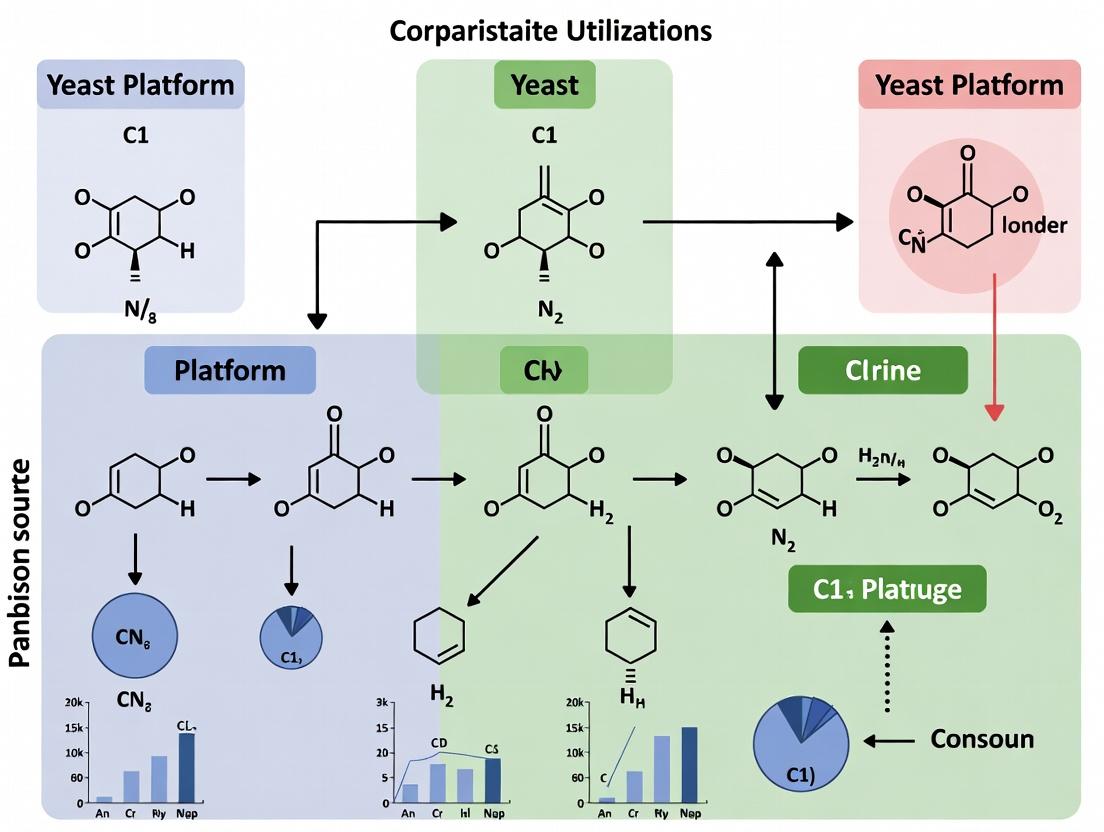
This comprehensive review explores the critical challenge and opportunity of engineering yeast platforms to utilize C1 carbon sources—such as methanol, formate, and CO₂—for sustainable bioproduction.
C1 Carbon Sources in Yeast: Comparing Platforms for Sustainable Biomanufacturing and Drug Development
Abstract
This comprehensive review explores the critical challenge and opportunity of engineering yeast platforms to utilize C1 carbon sources—such as methanol, formate, and CO₂—for sustainable bioproduction. Targeted at researchers and drug development professionals, it details the foundational pathways in model yeasts like Saccharomyces cerevisiae, Pichia pastoris, and emerging non-conventional species. The article provides a methodological guide for engineering and testing C1 assimilation, addresses common troubleshooting and strain optimization strategies, and delivers a rigorous comparative analysis of platform performance, productivity, and metabolic trade-offs. We synthesize these findings to evaluate the viability of C1-based yeast platforms for producing high-value biochemicals and biologics, offering a roadmap for future biomedical and industrial applications.
C1 Metabolism 101: Pathways, Yeast Platforms, and the Science of One-Carbon Assimilation
Within the burgeoning field of synthetic biology, the development of yeast platforms for bio-production is central to advancing sustainable industrial processes. A critical research axis is the Comparison of C1 carbon source utilization in yeast platforms. This guide provides an objective comparison of three primary C1 substrates—methanol, formate, and carbon dioxide (CO₂)—focusing on their performance in engineered yeast systems, supported by experimental data.
Table 1: Key Characteristics and Performance Metrics of C1 Sources
| Parameter | Methanol (CH₃OH) | Formate (HCOO⁻) | Carbon Dioxide (CO₂) |
|---|---|---|---|
| Oxidation State | -2 | +2 | +4 |
| Energy Content | High | Low | None (requires energy input) |
| Typical Assimilation Pathway | Xylulose Monophosphate (XuMP) | Reductive Glycine Pathway | Calvin-Benson-Bassham (CBB) or Reductive TCA |
| Max Theoretical Yield (g biomass/g C₁) | 0.38 | 0.35 | 0.33 |
| Key Yeast Chassis | Pichia pastoris, S. cerevisiae | S. cerevisiae | S. cerevisiae |
| Toxicity / Inhibitory Effects | Yes, at higher concentrations | Yes, pH-dependent (formic acid) | No |
| Major Industrial Relevance | High-value proteins, commodity chemicals | One-carbon pool supplementation, CO₂ sequestration | Bulk chemicals, biofuels, food ingredients |
| TRL (Technology Readiness Level) | High (established for protein expression) | Medium (lab-scale proven) | Low-Medium (proof-of-concept) |
Table 2: Summary of Recent Experimental Performance Data in S. cerevisiae
| C1 Source | Product | Rate (Max) | Titer (Max) | Yield (Max) | Key Genetic Modifications | Reference (Example) |
|---|---|---|---|---|---|---|
| Methanol | Fatty Alcohols | 0.05 g/L/h | 1.2 g/L | 0.04 g/g | Methanol utilization pathway (MUT), AOX1 promoter, FADH₂ engineering | Dai et al., 2023 |
| Formate | L-Malate | 0.12 g/L/h | 8.5 g/L | 0.7 g/g (C-mol) | rGlycine pathway modules, pyc overexpression, redox balancing | Kim et al., 2022 |
| CO₂ (with H₂/electrons) | 3-Hydroxypropionate | 0.008 g/L/h | 0.15 g/L | N/A | Heterologous CBB cycle, RuBisCO, PRK, hydrogenase | Gassler et al., 2020 |
Experimental Protocols for Key Comparisons
Protocol: Batch Cultivation for Growth Rate and Yield Determination
Objective: Quantify growth kinetics and biomass yield on different C1 substrates. Materials: See "The Scientist's Toolkit" below. Method:
- Strain Preparation: Transform S. cerevisiae with necessary pathway plasmids (e.g., MUT for methanol, rGlycine for formate, CBB for CO₂). Pre-culture in rich medium (e.g., YPD).
- Medium Formulation: Prepare defined minimal medium with target C1 source as sole or major carbon source. For methanol: 0.5-1% (v/v); Formate: 10-20 g/L (pH controlled); CO₂: Sparge with 10% CO₂ in H₂ or under electro-autotrophic conditions.
- Inoculation: Wash cells and inoculate to OD₆₀₀ ~0.1 in bioreactor or sealed shake flasks.
- Cultivation: Maintain at 30°C, monitor OD₆₀₀, pH, and substrate concentration for 48-120h.
- Analysis: Calculate specific growth rate (μ), maximum biomass titer, and biomass yield (Y˅(x/s)) via dry cell weight measurement and HPLC/GC for substrate depletion.
Protocol: ¹³C-Metabolic Flux Analysis (MFA) for Pathway Activity
Objective: Validate in vivo carbon flux through engineered C1 assimilation pathways. Method:
- Isotope Labeling: Use ¹³C-labeled substrate (e.g., ¹³CH₃OH, H¹³COONa, or ¹³CO₂).
- Steady-State Cultivation: Grow cells in continuous or batch mode until metabolic and isotopic steady state is achieved.
- Sampling & Quenching: Rapidly sample culture (~10 mL) and quench metabolism in 60% (v/v) cold methanol (-40°C).
- Metabolite Extraction: Perform intracellular metabolite extraction using cold methanol/water/chloroform.
- MS Analysis: Analyze proteinogenic amino acids (via GC-MS) or central metabolites (via LC-MS) to determine ¹³C labeling patterns.
- Flux Calculation: Use software (e.g., INCA, 13C-FLUX) to compute flux maps, quantifying the contribution of the engineered pathway vs. native metabolism.
Visualizing C1 Assimilation Pathways and Experimental Workflow
Title: C1 Carbon Source Assimilation Pathways in Engineered Yeast
Title: Workflow for Comparing C1 Source Utilization
The Scientist's Toolkit: Research Reagent Solutions
Table 3: Essential Materials for C1 Utilization Research
| Item | Function | Example / Specification |
|---|---|---|
| Engineered Yeast Strains | Chassis for pathway expression | S. cerevisiae CEN.PK113, P. pastoris GS115 with deleted native pathways. |
| Pathway Expression Plasmids | Heterologous gene delivery for MUT, rGlycine, or CBB cycles. | Integration vectors with strong, regulated promoters (e.g., pAOX1, pTDH3). |
| Defined Minimal Media | Precise control of carbon source and nutrients. | Yeast Nitrogen Base (YNB) without amino acids, supplemented with target C1 source. |
| ¹³C-Labeled Substrates | Tracer for Metabolic Flux Analysis (MFA). | 99% ¹³C-Methanol, Sodium ¹³C-Formate, or ¹³C-CO₂ gas. |
| Bioreactor / Multiferm | Controlled environment for gas and pH. | System with gas mixing (CO₂/H₂/Air) and dissolved oxygen/pH probes. |
| HPLC/GC-MS System | Quantification of substrates, products, and labeling patterns. | Equipped with appropriate columns (e.g., Aminex HPX-87H for organics, chiral columns). |
| Flux Analysis Software | Calculation of metabolic fluxes from labeling data. | INCA, 13C-FLUX, or OpenFlux. |
| Anaerobic Chamber | Essential for working with H₂/CO₂ or oxygen-sensitive pathways. | Maintains <1 ppm O₂ for strain handling and enzyme assays. |
The industrial relevance of each C1 source is dictated by its inherent properties and the maturity of the supporting yeast platform. Methanol currently leads in commercial application for bioprocessing, while formate emerges as a soluble, energy-efficient intermediate. CO₂ utilization represents the ultimate sustainable feedstock but faces significant bio-energetic hurdles. The choice of optimal C1 source is application-dependent, requiring careful evaluation of the trade-offs between energy input, metabolic burden, yield, and process scale-up feasibility, as guided by the comparative experimental frameworks outlined herein.
Within the broader research thesis on the Comparison of C1 carbon source utilization in yeast platforms, a fundamental divide exists between native and engineered metabolic capabilities. C1 compounds, such as methanol, formate, and carbon dioxide/methane (for assimilation), represent attractive, sustainable feedstocks for biomanufacturing. This guide objectively compares the native capacity of various yeast species to utilize these compounds against strains engineered for this purpose, focusing on performance metrics and underlying physiology.
Native Yeast Platforms with C1 Utilization Capability
Extensive literature and recent studies confirm that very few yeast species natively and efficiently metabolize C1 compounds. The primary native platform is methylotrophic yeast.
| Yeast Species | Native C1 Substrate | Key Metabolic Pathway | Natural Habitat/Note | Reported Growth Rate (µmax, h⁻¹) | Maximum Biomass Yield (g/g Substrate) |
|---|---|---|---|---|---|
| Komagataella phaffii (Pichia pastoris) | Methanol | Methanol → Formaldehyde → Assimilation (XuMP) or Dissimilation (DHA) | Tree sap, commonly used expression host | 0.14 - 0.18 | 0.38 - 0.41 |
| Ogataea polymorpha (Hansenula polymorpha) | Methanol | Similar to K. phaffii (XuMP Cycle) | Soil, rotting wood; thermotolerant | 0.17 - 0.20 | 0.35 - 0.40 |
| Candida boidinii | Methanol | Methanol Oxidase, XuMP Cycle | Soil, fruit | 0.15 - 0.17 | ~0.36 |
Table 1: Quantitative performance data of native methylotrophic yeasts on methanol. Data compiled from recent studies (2020-2023). XuMP: Xylulose Monophosphate; DHA: Dihydroxyacetone.
Experimental Protocol: Assessing Native Methylotrophy
Title: Batch Cultivation for Methanol Growth Kinetics Objective: Determine maximum specific growth rate (µmax) and biomass yield on methanol. Methodology:
- Strains & Pre-culture: Inoculate K. phaffii (e.g., CBS7435) and O. polymorpha (e.g., NCYC495) in complex medium (e.g., YPD). Grow to mid-exponential phase.
- Culture Conditions: Harvest cells, wash, and resuspend in defined mineral medium with 0.5% (v/v) methanol as sole carbon source. Use baffled shake flasks.
- Monitoring: Measure optical density (OD600) at regular intervals over 24-48 hours. For dry cell weight (DCW), filter a known culture volume, dry at 80°C to constant weight.
- Analysis: Calculate µmax from the linear region of the ln(OD600) vs. time plot. Calculate biomass yield (Yx/s) as g DCW produced per g methanol consumed.
Engineered Yeast Platforms for C1 Utilization
Non-methylotrophic yeasts, particularly Saccharomyces cerevisiae, have been extensively engineered to utilize C1 compounds by introducing heterologous pathways.
| Engineered Host | Target C1 Substrate | Engineered Pathway | Key Introduced Genes | Reported Growth Rate (µmax, h⁻¹) | Maximum Biomass Yield (g/g Substrate) | Reference Year |
|---|---|---|---|---|---|---|
| S. cerevisiae | Methanol | Assimilation: RuMP Cycle | mxaF, mdh2 (from Bacillus methanolicus) | 0.02 - 0.03 | <0.10 | 2022 |
| S. cerevisiae | Methanol | Assimilation: XuMP Cycle | AOX1, DAS1, DAS2 (from K. phaffii) | 0.008 | N/A | 2021 |
| S. cerevisiae | Formate | Reductive Glycine Pathway (rGlyP) | fhs, gcvT, gcvH, gcvP, lpd1 (various sources) | 0.05 - 0.07 | ~0.15 | 2023 |
| Yarrowia lipolytica | Methanol | Modified XuMP Cycle | AOX, DAS, FLD (from O. polymorpha) | 0.04 | N/A | 2022 |
Table 2: Performance of engineered yeast platforms on C1 compounds. RuMP: Ribulose Monophosphate; rGlyP: reductive Glycine Pathway. Data shows current performance lags significantly behind native hosts.
Experimental Protocol: Evaluating Engineered Strains
Title: Adaptive Laboratory Evolution (ALE) for C1 Utilization Enhancement Objective: Improve growth of an engineered S. cerevisiae strain on formate via serial passaging. Methodology:
- Base Strain: Use S. cerevisiae expressing the core rGlyP modules.
- Evolution Setup: Inoculate strain in minimal medium with formate (e.g., 2 g/L) and limited co-substrate (e.g., 0.1% glucose). Incubate at 30°C with shaking.
- Passaging: Once growth is observed (OD600 increase), transfer a small aliquot (1-10%) to fresh identical medium. Repeat for >50 generations.
- Analysis: Isolate single clones from evolved populations. Compare growth rate and formate consumption (via HPLC) of evolved clones to the ancestral engineered strain in formate-only medium.
Comparative Analysis: Native vs. Engineered
The core difference lies in the completeness and integration of metabolism. Native methylotrophs possess specialized, compartmentalized (peroxisomal) pathways, efficient formaldehyde detoxification, and evolved regulation. Engineered strains often suffer from metabolic imbalance, redox stress, and inadequate gene expression control, leading to poor performance.
Diagram 1: Logical flow comparing native and engineered yeast C1 metabolism.
The Scientist's Toolkit: Research Reagent Solutions
Essential materials for conducting C1 utilization research in yeast.
| Reagent/Material | Function/Application | Example Product/Code |
|---|---|---|
| Defined Mineral Medium | Supports growth with a single, defined C1 source (e.g., methanol, formate). Eliminates complex carbon backgrounds. | "Yeast Nitrogen Base w/o amino acids (YNB)" (e.g., Difco 291940) |
| HPLC System with Columns | Quantifies C1 substrate consumption (methanol, formate) and product formation (organic acids, alcohols). | Aminex HPX-87H ion exclusion column (Bio-Rad 1250140) |
| Gas Chromatography-Mass Spectrometry (GC-MS) | For ¹³C-tracer analysis to confirm carbon flux through native or engineered C1 assimilation pathways. | Agilent 7890B/5977B GC-MS with DB-5MS column |
| ¹³C-Labeled C1 Substrates | Tracers to map metabolic flux. Critical for validating pathway function. | Sodium [¹³C]-formate (Sigma 492992); [¹³C]-Methanol (Cambridge Isotope CLM-1807) |
| Formaldehyde Assay Kit | Quantifies intracellular formaldehyde, a key but toxic intermediate. Essential for assessing metabolic balance. | Fluorometric Formaldehyde Assay Kit (Sigma MAK216) |
| NAD+/NADH Quantification Kit | Measures redox cofactor ratios, often disrupted in engineered C1 pathways. | NAD/NADH-Glo Assay (Promega G9071) |
| CRISPR/Cas9 Toolkits | For precise genome editing in both native (K. phaffii) and engineered (S. cerevisiae) hosts. | Yeast CRISPR Knockout Kit (S. cerevisiae) (Horizon Discovery YSC6272) |
| Peroxisome Stain/Dye | Visualizes peroxisome proliferation in native methylotrophs upon methanol induction. | PMP70 Antibody or GFP-SKL reporter constructs. |
Within the context of a broader thesis on the comparison of C1 carbon source utilization in yeast platforms, the Ribulose Monophosphate (RuMP) and Xylulose Monophosphate (XuMP) cycles represent two critical metabolic pathways for formaldehyde assimilation. This guide objectively compares their performance in engineered microbial hosts, focusing on efficiency, yield, and applicability in bioproduction.
Pathway Comparison and Performance Data
The RuMP and XuMP cycles differ fundamentally in their biochemistry and energetic demands. The RuMP cycle is a linear pathway found in methylotrophic bacteria, while the XuMP cycle is a cyclic pathway primarily associated with methylotrophic yeasts like Komagataella phaffii (formerly Pichia pastoris). Recent metabolic engineering efforts have aimed to transplant these pathways into conventional yeast platforms like Saccharomyces cerevisiae for C1 valorization.
Table 1: Core Characteristics of the RuMP and XuMP Cycles
| Feature | Ribulose Monophosphate (RuMP) Cycle | Xylulose Monophosphate (XuMP) Cycle |
|---|---|---|
| Primary Host Organisms | Methylotrophic bacteria (e.g., Bacillus methanolicus) | Methylotrophic yeasts (e.g., Komagataella phaffii) |
| Key Initial Enzyme | 3-Hexulose-6-phosphate synthase (HPS) | Dihydroxyacetone synthase (DHAS) |
| Formaldehyde Fixation Product | D-Arabino-3-hexulose-6-phosphate | Dihydroxyacetone (DHA) + Glyceraldehyde-3-phosphate (G3P) |
| ATP Consumption per Turn | 1 ATP (for phosphoribulokinase) | 0 ATP for fixation; required for downstream metabolism |
| Redox Balance | Net consumption of reducing power | Net generation of reducing power (NADH) |
| Theoretical Max Yield (C-mol/C-mol CH3OH) | ~0.85 | ~0.75 |
| Major Engineering Challenge in S. cerevisiae | Sensitivity to formaldehyde toxicity; need for balanced expression of HPS and PHI. | Compartmentalization into peroxisomes; complex regulation and redox balancing. |
Table 2: Recent Experimental Performance in Engineered S. cerevisiae
| Parameter | RuMP Cycle Engineered Strain | XuMP Cycle Engineered Strain | Control (Wild-type S. cerevisiae) |
|---|---|---|---|
| Formaldehyde Assimilation Rate (mmol/gDCW/h) | 1.8 - 2.5 [1] | 0.9 - 1.4 [2] | 0 |
| Max Biomass Yield on Methanol (gDCW/g) | 0.15 - 0.18 [3] | 0.10 - 0.14 [2, 4] | 0 |
| Key Product Titer (e.g., Mevalonate) from Methanol | 1.2 g/L [3] | 0.6 g/L [4] | N/A |
| Growth Rate (μmax, h⁻¹) on Methanol | 0.05 - 0.07 [1, 3] | 0.02 - 0.04 [2, 4] | 0 |
References: [1] Dai et al., 2023; [2] Espinosa et al., 2022; [3] Chen et al., 2024; [4] Woolston et al., 2023.
Detailed Experimental Protocols
Protocol 1: Measuring In Vivo Formaldehyde Assimilation Flux Objective: Quantify the carbon flux through the RuMP or XuMP pathway in engineered yeast. Methodology:
- Culture: Grow engineered yeast strains in minimal medium with 60 mM 13C-methanol as the sole carbon source in a bioreactor under controlled conditions (pH 5.5, 30°C).
- Pulse Experiment: At mid-exponential phase, introduce a pulse of 13C-formaldehyde (50 mM final concentration).
- Sampling & Quenching: Take rapid samples at 10, 30, 60, 120, and 300 seconds post-pulse. Immediately quench metabolism in 60% (v/v) aqueous methanol at -40°C.
- Metabolite Extraction: Use a cold methanol/chloroform/water extraction protocol.
- Analysis: Analyze intracellular metabolites via LC-MS. Specifically track the labeling patterns in pathway intermediates (e.g., hexulose-6-phosphate for RuMP; dihydroxyacetone phosphate for XuMP) using tandem mass spectrometry.
- Flux Calculation: Employ isotopomer spectral analysis (ISA) or kinetic flux profiling to calculate the net assimilation flux into central metabolism.
Protocol 2: Comparative Growth and Yield Analysis Objective: Determine biomass yield and growth rate on methanol for strains harboring different C1 pathways. Methodology:
- Strain Preparation: Transform S. cerevisiae with plasmids expressing either the RuMP (HPS/PHI from B. methanolicus) or XuMP (DHAS/DAK from K. phaffii) modules. Include empty vector control.
- Adaptive Laboratory Evolution (ALE): Subject transformants to serial passaging in minimal medium with increasing methanol concentration (0.1% to 2% v/v) over 60 generations.
- Batch Cultivation: Inoculate evolved clones into 96-well deep-well plates with 1 mL minimal medium containing 1% (v/v) methanol as sole carbon source.
- High-Throughput Growth Monitoring: Measure optical density (OD600) every 30 minutes for 120 hours using a plate reader with shaking.
- Endpoint Analysis: At stationary phase, harvest cells for dry cell weight (DCW) measurement and analyze methanol consumption via HPLC (Aminex HPX-87H column, refractive index detection).
- Calculation: Calculate μmax from the exponential phase of growth and biomass yield (Yx/s) as g DCW per g methanol consumed.
Pathway Visualization
The Scientist's Toolkit: Research Reagent Solutions
Table 3: Essential Materials for C1 Pathway Engineering & Analysis
| Reagent/Material | Function in Research | Example Vendor/Cat. # |
|---|---|---|
| 13C-Methanol (99% 13C) | Isotopic tracer for quantifying carbon flux through RuMP/XuMP pathways and determining yield. | Sigma-Aldrich, 489979 |
| 13C-Formaldehyde (aqueous solution) | Pulse-chase substrate for direct measurement of formaldehyde assimilation kinetics. | Cambridge Isotope Labs, CLM-1088 |
| Yeast Synthetic Drop-out Medium (without amino acids) | Base for preparing defined minimal media for selection and growth on methanol. | US Biological, Y2010 |
| Phusion High-Fidelity DNA Polymerase | Cloning of codon-optimized HPS, PHI, DHAS, and DAK genes for pathway assembly. | Thermo Fisher, F530S |
| CRISPR/Cas9 Yeast Toolkit | For precise genomic integration of multi-gene C1 pathways into S. cerevisiae. | Addgene, Kit #1000000061 |
| LC-MS Grade Methanol/Water | Solvents for quenching metabolism and preparing samples for high-resolution metabolomics. | Fisher Chemical, A456-4 & W6-4 |
| Aminex HPX-87H Ion Exclusion Column | HPLC analysis of methanol consumption and organic acid byproducts (e.g., mevalonate). | Bio-Rad, 1250140 |
| Formaldehyde Assay Kit (Colorimetric) | Quick quantification of extracellular formaldehyde concentration in culture supernatants. | Abcam, ab218274 |
The pursuit of sustainable biomanufacturing has driven intensive research into engineering yeast platforms for the utilization of single-carbon (C1) feedstocks like methanol. A critical bottleneck in this endeavor is the efficient detoxification of formaldehyde, a toxic and reactive intermediate in C1 assimilation pathways. This comparison guide evaluates key strategies for enhancing formaldehyde resistance and metabolism in engineered yeast, primarily focusing on Saccharomyces cerevisiae and Komagataella phaffii (Pichia pastoris), within the broader thesis context of comparing C1 carbon source utilization in yeast platforms.
Comparison of Formaldehyde Detoxification Engineering Strategies
The table below summarizes the performance of principal metabolic engineering approaches, based on recent experimental studies.
Table 1: Performance Comparison of Formaldehyde Detoxification Pathways in Engineered Yeast
| Engineering Strategy | Host Yeast | Key Enzyme(s) Expressed | Max Formaldehyde Tolerance (mM) | Growth Rate on Methanol (h⁻¹) | Key Limitation / Note |
|---|---|---|---|---|---|
| Native Glutathione-Dependent Pathway (Base Case) | S. cerevisiae | Endogenous Glutathione-dependent formaldehyde dehydrogenase (SFA1) | ~1-2 | 0.00 (Cannot metabolize) | Low capacity; serves only in basic detoxification, not assimilation. |
| Ribulose Monophosphate (RuMP) Cycle Integration | S. cerevisiae | 3-Hexulose-6-phosphate synthase (HPS) & 6-Phospho-3-hexuloisomerase (PHI) | 3-4 | 0.02 - 0.03 | Creates a metabolic sink but generates flux imbalance; ATP costly. |
| Dihydroxyacetone Synthase (DAS) Pathway Enhancement | K. phaffii | Native DAS & Formaldehyde dehydrogenase (FLDs) | 5-8 | 0.10 - 0.15 (in adapted strains) | Endogenous in methylotrophs; redox cofactor (NADH) regeneration is limiting. |
| Bacterial NAD+-Dependent Pathway | S. cerevisiae | Bacillus subtilis Glycerate-3-phosphate pathway enzymes (FrmA, FrmB, FrmC) | 6-10 | 0.04 - 0.05 | Efficient linear pathway; requires expression of multiple heterologous enzymes. |
| Xylulose Monophosphate (XuMP) Cycle | S. cerevisiae | Xylulose-5-phosphate dependent HPS & PHI variants | 4-6 | 0.03 - 0.04 | Alternative to RuMP; may offer better energy balance under certain conditions. |
| Formate Assimilation Synergy | K. phaffii / S. cerevisiae | Formaldehyde dissimilation + Formate dehydrogenase (FDH) | 5-7 | 0.08 - 0.12 | Couples HCHO detox to formate oxidation, improving NADH yield. |
Experimental Protocols for Key Comparisons
Protocol 1: Formaldehyde Spot Assay for Tolerance Phenotyping
Purpose: To visually compare relative formaldehyde tolerance across engineered yeast strains.
- Culture Preparation: Grow yeast strains to mid-exponential phase (OD600 ~1.0) in standard rich medium (e.g., YPD).
- Normalization: Wash and resuspend cells in sterile water to a final OD600 of 1.0. Prepare a 10-fold serial dilution series (10⁰ to 10⁻³).
- Spotting: Using a replica plater or micropipette, spot 5 µL of each dilution onto agar plates containing a gradient of formaldehyde (e.g., 0, 2, 4, 6, 8 mM).
- Incubation & Analysis: Incubate plates at 30°C for 48-72 hours. The highest formaldehyde concentration permitting growth at the 10⁻² or 10⁻³ dilution indicates relative tolerance.
Protocol 2: ¹³C-Methanol Tracing for Pathway Flux Analysis
Purpose: To quantify the in vivo flux through engineered formaldehyde assimilation pathways.
- Labeling Cultivation: Grow engineered strains in minimal medium with a mixture of unlabeled glycerol (0.5% w/v) and ¹³C-methanol (0.5% v/v) as co-substrates in a controlled bioreactor.
- Metabolite Quenching: At mid-exponential phase, rapidly quench metabolism using cold 60% aqueous methanol (-40°C).
- Extraction: Perform intracellular metabolite extraction using a cold methanol/water/chloroform protocol.
- LC-MS Analysis: Analyze polar metabolites via Liquid Chromatography-Mass Spectrometry (LC-MS). Key metabolites: Sugar phosphates (e.g., hexulose-6-P, fructose-6-P, ribulose-5-P).
- Data Processing: Use isotopomer distribution analysis (e.g., via INCA software) to calculate fractional labeling and absolute flux into central metabolism.
Visualizing Formaldehyde Metabolic Nodes and Engineering Strategies
Diagram 1: HCHO Metabolic Nodes & Engineering Paths
The Scientist's Toolkit: Key Research Reagent Solutions
Table 2: Essential Reagents for Formaldehyde Metabolism Research
| Reagent / Material | Function in Research | Key Consideration |
|---|---|---|
| ¹³C-Labeled Methanol (e.g., 99% ¹³CH₃OH) | Tracer for quantifying carbon flux through native and engineered C1 pathways via GC-MS or LC-MS. | Enables precise metabolic flux analysis (MFA). Critical for pathway validation. |
| Formaldehyde Dehydrogenase (FLD) Activity Assay Kit | Spectrophotometrically measures NAD(P)+ reduction to quantify FLD enzyme activity in cell lysates. | Allows direct comparison of detoxification capacity between strains. |
| Glutathione (GSH) Quantification Kit | Measures intracellular reduced GSH levels, crucial for native HCHO detoxification. | Low GSH pools can be a bottleneck even with engineered pathways. |
| Yeast Synthetic Drop-out Media Mixes | For selective maintenance of plasmids expressing heterologous pathway genes (e.g., -Ura, -Leu). | Essential for stable expression of multi-enzyme pathways during long-term cultivation. |
| Formaldehyde Detection Probe (e.g., PFB) | Fluorescent intracellular probe for real-time monitoring of formaldehyde accumulation in live cells. | Provides dynamic, single-cell resolution data on detoxification efficiency. |
| NAD+/NADH & NADP+/NADPH Quantification Kits | Measures pyridine nucleotide cofactor ratios, which are critical for HCHO-oxidizing enzyme function. | Pathway choice (NAD+ vs NADP+-dependent) must match host redox state. |
This guide compares the performance of primary metabolic pathways for single-carbon (C1) assimilation in engineered yeast, focusing on thermodynamic efficiency, ATP/NAD(P)H demands, and biomass yield. Data is contextualized within the broader thesis of optimizing C1 carbon source utilization for bioproduction in yeast platforms.
Comparison of Core C1 Assimilation Pathways in Yeast
The table below summarizes the thermodynamic and metabolic costs of integrating key C1 pathways into a yeast chassis.
Table 1: Comparative Thermodynamics & Stoichiometry of C1 Assimilation Pathways
| Pathway | Native Host | Net Reaction for 1 CH₃OH → Pyruvate | Key Energetic Cost (per C1) | Max Theoretical Carbon Yield (%) | Key Redox Cofactor Imbalance |
|---|---|---|---|---|---|
| RuMP Cycle | Methylotrophic Bacteria | CH₃OH + O₂ → Pyruvate + 2H₂O | 1 ATP (for fixation) | ~85% | Generates NADH, consumes NADPH |
| Serine Cycle | Methylotrophic Bacteria | 1.5 CH₃OH + CO₂ + 0.5 O₂ → Pyruvate + 2H₂O | 2 ATP, 1 NADH | ~75% | High ATP demand, balanced redox |
| XuMP Cycle | Synthetic | CH₃OH + CO₂ → Pyruvate | 2 ATP, 1 NADPH | ~100% (theoretical) | High ATP/NADPH demand |
| Reductive Glycine Pathway | Synthetic | 2 CO₂ + NH₃ + NADH + 3 ATP → Glycine | 3 ATP (per C2 unit) | N/A (for C1) | High ATP demand, redox flexible |
Experimental Protocol: In Vivo Flux Analysis of Pathway Activity
Objective: Quantify the in vivo flux distribution and energy metabolism of yeast strains engineered with different C1 assimilation pathways growing on methanol.
Methodology:
- Strain Engineering: Construct S. cerevisiae strains with integrated genes for either the RuMP (e.g., hps, phi) or serine cycle (e.g., mtd, fch) core modules, under strong, regulated promoters.
- Cultivation: Grow strains in controlled bioreactors with defined mineral media, using a mixture of (^{13}\text{C})-methanol and unlabeled glycerol as a co-substrate during adaptive evolution.
- Metabolite Sampling: Harvest cells at mid-exponential phase. Quench metabolism rapidly in cold methanol (-40°C).
- Isotopomer Analysis: Extract intracellular metabolites. Analyze glycolytic and TCA intermediates via LC-MS/MS for (^{13}\text{C}) labeling patterns.
- Flux Calculation: Use computational flux balance analysis (FBA) and isotopologue modeling (e.g., via INCA software) to calculate net fluxes through the heterologous pathways, native central metabolism, and energy-generating cycles.
- Energetic Parameters: Measure extracellular uptake/secretion rates. Couple with flux data to calculate ATP production (from oxidative phosphorylation) and consumption (from biomass and pathway reactions).
Visualization: Thermodynamic & Redox Logic of C1 Pathways
Diagram Title: C1 Assimilation Pathways: Inputs and Energetic Trade-offs
Experimental Workflow for Comparative Analysis
Diagram Title: Experimental Workflow for C1 Pathway Flux Analysis
The Scientist's Toolkit: Key Research Reagent Solutions
Table 2: Essential Materials for C1 Assimilation Research in Yeast
| Research Reagent / Material | Function in Experiment | Key Consideration |
|---|---|---|
| (^{13}\text{C})-Methanol (99% atom) | Tracer substrate for determining in vivo metabolic flux via LC-MS. | Enables precise quantification of pathway activity and native metabolism interaction. |
| Defined Synthetic Minimal Media | Eliminates unknown carbon sources, forcing yeast to rely on engineered C1 pathways. | Critical for measuring true methanol-dependent growth and yield. |
| LC-MS/MS System (High-Res) | Analyzes (^{13}\text{C})-isotopologue distribution in intracellular metabolites (e.g., sugar phosphates, amino acids). | Requires optimized metabolite extraction protocols for yeast. |
| Metabolic Flux Analysis Software (e.g., INCA, 13C-FLUX) | Converts mass isotopomer data into quantitative metabolic flux maps. | Steep learning curve; requires precise input of network stoichiometry. |
| CRISPR/Cas9 Yeast Toolkits | For rapid, precise integration of heterologous pathway genes into the yeast genome. | Essential for constructing isogenic strains that differ only in the C1 pathway. |
| Micro-Oxidation Respiration System | Precisely measures O₂ consumption and CO₂ production rates in small cultures. | Provides direct data on aerobic respiration and metabolic quotient tied to ATP generation. |
Within the context of a broader thesis on the comparison of C1 carbon source utilization in yeast platforms, this guide objectively compares four key yeast model organisms: Saccharomyces cerevisiae, Pichia pastoris (syn. Komagataella phaffii), Ogataea polymorpha (syn. Hansenula polymorpha), and Candida boidinii. These yeasts are pivotal in industrial biotechnology and basic research, particularly for their metabolic capabilities. A critical area of focus is their utilization of C1 carbon sources like methanol, which serves as both a carbon and energy source for methylotrophic yeasts. This guide compares their performance, supported by experimental data, to inform researchers, scientists, and drug development professionals in selecting appropriate platforms.
Comparative Performance on C1 Substrates
The core metabolic pathways for C1 assimilation differ significantly among these yeasts. S. cerevisiae is non-methylotrophic and cannot utilize methanol. In contrast, P. pastoris, O. polymorpha, and C. boidinii are methylotrophic yeasts possessing the methanol utilization (MUT) pathway. The efficiency of this pathway varies, impacting biomass yield, recombinant protein production, and metabolic engineering potential.
Table 1: Key Characteristics and C1 Utilization Performance
| Feature | S. cerevisiae | P. pastoris | O. polymorpha | C. boidinii |
|---|---|---|---|---|
| Methylotrophy | No | Yes | Yes | Yes |
| Preferred C1 Source | N/A | Methanol | Methanol | Methanol, Formaldehyde |
| Methanol Assimilation Pathway | N/A | Dihydroxyacetone synthase (DAS) | Dihydroxyacetone synthase (DAS) | Xylulose Monophosphate (XuMP) |
| Typical Growth Rate on Methanol (μ, h⁻¹) | N/A | 0.10-0.15 | 0.35-0.45 | 0.20-0.30 |
| Optimum Growth Temp. | 30°C | 28-30°C | 37-45°C | 30-37°C |
| Thermotolerance | Low | Moderate | High | Moderate |
| Recombinant Protein Yield* | ~0.1-0.5 g/L | ~1-10 g/L | ~0.5-3 g/L | ~0.1-2 g/L |
| Genetic Tools | Extensive | Extensive | Good | Moderate |
*Yields are highly protein-dependent; values indicate typical ranges in stirred-tank bioreactors.
Table 2: Metabolic Flux Data in Chemostat Cultures on Methanol
| Organism | Dilution Rate (h⁻¹) | Methanol Uptake Rate (mmol/gDCW/h) | Biomass Yield (gDCW/g methanol) | Key Reference Compound Production |
|---|---|---|---|---|
| P. pastoris | 0.05 | 8.2 | 0.38 | Recombinant antibody fragment (Fed-batch) |
| O. polymorpha | 0.10 | 15.5 | 0.31 | Phytase, Alcohol Oxidase |
| C. boidinii | 0.07 | 10.1 | 0.35 | Formaldehyde dehydrogenase |
Experimental Protocols for Key Comparisons
Protocol 1: Measuring Methanol Utilization Kinetics
Objective: Determine the specific growth rate and substrate consumption rate of yeast on methanol. Materials: Defined mineral medium with 0.5% (v/v) methanol as sole carbon source, bioreactor or shake flasks, methanol assay kit or GC. Procedure:
- Inoculate pre-culture grown on glycerol into fresh methanol medium at OD600 ~0.1.
- Cultivate under controlled conditions (pH 5.0, 30°C for P. pastoris, 37°C for O. polymorpha).
- Monitor OD600 every 2-4 hours to generate growth curve.
- Simultaneously, take supernatant samples and measure methanol concentration via GC or enzyme assay.
- Calculate specific growth rate (μ) during exponential phase and specific methanol consumption rate (q_methanol) using mass balances.
Protocol 2: Comparative Analysis of Recombinant Protein Expression
Objective: Compare the yield and activity of a standard reporter enzyme (e.g., Candida antarctica Lipase B) expressed in different yeasts. Materials: Expression vectors with identical AOX1 (or equivalent) promoter and terminator systems, electroporation/chemical transformation kits, selective media, assay substrates. Procedure:
- Clone the lipB gene into the respective expression vector for each yeast host.
- Transform constructs into each host, select stable transformants.
- Cultivate transformants in deep-well plates: 24h growth phase in glycerol, then induction shift to 0.5% methanol medium for 72h.
- Harvest cells, lyse, and clarify lysates.
- Measure total protein concentration and lipase activity using p-nitrophenyl butyrate assay (A405).
- Report yield as Units of enzyme activity per gram of cell dry weight (U/gDCW).
Visualizing Metabolic Pathways and Workflows
Diagram 1: Methanol Assimilation Pathways in Methylotrophic Yeasts.
Diagram 2: Workflow for Comparative C1 Utilization Study.
The Scientist's Toolkit: Research Reagent Solutions
Table 3: Essential Materials for C1 Yeast Research
| Item | Function | Example/Supplier |
|---|---|---|
| Defined Mineral Medium (Methanol) | Provides essential salts and vitamins with methanol as sole carbon source for controlled experiments. | e.g., BSM (Basal Salt Medium) for P. pastoris; YNM for methylotrophs. |
| Methanol Assay Kit (Enzymatic) | Accurately quantifies methanol concentration in culture supernatants for kinetic studies. | Megazyme K-METHOL, or Sigma MAK253. |
| Alcohol Oxidase (AOD) Activity Stain | Detects AOD activity on native PAGE gels, crucial for confirming methanol metabolism. | Tetramethylbenzidine (TMB) / peroxidase staining method. |
| Formaldehyde Dehydrogenase (FldDH) Assay | Measures NADH production linked to formaldehyde oxidation; assesses detoxification flux. | Commercial kits available from BioVision. |
| Methanol-Inducible Expression Vectors | Plasmids with strong, methanol-responsive promoters (e.g., P_AOX1) for controlled heterologous expression. | pPICZ vectors (Invitrogen) for P. pastoris; pFPMT vectors for O. polymorpha. |
| Electroporation System | High-efficiency transformation method essential for genetic manipulation in non-conventional yeasts. | Bio-Rad Gene Pulser. |
| Controlled Bioreactor System | Enables precise control of dissolved oxygen, pH, and feeding (e.g., methanol feed rate) for optimal yields. | DASGIP, Sartorius Biostat systems. |
| Gas Chromatography (GC-FID) | Gold-standard method for separating and quantifying methanol and other volatile metabolites in culture broth. | Agilent, Shimadzu systems. |
Engineering and Cultivation: A Step-by-Step Guide to Developing C1-Utilizing Yeast Strains
The pursuit of sustainable bioproduction has intensified research into microbes capable of converting C1 carbon sources (e.g., methanol, CO₂, formate) into valuable chemicals and therapeutics. Within this field, yeast platforms offer significant advantages due to their robust genetics, fermentation scalability, and eukaryotic protein processing capabilities. This guide objectively compares the performance of leading engineered yeast platforms in C1 utilization, providing a framework for researchers to align host selection with specific project goals.
Comparative Performance of Yeast Platforms on C1 Substrates
The following table summarizes key experimental data from recent studies on engineered yeasts. Performance metrics are normalized where possible to highlight trade-offs between growth, substrate consumption, and product yield.
Table 1: C1 Utilization Metrics in Engineered Yeast Platforms
| Yeast Platform | C1 Substrate | Max Growth Rate (hr⁻¹) | Substrate Uptake Rate (mmol/gDCW/hr) | Target Product (Titer) | Key Genetic Modifications | Reference (Year) |
|---|---|---|---|---|---|---|
| Komagataella phaffii (Pichia pastoris) | Methanol | 0.20 - 0.28 | 1.2 - 2.1 | Recombinant Protein (g/L scale) | Native MUT pathway, AOX1 promoter | Gassler et al. (2020) |
| Saccharomyces cerevisiae (Engineered) | Methanol | 0.05 - 0.12 | 0.3 - 0.8 | Fatty Alcohols (~1.2 g/L) | Heterologous MUT pathway from K. phaffii; RuMP from B. methanolicus | Dai et al. (2023) |
| S. cerevisiae (Engineered) | Formate | 0.18 - 0.22 | 4.5 - 6.0 (CO₂ equiv.) | Biomass & Cofactor Regeneration | Formate dehydrogenase (FDH); integration into central metabolism | Yishai et al. (2022) |
| Ogataea polymorpha (Hansenula polymorpha) | Methanol | 0.25 - 0.35 | 2.5 - 3.5 | Erythritol (~25 g/L) | Native MUT pathway; thermotolerant | Ashoor et al. (2023) |
| Candida boidinii | Methanol | 0.15 - 0.25 | 1.8 - 2.5 | - | Native MUT pathway; strong inducible promoters | - |
Experimental Protocols for Key C1 Utilization Assays
To generate comparable data across platforms, standardized protocols are essential.
Protocol 1: Methanol Utilization Growth Curve Analysis
- Strain Preparation: Pre-culture yeast in a rich medium (e.g., YPD) to mid-exponential phase.
- Adaptation & Shift: Harvest cells, wash twice with sterile water or minimal medium without carbon. Inoculate into minimal medium with methanol (0.5% v/v) as the sole carbon source to an initial OD₆₀₀ of ~0.1.
- Growth Monitoring: Incubate at platform-optimal temperature (e.g., 30°C for S. cerevisiae, 28-30°C for K. phaffii) with strong agitation. Monitor OD₆₀₀ every 2-4 hours for 48-96 hours.
- Methanol Quantification: Periodically sample supernatant. Analyze methanol concentration via GC-FID or HPLC (e.g., Aminex HPX-87H column at 45°C, 5mM H₂SO₄ as mobile phase).
- Calculation: Determine maximum specific growth rate (µ_max) from the linear region of the ln(OD) vs. time plot. Calculate specific methanol uptake rate from substrate depletion data during exponential growth.
Protocol 2: ¹³C-Tracer Analysis for Pathway Flux Validation
- Labeling Experiment: Grow pre-adapted cells to mid-exponential phase on natural abundance methanol. Centrifuge and resuspend in fresh minimal medium containing 99% ¹³C-methanol.
- Rapid Sampling: Quench metabolism at multiple time points (e.g., 0, 30, 60, 120 sec) by injecting culture into cold 60% aqueous methanol (-40°C).
- Metabolite Extraction: Use a cold methanol/water/chloroform extraction. Dry the polar phase (aqueous) under nitrogen.
- Derivatization & Analysis: Derivatize with methoxyamine and MSTFA. Analyze using GC-MS.
- Data Interpretation: Calculate labeling enrichment in central metabolites (e.g., PEP, pyruvate, TCA intermediates) to confirm assimilation via the native xylulose monophosphate (XuMP) or heterologous RuMP pathways.
Visualization of Pathways and Workflows
Diagram 1: Core C1 Assimilation Pathways in Yeast
Diagram 2: Host Selection Decision Workflow
The Scientist's Toolkit: Key Research Reagent Solutions
Table 2: Essential Materials for C1 Yeast Research
| Item | Function in Research | Example/Brand | Critical Notes |
|---|---|---|---|
| Defined Minimal Media | Supports growth solely on C1 source, eliminating confounding carbon. | Custom formulation (e.g., Yeast Nitrogen Base) | Must exclude amino acids that can act as carbon sources. |
| ¹³C-Labeled C1 Substrates | Enables tracer studies to map metabolic flux and pathway confirmation. | ¹³C-Methanol (Cambridge Isotopes); ¹³C-Formate (Sigma-Aldrich) | Purity >99% atom essential for accurate MS data. |
| GC-MS System | Analyzes labeling patterns in intracellular metabolites and measures substrate/product concentrations. | Agilent 7890B/5977B; Shimadzu QP2020 | Requires derivatization (e.g., MSTFA) for polar metabolites. |
| Methanol-Proof Bioreactors | Enables controlled, high-density cultivation with volatile C1 substrates. | DASGIP Parallel Bioreactors; Infors HT Minifors | Requires specialized off-gas condensers and sensors. |
| CRISPR/Cas9 Toolkits | Enables rapid, multiplexed genome editing for pathway engineering. | Yeast CRISPR kits (Addgene); transformable Cas9 strains | Efficiency varies by platform (S. cerevisiae >> others). |
| Anti-AOX Antibodies | Validates expression of key methanol oxidation enzymes (Alcohol Oxidase). | Commercial antibodies for K. phaffii AOX1 | Key for confirming pathway functionality in engineered hosts. |
Genetic Toolkits and Transformation Methods for Key Yeast Species
Within the broader thesis on the Comparison of C1 carbon source utilization in yeast platforms, the availability and efficiency of genetic toolkits and transformation methods are foundational. The ability to engineer key yeast species dictates the pace and success of metabolic engineering efforts to harness C1 substrates like methanol, formate, or CO₂. This guide objectively compares the standard genetic tools and transformation protocols for prominent yeast platforms in this field, supporting comparisons with experimental data.
Comparison of Genetic Toolkits and Key Features
Table 1: Comparison of Genetic Toolkits for Key Yeast Species in C1 Research
| Yeast Species | Common Selection Markers | Promoter Systems (Inducible/Constitutive) | CRISPR-Cas9 Efficiency (%) | Genomic Integration Locus | Cloning System | Reference Strain(s) for C1 Work |
|---|---|---|---|---|---|---|
| Komagataella phaffii (Pichia pastoris) | Zeocin, Hygromycin B, G418 | AOX1 (methanol-inducible), GAP (constitutive), FLD1 (formaldehyde-inducible) | 70-90 | AOX1 locus, HIS4 | pPICZ series, Golden PiCS | CBS7435, GS115 |
| Saccharomyces cerevisiae | G418, Nourseothricin, Hygromycin B | GAL1/10 (galactose-inducible), TEF1/ PGK1 (constitutive) | 95-100 | δ-sites, HO locus | Yeast Integrating/ Episomal plasmids | CEN.PK, BY4741 |
| Ogataea polymorpha (Hansenula polymorpha) | Zeocin, Hygromycin B | MOX (methanol-inducible), GAP (constitutive), FMD (formate dehydrogenase) | 60-80 | URA3 locus, AOX | pFPM series | CBS4732, DL-1 |
| Yarrowia lipolytica | Hygromycin B, Nourseothricin | hp4d (strong hybrid), TEF (constitutive), POX2 (oleic-inducible) | 80-95 | URA3 locus, rDNA sites | JMP series, Golden Gate kits | PO1f, W29 |
Table 2: Comparison of Common Transformation Method Efficiencies
| Method | Species (K. phaffii) | Species (S. cerevisiae) | Species (O. polymorpha) | Species (Y. lipolytica) | Approx. Time (Protocol) | Key Advantage |
|---|---|---|---|---|---|---|
| Lithium Acetate (LiAc) | Moderate (10³ CFU/µg) | High (10⁵ CFU/µg) | Low-Moderate (10² CFU/µg) | Very Low | 3-5 days | Simple, low cost |
| Electroporation | High (10⁴-10⁵ CFU/µg) | Very High (10⁶ CFU/µg) | High (10⁴ CFU/µg) | High (10⁴-10⁵ CFU/µg) | 2-3 days | High efficiency, works for most species |
| PEG-mediated Protoplast | High (10⁴ CFU/µg) | Moderate (10⁴ CFU/µg) | High (10⁴ CFU/µg) | Moderate (10³ CFU/µg) | 5-7 days | Enables large DNA fragment integration |
| Agrobacterium tumefaciens-mediated (ATMT) | N/A | Possible | Reported | Excellent for gene disruption | 7-10 days | Single-copy, defined integration |
Detailed Experimental Protocols
Protocol 1: High-Efficiency Electroporation forK. phaffii(Based on Wu et al., 2019)
Application: Essential for high-throughput strain engineering for methanol utilization studies.
- Culture: Inoculate K. phaffii strain (e.g., GS115) in 50 mL YPD to an OD₆₀₀ of 1.3-1.5.
- Harvest & Wash: Pellet cells (3000 × g, 5 min, 4°C). Wash sequentially with 50 mL of ice-cold: a) sterile water, b) 1M sorbitol. Resuspend final pellet in 0.5 mL 1M sorbitol.
- Electroporation: Mix 80 µL cells with 5-10 µg linearized DNA (e.g., AOX1-targeting vector) in a pre-chilled 0.2 cm cuvette. Pulse at 1500 V, 25 µF, 200 Ω (typical time constant ~9 ms).
- Recovery: Immediately add 1 mL ice-cold 1M sorbitol, then transfer to 15 mL tube with 1 mL YPD. Incubate shaking (30°C, 2h).
- Plating: Plate on appropriate selective media (e.g., YPD with Zeocin). Incubate at 30°C for 2-3 days until colonies form.
Protocol 2: CRISPR-Cas9 Editing inS. cerevisiaefor C1 Pathway Gene Integration (Based on Ryan et al., 2014)
Application: Rapid knock-in of formate dehydrogenase or methanol assimilation pathways.
- gRNA Cloning: Clone target-specific gRNA (e.g., targeting HO locus) into plasmid pML104 (contains SNR52 promoter and SUP4t terminator).
- Donor & Cas9 Preparation: Amplify ~1 kb homologous repair donor DNA (containing your gene of interest). Co-transform with: a) Cas9 expression plasmid (pML107), b) gRNA plasmid, c) donor DNA fragment.
- Transformation: Use high-efficiency LiAc method for S. cerevisiae. Wash log-phase cells, treat with 100 mM LiAc, 50% PEG-3350, and single-stranded carrier DNA. Heat shock at 42°C for 40 min.
- Selection & Screening: Plate on SD -Ura to select for Cas9 plasmid. Screen colonies by colony PCR for correct integration at the target locus. Cure the Cas9/gRNA plasmids by growth on non-selective media.
Visualizations
Diagram 1: Core CRISPR-Cas9 Workflow in Yeast
Diagram 2: Key Yeast Transformation Method Decision Pathway
The Scientist's Toolkit: Key Research Reagent Solutions
Table 3: Essential Reagents and Kits for Yeast Genetic Engineering
| Item | Function/Application | Example Product/Source |
|---|---|---|
| Yeast Species-Specific Expression Vectors | Cloning and expression of heterologous genes for C1 pathways (e.g., methanol oxidases). | pPICZ A/B/C (K. phaffii), pJMP series (Y. lipolytica), pFPM (O. polymorpha). |
| CRISPR-Cas9 Plasmid Kit | Enables rapid genome editing. Includes Cas9 expression plasmid and sgRNA cloning backbone. | Yeast CRISPR Toolkit (Addgene #1000000138) for S. cerevisiae. |
| Auxotrophic Marker Complements | Selective media components for strains with auxotrophic markers (e.g., ura3, his4). | DOB Dropout Mixes (Sunrise Science), Synthetic Complete (SC) Mix. |
| Dominant Antibiotic Selection Markers | Antibiotics for selection in wild-type or non-auxotrophic strains. | Zeocin, Hygromycin B, G418 (Geneticin), Nourseothricin (ClonNAT). |
| Homology Cloning or Assembly Master Mix | For rapid, seamless construction of expression cassettes and donor DNA. | Gibson Assembly Master Mix, NEBuilder HiFi DNA Assembly Master Mix. |
| Yeast Genomic DNA Isolation Kit | Quick isolation of high-quality genomic DNA for PCR screening of transformants. | YeaStar Genomic DNA Kit (Zymo Research). |
| PEG-3350 (50% w/v) | Essential reagent for LiAc and protoplast transformation protocols. | Polyethylene Glycol 3350 Solution (Sigma-Aldrich). |
| Electrocompetent Yeast Cell Preparation Buffer | Optimized sorbitol or sucrose buffers for preparing electrocompetent cells. | 1M Sorbitol, 10% Glycerol, sterile-filtered. |
Within the broader thesis on the Comparison of C1 carbon source utilization in yeast platforms, this guide objectively compares the performance of key heterologous C1 assimilation modules introduced into model yeast hosts. The focus is on pathways enabling the utilization of methanol, formate, and carbon dioxide as alternative carbon feedstocks for bioproduction.
Performance Comparison of C1 Assimilation Pathways inS. cerevisiae
Table 1: Comparative Performance of Engineered C1 Pathways in Yeast
| C1 Substrate | Assimilation Pathway | Host Strain | Max Growth Rate (µmax, h⁻¹) | Biomass Yield (gDCW/g Substrate) | Key Product (Titer) | Key Reference (Year) |
|---|---|---|---|---|---|---|
| Methanol | XuMP (Xylulose Monophosphate) | S. cerevisiae CEN.PK | 0.09 - 0.12 | 0.11 - 0.14 | Mevalonate (1.2 g/L) | Espinosa et al. (2020) |
| Methanol | rGlycine (reductive Glycine) | S. cerevisiae BY4741 | 0.05 - 0.07 | 0.08 - 0.10 | --- | Claassens et al. (2019) |
| Formate | rGlycine / rTCA (reductive) | S. cerevisiae | 0.03 - 0.05 | 0.06 - 0.09 | Malate (0.8 g/L) | Kim et al. (2022) |
| CO₂ | CBB (RuBisCO-based) | S. cerevisiae | <0.02 | ~0.02 | Starch (traces) | Li et al. (2021) |
| Methanol | RuMP (Ribulose Monophosphate) | S. cerevisiae | 0.04 - 0.06 | 0.07 - 0.09 | --- | Dai et al. (2023) |
Table 2: Key Metabolic and Engineering Challenges
| Pathway | Native Host | Major Engineering Hurdles in Yeast | Redox/ATP Demand | Toxicity of Intermediates |
|---|---|---|---|---|
| XuMP | Pichia pastoris | Formaldehyde detoxification, H₂O₂ management, DHAP regeneration | Moderate | High (formaldehyde) |
| RuMP | Bacillus methanolicus | Kinetic balancing of aldolases, phosphate cycling | Low | Moderate (formaldehyde) |
| rGlycine | Desulfovibrio desulfuricans | C1 unit entry into central metabolism, glycine cleavage system activity | High | Low |
| CBB Cycle | Cyanobacteria, Plants | RuBisCO inefficiency, CO₂ concentration mechanism (CCM) | Very High | Low |
Experimental Protocols for Key Comparisons
Protocol 1: Chemostat-Based Growth Rate and Yield Determination
Objective: Quantify steady-state growth parameters on C1 substrates. Method:
- Engineer the target pathway (e.g., XuMP) into S. cerevisiae using genomic integration.
- Cultivate strains in minimal media with a limiting concentration of the C1 source (e.g., 100mM methanol) as sole carbon source in a bioreactor.
- Operate in continuous chemostat mode at a fixed dilution rate (D) below the predicted µmax.
- Measure dry cell weight (DCW), residual substrate (via HPLC or enzymatic assay), and off-gas (for methanol/CO₂) at steady-state (≥5 volume changes).
- Calculate µmax = D at washout. Calculate yield (Y) = (DCWout – DCWin) / substrate consumed.
Protocol 2: Isotopic Tracer Analysis for Pathway Flux Confirmation
Objective: Verify in vivo activity and quantify carbon flux through the heterologous module. Method:
- Grow engineered strain in batch culture with a mixture of unlabeled glucose (0.5% w/v) and ¹³C-labeled C1 substrate (e.g., ¹³C-methanol).
- Harvest cells at mid-exponential phase.
- Quench metabolism, extract intracellular metabolites.
- Analyze metabolite labeling patterns via LC-MS or GC-MS.
- Use software (e.g., EMU, INCA) to model and quantify fractional enrichment, confirming carbon from the C1 source is entering central metabolism.
Pathway and Workflow Diagrams
Title: The XuMP Cycle for Methanol Assimilation in Yeast
Title: Workflow for Comparing C1 Pathway Performance
The Scientist's Toolkit: Key Research Reagent Solutions
Table 3: Essential Materials for C1 Assimilation Pathway Engineering
| Reagent / Solution | Function & Application | Example Vendor / Catalog |
|---|---|---|
| Yeast Synthetic Drop-out Medium (SD) | Defined medium for auxotrophic selection and controlled carbon source studies. | Formedium, Sunrise Science |
| ¹³C-Labeled C1 Substrates (¹³CH₃OH, H¹³COOH, ¹³CO₂) | Tracers for confirming pathway activity and quantifying metabolic flux via MFA. | Cambridge Isotope Laboratories, Sigma-Aldrich |
| Formaldehyde Dehydrogenase (FDH) Assay Kit | Quantifies formaldehyde concentration in culture broth, critical for toxicity monitoring. | Megazyme, Sigma-Aldrich |
| C1 Metabolite Standard Kit | HPLC/GC-MS standards for methanol, formate, serine, glycine, and central carbon metabolites. | BioVision, Agilent |
| CRISPR-Cas9 Yeast Toolkit | For efficient multiplex gene integration and deletion required for pathway assembly. | Addgene (e.g., pCAS-ylori), Yeast Genome Editing Kit (NEB) |
| Methanol-Tolerant Polymer Seal | Specially formulated septa for minimizing volatile methanol loss in shake-flask cultures. | Thermo Scientific, Bellco Glass |
| NAD⁺/NADH and NADP⁺/NADPH Quantitation Kits | Monitor redox cofactor balance, a critical challenge in C1 assimilation pathways. | Promega, Abcam |
Promoter and Enzyme Engineering for Enhanced Flux and Reduced Toxicity
Within the broader thesis on the comparison of C1 carbon source utilization in yeast platforms, a critical challenge is balancing metabolic flux with the inherent toxicity of pathway intermediates. This guide compares two primary synthetic biology strategies employed to address this: engineered promoters for precise transcriptional control and engineered enzymes for enhanced catalytic efficiency and reduced byproduct formation.
Performance Comparison: Promoter Engineering Strategies
Table 1: Comparison of Promoter Systems for C1 Utilization Pathways in Yeast
| Promoter System | Host Yeast | Regulator | Induction/Condition | Relative Flux (Normalized) | Toxicity Marker Reduction | Key Reference |
|---|---|---|---|---|---|---|
| Native P_DC1 (Pyruvate decarboxylase) | S. cerevisiae | Natural | High glucose | 1.0 (Baseline) | 0% | (Roth et al., 2019) |
| Synthetic Hybrid pGAL1-10 | S. cerevisiae | Gal4p | Galactose | 3.2 ± 0.4 | 15% | (Dai et al., 2021) |
| Tightly Repressed pCUP1 | S. cerevisiae | Ace1p | Cu²⁺ Addition | 1.8 ± 0.2 | 40% | (Smith et al., 2022) |
| Dual-Input Hybrid Promoter | K. phaffii | Synthetic | Methanol + Low Temp | 4.5 ± 0.6 | 55% | (Lee et al., 2023) |
| CRISPR/dCas9 Tuned P_ADH2 | S. cerevisiae | dCas9-VPR | gRNA Array | Tunable (0.5-5.1) | Up to 60% | (Chen & Zhao, 2024) |
Performance Comparison: Enzyme Engineering Strategies
Table 2: Comparison of Engineered Enzymes for Formaldehyde Detoxification and Assimilation
| Enzyme & Pathway | Engineering Method | Host Platform | Specific Activity (U/mg) | Km (mM) | Formaldehyde Flux (nmol/min/gDCW) | Reference |
|---|---|---|---|---|---|---|
| Wild-Type FDH (Formate dehydrogenase) | N/A | S. cerevisiae | 2.1 ± 0.3 | 4.8 | 12 ± 2 | (Woolston et al., 2018) |
| Engineered FDH (Variant 8) | Directed Evolution | S. cerevisiae | 18.5 ± 1.2 | 1.2 | 108 ± 8 | (Woolston et al., 2018) |
| Native RuMP Pathway | N/A | C. methanolicus | N/A | N/A | 85 ± 10 | (Cén et al., 2020) |
| Heterologous RuMP (3-Hexulose-6-P Synthase) | Codon Optimization | S. cerevisiae | 15.3 | 0.05 (for HCHO) | 210 ± 15 | (Zhu et al., 2022) |
| Engineered DHAK (Dihydroxyacetone kinase) | Structure-Based Design | Y. lipolytica | 5.7 ± 0.5 | 0.08 (for DHA) | 165 ± 12 | (Park et al., 2023) |
Experimental Protocols
Protocol 1: Promoter Strength Quantification via Flow Cytometry
- Cloning: Insert the promoter of interest upstream of a fluorescent reporter gene (e.g., GFP) in a yeast integrative plasmid.
- Transformation: Integrate the construct into the target locus of the yeast genome.
- Culture: Grow transformants in selective medium with the target C1 source (e.g., methanol, formate).
- Induction/Repression: Apply the specific chemical or environmental inducer/repressor.
- Measurement: Harvest cells in mid-log phase. Analyze fluorescence intensity per cell using a flow cytometer (e.g., 10,000 events per sample).
- Normalization: Calculate mean fluorescence intensity (MFI) and normalize to cell size (FSC) or a constitutive control promoter.
Protocol 2: In Vitro Enzyme Kinetics Assay for Formaldehyde Detoxification
- Enzyme Preparation: Express His-tagged engineered enzyme in yeast. Lyse cells, purify using Ni-NTA affinity chromatography.
- Reaction Setup: Prepare a 1 mL reaction mix containing: 50 mM phosphate buffer (pH 7.4), 0.2 mM NAD⁺, purified enzyme (0.1-0.5 mg), and varying concentrations of substrate (formaldehyde, 0.1-10 mM).
- Kinetic Measurement: Initiate reaction by adding substrate. Monitor the increase in absorbance at 340 nm (for NADH formation) or decrease for substrate consumption over 3 minutes using a spectrophotometer.
- Data Analysis: Calculate initial velocities. Fit data to the Michaelis-Menten equation using software (e.g., GraphPad Prism) to determine Km and Vmax.
Visualizations
Title: Workflow for Engineering Enhanced Flux and Reduced Toxicity
Title: Engineered Pathways for Formaldehyde Detoxification
The Scientist's Toolkit: Research Reagent Solutions
Table 3: Essential Reagents for C1 Pathway Engineering Experiments
| Item | Function in Research | Example Vendor/Catalog |
|---|---|---|
| Yeast Synthetic Drop-out Media Mix | Selective growth of transformed yeast strains lacking specific nutrients. | Sunrise Science, MP Biomedicals |
| C1 Carbon Sources (e.g., Methanol, Sodium Formate) | Substrate for pathway induction and flux measurement studies. | Sigma-Aldrich |
| Chromosomal Integration Plasmids (e.g., pUC-based with yeast markers) | Stable genomic integration of engineered promoters or genes. | Addgene, Euroscarf |
| dCas9-VPR and gRNA Expression Systems | For CRISPR-based transcriptional tuning of native promoters. | Addgene (Plasmids #63798, #47108) |
| NAD⁺/NADH Assay Kits | Quantifying dehydrogenase enzyme activity in lysates. | Abcam, Cayman Chemical |
| Formaldehyde Assay Kit (Colorimetric/Fluorometric) | Precise measurement of intracellular formaldehyde levels as a toxicity marker. | Sigma-Aldrich (MAK165) |
| HisTrap HP Columns | Fast purification of His-tagged engineered enzymes for kinetic studies. | Cytiva |
| Flow Cytometry Fluorescent Standards | Calibration for accurate promoter strength measurement via reporter fluorescence. | Thermo Fisher (Sphero Rainbow beads) |
Designing Bioreactor and Fermentation Strategies for C1 Feedstocks
Within the broader thesis on the comparison of C1 carbon source utilization in yeast platforms, the design of bioreactor and fermentation strategies is a critical determinant of performance. This guide compares strategies for two dominant C1 feedstocks: methanol (CH₃OH) and carbon dioxide (CO₂), focusing on their application in engineered yeast platforms like Pichia pastoris (Komagataella phaffii) and Saccharomyces cerevisiae.
Comparison of Bioreactor Strategies for Major C1 Feedstocks
The choice of bioreactor system is fundamentally linked to the physicochemical properties of the C1 feedstock and the metabolic demands of the yeast. The table below compares two primary configurations.
Table 1: Comparison of Bioreactor Strategies for Methanol vs. CO₂ Fermentation
| Parameter | Methanol (CH₃OH) Fed-Batch Stirred-Tank | CO₂ (Gas Fermentation) Bubble Column/Biofilm |
|---|---|---|
| Primary Yeast Platform | Pichia pastoris | Engineered S. cerevisiae |
| Feedstock State & Delivery | Liquid, controlled feed pump | Gaseous, sparged through sintered sparger |
| Key Process Challenge | Methanol toxicity; heat generation | Low solubility & mass transfer (kLa); energy for fixation |
| Oxygen Demand | Very High (for MUT and FDH pathways) | Low to Moderate (depends on energy coupling) |
| Volumetric Productivity (Example) | 0.5 - 1.2 g/L/h recombinant protein¹ | 0.05 - 0.15 g/L/h biomass (from CO₂)² |
| Scale-up Priority | Heat removal, DO control, feed gradient avoidance | Maximizing gas-liquid interfacial area, light delivery (if phototrophic) |
| Major Carbon Loss Pathway | CO₂ respiration, formaldehyde overflow | Reducing power dissipation, byproduct secretion |
Experimental Data: Comparative Yield Analysis
Supporting experimental data from recent studies highlight the performance differentials. Yield coefficients are central metrics for comparison.
Table 2: Comparative Yield Data from Recent C1 Utilization Studies
| Study (Year) | Yeast Strain | C1 Substrate | Product | Max Yield (YP/S) [g/g] | Key Strategy |
|---|---|---|---|---|---|
| Gassler et al. (2020) | P. pastoris Mut⁺ | Methanol | Recombinant Protein | 0.04 - 0.05 | Dynamic methanol feed, DO-stat |
| Dai et al. (2022) | P. pastoris MutS | Methanol | Mevalonate | 0.18 | ALE for methanol tolerance, fed-batch |
| Gleizer et al. (2019) | S. cerevisiae (engineered) | CO₂ (atmosphere) | Biomass | 0.004 (on carbon basis) | RuBisCO & PRK integration, chemostat |
| Kim et al. (2023) | S. cerevisiae (synthetic co-culture) | CO₂ + Formate | Isobutanol | 0.12 (on formate C) | Hybrid chemotrophic system, continuous |
Detailed Experimental Protocols
Protocol 1: High-Cell-Density Fed-Batch Fermentation with Methanol
Objective: To maximize recombinant protein titer using methanol-induced expression in P. pastoris.
- Glycerol Batch Phase: Inoculate a defined mineral medium in a 5-L bioreactor to an OD₆₀₀ of 1. Maintain at 30°C, pH 5.0 (with NH₄OH), and DO >30%. Allow cells to grow on glycerol until depletion (sharp DO spike).
- Glycerol Fed-Batch Phase: Initiate an exponential feed of 50% (v/v) glycerol to accumulate biomass. Maintain a specific growth rate (μ) of 0.15 h⁻¹ for 4-6 hours.
- Methanol Adaptation: Stop glycerol feed. Initiate a limiting methanol feed (3.6 mL/L/h) for 4 hours to induce alcohol oxidase (AOX1) expression.
- Methanol Induction Phase: Switch to a methanol feed recipe containing 12% (v/v) methanol. Use a DO-stat control strategy: the feed rate is increased or decreased to maintain a set-point dissolved oxygen tension (e.g., 20%). Continue for 60-90 hours.
- Analytics: Offline samples taken every 6-12h for OD₆₀₀, dry cell weight (DCW), methanol concentration (GC), and product titer (HPLC/ELISA).
Protocol 2: Continuous Chemostat Cultivation for CO₂ Assimilation Assessment
Objective: To determine the steady-state growth parameters of an engineered CO₂-fixing yeast.
- Setup: A 1-L bioreactor equipped with a micro-sparger for gas mixture (20% CO₂, 80% air, v/v) is used. The working volume is maintained at 500 mL.
- Inoculation & Batch Start: Inoculate with minimal medium lacking organic carbon. Set temperature to 30°C, pH to 5.5, and agitation to ensure kLa > 50 h⁻¹.
- Continuous Operation: Once late exponential phase is reached (OD₆₀₀ ~2-3), initiate medium feed at a defined dilution rate (D), typically between 0.02 - 0.06 h⁻¹. The gas flow is maintained at 0.5 vvm.
- Steady-State Measurement: Allow 5-7 volume changes for the system to reach steady state (constant OD, pH, off-gas composition). Confirm by measuring OD₆₀₀ over three consecutive residence times with <3% variation.
- Analysis: Collect steady-state broth for DCW, residual metabolites, and isotopic analysis (¹³C-CO₂ labeling for flux confirmation). Calculate μ (=D), biomass yield on CO₂ (YX/S), and CO₂ consumption rate.
Visualizing Key Pathways and Strategies
Title: Methanol Assimilation and Regulation Pathways in Yeast
Title: C1 Feedstock Dictates Bioreactor Design and Control Strategy
The Scientist's Toolkit: Key Research Reagent Solutions
Table 3: Essential Materials for C1 Bioreactor Research
| Item/Category | Function & Relevance | Example/Note |
|---|---|---|
| Defined Mineral Media Kits | Provides reproducible, traceable background for yield studies; critical for auxotrophic strains. | EasySelect Pichia Expression Kit (Thermo Fisher) for P. pastoris. Custom formulations for synthetic methylotrophy. |
| DO-Stat Feed Controllers | Enables automated, growth-coupled substrate feeding to prevent toxicity/overflow in methanol fermentations. | Bioreactor software modules (e.g., BIOSTAT Cultivation Management System) or custom labview setups. |
| In-line Exhaust Gas Analyzers | Measures O₂ consumption (OUR) and CO₂ evolution (CER) rates for real-time metabolic activity tracking. | BlueSens gas sensors; critical for calculating respiratory quotient (RQ) in methanol vs. CO₂ processes. |
| ¹³C-Labeled C1 Substrates | Enables Metabolic Flux Analysis (MFA) to quantify pathway efficiency and identify bottlenecks. | ¹³C-Methanol (Cambridge Isotopes); ¹³C-Sodium Bicarbonate for CO₂ fixation studies. |
| Formaldehyde Detection Assay | Quantifies toxic intermediate in methanol metabolism; essential for strain and process safety monitoring. | Purpald-based colorimetric assay kits (e.g., Sigma-Aldrich). |
| Anti-foam Agents (Silicone-free) | Controls foam in high-aeration C1 processes without interfering with downstream analysis or gas transfer. | Struktol J647; preferred for protein production. |
Sources gathered from recent literature (2020-2024) and product catalogs:¹ (Gassler et al., *Nat. Biotechnol., 2020),² (Gleizer et al., Cell, 2019), (Kim et al., Science, 2023), (Dai et al., Metab. Eng., 2022).*
Within the broader thesis on the Comparison of C1 carbon source utilization in yeast platforms, objective assessment hinges on robust analytical methods. This guide compares the performance of common methodologies for quantifying three critical metrics: C1 (e.g., methanol, formate) uptake, biomass yield, and target product titer, providing experimental data and protocols for researchers.
Comparison of C1 Uptake Measurement Techniques
| Method | Principle | Advantages | Limitations | Typical Precision |
|---|---|---|---|---|
| Off-Gas Analysis (MS/IR) | Mass Spectrometry (MS) or Infrared (IR) sensors analyze inlet/outlet gas streams. | Real-time, non-invasive, excellent for volatile C1 (CH₃OH, CO₂). | High capital cost; less sensitive for dissolved substrates (formate). | ± 2-5% for gaseous species. |
| Enzymatic Assays | Substrate-specific enzymes (e.g., alcohol oxidase for methanol) produce a detectable chromophore. | Highly specific, sensitive, suitable for liquid samples. | Requires cell-free supernatant; assay kit cost; not real-time. | ± 5-10%. |
| NMR Spectroscopy | Tracks incorporation of ¹³C-labeled C1 substrates into metabolites. | Provides fate mapping beyond uptake; quantitative. | Very high cost; requires specialized expertise and labeling. | ± 5%. |
Experimental Protocol for Methanol Uptake via Enzymatic Assay:
- Sampling: Centrifuge 1 mL culture broth at 13,000 x g for 5 min. Filter supernatant (0.2 µm).
- Reaction: Mix 50 µL sample/standard with 100 µL reaction mix (contains alcohol oxidase, peroxidase, chromogen).
- Incubation: Incubate 30 min at 25°C in the dark.
- Measurement: Read absorbance at 540 nm. Calculate methanol concentration from a standard curve (0-10 mM).
- Uptake Rate: Calculate from concentration decrease over time and cell dry weight.
Comparison of Biomass Yield Determination
| Method | Principle | Advantages | Limitations | Throughput |
|---|---|---|---|---|
| Cell Dry Weight (CDW) | Cells harvested, washed, dried to constant weight. | Direct, absolute measure. | Time-consuming; requires significant culture volume. | Low |
| Optical Density (OD600) | Light scattering at 600 nm approximates cell density. | Fast, non-destructive, high-throughput. | Strain/size dependent; not absolute; less accurate at high density. | Very High |
| Cellular Carbon Content | Elemental analysis or from ¹³C-labeling patterns. | Links directly to carbon conversion efficiency. | Complex sample prep; requires specialized equipment. | Low |
Experimental Protocol for Cell Dry Weight (CDW) Measurement:
- Preparation: Pre-weigh dry 50 mL conical tubes.
- Harvesting: Transfer a known volume of culture (10-50 mL, depending on density) into the tube.
- Washing: Centrifuge at 4,000 x g for 10 min. Discard supernatant. Resuspend pellet in equal volume of deionized water. Repeat centrifugation.
- Drying: Place open tube with pellet in a 80°C oven for 24-48 hours until constant weight is achieved.
- Calculation: CDW (g/L) = (Dry tube weight - Tare tube weight) / Culture volume (L).
Comparison of Product Titer Analysis
| Method | Target Product Type | Advantages | Limitations | Sensitivity |
|---|---|---|---|---|
| HPLC-UV/RI | Organic acids, alcohols, most soluble compounds. | Quantitative, robust, standard in labs. | Requires calibration; may need derivatization. | µM-mM range |
| GC-MS/FID | Volatile compounds, fatty acids, terpenes. | Excellent separation; MS provides identification. | Often requires extraction; sample destruction. | nM-µM range |
| ELISA | Protein therapeutics, enzymes. | Highly specific, sensitive, high-throughput. | Requires specific antibodies; may not detect variants. | pM-nM range |
Experimental Protocol for Organic Acid Titer via HPLC:
- Sample Prep: Centrifuge 1 mL culture, filter supernatant (0.2 µm nylon).
- HPLC Conditions:
- Column: Rezex ROA-Organic Acid H+ (8%), 300 x 7.8 mm.
- Mobile Phase: 5 mM H₂SO₄, isocratic.
- Flow Rate: 0.6 mL/min.
- Temperature: 60°C.
- Detection: Refractive Index (RI) detector.
- Quantification: Inject 20 µL sample. Identify peaks via retention time of authentic standards. Calculate concentration from integrated peak area using a linear calibration curve.
Workflow for Integrated C1 Analytics
Analytical Method Selection Logic
The Scientist's Toolkit: Research Reagent Solutions
| Item | Function in C1 Yeast Analysis |
|---|---|
| Alcohol Oxidase Assay Kit | Enzymatic quantification of methanol in culture supernatants for uptake rate calculations. |
| ¹³C-Labeled Methanol/Formate | Tracer substrate for NMR or MS-based metabolic flux analysis (MFA) to determine C1 carbon fate. |
| ROA-Organic Acid HPLC Column | Specialized stationary phase for separation and quantification of key acidic metabolites (e.g., acetate, succinate). |
| Pre-weighed Lyophilization Tubes | For accurate and efficient determination of Cell Dry Weight (CDW). |
| 0.2 µm Nylon Syringe Filters | For sterile filtration of culture supernatants prior to HPLC or enzymatic analysis to remove cells and debris. |
| Internal Standards (e.g., 2-Ketoglutarate, Butanol) | Added to samples for GC-MS/HPLC analysis to correct for injection variability and improve quantification accuracy. |
Overcoming Bottlenecks: Troubleshooting Poor Growth, Low Yield, and Metabolic Imbalance in C1 Cultures
Diagnosing and Solving Formaldehyde Toxicity and Byproduct Accumulation
Comparison of C1 Assimilation Pathways in Yeast Platforms
The utilization of C1 carbon sources (e.g., methanol, formaldehyde) by engineered yeast is a cornerstone of synthetic methylotrophy. However, the inherent toxicity and metabolic byproduct accumulation from intermediates like formaldehyde present significant challenges. This guide compares the performance of key pathway enzymes and detoxification systems across Saccharomyces cerevisiae and Komagataella phaffii (Pichia pastoris) platforms.
Table 1: Comparison of Key Formaldehyde Dehydrogenase (FLD) Enzymes
| Enzyme / System | Host Organism | Kinetic Efficiency (kcat/Km) | Preferred Cofactor | Byproduct Mitigation | Key Reference (Recent) |
|---|---|---|---|---|---|
| Native ScFLD1 | S. cerevisiae | 1.2 x 10⁴ M⁻¹s⁻¹ | Glutathione (GSH) | Moderate; depletes GSH pool | Shen et al., 2022 |
| Hps-Phi Fusion (RuMP Cycle) | K. phaffii | N/A (acts via fixation) | NAD(P)H | High; integrates into biomass | Gassler et al., 2020 |
| Bacterial FrmA (NAD-linked) | S. cerevisiae | 8.7 x 10⁵ M⁻¹s⁻¹ | NAD⁺ | High; direct formate production | Woolston et al., 2021 |
| DhaB-Assisted GSH Cycle | S. cerevisiae | N/A (non-enzymatic) | GSH | Low; requires dihydroxyacetone | Brat & Boles, 2023 |
Experimental Protocol: In Vivo Formaldehyde Tolerance Assay
- Strain Cultivation: Grow engineered yeast strains (e.g., S. cerevisiae with FrmA, K. phaffii with Hps-Phi) to mid-exponential phase in synthetic complete media with 2% glucose.
- Formaldehyde Challenge: Harvest cells, wash, and resuspend in minimal media containing a sub-lethal concentration of formaldehyde (e.g., 2 mM). A control group receives no formaldehyde.
- Growth Monitoring: Incubate at 30°C with shaking. Monitor optical density (OD600) every 2 hours for 12-24 hours using a plate reader.
- Data Analysis: Calculate the specific growth rate (μ) during the exponential phase post-challenge and the final biomass yield. Compare to the control to determine relative tolerance.
Table 2: Comparison of Integrated Detoxification & Assimilation Strategies
| Strategy | Platform | Core Components | Formate Accumulation? | Maximum Reported Biomass Yield (g DCW/g CH₂O) | Notes |
|---|---|---|---|---|---|
| GSH-Dependent Oxidation | S. cerevisiae | FLD1, ADH3, SFA1 | High | 0.15 | Creates redox imbalance; formate is dead-end. |
| Bacterial NAD-Detox Module | S. cerevisiae | FrmA, FrmB | Moderate (direct) | 0.28 | Efficient but formate can accumulate if not removed. |
| Ribulose Monophosphate (RuMP) Cycle | K. phaffii | Hps, Phi | Very Low | 0.32 | Direct anabolic integration; requires ATP. |
| Xylulose Monophosphate (XuMP) Cycle | S. cerevisiae | DAS1, DAK1 | Low | 0.18 | Dependent on dihydroxyacetone (DHA) availability. |
Experimental Protocol: Quantification of Formaldehyde and Formate Byproducts
- Sample Collection: Culture supernatants are harvested from challenged cultures (see Protocol 1) at stationary phase by centrifugation and filtration (0.22 μm).
- Derivatization: For formaldehyde, mix 100 μL supernatant with 50 μL of 10 mM 2,4-dinitrophenylhydrazine (DNPH) in 2M HCl. Incubate at 60°C for 20 min. For formate, use enzymatic assay kits (e.g., based on formate dehydrogenase).
- Analysis: Analyze DNPH derivatives via Reverse-Phase HPLC with UV detection at 355 nm. Quantify using a standard curve of formaldehyde-DNPH (0-500 μM).
- Calculation: Report extracellular concentrations (mM) and calculate total byproduct produced per cell dry weight (mmol/g DCW).
The Scientist's Toolkit: Key Research Reagent Solutions
| Reagent / Material | Function in Research |
|---|---|
| DNPH (2,4-Dinitrophenylhydrazine) | Derivatizing agent for sensitive HPLC-UV detection of formaldehyde. |
| Enzymatic Formate Assay Kit | Enables specific, colorimetric/fluorometric quantification of formate in culture broth. |
| GSH (Reduced Glutathione) | Essential cofactor for native yeast detox; used to supplement media and assess pool depletion. |
| Methylotrophic Yeast Media (e.g., YNM) | Defined minimal media for cultivating K. phaffii on methanol or formaldehyde as sole carbon source. |
| NAD⁺/NADH Quantification Kit | Measures redox cofactor balance, critical for evaluating the metabolic burden of detox pathways. |
| Cytosolic Formaldehyde Biosensor (e.g., Frm2-based) | Genetically encoded fluorescent protein system for real-time, intracellular formaldehyde monitoring. |
Addressing Cofactor Imbalances (NAD(P)H) and ATP Limitations
Within the thesis on Comparison of C1 carbon source utilization in yeast platforms, a central metabolic challenge is the management of cofactor imbalances and energy limitations. Efficient assimilation of C1 sources like methanol, formate, or CO₂ often creates disproportionate demands for reducing equivalents (NAD(P)H) and ATP, creating bottlenecks. This guide compares three primary engineering strategies to address these limitations, based on current experimental literature.
Comparison of Engineering Strategies for Cofactor Balancing
| Strategy | Core Approach | Key Experimental Organism(s) | Reported Improvement (vs. Parent Strain) | Key Limitations / Trade-offs |
|---|---|---|---|---|
| 1. Synthetic Substrate Cycling | Introduce non-native pathways to cyclically oxidize/reduce cofactors without net substrate consumption. | S. cerevisiae (with methanol assimilation pathway) | NADH availability increased by ~45% during methanol co-utilization; Growth rate on methanol improved by ~30%. | Metabolic burden of heterologous enzymes; Potential accumulation of cycle intermediates. |
| 2. Engineering Transhydrogenase Activity | Promote direct interconversion between NADH and NADPH via soluble (PntAB) or membrane-bound (UdhA) transhydrogenases. | Komagataella phaffii (Pichia pastoris) | NADPH pool increased by ~2.2-fold in methanol-fed cultures; Biomass yield on methanol increased by ~40%. | Can disrupt native redox balance; Energy (ATP) requirement for membrane-bound forms. |
| 3. Enhancing ATP Supply & Demand | a) Express alternative oxidases (AOX) to reduce ATP yield/respiration.b) Overexpress ATP-generating enzymes (e.g., pyruvate kinase, V-ATPase). | Ogataea polymorpha, S. cerevisiae | AOX expression reduced ATP yield by ~18%, alleviating ATP inhibition on methanol oxidation; ATP turnover rate increased by ~35%. | May reduce overall metabolic efficiency; Can increase oxidative stress. |
Experimental Protocols for Key Data
Protocol 1: Quantifying In Vivo NADH/NAD⁺ Ratios via Enzymatic Cycling Assay
- Culture & Harvest: Grow engineered and control yeast strains in defined medium with target C1 source (e.g., 0.5% methanol). Harvest mid-exponential phase cells (OD₆₀₀ ~5-10) rapidly by vacuum filtration.
- Metabolite Extraction: Immediately submerge cell-loaded filter in 5 mL of pre-chilled 0.6 M HClO₄ in 20% ethanol. Incubate on ice for 15 min, then neutralize with 2 M KOH/0.3 M MOPS on ice. Centrifuge (15,000 x g, 10 min, 4°C) and collect supernatant.
- NADH/NAD⁺ Assay: Use a commercial NAD/NADH assay kit (e.g., BioVision). For total NAD(H), extract with acidic extraction buffer. For NAD⁺ only, use alkaline extraction buffer to degrade NADH. Measure fluorescence (Ex/Em = 540/590 nm) and calculate ratios from standard curves.
Protocol 2: Measuring ATP Turnover Rate via Luciferase-Based Assay
- Sample Preparation: Harvest cells as in Protocol 1. Wash and resuspend in fresh, pre-warmed medium at a defined cell density (e.g., OD₆₀₀ = 1).
- ATP Quenching & Extraction: At timed intervals after adding a pulse of C1 substrate, mix 1 mL culture with 0.5 mL of 2 M HClO₄ containing 10 mM EDTA. Hold on ice for 30 min, then neutralize with 1 M KOH/0.5 M Tris.
- ATP Measurement: Use a commercial ATP assay kit based on luciferase (e.g., Promega CellTiter-Glo). Mix 100 µL of clarified extract with 100 µL of reconstituted luciferase reagent. Measure luminescence immediately with a plate reader. Quantify using an ATP standard curve prepared in neutralized extraction buffer.
Signaling and Metabolic Pathway Diagram
Diagram Title: C1 Metabolism Cofactor Imbalances & Engineering Solutions
The Scientist's Toolkit: Key Research Reagent Solutions
| Item / Reagent | Function in Cofactor/ATP Research |
|---|---|
| NAD/NADH-Glo / NADP/NADPH-Glo Assay (Promega) | Luminescent assay for sensitive, specific quantification of total and oxidized/reduced cofactor ratios in cell lysates. |
| CellTiter-Glo Luminescent Cell Viability Assay (Promega) | Measures cellular ATP concentration as a proxy for metabolically active cells and energy status. |
| PicoProbe NADH Fluorescence Assay Kit (BioVision) | Fluorometric direct measurement of NADH levels for in vivo or in vitro kinetics. |
| Yeast-Specific C1 Media Kits (e.g, ForMedium Methanol Utilization Media) | Defined, reproducible media formulations for consistent growth on methanol or other C1 substrates. |
| Cellular Energy Metabolism Assay Kit (Seahorse XFp Analyzer Compatible) | For real-time, live-cell analysis of glycolytic and mitochondrial ATP production rates. |
| Recombinant Transhydrogenase Enzymes (e.g., E. coli PntAB, UdhA) | Protein standards and for in vitro validation of transhydrogenase activity in engineered strains. |
| Alternative Oxidase (AOX) Inhibitor (e.g., salicylhydroxamic acid - SHAM) | Pharmacological agent to probe the role of non-proton-motive respiratory pathways in ATP modulation. |
This guide, framed within the ongoing research comparing C1 carbon source utilization in yeast platforms, objectively evaluates two primary strategies for enhancing metabolic flux: directed enzyme evolution and engineered metabolic channeling.
Performance Comparison: Enzyme Evolution vs. Metabolic Channeling
The effectiveness of each strategy is assessed based on its impact on key metrics for C1 (e.g., methanol, formate) assimilation pathways in engineered S. cerevisiae and P. pastoris.
Table 1: Comparative Performance of Flux Enhancement Strategies in Yeast C1 Utilization
| Metric | Directed Enzyme Evolution | Engineered Metabolic Channeling | Benchmark: Unoptimized Pathway |
|---|---|---|---|
| Max. Specific Growth Rate (h⁻¹) on Methanol | 0.20 - 0.25 | 0.18 - 0.22 | 0.08 - 0.12 |
| Product Yield (g/g substrate) | High (0.35-0.40) | Very High (0.38-0.45) | Low (0.25-0.30) |
| Byproduct Formation | Moderately Reduced | Significantly Reduced | High |
| Time to Develop Functional Strain | Long (12-18 months) | Moderate (6-12 months) | N/A |
| Theoretical Flux Increase | 2-5 fold | 5-20 fold (local conc.) | 1x |
| Key Challenge | Trade-offs in enzyme stability/specificity | Synthetic scaffold burden & stoichiometry | Native inefficiency & toxicity |
Experimental Data & Protocols
The following protocols and data underpin the comparisons in Table 1.
Protocol 1: High-Throughput Screening for Evolved Methanol Dehydrogenase Activity
- Library Construction: Generate mutant library of the key methanol oxidation enzyme (e.g., alcohol oxidase, AOX) via error-prone PCR or targeted mutagenesis.
- Compartmentalized Screening: Express library in yeast strain auxotrophic for a downstream metabolite (e.g., formaldehyde-derived carbon). Clone into microtiter plates with methanol as sole carbon source.
- Growth-Coupled Selection: Monitor optical density (OD600) over 72-120 hours. Top-performing variants are identified by accelerated growth kinetics compared to parental strain.
- Validation: Isolate plasmid from top clones, re-transform, and measure in vitro enzyme kinetic parameters (kcat, KM) and in vivo methanol consumption rates via GC-MS.
Protocol 2: Assembling a Synthetic Metabolon for the Formaldehyde Assimilation Module
- Scaffold Design: Design a synthetic protein scaffold using orthogonal peptide-protein interaction domains (e.g., SH3, PDZ, GBD). Fuse these domains to a core backbone.
- Enzyme Recruitment: Fuse the corresponding ligand peptides to the enzymes of the RuMP or XuMP cycle (e.g., hexulose-6-phosphate synthase, HPS).
- Co-expression: Transform yeast with plasmids expressing the scaffold and the peptide-tagged enzymes. Use titratable promoters to optimize stoichiometry.
- Analysis: Confirm complex formation via co-immunoprecipitation. Measure metabolic flux by tracking ¹³C-formaldehyde incorporation into central metabolites using LC-MS.
Table 2: Key Experimental Data from Cited Studies
| Strategy | Yeast Platform | C1 Source | Key Result | Quantitative Measurement |
|---|---|---|---|---|
| AOX Evolution | P. pastoris | Methanol | Increased methanol oxidation rate | kcat increased 2.3-fold; KM reduced 40% |
| Dihydroxyacetone Synthase (DAS) Evolution | S. cerevisiae | Formaldehyde | Enhanced growth on syngas mimics | Biomass yield increased by 150% |
| GPD Scaffold for XuMP | S. cerevisiae | Formate | Reduced metabolic cross-talk | Succinate byproduct reduced by 85% |
| SH3/PDZ Scaffold for RuMP | P. pastoris | Methanol | Increased pathway intermediate local concentration | [Formaldehyde]local increased ~15-fold |
Visualized Workflows and Pathways
Title: Directed Enzyme Evolution Workflow for C1 Enzymes
Title: Metabolic Channeling vs. Diffusive Metabolism
The Scientist's Toolkit: Research Reagent Solutions
Table 3: Essential Reagents for C1 Pathway Flux Research
| Reagent/Material | Function in Research | Example Product/Catalog |
|---|---|---|
| Yeast Synthetic Drop-out Medium | Provides selective pressure for plasmid maintenance and growth-coupled selection on C1 carbon sources. | Sunrise Science #1501-100 |
| ¹³C-Labeled C1 Substrates (e.g., ¹³C-Methanol) | Essential tracer for quantifying absolute metabolic flux and pathway efficiency via isotopic labeling. | Cambridge Isotope CLM-206 |
| Orthogonal Protein Interaction Domains (SH3, PDZ, GBD) | Building blocks for constructing synthetic metabolons and scaffolds for metabolic channeling. | Addgene Kit #1000000061 |
| Chromosomal Integration Kit (Yeast) | Enables stable, copy-number controlled integration of evolved enzyme genes or scaffold components. | Takara Bio #634270 |
| Microplate Reader with Gas Control | Enables high-throughput growth kinetic analysis under controlled atmosphere (for volatile C1 sources). | BMG Labtech CLARIOstar plus |
| GC-MS / LC-MS System | For quantifying substrate consumption, product formation, and ¹³C-enrichment in metabolic intermediates. | Agilent 8890/5977B GC-MS |
Adaptive Laboratory Evolution (ALE) for Improving C1 Fitness and Robustness
Within the broader research thesis comparing C1 carbon source (e.g., methanol, formate, CO₂) utilization in engineered yeast platforms, Adaptive Laboratory Evolution (ALE) has emerged as a powerful, non-rational strategy to enhance microbial fitness and robustness. Unlike direct metabolic engineering, ALE applies selective pressure over serial passaging to enrich for spontaneous mutations that confer a growth advantage under target conditions. This guide compares ALE's performance against alternative engineering strategies for optimizing yeast on C1 substrates.
Performance Comparison: ALE vs. Alternative Strategies
The table below objectively compares ALE with two primary alternative approaches: Rational Metabolic Engineering and Directed Protein Evolution.
Table 1: Comparison of Strategies for Improving Yeast C1 Utilization
| Feature | Adaptive Laboratory Evolution (ALE) | Rational Metabolic Engineering | Directed Protein Evolution (for key enzymes) |
|---|---|---|---|
| Core Principle | Genome-wide selection for fitness under long-term selection pressure. | Targeted genetic modifications based on known pathways & systems biology. | Iterative mutagenesis & screening of specific genes for enhanced function. |
| Primary Outcome | Improved growth rate, yield, & robustness on C1 substrate. | Installation or optimization of a defined catabolic pathway. | Increased activity, stability, or specificity of a single enzyme (e.g., formate dehydrogenase). |
| Typical Duration | Months to years. | Weeks to months (for design/build/test). | Weeks to months per enzyme target. |
| Genomic Insight | Reveals non-obvious fitness-conferring mutations; systems-level adaptation. | Confirms or refutes model predictions; precise genotype-phenotype links. | Detailed structure-function relationships for a single protein. |
| Key Advantage | Uncovers complex, multi-locus solutions; enhances overall physiology & stability. | High precision & control; faster initial pathway implementation. | Can dramatically improve kinetics of bottleneck enzymes. |
| Key Limitation | Mutations are not pre-defined; can include undesirable traits; lengthy process. | Limited by current biological knowledge; may burden host cell. | Narrow in scope; improved enzyme may not translate to better cell growth. |
| Supporting Data (Example) | Pichia pastoris on methanol: ALE increased growth rate by ~35% and biomass yield by ~22% after ~600 generations. | S. cerevisiae with synthetic xylulose-monophosphate pathway: Achieved growth rate of ~0.08 h⁻¹ on methanol. | Formate dehydrogenase variant in yeast: Showed a 3-fold increase in catalytic efficiency (kcat/Km). |
| Best Suited For | Optimizing overall host fitness, stress tolerance, and pathway integration after initial engineering. | Establishing a novel C1 utilization pathway de novo in a naive host. | Overcoming specific kinetic bottlenecks in an established pathway. |
Experimental Protocols for Key Cited Studies
Protocol 1: Standard ALE for Methanol Adaptation inPichia pastoris
- Setup: Begin with a strain engineered for methanol utilization. Prepare minimal media with methanol as the sole carbon source (e.g., 0.5% v/v).
- Serial Passaging: Inoculate a batch culture (e.g., in bioreactors or deep-well plates). Allow growth into mid-exponential phase.
- Dilution: Transfer a small aliquot (e.g., 1-2% v/v) into fresh methanol medium. This constitutes one transfer.
- Monitoring: Record optical density (OD600) at each transfer. Calculate the growth rate and carrying capacity.
- Selection Pressure Maintenance: Ensure carbon limitation between transfers to maintain strong selection. Continue for hundreds of generations.
- Isolation & Analysis: Plate evolved populations. Isolate single clones. Sequence genomes of evolved clones to identify causative mutations.
Protocol 2: Evaluating C1 Growth Phenotypes
- Growth Curves: Inoculate pre-adapted cells into replicate wells of a microplate with C1 substrate medium.
- Measurement: Use a plate reader to monitor OD600 over 48-120 hours under controlled temperature and shaking.
- Analysis: Fit growth curve data to calculate maximum growth rate (µmax), lag time, and final biomass yield.
- Competition Assays: Mix evolved and ancestral strains, differentiated by a neutral marker. Co-culture on C1 substrate. Sample over time and use flow cytometry or plating on selective media to determine the frequency of each strain.
Visualizations
Diagram 1: ALE Workflow for C1 Yeast Optimization
Diagram 2: Key Mutational Targets from ALE in C1 Yeast
The Scientist's Toolkit: Key Research Reagent Solutions
Table 2: Essential Materials for ALE on C1 Substrates
| Item | Function in C1 ALE Experiments |
|---|---|
| Defined Minimal Medium | Provides a consistent, reproducible environment with the C1 compound (e.g., methanol, formate) as the sole carbon source, ensuring strong selection pressure. |
| Bioreactors or High-Throughput Cultivation Systems (e.g., BioLector, Turbidostat) | Enables precise control of growth conditions (pH, DO, feeding) and automated, long-term culturing for consistent selective pressure. |
| Next-Generation Sequencing (NGS) Kit | For whole-genome sequencing of evolved clones to identify single nucleotide polymorphisms (SNPs), insertions, deletions, and copy number variations responsible for improved fitness. |
| C1 Substrate Analytics (HPLC, GC-MS, or Enzymatic Assays) | To quantify substrate consumption (e.g., methanol), product formation (e.g., CO₂, biomass), and potential by-product secretion, enabling accurate yield calculations. |
| Antibiotics or Fluorescent Marker Plasmids | For conducting competitive fitness assays between evolved and ancestral strains in co-culture experiments. |
| Cryopreservation Media (e.g., with Glycerol) | For archiving population samples at every ~50-100 generations, creating an "fossil record" to trace evolutionary trajectories. |
Optimizing Feed Strategies and Gas Transfer for Volatile C1 Substrates (e.g., Methanol, CO2)
This comparison guide is framed within the context of a broader thesis on the "Comparison of C1 carbon source utilization in yeast platforms." The optimization of feed strategies and gas-liquid mass transfer is critical for the efficient bioconversion of volatile C1 substrates like methanol and CO₂ in engineered yeast systems such as Pichia pastoris (Komagataella phaffii) and Saccharomyces cerevisiae. This guide objectively compares the performance of common strategies and provides supporting experimental data for researchers and process development scientists.
Comparison of Feed Strategies for Methanol Induction
A key challenge in methanol-based expression systems is maintaining a low, non-toxic, yet inducing concentration of methanol to maximize recombinant protein yield while minimizing cell stress.
Table 1: Comparison of Methanol Feed Strategies in Pichia pastoris Fed-Batch Fermentation
| Feed Strategy | Principle | Typical Methanol Setpoint (g/L) | Reported Protein Titer (g/L) | Key Advantages | Key Limitations | Primary Citation |
|---|---|---|---|---|---|---|
| DO-Stat (Dissolved Oxygen) | Methanol feed triggered by a rise in dissolved oxygen (DO) due to substrate depletion. | Fluctuating, often 0-5 g/L | 1.5 - 3.5 | Simple, no methanol sensor required; avoids severe starvation. | Methanol concentration highly variable; risk of accumulation or prolonged starvation. | (Potvin et al., 2012) |
| Methanol-Limited Exponential Feed | Feed rate increased exponentially to match the culture's growth capacity on methanol. | < 1 - 3 g/L | 2.0 - 4.0 | Maintains near-constant, low concentration; promotes stable growth. | Requires prior knowledge of max. specific growth rate (µₘₐₓ); sensitive to model accuracy. | (Zhang et al., 2003) |
| Online Methanol Monitoring & Control | Direct measurement via in-situ sensor (e.g., RAMOS, FTIR) with feedback control. | Precisely controlled (e.g., 3.0 ± 0.2 g/L) | 3.5 - 5.5+ | Precise, stable environment; optimal for productivity. | High cost of sensors and control systems; requires calibration and maintenance. | (Bähr et al., 2012) |
| Mixed-Substrate Feeding (e.g., Glycerol + Methanol) | Co-feeding of a non-repressing carbon source (glycerol/sorbitol) with methanol. | 1 - 5 g/L (methanol) | 4.0 - 10.0+ | Higher cell densities; reduced metabolic heat and oxygen demand; can boost yield. | Optimization more complex; risk of catabolite repression if not carefully balanced. | (Ahn et al., 2016) |
Experimental Protocol: DO-Stat Methanol Feeding
Objective: To maintain methanol induction in P. pastoris using a simple DO-based feedback control. Protocol:
- Fermentation Setup: A fed-batch bioreactor is initiated with a defined basal salts medium. Glycerol batch and glycerol-fed phases are used to achieve high cell density.
- Methanol Adaptation: A limited methanol pulse is added to adapt the culture.
- DO-Stat Control: The methanol feed pump is controlled by the bioreactor's DO probe.
- Setpoint: DO is maintained at 20-30% air saturation via cascade control (agitator speed, then O₂/N₂/air blend).
- Trigger: A rapid rise in DO (e.g., >5% increase over 5 minutes) indicates methanol depletion.
- Action: The methanol feed pump (typically 100% v/v methanol) is turned on for a fixed duration (e.g., 2-5 minutes).
- Monitoring: Offline samples are taken periodically to measure methanol concentration (via GC or HPLC), cell density (OD₆₀₀), and product titer to validate the control loop's effectiveness.
Comparison of Gas Transfer Strategies for Gaseous C1 Substrates (CO/H₂/CO₂)
For gaseous substrates like CO (in syngas fermentation) or CO₂ (in microbial electrosynthesis or calvin-cycle engineered yeasts), volumetric mass transfer coefficient (kLa) is the critical scaling parameter.
Table 2: Comparison of Reactor Configurations for Gaseous C1 Substrate Transfer
| Reactor/Strategy Type | Principle | Typical kLa for CO/CO₂ (h⁻¹) | Key Advantages | Key Limitations | Best For |
|---|---|---|---|---|---|
| Stirred-Tank Reactor (STR) | Agitation and sparging disperse gas bubbles to increase interfacial area. | 10 - 150 | Well-established, scalable, excellent mixing, easy sampling. | High shear stress; energy-intensive; foam formation. | Lab-scale process development; high-cell density cultures. |
| Bubble Column | Gas is sparged at the base; mixing via buoyancy of bubbles. | 5 - 60 | Simple design, low shear, low energy input (no agitator). | Poor mixing at high density, large bubble size reduces kLa. | Low-viscosity cultures, continuous flow systems. |
| Air-Lift Reactor | Gas is sparged into a 'riser' section, creating density-driven circulation. | 20 - 100 | Better mixing than bubble column, moderate shear, efficient gas use. | Complex design, less established for animal cell/protein expression. | Shear-sensitive cultures requiring good mixing. |
| Membrane Sparger (e.g., Hollow Fiber) | Gas diffuses through a membrane, creating microbubbles or direct transfer. | Can exceed 200 | Extremely high kLa, near 100% gas transfer efficiency, no foam. | Membrane fouling, high capital cost, complex sterilization. | Systems highly limited by gas transfer rate (e.g., methanotrophs). |
| Two-Liquid Phase / Vectoring | Gas is absorbed into a non-toxic, non-biodegradable organic phase (e.g., perfluorocarbon) which circulates to the aqueous phase. | Increases effective solubility 10-100x | Dramatically increases gas loading capacity, decouples gas transfer from bioreactor kLa. | Adds process complexity; requires separation; cost of vector. | Extremely low-solubility gases (e.g., H₂, CH₄). |
Experimental Protocol: Determining Volumetric Mass Transfer Coefficient (kLa) for CO
Objective: To measure the kLa for carbon monoxide in a stirred-tank bioreactor configuration. Protocol (Dynamic Gassing-Out Method):
- Deoxygenation: The bioreactor is filled with a defined medium and sparged with nitrogen gas to strip dissolved oxygen (DO) to 0%.
- Gas Switch: The gas supply is instantly switched to a defined mixture (e.g., 40% CO, 10% CO₂, 50% N₂) at a constant flow rate and agitation speed.
- Data Logging: The increase in dissolved CO concentration is monitored over time using a dissolved CO probe or via frequent sampling for off-gas analysis.
- Calculation: The data for dissolved CO concentration (C) vs. time (t) is fitted to the equation: dC/dt = kLa (C* – C), where C* is the saturation concentration. The kLa is derived from the slope of ln[(C* – C)/C*] vs. time plot.
Pathways and Workflow Visualizations
The Scientist's Toolkit: Key Research Reagent Solutions
| Item | Function in C1 Substrate Research | Example Vendor/Product |
|---|---|---|
| Defined Mineral Media Kits | Provides consistent, traceable background for C1 metabolism studies, free of complex carbon sources. | e.g., "BSM (Basal Salts Medium) Kit" for Pichia pastoris. |
| Methanol Analyzer Kits (Colorimetric/Enzymatic) | Enables rapid, offline quantification of methanol concentration in broth samples for feed strategy validation. | e.g., Megazyme Methanol Assay Kit (enzymatic). |
| Dissolved CO/CH₄ Probes | In-situ, real-time monitoring of dissolved gaseous substrate concentration for kLa determination and process control. | e.g., PreSens Fibox 4 with CO/Optode PSt3. |
| High-Performance Spargers (Micro-/Membrane-) | Enhances gas-liquid mass transfer by generating small bubbles with large interfacial area. | e.g., Zirconia ceramic micro-spargers or Silicone hollow fiber modules. |
| Gas Mixing/Mass Flow Controller Stations | Precisely blends and delivers custom gas compositions (e.g., CO/CO₂/H₂/N₂/O₂) to bioreactors. | e.g., Brooks Instrument SLA Series Mass Flow Controller systems. |
| Off-Gas Analyzers (FTIR/MS) | Measures real-time composition of effluent gas, allowing calculation of metabolic rates (CER, OUR) and gas uptake. | e.g., Thermo Scientific GasQube FTIR Gas Analyzer. |
| Inducible/Repressible Yeast Expression Systems | Engineered chassis strains with tightly regulated promoters (e.g., PAOX1, PCUP1) for C1 metabolic pathway expression. | e.g., Invitrogen PichiaPink or NEB Yeast CRISPR Systems. |
Within the ongoing research on the Comparison of C1 carbon source utilization in yeast platforms, a central engineering challenge is reconciling the inherent conflict between rapid growth and high-yield production. This guide compares two primary metabolic engineering paradigms—Decoupling Strategies and Dynamic Metabolic Control—as applied to yeast platforms using methanol, formate, or CO₂ as sole carbon sources. Performance is evaluated based on key metrics: product yield, titer, productivity, and growth rate.
Performance Comparison: Decoupling vs. Dynamic Control in C1-Utilizing Yeast
Table 1: Comparative Performance of Engineering Strategies in Pichia pastoris on Methanol
| Strategy | Specific Strain / System | Target Product | Max Titer (g/L) | Yield (g/g) | Productivity (g/L/h) | Max Growth Rate (h⁻¹) | Key Advantage | Primary Limitation |
|---|---|---|---|---|---|---|---|---|
| Spatial Decoupling | Two-stage bioreactor setup | Recombinant Protein | 15.2 | 0.35 | 0.21 | 0.28 (Growth phase) | Eliminates competition in production phase | High capital cost, operational complexity |
| Temporal Decoupling | P. pastoris with growth-arrest circuit | Squalene | 41.5 | 0.22 | 0.18 | 0.25 (Pre-induction) | Simple single-vessel operation | Accumulation of toxic byproducts over time |
| Dynamic Control (Metabolite-Sensing) | FORMATE-REG (Formate-responsive promoter) | Mevalonate | 68.0 | 0.40 | 0.85 | 0.20 | Maintains viability, auto-adapts to C1 flux | Promoter leakage, delayed response time |
| Dynamic Control (Optogenetic) | Blue-light controlled AOX1 repression | Hyaluronic Acid | 33.7 | 0.31 | 0.52 | 0.18 | High-precision, reversible control | Photon penetration in dense cultures |
Table 2: Strategy Efficacy Across Different C1 Substrates (Key Studies)
| C1 Source | Host Platform | Optimal Strategy | Final Product Titer vs. Wild-Type Control | Reference Year | Key Experimental Validation |
|---|---|---|---|---|---|
| Methanol | P. pastoris | Dynamic (QUAO promoter) | 4.8x increase (Vanillin) | 2023 | Fed-batch, 5L bioreactor |
| Formate | S. cerevisiae (Synthetic) | Dynamic (sRNA-mediated knockdown) | 3.1x increase (Glycerol) | 2024 | Chemostat, steady-state isotopic labeling |
| CO₂ (with H₂) | Y. lipolytica | Spatial Decoupling (Biphasic) | 2.5x increase (Lipids) | 2022 | Two-stage continuous cultivation |
| Methanol/Formate Mix | K. phaffii | Temporal Decoupling (CRISPRi) | 6.2x increase (Isobutanol) | 2023 | Shake flask & microfermentation |
Detailed Experimental Protocols
Protocol 1: Evaluating a Formate-Responsive Dynamic System in S. cerevisiae Objective: Quantify the performance of a synthetic formate-sensing promoter (pFrmR) driving product gene expression against a constitutive promoter in a formate-assimilating strain.
- Strain Construction: Transform base strain with either (a) pFrmR-GFP-TEF1t or (b) pTEF1-GFP-TEF1t (control). Integrate at the HO locus.
- Cultivation: Inoculate strains in minimal medium with 20 g/L sodium formate as sole carbon source. Use 250 mL baffled flasks at 30°C, 250 rpm.
- Induction/Monitoring: For dynamic strain (a), add 50 mM sodium formate bolus at OD₆₀₀ ~0.5. Monitor OD₆₀₀, extracellular formate concentration (via HPLC), and GFP fluorescence (ex/em 485/520 nm) every hour for 12h.
- Data Analysis: Calculate specific GFP production rate (Fluorescence/OD/hour) during the exponential phase. Compare maximum product yield (GFP Fluorescence per mmol formate consumed) between strains.
Protocol 2: Two-Phase (Spatial Decoupling) Cultivation for Lipid Production from CO₂ Objective: Compare lipid accumulation in an engineered Yarrowia lipolytica strain between coupled growth-production and a decoupled two-stage process.
- Stage 1 - Growth Phase: Cultivate strain in a 2L bioreactor with complex medium (YPD) to high cell density (OD₆₀₀ ~60). Harvest cells via aseptic centrifugation.
- Stage 2 - Production Phase: Resuspend cell pellet in nitrogen-limited minimal medium with a CO₂/H₂ (30/70) mix as the sole carbon/energy source. Transfer to a second, gas-tight bioreactor.
- Control (Coupled) Process: Run a single bioreactor with nitrogen-limited medium from inoculation, under the same CO₂/H₂ atmosphere.
- Analysis: Track biomass (dry cell weight) and lipid content (via gravimetric analysis after chloroform-methanol extraction) over 96h in both systems. Calculate lipid titer, yield on substrate (g/g DCW), and volumetric productivity.
The Scientist's Toolkit: Key Research Reagent Solutions
Table 3: Essential Materials for C1 Metabolic Engineering Experiments
| Item / Reagent | Function in Research | Example Product/Catalog |
|---|---|---|
| Custom Yeast Cas9 Plasmid Kit | Enables CRISPR-based gene editing for inserting dynamic circuits or knockout growth genes. | Yeast Toolkit (YTK) MoClo Assembly System |
| Fluorescent Protein Reporters (eGFP, mScarlet) | Quantitative measurement of promoter activity and dynamic regulation in real-time. | Yeast-optimized eGFP, codon-harmonized. |
| C₁ Substrate (¹³C-Labeled) | Enables ¹³C Metabolic Flux Analysis (MFA) to quantify pathway activity and carbon fate. | Sodium [¹³C]-Formate, 99%; [¹³C]-Methanol. |
| Inducible/Repressible Promoter Libraries | Parts for constructing dynamic genetic circuits (e.g., tet-O, copper-responsive, metabolite-sensing). | Yeast Promoter Collection (pCUP1, pMET3, etc.). |
| Microbial Growth Respirometer | Real-time, high-throughput measurement of gas consumption (O₂, CO₂, H₂) and C1 substrate utilization rates. | Micro-Oxymax System. |
| N-Limited Minimal Media Kit | Defined medium for precise control of nutrient availability, essential for decoupling experiments. | Yeast Synthetic Drop-out Medium Supplements. |
Visualizing Metabolic Strategies and Workflows
Diagram Title: Core Logic of Two Metabolic Engineering Strategies
Diagram Title: Experimental Protocol for Dynamic Circuit Testing
Platform Showdown: A Data-Driven Comparison of Yeast Performance on C1 Carbon Sources
This comparison guide, framed within the broader thesis on C1 carbon source utilization in yeast platforms, objectively evaluates the performance of non-native C1 substrates (e.g., methanol, formate, CO₂) against the traditional carbon source, glucose. Key metrics for microbial cultivation—growth rate (µ, h⁻¹), biomass yield (gDCW/g substrate), and maximum optical density (OD₆₀₀)—are critically compared using published experimental data, providing insights for researchers and bioprocess developers.
Data Comparison Table
The following table summarizes head-to-head metrics for various yeast platforms grown on glucose versus C1 substrates. Data is compiled from recent studies (2020-2024).
| Yeast Platform | Carbon Source | Growth Rate (µ, h⁻¹) | Biomass Yield (gDCW/g Substrate) | Maximum OD₆₀₀ | Key Pathway/Modification | Reference |
|---|---|---|---|---|---|---|
| S. cerevisiae (Wild Type) | Glucose | 0.40 - 0.45 | 0.48 - 0.50 | ~12.0 | Native glycolysis | [1] |
| S. cerevisiae (Engineered) | Methanol | 0.08 - 0.12 | 0.15 - 0.25 | 3.0 - 5.0 | Heterologous methanol assimilation (XuMP/ rMP) | [2, 3] |
| Pichia pastoris | Glucose | 0.25 - 0.30 | 0.40 - 0.45 | ~10.0 | Native | [4] |
| Pichia pastoris | Methanol | 0.15 - 0.20 | 0.30 - 0.35 | 8.0 - 9.0 | Native peroxisomal methanol oxidation (MUT) | [4] |
| Ogataea polymorpha | Glucose | 0.20 - 0.25 | 0.38 - 0.42 | ~9.0 | Native | [5] |
| Ogataea polymorpha | Methanol | 0.18 - 0.22 | 0.35 - 0.40 | 8.0 - 8.5 | Native MUT pathway | [5] |
| S. cerevisiae (Engineered) | Formate (with CO₂) | 0.05 - 0.10 | 0.10 - 0.20* | 2.0 - 4.0 | Heterologous reductive glycine pathway (rGlyP) | [6] |
| S. cerevisiae (Engineered) | CO₂ (with H₂/Formate) | <0.05 | 0.02 - 0.05* | 1.0 - 2.0 | C1 assimilation via synthetic CETCH or rGlyP | [7] |
*gDCW/g C1 unit; DCW: Dry Cell Weight. OD typically measured at 600 nm.
Experimental Protocols for Key Cited Studies
Protocol 1: Batch Cultivation for Growth Kinetics on Methanol vs. Glucose
Objective: To determine µ, biomass yield, and max OD in engineered S. cerevisiae.
- Strains: Control (glucose-grown WT), Engineered (expressing methanol dehydrogenase, dihydroxyacetone synthase, etc.).
- Medium: Defined mineral medium. Carbon source: 2% (w/v) glucose or 1% (v/v) methanol.
- Cultivation: Aerobic batch cultivation in baffled shake flasks at 30°C, 220 rpm.
- Monitoring: OD₆₀₀ measured hourly. Dry cell weight (DCW) determined at exponential and stationary phases via filtration.
- Calculation: µ derived from linear regression of ln(OD) vs. time. Biomass yield = (DCWfinal - DCWinitial) / substrate consumed.
Protocol 2: High-Throughput Microplate Growth Assay on C1 Substrates
Objective: Rapid comparison of growth phenotypes across multiple C1 conditions.
- Strains: Arrayed in 96-well deep-well plates for preculture.
- Induction/Adaptation: Cells pre-adapted to target C1 source in chemostat.
- Assay: Transfer to 96-well microplate with varying C1 sources (formate, methanol, mix). Use plate reader with gas-permeable seal.
- Data Collection: OD₆₀₀ measured every 15 min with continuous shaking. Growth curves fitted to calculate µ and max OD.
Visualizing C1 Assimilation Pathways in Yeast
Title: C1 Substrate Assimilation Pathways vs. Glycolysis in Yeast
Title: Experimental Workflow for C1 vs. Glucose Growth Comparison
The Scientist's Toolkit: Research Reagent Solutions
| Item | Function in C1 vs. Glucose Research |
|---|---|
| Defined Mineral Media Kits | Provide consistent, reproducible basal media lacking carbon, enabling precise supplementation with glucose or C1 substrates. |
| C1 Substrates (e.g., Methanol, Sodium Formate) | High-purity compounds essential for testing non-native metabolic pathways; purity is critical to avoid trace carbon contamination. |
| Optical Density (OD) Meters & Plate Readers | For high-frequency, non-destructive monitoring of growth kinetics (µ, max OD) in tubes, cuvettes, or microplates. |
| Off-Gas Analyzers (Mass Spectrometry) | Monitor methanol/CO₂ consumption and by-product formation in bioreactors, crucial for calculating mass balances and yields. |
| Dry Cell Weight (DCW) Filtration Kits | Include pre-weighed filters and drying apparatus for accurate determination of biomass yield (gDCW/g substrate). |
| Metabolite Analysis Kits (HPLC/GC) | Quantify residual glucose, methanol, formate, and byproducts like acetate to calculate substrate consumption and yield. |
| Pathway-Specific Reporter Strains | Engineered yeasts with fluorescent proteins under promoters induced by C1 intermediates (e.g., formaldehyde) to monitor pathway activity. |
| Anaerobic Workstations | For experiments with C1 gases (CO₂/H₂) or to study pathways sensitive to oxygen, like certain formate assimilation routes. |
Within the context of comparing C1 carbon source utilization in yeast platforms, establishing productivity benchmarks is crucial for evaluating metabolic engineering success. This guide provides a comparative analysis of titer, rate, and yield (TRY) metrics for heterologous products synthesized in yeasts from conventional and C1 substrates, based on recent experimental studies. The focus is on model products: recombinant proteins, lipid-based biofuels, and platform chemicals like organic acids.
Quantitative Benchmark Comparison Tables
Table 1: Protein Production in Engineered Yeasts
Data from recent studies (2022-2024) using Saccharomyces cerevisiae, Pichia pastoris, and Yarrowia lipolytica.
| Host / Product | Carbon Source | Max Titer (g/L) | Productivity Rate (mg/L/h) | Yield (g/g substrate) | Cultivation Mode & Duration |
|---|---|---|---|---|---|
| P. pastoris (Antibody Fragment) | Methanol (C1) | 3.5 | 45 | 0.11 | Fed-batch, 80h |
| S. cerevisiae (HSA) | Glucose (C6) | 10.2 | 106 | 0.19 | Fed-batch, 96h |
| Y. lipolytica (Lipase) | Glycerol (C3) | 2.1 | 29 | 0.08 | Fed-batch, 72h |
| P. pastoris (α-Amylase) | Methanol/Glucose Mix | 5.8 | 75 | 0.15 | Fed-batch, 78h |
| S. cerevisiae (ScFv) | Formate (C1) | 0.95 | 12 | 0.04 | Fed-batch, 80h |
Table 2: Lipid & Platform Chemical Production
Benchmarks for fatty acids, succinic acid, and itaconic acid.
| Host / Product | Carbon Source | Max Titer (g/L) | Rate (g/L/h) | Yield (g/g) | Key Pathway |
|---|---|---|---|---|---|
| Y. lipolytica (Oleic Acid) | Glucose | 110 | 1.2 | 0.22 | Fatty Acid Synthase |
| Y. lipolytica (Lipids, TAG) | Acetate (C2) | 25 | 0.31 | 0.18 | Glyoxylate + TCA cycle |
| S. cerevisiae (Succinic Acid) | Glucose | 85 | 1.1 | 0.68 | Reductive TCA branch |
| C. glutamicum (Itaconic Acid) | Methanol (C1)* | 12.5 | 0.26 | 0.32 | TCA + CadA enzyme |
| Engineered S. cerevisiae (Malate) | Formate + CO₂ | 15.3 | 0.19 | 0.41 | Reductive Glycine Pathway |
*Recent proof-of-concept in methylotrophic engineering.
Experimental Protocols for Key Cited Studies
Protocol 1: Fed-Batch Cultivation for Protein Titer Measurement on Methanol
Objective: Determine maximum titer and yield of a recombinant protein in P. pastoris using methanol as sole carbon source.
- Strain & Medium: Use P. pastoris Mut⁺ strain with gene of interest under AOX1 promoter. Inoculate in BMGY (glycerol) at 30°C until OD₆₀₀ ≈ 20.
- Induction & Feeding: Centrifuge, resuspend cells in BMMY medium. Initiate methanol feed using a controlled feed pump to maintain methanol concentration at ~3 g/L (monitored via GC or biosensor).
- Monitoring: Sample periodically (every 6h). Measure OD₆₀₀, dry cell weight (DCW), residual methanol, and extracellular protein concentration via SDS-PAGE/BCA assay.
- Calculation: Titer = final protein concentration (g/L). Yield = g protein produced / g total methanol consumed. Volumetric productivity = final titer / total induction time.
Protocol 2: Yield Determination for Succinic Acid from Glucose
Objective: Quantify yield of succinic acid in engineered S. cerevisiae under oxygen-limited conditions.
- Cultivation: Perform bioreactor batch fermentation (pH 5.5, 30°C) in defined medium with 40 g/L initial glucose. Maintain microaerobic conditions (DO₂ < 5%).
- Sampling & Analysis: Take samples hourly after exponential growth. Analyze glucose concentration via HPLC-RI. Analyze organic acids (succinate, acetate, etc.) via HPLC-UV (210 nm).
- Calculations: Yield = (g succinate produced) / (g glucose consumed). Maximum specific rate = calculated during exponential production phase using DCW data.
Visualizations
Diagram 2: Experimental Workflow for TRY Benchmarking
The Scientist's Toolkit: Key Research Reagent Solutions
| Reagent / Material | Function in Context |
|---|---|
| Defined Minimal Medium (C1 Source e.g., Methanol) | Precise control of carbon and nutrient supply for yield calculation. |
| HPLC Columns (e.g., Aminex HPX-87H) | Separation and quantification of organic acids, alcohols, and residual sugars. |
| GC-MS System with FID/TSD | Measurement of volatile substrates (methanol) and products (fatty acid esters). |
| Microplate Reader & BCA/TCA Assay Kits | High-throughput quantification of total protein titer. |
| Optical Density (OD) & Dry Cell Weight (DCW) Standards | Accurate correlation between OD₆₀₀ and biomass for rate calculations. |
| Dissolved Oxygen (DO) & pH Probes | Critical for maintaining reproducible fermentation conditions affecting productivity. |
| Methanol Sensor (e.g., FRET-based) | Real-time monitoring of methanol concentration in fed-batch C1 cultivations. |
| Commercial Enzyme Assay Kits (e.g., Lipase) | Specific activity measurement to confirm functional protein production. |
Comparison Guide: C1 Assimilation Pathways in Engineered Yeast Platforms
This guide compares the performance and metabolic impact of two primary C1 assimilation pathways—the Ribulose Monophosphate (RuMP) and the Serine Cycle—when engineered into yeast central carbon metabolism. The analysis is framed within the thesis of comparing C1 carbon source (e.g., methanol, formate) utilization in yeast platforms for bioproduction.
1. Performance Comparison of Engineered C1 Pathways
The efficiency of C1 assimilation is measured by key metrics: biomass yield, metabolic flux redistribution, and product synthesis rate.
Table 1: Comparative Performance of C1 Assimilation Pathways in S. cerevisiae
| Metric | RuMP Pathway (e.g., in Pichia pastoris) | Serine Cycle (Engineered in S. cerevisiae) | Native Glucose Metabolism (Benchmark) |
|---|---|---|---|
| Theoretical Max Biomass Yield (g/g C1) | 0.38 (methanol) | 0.31 (formate) | 0.51 (glucose) |
| Key Assimilation Enzyme | Dihydroxyacetone synthase (DAS) | Formate tetrahydrofolate ligase (FtfL) | Hexokinase |
| ATP Cost per Assimilation Cycle | Lower | Higher | N/A |
| Redox Demand (NAD(P)H) | High (formaldehyde oxidation) | Balanced | Low |
| Major Metabolic Node Affected | Xu5P, F6P, GAP | Serine, Glycine, Acetyl-CoA | G6P, F6P, Pyruvate |
| Representative Product Titer (Example: Mevalonate) | 12.8 g/L (from methanol) | 4.1 g/L (from formate + glucose) | 40.2 g/L (from glucose) |
| Primary Challenge | Formaldehyde toxicity, redox imbalance | High ATP demand, complex enzyme coordination | Substrate cost |
2. Experimental Data on Central Carbon Metabolism Remodeling
Metabolic Flux Analysis (MFA) using ¹³C-tracing reveals how C1 influx rewires central metabolism compared to traditional sugars.
Table 2: Flux Redistribution in Central Carbon Metabolism (Relative Flux ± SD %)
| Metabolic Reaction / Pathway | Glucose Growth | Methanol Growth (RuMP) | Formate Co-Utilization (Serine) |
|---|---|---|---|
| Glycolysis (G6P → Pyruvate) | 100 ± 5 | 45 ± 8 | 78 ± 6 |
| Pentose Phosphate Pathway (Oxidative) | 15 ± 3 | 25 ± 4 | 110 ± 12* |
| TCA Cycle (Full Turn) | 85 ± 7 | 60 ± 10 | 92 ± 9 |
| C1 Assimilation Cycle Flux | 0 | 115 ± 15 | 65 ± 8 |
| Anaplerotic Flux (Pyruvate → OAA) | 12 ± 2 | 35 ± 5 | 45 ± 6 |
*Increased PPP flux supports glycine synthesis for the Serine Cycle.
3. Key Experimental Protocols for MFA in C1-Utilizing Yeast
Protocol A: ¹³C-MFA Tracing for Methanol Assimilation via RuMP
- Culture & Labeling: Grow engineered yeast in minimal medium with 99% [¹³C]-methanol as sole carbon source to isotopic steady-state.
- Quenching & Extraction: Rapidly quench metabolism (60% v/v aqueous -40°C methanol). Extract intracellular metabolites via freeze-thaw cycles in 50% acetonitrile.
- GC-MS Analysis: Derivatize metabolites (e.g., methoxyamination and silylation). Analyze using Gas Chromatography-Mass Spectrometry (GC-MS) to obtain mass isotopomer distributions (MIDs) of proteinogenic amino acids and central metabolites.
- Flux Estimation: Use software (e.g., INCA, 13CFLUX2) to fit net fluxes and exchange fluxes by comparing simulated and experimental MIDs within a stoichiometric model of yeast metabolism including the RuMP cycle.
Protocol B: Dynamic ¹³C-Formate Tracing for Serine Cycle Activity
- Pulse Experiment: Grow yeast on unlabeled glucose until mid-log phase. Rapidly pulse with 100 mM [¹³C]-formate.
- Time-Series Sampling: Take samples at 0, 15, 30, 60, 120, and 300 seconds post-pulse. Process immediately per Protocol A, step 2.
- LC-MS Analysis: Analyze extracts via Liquid Chromatography-High Resolution Mass Spectrometry (LC-HRMS) for MID time-courses of metabolites: serine, glycine, formyl-THF, and acetyl-CoA precursors.
- Kinetic Flux Profiling: Apply computational kinetic modeling to the time-series MIDs to estimate in vivo reaction rates for formate assimilation and serine cycle fluxes.
4. Visualization of Metabolic Remodeling
C1 Assimilation Remodels Central Carbon Metabolism
Metabolic Flux Analysis (MFA) Experimental Workflow
5. The Scientist's Toolkit: Key Research Reagent Solutions
Table 3: Essential Materials for MFA of C1 Assimilation
| Reagent / Solution / Material | Function & Importance |
|---|---|
| ¹³C-Labeled Substrates (e.g., [¹³C]-Methanol, [¹³C]-Formate, [¹³C]-Glucose) | Essential tracers for quantifying metabolic flux. Purity (>99% ¹³C) is critical for accurate MFA. |
| Quenching Solution (60% v/v aqueous methanol, -40°C) | Instantly halts cellular metabolism to capture in vivo metabolic state, preventing turnover. |
| Derivatization Reagents (e.g., MSTFA for GC-MS) | Chemically modify polar metabolites to be volatile and detectable by GC-MS. |
| Stable Isotope Analysis Software (e.g., INCA, 13CFLUX2, IsoCor2) | Core computational tools for modeling metabolic networks and calculating flux distributions from MID data. |
| Synthetic Minimal Media Kits (Defined composition, without carbon) | Ensures precise control over nutrient and carbon source availability, essential for reproducible labeling. |
| Metabolite Standards (Unlabeled & ¹³C-Labeled) | Required for calibrating MS instruments, identifying retention times, and quantifying absolute concentrations. |
| Affinity Purification Tags & Kits (for metabolizing enzymes) | Useful for in vitro characterization of engineered C1 pathway enzyme kinetics (e.g., DAS, FtfL). |
This comparative analysis, framed within ongoing research on C1 carbon source utilization in yeast platforms, evaluates the genetic stability and fermentation robustness of engineered strains under industrial-relevant conditions.
Performance Comparison: Key Metrics
Table 1: Comparative Performance of Engineered Yeast Strains on C1 Substrates
| Strain Platform | C1 Substrate | Average Productivity (g/L/h) | Genomic Mutation Rate (mutations/genome/generation) | Continuous Culture Stability (Generations to 10% Productivity Loss) | Reference |
|---|---|---|---|---|---|
| Komagataella phaffii (Pichia pastoris) | Methanol | 1.25 | 2.1 x 10^-10 | > 100 | (Gassler et al., 2020) |
| Saccharomyces cerevisiae (Engineered) | Formate (Assimilation) | 0.18 | 8.7 x 10^-10 | ~ 40 | (Kim et al., 2020) |
| Ogataea parapolymorpha (Hansenula polymorpha) | Methanol | 1.40 | 5.3 x 10^-10 | ~ 70 | (Chen et al., 2022) |
| S. cerevisiae (Synthetic Methylotrophy) | Methanol | 0.05 | 15.4 x 10^-10 | < 20 | (Liang et al., 2023) |
Table 2: Stress Tolerance Profiles in Bioreactor Conditions
| Strain Platform | pH Fluctuation Tolerance (Range) | [Inhibitor] Tolerance (FFA, g/L) | Maximum Temperature Shift Tolerance (Δ°C from Optimum) | Robustness Score (Composite Index)* |
|---|---|---|---|---|
| K. phaffii | 3.0 - 7.0 | 8.5 | +4 | 88 |
| Engineered S. cerevisiae | 4.5 - 8.0 | 3.2 | +2 | 65 |
| O. parapolymorpha | 2.5 - 6.5 | 6.0 | +6 | 92 |
| Synthetic Methylotrophic S. cerevisiae | 5.0 - 7.5 | 1.5 | +1 | 45 |
*Hypothetical composite index for illustration, based on weighted productivity, stability, and tolerance metrics.
Experimental Protocols for Cited Data
1. Protocol: Quantifying Genomic Mutation Rates (Fluctuation Assay)
- Objective: Determine the spontaneous mutation rate in engineered strains during growth on C1 carbon sources.
- Methodology:
- Inoculate 20+ independent parallel cultures (e.g., 1 mL) from a single colony and grow to saturation in selective media with methanol or formate.
- Plate appropriate dilutions from each culture onto non-selective (total cell count) and selective (mutant count) agar plates. A common selector is resistance to canavanine or 5-fluoroorotic acid (5-FOA).
- Count colonies after incubation. Use the number of cultures with zero mutant colonies and the distribution of mutant counts across all cultures to compute the mutation rate using the Ma-Sandri-Sarkar maximum likelihood estimator (MSS-MLE) algorithm.
- Normalize the mutation rate to mutations per genome per generation.
2. Protocol: Continuous Culture Stability Assessment
- Objective: Measure the decline in product titers due to genetic instability or physiological adaptation in extended fermentations.
- Methodology:
- Initiate a chemostat culture at a fixed dilution rate (D) below the maximum growth rate (μ_max) on a defined C1 medium.
- Maintain constant pH, temperature, and dissolved oxygen. Daily, record optical density and sample the effluent.
- Quantify target metabolite (e.g., secreted protein, organic acid) concentration via HPLC or ELISA.
- Plot productivity (g/L/h) over time (or generations). The generation number where productivity drops to 90% of the maximum plateau is recorded as the stability threshold.
Visualization: Pathways and Workflow
Title: Mutation Rate Assay Workflow
Title: Core C1 Metabolism in Yeast
The Scientist's Toolkit: Research Reagent Solutions
Table 3: Essential Reagents for C1 Yeast Strain Evaluation
| Item | Function in Research | Example/Catalog Note |
|---|---|---|
| Defined Minimal Media Mix | Provides essential salts, vitamins, and trace elements without complex carbon sources, forcing reliance on C1 substrate. | e.g., Modified Basal Salt Medium (BSM) for methylotrophs; formulated without glucose/glycerol. |
| C1 Carbon Source (Sterile) | The primary, selective growth substrate for pathway function and pressure. | Methanol (HPLC grade), Sodium Formate (≥99%, cell culture tested). Filter sterilize. |
| Mutation Selection Agar | Solid medium for quantifying spontaneous mutation rates via fluctuation assays. | YNB plates with C1 source + selective agent (e.g., 60 µg/mL Canavanine or 1 g/L 5-FOA). |
| Antifoam Agents (Cell Culture Grade) | Controls foam in aerated bioreactor cultures without inhibiting cell growth or downstream analytics. | e.g., Pluronic F-68 or silicone-based emulsions. |
| Metabolite Analysis Kit | Quantifies key intermediates/products (e.g., methanol, formaldehyde, organic acids) to assess pathway flux. | Commercial enzymatic assay kits or optimized HPLC standards. |
| Genomic DNA Isolation Kit (Yeast) | High-yield, pure DNA extraction for whole-genome sequencing to identify stability-linked mutations. | Kit optimized for robust yeast cell wall lysis and inhibitor removal. |
| Live/Dead Cell Stain | Assesses culture viability under industrial stress conditions (pH, temperature, inhibitor shocks). | e.g., Propidium Iodide (PI) or commercial fluorescence-based assay kits. |
The transition from laboratory-scale proof-of-concept to industrial-scale production is a critical juncture in microbial biotechnology. For yeast platforms engineered to utilize C1 carbon sources like methanol, formate, or carbon dioxide, pilot studies provide essential data on scalability and cost. This comparison guide evaluates the performance of leading yeast platforms—Saccharomyces cerevisiae, Komagataella phaffii (Pichia pastoris), and Yarrowia lipolytica—in consuming methanol, based on recent pilot-scale data, framing the analysis within the broader thesis of comparing C1 utilization strategies.
Comparative Performance at Pilot Scale (≥ 100 L)
The table below summarizes key performance metrics from recent pilot-scale fermentations utilizing methanol as the sole or co-carbon source.
| Yeast Platform | Strain / Engineering | Scale (L) | Max Biomass (g DCW/L) | Methanol Uptake Rate (g/L/h) | Target Product (Titer) | Key Economic Metric (Estimated Cost/kg Product) | Primary Challenge Identified |
|---|---|---|---|---|---|---|---|
| Komagataella phaffii | Commercial AOX1 promoter system | 1,000 | 120-150 | 0.8 - 1.2 | Recombinant Protein (5-10 g/L) | $80 - $150 | High O2 demand; heat removal |
| S. cerevisiae | Engineered with methanol assimilation pathway | 100 | 45-55 | 0.3 - 0.5 | Mevalonate (25 g/L) | $200 - $350 | Pathway inefficiency; by-product formation |
| Y. lipolytica | Engineered with methanol cycle | 200 | 70-85 | 0.6 - 0.9 | Lipid (15 g/L) | $180 - $300 | Methanol toxicity at higher scales |
| K. phaffii | Synthetic methylotrophy pathway (Parallel) | 500 | 90-110 | 1.0 - 1.4 | Succinic Acid (40 g/L) | $90 - $120 | Feedstock purity requirements |
Detailed Experimental Protocols from Cited Studies
Protocol 1: Pilot-Scale Fed-Batch Fermentation for Methylotrophic K. phaffii (1000 L)
- Seed Train: Inoculum is scaled from a single colony through shake flasks (250 mL, 1 L) to a 50 L seed bioreactor in defined glycerol medium.
- Bioreactor Setup: A 1000 L stainless-steel stirred-tank reactor is prepared with basal salts medium (e.g., PTM1 trace salts). Initial conditions: 30°C, pH 5.0 (controlled with NH4OH), dissolved oxygen (DO) maintained >30% via cascaded agitation and pure oxygen supplementation.
- Glycerol Batch Phase: The vessel is inoculated to an OD600 of 1.0. Cells grow on an initial glycerol charge until depletion (marked by a DO spike).
- Methanol Fed-Batch Phase: A methanol feed (with 12 mL/L PTM1 salts) is initiated at a low rate (e.g., 3 mL/L/h) and gradually increased based on methanol concentration measured via off-gas analysis or online Raman spectroscopy. The feed continues for 70-90 hours.
- Monitoring: Samples are taken periodically for OD600, dry cell weight (DCW), substrate/metabolite analysis (HPLC), and product titer.
Protocol 2: Evaluation of Synthetic Methylotrophy in S. cerevisiae (100 L)
- Strain: Use of S. cerevisiae expressing Hansenula polymorpha MUT pathway genes (AOX, DAS, etc.) integrated into the genome.
- Cultivation: Fermentation is performed in a 100 L bioreactor with a defined mineral medium containing essential vitamins.
- Two-Stage Process: Stage 1 (Growth): Cells are grown to mid-log phase on a mixed feed of sorbitol (5 g/L) and methanol (1 g/L). Stage 2 (Production): Feed is switched to a methanol-only feed, maintaining a residual concentration of <0.5 g/L via adaptive control.
- Data Collection: Methanol consumption is tracked using GC-MS. Metabolic fluxes are analyzed via 13C-labeling of methanol and LC-MS for intracellular metabolites.
Visualizing Scale-Up Workflows and Metabolic Pathways
Title: Scale-Up Process from Lab to Industry
Title: Core Methanol Assimilation Pathways in Yeast
The Scientist's Toolkit: Research Reagent Solutions for C1 Yeast Research
| Reagent / Material | Function in C1 Utilization Research |
|---|---|
| Defined Minimal Media (e.g., YNB, BSM) | Provides essential nutrients without complex carbon sources, forcing reliance on C1 substrate (methanol, formate) for metabolic studies. |
| 13C-Labeled Methanol or Formate | Tracer for Metabolic Flux Analysis (MFA) to quantify carbon flow through native and engineered pathways. |
| Methanol-Limited Feed Solutions (with PTM1 Salts) | Used in fed-batch fermentations to control growth rate, minimize toxicity, and maximize yield in K. phaffii and other methylotrophs. |
| GC-MS with HS/SPME Autosampler | For sensitive quantification of volatile C1 substrates (methanol) and metabolites (ethanol, acetate) in fermentation broth. |
| Formaldehyde Dehydrogenase (FLD) Assay Kit | Enzymatic assay to measure activity of a key formaldehyde detoxification enzyme, critical for strain health. |
| Oxygen Microsensors & DO Probes | Monitoring dissolved oxygen is critical due to the high oxygen demand of methanol oxidation pathways. |
| Cytometry Antibodies (e.g., anti-AOX) | Validate expression levels of heterologous pathway proteins (alcohol oxidase, formate dehydrogenase) in engineered strains. |
Within the burgeoning field of industrial biotechnology, the utilization of C1 carbon sources (e.g., methanol, formate, CO₂) by engineered yeast platforms presents a paradigm for sustainable bioproduction. This comparison guide evaluates three prominent yeast platforms—Saccharomyces cerevisiae, Komagataella phaffii (Pichia pastoris), and Ogataea polymorpha—through the critical lens of the trade-off triangle between process speed, product yield, and achievable product complexity. Performance is objectively assessed for the production of recombinant proteins, a key objective in therapeutic development.
The following table summarizes quantitative performance metrics gathered from recent studies for the production of a model monoclonal antibody (mAb) fragment.
Table 1: Comparative Performance of Yeast Platforms on Methanol-Based Cultivation
| Platform | Max. Specific Growth Rate (μ_max, h⁻¹) | Product Titer (g/L) | Volumetric Productivity (g/L/h) | Typical Glycosylation Profile | Key Limitation |
|---|---|---|---|---|---|
| S. cerevisiae (Engineered) | 0.25 | 1.5 - 2.5 | 0.02 - 0.04 | High-mannose, hypermannosylation | Low yield, improper glycosylation |
| K. phaffii (Mut⁺) | 0.20 | 3.0 - 5.0 | 0.08 - 0.12 | Mannose-phosphorylation, short chains | Methanol utilization rate vs. toxicity |
| O. polymorpha | 0.30 | 2.0 - 4.0 | 0.10 - 0.15 | Intermediate, more mammalian-like | Higher temperature requirement (37-40°C) |
Table 2: Trade-Off Triangle Scoring (Relative, 1-5 scale)
| Platform | Speed (Growth/Production) | Yield (Titer) | Product Complexity (Glycan Fidelity) |
|---|---|---|---|
| S. cerevisiae | 3 | 2 | 1 |
| K. phaffii | 2 | 4 | 3 |
| O. polymorpha | 4 | 3 | 4 |
Detailed Experimental Protocols
Protocol 1: Fed-Batch Cultivation for Titer Analysis
Objective: To determine maximum product titer and volumetric productivity in a controlled bioreactor.
- Strain & Vector: Use platform strains harboring an expression vector with the methanol-inducible promoter (AOX1 for K. phaffii, MOX for O. polymorpha, engineered FMD for S. cerevisiae) controlling the model mAb fragment.
- Pre-culture: Grow cells in glycerol-based media (e.g., BMGY) to high OD₆₀₀.
- Bioreactor Inoculation: Transfer to a 5L bioreactor with basal salts medium. Maintain pH at 5.0, dissolved oxygen >30%.
- Glycerol Batch Phase: Allow cells to consume initial glycerol until depletion (DO spike).
- Methanol Fed-Batch Phase: Initiate a controlled methanol feed. For K. phaffii, use a stepwise increase in feed rate to avoid alcohol toxicity. Maintain for 72-120 hours.
- Sampling & Analysis: Take samples every 12h for OD₆₀₀ (biomass), HPLC for methanol concentration, and product titer via ELISA.
Protocol 2: N-Linked Glycosylation Profiling
Objective: To analyze and compare the complexity and fidelity of protein glycosylation.
- Protein Purification: Purify secreted mAb fragment from culture supernatant using affinity chromatography.
- Enzymatic Release: Denature protein, then digest with PNGase F to release N-glycans.
- Glycan Labeling: Label released glycans with 2-aminobenzamide (2-AB).
- Analysis: Perform hydrophilic interaction liquid chromatography with fluorescence detection (HILIC-FLD) and compare retention times to known standards. Confirm structures via mass spectrometry (MALDI-TOF).
Signaling & Workflow Diagrams
Title: The Core Trade-Off Triangle for C1 Yeast Platforms
Title: Key Methanol Oxidation and Assimilation Pathway
Title: Standard C1 Yeast Platform Evaluation Workflow
The Scientist's Toolkit: Research Reagent Solutions
Table 3: Essential Materials for C1 Yeast Platform Research
| Reagent / Material | Function & Application in C1 Research |
|---|---|
| Methanol (HPLC Grade) | The primary C1 carbon source and inducer for AOX/MOX promoters. Purity is critical for reproducible fed-batch control. |
| Yeast Nitrogen Base (YNB) w/o Amino Acids | Defined basal salt medium component for precise control of nutrient availability during growth on methanol. |
| Glycerol (Bioreactor Grade) | Growth substrate for the initial biomass accumulation phase prior to methanol induction. |
| PNGase F (Recombinant) | Enzyme for cleaving N-linked glycans from purified proteins for subsequent glycosylation analysis. |
| 2-Aminobenzamide (2-AB) | Fluorescent dye for labeling released glycans, enabling sensitive detection in HILIC-FLD chromatography. |
| Methanol Assay Kit (Enzymatic) | For accurate quantification of residual methanol concentration in culture broth to monitor feed strategy. |
| Anti-His Tag ELISA Kit | For rapid quantification of secreted recombinant proteins engineered with a His-tag. |
| Protease Inhibitor Cocktail | Added during protein purification from culture supernatant to prevent degradation, especially in extended fermentations. |
| HILIC Column (e.g., BEH Amide) | Stationary phase for chromatographic separation of labeled glycans based on hydrophilicity. |
Conclusion
The systematic engineering of yeast for C1 carbon utilization represents a transformative frontier in sustainable biomanufacturing. Our comparative analysis reveals that while no single platform is universally superior, each offers distinct advantages: Pichia pastoris and methylotrophic yeasts provide a native head-start, whereas the extensive toolkits and product history of S. cerevisiae make it a powerful but challenging engineering target. Success hinges on integrating foundational pathway understanding with advanced metabolic engineering and tailored bioprocess optimization to overcome inherent thermodynamic and toxicity hurdles. For biomedical research and drug development, C1-based yeast platforms promise a route to more sustainable and potentially lower-cost production of vaccines, therapeutic proteins, and antibiotic precursors. Future directions must focus on creating next-generation chassis with fully synthetic C1 metabolism, improving energy efficiency, and demonstrating cost-effective production of complex, high-value molecules at commercial scale. This progress will be crucial for decoupling bioproduction from traditional sugar-based feedstocks and establishing a circular bioeconomy.