Advanced Screening Methods for Amino Acid Overproducers: From Foundational Concepts to Biomedical Applications
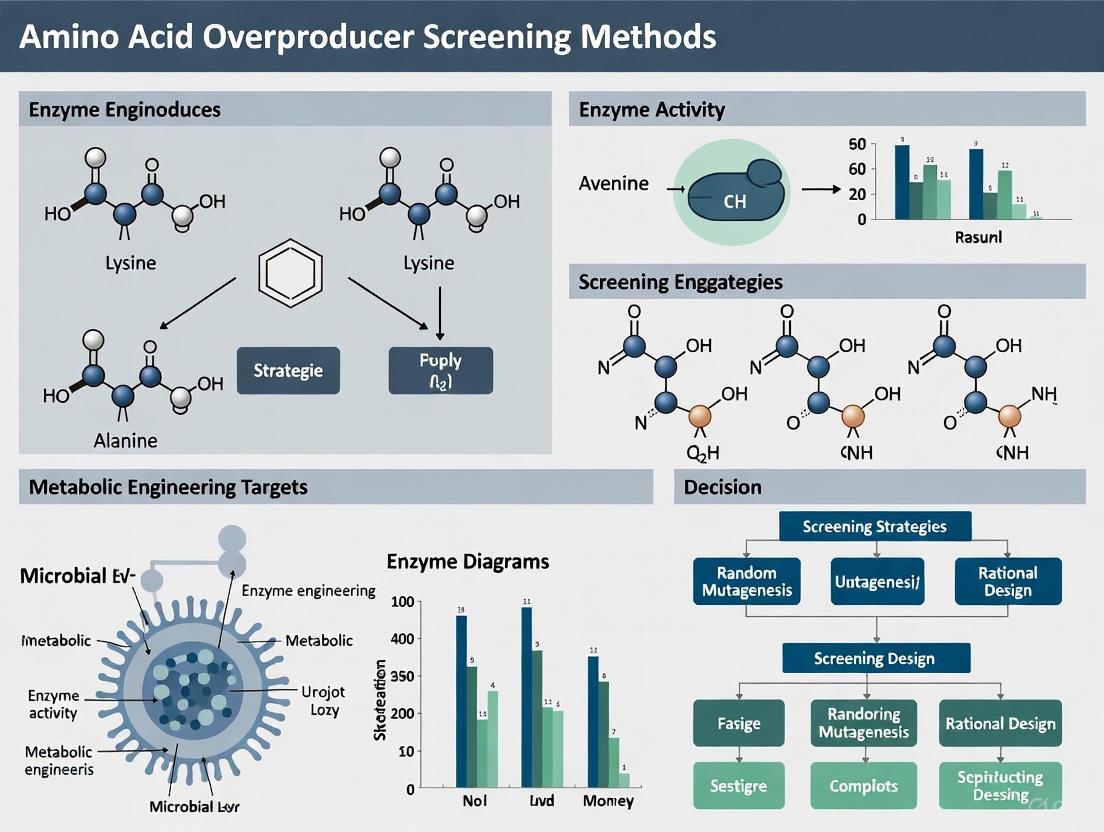
This article provides a comprehensive analysis of modern screening strategies for amino acid overproducing strains, which are crucial for advancing microbial fermentation in biomedical and pharmaceutical industries.
Advanced Screening Methods for Amino Acid Overproducers: From Foundational Concepts to Biomedical Applications
Abstract
This article provides a comprehensive analysis of modern screening strategies for amino acid overproducing strains, which are crucial for advancing microbial fermentation in biomedical and pharmaceutical industries. Covering foundational principles to cutting-edge methodologies, we explore auxotrophic, biosensor, and innovative translation-based screening systems. The content is tailored for researchers and drug development professionals, addressing core intents from exploratory concepts and methodological applications to troubleshooting and comparative validation. By synthesizing recent scientific advances, this guide aims to equip scientists with the knowledge to select, optimize, and implement high-throughput screening strategies that enhance accuracy, efficiency, and applicability across diverse microbial hosts for producing both standard and nonstandard amino acids.
The Essential Framework: Understanding Amino Acid Overproduction and Screening Principles
The Critical Role of Microbial Fermentation in Global Amino Acid Production
Microbial fermentation stands as a cornerstone of modern industrial biotechnology, serving as the primary method for the global production of amino acids. These molecules are indispensable across diverse sectors, including pharmaceuticals, animal nutrition, food fortification, and cosmetics [1]. The process leverages the natural metabolic capabilities of microorganisms—such as bacteria, yeast, and fungi—to convert organic substrates into high-value amino acids [1]. The global market for fermented amino acid complexes is substantial and growing, projected to rise from USD 17,948.2 million in 2025 to USD 31,505.4 million by 2035, reflecting a compound annual growth rate (CAGR) of 5.8% [2]. This growth is largely driven by the scalability, efficiency, and sustainability of microbial fermentation compared to chemical synthesis or direct extraction methods [3].
The efficiency of microbial fermentation hinges on the development and application of advanced screening methods and metabolic engineering to create robust microbial strains capable of high-yield production. Techniques such as atmospheric and room-temperature plasma (ARTP) mutagenesis and high-throughput screening using synthetic biology tools are revolutionizing the selection of amino acid overproducers [3]. This document details the applications, quantitative data, and experimental protocols that underpin microbial amino acid production, providing a framework for researchers engaged in strain development and process optimization.
Table 1: Global Fermented Amino Acid Complex Market Overview
| Metric | Value | Time Period/Notes |
|---|---|---|
| Market Value (2025) | USD 17,948.2 Million | Estimated |
| Market Value (2035) | USD 31,505.4 Million | Forecasted |
| Forecast CAGR | 5.8% | 2025 to 2035 |
| Leading Product Type | Essential Amino Acids | 38% market share in 2025 |
| Leading Source | Microbial Fermentation | 54% market share in 2025 |
| Fastest-Growing Source | Algal Fermentation | 8.5% CAGR (2025-2035) |
Applications and Industrial Impact
Amino acids produced via microbial fermentation find critical applications in numerous industries. In animal nutrition, which holds the largest application share (28%), fermented amino acids like lysine, methionine, and threonine are essential for optimizing feed efficiency and reducing antibiotic reliance [2]. The dietary supplements and sports nutrition sector is the fastest-growing application, expanding at a CAGR of 8.4%, driven by demand for branched-chain amino acids (BCAAs) such as L-valine for muscle recovery and metabolic health [3] [2].
Beyond traditional sectors, emerging research highlights the role of specific amino acids as sensory and nutritional signals. For instance, a deficiency in essential amino acids can trigger behavioral changes in animals, fine-tuning their olfactory systems to seek out protein-rich sources or specific bacteria that aid in nutrient absorption [4]. Furthermore, archaea like Methanothermobacter marburgensis have demonstrated the ability to excrete proteinogenic amino acids, such as glutamic acid, alanine, and glycine, under nitrogen-fixing conditions, presenting a novel biotechnological avenue [5].
Traditional food fermentation also provides a rich source of amino acids. During soy sauce fermentation, microorganisms like Aspergillus oryzae, Tetragenococcus halophilus, and Zygosaccharomyces rouxii are actively involved in producing enzymes that generate umami-associated amino acids [6]. The choice of microbial starter cultures significantly impacts the final amino acid profile, as seen in the distinct flavors of Cantonese and Japanese-type soy sauces [7] [8].
Quantitative Data and Market Analysis
The quantitative landscape of the fermented amino acid market underscores its economic and industrial significance. The following table provides a detailed segmental analysis based on product type, source, and application.
Table 2: Segmental Analysis of the Fermented Amino Acid Complex Market
| Segment | Category | Market Share (2025) / Notes | Growth Trend (CAGR) |
|---|---|---|---|
| Product Type | Essential Amino Acids | 38% share | 6.1% |
| Specialty Fermented Blends | 16% share | 8.2% (Fastest) | |
| Source | Microbial Fermentation | 54% share | 5.6% |
| Algal Fermentation | 12% share | 8.5% (Fastest) | |
| Application | Animal Nutrition | 28% share (Largest) | 5.1% |
| Dietary Supplements & Sports Nutrition | 26% share | 8.4% (Fastest) | |
| Cosmetics & Personal Care | 8% share | 7.1% |
Regional analysis identifies India (9.2% CAGR) and China (8.4% CAGR) as high-growth hotspots, fueled by expanding nutraceutical demand and feed industry modernization [2]. The dominance of microbial fermentation is attributed to its technological maturity and scalability, particularly for producing workhorse amino acids like L-glutamic acid and L-lysine [2]. However, high production costs and scalability challenges for certain amino acids and newer sources like algal fermentation remain significant restraints [2].
Screening Methods and Experimental Protocols
A critical step in microbial amino acid production is the development of high-yielding bacterial strains. The following section outlines a detailed protocol for screening L-valine overproducing Escherichia coli using a rare-codon-based biosensor, a method that can be adapted for other amino acids [3].
Protocol: Construction and Screening of L-Valine High-YieldingE. coli
Objective: To generate and isolate mutant strains of E. coli with enhanced L-valine production using ARTP mutagenesis and fluorescence-activated cell sorting (FACS).
Principle: An artificial screening marker (LESG) is constructed by replacing all L-valine codons in a target gene sequence with the rare L-valine codon GTC. In low L-valine producing cells, the rare tRNA is poorly charged, limiting the translation of the marker and its linked fluorescent protein. In high-producing cells, sufficient intracellular L-valine ensures charged tRNA availability, enabling fluorescent protein expression. Mutants with elevated fluorescence are thus indicative of high L-valine yield [3].
Materials and Reagents:
- Bacterial Strain: E. coli DB-1-1 [3].
- Plasmid Vector: pUC-57 [3].
- Growth Media:
- LB Medium: 10 g/L peptone, 5 g/L yeast extract, 10 g/L NaCl, pH 7.2 [3].
- Seed Medium: 10 g/L polypeptone, 5 g/L yeast powder, 2.5 g/L NaCl, 1 g/L glucose, 6.5 g/L ground beef [3].
- Fermentation Medium: 6 g/L glucose, 2.2 g/L yeast powder, 1.25 g/L phosphoric acid, 1.125 g/L KCl, 0.41 g/L MgSO₄, 0.019 g/L FeSO₄, 0.004 g/L MnSO₄·H₂O, 0.01 g/L vitamin B3 [3].
- Antibiotic: Ampicillin (25 μg/mL) [3].
- Inducer: Isopropyl β-D-1-thiogalactopyranoside (IPTG), 0.6 mM [3].
- Equipment: ARTP mutagenesis system, Flow Cytometer (for FACS), UV Spectrophotometer, Bioreactor or Fermenter [3].
Procedure:
Construction of Fluorescent Expression Vector (pUC-57-LESG):
- Identify a gene sequence (e.g., levE) with a high proportion of L-valine codons from the host strain's genome.
- Synthesize a gene fragment where all L-valine codons are replaced with the rare codon GTC. Fuse this fragment to a gene encoding a stable fluorescent protein (e.g., StayGold).
- Ligate the synthesized LESG fragment into the pUC-57 plasmid at the EcoRI and HindIII restriction sites.
- Transform the constructed plasmid into competent E. coli DB-1-1 cells. Verify positive clones and plasmid integrity using colony PCR and DNA sequencing [3].
ARTP Mutagenesis:
- Inoculate recombinant E. coli DB-1-1 (carrying pUC-57-LESG) into LB medium with ampicillin and grow to mid-log phase (OD600 ≈ 0.8) at 37°C and 200 rpm.
- Add IPTG (0.6 mM) to induce fluorescent protein expression and incubate for 10-12 hours at 25°C and 200 rpm.
- Spread 10 μL of the induced culture onto a sterilized metal slide.
- Subject the cells to ARTP irradiation at 120 W power and a helium flow rate of 10 SLM. Test a range of exposure times (e.g., 1, 3, 5, 7, and 9 minutes) to determine the optimal mutation rate [3].
High-Throughput Screening via FACS:
- After mutagenesis, resuspend and dilute the cells.
- Use a flow cytometer to sort the mutant library, gating for cells with the highest fluorescence intensity.
- Plate the sorted cells onto LB agar plates containing ampicillin and incubate to obtain single colonies [3].
Validation with Flask Fermentation:
- Inoculate single, highly fluorescent colonies into seed medium and grow overnight.
- Transfer the seed culture to fermentation medium and incubate for 24-48 hours at 37°C and 200 rpm.
- Measure L-valine titer in the culture broth using validated analytical methods like HPLC. Compare the yield to the wild-type strain to identify superior mutants [3].
Bioreactor Scale-Up:
- For the most promising mutant, perform a fed-batch fermentation in a 5 L bioreactor using optimized conditions to achieve high-titer production, as demonstrated by a final titer of 84.1 g/L of L-valine in 24 hours [3].
Expected Outcomes: This protocol enables the efficient screening of a large mutant library. The study cited achieved a sorting efficiency of 59.5% for highly fluorescent cells, with 62.5% of those screened showing improved L-valine production, resulting in a 23.1% increase in fermentation titer for the best mutant [3].
The Scientist's Toolkit: Research Reagent Solutions
The following table lists key reagents, their sources, and critical functions based on the protocols and studies cited in this document.
Table 3: Essential Research Reagents for Microbial Amino Acid Production and Screening
| Reagent / Material | Function / Description | Example Source / Note |
|---|---|---|
| E. coli DB-1-1 Strain | High-yielding production host for L-valine. | Mutant E. coli strain [3]. |
| pUC-57 Plasmid | Cloning vector for constructing the expression plasmid carrying the screening marker. | Common lab vector [3]. |
| ARTP Mutagenesis System | Instrument for generating diverse mutant libraries via physical mutagenesis; higher mutation rate than traditional methods. | Used with parameters: 120 W, 10 SLM He flow [3]. |
| Fluorescence-Activated Cell Sorter (FACS) | Equipment for high-throughput screening and isolation of high-fluorescing (and thus high-producing) mutant cells. | Critical for screening efficiency [3]. |
| Aspergillus oryzae Strain 3.042 | Fungal starter culture (koji mold) used in traditional fermentation to produce proteolytic and amylolytic enzymes. | Used in soy sauce koji production [7]. |
| Tetragenococcus halophilus | Lactic acid bacterium dominant in the moromi stage of soy sauce fermentation; contributes to flavor and amino acid release. | Identified via metagenomics [6]. |
| Zygosaccharomyces rouxii | Salt-tolerant yeast used as a starter in Japanese-style soy sauce; contributes to aroma and amino acid metabolism. | Starter culture [7]. |
| Methanothermobacter marburgensis | Methanogenic archaeon shown to excrete amino acids (e.g., glutamic acid, alanine) under N₂-fixing conditions. | DSM 2133 [5]. |
Visualizing Workflows and Metabolic Pathways
High-Throughput Screening Workflow for Amino Acid Overproducers
The following diagram illustrates the logical flow of the screening protocol described in Section 4.1, from vector construction to the isolation of validated high-yield strains.
Key Microbial Interactions in a Traditional Fermentation Ecosystem
This diagram summarizes the functional roles of dominant microorganisms and their contributions to amino acid metabolism during a multi-stage fermentation process, such as soy sauce production [7] [6].
The global amino acid market, valued at USD 28 billion in 2021, relies heavily on microbial fermentation, which accounts for approximately 80% of total production [9]. The efficiency of this process hinges on obtaining high-performance microbial cell factories (MCFs) capable of overproducing target amino acids [9]. These industrial strains are primarily derived from screening enormous mutant libraries, making the identification of optimal screening strategies a critical research focus [9]. An ideal screening system must simultaneously satisfy three core requirements: high throughput to rapidly process ever-expanding libraries, high accuracy to minimize false positives and false negatives, and broad universality to accommodate diverse amino acids and non-standard analogs [9]. This application note delineates the essential components of such ideal screening systems, providing structured data comparisons, detailed protocols, and visual workflows to advance amino acid overproducer research.
Core Requirements of an Ideal Screening System
Quantitative Comparison of Screening Strategy Performance
The performance of different screening strategies can be quantitatively evaluated across several critical parameters. The table below summarizes the key characteristics of major screening approaches used in amino acid overproducer development.
Table 1: Performance Comparison of Amino Acid Screening Strategies
| Screening Strategy | Throughput Capacity | Accuracy/Fidelity | Universality | Target Amino Acids | Key Limitations |
|---|---|---|---|---|---|
| Auxotrophic Strain-Based [9] | Medium | Medium | Low | L-His, L-Trp [9] | Limited to specific amino acids; two-step process |
| Transcription Factor Biosensors [9] [10] | High | Medium-High | Medium | L-Lys, L-Thr, L-Glu, L-Trp [9] [10] | Cross-reactivity with structurally similar amino acids [10] |
| Rare Codon-Based Translation [9] [3] | High | High | High | L-Val, L-Leu, L-Pro, L-Ser, L-Arg [9] [3] | Requires genetic engineering of screening marker |
| Amino Acid Analog-Based [9] | Medium | Low-Medium | Low | L-Val, L-Ile, L-Pro, L-Met, L-Phe [9] | Toxicity complications; mutant survival issues [3] |
Essential Characteristics of Optimal Systems
Based on comparative analysis, an ideal screening system should embody four essential characteristics. First, it must offer high throughput to rapidly screen vast mutant libraries exceeding 100,000 clones, enabling genome-wide studies of metabolic regulators within weeks rather than years [11] [9]. Second, it requires high fidelity with robust signal-to-background ratios and excellent Z'-factor values (>0.7) to correctly identify true overproducers while minimizing false positives [9] [12]. Third, the system must demonstrate operational simplicity with minimal steps, no requirement for specialized equipment, and compatibility with automation [9]. Finally, broad universality is essential for application across various proteinogenic amino acids, non-standard amino acids, and diverse microbial hosts with industrial potential [9].
Advanced Screening Methodologies and Protocols
Rare Codon-Based Screening for L-Valine Overproducers
This protocol describes the construction and screening of L-valine high-yielding Escherichia coli using an artificial screening marker based on rare codon usage [3].
Principle and Workflow
The method leverages genetic code redundancy and the differential translation rates of synonymous codons. Common codons recognized by abundant tRNAs enable efficient translation, while rare codons limit translation efficiency. During amino acid deficiency, aminoacyl-tRNA synthetases struggle to charge rare tRNA isoacceptors, stalling translation of genes containing rare codons. In high-yield producers with sufficient intracellular amino acid levels, normal translation proceeds despite codon bias, allowing expression of fluorescent markers [3].
Diagram: Rare Codon Screening Workflow for L-Valine Overproduction
Materials and Reagents
Table 2: Research Reagent Solutions for Rare Codon Screening
| Reagent/Equipment | Specification | Function | Source/Example |
|---|---|---|---|
| E. coli DB-1-1 | L-valine production strain | Host organism for engineering | Laboratory stock [3] |
| pUC-57 plasmid | Cloning vector | Carries engineered screening marker | Commercial source [3] |
| StayGold fluorescent protein | Stable green fluorescent protein | Reporter for screening | NCBI database [3] |
| ARTP mutagenesis system | 120 W, 10 SLM helium | Creates diverse mutant library | Commercial system [3] |
| Flow cytometer | FACS capability | High-throughput sorting of mutants | Commercial system [3] |
| LB medium | 10 g/L peptone, 10 g/L NaCl, 5 g/L yeast extract | Bacterial cultivation | Standard formulation [3] |
| Fermentation medium | 60 g/L glucose, minerals, vitamins | L-valine production evaluation | Custom formulation [3] |
Step-by-Step Protocol
- Codon Usage Analysis: Retrieve the E. coli DB-1-1 genome sequence from NCBI database. Analyze codon frequency and identify gene sequences for extracellular proteins with the highest proportion of L-valine codons [3].
- Screening Marker Construction: Select the green fluorescent protein StayGold gene from NCBI. Replace all L-valine codons in the target gene with the rare GTC codon (23% replacement frequency). Synthesize the gene fragment (e.g., Kingsley Biotechnology) and clone into EcoRI-and HindIII-digested pUC-57 plasmid to create pUC-57-LESG [3].
- Strain Transformation: Introduce pUC-57-LESG into competent E. coli DB-1-1 cells. Select positive recombinant colonies on LB medium with 25 μg/mL ampicillin. Incubate at 37°C with shaking at 200 rpm [3].
- ARTP Mutagenesis: Culture recombinant strains to logarithmic phase (OD₆₀₀ ≈ 0.8). Add 0.6 mM IPTG inducer and incubate at 25°C for 10 h at 200 rpm. Subject bacterial samples to ARTP irradiation at five time intervals (1, 3, 5, 7, and 9 min) with parameters set to 120 W incident power and 10 SLM helium flow rate [3].
- High-Throughput Sorting: Analyze mutants using flow cytometry. Sort cells exhibiting elevated fluorescence intensity. In validation studies, this approach achieved 59.5% sorting efficiency, identifying 143 highly fluorescent strains from 240 total [3].
- Fermentation Validation: Cultivate promising mutants in 5 L fermenters with optimized fermentation medium. Monitor L-valine production over 24 hours. The top-performing mutant achieved 84.1 g/L L-valine titer, representing a 23.1% improvement over wild-type strain [3].
Transcription Factor Biosensor Engineering for Multiple Amino Acids
This protocol details the development of transcription factor-based biosensors for sensitive detection of L-glutamic acid, L-lysine, and L-threonine through directed evolution of YpItcR [10].
Principle and Workflow
Transcription factor biosensors consist of a transcriptional regulator and its cognate promoter controlling a reporter gene. The native YpItcR biosensor from Yersinia pseudotuberculosis recognizes itaconic acid (ITA), a structural analog of many amino acids that doesn't exist in normal metabolic pathways. Through directed evolution, YpItcR mutants are created with enhanced specificity for target amino acids while maintaining minimal response to ITA, eliminating interference during high-throughput screening [10].
Diagram: Transcription Factor Biosensor Engineering Workflow
Materials and Reagents
- YpItcR/Pccl biosensor system from Yersinia pseudotuberculosis [10]
- Error-prone PCR kit (e.g., EmeraldAmp MAX PCR Master Mix) [10]
- Gibson assembly kit (e.g., Hieff Clone One Step Cloning Kit) [10]
- Fluorescence-activated cell sorter for high-throughput screening [10]
- Microplate readers for fluorescence detection [10]
- LB medium with appropriate antibiotics for selection [10]
Step-by-Step Protocol
- Biosensor Construction: Clone the native YpItcR-based ITA biosensor, comprising the transcriptional regulator YpItcR and its promoter Pccl, into an appropriate E. coli vector system. Validate functionality by measuring reporter gene activation in response to ITA [10].
- Directed Evolution Library Creation: Perform error-prone PCR on the YpItcR gene sequence using low-fidelity DNA polymerase (e.g., EmeraldAmp MAX PCR Master Mix) to introduce random mutations. Assemble mutated fragments using Gibson assembly and transform into E. coli MG1655 to create a comprehensive mutant library [10].
- Dual Screening Strategy: Screen the mutant library using a dual selection approach. First, identify mutants showing strong reporter activation in response to the target amino acid (L-glutamic acid, L-lysine, or L-threonine). Counter-screen these hits to eliminate mutants maintaining strong response to ITA. This ensures specificity for the target amino acid [10].
- Mutant Characterization: Isolate specific mutants with desired properties: YpItcR-ᵢGlu for L-glutamic acid, YpItcR-ᵢLys for L-lysine, and YpItcR-ᵢThr for L-threonine. Quantitatively characterize biosensor performance by measuring dynamic range, sensitivity, and specificity against structurally similar amino acids [10].
- Application to Strain Screening: Implement optimized biosensors in high-throughput campaigns to screen mutant libraries for amino acid overproducers. Use fluorescence-activated cell sorting to isolate clones with highest reporter signal, indicating superior amino acid production capabilities [10].
Technological Integration and Future Perspectives
Emerging Technologies Enhancing Screening Performance
The integration of advanced technologies is pushing the boundaries of screening system capabilities. Artificial intelligence and machine learning are rapidly reshaping the global high-throughput screening market by enhancing efficiency, lowering costs, and driving automation in drug discovery and molecular research. AI enables predictive analytics and advanced pattern recognition, allowing researchers to analyze massive datasets generated from HTS platforms with unprecedented speed and accuracy [11]. For instance, random forest algorithms have successfully predicted translation-enhancing peptide activities based on sequence features, demonstrating strong correlation with experimental measurements [13].
Ultra-high-throughput screening (uHTS) platforms represent another significant advancement, capable of testing millions of compounds daily compared to 10,000-100,000 for conventional HTS [14] [15]. These systems utilize high-density microwell plates (1536-well format) with volumes of 1-2 μL and advanced microfluidics, though fluid handling remains a technical challenge [15]. The cell-based assays segment continues to dominate the technology landscape, holding 39.4% market share in 2025 due to superior physiological relevance and predictive accuracy in early drug discovery [14].
Market Outlook and Regional Adoption
The global high-throughput screening market is projected to grow from USD 26.12 billion in 2025 to USD 53.21 billion by 2032, exhibiting a compound annual growth rate of 10.7% [11]. North America leads the market with 39.3% share in 2025, while the Asia-Pacific region shows the fastest growth with 24.5% market share, driven by expanding pharmaceutical industries and increasing R&D investments in countries like China, Japan, and South Korea [11]. This growth is further supported by strategic collaborations between technology providers and drug developers aimed at streamlining discovery pipelines [14].
Ideal screening systems for amino acid overproducers must balance three fundamental requirements: high throughput to efficiently process large mutant libraries, high accuracy to ensure reliable identification of true positives, and broad universality to accommodate diverse amino acids and microbial hosts. The methodologies detailed in this application note—including rare codon-based screening and engineered transcription factor biosensors—provide robust frameworks satisfying these criteria. As the field advances, integration of artificial intelligence, ultra-high-throughput platforms, and improved biosensor designs will further enhance screening capabilities. Researchers should select and optimize screening strategies based on their specific target amino acids, host organisms, and available infrastructure, while considering the quantitative performance metrics and implementation protocols outlined herein.
The global amino acid market is a multi-billion dollar industry experiencing robust growth, propelled by diverse applications spanning nutrition, pharmaceuticals, and industrial biotechnology. This expansion is closely linked to advancements in microbial fermentation technologies and the parallel development of sophisticated screening methods for high-yield amino acid overproducers.
Table 1: Global Amino Acids Market Projections (2025-2035)
| Metric | Value | Source/Timeframe |
|---|---|---|
| Market Size (2025) | USD 29.9 - 33.72 Billion | [16] [17] |
| Projected Market Size (2034/2035) | USD 66.35 - 75.3 Billion | [16] [18] |
| Compound Annual Growth Rate (CAGR) | 8.3% - 9.7% | [16] [17] |
| Dominant Regional Market (2024) | Asia-Pacific (49% revenue share) | [17] |
| Leading Application Segment (2024) | Food & Dietary Supplements (57% revenue share) | [17] |
Key market drivers include rising consumer health awareness, a shift towards protein-rich and plant-based diets, and growing demand from the pharmaceutical and animal feed industries [16] [18]. Microbial fermentation dominates production, contributing to approximately 80% of global amino acid yield and aligning with trends toward sustainable and bio-based manufacturing [9]. This reliance on fermentation underscores the critical need for high-performance microbial cell factories, driving intensive research into advanced screening methodologies for amino acid overproducers [9] [19].
Analytical and Screening Protocols for Amino Acid Overproducers
The identification and development of high-yield microbial strains are fundamental to the amino acid industry. The following protocols detail established and emerging methodologies for screening amino acid overproducers.
Protocol 1: Rare Codon-Based Screening for Amino Acid Overproducers
This modern screening strategy exploits the natural competition for amino acids between common and rare codons during protein translation, providing a high-throughput and accurate method for strain selection [19].
- Principle: Under amino acid starvation, the charging level of tRNA isoacceptors corresponding to rare codons drops dramatically, halting the translation of genes containing these codons. In an amino acid overproducer, the abundant intracellular amino acid pool ensures adequate charging of even the rare tRNAs, allowing for the successful translation of rare codon-rich reporter genes and enabling cell survival or signal detection [19].
- Applications: Successfully applied to screen for overproducers of L-leucine, L-arginine, and L-serine in E. coli and Corynebacterium glutamicum [19].
- Procedure:
- Reporter Gene Engineering: Replace common codons in a reporter gene (e.g., an antibiotic resistance gene like
kanRor a fluorescent protein gene) with synonymous rare codons for the target amino acid. For example, replace common leucine codons with the rare CTA codon in E. coli [19]. - Strain Transformation: Introduce the engineered rare codon-rich reporter construct into the mutant library of the host strain (e.g., generated via ARTP mutagenesis) [19].
- Selection/Screening:
- Selection System: Plate transformed cells on medium containing the corresponding antibiotic. Only strains producing sufficient target amino acid to translate the rare codon-rich resistance protein will form colonies [19].
- Screening System: For color-based screening, colonies expressing a rare codon-rich chromogenic protein (e.g., prancerpurple protein) will show enhanced color intensity if they are overproducers [19].
- Validation: Confirm the amino acid titer of selected strains using quantitative methods like High-Performance Liquid Chromatography (HPLC) [19].
- Reporter Gene Engineering: Replace common codons in a reporter gene (e.g., an antibiotic resistance gene like
Protocol 2: Biosensor-Based Screening Using Transcription Factor-Regulated Reporters
This strategy utilizes natural cellular sensing mechanisms to link intracellular amino acid concentration to a detectable fluorescent signal, enabling high-throughput screening.
- Principle: A transcription factor (TF) that naturally binds to a specific amino acid is used to regulate the expression of a reporter gene (e.g., GFP, YFP). When the target amino acid is present, it binds to the TF, causing a conformational change that allows the TF to activate or repress the promoter controlling the reporter gene. The resulting fluorescent signal is proportional to the intracellular amino acid concentration [9].
- Applications: Widely applicable for various amino acids. Examples include using the Lrp-regulated promoter
PbrnFfor branched-chain amino acids (Leu, Ile, Val) and the LysG-regulated promoterPlysEfor basic amino acids (Lys, Arg, His) in C. glutamicum [9]. - Procedure:
- Biosensor Construction: Genetically integrate a reporter gene (e.g.,
gfp,eyfp) under the control of an amino acid-responsive promoter and its cognate transcription factor into the host chromosome [9]. - Library Cultivation: Grow the mutant library in microtiter plates or on solid medium under appropriate conditions.
- Signal Detection: Measure the fluorescence intensity of individual colonies or cultures using a fluorescence plate reader, flow cytometer, or fluorescence microscopy.
- Isolation and Validation: Isolate clones displaying the highest fluorescence and validate amino acid production levels through HPLC [9].
- Biosensor Construction: Genetically integrate a reporter gene (e.g.,
Protocol 3: Auxotrophic Strain-Based Co-culture Screening
This classical method relies on the growth dependency of an auxotrophic indicator strain on amino acids produced by a library of potential overproducers.
- Principle: An auxotrophic strain, which cannot synthesize a specific essential amino acid, will only grow if that amino acid is provided externally. When co-cultured with a production strain from a mutant library, the growth of the auxotroph serves as a biosensor for the amount of amino acid secreted into the medium [9].
- Applications: A two-step or co-culture system for identifying overproducers of amino acids like L-tryptophan and L-histidine [9].
- Procedure:
- Preparation: Generate a mutant library of the production strain (e.g., via chemical mutagenesis). Prepare an indicator strain with a knockout in a gene essential for synthesizing the target amino acid (e.g.,
ΔhisLfor histidine auxotrophy) [9]. - Co-culture Setup: Spot or streak the production library and the auxotrophic indicator strain in close proximity on a solid minimal medium that lacks the target amino acid.
- Growth Observation: Incubate and observe for a "halo" of growth of the indicator strain around colonies of amino acid overproducers.
- Recovery and Validation: Pick the production colonies surrounded by the largest halos and validate their productivity in liquid culture using HPLC.
- Preparation: Generate a mutant library of the production strain (e.g., via chemical mutagenesis). Prepare an indicator strain with a knockout in a gene essential for synthesizing the target amino acid (e.g.,
Table 2: Comparison of Amino Acid Overproducer Screening Methods
| Method | Throughput | Fidelity | Key Advantage | Key Limitation |
|---|---|---|---|---|
| Rare Codon-Based [19] | High | High | Minimizes non-specific cellular stress; highly tunable via codon frequency. | Requires sophisticated genetic engineering of reporter genes. |
| Biosensor-Based [9] | Very High | Moderate to High | Enables real-time, quantitative monitoring in live cells. | Potential for false positives from regulator mutations; dynamic range can be limited. |
| Auxotrophic Co-culture [9] | Moderate | Moderate | Conceptually simple; requires no specialized equipment for initial screening. | Lower throughput; two-step process can be laborious; growth cross-feeding can be complex. |
| Toxic Analogue Selection [19] | High | Low to Moderate | Powerful for direct selection without reporters. | High false-positive rate from detoxification mechanisms; analogues can have pleiotropic toxic effects. |
The Scientist's Toolkit: Essential Reagents and Solutions
Table 3: Key Research Reagent Solutions for Amino Acid Overproducer Screening
| Reagent / Material | Function in Screening | Example Application |
|---|---|---|
Rare Codon-Engineered Antibiotic Resistance Genes (e.g., kanR-RC29) |
Selection marker; translation and thus antibiotic resistance is dependent on intracellular amino acid supply. | Selection for L-leucine overproducers in E. coli using a kanR gene where all Leu codons are replaced with the rare CTA codon [19]. |
Amino Acid-Responsive Promoter Reporters (e.g., PlysE-eyfp) |
Fluorescent biosensor; links amino acid concentration to measurable fluorescence output. | Screening for L-lysine overproducers in C. glutamicum using the LysG-regulated PlysE promoter driving eyfp expression [9]. |
| Amino Acid Auxotrophic Strains | Biosensor strain; growth indicates the presence and quantity of the target amino acid in the environment. | Identifying L-histidine overproducers by using an E. coli JW2000 ΔhisL indicator strain in a co-culture assay [9]. |
| Toxic Amino Acid Analogues (e.g., 4Azaleucine) | Selective agent; overproducers of the native amino acid can outcompete the analogue for incorporation into proteins, surviving the selection. | Traditional selection for L-leucine overproducers using the toxic analogue 4-azaleucine [19]. |
| Chromatography Standards (e.g., pure amino acids) | Analytical calibration; essential for accurate quantification of amino acid titers in validation steps. | Used in High-Performance Liquid Chromatography (HPLC) to quantify amino acid concentration in culture supernatants from selected strains [19] [20]. |
The expanding multi-billion dollar amino acid industry is intrinsically linked to technological progress in microbial strain development. The shift from traditional methods like toxic analogue selection towards more sophisticated, genetically encoded systems—such as transcription factor-based biosensors and rare codon-based selection—marks a significant evolution in the field. These advanced screening protocols enable higher throughput, greater accuracy, and minimal side-effects on cellular physiology, thereby accelerating the development of high-performance microbial cell factories. As demand for amino acids continues to grow across food, feed, and pharmaceutical sectors, these refined screening methods will play an increasingly vital role in optimizing production efficiency, reducing costs, and driving innovation in the bio-based economy.
Application Notes
Amino acids represent a multibillion-dollar market with applications spanning food, animal feed, pharmaceuticals, and cosmetics, with the global market reaching $28 billion in 2021 and expected continued growth [9]. Microbial fermentation contributes to approximately 80% of global amino acid production, making the development of high-performance microbial cell factories (MCFs) a critical industrial objective [9]. The key to advancing this field lies in innovative screening strategies that can rapidly and accurately identify amino acid overproducers from vast mutant libraries.
Traditional screening methods, such as the use of toxic amino acid analogs, face significant limitations including off-target cellular toxicity and the development of microbial resistance mechanisms that are unrelated to production titers [19] [21]. Recent advances have introduced novel approaches based on fundamental biological principles, particularly exploiting the relationship between intracellular amino acid pools and protein translation fidelity. These methods leverage codon usage bias, transcription factor biosensors, and auxotrophic co-culture systems to directly link cellular metabolic states with easily detectable phenotypic markers [9] [19].
The most promising new strategies include translation-based screening systems that utilize rare codons, which depend on charged tRNA availability that directly correlates with intracellular amino acid concentration [22] [19]. When implemented with fluorescent reporters or antibiotic resistance markers, these systems enable high-throughput screening of mutant libraries using flow cytometry or simple selection plates, dramatically improving screening efficiency and positive clone identification rates compared to conventional methods [22].
Table 1: Comparison of Major Amino Acid Overproducer Screening Strategies
| Screening Strategy | Key Principle | Target Amino Acids | Throughput | Key Advantages |
|---|---|---|---|---|
| Auxotrophic Strain-Based | Growth correlation with amino acid concentration [9] | L-His, L-Trp, others [9] | Moderate | Simple principle, can be coupled with fluorescence |
| Transcription Factor Biosensors | Natural TF-promoter interactions [9] [23] | L-Lys, L-Val, L-Cys, others [9] | High | Highly specific, can be engineered |
| Rare Codon-Based | tRNA charging depends on amino acid abundance [22] [19] | L-Leu, L-Arg, L-Ser, L-Val [22] [19] | Very High | Analog-independent, broadly applicable |
| Amino Acid Analog-Based | Competition with toxic analogs [19] | L-Leu, L-Val, others [9] [19] | Low-Moderate | Established methodology |
| FRET-Based Sensors | Conformational change in binding proteins [9] | L-Lys, L-Met, L-Gln [9] | High | Real-time monitoring capability |
Table 2: Quantitative Performance of Rare Codon Screening for L-Valine Production in E. coli [22]
| Parameter | Wild-Type Strain | Mutant Strain (DK2) | Improvement |
|---|---|---|---|
| Screening Positivity Rate | Baseline | 62.5% | - |
| Fluorescence Intensity | Baseline | Significantly Increased | - |
| L-Valine Titer (24h) | Baseline | 84.1 g/L | 23.1% increase |
| Screening Efficiency | - | 59.5% of sorted strains were highly fluorescent | - |
Experimental Protocols
Protocol 1: Rare Codon-Based Screening for L-Valine Overproducers
Background and Principle This protocol exploits the fundamental biological relationship between codon usage bias and intracellular amino acid pools. Rare codons (e.g., GTC for L-valine in E. coli) require corresponding rare tRNAs that cannot be fully charged under amino acid starvation conditions [22] [19]. When intracellular amino acid concentrations are high, these rare tRNAs become charged, enabling efficient translation of reporter genes containing rare codon-rich sequences. By linking this translation efficiency to fluorescent output, high-producing strains can be identified through fluorescence-activated cell sorting (FACS) [22].
Materials and Reagents
Table 3: Research Reagent Solutions for Rare Codon Screening
| Reagent/Equipment | Specification | Function/Application |
|---|---|---|
| Bacterial Strain | E. coli DB-1-1 | Wild-type production host for engineering |
| Expression Vector | pUC-57 with Ptrc promoter | Shuttle vector for reporter gene expression |
| Fluorescent Protein | StayGold | High-stability reporter for screening |
| Target Genes | levE CDS | Valine-rich protein sequence for codon replacement |
| Culture Medium | LB (10 g/L peptone, 10 g/L NaCl, 5 g/L yeast extract) | Standard microbial growth medium |
| Antibiotic | Ampicillin (25 μg/mL) | Selection pressure for plasmid maintenance |
| Inducer | IPTG (0.6 mM) | Induction of reporter gene expression |
| Mutagenesis System | Atmospheric Room Temperature Plasma (ARTP) | Physical mutagenesis for library generation |
| Screening Instrument | Fluorescence-Activated Cell Sorter (FACS) | High-throughput screening based on fluorescence |
Step-by-Step Procedure
Codon Usage Frequency Analysis
- Analyze the E. coli genome sequence using the NCBI database to identify the rarest codon for the target amino acid [22]. For L-valine, GTC is identified as the appropriate rare codon.
- Screen the genome for protein sequences with the highest proportion of the target amino acid codons to identify optimal genes for rare codon incorporation.
Fluorescent Reporter Vector Construction
- Select the StayGold fluorescent protein gene and levE CDS as reporter genes due to their high valine content [22].
- Synthesize gene fragments with all L-valine codons replaced by GTC (approximately 23% replacement frequency) through commercial gene synthesis.
- Clone the synthesized rare codon-rich fragments into the pUC-57 plasmid using EcoRI and HindIII restriction sites, creating the pUC-57-LESG expression vector.
- Verify construct integrity through colony PCR and nucleotide sequencing.
Strain Mutagenesis and Transformation
- Subject the wild-type E. coli DB-1-1 to Atmospheric Room Temperature Plasma (ARTP) mutagenesis to generate genetic diversity [22].
- Transform the mutagenized library with the pUC-57-LESG vector using standard heat-shock transformation protocols.
- Plate transformed cells on LB agar containing 25 μg/mL ampicillin and incubate at 37°C overnight for colony development.
Expression Induction and Fluorescence Screening
- Inoculate positive recombinant colonies into 50 mL of LB medium with 25 μg/mL ampicillin, starting at OD600 of 0.3.
- Incubate at 37°C with shaking at 200 rpm for 12 hours.
- Add 0.6 mM IPTG to induce fluorescent protein expression and continue incubation at 25°C with shaking at 200 rpm for 12 hours.
- Measure fluorescence intensity using a plate reader or analyze using flow cytometry.
High-Throughput Sorting and Validation
- Sort cells exhibiting increased fluorescence intensity using FACS [22].
- Collect the top 10-15% of fluorescent clones for further validation.
- Assess L-valine production titer of sorted clones using fermentation in optimized medium and quantitative analysis (HPLC).
- Validate performance in bioreactor systems with the mutant strain E. coli DK2 achieving 84.1 g/L L-valine in 24 hours [22].
Protocol 2: Biosensor-Based Screening Using Transcription Factors
Background and Principle This approach utilizes natural transcription factors that undergo conformational changes upon binding specific amino acids, subsequently activating promoter regions linked to reporter genes [9] [23]. For example, the Lrp-regulated promoter PbrnF can be fused with eyfp for branched-chain amino acid detection, while LysG-regulated PlsyE promoters respond to multiple amino acids including L-lysine, L-arginine, and L-histidine [9].
Materials and Reagents
- Transcription Factors: Lrp (branched-chain amino acids), LysG (basic amino acids), TyrR (aromatic amino acids)
- Promoters: PbrnF (L-valine responsive), PlysE (L-lysine responsive), Ptyr/Pmtr (L-phenylalanine responsive)
- Reporter Genes: eyfp, mCherry, gfp
- Culture Conditions: Minimal media to avoid background amino acid interference
Step-by-Step Procedure
Biosensor Construction
- Clone the appropriate amino acid-responsive promoter (e.g., PbrnF for L-valine) upstream of a fluorescent reporter gene (eyfp) in a shuttle vector [9].
- Co-express the corresponding transcription factor (Lrp) either chromosomally or from the same vector.
Library Transformation and Cultivation
- Transform the mutant library with the biosensor construct.
- Culture transformed cells in minimal medium under selective conditions.
Screening and Sorting
- Measure fluorescence intensity during mid-log phase using plate readers or flow cytometry.
- Sort high-fluorescence clones for further validation.
- Confirm amino acid overproduction through HPLC analysis of culture supernatants.
The Scientist's Toolkit
Table 4: Essential Research Reagent Solutions for Amino Acid Overproducer Screening
| Category | Specific Examples | Function in Screening |
|---|---|---|
| Reporter Systems | StayGold fluorescent protein, GFP, eyfp, mCherry, PrancerPurple | Visual detection of amino acid abundance |
| Selection Markers | Rare codon-modified kanR, ampR | Antibiotic-based selection linked to amino acid production |
| Induction Systems | IPTG-inducible Ptrc promoter | Controlled expression of screening markers |
| Mutagenesis Tools | ARTP (Atmospheric Room Temperature Plasma) | Library generation through random mutagenesis |
| Screening Instruments | FACS, plate readers, HPLC | High-throughput sorting and validation |
| Host Strains | E. coli, Corynebacterium glutamicum | Industrial production platforms for amino acids |
| Biosensor Components | Lrp-regulated promoters, LysG-regulated promoters | Natural amino acid sensing systems |
Screening in Action: Comparative Analysis of Modern Methodologies and Their Practical Implementation
Application Notes and Protocols
Within the framework of developing advanced amino acid overproducer screening methods, auxotrophic strains present two powerful, complementary paradigms. First, they can be engineered into biosensors for the high-throughput selection of high-yielding mutants from vast libraries. Second, they can be assembled into synthetic microbial consortia based on mutualistic cross-feeding, enabling stable, long-term bioproduction processes. This document details the experimental workflows for implementing a Two-Step Auxotrophic Screening system for L-valine overproducers and for constructing and tuning a Two-Strain Auxotrophic Co-culture. These protocols are designed for researchers and scientists engaged in metabolic engineering, synthetic biology, and drug development, where the demand for efficient strain improvement and robust fermentation systems is paramount.
Methodology and Workflows
Two-Step Auxotrophic Screening for Amino Acid Overproducers
This protocol describes a method for screening L-valine overproducing E. coli strains, leveraging an artificial auxotrophic marker based on rare codon usage [3] [22]. The strategy links the intracellular level of the target amino acid to the expression of a fluorescent protein, enabling high-throughput isolation of high-yielding mutants.
1.1. Principle An engineered biosensor strain is constructed where the expression of a fluorescent reporter gene (e.g., StayGold) is contingent upon the intracellular concentration of a specific amino acid (e.g., L-valine). This is achieved by replacing all codons for that amino acid in the reporter gene with its rare codon counterpart (e.g., GTC for L-valine) [3] [22]. In a low-yielding strain, the scarcity of charged rare tRNAs causes ribosomal stalling and low fluorescence. In a high-yielding strain, the abundant amino acid pool ensures efficient charging of the rare tRNAs, enabling full translation of the reporter gene and resulting in high fluorescence. This creates a direct, selectable link between production phenotype and fluorescence signal.
1.2. Experimental Workflow
The following diagram illustrates the sequential steps for the two-step screening process:
1.3. Step-by-Step Protocol
Step 1: Biosensor Plasmid Construction
- Procedure: Identify a bright, stable fluorescent protein (e.g., StayGold). Analyze its sequence and replace every codon for your target amino acid (e.g., L-valine) with its rarest synonymous codon in your host organism (e.g., GTC in E. coli) [3] [22]. Synthesize the modified gene fragment and clone it into a standard expression vector (e.g., pUC-57) under an inducible promoter (e.g., Ptrc).
- Notes: The replacement frequency in the cited study was 23% for L-valine codons [22].
Step 2: Host Strain Transformation
Step 3: Mutant Library Generation
- Procedure: Subject the biosensor strain to mutagenesis to create genetic diversity. Atmospheric and Room-Temperature Plasma (ARTP) is highly effective [3] [22].
- Parameters: Use an incident power of 120 W and a helium flow rate of 10 SLM. Test irradiation times from 0 to 9 minutes to determine a kill rate of 80-95% to optimize mutation efficiency.
Step 4: Reporter Gene Induction & Expression
Step 5: High-Throughput Sorting via FACS
- Procedure: Dilute the induced culture to an appropriate cell density (OD600 ~0.6-0.8). Use a Flow Cytometer equipped with a cell sorter (FACS) to analyze and sort the cell population based on fluorescence intensity [3] [22].
- Gating Strategy: Set gates to collect the top 1-5% of the most fluorescent cells.
Step 6: Validation and Fermentation
- Procedure: Plate the sorted cells and pick isolated colonies. Screen these in 96-deep well plates to confirm high production titers. The final validation step involves culturing the best candidates in controlled bioreactors (e.g., 5 L fermenters) to assess maximum titer, yield, and productivity [3] [22]. The cited study achieved an L-valine titer of 84.1 g/L in 24 hours using this method [3].
Establishing and Tuning a Two-Strain Auxotrophic Co-culture
This protocol outlines the creation of a stable, mutually dependent microbial consortium using two auxotrophic E. coli strains that cross-feed essential metabolites [24] [25]. This system is valuable for division-of-labor approaches in biomanufacturing and for studying microbial ecology.
2.1. Principle Two strains, each with a deletion in a different essential biosynthetic gene (e.g., ΔargC and ΔmetA), are co-cultured [24]. Each strain overproduces and excretes the metabolite its partner requires (arginine and methionine, respectively), but cannot produce itself. This obligate mutualism forces stable coexistence. The population ratio can be precisely tuned by exogenously adding the cross-fed metabolites, which differentially alters the growth rates of the two strains [24].
2.2. Experimental Workflow
The following diagram illustrates the core logic of the cross-feeding co-culture system:
2.3. Step-by-Step Protocol
Step 1: Strain Selection and Cultivation
- Procedure: Select two mutually auxotrophic strains (e.g., E. coli ΔargC and ΔmetA from the Keio collection) [24]. Maintain each strain in monoculture using minimal media (e.g., M9) supplemented with the required metabolite (50 µg/mL L-arginine for ΔargC and 50 µg/mL L-methionine for ΔmetA).
Step 2: Co-culture Inoculation and Steady-State
- Procedure: Inoculate a continuous bioreactor (e.g., a turbidostat set to maintain a constant OD600, like 0.5) with both strains in minimal media without supplements [24]. The initial inoculation ratio can vary widely (e.g., from 1:99 to 99:1) as the system will self-correct.
- Parameters: The culture will reach a stable equilibrium ratio (e.g., ~75:25 ΔmetA:ΔargC) within approximately 24 hours, which will persist over the long term [24]. Monitor population ratios by plating dilutions on supplemented solid media that selectively support one strain.
Step 3: Ratio Tuning via Metabolite Supplementation
- Procedure: To alter the steady-state ratio, supplement the fresh media reservoir with low concentrations of the cross-fed metabolites [24].
- Tuning Guide:
- To increase the proportion of a strain, add the metabolite it is auxotrophic for. This directly increases its growth rate.
- To decrease the proportion of a strain, add the metabolite it overproduces. This reduces its dependency on the partner, indirectly favoring the partner's growth.
- The system allows for fine-grained control, enabling population shifts from 10% to 90% of the total population for a given strain [24].
Results and Data Presentation
Quantitative Data from Case Studies
Table 1: Performance Metrics of the Two-Step Auxotrophic Screening Method for L-Valine [3] [22]
| Parameter | Result / Value | Context / Notes |
|---|---|---|
| Screening Efficiency | 59.5% | Percentage of highly fluorescent strains sorted from the mutant library (143/240). |
| Positivity Rate | 62.5% | Percentage of sorted strains confirmed as high producers in validation. |
| Fermentation Titer | 84.1 g/L | Maximum L-valine concentration achieved in a 5 L fermenter at 24 hours. |
| Titer Improvement | 23.1% | Increase in L-valine production compared to the wild-type strain. |
Table 2: Population Dynamics and Tunability in an Auxotrophic Co-culture (ΔmetA / ΔargC) [24]
| Condition | Steady-State Ratio (ΔmetA : ΔargC) | Key Observation |
|---|---|---|
| No Supplement (Baseline) | ~75 : 25 | Consortium reaches a stable, robust equilibrium regardless of initial inoculation ratio (1:99 to 99:1). |
| Supplement with Arginine | Decreased ΔmetA | Increases growth rate of ΔargC strain, shifting balance in its favor. |
| Supplement with Methionine | Increased ΔmetA | Increases growth rate of ΔmetA strain, shifting balance in its favor. |
| Tuning Range | ~10 : 90 to ~90 : 10 | The full range of population ratios achievable through metabolite supplementation. |
The Scientist's Toolkit: Research Reagent Solutions
Table 3: Essential Materials and Reagents for Auxotrophic Strain Strategies
| Item | Function / Application | Specific Examples |
|---|---|---|
| Auxotrophic Strains | Core organisms for building biosensors or consortia. | E. coli Keio Collection single-gene knockouts (e.g., ΔargC, ΔmetA) [24]; Bacillus subtilis ΔSAS for stringent response studies [26]. |
| Fluorescent Reporter Plasmids | Engineered genetic constructs for linking metabolite production to a detectable signal. | pUC-57-LESG (containing rare-codon-modified StayGold) [3] [22]; pESC-URA with pGAL1 for inducible expression in yeast [27]. |
| Mutagenesis Equipment | Creating genetic diversity in a production host for screening. | Atmospheric and Room-Temperature Plasma (ARTP) instrument [3] [22]. |
| High-Throughput Sorter | Isolating high-performing variants from a large library. | Fluorescence-Activated Cell Sorter (FACS) [3] [22]. |
| Controlled Bioreactors | Maintaining continuous co-cultures and validating production at scale. | Turbidostat systems for continuous culture [24]; 5 L fermenters for production validation [3]. |
| Defined Minimal Media | Cultivating auxotrophic strains and forcing cross-feeding dependencies. | M9 medium for E. coli [24]; AB minimal medium for Agrobacterium [28]; S7 medium for B. subtilis [26]. |
Discussion
The protocols outlined herein demonstrate the versatility of auxotrophic strains as foundational tools in modern biotechnology. The two-step screening method transforms a cellular burden—the inability to synthesize an essential metabolite—into a powerful selection advantage, enabling rapid mining of high-performing mutants from immense libraries that are intractable with traditional methods. The co-culture system leverages the same principle of auxotrophy to create stable, synthetic ecosystems. The ability to precisely control population ratios via simple metabolite supplementation, as predicted by robust ordinary differential equation models [24], provides an unparalleled level of process control for complex biomanufacturing tasks.
A critical consideration when designing these systems is metabolic cross-talk beyond the target amino acids. Recent evidence shows that cross-feeding in auxotrophic co-cultures can involve pathway intermediates (e.g., histidinol, L-citrulline), not just the final amino acid product [29]. This adds a layer of complexity that must be characterized for precise modeling and engineering. Furthermore, the principles of auxotrophy extend beyond bacteria, as demonstrated by their use in controlling contamination in Agrobacterium-mediated plant transformation [28] and in high-throughput yeast strain engineering pipelines [27].
In conclusion, when integrated into a comprehensive Design-Build-Test-Learn cycle, auxotrophic strain-based strategies for screening and co-culture assembly significantly accelerate the development of robust microbial systems for the production of valuable biochemicals and therapeutics.
The development of high-throughput screening methods is a critical pillar in the advancement of microbial cell factories for amino acid production. Among the most powerful tools to emerge in this field are genetically encoded biosensors, which enable real-time monitoring of intracellular metabolites and facilitate the rapid selection of high-performance industrial strains [30]. This Application Note focuses on two principal biosensor architectures: Transcription Factor (TF)-Based Biosensors and Förster Resonance Energy Transfer (FRET) Biosensors. We detail their operational mechanisms, provide validated protocols for their implementation in amino acid sensing, and present quantitative data on their performance, specifically for the detection of L-threonine and L-proline. These methodologies provide robust frameworks for screening amino acid overproducers, a core requirement in modern metabolic engineering and biomanufacturing.
Transcription Factor-Based Biosensors for Amino Acid Sensing
Transcription factor-based biosensors (TFBs) are genetically encoded devices that utilize a cell's native regulatory machinery to convert the intracellular concentration of a target metabolite into a quantifiable signal, typically fluorescence [30]. Their inherent modularity, genetic tunability, and ability to function within the host's regulatory network make them indispensable for dynamic metabolic control and high-throughput screening (HTS) [30].
Mechanism of Action
The operation of a TFB involves a sequential process [30]:
- Analyte Recognition: A transcription factor (TF) specifically binds to its target ligand (effector).
- Signal Transduction: This binding induces a conformational change in the TF, altering its affinity for a specific DNA promoter sequence.
- Output Generation: The change in DNA binding affinity either activates or represses the transcription of a downstream reporter gene, such as a fluorescent protein. The resulting fluorescence intensity is quantitatively correlated with the intracellular concentration of the target metabolite.
Diagram: Mechanism of a Transcription Factor-Based Biosensor
Protocol: Development and Application of a SerR-Based Biosensor for L-Threonine and L-Proline
The following protocol describes the process for creating and utilizing a biosensor for L-threonine and L-proline, based on the engineering of the transcriptional regulator SerR [31].
Materials and Reagents
- Bacterial Strain: Corynebacterium glutamicum ATCC 13032 or an appropriate production host.
- Plasmids: Cloning and expression vectors compatible with the host strain.
- Genes: serR (wild-type and mutant serRF104I), eyfp (enhanced Yellow Fluorescent Protein), serE (exporter).
- Culture Media: Brain Heart Infusion (BHI) for seed culture; CGXII minimal medium for production and screening [31].
- Equipment: Microplate reader with fluorescence detection, flow cytometer for high-throughput screening, bioreactors or deep-well plates for cultivation.
Procedure
Part A: Biosensor Construction and Validation
- Sensor Assembly: Clone the mutant serRF104I gene and its native promoter (Pser) upstream of the eyfp reporter gene in a suitable plasmid vector [31].
- Transformation: Introduce the constructed biosensor plasmid into the C. glutamicum host strain.
- Dose-Response Characterization:
- Inoculate biosensor-bearing strains in CGXII medium supplemented with a gradient of L-threonine or L-proline concentrations (e.g., 0 to 100 mM).
- Grow cultures in a microplate reader at 30°C with continuous shaking.
- Measure optical density (OD600) and fluorescence (Ex/Em: ~513/527 nm for eYFP) at regular intervals.
- Calculate the fold-change in fluorescence by normalizing to the negative control (0 mM effector) and plot against effector concentration to determine the dynamic range.
Part B: High-Throughput Screening of Enzyme Variants
- Library Generation: Create mutant libraries of key biosynthetic enzymes (e.g., l-homoserine dehydrogenase, Hom, for L-threonine; γ-glutamyl kinase, ProB, for L-proline) via error-prone PCR or site-saturation mutagenesis.
- Transformation: Co-transform the biosensor plasmid and the mutant enzyme library into the production host strain.
- Screening:
- Plate the transformed library on solid CGXII medium and incubate until colonies form.
- Pick individual colonies into deep-well plates containing liquid CGXII medium and cultivate for 24-48 hours.
- Using a flow cytometer or a plate reader, measure the fluorescence intensity of each culture during the mid-exponential growth phase.
- Isolate the top 0.1-1% of clones exhibiting the highest fluorescence signals.
- Validation: Ferment selected clones in a controlled bioreactor or shake flask and quantify final L-threonine or L-proline titers using HPLC to confirm the correlation between biosensor signal and production yield [31].
Key Performance Data
Table 1: Performance Metrics of the SerRF104I-Based Biosensor [31]
| Effector | Transcription Factor | Dynamic Range (Fold-Change) | Key Application | Screening Outcome |
|---|---|---|---|---|
| L-Threonine | SerRF104I | >10-fold | HTS of Hom mutants | 25 novel Hom mutants increasing titer by >10% |
| L-Proline | SerRF104I | >10-fold | HTS of ProB mutants | 13 novel ProB mutants increasing titer by >10% |
FRET-Based Biosensors
FRET biosensors are another class of genetically encoded reporters that rely on the distance-dependent energy transfer between two fluorescent proteins. While mentioned as a technology for sensing various metabolites [31], detailed protocols and quantitative data specific to amino acid sensing were not identified in the available literature. The general principle involves a ligand-binding domain fused between a donor and an acceptor fluorescent protein. Upon binding the target amino acid, a conformational change alters the distance or orientation between the fluorophores, thereby changing the FRET efficiency, which can be measured as a ratio of acceptor-to-donor emission.
Diagram: Generic Workflow for a FRET-Based Biosensor Screen
The Scientist's Toolkit: Research Reagent Solutions
Table 2: Essential Reagents for Implementing Transcription Factor-Based Biosensors [30] [31]
| Reagent / Material | Function / Description | Example in Protocol |
|---|---|---|
| Transcriptional Regulator (TF) | The sensory component that binds the target metabolite. Can be wild-type or engineered. | SerR and its evolved mutant, SerRF104I. |
| Reporter Protein | A easily detectable protein whose expression is controlled by the TF. Used for quantification. | Enhanced Yellow Fluorescent Protein (eYFP). |
| Reporter Plasmid | A vector containing the TF-regulated promoter controlling the reporter gene. | Plasmid with Pser promoter driving eyfp expression. |
| Production Host Strain | The engineered microorganism used for amino acid production and screening. | Corynebacterium glutamicum ATCC 13032. |
| Key Enzyme Targets | Enzymes in the biosynthetic pathway that are engineered to enhance metabolic flux. | l-Homoserine dehydrogenase (Hom), γ-glutamyl kinase (ProB). |
| Directed Evolution Tools | Methods to create genetic diversity for engineering TFs or metabolic enzymes. | Error-prone PCR, site-saturation mutagenesis. |
| HTS Instrumentation | Equipment for rapidly assaying fluorescence output from thousands of clones. | Flow cytometer, fluorescence microplate reader. |
The pursuit of high-performance microbial cell factories for amino acid production is a cornerstone of modern industrial biotechnology. Conventional screening methods, particularly those using toxic amino acid analogs, face significant limitations including off-target cellular toxicity, the development of detoxification mechanisms in host strains, and a limited scope of available analogs for many amino acids [9] [19]. Translation-based screening emerges as a powerful alternative that directly links intracellular amino acid abundance with the expression of selectable or screenable markers. This method leverages the fundamental biological process of protein translation, specifically the phenomenon of codon usage bias—the non-uniform preference for certain synonymous codons over others in the genetic code of an organism [19].
The core principle of this technology rests on the differential charging of transfer RNA (tRNA) isoacceptors under varying intracellular amino acid concentrations. During amino acid starvation, the charging levels of rare tRNA isoacceptors approach zero, while common isoacceptors maintain higher charging levels for longer periods [19]. By engineering marker genes where common codons are replaced with their synonymous rare alternatives, researchers can create genetic elements whose translation becomes directly dependent on the intracellular concentration of the target amino acid. This approach enables the development of highly specific, high-throughput screening systems that accurately reflect the metabolic state of the cell, allowing for direct selection of amino acid overproducers from vast mutant libraries [9] [19] [32].
Theoretical Foundation and Mechanism
The Molecular Basis of Codon Usage Bias
Codon usage bias stems from the degeneracy of the genetic code, where 61 sense codons encode 20 standard amino acids [19]. Organisms exhibit distinct preferences for certain synonymous codons, categorizing them as "common" or "rare" based on their frequency of occurrence in the genome [19]. This bias has profound implications for translation efficiency and accuracy. The translation of rare codons depends on corresponding rare tRNAs, which are present in low abundances within the cellular tRNA pool [19]. During protein synthesis, the availability of charged tRNAs directly influences the rate of translation elongation, with rare codons often causing ribosomal stalling due to limited cognate tRNA availability [33].
The critical insight for screening applications is that rare tRNAs cannot be fully charged under conditions of amino acid starvation [19]. The charging of rare isoacceptors occurs only when intracellular amino acid concentrations are sufficient after charging the more abundant common isoacceptors [19] [32]. This creates a natural competition between common and rare tRNA isoacceptors for the available amino acid pool, establishing a molecular link between amino acid abundance and translational efficiency at rare codons.
From Principle to Practical Screening System
The translation-based screening strategy transforms this molecular principle into a practical tool by engineering reporter genes with modified codon compositions. When common codons in antibiotic resistance genes or fluorescent protein genes are systematically replaced with their synonymous rare alternatives, the expression of these markers becomes sensitive to intracellular amino acid levels [19] [3]. Under standard conditions, translation of these engineered markers is inefficient due to ribosomal stalling at rare codons. However, in amino acid overproducers, the elevated intracellular concentration of the target amino acid ensures sufficient charging of rare tRNAs, enabling efficient translation and consequent marker expression [19].
This approach creates a direct functional link between the metabolic phenotype (amino acid overproduction) and a easily selectable or screenable trait (antibiotic resistance or fluorescence). The system is inherently high-throughput and can be applied to various amino acids simply by modifying the codon replacement strategy, overcoming a significant limitation of analog-based methods [9] [19].
Key Research Reagent Solutions
Successful implementation of translation-based screening requires carefully engineered genetic components and selection systems. The table below outlines essential research reagents and their specific functions in developing rare-codon-based screening platforms.
Table 1: Key Research Reagents for Rare-Codon-Based Screening
| Reagent Type | Specific Examples | Function in Screening System |
|---|---|---|
| Antibiotic Resistance Markers | Rare-codon-rich kanR (Kanamycin resistance) [19]; Rare-codon-rich specR (Spectinomycin resistance) [19] |
Selectable marker for amino acid overproducers; Cell growth under antibiotic selection indicates sufficient target amino acid production [19]. |
| Fluorescent Reporters | Rare-codon-rich gfp (Green Fluorescent Protein) [19]; StayGold fluorescent protein [3] |
Screenable marker for high-throughput sorting; Fluorescence intensity correlates with intracellular amino acid levels [19] [3]. |
| Chromogenic Reporters | PPG (PrancerPurple Protein) [19] | Visual screening of producer strains; Colony color intensity indicates amino acid production levels [19]. |
| Rare Codon-Rich Markers | kanR-RC29 (29 leucine codons replaced with rare CTA) [19]; LESG marker with all valine codons as rare GTC [3] |
Engineered genes with common codons replaced by rare synonyms; Translation efficiency becomes dependent on target amino acid supply [19] [3]. |
| Model Organisms | Escherichia coli [19] [3]; Corynebacterium glutamicum [19] | Industrial production hosts; Well-characterized genetics and codon usage tables enable rational design of rare-codon markers [19]. |
Quantitative Foundations: Codon Usage and Replacement Strategies
Effective implementation of rare-codon screening requires careful consideration of codon usage frequencies and replacement strategies. The table below presents quantitative data on rare codon usage in E. coli, a commonly used host for amino acid production.
Table 2: Rare Codon Usage Frequencies and Replacement Strategies in E. coli
| Amino Acid | Rare Codon | Frequency in E. coli Genome (%) | Replacement Strategy | Effect on Protein Expression |
|---|---|---|---|---|
| Leucine | CTA | 0.39 [19] | Replace some or all of 29 leucine codons in kanR [19] |
Dose-dependent reduction; 29 replacements (kanR-RC29) caused 8.5-fold OD600 decrease vs. wild-type [19]. |
| Arginine | AGG | 0.11 [19] | Replace common arginine codons (e.g., CGT, CGC) in marker genes [19] | Significant inhibition of marker translation under arginine starvation; restored in overproducers [19]. |
| Serine | TCC | 0.86 [19] | Replace common serine codons in selection markers [19] | Reduced marker expression under standard conditions; selective advantage for serine overproducers [19]. |
| Valine | GTC | 23% of valine codons (in specific strains) [3] | Replace all valine codons in fluorescent marker StayGold [3] | Fluorescence intensity correlates with intracellular valine concentration; enables FACS sorting [3]. |
The data demonstrates that rare codon frequency directly influences protein expression levels in a dose-dependent manner. This relationship forms the quantitative foundation for tuning the stringency of selection systems. For example, in the case of leucine screening, replacing increasing numbers of leucine codons with the rare CTA codon resulted in progressively stronger inhibition of kanamycin resistance gene expression, with maximal effect observed when all 29 leucine codons were replaced [19].
Diagram 1: Molecular Mechanism of Rare-Codon Screening. This diagram illustrates how intracellular amino acid (AA) levels control marker expression through tRNA charging and translation efficiency.
Experimental Protocols
Protocol 1: Construction of Rare-Codon-Rich Markers
Purpose: To engineer antibiotic resistance or reporter genes with rare-codon substitutions for target amino acids.
Materials:
- Wild-type marker gene (e.g.,
kanR,gfp,ppg) - Codon usage table for host organism (e.g., EcoGene for E. coli)
- PCR-based gene synthesis reagents
- Cloning vector (e.g., pUC-57) [3]
- Restriction enzymes (e.g., EcoRI, HindIII) [3]
- Competent E. coli cells (e.g., DH5α, TOP10) [19]
Procedure:
- Codon Usage Analysis: Identify the frequency of all codons for your target amino acid in the host organism using genomic databases. Select the rarest synonymous codon for replacement [19]. For example, in E. coli, CTA (0.39%) is the rarest leucine codon, AGG (0.11%) is the rarest arginine codon, and TCC (0.86%) is a rare serine codon [19].
Gene Design: Design a variant of your marker gene where common codons for the target amino acid are replaced with the selected rare synonymous codon. Replacement can be partial or complete, with more extensive replacement typically resulting in stronger translation inhibition [19]. For example, in developing a leucine biosensor, researchers created
kanRvariants with 6, 16, 26, or all 29 leucine codons replaced with CTA [19].Gene Synthesis: Synthesize the rare-codon-rich (RC) gene using PCR-based accurate synthesis or commercial gene synthesis services [19]. The resulting genes can be designated with RC notation (e.g.,
kanR-RC29for a kanamycin resistance gene with 29 leucine-to-CTA replacements) [19].Cloning and Verification: Clone the synthesized RC-gene into an appropriate plasmid vector using standard molecular biology techniques. Verify the sequence integrity through colony PCR and Sanger sequencing [3].
Protocol 2: Screening for Amino Acid Overproducers
Purpose: To identify amino acid overproducing strains from mutant libraries using rare-codon-rich markers.
Materials:
- Mutant library (e.g., generated by ARTP mutagenesis) [3]
- Selection media with appropriate antibiotics
- Fluorescence-activated cell sorter (FACS) for fluorescence-based screening [3]
- Microplate reader for fluorescence quantification [3]
- HPLC system for amino acid quantification [19]
Procedure:
- Library Transformation: Introduce the plasmid containing the rare-codon-rich marker into the mutant library cells by transformation [19].
Selection/Screening Conditions:
- Antibiotic Selection: Plate transformed cells on media containing the appropriate antibiotic at a predetermined concentration. For E. coli with rare-codon-rich
kanR, 0.2x LB medium provided significant differentiation between producers and non-producers [19]. - Fluorescence Screening: For fluorescence-based screening, induce marker expression (e.g., with 0.6 mM IPTG) and incubate under appropriate conditions (e.g., 25°C for 12 hours) [3]. Measure fluorescence using a microplate reader or sort cells using FACS [3].
- Antibiotic Selection: Plate transformed cells on media containing the appropriate antibiotic at a predetermined concentration. For E. coli with rare-codon-rich
Validation of Candidates:
Diagram 2: High-Throughput Screening Workflow. This flowchart outlines the complete process from library generation to validation of high-yielding strains.
Applications and Performance Data
Translation-based screening has been successfully applied to select overproducers of various amino acids in different microbial hosts. The table below summarizes documented applications and performance metrics.
Table 3: Documented Applications of Rare-Codon-Rich Marker Screening
| Amino Acid | Host Organism | Marker Type | Screening Outcome | Reference |
|---|---|---|---|---|
| L-Leucine | E. coli | Kanamycin resistance with CTA codons | Successful selection of overproducers from random mutation libraries | [19] |
| L-Arginine | E. coli | Kanamycin resistance with AGG codons | Effective selection of arginine overproducers | [19] |
| L-Arginine | C. glutamicum | Antibiotic resistance with AGG (0.32% frequency) codons | Demonstration of cross-species application | [19] |
| L-Serine | E. coli | Antibiotic resistance with TCC codons | Selection of serine overproducing strains | [19] |
| L-Valine | E. coli DB-1-1 | Fluorescent marker (StayGold) with GTC codons | 59.5% sorting efficiency; 23.1% titer improvement; 84.1 g/L in 24h | [3] |
The data demonstrates the broad applicability of this approach across different amino acids and host organisms. Particularly noteworthy is the performance in L-valine screening, where the rare-codon-based system achieved a remarkable 59.5% sorting efficiency for high-producing strains, with the best mutant producing 84.1 g/L of L-valine in 24 hours—a 23.1% improvement over the wild-type strain [3]. This highlights the method's efficiency in identifying high-performing production strains.
Advantages Over Traditional Methods
Translation-based screening offers several distinct advantages compared to conventional analog-based selection:
Higher Specificity: The method directly targets the translation machinery without the pleiotropic effects associated with analog toxicity. Analog exposure can disrupt multiple cellular processes beyond protein synthesis, including membrane integrity, purine and pyrimidine biosynthesis, and ATP levels [19].
Reduced Escape Mechanisms: Cells cannot easily develop resistance through transporter selectivity or efflux pumps, common escape routes in analog-based selection [19].
Broader Applicability: The approach can be theoretically applied to any proteinogenic amino acid, overcoming the limitation of scarce or non-existent analogs for certain amino acids [19] [32].
Tunable Stringency: Selection pressure can be fine-tuned by adjusting the number of rare codon incorporations, allowing optimization for different screening scenarios [19].
Multiple Readout Modalities: The system supports both selection (antibiotic resistance) and screening (fluorescence, colorimetry) formats, providing flexibility for different experimental needs and equipment availability [19].
Translation-based screening using rare-codon-rich markers represents a significant advancement in microbial strain development for amino acid production. By directly linking intracellular amino acid abundance with marker gene translation efficiency, this approach provides a highly specific, tunable, and broadly applicable platform for selecting overproducing strains. The method's successful implementation for multiple amino acids in different industrial hosts, coupled with its demonstrated efficiency in identifying high-performing strains, positions it as a powerful tool in the metabolic engineer's toolkit. As synthetic biology continues to advance, the integration of rare-codon-based screening with other high-throughput technologies promises to further accelerate the development of microbial cell factories for amino acid production.
Amino acid analog-based selection is a traditional, phenotype-driven method for screening microbial strains that overproduce specific amino acids. This technique exploits the structural similarity between natural amino acids and their synthetic analogs to select for mutant strains with deregulated biosynthesis pathways. Within the broader research on amino acid overproducer screening—which also includes modern approaches like biosensor-based and translation-based strategies—the analog method is recognized as a foundational yet constrained tool [9]. It was particularly vital in early strain development for the multi-billion dollar amino acid fermentation industry, contributing to the production of over 10.3 million tons of amino acids annually [9]. This protocol details the application, experimental procedures, and inherent limitations of this classical selection method.
Principle of the Method
Amino acid analog selection operates on a simple but effective biological principle. Analogs are molecular mimics of natural amino acids. They are taken up by the cell's transport systems and often incorporated into proteins or disrupt feedback regulation, leading to toxic effects and inhibited cell growth [9].
Microbial overproducers, which synthesize and accumulate elevated intracellular levels of the target amino acid, can overcome this toxicity. The high internal concentration of the natural amino acid effectively competes with the analog for incorporation into proteins and metabolic processes, allowing the cell to survive and grow in the presence of the inhibitor. Consequently, when a mutated microbial population is plated on a medium containing a lethal concentration of the analog, the surviving colonies are enriched with strains possessing a heightened capacity to produce the target amino acid.
The diagram below illustrates the logical workflow and core mechanism of this selection process.
Key Applications and Reagents
Amino acid analog-based selection has been applied to screen for overproducers of various proteinogenic amino acids. The table below summarizes common amino acid analogs and their documented applications in microbial strain development.
Table 1: Common Amino Acid Analogs and Their Screening Applications
| Target Amino Acid | Analog(s) Used | Reported Application / Microbial System |
|---|---|---|
| L-Valine | α-Aminobutyric acid, 2-Thiazole alanine, α-Amino-β-hydroxy valeric acid [9] | Screening of high-yielding E. coli strains [9]. |
| L-Leucine | 4-Azaleucine, Nor-leucine, Threon-l-β-hydroxy leucine [9] | Selection of Corynebacterium glutamicum and E. coli overproducers. |
| L-Isoleucine | Isoleucine hydroxamate [9] | Used in classical mutant screening programs. |
| L-Lysine | S-(2-Aminoethyl)-L-cysteine (AEC) [9] | One of the most successful and widely used analogs for industrial lysine producer screening. |
| L-Phenylalanine | p-Fluorophenylalanine, m-Fluoro-phenylalanine, Chlorophenylalanine [9] | Selection for phenylalanine overproducers. |
| L-Tyrosine | p-Fluorophenylalanine (also selects for Tyr) [9] | Often screened alongside phenylalanine mutants. |
| L-Tryptophan | 5-Methyltryptophan, 5-Fluorotryptophan, Fluorotryptophan [9] | A classic and commonly used selection for tryptophan-overproducing mutants. |
| L-Histidine | 1,2,4-Triazolealanine, D-Histidine, 6-Mercaptopurine [9] | Applied in histidine producer screening. |
| L-Methionine | Ethionine, Methionine sulfoxide, Proleucine, Methyl mesylate [9] | Used for methionine analog resistance selection. |
| L-Threonine | α-Amino-β-hydroxyvaleric acid, Threonine hydroxamic acid [9] | Screening for threonine-overproducing E. coli. |
| L-Proline | 3,4-Dehydroproline, L-Azetidine-2-carboxylic acid [9] | Selection for proline analog-resistant mutants. |
The Scientist's Toolkit: Key Research Reagent Solutions
Table 2: Essential Materials for Amino Acid Analog-Based Selection
| Item | Function / Explanation |
|---|---|
| Amino Acid Analogs | Synthetic molecules that mimic natural amino acids, serving as selective agents to inhibit non-overproducing cells. |
| Chemical Mutagens (e.g., NTG, EMS) | Agents used to create random mutations in the microbial genome, generating genetic diversity for screening. |
| ATRP Mutagenesis System | Atmospheric and Room-Temperature Plasma; a physical mutagenesis method offering a high mutation rate and operational safety [3]. |
| Minimal Medium | A defined growth medium lacking the target amino acid, forcing the microbe to rely on its own biosynthesis. |
| Agar Plates | For solid-medium selection, allowing for the isolation of individual resistant colonies. |
| Microfermentation Systems | Small-scale culture vessels (e.g., 96-well plates, shake flasks) for validating the production titers of selected mutants. |
Detailed Experimental Protocol
Stage 1: Mutagenesis and Library Creation
Objective: To generate a diverse library of mutant strains for subsequent screening.
Procedure:
- Strain Preparation: Grow the parent microbial strain (e.g., E. coli, Corynebacterium glutamicum) to mid-exponential phase in a rich liquid medium (e.g., LB broth).
- Mutagenesis:
- Chemical Method: Harvest cells by centrifugation, wash, and resuspend in a buffer. Treat with a chemical mutagen like N-methyl-N'-nitro-N-nitrosoguanidine (NTG, 100-500 µg/mL) or ethyl methanesulfonate (EMS, 1-3% v/v) for a predetermined duration (e.g., 30-60 minutes) to achieve a 90-99% kill rate. Immediately stop the reaction by dilution or repeated washing.
- Physical Method (ARTP): As an alternative, use an ARTP mutagenesis system. Suspend cells in a solution and coat on a sterilized slide. Irradiate with helium plasma under set parameters (e.g., power 100-120 W, flow rate 10 SLM) for varying times (e.g., 1-60 seconds) [3].
- Outgrowth and Recovery: Inoculate the treated cells into fresh, non-selective recovery medium and incubate for several hours to allow for the expression of mutations.
- Library Creation: Plate diluted aliquots of the culture on non-selective agar to determine viability and create the mutant library for screening.
Stage 2: Analog-Based Selection
Objective: To isolate analog-resistant mutants from the mutagenized library.
Procedure:
- Analog Stock Solution: Prepare a concentrated, filter-sterilized aqueous solution of the target amino acid analog (e.g., 4-Azaleucine for Leu, 5-Methyltryptophan for Trp).
- Selection Plates: Incorporate the analog into a defined minimal agar medium at a pre-optimized, inhibitory concentration. This concentration must be determined empirically in a preliminary kill curve experiment and is typically just above the MIC (Minimum Inhibitory Concentration) for the wild-type strain.
- Plating and Incubation: Plate an appropriate volume of the mutagenized and recovered culture onto the analog-containing selection plates. Incubate at the optimal growth temperature for 2-5 days.
- Colony Picking: Identify and pick resistant colonies that appear on the selection plates. Streak them onto fresh analog plates to purify and confirm the resistant phenotype.
Stage 3: Validation and Fermentation Analysis
Objective: To confirm the overproduction phenotype of the selected mutants.
Procedure:
- Primary Screening (Microtiter Plates): Inoculate purified mutant colonies into deep-well plates containing 1-2 mL of fermentation medium. Incubate with shaking for 24-72 hours.
- Quantitative Analysis: Analyze the amino acid concentration in the fermentation broth using suitable analytical techniques. Industry standards include:
- LC-MS/MS (Liquid Chromatography-Tandem Mass Spectrometry): Preferred for its high sensitivity, broad dynamic range, and excellent selectivity in complex biological matrices [34].
- Amino Acid Analyzers: Dedicated systems using ion-exchange chromatography with post-column ninhydrin detection.
- Secondary Screening (Bench-Scale Fermenters): Cultivate the most promising candidates in controlled bioreactors (e.g., 1-5 L working volume) to validate production titer, yield, and productivity under optimized conditions. An example of success is an L-valine overproducing E. coli strain achieving a titer of 84.1 g/L in 24 hours in a 5 L fermenter [3].
The overall workflow from library creation to validation is summarized below.
Limitations and Strategic Considerations
While instrumental in foundational work, the analog-based selection method has significant limitations that researchers must consider when designing a screening strategy.
Table 3: Key Limitations of Amino Acid Analog-Based Selection
| Limitation | Description and Impact |
|---|---|
| Low Throughput | The process of preparing, plating, and manually picking resistant colonies is laborious and time-consuming. It is ill-suited for screening the vast mutant libraries (>10^6 variants) generated by modern mutagenesis techniques [9]. |
| Limited Specificity & High False-Positive Rate | Analog resistance can arise from non-productive mutations, such as defects in analog uptake or activation, rather than genuine overproduction. This leads to a high false-positive rate, requiring extensive secondary screening to identify true overproducers [9] [3]. |
| Toxicity and Complications | The use of toxic analogs can complicate normal cell development and reduce the survival rate of mutants, potentially eliminating potentially beneficial strains from the library [3]. |
| Narrow Application Scope | This strategy is primarily focused on a limited set of standard proteinogenic amino acids. It is much less effective or entirely non-applicable for screening overproducers of nonstandard amino acids (e.g., 5-hydroxytryptophan), which are of growing industrial and pharmaceutical interest [9]. |
| Lack of Dynamic Range | The method is fundamentally a threshold-based selection (resistant vs. non-resistant). It is poorly suited for differentiating between high-producing and ultra-high-producing strains, as it does not provide a quantitative or graded output correlated with production level [9]. |
Comparison with Modern Screening Strategies
The limitations of analog-based selection have driven the development of more sophisticated, high-throughput methods. The table below contrasts it with two modern approaches.
Table 4: Comparison of Screening Strategies for Amino Acid Overproducers
| Feature | Analog-Based Selection | Biosensor-Based Strategy | Translation-Based Strategy |
|---|---|---|---|
| Throughput | Low (manual colony picking) | High (FACS-compatible) | High (FACS-compatible) [3] |
| Fidelity | Low (high false-positive rate) | Moderate to High | High [9] |
| Principle | Resistance to toxic analog | Transcription factor/riboswitch linked to reporter gene [9] | Rare codon usage in reporter gene dependent on intracellular AA level [9] [3] |
| Dynamic Range | No (binary output) | Yes (graded fluorescence) | Yes (graded fluorescence) |
| Application to Nonstandard AAs | Difficult or impossible | Possible with engineered biosensors | Highly adaptable (theoretically universal) [9] |
| Example | 5-Methyltryptophan for Trp | LysG-regulated promoter PlysE fused to fluorescent protein for Lys, Arg, His [9] | Rare codon-rich antibiotic resistance or fluorescent protein gene [9] [3] |
Within the broader research on amino acid overproducer screening, the development of high-throughput, accurate, and universal screening strategies is crucial for obtaining optimal microbial cell factories [9]. Traditional methods, such as the use of toxic amino acid analogs, often face challenges like cytotoxicity, low accuracy, and limited applicability [19] [35]. To overcome these limitations, translation-based screening strategies have emerged as powerful alternatives. Among these, systems utilizing rare-codon-rich markers offer a robust method for identifying high-yielding strains by linking cellular fitness to intracellular amino acid abundance [19] [32]. This protocol provides a detailed, step-by-step guide for implementing these systems in both Escherichia coli and Corynebacterium glutamicum, two of the most relevant industrial microorganisms.
Principles and System Design
Fundamental Mechanism
The rare-codon-rich marker strategy exploits codon usage bias and the natural competition for aminoacyl-tRNA synthetases between common and rare synonymous codons [19]. In a typical microbial cell, common codons are recognized by abundant tRNAs, enabling efficient translation. In contrast, rare codons depend on less abundant tRNAs, which are charged with lower priority under amino acid starvation conditions [19] [36]. Consequently, the translation of genes containing multiple rare codons is significantly hindered when the corresponding amino acid is scarce. In an amino acid overproducer, the elevated intracellular concentration of the target amino acid ensures sufficient charging of even the rare tRNA isoacceptors. This restores the efficient translation of the rare-codon-rich marker gene, conferring a selectable or screenable phenotype (e.g., antibiotic resistance or fluorescence) that is directly linked to the intracellular amino acid level [19] [3] [37]. This principle forms the basis for selecting overproducing strains from large mutant libraries.
Design Parameters and Considerations
The core of the system is a marker gene engineered to be rich in the rare codons of your target amino acid. The key parameters for system design are summarized in the table below.
Table 1: Key Design Parameters for Rare-Codon-Rich Marker Systems
| Parameter | Considerations | Examples from Literature |
|---|---|---|
| Target Amino Acid | Choose an amino acid with defined rare codons in your host organism. | L-Leucine (CTA), L-Arginine (AGG), L-Serine (TCC) in E. coli [19]; L-Lysine (AAA) in a engineered E. coli strain [37]. |
| Marker Gene | Select a gene whose expression confers a easily measurable phenotype. | Antibiotic resistance genes (e.g., kanR, specR) for selection [19]; Fluorescent proteins (e.g., gfp, staygold) for screening [3] [37]. |
| Rare Codon Frequency | The level of gene expression inhibition is frequency-dependent [19]. | In kanR, replacing 6, 16, 26, or 29 leucine codons with CTA showed a gradient of growth inhibition under kanamycin stress [19]. |
| Host Strain | Consider the native tRNA pool and codon usage of the host. | Successfully applied in E. coli DH5α, TOP10 [19], and C. glutamicum [19] [35]. tRNA knockout strains can be engineered to enhance sensitivity [37]. |
| Culture Conditions | Use nutrient-limited media to induce a state of mild amino acid starvation. | 0.2x LB medium was effective for selection in E. coli, while M9 media was not [19]. |
The following diagram illustrates the logical workflow and core principle of the screening strategy:
Diagram 1: Logical workflow of rare-codon-based screening.
Step-by-Step Protocols
Protocol 1: Selection System Using an Antibiotic Resistance Marker
This protocol is adapted from the work of Zheng et al. and is ideal for high-throughput selection from large mutant libraries [19] [32].
Materials & Reagents:
- Host Strain: e.g., E. coli DH5α or an industrial production strain.
- Plasmid Backbone: A standard cloning vector compatible with your host.
- Antibiotic Resistance Gene: e.g.,
kanR(kanamycin resistance) orspecR(spectinomycin resistance). - Oligonucleotides for gene synthesis or PCR-based mutagenesis.
Procedure:
- Identify Rare Codons: Consult genomic databases (e.g., GenBank) or codon usage tables (e.g., available at Genscript) to identify the rarest codon for your target amino acid in your host organism. For example, the rarest leucine codon in E. coli is CTA (0.39% frequency) [19].
- Design and Synthesize Rare-Codon-Rich Marker Gene:
- Select your marker gene (e.g.,
kanR). - Using gene synthesis, replace all or a defined subset of the common codons for your target amino acid with the identified rare synonymous codon. The number of replacements will determine the stringency of the system.
- For example, to create a leucine biosensor, synthesize
kanR-RC29, where all 29 leucine codons are replaced by CTA [19]. - Clone the synthesized gene into your plasmid backbone.
- Select your marker gene (e.g.,
- Transform Library and Plate under Selection:
- Transform the constructed plasmid into your mutant library (e.g., generated by ARTP mutagenesis).
- Plate the transformed cells onto solid medium containing the relevant antibiotic. It is critical to use a nutrient-limited medium (e.g., 0.2x LB) to create a state of amino acid starvation that makes marker gene expression dependent on intracellular amino acid overproduction [19].
- Incubate at the appropriate temperature until colonies appear (typically 24-48 hours).
- Isolate and Validate Candidates:
- Pick surviving colonies and inoculate into liquid culture for further analysis.
- Validate amino acid production using standard analytical methods such as High-Performance Liquid Chromatography (HPLC) [19].
Protocol 2: Screening System Using a Fluorescent Protein Marker
This protocol, based on studies for valine and lysine screening, enables quantitative, high-throughput screening via flow cytometry [3] [37].
Materials & Reagents:
- Host Strain: e.g., E. coli DB-1-1 for valine [3] or a tRNA-engineered strain for lysine [37].
- Plasmid Backbone: e.g., pUC-57 or pET-22b(+) [3] [37].
- Fluorescent Protein Gene: e.g.,
staygoldoregfp. - Flow Cytometer or fluorescence microplate reader.
Procedure:
- Design Fluorescent Screening Marker:
- Fuse a protein sequence that is naturally rich in your target amino acid (e.g., the L21 protein for lysine) with a bright, stable fluorescent protein (e.g.,
staygold) [37]. - Within the entire fusion gene, replace all common codons for the target amino acid with the chosen rare codon. For instance, in a lysine system, all AAG codons can be replaced with AAA [37].
- Synthesize this fusion gene (e.g.,
L21r-staygold) and clone it into a plasmid to create the screening vector.
- Fuse a protein sequence that is naturally rich in your target amino acid (e.g., the L21 protein for lysine) with a bright, stable fluorescent protein (e.g.,
- Transform and Culture Mutant Library:
- Transform the screening vector into your mutagenized library.
- Culture the cells in a suitable medium. Induce the expression of the fluorescent fusion protein if an inducible promoter is used (e.g., with 0.6 mM IPTG) [3].
- High-Throughput Fluorescence Screening:
- Fermentation Validation:
- Inoculate sorted clones into deep-well plates or shake flasks for small-scale fermentation.
- Measure the final titer of the target amino acid (e.g., via HPLC) to confirm the correlation between fluorescence and production yield [3].
The Scientist's Toolkit: Essential Research Reagents
Table 2: Key Reagent Solutions for Implementing Rare-Codon-Rich Marker Systems
| Reagent / Tool | Function / Role in the Protocol | Specific Examples |
|---|---|---|
| Rare-Codon-Rich Marker Gene | The core biosensor; its expression is dependent on intracellular amino acid levels, converting them into a selectable phenotype. | kanR-RC29 (for Leucine) [19]; L21r-staygold fusion (for Lysine) [37]; LESG (for Valine) [3]. |
| Nutrient-Limited Growth Media | Creates a physiological state of amino acid hunger, making marker gene expression strictly dependent on intracellular overproduction. | 0.2x Luria-Bertani (LB) medium [19]. |
| ARTP Mutagenesis System | An efficient physical mutagenesis method to generate diverse mutant libraries with a high mutation rate and no significant safety concerns. | Used to create mutant libraries for screening L-valine and L-lysine overproducers [3] [37]. |
| Flow Cytometer / FACS | Enables high-throughput, quantitative screening of large libraries based on fluorescence intensity from rare-codon-rich fluorescent markers. | Used to isolate high-fluorescing, and thus high-producing, E. coli clones [3] [37]. |
| tRNA Gene Knockout Strains | Engineered hosts with deletions of specific tRNA genes to further reduce the charging efficiency of rare tRNAs, increasing system sensitivity and stringency. | E. coli with five of its six L-lysine tRNA-UUU genes knocked out [37]. |
Applications and Performance Data
The rare-codon-rich marker strategy has been successfully implemented for several amino acids in different microbial hosts. The performance data from key studies is summarized below.
Table 3: Documented Applications and Efficacy of Rare-Codon-Rich Marker Systems
| Target Amino Acid | Host Organism | Marker System | Screening Outcome | Reference |
|---|---|---|---|---|
| L-Valine | E. coli DB-1-1 | pUC-57-LESG (fluorescent) | 62.5% positivity rate; top mutant produced 84.1 g/L in 24h. | [3] |
| L-Lysine | Engineered E. coli QD01 | pET-22b(+)-L21r-staygold (fluorescent) | 55.2% screening efficiency; best producer yielded 14.8 g/L. | [37] |
| L-Leucine, L-Arginine, L-Serine | E. coli | Rare-codon-rich kanR (selection) |
Successful selection of overproducers from ARTP mutation libraries. | [19] |
| L-Arginine | Corynebacterium glutamicum | Rare-codon-rich marker (selection) | Demonstration of cross-species applicability for selecting overproducers. | [19] |
Troubleshooting and Optimization
- Low Stringency: If too many false positives are observed, increase the rarity of the marker by replacing more codons with the rare synonym or using a host strain with a knocked-out copy of the corresponding tRNA gene [37].
- No Growth/ Fluorescence: If the positive control strain fails to show the expected phenotype, reduce the stringency by decreasing the number of rare codons in the marker or using a richer growth medium to alleviate general nutrient starvation [19].
- System Universality: This strategy is theoretically applicable to all proteinogenic amino acids. The key is identifying a suitable rare codon and engineering the marker gene accordingly [35].
In the development of microbial cell factories (MCFs) for amino acid production, host compatibility is a critical determinant of success. It encompasses the optimal integration of synthetic pathways with the host's native genetic, metabolic, and regulatory networks [38]. Achieving high compatibility is essential for minimizing metabolic burden, avoiding flux imbalances, and ensuring stable, high-yield production [38]. While traditional amino acid production has relied on a limited set of model organisms, modern synthetic biology is increasingly embracing a broad-host-range perspective, strategically selecting or engineering hosts to align with specific production goals [39]. This application note details practical protocols and strategies for implementing host compatibility engineering, with a specific focus on screening and developing amino acid overproducers in E. coli, Corynebacterium glutamicum, and other non-traditional hosts, framed within a thesis on advanced screening methodologies.
Core Concepts and Hierarchical Framework
Host compatibility engineering can be conceptualized across four hierarchical levels, each requiring specific interventions to ensure efficient pathway integration and function [38]:
- Genetic Compatibility: Ensures the stable maintenance and replication of heterologous DNA within the host chassis.
- Expression Compatibility: Focuses on tuning gene expression from transcription to translation to achieve optimal enzyme levels.
- Flux Compatibility: Aims to balance metabolic flux by eliminating bottlenecks and competing pathways without compromising host fitness.
- Microenvironment Compatibility: Engineers the subcellular environment, including organelle creation and cofactor balancing, to support pathway function.
A complementary Global Compatibility layer manages the trade-offs between cell growth and production capacity, often through strategies like growth-production decoupling [38].
Host-Specific Application Notes and Protocols
EngineeringE. colifor L-Arginine Overproduction
E. coli remains a versatile chassis for amino acid production due to its well-characterized genetics and ease of manipulation.
Protocol 1.1: Combinatorial Optimization of Regulator Expression Levels
- Objective: Identify the optimal expression level of the L-arginine repressor (ArgR) to maximize flux without severe growth impairment.
- Procedure:
- Construct a library of ArgR expression variants using a combinatorial cloning method [40]. This involves assembling a library of promoters and ribosomal binding sites (RBS) upstream of the
argRgene. - Integrate the variant library into the chromosome of an E. coli production strain using CRISPR/Cas-assisted editing [40].
- Screen the library using a biosensor-based high-throughput screening (HTS) method. Employ a fluorescence-activated cell sorter (FACS) to isolate cells with the highest fluorescence, indicating high L-arginine production [9] [40].
- Construct a library of ArgR expression variants using a combinatorial cloning method [40]. This involves assembling a library of promoters and ribosomal binding sites (RBS) upstream of the
- Note: Compared to a complete
argRdeletion, tuned downregulation via CRISPRi can result in significantly higher growth rates and more robust production [40].
Protocol 1.2: Biosensor-Based High-Throughput Screening
- Objective: Rapidly isolate high-producing E. coli clones from a large mutant library.
- Procedure:
- Employ a genetically encoded biosensor such as the LysG-based transcription factor, which activates a fluorescent protein (e.g., GFP) under the control of the
PlysEpromoter in response of intracellular L-arginine [9]. - Transform the mutant library into the biosensor-equipped E. coli strain.
- Use flow cytometry to analyze and sort hundreds of thousands of cells per second [40]. Gate the population to collect the top 1% of fluorescent cells.
- Plate the sorted cells and quantify L-arginine production in the resulting colonies using HPLC to validate hits.
- Employ a genetically encoded biosensor such as the LysG-based transcription factor, which activates a fluorescent protein (e.g., GFP) under the control of the
The diagram below illustrates the logical workflow for a combinatorial optimization and screening campaign in E. coli.
Metabolic Engineering ofCorynebacterium glutamicumfor L-Arginine Production
C. glutamicum is a workhorse for industrial amino acid production. The following protocol is adapted from a successful systems metabolic engineering campaign that achieved production of over 92 g/L L-arginine [41].
- Protocol 2.1: Systems Metabolic Engineering of C. glutamicum
- Objective: Construct a high-yield L-arginine producer by deregulating feedback inhibition and optimizing cofactor supply.
- Procedure:
- Step 1: Random Mutagenesis for Analogue Resistance
- Subject C. glutamicum ATCC 21831 (AR0) to mutagens like N-methyl-N-nitroso-N′-nitroguanidine (NTG) and UV light.
- Plate on minimal media containing progressively higher concentrations of L-arginine analogues: Arginine Hydroxamate (AHX) and Canavanine (CVN).
- Isolate a mutant (e.g., AR1 strain) resistant to 10 g/L AHX and 30 g/L CVN. This strain likely possesses mutations in regulatory genes (
argR) or biosynthetic enzymes (argB,argF) that relieve feedback inhibition [41].
- Step 2: Targeted Inactivation of Regulatory Repressors
- Knock out the
argRgene (arginine repressor) and thefarRgene (a transcriptional repressor of arginine genes) in the AR1 strain to construct the AR2 strain, further derepressing the arginine biosynthetic operon [41].
- Knock out the
- Step 3: Engineering Cofactor Supply
- Increase NADPH availability: The L-arginine biosynthetic pathway consumes 3 mol of NADPH per mol of product. To enhance NADPH supply from the pentose phosphate pathway (PPP):
- Downregulate
pgi(phosphoglucose isomerase) by replacing its start codon (ATG→GTG) to redirect flux from glycolysis to the PPP (AR3 strain). - To counteract reduced glycolytic flux, overexpress the entire PPP operon (
opcA, pgl, tal, tkt, zwf) under a strong constitutive promoter (e.g.,sodpromoter) to create the AR4 strain, improving both flux and growth rate [41].
- Downregulate
- Increase NADPH availability: The L-arginine biosynthetic pathway consumes 3 mol of NADPH per mol of product. To enhance NADPH supply from the pentose phosphate pathway (PPP):
- Step 1: Random Mutagenesis for Analogue Resistance
The following table summarizes the quantitative performance of the engineered C. glutamicum strains from this protocol.
Table 1: Performance Metrics of Engineered C. glutamicum Strains for L-Arginine Production [41]
| Strain | Genotype Modifications | L-Arginine Titer (g/L) | Yield (g/g Carbon Source) | Productivity (g/L/h) |
|---|---|---|---|---|
| AR0 | Wild-type ATCC 21831 | 17.0 | Not specified | Low |
| AR1 | AHXᵁ, CVNᵁ (random mutants) | 34.2 | Not specified | 0.31 |
| AR2 | AR1 ΔargR ΔfarR | 61.9 | Not specified | 0.62 |
| AR3 | AR2 + pgi downregulation | 80.2 | Not specified | 0.72 |
| AR4 | AR3 + PPP genes overexpression | ~81 - 92.5 | 0.35 - 0.40 | 0.85 |
Expanding to Broad-Host-Range Applications
Moving beyond traditional hosts allows exploitation of unique native phenotypes.
- Protocol 3.1: Implementing a Translation-Based Screening Strategy in Non-Model Hosts
- Objective: Screen for overproducers of any proteinogenic amino acid, including nonstandard ones, in a host-agnostic manner.
- Principle: This strategy uses a reporter gene (e.g., for antibiotic resistance) where its coding sequence is rich in codons that are rare for the host but correspond to the target amino acid. Only when the target amino acid is overproduced and charged onto the corresponding tRNA does the reporter get efficiently translated, allowing growth on selective media [9].
- Procedure:
- Select a non-model host with desirable traits (e.g., Halomonas bluephagenesis for high-salinity tolerance [39]).
- Identify rare codons for the target amino acid in the chosen host.
- Design a kanamycin resistance (
kanR) gene where codons for the target amino acid are replaced with these identified rare codons. - Introduce this construct into a mutant library of the host.
- Plate the library on media containing kanamycin. Surviving colonies indicate strains that overproduce the target amino acid, sufficient to charge the rare tRNAs and express the resistance marker [9] [38].
Essential Research Reagent Solutions
The following table catalogues key reagents and tools critical for executing the protocols described in this note.
Table 2: Key Research Reagent Solutions for Host Compatibility Engineering
| Reagent / Tool | Function / Application | Example & Notes |
|---|---|---|
| Auxotrophic Strains | Two-step or coculture screening of amino acid overproducers [9]. | E. coli JW2000 ΔhisL (L-His auxotroph); used with cell lysates from a producer library. |
| Transcription Factor-Based Biosensors | Intracellular sensing of amino acids, coupling production to fluorescence for FACS [9]. | LysG-regulated PlysE promoter fused to GFP for L-Lys, L-Arg, L-His; Lrp-regulated PbrnF for branched-chain amino acids. |
| Amino Acid Analogues | Selective pressure for deregulated mutant strains [9]. | Canavanine (for L-Arg), 5-Methyl Tryptophan (for L-Trp), S-2-aminoethyl-l-cysteine (for L-Lys). |
| Rare Codon-Rich Reporters | Translation-based screening for amino acid overproduction [9] [38]. | A kanR gene where all codons for a target amino acid are replaced with host-rare codons. |
| Orthogonal ATFs & dCas9 | Fine-tuning gene expression in combinatorial libraries without host crosstalk [40]. | Plant-derived ATFs for yeast; dCas9-VPR/p65 activated by small molecules or light. |
| Modular Vector Systems | Broad-host-range cloning and expression to facilitate tool transfer between species [39]. | Standard European Vector Architecture (SEVA) plasmids. |
Advanced Screening and Compatibility Workflows
Integrating host compatibility with advanced screening is paramount. The following workflow synthesizes concepts from auxotrophic, biosensor, and translation-based strategies into a unified pipeline for discovering amino acid overproducers in diverse hosts.
This application note has outlined specific, actionable protocols for engineering host compatibility in amino acid overproducers, with a focus on E. coli and C. glutamicum, while also providing a framework for extension to non-traditional hosts. The successful development of high-performance microbial cell factories hinges on the systematic application of these hierarchical compatibility principles—genetic, expression, flux, and microenvironment—complemented by global strategies to manage growth-production trade-offs [38]. The integration of advanced, high-throughput screening methods, such as biosensors and translation-based selection, is essential for navigating the vast design space of combinatorial libraries and for identifying optimal strains [9] [40]. As the field moves towards a broader host range paradigm, treating the chassis not as a passive platform but as a tunable module will be key to unlocking new, efficient, and robust processes for the industrial production of amino acids and related high-value chemicals [39].
Overcoming Challenges: Optimization Strategies and Technical Problem-Solving
Within the broader context of amino acid overproducer screening methods research, the traditional use of toxic amino acid analogues has been a fundamental but flawed approach. Microbial fermentation accounts for approximately 80% of global amino acid production, making the identification of high-performance fermentation strains critically important for the multibillion-dollar amino acid industry [9]. While analogue-based selection has historically contributed to strain development, this method presents significant limitations that compromise screening accuracy and efficiency. This application note examines the inherent drawbacks of analogue-based screening and details advanced alternative methodologies that overcome these challenges through innovative applications of molecular biology principles.
Analog Method Limitations: A Critical Analysis
Fundamental Mechanisms and Drawbacks
Toxic amino acid analogues inhibit microbial growth through competitive substitution in protein synthesis and other cellular processes. These analogues share structural similarity with proteinogenic amino acids, enabling them to:
- Charge tRNA molecules corresponding to natural amino acids
- Incorporate into nascent polypeptides during translation
- Disrupt protein folding, function, and cellular viability [19]
Strains that survive analogue exposure are theoretically those that overproduce the natural amino acid, thereby outcompeting the analogue for tRNA charging and ensuring correct protein synthesis. While this principle has successfully selected overproducers for amino acids like L-leucine using 4-azaleucine, the method suffers from substantial limitations that reduce its reliability and applicability [19].
Table 1: Limitations of Amino Acid Analog Screening Methods
| Limitation Category | Specific Issues | Impact on Screening Efficiency |
|---|---|---|
| Cellular Toxicity | Disruption of nucleic acid regions, membrane structures, ATP levels, and purine/pyrimidine biosynthesis | Desired amino acid overproducers may be eliminated due to unrelated toxicity effects |
| Resistance Mechanisms | Enhanced transporter selectivity, efflux pump activation, analogue degradation, proteome incorporation | False positives from resistant but non-overproducing mutants |
| Availability Constraints | Limited analogues for specific amino acids, particularly nonstandard amino acids | Restricted application scope across the full spectrum of amino acids |
| Verification Requirements | High false positive rates necessitate individual validation of selected mutants | Increased labor, time, and resource expenditure |
Practical Implications for Strain Development
The practical consequences of these limitations significantly impact strain development pipelines. Researchers must contend with extended screening timelines, unreliable selection outcomes, and constrained experimental design options. The fundamental disconnect between analogue resistance and amino acid overproduction represents a critical methodological flaw that necessitates alternative approaches [19] [21].
Advanced Screening Methodologies
Rare Codon-Based Screening Strategy
The rare codon-based screening method represents a paradigm shift in amino acid overproducer selection, leveraging the natural phenomenon of codon usage bias in protein translation [19]. This approach exploits several key molecular biological principles:
Codon Usage Bias Fundamentals: Microorganisms exhibit preferential use of specific codons for each amino acid, with "rare" codons occurring infrequently in genomic DNA and corresponding to low-abundance tRNA species [21]. Under amino acid starvation conditions, these rare tRNAs cannot be fully charged, leading to translation inhibition or premature termination for genes containing multiple rare codons.
Theoretical Basis for Screening: The core principle states that rare tRNAs can be effectively charged when intracellular amino acid concentrations exceed the threshold required for charging common tRNA isoacceptors. Therefore, strains overproducing a target amino acid can maintain translation of rare codon-rich genes under conditions where normal producers cannot [19].
Rare Codon Screening Workflow
Comparative Analysis of Screening Strategies
Table 2: Performance Comparison of Amino Acid Screening Methods
| Screening Parameter | Analog-Based Method | Rare Codon-Based Method |
|---|---|---|
| Throughput Capacity | Low to moderate | High (10⁴-10⁶ variants) |
| False Positive Rate | High (due to resistance mechanisms) | Low (direct coupling to AA production) |
| Species Compatibility | Limited by analogue uptake | Broad (exploits universal translation) |
| Nonstandard AA Application | Limited or nonexistent | Theoretically possible |
| Specialized Equipment Needs | Variable | Minimal (standard lab equipment) |
| Resistance Escape Frequency | High | Minimal |
| Method Development Time | Lengthy (analogue optimization) | Moderate (codon replacement design) |
Experimental Protocols
Rare Codon-Rich Marker System Implementation
Principle: This protocol establishes a selection system for amino acid overproducers using antibiotic resistance genes modified to contain rare codons for the target amino acid. The system is demonstrated for L-leucine overproducers but can be adapted for other amino acids with rare codons [21].
Materials:
- Parent microbial strain (e.g., E. coli or C. glutamicum)
- Plasmid vector with antibiotic resistance gene (e.g., pET-28a with kanR)
- Gene synthesis reagents or services
- Molecular biology reagents for PCR, restriction digestion, and ligation
- SOC medium
- LB medium and agar plates
- Antibiotics for selection
- 96-well plates for high-throughput screening
Procedure:
Marker Gene Selection and Modification
- Select an appropriate marker gene containing multiple codons for the target amino acid (e.g., kanR with 29 leucine codons for L-leucine screening)
- Identify the rare codon for the target amino acid in the host organism (e.g., CTA for L-leucine in E. coli)
- Replace common codons in the marker gene with synonymous rare alternatives using gene synthesis
- Design a series of constructs with varying rare codon frequencies (e.g., kanR-RC6, kanR-RC16, kanR-RC26, kanR-RC29) to adjust selection stringency [19]
Plasmid Construction
- Synthesize rare-codon-rich marker genes (kanR-RCs) using PCR-based accurate synthesis or commercial gene synthesis services
- Ligate the modified marker genes into an appropriate plasmid vector (e.g., pET-28a for kanR-RCs)
- Transform the constructs into competent cells of the parent strain
- Isolate and verify plasmid constructs by sequencing [21]
Selection Condition Optimization
- Transform parent strain with plasmids containing wild-type kanR and fully modified kanR-RC29
- Plate transformations on LB agar with appropriate antibiotic concentration (e.g., 50 μg·mL⁻¹ kanamycin)
- Inoculate positive colonies into diluted LB medium (0.2× LB) with antibiotic to establish optimal selection conditions
- Determine the culture conditions that maximize growth differentiation between strains with wild-type and rare-codon-modified markers [19]
Library Screening and Validation
- Subject the parent strain to mutagenesis (e.g., ARTP mutagenesis) to create a diverse mutant library
- Transform the mutant library with the optimized rare-codon-rich marker plasmid
- Plate transformed library on optimized selection medium
- Isolate colonies showing robust growth under selective conditions
- Validate amino acid production levels of selected strains using HPLC or other analytical methods [19] [21]
Biosensor-Based Screening Protocol
Principle: This alternative method employs transcription factor-based biosensors that link intracellular amino acid concentration to fluorescent signal output, enabling high-throughput screening via fluorescence-activated cell sorting (FACS) [9].
Materials:
- Biosensor plasmid with amino acid-responsive promoter fused to fluorescent reporter (e.g., GFP)
- Mutant library or targeted library for directed evolution
- Flow cytometer or fluorescence-activated cell sorter
- Microtiter plates
- Culture media with defined composition
Procedure:
Biosensor Assembly and Validation
- Select an appropriate transcription factor-promoter pair responsive to the target amino acid (e.g., Lrp-regulated promoter PbrnF for L-valine, L-leucine, L-isoleucine)
- Clone the responsive promoter upstream of a fluorescent reporter gene (e.g., eyfp, gfp)
- Transform the biosensor construct into the host strain and validate response to exogenous amino acid
Library Screening via FACS
- Transform the biosensor into the mutant library or subject the biosensor strain to mutagenesis
- Culture library under appropriate conditions in microtiter plates
- Analyze and sort populations based on fluorescence intensity using FACS
- Collect highest fluorescing populations for further analysis
- Re-screen sorted populations through additional rounds of sorting if necessary [9]
Hit Validation and Characterization
- Isolate individual clones from sorted populations
- Cultivate hits in appropriate production media
- Quantify amino acid production using HPLC or other analytical methods
- Sequence genomic regions of interest to identify causative mutations
Research Reagent Solutions
Table 3: Essential Research Reagents for Advanced Screening Methods
| Reagent Category | Specific Examples | Function and Application |
|---|---|---|
| Rare-Codon-Modified Markers | kanR-RC29 (all leucine codons replaced with CTA), gfp-RC, specR-RC | Selection under amino acid-limiting conditions; screening via fluorescence or chromogenic detection |
| Biosensor Components | Lrp-regulated promoters (PbrnF), LysG-regulated promoters (PlysE), TyrR-regulated promoters (Ptyr, Pmtr, ParoF) | Convert intracellular amino acid concentrations to quantifiable fluorescent signals |
| Fluorescent Reporters | eyfp, gfp, mCherry, CFP, YFP | Provide detectable output for biosensor systems; enable FACS-based screening |
| Chromogenic Proteins | PrancerPurple (PPG) | Visual colony-based screening without specialized equipment |
| Antibiotic Resistance Genes | kanR, specR, ampR | Selection pressure application with rare codon modifications |
| Plasmid Vectors | pET-28a, pSB1C3, CPB-37-441 | Delivery vehicles for screening constructs |
Implementation Considerations
Method Selection Criteria
Choosing between rare codon-based screening, biosensor approaches, or other emerging methodologies requires careful consideration of multiple factors:
Project Scope and Resources: Rare codon methods offer simplicity and cost-effectiveness for laboratories without specialized equipment, while biosensor approaches enable ultra-high-throughput screening when FACS equipment is available [9] [19].
Host-Strain Compatibility: Codon usage varies significantly between microbial species, necessitating customization of rare codon markers for each production host. For example, the arginine rare codon AGG occurs at 0.11% frequency in E. coli but 0.32% in C. glutamicum, requiring host-specific optimization [19].
Target Amino Acid Characteristics: The availability of suitable rare codons, responsive transcription factors, or analogues influences method selection. Rare codon-based approaches are particularly advantageous for amino acids with limited analogue availability [21].
Troubleshooting and Optimization
Addressing Common Implementation Challenges:
- Low Signal-to-Noise Ratio: Adjust rare codon frequency in markers or modify promoter strength in biosensors to optimize dynamic range
- High False Positive Rate: Incorporate counter-selection markers or employ progressive screening strategies with increasing stringency
- Poor Correlation with Production: Validate screening hits in production-relevant conditions and use secondary screening to confirm phenotypes
Validation Requirements: Regardless of the primary screening method selected, HPLC validation of amino acid production remains essential for confirming true overproducers and quantifying titers, yields, and productivities [19].
Amino acid overproducer strains are central to the multi-billion-dollar industrial fermentation industry. Selecting these high-performance strains from vast mutant libraries has long relied on methods employing toxic amino acid analogs. However, these traditional approaches suffer from significant limitations, including off-target cellular effects and the limited availability of suitable analogs for many amino acids [19]. Within the context of a broader thesis on advancing amino acid overproducer screening, this application note details an alternative, robust method based on harnessing the host organism's codon usage bias. This strategy involves the strategic incorporation of rare codons into marker genes to create a direct, selectable link between a cell's ability to produce a target amino acid and its survival or detectability under selection pressure [32] [19].
The fundamental principle relies on the differential charging of tRNA isoacceptors during amino acid starvation. Under standard conditions, rare tRNAs are not efficiently charged, leading to stalled translation and poor expression of genes containing their corresponding rare codons. However, in amino acid overproducers, the elevated intracellular concentration of the target amino acid allows for charging of these rare tRNAs, thereby restoring translation of the rare codon-rich marker gene and enabling cell growth on selective media or generating a detectable signal [19]. This protocol provides a detailed methodology for designing, constructing, and applying these rare codon-rich markers for the selective isolation of amino acid overproducers.
Theoretical Foundation and Design Principles
Core Mechanism of Rare Codon-Based Selection
The genetic code is degenerate, with most amino acids encoded by multiple synonymous codons. Organisms exhibit a biased usage of these codons, classified as "common" or "rare" based on their genomic frequency [19]. Translation of a rare codon depends on its cognate rare tRNA, which cannot be fully charged under conditions of amino acid starvation. Critically, when the intracellular pool of a specific amino acid is sufficiently high—such as in an overproducer strain—the corresponding rare tRNA becomes charged. This allows for efficient translation of genes that have been engineered to contain that specific rare codon, enabling the design of a direct selection or screening system [32] [19]. The following diagram illustrates this core logic and the subsequent experimental workflow.
Quantitative Design: Correlating Rare Codon Frequency with Selection Stringency
The stringency of selection is powerfully modulated by the frequency of rare codon incorporation within the marker gene. A higher frequency of replacement leads to a greater reliance on charged rare tRNAs for translation, thereby increasing the selection pressure and more stringently linking survival to amino acid overproduction [19]. The data from foundational studies with leucine codons in E. coli is summarized in the table below.
Table 1: Impact of Rare Leucine Codon (CTA) Frequency on Kanamycin Resistance in E. coli DH5α [19]
| KanR Variant | Number of Leucine Rare Codons (CTA) | Relative Cell Density (OD600) in 0.2x LB + Kanamycin | Selection Stringency |
|---|---|---|---|
| Wild-Type KanR | 0 | 1.00 (Reference) | Baseline |
| KanR-RC6 | 6 | Moderate Reduction | Low |
| KanR-RC16 | 16 | Significant Reduction | Medium |
| KanR-RC26 | 26 | Strong Reduction | High |
| KanR-RC29 | 29 | 8.5-Fold Reduction | Very High |
Application Notes and Experimental Protocols
Research Reagent Solutions
The following table lists the key reagents and tools required for the implementation of this screening strategy.
Table 2: Essential Research Reagents and Tools for Rare Codon-Based Screening
| Item | Function/Description | Example Sources/References |
|---|---|---|
| Rare Codon Analysis Tool | Bioinformatics tool to identify host-specific rare codons for target amino acids. | GenRCA [42] |
| Codon Optimization Tool | Tool for designing DNA sequences with specific codon substitutions. | IDT Codon Optimization Tool [43] |
| Antibiotic Resistance Genes | Marker genes for selection systems (e.g., kanR, specR). | [19] |
| Fluorescent/Chromogenic Proteins | Reporter genes for screening systems (e.g., GFP, PPG). | [19] [3] |
| Gene Synthesis Service | For accurate construction of rare codon-rich gene variants. | Commercial providers (e.g., Kingsley Biotechnology) [3] |
| ARTP Mutagenesis System | Instrument for generating diverse mutant libraries. | [19] [3] |
| Flow Cytometer (FACS) | For high-throughput screening of fluorescent reporter systems. | [3] |
Protocol 1: Designing and Constructing a Rare Codon-Rich Selection Marker
This protocol describes the initial steps of creating the DNA construct that will form the basis of the selection system.
Step 1: Identify Host-Specific Rare Codons
- Procedure: Use a bioinformatics tool like GenRCA [42] to analyze the codon usage table of your host organism (e.g., E. coli or C. glutamicum).
- Key Action: For your target amino acid (e.g., L-valine), identify the least frequently used synonymous codon. For example, in E. coli, GTC is a less common L-valine codon [3].
Step 2: Select and Design the Marker Gene
- Procedure: Choose an appropriate marker gene. For a selection system, use an antibiotic resistance gene (e.g., kanR). For a screening system, use a reporter gene like GFP [19] [3].
- Key Action: Using the output from Step 1, design a variant of the marker gene where all, or a defined subset, of the common codons for the target amino acid are replaced with the identified rare synonymous codon. The number of replacements will dictate the stringency (see Table 1).
Step 3: Gene Synthesis and Cloning
- Procedure: The designed rare codon-rich gene sequence must be synthesized de novo. This is typically outsourced to a commercial gene synthesis provider to ensure accuracy [3].
- Key Action: Clone the synthesized gene into a standard plasmid vector (e.g., pUC-57) using appropriate restriction sites (e.g., EcoRI and HindIII) and transform it into a competent host strain for propagation and verification via sequencing [3].
Protocol 2: Screening for L-Valine Overproducers Using a Fluorescent Marker
This specific protocol, adapted from a 2025 study, details the screening process for L-valine overproducers in E. coli using a fluorescent reporter [3]. The workflow is highly adaptable to other amino acids and host systems.
Step 1: Library Generation via Mutagenesis
- Procedure: Subject the production strain (e.g., E. coli DB-1-1) harboring the empty plasmid to mutagenesis using Atmospheric Room Temperature Plasma (ARTP) to create a diverse mutant library.
- Key Parameters: Use an incident power of 120 W and a helium flow rate of 10 SLM, with irradiation times tested across a gradient (e.g., 1, 3, 5, 7, and 9 minutes) to optimize mutation rate and survival [3].
Step 2: Transformation and Culture
- Procedure: Transform the plasmid containing the rare codon-rich fluorescent marker (e.g., pUC-57-LESG, where L-valine codons in a fluorescent protein are replaced with GTC) into the mutagenized library.
- Key Action: Plate transformed cells on selective medium and incubate to form colonies.
Step 3: Induction and High-Throughput Screening
- Procedure:
- Inoculate colonies into liquid medium and grow to mid-log phase (OD600 ≈ 0.8).
- Induce expression of the fluorescent protein with a suitable inducer (e.g., 0.6 mM IPTG).
- Shift culture to low-temperature induction (e.g., 25°C for 10-12 hours) to slow translation and enhance the rare codon bottleneck [3].
- Key Action: Analyze the induced culture using Flow Cytometry (FACS). Sort cells displaying the highest fluorescence intensity, as this correlates with successful translation of the rare codon-rich marker and, by extension, high intracellular L-valine.
Step 4: Validation of Overproducers
- Procedure:
- Ferment sorted candidate strains under production conditions.
- Quantify amino acid titer in the fermentation broth using High-Performance Liquid Chromatography (HPLC).
- Key Analysis: Confirm that sorted mutants with high fluorescence show significantly improved amino acid titers compared to the wild-type strain. The study applying this protocol achieved a 23.1% increase in L-valine titer and a screening positivity rate of 62.5% [3].
The rare codon-based screening method represents a significant advancement over traditional analog-based selection. Its primary advantages include high accuracy, as it directly links marker expression to the intracellular amino acid pool without the pleiotropic effects of analogs; broad applicability, with the potential to screen for any proteinogenic amino acid by simply changing the incorporated rare codon; and high throughput, especially when coupled with fluorescent reporters and FACS [44] [19].
When implementing this system, researchers must optimize the nutrient limitation conditions (e.g., using diluted LB medium) to sufficiently induce the amino acid starvation necessary for the system to function [19]. Furthermore, while replacing all codons with rare variants creates the highest stringency, a graded approach allows for tuning selection pressure to match the expected productivity of the mutant library.
In conclusion, this detailed protocol for optimizing selection stringency through rare codon frequency provides a powerful, rational framework for obtaining industrial amino acid overproducers. Its integration with modern mutagenesis and high-throughput screening technologies expedites the development of high-yielding strains, ultimately helping to reduce costs and enhance the efficiency of the microbial fermentation industry.
Within the broader context of developing advanced screening methods for amino acid overproducers, the strategic manipulation of microbial growth conditions is paramount. Nutrient limitation stands as a powerful tool to enhance the sensitivity and fidelity of high-throughput screening (HTS) systems [45]. By controlling the availability of specific nutrients, microbial physiology can be directed to create a state where the expression of a reporter gene becomes intrinsically linked to the intracellular concentration of a target amino acid [45] [19]. This application note details the principles and protocols for employing nutrient limitation, particularly in conjunction with rare-codon-based screening markers, to identify high-performing amino acid production strains with greater efficiency and accuracy than traditional methods.
Scientific Rationale and Principle
The core principle hinges on creating a direct coupling between the intracellular level of a target amino acid and the expression of a survival or detectable marker gene. This is achieved by incorporating multiple rare codons for the target amino acid into the coding sequence of a reporter gene, such as an antibiotic resistance gene or a fluorescent protein [19] [32].
Under standard nutrient-replete conditions, the translation of this engineered gene is inefficient because the corresponding rare tRNAs are not abundant and may not be fully charged, leading to low reporter output [19]. However, when a strain overproduces the target amino acid, the increased intracellular pool ensures that these rare tRNAs are adequately charged. This rescues the translation of the rare-codon-rich reporter gene, resulting in a measurable signal, such as antibiotic resistance or fluorescence [19] [46].
Nutrient limitation is the critical environmental lever that amplifies this coupling's sensitivity. Operating microbial cultures in diluted media or under controlled nutrient feed (e.g., in a chemostat) induces a state of steady-state, sub-maximal growth [45]. In this state, the cellular metabolism is more sensitive to internal fluctuations, and the competition for aminoacyl-tRNAs is intensified. Consequently, the distinction between low-producing and high-producing strains based on reporter gene expression becomes markedly clearer, significantly reducing false positives and enhancing the resolution of the screen [45] [19].
The following diagram illustrates the conceptual workflow of this screening strategy.
Screening Workflow with Nutrient Limitation
Quantitative Data and Condition Optimization
The performance of a rare-codon-based screening system is highly dependent on the stringency of the conditions. The data below summarize key parameters that require optimization for successful implementation.
Table 1: Optimization Parameters for Rare-Codon-Based Screening with Nutrient Limitation
| Parameter | Impact on Screening | Optimal Range / Example | Experimental Observation |
|---|---|---|---|
| Rare Codon Frequency | Determines the stringency of translation inhibition. Higher frequency increases sensitivity. | 16-29 rare codons in a kanR gene (e.g., kanR-RC29) [19]. | An 8.5-fold difference in OD600 was observed between wild-type kanR and kanR-RC29 in E. coli DH5α [19]. |
| Media Dilution | Induces nutrient limitation, enhancing discrimination between producers and non-producers. | 0.2x Luria-Bertani (LB) medium [19] [46]. | Full-strength LB or M9 media did not provide sufficient discrimination; diluted LB was critical for clear phenotypic differences [19]. |
| Target Amino Acid | Defines the specificity of the screening system. | L-Leucine (rare codon CTA), L-Arginine (AGG), L-Serine (TCC) [19]. | System successfully applied to screen for L-Leucine, L-Arginine, and L-Serine overproducers in E. coli [19]. |
| Antibiotic Concentration | Provides selection pressure for functional marker expression. | 50 µg/mL Kanamycin for kanR-based selection [46]. | Strains with functional rare-codon-rich kanR survive and grow, while others are inhibited [19] [46]. |
| Feeding Assay (Control) | Validates system responsiveness to amino acid concentration. | 1.0 g/L L-Leucine supplementation [19]. | Feeding restored cell growth (OD600) of strains harboring kanR-RC29, confirming system specificity [19]. |
The relationship between codon frequency, media richness, and screening signal can be visualized as follows.
Signal Coupling Under Nutrient Limitation
Experimental Protocols
Protocol 1: Selection System Using Rare-Codon-Rich Antibiotic Resistance
This protocol describes a method for selecting amino acid overproducers from a mutant library using a rare-codon-rich antibiotic resistance gene under nutrient-limited conditions [19] [46].
Key Research Reagent Solutions:
- Plasmid with KanR-RC29: Selection marker where all leucine codons in the kanR gene are replaced with the rare codon CTA [19].
- 0.2x LB Medium: Critically diluted nutrient source to induce metabolic stringency [19].
- Kanamycin Stock Solution: Used at 50 µg/mL for selection pressure [46].
Procedure:
- Library Transformation: Transform the mutant library (e.g., generated by Atmospheric Room Temperature Plasma (ARTP) mutagenesis) with the plasmid carrying the rare-codon-rich antibiotic resistance gene (e.g., kanR-RC29) [19] [3].
- Selection Culture: Inoculate the transformed cells into 5 mL of 0.2x LB medium containing the appropriate antibiotic (e.g., 50 µg/mL kanamycin). Incubate the culture at 37°C with shaking at 250 rpm for 12-18 hours [46].
- Outcome Assessment: Compare the optical density (OD600) of cultures harboring the rare-codon-rich marker versus the wild-type marker. A significant decrease in OD600 for the rare-codon variant indicates successful inhibition of translation under nutrient limitation [19] [46].
- Control - Feeding Assay: To confirm system specificity, repeat the selection culture in 0.2x LB medium supplemented with 1.0 g/L of the target amino acid (e.g., L-leucine). A restoration of growth (OD600) confirms that the growth inhibition was due to the limitation of that specific amino acid [19].
- Strain Isolation: Plate the overnight selection culture onto 0.2x LB agar plates containing kanamycin. Incubate at 37°C for 12 hours to obtain isolated colonies of candidate overproducers [46].
Protocol 2: Screening System Using Fluorescent Reporters and FACS
This protocol is for high-throughput screening using a rare-codon-rich gene encoding a fluorescent protein, followed by sorting with Fluorescence-Activated Cell Sorting (FACS) [3].
Key Research Reagent Solutions:
- pUC-57-LESG Plasmid: Vector encoding a fluorescent protein (e.g., StayGold) where all codons for the target amino acid (e.g., L-valine) have been replaced with its rare codon (e.g., GTC) [3].
- ARTP Mutagenesis System: Used to generate diverse mutant libraries [3].
- Inducer: Isopropyl β-D-1-thiogalactopyranoside (IPTG) at 0.6 mM for induction of fluorescent protein expression [3].
Procedure:
- Strain Preparation: Transform the host production strain with the pUC-57-LESG plasmid or similar construct [3].
- Mutagenesis: Subject the transformed strain to ARTP mutagenesis to create a library of genetic variants. Typical parameters include an incident power of 120 W and helium flow rate of 10 SLM, with irradiation times tested between 1-9 minutes to determine optimal mutation rates [3].
- Expression under Limitation: Inoculate mutant cultures and grow to mid-log phase (OD600 ≈ 0.8). Induce fluorescent protein expression by adding 0.6 mM IPTG and incubate at 25°C for 10-12 hours with shaking at 200 rpm [3].
- FACS Screening: Analyze and sort the induced cell population using FACS. Select mutant cells that display the highest fluorescence intensity, indicating successful translation of the rare-codon-rich fluorescent marker due to elevated intracellular amino acid levels [3].
- Validation: Verify the amino acid productivity of the sorted candidate strains using High-Performance Liquid Chromatography (HPLC) as described in Protocol 3 [3] [46].
Protocol 3: Analytical Verification by High-Performance Liquid Chromatography (HPLC)
This protocol is used to quantitatively verify the amino acid titer in the culture broth of candidate strains [46].
Procedure:
- Seed Culture: Inoculate a single colony of the candidate strain into 5 mL of LB medium and grow overnight at 37°C with shaking at 250 rpm [46].
- Production Culture: Harvest cells from 1 mL of the overnight culture by centrifugation (4,000 x g, 2 min). Resuspend the pellet in 1 mL of sterile water. Inoculate 200 µL of this suspension into 20 mL of production medium (e.g., M9 with 4% glucose) and incubate for 24 hours at 37°C with shaking [46].
- Sample Derivatization:
- Centrifuge 1 mL of the production culture (4,000 x g, 5 min). Collect 200 µL of the supernatant.
- Add 100 µL of 1 mM triethylamine and 100 µL of 1 M phenyl isothiocyanate (PITC) to the supernatant. Mix gently and incubate at room temperature for one hour.
- Add 400 µL of n-hexane, vortex for 10 seconds, and allow phases to separate. The lower aqueous phase contains the amino acid derivatives.
- Filter the lower phase through a 0.2 µm polytetrafluoroethylene (PTFE) membrane [46].
- HPLC Analysis:
- Inject 1 µL of the filtered sample into a UHPLC system equipped with a C18 column.
- Use a flow rate of 0.42 mL/min and a column temperature of 40°C.
- Detect the derivatized amino acids using a diode array detector at 254 nm.
- Quantify the concentration by comparing the peak areas to a standard curve generated from known concentrations of the pure target amino acid [46].
The Scientist's Toolkit: Essential Research Reagents
Table 2: Key Reagents for Implementing Nutrient-Limited Screening Strategies
| Reagent / Material | Function | Specification / Example |
|---|---|---|
| Rare-Codon-Rich Plasmid | Core screening element; links amino acid production to measurable output. | Plasmid with kanR-RC29 (all Leu codons as CTA) or pUC-57-LESG (all Val codons as GTC) [19] [3]. |
| Nutrient-Limited Growth Media | Creates metabolic stringency, enhancing screening sensitivity. | 0.2x Luria-Bertani (LB) medium [19]. M9 minimal medium with controlled carbon source [45]. |
| ARTP Mutagenesis System | Generates genetic diversity in the microbial host for library construction. | Helium flow rate: 10 SLM; Power: 120 W; Treatment time: 1-9 min [3]. |
| Amino Acid Standard | Essential for validating and quantifying production titers via HPLC. | Pure L-Leucine, L-Valine, etc., for generating calibration curves [46]. |
| Fluorescence-Activated Cell Sorter (FACS) | Enables high-throughput, quantitative screening of fluorescent reporter libraries. | Used to isolate cells with high fluorescence from a library of >240 mutants [3]. |
| UHPLC System with C18 Column | Provides accurate quantification of amino acid concentrations in culture supernatants. | Equipped with a diode array detector; mobile phase flow rate of 0.42 mL/min [46]. |
Troubleshooting False Positives and False Negatives Across Different Methods
In the pursuit of constructing efficient microbial cell factories for amino acid production, screening enormous mutant libraries is a critical step [9]. The performance of these screens hinges on their accuracy, measured by the rates of false positives (strains identified as high-producers that are not) and false negatives (true high-producers that are missed) [9]. These errors can significantly delay research and development, making their identification and mitigation a cornerstone of effective strain engineering. This protocol provides a systematic framework for troubleshooting accuracy issues across the three primary screening strategies for amino acid overproducers, framed within the broader research context of optimizing microbial fermentation processes [9] [44].
Comparative Analysis of Screening Methods
The table below summarizes the common causes of screening inaccuracies inherent to different screening methodologies.
Table 1: Summary of Screening Methods and Associated Inaccuracy Risks
| Screening Method | Common Causes of False Positives | Common Causes of False Negatives | Optimal Use Case |
|---|---|---|---|
| Auxotrophic Strain-Based | Detoxification of fermentation broth; Cross-feeding on other metabolites [9]. | Slow growth of the indicator strain; Toxicity of the producer's fermentation broth [9]. | Initial, high-throughput enrichment of producer strains [9]. |
| Biosensor-Based | Sensor crosstalk with non-target metabolites; Promoter leakage [47] [48]. | Limited dynamic range; Sensor toxicity impairing host fitness [49]. | Dynamic regulation and high-throughput screening in defined genetic backgrounds [9] [48]. |
| Translation-Based (Analog) | Evolution of analog detoxification or efflux mechanisms [19]. | General cellular toxicity of the analog unrelated to protein synthesis [19]. | When highly specific, well-characterized analogs are available. |
| Translation-Based (Rare Codon) | Mutations that upregulate rare tRNA expression [19]. | Excessive rare codon frequency, leading to complete translational arrest [19] [3]. | Broad-spectrum selection for amino acid overproducers across different hosts [19]. |
Experimental Protocols for Diagnostic Validation
When inaccuracies are suspected in a primary screen, the following validation protocols should be employed to diagnose the root cause.
Protocol 1: Validation of Auxotrophic Co-culture Screen
This protocol is designed to confirm whether growth in an auxotrophic co-culture system is truly due to the target amino acid.
- Prepare Test Samples:
- True Producer: Use a known high-producing strain as a positive control.
- False Positive Candidate: The strain identified as a hit from the primary screen.
- Negative Control: A wild-type, non-producing strain.
- Fermentation and Sample Preparation:
- Culture all strains in identical fermentation medium for 24-48 hours.
- Centrifuge cultures at 8000×g for 10 minutes to separate cells from the supernatant [49].
- Filter-sterilize the supernatants using a 0.22 μm filter.
- Cross-Feeding Assay:
- Inoculate the amino acid auxotrophic indicator strain into fresh, minimal medium lacking the target amino acid.
- Dispense the culture into a 96-well plate.
- Add 10% (v/v) of the filtered supernatant from each test sample to separate wells, in triplicate.
- Include a well with pure target amino acid as a reference and a well with only minimal medium as a negative control.
- Growth Quantification:
- Measure the optical density at 600 nm (OD600) every hour for 24-48 hours using a plate reader.
- Plot growth curves and calculate the maximum growth rate and final biomass yield for each condition.
- Data Interpretation:
- A true positive will show a growth curve similar to the pure amino acid control.
- A false positive will show little to no growth, indicating the original co-culture growth was likely due to a transient or cross-fed metabolite.
Protocol 2: Characterizing Biosensor Specificity
This protocol assesses whether a biosensor responds specifically to its intended ligand, which is crucial for minimizing false positives.
- Biosensor Strain Preparation:
- Transform the biosensor construct (e.g., TF-promoter fused to a fluorescent reporter) into a clean genetic background (e.g., E. coli DH5α).
- Specificity Challenge Assay:
- Prepare minimal medium cultures of the biosensor strain.
- At mid-exponential phase (OD600 ≈ 0.5), aliquot the culture into multiple flasks or a deep-well plate.
- Expose the biosensor to:
- The target amino acid (positive control).
- Structurally similar amino acids or pathway intermediates (e.g., for a Trp biosensor, challenge with Phe, Tyr, or anthranilate).
- A non-related amino acid (e.g., Arg for a Trp biosensor) as a negative control.
- No addition (baseline control).
- Output Measurement and Analysis:
- Incubate the cultures for a fixed period (e.g., 6-8 hours).
- Measure fluorescence intensity and OD600 for all conditions.
- Normalize fluorescence to cell density (e.g., Fluorescence/OD600).
- Data Interpretation:
- Calculate the fold-induction for each condition relative to the no-addition control.
- A specific biosensor will show high fold-induction only for the target amino acid. Significant response to non-target molecules indicates crosstalk, a major source of false positives [48]. If crosstalk is confirmed, consider engineering the transcription factor for enhanced orthogonality, potentially using machine-learning guided methods as demonstrated for BmoR [47].
Protocol 3: Verifying Rare Codon Marker Dependency
This protocol confirms that growth or survival under rare codon-based selection is directly linked to the intracellular concentration of the target amino acid.
- Strain Construction:
- Dose-Response Calibration:
- Grow the transformed strains in minimal medium with sub-inhibitory levels of the corresponding antibiotic (if using a resistance marker) or without inducer (if using a fluorescent protein).
- At mid-exponential phase, split each culture and supplement with a gradient of the target amino acid (e.g., 0, 0.5, 1.0, 2.0 g/L).
- Continue incubation and measure the output: Minimum Inhibitory Concentration (MIC) of the antibiotic or fluorescence intensity.
- Validation of Amino Acid Dependency:
- Correlate the measured output (MIC or fluorescence) with the supplemented amino acid concentration.
- A strong, positive correlation confirms that the system's output is directly dependent on the intracellular pool of the target amino acid.
- Data Interpretation:
- Strains that pass the primary rare codon screen but show no correlation in this validation assay are likely false positives. Their survival may be due to mutations that alter tRNA expression or antibiotic efflux, rather than amino acid overproduction [19].
The Scientist's Toolkit: Essential Research Reagents
Table 2: Key Reagents for Amino Acid Overproducer Screening
| Reagent / Tool | Function in Screening | Example Application |
|---|---|---|
| Amino Acid Auxotroph | Indicator strain whose growth is dependent on amino acid release by producers [9]. | E. coli JW2000 ΔhisL for screening L-histidine overproducers [9]. |
| Transcription Factor (TF) Biosensor | Genetic circuit that converts intracellular metabolite concentration into measurable signal (e.g., fluorescence) [9] [48]. | LysG-regulated promoter PlysE fused to fluorescent protein for Lys, Arg, and His [9]. |
| Machine-Learning Guided TF | Engineered transcription factor with strict specificity for a target molecule to reduce crosstalk [47]. | BmoR mutants with strict signal molecule orthogonality for screening isopentanol overproducers [47]. |
| Amino Acid Analogs | Toxic molecules that mimic proteinogenic amino acids, creating selection pressure for overproducers [9]. | 4-azaleucine for selecting L-leucine overproduction strains [9] [19]. |
| Rare Codon-Rich Marker | Antibiotic resistance or fluorescent gene engineered with rare codons, making its expression dependent on high intracellular amino acid levels [19] [3]. | kanR-RC29 (29 leucine codons replaced with rare CTA) for selecting L-leucine overproducers [19]. |
Visual Guide to Troubleshooting Logic
The following diagram outlines a systematic workflow for diagnosing and addressing false positives and negatives across different screening platforms.
Troubleshooting Screening Inaccuracies Flowchart
The reliability of any screen for amino acid overproducers is paramount to the success of metabolic engineering projects. By understanding the methodological vulnerabilities of each approach—such as cross-feeding in auxotrophic systems, biosensor crosstalk, and non-specific resistance in translation-based methods—researchers can proactively diagnose issues. The application of the standardized validation protocols and the logical troubleshooting framework provided here will enable scientists to rapidly identify and eliminate false results, thereby streamlining the development of robust microbial cell factories and advancing the economic production of high-value amino acids.
In the field of industrial biotechnology, the development of high-performance microbial cell factories is paramount for the efficient production of amino acids, which have a multibillion-dollar market with applications in food, animal feed, pharmaceutical, and cosmetic industries [9]. The core to obtaining these strains lies in screening enormous mutant libraries, a process where system calibration—the careful balancing of sensitivity (the ability to identify true overproducers) and specificity (the ability to reject non-overproducers)—becomes critical for success [44]. An ideal screening strategy must satisfy four key requirements: high throughput, high fidelity, simple operation, and universality across different amino acids and microbial hosts [9].
Traditional methods, such as the use of toxic amino acid analogues, often face severe disadvantages including side effects that compromise cellular activities beyond protein synthesis and the development of cellular detoxification mechanisms [19]. This document details the application and calibration of a novel, translation-based screening system that leverages rare codon usage to overcome these limitations, providing researchers with a robust protocol for identifying amino acid overproducers with enhanced accuracy and reliability.
Underlying Principles and Conceptual Framework
Theoretical Basis of Rare Codon-Based Screening
The genetic code is degenerate, with most amino acids encoded by multiple codons. Microorganisms exhibit a codon usage bias, showing a preference for certain "common" codons over their synonymous "rare" alternatives [19]. The translation of rare codons relies on their corresponding rare tRNAs, which exist in low abundance within the cell. Under conditions of amino acid starvation, these rare tRNAs cannot be fully charged, leading to disrupted or retarded translation [19]. The core principle of this screening method is that this translational disruption can be partially restored by feeding or, crucially, by the intracellular overproduction of the corresponding amino acid [19].
In practice, common codons in the coding sequence of a reporter gene (e.g., for antibiotic resistance or fluorescence) are replaced with their synonymous rare alternatives. In a non-overproducing strain, this leads to poor expression of the reporter protein. In an overproducing strain, however, the elevated intracellular concentration of the target amino acid ensures sufficient charging of the rare tRNAs, allowing for efficient translation and thus expression of the reporter [19]. This creates a direct, selectable link between cellular metabolic capacity (amino acid production) and a easily detectable phenotype (antibiotic resistance or fluorescence).
Calibration Parameters: Sensitivity and Specificity
The performance of this system is governed by two main calibrated parameters:
- Sensitivity is tuned primarily by adjusting the frequency of rare codon replacement in the reporter gene. A higher frequency of rare codons creates a stricter bottleneck for translation, thereby increasing the stringency of selection and ensuring that only the highest producers are identified [19].
- Specificity is controlled by manipulating the growth conditions, particularly the nutrient richness of the medium. Using diluted media (e.g., 0.2x LB) induces a subtle state of nutrient stress, amplifying the differential in rare tRNA charging levels between overproducers and non-producers, which in turn reduces false positives [19] [46].
The relationship between these elements and the screening outcome is illustrated in the following conceptual framework:
Key Experimental Data and Performance Metrics
The quantitative performance of the rare codon-based screening system has been validated for several amino acids in both E. coli and Corynebacterium glutamicum. The table below summarizes key performance metrics from published studies, providing a benchmark for calibration targets.
Table 1: Performance Metrics of Rare Codon-Based Screening for Amino Acid Overproducers
| Target Amino Acid | Host Organism | Rare Codon Used | Reporter System | Screening Throughput / Efficiency | Validation Method | Key Performance Outcome |
|---|---|---|---|---|---|---|
| L-Valine [22] | E. coli DB-1-1 | GTC (for Val) | Fluorescent Protein (StayGold) | 59.5% sorting efficiency (143/240 strains) | HPLC | 23.1% increase in fermentation titer; Max titer: 84.1 g/L in 24h |
| L-Leucine [19] | E. coli | CTA (for Leu) | Antibiotic Resistance (KanR) | Successful selection from random mutation library | HPLC | Strains with high intracellular Leu levels identified |
| L-Arginine [19] | E. coli &C. glutamicum | AGG (for Arg) | Antibiotic Resistance | Successful selection in both hosts | HPLC | Demonstration of cross-species applicability |
| L-Serine [19] | E. coli | TCC (for Ser) | Antibiotic Resistance | Successful selection from random mutation library | HPLC | Strains with high intracellular Ser levels identified |
The impact of system calibration is further demonstrated by the quantitative relationship between rare codon frequency and the output signal of the reporter system. The data shows that translation efficiency correlates negatively with rare codon frequency, especially under nutrient-limited conditions.
Table 2: Effect of Rare Codon Frequency on Reporter Output in E. coli [19]
| Strain Background | Number of Leucine Rare Codons (CTA) in KanR Gene | Relative Cell Density (OD600) in 0.2x LB + Kanamycin | Fold Difference (vs. Wild-type KanR) |
|---|---|---|---|
| E. coli DH5α | Wild-type (0) | Baseline | 1.0 |
| 6 | Moderately Reduced | Data Not Shown | |
| 16 | Reduced | Data Not Shown | |
| 26 | Significantly Reduced | Data Not Shown | |
| 29 (All Leu codons) | Very Low | 8.5-fold lower | |
| E. coli ZB-5 (Valine Overproducer) | 29 (All Leu codons) | Moderately Low | 2.27-fold lower |
Detailed Experimental Protocol
This section provides a step-by-step protocol for implementing and calibrating a rare codon-based screening system for amino acid overproducers, based on established methods [19] [46].
Reagent and Material Setup
Table 3: Research Reagent Solutions and Essential Materials
| Item Name | Function / Application | Specifications / Notes |
|---|---|---|
| pUC-57 Vector | Shuttle expression vector | Contains an IPTG-inducible Ptrc promoter for controlled gene expression [22]. |
| KanR RC29 Gene | Selection marker | Kanamycin resistance gene where all 29 leucine codons are replaced by the rare codon CTA [19]. |
| GFP RC / PPG RC Genes | Screening markers | Genes for Green Fluorescent Protein (GFP) or chromogenic prancerpurple protein (PPG) with common codons replaced by rare synonyms [19]. |
| Atmospheric and Room-Temperature Plasma (ARTP) | Mutagenesis tool | Used to generate diverse mutant libraries; offers high mutation rate and safety [22]. |
| 0.2x Luria-Bertani (LB) Medium | Calibrated growth condition | Diluted medium used to induce nutrient stress, increasing screening stringency [19] [46]. |
| M9 Minimal Medium | Fermentation validation | Used to cultivate selected strains for validating amino acid production titers [46]. |
| Phenyl Isothiocyanate (PITC) | Amino acid derivatization | Reagent for pre-column derivatization of amino acids for HPLC analysis [46]. |
The entire screening procedure, from system construction to validation of selected strains, follows a structured workflow as depicted below.
Step-by-Step Procedures
Protocol 1: Construction of the Rare Codon-Rich Reporter Plasmid
- Gene Synthesis: Synthesize the gene fragment for your chosen reporter (e.g., KanR, GFP) with all codons for the target amino acid replaced by its synonymous rare codon. For E. coli and L-Leucine, this is CTA [19].
- Cloning: Ligate the synthesized rare codon-rich (RC) gene fragment into an appropriate plasmid vector (e.g., pUC-57) that has been digested with the corresponding restriction enzymes (e.g., EcoRI and HindIII) [22].
- Transformation and Verification: Transform the ligation product into competent E. coli cells (e.g., DH5α). Select positive clones on LB agar with the appropriate antibiotic. Verify the construct by colony PCR and Sanger sequencing to ensure fusion construct integrity [22].
Protocol 2: Calibration of Screening Stringency
- Test Strain Preparation: Transform the parent strain (non-overproducer) with both the wild-type reporter plasmid and the rare codon-rich (RC) reporter plasmid.
- Culture Conditions: Inoculate triplicate samples of each strain into a 96-well plate containing:
- Incubation and Measurement: Incubate the plate at 37°C with shaking in a plate reader. Measure the growth (OD600) and/or fluorescence intensity at defined time points over 18-24 hours.
- Stringency Assessment: The optimal calibrated condition is achieved when the largest fold-difference in signal (OD600 or fluorescence) is observed between strains carrying the wild-type and RC reporters in the diluted medium, and where this inhibition is significantly reversed by the addition of the target amino acid [19] [46].
Protocol 3: High-Throughput Screening and Validation
- Mutant Library Preparation: Subject the parent strain to ARTP mutagenesis to create a diverse mutant library [22].
- Transformation: Transform the mutant library cells with the calibrated rare codon-rich reporter plasmid.
- Selection/Screening Process:
- For antibiotic-based selection: Plate the transformed library onto the pre-calibrated selective medium (e.g., 0.2x LB agar with kanamycin). Incubate at 37°C for 12-24 hours. Surviving colonies are candidate overproducers [19] [46].
- For fluorescence-based screening: Plate the transformed library on LB agar with antibiotic. Use fluorescence-activated cell sorting (FACS) or a fluorescence imager to identify and isolate clones with high fluorescence intensity [22].
- Validation of Amino Acid Production:
- Prepare seed cultures of the candidate strains and grow overnight.
- Inoculate the candidate strains into M9 minimal medium with 4% glucose and culture for 24 hours [46].
- Derivatize amino acids in the culture supernatant using PITC in a fume hood [46].
- Analyze the derivatized samples by HPLC equipped with a C18 column. Use a diode array detector set to 254 nm.
- Quantify the target amino acid concentration by comparing the peak areas to a standard curve generated from known concentrations of the pure amino acid [46].
Method Validation: Performance Assessment and Cross-Technology Comparison
Within the framework of research into amino acid overproducer screening methods, quantitative validation of production titers is a critical step. The development of high-throughput, rapid, and accurate screening strategies for amino acid overproducers guarantees the acquisition of optimal microbial strains for industrial fermentation [44]. While advanced biosensors and rare-codon-based screening methods efficiently identify high-yielding mutants from vast libraries, these results require confirmation through precise analytical techniques [22] [23] [49]. High-Performance Liquid Chromatography (HPLC) remains the gold standard for this verification, providing the quantitative data essential for evaluating screening efficiency and guiding subsequent metabolic engineering efforts. This document details a robust HPLC protocol for amino acid titer analysis, designed to integrate seamlessly with modern high-throughput screening workflows.
Method Comparison and Selection
Selecting the appropriate analytical method is paramount for obtaining reliable data. The table below compares two common chromatographic approaches for amino acid analysis.
Table 1: Comparison of Amino Acid Analysis Methods
| Feature | HPLC with Ninhydrin Derivatization (Post-Column) | UHPLC with PITC Derivatization (Pre-Column) & Tandem MS |
|---|---|---|
| Principle | Ion-exchange separation, post-column reaction with ninhydrin, photometric detection [50]. | Reversed-phase separation of phenylisothiocyanate (PITC)-derivatized amino acids, mass spectrometric detection [50]. |
| Total Run Time | ~119 minutes [50] | ~8 minutes [50] |
| Precision (CV) | < 10% [50] | < 20% [50] |
| Key Advantages | Well-established; acceptable precision and accuracy [50]. | High speed; superior selectivity and sensitivity; capable of pattern recognition [50]. |
| Key Limitations | Long analysis time; less specific detection [50]. | Higher instrument cost; more complex operation [50]. |
For laboratories where ultra-high throughput and maximum sensitivity are required, the UHPLC-MS/MS method is advantageous. However, for many fermentation validation applications, traditional HPLC with derivatization offers a robust and accessible alternative. The following protocol focuses on an optimized RP-HPLC method with pre-column derivatization using o-phthalaldehyde (OPA), which provides a balance of speed, accuracy, and practicality [51] [52].
Experimental Protocol: RP-HPLC Analysis of Amino Acids
Research Reagent Solutions
The following table lists the essential materials required for sample preparation and analysis.
Table 2: Key Research Reagent Solutions and Materials
| Item | Function/Description | Source/Example |
|---|---|---|
| o-Phthalaldehyde (OPA) | Pre-column derivatization reagent for primary amino acids [51] [52]. | Sigma-Aldrich |
| Amino Acid Standards | Individual or mixed standards for calibration curve generation. | Sigma-Aldrich |
| Acetonitrile (HPLC Grade) | Organic mobile phase component for reversed-phase chromatography. | Various suppliers |
| Methanol (HPLC Grade) | Organic solvent for sample preparation or cleaning. | Various suppliers |
| Sodium Acetate Buffer | Aqueous component of the mobile phase for pH control. | Various suppliers |
| C18 Reversed-Phase Column | Stationary phase for chromatographic separation (e.g., 150 x 4.6 mm, 3.5 µm). | Waters, Agilent, etc. |
| Fermentation Broth Samples | Clarified supernatant from amino acid production cultures. | N/A |
| Centrifugal Filter Devices | For rapid clarification and deproteinization of broth samples (e.g., 10 kDa MWCO). | E.g., Amicon Ultra |
Sample Preparation
- Clarification: Centrifuge fermentation broth samples at 10,000 × g for 10 minutes to remove microbial cells. For further deproteinization, filter the supernatant through a 0.22 µm syringe filter or a 10 kDa molecular weight cut-off centrifugal filter [52].
- Derivatization: Derivatize samples and standards immediately before injection. Mix 10 µL of the clarified supernatant (or standard) with 70 µL of borate buffer and 20 µL of OPA reagent. Allow the reaction to proceed for exactly 1-2 minutes before injection onto the HPLC column [51].
Instrumentation and Chromatographic Conditions
The method was optimized and validated for the rapid separation of 19 amino acids [51].
- HPLC System: Agilent 1260 Infinity III or equivalent, equipped with a quaternary pump, autosampler, and diode array detector (DAD) [53].
- Column: C18 reversed-phase column (e.g., 150 mm × 4.6 mm, 2.7 µm particle size).
- Mobile Phase:
- A: 50 mM Sodium acetate buffer, pH 5.5.
- B: Acetonitrile.
- C: Methanol.
- Gradient Program:
Time (min) % A % B % C Flow Rate (mL/min) 0.0 70 20 10 1.0 15.0 50 40 10 1.0 16.0 0 80 20 1.0 18.5 70 20 10 1.0 22.0 70 20 10 1.0 - Detection: DAD set to 338 nm.
- Injection Volume: 10 µL.
- Column Temperature: 40 °C.
- Total Run Time: 18.5 minutes [51].
Validation and Data Analysis
The optimized method demonstrates the following performance characteristics for the analysis of amino acids in beer and wine, which can be used as a benchmark for validating fermentation broth analyses [51]:
- Linearity: R² > 0.992 for all amino acids.
- Precision: Coefficient of variation (CV) < 3.96%.
- Accuracy: Recovery rates between 74.2% and 113%.
- Detection and Quantification Limits: LOD < 0.56 mg/L, LOQ < 3.62 mg/L.
Quantification of amino acid titers in unknown samples is performed by interpolating peak areas from a calibration curve constructed using serially diluted amino acid standards.
Workflow Integration and Application
HPLC validation serves as the definitive checkpoint in the high-throughput screening pipeline for amino acid overproducers. The logical and experimental workflow, from initial screening to final validation, is outlined below.
Diagram 1: Screening to Validation Workflow
The application of this HPLC method is crucial for verifying the output of novel screening strategies. For instance, in a recent study screening for L-valine overproducing E. coli, a rare-codon-based fluorescence system was used for high-throughput sorting. The fermentation titers of the selected mutants were then quantified, revealing a 23.1% improvement in the L-valine titer (reaching 84.1 g/L in 24 hours) compared to the wild-type strain, thereby validating the screening efficiency [22]. Similarly, an optimized method enabled the discrimination of beer and wine samples based on their specific amino acid profiles, demonstrating its utility in quantifying complex mixtures [51].
This application note provides a detailed protocol for the quantitative verification of amino acid titers using RP-HPLC. The method is characterized by its rapid analysis time (18.5 minutes), high precision, and robust validation parameters, making it an ideal companion for modern biosensor-driven screening campaigns. By providing accurate and reliable data, this HPLC protocol ensures that high-throughput screening results are rigorously validated, thereby accelerating the development of high-performance microbial cell factories for amino acid production.
The development of high-performance microbial strains is a cornerstone of industrial biotechnology for amino acid production. The efficacy of this development is fundamentally dependent on the ability to efficiently screen vast mutant libraries to identify rare, high-producing strains. Traditional methods, often reliant on toxic analogues, are limited by their low throughput, detrimental side effects on cellular metabolism, and lack of universal analogues for all amino acids [19]. In response, the field has witnessed the emergence of innovative screening strategies designed to be high-throughput, rapid, accurate, and universally applicable. This application note provides a comparative analysis of three primary modern screening methodologies—biosensor-based, rare codon-based, and auxotrophic-based strategies—framed within the context of a broader thesis on amino acid overproducer screening. We summarize quantitative performance data, delineate detailed experimental protocols, and catalog essential research reagents to aid researchers, scientists, and drug development professionals in selecting and implementing the most appropriate screening platform for their specific application.
Comparative Performance Analysis of Screening Methods
The selection of a screening method is a critical decision that balances throughput, accuracy, and universality. The table below provides a quantitative and qualitative comparison of the major screening strategies based on current literature.
Table 1: Comparative analysis of amino acid overproducer screening methods.
| Screening Method | Reported Throughput | Key Performance Metrics | Universality (Amino Acids/ Species) | Key Advantages | Key Limitations |
|---|---|---|---|---|---|
| Transcription Factor (TF) Biosensors [54] [55] [56] | High (FACS-compatible) | Detection range: ~2-fold improvement possible [56]. Dynamic range: ~2-fold improvement possible [56]. | Specific to sensed metabolite; demonstrated in E. coli, C. glutamicum. | High throughput; enables dynamic metabolic control. | Requires known TF; limited native detection ranges often need engineering. |
| Rare Codon-Based Screening [54] [3] [19] | Very High (FACS-compatible) | Positivity rate: Up to 62.5% [3]. Titer increase: Up to 23.1% in validated strains [3]. | Broad (any amino acid with a rare codon); demonstrated in E. coli, C. glutamicum. | High throughput and accuracy; does not interfere with other cellular processes. | Relies on nutrient-limited conditions; codon usage varies by species. |
| Auxotrophic-Based Strategy [54] | Medium | Information missing | Specific to amino acid auxotrophy. | Simple principle; no specialized equipment needed. | Low throughput; requires creating auxotrophic host strains. |
Detailed Experimental Protocols
Protocol 1: Screening with Transcription Factor-Based Biosensors
This protocol details the use of a transcription factor (TF) biosensor for high-throughput screening of amino acid overproducers, using a lysine biosensor as an example [56].
Principle: The TF (e.g., LysG) binds to its cognate promoter (e.g., PlysE) and activates the expression of a reporter gene (e.g., tetA, conferring tetracycline resistance) in the presence of the intracellular target metabolite (e.g., lysine). Overproducing strains confer higher reporter output, enabling selection.
Workflow Diagram:
Materials & Reagents:
- Strains: E. coli MG1655 (or other production host), E. coli DH5α (for cloning).
- Plasmids: pSB4K5 (or similar medium-copy-number plasmid with kanamycin resistance).
- Genes: lysG (TF from C. glutamicum), PlysE (promoter), tetA (reporter gene).
- Media: LB Medium, M9 Minimal Medium.
- Antibiotics: Kanamycin, Tetracycline.
- Equipment: Microplate reader, fermenters (flasks or 24-deep-well plates).
Procedure:
- Biosensor Construction: Amplify the lysG gene, the PlysE promoter, and the tetA reporter gene via PCR. Assemble these components into the pSB4K5 plasmid backbone using a one-step cloning kit to generate the final biosensor plasmid
pSB4K5-lysG-PlysE-tetA[56]. - Library Transformation: Introduce the biosensor plasmid into a chemically competent population of your mutant library (e.g., generated via ARTP mutagenesis).
- Selection/Screening: Plate the transformed library onto M9 minimal agar plates containing a selective concentration of tetracycline (determined empirically). Incubate at 37°C for 24-48 hours.
- Isolation: Pick surviving colonies that demonstrate growth under tetracycline stress.
- Validation: Inoculate picked colonies into 24-deep-well plates containing M9 medium for fermentation. Quantify amino acid production after 24-72 hours using HPLC to confirm overproduction.
Protocol 2: Screening with Rare Codon-Based Markers
This protocol utilizes the intentional incorporation of rare codons into a reporter gene to link its expression to the intracellular concentration of a target amino acid [3] [19].
Principle: The translation of a gene containing multiple rare codons for a specific amino acid (e.g., GTC for L-valine) is inefficient under standard conditions due to low abundance of the corresponding charged tRNA. In an overproducing strain, the elevated intracellular pool of the amino acid allows for efficient charging of the rare tRNA, restoring translation of the reporter and enabling selection.
Workflow Diagram:
Materials & Reagents:
- Strains: E. coli production host (e.g., DB-1-1 for L-valine).
- Reporter Genes: Synthetic gene for a fluorescent protein (e.g., StayGold) with all codons for the target amino acid replaced by its rarest synonym [3].
- Plasmids: Standard cloning vector (e.g., pUC-57).
- Media: LB Medium, Seed Medium, Fermentation Medium.
- Inducer: Isopropyl β-D-1-thiogalactopyranoside (IPTG).
- Equipment: ARTP Mutagenesis System, Flow Cytometer (FACS), HPLC system, Microplate reader.
Procedure:
- Codon Analysis & Reporter Design: Identify the rarest codon for your target amino acid in the host organism (e.g., GTC for L-valine in E. coli). Design a reporter gene (e.g., StayGold fluorescent protein) where all common codons for that amino acid are replaced with the rare codon [3].
- Plasmid Construction: Synthesize the rare codon-rich reporter gene and clone it into a plasmid (e.g., pUC-57) under an inducible promoter (e.g., lac), creating a plasmid like
pUC-57-LESG. - Strain Engineering & Mutagenesis: Transform the constructed plasmid into your production host. Subject the engineered strain to ARTP mutagenesis to create a diverse mutant library [3].
- FACS Screening: After mutagenesis and outgrowth, induce reporter expression with IPTG. Use FACS to sort and isolate the population of cells exhibiting the highest fluorescence intensity.
- Validation: Culture the sorted clones and evaluate their production performance in shake flasks or fermenters. Quantify the final titer of the target amino acid using HPLC.
The Scientist's Toolkit: Essential Research Reagents
The following table lists key reagents and their functions essential for implementing the described screening protocols.
Table 2: Key research reagents for amino acid overproducer screening.
| Reagent / Material | Function / Application | Examples / Notes |
|---|---|---|
| ARTP Mutagenesis System | Creates diverse mutant libraries through physical mutagenesis. | Higher mutation rate and safer than many chemical mutagens [3]. |
| Fluorescence-Activated Cell Sorter (FACS) | Enables ultra-high-throughput screening of fluorescent-based systems. | Used for sorting cells based on biosensor or rare codon reporter fluorescence [3]. |
| Transcription Factors (TFs) | Core sensing element for biosensor construction. | LysG (lysine) [56]; others can be explored for different amino acids. |
| Rare Codon-Modified Reporter Genes | Links reporter gene translation to intracellular amino acid availability. | Synthetic genes for GFP, StayGold, or antibiotic resistance with optimized rare codon frequency [3] [19]. |
| Specialized Plasmids | Vectors for hosting biosensor circuits or rare codon reporters. | pSB4K5 (biosensor) [56], pUC-57 (reporter) [3]. |
| HPLC System | Gold-standard validation for accurate quantification of amino acid titers. | Essential for confirming the performance of selected strains [19]. |
The development of high-performance microbial cell factories is central to the industrial production of amino acids via fermentation, a process that accounts for approximately 80% of the global amino acid market [9]. The efficacy of this process hinges on the ability to efficiently screen vast mutant libraries to isolate optimal amino acid overproducers [9]. Consequently, the performance of screening strategies—measured by their throughput, fidelity, and universality—is a critical research focus. This document provides application notes and protocols for evaluating the success rates of various screening methodologies against different amino acid targets, serving as a practical resource within a broader thesis on advancing screening methods for amino acid overproducers.
Performance Metrics of Screening Strategies
An ideal screening strategy should be high-throughput, highly accurate, simple to operate, and applicable to a wide range of standard and nonstandard amino acids [9]. The table below summarizes the primary screening strategies and their documented performance for various amino acid targets.
Table 1: Performance Metrics of Screening Strategies for Amino Acid Overproducers
| Amino Acid Target | Screening Strategy | Key Performance Metric(s) / Success Rate | Notable Experimental Outcomes |
|---|---|---|---|
| L-Valine | Translation-based (Rare Codon) | • Screening positivity rate: 62.5% [3]• Fermentation titer improvement: 23.1% in high-yielding mutant strains [3] | A 5 L fermenter achieved a maximum titer of 84.1 g/L in 24 h using the top-performing mutant [3]. |
| L-Valine | Biosensor-based (Transcription Factor) | • Utilizes the Lrp-regulated promoter PbrnF fused to a fluorescent reporter (e.g., eyfp) for screening [9]. |
A high-throughput, non-destructive method allowing for real-time monitoring of production levels [9]. |
| L-Leucine | Translation-based (Amino Acid Analogs) | • Selection agents: 4-azaleucine, nor-leucine, threon-l-β-hydroxy leucine [9]. | Analogs inhibit the growth of low-producing strains, enabling the survival and isolation of overproducers with desensitized or upregulated pathways [9]. |
| L-Isoleucine | Translation-based (Aminoacyl-tRNA Synthetase) | • Employed a mutant IleRSG94R isoleucine-tRNA synthetase for selection [9]. | Leverages engineered components of the translation machinery to directly link cellular fitness to amino acid production [9]. |
| L-Lysine | Biosensor-based (Riboswitch) | • Uses an inhibitory riboswitch lysC coupled to a reporter gene (e.g., tetracycline/H+ antiporter) [9]. |
A tool that does not require host regulatory proteins, potentially increasing its universality across different microbial chassis [9]. |
| General / Multiple | Auxotrophic Strain-based | • Growth of the auxotrophic indicator strain is directly correlated to the amino acid concentration in the producer's broth [9]. | Can be configured for two-step screening or co-culture systems, converting growth signals into fluorescent signals for higher throughput [9]. |
Detailed Experimental Protocols
Protocol 1: Rare Codon-Based Screening for L-Valine Overproducers
This protocol details the method for constructing and screening an E. coli mutant library for high L-valine yield, using a fluorescence-based system linked to the intracellular concentration of L-valine via artificial rare codons [3].
Research Reagent Solutions
Table 2: Essential Materials for Rare Codon-Based Screening
| Item Name | Function / Application |
|---|---|
| E. coli DB-1-1 Strain | Host strain for L-valine production and mutagenesis [3]. |
| pUC-57-LESG Plasmid | Fluorescent expression vector containing the StayGold gene with all L-valine codons replaced by the rare codon GTC [3]. |
| ARTP Mutagenesis System | Atmospheric and Room-Temperature Plasma tool for generating a diverse mutant library with a high mutation rate [3]. |
| Flow Cytometer (FACS) | Fluorescence-Activated Cell Sorter for high-throughput sorting of mutant cells based on fluorescence intensity [3]. |
| LB Medium with Ampicillin | Growth and maintenance medium for recombinant strains (25 μg/mL ampicillin) [3]. |
| Isopropyl β-D-1-thiogalactopyranoside (IPTG) | Inducer for the expression of the rare-codon-encoded fluorescent protein [3]. |
Step-by-Step Procedure
Strain and Plasmid Preparation:
Mutant Library Generation:
- Inoculate the recombinant strain into LB medium and culture at 37°C with shaking at 200 rpm until the optical density at 600 nm (OD600) reaches approximately 0.8 [3].
- Add 0.6 mM IPTG to induce the expression of the fluorescent protein. Adjust conditions to 25°C and continue shaking for 10-12 hours [3].
- Harvest the induced bacterial culture and adjust to OD600 ≈ 0.6–0.8. Apply 10 μL to sterilized metal slides and subject to ARTP irradiation treatment. Standard parameters include an incident power of 120 W and a helium flow rate of 10 SLM, with gradient treatment times (e.g., 1, 3, 5, 7, 9 minutes) to optimize the mutation spectrum [3].
High-Throughput Screening via FACS:
- After mutagenesis, culture the cells to allow for phenotype expression.
- Use a flow cytometer to analyze and sort the mutant population. Gate the cell population to collect mutants exhibiting elevated fluorescence intensity, which indicates higher intracellular L-valine levels sufficient to bypass the rare-codon translation bottleneck [3].
- In the referenced study, sorting 240 strains resulted in 143 highly fluorescent strains, yielding a sorting efficiency of 59.5% [3].
Validation through Fermentation:
- Inoculate the sorted high-fluorescence mutants into a suitable fermentation medium [3].
- Culture in a controlled bioreactor (e.g., 5 L scale). Monitor growth and L-valine production over time, typically for 24 hours [3].
- Quantify the final L-valine titer using analytical methods such as HPLC. Compare the performance of mutants to the wild-type strain to confirm the increase in yield, with the top performer in the study reaching 84.1 g/L [3].
Protocol 2: Biosensor-Based Screening for L-Valine and Branched-Chain Amino Acids
This protocol outlines the use of transcription factor-based biosensors for screening overproducers of L-valine, L-leucine, and L-isoleucine [9].
Research Reagent Solutions
Table 3: Essential Materials for Biosensor-Based Screening
| Item Name | Function / Application |
|---|---|
Lrp-Regulated Promoter (e.g., PbrnF) |
The core genetic element of the biosensor, which is activated in the presence of branched-chain amino acids [9]. |
Fluorescent Reporter Protein (e.g., eyfp, gfp) |
Generates a quantifiable signal in response to promoter activation [9]. |
| Microbial Host (e.g., E. coli, C. glutamicum) | The chassis organism harboring the biosensor circuit and the metabolic pathways for the target amino acid. |
| Microplate Reader | Instrument for measuring the fluorescence output of individual clones in a high-throughput manner. |
Step-by-Step Procedure
Biosensor Construction:
- Genetically fuse the
PbrnFpromoter upstream of a gene encoding a fluorescent reporter protein (e.g.,eyfp) [9]. - Integrate this biosensor construct into the chromosome of the target microbial host or maintain it on a plasmid.
- Genetically fuse the
Library Screening:
- Subject the host strain to mutagenesis (e.g., ARTP, UV, chemical mutagens) to create a diverse library.
- Plate the mutant library on solid medium or array them into 96-well or 384-well microplates containing liquid culture medium [9].
- Incubate the plates until sufficient growth is achieved.
- Use a microplate reader or an automated fluorescence imaging system to measure the fluorescence intensity of each clone [9].
Data Analysis and Hit Identification:
- Analyze the fluorescence data. Clones exhibiting fluorescence signals significantly above the background or the parental strain level are designated as "hits" [9].
- Isolate these hits for further validation in shake-flask or bioreactor fermentation trials to confirm their enhanced amino acid production titers.
Visualizations of Screening Workflows and Mechanisms
Workflow for Rare Codon-Based Screening
The following diagram illustrates the high-level workflow for screening L-valine overproducers using the rare codon strategy.
Mechanism of the Rare Codon Screening System
This diagram details the molecular mechanism that links intracellular L-valine concentration to the fluorescent readout.
Within the framework of amino acid overproducer screening methods research, a clear understanding of the distinct production scopes for standard and nonstandard amino acids (nsAAs) is fundamental. Standard amino acids, the 20 universal proteinogenic building blocks, are produced at a massive scale for applications in animal feed, food, and nutritional supplements [9] [57]. In contrast, nonstandard amino acids—which include chemically modified, non-proteinogenic, or artificially incorporated amino acids—cater to specialized, high-value applications in pharmaceuticals, materials science, and basic research [58] [59] [60]. This assessment delineates the application landscapes for both classes and provides detailed experimental protocols that highlight the advanced screening and production methodologies shaping the field.
Fundamental Distinctions
- Standard Amino Acids: These 20 (or 22, including selenocysteine and pyrrolysine) α-amino acids are encoded by the universal genetic code and incorporated ribosomally during protein synthesis [57]. They serve as the primary building blocks for proteins across all organisms.
- Nonstandard Amino Acids (nsAAs): This broad category encompasses amino acids not directly encoded by the standard genetic code. They can be classified as:
- Post-Translationally Modified: Standard amino acids chemically modified after being incorporated into a protein (e.g., phosphorylated serine, γ-carboxyglutamic acid) [58] [59].
- Non-Proteinogenic: Occur naturally in metabolic pathways but are not found in proteins (e.g., ornithine, citrulline, GABA, lanthionine) [59].
- Artificially Incorporated: Designed amino acids incorporated into proteins via synthetic biology and genetic code expansion techniques [60] [61].
Quantitative Market and Production Comparison
The following table summarizes the core differences in production and application between standard and nonstandard amino acids.
Table 1: Comparative Analysis of Standard vs. Nonstandard Amino Acid Production
| Aspect | Standard Amino Acids | Nonstandard Amino Acids (nsAAs) |
|---|---|---|
| Global Market (2021) | ~\$28 billion, 10.3 million tons [9] | Niche, high-value market; specific data not available |
| Primary Production Method | Microbial fermentation (accounts for ~80% of production) [9] | Chemical synthesis, enzymatic synthesis, and in vivo biosynthesis via engineered pathways [61] |
| Primary Applications | Animal feed, food additives, nutritional supplements, pharmaceuticals [9] [3] | Pharmaceuticals, specialized peptides, antibody fragments, enzyme engineering, biosensors, materials science [62] [60] [61] |
| Key Screening Challenge | High-throughput selection of overproducers from vast mutant libraries [9] | Efficient incorporation into proteins; cost-effective and scalable supply of nsAAs [60] [61] |
| Exemplary Screening Strategy | Translation-based screening using rare codons and fluorescent reporters [3] | Orthogonal Translational System (OTS) optimization and in vivo nsAA biosynthesis [60] [61] |
Screening Methods and Experimental Protocols
Protocol 1: High-Throughput Screening of L-Valine Overproducers Using an Artificial Rare Codon Marker
This protocol details a high-efficiency screening method for L-valine overproducing E. coli strains, leveraging synthetic biology and flow cytometry [3].
Research Reagent Solutions
Table 2: Key Reagents for Rare Codon Screening Protocol
| Reagent / Material | Function in the Protocol |
|---|---|
| E. coli DB-1-1 Strain | Host organism for L-valine production and mutagenesis. |
| pUC-57-LESG Plasmid | Expression vector containing a fluorescent protein gene (StayGold) where all L-valine codons are replaced with the rare GTC codon. |
| Atmospheric and Room-Temperature Plasma (ARTP) Instrument | Creates a large and diverse mutant library through physical mutagenesis. |
| Flow Cytometer / FACS | High-throughput instrument for sorting mutant cells based on high fluorescence intensity. |
| Isopropyl β-D-1-thiogalactopyranoside (IPTG) | Inducer for the expression of the rare-codon-containing fluorescent protein. |
Step-by-Step Procedure
- Strain and Plasmid Preparation: Transform the engineered plasmid pUC-57-LESG into competent E. coli DB-1-1 cells. The plasmid contains a fluorescent protein gene whose expression is deliberately hindered by the use of rare L-valine codons (GTC) [3].
- Mutant Library Generation: Subject the recombinant strain to ARTP mutagenesis. Typical parameters include an incident power of 120 W and a helium flow rate of 10 SLM, with irradiation times tested across a gradient (e.g., 1, 3, 5, 7, and 9 minutes) to optimize the mutation rate [3].
- Culture and Induction: Inoculate mutated cultures into LB medium with appropriate antibiotics. Grow at 37°C with shaking (200 rpm) until the OD600 reaches ~0.8. Add IPTG to a final concentration of 0.6 mM to induce expression of the fluorescent reporter. Shift the culture to 25°C and induce for 10-12 hours [3].
- High-Throughput Sorting: Analyze and sort the induced cell population using a Fluorescence-Activated Cell Sorter (FACS). Select the top ~1-5% of cells exhibiting the highest fluorescence intensity. This high fluorescence indicates that the intracellular L-valine pool was sufficient to overcome the translational limitation imposed by the rare codons, identifying these mutants as potential high-yield producers [3].
- Validation: Ferment the sorted strains and quantify L-valine production using HPLC or other analytical methods to confirm the screening result.
Workflow Visualization
Protocol 2: Coupled Biosynthesis and Incorporation of Aromatic nsAAs
This protocol describes a platform for producing proteins containing aromatic nsAAs by coupling their in vivo biosynthesis from simple precursors with genetic code expansion [61].
Research Reagent Solutions
Table 3: Key Reagents for nsAA Biosynthesis and Incorporation Protocol
| Reagent / Material | Function in the Protocol |
|---|---|
| Aryl Aldehyde Precursors | Low-cost, commercially available starting materials for the nsAA biosynthetic pathway. |
| L-Threonine Aldolase (LTA) | Enzyme that catalyzes the aldol reaction between glycine and the aryl aldehyde to produce aryl serines. |
| L-Threonine Deaminase (LTD) | Enzyme that converts aryl serines into aryl pyruvates. |
| Aminotransferase (TyrB) | Enzyme that catalyzes the transamination of aryl pyruvates to yield the final nsAAs. |
| Orthogonal aaRS/tRNA Pair | A synthetase and tRNA pair that does not cross-react with the host's native pairs, enabling specific charging and incorporation of the nsAA in response to a reassigned codon (e.g., the amber stop codon UAG). |
Step-by-Step Procedure
- Host Strain Engineering: Construct a semiautonomous E. coli production host. This involves:
- Integrating the nsAA biosynthetic pathway genes (e.g., LTA, LTD) into a plasmid or the genome [61].
- Deleting the native release factor 1 (RF1) to increase amber suppression efficiency by freeing the UAG codon for reassignment [60].
- Introducing a plasmid carrying the orthogonal aaRS/tRNA pair and the target protein gene with an in-frame UAG codon at the desired incorporation site [61].
- Biosynthesis and Incorporation: Inoculate and grow the engineered strain in a suitable fermentation medium. Supplement the medium with the specific aryl aldehyde precursor (e.g., para-iodobenzaldehyde). The host cell will enzymatically convert this precursor into the target nsAA (e.g., p-iodophenylalanine) [61].
- In Situ Charging and Translation: The endogenously produced nsAA is specifically recognized and charged onto the orthogonal tRNA by the engineered aaRS. This charged tRNA then delivers the nsAA to the ribosome, where it is incorporated into the growing polypeptide chain at the site specified by the UAG codon [60] [61].
- Purification and Analysis: Harvest the cells, purify the recombinant protein, and confirm the site-specific incorporation and identity of the nsAA using mass spectrometry.
Workflow Visualization
The application scopes for standard and nonstandard amino acid production are distinct yet complementary, driven by divergent economic and technical imperatives. The production of standard amino acids relies on robust, high-yield microbial fermentation and high-throughput screening methods to meet massive volume demands. In contrast, the production and utilization of nsAAs leverage sophisticated synthetic biology platforms, such as orthogonal translational systems and in vivo biosynthesis, to enable precision engineering of proteins for advanced therapeutics and novel materials. The continuous refinement of both screening and biosynthesis protocols will further expand the capabilities and applications of microbial cell factories for both classes of amino acids.
Within the broader scope of amino acid overproducer screening methods research, a significant challenge lies in developing robust tools and protocols that maintain their efficacy across diverse microbial hosts. Cross-species compatibility is not merely a convenience but a fundamental requirement for the scalable application of high-throughput screening strategies in industrial biotechnology. The ability to validate methods in varied microbial systems ensures that advancements in strain engineering for amino acid production, such as L-valine, are not limited to single, model organisms but can be applied across a spectrum of production-relevant bacteria [44]. This application note details the experimental validation of a codon-based fluorescent biosensor system, demonstrating its functionality and providing standardized protocols for its implementation in different microbial hosts. The core principle leverages the host cell's own translational machinery as a sensor for intracellular amino acid abundance, creating a direct, generic, and transferable readout for high-yielding phenotypes [22].
Core Principle: Translational Sensing via Codon Bias
The protocol is grounded in the relationship between intracellular amino acid pools, tRNA charging, and translation efficiency. Synthetic biology enables novel biosensing for high-titer strain selection by engineering rare codons into metabolic pathway genes. This approach leverages genetic code redundancy, where synonymous codons exhibit different translation rates due to varying tRNA availability in the host [22].
- Mechanism of Sensing: Common codons, recognized by abundant tRNAs, enable efficient translation. Replacing these with rare codons for a target amino acid (e.g., L-valine) makes the translation of a reporter gene dependent on the charging levels of the corresponding rare tRNA isoacceptors.
- Link to Production: When the intracellular level of the target amino acid is low, the aminoacyl-tRNA synthetases struggle to charge the rare tRNAs, leading to ribosomal stalling and reduced expression of the reporter protein. In high-yielding strains, the elevated intracellular amino acid pool ensures sufficient charging of even the rare tRNAs, allowing for efficient translation and high reporter signal output [22]. This creates a direct correlation between product titer and fluorescence, enabling high-throughput screening.
Experimental Protocols
Construction of the Fluorescent Biosensor Plasmid
This protocol outlines the creation of a plasmid where a fluorescent protein's expression is made contingent upon intracellular L-valine levels via rare codon replacement.
Materials:
- pUC-57 Vector: A standard shuttle expression vector containing an IPTG-inducible Ptrc promoter [22].
- Host Strains: E. coli DH5α for cloning and E. coli BL21 (DE3) or your target production strain for expression [22].
- Synthetic Gene Fragment: A gene encoding a bright fluorescent protein (e.g., StayGold), and a valine-rich protein CDS (e.g., levE), where all L-valine codons have been replaced with the rare codon GTC (23% frequency in E. coli) [22].
- Enzymes: Restriction enzymes (EcoRI, HindIII), T4 DNA Ligase, Phusion DNA Polymerase [63].
- Culture Media: Luria-Bertani (LB) medium supplemented with 25 µg/mL ampicillin [22].
Procedure:
- Digest the Vector: Digest 2 µg of the pUC-57 plasmid using EcoRI and HindIII. Gel-purify the linearized vector fragment.
- Prepare the Insert: The synthetic gene fragment (LESG: L-valine dependent Expression Sensor Gene) is designed with flanking sequences compatible with EcoRI and HindIII. Resuspend the synthesized fragment in TE buffer.
- Ligation: Ligate the digested pUC-57 vector and the synthetic LESG fragment using T4 DNA ligase. Incubate at 16°C for 16 hours.
- Transformation and Verification: Transform the ligation product into chemically competent E. coli DH5α cells. Plate on LB agar with ampicillin. Select colonies and verify the construct by colony PCR and sequencing to ensure fusion construct integrity. The final plasmid is designated pUC-57-LESG [22].
Validation and Cross-Species Testing Protocol
Before high-throughput screening, the biosensor's response must be validated in the target host(s).
Materials:
- Validated pUC-57-LESG Plasmid: From Protocol 3.1.
- Target Microbial Hosts: e.g., E. coli BL21, E. coli DB-1-1, or other production strains.
- Inducer: 1 M Isopropyl β-D-1-thiogalactopyranoside (IPTG) stock solution.
- Equipment: Microplate reader with fluorescence capability, flow cytometer (e.g., for FACS).
Procedure:
- Transformation: Transform the pUC-57-LESG plasmid into the target microbial host(s). Select positive transformants on appropriate antibiotic plates.
- Culture and Induction: Inoculate recombinant strains into LB medium with antibiotic. Grow at 37°C with shaking until OD600 reaches 0.3-0.5. Induce protein expression with a pre-optimized concentration of IPTG (e.g., 0.6 mM). Continue incubation at 25°C for 12-16 hours to allow fluorescent protein maturation [22].
- Fluorescence Measurement: Measure culture density (OD600) and fluorescence (excitation/emission appropriate for the fluorescent protein, e.g., ~485/510 nm for GFP variants) using a microplate reader.
- Data Analysis: Normalize fluorescence intensity by cell density (e.g., Fluorescence/OD600) for each strain. Compare normalized fluorescence between a known high-producing strain and a wild-type control. A successful validation shows a strong, positive correlation between known high valine production and fluorescence intensity.
High-Throughput Mutant Screening via FACS
This protocol uses the validated biosensor to screen a library of mutagenized cells for high L-valine producers.
Materials:
- Mutagenized Library: A library of the production host (e.g., E. coli DB-1-1) generated by a method like Atmospheric and Room-Temperature Plasma (ARTP) mutagenesis, which is known for a high mutation rate and efficiency [22].
- Equipment: Fluorescence-Activated Cell Sorter.
Procedure:
- Prepare Library: Subject the production host to ARTP mutagenesis to create genetic diversity. The pUC-57-LESG plasmid must be transformed into this mutant library.
- Expression and Staining: Culture the library and induce fluorescent protein expression as in Protocol 3.2. No additional staining is required, as the reporter is expressed internally.
- FACS Sorting: Dilute cells to an appropriate concentration for sorting. Use the FACS to analyze and sort the cell population based on fluorescence intensity. Gate the population to collect the top 1-5% of highly fluorescent cells.
- Recovery and Validation: Collect sorted cells into rich medium, allow them to recover, and then plate on solid medium to obtain single colonies. In the referenced study, sorting 240 strains resulted in 143 highly fluorescent strains, a sorting efficiency of 59.5% [22]. These individual clones must then be cultivated in microtiter plates or shake flasks, and their L-valine production titers quantified using HPLC or other analytical methods to confirm the correlation between fluorescence and yield.
The diagram below illustrates the complete high-throughput screening workflow.
Key Research Reagent Solutions
The following table details the essential materials and reagents required for the implementation of this cross-species screening protocol.
Table 1: Essential Research Reagents for Codon-Based Biosensor Screening
| Reagent/Resource | Function/Description | Source/Example |
|---|---|---|
| Biosensor Plasmid (pUC-57-LESG) | Shuttle vector containing the rare-codon engineered fluorescent reporter gene for in vivo sensing of amino acid levels. | Constructed in-house via synthesis and cloning [22]. |
| ARTP Mutagenesis System | Instrument for physical mutagenesis; creates genetic diversity with high mutation rate and safety profile. | Commercial ARTP mutagenesis instrument [22]. |
| Fluorescence-Activated Cell Sorter | Equipment for high-throughput analysis and sorting of single cells based on fluorescence intensity. | e.g., BD FACS Aria, Beckman Coulter MoFlo [22]. |
| Synthetic Gene Fragment | Custom DNA sequence encoding the biosensor with all target amino acid codons replaced by a rare synonym. | Commercial gene synthesis services [22]. |
| Inducer (IPTG) | Chemical used to induce expression of the biosensor gene from the Ptrc promoter. | MilliporeSigma (I6758) [22]. |
The application of this screening strategy in an E. coli L-valine production strain yielded the following quantitative results, demonstrating the efficacy of the method.
Table 2: Performance Metrics of Screening Strategy in E. coli L-Valine Production
| Parameter | Wild-Type Strain | Mutant Strain (DK2) | Improvement/Result |
|---|---|---|---|
| Screening Positivity Rate | Baseline | 62.5% | N/A |
| L-Valine Fermentation Titer | Baseline | 84.1 g/L at 24 h | 23.1% increase [22]. |
| FACS Sorting Efficiency | N/A | 59.5% (143/240 strains) | N/A [22]. |
| Key Genetic Feature | Native codon usage | All L-valine codons in biosensor replaced with rare codon GTC | Creates translation-level sensor [22]. |
The codon-based biosensor strategy detailed in this application note provides a powerful, cross-species compatible method for screening amino acid overproducers. By tying fluorescent output directly to the intracellular concentration of a target amino acid via the host's native translation machinery, this approach bypasses the need for species-specific sensor components. The provided protocols for biosensor construction, validation, and high-throughput screening via FACS offer a reliable pathway for researchers to identify high-yielding mutants in diverse microbial hosts. This methodology stands to significantly expedite the reconstruction of amino acid overproducers, helping to promote a more efficient and cost-effective industrial fermentation industry [44] [22].
Conclusion
The evolution of screening methodologies for amino acid overproducers has transformed from simple analog-based selection to sophisticated systems leveraging fundamental biological principles like codon usage bias. The integration of auxotrophic, biosensor, and translation-based strategies provides researchers with a versatile toolkit capable of high-throughput, accurate strain identification. The emerging rare-codon-based approach particularly stands out for its precision, reduced false-positive rates, and applicability to both standard and nonstandard amino acids across diverse microbial hosts. As the global amino acid market continues expanding, these advanced screening methods will play a pivotal role in accelerating strain development for pharmaceutical applications, including production of therapeutic amino acids and precursors. Future directions should focus on integrating synthetic biology tools with screening platforms, developing universal biosensor systems, and expanding capabilities for non-canonical amino acid production to further advance biomedical research and drug development pipelines.
References
- 1. Microbial Fermentation Technology [https://www.delveinsight.com/blog/potential-of-microbial-fermentation-technology]
- 2. Fermented Amino Acid Complex Market [https://www.futuremarketinsights.com/reports/fermented-amino-acid-complex-market]
- 3. Construction and screening of L-valine high-yielding ... [https://www.frontiersin.org/journals/microbiology/articles/10.3389/fmicb.2025.1627242/full]
- 4. Lack of essential amino acid prompts animals to seek out ... [https://www.news-medical.net/news/20251027/Lack-of-essential-amino-acid-prompts-animals-to-seek-out-protein-rich-yeast-and-gut-bacteria.aspx]
- 5. Quantitative analysis of amino acid excretion by ... [https://www.nature.com/articles/s41598-025-87686-1]
- 6. Metagenomic and metaproteomic analyses of microbial ... [https://www.frontiersin.org/journals/nutrition/articles/10.3389/fnut.2023.1271648/full]
- 7. Comparative evaluation of the microbial diversity and ... [https://pmc.ncbi.nlm.nih.gov/articles/PMC9393507/]
- 8. Comparative evaluation of the effects of natural and ... [https://www.sciencedirect.com/science/article/pii/S0023643821020892]
- 9. Recent advances in screening amino acid overproducers - PMC [https://pmc.ncbi.nlm.nih.gov/articles/PMC11610995/]
- 10. Development of transcription factor YpItcR for the sensitive ... [https://www.sciencedirect.com/science/article/abs/pii/S0026265X25018399]
- 11. High Throughput Screening Market Forecast, 2025-2032 [https://www.coherentmarketinsights.com/industry-reports/high-throughput-screening-market]
- 12. Why Does Sensitivity Matter for High-Throughput Screening? [https://bellbrooklabs.com/why-does-sensitivity-matter-for-high-throughput-screening/?srsltid=AfmBOopUmcsEzqNde7VCpLMsn4PB_UPTQATh8bSjTVXlYR6tZGEhEuED]
- 13. Screening and machine learning-based prediction of ... [https://pubs.rsc.org/en/content/articlehtml/2025/cb/d5cb00199d]
- 14. High Throughput Screening Market [https://www.futuremarketinsights.com/reports/high-throughput-screening-market]
- 15. High-Throughput Screening - Drug Discovery [https://www.technologynetworks.com/drug-discovery/articles/high-throughput-screening-principles-applications-and-advancements-405121]
- 16. Amino Acids Market Size & Share Outlook 2025 to 2035 [https://www.futuremarketinsights.com/reports/amino-acids-market]
- 17. Amino Acids Market Size to Hit USD 69.11 Bn by 2034 [https://www.precedenceresearch.com/amino-acids-market]
- 18. Amino Acids Market Size to Hit USD 66.35 Billion by 2034 [https://www.globenewswire.com/news-release/2025/07/15/3115305/0/en/Amino-Acids-Market-Size-to-Hit-USD-66-35-Billion-by-2034.html]
- 19. Utilization of rare codon-rich markers for screening amino ... [https://www.nature.com/articles/s41467-018-05830-0]
- 20. ACMG Technical Standards Laboratory analysis of amino ... [https://www.sciencedirect.com/science/article/pii/S1098360021000277]
- 21. Identifying Amino Acid Overproducers Using Rare-Codon- ... [https://www.jove.com/t/59331/identifying-amino-acid-overproducers-using-rare-codon-rich-markers]
- 22. Construction and screening of L-valine high-yielding ... [https://pmc.ncbi.nlm.nih.gov/articles/PMC12369413/]
- 23. Advances in biosensors for microbial biosynthesis of amino ... [https://pubmed.ncbi.nlm.nih.gov/41161646/]
- 24. Long-term homeostasis in microbial consortia via ... [https://www.nature.com/articles/s41467-025-63575-z]
- 25. Long-term homeostasis in microbial consortia via auxotrophic ... [https://pubmed.ncbi.nlm.nih.gov/41022726/]
- 26. Auxotrophy-based High Throughput Screening assay for ... [https://www.nature.com/articles/srep35824]
- 27. Automated strain construction for biosynthetic pathway ... [https://pmc.ncbi.nlm.nih.gov/articles/PMC12611344/]
- 28. Effective Use of Novel Auxotrophic Agrobacterium ... [https://www.mdpi.com/2223-7747/14/6/925]
- 29. Cross-feeding of amino acid pathway intermediates is ... [https://pubmed.ncbi.nlm.nih.gov/39778678/]
- 30. Microbial Transcription Factor-Based Biosensors: Innovations ... [https://pmc.ncbi.nlm.nih.gov/articles/PMC12024804/]
- 31. Engineering of l-threonine and l-proline biosensors by ... [https://pmc.ncbi.nlm.nih.gov/articles/PMC11743413/]
- 32. Identifying Amino Acid Overproducers Using Rare-Codon ... [https://pubmed.ncbi.nlm.nih.gov/31282885/]
- 33. Codon-specific ribosome stalling reshapes translational ... [https://genomebiology.biomedcentral.com/articles/10.1186/s13059-025-03800-6]
- 34. Unveiling Amino Acid Analysis: Challenges and Best ... [https://dmpkservice.wuxiapptec.com/articles/458-unveiling-amino-acid-analysis-challenges-and-best-practices-with-biological-samples/]
- 35. A tRNA Modification-based strategy for Identifying amiNo ... [https://www.sciencedirect.com/science/article/abs/pii/S1096717623000642]
- 36. A rare codon-based translational program of cell proliferation [https://genomebiology.biomedcentral.com/articles/10.1186/s13059-020-1943-5]
- 37. Screening l-Lysine-Overproducing Escherichia coli Using ... [https://www.mdpi.com/2311-5637/9/10/899]
- 38. Compatibility engineering of synthetic metabolic pathways ... [https://www.sciencedirect.com/science/article/abs/pii/S0009250925014447]
- 39. Broad-Host-Range Synthetic Biology: Rethinking Microbial ... [https://pmc.ncbi.nlm.nih.gov/articles/PMC12538584/]
- 40. Application of combinatorial optimization strategies in ... [https://www.nature.com/articles/s41467-020-16175-y]
- 41. Metabolic engineering of Corynebacterium glutamicum for ... [https://www.nature.com/articles/ncomms5618]
- 42. GenRCA Rare Codon Analysis Tool [https://www.genscript.com/tools/rare-codon-analysis]
- 43. Codon Optimization: Understanding the Basics | IDT [https://www.idtdna.com/page/support-and-education/decoded-plus/codon-optimization-the-basics-explained/]
- 44. Recent advances in screening amino acid overproducers [https://www.sciencedirect.com/science/article/pii/S266737032200056X]
- 45. Nutrient-Limited Operational Strategies for the Microbial ... [https://pmc.ncbi.nlm.nih.gov/articles/PMC9695796/]
- 46. Identifying Amino Acid Overproducers Using Rare-Codon ... [https://app.jove.com/v/59331/identifying-amino-acid-overproducers-using-rare-codon-rich-markers]
- 47. Design of strictly orthogonal biosensors for maximizing ... [https://www.sciencedirect.com/science/article/pii/S2090123225006988]
- 48. Engineering and Application of Biosensors for Aromatic ... [https://pmc.ncbi.nlm.nih.gov/articles/PMC12566513/]
- 49. Combining biosensor and metabolic network optimization ... [https://biotechnologyforbiofuels.biomedcentral.com/articles/10.1186/s13068-025-02640-7]
- 50. Method comparison of HPLC-ninhydrin-photometry and ... [https://pubmed.ncbi.nlm.nih.gov/33319318/]
- 51. An improved method for determining free amino acids by ... [https://www.sciencedirect.com/science/article/pii/S0308814623022094]
- 52. Determination of the protein content of complex samples by ... [https://pmc.ncbi.nlm.nih.gov/articles/PMC9142416/]
- 53. New HPLC, MS, and CDS Products from 2024–2025 [https://www.chromatographyonline.com/view/new-hplc-ms-and-cds-products-from-2024-2025-a-brief-review]
- 54. Recent advances in screening amino acid overproducers - PubMed [https://pubmed.ncbi.nlm.nih.gov/39628519/]
- 55. Engineering and Application of Biosensors for Aromatic ... [https://www.mdpi.com/2076-2607/13/10/2358]
- 56. High Throughput Screening of Transcription Factor LysG ... [https://pmc.ncbi.nlm.nih.gov/articles/PMC11506072/]
- 57. Amino acid [https://en.wikipedia.org/wiki/Amino_acid]
- 58. What is the difference between standard and nonstandard ... [https://www.britannica.com/question/What-is-the-difference-between-standard-and-nonstandard-amino-acids]
- 59. 7.6D: The Incorporation of Nonstandard Amino Acids [https://bio.libretexts.org/Bookshelves/Microbiology/Microbiology_(Boundless)/07%3A_Microbial_Genetics/7.06%3A_Translation-_Protein_Synthesis/7.6D%3A_The_Incorporation_of_Nonstandard_Amino_Acids]
- 60. Incorporation of non-standard amino acids into proteins [https://pmc.ncbi.nlm.nih.gov/articles/PMC6449208/]
- 61. A robust platform streamlining aromatic noncanonical ... [https://www.nature.com/articles/s41467-025-63679-6]
- 62. AminoX: Making Better Protein Drugs, Quicker and Cheaper [https://wyss.harvard.edu/technology/aminox-making-biologics-safer-with-synthetic-biology-and-advanced-chemistry/]
- 63. Experimental methods for scanning unnatural amino acid ... [https://pmc.ncbi.nlm.nih.gov/articles/PMC4104607/]