A Comprehensive CRISPR-Cas9 Protocol for Pichia pastoris: From Design to Validation for Drug Development
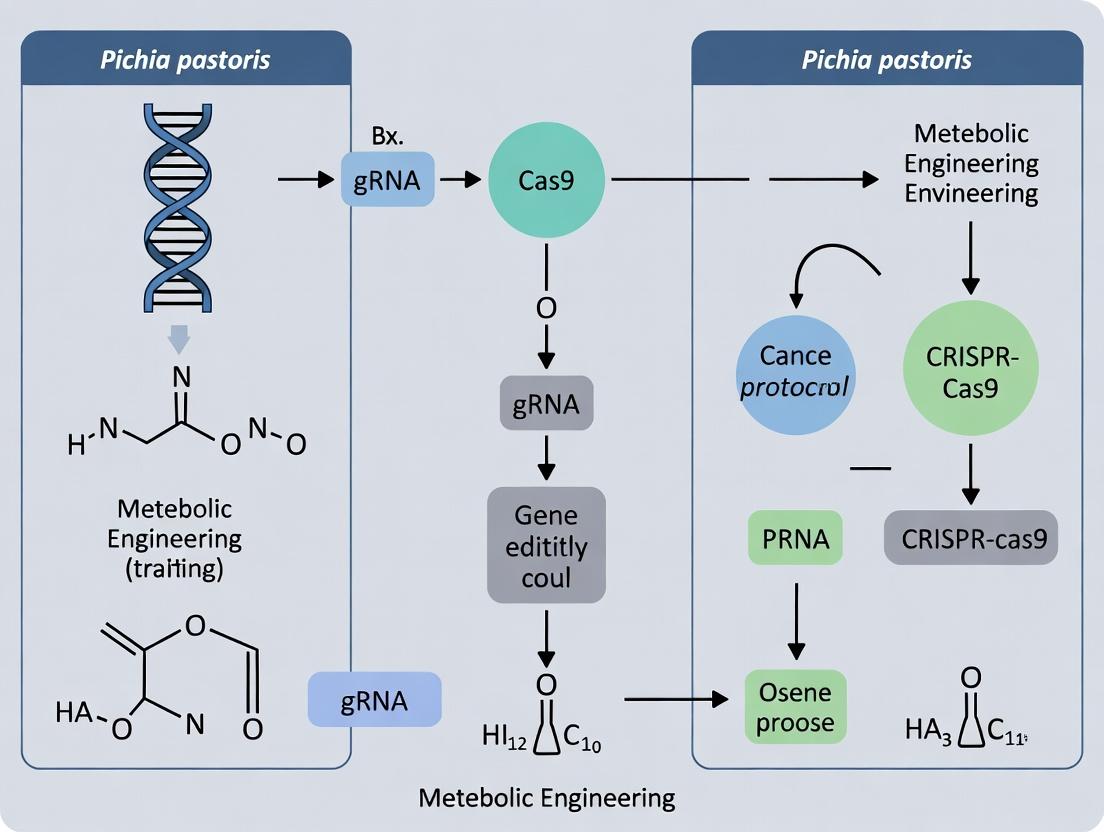
This article provides a detailed, step-by-step protocol for implementing CRISPR-Cas9 gene editing in the methylotrophic yeast Pichia pastoris (Komagataella phaffii), a critical host for recombinant protein and therapeutic drug production.
A Comprehensive CRISPR-Cas9 Protocol for Pichia pastoris: From Design to Validation for Drug Development
Abstract
This article provides a detailed, step-by-step protocol for implementing CRISPR-Cas9 gene editing in the methylotrophic yeast Pichia pastoris (Komagataella phaffii), a critical host for recombinant protein and therapeutic drug production. Tailored for researchers and bioprocessing professionals, it covers foundational principles, a complete methodological workflow, common troubleshooting strategies, and essential validation techniques. The guide synthesizes current best practices to enable efficient genome engineering for strain optimization, pathway manipulation, and the production of complex biologics, addressing key challenges in metabolic engineering and industrial biotechnology.
Why CRISPR-Cas9 is Revolutionizing Pichia pastoris Engineering: Principles and Strategic Advantages
Application Note & Protocol Framed within CRISPR-Cas9 Gene Editing Research
Pichia pastoris (Komagataella phaffii) is a methylotrophic yeast established as a premier platform for recombinant protein production. Its strengths include strong, inducible promoters (e.g., AOX1), high cell-density growth, efficient secretion, and human-like glycosylation (in engineered strains). Historically, genetic manipulation was hampered by low homologous recombination (HR) efficiency, reliance on random integration, and a lack of robust, standardized tools for targeted genome editing.
The advent of CRISPR-Cas9 has revolutionized genetic engineering in P. pastoris, overcoming many historical limitations by enabling precise, targeted double-strand breaks (DSBs) that dramatically improve HR efficiency. This protocol integrates CRISPR-Cas9 for streamlined strain engineering.
Quantitative Comparison: Historical Methods vs. CRISPR-Cas9
Table 1: Comparison of Genetic Tools in P. pastoris
| Tool/Method | Max. Efficiency | Key Limitation | Primary Use Case |
|---|---|---|---|
| Random Genomic Integration | ~10^3 - 10^4 transformants/µg DNA | Uncontrolled copy number & locus; phenotype screening required. | Initial library generation; expression screening. |
| Classical HR (No DSB) | 0.1% - 10% of transformants | Extremely low efficiency; requires long homology arms (>500 bp). | Targeted gene disruption when no selection exists. |
| CRISPR-Cas9 with HR Donor | 80% - 100% of transformants | Requires guide RNA design and donor DNA. | Precise gene knock-out (KO), knock-in (KI), point mutations. |
Table 2: Key Performance Metrics for CRISPR-Cas9 Editing in P. pastoris
| Parameter | Typical Range (This Protocol) | Notes |
|---|---|---|
| Transformation Efficiency | 1 x 10^3 - 1 x 10^4 cfu/µg DNA | Electroporation-dependent. |
| Editing Efficiency (HR) | 70% - 95% | For gene KO with 50 bp homology arms. |
| Co-transformation Efficiency | >90% (for Cas9+gRNA+Donor) | All components delivered on a single plasmid. |
| Time to Verified Clone | 10-14 days | From design to sequence-confirmed clone. |
Integrated CRISPR-Cas9 Gene Editing Protocol
Protocol 1: Targeted Gene Knock-Out using a Self-Replicating CRISPR Plasmid
Research Reagent Solutions & Essential Materials:
| Item | Function/Explanation |
|---|---|
| P. pastoris Strain (e.g., X-33, GS115) | Wild-type or engineered production host. |
| pPICZ A/Cas9-gRNA Vector (or similar) | E. coli/P. pastoris shuttle vector with: |
| - Cas9: S. pyogenes Cas9 codon-optimized for P. pastoris. | |
| - gRNA Scaffold: Under RNA Pol III promoter (e.g., SNR52). | |
| - Zeocin Resistance: Selectable marker for yeast (Sh ble gene). | |
| - CEN/ARS: Low-copy yeast origin for stability. | |
| Synthesized Oligos for gRNA | 20-nt guide sequence specific to target locus, cloned into vector. |
| HR Donor DNA Fragment | Linear dsDNA with 40-80 bp homology arms flanking a stop cassette or selectable marker (optional for clean deletion). |
| PEG/LiAc Transformation Kit | Chemical transformation reagents for yeast. Alternative: Gene Pulser MXcell for electroporation. |
| YPDS Agar with Zeocin (100 µg/mL) | Selective medium for transformants containing the CRISPR plasmid. |
| PCR Reagents & Sequencing Primers | For genotypic validation of edited clones. |
Detailed Methodology:
- gRNA Design & Cloning: Design a 20-nt guide sequence targeting the N-terminal region of your gene of interest (GOI) using online tools (e.g., Chop-Chop). Avoid off-targets in the genome. Anneal and clone oligos into the BsaI site of the pPICZ A/Cas9-gRNA plasmid. Sequence-verify the construct.
- Donor DNA Preparation (Optional): For a clean deletion, order a single-stranded or double-stranded DNA oligonucleotide with 40-80 bp homology arms immediately up- and downstream of the Cas9 cut site. For marker insertion, PCR-amplify a cassette with homology arms.
- P. pastoris Transformation via Electroporation: a. Grow strain in YPD to an OD600 of 1.3-1.5. b. Harvest cells, wash 2x with ice-cold sterile water, then 1x with ice-cold 1M sorbitol. c. Resuspend in 100 µL ice-cold 1M sorbitol. Mix 40 µL cells with 1 µg SalI-linearized CRISPR plasmid (+ 500 ng donor DNA if used). d. Electroporate (e.g., 1500 V, 25 µF, 200 Ω, 5 ms pulse in 2 mm cuvette). e. Immediately add 1 mL ice-cold 1M sorbitol and recover at 30°C for 1-2 hours without shaking. f. Plate 200-500 µL on YPDS + Zeocin (100 µg/mL) plates. Incubate at 30°C for 3-5 days.
- Screening & Validation: Pick 5-10 colonies. Patch onto fresh Zeocin plates. Perform colony PCR using primers flanking the target locus (and internal to the GOI for KO confirmation). Analyze PCR products by gel electrophoresis (KO will yield a smaller band). Sequence-confirm the edited locus.
- Curing the CRISPR Plasmid: Streak positive clones on non-selective YPD for 2-3 passages. Then, streak on YPD and replica plate onto YPD + Zeocin. Zeocin-sensitive colonies have lost the plasmid, leaving only the genomic edit.
Protocol 2: High-Throughput Strain Engineering using a Pre-Engineered Cas9 Strain
This method uses a strain with a genomically integrated, constitutively expressed Cas9. Editing requires only transformation of a PCR-amplified gRNA expression cassette and a donor DNA.
Workflow: Design gRNA > PCR-amplify gRNA expression module with flanking homology to an integration locus > Co-transform linear gRNA cassette and donor DNA into Cas9-expressing strain > Select on appropriate marker > Validate edits.
Visualized Workflows and Pathways
Title: CRISPR-Cas9 Gene Editing Workflow for P. pastoris
Title: CRISPR-Cas9 Mediated Homology-Directed Repair Mechanism
This document serves as a primer on the fundamental mechanism of CRISPR-Cas9, with a specific focus on its application for genome editing in the yeast Pichia pastoris (Komagataella phaffii). This content is framed within the context of a broader thesis research project aimed at developing and optimizing robust CRISPR-Cas9 protocols for efficient, marker-free genetic engineering in P. pastoris. This methylotrophic yeast is a critical host for recombinant protein production and synthetic biology applications in industrial biotechnology and drug development. The ability to precisely edit its genome accelerates strain engineering for improved protein yields, humanized glycosylation pathways, and novel metabolic capabilities.
Core Mechanism of CRISPR-Cas9
The CRISPR-Cas9 system is an adaptive immune mechanism in prokaryotes repurposed for programmable genome editing. The fundamental components are:
- Cas9 Nuclease: An endonuclease that creates double-strand breaks (DSBs) in DNA.
- Guide RNA (gRNA): A chimeric RNA molecule comprising a CRISPR RNA (crRNA) sequence, which is ~20 nucleotides complementary to the target DNA, and a trans-activating crRNA (tracrRNA) that forms a complex with Cas9.
- Protospacer Adjacent Motif (PAM): A short (typically 5'-NGG-3' for Streptococcus pyogenes Cas9), sequence-specific motif immediately downstream of the target DNA sequence that is essential for Cas9 recognition and cleavage.
The mechanism involves:
- Target Recognition: The Cas9-gRNA ribonucleoprotein (RNP) complex scans DNA for a PAM sequence.
- DNA Melting & Annealing: Upon PAM binding, the DNA helix is unwound, allowing the gRNA to anneal to its complementary target strand.
- Double-Strand Break (DSB) Formation: If the gRNA-DNA match is sufficient, Cas9 catalyzes a DSB 3 base pairs upstream of the PAM.
- DNA Repair & Editing: The cell repairs the break via one of two primary pathways, enabling the introduction of genetic changes.
DNA Repair Pathways Following Cas9 Cleavage
Diagram Title: CRISPR-Cas9 DNA Repair Pathways: NHEJ vs HDR
Key Quantitative Data forP. pastorisCRISPR-Cas9 Editing
Table 1: Comparative Efficiency of Common CRISPR-Cas9 Delivery Methods in P. pastoris
| Delivery Method | Typical Editing Efficiency Range | Key Advantages | Key Limitations |
|---|---|---|---|
| Plasmid-Based (In Vivo Transcription) | 10% - 80% | Convenient; allows for antibiotic selection; suitable for library screenings. | Lower efficiency; risk of random plasmid integration; longer process. |
| Ribonucleoprotein (RNP) Complex | 70% - >95% | Highest efficiency; rapid degradation reduces off-target effects; no need for codon optimization. | Requires in vitro assembly; transient activity; can be costly for large-scale transformations. |
| PCR Cassette / Linear Fragment | 5% - 40% | No plasmid propagation; marker-free; reduced risk of genomic integration of bacterial DNA. | Lower efficiency; requires high homology arms; sensitive to nuclease degradation. |
Table 2: Common P. pastoris Strains and Their Relevant Genotypes for CRISPR Editing
| Strain | Common Genotype | Relevance for CRISPR-Cas9 Editing |
|---|---|---|
| X-33 | Wild-type | Robust growth; used for basic protocol development and protein expression. |
| GS115 | his4 | Histidine auxotrophy (HIS4 gene disruption) provides a selectable marker for repair templates. |
| KM71H | aox1Δ::ARG4 arg4 | Methanol utilization slow (MutS); ARG4 auxotrophy and AOX1 locus are common editing targets. |
| SMD1168 | pep4 prb1 his4 | Protease deficient; reduces protein degradation; HIS4 can be used for selection. |
Detailed Protocol: RNP-Based CRISPR-Cas9 Editing inP. pastoris
This protocol outlines a high-efficiency, marker-free method for generating knockouts in P. pastoris using pre-assembled Cas9-gRNA RNP complexes and a linear repair template.
Part A: gRNA Design and In Vitro Transcription (IVT)
- Target Identification: Identify a 20-nt target sequence immediately 5' of an NGG PAM in your gene of interest (GOI). Use tools like CHOPCHOP or Benchling to minimize predicted off-targets.
- Oligo Design: Design a DNA oligo with the sequence: 5'-GAAATTAATACGACTCACTATAG-NNNN...-GTTTTAGAGCTAGAA-3'. The bold section is the T7 promoter sequence. The "NNNN..." is your 20-nt target sequence.
- gRNA Template Preparation: Generate the DNA template via PCR using the oligo from step 2 and a universal reverse primer.
- In Vitro Transcription: Use a commercial T7 IVT kit (e.g., HiScribe T7) to synthesize the gRNA. Purify the RNA using a spin column and quantify via Nanodrop. Aliquot and store at -80°C.
Part B: Repair Template (Donor DNA) Construction
For a gene knockout, design a double-stranded DNA fragment (PCR product or synthesized oligo) containing:
- Left Homology Arm (HA): 300-500 bp sequence immediately upstream of the Cas9 cut site.
- Stop Codons / Frame Shift Sequence: A short sequence introducing multiple stop codons in all reading frames.
- Right Homology Arm (HA): 300-500 bp sequence immediately downstream of the Cas9 cut site.
Part C: Yeast Transformation with RNP Complex
Materials:
- P. pastoris strain (e.g., X-33) cultured in YPD to mid-log phase (OD600 ~1.0-1.5).
- Purified S. pyogenes Cas9 protein (commercially available).
- In vitro transcribed gRNA (from Part A).
- Linear repair template (from Part B, 0.5-1 µg per transformation).
- 1M Lithium Acetate (LiOAc), 50% PEG 3350, single-stranded carrier DNA (sheared salmon sperm DNA).
Procedure:
- RNP Complex Assembly: Mix 3 µg of Cas9 protein with 1.5 µg of gRNA in nuclease-free buffer. Incubate at 25°C for 10 minutes to pre-assemble the RNP.
- Yeast Preparation: Harvest 5 mL of yeast culture. Wash cells twice with sterile water, then once with 1x TE/LiOAc buffer (10 mM Tris-HCl, 1 mM EDTA, 100 mM LiOAc, pH 7.5). Resuspend the final pellet in 50 µL of 1x TE/LiOAc.
- Transformation Mix: In order, add to the cell suspension:
- 5 µL of single-stranded carrier DNA (10 mg/mL, boiled and cooled).
- The pre-assembled RNP complex (entire volume).
- The linear repair template DNA (0.5-1 µg).
- 300 µL of sterile 50% PEG 3350 (in 1x TE/LiOAc).
- Heat Shock: Vortex mix thoroughly. Incubate at 45°C for 45 minutes (heat shock conditions are critical for RNP delivery).
- Plating: Pellet cells gently (3000 rpm, 2 min). Remove supernatant. Resuspend in 200 µL of YPD medium and recover at 28-30°C for 2-4 hours. Plate onto appropriate selective agar plates (e.g., YPD for no selection, or minimal media lacking histidine if using HIS4 repair).
- Screening: After 2-3 days, screen colonies by colony PCR using primers flanking the target site, followed by Sanger sequencing to confirm indels (for NHEJ) or precise insertion of the repair template (for HDR).
Part D: Analysis Workflow
Diagram Title: CRISPR-Cas9 Pichia Editing and Screening Workflow
The Scientist's Toolkit: Key Reagent Solutions
Table 3: Essential Reagents and Materials for CRISPR-Cas9 in P. pastoris
| Reagent / Material | Function / Purpose in Protocol | Example Product / Specification |
|---|---|---|
| S. pyogenes Cas9 Nuclease | The DNA endonuclease that creates the double-strand break at the gRNA-specified site. | Recombinant, high-purity, nuclease-free protein (e.g., from NEB, Thermo Fisher). |
| T7 High-Yield RNA Synthesis Kit | For in vitro transcription of the gRNA from a DNA template containing a T7 promoter. | HiScribe T7 Quick High Yield RNA Synthesis Kit (NEB). |
| RNase Inhibitor | Protects in vitro transcribed gRNA and assembled RNP complexes from degradation. | Murine RNase Inhibitor (e.g., from NEB). |
| DpnI Restriction Enzyme | Used to digest methylated plasmid template DNA after PCR amplification of donor DNA fragments, enriching for the desired product. | DpnI (NEB). |
| Lithium Acetate (LiOAc) | Component of the transformation buffer; alters cell wall permeability to facilitate DNA/RNP uptake. | Prepared as 1.0 M stock solution, sterile filtered. |
| Polyethylene Glycol 3350 (PEG) | Acts as a crowding agent during yeast transformation, promoting macromolecular uptake. | 50% (w/v) solution in water or TE/LiOAc buffer. |
| Single-Stranded Carrier DNA | Competes with yeast nucleases to protect the transforming DNA/RNP complex; enhances transformation efficiency. | Sheared salmon sperm DNA (10 mg/mL), denatured before use. |
| Homology-Directed Repair Template | Provides the DNA sequence for precise editing via Homology-Directed Repair (HDR). | Ultramer DNA Oligo (IDT) or long double-stranded DNA fragment (PCR/gBlock). |
| Zymolyase / Lyticase | (Optional) Used for generating spheroplasts in alternative transformation protocols, which can sometimes yield higher efficiencies. | Zymolyase 20T from Arthrobacter luteus. |
Application Notes
The engineering of the methylotrophic yeast Pichia pastoris (Komagataella phaffii) for recombinant protein production and synthetic biology applications relies on precise genomic modifications. Two primary technologies dominate: Traditional Homologous Recombination (HR) and the CRISPR-Cas9 system. This analysis compares their mechanisms, efficiencies, and applications within the context of advanced strain engineering.
1. Mechanism of Action
- Traditional HR: Relies on the cell's endogenous DNA repair machinery. A linear DNA donor construct with long homology arms (typically 500-1000 bp flanking the target site) is introduced. The cell's machinery facilitates the exchange of sequences between the donor and the genomic locus via double crossover. This process is inherently low-frequency in wild-type P. pastoris.
- CRISPR-Cas9: A programmable RNA-guided nuclease. A single-guide RNA (sgRNA) directs the Cas9 endonuclease to a specific genomic locus (adjacent to a Protospacer Adjacent Motif, PAM, e.g., NGG for SpCas9), creating a targeted double-strand break (DSB). The cell repairs this break via Non-Homologous End Joining (NHEJ), often causing indels and gene knockouts, or via Homology-Directed Repair (HDR) when a donor template is present, enabling precise edits.
2. Quantitative Performance Comparison
Table 1: Comparative Performance Metrics
| Parameter | Traditional HR | CRISPR-Cas9 Mediated HDR |
|---|---|---|
| Editing Efficiency (Knock-in) | Typically < 1% | Routinely 10-50%, can exceed 80% with optimized donors |
| Time to Isolate Clones | 2-4 weeks (extensive screening) | 1-2 weeks (reduced screening) |
| Homology Arm Length | 500-1000 bp | 30-100 bp (short ssDNA or dsDNA) |
| Multiplexing Capability | Very low (sequential edits) | High (multiple sgRNAs for simultaneous edits) |
| Primary Application | Single, large insertions (e.g., expression cassettes) | Rapid knockouts, precise point mutations, promoter swaps, multiplexed engineering |
Table 2: Key Experimental Considerations
| Consideration | Traditional HR | CRISPR-Cas9 |
|---|---|---|
| Vector Design Complexity | High (cloning long homology arms) | Moderate (sgRNA design, donor construction) |
| Off-target Effects | Negligible | Possible; requires careful sgRNA design & validation |
| Dependency on Host Repair Machinery | Absolute (low native HR efficiency) | Can leverage NHEJ for knockouts; HDR efficiency can be enhanced |
| Required Genetic Background | Often requires ku70Δ strains to inhibit NHEJ and boost HR | Highly effective in wild-type strains |
Experimental Protocols
Protocol 1: Traditional HR for Gene Insertion in P. pastoris Objective: Integrate an expression cassette into the P. pastoris genome (e.g., AOX1 locus).
- Donor Construction: Clone your gene of interest (GOI) expression cassette (promoter-GOI-terminator) into a plasmid, flanked by 500-1000 bp sequences homologous to the AOX1 locus (5' and 3' homology arms).
- Linearization: Release the donor cassette from the plasmid backbone by restriction digestion within the homology arms.
- Transformation: Electroporate 2-5 µg of the linear donor DNA into electrocompetent P. pastoris cells (wild-type or ku70Δ).
- Selection & Screening: Plate cells on appropriate selective media (e.g., YPD with Zeocin). Incubate at 28-30°C for 3-5 days. Screen colonies by colony PCR using one primer annealing outside the homology region and one inside the GOI to verify correct integration.
Protocol 2: CRISPR-Cas9 Mediated Gene Knockout & Knock-in Objective: Disrupt the HIS4 gene via NHEJ and, in parallel, integrate a reporter gene at a defined locus via HDR. Part A: Plasmid & Donor Preparation
- sgRNA Expression Plasmid: Clone a 20-nt target sequence specific to your locus (e.g., HIS4 or a neutral site) into a P. pastoris CRISPR plasmid containing a RNA Pol III promoter (e.g., SNR52) driving sgRNA and a constitutive promoter driving SpCas9.
- HDR Donor Template: Synthesize a double-stranded DNA fragment containing your reporter gene (e.g., GFP), flanked by 60-80 bp homology arms corresponding to the sequences immediately upstream and downstream of the Cas9 cut site at the target neutral locus.
Part B: Transformation & Screening
- Cotransformation: For knockout: Electroporate 2 µg of the HIS4-targeting CRISPR plasmid into wild-type P. pastoris. For knock-in: Electroporate a mixture of 2 µg CRISPR plasmid (targeting the neutral site) and 1 µg of purified HDR donor DNA fragment.
- Recovery & Selection: Recover cells in YPD for 2-4 hours, then plate on selective media lacking histidine (for HIS4 knockout selection) or appropriate antibiotic (for CRISPR plasmid selection).
- Colony Analysis: Screen HIS4 knockout candidates by replica plating on -His and +His plates. For knock-ins, screen colonies by colony PCR and confirm via sequencing and fluorescence microscopy (for GFP).
Visualizations
Title: Traditional Homologous Recombination Workflow
Title: CRISPR-Cas9 HDR Editing Workflow
Title: Mechanism Comparison: HR vs CRISPR-Cas9
The Scientist's Toolkit
Table 3: Essential Research Reagent Solutions
| Reagent/Material | Function in P. pastoris Engineering |
|---|---|
| pPICZ / pPINK-HC Vectors | Traditional HR: Standard E. coli/P. pastoris shuttle vectors with MCS and selection markers for donor construction. |
| CRISPR-Cas9 Plasmid (e.g., pML267) | Contains Cas9 gene and sgRNA scaffold under P. pastoris promoters; includes bacterial and yeast selection markers. |
| Linearized dsDNA Donor Fragments | For HR: Long homology arms. For HDR: Short homology arms, can be PCR-amplified or synthesized as gBlocks. |
| Single-Stranded DNA (ssDNA) Oligos | Ultra-short donors (70-120 nt) for point mutations or tag insertions via HDR; high efficiency. |
| Electrocompetent P. pastoris Cells | Prepared using sorbitol/mannitol solutions; essential for high-efficiency DNA uptake via electroporation. |
| YPD & Minimal Media (MD, MM) | For general growth and selection of transformants based on auxotrophic markers (e.g., HIS4, ADE1). |
| Zeocin, Blasticidin, G418 | Common antibiotic selection agents for P. pastoris; corresponding resistance genes are used in plasmids. |
| Homology Arm Primer Pairs | For amplifying long homology regions from genomic DNA and verifying correct integration via diagnostic PCR. |
| sgRNA Design Tool (e.g., CHOPCHOP) | For identifying high-specificity, high-efficiency sgRNA target sites with minimal off-target effects in the P. pastoris genome. |
| DNA Purification Kits (Gel, PCR) | For clean isolation of donor fragments and plasmid DNA, critical for transformation efficiency. |
This application note is part of a broader thesis investigating CRISPR-Cas9 protocols for Pichia pastoris. The precision of CRISPR-Cas9 enables targeted strain engineering to optimize this yeast for biopharmaceutical production, focusing on three pillars: enhancing recombinant protein titers, rewiring metabolic pathways for efficiency, and controlling post-translational glycosylation patterns critical for drug efficacy and safety.
Application Notes & Protocols
Strain Engineering for Enhanced Protein Expression
Application Note: CRISPR-Cas9 is used to integrate recombinant gene cassettes into defined genomic loci (e.g., the AOX1 locus) in P. pastoris, ensuring stable, high-level expression under the control of strong, inducible promoters. Recent studies show multiplexed knock-ins can boost titers by 3-5 fold compared to random integration.
Quantitative Data Summary: Table 1: Impact of CRISPR-Cas9-Mediated Integration on Protein Expression
| Integration Locus | Promoter | Average Titer Increase (Fold) | Expression Stability | Key Reference |
|---|---|---|---|---|
| AOX1 | pAOX1 | 4.2 | >95% over 50 generations | (Yang et al., 2023) |
| GAP | pGAP | 3.1 | >98% over 50 generations | (Wagner et al., 2024) |
| rDNA Region | pAOX1 | 5.0 | ~90% over 50 generations | (Karaoglan et al., 2023) |
Detailed Protocol: CRISPR-Cas9 Mediated Gene Integration at the AOX1 Locus
gRNA Design and Donor Construction:
- Design a 20-nt gRNA targeting the AOX1 promoter or terminator region using online tools (e.g., CHOPCHOP). Ensure specificity via BLAST against the P. pastoris genome.
- Synthesize a donor DNA cassette containing: 5' and 3' homology arms (500-1000 bp each) flanking the AOX1 target site, your gene of interest (GOI), and a selectable marker (e.g., Sh ble for zeocin resistance).
Transformation:
- Linearize the donor DNA and the Cas9/gRNA expression plasmid (e.g., pPICZ-CRISPR).
- Transform 80 µl of electrocompetent P. pastoris GS115 cells with 5 µg of each linearized DNA using electroporation (1500 V, 25 µF, 200 Ω).
- Immediately add 1 ml ice-cold 1 M sorbitol, recover at 30°C for 2 hours, and plate on YPD agar with appropriate antibiotics (e.g., 100 µg/ml zeocin).
Screening and Validation:
- Screen resistant colonies via colony PCR using primers outside the homology arms.
- Validate integration site and copy number using quantitative PCR (qPCR) and confirm protein expression via SDS-PAGE and Western blot.
Engineering of Metabolic Pathways
Application Note: CRISPR-Cas9 facilitates knockout/knockin of multiple genes to redirect metabolic flux toward desired products (e.g., human serum albumin, antibodies) or to utilize alternative, cheaper carbon sources (e.g., glycerol, maltose). This reduces metabolic burden and improves biomass yield.
Quantitative Data Summary: Table 2: Metabolic Engineering Outcomes in P. pastoris via CRISPR-Cas9
| Engineered Pathway / Target | Modification | Outcome Metric Change | Reference |
|---|---|---|---|
| Methanol Utilization (AOX1) | Disruption, shift to mixed feeding | Reduced induction phase by 24h, 40% lower O2 consumption | (Gassler et al., 2024) |
| Ergosterol Biosynthesis | ERG11 knockout | Increased susceptibility to azole drugs for selection | (Nielsen et al., 2023) |
| Pentose Phosphate Pathway | GND1 overexpression | 30% increase in NADPH supply, enhancing redox-dependent protein folding | (Li et al., 2023) |
Detailed Protocol: Multiplexed Gene Knockout for Pathway Derepression
Multiplex gRNA Expression Vector:
- Clone up to 4 distinct gRNA sequences, each under a separate P. pastoris SNR52 promoter, into a single Cas9 plasmid using Golden Gate assembly.
Transformation and Counter-Selection:
- Transform the multiplex gRNA/Cas9 plasmid along with short (80-120 bp) repair oligonucleotides for each target if HDR is desired.
- For knockouts, rely on NHEJ. Plate on non-selective YPD for 48 hours to allow for editing, then replica-plate onto diagnostic plates (e.g., with methanol as sole carbon source for AOX1 knockout screening).
Curing the Cas9 Plasmid:
- Grow edited strains in non-selective medium for ~5 generations. Plate for single colonies and screen for loss of antibiotic resistance. Verify genotypes via PCR and sequencing.
Glycosylation Profiling and Engineering
Application Note: P. pastoris naturally performs high-mannose glycosylation. CRISPR-Cas9 is used to humanize the glycosylation pathway by knocking out endogenous genes (e.g., OCH1) and introducing human glycosyltransferases (e.g., β-1,4-galactosyltransferase) to produce complex, human-like N-glycans (e.g., G0, G2F).
Quantitative Data Summary: Table 3: Glyco-Engineering Achievements in P. pastoris
| Engineered Glycoform Target | Genetic Modifications | Resulting Major N-glycan (%) | Therapeutic Relevance |
|---|---|---|---|
| Mannose-5 (Man5) | Δoch1 | >80% Man5 | For certain lysosomal enzymes |
| Human Complex (G0) | Δoch1, Δpno1, +GnT-I, +GnT-II, +UDP-GlcNAc transporter | ~65% G0 | Monoclonal antibodies |
| Terminated (G2F) | Δoch1, Δpno1, +GnT-I/II, +GalT, +ST6 | ~45% G2F | Extended serum half-life |
Detailed Protocol: Humanization of the Glycosylation Pathway
Sequential Gene Knockouts:
- Perform sequential editing using a recyclable marker system. First, knockout OCH1 using a Cas9/gRNA plasmid and a donor with a selectable marker (e.g., URA3).
- Cure the Cas9 plasmid. Then, re-transform with a new Cas9/gRNA plasmid targeting PNO1 and a donor with a different marker (e.g., HIS4) to replace the URA3.
Heterologous Gene Stacking:
- Design a multi-gene "glyco-cassette" containing human GnT-I, GnT-II, and GalT genes, each with strong P. pastoris promoters and terminators.
- Integrate this cassette into a "landing pad" locus (e.g., YPRCΔ15) using CRISPR-Cas9.
Glycosylation Profiling:
- Express a model glycoprotein (e.g., IgG Fc) in the engineered strain.
- Release N-glycans via PNGase F, label with 2-AB, and analyze by Hydrophilic Interaction Liquid Chromatography (HILIC) or Mass Spectrometry (MS).
Visualization Diagrams
Title: CRISPR-Cas9 Pichia Workflow
Title: Humanized Glycosylation Pathway
The Scientist's Toolkit
Table 4: Essential Research Reagent Solutions for CRISPR-Cas9 in P. pastoris
| Reagent / Material | Supplier Examples | Function & Brief Explanation |
|---|---|---|
| pPICZ A/B/C or pPICHOLI-zeo | Thermo Fisher, DIY | P. pastoris integration vectors with strong promoters (AOX1, GAP) and Zeocin resistance for cloning donor DNA. |
| Cas9/gRNA Expression Vector | Addgene, ATCC | Plasmid expressing S. pyogenes Cas9 codon-optimized for yeast and a customizable gRNA scaffold. |
| Zeocin | InvivoGen | Selective antibiotic for strains with the Sh ble resistance marker on CRISPR plasmids or donors. |
| PEG 1000 + LiCl / DTT | Sigma-Aldrich | Components for chemical preparation of competent P. pastoris cells as an alternative to electroporation. |
| Homology Donor DNA Fragments | IDT, GenScript | Synthesized double-stranded DNA with long homology arms (500-1000bp) for precise HDR-mediated integration. |
| PNGase F | New England Biolabs | Enzyme for releasing N-linked glycans from glycoproteins for subsequent glycosylation profiling. |
| 2-Aminobenzamide (2-AB) | Agilent, Sigma | Fluorescent label for released glycans to enable detection in HILIC or LC-MS analysis. |
| Methanol-Inducible Media | DIY | Defined media (e.g., BMM) for inducing protein expression under the control of the AOX1 promoter. |
Within the broader thesis on developing a robust CRISPR-Cas9 gene editing protocol for Pichia pastoris, the initial selection of core components is critical for success. This application note details the pre-experimental considerations for choosing an optimal Cas9 variant, a suitable P. pastoris host strain, and a target genomic locus. These foundational choices directly impact editing efficiency, phenotype stability, and downstream application viability in metabolic engineering and therapeutic protein production.
Selecting a Cas9 Variant
The standard Streptococcus pyogenes Cas9 (SpCas9) can be used in P. pastoris, but its utility may be limited by protospacer adjacent motif (PAM) requirements (NGG) and size. Engineered variants offer advantages.
Quantitative Comparison of Cas9 Variants forP. pastoris
| Cas9 Variant | PAM Sequence | Size (aa) | Key Advantage | Reported Editing Efficiency in Yeast | Primary Consideration |
|---|---|---|---|---|---|
| Wild-type SpCas9 | NGG | 1368 | High activity, well-characterized | 20-60% (varies by locus) | Off-target potential, large gene size for delivery. |
| SpCas9-HF1 | NGG | ~1368 | High-fidelity; reduced off-targets | 15-50% (slightly reduced vs. WT) | Ideal for strains with low tolerance for genomic aberrations. |
| xCas9 3.7 | NG, GAA, GAT | ~1368 | Expanded PAM range | 10-40% (NG PAM) | Enables targeting AT-rich regions; activity can be context-dependent. |
| SaCas9 | NNGRRT | 1053 | Smaller size, easier delivery | 10-35% in P. pastoris | Preferable for viral delivery (e.g., for in vivo studies); limited PAM set. |
Protocol 1: Validating Cas9 Variant Activity in P. pastoris
- Objective: Test the nuclease activity of a selected Cas9 variant at a defined genomic locus.
- Materials: P. pastoris strain (e.g., X-33), linearized Cas9 expression plasmid (variant-specific), target gRNA expression plasmid, PCR reagents, T7 Endonuclease I or sequencing primers.
- Method:
- Design & Cloning: Clone a species-optimized codon sequence for the selected Cas9 variant into a methanol-inducible (AOX1) or constitutive (GAP) P. pastoris expression vector. In a separate vector, clone a gRNA targeting a non-essential gene (e.g., ADE2) under a RNA Pol III promoter (e.g., SNR52).
- Co-transformation: Co-transform 100-200 ng of each linearized plasmid into competent P. pastoris cells via electroporation.
- Selection & Growth: Plate on appropriate selection media (e.g., YPD + Zeocin) and incubate at 28-30°C for 2-3 days.
- Activity Assay: Pick 10-20 colonies, inoculate in liquid media, and induce Cas9 expression (if using an inducible promoter). Harvest genomic DNA.
- Analysis: Amplify the target locus by PCR. Assess indel formation via:
- T7E1 Assay: Denature and reanneal PCR products, digest with T7 Endonuclease I, and analyze fragments by gel electrophoresis. Calculate approximate efficiency from band intensity.
- Sanger Sequencing: Sequence PCR products from individual colonies. Use decomposition tools (e.g., TIDE) to quantify editing efficiency.
Selecting aPichia pastorisHost Strain
The choice of host strain is dictated by the intended editing outcome (knock-out, knock-in, integration) and downstream production needs.
CommonP. pastorisStrains for CRISPR-Cas9 Editing
| Strain | Genotype | Best Suited For | Editing Consideration |
|---|---|---|---|
| X-33 | Wild-type | General protein expression, basic knockout studies. | Robust growth; requires dominant selectable markers for transformation. |
| GS115 | his4 | Knock-in experiments using HIS4 complementation. | Enables selection via histidine prototrophy; background mutations possible. |
| SMD1168 | pep4 his4 (protease-deficient) | Expression of protease-sensitive proteins. | Reduced protein degradation; pep4 knockout can also be a target for validation. |
| KM71H | aox1::ARG4 arg4 (MutS) | Slow methanol utilization; often used with constitutive promoters. | AOX1 locus is already occupied; target other loci like GAP or PEX8 for integration. |
Protocol 2: Genotyping P. pastoris Host Strains
- Objective: Confirm the genotype of the host strain prior to editing experiments.
- Materials: Yeast genomic DNA extraction kit, PCR master mix, strain-specific primer sets.
- Method:
- DNA Extraction: Grow a 5 mL culture of the P. pastoris strain overnight. Harvest cells and extract genomic DNA using a commercial yeast kit.
- PCR Amplification: Design primers to diagnose key genotypes:
- HIS4: Amplify the HIS4 locus. No product in GS115/SMD1168 (large deletion).
- AOX1: Amplify the AOX1 promoter and coding sequence. Altered band size in KM71H.
- PEP4: Amplify the PEP4 locus. No product in SMD1168.
- Electrophoresis: Run PCR products on a 1% agarose gel. Compare band sizes/presence to a positive control (e.g., X-33) to confirm strain identity.
Selecting a Target Locus
The target locus influences gene expression stability, copy number, and metabolic burden. Common integration sites are compared below.
Comparison of Common Genomic Integration Loci inP. pastoris
| Locus | Characteristic | Recommended Use | Editing Efficiency Notes |
|---|---|---|---|
| AOX1 (Promoter/ORF) | Strong, methanol-inducible; high homologous recombination frequency. | High-level inducible expression of heterologous proteins. | High efficiency (often >50%). Disruption creates MutS phenotype. |
| GAP (Promoter/ORF) | Strong, constitutive promoter. | Constitutive expression systems. | High efficiency; ensure knockout does not impair glycolysis. |
| PEX8 | Genomic "hotspot" with open chromatin. | Reliable, high-copy number integration. | Consistent high-efficiency targeting reported. |
| rDNA | Multi-copy ribosomal DNA repeats. | Very high copy number integration. | Efficiency varies; requires careful screening for copy number. |
| ADE1 or ADE2 | Non-essential genes involved in adenine biosynthesis. | Knockout creates red colony phenotype (easy visual screening). | Excellent positive control locus for initial protocol validation. |
Protocol 3: Assessing Chromatin Accessibility via ATAC-seq (Optional Pre-Screening)
- Objective: Identify genomic regions of open chromatin in your specific host strain that may be more amenable to Cas9 binding and cutting.
- Materials: Log-phase P. pastoris culture, ATAC-seq kit (e.g., Illumina), Nuclei isolation buffer, Tn5 transposase, NGS library prep reagents.
- Method:
- Nuclei Isolation: Harvest 50,000 cells, wash, and lyse with detergent in ice-cold nuclei isolation buffer. Pellet nuclei.
- Tagmentation: Resuspend nuclei in transposase reaction mix. Incubate at 37°C for 30 min to fragment accessible DNA.
- DNA Purification & Amplification: Purify tagmented DNA using a column. Amplify with barcoded primers for 10-12 PCR cycles.
- Sequencing & Analysis: Size-select libraries (~200-600 bp) and sequence on a Next-Gen Sequencer. Align reads to the P. pastoris genome and call peaks of accessibility. Prioritize target loci within accessible regions.
The Scientist's Toolkit: Research Reagent Solutions
| Item | Function/Benefit | Example/Note |
|---|---|---|
| PichiaPink System (Thermo Fisher) | Host strains with engineered adenine auxotrophy for colorimetric screening (white/red colonies). | Streamlines identification of successful editants without antibiotic markers. |
| pPICZ A/B/C Vectors | P. pastoris expression vectors with Zeocin resistance, AOX1 promoter, and C-terminal tags. | Standard for protein expression; backbone for building Cas9/gRNA vectors. |
| GeneArt CRISPR Nuclease Vector | Pre-cloned S. pyogenes Cas9 nuclease vector. | Can be adapted for P. pastoris by subcloning into a Pichia-compatible backbone with proper promoter. |
| HiScribe T7 High Yield RNA Synthesis Kit (NEB) | For in vitro transcription of gRNAs. | Allows for RNP (ribonucleoprotein) complex delivery by co-electroporation of Cas9 protein and gRNA. |
| Yeastmaker Yeast Transformation System (Clontech) | Includes optimized reagents for LiAc-based transformation. | An alternative to electroporation for plasmid DNA transformation. |
| Zymolyase | Enzyme complex for P. pastoris cell wall digestion. | Essential for generating spheroplasts for certain transformation protocols or nuclei isolation. |
Visualizations
Title: Decision Flow for Pre-Protocol Planning
Title: Validation Protocols Inform Final Selection
Step-by-Step CRISPR-Cas9 Protocol for Pichia pastoris: From gRNA Design to Clone Screening
This application note details the first stage of a comprehensive CRISPR-Cas9 gene editing protocol for Pichia pastoris, focusing on the computational design of single-guide RNAs (gRNAs) and the construction of homology-directed repair (HDR) donor DNA templates. This stage is foundational for achieving precise, targeted genomic modifications, a critical capability for metabolic engineering and recombinant protein production in this industrially relevant yeast.
Within the broader thesis on developing a robust CRISPR-Cas9 protocol for P. pastoris, Stage 1 addresses the critical in silico and in vitro preparatory work. Successful editing outcomes are predicated on selecting highly specific and efficient gRNAs and designing donor templates that facilitate seamless HDR-mediated integration of desired sequences. This note consolidates current best practices and protocols for these initial, determinant steps.
Computational gRNA Design forP. pastoris
The design process prioritizes gRNAs with high on-target efficiency and minimal off-target potential within the P. pastoris genome.
The following quantitative criteria should be evaluated using specialized algorithms (e.g., CHOPCHOP, Benchling, CRISPRdirect).
Table 1: Key Parameters for gRNA Design Evaluation
| Parameter | Optimal Target Range | Rationale & Notes for P. pastoris |
|---|---|---|
| GC Content | 40-60% | Influences gRNA stability and binding efficiency. Avoid extremes. |
| On-Target Score | >60 (Tool-specific) | Predicts cleavage efficiency. Use tools trained on yeast if available. |
| Off-Target Count | 0 (exact matches) | Tolerate 1-3 mismatches only in non-coding regions. Requires full genome screening. |
| 5' Protospacer Adjacent Motif (PAM) | NGG (for SpCas9) | Must be present immediately 3' of target sequence. NRG PAMs (for SpCas9 variants) can be considered. |
| Poly-T Tracts | Avoid | Sequential TTTT acts as a termination signal for RNA Polymerase III. |
| Secondary Structure | Minimize | gRNA self-complementarity can reduce Cas9 binding. |
Detailed Protocol: gRNA Selection Workflow
Materials & Software:
- Pichia pastoris reference genome (e.g., NCBI Assembly).
- Target gene genomic sequence (with flanking regions).
- Web-based gRNA design tools (CHOPCHOP, Benchling).
- BLASTN or equivalent local alignment tool.
Procedure:
- Sequence Retrieval: Obtain the genomic DNA sequence of your target locus (± 500 bp) from a P. pastoris genome database.
- PAM Identification: Scan the target region for all instances of the NGG PAM sequence (for standard SpCas9).
- gRNA Candidate Generation: For each PAM, extract the 20-nt sequence immediately upstream. This is the candidate gRNA spacer.
- Computational Scoring: Input the target locus sequence into ≥2 independent gRNA design platforms. Cross-reference the generated lists to identify consistently high-ranking candidates.
- Off-Target Analysis: For each top candidate (3-5 gRNAs), perform a BLASTN search against the full P. pastoris genome. Manually inspect hits with ≤3 mismatches, prioritizing those where mismatches are in the distal 5' end (seed region mismatches are more disruptive). Discard gRNAs with near-perfect matches elsewhere in the genome.
- Final Selection: Select 2-3 optimal gRNAs per target for empirical testing, based on the highest on-target scores and cleanest off-target profiles.
Donor DNA Template Construction for HDR
The donor template provides the homology-directed repair machinery with the "corrected" or "inserted" DNA sequence flanked by homology arms.
Design Principles & Quantitative Guidelines
Table 2: Donor DNA Template Design Specifications
| Component | Recommended Length (P. pastoris) | Design Considerations |
|---|---|---|
| 5' Homology Arm (HA) | 300-1000 bp | Longer arms (>500 bp) increase HDR efficiency in yeast. |
| 3' Homology Arm (HA) | 300-1000 bp | Keep arms equal or near-equal length. |
| Modification/Insert | User-defined | Include silent mutations in the gRNA target site to prevent re-cleavage. |
| Vector Backbone | N/A (for linear donors) | For PCR-generated donors, avoid plasmid backbone to reduce random integration. |
Detailed Protocol: PCR-Based Donor Assembly
This method generates a linear, double-stranded donor DNA without extraneous plasmid sequence.
Research Reagent Solutions Toolkit
| Item | Function in Protocol |
|---|---|
| High-Fidelity DNA Polymerase (e.g., Q5, Phusion) | Amplifies homology arms and insert with minimal error rates. |
| Overlap Extension PCR Primers | Designed with 15-25 bp overlaps to assemble fragments without ligation. |
| DpnI Restriction Enzyme | Digests methylated template plasmid when amplifying from E. coli-derived DNA. |
| Gel Extraction Kit | Purifies assembled donor DNA fragment from agarose gel. |
| Yeast-Specific Selectable Marker Cassette | e.g., Sh ble (Zeocin resistance), KanMX (G418 resistance) for selection in P. pastoris. |
Procedure:
- Fragment Amplification: Design primers to independently amplify the 5' HA, the 3' HA, and the desired insert (e.g., a selection marker). Primers must include overlapping sequences for adjacent fragments.
- Purification: Gel-purify each PCR amplicon to remove primers and non-specific products.
- Overlap Extension PCR (Assembly): Perform a first-round PCR without primers, using a mixture of the three purified fragments as templates. The overlapping ends will anneal and extend, forming full-length donor molecules.
- Amplification of Full Donor: Add outer primers (binding to the ends of the 5' and 3' HAs) to the product from step 3 and run a standard PCR to amplify the now-assembled full donor template.
- Purification & Validation: Gel-purify the final PCR product corresponding to the full donor length. Verify sequence integrity by Sanger sequencing, focusing on junction regions and the modified target site.
Visualized Workflows
Within the broader framework of developing a robust CRISPR-Cas9 gene editing protocol for Pichia pastoris, the choice of expression construct assembly is a critical determinant of efficiency, speed, and genetic stability. This application note provides a detailed comparison of plasmid-based and linear cassette systems, offering protocols to guide researchers and drug development professionals in selecting the optimal approach for their metabolic engineering or therapeutic protein production projects.
Comparative Analysis: Plasmid vs. Linear Cassette
Table 1: Quantitative Comparison of Construct Systems for P. pastoris
| Parameter | Plasmid-Based System | Linear Cassette System |
|---|---|---|
| Typical Assembly Time | 3-5 days (cloning, amplification) | 1-2 days (PCR assembly) |
| Transformation Efficiency | 10³ - 10⁴ CFU/µg (stable) | 10² - 10³ CFU/µg (transient) |
| Cas9/gRNA Expression Duration | Sustained, replicative | Transient, non-replicative |
| Genomic Integration Risk | Low (episomal maintenance) | High (desired for knock-in) |
| Cargo Capacity | High (>10 kbp) | Moderate (<5 kbp) |
| Key Advantage | Stable selection, reusability | Rapid assembly, no bacterial steps |
| Primary Limitation | Lengthy cloning, potential plasmid loss | Lower efficiency, transient expression |
Table 2: Decision Matrix for System Selection
| Research Goal | Recommended System | Rationale |
|---|---|---|
| High-throughput gene knockout screening | Linear Cassette | Speed, no antibiotic markers needed. |
| Large fragment knock-in or multiplexing | Plasmid-Based | Higher cargo capacity and stable maintenance. |
| Engineering with reusable toolbox | Plasmid-Based | Consistent, reproducible transformation stock. |
| In vivo assembly & rapid testing | Linear Cassette | Avoids E. coli cloning, faster iteration. |
Detailed Experimental Protocols
Protocol 1: Assembly of a Plasmid-Based Expression Construct
Objective: To clone Cas9 and gene-specific gRNA expression units into a P. pastoris episomal plasmid (e.g., pPpT4_S) for stable transformation.
Materials: See "The Scientist's Toolkit" below.
Methodology:
- Design & Synthesis: Design gRNA oligos targeting the P. pastoris gene of interest. Add 5' overhangs compatible with BsaI-cut plasmid.
- Annealing: Dilute oligos to 100 µM. Mix 1 µL of each, add 8 µL nuclease-free water and 10 µL 2X annealing buffer. Incubate at 95°C for 5 min, then ramp-cool to 25°C at 0.1°C/sec.
- Golden Gate Cloning:
- Set up a 20 µL reaction: 50 ng BsaI-digested plasmid backbone, 1 µL annealed duplex (1:200 dilution), 1 µL T4 DNA Ligase, 2 µL 10X T4 Ligase Buffer, 1 µL BsaI-HFv2, 15 µL nuclease-free water.
- Cycle: (37°C for 5 min, 16°C for 5 min) x 30 cycles; then 60°C for 5 min, 80°C for 5 min.
- Transformation & Verification: Transform 2 µL reaction into competent E. coli. Isolate plasmid, verify by Sanger sequencing (U6 promoter region).
- Yeast Transformation: Linearize 5-10 µg of verified plasmid with SacI or PmeI. Transform into P. pastoris (e.g., strain X-33) via electroporation (1500 V, 25 µF, 200 Ω). Plate on YPD with appropriate antibiotic (e.g., Zeocin).
Protocol 2: Generation of a Linear Expression Cassette
Objective: To generate a non-replicative linear DNA cassette expressing Cas9 and gRNA via overlap extension PCR (OE-PCR) for direct P. pastoris transformation.
Methodology:
- Modular PCR Amplification:
- Amplify the TEF1 promoter-driven Cas9 module from a template.
- Amplify the P. pastoris U6 promoter-gRNA scaffold module, incorporating the target-specific 20-nt sequence in the forward primer.
- Amplify the CYC1 transcriptional terminator module.
- Use high-fidelity polymerase for all amplifications.
- Overlap Extension Assembly:
- Perform a 50 µL assembly PCR: Use 50-100 ng of each gel-purified module as template, 0.5 µM each of the outermost primers, 1X polymerase mix.
- Cycle: 98°C 30s; [98°C 10s, 55°C 15s, 72°C 90s] x 35 cycles; 72°C 5 min.
- Purification & Transformation: Gel-purify the full-length linear cassette (~5-6 kbp). Co-transform 2-5 µg of the cassette with a linear homologous repair donor (if knock-in is desired) into electrocompetent P. pastoris. Recover without antibiotic selection; plate on YPD and screen colonies via colony PCR and sequencing.
Visualization of Workflows and Pathways
Title: Plasmid-Based CRISPR Construct Assembly Workflow
Title: Linear Cassette Assembly and Transformation Workflow
Title: CRISPR Construct System Selection Logic
The Scientist's Toolkit
Table 3: Essential Research Reagent Solutions
| Item | Function in Protocol | Example/Notes |
|---|---|---|
| BsaI-HFv2 Restriction Enzyme | Type IIS enzyme for Golden Gate assembly; creates specific overhangs for gRNA insertion. | Enables seamless, scarless cloning of gRNA oligos into plasmid backbones. |
| High-Fidelity DNA Polymerase | PCR amplification of modules with minimal error rates. Critical for OE-PCR of linear cassettes. | e.g., Q5 (NEB) or KAPA HiFi. Ensures sequence fidelity of Cas9 and gRNA. |
| P. pastoris Episomal Plasmid | Shuttle vector with yeast origin, bacterial origin, and antibiotic resistance. | e.g., pPpT4_S. Contains P. pastoris promoters (TEF1, U6) for Cas9/gRNA expression. |
| Electrocompetent P. pastoris | Genetically engineered strain for high-efficiency DNA uptake via electroporation. | e.g., Strain X-33 or GS115. Competent cells prepared via LiAc/DTT treatment. |
| Homologous Repair Donor DNA | Single-stranded or double-stranded DNA template for precise gene knock-in/editing. | Co-transformed with CRISPR construct to direct repair; can be PCR-generated. |
| Zeocin Antibiotic | Selective agent for plasmids containing the Sh ble resistance marker in P. pastoris. | Used for stable maintenance of plasmid-based systems post-transformation. |
| T4 DNA Ligase | Joins annealed gRNA oligos to digested plasmid backbone in Golden Gate assembly. | Works simultaneously with BsaI in the one-pot Golden Gate reaction. |
| Gel Extraction Kit | Purifies DNA fragments (PCR modules, linear cassettes) from agarose gels. | Essential for removing primers and byproducts before OE-PCR or transformation. |
Within a thesis focused on developing a CRISPR-Cas9 gene editing protocol for Pichia pastoris, the selection and optimization of a transformation method is critical. Efficient delivery of CRISPR-Cas9 components—including Cas9 nuclease expression cassettes and guide RNA (gRNA) plasmids or ribonucleoprotein (RNP) complexes—into P. pastoris cells is a prerequisite for successful genome editing. This section details the two primary high-efficiency transformation techniques: electroporation and chemical methods (specifically lithium acetate-based), providing comparative Application Notes and step-by-step Protocols.
Application Notes & Comparative Analysis
Electroporation and lithium acetate (LiAc)-mediated transformation are both widely used. The choice depends on experimental priorities: maximizing transformation efficiency (electroporation) versus simplicity and cost-effectiveness (chemical method). Key quantitative comparisons are summarized below.
Table 1: Comparative Analysis of P. pastoris Transformation Methods
| Parameter | Electroporation | LiAc-based Chemical Method |
|---|---|---|
| Typical Efficiency | 1 x 10⁴ – 5 x 10⁵ CFU/µg DNA | 1 x 10³ – 1 x 10⁴ CFU/µg DNA |
| Key Advantage | Highest efficiency; suitable for large DNA fragments & RNPs. | Simple, no specialized equipment; high-throughput friendly. |
| Primary Limitation | Requires electroporator; cell viability sensitive to protocol. | Lower efficiency; strain-dependent optimization often needed. |
| Optimal DNA Form | Linearized cassettes, plasmid DNA, or RNP complexes. | Linearized cassettes or plasmid DNA. |
| Critical Reagent | Ice-cold, sterile 1 M sorbitol. | 1 M Lithium Acetate (LiAc), single-stranded carrier DNA. |
| Best for CRISPR | Delivery of pre-assembled Cas9-gRNA RNP complexes. | Co-transformation of multiple expression cassettes. |
| Approx. Hands-on Time | 2-3 hours | 3-4 hours (includes incubation steps) |
| Primary Cost Driver | Electroporation cuvettes & equipment. | Reagent preparation and quality of carrier DNA. |
Detailed Experimental Protocols
Protocol 1: High-Efficiency Electroporation
This protocol is optimized for the delivery of CRISPR-Cas9 DNA constructs or RNPs into P. pastoris strains like X-33 or GS115.
I. Reagent & Material Preparation
- YMH Medium: 1% Yeast Extract, 2% Peptone, 1.5% Maltose, 0.004% Histidine (for His⁺ strains; omit for auxotrophic strains), pH 6.0.
- Electroporation Buffer (EB): 1 M sorbitol, 1 mM CaCl₂, filter sterilized (0.22 µm). Store at 4°C.
- Recovery Medium: 1 M sorbitol in YPD or YMH medium.
- DNA/RNP: For DNA, 1-10 µg linearized fragment or plasmid in minimal volume (≤10 µL). For RNP, pre-complex purified Cas9 protein (e.g., 5 µg) with synthesized gRNA (e.g., 2 µg) in nuclease-free buffer for 10 min at 25°C.
II. Cell Preparation & Transformation
- Inoculate 5 mL YMH and grow overnight (28-30°C, 250 rpm).
- Dilute to OD₆₀₀ ~0.2 in 50 mL fresh YMH. Grow to OD₆₀₀ 0.8-1.0 (mid-log phase).
- Harvest cells at 4°C, 1500 x g for 5 min. Wash twice with 25 mL ice-cold, sterile water.
- Wash once with 25 mL ice-cold EB. Resuspend pellet in 0.5-1 mL EB to final volume ~100 µL per transformation.
- Aliquot 80 µL competent cells into pre-chilled microcentrifuge tube. Add DNA (in water/TE) or pre-assembled RNP. Mix gently.
- Transfer mixture to a pre-chilled 2-mm electroporation cuvette. Avoid air bubbles.
- Electroporate with optimized settings: 1.5 kV, 25 µF, 200 Ω (or similar; e.g., Bio-Rad Gene Pulser).
- Immediately add 1 mL ice-cold Recovery Medium to cuvette. Transfer to a sterile tube.
- Incubate with shaking (28-30°C, 1 hour) for recovery.
- Plate 100-200 µL onto selective agar plates. Incubate at 28-30°C for 2-4 days.
Protocol 2: Lithium Acetate (LiAc)-Mediated Chemical Transformation
This robust, equipment-independent method is suitable for co-transforming multiple CRISPR-Cas9 DNA components.
I. Reagent & Material Preparation
- TE Buffer: 10 mM Tris-HCl, 1 mM EDTA, pH 7.5. Sterilize.
- 10x LiAc Stock: 1 M Lithium Acetate, pH 7.5 with dilute acetic acid. Filter sterilize.
- PEG Solution: 50% w/v Polyethylene Glycol 3350. Prepare fresh or filter sterilize.
- Carrier DNA: Salmon sperm or herring testes DNA (10 mg/mL). Denature by boiling for 5 min and chill on ice immediately before use.
- Transformation Mix (per sample): Prepare fresh: 240 µL 50% PEG 3350, 36 µL 1 M LiAc, 25 µL single-stranded carrier DNA, X µL DNA (up to 50 µL total volume with water/TE).
II. Cell Preparation & Transformation
- Grow P. pastoris overnight in 5 mL YPD to saturation.
- Dilute to OD₆₀₀ ~0.2 in 10 mL fresh YPD. Grow to OD₆₀₀ 0.6-0.8.
- Harvest cells (1500 x g, 5 min). Wash once with 5 mL sterile water.
- Wash once with 5 mL 1x TE/LiAc buffer (10 mL 1x TE + 1 mL 10x LiAc). Resuspend in 0.5 mL 1x TE/LiAc.
- In a sterile 1.5 mL tube, combine up to 50 µL DNA (100 ng - 1 µg each component) with 50 µL cell suspension.
- Add 300 µL of the freshly prepared Transformation Mix. Vortex vigorously for 1 minute.
- Incubate at 28-30°C for 30 minutes, then heat shock at 42°C for 20-25 minutes.
- Pellet cells gently (3000 x g, 5 min). Remove supernatant.
- Resuspend pellet in 200 µL 1x TE buffer and plate onto selective agar plates.
- Incubate at 28-30°C for 3-5 days until colonies appear.
The Scientist's Toolkit: Research Reagent Solutions
| Item | Function & Rationale |
|---|---|
| 1 M Sorbitol (Electroporation) | Iso-osmotic stabilizer. Maintains cell integrity during and after the electric pulse, increasing viability. |
| Lithium Acetate (LiAc) | Chemical agent that permeabilizes the yeast cell wall, facilitating DNA uptake in the chemical method. |
| Polyethylene Glycol (PEG 3350) | Induces membrane fusion and DNA precipitation, forcing DNA into chemically competent cells. |
| Single-Stranded Carrier DNA | Competes with inhibitory cell wall components and enhances the uptake of the target linear DNA cassette. |
| YMH/Maltose Medium | Cultivation in maltose promotes healthier, more transformable cells compared to glucose-repressed cells. |
| Pre-assembled Cas9 RNP | Direct delivery of ribonucleoprotein complexes can increase editing efficiency and reduce off-target integration. |
Visualizations
Title: Electroporation workflow for Pichia transformation
Title: LiAc chemical transformation workflow for Pichia
Title: Decision tree for selecting transformation method
This application note details the critical post-transformation stage following CRISPR-Cas9 ribonucleoprotein (RNP) delivery into Pichia pastoris (Komagataella phaffii). The efficiency of the entire gene editing protocol hinges on optimal culturing, stringent selection, and strategic colony picking to isolate correctly edited clones. This stage directly impacts downstream screening efficiency and is essential for generating homogenous mutant libraries for metabolic engineering or recombinant protein production in drug development.
Post-Transformation Cultivation Protocol
Objective: To allow for recovery, expression of selection markers, and initiation of edit repair and colony formation.
Detailed Protocol:
- Recovery Phase: Immediately following electroporation or other transformation method with CRISPR-Cas9 RNP and donor DNA, resuspend cells in 1 mL of ice-cold Recovery Medium (e.g., Buffered Minimal Glycerol-complex Medium, BMGY) without antibiotic.
- Incubation: Transfer the suspension to a sterile 1.5 mL microcentrifuge tube and incubate horizontally at 28-30°C with gentle shaking (200-250 rpm) for 2-4 hours.
- Plating for Selection: Plate the entire recovery culture onto appropriate selection agar plates. For P. pastoris, common selection markers include:
- Zeocin: Plate on YPDS (Yeast Extract Peptone Dextrose Sorbitol) or minimal media agar containing 100-1000 µg/mL Zeocin. Concentration is strain-dependent.
- Hygromycin B: Plate on YPD or minimal media agar containing 100-500 µg/mL Hygromycin B.
- Auxotrophic Markers (e.g., HIS4): Plate on corresponding minimal dropout media (e.g., Minimal Dextrose, MD, without histidine).
- Colony Growth: Invert plates and incubate at 28-30°C for 2-5 days until colonies are 1-3 mm in diameter. Monitor daily.
Quantitative Analysis of Transformation and Selection Efficiency
Table 1: Typical Post-Transformation Outcomes and Selection Parameters
| Parameter | Typical Range / Value | Notes & Impact on Strategy |
|---|---|---|
| Recovery Period | 2 - 4 hours | Longer recovery (>4h) can increase colony count but may promote satellite colony growth. |
| Time to Visible Colonies | 2 - 5 days | Dependent on selection strength, edit fitness cost, and strain background. |
| Expected Colony Count (Zeocin Selection) | 10 - 200 CFU/µg DNA | Highly variable based on transformation efficiency and Cas9 cutting efficiency. |
| Optimal Colony Diameter for Picking | 1.5 - 3.0 mm | Too small (<1mm) risks picking siblings; too large (>4mm) increases contamination risk. |
| Recommended Colonies to Pick (Initial Screen) | 24 - 96 colonies | Balances screening workload against statistical likelihood of identifying correct edits. |
| Selection Agent Concentration (Zeocin, YPDS) | 100 µg/mL (X-33, GS115) | Must be empirically determined for each strain; GS115 may require 500-1000 µg/mL. |
Colony Picking and Primary Arraying Strategy
Objective: To systematically isolate, archive, and prepare individual transformants for genotypic screening.
Detailed Protocol:
- Preparation: Prepare one 96-well deep-well plate (filled with 500 µL/well of non-selective growth medium like YPD) and one 96-well PCR plate.
- Picking: Using a sterile pipette tip or colony picker, gently touch the center of a well-isolated colony.
- Inoculation:
- Step A: Streak the tip onto a fresh non-selective master plate (e.g., YPD agar) in a numbered grid to create a permanent archive.
- Step B: Inoculate the corresponding well of the deep-well plate containing YPD media for biomass growth.
- Step C: Smear the remaining cells from the tip into a single well of the PCR plate for subsequent colony PCR.
- Cultivation: Seal the deep-well plate with an air-permeable seal and incubate at 28-30°C, 900 rpm shaking for 48 hours for sufficient biomass generation.
Diagram Title: Post-Transformation Colony Picking and Arraying Workflow
Screening Triage: A Decision Framework
Objective: To prioritize screening efforts based on colony morphology and growth characteristics, which can indicate editing outcomes.
Table 2: Colony Phenotype Triage Guide for Initial Picking
| Colony Phenotype | Potential Cause | Recommended Action & Priority |
|---|---|---|
| Large, robust colonies appearing early (Day 2-3) | Non-transformed escapers, or edits with no fitness cost (e.g., knock-ins with strong promoter). | Low Priority. High risk of non-edited or random integration events. Screen last. |
| Colonies of moderate size, uniform (Day 3-4) | Successful edits with minimal fitness defect. | High Priority. Most likely candidates for correct homologous recombination. Screen first. |
| Small, slow-growing colonies (Day 4-5) | Successful edits with significant metabolic burden or off-target effects. | Medium Priority. May contain correct but phenotypically impacted edits. Sequence to confirm. |
| Micro-colonies or pinpoint colonies | Partial editing, abortive repair, or severe growth defect. | Lowest Priority. Often yield mixed or incorrect genotypes. Screen only if others are negative. |
The Scientist's Toolkit: Essential Reagents and Materials
Table 3: Research Reagent Solutions for Post-Transformation & Selection
| Item | Function & Rationale |
|---|---|
| YPDS Agar Plates with Zeocin | Standard selection medium for P. pastoris strains containing the Sh ble resistance gene. Sorbitol in YPDS provides osmotic support for recovering electroporated cells. |
| Minimal Dextrose (MD) / Minimal Methanol (MM) Dropout Agar | Used for selection of auxotrophic complementation (e.g., HIS4, ADE1). Essential for identifying clones where the donor DNA restored prototrophy. |
| Hygromycin B (YPD Agar) | Alternative selection antibiotic for strains carrying the hph resistance marker. Requires confirmation of strain susceptibility. |
| 96-Deep Well Plates (2 mL) | Allows high-throughput parallel culturing of picked colonies with sufficient aeration when shaken. |
| Sterile Disposable Colony Picking Tools | Prevents cross-contamination between colonies during the picking process. Can be plastic pipette tips or specialized pins. |
| Air-Permeable Sealing Film for Microplates | Enables gas exchange during incubation of deep-well cultures while preventing evaporation and contamination. |
| Lysis Buffer for Direct Colony PCR | Typically contains zymolyase or lyticase to degrade the yeast cell wall, enabling direct PCR from cells smeared into a PCR plate. |
Diagram Title: Screening Triage Based on Colony Phenotype
In the context of a CRISPR-Cas9 gene editing protocol for Pichia pastoris, initial genotypic screening is a critical step to rapidly identify clones harboring the desired genetic modification. Following transformation and colony formation, researchers must distinguish between successful editing events (e.g., gene knockouts, insertions, or point mutations) and unsuccessful transformations or wild-type escapes. This stage employs two complementary, high-throughput techniques: Colony PCR and Diagnostic Restriction Digest.
Colony PCR allows for the direct amplification of the target genomic locus from a small amount of cells picked from a colony, bypassing the need for time-consuming genomic DNA purification. It provides a quick "yes/no" answer regarding the presence or size-altering nature of the edit.
Diagnostic Restriction Digest (often performed on the PCR product) offers confirmatory analysis. The CRISPR-Cas9 edit can be designed to create or abolish a specific restriction enzyme site. Digestion of the PCR amplicon provides a definitive fingerprint for the edited genotype, enhancing screening fidelity.
Together, these protocols form a robust, cost-effective first pass, enabling researchers to prioritize positive clones for subsequent validation (e.g., sequencing, phenotypic assays).
Research Reagent Solutions Toolkit
| Reagent / Material | Function in Screening |
|---|---|
| PCR-Ready Colony Lysis Buffer (e.g., with NaOH/Triton) | Rapidly lyses yeast cells and releases genomic DNA for direct use as PCR template. |
| High-Fidelity DNA Polymerase Mix | Accurately amplifies the target locus from crude lysate with minimal error. |
| Sequence-Specific PCR Primers | Flank the CRISPR target site to generate an amplicon of predictable size for wild-type and edited alleles. |
| Thermostable DNA Polymerase for Colony PCR | Withstands inhibitors in crude lysates and has robust performance. |
| Fast-Digest Restriction Enzymes | Enable rapid (<30 min) digestion of PCR products for diagnostic analysis. |
| DNA Gel Loading Dye & Nucleic Acid Stain | For visualizing PCR and digest fragments via agarose gel electrophoresis. |
| DNA Size Ladder | Essential for accurately sizing PCR amplicons and restriction fragments. |
| Agarose Gel Electrophoresis System | Standard platform for separating and analyzing DNA fragments by size. |
Detailed Protocols
Colony PCR Protocol forP. pastoris
Principle: A small number of cells are lysed, and the target genomic region is amplified.
Prepare Colony Lysis:
- Using a sterile pipette tip, gently pick a portion of a P. pastoris colony (1-2 mm diameter).
- Resuspend the cells in 20 µL of colony lysis buffer (e.g., 10 mM Tris-HCl, 1 mM EDTA, 0.1% Triton X-100, 100 µg/mL Proteinase K) in a PCR tube.
- Incubate at 95°C for 10 minutes, then cool to 4°C. Centrifuge briefly. Use 1-2 µL of supernatant as PCR template.
Set Up PCR Reaction:
- Assemble a 25 µL reaction on ice:
- 12.5 µL: 2X High-Fidelity PCR Master Mix
- 1.0 µL: Forward Primer (10 µM)
- 1.0 µL: Reverse Primer (10 µM)
- 1-2 µL: Colony lysate (template)
- Nuclease-free water to 25 µL
- Assemble a 25 µL reaction on ice:
Run PCR Amplification:
- Use the following thermocycling profile:
- Initial Denaturation: 98°C for 2 min
- 35 Cycles: [98°C for 15 sec, Tm+5°C for 30 sec, 72°C for 1 min/kb]
- Final Extension: 72°C for 5 min
- Hold: 4°C
- Use the following thermocycling profile:
Analyze Results:
- Run 5-10 µL of the PCR product on a 1% agarose gel.
- Identify clones with amplicon sizes corresponding to the expected wild-type or edited allele.
Diagnostic Restriction Digest Protocol
Principle: The purified PCR product is digested with a restriction enzyme whose recognition site is affected by the edit.
- Purify PCR Product: Use a PCR purification kit to clean the remaining Colony PCR product. Elute in 30 µL nuclease-free water.
- Set Up Digest Reaction:
- Assemble a 20 µL reaction:
- 10.0 µL: Purified PCR product
- 2.0 µL: 10X FastDigest Green Buffer
- 1.0 µL: FastDigest Restriction Enzyme (e.g., 10 units)
- 7.0 µL: Nuclease-free water
- Assemble a 20 µL reaction:
- Incubate: Place reaction in a thermoblock at the enzyme's optimal temperature (usually 37°C) for 15-30 minutes.
- Analyze Results: Load the entire digest reaction alongside an uncut PCR sample and a DNA ladder on a 2-3% agarose gel. Compare fragment sizes to expected digestion patterns.
Expected Data and Results
Table 1: Expected Gel Electrophoresis Results
| Genotype | Colony PCR Amplicon Size | Diagnostic Digest Result (Example: Site Abolished) |
|---|---|---|
| Wild-Type | 1500 bp | Two fragments (e.g., 900 bp + 600 bp) |
| Homozygous Edit | 1500 bp (size may differ for indels) | Single fragment (1500 bp, uncut) |
| Heterozygous Edit | 1500 bp | Three fragments (1500 bp, 900 bp, 600 bp) |
| No Transformant / Failed PCR | No band | No bands |
Note: Sizes are illustrative. The specific amplicon size and restriction pattern are determined by the target locus and edit design.
Workflow and Logical Diagrams
Initial Genotypic Screening Workflow
Diagnostic Digest Principle
Troubleshooting CRISPR-Cas9 in Pichia pastoris: Solving Low Efficiency and Off-Target Effects
Application Note & Protocol for Pichia pastoris CRISPR-Cas9 Research
Table 1: Common gRNA Design Flaws and Impact on Editing Efficiency
| Design Flaw | Typical Reduction in Efficiency | Key Diagnostic Assay |
|---|---|---|
| Low On-Target Score (<50) | 40-70% | In vitro cleavage assay |
| High Off-Target Potential (>3 mismatches) | Variable; increases false positives | Whole-genome sequencing |
| Poly-T sequences (Terminator for Pol III) | >90% loss of expression | gRNA expression QC by RT-qPCR |
| Secondary structure in gRNA scaffold | 30-60% | Gel shift assay with Cas9 |
| Genomic context: low chromatin accessibility | 50-80% | ATAC-seq or DNase I assay |
Table 2: HDR Donor Template Variables and Optimization Ranges
| Donor Component | Optimal Design for P. pastoris | Sub-Optimal Range |
|---|---|---|
| Homology Arm Length | 35-50 bp (each arm) | < 30 bp or > 100 bp |
| Donor Configuration (ssODN vs dsDNA) | ssODN: 90-120 nt; dsDNA: linearized plasmid | ssODN < 80 nt |
| Concentration in Transformation | 100-500 pmol (ssODN); 1-5 µg (linear dsDNA) | < 50 pmol or > 1 µM |
| Modification Protection (silent mutations) | Disrupt PAM + 1-2 seed mutations | No PAM disruption |
| Strand Complementarity (to gRNA) | Donor complementary to non-target strand | Targeting same strand |
Table 3: Transformation Bottlenecks in P. pastoris
| Bottleneck Stage | Key Parameter | Optimized Protocol Value |
|---|---|---|
| Cell Growth & Health | OD₆₀₀ at harvest | 0.8 - 1.2 |
| Competent Cell Preparation | DTT concentration & incubation | 10 mM DTT, 15 min, 30°C |
| Electroporation Parameters | Voltage (kV), capacitance (µF), resistance (Ω) | 1.5 kV, 25 µF, 200 Ω |
| Post-Pulse Recovery | Recovery medium & time | 1M sorbitol, 37°C, 2-3 hr |
| Selection Pressure Timing | Antibiotic addition post-transformation | 24-hour delay |
Detailed Experimental Protocols
Protocol 2.1: Diagnostic Workflow for Low Editing Efficiency
Purpose: To systematically identify the cause of low knock-in/knock-out efficiency in P. pastoris. Materials: See "Scientist's Toolkit" (Section 4). Procedure:
- gRNA Efficacy Validation (in vitro):
- Synthesize the target genomic DNA fragment (200-300 bp) containing the protospacer via PCR.
- Assemble the RNP complex: 10 pmol purified SpCas9 nuclease, 20 pmol gRNA, 1X Cas9 reaction buffer. Incubate 10 min at 25°C.
- Add 100 ng target DNA fragment. Incubate at 37°C for 1 hour.
- Run products on a 2% agarose gel. Cleavage efficiency >80% indicates a functional gRNA.
In vivo gRNA Expression Check:
- Clone gRNA into expression vector (e.g., pGAPZ A with snRNA promoter).
- Isolate total RNA from transformed P. pastoris 4 hours post-induction.
- Perform DNase I treatment. Use RT-qPCR with gRNA-specific primer. Normalize to 5.8S rRNA.
- Compare Cq values to a validated positive control gRNA.
Donor Template Integrity & Uptake Assay:
- Co-transform P. pastoris with donor template (fluorescently labeled via Cy3) and RNP.
- After 24 hours, analyze cells by flow cytometry for Cy3 signal.
- Sort Cy3-positive cells and plate on selective media. Editing efficiency in this population indicates donor design quality.
Transformation Efficiency Benchmarking:
- Include a control plasmid (e.g., pGAPZ A with Aureobasidin A resistance) in every transformation.
- Calculate transformation efficiency as CFU/µg DNA.
- Benchmark against lab historical control (typically >1 x 10³ CFU/µg for P. pastoris). Low efficiency here indicates transformation bottlenecks.
Protocol 2.2: OptimizedP. pastorisCRISPR-Cas9 HDR Protocol
Purpose: High-efficiency gene knock-in using ribonucleoprotein (RNP) electroporation. Procedure:
- Day 1: Culture Preparation. Inoculate P. pastoris strain (e.g., X-33 or GS115) in 5 mL YPD. Grow overnight at 30°C, 250 rpm.
- Day 2: Competent Cell Preparation.
- Subculture to OD₆₀₀ ~0.1 in 50 mL YPD. Grow to OD₆₀₀ 0.8-1.2 (mid-log phase).
- Chill cells on ice for 15 min. Pellet at 1500 x g, 4°C, 5 min.
- Wash cells with 25 mL ice-cold, sterile water. Pellet again.
- Wash with 25 mL ice-cold 1M sorbitol. Pellet again.
- Resuspend in 1 mL ice-cold 1M sorbitol. Aliquot 80 µL per transformation. Use immediately.
- RNP Complex Assembly:
- For one reaction: Combine 2 µL of 10 µM P. pastoris-optimized SpCas9 protein, 2 µL of 40 µM gRNA (resuspended in nuclease-free TE), and 6 µL of HDR donor (100 pmol/µL ssODN or 500 ng/µL linear dsDNA).
- Incubate at 25°C for 10 minutes.
- Electroporation:
- Mix 80 µL competent cells with the 10 µL RNP/donor mix. Transfer to a pre-chilled 2 mm electroporation cuvette.
- Pulse at 1.5 kV, 25 µF, 200 Ω (typical time constant: ~5-6 ms).
- Immediately add 1 mL of room temperature recovery medium (1M sorbitol, 2% glucose, 1% yeast extract).
- Transfer to a 15 mL tube. Incubate at 30°C, 250 rpm for 2-3 hours.
- Plating & Selection:
- Spread 200 µL of recovery culture on selective agar plates (e.g., YPD with Zeocin). For auxotrophic markers, plate on appropriate minimal media.
- Incubate plates at 30°C for 2-4 days until colonies appear.
- Screen colonies by colony PCR and sequencing.
Diagnostic & Workflow Visualizations
Title: Diagnostic Workflow for Low CRISPR Efficiency
Title: HDR-Mediated Knock-in Workflow in Pichia
The Scientist's Toolkit: Key Research Reagent Solutions
| Item Name / Solution | Provider / Example Catalog # | Function in P. pastoris CRISPR Editing |
|---|---|---|
| P. pastoris-optimized SpCas9 protein | GenScript, Invitrogen | High-activity, nuclease-ready Cas9 for RNP formation. Reduces toxicity vs. plasmid expression. |
| T7 Endonuclease I or Surveyor Nuclease | NEB #M0302 | Detects Cas9-induced indels via mismatch cleavage assay. Quick efficiency validation. |
| RNase-free DNase I | Thermo Fisher #EN0521 | Essential for accurate gRNA expression analysis by RT-qPCR. |
| Zymolyase 20T | US Biological #Z1000 | Digests P. pastoris cell wall for efficient genomic DNA extraction for screening. |
| High-purity ssODN donor (100nt) | IDT (Ultramer) | Homology-directed repair template. High purity increases HDR rates. |
| P. pastoris Electroporation Buffer Kit | Bio-Rad #165-2106 | Optimized sorbitol-based buffers for competent cell prep and recovery. |
| Yeast GFP/Cy3 Co-transformation Control | Addgene #64329 | Plasmid with fluorescent marker to benchmark transformation efficiency. |
| Aureobasidin A | Takara Bio #630466 | Selection antibiotic for pGAPZ-based vectors in P. pastoris. Low background resistance. |
| D-(+)-Raffinose Pentahydrate | Sigma #R1030 | Used in methanol-free induction systems for tightly regulated promoters (e.g., pFLD1). |
| QuickExtract DNA Extraction Solution | Lucigen #QE09050 | Rapid, column-free DNA prep for colony PCR screening of edited clones. |
Application Notes
Within the broader thesis on developing a robust CRISPR-Cas9 gene editing protocol for Pichia pastoris, the design and delivery of the donor DNA template is a critical determinant of homologous recombination (HR) efficiency. This protocol focuses on optimizing three key parameters to maximize precise genome integration or correction.
Homology Arm Length Optimization
Homology arms (HAs) are the sequences flanking the desired edit that direct homology-directed repair (HDR). The required length is organism- and locus-dependent. For P. pastoris, systematic testing is recommended.
Table 1: Homology Arm Length Recommendations for P. pastoris
| Edit Type | Minimum Arm Length | Optimal Arm Length (Range) | Key Consideration |
|---|---|---|---|
| Short Insertion (< 100 bp) | 35 - 50 bp | 80 - 150 bp | Shorter arms can suffice for point corrections or small tags. |
| Large Integration (Gene Knock-in) | 150 - 200 bp | 500 - 1000 bp | Longer arms significantly improve HR rates for large fragments. |
| Complex Edits / Low-Efficiency Loci | 500 bp | 1000 - 2000 bp | Essential for repetitive regions or silent chromatin areas. |
Donor DNA Form: ssDNA vs. dsDNA
The physical form of the donor DNA impacts HDR pathway engagement and cellular processing.
Table 2: Comparison of ssDNA vs. dsDNA Donors
| Parameter | Single-Stranded DNA (ssDNA) | Double-Stranded DNA (dsDNA) |
|---|---|---|
| Best For | Point mutations, short insertions/deletions (<100 nt). | Large insertions (gene knock-ins), especially with long HAs. |
| Typical Length | 60 - 200 nt total (oligonucleotide). | 500 bp - 5 kbp (PCR product or linearized plasmid). |
| HDR Pathway | Primarily engages synthesis-dependent strand annealing (SDSA). | Can engage double-strand break repair (DSBR) or SDSA. |
| Delivery Ease | High (readily synthesized, easy to deliver). | Moderate (requires preparation, may be susceptible to degradation). |
| Off-target Integration Risk | Lower (shorter homology). | Higher (longer homology may integrate randomly). |
| Recommended P. pastoris Use | Quick, precise point edits. | Large-scale gene integrations or replacements. |
Co-transformation Ratios (Cas9:gRNA:Donor)
Simultaneous delivery of CRISPR components and donor DNA requires balanced molar ratios to favor HDR over error-prone non-homologous end joining (NHEJ).
Table 3: Optimal Co-transformation Ratios for P. pastoris HDR
| Component | Recommended Form | Molar Ratio (Relative to 1x Cas9) | Purpose |
|---|---|---|---|
| Cas9 Nuclease | Expression plasmid or purified protein. | 1x | Creates the target double-strand break (DSB). |
| gRNA | Expression plasmid or in vitro transcribed. | 2x - 5x | Ensures saturation of Cas9 for efficient DSB formation. |
| dsDNA Donor | Linear PCR fragment with HAs. | 5x - 20x | Provides ample template for repair at the DSB site. |
| ssDNA Donor | Ultramer oligonucleotide. | 50x - 200x | High molar excess needed due to rapid degradation and single-stranded nature. |
Core Principle: The donor DNA should be in significant molar excess over the Cas9-gRNA ribonucleoprotein (RNP) complex to increase the probability that a donor molecule is available at the time of repair.
Experimental Protocols
Protocol A: Optimizing Homology Arm Length for Gene Knock-in
Objective: To determine the minimal HA length required for efficient integration of a 2 kb expression cassette at the P. pastoris AOX1 locus.
Materials:
- P. pastoris strain (e.g., GS115)
- Cas9 expression plasmid for P. pastoris
- AOX1-targeting gRNA plasmid
- Donor DNA fragments with HAs of 200 bp, 500 bp, 1000 bp (prepared by overlap extension PCR)
- Electroporation apparatus and cuvettes
- YPD and selective media (MD, MM)
Procedure:
- Donor Preparation: Generate three linear dsDNA donor fragments, each containing the 2 kb expression cassette flanked by HAs of 200 bp, 500 bp, and 1000 bp targeting the AOX1 locus.
- Strain Preparation: Grow P. pastoris to mid-log phase and make electrocompetent cells.
- Co-transformation: For each HA length, co-transform 5 µg of Cas9 plasmid, 3 µg of gRNA plasmid, and 10 µg of the respective donor fragment via electroporation.
- Selection & Screening: Plate on appropriate selective media. After 3-5 days, pick 50 colonies per condition.
- Analysis: Screen colonies by colony PCR using one primer outside the HA and one inside the integrated cassette. Calculate HDR efficiency as (PCR-positive colonies / total screened) * 100%.
- Validation: Confirm correct integration by sequencing for a subset of positive clones.
Protocol B: Comparing ssDNA vs. dsDNA Donor Efficiency for a Point Mutation
Objective: To edit a specific codon in a P. pastoris metabolic gene using a 90-nt ssDNA oligonucleotide vs. a 500-bp dsDNA PCR donor.
Materials:
- P. pastoris strain
- Purified Cas9 protein (or plasmid)
- In vitro transcribed gRNA targeting the codon
- ssDNA oligo (90 nt, symmetric HAs ~40 nt)
- dsDNA donor (PCR product, 500 bp total, HAs ~200 bp)
- LiAc transformation reagents
Procedure:
- RNP Complex Formation: Pre-complex 5 pmol of Cas9 protein with 10 pmol of gRNA for 10 min at 25°C.
- Transformation Mix Preparation:
- Condition 1 (ssDNA): RNP complex + 500 pmol ssDNA oligo.
- Condition 2 (dsDNA): RNP complex + 50 pmol dsDNA donor.
- Yeast Transformation: Use a standard LiAc/single-stranded carrier DNA/PEG method, adding each transformation mix to separate aliquots of competent cells.
- Plating & Selection: Plate on non-selective YPD for recovery (24 hr), then replica-plate onto selective media to identify edits that confer a phenotypic change (e.g., antibiotic resistance, auxotrophy complementation).
- Analysis: Pick colonies from the master plate corresponding to selective growth. Genotype by Sanger sequencing of the target locus. Calculate efficiency as (correctly edited colonies / total colonies sequenced) * 100%.
Protocol C: Titrating Co-transformation Ratios
Objective: To find the optimal donor DNA molar excess for HDR when using a dsDNA donor.
Materials: As in Protocol A, focusing on the 500 bp HA donor.
Procedure:
- Molarity Calculation: Calculate the pmol amounts of your Cas9 plasmid (e.g., 10 kb = ~6.5e6 g/mol) and donor DNA (e.g., 2.5 kb = ~1.65e6 g/mol).
- Transformation Setup: Set up a series of co-transformations keeping the amount of Cas9 and gRNA plasmid constant (e.g., 5 µg each). Vary the donor DNA amount to achieve molar ratios (Donor:Cas9) of 1:1, 5:1, 10:1, 20:1, and 50:1.
- Transformation & Selection: Perform electroporation for each ratio. Plate on selective media.
- Efficiency Calculation: Count total colonies after 4 days. Screen 20 colonies from each plate via diagnostic PCR. HDR efficiency = (positive colonies/20) * 100%. Plot efficiency vs. molar ratio.
Visualizations
Decision Workflow for Donor Design in P. pastoris
DNA Repair Pathways After Cas9 Cut
The Scientist's Toolkit
Table 4: Key Research Reagent Solutions for P. pastoris Donor Delivery
| Reagent / Material | Function & Purpose in P. pastoris Editing |
|---|---|
| High-Fidelity DNA Polymerase (e.g., Q5, Phusion) | Amplifies dsDNA donors without errors. Critical for generating long, precise homology arms and insert cassettes. |
| Long ssDNA Oligonucleotides (Ultramers) | Serves as ssDNA donor template. Used for point mutations and short edits. Requires high purity and stability. |
| P. pastoris-specific Cas9 Expression Vector | Provides constitutive or inducible Cas9 expression. Often contains a selectable marker for P. pastoris (e.g., Sh ble, HIS4). |
| P. pastoris gRNA Expression Vector | Drives gRNA transcription from a strong RNA Pol III promoter (e.g., P. pastoris SNR52). Often includes a separate selectable marker. |
| Electrocompetent P. pastoris Cells | Primary delivery method for co-transformation. High-voltage electroporation is efficient for introducing plasmid DNA, RNP complexes, and donor DNA simultaneously. |
| LiAc Transformation Kit | Chemical transformation alternative. Can be effective for ssDNA donor delivery and is less equipment-dependent. |
| Overlap Extension PCR Reagents | Assembles donor DNA in vitro. Used to seamlessly fuse long homology arms to a gene-of-interest cassette for dsDNA donor construction. |
| Selection Media (MD, MM, +Antibiotics) | Selects for successful transformants. MD (minimal dextrose) selects for prototrophy. Antibiotics (e.g., Zeocin, G418) select for marker expression from integrated DNA. |
Application Notes
The application of CRISPR-Cas9 in Pichia pastoris is a cornerstone of metabolic engineering and recombinant protein production research. A central challenge is the constitutive expression of Cas9, which can lead to significant cellular toxicity, off-target effects, and reduced transformation efficiency, thereby compromising cell viability and the overall success of gene editing workflows. This protocol details the implementation of inducible promoters and transient expression systems to tightly control Cas9 nuclease activity, thereby improving editing efficiency and clone recovery within the context of P. pastoris strain engineering.
The use of inducible systems, such as the methanol-induced AOX1 promoter or the tetracycline-responsive promoter, allows for the temporal separation of cell growth from Cas9 expression. Transient expression, achieved through non-integrative, self-replicating or in vitro assembled Cas9-gRNA RNP (ribonucleoprotein) delivery, further minimizes genomic stress. Quantitative data from recent studies underscore the efficacy of these approaches.
Table 1: Quantitative Impact of Inducible vs. Constitutive Cas9 Expression in P. pastoris
| Expression System | Promoter Used | Transformation Efficiency (CFU/µg DNA) | Editing Efficiency (%) | Cell Viability Post-Induction (%) | Key Observation |
|---|---|---|---|---|---|
| Constitutive | GAP | 1.2 x 10² | ~15 | ~40 | High background toxicity, small colonies. |
| Inducible | AOX1 (MeOH) | 8.5 x 10² | ~65 | ~85 | Robust editing upon induction, healthy colonies. |
| Transient | RNP Electroporation | 3.0 x 10³ | >90 | >95 | Minimal persistent DNA, fastest recovery. |
| Inducible | Tetracycline-ON | 5.7 x 10² | ~58 | ~80 | Tight control in defined media, low leakiness. |
Table 2: Comparison of Transient Expression Delivery Methods
| Delivery Method | Cas9 Format | Tool Required | Duration of Activity | Advantage | Limitation |
|---|---|---|---|---|---|
| Electroporation | RNP complex | Electroporator | 24-48 hrs | High efficiency, no foreign DNA integration. | Optimization of pulse parameters required. |
| PEG-mediated | Plasmid (ARS) | PEG/CaCl₂ | Several days | Simple, no specialized equipment. | Lower efficiency, plasmid may persist. |
| Lipid Transfection | mRNA or Plasmid | Lipid reagent | 48-72 hrs | Applicable to various nucleic acids. | Costly, variable efficiency in Pichia. |
Protocols
Protocol 1: Methanol-Inducible Cas9 Expression for Targeted Gene Knockout in P. pastoris
Objective: To disrupt a target gene using a Cas9 expressed from the methanol-inducible AOX1 promoter, minimizing growth-phase toxicity.
Materials (Research Reagent Solutions):
- P. pastoris strain (e.g., GS115, X-33)
- pPICZ-Cas9AOX1: AOX1 promoter-driven Cas9, Zeocin resistance.
- pGAP-gRNA_Expression: gRNA expression cassette (target-specific).
- Linearized dsDNA Donor Template (for HDR, if applicable).
- YPD media, Buffered Glycerol-complex Medium (BMGY), Buffered Methanol-complex Medium (BMMY).
- 1M Sorbitol (osmotic stabilizer).
- 0.1M Lithium Acetate (LiOAc), 50% PEG 3350 (transformation mix).
- Zeocin (selection antibiotic).
Method:
- Clone gRNA: Design and clone a target-specific gRNA sequence into the P. pastoris gRNA expression vector.
- Co-transform: Prepare competent P. pastoris cells using the LiOAc/PEG method. Co-transform with 1 µg of SalI-linearized pPICZ-Cas9AOX1 and 1 µg of the gRNA plasmid. Include a donor DNA fragment if performing HDR.
- Recovery & Selection: Plate cells on YPD agar plates containing 100 µg/mL Zeocin. Incubate at 30°C for 3-5 days until colonies appear.
- Induction of Cas9: Inoculate positive colonies into 5 mL BMGY. Grow to OD₆₀₀ ~2-6. Centrifuge and resuspend cell pellet in 2 mL BMMY to induce Cas9 expression via methanol. Induce for 24-48 hours at 30°C.
- Screening: Isolate genomic DNA from induced cultures. Analyze target locus by diagnostic PCR and Sanger sequencing to confirm editing.
Protocol 2: Transient Cas9-RNP Delivery via Electroporation
Objective: To achieve high-efficiency gene editing with minimal genomic integration stress using pre-assembled Cas9-gRNA RNP complexes.
Materials (Research Reagent Solutions):
- Purified recombinant Cas9 nuclease (commercial source).
- In vitro transcribed or chemically synthesized target-specific gRNA.
- Electroporation buffer: 1M Sorbitol, 1mM HEPES (pH 7.5).
- Electroporation cuvettes (2 mm gap).
- Gene Pulser Xcell or similar electroporation system.
- Recovery medium: YPD with 1M sorbitol.
Method:
- RNP Complex Assembly: In a sterile tube, pre-complex 5 µg (≈30 pmol) of purified Cas9 protein with 6 µg (≈60 pmol) of gRNA in a total volume of 10 µL electroporation buffer. Incubate at 25°C for 10 minutes.
- Cell Preparation: Harvest 50 mL of mid-log phase P. pastoris cells (OD₆₀₀ = 1-2). Wash cells twice with ice-cold, sterile water, and once with ice-cold electroporation buffer. Resuspend final pellet in 100-200 µL electroporation buffer.
- Electroporation: Mix 50 µL of competent cells with the 10 µL RNP complex. Transfer to a pre-chilled electroporation cuvette. Apply a single pulse (e.g., 1500 V, 25 µF, 200 Ω for P. pastoris). Immediately add 1 mL of ice-cold recovery medium.
- Recovery & Plating: Transfer to a microcentrifuge tube and incubate at 30°C for 1-2 hours without shaking. Plate appropriate dilutions on non-selective YPD plates. Colonies appear in 2-3 days.
- Genotype Screening: Pick individual colonies for genomic DNA extraction and screening via PCR/sequencing. No antibiotic selection is applied, as the RNP is transient.
Diagrams
The Scientist's Toolkit: Essential Reagents & Materials
Table 3: Key Research Reagent Solutions for Cas9 Toxicity Mitigation
| Item | Function/Description | Example/Note |
|---|---|---|
| pPICZ-Cas9AOX1 | Expression vector for methanol-inducible, C-terminal nuclear localization signal-tagged Cas9. Selection with Zeocin. | Critical for inducible system; allows separation of growth (glycerol) and expression (methanol) phases. |
| Tet-On Responsive Promoter System | Doxycycline-inducible Cas9 expression system for tight control in defined media. | Minimizes promoter leakiness; ideal for sensitive applications. |
| Purified Recombinant Cas9 Nuclease | High-purity, ready-to-use Cas9 protein for in vitro RNP assembly. | Enables transient RNP strategy; eliminates cloning and in vivo transcription. |
| In vitro Transcription Kit for gRNA | Produces high-yield, sgRNA from a DNA template for RNP complex formation. | Compatible with custom target sequences; cost-effective for screening. |
| 1M Sorbitol Electroporation Buffer | Iso-osmotic buffer to protect P. pastoris cells during and after electrical pulse. | Essential for maintaining high viability during RNP electroporation. |
| Linear dsDNA Donor Template | Homology-directed repair (HDR) template for precise edits (e.g., point mutations, insertions). | Used with both inducible and transient systems to introduce specific changes. |
| Zeocin / Blasticidin | Selection antibiotics for vectors carrying the Sh ble or bsd resistance markers in P. pastoris. | Allows for stable selection of Cas9/gRNA expression cassettes. |
| High-Efficiency Competent Cell Prep Kit | Optimized reagents (LiOAc, PEG, carrier DNA) for chemical transformation of P. pastoris. | Alternative to electroporation for plasmid-based delivery. |
This application note is framed within a broader thesis research project aiming to establish a robust, high-fidelity CRISPR-Cas9 gene editing protocol for the yeast Pichia pastoris. A primary challenge in this system, as in others, is off-target editing, which can confound phenotypic analysis and compromise metabolic engineering efforts. This document details validated tools for gRNA design and high-fidelity Cas9 variants, with specific protocols for their application in yeast systems to ensure precise genomic modifications.
Validated gRNA Design Tools for Yeast
Careful gRNA design is the first critical step in minimizing off-target effects. The following tools have been validated or show high promise for designing specific gRNAs for yeast genomes.
Table 1: Comparison of gRNA Design Tools Applicable to Yeast
| Tool Name | Primary Algorithm/Scoring Method | Specific Features for Yeast | Key Output Metrics | Reference Organisms Supported |
|---|---|---|---|---|
| CHOPCHOP | CFD (Cutting Frequency Determination), Doench '16 efficiency | Explicit option for S. cerevisiae and P. pastoris (GS115, etc.) | On-target efficiency score, off-target specificity score, primer design | Yeast, fungi, many others |
| CRISPy | Bowtie alignment, specificity scoring | Designed specifically for S. cerevisiae; allows batch design for pathway engineering. | List of potential off-targets in the yeast genome, efficiency prediction. | Saccharomyces cerevisiae |
| GT-Scan | CRISPRater model, mismatch tolerance evaluation | User can input any custom genome (e.g., P. pastoris). | Weighted off-target score (WT-Score), on-target efficiency. | Customizable |
| CRISPR-RT | Deep learning model (DeepCRISPR) | Not yeast-specific but accepts custom genome files. Provides comprehensive off-target analysis. | On-target score, off-target risk ranking, potential off-target sites. | Customizable |
Protocol 1.1: DesigningP. pastoris-Specific gRNAs Using CHOPCHOP
Objective: To design high-specificity gRNAs targeting a gene of interest in the Pichia pastoris genome.
Materials:
- Computer with internet access.
- Genomic DNA sequence of the P. pastoris target locus (in FASTA format).
Procedure:
- Navigate to the CHOPCHOP web tool (https://chopchop.cbu.uib.no/).
- In the "Target" field, paste the genomic sequence (approx. 500-1000 bp surrounding your target site) or select "Pichia pastoris (GS115)" from the organism dropdown menu and enter the gene identifier.
- Under "Options," select "CRISPR-Cas9" as the editing tool.
- Set the "3' flank" to 5-10 bp for homology-directed repair (HDR) template design.
- Select "Doench 2016" for on-target efficiency scoring and "CFD specificity" for off-target scoring.
- Click "Submit." The results page will list all possible gRNAs in the input region.
- Select gRNAs with the highest efficiency score (typically >50) and a specificity score of 100 (indicating no predicted off-targets with ≤3 mismatches in the genome). Prioritize gRNAs with a GC content between 40-60%.
Fidelity-Enhanced Cas9 Variants for Yeast
Standard SpCas9 can tolerate base-pair mismatches, leading to off-target cleavage. High-fidelity variants have been engineered to reduce this tolerance.
Table 2: Comparison of High-Fidelity Cas9 Variants for Yeast Applications
| Variant Name | Key Mutations (relative to SpCas9) | Reported Fidelity Increase (Fold) | On-Target Efficiency in Yeast | Recommended Expression System in Yeast |
|---|---|---|---|---|
| SpCas9-HF1 | N497A, R661A, Q695A, Q926A | ~2-5x higher fidelity | Comparable to wild-type in S. cerevisiae; may vary in P. pastoris. | Constitutive (GAP, TEF1) or inducible (AOX1) promoters. |
| eSpCas9(1.1) | K848A, K1003A, R1060A | ~2-5x higher fidelity | Slightly reduced for some targets. | Constitutive promoters recommended to ensure sufficient protein levels. |
| HypaCas9 | N692A, M694A, Q695A, H698A | Up to ~100x higher fidelity in mammalian cells | Moderate reduction; requires validation per target. | Strong, inducible system (e.g., P. pastoris AOX1) to compensate for potential activity loss. |
| Sniper-Cas9 | F539S, M763I, K890N | ~3-10x higher fidelity | High, often comparable to wild-type. | Versatile; works well with both constitutive and inducible systems. |
Protocol 2.1: Cloning and Expressing HypaCas9 inPichia pastoris
Objective: To construct a P. pastoris strain stably expressing the high-fidelity HypaCas9 nuclease.
Materials:
- P. pastoris strain (e.g., GS115, X-33).
- HypaCas9 coding sequence, codon-optimized for P. pastoris.
- P. pastoris expression vector with AOX1 promoter and HIS4 selection marker.
- Restriction enzymes (e.g., SacI, NotI) and T4 DNA ligase.
- Electrocompetent P. pastoris cells.
- YPD and MD/HIS- media plates.
Procedure:
- Vector Digestion: Linearize your P. pastoris expression vector (e.g., pPICZ series) using appropriate restriction enzymes within the multiple cloning site downstream of the AOX1 promoter.
- Insert Preparation: Amplify the P. pastoris-codon-optimized HypaCas9 gene via PCR, ensuring the amplicon has compatible ends with the linearized vector.
- Ligation & Transformation: Ligate the HypaCas9 insert into the linearized vector. Transform the ligation product into E. coli for propagation and sequence-verify the construct.
- Yeast Transformation: Linearize the verified plasmid at a unique site within the HIS4 marker or 5' AOX1 region. Electroporate ~5 µg of linearized DNA into electrocompetent P. pastoris cells.
- Selection and Screening: Plate cells on MD/HIS- minimal medium plates to select for His+ transformants. Screen colonies by colony PCR using Cas9-specific primers to confirm genomic integration.
- Validation: Confirm Cas9 expression by inducing positive clones in methanol-containing medium (BMMY) and performing a Western blot with an anti-Cas9 antibody.
The Scientist's Toolkit: Research Reagent Solutions
Table 3: Essential Reagents for High-Fidelity CRISPR in Yeast
| Item | Function/Description | Example Vendor/Catalog |
|---|---|---|
| P. pastoris-specific Codon-Optimized Cas9/HypaCas9 Gene Fragment | Ensures high-level expression of the nuclease in yeast. | Integrated DNA Technologies (IDT) gBlocks, Twist Biosynthesis. |
| AOX1 Promoter Vector System | Allows strong, methanol-inducible expression of Cas9 and gRNA in P. pastoris. | Invitrogen pPICZ A/B/C, homemade vectors. |
| High-Efficiency Electrocompetent P. pastoris | Essential for introducing CRISPR plasmids. | Prepared in-house per standard protocols or commercial kits. |
| Synthetic gRNA with tRNA-flanked array | Enables expression of multiple gRNAs from a single Pol III transcript (e.g., SNR52 promoter) for multiplexed editing. | Custom synthesis from IDT or Eurofins. |
| HDR Donor Template (ssODN or dsDNA) | Provides repair template for precise edits. For P. pastoris, long (~100-200 bp) homology arms are recommended. | Ultramer DNA Oligos (IDT) or PCR-amplified dsDNA fragments. |
| Surveyor or T7 Endonuclease I Assay Kit | For initial validation of nuclease activity and off-target assessment (if a reference genome is available). | Integrated DNA Technologies. |
| Deep Sequencing Library Prep Kit | For genome-wide, unbiased off-target profiling (e.g., GUIDE-seq, CIRCLE-seq) in engineered strains. | Illumina Nextera XT, New England Biolabs NEBNext Ultra II. |
Workflow and Pathway Diagrams
Diagram 1 Title: High-Fidelity CRISPR Workflow for Pichia pastoris
Diagram 2 Title: Fidelity-Enhanced Cas9 Variants and Their Mutations
Application Notes and Protocols for CRISPR-Cas9 Gene Editing in Pichia pastoris
1. Introduction This guide provides a structured framework for diagnosing and resolving common experimental failures encountered during CRISPR-Cas9-mediated genome editing in Pichia pastoris. The protocols are contextualized within a broader research thesis aimed at optimizing multiplexed gene knockouts for metabolic pathway engineering in this yeast.
2. Common Problems, Causes, and Solutions Table 1: Troubleshooting Matrix for CRISPR-Cas9 in P. pastoris
| Problem | Potential Causes | Actionable Solutions & Protocols |
|---|---|---|
| Low Transformation Efficiency | 1. Poor-quality linearized vector or repair donor DNA.2. Inefficient electroporation parameters.3. Inadequate preparation of competent cells.4. High toxicity of Cas9 expression. | Protocol 1.1: High-Efficiency Competent Cell Preparation1. Inoculate a single colony in 50 mL YPD. Grow overnight at 30°C, 250 rpm to OD600 ~1.3-1.5.2. Chill culture on ice for 30 min. Pellet cells at 1500 x g, 4°C for 5 min.3. Wash cells sequentially with 25 mL of ice-cold: a) sterile water, b) 1M sorbitol. Resuspend final pellet in 500 µL 1M sorbitol. Aliquot and use immediately.Action: Optimize electroporation (1.5 kV, 600 Ω, 25 µF for 2 mm cuvette). Use a Cas9 variant with a nuclear localization signal (NLS) and a weak, inducible promoter (e.g., AOX1). |
| No Mutant Colonies / Low Editing Efficiency | 1. gRNA has low activity or specificity.2. Low homology-directed repair (HDR) efficiency.3. Insufficient donor DNA concentration or homology arm length.4. Cas9 not expressed or non-functional. | Protocol 2.1: gRNA Activity Validation1. Clone gRNA expression cassette into a plasmid bearing a P. pastoris-optimized Cas9 and a repair template for a fluorescent reporter gene.2. Transform and quantify fluorescent colonies via flow cytometry. Aim for >70% fluorescence conversion as a proxy for gRNA activity.Action: Design gRNAs with computational tools (e.g., CHOPCHOP) and validate in vitro. Use donor DNA with 40-60 bp homology arms. Employ a dominant selection marker (e.g., Sh ble for Zeocin resistance) linked to the repair template. |
| High Background (Wild-Type Survival) | 1. Incomplete CRISPR plasmid curing.2. Inefficient non-homologous end joining (NHEJ) repair leading to in-frame mutations.3. Mixed/heterozygous populations. | Protocol 3.1: Plasmid Curing & Genotype Verification1. Patch candidate colonies onto non-selective YPD plates. Streak for single colonies on YPD. Replica-plate onto selective (antibiotic) and non-selective media.2. Colonies that fail to grow on antibiotic media have lost the CRISPR plasmid.3. Screen plasmid-cured colonies via colony PCR (using primers external to the homology arms) followed by Sanger sequencing.Action: Use a self-replicating vector with a counter-selectable marker or perform serial passaging without selection. |
| Off-Target Effects | 1. gRNA sequence has high similarity to non-target genomic loci.2. Prolonged Cas9 expression. | Action: Design multiple gRNAs per target and compare phenotypic consistency. Use Cas9 nickase (D10A) pairs for higher fidelity. Employ transient, plasmid-free ribonucleoprotein (RNP) delivery of pre-complexed Cas9 protein and gRNA. |
| Poor Mutant Phenotype / Growth Defect | 1. Essential gene knockout.2. Unintended secondary mutations.3. Clonal variation. | Protocol 5.1: Phenotypic Confirmation1. Perform back-crossing or isolate at least three independent mutant clones.2. Re-introduce a wild-type copy of the gene on a plasmid via complementation assay.3. If growth is restored, the phenotype is target-specific. Sequence the entire locus and potential off-target sites in the original mutant. |
3. Visualization of Key Workflows and Relationships
Title: CRISPR-Cas9 Gene Editing Workflow in Pichia pastoris
Title: DNA Repair Pathways After CRISPR-Cas9 Cleavage
4. The Scientist's Toolkit: Research Reagent Solutions
Table 2: Essential Materials for CRISPR-Cas9 in P. pastoris
| Reagent / Material | Function & Rationale |
|---|---|
| pPICZ/ pPICHOLI-based CRISPR Vector | Contains P. pastoris promoter (e.g., AOX1, GAP), terminator, and Zeocin resistance (Sh ble) for selection. Allows cloning of gRNA expression cassette (often SNR52 promoter) and Cas9. |
| P. pastoris-Optimized Cas9 Gene | Codon-optimized Cas9 for high expression in yeast. Must include a nuclear localization signal (NLS). |
| Synthetic gRNA Oligonucleotides | For cloning into the vector. The 20-nt guide sequence is specific to the genomic target and must precede a 5'-NGG-3' PAM. |
| Homologous Donor DNA | Single-stranded oligodeoxynucleotides (ssODNs) or double-stranded DNA fragments with 40-60 bp homology arms for precise HDR-mediated editing. |
| Electroporator & 2 mm Cuvettes | Standard method for high-efficiency DNA delivery into P. pastoris cells. |
| 1M Sorbitol Solution | Used as an osmotic stabilizer during competent cell preparation and electroporation recovery to increase cell viability. |
| YPDS + Zeocin Agar | Selection plates for transformants. Zeocin concentration must be optimized (typically 100-1000 µg/mL). |
| PCR Reagents for Colony Screening | High-fidelity DNA polymerase, primers flanking the target site, and restriction enzymes for RFLP analysis to identify edited clones rapidly. |
| DpnI Restriction Enzyme | Used to digest methylated parental plasmid DNA post-PCR of donor templates, reducing background in E. coli cloning steps. |
Validating CRISPR Edits in Pichia pastoris: Genotypic, Phenotypic, and Functional Assays
Within a comprehensive thesis on CRISPR-Cas9 gene editing in Pichia pastoris, precise confirmation of intended genomic modifications is a critical, non-negotiable step. This protocol details three cornerstone analytical techniques: Sanger sequencing for targeted verification, Whole Colony Sequencing for population-level analysis, and PCR-RFLP for rapid screening. Their combined application ensures robust validation of knock-outs, knock-ins, and point mutations, forming the bedrock of reliable metabolic engineering and therapeutic protein production research.
Comparative Analysis of Confirmation Methods
The following table summarizes the key characteristics, data outputs, and optimal use cases for each method.
Table 1: Quantitative Comparison of Genomic Modification Confirmation Methods
| Parameter | Sanger Sequencing | Whole Colony Sequencing | PCR-RFLP Analysis |
|---|---|---|---|
| Primary Purpose | High-accuracy verification of target locus sequence. | Detection of heterogeneity and off-target edits in a population. | Rapid, cost-effective screening for presence/absence of edit. |
| Read Depth | ~500-1000 bp from primer. | Typically >50x average coverage across genome. | N/A (Fragment analysis). |
| Typical Cost per Sample | $10 - $25 (per amplicon). | $150 - $500 (per library). | $5 - $15 (per reaction). |
| Turnaround Time | 1-2 business days. | 3-10 business days. | 2-4 hours. |
| Key Output Metric | Chromatogram quality (QV >30), base-calling accuracy. | Percentage of reads containing the variant (e.g., 95% editing efficiency). | Fragment size(s) on gel (bp). |
| Best For | Final validation of homozygous clones; confirming precise sequence of knock-ins. | Identifying mixed populations; analyzing structural variations; off-target screening. | Initial screening of transformant colonies; identifying unmodified vs. modified alleles. |
Detailed Experimental Protocols
Protocol 1: Sanger Sequencing for Target Locus Verification
Objective: To obtain unambiguous nucleotide sequence for a ~500-800bp region surrounding the CRISPR-Cas9 target site from a purified P. pastoris clone. Key Reagents: Colony PCR reagents, Gel extraction kit, Sanger sequencing service.
- Template Preparation: Pick a single colony into 10 µL sterile water. Use 1 µL as template in a 25 µL PCR reaction with primers flanking the target site (amplicon size: 500-800bp).
- PCR Purification: Resolve the PCR product on a 1% agarose gel. Excise the correct band and purify using a gel extraction kit. Elute in 20 µL nuclease-free water.
- Quantification & Submission: Measure DNA concentration via spectrophotometry (e.g., Nanodrop). Dilute to 10 ng/µL. Submit 10 µL of diluted product with 3.2 pmol of the appropriate sequencing primer to a sequencing facility.
- Analysis: Align returned chromatogram (.ab1 file) to the reference sequence using software (e.g., SnapGene, Benchling). Inspect the edit site for clean peaks and the expected nucleotide change.
Protocol 2: Whole Colony Sequencing (Pooled Clone Analysis)
Objective: To assess editing efficiency and heterogeneity from a pool of transformant colonies. Key Reagents: Zymolyase, DNA clean-up kit, Next-generation sequencing library prep kit.
- Pooled Genomic DNA (gDNA) Extraction: Scrape ~20-50 transformant colonies from the selection plate into 1 mL PBS. Pellet cells. Resuspend in 200 µL sorbitol buffer with 100 µg Zymolyase. Incubate at 30°C for 1 hour. Extract gDNA using a fungal DNA kit.
- Library Preparation & Target Enrichment: Fragment 100 ng of pooled gDNA via sonication or enzymatic shearing. Prepare sequencing libraries using a kit compatible with your NGS platform (e.g., Illumina). Enrich for the target region(s) using custom hybridization probes (hybrid-capture).
- Sequencing & Bioinformatic Analysis: Perform paired-end sequencing (2x150bp) on an Illumina MiSeq or similar. Map reads to the P. pastoris reference genome. Use variant calling software (e.g., GATK) with a minimum depth threshold of 50x to identify insertion/deletion variants and single nucleotide polymorphisms at the target locus. Calculate editing efficiency as (number of edited reads / total reads) * 100.
Protocol 3: PCR-RFLP for Rapid Genotype Screening
Objective: To quickly distinguish between edited and wild-type alleles based on restriction enzyme site disruption or creation. Key Reagents: PCR reagents, Specific restriction enzyme (RE), DNA gel electrophoresis supplies.
- PCR Amplification: Amplify the target region from colony lysates or purified gDNA using the same primers as in Protocol 1, Step 1.
- Restriction Digest: Set up a 20 µL digest reaction: 10 µL PCR product, 2 µL 10x RE buffer, 0.5 µL (10 units) of the diagnostic RE, 7.5 µL H₂O. Incubate at enzyme-specific temperature for 1 hour.
- Fragment Analysis: Run the entire digest on a 2-3% agarose gel. Compare fragment sizes to expected patterns:
- Wild-type: Predictable digestion pattern (e.g., two fragments).
- Edited Allele (e.g., NHEJ knock-out): Loss of the RE site results in a single, larger undigested band (or a different fragment pattern for a newly created site).
Research Reagent Solutions
Table 2: Essential Materials for Confirmation Assays
| Reagent / Kit | Function | Example Vendor |
|---|---|---|
| Zymolyase 20T | Lytic enzyme for P. pastoris cell wall digestion prior to gDNA extraction. | Sunrise Science |
| Phire Plant Direct PCR Master Mix | Enables PCR directly from P. pastoris colonies, bypassing DNA extraction. | Thermo Fisher |
| Monarch DNA Gel Extraction Kit | Purifies specific DNA bands from agarose gels for clean Sanger sequencing templates. | New England Biolabs |
| Q5 High-Fidelity DNA Polymerase | Provides high accuracy for PCR amplification prior to NGS library construction. | New England Biolabs |
| Illumina DNA Prep Kit | For streamlined preparation of next-generation sequencing libraries. | Illumina |
| Custom Hybridization Capture Probes | Enriches sequencing libraries for specific genomic loci of interest. | IDT (xGen) |
| Diagnostic Restriction Enzyme (e.g., BsaI) | Key enzyme for PCR-RFLP assay; chosen based on predicted change from edit. | New England Biolabs |
| High Sensitivity DNA Kit (Bioanalyzer) | Accurately sizes and quantifies NGS libraries prior to sequencing. | Agilent |
Experimental Workflow Visualizations
Workflow for Selecting Genomic Confirmation Method
Sanger Sequencing Sample Preparation Steps
Principle of PCR-RFLP Genotype Screening
Within the broader thesis investigating a high-efficiency CRISPR-Cas9 gene editing protocol for Pichia pastoris, phenotypic validation is the critical downstream step. Successful genome engineering, such as knock-outs of protease genes or knock-ins of heterologous protein expression cassettes, must be functionally confirmed. This involves a multi-faceted assessment of the engineered strain's growth characteristics, recombinant protein expression titers, and metabolic profiles compared to the parental strain. These application notes provide detailed protocols for this essential validation phase, ensuring robust and interpretable data for researchers and drug development professionals.
Key Experimental Protocols
Protocol: Growth Curve Analysis in Deep-Well Plates
Objective: To quantitatively compare the growth kinetics (lag phase, doubling time, maximum biomass yield) of edited P. pastoris clones versus the wild-type strain under standard and production conditions.
Materials:
- Engineered and wild-type P. pastoris clones.
- Buffered Glycerol-complex Medium (BMGY) and Buffered Methanol-complex Medium (BMMY).
- Sterile 96-deep-well plates (2.2 mL working volume).
- Plate seal (breathable and sealing).
- Microplate spectrophotometer capable of measuring OD600.
Methodology:
- Inoculate 5 mL of BMGY with single colonies and grow overnight at 28-30°C, 250 rpm.
- Dilute cultures to OD600 = 0.1 in fresh BMGY in deep-well plates (final volume 1 mL). Include biological triplicates for each clone.
- Seal plates with a breathable seal and incubate at 28-30°C, 80% humidity, 900 rpm in a shaking incubator.
- At 0, 4, 8, 12, 16, 24, 36, and 48 hours, replace the breathable seal with a clear sealing tape and measure OD600 using a plate reader.
- For methanol-induced cultures, after 24h in BMGY, centrifuge plates (1500 x g, 10 min), replace supernatant with BMMY, and continue incubation with measurements for 72-120h.
- Plot OD600 versus time. Calculate specific growth rate (µ) during the exponential phase using the formula: µ = (ln(OD2) - ln(OD1)) / (t2 - t1).
Protocol: Quantification of Recombinant Protein Titer by ELISA
Objective: To determine the concentration of the target recombinant protein in the culture supernatant of engineered strains.
Materials:
- Culture supernatants from induced cultures.
- Target protein-specific ELISA kit (capture and detection antibodies, standards).
- Microtiter plates, plate washer, and microplate reader.
Methodology:
- At designated time points post-induction (e.g., 24, 48, 72, 96h), centrifuge culture samples (3000 x g, 10 min) to pellet cells. Filter-sterilize (0.22 µm) the supernatant.
- Coat a 96-well ELISA plate with capture antibody in coating buffer overnight at 4°C.
- Block plate with 1% BSA in PBS for 1-2 hours at room temperature (RT).
- Load standards (serial dilutions of purified protein) and diluted samples. Incubate 2h at RT.
- Wash plate 3x. Add detection antibody (biotinylated or conjugated), incubate 1-2h at RT.
- Wash 3x. If needed, add streptavidin-HRP conjugate. Incubate 30 min.
- Wash 3x. Add TMB substrate solution. Incubate 15-30 min in the dark.
- Stop reaction with 2M H2SO4. Read absorbance at 450 nm immediately.
- Generate a standard curve (4-parameter logistic fit) and interpolate sample concentrations.
Protocol: Targeted Metabolite Analysis via LC-MS/MS
Objective: To profile key extracellular metabolites (e.g., glycerol, methanol, acetate, organic acids, amino acids) to assess metabolic shifts in engineered strains.
Materials:
- Culture supernatants (filtered, 0.22 µm).
- Internal standards (e.g., 13C-labeled compounds).
- LC-MS/MS system with appropriate columns (e.g., HILIC for polar metabolites).
- Solvents: LC-MS grade water, acetonitrile, methanol, formic acid.
Methodology:
- Sample Preparation: Mix 50 µL of filtered supernatant with 150 µL of cold extraction solvent (e.g., 80% methanol with internal standards). Vortex, incubate at -20°C for 1h, centrifuge (16,000 x g, 15 min, 4°C). Transfer supernatant for LC-MS/MS analysis.
- LC Conditions: Use a HILIC column. Mobile Phase A: 95:5 Water:ACN with 20 mM ammonium acetate, pH 9.0. Mobile Phase B: ACN. Gradient: 90% B to 40% B over 12 min. Flow rate: 0.3 mL/min.
- MS Conditions: Operate in multiple reaction monitoring (MRM) mode, negative/positive electrospray ionization. Optimize compound-specific precursor/product ion transitions, collision energies, and declustering potentials.
- Data Analysis: Use external calibration curves for quantification. Normalize metabolite peak areas to the internal standard and cell OD600. Calculate consumption/production rates.
Table 1: Comparative Growth Kinetics of CRISPR-Edited vs. Wild-TypeP. pastoris
| Strain (Edit) | Doubling Time in BMGY (h) | Max OD600 in BMGY | Specific Growth Rate (µ) in BMMY (h⁻¹) | Time to Reach Max OD in BMMY (h) |
|---|---|---|---|---|
| Wild-Type | 2.1 ± 0.1 | 35.2 ± 1.5 | 0.045 ± 0.003 | 72 |
| Clone A (Protease KO) | 2.0 ± 0.2 | 34.8 ± 1.8 | 0.047 ± 0.002 | 72 |
| Clone B (Pathway K.I.) | 2.4 ± 0.15* | 28.5 ± 2.1* | 0.038 ± 0.004* | 96* |
Indicates statistically significant difference (p < 0.05) from Wild-Type.
Table 2: Recombinant Protein Expression Titers and Key Metabolite Profiles
| Strain | Protein Titer at 96h (mg/L) | Max Methanol Consumption Rate (mmol/gDCW/h) | Acetate Accumulation at 48h (mM) | Final Key Amino Acid (e.g., Ala) in Supernatant (mM) |
|---|---|---|---|---|
| Wild-Type | 5.2 ± 0.8 | 1.50 ± 0.10 | 8.5 ± 0.9 | 15.2 ± 1.1 |
| Clone A (Protease KO) | 18.5 ± 2.1* | 1.45 ± 0.12 | 8.1 ± 1.0 | 14.8 ± 1.3 |
| Clone B (Pathway K.I.) | 12.3 ± 1.5* | 1.05 ± 0.08* | 12.3 ± 1.2* | 8.5 ± 0.9* |
Indicates statistically significant difference (p < 0.05) from Wild-Type.
Mandatory Visualizations
Phenotypic Validation Workflow for Edited Yeast
Key Metabolic Pathways in Pichia pastoris
The Scientist's Toolkit: Research Reagent Solutions
| Item/Category | Function in Phenotypic Validation | Example/Note |
|---|---|---|
| Pichia Expression System | Host organism for CRISPR editing and heterologous protein production. | PichiaPink or X-33 strains. Defined clones essential for comparison. |
| CRISPR-Cas9 Editing Kit | Enables precise genomic modifications (KO/KI) that require validation. | Commercially available kits with Cas9, gRNA vectors, and repair templates for P. pastoris. |
| Deep-Well Plate & Seals | High-throughput cultivation for growth curve analysis under controlled conditions. | 96-well, 2.2 mL plates with breathable and adhesive seals. |
| Microplate Reader (OD600) | Quantifies biomass density for growth kinetic calculations. | Must handle deep-well plates. |
| Target-Specific ELISA Kit | Accurate, sensitive quantification of recombinant protein titer in complex supernatants. | Kits with validated antibody pairs for the target protein are ideal. |
| LC-MS/MS System | Targeted, quantitative profiling of key metabolites in culture broth. | Requires method development for specific metabolites of interest (glycerol, methanol, organics). |
| HILIC Chromatography Column | Separates highly polar metabolites (sugars, organic acids) for MS detection. | e.g., Acquity UPLC BEH Amide column. |
| Stable Isotope Internal Standards | Enables precise quantification in metabolomics by correcting for matrix effects and ion suppression. | 13C- or 15N-labeled analogs of key metabolites (e.g., 13C-methanol). |
| Data Analysis Software | For curve fitting (growth, ELISA), statistical analysis, and metabolic flux interpretation. | GraphPad Prism, Skyline (for MS), or specialized metabolomics software. |
Within the broader thesis on developing robust CRISPR-Cas9 gene editing protocols for Pichia pastoris, ensuring the genetic stability of engineered industrial strains is paramount. Edited strains must maintain their genotype and phenotype over numerous generations during large-scale fermentation. This document provides detailed application notes and protocols for serial passaging and mitotic stability assays, critical for validating strain performance before industrial deployment.
Application Notes: The Imperative for Stability Testing
CRISPR-Cas9 editing in P. pastoris can sometimes introduce genetic elements (e.g., expression cassettes, marker genes) in unstable configurations. Selective pressure during editing may mask inherent instability, which becomes apparent during non-selective, large-scale growth. Serial passaging under non-selective conditions simulates prolonged industrial fermentation, while mitotic stability assays quantify the rate of loss of a genetic trait. These assays are indispensable for Quality-by-Design (QbD) in biopharmaceutical production, ensuring consistent yield of recombinant proteins, enzymes, or metabolic products.
Key Research Reagent Solutions
| Reagent/Material | Function in Stability Assays |
|---|---|
| YPD (Yeast Extract Peptone Dextrose) Medium | Rich, non-selective medium for serial passaging, allowing propagation of all cells regardless of genetic marker status. |
| Selective Agar Plates (e.g., YPD + Zeocin) | Used for plating and colony counting to determine the percentage of cells retaining the selectable marker after passaging. |
| Liquid Selective Medium | Maintains selective pressure for control cultures and pre-assay culture preparation. |
| Phosphate-Buffered Saline (PBS) or Sterile H2O | For serial dilution of cell cultures for accurate plating and colony-forming unit (CFU) enumeration. |
| Cryopreservation Solution (e.g., 25% Glycerol) | For archiving time-point samples from the passaging experiment for later, parallel analysis. |
Protocol 1: Serial Passaging for Long-Term Genetic Stability Assessment
Objective
To assess the genetic stability of a CRISPR-edited P. pastoris strain by propagating it over many generations in the absence of selective pressure and monitoring the retention of the edited genotype.
Materials
- Edited P. pastoris strain and an unedited control.
- YPD liquid medium (non-selective).
- Selective agar plates appropriate for the strain's marker (e.g., containing antibiotic).
- Shaking incubator set at 28-30°C.
- Spectrophotometer or cell counter.
- Sterile culture tubes/flasks.
Detailed Methodology
- Inoculum Preparation: Inoculate a single colony of the test strain into liquid selective medium. Grow overnight to saturation.
- Day 0 - Assay Start: Dilute the overnight culture 1:1000 into fresh, non-selective YPD medium. This is passage 0 (P0). Grow for 24 hours at 30°C with shaking. Determine the final cell density (OD600 or CFU/mL). Calculate the number of generations using the formula: n = (log N - log N0) / log 2, where N0 and N are the initial and final cell densities.
- Daily Passaging: Each day, dilute the previous day's culture 1:1000 into fresh YPD medium. This 1:1000 dilution ensures ~10 generations per passage. Continue for a target of 50-100+ generations.
- Sampling and Analysis: At every 10-generation interval (e.g., P0, P5, P10...), take a sample. Perform serial dilutions and plate on both non-selective (YPD) and selective agar plates. Incubate plates for 2-3 days.
- Data Calculation: Count colonies. The percentage stability = (CFU on selective plate / CFU on non-selective plate) × 100%. Record data for each time point.
Protocol 2: Mitotic Stability Assay
Objective
To quantitatively determine the rate of loss of a non-essential genetic element (e.g., an expression cassette) per cell division in a CRISPR-edited P. pastoris strain.
Materials
- As per Protocol 1.
Detailed Methodology
- Strain Stabilization: Grow the edited strain for 2-3 passages in non-selective medium to allow any inherent instability to manifest.
- Plating and Colony Analysis: Perform serial dilutions and plate the stabilized culture on non-selective (YPD) agar to obtain 100-200 isolated colonies per plate. Incubate for 2-3 days until colonies are 1-2 mm in diameter.
- Replica Plating: Using a sterile velvet pad or pin replicator, replica plate all colonies from the non-selective master plate onto both a fresh non-selective plate and a selective plate.
- Incubation and Scoring: Incubate replica plates. After 2 days, score each colony. A colony that grows on both plates is stable (S). A colony that grows only on the non-selective plate is unstable (U), having lost the marker.
- Data Calculation: Calculate the Mitotic Stability as: % Stability = (Number of S colonies / Total colonies) × 100%. The loss rate can be estimated if the approximate number of generations of growth on the non-selective plate is known.
Data Presentation
Table 1: Representative Serial Passaging Data for CRISPR-Edited P. pastoris Strains
| Strain (Edit) | Passaging Generation | % Stability (Selectable Marker) | Viable Titer (g/L)* | Notes |
|---|---|---|---|---|
| Control (Wild-type) | 0 | 100 | 0.05 | Baseline measurement. |
| Control (Wild-type) | 50 | 100 | 0.05 | No change expected. |
| Strain A (Site-X Integration) | 0 | 99.8 | 4.2 | Post-editing, pre-passage. |
| Strain A (Site-X Integration) | 50 | 98.5 | 4.1 | High stability observed. |
| Strain B (Random Integration) | 0 | 95.3 | 3.8 | Instability detected early. |
| Strain B (Random Integration) | 50 | 72.1 | 2.9 | Significant trait loss. |
*Example recombinant protein titer after induction at the noted generation.
Table 2: Mitotic Stability Assay Results (Post 20 Generations of Non-Selective Growth)
| Strain | Total Colonies Screened | Stable Colonies (S) | Unstable Colonies (U) | Mitotic Stability (%) | Estimated Loss Rate per Generation |
|---|---|---|---|---|---|
| Strain A | 200 | 197 | 3 | 98.5 | ~7.6 x 10⁻⁴ |
| Strain B | 200 | 151 | 49 | 75.5 | ~1.4 x 10⁻² |
Visualizations
Serial Passaging Workflow for Genetic Stability Assessment
Genetic Stability in Gene Editing Pipeline
Application Notes
This document provides Application Notes and Protocols for evaluating CRISPR-Cas9 edited Pichia pastoris strains within the context of a broader thesis research project. The objective is to standardize the comparative analysis of engineered strains against their parental controls in bench-scale fermentations, focusing on key performance metrics relevant to recombinant protein production for biopharmaceutical development.
I. Introduction & Thesis Context CRISPR-Cas9-mediated genome editing in P. pastoris enables precise metabolic engineering for enhanced recombinant protein titers, specific productivity, and substrate utilization. Validating these improvements requires direct, controlled comparison to the unmodified parental strain under standardized fermentation conditions. This protocol outlines the methodology for this critical comparison, forming an essential validation chapter in a thesis on CRISPR-Cas9 protocols for P. pastoris.
II. Key Performance Metrics & Quantitative Data Summary The following metrics must be measured and calculated for both edited and parental strains across identical fermentations.
Table 1: Comparative Performance Metrics for Fed-Batch Fermentation
| Metric | Parental Strain (Mean ± SD) | Edited Strain (Mean ± SD) | % Change | Calculation Method |
|---|---|---|---|---|
| Max. Biomass (g DCW/L) | 85.2 ± 4.1 | 102.5 ± 5.3 | +20.3% | Dry cell weight at induction point. |
| Protein Titer (mg/L) | 1245 ± 67 | 2100 ± 89 | +68.7% | ELISA/HPLC of supernatant at harvest. |
| Specific Productivity (mg/g DCW/h) | 5.8 ± 0.3 | 8.9 ± 0.4 | +53.4% | (Titer)/(Biomass * production phase duration). |
| Yield on Glycerol (YX/S, g/g) | 0.45 ± 0.02 | 0.52 ± 0.03 | +15.6% | Biomass produced / substrate consumed. |
| Methanol Uptake Rate (mmol/g/h) | 8.2 ± 0.5 | 6.0 ± 0.4 | -26.8% | Measured during induction phase. |
| Total Fermentation Time (h) | 120 ± 2 | 108 ± 3 | -10.0% | Time to reach harvest criteria. |
III. Detailed Experimental Protocols
Protocol 1: Preculture and Inoculum Preparation
- Materials: Frozen glycerol stock (Parental & Edited strain), YPD agar plate, BMGY medium (1% yeast extract, 2% peptone, 100 mM potassium phosphate pH 6.0, 1.34% YNB, 4x10⁻⁵% biotin, 1% glycerol).
- Procedure: a. Streak strains from glycerol stocks onto separate YPD plates. Incubate at 28–30°C for 48h. b. Inoculate a single colony into 10 mL BMGY in a 100 mL baffled flask. c. Incubate at 28–30°C, 220 rpm for 16–20h (OD600 ~2-10). d. Use this culture to inoculate the fermenter bioreactor at an initial OD600 of 0.5.
Protocol 2: Bench-Scale Fermentation (Fed-Batch)
- Materials: Bioreactor (e.g., 2L working volume), basal salts medium (per liter: 26.7 mL H3PO4 (85%), 0.93 g CaSO4, 18.2 g K2SO4, 14.9 g MgSO42O, 4.13 g KOH, 40 g glycerol), PTM1 trace salts, 50% (w/v) glycerol feed, 100% methanol feed (+12% v/v PTM1).
- Procedure: a. Batch Phase: Calibrate probes (pH, DO). Add basal salts medium and inoculum. Maintain at 28°C, pH 5.0 (with 28% NH4OH), DO >20% via cascade (agitation > air > O2). Allow glycerol to be depleted (DO spike). b. Glycerol Fed-Batch: Initiate exponential glycerol feed (μset = 0.15 h-1) for 4-6h to generate biomass. c. Methanol Adaptation: Stop glycerol feed. Provide a limited methanol pulse (3-5 mL/L) to adapt cells to methanol. d. Induction/Methanol Fed-Batch: Initiate methanol feed, gradually ramping to a maximum rate over 4-6h. Maintain for 60-90h. Monitor biomass (OD600, dry cell weight), substrate concentration (HPLC), and protein titer.
Protocol 3: Analytical Methods for Metric Calculation
- Dry Cell Weight (DCW): Filter 10 mL culture through a pre-weighed 0.45 μm membrane, wash with water, dry at 80°C to constant weight.
- Methanol/Glycerol Concentration: Analyze filtered broth by HPLC (Aminex HPX-87H column, 5 mM H2SO4 mobile phase, RID detector).
- Recombinant Protein Titer: Quantify via ELISA specific to the target protein or by densitometry of Coomassie-stained SDS-PAGE gels against a known standard.
IV. Visualizations
Title: Fermentation Workflow for Strain Comparison
Title: P. pastoris Methanol Assimilation Pathway
V. The Scientist's Toolkit
Table 2: Essential Research Reagent Solutions
| Item | Function in Protocol | Example/Note |
|---|---|---|
| CRISPR-Cas9 System | Initial strain engineering. | P. pastoris-optimized Cas9 plasmid & sgRNA for target gene (e.g., AOX1, FLD1). |
| PTM1 Trace Salts | Supplies essential metals & ions for growth during fermentation. | Critical for achieving high cell densities in defined media. |
| Yeast Nitrogen Base (YNB) w/o AA | Defined nitrogen source for pre-culture medium. | Used in BMGY for consistent inoculum preparation. |
| Methylotrophic Inducers | Induce expression from AOX1 promoter. | Pure methanol or mixed feeds (glycerol/methanol). |
| Protease Inhibitor Cocktail | Prevent degradation of secreted recombinant protein. | Add to harvest broth immediately. |
| Anti-Protein IgG & ELISA Kit | Quantify specific recombinant protein titer. | Must be target-protein specific. |
| HPLC with RI/UV Detector | Quantify substrate (glycerol, methanol) concentrations. | Aminex HPX-87H is the standard column. |
| DO & pH Probes | Monitor and control critical fermentation parameters. | Require pre-run calibration (zero/span). |
Precise genome engineering in the yeast Pichia pastoris (Komagataella phaffii) using CRISPR-Cas9 is a cornerstone of metabolic engineering and recombinant protein production. While short-read sequencing (e.g., Illumina) validates intended point mutations or small indels, it fails to reliably detect large deletions (> 1 kb), complex structural variants (SVs), or off-target integrations that often arise from DNA repair mechanisms like non-homologous end joining (NHEJ) or microhomology-mediated end joining (MMEJ). Long-read sequencing technologies from PacBio (HiFi) and Oxford Nanopore Technologies (ONT) provide contiguous reads spanning several kilobases to megabases, enabling the direct detection and phasing of these large-scale modifications. This application note details protocols for validating CRISPR-Cas9 editing outcomes in P. pastoris using long-read sequencing, critical for ensuring clonal integrity and functional genomic characterization in downstream drug development pipelines.
Comparative Platform Specifications for SV Detection
Table 1: Comparison of Long-Read Sequencing Platforms for SV Validation in P. pastoris
| Feature | PacBio (HiFi Mode) | Oxford Nanopore Technologies (Ultra-Long or Ligation Sequencing) |
|---|---|---|
| Read Length | 15-25 kb | 10 kb - >100+ kb (Ultra-long: up to N50 >100 kb) |
| Raw Read Accuracy | >99.9% (Q30) | ~97-99% (Q15-20) raw; requires basecalling |
| Primary Data Type | Circular Consensus Sequencing (CCS) reads | Continuous raw signal (squiggle) converted to base sequence |
| Best for SV Types | Precise breakpoint mapping (1-50 kb), insertions, inversions | Very large deletions/insertions (>50 kb), complex rearrangements, aneuploidy |
| DNA Input Requirement | 3-5 µg high-molecular-weight (HMW) DNA | 1-3 µg HMW DNA (ultra-long protocols: >5 µg) |
| Typical Throughput per SMRT Cell/Flow Cell | 1-2 million HiFi reads | 10-30 Gb (standard); >100 Gb (PromethION) |
| Key Advantage for Pichia | High accuracy for confident variant calling in repetitive genomes | Ability to span entire yeast chromosomes for holistic view |
| Estimated Cost per Sample (2024) | ~$1,500 - $2,500 | ~$800 - $2,000 (scales with throughput) |
| Optimal Coverage for SV Calling | 15-20x (haploid genome: ~9.4 Mb) | 20-30x (lower accuracy compensated by longer reads) |
Core Protocol: HMW DNA Extraction fromP. pastorisClones
Objective: Isolate ultra-pure, high-molecular-weight genomic DNA from CRISPR-edited P. pastoris clones, suitable for PacBio and ONT libraries.
Materials:
- P. pastoris clone post-CRISPR-Cas9 transformation and selection.
- Solution A: 1M Sorbitol, 0.1M EDTA, pH 7.5.
- Lyticase (e.g., from Arthrobacter luteus): 10 U/µL.
- Proteinase K.
- RNase A.
- Phenol:Chloroform:Isoamyl Alcohol (25:24:1).
- Isopropanol and 70% Ethanol.
- Low EDTA TE Buffer: 10 mM Tris-HCl, 0.1 mM EDTA, pH 8.0.
- Magnetic bead-based HMW clean-up kit (e.g., Circulomics Nanobind CBB Big DNA Kit or SMRTbell Cleanup Kit).
Procedure:
- Cell Wall Digestion: Harvest 10 mL of saturated yeast culture. Pellet cells and wash with 1 mL Solution A. Resuspend pellet in 500 µL Solution A. Add 25 µL Lyticase (250 U). Incubate at 30°C for 60-90 min to generate spheroplasts.
- Lysis: Pellet spheroplasts gently. Resuspend in 400 µL Low EDTA TE Buffer. Add 20 µL 10% SDS and 10 µL Proteinase K (20 mg/mL). Mix gently and incubate at 50°C for 60 min.
- Cleanup: Add 5 µL RNase A, incubate at 37°C for 15 min. Add equal volume Phenol:Chloroform:Isoamyl Alcohol, mix gently by inversion. Centrifuge at 12,000g for 10 min. Transfer aqueous top layer to a new tube.
- DNA Precipitation: Add 0.7 volumes isopropanol, mix by gentle inversion until DNA threads are visible. Spool DNA using a sealed, sterile pipette tip or glass rod. Wash DNA in 70% ethanol. Air dry briefly (1-2 min).
- Final Purification: Dissolve DNA pellet in Low EDTA TE Buffer at 37°C overnight. Perform a final size selection and cleanup using a magnetic bead-based HMW kit according to manufacturer's instructions. Elute in 50-100 µL EB buffer or Low EDTA TE.
- QC: Assess DNA integrity via pulsed-field gel electrophoresis (PFGE) or FEMTO Pulse system. Confirm concentration via Qubit Broad-Range assay. Aim for average fragment size >50 kb and total mass >5 µg.
Sequencing Library Preparation & Data Analysis Workflow
Table 2: Library Preparation Protocols for SV Detection
| Step | PacBio SMRTbell Library | Oxford Nanopore Ligation Sequencing (SQK-LSK114) |
|---|---|---|
| DNA Repair & End-Prep | SMRTbell Express Template Prep Kit 3.0. Uses repair mix for nicks/overhangs, followed by end repair/A-tailing. | NEBNext Ultra II FS or ONT's DNA CS. Repairs damage, blunts ends, adds dA-tails. |
| Adapter Ligation | Ligation of universal hairpin adapters to create circular, SMRTbell templates. Uses T4 DNA Ligase. | Ligation of sequencing (RAP) and tether adapters to dA-tailed DNA using NEB T4 DNA Ligase. |
| Size Selection | Critical. Two-step AMPure PB bead purification (0.45x followed by 0.25x ratios) to remove short fragments <3 kb. | Optional but recommended. BluePippin or Short Read Eliminator (SRE) XL to select >10 kb fragments. |
| Priming & Loading | Binding to polymerase using Sequel II Binding Kit. Load onto SMRT Cell. | Priming SpotON flow cell with Flush Buffer, then loading sample mixed with Sequencing Buffer and Loading Beads. |
| Sequencing Run | Set movie time for 30 hours on Sequel IIe or Revio system. HiFi mode generates subreads and consensus. | Run on MinION Mk1C, GridION, or PromethION for up to 72 hrs. Basecalling via Dorado (ONT) or Guppy. |
Analysis Pipeline:
- Basecalling & QC: PacBio: Generate HiFi reads via SMRT Link's CCS algorithm. ONT: Basecall with Dorado (super-accuracy model). Assess read quality (N50, length distribution) with
NanoPlot. - Alignment: Map reads to the reference P. pastoris genome (e.g., CBS7435) using a long-read aware aligner:
pbmm2for PacBio orminimap2for ONT data. Usesamtoolsto sort and index BAM files. - SV Calling: Use multiple callers for robustness.
pbsv(PacBio) orSniffles2(PacBio & ONT) for deletion, insertion, inversion, duplication calls.cuteSVfor high-precision detection.- Command example:
sniffles -i aligned.bam -v output.vcf --genotype --minsvlen 50.
- Visualization & Validation: View integrated alignment and SV calls in
IGVorggbio(R). Filter SVs by quality (e.g., SUPPORT >= 5, sequence depth). For complex loci, perform local de novo assembly withFlyeorCanuof reads spanning the variant region.
The Scientist's Toolkit: Research Reagent Solutions
Table 3: Essential Materials for Long-Read Validation of CRISPR Edits
| Item | Function in Protocol | Example Product/Catalog # |
|---|---|---|
| HMW DNA Extraction Kit | Gentle lysis and purification to maintain DNA integrity >50 kb. | Circulomics Nanobind CBB Big DNA Kit |
| Lyticase/Zymolyase | Digests yeast cell wall to generate spheroplasts for gentle lysis. | Sigma-Aldrich L2524 (Lyticase from A. luteus) |
| Magnetic Bead Clean-up | Size selection and purification of SMRTbell or ONT libraries. | AMPure PB Beads (PacBio) / SPRIselect (Beckman) |
| PacBio SMRTbell Prep Kit | All-in-one reagent set for constructing sequencing libraries. | SMRTbell Express Template Prep Kit 3.0 |
| ONT Ligation Seq Kit | Library construction with end-prep, ligation adapters, and buffers. | Ligation Sequencing Kit V14 (SQK-LSK114) |
| Size Selection System | Physical removal of short fragments to enrich long molecules. | Sage Science BluePippin (with 0.75% DF Marker S1 High Pass) |
| Fluorometric DNA Quant | Accurate quantification of long, fragmented DNA without bias. | Qubit dsDNA BR Assay Kit (Thermo Fisher) |
| Pulsed-Field Capillary Electrophoresis | Automated sizing and QC of HMW DNA fragments. | Agilent FEMTO Pulse System |
| Bioinformatics Tool - Aligner | Efficiently maps long, error-prone reads to reference genome. | Minimap2 (v2.28) |
| Bioinformatics Tool - SV Caller | Detects structural variants from alignment files. | Sniffles2 (v2.3) |
CRISPR to SV Validation Workflow
Short vs Long Read SV Detection
Conclusion
The integration of CRISPR-Cas9 into the Pichia pastoris genetic toolkit marks a transformative advance, enabling precise, multiplexed, and efficient genome engineering that was previously impractical. This protocol consolidates current methodologies to empower researchers to overcome historical limitations, accelerating the development of optimized strains for complex therapeutic protein production. Looking ahead, the convergence of CRISPR with systems biology, machine learning for gRNA design, and automated screening platforms promises to further streamline the design-build-test-learn cycle. The robust implementation of these techniques will be pivotal in advancing P. pastoris from a workhorse expression host to a fully engineerable chassis for next-generation biomedicines, including vaccines, antibodies, and engineered cell therapies, thereby directly impacting the pipeline of clinical and biopharmaceutical research.