13C-MFA in Mammalian Cell Culture: Advanced Metabolic Flux Analysis for Bioproduction and Disease Research
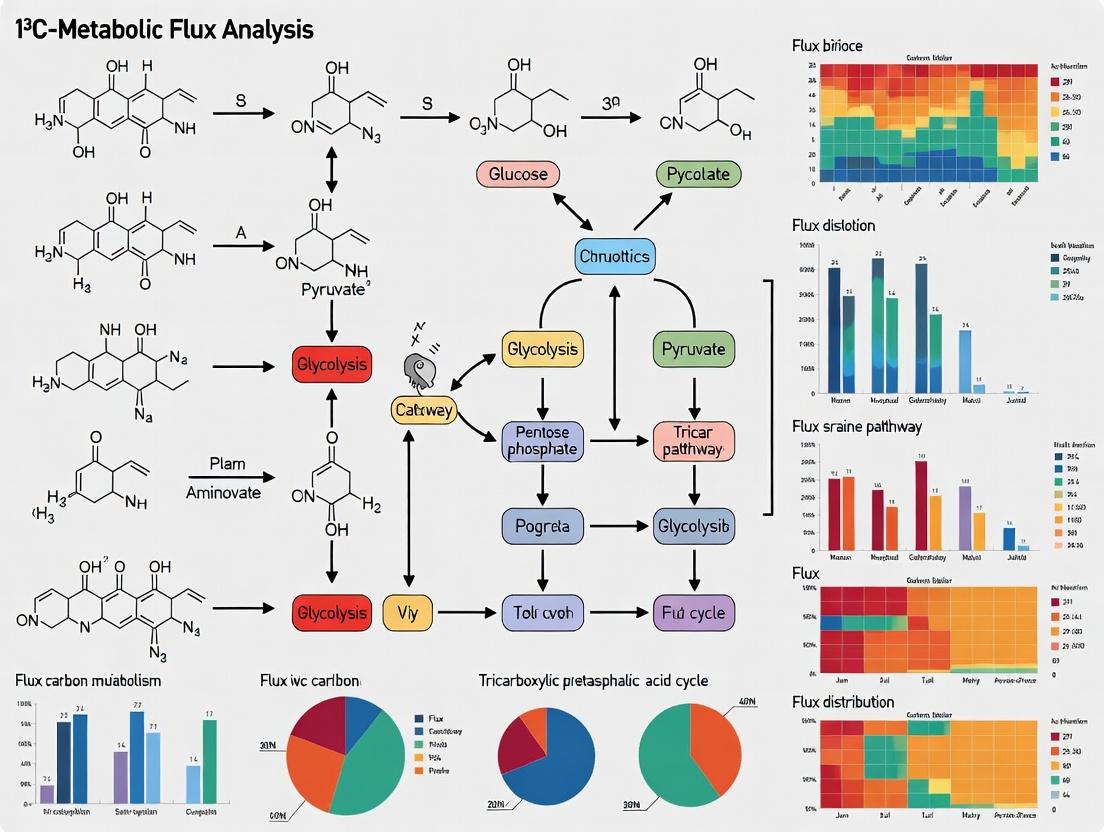
This comprehensive guide explores 13C Metabolic Flux Analysis (13C-MFA) as a critical tool for elucidating the intricate metabolic networks of mammalian cell cultures.
13C-MFA in Mammalian Cell Culture: Advanced Metabolic Flux Analysis for Bioproduction and Disease Research
Abstract
This comprehensive guide explores 13C Metabolic Flux Analysis (13C-MFA) as a critical tool for elucidating the intricate metabolic networks of mammalian cell cultures. Targeting researchers and bioprocessing professionals, we cover foundational principles, cutting-edge experimental and computational methodologies, and practical troubleshooting. We detail how 13C-MFA drives the optimization of cell culture media for biotherapeutic production, investigates cancer metabolism, and validates metabolic models. By comparing it to other omics techniques, this article provides a roadmap for implementing 13C-MFA to gain quantitative, systems-level insights into cellular physiology for advanced biomedical and industrial applications.
Unraveling Cellular Metabolism: The Core Principles and Power of 13C-MFA
Understanding cellular metabolism is fundamental to biotechnology and therapeutic development. While measuring static metabolite concentrations (the "pool") provides a snapshot, it fails to capture the dynamic activity—the flux—through metabolic pathways. This is especially critical in mammalian cell culture, where metabolic rewiring impacts bioproduction yield, cell growth, and therapeutic protein quality. 13C Metabolic Flux Analysis (13C-MFA) has become the gold standard for quantifying these in vivo reaction rates, providing a systems-level view that static pools cannot.
The table below contrasts the information obtained from static metabolomics versus dynamic flux analysis.
Table 1: Static Metabolite Pools vs. Metabolic Fluxes
| Aspect | Static Metabolomics (Pool Size) | 13C-MFA (Metabolic Flux) |
|---|---|---|
| Primary Measurement | Concentration (μmol/gDW) | Reaction Rate (nmol/gDW/h) |
| Temporal Context | Single time point snapshot | Integrated rate over time |
| Information Gained | Metabolic state/accumulation | Pathway activity, bottlenecks |
| Reversibility | Cannot infer | Quantifies net & exchange fluxes |
| System Insight | Correlation | Causality & regulation |
| Example in CHO cells | High lactate concentration | High glycolytic flux vs. low TCA flux |
Core Protocol: 13C-MFA in Mammalian Cell Culture
The following is a generalized protocol for a 13C-MFA experiment using CHO or HEK293 cells.
Protocol 1: Steady-State 13C Tracer Experiment and LC-MS Analysis
Objective: To quantify central carbon metabolic fluxes in adherent mammalian cells using [U-13C]glucose.
Materials & Reagents:
- Cell line of interest (e.g., CHO-S, HEK293).
- Custom 13C-labeled tracer (e.g., [U-13C6]glucose).
- Glucose- and glutamine-free base culture medium (e.g., DMEM).
- Dialyzed fetal bovine serum (dFBS).
- LC-MS system (e.g., Q-Exactive Orbitrap) with a HILIC column (e.g., ZIC-pHILIC).
- Software: Isotopologue Spectral Analysis (ISOCSIM), INCA, or 13CFLUX2.
Procedure:
- Preparation: Cultivate cells in standard medium to desired confluency. Wash cells twice with PBS.
- Tracer Pulse: Replace medium with identical medium containing 100% [U-13C6]glucose as the sole carbon source. Ensure biological replicates.
- Steady-State Incubation: Incubate cells for a duration exceeding 2-3 cell doublings (typically 24-72h) to achieve isotopic steady state in intracellular metabolites.
- Quenching & Extraction: At experiment end, rapidly aspirate medium and quench metabolism with cold (-20°C) 40:40:20 methanol:acetonitrile:water. Scrape cells, vortex, and centrifuge. Collect supernatant.
- LC-MS Analysis: Dry extracts and reconstitute in MS-compatible solvent. Analyze using HILIC-MS in negative ion mode. Acquire high-resolution mass spectra to resolve 13C isotopologues.
- Data Processing: Integrate peaks for key metabolite mass isotopomer distributions (MIDs). Correct for natural isotope abundance.
- Flux Estimation: Input corrected MIDs, extracellular uptake/secretion rates, and a genome-scale metabolic model into flux analysis software (e.g., INCA). Use computational algorithms to find the flux map that best fits the isotopic labeling data.
Table 2: Key Research Reagent Solutions for 13C-MFA
| Item | Function in 13C-MFA |
|---|---|
| [U-13C6]Glucose | Primary tracer to label glycolytic and TCA cycle intermediates; enables flux resolution. |
| Dialyzed FBS | Removes unlabeled small molecules (e.g., glucose, amino acids) that would dilute the tracer signal. |
| HILIC Chromatography Column | Separates polar, hydrophilic central carbon metabolites for MS analysis. |
| Isotopologue Analysis Software (INCA, 13CFLUX2) | Platform for metabolic network modeling, simulation, and non-linear parameter fitting to estimate fluxes. |
| Quadrupole-Orbitrap Mass Spectrometer | Provides high mass resolution and accuracy required to distinguish 13C isotopologues. |
Visualizing the 13C-MFA Workflow and Metabolic Networks
13C-MFA Experimental and Computational Workflow
Key Central Carbon Pathways and Measurable Fluxes
The flux map generated from 13C-MFA reveals the functional phenotype, distinguishing, for instance, high glycolytic flux coupled with low oxidative phosphorylation (Warburg effect) from a more efficient oxidative metabolism—a insight impossible from static lactate concentrations alone. This quantitative framework is indispensable for rational cell line engineering, bioprocess optimization, and understanding metabolic dysregulation in disease.
In the broader thesis on ¹³C-Metabolic Flux Analysis (13C-MFA) for mammalian cell culture studies, the application of 13C-labeled tracers is foundational. This technique allows for the quantitative dissection of intracellular metabolic flux distributions, moving beyond static snapshots of metabolite concentrations to a dynamic understanding of pathway activity. In biopharmaceutical development, this is critical for optimizing cell culture processes for recombinant protein (e.g., monoclonal antibodies) or viral vector production, where metabolic efficiency directly impacts yield, quality, and cost. These Application Notes detail the practical protocols and considerations for deploying 13C tracers to map carbon flow through central carbon metabolism (glycolysis, pentose phosphate pathway, TCA cycle).
Core Principles and Tracer Selection
The principle involves introducing a 13C-labeled substrate (e.g., [1,2-¹³C]glucose) into the culture medium. As cells metabolize this substrate, the 13C atoms are incorporated into metabolic intermediates and products, creating unique isotopic labeling patterns (isotopomers). These patterns are measured via Mass Spectrometry (MS) or Nuclear Magnetic Resonance (NMR), and computational models are used to infer the metabolic fluxes that best explain the observed data.
Table 1: Common 13C-Labeled Tracers and Their Informative Value in Mammalian Cell Culture
| Tracer Compound | Label Position | Primary Metabolic Pathways Interrogated | Key Flux Information Obtainable |
|---|---|---|---|
| Glucose | [1,2-¹³C] | Glycolysis, PPP, TCA (via pyruvate) | Glycolytic rate, PPP split, anaplerosis, pyruvate metabolism |
| Glucose | [U-¹³C] (Uniformly labeled) | All central metabolism | Comprehensive network fluxes, but complex data analysis |
| Glutamine | [U-¹³C] | TCA cycle (via α-KG), glutaminolysis | Glutamine uptake, contribution to TCA cycle (anaplerosis), reductive metabolism |
| Glutamine | [5-¹³C] | TCA cycle | Specific labeling of TCA cycle intermediates |
| Glucose + Glutamine | [1,2-¹³C]Glc + [U-¹³C]Gln | Parallel labeling experiments | Disambiguation of glucose vs. glutamine contributions to TCA cycle |
Detailed Application Notes & Protocols
Protocol 3.1: Design and Execution of a 13C-Tracer Experiment for Suspension HEK-293 Cells
Aim: To determine the metabolic flux distribution in HEK-293 cells producing a recombinant protein during exponential growth phase.
I. Pre-Experiment Planning & Cell Preparation
- Cell Line: HEK-293 suspension cells.
- Culture Medium: Use a custom, chemically defined medium where the carbon sources (e.g., glucose, glutamine) can be precisely substituted.
- Pre-Culture: Maintain cells for at least 5-6 passages in an adaptation medium identical to the experimental medium but with natural abundance (12C) substrates to ensure metabolic steady-state.
- Steady-State Requirement: Ensure cells are in balanced, exponential growth (constant growth rate, metabolite concentrations) prior to tracer pulse.
II. Tracer Pulse and Sampling
- Tracer Medium Preparation: Prepare fresh medium where 100% of the natural glucose is replaced with [1,2-¹³C]glucose. Filter sterilize (0.22 µm).
- Inoculation: Harvest pre-cultured cells, centrifuge (300 x g, 5 min), and wash once with PBS to remove residual natural-abundance nutrients. Resuspend cells in the tracer medium at a viable cell density (VCD) of ~0.5 x 10⁶ cells/mL in a shake flask.
- Incubation: Place flask in a controlled incubator (37°C, 5% CO₂, 120 rpm). This is the time = 0 of the tracer experiment.
- Sampling Time Points: Collect samples at multiple time points (e.g., 0, 15, 30, 60, 120, 360 minutes) post-inoculation to capture isotopic transients.
- Sample Collection & Quenching:
- Quickly withdraw a known volume of culture (e.g., 5-10 mL).
- For extracellular metabolites (metabolomics): Immediately filter 1 mL through a 0.45 µm syringe filter, collect filtrate, and store at -80°C.
- For intracellular metabolites & labeling analysis:
- Rapidly quench metabolism by injecting the cell suspension into 40 mL of pre-chilled (-40°C) 60% methanol/water solution.
- Centrifuge at high speed (4000 x g, 5 min, -20°C). Discard supernatant.
- Wash pellet with cold 80% methanol.
- Extract metabolites using a cold methanol/water/chloroform protocol.
- Dry the aqueous extract under nitrogen gas and store at -80°C until analysis.
III. Analytical Measurements
- Cell Growth & Metabolites: Track VCD, viability, and concentrations of key metabolites (glucose, lactate, ammonia, amino acids) in the spent medium using a bioanalyzer or HPLC.
- Mass Isotopomer Distribution (MID) Analysis:
- Derivatization: Derivatize dried intracellular extracts (e.g., for TCA intermediates and amino acids using tert-butyldimethylsilyl (TBDMS) reagents).
- Instrument: Gas Chromatography-Mass Spectrometry (GC-MS).
- Method: Use electron impact ionization and selected ion monitoring (SIM) to detect the mass isotopologue distributions of key fragment ions (e.g., m/z for Ala, Ser, Glu, Asp).
Protocol 3.2: Data Processing for 13C-MFA
- Calculate Consumption/Production Rates: From extracellular data, calculate specific uptake/production rates (e.g., qGluc, qLac, qGln) in mmol/10⁹ cells/day.
- Extract MIDs: From GC-MS spectra, correct for natural isotope abundances using software (e.g., IsoCorrectorR) to obtain the true 13C-labeling distributions.
- Flux Estimation: Use specialized 13C-MFA software (e.g., INCA, 13CFLUX2, or a MATLAB-based tool).
- Define a stoichiometric metabolic network model for your cell line.
- Input the measured extracellular fluxes and the corrected MIDs.
- The software performs an iterative least-squares regression to find the set of intracellular metabolic fluxes that best fit the experimental data.
- Perform statistical analysis (e.g., χ²-test, Monte Carlo simulations) to evaluate goodness-of-fit and calculate confidence intervals for each estimated flux.
The Scientist's Toolkit
Table 2: Essential Research Reagent Solutions for 13C-Tracer Experiments
| Item | Function & Critical Notes |
|---|---|
| [1,2-¹³C]Glucose (99% atom purity) | Primary tracer for mapping glycolytic and PPP flux into the TCA cycle. High purity is essential to avoid confounding signals. |
| [U-¹³C]Glutamine (99% atom purity) | Tracer for quantifying glutaminolysis and its contribution to TCA cycle anaplerosis. Must be prepared in stable, pH-buffered solution, as it degrades in aqueous media. |
| Chemically Defined, Protein-Free Medium | Eliminates interference from unlabeled carbon sources (e.g., serum). Allows precise control of substrate concentrations. |
| Pre-chilled (-40°C) 60% Methanol/Water Quenching Solution | Instantly halts enzymatic activity to "freeze" the in vivo metabolic state for intracellular measurement. Temperature is critical. |
| Derivatization Reagent (e.g., MTBSTFA with 1% TBDMS) | Used in GC-MS sample prep to volatilize polar metabolites (organic acids, amino acids) for gas chromatography separation. |
| Isotopic Natural Abundance Correction Software | Essential to deconvolute the signal from the tracer (13C) from background natural abundance isotopes (e.g., ²H, ¹⁷O, ¹⁸O, ²⁹Si, ³⁰Si) introduced during derivatization. |
| 13C-MFA Software Suite (e.g., INCA) | Computational platform for constructing metabolic models, integrating experimental data, performing flux estimation, and statistical validation. |
Visualization of Workflows and Pathways
Application Notes: 13C-MFA in Mammalian Cell Culture
13C-Metabolic Flux Analysis (13C-MFA) is a cornerstone technique for quantifying intracellular metabolic fluxes in living cells. Within mammalian cell culture systems—critical for biopharmaceutical production and disease modeling—understanding the interplay of core metabolic networks is essential. This protocol details the application of 13C-MFA to analyze glycolysis, the TCA cycle, the pentose phosphate pathway (PPP), and amino acid metabolism in CHO or HEK-293 cell cultures. Recent advancements highlight the integration of LC-MS/MS for isotopomer analysis and genome-scale metabolic models (GEMs) for constraint-based reconciliation, providing unprecedented resolution of metabolic adaptations to nutrient availability or recombinant protein production.
Table 1: Key Fluxes Resolved in Central Carbon Metabolism of Cultured HEK-293 Cells
| Metabolic Pathway | Key Flux (nmol/µg protein/hr) | Condition (Glucose: 25 mM) | Notes |
|---|---|---|---|
| Glycolysis | Glucose uptake: 120 ± 15 | Batch culture, mid-exponential phase | Major carbon entry point. |
| Pentose Phosphate Pathway (Oxidative) | G6PDH flux: 18 ± 3 | Same as above | Provides NADPH and ribose-5-P. |
| TCA Cycle | Citrate synthase flux: 85 ± 10 | Same as above | Can exhibit glutamine-dependent anaplerosis. |
| Anaplerosis (Pyruvate → OAA) | PC flux: 12 ± 4 | Fed-batch, low glucose | Pyruvate carboxylase activity varies. |
| Glutaminolysis | Glutamine uptake: 45 ± 8 | Batch culture, mid-exponential phase | Major anaplerotic substrate. |
Table 2: Common 13C-Labeled Tracers and Their Informative Pathways
| Tracer Compound | Label Position | Primary Pathways Informed | Rationale |
|---|---|---|---|
| [1,2-13C]Glucose | C1, C2 | PPP, Glycolysis, TCA Cycle | Distinguishes oxidative PPP flux. |
| [U-13C]Glutamine | Uniform | TCA Cycle, Amino Acid Metabolism | Traces glutamine-derived carbon entry. |
| [5-13C]Glutamine | C5 | TCA Cycle (α-KG entry) | Specific label for reductive TCA flux analysis. |
Protocols
Protocol 1: Cell Culture and 13C-Tracer Experiment
Objective: To introduce a 13C-labeled substrate into the metabolic network of adherent mammalian cells for subsequent flux analysis. Materials:
- Mammalian cells (e.g., CHO-S, HEK-293)
- Custom 13C-labeled substrate (e.g., [U-13C]glucose)
- Dulbecco’s Modified Eagle Medium (DMEM), lacking natural glucose or glutamine as appropriate
- Bioreactor or T-flasks/well plates
- PBS (Phosphate Buffered Saline), pre-warmed
- Trypsin-EDTA solution
Procedure:
- Culture cells to 70-80% confluence in standard medium.
- Wash cells twice with pre-warmed PBS to remove residual unlabeled nutrients.
- Rapidly replace medium with tracer medium containing the 13C-labeled substrate at physiological concentration (e.g., 25 mM [U-13C]glucose in glucose-free DMEM, supplemented with 10% dialyzed FBS).
- Incubate cells for a defined metabolic steady-state period (typically 24-48 hours for slow-growing lines, or until mid-exponential phase). Ensure metabolic and isotopic steady-state is reached.
- At harvest, rapidly aspirate medium, wash cells twice with cold PBS, and quench metabolism immediately with liquid nitrogen. Store pellet at -80°C for extraction.
Protocol 2: Metabolite Extraction and LC-MS/MS Sample Preparation
Objective: To extract intracellular metabolites and prepare them for mass spectrometric analysis of 13C isotopologue distributions. Materials:
- 80% (v/v) HPLC-grade methanol/H2O, chilled to -20°C
- Acetonitrile
- Centrifuge and microcentrifuge tubes
- Nitrogen evaporator
- Derivatization agent (e.g., Methoxyamine hydrochloride in pyridine, TBDMS for GC-MS)
Procedure:
- To the frozen cell pellet, add 1 mL of chilled 80% methanol. Vortex vigorously for 60 seconds.
- Sonicate on ice for 5 minutes, then incubate at -20°C for 1 hour.
- Centrifuge at 16,000 x g for 15 minutes at 4°C to pellet proteins and cell debris.
- Transfer the supernatant (containing polar metabolites) to a new tube. Evaporate to dryness under a gentle stream of nitrogen.
- For LC-MS/MS (targeting glycolytic/TCA intermediates): Reconstitute the dry extract in 100 µL of H2O:acetonitrile (95:5). Centrifuge and transfer to an LC vial.
- For GC-MS (broader profiling): Derivatize the dry extract with 20 µL of methoxyamine hydrochloride (20 mg/mL in pyridine) for 90 min at 37°C, followed by 80 µL of MSTFA (N-Methyl-N-(trimethylsilyl)trifluoroacetamide) for 30 min at 37°C.
Protocol 3: Flux Estimation Using Computational Modeling
Objective: To calculate net metabolic fluxes from measured mass isotopomer distributions (MIDs). Materials:
- Software: INCA (Isotopomer Network Compartmental Analysis), COBRApy, or similar.
- Measured MIDs for key metabolites (e.g., lactate, alanine, citrate, malate).
- Network stoichiometric model (e.g., a curated model of mammalian central carbon metabolism).
- Constraints: Measured substrate uptake and secretion rates.
Procedure:
- Construct a stoichiometric model encompassing glycolysis, PPP, TCA cycle, and relevant amino acid exchanges.
- Input the measured extracellular rates (e.g., glucose consumption, lactate production) as constraints.
- Input the experimentally determined MIDs for intracellular metabolites.
- Use the software to perform least-squares regression, iteratively simulating MIDs and adjusting fluxes until the best fit between simulated and experimental MIDs is achieved.
- Perform statistical goodness-of-fit analysis (e.g., χ2-test) and generate confidence intervals for each estimated flux via parameter continuation.
The Scientist's Toolkit: Research Reagent Solutions
Table 3: Essential Reagents for 13C-MFA in Mammalian Systems
| Item | Function in 13C-MFA | Example/Supplier Note |
|---|---|---|
| 13C-Labeled Substrates | Tracers for metabolic pathway labeling. | Cambridge Isotope Laboratories; >99% isotopic purity recommended. |
| Dialyzed Fetal Bovine Serum (FBS) | Removes small molecules (e.g., unlabeled glucose/glutamine) that would dilute tracer. | Gibco, Thermo Fisher Scientific. |
| Glucose- and Glutamine-Free DMEM | Custom medium base for precise tracer control. | Custom formulation or from suppliers like Sigma-Aldrich. |
| LC-MS/MS System | High-resolution analysis of metabolite isotopologues. | Q-Exactive Orbitrap (Thermo) or similar triple quadrupole systems. |
| Quenching Solution (Cold Methanol) | Rapidly halts enzymatic activity to capture metabolic state. | Must be chilled to -20°C or lower for effective quenching. |
| Metabolic Flux Analysis Software | Computes fluxes from isotopomer data and network models. | INCA (Metabolic Flux Analysis LLC), COBRA Toolbox. |
| Genome-Scale Metabolic Model | Provides stoichiometric framework for flux estimation. | Recon3D for human, CHO genome-scale models (e.g., CHO-K1). |
Visualizations
This application note details the computational pipeline essential for 13C-Metabolic Flux Analysis (13C-MFA) in mammalian cell culture, a core methodology for elucidating metabolic network fluxes in biopharmaceutical production and disease modeling. The framework transforms raw analytical data into quantitative flux maps, enabling hypothesis-driven research in cell metabolism.
Core Computational Workflow & Protocol
Protocol 2.1: Integrated 13C-MFA Computational Pipeline
Step 1: Experimental Design & Tracer Selection.
- Objective: Choose appropriate 13C-labeled substrate (e.g., [1,2-13C]glucose, [U-13C]glutamine) to target specific pathways of interest.
- Method: Cultivate mammalian cells (e.g., CHO, HEK293) in controlled bioreactors with the tracer substrate. Quench metabolism at mid-exponential phase and extract intracellular metabolites.
Step 2: Mass Spectrometry (MS) Data Acquisition.
- Objective: Measure isotopic labeling patterns (Mass Isotopomer Distributions - MIDs) of proteinogenic amino acids or intracellular metabolites.
- Method: Analyze derivatized samples via GC-MS or LC-MS. Use protocols ensuring linearity in detection and minimal natural isotope correction error.
Step 3: Data Processing & Correction.
- Objective: Convert raw MS spectra into accurate MIDs.
- Method: Use software (e.g., IsoCor, MIDmax) to correct for natural abundance of 13C, 2H, 15N, 18O, 29Si, and instrumental background. Validate correction with standards.
Step 4: Metabolic Network Model Construction.
- Objective: Define a stoichiometric model encompassing central carbon metabolism (glycolysis, TCA cycle, pentose phosphate pathway, etc.).
- Method: Assemble reaction network in modeling platforms (e.g., INCA, 13CFLUX2, OpenFLUX) specifying atom transitions for the chosen tracer.
Step 5: Flux Estimation & Statistical Analysis.
- Objective: Find the set of metabolic fluxes that best fit the experimentally measured MIDs.
- Method: Employ non-linear least-squares regression to minimize the difference between simulated and measured MIDs. Apply chi-squared statistical test for goodness-of-fit and perform Monte Carlo simulations for flux confidence interval estimation.
Step 6: Result Interpretation & Visualization.
- Objective: Generate a comprehensible flux map and perform sensitivity analysis (e.g., flux variability analysis).
- Method: Visualize net and exchange fluxes on a pathway map. Compare flux distributions under different genetic or environmental perturbations.
Diagram Title: 13C-MFA Computational Framework Workflow
Table 1: Representative 13C-MFA Flux Results in CHO Cells Under Different Culture Conditions
| Metabolic Flux (nmol/(10^6 cells·hr)) | Glucose-Limited Fed-Batch | Glutamine-Limited Fed-Batch | Batch (High Glucose) | Comments |
|---|---|---|---|---|
| Glycolysis (GLC → PYR) | 120 ± 15 | 95 ± 12 | 350 ± 40 | Major carbon flow pathway |
| TCA Cycle (Net Flux) | 25 ± 4 | 35 ± 5 | 80 ± 10 | Higher under batch conditions |
| Pentose Phosphate Pathway (Oxidative) | 8 ± 2 | 12 ± 3 | 15 ± 3 | NADPH production for biosynthesis |
| Lactate Production | 180 ± 20 | 60 ± 8 | 600 ± 70 | Significant overflow in batch |
| ATP Turnover | 850 ± 100 | 720 ± 90 | 1100 ± 130 | Estimated from flux balance |
Note: Data is illustrative, synthesized from current literature on CHO cell metabolism. Actual values are system-dependent.
The Scientist's Toolkit: Key Research Reagent Solutions
Table 2: Essential Materials for 13C-MFA in Mammalian Cell Culture
| Item | Function & Importance in 13C-MFA |
|---|---|
| U-13C or Position-Specific 13C-Labeled Substrates (e.g., [U-13C]glucose, [1,2-13C]glucose, [U-13C]glutamine) | Essential tracers for introducing isotopic label into metabolism. Purity (>99% 13C) is critical for accurate MID determination. |
| Customized, Chemically Defined Cell Culture Media | Enables precise control of nutrient concentrations and exclusive use of the chosen tracer, avoiding unlabeled carbon sources. |
| Metabolite Extraction Solvents (e.g., cold Methanol/Water/Chloroform mixtures) | Quench metabolism instantly and efficiently extract polar intracellular metabolites for MS analysis. |
| Derivatization Reagents (e.g., MTBSTFA for GC-MS, Chloroformate for LC-MS) | Chemically modify metabolites to improve volatility (GC-MS) or ionization (LC-MS) for sensitive detection of isotopologues. |
| Isotopic Standard Mixes (e.g., Uniformly 13C-labeled amino acid mixes) | Used for validating MS instrument response, correcting for natural isotopes, and quantifying absolute metabolite levels. |
| 13C-MFA Software Suite (e.g., INCA, 13CFLUX2, IsoCor, OpenMFA) | Computational core for data correction, model construction, flux estimation, and statistical analysis. |
| Stable Isotope-Labeled Internal Standards (SIL-IS) for LC-MS | Added during extraction for absolute quantification of metabolite pool sizes, a critical parameter for accurate flux estimation. |
Diagram Title: Core Metabolic Pathways & 13C-Label Input
Application Notes
Thesis Context: This work is framed within a broader thesis on the application of 13C Metabolic Flux Analysis (13C-MFA) in mammalian cell culture metabolic studies. 13C-MFA is a cornerstone technique for quantifying intracellular metabolic reaction rates, providing critical insights for the three interconnected fields below.
Biopharmaceutical Cell Line Development
The primary goal is to engineer mammalian host cells (e.g., CHO, HEK293) for high-yield, high-quality therapeutic protein production. Metabolic bottlenecks, such as oxidative stress, lactate accumulation, and ammonia production, limit titers and affect product glycosylation. 13C-MFA is deployed to map the metabolic network of high-producing clones, identifying shifts in central carbon metabolism that correlate with desirable phenotypes.
Key Quantitative Findings from Recent Studies: Table 1: Metabolic Flux Shifts in High-Producing Clones vs. Low Producers
| Metabolic Pathway/Parameter | Low-Producing Clone | High-Producing Clone | Measurement Technique |
|---|---|---|---|
| Glycolytic Flux (pmol/cell/day) | 12.5 ± 1.2 | 8.7 ± 0.9 | 13C-MFA ([1-13C]Glucose) |
| TCA Cycle Flux (pmol/cell/day) | 4.1 ± 0.5 | 6.8 ± 0.7 | 13C-MFA ([U-13C]Glucose) |
| Lactate Yield (mol/mol Glc) | 1.6 ± 0.2 | 0.4 ± 0.1 | Extracellular Metabolite Analysis |
| Specific Productivity (pg/cell/day) | 15 | 45 | Product Titer Assay |
| Mitochondrial Membrane Potential (ΔΨm) | 100% (baseline) | 145% ± 12% | JC-1 Dye Fluorescence |
Cancer Metabolism & Nutrient Addiction
Cancer cells reprogram their metabolism to support rapid proliferation. A hallmark is "nutrient addiction," such as the dependence on glutamine for anaplerosis and nitrogen biosynthesis. 13C-MFA quantifies these dependencies, revealing flux through alternate pathways like reductive glutaminolysis in hypoxia. Targeting these addicted pathways is a promising therapeutic strategy.
Key Quantitative Findings from Recent Studies: Table 2: Metabolic Flux Profiles in Cancer Cell Lines Under Nutrient Stress
| Cell Line / Condition | Glutaminolysis Flux | Glycolytic Flux | PPP Flux (Oxidative) | Serine Biosynthesis Flux | Reference |
|---|---|---|---|---|---|
| ASNS-Low NSCLC (-Gln) | 0.05 ± 0.01 | 32 ± 3 | 2.1 ± 0.3 | 0.8 ± 0.1 | 13C-MFA (2023) |
| ASNS-High NSCLC (-Gln) | 1.8 ± 0.2 | 28 ± 2 | 1.8 ± 0.2 | 0.3 ± 0.05 | 13C-MFA (2023) |
| Pancreatic PDAC (Normoxia) | 12.5 ± 1.5 | 25 ± 2 | N/A | N/A | 13C-MFA (2024) |
| Pancreatic PDAC (Hypoxia) | 18.7 ± 2.1* | 41 ± 4* | N/A | N/A | 13C-MFA (2024) |
*Indicates reductive carboxylation flux is dominant.
Intersection: Nutrient Strategies for Bioproduction
Concepts from cancer metabolism, such as glutamine addiction, inform fed-batch media design. Limiting specific nutrients can force cells into a more efficient metabolic state, reducing waste products. 13C-MFA guides the rational development of these feeding strategies.
Experimental Protocols
Protocol 1: 13C-MFA Workflow for Mammalian Cells in Bioreactors
Objective: To quantify intracellular metabolic fluxes in a CHO cell bioprocess.
I. Tracer Experiment & Sampling
- Culture Setup: Inoculate CHO-S cells in a 2L bioreactor with standard proprietary media. Maintain controlled parameters (pH 7.0, DO 40%, 36.5°C).
- Tracer Pulses: At mid-exponential phase (VCD ~6e6 cells/mL), rapidly switch the influent feed to an otherwise identical medium containing:
- Condition A: 100% [U-13C6] Glucose (for glycolysis/TCA).
- Condition B: 100% [U-13C5] Glutamine (for glutaminolysis).
- Sampling: Take triplicate samples at t=0 (pre-pulse), 15, 30, 60, 120, and 300 seconds post-pulse for intracellular metabolites. Take parallel samples for extracellular metabolites and cell count.
II. Metabolite Extraction & Analysis
- Quenching & Extraction: Rapidly filter cell culture (5 mL) under vacuum, wash with 5 mL 0.9% NaCl (4°C), and immediately immerse filter in 3 mL -20°C 40:40:20 Methanol:Acetonitrile:Water with 0.1% Formic Acid. Sonicate on ice for 5 min.
- LC-MS Analysis:
- System: UHPLC coupled to high-resolution Q-TOF mass spectrometer.
- Column: HILIC column (e.g., Waters BEH Amide).
- Mobile Phase: A) 95:5 Water:Acetonitrile + 20mM Ammonium Acetate; B) Acetonitrile. Gradient elution.
- MS: Negative and Positive ESI modes, full scan + targeted MS/MS for 13C isotopologues.
III. Flux Calculation
- Data Processing: Use software (e.g., SIMCA, MATLAB) to integrate peak areas and correct for natural isotope abundances.
- Model Construction: Build a stoichiometric model of CHO central metabolism (Glycolysis, PPP, TCA, Amino Acid metabolism) in a flux analysis platform (e.g., INCA, 13CFLUX2).
- Flux Estimation: Fit the model to the measured 13C Mass Isotopomer Distributions (MIDs) of key metabolites (e.g., lactate, alanine, citrate, malate, aspartate) using least-squares regression to obtain net and exchange flux maps.
Protocol 2: Assessing Glutamine Addiction in Cancer Cells
Objective: To quantify metabolic adaptation to glutamine deprivation in non-small cell lung cancer (NSCLC) cells.
- Cell Preparation: Seed isogenic ASNS-low and ASNS-high NSCLC cells in 6-well plates in complete medium. At 70% confluence, wash twice with PBS and switch to glutamine-free medium supplemented with 10% dialyzed FBS and 4.5 g/L [U-13C5] Glucose.
- Incubation & Harvest: Incubate for 24 hours. Quench metabolism with dry ice-cooled 80% methanol. Scrape cells, transfer to Eppendorf tubes, and centrifuge (15,000g, 10 min, -9°C).
- Metabolite Analysis: Dry supernatant under nitrogen, reconstitute in LC-MS solvent. Analyze via HILIC-MS as in Protocol 1.
- Data Interpretation: Calculate MIDs of TCA cycle intermediates (citrate, α-ketoglutarate, succinate, malate). A high enrichment in m+4 citrate indicates reliance on glucose-derived glutaminolysis. Compare flux distributions between cell lines using INCA software.
Visualizations
Title: 13C-MFA Experimental and Computational Workflow
Title: Cancer Cell Glutamine Addiction and ASNS Role
The Scientist's Toolkit
Table 3: Essential Research Reagents & Materials for 13C-MFA Studies
| Item | Function & Application |
|---|---|
| [U-13C6] Glucose | Tracer for mapping glycolysis, PPP, and oxidative TCA cycle fluxes. Fundamental for most 13C-MFA experiments. |
| [U-13C5] Glutamine | Tracer for quantifying glutaminolysis, reductive carboxylation, and nitrogen metabolism. Critical for cancer metabolism studies. |
| HILIC Chromatography Column | Enables separation of polar intracellular metabolites (e.g., sugar phosphates, organic acids, amino acids) for MS analysis. |
| High-Resolution Mass Spectrometer (Q-TOF/Orbitrap) | Accurately resolves and quantifies 13C isotopologues with minimal interference, essential for precise MID determination. |
| INCA (Isotopomer Network Compartmental Analysis) Software | Industry-standard software platform for building metabolic models and estimating fluxes from 13C-MFA data. |
| Dialyzed Fetal Bovine Serum (FBS) | Removes small molecules (e.g., glucose, amino acids) to ensure defined tracer composition in cell culture media. |
| Cellular Quenching Solution (Cold Methanol:ACN:Water) | Instantly halts metabolic activity to provide a snapshot of intracellular metabolite levels at time of sampling. |
A Step-by-Step Guide: Designing, Executing, and Applying 13C-MFA Experiments
Within the framework of 13C-Metabolic Flux Analysis (13C-MFA) for mammalian cell culture, the strategic selection of isotopic tracers is paramount for elucidating the intricate network of central carbon metabolism. This application note details the use of [1,2-13C]glucose, [U-13C]glutamine, and mixed tracer approaches to resolve specific metabolic pathways, quantify fluxes, and investigate metabolic plasticity in contexts such as bioprocessing and cancer research.
Tracer Selection Rationale and Quantitative Comparison
Table 1: Key Tracer Properties and Applications
| Tracer | Labeling Pattern | Primary Metabolic Pathways Probed | Key Resolved Fluxes | Typical Concentration in Culture |
|---|---|---|---|---|
| [1,2-13C]Glucose | Carbons 1 & 2 13C labeled | Glycolysis, Pentose Phosphate Pathway (PPP), Pyruvate metabolism | Glycolytic vs. PPP flux, Pyruvate carboxylase (PC) vs. dehydrogenase (PDH) activity | 5-10 mM (in glucose-free base media) |
| [U-13C]Glutamine | All 5 carbons 13C labeled | TCA Cycle, Anaplerosis, Glutaminolysis, Reductive carboxylation | Glutaminolysis flux, TCA cycle turnover, GOGAT vs. GLUD activity | 2-4 mM (in glutamine-free base media) |
| Mixed Tracer (e.g., [1,2-13C]Glc + [U-13C]Gln) | Combined patterns | Parallel pathway interactions, Compartmentalized metabolism | Absolute fluxes through converging nodes (e.g., mitochondrial vs. cytosolic acetyl-CoA) | As above, in combination |
Table 2: Resulting Mass Isotopomer Patterns for Key Metabolites
| Metabolite | Tracer: [1,2-13C]Glucose | Tracer: [U-13C]Glutamine | Mixed Tracer Key Distinction |
|---|---|---|---|
| Lactate | M+1, M+2 from glycolytic flux | Unlabeled via glycolysis | Distinguishes glycolytic (from Glc) vs. other sources |
| Pyruvate | M+2 (from glycolysis) | Unlabeled | - |
| Acetyl-CoA | M+2 (via PDH), M+0 (via PC) | M+2 (from glutamine via ACLY/PDH) | Resolves mitochondrial (from Gln/PDH) vs. cytosolic (from Glc/ACLY) pools |
| Citrate | M+2 (from Ac-CoA M+2), M+0 | M+4, M+5 (from TCA cycling) | Enables estimation of reductive carboxylation flux (M+5 citrate from Gln) |
| Malate | M+2, M+3 | M+4 | Differentiates OAA sources for TCA vs. aspartate synthesis |
| Aspartate | M+2, M+3 | M+4 | Serves as a reporter for mitochondrial TCA cycle labeling |
Detailed Experimental Protocols
Protocol 1: Tracer Experiment Setup for Adherent Mammalian Cells
Objective: To introduce isotopic tracers and harvest metabolites for 13C-MFA. Materials: See "Scientist's Toolkit" below. Procedure:
- Pre-culture: Grow cells (e.g., HEK293, CHO, MCF-7) to 70-80% confluence in standard growth medium.
- Wash: Aspirate medium. Gently rinse cell monolayer twice with 5 mL of pre-warmed, isotope-free Tracer Base Medium (containing all unlabeled nutrients except the one to be traced).
- Tracer Medium Application: Add pre-warmed tracer medium containing the specified concentration of [1,2-13C]glucose, [U-13C]glutamine, or a defined mixture.
- Incubation: Incubate cells under standard conditions (37°C, 5% CO2) for a defined period (typically 12-48 hours, optimized to reach isotopic steady-state for intracellular metabolites).
- Rapid Quenching & Extraction: a. At time point, quickly aspirate medium (save for extracellular flux analysis) and immediately add 2 mL of ice-cold 80% methanol/water (-20°C) to the dish. b. Scrape cells on dry ice. Transfer suspension to a pre-cooled tube. c. Add 1 mL of ice-cold chloroform. Vortex for 30 seconds. d. Centrifuge at 14,000 x g for 15 min at 4°C. The upper aqueous layer contains polar metabolites for GC-MS.
- Sample Preparation: Dry the aqueous extract under a gentle nitrogen stream. Derivatize using 20 µL of methoxyamine hydrochloride (15 mg/mL in pyridine, 90 min, 37°C) followed by 30 µL of MSTFA (N-Methyl-N-(trimethylsilyl)trifluoroacetamide) with 1% TMCS (60 min, 37°C).
Protocol 2: GC-MS Data Acquisition for 13C-Labeling
Objective: To measure mass isotopomer distributions (MIDs) of proteinogenic amino acids and metabolic intermediates. Instrument: Gas Chromatograph coupled to a Mass Spectrometer (GC-MS). Method:
- GC Parameters: Inject 1 µL sample in splitless mode. Use a DB-35MS or equivalent capillary column (30 m length, 0.25 mm ID). Oven program: Start at 80°C, ramp at 5°C/min to 300°C, hold for 5 min. Helium carrier gas at 1 mL/min.
- MS Parameters: Operate in electron impact (EI) mode at 70 eV. Use selected ion monitoring (SIM) for maximum sensitivity, or full scan (m/z 50-600) for discovery. Set source temperature to 230°C, quadrupole to 150°C.
- Data Analysis: Integrate chromatogram peaks. Correct MIDs for natural abundance of 13C, 29Si, and 30Si using standard algorithms (e.g., implemented in MATLAB or INCA software). Feed corrected MIDs into 13C-MFA software for flux estimation.
Pathways and Workflow Diagrams
Experimental Workflow for 13C-MFA
Key Metabolic Pathways Probed by Strategic Tracers
The Scientist's Toolkit: Research Reagent Solutions
Table 3: Essential Materials for 13C Tracer Experiments
| Item | Function/Description | Example Product/Catalog # |
|---|---|---|
| [1,2-13C]D-Glucose | Tracer for glycolysis/PPP flux partitioning; >99% atom 13C. | Cambridge Isotope CLM-504 |
| [U-13C]L-Glutamine | Tracer for glutamine metabolism & TCA cycle; >99% atom 13C. | Cambridge Isotope CLM-1822 |
| Tracer Base Medium | Custom, chemically defined medium lacking glucose and/or glutamine. | Gibco DMEM/F-12, no glucose, no glutamine |
| Ice-cold 80% Methanol | Quenching agent to instantly halt metabolic activity. | Prepared in LC-MS grade water. |
| Chloroform | For biphasic extraction of lipids from polar metabolites. | LC-MS grade, stabilized. |
| Methoxyamine HCl | First-step derivatization agent for GC-MS; protects carbonyl groups. | Sigma Aldrich, 226904 |
| MSTFA + 1% TMCS | Silylation agent for GC-MS; adds TMS groups to -OH, -COOH, -NH. | Thermo Scientific, TS-48910 |
| DB-35MS GC Column | Mid-polarity column for separating a wide range of metabolites. | Agilent J&W 122-3832 |
| 13C-MFA Software | For flux estimation from labeling data. | INCA (Metabolic Solutions), IsoSim |
Within the broader thesis on advancing 13C-Metabolic Flux Analysis (13C-MFA) for mammalian cell culture metabolic studies, the choice and design of the labeling experiment are paramount. This protocol details the application of three core isotopic labeling strategies—Steady-State, Pulse, and Feed—each yielding distinct data for constraining comprehensive metabolic network models. Proper execution is critical for generating high-quality data to quantify intracellular flux in systems such as CHO, HEK293, or hybridoma cells used in biotherapeutic development.
Table 1: Key Characteristics of 13C Labeling Strategies
| Feature | Steady-State Labeling | Pulse Labeling | Feed (or Bolus) Labeling |
|---|---|---|---|
| Primary Goal | Determine net, time-invariant metabolic fluxes. | Probe pathway kinetics and reversible reactions. | Monitor metabolic transitions and anapleurosis. |
| Experimental Principle | Cells achieve isotopic equilibrium in labeled medium before sampling. | A short, high-specific-activity label is applied to pre-steady-state cells. | A labeled nutrient is introduced at a specific point (e.g., feed) to a culture at metabolic steady-state. |
| Typical Label Duration | 2-3 times the cell doubling time (e.g., 24-72 hrs). | Seconds to minutes (<1 hr). | Hours (e.g., 6-24 hrs), until sampling. |
| Key Measured Data | Isotopic Steady-State (ISS) enrichment in proteinogenic amino acids & metabolites. | Isotopic Non-Stationary (INST) enrichment in intracellular metabolites. | Transient isotopic enrichment patterns in metabolites. |
| 13C-MFA Model Type | Isotopic Steady-State Model (best for central carbon metabolism). | Isotopic Non-Stationary Model (INST-MFA) (provides highest flux resolution). | Dynamic MFA or hybrid INST-MFA. |
| Throughput & Complexity | Moderate throughput, established protocols. | High technical complexity, rapid sampling required. | Moderate complexity, mimics fed-batch processes. |
| Optimal For | Comparing flux distributions between stable genetic/process variants. | Resolving fluxes in parallel, reversible, or fast turnover pathways (e.g., TCA cycle). | Studying flux responses to nutrient shifts or feeding regimens in bioreactors. |
Detailed Experimental Protocols
Protocol 1: Steady-State Labeling for 13C-MFA
Objective: To culture cells to full isotopic equilibrium in a defined, uniformly labeled (e.g., [U-13C]glucose) medium for ISS-MFA.
Preparation of Labeling Medium:
- Prepare a base DMEM/F-12 or other defined medium lacking the carbon source to be labeled (e.g., glucose, glutamine).
- Add sterile-filtered [U-13C6]glucose (99% atom purity) to a concentration matching the control (e.g., 6 g/L). Prepare similarly with [U-13C5]glutamine if required.
- Supplement with dialyzed FBS (5-10%) to remove unlabeled small molecules.
Cell Culture and Labeling:
- Seed cells at a low density in T-75 flasks or 6-well plates in standard, unlabeled medium. Allow attachment (6-12 hrs).
- Aspirate medium. Wash cells twice with warm, label-free, PBS or base medium.
- Add pre-warmed 13C-labeling medium. This is Time Zero.
- Incubate at 37°C, 5% CO2 for a duration ≥ 2 times the cell's doubling time (e.g., 48 hrs for a 24 hr doubling time). Passage cells if necessary to maintain exponential growth.
Harvest and Metabolite Extraction:
- At harvest, rapidly aspirate medium, wash cells twice with ice-cold 0.9% (w/v) ammonium bicarbonate.
- Quench metabolism with 1-2 mL of -20°C 40:40:20 methanol:acetonitrile:water.
- Scrape cells, transfer suspension to a microtube, vortex, and incubate at -20°C for 1 hr.
- Centrifuge at 16,000 x g, 4°C for 15 min. Transfer supernatant (polar metabolome) to a new tube. Dry under a gentle nitrogen stream.
- Derivatize for GC-MS analysis (e.g., methoxyamination and silylation).
Protocol 2: Pulse Labeling for INST-MFA
Objective: To introduce a 13C tracer in a short pulse to cells in metabolic steady-state, capturing transient isotopic enrichment.
Pre-Culture for Metabolic Steady-State:
- Culture cells in a controlled bioreactor (e.g., bench-top bioreactor) or perfusion system to maintain constant cell density, metabolite concentrations, and growth rate for ≥ 24 hrs. This establishes a metabolic (not isotopic) steady-state.
Rapid Medium Switch and Pulse Initiation:
- Use a fast-medium exchange system. For attached cells, a rapid drain-and-fill apparatus is used. For suspended cells, rapid centrifugation or filter perfusion is employed.
- Switch to an identical pre-warmed medium containing the 13C tracer (e.g., 99% [1,2-13C2]glucose). Record precise pulse start time.
Rapid Sampling and Quenching:
- Take sequential samples (e.g., at 0, 15, 30, 60, 120, 300 sec) using a rapid sampling device directly into -20°C 40:40:20 methanol:acetonitrile:water.
- Keep samples on dry ice, then process as in Protocol 1, Step 3. Speed is critical to capture true intracellular snapshots.
Protocol 3: Feed Labeling in Fed-Batch Culture
Objective: To introduce a 13C-labeled nutrient feed to a production-phase fed-batch culture, mimicking process conditions.
Fed-Batch Culture Setup:
- Inoculate a bench-top bioreactor with cells in standard batch medium. Monitor glucose, glutamine, and viable cell density (VCD).
- Allow the culture to consume the initial batch nutrients and enter the fed-batch phase (typically when glucose is near depletion).
Introduction of Labeled Feed:
- Prepare a concentrated feed solution where the primary carbon source (e.g., glucose, glutamine, or a proprietary feed component) is replaced with its 13C-labeled equivalent.
- At the standard feed timepoint, administer the 13C-labeled feed instead of the standard feed. This is Time Zero for labeling.
Time-Course Sampling:
- Take culture samples (e.g., 5-10 mL) at intervals (e.g., 1, 3, 6, 12, 24 hrs post-feed).
- Immediately separate cells from medium via rapid centrifugation (4°C, 300 x g, 3 min).
- Process cell pellet for intracellular metabolites as in Protocol 1, Step 3.
- Retain supernatant for extracellular metabolite analysis (e.g., spent medium analysis).
The Scientist's Toolkit: Research Reagent Solutions
Table 2: Essential Materials for 13C Labeling Experiments
| Item | Function & Rationale |
|---|---|
| Defined, Customizable Medium (e.g., DMEM/F-12 without glucose/glut) | Allows precise formulation of 13C tracer concentration and background nutrient levels, ensuring data quality. |
| 13C-Labeled Substrates (e.g., [U-13C6]Glucose, [1,2-13C2]Glucose, [U-13C5]Glutamine) | The isotopic tracers that generate measurable labeling patterns. Choice of label position dictates metabolic insights. |
| Dialyzed Fetal Bovine Serum (dFBS) | Removes unlabeled small molecules (e.g., glucose, amino acids) that would dilute the 13C label and reduce signal-to-noise. |
| Ice-cold Quenching Solution (Methanol:Acetonitrile:Water) | Instantly halts enzymatic activity, preserving the in vivo metabolic state at the moment of sampling. |
| Derivatization Reagents (Methoxyamine HCl, MSTFA) | For GC-MS analysis: Methoxyamine stabilizes carbonyls; MSTFA adds trimethylsilyl groups to polar functional groups, making metabolites volatile. |
| Rapid Sampling Device (for INST-MFA) | Enables sampling at sub-second to second intervals, critical for capturing fast turnover metabolites like glycolytic intermediates. |
| Controlled Bioreactor System | Maintains cells in a reproducible metabolic steady-state (pH, DO, temperature) essential for both steady-state and pulse labeling. |
| GC-MS or LC-HRMS System | The analytical core. Measures the mass isotopomer distribution (MID) of metabolites, the primary data for 13C-MFA. |
Visualization of Strategies and Workflows
Title: Steady-State Labeling Experimental Workflow
Title: Pulse Labeling for INST-MFA Workflow
Title: Logic for Selecting a Labeling Strategy
In 13C Metabolic Flux Analysis (13C-MFA) of mammalian cell cultures, accurate determination of intracellular metabolic fluxes hinges on the precise capture of the metabolome at a specific physiological state. Sample processing—encompassing rapid quenching of metabolism, efficient extraction of intracellular metabolites, and preparation for LC-MS or GC-MS analysis—is the most critical pre-analytical step. Inconsistencies here introduce major errors in measured labeling patterns and metabolite concentrations, directly compromising flux calculation reliability.
Foundational Principles and Challenges
The primary goal is to instantly halt all enzymatic activity (quenching) without causing metabolite leakage from cells, followed by complete extraction of intracellular metabolites, and finally, sample preparation that ensures stability and compatibility with downstream analytical platforms.
Key Challenges:
- Metabolite Turnover: Many central carbon metabolites turn over in <1 second.
- Cell Membrane Integrity: Quenching agents (e.g., cold methanol) can compromise membranes, leading to loss of metabolites.
- Adherent vs. Suspension Cells: Protocols require adaptation.
- Metabolite Stability: Some metabolites are highly labile and degrade during processing.
Application Notes & Detailed Protocols
Rapid Quenching of Metabolism
The gold standard for quenching suspension cultures involves rapid mixing of culture with a large volume of cold (≤ -40°C) aqueous quenching solution, typically 60% methanol.
Detailed Protocol: Cold Methanol Quenching for Suspension Cells
- Preparation: Pre-cool a syringe or pipette and a 15 mL conical tube containing 5 mL of 60% methanol/H₂O (v/v) in a dry-ice/ethanol bath (-40°C to -50°C). Keep on dry ice.
- Sampling: Rapidly withdraw 1 mL of cell culture from the bioreactor or shake flask.
- Quenching: Immediately dispense the 1 mL sample into the pre-cooled quenching solution. Vortex vigorously for 5-10 seconds while keeping the tube in the cold bath.
- Cooling: Return the tube to the dry-ice/ethanol bath for 2 minutes.
- Pellet Formation: Transfer the tube to a 4°C centrifuge and spin at 4000 x g for 5 minutes.
- Supernatant Removal: Carefully decant and discard the supernatant (contains extracellular metabolites). The pellet of quenched cells should remain frozen.
- Proceed Immediately to Extraction.
Note for Adherent Cells: Rapidly aspirate media, wash with ice-cold saline (≤ 4°C), and immediately add cold extraction solvent (e.g., 80% methanol) directly to the plate/dish on dry ice.
Extraction of Intracellular Metabolites
Extraction aims to lyse cells and solubilize a broad range of metabolites while inactivating enzymes. A biphasic system using chloroform, methanol, and water is widely adopted for comprehensive coverage.
Detailed Protocol: Bligh & Dyer (Modified) Extraction
- To the quenched cell pellet, add 0.75 mL of -20°C methanol and 0.25 mL of ice-cold water. Vortex vigorously for 30 seconds.
- Add 0.5 mL of -20°C chloroform. Vortex vigorously for 1 minute.
- Sonicate on ice for 5 minutes (pulse cycle: 5 sec on, 5 sec off).
- Centrifuge at 14,000 x g for 15 minutes at 4°C to separate phases and pellet debris.
- Two Phases Form:
- Upper Aqueous Phase: Contains polar metabolites (e.g., sugars, amino acids, organic acids).
- Lower Organic Phase: Contains lipids and hydrophobic metabolites.
- Protein Disc: At the interphase.
- Carefully transfer the aqueous phase to a new, pre-cooled tube.
- Optionally, perform a second aqueous extraction by adding 0.5 mL of 50% methanol to the remaining organic phase and pellet. Vortex, centrifuge, and pool aqueous layers.
- Dry the pooled aqueous extract in a vacuum concentrator (SpeedVac) without heat.
- Store the dried extract at -80°C until analysis.
Preparing for LC-MS/GC-MS Analysis
For LC-MS (typically reverse-phase or HILIC):
- Reconstitute the dried extract in an appropriate solvent (e.g., 100 µL of acetonitrile:water (1:1) with 0.1% formic acid for positive mode, or 10mM ammonium acetate for negative mode).
- Vortex thoroughly for 1 minute, then centrifuge at 14,000 x g for 10 minutes at 4°C to remove any insoluble material.
- Transfer the clarified supernatant to an LC-MS vial with insert.
For GC-MS (for sugars, organic acids, amino acids):
- Derivatize the dried extract. A common two-step method:
- Methoximation: Add 20 µL of 20 mg/mL methoxyamine hydrochloride in pyridine. Incubate at 30°C for 90 minutes with shaking.
- Silylation: Add 80 µL of N-methyl-N-(trimethylsilyl)trifluoroacetamide (MSTFA) with 1% trimethylchlorosilane (TMCS). Incubate at 37°C for 30 minutes.
- Centrifuge and transfer to a GC-MS vial.
Data Presentation: Critical Parameters & Comparisons
Table 1: Comparison of Common Quenching Solutions
| Quenching Solution | Typical Temp. | Advantages | Disadvantages | Best For |
|---|---|---|---|---|
| 60% Methanol | ≤ -40°C | Fast thermal transfer, low metabolite leakage. | Can cause cell clumping. | Suspension mammalian cells (e.g., CHO, HEK). |
| Cold Saline (0.9% NaCl) | ≤ 4°C | Maintains membrane integrity. | Slower quenching, risk of ongoing metabolism. | Adherent cells, sensitive cell types. |
| Liquid Nitrogen | -196°C | Extremely fast freezing. | Requires specialized equipment, risk of freeze-thaw. | Microbial pellets, tissue samples. |
Table 2: Efficacy of Extraction Solvents for Metabolite Classes
| Extraction Method | Polar Metabolites | Lipids | Nucleotides | Protein Removal | Suitability for 13C-MFA |
|---|---|---|---|---|---|
| Cold 80% Methanol | High | Low | Medium | High | Good for central carbon metabolites. |
| Modified Bligh & Dyer | High | Very High | Medium | High | Excellent for broad-target studies. |
| Acetonitrile:MeOH:Water (40:40:20) | High | Medium | High | Medium | Good for LC-MS multi-platform. |
| Boiling Ethanol/Water | Medium | Low | Low | Low | Historical use, less efficient. |
Experimental Workflow & Pathway Diagrams
Workflow for Intracellular Metabolite Sample Processing
Impact of Sample Processing on 13C-MFA Reliability
The Scientist's Toolkit: Key Reagents & Materials
Table 3: Essential Research Reagent Solutions for Sample Processing
| Item | Function & Rationale | Critical Notes |
|---|---|---|
| Quenching Solution: 60% (v/v) Methanol | Rapidly cools sample and halts enzyme activity. High concentration prevents freezing at -40°C. | Must be pre-cooled to ≤ -40°C. Use LC-MS grade water and methanol. |
| Extraction Solvent: Cold Methanol (-20°C) | Denatures enzymes, solubilizes polar metabolites. Low temperature minimizes degradation. | Keep anhydrous and cold. |
| Chloroform (-20°C) | For biphasic extraction. Efficiently lyses cells and partitions lipids. | Toxic; use in fume hood. Stabilized with amylene. |
| Methoxyamine Hydrochloride (in Pyridine) | GC-MS derivatization agent. Protects carbonyl groups by forming methoximes. | Pyridine is toxic/hazardous. |
| MSTFA with 1% TMCS | GC-MS silylation agent. Adds trimethylsilyl groups to -OH, -COOH, -NH, increasing volatility. | Highly moisture-sensitive. |
| Internal Standard Mix (13C, 15N-labeled) | Added at extraction start for normalization and quantification of extraction efficiency. | Should not interfere with natural abundance MIDs. |
| LC-MS Reconstitution Solvent | Redissolves dried extracts in a solvent compatible with the chromatographic method. | e.g., Acetonitrile/Water + volatile acid/base. |
In the context of 13C-based Metabolic Flux Analysis (13C-MFA) for mammalian cell culture studies, accurate measurement of 13C isotopologue distributions is paramount. These distributions, the patterns of 13C labeling across metabolic intermediates, serve as the primary data input for computational flux elucidation. The choice of analytical platform—Gas Chromatography-Mass Spectrometry (GC-MS), Liquid Chromatography-Mass Spectrometry (LC-MS), or Nuclear Magnetic Resonance (NMR) Spectroscopy—profoundly impacts the type, quantity, and quality of data obtained, thereby influencing the precision and scope of the resulting flux map. This document provides application notes and detailed protocols for these platforms within a drug development research setting.
Platform Comparison and Data Presentation
Table 1: Comparative Overview of Analytical Platforms for 13C-MFA
| Feature | GC-MS | LC-MS (HRAM) | NMR |
|---|---|---|---|
| Typical Samples | Derivatized polar metabolites (e.g., amino acids, organic acids) | Underivatized polar metabolites, lipids, nucleotides | Polar metabolites, often in purified fractions |
| Information Gained | Mass Isotopomer Distributions (MIDs) from fragment ions | MIDs; exact mass for isotopologue assignment | Positional 13C enrichment (singlets, multiplets) |
| Sensitivity | Very High (femtomole to picomole) | Extremely High (attomole to femtomole) | Low (nanomole to micromole) |
| Throughput | High | High | Low to Moderate |
| Quantification | Excellent with internal standards | Excellent with internal standards | Good, requires careful calibration |
| Key Strength for MFA | Robust, reproducible fragmentation libraries; cost-effective. | Broad metabolite coverage; minimal sample preparation. | Direct, non-destructive measurement of 13C-13C bonds (cumomers). |
| Primary Limitation for MFA | Requires derivatization; can lose positional information. | Complex data; isobaric overlap possible without HRAM. | Low sensitivity requires large biomass; limited metabolite coverage. |
| Best Suited For | High-flux central carbon pathways (glycolysis, TCA). | Comprehensive metabolomics & pathway discovery. | Validation of key flux splits (e.g., PPP vs. glycolysis). |
Table 2: Example Quantitative MID Data from a GC-MS Analysis of Alanine from a [U-13C]Glucose Experiment
| m/z (Fragment) | m0 | m1 | m2 | m3 |
|---|---|---|---|---|
| 260 (M-57) | 0.255 | 0.102 | 0.118 | 0.525 |
Data is molar fraction. m0 = unlabeled, m1 = one 13C, etc. The high m3 fraction indicates full retention of the 3-carbon backbone from glucose.
Experimental Protocols
Protocol 3.1: Sample Preparation from Mammalian Cell Culture for GC-MS/LC-MS
Objective: To quench metabolism and extract intracellular metabolites for 13C isotopologue analysis.
Materials:
- Mammalian cells (e.g., CHO, HEK293) in mid-exponential phase.
- 13C-labeled tracer (e.g., [U-13C]glucose).
- Quenching Solution: 60% aqueous methanol (v/v), -40°C.
- Extraction Solution: 40% methanol, 40% acetonitrile, 20% water (v/v), with internal standards (e.g., 13C,15N-amino acids), -20°C.
- PBS (4°C), pH 7.4.
Procedure:
- Tracer Pulse: Rapidly introduce the 13C-labeled tracer medium to the culture. Incubate for a defined period (seconds to hours).
- Quenching: At time point, swiftly aspirate medium and immediately add 5 mL of cold (-40°C) quenching solution to the cell monolayer/ pellet. Place dish/tube on dry ice.
- Washing: For adherent cells, scrape in quenching solution. Transfer suspension to a cold centrifuge tube. Centrifuge at 4°C, 2000 x g, 5 min. Discard supernatant.
- Extraction: Resuspend cell pellet in 1 mL of cold extraction solution. Vortex vigorously for 30 sec. Sonicate on ice for 5 min.
- Clearing: Centrifuge at 16,000 x g, 4°C, for 10 min. Transfer supernatant (metabolite extract) to a new tube.
- Drying: Dry the extract in a vacuum concentrator without heat.
- Storage/Preparation: Store dried extract at -80°C. For GC-MS, derivatize (see 3.2). For LC-MS, reconstitute in appropriate LC solvent.
Protocol 3.2: GC-MS Analysis of Derivatized Polar Metabolites
Objective: To convert polar metabolites to volatile derivatives and analyze their mass isotopomer distributions.
Materials:
- Dried metabolite extract.
- Methoxyamine hydrochloride in pyridine (20 mg/mL).
- N-tert-Butyldimethylsilyl-N-methyltrifluoroacetamide (MTBSTFA) with 1% tert-butyldimethylchlorosilane.
- GC-MS system with DB-5MS or equivalent column.
Procedure:
- Methoximation: Reconstitute dried extract in 50 µL of methoxyamine solution. Incubate at 37°C for 90 min with shaking.
- Silylation: Add 70 µL of MTBSTFA reagent. Incubate at 60°C for 60 min.
- GC-MS Analysis:
- Injection: 1 µL, splitless or pulsed splitless mode.
- Carrier Gas: Helium, constant flow (1 mL/min).
- Oven Program: 100°C hold 2 min, ramp 10°C/min to 320°C, hold 5 min.
- MS: Electron Impact (EI) ionization at 70 eV. Scan mode: m/z 50-600. Quadrupole temperature 150°C, source 230°C.
- Data Processing: Use software (e.g., AMDIS, MetaboliteDetector) to deconvolute spectra, identify peaks via retention index/mass spectrum libraries, and extract mass isotopomer distributions (MIDs). Correct for natural abundance 13C using standard algorithms.
Protocol 3.3: LC-HRMS Analysis for 13C Isotopologues
Objective: To separate and analyze underivatized metabolites using high-resolution accurate mass.
Materials:
- Reconstituted metabolite extract in water or starting mobile phase.
- LC-HRMS system (Q-Exactive Orbitrap, or similar).
- HILIC column (e.g., ZIC-pHILIC) for polar metabolites or C18 for lipids.
Procedure (HILIC for Polar Metabolites):
- LC Conditions:
- Column: ZIC-pHILIC, 150 x 4.6 mm, 5 µm.
- Mobile Phase A: 20 mM ammonium carbonate, 0.1% ammonium hydroxide in water. B: Acetonitrile.
- Gradient: 80% B to 20% B over 20 min, hold 5 min, re-equilibrate.
- Flow: 0.3 mL/min. Column T: 40°C.
- HRMS Conditions:
- Ionization: Heated Electrospray Ionization (HESI), negative or positive polarity switching.
- Resolution: ≥ 70,000 (at m/z 200).
- Scan Range: m/z 70-1000.
- AGC Target: 1e6 ions.
- Data Processing: Use software (e.g., Compound Discoverer, XCMS, or in-house scripts) for peak picking, alignment, and formula assignment. Extract chromatographic peaks for each isotopologue (M0, M1, M2...) based on exact mass (± 5 ppm). Calculate MIDs and correct for natural abundance.
Visualization of Workflows and Pathways
GC-MS Workflow for 13C-MFA
13C Labeling in Central Carbon Metabolism
The Scientist's Toolkit: Essential Research Reagent Solutions
Table 3: Key Reagents for 13C Tracer Experiments and Analysis
| Reagent / Material | Function / Application in 13C-MFA |
|---|---|
| [U-13C]Glucose | The primary tracer for elucidating fluxes through glycolysis, PPP, and TCA cycle. Provides uniform labeling of all carbons. |
| [1,2-13C]Glucose | Tracer used to specifically resolve the pentose phosphate pathway (PPP) flux versus glycolysis. |
| 13C,15N-Amino Acid Mix (Internal Standard) | Added during extraction for absolute quantification and correction for sample loss during preparation. |
| Methoxyamine Hydrochloride | Derivatization agent for GC-MS; protects carbonyl groups by forming methoximes. |
| MTBSTFA | Silylation agent for GC-MS; adds tBDMS groups to -OH, -COOH, -NH- moieties, increasing volatility. |
| Stable Isotope-Natural Abundance Correction Software | Algorithmic tool (e.g., IsoCor, MIDcor) essential for deconvoluting true biological 13C enrichment from natural 13C background. |
| Metabolic Flux Analysis Software | Computational platform (e.g., INCA, 13C-FLUX2, Metran) to integrate labeling data, stoichiometry, and solve for intracellular fluxes. |
| Quenching Solution (Cold Saline Methanol) | Rapidly cools cells to ~-40°C, halting enzyme activity ("quenching") to capture a metabolic snapshot. |
13C-Metabolic Flux Analysis (13C-MFA) is the cornerstone of quantitative metabolic research in mammalian cell cultures, particularly for biopharmaceutical production and disease modeling. It enables the precise calculation of intracellular reaction rates (fluxes) by integrating extracellular metabolite measurements with tracer data from 13C-labeled substrates (e.g., [1,2-13C]glucose). The choice of computational software—INCA, 13C-FLUX, or Metran—profoundly impacts model design, statistical rigor, and biological interpretation. This application note details their use within a thesis focused on optimizing Chinese Hamster Ovary (CHO) cell culture for monoclonal antibody production.
The three primary software suites offer distinct approaches to 13C-MFA, as summarized in Table 1.
Table 1: Comparative Overview of 13C-MFA Software Suites
| Feature / Software | INCA | 13C-FLUX | Metran |
|---|---|---|---|
| Core Methodology | Elementary Metabolic Units (EMU) framework, comprehensive isotopomer modeling. | Net flux estimation via cumomer balancing; often used for local flux profiling. | INST-13C-MFA; integrates kinetic modeling of non-stationary isotopic transients. |
| Primary Use Case | Detailed, genome-scale network modeling and robust statistical analysis. | Steady-state flux estimation, particularly for central carbon metabolism. | Dynamic flux analysis, capturing rapid metabolic changes and turnover rates. |
| User Interface | MATLAB-based with GUI. | MATLAB-based, command-line driven. | MATLAB-based, command-line driven. |
| Key Strength | High-resolution flux maps, extensive statistical tools (e.g., Monte Carlo, goodness-of-fit). | Efficient computation for core networks; well-established. | Unique capability for short-term tracer experiments (<1 hr) to infer in vivo enzyme kinetics. |
| Typical Experiment | Steady-state 13C labeling from 24 hr to multiple generations. | Steady-state 13C labeling. | Isotopic pulse or chase experiments over minutes to hours. |
| Data Input | Extracellular rates, MS & NMR isotopomer data, network model (SBML). | Extracellular rates, MS fragment data, network stoichiometry. | Time-course isotopomer data, extracellular rates, network model. |
Live Search Update (April 2024): Recent literature emphasizes the trend toward multi-omics integration and dynamic flux analysis. INCA 2.0+ supports integration with transcriptomic constraints. Metran's approach is gaining traction for studying metabolic dysregulation in cancer cell models, where metabolism is highly dynamic. 13C-FLUX II remains a reliable, efficient tool for core pathway analysis in microbial and cell culture systems.
The Scientist's Toolkit: Essential Research Reagent Solutions
Table 2: Key Research Reagents for 13C-MFA in Mammalian Cell Culture
| Item | Function & Application in 13C-MFA |
|---|---|
| [U-13C6] Glucose | Uniformly labeled glucose tracer; used to map glycolysis, TCA cycle, and anapleurosis. Enables full EMU model fitting. |
| [1,2-13C2] Glucose | Positionally labeled tracer; ideal for resolving pentose phosphate pathway (PPP) vs. glycolysis flux and TCA cycle reversibility. |
| 13C-Glutamine (e.g., [U-13C5]) | Essential tracer for analyzing glutaminolysis, TCA cycle entry, and nucleotide biosynthesis. |
| Dialyzed Fetal Bovine Serum (FBS) | Removes small-molecule nutrients (e.g., glucose, glutamine) that would dilute the introduced 13C tracer, ensuring precise labeling. |
| Quadrupole Time-of-Flight (Q-TOF) or Orbitrap Mass Spectrometer | High-resolution mass spectrometry for measuring mass isotopomer distributions (MIDs) of intracellular metabolites (e.g., amino acids, organic acids). |
| Ion Chromatography System | For quantifying extracellular substrate consumption and product secretion rates (flux constraints), essential for all software. |
| MATLAB Runtime Environment | Required to run all three software suites (INCA, 13C-FLUX, Metran). |
| Cytivation Bio BPR (Bioreactor) | Provides controlled, parallel mini-bioreactor environments for consistent, reproducible tracer experiments. |
Detailed Experimental Protocol for Steady-State 13C-MFA
This protocol outlines a standard workflow for generating data compatible with INCA, 13C-FLUX, or steady-state Metran analysis using a CHO cell culture model.
A. Cell Culture and Tracer Experiment Setup
- Pre-culture: Maintain CHO cells in appropriate medium (e.g., CD CHO) in a shaking incubator (37°C, 5% CO2, 120 rpm). Ensure cells are in exponential growth phase.
- Bioreactor Inoculation: Inoculate a controlled bioreactor (e.g., 1L working volume) at a viable cell density of 0.5 x 10^6 cells/mL in standard medium. Allow cells to adapt for 24 hours.
- Tracer Medium Switch: At the target mid-exponential phase (VCD ~2-3 x 10^6 cells/mL), rapidly exchange medium (~95% volume replacement) with pre-warmed, identical medium where natural-abundance glucose is replaced by [1,2-13C2] glucose (maintaining equal molar concentration).
- Sampling: Collect triplicate samples at isotopic steady state (typically after 24-48 hours for CHO cells, or >3 doublings).
- Extracellular: Centrifuge 1 mL culture at 1000 x g for 5 min. Analyze supernatant for metabolites (glucose, lactate, ammonia, amino acids) via IC/HPLC.
- Intracellular: Rapidly quench 10 mL culture in 40 mL of -20°C 60% methanol (aq). Centrifuge. Extract metabolites from pellet using cold 80% methanol. Dry under nitrogen and derivatize for GC-MS (e.g., TBDMS for amino acids).
B. Data Generation for Flux Calculation
- Extracellular Fluxes: Calculate net specific uptake/secretion rates (mmol/10^6 cells/hr) from concentration profiles and cell growth data.
- Mass Spectrometry: Acquire GC-MS data for proteinogenic amino acids (hydrolyzed from biomass) and/or intracellular metabolites. Extract Mass Isotopomer Distributions (MIDs).
C. Computational Flux Analysis Workflow (INCA Example)
- Network Construction: Define stoichiometric model in INCA GUI, including glycolysis, PPP, TCA cycle, amino acid metabolism, and biomass reaction.
- Data Input: Enter measured extracellular fluxes as constraints. Input experimental MIDs.
- Flux Estimation: Use the software's nonlinear least-squares algorithm to find the flux map that best fits the MID data.
- Statistical Validation: Perform chi-square goodness-of-fit test. Execute a Monte Carlo analysis to estimate 95% confidence intervals for all fitted fluxes.
Pathway and Workflow Visualizations
13C-MFA Experimental and Computational Workflow
Core Metabolic Pathways Resolved by 13C Tracers
Software-Specific Protocol Notes
For INCA: The protocol above is directly applicable. Utilize the "Metabolic Network" editor to graphically build the model. Leverage the "Comprehensive Data Integration" feature to simultaneously fit data from multiple tracer experiments (e.g., combining [U-13C]Glucose and [U-13C]Glutamine data) for increased flux resolution.
For 13C-FLUX: Prepare the stoichiometric matrix and atom transition map of your network separately. The extracellular flux data and MIDs are input via structured MATLAB scripts. The software is highly efficient for solving fluxes in smaller, well-defined networks (e.g., central metabolism only).
For Metran (Dynamic): Modify the sampling protocol. After the tracer switch, collect samples at dense time points (e.g., 0, 1, 2, 5, 10, 15, 30, 60 min). Quenching must be instantaneous (<5 sec). The computational protocol involves defining ordinary differential equations for both metabolite concentrations and isotopomer abundances, requiring initial estimates of pool sizes and kinetic parameters.
This application note presents a systematic study on optimizing chemically defined (CD) media for monoclonal antibody (mAb) production in Chinese Hamster Ovary (CHO) cells. The work is framed within a broader metabolic engineering thesis employing 13C-Metabolic Flux Analysis (13C-MFA). The primary goal is to elucidate how targeted nutrient supplementation and modulation influence both central carbon metabolism—as quantified by 13C-MFA—and critical quality attributes (CQAs) of the recombinant mAb.
13C-MFA Guided Media Optimization: Key Hypotheses
- Glutamine/Glucose Balance: Reducing glutamine while maintaining glucose can decrease ammonium production, shifting metabolism towards more efficient energy generation and potentially increasing the availability of precursors for nucleotide biosynthesis.
- Nucleotide Precursor Supplementation: Direct addition of nucleosides (e.g., uridine, cytidine) or their precursors (e.g., aspartate, glycine) can bypass energetically costly de novo synthesis pathways, potentially redirecting energy and carbon towards product synthesis.
- TCA Cycle Anaplerosis: Supplementation with TCA cycle intermediates (e.g., pyruvate, citrate) can replenish oxaloacetate, supporting both energy metabolism and the biosynthetic demands for amino acids like aspartate and asparagine.
Experimental Design and Protocols
Protocol 1: Seed Train and Bioreactor Inoculation
- Cell Line: CHO-S (GS-KO) expressing a recombinant IgG1.
- Baseline Media: Commercially available CD medium.
- Passaging: Maintain cells in shake flasks at 37°C, 5% CO2, 120 rpm. Passage every 3-4 days to maintain viability >95%.
- Bioreactor Setup: Inoculate 1.5L bench-top bioreactors at 0.5 × 10^6 cells/mL in a 1L working volume. Control parameters: pH 7.1, dissolved oxygen 40%, temperature 37°C (shift to 34°C on day 3), agitation 150 rpm.
- Fed-batch: Initiate feeding on day 3 with a concentrated nutrient feed, delivering 5% of the initial volume daily.
Protocol 2: 13C-Tracer Experiment for MFA
- Tracer Preparation: On day 4 (exponential growth phase), replace 30% of the glucose in the feed with [U-13C]glucose.
- Sampling: Take 50 mL samples from the bioreactor at 0, 6, 12, and 24 hours post-tracer addition.
- Metabolite Extraction: Pellet cells (1000g, 5 min). Quench pellet in cold 60% methanol. Perform metabolite extraction using a methanol:water:chloroform (4:3:4) protocol. Dry the polar phase (aqueous) under nitrogen.
- LC-MS Analysis: Derivatize samples and analyze using LC-MS (HILIC column coupled to Q-Exactive HF mass spectrometer). Quantify isotopic labeling patterns in intracellular metabolites (e.g., glycolytic intermediates, TCA cycle intermediates, amino acids).
- Flux Estimation: Use software (e.g., INCA, 13CFLUX2) to fit the isotopic labeling data to a metabolic network model of CHO central carbon metabolism, estimating in vivo reaction fluxes.
Protocol 3: Test Media Formulations
Three experimental media were formulated as modifications to the baseline feed, applied from day 3:
- Media A (Low Gln): Glutamine reduced by 80%. Aspartate and asparagine increased by 2 mM each.
- Media B (Nucleotide Support): Contains 1 mM uridine, 1 mM cytidine, and 2 mM glycine.
- Media C (TCA Support): Supplemented with 4 mM sodium pyruvate and 2 mM citrate.
Table 1: Impact of Media Optimization on Process Performance
| Parameter | Baseline Media | Media A (Low Gln) | Media B (Nucleotide) | Media C (TCA) |
|---|---|---|---|---|
| Peak VCD (10^6 cells/mL) | 14.2 ± 0.8 | 13.5 ± 0.6 | 15.8 ± 0.7 | 14.9 ± 0.5 |
| IVCD (10^9 cell*day/mL) | 90.5 ± 4.2 | 88.7 ± 3.8 | 105.3 ± 4.5 | 97.2 ± 3.9 |
| Max. Titer (g/L) | 3.8 ± 0.2 | 4.1 ± 0.2 | 4.9 ± 0.3 | 4.4 ± 0.2 |
| Specific Productivity (pg/cell/day) | 42 ± 3 | 46 ± 3 | 47 ± 2 | 45 ± 2 |
| Final Ammonia (mM) | 8.5 ± 0.5 | 5.2 ± 0.4 | 7.8 ± 0.6 | 8.1 ± 0.5 |
| Lactate Peak (mM) | 35 ± 3 | 30 ± 2 | 33 ± 2 | 25 ± 2 |
Table 2: Key Flux Changes from 13C-MFA (Normalized to Glucose Uptake = 100)
| Metabolic Pathway Flux | Baseline | Media A | Media B | Media C |
|---|---|---|---|---|
| Glycolysis | 100 | 105 | 98 | 95 |
| TCA Cycle Flux | 18 | 20 | 22 | 28 |
| Pentose Phosphate Pathway | 12 | 15 | 18 | 11 |
| Lactate Efflux | 85 | 78 | 82 | 65 |
| Malate-Aspartate Shuttle | 8 | 12 | 9 | 10 |
The Scientist's Toolkit: Key Research Reagent Solutions
| Item / Reagent | Function in Optimization Study |
|---|---|
| [U-13C]Glucose | Stable isotope tracer for 13C-MFA; enables mapping of intracellular carbon flux. |
| Chemically Defined (CD) Basal & Feed Media | Provides consistent, animal-component-free nutrient base for controlled experimentation. |
| Nucleosides (Uridine, Cytidine) | Bypass de novo synthesis, potentially conserving energy and enhancing nucleotide pools. |
| TCA Intermediates (Pyruvate, Citrate) | Anaplerotic substrates to replenish TCA cycle, support biosynthesis and redox balance. |
| LC-MS with HILIC Column | Analytical platform for separating and quantifying isotopic labeling of polar metabolites. |
| Metabolic Flux Analysis Software (e.g., INCA) | Computational tool for integrating labeling data and estimating in vivo metabolic fluxes. |
| Enzymatic Metabolite Assays (Ammonia, Lactate) | Rapid, off-line quantification of key metabolic byproducts. |
Visualized Workflows and Pathways
Title: 13C-MFA Media Optimization Experiment Workflow
Title: Targeted Pathways in CHO Media Optimization
Within the broader thesis on the application of 13C-Metabolic Flux Analysis (13C-MFA) in mammalian cell culture metabolic studies, this case study focuses on two hallmark metabolic reprogramming events in cancer: the Warburg Effect (aerobic glycolysis) and Glutaminolysis. These pathways provide cancer cells with the necessary biosynthetic precursors, energy, and redox balance for rapid proliferation. 13C-MFA is the pivotal tool for quantifying the intracellular fluxes through these interconnected pathways, offering insights beyond mere metabolite consumption/production rates.
Key Metabolic Pathways & Theoretical Background
The Warburg Effect
Despite the presence of oxygen, many cancer cells preferentially convert glucose to lactate, a phenomenon known as aerobic glycolysis. This provides ATP rapidly and generates glycolytic intermediates for anabolic pathways (e.g., ribose for nucleotides, glycerol-3-phosphate for lipids).
Glutaminolysis
Glutamine serves as a critical nitrogen and carbon source. Through glutaminolysis, glutamine is converted to α-ketoglutarate (α-KG), replenishing the TCA cycle (anaplerosis), and supporting the synthesis of amino acids, nucleotides, and glutathione.
Diagram 1: Core pathways of Warburg effect and glutaminolysis in cancer.
Research Reagent Solutions Toolkit
| Reagent / Kit | Function in Study |
|---|---|
| [1,2-¹³C₂]Glucose | Tracer for 13C-MFA to quantify glycolytic, PPP, and TCA cycle fluxes. |
| [U-¹³C₅]Glutamine | Tracer for 13C-MFA to quantify glutaminolysis and TCA cycle anaplerotic flux. |
| Seahorse XF Glycolysis Stress Test Kit | Real-time measurement of extracellular acidification rate (ECAR) to profile glycolysis. |
| Seahorse XF Mito Stress Test Kit | Real-time measurement of oxygen consumption rate (OCR) to profile mitochondrial function. |
| Glutamine/Glutamate Assay Kit (Fluorometric) | Quantifies intracellular/extracellular glutamine and glutamate levels. |
| Lactate Assay Kit (Colorimetric) | Quantifies lactate secretion, a key indicator of the Warburg effect. |
| CellTiter-Glo Luminescent Cell Viability Assay | Measures ATP levels as a proxy for cell viability and metabolic activity. |
| Antimycin A & 2-Deoxy-D-glucose (2-DG) | Mitochondrial and glycolytic inhibitors for stress tests and pathway perturbation. |
| CB-839 (Telaglenastat) | Small molecule inhibitor of glutaminase (GLS) for glutaminolysis inhibition studies. |
Application Notes: Quantitative Profiling in Cancer Cell Lines
Recent studies profiling panels of cancer cell lines reveal heterogeneous reliance on glycolysis and glutaminolysis. The data below, synthesized from current literature, illustrates this variability.
Table 1: Metabolic Phenotype Parameters in Exemplary Cancer Cell Lines
| Cell Line | Cancer Type | Glucose Uptake Rate (pmol/cell/hr) | Lactate Secretion Rate (pmol/cell/hr) | Glutamine Uptake Rate (pmol/cell/hr) | Max. Glycolytic Capacity (ECAR, mpH/min) | Key Metabolic Dependency |
|---|---|---|---|---|---|---|
| A549 | Lung Adenocarcinoma | 0.42 ± 0.05 | 0.78 ± 0.08 | 0.18 ± 0.02 | 12.5 ± 1.2 | Moderate Glycolysis, High Glutaminolysis |
| MDA-MB-231 | Triple-Negative Breast | 0.68 ± 0.07 | 1.25 ± 0.10 | 0.25 ± 0.03 | 18.2 ± 1.5 | High Glycolysis, Moderate Glutaminolysis |
| PC-3 | Prostate Adenocarcinoma | 0.30 ± 0.04 | 0.55 ± 0.06 | 0.35 ± 0.04 | 8.5 ± 0.9 | Low Glycolysis, Very High Glutaminolysis |
| HepG2 | Hepatocellular Carcinoma | 0.25 ± 0.03 | 0.40 ± 0.05 | 0.10 ± 0.01 | 6.8 ± 0.7 | Low Glycolysis, Low Glutaminolysis |
| PANC-1 | Pancreatic Ductal Adenocarcinoma | 0.50 ± 0.06 | 0.90 ± 0.09 | 0.30 ± 0.03 | 14.5 ± 1.3 | High Glycolysis, High Glutaminolysis |
Table 2: 13C-MFA Derived Flux Distributions (Normalized to Glucose Uptake = 100)
| Flux Pathway | A549 | MDA-MB-231 | PC-3 | Notes |
|---|---|---|---|---|
| Glycolysis to Lactate | 85 | 110 | 60 | >100 indicates lactate from other sources (e.g., glutamine). |
| Pentose Phosphate Pathway (Oxidative) | 8 | 5 | 3 | NADPH production for biosynthesis and redox balance. |
| TCA Cycle Flux (Citrate Synthase) | 25 | 18 | 35 | Relative entry of acetyl-CoA into TCA. |
| Glutaminolysis → TCA (Anaplerosis) | 40 | 25 | 75 | Major anaplerotic route in many cancers. |
| Pyruvate Carboxylase Flux | 2 | 1 | <1 | Alternative anaplerosis; often low in cancer cells. |
Experimental Protocols
Protocol: 13C-Tracer Experiment for Parallel Warburg & Glutaminolysis Flux Analysis
Objective: To quantify central carbon metabolic fluxes using 13C-MFA in adherent cancer cell lines.
Materials:
- DMEM (without glucose, glutamine, sodium pyruvate)
- [1,2-¹³C₂]Glucose and [U-¹³C₅]Glutamine
- Dialyzed Fetal Bovine Serum (dFBS)
- 6-well cell culture plates
- Quenching solution: 60% methanol (v/v) at -40°C
- LC-MS/MS system
Procedure:
- Seed cells at 3x10⁵ cells/well in 6-well plates in standard medium. Incubate for 24h.
- Wash & Tracer Introduction: Aspirate medium. Wash cells twice with warm PBS. Add 2 mL/well of tracer medium (DMEM + 10% dFBS + 5 mM [1,2-¹³C₂]Glucose + 2 mM [U-¹³C₅]Glutamine).
- Incubate: Place plates in incubator (37°C, 5% CO₂) for a pulse duration (typically 0.5-24h, flux steady-state often reached at 24h).
- Quenching & Metabolite Extraction:
- At time point, quickly aspirate medium (save for extracellular analysis).
- Immediately add 1 mL of -40°C quenching solution. Scrape cells on dry ice.
- Transfer extract to -80°C microcentrifuge tube. Vortex for 10 min at 4°C.
- Centrifuge at 16,000 x g, 20 min, -10°C. Transfer supernatant to a new tube.
- Dry under nitrogen or vacuum. Store at -80°C until LC-MS analysis.
- Derivatization & LC-MS Analysis: Derivatize with methoxyamine hydrochloride and MTBSTFA. Analyze using GC-MS, or use direct HILIC-MS for polar metabolites.
- Flux Estimation: Use software (e.g., INCA, ISOFLUX) to fit 13C-labeling patterns (MIDA) and extracellular rates to a metabolic network model, estimating intracellular fluxes.
Diagram 2: 13C-MFA workflow from experiment to flux map.
Protocol: Integrated Seahorse XF96 Glycolytic & Mitochondrial Phenotyping
Objective: To functionally assess the Warburg effect and mitochondrial respiration in real-time.
Materials:
- Seahorse XF96 Analyzer
- XF96 cell culture microplates
- XF Glycolysis Stress Test Kit (contains glucose, oligomycin, 2-DG)
- XF Mito Stress Test Kit (contains oligomycin, FCCP, rotenone/antimycin A)
- XF DMEM medium, pH 7.4
Procedure Part A: Glycolysis Stress Test
- Seed cells in XF96 plate at 2-4x10⁴ cells/well. Incubate 24h.
- Hydrate sensor cartridge in a CO₂-free incubator overnight.
- Day of assay: Replace medium with 180 µL/well of assay medium (XF DMEM + 2 mM L-glutamine). Incubate for 1h in a CO₂-free incubator.
- Load compounds into sensor cartridge: Port A: 10X Glucose (final 10 mM), Port B: 10X Oligomycin (final 1 µM), Port C: 10X 2-DG (final 50 mM).
- Run assay on Seahorse XF96 Analyzer (3 baseline measurements, 3 measurements after each injection).
- Calculate key parameters: Glycolysis (basal ECAR), Glycolytic Capacity (post-oligomycin), Glycolytic Reserve.
Procedure Part B: Mito Stress Test
- Repeat steps 1-3 above.
- Load compounds: Port A: 10X Oligomycin (final 1 µM), Port B: 10X FCCP (final 0.5-1.5 µM, titrated), Port C: 10X Rotenone/Antimycin A (final 0.5 µM each).
- Run assay.
- Calculate key parameters: Basal Respiration, ATP-linked Respiration, Maximal Respiration, Spare Respiratory Capacity.
This case study provides a framework for the integrated investigation of the Warburg effect and glutaminolysis, central to the thesis on 13C-MFA. The combination of real-time phenotypic assays (Seahorse) and quantitative flux-level insights (13C-MFA) is powerful for identifying metabolic vulnerabilities, which can be targeted for drug development. The provided protocols and toolkit enable researchers to generate reproducible, systems-level metabolic data in cancer cell models.
Solving Common 13C-MFA Challenges: From Experimental Pitfalls to Model Refinement
Within the broader thesis on advancing 13C-Metabolic Flux Analysis (13C-MFA) for mammalian cell culture studies, a fundamental prerequisite for obtaining accurate intracellular flux maps is the achievement of an isotopic steady state (ISS). A violation of ISS occurs when the isotopic labeling of intracellular metabolite pools is still changing during the measurement period, leading to significant errors in estimated flux distributions. This application note provides detailed protocols and guidelines to ensure proper culture duration and labeling time to avoid these critical violations, thereby enhancing the reliability of metabolic insights in biopharmaceutical development and systems biology research.
Key Concepts & Quantitative Guidelines
The time required to reach ISS is dependent on the growth rate (doubling time) of the cells and the turnover rates of specific metabolite pools. A labeling duration of at least 3-4 cell generations is often considered a rule of thumb for biomass components.
Table 1: Recommended Minimum Labeling Durations for ISS
| Cell Type / System | Typical Doubling Time (hr) | Minimum Labeling Duration (hr) | Critical Metabolite Pools with Slow Turnover |
|---|---|---|---|
| CHO Suspension Cells | 18-24 | 72-96 | Nucleotides, some amino acids (e.g., glutamate/glutamine) |
| HEK293 Cells | 20-30 | 80-120 | Lipid precursors, glycogen |
| Hybridoma Cells | 24-36 | 96-144 | - |
| Primary Fibroblasts | 40-60 | 160-240 | Structural macromolecules |
| Cancer Cell Lines (e.g., HeLa) | 20-28 | 80-112 | - |
Table 2: Common ISS Violation Indicators & Diagnostics
| Indicator | Diagnostic Method | Acceptable Threshold (for ISS) |
|---|---|---|
| Labeling Enrichment Change | Time-course sampling of intracellular metabolites for LC-MS | < 2% relative change in key mass isotopomer distributions (MIDs) between consecutive time points |
| Extracellular Substrate Depletion | Glucose/Glutamine assay of medium | > 20% initial concentration remaining at harvest |
| Growth Rate Deviation | Cell counting & viability measurement | Consistent exponential growth (R² > 0.98) throughout labeling period |
| MID Pattern Mismatch | Comparison of simulated vs. experimental MIDs for slow-turnover pools | Sum of squared residuals (SSR) within 95% confidence interval of model fit |
Experimental Protocols
Protocol 1: Determining Cell Culture Stability Pre-Labeling
Objective: Establish a stable, exponential growth phase before introducing the tracer to ensure consistent metabolic state.
- Seed cells in appropriate culture vessels (e.g., 6-well plates, shake flasks) at a low density (e.g., 2-3 x 10⁵ cells/mL for suspension).
- Culture cells in standard growth medium. Perform cell counting and viability assessment (e.g., via Trypan Blue exclusion) every 12-24 hours.
- Plot the natural log of viable cell density versus time. Ensure the culture maintains exponential growth (linear plot) for at least 2-3 doublings prior to labeling initiation.
- Monitor key metabolites (glucose, lactate, glutamine, ammonia) in the spent medium using a bioanalyzer or assay kits to confirm metabolic consistency.
Protocol 2: Time-Course Pilot Study for ISS Validation
Objective: Empirically determine the labeling time required to reach ISS for your specific cell system.
- Prepare labeling medium: Formulate medium with [U-¹³C₆]glucose or another chosen tracer as the sole carbon source. Ensure pH and osmolarity match standard medium.
- Initiate labeling: For adherent cells, aspirate standard medium, wash once with PBS, and add labeling medium. For suspension cells, pellet cells and resuspend in fresh labeling medium. Record this as T=0.
- Harvest samples in triplicate at multiple time points (e.g., 24, 48, 72, 96, 120 hrs). For each time point: a. Count cells and assess viability. b. Quench metabolism rapidly (e.g., dry ice/ethanol bath or cold saline). c. Extract intracellular metabolites using chilled 40:40:20 methanol:acetonitrile:water. d. Centrifuge, collect supernatant, and dry for LC-MS analysis.
- Analyze MIDs for central carbon metabolites (e.g., TCA cycle intermediates, glycolytic intermediates, amino acids).
- Plot fractional enrichment of key mass isotopomers (e.g., M+3 for alanine from [U-¹³C₆]glucose) vs. time. The time after which enrichment plateaus is the minimum labeling duration for ISS.
Protocol 3: Steady-State 13C-MFA Culture & Harvest (Definitive Experiment)
Objective: Execute the 13C-MFA experiment after determining the correct labeling duration.
- Culture Setup: Seed cells in biological replicates (n≥3) in standard medium and grow as per Protocol 1 to mid-exponential phase.
- Medium Switch: At the target cell density, perform the medium switch to the ¹³C-labeling medium as described in Protocol 2, Step 2.
- Maintain Culture: Culture cells for the predetermined ISS duration (from Protocol 2) under controlled conditions (37°C, 5% CO₂, constant agitation for suspension).
- Endpoint Harvest: At the end of the labeling period: a. Quickly separate cells from medium (centrifugation for suspension, trypsinization followed by quenching for adherent). b. Record final cell count, viability, and medium metabolite concentrations. c. Wash cell pellet with cold PBS. d. Quench, extract, and prepare intracellular metabolites for LC-MS/MS analysis as in Protocol 2. e. Filter and store medium samples for extracellular flux (exo-metabolome) analysis.
Visualizations
Title: Workflow to Avoid Isotopic Steady-State Violations
Title: Relative Turnover Rates of Key Metabolic Pools
The Scientist's Toolkit: Essential Research Reagents & Materials
Table 3: Key Reagent Solutions for ISS-Compliant 13C-MFA
| Item | Function & Importance for ISS |
|---|---|
| [U-¹³C₆]-Glucose | Definitive tracer for glycolysis and pentose phosphate pathway; purity (>99% ¹³C) is critical for accurate MID measurement. |
| Glutamine-Free Base Medium | Allows precise formulation with [U-¹³C₅]-Glutamine or other amino acid tracers without background interference. |
| Dialyzed Fetal Bovine Serum (dFBS) | Removes small molecules (e.g., glucose, amino acids) that would dilute the label and prevent ISS. Essential for serum-containing media. |
| Custom ¹³C-Labeling Media Kits | Pre-mixed, pH-balanced media with defined tracer(s); ensures reproducibility and saves preparation time. |
| Metabolite Quenching Solution (e.g., 40:40:20 MeOH:ACN:H₂O at -40°C) | Instantly halts metabolism at harvest, "freezing" the isotopic label distribution as it was in vivo. |
| Stable Isotope-Labeled Internal Standards (e.g., ¹³C₁₅-¹⁵N-Amino Acids) | For LC-MS/MS, corrects for ionization efficiency variations and enables absolute quantification of pool sizes. |
| Extracellular Flux Assay Kits (Glucose, Lactate, Glutamine, Ammonia) | Monitor nutrient consumption and waste accumulation to ensure metabolic steady-state during labeling. |
| Cell Counting Reagents (e.g., Trypan Blue, AO/PI stains) | Accurate monitoring of growth rate and viability before and during labeling is non-negotiable for ISS. |
| LC-MS/MS System with Polar Metabolomics Column (e.g., HILIC) | Enables high-resolution separation and detection of mass isotopomers for MID construction. |
Within the framework of 13C-Metabolic Flux Analysis (13C-MFA) for mammalian cell culture, the accuracy of inferred intracellular flux maps is critically dependent on the quality of the metabolomics data input. A core tenet of this thesis is that the measured intracellular metabolite pool must represent the in vivo physiological state at the moment of sampling. Failure to instantaneously arrest ("quench") metabolism and efficiently extract metabolites introduces systematic errors, distorting isotopic enrichment (¹³C-labeling) and concentration data. These perturbations compromise the validation of metabolic network models and the precision of flux estimations, ultimately affecting bioprocess optimization and drug target identification in pharmaceutical development.
Application Notes: Key Principles & Data
2.1 The Quenching Imperative Quenching aims to drop metabolic activity to near-zero within sub-seconds. For adherent mammalian cells, rapid medium aspiration followed by cold quenching solution is standard. Suspension cells (e.g., CHO, HEK293) present a greater challenge, as the quenching agent must mix instantaneously with the culture.
Table 1: Comparison of Common Quenching Methods for Mammalian Cells
| Method | Principle | Advantages | Drawaways (Metabolite Leakage) | Recommended For |
|---|---|---|---|---|
| Cold Saline/Buffered Solution (≤ -20°C) | Rapid cooling to inhibit enzyme activity. | Simple, minimal chemical intervention. | High leakage of polar metabolites (e.g., amino acids, glycolytic intermediates). | Less sensitive analyses; preliminary studies. |
| Cold Methanol/Buffer Mixtures (60% v/v, ≤ -40°C) | Combined thermal and solvent denaturation of enzymes. | Very fast, effective for many cell types. | Significant leakage (up to 50-90% for some pools). | Common, but requires leakage correction. |
| Fast Filtration & Cold Wash | Physical separation of cells from medium followed by cold wash. | Minimizes metabolite leakage. | Technically demanding, requires vacuum/manifold, slower than direct quenching. | Gold standard for minimizing perturbation. |
Quantitative Leakage Data: Studies report metabolite leakage into the quenching supernatant ranging from <5% to >90%, dependent on metabolite polarity, cell type, and method. For example, using cold 60% methanol on CHO cells, ATP pool integrity may be preserved (>95%), but alanine and other amino acids can leak >70%.
2.2 Extraction Efficiency Following quenching, extraction must quantitatively recover all metabolite classes from the quenched cell pellet. Incomplete extraction directly reduces measured pool sizes and can bias ¹³C-labeling patterns if recovery is non-uniform across metabolites.
Table 2: Common Metabolite Extraction Solvents & Efficacy
| Extraction Solvent | Mechanism | Metabolite Class Coverage | Notes & Efficiency |
|---|---|---|---|
| Boiling Ethanol/Water (80% v/v) | Denatures proteins, precipitates macromolecules. | Good for polar, energy metabolites (glycolysis, TCA). | Recovery of ~70-90% for central carbon metabolites. May be less effective for lipids. |
| Cold Methanol/Water/Chloroform (Bligh-Dyer) | Biphasic separation; partitions metabolites. | Broad-spectrum (polar & lipophilic). | High recovery (>85%) for a wide range. Chloroform requires careful handling. |
| Acetonitrile/Methanol/Water (40:40:20) | Organic solvent precipitation. | Good for polar metabolites, compatible with MS. | Efficient (~80-95%) for phosphorylated compounds. |
Experimental Protocols
Protocol A: Fast Filtration & Cold Methanol Quenching for Suspension Mammalian Cells (Minimal Leakage) Objective: To rapidly separate cells from culture medium and quench metabolism with minimal metabolite leakage for 13C-MFA. Materials: Vacuum filtration manifold, 25mm cellulose nitrate membrane filters (0.45µm), forceps, liquid N₂, cold (-40°C) 100% methanol, cold PBS (-20°C). Procedure:
- Pre-chill filtration manifold and forceps on dry ice.
- Apply a gentle vacuum. Rapidly pipette 5-10 mL of cell culture directly onto the center of a pre-wetted (with room temp PBS) filter.
- Immediately (<3 sec) wash cells with 10 mL of ice-cold PBS.
- Release vacuum. Quickly transfer filter with forceps into a tube containing 3 mL of cold (-40°C) 100% methanol.
- Vortex vigorously for 10 seconds. Store at -80°C until extraction.
Protocol B: Combined Quenching & Extraction Using Cold Methanol/Water/Chloroform Objective: To perform quenching and total metabolite extraction in a single protocol for broad-coverage metabolomics. Materials: Cold (-40°C) 100% methanol, cold (-40°C) HPLC-grade water, cold (-40°C) chloroform, sonic bath or homogenizer, centrifuges. Procedure:
- Transfer 1 mL of cell culture quickly to 4 mL of cold 100% methanol. Vortex immediately for 10 sec. Hold at -40°C for 10 min.
- Add 1.25 mL of cold chloroform. Vortex 30 sec.
- Add 1.25 mL of cold water. Vortex 30 sec. This creates a biphasic mixture.
- Centrifuge at 4°C, 10,000 x g for 10 min for phase separation.
- Carefully collect the upper aqueous phase (polar metabolites) and the lower organic phase (lipids) into separate vials.
- Dry under vacuum or nitrogen stream. Reconstitute in MS-compatible solvent for analysis.
Visualization
Title: Impact of Quenching on 13C-MFA Data Fidelity
Title: Experimental Workflow for Metabolite Sampling
The Scientist's Toolkit: Key Research Reagent Solutions
| Item | Function in Quenching/Extraction |
|---|---|
| Cold Methanol (LC-MS Grade), ≤ -40°C | Primary quenching and extraction solvent. Rapidly denatures enzymes. Temperature is critical for efficacy. |
| Ammonium Bicarbonate (in PBS) | Cold wash buffer for filtration protocols. Helps maintain osmolarity to reduce leakage vs. pure water. |
| Chloroform (HPLC Grade) | Used in biphasic extraction (Bligh-Dyer) to separate and recover lipid metabolites. |
| Boiling 80% Ethanol Solution | Efficient extraction solvent for polar metabolites, denatures enzymes via heat and solvent. |
| Internal Standard Mix (¹³C/¹⁵N-labeled) | Added immediately upon extraction to correct for variations in recovery and MS ionization. |
| Cellulose Nitrate Membrane Filters (0.45µm) | For fast filtration. Low protein binding allows for rapid washing and metabolite retention. |
| Cryogenic Vials & Pre-chilled Blocks | For immediate freezing of samples in liquid N₂ to halt any residual activity post-quenching. |
Application Notes for 13C-Metabolic Flux Analysis in Mammalian Cell Culture
Within the context of 13C-Metabolic Flux Analysis (13C-MFA) for mammalian metabolic studies in drug development, rigorous assessment of Mass Isotopomer Distribution (MID) data quality is paramount. Inaccurate or imprecise MIDs propagate through the flux fitting procedure, leading to erroneous biological conclusions. This document outlines protocols and quality control (QC) metrics for evaluating MID accuracy and precision.
I. Key Data Quality Metrics and Quantitative Benchmarks
Table 1: Standard QC Metrics for MID Data from Mammalian Cell Cultures
| Metric | Formula/Description | Target Benchmark | Purpose |
|---|---|---|---|
| Mass Isotopomer Residuals | Difference between measured and model-fitted MIDs. | RMS residual < 0.5-1.0 mol% | Quantifies goodness-of-fit between data and metabolic model. |
| MID Precision (Technical Replicate) | Coefficient of Variation (CV%) for each isotopologue across replicates. | CV% < 5% (for fractional abundance >0.05) | Assesses instrumental and sample prep reproducibility. |
| Labeling Enrichment Factor | Measured mean enrichment (e.g., M+3 for [U-13C]glucose) / Theoretical maximum. | > 0.95 for tracer input; > 0.8 for intracellular metabolites. | Detects tracer dilution or contamination from unlabeled carbon sources. |
| Mass Balance Discrepancy | (Sum of all MID fractions for a metabolite) - 1. | Absolute deviation < 0.01 | Checks for spectral interference or integration errors. |
| Natural Abundance Correction Error | Residual after applying standard correction algorithm. | Assessed via unlabeled control samples. | Verifies accuracy of isotope correction software. |
Table 2: Expected MID Precision Based on Instrument Type (Example Data)
| Analytical Platform | Typical Ionization Mode | Expected MID Precision (CV%) for Central Carbon Metabolites (e.g., Citrate M+2) | Key Consideration |
|---|---|---|---|
| GC-MS (Quadrupole) | Electron Impact (EI) | 2-8% | Requires chemical derivatization; watch for fragment overlap. |
| LC-MS (QTOF) | ESI (Negative) | 1-4% | Higher mass accuracy reduces spectral interference. |
| LC-MS/MS (Triple Quad) | ESI (Positive) | 3-10% | Superior sensitivity but may have lower resolution for co-eluting isomers. |
II. Experimental Protocols for QC Assessment
Protocol 1: Assessing MID Precision via Technical Replicates Objective: To determine the analytical variability of MID measurements.
- Sample Preparation: From a single quenched mammalian cell culture pellet (e.g., HEK-293, CHO), extract metabolites using 80% methanol/water at -20°C.
- Derivatization (GC-MS): Dry extract under N₂. Add 20 µL of 20 mg/mL methoxyamine hydrochloride in pyridine (80°C, 20 min), followed by 50 µL MSTFA (80°C, 20 min).
- Instrumental Analysis: Inject the same sample extract 5-6 times consecutively (for LC-MS) or from separate vials (GC-MS).
- Data Analysis: For each metabolite of interest, calculate the fractional abundance (mol%) of each mass isotopologue (M+0, M+1,...). Compute the Coefficient of Variation (CV%) across replicates for each isotopologue.
Protocol 2: Validating Accuracy via Standard Spikes Objective: To evaluate accuracy of MID measurement and natural abundance correction.
- QC Standard Preparation: Prepare a mixture of commercially available unlabeled and uniformly 13C-labeled (
U-13C) standards (e.g.,U-13C-glutamine,U-13C-glucose) in a known ratio (e.g., 50:50) in extraction solvent. - Sample Spike: Spike the QC standard mixture into a matrix-matched background (e.g., extract from unlabeled cells) at a physiologically relevant concentration.
- Analysis & Calculation: Analyze the spiked sample alongside pure unlabeled and pure
U-13Cstandard mixes. Apply the laboratory's standard natural abundance correction algorithm. Calculate the deviation of the measured MID from the expected theoretical MID based on the mixing ratio.
III. The Scientist's Toolkit: Research Reagent Solutions
Table 3: Essential Materials for MID Quality Control
| Item | Function & Critical Specification |
|---|---|
| [U-13C6]-Glucose (99% APE) | Primary tracer for glycolysis and TCA cycle studies. Atom Percent Enrichment (APE) must be certified. |
| Stable Isotope-Labeled Amino Acids (e.g., [U-13C5]-Gln) | Essential for studying glutaminolysis and anabolic pathways in rapidly dividing cells. |
| Unlabeled & 13C-Labeled Authentic Standards | For generating calibration curves, testing recovery, and validating MID accuracy. |
| Methoxyamine Hydrochloride & MSTFA | Key derivatization reagents for GC-MS analysis of polar metabolites. Must be fresh to avoid artefact formation. |
| Quality Control Pool Matrix | A large, homogeneous extract from relevant cell culture to run as a system suitability sample in every batch. |
| Software for Isotopic Correction (e.g., IsoCor, AccuCor) | Mandatory for removing the effect of naturally occurring isotopes (13C, 2H, 18O, etc.) from raw MIDs. |
IV. Visualizing the QC Workflow and Data Relationships
Title: Workflow for MID Data Generation and Quality Control
Title: Impact of Poor MID Quality on 13C-MFA Results
Application Notes
In the application of ¹³C Metabolic Flux Analysis (¹³C-MFA) to mammalian cell culture studies, particularly in biopharmaceutical production and drug development, a critical challenge is model non-identifiability. This occurs when multiple, distinct flux maps yield identical isotopic labeling data, preventing the determination of a unique metabolic phenotype. Non-identifiability frequently arises from parallel pathways (e.g., cytosolic vs. mitochondrial isozymes) and cyclic or reversible reactions where only net fluxes are observable.
Resolving these ambiguities is paramount for accurate phenotype characterization, such as distinguishing between oxidative and reductive metabolism in cancer cells or identifying metabolic bottlenecks in CHO cell bioprocessing. Failure to address non-identifiability can lead to incorrect biological interpretations and poor decisions in cell line engineering or media optimization.
The following tables summarize common sources of non-identifiability in mammalian cell ¹³C-MFA and the quantitative impact of resolution strategies.
Table 1: Common Parallel Pathways Leading to Non-Identifiability in Mammalian Systems
| Pathway/Reaction Pair | Cellular Compartment | Isotope Tracer Best Suited for Resolution | Typical Impact on Net Flux (mmol/gDW/h) if Unresolved |
|---|---|---|---|
| Glycolysis vs. PPP (Oxidative) | Cytosol | [1,2-¹³C]Glucose | ± 5-15% on Pyruvate production |
| Pyruvate Dehydrogenase (PDH) vs. Pyruvate Carboxylase (PC) | Mitochondria | [3-¹³C]Glucose + [U-¹³C]Glutamine | ± 20-50% on TCA cycle entry |
| Malic Enzyme vs. PEPCK | Cytosol/Mitochondria | [U-¹³C]Glutamine | Indeterminate anaplerotic/cataplerotic balance |
| Transhydrogenase vs. Combined IDH & ME | Mitochondria/Cytosol | [2-¹³C]Glucose | ± 10-30% on NADPH production flux |
| GLS1 vs. GLS2 (Glutaminase) | Mitochondria | [5-¹³C]Glutamine | Ambiguity in ammonium and TCA contribution |
Table 2: Strategies for Resolving Net Flux Ambiguities
| Strategy | Principle | Experimental/Tool Requirement | Typical Reduction in Confidence Interval |
|---|---|---|---|
| Co-feeding Multiple Tracers | Provides orthogonal labeling constraints | e.g., [U-¹³C]Glucose + [U-¹³C]Glutamine | 40-60% |
| Enzyme Activity Assays | Provides independent absolute flux bounds | In vitro activity measurements | 25-40% for bounded reaction |
| Genetic Perturbation (CRISPRi/KO) | Removes or reduces one parallel pathway | Engineered cell line + tracer experiment | 50-75% for targeted branch |
| Time-Resolved ¹³C Labeling | Fits kinetic flux model | Multiple quenching timepoints | 30-50% for reversible reactions |
| Integrated Omics Constraints | Incorporates proteomic limits on max flux | LC-MS/MS proteomics + MFA | 20-35% globally |
Protocols
Protocol 1: Resolving PDH vs. PC Flux via [3-¹³C]Glucose and [U-¹³C]Glutamine Co-Feeding
Objective: To uniquely determine the mitochondrial entry points of pyruvate and glutamine carbon into the TCA cycle in adherent HEK-293 or CHO cells.
Cell Culture & Tracer Preparation:
- Culture cells in duplicate T-175 flasks in appropriate growth medium (e.g., DMEM) to ~70% confluence.
- Prepare tracer media: Medium A: Base medium with 100% [3-¹³C]Glucose (6 g/L). Medium B: Base medium with 100% [U-¹³C]L-Glutamine (4 mM). Medium C (Co-fed): Base medium with 100% [3-¹³C]Glucose and 100% [U-¹³C]L-Glutamine.
- Equilibrate all media to 37°C and pH 7.4.
Tracer Experiment:
- Wash cells quickly twice with 10 mL of pre-warmed, tracer-free, glucose/glutamine-deficient base medium.
- Add 15 mL of the respective tracer media (A, B, or C) to each flask.
- Incubate cells at 37°C, 5% CO₂ for a precise duration (typically 24-48h for steady-state labeling, or 6-12h for INST-MFA). Use a shorter pulse (e.g., 15-60 min) for non-steady-state (INST) protocols.
Metabolite Quenching & Extraction:
- Rapidly pour off media and immediately quench metabolism by adding 10 mL of -20°C methanol.
- Scrape cells and transfer suspension to a -20°C centrifuge tube.
- Add 10 mL of -20°C water and 10 mL of -20°C chloroform. Vortex vigorously for 1 min.
- Centrifuge at 4000 x g for 15 min at -10°C to separate phases.
- Collect the upper aqueous phase (contains polar metabolites) and dry under a gentle nitrogen stream.
LC-MS/MS Analysis & MFA:
- Derivatize dried extracts for GC-MS (e.g., TBDMS) or reconstitute in suitable solvent for LC-MS (e.g., HILIC).
- Analyze mass isotopomer distributions (MIDs) of TCA cycle intermediates (citrate, malate, succinate), aspartate, and glutamate.
- Input MIDs from all tracer conditions (A, B, and C) simultaneously into a comprehensive metabolic network model (e.g., using INCA, 13CFLUX2, or IsoSim). The combined data set will structurally identify PDH and PC fluxes.
Protocol 2: Constraining Parallel Pathways via CRISPRi-Mediated Gene Silencing
Objective: To resolve cytosolic vs. mitochondrial NADPH production pathways by selectively repressing the IDH1 gene.
Design and Generation of Stable CRISPRi Cell Line:
- Design a sgRNA targeting the promoter region of human IDH1. Clone into a lentiviral dCas9-KRAB expression vector (e.g., pLV hU6-sgRNA hUbC-dCas9-KRAB-T2a-Puro).
- Package lentivirus in HEK-293T cells. Transduce target mammalian cells (e.g., HeLa) and select with puromycin (2 µg/mL) for 7 days.
- Validate knockdown efficiency via qPCR (≥70% mRNA reduction) and/or immunoblotting.
Tracer Experiment with Isogenic Control:
- Culture the IDH1-KD cell line and a non-targeting sgRNA control line in parallel.
- At ~70% confluence, switch both cultures to medium containing 100% [2-¹³C]Glucose (key tracer for distinguishing NADPH pathways).
- Incubate for 24-48 hours (steady-state).
Sample Processing and Data Integration:
- Quench, extract, and analyze MIDs of ribose-5-phosphate (from RNA hydrolysate) and glutamate as described in Protocol 1.
- Perform ¹³C-MFA twice: first on the control cell data with a full network model, then on the IDH1-KD cell data.
- For the KD cell model, constrain the flux through the IDH1 reaction to a near-zero range (e.g., 0 ± 0.05 mmol/gDW/h) based on validation data. This constraint forces the model to allocate NADPH production through alternative parallel pathways (e.g., malic enzyme, PPP), thereby identifying their fluxes.
Diagrams
Title: Parallel Pathways of Glucose Metabolism to TCA Cycle
Title: Workflow for Resolving 13C-MFA Non-Identifiability
The Scientist's Toolkit: Essential Research Reagent Solutions
| Item / Reagent | Function in Addressing Non-Identifiability | Example Product / Specification |
|---|---|---|
| Stable Isotope Tracers | Provides the labeling data to constrain fluxes. Using multiple tracers is key. | [3-¹³C]Glucose (99 atom % ¹³C); [U-¹³C]Glutamine (99 atom % ¹³C) |
| CRISPR/dCas9-KRAB System | Enables specific transcriptional repression of genes encoding enzymes in parallel pathways. | Lentiviral CRISPRi vectors (e.g., Addgene #71237) |
| LC-MS/MS Grade Solvents | Essential for reproducible metabolite extraction and high-sensitivity MS analysis. | Methanol, Chloroform, Water (-20°C pre-chilled, LC-MS grade) |
| HILIC Chromatography Columns | Separates polar, isomeric metabolites (e.g., sugar phosphates) for accurate MID measurement. | SeQuant ZIC-pHILIC (150 x 4.6 mm, 5 µm) |
| Metabolic Network Modeling Software | Platform to integrate multiple tracer data and constraints to solve for unique fluxes. | INCA (isotopomer network compartmental analysis), 13CFLUX2 |
| Rapid Quenching Solution | Instantly halts metabolism to capture in vivo labeling states, critical for INST-MFA. | 60% Aqueous Methanol, -40°C |
| Validated Enzyme Activity Assay Kit | Provides independent, absolute in vitro activity to bound in vivo flux ranges. | Pyruvate Dehydrogenase Activity Colorimetric Assay Kit (e.g., Abcam ab109902) |
13C-Metabolic Flux Analysis (13C-MFA) is a cornerstone technique for quantifying intracellular reaction rates in living cells, critical for biopharmaceutical process optimization and understanding cell metabolism in drug development. For mammalian cell cultures, particularly Chinese Hamster Ovary (CHO) cells used in therapeutic protein production, accurate models are essential. Iterative model refinement, guided by statistical fit assessment and sensitivity analysis, is the systematic process of reconciling model predictions with experimental 13C-labeling data to achieve a biologically accurate and statistically sound flux map. This protocol details the application of this iterative cycle.
Core Iterative Refinement Workflow
Diagram 1: Iterative Model Refinement Cycle for 13C-MFA
Detailed Protocols
Protocol 3.1: Goodness-of-Fit Statistical Assessment
Purpose: To determine if the estimated flux model adequately explains the experimental Mass Isotopomer Distribution (MID) data.
- Calculate Weighted Residual Sum of Squares (WRSS):
- For n measured MID data points and p estimated free fluxes, compute:
WRSS = Σᵢ [ (yᵢ_exp - yᵢ_model)² / σᵢ² ]where yᵢexp and yᵢmodel are measured and simulated MIDs, and σᵢ is the measurement standard deviation.
- For n measured MID data points and p estimated free fluxes, compute:
- Perform Chi-Square Test:
- Degrees of freedom (df) = n - p.
- The reduced χ² statistic is: χ²red = WRSS / df.
- Interpretation: A χ²red value close to 1.0 indicates a good fit. A p-value > 0.05 (from χ² distribution) suggests the model is statistically not distinguishable from the data.
- Visual Inspection of Residuals:
- Plot residuals (yᵢexp - yᵢmodel) against the metabolite fragment. Random scatter indicates good fit; systematic patterns suggest model inadequacy.
Protocol 3.2: Local Sensitivity and Flux Identifiability Analysis
Purpose: To evaluate the confidence intervals of estimated fluxes and identify poorly constrained reactions.
- Parameter Covariance Matrix Calculation:
- After flux estimation, compute the covariance matrix (C) for the estimated parameters (free fluxes). This is derived from the inverse of the Fisher Information Matrix (FIM) at the solution.
C ≈ (Jᵀ * W * J)⁻¹- Where J is the Jacobian matrix (sensitivity of MIDs to fluxes) and W is the weight matrix (diagonal, 1/σᵢ²).
- Determine Flux Confidence Intervals:
- The 95% confidence interval for flux vᵢ is:
vᵢ ± t(0.975, df) * sqrt(Cᵢᵢ) - t is the Student's t-distribution value.
- The 95% confidence interval for flux vᵢ is:
- Assess Flux Correlations:
- Calculate the correlation matrix from C. High correlation (>0.9 or <-0.9) between two fluxes indicates they are not independently identifiable—only their net effect is constrained by the data.
Protocol 3.3: Model Refinement Based on Analysis Output
Purpose: To improve model structure based on statistical and sensitivity outcomes.
- If χ²_red is too high (Poor Fit):
- Action: Re-examine network topology. Consider adding or removing plausible metabolic reactions (e.g., cytosolic vs. mitochondrial shuttle, futile cycles) based on genomic/transcriptomic evidence for your cell line.
- Re-estimate fluxes with the revised network.
- If Flux Confidence Intervals are Excessively Wide:
- Action 1: Design a new 13C-labeling experiment with a different tracer substrate (e.g., [1,2-¹³C]glucose instead of [U-¹³C]glucose) to provide complementary information.
- Action 2: Constrain additional exchange fluxes based on extracellular uptake/secretion rates if reliable measurements exist.
- If High Flux Correlations Exist:
- Action: Consider merging correlated fluxes into a net flux if biologically justified, or seek additional experimental data (e.g., from enzyme activity assays) to break the correlation.
Data Presentation: Example Analysis Output
Table 1: Statistical Fit Metrics During Iterative Refinement of a CHO Cell Model
| Iteration | Network Model Change | χ²_red | p-value | # of Identifiable Fluxes (95% CI < ±20%) |
|---|---|---|---|---|
| 1 | Base Model (Core Glycolysis, TCA) | 4.72 | <0.001 | 8 of 15 |
| 2 | Added Malic Enzyme Reaction | 2.15 | 0.005 | 10 of 16 |
| 3 | Constrained Glutamine Uptake via EX Data | 1.34 | 0.098 | 14 of 16 |
| 4 | Used [1,2-¹³C]Glucose + [U-¹³C]Glutamine Tracers | 1.08 | 0.312 | 15 of 16 |
Table 2: Sensitivity Analysis Output for Final Model (Key Fluxes)
| Reaction ID | Flux (mmol/gDCW/h) | 95% Confidence Interval (±) | Identifiability | Major Correlated Flux (r) |
|---|---|---|---|---|
| v_PFK | 3.45 | 0.12 | Well Identified | v_PGK (0.15) |
| v_PDH | 1.89 | 0.08 | Well Identified | v_CS (0.12) |
| v_ME | 0.67 | 0.21 | Moderate | v_PC (-0.88) |
| v_ALT | 0.92 | 0.45 | Poor | v_AS (0.96) |
The Scientist's Toolkit: 13C-MFA Research Reagent Solutions
Table 3: Essential Materials for Iterative 13C-MFA Refinement
| Item / Reagent | Function in Iterative Refinement |
|---|---|
| Stable Isotope Tracers (e.g., [U-¹³C]Glucose, [1,2-¹³C]Glucose, [U-¹³C]Glutamine) | Provide the labeling input data. Using multiple tracers across iterations is key to resolving flux identifiability issues. |
| Mass Spectrometry (GC-MS, LC-MS) | Quantifies Mass Isotopomer Distributions (MIDs) in proteinogenic amino acids or intracellular metabolites. The precision (σ) of this data directly impacts statistical tests. |
| Flux Estimation Software (e.g., INCA, 13CFLUX2, OpenFLUX) | Solves the inverse problem, fitting fluxes to MIDs. Essential for calculating WRSS, covariance matrices, and confidence intervals. |
| Computational Environment (MATLAB, Python with SciPy) | Used for custom scripts to perform sensitivity analysis, statistical tests, and visualize residuals and correlations beyond standard software outputs. |
| Extracellular Metabolite Concentration Data (from HPLC/Biorender) | Provides additional constraints for exchange fluxes, reducing the solution space and improving identifiability in subsequent iterations. |
| Genome-Scale Metabolic Model (GEM) for relevant cell line (e.g., CHO) | Serves as a knowledge base to suggest biologically plausible network modifications (additions/removals of reactions) when statistical fit is poor. |
Advanced Diagnostic Diagram
Diagram 2: Decision Logic for Model Refinement
Thesis Context: This protocol is framed within the broader thesis that 13C-Metabolic Flux Analysis (13C-MFA) is a critical tool for understanding metabolic network function in mammalian cell cultures, particularly in biopharmaceutical development. To enable systems-level studies (e.g., clone screening, perturbation studies), methods must be adapted for higher throughput without compromising data quality. This necessitates scaling down culture volumes to the milliliter scale and implementing robust, automated data processing pipelines.
Protocol 1: High-Throughput, Micro-Scale 13C-Labeling in Shake Flasks and Micro-Bioreactors
Objective: To establish a reproducible method for parallel 13C-tracer experiments in mammalian cells using scaled-down culture volumes (2-15 mL).
Materials & Equipment:
- Mammalian cell line (e.g., CHO-S, HEK293).
- Proprietary or chemically defined basal medium.
- Uniformly labeled 13C-glucose ([U-13C]Glucose) and/or 13C-glutamine ([U-13C]Glutamine).
- 24-deep well plates (2-4 mL working volume) or 50 mL tubeSpin bioreactors (10-15 mL working volume).
- Orbital shaker platform with humidity and CO2 control (for deep-well plates) or dedicated micro-bioreactor system (e.g., DASGIP Parallel Bioreactor System, ambr systems).
- Centrifuge with plate/tube adapters.
- Metabolite quenching solution: 60% methanol (aqueous) chilled to -40°C.
- LC-MS vials and inserts.
Procedure:
- Culture Preparation: Seed cells at a target viable cell density (VCD) of 0.5-1.0 × 10^6 cells/mL in standard medium. Allow cells to adapt for 24 hours.
- Tracer Medium Preparation: Prepare labeling medium by substituting natural abundance glucose and glutamine with their [U-13C] counterparts. Maintain identical concentrations of all other components. Filter-sterilize (0.22 µm).
- Labeling Initiation: For each biological replicate, pellet cells via centrifugation (300 × g, 5 min). Aspirate and wash once with pre-warmed, isotope-free PBS. Resuspend cell pellets in pre-warmed 13C-labeling medium to the target VCD. Distribute the cell suspension to the scaled-down culture vessels.
- Sampling: At designated time points (e.g., 0, 6, 12, 24, 48 hours): a. Extract a sample for VCD and viability analysis (e.g., via Trypan Blue exclusion). b. For extracellular metabolite analysis: Pellet 200 µL of culture broth (300 × g, 5 min), collect supernatant into a separate tube, and store at -80°C. c. For intracellular metabolite extraction: Rapidly quench 1 mL of culture by adding it to 4 mL of cold (-40°C) 60% methanol. Immediately vortex and place on dry ice. Store at -80°C until processing.
- Metabolite Extraction (Intracellular): Thaw quenched samples on ice. Add 2 mL of cold (-20°C) chloroform and 1.5 mL of LC-MS grade water. Vortex thoroughly for 10 min at 4°C. Centrifuge at 4,000 × g for 15 min at 4°C to achieve phase separation. Collect the upper aqueous phase (polar metabolites) and the lower organic phase (lipids) into separate tubes. Dry under a gentle stream of nitrogen or using a centrifugal vacuum concentrator. Store dried extracts at -80°C.
Table 1: Comparison of Culture Vessels for Micro-Scale 13C-MFA
| Vessel Type | Typical Working Volume | Key Advantage | Key Limitation | Best For |
|---|---|---|---|---|
| 24/48-Deep Well Plate | 2 - 4 mL | Maximum parallelism, low reagent cost | Limited online monitoring, potential for evaporation | High-density clone/condition screening. |
| 50 mL TubeSpin Bioreactor | 10 - 15 mL | Improved gas exchange, simple scalability | Lower parallelism than plates | Process development, fed-batch mimicry. |
| Parallel Micro-Bioreactor (e.g., ambr) | 10 - 15 mL | Full monitoring & control (pH, DO), fed-batch capability | High capital and consumable cost | Definitive, highly controlled 13C-MFA experiments. |
Protocol 2: Automated Data Processing Pipeline for 13C-MFA
Objective: To convert raw LC-MS data into formatted isotopic labeling data (MID vectors) suitable for flux estimation, minimizing manual intervention.
Workflow Overview:
- Raw Data Acquisition: LC-MS analysis of intracellular extracts.
- Feature Detection & Integration: Use vendor software (e.g., Thermo Compound Discoverer, Agilent MassHunter) for peak picking, alignment, and integration.
- Automated MID Calculation: Script-based processing (Python/R) to correct for natural abundance, calculate Mass Isotopomer Distributions (MIDs), and format data.
- Flux Estimation: Input of formatted MIDs and exchange fluxes into 13C-MFA software (e.g., INCA, IsoSim, 13CFLUX2).
Detailed Protocol for Automated MID Processing (Python-based):
- Input File Preparation: Export peak integration results (compound area for each mass isotopologue, M+0, M+1,... M+n) to a structured
.csvfile. Include columns forSampleID,Metabolite,Isotopologue_Label, andArea. - Natural Abundance Correction:
- Data Aggregation & Formatting: Aggregate MIDs for metabolites with multiple fragments. Format the final data table into the specific input structure required by your chosen 13C-MFA software (e.g., a
.txtfile with metabolites as rows and mass isotopologue fractions as columns). - Quality Control Flagging: Integrate logic to flag samples with low total ion count, abnormal MID distributions, or missing key metabolites.
Table 2: Key Software/Tools for Automated 13C-MFA Data Processing
| Tool Name | Primary Function | Language/Platform | Key Feature |
|---|---|---|---|
| El-MAVEN | LC-MS data processing & MID extraction. | GUI / Python backend | Designed for metabolomics, good for batch correction. |
| MIDcor | Natural abundance correction. | R package / Algorithm | Accurate correction for 13C, 2H, 15N, etc. |
| INCA | Metabolic flux estimation. | MATLAB | Gold-standard for 13C-MFA; includes scripting for batch input. |
| 13CFLUX2 | Metabolic flux estimation. | Java / GUI | High-performance, handles large networks. |
| IsoSim | Isotopic simulation & flux analysis. | Web-based / Python | User-friendly interface for simulation and fitting. |
Mandatory Visualizations
Title: High-Throughput 13C-MFA Experimental & Computational Workflow
Title: Key Mammalian Metabolic Pathways & 13C-Labeling Inputs
The Scientist's Toolkit: Essential Reagents & Materials
Table 3: Key Research Reagent Solutions for High-Throughput 13C-MFA
| Item | Function / Application | Key Consideration |
|---|---|---|
| [U-13C]Glucose | Primary carbon tracer for glycolysis, PPP, and TCA cycle via pyruvate. | Purity (>99% 13C), sterile filtration compatibility for medium preparation. |
| [U-13C]Glutamine | Primary carbon/nitrogen tracer for TCA cycle (via α-KG) and nucleotide synthesis. | Stability in aqueous solution; prepare fresh or use stable dipeptide forms. |
| Quenching Solution (60% MeOH, -40°C) | Instantly halts metabolism to "snapshot" intracellular metabolite pools. | Temperature consistency is critical for reproducibility. |
| Polar Metabolite Extraction Solvents (MeOH/CHCl3/H2O) | Liquid-liquid extraction to isolate hydrophilic intracellular metabolites. | Use LC-MS grade, prepare fresh, and maintain cold chain. |
| Chemically Defined, Protein-Free Medium | Provides consistent, animal-component-free baseline for tracer studies. | Formulation must allow precise substitution of carbon sources. |
| Micro-Bioreactor Consumables (e.g., ambr tubes) | Enable parallel, controlled cell culture at 10-15 mL scale. | Pre-sterilized, with integrated sensors for pH/DO. |
| LC-MS Columns (e.g., HILIC, C18) | Chromatographic separation of polar metabolites (amino acids, organic acids). | Column choice dictates metabolite coverage and sensitivity. |
| Mass Isotopologue Standards (13C-labeled internal standards) | For quantification and correction of instrument variability. | Ideal for absolute quantitation; use at extraction step. |
Validating Flux Maps and Integrating 13C-MFA with Multi-Omics for Systems Biology
Within the broader thesis on advancing 13C-Metabolic Flux Analysis (13C-MFA) for mammalian cell culture studies, a critical challenge is the independent validation of estimated intracellular flux distributions. This application note details protocols for using 13C labeling patterns in proteinogenic amino acids (biomass components) and secreted metabolites (e.g., lactate, ammonia) as orthogonal datasets to corroborate and refine flux maps. These techniques are essential for generating high-confidence metabolic models to optimize cell culture processes in biotherapeutic development.
Core Principle & Rationale
13C-MFA traditionally relies on isotopic labeling of central carbon metabolites. Validating the resulting flux map with labeling data from downstream, analytically distinct pools (biomass and secreted products) tests model robustness. Discrepancies between predicted and measured labeling in these pools can reveal model incompleteness, such as unknown biomass synthesis routes or compartmentalization, leading to more accurate physiological insights.
Application Note 1: Validation via Proteinogenic Amino Acids
Protocol: Hydrolysis and Derivatization of Cellular Protein for GC-MS Analysis
Objective: To extract and prepare proteinogenic amino acids from harvested biomass for 13C labeling measurement via Gas Chromatography-Mass Spectrometry (GC-MS).
Materials:
- Mammalian cell pellet (≥10^7 cells)
- Ice-cold PBS (Phosphate Buffered Saline)
- 6M Hydrochloric Acid (HCl), TraceMetal Grade
- Nitrogen or Argon gas source
- Heating block or oven (110°C)
- SpeedVac concentrator
- Derivatization reagent: N-tert-Butyldimethylsilyl-N-methyltrifluoroacetamide (MTBSTFA) with 1% tert-Butyldimethylchlorosilane
- Anhydrous pyridine
- GC-MS vial and inserts
Procedure:
- Cell Harvest & Wash: Pellet cells from a known volume of culture. Wash pellet twice with ice-cold PBS to remove residual medium metabolites.
- Acid Hydrolysis: Resuspend pellet in 1 mL of 6M HCl in a glass screw-top tube. Purge the headspace with inert gas (N2/Ar) to prevent oxidation. Seal tightly.
- Hydrolysis: Heat at 110°C for 24 hours.
- Dry Hydrolysate: Cool tube, open, and transfer liquid to a fresh tube. Dry completely using a SpeedVac concentrator.
- Amino Acid Derivatization: Add 50 µL of pyridine and 50 µL of MTBSTFA to the dried residue. Vortex vigorously.
- Incubation: Heat at 70°C for 60 minutes to form tert-butyldimethylsilyl (TBDMS) derivatives.
- Analysis: Transfer derivatized sample to a GC-MS vial. Analyze by GC-MS using a non-polar column (e.g., DB-5MS). Key mass fragments (M-57) for each amino acid are monitored for isotopic enrichment.
Data Integration: The measured Mass Isotopomer Distributions (MIDs) of amino acids are compared to MIDs simulated from the estimated flux map. A statistically good fit (e.g., χ² test) validates the model's predictions for fluxes into biomass precursors.
Application Note 2: Validation via Secreted Metabolites
Protocol: Analysis of 13C-Labeling in Extracellular Lactate and Ammonia
Objective: To measure 13C labeling in lactate and ammonium secreted into the culture medium, serving as a non-invasive validation source.
Part A: Lactate Derivatization for GC-MS
- Sample Collection: Collect supernatant, centrifuge to remove debris, and store at -80°C.
- Derivatization: Mix 50 µL of supernatant with 50 µL of N-Methyl-N-(trimethylsilyl)trifluoroacetamide (MSTFA) in a GC-MS vial.
- Reaction: Incubate at 60°C for 60 min to form trimethylsilyl derivatives.
- Analysis: Analyze by GC-MS. Lactate derivatizes to a 3-TMS form. The fragment containing all three carbon atoms (m/z 261) is used to determine the MID.
Part B: Ammonia Derivatization for GC-MS (via Glutamate)
- Ammonia Capture: To 100 µL of supernatant, add 10 µL of 1M NaOH and 10 µL of a 10 mM α-ketoglutarate solution. Add 2 µL of glutamate dehydrogenase (GDH, 500 U/mL).
- Enzymatic Reaction: Incubate at 25°C for 2 hours. This converts NH4+ and α-ketoglutarate to glutamate, transferring the nitrogen and preserving any 13C from the α-ketoacid precursor.
- Glutamate Isolation & Derivatization: Purify the formed glutamate via ion-exchange resin or TLC. Derivatize with MTBSTFA as in Protocol 1, steps 5-7.
- Analysis: Analyze glutamate TBDMS derivative by GC-MS. The labeling pattern in the glutamate carbon skeleton reflects the original 13C labeling of the extracellular ammonium pool.
Data Presentation: Key Comparative Metrics
Table 1: Summary of Validation Metabolite Analytical Targets
| Validation Pool | Target Analytes | Sample Source | Key GC-MS Fragment (Example) | Information Gained |
|---|---|---|---|---|
| Biomass Components | Proteinogenic Amino Acids (e.g., Ala, Ser, Asp, Glu) | Washed Cell Pellet | Alanine: m/z 260 [M-57]+ | TCA cycle activity, anaplerotic fluxes, glycolytic vs. mitochondrial pyruvate entry. |
| Secreted Metabolites | Lactate | Culture Supernatant | Lactate-3TMS: m/z 261 [M-57]+ | Glycolytic flux partitioning, pentose phosphate pathway contribution to lower glycolysis. |
| Secreted Metabolites | Ammonium (via Glu) | Culture Supernatant | Glutamate: m/z 432 [M-57]+ | Glutaminolysis rate, ammonia secretion from amino acid deamination. |
Table 2: Example Flux Validation Results from a CHO Cell Study
| Metabolic Flux (nmol/10^6 cells/hr) | 13C-MFA Core Model Estimate | Validated Estimate using Biomass Protein MIDs | % Difference | Interpretation |
|---|---|---|---|---|
| Glycolysis (Glucose uptake) | 120 ± 8 | 115 ± 10 | -4.2% | Good agreement; model validated for central carbon intake. |
| TCA Cycle Flux (Citrate synthase) | 18 ± 3 | 25 ± 4 | +38.9% | Significant discrepancy; suggests underestimation of oxidative metabolism in core model. |
| Pentose Phosphate Pathway (G6PDH) | 8 ± 2 | 12 ± 3 | +50% | Discrepancy indicates possible missing NADPH sink or biomass synthesis route. |
The Scientist's Toolkit: Research Reagent Solutions
| Item | Function & Rationale |
|---|---|
| [U-13C6] Glucose | Uniformly labeled tracer for eluciding comprehensive glycolytic, PPP, and TCA cycle fluxes. |
| [3-13C] Glutamine | Tracer to specifically resolve anaplerotic (via PC) vs. oxidative TCA (via PDH) fluxes and glutaminolysis. |
| MTBSTFA Derivatization Reagent | Forms volatile TBDMS derivatives of amino and organic acids for robust GC-MS analysis. |
| Glutamate Dehydrogenase (GDH) | Enzyme used to convert extracellular ammonium to glutamate for isotopic analysis. |
| Dialysis-based Bioreactor or Medium Exchanger | Essential for achieving isotopic steady-state in continuous cultures without nutrient depletion. |
| GC-MS System with DB-5MS Column | Workhorse instrument for high-sensitivity separation and detection of derivatized metabolite isotopologues. |
| 13C-MFA Software (INCA, IsoSim, etc.) | Platform for isotopomer modeling, flux estimation, and statistical comparison of simulated vs. measured MIDs from validation pools. |
Visualizations
Title: 13C-MFA Flux Validation Workflow Using Biomass and Secreted Metabolites
Title: Relationship Between Metabolic Pools in 13C-MFA Validation
Within the context of a broader thesis on 13C-Metabolic Flux Analysis (13C-MFA) in mammalian cell culture metabolic studies, it is essential to define its relationship with constraint-based modeling approaches like Flux Balance Analysis (FBA). These methodologies form the cornerstone of systems metabolic engineering and are critical for biopharmaceutical development, where understanding and optimizing cell metabolism directly impacts recombinant protein and monoclonal antibody yield. This application note provides a structured comparison, detailed protocols, and visualization of the synergies between these two powerful frameworks.
Core Methodologies: Comparative Analysis
Fundamental Principles
- 13C-MFA: An experimentally determined approach that uses isotopic tracers (e.g., [1,2-13C]glucose) to quantify intracellular metabolic reaction rates (fluxes) in a central carbon metabolic network. It relies on mass spectrometry (MS) or nuclear magnetic resonance (NMR) to measure isotopic labeling patterns in metabolites.
- Constraint-Based Modeling (FBA): A genome-scale theoretical approach that uses a stoichiometric metabolic network model, physico-chemical constraints (e.g., reaction reversibility, substrate uptake rates), and an assumed biological objective (e.g., maximize biomass) to compute a feasible flux distribution.
Table 1: Comparative Strengths and Limitations
| Feature | 13C-MFA | Constraint-Based Modeling (FBA) |
|---|---|---|
| Primary Strength | Provides empirical, high-confidence quantitative flux maps for core metabolism. | Enables genome-scale predictions and exploration of network capabilities without extensive experimental data. |
| Resolution | High resolution for pathways converging on the same metabolite (e.g., glycolysis vs. PPP). | Low resolution; cannot distinguish between alternate pathways without additional constraints. |
| Network Scale | Limited to central carbon metabolism (50-100 reactions) due to experimental complexity. | Genome-scale (thousands of reactions), covering the entire known metabolic network. |
| Data Requirement | Requires extensive labeling data from tracer experiments and precise extracellular flux measurements. | Requires only a genome-scale model and basic constraints (e.g., uptake/secretion rates). |
| Dynamic Capability | Typically steady-state; advanced forms can resolve transients (INST-13C-MFA). | Inherently steady-state; dynamic FBA requires integration with other models. |
| Predictive Power | Descriptive and condition-specific; limited a priori predictive power for genetic perturbations. | Highly predictive for knockout/overexpression simulations and optimal pathway identification. |
Table 2: Typical Quantitative Outputs from Mammalian Cell Culture Studies
| Parameter | 13C-MFA Typical Result | FBA Prediction (Aligned to Data) | Measurement Technique |
|---|---|---|---|
| Glycolytic Flux | 100-300 pmol/cell/day | Matched to input constraint | Extracellular rate (Nova Bioprofile) |
| TCA Cycle Flux | 20-80 pmol/cell/day | Predicted from objective | LC-MS of 13C-labeling in citrate, malate |
| Pentose Phosphate Pathway Split | 5-30% of glycolytic flux | Often underpredicted without 13C data | MS of ribose labeling in nucleotides |
| ATP Turnover Rate | Calculated from flux map | Implicit in maintenance/growth ATP | Derived from flux sum |
| Maximum Theoretical Yield (e.g., mAb) | Not directly provided | 0.02-0.05 g/g glucose | Model simulation with product objective |
Experimental Protocols
Protocol for 13C-MFA in a Mammalian Bioprocess
Title: Steady-State 13C Tracer Experiment for Flux Determination in CHO Cells.
Objective: To quantify central metabolic fluxes in Chinese Hamster Ovary (CHO) cells producing a monoclonal antibody during exponential growth phase.
Key Research Reagent Solutions:
| Reagent/Material | Function in Protocol |
|---|---|
| Custom [1,2-13C] Glucose | Isotopic tracer; enables resolution of PPP vs. glycolysis fluxes. |
| 13C-Labeled Glutamine (e.g., [U-13C]) | Co-tracer for analyzing glutaminolysis and TCA cycle anaplerosis. |
| Proprietary Chemically Defined Media | Provides consistent, serum-free background for precise flux analysis. |
| Quenching Solution (60% Methanol, -40°C) | Rapidly halts metabolism for intracellular metabolite extraction. |
| LC-MS/MS System (Q-Exactive Orbitrap) | High-resolution mass spectrometer for measuring isotopic enrichment (mass isotopomer distributions). |
| Metabolomics Software (e.g., XCMS, Maven) | For raw LC-MS data processing and peak integration. |
| Flux Estimation Software (e.g., INCA, 13C-FLUX2) | Computational platform for model construction, data fitting, and statistical flux analysis. |
Procedure:
- Culture and Adaptation: Maintain CHO cells in proprietary media. Adapt cells to growth on the target tracer mixture (e.g., 80% [1,2-13C]glucose + 20% unlabeled glucose) for 3-4 passages to ensure isotopic steady state in biomass.
- Bioreactor Setup: Inoculate a controlled benchtop bioreactor (e.g., DASGIP). Maintain standard culture conditions (pH 7.2, 37°C, 50% DO).
- Tracer Pulse and Sampling: At mid-exponential phase, rapidly switch the media feed to an identical formulation containing the 13C-labeled substrates. Collect triplicate samples over 24-48 hours at intervals (e.g., 0, 6, 12, 24, 48h).
- Extracellular: Centrifuge culture broth, analyze supernatant for metabolites (glucose, lactate, ammonia, amino acids) using a bioprofile analyzer.
- Intracellular: Rapidly quench 5-10 mL culture in 20 mL cold quenching solution (-40°C). Centrifuge. Extract metabolites from cell pellet using 80% ethanol.
- Mass Spectrometry Analysis: Derivatize or directly inject extracted intracellular metabolites for LC-MS.
- Chromatography: HILIC column for polar metabolites (e.g., glycolytic intermediates, TCA cycle acids).
- MS Scan: Full scan high-resolution MS to capture all mass isotopologues (M0, M+1, M+2,...).
- Data Processing & Flux Estimation:
- Calculate extracellular rates (uptake/production) from concentration time-courses.
- Correct MS data for natural isotope abundances.
- Input corrected labeling data and extracellular rates into INCA software containing a metabolic network model of CHO central metabolism.
- Perform least-squares regression to find the flux map that best fits the isotopic labeling data. Estimate confidence intervals via Monte Carlo sampling.
Protocol for Integrating 13C-MFA Data into Constraint-Based Models
Title: Generation of 13C-Constrained Genome-Scale Metabolic Models.
Objective: To enhance the predictive accuracy of a genome-scale model (GSM) for CHO cells by incorporating fluxes from 13C-MFA as additional constraints.
Procedure:
- Acquire GSM: Obtain a published genome-scale metabolic model for CHO cells (e.g., iCHOv1, iCHO2066).
- Map 13C-MFA Fluxes: Create a mapping table between reactions in the 13C-MFA network (core model) and corresponding reaction IDs in the GSM.
- Apply Constraints: For each mapped reaction, apply the 13C-MFA-derived flux value (v13C-MFA) and its confidence interval (e.g., 95%) as a constraint in the GSM. This is often implemented as a linear constraint:
v13C-MFA - Δ ≤ vGSM ≤ v13C-MFA + Δ. - Model Adjustment: If the GSM becomes infeasible (no solution satisfies all constraints), systematically relax the least certain 13C-MFA constraints or examine network gaps around discrepant reactions.
- Predictive Simulation: Use the 13C-constrained GSM to run FBA or parsimonious FBA (pFBA) simulations. Predict the impact of gene knockouts (simulated by setting the associated reaction flux to zero) on growth and product formation. Validate predictions with new experiments.
Synergistic Application and Visualizations
The primary synergy lies in using 13C-MFA to generate high-quality, condition-specific constraints for genome-scale models, thereby improving their predictive fidelity for mammalian cell culture systems.
Diagram 1: The 13C-MFA and FBA synergy cycle.
Diagram 2: Integrated 13C-MFA & FBA workflow for cell engineering.
Within the broader thesis on 13C-Metabolic Flux Analysis (13C-MFA) for mammalian cell culture metabolic studies, a critical gap exists between measured metabolic fluxes and cellular regulatory mechanisms. While 13C-MFA provides quantitative insights into in vivo reaction rates (fluxes), these fluxes are the integrated outcome of multi-layered regulation. This application note details protocols for integrating transcriptomic (RNA-seq) and proteomic (LC-MS/MS) data with 13C-MFA flux maps to distinguish between metabolic regulation at the enzyme expression level versus post-translational modulation. This tri-omics integration is pivotal for drug development, enabling researchers to pinpoint whether a therapeutic intervention alters metabolism primarily by changing enzyme abundance or activity.
The following table summarizes quantitative correlations observed in recent integrated studies of Chinese Hamster Ovary (CHO) and HEK293 cell cultures.
Table 1: Representative Flux-Expression Correlation Coefficients (Pearson's r)
| Metabolic Pathway / Enzyme Class | Flux vs. Transcript (RNA-seq) Correlation (r) | Flux vs. Protein (LC-MS/MS) Correlation (r) | Notes & Reference Context |
|---|---|---|---|
| Glycolysis (e.g., PK, LDHA) | 0.4 - 0.7 | 0.6 - 0.9 | Protein levels show stronger correlation, suggesting post-transcriptional regulation impacts flux. (2023, Metab. Eng.) |
| TCA Cycle (e.g., IDH, MDH2) | 0.3 - 0.5 | 0.5 - 0.8 | Moderate correlations; flux often limited by metabolite availability rather than enzyme abundance. (2024, Biotech. Bioeng.) |
| Oxidative Phosphorylation (Complexes) | 0.2 - 0.4 | 0.7 - 0.85 | Very poor transcript-flux correlation highlights critical post-translational control. (2023, Cell Rep. Methods) |
| Glutamine Metabolism (ASNS, GLUL) | 0.6 - 0.8 | 0.7 - 0.9 | Strong correlations for both, indicating transcriptional dominance in stress-response pathways. (2024, Sci. Data) |
| Pentose Phosphate Pathway (G6PD, PGD) | 0.1 - 0.3 | 0.4 - 0.6 | Flux largely decoupled from transcript, correlated better with protein and NADP+/NADPH ratios. (2023, Biotech. J.) |
Experimental Protocols
Protocol A: Integrated Sample Generation for 13C-MFA, Transcriptomics, and Proteomics
Objective: To harvest parallel, representative samples from the same bioreactor culture for all three analyses. Materials: Mammalian cell bioreactor, quenching solution (60% methanol, -40°C), RNA stabilization buffer, cell scraper, DPBS (ice-cold). Procedure:
- From a steady-state continuous culture or a controlled batch culture, draw a single, well-mixed sample.
- Split Sample Immediately:
- For 13C-MFA: Rapidly quench 5-10 mL culture in 40 mL cold quenching solution. Centrifuge. Extract intracellular metabolites for GC-MS analysis as per standard 13C-MFA protocols.
- For Transcriptomics: Pellet 1-2e6 cells (1 mL culture), immediately lyse in RNA stabilization buffer, and store at -80°C. Proceed with RNA extraction and RNA-seq library prep.
- For Proteomics: Pellet 5-10e6 cells (5 mL culture), wash 3x with ice-cold DPBS. Snap-freeze pellet in liquid N2. Store at -80°C for later LC-MS/MS analysis.
- Record precise cell count, viability, and metabolite concentrations (glucose, lactate, ammonia, amino acids) at the time of harvest.
Protocol B: Data Integration and Correlation Analysis
Objective: To computationally map and statistically correlate fluxes with expression data. Prerequisites: Completed 13C-MFA flux map, normalized RNA-seq counts (TPM), normalized proteomics abundance data. Software: Python (Pandas, NumPy, SciPy), R, COBRApy, or specialized tools like MIRKIN. Procedure:
- Data Alignment: Map gene symbols (RNA-seq) and protein IDs (Proteomics) to reaction IDs (e.g., from Recon3D or CHO genome-scale model) using a curated annotation file.
- Normalization: Z-score normalize the paired datasets (flux, transcript level, protein level) for each enzyme across experimental conditions.
- Calculate Correlation Matrices: For each enzyme with measured data, compute:
- Pearson's r (fluxvstranscript)
- Pearson's r (fluxvsprotein)
- Spearman's rho for non-normally distributed data.
- Pathway-Level Visualization: Plot normalized fluxes vs. expression levels on a scatter plot. Color-code points by metabolic pathway (see Diagram 1).
- Statistical Testing: Perform a paired t-test to determine if the correlation coefficients (flux-protein) are significantly higher than (flux-transcript) coefficients across the network.
Visualization of Workflow and Logic
Diagram 1: Integrated Multi-Omics Workflow for Flux-Expression Correlation
Diagram 2: Logical Framework for Interpreting Correlation Outcomes
The Scientist's Toolkit: Essential Research Reagents & Materials
Table 2: Key Reagent Solutions for Integrated Flux-Expression Studies
| Item | Function & Role in Protocol | Example Product/Catalog |
|---|---|---|
| U-13C Glucose | The essential tracer for 13C-MFA. Enables determination of in vivo metabolic fluxes. | CLM-1396 (Cambridge Isotopes) |
| Methanol (60%, -40°C) | Quenching solution for 13C-MFA. Stops metabolism instantly for accurate intracellular metabolite snapshot. | Prepared in-lab with LC-MS grade MeOH. |
| RNA Stabilization Buffer | Immediately lyses cells and inhibits RNases, preserving the transcriptome snapshot at harvest. | RNAlater (Thermo) or QIAzol (Qiagen) |
| Protease/Phosphatase Inhibitors | Added to PBS wash steps for proteomics. Preserves the proteome and phosphoproteome state. | Halt Cocktail (Thermo) |
| Trypsin/Lys-C, MS Grade | For protein digestion in bottom-up LC-MS/MS proteomics. Generates peptides for identification/quantification. | V5071 (Promega) |
| TMTpro 16plex | Tandem Mass Tag reagents for multiplexed, quantitative proteomics of up to 16 conditions in one LC-MS run. | A44520 (Thermo) |
| ERCC RNA Spike-In Mix | External RNA controls added during RNA-seq library prep to normalize for technical variation across samples. | 4456740 (Thermo) |
| Heavy Labeled Peptide Standards (PRM) | Synthetic, isotopically labeled peptides for targeted proteomics (Parallel Reaction Monitoring) for absolute enzyme quantification. | SpikeTides TQL (JPT) |
| Genome-Scale Model (GEM) | Computational framework (e.g., RECON3D, CHOv6) to map gene/protein IDs to reactions for data alignment. | Metabolic Atlas / BiGG Models |
Application Notes: Integrating Seahorse XF Data with 13C-Metabolic Flux Analysis (13C-MFA)
The integration of real-time extracellular flux (XF) analysis with 13C-Metabolic Flux Analysis (13C-MFA) represents a powerful paradigm for elucidating mammalian cell metabolism in bioprocess and drug development. While 13C-MFA provides a comprehensive, quantitative map of intracellular reaction fluxes, it is typically a steady-state snapshot. Seahorse XF technology delivers dynamic, functional readouts of mitochondrial respiration and glycolytic rate. Used in tandem, they enable model validation and the discovery of metabolic adaptations invisible to either technique alone.
Table 1: Complementary Data from Seahorse XF and 13C-MFA
| Parameter | Seahorse XF (Real-Time, Functional) | 13C-MFA (Isotopic Steady-State, Comprehensive) |
|---|---|---|
| Primary Outputs | Oxygen Consumption Rate (OCR), Extracellular Acidification Rate (ECAR), Proton Efflux Rate (PER) | Net fluxes through central carbon metabolism (e.g., glycolysis, TCA cycle, PPP, anaplerosis) |
| Key Derived Metrics | ATP production rate, spare respiratory capacity, glycolytic capacity/reserve, coupling efficiency | Flux through bidirectional reactions (e.g., malic enzyme), exchange fluxes, pathway contributions to biomass |
| Temporal Resolution | Minutes to hours (kinetic) | Hours to days (integrated, requires isotopic steady-state) |
| Informational Context | Energetic phenotype & mitochondrial function under acute perturbation | Complete intracellular flux network supporting growth and production |
Core Protocol: Sequential 13C-MFA and Seahorse XF Analysis for Model Validation
This protocol outlines a sequential experiment where cells are cultured under conditions for 13C-MFA, followed by acute mitochondrial stress testing via Seahorse XF.
Materials & Reagents
- Mammalian cells (e.g., CHO, HEK293, cancer cell lines)
- Custom 13C-labeled glucose or glutamine (e.g., [U-13C6] glucose)
- Seahorse XF Cell Culture Microplates
- Seahorse XF Calibrant Solution
- Seahorse XF Base Medium (modified DMEM, pH 7.4)
- Substrate compounds: Glucose, Glutamine, Pyruvate
- Mitochondrial inhibitors: Oligomycin, FCCP, Rotenone/Antimycin A (from Seahorse XF Cell Mito Stress Test Kit)
- Lysis buffer for metabolite extraction (e.g., 80% methanol/water, -80°C)
- GC-MS or LC-MS system for isotopic labeling analysis
Procedure
Part A: 13C-Tracer Cultivation for Metabolic Steady-State
- Seed cells in appropriate vessels for both metabolite sampling (e.g., 6-well plates) and Seahorse assay (Seahorse XF microplate). Ensure cell numbers are optimized for both endpoints.
- Transition to tracer media: When cells are ~40-50% confluent, aspirate standard media and wash with PBS. Replace with experimental medium containing the 13C-labeled substrate (e.g., 5-10 mM [U-13C6] glucose in glucose-free base medium with dialyzed serum). Include biological replicates.
- Incubate to isotopic steady-state. For most mammalian cells, incubate for 24-48 hours (or >5 doublings) to ensure labeling of intracellular metabolite pools reaches equilibrium.
- Harvest for 13C-MFA: At isotopic steady-state, quickly wash one set of cells with saline, quench metabolism with cold methanol/water buffer, and extract intracellular metabolites for MS analysis. Process samples for GC-MS measurement of isotopic labeling patterns (mass isotopomer distributions, MIDs).
Part B: Seahorse XF Mitochondrial Stress Test
- Prepare Sensor Cartridge: Hydrate a Seahorse XF sensor cartridge with calibrant solution in a non-CO2 incubator overnight.
- Prepare Assay Medium: On the day of assay, prepare Seahorse XF Base Medium supplemented with the SAME concentrations of substrates (e.g., 10 mM glucose, 2 mM glutamine, 1 mM pyruvate) used in the 13C-tracer experiment. Adjust pH to 7.4. Warm to 37°C.
- Cell Preparation: For the cells in the Seahorse microplate (cultured in parallel in 13C-media), carefully aspirate the 13C-medium, gently wash with PBS, and add 175 µL/well of the pre-warmed assay medium. Incubate for 45-60 min in a 37°C, non-CO2 incubator.
- Load Inhibitors: Load the hydrated sensor cartridge with mitochondrial drugs: Port A: Oligomycin (1.5 µM final), Port B: FCCP (1.0 µM final, titrated for cell type), Port C: Rotenone/Antimycin A (0.5 µM final each).
- Run Assay: Place the cell culture microplate and sensor cartridge into the Seahorse XF Analyzer. The standard Mito Stress Test program measures basal OCR/ECAR, followed by sequential injections from Ports A, B, and C.
- Post-Assay Normalization: Lyse cells for protein quantification (e.g., BCA assay) to normalize OCR and ECAR rates to µg of protein per well.
Data Integration:
- Perform 13C-MFA computational analysis using software (e.g., INCA, isoCor2) with the measured MIDs to estimate intracellular net fluxes.
- Compare the predicted extracellular acidification rate (from glycolytic lactate flux in the 13C-MFA model) with the measured basal PER/ECAR from Seahorse.
- Compare the predicted oxygen consumption (from TCA cycle and oxidative phosphorylation fluxes) with the measured basal OCR. Discrepancies can highlight model gaps or regulatory events.
- Use the acute pharmacological data (e.g., response to Oligomycin, FCCP) to constrain the capacity of certain pathways in the model, moving from a static snapshot to a conditionally constrained model.
The Scientist's Toolkit: Key Research Reagent Solutions
| Item | Function in Integrated Workflow |
|---|---|
| [U-13C6]-Glucose | Tracer substrate enabling 13C-MFA; defines labeling pattern entering glycolysis and TCA cycle. |
| Seahorse XF Cell Mito Stress Test Kit | Provides optimized, pre-titrated inhibitors for standardized assessment of mitochondrial function. |
| Seahorse XF Glycolysis Stress Test Kit | Provides glucose, oligomycin, and 2-DG for assessing glycolytic function. Can be paired with 13C-MFA of glycolysis. |
| Dialyzed Fetal Bovine Serum (FBS) | Removes low-MW nutrients that would dilute the 13C-label, crucial for achieving high isotopic enrichment. |
| XF Base Medium (Agilent) | Bi-carbonate-free, nutrient-defined medium essential for accurate OCR/ECAR measurement. |
| INCA (Isotopomer Network Compartmental Analysis) Software | Industry-standard software platform for comprehensive 13C-MFA model construction, simulation, and flux estimation. |
Visualizations
Title: Integrated 13C-MFA & Seahorse Workflow
Title: Linking 13C-MFA Fluxes to Seahorse Readouts
Within the broader thesis on 13C-MFA in mammalian cell culture metabolic studies, this application note details its critical role in modern drug development. 13C-Metabolic Flux Analysis (13C-MFA) has evolved from a research tool to a pivotal platform for validating novel metabolic drug targets and quantitatively assessing the efficacy of metabolic modulators. By enabling the precise measurement of intracellular reaction rates in living cells, it provides a functional readout that connects genetic and molecular drug interventions to phenotypic outcomes.
Application Notes
Target Validation in Oncology
Many emerging oncology drug targets are enzymes in metabolic pathways rewired in cancer cells (e.g., IDH1/2, ACLY, PHGDH). 13C-MFA provides direct evidence of target engagement and functional consequence. For instance, inhibiting a purported target enzyme should quantitatively alter fluxes through its associated pathway, which 13C-MFA can measure, distinguishing on-target from off-target effects.
Efficacy Assessment of Metabolic Modulators
Beyond IC50 values, the true efficacy of a drug is its ability to induce a desired metabolic state. 13C-MFA can assess if a glycolysis inhibitor successfully re-routes flux to mitochondrial oxidation, or if a glutaminase inhibitor truly depletes TCA cycle anaplerosis. This is crucial for dose optimization and understanding compensatory pathways that may lead to resistance.
Mechanism of Action (MoA) Deconvolution
For drugs with unknown MoA, 13C-MFA flux maps can serve as a phenotypic fingerprint. Comparing flux networks from treated vs. untreated cells can pinpoint the pathway or node affected, helping to elucidate the drug's primary action.
Biomarker Identification
Tracer-derived metabolite labeling patterns, analyzed by 13C-MFA, can reveal sensitive biomarkers of pathway activity. These can be translated into less invasive clinical assays (e.g., stable isotope-resolved metabolomics from blood or imaging) for patient stratification and treatment monitoring.
Table 1: Example 13C-MFA Data from a Study Assessing a Novel Glycolysis Inhibitor in Cancer Cell Lines
| Cell Line | Treatment | Glycolytic Flux (pmol/cell/hr) | TCA Cycle Flux (pmol/cell/hr) | PPP Flux (Fraction of Glycolysis) |
|---|---|---|---|---|
| A549 (Lung) | Control | 125 ± 8 | 85 ± 6 | 0.18 ± 0.02 |
| A549 (Lung) | Drug X (10 µM) | 52 ± 5 | 112 ± 9 | 0.25 ± 0.03 |
| MCF-7 (Breast) | Control | 98 ± 7 | 65 ± 5 | 0.22 ± 0.02 |
| MCF-7 (Breast) | Drug X (10 µM) | 41 ± 4 | 88 ± 7 | 0.35 ± 0.04 |
Table 2: Key Flux Changes for an IDH1 Inhibitor in a Glioblastoma Model
| Metabolic Parameter | Untreated Cells | Treated Cells (72 hr) | Fold Change |
|---|---|---|---|
| D-2HG Production Flux | 15.2 ± 1.3 | 1.1 ± 0.4 | 0.07 |
| Glutamine Anaplerosis | 45.7 ± 3.2 | 22.5 ± 2.1 | 0.49 |
| GSH Synthesis Flux | 12.8 ± 1.1 | 8.1 ± 0.9 | 0.63 |
Detailed Experimental Protocols
Protocol 1: 13C-MFA Workflow forIn VitroDrug Efficacy Testing
Objective: To quantify the metabolic flux alterations induced by a drug candidate in adherent mammalian cell culture.
Materials: See "Scientist's Toolkit" below.
Procedure:
- Cell Culture & Experimental Design:
- Seed cells (e.g., 2.5 x 10^5 cells/well in 6-well plate) in standard growth medium. Incubate overnight.
- Prepare experimental conditions: Control (Vehicle), Drug Treatment (multiple doses/time points).
- Include biological replicates (n≥3).
Tracer Experiment & Quenching:
- Aspirate standard medium. Wash cells twice with warm, isotope-free assay medium (e.g., glucose- and glutamine-free DMEM).
- Add tracer medium containing the drug/vehicle. Use [1,2-13C]glucose (for glycolysis, PPP, TCA) or [U-13C]glutamine (for anaplerosis, reductive metabolism) as the sole carbon source.
- Incubate for a defined period (typically 6-24h) to achieve isotopic steady-state in central metabolism.
- Rapidly quench metabolism by aspirating medium and immediately adding 1 mL of ice-cold 80% (v/v) aqueous methanol. Place plate on dry ice.
Metabolite Extraction & Preparation:
- Scrape cells on ice. Transfer extract to a microcentrifuge tube.
- Vortex for 10 min at 4°C. Centrifuge at 16,000 x g for 15 min at 4°C.
- Transfer supernatant to a new tube. Dry under a gentle stream of nitrogen or using a vacuum concentrator.
- Derivatize for GC-MS analysis (e.g., using methoxyamine hydrochloride and MSTFA).
Mass Spectrometry & Data Processing:
- Analyze samples by GC-MS. Common fragments: Alanine (m+0, m+1, m+2, m+3), Lactate (m+0, m+1, m+2, m+3), TCA cycle derivatives (e.g., citrate, succinate, malate).
- Integrate mass isotopomer distributions (MIDs) for each metabolite fragment.
- Correct MIDs for natural isotope abundance using software (e.g., IsoCor).
Flux Analysis & Computational Modeling:
- Use a metabolic network model (e.g., core mammalian glycolysis, PPP, TCA cycle).
- Input the corrected MIDs, extracellular uptake/secretion rates (from medium analysis), and biomass composition.
- Employ a software platform (e.g., INCA, 13CFLUX2, or Metran) to perform isotopically non-stationary (INST) or steady-state MFA. The software iteratively adjusts flux values to find the best fit between simulated and measured MIDs.
- Perform statistical evaluation (chi-square test, Monte Carlo sampling) to determine confidence intervals for each flux.
Protocol 2: Validating a Specific Enzyme as a Drug Target
Objective: To confirm that pharmacological inhibition of an enzyme (e.g., PHGDH) directly and predictably alters the metabolic flux through the serine biosynthesis pathway.
Procedure:
- Follow Protocol 1 for cell culture, tracer design, and quenching.
- Tracer Choice: Use [U-13C]glucose. The labeling pattern in 3-phosphoglycerate (3PG), serine, and glycine is particularly informative for tracing flux through the serine biosynthesis branch from glycolysis.
- Targeted Analysis: Focus GC-MS method development on optimal detection and MID quantification for 3PG, serine, and glycine.
- Flux Interpretation: A successful on-target inhibitor will show a significant decrease in the flux from 3PG to serine, with a concomitant increase in the lower glycolysis flux from 3PG to pyruvate. The fractional contribution of glucose to serine synthesis will drop.
Visualizations
The Scientist's Toolkit
Table 3: Essential Research Reagents & Materials for 13C-MFA Drug Studies
| Item | Function & Rationale |
|---|---|
| 13C-Labeled Tracers (e.g., [1,2-13C]Glucose, [U-13C]Glutamine) | The core reagent. Provides the isotopic label that traces atom fate through metabolic networks. Choice defines pathways interrogated. |
| Isotope-Free Assay Medium (Custom DMEM without glucose/glutamine) | Base medium for preparing exact tracer media, ensuring the labeled compound is the sole source of that nutrient. |
| Ice-cold 80% Methanol (in H2O) | Standard quenching solution. Rapidly inactivates enzymes to "freeze" the metabolic state at harvest time. |
| Derivatization Reagents (Methoxyamine hydrochloride, MSTFA) | Chemically modify polar metabolites (organic acids, sugars) into volatile derivatives suitable for GC-MS separation. |
| GC-MS System with Quadrupole Mass Analyzer | Workhorse instrument for measuring mass isotopomer distributions (MIDs) of metabolite fragments. Robust and quantitative. |
| MFA Software Suite (e.g., INCA, 13CFLUX2) | Computational engine for fitting flux values to the experimental MID data using a defined metabolic network model. |
| Extracellular Flux Analyzer (e.g., Seahorse) | Optional but valuable. Provides real-time rates of glycolysis (ECAR) and mitochondrial respiration (OCR) to constrain the 13C-MFA model and offer orthogonal data. |
| Stable Cell Line with Target Knockdown/Overexpression | Used alongside drug treatment to genetically validate that flux changes are specific to the intended target pathway. |
Conclusion
13C-MFA has evolved from a specialized technique to a cornerstone of quantitative mammalian cell metabolism research. By moving beyond snapshots of metabolite levels to provide dynamic flux maps, it offers unparalleled insight into the functional state of metabolic networks. As outlined, successful implementation requires careful experimental design, robust computational analysis, and integration with complementary omics data. The future of 13C-MFA lies in higher throughput, increased spatial resolution (e.g., single-cell or subcellular fluxomics), and its expanded role in preclinical validation of metabolic therapies and industrial cell line engineering. For researchers in bioproduction and biomedicine, mastering 13C-MFA is essential for rationally designing cell culture processes, understanding disease mechanisms, and developing the next generation of targeted therapeutics.